This article provides a comprehensive analysis of Fecal Occult Blood Test (FOBT) methodologies and their applications in clinical research and drug development. It covers the foundational science behind guaiac-based (gFOBT) and immunochemical (FIT) tests, detailing their mechanisms and appropriate use cases. The content explores advanced methodological protocols for implementation in research settings and addresses common challenges in test accuracy and optimization. A critical validation framework compares test performance metrics and examines emerging technologies, including machine learning applications and quantitative assays. Targeted at researchers and drug development professionals, this review synthesizes evidence-based guidelines to inform study design and diagnostic development in gastrointestinal disease and colorectal cancer screening.
This article provides a comprehensive comparison for researchers and drug development professionals between DNA barcoding and other PCR-based diagnostic methods. It explores the foundational principles of both techniques, delves into their specific methodologies and diverse applications in biomedical research, and addresses common challenges and optimization strategies. A critical validation and comparative analysis equips scientists with the knowledge to select the most appropriate tool for their work, from species identification and pathogen detection to ensuring the safety and authenticity of herbal medicines and food products.
This article provides a comprehensive overview of DNA barcoding for the precise identification of juvenile parasite stages, a significant challenge in parasitology and drug development. It explores the foundational principles of using standardized genetic markers, such as cytochrome c oxidase I (COI), for species delimitation where morphological characteristics are absent or ambiguous. The content details methodological workflows, from sample collection to sequence analysis, and presents real-world case studies of its application in diagnosing rare parasitoses. A dedicated troubleshooting section addresses common technical pitfalls like PCR inhibition and contamination. Finally, the article validates the technology through comparative analysis with traditional methods and discusses its growing role in pharmaceutical research for targeting historically difficult protein targets, offering a roadmap for its integration into modern biomedical research pipelines.
This article explores the transformative potential of DNA barcoding and metabarcoding of bulk samples for profiling parasite communities. Tailored for researchers and drug development professionals, we detail the foundational principles, from selecting barcode regions like COI and 18S rRNA to the bioinformatic pipelines for data analysis. The content provides a critical evaluation of methodological workflows, addresses common troubleshooting scenarios, and validates the approach against traditional morphological techniques. By synthesizing current research and applications in human and veterinary parasitology, this guide serves as a comprehensive resource for implementing this efficient, high-throughput strategy in biodiversity monitoring, vector surveillance, and the discovery of novel therapeutic targets.
Cryptic species—morphologically indistinguishable but genetically distinct parasites—present a significant challenge to disease diagnosis, management, and drug development. This article explores the critical role of DNA barcoding in uncovering this hidden diversity. We cover the foundational concepts of parasite cryptic species and their clinical implications, detail advanced methodological approaches from standard COI markers to novel nanopore sequencing, address key challenges in data quality and workflow optimization, and validate the technique's performance against traditional methods. Synthesizing these core intents provides a comprehensive resource for researchers and drug development professionals aiming to leverage genetic insights for improved parasitic disease control.
Intestinal protozoan infections (IPIs) remain a significant and often underestimated public health burden in Sub-Saharan Africa, disproportionately affecting children, immunocompromised individuals, and rural communities. This article synthesizes the most current epidemiological data, revealing high prevalence rates of pathogens like Entamoeba histolytica, Giardia duodenalis, and Cryptosporidium spp., driven by socioeconomic factors and inadequate WASH (Water, Sanitation, and Hygiene) conditions. We explore the critical limitations of conventional microscopy-based diagnostics and the promising advancements in molecular and serological assays. Furthermore, the review addresses the growing challenge of drug resistance and evaluates innovative drug discovery strategies, including drug repurposing. Targeted at researchers, scientists, and drug development professionals, this analysis provides a foundational resource for understanding the landscape, improving diagnostic accuracy, and informing the development of next-generation control strategies for these neglected tropical diseases.
Understanding how host density influences parasite load is fundamental to disease ecology and the development of interventions. This review synthesizes recent evidence demonstrating that local (spatial) and global (population-size) density are distinct drivers with often contrasting, parasite-dependent effects on infection. We explore the foundational principles of density-dependent exposure and susceptibility, methodological approaches for measuring density at different scales, and the critical need to account for parasite identity and host traits when predicting infection outcomes. For researchers and drug development professionals, this synthesis highlights that a one-size-fits-all model is inadequate; optimizing disease control strategies requires a nuanced, mechanistic understanding of how density operates across biological scales.
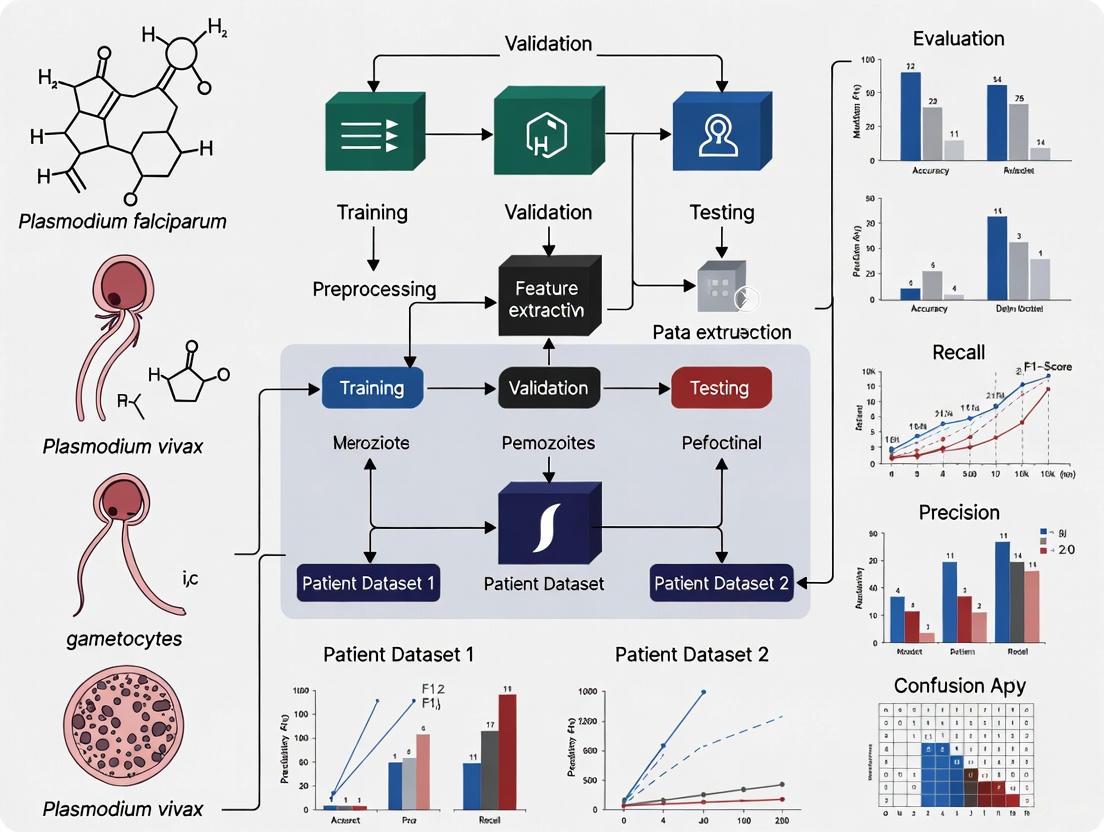
This article provides a comprehensive overview of Oxford Nanopore Technologies (ONT) long-read sequencing for parasite genotyping, tailored for researchers and drug development professionals. We explore the foundational principles enabling real-time, field-deployable sequencing of pathogen genomes, such as Plasmodium and Schistosoma. The scope covers diverse methodological applications, from whole-genome sequencing and targeted amplicon panels for drug resistance profiling to microbial community analysis. We detail essential troubleshooting for common challenges like homopolymer errors and sample contamination, and present rigorous validation data comparing Nanopore performance to Illumina sequencing. The synthesis aims to guide the effective implementation of this transformative technology in genomic surveillance and clinical diagnostics.
This article synthesizes current research on the mechanisms by which parasites regulate wildlife populations, a phenomenon with critical implications for conservation, disease ecology, and biomedical modeling. We explore the foundational ecological principles of density-dependent exposure and susceptibility, detailing how resource availability and host immunity interact to shape infection outcomes. The review examines innovative methodological approaches, including long-term field studies, experimental manipulations, and hierarchical modeling, that disentangle complex host-parasite dynamics. We address key challenges in interpreting parasite-mediated selection and competitive outcomes, while validating findings through cross-system comparisons and meta-analytical evidence. For researchers and drug development professionals, this synthesis highlights how insights from wildlife systems can inform preclinical models and therapeutic strategies, emphasizing the importance of ecological context for predicting population outcomes and managing zoonotic disease risks.
Anthropogenic habitat loss and fragmentation profoundly disrupt parasite transmission dynamics and host-parasite coevolution, with significant consequences for ecosystem stability and potential implications for disease control. This article synthesizes current research to explore the fundamental mechanisms through which landscape alteration impacts parasites with varying life cycles, examines advanced modeling frameworks for predicting these effects, and addresses challenges in translating ecological findings into sustainable biomedical and conservation strategies. By integrating empirical evidence from diverse wildlife systems with methodological advances in ecological modeling, we provide a comprehensive resource for researchers, scientists, and drug development professionals seeking to understand how environmental change influences parasitic diseases and their management.