WMicrotracker ONE: A High-Throughput Phenotypic Platform for Anthelmintic Screening and Resistance Detection in Haemonchus contortus
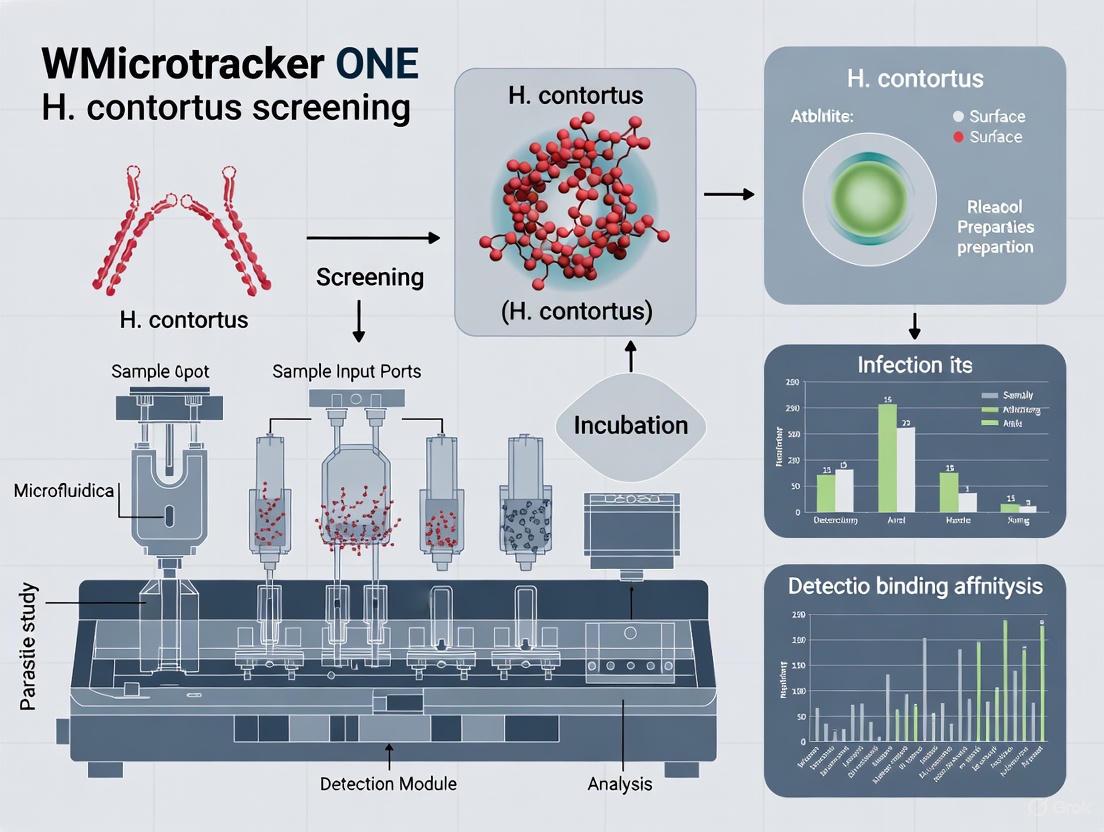
The WMicrotracker ONE instrument, which uses infrared light interference to quantitatively measure nematode motility, has emerged as a powerful tool for anthelmintic discovery and resistance monitoring.
WMicrotracker ONE: A High-Throughput Phenotypic Platform for Anthelmintic Screening and Resistance Detection in Haemonchus contortus
Abstract
The WMicrotracker ONE instrument, which uses infrared light interference to quantitatively measure nematode motility, has emerged as a powerful tool for anthelmintic discovery and resistance monitoring. This article explores its application in screening compounds against the parasitic nematode Haemonchus contortus and detecting macrocyclic lactone resistance. We cover the foundational principles of the technology, detailed methodological protocols for high-throughput screening, essential troubleshooting and optimization steps to ensure assay robustness, and validation data comparing its performance to traditional methods like the Faecal Egg Count Reduction Test (FECRT). Designed for researchers, scientists, and drug development professionals, this resource provides a comprehensive guide for implementing this efficient and reliable phenotypic platform to combat the growing crisis of anthelmintic resistance.
Understanding the WMicrotracker ONE Technology and Its Role in Combating Anthelmintic Resistance
Core Technology Principle
The WMicroTracker ONE instrument quantifies nematode motility through an automated system that measures infrared light beam interference. The core principle involves projecting one or more infrared beams (typically at 880 nm wavelength) through each well of a standard microtiter plate containing a liquid suspension of nematodes [1] [2]. When nematodes move within the well, they interrupt and scatter these infrared beams. Each interruption is detected as a voltage fluctuation by the instrument's sensor [3].
The system records these fluctuations as discrete "activity counts," which are directly proportional to the level of nematode movement within the measurement period [4]. The instrument's software analyzes the pattern and frequency of these beam interruptions to provide a quantitative, non-subjective measure of motility. This method enables simultaneous, high-throughput measurement of multiple samples, typically in 96-well or 384-well plate formats [2] [4].
Table 1: Technical Specifications of the Infrared Motility Assay
| Parameter | Specification | Application Context |
|---|---|---|
| Infrared Wavelength | 880 nm [1] | Standard detection beam |
| Beams Per Well (96-well plate) | 2 [1] | Ensures representative sampling |
| Measurement Output | Activity Counts (beam interruptions/time) [4] | Quantitative motility proxy |
| Standard Plate Formats | 96-well [1], 384-well [2] | High-throughput capacity |
| Key Acquisition Modes | Mode 0 (Threshold + Binary), Mode 1 (Threshold Average) [2] [4] | Mode 1 recommended for quantitative HTS [2] |
Figure 1: The core signaling pathway of infrared motility quantification, from beam projection to final data output.
Experimental Protocols
H. contortus Motility Assay Protocol
This protocol is optimized for screening compounds against the barber's pole worm, Haemonchus contortus, using the WMicroTracker ONE system [2] [5].
Step 1: Parasite Preparation. Use exsheathed third-stage larvae (xL3s) of H. contortus. Prepare larvae from faecal cultures using standard methods [2]. Adjust the larval suspension in a suitable assay medium (e.g., LB* medium) to a density of 80 xL3s per 80 μL, which is optimal for 384-well plates [2].
Step 2: Plate Setup and Compound Addition. Dispense the larval suspension into wells of a 384-well microtiter plate. Add test compounds dissolved in DMSO; include negative control wells (e.g., 0.4% DMSO) and positive controls (e.g., monepantel) [2]. The final DMSO concentration should typically be ≤1% to avoid solvent toxicity [1].
Step 3: Motility Measurement. Place the assay plate into the WMicroTracker ONE instrument. Set the acquisition algorithm to Mode 1 (Threshold Average) for quantitative, high-throughput screening, as it provides superior Z'-factors and signal-to-background ratios compared to Mode 0 [2]. Record motility continuously or at defined intervals over a desired incubation period (e.g., 40-90 hours) at 20-25°C [2] [5].
Step 4: Data Analysis. Normalize motility readings to the negative control (100% motility) and positive control (0% motility). Calculate half-maximal inhibitory concentration (IC50) values using non-linear regression analysis (e.g., four-parameter logistic curve in GraphPad Prism) [1] [5].
Figure 2: Experimental workflow for the H. contortus infrared motility assay.
C. elegans Motility Assay Protocol
This protocol uses the free-living nematode Caenorhabditis elegans as a model for anthelmintic discovery [1] [4].
Step 1: Worm Synchronization and Preparation. Maintain C. elegans (Bristol N2 strain) under standard conditions on NGM agar plates seeded with E. coli OP50 [4]. Synchronize populations to the desired larval stage using bleach treatment. For L4 stage assays, wash worms from plates and resuspend in S medium or M9 buffer with 0.015% BSA to prevent adherence to wells [1] [6]. Use approximately 50-70 L4s per 100 μL for 96-well plates [1] [4]. For increased sensitivity to certain compounds, starved L1 larvae can be used [6].
Step 2: Assay Execution. Spot 1 μL of test compound in DMSO into clear, flat-bottomed 96-well polystyrene plates. Add the worm suspension. Include negative (1% DMSO) and positive (e.g., ivermectin) controls [1]. Cover the plate to prevent evaporation and place it in the WMicroTracker ONE. Measure motility every 20 minutes for 24 hours or take a single endpoint reading after 40 hours [1] [4].
Step 3: Hit Selection and Validation. Define hits as compounds that reduce motility to a predetermined threshold (e.g., ≤25% of negative control) [1]. For potent compounds, perform concentration-response assays (typically 0.005-100 μM) to determine EC50 values [1].
Table 2: Key Assay Parameters for Different Nematode Stages
| Nematode Stage | Optimal Density | Assay Volume | Key Applications | Considerations |
|---|---|---|---|---|
| H. contortus xL3 | 80 larvae/well [2] | 80 μL (384-well) [2] | Primary anthelmintic screening [5] | Models parasitic stage; requires parasite culture |
| C. elegans L4 | 50-70 larvae/well [1] [4] | 100 μL (96-well) [1] | High-throughput compound library screening [4] | Cost-effective; extensive genetic tools available |
| C. elegans L1 (starved) | ~250 larvae/well [6] | 100 μL (96-well) [6] | Screening for compounds requiring higher sensitivity [6] | Increased sensitivity to some xenobiotics; starvation alters physiology |
Key Applications & Data
Anthelmintic Drug Discovery
The infrared motility assay has proven highly effective in screening compound libraries for new anthelmintic candidates. A screen of 400 compounds from the Medicines for Malaria Venture boxes identified twelve potent hits, including nine known anthelmintics and three new bioactives (flufenerim, flucofuron, and indomethacin) with EC50 values ranging from 0.211 to 23.174 µM [1]. Another high-throughput screen of 14,400 small molecules achieved a hit rate of 0.3%, demonstrating the assay's robustness for large-scale screening [4].
The platform is particularly valuable for drug repurposing efforts. A screen of a 2,745-molecule repurposing library identified all known anthelmintics contained within it, plus four novel hits, including EVP4593 which showed potent, broad-spectrum anthelmintic activity and a high selectivity index [7].
Table 3: Representative Screening Data Using Infrared Motility Assays
| Compound Library | Library Size | Key Hits Identified | Potency Range (EC50/IC50) | Citation |
|---|---|---|---|---|
| MMV COVID & Global Health Boxes | 400 compounds | Flufenerim, Flucofuron, Indomethacin | 0.211 - 23.174 µM [1] | [1] |
| HitFinder Library | 14,400 compounds | 43 confirmed hits (e.g., HF-00014) | IC50 = 5.6 µM (HF-00014) [4] | [4] |
| Drug Repurposing Library | 2,745 compounds | EVP4593, Thonzonium bromide, NH125 | Not specified [7] | [7] |
| Pathogen Box | 400 compounds | Multiple nematicides | Active at 25 µM [8] | [8] |
Detection of Anthelmintic Resistance
The automated motility assay effectively distinguishes between anthelmintic-susceptible and -resistant isolates of H. contortus, providing a valuable tool for resistance monitoring [5]. Research on eprinomectin (EPR) resistance demonstrated that the assay could clearly differentiate EPR-susceptible isolates (IC50: 0.29-0.48 µM) from EPR-resistant field isolates (IC50: 8.16-32.03 µM), with resistance factors ranging from 17 to 101 [5]. This application offers significant advantages over traditional faecal egg count reduction tests (FECRT), which are time-consuming and often detect resistance only after clinical failure has occurred [5].
The Scientist's Toolkit
Table 4: Essential Research Reagent Solutions for Infrared Motility Assays
| Reagent/Material | Specification/Function | Application Notes |
|---|---|---|
| WMicroTracker ONE | Instrument with infrared light source and detector; measures motility via beam interference [1] [2] | Core measurement device; compatible with 96-well and 384-well plates |
| H. contortus xL3s | Exsheathed third-stage larvae; the target parasitic stage for anthelmintic screening [2] [5] | Requires parasite maintenance; density of ~80 larvae/well for 384-well format [2] |
| C. elegans (Bristol N2) | Free-living model nematode; cost-effective alternative for primary screening [1] [4] | Use synchronized L4 (50-70/well) or starved L1 (~250/well) larvae [1] [6] |
| Assay Medium (S medium/LB*) | Liquid medium for maintaining nematodes during assay; prevents bacterial overgrowth [1] [2] | Optimized to minimize interference with infrared detection [1] |
| Control Anthelmintics | Reference compounds (e.g., ivermectin, monepantel) for assay validation and normalization [1] [2] | Essential for calculating normalized motility and determining Z'-factors [2] |
| DMSO (Cell Culture Grade) | Solvent for test compounds; final concentration should be ≤1% to avoid toxicity [1] | Spotted into wells before adding nematode suspension [1] |
| Low-Retention Pipette Tips | For consistent dispensing of nematode suspension [4] | Critical for achieving uniform worm numbers across wells [4] |
Anthelmintic resistance (AR) in the barber's pole worm, Haemonchus contortus, represents a critical threat to global livestock health and productivity. The overreliance on macrocyclic lactones (MLs) and other anthelmintic classes has led to widespread treatment failures, compromising animal welfare and farm profitability. Traditional diagnostic methods, particularly the Faecal Egg Count Reduction Test (FECRT), are prone to misinterpretation and often detect resistance only after it is already established. This application note demonstrates how the WMicrotracker ONE instrument addresses this crisis by providing a sensitive, high-throughput phenotypic motility assay. This method enables early, quantitative detection of resistance, facilitating more sustainable parasite control strategies and accelerating the development of novel anthelmintic compounds.
Gastrointestinal nematode (GIN) infections, particularly those caused by the highly pathogenic Haemonchus contortus, inflict substantial economic losses and animal welfare concerns in small ruminant farming worldwide [9]. H. contortus is a blood-feeding parasite capable of causing severe anaemia and death, especially in young animals. Its high fecundity leads to rapid pasture contamination and outbreaks of haemonchosis [9].
The primary tool for controlling these parasites has been the use of anthelmintic drugs. However, the intensive and often indiscriminate use of these compounds, including benzimidazoles (BMZ), tetrahydropyrimidines (THP), and macrocyclic lactones (ML), has selected for resistant parasite populations on a global scale [10]. The situation is particularly acute for MLs like ivermectin (IVM) and moxidectin (MOX), and especially for eprinomectin (EPR)—the only anthelmintic in many regions with a zero milk-withdrawal period, making it critical for dairy sheep and goat production [5]. Recent studies in Europe confirm concerning levels of anthelmintic treatment inefficacy, with susceptibility confirmed on only a minority of tested farms [9] [5]. This escalating resistance crisis necessitates a paradigm shift in how parasites are monitored and controlled.
Limitations of Current Resistance Detection Methods
The current gold standard for detecting AR in the field is the FECRT. While useful, this method suffers from several significant drawbacks that hinder effective resistance management:
- Late-Stage Detection: FECRT typically identifies resistance only after clinical signs of drug failure have emerged, allowing resistant populations to become well-established [5].
- Susceptibility to Misinterpretation: The test's results are influenced by numerous factors and can be misinterpreted, leading to flawed management decisions that further undermine parasite control [11].
- Logistical and Sensitivity Issues: FECRT is time-consuming, costly, and has low sensitivity, often failing to detect emerging resistance at an early stage [5].
- Lack of Species Specificity: Standard FECRT does not differentiate between nematode species, which is a critical shortcoming given that H. contortus is frequently the primary driver of ML resistance in mixed infections [9].
Other in vitro tests, such as the Larval Development Assay (LDA), also exist but impose considerable logistical constraints, such as the requirement for rapid, anaerobic shipment of faecal samples to prevent premature egg development [5]. There is, therefore, a pressing and unmet need for robust, accessible, and early-stage diagnostic tools for detecting AR in field isolates of H. contortus.
The WMicrotracker ONE: A Novel Tool for Anthelmintic Resistance Screening
The WMicrotracker ONE (WMi) is an automated instrument that provides a solution to the limitations of existing resistance detection methods. Its technology is based on an innovative system of infrared (IR) microbeams that detect interruptions caused by the movement of small organisms in a liquid medium within multi-well plates [12] [13].
- Principle of Operation: The system employs an array of stationary IR microbeams directed across each well of a 96- or 384-well plate. When a nematode passes through a beam, it scatters the light, which is detected by phototransistor receptors. An algorithmic software calculates the number of these activity events per unit time, providing a quantitative, real-time readout of motility [13] [14].
- Key Features: The assay is label-free, non-invasive, and provides objective and quantitative data free from user bias. Its platform enables high-throughput screening, making it suitable for both diagnostic applications and large-scale drug discovery campaigns [12] [14].
Validation of the Larval Motility Assay for Detecting Macrocyclic Lactone Resistance
Recent research has validated the WMi motility assay as a powerful functional indicator for discriminating between susceptible and ML-resistant nematodes.
Validation in a Model Organism
Studies using Caenorhabditis elegans strains with known resistance status have demonstrated the assay's precision. An IVM-selected strain (IVR10) showed a 2.12-fold reduction in sensitivity to IVM compared to the wild-type strain (N2B), a difference clearly reflected in the rightward shift of its dose-response curve in the motility assay [11] [14]. This model also confirmed cross-resistance within the ML class, as the IVR10 strain exhibited decreased sensitivity to both MOX and EPR [11].
Application to Haemonchus contortus Field Isolates
The most critical validation comes from applying the Larval Motility Assay (LMA) to infective third-stage larvae (iL3) of H. contortus. The table below summarizes quantitative data from a study that compared EPR-susceptible and EPR-resistant field isolates [5] [14].
Table 1: Drug Potency and Resistance Factors in H. contortus Isolates Measured by WMicrotracker Motility Assay
| Drug | Susceptible Isolate IC₅₀ (µM) | Resistant Isolate IC₅₀ (µM) | Resistance Factor (RF) |
|---|---|---|---|
| Ivermectin (IVM) | 0.29 - 0.48 | 8.16 - 32.03 | 17 - 101 |
| Moxidectin (MOX) | Data from source [5] [14] | Data from source [5] [14] | ~17 (for IVM-matched isolate) |
| Eprinomectin (EPR) | Data from source [5] [14] | Data from source [5] [14] | 17 - 101 |
The data unequivocally shows that the WMi assay effectively discriminates between susceptible and resistant isolates, with resistant parasites requiring drastically higher drug concentrations to achieve 50% motility inhibition (IC₅₀). The Resistance Factors (RF) calculated from these IC₅₀ values were exceptionally high for isolates collected from farms with confirmed EPR treatment failure [5]. Furthermore, the study confirmed that MOX was the most potent drug among the MLs tested against both susceptible and resistant isolates, though the degree of resistance to MOX was identical to that of IVM in the tested isolate [11] [14].
Detailed Experimental Protocols
Below is a standardized protocol for assessing anthelmintic resistance in H. contortus using the WMicrotracker ONE, adapted from recent publications [11] [14].
Larval Motility Assay (LMA) for Haemonchus contortus L3
Objective: To determine the dose-dependent inhibition of L3 larval motility by anthelmintics and calculate IC₅₀ values to establish resistance status.
Materials & Reagents:
Table 2: Essential Research Reagent Solutions for H. contortus LMA
| Item | Specification / Function | Source / Example |
|---|---|---|
| WMicrotracker ONE | Automated motility measurement instrument with 96-well plate format. | PhylumTech [12] |
| H. contortus iL3 | Infective third-stage larvae from suspected resistant or susceptible field isolates. | Field collection or laboratory maintenance [5] |
| Anthelmintics | IVM, MOX, EPR. Prepared as stock solutions in DMSO. | Sigma-Aldrich [11] |
| Assay Plates | 96-well flat-bottom plates. | Standard supplier |
| LB Medium | Liquid medium for maintaining larvae during assay. | Standard supplier [14] |
| NaCl Solution (0.15%) | Used for cuticle decoating to prevent larval aggregation. | Standard supplier [14] |
| 40μm Mesh Cell Strainer | For filtering larvae after decoating to obtain a uniform suspension. | Standard supplier [14] |
Procedure:
- Larval Preparation: Harvest H. contortus L3 larvae from faecal cultures using standard techniques [5]. To prevent aggregation and ensure accurate counting and dispensing, subject the L3 larvae to a cuticle decoating process: incubate in tap water with 0.15% NaCl at 37°C for 20 minutes, vortexing vigorously every 5 minutes [14]. Filter the larvae through a 40μm mesh into LB medium to obtain a monodisperse suspension.
- Plate Seeding: Dispense the larval suspension into a 96-well flat-bottom plate, ensuring 80 iL3 larvae per well in a final volume of 200 μL of LB medium [14].
- Drug Treatment: Add anthelmintics to the wells at a range of final concentrations (e.g., 0.01 μM to 100 μM for MLs). Include negative control wells (e.g., DMSO vehicle only) and positive control wells (e.g., a high concentration of a known effective drug). The final concentration of DMSO should not exceed 0.5% [11] [14].
- Incubation: Seal the plate and incubate for 24 hours at 37°C in a humidified incubator [14].
- Motility Restoration and Measurement: Following incubation, expose the plate to light at room temperature for 5 minutes to restore larval motility. Immediately place the plate into the WMicrotracker ONE and record motility activity for a 15-minute duration [14].
Data Analysis:
- Calculate the percentage of motility inhibition for each drug concentration using the average motility of the negative control wells as 100% activity.
- Generate dose-response curves and calculate IC₅₀ values (the concentration that inhibits 50% of larval motility) using non-linear regression analysis in appropriate software (e.g., GraphPad Prism).
- Determine the Resistance Factor (RF) by dividing the IC₅₀ of the field isolate by the IC₅₀ of a known susceptible reference isolate.
The Researcher's Toolkit: Essential Materials for WMicrotracker Assays
Table 3: Key Reagents and Equipment for Anthelmintic Resistance Screening
| Category | Item | Critical Function |
|---|---|---|
| Instrumentation | WMicrotracker ONE | Core device for automated, high-throughput motility quantification. |
| Bio-Reagents | H. contortus isolates | Field-derived or lab-maintained susceptible/resistant L3 larvae. |
| Macrocyclic Lactones | IVM, MOX, EPR for resistance profiling. | |
| LB Medium / RPMI | Supports nematode viability during assay. | |
| Lab Supplies | 96-well plates (Flat/U-bottom) | Assay vessel; format depends on parasite size and motility [15]. |
| DMSO | Universal solvent for anthelmintic stock solutions. | |
| Cell Strainers (40μm) | Filters larvae to create uniform suspension post-decoating. |
The anthelmintic resistance crisis in Haemonchus contortus demands a fundamental improvement in diagnostic capabilities. The WMicrotracker ONE instrument, coupled with the validated Larval Motility Assay, meets this need by providing a rapid, sensitive, and quantitative phenotypic tool. It enables researchers and veterinarians to move from reactive to proactive resistance management by detecting resistant parasites earlier and with greater accuracy than traditional methods like FECRT. By integrating this technology into routine surveillance and drug discovery pipelines, the scientific community can develop more sustainable control strategies, preserve the efficacy of existing anthelmintics, and safeguard the future of livestock production.
The WMicrotracker ONE instrument utilizes infrared light beam-interference to provide a practical, high-throughput method for quantifying nematode motility. This Application Note details its validated use in screening compounds against Haemonchus contortus and the essential foundational role of Caenorhabditis elegans in developing these assays [16] [17]. We provide detailed protocols for both organisms, enabling efficient anthelmintic discovery.
The free-living nematode C. elegans serves as a powerful model organism for anthelmintic discovery due to its small size, short generation time, genetic tractability, and evolutionary relationship to many parasitic nematodes [18] [19]. It shares a significant portion of its genome with parasitic species, including those from clade V such as H. contortus [19]. This relationship allows for efficient target identification and mechanism of action studies using C. elegans's extensive genetic toolbox [20] [21]. Furthermore, its suitability for high-throughput screening (HTS) in liquid formats makes it an unparalleled whole-animal model for the initial stages of drug discovery [20] [22].
Instrument Workflow and Principle of Operation
The WMicrotracker ONE instrument measures nematode motility through infrared light beam-interference. The instrument projects infrared beams (880 nm) into each well of a microtiter plate. The movement of nematodes within the well interrupts these beams, generating activity counts that are quantified to provide a measure of motility [16] [1]. The "Threshold Average" algorithm (Mode 1) is recommended for optimal quantification, as it provides a more quantitative output and superior statistical parameters (e.g., Z'-factor > 0.7) compared to other acquisition modes [16].
Experimental Protocols
Protocol A: C. elegans Motility Assay for Primary Screening
This protocol is optimized for primary screening of compound libraries using the WMicrotracker ONE [1].
Key Research Reagent Solutions:
| Reagent / Material | Function in Assay |
|---|---|
| WMicrotracker ONE (Phylumtech) | Core instrument for automated, non-invasive motility measurement via infrared light interference. |
| C. elegans Bristol N2 | Wild-type, isogenic strain used as a standardized model organism for primary screening. |
| S Medium | A defined, liquid culture medium that supports C. elegans maintenance during the assay. |
| E. coli OP50 | Standard bacterial food source for C. elegans; must be washed to avoid IR interference. |
| 96-well polystyrene plates (clear, flat-bottom) | Assay vessel compatible with the WMicrotracker ONE reader. |
Procedure:
- Synchronized Worm Preparation: Cultivate C. elegans (Bristol N2) and synchronize populations to the L4 larval stage using standard methods [1].
- Worm Harvesting: Detach L4 worms from agar plates and collect them in M9 buffer.
- Bacterial Clearance: Centrifuge the worm suspension at 1,900 × g for 1 minute. Wash the pellet with S Medium to reduce the concentration of E. coli OP50, which can interfere with infrared detection [1].
- Plate Spotting: Pipette 1 µL of compound solution (in DMSO) or control (DMSO alone) into each well of a clear, flat-bottomed 96-well plate. The final concentration of DMSO in the assay should not exceed 1% [1].
- Assay Setup: Add approximately 70 L4 worms in 100 µL of S medium to each well. This density provides an optimal balance between signal strength and reagent economy [1].
- Motility Measurement: Transfer the plate to the WMicrotracker ONE reader maintained at 25 ± 1°C. Measure motility every 20 minutes for 24 hours [1].
- Data Analysis: Normalize motility readings to the DMSO negative control wells. A common hit threshold is defined as a compound reducing motility to ≤ 25% of the control [1].
Protocol B: H. contortus Motility Assay for Secondary Screening
This protocol is designed for secondary screening of hits identified in C. elegans assays, using the exsheathed L3 (xL3) stage of H. contortus [16].
Procedure:
- Larval Preparation: Obtain infective L3 larvae of H. contortus and exsheath them to produce xL3s using standard parasitological methods.
- Plate Setup: Dispense compounds and controls into 384-well plates. Use monepantel as a positive control and 0.4% DMSO as a negative control [16].
- Larval Inoculation: Add ~80 xL3s per well in an appropriate liquid medium. This density was determined via regression analysis to provide a strong correlation (R² = 91%) with motility output in the 384-well format [16].
- Incubation and Reading: Incubate the plate for 90 hours at a suitable temperature (e.g., 25°C) within the WMicrotracker ONE. Use the "Threshold Average" algorithm (Mode 1) for data acquisition [16].
- Phenotypic Assessment: Following the motility readout, transfer larvae for microscopic examination to assess additional phenotypic alterations or developmental inhibition [16].
Data and Validation
Table 1. Key Assay Parameters and Validation Metrics for Nematode Motility Assays
| Parameter | C. elegans Protocol [1] | H. contortus Protocol [16] |
|---|---|---|
| Organism/Stage | L4 larvae | Exsheathed L3 (xL3) |
| Plate Format | 96-well | 384-well |
| Larvae per Well | ~70 | ~80 |
| Final Volume | 100 µL | Not specified |
| DMSO Tolerance | ≤ 1% | 0.4% |
| Assay Duration | 24 hours | 90 hours |
| Z'-factor | Not specified | 0.76 |
| Signal-to-Background | Not specified | 16.0 |
Table 2. Exemplar Hit Compounds from Recent C. elegans and H. contortus Screens
| Compound | Model Used | Activity (EC₅₀) | Putative Target / Mode of Action |
|---|---|---|---|
| Flufenerim [1] | C. elegans | Not specified | Identified from MMV COVID Box; novel anthelmintic candidate. |
| Flucofuron [1] | C. elegans | Not specified | Identified from MMV Global Health Priority Box; novel anthelmintic candidate. |
| Perhexiline [23] | C. elegans, H. contortus, O. lienalis | Not specified | Fatty acid oxidation pathway; reduced oxygen consumption in C. elegans. |
| Tolfenpyrad [1] | C. elegans | Not specified | Electron transport chain complex I inhibitor. |
The integrated use of C. elegans and the WMicrotracker ONE provides a powerful, cost-effective pipeline for anthelmintic discovery. C. elegans enables rapid, large-scale primary screening and facilitates initial target identification through its unparalleled genetic tools [20] [19]. The subsequent validation of hits in parasitic nematode models like H. contortus ensures physiological relevance and confirms efficacy against the target pathogen [16]. This tiered strategy effectively leverages the strengths of both the model organism and the target parasite, streamlining the path to identifying novel anthelmintic compounds with broad-spectrum potential.
Within the field of parasitology research, the efficient phenotypic screening of compounds for anthelmintic activity is crucial for drug discovery, particularly in the face of increasing drug resistance in nematodes like Haemonchus contortus [24] [2]. The WMicrotracker ONE system represents a significant technological advancement, offering a paradigm shift from traditional, labor-intensive motility assays. This application note details how its core advantages—exceptional speed, objective data acquisition, and high-throughput capability—make it an indispensable tool for high-throughput screening (HTS) campaigns in the context of H. contortus research.
Key Advantages Over Traditional Methods
Traditional methods for assessing nematode motility, such as the Larval Migration Assay (LMA) or manual microscopic scoring, are often hampered by low throughput, subjectivity, and being labor-intensive [2]. The table below provides a quantitative comparison of the WMicrotracker ONE against these conventional techniques.
Table 1: Comparative Analysis of Motility Assays for H. contortus Screening
| Assay Feature | WMicrotracker ONE | Manual Microscopy / LMA | Video Microscopy-Based Assays |
|---|---|---|---|
| Throughput | High; ~10,000 compounds/week [25] [2] | Low; ~100-1,000 compounds/week [2] | Medium; ~1,000 compounds/week [2] |
| Data Objectivity | High; Automated, algorithm-based counting eliminates user bias [12] [26] | Low; Relies on visual scoring, susceptible to user interpretation and bias [27] | Medium; Automated but can be affected by worm clumping and segmentation challenges [2] |
| Assay Read Time | Fast; Short acquisition periods (e.g., 15 minutes to 1 hour) are feasible for HTS [25] | Slow; Time-consuming manual enumeration [2] | Variable; Requires video capture and subsequent processing time [27] |
| Experimental Simplicity | Straightforward; "Load-and-go" system with automated data collection [26] | Complex; Labor-intensive and requires significant researcher time [2] | Complex; Requires technical setup, calibration, and data processing expertise [2] |
| Format | 96- or 384-well plates [12] [25] | Single or multi-well plates (low density) | Typically 24- or 96-well plates [27] |
| Data Output | "Activity counts" (Infrared beam interruptions) [12] [28] | Binary (motile/immotile) or counts based on manual observation | Velocity, travel distance, and other morphological parameters [27] |
Operational Workflow and Advantage Realization
The following diagram illustrates the streamlined, automated workflow of the WMicrotracker ONE, which underpins its key advantages.
Detailed Experimental Protocol for HTS onH. contortus
This protocol is optimized for high-throughput screening of compound libraries against H. contortus xL3s (exsheathed third-stage larvae) based on validated methodologies [2].
The Scientist's Toolkit: Essential Research Reagents
Table 2: Essential Materials and Reagents for H. contortus Motility Screening
| Item | Specification / Recommended Type | Function in the Assay |
|---|---|---|
| WMicrotracker ONE | Phylumtech instrument with 384 IR microbeams | Core device for automated, non-invasive motility detection [12] [2]. |
| Multi-well Plates | 384-well plates (e.g., COSTAR square shape) | Assay format compatible with the instrument and HTS requirements [28]. |
| Parasite Material | Haemonchus contortus xL3 larvae | Target organism for anthelmintic screening [2]. |
| Compound Library | Small molecules in DMSO | Source of potential anthelmintic candidates for screening. |
| Control Compounds | Positive Control: Monepantel [2]Negative Control: 0.4% DMSO in LB* medium [2] | Validate assay performance and calculate Z'-factor. |
| Liquid Medium | LB* medium | Suspension medium for larvae and compound dilution [2]. |
| Dispenser/Pipettor | Automated or manual multi-channel pipette | Ensures consistent and rapid dispensing of larvae and compounds into 384-well plates. |
Step-by-Step Procedure
- Larval Preparation: Exsheath H. contortus L3s to obtain xL3s. Adjust the larval suspension in LB* medium to a density of 80-100 larvae per 30 µL, as this density optimizes the signal-to-background ratio and Z'-factor [2].
- Plate Dispensing:
- Using a multi-channel pipette or dispenser, add 30 µL of the larval suspension to each well of the 384-well plate.
- Include a minimum of 16 wells per plate for negative controls (LB* + 0.4% DMSO) and 8 wells for positive controls (e.g., 10 µM Monepantel).
- Compound Addition: Pin-transfer or pipette compounds from the library into assay wells. The final standard screening concentration is 20 µM, with a DMSO concentration not exceeding 0.4% [25] [2].
- Motility Measurement:
- Place the assay plate into the WMicrotracker ONE instrument.
- Critical Setting: In the software, select Acquisition Mode 1 (Threshold Average). This mode provides a quantitative, cumulative measure of all motility events and is superior to Mode 0 for HTS, yielding higher Z'-factors (>0.7) and signal-to-background ratios (>16) [2].
- Set the data acquisition period. For primary HTS, a 60-minute read after a 90-hour incubation at appropriate temperatures is effective [2]. Shorter acquisition periods (e.g., 15 minutes) can be used for optimized screens [25].
- Data Analysis:
- Export the "activity count" data for each well.
- Calculate the percentage motility inhibition for each compound using the formula:
% Inhibition = [1 - (Activity Count_sample / Activity Count_negative control)] × 100. - Determine the Z'-factor for each plate using the positive and negative controls to validate assay quality. A Z'-factor > 0.5 is acceptable for HTS, with values > 0.7 indicating an excellent assay [2].
- For hit confirmation, generate dose-response curves and calculate half-maximal inhibitory concentration (IC₅₀) values.
Application in Resistance Research
The WMicrotracker Motility Assay (WMA) has proven effective in discriminating between anthelmintic-susceptible and resistant nematodes. A 2025 study demonstrated its relevance for detecting macrocyclic lactone (ML) resistance. The assay showed a 2.12-fold reduction in ivermectin sensitivity in an IVM-selected C. elegans strain (IVR10) compared to the wild-type [24]. Furthermore, when applied to H. contortus field isolates, the WMA successfully differentiated susceptible isolates from those resistant to eprinomectin (EPR), with the resistant isolate displaying significantly higher resistance factors (RF) based on IC₅₀ values [24]. This validates the WMA as a robust phenotypic tool for monitoring drug resistance.
A Step-by-Step Protocol for H. contortus Screening and Resistance Phenotyping
The barber's pole worm, Haemonchus contortus, represents a significant parasitic nematode and a primary model organism for anthelmintic drug discovery research [16]. The establishment of robust, reproducible protocols for sourcing, culturing, and synchronizing its larval stages is fundamental to generating high-quality, consistent data in screening campaigns, particularly those utilizing automated platforms like the WMicrotracker ONE instrument [16] [29]. This protocol details established methods for preparing and quantifying high-fidelity parasite material, contextualized within a workflow designed for high-throughput phenotypic screening.
Sourcing H. contortus Material
In Vivo Propagation for Larval Production
The primary method for sourcing parasitic material involves the maintenance of the parasite life cycle within a laboratory host, typically sheep or goats [30] [31].
- Animal Model and Infection: Helminth-free ruminants (e.g., sheep or goats, 3-4 months old) are maintained in a controlled environment to prevent accidental infection [30]. Animals are inoculated via oral gavage with approximately 7,000 infective third-stage larvae (iL3s) of a defined H. contortus strain (e.g., Haecon-5 or McMaster isolate) [30] [29].
- Ethical Considerations: All animal experiments must be approved by an institutional animal ethics committee (e.g., approved under protocol HZAUGO-2019-008) and conducted in accordance with established guidelines [30].
Harvesting Eggs and Free-Living Larvae
- Fecal Sample Collection: Fecal samples are collected daily from infected animals starting from around day 28 post-infection [30].
- Egg Isolation and Culture: Eggs are isolated from host feces using flotation with a saturated NaCl solution [31]. For larval production, feces containing eggs are incubated at 25-28°C for 1-7 days under saturated humidity [30] [31].
- iL3 Harvesting: Following incubation, infective L3s (iL3s) are collected from the cultured feces using the Baermann funnel technique [30]. The harvested iL3s can be stored in distilled water at 5-9°C for up to 60 days without significant loss of viability [29].
Culturing Parasitic Larval Stages In Vitro
A critical step for drug screening is the transition of iL3s to the first parasitic stages, which are more physiologically relevant and pharmacologically sensitive [29].
Preparation of Basal Media
Multiple basal media are used in the culture of H. contortus larvae. The table below summarizes common media and their preparations.
Table 1: Composition and Preparation of Common Basal Media
| Medium Name | Composition | Preparation Protocol | pH Adjustment | Sterilization |
|---|---|---|---|---|
| Luria-Bertani (LB) [30] | 5 g Yeast Extract, 10 g Tryptone, 5 g NaCl, 2.38 g HEPES, 3.7 g NaHCO₃ per 1L dH₂O | Dissolve components in 800 mL ddH₂O, adjust pH to 6.8 using HCl, then make up to 1L final volume. | 6.8 | Heat sterilization |
| NCTC-109 [30] | Commercial NCTC-109 powder, 2.38 g HEPES, 3.7 g NaHCO₃ per 1L dH₂O | Dissolve components, adjust pH to 6.8 using HCl. | 6.8 | Filter-sterilization (0.22 µm) |
| M-199 [30] | Commercial M-199 powder, 2.38 g HEPES, 3.7 g NaHCO₃ per 1L dH₂O | Dissolve components, adjust pH to 6.8 using HCl. | 6.8 | Filter-sterilization (0.22 µm) |
All media are typically supplemented with antibiotics and antifungals: 100 IU/mL penicillin, 100 µg/mL streptomycin, and 0.25 µg/mL amphotericin B [30].
Optimization of Media for L4 Development
Research has identified that a 1:2 mixture of NCTC-109 to LB media effectively promotes the development of early L4s [30]. For advanced development into late L4s, the inclusion of host blood components is critical.
- Defibrinated Blood: Adding 12.5% (v/v) defibrinated sheep blood to the culture medium supports this development, albeit with an initial decline in survival [30].
- Antioxidant Supplementation: The survival decline can be mitigated by adding antioxidants. L-glutathione (0.3 mg/mL) or vitamin C (200 nM) significantly improve survival, with approximately 90% of L4s developing to late L4s by 22 days in culture [30].
- Serum Supplementation: Recent studies show that supplementing LB medium with 7.5% (v/v) sheep serum (forming LBS* medium) significantly enhances larval growth, motility, and survival compared to LB* alone, and leads to distinct protein expression profiles in the larvae [32].
Chemical Exsheathment to Produce Exsheathed L3s (xL3s)
For drug screening, iL3s are artificially induced to exsheath, producing exsheathed L3s (xL3s), which are the first parasitic stage and exhibit greater susceptibility to anthelmintics [29].
Protocol: Exsheathment of iL3s
- Solution Preparation: Prepare a 0.15% - 0.17% (v/v) sodium hypochlorite (NaOCl) solution in 0.9% NaCl or a 0.17% (w/v) active chlorine solution [30] [29].
- Incubation: Incubate the iL3s in the exsheathment solution for 10-15 minutes at 37-40°C, often in an atmosphere of 10% CO₂ [30] [29].
- Washing and Sterilization: Immediately after incubation, wash the xL3s five times in a sterile 0.85% NaCl solution containing antibiotics and antifungals (centrifuge at 500-1300*g for 3-5 min per wash) [30] [29].
- Resuspension: Resuspend the purified xL3s in the chosen supplemented culture medium (e.g., LB, LBS*, or NCTC-109:LB mixture) for subsequent culture or screening [30] [32].
Synchronization of Larval Populations
Synchronization is crucial for obtaining a homogeneous population for screening, which reduces variability and improves assay robustness.
- Bleach Cleaning for Egg Synchronization: This standard C. elegans protocol can be adapted for H. contortus. Gravid adult worms are disrupted in a alkaline hypochlorite solution (e.g., 1% NaOCl, 0.5 M NaOH) to dissolve adults and release eggs, which are resistant due to their chitinous shell. The eggs are then washed and allowed to hatch overnight in a suitable buffer (e.g., M9) to obtain synchronized L1 larvae [33].
- Harvesting by Buoyancy: The use of saturated NaCl solution to float and isolate eggs from fecal matter or culture debris effectively concentrates and synchronizes the population at the egg stage [31].
- Timed Collection of iL3s: Culturing eggs under defined conditions (27-28°C) and harvesting iL3s at a specific time point (e.g., 7 days) yields a population of synchronized infective larvae [30] [31].
The Scientist's Toolkit: Research Reagent Solutions
Table 2: Essential Materials for H. contortus Larval Preparation and Culture
| Item | Function/Application | Example & Specification |
|---|---|---|
| Basal Media | Support larval development and maintenance in vitro. | LB, NCTC-109, M-199; supplemented with HEPES and NaHCO₃ for pH stability [30]. |
| Antibiotic/Antimycotic | Prevent bacterial and fungal contamination in cultures. | Penicillin (100 IU/mL), Streptomycin (100 µg/mL), Amphotericin B (0.25 µg/mL) [30] [29]. |
| Blood Components | Provide essential nutrients (e.g., lipids, proteins) for parasitic stage development. | Defibrinated Sheep Blood (12.5% v/v) [30]; Sheep Serum (7.5% v/v) [32]. |
| Antioxidants | Counteract reactive oxygen species (ROS) from blood, improving larval survival. | L-glutathione (0.3 mg/mL), Vitamin C (200 nM) [30]. |
| Exsheathment Reagent | Artifically induce the shedding of the L3 sheath to produce xL3s. | Sodium Hypochlorite (0.15-0.17% solution) [30] [29]. |
| WMicrotracker ONE | Automated, high-throughput instrument for quantifying parasite motility via infrared light interference. | Phylumtech instrument, used with 96-well or 384-well plates [16] [29]. |
Integrated Workflow for WMicrotracker ONE Screening
The following diagram illustrates the complete, integrated workflow from parasite sourcing to data acquisition in a screening campaign.
Integrated Workflow for H. contortus Screening
Key Assay Parameters for WMicrotracker ONE
- Larval Density: Optimize the number of larvae per well for a linear correlation with motility counts. A density of 80 xL3s per well in a 384-well plate has been shown to be effective [16].
- Instrument Settings: For the WMicrotracker ONE, the "Mode 1_Threshold Average" acquisition algorithm provides a more quantitative measurement of xL3 motility with superior Z'-factors and signal-to-background ratios compared to Mode 0 [16].
- Culture Medium for Screening: The choice of medium (e.g., LB* vs. LBS*) can influence larval health and the apparent activity of screened compounds, necessitating careful selection and reporting [32].
This application note provides a detailed protocol for optimizing high-throughput phenotypic screening of Haemonchus contortus third-stage larvae (L3) using the wMicroTracker ONE instrument. Within the broader context of anthelmintic drug discovery, standardized and reliable assays for parasitic nematodes are urgently needed due to rising drug resistance and the limited availability of effective treatments [33] [34]. The wMicroTracker system offers an automated, quantitative approach to measuring nematode motility, a key phenotypic indicator of compound efficacy [17] [15]. This document outlines evidence-based methods for determining critical parameters—including larval quantity, plate selection, and media composition—to establish robust and reproducible screening conditions for H. contortus L3.
The Scientist's Toolkit: Essential Research Reagents and Materials
The following table details key reagents and materials required for conducting motility-based assays with H. contortus L3 using the wMicroTracker ONE.
Table 1: Essential Research Reagents and Materials
| Item | Function/Application in the Assay |
|---|---|
| wMicroTracker ONE instrument | Automated system that uses a stationary infrared LED beam to detect microtiter plate well crossings, providing quantitative measurement of parasite motility [17] [15]. |
| RPMI 1640 culture medium | A standard culture medium used for maintaining various parasitic nematodes, including Brugia pahangi L3, during motility assays [15]. |
| 24-well flat-bottom plates | Recommended plate format for screening larger, highly motile parasitic larvae such as Brugia pahangi L3, which are comparable in size and motility to H. contortus L3 [15]. |
| 96-well U-bottom plates | Used for screening smaller or less motile parasite stages that may not traverse a flat-bottom well, helping to concentrate movement through the infrared beam [15] [35]. |
| DMSO (Dimethyl Sulfoxide) | Common solvent for dissolving and storing anthelmintic compounds; used as a negative control in assays [35] [36]. |
| Ivermectin | Macrocyclic lactone anthelmintic; useful as a positive control for motility inhibition in assay validation [15]. |
| Penicillin-Streptomycin solution | Antibiotic supplement added to culture media like PBS or RPMI to prevent bacterial contamination in parasite cultures [36]. |
| Amphotericin B | Antifungal agent used as a supplement in media to prevent fungal overgrowth during prolonged egg or larval incubation [36]. |
| Phosphate-Buffered Saline (PBS) | A balanced salt solution used in parasite egg hatching and larval motility assays; it supports development and hatching without nutrient supplementation [36]. |
Experimental Protocol for Assay Optimization
Determination of Optimal Larval Count per Well
Selecting the correct number of larvae per well is critical for generating a reliable motility signal. The aim is to achieve a baseline mean movement unit of 20-40 per well for the negative control (e.g., DMSO), which is the optimal range for the wMicroTracker [15]. This parameter is optimized by comparing the target parasite's size and motility to the standard model organism, Caenorhabditis elegans.
Protocol:
- Reference Point: Begin with the standard wMicroTracker protocol for adult C. elegans, which uses 40-50 worms per well in 100 µL of M9 buffer, yielding 25-35 mean movement units [15].
- Size Comparison: H. contortus L3 have a documented length of 730-805 µm [17]. This is substantially smaller than adult C. elegans (∼1 mm) but similar to other parasitic L3 stages like Brugia pahangi L3 (1-2 mm) [15].
- Empirical Testing: Based on validated protocols for similar-sized L3 larvae [15] [35], test a range of larval densities.
- Prepare suspensions of H. contortus L3 in RPMI 1640 medium.
- Dispense larvae into a 96-well U-bottom plate at densities of 10, 25, and 50 larvae per well in a volume of 200 µL. Include at least 3-6 replicate wells per condition.
- Run the plate on the wMicroTracker ONE to measure baseline motility.
- Data Analysis: Select the density that produces a consistent motility signal closest to the 20-40 unit target range. Data for B. pahangi L3 showed that 10, 25, and 50 larvae/well all produced reliable and similar motility profiles, suggesting that a range of densities may be viable for H. contortus as well [15].
Table 2: Worm Number Optimization Guide Based on Parasite Size
| Parasite Stage (Size) | Recommended Starting Density | Well Volume | Plate Type |
|---|---|---|---|
| C. elegans adults (∼1 mm) | 40-50 worms/well [15] | 100 µL | Not Specified |
| H. contortus L3 (730-805 µm) [17] | 10-50 larvae/well [15] | 200 µL | U-bottom |
| B. pahangi L3 (1-2 mm) | 10-50 larvae/well [15] | 200 µL | U-bottom |
| B. pahangi microfilariae (177-230 µm) | 200 parasites/well [15] | 100 µL | U-bottom |
Selection of Plate Format and Media Volume
The choice of plate geometry is determined by the motility behavior and size of the parasite to ensure the larvae repeatedly cross the infrared beam.
Protocol:
- Plate Selection:
- For highly motile L3 larvae: A 96-well U-bottom plate is recommended. The curved bottom forces larvae to move through the center of the well, increasing the probability of beam crossing. This has been successfully used for B. pahangi L3 and Angiostrongylus cantonensis L3 [15] [35].
- Rationale: If a parasite does not travel throughout the entire well, a U-bottom plate is necessary to concentrate movement through the central beam [15].
- Media and Volume:
Suspension Medium and Culture Conditions
The choice of medium can affect larval vitality and baseline motility.
Protocol:
- Medium Preparation: RPMI 1640 is a standard choice for larval motility assays [15]. As a minimal alternative, PBS supplemented with antibiotics (1% Penicillin-Streptomycin) and an antifungal (5% Amphotericin B) has been shown to effectively support the hatching and viability of related nematode eggs and larvae [36].
- Incubation Conditions: Incubate assay plates at room temperature (∼21-25°C). Studies on hookworm egg hatching indicate that room temperature is optimal for development and hatching, and this range is suitable for maintaining larval activity during screening [36].
- Assay Duration: The motility readout is typically short (minutes to hours). For initial optimization, record baseline motility over a 60-minute period after a brief acclimation time.
Workflow for H. contortus L3 Motility Assay Optimization
The following diagram summarizes the key decision points and steps for establishing the wMicroTracker assay for H. contortus L3.
Based on the optimization protocols and data from related parasitic nematodes, the following conditions are recommended for initiating wMicroTracker ONE screens with H. contortus L3.
Table 3: Summary of Recommended Starting Conditions for H. contortus L3 Assay
| Parameter | Recommended Condition | Rationale & Supporting Evidence |
|---|---|---|
| Larval Number | 25 larvae/well (within a test range of 10-50) | This mid-range density is based on successful motility detection for similarly-sized B. pahangi L3 [15]. |
| Plate Format | 96-well U-bottom plate | Concentrates larval movement through the center IR beam, validated for parasitic L3 stages [15] [35]. |
| Suspension Medium | RPMI 1640 (or supplemented PBS) | Standard culture medium used for filarial and other parasitic nematodes in motility assays [15] [36]. |
| Volume per Well | 200 µL | Optimal volume for larval suspension and motility in a 96-well U-bottom format [15]. |
| Target Signal (Control) | 20-40 mean movement units | Established optimal signal range for the wMicroTracker instrument [15]. |
This application note provides a detailed protocol for utilizing the WMicroTracker ONE (WMi) instrument in screening compounds for anthelmintic activity against Haemonchus contortus. The escalating prevalence of anthelmintic resistance, particularly to macrocyclic lactones (MLs) like eprinomectin (EPR), poses a significant threat to livestock productivity and effective parasite control [37] [24]. Conventional methods for detecting resistance, such as the Faecal Egg Count Reduction Test (FECRT), are often time-consuming and susceptible to misinterpretation [24] [14]. The WMi instrument offers a robust, high-throughput phenotypic alternative by quantitatively measuring the inhibition of larval motility, a reliable indicator of drug efficacy and resistance [37] [2]. This protocol outlines the standardized procedures for preparing stock solutions, establishing dose-response curves, and interpreting results to accurately determine drug potency and resistance status in H. contortus isolates.
Experimental Workflow
The following diagram illustrates the complete experimental procedure for conducting a larval motility assay with the WMicrotracker ONE, from parasite preparation to data analysis.
Materials and Reagents
Research Reagent Solutions
The following table lists the essential materials and reagents required for successfully conducting the WMicroTracker ONE motility assay.
Table 1: Essential Research Reagents and Materials
| Item | Function/Application | Specifications/Notes |
|---|---|---|
| WMicroTracker ONE | Automated motility measurement via infrared light beam interference [25] [2]. | Use acquisition Mode 1 for quantitative measurement of H. contortus L3 motility [2]. |
| H. contortus L3 Larvae | Primary target organism for anthelmintic screening [24] [38]. | Artificially exsheathed (xL3) prior to assay. Can be stored for months at 11°C before use [38]. |
| Macrocyclic Lactones | Anthelmintic test compounds (e.g., Ivermectin, Moxidectin, Eprinomectin) [37] [24]. | Prepare stock solutions in DMSO; final assay concentration of DMSO should not exceed 0.5% [14]. |
| Dimethyl Sulfoxide (DMSO) | Solvent for stock solutions of anthelmintic compounds [24] [14]. | Use high-purity grade. Final concentration in assay must be kept low to avoid solvent toxicity [14]. |
| LB* Medium | Assay medium for suspending and incubating larvae [2] [38]. | Lysogeny broth supplemented with penicillin (100 IU/ml), streptomycin (100 µg/ml), and amphotericin B (0.25 µg/ml) [38]. |
| 96-well Plates | Platform for housing larvae and compounds during incubation and motility recording [14]. | Use flat-bottom plates. Optimal larval density is 80-200 larvae per well in a 200 µL final volume [14] [2]. |
Methodology
Preparation of Stock Solutions and Compound Dilutions
- Anthelmintic Stock Solutions: Prepare concentrated stock solutions of anthelmintic drugs (e.g., IVM, MOX, EPR) in 100% DMSO. A typical stock concentration is 10 mM [38]. Aliquot and store at -20°C.
- Working Compound Dilutions: Serially dilute the stock solutions in DMSO to create a range of working concentrations. These dilutions will be added to the assay medium to achieve the desired final concentrations during the assay. The final concentration of DMSO in the assay must be ≤0.5% to prevent adverse effects on larval motility [14].
Larval Preparation and Plating
- Exsheathment: Artificially exsheath H. contortus L3 larvae (xL3) by incubating them in 0.15% (v/v) sodium hypochlorite for 20 minutes at 38°C [38].
- Washing: Immediately after exsheathment, wash the larvae five times with sterile physiological saline solution or tap water supplemented with 0.15% NaCl to remove the hypochlorite solution. Use centrifugation at 2000×g for 5 minutes between washes [14] [38].
- Preventing Aggregation: To minimize larval clumping, filter the larvae through a 40 µm mesh into LB medium [14].
- Plating: Resuspend the cleaned xL3s in LB* medium. Dispense a precise number of larvae (recommended range: 80 to 200 larvae) into each well of a 96-well plate. The final volume in each well should be 200 µL [14] [2].
Drug Treatment and Incubation
- Compound Addition: Add the pre-diluted working compounds to the wells containing the larvae. Include control wells containing an equivalent concentration of DMSO (vehicle control) and a known anthelmintic (positive control).
- Incubation: Seal the plate and incubate it for 24 hours at 37°C within a humidified incubator [14].
Motility Measurement with WMicroTracker ONE
- Motility Restoration: Following the 24-hour incubation, expose the plate to light at room temperature for 5 minutes to stimulate and restore larval motility [14].
- Instrument Settings: Place the plate into the WMicroTracker ONE instrument. Ensure the acquisition algorithm is set to Mode 1 (Threshold Average). This mode constantly records all movement and provides a quantitative measurement of motility, which is essential for achieving high throughput and reliable data [25] [2].
- Data Acquisition: Record the motility of the worms in each well over a 15-minute duration. The instrument measures motility by detecting interference of an infrared light beam, which is recorded as "activity counts" [25] [14].
Data Analysis and Interpretation
Calculating Motility Inhibition and Generating Dose-Response Curves
- Normalization: Standardize the motility readings from each treated well against the average motility of the vehicle control (DMSO) wells, which is set to represent 100% motility.
- Inhibition Calculation: Calculate the percentage of motility inhibition for each well using the formula:
% Inhibition = 100 - [(Activity Counts of Treated Well / Average Activity Counts of Control Wells) * 100] - Curve Fitting: Plot the percentage of motility inhibition (or % motility) against the logarithm of the drug concentration. Fit a non-linear regression (sigmoidal dose-response) curve to the data points to determine the IC50 value—the concentration that inhibits 50% of larval motility [24] [14].
Quantitative Assessment of Drug Efficacy and Resistance
The table below summarizes representative IC50 data and resistance factors for macrocyclic lactones against susceptible and resistant isolates of H. contortus, as determined by the WMi motility assay.
Table 2: Representative Drug Potency and Resistance Data from WMicroTracker Assays
| Drug | H. contortus Isolate Status | IC50 (µM) [Mean ± SD or Range] | Resistance Factor (RF) | Citation |
|---|---|---|---|---|
| Eprinomectin (EPR) | Susceptible | 0.29 - 0.48 µM | - | [37] |
| Resistant | 8.16 - 32.03 µM | 17 - 101 | [37] | |
| Ivermectin (IVM) | Susceptible | Data not specified | - | [24] |
| Resistant | Data not specified | ~2.12 (in C. elegans IVR10 strain) | [24] [14] | |
| Moxidectin (MOX) | Susceptible | Most potent drug (lowest IC50) within isolates | - | [24] [14] |
| Resistant | Data not specified | Similar RF to IVM | [14] |
Interpreting Results:
- IC50 Value: The concentration at which a drug reduces larval motility by 50%. A lower IC50 indicates higher drug potency [24].
- Resistance Factor (RF): Calculated as the ratio of the IC50 of a resistant isolate to the IC50 of a susceptible isolate. An RF significantly greater than 1 confirms the presence of a resistant parasite population [37] [24].
Troubleshooting
- Low Activity Counts in Control Wells: Ensure larvae are properly exsheathed and that the incubation period does not exceed 24 hours. Verify that the final DMSO concentration is not toxic. Use Mode 1 on the WMi for data acquisition [25] [2].
- High Variability Between Replicates: Confirm consistent larval numbers per well by using low-retention pipette tips and LB* medium to prevent larvae from adhering to surfaces [25]. Ensure the larval suspension is homogenous during plating.
- Poor Z'-factor: Optimize larval density per well and confirm the health and motility of the larval batch before commencing the assay. A Z'-factor ≥ 0.7 indicates an excellent assay performance [2].
Within the field of anthelmintic drug discovery, the WMicrotracker ONE instrument has emerged as a pivotal tool for high-throughput phenotypic screening. Its application in research targeting the parasitic nematode Haemonchus contortus is particularly valuable given the pressing issue of widespread drug resistance [29]. The efficacy of any screening campaign using this instrument is fundamentally dependent on two critical technical aspects: the proper configuration of the hardware and, most importantly, the selection of the appropriate measurement mode for data acquisition. Incorrect configuration can lead to suboptimal detection sensitivity, poor data quality, and ultimately, a failure to identify potential anthelmintic compounds. This application note provides detailed protocols and evidence-based guidance for configuring the WMicrotracker ONE and selecting the correct measurement mode specifically for H. contortus screening, framed within the context of a broader thesis on anthelmintic discovery.
Understanding the WMicrotracker ONE Technology
The WMicrotracker ONE is an instrument designed for measuring the activity of small animals in a multi-well plate format. Its operation is based on an innovative system of 384 infrared (IR) microbeams [12]. The system detects small interferences generated by organisms present in the sample wells as they pass through the beam of light. The digital analysis of signal changes, which are proportional to light intensity, allows for the detection of movement [12]. An algorithmic software then calculates the number of these activity events per unit time.
For research involving H. contortus, the larval stages are typically used in primary screens. The instrument's ability to detect motility through infrared light interference makes it exceptionally suitable for quantifying the effects of compounds on larval motility, a proven correlate of anthelmintic efficacy [16] [29]. The system simultaneously records motility within individual wells of a 384-well or 96-well plate, with the interference recorded as "activity counts" that directly translate to motility levels [25].
Critical Configuration: Measurement Modes
The WMicrotracker ONE software offers distinct acquisition algorithms, or measurement modes, which have a profound effect on the recorded "activity counts" and the subsequent performance of the screening assay [25]. A comparative analysis of these modes is essential for optimal assay configuration.
Table 1: Comparison of Measurement Modes in WMicrotracker ONE for H. contortus Screening
| Feature | Mode 0 (Threshold + Binary) | Mode 1 (Threshold Average) |
|---|---|---|
| Algorithm Type | Measures movement in a sliding time-window with subsequent data normalization [25] | Constantly and quantitatively records all movement activity [25] |
| Output Activity Counts | Low activity counts from individual wells [25] | High activity counts [25] |
| Suitability for HTS | Less suited for high-throughput screening (HTS) with short acquisition periods [25] | Well-suited for HTS; enables rapid capture of larval motility [25] |
| Z'-Factor (for H. contortus xL3) | 0.48 [16] | 0.76 [16] |
| Signal-to-Background Ratio | 1.5 [16] | 16.0 [16] |
| Recommended Application | Extended period measurements requiring normalized baselines | High-throughput primary screening of compounds |
The choice of measurement mode is not merely a software preference but a decisive factor in assay viability. Empirical evidence from a study optimizing a H. contortus xL3 motility assay demonstrated that Mode 1 was vastly superior for screening purposes. When compared to Mode 0, Mode 1 yielded a significantly higher Z'-factor (0.76 vs. 0.48) and a substantially greater signal-to-background ratio (16.0 vs. 1.5) [16]. The Z'-factor is a key statistical parameter used in HTS to assess assay quality, with values above 0.5 indicating an excellent assay. Therefore, the data strongly supports the selection of Mode 1_Threshold Average for primary screening of compounds against H. contortus larvae.
Workflow for Instrument Configuration and Data Acquisition
The following diagram illustrates the critical steps for configuring the WMicrotracker ONE and acquiring motility data for a H. contortus screening assay.
Experimental Protocol: H. contortus Larval Motility Assay
This section provides a detailed methodology for a high-throughput larval motility assay, adapted from established protocols [16] [29] [14].
Research Reagent Solutions
Table 2: Essential Materials and Reagents for H. contortus Motility Assay
| Item | Specification / Recommended Brand | Function in the Assay |
|---|---|---|
| Parasite Material | Haemonchus contortus infective L3 (iL3) or exsheathed L3 (xL3) from a susceptible isolate (e.g., McMaster) | The target organism for anthelmintic screening [16] [29]. |
| Multi-well Plates | 384-well, flat bottom microplates (e.g., CellStar by Greiner) | Platform for holding larvae and compound solutions during incubation and reading [16] [29]. |
| Suspension Medium | Luria Bertani (LB) medium, supplemented with antibiotics (Penicillin, Streptomycin, Amphotericin B) | Liquid medium for suspending and dispensing larvae; antibiotics prevent microbial contamination [16] [29]. |
| Positive Control | Monepantel (Zolvix) or Ivermectin (USP grade) | Reference anthelmintic compound to validate assay performance and sensitivity [16] [14]. |
| Negative Control | LB* medium with 0.4% Dimethyl Sulfoxide (DMSO) | Vehicle control representing 100% motility baseline [16]. |
| Compound Library | Small molecules dissolved in DMSO | Test entities for discovering novel anthelmintic activity [25] [16]. |
Step-by-Step Procedure
- Larval Preparation: Obtain H. contortus L3 larvae and exsheath them to produce xL3s using a 0.17% w/v active chlorine solution for 15 minutes at 40°C and 10% CO₂ [16] [29]. Wash the xL3s thoroughly in sterile saline and resuspend in supplemented LB medium.
- Larval Dispensing: Adjust the larval suspension to a density of 6,000 xL3/ml. Homogenize the suspension continuously to ensure even distribution. Using a multichannel pipette, dispense 50 µl of the suspension (containing ~300 xL3s) into each well of a 384-well flat-bottom plate. Do not use the edge wells; fill them with sterile water to minimize evaporation effects [16] [29].
- Compound Addition: Add the test compounds and controls to the designated wells. The final concentration of DMSO should not exceed 0.5% to avoid solvent toxicity [14].
- Incubation: Seal the plates and incub them at 37°C in a humidified incubator for a period of 24 to 90 hours, depending on the experimental design [16] [14].
- Pre-reading Stimulation: Following incubation, to restore larval motility, expose the plates to light at room temperature for 5 minutes [14].
- Data Acquisition: Place the plate into the WMicrotracker ONE instrument. In the software, ensure that Measurement Mode 1 (Threshold Average) is selected. Record the movement of the larvae within each well over a 15-minute duration [25] [14].
- Data Analysis: Calculate the motility inhibition for each well as a percentage relative to the average motility of the negative control (DMSO) wells, which is set to 100% motility. Generate dose-response curves and calculate half-maximal inhibitory concentration (IC₅₀) values for active compounds [14].
The correct configuration of the WMicrotracker ONE, specifically the selection of Measurement Mode 1 (Threshold Average), is a foundational requirement for successful high-throughput screening of anthelmintic compounds against Haemonchus contortus. This configuration has been empirically proven to provide a robust, quantitative, and high-quality assay with a Z'-factor suitable for drug discovery. By adhering to the detailed protocols and considerations outlined in this application note, researchers can optimize their data acquisition strategy, thereby enhancing the reliability of their results and accelerating the discovery of novel therapies against this economically devastating parasite.
Accurate detection of anthelmintic resistance is a critical component in managing parasitic nematodes in livestock. The WMicrotracker ONE (WMi) instrument provides a phenotypic, high-throughput solution for this purpose by quantifying nematode motility in response to drug exposure. This protocol details the application of the WMi for screening Haemonchus contortus, outlining the experimental workflow for a Larval Motility Assay (LMA), the subsequent calculation of half-maximal inhibitory concentration (IC50) values, and the determination of Resistance Factors (RF) to characterize isolate susceptibility [14] [24]. This method effectively discriminates between susceptible and resistant isolates of both Caenorhabditis elegans and the parasitic nematode H. contortus, providing a robust tool for monitoring macrocyclic lactone (ML) resistance in the field [24].
Experimental Protocols
Larval Motility Assay (LMA) for H. contortus
This procedure measures the potency of anthelmintics by quantifying the inhibition of infective L3 larval (iL3) motility [14] [24].
Materials:
- H. contortus iL3 larvae: Susceptible and resistant isolates (e.g., S-H-2022 and R-EPR1-2022) [24].
- Anthelmintic Drugs: Ivermectin (IVM), Moxidectin (MOX), Eprinomectin (EPR). Prepare stock solutions in DMSO and store at -20°C.
- Assay Medium: LB medium.
- Equipment: WMicrotracker ONE instrument, 96-well flat-bottom plates, humidified incubator at 37°C.
Method:
- Larval Preparation: Isolate iL3 larvae from feces using standard techniques. To prevent larval aggregation and remove the cuticle, incubate larvae for 20 minutes at 37°C in tap water supplemented with 0.15% NaCl, vortexing vigorously every 5 minutes. Filter the larvae through a 40 µm mesh in LB medium [14].
- Plate Seeding: Aliquot 80 iL3 larvae per well into a 96-well plate, suspended in a final volume of 200 µL of LB medium [14].
- Drug Treatment: Add the anthelmintic drugs to the wells at a range of concentrations (e.g., 0.01 µM to 100 µM). Ensure the final concentration of DMSO is consistent across all wells and does not exceed 0.5% to avoid solvent toxicity [14] [24].
- Incubation: Seal the plates and incub them for 24 hours at 37°C within a humidified incubator [14].
- Motility Measurement: Following incubation, restore larval motility by exposing the plates to light at room temperature for 5 minutes. Immediately place the plate into the WMicrotracker ONE and record larval movement for a 15-minute duration [14]. The instrument records motility as "activity counts" via infrared light beam interference [25].
Data Analysis Workflow
The data analysis process involves normalization, curve fitting, and comparative calculation as shown in Figure 1.
Figure 1. Data analysis workflow for determining resistance factors from raw motility data.
Data Normalization
Normalize the motility data from each treated well to the average motility of the control (DMSO-treated) wells to calculate the percentage of motility inhibition [14]. The formula is: % Motility Inhibition = [1 - (Activity Counts~Treated~ / Activity Counts~Control~)] × 100 [24].
IC50 Calculation
The IC50 value is the drug concentration that produces a 50% reduction in larval motility relative to the control.
- Input the normalized % Motility Inhibition data and corresponding drug concentrations into non-linear regression analysis software (e.g., GraphPad Prism).
- Fit the data to a sigmoidal dose-response model (variable slope).
- The IC50 value is derived directly from the fitted curve [24]. Table 1 provides examples of IC50 values for macrocyclic lactones against different nematode strains.
Table 1: Example IC50 values from WMicrotracker motility assays.
| Nematode Species | Strain/Isolate | Drug | IC50 Value (nM) | Resistance Factor (RF) | Source |
|---|---|---|---|---|---|
| C. elegans | Wild-type (N2B) | Ivermectin | 33.52 ± 8.89 | (Reference) | [24] |
| C. elegans | IVM-selected (IVR10) | Ivermectin | 71.20 ± 26.49 | 2.12 | [24] |
| H. contortus | Susceptible (S-H-2022) | Ivermectin | See Table 2 | (Reference) | [24] |
| H. contortus | Resistant (R-EPR1-2022) | Ivermectin | See Table 2 | See Table 2 | [24] |
Resistance Factor (RF) Determination
The Resistance Factor quantifies the level of resistance in a tested isolate by comparing its IC50 to that of a known susceptible isolate.
- Obtain the IC50 value for the drug against a susceptible reference isolate (IC50~S~).
- Obtain the IC50 value for the same drug against the putatively resistant field isolate (IC50~R~).
- Calculate the RF using the formula: RF = IC50~R~ / IC50~S~ [39] [40] [24].
An RF significantly greater than 1 indicates resistance, with higher values denoting stronger resistance. Table 2 shows calculated RFs for a resistant H. contortus isolate.
Table 2: IC50 and Resistance Factors (RF) for a susceptible and a resistant H. contortus isolate against macrocyclic lactones. Data adapted from [24].
| Drug | IC50 for Susceptible Isolate (S-H-2022) (nM) | IC50 for Resistant Isolate (R-EPR1-2022) (nM) | Resistance Factor (RF) |
|---|---|---|---|
| Ivermectin (IVM) | 9.9 | 36.7 | 3.7 |
| Moxidectin (MOX) | 2.6 | 15.7 | 6.0 |
| Eprinomectin (EPR) | 4.0 | 46.8 | 11.7 |
The Scientist's Toolkit
Table 3: Essential research reagents and solutions for the WMicrotracker Larval Motility Assay.
| Item | Function / Explanation |
|---|---|
| WMicrotracker ONE | Core instrument that automatically quantifies nematode motility by detecting infrared light beam interference caused by moving worms in a 96-well plate [25] [14]. |
| Macrocyclic Lactones | Anthelmintic drug class including Ivermectin, Moxidectin, and Eprinomectin. They are the subjects of the resistance profiling. Stock solutions are prepared in DMSO [24]. |
| DMSO (Cell Culture Grade) | Solvent for dissolving anthelmintic drugs. The final concentration in the assay must be kept low (e.g., <0.5%) to avoid toxic effects on nematodes [14] [24]. |
| LB Medium | Liquid medium used to suspend and dispense H. contortus L3 larvae during the assay, helping to prevent larval aggregation [14]. |
| 96-well Flat-bottom Plates | Assay vessel compatible with the WMicrotracker. Low-retention tips are recommended for aliquoting worms to prevent adhesion to surfaces [25]. |
| H. contortus Isolates | Defined parasite isolates with known susceptibility status. A susceptible isolate (e.g., S-H-2022) is crucial as a reference for calculating Resistance Factors [24]. |
Optimizing Assay Performance and Solving Common Technical Challenges
Within the context of anthelmintic drug discovery and resistance research, the reliability of experimental data is paramount. The WMicrotracker ONE instrument has become a critical tool in this field, enabling high-throughput phenotypic screening of parasitic nematodes like Haemonchus contortus by using infrared light beams to detect and quantify larval motility [2] [12]. This automated, non-invasive technology allows researchers to assess the effects of chemical compounds on worm motility with a throughput of up to 384 samples simultaneously, far surpassing conventional methods [2] [13]. However, the integrity of this sensitive motility data is entirely dependent on the correct functioning of the hardware. This application note provides detailed protocols for verifying three fundamental hardware subsystems—power, LED indicators, and COM port communication—to ensure the generation of robust, reproducible data for anthelmintic screening.
Initial Hardware Verification Protocol
A systematic approach to hardware verification is essential before commencing any screening campaign. The following procedure should be performed upon initial setup and periodically as part of routine laboratory maintenance.
Power Supply Verification
- Objective: To confirm that the WMicrotracker ONE receives stable and correct power input.
- Procedure:
- Connect the power supply to a mains outlet.
- Plug the power supply output cable into the port on the rear of the WMicrotracker ONE labeled "12VDC or 9VDC" [41].
- Observe the LED indicators on the device.
LED Indicator Status Check
- Objective: To verify the instrument's internal self-check routine via its visual status indicators.
- Procedure:
- Upon successful power connection, the green light at the top right of the instrument should illuminate steadily [41].
- Simultaneously, the blue light should flash three times in a sequence. This specific pattern indicates a successful microprocessor system check [41].
- Document any deviation from this expected behavior (e.g., green light not turning on, blue light not flashing) for troubleshooting.
COM Port Communication Setup
- Objective: To establish a stable data communication link between the WMicrotracker ONE and the acquisition computer.
- Procedure:
- Driver Installation: Download the required USB device driver from the official Phylumtech website (www.phylumtech.com) under the support section for "direct USB connection." Install the driver on the Windows computer [41].
- Hardware Connection: Using a USB-B cable, connect the "USB COM port" on the rear of the WMicrotracker ONE to an available USB port on the computer [41].
- Connection Verification: Check the Windows operating system to confirm it recognizes the device. A new COM port should be detected and listed in the Device Manager [41].
- Software Installation: Download the WMicrotracker acquisition software (Version 3.x or later) from the manufacturer's website. Unzip the files and follow the installation instructions in the
Readme.txtfile. Typically, this involves copying the/wmicrotracker/directory toC:/wmicrotrackerand running thewmicrotracker.exefile [41].
Table 1: Troubleshooting Guide for Hardware Verification
| Component | Expected Result | Abnormal Result | Potential Cause & Solution |
|---|---|---|---|
| Power Supply | Green LED illuminated steadily. | Green LED is off. | Faulty power cable, wall outlet, or internal PSU. Check connections. |
| System Check | Blue LED flashes three times. | Blue LED does not flash. | Internal hardware fault. Contact technical support. |
| COM Port | New COM port detected in Device Manager. | No new COM port detected. | Driver not installed correctly; faulty USB cable. Reinstall driver, try a different cable. |
The following workflow diagram summarizes the complete hardware verification process:
Application in H. contortus Screening Research
The critical importance of a fully functional WMicrotracker ONE is best understood within the context of its application in anthelmintic research. The instrument's core function is to provide quantitative, high-throughput data on nematode motility, a key phenotypic marker for drug efficacy and resistance.
Role in Motility-Based Screening
The WMicrotracker ONE operates on the principle of infrared light beam interference. It contains 384 microbeams that detect interruptions caused by the movement of organisms in a liquid medium within multi-well plates [12] [13]. The system's software records these activity events in real-time, generating a motility count that is proportional to the light intensity changes [12]. For H. contortus research, this allows for the sensitive quantification of larval (xL3) motility inhibition in response to anthelmintic compounds [2]. The selection of the correct acquisition algorithm (e.g., "Mode 1_Threshold Average") is crucial, as it has been shown to provide superior signal-to-background ratios and Z'-factors, ensuring the statistical robustness of the screen [2].
Impact on Data Integrity
A malfunction in power, indicators, or communication can lead to catastrophic data loss or corruption during time-sensitive experiments. For instance, screening 80,500 small molecules to achieve a 0.05% hit rate for anthelmintic activity requires the instrument to function flawlessly for weeks [2]. Similarly, studies comparing drug potency against susceptible and resistant isolates of H. contortus rely on precise IC50 values derived from motility data [14] [24]. Inconsistent hardware performance could lead to misinterpretation of resistance factors, with significant consequences for parasite management strategies.
Table 2: Key Reagent Solutions for H. contortus Motility Assays
| Research Reagent / Material | Function in the Assay | Typical Specification / Concentration |
|---|---|---|
| Infective L3 Larvae (iL3) | The target parasitic organism for phenotypic screening. | 80 larvae per well in a 96-well plate [14]. |
| Exsheathed L3 (xL3) | A more drug-susceptible larval stage used for screening. | ~80 xL3 per well in 384-well format [2]. |
| LB Medium | Culture medium to maintain larvae during the assay. | Supplemented with antibiotics (e.g., Penicillin/Streptomycin) [2] [29]. |
| Dimethyl Sulfoxide (DMSO) | Universal solvent for anthelmintic compounds. | Final concentration ≤ 0.5% to avoid solvent toxicity [14]. |
| Macrocyclic Lactones (e.g., IVM, MOX, EPR) | Reference anthelmintics for assay validation and resistance studies. | Tested in a dose-dependent manner (e.g., 0.01-100 µM) [14] [24]. |
Rigorous and routine hardware verification is not a mere preliminary step but a foundational practice in ensuring the validity of high-throughput anthelmintic screening data. The protocols outlined here for checking power, LED indicators, and COM port communication provide researchers with a standardized method to confirm the operational readiness of the WMicrotracker ONE system. By integrating these check-ups into the standard operating procedures for drug discovery and resistance monitoring, scientists can minimize instrumental variability, thereby enhancing the reliability and reproducibility of their findings on H. contortus motility and anthelmintic efficacy.
The WMicrotracker ONE instrument provides a high-throughput, automated platform for quantifying the motility of small organisms, including the parasitic nematode Haemonchus contortus, using infrared microbeams [12] [26]. Its application is crucial in anthelmintic drug discovery and resistance monitoring [11]. However, the reliability of the data it produces is highly dependent on the precise optimization of key experimental parameters. This application note details standardized protocols for establishing robust motility assays by defining critical variables: DMSO tolerance, final assay volume, and worm count, specifically within the context of H. contortus screening research.
Material and Methods
Research Reagent Solutions
The table below lists the essential materials and reagents required for setting up a WMicrotracker ONE motility assay.
Table 1: Essential Research Reagents and Materials
| Item | Function/Description | Example Sources/Notes |
|---|---|---|
| WMicrotracker ONE | Instrument for high-throughput motility measurement via infrared microbeam interruption. | PhylumTech [12] |
| Multi-well Plates | Assay vessel. U-bottom plates are recommended for parasites that do not travel widely across the well. | 96-well U-bottom plates (e.g., Greiner) [28] [15] |
| DMSO (Dimethyl Sulfoxide) | Common solvent for dissolving chemical compounds in screening libraries. | Sigma-Aldrich, Fisher Scientific [42] [15] |
| Assay Media (e.g., RPMI 1640) | Liquid medium to maintain parasites during the assay. | Thermo Fisher Scientific [15] |
| Synchronized Nematodes | Test organism. Use H. contortus or model nematode C. elegans. | Isolate from infected hosts or maintain in lab [11] [43] |
| Reference Anthelmintics | Positive controls for assay validation (e.g., Ivermectin, Moxidectin). | Sigma-Aldrich, Cayman Chemical, AK Scientific [42] [44] |
Core Experimental Protocols
Protocol 1: Motility Assay for H. contortus with WMicrotracker ONE
This primary protocol outlines the general steps for conducting a motility-based screening assay.
- Parasite Preparation: Isolate H. contortus larvae (e.g., L3 stage) from fecal cultures or maintain in the laboratory. Synchronize the population to ensure developmental uniformity [11].
- Plate Preparation: Spot 1 µL of the test compound dissolved in DMSO into each well of a 96-well U-bottom plate. The final DMSO concentration in the assay should be optimized to 1% (v/v) to balance compound solubility and minimize solvent toxicity [42].
- Worm Inoculation: Transfer a synchronized population of H. contortus L3 larvae in assay media (e.g., RPMI) into each well. Based on optimization data, a recommended starting point is 50 L3 larvae per well in a final volume of 200 µL [15].
- Motility Measurement: Place the sealed multi-well plate into the WMicrotracker ONE instrument. Record motility continuously for the desired duration (e.g., 24 hours) at a stable temperature, which can be ambient or controlled by placing the instrument inside an incubator [28].
- Data Analysis: Export data as CSV files. Motility is expressed as average activity counts per user-defined time interval (bin size). Normalize data to negative control (DMSO-only) wells to calculate percentage motility inhibition [28] [42].
Protocol 2: Optimization of Worm Number and DMSO Concentration
This specific protocol describes the process for empirically determining the ideal worm count and DMSO tolerance, using C. elegans as a surrogate for H. contortus [42].
- Worm Number Titration: Prepare a series of wells with varying numbers of L4 stage C. elegans (e.g., 30, 50, 60, 70, 80, 100, 150, and 200 worms per well) in a constant volume of 100 µL of S-medium, containing 1% DMSO [42].
- DMSO Titration: Prepare another series of wells with a fixed number of worms (e.g., 70 L4s) and varying final concentrations of DMSO (e.g., 0.5%, 1.0%, and 1.5%) across different final assay volumes (100 µL, 150 µL, and 200 µL) [42].
- Measurement and Analysis: Load the plates into the WMicrotracker ONE and record basal motility units for all conditions. Analyze the data to identify the condition that provides the highest raw motility units (dynamic range) without saturating the signal, while maintaining minimal solvent toxicity [42].
Results and Data Analysis
Quantitative Optimization Parameters
Systematic optimization experiments have yielded quantitative guidelines for key assay parameters. The following tables consolidate the optimal and suboptimal ranges for worm count and DMSO tolerance.
Table 2: Optimization of Worm Count and DMSO Concentration
| Parameter | Tested Range | Optimal Value/Range | Key Findings |
|---|---|---|---|
| C. elegans (L4) | 30 - 200 worms/well | 70 worms/well (in 100 µL) | No significant motility difference between 70 and 100 worms; 70 was chosen for reagent economy [42]. |
| H. contortus (L3) | 10 - 50 L3/well | 25 - 50 L3/well (in 200 µL) | 10, 25, and 50 L3/well all produced reliable motility profiles in a 96-well U-bottom plate [15]. |
| Final DMSO Concentration | 0.5% - 1.5% | 1% (v/v) | In a 100 µL volume, 0.5% and 1.0% DMSO showed no significant difference in motility inhibition. 1% is recommended to ensure compound solubility [42]. |
| Final Assay Volume | 100 - 200 µL | 100 µL (for C. elegans) | In 100 µL and 150 µL volumes, motility decreased as DMSO increased. A final volume of 100 µL with 1% DMSO was selected [42]. |
| 200 µL (for H. contortus L3) | A larger volume is used to accommodate the specific assay setup for this parasite stage [15]. |
Experimental Workflow and Decision Pathway
The following diagram illustrates the key steps and decision points involved in optimizing and running a WMicrotracker ONE motility assay.
Discussion
The optimized parameters presented here are foundational for generating robust and reproducible data in high-throughput anthelmintic screens. The use of 1% DMSO strikes a critical balance, ensuring adequate solubility for library compounds while avoiding significant solvent-induced effects on nematode motility [42]. Furthermore, normalizing motility data to a DMSO-only negative control at time zero (basal measure) can mathematically reduce variability stemming from minor inconsistencies in worm pipetting [28].
The recommended worm counts (~70 C. elegans L4s or 25-50 H. contortus L3s per well) create a worm density sufficient to consistently interrupt the infrared beams, thereby generating a strong signal without causing overcrowding, which could potentially influence behavior. This approach has proven effective in discriminating between drug-susceptible and drug-resistant isolates of H. contortus, demonstrating the assay's relevance for monitoring anthelmintic resistance in field parasites [11].
For long-term kinetic recordings, it is crucial to consider the health of the worms over time. Placing the WMicrotracker ONE inside an incubator ensures temperature stability, which is vital for consistent motility and reliable results [28]. Adhering to these optimized protocols allows researchers to leverage the full potential of the WMicrotracker ONE, accelerating the discovery of novel anthelmintics and the surveillance of drug resistance.
In the context of anthelmintic drug discovery research targeting the parasitic nematode Haemonchus contortus, the WMicrotracker ONE instrument has emerged as a critical tool for high-throughput phenotypic screening. This automated system quantifies nematode motility through infrared light beam interference, providing a robust, quantitative readout of compound effects [12] [25]. A fundamental aspect of assay development with this technology that directly impacts data quality and screening outcomes is the selection of the appropriate measurement mode. Research demonstrates that the choice between Mode 0 (Threshold + Binary) and Mode 1 (Threshold Average) is not trivial but profoundly influences sensitivity, throughput, and the ultimate success of screening campaigns [25] [16]. This Application Note delineates the operational distinctions between these modes, their quantitative impact on data quality in H. contortus research, and provides a validated protocol for their application.
Technical Background: Mode 0 vs. Mode 1
The WMicrotracker ONE system employs an array of infrared microbeams (wavelength: 880 nm) directed through wells of a multi-well plate (typically 384-well format with one beam per well) [28]. The instrument detects motility by recording interruptions (beam crosses) caused by the movement of organisms present in the sample. The resulting signal is processed by software specifically designed for real-time data acquisition, yielding "activity counts" that are proportional to motility [12] [25]. The core difference between the two primary acquisition modes lies in their underlying algorithms:
- Mode 0 (Threshold + Binary): This algorithm functions by measuring movement within a sliding time-window, which is used for subsequent data normalization. It is more suited to detecting sustained, significant interruptions and is considered the system's default setting [25].
- Mode 1 (Threshold Average): This algorithm constantly records all activity counts, providing a more comprehensive and quantitative summation of motility events. It captures a broader range of movement intensities without the same normalization applied in Mode 0 [25] [16].
Quantitative Impact on Screening Data and Performance
The selection of measurement mode has demonstrated a direct and substantial effect on key assay performance metrics in studies involving H. contortus and the model organism Caenorhabditis elegans.
Table 1: Comparative Performance of Mode 0 and Mode 1 in H. contortus xL3 Motility Assays
| Performance Metric | Mode 0 (Threshold + Binary) | Mode 1 (Threshold Average) | Reference |
|---|---|---|---|
| Activity Counts (Negative Control) | Much lower | Significantly higher | [16] [2] |
| Z'-factor (H. contortus xL3) | 0.48 (Unacceptable) | 0.76 (Excellent) | [16] [2] |
| Signal-to-Background (S/B) Ratio | 1.5 | 16.0 | [16] [2] |
| Recommended Data Acquisition Period | ≥ 3 hours (Lower throughput) | 15 minutes (High throughput) | [25] |
| Throughput (Compounds/Week) | Constrained | ~10,000 | [25] [16] |
The data unequivocally shows that Mode 1 is superior for high-throughput screening (HTS) applications. The excellent Z'-factor (≥0.7) and high S/B ratio achieved with Mode 1 indicate a robust and reproducible assay with a wide dynamic range, which is essential for reliably distinguishing active compounds (hits) from inactive ones [25] [16]. The ability of Mode 1 to capture larval motility within a short 15-minute acquisition period, as opposed to the several hours required with Mode 0, is a critical factor enabling the screening of tens of thousands of compounds in an academic or industry setting [25].
Recommended Experimental Protocol for H. contortus Screening
Based on published methodologies, the following protocol is recommended for setting up a high-throughput motility assay for H. contortus using the WMicrotracker ONE.
Materials and Reagents
Table 2: Essential Research Reagents and Materials for H. contortus Motility Assay
| Item | Specification/Function |
|---|---|
| WMicrotracker ONE | Instrument with 384-well plate capability (PhylumTech) |
| Parasite Material | Haemonchus contortus exsheathed third-stage larvae (xL3) |
| Multi-well Plates | 384-well plates (e.g., COSTAR square shape or Thermo Scientific round shape) |
| Liquid Medium | Supplemented Luria Bertani (LB) medium |
| Negative Control | LB* + 0.4% DMSO |
| Positive Control | Monepantel (e.g., 100 µM) or other validated anthelmintic |
| Liquid Handling | Semi-automated liquid handling robot or multichannel pipettes with low-retention tips |
Step-by-Step Procedure
- Parasite Preparation: Obtain H. contortus infective L3s from maintained cultures and exsheath them to xL3s using a 0.17% (w/v) active chlorine solution incubation for 15 minutes at 40°C and 10% CO₂ [29]. Wash the xL3s thoroughly in sterile saline and resuspend in supplemented LB medium.
- Larval Density Optimization: Adjust the xL3 suspension to a density of 80 xL3s per well for a 384-well plate format. This density has been validated to show a strong correlation (R² = 91%) between larval number and recorded motility in Mode 1, optimizing signal consistency [16].
- Plate Dispensing:
- Dispense 50 µL of the xL3 suspension (containing ~80 larvae) into each well of the 384-well plate.
- Add test compounds dissolved in DMSO (final DMSO concentration not exceeding 0.4-1.0%).
- Include negative control (vehicle) and positive control (reference anthelmintic) wells on each plate.
- Seal the plate with a gas-permeable membrane or lid to prevent evaporation.
- Incubation and Measurement:
- Instrument Settings and Data Acquisition:
- Select Mode 1 (Threshold Average) in the instrument software for data acquisition.
- Set a data acquisition period of 15 minutes per reading point. For longitudinal studies, readings can be taken at multiple time points post-compound exposure (e.g., 40h, 72h, 90h).
- Ensure the instrument is housed in a temperature-stable environment or within an incubator if required.
- Data Analysis:
- Export data with an analysis "bin size" of 5 minutes or more to reduce variability.
- Normalize motility data (activity counts) in compound wells to the average activity in negative control wells (set to 100% motility).
- Calculate percentage motility inhibition for each compound. A threshold of ≥70% motility inhibition is often used to define a "hit" in primary screens [25].
Decision Workflow for Measurement Mode Selection
The following diagram illustrates the logical process for selecting the appropriate measurement mode based on research objectives.
For high-throughput phenotypic screening of anthelmintic compounds against Haemonchus contortus using the WMicrotracker ONE, Mode 1 (Threshold Average) is unequivocally recommended. Its algorithmic design provides a quantitative, comprehensive measurement of motility, which translates into superior assay robustness (high Z'-factor), a wide detection window (high S/B ratio), and a dramatically increased screening throughput. While Mode 0 may find application in specific contexts requiring normalized data over extended periods, its limitations in sensitivity and speed make it unsuitable for large-scale HTS campaigns. Adherence to the optimized protocol—utilizing Mode 1 with a defined density of 80 xL3s per well in a 384-well format—will ensure the generation of high-quality, reproducible data capable of identifying novel chemical entities with nematocidal or nematostatic activity, thereby accelerating the discovery of new anthelmintics in the face of widespread drug resistance.
In the discovery of novel anthelmintic drugs, high-throughput phenotypic screening using instruments like the WMicrotracker ONE has become an indispensable tool for researchers targeting parasitic nematodes such as Haemonchus contortus [2]. The effectiveness of these campaigns hinges on the robustness and reproducibility of the underlying bioassays. Without reliable assays, hit identification and subsequent lead optimization lack a solid foundation, risking the progression of false positives or the rejection of valuable compounds. Two critical statistical parameters, the Z'-factor and the Signal-to-Background (S/B) ratio, serve as quantitative measures of this robustness [2] [25]. This application note details the practical calculation, interpretation, and application of these parameters within the context of a motility-based screening assay for H. contortus, providing a standardized protocol for ensuring data quality in anthelmintic research.
Theoretical Background: Key Statistical Parameters
The Z'-Factor
The Z'-factor is a dimensionless statistical parameter that reflects the quality and suitability of an assay for high-throughput screening by accounting for both the dynamic range between controls and the data variation associated with these controls [2].
- Calculation:
Z' = 1 - [3*(σ_p + σ_n) / |μ_p - μ_n|]- Where
σ_pandσ_nare the standard deviations of the positive and negative controls, andμ_pandμ_nare their respective means.
- Where
- Interpretation: An assay with a Z'-factor ≥ 0.5 is considered excellent for HTS purposes, indicating a wide separation between control signals and low data variability [2].
The Signal-to-Background (S/B) Ratio
The S/B ratio is a simpler measure that compares the average signals of the positive and negative controls, providing an indication of the assay's dynamic range.
- Calculation:
S/B = μ_n / μ_p- Where
μ_nis the mean of the negative control andμ_pis the mean of the positive control.
- Where
- Interpretation: A higher S/B ratio indicates a greater separation between the controls, which is desirable for reliably distinguishing active compounds [2].
Application in H. contortus Motility Screening
Experimental Protocol for Assay Validation
The following protocol is adapted from established methods for screening with the WMicrotracker ONE [2] [14] [29].
Parasite Material and Preparation
- Parasite Strain: Use anthelmintic-susceptible Haemonchus contortus isolates (e.g., Kirby McMaster isolate) [29] [24].
- Larval Stage: Obtain infective third-stage larvae (L3) from fecal cultures [29].
- Exsheathment: Transform L3 to exsheathed L3s (xL3s) by incubating in a 0.17% (w/v) active chlorine solution for 15 minutes at 40°C and 10% CO₂ [29].
- Washing: Wash xL3s four times in sterile 0.9% NaCl (w/v) and once in supplemented Luria Bertani (LB) medium [29].
Plate Preparation and Controls
- Larval Density: Dispense 80 xL3s per well in a sterile 384-well flat-bottom microplate [2].
- Assay Volume: Adjust the final volume in each well to the manufacturer's recommendation using supplemented LB medium.
- Negative Control: Supplement with the compound solvent (e.g., 0.4% DMSO) [2].
- Positive Control: Use a known anthelmintic such as monepantel [2] or ivermectin [14] [24].
Data Acquisition on WMicrotracker ONE
- Instrument Principle: The WMicrotracker ONE uses an array of infrared microbeams. Moving larvae interfere with these beams, generating "activity counts" proportional to motility [12] [45].
- Algorithm Selection: For quantitative measurement of xL3 motility, select Mode 1 (Threshold Average). This mode constantly records all movement and is more suitable for HTS than Mode 0, which can yield artificially low activity counts [2] [25].
- Acquisition Time: Record motility for a defined period (e.g., 15 minutes) after an appropriate incubation period (e.g., 90 hours at 37°C) [2] [14].
Workflow for Robustness Assessment
The following diagram illustrates the sequential steps for preparing the assay and calculating its robustness metrics.
Exemplary Data and Calculations
The table below presents representative raw data and the subsequent calculations for Z'-factor and S/B ratio from a validated H. contortus motility assay, based on published findings [2].
Table 1: Sample Data and Calculation of Assay Robustness Parameters
| Parameter | Negative Control (DMSO) | Positive Control (Monepantel) | Description |
|---|---|---|---|
| Mean Activity (μ) | 8000 | 500 | Representative activity counts [2] |
| Standard Deviation (σ) | 400 | 60 | Data variation for each control |
| Dynamic Range |μp - μn| | 7500 | Absolute difference between means | |
| Assay Variability 3*(σp + σn) | 1380 | Sum of control variabilities (x3) | |
| Z'-factor | 0.76 | 1 - (1380 / 7500) = 0.76 [2] | |
| S/B Ratio | 16.0 | 8000 / 500 = 16.0 [2] |
The Scientist's Toolkit: Essential Research Reagents and Materials
Successful implementation of this robust screening assay requires specific biological and chemical reagents. The following table details the key components.
Table 2: Essential Research Reagent Solutions for H. contortus Motility Assays
| Item | Function / Application | Specifications / Examples |
|---|---|---|
| H. contortus Larvae | Assay organism; target for anthelmintic compounds | Susceptible isolate (e.g., McMaster Kirby); Infective L3 stage [29] [24] |
| WMicrotracker ONE | Instrument for automated, high-throughput motility measurement | Uses infrared light interference; compatible with 384-well plates [2] [12] |
| LB Medium | Culture and suspension medium for xL3s | Supplemented with antibiotics (e.g., penicillin, streptomycin) [2] [29] |
| DMSO | Standard solvent for dissolving chemical compounds | Typical final concentration in assay: 0.4% - 0.5% [2] [14] |
| Reference Anthelmintics | Positive controls for assay validation and normalization | Monepantel, Ivermectin, Moxidectin [2] [14] [24] |
| Microplates | Vessel for housing assays | Sterile, 384-well, flat-bottom plates [2] |
The rigorous assessment of assay robustness via the Z'-factor and S/B ratio is not merely a statistical exercise but a fundamental prerequisite for credible high-throughput screening. The protocols and data presented herein demonstrate that the WMicrotracker ONE motility assay for H. contortus can achieve a Z'-factor of 0.76 and an S/B ratio of 16.0, qualifying it as an excellent and robust platform for primary screening [2]. By adhering to this standardized application note, researchers can ensure the generation of high-quality, reproducible data, thereby accelerating the discovery of novel anthelmintics in the face of growing global drug resistance.
Within anthelmintic drug discovery research using the WMicrotracker ONE instrument, consistent and accurate activity counts are paramount for reliable screening results. A frequent challenge encountered in high-throughput phenotypic assays is the occurrence of unexpectedly low activity counts, which can stem from two primary sources: nematode adhesion to well surfaces and bacterial interference from the culture medium. This application note delineates a systematic approach to diagnose and resolve these issues, ensuring the integrity of data generated in Haemonchus contortus screening projects. The protocols herein are designed to integrate seamlessly into established workflows, enhancing assay robustness without compromising throughput.
Diagnosing the Source of Low Activity Counts
A critical first step is to correctly identify the dominant factor contributing to reduced motility readings. The contrasting characteristics of each issue are summarized in the table below to aid in preliminary diagnosis.
Table 1: Differentiating Between Adhesion and Bacterial Interference Issues
| Feature | Nematode Adhesion | Bacterial Interference |
|---|---|---|
| Visual Inspection | Worms visibly stuck to well bottom or sides [46] | Turbid, cloudy medium [29] |
| Typical Onset | Can occur immediately after plating | Develops over longer incubation times (e.g., >24h) [42] |
| Effect on Beams | Permanent, sustained beam interruption from static worms | High, fluctuating background noise from motile bacteria |
| Common Causes | Inadequate well coating; improper worm density | High bacterial concentration in culture (e.g., OD600 >0.5) [28] |
| Primary Impact | Underestimation of true motility | Reduced signal-to-background ratio; obscured worm signal [16] |
The following diagnostic workflow provides a structured path to identify the root cause.
Protocols for Mitigating Bacterial Interference
Bacterial lawns used as a food source can dissipate infrared beams, creating high background "noise" that masks the motility signal of H. contortus larvae [16] [42]. The following protocol is optimized to minimize this interference.
Reagent Solutions
- S Medium: A defined, clear liquid medium for maintaining C. elegans and parasitic larvae in vitro [42].
- LB Medium: Luria-Bertani medium, used for culturing bacteria such as E. coli OP50. For assay use, ensure it is supplemented with antibiotics (100 IU/ml penicillin, 100 µg/ml streptomycin) [29].
- Antibiotic/Antimycotic Solution: For example, penicillin (100 IU/ml), streptomycin (100 µg/ml), and amphotericin B (2.5 µg/ml) to suppress microbial growth in long-term assays [29].
Step-by-Step Worm Preparation and Washing Protocol
This procedure effectively reduces bacterial load prior to plating.
- Collect synchronized H. contortus xL3 larvae from culture.
- Transfer the larval suspension into a sterile centrifuge tube.
- Centrifuge at 500 × g for 5 minutes [29]. Carefully aspirate and discard the supernatant.
- Wash the larval pellet by resuspending in a sufficient volume of sterile S Medium or 0.9% NaCl (w/v).
- Repeat the centrifugation and washing steps at least two more times to thoroughly clear bacteria [42].
- Resuspend the final clean pellet in S Medium to the desired concentration for plating.
Optimization of Bacterial Density
If using bacteria as a food source is necessary for longer-term assays, its concentration must be carefully controlled. It is recommended to use fresh bacteria at an OD600 of 0.5 (and not exceeding 1.0) to ensure worms have sufficient food while minimizing interference [28].
Protocols for Preventing Nematode Adhesion
Adhesion of worms to the polystyrene well surface is a physical phenomenon that can be mitigated by surface passivation and optimization of physical parameters.
Reagent Solutions
- Bovine Serum Albumin (BSA): A common protein used to coat well surfaces and prevent non-specific binding.
- Skim Milk (10%): Can be added to axenic media like CeHR to reduce adhesion [28].
- Agarose (Low Gelling Temperature): Can be used to create a soft gel layer at the bottom of wells.
Surface Passivation Techniques
Choose one of the following methods before dispensing the worm suspension.
- BSA Coating: Prepare a 0.1-1% (w/v) solution of BSA in water or buffer. Dispense into each well to cover the bottom. Incubate for 1 hour at room temperature or overnight at 4°C. Aspirate the solution before use. The wells are now ready for the assay.
- Serum Supplementation: For assays using RPMI-1640 culture medium, supplementing with 20% newborn bovine serum can reduce adhesion while providing nutrients [29].
Optimization of Assay Physical Parameters
- Worm Density: The number of worms per well is critical. Too few worms yield low signal; too many can promote clumping and adhesion. For H. contortus xL3 in a 96-well plate, a density of 50-100 larvae per well in a volume of 50-100 µL is effective [16] [29]. The table below summarizes key parameters.
- Well Selection: The WMicrotracker is designed for use with specific plates. 96-well flat bottom plates from Greiner are recommended to ensure proper beam alignment and minimize meniscus effects that can trap worms [28].
Table 2: Key Experimental Parameters for Robust H. contortus Assays
| Parameter | Recommended Specification | Rationale & Notes |
|---|---|---|
| Larval Stage | Exsheathed L3 (xL3) | Increased susceptibility to anthelmintics; suitable for long-term storage [29] |
| Worm Density | 50-100 xL3/well (96w plate) | Optimized for signal intensity and linearity with motility [16] |
| Assay Volume | 50-100 µL | Prevents hypoxia; minimizes meniscus trapping |
| Plate Type | 96-well, flat-bottom (e.g., Greiner) | Ensures proper fit in plate adapters and correct beam path [28] |
| Incubation Time | ≤ 90 hours for development | Limitation for very long-term assays; monitor for acidification/bacterial overgrowth [16] |
Integrated Workflow for a Robust Motility Assay
The following integrated protocol combines the solutions for both adhesion and interference into a single, robust workflow for screening anthelmintic compounds against H. contortus.
The Scientist's Toolkit: Essential Materials and Reagents
Table 3: Key Research Reagent Solutions for WMicrotracker Assays
| Reagent/Material | Function in the Assay | Specifications & Notes |
|---|---|---|
| WMicrotracker ONE | Instrument that quantifies motility via infrared (880 nm) beam interruption [28] | Use acquisition algorithm Mode 1_Threshold Average for quantitative data [16] |
| Greiner 96-well Plates | Optimal microplate for ensuring proper beam alignment and well geometry [28] | Flat-bottom design recommended |
| S Medium | Defined, clear liquid medium for maintaining worms in vitro | Minimizes background interference [42] |
| Bovine Serum Albumin | Well surface passivation agent | Reduces non-specific adhesion of larvae to polystyrene |
| Supplemented LB Medium | Culture medium for xL3 larvae | Must include antibiotics (Pen/Strep) to control bacterial overgrowth [29] |
| Dimethyl Sulfoxide | Universal solvent for small molecule compounds | Final concentration in assay should not exceed 1% (v/v) [42] |
By implementing these targeted protocols for mitigating bacterial interference and preventing nematode adhesion, researchers can significantly enhance the reliability and data quality of their anthelmintic screens using the WMicrotracker ONE. A systematic approach to troubleshooting that includes visual inspection, rigorous washing, surface passivation, and parameter optimization is fundamental to successful high-throughput phenotypic drug discovery against H. contortus and other parasitic nematodes.
Validation Against Standard Tests and Comparative Efficacy in Resistance Detection
Within anthelmintic drug discovery and resistance monitoring, the Faecal Egg Count Reduction Test (FECRT) has long been the field-based gold standard for assessing therapeutic efficacy in vivo [47] [5]. However, this test is hampered by time-consuming procedures, cost, and diagnostic latency until after clinical signs of drug failure are evident [5]. In vitro motility assays, particularly those utilizing automated systems like the WMicroTracker ONE, present a high-throughput alternative. This Application Note details the robust correlation between in vitro larval motility data and in vivo FECRT outcomes, establishing automated motility assays as a sensitive, reproducible, and predictive tool for anthelmintic efficacy screening and resistance detection in Haemonchus contortus [5].
Quantitative Correlation Data
Recent studies have systematically quantified the relationship between larval motility IC50 values and FECRT results, providing a clear validation of the in vitro assay.
Table 1: Correlation between In Vitro Motility IC50 and In Vivo FECRT for Eprinomectin against H. contortus [5]
| H. contortus Isolate Category | Mean Motility IC50 (µM), EPR | Resistance Factor (RF) | FECRT % (95% CI) | In Vivo Diagnosis |
|---|---|---|---|---|
| Susceptible Lab Isolates | 0.29 - 0.48 | 1 (Reference) | Not applicable | Susceptible |
| Susceptible Field Isolates | Similar to lab isolates | ≤ 1 | ≥ 90% | Susceptible |
| Resistant Field Isolates | 8.16 - 32.03 | 17 - 101 | 4.5% (0-33) to 74% (42-88) | Resistant |
The data demonstrate that isolates from farms with confirmed EPR treatment failure exhibit markedly higher IC50 values in the motility assay. The Resistance Factor (RF), calculated as the ratio of the IC50 of a field isolate to the IC50 of a susceptible reference isolate, provides a quantitative measure of the level of resistance [5]. For example, an RF of 101 indicates a profound loss of drug potency at the phenotypic level, which is consistent with the complete therapeutic failure observed in the corresponding FECRT (4.5% reduction) [5].
Table 2: Key Performance Metrics of the Automated Motility Assay [16] [7] [5]
| Assay Metric | Performance & Outcome |
|---|---|
| Throughput | Up to 10,000 compounds per week [16]. |
| Assay Robustness (Z'-factor) | ~0.76 (excellent for HTS) [16]. |
| Hit Rate in HTS | Approximately 0.05% from an 80,500-compound library [16]. |
| Key Repurposing Hit | EVP4593, a novel scaffold with potent, broad-spectrum activity against ruminant parasites [7]. |
Experimental Protocols
Protocol 1: Automated Larval Motility Assay for HTS
This protocol enables high-throughput screening of compound libraries against the exsheathed L3 (xL3) stage of H. contortus.
Materials & Reagents
- Parasite Material: H. contortus xL3 larvae, harvested from faecal cultures and exsheathed [16] [5].
- Instrumentation: WMicroTracker ONE instrument (Phylumtech) [16] [7] [5].
- Assay Plates: 384-well plates [16].
- Compound Library: Dissolved in DMSO; final assay concentration typically ≤ 0.4% DMSO [16].
- Controls: Negative control (LB* + 0.4% DMSO); positive control (e.g., monepantel) [16].
Procedure
- Larval Preparation: Prepare a suspension of xL3 larvae in an appropriate buffer. Optimize larval density per well; 80 xL3/well in a 384-well format is effective [16].
- Dispensing: Dispense the larval suspension into the wells of the 384-well plate.
- Compound Addition: Pin-transfer or dilute compounds into the assay plates.
- Incubation: Seal the plates to prevent evaporation and incubate for a defined period (e.g., 90 h at appropriate temperature) [16].
- Motility Measurement: Place the assay plate into the WMicroTracker ONE. The instrument uses infrared light beam-interference to quantify larval movement as "activity counts" [16] [5].
- Critical Parameter: Select the
Threshold Averageacquisition algorithm (Mode 1) for superior quantification, as it provides a higher signal-to-background ratio and better Z'-factor compared to Mode 0 [16].
- Critical Parameter: Select the
- Data Analysis: Normalize activity counts to negative (0% inhibition) and positive (100% inhibition) controls. Calculate percentage inhibition and dose-response curves (IC50) for compounds [5].
Protocol 2: Faecal Egg Count Reduction Test (FECRT)
This protocol follows WAAVP guidelines to establish the in vivo correlate for motility data.
Materials & Reagents
- Subjects: A minimum of 10-20 animals from the same age and management group [47] [5].
- Anthelmintic: The drug under investigation (e.g., eprinomectin injection) [5].
- Materials: Gloves, faecal sample bags, refrigerator, shipping cooler with freezer pack, access to a parasitology lab [47].
Procedure
- Pre-Treatment Sampling: Collect individual faecal samples (rectal or freshly dropped) from all animals immediately before anthelmintic treatment. Refrigerate samples and ship overnight to the lab for Faecal Egg Count (FEC) [47] [5].
- Treatment: Administer the anthelmintic at the recommended dose, ensuring accurate dosing based on animal weight [5].
- Post-Treatment Sampling: Repeat faecal collection from the same animals 14 days post-treatment [47] [5].
- Egg Count & Analysis:
- Perform strongyle egg counts (eggs per gram, EPG) using the McMaster method or equivalent on all samples [5].
- Calculate the FECRT percentage using the formula below, where
mt1andmt2are the arithmetic mean EPG in the treated group at Day 0 and Day 14, respectively [5]:FECRT = 100 × (1 − mt2 / mt1) - Calculate 95% confidence intervals to determine the statistical significance of the reduction [5].
- Interpretation: An FECRT result of ≥ 90% is typically considered effective, while results below 90% suggest potential anthelmintic resistance [47] [5]. For a definitive diagnosis, larval culture and molecular identification of the species composition are recommended [48].
Visualizing the Workflow and Decision Pathway
The following diagrams illustrate the integrated experimental workflow and the logical framework for interpreting results.
The Scientist's Toolkit: Research Reagent Solutions
Table 3: Essential Materials and Reagents for Anthelmintic Motility Screening
| Item | Function & Application in Assays |
|---|---|
| WMicroTracker ONE | Core instrument for automated, high-throughput quantification of nematode motility via infrared light beam-interference [16] [7] [5]. |
| H. contortus xL3 Larvae | The target parasitic stage for motility assays; exsheathed L3s are used to enable direct compound contact [16] [7]. |
| 384-Well Assay Plates | Standard format for high-throughput screening, allowing for miniaturization and reduced reagent costs [16]. |
| Repurposing Compound Libraries | Curated collections of known bioactive molecules (e.g., FDA-approved drugs) to accelerate anthelmintic discovery [7]. |
| DMSO (Dimethyl Sulfoxide) | Standard solvent for dissolving and storing chemical compounds in screening libraries [16] [49]. |
| Monepantel / Eprinomectin | Reference anthelmintics used as positive controls for assay validation and as benchmarks for resistance detection [16] [5]. |
Anthelmintic resistance, particularly to macrocyclic lactones (MLs), poses a severe and growing threat to global livestock production and parasite control. The barber's pole worm, Haemonchus contortus, represents one of the most pathogenic and economically significant gastrointestinal nematodes in small ruminants, with demonstrated resistance to multiple drug classes [50] [16]. This application note addresses the critical need for robust, high-throughput methods to detect and characterize resistance to two key MLs: eprinomectin (EPR), the only zero milk-withdrawal anthelmintic essential for dairy production, and ivermectin (IVM), one of the most widely used anthelmintics globally [50] [51].
Recent studies confirm the emergence of EPR-resistant H. contortus isolates in major dairy sheep production regions, threatening the economic viability of farms producing milk for Protected Designation of Origin (PDO) cheeses [50] [5]. Simultaneously, understanding ivermectin resistance mechanisms remains crucial for sustaining its efficacy against both endo- and ectoparasites [52]. Traditional diagnostic methods like the Faecal Egg Count Reduction Test (FECRT) are hampered by time-consuming processes, cost limitations, and interpretation challenges, often detecting resistance only after clinical failure is evident [5] [14].
This document details the application of the WMicrotracker ONE system for discriminating resistant isolates through automated, phenotypic larval motility assays. We present validated protocols and case study data demonstrating how this technology enables rapid, sensitive detection of eprinomectin and ivermectin resistance in H. contortus, facilitating early intervention and improved resistance management strategies.
Resistance Mechanisms and Significance
Eprinomectin Resistance in Dairy Production Systems
Eprinomectin has become the cornerstone anthelmintic treatment in dairy sheep and goats due to its unique zero milk withdrawal period, allowing treatment during lactation without economic losses from milk discard [50] [5]. The first confirmed cases of EPR-resistant H. contortus in French dairy sheep farms represent a critical turning point for the industry. In the Pyrénées Atlantiques region, a major dairy production area, resistance was confirmed on five farms following clinical treatment failure, with veterinarians observing symptoms including milk loss, body condition deterioration, anaemia, and mortality [50]. HPLC analysis of serum drug concentrations confirmed that treatment failure was not due to under-dosing but to genuine parasite resistance [50].
Ivermectin Resistance Mechanisms
Ivermectin resistance mechanisms are multifaceted and involve both target-site and metabolic adaptations. In nematodes and arthropods, ivermectin primarily targets glutamate-gated chloride channels (GluCls), causing hyperpolarization of nerve and muscle cells, leading to paralysis and death [52] [51]. Documented resistance mechanisms include:
- Target-site resistance: Genetic mutations in GluCl genes that reduce ivermectin binding affinity [52].
- Metabolic resistance: Enhanced drug detoxification via cytochrome P450 enzymes and other detoxification systems [52].
- Efflux pump overexpression: Increased expression of ABC transporters, including P-glycoproteins (P-gps), that actively export the drug from parasitic cells, reducing intracellular concentrations to sublethal levels [52].
The similarity of resistance mechanisms between nematodes and arthropods underscores the potential for cross-resistance within the ML class and highlights the importance of monitoring for these adaptations across parasite species [52].
Instrumentation and Research Toolkit
The WMicrotracker ONE System
The WMicrotracker ONE instrument provides an automated, high-throughput platform for quantifying nematode motility through infrared light beam-interference. As nematodes move in liquid medium within multi-well plates, they interrupt infrared beams, generating activity counts that correlate directly with motility levels [16] [14]. This technology enables objective, reproducible measurement of anthelmintic effects on larval stages, eliminating the subjectivity and labor-intensiveness of visual motility scoring [53] [14].
Essential Research Reagents and Materials
Table 1: Key Research Reagents and Solutions for Larval Motility Assays
| Item | Function/Application | Specifications/Notes |
|---|---|---|
| H. contortus isolates | Resistance phenotyping | Include susceptible (e.g., McMaster, Weybridge) and field isolates [5] [29] |
| Eprinomectin | Macrocyclic lactone anthelmintic | Zero milk withdrawal period; use pharmaceutical grade [50] [5] |
| Ivermectin | Macrocyclic lactone anthelmintic | Broad-spectrum control; use pharmaceutical grade [52] [53] |
| L3 larvae | Assay substrate | Infective third-stage larvae; can be stored for months at 5-9°C [53] [29] |
| Exsheathment solution | Prepare xL3 for assay | 0.15-0.17% w/v active chlorine solution [53] [29] |
| LB medium | Assay culture medium | Supports larval viability during incubation [14] [29] |
| DMSO | Compound solvent | Final concentration ≤0.5% to avoid larval toxicity [53] [14] |
| 96-well plates | Assay platform | Flat-bottom plates for motility measurement [14] [29] |
Experimental Protocols
Larval Motility Assay for Resistance Detection
This protocol describes the steps for performing a larval motility assay to discriminate between eprinomectin- or ivermectin-susceptible and resistant H. contortus isolates using the WMicrotracker ONE system.
Larval Preparation and Exsheathment
- Obtain L3 larvae: Culture H. contortus L3 larvae from fecal samples of infected sheep using standard coproculture techniques [29]. Maintain larvae in distilled water at 5-9°C for up to 60 days.
- Exsheathment to xL3: Transfer approximately 10,000 L3 larvae to a 15mL conical tube. Incubate larvae in 0.17% (w/v) active chlorine solution for 15 minutes at 40°C with 10% CO₂ [29].
- Wash larvae: Centrifuge the exsheathment mixture at 500 × g for 5 minutes. Discard supernatant and wash larvae four times with sterile 0.9% NaCl (w/v) [29].
- Resuspend in assay medium: After final wash, resuspend exsheathed L3 larvae (xL3) in Luria Bertani (LB) medium supplemented with antibiotics (100 IU/mL penicillin, 100 µg/mL streptomycin, 2.5 µg/mL amphotericin B) [29].
- Adjust concentration: Dilute xL3 suspension to a concentration of 6,000 larvae/mL in supplemented LB medium [29].
Assay Setup and Compound Treatment
- Plate larvae: Dispense 50 µL of xL3 suspension (containing approximately 300 larvae) into each well of a sterile 96-well flat-bottom microplate. Leave edge wells filled with sterile water to minimize evaporation [29].
- Prepare drug dilutions: Prepare serial dilutions of eprinomectin or ivermectin in DMSO, then dilute further in LB medium to achieve final desired concentrations (typically 0.01-100 µM for H. contortus). Maintain DMSO concentration below 0.5% in all wells [5] [14].
- Add compounds: Add 50 µL of each drug dilution to assigned wells, creating a final volume of 100 µL/well. Include negative control wells (LB medium with 0.4% DMSO only) and positive control wells (e.g., 100 µM monepantel) [14].
- Incubate: Seal plates with adhesive film and incub at 37°C in a humidified incubator for 24 hours [14].
Motility Measurement and Data Analysis
- Restore motility: Following incubation, expose plates to light at room temperature for 5 minutes to stimulate larval motility [14].
- Measure motility: Place plates in the WMicrotracker ONE instrument and record larval motility for 15 minutes using the Mode 1_Threshold Average acquisition algorithm, which provides superior quantitative data compared to Mode 0 [16] [2].
- Calculate inhibition: Normalize motility data from treated wells to the average motility of negative control wells (set to 100% motility). Calculate percentage motility inhibition for each drug concentration [14].
- Determine IC₅₀ values: Generate dose-response curves and calculate half-maximal inhibitory concentration (IC₅₀) values using appropriate statistical software. Resistance factors (RF) are calculated as RF = IC₅₀ (resistant isolate) / IC₅₀ (susceptible isolate) [5].
Workflow Visualization
Figure 1: Experimental workflow for larval motility assay
Case Study Data and Results
Discriminating Eprinomectin-Resistant Isolates
A 2025 study evaluated the ability of the WMicrotracker ONE motility assay to distinguish between eprinomectin-susceptible and eprinomectin-resistant H. contortus field isolates from dairy sheep farms in southwestern France [5]. The assay successfully differentiated isolates, with resistant isolates demonstrating significantly higher IC₅₀ values compared to susceptible isolates.
Table 2: Eprinomectin resistance profiling using larval motility assay [5]
| Isolate Type | Isolate Name | IC₅₀ (µM) | Resistance Factor | FECRT % Reduction |
|---|---|---|---|---|
| Reference Susceptible | Weybridge | 0.29 | 1.0 | >99% |
| Reference Susceptible | Humeau | 0.48 | 1.7 | >99% |
| Field Resistant | Farm 1 | 8.16 | 28.1 | 72% |
| Field Resistant | Farm 2 | 15.45 | 53.3 | 64% |
| Field Resistant | Farm 3 | 24.91 | 85.9 | 58% |
| Field Resistant | Farm 4 | 32.03 | 110.4 | 51% |
The data demonstrates a strong correlation between the in vitro motility assay and in vivo FECRT results. Isolates with higher IC₅₀ values in the motility assay consistently showed lower percentage reduction in fecal egg counts following treatment, confirming treatment failure on the respective farms [5]. Resistance factors ranged from 17 to 101, highlighting the substantial level of eprinomectin resistance that has developed in this region [5].
Comparative ML Potency Against Resistant Isolates
The same study compared the effects of three macrocyclic lactones (eprinomectin, ivermectin, and moxidectin) on both susceptible and resistant isolates, revealing important differences in potency and resistance patterns.
Table 3: Comparative potency of macrocyclic lactones against susceptible and resistant H. contortus isolates [5] [14]
| Drug | IC₅₀ Susceptible (µM) | IC₅₀ Resistant (µM) | Resistance Factor | Relative Potency |
|---|---|---|---|---|
| Eprinomectin | 0.29-0.48 | 8.16-32.03 | 17-101 | Baseline |
| Ivermectin | 0.15-0.31 | 12.5-28.7 | 45-83 | Higher |
| Moxidectin | 0.08-0.15 | 5.9-12.1 | 49-81 | Highest |
Moxidectin demonstrated the highest potency against both susceptible and resistant isolates, consistent with its known efficacy against some ivermectin-resistant parasites [14]. However, the high resistance factors for all three MLs indicate substantial cross-resistance within this drug class, which has important implications for treatment strategies when resistance is suspected [5] [14].
Resistance Mechanism Pathway
Figure 2: Molecular mechanisms of macrocyclic lactone resistance
Discussion and Application
The case study data demonstrates that the WMicrotracker ONE larval motility assay effectively discriminates between eprinomectin-susceptible and eprinomectin-resistant H. contortus field isolates, with resistant isolates showing 17 to 101-fold higher IC₅₀ values compared to susceptible reference isolates [5]. This high-throughput phenotypic assay provides several advantages over conventional FECRT for resistance monitoring:
- Early Detection: The motility assay can detect emerging resistance before clinical treatment failure occurs, allowing for proactive management changes [5].
- Quantitative Results: IC₅₀ values and resistance factors provide objective, quantitative measures of resistance levels, enabling comparison across isolates and time [5] [14].
- High-Throughput Capacity: The 96-well format and automated reading enable screening of multiple isolates and compounds simultaneously, significantly increasing capacity compared to larval development assays [16] [2].
- Correlation with Field Efficacy: The strong correlation between motility assay results and FECRT outcomes validates the biological relevance of the assay for predicting treatment success [5].
For dairy sheep operations in regions like the Pyrénées Atlantiques, where eprinomectin resistance threatens both animal welfare and economic sustainability, this assay provides a critical tool for evidence-based anthelmintic selection and resistance management [50] [5]. The detection of high-level eprinomectin resistance in this important dairy region necessitates urgent changes to grazing management, treatment strategies, and sometimes entire production systems [50].
The same technology applies to monitoring ivermectin resistance, which remains a significant concern globally across veterinary and human parasites [52]. The ability to simultaneously test multiple MLs enables identification of cross-resistance patterns, informing rotational schemes and combination treatments designed to preserve anthelmintic efficacy [5] [14].
The WMicrotracker ONE system provides a validated, high-throughput platform for discriminating eprinomectin- and ivermectin-resistant H. contortus isolates through automated larval motility assays. The methodology detailed in this application note enables researchers and veterinary diagnosticians to accurately quantify resistance levels, detect emerging resistance before clinical failure occurs, and make evidence-based decisions for anthelmintic management. With the confirmed emergence of eprinomectin-resistant H. contortus in major dairy production regions, this technology represents a critical tool for sustaining livestock productivity and combating the global spread of anthelmintic resistance.
The WMicrotracker ONE instrument has emerged as a vital tool for high-throughput phenotypic screening in parasitology research. This application note provides a detailed protocol for using this system to conduct a comparative potency assessment of three macrocyclic lactone (ML) anthelmintics: Ivermectin (IVM), Moxidectin (MOX), and Eprinomectin (EPR) against the barber's pole worm, Haemonchus contortus. The assay quantitatively measures the motility inhibition of exsheathed third-stage larvae (xL3s) as a primary endpoint, providing a reliable, reproducible method for evaluating drug efficacy and detecting emerging resistance patterns. This protocol is designed specifically for researchers, scientists, and drug development professionals engaged in anthelmintic discovery and resistance monitoring.
Comparative Drug Efficacy and Resistance Data
The following tables summarize key quantitative data from recent studies comparing the anthelmintic potency of IVM, MOX, and EPR, providing a basis for expected outcomes in WMicrotracker assays.
Table 1: In vivo efficacy and productivity outcomes in beef calves from a 112-day grazing trial (Topical formulations, 500 μg/kg) [54].
| Anthelmintic | Fecal Egg Count Reduction (Key Findings) | Final Average Bodyweight Gain (kg) |
|---|---|---|
| Moxidectin (MOX) | Numerically superior efficacy through Day 70; persistent activity >42 days against Ostertagia and Cooperia | 153.7 |
| Eprinomectin (EPR) | Greater efficacy (p < 0.05) than IVM through Day 28; consistently low egg counts through Day 70 | 148.5 |
| Doramectin (DOR) | Greater efficacy (p < 0.05) than IVM on Days 7 and 14 only | 146.9 |
| Ivermectin (IVM) | Egg counts not significantly different from untreated controls from Day 70 onward | 139.7 |
| Untreated Control | — | 127.7 |
Table 2: In vitro resistance factors for macrocyclic lactones against susceptible and resistant H. contortus isolates, as determined by motility assay [11].
| Anthelmintic | Efficacy Against Susceptible Isolate | Efficacy Against Resistant Isolate (R-EPR1-2022) | Resistance Factor (RF) |
|---|---|---|---|
| Moxidectin (MOX) | Highest efficacy among MLs tested | Substantial reduction in potency | Data supports significant RF |
| Eprinomectin (EPR) | Effective | Isolated from a clinical treatment failure farm | Data supports significant RF |
| Ivermectin (IVM) | Reference ML | Substantial reduction in potency | Data supports significant RF |
Table 3: Key research reagents and materials for the WMicrotracker ONE H. contortus assay [16] [11].
| Item | Specification/Function |
|---|---|
| H. contortus Larvae | Exsheathed third-stage larvae (xL3s); the target parasitic stage. |
| Culture Media | LB* medium for larval maintenance during assay. |
| Anthelmintic Stocks | IVM, MOX, EPR dissolved in DMSO at high concentration for serial dilution. |
| Solvent Control | Dimethyl sulfoxide (DMSO), typically at 0.4% v/v final concentration. |
| Positive Control | e.g., Monepantel, to confirm assay performance and larval health. |
| Assay Plates | 384-well plates optimized for larval density and infrared detection. |
Detailed Experimental Protocol
Parasite Material and Larval Preparation
Principle: Obtain and prepare infective H. contortus L3 larvae. For resistance studies, include both susceptible and field-derived resistant isolates [11]. The L3s are then exsheathed to produce xL3s, the biologically active stage used for motility assessment.
Procedure:
- Larval Source: Maintain H. contortus isolates through propagation in experimentally infected hosts. Collect eggs from fecal cultures of infected animals and hatch them to L1s under laboratory conditions. Allow L1s to develop to infective L3s on agar plates or in water cultures.
- Larval Storage: Store harvested L3s in water at a constant temperature (e.g., 10-15°C) for up to several months to reduce experimental animal use [16].
- Larval Exsheathment: On the day of the assay, induce exsheathment of L3s to xL3s using a standardized hypochlorite and sodium chloride solution. Confirm exsheathment microscopically (>95% is ideal).
- Larval Washing: Concentrate xL3s via gentle centrifugation and wash several times in assay medium (e.g., LB*) to remove exsheathment chemicals.
Drug Preparation and Plate Setup
Principle: Prepare serial dilutions of IVM, MOX, and EPR to generate a dose-response curve, allowing for the calculation of half-maximal inhibitory concentration (IC50) values.
Procedure:
- Drug Dilution Series: Prepare 10 mM stock solutions of IVM, MOX, and EPR in 100% DMSO. Create a serial dilution series (e.g., 1:3 or 1:10) in 100% DMSO, ensuring the final DMSO concentration in all assay wells does not exceed 0.4-1.0%.
- Plate Templating: Design a 384-well plate layout, including negative control wells (LB* + 0.4% DMSO), positive control wells (e.g., 100 µM monepantel), and test wells for each drug concentration. All conditions should be tested in a minimum of three technical replicates.
- Dispensing: Using a liquid handler, first transfer the appropriate volume of each drug dilution into assigned wells. Then, add the assay medium to bring the volume to the final working level, ensuring homogenous drug distribution.
Motility Assay Execution with WMicrotracker ONE
Principle: The WMicrotracker ONE instrument uses an array of infrared light beams to detect larval motility. Motile larvae interrupt the beams, generating "activity counts." Anthelmintic potency is quantified as a reduction in these counts relative to the negative control.
Procedure:
- Larval Dispensing: Resuspend the prepared xL3s in assay medium to a density of 80 xL3s per 40 µL, as optimized for 384-well plates [16]. Using a repeat pipette, dispense 40 µL of this larval suspension into each well of the pre-loaded drug plate.
- Instrument Setup: Place the sealed assay plate into the WMicrotracker ONE instrument. Set the acquisition parameters to Mode 1 (Threshold Average) for superior quantitative data and higher Z'-factors [16].
- Data Acquisition: Initiate the motility measurement. The instrument will scan each well at set intervals (e.g., every 30 minutes) over a 72-90 hour incubation period at a temperature suitable for H. contortus (e.g., 21-25°C). This extended period allows for the assessment of both acute motility inhibition and effects on larval development.
Data Analysis and Interpretation
Principle: Analyze the motility data to generate dose-response curves and calculate IC50 values for each drug, enabling direct potency comparison and resistance factor determination.
Procedure:
- Data Normalization: At each time point, normalize the activity counts from drug-treated wells to the average counts from the negative control (0% inhibition) and positive control (100% inhibition) wells to calculate Percent Motility Inhibition.
- Dose-Response Curves: Plot the percent inhibition against the logarithm of drug concentration for each anthelmintic. Use non-linear regression (four-parameter logistic curve) to fit the data.
- IC50 Calculation: From the fitted curves, determine the IC50 value for each drug, which is the concentration that inhibits 50% of larval motility.
- Resistance Factor (RF) Calculation: To assess resistance, compare IC50 values between susceptible and resistant isolates: RF = IC50 (Resistant Isolate) / IC50 (Susceptible Isolate). An RF significantly greater than 1 indicates resistance [11].
Workflow and Data Analysis Diagrams
The following diagrams illustrate the experimental workflow and the subsequent data analysis pathway.
Diagram 1: Experimental Workflow for the WMicrotracker ONE Anthelmintic Potency Assay, outlining the key steps from larval preparation to data acquisition.
Diagram 2: Data Analysis Pathway for Comparative Anthelmintic Assessment, showing the process from raw data to final potency and resistance metrics.
Within the framework of research utilizing the WMicrotracker ONE instrument for Haemonchus contortus screening, it is essential to contextualize its performance against established phenotypic screening technologies. The Larval Development Assay (LDA) and the Larval Migration Assay (LMA) represent two cornerstone methods for evaluating anthelmintic effects on parasitic nematodes [5]. This application note provides a detailed benchmark of these technologies against the motility-based screening capabilities of the WMicrotracker ONE system, which employs infrared light-interference to quantitatively measure larval motility in a high-throughput format [16] [24]. We summarize comparative quantitative data, provide detailed experimental protocols, and illustrate workflows to guide researchers in selecting the optimal method for their anthelmintic discovery or resistance monitoring programs.
Comparative Technology Analysis
The following table summarizes the core characteristics, advantages, and limitations of LDA, LMA, and the WMicrotracker ONE motility assay for H. contortus research.
Table 1: Benchmarking of Key Phenotypic Assays for H. contortus Screening
| Feature | Larval Development Assay (LDA) | Larval Migration Assay (LMA) | WMicrotracker ONE Motility Assay |
|---|---|---|---|
| Primary Readout | Inhibition of development from egg to third-stage larva (L3) [5] | Ability of L3s to migrate through a sieve or mesh [5] | Motility of larvae via infrared light beam-interference [16] [24] |
| Measured Endpoint | Proportion of developed L3s after several days | Number of larvae successfully migrated | "Activity counts" representing motility [16] |
| Throughput | Low to medium | Low to medium | High (~10,000 compounds/week) [16] |
| Assay Duration | Several days (for development) [5] | Hours to a day | Minutes to hours (e.g., 90-hour incubation, 15-min read) [16] [25] |
| Key Applications | Detection of resistance to BZ, ML, and imidazothiazoles [5] | Assessment of larval viability and paralysis | High-throughput compound screening, resistance detection [16] [24] |
| Quantitative Data Output | IC50 values for development inhibition | IC50 values for migration inhibition | IC50 values for motility inhibition [24] |
| Major Advantages | Commercially available for multiple drug classes [5] | Directly measures larval paralysis/viability | High throughput, cost-effective, semi-automated, objective [16] |
| Major Limitations | Logistically constrained (requires rapid, anaerobic shipping) [5] | Can be labor-intensive and subjective | Requires optimization of larval density and instrument settings [16] |
Table 2: Exemplary Quantitative Output from Motility Assays for Resistance Detection
| Nematode / Isolate | Drug | IC50 (µM) - Susceptible | IC50 (µM) - Resistant | Resistance Factor (RF) |
|---|---|---|---|---|
| H. contortus (Field Isolates) | Eprinomectin (EPR) | 0.29 - 0.48 [5] | 8.16 - 32.03 [5] | 17 - 101 [5] |
| H. contortus (Lab vs Field) | Moxidectin (MOX) | Most potent in susceptible isolates [24] | Significant reduction in potency [24] | Substantial (exact values implied) [24] |
| C. elegans (Strain N2B vs IVR10) | Ivermectin (IVM) | Reference IC50 | ~2.12x IC50 of N2B [24] | 2.12 [24] |
Experimental Protocols
Protocol: WMicrotracker ONE Motility Assay forH. contortus
This protocol is adapted from established high-throughput screening methods [16] [24].
Research Reagent Solutions
Table 3: Essential Materials for WMicrotracker ONE Motility Assay
| Item | Function / Description |
|---|---|
| WMicrotracker ONE Instrument | Core device for automated, high-throughput motility measurement via infrared light beams [16]. |
| 384-well Plates | Assay format optimized for high-throughput screening [16]. |
| Infective L3 (xL3) Larvae | H. contortus exsheathed third-stage larvae; can be stored for months [16]. |
| LB* Medium | Suspension and dispensing medium to prevent larval adhesion to tubes and well walls [16]. |
| Dimethyl Sulfoxide (DMSO) | Standard solvent for dissolving small molecule compounds; final concentration typically ≤0.4-1% [16] [24]. |
| Anthelmintic Compounds | Positive (e.g., Monepantel) and negative (DMSO) controls are essential for assay validation [16]. |
Step-by-Step Procedure
- Larval Preparation: Obtain and exsheath H. contortus infective L3 larvae (xL3). Adjust the larval suspension in LB* medium to a density of 80 xL3s per 40 µL [16]. Using a consistent, optimized density is critical for robust results.
- Compound Dispensing: Dispense test and control compounds into the wells of a 384-well plate.
- Larval Dispensing: Add 40 µL of the larval suspension (containing ~80 xL3s) to each well. Use low-retention pipette tips to minimize larval adhesion [16].
- Incubation: Seal the plate to prevent evaporation and incubate for a predetermined period (e.g., 90 hours at appropriate temperature) to allow drug effects to manifest [16].
- Motility Measurement: Place the assay plate into the WMicrotracker ONE instrument. For high-throughput screening, configure the instrument to use Acquisition Algorithm Mode 1 (Threshold Average). This mode provides a quantitative, constant recording of all motility, yielding higher and more reproducible "activity counts" than Mode 0 [16] [25]. Data acquisition can be completed in as little as 15 minutes per plate [25].
- Data Analysis: The instrument outputs "activity counts." Normalize the data from compound-treated wells to the negative (vehicle) and positive (fully inhibitory) controls. Calculate percentage motility inhibition and generate dose-response curves to determine IC50 values.
Protocol: Larval Development Assay (LDA)
This protocol outlines the core principles of the LDA based on its standard use for diagnosing anthelmintic resistance [5].
- Egg Isolation: Isinate H. contortus eggs from fresh feces of infected hosts.
- Drug Exposure: Incubate the eggs in multi-well plates containing a gradient of concentrations of the anthelmintic drug (e.g., macrocyclic lactones like eprinomectin).
- Development Incubation: Allow the plates to incubate for several days under conditions favorable for larval development. During this time, eggs in control wells will hatch and develop through first (L1) and second (L2) stages to the infective third stage (L3).
- Endpoint Assessment: After the incubation period, the assay's endpoint is determined by counting the proportion of eggs that have successfully developed to the L3 stage. The presence of L3s is typically confirmed visually under a microscope.
- Data Analysis: The concentration of drug that inhibits 50% of the larvae from developing to L3 (IC50) is calculated. A higher IC50 in a field isolate compared to a known susceptible isolate indicates resistance.
Protocol: Larval Migration Assay (LMA)
The LMA assesses the ability of larvae to migrate through a physical barrier, often used to measure larval viability and paralysis.
- Larval Preparation: A defined number of pre-existing H. contortus L3 larvae are placed in an incubation chamber, often in a multi-well format.
- Drug Exposure: Larvae are exposed to various concentrations of anthelmintic compounds for a set period.
- Migration: After exposure, larvae are transferred onto a fine sieve or mesh (e.g., 20µm) within an apparatus. They are given a set time to actively migrate through the pores of the sieve.
- Collection and Counting: Larvae that successfully migrate through the sieve are collected from the lower chamber. Both migrated and non-migrated larvae are counted, typically under a microscope.
- Data Analysis: The percentage of migrated larvae is calculated for each drug concentration. The drug concentration that inhibits 50% of larval migration (IC50) is determined, providing a measure of drug potency.
Workflow and Signaling Pathways
The following diagram illustrates the logical workflow for selecting and applying the appropriate assay based on research objectives, particularly within an anthelmintic discovery pipeline.
Diagram 1: Phenotypic Assay Selection Workflow
The WMicrotracker ONE system operates on a direct phenotypic readout principle. The following diagram details the signaling pathway through which anthelmintics affect the nematode neuromuscular system, leading to the measurable motility reduction detected by the instrument.
Diagram 2: Motility Inhibition Pathway for ML Drugs
Within the framework of broader thesis research utilizing the WMicrotracker ONE instrument for Haemonchus contortus screening, this document details specific application notes and protocols for the critical validation phase of hit compounds. The widespread anthelmintic resistance in parasitic nematodes like H. contortus necessitates a continuous pipeline for discovering new chemical entities, where validating hits from open-source compound libraries is a pivotal step [16] [55]. The WMicrotracker ONE system, which employs infrared light beams to quantitatively measure nematode motility in a 96- or 384-well plate format, provides a robust, high-throughput phenotypic platform for this purpose [12] [56]. This application note summarizes quantitative data and provides detailed methodologies for using this instrument to assess the efficacy and resistance profiles of candidate compounds, thereby facilitating informed decisions for subsequent lead optimization.
Quantitative Efficacy Profiling of Hit Compounds
Validating hit compounds involves generating dose-response curves to determine their potency against target parasitic stages. The table below summarizes half-maximal inhibitory concentration (IC50) values for established anthelmintics and investigational compounds against H. contortus and the model organism Caenorhabditis elegans, serving as a benchmark for evaluating new hits.
Table 1: Efficacy Profiling of Anthelmintics and Novel Compounds against Nematodes
| Compound / Class | Nematode Species/Strain | Assay Stage | IC₅₀ Value | Key Finding | Source |
|---|---|---|---|---|---|
| Ivermectin (IVM) | C. elegans (Wild-type N2B) | Young Adult | 33.52 ± 8.89 nM | Benchmark for ML susceptibility. | [11] [14] |
| Ivermectin (IVM) | C. elegans (IVM-selected IVR10) | Young Adult | 71.20 ± 26.49 nM | 2.12-fold resistance vs. wild-type. | [11] [14] |
| Moxidectin (MOX) | H. contortus (Susceptible isolate) | iL3 Larvae | Most potent ML | Higher potency than IVM and EPR. | [11] [14] |
| Eprinomectin (EPR) | H. contortus (Resistant isolate) | iL3 Larvae | Highest RF | Substantial resistance in field isolate. | [11] |
| UMW-9729 | C. elegans (Young Adult) | Young Adult | 5.6 µM | Identified from HTS of 14,400 compounds. | [55] |
| Aloperine (ALO) + IVM | H. contortus (IVM-resistant) | Larvae & Adult | Enhanced efficacy | Synergistic effect, inhibits HC-Pgp. | [57] |
IC50: Half-maximal inhibitory concentration; ML: Macrocyclic Lactone; RF: Resistance Factor; iL3: infective third-stage larva.
The data in Table 1 enables direct comparison of new hit compounds against standard anthelmintics. For instance, a hit causing motility inhibition in the nanomolar range, similar to IVM, would be considered highly potent. Furthermore, the ability to discriminate between susceptible and resistant strains, as demonstrated by the different IC50 values for IVM in C. elegans strains, is a crucial validation step that highlights a hit's potential to overcome existing resistance mechanisms [11] [14].
Experimental Protocols for Hit Validation
Protocol A: Larval Motility Assay (LMA) forH. contortusInfective L3 (iL3)
This protocol measures the potency of hit compounds in inhibiting the motility of infective H. contortus larvae (iL3) over 24 hours [11] [14].
- Larval Preparation: Obtain H. contortus iL3 from maintained isolates. To prevent aggregation and ensure accurate motility reading, pre-treat the larvae by incubating them for 20 minutes at 37°C in tap water supplemented with 0.15% NaCl, vortexing vigorously every 5 minutes. Filter the larvae through a 40 µm mesh in LB medium to remove debris and clumps [14].
- Plate Seeding: Pipette 80 iL3 larvae suspended in a final volume of 200 µL of LB medium into each well of a 96-well flat-bottom plate.
- Compound Treatment: Add the hit compounds from your open-source library to the wells. Prepare serial dilutions to establish a dose-response curve (e.g., from 0.01 µM to 100 µM). Include negative control wells (LB medium with 0.4% DMSO) and positive control wells (a known anthelmintic like monepantel). Ensure the final concentration of DMSO is ≤0.5% to avoid solvent toxicity [16] [14].
- Incubation: Seal the plates and incubate them for 24 hours at 37°C within a humidified incubator.
- Motility Measurement: Following incubation, expose the plates to light at room temperature for 5 minutes to restore larval motility. Immediately place the plate into the WMicrotracker ONE instrument and record the motility activity of the worms in each well over a 15-minute period.
- Data Analysis: Calculate the percentage of motility inhibition for each well relative to the average motility of the negative control wells. Generate dose-response curves to determine the IC50 values for each hit compound. A significant rightward shift in the dose-response curve for a resistant isolate compared to a susceptible one indicates the presence of resistance to the hit compound [11] [14].
Protocol B: Motility-Based Cross-Resistance Assessment
This protocol evaluates whether a hit compound is affected by existing macrocyclic lactone (ML) resistance mechanisms, providing insight into its mode of action.
- Strain Selection: Utilize both susceptible (e.g., S-H-2022) and resistant (e.g., R-EPR1-2022) field isolates of H. contortus, or appropriate C. elegans strains (wild-type N2 vs. IVM-selected IVR10) [11].
- Parallel Assay: Perform the LMA (as in Protocol A) concurrently on both the susceptible and resistant isolates/nematode strains using the hit compound and standard MLs (IVM, MOX, EPR) as references.
- Resistance Factor (RF) Calculation: For each active compound, calculate the Resistance Factor using the formula:
- RF = IC50 (Resistant isolate) / IC50 (Susceptible isolate)
- Interpretation: A high RF for the hit compound suggests it is susceptible to the same resistance mechanisms as the standard MLs, which may limit its utility. A low RF indicates a potential novel mechanism of action, making it a high-priority candidate for further development [11].
Diagram 1: Hit compound validation workflow.
The Scientist's Toolkit: Essential Research Reagents and Materials
Successful execution of the validation protocols requires specific biological materials and reagents. The following table lists key components for setting up the WMicrotracker-based screening assays.
Table 2: Essential Research Reagent Solutions for H. contortus Screening
| Item | Function / Application | Specifications / Notes |
|---|---|---|
| WMicrotracker ONE | Core instrument for automated, high-throughput motility measurement. | Uses 384 IR microbeams; compatible with 96- and 384-well plates; records activity counts per unit time [12]. |
| H. contortus Isolates | Biologically relevant target parasites. | Include both susceptible (e.g., S-H-2022) and resistant (e.g., R-EPR1-2022) field isolates for resistance profiling [11]. |
| C. elegans Strains | Model nematode for preliminary screening and mechanistic studies. | Useful strains: Wild-type N2, IVM-selected IVR10, and hypersusceptible mutant AE501 (nhr-8 deficient) [11]. |
| Macrocyclic Lactones | Reference anthelmintics for assay validation and comparison. | Ivermectin (IVM), Moxidectin (MOX), Eprinomectin (EPR); dissolved in DMSO [11] [14]. |
| Cell Culture Media | Maintenance of parasites during assay. | LB medium or RPMI 1640 supplemented with antibiotics and antifungals [16] [55]. |
| Dimethyl Sulfoxide (DMSO) | Universal solvent for dissolving hydrophobic compounds. | Final concentration in assays should be ≤0.5% to avoid toxicity [11] [14]. |
Diagram 2: Experimental rationale and key metrics.
The WMicrotracker ONE instrument provides a robust, high-throughput platform for validating hit compounds sourced from open-source libraries in the fight against H. contortus. By implementing the detailed protocols for larval motility assays and cross-resistance profiling, researchers can efficiently prioritize lead compounds based on quantitative potency and resistance data. This structured approach, integral to a comprehensive thesis on the subject, accelerates the early-stage drug discovery pipeline and contributes to the development of novel anthelmintics with the potential to overcome current resistance challenges.
Conclusion
The WMicrotracker ONE instrument represents a significant advancement in the phenotypic screening toolkit for parasitic nematology. It provides a sensitive, reproducible, and high-throughput method that successfully discriminates between anthelmintic-susceptible and resistant isolates of Haemonchus contortus, as validated against the gold-standard FECRT. Its ability to generate robust dose-response data and calculate precise resistance factors makes it an indispensable tool for both monitoring resistance emergence on farms and accelerating the discovery of novel anthelmintic compounds in the lab. Future directions should focus on expanding its use to other socioeconomically important parasitic nematodes, further miniaturizing assay formats to increase throughput, and integrating motility data with other 'omics' technologies for deeper mechanistic insights. The adoption of this technology is vital for developing the next generation of parasite control strategies and mitigating the global impact of anthelmintic resistance.
References
- 1. Discovery of small molecules with anthelmintic potential in the ... [https://bmcresnotes.biomedcentral.com/articles/10.1186/s13104-025-07485-9]
- 2. High-Throughput Phenotypic Assay to Screen for ... [https://www.mdpi.com/1424-8247/14/7/616]
- 3. Eco-Friendly Management of Root Lesion Nematodes ... [https://www.phylumtech.com/home/en/eco-friendly-management-of-root-lesion-nematodes/]
- 4. Practical High-Throughput Method to Screen Compounds ... [https://www.mdpi.com/1420-3049/26/14/4156]
- 5. Automated larval motility assays reveal links between ... [https://veterinaryresearch.biomedcentral.com/articles/10.1186/s13567-025-01622-9]
- 6. Increased sensitivity of an infrared motility assay for ... [https://pmc.ncbi.nlm.nih.gov/articles/PMC8633989/]
- 7. Screening of a drug repurposing library with a nematode ... [https://www.sciencedirect.com/science/article/abs/pii/S0304401718303868]
- 8. Caenorhabditis elegans Infrared-Based Motility Assay ... [https://pubmed.ncbi.nlm.nih.gov/30884899/]
- 9. Use of a Novel Real-Time PCR to Investigate Anthelmintic ... [https://pmc.ncbi.nlm.nih.gov/articles/PMC12197637/]
- 10. Saga of Anthelmintic Resistance: Mechanisms of ... [https://reference-global.com/article/10.2478/aoas-2024-0118]
- 11. Evaluation of nematode susceptibility and resistance to ... [https://pmc.ncbi.nlm.nih.gov/articles/PMC12102259/]
- 12. WMicrotracker ONE [https://www.phylumtech.com/home/en/wmicrotracker-one-eng/]
- 13. WMicrotracker ONE - C. elegans - CD BioSciences [https://www.elegansmodel.com/wmicrotracker-one.html]
- 14. Larval motility assay using WMicrotracker [https://www.phylumtech.com/home/en/larval-motility-assay-using-wmicrotracker/]
- 15. In vitro screening methods for parasites: the wMicroTracker ... [https://pmc.ncbi.nlm.nih.gov/articles/PMC7371462/]
- 16. High-Throughput Phenotypic Assay to Screen for ... [https://pmc.ncbi.nlm.nih.gov/articles/PMC8308562/]
- 17. wMicroTracker ONE - PARASITIC SPECIES COMPATIBILITY [https://www.phylumtech.com/home/en/wmicrotracker-one-species-compatibility/]
- 18. Finding function in novel targets: C. elegans as a model ... [https://www.nature.com/articles/nrd2031]
- 19. Model nematodes as a practical innovation to promote high ... [https://www.sciencedirect.com/science/article/abs/pii/S016668512300052X]
- 20. C. elegans in high-throughput drug discovery - PubMed Central [https://pmc.ncbi.nlm.nih.gov/articles/PMC4019719/]
- 21. Drug screens using the nematode Caenorhabditis elegans [https://pmc.ncbi.nlm.nih.gov/articles/PMC12406009/]
- 22. C. elegans in high-throughput drug discovery [https://www.sciencedirect.com/science/article/abs/pii/S0169409X13002871]
- 23. Discovery of Anthelmintic Drug Targets and Drugs Using ... [https://journals.plos.org/plospathogens/article?id=10.1371/journal.ppat.1003505]
- 24. Evaluation of nematode susceptibility and resistance to ... [https://www.nature.com/articles/s41598-025-02866-3]
- 25. Practical High-Throughput Method to Screen Compounds for ... [https://pmc.ncbi.nlm.nih.gov/articles/PMC8305057/]
- 26. WMicrotracker ONE System [https://www.callosumtech.com/wmicrotracker-one.php]
- 27. Comparative Analysis of Experimental Methods to Quantify ... [https://pmc.ncbi.nlm.nih.gov/articles/PMC8572545/]
- 28. WMicrotracker-ONE FAQs [https://www.phylumtech.com/home/en/wmicrotracker-one-faqs/]
- 29. Sensitivity of Haemonchus contortus to anthelmintics using ... [https://parasitesandvectors.biomedcentral.com/articles/10.1186/s13071-022-05253-3]
- 30. In vitro culture of the parasitic stage larvae ... [https://pmc.ncbi.nlm.nih.gov/articles/PMC7617482/]
- 31. Haemonchus contortus Transthyretin-Like Protein TTR-31 ... [https://www.frontiersin.org/journals/cell-and-developmental-biology/articles/10.3389/fcell.2021.753667/full]
- 32. Evaluation of Serum Supplementation on the Development ... [https://www.mdpi.com/1422-0067/26/3/1118]
- 33. A new class of natural anthelmintics targeting lipid ... [https://www.nature.com/articles/s41467-024-54965-w]
- 34. Whole-organism phenotypic screening methods used in ... [https://www.sciencedirect.com/science/article/pii/S0734975022000337]
- 35. A validated high-throughput method for assaying rat ... [https://www.cambridge.org/core/journals/parasitology/article/validated-highthroughput-method-for-assaying-rat-lungworm-angiostrongylus-cantonensis-motility-when-challenged-with-potentially-anthelmintic-natural-products-from-hawaiian-fungi/24AC78D1EFDEBF5810AF0C064E53BC66]
- 36. Development of a hookworm egg hatching assay to ... [https://link.springer.com/article/10.1186/s13071-023-05771-8]
- 37. Automated larval motility assays reveal links between ... [https://pmc.ncbi.nlm.nih.gov/articles/PMC12492879/]
- 38. A phenotypic screen of the Global Health Priority Box ... [https://parasitesandvectors.biomedcentral.com/articles/10.1186/s13071-024-06183-y]
- 39. In vitro detection of benzimidazole resistance ... [https://www.sciencedirect.com/science/article/abs/pii/S0304401707003639]
- 40. Comparison of six in vitro tests in determining ... [https://pubmed.ncbi.nlm.nih.gov/9950347/]
- 41. Acquiring your 1st WMicrotracker One (Quick Installation ... [https://www.phylumtech.com/home/en/acquiring-your-1st-wmicrotracker-one-quick-installation-guide/]
- 42. Discovery of small molecules with anthelmintic potential ... [https://pmc.ncbi.nlm.nih.gov/articles/PMC12502323/]
- 43. Caenorhabditis elegans Infrared-Based Motility Assay ... [https://www.mdpi.com/2306-7381/6/1/29]
- 44. High-Throughput Screening of Five Compound Libraries ... [https://www.mdpi.com/1422-0067/26/4/1595?type=check_update&version=3]
- 45. Advanced screening methods for assessing motility and ... [https://pmc.ncbi.nlm.nih.gov/articles/PMC11264999/]
- 46. Timescales and Frequencies of Reversible and Irreversible ... [https://pmc.ncbi.nlm.nih.gov/articles/PMC4756760/]
- 47. How to Conduct a Fecal Egg Count Reduction Test (FECRT) [https://www.merck-animal-health-usa.com/hub/safe-guard/conduct-a-fecrt/]
- 48. The faecal egg count reduction test: Will identification of ... [https://www.sciencedirect.com/science/article/pii/S2211320725000120]
- 49. In vitro Screening of Compounds against Laboratory and ... [https://pmc.ncbi.nlm.nih.gov/articles/PMC3886431/]
- 50. First report of eprinomectin-resistant isolates of Haemonchus ... [https://pmc.ncbi.nlm.nih.gov/articles/PMC10090475/]
- 51. Eprinomectin - an overview [https://www.sciencedirect.com/topics/pharmacology-toxicology-and-pharmaceutical-science/eprinomectin]
- 52. Ivermectin resistance mechanisms in ectoparasites [https://pmc.ncbi.nlm.nih.gov/articles/PMC11126493/]
- 53. Sensitivity of Haemonchus contortus to anthelmintics using ... [https://pmc.ncbi.nlm.nih.gov/articles/PMC9006605/]
- 54. A comparison of persistent anthelmintic efficacy of topical ... [https://www.sciencedirect.com/science/article/abs/pii/S0304401799001211]
- 55. Comparative structure activity and target exploration of 1,2 ... [https://pmc.ncbi.nlm.nih.gov/articles/PMC10992699/]
- 56. Anthelmintic research on Animal Parasitic Worms using ... [https://www.phylumtech.com/home/en/app_animal_parasites/]
- 57. Virtual screening, molecular dynamics simulations, and in ... [https://www.frontiersin.org/journals/veterinary-science/articles/10.3389/fvets.2025.1620324/full]