Unlocking Ancient Diseases: Paleoproteomics for Pathological Diagnosis in Archaeological Bone
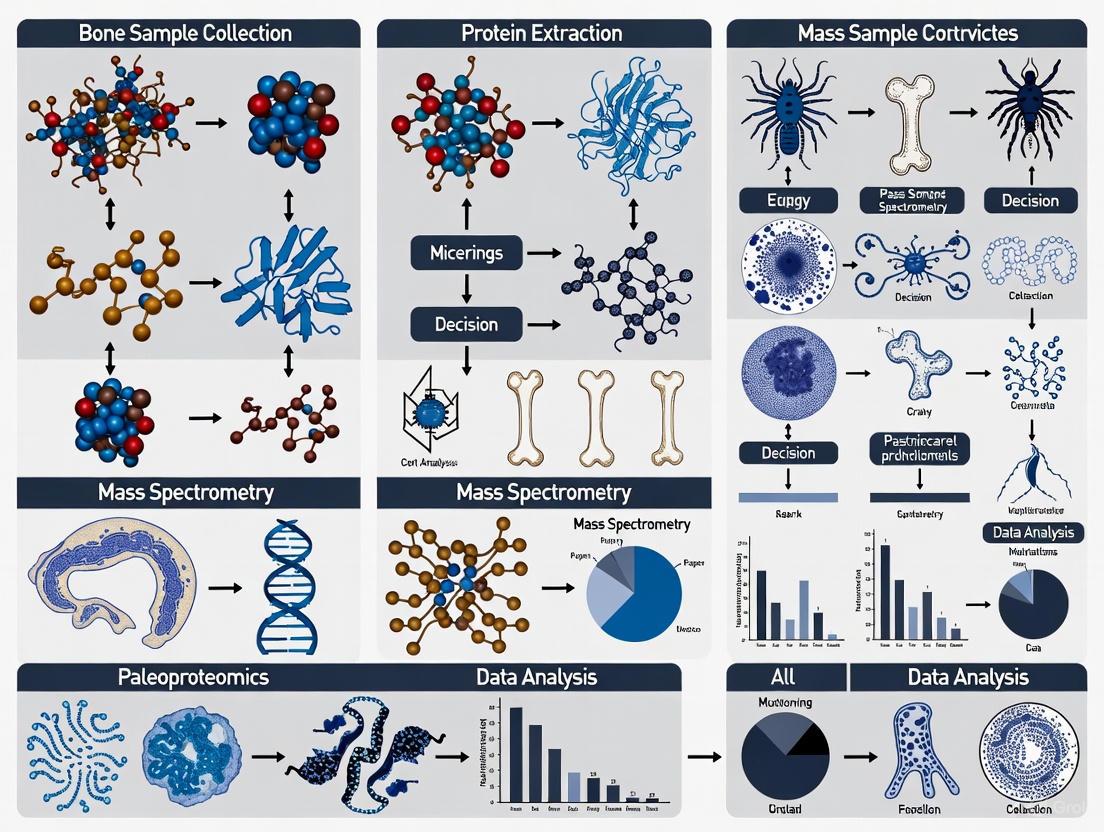
This comprehensive review explores the rapidly advancing field of paleoproteomics and its transformative application for disease diagnosis in archaeological human remains.
Unlocking Ancient Diseases: Paleoproteomics for Pathological Diagnosis in Archaeological Bone
Abstract
This comprehensive review explores the rapidly advancing field of paleoproteomics and its transformative application for disease diagnosis in archaeological human remains. Targeting researchers, scientists, and drug development professionals, we examine how ancient proteins preserved in skeletal tissues provide direct molecular evidence of past pathological conditions, from periodontal disease to systemic infections. The article covers foundational principles of protein preservation in archaeological contexts, cutting-edge methodological approaches using mass spectrometry, optimization strategies for challenging samples, and validation through case studies comparing ancient and modern pathogens. By synthesizing current research and future directions, this work highlights how paleoproteomic analysis of ancient diseases contributes to understanding pathogen evolution, host-pathogen interactions, and the deep history of human health, with potential implications for modern biomedical research.
The Bioarchive of Ancient Disease: Understanding Protein Preservation in Archaeological Bone
The analysis of ancient proteins (paleoproteomics) has emerged as a revolutionary tool for investigating disease in archaeological bone research. This utility is fundamentally rooted in the superior longevity of proteins compared to DNA in mineralized tissues. Proteins are large biomolecules built from linear sequences of amino acids folded into complex three-dimensional forms, and their chemical composition and structural properties confer remarkable stability over millennial timescales [1]. For researchers and drug development professionals, understanding these principles of protein survival is critical for accessing molecular information about past health, evolution of pathogens, and host-pathogen interactions from contexts where DNA preservation fails. Proteins routinely outlast even the oldest surviving DNA, persisting into deep time where genetic information is no longer retrievable [1]. This application note details the structural, chemical, and methodological principles underlying protein longevity and provides practical protocols for leveraging these properties in archaeological disease research.
Fundamental Principles of Protein Preservation
Structural and Chemical Basis of Protein Longevity
The exceptional survival of proteins in archaeological contexts derives from several key structural and chemical properties:
Atomic Economy and Molecular Stability: Proteins pack similar sequence information into approximately one-sixth the number of atoms compared to DNA. For example, a 50 bp fragment of DNA (30.4 kDa) has a larger mass than many intact proteins, including β-lactoglobulin (18.4 kDa) and hemoglobin (15.9 kDa). With fewer atoms, fewer chemical bonds, and more compact structures, proteins degrade more slowly than DNA [1].
Mineral Association and Protection: Proteins, particularly non-collagenous proteins, can associate with bone hydroxyapatite crystals, creating a protected microenvironment that shields them from degradation. This association may be more crucial for certain proteins than for DNA, as indicated by studies showing that ancient DNA (aDNA) survival correlates more strongly with this mineral association than general protein abundance [2].
Folding and Aggregation: The complex three-dimensional structures of proteins, driven by diverse amino acid side chains and post-translational modifications, facilitate folding and aggregation that physically protect vulnerable peptide bonds from chemical attack and enzymatic degradation [1].
Comparative Survival: Proteins vs. DNA
Table 1: Comparative Preservation Properties of Ancient Proteins and DNA
| Property | Ancient Proteins | Ancient DNA |
|---|---|---|
| Typical Survival Timeline | Up to millions of years [1] | ~1 million years in exceptional cases |
| Information Density | High (sequence and tissue-specific expression) [1] | Very high (complete genetic code) |
| Chemical Stability | Higher (fewer bonds, compact structure) [1] | Lower (larger, more fragile molecule) |
| Mineral Association | Strong (binds to hydroxyapatite) [2] | Variable |
| Tissue Specificity | Yes (e.g., osteocalcin in bone) [1] | No (same in all tissues) |
| Abundance in Tissues | High (multiple copies per cell) [1] | Low (few copies per cell) |
Experimental Protocols for Studying Ancient Proteins in Disease Contexts
Protocol 1: Tandem aDNA and Protein Extraction from Mineralized Tissues
This protocol, adapted from concretion research [3], enables parallel biomolecular extraction from precious archaeological samples.
Materials:
- Archaeological bone or tooth sample (50-200 mg)
- Liquid nitrogen and cryogenic mortar/pestle
- Demineralization buffer (0.5 M EDTA, pH 8.0)
- Extraction buffer (50 mM Tris-HCl, 150 mM NaCl, 0.1% SDS)
- Proteinase K (20 mg/mL)
- Phenol:chloroform:isoamyl alcohol (25:24:1)
- Centrifugal filters (10 kDa MWCO)
- SpeedVac concentrator
Procedure:
- Sample Preparation: Surface-clean bone/tooth fragment using abrasive cleaning. Aliquot into two portions: one for aDNA, one for proteomics.
- Demineralization: Incubate 100 mg powdered sample in 1 mL demineralization buffer at 4°C for 24-72 hours with agitation.
- Biomolecule Extraction:
- Add extraction buffer and Proteinase K to final concentration of 0.5 mg/mL.
- Incubate at 56°C for 2-4 hours with gentle agitation.
- Separation:
- Centrifuge at 10,000 × g for 10 minutes.
- Transfer supernatant to fresh tube for protein analysis.
- Retpellet for aDNA extraction using standard protocols.
- Protein Purification:
- Precipitate proteins using ice-cold acetone (4:1 v/v) at -20°C overnight.
- Centrifuge at 14,000 × g for 30 minutes at 4°C.
- Wash pellet with cold acetone, air dry, and resuspend in MS-compatible buffer.
Protocol 2: Data-Independent Acquisition (DIA) Mass Spectrometry for Ancient Proteomes
This protocol optimizes protein identification from complex ancient mixtures where protein abundance is low.
Materials:
- LC-MS/MS system with high-resolution mass spectrometer (Orbitrap preferred)
- C18 reverse-phase LC columns
- Mobile phase A: 0.1% formic acid in water
- Mobile phase B: 0.1% formic acid in acetonitrile
- Trypsin (sequencing grade)
- Ammonium bicarbonate (50 mM, pH 8.0)
Procedure:
- Protein Digestion:
- Reduce proteins with 10 mM DTT at 56°C for 30 minutes.
- Alkylate with 55 mM iodoacetamide at room temperature for 30 minutes in darkness.
- Digest with trypsin (1:50 enzyme:substrate) at 37°C overnight.
- LC-MS/MS Analysis:
- Desalt peptides using C18 stage tips.
- Reconstitute in 0.1% formic acid.
- Separate using 60-120 minute gradient (5-35% mobile phase B).
- Acquire MS data using DIA method with variable isolation windows.
- Data Analysis:
- Process using specialized paleoproteomics software (e.g., MaxQuant with custom ancient databases).
- Search against appropriate taxonomic sequence databases.
- Apply strict authentication criteria (deamination, degradation patterns).
Visualization of Key Concepts
Protein Preservation Mechanisms in Mineralized Tissues
Paleoproteomic Workflow for Disease Diagnosis
Research Reagent Solutions for Paleoproteomics
Table 2: Essential Research Reagents for Ancient Protein Analysis
| Reagent/Category | Specific Examples | Function in Paleoproteomics |
|---|---|---|
| Demineralization Agents | EDTA, HCl | Dissolves mineral matrix to release bound proteins [3] |
| Proteolytic Enzymes | Trypsin, Proteinase K | Digests proteins into measurable peptides [1] |
| Separation Media | C18 reverse-phase columns, SDS-PAGE gels | Separates complex protein/peptide mixtures [4] |
| Mass Spectrometry Standards | iRT kits, stable isotope-labeled peptides | Enables quantification and quality control [5] |
| Authentication Markers | Deamidation, oxidation, racemization metrics | Verifies ancient origin and assesses preservation [2] [1] |
| Bioinformatic Tools | MaxQuant, PEAKS, custom paleoproteomic databases | Identifies ancient proteins from degraded sequences [4] [1] |
Applications in Disease Diagnosis: Case Evidence
The principles of protein longevity enable specific applications in archaeological disease diagnosis:
Inflammatory Marker Detection: Studies of modern inflammatory proteins including C-reactive protein (CRP), serum amyloid A (SAA), and calprotectin (S100A8/9) demonstrate remarkable stability of these biomarkers and their proteoforms, even under suboptimal conditions [5]. This stability profile suggests potential for detecting ancient inflammatory responses.
Neurological and Autoimmune Markers: Contemporary research has identified cerebrospinal fluid proteins including CXCL13, LTA, FCN2, ICAM3, LY9, SLAMF7, TYMP, CHI3L1, FYB1, TNFRSF1B, and neurofilament light chain (NfL) as biomarkers for disease activity and progression in multiple sclerosis [6]. Similar inflammatory and degenerative processes may be detectable in ancient remains through conserved protein epitopes.
Microbial Protein Detection: Analysis of archaeological dental calculus and concretions has demonstrated preservation of oral microbial proteins, enabling reconstruction of past oral microbiomes and detection of pathogenic species [3].
The principles of protein longevity—rooted in structural stability, mineral association, and molecular economy—create a robust foundation for investigating ancient diseases through paleoproteomics. As mass spectrometry technologies advance and protein databases expand, the application of these principles will enable increasingly sophisticated diagnosis of pathological conditions in archaeological remains, providing unique insights into the evolutionary history of human disease and host-pathogen interactions across deep time.
For researchers in paleoproteomics aiming to diagnose ancient diseases from archaeological bone, the success of molecular recovery is fundamentally dictated by taphonomy—the study of what happens to an organism from death until discovery. Bone acts as a remarkable molecular time capsule, preserving proteins and DNA within its mineral matrix over millennia. However, this preservation is not guaranteed; it is a function of complex post-mortem processes that are either conducive to or destructive of molecular integrity. This Application Note details the critical taphonomic factors and optimal preservation environments that enable the recovery of authentic ancient proteins, providing a foundational framework for disease diagnosis in archaeological contexts.
Critical Environmental Factors for Molecular Preservation
The longevity of proteins and DNA within bone is governed by a set of interdependent environmental conditions. Understanding these factors is the first step in predicting molecular survival and interpreting biomolecular data.
Table 1: Environmental factors influencing biomolecular preservation in bone.
| Factor | Optimal Condition for Preservation | Detrimental Condition | Primary Effect on Biomolecules |
|---|---|---|---|
| Temperature | Low, Stable (e.g., permafrost) [7] [8] | High, Fluctuating [9] [8] | Accelerates hydrolysis and oxidation; each 10°C increase can double degradation rate [8]. |
| Hydrology | Stable, Anoxic Waterlogging [10] [8] | Fluctuating Water Tables [10] | Promotes hydrolysis; stable anoxic conditions inhibit microbial activity [10] [8]. |
| Soil pH | Alkaline (e.g., limestone, calcareous soils) [11] [8] | Acidic (e.g., peaty soils) [10] [8] | Dissolves inorganic bone mineral (hydroxyapatite), exposing collagen and DNA to degradation [10]. |
| Geology & Soil Type | Fine-Grained, Clay-Rich Soils [8] | Porous, Sandy Soils [8] | Clay creates a stable, less permeable, sometimes anoxic environment, limiting microbial and oxidative damage [8]. |
| Bone Micro-Environment | Dense Cortical Bone [7] | Cancellous (Trabecular) Bone [7] | Dense bone slows degradation rate and limits contamination by slowing environmental exchange [7]. |
Visualizing the Taphonomic Pathway
The following diagram illustrates the logical relationship between the depositional environment, the taphonomic processes acting on the bone, and the resulting molecular outcome critical for paleoproteomic analysis.
Experimental Protocols for Assessing Molecular Preservation
Robust experimental workflows are essential to characterize bone preservation and extract authentic ancient molecules. The following protocols are adapted from current methodologies in the field.
Protocol: Assessing Bone Diagenesis and Protein Preservation via FTIR Spectroscopy
This non-destructive method provides a quick assessment of the bone's organic and inorganic composition, helping to screen samples for further proteomic analysis [12].
1. Sample Preparation:
- Reagent: Potassium Bromide (KBr). Function: Transparent matrix for forming pellets for FTIR analysis.
- Clean the bone surface to remove contaminants. Using a drill with a tungsten carbide bit, collect ~5-10 mg of bone powder from a clean, internal portion of the cortical bone.
- Carefully mix 1 mg of bone powder with 300 mg of dried KBr. Press the mixture under vacuum in a hydraulic press at 10 tonnes for 2 minutes to form a transparent pellet.
2. Instrumental Analysis:
- Acquire FTIR spectra in the mid-infrared range (4000-400 cm⁻¹) with a resolution of 4 cm⁻¹.
- Collect 64 scans per sample to ensure a high signal-to-noise ratio.
3. Data Processing:
- Calculate the Infrared Splitting Factor (IRSF) or Crystallinity Index by measuring the absorbance at 605 cm⁻¹ and 565 cm⁻¹, using the formula: IRSF = (A₆₀₅ + A₅₆₅) / A₅₉₅, where A₅₉₅ is the absorbance of the ν₄ PO₄³⁻ band. Higher IRSF values indicate increased apatite crystallinity and greater diagenetic alteration, often correlating with collagen loss.
- The organic-to-mineral ratio can be estimated by measuring the area of the amide I band (~1660 cm⁻¹) relative to the ν₁, ν₃ phosphate band (~1035 cm⁻¹).
Protocol: Recovery of Ancient Proteins via Liquid Chromatography-Mass Spectrometry (LC-MS/MS)
This is the core proteomic workflow for identifying and characterizing proteins in archaeological bone, enabling phylogenetic and disease marker studies [13].
1. Demineralization and Protein Extraction:
- Reagent: EDTA (Ethylenediaminetetraacetic acid). Function: Chelating agent that demineralizes the bone, releasing trapped proteins without damaging them.
- Reagent: Ammonium Bicarbonate (AMBIC) Buffer. Function: Provides a stable alkaline pH environment for enzymatic digestion.
- Grind 100 mg of bone to a fine powder under liquid nitrogen.
- Demineralize the powder in 1 mL of 0.5 M EDTA (pH 8.0) at 4°C for 24-48 hours with constant agitation. Centrifuge and carefully remove the supernatant.
- Wash the resulting insoluble collagen pellet with HPLC-grade water and resuspend in 50-100 µL of 50 mM AMBIC buffer.
2. Protein Digestion:
- Reagent: Trypsin. Function: Protease enzyme that cleaves proteins at specific amino acids (lysine and arginine), generating peptides suitable for MS analysis.
- Reagent: Dithiothreitol (DTT) and Iodoacetamide (IAA). Function: DTT reduces disulfide bonds; IAA alkylates cysteine residues to prevent reformation, stabilizing the protein structure for digestion.
- Add DTT to a final concentration of 5 mM and incubate at 60°C for 30 minutes to reduce disulfide bonds.
- Cool, then add IAA to 15 mM and incubate in the dark at room temperature for 30 minutes.
- Add sequencing-grade trypsin at a 1:50 enzyme-to-substrate ratio and incubate at 37°C for 16-18 hours.
3. Peptide Clean-up and Analysis:
- Reagent: Formic Acid. Function: Acidifies the peptide solution to stop enzymatic digestion and prepare it for LC-MS loading.
- Reagent: Acetonitrile. Function: Organic solvent used in reverse-phase chromatography to elute peptides from the column.
- Acidify the digest with 1% formic acid to stop the reaction.
- Desalt the peptides using C18 solid-phase extraction tips or StageTips.
- Analyze the peptides by nano-flow LC-MS/MS using a reverse-phase C18 column and a data-dependent acquisition method on a high-resolution mass spectrometer.
The Scientist's Toolkit: Essential Reagents for Paleoproteomics
Table 2: Key research reagents for the analysis of biomolecules from archaeological bone.
| Research Reagent | Function in Protocol | Key Characteristic |
|---|---|---|
| EDTA | Demineralizes bone to release proteins without degradation [9]. | Chelating agent that binds calcium ions. |
| Guanidine HCl | Protein denaturant used in complete demineralization extraction methods for DNA [11]. | Disrupts hydrogen bonding and hydrophobic interactions. |
| Trypsin | Protease for digesting proteins into peptides for LC-MS/MS analysis [13]. | Cleaves specifically at lysine and arginine residues. |
| Solid Sodium Chloride (NaCl) | Superior substrate for room-temperature storage and transport of bone samples, preventing DNA degradation [14]. | Desiccating, non-toxic, and non-hazardous. |
| Ethanol-EDTA | Storage buffer that preserves DNA by dehydrating tissue and inhibiting nucleases [14]. | Dehydrating and nuclease-inhibiting. |
| Formic Acid | Acidifies peptide solutions for LC-MS/MS analysis and can be used to dissolve highly insoluble residues [13]. | Volatile acid compatible with mass spectrometry. |
| Ammonium Bicarbonate Buffer | Provides optimal pH for enzymatic digestion during proteomic workflows [13]. | Volatile buffer that does not interfere with MS analysis. |
The diagnosis of ancient disease through paleoproteomics is intrinsically linked to a deep understanding of bone taphonomy. Optimal molecular preservation occurs in environments that act as stable, closed systems—specifically, in cold, dry, anoxic, and chemically neutral to alkaline conditions. By applying the standardized protocols for assessing diagenesis and extracting proteins, and by utilizing the recommended reagents for sample stabilization and analysis, researchers can significantly improve the reliability and reproducibility of their findings. Adherence to these principles and methods ensures that the molecular time capsule of bone can be opened effectively, unlocking its profound potential to illuminate health and disease across deep time.
Proteomic profiling has emerged as a powerful tool for uncovering the molecular landscape of diseased skeletal tissues. By providing an unbiased, global analysis of protein expression, proteomics enables the identification of pathological signatures that drive disease processes. Within the growing field of paleoproteomics, these signatures offer a critical lens through which to diagnose ancient diseases from archaeological human remains [1] [15]. Unlike DNA, proteins can persist in skeletal tissues for millions of years, surviving in contexts where other biomolecules degrade [1]. This longevity makes proteomic analysis particularly valuable for investigating disease states in archaeological bone, revealing insights into the health, diet, and lives of past populations. This application note explores how modern proteomic techniques reveal disease-specific alterations in skeletal tissue and details protocols for applying these methods within paleoproteomics research.
Disease-Associated Proteomic Alterations in Skeletal Tissue
Modern clinical studies reveal that diseases trigger distinct and measurable changes in the proteomic profile of skeletal muscle and bone. The table below summarizes key proteomic alterations identified in relevant pathological conditions.
Table 1: Proteomic Signatures in Skeletal Tissue Pathologies
| Disease | Key Upregulated Proteins/Pathways | Key Downregulated Proteins/Pathways | Functional Consequences |
|---|---|---|---|
| Inclusion Body Myositis (IBM) [16] | KDM5A (histone demethylase), myogenin, inflammatory mediators | RB1 (inhibited upstream regulator), proteins in cellular energy metabolism | Failed myogenesis, chronic inflammation, mitochondrial abnormalities |
| Muscular Dystrophies [17] | Transcriptomic signatures of satellite cell activity (e.g., in FSHD, DMD) | — | Chronic muscle repair/regeneration stimulation, correlates with clinical severity |
| Degenerative Parkinsonisms [18] | Mitochondrial proteins (OXPHOS complexes), proteasomal subunits, immunological/inflammation pathways | Neuronal and endothelial cell markers | Neuronal loss, mitochondrial dysfunction, neuroinflammation |
| General Muscle Pathology [19] | — | Sarcoplasmic reticulum Ca2+ pumps (SERCA), various metabolic enzymes | Disrupted calcium handling, impaired energy metabolism |
Analysis of Inclusion Body Myositis (IBM) patient muscle tissue identified 627 significantly differentially expressed proteins compared to healthy controls. This signature reflected core pathological features: inflammatory processes, dysregulated cellular energy metabolism, and, most notably, a failure of proper myogenesis, or muscle tissue regeneration [16]. The study pinpointed KDM5A, a histone demethylase, as a top activated upstream regulator that interconnects these disease processes. Immunohistochemistry validated a significant increase in KDM5A within myogenin-positive myonuclei in IBM patient tissue, underscoring its role in disturbed muscle regeneration [16].
In other neuromuscular diseases, such as facioscapulohumeral muscular dystrophy (FSHD), Duchenne muscular dystrophy (DMD), and myotonic dystrophy type 1, transcriptomic signatures derived from single-cell RNA sequencing data can quantify satellite cell activity—a key indicator of muscle regeneration—in bulk muscle transcriptomic data. The expression of these signatures correlates with direct cell counts and increasing clinical severity, providing a powerful tool for assessing regenerative capacity in diseased muscle [17].
Furthermore, proteomic studies of neurodegenerative parkinsonisms, which often involve extensive skeletal muscle complications, reveal disease-specific pathways. While Parkinson's disease (PD) and progressive supranuclear palsy (PSP) show strong, albeit distinct, mitochondrial signatures, multiple system atrophy (MSA) is dominated by immunological and inflammation-related pathways [18]. This demonstrates how proteomics can disentangle the molecular basis of different diseases with overlapping symptoms.
Experimental Protocols for Skeletal Paleoproteomics
The following section outlines a standardized workflow for the proteomic analysis of ancient skeletal tissue, from sample preparation to data analysis, with specific considerations for degraded archaeological material.
Sample Preparation and Protein Extraction
Protocol for Ancient Bone/Tooth Powder Demineralization and Extraction
- Material Preparation: Under a clean fume hood, grind a fragment of ancient bone or tooth to a fine powder using a sterile mortar and pestle. To minimize contamination, wear gloves and consider cleaning the specimen's surface prior to grinding.
- Demineralization: Transfer between 50-100 mg of bone powder to a low-protein-binding microcentrifuge tube. Add 1 mL of ice-cold 0.5 M EDTA (pH 8.0). Vortex and incubate on a rotating mixer for 24-48 hours at 4°C to dissolve the mineral matrix.
- Pellet Collection: Centrifuge at 14,000 × g for 15 minutes at 4°C. Carefully discard the supernatant. Wash the resultant pellet with 500 µL of 50 mM ammonium bicarbonate (AmBic) to remove residual EDTA. Centrifuge again and discard the wash supernatant.
- Protein Extraction and Digestion: Add a denaturing and reducing buffer (e.g., 8 M urea, 500 mM Tris HCl, pH 8.5) to the pellet. For ancient samples, a critical step is the addition of a complete ultra-protease inhibitors mixture to prevent further degradation by ancient enzymes [20].
- Protein Quantification: Assay the protein concentration of the extract using the BCA method, following the manufacturer's instructions [20].
Liquid Chromatography-Tandem Mass Spectrometry (LC-MS/MS)
Protocol for Data-Dependent Acquisition (DDA) on Ancient Protein Digests
- Sample Loading: Desalt and concentrate the peptide mixture using a C18 stage tip. Reconstitute the cleaned peptides in a loading solvent (e.g., 2% acetonitrile, 0.1% formic acid). Inject the sample onto a nanoLC system equipped with a C18 trap column.
- Chromatographic Separation: Use a analytical C18 nano-column (e.g., 25 cm length) for peptide separation. Employ a non-linear or linear gradient over 55-120 minutes, moving from a low to a high organic phase (e.g., 3-40% acetonitrile with 0.2% formic acid) [16] [20].
- Mass Spectrometric Analysis: Couple the LC system online to a high-resolution mass spectrometer (e.g., Q-Exactive Plus Orbitrap). Operate in Data-Dependent Acquisition (DDA) mode with the following settings [16] [20]:
- MS1 Survey Scan: Resolution of 35,000-70,000 over a 400-1250 m/z range.
- MS2 Fragmentation: Select the top 10-40 most intense ions for fragmentation via Higher-Energy Collisional Dissociation (HCD). Acquire MS2 spectra at a resolution of 15,000-17,500.
Bioinformatic Data Analysis
Protocol for Protein Identification and Differential Expression
- Database Search: Convert the raw MS/MS data to a compatible format (e.g., .mgf). Search the spectra against a relevant protein sequence database (e.g., UniProt/SwissProt) using search engines such as SEQUEST (in Proteome Discoverer), Paragon (in Protein Pilot), or X! Tandem (in Peptide Shaker) [16] [20].
- Search Parameters:
- Digestion enzyme: Trypsin (specific or semi-specific).
- Modifications: Carbamidomethylation of cysteine as a fixed modification. Deamidation of asparagine and glutamine, and methionine oxidation as variable modifications are critical for ancient samples [1].
- Mass Tolerance: Precursor mass tolerance of 10-20 ppm; fragment mass tolerance of 10-50 mmu.
- Data Filtering and Analysis: Filter the results using a False Discovery Rate (FDR) of less than 1% for high-confidence identifications [16]. For differential expression, use software like Perseus to perform statistical tests (t-test) and fold-change analysis on normalized label-free or isobarically-labeled (e.g., iTRAQ) data [16]. Pathway analysis tools like Ingenuity Pathway Analysis (IPA) can identify upstream regulators and affected biological pathways [16].
The following workflow diagram integrates these protocols into a single, coherent process for paleoproteomic analysis.
The Scientist's Toolkit: Essential Reagents and Materials
Successful paleoproteomic analysis requires specific reagents and materials to handle the unique challenges of ancient, degraded proteins. The following table lists key solutions for this research.
Table 2: Essential Research Reagents for Skeletal Paleoproteomics
| Research Reagent | Function/Application | Key Considerations |
|---|---|---|
| EDTA (Ethylenediaminetetraacetic acid) | Demineralization of bone/tooth powder to release trapped proteins. | Use 0.5 M EDTA, pH 8.0; critical for accessing intra-crystalline protein in ancient samples. |
| Urea & Tris-HCl Lysis Buffer | Protein denaturation and extraction from the organic matrix. | A standard buffer is 8 M Urea, 500 mM Tris-HCl, pH 8.5; effective for solubilizing degraded proteins. |
| Protease Inhibitor Cocktail | Inhibition of endogenous and exogenous proteases to prevent further protein degradation. | Essential for ancient samples where residual proteolytic activity may persist. |
| Trypsin, MS-Grade | Proteolytic digestion of extracted proteins into peptides for LC-MS/MS analysis. | The enzyme of choice for bottom-up proteomics due to its specificity and predictable cleavage. |
| Iodoacetamide (IAA) | Alkylation of cysteine residues to prevent disulfide bond reformation. | Must be prepared fresh and used in the dark; part of standard sample preparation. |
| C18 Stage Tips / Columns | Desalting and concentration of peptide mixtures prior to LC-MS/MS. | Uses reverse-phase chemistry; crucial for cleaning complex ancient sample extracts. |
| iTRAQ / TMT Reagents | Isobaric chemical tags for multiplexed relative quantitation of proteins across samples. | Allows pooling of multiple samples, reducing run-to-run variability (e.g., 8-plex iTRAQ) [16]. |
Concluding Remarks
The identification of pathological signatures through proteomic profiling provides an unprecedented opportunity to diagnose and understand disease in ancient skeletal remains. As mass spectrometry sensitivity and bioinformatic tools continue to advance, the ability to detect low-abundance proteins and characterize post-translational modifications will improve, further illuminating the "dark proteome" of archaeological tissues [15]. The protocols and tools outlined herein provide a foundation for integrating paleoproteomics into the broader study of health and disease across human history, offering a direct molecular window into the past.
Paleoproteomics has emerged as a powerful tool for investigating ancient diseases, offering insights into pathogen evolution and host-pathogen interactions across centuries. This application note details a paleoproteomic case study of an ancient human skeleton from the Okhotsk period (5th to 13th century) in Northern Japan that exhibited abnormal dental calculus deposition and severe periodontal disease [21]. The analysis focuses on identifying bacterial pathogenic factors and host defense responses through dental calculus analysis, providing a framework for applying protein-based methodologies to archaeological bone research. Dental calculus, a calcified oral plaque, preserves a rich biomolecular record of an individual's oral microbiome and physiological response to disease [22]. This study demonstrates how paleoproteomics can reveal the etiology of ancient diseases, complementing traditional morphological analyses of skeletal remains and offering new avenues for understanding the co-evolution of humans and their pathogens [21].
Background and Archaeological Context
Subject Individual HM2-HA-3
The research focuses on skeleton HM2-HA-3, a female individual aged 34–54 years at death from the Hamanaka 2 site on Rebun Island, Hokkaido, Japan [21]. This individual presents an exceptional case of pathological conditions, characterized by extremely severe oral dysfunction due to advanced periodontal disease. The most notable feature is the abnormal deposition of massive dental calculus, particularly on the right side of the dentition, where the occlusal surfaces of the right upper second and third molars are completely covered by calculus deposits [21]. The skeleton also exhibits periodontal disease manifestations including resorption of the alveolar process, apical lesions with cementum hyperplasia, and severe horizontal alveolar bone resorption. The mandibular right molars had been completely lost ante-mortem with severe resorption of the crest, suggesting the right side of the jaws became almost completely unusable for masticatory function relatively early in life [21].
Okhotsk Cultural Context
HM2-HA-3 was part of the Okhotsk culture, distributed along southern Sakhalin Island, the northeastern coast of Hokkaido, and the Kuril Islands during the fifth to thirteenth centuries [21]. The Okhotsk people predominantly subsisted on marine resources, with isotopic analyses indicating marine foods comprised more than 80% of their dietary protein intake. Despite better general oral health markers compared to contemporaneous Jomon hunter-gatherers, HM2-HA-3 represents an extreme pathological case not observed in other Okhotsk individuals [21]. Radiocarbon dating places this individual in the earlier Okhotsk period (485–760 cal AD), with stable isotope analysis (δ13C: -13.0‰, δ15N: 19.3‰) confirming a primarily marine diet consistent with other Okhotsk individuals from the same site [21].
Experimental Design and Methodology
Research Objectives
The paleoproteomic investigation aimed to address two primary research questions: (i) whether the pathogenic factors associated with severe periodontal disease in this ancient individual differed from modern and ancient human individuals with lower calculus deposition, and (ii) to what extent the extreme oral pathological conditions caused pathological stress to the host [21]. The study leveraged the exceptional preservation of proteins in dental calculus to reconstruct both the oral microbiome and the host's immune response, providing a comprehensive picture of ancient periodontal disease etiology and progression.
Sample Preparation and Processing
Table 1: Key Research Reagents and Materials for Paleoproteomic Analysis of Dental Calculus
| Reagent/Material | Function/Application | Specifications/Alternatives |
|---|---|---|
| Dental calculus sample | Source of ancient host and bacterial proteins | Supragingival calculus from archaeological context |
| Urea-based extraction buffer | Cell membrane disruption and protein liberation | Effective for ancient soft tissues and mineralized deposits [23] |
| Liquid chromatography system | Protein separation prior to mass spectrometry | High-resolution separation of complex protein mixtures |
| Mass spectrometer | Protein identification and quantification | Shotgun proteomics approach for untargeted analysis |
| Protein sequence databases | Identification of ancient host and microbial proteins | Custom databases including modern oral microbiomes |
The dental calculus analysis followed established paleoproteomic protocols with modifications optimized for ancient dental calculus [21]. The workflow began with careful removal of dental calculus from the tooth surfaces, followed by demineralization and protein extraction. For the analysis of HM2-HA-3, researchers employed shotgun proteomics using nanoflow liquid chromatography-tandem mass spectrometry (nLC-MS/MS) to identify both human and bacterial proteins preserved in the calculus matrix [21]. The methodology has been enhanced by recent advances in ancient protein analysis, including the use of urea for effective disruption of cell membranes in ancient samples [23] [24] and high-field asymmetric-waveform ion mobility spectrometry to improve protein identification rates by up to 40% for complex ancient samples [23].
Data Analysis and Validation
Protein identifications were validated using multiple criteria, including deamidation rates as a marker of protein antiquity. For human proteins in the HM2-HA-3 calculus, deamidation rates ranged between 38.7–54.8% for asparagine and 30.7–37.7% for glutamine, significantly higher than modern proteins (typically <20%), confirming their ancient origin [21]. The calculus displayed a high (92.1%) OSSD score, indicating excellent protein preservation [21]. Taxonomic assignment of bacterial proteins was performed against comprehensive protein sequence databases, with particular attention to oral pathogens associated with periodontal disease in modern populations.
Diagram 1: Paleoproteomic workflow for dental calculus analysis, showing key steps from sample collection to data validation.
Results and Data Analysis
Proteomic Profile of Dental Calculus
The shotgun mass-spectrometry analysis identified 96 protein groups from the dental calculus of HM2-HA-3 after excluding keratins and common laboratory contaminants [21]. The identified proteins comprised 81 human proteins and 15 bacterial proteins, providing a comprehensive view of both the host response and microbial challenge.
Table 2: Protein Identification Summary from HM2-HA-3 Dental Calculus
| Category | Number of Proteins Identified | Key Proteins/Pathogens | Biological Significance |
|---|---|---|---|
| Human Proteins | 81 | Peptidoglycan recognition protein 1, Neutrophil elastase | Defense/immunity response (13.9% of identified human proteins) |
| Red Complex Bacteria | 2 (of 3) | Porphyromonas gingivalis, Treponema denticola | Core pathogens in severe periodontal disease |
| Other Periodontal-associated Bacteria | Multiple | Selenomonas sputigena, Fretibacterium fastidiosum | Secondary pathogens in modern periodontitis |
| Additional Bacterial Taxa | 13 total taxa identified | Actinomyces dentalis, Actinomyces israelii | Oral commensals and opportunistic pathogens |
Bacterial Pathogen Identification
The analysis revealed two pathogenic or bioinvasive proteins originating from two of the three "red complex" bacteria - Porphyromonas gingivalis and Treponema denticola - which represent the core species associated with severe periodontal disease in modern humans [21]. Additionally, researchers identified two further bioinvasive proteins from periodontal-associated bacteria (Selenomonas sputigena and Fretibacterium fastidiosum), along with proteins from Actinomyces dentalis and Actinomyces israelii [21]. The presence of these specific pathogens indicates that the bacterial etiology of severe periodontal disease in this ancient individual was remarkably similar to that observed in modern cases.
Host Defense Response
Among the 81 identified human proteins, 13.9% were classified as "defense/immunity" proteins based on Gene Ontology term analysis using the PANTHER software [21]. Key defense proteins included peptidoglycan recognition protein 1, an innate immune system protein that directly kills bacteria by recognizing and cleaving peptidoglycans on bacterial walls, and neutrophil elastase, an antimicrobial peptide abundant in saliva and gingival crevicular fluid that participates in local defense mechanisms [21]. Despite the extreme pathology observed, the proportion of defense response proteins was mostly similar to those reported in ancient and modern human individuals with lower calculus deposition, suggesting the host defense response was not necessarily more intense in this case of abnormal calculus deposition [21].
Diagram 2: Host-pathogen interactions in ancient periodontal disease, showing bacterial challenge and host defense response pathways.
Comparative Analysis
Ancient vs. Modern Periodontal Disease
The identification of red complex bacteria in the Okhotsk individual contrasts with findings from Edo-era Japan (1603–1867), where research revealed different bacterial species as the main pathogens responsible for periodontal disease, with the modern "red complex" trio not detected in the ancient bacterial genomes [25]. This suggests potential temporal evolution of oral microbiomes and periodontal pathogenesis, possibly influenced by dietary changes, population isolation, or other factors. The prevalence of periodontal disease in the Edo-era skeletons (42%) was similar to modern rates (37.3% in 2005 Japanese populations), despite differences in causative bacteria [25].
Methodological Advances
Recent methodological developments in paleoproteomics have significantly enhanced the potential for ancient disease research. A new method utilizing urea for protein extraction from ancient soft tissues has enabled identification of over 1,200 ancient proteins from just 2.5 mg of sample - the largest and most diverse paleoproteome ever reported from archaeological material [23] [24]. Furthermore, optimization of digestion times from 18 to 3 hours has been shown to reduce environmental impact without compromising taxonomic identifications, peptide marker recovery, or proteome complexity [26]. These advances make large-scale paleoproteomic studies more feasible and sustainable.
Discussion and Implications
Interpretation of Findings
The presence of similar periodontal pathogens in ancient and modern populations suggests conservation of disease etiology across centuries, while differences in specific bacterial complexes highlight the dynamic evolution of oral microbiomes. The identification of host defense proteins similar to those found in less severe cases indicates that the extreme pathology in HM2-HA-3 may not reflect a fundamentally different host response but rather an imbalance in the host-microbe interaction or exceptional preservation of calcified deposits. The case demonstrates that severe periodontal disease in antiquity shared key features with modern presentations, including the involvement of specific virulence factors and activation of recognizable immune pathways.
Bro Implications for Archaeological Research
This case study exemplifies how paleoproteomics can transform our understanding of ancient health and disease. The analysis of dental calculus provides direct molecular evidence of past infections, complementing morphological observations of skeletal pathology [22]. As fewer than 10% of human proteins are expressed in bone compared to around 75% in internal organs, the recovery of protein biomarkers from alternative sources like dental calculus significantly expands our ability to investigate pathology and health in past populations [23]. The successful identification of both host and pathogen proteins in archaeological specimens opens new possibilities for studying the long-term co-evolution of humans and their microbiota.
Applications in Modern Drug Development
For pharmaceutical researchers, ancient proteins offer unique insights into the evolution of pathogenicity and host defense mechanisms. Understanding how host-pathogen interactions have evolved over centuries can inform the development of novel therapeutic approaches targeting conserved virulence factors or immune pathways. The preservation of pathogen proteins in archaeological remains allows for studying bacterial evolution and antibiotic resistance development over long timescales, potentially identifying stable therapeutic targets less prone to resistance development.
This application note demonstrates the power of paleoproteomic approaches for investigating ancient diseases through the case study of severe periodontal disease in an Okhotsk-era skeleton. The identification of both pathogenic bacteria and host defense proteins in dental calculus provides a more comprehensive understanding of ancient disease etiology than morphological analysis alone. The methodologies described offer researchers robust protocols for extracting biological information from archaeological dental remains, contributing to broader understanding of human-pathogen co-evolution and the history of infectious diseases. As paleoproteomic techniques continue to advance, particularly with improved protein extraction from ancient soft tissues [23] [24] and more sustainable protocols [26], their application to archaeological bone research will undoubtedly expand, offering new insights into ancient health, disease, and human adaptation.
Palaeoproteomics, the study of ancient proteins, has emerged as a crucial scientific discipline for investigating evolutionary history, past human-animal interactions, and ancient diseases. However, a significant analytical challenge constrains the field: the "dark proteome." This term refers to the substantial portion of proteomic data generated from ancient samples that remains uncharacterized. In standard data-dependent acquisition (DDA) shotgun proteomics, fragment ion spectra (MS2) are matched to theoretical spectra from protein databases. In palaeoproteomics, this process fails for the vast majority of data. A 2024 analysis of 14.97 million ancient spectra from high-impact studies revealed that approximately 94% of published ancient spectra remain unidentified [27]. This unexplored molecular evidence represents an untapped reservoir of biological information with significant potential to advance archaeological bone research, particularly in the context of disease diagnosis.
The dark proteome phenomenon arises from the complex interplay between protein degradation over time and limitations in current analytical techniques. Ancient proteins are often fragmented, contain non-tryptic peptides, and exhibit complex, unpredictable post-translational modifications (PTMs) and damage patterns. Furthermore, they frequently originate from non-model organisms not well-represented in standard reference databases [27]. These factors create a substantial mismatch between acquired experimental data and the theoretical search space used in conventional database searching, leading to the high rate of unassigned spectra. Overcoming this challenge is particularly critical for disease diagnosis in archaeological bone, as pathogenic and host response proteins are often low-abundance and heavily modified, placing them squarely within the dark proteome.
Quantitative Landscape of the Challenge
The scale of the dark proteome in ancient specimens is quantifiably severe. The following table summarizes identification rates from published palaeoproteomic studies compared to general proteomic repositories [27]:
| Data Source | Total MS2 Spectra Analyzed | Average Identification Rate | Dark Proteome Percentage |
|---|---|---|---|
| Ancient Specimens (15 datasets) | 14.97 million | 5.88% | 94.12% |
| PRIDE Repository (General Proteomics) | 256 million | 25.78% | 74.22% |
| MassIVE Repository (General Proteomics) | 669 million | 26.28% | 73.72% |
The identification rates in ancient datasets show significant variability, ranging from as low as 0.47% to 12.61%, but consistently fall far below the averages observed in modern proteomics [27]. This discrepancy underscores the unique analytical challenges posed by ancient materials. It is important to note that these identified spectra include both putative ancient proteins and modern contaminants (e.g., trypsin, human keratins), meaning the proportion of genuinely assigned ancient spectra is likely even lower than the average suggests [27]. This extensive dark proteome represents a substantial loss of information from often irreplaceable archaeological materials, highlighting an urgent need for improved methodological approaches.
Optimized Experimental Protocols for Dark Proteome Exploration
Protein Extraction from Archaeological Bone
Efficient extraction is the critical first step for accessing the dark proteome. A 2023 study systematically compared six extraction methods for high-throughput palaeoproteomic bone analysis on Late Pleistocene remains with variable preservation [28]. The performance of different methods depends heavily on the preservation state of the specimen.
Protocol 1: Single-Step Acid-Insoluble Extraction (Method 1 from [28])
- Application: Best for highly degraded specimens.
- Procedure:
- Gently crush ~50 mg of bone to a fine powder in a sterile mortar and pestle.
- Transfer powder to a low-protein-binding microtube.
- Add 500 µL of 0.1 M HCl and incubate with agitation for 18 hours at 4°C.
- Centrifuge at 13,000 x g for 15 minutes.
- Transfer the acid-soluble supernatant to a new tube.
- The remaining pellet is the acid-insoluble fraction, containing proteins like collagen. Wash the pellet twice with 500 µL of 50 mM ammonium bicarbonate (AmBic).
- Suspend the final pellet in 100 µL of 50 mM AmBic for digestion.
- Rationale: This simple protocol minimizes working steps and equipment, reducing opportunities for sample loss and handling contamination. It directly targets the insoluble protein fraction, which is often better preserved in ancient bone [28].
Protocol 2: EDTA Demineralization with Protease Digestion (Method 5b from [28])
- Application: Best for well-preserved specimens where a more comprehensive proteome is sought.
- Procedure:
- Powder ~50 mg of bone as in Protocol 1.
- Demineralize the powder by adding 1 mL of 0.5 M EDTA (pH 8.0) and incubating with agitation for 24 hours at 4°C.
- Centrifuge at 13,000 x g for 15 minutes and carefully discard the supernatant.
- Wash the resulting soft pellet three times with 500 µL of 50 mM AmBic to remove residual EDTA.
- Suspend the pellet in 50 mM AmBic.
- Add a protease mix (e.g., Trypsin/Lys-C) at a 1:50 enzyme-to-protein ratio and incubate at 37°C for 18 hours with agitation.
- Rationale: Demineralization with EDTA releases proteins trapped in the bone mineral matrix, potentially accessing a wider array of proteins, including non-collagenous bone proteins and potential microbial pathogens relevant to disease diagnosis [28].
Both protocols are designed for high-throughput applications, allowing protein extraction from hundreds of specimens within three working days [28].
Data Acquisition and Analysis Strategies
Moving beyond standard database searching is essential to illuminate the dark proteome. The following workflow outlines a multi-pronged analytical strategy:
- Open Searching: This technique uses wide precursor mass tolerances to identify peptides with unanticipated modifications and sequence variations, directly targeting common sources of spectral dark matter [27].
- De Novo Sequencing: This approach infers peptide sequences directly from spectral data without relying on a protein database, making it ideal for identifying peptides from organisms not present in reference databases [27].
- Data-Independent Acquisition (DIA): Unlike standard DDA, DIA fragments all ions in sequential windows, capturing data on low-abundance peptides often missed in DDA. This improves reproducibility and quantitative potential, which is crucial for detecting subtle changes in pathogenic and host response proteins [28].
The Scientist's Toolkit: Essential Research Reagents & Materials
Successful exploration of the dark proteome requires carefully selected reagents and tools. The following table details key solutions for palaeoproteomic workflows focused on ancient bone.
| Research Reagent / Material | Function & Application in Dark Proteome Research |
|---|---|
| Hydrochloric Acid (HCl, 0.1 M) | Selective extraction of the acid-insoluble protein fraction (e.g., collagen), which is often best preserved in ancient bone. Optimal for highly degraded samples [28]. |
| EDTA (0.5 M, pH 8.0) | Chelating agent that demineralizes bone powder, releasing proteins locked within the hydroxyapatite matrix. Provides access to a broader proteome in well-preserved specimens [28]. |
| Ammonium Bicarbonate (AmBic) | A volatile buffer used throughout extraction and digestion; it is compatible with mass spectrometry and can be easily removed by lyophilization. |
| Trypsin/Lys-C Protease Mix | High-purity, mass-spec grade enzymes for protein digestion. The combination can improve cleavage efficiency for degraded proteins. A 1:50 enzyme-to-protein ratio is standard [28]. |
| Orbitrap Mass Spectrometer | High-resolution mass analyzer (e.g., Exploris, Q Exactive series) capable of the accurate mass measurements needed to resolve complex ancient samples and detect subtle mass shifts from modifications [27] [28]. |
| Customized Protein Databases | Tailored sequence databases that include predicted protein sequences from related organisms, potential microbial pathogens, and known contaminant proteins to improve peptide-spectrum matching [27]. |
Illuminating the dark proteome in ancient bone is not a single-technique endeavor but requires an integrated strategy. This begins with selecting an extraction protocol matched to the specimen's preservation—simple acid-insoluble methods for degraded bone and EDTA demineralization for well-preserved material. Subsequently, employing a multi-faceted analytical pipeline that combines open searching, de novo sequencing, and DIA acquisition is paramount for assigning identities to the millions of spectra that currently remain in the dark.
For researchers focused on disease diagnosis, this approach is particularly vital. Pathogen biomarkers and subtle host response signals are likely hidden within the unidentified 94% of data. By adopting these optimized protocols and advanced bioinformatics strategies, scientists can transform this vast reservoir of unexplored molecular evidence into profound new insights into ancient health, disease evolution, and the complex interactions between past humans and their pathogens. The ongoing development of more sensitive mass spectrometers and comprehensive, curated databases will further accelerate the exploration of this final frontier in palaeoproteomics.
From Mass Spectrometry to Diagnosis: Technical Approaches for Disease Identification
Paleoproteomics, the study of ancient proteins, has emerged as a powerful tool for investigating past diseases and biological conditions from archaeological human remains. Proteins can persist in biological tissues long after DNA degradation, providing a unique bioarchive of past physiological states [1]. The application of liquid chromatography with tandem mass spectrometry (LC-MS/MS) enables the identification and characterization of these ancient proteins, offering insights into immune responses, metabolic conditions, and disease processes that affected past populations [29]. This technical note outlines optimized workflows for LC-MS/MS analysis of archaeological bone, with specific application to disease diagnosis in paleopathological research.
The mineralized structure of bone, composed of a dense hydroxyapatite matrix, traps proteins within itself, creating a protective environment that enables remarkable preservation over centuries to millennia [30]. Unlike fresh bone specimens, archaeological bone presents unique challenges due to taphonomic alterations caused by environmental factors including UV exposure, freeze-thaw cycles, microbial erosion, and varying soil conditions [30]. Successfully navigating these challenges requires specialized protocols for protein extraction, purification, and analysis to maximize proteome recovery while minimizing interoperator variability and laboratory-induced post-translational modifications [30].
Experimental Protocols for Ancient Bone Proteomics
Sample Preparation and Demineralization
Proper sample preparation is critical for successful ancient protein recovery from archaeological bone. The following protocol has been optimized for minimally degraded protein extraction:
- Surface Decontamination: Remove surface contamination from bone samples with sandpaper or a dental drill. Clean all tools with bleach and ethanol between samples to prevent cross-contamination [29].
- Pulverization: Wrap samples (30-50 mg) in clean aluminum foil and fragment into powder using a conventional hammer or freeze mill. Powdering increases surface area for improved protein recovery [29].
- Demineralization: Demineralize powdered bone samples by washing three times with 300 μL 0.5 M EDTA (pH 8.0), followed by incubation at 4°C for 24-48 hours with agitation. This crucial step releases proteins trapped within the mineral matrix [30] [29].
- Additional Washes: Wash samples three times with 100 μL 0.1 M Tris (pH 8.0) to remove residual EDTA and prepare for protein extraction [29].
Protein Extraction and Digestion
Two primary extraction methodologies have demonstrated efficacy for ancient bone proteomics:
S-Trap (Suspension Trap) Protocol:
- Suspend demineralized bone pellets in 300 μL 6 M guanidinium hydrochloride (GuHCl), 10 mM Tris (2-carboxyethyl) phosphine, 20 mM chloroacetamide, and 200 mM Tris (pH 8.0) [29].
- Heat samples at 80°C for 2 hours, then cool to room temperature.
- Add LysC-Trypsin mix (1/100 by amount of protein) and incubate at 25°C for 30 minutes.
- Dilute to 2 M GuHCl with 25 mM Tris (pH 8.0), followed by incubation at 37°C overnight with agitation.
- Terminate digestion with 10% trifluoroacetic acid to a final concentration of 1% [29].
- After centrifugation at 14,000 g for 10 minutes, immobilize tryptic peptides in the supernatant on C18 stage tips.
Alternative Protease Digestion: For improved proteome coverage, particularly for phylogenetically informative proteins, consecutive digestion with multiple proteases enhances protein recovery:
- Perform parallel or sequential digestion with Glu-C or chymotrypsin in addition to trypsin.
- This approach recovers alternative proteome components not accessible through trypsin digestion alone, increasing proteome size and protein sequence coverage [31].
LC-MS/MS Analysis
Liquid Chromatography Parameters:
- Separate peptides on a 50 cm PicoFrit column (75 μm inner diameter) packed with 1.9 μm C18 beads.
- Use an EASY-nLC 1000 system with a 165-minute gradient for optimal peptide separation [29].
Mass Spectrometry Acquisition: Two acquisition modes are commonly employed in ancient bone proteomics:
Data-Dependent Acquisition (DDA):
- Operate mass spectrometer in data-dependent top 10-15 mode.
- Record full scan mass spectra at a resolution of 120,000 at m/z 200 over the m/z range 300-1750.
- Set target value to 3×10^6 with a maximum injection time of 20 ms [29].
- Record HCD-generated product ions with maximum ion injection time set to 108 ms through a target value set to 2×10^5 at a resolution of 60,000 with a fixed first mass set to m/z 100.
Data-Independent Acquisition (DIA):
- DIA acquisition is increasingly favored for forensic and archaeological samples as it analyzes all peptides in a mixture, improving detection of less abundant proteins.
- DIA offers superior reproducibility across runs and more accurate quantification compared to DDA approaches [30].
Applications to Disease Diagnosis in Archaeological Bone
Proteomic Profiling for Physiological Reconstruction
Shotgun proteomics of archaeological human bones enables reconstruction of physiological conditions and disease states. Analysis of rib bones from the Hitotsubashi site (AD 1657-1683) in Tokyo demonstrated the potential of this approach:
Table 1: Disease-Associated Proteins Identified in Archaeological Bone
| Protein Identified | Biological Significance | Archaeological Interpretation |
|---|---|---|
| Eosinophil peroxidase | Marker of immune response | Suggests parasitic or allergic conditions in overcrowded Edo period Tokyo [29] |
| Leukocyte-derived proteins | Evidence of bone marrow preservation | Indicates potential hematological disorders or infections [29] |
| Alpha-2-HS-glycoprotein | Negative correlation with age | Developmental marker; age estimation [29] |
| Serum albumin | General health indicator | Nutritional status assessment [29] |
| Immunoglobulin G | Humoral immune response | Evidence of past infections [29] |
The detection of leucocyte-derived proteins, possibly originating from bone marrow, provides direct evidence of immune system activity. The relatively high expression of eosinophil peroxidase suggests the influence of infectious diseases, consistent with historical records describing overcrowded and unhygienic living conditions in Edo-period Tokyo [29].
Data Analysis and Authentication
Protein Identification:
- Process MS/MS spectra with MaxQuant, Andromeda, or DIA-NN software against relevant reference proteomes.
- Search against the Human UniProtKB database for human remains, supplemented with species-specific databases when necessary [29].
- Set false-discovery rate to 1% for confident protein identification.
- Use cysteine carbamidomethylation as a fixed modification.
- Include variable modifications common in ancient samples: oxidation (M and P), Gln→pyro-Glu (N-term Q), Glu→pyro-Glu (N-term E), and deamidation (N and Q) [29].
Deamidation Measurement:
- Calculate deamidation rate as the total number of deamidated glutamine residues divided by the total number of glutamine residues.
- Use deamidation levels as an authenticity check, with higher deamidation indicating ancient origin [29].
- Note that deamidation rates can vary between tissue types within the same specimen, with fur and thread typically less deamidated than dermal and gut skin [32].
Quantitative Approaches:
- For relative quantification, use label-free methods based on the exponentially modified protein abundance index (emPAI) or spectral counting [29].
- Alternatively, employ isobaric labeling for multiplexed quantification of samples across different conditions.
Research Reagent Solutions
Table 2: Essential Research Reagents for Ancient Bone Proteomics
| Reagent/Category | Specific Examples | Function in Workflow |
|---|---|---|
| Digestion Enzymes | Trypsin, LysC, Glu-C, Chymotrypsin | Protein cleavage into analyzable peptides; using multiple proteases increases proteome coverage [31] |
| Demineralization Agents | EDTA (0.5 M, pH 8.0) | Releases proteins from hydroxyapatite bone matrix [29] |
| Denaturation/Reduction Agents | Guanidinium HCl (6 M), Tris(2-carboxyethyl)phosphine | Unfolds proteins and reduces disulfide bonds [29] |
| Alkylation Agents | Chloroacetamide | Cysteine modification to prevent reformation of disulfide bonds [29] |
| Chromatography Media | C18 beads (1.9 μm) | Reverse-phase separation of peptides prior to MS analysis [29] |
| Mass Spectrometry Systems | Exploris 480 Quadrupole-Orbitrap, Q-Exactive HF | High-sensitivity detection and fragmentation of ancient peptides [30] [29] |
Workflow Visualization
LC-MS/MS workflows have revolutionized the field of paleoproteomics, enabling sophisticated disease diagnosis from archaeological human bone. The protocols outlined here provide a framework for maximizing proteome recovery from challenging ancient samples while ensuring analytical reproducibility. The S-Trap extraction method, combined with consecutive protease digestion and DIA mass spectrometry, represents the current state-of-the-art for paleoproteomic analysis [30] [31].
For archaeological scientists investigating past human health, these methods offer unprecedented access to molecular evidence of immune responses, infectious diseases, and physiological stress captured within the mineral matrix of bone. As reference databases expand and analytical sensitivity improves, paleoproteomics promises to become an increasingly powerful tool for reconstructing disease histories and understanding human adaptation to changing environments and social conditions throughout history.
Paleoproteomics has emerged as a powerful tool for investigating ancient diseases, allowing researchers to characterize pathogenic proteins and host responses directly from archaeological remains. Dental calculus, a mineralized dental plaque, preserves a rich record of the oral microbiome and host immune factors over millennia. This application note details the protocols and analytical frameworks for identifying bacterial pathogenic factors in archaeological calculus, providing a methodological cornerstone for disease diagnosis in archaeological bone research. The identification of specific bacterial proteins, such as those from the "red complex" pathogens associated with severe periodontal disease in modern populations, enables direct insights into past disease etiology and co-evolution of hosts and pathogens [33].
Experimental Protocols
Sample Preparation and Cleaning
Archaeological dental calculus requires meticulous cleaning and preparation to remove contaminants while preserving endogenous ancient proteins.
- Surface Decontamination: Remove surface contaminants by abrading the calculus surface with a sterile dental drill bit or scalpel. Wipe the sample with sterile tissue moistened with high-performance liquid chromatography (HPLC)-grade water [33].
- Chemical Cleaning: Immerse samples in 1 mL of 0.5 M ethylenediaminetetraacetic acid (EDTA) for 30 seconds to dissolve superficial mineral layers and remove potential surface contaminants, followed by three rinses with HPLC-grade water to neutralize the EDTA [33].
- Lipid and Pesticide Removal: For samples potentially treated with conservation substances, perform a lipid removal step using a series of chloroform/methanol washes (e.g., 2:1, 1:1, and 1:2 v/v ratios) to eliminate lipids and pesticide residues that may interfere with downstream analysis [32].
- Pulverization: Crush the cleaned, dried calculus samples to a fine powder using a sterile mortar and pestle or a mixer mill, ensuring the equipment is thoroughly cleaned between samples to prevent cross-contamination.
Protein Extraction and Digestion
Efficient extraction and digestion are critical for recovering the often-degraded and low-abundance proteins from archaeological calculus.
- Protein Extraction: Demineralize approximately 10-20 mg of powdered calculus in 500 µL of 0.5 M EDTA pH 8.0 under agitation for 30 minutes at 4°C. Centrifuge the solution at 14,000 × g for 5 minutes, then collect the supernatant containing the solubilized proteins [33].
- Protein Precipitation and Clean-up: Precipitate proteins from the supernatant by adding ice-cold acetone to a final concentration of 80% (v/v) and incubating at -20°C for 12 hours. Collect the protein pellet by centrifugation at 14,000 × g for 10 minutes. Wash the pellet twice with 500 µL of ice-cold acetone and air-dry.
- Protein Digestion: Resuspend the protein pellet in 50 µL of 50 mM ammonium bicarbonate (AmBic) buffer, pH 8.0. Add sequencing-grade trypsin at a 1:50 (enzyme-to-protein) ratio and digest for 3-18 hours at 37°C. Recent research indicates that reducing digestion time from 18 to 3 hours does not significantly impact peptide recovery for taxonomic identification, while substantially reducing environmental impact [26].
- Digestion Termination and Peptide Collection: Acidify the digestion mixture with 1% formic acid (FA) to stop the reaction. Centrifuge at 14,000 × g for 5 minutes and collect the supernatant containing the peptides. Desalt the peptides using C18 solid-phase extraction tips before mass spectrometry analysis.
Liquid Chromatography-Tandem Mass Spectrometry (LC-MS/MS) Analysis
LC-MS/MS provides the high sensitivity and accuracy needed for identifying ancient bacterial proteins.
- Liquid Chromatography: Separate peptides using a nano-flow liquid chromatography system with a C18 reversed-phase column (75 µm × 150 mm, 2 µm particle size). Use a gradient of 2-35% mobile phase B (0.1% FA in acetonitrile) over 60-120 minutes at a flow rate of 300 nL/min.
- Mass Spectrometry: Acquire data using a high-resolution tandem mass spectrometer (e.g., Q-Exactive Orbitrap). Operate in data-dependent acquisition (DDA) mode with a full MS scan range of 350-1500 m/z at a resolution of 70,000. Select the top 10-15 most intense ions for fragmentation using higher-energy collisional dissociation (HCD) with normalized collision energy of 28-30%.
Table 1: Key LC-MS/MS Parameters for Palaeoproteomic Analysis
| Parameter | Setting | Rationale |
|---|---|---|
| Column Type | C18 reversed-phase | Optimal peptide separation |
| Gradient Duration | 60-120 minutes | Balances depth of analysis with throughput |
| MS1 Resolution | 70,000 | Accurate peptide mass determination |
| Fragmentation Method | HCD | Efficient fragmentation for peptide sequencing |
| Dynamic Exclusion | 30 seconds | Prevents repeated sequencing of abundant peptides |
Data Processing and Protein Identification
Bioinformatic processing transforms raw MS data into confident protein identifications.
- Database Search: Process raw MS files using search engines such as MaxQuant or Proteome Discoverer against customized databases containing human oral microbiome proteins (e.g., from the Human Oral Microbiome Database) and human proteome sequences (e.g., from UniProt). Include common contaminants (e.g., keratins, trypsin) in the database.
- Search Parameters: Set a precursor mass tolerance of 10-20 ppm and a fragment mass tolerance of 0.02-0.05 Da. Allow for variable modifications, including deamidation of asparagine and glutamine, and oxidation of methionine. Use a false discovery rate (FDR) threshold of 1% at both peptide and protein levels.
- Authentication Criteria: Assess protein deamidation rates as an authenticity marker. Ancient proteins typically show elevated deamidation rates (e.g., 30-50% for asparagine) compared to modern contaminants (typically below 20%) [33]. Calculate deamidation rates using the formula: (Deamidated spectral counts / Total spectral counts for asparagine or glutamine-containing peptides) × 100.
Data Presentation and Analysis
Systematic presentation of results enables effective comparison across samples and studies.
Table 2: Exemplary Palaeoproteomic Results from Archaeological Calculus Analysis [33]
| Sample ID | Total Protein Groups | Human Proteins | Bacterial Proteins | Key Pathogenic Factors Identified | Asn Deamidation (%) | Gln Deamidation (%) |
|---|---|---|---|---|---|---|
| HM2-HA-3 | 96 | 81 | 15 | Red complex bacterial proteins | 38.7-54.8 | 30.7-37.7 |
| Historical Parka R | Not specified | Not specified | Not specified | Seal collagen, serum albumin | ~26 | ~9 |
| Archaeological Garment E | Not specified | Not specified | Not specified | Collagen, other proteins | ~34 | ~9 |
Bacterial Pathogen Identification
The core objective is the detection of pathogenic factors from periodontitis-associated bacteria.
- Red Complex Bacteria: Focus identification efforts on key periodontal pathogens, including Porphyromonas gingivalis, Tannerella forsythia, and Treponema denticola. These organisms constitute the "red complex" strongly associated with severe periodontal disease in modern clinical studies [33].
- Marker Peptides: Identify species-specific peptide markers that allow discrimination between closely related bacterial species. For example, identify unique sequences from virulence factors such as gingipains from P. gingivalis or BspA-like proteins from T. forsythia.
- Bioinformatic Validation: Use multiple search engines and manual verification of fragmentation spectra to confirm the identification of pathogenic proteins, particularly when reference sequences for closely related species are unavailable in databases.
The Scientist's Toolkit: Essential Research Reagents and Materials
Table 3: Key Research Reagent Solutions for Palaeoproteomics of Archaeological Calculus
| Reagent/Material | Function | Application Notes |
|---|---|---|
| EDTA (0.5 M, pH 8.0) | Demineralization agent | Chelates calcium ions to release proteins from mineralized calculus matrix |
| Sequencing-Grade Trypsin | Proteolytic enzyme | Cleaves proteins at lysine and arginine residues for bottom-up proteomics |
| Ammonium Bicarbonate Buffer | Digestion buffer | Maintains optimal pH (8.0) for tryptic digestion |
| C18 Solid-Phase Extraction Tips | Peptide desalting | Removes salts and impurities prior to LC-MS/MS analysis |
| Formic Acid | Acidification | Stops enzymatic digestion and improves LC separation of peptides |
| Acetonitrile (HPLC-grade) | Mobile phase component | Organic solvent for peptide separation in reversed-phase chromatography |
Workflow Visualization
Figure 1: Palaeoproteomic workflow for bacterial protein identification from archaeological calculus, showcasing the steps from sample preparation to result validation.
The protocols outlined herein provide a robust framework for identifying bacterial pathogenic factors in archaeological dental calculus through paleoproteomic analysis. This approach enables researchers to characterize ancient oral pathogens, investigate host-pathogen interactions across time, and contribute to our understanding of disease evolution. The combination of optimized sample preparation, sensitive LC-MS/MS analysis, and rigorous bioinformatic validation offers a powerful diagnostic tool for archaeological bone research, revealing molecular evidence of disease that complements traditional osteological methods.
Paleoproteomics, the study of ancient proteins, represents a rapidly advancing field at the intersection of molecular biology, paleontology, and archaeology [1]. This discipline leverages the exceptional longevity of proteins to explore fundamental questions about the past, including the reconstruction of ancient diseases. While its origins predate the characterization of DNA, the advent of soft ionization mass spectrometry made the detailed study of ancient protein sequences truly feasible [1]. Within archaeological bone research, the analysis of preserved human defense proteins offers a novel avenue for diagnosing past disease stress. Proteins, encoded by DNA, preserve part of the heritable genetic signal of an organism and can provide information about tissue-specific expression that cannot be obtained from the genome alone [1]. This application note details the protocols for extracting and analyzing these host-response proteins from archaeological bone, framing them within the context of a broader thesis on paleoproteomic approaches to ancient disease diagnosis.
Key Host Response Proteins & Analytical Targets
The host response to infection involves the complex action of numerous proteins. In paleoproteomics, the focus is on durable, abundant proteins that can survive diagenetic processes over centuries or millennia. The table below summarizes key human defense proteins relevant to archaeological bone analysis.
Table 1: Key Human Defense Proteins as Paleoproteomic Targets
| Protein Name | Function in Host Response | Significance in Archaeological Bone |
|---|---|---|
| Neutrophil Defensins | Antimicrobial peptides targeting bacterial and fungal membranes [34]. | Indicators of acute inflammatory response; small and stable, enhancing preservation potential. |
| Lactoferrin | Iron-binding protein that limits bacterial growth by sequestering essential iron [34]. | Signals a specific immune pathway; its presence can help differentiate types of infection. |
| Cathelicidins (e.g., LL-37) | Antimicrobial peptides with broad activity against pathogens [34]. | Evidence of innate immune system activation; detectable in osseous remains. |
| Alpha-1-Antitrypsin | Serine protease inhibitor (Serpin) that modulates inflammatory processes [34]. | High abundance in blood plasma; its detection can indicate systemic inflammation. |
| Alpha-2-Macroglobulin | Protease inhibitor that inactivates a wide range of pathogenic proteases [34]. | A robust protein that survives well over time; serves as a marker for general immune activity. |
| Complement C3 | Central component of the complement system, opsonizing pathogens and promoting inflammation [34]. | Fragments like C3f can be recovered; provides direct evidence of complement pathway activation. |
Experimental Protocol: From Bone Powder to Protein Identification
This protocol is optimized for the recovery of ancient host proteins from archaeological bone fragments for downstream mass spectrometric analysis, incorporating sustainable practices to allow for large-scale screening [26].
Materials and Reagents
Table 2: Essential Research Reagents and Materials
| Item | Function/Description |
|---|---|
| Archaeological Bone Specimen | ~100 mg of dense cortical bone, powdered using a clean drill bit or mixer mill. |
| Ultrapure Water (Type 1) | Used for all solution preparations to minimize contaminating modern proteins. |
| Ammonium Bicarbonate (AMBIC) | 50 mM, pH ~8.0. Provides the buffered alkaline conditions necessary for digestion. |
| Guanidine Hydrochloride (GuHCl) | Chaotropic agent used to denature proteins and extract them from the mineral matrix. |
| Dithiothreitol (DTT) | Reducing agent to break disulfide bonds within and between proteins. |
| Iodoacetamide (IAA) | Alkylating agent to cap cysteine residues, preventing reformation of disulfide bonds. |
| Trypsin (Sequencing Grade) | Protease that cleaves proteins at the C-terminal side of lysine and arginine residues. |
| Trifluoroacetic Acid (TFA) | Used to acidify and stop the digestion reaction prior to mass spectrometry. |
| C18 Solid-Phase Extraction Tips | For desalting and concentrating the peptide mixture before LC-MS/MS analysis. |
Step-by-Step Procedure
Bone Preparation and Demineralization:
- Transfer ~100 mg of bone powder to a low-protein-binding 1.5 mL microtube or a well in a 96-well plate. Working in plates instead of individual tubes significantly reduces electricity consumption and environmental impact [26].
- Add 1 mL of 0.5 M EDTA (pH 8.0). Vortex briefly and incubate at 4°C for 24 hours under constant agitation.
- Centrifuge at 14,000 x g for 10 minutes. Carefully aspirate and discard the supernatant (EDTA).
- Wash the resulting insoluble collagenous residue with 1 mL of 50 mM ammonium bicarbonate (pH 8.0). Vortex, centrifuge, and discard the supernatant. Repeat this wash step twice.
Protein Extraction and Denaturation:
- Add 500 µL of 6 M Guanidine Hydrochloride (in 50 mM AMBIC) to the residue.
- Vortex thoroughly and incubate at room temperature for 1 hour with agitation.
- Centrifuge at 14,000 x g for 10 minutes. Transfer the supernatant, which contains the extracted proteins, to a new tube.
Protein Reduction and Alkylation:
- Add DTT to the extract to a final concentration of 5 mM. Incubate at 56°C for 45 minutes to reduce disulfide bonds.
- Allow the sample to cool to room temperature. Then, add IAA to a final concentration of 15 mM.
- Incubate in the dark at room temperature for 30 minutes to alkylate the reduced cysteine residues.
Protein Digestion:
- The solution must be diluted or exchanged into 50 mM AMBIC to reduce the GuHCl concentration below 1 M, as high chaotrope concentrations inhibit trypsin.
- Add trypsin at an enzyme-to-substrate ratio of approximately 1:50. Vortex to mix.
- Incubate at 37°C for 3 hours. Recent research demonstrates that reducing digestion time from 18 hours to 3 hours has no measurable impact on peptide recovery, sequence coverage, or taxonomic identification, while substantially reducing the environmental footprint of palaeoproteomic studies [26].
- Stop the digestion by adding TFA to a final concentration of 0.5%. The solution should become acidic (pH ~2).
Peptide Clean-Up:
- Desalt and concentrate the peptide mixture using C18 solid-phase extraction tips according to the manufacturer's instructions.
- Elute peptides in a solution of 50% acetonitrile and 0.1% TFA.
- Lyophilize the eluted peptides and reconstitute in 20 µL of 0.1% formic acid for LC-MS/MS analysis.
Data Analysis and Interpretation Workflow
The process of converting raw mass spectrometry data into biologically meaningful information about past health involves a structured bioinformatic pipeline. The following diagram visualizes this workflow, from sample preparation to final pathological interpretation.
Diagram 1: Host Protein Analysis Workflow
Key Steps in the Analytical Workflow:
- LC-MS/MS Analysis: The reconstituted peptide mixture is separated by nano-liquid chromatography (LC) and ionized before being introduced into the mass spectrometer. The instrument fragments selected peptides and records the mass-to-charge ratios of the resulting fragments, generating MS/MS spectra [1].
- Database Search: The raw MS/MS spectra are searched against protein sequence databases using search engines like MaxQuant or PEAKS. The database must include the human proteome and, critically, proteomes of suspected pathogens to identify both host and pathogen-derived proteins [34].
- Protein Identification & Quantification: Peptide-spectrum matches are statistically evaluated to generate a list of identified proteins with confidence scores. Label-free quantification methods can be applied to estimate the relative abundance of key host-response proteins [1].
- Pathway Analysis and Interpretation: The final, critical step is contextualizing the identified proteins. The coordinated detection of multiple proteins from innate immune pathways—such as defensins, complement factors, and proteases—provides robust evidence of a systemic response to infectious disease stress in the individual whose remains are being studied [34].
Application within a Paleoproteomic Thesis
Integrating host response analysis into a broader paleoproteomic thesis provides a powerful, multi-proxy approach to diagnosing disease in the past. This application can be visualized as a contributing pillar to the overall research structure.
Diagram 2: Pillars of Paleoproteomic Diagnosis
As shown in Diagram 2, host response analysis serves as a crucial pillar of indirect evidence. It can confirm a physiological response even when the pathogen itself is not detected, perhaps due to low abundance or poor preservation of its proteins. This is particularly powerful when correlated with other lines of evidence, such as the direct detection of pathogen-derived proteins or the taxonomic identification of the bone fragment via ZooMS (a peptide mass fingerprinting method) [1] [26]. The integration of these datasets allows for a more robust and nuanced reconstruction of health and disease in archaeological populations.
Dental calculus, or mineralized dental plaque, represents an exceptional biological repository for reconstructing oral health and disease in past populations. This highly mineralized deposit forms through the complex crystallization of calcium phosphate salts within the dental plaque biofilm, creating a remarkably stable preservation environment that withstands long-term diagenesis [35]. Unlike skeletal remains that undergo continuous remodeling, calculus accumulates incrementally throughout an individual's lifetime, effectively " trapping " microremains and biomolecules from oral fluids, diet, and pathogens [35]. Within paleoproteomic research frameworks focused on archaeological bone, dental calculus provides complementary data specifically illuminating oral pathological conditions.
The unique mineralization process transforms transient oral biofilms into durable archaeological substrates. As described in bioarchaeological studies, " dental calculus is essentially a mineralized or fully mineralized dental plaque, which provides a new avenue for archaeological research due to its characteristics of easy preservation, accessibility and non-pollution " [35]. This transformation creates a protective mineral matrix that encapsulates diverse biological residues, including proteins, DNA, microfossils, and microbial remains, preserving them for thousands of years. For researchers investigating ancient diseases, this makes calculus an invaluable resource for direct pathological analysis.
Within broader paleoproteomic investigations of archaeological bone, dental calculus analysis provides specific advantages for disease reconstruction:
- Direct association with oral pathologies: Calculus develops specifically at sites of active dental plaque accumulation, often in direct association with carious lesions, periodontal disease, and periapical infections.
- High-resolution temporal data: The incremental deposition pattern allows investigation of disease progression throughout an individual's lifespan.
- Multi-molecular preservation: The mineralized matrix simultaneously preserves proteins, DNA, and microscopic residues enabling cross-verification of disease signatures.
When integrated with skeletal paleopathology, dental calculus analysis enables a more comprehensive understanding of ancient disease burdens, particularly concerning oral and systemic health interactions.
Analytical Framework for Pathological Reconstruction
The reconstruction of oral pathologies from dental calculus employs a multidisciplinary analytical framework that integrates molecular, morphological, and microbiological approaches. This systematic methodology enables researchers to extract comprehensive disease signatures from the mineralized matrix, moving beyond singular lines of evidence to develop nuanced interpretations of ancient health status.
Paleoproteomic Analysis
Proteomic profiling of dental calculus focuses on identifying host-derived, dietary, and microbial proteins trapped within the mineralized matrix. The experimental workflow typically involves:
- Sample Decalcification: Powdered calculus samples are treated with weak acids (e.g., 0.1M HCl) or EDTA to dissolve the hydroxyapatite matrix and release encapsulated proteins.
- Protein Extraction and Digestion: Extracted proteins undergo reduction, alkylation, and enzymatic digestion (typically with trypsin) to generate peptides for mass spectrometric analysis.
- Liquid Chromatography-Tandem Mass Spectrometry (LC-MS/MS): Separated peptides are ionized and fragmented, with resulting spectra matched against protein sequence databases using search algorithms like MaxQuant.
- Bioinformatic Analysis: Identified proteins are categorized by origin (human, bacterial, dietary) and functional class, with particular attention to inflammatory markers and virulence factors.
Key protein targets for oral pathology include:
- Host inflammatory markers (e.g., defensins, cathelicidins, immunoglobulin chains)
- Bacterial virulence factors (e.g., gingipains from Porphyromonas gingivalis)
- Collagen fragments indicating periodontal tissue breakdown
- Dietary proteins associated with cariogenic substrates
Notably, paleoproteomic analysis of Bronze Age Chinese calculus revealed milk proteins (e.g., beta-lactoglobulin), demonstrating the capacity to identify specific dietary components linked to oral health [35].
Microbotanical and Microscopic Analysis
Microscopic analysis of calculus concentrates on identifying pathological indicators and dietary residues that contributed to oral disease processes. Standard protocols include:
- Microfossil Concentration: Calculus samples are demineralized with 0.1M HCl or EDTA, followed by centrifugation to concentrate starch grains, phytoliths, and other microscopic particles.
- Slide Preparation and Microscopy: Residues are mounted on slides and examined under polarized and brightfield microscopy at 200-400x magnification.
- Morphological Identification: Microfossils are identified based on size, shape, surface characteristics, and optical properties compared to modern reference collections.
This approach has demonstrated that Neanderthal diets included starchy foods, with calculus analysis revealing " consumption of plants and cooked foods in Neanderthal diets " at sites in Iraq and Belgium [35]. Such findings challenge simplistic assumptions about prehistoric nutrition and its relationship to oral health.
Table 1: Analytical Approaches for Pathological Reconstruction from Dental Calculus
| Method | Target Analytes | Pathological Applications | Limitations |
|---|---|---|---|
| Paleoproteomics | Host, microbial, and dietary proteins | Identification of inflammatory markers, virulence factors, tissue breakdown products | Protein degradation may limit detection; database dependencies |
| Ancient DNA | Microbial genomes, host DNA | Pathogen identification, microbiome reconstruction, antimicrobial resistance genes | Contamination risks; limited taxonomic resolution for damaged DNA |
| Starch Grain Analysis | Starch granules, phytoliths | Reconstruction of cariogenic dietary components | Not all plants produce diagnostic microfossils |
| Isotopic Analysis | Stable carbon, nitrogen isotopes | Dietary reconstruction linked to oral health | Requires bulk samples; limited resolution for individual meals |
Experimental Protocols
Protocol 1: Comprehensive Protein Extraction from Archaeological Calculus
This protocol describes a standardized method for protein recovery from dental calculus specimens optimized for paleoproteomic applications in disease research.
Materials and Reagents
- Archaeological dental calculus samples (5-20 mg)
- Ultrapure water (HPLC grade)
- 0.5M EDTA, pH 8.0 (molecular biology grade)
- 50mM ammonium bicarbonate (AMBIC)
- Dithiothreitol (DTT)
- Iodoacetamide (IAA)
- Sequencing-grade modified trypsin
- Trifluoroacetic acid (TFA)
- C18 solid-phase extraction columns
- SpeedVac concentrator
Equipment
- Ultrasonic bath
- Microcentrifuge
- Thermonixer or water bath
- Nanodrop or similar spectrophotometer
- LC-MS/MS system
Procedure
Sample Preparation
- Remove surface contaminants by gently abrading calculus fragment with sterile dental tool.
- Transfer 10 mg cleaned calculus to sterile 1.5 mL microcentrifuge tube.
- Add 1 mL ultrapure water, vortex 10 seconds, centrifuge at 10,000 × g for 1 minute, and discard supernatant.
Demineralization and Extraction
- Add 500 μL of 0.5M EDTA to sample tube.
- Incubate with rotation at 4°C for 24 hours.
- Centrifuge at 14,000 × g for 10 minutes at 4°C.
- Transfer supernatant (containing solubilized proteins) to new tube.
- Add fresh 0.5M EDTA to pellet, repeat extraction, and combine supernatants.
Protein Precipitation and Cleanup
- Precipitate proteins by adding 4 volumes of cold acetone (-20°C).
- Incubate at -20°C for 16 hours.
- Centrifuge at 14,000 × g for 15 minutes at 4°C.
- Discard supernatant, air-dry pellet for 5 minutes.
- Resuspend protein pellet in 50 μL of 50mM AMBIC.
Protein Digestion
- Reduce proteins with 10mM DTT (56°C for 30 minutes).
- Alkylate with 25mM IAA (room temperature for 30 minutes in darkness).
- Add trypsin at 1:50 enzyme-to-protein ratio.
- Incubate at 37°C for 16 hours.
- Acidify with 0.1% TFA to stop digestion.
Peptide Cleanup
- Activate C18 column with 1 mL methanol, equilibrate with 1 mL 0.1% TFA.
- Load acidified digest, wash with 1 mL 0.1% TFA.
- Elute peptides with 500 μL 80% acetonitrile/0.1% TFA.
- Dry peptides in SpeedVac concentrator.
- Store at -80°C until LC-MS/MS analysis.
Protocol 2: Microfossil Concentration and Identification from Calculus
This protocol details the concentration and microscopic identification of starch grains, phytoliths, and other microremains from dental calculus for dietary reconstruction and identification of abrasive particles that contributed to dental pathology.
Materials and Reagents
- Archaeological dental calculus samples (5-10 mg)
- 0.6M HCl
- 10% sodium hexametaphosphate solution
- Glycerol mounting medium
- Microscope slides and coverslips
- Saffranin O stain (optional)
Equipment
- Phase-contrast light microscope with polarized capability
- Clinical centrifuge
- Vortex mixer
- Ultrasonic bath (optional)
Procedure
Sample Demineralization
- Transfer 5-10 mg calculus to 1.5 mL microcentrifuge tube.
- Add 1 mL of 0.6M HCl, vortex briefly.
- Incubate at room temperature for 24-48 hours with occasional vortexing.
- Centrifuge at 10,000 × g for 10 minutes.
- Carefully discard supernatant.
Microfossil Concentration
- Resuspend pellet in 1 mL 10% sodium hexametaphosphate.
- Sonicate for 30 seconds (optional) to disperse aggregates.
- Centrifuge at 10,000 × g for 10 minutes.
- Discard supernatant.
- Repeat washing step with ultrapure water.
Slide Preparation
- Resuspend final pellet in 50-100 μL glycerol.
- Pipette 10-20 μL onto clean microscope slide.
- Gently lower coverslip, avoiding air bubbles.
- Seal edges with clear nail polish if long-term storage required.
Microscopic Analysis
- Initially scan slides at 100x magnification to locate particles.
- Examine potential microfossils at 400x magnification.
- Use polarized light to identify starch grains (characteristic Maltese cross pattern).
- Record morphological features: size, shape, surface characteristics, presence of lamellae.
- Compare to modern reference collection for identification.
- For phytoliths, note silica structure morphology and taxonomic affinity.
Documentation and Quantification
- Photograph representative specimens with scale bar.
- Count and classify microfossils across multiple fields of view.
- Calculate relative proportions of different microfossil types.
- Correlate findings with associated skeletal pathology.
Visualization: Analytical Workflow for Paleopathological Calculus Analysis
The following diagram illustrates the integrated analytical workflow for reconstructing oral pathologies from archaeological dental calculus:
Figure 1. Integrated analytical workflow for pathological reconstruction from dental calculus, showing parallel biomolecular and microscopic analysis pathways that converge for comprehensive data interpretation.
The Scientist's Toolkit: Essential Research Reagents and Materials
Successful analysis of pathological signatures in dental calculus requires specialized reagents and materials optimized for recovering and analyzing ancient biomolecules and microremains. The following table details essential research solutions for paleopathological calculus investigations:
Table 2: Essential Research Reagents and Materials for Dental Calculus Analysis
| Category | Specific Reagents/Materials | Application Notes | Pathological Relevance |
|---|---|---|---|
| Demineralization Agents | 0.5M EDTA (pH 8.0), 0.1-0.6M HCl | EDTA preferred for biomolecular work; HCl acceptable for microfossils | Dissolves hydroxyapatite matrix to release encapsulated analytes |
| Protein Extraction & Digestion | Ammonium bicarbonate, DTT, IAA, sequencing-grade trypsin | Reductive alkylation preserves protein integrity for MS analysis | Enables identification of host inflammatory markers and virulence factors |
| Microfossil Processing | Sodium hexametaphosphate, glycerol, safranin O stain | Sodium hexametaphosphate disperses clumps without damaging starch | Facilitates identification of dietary components linked to oral disease |
| Chromatography & MS | C18 solid-phase extraction columns, LC-MS grade solvents, TFA | High-purity solvents reduce background noise in MS spectra | Critical for sensitive detection of low-abundance pathological markers |
| DNA Extraction & Library Prep | Guanidine thiocyanate, silica-based purification beads, blunt-end repair enzymes | Ancient DNA protocols require dedicated cleanroom facilities | Enables pathogen identification and oral microbiome reconstruction |
| Microscopy Supplies | High-quality microscope slides, No. 1.5 coverslips, immersion oil | Polarizing filters essential for starch identification | Allows documentation of abrasive particles and dietary microremains |
Data Integration and Interpretation in Paleopathological Context
The analytical approaches detailed above generate diverse datasets that require careful integration to reconstruct comprehensive pictures of oral health in past populations. Cross-verification of pathological signatures across multiple analytical platforms significantly strengthens interpretations, particularly when correlating specific microbial taxa with host inflammatory responses observed in the proteomic record.
When interpreting calculus-derived data within a paleopathological framework, researchers must consider several critical factors:
- Oral Systemic Interactions: Dental calculus analysis can reveal evidence of systemic conditions, as certain metabolic diseases like diabetes accelerate periodontal destruction and alter calculus formation [36]. Such findings complement skeletal indicators of metabolic stress.
- Technological Limitations: Current methods likely capture only a fraction of the original biological information. As noted in quantitative wear studies, " height measurement [is] sufficiently precise to measure wear after intervals of at least 3 years " [37], suggesting extended periods are needed to resolve subtle pathological changes.
- Cultural Context: Oral pathologies reconstructed from calculus must be interpreted alongside archaeological evidence of food processing technologies, dental modifications, and oral hygiene practices. The recognition that " female and child roles in food processing 'black technology' " [38] fundamentally shaped human dentition highlights how cultural behaviors influence oral health.
Integrating dental calculus analysis within broader paleoproteomic research on archaeological bone creates powerful synergies for reconstructing ancient disease landscapes. While bone records chronic systemic conditions and nutritional stress, calculus provides unparalleled resolution of oral-specific pathologies and their contributing factors. Together, these complementary approaches enable more nuanced understanding of how disease burden shaped human populations throughout history.
Paleoproteomics, the study of ancient proteins, is revolutionizing archaeological and paleontological research by providing a window into past diseases, health, and human-animal interactions. This field leverages the exceptional longevity of proteins, which can persist for millions of years in certain environments, far beyond the survival limits of DNA [1] [39]. Within this domain, collagen fingerprinting has emerged as a powerful, low-cost technique for taxonomic identification of fragmentary archaeological remains. Its application is pivotal for reconstructing past ecosystems and identifying animal disease reservoirs that impacted human health throughout history.
This application note details how collagen fingerprinting, specifically Zooarchaeology by Mass Spectrometry (ZooMS), can be deployed to identify species in archaeological bone assemblages. Accurate species identification is the critical first step in tracking the historical spread and evolution of zoonotic diseases. By establishing which animals were present in past human environments, researchers can model historical disease dynamics and inform modern understanding of pathogen evolution and reservoir host shifts.
Technical Foundation: Collagen as a Biomarker
The Collagen Type I Protein
Collagen Type I is the most abundant protein in bone and other vertebrate connective tissues. Its molecular structure is a triple helix composed of two α1 chains and one α2 chain, encoded by the COL1A1 and COL1A2 genes, respectively [40]. In many fish species, a third gene, COL1A3, adds further diversity [41]. The amino acid sequence of collagen contains variable regions that are taxon-specific, providing a "fingerprint" unique to a species, genus, or family.
Survival of Collagen in the Archaeological Record
Collagen is remarkably resilient, surviving in archaeological and paleontological materials for up to 3.4 million years in Arctic environments and several thousand years in tropical climates [42]. Its longevity exceeds that of ancient DNA, making it a superior biomarker for older samples or those from warmer environments where DNA degradation is accelerated [1] [39]. Proteins bind to the bone's mineral phase (hydroxyapatite), which provides considerable protection from degradation, and in some cases, increased post-mortem crystallization can lead to protein encapsulation [39].
Workflow for Collagen Fingerprinting
The standard ZooMS workflow involves the extraction of collagen from bone, its enzymatic digestion into peptides, mass spectrometric analysis, and taxonomic identification by matching the resulting peptide masses to a reference database. Figure 1 illustrates this multi-stage process.
Sample Preparation and Demineralization
A small bone sample (typically 10-50 mg) is collected and demineralized using weak hydrochloric acid (HCl) to release the collagen protein. For materials treated with conservation agents (e.g., pesticides, lipids), a pre-cleaning step with solvents may be necessary [32].
Protein Digestion and Peptide Extraction
The insoluble collagen is gelatinized, then digested into peptides using a protease enzyme, most commonly trypsin. Trypsin cleaves protein chains at the carboxyl side of arginine and lysine amino acids, generating a predictable set of peptides [41] [42].
Mass Spectrometric Analysis
The peptide mixture is analyzed using Matrix-Assisted Laser Desorption/Ionization Time-of-Flight (MALDI-TOF) Mass Spectrometry. This technique ionizes the peptides and measures their mass-to-charge ratio (m/z), producing a spectrum of peptide masses—a "collagen fingerprint" [4] [41]. For more complex samples or to obtain sequence data, liquid chromatography tandem mass spectrometry (LC-MS/MS) can be employed [1] [32].
Data Analysis and Taxonomic Identification
The observed peptide masses are compared against a database of theoretical peptide masses generated from known collagen sequences. Identification is based on the presence of diagnostic biomarkers—peptides with masses unique to a particular taxon.
Figure 1: The Zooarchaeology by Mass Spectrometry (ZooMS) workflow for collagen fingerprinting.
Key Experimental Protocols
Protocol: Standard ZooMS for Bone Identification
Principle: Utilize peptide mass fingerprinting of collagen type I for rapid taxonomic classification of archaeological bone [41] [42].
Materials:
- Archaeological bone fragment (10-50 mg)
- 0.6 M Hydrochloric acid (HCl)
- 50 mM Ammonium bicarbonate (AmBic) buffer, pH ~7.8
- Sequencing-grade modified trypsin
- Trifluoroacetic acid (TFA)
- Acetonitrile (ACN)
- α-cyano-4-hydroxycinnamic acid (HCCA) matrix solution
Method:
- Demineralization: Transfer bone powder to a 1.5 mL microcentrifuge tube. Add 500 µL of 0.6 M HCl and incubate for 45 minutes on a shaking incubator at 4°C.
- Neutralization: Centrifuge at 13,000 × g for 10 minutes. Carefully aspirate and discard the supernatant. Wash the pellet with 200 µL of 50 mM AmBic buffer. Centrifuge and aspirate again.
- Digestion: Resuspend the collagen pellet in 50 µL of AmBic buffer. Add 1 µg of trypsin and incubate overnight (~18 hours) at 37°C.
- Peptide Cleanup: Acidify the digest with 1 µL of TFA to stop the reaction. Desalt using C18 zip-tips or stage-tips according to manufacturer's instructions.
- MALDI Target Spotting: Spot 1 µL of the peptide extract onto a MALDI target plate. Allow to air-dry. Overlay with 1 µL of HCCA matrix solution and allow to crystallize.
- MS Analysis: Acquire mass spectra in positive ion reflection mode over a mass range of 800-4000 Da. Calibrate the instrument using a peptide standard mix.
- Data Processing: Perform baseline correction and peak picking. Identify potential diagnostic peptides by comparing observed masses to a curated collagen sequence database.
Troubleshooting Note: If collagen yield is low, consider increasing the initial sample mass or extending the demineralization time. For contaminated samples, a pre-cleaning step with solvents like methanol or chloroform may be necessary [32].
Protocol: LC-MS/MS for Species-Specific Peptide Sequencing
Principle: Employ tandem mass spectrometry to obtain amino acid sequence data for highly confident species-level identification, especially for closely related taxa [32].
Method:
- Follow steps 1-4 of the standard ZooMS protocol.
- LC-MS/MS Analysis: Separate the digested peptides using nano-flow liquid chromatography (nano-LC) with a C18 column and a gradient of increasing acetonitrile.
- Eluting peptides are analyzed online using a high-resolution tandem mass spectrometer (e.g., Q-Exactive, Orbitrap).
- Data-dependent acquisition is used to automatically select the most intense precursor ions for fragmentation (MS/MS).
- Database Searching: The resulting MS/MS spectra are searched against a custom protein sequence database (e.g., containing all mammalian collagen sequences from UniProt) using search engines like Mascot or MaxQuant.
- Validation: Filter results based on false discovery rate (e.g., <1%) and manually validate spectra for diagnostic peptides.
The Scientist's Toolkit: Essential Reagents and Materials
Table 1: Key Research Reagent Solutions for Collagen Fingerprinting
| Reagent/Material | Function/Application | Notes for Experimental Success |
|---|---|---|
| Hydrochloric Acid (HCl), 0.6 M | Demineralizes bone to release insoluble collagen. | Concentration is critical; too high can damage collagen, too low yields poor demineralization [41]. |
| Ammonium Bicarbonate Buffer | Provides optimal pH environment for tryptic digestion. | A pH of ~7.8 is essential for trypsin activity. |
| Sequencing-Grade Trypsin | Protease that cleaves collagen into analyzable peptides. | High-purity grade reduces non-specific cleavage and background noise. |
| C18 Zip-Tips/Stage-Tips | Desalting and concentrating peptide mixtures before MS. | Crucial for obtaining clean spectra, especially from poorly preserved samples. |
| HCCA Matrix | Matrix for co-crystallization with peptides in MALDI-TOF MS. | Facilitates laser desorption/ionization. Must be fresh for good crystallization. |
| MALDI-TOF Mass Spectrometer | Analyzes mass-to-charge ratios of peptides to generate a fingerprint. | The workhorse for high-throughput ZooMS; calibration is vital for mass accuracy [4] [41]. |
| LC-MS/MS System | Provides peptide sequence information via fragmentation. | Required for resolving complex samples and achieving species-level ID [1] [32]. |
| Collagen Sequence Database | A curated database of theoretical collagen peptide masses. | The limiting factor for ID; requires continuous expansion with new species [41] [42]. |
Data Interpretation and Diagnostic Biomarkers
Identifying Diagnostic Peptides
The power of ZooMS lies in detecting peptide masses that differ between taxa due to amino acid substitutions in the collagen sequence. For example, a study of flatfish (Pleuronectiformes) identified eight peptide biomarkers that could differentiate 18 different species [41]. Table 2 provides a hypothetical example of how such biomarkers are used for identification.
Table 2: Example Diagnostic Peptide Masses for Taxonomic Identification (Theoretical Data)
| Taxon | Biomarker 1 (m/z) | Biomarker 2 (m/z) | Biomarker 3 (m/z) | Notes |
|---|---|---|---|---|
| Homo sapiens | 1105.5 | 1453.7 | 2854.3 | Presence of all three markers confirms human bone. |
| Bos taurus (Cow) | 1105.5 | 1479.7 | 2854.3 | Biomarker 2 mass shift of +26 Da differentiates from human. |
| Ovis aries (Sheep) | 1109.5 | 1479.7 | 2854.3 | Biomarker 1 mass shift of +4 Da differentiates from cow. |
| Pecora Infraorder | - | 1479.7 | - | A single family-level biomarker; LC-MS/MS needed for genus/species [32]. |
Connecting Identification to Disease Context
Once a bone is identified to species, it can be contextualized within known disease ecology. For instance:
- Identifying rodent species known to be plague reservoirs in a burial context.
- Differentiating between wild and domestic suids to understand the transmission of parasites like Trichinella spiralis.
- Finding canid remains in a settlement can be linked to tapeworm (Echinococcus) life cycles.
This species-level data, when mapped across time and space, allows researchers to model the persistence and movement of disease reservoirs in relation to human populations.
Application in a Research Context: A Hypothetical Case Study
Objective: To determine if a sudden increase in skeletal lesions indicative of brucellosis in a medieval population correlated with the presence of goats (Capra hircus), a known reservoir for Brucella melitensis.
Method:
- Sampling: 500 unidentifiable bone fragments from middens associated with the settlement were analyzed using the standard ZooMS protocol.
- Identification: ZooMS analysis identified 35 fragments as belonging to the genus Capra.
- Validation: LC-MS/MS was performed on a subset of the Capra bones to confirm the species as Capra hircus (domestic goat).
- Pathogen Screening: The goat-positive bones were subsequently analyzed by paleoproteomics for Brucella-specific proteins.
Outcome: The co-occurrence of goat remains and Brucella biomarkers in the same archaeological context provides direct, material evidence supporting the hypothesis that goat husbandry was a key factor in the disease's prevalence. This deep-time perspective is invaluable for understanding the long-term dynamics of zoonotic diseases.
Limitations and Future Directions
The primary limitation of collagen fingerprinting is its dependency on comprehensive reference databases. Many species, particularly wild animals and fish, have collagen sequences that are not yet available in public databases, hindering identification [41] [42] [32]. Future work must focus on expanding these databases. Furthermore, while collagen is durable, it still degrades, and in some cases, the diagnostic peptides may be lost, limiting resolution to the family or genus level.
The logical relationship between the technique, its requirements, and its ultimate application in disease research is summarized in Figure 2.
Figure 2: Logical pathway from bone fragment analysis to insights into disease reservoirs, highlighting critical methodological requirements.
Overcoming Diagenesis: Strategies for Enhancing Recovery from Degraded Samples
Palaeoproteomics, the study of ancient proteins, has emerged as a powerful tool for investigating past diseases, subsistence practices, and evolutionary histories from archaeological remains. Proteins often survive in mineralized tissues like bone and dental calculus long after DNA has degraded, offering a unique window into the past [4]. This application note outlines optimized protocols for protein extraction from ancient skeletal tissues, framed within a broader research thesis on disease diagnosis in archaeological bone. The methods detailed herein are designed to balance the critical demands of protein yield against the imperative for authentic biomolecular identification, a balance crucial for generating reliable paleopathological data.
Methodological Background and Optimization Strategies
Protein survival in archaeological contexts is influenced by time, temperature, pH, and the local depositional environment. In mineralized tissues, proteins can be preserved through their tight binding to hydroxyapatite and collagen, which protects them from rapid degradation [43]. However, ancient proteins are invariably degraded, deamidated, and fragmented, presenting unique challenges for their extraction and characterization.
A recent systematic comparison of six protein extraction methods on Late Pleistocene bone specimens with variable preservation highlighted that no single method is universally superior [28]. The optimal choice depends on the preservation state of the sample. The study found that for highly degraded specimens, simple acid-insoluble proteome extraction methods performed better, recovering a greater number of unique peptides. In contrast, for well-preserved specimens, protocols incorporating EDTA demineralization followed by protease digestion yielded higher proteome complexity and sequence coverage [28].
For the specific aim of disease diagnosis, a sequential-enzyme extraction protocol has been developed to enhance the detection of non-collagenous proteins, which are often key biomarkers for pathological conditions [44]. This method uses trypsin followed by ProAlanase to reduce the abundance of dominant collagen peptides, thereby enabling the identification of lower-abundance immune and pathogen proteins [44].
Table 1: Comparison of Key Protein Extraction Methods for Ancient Bone
| Extraction Method | Key Steps | Best For | Advantages | Limitations |
|---|---|---|---|---|
| Simple Acid-Insoluble | Acid demineralization, suspension in buffer [28] | Highly degraded specimens | Higher peptide yields from poorly preserved material; fewer working steps [28] | Lower proteome complexity in well-preserved samples [28] |
| EDTA Demineralization | EDTA decalcification, digestion with protease mix [28] | Well-preserved specimens | Higher number of identified peptides and proteins [28] | Can be less effective for highly degraded samples [28] |
| Unified DNA-Protein | SDT buffer extraction, sequential processing [45] [46] | Maximizing data from precious samples (e.g., dental calculus) | Simultaneous extraction of DNA and proteins from a single sample [45] [46] | Reduced total DNA recovery; minor shifts in recovered proteome [46] |
| Sequential-Enzyme | Trypsin digestion followed by ProAlanase [44] | Detecting host immune and pathogen proteins | Red collagen background; enhances ID of non-collagenous biomarkers [44] | More complex workflow; requires optimization |
Detailed Protocols
Optimized Extraction for General Paleoproteomics
This protocol, adapted from a 2023 comparative study, is designed for high-throughput species identification and proteomic screening of archaeological bone [28].
Reagents:
- EDTA (0.5 M, pH 8.0)
- Ammonium bicarbonate (AMBIC, 50 mM, pH 8.0)
- Tris(2-carboxyethyl)phosphine (TCEP)
- Iodoacetamide (IAA)
- Trypsin (sequencing grade)
- Trifluoroacetic acid (TFA)
- Acetonitrile (ACN)
Procedure:
- Surface Cleaning: Mechanically clean the bone surface. Then, wash the bone fragment with 1% bleach (sodium hypochlorite) and ultrapure water to remove modern contaminants [45].
- Pulverization: Freeze the bone at -80 °C for at least 48 hours. Pulverize to a fine powder using an oscillatory mill or a mortar and pestle cooled with liquid nitrogen [45].
- Demineralization: Weigh 50 mg of bone powder into a low-binding microcentrifuge tube. Add 1 mL of 0.5 M EDTA (pH 8.0). Incubate with rotation for 24 hours at 4°C [28] [47].
- Centrifugation: Centrifuge at 16,000 × g for 10 minutes. Carefully remove and discard the supernatant.
- Protein Extraction and Digestion: Resuspend the pellet in 100 µL of 50 mM AMBIC containing 0.5 M TCEP. Incubate at 60°C for 30 minutes to reduce disulfide bonds. Allow to cool, then add IAA to a final concentration of 0.5 M and incubate in the dark for 30 minutes for alkylation.
- Proteolysis: Add trypsin at a 1:50 enzyme-to-protein ratio and incubate at 37°C for 18 hours.
- Peptide Clean-up: Acidify the digest with 1% TFA. Desalt the peptides using C18 solid-phase extraction (SPE) cartridges. Elute peptides with 50% ACN in 0.1% TFA and lyophilize [47].
- LC-MS/MS Analysis: Reconstitute the lyophilized peptides in 0.1% formic acid for LC-MS/MS analysis.
Unified Protocol for Co-extraction of DNA and Proteins from Dental Calculus
Dental calculus is a precious material containing a wealth of biomolecular information. This protocol allows for the simultaneous extraction of DNA and proteins from a single sample, minimizing destructive analysis [45] [46].
Reagents:
- SDT Buffer (4% SDS, 0.1 M DTT, 0.1 M Tris/HCl, pH 7.6)
- EDTA
- Phosphate Buffered Saline (PBS)
- Proteinase K
Procedure:
- Sample Preparation: Remove dental calculus from the tooth surface. Clean the calculus fragment with 1% bleach and ultrapure water [45].
- Initial Extraction: Add 100 µL of SDT buffer per ~10 mg of calculus. Incubate at 95°C for 10 minutes with shaking, then centrifuge (16,000 × g, 10 min) [45].
- Supernatant Division: Transfer the supernatant to a new tube. This supernatant contains the protein fraction and can be processed further using filter-aided sample preparation (FASP) [45].
- Pellet Processing (DNA): Wash the remaining pellet with 500 µL of EDTA to remove residual SDS. Centrifuge and discard the wash [45].
- DNA Lysis: Add 500 µL of lysis buffer (e.g., containing EDTA and Proteinase K) to the pellet and incubate at 37-55°C overnight to extract DNA [45].
- Downstream Processing: The protein supernatant (from step 3) and the DNA lysate (from step 5) are then purified and prepared for their respective downstream analyses (e.g., LC-MS/MS for proteins, sequencing for DNA).
Sequential-Enzyme Digestion for Enhanced Pathogen and Immune Protein Detection
This protocol is specifically optimized for identifying low-abundance, non-collagenous proteins critical for diagnosing infectious diseases in ancient remains [44].
Reagents:
- Trypsin (sequencing grade)
- ProAlanase
- Guanidine-HCl
Procedure:
- Initial Digestion: Following demineralization and reduction/alkylation, perform a first digestion with trypsin as described in Section 3.1, steps 5-6.
- Second Digestion: Without cleaning up the peptides, add ProAlanase directly to the tryptic digest. Incubate at 37°C for an additional 6 hours.
- Peptide Clean-up: Acidify the combined digest with 1% TFA and desalt using C18 SPE as before.
- LC-MS/MS Analysis: Analyze the peptides using LC-MS/MS. The sequential digestion significantly increases the coverage of the proteome, particularly for host immune response proteins and pathogen-derived biomarkers [44].
Diagram 1: Method Selection Workflow for Ancient Protein Extraction. This decision tree guides the selection of an appropriate extraction protocol based on specific research objectives, ranging from general paleoproteomics to targeted disease diagnosis and multi-omic studies.
The Scientist's Toolkit: Essential Research Reagents
Successful paleoproteomic analysis relies on a suite of specialized reagents and materials. The following table details key solutions and their functions in the extraction and analysis workflow.
Table 2: Essential Research Reagents for Ancient Protein Extraction
| Reagent/Material | Function | Application Notes |
|---|---|---|
| EDTA (Ethylenediaminetetraacetic acid) | Chelating agent that demineralizes bone by binding calcium, releasing entrapped proteins [45] [47]. | Standard 0.5 M solution, pH 8.0. Demineralization time varies (hours to days) based on sample size and mineralization [28]. |
| SDT Buffer (SDS, DTT, Tris) | Lysis buffer for simultaneous extraction. SDS denatures proteins, DTT reduces disulfide bonds [45]. | Critical for unified DNA/protein protocols. High temperature (95°C) incubation enhances efficiency [45]. |
| Trypsin | Protease that cleaves peptide bonds at the C-terminal side of lysine and arginine residues [48]. | The gold-standard enzyme for bottom-up proteomics. May be combined with other enzymes (e.g., ProAlanase) for deeper coverage [44]. |
| ProAlanase | Protease that cleaves at the C-terminal side of proline and alanine residues [44]. | Used in sequential digestion to target proline-rich collagen, unveiling non-collagenous protein biomarkers [44]. |
| C18 Solid-Phase Extraction (SPE) | Microporous cartridge for desalting and concentrating peptide mixtures prior to LC-MS/MS [47]. | Essential for removing contaminants (e.g., salts, EDTA) that interfere with chromatography and ionization. |
Data Analysis and Biomarker Authentication
Analyzing data from ancient samples requires specific strategies to account for protein degradation. Peptide sequences should be searched against appropriate databases using search engines like MaxQuant or Mascot. It is critical to use semi-specific or non-specific digestion searches to account for non-tryptic cleavage due to protein degradation [28] [48]. Authentication of results, especially for potential disease biomarkers, is paramount. Key steps include:
- Blind Testing: Analysis of control samples from the same site without pathological lesions [43] [47].
- Reproducibility: Technical replication to confirm identifications [47].
- Multiple Markers: Identification of several pathogen-specific proteins (e.g., the 47 kDa, 17 kDa, and 15 kDa lipoproteins for Treponema pallidum) to strengthen diagnostic confidence [43].
Diagram 2: Biomarker Authentication Workflow. This flowchart outlines the critical steps for authenticating disease-related protein biomarkers in ancient bone, combining morphological evidence with rigorous biomolecular analysis and control strategies.
The optimized protocols presented here provide a robust framework for extracting proteins from ancient skeletal tissues for disease diagnosis. The key to success lies in matching the extraction methodology to the preservation state of the material and the specific research question. As the field of palaeoproteomics continues to mature, adherence to principles of open science, method standardization, and multi-proxy approaches will be crucial for validating findings and advancing our understanding of health and disease in past populations [49]. The continued refinement of these techniques promises to unlock further secrets from the archaeological record, offering direct evidence of ancient pathogens and the immune responses of our ancestors.
Within the field of palaeoproteomics, the analysis of ancient proteins from archaeological bones has become a fundamental tool for taxonomic identification and the investigation of ancient diseases [21]. Sample preparation, specifically protein digestion, is a critical yet time-consuming step in bottom-up proteomic workflows. This application note demonstrates, within the context of a broader thesis on paleoproteomics for disease diagnosis, that tryptic digestion times can be substantially reduced from 18 hours to 3 hours without compromising the quality of taxonomic identifications. This optimization not only enhances laboratory throughput but also significantly improves the sustainability of archaeological research by reducing CO₂ emissions [26] [50].
Key Findings and Quantitative Data
The core finding is that a 6-fold reduction in digestion time does not negatively impact the success rate of taxonomic identifications using either Zooarchaeology by Mass Spectrometry (ZooMS) or Species by Proteome INvestigation (SPIN) methods [50]. The following tables summarize the quantitative evidence supporting this conclusion.
Table 1: Impact of Digestion Time on ZooMS and SPIN Identifications. Data derived from 12 archaeological bone specimens shows consistent taxonomic identification across digestion durations [50].
| Specimen | Site | 18h Digestion | 6h Digestion | 3h Digestion |
|---|---|---|---|---|
| LD_02 | La Draga | Cervus elaphus | Cervus elaphus | Cervus elaphus |
| LD_01 | La Draga | Bos sp./Bison sp. | Bos sp./Bison sp. | Bos sp./Bison sp. |
| BKC_12 | Baishiya Karst Cave | Bos sp./Bison sp. | Bos sp./Bison sp. | Bos sp./Bison sp. |
| 9 other specimens | Both Sites | Bos sp./Bison sp. | Bos sp./Bison sp. | Bos sp./Bison sp. |
Table 2: Data Quality Metrics Across Digestion Times. Key performance indicators, such as the number of peptide markers and sequence coverage, remain stable across different digestion durations [50].
| Data Quality Metric | 18h Digestion | 6h Digestion | 3h Digestion |
|---|---|---|---|
| ZooMS Peptide Markers (Count, range) | 7-9 markers | 7-9 markers | 7-9 markers |
| SPIN Amino Acid Positions (Count, range) | 596 - ~2,000 | 596 - ~2,000 | 596 - ~2,000 |
| Non-Collagenous Protein Positions (Max) | ~400 | ~400 | ~400 |
| COL1 Sequence Coverage | No significant impact | No significant impact | No significant impact |
Table 3: Environmental Impact of Protocol Optimization. Reducing digestion time and using 96-well plates significantly reduces the energy consumption and carbon footprint of palaeoproteomic projects [26] [50].
| Parameter | Standard Protocol (18h, Tubes) | Optimized Protocol (3h, Plates) | Reduction |
|---|---|---|---|
| Digestion Duration | 18 hours | 3 hours | 6-fold |
| Electricity Consumption | Baseline | Reduced | 60% |
| CO₂ Emission Intensity | Baseline | Reduced | Significant |
Experimental Protocols
Optimized In-Solution Digestion Protocol for Ancient Bone
This protocol is designed for the efficient extraction and digestion of proteins from archaeological bone specimens for subsequent LC-MS/MS or MALDI-TOF-MS analysis [26] [50].
Demineralization and Protein Extraction:
- Transfer ~50 mg of ancient bone powder to a low-binding 1.5 mL microtube or a well in a 96-well plate.
- Add 500 µL of 0.1 M hydrochloric acid (HCl).
- Vortex and incubate at room temperature for 20 minutes with agitation.
- Centrifuge at 13,000 × g for 5 minutes and carefully discard the supernatant.
- Add 500 µL of 0.1 M sodium hydroxide (NaOH). Vortex and incubate at room temperature for 20 minutes.
- Centrifuge at 13,000 × g for 5 minutes and discard the supernatant.
- Add 200 µL of 50 mM ammonium bicarbonate (AmBic) buffer, pH ~7.8. Vortex and centrifuge; discard the supernatant. Repeat this wash step once more.
Protein Denaturation and Digestion:
- Resuspend the pellet in 100 µL of 50 mM AmBic buffer.
- Add 2 µL of 0.5 µg/µL sequencing-grade trypsin (e.g., Promega) for a final enzyme-to-protein ratio of approximately 1:100.
- Vortex thoroughly to mix.
- Incubate at 37°C for 3 hours. For higher throughput, perform this step in a 96-well plate sealed with a thermal-resistant film.
Peptide Recovery:
- After digestion, acidify the sample by adding 1 µL of 100% trifluoroacetic acid (TFA) to a final concentration of ~1%.
- Centrifuge at 13,000 × g for 5 minutes.
- Transfer the acidified supernatant, which contains the peptides, to a new low-binding vial or plate for MS analysis or clean-up via StageTip or C18 resin.
Protocol for Assessing Digestion Efficiency (Modern Systems)
This quantitative method, adapted from studies on modern proteins, can be used to rigorously benchmark and optimize digestion conditions, including time [51].
- Sample Digestion: Divide a complex protein sample (e.g., mitochondrial fraction) into aliquots. Digest each using different protocols or time points.
- Data-Independent Acquisition (DIA): Analyze the resulting peptides using a DIA LC-MS/MS workflow. This method minimizes the acquisition bias inherent in data-dependent methods, allowing for a fair comparison.
- Statistical Analysis:
- Quantify a consistent set of distinct peptides (e.g., >3700) across all samples.
- Calculate protein sequence coverage and the number of peptides per protein.
- Systematically analyze physicochemical parameters (e.g., protein molecular weight, hydrophobicity) to check for digestion bias against certain protein classes, such as membrane proteins.
- Optimal Reagent:
- The data indicates that a sodium deoxycholate (SDC)-assisted in-solution digestion protocol, with detergent removal via acid precipitation or phase transfer, yields high efficiency and low bias across all protein classes [51].
Workflow and Pathway Visualizations
Optimized Palaeoproteomics Workflow
Sustainability Benefits of Protocol Optimization
The Scientist's Toolkit: Research Reagent Solutions
Table 4: Essential Reagents and Materials for Palaeoproteomic Digestion. This table details key reagents used in the optimized protocols, along with their critical functions [26] [51] [50].
| Reagent/Material | Function in Protocol | Key Consideration |
|---|---|---|
| Sequencing-Grade Trypsin | Proteolytic enzyme that cleaves proteins C-terminal to arginine and lysine residues. | Quality and specificity are paramount for efficient, reproducible digestion [52]. |
| Ammonium Bicarbonate (AmBic) | Buffering agent to maintain optimal pH (~7.8-8.0) for trypsin activity during digestion. | Must be fresh to ensure effective buffering capacity. |
| Hydrochloric Acid (HCl) | Used for demineralization of the bone matrix to release trapped proteins. | --- |
| Sodium Hydroxide (NaOH) | Alkaline solution used to remove humic acids and other environmental contaminants from the bone. | --- |
| Trifluoroacetic Acid (TFA) | Strong acid used to terminate the digestion reaction and acidify peptides for MS analysis. | Aids in peptide solubility and improves chromatography. |
| Sodium Deoxycholate (SDC) | MS-compatible detergent that enhances protein solubilization and trypsin activity. Can be removed by acidification [51]. | An effective alternative to other surfactants for reducing bias. |
| 96-Well Plates | Platform for high-throughput sample processing. | Significantly reduces plastic consumption and energy use compared to individual tubes [26]. |
Paleoproteomics, the study of ancient proteins, has emerged as a powerful tool for investigating the deep past, offering insights into phylogeny, diet, environment, and disease in archaeological contexts [1]. For the specific aim of disease diagnosis in archaeological bone research, proteins provide a critical bioarchive. Unlike DNA, proteins can persist for millions of years in mineralized tissues and offer a direct record of physiological processes and pathogenic presence [1] [53]. The identification of disease-associated proteins in ancient bone requires robust, sensitive, and reliable analytical workflows. Central to these workflows are the computational platforms used to process raw mass spectrometry data into protein identifications.
Among the available software, FragPipe (FP) and Proteome Discoverer (PD) represent two widely used but philosophically distinct approaches [54] [55]. PD is a comprehensive commercial platform known for its stability and integrated workflows, while FP is an open-source, non-commercial platform renowned for its computational speed and high accuracy [54]. This application note provides a structured comparison of these two tools, focusing on their application to paleoproteomics for disease diagnosis, and includes optimized protocols for analyzing archaeological bone.
The following table summarizes the core performance characteristics of FragPipe and Proteome Discoverer based on recent comparative studies in paleoproteomics and related fields.
Table 1: Core Performance Comparison between FragPipe and Proteome Discoverer
| Feature | FragPipe (FP) | Proteome Discoverer (PD) |
|---|---|---|
| Core Identity | Open-source platform integrating MSFragger search engine [54] | Commercial software from Thermo Fisher Scientific [54] |
| Cost | Free for non-commercial use [54] [55] | High licensing cost [54] |
| Computational Speed | Extremely fast (95.7–96.9% reduction in processing time vs. PD) [54] | Comparatively slow; a potential bottleneck for large datasets [54] |
| Protein Identification Count | Robust, high-quality identifications [54] | Quantifies 8–15% more proteins in some labeled quantitative studies [55] |
| Strengths in Paleoproteomics | High efficiency and robust accuracy for characterizing polychrome binders; superior for large-scale screening [54] | Nuanced analysis of specific proteins; enhanced capacity for detecting low-abundance proteins in complex matrices [54] |
| Typical Search Engine | MSFragger [54] | Sequest HT or CHIMERYS [54] [55] |
Detailed Performance Metrics in Paleoproteomic Analysis
A systematic study comparing FP and PD for the analysis of proteinaceous binders in painted artifacts—a challenge analogous to the analysis of degraded proteins in archaeological bone—provides critical quantitative metrics for the paleoproteomics field [54].
Table 2: Performance Metrics from a Comparative Paleoproteomics Study
| Metric | FragPipe (FP) | Proteome Discoverer (PD) |
|---|---|---|
| Database Search Time | ~1 minute [54] | Significantly longer; details not specified [54] |
| Processing Time Reduction | 95.7–96.9% reduction relative to PD [54] | Baseline (0% reduction) |
| Protein Identification Numbers | Comparable to PD [54] | Comparable to FP [54] |
| Identification Accuracy | Comparable to PD [54] | Comparable to FP [54] |
| Analysis of Specific Proteins in Complex Matrices | Effective | Enhanced capacity (e.g., in egg white glue and mixed adhesives) [54] |
Beyond traditional cultural heritage materials, optimized palaeoproteomic workflows that incorporate tools like FragPipe and DIA-NN have successfully uncovered highly diverse proteomes from challenging archaeological soft tissues, such as human brains, identifying thousands of proteins and revealing a wealth of biological information [53].
Experimental Protocol for Ancient Bone Proteomics
The following section outlines a detailed, optimized protocol for the proteomic analysis of archaeological bone, from sample preparation to data analysis with FP and PD.
Sample Preparation and Protein Extraction
Materials & Reagents:
- Archaeological Bone Sample: Crushed to a fine powder using a mortar and pestle under clean conditions.
- Guanidine Hydrochloride (GuHCl): A strong chaotropic agent used for efficient protein extraction from mineralized tissues [54].
- Dithiothreitol (DTT): Reducing agent for breaking disulfide bonds.
- Iodoacetamide (IAA): Alkylating agent for cysteine residues.
- Sequencing-Grade Trypsin: Protease for digesting proteins into peptides.
- Ammonium Bicarbonate (AMBIC): Buffer for maintaining pH during digestion.
- Formic Acid (FA) and Acetonitrile (ACN): For chromatography and sample preparation.
Procedure:
- Demineralization & Extraction: Incubate ~50 mg of bone powder with 1 mL of 1.89 M guanidine hydrochloride. Subject the suspension to ultrasonic treatment in a sonicator bath at 210 W and 57°C for 5 hours [54].
- Clarification: Centrifuge the sample at 8000 rpm for 10 minutes and collect the supernatant containing the solubilized proteins [54].
- Buffer Exchange and Concentration: Desalt and concentrate the protein extract using a 5 kDa molecular weight cut-off dialysis device or centrifugal concentrator [54].
- Denaturation, Reduction, and Alkylation: Dissolve the protein residue in 8 M urea. Reduce with 5 mM DTT at 50°C for 30 min, then alkylate with 15 mM IAA in the dark at room temperature for 30 min [54].
- Digestion: Exchange the buffer to 50 mM AMBIC (pH 8.0). Digest proteins overnight at 37°C with trypsin at a trypsin-to-protein ratio of 1:20 (w/w) [54].
- Peptide Clean-up: Acidify the peptide solution with formic acid and desalt using C18 ZipTips or StageTips prior to LC-MS/MS analysis [54].
LC-MS/MS Data Acquisition
Peptide samples are typically analyzed using a nanoflow HPLC system coupled online to a high-resolution mass spectrometer (e.g., Orbitrap series) [54].
- Chromatography: Peptides are separated over a 120-minute linear gradient of 3–35% acetonitrile in 0.1% formic acid.
- Mass Spectrometry: Operate the instrument in data-dependent acquisition (DDA) mode. Acquire full MS scans at a high resolution (e.g., 60,000), followed by MS/MS fragmentation of the most intense precursors.
Database Search with FragPipe and Proteome Discoverer
The following workflow and configuration details are critical for optimizing results for ancient proteins, which are often degraded and chemically modified.
Key Search Parameters for Ancient Bone Analysis: Configure both software platforms with the following parameters, which are optimized for ancient and degraded samples [54]:
- Enzyme: Trypsin (with up to 3 missed cleavages).
- Fixed Modification: Carbamidomethylation (C).
- Variable Modifications: Oxidation (M), Deamidation (N,Q), and Acetylation (Protein N-terminus).
- Precursor Mass Tolerance: 10 ppm.
- Fragment Mass Tolerance: 0.02 Da.
- Database: A relevant UniProt database (e.g., Laurasiatheria for mammalian bone) supplemented with a common contaminant database (e.g., GPM CRAP).
FragPipe Configuration:
- Use the MSFragger search engine within the FragPipe platform (v22.0 or higher) [54].
- The open-source nature of FP allows for high customization and is ideal for large-scale screening due to its speed.
Proteome Discoverer Configuration:
- Use the Sequest HT or CHIMERYS search node within Proteome Discoverer (v2.5 or higher) [54] [55].
- PD's commercial nature provides an integrated, stable environment with strong support for quantitative workflows and complex post-translational modification analysis.
The Scientist's Toolkit: Essential Research Reagents and Materials
Table 3: Key Reagents for Ancient Bone Proteomics
| Item | Function/Application |
|---|---|
| Guanidine Hydrochloride (GuHCl) | A strong chaotropic agent used for efficient extraction of proteins from the mineral matrix of archaeological bone [54]. |
| Sequencing-Grade Trypsin | High-purity protease that specifically cleaves peptide bonds at the C-terminal side of lysine and arginine residues, generating peptides suitable for LC-MS/MS analysis [54]. |
| C18 Desalting Tips (e.g., ZipTips) | For purifying and concentrating peptide mixtures prior to mass spectrometric analysis, removing salts and detergents that can interfere with ionization [54]. |
| Dithiothreitol (DTT) & Iodoacetamide (IAA) | Standard reducing and alkylating agents to break and cap disulfide bonds, ensuring complete denaturation of proteins for efficient digestion [54]. |
| High-Field Asymmetric-Waveform Ion Mobility Spectrometry (FAIMS) | An optional but powerful add-on for LC-MS/MS that reduces chemical noise, improving the detection of low-abundance peptides in complex, dirty archaeological samples [53]. |
The choice between FragPipe and Proteome Discoverer for paleoproteomic analysis of archaeological bone is not a matter of one being universally superior, but rather depends on the specific research goals, resources, and sample types.
- For high-throughput screening, rapid analysis, and projects with limited budgets, FragPipe is the recommended tool. Its exceptional speed and free availability make it ideal for processing large batches of samples, such as in the initial screening of bone fragments for taxonomic identification or the presence of pathogens [54].
- For in-depth, nuanced analysis of complex samples where maximizing protein identifications is paramount, Proteome Discoverer may be preferable. Its enhanced capacity to detect low-abundance proteins and handle complex mixtures can be critical for definitive disease diagnosis, where identifying a specific, low-abundance pathogenic protein or host response marker is essential [54] [55].
For the most robust results, particularly in a high-stakes context like disease diagnosis, a complementary approach that leverages the strengths of both platforms can be considered.
Within the field of paleoproteomics, the accurate identification of authentic ancient proteins is fundamental to advancing research into ancient diseases from archaeological bone. The analysis of post-mortem protein modifications, particularly deamidation, has emerged as a powerful tool for distinguishing ancient endogenous proteins from modern contaminants. This application note details the protocols and analytical workflows for using deamidation analysis within the broader context of paleoproteomic disease diagnosis.
The Role of Deamidation in Paleoproteomics
Deamidation, the non-enzymatic conversion of asparagine (Asn) to aspartic acid (Asp) or isoaspartic acid, and glutamine (Gln) to glutamic acid (Glu), occurs progressively over time. It is therefore a key indicator of protein antiquity. In archaeological bone research, measuring the extent of deamidation provides a diagnostic signature that helps:
- Authenticate Endogenous Proteomes: Differentiate truly ancient proteins, which show higher deamidation rates, from modern contaminants, which typically exhibit minimal deamidation.
- Assess Sample Preservation: Evaluate the overall quality of the protein extract and the preservation conditions of the archaeological specimen.
- Identify Microbial Pathogens: Contribute to the diagnosis of ancient infectious diseases by confirming the antiquity of pathogen-derived proteins.
Experimental Protocols
Optimized Decontamination of Archaeological Specimens
Prior to protein extraction, a critical step is the removal of external modern protein contamination. Recent research on Pleistocene hominin remains demonstrates that a brief bleach wash is highly effective [56].
Protocol:
- Subsampling: Obtain bone or tooth powder using a clean drill bit or by crushing with a sterile mortar and pestle in a controlled environment.
- Bleach Wash: Immerse the bone powder or fragment in a solution of 0.5-1.0% sodium hypochlorite (NaOCl) for 1-5 minutes [56].
- Rinsing: Centrifuge the sample and remove the supernatant. Wash multiple times with 0.1 M ammonium bicarbonate (AmBic) or ultrapure water to neutralize the bleach.
- Lyophilization: Flash-freeze the rinsed sample and lyophilize to complete dryness.
Protein Extraction and Digestion
This protocol is designed to maximize protein yield from demineralized archaeological bone.
Protocol:
- Demineralization: Add 1 mL of 0.5 M Ethylenediaminetetraacetic acid (EDTA), pH 8.0, to ~50 mg of bone powder. Agitate on a rotator for 24-48 hours at 4°C.
- Centrifugation: Centrifuge at high speed (e.g., 14,000 x g) for 15 minutes. Carefully decant and discard the supernatant.
- Protein Solubilization: Suspend the resulting pellet in 0.1 M AmBic buffer with 0.1% Rapigest surfactant.
- Reduction and Alkylation: Add 10 mM Dithiothreitol (DTT) and incubate at 60°C for 30 minutes. Then add 20 mM Iodoacetamide (IAM) and incubate in the dark for 30 minutes.
- Digestion: Add sequencing-grade trypsin at a 1:50 enzyme-to-protein ratio and incubate at 37°C for 12-16 hours.
- Acidification and Cleanup: Quench the digestion with 1% Trifluoroacetic acid (TFA) to degrade Rapigest. Desalt the peptides using C18 solid-phase extraction (SPE) cartridges or StageTips. Lyophilize and store at -80°C.
Liquid Chromatography-Tandem Mass Spectrometry (LC-MS/MS) Analysis
LC-MS/MS is used to separate, sequence, and identify the digested peptides.
Protocol:
- Reconstitution: Resuspend the lyophilized peptides in 2% Acetonitrile (ACN) / 0.1% Formic Acid (FA).
- Chromatography: Inject the peptide mixture onto a reversed-phase C18 column (e.g., 75 µm x 25 cm) using a nano-flow UHPLC system. Separate with a gradient from 2% to 35% ACN over 60-120 minutes.
- Mass Spectrometry: Analyze the eluting peptides using a high-resolution tandem mass spectrometer (e.g., Orbitrap-based instrument).
- MS1: Full scan at high resolution (e.g., 120,000).
- MS2: Data-Dependent Acquisition (DDA) to fragment the most intense ions using Higher-Energy Collisional Dissociation (HCD).
Data Processing and Deamidation Analysis
The raw MS data is processed to identify peptides and quantify deamidation.
Protocol:
- Database Search: Search the raw files against appropriate protein databases (e.g., human, suspected pathogen, common contaminants) using search engines like MaxQuant, FragPipe, or MS-GF+.
- Variable modifications must include: Deamidation (N, Q) and Oxidation (M).
- Fixed modification: Carbamidomethylation (C).
- Deamidation Calculation: For each identified peptide, calculate the deamidation ratio as the proportion of spectra where an asparagine or glutamine residue is identified as deamidated.
- Formula: Deamidation Ratio = Asp / (Asn + Asp) for a given site (and similarly for Glu/Gln) [57].
- Validation: Filter peptide-spectrum matches (PSMs) to a False Discovery Rate (FDR) of ≤1% at the peptide and protein levels.
Data Presentation and Interpretation
Key Quantitative Metrics for Deamidation Analysis
Table 1: Key metrics for interpreting deamidation data in archaeological bone.
| Metric | Typical Range in Authentic Ancient Proteins | Typical Range in Modern Contaminants | Interpretation |
|---|---|---|---|
| Overall Deamidation Rate | High (>0.4) [57] | Low (<0.1) | Higher rates strongly suggest antiquity. |
| Asn Deamidation Rate | Higher than Gln rate | Minimal difference from Gln rate | Asn deamidates faster and is a more sensitive clock. |
| Peptide Sequence Coverage | Often lower due to degradation | Often higher | Used in conjunction with deamidation rates. |
| Protein/Peptide Spectral Count | May be low | May be high | Not a direct indicator of antiquity on its own. |
The Scientist's Toolkit: Essential Research Reagents
Table 2: Key reagents and materials for paleoproteomic analysis via deamidation.
| Research Reagent / Material | Function in the Workflow |
|---|---|
| Sodium Hypochlorite (Bleach) | Critical decontamination agent; removes modern surface proteins without significantly damaging the endogenous proteome [56]. |
| EDTA (Ethylenediaminetetraacetic acid) | Demineralizing agent; chelates calcium to dissolve the hydroxyapatite matrix of bone, releasing trapped proteins. |
| Sequencing-Grade Trypsin | Proteolytic enzyme; cleaves proteins at lysine and arginine residues to generate peptides amenable to LC-MS/MS analysis. |
| C18 Solid-Phase Extraction (SPE) Cartridge | Desalting and concentration; removes salts and buffers from the digested peptide mixture prior to LC-MS/MS. |
| Rapigest Surfactant | Acid-labile detergent; aids in protein solubilization during extraction and is easily removed by acidification post-digestion. |
| LC-MS/MS System | Analytical core; performs the high-resolution separation and identification of peptides and their deamidation states [57]. |
Workflow Visualization
Paleoproteomic Deamidation Workflow
Deamidation analysis, integrated with optimized decontamination and robust LC-MS/MS protocols, provides a powerful framework for authenticating ancient proteins in archaeological bone. This approach is indispensable for ensuring the reliability of paleoproteomic data, thereby providing a solid foundation for accurate research into ancient diseases and human evolution.
Palaeoproteomics, the study of ancient proteins, is a rapidly growing field at the intersection of molecular biology, paleontology, archaeology, and paleoecology [1]. It leverages the longevity and diversity of proteins to explore fundamental questions about the past, including disease diagnosis in archaeological bone research. As the number of large-scale studies increases, so does the environmental footprint of this research, which relies heavily on resource-intensive techniques like mass spectrometry [49]. This application note outlines practical protocols and strategies for reducing the environmental impact of paleoproteomic workflows while maintaining scientific rigor, framed within the context of sustainable research practices for the scientific community.
Environmental Impact Assessment of Conventional Paleoproteomics
A typical paleoproteomic workflow involves several stages, each with associated resource consumption and waste generation. The table below summarizes the primary environmental considerations at each step.
Table 1: Environmental Impact Nodes in a Conventional Paleoproteomic Workflow
| Workflow Stage | Key Resource Consumption | Typical Waste Output | Sustainability Opportunity |
|---|---|---|---|
| Sample Preparation | High-purity solvents (acetonitrile, water), plasticware (tips, tubes), chemicals (trypsin, DTT) | Organic solvent waste, single-use plastics | Solvent recycling, green chemistry alternatives, plastic reduction |
| Protein Extraction & Digestion | Energy for heating/incubation, chemical reagents | Chemical waste | Process optimization to reduce reagent volumes, energy-efficient equipment |
| Mass Spectrometry | High energy consumption, instrument cooling (water & electricity), calibration gases | Heat generation, consumables (columns, capillaries) | Equipment sharing, scheduled batch processing, high-throughput methods |
| Data Analysis | Computational power (high-performance computing) | E-waste from hardware | Efficient algorithms, cloud computing optimization, virtual collaboration |
| Data Storage | Continuous energy for servers and storage arrays | Redundant hardware | Data compression, tiered storage policies, centralized repositories |
Sustainable Protocols and Application Notes
Green Sample Preparation and Digestion
This protocol modifies standard procedures to minimize environmental impact without compromising protein recovery from archaeological bone.
3.1.1 Sustainable Sample Preparation
- Objective: To reduce solvent and plastic waste during the demineralization and extraction of proteins from archaeological bone powder.
- Materials:
- EDTA-free extraction buffer (0.1 M NH₄HCO₃, pH 8.0)
- Low-binding, recyclable PCR tubes or glass micro-reactors
- Positive displacement pipettes to reduce tip usage
- Procedure:
- Transfer ≤ 10 mg of bone powder to a low-binding tube.
- Add 500 µL of NH₄HCO₃ buffer. Note: This volume can often be scaled down compared to conventional protocols.
- Incubate with agitation for 1 hour at 95°C.
- Centrifuge at high speed and collect the supernatant containing the soluble protein extract.
- Sustainability Notes: Using an EDTA-free buffer reduces heavy metal waste disposal. Scaling down reaction volumes directly reduces solvent consumption and associated waste.
3.1.2 In-Solution Digestion with Reduced Reagent Volumes
- Objective: To perform efficient protein digestion with minimal trypsin and solvent use.
- Materials:
- Sequencing-grade trypsin
- Reductive alkylation reagents (e.g., DTT and iodoacetamide)
- Acetonitrile (ACN) waste collection for recycling
- Procedure:
- Reduce and alkylate cysteines in the protein extract using a "miniaturized" protocol scaled to a 50 µL final volume.
- Add trypsin at a 1:50 (w/w) enzyme-to-protein ratio and incubate overnight at 37°C.
- Acidify with 1% formic acid to stop digestion.
- Desalt using StageTips packed with C18 material, which consumes less than 10% of the solvent used for traditional columns.
- Sustainability Notes: Collect all ACN-containing waste in a dedicated container for off-site recycling or safe distillation. StageTips drastically reduce solvent waste compared to HPLC columns.
Consolidated and Efficient LC-MS/MS Analysis
Large-scale studies should prioritize batch processing and method optimization to maximize instrument efficiency and data output per unit of energy consumed.
- 3.2.1 High-Throughput LC-MS/MS Method
- Objective: To acquire high-quality tandem MS data while minimizing instrument time and energy use.
- Materials:
- Nano-flow UHPLC system coupled to a high-resolution tandem mass spectrometer
- Long-life, high-resolution C18 analytical column
- Procedure:
- Schedule MS runs sequentially with minimal downtime between samples using automated samplers.
- Employ fast, shallow gradients (e.g., 30-45 minutes) where chromatographic resolution is sufficient for the sample complexity.
- Use data-dependent acquisition (DDA) methods with dynamic exclusion to maximize peptide identifications per run.
- Sustainability Notes: Consolidating hundreds of samples into a single, continuous batch run is far more energy-efficient than running smaller, sporadic batches. It reduces the cycles of instrument startup, calibration, and shutdown.
Data Management and Collaboration
Embracing open science principles reduces redundant research and unnecessary replication of resource-intensive experiments [49].
- 3.3.1 Protocol for Data Sharing and Archiving
- Objective: To ensure paleoproteomic data is FAIR (Findable, Accessible, Interoperable, Reusable) and stored efficiently.
- Procedure:
- Deposit raw mass spectrometry files in public repositories like PRIDE or PeptideAtlas upon manuscript submission.
- Share processed data (protein identifications, spectral libraries) via open-access platforms.
- Use centralized data storage solutions with automated backup policies to avoid redundant data copies and their associated energy costs for storage.
- Sustainability Notes: Open data allows other researchers to mine existing datasets for new insights, preventing the environmental cost of unnecessary sample destruction and re-analysis [49].
The Scientist's Toolkit: Research Reagent Solutions
Table 2: Essential Materials for Sustainable Paleoproteomics
| Item | Function in Protocol | Sustainable Alternative/Consideration |
|---|---|---|
| Low-Binding Micro-Tubes | Contains sample during extraction/digestion; prevents adsorption | Select brands with recyclable plastics or investigate re-use programs for non-contaminated tubes. |
| StageTips (C18) | Desalting and concentration of peptide mixtures | Drastically reduces solvent consumption compared to traditional solid-phase extraction columns. |
| Sequencing-Grade Trypsin | Proteolytic enzyme for digesting proteins into peptides | Purchase in larger quantities to reduce packaging waste; ensure proper storage to maximize shelf-life. |
| Ammonium Bicarbonate Buffer | Extraction and digestion buffer | Prepare in-house from powder to reduce plastic waste from commercial buffers; avoid EDTA. |
| High-Performance LC Column | Chromatographic separation of peptides | Invest in a long-life column with robust frit technology to maximize the number of runs per column. |
| Solvent Recycling System | Collects and purifies used acetonitrile | A central system for the lab can purify and reuse >80% of ACN waste from the desalting step. |
Workflow Visualizations
Sustainable Laboratory Workflow
The following diagram outlines the core stages of a sustainable paleoproteomics workflow, highlighting key decision points for reducing environmental impact.
Sustainable Decision Pathway
This decision tree guides researchers in choosing the most sustainable option at critical points in the experimental design.
Integrating sustainability into paleoproteomics is not only an environmental imperative but also a pathway to more efficient and collaborative science. The protocols and strategies outlined here—from miniaturized wet-lab methods and batched MS analysis to open data sharing—provide a concrete framework for researchers to significantly reduce the environmental footprint of large-scale studies. By adopting these practices, the field can continue to advance our understanding of past diseases through archaeological bone research while building a more sustainable and responsible scientific future.
Bridging Past and Present: Validating Ancient Disease Signatures Through Modern Comparison
Periodontal disease, a chronic inflammatory condition affecting the tooth-supporting structures, represents a significant global health burden in modern populations, ranked as the sixth most prevalent disease worldwide [58]. The "red complex" bacteria—Porphyromonas gingivalis, Treponema denticola, and Tannerella forsythia—have been identified as core pathogens in modern periodontitis etiology, acting synergistically to trigger destructive host immune responses and alveolar bone resorption [59] [60]. Recent advances in paleoproteomics and ancient DNA (aDNA) analysis have enabled researchers to investigate the evolutionary history of these pathogens and compare their prevalence and pathogenicity across different historical periods. This application note synthesizes current methodological approaches and findings from archaeological research, highlighting how paleoproteomic analyses of dental calculus and skeletal remains reveal both continuities and shifts in periodontal disease etiology from ancient to modern populations, with implications for understanding the co-evolution of humans and their oral microbiome.
The analysis of ancient oral pathogens has been revolutionized by the recognition that dental calculus (mineralized dental plaque) serves as a remarkable reservoir of preserved microbial biomolecules [61] [33]. Unlike bone, which undergoes continual remodeling, dental calculus accumulates throughout life and entraps oral bacteria, food microparticles, and host biomolecules at the time of formation, creating a fossilized microbial record that can persist for millennia [58] [21]. This calcified matrix protects proteins and DNA from degradation, allowing for high-resolution investigation of past oral ecosystems.
Paleoproteomics applies mass spectrometry-based protein sequencing to archaeological materials, providing several advantages for studying ancient periodontal disease. While ancient DNA analysis reveals which microbial taxa were present, proteomics identifies expressed functional proteins, including virulence factors that directly contributed to disease pathogenesis in the past [33] [21]. This approach has revealed that severe periodontal disease affected diverse ancient populations worldwide, from Japanese Okhotsk cultures to medieval Avars in Austria and pre-Hispanic populations in Mexico [62] [33] [60].
Comparative Analysis of Ancient and Modern Red Complex Prevalence
Evidence from Ancient Microbial Communities
Studies across multiple continents and time periods have consistently identified red complex bacteria in ancient oral microbiomes, though with notable differences in community structure and abundance compared to modern populations.
Table 1: Ancient Red Complex Bacteria Evidence Across Populations
| Population/Period | Geographic Region | Dating | Red Complex Members Identified | Key Findings | Citation |
|---|---|---|---|---|---|
| Okhotsk | Rebun Island, Japan | 5th-13th century CE | P. gingivalis, T. denticola | Proteomic identification from severe calculus; host defense proteins similar to modern responses | [33] [21] |
| Pre-Hispanic | Central Mexico | 770 BCE-1520 CE | T. forsythia, P. gingivalis, T. denticola | Distinct phylogenetic clades suggesting ancient American strains | [60] |
| Colonial | Central Mexico | 16th-19th century CE | T. forsythia, P. gingivalis, T. denticola | Introduction of European bacterial strains post-contact | [60] |
| Edo-era | Tokyo, Japan | 18th-19th century CE | All three members (co-occurrence networks) | Different core species; Eubacterium, Mollicutes, Treponema socranskii as core network species | [61] |
| Medieval Avars | Austria | 700-800 CE | Not specified (periodontitis assessed morphologically) | >90% prevalence of periodontitis; significant alveolar bone loss (mean: 4.8mm) | [62] |
Temporal Shifts in Oral Microbiome Composition
Comparative analyses reveal significant differences between ancient and modern oral microbiomes:
- Edo-era Japan (18th-19th century): Microbial co-occurrence network analysis identified Eubacterium species, Mollicutes species, and Treponema socranskii as core species, with Actinomyces oricola and Eggerthella lenta appearing to play key roles in periodontitis pathogenesis [61].
- Modern populations: Network analyses demonstrate Porphyromonas gingivalis, Fusobacterium nucleatum subsp. vincentii, and Prevotella pleuritidis as the core and highly abundant species [61].
- Hunter-gatherer populations: Evidence suggests these groups maintained a more health-associated, eubiotic oral microbiota with seemingly lower prevalence of periodontitis despite the presence of red complex bacteria [58].
Table 2: Ancient vs. Modern Periodontal Pathogen Comparison
| Characteristic | Ancient Populations | Modern Populations |
|---|---|---|
| Core periodontitis pathogens | Era-specific consortia (e.g., Eubacterium, A. oricola-E. lenta in Edo Japan) | Red complex (P. gingivalis, T. denticola, T. forsythia) as core pathogens |
| Microbial diversity | Generally higher microbial diversity in pre-historic oral microbiomes | Reduced diversity in industrialized populations |
| Gram-negative species | Lower proportion in Neanderthals (18.9%) | Higher proportion in modern humans (77.6%) |
| Antimicrobial resistance | Limited evidence of resistance mechanisms | Growing antibiotic resistance problem |
| Host response | Similar defense protein expression identified via paleoproteomics | Exaggerated inflammatory response in susceptible hosts |
Paleoproteomic Workflow for Red Complex Bacteria Analysis
The following diagram illustrates the comprehensive workflow for paleoproteomic analysis of ancient periodontal pathogens from archaeological remains:
Sample Selection and Preparation
Critical Considerations:
- Dental Calculus Preference: Supragingival and subgingival calculus deposits provide the most direct evidence of ancient oral microbiota [61] [33]. Specimens with heavy calculus accumulation, such as the Okhotsk individual HM2-HA-3 from Rebun Island, Japan, offer particularly rich protein preservation [21].
- Alveolar Bone Assessment: Skeletal manifestations of periodontitis, including alveolar bone resorption and tooth loss, provide complementary morphological evidence [62]. Micro-CT imaging enables quantitative measurement of vertical bone loss in archaeological specimens [61].
- Contamination Control: All procedures should be conducted in a dedicated ancient DNA laboratory with strict contamination control measures, including wearing masks, nitrile gloves, hairnets, and laboratory coats throughout processing [61].
Protein Extraction and Digestion
Detailed Protocol:
- Surface Decontamination: Remove surface contaminants by physical ablation or chemical treatment (e.g., weak bleach solution) [33] [21].
- Powdering: Cryogenically grind samples to fine powder using a mixer mill with liquid nitrogen cooling to prevent protein degradation [21].
- Protein Extraction: Extract proteins using guanidine hydrochloride buffer with reducing agents (DTT) and protease inhibitors [33] [21].
- Trypsin Digestion: Digest proteins with sequencing-grade trypsin (typically 1:50 enzyme-to-substrate ratio) at 37°C for 12-16 hours [33].
- Peptide Cleanup: Desalt peptides using C18 solid-phase extraction cartridges or stage tips before mass spectrometry analysis [21].
LC-MS/MS Analysis and Data Processing
Instrument Parameters:
- Chromatography: Nano-flow liquid chromatography system with C18 reverse-phase column (75μm × 150mm, 2μm particle size) [21].
- Mass Spectrometry: High-resolution tandem mass spectrometer (Orbitrap platform recommended) with data-dependent acquisition [33] [21].
- Spectral Acquisition: MS1 resolution ≥60,000; MS2 resolution ≥15,000; higher-energy collisional dissociation (HCD) fragmentation [21].
Data Analysis Workflow:
- Database Search: Process raw files using search engines (MaxQuant, Proteome Discoverer) against customized databases containing human oral microbiome and host proteomes [33].
- Authentication Metrics: Calculate deamidation rates (asparagine and glutamine) to confirm protein antiquity; ancient proteins typically show deamidation rates >20% [33] [21].
- Taxonomic Assignment: Use multiple unique peptides per protein and phylogenetically informative sequences for confident species identification [33] [60].
The Scientist's Toolkit: Essential Research Reagents and Materials
Table 3: Essential Research Reagents for Paleoproteomic Analysis of Periodontal Pathogens
| Reagent/Material | Application | Function | Example Specifications |
|---|---|---|---|
| Archaeological Samples | Source material | Provides ancient proteins and contextual information | Dental calculus, alveolar bone with pathological changes |
| Guanidine HCl | Protein extraction | Denaturing agent for efficient protein extraction | Molecular biology grade, ≥99% purity |
| Dithiothreitol (DTT) | Protein extraction | Reducing agent for disulfide bond cleavage | Sequencing grade, prepared fresh |
| Trypsin (Proteomic Grade) | Protein digestion | Specific protease cleaves C-terminal to Lys and Arg | Sequencing grade modified trypsin |
| C18 Extraction Cartridges | Sample cleanup | Peptide desalting and concentration | 100μg capacity, reverse-phase |
| LC-MS Grade Solvents | LC-MS/MS analysis | Mobile phase components | Acetonitrile, water, formic acid (≥99.9%) |
| Custom Protein Databases | Data analysis | Reference for protein identification | Combined human, bacterial, and contaminant databases |
Key Signaling Pathways and Host-Microbe Interactions in Ancient Periodontitis
The following diagram illustrates the complex interplay between red complex bacteria and host immune responses identified through paleoproteomic studies:
Bacterial Virulence Mechanisms
Red complex bacteria employ coordinated virulence strategies that have been identified in ancient specimens:
- P. gingivalis: Produces gingipains (Arg- and Lys-specific cysteine proteinases) that degrade host proteins and disrupt immune signaling [59]. These proteases have been identified in ancient dental calculus via paleoproteomics [21].
- T. forsythia: Unique glycosylated S-layer facilitates adherence to host tissues and attenuates immune responses [60]. Genomic evidence shows this pathogen was present in pre-Hispanic Americas [60].
- T. denticola: Major surface protein (Msp) enables epithelial cell invasion and complement system evasion [59].
Host Defense Responses
Paleoproteomic analyses of ancient dental calculus have identified conserved host defense proteins across time periods:
- Peptidoglycan Recognition Protein 1: Innate immune protein that directly kills bacteria by recognizing and cleaving peptidoglycans on bacterial cell walls [21].
- Neutrophil Elastase: Antimicrobial peptide abundant in saliva and gingival crevicular fluid involved in local defense mechanisms [21].
- Inflammatory Mediators: Cytokines and matrix metalloproteinases (MMPs) that contribute to tissue destruction in chronic periodontitis [63].
Discussion: Implications for Modern Periodontal Therapeutics
The evolutionary perspective provided by paleoproteomic research offers valuable insights for contemporary therapeutic development:
Bacterial Adaptation and Co-evolution
Genomic analyses reveal that T. forsythia strains present in Pre-Hispanic individuals likely arrived with the first human migrations to the Americas, while new strains were introduced with European and African populations in the sixteenth century [60]. This demonstrates the long-standing relationship between this oral pathogen and its human host, highlighting the continuous co-evolutionary arms race between pathogens and host defense mechanisms.
Alternative Therapeutic Approaches
The growing problem of antibiotic resistance in periodontal pathogens has prompted research into alternative treatments [64]. Understanding the evolutionary history of red complex bacteria may inform the development of:
- Phage Therapy: Bacteriophages that specifically target periodontal pathogens while preserving beneficial species [64].
- Predatory Bacteria: Bdellovibrio and Like Organisms (BALOs) that attack and lyse pathogenic bacteria while leaving commensal species unaffected [64].
- Anti-virulence Strategies: Compounds targeting specific virulence factors (e.g., gingipain inhibitors) rather than bacterial viability [64].
Paleoproteomic approaches have fundamentally transformed our understanding of periodontal disease evolution, revealing that while red complex bacteria have afflicted humans for millennia, their prevalence and pathogenicity have shifted significantly across historical periods. The methodologies outlined in this application note provide a roadmap for extracting valuable biomedical information from archaeological dental remains, creating a bridge between past and present oral health research. By integrating these ancient perspectives with contemporary molecular techniques, researchers can develop more effective, evolutionarily-informed strategies for combating periodontal disease in modern populations.
This application note provides a detailed protocol for the taxonomic validation of archaeological bone specimens through the integrated analysis of palaeoproteomic and morphological data. The synergistic use of these methods enhances the reliability of species identification, a critical foundation for accurate disease diagnosis in archaeological research. We present standardized workflows, experimental procedures for LC-MS/MS-based proteomics, and a framework for morphological cross-referencing, equipping researchers with a robust toolkit for validating taxonomic classifications in ancient material.
Taxonomic identification is a critical first step in palaeopathological investigations, as misclassification can lead to erroneous interpretations of disease presence and spread in archaeological populations. While morphological analysis of bone has been the traditional mainstay for species identification, its limitations in fragmented or pathologically altered specimens are well-documented. Palaeoproteomics, the study of ancient proteins, offers a powerful complementary tool. Proteins can persist in fossils for millions of years, providing a molecular window into phylogenetic relationships long after DNA has degraded [65]. This note details a protocol for cross-referencing proteomic data with morphological analysis to achieve high-confidence taxonomic validation, thereby strengthening subsequent palaeodisease research.
Workflow for Integrated Taxonomic Validation
The following diagram illustrates the comprehensive workflow for integrating palaeoproteomic and morphological data to achieve robust taxonomic validation of archaeological bone.
Experimental Protocols
Palaeoproteomic Profiling of Archaeological Bone
Principle: Retrieve and identify species-specific protein markers from ancient bone using liquid chromatography-tandem mass spectrometry (LC-MS/MS).
Materials & Reagents:
- Archaeological Bone Powder: Generated by drilling from a well-preserved, clean cortical bone fragment.
- Extraction Buffer: 50 mM Ammonium Bicarbonate (AmBic), 0.1% w/v Sodium Deoxycholate (SDC), 5 mM Tris(2-carboxyethyl)phosphine (TCEP), 10 mM Chloroacetamide (CAA).
- Digestion & Clean-up: Sequencing-grade modified trypsin; Solid-Phase Extraction (SPE) tips (e.g., C18 StageTips) or S-Trap micro columns.
- LC-MS/MS System: Nano-flow liquid chromatography system coupled to a high-resolution tandem mass spectrometer equipped with a High-Field Asymmetric-waveform Ion Mobility Spectrometry (FAIMS) source.
Detailed Procedure:
Protein Extraction:
- Transfer ~50 mg of bone powder to a low-protein-binding microtube.
- Add 500 µL of extraction buffer.
- Incubate with agitation at 95°C for 60 minutes.
- Centrifuge at 16,000 × g for 10 minutes and transfer the supernatant to a new tube.
Protein Digestion:
- Add trypsin at a 1:50 enzyme-to-protein ratio (estimated).
- Incubate at 37°C for 12-16 hours.
- Acidify the digest with 0.5% trifluoroacetic acid (TFA) to precipitate SDC.
- Centrifuge and collect the supernatant containing peptides.
Peptide Clean-up:
- Purify the acidified digest using C18 StageTips or S-Trap columns according to manufacturer protocols.
- Elute peptides in 40-80% acetonitrile in 0.1% formic acid.
- Dry peptides in a vacuum concentrator and reconstitute in 0.1% formic acid for MS analysis.
LC-FAIMS-MS/MS Analysis:
- Separate peptides on a nano-LC column using a 60-120 minute gradient of increasing acetonitrile.
- Introduce eluting peptides into the mass spectrometer via an electrospray source.
- Operate the FAIMS device at multiple compensation voltages (e.g., -45 V, -60 V, -75 V) to reduce chemical noise and improve peptide identification [53].
- Acquire data in Data-Dependent Acquisition (DDA) mode, fragmenting the most intense precursor ions.
Data Processing and Protein Identification:
- Process raw MS data using search engines (e.g., MaxQuant, DIA-NN, FragPipe) against a concatenated target-decoy protein sequence database.
- The database should include relevant taxonomic groups (e.g., from UniProt) and common contaminants.
- Use a strict false discovery rate (FDR), typically ≤1%, at the peptide-spectrum match and protein level.
- For ancient samples, consider searching with variable modifications for common diagenetic changes (e.g., deamidation, oxidation).
Table 1: Key Reagents for Palaeoproteomic Workflow
| Research Reagent | Function in Protocol |
|---|---|
| Sodium Deoxycholate (SDC) | Ionic detergent for efficient protein extraction and solubilisation from mineralised bone matrix. |
| Sequencing-Grade Trypsin | Protease that specifically cleaves protein C-terminal to arginine and lysine residues, generating peptides for MS analysis. |
| C18 StageTip | Micro-solid-phase extraction device for desalting and concentrating peptide mixtures prior to LC-MS/MS. |
| FAIMS Source | Ion mobility device that reduces sample complexity and chemical noise, significantly improving signal-to-noise and protein identification rates in dirty archaeological samples [53]. |
Morphological Analysis for Taxonomic Identification
Principle: Identify species-defining osteological markers through macroscopic and microscopic examination.
Procedure:
- Gross Morphology: Conduct a systematic visual and tactile examination of the whole bone. Key features include overall size, shape, robusticity, and muscle attachment sites.
- Osteomorphometry: Collect quantitative measurements using digital calipers following established osteometric standards. Compare these measurements to reference collections of known species.
- Microscopy: Examine bone microstructure (histology) from a small cortical fragment. Species-specific patterns in Haversian system density and organization can provide diagnostic clues, especially in highly fragmented specimens.
Data Integration and Taxonomic Validation
The core of this protocol is the synergistic integration of molecular and morphological datasets.
- Proteomic Phylogenetic Placement: Recovered protein sequences (e.g., from collagen type I or enamel proteins) are used for phylogenetic analysis. This places the unknown specimen within a tree of known taxa, providing a hypothesis of its evolutionary relationships [65].
- Marker Cross-Referencing: The proposed taxonomic identification from proteomics is directly checked against the morphological evidence. For instance, a proteomic suggestion of Bos taurus should be consistent with bovine-specific osteological features.
- Confidence Scoring: Assign a confidence level to the final taxonomic identification:
- High Confidence: Concordant results from both proteomics (multiple diagnostic peptides, strong phylogenetic support) and morphology (multiple diagnostic osteological features).
- Medium Confidence: Support from one primary method with no conflicting evidence from the other (e.g., strong proteomic data with non-diagnostic but non-contradictory morphology).
- Low Confidence/Indeterminate: Conflicting results between methods or low-quality data from both.
Table 2: Quantitative Benchmarks for Proteomic Data Quality in Taxonomic ID
| Metric | Target Value for High Confidence | Purpose in Validation |
|---|---|---|
| Proteins Identified | >10 non-contaminant proteins | Ensures sufficient data breadth for taxonomic assignment. |
| Collagen Type I Peptides | ≥8 unique peptides (e.g., from COL1A1, COL1A2) | Confirms the bone origin of the sample and provides a primary source for phylogenetic analysis. |
| Sequence Coverage | >20% for collagen type I | Higher coverage increases confidence in sequence-based identification. |
| Peptide Spectral Matches | High-confidence matches meeting FDR threshold | Ensures reliability of individual peptide identifications. |
The following diagram outlines the logical decision-making process for reconciling data and assigning a final confidence score to the taxonomic identification.
The Scientist's Toolkit: Essential Research Reagents and Materials
The following table catalogues key reagents and materials essential for executing the palaeoproteomic and morphological analyses described in this protocol.
Table 3: Essential Research Reagents and Materials for Taxonomic Validation
| Category | Item | Critical Function |
|---|---|---|
| Sample Preparation | Disposable bone drill bits & mortar/pestle | Powdering bone without introducing cross-contamination. |
| Low-protein-binding microtubes (e.g., Eppendorf LoBind) | Minimizes adsorptive losses of low-abundance ancient proteins. | |
| Ultra-pure water and solvents (MS-grade) | Prevents introduction of modern contaminants during extraction and LC-MS. | |
| Protein Extraction & Digestion | Urea or SDC-based extraction buffers | Effectively disrupts preserved tissue and denatures proteins for digestion. |
| Reducing & alkylating agents (TCEP, CAA) | Breaks disulfide bonds and caps cysteine residues, ensuring complete digestion. | |
| Chromatography & MS | Nano-LC system with C18 separation column | Provides high-resolution separation of complex peptide mixtures. |
| High-resolution mass spectrometer (e.g., Orbitrap, TIMS-TOF) | Delivers accurate mass measurements for confident peptide identification. | |
| Data Analysis | High-performance computing cluster | Handles computationally intensive database searches of large MS datasets. |
| Taxonomic reference databases (UniProt, NCBI) | Essential for matching identified peptides to known protein sequences across species. | |
| Morphological Analysis | Comparative osteological collection | Physical reference for identifying species-defining morphological features. |
| Digital imaging system & calipers | Enables detailed morphometric analysis and documentation. |
Paleoproteomics, the study of ancient proteins, has emerged as a powerful tool for investigating host-pathogen coevolution over deep timescales. This approach provides direct molecular evidence of disease trajectories by analyzing protein signatures preserved in archaeological remains. Unlike ancient DNA, proteins offer greater longevity and stability in diverse preservation environments, enabling researchers to reconstruct pathological conditions and host immune responses from skeletal material dating back thousands of years. The application of paleoproteomics to archaeological bone research represents a paradigm shift in our understanding of how humans and pathogens have interacted and evolved throughout history. By recovering and characterizing ancient host and pathogen proteins, scientists can now track the molecular arms race between immune system components and infectious agents across centuries, providing unprecedented insights into the dynamics of disease emergence, persistence, and spillover events.
Theoretical Framework: Host–Pathogen Coevolution
Models of Resistance and Tolerance Evolution
Host–pathogen coevolution follows predictable evolutionary trajectories shaped by the balance between resistance and tolerance mechanisms. Resistance involves host strategies to reduce pathogen burden through immune recognition and elimination, while tolerance focuses on minimizing pathogen-induced damage without directly affecting pathogen load [66]. Long-term coevolution between hosts and their endemic pathogens often selects for specific resistance mechanisms that provide strong defenses against coevolved pathogens through gene-for-gene interactions, where host resistance genes (R-genes) recognize specific pathogen avirulence molecules (Avr genes) [67]. This coevolutionary dynamic generates cyclical selection for resistance and virulence alleles, maintaining genetic diversity within both host and pathogen populations.
Recent modeling demonstrates that coevolution at specific resistance loci significantly influences the evolution of general resistance mechanisms effective against broader pathogen spectra, including foreign spillover pathogens [67]. When pathogens evolve to evade specific resistance, the conditions favoring general resistance expansion increase substantially, thereby decreasing host population vulnerability to foreign pathogen invasion. Furthermore, coevolution greatly expands conditions that maintain polymorphisms at both resistance loci, driving greater genetic diversity within host populations that often manifests as positive correlations between resistance to foreign and endemic pathogens.
Implications for Pathogen Spillover and Emerging Infections
Host–pathogen coevolutionary dynamics directly impact disease emergence risks through several mechanisms. Reservoir hosts that have coevolved with specific pathogens often develop tolerance strategies that allow persistent infection with minimal disease symptoms while maintaining high pathogen circulation [66]. This tolerogenic adaptation creates stable, genetically diverse pathogen pools that increase spillover risk to naive hosts. Natural animal reservoirs like bats and rodents, which harbor over 60% of known zoonotic pathogens, exemplify this phenomenon through their ability to asymptomatically carry diverse human pathogens including coronaviruses, henipaviruses, and filoviruses [66].
Table 1: Host Defense Strategies Against Pathogens
| Defense Strategy | Mechanism | Effect on Pathogen | Evolutionary Context |
|---|---|---|---|
| General Resistance | Broad-spectrum defense (e.g., inflammation, antimicrobial peptides) | Reduces infection by multiple pathogen types | Often favored in novel host-pathogen interactions |
| Specific Resistance | Targeted recognition (e.g., R-gene/Avr gene interactions) | Strong defense against coevolved pathogens | Results from long-term coevolution with endemic pathogens |
| Tolerance | Damage limitation without reducing pathogen load | Maintains pathogen circulation while minimizing host harm | Evolves in reservoir hosts with long pathogen association |
Paleoproteomic Workflows for Disease Diagnosis in Archaeological Bone
Sample Collection and Minimally Invasive Sampling
The integrity of paleoproteomic analysis begins with appropriate sampling strategies that balance analytical requirements with archaeological preservation. Minimally invasive sampling approaches have been developed to extract sufficient protein material while preserving skeletal elements for future research. A comparative study of sampling methods on Early Neolithic humeri demonstrated that preservation environment significantly influences proteomic recovery, with specimens from phreatic/aquatic contexts showing different protein preservation compared to those from terrestrial environments [68]. Key sampling methods include:
- HCl etching: Application of dilute hydrochloric acid to bone surface followed by collagen film peeling
- Double-round digestion: Sequential protein extraction from powdered bone samples
- Cleaning steps: Critical for removing contaminants like lipids and conservation substances
Microscopy and 3D imaging assessments reveal that these methods produce varying surface modifications, with HCl protocols generally yielding the best proteomic results regardless of preservation state [68].
Protein Extraction and Mass Spectrometry Analysis
Paleoproteomic identification relies on tandem mass spectrometry (MS/MS) to characterize amino acid sequences of detected peptides, enabling confident species identification and phylogenetic reconstruction [32]. The standard workflow involves:
- Protein extraction: Digestion of bone powder with ammonium bicarbonate buffer and detergent
- Peptide purification: Clean-up steps using C18 solid-phase extraction
- LC-MS/MS analysis: Liquid chromatography separation coupled with tandem mass spectrometry
- Database searching: Matching fragmentation spectra against protein sequence databases
This approach has successfully identified species of origin for approximately 600-year-old garments from Nuulliit, Greenland, revealing the use of marine mammals (seals, walrus, whale) and terrestrial species (fox, dog, polar bear) through characteristic collagen and keratin peptides [32]. The workflow can distinguish between taxonomically close species, providing crucial data for understanding historical disease reservoirs and human-animal interactions.
Table 2: Key Protein Markers in Paleoproteomic Analysis
| Protein Type | Biological Source | Preservation Quality | Diagnostic Application |
|---|---|---|---|
| Collagen I | Bone, skin, connective tissue | High longevity in archaeological contexts | Species identification, phylogenetic analysis |
| Keratin | Hair, feather, skin | Moderate to high preservation | Personal adornment, trade networks |
| Bacterial pathogens | Infectious microorganisms | Variable; depends on burial conditions | Disease diagnosis, pathogen evolution |
| Host defense proteins | Immune response molecules | Rare; requires exceptional preservation | Immune function reconstruction |
Case Study: Paleoproteomic Identification of Periodontal Disease in Ancient Human Remains
Archaeological Context and Pathological Assessment
A landmark application of paleoproteomics to ancient disease investigation analyzed dental calculus from an Okhotsk period skeleton (HM2-HA-3) from Northern Japan dating to the fifth to thirteenth century [33]. This female skeleton exhibited severe periodontal disease with abnormal dental calculus deposition completely covering the occlusal surfaces of right molars, accompanied by apical lesions, cementum hyperplasia, and severe alveolar bone resorption that would have significantly impaired masticatory function [33]. The individual's dietary signature, determined through stable isotope analysis of rib bone collagen, indicated a predominantly marine-based diet with δ13C and δ15N values of -13.0‰ and 19.3‰ respectively, consistent with other Okhotsk individuals but distinct from agricultural populations [33].
Pathogen and Host Response Identification
Shotgun mass spectrometry analysis of dental calculus from HM2-HA-3 identified 81 human proteins and 15 bacterial proteins, providing direct molecular evidence of periodontal disease etiology in an ancient individual [33]. Bacterial proteins originated from two of the three "red complex" bacteria strongly associated with severe periodontal disease in modern populations, along with additional bioinvasive proteins from periodontal-associated bacteria. This represents the first definitive identification of these pathogenic factors in ancient dental calculus.
Concurrently identified human proteins included elements of the immune defense response system, though their proportion was surprisingly similar to those reported in ancient and modern individuals with lower calculus deposition [33]. This suggests the bacterial etiology was similar to modern periodontal disease, but the host defense response was not necessarily more intense despite the extreme pathological presentation. The analysis demonstrates how paleoproteomics can simultaneously characterize both infectious agents and host immune responses, providing a more comprehensive understanding of ancient disease dynamics than morphological analysis alone.
Research Reagent Solutions for Paleoproteomics
Table 3: Essential Research Reagents for Paleoproteomic Analysis
| Reagent/Category | Specific Examples | Function in Analysis | Considerations for Ancient Material |
|---|---|---|---|
| Digestion Buffers | Ammonium bicarbonate, Urea, RapiGest | Protein extraction and denaturation | Concentration optimization for degraded samples |
| Proteolytic Enzymes | Trypsin, Lys-C | Specific protein cleavage for peptide generation | Modified protocols for cross-linked proteins |
| Separation Media | C18 solid-phase extraction tips | Peptide purification and concentration | Enhanced clean-up for environmental contaminants |
| Mass Spec Standards | iRT kits | Retention time calibration | Essential for inter-study comparisons |
| Database Software | MaxQuant, PEAKS, Proteome Discoverer | Protein identification and quantification | Custom databases for ancient organisms |
Visualizing Paleoproteomic Workflows and Host-Pathogen Interactions
Paleoproteomic Analysis Workflow
Host-Pathogen Coevolution Dynamics
Discussion: Integrating Paleoproteomics with Evolutionary Medicine
The integration of paleoproteomics with evolutionary biology provides unprecedented insights into the deep history of human disease, offering a temporal perspective impossible to capture through contemporary studies alone. Analysis of archaeological dental calculus revealing conserved periodontal disease pathogens from fifth to thirteenth century Japan demonstrates remarkable pathogen stability over centuries, suggesting maintained virulence factors and host interaction mechanisms [33]. Simultaneously, the identification of both general and specific resistance mechanisms in coevolutionary models explains how host populations maintain genetic resilience against endemic pathogens while retaining vulnerability to spillover events [67].
This paleoproteomic approach directly informs modern drug development by identifying conserved pathogen factors that have remained consistent targets for host immune responses across centuries. Pharmaceutical research can leverage these evolutionarily stable targets to develop more durable therapeutics less vulnerable to pathogen resistance mechanisms. Furthermore, understanding how reservoir hosts tolerate persistent infection without disease pathology [66] provides novel therapeutic paradigms focused on damage limitation rather than pathogen elimination, potentially revolutionizing treatment strategies for chronic infections.
The future of paleoproteomics in disease trajectory research lies in expanding temporal and geographical sampling frames to reconstruct complete evolutionary histories of important human pathogens. Technical advances in single-amino-acid polymorphism detection and deamidation pattern analysis will enhance resolution for tracking pathogen mutation rates and adaptive evolution [32]. As these methodologies become more sensitive and minimally destructive, paleoproteomics is poised to become a central approach for unraveling the complex coevolutionary relationships that have shaped human disease burdens across millennia.
The molecular analysis of archaeological bone presents significant challenges due to sample degradation, contamination, and complexity. A single analytical method often provides limited information, creating the need for methodological cross-validation that combines complementary techniques. The integration of paleoproteomics with microscopy and isotope analysis has emerged as a powerful framework that provides a more comprehensive understanding of ancient diseases, dietary patterns, and tissue preservation. This synergistic approach leverages the respective strengths of each method: proteomics identifies protein sequences and modifications, microscopy provides structural and morphological context, and isotope analysis reveals dietary and environmental signatures. Within the context of disease diagnosis in archaeological bone research, this multi-method framework enables researchers to move beyond singular lines of evidence to develop robust, validated pathological assessments.
The fundamental rationale for integration stems from the complementary nature of data generated by these techniques. Mass spectrometry (MS)-based proteomics can characterize protein expression patterns, identify pathogenic factors, and detect host response proteins associated with disease conditions in ancient remains [33]. When correlated with microscopic analysis of bone morphology and pathological features, researchers can contextualize molecular findings within structural changes visible at the tissue level. Stable isotope analysis adds further dimension by providing information about dietary influences, environmental stressors, and trophic relationships that may have influenced disease susceptibility or expression [33]. This integrated validation approach is particularly valuable in paleopathology, where diagnostic certainty is often challenging to achieve from fragmentary evidence.
Core Methodologies and Workflows
Paleoproteomics Workflow
The proteomic analysis of archaeological bone follows a carefully optimized workflow designed to maximize protein recovery while minimizing contamination. The standard approach utilizes bottom-up proteomics, where proteins are extracted, digested into peptides, and analyzed by liquid chromatography-tandem mass spectrometry (LC-MS/MS) [69] [70].
Sample Preparation Protocol:
- Surface Decontamination: Remove approximately 1-2 mm of the bone surface using a dental drill or clean scalpel to eliminate modern contaminants.
- Pulverization: Grind decontaminated bone to a fine powder under cooled conditions using a mixer mill or mortar and pestle.
- Demineralization: Incubate 50-100 mg of bone powder in 500 µL of 0.1 M HCl at 4°C for 24 hours with gentle agitation.
- Protein Extraction: Centrifuge the demineralized material, collect the supernatant, and precipitate proteins using cold acetone.
- Protein Digestion: Redissolve the protein pellet in 50 mM ammonium bicarbonate buffer containing 0.05% RapiGest SF. Reduce with 5 mM dithiothreitol (60°C, 30 minutes), alkylate with 10 mM iodoacetamide (room temperature, 30 minutes in darkness), and digest with sequencing-grade trypsin (37°C, 16-18 hours) at a 1:50 enzyme-to-protein ratio.
- Peptide Cleanup: Desalt peptides using C18 solid-phase extraction cartridges and concentrate by vacuum centrifugation.
LC-MS/MS Analysis:
- Chromatography: Separate peptides using reversed-phase nano-LC with a C18 column (75 µm × 25 cm) with a 60-minute gradient from 2% to 35% acetonitrile in 0.1% formic acid.
- Mass Spectrometry: Analyze eluted peptides using a high-resolution mass spectrometer (Orbitrap or time-of-flight instruments) operating in data-dependent acquisition mode.
- Data Processing: Search MS/MS spectra against appropriate protein sequence databases using software such as MaxQuant, FragPipe, or Proteome Discoverer, with strict false discovery rate control (<1%) [69].
Key Considerations for Ancient Samples:
- Incorporate blank controls to monitor contamination
- Assess protein degradation through deamidation rates of asparagine and glutamine residues [33]
- Consider the potential for post-mortem modifications that may affect protein identification
Microscopy Integration
Microscopic analysis provides essential morphological context for proteomic findings. Several microscopy techniques can be integrated with paleoproteomics:
Histological Analysis Protocol:
- Sample Embedding: Embed bone fragments in polymethyl methacrylate resin to preserve delicate structures.
- Sectioning: Cut thin sections (80-100 µm) using a precision saw followed by grinding and polishing to optimal thickness for light microscopy.
- Staining: Apply histological stains (e.g., hematoxylin and eosin, Masson's trichrome) to highlight pathological features.
- Imaging: Examine sections under brightfield, polarized, or fluorescence microscopy to identify microstructural changes associated with disease.
Scanning Electron Microscopy (SEM) Protocol:
- Sample Preparation: Coat bone fragments with a thin conductive layer (gold or carbon) using sputter coating.
- Imaging: Examine samples under high vacuum at appropriate accelerating voltages (5-15 kV) to visualize surface topography and microstructural details.
The correlation between proteomic data and microscopic evidence strengthens pathological diagnoses. For example, the identification of bacterial proteins associated with periodontal disease through proteomics can be correlated with microscopic evidence of alveolar bone resorption and inflammation [33].
Stable Isotope Analysis
Stable isotope analysis provides information about diet, trophic level, and environmental conditions that contextualizes proteomic findings:
Bone Collagen Extraction Protocol:
- Demineralization: Treat bone powder with 0.5 M HCl at 4°C for 2-5 days with daily solution changes.
- Base Treatment: Rinse demineralized collagen in 0.1 M NaOH for 24 hours to remove humic contaminants.
- Gelatinization: Incubate in pH 3 water at 70°C for 48 hours.
- Filtration and Freeze-Drying: Filter the solubilized collagen through 5-8 µm Ezee-Filters and lyophilize.
Isotope Ratio Mass Spectrometry (IRMS):
- Analyze δ13C and δ15N ratios using a continuous-flow IRMS system
- Express results relative to international standards (VPDB for carbon, AIR for nitrogen)
- Interpret isotopic signatures in the context of known baseline values for the archaeological site
In applied contexts, stable isotope analysis has revealed that individuals with severe periodontal disease showed similar δ13C and δ15N values to those without pathology, suggesting comparable dietary patterns despite different disease states [33].
Experimental Design and Data Integration
Integrated Workflow
The synergistic application of proteomics, microscopy, and isotope analysis requires careful experimental design to ensure methodological compatibility and appropriate sample usage. The following workflow diagram illustrates the integrated approach:
Research Reagent Solutions
Successful implementation of integrated paleoproteomics requires specific reagents and materials optimized for ancient biomaterial analysis:
Table 1: Essential Research Reagents for Integrated Paleoproteomics
| Reagent/Material | Function | Application Notes |
|---|---|---|
| Sequencing-grade trypsin | Protein digestion | Cleaves at lysine and arginine residues; essential for bottom-up proteomics [70] |
| RapiGest SF surfactant | Protein solubilization | Enhances protein extraction from mineralized bone; acid-labile for easy removal [70] |
| C18 solid-phase extraction cartridges | Peptide cleanup | Desalts and concentrates peptides prior to LC-MS/MS analysis [70] |
| Stable isotope-labeled standards | Quantitative proteomics | Enables precise quantification in multiplexed experiments [70] |
| Polymethyl methacrylate resin | Sample embedding | Preserves bone microstructure for histological analysis |
| HPLC-grade solvents | Chromatography separation | Essential for reproducible LC-MS/MS performance [69] |
Data Correlation Framework
The integration of datasets from proteomics, microscopy, and isotope analysis requires a systematic approach to identify convergent lines of evidence:
Table 2: Data Integration Framework for Disease Diagnosis in Archaeological Bone
| Analytical Method | Primary Data Output | Disease Correlation Parameters |
|---|---|---|
| Paleoproteomics | Protein identifications, spectral counts, deamidation rates | Pathogen-specific proteins, host defense response proteins, disease-associated biomarkers [33] |
| Microscopy | Histological features, structural alterations, pathological changes | Bone resorption patterns, inflammation signatures, microstructural damage [33] |
| Isotope Analysis | δ13C, δ15N ratios, elemental concentrations | Dietary patterns, nutritional stress, trophic level influences on health [33] |
Application Notes and Case Studies
Periodontal Disease Analysis
A representative case study demonstrating methodological cross-validation comes from the analysis of an ancient human skeleton (HM2-HA-3) from the Okhotsk period with severe oral pathology [33]. The integrated approach revealed:
Proteomic Findings:
- Identification of 81 human proteins and 15 bacterial proteins from dental calculus
- Detection of pathogenic factors from "red complex" bacteria associated with severe periodontal disease
- Presence of host defense response proteins, although their proportion was similar to individuals with lower calculus deposition
Microscopic Correlations:
- Heavy calculus deposits completely covering occlusal surfaces
- Severe periodontal disease with resorption of the alveolar process
- Alveolar bone resorption at root branches suggesting endodontic-periodontal disease
Isotopic Context:
- Bone collagen δ13C (-13.0‰) and δ15N (19.3‰) values indicated a predominantly marine diet
- No significant isotopic differences between the pathological individual and others from the same site, suggesting diet was not a primary factor in disease susceptibility
This case exemplifies how multi-method integration provides a more nuanced understanding of ancient disease than any single approach could achieve. The proteomic identification of specific pathogens combined with morphological evidence of tissue destruction creates a compelling diagnostic picture, while isotopic evidence helps rule out dietary influences.
Technical Considerations for Implementation
Successful implementation of integrated methodological cross-validation requires attention to several technical considerations:
Sample Preservation Assessment:
- Evaluate protein preservation through deamidation rates of asparagine and glutamine residues [33]
- Assess bone collagen integrity using elemental carbon-nitrogen ratios (acceptable range: 2.9-3.6) [33]
- Determine histological preservation through visualization of microstructural features
Contamination Control:
- Implement stringent surface decontamination protocols for all samples
- Include extraction and procedural blanks in all analyses
- Use clean room facilities for sample processing where possible
Data Normalization and Integration:
- Develop quantitative frameworks for correlating disparate data types
- Establish threshold values for positive identifications in each methodological domain
- Implement statistical approaches for evaluating correlation significance
The integration of artificial intelligence-based predictive models, such as AlphaFold and RoseTTAFold, with experimental data represents an emerging frontier in paleoproteomics that can further enhance structural insights and functional interpretations [69] [71].
The cross-validation of proteomic, microscopic, and isotopic methodologies creates a robust framework for disease diagnosis in archaeological bone research. This integrated approach leverages the complementary strengths of each technique, providing multidimensional evidence that strengthens pathological interpretations. As these methods continue to evolve, particularly with advances in MS instrumentation, AI-assisted modeling, and microanalytical techniques, their synergistic application will undoubtedly yield increasingly sophisticated understanding of health and disease in past populations. The protocols and application notes presented here provide a foundation for researchers seeking to implement this powerful integrative approach in their paleopathological investigations.
Paleoproteomics, the study of ancient proteins, has emerged as a powerful tool for exploring the deep past, leveraging the longevity and biochemical diversity of proteins to answer fundamental questions about phylogeny, environment, and disease [1]. Unlike DNA, proteins can persist for millions of years in the archaeological record, offering a unique bioarchive that routinely outlasts genetic material [1]. This persistence is derived from their compact, folded structure, which packs substantial sequence information into a robust molecular form [53]. While initially applied to taxonomic identification and phylogenetic studies, paleoproteomics is now increasingly focused on unlocking evolutionary insights into human disease from archaeological bone and other tissues. By recovering and characterizing proteomes from ancient pathological remains, researchers can uncover molecular evidence of past diseases, trace the evolutionary history of human-pathogen interactions, and identify shifts in human physiology over millennia. These insights provide a deep-time perspective on modern health conditions, offering a novel context for drug development and our understanding of disease susceptibility and resilience.
Experimental Workflows in Paleoproteomics
The core of paleoproteomic analysis involves a multi-stage, bottom-up mass spectrometry workflow to extract, identify, and quantify ancient proteins from archaeological samples. The following protocol details a method optimized for the challenging analysis of ancient tissues.
Detailed Protocol: Protein Recovery from Archaeological Bone
1. Sample Preparation and Demineralization
- Principle: Bone is a composite material where proteins are trapped within a mineral matrix. Demineralization is required to release these proteins for analysis.
- Procedure: a. Obtain a bone fragment (50-100 mg) using a clean drill or scalpel, ensuring minimal contamination. b. Place the bone powder in a low-binding microcentrifuge tube. c. Add 1 mL of 0.5 M EDTA (pH 8.0) for demineralization. d. Incubate with constant agitation at 4°C for 24-48 hours. e. Centrifuge at 14,000 x g for 15 minutes. Carefully discard the EDTA supernatant. f. Wash the resulting pellet with 1 mL of 50 mM ammonium bicarbonate (AmBic). Centrifuge and discard the supernatant. Repeat this wash step twice.
2. Protein Extraction and Denaturation
- Principle: Efficient lysis and denaturation are critical for disrupting preserved tissues and exposing intracellular analytes. Urea-based buffers have proven highly effective for this purpose in ancient samples [53].
- Procedure: a. To the demineralized pellet, add 500 µL of a urea-based extraction buffer (e.g., 8 M Urea in 50 mM AmBic). b. Homogenize the sample using a bead-beater with zirconia/silica beads for 3 cycles of 60 seconds each, cooling on ice between cycles. c. Sonicate the sample in a water bath sonicator for 15 minutes. d. Centrifuge at 14,000 x g for 15 minutes and transfer the supernatant (containing the extracted proteins) to a new tube.
3. Protein Clean-up and Digestion
- Principle: Contaminants and denaturants like urea must be removed to enable efficient enzymatic digestion and prevent interference with mass spectrometry. The Suspension Trapping (S-Trap) method is highly efficient for this clean-up and digestion in a single device [53].
- Procedure: a. Quantify the protein concentration in the extract using a fluorometric assay (e.g., Qubit). b. Reduce disulfide bonds by adding dithiothreitol (DTT) to a final concentration of 5 mM and incubating at 37°C for 30 minutes. c. Alkylate free sulfhydryl groups by adding iodoacetamide (IAA) to a final concentration of 15 mM and incubating in the dark at room temperature for 30 minutes. d. Acidify the sample by adding phosphoric acid to a final concentration of 1.2%. e. Add a binding buffer (90% methanol, 100 mM AmBic, final pH ~7.1) and load the entire mixture into an S-Trap micro column. f. Centrifuge to bind proteins to the S-Trap membrane. Wash the membrane three times with 150 µL of the binding buffer. g. Add 20 µL of trypsin solution (0.5 µg/µL in 50 mM AmBic) directly to the membrane. h. Digest at 37°C for 4-16 hours. i. Elute peptides sequentially with 80 µL of 50 mM AmBic, 80 µL of 0.2% formic acid, and 80 µL of 50% acetonitrile/0.2% formic acid. Combine the eluents and dry completely in a vacuum concentrator.
4. LC-MS/MS Analysis with FAIMS
- Principle: Liquid chromatography separates the complex peptide mixture, which is then ionized and analyzed by mass spectrometry. Incorporating High-Field Asymmetric-waveform Ion Mobility Spectrometry (FAIMS) as an additional separation dimension significantly reduces chemical noise and improves the detection of low-abundance peptides in dirty archaeological samples [53].
- Procedure: a. Reconstitute the dried peptides in 20 µL of 2% acetonitrile/0.1% trifluoroacetic acid. b. Separate peptides using a nano-flow LC system with a C18 reverse-phase column (e.g., 75 µm x 25 cm) over a 60-120 minute gradient from 2% to 35% acetonitrile in 0.1% formic acid. c. Couple the LC eluent to a tandem mass spectrometer equipped with a FAIMS source. d. Analyze samples using data-dependent acquisition (DDA) or data-independent acquisition (DIA) modes. For FAIMS, use multiple compensation voltages (e.g., -40 V, -60 V, -80 V) to maximize peptide coverage. e. The FAIMS device acts as a "clean-up" step, selectively transmitting peptides of interest while diverting contaminants, which can improve unique protein identification by as much as 40% [53].
5. Data Processing and Bioinformatics
- Principle: Raw MS data is searched against protein sequence databases to identify the ancient peptides and proteins, requiring specialized search parameters to account for protein damage.
- Procedure: a. Convert raw spectral files to an open format (e.g., .mzML). b. Search spectra against a relevant protein sequence database (e.g., Swiss-Prot Human) using search engines like MaxQuant [53] or DIA-NN [53], integrated into the workflow. c. Specify trypsin as the protease, allowing for up to two missed cleavages. d. Include variable modifications, with deamidation (N, Q) as a critical parameter for assessing authenticity and damage in ancient samples [32]. e. Set a false discovery rate (FDR) threshold of ≤1% at the peptide-spectrum match and protein levels. f. Use label-free quantification algorithms, such as intensity-based absolute quantification (iBAQ), for relative protein abundance measurements.
The following workflow diagram synthesizes this multi-stage process into a single, coherent pipeline.
Diagram 1: Bottom-up paleoproteomic workflow for archaeological bone.
Key Research Reagent Solutions
Successful paleoproteomic analysis relies on a suite of specialized reagents and materials to overcome the challenges of low yield and extensive degradation. The following table details essential components of the researcher's toolkit.
Table 1: Essential Research Reagents and Materials for Paleoproteomics
| Item Name | Function/Application |
|---|---|
| Urea Lysis Buffer | A strong denaturant that effectively disrupts preserved membrane regions and lipid bilayers in ancient soft tissues and bones to expose low-abundance, intracellular analytes for extraction [53]. |
| S-Trap (Suspension Trapping) | A clean-up device that efficiently captures proteins, removes contaminants (e.g., urea, humic acids), and allows for on-device digestion. It minimizes sample losses, which is crucial with low starting material [53]. |
| Trypsin | A protease enzyme that digests extracted proteins into shorter peptides, which are more amenable to separation by liquid chromatography and analysis by mass spectrometry. |
| FAIMS Device | An ion mobility spectrometry source attached to the mass spectrometer that acts as an electronic filter, reducing chemical noise and improving the detection of low-abundant peptides in complex archaeological samples [53]. |
| EDTA (Ethylenediaminetetraacetic acid) | A chelating agent used to demineralize bone and dental calculus samples, freeing the protein fraction that is embedded within the bio-mineral matrix. |
Data Presentation and Quantitative Insights
The quantitative output from paleoproteomic experiments reveals the composition and quality of the recovered ancient proteome, guiding biological interpretation. Key metrics are summarized below.
Table 2: Key Quantitative Metrics in Paleoproteomic Data Analysis
| Metric | Description | Interpretation and Significance |
|---|---|---|
| Unique Proteins | The number of distinct protein groups identified with high confidence. | Indicates the depth and diversity of the proteome. Ancient brain tissue can yield an order of magnitude more diverse proteomes than bone [53]. |
| Deamidation (%) | The percentage of asparagine (Asn) and glutamine (Gln) residues that have undergone this non-enzymatic degradation. | A key indicator of protein damage and authenticity; helps validate the ancient origin of the sample [32]. |
| iBAQ (Intensity-Based Absolute Quantification) | A label-free method to estimate the absolute abundance of proteins in a sample. | Allows for relative quantification of protein abundance across samples, useful for identifying the most dominant tissue types (e.g., collagens vs. plasma proteins). |
Application in Biomedical and Evolutionary Contexts
The recovery of ancient disease proteomes provides a powerful lens through which to view human evolution and pathology. Paleoproteomics can identify species from highly fragmented remains, but its application to disease is particularly transformative. By analyzing dental calculus, researchers have recovered dietary and oral microbiome proteins, revealing past human diets and pathogen exposure [15] [1]. Furthermore, the identification of proteins related to disease states in skeletal remains can provide direct molecular evidence for the presence and history of infections, cancers, and metabolic disorders in past populations. This deep-time perspective on disease can inform modern biomedical research by revealing evolutionary adaptations, the ancient origins of modern pathogens, and the natural history of non-communicable diseases. For drug development, understanding the long-term evolutionary pressures on human proteins and pathways can help in target validation and in understanding the genetic basis of disease susceptibility and resilience observed in modern populations [72].
Conclusion
Paleoproteomics has emerged as a powerful tool for disease diagnosis in archaeological bone, providing direct molecular evidence of past pathologies that complements traditional morphological analysis. The field demonstrates that ancient proteins can preserve critical information about both pathogenic organisms and host responses, with applications ranging from reconstructing individual health histories to understanding broad patterns of human-pathogen coevolution. Current methodological optimizations, including reduced digestion times and advanced computational analysis, are making large-scale paleoproteomic studies increasingly feasible and sustainable. Looking forward, the continued development of more sensitive mass spectrometry platforms and expanded protein databases will unlock deeper insights into the 'dark proteome' of ancient diseases. For biomedical and clinical researchers, these ancient molecular archives offer unprecedented opportunities to study disease evolution over centennial and millennial timescales, potentially informing our understanding of modern pathogen behavior, antimicrobial resistance patterns, and the deep history of human immune responses to disease challenges.
References
- 1. Paleoproteomics - PMC - PubMed Central - NIH [https://pmc.ncbi.nlm.nih.gov/articles/PMC9412968/]
- 2. Comparing ancient DNA survival and proteome content in ... [https://www.sciencedirect.com/science/article/pii/S1874391917300052]
- 3. Ancient microbial DNA and proteins preserve in concretions ... [https://pmc.ncbi.nlm.nih.gov/articles/PMC12355549/]
- 4. Ancient protein analysis in archaeology - PMC - PubMed Central [https://pmc.ncbi.nlm.nih.gov/articles/PMC7810370/]
- 5. Microheterogeneity and preanalytical stability of protein ... [https://www.sciencedirect.com/science/article/pii/S0039914020310651]
- 6. Proteomics reveal biomarkers for diagnosis, disease ... [https://www.nature.com/articles/s41467-023-42682-9]
- 7. Molecular preservation in mammoth bone and variation ... [https://www.nature.com/articles/s41598-021-81849-6]
- 8. How Taphonomy Shapes mtDNA Recovery [https://simplyforensic.com/the-science-of-bone-preservation-how-taphonomy-shapes-mtdna-recovery/]
- 9. The Impact of Storage Conditions on DNA Preservation in ... [https://www.mdpi.com/2073-4425/16/1/78]
- 10. Bone Diagenesis and Extremes of Preservation in Forensic ... [https://www.mdpi.com/2673-9461/5/1/2]
- 11. A comparative study of two Slovenian archaeological sites [https://www.sciencedirect.com/science/article/pii/S0379073825001331]
- 12. Recent developments in using the molecular decay dating ... [https://pmc.ncbi.nlm.nih.gov/articles/PMC8247969/]
- 13. Taphonomic experiments reveal authentic molecular ... [https://www.nature.com/articles/s41467-023-40570-w]
- 14. Comparing preservation substrates under field conditions ... [https://link.springer.com/article/10.1007/s00414-022-02923-w]
- 15. Paleoproteomics - Unleashing the proteome of the ancient ... [https://www.nautilus.bio/blog/paleoproteomics-unleashing-the-proteome-of-the-ancient-world/]
- 16. Ageing Signatures and Disturbed Muscle Regeneration in ... [https://pmc.ncbi.nlm.nih.gov/articles/PMC12146582/]
- 17. Transcriptomic gene signatures measure satellite cell ... [https://www.sciencedirect.com/science/article/pii/S2589004224011696]
- 18. Brain Proteome Profiling Reveals Common and Divergent ... [https://link.springer.com/article/10.1007/s12035-024-04422-y]
- 19. Skeletal muscle proteomics: current approaches, technical ... [https://pmc.ncbi.nlm.nih.gov/articles/PMC3143904/]
- 20. Paleoproteomic profiling for identification of animal skin ... [https://www.nature.com/articles/s40494-022-00816-0]
- 21. Palaeoproteomic investigation of an ancient human skeleton with abnormal deposition of dental calculus | Scientific Reports [https://www.nature.com/articles/s41598-024-55779-y]
- 22. Dental calculus - oral health, forensic studies and ... [https://www.nature.com/articles/s41415-022-5266-7]
- 23. New method provides the key to accessing proteins in ... [https://www.ox.ac.uk/news/2025-05-29-new-method-provides-key-accessing-proteins-ancient-human-remains]
- 24. New method provides the key to accessing proteins in ... [https://www.eurekalert.org/news-releases/1084758]
- 25. Drilling into the Dental Secrets of Edo-era Japanese Bacterial Genomes|Science Tokyo formerly Tokyo Medical and Dental University [https://www.tmd.ac.jp/english/press-release/20210921-1/]
- 26. Increasing sustainability in palaeoproteomics by optimizing ... [https://www.sciencedirect.com/science/article/pii/S2589004224006539]
- 27. reporting 94% dark and unidentified ancient proteomes [https://pmc.ncbi.nlm.nih.gov/articles/PMC11187534/]
- 28. Comparing extraction method efficiency for high- ... [https://www.nature.com/articles/s41598-023-44885-y]
- 29. Proteomic profiling of archaeological human bone - PMC - NIH [https://pmc.ncbi.nlm.nih.gov/articles/PMC5493901/]
- 30. Analyzing Bone Proteins in Forensic Laboratories Using ... [https://www.chromatographyonline.com/view/analyzing-bone-proteins-in-forensic-laboratories-using-lc-ms-ms]
- 31. Digging deeper into ancient skeletal proteomes through ... [https://www.sciencedirect.com/science/article/pii/S1874391924000757]
- 32. Paleoproteomic identification of the species used in ... [https://www.nature.com/articles/s41598-024-63243-0]
- 33. Palaeoproteomic investigation of an ancient human ... [https://pmc.ncbi.nlm.nih.gov/articles/PMC10928219/]
- 34. Host-response transcriptional biomarkers accurately ... [https://www.nature.com/articles/s41598-023-49734-6]
- 35. 古代牙结石残留物的研究进展 [https://www.anthropol.ac.cn/CN/10.16359/j.1000-3193/AAS.2023.0055]
- 36. 嚴重牙周病的症狀與治療程序— 嚴重牙周病的後果是什麼? [https://www.yesperio.com/%E5%9A%B4%E9%87%8D%E7%89%99%E5%91%A8%E7%97%85-%E7%89%99%E5%91%A8%E7%97%85%E6%B2%BB%E7%99%82-%E7%89%99%E5%91%A8%E7%97%85%E5%BE%8C%E6%9E%9C-%E6%A1%83%E5%9C%92%E7%89%99%E5%91%A8%E7%97%85/]
- 37. 使用口腔内扫描进行体内定量牙齿磨损测量的精度 [https://www.jove.com/cn/t/63680/precision-vivo-quantitative-tooth-wear-measurement-using-intra-oral]
- 38. 早期人类技术创新、饮食革命与行为演化:跨越百万年的生存 ... [https://www.forwardpathway.com/273865]
- 39. Twentieth-Century Paleoproteomics: Lessons from Venta ... [https://www.mdpi.com/2079-7737/11/8/1184]
- 40. COL1A1 gene: MedlinePlus Genetics [https://medlineplus.gov/genetics/gene/col1a1/]
- 41. Peptide mass fingerprinting of preserved collagen in ... [https://pmc.ncbi.nlm.nih.gov/articles/PMC9326269/]
- 42. Collagen fingerprinting of Caribbean archaeological fish ... [https://www.sciencedirect.com/science/article/abs/pii/S0305440322001005]
- 43. Identification of typical marker proteins of Treponema ... [https://www.nature.com/articles/s41598-025-12970-z]
- 44. Bones from ancient humans unveils health of people in the ... [https://healthsciences.ku.dk/newsfaculty-news/2024/05/bones-from-ancient-humans-unveils-health-of-people-in-the-middle-ages/]
- 45. Extraction Protocol for Parallel Analysis of Proteins and DNA ... [https://pmc.ncbi.nlm.nih.gov/articles/PMC10563166/]
- 46. A unified protocol for simultaneous extraction of DNA and ... [https://www.sciencedirect.com/science/article/pii/S0305440320300571]
- 47. Mass Spectrometric Identification of Ancient Proteins as ... [https://pmc.ncbi.nlm.nih.gov/articles/PMC3903643/]
- 48. Benchmarking the identification of a single degraded ... [https://peercommunityjournal.org/item/10_24072_pcjournal_491/]
- 49. Open science, communication, and collaboration for the ... [https://peercommunityjournal.org/articles/10.24072/pcjournal.576/]
- 50. Increasing sustainability in palaeoproteomics by optimizing ... [https://pmc.ncbi.nlm.nih.gov/articles/PMC10972796/]
- 51. Quantitative Assessment of In-solution Digestion Efficiency ... [https://pmc.ncbi.nlm.nih.gov/articles/PMC3790306/]
- 52. Systematic and quantitative comparison of digest efficiency ... [https://www.sciencedirect.com/science/article/abs/pii/S1874391911006440]
- 53. Deep palaeoproteomic profiling of archaeological human brains [https://journals.plos.org/plosone/article?id=10.1371/journal.pone.0324246]
- 54. Comparative analysis and optimization of proteomic ... [https://www.nature.com/articles/s40494-025-02002-4]
- 55. Comparative Evaluation of Proteome Discoverer and ... [https://pubmed.ncbi.nlm.nih.gov/36315902/]
- 56. Cleaning the dead: Optimized decontamination enhances ... [https://www.sciencedirect.com/science/article/pii/S0305440325000779]
- 57. Assessing the Comparability of Degradation Profiles ... [https://pmc.ncbi.nlm.nih.gov/articles/PMC12472202/]
- 58. Evolutionary History of Periodontitis and the Oral ... [https://link.springer.com/article/10.1007/s40496-024-00370-7]
- 59. Red complex: Polymicrobial conglomerate in oral flora [https://pmc.ncbi.nlm.nih.gov/articles/PMC6881954/]
- 60. Paleogenomic insights into the red complex bacteria ... - PMC [https://pmc.ncbi.nlm.nih.gov/articles/PMC7702795/]
- 61. Comparison of Periodontal Bacteria of Edo and Modern ... [https://pmc.ncbi.nlm.nih.gov/articles/PMC8488429/]
- 62. Prevalence and severity of periodontal disease in a historical ... [https://pmc.ncbi.nlm.nih.gov/articles/PMC7689777/]
- 63. Periodontal Disease - StatPearls - NCBI Bookshelf - NIH [https://www.ncbi.nlm.nih.gov/books/NBK554590/]
- 64. Periodontitis: etiology, conventional treatments, and ... [https://www.frontiersin.org/journals/microbiology/articles/10.3389/fmicb.2024.1469414/full]
- 65. Eighteen million years of diverse enamel proteomes from ... [https://www.nature.com/articles/s41586-025-09040-9]
- 66. Evolution of pathogen tolerance and emerging infections [https://elifesciences.org/articles/68874]
- 67. Host–pathogen coevolution promotes the evolution of ... [https://pmc.ncbi.nlm.nih.gov/articles/PMC10693004/]
- 68. A comparative study of commercially available, minimally ... [https://www.sciencedirect.com/science/article/pii/S0305440324000700]
- 69. State-of-the-Art and Future Directions in Structural Proteomics [https://pmc.ncbi.nlm.nih.gov/articles/PMC12546877/]
- 70. A Tutorial Review of Labeling Methods in Mass ... [https://pmc.ncbi.nlm.nih.gov/articles/PMC11342459/]
- 71. Structural Proteomics State-of-the-Art and Future Directions ... [https://www.sciencedirect.com/science/article/pii/S1535947625001641]
- 72. Proteome-wide model for human disease genetics [https://www.nature.com/articles/s41588-025-02400-1]