The Socioeconomic Burden of Protozoal Diarrhea in Low-Income Countries: Epidemiology, Economic Impact, and Research Priorities
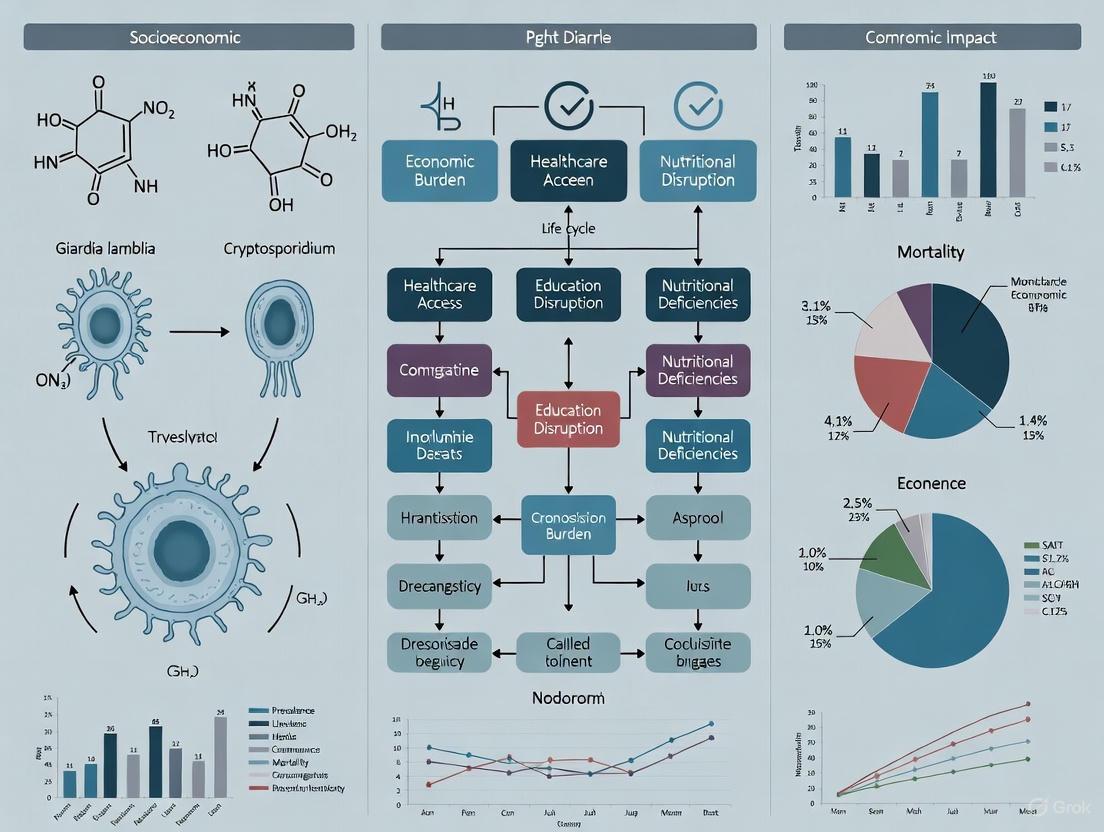
This article provides a comprehensive analysis of the socioeconomic impact of protozoal diarrhea in low-income countries, targeting researchers and drug development professionals.
The Socioeconomic Burden of Protozoal Diarrhea in Low-Income Countries: Epidemiology, Economic Impact, and Research Priorities
Abstract
This article provides a comprehensive analysis of the socioeconomic impact of protozoal diarrhea in low-income countries, targeting researchers and drug development professionals. It explores the foundational epidemiology of key pathogens like Giardia and Cryptosporidium, which show a global prevalence of 7.5% in diarrheal cases with the highest burden in the Americas and Africa. The content examines methodological approaches for burden assessment, including traditional regression and machine learning models, and investigates the substantial economic costs on households and health systems, with median treatment costs of I$8.4 (direct) and I$10.2 (indirect) per episode. The analysis identifies critical challenges including diagnostic limitations, emerging drug resistance, and socioeconomic disparities, while validating interventions through cost-effectiveness comparisons and burden distribution analyses to guide future research and resource allocation for effective public health interventions.
Epidemiology and Socioeconomic Drivers of Protozoal Diarrhea in LMICs
Protozoal diarrheal diseases represent a significant global health challenge, disproportionately affecting vulnerable populations in low- and middle-income countries. This comprehensive review analyzes the epidemiology, burden, and causative agents of parasite-induced diarrhea, drawing from recent global burden of disease studies, systematic reviews, and meta-analyses. The findings demonstrate that protozoan pathogens contribute substantially to diarrheal morbidity and mortality, with marked disparities across geographic regions and socioeconomic groups. Key parasites including Giardia duodenalis, Entamoeba histolytica, and Cryptosporidium spp. exhibit distinct transmission patterns and health impacts, with children, older adults, and immunocompromised individuals bearing the greatest disease burden. The analysis identifies critical gaps in current control strategies and emphasizes the urgent need for improved diagnostics, novel therapeutic approaches, and targeted public health interventions informed by socioeconomic determinants of disease.
Diarrheal diseases remain a leading cause of global morbidity and mortality, with protozoan pathogens representing a significant etiological component particularly in resource-limited settings. The World Health Organization estimates that foodborne and waterborne protozoal infections contribute substantially to the overall disease burden, with hundreds of millions of cases annually [1]. Despite being largely preventable, these infections persist due to complex interactions between pathogen biology, environmental factors, and socioeconomic conditions. The global burden falls disproportionately on low-income countries, where deficiencies in water sanitation, hygiene infrastructure, and healthcare access create favorable conditions for transmission [2] [3]. This technical review synthesizes current evidence on the epidemiology, pathogen distribution, and experimental methodologies relevant to protozoal diarrhea, with particular emphasis on implications for drug development and public health intervention in endemic regions.
Global Epidemiology and Burden of Disease
Quantitative Assessment of Protozoal Diarrhea Prevalence
Table 1: Global and Regional Prevalence of Major Protozoan Pathogens in Diarrheal Cases
| Pathogen | Global Prevalence | Regional Variations | High-Risk Populations | Data Source |
|---|---|---|---|---|
| All Protozoan Pathogens | 7.5% (95% CI: 5.6%-10.0%) of diarrheal cases [4] | Highest in Americas and Africa [4] | Children, immunocompromised individuals [4] [5] | Systematic review & meta-analysis (1999-2024) |
| Giardia duodenalis | Varies regionally: 11% in Malaysia [6], 3.6% in Ethiopian children [7] | 19.4% maximum in Malaysia [6] | Young children, travelers [6] [8] | Regional surveillance studies |
| Entamoeba histolytica | Varies regionally: 18% in Malaysia [6], 7.9% in Ethiopian children [7] | Up to 14% in Malaysia [6] | All age groups, with severe outcomes in children and immunocompromised [6] | Regional surveillance studies |
| Cryptosporidium spp. | 9% in Malaysia [6], 4.3% in Malaysian children [6] | Highly geographic and seasonal [8] | Children <5 years, immunocompromised individuals [6] [8] | Regional surveillance studies |
Recent comprehensive analyses indicate that protozoan pathogens are significant contributors to the global diarrheal disease burden. A systematic review and meta-analysis covering studies from 1999 to 2024 revealed a global protozoan prevalence of 7.5% (95% CI: 5.6%-10.0%) in diarrheal cases [4]. The highest prevalence rates were observed in the Americas and Africa, with particular disease clusters in Southeast Asia and sub-Saharan Africa [4] [6]. In specific regional studies, the overall prevalence of intestinal protozoan infections (IPIs) reached 24% in Malaysia, with Entamoeba spp. showing the highest prevalence at 18%, followed by Giardia lamblia at 11% and Cryptosporidium spp. at 9% [6]. Even higher prevalence has been documented in localized studies, such as in Simada, Northwest Ethiopia, where the overall prevalence of IPIs was 57.1% [3].
Mortality and Disability-Adjusted Life Years (DALYs)
Table 2: Global Burden of Major Protozoal Diarrheal Diseases (2010 Data)
| Disease | Annual Deaths | Disability-Adjusted Life Years (DALYs) | Primary Affected Populations |
|---|---|---|---|
| Amebiasis | >55,000 [9] | 2.2 million [9] | All age groups, severe outcomes in children |
| Cryptosporidiosis | ≈100,000 [9] | 8.4 million [9] | Children <5 years, immunocompromised individuals |
| Giardiasis | Not a major cause of mortality [9] | 171,100 [9] | Children, travelers, immunocompromised individuals |
The Global Burden of Disease Study found that amebiasis was responsible for more than 55,000 deaths and 2.2 million disability-adjusted life years (DALYs), while cryptosporidiosis accounted for approximately 100,000 deaths and 8.4 million DALYs in 2010 [9]. According to the WHO Foodborne Disease Burden Epidemiology Reference Group (FERG), giardiasis produced 171,100 DALYs in 2010, though it was not a significant cause of mortality [9]. The economic burden of acute giardiasis remains substantial, with the annual cost of hospital-based treatment in the United States approximately $34 million [9].
While childhood diarrhea receives appropriate attention, the burden among older adults is an underappreciated global health issue. A comprehensive analysis of the Global Burden of Diseases (GBD) 2021 data revealed a nearly 200% increase in incidence and prevalence of diarrhea among older adults (65+) worldwide from 1990 to 2021, with the highest rise in those over 95 years [10]. Despite declining mortality and DALYs rates in most age groups, high Socio-demographic Index (SDI) regions showed the largest increase in incidence rates and are the only areas with increasing mortality and DALYs trends [10].
Major Pathogens and Clinical Manifestations
Key Protozoal Pathogens
The primary protozoal pathogens responsible for diarrheal diseases include Giardia duodenalis (also known as Giardia lamblia), Entamoeba histolytica, and Cryptosporidium species. Less common but clinically significant pathogens include Cyclospora cayetanensis, Dientamoeba fragilis, and microsporidia species including Enterocytozoon bieneusi and Encephalitozoon intestinalis [5] [8].
Giardia duodenalis is a flagellated protozoan that causes giardiasis, characterized by watery diarrhea, abdominal pain, bloating, and flatulence. The parasite has a slow onset of symptoms that can persist for months, distinguishing it from most bacterial and viral diarrheal infections that typically resolve within 1-2 weeks [5] [8]. Entamoeba histolytica causes amebiasis, which can manifest as severe diarrhea with bloody stools (dysentery) or progress to invasive disease such as liver abscesses [6] [9]. Cryptosporidium species cause cryptosporidiosis, which is particularly severe and potentially life-threatening in immunocompromised individuals and malnourished children [6] [9].
The following diagram illustrates the clinical decision pathway for protozoal diarrhea diagnosis and treatment:
Pathogen-Specific Clinical Presentations
The incubation period for protozoal pathogens is typically longer than for bacterial or viral agents. Illnesses due to protozoal pathogens generally have incubation periods of 1-2 weeks, rarely presenting in the first few days of travel or exposure, with the exception of Cyclospora cayetanensis infection, in which symptoms can present more quickly (2-14 days) [8].
Diarrhea caused by protozoa (e.g., Cryptosporidium, Giardia duodenalis) typically has a more gradual onset of low-grade symptoms, with 2-5 loose stools per day [8]. Untreated protozoal diarrhea can persist for weeks to months, unlike bacterial diarrhea which usually lasts 3-7 days, or viral diarrhea which generally lasts 2-3 days [8]. An acute bout of diarrhea can lead to persistent enteric symptoms even in the absence of continued infection, commonly referred to as post-infectious irritable bowel syndrome [8].
Socioeconomic Determinants and Risk Factors
Socioeconomic Disparities in Disease Burden
The burden of protozoal diarrheal diseases exhibits strong socioeconomic patterning, with highest prevalence observed in impoverished communities and low-income countries. A community-based cross-sectional study among nomadic populations in Hadaleala District, Ethiopia, found a two-week period prevalence of diarrhea among under-five children of 26.1% (95% CI 22.9-29.3%) [2]. The occurrence of diarrheal disease was significantly associated with the number of under-five children in each household, illiterate mothers (AOR = 2.5, p < 0.05), and poor household economic status (AOR = 1.6, p < 0.05) [2].
A meta-analysis of risk factors in Malaysia revealed that the pooled prevalence of protozoal intestinal infections was significantly higher (between 38% and 52%) in children under 15 years of age, males, those with low income or no formal education, and those exposed to untreated water, poor sanitation, or unhygienic practices [6]. The highest prevalence was observed in indigenous communities (27%), followed by local communities mainly from rural areas (23%) [6]. Regional disparities were also evident, with Kelantan and Perak states having the highest prevalence (39% and 29% respectively) while more developed regions like Selangor and Kuala Lumpur reported lower rates (13.6%) [6].
Environmental and Behavioral Risk Factors
Unsafe water sources emerged as the primary risk factor for diarrhea-related deaths among older adults according to GBD 2021 data [10]. In Northwest Ethiopia, the odds of intestinal protozoan infections were significantly higher among participants with no habit of hand washing before meals (AOR = 12.4, 95% CI: 5.6-27.6) [3]. Occupational risks were also identified, with farmers (AOR = 8.0, 95% CI: 8.2-28.5), secondary school students (AOR = 3.1, 95% CI: 1.1-8.9), and merchants (AOR = 4.7, 95% CI: 3.9-12.5) more likely to be infected with intestinal protozoan parasites compared to other occupations [3].
The following diagram illustrates the socioeconomic and environmental factors influencing protozoal diarrhea transmission:
Experimental Methodologies and Research Protocols
Diagnostic Approaches and Laboratory Techniques
Accurate diagnosis of protozoal diarrheal pathogens requires specialized laboratory methods. The most common approaches include:
Microscopic Examination: Direct wet mount microscopy remains widely used in resource-limited settings due to its low cost and technical simplicity. The protocol involves emulsifying a small portion of fresh stool specimen in a drop of saline on a microscope slide, applying a coverslip, and examining at 100× and 400× magnification for trophozoites and cysts [7]. Formol-ether concentration techniques can improve detection sensitivity by concentrating parasites from larger stool samples [3].
Molecular Diagnostics: Multiplex molecular diagnostic assays, including PCR-based methods, have increased detection sensitivity and revealed that the contribution of viruses to the overall burden of TD disease was previously underestimated [8]. These methods are particularly valuable for differentiating morphologically similar species, such as Entamoeba histolytica from non-pathogenic Entamoeba dispar [6].
Immunoassays: Enzyme immunoassays are available for testing three main parasites: G. lamblia, E. histolytica, and C. parvum [5]. These detect parasite-specific antigens in stool samples and offer improved sensitivity over routine microscopy.
Drug Screening and Development Protocols
In vitro Screening Assays: Drug discovery efforts for parasitic diarrheal diseases employ both activity-centered and target-centered strategies [9]. Primary screening typically involves culture systems for pathogenic protozoa, with compound efficacy determined by measuring growth inhibition of trophozoites (for Giardia and Entamoeba) or reduction in infection rates (for Cryptosporidium).
Target-Based Approaches: Identification and validation of parasite-specific drug targets is a key strategy in anti-protozoal drug development. Promising targets include:
- E. histolytica and G. lamblia thioredoxin reductase: Validated through repurposing of the FDA-approved drug auranofin [9]
- Giardia acyl-CoA synthetase (GiACS): Inhibition led to growth inhibition of G. lamblia trophozoites at low micromolar concentration [9]
- E. histolytica heat shock protein 90 (Hsp90): Involved in regulation of phagocytosis and encystation [9]
- β-tubulin subunit: Primary target of benzimidazoles in microsporidia [5]
Table 3: Research Reagent Solutions for Protozoal Diarrhea Research
| Reagent/Category | Specific Examples | Research Application | Key Functions |
|---|---|---|---|
| Culture Media | TYI-S-33 medium for Giardia, BI-S-33 medium for Entamoeba | In vitro parasite maintenance and drug screening | Supports axenic growth of intestinal protozoa |
| Antibiotics/Antimycotics | Penicillin-Streptomycin mixture, Amphotericin B | Culture contamination prevention | Prevents bacterial and fungal overgrowth in protozoal cultures |
| Staining Reagents | Trichrome stain, Modified Ziehl-Neelsen stain for Cryptosporidium | Microscopic identification and morphological studies | Differentiates parasitic structures from background |
| Molecular Biology Kits | DNA extraction kits, PCR master mixes, RT-PCR reagents | Species identification, gene expression studies | Enables molecular detection and characterization of pathogens |
| Antibodies | Fluorescently-labeled antibodies for IFA/ICS | Immunodetection, cellular localization studies | Facilitates specific detection of parasitic antigens |
| Chemical Inhibitors | Auranofin, Metronidazole, Paromomycin, Nitazoxanide | Drug mechanism studies, resistance investigations | Reference compounds for comparative drug efficacy |
Methodological Considerations in Field Studies
Community-based studies require careful methodological planning. Sample size calculation typically employs the single population proportion formula, with adjustments for design effects and non-response rates [2]. In a study among nomadic populations in Ethiopia, researchers accounted for the clustered distribution of populations by employing a multistage cluster sampling technique, selecting villages with defined geographical boundaries as primary sampling units [2].
Data quality control measures include translation and back-translation of data collection instruments to maintain consistency, pre-testing of questionnaires, daily checking of collected data for completeness and consistency, and cleaning and cross-checking to ensure data quality [7] [2]. In studies assessing socioeconomic status, innovative approaches such as the tropical livestock unit (TLU) conversion factors may be used to determine household economic status in pastoralist communities [2].
Drug Development Landscape and Therapeutic Challenges
Current Treatment Options and Limitations
The current therapeutic arsenal for protozoal diarrheal diseases remains limited and faces several challenges:
Metronidazole and other nitroimidazoles are the most common drugs used to treat invasive amebiasis and giardiasis, but treatment often leads to side effects including nausea, vomiting, diarrhea, or constipation [9]. Potential resistance of E. histolytica to metronidazole is an increasing concern, and treatment failures in giardiasis occur in up to 20-40% of cases [9]. Additionally, metronidazole requires combination therapy with paromomycin to eliminate cysts, resulting in a burdensome 20-day treatment regimen that reduces compliance [9].
Nitazoxanide, the only treatment option for cryptosporidiosis, has variable efficacy ranging from 56% in malnourished children to 80% in healthy adults and is not effective for immunocompromised patients [9].
Benzimidazoles including albendazole are used against microsporidial infections but show variable efficacy across species, working against Encephalitozoon intestinalis but not Enterocytozoon bieneusi infections [5].
Emerging Therapeutic Approaches
Recent drug discovery efforts have identified several promising leads and strategies:
Drug Repurposing: The FDA-approved drug auranofin has shown promising activity against E. histolytica and G. lamblia, with thioredoxin reductase identified as the potential target [9].
Natural Product Screening: Screening of natural product libraries has identified deacetylkinamycin C and nanomycin A as potent amebicidals, providing starting points for natural product-based drug discovery [9].
Novel Compound Classes: Synthetic chalcone derivatives with triazolyl-quinolone scaffold have demonstrated activity against G. lamblia with IC~50~ values better than metronidazole and reduced toxicity against human cell lines [9].
Target Validation Studies: Research has validated several parasite-specific targets including:
- FAD-dependent glycerol-3-phosphate dehydrogenase in Giardia [9]
- Methionine aminopeptidase type 2 (MetAP2) in microsporidia [5]
- Chitin deacetylase in microsporidial cell wall formation [5]
- Aspartic proteases inhibited by antiretroviral protease inhibitors [5]
The following diagram illustrates key drug targets in protozoal parasites:
Protozoal diarrheal diseases continue to impose a substantial global health burden, disproportionately affecting vulnerable populations in low-income countries and perpetuating cycles of poverty and disease. The complex interplay between pathogenic organisms, environmental contamination, and socioeconomic determinants necessitates multifaceted control strategies. Current challenges include limited therapeutic options, emerging drug resistance, diagnostic limitations in resource-poor settings, and insufficient understanding of transmission dynamics in specific ecological contexts.
Future research priorities should include: (1) development of novel anti-protozoal agents with improved efficacy and safety profiles; (2) enhanced point-of-care diagnostic tools for resource-limited settings; (3) implementation research to identify effective intervention delivery strategies; and (4) deeper investigation of the molecular mechanisms of pathogenesis and drug resistance. Addressing the burden of protozoal diarrhea will require coordinated efforts across multiple sectors, including water and sanitation infrastructure development, health education, and accessible healthcare services, particularly for marginalized communities in endemic regions.
Diarrheal diseases caused by protozoan pathogens represent a persistent and debilitating global health challenge, imposing a severe burden on low- and middle-income countries (LMICs). These infections contribute substantially to childhood morbidity, malnutrition, developmental delays, and mortality, disproportionately affecting vulnerable populations in resource-limited settings [11]. The World Health Organization estimates that over half of all diarrheal disease mortality globally is associated with unimproved or inadequate water, sanitation, and hygiene (WASH) practices [12]. Despite their significant disease burden, protozoan enteropathogens remain understudied compared to bacterial and viral agents, with critical gaps in our understanding of their spatiotemporal distribution and interaction with socioeconomic factors [11].
This technical review examines the profound regional disparities in protozoan diarrheal diseases between sub-Saharan Africa and South Asia, framing these disparities within the broader context of socioeconomic impact in low-income countries. We analyze the complex interplay between pathogen distribution, environmental factors, host characteristics, and socioeconomic determinants that create and perpetuate high-risk areas. Through comprehensive data synthesis, methodological protocols, and visualization tools, this review aims to equip researchers, scientists, and drug development professionals with the analytical frameworks necessary to address these persistent health challenges through targeted interventions and innovative research approaches.
Quantitative Burden and Pathogen Distribution
The global burden of protozoan diarrheal diseases reveals striking geographical disparities, with the highest prevalence rates concentrated in sub-Saharan Africa and South Asia. A recent systematic review and meta-analysis covering studies from 1999 to 2024 revealed a global protozoan prevalence of 7.5% (95% CI: 5.6%-10.0%) in diarrheal cases, with the highest rates identified in the Americas and Africa [11]. Specific pathogenic protozoa of clinical significance include Giardia duodenalis, Entamoeba histolytica, Cryptosporidium spp., Blastocystis hominis, and Cyclospora cayetanensis [11].
Table 1: Global Prevalence and Health Risks of Major Enteric Protozoa
| Enteric Organism | Global Prevalence | Effects on Humans | Risk Level |
|---|---|---|---|
| Giardia duodenalis | 2-7% (developed); 30-40% (developing) | Giardiasis - watery diarrhea, bloating, malabsorption | Pathogenic |
| Entamoeba histolytica | About 1-2% true infections | Amoebiasis - bloody diarrhea, dysentery, liver abscess | Pathogenic |
| Cryptosporidium parvum | 1-4% worldwide; up to 10% in children in low-income regions | Severe watery diarrhea; life-threatening in immunocompromised | Pathogenic |
| Blastocystis spp. | 10-60% worldwide | Sometimes causes diarrhea and abdominal pain; often asymptomatic | Possibly pathogenic |
| Cyclospora cayetanensis | Rare (<1%); outbreaks in Latin America, Asia, USA | Prolonged watery diarrhea, abdominal cramps, fatigue | Pathogenic |
In East Africa, the overall pooled prevalence of diarrhea among children under five is notably high at 24.6% (95% CI: 22.7%, 26.6%) [13]. A study in Ethiopia found that 10.3% of households reported at least one case of diarrhea during the previous four weeks, with significant regional variation within the country [12]. In Kenya, key protozoa identified include Entamoeba histolytica, Cryptosporidium, and Giardia, with transmission driven by poor WASH conditions, environmental factors, and close human-animal interactions [14].
In Asia, despite an overall declining trend in diarrheal burden due to urbanization, economic growth, and public health interventions, significant challenges persist in specific countries and population groups [15]. The age-standardized incidence rate (ASIR) of diarrhea exhibited a significant upward trend in Asia and some Asian countries after 2019 [15]. In Malaysia, a systematic review and meta-analysis estimated the overall pooled prevalence of intestinal protozoal infections at 24% (95% CI: 17.0, 29.0), with Entamoeba spp. having the highest prevalence at 18%, followed by G. lamblia at 11% and Cryptosporidium spp. at 9% [6].
Regional Disparities and Risk Factor Analysis
Sub-Saharan Africa: Environmental and Structural Determinants
The high prevalence of protozoan diarrhea in sub-Saharan Africa is driven by a complex interaction of environmental, socioeconomic, and structural factors. Multiple studies conducted in Ethiopia have identified specific environmental risk factors associated with increased odds of diarrheal diseases:
- Water Source: Drinking water from unprotected wells was associated with 4.81 times increased odds of diarrhea (95% CI: 2.03, 11.43) in Gondar [12].
- Seasonality: Dry seasons were associated with decreased odds of diarrhea compared to short (COR: 0.42, 95% CI: 0.24, 0.75) and long rain seasons (COR: 0.55, 95% CI: 0.34, 0.88) [12].
- Sanitation Infrastructure: Pit latrines without covers were the most common sanitation facility across multiple study sites, contributing to fecal-oral transmission pathways [12].
A meta-analysis of East African countries identified several significant risk factors for diarrhea among children under five, highlighting the multifaceted nature of transmission dynamics:
Table 2: Risk Factors for Diarrhea in Children Under Five in East Africa
| Risk Factor | Odds Ratio | 95% Confidence Interval |
|---|---|---|
| Unprotected water source | 1.92 | 1.39, 2.65 |
| Not vaccinated for rotavirus | 2.06 | 1.10, 3.85 |
| Large family size | 1.38 | 1.10, 1.72 |
| Two or more children under five | 1.60 | 1.27, 2.03 |
| Improper waste disposal | 1.67 | 1.10, 2.53 |
| Unprotected toilet type | 1.11 | 1.01, 1.21 |
| >30 minutes to fetch water | 1.35 | 1.05, 1.73 |
Animal ownership represents another significant risk factor in sub-Saharan Africa. A recent study in Ethiopia found that household ownership of livestock, poultry, and other domestic animals was associated with diarrheal disease, consistent with previous studies that identified 2.87 times higher odds of diarrhea in children under five when sharing residence with domestic animals [12]. Over 90% of households in Ethiopia own domestic animals, creating substantial opportunities for zoonotic transmission of enteric pathogens [12].
South Asia: Socioeconomic and Climatic Determinants
In South Asia, the epidemiology of protozoan diarrhea is shaped by distinct although overlapping risk factors, with notable regional variations within the continent. The socioeconomic status exerts a substantial influence on disease burden, highlighting the urgent need for enhanced healthcare resource allocation in some countries [15].
A meta-analysis in Malaysia revealed significant disparities in protozoan prevalence based on socioeconomic and demographic factors. The highest prevalence was observed in indigenous communities (27%), followed by local communities mainly from rural areas (23%) [6]. Kelantan and Perak state had the highest prevalence at 39% and 29% respectively, while Selangor and Kuala Lumpur reported the lowest (13.6%), demonstrating substantial subnational variation [6].
The pooled prevalence of protozoal intestinal infections was significantly higher (between 38% and 52%) in several vulnerable subgroups:
- Children under 15 years of age
- Males
- Individuals with low income or no formal education
- Those exposed to untreated water, poor sanitation, or unhygienic practices [6]
Climatic factors play a crucial role in diarrheal transmission in South Asia. Rising temperatures, increased rainfall, moderate/strong El Nino events, and increased population density can all lead to increased incidence of diarrhea [15]. Climate change is projected to increase the global prevalence of diarrheal diseases over coming decades, with increased temperatures likely to increase diarrheal diseases from bacterial and protozoal pathogens, but not viruses [16].
Research Methodologies and Experimental Protocols
Epidemiological Field Studies
Cross-sectional studies represent a fundamental approach for determining prevalence and identifying risk factors associated with protozoan diarrheal diseases. The following protocol outlines a standardized methodology:
Questionnaire Administration: Conduct face-to-face interviews using a structured, pre-tested questionnaire in local languages. Data should include household demographic characteristics, cases of household diarrhea within the past four weeks, household food handling practices, and household environmental exposures [12].
Sampling Strategy: Define catchment areas in collaboration with health professionals. Use random number generators to select latitude and longitude points from catchment areas. Approach households systematically (e.g., first household facing east, rotating clockwise) until consent is obtained [12].
Sample Size Calculation: Ensure adequate power for subgroup analyses. The prospective cross-sectional study in Ethiopia included 2,436 households across three regions [12].
Data Analysis: Employ univariate and multivariable logistic regression to identify factors associated with diarrhea. Use directed acyclic graphs (DAGs) to identify potential confounders for inclusion in multivariable models based on a 10% change in exposure point estimates [12].
Laboratory Diagnostic Methods
Accurate pathogen detection is essential for understanding the etiology and epidemiology of protozoan diarrhea. Multiple diagnostic approaches with varying sensitivity and specificity are available:
Microscopic Examination: The most widely used method, particularly in resource-limited settings, though with limited sensitivity [14] [17].
- Native-Lugol Method: A rice grain-sized portion of stool is examined microscopically under 40X objective to identify protozoan cysts and trophozoites [17].
- Modified Acid-Fast Staining: Used to detect Cryptosporidium spp. and Cyclospora cayetanensis, examined under 100X objective [17].
Molecular Methods: Multiplex PCR studies demonstrate that 15-25% of diarrheal cases in endemic areas involve protozoan co-infections, often alongside bacterial or viral pathogens [11]. Molecular methods have revealed higher prevalence rates and more frequent polyparasitism than previously recognized, with microscopy-based surveillance missing 30-50% of cases detectable by molecular methods [11].
Study Quality Assessment: In systematic reviews, the Newcastle Ottawa Scale (NOS) quality assessment scale can be used, with scores 8-9 considered excellent quality, 6-7 very good quality, 4-5 good quality, and below 4 considered poor quality or unsatisfactory [13].
Systematic Review and Meta-Analysis
For evidence synthesis, systematic reviews and meta-analyses should adhere to PRISMA (Preferred Reporting Items for Systematic Reviews and Meta-Analyses) guidelines [11] [6].
Search Strategy: Execute comprehensive searches across multiple electronic databases (e.g., PubMed, Scopus, Google Scholar, Web of Science, ScienceDirect) using structured search strategies around three primary concept clusters: co-infection terms, specific pathogens, and epidemiological measures [11].
Study Selection: Apply predetermined inclusion and exclusion criteria. The meta-analysis of protozoan pathogens in diarrhea included 73 studies after screening 1,133 potentially eligible articles [11].
Data Extraction: Use standardized forms to capture study characteristics, population details, and pathogen information. Include author, year, country, study design, sample size, age distribution, detection methods, and co-infection rates [11] [6].
Statistical Analysis: Perform random-effects meta-analyses using the DerSimonian-Laird method to account for heterogeneity between studies. Calculate pooled prevalence estimates using inverse-variance weighting. Conduct subgroup analyses by region, age, diagnostic method, and socioeconomic indicators. Assess statistical heterogeneity using the I² statistic and publication bias via funnel plot asymmetry and Egger's regression test [11] [6].
The Scientist's Toolkit: Research Reagent Solutions
Table 3: Essential Research Reagents for Protozoal Diarrhea Studies
| Reagent/Kit | Application | Technical Specification | Research Utility |
|---|---|---|---|
| Lugol's Iodine Solution | Stool microscopy | 1-2% iodine concentration | Enhances contrast for visualization of protozoan cysts in native-Lugol method [17] |
| Modified Acid-Fast Staining Kit | Cryptosporidium/Cyclosa detection | Carbol fuchsin, acid-alcohol decolorizer, methylene blue counterstain | Differentiates acid-fast oocysts of Cryptosporidium and Cyclospora [17] |
| Multiplex PCR Protozoan Panel | Molecular detection | Multiprimer set for G. duodenalis, Cryptosporidium spp., E. histolytica | Simultaneous detection of multiple pathogens; higher sensitivity than microscopy [11] |
| DNA Extraction Kit (Stool Samples) | Nucleic acid purification | Bead-beating or enzymatic lysis for cyst wall disruption | Efficient DNA extraction from hardy protozoan cysts for molecular assays [11] |
| Commercial ELISA Kit | Antigen detection | Antibodies against protozoan surface antigens | High-throughput screening; useful for large epidemiological studies [6] |
| Quality Control Stains | Reference standards | Known positive and negative samples | Ensures staining procedure reliability and inter-laboratory consistency [17] |
Conceptual Framework: Climate Change and Future Impacts
Climate change introduces additional complexity to the regional disparities in protozoan diarrheal diseases. A conceptual framework based on an in-depth literature review identifies multiple pathways mediating the relationship between changing climatic conditions, diarrheal disease prevalence, and health outcomes [16].
The impacts are regional- and pathogen-specific, with increased temperatures likely to increase diarrheal diseases from bacterial and protozoal pathogens, but not viruses [16]. Climate change affects diarrheal disease outcomes through several interconnected pathways:
- Increased ambient and sea temperatures
- Changes in precipitation patterns
- Extreme weather events (droughts, floods, cyclones)
- Changes in water salinity [16]
Populations such as people living with HIV (PLWHIV) are particularly vulnerable to these effects due to a dangerous combination of dehydration and malnutrition that often accompanies gastrointestinal infections [16]. Adaptation strategies that focus on sustainable agriculture interventions, improving the durability of water and sanitation infrastructure, and optimizing medical supply chains will be needed to lessen the negative health impacts of a changing climate on vulnerable populations [16].
Significant regional disparities in protozoan diarrheal diseases persist between and within sub-Saharan Africa and South Asia, driven by complex interactions of environmental, socioeconomic, and climatic factors. The high prevalence in these regions reflects underlying structural inequalities in access to clean water, sanitation infrastructure, healthcare resources, and poverty alleviation programs.
Future research should prioritize several key areas:
- Implementation of robust longitudinal studies to track temporal trends and climate-related impacts
- Development and validation of standardized diagnostic protocols with improved sensitivity
- Investigation of socioeconomic interventions that effectively reduce disease burden
- Exploration of climate adaptation strategies that protect vulnerable populations
- Investment in vaccine development for protozoan pathogens, currently lacking despite their significant disease burden [11]
Addressing the profound regional disparities in protozoan diarrheal diseases requires integrated, multidisciplinary approaches that combine improvements in water, sanitation, and hygiene infrastructure with targeted public health interventions, climate resilience planning, and ongoing research into pathogen biology and transmission dynamics. Such comprehensive strategies are essential for reducing the disproportionate burden of these diseases on vulnerable populations in low-income countries and achieving meaningful progress toward global health equity.
Intestinal protozoan infections represent a significant global health burden, particularly in low-income countries where they are a leading cause of diarrheal disease and childhood malnutrition [18]. Among the numerous parasitic agents, three pathogens stand out for their prevalence and impact: Giardia duodenalis (also known as G. lamblia or G. intestinalis), Cryptosporidium spp., and Entamoeba histolytica. Collectively, these organisms infect more than a billion people worldwide and contribute substantially to the cycle of poverty in endemic regions through their effects on growth, cognitive development, and economic productivity [19] [18].
The socioeconomic impact of these protozoan infections is profound, particularly in resource-limited settings where inadequate access to water, sanitation, and hygiene (WASH) facilitates transmission [20]. These pathogens disproportionately affect children, with chronic infections leading to malnutrition, stunted growth, and impaired cognitive development [18]. This technical guide provides an in-depth analysis of the core biological characteristics, detection methodologies, and therapeutic challenges associated with these key diarrheal pathogens, with particular emphasis on their implications for public health interventions and drug development in low-income countries.
Pathogen Profiles and Epidemiology
Global Distribution and Burden
The three focal pathogens demonstrate distinct yet overlapping global distributions, with highest prevalence in developing regions. A four-year retrospective analysis at Burao General Hospital in Somaliland revealed that Giardia intestinalis (57.81%) and Entamoeba histolytica/E. dispar (41.85%) were the most prevalent parasites, with males showing higher infection rates than females [19]. The 15-22-year age group had the highest prevalence for both parasites [19]. Another study among forcibly displaced Myanmar nationals in Bangladesh showed an overall protozoan infection prevalence of 49.4%, with G. lamblia being the most prevalent species (47.0%), followed by Cryptosporidium spp. (4.3%) and E. histolytica (1.2%) [21].
Comparative Pathogen Characteristics
Table 1: Core Characteristics of Key Protozoan Pathogens
| Characteristic | Giardia duodenalis | Cryptosporidium spp. | Entamoeba histolytica |
|---|---|---|---|
| Infective Stage | Cyst | Oocyst | Cyst |
| Site of Infection | Small intestine | Small intestine, biliary epithelium | Colon, liver (extraintestinal) |
| Incubation Period | 1-2 weeks | 2-14 days | 2-4 weeks |
| Key Symptoms | Diarrhea, malabsorption, bloating, weight loss | Watery diarrhea, abdominal cramps, nausea | Diarrhea, dysentery, liver abscess |
| Duration of Illness | Weeks to months without treatment | 1-3 weeks (immunocompetent); prolonged (immunocompromised) | Variable; can become chronic |
| At-Risk Populations | Children, travelers, immunocompromised | Children, HIV/AIDS patients, malnourished | All age groups, particularly children |
| Primary Transmission | Fecal-oral, waterborne | Fecal-oral, waterborne | Fecal-oral, contaminated food/water |
Experimental Methodologies for Detection and Characterization
Conventional Diagnostic Approaches
The accurate detection and identification of these pathogens relies on a combination of microscopic, immunological, and molecular techniques. Basic microscopy using concentration methods and staining remains widely used in resource-limited settings. The formal-ether concentration technique followed by Modified Ziehl-Neelsen staining for Cryptosporidium has been employed in recent field studies [22]. Direct stool examinations using saline wet mount techniques are conducted within 30 minutes of sample collection in routine clinical settings [19].
Molecular Detection and Genotyping
Advanced molecular techniques have significantly improved detection sensitivity and species differentiation. Multiplex real-time quantitative polymerase chain reaction (qPCR) methods allow for simultaneous detection of multiple pathogens with high specificity [21]. For genotyping, nested PCR approaches targeting specific genes are employed:
- Entamoeba spp.: 18S ribosomal RNA gene [22]
- Giardia lamblia: β-giardin (bg) and triose phosphate isomerase (tpi) genes [22]
- Cryptosporidium spp.: 60-kDa glycoprotein (gp60) gene [22]
Sequence analysis of these genetic markers enables precise identification of species, assemblages, and subtypes, providing valuable epidemiological data for tracking transmission pathways.
Diagram 1: Diagnostic Workflow for Protozoan Pathogens. This diagram illustrates the integrated approach combining conventional and molecular methods for comprehensive pathogen detection and characterization.
Current Therapeutic Options and Challenges
Available Antiprorotozoal Agents
Table 2: Current Treatment Options for Protozoal Diarrhea
| Pathogen | First-line Therapy | Alternative Agents | Treatment Challenges |
|---|---|---|---|
| Giardia duodenalis | Metronidazole [18] | Tinidazole, Nitazoxanide, Albendazole [18] | Emerging drug resistance, side effects, multi-day dosing [18] |
| Cryptosporidium spp. | Nitazoxanide [23] | Paromomycin (immunocompromised) [18] | Limited efficacy in immunocompromised patients, lack of alternatives [23] |
| Entamoeba histolytica | Metronidazole (tissue invasion) [18] | Tinidazole, Ornidazole, Secnidazole [18] | Requires luminal agent (Paromomycin/Iodoquinol) for cyst clearance [18] |
Drug Resistance and Treatment Failures
Therapeutic options for these protozoal infections are limited, and emerging drug resistance poses a significant challenge. Metronidazole, the most widely used compound for decades, faces increasing treatment failures, particularly for giardiasis and trichomoniasis [18]. Resistance to nitroimidazoles has been documented in G. intestinalis and T. vaginalis for several decades, with refractory cases reported in both immunocompetent and immunocompromised individuals [18]. Although evidence for metronidazole resistance in E. histolytica remains limited, decreased susceptibility to 5-nitroimidazoles can be induced experimentally [18].
The mechanisms of drug resistance vary by compound and pathogen. Benzimidazoles like albendazole target β-tubulin, binding to specific residues (Cys 165, Phe 167, Glu 198, Phe 200, Arg 242, and Val 268) to inhibit microtubule formation [5]. Fumagillin and its analogs act on methionine aminopeptidase type 2 (MetAP2) through non-competitive inhibition, irreversibly blocking the active site [5].
Diagram 2: Drug Mechanisms and Resistance Pathways. This diagram illustrates the primary mechanisms of action of major antiprotozoal drug classes and the corresponding resistance pathways that lead to treatment failure.
Research Reagent Solutions
Table 3: Essential Research Reagents for Protozoan Pathogen Studies
| Reagent/Category | Specific Examples | Research Application |
|---|---|---|
| Molecular Detection Kits | Multiplex real-time PCR kits [21] | Simultaneous detection of multiple pathogens in stool samples |
| Staining Reagents | Modified Ziehl-Neelsen stain [22] | Differentiation of Cryptosporidium oocysts in microscopic examination |
| Culture Media | ATCC culture media for parasites | In vitro maintenance and propagation of pathogenic isolates |
| Antibody Reagents | Species-specific monoclonal antibodies | Immunofluorescence detection and pathogen isolation |
| DNA Extraction Kits | Commercial stool DNA extraction kits | Nucleic acid purification for molecular assays |
| Enzymatic Assays | Custom metabolite and enzyme activity kits | Drug target validation and mode of action studies |
| Chemical Inhibitors | Fumagillin, TNP-470, ovalicin derivatives [5] | Pathway inhibition studies and target validation |
Drug Development Strategies and Novel Targets
Challenges in Antiprotozoal Drug Development
Drug development for protozoal diarrheal diseases faces significant challenges, including limited commercial interest due to the neglected nature of these diseases and the economic constraints of affected populations [23]. The goals of drug development differ between pathogens: for Cryptosporidium, only one moderately effective drug (nitazoxanide) exists, necessitating novel classes of more effective drugs [23]. For Giardia, while several drug classes exist, suboptimal dosing regimens and emerging resistance threaten clinical utility [23].
Innovative Approaches
Drug Repurposing
Drug repurposing offers a promising strategy for identifying new antiprotozoal therapies with reduced development costs and timelines. This approach leverages existing pharmacological and safety data to accelerate clinical application [24]. Notable examples include:
- Ritonavir and indinavir: HIV protease inhibitors that inhibit Encephalitozoon intestinalis growth by targeting aspartyl protease [5]
- Fluoroquinolones: Antibacterial agents with activity against microsporidia through DNA topoisomerase inhibition [5]
Targeted Therapeutic Approaches
Advances in genomic sequencing have enabled identification of parasite-specific biochemical pathways that represent promising drug targets:
- Polyamine biosynthesis pathway: Targeted by polyamine analogs leading to polyamine depletion and cell death [5]
- Chitin biosynthesis: Inhibited by nikkomycins in microsporidia [5]
- Methionine aminopeptidase type 2 (MetAP2): Irreversibly inhibited by fumagillin and its analogs [5]
Giardia duodenalis, Cryptosporidium spp., and Entamoeba histolytica remain significant contributors to the global burden of diarrheal disease, with disproportionate impact in low-income countries. Control of these pathogens requires integrated approaches combining improved diagnostic capabilities, therapeutic advances, and public health interventions targeting WASH infrastructure. The limited drug arsenal, emerging antimicrobial resistance, and economic barriers to drug development necessitate innovative strategies including drug repurposing, targeted therapy development, and enhanced understanding of resistance mechanisms. Future research should prioritize the development of rapid diagnostics, novel therapeutic agents with improved safety profiles, and vaccines to reduce the substantial socioeconomic impact of these protozoal infections in vulnerable populations.
Intestinal protozoal diseases, including giardiasis, amoebiasis, and cryptosporidiosis, represent a significant global health burden, disproportionately affecting populations in low-income countries [11] [25]. These infections cause debilitating diarrhea, contributing substantially to childhood mortality, malnutrition, and long-term developmental impairments [25]. The transmission and prevalence of these diseases are deeply intertwined with socioeconomic conditions, creating a cycle of disease and poverty that proves difficult to interrupt [26] [27]. This technical guide examines the complex relationships between poverty, education, water, and sanitation in the context of protozoal diarrheal diseases, providing researchers and public health professionals with evidence-based insights for intervention design and policy development.
The World Health Organization estimates that intestinal protozoan infections affect hundreds of millions annually, with the highest burden concentrated in resource-limited settings where water quality, sanitation infrastructure, and healthcare access remain inadequate [28] [25]. Recent meta-analyses indicate that protozoan pathogens account for approximately 7.5% of diarrheal cases globally, with prevalence rates reaching 24.6% among children under five in East Africa and 24% in Malaysia [13] [11] [6]. The persistence of these infections despite available treatments underscores the critical role of non-biological determinants, particularly socioeconomic factors that facilitate transmission and exacerbate health outcomes [26] [27].
Socioeconomic Determinants of Protozoal Diarrhea
Poverty and Economic Status
Poverty serves as a fundamental determinant of intestinal protozoal infections, influencing multiple risk factors simultaneously. Economic constraints limit households' ability to invest in preventive measures, including improved water sources, sanitation facilities, and hygienic food preparation surfaces, thereby increasing exposure to protozoal pathogens [26] [29].
Table 1: Economic Risk Factors for Protozoal Diarrhea
| Economic Factor | Measurable Impact | Population Affected | Geographic Context |
|---|---|---|---|
| Low family income | 38-52% higher infection prevalence [6] | All age groups | Malaysia [6] |
| Poor economic status | 64.9% prevalence vs. 36.4% in high-income groups (OR: 0.31) [29] | Schoolchildren | Iran [29] |
| Financial constraints | Limited access to clean water and sanitation [26] | Coastal communities | Indonesia [26] |
The economic impact of protozoal diarrhea extends beyond direct healthcare costs to include significant productivity losses from caregiving responsibilities, impaired cognitive development in children, and reduced educational attainment [25]. A systematic review of studies from multiple low-income countries demonstrated that each five episodes of gastroenteritis in early childhood increased the odds of stunting by age two by 13% , with consequent effects on physical and cognitive development [25].
Educational Attainment
Maternal and parental education levels significantly influence childhood susceptibility to protozoal infections through multiple pathways, including hygiene practices, healthcare-seeking behaviors, and understanding of disease transmission mechanisms [26] [29].
Table 2: Educational Risk Factors for Protozoal Diarrhea
| Education Factor | Impact on Disease Risk | Mechanism | Reference |
|---|---|---|---|
| Maternal illiteracy | 50.8% infection prevalence vs. 33.9% with higher education [29] | Poor hygiene practices, delayed care-seeking | Iran [29] |
| No formal education | 38-52% higher infection prevalence [6] | Limited health knowledge, risky water and food practices | Malaysia [6] |
| Low maternal education | Inadequate food safety practices [26] | Contamination during food preparation and storage | Indonesia [26] |
Educational disparities compound other socioeconomic disadvantages, creating intersecting vulnerabilities that increase protozoal infection risk. In East Africa, maternal education level was identified as a significant determinant of diarrheal disease in children under five, with children of less-educated mothers experiencing higher prevalence rates [13]. Education empowers individuals to implement preventive measures even with limited resources, making it a critical intervention point for public health initiatives.
Water and Sanitation Infrastructure
Inadequate water and sanitation infrastructure represents the most direct environmental pathway for protozoal transmission, with contamination occurring through multiple mechanisms including fecal-oral routes, contaminated water supplies, and poor food hygiene [13] [28].
Table 3: Water and Sanitation Risk Factors for Protozoal Diarrhea
| Water/Sanitation Factor | Impact on Disease Risk | Population Affected | Reference |
|---|---|---|---|
| Unprotected water source | 1.92x higher odds of diarrhea (95% CI: 1.39-2.65) [13] | Children under 5 | East Africa [13] |
| Lack of sanitation facilities | 1.18x higher odds of Entamoeba infection (95% CI: 1.05-1.32) [28] | All age groups | Multiple countries [28] |
| >30 minutes to fetch water | 1.35x higher odds of diarrhea (95% CI: 1.05-1.73) [13] | Children under 5 | East Africa [13] |
| Well water consumption | 67% infection prevalence vs. 40.6% with tap water [29] | Schoolchildren | Iran [29] |
Unsafe water sources remain the primary risk factor for childhood diarrhea mortality and disability-adjusted life years globally, with this pattern consistent across multiple regions and sociodemographic contexts [27]. The relationship between water fetching time and diarrhea prevalence highlights how water insecurity extends beyond quality to include accessibility considerations, with implications for protozoal disease transmission [13].
Biological Mechanisms and Pathophysiology
Protozoal pathogens employ diverse mechanisms to establish infection and cause diarrheal disease. Cryptosporidium invades intestinal epithelial cells, triggering inflammatory responses and disrupting absorption, while Giardia lamblia attaches to the intestinal mucosa without invasion, causing malabsorption through microvilli damage and tight junction compromise [11] [25]. Entamoeba histolytica employs a more aggressive strategy, secreting proteases that degrade mucosal barriers and induce apoptosis in host cells, potentially leading to invasive amoebiasis with bloody diarrhea (dysentery) and extra-intestinal complications [7] [6].
The following diagram illustrates the pathway from socioeconomic determinants to protozoal diarrhea through biological mechanisms:
These biological processes are profoundly influenced by socioeconomic factors. Protein-energy malnutrition and micronutrient deficiencies – more common in impoverished settings – compromise intestinal barrier function and immune responses, increasing susceptibility to protozoal infections and exacerbating disease severity [27] [25]. The pathobiome concept recognizes that children in low-resource settings often harbor multiple enteric pathogens simultaneously, creating complex interactions that influence disease presentation and outcomes [25].
Research Methodologies and Experimental Protocols
Epidemiological Study Designs
Research on socioeconomic determinants and protozoal diarrhea employs diverse methodological approaches, each with distinct strengths for investigating different aspects of this multifactorial health challenge.
Cross-sectional studies provide prevalence estimates and identify associated risk factors simultaneously. The typical protocol involves:
- Population sampling: Random or systematic selection of participants from defined communities [7] [29]
- Data collection: Structured interviews using validated questionnaires to document socioeconomic status, water sources, sanitation facilities, and educational attainment [26] [29]
- Stool specimen collection: Fresh stool samples transported under appropriate conditions to maintain pathogen viability [7] [29]
- Laboratory analysis: Microscopic examination using formal-ether concentration methods, antigen detection tests, or molecular methods for pathogen identification [7] [29] [25]
- Statistical analysis: Multivariate regression models to identify independent risk factors while controlling for potential confounders [13] [7]
Case-control studies compare individuals with protozoal diarrhea (cases) to those without (controls), providing stronger evidence for causal relationships between socioeconomic factors and disease outcomes. The GEMS (Global Enteric Multicenter Study) protocol exemplifies this approach, enrolling children with moderate-to-severe diarrhea and matched controls from the same communities to identify specific pathogens and risk factors associated with disease [25].
Meta-analyses and systematic reviews synthesize evidence from multiple studies to generate pooled effect estimates. Standard protocols include:
- Comprehensive search strategies across multiple databases [13] [11] [6]
- Strict inclusion/exclusion criteria based on study design, population, and outcomes [13] [28]
- Quality assessment using standardized tools (e.g., Newcastle-Ottawa Scale, Joanna Briggs Institute checklist) [13] [11]
- Data extraction using standardized forms [13] [6]
- Statistical synthesis using random-effects models to account for between-study heterogeneity [13] [11] [6]
Diagnostic Approaches
Accurate pathogen identification is crucial for understanding the specific protozoal agents involved in diarrheal diseases and their association with socioeconomic factors.
Table 4: Diagnostic Methods for Protozoal Pathogens
| Method | Principles | Advantages | Limitations | Detection Rate Impact |
|---|---|---|---|---|
| Microscopy (wet mount, concentration) | Direct visualization of cysts/trophozoites | Low cost, widely available | Low sensitivity (30-50% for some pathogens) [11] | Underestimation of prevalence |
| Immunoassays (ELISA, RDTs) | Antigen detection | Improved sensitivity over microscopy | Limited to specific pathogens, cost | Variable by pathogen |
| Molecular methods (PCR, multiplex PCR) | Nucleic acid amplification | High sensitivity/specificity, detects multiple pathogens | Requires specialized equipment/expertise | 2x higher detection for some pathogens [25] |
| Culture | In vitro propagation | Provides viable isolates for characterization | Not feasible for all protozoa, time-consuming | Limited utility for routine diagnostics |
Molecular methods have revolutionized detection capabilities, with multiplex quantitative PCR revealing that co-detection of >4 enteropathogens is common in children from low-income settings, irrespective of diarrheal status [25]. This "pathobiome" concept complicates the attribution of disease to specific pathogens but provides a more comprehensive understanding of enteric infections in resource-limited contexts.
The following workflow illustrates the integrated experimental approach for studying socioeconomic determinants of protozoal diarrhea:
The Scientist's Toolkit: Research Reagent Solutions
Table 5: Essential Research Reagents and Materials for Protozoal Diarrhea Studies
| Reagent/Material | Application | Function | Technical Considerations |
|---|---|---|---|
| Formalin-ether solutions | Stool concentration | Preserves parasites, separates debris | Standardized concentrations needed for consistency [29] |
| Specific antigen detection kits (ELISA, RDTs) | Pathogen identification | Detects protozoal antigens in stool | Variable sensitivity between manufacturers [25] |
| PCR master mixes | Molecular detection | Amplifies pathogen DNA/RNA | Multiplex panels improve efficiency [25] |
| Nucleic acid extraction kits | Sample processing | Isolates DNA/RNA from stool | Inhibitor removal critical for stool samples [25] |
| Structured questionnaires | Socioeconomic data collection | Standardizes exposure assessment | Should be validated in local context [26] [29] |
| Culture media | Parasite propagation | Supports growth of specific protozoa | Not available for all pathogenic protozoa [25] |
Intervention Strategies and Research Implications
The interconnected nature of socioeconomic determinants necessitates integrated intervention strategies that address multiple risk factors simultaneously. Evidence suggests that comprehensive Water, Sanitation, and Hygiene programs can significantly reduce protozoal diarrhea prevalence, though implementation challenges remain in resource-limited settings [25]. Rotavirus vaccination has emerged as a key effective prevention strategy, reducing diarrheal mortality and morbidity, while candidate vaccines against other pathogens like enterotoxigenic E. coli and Shigella show promise [25].
Based on the evidence presented in this review, priority interventions should include:
- Infrastructure development: Improving access to safe water sources and sanitation facilities, particularly in high-burden regions [13] [28]
- Educational programs: Targeting caregivers and communities to promote hygienic practices and early care-seeking behaviors [26] [29]
- Poverty alleviation: Integrating health interventions with economic development programs to address root causes [26] [27]
- Diagnostic capacity strengthening: Enhancing laboratory capabilities for accurate pathogen identification and surveillance [25]
- Vaccination programs: Expanding coverage against diarrheal pathogens, particularly in high-risk populations [25]
Future research should focus on longitudinal studies to establish causal pathways, implementation science to identify effective delivery strategies for proven interventions, and advanced diagnostics to better understand the complex interactions between multiple pathogens and their socioeconomic context. The development of low-cost, rapid diagnostic tests suitable for point-of-care use in resource-limited settings represents a particularly critical need for improved case management and surveillance [25].
Waterborne diseases represent a major global public health challenge, particularly in low-income countries where access to safe water and sanitation remains limited. These diseases are primarily transmitted through the ingestion of water contaminated with pathogenic microorganisms. The transmission dynamics and environmental persistence of these pathogens are complex, influenced by a multitude of socioeconomic, environmental, and behavioral factors [30]. Within the context of protozoal diarrhea, understanding these dynamics is crucial for developing effective interventions and drug therapies, as these diseases disproportionately affect vulnerable populations in resource-poor settings, creating a cycle of disease and poverty [7] [2].
The persistence of waterborne pathogens in the environment is a key determinant of their transmissibility. Protozoan parasites like Cryptosporidium parvum and Giardia lamblia are of particular concern due to their ability to form environmentally resistant oocysts and cysts, which can survive for extended periods in water and soil, resisting conventional disinfection methods [31] [32]. This technical review examines the mechanisms of waterborne transmission, factors influencing environmental persistence, and the implications for disease control and drug development in low-income countries.
Quantitative Epidemiology of Waterborne Protozoal Diseases
Prevalence in Endemic Regions
Epidemiological studies from sub-Saharan Africa demonstrate a significant burden of waterborne protozoal infections. The following table summarizes key prevalence data from recent studies:
Table 1: Prevalence of Waterborne Protozoal Pathogens in Selected Studies
| Location | Pathogen | Study Population | Prevalence | Reference |
|---|---|---|---|---|
| Aplahoué, Benin | Waterborne Diseases (Overall) | General Population | 45.6% (Household level) | [33] |
| Aplahoué, Benin | Waterborne Diseases (Overall) | General Population | 16.6% (Individual level) | [33] |
| Hadaleala, Ethiopia | Diarrheal Disease | Under-five Children (2-week prevalence) | 26.1% | [2] |
| Hiwot Fana, Ethiopia | E. histolytica | Diarrheic Children <5 years | 7.9% | [7] |
| Hiwot Fana, Ethiopia | G. lamblia | Diarrheic Children <5 years | 3.6% | [7] |
| Hiwot Fana, Ethiopia | E. histolytica or G. lamblia | Diarrheic Children <5 years | 11.5% | [7] |
Associated Risk Factors
Multivariate analyses from these studies have identified consistent socioeconomic and environmental risk factors that amplify the transmission of waterborne diseases. In Aplahoué, Benin, a history of waterborne diseases and previous hospitalization due to such illnesses were significant independent risk factors for new infections [33]. The situation in Aplahoué is exacerbated by limited infrastructure, where only 37.4% of the population has access to drinking water and 14.6% to improved sanitation [33].
In the nomadic communities of Hadaleala District, Ethiopia, childhood diarrhea was significantly associated with the number of under-five children in a household, the age of the child (peaking between 12-23 months), illiterate mothers, and poor household economic status [2]. Furthermore, the Ethiopian study found that the prevalence of protozoan infections increased with the age of children and was highest during the summer season [7]. These findings underscore the complex interplay between environmental exposure, household resources, and caregiving practices that drive transmission dynamics.
Environmental Persistence and Survival Mechanisms
Experimental Evidence of Pathogen Survival
The environmental persistence of waterborne protozoans is a critical factor in their transmission potential. Controlled studies on Cryptosporidium parvum provide quantifiable data on survival capabilities:
Table 2: Survival Parameters of Cryptosporidium parvum Oocysts
| Environmental Condition | Experimental Setting | Persistence/Survival Outcome | Reference |
|---|---|---|---|
| On Lamb's Lettuce | From 2-leaf to 8-leaf stage (∼2 months) | 0.89 Log10 reduction in oocysts | [31] |
| On Lamb's Lettuce | At harvest time (∼2 months) | 6% oocysts remained infective | [31] |
| Washing Process | Industrial washing of salads | <0.5 Log10 reduction | [31] |
| Chlorination | Standard washing with chlorine | No significant improvement in removal | [31] |
| Desiccation | Controlled laboratory conditions | Lethal | [32] |
| Freezing | Exposure to -22°C | Small proportion survived | [32] |
| Water Treatment | Lime, ferric sulfate, alum (pH uncorrected) | Significant reduction in survival | [32] |
| Various Water Types | Including seawater | Long-term survival demonstrated | [32] |
The resilience of Cryptosporidium oocysts is further enhanced when in contact with feces, potentially developing "an enhanced impermeability to small molecules" that increases robustness against environmental pressures [32].
Temperature-Dependent Decay Dynamics
For viral pathogens like rotavirus, a meta-analysis of 39 experimental data points established a significant positive association between temperature and decay rates in water (P<0.001) [34]. This relationship is particularly strong at temperatures above 20°C, consistent with tropical climate conditions. The study demonstrated that every 1°C increase in temperature led to up to a 2.4% decrease in rotavirus incidence in standing-water systems, helping explain the observed seasonal patterns of rotavirus in tropical low-income countries [34].
Figure 1: Pathways of environmental persistence and decay for waterborne pathogens, showing key factors that influence transmission potential.
Modeling Transmission Dynamics
Compartmental Models for Waterborne Diseases
Mathematical modeling provides a framework for understanding and predicting the transmission dynamics of waterborne diseases. A deterministic compartmental model for Giardiasis infection incorporates both direct (person-to-person) and indirect (environmental) transmission routes, with saturating incidence and environmental dynamics [35]. The model employs four constant controls: health education, screening, hospitalization, and sanitation, and establishes both local and global stability through the effective reproduction number (R₀) [35].
For rotavirus, the basic reproduction number (R₀) derived from a next-generation approach reveals important insights about transmission pathways:
Where βH is the human-to-human transmission rate, γ is the recovery rate, βW is the water-to-human transmission rate, N is population size, ρ is water consumed per day, c is the fraction of shed pathogens removed by sanitation, φ is the shedding rate, V is water volume, μ is the pathogen decay rate, and ν is the river flow velocity [34].
This formulation demonstrates that R₀ can be decomposed into two components: R₀,H (from human-to-human transmission) and R₀,W (from water-to-human transmission) [34]. The relative importance of waterborne transmission is highly dependent on local hydrologic conditions—in flowing water systems (ν > 0), temperature-related die-off (μ) has negligible effect, whereas in standing water (ν = 0), temperature becomes a critical factor [34].
Fractional Calculus for Schistosomiasis Transmission
Recent advances in modeling waterborne diseases include the application of fractional calculus. A novel epidemic model for schistosomiasis water-borne infection utilizing the Atangana-Baleanu derivative has been developed to better capture the memory effects and non-local dynamics of disease transmission [36]. This approach allows for more accurate representation of the complex interactions between human hosts, snail intermediate hosts, and the aquatic environment in which the parasite persists.
Figure 2: Compartmental model structure for waterborne disease transmission showing direct and environmental pathways.
The Scientist's Toolkit: Research Reagent Solutions
Essential Materials for Waterborne Pathogen Research
Table 3: Key Research Reagents and Materials for Studying Waterborne Pathogens
| Reagent/Material | Function/Application | Experimental Context |
|---|---|---|
| Fluorogenic Vital Dyes | Viability assessment of oocysts by inclusion/exclusion | Cryptosporidium viability assay [32] |
| In Vitro Excystation Media | Determine infectivity potential of oocysts | Cryptosporidium infectivity assessment [32] |
| Lamb's Lettuce Model | Study parasite persistence on fresh produce | C. parvum persistence on leafy greens [31] |
| Household Water Treatment Evaluators | Test efficacy of point-of-use water treatments | WHO International Scheme to Evaluate Household Water Treatment Technologies [30] |
| Next-Generation Matrix Algorithms | Calculate basic reproduction number (R₀) | Deterministic compartmental modeling [35] [34] |
| Atangana-Baleanu Derivative Framework | Model non-local transmission dynamics | Fractional calculus modeling of schistosomiasis [36] |
| Mixing-Cell Hydrologic Models | Simulate pathogen transport in water systems | Rotavirus transmission between connected communities [34] |
The transmission dynamics of waterborne pathogens are governed by complex interactions between pathogen persistence in the environment, hydrological factors, and human behavioral patterns. The exceptional environmental stability of protozoan oocysts, particularly Cryptosporidium parvum, enables their transmission through multiple pathways, including drinking water and fresh produce, even in the presence of some disinfection protocols. Mathematical models reveal that waterborne transmission can serve both to disseminate pathogens between communities and amplify outbreaks within communities, with effects modulated by temperature and hydrologic conditions.
For researchers and drug development professionals working in low-income countries, these dynamics present particular challenges. The persistent environmental reservoir of pathogens necessitates approaches that extend beyond clinical treatment to include environmental management and water safety interventions. Future research should focus on targeted drug development for resistant protozoal infections, point-of-use water treatment technologies effective against persistent pathogens, and integrated control strategies that address the socioeconomic determinants of waterborne disease transmission, particularly in resource-poor settings where the burden is highest.
Analytical Frameworks for Assessing Burden and Economic Impact
The socioeconomic impact of protozoal diarrhea in low-income countries represents a critical area of research, intersecting global health, economic development, and pharmaceutical innovation. Diarrheal diseases caused by protozoan pathogens such as Giardia duodenalis, Cryptosporidium spp., and Entamoeba histolytica collectively account for an estimated 500 million annual diarrheal cases worldwide [11]. These infections disproportionately affect children under five in low- and middle-income countries (LMICs), where they are responsible for 10-15% of diarrheal deaths and contribute to long-term growth faltering and cognitive impairment [11]. This technical guide provides researchers, scientists, and drug development professionals with a comprehensive framework for quantifying and analyzing the economic costs of these diseases, with particular emphasis on distinguishing between direct medical expenditures and indirect productivity losses.
The economic burden of diarrheal diseases is particularly profound in resource-limited settings, where fragile healthcare systems and limited household resources amplify the financial impact of these infections. A recent secondary analysis of the Global Enteric Multicenter Study (GEMS) revealed that the indirect costs of diarrhoea often exceed direct costs, highlighting the substantial productivity losses associated with these illnesses [37]. This guide synthesizes current methodologies, datasets, and analytical approaches to standardize economic evaluations in this field, thereby supporting more effective resource allocation, policy development, and therapeutic innovation.
Quantitative Analysis of Economic Costs
Comprehensive Cost Breakdown
Economic assessments of protozoal diarrhea must account for multiple cost components across different time horizons and perspectives (household, health system, and societal). The standard framework categorizes costs into direct medical, direct non-medical, and indirect costs, with significant variations observed across geographical and clinical contexts.
Table 1: Comparative Economic Costs of Childhood Diarrhea in LMICs
| Cost Category | Specific Components | Median Cost (I$) | Range (I$) | Primary Contributing Factors |
|---|---|---|---|---|
| Total Direct Costs | Medication, consultation, diagnostics, hospitalization, transportation | 8.4 | 0.4 - 13.6 (across countries) | Medication (60.9% of TDC), urban residence, caregiver education [37] |
| Direct Medical | Drugs, diagnostics, professional fees | 6.3 (estimated) | - | Antibiotics, antiprotozoals, laboratory tests [37] |
| Direct Non-Medical | Transportation, food, accommodation | 2.1 (estimated) | - | Distance to facility, referral patterns [37] |
| Total Indirect Costs | Lost productivity, caregiver absenteeism | 10.2 | 4.9 - 23.2 (across countries) | Caregiver absence from work, seeking prior care [37] |
| Overall Economic Burden | All combined costs | 18.6 | - | Disease severity, healthcare financing [37] |
A systematic review and modeling study across 137 LMICs further differentiated costs by care setting, revealing that the average cost of illness was US$52.16 per outpatient episode and $216.36 per inpatient episode [38]. The direct medical cost share constituted approximately 79% of total direct costs (83% for inpatient and 74% for outpatient care) [38]. Significant geographical variations were observed, with Bangladesh reporting the highest median total direct cost (I$13.6) and total indirect cost (I$23.2), while Mozambique reported the lowest (I$0.4 and I$4.9, respectively) [37].
Protozoal Diarrhea: Specific Economic Considerations
The economic impact of protozoal pathogens extends beyond acute illness due to their potential to cause chronic conditions and long-term sequelae. The global prevalence of protozoan pathogens in diarrheal cases is approximately 7.5% (95% CI: 5.6%-10.0%), with highest rates in the Americas and Africa [11]. Giardia and Cryptosporidium are the most common protozoal pathogens, with the latter causing approximately 200,000 deaths annually [11].
The economic burden of protozoal diarrhea is compounded by several unique characteristics:
- Association with malnutrition: Repeated protozoal infections, particularly cryptosporidiosis, contribute to malnutrition, creating a vicious cycle that amplifies economic costs through increased susceptibility to other infections and long-term developmental deficits [11].
- Diagnostic challenges: Microscopy-based surveillance misses 30-50% of cases detectable by molecular methods, leading to underestimation of true burden and inappropriate resource allocation [11].
- Limited treatment options: The lack of effective vaccines and emerging drug resistance for protozoal pathogens increases treatment costs and duration [39]. For cryptosporidiosis, nitazoxanide is the only FDA-approved drug, and resistance is emerging [11].
- Cognitive impact: Evidence suggests cryptosporidial infections are associated with impaired cognition in children, potentially reducing long-term economic productivity [40].
Methodological Framework for Cost Quantification
Experimental Protocols for Cost Data Collection
Protocol 1: Household Cost Assessment (Adapted from GEMS Study) [37]
Objective: To comprehensively document direct and indirect costs associated with childhood diarrheal episodes from the household perspective.
Data Collection Instruments:
- Structured interviews with caregivers covering healthcare-seeking behavior and associated expenditures
- Time-motion surveys tracking caregiver activities and productivity losses
- Medical record abstraction for clinical details and treatment protocols
Direct Cost Measurement:
- Medical costs: Document expenses for medications, diagnostics, consultation fees, and hospitalization costs. In the GEMS analysis, medication constituted 60.9% of total direct costs [37].
- Non-medical costs: Record transportation expenses (for pharmacy visits, consultations, hospital visits), food costs, and other incidental expenditures during care-seeking.
Indirect Cost Calculation:
- Document days of absenteeism from work for caregivers, converting partial days (0.25 for half a morning/afternoon, 0.50 for a full morning/afternoon).
- Multiply work days lost by average daily income. For caregivers without formal employment, record opportunity costs based on local wage rates for comparable activities.
- The GEMS study calculated income loss using the average daily income of the caregiver in local currency, then adjusted for inflation and converted to international dollars (I$) [37].
Data Processing:
- Convert all costs to local currency units for the reference year, then adjust for inflation using GDP deflator values.
- Convert to standardized currency (international dollars or USD) using purchasing power parity (PPP) exchange rates for cross-country comparisons.
Protocol 2: Modelled Cost Estimation (Adapted from Baral et al.) [38]
Objective: To generate comprehensive diarrhea treatment cost estimates for LMICs where empirical data are limited.
Direct Medical Cost Estimation:
- Utilize WHO-CHOICE database for country-specific service delivery unit costs.
- For inpatient costs: Apply country-specific bed day costs at secondary level hospitals, assuming 4-day length of stay. Include costs of 6 packs of oral rehydration solution (ORS) per day at $0.29 per packet and 2 intravenous (IV) solutions at $0.55 each [38].
- For outpatient costs: Use country-specific cost per outpatient visit from WHO-CHOICE (primary care setting). Assume 6 ORS packets per day for 2 days.
Direct Non-Medical Cost Calculation:
- Calculate direct medical cost share as a proportion of total direct costs based on literature review.
- Multiply country-specific direct medical costs by the reciprocal of the average direct medical cost share to estimate total direct costs.
- Derive direct non-medical costs by multiplying total direct cost estimates with the direct non-medical cost share from literature.
Indirect Cost Estimation:
- Calculate income lost from caregiving using average GDP per capita per day.
- Multiply by average number of days lost to illness identified from literature.
Validation:
- Compare modelled estimates with empirical data when available (Pearson's correlation coefficient = 0.75 in original study) [38].
Advanced Analytical Approaches
Quantile Regression Analysis [37]
- Application: Identify factors associated with variations in direct and indirect costs across different percentiles of the cost distribution.
- Model Specification: Develop quantile regression models adjusting for age, sex, and country fixed effects.
- Key Covariates: Family size, urban residence, disease severity (moderate-to-severe vs. less-severe diarrhea), caregiver education, use of rehydration methods, treated drinking water, and nutritional status.
- Interpretation: The GEMS analysis found TDC was positively associated with family size, urban residence, moderate-to-severe disease, caregiver education and use of rehydration methods, while treated drinking water and overweight status were negatively associated [37].
Machine Learning Applications [41]
- Algorithms: Random Forest, Gradient Boosting Machines, Decision Trees to capture non-linear associations and complex interactions between determinants.
- Feature Importance Analysis: Rank predictors by their contribution to explaining cost variations.
- Model Validation: Compare performance using Area Under the Receiver Operating Characteristic Curve (AUC-ROC) and other metrics.
Visualizing Economic Impact Pathways
The following diagram illustrates the complex relationships between protozoal infection, direct and indirect costs, and broader socioeconomic impacts:
Economic Impact Pathway of Protozoal Diarrhea
The Scientist's Toolkit: Research Reagent Solutions
Table 2: Essential Research Reagents for Protozoal Diarrhea Studies
| Reagent Category | Specific Examples | Research Application | Technical Considerations |
|---|---|---|---|
| Molecular Detection | Multiplex PCR assays, qRT-PCR primers targeting 18S rRNA [11] | Pathogen identification and load quantification | Detects 30-50% more cases than microscopy; enables differentiation of protozoal species [11] |
| Inflammatory Biomarkers | Fecal calprotectin, myeloperoxidase (MPO), lactoferrin, lipocalin-2 [42] | Distinguishing inflammatory diarrhea etiology; measuring gut inflammation | MPO associated with gut-brain axis dysfunction; calprotectin shows sensitivity for bacterial/protozoal detection [40] [42] |
| Cell Culture Models | In vitro culturing systems for Cryptosporidium, Giardia [39] | Drug screening and pathogenicity studies | Enables assessment of drug efficacy; limited models for some protozoal species [39] |
| Animal Models | C57BL/6 weanling mice with protein-deficient diet [40] | Studying malnutrition-infection interactions | Recapitulates environmental enteropathy; enables assessment of neurocognitive impacts [40] |
| Drug Discovery Tools | High-throughput screening assays, target-based drug design platforms [43] | Identifying novel therapeutic compounds | Auranofin identified as repurposed candidate for giardiasis and amoebiasis [39] |
Discussion and Research Implications
Policy and Intervention Strategies
The quantification of both direct and indirect costs provides critical evidence for prioritizing interventions against protozoal diarrhea in LMICs. Several strategic approaches emerge from the economic analysis:
Healthcare Financing Strengthening: The substantial direct costs, particularly medication expenses comprising 60.9% of total direct costs [37], highlight the need for financing mechanisms that reduce out-of-pocket expenditures. Pricing regulations for essential antiprotozoal medications and subsidized treatment packages could significantly alleviate the economic burden on households.
WASH Initiative Expansion: The negative association between treated drinking water and direct costs [37] underscores the economic value of water, sanitation, and hygiene interventions. Investments in these areas may yield substantial returns through diarrhea reduction and associated cost savings.
Diagnostic Advancement: The development of point-of-care tests for fecal inflammatory biomarkers (calprotectin, MPO, lactoferrin) could improve targeting of antibiotic therapy [42], reducing both inappropriate treatment costs and productivity losses from prolonged illness.
Novel Therapeutic Development: The limited treatment options for protozoal infections, particularly cryptosporidiosis [39], represent a critical unmet need. Drug discovery efforts leveraging new technologies [43] and repurposing approaches (e.g., auranofin) [39] could significantly impact economic costs by reducing illness duration and complications.
Future Research Directions
Several research priorities emerge to address persistent knowledge gaps:
Longitudinal Cost Studies: Most available data capture acute episodes rather than chronic sequelae or cumulative economic impacts of repeated infections. Prospective cohorts tracking children from infancy could quantify the full economic burden, including cognitive and developmental impacts.
Pathogen-Specific Cost Analyses: While composite diarrhea costs are well-documented, pathogen-specific economic data for protozoal infections remains limited. Such differentiation would enable more targeted resource allocation.
Intervention Cost-Effectiveness: Economic evaluations of specific interventions against protozoal diarrhea (e.g., new diagnostics, vaccines, therapeutics) would guide investment decisions in drug development and public health programming.
Mechanistic Studies of Gut-Brain Axis: Further research on biomarkers like MPO in gut-brain axis dysfunction [40] could illuminate the biological pathways linking protozoal infections to cognitive deficits, informing interventions to mitigate these long-term impacts.
The comprehensive quantification of both direct medical costs and indirect productivity losses remains essential for elevating protozoal diarrhea as a priority on the global health agenda and mobilizing the resources necessary to address its substantial socioeconomic burden in low-income countries.
The study of protozoal diarrhea in low-income countries (LICs) represents a critical public health challenge, where understanding the complex interplay between pathogens, socioeconomic conditions, and environmental factors is essential for developing effective interventions. Research in this field has traditionally relied on established epidemiological methods, but the emergence of machine learning (ML) offers new paradigms for analysis and prediction. This technical guide examines both methodological approaches, highlighting their distinct strengths, applications, and limitations within the context of protozoal diarrhea research. By providing a comparative analysis and practical methodological frameworks, this document aims to equip researchers, scientists, and drug development professionals with the knowledge to select and implement appropriate modelling strategies for investigating the socioeconomic impact of protozoal diarrheal diseases.
The persistent burden of protozoal infections caused by pathogens such as Entamoeba histolytica, Giardia lamblia, and Cryptosporidium disproportionately affects children in resource-limited settings. For instance, a study in Ethiopia found that 11.8% of diarrheal cases in children under five were attributed to E. histolytica and G. lamblia [7]. Understanding and addressing this burden requires robust analytical approaches capable of handling complex, multidimensional data spanning clinical, environmental, and socioeconomic domains.
Theoretical Foundations
Traditional Epidemiological Methods
Traditional epidemiological modelling operates on a hypothesis-driven framework, seeking to test specific relationships between variables while controlling for potential confounders. The fundamental approach involves specifying a theoretical model based on prior knowledge, then using data to estimate parameters and test hypotheses about associations.
Core Principles: These methods are largely model-based, relying on strong assumptions about the underlying data structure and relationships between variables. Logistic regression, for instance, assumes a linear relationship between the log odds of the outcome and predictor variables [44]. Traditional approaches prioritize interpretability, producing measures such as odds ratios with confidence intervals that have direct epidemiological meaning [44] [45]. They explicitly account for study design features, such as clustering in multistage surveys, through methods like multilevel modelling [44].
Causal Inference Framework: Traditional methods provide a strong foundation for causal inference through well-established techniques such as stratification, standardization, and multivariable adjustment. The counterfactual framework, though implicit in many applications, underpins the interpretation of effect measures derived from these methods.
Machine Learning Approaches
Machine learning represents a data-driven paradigm that emphasizes prediction and pattern recognition over explicit causal parameter estimation. ML algorithms are designed to learn complex relationships directly from data without relying on strong pre-specified model structures [46].
Core Principles: ML methods are particularly effective for identifying non-linear relationships and complex interaction effects that might be missed by traditional approaches [44] [47]. Instead of assuming a fixed model structure, ML employs algorithms that can adapt their complexity based on the data, though this requires careful validation to prevent overfitting [48]. Many ML techniques automatically perform feature selection or indicate variable importance, helping researchers identify the most predictive factors among many candidates [48] [47].
Predictive Optimization: The primary objective of most ML algorithms is to optimize predictive accuracy on new data, which differs from the parameter estimation focus of traditional methods [49] [50].
Comparative Methodological Analysis
Side-by-Side Technical Comparison
Table 1: Comparative analysis of traditional epidemiological versus machine learning modelling approaches
| Aspect | Traditional Epidemiology | Machine Learning |
|---|---|---|
| Primary Objective | Parameter estimation, hypothesis testing, causal inference [44] | Prediction, pattern recognition, classification [48] [49] |
| Typical Algorithms | Logistic regression, multilevel models, Cox regression [44] [45] | Random Forest, Gradient Boosting, XGBoost, Neural Networks [44] [48] |
| Handling of Nonlinearity | Requires explicit specification (e.g., polynomial terms) [44] | Automatically detects and models nonlinear relationships [44] [47] |
| Feature Selection | Manual based on theory and statistical criteria | Automated through embedded methods or feature importance scores [48] [47] |
| Interpretability | High; transparent parameters (e.g., odds ratios) [44] [45] | Variable; often considered "black box" requiring explanation tools [49] [50] |
| Data Requirements | Smaller samples sufficient for parameter estimation | Typically requires larger samples for training and validation [48] |
| Validation Approach | Internal validity checks, residual analysis | Train-test splits, cross-validation, performance metrics [48] [49] |
| Key Outputs | Parameter estimates, confidence intervals, p-values | Prediction accuracy, feature importance, classification rules [44] [48] |
Performance Benchmarking
Empirical comparisons demonstrate the relative performance of these approaches in infectious disease contexts. A study forecasting TB/HIV coinfection found that deep learning models (Bidirectional LSTM and CNN-LSTM) significantly outperformed classical statistical methods like exponential smoothing and ARIMA [51]. Similarly, research on intestinal parasitic infections among Ethiopian schoolchildren showed that ML techniques identified novel risk factors and achieved higher predictive accuracy compared to logistic regression [47].
For diarrhea-specific outcomes, a Nigerian study comparing approaches found that while logistic regression achieved the best predictive performance (AUC = 0.727), Gradient Boosting machines followed closely (AUC = 0.718) [44]. This pattern of comparable performance with methodological trade-offs appears consistent across multiple infectious disease applications.
Experimental Protocols for Protozoal Diarrhea Research
Traditional Epidemiological Protocol
Study Design and Data Collection: For investigating socioeconomic determinants of protozoal diarrhea, employ a cross-sectional design with structured household surveys. Collect data on:
- Health Outcomes: Diarrhea prevalence via caregiver recall (2-week period), laboratory-confirmed protozoal infection through stool examination using direct wet mount microscopy [7] [45].
- Socioeconomic Variables: Household wealth index (constructed via Principal Component Analysis using asset ownership), maternal education, occupation, housing quality, water and sanitation facilities [45].
- Covariates: Child age and sex, maternal age, household size, geographic location [44] [45].
Apply multistage stratified cluster sampling to ensure population representation, with sample sizes calculated using power analysis for multivariate regression [44] [45].
Data Analysis Workflow:
- Data Cleaning: Address missing values through complete case analysis or multiple imputation [44].
- Descriptive Analysis: Calculate prevalence rates with 95% confidence intervals for protozoal diarrhea overall and by socioeconomic strata.
- Bivariate Analysis: Examine crude associations between each socioeconomic predictor and protozoal diarrhea using chi-square tests.
- Multivariable Analysis: Implement multilevel logistic regression to account for clustering, adjusting for potential confounders.
- Model Assessment: Check model fit using Hosmer-Lemeshow test, compute variance inflation factors to detect multicollinearity.
Report adjusted odds ratios (AOR) with 95% confidence intervals to quantify associations between socioeconomic factors and protozoal diarrhea outcomes [45].
Machine Learning Protocol
Data Preparation and Preprocessing:
- Data Integration: Merge data from multiple sources (health records, survey data, environmental data) into a unified analytic dataset [48].
- Handling Missingness: Apply advanced imputation techniques (e.g., MICE - Multiple Imputation by Chained Equations) for missing data, particularly important when missingness exceeds 5% as commonly encountered in DHS surveys [44].
- Feature Engineering: Encode categorical variables using one-hot encoding, normalize continuous variables, and create interaction terms [48] [47].
- Class Balancing: Address class imbalance in diarrhea outcomes using techniques like SMOTE (Synthetic Minority Over-sampling Technique) when prevalence is low [48].
Model Training and Evaluation:
- Data Partitioning: Split data into training (70-80%) and testing (20-30%) sets, maintaining outcome distribution across splits [48].
- Algorithm Selection: Implement multiple algorithms including Random Forest, Gradient Boosting Machines (XGBoost), and Decision Trees [44] [48].
- Hyperparameter Tuning: Optimize model parameters using cross-validation on the training set.
- Feature Selection: Apply wrapper methods or regularization to identify the most predictive socioeconomic and environmental variables [48] [47].
- Model Validation: Assess performance on the held-out test set using metrics including accuracy, precision, recall, F1-score, and AUC-ROC [48].
Interpretation and Explanation: Utilize SHAP (SHapley Additive exPlanations) values and partial dependence plots to interpret model predictions and identify key determinants of protozoal diarrhea, overcoming the "black box" limitation of ML models [48] [50].
Visualizing Analytical Workflows
The following diagram illustrates the key decision points and methodological considerations when selecting between traditional and machine learning approaches for protozoal diarrhea research:
Figure 1: Decision framework for selecting modelling approaches in protozoal diarrhea research
The Researcher's Toolkit: Essential Materials and Reagents
Table 2: Essential research reagents and computational tools for protozoal diarrhea modelling
| Category | Item/Technique | Specification/Purpose | Application Context |
|---|---|---|---|
| Laboratory Methods | Direct wet mount microscopy | Rapid detection of motile protozoa in fresh stool samples | Protocol confirmation in both approaches [7] |
| Formol-ether concentration | Enhances detection sensitivity for parasitic cysts | Gold-standard outcome measurement [47] | |
| Kato-Katz technique | Quantitative assessment of parasite burden | Severity stratification in models [47] | |
| Data Collection Tools | Structured household surveys | Captures socioeconomic, WASH, and health variables | Primary data source for both approaches [44] [45] |
| GPS devices | Geospatial positioning for mapping disease clusters | Environmental risk factor analysis [47] | |
| Computational Resources | R statistical software | Implementation of traditional regression models | Primary analysis for traditional epidemiology [44] |
| Python with scikit-learn | ML algorithm implementation and evaluation | Primary platform for ML modelling [48] | |
| Multiple Imputation by Chained Equations (MICE) | Handling missing data in epidemiological datasets | Data preprocessing in both approaches [44] |
Integrated Applications in Protozoal Diarrhea Research
Case Study: Nigerian Childhood Diarrhea Determinants
A cross-sectional analysis of 33,924 Nigerian children under five exemplifies the complementary value of both approaches. Researchers employed multilevel logistic regression alongside ML models (Random Forest, Gradient Boosting, Decision Trees) to identify diarrhea determinants [44].
Key Findings: The study revealed a diarrhea prevalence of 11.98%, with significant regional disparities. Child's age emerged as the strongest predictor across all models, with children aged 6-23 months having significantly higher odds (AOR = 2.48-2.54). Higher maternal education demonstrated protective effects (AOR = 0.77-0.79), while urban-rural wealth index served as a robust socioeconomic predictor [44].
Methodological Insights: While logistic regression achieved slightly better predictive performance (AUC = 0.727) compared to Gradient Boosting (AUC = 0.718), the ML approaches provided additional insights through feature importance rankings and detection of non-linear relationships [44]. The study demonstrated how methodological triangulation strengthens findings and provides different perspectives on the same public health problem.
Emerging ML Applications for Protozoal Pathogens
ML approaches show particular promise for specific protozoal research applications. These include image recognition for pathogen detection through automated microscopy, prediction of drug resistance patterns, and identification of environmental drivers of disease transmission [46]. Association rule learning, a ML technique historically used for market basket analysis, can identify combinations of risk factors that contribute to protozoal infection in specific populations [47].
For drug development professionals, ML applications extend to molecular-level analyses, including predicting drug and vaccine candidates through virtual screening, exploring host-pathogen interactions, and analyzing genomic data to identify potential therapeutic targets [46].
Both traditional epidemiological methods and machine learning approaches offer distinct advantages for researching the socioeconomic impact of protozoal diarrhea in low-income countries. Traditional methods provide the strong causal inference framework necessary for informing public health interventions and policy decisions, while ML approaches excel at pattern recognition, prediction, and handling complex, high-dimensional data.
The most effective research strategy often involves a complementary approach that leverages the strengths of both paradigms. Traditional methods can establish causal relationships between key socioeconomic determinants and health outcomes, while ML can enhance predictive accuracy, identify novel risk patterns, and guide more targeted data collection. This methodological integration, applied within the context of protozoal diarrhea research, holds significant promise for developing more effective, evidence-based interventions to reduce the disproportionate burden of these diseases in vulnerable populations.
As the field advances, researchers should consider hybrid models that maintain the interpretability and causal grounding of traditional methods while incorporating ML's capacity to detect complex relationships. This integrated approach will ultimately strengthen our understanding of the socioeconomic determinants of protozoal diarrhea and enhance the development of targeted interventions for resource-limited settings where the disease burden is greatest.
The economic evaluation of disease burden, particularly for conditions like protozoal diarrhea in low-income countries, requires precise and standardized methodologies. Household out-of-pocket (OOP) expenditure analysis represents a critical component of understanding the full economic impact of infectious diseases on families and communities. These analyses capture both the direct financial costs borne by households for medical treatment and the indirect costs resulting from lost productivity and opportunity costs. For researchers investigating the socioeconomic impact of protozoal diarrhea, employing rigorous cost calculation methodologies is essential for generating comparable, reliable data that can inform public health policy and intervention strategies.
The significance of this approach is underscored by the substantial economic burden diarrheal diseases impose on households in resource-limited settings. Studies have demonstrated that the indirect costs of diarrhea (such as lost productivity) can sometimes exceed direct medical costs, creating a vicious cycle where illness exacerbates poverty and poverty increases vulnerability to disease [37]. This technical guide provides researchers with comprehensive methodologies for conducting robust household out-of-pocket expenditure analyses, with specific application to the context of protozoal diarrheal diseases in low-income countries.
Conceptual Framework and Cost Definitions
Core Components of Household Expenditure
Household out-of-pocket expenditures for diarrheal illness encompass multiple cost components that must be systematically identified and measured. The conceptual framework for cost analysis typically categorizes these expenses into direct costs, indirect costs, and intangible costs, though the latter are rarely quantified in monetary terms due to measurement challenges.
Direct costs represent actual monetary expenditures by households for goods and services related to illness management. These are further subdivided into:
- Direct medical costs: Expenses for consultations, medications, diagnostics, hospitalization, and other medical treatments [37] [52].
- Direct non-medical costs: Expenditures for transportation to health facilities, special food during illness, accommodation near treatment centers, and other non-medical items required due to the illness [52].
Indirect costs reflect the economic value of productivity losses resulting from illness. These include:
- Caregiver time: Time spent by family members caring for the sick individual, valued based on opportunity costs [37].
- Patient time: Time the patient spends seeking and receiving treatment, including recovery time [38].
- Lost productivity: Income forfeited due to absence from work or reduced working capacity [53].
Table 1: Classification of Household Out-of-Pocket Expenditures for Diarrheal Disease
| Cost Category | Subcategory | Specific Components | Measurement Approach |
|---|---|---|---|
| Direct Costs | Direct Medical | Medications, consultations, diagnostics, hospitalization, medical supplies | Market prices, household surveys, receipt collection |
| Direct Non-Medical | Transportation, food, accommodation, informal payments | Household surveys, expenditure diaries | |
| Indirect Costs | Productivity Losses | Lost wages, missed business opportunities, caregiving time | Self-reported absenteeism, human capital approach |
| Time Costs | Travel time, waiting time, treatment time | Time-use surveys, opportunity cost valuation | |
| Intangible Costs | Quality of Life | Pain, suffering, anxiety, stress | Quality-adjusted life years (QALYs), willingness-to-pay methods |
Analytical Perspectives in Cost Analysis
The perspective adopted in cost analysis determines which costs are included in the evaluation. For comprehensive assessment of protozoal diarrhea's socioeconomic impact, multiple perspectives should be considered:
- Household perspective: Focuses exclusively on costs borne directly by patients and their families, including OOP expenditures and income losses [37].
- Societal perspective: Encompasses all costs regardless of who incurs them, including household costs, health system costs, and broader productivity impacts on society [52].
- Provider perspective: Considers costs incurred by healthcare facilities and systems in delivering care [54].
Each perspective offers distinct insights for policy decisions, with the societal perspective providing the most comprehensive economic assessment, while the household perspective specifically illuminates the financial burden on families.
Methodological Approaches to Data Collection
Primary Data Collection Techniques
Structured Household Surveys represent the primary method for collecting OOP expenditure data in diarrheal disease research. These surveys should be administered to caregivers of affected children, preferably within a specific recall period (typically 2-4 weeks post-illness) to minimize recall bias [37]. Essential design elements include:
- Comprehensive cost modules that systematically query all potential expense categories, including previously sought care, current care, and follow-up care.
- Clear recall periods with anchoring events to improve accuracy.
- Cultural adaptation of terminology to ensure respondents understand concepts like "informal payments" or "traditional treatment costs."
- Piloting and validation to identify locally relevant cost categories and verify understanding.
The Global Enteric Multicentre Study (GEMS) exemplifies this approach, collecting cost data from caregivers through structured interviews during follow-up home visits approximately 60 days after enrollment [37]. This design captured both direct and indirect costs across seven low- and middle-income countries, enabling cross-site comparisons.
Time Cost Assessment requires specific methodological considerations. Researchers should document:
- Days of absenteeism from work for caregivers
- Time spent traveling to and waiting at health facilities
- Time devoted to caregiving activities at home
- Valuation approaches for unpaid labor (e.g., housewives) [37]
In the GEMS study, indirect costs were calculated using days of absenteeism from work, with partial days quantified systematically (0.25 days for less than half a morning/afternoon, 0.50 days for a morning or afternoon, and 1.00 days for a full day) [37].
Secondary Data and Modeling Approaches
When primary data collection is not feasible, systematic literature review and modeling can generate comparable cost estimates. Baral et al. (2020) demonstrated this approach by conducting a systematic review of diarrheal disease costs, then creating modeled estimates for 137 low- and middle-income countries using WHO-CHOICE database inputs and established cost structures from the literature [38].
Key steps in this methodology include:
- Comprehensive systematic review following PRISMA guidelines
- Standardization of cost data through inflation adjustment and currency conversion
- Extraction of cost share parameters (e.g., direct medical proportion of total direct costs)
- Application of country-specific unit costs and utilization patterns
- Validation against empirical data where available [38]
Table 2: Data Collection Methods for Household Out-of-Pocket Expenditure Analysis
| Method | Application | Advantages | Limitations |
|---|---|---|---|
| Structured Household Surveys | Primary data collection from caregivers | Context-specific, comprehensive data | Recall bias, social desirability bias |
| Expenditure Diaries | Prospective tracking of expenses | Reduces recall bias, captures small expenses | High participant burden, attrition |
| Health Facility Exit Interviews | Capturing recent care-seeking costs | Minimizes recall bias for facility-based costs | Misses prior care-seeking and indirect costs |
| Systematic Review & Modeling | Generating estimates when primary data unavailable | Enables cross-country comparisons, resource-efficient | May not reflect local context, dependent on input data quality |
Experimental Protocols and Measurement Techniques
Protocol for Prospective Costing Studies
Study Design and Participant Recruitment A robust protocol for primary data collection on household OOP expenditures should include:
- Clear case definitions: For protozoal diarrhea, this requires laboratory confirmation of protozoal etiology (e.g., Cryptosporidium, Giardia, Entamoeba histolytica) through stool specimen testing [55].
- Sampling strategy: Probability sampling from relevant health facilities or community-based surveillance systems, with sample size calculations based on expected cost variances.
- Inclusion/exclusion criteria: Typically including children under five with acute diarrheal episodes, residing in demographic surveillance areas, with informed consent from caregivers [37].
- Ethical considerations: Protocol approval by institutional review boards, informed consent processes, and data confidentiality measures.
The GEMS study implemented such a protocol across seven LMIC sites, enrolling children under five with moderate-to-severe diarrhea and matched controls, with follow-up home visits around 60 days post-enrollment to collect cost data [37].
Data Collection Instruments and Training Development of standardized data collection instruments is critical:
- Structured questionnaires should capture demographics, clinical characteristics, healthcare-seeking behavior, and detailed cost components.
- Cost categories should include: direct medical costs (prior and current care), direct non-medical costs, and indirect costs from productivity losses.
- Questionnaire translation and back-translation for multilingual settings.
- Comprehensive training of interviewers on probing techniques, neutral questioning, and ethical approaches to sensitive financial information.
Cost Valuation and Analysis Methods
Valuation Approaches for Cost Components
- Direct medical costs: Use actual OOP payments reported by households, verified with receipts when possible [54].
- Direct non-medical costs: Document actual transportation costs, food expenses, and other incidental expenditures [52].
- Indirect costs: Apply human capital approach, valuing time based on reported wages or imputed values for unpaid labor [37] [52].
- Currency conversion and inflation adjustment: Convert local currency units to international dollars using purchasing power parity (PPP) conversion factors, with adjustment for inflation using GDP deflators or consumer price indices [38] [54].
In the Ecuadorian study of diarrhea costs, researchers valued resources using the National Health System service fee schedule and pharmacy drug purchase records, then converted to international dollars using PPP conversion factors for cross-country comparability [54].
Statistical Analysis Techniques Appropriate analytical methods include:
- Descriptive statistics (medians, means, interquartile ranges) for cost data, which typically exhibit right-skewed distributions.
- Quantile regression analysis to examine factors associated with cost variations across different points of the cost distribution [37].
- Generalized linear models with appropriate distributional assumptions (e.g., gamma, log-normal) for multivariable analysis of cost determinants.
- Bootstrapping techniques for confidence interval estimation around mean costs.
The GEMS analysis employed quantile regression models adjusted for age, sex, and country to identify factors associated with direct and indirect costs, revealing associations with family size, urban residence, disease severity, caregiver education, and water treatment practices [37].
Visualization of Research Workflow
The following diagram illustrates the comprehensive workflow for conducting household out-of-pocket expenditure analysis for protozoal diarrhea studies:
Research Reagent Solutions and Essential Materials
Table 3: Essential Research Materials and Tools for Cost Analysis Studies
| Category | Specific Tool/Item | Application in Research |
|---|---|---|
| Data Collection Tools | Structured questionnaires with cost modules | Standardized capture of OOP expenditures across study sites |
| Expenditure diaries | Prospective tracking of household spending on diarrheal illness | |
| Time-use survey instruments | Quantification of caregiving time and productivity losses | |
| Laboratory Supplies | Stool collection kits | Etiological confirmation of protozoal diarrhea (e.g., Cryptosporidium, Giardia) |
| Microscopy supplies | Direct examination for ova and parasites in stool specimens | |
| ELISA or PCR test kits | Specific identification of protozoal pathogens | |
| Analysis Software | Statistical packages (Stata, R, SPSS) | Quantitative analysis of cost data and regression modeling |
| PPP conversion calculators | Standardization of cost data across currencies | |
| Qualitative data analysis software | Analysis of open-ended responses on coping strategies |
Contextual Factors and Special Considerations for Protozoal Diarrhea
Etiology-Specific Cost Considerations
The analysis of household OOP expenditures for protozoal diarrhea presents unique methodological considerations compared to other forms of diarrheal disease:
- Diagnostic requirements: Protozoal etiology typically requires laboratory confirmation (e.g., microscopy, antigen testing, PCR), adding to direct medical costs [55].
- Treatment patterns: Protozoal infections may require specific antimicrobial regimens (e.g., nitazoxanide for Cryptosporidium, metronidazole for Giardia), with different cost implications than bacterial or viral diarrhea.
- Chronicity potential: Some protozoal infections can cause persistent diarrhea, leading to extended caregiving needs and prolonged productivity losses [56].
- Recurrence risk: Protozoal infections like Giardia can have relapsing courses, resulting in repeated healthcare-seeking and costs over time.
Socioeconomic Mediators of Cost Burden
Research must account for how socioeconomic status influences both disease risk and economic impact:
- Poverty linkages: Low-income households experience higher rates of protozoal infections due to inadequate water, sanitation, and hygiene (WASH) infrastructure [56] [26].
- Equity implications: The economic burden of diarrhea falls disproportionately on poorer households, with studies showing cost burdens exceeding 20% of household income for the poorest quintile compared to 4% for the richest [52].
- Coping strategies: Households may employ harmful coping mechanisms such as asset sales, child labor withdrawal, or reduced educational expenditures to cover diarrhea-related costs.
Methodologically, this requires:
- Stratified sampling to ensure representation across socioeconomic groups
- Collection of socioeconomic data (income, assets, education, occupation)
- Analysis of cost burdens as percentage of household capacity to pay
- Documentation of coping strategies through qualitative and quantitative methods
Robust analysis of household out-of-pocket expenditures for protozoal diarrhea in low-income countries requires meticulous attention to methodological details across all study phases. Based on current evidence and practices, the following recommendations emerge:
- Adopt comprehensive cost frameworks that capture both direct and indirect costs from the household perspective, while considering broader societal impacts.
- Implement prospective data collection with appropriate recall periods and standardized instruments to minimize information bias.
- Confirm etiological diagnoses through laboratory methods to enable pathogen-specific cost analysis.
- Apply rigorous valuation methods for all cost components, including appropriate approaches for unpaid labor time.
- Ensure cross-country comparability through PPP conversions and inflation adjustments.
- Account for socioeconomic heterogeneity through stratified analyses and assessment of equitable cost distribution.
These methodologies provide the foundation for generating reliable evidence on the economic burden of protozoal diarrhea, essential for advocating resource allocation, designing financial protection mechanisms, and evaluating the economic efficiency of interventions aimed at reducing the socioeconomic impact of these neglected diseases in low-income countries.
Conducting robust research on the socioeconomic impact of protozoal diarrhea in low-income countries requires the strategic use of complex data systems. Two foundational resources for this work are the Demographic and Health Surveys (DHS) Program and the World Health Organization's CHOosing Interventions that are Cost-Effective (WHO-CHOICE) database. This technical guide provides researchers, scientists, and drug development professionals with advanced methodologies for integrating these data sources within a comprehensive analytical framework. The synergistic use of DHS data on household characteristics, health behaviors, and biomarker information with WHO-CHOICE's standardized cost-effectiveness parameters enables the generation of policy-relevant evidence on the economic burden of protozoal pathogens and the value of potential interventions.
Data Source Fundamentals
Demographic and Health Surveys (DHS) Program
The DHS Program collects nationally representative population-based data through standardized model questionnaires, biomarker collection, and geographic information systems [57]. Core surveys include the Demographic and Health Surveys (DHS) with sample sizes between 5,000-30,000 households, Service Provision Assessment (SPA) surveys covering 400+ health facilities, and specialized Malaria Indicator Surveys (MIS) and AIDS Indicator Surveys (AIS) [57]. For protozoal diarrhea research, DHS provides critical data on household demographics, water and sanitation facilities, breastfeeding practices, and anthropometric measurements for nutritional status assessment.
Biomarker collection protocols in DHS enable objective measurement of health conditions through field-friendly technologies, complementing self-reported data on diarrheal episodes [57]. Geographic data facilitate linkage with environmental conditions, health facility locations, and other spatial factors affecting protozoal pathogen transmission.
Table: DHS Survey Types and Applications for Protozoal Diarrhea Research
| Survey Type | Sample Characteristics | Protozoal Diarrhea Applications |
|---|---|---|
| Demographic and Health Surveys (DHS) | 5,000-30,000 households; Women 15-49; Sometimes men 15-54/59 | Household characteristics, water/sanitation, breastfeeding practices, anthropometrics |
| Service Provision Assessment (SPA) | 400+ health facilities; Public/private/faith-based | Health service availability, quality of care for diarrhea management |
| Malaria Indicator Survey (MIS) | ~3,000 households; Women 15-49 and children <5 | Co-infection analysis, fever/diarrhea differentiation, intervention coverage |
| AIDS Indicator Survey (AIS) | ~3,000 households; Women and men 15-49 | Immunocompromised populations, opportunistic protozoal infections |
WHO-CHOICE Database
WHO-CHOICE is a specialized program that supports priority-setting through cost-effectiveness analysis, providing regional databases that can be contextualized to specific country settings [58]. The database employs a standardized methodology that compares all interventions against a null scenario where currently implemented interventions are removed, enabling cross-disease comparison and assessment of allocative efficiency [58].
For protozoal diarrhea research, WHO-CHOICE provides critical econometric models for estimating country-specific unit costs for inpatient and outpatient care [59]. The database incorporates facility-level determinants of variability including bed occupancy rates, average length of stay, facility ownership, and level of care [59]. These standardized estimates are particularly valuable in low-income countries where local cost data are often unavailable.
Table: WHO-CHOICE Cost Components for Diarrhea Economic Analysis
| Cost Category | Inclusion Criteria | Exclusion Criteria | Data Sources |
|---|---|---|---|
| Inpatient Day (Hotel Component) | Personnel, capital infrastructure, equipment, laboratory, maintenance, operational costs, food | Drugs, diagnostic tests (disease-specific) | 30 countries, 2009-2010 collection, multivariate regression modeling [59] |
| Outpatient Visit | Personnel, capital infrastructure, equipment, laboratory, maintenance, operational costs | Disease-specific drugs and procedures | 30 countries, 2009-2010 collection, 9,028 observations [59] |
| Contextualization Parameters | Epidemiology data, intervention impacts, local prices | Regional average assumptions | Country analyst modification with WHO support [58] |
Integrated Analytical Framework
Conceptual Workflow for Socioeconomic Impact Research
The following diagram illustrates the integrated methodology for utilizing DHS and WHO-CHOICE databases in protozoal diarrhea impact research:
Protozoal Diarrhea Burden Assessment Protocol
Objective: Quantify prevalence and health burden of protozoal diarrhea using integrated DHS and WHO-CHOICE data.
Methodology:
- Pathogen Identification: Extract data on key protozoal pathogens from systematic reviews and meta-analyses. Recent evidence indicates a global protozoan prevalence of 7.5% (95% CI: 5.6%-10.0%) in diarrheal cases, with Giardia and Cryptosporidium as dominant pathogens [11].
- DHS Data Extraction: Download and harmonize DHS data using the IPUMS DHS platform for cross-country comparability. Key variables include:
- Household: Water source, sanitation facilities, wealth index
- Women's Questionnaire: Child diarrhea episodes, breastfeeding practices
- Biomarkers: Child height/weight for nutritional status
- Burden Calculation: Apply DisMod-MR 2.1 methodology, used in Global Burden of Disease studies, to model incidence and prevalence [27]. Calculate Disability-Adjusted Life Years (DALYs) incorporating:
- Years of Life Lost (YLL) from premature mortality
- Years Lived with Disability (YLD) from acute illness and sequelae
Analytical Considerations:
- Regional heterogeneities: Highest protozoal prevalence in Americas and Africa [11]
- Diagnostic limitations: Microscopy misses 30-50% of molecular-detectable cases [11]
- Age stratification: Highest burden in children under 5, with long-term impacts on growth and cognitive development
Cost Analysis Experimental Protocol
Objective: Estimate direct medical, direct non-medical, and indirect costs of protozoal diarrhea episodes.
Methodology:
- Direct Medical Costs:
- Apply WHO-CHOICE unit cost models incorporating facility level, ownership, and capacity utilization [59]
- For inpatient care: Use country-specific bed day costs at secondary hospitals with 4-day length of stay assumption
- For outpatient care: Use primary care facility costs with appropriate utilization adjustments
- Add disease-specific commodities: ORS packets ($0.29 each), IV solutions ($0.55 each) using MSH International Medical Products Price Guide [38]
Direct Non-Medical Costs:
- Calculate using ratios derived from literature review: direct medical costs represent 79% of total direct costs (83% inpatient, 74% outpatient) [38]
- Apply country-specific multipliers to account for transportation, food, and accommodation costs
Indirect Costs:
- Calculate productivity losses using human capital approach
- Multiply average GDP per capita per day by caregiving days lost (derived from literature review)
- Apply cross-country standardization using 2015 USD for comparability [38]
Validation Procedure:
- Compare modeled estimates with empirical data from literature (target correlation coefficient ≥0.75)
- Conduct sensitivity analyses on key parameters: length of stay, caregiving days, ORS utilization
Table: Protozoal Diarrhea Cost Components and Calculation Methods
| Cost Category | Calculation Method | Data Sources | Key Assumptions |
|---|---|---|---|
| Direct Medical (Inpatient) | WHO-CHOICE bed day × 4 days + 24 ORS + 2 IV | [38] [59] | Secondary level care, 4-day stay, 6 ORS/day |
| Direct Medical (Outpatient) | WHO-CHOICE visit cost + 12 ORS packets | [38] [59] | Primary care facility, 2-day treatment |
| Direct Non-Medical | Direct medical cost × (1/0.79 - 1) | [38] | Fixed proportion across countries |
| Indirect (Productivity Loss) | GDP per capita per day × 3.5 lost days | [38] | Average 3.5 work days lost per episode |
Advanced Applications and Extensions
Longitudinal Analysis of Burden Trends
Experimental Protocol: Analyze trends in childhood diarrhea burden from 1990-2021 using GBD data integrated with DHS and WHO-CHOICE parameters.
Methodology:
- Extract age-standardized rates (ASR) of incidence, prevalence, mortality, and DALYs from GBD 2021 study [27]
- Calculate Estimated Annual Percentage Change (EAPC) using formula: where ai = age-specific rate, wi = number of people in corresponding age group
- Stratify by Socio-demographic Index (SDI) quintiles to examine development gradients
- Correlate trends with DHS-derived coverage indicators for WASH, nutrition, and healthcare access
Key Findings from Recent Data:
- Global diarrhea ASR declined significantly but remains substantial: 83,866.84 per 100,000 (95% UI: 66,140.64-101,854.13) [27]
- High-middle SDI regions show highest ASR, suggesting epidemiological transition patterns
- Unsafe water persists as primary risk factor across SDI gradients except high-SDI regions
Cost-Effectiveness Analysis of Interventions
Experimental Protocol: Evaluate cost-effectiveness of protozoal diarrhea interventions using WHO-CHOICE comparative framework.
Methodology:
- Define Interventions: Identify evidence-based interventions (ORS, zinc, water purification, rotavirus vaccination, WASH programs)
- Effectiveness Parameters: Extract efficacy estimates from systematic reviews and clinical trials
- ORS: Reduction in dehydration mortality (≥90%)
- Zinc supplementation: 25% reduction in duration, 30% reduction in stool volume [60]
- Water quality interventions: 35-50% diarrhea risk reduction
- Costing Framework: Apply WHO-CHOICE standardized costing using null scenario comparator [58]
- Outcome Measures: Calculate cost per DALY averted, cost per death averted, and budget impact
Advanced Modeling Techniques:
- Incorporate herd immunity effects for vaccination programs
- Account for differential efficacy by pathogen (protozoal vs. bacterial/viral)
- Model equity impacts through distributional cost-effectiveness analysis
Research Reagent Solutions
Table: Essential Analytical Tools for Protozoal Diarrhea Socioeconomic Research
| Research Tool | Specification/Platform | Application in Protozoal Diarrhea Research |
|---|---|---|
| DHS Datasets | IPUMS DHS harmonized data; Model questionnaires | Standardized household characteristics, health behaviors, nutrition indicators |
| WHO-CHOICE Unit Cost Models | Multivariate regression models; 30 country datasets | Estimation of country-specific inpatient/outpatient service delivery costs |
| GBD 2021 Results Tool | Online data query system; DisMod-MR 2.1 modeling | Baseline epidemiology: incidence, prevalence, mortality, DALYs by age/sex |
| STATcompiler | DHS indicator database; 200+ surveys | Cross-country comparison of diarrhea prevalence, WASH coverage, treatment seeking |
| R/Python Epidemiological Packages | DisMod-AT; CODEm; meta-analysis packages | Bayesian meta-regression of incidence/prevalence; mortality modeling |
| Geospatial Mapping Tools | ArcGIS; QGIS; DHS geospatial data | Mapping protozoal diarrhea hotspots; health facility access analysis |
The integrated utilization of Demographic Health Surveys and WHO-CHOICE database provides a robust methodological foundation for assessing the socioeconomic impact of protozoal diarrhea in low-income countries. Through standardized protocols for burden assessment, cost analysis, and intervention evaluation, researchers can generate comparable evidence to inform resource allocation decisions. The synergistic application of these data systems enables comprehensive analysis spanning from individual-level risk factors to population-level economic impacts, creating an essential evidence base for targeting interventions toward the most vulnerable populations and maximizing health gains within constrained budgets. Future methodological developments should focus on enhancing pathogen-specific burden estimation, incorporating patient-reported outcome measures, and validating contextualized cost models against primary data collection.
In the context of the broader socioeconomic impact of protozoal diarrhea in low-income countries, predictive modeling emerges as a critical tool for public health intervention. Diarrheal diseases remain a devastating global health challenge, with protozoan pathogens such as Giardia duodenalis, Cryptosporidium spp., and Entamoeba histolytica collectively accounting for an estimated 500 million annual diarrheal cases worldwide [11]. These pathogens disproportionately affect children under five in low- and middle-income countries (LMICs), where they are responsible for 10-15% of diarrheal deaths and contribute to long-term growth faltering and cognitive impairment [11]. A meta-analysis of 73 studies revealed a global protozoan prevalence of 7.5% in diarrheal cases, with the highest rates in the Americas and Africa [11].
The socioeconomic dimensions of this health burden are profound. Lower socioeconomic status consistently correlates with higher diarrhea incidence, as poverty limits access to clean water, sanitation facilities, and healthcare resources [56] [26]. Predictive modeling integrates these complex socioeconomic, environmental, and pathogen-specific factors to identify high-risk populations and geographic clusters, enabling targeted interventions and optimized resource allocation in resource-constrained settings [61]. This technical guide provides researchers and public health professionals with methodologies for developing such models, with particular emphasis on protozoal diarrhea in LMICs.
Data Requirements and Preprocessing
Table 1: Essential Data Categories for Diarrhea Risk Prediction Modeling
| Data Category | Specific Variables | Data Sources | Socioeconomic Relevance |
|---|---|---|---|
| Health Outcome Data | Infectious diarrhea case counts; Age-adjusted incidence rates; Laboratory-confirmed pathogen data | National disease surveillance systems; Laboratory records; Health facility reports | Case data should be stratified by socioeconomic indicators where possible |
| Socioeconomic Data | Per capita GDP; Poverty indices; Maternal education levels; Employment status; Housing quality | National statistical offices; Demographic and Health Surveys (DHS); Census data | Fundamental for identifying economically vulnerable subpopulations |
| Healthcare Infrastructure | Density of medical staff; Number of public health physicians; Distance to health facilities | Health ministry reports; Statistical yearbooks; Geospatial mapping | Reflects healthcare access disparities across socioeconomic gradients |
| Environmental & WASH | Water source and quality; Sanitation facilities; Handwashing practices; Population density | DHS surveys; Environmental health surveys; Satellite imagery | WASH access is strongly mediated by socioeconomic status |
| Demographic Data | Child age (especially 6-23 months); Household composition; Caregiver characteristics | Census data; DHS surveys; Population registers | Young children from impoverished households face highest risks |
Data Preprocessing and Quality Control
Robust data preprocessing is essential for reliable predictive modeling. For diarrheal disease data, specific considerations include:
Spatial Aggregation: Health data often requires aggregation to appropriate geographic units (e.g., counties, districts) for analysis. A study in Anhui Province, China, successfully analyzed county-level data (n=105 counties) to identify diarrheal clusters [62].
Age-Standardization: Calculation of age-adjusted incidence rates using direct standardization methods with census population data as the standard reference population [62].
Missing Data Handling: Employ sophisticated approaches like Multiple Imputation by Chained Equations (MICE) when dealing with incomplete datasets. Research using Nigeria Demographic and Health Survey data demonstrated that MICE generated more accurate estimates than complete case analysis, particularly when missingness exceeded 37% for key variables [41].
Spatial Autocorrelation Testing: Conduct incremental spatial autocorrelation at multiple distance bands to identify the distance at which disease clustering is most pronounced. The Anhui study determined that 47.3 km was the optimal distance for cluster analysis of diarrheal diseases in that context [62].
Methodological Approaches
Geographic Cluster Detection
Identifying geographic clusters is fundamental to targeting interventions. Getis-Ord Gi* hot spot analysis effectively detects statistically significant clusters of high (hot spots) and low (cold spots) disease incidence.
Experimental Protocol: Hot Spot Analysis
- Objective: To identify statistically significant spatial clusters of high (hot spots) and low (cold spots) infectious diarrhea incidence.
- Data Requirements: Age-adjusted diarrhea incidence rates at the county or district level; Geographic boundary files.
Procedure:
- Compute age-adjusted incidence rates for each spatial unit
- Conduct incremental spatial autocorrelation to determine the optimal distance band for analysis
- Perform Getis-Ord Gi* analysis with the identified distance band
- Classify results based on statistical significance (typically p < 0.10 or p < 0.05)
- Validate clusters through comparison with known socioeconomic and environmental factors
Application Example: Research in Anhui Province identified 29 hot spot counties and 18 cold spot counties for infectious diarrhea incidence. The analysis revealed that hot spots were positively associated with higher per capita GDP, while cold spots were associated with higher numbers of medical staff [62].
The following diagram illustrates the spatial analysis workflow:
Statistical and Machine Learning Modeling
Both traditional epidemiological methods and machine learning approaches offer complementary strengths for risk prediction.
Experimental Protocol: Comparative Modeling Approach
- Objective: To identify determinants of childhood diarrhea and compare the performance of traditional statistical versus machine learning models.
- Data Source: Nationally representative survey data (e.g., Demographic and Health Surveys).
- Sample Size: Large cross-sectional samples (e.g., n=33,924 children under five) [41].
Traditional Statistical Approach:
- Employ multilevel mixed-effects logistic regression to account for hierarchical data structure
- Control for confounders including maternal education, wealth indices, WASH facilities, and child characteristics
- Report adjusted odds ratios (AORs) with 95% confidence intervals
- Conduct post-estimation dominance analysis to determine variable importance
Machine Learning Approach:
- Implement multiple algorithms: Random Forest, Gradient Boosting Machines, Decision Trees
- Utilize feature importance metrics (mean decrease in accuracy for Random Forest, relative influence for GBM)
- Assess model performance using Area Under the Receiver Operating Characteristic Curve (AUC-ROC)
- Compare results with traditional models for triangulation
Key Findings: Studies employing this dual approach found that child's age (6-23 months) was the strongest predictor across all models, with maternal education and urban-rural wealth index also being robust predictors. Logistic regression and Gradient Boosting demonstrated similar predictive performance (AUC = 0.727 and 0.718, respectively) [41].
Key Determinants and Variable Selection
Socioeconomic and Demographic Predictors
Table 2: Key Determinants of Diarrheal Disease from Multimodel Analyses
| Predictor Category | Specific Variables | Traditional Epidemiology (AOR) | Machine Learning (Variable Importance) | Protozoal Diarrhea Relevance |
|---|---|---|---|---|
| Child Characteristics | Age 6-23 months | 2.48-2.54 [41] | Highest importance across all ML models [41] | Cryptosporidium risk peaks in 6-12 month olds |
| Maternal Factors | Education level | 0.77-0.79 [41] | High importance [41] | Associated with hygiene practices and healthcare seeking |
| Household Wealth | Urban-rural wealth index | Significant protective effect [41] | Robust socioeconomic predictor [41] | Determines WASH infrastructure quality |
| Healthcare Access | Medical staff density | 1.18 for cold spots [62] | Not consistently featured | Affects diagnosis and treatment of protozoal infections |
| Regional Economics | Per capita GDP | 3.51 for hot spots [62] | Region-dependent importance | Paradoxically may reflect urban transmission patterns |
Protozoan Pathogen Considerations
Different protozoan pathogens exhibit distinct epidemiological patterns that should inform modeling approaches:
- Cryptosporidium: Highest burden in children 6-12 months; associated with growth faltering; resistant to chlorine disinfection [11]
- Giardia duodenalis: Affects an estimated 280 million annually; linked to chronic malnutrition and post-infectious complications [11]
- Entamoeba histolytica: Geographically restricted; causes dysentery and extra-intestinal complications [11]
- Regional Variations: Molecular diagnostics reveal higher prevalence and more frequent polyparasitism than previously recognized, with 15-25% of diarrheal cases in endemic areas involving protozoan co-infections [11]
Implementation and Interdisciplinary Integration
The Scientist's Toolkit
Table 3: Essential Research Reagent Solutions for Protozoal Diarrhea Studies
| Research Tool | Function/Application | Technical Considerations |
|---|---|---|
| Multiplex PCR Panels | Simultaneous detection of multiple protozoan pathogens in stool samples | Higher sensitivity than microscopy; identifies 30-50% more cases [11] |
| Geographic Information Systems (GIS) | Spatial analysis and mapping of disease clusters | Essential for hot spot analysis; requires coordinate-referenced data |
| Statistical Software (R, Python) | Implementation of both traditional and machine learning models | R packages: lme4 for multilevel modeling, caret and xgboost for ML [41] |
| Demographic Health Survey Data | Nationally representative data on health and socioeconomic variables | Provides structured, standardized variables for cross-country comparisons |
| Quality Appraisal Tools (JBI Checklist) | Methodological quality assessment of included studies | Essential for systematic reviews and meta-analyses [11] |
Interdisciplinary Integration Framework
Effective predictive modeling requires integration of multiple disciplinary perspectives, as illustrated in the following framework:
Performance Evaluation and Validation
Model performance should be assessed using multiple metrics:
- Discrimination Ability: Area Under the Receiver Operating Characteristic Curve (AUC-ROC) values of 0.70-0.75 represent reasonable predictive performance for diarrheal disease models [41]
- Sensitivity Analysis: Compare results from different missing data approaches (MICE vs. complete case analysis) to assess robustness [41]
- External Validation: Validate models in different geographic settings or time periods to assess generalizability
- Stakeholder Engagement: Incorporate local knowledge to validate identified clusters and ensure contextual relevance
Predictive modeling for identifying high-risk populations and geographic clusters of protozoal diarrhea represents a powerful approach for addressing the substantial socioeconomic burden of these diseases in low-income countries. By integrating spatial analysis, traditional epidemiological methods, and machine learning with socioeconomic and pathogen-specific data, researchers can identify modifiable determinants and target interventions to the most vulnerable populations. The methodologies outlined in this technical guide provide a framework for developing such models, with particular emphasis on the complex interplay between socioeconomic factors and disease transmission. As molecular diagnostics improve and computational methods advance, these approaches will become increasingly essential for reducing the disproportionate burden of protozoal diarrheal diseases in resource-limited settings.
Diagnostic Challenges, Treatment Gaps, and Intervention Barriers
The diagnosis of intestinal protozoan pathogens remains a significant challenge in clinical and public health settings, particularly in low-income countries that bear the highest burden of diarrheal diseases [11] [63]. Accurate detection of protozoan parasites such as Giardia duodenalis, Entamoeba histolytica, and Cryptosporidium spp. is crucial for effective patient management, outbreak control, and understanding the true socioeconomic impact of protozoal diarrhea [11] [7]. For decades, microscopy-based techniques have served as the cornerstone of parasitic diagnosis in resource-limited settings, but these methods present substantial limitations that affect their reliability for both clinical care and research [64] [63]. The emergence of molecular detection technologies offers promising alternatives with enhanced sensitivity and specificity, though their implementation in low-income countries faces significant barriers [65] [66]. This technical guide examines the comparative advantages and limitations of these diagnostic approaches within the context of protozoal diarrhea research in low-income countries, where the accurate quantification of disease burden is essential for guiding effective public health interventions and resource allocation.
Microscopy-Based Diagnostic Approaches
Conventional Microscopy Techniques
Microscopy remains the most widely used method for diagnosing intestinal protozoan infections in low-income countries due to its low cost and technical simplicity [64] [63]. The primary microscopy-based techniques include direct wet mounts, concentration methods, and permanent staining techniques. Direct wet mount microscopy involves the examination of fresh stool samples suspended in saline or iodine solution, allowing for the observation of motile trophozoites and cysts [64]. While this method is rapid and inexpensive, its sensitivity is highly dependent on parasite load and examiner expertise, with reported sensitivities of 83.3% for A. lumbricoides and 85.7% for hookworm under optimal conditions [64].
Formol-ether concentration (FEC) techniques enhance detection sensitivity by concentrating parasites from larger stool samples [64]. This method involves mixing stool with 10% formalin, filtering through a sieve, adding diethyl ether, and centrifuging to create a sediment rich in parasites. The process improves the detection of low-intensity infections but requires additional processing time and equipment [64]. Despite its advantages over direct wet mounts, FEC still demonstrates variable sensitivity across parasite species—64.2% for hookworm and 75% for T. trichiura in some studies [64].
Table 1: Performance Characteristics of Common Microscopy-Based Diagnostic Methods
| Technique | Target Protozoa | Sensitivity Range | Advantages | Limitations |
|---|---|---|---|---|
| Direct Wet Mount | Giardia, Entamoeba, Cryptosporidium | 37.9-85.7% [64] | Low cost, rapid results, detects motile trophozoites | Low sensitivity, requires immediate examination, operator-dependent |
| Formol-Ether Concentration | Giardia, Entamoeba, Cryptosporidium | 32.5-81.4% [64] | Improved sensitivity, concentrates parasites | Time-consuming, requires chemicals and centrifuge |
| Permanent Staining (Trichrome) | Entamoeba histolytica, Giardia | 66.4% for Giardia [63] | Permanent record, detailed morphology | Moderate sensitivity, requires expertise, time-intensive |
| Modified Acid-Fast Stain | Cryptosporidium spp. | 54.8% [63] | Identifies Cryptosporidium oocysts | Poorly stained oocysts, "ghost" cells cause missed diagnoses |
Limitations of Microscopy in Research Settings
The limitations of microscopy become particularly problematic in research contexts where accurate prevalence data is essential for understanding disease burden and transmission dynamics [63]. A critical weakness of conventional microscopy is its inability to differentiate morphologically identical species with varying pathogenic potential. For example, microscopy cannot distinguish the pathogenic Entamoeba histolytica from the non-pathogenic E. dispar and E. moshkovskii, leading to potential overestimation of amebiasis prevalence and inappropriate treatment [65] [63]. Similarly, Blastocystis spp. comprises multiple genetically distinct subtypes with potentially different clinical significance that are indistinguishable by light microscopy [63].
The sensitivity of microscopy is substantially affected by parasite load, with dramatic decreases in detection capability during low-intensity infections [64]. This is particularly problematic in endemic areas where repeated exposures may lead to partial immunity and consequently lower parasite burdens [64]. Furthermore, the intermittent shedding of parasites in stool means that even multiple sample examinations may miss infections, compromising the accuracy of prevalence studies and clinical trials [65].
Operator expertise represents another significant variable in microscopy-based diagnosis. Accurate identification requires substantial training and experience, which may be unavailable in many low-income settings [63]. Inter-observer variability further compounds these issues, reducing the reliability of microscopy as a gold standard in research contexts [66]. These limitations collectively contribute to the underestimation of protozoan infection prevalence and compromise the validity of research on the socioeconomic impact of protozoal diarrhea [11] [3].
Molecular Detection Methods
Molecular diagnostics, particularly polymerase chain reaction (PCR)-based methods, have emerged as superior alternatives to microscopy for the detection of intestinal protozoa in research settings [65] [66]. These methods target parasite-specific DNA sequences, offering significantly enhanced sensitivity and species differentiation capabilities. Real-time PCR (RT-PCR) platforms allow for the simultaneous detection and quantification of multiple pathogens in multiplex reactions, providing a comprehensive diagnostic approach suitable for surveillance studies and clinical trials [65] [66].
Multiple studies have demonstrated the superior performance of molecular methods compared to conventional microscopy. In a study of young adults in Colombia, molecular diagnosis substantially improved the detection of Cryptosporidium spp. and Blastocystis spp. and enabled differentiation of E. histolytica from commensals in the Entamoeba complex [67]. Similarly, a multicenter evaluation of molecular tests in Italy found that PCR-based methods provided more reliable identification of intestinal protozoa compared to microscopy, particularly for Giardia duodenalis and Cryptosporidium spp. [66].
Table 2: Performance Comparison of Molecular vs. Microscopy for Protozoan Detection
| Parasite | Microscopy Sensitivity | Molecular Method Sensitivity | Advantages of Molecular Detection |
|---|---|---|---|
| Entamoeba histolytica | Cannot differentiate from non-pathogenic Entamoeba spp. [63] | Specific identification of pathogenic species [65] | Prevents misdiagnosis and unnecessary treatment |
| Giardia duodenalis | 66.4% (trichrome stain) [63] | Near 100% sensitivity reported [65] | Detects low-intensity infections; identifies assemblages |
| Cryptosporidium spp. | 54.8% (modified acid-fast) [63] | Significantly higher sensitivity [66] | Essential for immunocompromised patients |
| Dientamoeba fragilis | Difficult to detect without permanent stains [63] | High sensitivity and specificity [65] | Identifies potentially pathogenic subtypes |
| Blastocystis spp. | Cannot differentiate subtypes [63] | Identifies genetically distinct subtypes [67] | Enables pathogenicity and epidemiology studies |
Molecular Methodologies and Protocols
The successful implementation of molecular detection methods for intestinal protozoa requires standardized protocols for sample processing, DNA extraction, and amplification [65] [66]. The following section outlines key methodological considerations and provides detailed protocols derived from recent studies.
Sample Collection and Preservation: Optimal sample collection is critical for reliable molecular detection. Stool samples should be collected in preservative media such as S.T.A.R. (Stool Transport and Recovery Buffer) or similar commercial products that stabilize nucleic acids [66]. Studies have demonstrated that DNA extracted from preserved stool samples generally yields better PCR results compared to fresh samples due to improved DNA preservation and reduction of PCR inhibitors [66].
DNA Extraction Protocol: The robust cell wall structure of protozoan cysts and oocysts presents a challenge for DNA extraction. An effective protocol used in multiple studies involves:
- Mixing 350 μL of S.T.A.R. buffer with approximately 1 μL of fecal sample using a sterile loop
- Incubating for 5 minutes at room temperature
- Centrifuging at 2000 rpm for 2 minutes
- Collecting 250 μL of supernatant for DNA extraction
- Adding 50 μL of internal extraction control to monitor extraction efficiency
- Extracting DNA using automated systems such as the MagNA Pure 96 System with the DNA and Viral NA Small Volume Kit [66]
Real-Time PCR Amplification: Multiplex RT-PCR assays allow for the simultaneous detection of multiple protozoan pathogens in a single reaction. A standardized protocol includes:
- Reaction mixture: 5 μL of extracted DNA, 12.5 μL of 2× TaqMan Fast Universal PCR Master Mix, 2.5 μL of primer and probe mix, and sterile water to a final volume of 25 μL
- Cycling conditions: 1 cycle of 95°C for 10 minutes; followed by 45 cycles of 95°C for 15 seconds and 60°C for 1 minute
- Detection using systems such as the ABI 7900HT Fast Real-Time PCR System [66]
Comparative Diagnostic Performance
Sensitivity and Specificity Analysis
Numerous studies have quantitatively compared the diagnostic performance of microscopy and molecular methods for intestinal protozoa detection. A comprehensive systematic review and meta-analysis revealed that molecular methods consistently outperform microscopy, with an estimated 30-50% of protozoan infections going undetected by microscopy-based surveillance [11]. This diagnostic gap has significant implications for understanding the true prevalence and socioeconomic impact of protozoal diarrhea in low-income countries.
In a study from Colombia that employed both microscopy and PCR on the same patient samples, molecular diagnosis substantially improved detection rates for several important protozoa [67]. The prevalence of Cryptosporidium spp. was 24.5% by PCR compared to minimal detection by microscopy, while Blastocystis spp. was identified in 59.7% of samples by molecular methods versus significantly lower rates by conventional microscopy [67]. This dramatic increase in detection sensitivity highlights how traditional methods may underestimate the true burden of protozoal infections.
Similar findings emerged from a multicenter study in Italy comparing commercial and in-house PCR assays with microscopy [66]. The study analyzed 355 stool samples and found complete agreement between molecular methods for Giardia duodenalis detection, with both demonstrating high sensitivity and specificity comparable to microscopy. For Cryptosporidium spp. and Dientamoeba fragilis, molecular methods showed high specificity but variable sensitivity, partly attributed to challenges in DNA extraction from these parasites [66].
Impact on Epidemiological Understanding
The enhanced sensitivity of molecular detection methods has fundamentally altered our understanding of protozoan epidemiology in low-income countries [11] [67]. Research employing PCR-based diagnostics has revealed that polyparasitism (concurrent infection with multiple parasite species) is far more common than previously recognized, with studies reporting rates of 37.5% in some populations [67]. This has important implications for understanding the synergistic effects of multiple infections on diarrheal disease severity and chronic sequelae.
Molecular methods have also enabled more precise tracking of transmission pathways through genotyping, revealing zoonotic transmission potential that was previously unrecognized [67]. Studies comparing protozoan infections in humans and their domestic animals have found identical Cryptosporidium genotypes in both, suggesting pets may serve as significant reservoirs in low-income communities [67]. This expanded understanding of transmission dynamics is crucial for designing effective public health interventions.
Table 3: Research Reagent Solutions for Protozoan Molecular Detection
| Reagent/Category | Specific Examples | Research Application | Technical Considerations |
|---|---|---|---|
| DNA Extraction Kits | MagNA Pure 96 DNA and Viral NA Small Volume Kit [66] | Nucleic acid isolation from stool samples | Automated systems reduce cross-contamination; includes internal controls |
| Preservation Buffers | S.T.A.R. Buffer (Roche) [66], Para-Pak preservative media [66] | Stool sample stabilization during transport | Superior DNA preservation compared to fresh samples; reduces PCR inhibitors |
| Master Mixes | TaqMan Fast Universal PCR Master Mix [66], SsoFast master mix [65] | Amplification of target DNA sequences | Optimized for multiplex reactions; includes necessary enzymes and buffers |
| Primer/Probe Sets | Entamoeba histolytica SSU rRNA target [65], Giardia SSU rRNA target [65] | Species-specific detection and differentiation | Multiplex designs enable simultaneous detection of multiple pathogens |
| Internal Controls | Phocine Herpes Virus (PhHV-1) [65] | Monitoring extraction and amplification efficiency | Identifies inhibition problems; ensures reaction validity |
Socioeconomic Implications in Low-Income Countries
Diagnostic Limitations and Burden Estimates
The limitations of microscopy-based diagnosis have profound implications for understanding and addressing the socioeconomic impact of protozoal diarrhea in low-income countries [2] [3]. Inadequate diagnostics lead to significant underestimation of disease prevalence, which in turn affects resource allocation and public health priorities [11]. A study in Ethiopia found that 1 in 10 cases of diarrhea among young children was caused by Entamoeba histolytica or Giardia lamblia, highlighting the substantial contribution of these pathogens to childhood morbidity [7].
The economic impact of protozoal diarrhea extends beyond direct healthcare costs to include lost productivity and long-term developmental consequences [2]. Children suffering from repeated episodes of protozoal diarrhea experience malnutrition, growth stunting, and cognitive impairment, which limit their educational attainment and future economic potential [11] [2]. These long-term consequences are rarely captured in conventional burden of disease estimates, which tend to focus on acute mortality rather than chronic morbidity [11].
Studies have consistently demonstrated associations between protozoan infections and socioeconomic factors such as poverty, inadequate sanitation, and limited access to clean water [2] [3]. Research in the Afar Region of Ethiopia, one of the poorest and least developed areas, found that diarrheal diseases were significantly associated with household economic status and maternal education [2]. Similarly, a study in Simada, Northwest Ethiopia, identified occupational factors, low income, and poor handwashing practices as significant risk factors for intestinal protozoan infections [3].
Implementation Challenges for Molecular Methods
Despite their technical advantages, the implementation of molecular diagnostic methods in low-income countries faces substantial challenges [63] [66]. The initial costs of equipment and reagents, need for reliable electricity, requirement for technical expertise, and logistical challenges of sample transport all create barriers to widespread adoption [66]. Furthermore, DNA extraction from certain protozoa with robust cyst walls (such as Cryptosporidium and Dientamoeba fragilis) remains technically challenging, leading to variable sensitivity even with molecular methods [66].
Potential solutions to these implementation barriers include the development of simplified DNA extraction protocols, equipment sharing arrangements between institutions, and the creation of regional reference laboratories that serve multiple healthcare facilities and research studies [66]. The ongoing development of point-of-care molecular platforms such as loop-mediated isothermal amplification (LAMP) may also provide more field-deployable options for low-resource settings in the future [68].
The limitations of conventional microscopy for detecting intestinal protozoa have significant implications for clinical management, public health interventions, and accurate assessment of the socioeconomic impact of protozoal diarrhea in low-income countries [64] [63]. Molecular detection methods offer substantially improved sensitivity and specificity, along with the ability to differentiate pathogenic from non-pathogenic species and track transmission pathways [65] [67]. However, significant barriers to implementation remain in resource-limited settings where the burden of protozoal diarrhea is highest [66].
Future research should focus on developing cost-effective, simplified molecular platforms that can be deployed in low-income countries, as well as establishing standardized protocols that enable comparable results across different research studies [66] [68]. Additionally, studies specifically examining the cost-benefit ratio of implementing molecular diagnostics in public health programs would provide valuable evidence for policymakers. As molecular methods become more accessible, they promise to revolutionize our understanding of the true burden and impact of protozoal diarrhea, ultimately contributing to more effective control strategies and reduced socioeconomic consequences in vulnerable populations [11] [7].
Protozoal diarrheal diseases represent a critical public health burden in low-income countries, where limited drug options and emerging antimicrobial resistance converge with socioeconomic challenges to create a persistent health crisis. The treatment landscape for intestinal protozoan infections is characterized by a narrow arsenal of antiquated drugs, most of which were developed over 50 years ago [69]. This therapeutic inadequacy is particularly problematic in resource-limited settings, where these infections contribute significantly to childhood mortality, malnutrition, and long-term developmental impairments [11] [25]. The World Health Organization estimates that protozoan pathogens account for approximately 500 million annual diarrheal cases worldwide, with the highest burden in sub-Saharan Africa and South Asia [11]. The socioeconomic impact of these infections extends beyond immediate healthcare costs to include long-term consequences on cognitive development, economic productivity, and intergenerational poverty [26] [25]. This technical review examines the current constraints in protozoal diarrhea treatment, with particular focus on drug limitations and resistance mechanisms, to inform future research and development strategies for researchers and drug development professionals.
Current Drug Arsenal and Clinical Limitations
The pharmacopeia for treating intestinal protozoal infections remains remarkably limited, with only a few drug classes available for clinical use. The nitroimidazole derivatives, particularly metronidazole, tinidazole, secnidazole, and ornidazole, alongside benzimidazole derivatives (albendazole and mebendazole), nitazoxanide, and paromomycin, constitute the primary therapeutic options [18]. Metronidazole has served as the cornerstone treatment for decades against major protozoans including Giardia lamblia, Entamoeba histolytica, and Trichomonas vaginalis [70] [18]. However, its utility is compromised by significant limitations including alcohol intolerance, contraindications during pregnancy and lactation, and inability to eradicate cyst stages in E. histolytica infections, necessitating multi-drug regimens [18]. Approximately 40% of patients treated with metronidazole continue to harbor parasites in the colonic lumen, requiring secondary agents like paromomycin or iodoquinol for complete clearance [18].
Table 1: Currently Available Drugs for Major Protozoal Diarrheal Pathogens and Their Limitations
| Pathogen | Primary Drugs | Year Introduced | Major Limitations | Treatment Failure Rate |
|---|---|---|---|---|
| Giardia lamblia | Metronidazole, Tinidazole | 1955, 1970s | Resistance, adverse effects, alcohol intolerance | 10-40% in refractory cases [18] |
| Entamoeba histolytica | Metronidazole + Paromomycin/Iodoquinol | 1955 + 1960s | Ineffective against cysts, multi-drug regimen required | ~40% require secondary agents [18] |
| Cryptosporidium spp. | Nitazoxanide | 2002 | Limited efficacy in immunocompromised patients | Up to 50% treatment failure in malnourished children [11] |
| Trichomonas vaginalis | Metronidazole, Tinidazole | 1955, 1970s | Resistance, adverse effects, alcohol intolerance | 4-10% in refractory cases [18] |
The drug development pipeline for protozoal diseases has seen minimal innovation, with nitazoxanide representing one of the few relatively recent introductions (2002) for cryptosporidiosis [69]. However, its efficacy remains limited, particularly in immunocompromised patients and malnourished children, where treatment failure rates can approach 50% [11]. For cryptosporidiosis, nitazoxanide stands as the only FDA-approved drug, yet emerging resistance threatens its long-term utility [11] [69]. The collective limitations of current treatments are further compounded by poor compliance due to extended dosing regimens, high cost relative to income in endemic areas, and suboptimal safety profiles that include potential carcinogenicity with long-term use [69] [70].
Emerging Antimicrobial Resistance Mechanisms
Clinical Evidence of Treatment Failures
The efficacy of first-line treatments for protozoal diarrhea is increasingly compromised by emerging drug resistance. Reports of metronidazole and tinidazole resistance in Giardia lamblia and Trichomonas vaginalis have been documented for several decades, with refractory cases demonstrating a range from slight to strong resistance [18]. Several investigations have identified metronidazole-resistant T. vaginalis strains associated with treatment-refractory vaginal trichomoniasis [18]. Similarly, cases of refractory giardiasis due to metronidazole resistance have been documented in both immunocompetent and immunocompromised individuals [18]. While evidence for metronidazole resistance in E. histolytica remains limited, decreased susceptibility to 5-nitroimidazoles can be induced experimentally, suggesting potential for future clinical resistance [18]. Resistance to nitazoxanide in Cryptosporidium is also emerging, further limiting the already constrained therapeutic options for this pathogen [11].
Molecular Mechanisms of Resistance
The molecular mechanisms underlying drug resistance in intestinal protozoa are multifaceted and vary by pathogen and drug class. For nitroimidazoles like metronidazole, resistance is primarily mediated through impaired activation mechanisms. These drugs require activation by parasite-specific enzymes such as thioredoxin reductase and ferredoxin to generate cytotoxic nitro-radical anions [18]. Downregulation of these activating enzymes represents a primary resistance mechanism, particularly in Giardia and Trichomonas [18]. Additionally, enhanced DNA repair mechanisms and efflux pump activity contribute to treatment failures, allowing parasites to mitigate drug-induced damage and maintain viability despite chemotherapeutic challenge [70].
For benzimidazoles like albendazole, resistance mechanisms center on target site modification. These drugs bind to the colchicine-binding site of β-tubulin monomers, preventing dimerization with α-tubulin and subsequent microtubule formation [70]. Mutations in the β-tubulin gene, particularly at predictive sensitive residues (Cys 165, Phe 167, Glu 198, Phe 200, Arg 242, and Val 268), disrupt this binding and confer resistance, as observed in Enterocytozoon bieneusi infections that remain refractory to albendazole treatment [70]. The diagram below illustrates the interconnected molecular pathways through which protozoan parasites develop resistance to major drug classes.
Research Methodologies for Resistance Study
Experimental Protocols for Drug Susceptibility Testing
The evaluation of anti-protozoal compound efficacy and resistance development requires standardized in vitro and in vivo methodologies. The following protocols represent current best practices for assessing drug susceptibility and resistance mechanisms in intestinal protozoa.
In vitro drug susceptibility testing protocol for enteric protozoa:
- Parasite culture: Maintain axenic cultures of target protozoa (G. lamblia, E. histolytica, Cryptosporidium spp.) in appropriate media (TYI-S-33 for Giardia, BI-S-33 for Entamoeba, cell culture models for Cryptosporidium) at 37°C [70].
- Drug preparation: Prepare serial dilutions of test compounds in suitable solvents (DMSO, ethanol, or water) with final concentrations typically ranging from 0.1-100 μM.
- Inoculation and incubation: Inoculate culture vessels with log-phase trophozoites (10⁴ parasites/mL) or Cryptosporidium oocysts and add drug dilutions. Include drug-free controls and reference drug controls.
- Assessment endpoints: Incubate for 48-72 hours and assess viability through:
- Microscopic counting using hemocytometer
- Metabolic assays (MTT, AlamarBlue)
- ATP quantification assays
- IC₅₀ calculation: Determine half-maximal inhibitory concentrations using non-linear regression analysis of dose-response curves [70].
- Resistance induction: For resistance studies, subject parasites to sub-therapeutic drug concentrations over multiple generations (10-20 passages), progressively increasing drug pressure.
Molecular analysis of resistance mechanisms:
- Transcriptomic profiling: Perform RNA sequencing of resistant versus susceptible parasite lines to identify differentially expressed genes, particularly those involved in drug activation, efflux, and detoxification [70].
- Genetic transformation: Utilize CRISPR/Cas9 or homologous recombination to introduce suspected resistance mutations into drug-naïve parasites and evaluate resulting susceptibility changes.
- Enzyme activity assays: Measure activities of drug-activating enzymes (thioredoxin reductase, ferredoxin) and detoxification systems in resistant lines compared to wild-type parasites [18].
- Competitive fitness assays: Evaluate metabolic competence and growth kinetics of resistant mutants in the absence of drug pressure to assess stability of resistance traits.
The Scientist's Toolkit: Research Reagent Solutions
Table 2: Essential Research Reagents for Protozoal Drug Resistance Studies
| Reagent/Category | Specific Examples | Research Application | Key Considerations |
|---|---|---|---|
| Culture Media | TYI-S-33, BI-S-33, DMEM with bile | In vitro parasite maintenance | Serum concentration, redox potential, oxygen tolerance [70] |
| Viability Assays | MTT, AlamarBlue, ATP-lite, propidium iodide | Drug efficacy assessment | Metabolic state dependence, detection limits, parasite stage specificity |
| Molecular Tools | CRISPR/Cas9 systems, RNAi constructs, expression vectors | Genetic manipulation | Transformation efficiency, selection markers, expression stability |
| Antibodies | Anti-β-tubulin, anti-thioredoxin reductase, anti-efflux pumps | Protein localization and quantification | Species cross-reactivity, validation in knockout lines |
| Reference Compounds | Metronidazole, albendazole, nitazoxanide, paromomycin | Assay standardization and controls | Solubility, stability in media, solvent toxicity |
Socioeconomic Dimensions of Treatment Constraints
The limitations in protozoal diarrhea treatment are inextricably linked to socioeconomic factors that create a cycle of disease and poverty in low-income countries. Children under five years in resource-limited settings bear the highest burden of protozoal diarrheal diseases, with infections contributing significantly to malnutrition, growth faltering, and cognitive impairment [11] [25]. A pooled analysis of nine cohort studies demonstrated that each five episodes of gastroenteritis increases the odds of stunting by age two by 13% (95% CI: 7-19%), with long-term consequences on educational attainment and economic productivity [25]. The economic impact extends beyond direct healthcare costs to include lost caregiver wages and reduced adult productivity, perpetuating intergenerational poverty [26].
The constrained drug arsenal disproportionately affects populations in low-resource settings, where factors such as poor sanitation, limited access to clean water, and inadequate healthcare infrastructure amplify therapeutic challenges. Studies in Malaysia demonstrated significantly higher protozoal infection rates (38-52%) in populations with low income, no formal education, and exposure to untreated water [6]. Similar patterns have been observed across sub-Saharan Africa and South Asia, where poverty correlates strongly with both disease incidence and treatment failure [11] [7]. The high cost of newer therapeutic agents relative to average income in these regions further limits access to effective treatment, while substandard and counterfeit drugs contribute to subtherapeutic dosing and resistance development [69].
Future Directions and Research Priorities
Addressing the constraints of limited drug options and emerging resistance requires a multifaceted research approach that integrates basic science, clinical investigation, and public health implementation. Priority areas include:
Drug discovery and development:
- Target-based screening against validated essential pathways (e.g., methionine aminopeptidase type 2, chitin deacetylase)
- Repurposing of existing compound libraries with known safety profiles
- Development of combination therapies to delay resistance emergence
- Structure-activity relationship studies to optimize lead compounds [70]
Diagnostic advancement:
- Development of rapid, low-cost point-of-care tests for pathogen identification and resistance profiling
- Implementation of quantitative PCR methods for enhanced sensitivity and detection of mixed infections
- Molecular surveillance tools for tracking resistance gene dissemination [25]
Translational implementation:
- Optimization of dosing regimens for vulnerable populations (malnourished children, immunocompromised individuals)
- Integration of therapeutic interventions with WASH (water, sanitation, and hygiene) programs
- Development of sustainable drug distribution models for remote and resource-limited settings [11] [25]
The development pathway for new anti-protozoal agents faces significant challenges, including limited commercial incentives, technical difficulties in culturing certain parasites, and regulatory hurdles. However, advances in parasite genomics, chemical methodologies (HPLC, NMR, mass spectrometry), and bioinformatics tools (QSAR modeling) present new opportunities for accelerated drug discovery [69]. The research workflow below outlines an integrated approach to addressing treatment constraints, from basic resistance mechanism elucidation to clinical implementation.
The constraints imposed by limited drug options and emerging resistance in the treatment of protozoal diarrheal diseases represent a critical challenge to global health, particularly in low-income countries where the socioeconomic impact is most severe. The current therapeutic arsenal remains inadequate, with few drug classes available and increasing reports of treatment failure due to resistance. Addressing this challenge requires concerted effort across multiple domains, including basic science to elucidate resistance mechanisms, drug discovery to expand therapeutic options, and implementation research to ensure equitable access to effective treatments. Future progress will depend on sustained investment in protozoal research, innovative approaches to drug development, and integrated strategies that combine therapeutic advances with improvements in water, sanitation, and hygiene. Without such comprehensive efforts, protozoal diarrheal diseases will continue to impose an unacceptable burden on the most vulnerable populations, perpetuating cycles of disease and poverty in low-resource settings.
Diarrheal diseases caused by protozoan pathogens such as Giardia duodenalis, Cryptosporidium spp., and Entamoeba histolytica represent a persistent global health challenge, particularly in resource-limited settings where poor sanitation and inadequate water infrastructure facilitate transmission [11]. These pathogens collectively account for an estimated 500 million annual diarrheal cases worldwide, contributing substantially to childhood morbidity, malnutrition, and developmental delays [11]. The global prevalence of protozoan pathogens in diarrheal cases stands at approximately 7.5%, with the highest rates observed in the Americas and Africa [11].
Despite their significant disease burden, protozoan enteropathogens remain understudied compared to bacterial and viral agents, with critical gaps in our understanding of how economic and geographic barriers impede access to effective care [11]. This technical review examines the complex interplay between protozoal diarrhea and healthcare access barriers, providing researchers and drug development professionals with evidence-based insights for developing targeted interventions.
Economic Barriers to Healthcare Access
The Direct and Indirect Costs of Care
Economic constraints represent a fundamental barrier to managing protozoal diarrheal diseases in low-income countries. The financial burden of seeking healthcare extends beyond direct medical costs to include substantial indirect expenses that disproportionately affect impoverished populations.
Table 1: Economic Barriers to Managing Protozoal Diarrhea
| Economic Factor | Impact on Healthcare Access | Population Most Affected |
|---|---|---|
| Direct medical costs | Patients in LMICs face high out-of-pocket expenses for diagnostics and treatment | Urban slum dwellers, rural populations |
| Indirect costs | Transportation, lost wages, and caregiving expenses create substantial financial barriers | Daily wage workers, agricultural laborers |
| Catastrophic health expenditures | Healthcare costs exceeding a pre-determined threshold of household income | Poorest wealth quintiles in urban and rural settings |
| Income disparities | Low-income households prioritize immediate economic survival over healthcare seeking | Historically underrepresented racial and ethnic groups |
Evidence from a scoping review on the economics of healthcare access revealed that urban residents in LMICs face severe economic burdens across health conditions, wealth quintiles, and settlement types [71]. The lack of good quality public services and reliance on the private sector often results in high costs to access healthcare, with the poorest more likely to incur catastrophic health expenditures (CHE) [71]. One study analyzing healthcare expenditures found that the incidence of CHE was similar across all wealth quintiles in slum studies but concentrated among the poorest residents in city-wide studies [71].
Socioeconomic Status and Health Seeking Behavior
Socioeconomic status (SES), particularly education level, employment, and income, serves as a crucial predictor of disease susceptibility and health-seeking behavior for protozoal diarrheal diseases [56]. A study conducted in the MENA region found that low income was generally associated with higher rates of parasitic infections among populations in Egypt, Palestine, Lebanon, and Iran [56]. The relationship between education and infection rates demonstrated divergence across studies, with some showing individuals with lower education levels having higher infection rates, while others found no significant association [56].
Research from Manado City, Indonesia, demonstrated significant influence from socioeconomic factors on diarrhea incidence in under-five children, with mother's characteristics being the indicator of highest influence [26]. As socioeconomic factors improve, the incidence of diarrhea decreases (B = -0.246), highlighting the interconnected nature of poverty and disease burden [26].
Geographic Barriers to Healthcare Access
Distance Decay and Utilization of Health Services
Geographic barriers represent some of the most significant challenges to accessing healthcare for protozoal diarrheal diseases in low-income countries. The use of primary care decreases exponentially for populations living at increasing distance from primary healthcare centres (PHCs), a phenomenon known as the "distance decay" effect [72].
Table 2: Impact of Geographic Barriers on Health Service Utilization
| Geographic Factor | Effect on Service Utilization | Evidence Base |
|---|---|---|
| Distance from health facilities | Exponential decrease in utilization with increasing distance ("distance decay") | Studies in Madagascar, multiple African countries |
| Travel time | Each additional hour of travel time associated with significant reduction in facility-based care | Rural health systems research |
| Terrain and waterways | Natural obstacles further reduce access despite geographic proximity | GIS-based studies in diverse settings |
| Seasonal access challenges | Rainfall, flooding, and other seasonal factors create dynamic barriers | Research in flood-prone regions |
A comprehensive study in the rural district of Ifanadiana, Madagascar, demonstrated that facility-based interventions similar to those in universal health coverage (UHC) strategies achieved high utilization rates of 1-3 consultations per person-year only among populations living in close proximity to facilities [72]. The research predicted that scaling only facility-based health system strengthening programmes would result in large gaps in access, with over 75% of the population unable to reach one consultation per person-year [72].
Community-Based Interventions to Overcome Geographic Barriers
Community health workers (CHWs) represent a critical strategy for addressing geographic barriers to healthcare access, particularly for protozoal diarrheal diseases that disproportionately affect remote populations. In the Madagascar study, community health delivery—available only for children under 5—provided major improvements in service utilization regardless of distance from facilities, contributing to 90% of primary care consultations in remote populations [72].
However, the current scope of community health systems remains limited in most developing countries. National policies often consider CHWs as local volunteers with minimal formal education, and community-based diagnosis and treatment is generally restricted to malaria, pneumonia, and diarrhoea for children under five [72]. This limited scope means the burden of disease remains unmet for the large majority of the population, even when community health systems are fully functioning.
Methodological Approaches for Studying Access Barriers
Protocols for Assessing Economic and Geographic Barriers
Research on healthcare access barriers for protozoal diarrhea requires robust methodological approaches to generate reliable data for intervention development.
Systematic Review and Meta-Analysis Protocol [11]:
- Search Strategy: Comprehensive searches across five major electronic databases (PubMed, Scopus, Google Scholar, Web of Science, and ScienceDirect) using structured concept clusters related to co-infection, specific pathogens, and epidemiological measures
- Study Selection: Adherence to PRISMA guidelines with prospective protocol registration in PROSPERO to enhance methodological transparency
- Eligibility Criteria: Inclusion of original research reporting laboratory-confirmed detection of enteric pathogens with clearly defined diagnostic methods and data collection between 1999-2024
- Data Extraction: Standardized forms capturing study characteristics, population details, and pathogen information
- Quality Assessment: Use of Joanna Briggs Institute Critical Appraisal Checklist for Prevalence Studies with independent reviewer assessment
- Statistical Analysis: Random-effects meta-analyses using DerSimonian-Laird method with subgroup analyses by region, diagnostic method, and socioeconomic indicators
Geographic Access Assessment Methodology [72]:
- Data Collection: Patient-level residence data (fokontany level) from hundreds of thousands of outpatient consultations combined with full mapping of district footpaths and residential areas
- Distance Estimation: Accurate calculation of distance from patients to facilities using geospatial mapping
- Utilization Modeling: Per capita utilization modeling through interrupted time-series analyses with control groups, accounting for non-linear relationships with distance and travel time
- Predictive Simulation: Comparison of facility utilization across districts under scenarios with and without health system strengthening interventions
Socioeconomic Factor Analysis Framework
The population, concept, and context (PCC) framework provides a structured approach for investigating how socioeconomic status affects rates of foodborne illnesses, including protozoal diarrhea [56]. This methodology includes:
- Structured Questionnaires: Validated instruments collecting data on mother's education level, family income, savings, and occupation [26]
- Multivariate Analysis: Application of generalized structured component analysis (GeSCA) to determine influential factors and loading values [26]
- Quality Control: Data collector training, editing, coding, processing, and cleaning to maintain data quality [26]
Diagram 1: Interrelationship of Barriers and Health Outcomes
The Scientist's Toolkit: Research Reagent Solutions
Table 3: Essential Research Materials for Studying Protozoal Diarrhea and Healthcare Access
| Research Tool | Application/Function | Technical Specifications |
|---|---|---|
| Richie's modified formol-ethyl acetate concentration technique | Stool sample concentration for parasite identification | Combines formol preservation with ethyl acetate concentration for enhanced protozoan recovery [73] |
| Saline and iodine wet mounts | Direct microscopic identification of protozoan cysts and trophozoites | Rapid assessment of stool samples for immediate diagnosis in field settings [73] |
| Structured socioeconomic questionnaires | Standardized assessment of economic status, education, and hygiene practices | Validated instruments capturing mother's education, income, savings, and occupation variables [26] [73] |
| Geographic Information Systems (GIS) | Spatial analysis of healthcare access and distance decay effects | Mapping of footpaths, residential areas, and health facilities with travel time calculations [72] |
| PRISMA guidelines | Systematic review and meta-analysis methodology | Standardized framework for comprehensive literature synthesis and evidence assessment [11] |
| Random-effects meta-analysis models | Pooled prevalence estimation accounting for between-study heterogeneity | DerSimonian-Laird method with inverse-variance weighting for global burden estimates [11] |
Discussion and Research Implications
The interconnected nature of economic and geographic barriers to healthcare access for protozoal diarrhea creates a complex challenge requiring multifaceted solutions. Evidence suggests that financial protection schemes must consider the complexity of healthcare provision in urban and rural contexts of LMICs, while professionalized community health programmes with expanded scopes of service are essential for addressing geographic barriers [71] [72].
From a research perspective, significant gaps remain in understanding how economic and geographic barriers specifically affect diagnosis, treatment, and management of protozoal diarrheal diseases. Future research should:
- Develop integrated models accounting for both economic and geographic dimensions of access
- Evaluate the cost-effectiveness of community-based versus facility-based care for specific protozoan pathogens
- Investigate how targeted interventions can address the disproportionate burden on vulnerable populations
- Explore how diagnostic and treatment innovations can overcome specific access barriers
For drug development professionals, these findings highlight the critical importance of developing cost-effective, stable, and easily administrable therapeutics that can be delivered through community-based systems rather than relying solely on facility-based care.
Economic and geographic barriers significantly impede access to appropriate healthcare for protozoal diarrheal diseases in low-income countries, contributing to the perpetuation of a cycle of poverty, malnutrition, and compromised development. Addressing these challenges requires coordinated efforts across multiple sectors, including:
- Financial protection mechanisms to reduce out-of-pocket expenditures for the poorest populations [71]
- Investment in professionalized community health programmes with expanded scopes of service beyond current childhood illness protocols [72]
- Targeted interventions that consider both the economic and geographic dimensions of access [74]
- Improved diagnostics and treatments suitable for deployment in resource-limited settings [11]
By understanding and addressing these multifaceted barriers, researchers, healthcare providers, and drug development professionals can work collectively to reduce the disproportionate burden of protozoal diarrheal diseases on vulnerable populations in low-income countries.
Diarrheal diseases caused by protozoan pathogens represent a persistent global health challenge, with Giardia duodenalis, Entamoeba histolytica, and Cryptosporidium spp. collectively accounting for an estimated 500 million annual diarrheal cases worldwide [11]. These pathogens disproportionately affect children under five in low-income countries (LICs), where they are responsible for 10-15% of diarrheal deaths and are increasingly recognized as contributors to long-term growth faltering and cognitive impairment [11]. The 2010 global burden of disease estimates indicated that G. lamblia was responsible for one of the highest diarrheal causing pathogens in children <5 years of age [7].
Water, sanitation, and hygiene (WASH) interventions serve as the primary defense against these protozoal infections, yet significant infrastructure and implementation gaps limit their effectiveness. Understanding these challenges is critical for researchers and drug development professionals working to mitigate the socioeconomic impact of protozoal diarrhea, as inadequate WASH conditions not only perpetuate disease transmission but also complicate treatment efficacy and health outcomes. This technical analysis examines the structural and operational barriers impeding effective WASH implementation in low-income settings, with particular relevance to protozoal disease control.
Intestinal protozoa present distinct challenges for WASH interventions due to their low infectious doses and environmental persistence. The following data illustrates the scope of the problem and the pathogen-specific characteristics that complicate control efforts.
Table 1: Global Prevalence of Major Protozoal Pathogens in Diarrheal Cases
| Pathogen | Global Prevalence in Diarrhea Cases | Estimated Annual Cases (Millions) | Highest Burden Regions | Key Transmission Routes |
|---|---|---|---|---|
| Giardia duodenalis | 2-7% in developed countries; 30-40% in developing countries [11] | 280 [11] | Sub-Saharan Africa, South Asia [11] | Contaminated water, person-to-person, foodborne |
| Entamoeba histolytica | Approximately 1-2% true infections (10% carry Entamoeba species) [11] | 50 [11] | Central & South America, parts of Asia [11] | Fecal-oral, contaminated water & food |
| Cryptosporidium spp. | 1-4% worldwide; up to 10% in children in low-income regions [11] | 200 [11] | Sub-Saharan Africa, South Asia [11] | Waterborne, zoonotic, person-to-person |
| Combined Protozoal Pathogens | 7.5% (95% CI: 5.6%-10.0%) of diarrheal cases globally [11] | 500 [11] | Americas, Africa [11] | Multiple fecal-oral routes |
Table 2: Protozoal Infection Characteristics Comprising WASH Control
| Characteristic | Giardia duodenalis | Entamoeba histolytica | Cryptosporidium spp. |
|---|---|---|---|
| Infective Stage | Cyst | Cyst | Oocyst |
| Infective Dose | 10-100 cysts [11] | 1-100 cysts [11] | 10-1000 oocysts [11] |
| Environmental Survival | Weeks to months in cold water [11] | Days to weeks [11] | 1-6 months; resistant to chlorine [11] |
| Key Vulnerable Population | Children <5 years [7] | All ages, severe disease in children & pregnant women [11] | Children <5 years, immunocompromised [11] |
| Health Sequelae | Malnutrition, growth faltering [11] | Dysentery, liver abscess [11] | Malnutrition, developmental delays [11] |
WASH Infrastructure Gaps in Low-Income Settings
Water Infrastructure Deficiencies
Inadequate water infrastructure represents a fundamental barrier to preventing protozoal disease transmission. Southern Africa exemplifies these challenges, where rural areas are most affected by barriers to improved WASH facilities due to lack of infrastructure compared to urban settings [75]. Functional water schemes remain limited, with approximately 70% of rural water schemes in Africa being non-functional or intermittently functional at any given time [75]. This infrastructure deficit forces populations to rely on unsafe water sources, creating persistent transmission pathways for protozoal cysts and oocysts that are notoriously resistant to conventional water treatment methods [11].
The economic dimensions of water infrastructure challenges are multifaceted. High capital costs for developing water treatment plants, pipelines, and distribution systems present significant barriers, particularly in remote or underserved areas [76]. Beyond initial construction, recurring operations and maintenance costs create ongoing financial challenges [76]. Aging and inefficient systems further complicate this picture, with deteriorating infrastructure leading to leaks, inefficiencies, and increased maintenance expenses [76]. These limitations have direct implications for protozoal disease control, as intermittent water supply increases contamination risk during pressure fluctuations, and inadequate treatment fails to remove chlorine-resistant pathogens like Cryptosporidium [11].
Sanitation Infrastructure Limitations
Sanitation infrastructure gaps present equally serious challenges for breaking protozoal transmission cycles. The spatial constraints of informal settlements significantly complicate sanitation provision, with lack of land or dwelling tenure status representing a documented barrier to formal sanitation services [77]. This is particularly problematic for protozoal disease control, as dense informal settlements create ideal conditions for person-to-person spread of Entamoeba histolytica and other fecal-oral pathogens [11].
The technical and institutional capacity limitations further constrain sanitation infrastructure. Many regions face institutional weaknesses and bureaucratic processes that inhibit success, while staff capacity and capabilities remain insufficient for proper sanitation system management [78]. The political economy of decision-making often results in sanitation being politically under-prioritized compared to other development needs [79] [78]. This neglect has profound implications for protozoal transmission, as inadequate fecal waste management creates persistent environmental contamination with protozoal cysts and oocysts that can survive for extended periods in the environment [11].
Implementation Failure: Systemic Barriers to Effective WASH Programming
The "Projectisation" Problem
A critical implementation gap identified through research with front-line WASH professionals is the "projectisation" of WASH programming—the delivery of interventions as discrete time- and budget-constrained projects rather than long-term embedded services [78]. This approach has led to reduced accountability of funders and implementers to intended users and a focus on measuring inputs and outputs rather than outcomes and impacts [78]. The problem manifests through several interconnected mechanisms:
- Short-term planning horizons that prioritize visible infrastructure over sustainable service delivery
- Limited operation and maintenance budgeting beyond project timelines
- High expectations on intended users to sustain WASH services and behavior change after projects officially end [78]
This project-centric approach results in what implementation experts describe as WASH programming failure, where interventions may appear successful at completion but fail to be sustainable in the longer term [78]. A stark example of this failure is found in the water handpump sector, where an estimated one-quarter of handpumps in sub-Saharan Africa (~175,000) are non-functional at any given time despite "working" at installation [78].
Community Engagement and Behavioral Gaps
Effective WASH implementation requires addressing both supply-side infrastructure and demand-side behavioral components. Significant barriers exist on both fronts. On the demand side, low levels of knowledge on water-borne illnesses and their prevention limit adoption of protective behaviors [75]. Willingness to pay for WASH services tends to be low due to un-internalized externalities, particularly where the private benefits of prevention are not fully appreciated [79].
The cultural and social dimensions of WASH adoption present additional complexities. Research identifies cultural concerns and acceptance issues as reasons for non-adoption and non-compliance with WASH interventions [76]. Intra-household gender differences in perceptions and bargaining power further influence investment decisions in sanitation, with women often bearing the greatest burden of inadequate WASH access but frequently lacking decision-making authority [79]. These factors are particularly relevant for protozoal disease control, as specific hygiene behaviors like handwashing with soap at critical times can significantly interrupt transmission but require profound understanding of transmission pathways and motivation to sustain practice.
Diagram 1: Implementation Failure Pathways in WASH Programming and Impacts on Protozoal Disease Control. This diagram illustrates how systemic implementation failures sustain protozoal transmission cycles and complicate disease control efforts.
Methodological Framework: Assessing WASH Interventions in Protozoal Diarrhea Research
WASH FIT Implementation Framework
The Water and Sanitation for Health Facility Improvement Tool (WASH FIT) provides a structured methodology for assessing and improving WASH conditions in healthcare facilities, which is particularly relevant for protozoal diarrhea research and treatment settings [80]. WASH FIT is a risk-based, continuous quality improvement tool that employs a participatory approach to help healthcare facilities plan, prioritize, implement, and monitor improvements to environmental health services [80]. The framework consists of five core steps:
Table 3: WASH FIT Implementation Framework for Healthcare Facilities
| Step | Key Activities | Methodological Considerations | Application to Protozoal Disease |
|---|---|---|---|
| 1. Establish and Train Team | Form multidisciplinary team; document decision-making; assign roles and responsibilities [80] | Ensure representation of infection prevention staff, cleaners, and clinical staff | Focus on protozoal transmission prevention in diarrhea management areas |
| 2. Assess Facility | Use contextualized assessment forms; collect data on WASH services and infrastructure status [80] | Adapt indicators to local context; include pathogen-specific risks | Include assessments of sanitation facilities used by diarrheal patients |
| 3. Identify and Prioritize Improvements | Identify and prioritize WASH risks affecting quality of care and patient safety [80] | Risk-based prioritization; consider vulnerability of patient populations | Prioritize interventions interrupting protozoal transmission pathways |
| 4. Develop Improvement Plan | Create time-bound incremental action plan; implement improvements [80] | Balance comprehensive needs with available resources; phased approach | Target specific protozoal pathogens prevalent in local context |
| 5. Monitor, Review, Adapt | Implement improvement plan; continuously monitor progress; share data across levels [80] | Establish feedback loops; iterative assessment cycles | Monitor diarrheal incidence changes post-intervention |
Experimental Protocols for WASH Intervention Assessment
For researchers evaluating WASH interventions targeting protozoal diarrhea, rigorous methodological approaches are essential. The following protocols outline key assessment strategies:
Protocol 1: Systematic Review and Meta-Analysis of Protozoal Pathogens
- Search Strategy: Structure searches around three primary concept clusters: (1) co-infection terminology, (2) specific pathogens, and (3) epidemiological measures [11]
- Study Selection: Apply PRISMA guidelines with pre-defined inclusion/exclusion criteria focusing on laboratory-confirmed detection of enteric pathogens using validated methods [11] [81]
- Quality Assessment: Utilize Joanna Briggs Institute Critical Appraisal Checklist for Prevalence Studies, with studies scoring ≥7/9 deemed high quality [11]
- Statistical Analysis: Employ random-effects meta-analyses using DerSimonian-Laird method to account for heterogeneity; calculate pooled prevalence estimates using inverse-variance weighting [11]
Protocol 2: Mixed-Methods Assessment of WASH Implementation Barriers
- Participant Recruitment: Purposively recruit front-line WASH professionals for in-depth interviews to understand implementation challenges [78]
- Data Collection: Conduct semi-structured interviews exploring perceptions of WASH failure, constraints, and potential solutions [78]
- Analysis Approach: Employ participatory analysis including framework analysis with axial coding and member-checking of findings [78]
- Integration: Triangulate qualitative findings with quantitative service delivery data to identify key leverage points for intervention
Diagram 2: Comprehensive Research Methodology for Assessing WASH Interventions Against Protozoal Diarrhea. This workflow integrates multiple study designs and data collection methods to address complex implementation challenges.
Table 4: Research Reagent Solutions for Protozoal Diarrhea and WASH Intervention Studies
| Category | Specific Tools/Assays | Application in WASH-Diarrhea Research | Technical Considerations |
|---|---|---|---|
| Pathogen Detection | Multiplex PCR panels [11] | Simultaneous detection of multiple protozoal pathogens in stool samples | Higher sensitivity than microscopy; detects 30-50% more cases [11] |
| Immunoassays (ELISA, RDTs) [81] | Rapid detection of protozoal antigens in clinical and environmental samples | Variable specificity; useful for field applications | |
| Microscopy with staining [7] | Traditional detection and morphological identification | Low cost but lower sensitivity; requires expertise | |
| Environmental Assessment | Water quality testing kits | Detection of fecal contamination in water sources | Cannot specifically identify protozoal pathogens |
| Membrane filtration systems | Concentration of cysts/oocysts from water samples | Essential for detecting low pathogen concentrations | |
| WASH Infrastructure Assessment | WASH FIT assessment tools [80] | Standardized evaluation of WASH conditions in healthcare facilities | Requires contextual adaptation; participatory approach |
| Service delivery indicators | Monitoring of water availability, quality, and accessibility | Should include functionality assessments | |
| Data Collection & Analysis | Mixed methods appraisal tool (MMAT) [75] | Quality assessment of diverse study designs | Scores 0-10; studies scoring ≥7 considered high quality |
| JBI Critical Appraisal Checklist [11] | Quality assessment for prevalence studies | 9-domain checklist; essential for meta-analyses |
The persistent challenges in WASH infrastructure and implementation represent critical determinants of protozoal diarrhea transmission in low-income countries. The interconnected nature of these barriers—spanning technical, financial, institutional, and social dimensions—demands integrated solutions that address both supply-side constraints and demand-side behavioral factors. For researchers and drug development professionals, these implementation gaps have profound implications: they not only sustain disease transmission but also complicate the evaluation of pharmaceutical interventions through continued environmental contamination and reinfection.
Moving forward, effective strategies must embrace long-term perspectives that move beyond project-based approaches to embedded, sustainable services [78]. This requires realistic considerations of the needs, abilities, and priorities of intended users, coupled with strengthened accountability mechanisms that ensure sustained service delivery [78]. Furthermore, the development of targeted interventions informed by local epidemiology and transmission dynamics is essential, particularly for chlorine-resistant pathogens like Cryptosporidium that require specialized water treatment approaches [11].
For the research community, addressing these challenges will require innovative methodological approaches that can capture the complex pathways through which WASH interventions impact protozoal disease transmission and treatment outcomes. By confronting these infrastructure and implementation gaps directly, we can create enabling environments for both prevention and treatment, ultimately reducing the formidable socioeconomic burden of protozoal diarrheal diseases in the world's most vulnerable populations.
Protozoan pathogens are significant contributors to global diarrheal morbidity and mortality, particularly in resource-limited settings, with a global prevalence of 7.5% (95% CI: 5.6%-10.0%) in diarrheal cases [11]. These pathogens, including Giardia duodenalis, Cryptosporidium spp., and Entamoeba histolytica, collectively account for an estimated 500 million annual diarrheal cases worldwide, creating a vicious cycle with poverty that impacts child development, economic productivity, and healthcare systems [11] [82]. The interplay between protozoal diarrhea and socioeconomic vulnerability represents a critical challenge in global health, particularly in low-income countries (LICs) where poor sanitation, inadequate water infrastructure, and limited healthcare financing perpetuate disease transmission and health inequities [11] [83]. This complex relationship creates what has been described as a "triple burden" where enteric infections lead to stunted growth, impaired cognitive development, and increased risk of obesity and metabolic diseases later in life [82]. Understanding these interconnected pathways is essential for developing effective interventions and healthcare financing strategies that can break these cycles of disadvantage.
Epidemiological and Economic Burden of Protozoal Diarrhea
Global Distribution and Pathogen-specific Prevalence
The burden of protozoal diarrhea demonstrates significant geographic disparities, with the highest rates in the Americas and Africa [11]. The distribution varies by pathogen, with some protozoa showing higher prevalence in specific regions and populations. The following table summarizes the global prevalence and health risks of major enteric protozoa:
Table 1: Global Prevalence and Health Risks of Enteric Protozoa [11]
| Enteric Organism | Global Prevalence | Effects on Humans | Risk Level |
|---|---|---|---|
| Giardia duodenalis | Common: 2-7% in developed, 30-40% in developing countries | Giardiasis - watery diarrhea, bloating, malabsorption | Pathogenic |
| Cryptosporidium spp. | 1-4% worldwide; up to 10% in children in low-income regions | Severe watery diarrhea; life-threatening in immunocompromised patients | Pathogenic |
| Entamoeba histolytica | About 1-2% true infections (10% carry Entamoeba species) | Amoebiasis - bloody diarrhea, dysentery, liver abscess | Pathogenic |
| Blastocystis spp. | Very common: 10-60% worldwide | Sometimes causes diarrhea and abdominal pain; often asymptomatic | Possibly pathogenic |
| Cyclospora cayetanensis | Rare (<1%); outbreaks in Latin America, Asia, USA | Causes prolonged watery diarrhea, abdominal cramps, fatigue | Pathogenic |
Molecular diagnostics have revealed higher prevalence rates and more frequent polyparasitism than previously recognized, with 15-25% of diarrheal cases in endemic areas involving protozoan co-infections [11]. Despite these diagnostic advances, treatment options remain limited, with nitazoxanide being the only FDA-approved drug for cryptosporidiosis, and resistance is emerging [11].
Economic Impact and Healthcare Costs
The economic burden of childhood diarrhea imposes significant costs on health systems and families, especially in resource-limited settings. A systematic review of cost of illness for childhood diarrhea in low- and middle-income countries (LMICs) revealed that:
Table 2: Economic Burden of Childhood Diarrhea in LMICs [38]
| Cost Category | Average Cost per Episode (2015 USD) | Median Cost (2015 USD) | Range (2015 USD) |
|---|---|---|---|
| Outpatient Care | $36.56 | $15.73 | $4.30 – $145.47 |
| Inpatient Care | $159.90 | $85.85 | $41.01 – $538.33 |
| Modelled Outpatient (137 countries) | $52.16 | $47.56 | $8.81 – $201.91 |
| Modelled Inpatient (137 countries) | $216.36 | $177.20 | $23.77 – $1,225.36 |
Direct medical costs account for 79% of total direct costs (83% for inpatient and 74% for outpatient) [38]. These costs are especially poignant in resource-limited settings where repeated bouts of diarrhea can lead to malnutrition, stunting, and delayed brain growth later in life, creating substantial economic burden for individuals and societies [38] [82]. The economic impact extends beyond direct medical costs to include lost productivity, caregiving time, and long-term consequences of impaired cognitive development and physical growth [82].
Pathways Linking Socioeconomic Status and Protozoal Diarrhea
Social Determinants of Health and Disease Distribution
Social determinants of health—the conditions in which people are born, grow, live, work, and age—have a powerful influence on health inequities, including the distribution of protozoal diarrhea [84]. At all levels of income, health and illness follow a social gradient: the lower the socioeconomic position, the worse the health [84]. Research shows that these social determinants can outweigh genetic influences or healthcare access in terms of influencing health [84]. In low-income countries, evidence suggests that health inequalities may be a reflection of the failure of health care services to reach the poor and inequitable access to health services [83].
The impact of socioeconomic status on enteric infections has been demonstrated in multiple studies. In the Middle East and North Africa (MENA) region, low income was generally associated with higher rates of parasitic infections among populations in Egypt, Palestine, Lebanon, and one study in Iran [85]. The relationship between education and infection rates was divergent, with some studies showing individuals with lower education levels having higher infection rates, while others found no significant association [85]. Occupation appeared to be less consistently related to infection rates, though food handlers had the highest rates of infection in the UAE [85].
Biological Mechanisms and Pathophysiological Pathways
The relationship between poverty and protozoal diarrhea involves complex biological mechanisms that create a vicious cycle of infection and malnutrition. This cycle, often referred to as the "impoverished gut," involves:
Enteric Infections and Environmental Enteropathy: Repeated enteric infections lead to structural and functional changes in the small intestine, characterized by blunted villi, lamina propria inflammation, and increased intestinal permeability [82].
Impaired Absorption and Growth Faltering: Mucosal enteropathy explains up to 43% of observed growth faltering in children from endemic areas [82]. This impaired intestinal barrier function leads to bacterial or lipopolysaccharide translocation from the gut to the blood, triggering chronic systemic immune activation [82].
Cognitive and Developmental Impacts: Diarrhea in children from impoverished areas during their first 2 years might cause, on average, an 8 cm growth shortfall and 10 IQ point decrement by the time they are 7–9 years old [82]. A child's height at their second birthday is the best predictor of cognitive development or 'human capital' [82].
Long-term Metabolic Consequences: Early evidence suggests that children with stunted growth and repeated gut infections are also at increased risk of developing obesity and its associated comorbidities later in life, resulting in a 'triple burden' of the impoverished gut [82].
Healthcare Financing Systems and Equity Considerations
Health Equity Challenges in Low-Income Countries
The concept of health equity has been described as differences in health care that are unnecessary, unfair, and unjust and avoidable [83]. In most developing countries, while the epidemiological transition is shifting the burden of disease from communicable to non-communicable conditions, the process is still in an early stage in many developing countries particularly in South Asia, the Middle East, and Sub-Saharan Africa [83]. The causes of health inequity in many LICs are associated with socio-economic factors, conflicts and displacement, and poor health services delivery [83].
In many LICs, public money for health care tends to go for services that wealthy people use more than poor people [83]. Reforms that tend to charge at the point of use are a disincentive to use of health care. Out-of-pocket expenses for health care deter poorer people from using services leading to untreated morbidity [83]. Such expenditure can lead to further impoverishment or bankruptcy, with the larger the proportion of health care that is paid out of pocket, the larger the proportion of households that are faced with catastrophic health expenditures [83].
Healthcare Financing Models and Their Impacts
Different healthcare financing models have varying impacts on equity and access to care for protozoal diarrhea and other poverty-related conditions:
Table 3: Healthcare Financing Models and Equity Implications [83]
| Financing Model | Key Features | Equity Implications | Examples/Status |
|---|---|---|---|
| Out-of-Pocket Payments | Direct payment at point of service | Highly inequitable; creates financial barriers for the poor; leads to untreated morbidity and catastrophic expenditures | Common in many LICs with weak health systems |
| Social Health Insurance | Mandatory prepayment through payroll deductions or premiums | Potentially more equitable if designed with cross-subsidies; can reduce financial barriers | Uganda investigating introduction; requires formal employment base |
| Community Health Insurance | Local prepayment schemes for defined communities | Often fails to achieve equity due to small risk pools and limited resources | Previous attempts in Uganda proved unsustainable |
| Tax-Based Funding | General government revenue funds health services | Can be equitable if adequately funded and well-targeted | Limited in many LICs due to constrained tax bases |
The right to health and attainment of the highest standards of health care obliges government to create conditions to ensure equitable access to health services [83]. This obligation on the state extends to refugees and internally displaced persons [83]. The challenge to health inequity calls for deliberate and concerted efforts on the part of governments and development partners to put in place strategies for effective interventions.
Research Methodologies and Experimental Approaches
Epidemiological Surveillance and Burden Assessment
Understanding the socioeconomic dimensions of protozoal diarrhea requires robust epidemiological methods. A comprehensive systematic review and meta-analysis following PRISMA guidelines revealed important methodological considerations for studying this field [11]. Key aspects include:
Search Strategy and Data Sources: Comprehensive searches should include multiple databases (PubMed, Scopus, Google Scholar, Web of Science, and ScienceDirect) using structured search strategies around concept clusters including co-infection terms, specific pathogens, and epidemiological measures [11].
Study Selection and Eligibility Criteria: Inclusion criteria should focus on original research articles reporting laboratory-confirmed detection of enteric pathogens, inclusion of at least two identified pathogens per diarrheal case, and population-based studies with clearly defined diagnostic methods [11].
Quality Assessment: The methodological quality of included studies can be assessed using tools such as the Joanna Briggs Institute (JBI) Critical Appraisal Checklist for Prevalence Studies, with studies scoring ≥7 out of 9 deemed high quality [11].
Statistical Analysis: Random-effects meta-analyses using the DerSimonian-Laird method should be performed to account for heterogeneity between studies. Pooled prevalence estimates should be calculated using inverse-variance weighting, with subgroup analyses by region, age, diagnostic method, and socioeconomic indicators [11].
Advanced Analytical Approaches
Recent research has employed innovative methodological approaches to understand the complex determinants of childhood diarrhea:
Machine Learning Applications: A comparative analysis of epidemiological and machine learning approaches for childhood diarrhea determinants in Nigeria demonstrated the value of these complementary methods [41]. The study employed:
- Traditional logistic regression to produce interpretable odds ratios
- Random Forest (RF) models creating multiple decision trees and aggregating predictions
- Gradient Boosting Machine (GBM) sequentially enhancing predictive performance
- Decision Tree (DT) models producing interpretable decision rules [41]
Key Findings: The study found child's age was the strongest predictor across all models, with significantly higher odds among children aged 6-23 months (AOR = 2.48-2.54). Increased maternal education was protective (AOR = 0.77-0.79), while urban-rural wealth index was a robust socioeconomic predictor [41]. Logistic regression had the best predictive performance (AUC = 0.727), closely followed by Gradient Boosting (AUC = 0.718) [41].
The Scientist's Toolkit: Research Reagent Solutions
Table 4: Essential Research Reagents and Materials for Protozoal Diarrhea Studies [11] [41]
| Reagent/Material | Application | Technical Specifications | Research Function |
|---|---|---|---|
| Multiplex PCR Assays | Simultaneous detection of multiple enteric pathogens | Target-specific primers for protozoa (Giardia, Cryptosporidium, E. histolytica) | Molecular detection and differentiation of protozoal co-infections |
| Lactulose:Mannitol Test Solutions | Intestinal permeability assessment | Pharmaceutical grade lactulose and mannitol | Quantification of environmental enteropathy dysfunction |
| Commercial ELISA Kits | Anti-endotoxin core antibody detection | Pre-coated plates with endotoxin antigens | Assessment of bacterial translocation and intestinal barrier function |
| DNA Extraction Kits | Nucleic acid isolation from stool samples | Column-based or magnetic bead technology | Preparation of genetic material for molecular diagnostics |
| Culture Media for Protozoa | Pathogen isolation and propagation | Axenic media with specific nutrient supplements | In vitro studies of pathogen biology and drug sensitivity |
| Quality Control Panels | Assay validation and standardization | Well-characterized positive and negative samples | Ensuring diagnostic accuracy and inter-laboratory comparability |
Intervention Strategies and Policy Implications
Multisectoral Approaches to Break the Poverty-Diarrhea Cycle
Addressing the complex interplay between protozoal diarrhea and socioeconomic vulnerability requires coordinated interventions across multiple sectors:
Water, Sanitation, and Hygiene (WASH) Interventions: Proven solutions to cost-effectively address diarrhea are available, including interventions like oral rehydration therapy, micronutrient supplementation, rotavirus vaccines, as well as general improvements in water and sanitation [38]. Increasing access to existing solutions will be important to prevent and further lower diarrheal disease burden [38].
Healthcare System Strengthening: The capacity of the health system to provide effective services should be strengthened through the availability of adequate skilled manpower, essential equipment, drugs and supplies in health facilities, to meet the needs of the population they serve [83]. Both central and local health systems and governments ought to ensure allocation of adequate financial resources and ensure availability of adequate number of human resources for health [83].
Social Determinants Approach: Addressing social determinants of health will yield greater and sustainable returns to existing efforts to improving global health [83]. There is need for empowerment of individuals, communities and countries [83]. Empowerment can be seen to operate at three interconnected levels/dimensions—materials, psychosocial and political [83].
Climate Change and Emerging Challenges
Climate change represents a growing threat that may exacerbate the relationship between poverty and protozoal diarrhea. Climate change is projected to increase the global prevalence of diarrheal diseases over the coming decades through multiple pathways, including increased ambient and sea temperatures; changes in precipitation patterns; extreme weather events such as droughts, floods, and cyclones; and changes in water salinity [16]. The impacts are regional- and pathogen-specific, with increased temperatures likely to increase diarrheal diseases from bacterial and protozoal pathogens, but not viruses [16].
Looking ahead, low-income countries will increasingly face a triple burden of disease, characterized by the simultaneous impact of communicable diseases, non-communicable diseases, and injuries [86]. Climate change will further intensify these health challenges by disrupting food systems, increasing water scarcity, and amplifying extreme weather events [86]. Building climate-resilient healthcare systems is essential, requiring investments in early warning systems for extreme weather events, improved water and sanitation infrastructure, and healthcare facilities equipped to handle the health impacts of climate-related disasters [86].
Digital Health and Technological Innovations
The digital revolution in healthcare presents both opportunities and risks for health equity in addressing protozoal diarrhea. Telemedicine, mobile health (mHealth) applications, and artificial intelligence-driven diagnostics have the potential to improve healthcare access, particularly in underserved areas [86]. However, the digital divide—the gap between those with access to digital technologies and those without—threatens to widen health disparities [86]. Many low-income populations, rural communities, and elderly individuals lack access to the internet, digital devices, and the digital literacy needed to benefit from telemedicine services [86].
To prevent the digital revolution from worsening health disparities, governments must invest in expanding digital infrastructure, including broadband access, particularly in rural and low-income areas [86]. Providing digital literacy programs and ensuring that digital health platforms are accessible to all will help bridge the gap between those who benefit from digital health innovations and those who are left behind [86].
The intricate relationship between protozoal diarrhea and socioeconomic vulnerability represents a persistent challenge with far-reaching implications for human capital development, economic productivity, and health equity in low-income countries. The evidence presented demonstrates a vicious cycle where poverty increases susceptibility to protozoal infections through multiple pathways, including inadequate sanitation, limited healthcare access, and food insecurity, while the consequences of these infections—including growth faltering, cognitive impairment, and substantial economic costs—perpetuate and deepen poverty. Breaking this cycle requires integrated approaches that address both the biological and social determinants of health, including strengthened healthcare financing systems, WASH interventions, and climate-resilient health infrastructure. Future efforts must prioritize equitable access to existing interventions while advancing research on new diagnostics, treatments, and vaccines for protozoal pathogens. Only through comprehensive, multisectoral approaches that acknowledge and address the fundamental linkages between health and socioeconomic development can we hope to reduce the burden of protozoal diarrhea and promote health equity in resource-limited settings.
Intervention Efficacy, Cost-Benefit Analysis, and Policy Implications
Diarrheal diseases represent a significant global health challenge, particularly in low- and middle-income countries (LMICs) where they contribute substantially to mortality and morbidity, especially among children under five years of age. While bacterial and viral pathogens have historically received greater attention in diarrheal disease research, protozoan pathogens constitute a considerable yet underrecognized burden. This technical review examines the comparative economic burden of protozoal versus other diarrheal etiologies within the context of the socioeconomic impact of protozoal diarrhea in low-income countries. Understanding these differential impacts is crucial for researchers, policymakers, and drug development professionals working to optimize resource allocation and develop targeted interventions. The complex transmission dynamics, diagnostic challenges, and prolonged illness associated with protozoan pathogens create unique economic implications that merit specific analysis within the broader landscape of diarrheal disease management.
Global Prevalence and Distribution of Diarrheal Pathogens
Pathogen-Specific Prevalence Rates
The global distribution of diarrheal pathogens reveals significant geographical and epidemiological variations. A comprehensive systematic review and meta-analysis covering 1999-2024 found that protozoan pathogens have a pooled prevalence of 7.5% (95% CI: 5.6%-10.0%) among diarrheal cases worldwide [4] [11]. The most common protozoan pathogens identified were Giardia duodenalis and Cryptosporidium spp., with the highest prevalence rates observed in the Americas and Africa [11]. This prevalence demonstrates the substantial contribution of protozoa to the overall diarrheal disease burden, particularly in resource-limited settings.
A facility-based study in Ethiopia found that the combined prevalence of Entamoeba histolytica and Giardia lamblia among diarrheic children under five years was 11.8% (95% CI: 9.6-13.4), with E. histolytica detected in 7.9% and G. lamblia in 3.6% of samples [7]. The study noted that protozoan infections significantly increased with child age compared to other diarrheal causes, and cases peaked during summer seasons [7]. This age-related pattern differs from bacterial and viral diarrheal patterns, which typically show higher prevalence in younger children.
Molecular detection methods have enhanced our understanding of pathogen distribution. A case-control study applying multiplex real-time PCR found higher positivity rates in diarrheal cases versus controls for multiple pathogens including Campylobacter spp., Salmonella spp., Clostridium difficile, various pathotypes of E. coli, Cryptosporidium parvum/hominis, and Giardia lamblia [87]. Interestingly, some pathogens like Dientamoeba fragilis and Shiga-like toxigenic E. coli were detected significantly less frequently in cases than controls, highlighting the importance of case-control designs in establishing causal relationships [87].
Comparative Prevalence Table
Table 1: Comparative Prevalence of Major Diarrheal Pathogens
| Pathogen Category | Specific Pathogens | Global Prevalence in Diarrhea Cases | Regional Variations | High-Risk Populations |
|---|---|---|---|---|
| Protozoal | Giardia duodenalis | 2-7% in developed countries; 30-40% in developing countries [11] | Highest in Americas, Africa [4] | Children 12-23 months [7] |
| Cryptosporidium spp. | 1-4% worldwide; up to 10% in children in low-income regions [11] | Sub-Saharan Africa, South Asia [11] | Malnourished children [11] | |
| Entamoeba histolytica | Approximately 1-2% true infections (10% carry Entamoeba species) [11] | Central/South America, parts of Asia [11] | All age groups, increasing with age [7] | |
| Bacterial | Salmonella, Campylobacter, Shigella | Most common bacterial causes in the US [88] | Worldwide, higher in areas with poor sanitation | Travelers, immunocompromised |
| Enterotoxigenic E. coli | Most common cause of traveler's diarrhea [88] | Developing countries | Travelers to developing regions | |
| Viral | Rotavirus, Norovirus | Leading cause in children under 5 globally [88] | Worldwide, higher in dry seasons | Children 6-24 months |
Economic Burden of Diarrheal Diseases
Cost of Illness Framework
The economic burden of diarrheal diseases encompasses direct medical costs, direct non-medical costs, and indirect costs representing lost productivity. A systematic review of childhood diarrhea costs in LMICs found substantial economic impacts on both healthcare systems and households [38]. The average cost of illness was estimated at US$36.56 (median $15.73; range $4.30–$145.47) per outpatient episode and $159.90 (median $85.85; range $41.01–$538.33) per inpatient episode [38]. These costs represent a significant financial burden for families in resource-limited settings, often exceeding available household resources.
Modeled estimates across 137 LMICs generated somewhat higher values, averaging (weighted) $52.16 (median $47.56; range $8.81–$201.91) per outpatient episode and $216.36 (median $177.20; range $23.77–$1225.36) per inpatient episode [38]. Direct medical costs accounted for approximately 79% of total direct costs, with 83% for inpatient and 74% for outpatient care [38]. The correlation between modeled estimates and empirical data was reasonable (Pearson's correlation coefficient = 0.75) in countries with primary data [38].
Cost Component Analysis
Table 2: Economic Burden Components of Diarrheal Illness in LMICs
| Cost Component | Description | Percentage of Total Cost | Examples |
|---|---|---|---|
| Direct Medical Costs | Formal healthcare services and medications | 79% (83% inpatient; 74% outpatient) [38] | Hospital stays, medications, diagnostics, professional fees |
| Direct Non-Medical Costs | Non-medical expenses related to illness | 21% (17% inpatient; 26% outpatient) [38] | Transportation to facilities, special food, accommodation |
| Indirect Costs | Productivity losses for caregivers | Varies by setting and care type | Lost wages, time spent caregiving, reduced workforce participation |
| Long-term Economic Impact | Delayed consequences affecting human capital | Not quantified in most studies | Malnutrition, cognitive deficits, stunting, educational impacts |
Protozoal-Specific Economic Considerations
Protozoal diarrheal illnesses present distinctive economic challenges compared to bacterial and viral etiologies. The typically prolonged duration of protozoal infections such as giardiasis (which can persist for months) translates into extended caregiving requirements and productivity losses [70]. The relapsing nature of some protozoal infections contributes to recurring healthcare expenditures and repeated work absences for caregivers [70].
The diagnostic complexity of protozoal infections also adds economic burden. Microscopy-based surveillance misses 30-50% of cases detectable by molecular methods [11], potentially leading to multiple healthcare visits and delayed appropriate treatment. Furthermore, the zoonotic potential of pathogens like Cryptosporidium parvum and some Giardia assemblages introduces control complexities that require integrated One Health approaches, increasing implementation costs [11].
The economic impact extends beyond immediate healthcare costs to long-term developmental consequences. Cryptosporidiosis is associated with a 2-3 times higher risk of mortality in malnourished children compared to other diarrheal etiologies [11], and even non-fatal Giardia infections are linked to chronic malnutrition, micronutrient deficiencies, and post-infectious functional gastrointestinal disorders [11], all of which carry substantial long-term economic implications for human capital development.
Methodological Approaches for Economic and Pathogen Burden Studies
Systematic Review and Meta-Analysis Protocol
The PRISMA-guided systematic review methodology provides a robust framework for synthesizing data on pathogen prevalence and economic impact [4] [11]. Key elements include:
- Search Strategy: Comprehensive searches across multiple electronic databases (PubMed, Scopus, Google Scholar, Web of Science, ScienceDirect) using structured concept clusters combining terms for co-infections, specific pathogens, and epidemiological measures [11].
- Study Selection: Application of predetermined inclusion/exclusion criteria focusing on original research with laboratory-confirmed pathogen detection, clear diagnostic methods, and specified study periods [11].
- Data Extraction: Standardized extraction of study characteristics, population details, pathogen information, and economic data using pre-piloted forms [11].
- Quality Assessment: Evaluation of methodological quality using tools such as the Joanna Briggs Institute Critical Appraisal Checklist for Prevalence Studies, with independent assessment by multiple reviewers [11].
- Statistical Analysis: Employment of random-effects meta-analyses using methods like DerSimonian-Laird to account for between-study heterogeneity, with subgroup analyses by region, pathogen type, and time period [11].
Costing Methodology
The systematic review of diarrhea costs employed rigorous methods to ensure comparability across studies [38]:
- Currency Standardization: Cost estimates from source literature were converted to local currency units for the given year, inflated to 2015 values using country-specific annual inflation rates, then converted to 2015 USD using official exchange rates [38].
- Modeled Estimates Generation: Country-specific costs were calculated using service delivery unit costs from WHO-CHOICE database, with assumptions about care patterns (e.g., 4-day length of stay for inpatients) and commodity usage (e.g., 6 ORS packets per day) based on expert opinion [38].
- Non-Medical Costs Calculation: Direct non-medical costs were derived using ratios between direct medical and direct non-medical costs identified from the literature review [38].
- Indirect Costs Estimation: Based on income lost to caregiving, calculated by multiplying average GDP per capita per day by average days lost to illness identified from literature [38].
Case-Control Design for Etiological Inference
Molecular detection in case-control studies provides powerful methodology for establishing pathogen-disease relationships [87]:
- Sample Collection: 2,710 fecal samples from cases and matched controls in a population served by general practitioners [87].
- Laboratory Analysis: Multiplex real-time PCR for 11 common bacterial and 4 protozoal causes of gastroenteritis [87].
- Causal Assessment: Comparison of positivity rates between cases and controls, with additional analysis of pathogen load differences to support causal inference [87].
- Age-Stratified Analysis: Examination of association strength between pathogen presence and illness across different age groups [87].
Diagram 1: Methodological Framework for Comparative Burden Studies. The flowchart illustrates the integrated approach combining systematic review methodology with case-control design to establish comprehensive understanding of pathogen-specific burden.
The Researcher's Toolkit: Essential Reagents and Methodologies
Research Reagent Solutions
Table 3: Essential Research Materials for Diarrheal Pathogen Studies
| Reagent/Material | Application | Specific Function | Examples from Literature |
|---|---|---|---|
| Multiplex Real-time PCR Assays | Simultaneous detection of multiple pathogens | Amplification and detection of pathogen-specific DNA/RNA sequences | Detection of 11 bacterial and 4 protozoal targets [87] |
| Microscopy Stains and Reagents | Conventional parasitological examination | Visualization of parasites in stool samples | Direct wet mount for E. histolytica and G. lamblia [7] |
| Stool Transport Media | Sample preservation for molecular studies | Maintains nucleic acid integrity during storage and transport | Critical for PCR-based studies [87] |
| Culture Media | Pathogen isolation and propagation | Supports growth of specific bacterial pathogens | Essential for bacterial culture and sensitivity [88] |
| Enzyme Immunoassay Kits | Detection of specific pathogens or toxins | Antigen-antibody based detection | Available for G. lamblia, E. histolytica, and C. parvum [70] |
| DNA/RNA Extraction Kits | Nucleic acid purification | Isolation of high-quality genetic material | Prerequisite for molecular detection methods [87] |
| Quality Control Materials | Assurance of assay performance | Verification of test accuracy and precision | Positive and negative controls for PCR [87] |
Socioeconomic Determinants and Implications for Intervention
Socioeconomic Risk Factors
The burden of diarrheal diseases disproportionately affects populations with specific socioeconomic vulnerabilities. A cross-sectional study among nomadic populations in Ethiopia identified several factors significantly associated with childhood diarrhea, including the presence of multiple under-five children in households (AOR = 4.3 for two children, AOR = 22.4 for three children), child age between 12-23 months (AOR = 6.0), illiterate mothers (AOR = 2.5), and poor household economic status (AOR = 1.6) [2]. These findings highlight how socioeconomic factors mediate diarrheal risk through pathways related to caregiving capacity, maternal health knowledge, and resource constraints.
The two-week period prevalence of diarrhea among under-five children in the nomadic study population was 26.1% (95% CI 22.9, 29.3%) [2], substantially higher than the 13% national average reported in the 2011 Ethiopian Demographic and Health Survey [2]. This disparity underscores the heightened vulnerability of marginalized populations with limited access to water, sanitation, and healthcare infrastructure. The nomadic community in Hadaleala District had safe water and sanitation coverage of only 35% and 12%, respectively [2], creating environmental conditions conducive to diarrheal transmission.
Implications for Intervention Strategies
The socioeconomic gradient in diarrheal burden necessitates targeted intervention approaches. The World Health Organization emphasizes water, sanitation, and hygiene (WASH) interventions as crucial for diarrheal disease prevention [11]. However, the persistent burden of protozoal diseases despite WASH improvements suggests the need for complementary approaches, including vaccination (where available), nutrition supplementation, and targeted antimicrobial prophylaxis [38].
The economic analysis suggests that effective diarrhea management could substantially reduce household economic burden in LMICs. However, different etiologies may require distinct management approaches. Protozoal diarrheas often require specific antiprotozoal medications, which may be less accessible in resource-limited settings [69] [70]. The development of resistance to conventional drugs like metronidazole further complicates treatment [70], highlighting the need for ongoing drug development efforts and novel therapeutic approaches such as drug repurposing strategies [24].
Protozoal diarrheal diseases constitute a substantial portion of the overall diarrheal burden in LMICs, with distinctive epidemiological characteristics and economic implications. The comparative analysis reveals that protozoal pathogens account for approximately 7.5% of diarrheal cases globally, with higher proportions in specific regions and age groups. The economic burden of diarrheal diseases is considerable, with average costs of $36.56 per outpatient episode and $159.90 per inpatient episode for childhood diarrhea in LMICs, though protozoal-specific cost analyses remain limited.
The methodological framework for burden of illness studies combines systematic review methodologies with advanced laboratory techniques such as multiplex PCR and case-control designs to establish etiological relationships and quantify economic impact. The socioeconomic context profoundly influences diarrheal risk and outcomes, with disparities evident across educational, economic, and geographic dimensions.
For researchers and drug development professionals, these findings highlight the need for continued investment in protozoal disease research, including development of improved diagnostics, therapeutic agents, and preventive strategies. Future research should prioritize protozoal-specific economic analyses, longitudinal studies of long-term impacts, and implementation research to optimize intervention delivery in resource-constrained settings characterized by the greatest protozoal diarrheal burdens.
This whitepaper provides a comparative analysis of two fundamental approaches to reducing the burden of protozoal diarrhea in low-income countries: preventive Water, Sanitation, and Hygiene (WASH) interventions and curative medical management strategies. The analysis synthesizes current economic evaluations, efficacy data, and implementation methodologies to guide researchers, policymakers, and drug development professionals in resource allocation and intervention design. Evidence indicates that WASH interventions, particularly those focusing on water supply improvements, provide a foundational, sustainable reduction in diarrheal incidence, including cases caused by protozoan pathogens like Giardia and Cryptosporidium. In contrast, targeted medical management remains crucial for treating acute illness and mitigating mortality. An integrated approach, strategically sequencing WASH infrastructure followed by clinical care enhancement, is likely to yield the most cost-effective and durable reductions in the socioeconomic impact of protozoal diarrhea.
Diarrheal diseases remain a leading cause of morbidity and mortality in early childhood, particularly in resource-limited settings. Protozoan pathogens, including Giardia duodenalis, Cryptosporidium spp., and Entamoeba histolytica, are significant contributors to this burden, accounting for an estimated 500 million annual diarrheal cases worldwide [11]. These pathogens disproportionately affect children under five in low- and middle-income countries (LMICs), where they are responsible for 10-15% of diarrheal deaths and are increasingly recognized as contributors to long-term growth faltering and cognitive impairment [11]. The economic burden is substantial; a systematic review found that the average cost of illness for childhood diarrhea was US$52.16 per outpatient episode and $216.36 per inpatient episode across 137 LMICs [89].
The transmission of protozoal diarrhea is closely linked to inadequate water, sanitation, and hygiene (WASH) conditions. Cryptosporidium oocysts and Giardia cysts are remarkably resistant to standard water treatment methods, leading to frequent waterborne outbreaks [11]. This creates a persistent disease burden that necessitates a critical evaluation of intervention strategies. This whitepaper examines the cost-effectiveness of two primary intervention categories: WASH programs, which are preventive in nature, and medical management strategies, which are curative. The analysis is framed within the context of a broader thesis on the socioeconomic impact of protozoal diarrhea, acknowledging that repeated infections can lead to malnutrition, stunting, and reduced economic productivity in adulthood [25].
Quantitative Data Comparison of Interventions
The table below summarizes key cost and effectiveness metrics for WASH and medical management interventions, based on recent meta-analyses and systematic reviews.
Table 1: Cost and Effectiveness of WASH vs. Medical Management for Diarrhea
| Intervention Category | Specific Intervention | Cost Estimate (USD) | Effectiveness Metric | Effectiveness Value |
|---|---|---|---|---|
| WASH (Preventive) | Improving WASH in Indian public healthcare facilities (annual) | $354M capital; $289M recurrent [90] | Not applicable (Infrastructure cost) | Not applicable |
| Water supply improvements (e.g., piped water) [91] | Variable | Reduction in all-cause childhood mortality | Significant association [91] | |
| WASH Interventions (pooled) [91] | Variable | Reduction in odds of all-cause mortality in children | 17% reduction [91] | |
| Medical Management (Curative) | Cost of childhood diarrhea illness (per episode, LMIC average) | $52.16 (outpatient); $216.36 (inpatient) [89] | Not applicable (Illness cost) | Not applicable |
| Optimized antibiotic treatment for travelers' diarrhea (single-dose + loperamide) [92] | Cost-saving ($74 per duty day lost averted) | Duty days lost averted | 5,299 days per year (in a deployed population) [92] | |
| Minimal vs. full lab evaluation for AIDS-related diarrhea [93] | $1,700 vs. $5,419 per patient in remission | Remission rate | ~75% for both strategies [93] |
The data reveals the high upfront investment required for comprehensive WASH infrastructure. Improving WASH across India's public healthcare sector alone would require an estimated $354 million in capital costs and $289 million in recurrent costs for one year [90]. The most costly WASH components are water infrastructure ($238 million) and linen reprocessing ($112 million), while hand hygiene ($52 million) is less capital-intensive [90]. In contrast, medical management costs are typically incurred per illness episode. The cost-effectiveness of medical strategies varies significantly; for example, optimizing antibiotic therapy for diarrhea can be cost-saving, while extensive diagnostic workups may increase costs without improving remission rates [92] [93].
Methodologies for Economic and Impact Evaluation
Cost-Effectiveness Analysis Using Markov Models
Markov models are a cornerstone of health economic evaluation, used to model stochastic processes where a patient can transition between different health states over time [94]. These models are particularly useful for chronic conditions or diseases with recurrent episodes, such as protozoal diarrhea, where a patient might move between states of "Healthy," "Acute Diarrhea," "Persistent Diarrhea," "Stunted," and "Death" [94].
- Model Formalization: A Markov model is defined by a tuple
{S, T}, whereSis a finite set of health states andTis a state transition probability matrix,T[s', s] = P(s_t+1 = s' | s_t = s), which defines the probability of moving from statesto states'in one cycle [94]. - Analysis with Monte Carlo Simulations: To explore a Markov model, researchers often use Monte Carlo simulations, which generate a large number of pseudo-random instances of the model. This involves defining a transition probability matrix and a final time point, then simulating the sequence of state transitions for each instance to estimate quantities like the probability of being in a particular state at a given time or the average time spent in a state [94].
- Cost-Effectiveness Integration: In a cost-effectiveness analysis (CEA), costs and outcomes are attached to each health state. Outcomes are often measured in Quality-Adjusted Life-Years (QALYs), where one QALY equates to one year in perfect health. The analysis computes the incremental cost-effectiveness ratio (ICER) between different intervention strategies, helping decision-makers identify the option that provides the best value for money [94].
The following diagram illustrates a simplified Markov model for diarrheal disease progression.
Component Network Meta-Analysis (CNMA) for WASH Interventions
To evaluate the comparative effectiveness of different WASH interventions, including multi-component packages, researchers employ Component Network Meta-Analysis (CNMA) [91]. This method synthesizes data across multiple studies to assess both stand-alone and combined interventions.
- Intervention Categorization: WASH interventions are grouped into four broad categories for analysis: water supply (e.g., piped infrastructure), water treatment and protection (e.g., chlorination), sanitation (e.g., latrines), and hygiene (e.g., handwashing stations with behavior change communication) [91].
- Assessing Interactions: The CNMA tests for synergistic or antagonistic interactions between intervention components. A synergistic interaction occurs when the combined impact of two interventions is greater than the sum of their individual impacts. An antagonistic interaction occurs when the combined impact is less than the sum [91].
- Contextual Moderators: The analysis investigates how the effectiveness of WASH interventions varies with baseline conditions, such as the initial level of water and sanitation access (the "water and sanitation ladder" concept) [91].
The workflow for conducting a CNMA is outlined below.
The Scientist's Toolkit: Research Reagent Solutions
The following table details key reagents and materials essential for conducting research on protozoal diarrhea, from pathogen detection to intervention studies.
Table 2: Key Research Reagents and Materials for Protozoal Diarrhea Research
| Research Reagent / Material | Function and Application in Research |
|---|---|
| Multiplex PCR Assays | Enables simultaneous detection and identification of over 20 bacterial, viral, and protozoan enteric pathogens directly from stool samples. Crucial for high-sensitivity aetiological studies and surveillance [25]. |
| WHO-CHOICE Unit Cost Database | Provides country-specific service delivery unit cost estimates (e.g., cost per outpatient visit, inpatient bed-day) essential for modelling the direct medical costs of illness and treatment in economic evaluations [89]. |
| Rapid Antigen Detection Tests | Immunoassays for detecting pathogen-specific antigens in stool samples. Useful for point-of-care diagnosis and surveillance, though generally less sensitive than molecular methods [25]. |
| DerSimonian-Laird Random-Effects Model | A statistical method used in meta-analysis to calculate pooled prevalence estimates and effectiveness measures while accounting for heterogeneity between studies [11]. |
| Quality of Life (QoL) Weights | Pre-defined weights (typically from 0, death, to 1, perfect health) used to calculate Quality-Adjusted Life-Years (QALYs) for cost-utility analysis, allowing comparison across different disease interventions [94]. |
Discussion and Synthesis of Evidence
Relative Merits and Implementation Insights
The evidence indicates that WASH and medical management are not mutually exclusive but serve complementary roles. WASH interventions, particularly those improving water supply, are associated with foundational reductions in all-cause childhood mortality [91]. However, a critical finding from recent CNMA is that multi-component WASH packages often show no synergistic effects and can even exhibit antagonistic interactions, potentially due to coordination problems and conflicting behavioral demands [91]. This suggests a prioritized, sequential approach—improving water supplies first—may be more effective and cost-efficient than complex, simultaneous roll-outs.
For medical management, the cost-effectiveness is highly strategy-dependent. Optimizing treatment protocols, such as using single-dose antibiotic regimens with loperamide for travelers' diarrhea, can be cost-saving and significantly reduce lost productivity [92]. Conversely, exhaustive laboratory diagnostics for all diarrhea patients, as seen in AIDS-related diarrhea, dramatically increases cost without improving remission rates, favoring a minimal initial evaluation with step-up complexity for non-responders [93].
Implications for Drug Development and Research
For drug development professionals, this analysis underscores the importance of the intervention context. The development of new antimicrobials or vaccines for protozoal pathogens must be coupled with realistic cost-of-illness and cost-effectiveness models that account for local WASH conditions and healthcare delivery costs [89] [25]. Furthermore, the high prevalence of polyparasitism and the "pathobiome" concept in endemic areas [25] suggest that therapeutics targeting a single pathogen may have a limited public health impact unless integrated with broader WASH and nutritional interventions. Future research should focus on defining the optimal integration of targeted medical therapies within a framework of foundational WASH infrastructure to achieve the greatest socioeconomic impact.
The socioeconomic impact of protozoal diarrhea represents a significant challenge for low-income countries, where poor sanitation and limited healthcare resources exacerbate the effects of these diseases. Accurate measurement of this burden is fundamental for directing resources, shaping public health policy, and ultimately developing effective interventions, including new pharmaceuticals. This whitepaper provides a technical guide for researchers and drug development professionals on validating regional burden estimates for protozoan pathogens. It details a rigorous methodology that integrates the comprehensive, modeled estimates from the Global Burden of Disease (GBD) study with the empirical, laboratory-confirmed findings from systematic reviews and meta-analyses. This validation framework is designed to produce a more accurate and nuanced understanding of the burden, which is critical for informing every stage of the drug development pipeline, from target identification and clinical trial planning to market access strategies.
Quantitative Data Synthesis
Global and Regional Burden of Protozoan Pathogens
The following table synthesizes quantitative data on the prevalence and impact of key protozoan pathogens from recent meta-analyses and regional studies, providing a baseline for burden validation.
Table 1: Documented Prevalence and Health Impact of Major Enteric Protozoa
| Pathogen | Global Prevalence in Diarrheal Cases | Key Regional Findings | Associated Health Risks |
|---|---|---|---|
| All Protozoa (Pooled) | 7.5% (95% CI: 5.6%-10.0%) [11] | Highest in the Americas and Africa [11] | Major drivers of diarrheal disease globally [11] |
| Giardia duodenalis | ~280 million annual global infections [11] | 10.03% prevalence in Ethiopia [7]; 3.6% in diarrheic children [7] | Linked to chronic malnutrition, micronutrient deficiencies, post-infectious irritable bowel syndrome [11] |
| Entamoeba histolytica | ~500 million annual diarrheal cases (collectively with Cryptosporidium and Giardia) [11] | 14.09% prevalence in Ethiopia [7]; 7.9% in diarrheic children [7] | Causes amoebic dysentery and extra-intestinal complications like liver abscess [11] |
| Cryptosporidium spp. | ~200,000 annual deaths [11] | 1-4% global prevalence; up to 10% in children in low-income regions [11] | Severe watery diarrhea; life-threatening in immunocompromised; associated with 2-3x higher mortality in malnourished children [11] |
| Blastocystis spp. | Very common: 10-60% worldwide [11] | 57.1% overall IPI prevalence in Simada, Ethiopia [3] | Often asymptomatic; sometimes causes diarrhea and abdominal pain [11] |
GBD Framework and Injury Burden Context
The GBD study provides a standardized framework for quantifying health loss. The following table outlines the core aspects of the GBD 2023 study, which can be applied to the analysis of protozoan diseases.
Table 2: The GBD 2023 Study: Core Framework and Data Tools
| GBD Aspect | Description | Relevance to Burden Validation |
|---|---|---|
| Scope | 463 health outcomes and risk factors across 204 countries and territories [95] | Provides a comprehensive, comparable baseline for contextualizing the burden of protozoal diarrhea. |
| Key Metrics | Deaths, Disability-Adjusted Life Years (DALYs), Years of Life Lost (YLL), Years Lived with Disability (YLD), incidence, prevalence [96] [97] | Standardized metrics to quantify mortality and morbidity, allowing for cross-country and temporal comparisons. |
| Data Tools | GBD Compare, GBD Results Tool, GHDx (Global Health Data Exchange) [96] | Freely available tools to query, view, and download GBD estimates and data sources for analysis [96]. |
| Methodology | Uses Bayesian meta-regression tools like DisMod-MR 2.1 to ensure consistency and synthesize data [97] | The rigorous modeling approach can be benchmarked against raw meta-analysis data for validation. |
Experimental and Methodological Protocols
Protocol for Systematic Review and Meta-Analysis
This protocol is essential for generating empirical, laboratory-confirmed data on protozoan prevalence, which serves as one pillar of the validation framework.
1. Search Strategy:
- Databases: Conduct a systematic search across major electronic databases including PubMed, Scopus, Web of Science, Google Scholar, and ScienceDirect [11].
- Search Terms: Structure the search around three concept clusters: (1) co-infection terms (e.g., "Coinfection," "Mixed infection"), (2) specific pathogens (e.g., Giardia, Cryptosporidium, E. histolytica), and (3) epidemiological measures (e.g., "Prevalence," "Burden") [11].
- Registration: Prospectively register the review protocol with PROSPERO (ID: CRD420251060392) to enhance transparency and minimize duplication [11].
2. Study Selection and Eligibility:
- Inclusion Criteria: Original research articles reporting laboratory-confirmed detection of enteric protozoa in diarrheal cases, with data collected between 1999 and 2024 [11].
- Exclusion Criteria: Reviews, editorials, case reports, studies based on animal or environmental samples, and duplicate publications [11].
- Screening Process: Two independent reviewers should screen titles/abstracts and then full-text articles, resolving discrepancies through consensus. Document the process using a PRISMA flow diagram [11].
3. Data Extraction and Quality Assessment:
- Data Extraction: Use a standardized form to capture study characteristics (author, year, country), population details (sample size, age), and pathogen information (detection methods, prevalence) [11].
- Quality Assessment: Appraise methodological quality using the Joanna Briggs Institute (JBI) Critical Appraisal Checklist for Prevalence Studies. Include only high-quality studies (e.g., scoring ≥7/9) in the quantitative synthesis [11].
4. Statistical Analysis and Synthesis:
- Meta-Analysis: Perform random-effects meta-analyses using the DerSimonian-Laird method to calculate pooled prevalence estimates with 95% confidence intervals. Use inverse-variance weighting [11].
- Heterogeneity and Bias: Quantify statistical heterogeneity using the I² statistic. Assess publication bias via funnel plot asymmetry and Egger's regression test [11].
- Subgroup Analysis: Conduct analyses by region, age group, diagnostic method, and socioeconomic indicators to identify sources of heterogeneity [11].
Protocol for GBD Data Extraction and Analysis
This protocol guides the extraction and analysis of the modeled burden estimates from the GBD ecosystem for comparison and integration.
1. Data Source and Extraction:
- Access Points: Utilize the GBD Results Tool or GBD Compare (requiring a free account) to access and download estimates [96].
- Measures: Extract data for protozoan causes (e.g., diarrheal diseases due to protozoa) on key measures including deaths, DALYs, YLLs, YLDs, incidence, and prevalence.
- Stratification: Download data stratified by location (prioritizing low-income countries), year, age, and sex to enable detailed analysis [96].
2. Data Integration and Validation:
- Comparison: Compare the trends and magnitudes of GBD estimates for protozoan diarrhea with the pooled prevalence and regional data obtained from the meta-analysis.
- Discrepancy Investigation: Investigate discrepancies by examining the underlying data sources used in GBD (via the GBD Sources Tool [96]) and the diagnostic methods used in the primary studies from the meta-analysis (e.g., microscopy vs. PCR, which can miss 30-50% of cases [11]).
- Contextualization: Use the GBD's Socio-demographic Index (SDI) to analyze how the burden of protozoal diarrhea correlates with socioeconomic development, reinforcing the thesis context [97].
The following workflow diagram illustrates the multi-stage process for validating regional burden estimates, integrating both the GBD and meta-analytical approaches.
The Scientist's Toolkit: Research Reagent Solutions
The following table details essential reagents, materials, and tools required for conducting research in the epidemiology and burden assessment of protozoan diarrhea.
Table 3: Essential Research Reagents and Tools for Protozoal Burden Studies
| Item / Solution | Function / Application | Technical Notes |
|---|---|---|
| Stool Collection Kit | Standardized collection and transport of fecal samples for laboratory analysis. | Includes leak-proof containers, transport media, and cold packs to preserve protozoan cysts [3] [7]. |
| Microscopy Reagents | Direct morphological identification of protozoan cysts and trophozoites. | Includes saline, iodine (for wet mount), and formol-ether (for concentration techniques to enhance detection) [3] [7]. |
| Molecular PCR Kits | Highly sensitive and specific detection and differentiation of protozoan species. | Multiplex PCR can identify co-infections and pathogens missed by microscopy [11]. Targets species-specific DNA sequences. |
| ELISA Kits | Detection of protozoan antigens (e.g., Giardia CSA-1, Cryptosporidium CP23) in stool samples. | Provides a higher-throughput alternative to microscopy; useful for large-scale surveillance studies [11]. |
| Statistical Software (R, Stata, OpenMeta[Analyst]) | Performing meta-analysis, calculating pooled prevalence, and assessing heterogeneity/publication bias [11]. | Essential for synthesizing primary data from multiple studies to generate regional burden estimates. |
| GBD Data Tools (GBD Compare, GHDx) | Accessing, visualizing, and downloading modeled burden estimates for comparison and contextualization [96]. | Freely available online tools are critical for benchmarking primary research findings against global estimates. |
The validation of the regional burden of protozoal diarrhea through the integration of GBD data analysis and meta-analysis findings provides a powerful, evidence-based approach to understanding this persistent public health challenge. The methodologies and tools outlined in this technical guide equip researchers and drug development professionals with a robust framework for generating reliable estimates. These validated estimates are indispensable for accurately quantifying the socioeconomic impact in low-income countries, thereby informing the development of targeted interventions, guiding resource allocation, and shaping effective drug development strategies aimed at reducing the global burden of these neglected pathogens.
This technical guide provides a comparative analysis of two critical risk factors—unsafe water sources and maternal education—in the context of protozoal diarrhea in low-income countries. Through systematic evaluation of burden of disease data, intervention efficacy, and underlying biological and social pathways, this review establishes that unsafe water sources constitute the primary risk factor requiring immediate prioritization in public health interventions and research funding. The data reveal that unsafe water is the predominant risk factor for childhood diarrhea mortality and disability-adjusted life years (DALYs) globally, with consistent evidence across multiple geographic regions and study methodologies [98]. While maternal education demonstrates significant impact on health-seeking behaviors and long-term prevention, the direct mechanistic pathway and magnitude of effect for water safety interventions provide a more targeted approach for immediate diarrhea reduction, particularly for protozoal pathogens like Cryptosporidium and Giardia [14]. This assessment provides researchers and drug development professionals with evidence-based frameworks for resource allocation and intervention design in low-income settings.
The disproportionate burden of protozoal diarrhea in low-income countries represents a critical global health challenge with substantial socioeconomic implications. Current statistics underscore the severity of this issue: diarrheal diseases caused a total of 2.43 billion cases globally in 2021, with an age-standardized prevalence rate of 1,252.09 cases per 100,000 individuals [98]. The burden disproportionately affects children in specific regions, with South Asia exhibiting the highest age-standardized prevalence and incidence rates [98]. In conflict-affected areas like Yemen, the situation is particularly severe, with diarrhea prevalence reaching 37.4% among children under five in 2022—more than twice the global average [99].
Protozoan pathogens, including Cryptosporidium, Giardia, and Entamoeba histolytica, present unique challenges for control efforts due to their complex life cycles, environmental persistence, and low infectious doses [14]. These pathogens are responsible for a significant proportion of persistent diarrheal cases that contribute to malnutrition, growth stunting, and cognitive impairment in children, establishing a vicious cycle of poverty and disease [100] [14]. The World Health Organization (WHO) has recently emphasized the urgent need for improved water, sanitation, and hygiene (WASH) infrastructure to combat these pathogens, identifying Cryptosporidium as one of the top ten priority pathogens in water and sanitation systems [101].
Within this context, understanding the relative importance of modifiable risk factors is essential for developing effective control strategies. This review employs a comparative framework to assess two fundamental determinants—unsafe water sources (an environmental factor) and maternal education (a socioeconomic factor)—to establish evidence-based priorities for research and intervention funding within the broader thesis of socioeconomic impact of protozoal diarrhea in low-income countries.
Quantitative Burden Assessment
Global and Regional Burden Estimates
Table 1: Global Burden of Diarrheal Diseases (2021) - Key Metrics
| Metric | Global Estimate | 95% Uncertainty Interval | Regional Variation |
|---|---|---|---|
| Total Cases | 2,432,874,591 | N/A | Highest in South Asia |
| Age-Standardized Prevalence Rate (per 100,000) | 1,252.09 | 1,032.41–1,474.93 | High-middle SDI regions show greatest rates |
| Age-Standardized Incidence Rate (per 100,000) | 83,866.84 | 66,140.64–101,854.13 | Madagascar has highest ASIR |
| Age-Standardized DALY Rate (per 100,000) | 1,784.28 | 1,361.38–2,320.22 | Highest in Western Sub-Saharan Africa |
Source: Global Burden of Disease Study 2021 [98]
The global distribution of diarrheal disease burden demonstrates significant disparities across socioeconomic strata. Regions with high-middle Socio-demographic Index (SDI) exhibited the greatest age-standardized prevalence, incidence, mortality, and DALY rates, whereas high SDI regions had the lowest rates [98]. This pattern highlights the critical influence of development status on disease burden, with infrastructure factors like water safety playing a mediating role.
Country-Specific Prevalence Data
Table 2: Country-Specific Diarrhea Prevalence and Associated Risk Factors
| Country | Diarrhea Prevalence | Key Identified Risk Factors | Population Studied |
|---|---|---|---|
| Yemen | 37.4% (2022) | No water on premises (aOR: increased), unimproved toilets (aOR: increased) | Children under five [99] |
| India | Pooled prevalence: 22.8% (95% CI: 19.5-26.0%) | Regional variation: Highest in Central/North India (24.3%) | Children under five (2011-2024) [102] |
| Kenya | Variable by region and population | Poor WASH conditions, close human-animal interactions | Multiple studies [14] |
The elevated prevalence rates in specific vulnerable populations underscore the concentrated nature of the diarrhea burden. In Yemen, the deterioration of WASH infrastructure due to protracted conflict has resulted in a dramatic increase in childhood diarrhea, with 2022 prevalence rates significantly higher than the 31.4% reported in 2013 [99]. Similarly, in India, despite a marginally significant annual decline in diarrhea prevalence of 1.27% based on meta-regression analysis, the pooled incidence rate remains high at 21.78 cases per 100 person-years [102].
Burden Attribution and Mechanistic Pathways
Unsafe water sources remain the primary risk factor for childhood diarrhea mortality and DALYs globally, based on comprehensive data from the Global Burden of Disease Study 1990-2021 [98]. The biological pathway for this risk factor involves direct ingestion of pathogenic microorganisms through contaminated water, with protozoal pathogens such as Cryptosporidium and Giardia demonstrating particular persistence in water systems due to their environmental resistance and low infectious doses [14].
The mechanistic pathway begins with fecal contamination of water sources, which can occur through multiple routes: inadequate sewage treatment, agricultural runoff, or direct environmental contamination. A systematic review and meta-analysis found that use of treated water was associated with significantly lower odds of any soil-transmitted helminth infection (OR 0.46, 95% CI 0.36–0.60), demonstrating the protective effect of water quality interventions [100]. For protozoan pathogens specifically, the resilient cyst and oocyst stages can survive conventional water treatment methods like chlorination, requiring more advanced filtration systems for effective removal [103].
Intervention Efficacy and Experimental Evidence
Water safety interventions demonstrate consistent efficacy across multiple study designs and settings. A meta-analysis of 94 studies on water, sanitation, and hygiene interventions found that use of treated water was associated with substantially lower odds of any soil-transmitted helminth infection (OR 0.46, 95% CI 0.36–0.60) [100]. Piped water access was similarly associated with lower odds of Ascaris lumbricoides (OR 0.40, 95% CI 0.39–0.41) and Trichuris trichiura infection (OR 0.57, 95% CI 0.45–0.72) [100].
The WHO has recently emphasized the importance of targeted water safety interventions, publishing 54 pathogen background documents to support safe water and sanitation systems, with a specific focus on top priority pathogens including Cryptosporidium [101]. The organization notes that "well-managed sanitation and drinking-water systems will effectively control WASH-related pathogens," highlighting the potential for infrastructure interventions to disrupt disease transmission [101].
Risk Factor Analysis: Maternal Education
Burden Attribution and Mechanistic Pathways
Maternal education influences diarrheal disease outcomes through multiple indirect pathways, including health-seeking behaviors, nutritional practices, and hygiene implementation. Educated mothers demonstrate improved recognition of diarrhea symptoms, appropriate use of oral rehydration therapy, and timely seeking of medical care, potentially reducing progression to severe disease [104].
The association between maternal education and health service utilization demonstrates a dose-response effect, as evidenced by a study in the Democratic Republic of Congo which found that women with secondary education and above were more likely to utilize antenatal care services and receive skilled birth attendance compared to those with below primary or no education [104]. This gradient relationship suggests a causal influence of educational attainment on health behaviors.
Intervention Efficacy and Experimental Evidence
Educational interventions demonstrate more variable efficacy compared to water safety interventions, with effects modulated by contextual factors including wealth status, rural-urban division, and regional healthcare infrastructure [104]. The complex pathway between education and health outcomes creates challenges in establishing direct causal relationships and quantifying effect sizes specific to diarrheal disease reduction.
Evidence from Yemen indicates that wealth inequality may modify the effect of maternal education, with households in the highest wealth quintile demonstrating lower odds of childhood diarrhea regardless of educational attainment [99]. This suggests that educational interventions may require complementary economic components to achieve maximal effectiveness for disease prevention.
Comparative Risk Assessment
Direct Comparison of Effect Estimates
Table 3: Comparative Effect Estimates for Diarrhea Risk Factors
| Risk Factor/Intervention | Outcome Measure | Effect Size (Odds Ratio) | 95% Confidence Interval |
|---|---|---|---|
| Unsafe Water Sources | Diarrhea mortality | Primary risk factor | Not applicable [98] |
| Treated Water Use | Any STH infection | 0.46 | 0.36–0.60 [100] |
| Piped Water Access | A. lumbricoides infection | 0.40 | 0.39–0.41 [100] |
| Maternal Education | Healthcare utilization | Dose-response relationship | Variable [104] |
| Wealth (Highest quintile) | Diarrhea prevalence | Reduced odds | Country-specific [99] |
When comparing the magnitude of effect, water safety interventions demonstrate more consistent and substantial risk reduction across multiple studies and pathogen types. The protective effect of treated water use (OR 0.46) represents an approximately 54% reduction in odds of infection, whereas the evidence for maternal education, while demonstrating a clear dose-response relationship, shows more contextual variability in its protective effects [104] [100].
Prioritization Framework and Decision Matrix
Based on the comparative assessment of both risk factors, unsafe water sources should be prioritized for immediate intervention funding and research attention for the following reasons:
Strength of Evidence: Unsafe water has been identified as the predominant risk factor for childhood diarrhea mortality and DALYs in the Global Burden of Disease Study across multiple decades [98].
Magnitude of Effect: Water safety interventions demonstrate substantial and consistent risk reduction across diverse geographic settings, with odds ratios typically ranging from 0.40 to 0.60 for various infections [100].
Mechanistic Specificity: The pathway from water contamination to protozoal infection is direct and well-established, particularly for pathogens like Cryptosporidium and Giardia that have environmental persistence [14].
Intervention Feasibility: Point-of-use water treatment technologies represent cost-effective interventions with demonstrated efficacy in resource-limited settings [100] [101].
Maternal education remains an important complementary intervention, particularly for its broader socioeconomic benefits and potential to enhance the effectiveness of environmental interventions through improved care-seeking and hygiene practices.
Research Methods and Protocols
Water Quality Assessment Protocols
Water quality monitoring employs standardized methodologies for pathogen detection and quantification. The most common indicator organisms used as surrogates for fecal contamination include:
- Escherichia coli: Considered a more specific fecal indicator bacterium than total and fecal coliforms [103]
- Fecal streptococci: Does not grow in water but survives for extended periods, making it useful for indicating past contamination [103]
- Bacteriophages: Viruses that infect bacteria, particularly somatic coliphages and F-specific coliphages, which serve as efficient surrogates for human viral pathogens [103]
Advanced molecular methods now complement traditional culture-based techniques. Microbial source tracking incorporates genetic sequences unique to specific bacterial or viral species from specific animal hosts, providing insight into sources of fecal contamination [103]. Next-generation sequencing approaches allow for comprehensive characterization of microbial communities in water samples, enabling identification of multiple pathogens simultaneously [103].
Diarrheal Surveillance Methodologies
Population-based diarrheal disease surveillance typically employs standardized survey instruments like the Demographic and Health Surveys (DHS) and Multiple Indicator Cluster Surveys (MICS), which use consistent case definitions (e.g., three or more loose stools in 24 hours) and recall periods (typically two weeks) to enable cross-sectional and temporal comparisons [99]. These surveys employ multi-stage stratified cluster sampling designs to generate nationally representative data, with careful attention to sampling weights and clustering effects in analysis [99].
For pathogen-specific surveillance, laboratory confirmation is essential. Microscopic examination of stool samples remains widely used but has limited sensitivity for protozoal pathogens [14]. Molecular methods such as PCR and multiplex molecular assays offer improved sensitivity and specificity, and are increasingly used in research settings to establish etiology [8] [14].
Socioeconomic Status Assessment
Wealth indices constructed through principal component analysis of household assets and amenities are standardly used in DHS and MICS surveys to quantify socioeconomic status [99] [104]. Educational attainment is typically categorized according to national education systems (none, primary, secondary, higher), with literacy and years of schooling as additional metrics [104].
Table 4: Research Reagent Solutions for Protozoal Diarrhea Studies
| Reagent/Category | Function/Application | Technical Specifications |
|---|---|---|
| Multiplex PCR Panels | Simultaneous detection of multiple enteric pathogens | Customizable panels for bacteria, viruses, parasites |
| Immunofluorescence Assays | Detection and quantification of Cryptosporidium and Giardia | Antibody-based detection with fluorescence microscopy |
| Culture Media for Indicator Organisms | Detection of fecal contamination indicators | Selective media for E. coli, fecal coliforms, enterococci |
| DNA Extraction Kits (Stool) | Nucleic acid purification for molecular detection | Optimized for difficult stool matrices with inhibitor removal |
| Water Filtration Systems | Concentration of pathogens from water samples | Various pore sizes for different pathogen classes |
| Rapid Diagnostic Tests | Point-of-care detection of specific pathogens | Immunochromatographic formats for field use |
Based on comprehensive analysis of the epidemiological evidence, experimental data, and mechanistic pathways, unsafe water sources represent the higher priority target for intervention compared to maternal education in the context of protozoal diarrhea in low-income countries. The direct biological pathway, substantial effect size, and demonstrated efficacy of water safety interventions support this prioritization for immediate public health action and research investment.
Recommended Research Priorities
Development of Low-Cost Water Treatment Technologies: Specifically targeting protozoal pathogens resistant to conventional chlorination, with emphasis on robust filtration systems suitable for resource-limited settings.
Integrated Intervention Studies: Combining water safety infrastructure with educational components to assess potential synergistic effects on diarrheal disease reduction.
Longitudinal Pathogen Surveillance: Employing molecular methods to track protozoal pathogen transmission dynamics and resistance patterns in response to interventions.
Implementation Science Research: Identifying optimal delivery models for water safety interventions in diverse low-income contexts, considering governance, maintenance, and user acceptance factors.
This risk factor prioritization provides a framework for researchers, funders, and public health agencies to allocate resources effectively toward interventions with the greatest potential impact on protozoal diarrhea burden in low-income countries.
This technical guide examines the critical policy implications for addressing protozoal diarrheal diseases in low-income countries, focusing on evidence-based resource allocation and targeted intervention strategies. Protozoan pathogens including Giardia duodenalis, Entamoeba histolytica, and Cryptosporidium spp. represent a significant yet underprioritized burden in resource-limited settings, causing approximately 7.5% of all diarrheal cases globally with highest prevalence in the Americas and Africa [11]. The economic impact is substantial, with childhood diarrheal illness costing an average of $52.16 per outpatient episode and $216.36 per inpatient episode across low- and middle-income countries (LMICs) [89]. Effective policy response requires integrated approaches combining water, sanitation, and hygiene (WASH) interventions, targeted chemotherapy, and strategic diagnostics deployment aligned with socioeconomic determinants of disease distribution.
Protozoan pathogens are significant contributors to global diarrheal morbidity and mortality, particularly in resource-limited settings where they contribute to long-term growth faltering and cognitive impairment in children [11]. The epidemiology of protozoal diarrhea reveals striking geographical and socioeconomic disparities, with the highest burden occurring in sub-Saharan Africa and South Asia [11]. The true burden is likely underestimated due to diagnostic challenges, with microscopy-based surveillance missing 30-50% of cases detectable by molecular methods [11].
The complex transmission patterns of protozoan enteropathogens are influenced by environmental, climatic, and anthropogenic factors. Cryptosporidium oocysts and Giardia cysts are remarkably resistant to standard water treatment methods, leading to frequent waterborne outbreaks even in high-income countries [11]. Climate change is altering transmission dynamics, with studies linking increased rainfall intensity to Cryptosporidium outbreaks and drought conditions to Giardia proliferation [11]. Urbanization has introduced new transmission patterns, with dense informal settlements creating ideal conditions for person-to-person spread of Entamoeba histolytica [11].
Quantitative Burden Assessment
Global Prevalence and Distribution
Table 1: Global Prevalence of Major Protozoan Pathogens in Diarrheal Cases
| Pathogen | Global Prevalence | Endemic Regions | Population Most Affected |
|---|---|---|---|
| Giardia duodenalis | 18.7% in high-burden studies [73] | Developing countries (30-40% prevalence) [11] | Children in LMICs |
| Entamoeba histolytica | 14.2% in high-burden studies [73] | Central/South America, Africa, Asia [11] | All age groups, particularly children |
| Cryptosporidium spp. | 1-4% worldwide; up to 10% in children in low-income regions [11] | Sub-Saharan Africa, South Asia [11] | Children <5 years, immunocompromised |
| Blastocystis spp. | 10-60% worldwide [11] | Global distribution [11] | All age groups |
A comprehensive meta-analysis of 73 studies revealed a global protozoan prevalence of 7.5% (95% CI: 5.6%-10.0%) in diarrheal cases, with the highest rates in the Americas and Africa [11]. Molecular diagnostic studies demonstrate that 15-25% of diarrheal cases in endemic areas involve protozoan co-infections, often alongside bacterial or viral pathogens [11].
Economic Impact Analysis
Table 2: Economic Burden of Childhood Diarrhea in LMICs
| Cost Category | Outpatient Care | Inpatient Care | Notes |
|---|---|---|---|
| Direct Medical Costs | $38.60 (74% of total direct costs) | $132.78 (83% of total direct costs) | Based on weighted averages across 137 LMICs [89] |
| Direct Non-Medical Costs | $13.56 (26% of total direct costs) | $27.12 (17% of total direct costs) | Transportation, accommodation, etc. [89] |
| Indirect Costs | Not quantified separately | Not quantified separately | Lost wages to caregivers [89] |
| Total Cost per Episode | $52.16 (median $47.56) | $216.36 (median $177.20) | Range: $8.81-$201.91 (outpatient); $23.77-$1,225.36 (inpatient) [89] |
The economic burden of diarrheal disease extends beyond direct healthcare costs to include significant productivity losses and long-term developmental impacts. Repeated bouts of diarrhea can lead to malnutrition, stunting, and delayed brain growth later in life, costing individuals and societies substantial economic burden [89].
Socioeconomic Determinants and Transmission Dynamics
Socioeconomic Risk Factors
Evidence consistently demonstrates the association between low socioeconomic status and increased incidence of protozoal diarrheal diseases. A study in the coastal area of Manado found significant influence from socioeconomic factors on diarrhea incidence in under-five children, with maternal education being the most influential indicator [26]. Similarly, a scoping review of MENA region countries found that low income was generally associated with higher rates of parasitic infections among populations in Egypt, Palestine, Lebanon, and Iran [56].
The relationship between education and infection rates demonstrates complexity. In some studies, individuals with lower education levels have shown higher infection rates, as seen in Egypt, Iran, and Qatar; however, other studies found no significant association [56]. A study in Ethiopia identified that children whose mothers/guardians did not attend formal education were at higher risk of intestinal protozoan infections (AOR = 2.801; 95% CI: 1.666-4.711, p < 0.001) than children from literate mothers/guardians [73].
Environmental and Behavioral Determinants
Key environmental and behavioral factors identified in multiple studies include:
- Absence of functional toilets (AOR = 1.952; 95% CI: 1.195-3.187, p = 0.008) [73]
- Hand washing with water alone rather than with soap/ash (AOR = 3.052; 95% CI: 1.203-7.746, p = 0.019) [73]
- Frequent contact with domestic animals (AOR = 2.103; 95% CI: 1.238-3.574, p = 0.006) [73]
- Contaminated water sources and poor sanitation infrastructure [105]
Figure 1: Socioeconomic Determinants and Disease Transmission Pathways
Intervention Strategies and Evidence Base
Water, Sanitation, and Hygiene (WASH) Interventions
Systematic reviews have identified WASH interventions as fundamental to breaking the fecal-oral transmission route of protozoal pathogens. A comprehensive review of community-level interventions found that handwashing reduces diarrhea risk by 48%, improved water quality by 17%, and proper excreta disposal by 36% [105]. At a global scale, proper water sanitation and hygiene may reduce the global diarrheal disease burden by 9.1% and reduce mortality by 6.3% [105].
Despite the importance of WASH interventions, access remains limited in many high-burden regions. Only 71% of people globally have access to safely managed water sources, 45% have access to adequate safely managed sanitation, and 60% have access to basic handwashing facilities [105]. This coverage gap represents a critical target for resource allocation.
Pharmacotherapeutic Interventions
Table 3: Current Drug Therapy for Protozoal Diarrhea
| Pathogen | First-line Treatment | Alternative Agents | Emerging Resistance Concerns |
|---|---|---|---|
| Giardia lamblia | Metronidazole [106] [107] | Nitazoxanide, Paromomycin [106] [107] | Increasing treatment failures reported [5] |
| Entamoeba histolytica | Metronidazole [106] [107] | Paromomycin, Iodoquinol [106] | Resistance to metronidazole reported [5] |
| Cryptosporidium spp. | Nitazoxanide [11] [5] | None FDA-approved except nitazoxanide [11] | Limited treatment options [11] |
| Microsporidia | Albendazole [5] | Fumagillin [5] | Limited efficacy for some species [5] |
The treatment landscape for protozoal diarrhea faces significant challenges. Nitazoxanide is the only FDA-approved drug for cryptosporidiosis, and resistance is emerging [11]. For amoebiasis, resistance of E. histolytica to standard drug metronidazole and relapses of intestinal and hepatic amoebiasis have been reported [5]. The lack of vaccines for any protozoan enteropathogen underscores the critical need for preventive strategies [11].
Diagnostic Approaches and Limitations
Accurate diagnosis is essential for appropriate treatment and resource allocation. The primary method for detecting intestinal protozoa remains microscopic analysis of stool samples, which is laborious and requires specialized personnel [108]. Molecular approaches such as real-time PCR offer increased sensitivity and efficiency and require only one sample for testing [108]. Immunodiagnostic approaches targeting parasite antigens or host antibodies improve sensitivity and specificity [108].
Multiplex PCR studies demonstrate that 15-25% of diarrheal cases in endemic areas involve protozoan co-infections, often alongside bacterial or viral pathogens [11]. Despite diagnostic advances, no one-size-fits-all strategy exists, requiring careful evaluation of aspects such as the suspected parasite, sample nature, and available resources [108].
Policy Framework and Implementation Strategy
Resource Allocation Priorities
Based on the evidence synthesis, the following resource allocation priorities are recommended:
Targeted WASH Infrastructure: Prioritize communities with highest disease burden and lowest existing coverage, focusing on functional household toilets and handwashing facilities with soap [73].
Diagnostic Capacity Building: Implement tiered diagnostic approaches combining cost-effective rapid tests with centralized molecular confirmation for treatment guidance [108].
Therapeutic Stockpiles: Maintain adequate supplies of first-line and alternative therapeutics based on local resistance patterns and pathogen prevalence [5] [107].
Maternal Education Programs: Develop context-specific health education targeting mothers and caregivers, focusing on hygiene practices and early care-seeking behavior [26] [73].
Integrated Intervention Framework
Figure 2: Integrated Intervention Planning Framework
Implementation Considerations
Successful implementation requires attention to several critical factors:
Contextual Adaptation: Interventions must be specific to each type of waterborne diarrheal disease and local context to be effective [105].
Stakeholder Collaboration: Ensuring collaboration among stakeholders in providing and implementing multiple interventions is essential for the best outcomes [105].
Socioeconomic Equity: Address healthcare inequality and food insecurity as underlying determinants of disparate infection rates [56].
Monitoring and Evaluation: Establish robust systems to track intervention coverage, treatment efficacy, and resistance patterns [108].
Research Gaps and Future Directions
Despite the significant burden of protozoal diarrheal diseases, critical knowledge gaps remain. Future research should:
Provide clear definitions and indicators of socioeconomic metrics and address the occurrence of foodborne illnesses in terms of cultural factors, healthcare inequality, and food insecurity [56].
Develop new therapeutic agents with novel mechanisms of action to address emerging drug resistance [5].
Validate cost-effective diagnostic algorithms suitable for different healthcare levels in resource-limited settings [108].
Explore the long-term developmental and economic impacts of repeated protozoal infections in early childhood [11] [89].
Investigate the potential for vaccine development against major protozoal pathogens [11].
The Scientist's Toolkit: Research Reagent Solutions
Table 4: Essential Research Materials for Protozoal Diarrhea Studies
| Reagent/Category | Specific Examples | Research Application | Technical Notes |
|---|---|---|---|
| Stain Reagents | Saline, Iodine wet mounts, Richie's modified formol-ethyl acetate concentration technique [73] | Microscopic identification of parasites in stool samples | Labor-intensive but widely available in resource-limited settings |
| Molecular Detection | Real-time PCR reagents, Multiplex PCR panels [108] | Sensitive pathogen detection and co-infection studies | Higher sensitivity (30-50% more than microscopy) [11] |
| Immunoassays | Antigen detection tests, Antibody-based assays [108] | Rapid diagnostic testing in field settings | Improved sensitivity/specificity over microscopy [108] |
| Culture Media | Axenic culture systems for parasites [5] | In vitro drug testing and pathogen propagation | Essential for drug resistance monitoring [5] |
| Drug Compounds | Metronidazole, Nitazoxanide, Albendazole [5] [107] | Therapeutic efficacy studies | Include emerging compounds for resistance screening [5] |
This toolkit represents essential materials for comprehensive research on protozoal diarrheal diseases, from basic surveillance to advanced drug development. The selection of specific reagents should be guided by the research question, available infrastructure, and intended application in either clinical management or public health surveillance.
Conclusion
Protozoal diarrhea represents a significant yet underprioritized socioeconomic burden in low-income countries, with substantial costs to both healthcare systems and households. The complex interplay between pathogen characteristics, poverty, inadequate WASH infrastructure, and limited healthcare access creates a cycle of disease and economic hardship. Future efforts must focus on developing improved diagnostic tools, expanding treatment options beyond current limited formularies, and implementing targeted, multi-sectoral interventions that address both biological and socioeconomic determinants. Research should prioritize cost-effective intervention strategies, vaccine development for protozoan pathogens, and innovative financing mechanisms to reduce household economic strain. For drug development professionals, opportunities exist in creating affordable, stable formulations suitable for resource-limited settings and exploring combination therapies for polymicrobial infections. Strengthening health systems and integrating protozoal diarrhea control into broader poverty reduction programs will be essential for achieving sustainable impact and health equity.
References
- 1. World Health Organization Estimates of the Global and Regional... [https://pubmed.ncbi.nlm.nih.gov/26633831/]
- 2. Socioeconomic factors associated with diarrheal diseases ... [https://pmc.ncbi.nlm.nih.gov/articles/PMC5148891/]
- 3. Prevalence of intestinal protozoan infections and ... [https://www.sciencedirect.com/science/article/pii/S221339842400246X]
- 4. A Systematic Review and Meta-Analysis, 1999-2024 [https://pubmed.ncbi.nlm.nih.gov/41049918/]
- 5. Parasitic diarrheal disease: drug development and targets [https://pmc.ncbi.nlm.nih.gov/articles/PMC4621754/]
- 6. and risk factors of intestinal Prevalence ... | PLOS One protozoal [https://journals.plos.org/plosone/article?id=10.1371/journal.pone.0332218]
- 7. Prevalence of Protozoan Pathogens Among Diarrheic ... [https://pmc.ncbi.nlm.nih.gov/articles/PMC11003217/]
- 8. Travelers' Diarrhea | Yellow Book [https://www.cdc.gov/yellow-book/hcp/preparing-international-travelers/travelers-diarrhea.html]
- 9. Editorial: Drug Development for Parasite-Induced Diarrheal ... [https://www.frontiersin.org/journals/microbiology/articles/10.3389/fmicb.2017.00577/full]
- 10. Frontiers | Global of burden disease in the older adult and its... diarrhea [https://www.frontiersin.org/journals/public-health/articles/10.3389/fpubh.2025.1541492/full]
- 11. Burden and Distribution of Protozoan Pathogens in Diarrhea ... [https://pmc.ncbi.nlm.nih.gov/articles/PMC12494489/]
- 12. Environmental risk factors associated with ... [https://pmc.ncbi.nlm.nih.gov/articles/PMC12107720/]
- 13. Prevalence of diarrheal disease and its determinants among ... [https://pmc.ncbi.nlm.nih.gov/articles/PMC12512649/]
- 14. Prevalence and Risk Factors of Waterborne ... [https://weekly.chinacdc.cn/en/article/doi/10.46234/ccdcw2025.014]
- 15. The burden and etiologies of diarrhea in Asia and its ... [https://www.frontiersin.org/journals/public-health/articles/10.3389/fpubh.2025.1651315/full]
- 16. Conceptualizing the impact of climate change on diarrheal ... [https://www.sciencedirect.com/science/article/pii/S2212096325000804]
- 17. Frequency of Intestinal Protozoa in Patients Receiving ... [https://www.turkiyeparazitolderg.org/articles/frequency-of-intestinal-protozoa-in-patients-receiving-treatment-at-van-special-physioactive-special-education-and-rehabilitation-center/doi/tpd.galenos.2025.69875]
- 18. An Overview of Mucosa-Associated Protozoa: Challenges ... [https://www.frontiersin.org/journals/cellular-and-infection-microbiology/articles/10.3389/fcimb.2022.860442/full]
- 19. Prevalence and species distribution of intestinal parasites [https://pmc.ncbi.nlm.nih.gov/articles/PMC12551221/]
- 20. Giardia duodenalis infection in the context of a community ... [https://parasitesandvectors.biomedcentral.com/articles/10.1186/s13071-019-3752-9]
- 21. Prevalence of Cryptosporidium, Giardia, and Entamoeba ... [https://pubmed.ncbi.nlm.nih.gov/40695270/]
- 22. Genotypic characterization of Giardia lamblia, Entamoeba ... [https://www.sciencedirect.com/science/article/pii/S2405676625000150]
- 23. Drug Development Against the Major Diarrhea-Causing ... [https://pmc.ncbi.nlm.nih.gov/articles/PMC4652082/]
- 24. Exploration of innovative drug repurposing strategies for ... [https://www.sciencedirect.com/science/article/pii/S2095177924001813]
- 25. The global problem of childhood diarrhoeal diseases [https://pmc.ncbi.nlm.nih.gov/articles/PMC5761924/]
- 26. Socioeconomic Factors Associated with Diarrhea among ... [https://pmc.ncbi.nlm.nih.gov/articles/PMC6906894/]
- 27. The global burden of childhood diarrhea and its ... [https://www.frontiersin.org/journals/pediatrics/articles/10.3389/fped.2025.1656234/full]
- 28. The association between the lack of safe drinking water and ... [https://journals.plos.org/plosone/article?id=10.1371/journal.pone.0237102]
- 29. Prevalence of Intestinal Protozoa Infections and Associated ... [https://pmc.ncbi.nlm.nih.gov/articles/PMC5522686/]
- 30. Drinking-water [https://www.who.int/news-room/fact-sheets/detail/drinking-water]
- 31. Persistence and survival of Cryptosporidium parvum ... [https://www.sciencedirect.com/science/article/pii/S0168160523000016]
- 32. Survival of Cryptosporidium parvum oocysts under various ... [https://pmc.ncbi.nlm.nih.gov/articles/PMC183134/]
- 33. Prevalence and Factors Associated with Waterborne ... [https://pmc.ncbi.nlm.nih.gov/articles/PMC11765368/]
- 34. Modeling environmentally mediated rotavirus transmission [https://pmc.ncbi.nlm.nih.gov/articles/PMC5866583/]
- 35. Deterministic compartmental model for optimal control ... [https://www.sciencedirect.com/science/article/pii/S2772442525000024]
- 36. Modeling the transmission phenomena of water-borne ... [https://pubmed.ncbi.nlm.nih.gov/36006368/]
- 37. Cost of diarrhoea: a household perspective from seven ... [https://pmc.ncbi.nlm.nih.gov/articles/PMC12273133/]
- 38. Cost of illness for childhood diarrhea in low - PubMed Central [https://pmc.ncbi.nlm.nih.gov/articles/PMC7201538/]
- 39. Perspectives on the Drug Discovery of Intestinal Protozoan ... [https://www.intechopen.com/chapters/1189194]
- 40. Myeloperoxidase as a biomarker for intestinal-brain axis ... [https://www.bjid.org.br/en-myeloperoxidase-as-biomarker-for-intestinal-brain-articulo-S1413867023000363]
- 41. Determinants of childhood diarrhea in low- and middle ... [https://bmcpublichealth.biomedcentral.com/articles/10.1186/s12889-025-25076-y]
- 42. Evaluation of Fecal Inflammatory Biomarkers to Identify ... [https://pmc.ncbi.nlm.nih.gov/articles/PMC10962755/]
- 43. Drug discovery for parasitic diseases - ScienceDirect.com [https://www.sciencedirect.com/science/article/pii/S1471492223000144]
- 44. Determinants of childhood diarrhea in low - PubMed Central [https://pmc.ncbi.nlm.nih.gov/articles/PMC12595724/]
- 45. Socioeconomic Predictors of Intestinal Parasitic Infections ... [https://pmc.ncbi.nlm.nih.gov/articles/PMC6935767/]
- 46. Machine Learning and Its Applications for Protozoal ... [https://www.frontiersin.org/journals/cellular-and-infection-microbiology/articles/10.3389/fcimb.2022.882995/full]
- 47. Machine learning-based risk factor analysis and prevalence ... [https://journals.plos.org/plosntds/article?id=10.1371/journal.pntd.0010517]
- 48. Exploring Machine Learning Algorithms to Predict Diarrhea ... [https://pmc.ncbi.nlm.nih.gov/articles/PMC11442874/]
- 49. Machine learning in epidemiology: An introduction ... [https://pubmed.ncbi.nlm.nih.gov/40701371/]
- 50. Machine learning in epidemiology: An introduction ... [https://www.sciencedirect.com/science/article/pii/S1047279725001735]
- 51. A comparative analysis of classical and machine learning ... [https://www.nature.com/articles/s41598-024-69580-4]
- 52. Economic costs of hospitalized diarrheal disease in Bangladesh [https://ghrp.biomedcentral.com/articles/10.1186/s41256-017-0056-5]
- 53. Diarrheal disease costs too much [https://www.defeatdd.org/blog/diarrheal-disease-costs-too-much/]
- 54. Medical cost of acute diarrhea in children in ambulatory care [https://pmc.ncbi.nlm.nih.gov/articles/PMC9757569/]
- 55. Dynamics of protozoal excretion in the faeces of calves during ... [https://parasitesandvectors.biomedcentral.com/articles/10.1186/s13071-023-05911-0]
- 56. The impact of socioeconomic status on the burden ... [https://pmc.ncbi.nlm.nih.gov/articles/PMC12414970/]
- 57. The DHS Program - Data Collection [https://dhsprogram.com/data/data-collection.cfm]
- 58. WHO-CHOICE [https://www.who.int/news-room/questions-and-answers/item/who-choice-frequently-asked-questions]
- 59. Econometric estimation of WHO-CHOICE country-specific ... [https://pmc.ncbi.nlm.nih.gov/articles/PMC5858135/]
- 60. Diarrhoeal disease [https://www.who.int/news-room/fact-sheets/detail/diarrhoeal-disease]
- 61. Predictive modeling for infectious diarrheal disease in ... [https://pmc.ncbi.nlm.nih.gov/articles/PMC10797570/]
- 62. Identifying Infectious Diarrhea Hot spots and Associated ... [https://pmc.ncbi.nlm.nih.gov/articles/PMC6726931/]
- 63. Diagnostic Methods of Common Intestinal Protozoa [https://pmc.ncbi.nlm.nih.gov/articles/PMC9606991/]
- 64. Advantages and Limitations of Microscopy and Molecular ... [https://pmc.ncbi.nlm.nih.gov/articles/PMC9979072/]
- 65. Molecular Biology Can Change the Classic Laboratory ... [https://pmc.ncbi.nlm.nih.gov/articles/PMC5681914/]
- 66. Comparative analysis of commercial and “In-House ... [https://parasitesandvectors.biomedcentral.com/articles/10.1186/s13071-025-06879-9]
- 67. Molecular diagnosis of intestinal protozoa in young adults and ... [https://journals.plos.org/plosone/article?id=10.1371/journal.pone.0283824]
- 68. Evaluation of non-invasive diagnostic tools for diarrhea [https://pmc.ncbi.nlm.nih.gov/articles/PMC11060204/]
- 69. Drug Development to Protozoan Diseases - PMC [https://pmc.ncbi.nlm.nih.gov/articles/PMC3103878/]
- 70. Parasitic diarrheal disease: drug development and targets [https://www.frontiersin.org/journals/microbiology/articles/10.3389/fmicb.2015.01183/full]
- 71. The economics of healthcare access: a scoping review on the ... [https://equityhealthj.biomedcentral.com/articles/10.1186/s12939-022-01804-3]
- 72. Geographic barriers to achieving universal health coverage [https://pmc.ncbi.nlm.nih.gov/articles/PMC8597972/]
- 73. Intestinal protozoa infections and associated factors among ... [https://www.sciencedirect.com/science/article/pii/S2405673125000017]
- 74. Poverty and access to health care in developing countries [https://pubmed.ncbi.nlm.nih.gov/17954679/]
- 75. Barriers and facilitators to Water, Sanitation and Hygiene ... [https://pmc.ncbi.nlm.nih.gov/articles/PMC9345477/]
- 76. Exploring the dynamics of WASH services: challenges ... [https://link.springer.com/article/10.1007/s44290-024-00085-9]
- 77. Review of drivers and barriers of water and sanitation ... [https://www.sciencedirect.com/science/article/pii/S0957178719300864]
- 78. The persistence of failure in water, sanitation and hygiene ... [https://pmc.ncbi.nlm.nih.gov/articles/PMC11865792/]
- 79. Sanitation Infrastructure [https://www.voxdev.org/voxdevlit/sanitation-infrastructure/conclusion]
- 80. Implementation and adaptation of WASH FIT in healthcare ... [https://pmc.ncbi.nlm.nih.gov/articles/PMC11343260/]
- 81. Epidemiological Characteristics of Intestinal Protozoal ... [https://www.sciencedirect.com/org/science/article/pii/S1929074825001866]
- 82. The impoverished gut—a triple burden of diarrhoea, stunting ... [https://pmc.ncbi.nlm.nih.gov/articles/PMC3617052/]
- 83. Health equity: challenges in low income countries - PMC [https://pmc.ncbi.nlm.nih.gov/articles/PMC2877288/]
- 84. Social determinants of health [https://www.who.int/health-topics/social-determinants-of-health]
- 85. The impact of socioeconomic status on the burden ... [https://www.frontiersin.org/journals/microbiology/articles/10.3389/fmicb.2025.1606382/full]
- 86. Health inequities: a persistent global challenge from past to ... [https://equityhealthj.biomedcentral.com/articles/10.1186/s12939-025-02526-y]
- 87. Case–control comparison of bacterial and protozoan ... [https://www.sciencedirect.com/science/article/pii/S1198743X15002955]
- 88. Acute Diarrhea in Adults [https://www.aafp.org/pubs/afp/issues/2014/0201/p180.html]
- 89. Cost of illness for childhood diarrhea in low- and middle ... [https://bmcpublichealth.biomedcentral.com/articles/10.1186/s12889-020-08595-8]
- 90. Estimating the cost of interventions to improve water ... [https://pmc.ncbi.nlm.nih.gov/articles/PMC7754631/]
- 91. Effectiveness of stand-alone and multi-component water ... [https://www.nature.com/articles/s44221-025-00484-x]
- 92. Strategies to Improve Management of Acute Watery ... [https://pmc.ncbi.nlm.nih.gov/articles/PMC5805040/]
- 93. Efficient management of diarrhea in the acquired ... [https://pubmed.ncbi.nlm.nih.gov/2111109/]
- 94. Markov Models and Cost Effectiveness Analysis - NCBI - NIH [https://www.ncbi.nlm.nih.gov/books/NBK543650/]
- 95. Global Burden of Disease (GBD) [https://www.healthdata.org/research-analysis/gbd]
- 96. GBD 2023 data and tools guide [https://www.healthdata.org/research-analysis/about-gbd/gbd-data-and-tools-guide]
- 97. findings from the global burden of disease study 2021 - PMC [https://pmc.ncbi.nlm.nih.gov/articles/PMC12315186/]
- 98. The global burden of childhood diarrhea and its ... [https://pmc.ncbi.nlm.nih.gov/articles/PMC12423085/]
- 99. Diarrhea in Yemeni children under five: A multi-level analysis ... [https://pmc.ncbi.nlm.nih.gov/articles/PMC12310048/]
- 100. Water, Sanitation, Hygiene, and Soil-Transmitted Helminth ... [https://pmc.ncbi.nlm.nih.gov/articles/PMC3965411/]
- 101. WHO publishes 54 pathogen background documents to ... [https://www.who.int/news/item/21-06-2025-who-publishes-54-pathogen-background-documents-to-support-safe-water-and-sanitation-systems]
- 102. Trend analysis of acute diarrhoeal Disease patterns among ... [https://www.sciencedirect.com/science/article/pii/S2213398425003148]
- 103. Detection and occurrence of indicator organisms and pathogens [https://pmc.ncbi.nlm.nih.gov/articles/PMC7169830/]
- 104. an analysis of the multiple indicator cluster survey 2017/18 [https://pmc.ncbi.nlm.nih.gov/articles/PMC8380349/]
- 105. Community-level interventions for mitigating the risk of ... - PMC [https://pmc.ncbi.nlm.nih.gov/articles/PMC9016942/]
- 106. Treatment of protozoan diseases | Research Starters [https://www.ebsco.com/research-starters/health-and-medicine/treatment-protozoan-diseases]
- 107. Current drug therapy of protozoal diarrhoea [https://link.springer.com/article/10.1007/BF02725657]
- 108. Epidemiological Characteristics of Intestinal Protozoal ... [https://www.researchprotocols.org/2025/1/e66350]