The Baermann Technique: A Comprehensive Guide for Nematode Larval Identification in Biomedical Research
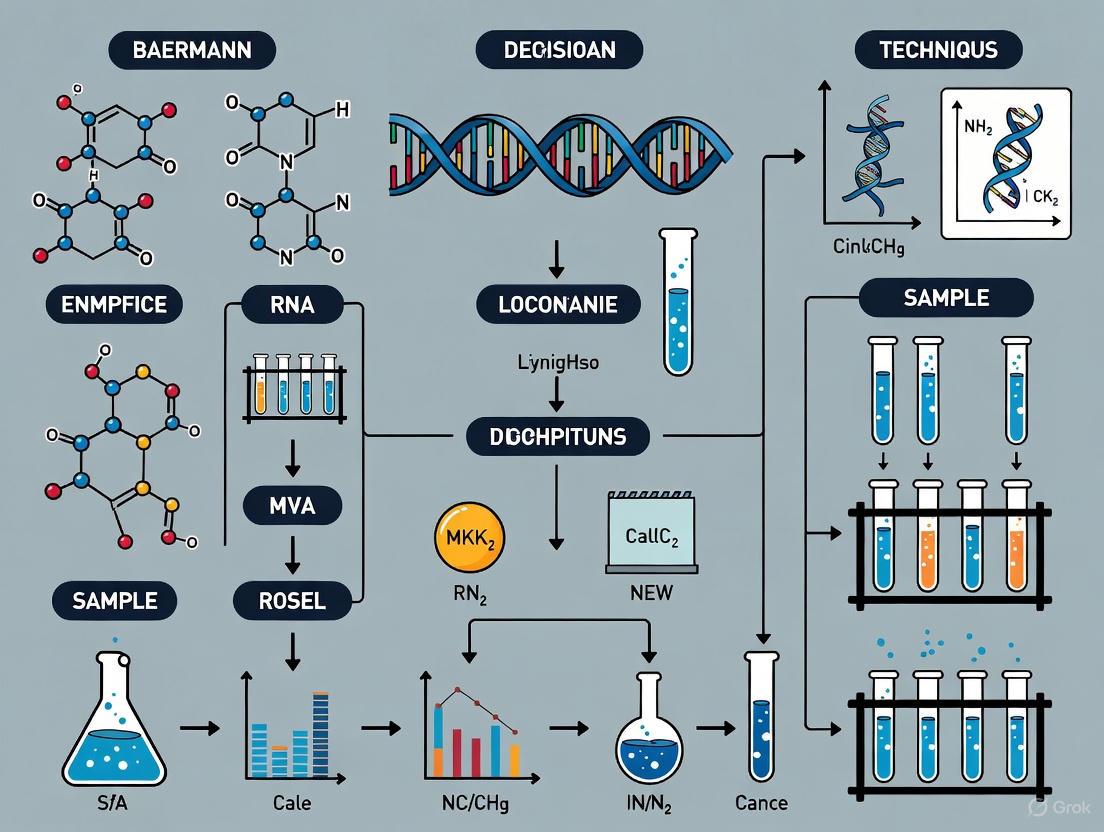
This article provides a comprehensive analysis of the Baermann technique, a fundamental morphological method for identifying nematode larvae in fecal and environmental samples.
The Baermann Technique: A Comprehensive Guide for Nematode Larval Identification in Biomedical Research
Abstract
This article provides a comprehensive analysis of the Baermann technique, a fundamental morphological method for identifying nematode larvae in fecal and environmental samples. Tailored for researchers, scientists, and drug development professionals, it explores the principle of active larval migration underpinning the test, details standardized and modified protocols, and offers troubleshooting for common pitfalls. The scope extends to evaluating the technique's diagnostic sensitivity and specificity, with a critical comparison to modern molecular diagnostics like multiplex qPCR and metabarcoding, positioning the Baermann within the evolving landscape of parasitological research and anthelmintic development.
Principles and Parasitic Targets of the Baermann Technique
The Baermann technique is a foundational diagnostic method in parasitology, enabling the isolation of live nematode larvae from fecal samples, soil, and organic materials. Since its inception in 1917, the technique has remained relevant due to its simple yet effective principle: leveraging the active migration of live larvae for diagnostic purposes. Within drug development and biomedical research, this method provides essential data for understanding parasite biology, diagnosing infections, and evaluating anthelmintic drug efficacy. This application note details the historical context, core principles, and standardized protocols for implementing the Baermann technique in a research setting.
Historical Context and Principle
Historical Origin
The technique was developed in 1917 by the Dutch physician Baermann while working in Java. Faced with the challenge of isolating nematodes, including infective hookworm larvae, from soil samples, he devised a simple apparatus using a muslin bag suspended in a funnel of water. This original setup, now known as the Baermann funnel technique, capitalized on the natural tendency of nematodes to migrate out of the soil and sink into the water column, allowing for their collection [1]. Despite its effectiveness, the original method often yielded murky water from leaching pigments, which prompted subsequent methodological refinements to improve clarity and larval recovery [1].
Core Principle: Active Larval Migration
The fundamental principle of the Baermann technique is the active, self-motivated movement of live nematode larvae from a sample into an aqueous environment [2] [3]. Larvae are aquatic and motile, and when fecal or soil material is suspended in water, they will actively migrate out. Once free in the water, the larvae, which are denser than water, sink downwards due to gravity [3] [4]. They accumulate at the lowest point of the apparatus, where they can be collected and identified, free from much of the debris that would interfere with microscopic examination [2] [5]. This principle distinguishes it from flotation methods, which rely on the passive buoyancy of parasite eggs and cysts.
The following diagram illustrates the core workflow and principle of active larval migration:
Key Applications in Research and Diagnostics
The Baermann technique is critical for detecting nematode infections where the diagnostic stage is a first-stage larva (L1) passed in feces, rather than an egg. It is particularly vital for diagnosing lungworm infections, as adult worms in the pulmonary tissue release larvae that are coughed up, swallowed, and excreted [4]. The table below summarizes the primary parasitic infections diagnosed using this method.
Table 1: Key Parasitic Nematodes Detected by the Baermann Technique
| Parasite | Primary Host | Site of Infection | Research and Clinical Significance |
|---|---|---|---|
| Aelurostrongylus abstrusus | Cats | Bronchioles, Alveolar Ducts | Causes respiratory signs from cough to severe bronchopneumonia; a primary model for feline lungworm studies [5]. |
| Strongyloides stercoralis | Dogs | Small Intestine | Can cause diarrhea and respiratory disease due to larval migration; studied for complex life cycle including transmammary transmission [5]. |
| Crenosoma vulpis | Dogs | Respiratory Tract | Causes bronchitis; limited geographic distribution makes it a subject of epidemiological research [5]. |
| Angiostrongylus vasorum | Dogs (French Heartworm) | Pulmonary Arteries, Heart | An emerging pathogen; research focuses on pathogenesis and neuroinvasive potential [5] [6]. |
| Dictyocaulus spp. | Ruminants, Donkeys | Lungs | Significant in livestock health and production; used in anthelmintic efficacy trials [3] [6]. |
Advantages Over Fecal Flotation
- Larger Sample Size: The technique allows for the examination of larger fecal samples (10g or more), increasing the probability of detecting low-grade or intermittent larval shedding [5].
- Viable Larvae: Larvae are recovered alive and morphologically intact, as they are not exposed to hyperosmotic flotation solutions that can distort them, making specific identification more reliable [5].
Standardized Protocol and Reagents
The following section provides a detailed methodology for performing the Baermann technique, incorporating both traditional and modern disposable setups.
The Scientist's Toolkit: Essential Materials and Reagents
Table 2: Research Reagent Solutions and Essential Materials
| Item | Specification/Function |
|---|---|
| Fecal Sample | 10+ grams of fresh feces. Must be freshly voided and refrigerated until testing to prevent contamination with free-living nematodes or hatching of hookworm eggs [3] [5] [6]. |
| Baermann Apparatus | Funnel/Beaker Setup: Traditional glass funnel with tubing and clamp [3]. Disposable Alternative: Plastic wine glass with a hollow stem, which increases larval recovery and simplifies disposal [5]. |
| Sample Holding Material | Cheesecloth or Gauze. Used to create a porous pouch that holds the fecal sample while allowing larvae to migrate out [7] [5]. |
| Water | Tepid Tap Water. Warm water encourages larval activity and migration [4] [7]. |
| Larval Collection Tool | Transfer Pipette or 1-mL Syringe. For aspirating fluid from the bottom of the apparatus after the incubation period [7] [5]. |
| Microscopy Supplies | Microscope Slides, Cover Slips, and Compound Microscope (4X and 10X objectives). For identifying larvae [7] [5]. |
| Larval Stain/Preservative | Lugol's Iodine Solution. Kills rapidly moving larvae, allowing them to be fixed in a straight position for easier morphological examination [5]. |
Detailed Step-by-Step Protocol
The workflow below outlines the procedural steps from sample preparation to analysis:
Procedure Notes:
- Sample Preparation: A 10-gram fecal sample is placed in the center of a double layer of cheesecloth. The edges are wrapped to form a pouch and secured with a rubber band [5].
- Apparatus Setup: The pouch is suspended in a beaker or the bowl of a disposable wine glass. The container is then carefully filled with tepid water, ensuring the fecal packet is fully submerged but not touching the bottom [7] [5].
- Incubation and Migration: The setup is left undisturbed for a minimum of 6 hours, though overnight (18-24 hours) is preferred for optimal larval recovery [4] [7]. During this time, larvae actively migrate out of the feces and sink to the lowest point.
- Larval Harvest and Concentration: After incubation, the fecal pouch is carefully removed and discarded. The water is carefully decanted, leaving approximately the last 50 mL. This remaining fluid is centrifuged (e.g., 10 minutes at 1500 rpm) to pellet the larvae [7].
- Microscopic Analysis: The supernatant is decanted, and the sediment is resuspended. A few drops are placed on a microscope slide. To aid identification, a drop of Lugol's iodine can be added to the edge of the cover slip; this kills and slightly stains the larvae, halting their movement and facilitating examination of key morphological features [5].
Technical Considerations and Limitations
Researchers must be aware of several critical factors to ensure results are valid and interpretable.
- Sample Freshness is Critical: Samples must be freshly voided and processed promptly. Old samples risk contamination with free-living nematodes, and hookworm eggs can hatch in warm conditions, releasing larvae that can be mistaken for pathogens [5].
- Not a Primary Diagnostic for All Parasites: The technique is specific for motile larvae. It is not effective for detecting parasite eggs, cysts, or larvae that do not actively leave the fecal material (e.g., Filaroides hirthi or Oslerus osleri, which are better detected with flotation) [3]. Furthermore, some lungworms (e.g., Eucoleus aerophilus) produce eggs, not larvae, and require flotation for diagnosis [3] [5].
- Quantitative Potential: While typically used as a qualitative test, the Baermann technique can be adapted for quantitative analysis to estimate larval counts, useful in experimental settings for monitoring infection intensity or drug efficacy [7].
Contemporary Research Applications
The core principle of the Baermann technique—active larval migration—finds relevance in modern molecular and experimental parasitology. Recovered larvae serve as vital starting material for downstream applications.
- Transcriptomic Studies: Isolated larvae are used for RNA sequencing to investigate gene expression patterns associated with development, host invasion, and immune evasion. For example, transcriptomic analysis of Strongyloides ratti tissue-migrating larvae revealed upregulation of astacin metalloprotease and SCP/TAPS gene families, which are associated with tissue penetration and immune modulation [8].
- Anthelmintic Drug Development: The technique is integral to Fecal Egg Count Reduction Tests (FECRT), the gold standard for detecting anthelmintic resistance in herds. While often paired with flotation, the Baermann can be used to monitor larval output pre- and post-treatment to assess drug efficacy against larval stages [3].
- Behavioral and Chemotaxis Research: Advanced methods, such as microfluidic chambers, are used to quantitatively study larval behavioral responses to chemical gradients, building upon the basic migration principle exploited by the Baermann technique [9]. This research can identify chemical cues that guide larval behavior, with implications for understanding infection mechanisms.
Within parasitological research and drug development, the accurate identification of nematode larvae is a critical competency. The Baermann technique remains a foundational method for this purpose, relying on the active migration of larvae from a fecal sample into water, allowing for their collection and subsequent microscopic or molecular analysis [2]. This document provides detailed application notes and experimental protocols for the study of two medically significant nematodes: Strongyloides stercoralis, a soil-transmitted helminth of major human health concern, and Aelurostrongylus abstrusus, a metastrongyloid lungworm impacting feline health. The information is structured to support researchers and scientists in the accurate diagnosis and study of these pathogens, which is essential for epidemiological studies, anthelmintic efficacy testing, and the development of novel therapeutic agents.
Nematode Comparative Profiles
The following table summarizes the key biological and clinical characteristics of S. stercoralis and A. abstrusus.
Table 1: Comparative Profile of Key Nematode Targets
| Characteristic | Strongyloides stercoralis | Aelurostrongylus abstrusus |
|---|---|---|
| Primary Host | Humans, can also occur in dogs, cats, and primates [10] | Felidae (Domestic cats and wild felids) [11] [12] |
| Site of Infection | Small intestine mucosa (adult females) [10] | Lungs; alveolar ducts, and terminal bronchioles [11] [12] |
| Infective Stage | Filariform larva (L3) [10] | Third-stage larva (L3) [12] |
| Primary Mode of Infection | Penetration of skin by filariform larvae [10] | Ingestion of intermediate hosts (snails/slugs) or paratenic hosts (rodents, birds, reptiles) [11] [12] |
| Key Diagnostic Stage | Rhabditiform and filariform larvae in stool [10] | First-stage larvae (L1) in feces or sputum [11] [12] |
| Unique Lifecycle Feature | Autoinfection within the host, allowing for lifelong persistence and potential for hyperinfection [10] | Indirect lifecycle requiring an intermediate host (mollusc), with paratenic hosts often involved in transmission [11] [12] |
| Major Clinical Concern | Hyperinfection syndrome and disseminated disease in immunocompromised hosts, with high mortality [10] | Verminous pneumonia, which can mimic feline asthma or bronchial disease [11] [12] |
| Prevalent Geographic Distribution | Tropical and subtropical regions; global burden underestimated [10] | Worldwide, with recent reports of expanding range in Europe [11] |
The Baermann Technique: Core Protocol
The Baermann technique is a sedimentation method used to isolate and concentrate active nematode larvae from fresh fecal samples. Its principle is based on the active migration of larvae from the feces into the surrounding water, where they then sink to the bottom for collection [2].
Detailed Methodology
Table 2: Reagents and Equipment for the Baermann Technique
| Item | Specification/Function |
|---|---|
| Fecal Sample | 3-5 grams of fresh feces [13]. |
| Water | Distilled or lukewarm tap water, warmed [13]. |
| Cheese Cloth/Gauze | To contain the fecal sample, allowing larval migration [13]. |
| Funnel & Stand | Glass or plastic funnel secured to a stand [13]. |
| Rubber Tubing & Clamp | Attached to the stem of the funnel to control fluid flow [13]. |
| Centrifuge Tube | Alternative to a funnel setup (e.g., 50 ml tube) [13]. |
| Microscope with Light Source | For identification of larvae, typically at 10x magnification [13]. |
The experimental workflow is standardized as follows:
- Sample Preparation: Place 3-5 g of fresh feces in the center of a large piece of cheesecloth and tie it securely to form a pouch [13].
- Apparatus Setup: Suspend the fecal pouch in a funnel, ensuring it does not touch the bottom. The funnel stem should be connected to rubber tubing with a closed clamp. Alternatively, suspend the pouch in a 50 ml centrifuge tube using toothpicks [13].
- Water Immersion: Add warmed water to the funnel or tube until the fecal pouch is completely covered [13].
- Incubation: Let the apparatus stand at room temperature for a period of up to 24 hours [13]. During this time, actively moving larvae migrate out of the feces and settle through the water column.
- Sediment Collection: After incubation, draw off 2 ml of fluid from the bottom of the apparatus (via the rubber tubing or directly from the tube). If using a funnel, the collected fluid may be further sedimented by letting it stand for 30 minutes or by brief centrifugation (500-1000 g for 2 minutes) [13].
- Microscopic Examination: Carefully remove most of the supernatant, leaving approximately 0.5 ml of sediment. Place 1-2 drops of the sediment on a microscope slide, add a coverslip, and examine systematically under a light microscope starting at low power (10x objective) [13].
Workflow Diagram
Research Reagent Solutions and Essential Materials
For researchers aiming to establish or validate the Baermann technique for these nematodes, the following toolkit is essential.
Table 3: The Scientist's Toolkit for Nematode Larval Identification
| Research Reagent / Material | Function in Experimental Protocol |
|---|---|
| Distilled or Tap Water | Medium for larval migration; warmth stimulates larval activity [13]. |
| Cheesecloth / Muslin | Porous membrane to contain fecal matter while allowing motile larvae to escape [13]. |
| Vortex Mixer | For homogenizing fecal samples prior to culture or DNA extraction [14]. |
| Laboratory Incubator | For maintaining constant temperature (e.g., 22-28°C) for fecal cultures to promote egg hatching and larval development [15]. |
| Light Microscope | Core instrument for morphological identification of larvae based on key characteristics [13] [15]. |
| DNA Extraction Kits (Fecal) | For purifying inhibitor-free genomic DNA directly from feces or larvae for subsequent PCR analysis [14]. |
| PCR Reagents & Primers | For specific molecular detection and differentiation of nematode species via multiplex real-time PCR assays [14]. |
| Fixatives & Stains | For clearing and staining larvae to enhance morphological features for microscopic identification [16]. |
Advanced Diagnostic and Research Applications
Larval Identification and Molecular Confirmation
While the Baermann technique isolates larvae, specific identification relies on morphological and morphometric analysis. For S. stercoralis, the key is to differentiate between rhabditiform and filariform larvae in the context of autoinfection [10]. For A. abstrusus, first-stage larvae (L1) in feces are approximately 400 µm long and possess a characteristic "kinky" tail with a dorsal spine [12].
However, microscopic identification has limitations, including the need for specialist expertise and morphological similarities between species [15]. Molecular tools, such as multiplex real-time PCR, have been developed to overcome these issues. These assays allow for specific detection and semi-quantitative assessment of nematode DNA extracted directly from feces, providing a higher degree of precision for evaluating anthelmintic efficacy and epidemiological studies [14]. The following diagram illustrates the integrated diagnostic pathway.
Critical Research Considerations
- Sample Integrity: The Baermann technique requires fresh, unpreserved fecal samples to ensure larval viability and motility. Refrigerated (not frozen) storage during transport is recommended to preserve larvae while inhibiting the development of saprophytic fungi [13].
- Differentiation Challenges: Morphological differentiation of A. abstrusus from other feline lungworms like Troglostrongylus brevior is critical, as co-infections occur and pathogenicity may differ [11]. Similarly, in S. stercoralis, differentiating the rhabditiform larvae from those of other nematodes like Hookworm is necessary [10]. Molecular methods are the gold standard for resolving these complexities [14] [15].
- Quantification and Sensitivity: The Baermann technique is more sensitive than direct smear or simple flotation for detecting low numbers of larvae, but it is not a quantitative method. For quantitative assessment of parasite burden (e.g., Eggs Per Gram counts), the McMaster technique or quantitative PCR should be employed in parallel [14].
The Baermann technique is a specialized diagnostic tool primarily used for the detection of live, motile nematode larvae in fecal samples, vegetation, or environmental substrates. The core principle of this technique is based on the active migration of larvae out of the fecal material suspended in water and their subsequent collection for identification [2] [7] [1]. As these larvae move through the water, they sink to the bottom of the apparatus due to gravity, where they can be harvested and examined microscopically [2] [7]. The effectiveness of this method is therefore intrinsically linked to the biological behavior of the parasite, specifically its motility and the presence of the larval stage in the sample.
While invaluable for diagnosing infections with parasites such as Aelurostrongylus abstrusus in cats or Strongyloides stercoralis in dogs and humans, the technique's reliance on larval motility and viability defines its specific diagnostic niche [5] [4]. Understanding its limitations is crucial for researchers and drug development professionals to avoid false negatives, ensure accurate prevalence data, and make informed choices about diagnostic pathways in clinical trials and efficacy studies.
Key Limitations and Parasites Undetected by the Baermann Technique
The Baermann technique is not a universal diagnostic test. Its limitations can be categorized into several critical areas, which directly impact the parasites it can and cannot detect.
Fundamental Technical and Biological Constraints
The design of the Baermann technique imposes specific constraints on its diagnostic capability:
- Dependence on Larval Motility: The test requires larvae to be alive and motile to migrate from the feces into the water. Dead or immotile larvae will not be recovered, leading to false-negative results [7] [5]. Sample freshness is paramount; refrigeration over several days can kill larvae, and contamination with free-living nematodes from old samples can complicate diagnosis [3] [5].
- Inability to Detect Eggs and Oocysts: The Baermann technique is explicitly designed for larvae. It is not useful for the detection of parasite eggs, oocysts, or cysts [3]. Parasites whose diagnostic stage is an egg (e.g., most roundworms, hookworms, whipworms, and cestodes) will not be identified via this method. If eggs are incidentally found during a Baermann examination, it typically indicates an overwhelming infection where eggs have been released from the disintegrating fecal matter [5].
Specific Parasites and Pathogens Not Detected
The following table summarizes key parasites that are poorly detected or completely missed by the standard Baermann technique, along with the primary reason for the test's failure.
Table 1: Parasites Not Reliably Detected by the Baermann Technique
| Parasite | Reason for Lack of Detection | Preferred Diagnostic Method(s) |
|---|---|---|
| Eucoleus (Capillaria) aerophilus [3] [5] | Produces eggs (not larvae) that are passed in feces. | Fecal flotation [3] [5] |
| Eucoleus boehmi [5] | Produces eggs (not larvae) that are passed in feces. | Fecal flotation [5] |
| Filaroides hirthi & Oslerus osleri [3] [5] | First-stage larvae are sluggish and do not move vigorously enough to be reliably recovered [3]. | Zinc sulfate flotation [3] [5] |
| Giardia spp. [17] | Diagnostic stage is a cyst. | Fecal flotation (with specific gravity adjustment) or antigen tests [3] [18] |
| Cryptosporidium spp. [17] | Diagnostic stage is an oocyst. | Flotation with concentration, ELISA, or acid-fast stain [3] |
| Cestodes (e.g., Diphyllobothrium latum) [17] | Diagnostic stage is an egg. | Fecal flotation [17] |
| Ascarids (e.g., Ascaris lumbricoides) [17] | Diagnostic stage is an egg. | Fecal flotation or direct smear [17] |
| Most hookworm species [3] | Diagnostic stage is an egg. (Note: First-stage larvae may be recovered if eggs hatch in a fresh sample, potentially causing misidentification) [5]. | Fecal flotation [3] [18] |
Quantitative Limitations and Diagnostic Performance
The diagnostic sensitivity of the Baermann technique, particularly for its primary target Strongyloides stercoralis, is highly variable and often suboptimal. Recent research has quantified its performance against modified versions, revealing significant limitations.
A 2021 community-based cross-sectional study in Ethiopia analyzed 437 stool samples to compare the performance of three Baermann variations for detecting S. stercoralis [19]. The results underscore the risk of relying on the conventional method.
Table 2: Comparative Diagnostic Performance of Baermann Techniques for S. stercoralis [19]
| Diagnostic Technique | Prevalence in Study Population | Sensitivity | Negative Predictive Value (NPV) | Agreement with Composite Reference Standard |
|---|---|---|---|---|
| Conventional Baermann (CB) | 9.6% | 26.7% | 70.8% | 31.8% |
| Modified Baermann (MB) | 8.0% | 22.1% | 69.6% | 26.7% |
| Modified Baermann with Charcoal Pre-Incubation (MBCI) | 31.3% | 87.0% | 93.2% | 89.6% |
The data demonstrates that the Conventional Baermann (CB) technique significantly underestimates the true burden of infection, with a remarkably low sensitivity of 26.7% [19]. This means it failed to detect approximately 73% of true positive infections that were identified by the composite reference standard. The Modified Baermann with Charcoal Pre-Incubation (MBCI), however, showed a vastly superior performance, with a sensitivity of 87.0% [19]. This highlights that the conventional approach, still commonly used in many laboratories, is a major contributor to the underdiagnosis and neglect of strongyloidiasis.
Detailed Protocol: Modified Baermann with Charcoal Pre-Incubation (MBCI)
The following protocol is adapted from the 2021 study that demonstrated high diagnostic sensitivity [19]. It provides a optimized methodology for researchers seeking to improve larval recovery.
Objective: To isolate and identify live nematode larvae (particularly Strongyloides stercoralis) from fresh fecal samples with high sensitivity. Principle: Pre-incubating feces with charcoal in lukewarm water stimulates larval activity and growth. Larvae then actively migrate out of the fecal material through a filter and sink to the bottom of the collection vessel for recovery. Research Reagents and Essential Materials: Table 3: Research Reagent Solutions and Essential Materials
| Item | Function/Specification |
|---|---|
| Activated Charcoal | Creates a nutrient-rich environment to stimulate larval development during pre-incubation [19]. |
| Lukewarm Water | Maintains a viable environment for larval motility; temperature should be approximately 26°C [19]. |
| Tissue Paper/Gauze | Acts as a semi-permeable membrane to contain fecal solids while allowing larvae to migrate through [19] [7]. |
| Baermann Apparatus or Beaker/Funnel Setup | A container (beaker, funnel) where the submerged sample is suspended. A clamped rubber hose on a funnel facilitates collection [3] [19]. |
| Centrifuge | Concentrates the larval sediment for microscopic examination; typically 1500-2000 rpm for 5-10 minutes [19] [7]. |
| Microscope (Compound or Dissecting) | For identification of larvae based on morphological characteristics (e.g., esophagus, genital primordium, tail structure) [7] [5]. |
| Lugol's Iodine Solution | An optional staining agent that kills and stains larvae, facilitating morphological examination [5]. |
Experimental Workflow:
- Sample Preparation: Weigh 10 grams of fresh stool and mix thoroughly with 2 grams of activated charcoal and a small amount of lukewarm water [19].
- Pouch Formation: Transfer the mixture to a Petri dish lined with a double layer of tissue paper. Cover the top with a single layer of tissue paper to form a sealed pouch [19].
- Pre-Incubation: Incubate the prepared pouch for 18-24 hours at 26°C to encourage larval development [19].
- Larval Migration: After incubation, place the pouch in a Baermann apparatus (e.g., a strainer on a funnel) filled with lukewarm water, ensuring the pouch is submerged. Let it stand for 1 hour at room temperature (25-37°C) to allow for larval migration [19].
- Larval Collection: Drain the lower 10 mL of fluid from the apparatus into a centrifuge tube [19].
- Concentration: Centrifuge the collected fluid at 2000 rpm for 5 minutes. Carefully decant the supernatant [19].
- Microscopic Examination: Re-suspend the sediment in a small volume of fluid. Transfer a few drops to a microscope slide, apply a coverslip, and examine thoroughly under a microscope (4X and 10X objectives) for the presence of larvae. The use of Lugol's iodine can aid in visualization and identification [5].
Diagram 1: Experimental workflow of the Modified Baermann with Charcoal Pre-Incubation (MBCI) technique.
Contraindications and Diagnostic Decision Pathways
The term "contraindication" in diagnostics refers to scenarios where using the Baermann technique is inappropriate or likely to yield misleading results. The following decision pathway guides the appropriate application of the technique and its alternatives.
Diagram 2: Diagnostic decision pathway for the application of the Baermann technique.
The Baermann technique remains a cornerstone for diagnosing specific nematode infections, but its limitations are profound and non-negotiable. It is contraindicated for the detection of all parasites that do not shed motile larvae in their diagnostic stage, including those that produce eggs (e.g., Eucoleus aerophilus, ascarids), oocysts (e.g., Cryptosporidium spp.), or cysts (e.g., Giardia spp.), as well as those with non-motile larvae (e.g., Filaroides spp.) [3] [17] [5].
For researchers and drug development professionals, these limitations have direct consequences:
- Underestimation of Disease Burden: Relying on the conventional Baermann technique, particularly for S. stercoralis, leads to significant underestimation of true prevalence, as evidenced by its low sensitivity (26.7%) compared to modified methods (87.0%) [19]. This skews epidemiological data and hampers the assessment of intervention efficacy.
- Informed Method Selection: No single diagnostic method is perfect. Adopting a multi-method approach, such as combining the optimized MBCI technique with specific fecal antigen tests or PCR, is essential to ensure the widest possible diagnostic breadth and accuracy in preclinical and clinical trials [18].
- Standardization Need: The existence of multiple Baermann modifications with vastly different performance characteristics underscores the critical need for standardized, high-sensitivity protocols in research to ensure comparable and reproducible results across studies [19] [20].
The Role of Larval Identification in Epidemiological Studies and Drug Efficacy Trials
The accurate identification of nematode larvae is a cornerstone of veterinary and medical parasitology, providing critical data for understanding disease epidemiology and evaluating anthelmintic drug efficacy. The Baermann technique, a classic isolation method that exploits larval motility, remains a fundamental tool for this purpose. Its application is particularly vital for detecting parasites whose diagnostic stage is the larva, such as Strongyloides stercoralis and various lungworms, which are often missed by standard fecal flotation tests [5]. Within the context of drug efficacy trials like the Fecal Egg Count Reduction Test (FECRT), and large-scale epidemiological surveys, precise larval identification enables researchers to monitor emerging anthelmintic resistance and map the distribution of pathogenic species, thereby informing targeted control strategies [19] [21].
Data Presentation: Quantitative Findings from Larval Identification Studies
Larval identification through techniques like the Baermann funnel provides essential quantitative data for assessing parasite burden and drug performance. The tables below summarize key findings from recent studies.
Table 1: Comparative Performance of Baermann Technique Variations for Detecting Strongyloides stercoralis [19]
| Diagnostic Technique | Prevalence Detected (%) | Sensitivity (%) | Negative Predictive Value (NPV, %) | Agreement with Composite Standard (%) |
|---|---|---|---|---|
| Conventional Baermann (CB) | 9.6 | 26.7 | 70.8 | 31.8 |
| Modified Baermann (MB) | 8.0 | 22.1 | 69.6 | 26.7 |
| Modified Baermann with Charcoal Pre-Incubation (MBCI) | 31.3 | 87.0 | 93.2 | 89.6 |
Table 2: Epidemiology of Gastrointestinal Nematode (GIN) Larvae in Goats from Punjab, India (n=1962) [21]
| Parasite Genus | Prevalence (%) | Relative Proportion in Faecal Cultures (%) |
|---|---|---|
| Haemonchus | Not separately quantified by larval ID | 75.94 |
| Trichostrongylus | Not separately quantified by larval ID | 16.44 |
| Oesophagostomum | Not separately quantified by larval ID | 4.85 |
| Bunostomum | Not separately quantified by larval ID | 1.65 |
| Ostertagia | Not separately quantified by larval ID | 0.77 |
| Cooperia | Not separately quantified by larval ID | 0.33 |
| Overall GIN (strongyle) prevalence | 88.99 (by egg count) | - |
Table 3: Diagnostic Sensitivity of Copromicroscopic Techniques in Dogs and Cats [22]
| Parasite | Flotation | Mini-FLOTAC | Baermann Test |
|---|---|---|---|
| Intestinal Helminths & Protozoa (e.g., Toxocara, Cystoisospora) | High | High (comparable to flotation) | Not Recommended |
| Metastrongyloid Lungworms (e.g., Aelurostrongylus abstrusus) | Low | Low | High (Test of Choice) |
Experimental Protocols
Standardized Baermann Funnel Protocol for Field and Laboratory
This protocol is adapted for the isolation of active nematode larvae, such as Strongyloides spp. and lungworms, from environmental substrates or fresh feces [23] [7].
Principle: The technique leverages the larvae's innate motility and negative geotaxis. Larvae migrate out of the fecal material, pass through a filter, and settle in the water column at the bottom of the funnel, where they can be collected [5].
Equipment and Reagents:
- Funnel (65 mm diameter recommended) or 250 ml glass beaker [23] [7]
- Rubber tubing and tubing clamp attached to the funnel stem
- Filter material: Cheesecloth, gauze, or lint-free wipes (e.g., Kimwipes) [23] [7]
- Stand to hold the funnel
- Tepid water (room temperature to 26°C)
- Centrifuge and test tubes
- Microscope (compound or dissecting)
Procedure:
- Sample Preparation: Place a 5-10 gram sample of fresh feces or substrate in the center of a double layer of cheesecloth. Form a pouch and secure it closed [7] [5].
- Apparatus Setup: Line the funnel with a filter if using a simple design. Suspend the fecal pouch in the funnel, ensuring it is near, but not touching, the bottom. Carefully fill the funnel with tepid water, fully submerging the sample [23] [7].
- Incubation: Allow the apparatus to stand undisturbed for a minimum of 6 hours, though 12-24 hour incubation periods are recommended for optimal larval recovery [19] [7] [5].
- Larval Collection: After incubation, clamp the rubber tubing. Draw off approximately 10 ml of fluid from the very bottom of the funnel stem into a centrifuge tube [19] [5].
- Sedimentation: Centrifuge the collected fluid at 1500-2000 rpm for 5-10 minutes. Carefully decant the supernatant [19] [7].
- Microscopic Examination: Re-suspend the sediment in a small volume of remaining fluid. Transfer a drop to a microscope slide, add a coverslip, and examine under 4X-10X objectives for the presence of larvae. Using Lugol's iodine can kill and lightly stain larvae to facilitate identification [5].
Key Considerations:
- Sample Freshness: Use freshly collected feces. Refrigerated or old samples may contain dead larvae, reducing sensitivity [24] [5].
- Quality Control: The Modified Baermann with Charcoal Pre-Incubation (MBCI) has demonstrated superior sensitivity for S. stercoralis and is recommended over the conventional method for this parasite [19].
Larval Identification in Drug Efficacy Trials (FECRT)
The Faecal Egg Count Reduction Test (FECRT) is the gold standard for field detection of anthelmintic resistance. Larval culture and identification are critical components when resistance is suspected, as they determine which genera are surviving treatment.
Procedure:
- Pre- and Post-Treatment Sampling: Collect individual fecal samples from animals immediately before and 10-14 days after anthelmintic treatment.
- Egg Counts: Perform quantitative egg counts (e.g., McMaster, Mini-FLOTAC) on all samples to calculate the percent reduction using the formula: FECR = (1 - (Arithmetic Mean Post-Treatment EPG / Arithmetic Mean Pre-Treatment EPG)) × 100 [21].
- Larval Culture: For groups showing reduced efficacy (typically FECR <95%), pool pre- and post-treatment fecal samples and incubate them in a warm, humid environment for 7-10 days to allow eggs to hatch and develop into third-stage larvae (L3) [21].
- Larval Harvesting and Identification: Use the Baermann technique to harvest L3 from the cultures. Identify the genera of L3 based on morphological characteristics (e.g., larval length, tail shape, presence of sheaths, intestinal cells) under a microscope [21].
- Data Interpretation: The comparison of larval genera pre- and post-treatment identifies the parasite species that are resistant to the drug used. For example, a study in goats revealed resistance to fenbendazole, levamisole, and ivermectin across multiple farms, with Haemonchus contortus being the predominant resistant genus [21].
Visualizations
Baermann Technique Workflow
Diagnostic Positioning of Baermann Technique
The Scientist's Toolkit: Essential Research Reagent Solutions
Table 4: Key Materials for Baermann Technique and Larval Identification
| Item | Function/Application | Technical Notes |
|---|---|---|
| Nematode Growth Medium (NGM) Agar | Culture medium for maintaining isolated nematodes (e.g., Caenorhabditis spp.) for long-term study [23]. | Pre-packaged powders ensure consistency during fieldwork [23]. |
| Activated Charcoal | Used in Modified Baermann with Charcoal Pre-Incubation (MBCI). Enhances larval recovery for Strongyloides stercoralis [19]. | Mixed with stool sample prior to incubation; significantly increases test sensitivity [19]. |
| Lugol's Iodine Solution | A staining and immobilizing agent for microscopic identification. Kills motile larvae, allowing for clear observation of morphological details [5]. | Apply at the edge of the coverslip; diffuses into the sample [5]. |
| Saturated NaCl Solution | Flotation medium with high specific gravity (S.G. ~1.20) used in comparative diagnostic methods (e.g., Mini-FLOTAC, McMaster) [22]. | Suitable for floating most helminth eggs and some oocysts [22]. |
| OP50 E. coli | A standard food source for culturing non-parasitic nematodes like Caenorhabditis elegans isolated from environmental samples [23]. | Grown in LB media and seeded onto NGM plates [23]. |
Standardized Protocols and Advanced Modifications
The Baermann technique is a fundamental diagnostic tool in parasitology, first described in 1917 for isolating nematode larvae from soil samples [1]. This method remains a cornerstone technique for researchers and veterinarians needing to identify active nematode larval infections, particularly those affecting the respiratory and intestinal systems. The technique operates on a simple but effective principle: live, motile larvae will migrate out of a fecal sample suspended in water and can be collected for identification [2] [23]. This guide details two common implementations of this principle—the traditional funnel method and a modern adaptation using disposable stemware—providing researchers with robust protocols for nematode larval identification.
This technique is particularly valuable for detecting infections where the diagnostic stage passed in feces is a larva (L1), rather than an egg. It is the test of choice for diagnosing infections such as Aelurostrongylus abstrusus in cats and Strongyloides stercoralis in dogs, whose larvae are often missed or distorted by standard fecal flotation methods [5].
Key Principles and Applications
Core Principle
The Baermann technique exploits the positive hydrotropism and motility of live nematode larvae. When a fecal sample is suspended in lukewarm water, active larvae migrate out of the fecal material. Because they cannot swim against gravity, they sink through the water column and settle at the lowest point of the apparatus, where they can be collected [2] [23] [25]. The method selectively isolates active larvae from the substrate, providing a clean sample for microscopic examination.
Primary Research and Diagnostic Applications
The Baermann technique is a qualitative test used to detect patent infections caused by nematodes that shed larvae in their feces. Its applications extend across veterinary medicine, wildlife ecology, and basic nematology research.
- Veterinary Diagnosis: Essential for diagnosing lungworm infections (e.g., Aelurostrongylus abstrusus in cats, Crenosoma vulpis and Angiostrongylus vasorum in dogs) and intestinal infections with Strongyloides stercoralis [5] [6].
- Wildlife and Ecological Studies: Used to isolate and study nematode populations from environmental substrates like soil, leaf litter, and decomposing organic matter, aiding in biodiversity and population genetics research [23].
- Parasitology Research: Serves as a primary method for harvesting live larvae for downstream applications, including morphological studies, drug efficacy testing, and the establishment of laboratory cultures from wild isolates [23].
Table 1: Common Parasites Detected by the Baermann Technique in Companion Animals
| Parasite | Primary Host | Site of Infection | Key Morphological Feature of Larvae |
|---|---|---|---|
| Aelurostrongylus abstrusus | Cat | Lung Parenchyma/Bronchioles | Tail with a characteristic S-shaped kink and subterminal spine [5] |
| Angiostrongylus vasorum | Dog | Pulmonary Arteries, Right Heart | Tail with an S-shaped kink and subterminal spine [5] |
| Crenosoma vulpis | Dog | Bronchi, Trachea | Tail is straight with a pointed tip [5] |
| Strongyloides stercoralis | Dog | Small Intestine | Prominent genital primordium in the mid-section [5] |
| Dictyocaulus spp. | Livestock | Airways | Large, robust larvae [3] |
Advantages and Limitations
A critical understanding of the technique's strengths and weaknesses is necessary for proper experimental design and data interpretation.
Advantages:
- High Sensitivity for Motile Larvae: More efficient than flotation for recovering delicate larvae that are damaged by hyperosmotic flotation solutions [5].
- Examines Larger Sample Volume: Allows for the examination of 10 grams or more of feces, increasing the chance of detecting low-grade infections [5].
- Simplicity and Low Cost: Requires minimal and inexpensive equipment, making it accessible for field and lab settings [1].
Limitations:
- Requires Viable Larvae: The test is dependent on the presence of live, motile larvae. Dead or immotile larvae will not be recovered [5].
- Fresh Sample Critical: Feces must be freshly voided and processed quickly to prevent contamination with free-living nematodes or the hatching of hookworm eggs in the sample [3] [5].
- Not a Broad-Spectrum Test: It is not effective for detecting parasite eggs, cysts, or larvae that do not actively migrate (e.g., Filaroides spp. and Eucoleus aerophilus, which are better detected via flotation) [3] [5].
- Time-Consuming: Requires an incubation period of several hours to overnight [25] [13].
The Scientist's Toolkit
Successful implementation of the Baermann technique requires a specific set of reagents and equipment. The following table catalogs the essential materials for both methodological variations described in this guide.
Table 2: Essential Research Reagents and Materials
| Item | Function/Application |
|---|---|
| Fresh Fecal Sample | Sample must be freshly voided to ensure larval viability and prevent contamination. A 5-10g sample is standard [3] [13]. |
| Gauze or Cheesecloth | Acts as a porous pouch to hold the fecal sample while allowing larvae to migrate out [5] [13]. |
| Lukewarm Water | Hydrates the sample and stimulates larval migration. Tepid tap water or distilled water is used [5] [26]. |
| Lugol's Iodine Solution | A staining solution that kills and lightly stains larvae, facilitating morphological identification under the microscope [5] [26]. |
| Centrifuge & Tubes | Used to concentrate the larvae from the collected fluid into a sediment pellet for microscopic examination [26] [7]. |
| Compound Light Microscope | For the definitive identification of larvae based on morphological characteristics (e.g., tail structure, genital primordium) [5] [26]. |
Experimental Protocols
Adherence to these detailed protocols is critical for obtaining reliable and reproducible results.
Protocol 1: Traditional Funnel Method
The traditional method uses a standard laboratory funnel and is well-suited for processing multiple samples simultaneously [13].
Workflow Diagram: Traditional Funnel Method
Step-by-Step Procedure:
Apparatus Setup: Secure a glass or plastic funnel (approximately 65 mm diameter) to a stand using a clamp. Attach a piece of rubber tubing (~10-15 cm) to the stem of the funnel and secure it with a clamp (e.g., a Mohr's pinchcock) to prevent water from leaking out [23] [13].
Sample Preparation: Place 5-10 grams of fresh feces in the center of a double layer of cheesecloth or gauze (approx. 12cm x 12cm). Draw the edges of the cloth together and tie them securely with string or a rubber band to form a pouch [13] [7].
Sample Suspension: Place the fecal pouch inside the funnel. Suspend it in the upper part of the funnel, ensuring it does not touch the bottom or sides. This can be done by using a pencil or applicator sticks passed through the rubber band to rest on the rim of the funnel, or by placing the pouch within a tea strainer that sits in the funnel [5] [13].
Water Addition: Carefully fill the funnel with lukewarm tap water or distilled water until the fecal pouch is completely submerged. Avoid letting the corners of the cloth act as a wick, as this can draw water out of the funnel without the larvae settling [5] [13].
Incubation: Allow the apparatus to stand undisturbed at room temperature for 12 to 24 hours [13] [26]. During this time, motile larvae will actively migrate out of the feces, pass through the cloth, and sink down to the lowest point in the apparatus—the clamped tubing.
Larval Collection: After the incubation period, carefully open the clamp on the rubber tubing and slowly release approximately 2-5 ml of fluid from the very bottom of the funnel stem into a centrifuge tube or test tube [13]. This fluid contains the concentrated larvae.
Sedimentation: Allow the collected fluid to stand for 30 minutes, or centrifuge it at 500-1000 g for 2-10 minutes to form a sediment pellet [13] [26] [7].
Microscopic Examination: Carefully aspirate and discard the supernatant, leaving approximately 0.5 ml of sediment in the tube. Transfer one or two drops of the sediment to a microscope slide. Optionally, add a drop of Lugol's iodine to kill, straighten, and lightly stain the larvae for easier identification [5] [26]. Place a coverslip on top and examine systematically under a compound light microscope, starting with the 10x objective [13] [26].
Protocol 2: Disposable Stemware Method
This modern adaptation uses an inexpensive plastic wine glass with a hollow stem, offering a compact and convenient alternative, ideal for low-throughput settings or fieldwork [5].
Workflow Diagram: Disposable Stemware Method
Step-by-Step Procedure:
Apparatus Setup: Obtain a disposable plastic wine glass with a hollow stem. This is the only specialized equipment required [5].
Sample Preparation: Place a 10-gram or larger fresh fecal sample in the center of a double layer of cheesecloth. Wrap the edges around the sample to form a pouch and secure it tightly with a rubber band [5].
Sample Suspension: Pass a pencil or applicator sticks through the rubber band. Suspend the fecal pouch over the bowl of the wine glass, ensuring it hangs freely and does not touch the sides [5].
Water Addition: Fill the wine glass completely with lukewarm tap water, submerging the fecal pouch. Ensure the corners of the pouch are not draped over the rim, as they can wick water out of the glass [5].
Incubation: Let the setup sit for at least 8 hours, preferably overnight [5]. During this time, larvae migrate out and settle in the hollow stem of the glass.
Larval Collection: After incubation, remove and discard the fecal pouch. Using a transfer pipette or a 1-ml syringe with a needle attached, carefully aspirate a small amount of fluid (a few drops to 0.5 ml) from the very bottom of the hollow stem [5].
Slide Preparation: Place the collected fluid directly onto a microscope slide. Immediately add one or two drops of Lugol's iodine solution at the edge of the cover slip before placing it on the sample. The iodine will diffuse, killing and staining the larvae [5].
Microscopic Examination: Examine the entire slide under the microscope. Begin with the 4x objective to scan for the presence of larvae. Once located, switch to 10x or 40x objectives to observe key morphological features for definitive identification [5].
Data Interpretation and Reporting
Accurate interpretation of results is the final and most critical step. The following table summarizes the expected outcomes and subsequent actions.
Table 3: Results Interpretation and Troubleshooting Guide
| Result | Interpretation | Recommended Action |
|---|---|---|
| Motile Larvae Detected | Patent infection with a nematode species whose larvae are recovered by this technique (e.g., A. abstrusus, S. stercoralis). | Identify larvae to species level based on morphology. Report as "Positive for [Parasite Name] larvae." |
| No Larvae Detected | No active, patent infection with a detectable nematode species, or larvae are non-viable. | Report as "Negative for nematode larvae." If clinical signs persist, consider re-testing with a fresh sample or using complementary diagnostics (e.g., fecal flotation) [3]. |
| Non-Larval Structures (e.g., eggs) Detected | Indicates a heavy burden of a patent nematode infection that releases eggs. The Baermann is not the optimal test for eggs. | Report the finding and recommend a standard fecal flotation test for definitive identification of the egg type [5]. |
| Free-Living Nematodes Detected | Sample contamination due to feces contacting the ground or using an old sample. | The result is invalid. Request a new, freshly voided sample for repeat testing [3] [5]. |
For a definitive diagnosis, the morphological identification of the larvae is essential. Researchers should refer to specialized taxonomic keys. Key features include:
- Tail Morphology: The presence of a kinked tail with a subterminal spine is characteristic of Aelurostrongylus and Angiostrongylus larvae, whereas Strongyloides has a straight tail [5].
- Internal Structures: The size and position of the genital primordium are critical for identifying Strongyloides larvae [5].
The Baermann technique is a specialized diagnostic method used for the isolation of live, motile nematode larvae from fresh feces, soil, plant matter, or other organic materials [3] [2]. Its principle of operation is based on the active migration of larvae out of the biological material and their subsequent collection for identification [5] [2]. The reliability of this technique is profoundly dependent on pre-analytical factors, primarily sample freshness, size, and transport conditions. For researchers and drug development professionals, adherence to strict sample handling protocols is not merely a procedural formality but a fundamental requirement for generating valid, reproducible data in studies of parasite biology, anthelmintic efficacy, and nematode larval identification [5] [14].
Core Sample Requirements for the Baermann Technique
The following specifications are critical for ensuring the viability and detectability of nematode larvae.
Table 1: Core Sample Requirements for the Baermann Technique
| Parameter | Requirement | Rationale & Scientific Basis |
|---|---|---|
| Sample Type | Fresh feces (individual samples preferred) [3] [6], tissues, or organic material. | Composite samples indicate a problem but cannot identify which specific animals are affected, limiting their utility in research settings [3]. |
| Sample Size | 5 to 10 grams is the standard requirement [3] [7] [13]. Larger samples (≥10g) are recommended for low-intensity infections [5]. | Using a larger sample volume increases the probability of detecting larvae that may be present in low numbers or shed intermittently [5]. |
| Freshness | Freshly voided and immediately collected [3] [5]. Refrigerate and submit for examination within 7 days of collection [3]. | Critical Requirement: The test relies on detecting live, motile larvae [5] [2]. Using fresh samples prevents contamination with free-living nematodes and ensures larval viability [3] [5]. Prolonged refrigeration (e.g., days) can kill larvae, rendering the test ineffective [5]. |
| Transport Condition | Ship on cold packs [3]. Maintain refrigeration during transport and storage [3] [6]. | Cold packs help preserve larval viability and retard the growth of contaminating microorganisms. Preserved or frozen samples are not suitable for this method [6]. |
| Container | Plastic, leak-proof, screw-cap container [3] [6]. | Prevents leakage during transport and maintains sample moisture without desiccation. |
Consequences of Non-Adherent Sample Handling
Failure to adhere to these requirements directly compromises experimental integrity:
- Use of Old or Non-Refrigerated Samples: Larvae die and lose motility, leading to false-negative results as the Baermann technique depends on live larvae migrating from the feces [5].
- Sample Contamination: Feces that contact the ground after voiding can become contaminated with free-living nematodes, which are difficult to distinguish from parasitic larvae and can cause false-positive identifications [3] [5].
- Insufficient Sample Size: May fail to detect low-grade or prepatent infections, skewing prevalence data and anthelmintic efficacy evaluations [5].
Detailed Experimental Protocol for the Baermann Technique
This section provides a standardized, step-by-step protocol applicable for research settings.
Research Reagent Solutions and Essential Materials
Table 2: The Scientist's Toolkit for the Baermann Technique
| Item/Category | Specific Examples & Specifications | Function in the Protocol |
|---|---|---|
| Sample Containment | Cheesecloth, gauze, or a single layer of Kimwipe tissue paper [5] [7] [27]. | Creates a permeable pouch that contains the fecal sample while allowing larvae to migrate out. |
| Apparatus Vessels | Disposable plastic wine glass with hollow stem [5], 250 ml beaker [7], or glass/plastic funnel secured on a stand [3] [13]. | Holds water and the suspended sample. The design facilitates larval sedimentation into a collection area. |
| Fluid Medium | Tepid tap water [5] [7] or distilled water (dH₂O) [13]. | Provides the aqueous medium through which live larvae actively migrate. |
| Larval Collection | Transfer pipette, 1-ml syringe with needle [5], or vacuum suction system [7]. | Allows for careful aspiration of the sediment containing larvae from the bottom of the apparatus. |
| Larval Examination | Compound microscope, microscope slide and cover slip [5] [13]. | Enables morphological identification of larvae. |
| Larval Staining & Preservation | Lugol's Iodine Solution [5], 5-10% formalin solution [5]. | Iodine kills and lightly stains larvae for easier morphological examination [5]. Formin preserves larvae for storage or transport to a reference lab [5]. |
Step-by-Step Procedural Workflow
Procedure in Detail:
- Sample Preparation: Place a 5-10 gram fresh fecal sample in the center of a double layer of cheesecloth or gauze. Gather the edges to form a pouch and secure it tightly with a rubber band or string [5] [7] [13].
- Apparatus Setup: Suspend the fecal pouch in the chosen apparatus (e.g., beaker, funnel, or specialized wine glass). Ensure the pouch is submerged in tepid water. For funnel setups, use a clamp on the attached rubber tubing to prevent premature leakage [5] [13].
- Incubation and Larval Migration: Allow the setup to stand undisturbed for a minimum of 8 hours, preferably overnight (18-24 hours) [5] [7]. During this time, live nematode larvae actively migrate out of the feces, pass through the mesh of the cheesecloth, and sink down to the bottom (or into the stem/tubing) of the apparatus due to gravity [3] [2].
- Sediment Collection:
- After incubation, carefully remove and discard the fecal packet [5].
- For funnel setups, release the clamp on the tubing and collect the first 2-5 ml of water into a test tube [13].
- For beaker or wine glass setups, use a transfer pipette or syringe to aspirate fluid from the very bottom of the vessel, where larvae have settled [5] [7].
- Microscopic Examination:
- Centrifuge the collected fluid for approximately 10 minutes at 1500 rpm to pellet the larvae [7]. Carefully decant the supernatant.
- Place a few drops of the resuspended sediment on a microscope slide, add a cover slip, and first examine under the 4X objective to locate larvae [5].
- Switch to 10X or higher magnification for detailed morphological assessment. To facilitate identification of rapidly moving larvae, place a drop of Lugol's iodine solution at the edge of the cover slip. This will kill the larvae, straighten them, and provide contrast for visualizing key morphological features [5].
Research Applications and Integration with Advanced Methodologies
The Baermann technique remains a cornerstone in parasitology research, particularly in studies of parasite ecology and anthelmintic drug development.
Synergy with Molecular Diagnostics
While the Baermann technique provides a means to isolate larvae, molecular methods offer unparalleled specificity for species identification.
- Overcoming Morphological Limitations: Conventional microscopic identification of larvae is laborious and requires a highly skilled expert, with one study showing only 73.5% of larvae were correctly identified microscopically when compared to molecular analysis [15]. Multiplex real-time PCR assays have demonstrated higher sensitivity than fecal egg counts (FEC) by revealing false-negative samples and providing precise species identification, which is crucial for evaluating anthelmintic efficacy where it is important to identify the species surviving treatment [14].
- Sample Workflow Integration: Larvae isolated via the Baermann technique can be preserved in 70% ethanol or formalin for subsequent DNA extraction and PCR analysis [14]. This combined approach leverages the isolation capability of the Baermann technique with the specificity of molecular tools, adding a high degree of precision to research outcomes.
Role in Anthelmintic Resistance Studies
The Baermann technique is integral to the Fecal Egg Count Reduction Test (FECRT), the gold standard for detecting anthelmintic resistance [3]. While the McMaster technique is often used for egg counts, the Baermann method is vital for harvesting larvae from coprocultures. These larvae are then used for species-level identification, which is essential for determining which specific nematode species have survived treatment and are resistant [3] [14] [15]. Accurate larval identification, supported by the Baermann technique, allows researchers to track the emergence and spread of resistance to different drug classes within parasite populations.
The Baermann technique represents a cornerstone methodology in veterinary parasitology and nematode research, serving as a critical diagnostic tool for the detection and identification of live nematode larvae. This procedure is fundamentally a qualitative analysis designed to recover motile larval stages from fresh fecal samples, plant material, or other organic substrates [3] [26]. Its principle of operation leverages the biological behavior of live nematode larvae: their ability to migrate out of fecal material suspended in water and their subsequent movement through the water column due to gravity [3]. The technique is particularly indispensable for diagnosing infections caused by specific nematodes where the diagnostic stage is a first-stage larva rather than an egg, including key respiratory pathogens such as Aelurostrongylus abstrusus in cats and Strongyloides stercoralis in dogs [5].
Within the broader context of nematode larval identification research, the Baermann technique fills a specific niche that complements other diagnostic approaches. While routine fecal flotation tests remain the gold standard for detecting common nematode eggs, the Baermann technique offers superior sensitivity for larvae that may be distorted or damaged by hyperosmotic flotation solutions [5]. Furthermore, the ability to process larger fecal sample sizes (typically 5-10 grams, and up to 10 grams or more) significantly enhances the detection capability for parasites that shed larvae intermittently or in low numbers [3] [5] [7]. The integration of centrifugation and Lugol's iodine staining into the classic Baermann protocol, as detailed in this application note, represents a methodological refinement that improves larval recovery rates and facilitates precise morphological identification, thereby supporting advanced research in parasite biology, anthelmintic drug development, and epidemiological studies.
Theoretical Principles and Diagnostic Applications
Core Principle of the Baermann Technique
The Baermann apparatus operates on a simple yet effective physiological principle. When a fecal sample containing live nematode larvae is suspended in lukewarm water, the larvae actively migrate out of the fecal matter. These larvae are unable to swim effectively against gravity, consequently sinking downward through the water column. The apparatus is designed to channel these sinking larvae into a confined space at the bottom of the container, where they can be collected for examination [3] [26]. This process of active migration and passive sedimentation is the foundation of the technique, separating motile larvae from static fecal debris. The requirement for live, motile larvae in the sample is, therefore, a critical aspect of the test's design and limitations [5].
Primary Diagnostic Targets
The Baermann technique is not a general-purpose parasitological test but is specifically indicated for certain nematode infections. The table below summarizes the primary parasitic nematodes detected using this method in companion animals [5].
Table 1: Key Nematode Parasites Detected by the Baermann Technique
| Parasite Species | Primary Host | Site of Infection | Diagnostic Stage in Feces |
|---|---|---|---|
| Aelurostrongylus abstrusus | Cats | Bronchioles, Alveolar Ducts | First-stage larvae (L1) |
| Strongyloides stercoralis | Dogs | Small Intestine | First-stage larvae (L1) |
| Crenosoma vulpis | Dogs | Lungs, Bronchi | First-stage larvae (L1) |
| Angiostrongylus vasorum | Dogs | Pulmonary Arteries, Right Heart | First-stage larvae (L1) |
It is crucial for researchers to recognize the limitations of the technique. Some lungworms, such as Eucoleus (Capillaria) aerophilus and Eucoleus boehmi, which produce eggs rather than larvae, are not detectable via Baermann and are better diagnosed using standard flotation methods [5]. Similarly, Filaroides species and Oslerus osleri larvae do not migrate vigorously and are poorly recovered with Baermann; a 33% zinc sulfate flotation is recommended for these parasites [5].
Comprehensive Materials and Reagents
Research Reagent Solutions and Essential Materials
Successful execution of the Baermann technique requires specific materials to construct the apparatus and process the samples. The following table details the essential reagents and equipment needed.
Table 2: Essential Research Reagents and Materials for the Baermann Technique
| Item | Function/Application |
|---|---|
| Gauze or Cheesecloth | To wrap the fecal sample, creating a packet that contains solid matter while allowing larvae to migrate out. [5] [7] [26] |
| Plastic Leak-Proof Container | For initial sample collection and transport. Maintains sample integrity. [3] |
| Beaker or Disposable Plastic Wine Glass | Serves as the main chamber for the Baermann apparatus. The wine glass with a hollow stem is particularly effective for larval collection. [5] |
| Lukewarm Tap Water | Creates the aqueous medium that stimulates larval migration and through which larvae sink via gravity. [7] [26] |
| Centrifuge and Tubes | Used to concentrate the larvae from the collected fluid into a sediment pellet for microscopic examination. [7] [26] |
| Transfer Pipette or Syringe | Allows for careful aspiration of the fluid containing larvae from the bottom of the Baermann apparatus without disturbing the sediment. [5] [7] |
| Microscope Slides and Cover Slips | For preparing samples for microscopic examination. [5] [26] |
| Lugol's Iodine Solution | A vital staining solution that kills rapidly moving larvae, straightens them for identification, and provides contrast to visualize key morphological features. [5] [26] |
| Compound Light Microscope | The primary tool for identifying and measuring larvae based on morphological characteristics. [5] [28] [26] |
Detailed Experimental Protocol
Sample Preparation and Baermann Setup
- Sample Collection: Collect a freshly voided fecal sample (minimum 5-10 grams, with some protocols recommending 10 grams or more) immediately after passage from the animal. Using a fresh sample is imperative to prevent contamination with free-living nematodes from the environment and to ensure larval viability [3] [5]. Place the sample in a plastic, leak-proof container [3].
- Packet Preparation: Place the fecal sample in the center of a double layer of cheesecloth or gauze. Draw the edges up around the sample to form a pouch and secure it tightly with a rubber band [5] [26].
- Apparatus Assembly:
- Beaker Method: Fill a 250 ml beaker almost to the top with lukewarm tap water. Suspend the fecal packet in the water, ensuring it is near the water surface. A pencil or applicator stick can be passed through the rubber band to rest on the rim of the beaker for suspension [5] [7].
- Wine Glass Method: An innovative and effective alternative uses a disposable plastic wine glass with a hollow stem. Suspend the fecal packet in the bowl of the glass and fill the glass completely with lukewarm water [5].
- Incubation and Larval Migration: Leave the setup undisturbed at room temperature for a minimum of 6-8 hours, though 12-24 hours (overnight) is preferred to maximize larval yield [5] [7] [26]. During this period, live larvae migrate out of the feces, sink through the water, and accumulate at the bottom (or in the stem of the wine glass).
Larvae Collection, Concentration, and Staining
- Initial Fluid Collection: After the incubation period, carefully remove and discard the fecal packet [5] [26]. Being careful not to disturb the sediment, use a transfer pipette or a syringe to aspirate the fluid from the very bottom of the beaker or the stem of the wine glass [5] [7].
- Centrifugation: Transfer the collected fluid to a centrifuge tube. Centrifuge the sample at approximately 1500-2000 RPM for 10 minutes to pellet the larvae and any residual debris [7] [26].
- Sediment Preparation: After centrifugation, carefully decant or aspirate the supernatant, leaving behind the sediment pellet at the bottom of the tube. This pellet contains the concentrated larvae [26].
- Staining with Lugol's Iodine: Add approximately two drops of undiluted Lugol's iodine solution directly to the sediment pellet and mix gently [5] [26]. The iodine solution serves two critical functions: it rapidly kills the motile larvae, immobilizing them in a straight position which is essential for accurate measurement and morphological assessment, and it provides staining that highlights internal structures, such as the genital primordium and intestinal cells [5].
Microscopy and Larval Identification
- Slide Preparation: Using a transfer pipette, place a 50-µl drop of the stained sediment onto a clean microscope slide and carefully apply a cover slip [26].
- Microscopic Examination:
- Begin the examination systematically using the 10x (low-power) objective to scan the entire slide for the presence of larvae [5] [26].
- When a larva is located, switch to the 40x (high-power) objective for detailed observation of morphological characteristics.
- If morphological features are difficult to discern due to rapid movement (in unstained samples) or poor contrast, the addition of Lugol's iodine at the edge of the cover slip at this stage can also be effective [5].
- Key Morphological Identification Features:
- Aelurostrongylus abstrusus: Identified by its kinked tail with a subterminal spine (appearing S-shaped) [5].
- Strongyloides stercoralis: Characterized by a prominent genital primordium in the mid-section of the larva and a short buccal canal [5].
- Gastrointestinal Nematodes of Ruminants: For ovine GIN, a preliminary classification can be based on sheathed tail length, leading to differentiation of genera like Trichostrongylus, Teladorsagia, Haemonchus, and Cooperia based on a combination of total body length, tail morphology, and cranial structures [28].
The following workflow diagram summarizes the complete Baermann protocol from sample preparation to identification.
Data Interpretation and Quality Control
Analyzing Results and Troubleshooting
A positive Baermann test result is indicated by the microscopic identification of nematode larvae in the sediment. The result should include the specific identification of the larvae detected [3]. A negative result is reported when no parasitic larvae are found after a thorough examination [3]. However, researchers must be aware of potential confounding factors. The use of non-fresh samples can lead to the recovery of free-living nematodes or hatched hookworm larvae, which can be difficult to distinguish from pathogenic species [5]. Furthermore, samples that have been refrigerated for extended periods (days) may contain dead larvae, which will not migrate and will lead to false-negative results [5].
Table 3: Troubleshooting Common Issues in the Baermann Technique
| Problem | Potential Cause | Recommended Solution |
|---|---|---|
| No Larvae Recovered | Sample not fresh (larvae dead); Incubation time too short; Insufficient sample size. | Use freshly voided sample; Ensure incubation for at least 12 hours; Use recommended 10g sample. |
| Free-Living Nematodes Present | Fecal sample was contaminated with soil or environmental debris. | Ensure sample is collected directly from the animal without contacting the ground. |
| Larvae Poorly Visualized | Lack of contrast; Larvae moving too rapidly. | Stain with Lugol's iodine to immobilize and enhance morphological features. [5] |
| Inconsistent Results | Low or intermittent larval shedding by the parasite. | The Baermann is not recommended as a primary screen; use in conjunction with flotation. [3] |
Quantitative Considerations and Methodological Variations
While the standard Baermann technique is qualitative, it can be adapted for quantitative assessment. The number of larvae recovered can be counted and, in combination with the known sample weight, used to estimate the intensity of infection [7]. The core principle of the technique also allows for flexibility in apparatus design. While traditional glass funnels were historically used, modern adaptations employing beakers or specialized disposable plasticware have been shown to increase larval recovery rates [5] [7]. The technique's application extends beyond fecal samples and is also valid for the recovery of nematodes from plant material or soil [3] [29].
The Baermann technique, particularly when enhanced with centrifugation and Lugol's iodine staining, remains an invaluable, cost-effective tool in the parasitologist's toolkit. Its unique ability to isolate live nematode larvae from complex biological samples makes it irreplaceable for the diagnosis of specific parasitic infections in both clinical and research settings. The method's reliance on the fundamental biological behavior of nematodes ensures its continued relevance. Mastery of this protocol, including a deep understanding of its principles, meticulous execution, and competent microscopic identification, provides researchers and drug development professionals with a powerful capability to monitor infections, conduct epidemiological studies, and validate the efficacy of novel anthelmintic compounds. Adherence to the detailed protocols outlined in this application note—especially the use of fresh samples, adequate incubation times, and proper staining—is fundamental to generating reliable and reproducible data that can contribute significantly to advancements in the field of parasitology.
Within the framework of research utilizing the Baermann technique for the isolation of nematode larvae, morphological identification is a critical subsequent step. The Baermann technique capitalizes on the active migration of live larvae from a fecal sample suspended in water, allowing for their collection and microscopic examination [5] [2]. This protocol is particularly indispensable for diagnosing infections where the diagnostic stage is the first-stage larva (L1), such as those caused by Aelurostrongylus abstrusus in cats and Strongyloides stercoralis in dogs [5]. The accurate differentiation of these larval species based on key morphological features is therefore essential for correct diagnosis and subsequent research or therapeutic intervention. This application note provides a detailed guide for the identification of common larval nematodes recovered via the Baermann technique.
Key Morphological Features for Larval Identification
The identification of nematode larvae to the species level relies on the careful observation of specific morphological structures. The features detailed in the table below serve as primary diagnostic criteria.
Table 1: Key Morphological Features for Differentiating Nematode Larvae
| Larval Species | Host | Primary Site of Infection | Tail Morphology | Other Key Features | Length |
|---|---|---|---|---|---|
| Aelurostrongylus abstrusus | Cat | Bronchioles, Alveolar Ducts | S-shaped kink with a subterminal spine [5] | ||
| Angiostrongylus vasorum | Dog (Limited distribution) | S-shaped kink with a subterminal spine [5] | |||
| Strongyloides stercoralis | Dog | Small Intestine | Straight, pointed | Prominent genital primordium in the mid-section [5] | |
| Crenosoma vulpis | Dog (Limited distribution) |
Diagnostic Considerations
- Larval Viability: The Baermann technique relies on the recovery of live, motile larvae [5] [2]. Their movement can make morphological appraisal difficult. Applying one or two drops of Lugol's iodine solution at the edge of the cover slip kills the larvae, holding them in a straight position and providing some staining to enhance visualization of internal structures [5].
- Sample Integrity: Using a fresh fecal sample (collected immediately after passage) is imperative. Feces that has contacted the ground can be contaminated with free-living nematodes, which can be challenging to distinguish from parasitic larvae [5].
- Differential Challenges: First-stage larvae of hookworms can hatch from eggs in warm weather and may be recovered in a Baermann test, requiring differentiation from Strongyloides larvae [5].
Experimental Protocol: Baermann Technique for Larval Isolation
The following is a standardized procedure for isolating larvae from fresh fecal samples.
Research Reagent Solutions & Essential Materials
Table 2: Essential Materials for the Baermann Technique
| Item | Function/Explanation |
|---|---|
| Fresh Fecal Sample (10g or larger) | Larger sample size increases the chance of detecting larvae that may be present in low numbers [5]. |
| Cheesecloth or Gauze | Material to create a pouch for suspending the fecal sample, allowing water contact and larval migration [5] [7]. |
| Plastic Disposable Wine Glass (with hollow stem) or Glass Funnel & Stand | Serves as the primary chamber. The hollow stem or attached tubing acts as a reservoir for collecting sedimented larvae [5] [13]. |
| Tepid Tap Water | Medium facilitating the active migration of larvae out of the feces [5] [13]. |
| Lugol's Iodine Solution | Stains and kills motile larvae, facilitating morphological examination under a microscope [5]. |
| Microscope (with 4x, 10x objectives) | For the identification and examination of recovered larvae [5] [13]. |
Step-by-Step Methodology
- Sample Preparation: Place a 10-gram or larger fresh fecal sample in the center of a double layer of cheesecloth. Gather the edges to form a pouch and secure it with a rubber band [5].
- Apparatus Setup: Suspend the fecal pouch over the bowl of a wine glass or in a funnel mounted on a stand. If using a funnel, attach a rubber tube with a clamp to the stem [5] [13].
- Immersion: Fill the apparatus with tepid tap water until the fecal pouch is completely submerged. Ensure the pouch does not act as a wick, drawing water out of the glass [5].
- Incubation: Allow the setup to stand for at least 8 hours, preferably overnight (18-24 hours) [5] [7]. This provides sufficient time for larvae to actively migrate out of the feces and sink to the bottom of the stem or tubing.
- Sample Discard: After the incubation period, carefully remove and discard the fecal pouch [5].
- Sediment Collection:
- Larval Concentration: If the collected volume is large, the sample can be centrifuged at approximately 1500 rpm for 10 minutes. Carefully decant or pipette off the supernatant, leaving approximately 0.5 ml of sediment undisturbed [7] [13].
- Microscopic Examination: Place a few drops of the sediment on a microscope slide, add a cover slip, and examine first under low power (4x or 10x objective) to scan for the presence of larvae. Switch to higher magnification for detailed morphological analysis [5]. Use Lugol's iodine to immobilize and stain larvae as needed.
The workflow for this protocol is summarized in the following diagram:
The Baermann technique remains a foundational, cost-effective method for the isolation of live nematode larvae. When coupled with a systematic approach to morphological identification—focusing on critical features such as tail shape and internal structures like the genital primordium—researchers and diagnosticians can reliably differentiate key larval species. Mastery of this combined technique is vital for the accurate diagnosis and study of clinically significant parasitic infections such as aelurostrongylosis and strongyloidiasis.
Troubleshooting Common Pitfalls and Enhancing Assay Sensitivity
The Baermann technique is a fundamental diagnostic and research tool for isolating live nematode larvae from fecal, environmental, and plant tissue samples. Its principle relies on the active migration of motile larvae out of the sample material and their subsequent collection for identification and quantification. The accuracy of this technique is paramount in research settings, particularly for drug efficacy studies and epidemiological investigations. However, the sensitivity of the method is critically dependent on two key pre-analytical factors: sample freshness and incubation timing. This application note synthesizes recent empirical findings to provide evidence-based protocols that minimize false-negative results, thereby enhancing the reliability of data generated for scientific and drug development purposes.
Quantitative Analysis of Critical Factors
Recent research provides quantitative data on how sample degradation and incubation time influence larval recovery rates. The following tables summarize key experimental findings essential for robust experimental design.
Table 1: Impact of Sample Storage Conditions on Larval Recovery (Angiostrongylus vasorum in canine feces)
| Storage Duration at 4°C | Mean Larvae Per Gram (LPG)* | Relative Recovery vs. Day 0 | Statistical Significance |
|---|---|---|---|
| Day 0 (Fresh) | Baseline LPG | 100% | Reference level |
| Day 2 | Considerable decrease | Significantly Reduced | p < 0.05 |
| Day 3 | Considerable decrease | Significantly Reduced | p < 0.05 |
*LPG: Larvae Per Gram of feces. Data adapted from a 2022 study on larval excretion dynamics [24].
Table 2: Comparison of Larval Yield Based on Incubation Time
| Incubation Period | Mean Larvae Recovered | Diagnostic Conclusion | Recommended Use |
|---|---|---|---|
| 12 Hours | No significant difference | Not diagnostically relevant | Standard operational protocol |
| 24 Hours | No significant difference | Not diagnostically relevant | Equivalent alternative |
Data from a controlled study showed no statistically significant difference in the number of A. vasorum L1 larvae recovered after 12 hours versus 24 hours of migration time [24].
Detailed Experimental Protocols
Protocol 1: Validated Baermann Funnel Technique
This standard protocol, adapted from current research and diagnostic guidelines, is suitable for the recovery of larvae from fresh fecal samples [13] [3] [30].
Principle: Motile nematode larvae migrate from feces suspended in water, sink through the water column due to gravity, and are collected from the sediment.
Reagents & Equipment:
- Glass or plastic funnel
- Stand and clamp
- Rubber tubing attached to the funnel stem
- Tubing clamp (e.g., Mohr clip)
- Gauze or cheesecloth
- Tea strainer (optional)
- Leak-proof centrifuge tube (15 ml)
- Centrifuge
- Microscopy slide and cover slip
- Pipette
- Distilled water (dH₂O)
- Lugol's iodine solution (for staining)
Procedure:
- Sample Preparation: Place a 3-5 gram (for research, up to 10 g is recommended) fresh fecal sample in the center of a double layer of cheesecloth. Gather the edges and tie securely with a rubber band or string to form a pouch [13] [5].
- Apparatus Setup: Suspend the fecal pouch in a funnel, using a tea strainer or toothpicks to keep it in place. Ensure the pouch is not touching the sides of the funnel, which can act as a water wick. Attach a piece of clamped rubber tubing to the stem of the funnel [13].
- Larval Migration: Fill the funnel with lukewarm tap water or distilled water until the fecal pouch is completely covered. Let the apparatus stand at room temperature for a defined incubation period (12-24 hours, see Section 3.2) [13] [24].
- Sediment Collection: After incubation, slowly open the clamp on the tubing and draw off approximately 2 ml of fluid from the bottom into a centrifuge tube [13].
- Sediment Concentration: Centrifuge the collected fluid at 500-1000 g for 2-5 minutes. Carefully decant or pipette off the supernatant, leaving approximately 0.5 ml of sediment undisturbed [13] [30].
- Microscopic Examination: Resuspend the sediment and transfer 1-2 drops to a microscope slide. Add a cover slip. For easier observation of morphological details, place a drop of Lugol's iodine solution at the edge of the cover slip to kill and stain the larvae. Examine the entire slide systematically under a light microscope, starting with a 10x objective to locate larvae, then switching to 40x for detailed identification [13] [5].
Protocol 2: Evaluating Incubation Time and Sample Freshness
This experiment quantitatively assesses the impact of pre-analytical variables on larval yield, providing a framework for validating laboratory-specific procedures.
Objective: To determine the optimal incubation time and maximum allowable storage period for specific nematode species and sample matrices without significant loss of larval viability.
Experimental Design:
- Sample Collection & Storage: Collect a single, large, fresh fecal sample from a known positive host (e.g., naturally infected dog for A. vasorum). Homogenize the sample thoroughly [24].
- Aliquot and Store: Divide the homogenized sample into multiple aliquots.
- Process one set of aliquots immediately upon collection (Day 0).
- Store the remaining aliquots in a sealed plastic container at 4°C.
- Process stored aliquots in duplicate after 1, 2, and 3 days of storage [24].
- Parallel Incubation: For each aliquot processed, set up duplicate Baermann funnels.
- Harvest one funnel from each pair after 12 hours of incubation.
- Harvest the second funnel from the same pair after 24 hours of incubation [24].
- Data Collection: For each harvested sample, concentrate the larvae and quantify the results. The number of larvae per gram (LPG) of feces should be determined for each time point [24].
Data Analysis:
- Use statistical software to perform a repeated-measures ANOVA or paired t-test.
- Compare the mean LPG between 12h and 24h incubation within the same storage day to confirm no significant loss of yield with the shorter time.
- Compare the mean LPG across different storage days (e.g., Day 0 vs. Day 2) to identify the point at which larval recovery significantly declines.
Workflow and Decision Pathway
The following diagram illustrates the experimental workflow and the logical decisions involved in optimizing the Baermann technique to mitigate false negatives.
The Scientist's Toolkit: Essential Research Reagents and Materials
The following table details key materials required for the Baermann technique, with specifications tailored for research-grade applications.
Table 3: Essential Research Reagents and Materials for the Baermann Technique
| Item | Specification/Function | Research-Grade Considerations |
|---|---|---|
| Funnel Apparatus | Glass or plastic funnel with stand and clamped tubing. | Transparent material allows for visual monitoring. Size should be appropriate for sample mass (e.g., 10g). |
| Sample Containers | Leak-proof, sterile plastic containers. | Prevents cross-contamination and preserves sample integrity during transport and storage. |
| Gauze/Cheesecloth | Porous material to contain fecal sample. | Standard weave (e.g., 20-24 threads per inch) to allow larval migration while retaining debris. |
| Centrifuge Tubes | Conical tubes (15-50 ml capacity). | Calibrated for accurate volume measurement; must withstand 1000 g force. |
| Centrifuge | Swing-bucket rotor capable of 500-1000 g. | Consistent and reproducible sediment concentration is critical for quantitative comparisons. |
| Microscope | Compound light microscope with 10x, 40x objectives. | Phase contrast can enhance visualization of larval morphological details (e.g., tail structure). |
| Lugol's Iodine | Staining solution (2-5%). | Kills and lightly stains larvae, immobilizing them for precise identification of key features [5]. |
| Water | Distilled or deionized water (dH₂O). | Prevents introduction of contaminants or free-living nematodes that could confound results [13]. |
Optimizing the Baermann technique is fundamental to ensuring data integrity in parasitology research. The empirical evidence demonstrates that false negatives are primarily driven by sample degradation during storage, rather than by the choice of a 12-hour versus 24-hour incubation period. Researchers can therefore implement a 12-hour incubation protocol to improve workflow efficiency without sacrificing diagnostic sensitivity. The most critical operational directive is the processing of fresh samples immediately upon collection to preserve larval viability. Adherence to these evidence-based protocols will significantly enhance the accuracy of larval identification and quantification in studies of nematode biology, drug efficacy, and host-parasite dynamics.
Within the context of advanced parasitological research, particularly in studies utilizing the Baermann technique for the isolation of nematode larvae, the contamination of samples with free-living nematodes presents a significant challenge. This contamination is a predominant source of false-positive diagnoses, compromising the integrity of data in drug development and pathogen surveillance studies [5]. The Baermann technique operates on the principle of exploiting larval motility, selectively isolating active nematodes from substrates like feces, soil, or plant matter [2] [23]. However, this very principle also facilitates the extraction of free-living nematodes that are not of diagnostic interest but are morphologically similar to pathogenic species [5]. This application note details evidence-based protocols and morphological criteria essential for differentiating parasitic larvae from contaminating free-living nematodes, thereby safeguarding research outcomes.
Quantitative Data on Nematode Identification
Accurate differentiation hinges on a combination of morphometric and morphological characteristics. The following tables summarize key identification parameters for common parasitic larvae and contrast them with typical free-living nematodes.
Table 1: Morphological and Morphometric Identification of Common Parasitic Nematode Larvae (L3) in Animal Health
| Nematode Species | Primary Host | Total Length (µm) | Sheathed Tail Length | Key Morphological Features | Reference |
|---|---|---|---|---|---|
| Aelurostrongylus abstrusus | Cats | - | - | Kinked tail with a subterminal spine. | [5] |
| Strongyloides stercoralis | Dogs | - | - | Prominent genital primordium in the mid-section. | [5] |
| Cyathostomum sensu lato | Equines | 554.6 ± 100.5 | - | Cylindrical buccal capsule; no extrintestinal migration. | [31] |
| Strongylus vulgaris | Equines | 592.6 ± 33.0 | - | Globular buccal capsule; migrates to cranial mesenteric artery. | [31] |
| Strongylus edentatus | Equines | 632.2 ± 48.5 | - | Globular buccal capsule; migrates to liver and peritoneum. | [31] |
| Trichostrongylus spp. | Ruminants | < 720 | Short (Group A) | Presence of a cranial inflexion and caudal tubercles. | [28] |
| Haemonchus contortus | Ruminants | ≤ 790 | Medium (Group B, >65 µm) | Cranial refractile bodies; spear-like larval tail tip. | [28] [32] |
Table 2: Differentiation Between Parasitic and Free-Living Nematodes in Baermann Samples
| Characteristic | Parasitic Larvae of Interest | Free-Living Nematode Contaminants |
|---|---|---|
| Source | Freshly voided feces, tissues. | Environmentally exposed substrates (soil, old feces). |
| Viability in Sample | Require fresh, refrigerated samples; die after days. | Can survive and proliferate in aged samples. |
| General Morphology | Species-specific, consistent structures (see Table 1). | Highly diverse, often lacking specialized structures. |
| Differentiation Challenge | Requires specific keys for target species. | Can be mistaken for Strongyloides or other parasites. |
Experimental Protocols for Mitigating Contamination
Adherence to stringent sample handling and analysis protocols is critical to prevent contamination and ensure accurate identification.
Sample Collection and Pre-processing Protocol
The following protocol is adapted from established methods in veterinary parasitology to ensure sample integrity [3] [5] [7].
Objective: To collect a fecal sample that minimizes the risk of contamination with free-living nematodes from the environment. Materials: Leak-proof plastic container, gloves, permanent marker, cooler with cold packs. Procedure:
- Collection: Collect feces immediately after voiding from the animal. Do not sample feces that have been in contact with the ground for an extended period [5].
- Storage: Place a 10-gram sample into a labeled, leak-proof container. Refrigerate immediately at 4°C [3].
- Transport: Transport the sample to the laboratory on cold packs within 24 hours of collection. Do not freeze the sample unless specifically indicated for certain downstream analyses, as this can kill larvae [3] [5].
- Processing: Process the sample within 7 days of collection. Samples preserved in 10% formalin or 70% alcohol can be submitted, but preservatives may compromise larval morphology and viability for the Baermann test [3].
Baermann Funnel Technique Protocol
This protocol describes a modern, disposable setup optimized for recovery of active larvae [5] [23].
Objective: To isolate live, motile nematode larvae from a fecal sample. Materials: Disposable plastic wine glass with a hollow stem; cheesecloth or gauze; rubber band; tepid tap water; transfer pipette or 1-ml syringe with needle; microscope slide and coverslip; Lugol's iodine solution [5]. Procedure:
- Setup: Place a 10-gram or larger fecal sample in the center of a double layer of cheesecloth.
- Pouch: Gather the edges to form a pouch and secure it tightly with a rubber band.
- Suspension: Suspend the pouch inside the bowl of the wine glass, ensuring it does not touch the bottom. A pencil or applicator stick can be used to hold the pouch in place.
- Hydration: Completely fill the wine glass with tepid tap water, ensuring the fecal pouch is fully submerged.
- Incubation: Allow the apparatus to stand undisturbed for at least 8 hours, preferably overnight at room temperature [5] [7].
- Collection: Carefully remove and discard the fecal pouch. Using a transfer pipette, aspirate a small amount of fluid from the very bottom of the hollow stem.
- Microscopy: Place a few drops on a microscope slide, add a coverslip, and examine first under 4X objective. For detailed observation, add a drop of Lugol's iodine to the edge of the coverslip to immobilize and stain the larvae [5].
Larval Identification and Confirmation Protocol
Objective: To accurately identify isolated larvae and distinguish target parasites from contaminants. Materials: Compound microscope, stage micrometer, Lugol's iodine solution. Procedure:
- Initial Examination: Scan the slide systematically at low magnification (4X) to locate larvae.
- Morphometric Analysis: For any larva found, use a calibrated micrometer to measure key dimensions, including total length, sheath tail length, and esophageal length [28] [31].
- Morphological Analysis: At higher magnification (10X-40X), examine critical features:
- Group Classification: For ruminant larvae, use a preliminary classification based on sheathed tail length (Short, Medium, Long) and then apply specific morphological keys for differentiation within each group [28].
- Confirmation: If morphological identification is inconclusive, preserve larvae in 5-10% formalin solution and submit to a reference laboratory for molecular confirmation [5].
Workflow Visualization
The following diagram illustrates the logical workflow for the Baermann technique, highlighting critical control points for mitigating false positives.
Diagram: Baermann Technique Quality Control Workflow. Critical steps to prevent false positives are highlighted in green, while risk points are in red.
The Scientist's Toolkit: Essential Research Reagents and Materials
Table 3: Key Research Reagent Solutions for the Baermann Technique
| Item | Function/Application in Protocol |
|---|---|
| Leak-proof Plastic Container | Secure and sanitary collection and transport of fresh fecal samples. |
| Disposable Plastic Wine Glass | Serves as the Baermann funnel; hollow stem traps larvae for easy collection. |
| Cheesecloth/Gauze | Creates a porous pouch to hold the fecal sample while allowing larvae to migrate out. |
| Lugol's Iodine Solution | Immobilizes and lightly stains live larvae for easier microscopic examination and morphometric analysis. |
| Transfer Pipette / 1-ml Syringe | Precisely aspirates the larval sediment from the bottom of the funnel stem. |
| Compound Microscope | Essential for visualizing, measuring, and identifying larvae based on morphology. |
| Stage Micrometer | Calibrates the microscope to enable accurate morphometric measurements of larvae. |
| 5-10% Formalin Solution | Preserves larval samples for subsequent molecular analysis or external confirmation. |
The Baermann technique is a fundamental diagnostic and research tool used for the isolation of live nematode larvae from feces, soil, and other organic materials. Its principle is based on the active migration of motile larvae out of the sample substrate into the surrounding water, from which they can be collected and identified [2]. Despite its widespread use, the efficiency of larval recovery is highly dependent on specific methodological parameters. This application note details the impact of sample quantity, water temperature, and setup geometry on the efficacy of the Baermann technique, providing optimized protocols to ensure maximal recovery for research and diagnostic purposes.
Core Principles and Quantitative Parameters
The fundamental principle of the Baermann technique is that live, motile nematode larvae will actively migrate from a fecal or soil sample suspended in water. Driven by their need for oxygen, the larvae move out of the material, sink through the water column due to gravity, and can then be collected from the bottom of the apparatus for examination [2] [7]. The efficiency of this process is not uniform across all nematode groups; the technique is particularly recommended for the diagnosis of infections caused by metastrongyloid lungworms (e.g., Aelurostrongylus abstrusus, Dictyocaulus spp.) and Strongyloides stercoralis [22] [33]. In contrast, it is not considered a primary diagnostic method for larvae that do not readily leave the feces or for the detection of parasite eggs or cysts [3].
Optimizing the technique requires careful attention to several key parameters, which are summarized in the table below.
Table 1: Key Parameters for Optimizing the Baermann Technique
| Parameter | Recommended Specification | Experimental Basis & Impact on Recovery |
|---|---|---|
| Sample Quantity | 5–10 grams of feces [7] [33] | A sufficient sample mass is required to ensure a representative number of larvae are present. Submitting less than 10 grams can be grounds for sample rejection in diagnostic labs [33]. |
| Water Temperature | Lukewarm / Tepid / Room Temperature (approx. 25–37°C) [19] [7] | Tepid water stimulates larval activity and migration. One study specified incubating samples at 26°C for optimal recovery [19]. |
| Incubation Period | Minimum 6 hours; preferably 18–24 hours [7] | A longer incubation period allows for increased larval migration. Extending incubation to 96 hours can significantly improve the detection of uncommon taxa [34]. |
| Setup Geometry | Beaker-based setup is recommended over traditional funnel [7] | The use of a beaker increases the surface area for larval migration and has been shown to improve larval recovery rates compared to the funnel design [7]. |
Experimental Protocols for Method Optimization
Protocol: Comparative Evaluation of Setup Geometry
This protocol assesses the efficacy of beaker versus funnel setups.
- Objective: To determine the impact of apparatus geometry on larval recovery efficiency.
- Materials:
- Fresh fecal samples (known positive for nematode larvae, e.g., from a naturally infected host).
- Standard laboratory funnel (approx. 150mm diameter) and funnel stand.
- 250 ml glass beaker.
- Tepid water.
- Cheesecloth, window screen, and staples.
- Centrifuge, test tubes, pipette, and compound microscope.
- Method:
- Prepare two identical 5-gram sub-samples from a well-homogenized fecal sample.
- For the funnel setup, place the sample in a cheesecloth/screen envelope and submerge it in a funnel filled with tepid water, with the stem clamped closed [7].
- For the beaker setup, prepare an identical sample envelope and submerge it in a 250 ml beaker filled with tepid water, ensuring the sample is near the water surface [7].
- Incubate both setups for 18–24 hours at room temperature.
- After incubation, carefully collect the sediment from the funnel stem and the bottom of the beaker.
- Centrifuge the collected liquid at 1500 rpm for 10 minutes [7].
- Examine the sediment microscopically and count all larvae.
- Analysis: Compare the total larval count and species diversity recovered from the beaker system versus the funnel system. The beaker method is expected to yield a higher recovery [7].
Protocol: Assessing the Impact of Sample Mass
This protocol evaluates how sample quantity influences larval yield.
- Objective: To correlate the mass of the fecal sample with the number of larvae recovered.
- Materials: Same as in Protocol 3.1, using the optimized beaker geometry.
- Method:
- From a homogenized positive fecal sample, prepare multiple sub-samples of different masses (e.g., 2g, 5g, 10g).
- Process each sub-sample independently using the standard beaker method described above, ensuring all other parameters (water volume, temperature, incubation time) are kept constant.
- After processing, concentrate and examine all samples as before.
- Quantify the number of larvae recovered per gram of feces for each sample mass.
- Analysis: Plot the relationship between sample mass and larval count. The recovery is expected to increase with sample mass up to a point, validating the recommended 5–10 gram range for optimal diagnostic sensitivity [7] [33].
The Scientist's Toolkit: Essential Research Reagents & Materials
Table 2: Key Research Reagent Solutions for the Baermann Technique
| Item | Function / Application in the Protocol |
|---|---|
| Cheesecloth & Window Screen | Used to create a permeable pouch or "envelope" that contains the sample while allowing larvae to migrate out into the surrounding water [7]. |
| Activated Charcoal | In the Modified Baermann with Charcoal Pre-incubation (MBCI), it is mixed with the stool. This modification significantly increased diagnostic sensitivity from 26.7% (Conventional Baermann) to 87.0% for S. stercoralis [19]. |
| Saturated NaCl Solution | A flotation solution (specific gravity ~1.20) used in parallel diagnostic methods like McMaster or Mini-FLOTAC to concentrate and quantify parasite eggs and oocysts, providing complementary data [22]. |
| Lugol's Iodine Solution (2%) | A staining agent used to clarify the morphological features of recovered larvae for easier identification and differentiation under the microscope [31]. |
| Zinc Sulfate Solution (Specific Gravity 1.18) | A flotation medium preferred for preserving delicate protozoan cysts (e.g., Giardia) and nematode larvae, making it a useful alternative or complementary concentration method [3] [33]. |
Workflow and Logical Pathway for Optimal Recovery
The following diagram illustrates the optimized procedural pathway and the critical decision points that influence larval recovery efficacy.
Diagram 1: Optimized Workflow for the Baermann Technique
The diagnostic and research efficacy of the Baermann technique is profoundly influenced by specific methodological choices. Adherence to the optimized parameters of a 5–10 gram sample mass, incubation in lukewarm water (25-37°C) for 18-24 hours, and the use of a beaker-based geometry provides a robust framework for maximizing larval recovery. Furthermore, researchers targeting Strongyloides stercoralis should strongly consider incorporating a charcoal pre-incubation step to dramatically improve sensitivity. By standardizing these critical factors, scientists and diagnosticians can ensure reliable, reproducible, and high-quality results in the identification of pathogenic nematode larvae.
Within parasitology research, particularly in studies concerning soil-transmitted helminths and the development of novel anthelmintic drugs, the Baermann technique remains a cornerstone method for the isolation and identification of live nematode larvae from fecal, environmental, and tissue samples [3] [6] [5]. Its principle relies on the active migration of larvae from a fecal sample suspended in water, allowing them to sink and be collected for identification [2]. While the technique is conceptually straightforward, its diagnostic accuracy and the reliability of its results are profoundly dependent on rigorous quality control (QC) measures. A comprehensive QC framework encompasses two critical, interdependent pillars: the incorporation of positive controls to validate each test run and the assurance of technician proficiency through standardized training and assessment [35]. This application note details protocols and solutions to embed these QC measures into research utilizing the Baermann technique, ensuring data integrity for demanding applications in drug discovery and etiological studies.
The Scientist's Toolkit: Essential Research Reagents and Materials
The following table catalogs the essential materials required for the implementation of the Baermann technique and its associated quality control procedures.
Table 1: Key Research Reagent Solutions for the Baermann Technique
| Item | Function & Application in QC |
|---|---|
| Known Positive Control Samples | Essential for validating each test batch. These can be fecal samples from known infected animals or laboratory-maintained larval cultures. Their use confirms the technical success of the isolation procedure. |
| Plastic Disposable Wine Glass (with hollow stem) | Serves as an inexpensive, specialized apparatus for the test. The hollow stem acts as a reservoir where larvae sediment for easy collection [5]. |
| Cheesecloth or Gauze | Used to create a pouch for holding the fecal sample, allowing larvae to migrate out while containing solid debris [5]. |
| Lugol's Iodine Solution | A staining solution used to kill and stain recovered larvae. This facilitates detailed morphological examination by immobilizing them and making key structures (e.g., genital primordium, esophageal morphology) more visible for accurate identification [5]. |
| Refrigerated Storage (4°C) | Critical for maintaining sample integrity from collection until processing. Fresh samples are imperative, as prolonged storage can lead to larval death or contamination with free-living nematodes [5] [33]. |
| Reference Larvae Image Library | A collection of high-resolution, well-labeled micrographs of target larvae (e.g., Strongyloides stercoralis, Aelurostrongylus abstrusus) and common confounders (e.g., free-living nematodes, hookworm larvae). Serves as a vital tool for training and daily reference during microscopy. |
Implementing Positive Controls for Assay Validation
The integration of positive controls is non-negotiable for generating reliable, reproducible data. They act as an internal check, verifying that the entire workflow—from sample preparation to larval identification—is functioning correctly.
Experimental Protocol: Preparation and Use of Positive Controls
- Source of Controls: Positive controls can be sustainably established in the laboratory by maintaining known parasite isolates in animal models approved by an institutional animal ethics committee [36]. For instance, rodents infected with Nippostrongylus brasiliensis or Strongyloides ratti can serve as a source of feces containing larvae [36]. Alternatively, larval cultures can be established from such isolates and stored for short periods under appropriate conditions.
- Sample Processing: Process the positive control sample identically to all unknown test samples. For a fecal sample, use a standard mass of 10 grams, as consistently specified across diagnostic protocols [3] [6] [5].
- Integration with Test Batch: Include one positive control for every batch of samples processed simultaneously. This controls for technical variations and reagent quality across different days.
- Interpretation and Acceptance Criteria: A test batch is considered technically valid only if the positive control yields the expected positive result, i.e., the successful recovery and correct identification of target larvae. A failure in the positive control necessitates investigation and repetition of the entire batch.
Ensuring Technician Proficiency Through Standardized Training
The human factor is a significant source of variability in morphological diagnostics. Recent research highlights that while the Baermann technique is feasible to implement, a substantial proportion of technicians report insufficient prior training as a key difficulty, particularly for the sedimentation and microscopy steps [35].
Data-Driven Insights into Training Challenges
A study evaluating the integration of S. stercoralis diagnostics provides quantitative insights into the practical challenges of training. The following table summarizes difficulties reported by technicians learning the Baermann method.
Table 2: Technician-Reported Difficulties in Implementing the Baermann Technique [35]
| Procedural Step | Primary Reason for Difficulty (% of Technicians Reporting) |
|---|---|
| Sedimentation & Slide Preparation | Insufficient previous training (48.0%) |
| Microscopy & Larval Identification | Insufficient previous training (30.4%); Difficulty in parasite identification (13.0%) |
| Preparation of Pouch for Incubation | Insufficient previous training (25.7%) |
This data underscores that a one-time demonstration is insufficient. A structured, hands-on training program with continuous assessment is required to achieve proficiency.
Experimental Protocol: A Structured Proficiency Program
- Theoretical Component: Begin with instruction on the principles of the test, the life cycles of target nematodes, and the key morphological characteristics used to differentiate larvae (e.g., length, width, esophageal structure, tail morphology, and the presence of a genital primordium) [5].
- Practical, Hands-On Training: Trainees should perform the entire technique under direct supervision, including:
- Blinded Proficiency Testing: The cornerstone of proficiency assessment. Provide trainees with a panel of 10-20 blinded samples, including known positives (different species), known negatives, and samples spiked with free-living nematodes. Evaluate performance based on:
- Sensitivity: Ability to correctly identify positive samples.
- Specificity: Ability to correctly identify negative samples and distinguish target larvae from non-target organisms.
- Identification Accuracy: Correct morphological identification of larval species.
Integrated Quality Control Workflow
The synergy between positive controls and technician proficiency is best visualized in an integrated workflow that embeds QC checks at every critical stage.
Baermann Technique QC Workflow
Integrating robust quality control measures for the Baermann technique is not merely a best practice but a fundamental requirement for research aimed at drug development and precise epidemiological understanding. The consistent use of positive controls provides an objective, batch-level validation of the technical process. Concurrently, a data-informed approach to technician training, which directly addresses the common challenges of insufficient preparation and morphological identification, ensures that the personnel executing the test are a source of reliability, not variation. By adopting the detailed protocols for assay validation and proficiency training outlined in this document, research laboratories can significantly enhance the accuracy, reproducibility, and scientific impact of their work in nematode parasitology.
Diagnostic Performance and Comparative Analysis with Modern Techniques
The accurate diagnosis of parasitic infections is a cornerstone of veterinary parasitology and essential for drug development efficacy studies. For researchers and scientists investigating nematode infections, the selection of an appropriate diagnostic technique is paramount, as the developmental stage of the parasite—not the parasite itself—dictates the optimal detection method [5]. The Baermann technique and fecal flotation represent two fundamental, yet functionally distinct, copromicroscopic approaches. The Baermann technique is specifically designed for the recovery of live, motile nematode larvae, whereas fecal flotation is optimized for the detection of parasite eggs, oocysts, and cysts [5] [37].
This application note provides a structured comparison of these techniques, detailing their sensitivities for specific parasites, outlining standardized protocols, and listing essential research reagents. The objective is to provide a clear experimental framework for professionals engaged in the diagnosis of helminth infections and the evaluation of anthelmintic compounds.
Comparative Diagnostic Performance
Data from recent studies illuminate the distinct diagnostic niches for each technique. The following tables summarize their relative sensitivities for detecting specific parasitic infections in dogs and cats.
Table 1: Comparative Sensitivity of Copromicroscopic Techniques in Dogs and Cats for Intestinal and Respiratory Parasites [22]
| Parasite | Flotation | Mini-FLOTAC | McMaster | Baermann |
|---|---|---|---|---|
| Overall Positivity (Dogs) | 55% | 52% | 39% | 0% |
| Overall Positivity (Cats) | 20.9% | 20.9% | N/P | N/P |
| Toxocara spp. | Effective | Effective | N/P | Not Recommended |
| Ancylostomatidae | Effective | Effective | N/P | Not Recommended |
| Cystoisospora spp. | Effective | Effective | N/P | Not Recommended |
| Trichuris vulpis | Effective | Effective | N/P | Not Recommended |
| Aelurostrongylus abstrusus | Low Sensitivity | Low Sensitivity | N/P | Gold Standard |
| Troglostrongylus brevior | Low Sensitivity | Low Sensitivity | N/P | Gold Standard |
N/P: Not Provided in the source material.
Table 2: Diagnostic Sensitivity of Various Techniques for Aelurostrongylus abstrusus Detection in Cats (Fecal Baermann as Reference Standard) [38]
| Diagnostic Technique | Sensitivity | Specificity |
|---|---|---|
| Baermann (Fecal) | 100% (Reference) | 100% |
| Baermann (Lung Tissue) | 81.8% | 100% |
| Fecal Flotation-Sedimentation | 63.6% | 100% |
| BAL Fluid (Stereomicroscopy & Cytology) | 54.5% | 100% |
| Histology (Lung Tissue) | 45.4% | 97.1% |
Detailed Experimental Protocols
Baermann Technique Protocol
The Baermann technique leverages the positive hydrotropism and motility of live nematode larvae, which migrate from the fecal material into the surrounding water and sediment for collection [3].
Materials & Equipment:
- 10 grams of fresh feces (Critical: samples must be freshly voided to avoid contamination with free-living nematodes and to ensure larval viability) [5] [3]
- Baermann apparatus (e.g., 250 ml beaker or disposable plastic wine glass with a hollow stem) [7] [5]
- Tepid tap water (~25°C)
- Cheesecloth or gauze
- Rubber band
- Centrifuge and test tubes
- Pasteur pipette
- Microscope slides and cover slips
- Lugol's iodine solution (optional, for staining) [5]
Procedure:
- Sample Preparation: Place a 5-10g fecal sample in the center of a double layer of cheesecloth. Form a pouch and secure it tightly with a rubber band [7] [5].
- Apparatus Setup: Suspend the fecal pouch in a beaker or the bowl of a wine glass, ensuring it is near the water surface. Completely fill the container with tepid water [7] [5].
- Larval Migration: Allow the setup to stand for a minimum of 6 hours, preferably 18-24 hours [7].
- Sample Collection: Carefully remove and discard the fecal pouch. Gently decant or aspirate the upper liquid, leaving approximately 50ml in the container [7].
- Sedimentation: Transfer the remaining fluid to a centrifuge tube. Centrifuge at 1500 rpm for 10 minutes [7].
- Microscopic Examination: Discard the supernatant. Using a Pasteur pipette, transfer a small droplet of the sediment to a microscope slide. Optionally, add a drop of Lugol's iodine to kill and stain the larvae for easier identification [39] [5]. Apply a coverslip and examine systematically under a microscope (start with 4x objective) [5].
Centrifugal Fecal Flotation Protocol
This technique separates parasitic elements from fecal debris based on density differences, using a flotation solution with a specific gravity higher than that of the target eggs, oocysts, or cysts [37].
Materials & Equipment:
- 1-5 grams of feces [37]
- Flotation solution (e.g., Sodium Nitrate SG 1.18-1.20, or Sucrose SG 1.27) [37]
- Centrifuge with swinging bucket rotor
- Centrifuge tubes
- Cheesecloth or tea strainer
- Microscope slides and cover slips
Procedure:
- Homogenization and Filtration: Mix the fecal sample with 10-15ml of flotation solution to form a homogeneous suspension. Filter this suspension through a single layer of cheesecloth or a tea strainer into a beaker to remove large debris [37].
- Centrifugation: Pour the filtered suspension into a centrifuge tube. Place the tube in a centrifuge with a swinging bucket rotor. Add more flotation solution to create a reverse meniscus. Gently place a coverslip on top of the tube. Centrifuge at 800 rpm for 10 minutes [37].
- Sample Harvesting: After the centrifuge stops, carefully remove the coverslip. The parasitic elements will be adhering to it.
- Microscopic Examination: Place the coverslip onto a clean microscope slide. Scan the entire area under the coverslip systematically to identify and count parasitic elements [37].
The Scientist's Toolkit: Key Research Reagent Solutions
Table 3: Essential Materials and Reagents for Fecal Parasitology Diagnostics
| Item | Function / Application |
|---|---|
| Saturated Sodium Chloride (NaCl) Solution | A common flotation solution (SG ~1.20) for general parasite egg recovery [22]. |
| Sheather's Sugar Solution | High-density flotation solution (SG up to 1.27); excellent for floating delicate oocysts but can be viscous [37]. |
| Zinc Sulfate Solution | Flotation solution (SG ~1.18); recommended for recovery of Giardia cysts and some nematode larvae [3] [37]. |
| Lugol's Iodine Solution | Stains and kills motile larvae, facilitating morphological identification under microscopy [5]. |
| Sodium Acetate-Acetic Acid-Formalin (SAF) | A multi-purpose fixative for fecal samples intended for concentration techniques and staining [40]. |
| Fill-FLOTAC / Mini-FLOTAC | Device set for standardized, quantitative fecal egg counts without the need for centrifugation [22]. |
Workflow and Diagnostic Logic
The following diagram illustrates the decision-making process for selecting the appropriate diagnostic technique based on the suspected parasite, as informed by the comparative data.
The diagnosis of nematode infections, particularly those caused by Strongyloides stercoralis, presents a significant challenge in both clinical and research settings. No single diagnostic method is universally accepted as a gold standard, and each available technique exhibits distinct variations in sensitivity, specificity, and practical feasibility [19]. This application note delineates a hybrid diagnostic approach that synergistically combines traditional morphological techniques with advanced molecular methods. The objective is to leverage the complementary strengths of both methodologies to achieve a more accurate and comprehensive identification of nematode larvae, thereby facilitating improved patient care, robust epidemiological surveys, and efficient drug development processes. The Baermann technique serves as a foundational morphological method within this integrated framework.
Performance Evaluation of Diagnostic Techniques
Quantitative Comparison of Baermann Technique Variations
A community-based cross-sectional study conducted in Ethiopia provides critical quantitative data on the performance of three variations of the Baermann technique, using a composite reference standard for comparison [19]. The findings are summarized in the table below.
Table 1: Diagnostic Performance of Different Baermann Techniques for S. stercoralis Detection (n=437 samples)
| Diagnostic Method | Prevalence (%) | Sensitivity (%) | Negative Predictive Value (NPV %) | Agreement with Composite Standard (%) |
|---|---|---|---|---|
| Conventional Baermann (CB) | 9.6 | 26.7 | 70.8 | 31.8 |
| Modified Baermann (MB) | 8.0 | 22.1 | 69.6 | 26.7 |
| Modified Baermann with Charcoal Pre-Incubation (MBCI) | 31.3 | 87.0 | 93.2 | 89.6 |
The data unequivocally demonstrates the superior performance of the Modified Baermann with Charcoal Pre-Incubation (MBCI). Its sensitivity is more than three times that of the Conventional Baermann technique. The study concluded that the CB method, which is the most commonly used in routine diagnostics, significantly underestimates the true burden of disease [19].
The Role of Molecular Techniques
Molecular techniques, such as Polymerase Chain Reaction (PCR), have been shown to offer higher sensitivity than the conventional Baermann and copro-culture methods [19]. However, their implementation as routine diagnostic tools, especially in resource-limited settings, is often constrained by cost and technical requirements. The hybrid approach mitigates this by using molecular methods as a confirmatory tool for samples pre-screened by highly sensitive morphological techniques like MBCI.
Experimental Protocols
Detailed Protocol: Modified Baermann with Charcoal Pre-Incubation (MBCI)
The following protocol is adapted from the study that demonstrated superior sensitivity [19].
Principle: The technique is based on the active migration of live nematode larvae from a fecal sample into warm water. Larvae are attracted to the water, move through a filter, and settle in the bottom of a container, where they can be collected and identified [2]. The charcoal pre-incubation may enhance larval activity or recovery.
Equipment and Reagents:
- Fresh stool sample (without preservatives)
- Activated charcoal
- Lukewarm water
- Tissue paper or cheesecloth
- Baermann apparatus (funnel supported on a stand, with rubber tubing and clamp) or a 50 mL centrifuge tube setup [13]
- Petri dish
- Centrifuge and test tubes
- Microscope slides and coverslips
- Light microscope
Procedure:
- Sample Preparation: Weigh approximately 10 grams of stool and mix it thoroughly with 2 grams of activated charcoal and a small amount of lukewarm water [19].
- Pouch Formation: Transfer the mixture to a Petri dish. Line the dish with a double layer of tissue paper at the bottom, place the sample, and cover it with a single layer of tissue paper to form a small pouch [19].
- Incubation: Incubate the prepared pouch for 18-24 hours at approximately 26°C [19].
- Baermann Setup: After incubation, place the pouch in a Baermann funnel apparatus (or a tea strainer suspended in a 50 mL centrifuge tube [13]). Ensure the single layer of tissue paper is facing the strainer. Fill the funnel with lukewarm water until the pouch is completely submerged [19] [13].
- Larval Migration: Allow the setup to stand for at least 6 hours, preferably 18-24 hours [7]. During this time, active larvae will migrate out of the stool, pass through the filter, and sink to the bottom of the funnel or tube.
- Sample Collection: After the migration period, drain the lower 10 mL of fluid from the apparatus into a centrifuge tube. If using a funnel, release the clamp on the rubber tubing to collect the sediment [19] [13]. If using a centrifuge tube, carefully remove the pouch and strainer.
- Sedimentation: Centrifuge the collected fluid at 1500-2000 rpm for 5-10 minutes [19] [7].
- Microscopic Examination: Carefully decant or pipette off the supernatant, leaving approximately 0.5 mL of sediment. Place 1-2 drops of the sediment on a microscope slide, add a coverslip, and examine under a light microscope using 10x objective for the presence of larvae [13].
Protocol: Basic Baermann Funnel for Nematode Isolation
For general nematode isolation from environmental samples like soil, rotting fruit, or vegetation, a simpler setup can be used.
Principle: This method operates on the same principle of active migration but is optimized for free-living nematodes [23].
Procedure:
- Setup: Secure a glass or plastic funnel to a stand. Connect a rubber tube with a clamp to the stem of the funnel [13].
- Filter and Sample: Line the funnel with a cloth or lint-free paper filter (e.g., a 5x5 cm cheesecloth or Kimwipe). Place the substrate (e.g., 3-5 g of feces, soil, or rotting fruit) onto the filter and seal it to form a pouch if necessary [23] [13].
- Submersion: Fill the funnel with tepid water, ensuring the sample is fully submerged [13].
- Migration: Let the apparatus stand for 12-24 hours. Active nematodes will swim through the filter and settle at the bottom of the funnel's stem.
- Collection: Open the clamp on the rubber tubing and collect a few drops of fluid from the very bottom into a petri dish [23].
- Examination: Examine the collected fluid under a dissecting or compound microscope.
The Scientist's Toolkit: Research Reagent Solutions
Table 2: Essential Materials for Baermann Technique and Downstream Analysis
| Item | Function/Application |
|---|---|
| Activated Charcoal | Used in the MBCI method to potentially enhance larval recovery from stool samples; its exact mechanism is under investigation but may involve absorbing inhibitory substances [19]. |
| Seeded NGM Plates | Used for cultivating free-living nematodes (e.g., Caenorhabditis spp.) isolated from environmental samples, allowing for the establishment of isofemale lines and subsequent genetic studies [23]. |
| Cheesecloth / Tissue Paper | Acts as a permeable barrier to contain the stool or environmental substrate while allowing motile larvae to migrate through into the water [19] [7]. |
| OP50 E. coli | A standard food source for maintaining and cultivating laboratory strains of free-living nematodes on NGM plates [23]. |
| PCR Reagents | Used for molecular confirmation and genotyping of nematodes isolated via the Baermann technique. Provides high specificity and sensitivity for species identification [19]. |
Workflow Visualization: The Hybrid Diagnostic Pathway
The following diagram illustrates the logical workflow for the hybrid diagnostic approach, integrating both morphological and molecular methods.
Within epidemiological studies and drug development programs targeting soil-transmitted helminths, the selection of a diagnostic method directly influences the accuracy of efficacy evaluations and the efficiency of resource allocation. The Baermann technique has long been a cornerstone for the diagnosis of strongyloidiasis and other nematode infections through larval identification. However, molecular techniques like quantitative PCR (qPCR) and multiplex assays are increasingly utilized for their superior sensitivity and throughput. This Application Note provides a comparative analysis of these techniques, focusing on throughput, cost, and diagnostic performance to guide researchers and scientists in selecting the optimal method for their specific context.
Comparative Analysis: Diagnostic Performance, Throughput, and Cost
The following tables summarize the key characteristics and quantitative data for the Baermann technique and molecular alternatives.
Table 1: Comparative Diagnostic Performance and Operational Characteristics
| Characteristic | Baermann Technique | Singleplex qPCR | Multiplex qPCR |
|---|---|---|---|
| Primary Application | Isolation of live larvae (e.g., Strongyloides stercoralis) [41] | Detection and quantification of a single parasite DNA target [42] | Simultaneous detection of multiple parasite DNA targets in a single reaction [43] [44] |
| Sensitivity | Low to moderate; highly variable larval output complicates detection [45] | High sensitivity and specificity [42] [46] | High sensitivity and broad diagnostic breadth [44] [46] |
| Sample Throughput | Low; labor-intensive and time-consuming [41] | Moderate to High [45] | High; detects multiple pathogens from one sample [43] [47] |
| Quantitative Output | Larvae count; not directly comparable to egg counts [45] | Cycle threshold (Ct); correlates with parasite DNA load [42] | Cycle threshold (Ct) for multiple targets [42] [48] |
| Key Advantage | Specific for motile larvae | High sensitivity for single targets | Maximizes data from precious samples; cost-efficient per data point [47] [49] |
| Key Limitation | Low sensitivity, requires skilled microscopy, cannot detect non-larval stages or other parasites [41] [45] | Lower diagnostic breadth per reaction compared to multiplexing | Complex assay development and optimization [43] [47] |
Table 2: Comparative Cost and Resource Considerations
| Factor | Baermann Technique | qPCR & Multiplex Assays |
|---|---|---|
| Cost per Test | A listed fee for a commercial "Baermann Fecal Technique" is $30.00 [50]. | Higher direct costs per reaction, but lower cost per data point in multiplex [49]. |
| Equipment & Infrastructure | Minimal; microscope, basic labware. Low technical barrier [45]. | Requires real-time PCR instrumentation, lab infrastructure for molecular biology. High technical barrier [45]. |
| Personnel & Time | High labor requirement; skilled technician time for setup and microscopy [45]. | Higher skill level for setup and data analysis; but increased automation and throughput reduce hands-on time per target [47]. |
| Overall Cost-Efficiency | Cost-efficient for small-scale studies focused solely on larval nematodes. | More cost-efficient for large-scale studies, surveillance, and when comprehensive pathogen data is required [41] [49]. |
Experimental Protocols
Protocol for the Baermann Technique
The Baermann technique is a parasitological method that exploits the motility of larvae and their migration from fecal material into water.
3.1.1 Principle A stool sample is placed on a mesh or gauze suspended in a funnel or dish filled with warm water. Active larvae migrate out of the feces, pass through the mesh, and settle in the bottom of the apparatus, where they can be collected for microscopic examination [45].
3.1.2 Materials
- Baermann apparatus (funnel with clamp, rubber tube, and stand)
- Mesh or gauze
- Laboratory microscope slides and coverslips
- Pipette
- Warm water
3.1.3 Procedure
- Setup: Assemble the Baermann apparatus. Place a mesh screen over the mouth of a funnel and secure it.
- Sample Preparation: Apply a 10-20 gram fecal sample onto the mesh.
- Immersion: Carefully fill the funnel with lukewarm water until the sample is fully immersed, ensuring no air bubbles trap the larvae.
- Incubation: Allow the apparatus to stand for several hours (typically 12-24).
- Collection: After incubation, slowly release the clamp to drain the bottom 10-15 mL of fluid into a centrifuge tube.
- Sedimentation: Centrifuge the collected fluid to pellet the larvae.
- Examination: Resuspend the pellet and examine it under a microscope for the presence of motile larvae.
Protocol for Multiplex qPCR for Gastrointestinal Parasites
This protocol outlines a multiplex TaqMan qPCR assay for the simultaneous detection of multiple gastrointestinal parasites from stool DNA extracts [44] [46].
3.2.1 Principle Sequence-specific primers and TaqMan probes labeled with different fluorescent dyes allow for the amplification and detection of multiple DNA targets from a single sample in one reaction well. The cycle threshold (Ct) at which fluorescence crosses a predefined threshold is used for quantification [43].
3.2.2 Materials
- Nucleic acid extraction kit (e.g., QIAamp DNA Mini Kit)
- Multiplex qPCR Master Mix (e.g., TaqMan Multiplex Master Mix)
- Primers and TaqMan probes for target parasites (e.g., Strongyloides spp., Trichuris trichiura, Giardia duodenalis)
- Real-time PCR instrument
- Nuclease-free water and microcentrifuge tubes
3.2.3 Procedure
- Nucleic Acid Extraction:
Multiplex qPCR Reaction Setup:
- Prepare a master mix containing multiplex PCR buffer, DNA polymerase, dNTPs, and primer-probe mixes for all targets.
- A typical reaction might include primer concentrations of 150-900 nM each and probe concentrations of 250 nM, with adjustments for primer limitation if needed [43].
- Dispense the master mix into a qPCR plate and add the extracted DNA template.
- Seal the plate and centrifuge briefly to collect the contents.
qPCR Amplification:
- Run the plate on a real-time PCR instrument using a cycling protocol optimized for the assay. An example protocol is:
- Hold step: 95°C for 10-20 minutes (for enzyme activation)
- 40-50 cycles of:
- Denaturation: 95°C for 15 seconds
- Annealing/Extension: 60°C for 60 seconds (with fluorescence acquisition)
- Run the plate on a real-time PCR instrument using a cycling protocol optimized for the assay. An example protocol is:
Data Analysis:
- Analyze amplification curves and assign Ct values for each target in each sample.
- Determine positivity based on a Ct value cutoff established during assay validation.
Workflow Visualization
The following diagram illustrates the key procedural steps and decision points for the Baermann and multiplex qPCR diagnostic pathways.
Research Reagent Solutions
The following table details key materials and reagents essential for implementing the multiplex qPCR protocol described in this note.
Table 3: Essential Reagents for Multiplex qPCR Detection of Gastrointestinal Parasites
| Reagent / Material | Function / Application | Example / Note |
|---|---|---|
| Nucleic Acid Extraction Kit | Purification of inhibitor-free DNA from complex stool matrices. | QIAamp DNA Mini Kit, with added inhibitor removal steps [42]. |
| Multiplex qPCR Master Mix | Provides optimized buffer, enzymes, and dNTPs for simultaneous amplification of multiple targets. | TaqMan Multiplex Master Mix, formulated for high-plex reactions [43]. |
| Sequence-Specific Primers | Amplification of unique genomic regions of target parasites. | Designed to avoid dimer formation; concentrations may be limited for abundant targets [43]. |
| TaqMan Probes | Sequence-specific fluorescent detection of amplified DNA. | Labeled with non-overlapping dyes (e.g., FAM, VIC, ABY, JUN) [43] [48]. |
| Internal Control (IPC) | Controls for extraction efficiency and PCR inhibition. | Phocine Herpesvirus (PhHV) spiked into lysis buffer [42]. |
The choice between the Baermann technique and molecular methods like multiplex qPCR is not a simple substitution but a strategic decision based on research goals. The Baermann technique remains relevant for specific studies of larval nematode biology. However, for large-scale drug efficacy trials and surveillance programs where sensitivity, throughput, and diagnostic breadth are paramount, qPCR and multiplex assays offer significant advantages [42] [44] [46].
While the initial per-test cost of qPCR is higher, its superior efficiency in generating comprehensive data can lead to greater overall cost-effectiveness in resource allocation for large studies [49]. Furthermore, the objective, quantitative nature of qPCR data (Ct values) enhances the precision of measuring anthelmintic drug efficacy, especially as infection intensities decline following successful control programs [42] [45].
In conclusion, molecular diagnostics are increasingly indispensable for modern helminth research. Multiplex qPCR represents a powerful tool that complements and, in many scenarios, surpasses traditional methods, providing the detailed data necessary to advance drug development and guide effective parasite control strategies.
The Baermann funnel technique has long been a cornerstone of nematode larval identification, providing a simple, cost-effective method for isolating active nematodes from soil and fecal samples. This technique exploits the nematodes' motility and gravity, allowing larvae to migrate out of a sample suspended in water and settle in a collection tube. While it remains a vital tool in parasitology and soil ecology, its limitations in sensitivity, species-level resolution, and throughput are increasingly apparent [20] [35]. The future of nematode diagnostics is being shaped by two powerful, complementary approaches: DNA metabarcoding, which offers unparalleled taxonomic precision, and Nematode-Based Indices (NBIs), which translate community data into actionable ecological insights. These frameworks are not merely replacements for traditional methods but represent a paradigm shift towards more comprehensive, quantitative, and predictive diagnostics. This document outlines their application, protocols, and integration into modern research and development pipelines.
DNA Metabarcoding: A High-Resolution Molecular Approach
DNA metabarcoding uses high-throughput sequencing to identify multiple species from a single bulk sample. It leverages universal genetic markers to assign taxonomy to thousands of DNA sequences simultaneously, providing a powerful alternative to morphological identification.
Key Advantages Over Traditional Methods
- High Taxonomic Resolution: Identifies nematodes to the species level, overcoming the challenge of morphologically similar eggs and larvae [51].
- High Sensitivity: Capable of detecting trace amounts of target organism DNA, revealing low-abundance or low-intensity infections that may be missed by methods like Kato-Katz or direct smear [52] [51].
- Multiplexing Capability: Enables the simultaneous detection and identification of entire nematode communities—the "nemabiome"—from a single sample [52] [51].
- Non-Invasive Potential: Suitable for analysis from non-invasively collected samples, such as feces, enabling large-scale wildlife or livestock monitoring [51].
Established and Emerging Genetic Markers
The choice of genetic marker is critical and depends on the target nematodes and the desired balance between taxonomic resolution and amplification breadth.
Table 1: Genetic Markers for Nematode DNA Metabarcoding
| Genetic Marker | Target Organisms | Key Features | Primer Examples (5'-3') |
|---|---|---|---|
| Mitochondrial 12S/16S rRNA | Broad-range parasitic helminths (nematodes, trematodes, cestodes) | High sensitivity; robust species-level resolution for a wide range of helminths [52] | Varies by specific assay |
| ITS2 (Internal Transcribed Spacer 2) | Gastrointestinal nematodes (Clade V) | High variability provides excellent species-level resolution; well-curated reference databases (e.g., nemabiome.ca) [51] | Varies by specific assay |
| 18S rRNA (Small Subunit) | Broad-range nematodes, including soil and marine | Highly conserved; useful for higher-level taxonomy but limited species-level resolution [52] [53] | SSU_ F04: GCTTGTCTCAAAGATTAAGCCSSUR_09: AGCTGGAATTACCGCGGCTG |
| COI (Cytochrome c Oxidase I) | Metazoans broadly | Standard animal barcode; high resolution but can be too variable for some metabarcoding applications [52] | mlCOIintF: GGWACWGGWTGAACWGTWTAYCCYCCjgHCO2198: TAIACYTCIGGRTGICCRAARAAYCA |
Detailed Protocol: Faecal Metabarcoding for Gastrointestinal Nematodes
The following protocol is adapted for detecting GI nematodes in frozen faecal samples from wild moose, a system with demonstrated success [51].
Workflow Overview:
Figure 1: Metabarcoding workflow for nematode detection from faecal samples.
Materials and Reagents:
- Sample Collection: Clean plastic containers, gloves.
- DNA Extraction: Commercial kit for faecal or soil DNA extraction (e.g., QIAamp PowerFecal Pro DNA Kit), mechanical disruptor (e.g., bead beater), ethanol, microcentrifuge tubes.
- PCR Amplification: Primers targeting the ITS2 region, high-fidelity DNA polymerase, dNTPs, thermocycler.
- Sequencing: Library preparation kit (e.g., Illumina TruSeq), NovaSeq or similar sequencing platform.
Procedure:
- Sample Collection and Preservation:
- Collect fresh faecal samples directly from the rectum of the host or from the immediate environment.
- Immediately place 5-10 pellets into a clean, sterile container.
- Store samples at -20°C until DNA extraction. Avoid repeated freeze-thaw cycles.
DNA Extraction (Critical Step):
- Use a DNA isolation method that incorporates mechanical cell disruption (e.g., bead beating) and maximizes the starting material volume (e.g., 0.25-0.5 g) to improve the recovery of nematode DNA [51].
- Follow the manufacturer's protocol for the chosen commercial kit.
- Include negative controls (DNA-free samples) throughout the extraction to monitor for contamination.
PCR Amplification and Library Preparation:
- Amplify the target region (e.g., ITS2) using primers with overhang adapters compatible with your sequencing platform.
- Use a high-fidelity polymerase to minimize amplification errors.
- Perform PCR in triplicate for each sample to reduce stochastic bias.
- Pool and purify the PCR products.
Sequencing:
- Prepare the sequencing library following the platform-specific protocol (e.g., Illumina).
- Sequence as 250 bp paired-end reads on a NovaSeq 6000 or similar platform.
Bioinformatic Analysis:
- Process raw sequencing data using DADA2 (or similar pipeline) to infer amplicon sequence variants (ASVs), which are higher resolution substitutes for traditional operational taxonomic units (OTUs) [54].
- Cluster sequences at 97% similarity using VSEARCH.
- Filter out low-abundance ASVs (e.g., those representing less than 0.01% of total reads).
- Assign taxonomy by comparing ASVs to a curated reference database (e.g., the Nemabiome database).
Nematode-Based Indices (NBIs): From Data to Ecological Insight
Nematode-Based Indices (NBIs) are powerful computational tools that translate complex nematode community data into concise metrics of ecosystem health, function, and condition.
The Colonizer-Persister (c-p) Scale Framework
NBIs are largely based on the colonizer-persister (c-p) scale, which classifies nematodes from r-strategists (c-p 1) to K-strategists (c-p 5) [55].
Table 2: The Colonizer-Persister (c-p) Scale for Nematodes
| c-p Class | Life History Strategy | Characteristics | Example Feeding Habits |
|---|---|---|---|
| c-p 1 | Extreme r-strategist (Enrichment opportunist) | Short generation time, high reproduction, pollution tolerant, forms dauerlarvae | Bacterial feeders |
| c-p 2 | r-strategist | Short generation time, relatively high reproduction, very disturbance tolerant | Bacterial feeders, fungal feeders |
| c-p 3 | Intermediate | Longer generation time, greater sensitivity to disturbance | Bacterial feeders, fungal feeders, some predators |
| c-p 4 | K-strategist | Long generation time, low reproduction, sensitive to pollutants | Omnivores, predators, some bacterial feeders |
| c-p 5 | Extreme K-strategist | Long life span, very low reproduction, very sensitive to disturbances | Omnivores, predators |
Core Nematode-Based Indices and Their Interpretation
The c-p values are used to calculate weighted indices that reflect environmental status.
Table 3: Key Nematode-Based Indices for Ecosystem Assessment
| Index Name | Formula/Species Included | Ecological Interpretation | Application Example |
|---|---|---|---|
| Maturity Index (MI) | MI = ∑(vi * ni) / N(Non-plant feeders, c-p 1-5) | Measures environmental disturbance. Low MI = disturbed/enriched; High MI = stable, structured system [56] [55] | Monitoring recovery of contaminated soils; assessing agricultural management impact. |
| Plant-Parasite Index (PPI) | PPI = ∑(vi * ni) / N(Plant-feeding nematodes only) | Indicates nutrient status and host plant vigor. Low PPI = nutrient-poor; High PPI = nutrient-rich conditions [55] | Evaluating soil fertility and the impact of fertilizer application. |
| Enrichment Index (EI) | EI = (e / (e + b)) * 100(e = enrichment indicators, b = basal indicators) | Reflects the response of the food web to organic enrichment or nutrient inputs [56] [55] | Assessing the effect of manure application or organic matter decomposition. |
| Structure Index (SI) | SI = (s / (s + b)) * 100(s = structure indicators, b = basal indicators) | Indicates the complexity and connectance of the soil food web. High SI = complex, structured web [56] [55] | Comparing natural ecosystems with managed agricultural systems. |
| Channel Index (CI) | CI = (F / (F + B)) * 100(F = fungal-feeder abundance, B = bacterial-feeder abundance) | Estimates the dominant decomposition pathway (fungal vs. bacterial) [56] | Studying decomposition processes in different soil types or under different land uses. |
Calculation Example: For a sample with 100 non-plant-feeding nematodes:
- 50 Acrobeloides (c-p 2), 30 Prismatolaimus (c-p 3), and 20 Eudorylaimus (c-p 4).
- MI = (502 + 303 + 20*4) / 100 = (100 + 90 + 80) / 100 = 2.7
This MI value of 2.7 suggests a moderately disturbed environment.
Integrated Application: Protocol for Soil Health Assessment
This protocol combines metabarcoding and NBI calculation to provide a comprehensive soil health assessment.
Workflow Overview:
Figure 2: Integrated workflow for soil health assessment using NBIs.
Procedure:
- Soil Sampling and Nematode Isolation:
- Collect composite soil cores from the field site.
- Isolate nematodes using an optimized Baermann funnel method. For soil samples, an extraction time of 48 hours has been shown to yield optimal nematode numbers [57].
- Preserve a portion of the nematode isolate in DNA/RNA shield buffer for molecular work.
Molecular and Morphological Analysis:
- Perform DNA metabarcoding as described in Section 2.3, using primers for the 18S rRNA gene to capture the entire nematode community.
- In parallel, a subset of samples can be used for morphological identification to ground-truth molecular results and gather biomass data.
Data Analysis and NBI Calculation:
- Use the metabarcoding results to generate a list of nematode taxa and their relative abundances.
- Assign each taxon its corresponding c-p value and feeding habit [55].
- Calculate the MI, PPI, EI, SI, and CI according to the formulas in Table 3.
Interpretation: An ecosystem that is enriched and disturbed (e.g., following organic amendment) will typically show a low MI and a high EI. A stable, mature ecosystem (e.g., a perennial grassland) will show a high MI and a high SI. The Channel Index (CI) shows a strong increase in application rates, reflecting growing interest in studying decomposition pathways [56].
The Scientist's Toolkit: Essential Research Reagents and Materials
Table 4: Key Research Reagent Solutions for Metabarcoding and NBI Studies
| Item | Function/Application | Example Kits & Reagents |
|---|---|---|
| DNA Extraction Kit (Faecal/Soil) | Optimized for difficult samples; removes PCR inhibitors for reliable downstream amplification. | QIAamp PowerFecal Pro DNA Kit, DNeasy PowerSoil Kit |
| High-Fidelity DNA Polymerase | Accurate amplification of target barcode regions with low error rates for reliable sequencing. | Q5 Hot Start High-Fidelity DNA Polymerase |
| Metabarcoding Primers | Universal primers that target informative genetic markers across a broad range of nematodes. | See primer sequences in Table 1 |
| Library Prep Kit | Prepares amplified DNA fragments for high-throughput sequencing on platforms like Illumina. | Illumina TruSeq DNA PCR-Free Library Prep Kit |
| c-p Classification Guide | Reference database for assigning colonizer-persister values to nematode taxa. | Bongers (1999) & subsequent updates [55] |
| Curated Reference Database | For taxonomic assignment of sequence variants; essential for accuracy. | Nemabiome database (ITS2), NCBI GenBank, SILVA (SSU) |
The Baermann technique will retain its utility as an effective isolation tool, but its role is evolving. The future of diagnostics lies in the synergistic use of isolation methods, DNA metabarcoding, and Nematode-Based Indices. This integrated approach provides a powerful framework from which researchers can gain unprecedented insight into nematode community structure, ecosystem function, and host-parasite interactions. For drug development, this enables more nuanced monitoring of parasite population responses to treatments. In ecology, it offers a standardized, information-rich toolkit for assessing environmental health. As these methods become more refined, accessible, and supported by expanded reference databases, they will form the new gold standard for nematode diagnostics in research, clinical, and industrial applications.
Conclusion
The Baermann technique remains an indispensable, cost-effective tool for the specific detection of motile nematode larvae, with proven utility in clinical diagnosis and monitoring anthelmintic efficacy through tests like the Fecal Egg Count Reduction Test (FECRT). Its limitations in sensitivity and throughput, however, underscore the necessity of a multi-methodological framework. For advanced research and surveillance, integrating Baermann with highly sensitive molecular techniques like qPCR and metabarcoding offers a powerful synergistic approach. Future directions should focus on standardizing this hybrid model, calibrating molecular Nematode-Based Indices (NBIs) with larval counts, and developing point-of-care molecular devices to ultimately enhance drug discovery programs and soil health assessments in a One Health context.
References
- 1. ABC series on diagnostic parasitology part 3 [https://www.theveterinarynurse.com/content/practical/abc-series-on-diagnostic-parasitology-part-3-the-baermann-technique]
- 2. Baermann technique: Principle [https://www.rvc.ac.uk/static/review/parasitology/Baermann/Principle.htm]
- 3. Parasitology [https://www.vet.cornell.edu/animal-health-diagnostic-center/testing/testing-protocols-interpretations/parasitology]
- 4. Fecal Baermann [https://vcahospitals.com/know-your-pet/fecal-baermann]
- 5. The Baermann test: Try this parasitology test in your practice [https://www.dvm360.com/view/baermann-test-try-parasitology-test-your-practice]
- 6. Baermann Technique [https://diagnosticservices.avc.upei.ca/baermann-technique/]
- 7. Baermann Examination - Learn About Parasites [https://wcvm.usask.ca/learnaboutparasites/diagnostics/baermann-examination.php]
- 8. Transcriptome analysis reveals the gene expression ... [https://www.sciencedirect.com/science/article/pii/S1567134825001285]
- 9. Direct observation and quantitative characterization of ... [https://pmc.ncbi.nlm.nih.gov/articles/PMC11933689/]
- 10. Strongyloidiasis - StatPearls - NCBI Bookshelf - NIH [https://www.ncbi.nlm.nih.gov/books/NBK436024/]
- 11. Diagnosis and management of lungworm infections in cats [https://pmc.ncbi.nlm.nih.gov/articles/PMC11148874/]
- 12. Aelurostrongylus abstrusus [https://capcvet.org/guidelines/aelurostrongylus-abstrusus/]
- 13. SOP 3: Baermann Technique [https://www.troccap.com/canine-guidelines/standard-operating-procedures/sop3-baermann-technique/]
- 14. The identification and semi-quantitative assessment of ... [https://pmc.ncbi.nlm.nih.gov/articles/PMC8351436/]
- 15. Practical guide for microscopic identification of infectious ... [https://parasitesandvectors.biomedcentral.com/articles/10.1186/s13071-021-05013-9]
- 16. Microscopic image dataset of plant-parasitic nematode [https://www.sciencedirect.com/science/article/pii/S2352340925004172]
- 17. Practical Guidance for Clinical Microbiology Laboratories [https://pmc.ncbi.nlm.nih.gov/articles/PMC5740970/]
- 18. The Risk of False Negatives With Fecal Testing [https://www.thevetiverse.com/en/latest/the-perils-of-parasites-in-veterinary-practice-the-risk-of-false-negatives-with-fecal-testing/]
- 19. Performance evaluation of Baermann techniques [https://pmc.ncbi.nlm.nih.gov/articles/PMC7891789/]
- 20. Limitations to the adoption of a standardized Strongyloides ... [https://www.sciencedirect.com/science/article/abs/pii/S0001706X1631138X]
- 21. Epidemiology of caprine gastrointestinal nematodes and ... [https://www.nature.com/articles/s41598-025-89784-6]
- 22. Comparison of Different Copromicroscopic Techniques in ... [https://pmc.ncbi.nlm.nih.gov/articles/PMC9558989/]
- 23. Rapid Isolation of Wild Nematodes by Baermann Funnel - PMC [https://pmc.ncbi.nlm.nih.gov/articles/PMC8857960/]
- 24. Adult parasite burden and excretion of first-stage larvae of ... [https://www.sciencedirect.com/science/article/pii/S0304401722001686]
- 25. Baermann Technique [https://shire.science.uq.edu.au/parasites/diagnostic/baermann.php]
- 26. Baermann Technique for Larvae Identification [https://coconote.app/notes/7d898a61-1e25-44e0-9a9f-da18a24267d4]
- 27. MINI-BAERMANN FUNNEL, A SIMPLE DEVICE FOR ... [https://pmc.ncbi.nlm.nih.gov/articles/PMC9422298/]
- 28. Practical guide for microscopic identification of infectious ... [https://pmc.ncbi.nlm.nih.gov/articles/PMC8477562/]
- 29. A modification of the Baermann funnel technique for the collection of nematodes from plant material - PubMed [https://pubmed.ncbi.nlm.nih.gov/13163389/]
- 30. Baermann Examination [https://bio-protocol.org/exchange/minidetail?id=10213657&type=30]
- 31. Identifying 3rd larval stages of common strongylid and non ... [https://bmcvetres.biomedcentral.com/articles/10.1186/s12917-022-03526-8]
- 32. Morphological identification of nematode larvae of small ... [https://www.sciencedirect.com/science/article/abs/pii/S0304401703004734]
- 33. Parasitology [https://vet.purdue.edu/addl/parasitology.php]
- 34. Effect of extraction method on perceived composition of the ... [https://www.sciencedirect.com/science/article/abs/pii/S0929139304000289]
- 35. Integration of diagnostics for Strongyloides stercoralis into the ... [https://pmc.ncbi.nlm.nih.gov/articles/PMC12480574/]
- 36. The developmental lipidome of Nippostrongylus brasiliensis [https://pmc.ncbi.nlm.nih.gov/articles/PMC11762861/]
- 37. Microscopic Fecal Exam Procedures [https://capcvet.org/articles/fecal-exam-procedures/]
- 38. Comparison of bronchoalveolar lavage fluid examination ... [https://pubmed.ncbi.nlm.nih.gov/19566453/]
- 39. Baermann technique: Procedure step 7 [https://www.rvc.ac.uk/static/review/parasitology/Baermann/Step7.htm]
- 40. Outcome of parasitological examinations in cats in Germany [https://pmc.ncbi.nlm.nih.gov/articles/PMC12334491/]
- 41. Target product profiles for new diagnostics to inform ... [https://pubmed.ncbi.nlm.nih.gov/40623084/]
- 42. Assessing the diagnostic value of qPCR for Trichuris trichiura [https://pmc.ncbi.nlm.nih.gov/articles/PMC12629931/]
- 43. What is multiplex qPCR? [https://www.thermofisher.com/us/en/home/life-science/pcr/real-time-pcr/real-time-pcr-learning-center/real-time-pcr-basics/what-is-multiplex-qpcr.html]
- 44. A comparative study of traditional and molecular diagnostic ... [https://www.sciencedirect.com/science/article/pii/S0163445324002585]
- 45. Quantitative PCR-Based Diagnosis of Soil-Transmitted ... [https://www.sciencedirect.com/science/article/abs/pii/S1471492219300820]
- 46. Multi-parallel qPCR provides increased sensitivity and ... [https://parasitesandvectors.biomedcentral.com/articles/10.1186/s13071-016-1314-y]
- 47. Evolution of Multiplex PCR: Benefits, Challenges & Key ... [https://www.eurogentec.com/en/news/111_evolution-of-multiplex-pcr-benefits-challenges-key-applications]
- 48. A one-step multiplex qPCR assay for simultaneous ... [https://pmc.ncbi.nlm.nih.gov/articles/PMC12187069/]
- 49. Multiplex PCR Assay Market CAGR, Segments and ... [https://www.towardshealthcare.com/insights/multiplex-pcr-assay-market-sizing]
- 50. Fees for 2025 [https://www.vet.cornell.edu/animal-health-diagnostic-center/about/news/fees-2025]
- 51. Faecal metabarcoding provides improved detection and taxonomic... [https://parasitesandvectors.biomedcentral.com/articles/10.1186/s13071-022-05644-6]
- 52. and Sensitive DNA accurate of parasitic helminth... metabarcoding [https://www.nature.com/articles/s41598-022-14176-z?error=cookies_not_supported&code=84122aed-5728-4a0b-a224-bad765958c0f]
- 53. Current advances in the identification of plant nematode ... [https://pmc.ncbi.nlm.nih.gov/articles/PMC9902721/]
- 54. Comparison of Environmental DNA Metabarcoding and ... [https://pmc.ncbi.nlm.nih.gov/articles/PMC12292762/]
- 55. Indices of Ecosystem Condition [http://nemaplex.ucdavis.edu/ecology/Indices_of_ecosystem_condition.html]
- 56. Nematode-based indices in soil ecology: Application, utility ... [https://www.sciencedirect.com/science/article/pii/S0038071722000979]
- 57. Optimized Nematodes Isolation Protocol for Soils from ... [https://sciencepg.com/article/10.11648/j.ijmb.20220703.11]