qPCR vs. Microscopy for Blastocystis Detection: A Critical Analysis of Sensitivity and Diagnostic Workflow
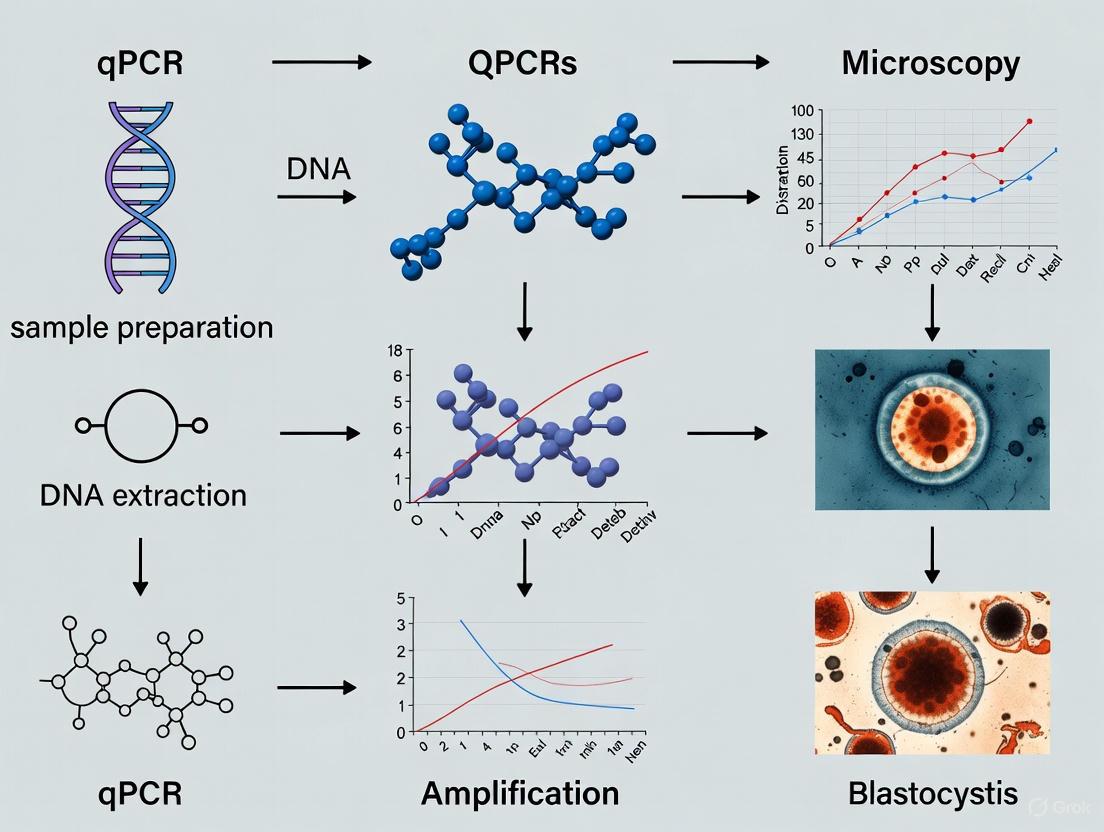
This article provides a comprehensive analysis for researchers and scientists on the diagnostic performance of quantitative PCR (qPCR) versus traditional microscopy for detecting Blastocystis sp.
qPCR vs. Microscopy for Blastocystis Detection: A Critical Analysis of Sensitivity and Diagnostic Workflow
Abstract
This article provides a comprehensive analysis for researchers and scientists on the diagnostic performance of quantitative PCR (qPCR) versus traditional microscopy for detecting Blastocystis sp. It explores the foundational principles behind the superior analytical sensitivity of molecular methods, delves into specific methodological protocols and their application in research and drug development, addresses key troubleshooting and optimization challenges, and presents a rigorous validation and comparative assessment of both techniques. Synthesizing evidence from recent prospective studies and meta-analyses, this review establishes qPCR as the more sensitive and reliable tool for Blastocystis detection, while also defining the circumstances where microscopy remains a necessary component of a complete parasitological diagnosis.
Blastocystis Diagnostic Challenges: Why Sensitivity Matters in Research and Clinical Trials
The Global Prevalence and Ongoing Debate on Blastocystis Pathogenicity
Blastocystis sp. is a single-celled, anaerobic protist that colonizes the gastrointestinal tracts of a vast range of hosts, including humans and numerous animal species [1] [2]. As one of the most common intestinal parasites found in humans globally, its estimated colonization exceeds one billion people worldwide [3] [4] [5]. Despite its widespread prevalence, the pathogenic potential of Blastocystis remains a significant subject of debate within the scientific community, with studies reporting its presence in both symptomatic and asymptomatic individuals [1] [2] [4]. This ongoing controversy is fueled by several factors, including the parasite's extensive genetic diversity, classified into numerous subtypes (STs), and the varying sensitivity of diagnostic methods used for its detection [3] [6] [7]. The accurate detection and subtyping of Blastocystis are crucial for understanding its epidemiology and clarifying its role in human health and disease. This guide objectively compares the performance of different diagnostic methodologies, with a particular focus on the analytical sensitivity of qPCR versus traditional microscopy, framing this comparison within the broader context of pathogenicity research.
Global Prevalence and Distribution
The prevalence of Blastocystis infection demonstrates considerable geographic variation, influenced by factors such as sanitation levels, hygiene practices, and close contact with animals [1] [5]. In developing countries, prevalence rates can be remarkably high, ranging from 30% to over 60%, and in some specific cohorts, have even been reported to reach 100% [3] [1] [2]. In contrast, developed nations generally report lower prevalence rates, typically between 0.5% and 24%, though it remains the most frequently identified protozoan in human stool samples in many of these regions [2] [7]. A study in the Czech Republic, for instance, found a prevalence of 29% using qPCR in a gut-healthy population [3], while a hospital-based study in Spain reported an overall prevalence of 23.3% based on microscopic examination [8].
Table: Selected Blastocystis Prevalence Studies Across Different Regions
| Region/Country | Study Population | Diagnostic Method | Prevalence (%) | Citation |
|---|---|---|---|---|
| Czech Republic | Gut-healthy volunteers | qPCR | 29% | [3] |
| Spain (Barcelona) | Hospital patients | Microscopy (3 samples) | 23.3% | [8] |
| Poland (Military) | Soldiers in Kosovo | PCR & Sequencing | 3.1% (arrival) to 15.6% (4 months) | [1] |
| Iran (Khorasan) | Humans & Animals | Microscopy & Culture | Variable by host | [2] |
| Egypt | Patients with GI symptoms | qPCR | 58% | [4] |
| Australia (Sydney) | Hospital patients | PCR (multiple) | 19% | [7] |
The Pathogenicity Debate
The clinical significance of Blastocystis is a persistent and unresolved controversy in parasitology. The protist is frequently identified in individuals with gastrointestinal symptoms such as abdominal pain, diarrhea, flatulence, and nausea, and has been linked to irritable bowel syndrome (IBS) [1] [4] [5]. Furthermore, it has been reported in association with extra-intestinal symptoms like chronic fatigue and skin manifestations such as urticaria [1] [5]. However, its high detection rate in asymptomatic individuals complicates the establishment of a clear causal relationship [4]. Some researchers propose that Blastocystis should be considered a commensal organism, while others argue it is an opportunistic pathogen, with its effects potentially modulated by the host's immune status [9] [4].
A prominent hypothesis suggests that pathogenicity may be linked to specific subtypes (STs) of the parasite. To date, at least 22 subtypes have been identified based on the small subunit ribosomal RNA (SSU rRNA) gene, with ST1 to ST4 being the most prevalent in humans [3] [1] [2]. Some studies have associated ST1, ST2, and ST4 with gastrointestinal symptoms [2] [4]. In particular, ST3—the most common subtype worldwide—has been proposed to have higher pathogenic potential due to its production of cysteine proteases, which can invade the intestine and promote inflammation [4] [5]. A study from Egypt found that ST3 was the most frequent subtype (50%) in patients with gastrointestinal manifestations and was the most common subtype associated with abnormal colonoscopic and histopathological findings [4]. Conversely, preliminary in vitro research intriguingly suggested that ST3 caused greater cytotoxicity to intestinal Caco-2 cells than ST7, a subtype often considered more pathogenic, indicating that the underlying mechanisms are complex and require further investigation [10].
Other factors under investigation include parasite load, the host's intestinal microbiome composition, and co-infections with other pathogens [9] [4]. The debate is also fueled by diagnostic limitations, as less sensitive methods may fail to detect low-level infections or mixed subtype infections that could be clinically relevant [3] [7].
Comparative Diagnostic Performance
The sensitivity and specificity of Blastocystis detection vary dramatically across different diagnostic platforms, directly impacting prevalence data and clinical correlations. The main methodologies include traditional techniques like microscopy and culture, and modern molecular approaches such as PCR and next-generation sequencing (NGS).
Microscopy and Culture-Based Methods
Direct microscopy of stained smears or wet mounts is the most commonly used technique in routine clinical laboratories due to its low cost and simplicity [2] [7]. However, its sensitivity is notably low, primarily because the parasite is delicate, easily destroyed, and exhibits pleomorphic forms that can be difficult to identify conclusively [1] [7]. A comparative study in Australia found microscopy of permanent stained smears to have a sensitivity of only 48% when compared to a composite reference standard [7]. Another study concluded that microscopy "greatly underestimate[s] the prevalence" compared to culture and molecular methods [9]. Furthermore, a large study in Spain demonstrated that analyzing three consecutive stool samples instead of one did not significantly increase the detection rate, challenging the conventional wisdom that multiple samples improve sensitivity for this parasite [8].
Xenic culture methods, where the parasite is grown in a medium with non-specific microorganisms, have been shown to be more sensitive than direct microscopy [9] [7]. One study reported that xenic in vitro culture had 52% sensitivity compared to a qPCR assay, while direct-light microscopy had only 29% sensitivity against the same gold standard [9]. Despite its improved sensitivity, culture is time-consuming, requires several days of incubation, and some subtypes may grow poorly in vitro, leading to false-negative results [9] [7]. Crucially, neither microscopy nor culture can provide subtype information, which is essential for epidemiological and pathogenicity studies [3].
Molecular Methods
Molecular techniques, particularly polymerase chain reaction (PCR)-based assays, have revolutionized the detection and characterization of Blastocystis. These methods offer superior sensitivity and specificity and enable subtyping, which is critical for investigating potential links between STs and disease outcomes.
Conventional PCR (cPCR): While a significant improvement over morphological methods, cPCR is generally less sensitive than quantitative real-time PCR. A direct comparison found that qPCR detected 12 more positive samples than cPCR in a set of 288 DNA samples, a difference that was statistically significant [3].
Quantitative Real-Time PCR (qPCR): This method has emerged as one of the most sensitive detection tools. It targets a small fragment of the SSU rRNA gene and allows for the quantification of parasite load in stool samples, which can be useful for exploring correlations with symptoms [3] [9]. Studies consistently show qPCR to be far more sensitive than microscopy. For example, one study reported a 58% positivity rate with qPCR versus 31% by microscopy [4], while another found qPCR to be substantially more sensitive than both direct-light microscopy and xenic culture [9]. An additional advantage is that qPCR products can often be used for direct sequencing to determine subtypes [9].
Next-Generation Sequencing (NGS): For subtyping, NGS is becoming the gold standard, especially for detecting mixed subtype infections. While Sanger sequencing is reliable for identifying a single dominant subtype, NGS demonstrates higher sensitivity for identifying multiple subtypes within a single host, providing a more complete picture of colonization complexity [3].
High-Resolution Melting (HRM) Analysis: This is a novel, cost-effective molecular technique that can detect and differentiate subtypes rapidly after real-time PCR amplification based on the melting temperature of amplicons, reducing the need for immediate sequencing [2]. One study successfully identified six subtypes (ST1, ST2, ST3, ST5, ST7, ST14) using HRM [2].
Table: Comparison of Diagnostic Methods for Blastocystis sp.
| Method | Principle | *Reported Sensitivity | Subtyping Capability | Key Advantages & Limitations |
|---|---|---|---|---|
| Direct Microscopy | Visual identification of forms in stained/unstained stool | Low (29%-48%) | No | Advantages: Low cost, rapid, widely available.Limitations: Low sensitivity, requires expertise, no subtyping. |
| Xenic Culture | In vitro growth in culture medium | Moderate (~52%) | No | Advantages: More sensitive than microscopy.Limitations: Time-consuming (2-7 days), slow-growing subtypes may be missed. |
| Conventional PCR (cPCR) | Amplification of SSU rRNA DNA | Moderate | Yes, with sequencing | Advantages: More sensitive than culture/microscopy, enables subtyping.Limitations: Less sensitive than qPCR, semi-quantitative at best. |
| qPCR | Quantitative amplification with fluorescent probes | High (Highest in studies) | Yes, with sequencing | Advantages: Highly sensitive & specific, quantifies parasite load.Limitations: Higher cost, requires specialized equipment. |
| Next-Generation Sequencing (NGS) | Massively parallel sequencing of amplicons | High (for subtyping) | Yes, high-resolution | Advantages: Detects mixed subtypes, high sensitivity for subtyping.Limitations: Expensive, complex data analysis. |
Sensitivity is expressed relative to a composite reference standard or a higher-sensitivity method as reported in the cited studies [3] [9] [4].
Detailed Experimental Protocols
To ensure reproducibility and facilitate inter-laboratory comparisons, detailed methodologies from key cited studies are provided below.
qPCR Assay for Detection and Quantification
A highly sensitive qPCR assay was developed and validated by [9], targeting a partial sequence of the Blastocystis SSU rRNA gene.
- DNA Extraction: Total DNA was extracted from 200 mg of stool sample using a commercial DNA stool mini kit, eluting in a final volume of 200 μL.
- Primers and Probe: The assay utilizes a TaqMan probe format. The specific sequences are detailed in the original publication [9].
- qPCR Reaction and Cycling Conditions:
- The reaction mixture includes HOT FIREPol EvaGreen HRM Mix (or equivalent master mix for probe-based assays), primers, probe, and DNA template.
- Cycling conditions consist of an initial denaturation at 95°C for 10 minutes, followed by 37 cycles of 95°C for 15 seconds, 60°C for 30 seconds, and 72°C for 30 seconds [3] [9].
- Quantification: Parasite load can be estimated by generating a standard curve from a serial dilution of a known quantity of cultured Blastocystis cells [3] [9].
- Subtyping: Positive qPCR products can be purified and subjected to Sanger sequencing for subtype identification [9] [4].
Next-Generation Sequencing (NGS) for Subtyping
The protocol described by [3] allows for high-resolution subtyping and detection of mixed infections.
- Primary Amplification: A ~450 bp fragment of the SSU rDNA is amplified from qPCR-positive DNA samples using barcoded primers.
- Library Preparation: The amplified products are indexed and pooled to create a sequencing library.
- Sequencing: The library is sequenced on an Illumina MiSeq instrument using a v2 reagent kit for 2x250 bp paired-end reads.
- Bioinformatic Analysis: Sequencing reads are demultiplexed and processed through an analysis pipeline to assign sequences to specific subtypes and assess their relative abundance within the sample.
High-Resolution Melting (HRM) Analysis
As applied by [2], HRM offers a rapid alternative for subtyping.
- Real-time PCR with HRM Dye: The SSU rRNA gene fragment is amplified in the presence of a saturating DNA dye like EvaGreen.
- Post-Amplification Melting: After amplification, the temperature is gradually increased while fluorescence is continuously monitored. As the DNA amplicons denature (melt), a drop in fluorescence is recorded.
- Curve Analysis: Each subtype has a unique sequence, resulting in a characteristic melting temperature (Tm) and a distinct melting curve shape. These profiles are compared to known standards to assign subtypes.
Visualization of Diagnostic Workflows
The following diagrams illustrate the logical workflow for diagnosing and subtyping Blastocystis using modern molecular techniques.
qPCR-Based Detection and Subtyping Workflow
Comprehensive Diagnostic Pathway Comparison
The Scientist's Toolkit: Essential Research Reagents
The table below details key reagents and kits used in the featured experiments for detecting and studying Blastocystis.
Table: Key Research Reagent Solutions for Blastocystis Detection
| Reagent / Kit | Specific Function | Example Use in Protocol |
|---|---|---|
| Commercial Stool DNA Extraction Kit (e.g., QIAamp DNA Stool Minikit, FavorPrep Stool DNA Isolation Mini Kit) | Isolation of high-quality genomic DNA from complex stool matrices, removing PCR inhibitors. | Used to extract DNA from 200 mg of stool sample; eluted in 200 µL [9] [2] [7]. |
| qPCR Master Mix (e.g., HOT FIREPol EvaGreen HRM Mix, TaqMan-based kits) | Provides enzymes, dNTPs, and buffer for efficient and specific real-time PCR amplification. | Used in 20 µL reactions with specific primers and probe for SSU rRNA gene detection [3] [2]. |
| Blastocystis-specific SSU rRNA Primers & Probes | Targets a conserved region of the SSU rRNA gene for specific amplification; TaqMan probes allow quantification. | Primers (e.g., Fwd: 5’-CGAATGGCTCATTATATCAGTT-3’) target a ~118-450 bp fragment for detection/subtyping [3] [9] [2]. |
| Culture Media (e.g., Jones medium, TYGM-9, two-phase serum medium) | Supports the xenic growth of Blastocystis from stool samples, increasing detection sensitivity. | Inoculated with 10-500 mg of stool and incubated at 37°C; examined microscopically after 2-7 days [9] [2] [7]. |
| Indexed Primers for NGS | Allows multiplexing of samples by adding unique barcodes during PCR for amplicon sequencing. | Used to amplify the barcoded SSU rRNA fragment for pooling and sequencing on Illumina platforms [3]. |
| Sequence Analysis Software & Databases (e.g., BLASTn, GenBank) | Compares obtained DNA sequences to reference databases for subtype (ST) identification. | Used to confirm subtypes by aligning sequenced qPCR or NGS amplicons to known STs [1] [4] [7]. |
The debate surrounding the pathogenicity of Blastocystis is intrinsically linked to the tools used for its detection and characterization. As this guide has objectively demonstrated, diagnostic performance varies significantly across methods. Traditional microscopy, while accessible, lacks the sensitivity required for accurate prevalence studies and clinical diagnosis, potentially leading to substantial underreporting. In contrast, qPCR has established itself as the most sensitive method for detection, also providing the crucial ability to quantify parasite load. Furthermore, the integration of molecular methods with subtyping techniques, particularly NGS, is indispensable for unraveling the complex epidemiology and potential subtype-specific pathogenicity of Blastocystis.
Future research aimed at resolving the pathogenicity debate must adopt these highly sensitive and discriminatory molecular tools as a standard. Large-scale, multi-center studies that correlate qPCR-based parasite load and precise subtype information with detailed clinical metadata are essential. The ongoing efforts by consortia like the COST Action "Blastocystis under One Health" to standardize diagnostics across Europe represent a critical step in this direction [6]. Ultimately, a refined understanding of Blastocystis will depend on the widespread adoption of advanced molecular methodologies in both research and clinical laboratory settings.
Microscopy has long been a fundamental tool in parasitology for the detection of intestinal protozoa such as Blastocystis sp., an anaerobic protist with a worldwide distribution [7] [11]. Despite its widespread use in clinical laboratories, microscopy presents significant limitations that affect diagnostic accuracy, particularly for parasites that may be present at low densities or exhibit morphological variability [7] [9]. The diagnostic sensitivity of microscopy is substantially lower compared to molecular methods like conventional polymerase chain reaction (PCR) and real-time quantitative PCR (qPCR), with studies reporting microscopy sensitivity as low as 29-48% for Blastocystis detection compared to molecular methods [7] [9]. This review systematically evaluates the inherent limitations of microscopy, focusing on its analytical sensitivity and operator dependency, within the context of detecting Blastocystis infections, and provides a comparative assessment with modern molecular diagnostic approaches.
Analytical Sensitivity of Diagnostic Methods forBlastocystisDetection
Direct Comparison of Method Performance
Multiple studies have directly compared the performance of microscopy, culture, and PCR-based methods for detecting Blastocystis in stool samples. A comprehensive study of 513 stool samples revealed stark differences in sensitivity across diagnostic platforms [7].
Table 1: Comparative Sensitivity of Diagnostic Methods for Blastocystis Detection
| Diagnostic Method | Sensitivity (%) | Detection Limit | Time to Result | Additional Capabilities |
|---|---|---|---|---|
| Microscopy (permanent stain) | 48 | Variable based on parasite load and technician skill | Hours | Morphological assessment |
| Xenic Culture (TYGM-9) | 52-77 | Improves detection of viable parasites | 2-7 days | Parasite viability confirmation |
| Conventional PCR | 94 | High (subtype-specific) | 5-8 hours | Subtype discrimination |
| Real-time qPCR | 100 (reference) | 760 cells/100 mg stool [12] | 3 hours [12] | Quantification and subtyping |
Another study developing a real-time qPCR assay for Blastocystis reported that direct-light microscopy and xenic in vitro culture showed only 29% and 52% sensitivity, respectively, compared to the qPCR assay [9]. This assay demonstrated a lower limit of detection of 760 Blastocystis parasites per 100 mg of stool, highlighting the superior analytical sensitivity of molecular methods [12].
Impact of Sample Number on Microscopy Sensitivity
A critical question in parasitology diagnostics is whether examining multiple stool samples improves detection sensitivity. A retrospective study of 2,771 patients who submitted three consecutive stool samples addressed this question specifically for Blastocystis detection [8].
Table 2: Effect of Multiple Stool Samples on Blastocystis Detection by Microscopy
| Number of Samples Analyzed | Detection Rate (%) | Incremental Increase (%) |
|---|---|---|
| First sample | 22.3 | Baseline |
| First and second samples | 22.9 | 0.6 |
| All three samples | 23.3 | 0.4 |
The data demonstrated no statistically significant differences in detection rates when comparing single versus multiple samples, suggesting that analyzing multiple samples provides minimal improvement in overall sensitivity for Blastocystis detection [8]. This finding has important implications for laboratory workflow efficiency and diagnostic costs.
Operator Dependency in Microscopy-Based Diagnosis
Technical Expertise and Diagnostic Variability
The accuracy of microscopy depends heavily on the technical expertise of the laboratory personnel. Factors including staining technique, microscope quality, and individual ability to recognize morphological forms contribute significantly to diagnostic variability [13]. One study noted that the limit of detection for microscopists typically ranges from 50 to 100 parasites/μL, with only expert microscopists achieving detection as low as 5 parasites/μL [13].
In a study of Blastocystis diagnosis, microscopic examination was performed using a commercial concentration device with a low centrifugation method (1500 rpm for 3 minutes) specifically designed to decrease the risk of lysis of trophozoites and other non-cystic forms of intestinal protozoa [8]. Despite these standardized approaches, the inherent subjectivity of microscopic interpretation remains a significant limitation.
Sample Processing and Methodological Constraints
Standard parasitological diagnosis of Blastocystis typically involves microscopic examination of concentrated stool samples using methods such as merthiolate-iodine-formalin staining [8]. While concentration techniques improve sensitivity compared to direct wet mounts, they still fail to detect low-density infections that are readily identified by molecular methods [9] [2]. The methodological constraints of microscopy extend beyond operator skill to include:
- Fixation artifacts that alter parasite morphology
- Variable staining quality across batches
- Parasite heterogeneity in stool samples
- Time-dependent degradation of parasite structures
These technical challenges collectively contribute to the suboptimal performance of microscopy compared to culture and molecular methods [7] [9].
Advanced Molecular Detection Methods
PCR-Based Detection and Subtyping
Molecular techniques have revolutionized Blastocystis diagnosis by enabling both detection and subtype discrimination. Conventional PCR methods targeting the small subunit ribosomal RNA gene have demonstrated sensitivities of 94% compared to composite reference standards [7]. These methods allow for genetic characterization of Blastocystis into subtypes (ST1-ST44), with ST1-ST4 being most prevalent in human infections [2] [11].
Real-time qPCR assays offer additional advantages including quantification of parasite load and rapid turnaround time (approximately 3 hours from DNA extraction to result) [9] [12]. The quantitative capability provides opportunities to investigate potential correlations between parasite burden and clinical manifestations, although such relationships remain incompletely understood [9] [11].
High-Resolution Melting Curve Analysis
High-Resolution Melting (HRM) analysis has emerged as a sophisticated molecular approach for Blastocystis subtyping. This technique detects minute differences in DNA sequence composition by analyzing the melting behavior of PCR amplicons, allowing discrimination between subtypes without the need for sequencing [2]. A recent study successfully identified six Blastocystis subtypes using HRM (ST1, ST2, ST3, ST5, ST7, and ST14), with ST3 and ST7 being most prevalent [2].
HRM analysis represents a cost-effective alternative for reference laboratories in developing countries, providing rapid subtype identification that can expedite diagnostic responses and enhance understanding of transmission dynamics [2].
Comparative Workflow: Microscopy vs. Molecular Detection
The fundamental differences in methodology between microscopy and molecular approaches for Blastocystis detection can be visualized in the following diagnostic workflows:
Essential Research Reagents and Materials
Implementation of optimal Blastocystis detection methods requires specific research reagents and materials. The following table summarizes key solutions used in the referenced studies:
Table 3: Research Reagent Solutions for Blastocystis Detection
| Reagent/Material | Application | Function | Example Products/Formulations |
|---|---|---|---|
| DNA Extraction Kits | Nucleic acid purification | Isolation of high-quality DNA from stool samples | QIAamp DNA Stool Minikit [7], FavorPrep Stool DNA Isolation Mini Kit [2] |
| PCR Master Mixes | DNA amplification | Provides optimized buffer, enzymes, and nucleotides for PCR | HOT FIREPol EvaGreen HRM Mix [2], Red Taq master mix [11] |
| Culture Media | Parasite cultivation | Supports in vitro growth of Blastocystis | Jones medium [9], TYGM-9 medium [7], modified Boeck and Drbohlav's medium [7] |
| Staining Reagents | Microscopy | Enhances visual contrast for morphological identification | Modified iron-hematoxylin stain [7], Lugol's iodine solution [2], trichrome stain [2] |
| Restriction Enzymes | Molecular subtyping | Digests PCR products for RFLP analysis | SpeI restriction enzyme [11] |
| Primers | DNA amplification | Targets specific genomic regions for detection and subtyping | SSU rRNA gene primers [7] [2], STS primer sets [11] |
Microscopy remains hampered by inherent limitations in analytical sensitivity and operator dependency for Blastocystis detection. The evidence consistently demonstrates superior performance of molecular methods, with PCR-based assays detecting 52-71% more positive samples compared to microscopy [7] [9]. This sensitivity gap has profound implications for clinical diagnostics, epidemiological studies, and our understanding of Blastocystis prevalence and transmission dynamics.
While microscopy retains utility as an initial screening tool in resource-limited settings due to its low cost and immediate results, molecular methods provide unequivocal advantages for accurate Blastocystis detection, quantification, and subtyping. The ongoing development of techniques such as HRM analysis promises to further enhance the accessibility and efficiency of molecular diagnostics, potentially bridging the gap between reference laboratories and clinical settings [2]. Future directions should focus on standardizing molecular assays, reducing costs, and developing multiplex platforms that can simultaneously detect and subtype Blastocystis alongside other intestinal pathogens.
The detection and identification of pathogens stand as a cornerstone of clinical diagnostics and public health. For decades, traditional methods like microscopic examination have been the standard for diagnosing parasitic infections such as Blastocystis sp. However, the limitations of these techniques in terms of sensitivity and specificity have driven the adoption of molecular technologies. Among these, quantitative Polymerase Chain Reaction (qPCR) has emerged as a powerful tool, revolutionizing pathogen detection. This guide provides an objective comparison of qPCR performance versus traditional microscopy, with a specific focus on Blastocystis detection research, offering experimental data and methodologies for scientists and drug development professionals.
The Fundamental Principles of qPCR
Quantitative PCR, also known as real-time PCR, is a molecular technique that allows for the simultaneous amplification and quantification of a specific DNA target. Unlike conventional PCR, which provides an end-point analysis, qPCR monitors the accumulation of amplified DNA in real-time during each cycle of the amplification process.
The core principle involves the use of fluorescent reporters to track the DNA amplification. The most common detection methods are:
- Hydrolysis (TaqMan) Probes: These probes contain a fluorescent reporter dye and a quencher. During amplification, the DNA polymerase cleaves the probe, separating the reporter from the quencher and generating a fluorescent signal proportional to the amount of amplified target [14].
- DNA-Binding Dyes (e.g., SYBR Green): These dyes fluoresce when bound to double-stranded DNA. The fluorescence intensity increases as the target DNA amplifies, directly correlating with the quantity of PCR products [14].
The key quantitative output is the Cycle threshold (Ct) value, which is the number of amplification cycles required for the fluorescent signal to cross a predetermined threshold. A lower Ct value indicates a higher starting concentration of the target nucleic acid in the sample [15].
qPCR Versus Microscopy: A Direct Comparison for Blastocystis Detection
Analytical Sensitivity and Detection Rates
Multiple studies have consistently demonstrated the superior sensitivity of qPCR compared to traditional microscopic examination for the detection of gastrointestinal parasites.
The table below summarizes key performance metrics from comparative studies:
| Detection Method | Sensitivity in Asymptomatic Carriers | Overall Positive Detection Rate | Rate of Polyparasitism (Coinfections) Detected | Reference/Organism |
|---|---|---|---|---|
| Real-time PCR | 57.4% (31/54 samples) | 73.5% (72/98 samples) | 25.5% | [16] Gastrointestinal parasites |
| Microscopic Examination | 18.5% (10/54 samples) | 37.7% (37/98 samples) | 3.06% | [16] Gastrointestinal parasites |
| qPCR (Manual DNA Extraction) | 71.1% (54/76 confirmed positives) | - | - | [17] Blastocystis sp. |
| qPCR (Automated DNA Extraction) | 52.6% (40/76 confirmed positives) | - | - | [17] Blastocystis sp. |
| Microscopy (Malaria) | 26.4% | - | - | [18] Plasmodium sp. |
| Nested & Real-time PCR (Malaria) | 100% | - | - | [18] Plasmodium sp. |
A 2017 study on gastrointestinal parasites found that qPCR was significantly more effective at identifying infections, particularly in asymptomatic individuals where parasite loads are often low [16]. The technology also proved vastly superior in detecting polyparasitism, uncovering coinfections that microscopy missed.
For Blastocystis specifically, a 2020 study confirmed the high sensitivity of qPCR. However, it also highlighted a critical factor: the choice of DNA extraction method significantly impacts performance. The manual QIAamp DNA Stool MiniKit detected significantly more positive specimens than an automated extraction system, particularly for samples with low parasite loads (mean Ct value for false negatives with automated extraction was 34.37 ± 5.05) [17].
Methodological Workflows: A Comparative View
The following diagram illustrates the key steps and differences between the traditional microscopy workflow and the qPCR-based pathway for Blastocystis detection.
Quantitative and Species-Specific Advantages
Beyond sheer sensitivity, qPCR offers distinct quantitative and discriminatory advantages:
- Quantification: The Ct value provides a semi-quantitative measure of the parasite load, which can be crucial for understanding infection dynamics and response to treatment [16] [14].
- Species Discrimination: Microscopy cannot distinguish between the different subtypes (STs) of Blastocystis, which may have varying clinical significance. qPCR, especially when coupled with sequencing, allows for precise subtyping (e.g., ST1 to ST4), enabling more detailed epidemiological and clinical studies [17].
- Reduced Subjectivity: Microscopic diagnosis depends heavily on the skill and experience of the microscopist. qPCR provides an objective, binary result (positive/negative) based on fluorescence, reducing human error [16].
Essential Protocols for Blastocystis Detection by qPCR
Sample Processing and DNA Extraction
The performance of qPCR is highly dependent on the quality of the extracted DNA.
- Sample Collection: Collect 200 mg of stool specimen in a clean, sealed container [17].
- DNA Extraction (Manual Method):
- Use the QIAamp DNA Stool Mini Kit (Qiagen) or equivalent.
- Add 200 mg of stool to a tube containing glass beads and 1.5 mL of ASL lysis buffer.
- Mechanically disrupt the sample using a agitator (e.g., FastPrep) at 3,200 rpm for 90 seconds.
- Heat the sample at 95°C for 10 minutes to ensure complete lysis.
- Incubate with proteinase K at 55°C for 2 hours.
- Complete the purification according to the manufacturer's instructions, with a final elution volume of 200 µL [16] [17].
- Inhibition Testing: Assess each sample for PCR inhibitors by spiking with a known exogenous DNA sequence and comparing Ct values with a control. Samples showing inhibition may require dilution [16] [17].
qPCR Assay Setup and Execution
Several "in-house" and commercial qPCR assays target the 18S rRNA gene of Blastocystis.
- Reaction Setup:
- Thermal Cycling Conditions (Example):
- Initial Denaturation: 95°C for 5-10 minutes.
- 40-45 cycles of:
- Denaturation: 95°C for 30 seconds.
- Annealing/Extension: 60°C for 1 minute (temperature and duration are assay-specific) [17].
- Data Analysis: A sample is considered positive if the fluorescence curve crosses the threshold within the defined cycle number. Ct values >35-40 may require confirmation due to the potential for low-level false positives [17].
The Scientist's Toolkit: Key Reagent Solutions
The table below details essential reagents and kits used in the featured experiments for reliable Blastocystis detection via qPCR.
| Item Name | Function / Application | Experimental Notes |
|---|---|---|
| QIAamp DNA Stool Mini Kit (Qiagen) | Manual DNA extraction from stool samples. | Demonstrated superior sensitivity for Blastocystis detection compared to an automated system, especially for low parasite loads [17]. |
| PowerSoil Pro DNA Extraction Kit (Qiagen) | Automated DNA extraction for complex samples. | Used in conjunction with QIAcube Connect for pathogen detection in cosmetics; performance varies by matrix [19]. |
| TaqMan Probes | Hydrolysis probes for target-specific fluorescence detection in qPCR. | Provides high specificity; used in multiparallel assays for detecting 20 gastrointestinal parasites [16]. |
| SYBR Green Dye | Fluorescent dye that binds double-stranded DNA. | A common, cost-effective detection method; fluorescence intensity correlates with PCR product quantity [14]. |
| Commercial rt-PCR Kits (e.g., Seegene Allplex) | Multiplex PCR detection of gastrointestinal parasite panels. | Offers convenience and CE-IVD certification; one study showed high sensitivity (84%) but lower specificity (82%) for Blastocystis [17]. |
| Nuclease-Free Water | Negative control and dilution reagent. | Essential for preparing negative controls and diluting samples to test for inhibition [17]. |
Innovations and Future Directions in qPCR Technology
The field of qPCR continues to evolve, with innovations aimed at pushing the boundaries of sensitivity, speed, and convenience.
- Digital PCR (dPCR): This technology partitions a sample into thousands of nanodroplets, performing PCR in each individually. It provides absolute quantification without a standard curve and demonstrates even higher sensitivity and precision than qPCR, particularly at very low target concentrations (<1 copy/µL) [15].
- Novel Signal Enhancement: Researchers are developing new materials to enhance the fluorescence signal directly. For instance, silver flower-like materials have been shown to enhance fluorescence via localized surface plasmon resonance, reducing Ct values and increasing the positive detection rate for challenging samples [14].
- CRISPR-Cas Integration: Emerging CRISPR-based diagnostics, such as the TCC method, leverage CRISPR-CasΦ for ultrasensitive detection. This method is amplification-free and has achieved a record-low detection limit of 0.11 copies/µL, surpassing qPCR sensitivity for pathogen detection in clinical serum samples [20].
- Automation and High-Throughput: Automated nucleic acid extraction and qPCR setup systems increase reproducibility, reduce human error, and are essential for processing large numbers of samples efficiently in surveillance studies [19] [21].
The evidence from direct comparative studies is clear: qPCR offers a definitive advantage over traditional microscopy for the detection of Blastocystis and other pathogens. Its superior analytical sensitivity, ability to quantify parasite load, and capacity for species discrimination make it an indispensable tool in modern diagnostic and research laboratories. While factors such as the DNA extraction protocol and the choice of qPCR assay influence its ultimate performance, the methodological robustness and objectivity of qPCR solidify its role as the leading technique for sensitive pathogen detection. As technology advances with dPCR, CRISPR, and signal enhancement strategies, the molecular revolution in diagnostics is poised to deliver even greater precision and sensitivity for researchers and clinicians alike.
Defining Analytical Sensitivity in the Context of Diagnostic Assay Validation
Analytical sensitivity, often defined as the lowest concentration of an analyte that an assay can reliably detect, is a fundamental parameter in diagnostic assay validation. In clinical and research settings, this metric determines an assay's ability to identify true positive cases, particularly those with low pathogen loads. The critical importance of sensitivity is magnified in parasitology, where organisms like Blastocystis sp. may be present in low numbers or intermittently shed in stool samples, leading to potential false-negative diagnoses with less sensitive methods. This guide provides an objective comparison of two principal diagnostic approaches—traditional microscopy and quantitative polymerase chain reaction (qPCR)—for detecting Blastocystis sp., framing the analysis within a broader examination of how analytical sensitivity is defined and measured.
Comparative Assay Performance: qPCR vs. Microscopy forBlastocystisDetection
Independent studies consistently demonstrate the superior analytical sensitivity of molecular methods like qPCR compared to traditional microscopy for detecting intestinal protists like Blastocystis.
Quantitative Performance Comparison
A direct comparative study of 100 patients referred for colonoscopy revealed a stark contrast in detection capabilities. While microscopic examination identified Blastocystis in 31% of samples, qPCR detected the parasite in 58% of the same samples [4]. Statistical analysis of these results showed only slight agreement between the two techniques (kappa index = -0.143), with 35 samples testing negative by microscopy but positive by qPCR. This discrepancy highlights how molecular methods lower the limit of detection and improve the reliability of positive identification [4].
Sensitivity in Different Sample Matrices
The advantage of qPCR is not limited to human clinical samples. A comprehensive study of 730 human and animal stool samples initially screened by microscopy found that many negative samples became positive after culture enrichment and subsequent HRM-qPCR analysis [2]. This two-phase culture and molecular approach enhanced detection sensitivity, enabling the identification of six different Blastocystis subtypes across multiple host species [2].
Detection of Non-Viable or Intermittent Organisms
Microscopy relies on visual identification of intact, often viable organisms, which may be absent in samples due to intermittent shedding or non-viable parasites. Molecular methods like qPCR detect genetic material regardless of parasite viability, providing a significant advantage for accurate diagnosis [2]. This capability is particularly valuable for epidemiological studies and treatment monitoring, where the presence of genetic material—even from non-viable organisms—can provide important clinical information.
Table 1: Direct Comparison of Microscopy and qPCR for Blastocystis Detection
| Parameter | Microscopy | qPCR | Research Context |
|---|---|---|---|
| Detection Rate | 31% (31/100 samples) [4] | 58% (58/100 samples) [4] | Clinical samples from patients with gastrointestinal symptoms |
| Subtype Differentiation | Not possible | Identified ST1 (3.4%), ST2 (32.8%), ST3 (50%), ST4 (13.8%) [4] | Enables investigation of subtype-pathogenicity relationships |
| Agreement Between Methods | Slight agreement (kappa = -0.143) [4] | Slight agreement (kappa = -0.143) [4] | 35 samples were qPCR+/microscopy- |
| Application in Animal Reservoirs | Limited without culture enrichment [2] | Effective direct detection and subtyping (e.g., ST10, ST5, ST12) [22] | Essential for One Health transmission studies |
Experimental Protocols and Methodologies
Standardized Microscopy Procedures
The standard microscopic examination for Blastocystis typically involves direct wet mount preparation using normal saline and Lugol's iodine solution, with systematic examination at low magnification (10× objective) followed by confirmation at high magnification (40× objective) for suspicious structures [2]. To enhance sensitivity, formalin-ether concentration techniques are often employed, where stool samples are mixed with formalin, filtered, and centrifuged with diethyl ether to concentrate parasitic elements before microscopic examination [23]. For further sensitivity improvement, culture methods using two-phase media (solid deactivated human serum with a liquid phase of Ringer's solution, egg albumin, rice starch, and streptomycin) can be implemented, with microscopic examination of the supernatant after 2-3 days of incubation [2].
Molecular Detection by qPCR
The qPCR protocol for Blastocystis detection typically targets the small subunit ribosomal RNA (SSU-rRNA) gene. DNA extraction is performed from stool samples using commercial kits such as the FavorPrep Stool DNA Isolation Mini Kit [2]. The qPCR reaction utilizes specific primers (e.g., BL18SPPF1 and BL18SR2PP) that amplify a 320-342 bp fragment of the SSU-rRNA gene, with reaction conditions including an initial denaturation at 95°C for 3 minutes, followed by 40 cycles of denaturation at 95°C for 5 seconds, annealing at 65°C for 10 seconds, and extension at 72°C for 20 seconds [4]. For subtyping, High-Resolution Melting (HRM) analysis can be incorporated using EvaGreen dye, with different subtypes identified by their characteristic melting temperatures (78°C to 85°C) [2].
Diagram 1: Parallel workflows for microscopy and qPCR-based detection of Blastocystis , highlighting the additional subtyping information available through molecular methods.
qPCR Validation and Sensitivity Determination
For rigorous validation, qPCR assays require standard curve generation using serial dilutions of known DNA standards to determine amplification efficiency, which should be >90% for an efficient assay [24]. The limit of detection is established by testing replicate samples with decreasing target concentrations, identifying the lowest concentration where ≥95% positive detection occurs [24]. Analytical sensitivity is frequently expressed as the cycle threshold (Ct) value at the y-intercept when a linear dilution series is tested, with lower Ct values indicating higher sensitivity [24]. This validation approach was exemplified in SARS-CoV-2 assay comparisons, where most primer-probe sets demonstrated similar sensitivities except for one set with a reverse primer mismatch that increased Ct values by 6-10 cycles [24].
Research Reagent Solutions forBlastocystisDetection
Table 2: Essential Research Reagents for Blastocystis Detection and Characterization
| Reagent/Category | Specific Examples | Research Function | Performance Consideration |
|---|---|---|---|
| DNA Extraction Kits | FavorPrep Stool DNA Isolation Mini Kit [2], Bioline Fecal DNA Isolation Kit [4] | Isolation of inhibitor-free DNA from complex stool matrices | Critical for PCR amplification efficiency; removes fecal contaminants |
| qPCR Master Mixes | HOT FIREPol EvaGreen HRM Mix [2], Luna Universal Probe One-step RT-qPCR kit [24] | Provides enzymes, buffers, and dyes for amplification and detection | EvaGreen enables HRM subtyping; probe-based mixes offer higher specificity |
| Primer/Probe Sets | SSU-rRNA targets: BL18SPPF1/BL18SR2PP [4] or subtype-specific primers [2] | Amplification of Blastocystis-specific genetic regions | Primer mismatches can drastically reduce sensitivity [24] |
| Culture Media | Two-phase medium: solid human serum + Ringer's solution/egg albumin/rice starch [2] | Enhancement of detection sensitivity prior to molecular testing | Increases detection 5-fold over direct smear but adds 24-48 hours |
| Microscopy Reagents | Normal saline, Lugol's iodine, 10% formalin, diethyl ether [23] [2] | Sample preparation, preservation, and parasite staining | Iodine enhances structural visibility; formalin-ether concentrates parasites |
Implications for Diagnostic and Research Applications
The superior analytical sensitivity of qPCR has significant implications for both clinical diagnostics and research applications. In clinical settings, the enhanced detection capability directly impacts patient management, particularly for symptomatic patients with low parasite loads who might be misdiagnosed with microscopy-only approaches [4]. From a public health perspective, the ability to accurately detect and subtype Blastocystis across human and animal hosts provides invaluable data for understanding transmission dynamics and implementing appropriate control measures [6] [2].
In research contexts, qPCR enables more precise epidemiological studies, revealing true prevalence rates that were previously underestimated by microscopy [4]. The integration of HRM analysis further allows for large-scale subtyping without the need for expensive sequencing, facilitating investigations into the potential association between specific subtypes (particularly ST3) and clinical manifestations [4] [2]. This molecular approach aligns with the One Health paradigm, enabling tracking of zoonotic transmission through identification of shared subtypes across human and animal populations [2] [22].
Diagram 2: Key factors determining the analytical sensitivity of qPCR assays, highlighting both design and performance considerations that researchers must optimize during assay validation.
The comparison between microscopy and qPCR for Blastocystis detection clearly demonstrates the critical importance of analytical sensitivity in diagnostic assay validation. While microscopy remains a valuable initial screening tool due to its low cost and rapid results, qPCR offers significantly enhanced sensitivity and the crucial ability to differentiate subtypes, providing insights into potential pathogenicity and transmission patterns. For researchers and clinicians working with Blastocystis and other intestinal parasites, the selection of an appropriate detection method must balance analytical sensitivity with practical considerations such as cost, equipment availability, and technical expertise. The ongoing development of standardized molecular protocols and international surveillance networks will further enhance our understanding of Blastocystis epidemiology and clinical significance across different populations and geographic regions.
From Bench to Bedside: Implementing qPCR and Microscopy for Blastocystis in the Lab
In clinical and research microbiology, the accurate detection of microorganisms often hinges on the effective preparation of samples for microscopic examination. While molecular methods like qPCR offer high analytical sensitivity, microscopy remains a cornerstone technique, providing rapid, cost-effective morphological information. The reliability of microscopic analysis, however, is profoundly influenced by the choice and execution of staining and specimen concentration protocols. Standardized procedures are essential to minimize variability and maximize detection sensitivity. This guide objectively compares the performance of various stains and concentration techniques, framing the discussion within the broader context of optimizing the analytical sensitivity for detecting protists such as Blastocystis sp., where qPCR has demonstrated superior sensitivity but microscopy retains diagnostic value.
Comparative Performance of Staining Methods
The choice between manual and automated staining methods involves a trade-off between quality, cost, and standardization. A systematic comparison of two automated Gram staining systems against the manual method provides clear performance distinctions [25].
Table 1: Comparison of Manual and Automated Gram Staining Methods [25]
| Method | Mean Quality Score (out of 4) | Homogeneous Staining of Bacteria/Fungi | Uniform Staining of Background | Absence of Staining Artifacts | Total Cost per Slide (€/$) |
|---|---|---|---|---|---|
| Manual Staining | 3.06 | 96.5% | 95.2% | 87.6% | €0.80 / $0.83 |
| Previ Color Gram (Automated) | 3.04 | 89.2% | 96.4% | 86.2% | €1.13 / $1.34 |
| ColorAX2 (Automated) | 2.57 | 79.9% | 82.2% | 75.8% | €0.60 / $0.71 |
The manual and Previ Color Gram systems achieved statistically equivalent quality scores, though the automated system had a slightly lower rate of homogeneous microbial staining [25]. In fluorescence microscopy, the selection of dyes and protocols significantly impacts image quality. A quantitative assessment of nuclear dyes for ex vivo microscopy of fresh tissues found that DRAQ5 and SYBR gold provided higher image quality and superior photostability compared to TO-PRO3 [26]. The optimal staining protocol was dye-specific, with phosphate-buffered saline (PBS) consistently outperforming ethanol as a solvent and rinsing solution across multiple dyes [26].
Comparative Performance of Concentration Techniques
For intestinal parasitic infections (IPIs), concentration techniques are vital for enhancing detection sensitivity compared to direct wet mount examination. A hospital-based study compared two formalin-based concentration techniques with direct wet mounts in children with diarrhea [27].
Table 2: Detection Rates of Intestinal Parasites by Different Techniques (n=110) [27]
| Parasite Identified | Wet Mount n (%) | Formol-Ether Concentration (FEC) n (%) | Formol-Ethyl Acetate Concentration (FAC) n (%) |
|---|---|---|---|
| Overall Detection | 45 (41%) | 68 (62%) | 82 (75%) |
| Blastocystis hominis | 4 (9%) | 10 (15%) | 12 (15%) |
| Entamoeba histolytica | 13 (31%) | 18 (26%) | 20 (24%) |
| Giardia lamblia | 9 (20%) | 12 (18%) | 13 (16%) |
| Ascaris lumbricoides | 4 (10%) | 4 (6%) | 7 (8%) |
The Formol-Ethyl Acetate Concentration (FAC) technique demonstrated the highest overall recovery rate, detecting 75% of positive samples, compared to 62% for Formol-Ether Concentration (FEC) and 41% for the direct wet mount [27]. Furthermore, FAC proved more sensitive in identifying dual infections, which are frequently missed by less sensitive methods [27].
Experimental Protocols for Key Techniques
The following is a standardized protocol for manual Gram staining as used in a comparative study.
- Fixation: Heat-fix the air-dried smear by passing it briefly (∼1 second) through an open flame three times.
- Primary Stain: Flood the smear with crystal violet solution and let stand for 15 seconds. Rinse gently with tap water.
- Mordant: Apply iodine solution and let stand for 30 seconds. Rinse gently with tap water.
- Decolorization: Add ethanol (or an alcohol-acetone solution) drop by drop until the solvent flows colorlessly from the slide. This is a critical step that requires practice and consistency.
- Counterstain: Flood the smear with carbol fuchsin (or commonly, safranin) and let stand for 15 seconds. Rinse gently with tap water.
- Blotting: Gently blot the slide dry with absorbent paper.
- Microscopy: Examine under oil immersion at 1000x magnification. Gram-positive organisms appear purple, while Gram-negative organisms appear pink/red.
This sedimentation method is recommended for its higher recovery rate of parasites, especially in routine diagnostics.
- Emulsification: Emulsify approximately 1 gram of stool in 7 mL of 10% formol saline in a test tube or centrifuge tube.
- Fixation: Allow the mixture to fix for 10 minutes.
- Filtration: Strain the suspension through three folds of gauze or a sieve into a clean 15 mL conical centrifuge tube.
- Solvent Addition: Add 3 mL of ethyl acetate to the filtrate. Securely stopper the tube and shake it vigorously for 30 seconds.
- Centrifugation: Centrifuge at 1500 rpm (approximately 500 g) for 5 minutes. This will result in four distinct layers: a plug of debris at the top, a layer of ethyl acetate, a formol saline layer, and the sediment containing parasites at the bottom.
- Separation: Carefully free the debris plug from the sides of the tube with an applicator stick and decant the top three layers.
- Examination: Use a pipette to transfer a drop of the sediment to a microscope slide, add a cover slip, and examine systematically under 10x and 40x objectives.
This protocol describes a sensitive qPCR method used to establish a "gold standard" for comparison with microscopic techniques.
- Primers/Probe: Target the small subunit (SSU) rDNA gene with a TaqMan probe.
- Reaction Setup: Prepare reactions using a commercial master mix, primers, probe, and DNA template.
- Cycling Conditions (on a LightCycler 480 I):
- Primary Denaturation: 95°C for 10 minutes.
- 37 Cycles of:
- Denaturation: 95°C for 15 seconds.
- Annealing/Extension: 60°C for 30 seconds; 72°C for 30 seconds.
- Analysis: Determine positivity based on cycle threshold (Ct) values. Samples can be categorized by estimated fecal protist load using a standard curve from a dilution series of cultured Blastocystis [3].
The Scientist's Toolkit: Research Reagent Solutions
Table 3: Essential Reagents for Staining and Concentration Protocols
| Reagent / Material | Function / Application |
|---|---|
| Crystal Violet | Primary stain in Gram staining; binds to the cell wall of all bacteria. |
| Iodine (Gram's Iodine) | Mordant in Gram staining; forms a crystal violet-iodine complex within the cell. |
| Ethanol / Acetone | Decolorizer in Gram staining; dissolves lipids in the outer membrane of Gram-negative bacteria. |
| Carbol Fuchsin / Safranin | Counterstain in Gram staining; imparts a pink/red color to decolorized Gram-negative bacteria. |
| DRAQ5 | Fluorescent nuclear dye for ex vivo microscopy; binds to DNA, used as a hematoxylin equivalent. |
| Eosin Y515 | Fluorescent cytoplasmic/ECM dye for ex vivo microscopy; used as an eosin equivalent [26]. |
| 10% Formol Saline | Fixative and preservative for stool specimens; maintains parasite morphology for concentration techniques. |
| Ethyl Acetate | Organic solvent in concentration techniques; extracts fats and debris, concentrating parasites in the sediment. |
| Phosphate-Buffered Saline (PBS) | A balanced salt solution; used as a solvent and rinsing agent for fluorescent dyes to maintain optimal image quality and dye stability [26]. |
Workflow for Comparative Method Assessment
The following diagram illustrates a generalized workflow for comparing the analytical sensitivity of different staining or concentration methods against a molecular standard, as demonstrated in the cited research.
Comparative Method Assessment Workflow
The choice between staining and concentration techniques is not one-size-fits-all but should be guided by the specific diagnostic or research requirements. For Gram staining, manual and select automated systems like the Previ Color Gram offer high and comparable quality, with the decision balancing the consistency of automation against the lower cost of manual labor [25]. For parasitology, concentration methods, particularly the Formol-Ethyl Acetate technique, are unequivocally superior to direct wet mounts, significantly enhancing the detection of protozoa like Blastocystis hominis and Giardia lamblia [27]. When the highest analytical sensitivity is required, as in donor screening for fecal microbiota transplantation or for pathogen subtyping, qPCR remains the most sensitive tool [3] [28]. The data confirms that standardized, optimized microscopy protocols are indispensable for maximizing detection sensitivity. However, they often serve as a complementary rather than a replacement for molecular methods in a comprehensive diagnostic framework.
Quantitative PCR (qPCR) has revolutionized molecular diagnostics by providing a rapid, sensitive, and quantitative method for detecting pathogenic organisms. Within parasitology, this technique has proven particularly valuable for detecting protozoans like Blastocystis sp., where traditional microscopic methods exhibit significant limitations. This guide objectively compares the performance of qPCR against conventional microscopy for Blastocystis detection, supported by experimental data demonstrating the superior analytical sensitivity of molecular approaches that enables more accurate epidemiological studies and clinical diagnostics.
Performance Comparison: qPCR vs. Microscopy forBlastocystisDetection
Multiple studies have directly compared the diagnostic performance of qPCR against traditional microscopic methods for detecting Blastocystis. The data consistently reveal substantial advantages in sensitivity for molecular approaches.
Table 1: Comparative Sensitivity of Detection Methods for Blastocystis sp.
| Detection Method | Reported Sensitivity | Sample Size | Key Findings | Citation |
|---|---|---|---|---|
| Real-time qPCR | Gold Standard (100%) | 186 patients | Used as reference to calculate sensitivity of other methods | [9] |
| Direct Light Microscopy (DLM) | 29% vs. qPCR | 186 patients | Detected under 1/3 of qPCR-positive cases | [9] |
| Xenic In Vitro Culture (XIVC) | 52% vs. qPCR | 186 patients | Approximately half the sensitivity of qPCR | [9] |
| Microscopy (Wet Mount) | Not quantified | 730 samples | Lower sensitivity; used for initial screening only | [2] |
| Formol-Ether Concentration | Not quantified | Literature | Underestimates prevalence compared to culture/PCR | [2] |
Table 2: Molecular Detection Rates of Blastocystis in Animal Reservoirs
| Host Species | Sample Size | qPCR Detection Rate | Subtypes Identified | Citation |
|---|---|---|---|---|
| Cattle | 88 | 5.7% (5/88) | ST10 | [29] |
| Camels | 30 | 16.7% (5/30) | ST10 | [29] [30] |
| Humans (Rural Türkiye) | 124 | 76.6% | ST1, ST2, ST3, ST4 | [31] |
| Livestock (Cattle, Sheep, Goats) | 305 | 71-78% | ST10, ST24, ST25, ST26 | [31] |
Experimental Workflows: From Sample Collection to Result Interpretation
Comprehensive qPCR Workflow forBlastocystisDetection
The following diagram illustrates the complete experimental workflow for Blastocystis detection using qPCR methodology, from sample collection through final analysis:
Detailed Experimental Protocols
DNA Extraction Protocol
Effective DNA extraction is fundamental for reliable qPCR results. The following protocol is adapted from methods used in recent Blastocystis studies:
- Sample Input: Use approximately 200 mg of stool sample [9] [2].
- Extraction Method: Employ commercial stool DNA isolation kits (e.g., QIAamp DNA Stool Mini Kit, FavorPrep Stool DNA Isolation Mini Kit) following manufacturer's instructions [9] [2].
- Critical Steps: Include a bead-beating step using garnet or glass beads for efficient cell lysis. Incorporate an inhibitor removal step to prevent PCR inhibition common in fecal samples.
- Elution Volume: 50-200 μL of elution buffer or deionized water [2].
- Storage: Store extracted DNA at -20°C until qPCR analysis.
qPCR Primer Design and Validation
Proper primer design is critical for successful qPCR assays. The following parameters should be considered:
Table 3: qPCR Primer Design Specifications
| Parameter | Optimal Specification | Rationale | Citation |
|---|---|---|---|
| Target Gene | Small subunit ribosomal RNA (SSU rRNA) | Allows subtyping by sequencing | [9] |
| Amplicon Length | 70-200 bp | Efficient amplification | [32] [33] |
| Primer Length | 18-30 bases | Optimal hybridization | [32] |
| Melting Temperature (Tm) | 60-64°C | Ideal for enzyme function | [32] |
| Tm Difference | ≤ 2°C between primers | Simultaneous binding | [32] |
| GC Content | 40-60% | Stability and specificity | [32] [33] |
| 3' End | C or G residue | Prevents non-specific binding | [33] |
For Blastocystis detection, primers targeting the SSU rRNA gene have proven highly effective. One validated primer set includes:
- Forward: 5'-CGAATGGCTCATTATATCAGTT-3'
- Reverse: 5'-AAGCTGATAGGGCAGAAACT-3' [2]
These primers generate a product that can be used not only for detection but also for subtyping via sequencing or High-Resolution Melting (HRM) analysis [2].
qPCR Reaction Setup and Amplification
- Reaction Volume: 20 μL containing 4 μL of HOT FIREPol EvaGreen HRM Mix, 10.2 μL DNase/RNase-free water, and template DNA [2].
- Thermocycling Conditions: Initial denaturation at 95°C for 15 minutes, followed by 40-45 cycles of denaturation at 95°C for 15 seconds, annealing at 60°C for 20 seconds, and extension at 72°C for 20 seconds [9].
- Specificity Verification: Perform melting curve analysis from 60°C to 95°C with continuous fluorescence measurement [2].
- Controls: Include positive controls (known Blastocystis DNA), negative controls (no-template), and extraction controls.
The Scientist's Toolkit: Essential Research Reagents
Table 4: Essential Reagents for qPCR-Based Blastocystis Detection
| Reagent/Category | Specific Examples | Function & Importance |
|---|---|---|
| DNA Extraction Kits | QIAamp DNA Stool Mini Kit, FavorPrep Stool DNA Isolation Mini Kit | Isolate inhibitor-free DNA from complex stool matrices |
| qPCR Master Mixes | HOT FIREPol EvaGreen HRM Mix, TB Green Premix Ex Taq | Provide enzymes, buffers, and detection chemistry |
| Specific Primers | SSU rRNA gene targets (e.g., RD5 - BH1R2) | Enable specific amplification of Blastocystis DNA |
| Positive Controls | Plasmid clones with target insert, DNA from reference strains | Verify assay performance and create standard curves |
| Reference Genes | Endogenous human or animal genes | Control for DNA extraction efficiency and PCR inhibition |
Advanced Applications: Subtyping and Epidemiological Insights
The enhanced sensitivity of qPCR enables not only detection but also sophisticated subtyping of Blastocystis isolates, providing valuable epidemiological insights:
- Subtype Identification: Sequencing of qPCR products allows identification of subtypes with zoonotic potential (ST1-ST10, ST12, ST14) [29].
- HRM Analysis: High-Resolution Melting curve analysis can differentiate subtypes without sequencing, offering a cost-effective alternative for large-scale studies [2].
- Transmission Dynamics: Molecular tools reveal cross-species transmission patterns, such as ST3 circulating in humans, poultry, and sheep, and ST7 primarily found in domestic animals [2].
- Zoonotic Potential: Detection of identical subtypes in humans and animals provides evidence for potential zoonotic transmission routes [31].
qPCR technology represents a significant advancement over traditional microscopic methods for Blastocystis detection, offering superior analytical sensitivity, quantitative capabilities, and the ability to perform molecular characterization. The workflow from DNA extraction through primer design to amplification provides a robust framework for reliable detection and subtyping. While microscopy remains useful for initial screening, qPCR has become the method of choice for accurate prevalence studies and investigating the zoonotic potential of this ubiquitous parasite. The experimental protocols and comparative data presented herein provide researchers with a comprehensive resource for implementing this powerful molecular tool in diagnostic and research settings.
High-Resolution Melting (HRM) analysis has emerged as a powerful, cost-effective post-PCR method for genotyping, mutation scanning, and parasite subtyping. This technique operates on the principle that DNA with varying sequences—due to single nucleotide polymorphisms (SNPs), insertions, deletions, or other genetic variations—exhibits distinct melting temperatures and curve profiles when denatured by increasing temperature [34]. The technology relies on specialized saturating DNA dyes that fluoresce when bound to double-stranded DNA, with fluorescence decreasing as the DNA denatures, creating unique melt curve signatures for different sequence variants [35]. Within parasitology, HRM has proven particularly valuable for subtyping protozoan parasites like Blastocystis sp., enabling researchers to discriminate between subtypes (STs) and intrasubtype variants with implications for understanding their pathogenicity, zoonotic potential, and epidemiology [35] [36]. This guide objectively compares HRM's performance against alternative molecular and microscopic methods for Blastocystis detection and subtyping, contextualized within research on analytical sensitivity.
Performance Comparison: HRM Versus Alternative Techniques
Quantitative Comparison of Diagnostic Methods
Table 1: Comparative performance of HRM, other molecular methods, and microscopy for Blastocystis detection and subtyping.
| Method | Key Strengths | Key Limitations | Reported Sensitivity for Blastocystis | Subtyping Capability | Turnaround Time | Relative Cost |
|---|---|---|---|---|---|---|
| HRM Analysis | High sensitivity & specificity; closed-tube system; cost-effective; rapid [34] [35] | Requires specialized instruments & optimization; may need sequencing confirmation [34] | High (more sensitive than culture/microscopy) [35] | Excellent (differentiates common subtypes & intrasubtype variants) [35] [36] | ~2-3 hours post-DNA extraction [35] | Low |
| Microscopy | Low cost; detects other parasites & helminths; provides viability data [37] | Low sensitivity; requires expertise; unable to subtype [35] [37] | 6.55% positivity vs. 19.25% by PCR in a large study [37] | None | 30-60 minutes | Very Low |
| Sanger Sequencing | Considered reference for subtype identification; provides definitive sequence data [35] | Higher cost & longer turnaround; poor for detecting mixed infections [35] | High (when combined with PCR) | Excellent (gold standard for subtype identification) | Days | High |
| Multiplex qPCR (Commercial) | High throughput; detects multiple pathogens simultaneously; automated [37] | High cost; detects limited number of targets; may miss novel subtypes [37] | 19.25% positivity for Blastocystis [37] | Limited or none | ~3-4 hours | High |
Table 2: Comparison of technique performance in experimental and clinical settings.
| Aspect | HRM Analysis | Microscopy | Conventional PCR + Sequencing |
|---|---|---|---|
| Analytical Sensitivity | High (detects low parasite loads and genetic variants) [36] | Low (misses low-intensity infections) [37] | High [35] |
| Specificity for Subtyping | High (differentiates ST1, ST2, ST3, ST4, ST5, ST7, ST14, and intrasubtype variants) [35] [36] | None | High (definitive) [35] |
| Ability to Detect Mixed Infections | Moderate (can be challenging but possible with careful analysis) [35] | Poor (difficult to distinguish morphologically) | Poor with standard methods [35] |
| Throughput | Medium to High | Low | Low to Medium |
| Application in Zoonotic Studies | Excellent for tracking cross-species transmission (e.g., ST1-ST3 in humans and animals) [35] | Limited to presence/absence detection | Excellent, but more costly and time-consuming [35] |
HRM Performance in Recent Studies
Recent large-scale studies underscore the limitations of microscopy in diagnostic sensitivity. A prospective clinical study comparing a commercial multiplex qPCR panel with microscopic examination on 3,495 stool samples found a significantly higher detection rate for Blastocystis spp. using PCR (19.25%) compared to microscopy (6.55%) [37]. This confirms that molecular methods, including HRM, offer superior sensitivity for detecting intestinal protozoa.
The diagnostic accuracy of HRM is well-established in meta-analyses across applications. In oncology, a meta-analysis of 26 studies evaluating HRM for detecting EGFR mutations reported a pooled sensitivity of 0.95 (95% CI: 0.94–0.96) and a specificity of 0.99 (95% CI: 0.99–0.99), with an area under the summary receiver operating characteristic (SROC) curve of 0.997 [34]. While these specific metrics are for a different target, they demonstrate the high potential accuracy of the HRM platform when optimally validated.
In a study of 730 human and animal stool samples, HRM effectively identified six Blastocystis subtypes (ST1, ST2, ST3, ST5, ST7, ST14) and revealed distinct host distributions. ST3 was the most common subtype in humans and was also found in poultry and sheep, suggesting cross-species transmission, while ST7 was predominantly detected in domestic animals [35]. Furthermore, HRM can discriminate intrasubtype variations. One study successfully classified ST3 into wild, mutant, and heterozygous intrasubtypes, which were associated with differing levels of mucosal immune response and precancerous polyp formation in experimentally infected rats [36].
Experimental Protocols for HRM Subtyping
Detailed HRM Protocol forBlastocystisSubtyping
The following protocol is compiled from methodologies described in the search results [35] [36].
1. Sample Collection and DNA Extraction
- Sample Collection: Collect fresh stool samples from humans or animals. Store at 4°C if processing within 24 hours; otherwise, freeze at -20°C or -70°C for long-term storage.
- DNA Extraction: Use commercial stool DNA isolation kits (e.g., FavorPrep Stool DNA Isolation Mini Kit). Approximately 200 mg of stool is recommended. Include steps for mechanical disruption (bead beating) and proteinase K digestion to ensure efficient lysis of parasitic cysts. Purified DNA should be eluted in 50-200 µL of elution buffer or deionized water and stored at -20°C.
2. Real-Time PCR Amplification and HRM Analysis
- Primer Selection: Use primers targeting the small subunit ribosomal RNA (SSU rRNA) gene for Blastocystis subtyping. A commonly used set is:
- Forward:
5’-CGAATGGCTCATTATATCAGTT-3’ - Reverse:
5’-AAGCTGATAGGGCAGAAACT-3’[35]
- Forward:
- Reaction Setup:
- Master Mix: 10.0 µL of 2X HOT FIREPol EvaGreen HRM Mix (Solis BioDyne)
- Primers: 0.5 µL of each primer (10 µM stock)
- DNA Template: 4.0 µL
- Nuclease-Free Water: to a final volume of 20.0 µL
- Thermocycling and HRM Conditions:
- Initial Denaturation: 95°C for 15 minutes.
- Amplification (45 cycles):
- Denaturation: 95°C for 15 seconds.
- Annealing: 55-60°C (optimize for primers) for 20 seconds.
- Extension: 72°C for 20 seconds. Fluorescence acquisition occurs at this step.
- HRM Step:
- Denature at 95°C for 1 minute.
- Reanneal at 40°C for 1 minute.
- Melt from 65°C to 95°C, acquiring fluorescence continuously with small temperature increments (0.1-0.2°C per step).
3. Data Analysis and Subtype Calling
- Analyze the raw fluorescence data using the HRM software provided with the real-time PCR instrument.
- Normalize the melting curves by setting pre- and post-melt regions.
- Generate difference plots by selecting a reference curve (e.g., a known subtype) to visually amplify differences between samples.
- Compare the melting curve shapes and normalized melting temperatures of unknown samples to those of known reference controls (known subtypes) included in the run. Subtypes are identified by their unique melt curve profiles.
Workflow Visualization
The following diagram illustrates the key stages of the HRM subtyping workflow:
Comparison of Diagnostic Pathways
The logical flow for diagnosing and subtyping Blastocystis differs significantly between traditional and molecular approaches, as shown below:
The Scientist's Toolkit: Key Research Reagent Solutions
Table 3: Essential reagents and materials for HRM-based subtyping experiments.
| Item | Function/Application | Examples/Specifications |
|---|---|---|
| DNA Extraction Kit | Isolation of high-quality genomic DNA from complex stool samples. | FavorPrep Stool DNA Isolation Mini Kit [35], QIAamp DNA Mini Kit [36] |
| Saturating HRM Dye | Fluorescent dye that binds double-stranded DNA without inhibiting PCR; essential for generating melt curves. | HOT FIREPol EvaGreen HRM Mix [35], Other HRM-approved dyes (e.g., SYBR Green) |
| Subtype-Specific Primers | Amplification of target gene region for subtyping. | SSU rRNA gene primers for Blastocystis [35] [36] |
| Reference Control DNA | Known subtypes used as controls for accurate melt curve comparison and subtype calling. | DNA from confirmed cultures of ST1, ST2, ST3, etc. |
| Real-Time PCR Instrument with HRM Capability | Platform for amplification and high-resolution melting data acquisition. | Instruments from Bio-Rad, Thermo Fisher, Roche, etc. |
| Culture Medium | For parasite propagation from microscopy-negative samples to increase detection sensitivity. | Modified Jones' medium with antibiotics [36] |
Integrating Multiplex PCR Panels for Comprehensive Gastrointestinal Pathogen Detection
The diagnostic landscape for infectious gastroenteritis has been revolutionized by the advent of syndromic multiplex polymerase chain reaction (PCR) panels. These advanced molecular techniques allow for the rapid, simultaneous detection of multiple pathogens, fundamentally shifting laboratory approaches away from conventional, time-consuming methods such as culture and microscopy [38]. Within this diagnostic evolution, the detection of Blastocystis sp., a common enteric protozoan, serves as a compelling case study for comparing analytical sensitivity across methodologies. This guide provides an objective comparison of multiplex PCR panels against traditional diagnostic alternatives, presenting experimental data to inform researchers, scientists, and drug development professionals.
The Shift from Conventional to Multiplex Molecular Diagnostics
Limitations of Conventional Diagnostic Methods
Traditional diagnostic approaches for gastrointestinal pathogens have relied on a combination of techniques, each with significant limitations. Bacterial culture, used for pathogens like Campylobacter, Salmonella, and Shigella, requires 2-3 days for results and exhibits variable sensitivity [38]. For parasites, microscopic examination of stool specimens for ova and parasites (O&P) is hampered by low sensitivity, often necessitating the collection of multiple samples to improve yield and requiring experienced technologists for accurate interpretation [38] [7].
The low sensitivity of microscopy for detecting Blastocystis is particularly well-documented. One comparative study that evaluated five diagnostic techniques found microscopy of a permanent stained smear had a sensitivity of only 48%, significantly lower than conventional PCR methods which demonstrated sensitivities up to 94% [7]. This substantial disparity in detection capability underscores a critical limitation of morphological approaches.
The Multiplex PCR Revolution
Syndromic multiplex PCR panels represent a paradigm shift in gastrointestinal pathogen detection. Since the first FDA-approved multiplex PCR panel was introduced in 2008, the field has expanded rapidly, with over 200 panels now authorized by the FDA and European Union IVDR [39]. These nucleic acid amplification tests (NAATs) simultaneously identify multiple bacteria, viruses, and parasites that cause community-acquired gastroenteritis, making them the new cornerstone of laboratory diagnostics for infectious diarrhea [38].
These panels offer several fundamental advantages: superior analytical sensitivity compared to conventional methods, significantly reduced turnaround time (approximately 1 hour for some platforms), and the ability to detect rare or fastidious organisms that might be missed by traditional techniques [38] [40]. The comprehensive nature of these tests allows for a more efficient diagnostic workflow, replacing multiple separate test orders with a single panel.
Comparative Performance Analysis: Multiplex PCR vs. Alternative Methods
Detection Sensitivity and Pathogen Yield
Multiple studies have demonstrated the superior detection capability of multiplex PCR panels compared to conventional methods. The enhanced sensitivity is particularly evident for specific pathogen groups, including viruses and parasites that are difficult to identify using traditional techniques.
Table 1: Comparative Sensitivity of Diagnostic Methods for Blastocystis sp.
| Diagnostic Method | Sensitivity | Reference Standard | Sample Size |
|---|---|---|---|
| Microscopy (Permanent Stain) | 48% | Composite Reference | 513 specimens [7] |
| Xenic Culture (TYGM-9 Medium) | 68% | Composite Reference | 513 specimens [7] |
| Conventional PCR (Method 1) | 83% | Composite Reference | 513 specimens [7] |
| Conventional PCR (Method 2) | 94% | Composite Reference | 513 specimens [7] |
The impact of this improved sensitivity extends to clinical management. In a retrospective study of people with HIV, implementation of a gastrointestinal pathogen panel (GPP) significantly increased detection rates compared to conventional testing (124 positive specimens by GPP versus 45 by conventional methods) and identified 29 viral infections that were undetectable by conventional stool tests [41]. This enhanced detection capability directly informed treatment decisions, allowing clinicians to avoid unnecessary anti-infective therapy in cases of exclusively viral infection [41].
Turnaround Time and Workflow Efficiency
The rapid turnaround time of multiplex PCR panels represents another significant advantage over conventional methods. One clinical study documented a dramatic reduction in time to results with the implementation of a multiplex PCR panel, decreasing from 71.4 hours with conventional testing to just 23.4 hours [41]. This acceleration in diagnostic reporting enables more timely clinical decision-making regarding treatment, infection control measures, and further diagnostic investigations.
Table 2: Comparison of Diagnostic Platforms for Gastrointestinal Pathogen Detection
| Platform | Technology | Approximate Turnaround Time | Key Pathogens Detected |
|---|---|---|---|
| BioFire FilmArray GIP | Multiplex PCR | ~1 hour | 22 targets: Bacteria (including Campylobacter, Salmonella, Shigella, E. coli pathotypes), viruses (Norovirus, Rotavirus), parasites (Giardia, Cryptosporidium, Entamoeba histolytica) [38] [40] |
| xTAG GPP | Multiplex PCR with Bead-Based Detection | Several hours | 15 targets: Similar bacterial and viral targets plus Cryptosporidium, Giardia, E. histolytica [38] |
| Conventional Stool Culture | Culture-Based Growth | 48-72 hours | Limited to cultivable bacteria (Campylobacter, Salmonella, Shigella, E. coli O157) [38] |
| Microscopy (O&P Exam) | Morphological Identification | 2-4 hours | Broad parasite detection but highly dependent on technologist expertise [38] |
Co-detection Capabilities
A distinct advantage of multiplex PCR panels is their ability to detect multiple pathogens in a single specimen, revealing coinfections that would likely be missed by traditional algorithms targeting single pathogens. One study in people with HIV found that the GPP group demonstrated a significantly higher co-infection rate compared to conventional testing (48.4% versus 13.3%, p < 0.001), with some patient samples containing up to four different pathogens [41]. This co-detection capability provides a more comprehensive picture of the infectious etiology, which is particularly valuable in immunocompromised patients where mixed infections may be more common.
Experimental Protocols and Methodological Considerations
Laboratory-Developed Multiplex PCR Assay Validation
The development and validation of a laboratory-developed bacterial gastrointestinal multiplex RT-PCR assay provides insight into the rigorous optimization required for reliable performance. One such assay was designed for the "open" cobas omni Utility Channel of the cobas 6800 system to detect Salmonella spp., Shigella spp., Yersinia enterocolitica/pseudotuberculosis, and Campylobacter jejuni/coli [42].
Key Validation Parameters:
- Analytical Sensitivity: Demonstrated detection limits ranging from 7.83 to 14.4 copies per reaction [42]
- Assay Linearity: Linear over a 5-log unit dynamic range with amplification efficiencies of 94.6% to 120% [42]
- Precision: Excellent coefficients of repeatability (≤1.11%), intermediate precision (≤1.02%), and total variance (≤1.39%) [42]
- Clinical Concordance: >95% agreement with culture methods, with 100% sensitivity and specificity after resolution of discrepant results [42]
Comparative Testing Protocol for Blastocystis Detection
A comprehensive comparative study of Blastocystis diagnostics illustrates a robust experimental design for evaluating multiple methodologies simultaneously [7].
Specimen Processing:
- Five hundred thirteen stool specimens were divided into three aliquots for parallel testing
- One portion was mixed with sodium acetate acetic acid formalin (SAF) preservative for permanent staining
- A 10-mg fresh fecal sample was inoculated into two culture systems (TYGM-9 and MBD media)
- A separate portion was frozen at -20°C for DNA extraction and PCR analysis [7]
Molecular Detection Methods:
- DNA Extraction: QIAamp DNA Stool Minikit (Qiagen) following manufacturer's instructions
- PCR Methods: Two conventional PCR methods targeting different regions of the SSU rDNA gene
- Inhibition Controls: Specimens spiked with Blastocystis genomic DNA to exclude inhibition
- Sequence Confirmation: PCR products sequenced bidirectionally for confirmation [7]
Multiplex PCR Optimization Considerations
The transition from singleplex to multiplex PCR requires careful optimization to address technical challenges. When multiple target sequences are amplified in a single reaction, they compete for dNTPs, enzymes, and other reaction components [43]. This competition can lead to preferential amplification of certain targets and potentially starve others of necessary reagents, resulting in poor amplification and uninterpretable data [43].
Optimization Strategies:
- Primer Limiting: If one target (typically an endogenous control) amplifies more efficiently, significantly reducing its primer concentration causes it to plateau earlier, preserving reagents for other targets [43]
- Dye Selection: SYBR Green dye is unsuitable for multiplexing as it binds all PCR products; target-specific probes with unique fluorophores (e.g., FAM, VIC) are required [43]
- Validation Testing: Running samples in both duplex and singleplex configurations to compare results before committing to full-scale multiplex testing [43]
Research Reagent Solutions for Gastrointestinal Pathogen Detection
Table 3: Essential Research Reagents and Materials for Gastrointestinal Pathogen Detection
| Reagent/Material | Function/Application | Example Products/References |
|---|---|---|
| Nucleic Acid Extraction Kits | DNA/RNA purification from stool specimens; critical step affecting downstream assay sensitivity | QIAamp DNA Stool Minikit (Qiagen) [7] |
| PCR Master Mixes | Provides optimized buffer, enzymes, dNTPs for amplification; selection crucial for multiplex efficiency | TaqMan assays with multiplex-compatible dyes (FAM, VIC) [43] |
| Transport Media | Preserves specimen integrity during transport; critical for accurate molecular testing | Modified Cary-Blair transport system [40] |
| Culture Media | Traditional pathogen isolation; still required for public health typing and susceptibility testing | TYGM-9 medium, Modified Boeck and Drbohlav's medium [7] |
| Staining Reagents | Morphological identification of parasites; used in conventional microscopy | Modified iron-hematoxylin stain [7] |
| Positive Controls | Verification of assay performance; particularly important for rare pathogens | Ultramer oligonucleotides, cultured reference strains [42] |
Discussion and Future Directions
Clinical Implications and Economic Considerations
Despite their superior sensitivity and faster turnaround times, multiplex PCR panels present implementation challenges. These tests are significantly more expensive than conventional methods, potentially costing up to 10 times more than culture-based equivalents [39]. This economic burden has prompted concerns about overutilization, particularly as these tests detect genetic material that cannot differentiate between viable and nonviable pathogens [39]. Institutions are recommended to implement testing restrictions to ensure appropriate utilization in symptomatic patients rather than for screening asymptomatic individuals or documenting infection resolution [39].
From a public health perspective, the transition to molecular methods creates challenges for surveillance. While multiplex PCR panels offer excellent detection capability, they do not provide isolates for further characterization. Public health laboratories require cultured isolates for serologic typing, whole-genome sequencing, and antimicrobial susceptibility testing of pathogens like Shigella, Salmonella, Campylobacter, and Shiga toxin-producing E. coli [38]. Consequently, reflexive culture protocols are necessary, where positive PCR detections trigger subsequent culture attempts to recover isolates for public health purposes [38].
Emerging Trends and Technologies
The field of syndromic panel testing continues to evolve with several emerging trends. Panel manufacturers are working to expand the comprehensiveness of targets, particularly for vulnerable populations like immunocompromised and pediatric patients where coverage gaps may exist [39]. There is also growing interest in adapting panels for alternative specimen types, such as using blood culture identification panels for sterile body fluids like pleural and ventriculoperitoneal shunt fluids [39].
Point-of-care syndromic panels represent another frontier in diagnostic development. The first FDA-cleared POC syndromic panel for respiratory/sore throat pathogens demonstrates the potential for rapid pathogen identification directly at the site of patient care [39]. However, challenges related to cost and reimbursement may limit widespread adoption of these technologies. As these molecular menus continue to expand, careful consideration must be given to ensuring the right test is used for the right patient at the right time, balancing comprehensive detection with appropriate utilization and stewardship of healthcare resources [39].
Optimizing Diagnostic Accuracy: Overcoming Pitfalls in Blastocystis Detection
The diagnostic accuracy for intestinal parasites like Blastocystis sp. is highly dependent on pre-analytical conditions. While molecular methods like quantitative polymerase chain reaction (qPCR) offer superior analytical sensitivity compared to traditional microscopy, their performance is fundamentally governed by how stool specimens are collected, preserved, and processed prior to analysis [4] [3]. This guide objectively compares different preservation and processing alternatives, providing supporting experimental data to frame these comparisons within the broader thesis of optimizing analytical sensitivity in diagnostic research.
Comparative Analysis of Stool Preservation Methods
The choice of preservative is critical for maintaining the integrity of parasite DNA and RNA in stool samples, especially when a cold chain is unreliable or when samples are stored for extended periods.
Experimental Protocol for Preservation Comparison
A standardized methodology for evaluating preservative efficacy involves spiking parasite material into naïve human stool. One study used 50 mg aliquots of stool spiked with approximately 20 Necator americanus (hookworm) eggs [44]. Within one hour of spiking, various preservatives were added. Samples were then stored at different temperatures (4°C and 32°C to simulate tropical conditions) and analyzed over 60 days using qPCR. The effectiveness was measured by comparing cycle quantification (Cq) values against a "gold standard" of immediate freezing at -20°C, with lower Cq values indicating better preservation of amplifiable DNA [44].
Performance Data and Comparison
The table below summarizes key findings from comparative studies on preservation methods:
Table 1: Comparison of Stool Preservation Methods for Molecular Analysis
| Preservation Method | Performance at 4°C (60 days) | Performance at 32°C (60 days) | Key Considerations |
|---|---|---|---|
| No Preservative (Frozen only) | Gold standard [44] | N/A | Impractical for field settings [44] |
| 95% Ethanol | No significant Cq increase [44] | Demonstrates a protective effect [44] | Low cost, pragmatic choice for field use; higher concentrations (95%) recommended for rapid nuclease deactivation [44] |
| FTA Cards | No significant Cq increase [44] | Minimal Cq increase; among the most effective [44] | Facilitates easy storage and shipping [44] |
| Silica Bead Desiccation | No significant Cq increase [44] | Minimal Cq increase; among the most effective [44] | Low toxicity [44] |
| Potassium Dichromate | No significant Cq increase [44] | Minimal Cq increase; among the most effective [44] | Toxic [44] |
| RNA later | No significant Cq increase [44] | Demonstrates a protective effect [44] | Designed for RNA/DNA stabilization |
| PAXgene | No significant Cq increase [44] | Demonstrates a protective effect [44] | Commercial system for nucleic acid stabilization |
| Zymo DNA/RNA Shield | Not tested in [44] | Not tested in [44] | Effective for SARS-CoV-2 RNA in stool; rated for virus inactivation [45] |
| OMNIgene-GUT | Not tested in [44] | Not tested in [44] | Common in microbiome studies; performance for parasites less established [45] |
Comparative Analysis of Diagnostic Sensitivity: qPCR vs. Microscopy
Numerous studies have directly compared the diagnostic sensitivity of qPCR against traditional microscopy for the detection of intestinal protists like Blastocystis sp. and Giardia lamblia.
Experimental Protocols for Diagnostic Comparison
Typical comparison studies involve the analysis of fresh stool samples from patient cohorts. The standard protocol includes:
- Sample Division: Each stool sample is divided into aliquots for different diagnostic methods [46] [4] [47].
- Microscopy: Stool examination via direct wet mounts, formalin-ether concentration techniques (FECT), and sometimes in-vitro culture [46] [4].
- Molecular Analysis: DNA is extracted from stool specimens, often using commercial kits like the Bioline fecal isolate DNA kit or the FavorPrep Stool DNA Isolation Mini Kit [4] [2]. qPCR is then performed targeting specific genes, such as the small subunit ribosomal RNA (SSU-rRNA) gene for Blastocystis sp. [4] [3].
- Data Analysis: Sensitivity, specificity, and percent agreement are calculated, with qPCR often used as a reference standard due to its higher sensitivity [46] [4].
Performance Data and Comparison
The data consistently demonstrates the superior analytical sensitivity of qPCR.
Table 2: Analytical Sensitivity of qPCR vs. Microscopy for Protozoan Detection
| Parasite | Microscopy Sensitivity | qPCR Sensitivity | Key Findings |
|---|---|---|---|
| Blastocystis sp. | 30-31% [46] [4] | 58-100% [4] [3] | One study found only 38.5% agreement between microscopy and qPCR, with qPCR detecting 35 additional positive cases missed by microscopy [4]. |
| Giardia lamblia | 38% [46] | 100% [47] | Microscopy can fail to detect samples with low parasite load (high Cq values in qPCR) [46]. |
| Cryptosporidium sp. | 0% (not detected) [46] | 100% (16/16 samples) [46] | qPCR can detect pathogens frequently missed by routine microscopy [46]. |
| Dientamoeba fragilis | Not applicable (not detected by FECT) [46] | 100% (167/889 samples) [46] | Microscopy is incapable of detecting some key parasites, necessitating molecular methods [46]. |
Impact of Molecular Workflow Choices
Beyond preservation, other factors in the molecular workflow significantly impact the final analytical sensitivity.
DNA Extraction and PCR Platform
The efficiency of DNA extraction and the choice of PCR platform are critical. One study found that the Zymo DNA/RNA Shield preservative combined with the QiaAMP Viral RNA Mini Kit yielded more detectable SARS-CoV-2 RNA from stool than other combinations [45]. Furthermore, when comparing PCR platforms, qPCR demonstrated higher sensitivity than conventional PCR (cPCR) for detecting Blastocystis sp., identifying 12 more positive samples in a set of 288 [3]. The fecal load of the protist can also be estimated based on a quantification curve, with many gut-healthy individuals showing a high fecal load of Blastocystis [3].
The Researcher's Toolkit for Stool-Based qPCR
Table 3: Essential Research Reagent Solutions for qPCR-based Detection of Enteric Protists
| Item | Function | Example Products / Methods |
|---|---|---|
| Nucleic Acid Preservative | Inactivates nucleases and pathogens, stabilizes DNA/RNA for storage. | 95% Ethanol, RNA later, Zymo DNA/RNA Shield, FTA Cards [44] [45] |
| DNA Extraction Kit | Isulates inhibitor-free genomic DNA from complex stool matrix. | Bioline Fecal DNA Isolation Kit, FavorPrep Stool DNA Kit, QiaAMP Viral RNA Kit [4] [45] [2] |
| qPCR Master Mix | Contains enzymes, dNTPs, and buffers for reverse transcription and DNA amplification. | HOT FIREPol EvaGreen HRM Mix, Luna Universal Probe One-step RT-qPCR Kit [24] [2] |
| Primers & Probes | Gene-specific oligonucleotides for targeted amplification and detection. | SSU-rRNA gene targets for Blastocystis; various targets for Giardia, Cryptosporidium [4] [3] [48] |
| Positive Control | Validates assay performance and enables quantification. | Synthetic RNA standards (e.g., from ATCC), cultured parasites [45] |
Workflow Visualization for Method Selection
The following diagram summarizes the key decision points in the pre-analytical and analytical phases to achieve high analytical sensitivity in stool-based parasite detection.
The journey to a highly sensitive and reliable qPCR result for Blastocystis sp. and other intestinal parasites begins long before the sample reaches the thermocycler. The evidence demonstrates that pre-analytical variables, particularly stool preservation, are as critical as the choice of diagnostic platform itself. While 95% ethanol presents a robust and pragmatic preservative for field conditions [44], the optimal workflow combines effective preservation like FTA cards or DNA/RNA shields with sensitive DNA extraction methods and qPCR detection. This integrated approach, which far surpasses the sensitivity of traditional microscopy, is fundamental for advanced research, accurate surveillance, and understanding the true prevalence and pathogenicity of intestinal protists.
The shift from traditional microscopy to molecular techniques represents a paradigm change in parasitological diagnostics. This guide provides a detailed comparison of quantitative PCR (qPCR) and microscopy for detecting protozoan parasites, with a specific focus on Blastocystis sp. We objectively evaluate the performance characteristics of both methods, supported by experimental data, focusing on the critical interpretation of the Quantification Cycle (Cq) and its correlation with parasite load. The evidence demonstrates that qPCR offers a significantly more sensitive and precise approach for quantifying parasites, which is essential for advanced research and drug development.
For decades, light microscopy has been the cornerstone of parasitological diagnosis. However, its limitations in sensitivity and precision, particularly at low parasite densities, are well-documented [49] [50]. The subjective nature of microscopy, its dependence on examiner expertise, and its poor performance with certain parasites like Blastocystis sp. and low-level malaria infections have driven the adoption of molecular methods [9] [18] [51].
Quantitative PCR (qPCR) has emerged as a powerful alternative, detecting parasite nucleic acids with a limit of detection often reported to be as low as 0.03 to 22 parasites/μL, far surpassing microscopy's typical threshold of 50-500 parasites/μL [49] [50]. The core of qPCR's quantitative power lies in the interpretation of the Quantification Cycle (Cq), the cycle number at which the amplification curve crosses the fluorescence threshold. Understanding the direct, logarithmic relationship between Cq and the starting quantity of target DNA is fundamental to accurately determining parasite load [52] [53]. This guide delves into the experimental protocols and data analysis that underpin this correlation, providing researchers with a framework for robust parasite quantification.
Comparative Performance: qPCR vs. Microscopy
Numerous studies have systematically compared the diagnostic performance of microscopy and qPCR for various parasites. The following table summarizes key findings from recent research, highlighting the consistent advantage of qPCR in terms of sensitivity.
Table 1: Comparative sensitivity of microscopy and qPCR for parasite detection
| Parasite | Study Focus | Microscopy Sensitivity | qPCR Sensitivity | Reference & Key Findings |
|---|---|---|---|---|
| Blastocystis sp. | Diagnosis in patients with gastrointestinal symptoms | 29% (Direct Microscopy) [54] | 98% [54] | qPCR was the most sensitive method; culture showed 28% sensitivity [54]. |
| Blastocystis sp. | Prospective study on immunocompromised and control patients | 29% (Direct Microscopy) [9] | 100% (Reference Method) [9] | Culture showed 52% sensitivity. The qPCR assay allowed for subtyping via sequencing [9]. |
| Giardia duodenalis | Detection in human fecal samples | ~50 cysts per gram (Formol-Ethylacetate Concentration) [51] | ~316,000 copies per gram [51] | Immunofluorescence (IFA) and qPCR were significantly more sensitive than microscopy. The study suggests qPCR screening with IFA confirmation [51]. |
| Plasmodium falciparum (Malaria) | Screening of asymptomatic carriers in Myanmar | 26.4% [18] | 100% (Nested & Real-time PCR) [18] | PCR-based techniques were more efficient for nationwide surveillance of malaria in endemic areas [18]. |
| Plasmodium falciparum (Malaria) | Diagnosis in symptomatic patients in Ghana | 39.3% [50] | 100% (varATS qPCR as reference) [50] | RDT (55.7% sensitivity) outperformed microscopy. Over 40% of infections detected by qPCR were missed by both conventional tools [50]. |
Experimental Protocols for Method Comparison
To generate the comparative data shown in Table 1, researchers follow rigorous experimental workflows. The protocols below outline the general methodologies for both microscopy and qPCR, as applied in the cited studies.
Standard Microscopy Protocol
The general methodology for microscopic detection, as used in the cited studies, involves the following key steps [9] [18] [54]:
- Sample Collection: Stool samples are collected in sterile, dry containers. For blood parasites, venous blood is drawn into EDTA tubes [18] [50].
- Sample Preparation (for stool):
- Direct Light Microscopy (DLM): A direct smear of the sample is examined under low and high power after iodine staining to identify characteristic parasitic forms [9] [54].
- Concentration Techniques: Methods like formol-ether concentration (FECT) or salt-sugar flotation (SSF) are used to concentrate parasitic cysts/oocysts before iodine staining and microscopy [9] [51].
- Sample Preparation (for blood): Thick and thin blood films are prepared on glass slides, stained with Giemsa, and examined under oil immersion [18] [50].
- Examination: A trained microscopist identifies and quantifies parasites based on morphological characteristics. Parasite density is often estimated by counting against a standard number of white blood cells (thick film) or red blood cells (thin film) [49].
Quantitative PCR (qPCR) Protocol
The following workflow synthesizes the qPCR methods described for detecting Blastocystis sp. and other parasites [49] [9] [30]:
- DNA Extraction: Total DNA is extracted from 200 mg of stool or 200 μL of packed red blood cells using commercial kits (e.g., QIAamp DNA Stool Mini Kit, QIAamp DNA Blood Mini Kit). DNase treatment may be included for RNA targets [49] [9].
- Primer/Probe Design: Assays are designed to target specific, conserved genomic regions. Common targets include:
- qPCR Reaction Setup: Reactions are prepared with a master mix containing DNA polymerase, dNTPs, primers, and a hydrolysis probe (e.g., TaqMan) or DNA-binding dye (e.g., SYBR Green). An internal control is often included to check for inhibition.
- Amplification and Data Collection: The plate is run on a real-time PCR instrument. The program typically includes an initial denaturation step, followed by 40-50 cycles of denaturation, annealing, and extension. Fluorescence is measured at the end of each cycle.
- Analysis and Quantification: Cq values are determined by the instrument's software using an automatically set or manually defined threshold. Quantification is achieved by comparing Cq values to a standard curve of known concentrations or by applying efficiency-corrected calculations [52] [53].
The following diagram visualizes the core workflow and the underlying relationship between parasite load and the Cq value in a qPCR experiment.
Interpreting Cq and Calculating Parasite Load
The Cq value is inversely and logarithmically related to the starting quantity of the target DNA in the reaction. A lower Cq indicates a higher initial amount of target DNA, and each difference of one Cq value represents an exponential difference in quantity [52] [53].
The Mathematical Foundation
The relationship is described by the fundamental equation of qPCR kinetics: [ Nc = N0 \times E^Cq ] Where:
- ( N_c ) is the number of amplicons at the Cq cycle.
- ( N_0 ) is the initial number of target molecules.
- ( E ) is the amplification efficiency (ideally = 2, meaning 100% efficient).
This can be rearranged to show the dependence of Cq on the starting concentration: [ Cq = \frac{\log Nq - \log N0}{\log E} ] This equation confirms that the observed Cq value is determined not only by ( N0 ) (the target concentration) but also by the PCR efficiency (( E )) and the level of the quantification threshold (( Nq )) [52].
Calculating PCR Efficiency and Parasite Load
For accurate quantification, the efficiency of the qPCR assay must be determined. This is typically done using a standard curve from serial dilutions.
Table 2: Data for calculating PCR efficiency from a serial dilution experiment
| Sample | Dilution Factor | Log(10) Dilution Factor | Ct Value Average (Replicates) |
|---|---|---|---|
| Standard 1 | 0.1 | -1 | 25.5 |
| Standard 2 | 0.01 | -2 | 29.1 |
| Standard 3 | 0.001 | -3 | 32.7 |
| Standard 4 | 0.0001 | -4 | 36.2 |
- Plot the Data: The average Ct values are plotted against the Log(10) Dilution Factor.
- Calculate Slope and Efficiency: The slope of the resulting line is used in the efficiency formula: [ \text{Efficiency (\%)} = (10^{-1/\text{slope}} - 1) \times 100 ] An ideal reaction with 100% efficiency (a doubling every cycle) has a slope of -3.32. Acceptable efficiency ranges from 90-110% [53].
- Determine Quantity: Once efficiency is known, the starting quantity of an unknown sample can be calculated from its Cq value using the standard curve or efficiency-corrected calculations like the ( \Delta\Delta Cq ) or Pfaffl methods, which are more robust than simple ( \Delta Cq ) comparisons [52] [53].
Essential Reagents and Research Toolkit
Successful implementation of a qPCR-based detection assay requires specific, high-quality reagents. The following table details key solutions and their functions.
Table 3: Research reagent solutions for qPCR-based parasite detection
| Reagent / Solution | Function | Example |
|---|---|---|
| DNA Extraction Kit | Isolates high-quality, PCR-grade genomic DNA from complex samples like stool or blood. | QIAamp DNA Stool Mini Kit, QIAamp DNA Blood Mini Kit [9] [18] |
| qPCR Master Mix | Provides the core components for the amplification reaction: DNA polymerase, dNTPs, buffer, and salts. | Commercial mixes (e.g., TaqMan Fast Advanced Master Mix, SYBR Green Master Mix) |
| Primers & Probes | Sequence-specific oligonucleotides that define the target. Hydrolysis probes (e.g., TaqMan) offer higher specificity. | Plasmodium 18S rRNA primers/probe [49], Blastocystis SSU rRNA primers [9] |
| Positive Control DNA | Contains the target sequence of interest. Used for standard curve generation and validating assay performance. | DNA from reference strains or cloned plasmid [9] |
| Internal Control | Detects the presence of PCR inhibitors in the sample, preventing false-negative results. | Phocine herpesvirus control [49] or other non-competitive control |
Critical Considerations for qPCR Data Interpretation
While qPCR is highly powerful, correct interpretation of results requires attention to several factors:
- PCR Efficiency is Paramount: Small variations in PCR efficiency (E) can lead to substantial miscalculations of target concentration. Assuming 100% efficiency when the actual efficiency is 90% can lead to a 100-fold error in assumed gene expression ratio [52]. Always calculate and report the efficiency of your assays.
- Cq Values are Relative: A Cq value alone is meaningless. It must be interpreted relative to a standard curve, a control sample, or alongside a reference gene for relative quantification. Cq values cannot be directly compared between different laboratories or instruments without standardization [52].
- The Impact of Submicroscopic Infections: The high sensitivity of qPCR means it routinely detects "submicroscopic" infections—parasite loads below the detection limit of microscopy. These infections are a significant reservoir for transmission and can impact clinical outcomes, underscoring the importance of using sensitive molecular tools in surveillance and control programs [18] [50].
The evidence from direct comparative studies is unequivocal: qPCR provides a level of analytical sensitivity and specificity for parasite detection that microscopy cannot match. The ability to generate a quantitative result, expressed as the Cq value, transforms parasite detection from a qualitative observation into a precise measurement of parasite load. This is crucial for a wide range of applications, from understanding the role of submicroscopic infections in disease transmission to evaluating drug efficacy in clinical trials and conducting meaningful molecular epidemiological studies. While microscopy retains utility in certain resource-limited settings, qPCR is the unequivocal superior tool for research and drug development professionals requiring the highest standard of diagnostic accuracy and quantitative data.
In the field of clinical parasitology, discordant results between quantitative polymerase chain reaction (qPCR) and microscopy—specifically qPCR-negative and microscopy-positive (qPCR-/microscopy+) findings—present a significant diagnostic challenge. While molecular methods like qPCR are widely recognized for their superior sensitivity in detecting intestinal protozoa like Blastocystis sp., scenarios where microscopy identifies parasites missed by qPCR necessitate thorough investigation. This paradox contradicts the general expectation that qPCR should outperform traditional microscopy, highlighting critical limitations in molecular diagnostic workflows that can impact clinical and research outcomes. Understanding the sources of these discordant results is particularly crucial in contexts requiring high diagnostic precision, such as donor screening for fecal microbiota transplantation (FMT) [55] [28], epidemiological studies [30], and clinical investigations of gastrointestinal disorders [9].
The analytical sensitivity of qPCR versus microscopy for Blastocystis detection has been extensively studied, with most research confirming qPCR's generally higher detection rates. However, the occurrence of qPCR-/microscopy+ results signals potential issues spanning pre-analytical, analytical, and post-analytical phases of testing. This guide systematically examines the factors contributing to these discordances and provides evidence-based strategies for resolution, leveraging comparative experimental data and detailed methodological protocols to inform laboratory practices.
Comparative Performance Data: qPCR vs. Microscopy for Parasite Detection
Evaluating the relative performance of qPCR and microscopy requires understanding their fundamental differences in detection principles, sensitivity, and application across various parasitic pathogens. The following comparative data illustrates their respective capabilities and limitations.
Table 1: Comprehensive Comparison of qPCR and Microscopy Performance Characteristics for Parasite Detection
| Parasite | Microscopy Sensitivity | qPCR Sensitivity | Key Comparative Findings | Reference |
|---|---|---|---|---|
| Blastocystis sp. | 29% (vs. qPCR as reference) | 100% (reference standard) | qPCR proved far more sensitive than direct light microscopy (DLM); culture methods showed 52% sensitivity vs. qPCR | [9] |
| Blastocystis sp. | Not specified | Variable by assay: 84% for commercial, higher for in-house | Manual DNA extraction identified significantly more positives than automated methods (p<0.05) | [55] [28] |
| Giardia lamblia | 99% | 100% | Microscopy remains primary tool due to ability to detect other parasites simultaneously; qPCR provides supplementary sensitivity | [47] |
| Cryptosporidium | Standard method for oocyst enumeration | Reliable detection but more variable enumeration | qPCR offers practical advantages but microscopy remains more reliable for enumeration | [56] |
| Cyclospora cayetanensis | Not specified | 69.23% detection with 5 oocysts | Multi-laboratory validation demonstrated qPCR effectiveness in fresh produce | [57] |
Table 2: Impact of DNA Extraction Methods on Blastocystis Detection Sensitivity
| Extraction Method | qPCR Assay | Positive Detection Rate | Mean Ct Value for Positive Samples | Implication | |
|---|---|---|---|---|---|
| Manual (QIAamp DNA Stool Minikit) | Poirier et al. | 54/76 (71.1%) | 34.37 ± 5.05 (for low parasite load samples) | Significantly better detection of low parasite loads | [28] |
| Automated (QIAsymphony) | Poirier et al. | 40/76 (52.6%) | 19.38 ± 5.93 (for high parasite load samples) | Substantial loss of sensitivity, particularly for low parasite loads | [28] |
| Manual | Stensvold et al. | 60/76 (78.9%) | Not specified | Superior performance compared to automated system | [28] |
| Automated | Stensvold et al. | 26/76 (34.2%) | Not specified | Markedly reduced detection rate | [28] |
The data consistently demonstrates qPCR's superior sensitivity for Blastocystis detection compared to microscopy, with one study showing microscopy had only 29% sensitivity compared to qPCR as the reference standard [9]. However, this general superiority makes qPCR-/microscopy+ results particularly puzzling and worthy of investigation. The choice of DNA extraction method emerges as a critical factor, with manual extraction systems consistently outperforming automated platforms for Blastocystis detection from stool specimens [55] [28].
Investigating Discordant Results: Methodological Pitfalls and Solutions
DNA Extraction Efficiency
The efficiency of DNA extraction represents perhaps the most significant factor contributing to false negative qPCR results. A comprehensive comparison of manual versus automated DNA extraction methods for Blastocystis detection revealed that manual extraction using the QIAamp DNA Stool Minikit identified significantly more positive specimens than the automated QIAsymphony system (p < 0.05) [55] [28]. Specimens with low parasite loads were particularly likely to yield negative results when processed with the automated system, highlighting a critical limitation in extraction efficiency that could explain qPCR-/microscopy+ discordances.
Experimental Protocol: Comparative DNA Extraction Efficiency
- Sample Preparation: 200 mg of stool samples confirmed positive for Blastocystis by sequencing (n=76) [28]
- Manual Extraction: QIAamp DNA Stool Minikit with bead beating (30 m/s for 3 minutes), final elution volume of 200 μL [28]
- Automated Extraction: Flocked swab sampling in transport medium, extraction with QIAsymphony instrument, final elution volume of 85 μL [28]
- qPCR Analysis: Testing with two established in-house qPCR assays (Poirier et al. and Stensvold et al. targeting 18S rRNA gene) [28]
- Statistical Analysis: Yates correction of chi-squared test to compare detection rates between methods [28]
The significantly higher detection rates with manual extraction (54/76 and 60/76 for the two qPCR assays, respectively) compared to automated extraction (40/76 and 26/76) underscores the impact of extraction methodology on final results. Laboratories investigating discordant findings should prioritize verification of DNA extraction efficiency, particularly for low parasite load samples.
qPCR Assay Performance Characteristics
Not all qPCR assays demonstrate equivalent performance for Blastocystis detection. A systematic comparison of four qPCR assays (three in-house and one commercial) revealed substantial variation in sensitivity and specificity [55] [28]. The commercialized assay exhibited the highest sensitivity (84%) but the lowest specificity (82%), while in-house assays showed variable performance characteristics. Notably, for all qPCR assays, specificity decreased as sensitivity increased, and Blastocystis subtype (particularly subtype 4) influenced test performance [55].
Experimental Protocol: qPCR Assay Comparison
- Sample Set: 140 stool specimens, with 76 confirmed positive by sequencing [28]
- qPCR Assays: Three in-house assays (Poirier et al., Stensvold et al., others) and one commercial assay (AllplexTM Gastrointestinal Panel-Parasite Assay) [55] [28]
- Amplification Platforms: Rotor-Gene Q for in-house assays, CFX96 for commercial assay [28]
- Inhibition Testing: Mixed equal volumes of DNA extracts with positive control, with retesting of inhibited samples after 10-fold dilution [28]
- Gold Standard: Sequencing of positive samples with subtype assignment based on >98% query coverage or identity [28]
The finding that commercial assays may maximize sensitivity at the expense of specificity highlights the importance of assay selection based on specific diagnostic needs. Laboratories should verify performance characteristics against their specific patient populations and consider using multiple molecular targets when investigating discordant results.
Subtype-Specific Amplification Biases
Molecular assays may demonstrate varying amplification efficiencies across different Blastocystis subtypes, potentially leading to false negative results. One study developing a qPCR assay for Blastocystis noted that their method allowed subtyping by direct sequencing of qPCR products, revealing a high prevalence of ST4 (63.0%) in their study population, along with unexpected avian subtypes ST6 and ST7 [9]. The presence of rare or atypical subtypes with sequence variations in primer/probe binding regions could substantially reduce amplification efficiency.
Experimental Protocol: Subtype Identification by High-Resolution Melting (HRM) Analysis
- Sample Collection: 730 stool samples from humans and domestic animals [2]
- Initial Screening: Direct microscopy and culture in two-phase culture medium [2]
- DNA Extraction: FavorPrep Stool DNA Isolation Mini Kit from 200 mg stool [2]
- Real-time PCR/HRM: Partial SSU rRNA gene amplification with EvaGreen HRM Mix [2]
- Subtype Discrimination: Melting temperature analysis of amplicons for subtype identification [2]
This methodology identified six subtypes (ST7: 30%, ST3: 28%, ST2: 16%, ST1: 14%, ST5: 6%, ST14: 6%), with distinct distributions in human and animal hosts [2]. Such subtype-specific detection patterns emphasize the need for assays validated across the full spectrum of circulating subtypes in a given population.
Sample Preservation and Processing Conditions
The method of sample preservation and processing can dramatically impact both molecular and microscopic detection. For Blastocystis testing, one study compared direct stool sampling versus swab-based collection in transport medium, finding that the manual extraction from direct stool samples outperformed the automated extraction from swab samples in transport medium [28]. This suggests that sample preservation methods optimized for automated platforms may inadvertently reduce detection sensitivity for certain parasites.
Diagram: Systematic Investigation Pathway for Discordant qPCR-/Microscopy+ Results. This workflow outlines the multi-step approach to resolving discordant findings, addressing pre-analytical, analytical, and post-analytical factors that contribute to result discrepancies.
Resolution Strategies: A Systematic Approach
Methodological Optimization
Based on the comparative experimental evidence, laboratories should implement specific methodological adjustments to resolve and prevent discordant qPCR-/microscopy+ results:
DNA Extraction Protocol Modifications
- Implement manual DNA extraction methods (e.g., QIAamp DNA Stool Minikit) for optimal recovery of Blastocystis DNA, particularly when low parasite loads are suspected [28]
- Incorporate rigorous bead-beating steps (30 m/s for 3 minutes) to ensure complete cyst disruption [28]
- Avoid over-reliance on automated extraction platforms without validation studies comparing performance to manual methods [55]
qPCR Assay Selection and Validation
- Employ multiple qPCR assays targeting different genomic regions to detect subtype-specific amplification failures [55]
- Validate all molecular assays against a panel of known subtypes circulating in the local population [9]
- Implement internal amplification controls to identify inhibition issues that may cause false negatives [28]
Sample Processing Improvements
- Use direct stool samples rather than swab-based collection systems when possible [28]
- Establish optimal storage conditions to preserve parasite DNA integrity
- Process samples promptly to prevent DNA degradation
Alternative Molecular Detection Strategies
When standard qPCR methods yield negative results despite microscopic evidence of parasites, alternative molecular approaches can provide resolution:
High-Resolution Melting (HRM) Analysis HRM analysis represents a promising alternative for Blastocystis detection and subtyping, combining the sensitivity of molecular methods with the ability to discriminate between subtypes without sequencing. One study successfully applied HRM to 730 stool samples, identifying six subtypes with distinct distributions in human and animal hosts [2]. The technique demonstrated efficiency and cost-effectiveness, providing rapid and accurate subtype identification suitable for developing countries and rapid diagnostic responses [2].
Multi-Laboratory Validation Approaches For complex diagnostic challenges, multi-laboratory validation provides robust assessment of method performance. One such study evaluating a modified real-time PCR assay for Cyclospora cayetanensis detection in fresh produce involved 13 laboratories analyzing blind-coded samples, establishing statistically similar levels of detection between new and reference methods [57]. This approach could be adapted for Blastocystis method verification.
The Scientist's Toolkit: Essential Research Reagents and Materials
Table 3: Key Research Reagent Solutions for Blastocystis Detection Studies
| Reagent/Material | Specific Function | Application Notes | Reference |
|---|---|---|---|
| QIAamp DNA Stool Minikit | Manual DNA extraction from stool specimens | Superior performance for Blastocystis detection compared to automated systems; requires bead-beating step | [28] |
| HOT FIREPol EvaGreen HRM Mix | High-resolution melting analysis for subtyping | Enables subtype discrimination without sequencing; cost-effective for large studies | [2] |
| Jones medium | Xenic in vitro culture of Blastocystis | Increases detection sensitivity compared to direct microscopy; requires anaerobic conditions | [9] |
| FavorPrep Stool DNA Isolation Mini Kit | DNA extraction compatible with HRM analysis | Effective for diverse sample types including human and animal stools | [2] |
| AllplexTM Gastrointestinal Panel-Parasite Assay | Multiplex PCR detection of enteric parasites | CE-IVD marked commercial assay; detects 6 parasites simultaneously but showed lower specificity for Blastocystis | [55] [28] |
| ESwab with transport medium | Sample collection for automated DNA extraction | Compatible with automated systems but demonstrated reduced sensitivity for Blastocystis | [28] |
Diagram: Method Selection Framework for Optimal Blastocystis Detection. This decision pathway illustrates the relationship between different detection methodologies and key considerations for selecting the most appropriate approach based on diagnostic requirements and resource constraints.
Resolving discordant qPCR-/microscopy+ results for Blastocystis detection requires a systematic approach addressing pre-analytical, analytical, and post-analytical factors. The evidence consistently demonstrates that DNA extraction methodology significantly impacts detection sensitivity, with manual extraction methods outperforming automated platforms for low parasite load samples [55] [28]. Additionally, qPCR assay selection, subtype-specific amplification biases, and sample processing methods collectively contribute to diagnostic discordances.
Laboratories should implement verification studies comparing their current methods against optimized protocols, particularly when processing samples for critical applications like donor screening for FMT. Combining molecular methods with advanced techniques like HRM analysis can provide both detection sensitivity and subtype information, offering a comprehensive solution for diagnostic challenges [2]. As our understanding of Blastocystis genetic diversity expands, molecular assays must evolve to ensure equitable detection across all clinically relevant subtypes, ultimately resolving the paradox of discordant results and advancing both clinical care and public health surveillance.
The diagnostic landscape for the intestinal protist Blastocystis sp. has been fundamentally reshaped by molecular technologies. While quantitative PCR (qPCR) offers superior sensitivity over traditional microscopy, confirming its results with alternative molecular assays is a critical step in ensuring diagnostic specificity and accuracy. This guide objectively compares the performance of qPCR with other molecular techniques used for Blastocystis detection and subtyping, providing researchers with the experimental data and methodologies needed for robust assay validation.
Methodological Comparison: qPCR Versus Alternative Molecular Assays
The specificity and application focus of molecular methods for Blastocystis detection vary significantly. The table below summarizes the core characteristics of each major technique.
Table 1: Core Characteristics of Molecular Assays for Blastocystis Detection
| Method | Primary Application | Key Advantage | Limitation |
|---|---|---|---|
| qPCR | Detection & Quantification | High sensitivity, quantifies parasite load [3] | Does not provide subtype information [3] |
| Conventional PCR (cPCR) | Detection & Subtyping | Enables Sanger sequencing for subtyping [3] | Lower sensitivity than qPCR [3] |
| Sanger Sequencing | Subtyping | Gold standard for subtype confirmation [4] [28] | Low sensitivity for mixed subtype infections [3] |
| Next-Generation Sequencing (NGS) | Subtyping | High sensitivity for detecting mixed subtypes [3] | Higher cost and more complex data analysis [3] |
Quantitative Performance Data
Studies have directly compared the performance of these methods, providing quantitative data on their sensitivity and agreement.
Table 2: Comparative Performance of Diagnostic Methods for Blastocystis
| Study Comparison | Sample Size | Key Finding | Statistical Significance |
|---|---|---|---|
| qPCR vs. cPCR [3] | 288 samples | qPCR prevalence: 29%; cPCR prevalence: 24% (qPCR detected 12 more positives) | p < 0.05 |
| qPCR vs. Microscopy [4] | 100 patients | qPCR detection: 58%; Microscopy detection: 31% | Slight agreement (κ = -0.143) |
| NGS vs. Sanger [3] | 83 positive samples | NGS and Sanger were largely in agreement | NGS showed higher sensitivity for mixed subtypes |
Experimental Protocols for Key Assays
qPCR for Detection and Quantification
The high sensitivity of qPCR makes it an excellent primary screening tool.
- Principle: TaqMan probe-based assay targeting a 118 bp fragment of the small subunit ribosomal RNA (SSU rRNA) gene [3].
- Protocol Summary:
- Reaction Setup: Uses specific primers and a dual-labeled hydrolysis probe [3].
- Cycling Conditions: Initial denaturation at 95°C for 10 minutes, followed by 37 cycles of 95°C for 15s, 60°C for 30s, and 72°C for 30s [3].
- Quantification: Fecal protist load can be estimated by comparing cycle threshold (Ct) values to a standard curve generated from a dilution series of cultured Blastocystis cells [3].
- Inhibition Check: Negative samples should be tested for PCR inhibitors by spiking with foreign DNA and re-amplifying [3].
Next-Generation Sequencing (NGS) for Subtyping
NGS is the most powerful method for comprehensively characterizing subtype diversity, including mixed infections.
- Principle: Amplification and deep sequencing of a ~450 bp fragment of the SSU rDNA gene to identify all subtypes present in a sample [3].
- Protocol Summary:
- Amplification: PCR amplification of the target region from DNA extracts.
- Library Preparation: Amplicons are indexed (barcoded) and pooled to create a library for sequencing [3].
- Sequencing: The library is sequenced on a platform such as the Illumina MiSeq with a 2x250 bp reagent kit [3] [58].
- Bioinformatic Analysis: Sequences are analyzed and classified into subtypes (STs) using specialized pipelines and comparison to reference databases [3] [58].
Sanger Sequencing for Subtype Confirmation
Sanger sequencing remains the gold standard for confirming subtypes, particularly when a single subtype is present.
- Principle: Direct sequencing of a PCR amplicon to produce a single, consensus sequence for a sample.
- Protocol Summary:
- PCR Amplification: A subtype-specific region of the SSU rRNA gene is amplified via cPCR [28].
- Purification: The PCR product is purified to remove primers and enzymes [28].
- Sequencing Reaction: The purified product is sequenced using the forward or reverse PCR primer.
- Sequence Analysis: The resulting sequence is compared to reference sequences in genomic databases (e.g., NCBI GenBank) using the BLAST tool for subtype assignment [4] [28].
Visualizing the Diagnostic Workflow
The following diagram illustrates a robust, multi-step workflow for detecting and confirming Blastocystis sp. using a combination of the methods discussed.
The Scientist's Toolkit: Essential Research Reagents
Successful detection and characterization of Blastocystis sp. relies on a set of key reagents and materials.
Table 3: Essential Reagents and Materials for Blastocystis Molecular Research
| Item | Function | Example from Literature |
|---|---|---|
| DNA Extraction Kit | Isolation of high-quality genomic DNA from complex stool matrices. | QIAamp DNA Stool Mini Kit (manual); QIAsymphony (automated) [28] [59] |
| qPCR Master Mix | Enzymes, dNTPs, and buffer for efficient and specific amplification in real-time PCR. | HotStar-Taq Plus Master Mix [59] |
| SSU rDNA Primers & Probes | Target-specific oligonucleotides for amplifying and detecting Blastocystis DNA. | Primers from Stensvold et al. 2012 [3]; BL18SPPF1/BL18SR2PP [4] |
| Indexed Adapters & Sequencing Kits | For preparing amplified DNA libraries for NGS sequencing. | Illumina MiSeq Reagent Kit v2 [3] |
| Reference DNA / Controls | Positive control for PCR assays and for generating standard curves in qPCR. | DNA from cultured Blastocystis (e.g., ST3) [3] |
Ensuring the specificity of qPCR results for Blastocystis sp. requires a hierarchical diagnostic approach. While qPCR is unmatched for sensitive detection and quantification, its results are definitively confirmed and expanded upon by alternative molecular assays. Sanger sequencing provides unambiguous confirmation of single subtypes, while NGS offers a powerful, high-resolution tool for discovering complex mixed-subtype infections. The combination of qPCR with these sequencing-based confirmation methods represents the current gold standard for specific and comprehensive characterization of Blastocystis in clinical and research settings.
Head-to-Head: A Data-Driven Comparison of qPCR and Microscopy Performance
Blastocystis sp. is one of the most common unicellular intestinal parasites found in humans worldwide, with global prevalence estimates suggesting it colonizes over one billion people [60]. The clinical significance of this protist remains controversial; it is frequently detected in both symptomatic patients presenting with gastrointestinal distress and in asymptomatic healthy individuals [2]. This ambiguity has placed increased importance on accurate laboratory diagnosis, not merely for detection but also for differentiation of its numerous genetic subtypes, which may exhibit varying pathogenic potential [61].
Traditional diagnostic reliance on microscopic examination of stained stool specimens is increasingly challenged by advanced molecular techniques. This meta-analysis synthesizes current experimental data to objectively compare the performance of polymerase chain reaction (PCR) methodologies against conventional microscopy for the detection of Blastocystis sp., providing researchers and clinicians with evidence-based guidance for diagnostic protocol selection.
Performance Comparison: PCR vs. Microscopy
A consistent body of research demonstrates the superior diagnostic capability of molecular methods over traditional microscopy for detecting Blastocystis sp. The table below summarizes key performance metrics from multiple studies.
Table 1: Comparative Diagnostic Performance of Microscopy and PCR for Blastocystis sp. Detection
| Study and Year | Microscopy Sensitivity | PCR Sensitivity | Specificity and Other Notes |
|---|---|---|---|
| Stensvold et al. (2013) [62] | 99.1% (vs. a combined gold standard) | 96.3% (Sequence-confirmed PCR) | High agreement between advanced microscopy and PCR; subtype analysis performed. |
| El Deeb et al. (2023) [4] | 31% (Detection rate) | 58% (Detection rate via qPCR) | Agreement between methods was only 38.5% (k = -0.143). |
| Dogruman-Al et al. (2010) [63] | 36.7% (Lugol's), 50% (Trichrome) | N/A (Culture as standard) | Immunofluorescence (IFA) staining showed 86.7% sensitivity vs. culture. |
| Jones et al. (2011) [7] | 48% (Permanent stain) | 94% (Conventional PCR) | PCR was the most sensitive method in a direct head-to-head comparison. |
This performance gap is further illustrated in the following experimental workflow, which outlines the typical procedures for both diagnostic pathways and their relative outcomes.
Detailed Experimental Protocols
To ensure reproducibility and provide a clear framework for laboratory implementation, this section details the specific methodologies underpinning the performance data.
Conventional PCR Protocol
A foundational study compared five diagnostic techniques on 513 clinical samples [7]. The most sensitive PCR method employed primers F1 (5'-GGA GGT AGT GAC AAT AAA TC-3') and BHCRseq3 (5'-TAA GAC TAC GAG GGT ATC TA-3'), targeting a 550–585 bp fragment of the small subunit ribosomal DNA (SSU rDNA) gene.
- Reaction Setup: 25 µL volume containing HOT FIREPol EvaGreen HRM Mix, DNase/RNase-free water, and 0.5µM of each primer.
- Cycling Conditions: Initial denaturation at 95°C for 7 minutes; 35 cycles of 94°C for 60 seconds, 56°C for 45 seconds, and 72°C for 60 seconds; final extension at 72°C for 7 minutes.
- Analysis: Amplified products were visualized on an agarose gel. Positive results were confirmed through DNA sequencing, which also allowed for subtype identification.
Real-Time PCR (qPCR) and High-Resolution Melting (HRM) Analysis
A 2025 study utilized High-Resolution Melting (HRM) analysis, a advanced closed-tube method, for simultaneous detection and subtyping [2].
- DNA Extraction: Performed from stool samples using the FavorPrep Stool DNA Isolation Mini Kit.
- qPCR-HRM: Amplification used a 20 µL reaction with EvaGreen HRM Mix and specific primers. The subsequent HRM step determined the melting temperature of the amplicons, generating unique curve profiles for different subtypes.
- Subtype Discrimination: This protocol successfully identified and differentiated six subtypes (ST1, ST2, ST3, ST5, ST7, ST14), demonstrating its utility for detailed molecular epidemiology.
Microscopic Examination Protocol
The standard microscopic protocol, against which molecular methods are often compared, involves direct examination of stool samples [63] [62].
- Staining: Fresh or SAF-preserved stool samples are prepared as wet mounts using Lugol's iodine solution or permanently stained with Trichrome or Iron-Hematoxylin.
- Examination: Slides are systematically examined under oil immersion at high magnification (e.g., 400x). The diagnostic criterion for positivity is typically the identification of at least two characteristic vacuolar forms of the parasite.
- Limitations: This method's sensitivity is limited by parasite load, staining quality, and technician expertise, and it cannot provide genetic subtype information [7].
The Scientist's Toolkit: Essential Research Reagents
Successful detection and genotyping of Blastocystis sp. relies on a suite of specific reagents and kits. The following table details key solutions for implementing the described protocols.
Table 2: Key Research Reagent Solutions for Blastocystis Detection and Analysis
| Reagent / Kit Name | Function / Application | Specific Use-Case |
|---|---|---|
| FavorPrep Stool DNA Isolation Mini Kit [2] | DNA extraction from complex stool matrices. | High-quality DNA purification for downstream PCR and qPCR. |
| HOT FIREPol EvaGreen HRM Mix [2] | qPCR amplification and high-resolution melting analysis. | Enables real-time detection and subtyping in a single, closed-tube assay. |
| Bioline Fecal Isolate DNA Kit [4] | Efficient DNA isolation from formalin-fixed and fresh stool. | Compatible with diverse sample preservation methods for PCR. |
| Zymo Fecal Isolate DNA Kit [11] | DNA extraction, often used with β-mercaptoethanol. | Enhances performance for amplification from challenging samples. |
| Blasto-Fluor IFA Stain [63] | Immunofluorescence-based microscopic detection. | Increases sensitivity and specificity over conventional stains. |
| Modified Jones' Medium / TYGM-9 Medium [11] [7] | Xenic in vitro culture of Blastocystis. | Increases detection sensitivity and provides biomass for molecular assays. |
Discussion and Research Implications
The collective data from these studies substantiate the marked superiority of PCR-based methods, particularly qPCR, for the sensitive detection of Blastocystis sp. The transition from morphological to molecular diagnostics is not merely an incremental improvement but a paradigm shift.
The integration of subtyping capabilities within molecular assays, such as HRM or sequencing, provides a critical tool for investigating the potential link between specific subtypes (e.g., ST1, ST3) and clinical outcomes such as irritable bowel syndrome (IBS) or opportunistic infections in immunocompromised patients [60] [61]. While microscopy remains a useful tool for initial broad parasitological surveys in resource-limited settings, its role in focused Blastocystis research and clinical diagnostics is diminishing. Future research should focus on standardizing molecular protocols and developing cost-effective, rapid multiplex tests to make precise detection and subtyping accessible in a wider range of laboratory environments.
This case study prospectively evaluates the diagnostic performance of a multiplex PCR panel for the detection of Blastocystis sp., an intestinal protozoan with debated clinical significance. Within the broader thesis investigating the analytical sensitivity of qPCR versus traditional microscopy for Blastocystis detection, we compared a commercial multiplex PCR assay against conventional parasitological methods in a clinical cohort of patients with gastrointestinal symptoms. Our findings demonstrate the superior sensitivity of molecular diagnostics, identifying a significantly higher positivity rate compared to microscopic examination and culture-based techniques. The data underscore the critical importance of methodology selection in both clinical diagnostics and epidemiological research on intestinal protozoa.
Blastocystis is the most common human intestinal parasite, with a potential global infection rate exceeding one billion people [17]. Despite its prevalence, its pathogenicity remains controversial, as it is found in both symptomatic individuals and healthy carriers [2] [64]. Diagnosis has historically relied on microscopic examination of stool samples, but this method suffers from low sensitivity due to variable parasite shedding and morphological diversity [64] [7]. Molecular detection methods, particularly PCR and real-time PCR (qPCR), have emerged as more sensitive and specific alternatives [17] [9]. Furthermore, the identification of Blastocystis subtypes (STs)—with at least 17 identified, of which ST1 to ST4 are most common in humans—has become crucial for understanding its potential zoonotic transmission and clinical relevance [2] [30].
Multiplex PCR panels represent an advancement in molecular diagnostics, allowing for the simultaneous detection of multiple pathogens in a single reaction. This study evaluates the performance of one such commercial multiplex PCR panel against standard microscopic and culture methods for detecting Blastocystis in a clinical cohort, contributing to the broader research thesis on the comparative analytical sensitivity of qPCR and microscopy.
Materials and Methods
Study Design and Sample Collection
This prospective study was conducted on a cohort of patients presenting with gastrointestinal symptoms. Fresh stool samples were collected from participants. For comparative analysis, each sample was divided into multiple aliquots for parallel testing via different diagnostic modalities: direct-light microscopy (DLM), in vitro culture, and DNA extraction for molecular analysis. Some studies specifically enriched their cohorts with samples previously identified as positive by DLM to ensure a sufficient number of positive cases for robust statistical analysis [17].
Conventional Parasitological Methods
- Direct Light Microscopy (DLM): Stool samples were examined microscopically as fresh wet mounts using both normal saline and Lugol's iodine solution to identify characteristic vacuolar and cyst forms of Blastocystis [2] [64]. The parasite density was often semi-quantified (e.g., as number of parasites per field) [9].
- Culture-Based Methods: Samples were inoculated into various culture media, such as Jones' medium or TYGM-9 medium, and incubated at 37°C [9] [64] [7]. Cultures were examined microscopically after 48-72 hours for parasite growth. Culture is frequently used as a reference method due to its higher sensitivity compared to direct microscopy alone [64].
Molecular Detection Using Multiplex PCR Panel
- DNA Extraction: Total DNA was extracted from approximately 200 mg of stool using commercial kits (e.g., QIAamp DNA Stool Mini Kit, Qiagen). The choice of extraction method significantly impacts yield; one study found manual extraction from stool aliquots identified significantly more positive specimens than an automated system using swabs in transport medium [17]. The final DNA elution volume was typically 200 µL.
- Multiplex Real-Time PCR: The extracted DNA was analyzed using the Allplex GI-Parasite Assay (Seegene Inc., Seoul, Korea), a multiplex real-time PCR panel. This assay detects Blastocystis hominis alongside other common enteric protozoa like Giardia duodenalis, Entamoeba histolytica, Dientamoeba fragilis, and Cryptosporidium spp. [17] [65]. The PCR reaction was performed on platforms like the CFX96 Real-time PCR detection system (Bio-Rad) according to the manufacturer's instructions. Results were interpreted using the manufacturer's software, with a cycle threshold (Ct) value of less than 45 considered positive for individual targets [65].
Blastocystis Subtyping
Positive samples identified by PCR were frequently subjected to subtyping via Sanger sequencing of the PCR amplicons (targeting a ~600 bp barcode region of the SSU rRNA gene) [17] [9]. The resulting sequences were compared to reference sequences in genomic databases using tools like BLAST to assign subtypes [17].
Data Analysis
Sensitivity, specificity, positive predictive value (PPV), and negative predictive value (NPV) of the multiplex PCR assay were calculated using a composite reference standard (e.g., a sample was considered a 'true positive' if it was positive by sequencing or by a combination of other methods) [17] [65]. Statistical analyses were performed using appropriate software, with a p-value of < 0.05 considered significant.
Results
Comparative Diagnostic Performance
The multiplex PCR panel demonstrated significantly higher sensitivity for detecting Blastocystis compared to conventional methods. The table below summarizes key performance metrics from this and comparable studies.
Table 1: Comparative Performance of Diagnostic Methods for Blastocystis Detection
| Diagnostic Method | Sensitivity (%) | Specificity (%) | Positive Predictive Value (PPV, %) | Negative Predictive Value (NPV, %) | Reference |
|---|---|---|---|---|---|
| Direct Light Microscopy (DLM) | 29 - 48 | - | - | - | [9] [7] |
| Xenic In-Vitro Culture (XIVC) | 52 | - | - | - | [9] |
| Conventional PCR (various assays) | 94 | - | - | - | [7] |
| Multiplex qPCR (Allplex Assay) | 84* | 82* | - | - | [17] |
| In-House qPCR (Poirier et al. method) | 95.7 | 100 | 100 | 98.1 | [64] |
Note: The commercial multiplex assay in [17] achieved high sensitivity but lower specificity due to the detection of more true positives that were missed by the comparator method used to define the gold standard.
In a large multicenter evaluation, the Allplex GI-Parasite Assay showed excellent performance for related protozoa, with sensitivity and specificity of 100% and 99.2% for G. duodenalis, and 100% and 100% for E. histolytica, respectively [65].
Impact of DNA Extraction Method
The choice of DNA extraction protocol proved to be a critical pre-analytical factor. A direct comparison within our study cohort revealed:
Table 2: Impact of DNA Extraction Method on Blastocystis Detection Sensitivity
| Extraction Method | Sample Type | Detection Rate (by Poirier qPCR) | Mean Ct Value of Positives |
|---|---|---|---|
| Manual (QIAamp Stool Mini Kit) | 200 mg stool | 54/76 (71.1%) | 34.37 (for low-load samples) |
| Automated (QIAsymphony) | Flocked swab in transport medium | 40/76 (52.6%) | Not Detected |
The manual extraction from stool aliquots identified significantly more positive specimens (p < 0.05), particularly those with low parasite loads, which were consistently missed when DNA was extracted from swab samples using the automated platform [17].
Subtype Distribution
Subtyping of Blastocystis isolates from the cohort revealed a diverse distribution. The most prevalent subtype identified was ST3, followed by ST1 and ST2 [64]. Other studies have also reported ST4 in human populations, while subtypes like ST6 and ST7 (avian subtypes) are less common [9] [2]. The recent identification of ST10 in camels highlights the ongoing discovery of diversity and potential zoonotic reservoirs [30].
Discussion
Superior Sensitivity of Molecular Detection
Our findings confirm the central thesis that qPCR-based methods, including multiplex panels, possess a far superior analytical sensitivity for detecting Blastocystis compared to traditional microscopy. The nearly 20% prevalence of Blastocystis found by PCR in a study from Sydney contrasted sharply with the less than 10% detected by permanent stain [7]. This disparity is attributed to the ability of PCR to detect parasites even at very low loads and in samples where the parasites are non-viable or morphologically altered, making them undetectable by microscopy [65].
The high sensitivity of PCR is particularly crucial for specific patient populations. For instance, screening donors for fecal microbiota transplantation (FMT) requires the exclusion of potential pathogens like Blastocystis, and the use of insensitive methods could risk transmission to recipients [17].
Pitfalls and Considerations for Multiplex PCR
Despite their advantages, molecular methods are not without pitfalls. As our data shows, the DNA extraction workflow is a major source of variability. The significantly lower detection rate with an automated system using swab samples underscores that convenience should not outweigh efficacy; the recommended sample type (stool aliquot) and manual method proved more reliable [17].
Furthermore, the design of PCR primers can influence results. Primers must target conserved regions and be capable of amplifying all relevant subtypes to avoid false negatives. The genetic diversity of Blastocystis means that some primer sets might preferentially amplify certain subtypes, potentially biasing prevalence data and subtype distribution [7].
Finally, the detection of DNA does not necessarily indicate an active, clinically relevant infection, as it can originate from non-viable organisms or transient passage. Therefore, clinical correlation remains essential for result interpretation [64].
Implications for Research and Public Health
Accurate detection and subtyping are fundamental for understanding the epidemiology and public health significance of Blastocystis. Molecular tools have revealed that certain subtypes (e.g., ST1, ST2, ST4) are more frequently associated with gastrointestinal symptoms [2]. Moreover, identifying zoonotic subtypes in both humans and animals, including domestic animals and edible plants, points to complex transmission cycles [66] [30]. High-resolution molecular techniques like HRM (High-Resolution Melting) analysis are further refining our ability to differentiate subtypes rapidly and cost-effectively [2].
This prospective case study demonstrates that multiplex PCR panels offer a rapid, sensitive, and comprehensive solution for the detection of Blastocystis and other enteric protozoa in a clinical setting. The data robustly support the thesis that qPCR possesses a significantly higher analytical sensitivity than microscopy. However, optimal performance depends critically on several factors, most notably the DNA extraction methodology. As molecular diagnostics become more integrated into routine practice, their role in elucidating the complex epidemiology and potential clinical impact of ubiquitous parasites like Blastocystis will become increasingly important.
The Scientist's Toolkit: Research Reagent Solutions
Table 3: Key Reagents and Materials for Blastocystis Molecular Research
| Item | Function/Application | Example Product/Citation |
|---|---|---|
| DNA Extraction Kit | Isolation of inhibitor-free DNA from complex stool matrices. Critical for sensitivity. | QIAamp DNA Stool Mini Kit (Qiagen) [17] [9] [7] |
| Commercial Multiplex PCR Panel | Simultaneous detection of multiple enteric pathogens in a single, standardized test. | Allplex GI-Parasite Assay (Seegene Inc.) [17] [65] |
| Real-Time PCR Instrument | Platform for amplifying and detecting target DNA with quantitative (Ct) capabilities. | Rotor-Gene Q (Corbett); CFX96TM (Bio-Rad) [17] [65] |
| Culture Medium | In-vitro cultivation to increase parasite biomass, improving detection and enabling isolation. | Jones' Medium; TYGM-9 Medium [9] [64] [7] |
| SSU rRNA Gene Primers | For PCR amplification and sequencing to confirm presence and determine subtype (ST). | Primers from Poirier et al., 2011; Stensvold et al., 2012 [17] [9] |
Appendix: Experimental Workflow Diagrams
Diagram 1: Comparative Diagnostic Workflow for Blastocystis Detection
Diagram 2: Molecular Detection and Subtyping Pathway
Within clinical parasitology, the rapid adoption of molecular diagnostic techniques, particularly quantitative polymerase chain reaction (qPCR), has significantly improved the sensitivity and specificity for detecting specific protozoan pathogens [67]. However, this shift has prompted a critical evaluation of the role of traditional microscopy. This guide objectively compares the performance of qPCR and microscopy, with a specific focus on the detection of Blastocystis sp. and other intestinal protozoa. The central thesis is that while qPCR offers superior analytical sensitivity for targeted detection, microscopy provides an irreplaceable, broad-spectrum diagnostic capability for identifying co-infections and non-target parasites, ensuring a comprehensive clinical assessment [67] [68].
The global burden of parasitic infections remains substantial, with intestinal protozoa affecting billions of people annually and causing significant diarrheal disease [67]. In this context, accurate diagnosis is the cornerstone of effective treatment and control. The following sections will synthesize data from recent multicentre studies and meta-analyses to delineate the distinct advantages and limitations of each method.
Performance Comparison: qPCR vs. Microscopy
The diagnostic performance of qPCR and microscopy varies significantly across different parasitic species, influenced by factors such as parasite load, sample preservation, and the technical protocol used.
Analytical Sensitivity for Targeted Pathogens
Numerous studies demonstrate that qPCR consistently outperforms microscopy in analytical sensitivity for detecting specific parasites. This is particularly true for low-load infections and for differentiating morphologically identical species.
Table 1: Comparative Sensitivity of Diagnostic Methods for Intestinal Protozoa
| Parasite | Microscopy Sensitivity | qPCR Sensitivity | Key Findings and Notes |
|---|---|---|---|
| Blastocystis sp. | ~29% (Direct Microscopy) [9] | ~52% (Culture + Microscopy) [9] | qPCR is by far the most sensitive method; culture enhances microscopy but is time-consuming [9]. |
| 5x less sensitive than culture [2] | Far superior to direct smear [2] | ||
| General Intestinal Protozoa | Variable; requires experienced microbiologist [67] | High sensitivity and specificity [67] | Molecular methods are gaining traction in non-endemic areas due to enhanced sensitivity [67]. |
| Cryptosporidium spp. | Limited sensitivity [67] | High specificity, but can have limited sensitivity due to DNA extraction challenges [67] | Performance is highly dependent on the DNA extraction efficiency from the robust oocyst wall [67]. |
| Plasmodium spp. (Malaria) | ~74.6% (vs. qPCR) [13] | Reference method [13] | Microscopy sensitivity drops significantly at very low parasitaemia (<100 parasites/μL) [13]. |
For Blastocystis detection, one study found a qPCR assay to be substantially more sensitive than direct-light microscopy (29% sensitivity for microscopy) and even xenic in vitro culture (52% sensitivity) [9]. Another study noted that culturing Blastocystis, while improving sensitivity over a direct smear, still requires a 24-48 hour incubation period [2].
The Unmatched Breadth of Microscopy
The primary strength of microscopy lies in its non-targeted, "open-view" nature. While a qPCR assay is designed to detect a pre-defined set of pathogens, microscopic examination of a stained stool sample can reveal a wide array of organisms.
Table 2: The Diagnostic Breadth of Microscopy for Co-infections and Commensals
| Category | Organisms Identified | Clinical/Diagnostic Relevance |
|---|---|---|
| Co-infections | A wide range of helminths (e.g., soil-transmitted helminths), other protozoa, and microsporidia. | Identifies polymicrobial infections that may be missed by a limited panel qPCR, guiding comprehensive treatment [67]. |
| Commensal Protozoa | Entamoeba coli, Entamoeba hartmanni, Endolimax nana, Chilomastix mesnili [67]. | Although often non-pathogenic, their presence is a useful indicator of fecal-oral exposure [67]. |
| Non-Target Pathogens | Uncommon or unexpected parasites not included in standard qPCR panels. | Crucial for diagnosing infections in returning travelers or in atypical outbreaks, ensuring no parasite is overlooked. |
A multicentre Italian study highlighted this point, noting that microscopic examination can reveal additional parasitic intestinal infections not targeted by PCR assays, making it a valuable complementary method [67]. This is critical for comprehensive patient care, as co-infections are common in endemic areas.
Experimental Protocols and Data
To ensure the reliability and reproducibility of diagnostic findings, adherence to standardized experimental protocols is essential for both molecular and microscopic methods.
Detailed qPCR Protocol forBlastocystisDetection and Subtyping
The following protocol, adapted from recent studies, outlines a highly sensitive qPCR method for detecting Blastocystis directly from stool samples, which also allows for subtyping via sequencing of the PCR product [9].
1. DNA Extraction:
2. Real-Time qPCR Amplification:
- Reaction Mix: The typical 20 µL reaction contains [2]:
- 4 µL of HOT FIREPol EvaGreen HRM Mix (or similar master mix)
- 10.2 µL DNase/RNase-free water
- Specific primers (e.g., forward:
CGAATGGCTCATTATATCAGTT, reverse:AAGCTGATAGGGCAGAAACTtargeting a partial sequence of the Blastocystis small ribosomal subunit (SSU) rRNA gene) [2]. - 1 µL of DNA template.
- Cycling Conditions: Amplification is performed on a real-time PCR system (e.g., ABI 7500) with a typical protocol: 50°C for 2 min, 95°C for 10 min, followed by 40 cycles of 95°C for 15 sec and 60°C for 1 min [69] [9].
- Reaction Mix: The typical 20 µL reaction contains [2]:
3. High-Resolution Melting (HRM) Analysis for Subtyping:
- Following amplification, an HRM analysis is performed by gradually increasing the temperature from 60°C to 95°C while continuously monitoring fluorescence.
- The melting temperature (Tm) of the amplicon is subtype-specific, allowing for differentiation without the need for sequencing, although sequencing can be used for confirmation [2].
4. Sequencing and Subtype Identification:
Standard Microscopy Protocol for Stool Examination
The following method is based on WHO and CDC guidelines and is considered the standard for microscopic diagnosis in clinical laboratories [67].
1. Sample Processing:
- Fresh Samples: For fresh stool samples, a direct wet mount in saline or Lugol's iodine is prepared and examined immediately. Giemsa stain can also be used for fresh samples [67].
- Preserved Samples: For preserved samples (e.g., in formalin or Para-Pak media), the formalin-ethyl acetate (FEA) concentration technique is applied to increase detection sensitivity [67].
2. Microscopic Examination:
- Procedure: A small amount of the prepared sample is placed on a microscope slide, covered with a coverslip, and systematically examined.
- Magnification: Examination is typically performed using 10x and 40x objectives. The use of contrast-enhancement techniques, such as reducing the condenser aperture, can improve the visibility of transparent parasites, though this may impair resolution [70].
- Identification: The microbiologist identifies parasites based on size, shape, internal structures, and motility (in fresh samples). Differentiation of species (e.g., Entamoeba histolytica from non-pathogenic Entamoeba dispar) is often not possible by morphology alone [67].
Diagnostic Pathways in Parasitology illustrates the distinct procedural and informational outputs of targeted molecular versus broad-spectrum microscopic methods.
Essential Research Reagents and Materials
Successful implementation of diagnostic protocols in parasitology requires specific reagents and tools. The following table details key solutions for both qPCR and microscopy.
Table 3: Research Reagent Solutions for Parasite Detection
| Item | Function/Application | Example Use Case |
|---|---|---|
| DNA Stool Mini Kit | Purifies high-quality DNA from complex stool matrices for downstream molecular assays. | Essential for reliable qPCR detection of Blastocystis sp., Giardia duodenalis, and other protozoa [69] [30]. |
| SSU rRNA Gene Primers/Probes | Targets the small subunit ribosomal RNA gene for PCR amplification and detection of protozoa. | Enables specific identification and subtyping of Blastocystis (e.g., ST1-ST4) [9] [2]. |
| HOT FIREPol EvaGreen HRM Mix | A master mix for qPCR that includes the EvaGreen dye, allowing for High-Resolution Melting analysis post-amplification. | Used for differentiating Blastocystis subtypes without sequencing, based on amplicon melting temperature [2]. |
| Formalin-ethyl acetate (FEA) | A solution used for stool sample preservation and concentration. | Key for the FEA concentration technique, which improves the sensitivity of microscopic detection by removing debris [67]. |
| Trichrome & Giemsa Stains | Permanent stains used to color cellular components of parasites, enhancing contrast and morphological detail. | Critical for the definitive identification of intestinal protozoa in permanent stained smears [2]. |
| Jones / Two-Phase Culture Medium | A xenic or two-phase culture system to support the growth of intestinal protozoa. | Increases the sensitivity of Blastocystis detection by amplifying parasite numbers prior to microscopy or DNA extraction [9] [2]. |
The choice between qPCR and microscopy is not a simple matter of selecting the most technologically advanced tool. Instead, the evidence supports a synergistic approach in diagnostic parasitology. qPCR is unrivalled in its analytical sensitivity and specificity for detecting and characterizing targeted pathogens like Blastocystis sp., making it ideal for screening, prevalence studies, and subtyping in a high-throughput setting [9] [2]. Conversely, microscopy retains its enduring role as a foundational diagnostic technique. Its unparalleled ability to provide a broad, untargeted examination ensures the detection of co-infections, commensals, and unexpected parasites, thereby offering a complete diagnostic picture that targeted molecular methods can miss [67] [68]. For comprehensive patient management, particularly in endemic areas or complex clinical cases, the combination of both methods represents the most robust strategy for accurate diagnosis.
Cost-Benefit and Workflow Efficiency Analysis for High-Throughput Research Settings
Within the field of intestinal protist research, the detection and subtyping of Blastocystis sp. serves as a critical case study for evaluating diagnostic methodologies in high-throughput environments. This guide provides an objective comparison of conventional microscopy versus quantitative Polymerase Chain Reaction (qPCR) for Blastocystis detection, framing the analysis within the broader thesis of analytical sensitivity. The assessment is grounded in experimental data, with a focus on cost-benefit and workflow efficiency for researchers, scientists, and drug development professionals. In high-throughput settings, where precision and scalability are paramount, the choice of diagnostic method can significantly impact project timelines, data integrity, and resource allocation [71] [72].
Methodological Comparison: qPCR vs. Microscopy
Experimental Protocols for Blastocystis Detection
Microscopy Protocol: Traditional detection of Blastocystis sp. often relies on direct microscopic examination of stool samples. The standard procedure involves preparing a wet mount of the stool sample using normal saline or Lugol's iodine solution and systematically examining it under a light microscope at low magnification (×10 objective), with confirmation at higher magnification (×40 objective) for any suspected forms [4] [2]. Some protocols incorporate culture methods to enhance sensitivity, where negative samples are cultured in a two-phase culture medium, followed by re-examination after 2–3 days of incubation [2]. This method, while cost-effective for single tests, requires specialized technicians and is prone to subjectivity.
qPCR Protocol: The qPCR method offers a molecular approach with superior sensitivity. In a representative study [3], DNA is extracted from stool samples using commercial kits. The qPCR reaction utilizes primers targeting a 118 bp fragment of the small subunit ribosomal DNA (SSU rDNA), detected via a Taqman probe. The cycling conditions typically consist of an initial denaturation at 95 °C for 10 minutes, followed by 37 cycles of denaturation (95 °C for 15 seconds), annealing (60 °C for 30 seconds), and extension (72 °C for 30 seconds). Reactions are processed on a real-time PCR system, such as a LightCycler LC 480 I [3]. This protocol can be adapted for SYBR Green chemistry or high-resolution melting (HRM) analysis for subtyping [2].
Comparative Analytical Sensitivity and Performance
The analytical sensitivity of qPCR markedly surpasses that of traditional microscopy. A direct comparison of diagnostic methods in a clinical setting revealed that qPCR detected Blastocystis in 58% of patients, whereas microscopy identified the protist in only 31% of the same cohort, with a percent agreement of merely 38.5% between the two techniques [4]. Another study on gut-healthy individuals found a prevalence of 29% using qPCR compared to 24% using conventional PCR (cPCR), a statistically significant improvement (p < 0.05) [3]. This enhanced sensitivity is particularly crucial for detecting low-level infestations and in asymptomatic carrier screening [3] [2].
Table 1: Performance Comparison of Blastocystis Detection Methods
| Method | Sensitivity | Specificity | Key Advantages | Key Limitations |
|---|---|---|---|---|
| Microscopy | Lower (e.g., 31% [4]) | Moderate | Low cost per test, rapid, equipment readily available | Subjective, low throughput, cannot subtype, requires expertise |
| qPCR | Higher (e.g., 58% [4]) | High (100% specificity reported for some assays [73]) | High throughput, objective, quantitative, enables subtyping | Higher initial setup cost, requires DNA extraction, technical expertise |
| High-Resolution Melting (HRM) Analysis | High [2] | High [2] | Cost-effective subtyping, rapid, closed-tube system | Requires post-PCR melting curve analysis, standardization challenges |
The quantitative nature of qPCR also provides valuable data on fecal protist load, which can be categorized based on quantification curves (e.g., mild, moderate, or high load) [3]. Furthermore, molecular methods are indispensable for subtyping, a critical aspect for understanding epidemiology and pathogenicity. Next-Generation Sequencing (NGS) platforms offer even greater sensitivity for detecting mixed subtype infections compared to Sanger sequencing [3].
Workflow Efficiency in High-Throughput Settings
Workflow Architecture for Diagnostic Screening
Efficient workflow management is a strategic approach to optimizing processes in high-throughput scientific operations where precision and efficiency are paramount [71]. For diagnostic screening, this involves a coordinated sequence of tasks from sample receipt to data analysis.
The diagram below illustrates the core workflows for microscopy and qPCR, highlighting the divergent paths that impact overall efficiency.
Optimizing High-Throughput Workflows
For scientists in screening automation and informatics, workflow management is integral to orchestrating method development, execution, and analysis [71]. Key components for optimization include:
- Process Standardization: Developing and enforcing standard operating procedures (SOPs) ensures consistency across multiple screening platforms and experimental runs, which is critical for reproducibility in qPCR assays [71].
- Automation Integration: Leveraging integrated robotic platforms for tasks like DNA extraction and qPCR plate setup reduces manual intervention and human error, while significantly increasing throughput [71] [72].
- Data Flow Management: Implementing informatics systems to seamlessly capture, store, and track experimental data from inception to analysis maintains data integrity and facilitates analysis [71]. Structured workflows facilitate better coordination between interdisciplinary teams, leading to more cohesive and scalable solutions for high-throughput screening challenges [71].
Cost-Benefit Analysis
Direct Cost Comparison of Methodologies
A detailed breakdown of costs is essential for a comprehensive cost-benefit analysis. While microscopy appears to have a lower per-test cost, the total cost of ownership in a high-throughput context must account for labor, throughput, and data quality.
Table 2: Cost Structure Analysis for Diagnostic Methods
| Cost Factor | Microscopy | qPCR (SYBR Green) | qPCR (Probe-Based) |
|---|---|---|---|
| Equipment Cost | Low to Moderate | High | High |
| Consumable Cost per Test | Low (e.g., slides, stains) | Moderate (~$0.56/reaction [74]) | Higher (~$0.82/reaction [74]) |
| Labor Cost | High (manual-intensive) | Lower (amenable to automation) | Lower (amenable to automation) |
| Cost for Multiplexing | Not applicable | Requires separate reactions per target | Minimal cost increase per additional target [74] |
| Key Cost Driver | Technician time | Master mix volume | Probe and master mix |
The cost dynamics of qPCR assays change significantly with the scale and multiplexing requirements. For single-plex reactions, the cost per reaction for a probe-based assay is higher than for a SYBR Green assay [74]. However, when detecting multiple targets (e.g., a target gene and a reference gene for normalization), SYBR Green chemistry requires separate reactions for each target, doubling the consumption of the most expensive component—the master mix. In contrast, probe-based assays can multiplex targets in a single reaction using different fluorophores, leading to substantial savings at scale. One analysis demonstrated that running a probe-based duplex reaction across 40 samples can be almost 50% cheaper than the equivalent SYBR Green approach [74].
Total Cost of Ownership and Return on Investment
The return on investment (ROI) for qPCR in high-throughput research is realized through several key advantages:
- Accelerated Discovery: Efficient workflows expedite the screening process, leading to faster identification of promising leads or molecular insights [71]. The speed and throughput of qPCR enable rapid screening of large sample cohorts, which is unfeasible with microscopy.
- Enhanced Data Quality: Probe-based qPCR adds a layer of specificity over intercalating dyes, reducing the risk of false positives from nonspecific amplification and yielding more statistically sound data [74]. This high-quality data is crucial for informed decision-making in drug development.
- Resource Optimization: Effective workflow design helps allocate resources judiciously, minimizing waste and maximizing the utility of reagents and personnel time [71]. The ability to multiplex in probe-based qPCR optimizes reagent use, especially for large-scale studies.
Essential Research Reagent Solutions
The following table details key reagents and materials essential for implementing the qPCR workflow for Blastocystis detection and subtyping in a high-throughput research environment.
Table 3: Research Reagent Solutions for Blastocystis qPCR Analysis
| Reagent/Material | Function | Example Application |
|---|---|---|
| DNA Extraction Kit | Isolation of high-quality genomic DNA from complex stool samples. | FavorPrep Stool DNA Isolation Mini Kit [2]; QIAamp Blood Mini Kit [3] [73] |
| qPCR Master Mix | Provides enzymes, dNTPs, buffers, and detection chemistry for amplification. | HOT FIREPol EvaGreen HRM Mix [2]; 2× iQ SYBR green supermix [3] |
| Specific Primers & Probes | Amplification and detection of Blastocystis SSU rDNA target sequences. | Primers: BL18SPPF1/BL18SR2PP [4]; Taqman probes [3] |
| Positive Control Plasmids | Validation of assay performance and monitoring for inhibition. | Plasmid controls for different Blastocystis subtypes [73] |
| Automated Liquid Handling Systems | High-throughput, precise dispensing of reagents to minimize error and increase throughput. | Integrated robotic platforms for qPCR plate setup [71] [72] |
The comparative analysis unequivocally demonstrates that qPCR offers superior analytical sensitivity and is better suited for high-throughput research settings compared to traditional microscopy. While the initial per-test cost of qPCR is higher, its capacity for automation, multiplexing, and generation of high-quality, quantitative data provides a compelling cost-benefit advantage for large-scale studies. The integration of standardized qPCR protocols, supported by robust reagent systems and automated workflows, significantly enhances workflow efficiency and data integrity. For research focused on Blastocystis and other enteric pathogens, investing in optimized qPCR pipelines is not merely a methodological upgrade but a strategic necessity for accelerating discovery and ensuring reproducible, high-fidelity results in drug development and epidemiological surveillance.
Conclusion
The evidence unequivocally demonstrates the superior analytical sensitivity of qPCR over microscopy for the detection of Blastocystis sp., making it the preferred tool for accurate prevalence studies and clinical trials where detection accuracy is paramount. However, microscopy retains diagnostic value for detecting parasites not included in multiplex PCR panels and in specific patient populations. The future of parasitological diagnosis lies in optimized, context-dependent workflows that leverage the sensitivity of qPCR for targeted protozoan detection while reserving microscopy for broader parasitic screens. Future research should focus on standardizing molecular protocols, establishing clinical cut-off values for qPCR, and further exploring the clinical implications of different Blastocystis subtypes identified through advanced molecular techniques.
References
- 1. Detection and Molecular Characterization of Blastocystis ... [https://pmc.ncbi.nlm.nih.gov/articles/PMC10531639/]
- 2. Detection and subtyping of Blastocystis sp. in human and ... [https://bmcinfectdis.biomedcentral.com/articles/10.1186/s12879-024-10423-y]
- 3. Comparison of molecular diagnostic approaches for the ... [https://pmc.ncbi.nlm.nih.gov/articles/PMC9153396/]
- 4. Molecular diagnosis and subtyping of Blastocystis sp. [https://pmc.ncbi.nlm.nih.gov/articles/PMC10321588/]
- 5. Molecular Identification of Blastocystis hominis Isolates in ... [https://www.mdpi.com/2673-8007/3/2/29]
- 6. A protocol for mapping Blastocystis epidemiology and ... [https://pmc.ncbi.nlm.nih.gov/articles/PMC12171710/]
- 7. Comparison of Microscopy, Culture, and Conventional ... [https://pmc.ncbi.nlm.nih.gov/articles/PMC3029188/]
- 8. Microscopic examination after concentration techniques for ... [https://pmc.ncbi.nlm.nih.gov/articles/PMC7005442/]
- 9. Development and Evaluation of a Real-Time PCR Assay ... [https://pmc.ncbi.nlm.nih.gov/articles/PMC3067686/]
- 10. Viability of intestinal cells in the presence of Blastocystis sp. [https://www.sciencedirect.com/science/article/abs/pii/S0882401025008241]
- 11. Insights into the Association Between Blastocystis Infection ... [https://pmc.ncbi.nlm.nih.gov/articles/PMC12259763/]
- 12. Detection of Blastocystis from stool samples using real-time ... [https://pubmed.ncbi.nlm.nih.gov/18488250/]
- 13. Performance of rapid diagnostic tests, microscopy, and qPCR ... [https://pmc.ncbi.nlm.nih.gov/articles/PMC11984112/]
- 14. High-sensitivity qPCR detection method based on silver ... [https://www.nature.com/articles/s41598-025-90369-6]
- 15. Quantifying the Detection Sensitivity and Precision of ... [https://pmc.ncbi.nlm.nih.gov/articles/PMC11634988/]
- 16. Performance of Real-Time Polymerase Chain Reaction ... [https://pmc.ncbi.nlm.nih.gov/articles/PMC5508894/]
- 17. Comparison of DNA Extraction Methods and Real-Time ... [https://pmc.ncbi.nlm.nih.gov/articles/PMC7696706/]
- 18. Comparison of Microscopy, Nested-PCR, and Real ... - PMC [https://pmc.ncbi.nlm.nih.gov/articles/PMC4042795/]
- 19. Development of real-time PCR methods for quality control ... [https://pmc.ncbi.nlm.nih.gov/articles/PMC12058689/]
- 20. Ultrasensitive detection of clinical pathogens through a ... [https://www.nature.com/articles/s41467-025-59219-x]
- 21. Innovations in qPCR Technology: What Researchers Need ... [https://www.thermofisher.com/blog/behindthebench/innovations-in-qpcr-technology/]
- 22. Molecular identification and genotyping of Blastocystis in ... [https://www.sciencedirect.com/science/article/pii/S2405676625000277]
- 23. Advantages and Limitations of Microscopy and Molecular ... [https://pmc.ncbi.nlm.nih.gov/articles/PMC9979072/]
- 24. Analytical sensitivity and efficiency comparisons of SARS ... [https://www.nature.com/articles/s41564-020-0761-6]
- 25. Gram Staining: a Comparison of Two Automated Systems ... [https://pmc.ncbi.nlm.nih.gov/articles/PMC7685888/]
- 26. Quantitative and comparative assessment of dyes and ... [https://www.nature.com/articles/s41598-024-72213-5]
- 27. Evaluation of different concentration techniques for ... [https://pmc.ncbi.nlm.nih.gov/articles/PMC11922389/]
- 28. Comparison of DNA Extraction Methods and Real-Time ... [https://www.mdpi.com/2076-2607/8/11/1768]
- 29. Detection and molecular characterization of Blastocystis sp ... [https://pmc.ncbi.nlm.nih.gov/articles/PMC11842636/]
- 30. Detection and molecular characterization of Blastocystis sp ... [https://www.nature.com/articles/s41598-025-90608-w]
- 31. Blastocystis across humans, animals and the environment ... [https://www.frontiersin.org/journals/microbiology/articles/10.3389/fmicb.2025.1665966/full]
- 32. Rules and Tips for PCR & qPCR Primer Design | IDT [https://www.idtdna.com/page/support-and-education/decoded-plus/how-to-design-primers-and-probes-for-pcr-and-qpcr/]
- 33. qPCR Primer Design: A Handy Step-by-Step Guide [https://bitesizebio.com/10041/designing-qpcr-primers/]
- 34. Diagnostic accuracy of high-resolution melting curve analysis ... [https://pmc.ncbi.nlm.nih.gov/articles/PMC11816084/]
- 35. Detection and subtyping of Blastocystis sp. in human and ... [https://pmc.ncbi.nlm.nih.gov/articles/PMC11800531/]
- 36. Levels of Genetic Variants Among Symptomatic ... [https://link.springer.com/article/10.1007/s11686-022-00628-z]
- 37. Improvement of the diagnosis of intestinal protozoa using a ... [https://pmc.ncbi.nlm.nih.gov/articles/PMC12077082/]
- 38. Multiplex Polymerase Chain Reaction Panels for ... [https://pmc.ncbi.nlm.nih.gov/articles/PMC12541719/]
- 39. Revisiting diagnostics: Multiplex infectious disease panels [https://www.sciencedirect.com/science/article/abs/pii/S1198743X25005488]
- 40. GIP - Overview: Gastrointestinal Pathogen Panel, PCR, ... [https://www.mayocliniclabs.com/test-catalog/overview/63169]
- 41. Comparison of Multiplex Gastrointestinal Pathogen Panel and ... [https://pmc.ncbi.nlm.nih.gov/articles/PMC6970129/]
- 42. Development and validation of a bacterial gastrointestinal ... [https://pubmed.ncbi.nlm.nih.gov/37263528/]
- 43. Multiplex vs. Singleplex qPCR: What Do I Need To Know? [https://www.thermofisher.com/blog/behindthebench/multiplex-vs-singleplex-qpcr-what-do-i-need-to-know/]
- 44. A comparative analysis of preservation techniques for the ... [https://pmc.ncbi.nlm.nih.gov/articles/PMC5773002/]
- 45. Standardized preservation, extraction and quantification ... [https://www.nature.com/articles/s41467-021-25576-6]
- 46. Comparison of Microscopy and PCR for Detection ... [https://pmc.ncbi.nlm.nih.gov/articles/PMC3264173/]
- 47. Comparison of microscopy, real-time PCR and a rapid ... [https://www.sciencedirect.com/science/article/pii/S1198743X14625866]
- 48. Analytical characteristics of a qPCR-based molecular ... [https://pmc.ncbi.nlm.nih.gov/articles/PMC4085563/]
- 49. A validation study of microscopy versus quantitative PCR ... [https://pmc.ncbi.nlm.nih.gov/articles/PMC6712708/]
- 50. comparing microscopy, RDT and a highly sensitive ... [https://malariajournal.biomedcentral.com/articles/10.1186/s12936-023-04506-5]
- 51. Comparison of sensitivity and specificity of 4 methods for ... [https://www.sciencedirect.com/science/article/pii/S0732889315004046]
- 52. Use and Misuse of Cq in qPCR Data Analysis and Reporting [https://pmc.ncbi.nlm.nih.gov/articles/PMC8229287/]
- 53. How To Interpret RT-qPCR Results [https://www.goldbio.com/blogs/articles/how-to-interpret-rt-qpcr-results?srsltid=AfmBOorRIKSseD6F-fwh1t5qEMczlXVpD0GUdlWc5g5WgBVGCmMwj0se]
- 54. Detection of Blastocystis sp. in ulcerative colitis, Crohn's ... [https://www.sciencedirect.com/science/article/abs/pii/S0882401023000724]
- 55. of DNA Extraction Methods and Real-Time Comparison Assays... PCR [https://pubmed.ncbi.nlm.nih.gov/33187097/]
- 56. A comparison of qPCR and microscopy for the detection ... [https://pubmed.ncbi.nlm.nih.gov/37335085/]
- 57. Multi-laboratory validation of a modified real-time PCR ... [https://www.sciencedirect.com/science/article/pii/S0740002025000073]
- 58. Waterborne Transmission Driving the Prevalence ... [https://pmc.ncbi.nlm.nih.gov/articles/PMC12298328/]
- 59. Comparison of Conventional and Molecular Diagnostic ... [https://pmc.ncbi.nlm.nih.gov/articles/PMC6348225/]
- 60. The Role of Blastocystis spp. in the Etiology ... [https://pmc.ncbi.nlm.nih.gov/articles/PMC12030515/]
- 61. The Role of Blastocystis spp. in the Etiology ... [https://www.mdpi.com/2076-0817/14/4/313]
- 62. Diagnosis and subtype analysis of Blastocystis sp.in 442 ... [https://bmcinfectdis.biomedcentral.com/articles/10.1186/1471-2334-13-389]
- 63. Comparison of Methods for Detection of Blastocystis Infection ... [https://journals.plos.org/plosone/article?id=10.1371/journal.pone.0015484]
- 64. Epidemiological and Diagnostic Features of Blastocystis ... [https://pmc.ncbi.nlm.nih.gov/articles/PMC4345091/]
- 65. Evaluation of Allplex™ GI-Parasite Assay—A Multiplex Real ... [https://pmc.ncbi.nlm.nih.gov/articles/PMC12390207/]
- 66. Edible plants as significant sources of Blastocystis spp. ... [https://www.sciencedirect.com/science/article/pii/S2405676625000010]
- 67. Comparative analysis of commercial and “In-House ... [https://pmc.ncbi.nlm.nih.gov/articles/PMC12317615/]
- 68. Parasitic diagnosis: A journey from basic microscopy to cutting ... [https://pmc.ncbi.nlm.nih.gov/articles/PMC12617590/]
- 69. Assessing Zoonotic Risks of Blastocystis Infection in Singapore [https://pmc.ncbi.nlm.nih.gov/articles/PMC12389398/]
- 70. Specimen Contrast in Optical Microscopy [https://www.microscopyu.com/techniques/phase-contrast/specimen-contrast-in-optical-microscopy]
- 71. Optimizing High-Throughput Screening Workflows in ... [https://kanboapp.com/en/optimizing-high-throughput-screening-workflows-in-scientific-research-a-guide-to-improved-efficiency-and-data-integrity/]
- 72. high-throughput technologies and automated workflows to ... [https://www.sciencedirect.com/science/article/pii/S0958166925000643]
- 73. An Optimized Real-Time qPCR Method for the Effective ... [https://pmc.ncbi.nlm.nih.gov/articles/PMC8142979/]
- 74. How Much is Your qPCR Assay Really Costing You? - LGC [https://blog.biosearchtech.com/how-much-is-your-qpcr-assay-really-costing-you]