PCR-Ready Stool Samples: A Comprehensive Guide to Handling Fresh and Preserved Specimens for Reliable Diagnostics
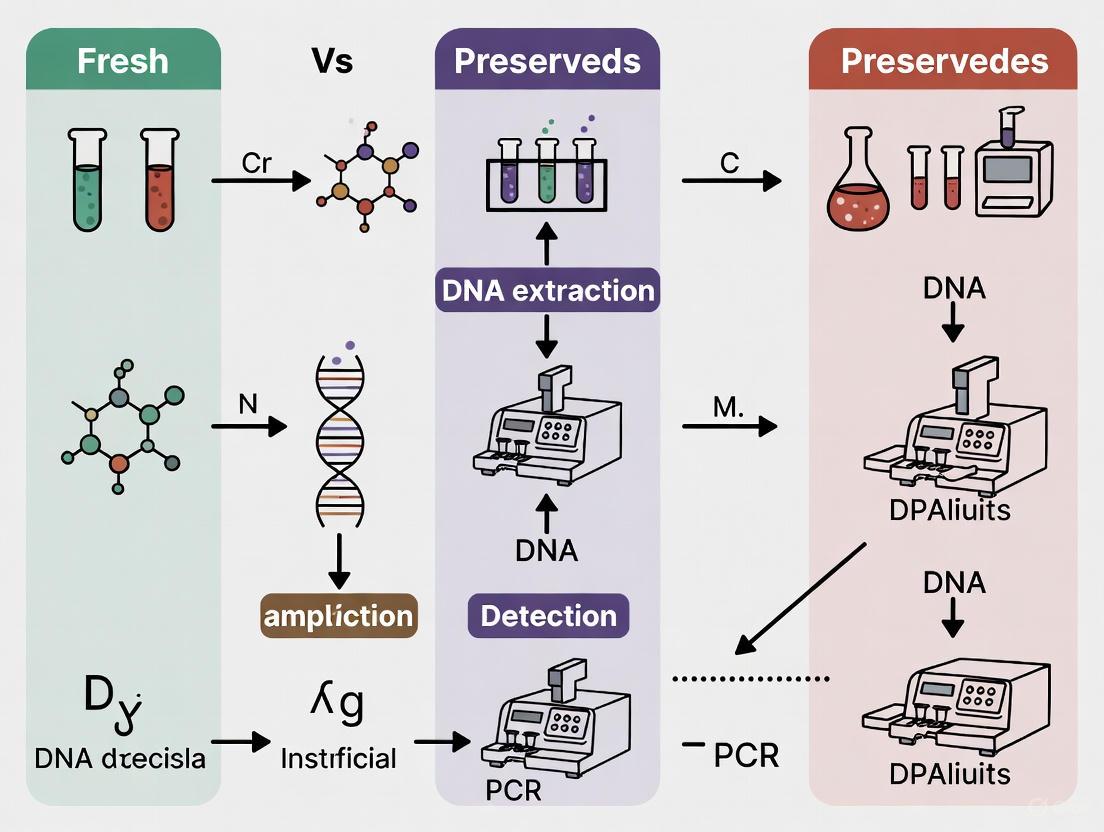
This article provides researchers and drug development professionals with a complete framework for collecting, preserving, and processing stool specimens to maximize the success of PCR-based diagnostics.
PCR-Ready Stool Samples: A Comprehensive Guide to Handling Fresh and Preserved Specimens for Reliable Diagnostics
Abstract
This article provides researchers and drug development professionals with a complete framework for collecting, preserving, and processing stool specimens to maximize the success of PCR-based diagnostics. It covers the foundational principles of nucleic acid preservation, details standardized protocols for both fresh and preserved sample handling, offers advanced troubleshooting for common PCR inhibitors, and presents a comparative analysis of preservation method efficacy based on current validation studies. The guidance synthesizes best practices from authoritative sources to ensure specimen integrity from collection to amplification, which is critical for sensitive molecular detection of pathogens in clinical and research settings.
Preserving Sample Integrity: Core Principles for PCR-Amplifiable DNA from Stool
Core Concepts: Why Stool is a Challenging Sample
What are the primary challenges when using stool for PCR analysis? The two main challenges are nuclease degradation and PCR inhibitors.
- Nuclease Degradation: Once a stool sample is produced, endogenous nucleases (DNAse and RNAse) begin to break down nucleic acids. This process is accelerated at higher temperatures and over time, leading to the fragmentation of target DNA/RNA and a significant loss of detection sensitivity [1].
- PCR Inhibitors: Stool contains a complex mixture of substances that can inhibit the PCR reaction. Common inhibitors include bile salts, complex polysaccharides, urea, humic acids (from soil), and hemoglobin breakdown products [2] [3]. These substances can interfere with the DNA polymerase, chelate essential co-factors like Mg²⁺, or prevent primers from annealing to the template DNA [2] [3].
What is the impact of using fresh versus preserved stool samples? The choice between fresh and preserved stool directly impacts the stability of nucleic acids and the composition of the microbial community, which is critical for microbiome studies.
- Fresh Samples: Offer the most accurate snapshot of the microbial community at the time of collection. However, they are highly vulnerable. DNA yield can drop significantly within the first 24 hours of storage if not processed immediately or preserved correctly [4].
- Preserved Samples: The goal of preservation is to halt nuclease activity and stabilize the community. While some preservation methods can introduce bias, studies show that the effect size of different preservation methods is much smaller than the natural variation between individuals or species [5]. Proper preservation allows for accurate analysis even after weeks of storage.
Troubleshooting Guide: FAQs on Stool Sample Failures
My PCR from a stool sample shows no product (complete amplification failure). What should I do? Complete failure often points to a potent PCR inhibitor or severely degraded DNA.
- Check Your DNA Integrity: Run your extracted DNA on an agarose gel. A visible smear, rather than a tight, high-molecular-weight band, suggests significant nuclease degradation [6].
- Identify the Inhibitor: Consider your sample source. Bilirubin and bile salts are common in diarrheic stools, while humic acids are a problem if soil contamination is possible [2] [3].
- Employ an Inhibitor Removal Strategy:
- Dilute Your DNA Template: This simple step can dilute inhibitors to a sub-critical concentration. Be aware that this also dilutes your target DNA and may reduce sensitivity [2] [3].
- Choose a Different DNA Polymerase: Some engineered or wild-type polymerases (e.g., from Thermus thermophilus) are significantly more resistant to inhibitors found in blood and stool than the standard Taq polymerase [3].
- Use an Amplification Facilitator: Add Bovine Serum Albumin (BSA) to your PCR mix at 10-100 μg/mL. BSA can bind to a wide range of inhibitors, including phenolics and humic acids, neutralizing their effect [2] [3].
I get weak or inconsistent amplification from my stool samples. How can I improve yield? Weak amplification suggests partial inhibition or the beginning of DNA degradation.
- Optimize Your Purification: If using a silica-column based kit, ensure all wash buffers contain the recommended ethanol and that the column is thoroughly dried before elution. Residual ethanol is a common PCR inhibitor [3].
- Add PCR Enhancers:
- Verify Storage Conditions: If samples were stored before extraction, ensure the preservative was appropriate and the storage temperature was maintained. A sharp increase in Cq values after storage indicates poor preservation [1].
My PCR results show high background or nonspecific products. Is this related to the stool matrix? While often a primer-design or thermal-cycling issue, the stool matrix can contribute.
- Re-purify Your DNA: Carry-over impurities from the stool can sometimes reduce the specificity of the PCR. Try a second purification using a silica column or magnetic beads [8] [9].
- Increase Annealing Temperature: Inhibitors can sometimes reduce the effective annealing temperature. Optimize the temperature using a gradient thermal cycler [6].
- Use a Hot-Start DNA Polymerase: This prevents non-specific amplification and primer-dimer formation at lower temperatures, which can be exacerbated by sample impurities [6].
Sample Preservation & Storage: Data-Driven Decisions
What is the best way to preserve stool samples for PCR in a field setting with no immediate cold chain? Multiple methods are effective. The best choice depends on a balance of performance, cost, and safety.
The table below summarizes key findings from comparative studies on preservation methods.
Table 1: Comparison of Stool Sample Preservation Methods for PCR
| Preservation Method | Performance at Ambient Temp | Key Advantages | Key Disadvantages |
|---|---|---|---|
| 95% Ethanol | Good to Excellent [5] [1] | Cost-effective, readily available, non-toxic compared to alternatives [1] | Samples are not suitable for all downstream assays (e.g., culture) |
| OMNIgene Gut Kit | Excellent [5] | Standardized, designed specifically for gut microbiome DNA stabilization | Higher cost per sample |
| FTA Cards | Excellent [5] [1] | Easy to transport and store, room-temperature stable | Systematic bias that may require bioinformatic detrending [5] |
| RNAlater | Good [5] [1] | Effective for RNA and DNA | Can be inhibitory to PCR if not removed [5] |
| Silica Bead Desiccation | Excellent [1] | Non-toxic, low cost | Two-step process can be more laborious [1] |
| 10% Formalin | Not Recommended | Excellent for morphological preservation | Severely inhibits PCR, especially after extended fixation [10] |
What is the "gold standard" for stool storage if a cold chain is available? Immediate freezing at -20°C or below is considered the gold standard [5] [1]. Freezing rapidly inactivates nucleases and preserves the microbial community with minimal bias. For long-term biobanking, -80°C is preferred.
Experimental Protocols & Workflows
Detailed Protocol: Stool Sample Processing for Robust PCR
This protocol is optimized for inhibitor removal and high DNA yield.
Workflow Overview
The following diagram illustrates the critical decision points in the sample processing workflow to prevent nuclease degradation and inhibitor effects.
Materials & Reagents
- Lysis Buffer: Typically containing a chaotropic salt like guanidine hydrochloride and a detergent like SDS [9].
- Proteinase K: For enzymatic digestion of proteins and nucleases [9].
- Inhibitor Removal Technology: Silica-membrane columns (e.g., QIAamp PowerFecal Pro) or magnetic silica beads (e.g., MagneSil) are highly effective [8] [9].
- Bead Beater or Vortex Adapter: Mechanical disruption is critical for breaking open hardy microbial cells (e.g., Gram-positive bacteria) that chemical lysis alone cannot [4] [9].
- Wash Buffers: Usually ethanol- or isopropanol-based to remove salts and other contaminants without eluting the DNA [9].
- Elution Buffer: TE buffer (pH 8.0) or nuclease-free water. Avoid using water if the DNA will be stored long-term, as its slight acidity can lead to DNA degradation [2] [9].
Step-by-Step Method
- Homogenize and Weigh: Take a representative sub-sample of the stool (e.g., 180-220 mg) and place it in a lysis tube containing beads.
- Lysis and Digestion: Add lysis buffer and Proteinase K to the sample. Incubate at a defined temperature (e.g., 56°C) to digest proteins and inactivate nucleases.
- Mechanical Disruption: Securely place the tube in a bead beater and homogenize at high speed for 3-10 minutes. This step is crucial for maximum DNA yield from diverse microbes [4].
- Create Cleared Lysate: Centrifuge the homogenized sample at high speed to pellet stool debris, beads, and insoluble impurities. Transfer the supernatant (the cleared lysate) to a new tube.
- Bind DNA: Add a binding solution (often a chaotropic salt) to the lysate and transfer it to a silica-membrane column. Centrifuge to bind the DNA to the membrane.
- Wash: Perform two wash steps with the provided wash buffers to remove PCR inhibitors like salts, proteins, and carbohydrates. Centrifuge to dry the membrane completely.
- Elute: Add elution buffer (e.g., 50-100 μL) to the center of the membrane, incubate for 5 minutes, and centrifuge to collect the purified DNA.
The Scientist's Toolkit: Essential Research Reagents
Table 2: Key Reagent Solutions for Overcoming Stool-Related PCR Challenges
| Reagent / Tool | Function / Problem it Solves | Example Use Case |
|---|---|---|
| Bead-Beating Kits (e.g., DNeasy PowerSoil) | Mechanical cell lysis for robust and unbiased DNA yield from diverse, hard-to-lyse microbes in stool. | Outperformed non-bead-beating kits in neonatal stool, yielding higher DNA concentrations [4]. |
| Inhibitor-Resistant DNA Polymerases | Enzymes engineered for high tolerance to common stool inhibitors (bilirubin, bile salts, humics). | Essential for direct PCR from difficult samples or when inhibitor removal is incomplete. |
| Bovine Serum Albumin (BSA) | Amplification facilitator; binds to a wide range of inhibitors, neutralizing their effect. | Add at 10-100 μg/mL to PCR mix to counteract inhibition from phenolics and humic acids [2] [3]. |
| Dimethyl Sulfoxide (DMSO) | Additive that disrupts DNA secondary structures and can enhance specificity. | Use at 1-10% in PCR to help amplify GC-rich targets or templates with complex structures [3] [7]. |
| Betaine | Additive that equalizes the melting temperature of DNA, preventing secondary structure formation. | Use at 0.5-2.5 M for PCR amplification of GC-rich regions [7]. |
| Silica-Based Purification | Solid-phase extraction that binds DNA in high salt; washes away inhibitors; elutes pure DNA. | The basis for most modern commercial kits; effective for removing a broad spectrum of inhibitors from stool lysates [8] [9]. |
Frequently Asked Questions
Q1: Is immediate freezing of stool samples always required for reliable PCR results? Not necessarily. While immediate freezing is a standard practice, some studies indicate that samples preserved in specific buffers can yield comparable or even superior results. A 2025 multicentre study found that PCR results from stool samples preserved in Para-Pak media were better than those from fresh samples for detecting certain intestinal protozoa, likely due to better DNA preservation in the fixed specimens [11].
Q2: What are the primary risks of not immediately freezing a fresh stool sample? Delaying freezing or using inappropriate storage conditions risks DNA degradation due to enzymatic activity and microbial growth. This can lead to:
- False negatives: The target DNA degrades below the detection limit of your assay [11].
- Reduced sensitivity: Partial degradation can lower the apparent pathogen load [11].
- Inconsistent results: Varying degradation levels between samples introduce variability.
Q3: For a large-scale study where immediate freezing is logistically challenging, what is a validated alternative? Refrigeration for a limited period before processing and freezing can be a valid approach. A pilot study on placental tissue found that refrigeration for up to 24 hours before processing and storage at -80°C was a feasible method for assessing certain inflammatory cytokines, though it must be validated for your specific analyte [12].
Q4: My PCR results are inconsistent despite freezing samples. What could be wrong? Inconsistencies can stem from issues prior to freezing. Key troubleshooting steps include:
- Verify sample homogeneity: Ensure the stool sample is thoroughly mixed before aliquoting for DNA extraction [11].
- Review DNA extraction: The robust wall of protozoan oocysts can complicate DNA extraction. Ensure your extraction protocol includes rigorous mechanical lysis steps and potentially use a buffer like S.T.A.R. (Stool Transport and Recovery Buffer) to stabilize nucleic acids [11].
- Check freezer stability: Ensure the -20°C freezer maintains a consistent temperature without freeze-thaw cycles.
Troubleshooting Guide: Sample Preservation and DNA Quality
| Problem | Potential Cause | Solution |
|---|---|---|
| Low DNA yield from preserved samples | Inefficient lysis of hardy parasite cysts/oocysts [11] | Incorporate a mechanical disruption step (e.g., bead beating) into the DNA extraction protocol. |
| Inhibition of PCR reaction | Co-purification of PCR inhibitors from stool [11] | Dilute the DNA template or use a purification kit designed to remove common stool-derived inhibitors. |
| High variability between replicate samples | Non-uniform sample composition before freezing or preservation [11] | Homogenize the source specimen thoroughly before creating aliquots for DNA extraction. |
| Unexpected negative results from a known positive sample | DNA degradation during sample handling or storage [11] | Audit the cold chain to ensure consistent storage at -20°C and avoid repeated freeze-thaw cycles. Validate preservation method for your target. |
Experimental Protocol: Comparing Fresh vs. Preserved Stool Samples
The following protocol is adapted from a 2025 multicentre study comparing microscopy and PCR for detecting intestinal protozoa [11].
Objective: To evaluate the performance of a commercial RT-PCR test for identifying infections with Giardia duodenalis, Cryptosporidium spp., Entamoeba histolytica, and Dientamoeba fragilis in fresh versus preserved stool samples.
Materials:
- Stool samples (fresh and preserved in Para-Pak media)
- DNA extraction kit (e.g., MagNA Pure 96 DNA and Viral NA Small Volume Kit)
- S.T.A.R. Buffer (Stool Transport and Recovery Buffer; Roche)
- Internal extraction control
- Commercial RT-PCR kit (e.g., AusDiagnostics) or materials for in-house RT-PCR
- PCR plates and thermal cycler
Methodology:
- Sample Collection and Storage: Collect a minimum of 355 stool samples. Divide and process as follows:
- DNA Extraction:
- Mix 350 µl of S.T.A.R. Buffer with approximately 1 µl of each faecal sample.
- Incubate for 5 minutes at room temperature and centrifuge at 2000 rpm for 2 minutes.
- Transfer 250 µl of supernatant to a fresh tube and add 50 µl of the internal extraction control.
- Perform DNA extraction using an automated system (e.g., MagNA Pure 96 System) per manufacturer's instructions [11].
- Real-Time PCR Amplification:
- Data Analysis: Compare PCR cycle threshold (Ct) values and detection rates between fresh and preserved sample groups.
The Scientist's Toolkit: Research Reagent Solutions
| Item | Function |
|---|---|
| S.T.A.R. Buffer | A stool transport and recovery buffer designed to stabilize nucleic acids in faecal samples prior to DNA extraction, reducing degradation [11]. |
| Para-Pak Media | A preservation medium for stool samples that helps maintain the integrity of parasitic forms and their DNA for later microscopic and molecular analysis [11]. |
| MagNA Pure 96 System | An automated platform for high-throughput nucleic acid extraction, ensuring consistency and reducing cross-contamination risk in large-scale studies [11]. |
| TaqMan Fast Universal PCR Master Mix | A pre-mixed, optimized solution containing DNA polymerase, dNTPs, and buffers for fast and robust real-time PCR amplification [11]. |
| Internal Extraction Control | A non-target DNA sequence added to samples during extraction to monitor the efficiency of the DNA extraction and rule out PCR inhibition [11]. |
Sample Preservation Decision Workflow
The diagram below outlines the key decision points for handling stool samples for PCR research.
Within PCR research on stool samples, the choice between using fresh or preserved material is a critical pre-analytical step that directly influences the accuracy and reliability of your results. Different preservative mechanisms have distinct effects on the stabilization of nucleic acids, which can either protect or compromise your target DNA and RNA. This guide provides a detailed technical overview of how common fixatives work, their applications in stool sample research, and solutions to common challenges you may encounter in your experiments.
FAQ: Preservative Mechanisms and Nucleic Acid Stabilization
Q1: How does formalin fixation lead to RNA degradation and PCR inhibition?
Formalin (or formaldehyde) works by forming reversible methylol compounds and then stable methylene bridges between proteins, thereby cross-linking and preserving tissue architecture. However, this same mechanism is detrimental to nucleic acids. Formaldehyde can form hydroxymethyl adducts with RNA bases, leading to fragmentation and chemical modification [13]. Furthermore, the cross-linking traps RNA and makes its extraction inefficient. During reverse transcription in RT-PCR, these modifications cause polymerase enzyme inhibition, an effect that becomes more pronounced with increasing amplicon length. Consequently, while histology is well-preserved, RNA from formalin-fixed tissues is often of low quality and performs poorly in downstream biomolecular analyses [14] [13].
Q2: What are the mechanisms of non-formalin, cross-linking fixatives?
Non-formalin cross-linking fixatives, such as methacarn (a mixture of methanol, chloroform, and acetic acid), employ a different mechanism. Methacarn is a coagulant fixative that rapidly dehydrates and precipitates cellular proteins and nucleic acids without creating protein-protein cross-links [14]. This action avoids the chemical modification of RNA bases seen with formalin. By precipitating biomolecules in place, it preserves histomorphology for histological examination while maintaining RNA in a state that is largely unmodified and extractable. This results in RNA with high concentration, purity, and performance in RT-qPCR that is comparable to RNA from snap-frozen tissues [14].
Q3: How do commercial nucleic acid preservatives stabilize DNA and RNA in stool?
Commercial stool nucleic acid preservatives (e.g., Norgen's Stool Nucleic Acid Preservative, PAXgene Tissue System) are designed to immediately inactivate nucleases and inhibit microbial growth upon contact with the sample. Their primary mechanism involves using denaturants that disrupt the activity of RNases and DNases present in the stool, while also protecting the nucleic acids from oxidative damage. This allows the preservation of the original microbial profile at the moment of collection by preventing the lysis of freeze-susceptible microbes (often Gram-negative) that can occur during freezing without cryoprotectants. These preservatives enable samples to be stored and shipped at ambient temperatures, eliminating the need for a cold chain and mitigating the biases introduced by freeze-thaw cycles [15].
Q4: Why does freezing stool without cryoprotectants alter microbiome analysis?
Freezing whole stool at -20°C to -80°C without cryoprotectants like glycerol subjects microbial cells to physical stress from ice crystal formation. These crystals can puncture cell membranes, leading to cell lysis and death. This effect is not uniform across all bacteria; Gram-negative bacteria are generally more susceptible to freeze-thaw damage than Gram-positive ones [16] [15]. Consequently, freezing without additives can cause a selection bias, leading to an over-representation of freeze-tolerant Gram-positive bacteria and an under-representation of Gram-negative ones in subsequent culture-based and molecular analyses. Furthermore, lysis releases intracellular nucleic acids, which are then exposed to degradative enzymes, further altering the apparent microbial community structure [16].
Troubleshooting Guide: Nucleic Acid Extraction from Preserved Stool
| Problem | Common Cause | Suggested Solution |
|---|---|---|
| Low RNA/DNA Yield | • Incomplete lysis of hardy microbial cells or spores.• Overloading the purification column.• Inefficient elution. | • Optimize lysis: Increase mechanical homogenization or enzymatic digestion time [17].• Do not exceed the recommended sample input amount for your kit [18].• Ensure elution buffer is applied to the center of the column membrane and incubate for the recommended time [17]. |
| Poor Nucleic Acid Purity (Salt/Protein Carryover) | • Incomplete washing of the silica membrane or magnetic beads.• Column overloading. | • Ensure wash buffers are prepared with the correct ethanol concentration and that the full volume is used [18] [17].• Centrifuge the column for the full recommended time after the final wash to ensure complete ethanol removal [18]. |
| DNA Contamination in RNA Isolations | • Inefficient DNase digestion during extraction. | • Perform an on-column DNase I treatment. If problems persist, consider an in-tube/off-column DNase I digestion step for more thorough removal [18]. |
| Degraded Nucleic Acids | • Slow or incomplete inactivation of nucleases during sample preservation and lysis.• Introduction of RNases/DNases during handling. | • Ensure the preservative thoroughly and immediately mixes with the sample [10] [17].• Work quickly on ice, use nuclease-free reagents and consumables, and employ RNase inhibitors for RNA [17]. |
| Inhibition in Downstream PCR | • Carryover of inhibitory substances from the stool sample or fixative. | • Use purification methods that include robust wash steps to remove PCR inhibitors (e.g., humic acids, salts) [17].• Dilute the nucleic acid template or use a PCR facilitator reagent. |
Experimental Data and Protocols
Comparison of Fixative Performance on Tissue and Stool
Table 1: Comparative analysis of different fixation methods on RNA quality and histological preservation in bone and soft tissue.
| Fixation Method | Primary Mechanism | RNA Integrity Number (RIN) | Performance in RT-qPCR | Histological Quality |
|---|---|---|---|---|
| Snap Freezing (UFT) | Physical immobilization by rapid freezing | 8.0 – 9.2 [13] | Optimal, reference standard [14] | N/A (cryosections) |
| RNAlater | Denaturation and inactivation of nucleases | High (comparable to UFT) [14] | Good [14] | Requires subsequent fixation for standard histology [14] |
| Methacarn (MFPE) | Precipitation/coagulation of proteins | High (comparable to UFT) [14] | Optimal, comparable to UFT [14] | Comparable to Formalin [14] |
| PAXgene (PFPE) | Non-crosslinking, stabilizes nucleic acids and morphology | 6.4 – 7.7 [13] | Optimal, identical to frozen tissue [13] | Comparable to Formalin [13] |
| Formalin (FFPE) | Protein cross-linking | Statistically significantly lower [14] | Inhibition, especially with long amplicons [14] [13] | Gold standard morphology [14] [13] |
Table 2: Impact of stool preservation methods on microbial community analysis.
| Preservation Method | Effect on Gram-negative Bacteria | Effect on Gram-positive Bacteria | Impact on Nucleic Acid Integrity | Key Consideration |
|---|---|---|---|---|
| Fresh Processing | Reference community profile | Reference community profile | Highest integrity if processed immediately | Logistically challenging; strict time limits [16] |
| Frozen at -80°C (no additive) | Decreased abundance (lysis from ice crystals) [15] | Increased relative abundance (more resistant) [15] | Subject to degradation from freeze-thaw cycles [15] | Introduces bias; cold chain required |
| Frozen with Cryoprotectant (e.g., Glycerol) | Better preservation than freezing alone | Good preservation | Better protection than without cryoprotectant | Glycerol may skew some assays [16] |
| Commercial Nucleic Acid Preservative | Maintains relative abundance closer to fresh [15] | Maintains relative abundance closer to fresh [15] | Good integrity; protected at room temperature | No cold chain needed; ideal for shipping [15] |
Standard Protocol: RNA Isolation from Fixed and Paraffin-Embedded (FPE) Samples
The following protocol is adapted from a study comparing fixation methods for bone samples [14].
- Deparaffinization: Cut 4-8 μm sections from the FPE block. Remove paraffin by incubation in xylene, followed by rehydration in a descending ethanol series (e.g., 100%, 96%, 70%) under RNase-free conditions.
- Lysis: Add an appropriate volume of lysis buffer (e.g., containing proteinase K) to the deparaffinized tissue pellets. Incubate at 50-56°C with agitation for several hours (or overnight) until the tissue is completely lysed. Centrifuge briefly to pellet any debris.
- RNA Isolation: Use a modified TRIZOL or commercial FFPE RNA isolation kit. If using a column-based system, add ethanol to the lysate and load onto the column.
- DNase Treatment: Perform on-column DNase I digestion to remove genomic DNA contamination.
- Washing: Wash the column multiple times with wash buffers as per the manufacturer's instructions to remove salts and other impurities.
- Elution: Elute the purified RNA in a small volume of nuclease-free water.
- Quality Control: Quantify RNA using a spectrophotometer and assess integrity via microcapillary electrophoresis (e.g., RIN).
Research Reagent Solutions
Table 3: Essential reagents for nucleic acid preservation and extraction from stool samples.
| Reagent | Function | Example Use Case |
|---|---|---|
| Methacarn | Coagulant fixative providing excellent RNA preservation and histology. | Combined histological and biomolecular analysis of clinical bone biopsies [14]. |
| PAXgene Tissue System | Non-formalin fixative that stabilizes histomorphology and nucleic acids without cross-linking. | Gene expression studies where histology is also required; alternative to formalin [13]. |
| RNAlater | Aqueous, non-toxic reagent that inactivates RNases and DNases. | Stabilizing RNA in tissues and cell pellets before homogenization and extraction [14]. |
| Norgen's Stool Nucleic Acid Preservative | A proprietary formulation designed to stabilize microbial community DNA and RNA in stool at room temperature. | Ambient temperature collection and storage of stool samples for microbiome studies [15]. |
| 10% Formalin | Cross-linking fixative providing excellent histological detail. | Primary fixation for histological analysis when biomolecular analysis is not a priority [10]. |
| LV-PVA (Polyvinyl-Alcohol) | Preservative for stool samples, excellent for protozoan morphology and permanent stained smears. | Diagnostic parasitology for the identification of protozoan trophozoites and cysts [10]. |
| SAF (Sodium Acetate-Acetic Acid-Formalin) | All-purpose fecal fixative, suitable for concentration procedures, stains, and immunoassays. | A versatile single-vial fixative for multiple diagnostic techniques in parasitology [10]. |
Workflow Visualization: Fixative Mechanisms and Downstream Effects
The following diagram illustrates the decision path for choosing a preservation method based on your research goals, and the subsequent effects on nucleic acids and analytical outcomes.
Diagram 1: Fixative selection workflow and nucleic acid outcomes.
This guide addresses a critical challenge in molecular research: selecting appropriate preservatives for biological samples to be used in PCR. Proper preservation is essential for maintaining sample integrity, preventing nucleic acid degradation, and ensuring accurate, reproducible experimental results. Within the specific context of handling fresh versus preserved stool samples for PCR research, this resource provides evidence-based guidance aligned with public health principles and technical laboratory requirements.
Frequently Asked Questions (FAQs)
1. Why are preservatives necessary in biological samples for PCR? Preservatives prevent the growth of bacteria and fungi in biological samples, safeguarding against microbial contamination that could degrade nucleic acids and lead to unreliable PCR results [19] [20]. They act by inactivating RNases and DNases that are present in the sample or introduced during handling, thereby preserving the integrity of RNA and DNA targets [21] [22]. This is especially crucial for samples handled in multi-use containers or those requiring storage or transport.
2. Does the CDC recommend any specific preservatives for diagnostic samples? While the CDC does not prescribe specific preservatives for all laboratory contexts, its documentation on vaccines provides insight into effective antimicrobial agents. Thimerosal, a mercury-based compound, has been extensively used and studied for its ability to prevent microbial growth in multi-dose vaccine vials [19] [20]. Other recognized preservatives mentioned in regulatory contexts include phenol, 2-phenoxyethanol, and benzethonium chloride [20]. The choice of preservative must be compatible with the downstream application, a key consideration for PCR.
3. What is a major consideration when using aldehyde-based preservatives like formaldehyde? Aldehyde-based fixatives like formaldehyde work by creating covalent cross-links between proteins [23]. While excellent for preserving cellular architecture, this cross-linking can modify biomolecules and potentially hinder DNA polymerase activity during PCR, making them generally incompatible with standard PCR protocols without additional, specialized sample processing steps like antigen retrieval [23].
4. My PCR results show degradation or no amplification. Could my sample preservative be the cause? Yes. Certain preservatives can directly inhibit PCR enzymes. For instance, residual aldehyde-based cross-linking agents can interfere with polymerase function [23]. Furthermore, some preservative buffers may contain contaminants or may not fully inactivate nucleases. If degradation is suspected, using certified nuclease-free water and reagents is critical for sensitive applications [21].
Troubleshooting Guides
Problem: Inconsistent or Failed PCR from Preserved Stool Samples
Potential Cause: Preservative Incompatibility
- Explanation: The chemical mechanism of the preservative may be incompatible with PCR. Cross-linking agents (e.g., formaldehyde) can physically trap nucleic acids and inhibit enzyme binding, while alcohol-based preservatives are generally more compatible.
- Solution:
- Switch Preservatives: Transition from a cross-linking preservative to a nuclease-inactivating, alcohol-based one.
- Validate with a Control: Always include a positive control (e.g., a known amount of target DNA added to the preservative) to confirm the preservative itself is not inhibitory.
- Increase Wash Steps: If changing preservatives is not possible, incorporate additional washing steps during nucleic acid extraction to dilute out the inhibitory agent.
Potential Cause: Nuclease Contamination
- Explanation: The preservative may not have effectively inactivated endogenous RNases and DNases present in the stool sample, leading to nucleic acid degradation post-collection.
- Solution:
- Verify Preservative Efficacy: Ensure the preservative solution is fresh, properly formulated, and used at the correct sample-to-preservative ratio.
- Use Certified Reagents: Employ nuclease-free water and buffers for all reagent preparation and sample processing steps [21].
- Test for Nuclease Activity: Use fluorescent assay kits (e.g., RNaseAlert or DNaseAlert) to detect nuclease contamination in your reagents [21].
Problem: High Background or Non-Specific Amplification in PCR
Potential Cause: Co-purification of Inhibitors
- Explanation: Some components of the preservative or compounds from the stool sample may co-purify with the nucleic acids and partially inhibit the PCR, leading to non-specific amplification.
- Solution:
- Optimize Nucleic Acid Purification: Use purification kits designed for challenging samples like stool. Consider adding inhibitor removal steps.
- Dilute the Template: Try diluting the extracted DNA/RNA to reduce the concentration of any co-purified inhibitors.
- Use a Robust Polymerase: Select a PCR polymerase mix specifically engineered to be resistant to common inhibitors found in complex biological samples.
The table below summarizes key characteristics of common preservative types based on available scientific literature.
Table 1: Comparison of Preservative Types for Molecular Biology Applications
| Preservative Type | Example | Mechanism of Action | Compatibility with PCR | Key Considerations |
|---|---|---|---|---|
| Alcohol-Based | 70% Ethanol | Dehydration; protein denaturation; nuclease inactivation [22]. | High - Effective for RNA preservation in mycobacterial cultures; minimal interference with enzymes [22]. | Causes tissue dehydration; effects may be reversible after rinsing [24]. |
| Aldehyde-Based | Formaldehyde | Protein cross-linking; structural stabilization [23] [25]. | Low - Cross-linking can trap nucleic acids and inhibit polymerase activity [23]. | Requires antigen retrieval or specialized de-cross-linking protocols for PCR. |
| Organomercurial | Thimerosal | Binds to microbial enzymes and proteins, preventing growth [19] [20]. | Variable - Depends on removal during extraction. Mercury can inhibit enzymes. | largely removed from childhood vaccines; associated with minor local reactions [19]. |
| Chaotropic Salt-Based | Guanidine Thiocyanate (GTC) | Protein denaturation; nuclease inactivation [22]. | High - Common in RNA extraction buffers; effective for nucleic acid stabilization. | Can be toxic and expensive; performance may be comparable to simpler alternatives like ethanol [22]. |
Experimental Protocols
Protocol 1: Evaluating Preservative Efficacy for RNA Integrity
This protocol is adapted from methods used to test 70% ethanol vs. GTC for mycobacterial RNA preservation [22].
Objective: To compare the effectiveness of different preservatives in maintaining RNA yield and integrity from a bacterial pellet simulant (e.g., from stool culture).
Materials:
- Bacterial cell pellet
- Candidate preservatives (e.g., 70% Ethanol, GTC-based buffer, RNAstable)
- Nuclease-free water [21]
- RNeasy Lysis Buffer (RLT) with β-mercaptoethanol
- Lysing matrix tubes and bead beater
- RNA extraction kit (e.g., Maxwell RSC miRNA Tissue Kit)
- DNase treatment kit (e.g., TURBO DNA-free Kit)
- Qubit RNA HS Assay Kit and TapeStation system for quality control
Method:
- Sample Preparation: Dilute the bacterial pellet 1:10 in each test preservative (e.g., 70% ethanol, GTC-TCEP) and mix thoroughly.
- Storage Challenge:
- Divide each preserved sample into aliquots.
- Store aliquots under different conditions to test robustness (e.g., -80°C, -20°C, 4°C, and repeated freeze-thaw cycles).
- RNA Extraction:
- Pellet cells by centrifugation.
- Resuspend pellet in RLT buffer with β-mercaptoethanol.
- Lyse cells using a bead beater with lysing matrix tubes.
- Purify RNA using the designated kit.
- Treat purified RNA with DNase.
- Quality Control:
- Quantity: Use the Qubit RNA HS Assay to determine RNA concentration.
- Integrity: Use the TapeStation to determine the RNA Integrity Number (RIN). A RIN >7.0 is often suitable for downstream applications like RNA-seq [22].
Protocol 2: Testing for PCR Inhibition from Preserved Samples
Objective: To determine if a preservative or extracted nucleic acid contains inhibitors of PCR amplification.
Materials:
- Nucleic acid extracted from preserved sample
- A known, well-characterized DNA template (e.g., a plasmid)
- PCR reagents: primers, polymerase, nuclease-free water [21]
- Real-time PCR instrument
Method:
- Set Up Two Reactions:
- Test Reaction: Contains the extracted nucleic acid from the preserved sample.
- Spiked Control Reaction: Contains the same extracted nucleic acid plus a known quantity of the well-characterized DNA template.
- Run Real-Time PCR:
- Perform PCR amplification for both reactions using primers specific to the "spiked-in" DNA template.
- Analysis:
- Compare the quantification cycle (Cq) values for the "spiked-in" target between the two reactions.
- If the Cq in the spiked control is significantly delayed compared to the expected Cq for the pure template, it indicates the presence of PCR inhibitors in the extracted sample.
Research Reagent Solutions
Table 2: Essential Materials for Sample Preservation and PCR
| Item | Function | Key Features & Considerations |
|---|---|---|
| Nuclease-Free Water | Solvent for preparing reagents and resuspending nucleic acids [21]. | Certified free of endonuclease, exonuclease, and RNase activity; essential for preventing sample degradation [21]. |
| RNAsecure Reagent | Inactivates RNases in solutions [21]. | Can be used with Tris and other solutions that cannot be treated with DEPC; does not require post-treatment autoclaving. |
| DNase/RNase Alert Kits | Detect nuclease contamination in reagents [21]. | Uses a fluorescent reporter for sensitive, real-time detection of nuclease activity. |
| Guanidine Thiocyanate (GTC) | Chaotropic salt for nucleic acid preservation and extraction [22]. | Effective at inactivating nucleases and pathogens; can be compared against simpler alternatives like ethanol. |
| SuperBlock Blocking Buffer | Blocks non-specific binding in immunoassays [26]. | Note: Not RNase-free, so it is not suitable for RNA-based applications unless treated [26]. |
Experimental Workflow and Decision Pathways
Diagram 1: Preservative selection workflow for PCR.
The reliability of PCR-based diagnostics is fundamentally contingent upon the integrity of the input DNA. When working with complex biological samples like stool, the pre-analytical phase—encompassing sample collection, storage, and preservation—becomes a critical determinant of experimental success. For researchers and drug development professionals, understanding the impact of time and temperature on DNA recovery is not merely procedural but central to ensuring the validity of downstream results. This is especially true within the context of a broader thesis on handling fresh versus preserved stool samples for PCR research, where the choice of preservation strategy can directly influence diagnostic sensitivity, specificity, and ultimately, scientific conclusions. This technical support center addresses the specific challenges encountered in this domain, providing evidence-based troubleshooting and methodological guidance to safeguard the molecular quality of your samples from the point of collection to the PCR plate.
Technical Guide: Storage Conditions & DNA Integrity
FAQs: Sample Preservation Fundamentals
Q1: What is the primary challenge of using fresh stool samples for PCR? Fresh stool samples contain native nucleases that can rapidly degrade DNA, especially after the breakdown of fragile parasite eggs or cysts, leading to false-negative results [27] [1]. Immediate processing or freezing is required to halt this degradation, which is often logistically challenging in field or clinical settings.
Q2: How does temperature fluctuation during storage impact DNA recovery? Temperature is a key driver of nuclease activity and DNA degradation. Studies show that storage at a stable 4°C can maintain DNA amplification efficiency for at least 60 days, even without preservatives. In contrast, exposure to elevated temperatures (e.g., 32°C) causes a significant increase in quantitative PCR Cq values, indicating a loss of amplifiable DNA, unless an effective preservative is used [1].
Q3: Are preserved stool samples superior to fresh samples for molecular detection? Evidence suggests that for certain pathogens, PCR results from preserved stool samples can be better than those from fresh samples, likely due to better DNA preservation in the former [27]. For instance, one study on intestinal protozoa found that molecular assays performed better on samples preserved in media compared to freshly processed ones.
Q4: What are the key considerations when choosing a preservative for stool samples? The choice involves a balance of several factors [1]:
- Efficacy: The ability to protect target DNA from nucleases and PCR inhibitors at varying temperatures.
- Toxicity: Safety for personnel handling the samples.
- Cost and Logistics: The expense of the preservative and associated shipping requirements.
- Downstream Compatibility: Resistance to PCR inhibitors and suitability for automated DNA extraction systems.
Data Presentation: A Comparative Analysis of Storage Conditions
Table 1: Impact of Storage Temperature and Duration on DNA Amplification Efficiency (as measured by Cq values in qPCR)
| Storage Condition | Duration | Key Finding | Experimental Context |
|---|---|---|---|
| 4°C (Refrigerated) | 60 days | No significant increase in Cq values; samples remained stable even without preservative. | Hookworm DNA in human fecal specimens [1]. |
| 32°C (Simulated Tropical Ambient) | 60 days | Significant increase in Cq values for unpreserved samples. | Hookworm DNA in human fecal specimens [1]. |
| -20°C (Frozen) | Short-term (study period) | Considered the "gold standard" for DNA preservation. | Intestinal protozoa and bacteria in stool samples [27] [28]. |
| Ambient (with specific preservatives) | 60 days | FTA cards, potassium dichromate, and silica bead desiccation minimized Cq value increases most effectively at 32°C. | Hookworm DNA in human fecal specimens [1]. |
Table 2: Evaluation of Common Fecal Sample Preservatives for DNA Recovery
| Preservative | Performance at 32°C over 60 days | Key Advantages | Key Disadvantages |
|---|---|---|---|
| 95% Ethanol | Demonstrates a protective effect. | Low cost; widely available; considered the most pragmatic choice for most field conditions [1]. | May be less effective than some other methods [1]. |
| FTA Cards | Among the best for minimizing DNA degradation. | Room temperature storage; easy to transport. | Requires spotting of samples; potential for uneven distribution. |
| Potassium Dichromate | Among the best for minimizing DNA degradation. | Effective preservation. | Toxic; requires careful handling [1]. |
| Silica Bead Desiccation | Among the best for minimizing DNA degradation. | Non-toxic; highly effective. | Two-step process can be more laborious. |
| RNA later | Demonstrates a protective effect. | Commonly available in molecular labs. | Can be more expensive than alternatives. |
| Para-Pak Media | Better DNA preservation compared to fresh samples. | Commercial format; standardized. | Performance may vary by pathogen [27]. |
Experimental Protocol: Assessing Preservation Efficacy
Title: Protocol for Comparing Preservative Efficacy in Stool Samples for Downstream PCR Analysis
Background: This protocol outlines a methodology to evaluate different preservatives' ability to maintain DNA integrity in stool samples over time and under different temperature regimes, using quantitative real-time PCR (qPCR) as a readout.
Materials:
- Stool samples (fresh, ideally spiked with a known concentration of the target organism for controlled studies)
- Candidate preservatives (e.g., 95% Ethanol, RNA later, silica beads, etc.)
- DNA extraction kit (e.g., MagNA Pure 96 DNA and Viral NA Small Volume Kit [27])
- qPCR instrumentation and reagent mix (e.g., TaqMan Fast Universal PCR Master Mix [27])
- Primers and probes specific to the target DNA
- Thermal cycler
- Freezers (-20°C) and incubators (4°C, 32°C)
Methodology:
- Sample Aliquoting: Homogenize the stool sample and create multiple equal aliquots.
- Preservative Application: Add each aliquot to a different preservative, following manufacturer's instructions or established protocols (e.g., mix with 95% Ethanol). One aliquot should be flash-frozen at -20°C as a "gold standard" control, and another left unpreserved as a negative control.
- Storage: For each preservative, store replicate aliquots at different temperatures (e.g., 4°C and 32°C).
- Time-Point Sampling: At predetermined time points (e.g., day 0, 7, 30, 60), retrieve sample aliquots from storage.
- Nucleic Acid Extraction: Perform DNA extraction on all samples using an automated or manual system. Include an internal extraction control to monitor extraction efficiency [27].
- qPCR Analysis: Run qPCR assays for all extracted samples. Use the cycle quantification (Cq) value as the primary metric for DNA amplifiability. A significant increase in Cq relative to the baseline (day 0) or the frozen control indicates DNA degradation.
- Data Analysis: Compare the Cq values across preservatives, temperatures, and time points using statistical analysis (e.g., ANOVA) to determine the most effective preservation method.
Troubleshooting Guide: PCR Amplification from Stool Samples
Common Issues and Solutions
Table 3: Troubleshooting PCR Problems with DNA from Stool Samples
| Observation | Possible Cause | Recommended Solution |
|---|---|---|
| No PCR Product | Poor DNA yield/quality from tough cysts/oocysts [27] PCR inhibitors from stool (e.g., bile salts, complex polysaccharides) [1] Insufficient template DNA | Optimize DNA extraction protocol for robust wall structures [27].Further purify DNA via alcohol precipitation or spin-column cleanup [6] [29].Increase the amount of input DNA or number of PCR cycles [6]. |
| Inconsistent or Irreproducible Results | Inadequate sample homogenization Degraded DNA due to improper storage | Ensure thorough homogenization of stool before aliquoting.Review storage protocols; use effective preservatives and maintain a cold chain where possible [1]. |
| Non-Specific Amplification (Multiple Bands) | Low annealing temperature Excess Mg2+ concentration Contamination | Increase annealing temperature in 1-2°C increments [6] [29].Optimize Mg2+ concentration, lowering it to reduce non-specific products [29].Use dedicated work areas and reagents; include negative controls [29]. |
The Scientist's Toolkit: Essential Research Reagents
Table 4: Key Reagents for Stool DNA Preservation and Analysis
| Item | Function/Application |
|---|---|
| S.T.A.R Buffer (Stool Transport and Recovery Buffer) | A buffer used to homogenize stool samples and prepare them for automated nucleic acid extraction, helping to stabilize nucleic acids [27]. |
| MagNA Pure 96 System & Kit | An automated system for nucleic acid extraction that uses magnetic bead technology, providing high throughput and consistent yields [27]. |
| TaqMan Fast Universal PCR Master Mix | A pre-mixed, optimized solution for real-time PCR that contains DNA polymerase, dNTPs, and buffer, facilitating sensitive and specific detection [27]. |
| 95% Ethanol | A cost-effective and widely available preservative that dehydrates samples and deactivates nucleases, providing a pragmatic field solution for DNA stabilization [1]. |
| FTA Cards | Chemically treated filter paper that lyses cells and immobilizes DNA upon sample application, allowing for room-temperature storage and transport [1]. |
| Hot-Start DNA Polymerase | A modified enzyme that is inactive at room temperature, preventing non-specific amplification and primer-dimer formation during reaction setup, thereby improving specificity [6] [29]. |
Workflow and Process Diagrams
Sample Integrity Workflow
DNA Degradation Pathway
From Collection to Extraction: Standardized Protocols for Fresh and Preserved Stool
Core Protocol: Collecting and Handling Unpreserved Stool for PCR
Question: What is the standard procedure for collecting and handling unpreserved stool samples intended for PCR analysis?
For research requiring unpreserved stool samples, strict adherence to collection and handling protocols is essential to preserve nucleic acid integrity and ensure reliable PCR results.
- Step 1: Collection. Collect the stool in a dry, clean, leak-proof container. Take care to ensure no urine, water, soil, or other materials contaminate the sample [10].
- Step 2: Immediate Storage. Fresh stool should be processed or preserved immediately. If unpreserved, the specimen must be stored cold or frozen [30]. Refrigerate the sample immediately at 4°C [31].
- Step 3: Preservation for PCR. For PCR, a portion of the unpreserved stool specimen should be stored frozen at less than -15°C [31]. Stool specimens collected in a clean vial without preservative must be shipped to the testing laboratory either refrigerated (4°C) or frozen on dry ice [30].
- Step 4: Shipping. For refrigerated transport, place bagged and sealed specimens on ice or with frozen refrigerant packs in an insulated box and send by overnight mail. For frozen transport, ship specimens on dry ice [31].
Troubleshooting FAQs
FAQ 1: What should I do if my PCR results show no amplification or low yield from a stool sample?
No amplification can stem from issues with the DNA template, reaction components, or cycling conditions.
- Confirm DNA Template: Verify the presence, concentration, and purity of the DNA template. If concentration is low or purity is poor (indicated by skewed spectrophotometer readings), the DNA may need re-purification [32] [33]. Re-purify or precipitate the DNA with 70% ethanol to remove residual salts or ions that can inhibit polymerases [6].
- Check for PCR Inhibitors: Fecal samples often contain PCR inhibitors such as bile salts and complex polysaccharides [33]. If inhibitors are suspected, use an inhibitor removal column or optimize PCR conditions by adding bovine serum albumin (BSA), which can help bind inhibitors [32] [7].
- Optimize Reaction Conditions: Adjust the annealing temperature, MgCl₂ concentration, and reaction buffer. Increase the amount of DNA polymerase or dNTPs if they are too low [32].
FAQ 2: How can I prevent non-specific products and primer-dimer formation in my PCR?
Non-specific amplification and primer-dimer formation reduce the yield of the desired product.
- Use Hot-Start Polymerases: Employ hot-start DNA polymerases that remain inactive until a high-temperature activation step. This prevents the enzyme from elongating primers that anneal non-specifically at low temperatures during reaction setup [6] [32].
- Optimize Primer Design and Concentration: Ensure primers are designed with specificity, avoiding complementary sequences at their 3' ends. Optimize primer concentrations, typically between 0.1–1 μM, as high concentrations promote primer-dimer formation [6] [7].
- Optimize Thermal Cycling Conditions: Increase the annealing temperature stepwise to improve specificity. Using a gradient cycler can help identify the optimal temperature [6].
FAQ 3: My PCR products show smeared bands on the gel. What is the cause and solution?
Smeared bands can result from suboptimal PCR conditions, degraded DNA, or contamination.
- Address Suboptimal Conditions: Increase the annealing temperature to reduce non-specific binding and shorten the extension time to minimize secondary products [32]. Ensure the Mg²⁺ concentration is not excessive [6].
- Check DNA Integrity: Degraded template DNA can cause smearing. Evaluate DNA integrity by gel electrophoresis and always use high-quality, intact DNA stored properly to prevent nuclease degradation [6].
- Eliminate Contamination: Smearing can be caused by "amplifiable DNA contaminants" from previous PCR runs. The most effective solution is to use a new set of primers with different sequences. Implement strict laboratory practices, such as physically separating pre-PCR and post-PCR areas [32].
FAQ 4: The consistency of my stool samples varies greatly. How does this affect DNA extraction?
The biomass and bacterial richness differ between samples, and consistency (hard, soft, watery) presents unique challenges.
- Adjust Sample Amount: Use a minimal amount of starting material. For healthy stool, begin with as little as 1 mg, scaling up to ~100 mg if needed. For viscous samples, use less to avoid co-purifying more inhibitory substances [33].
- Homogenize Viscous Samples: For very thick samples, resuspension in a preservation reagent like DNA/RNA Shield or a salt solution such as PBS can aid homogenization and extraction. For herbivore stools high in undigested plant matter, a CTAB pre-processing step may be needed to remove carbohydrates [33].
- Handle Watery Stools Carefully: Pipet watery samples using tips with the ends cut off to create a wider bore, ensuring you collect both liquid and particulate matter [33].
Research Reagent Solutions
Table 1: Essential reagents and kits for stool DNA extraction and analysis.
| Reagent/Kits | Primary Function | Key Features & Considerations |
|---|---|---|
| QIAamp PowerFecal Pro DNA Kit | DNA Extraction | Utilizes bead-beating for mechanical lysis; effective for breaking tough parasite structures; reduces PCR inhibitors [34]. |
| DNA/RNA Shield | Sample Preservation | Immediate stabilization of nucleic acids at collection; prevents microbial growth and degradation during storage [33]. |
| PCR Additives (e.g., BSA, Betaine) | Reaction Enhancement | BSA can bind PCR inhibitors; Betaine helps amplify GC-rich targets and destabilize secondary structures [7] [32]. |
| OneStep PCR Inhibitor Removal Kit | Purification | Cleans eluted DNA of residual contaminants like bile salts and polyphenolic compounds that inhibit amplification [33]. |
| 10% Glycerol | Long-term Storage | Suitable for cryopreservation at -80°C or liquid nitrogen, maintaining stable microbiota for at least 12 months [35]. |
| DESS Buffer | Chemical Preservation | Low-cost, non-toxic salt-based buffer for field studies; effective for helminth DNA and microbiota analysis [36]. |
Experimental Workflow and Troubleshooting
The following diagram summarizes the comprehensive workflow for handling unpreserved stool samples, from collection through PCR analysis, and integrates key troubleshooting checkpoints.
Technical Support Center
Troubleshooting Guides & FAQs
This technical support center provides targeted solutions for researchers working with stool preservative kits for PCR-based diagnostics. The guides below address common challenges to ensure the integrity of your samples and the reliability of your molecular results.
FAQ: Preservative Selection & Compatibility
Q: Which preservatives are officially recommended for molecular detection (e.g., PCR) on stool specimens?
According to the CDC, the following fixatives/preservatives are considered acceptable for molecular detection: TotalFix, Unifix, and modified PVA (Zn- or Cu-based) [30]. These preservatives allow stool specimens to be stored and shipped at room temperature [30].
Q: Are there any common preservatives that should be avoided for PCR-based research?
Yes. The CDC specifically advises that formalin, SAF, LV-PVA, and Protofix are not recommended for molecular detection [30]. Formalin, in particular, can interfere with PCR, especially after extended fixation time [10].
Q: If commercial fixatives are not an option, what are acceptable alternatives for preserving stool for DNA analysis?
For specific applications, the stool can be mixed with potassium dichromate 2.5% (at a 1:1 dilution) or in absolute ethanol (at a 1:1 dilution) and shipped refrigerated [30]. A 2018 study also concluded that 95% ethanol is a pragmatic and effective choice for preserving hookworm DNA in fecal specimens, especially under field conditions [1].
Troubleshooting Guide: Common Experimental Issues
Problem: Inconsistent PCR results or assay failure after sample preservation.
| Possible Cause | Solution |
|---|---|
| Use of PCR-incompatible preservative | Confirm that the preservative is on the CDC's recommended list (e.g., TotalFix, Unifix). Avoid formalin-based fixatives [30] [10]. |
| Delay in sample preservation | Preserve the specimen as soon as possible after collection to prevent DNA degradation by nucleases present in stool [10] [1]. |
| Incomplete mixing with preservative | Ensure the stool specimen is thoroughly and evenly mixed with the preservative solution to guarantee uniform fixation [10]. |
| Presence of PCR inhibitors | Use DNA extraction protocols that include steps to remove PCR-inhibitory substances like bile salts and complex polysaccharides [1]. |
Problem: Poor preservation of parasite morphology or difficulty in identification.
| Possible Cause | Solution |
|---|---|
| Suboptimal fixative for morphology | For permanent stained smears, note that while TotalFix and Unifix are good for PCR, a 2000 study found that mercury-based PVA (the traditional "gold standard") or Proto-Fix produced superior parasite morphology with minimal distortion [37]. |
| Dirty background on stained smears | The same 2000 study found that some alternative fixatives can result in a dirty background, which impedes identification. If morphology is critical, validate your fixative choice for this purpose [37]. |
Detailed Methodology: Comparing Fixative Performance
The following protocol is adapted from an independent study that compared the performance of several fixatives, providing a model for your own validation experiments [37].
1. Specimen Preparation:
- Collect fresh stool specimens and divide each into multiple aliquots.
- Place each aliquot into a different preservative under study (e.g., TotalFix, Unifix, modified PVA, and a control fixative).
- Process and prepare smears according to each manufacturer's directions [37].
2. Staining and Analysis:
- Stain the smears using the staining procedure recommended for each specific fixative to ensure optimal results (e.g., Wheatley's trichrome stain for PVA, EcoStain for EcoFix, etc.) [37].
- Have an experienced technologist, blinded to the specimen identification and fixative used, examine all slides under oil immersion.
- For each slide, record: the species of parasites identified, the quality of the background (good vs. dirty), and the clarity of internal parasite structures (well-defined vs. distorted) [37].
3. Data Analysis:
- Calculate the frequency of detection for each parasite species across the different fixatives.
- Compare the quality ratings (background and morphology) between the fixative methods [37].
The table below synthesizes key findings from relevant studies on preservative performance.
Preservative Performance for Parasitology Applications
| Preservative | PCR Compatibility (per CDC) | Parasite Morphology (vs. Traditional PVA) | Key Findings / Notes |
|---|---|---|---|
| TotalFix | Recommended [30] | Information Not Specified in Sources | A "one-vial" fixative; allows for concentration and permanent smears from a single vial [10]. |
| Unifix | Recommended [30] | Information Not Specified in Sources | A "one-vial" fixative; no mercuric chloride [10]. |
| Modified PVA | Recommended (Zn- or Cu-based) [30] | Generally not as good as mercury-based PVA [37] | No mercuric chloride, but staining can be inconsistent and organism morphology may be poor [10]. |
| 10% Formalin | Not Recommended [30] | Good for helminth eggs, larvae, and protozoan cysts [10] | Inadequate for trophozoites; interferes with PCR [30] [10]. |
| Traditional PVA (with HgCl₂) | Not Specified | Gold Standard for morphology [37] | Contains toxic mercuric chloride, posing disposal problems [37]. |
| Proto-Fix | Not Specified | Comparable to PVA, with minimal distortion [37] | An environmentally safe substitute that produced well-defined parasites in a comparative study [37]. |
| 95% Ethanol | Effective Alternative [30] [1] | Information Not Specified in Sources | Provides a pragmatic and effective option for DNA preservation, particularly in field settings [1]. |
DNA Preservation Efficiency Over Time & Temperature This table summarizes data from a 2018 study that compared the effectiveness of various preservation methods for the molecular detection of hookworm DNA using qPCR [1]. The values represent the change in quantitative cycle (Cq) values over 60 days; a smaller change indicates better DNA preservation.
| Preservation Method | Storage at 4°C (ΔCq) | Storage at 32°C (ΔCq) |
|---|---|---|
| FTA Cards | Minimal change | Minimal increase |
| Potassium Dichromate | Minimal change | Minimal increase |
| Silica Bead Desiccation | Minimal change | Minimal increase |
| RNA later | Minimal change | Moderate increase |
| 95% Ethanol | Minimal change | Moderate increase |
| Paxgene | Minimal change | Moderate increase |
| No Preservative (Control) | Minimal change | Large increase |
The Scientist's Toolkit: Research Reagent Solutions
| Item | Function & Application |
|---|---|
| Two-Vial Collection Kits | Commercial kits (e.g., Meridian Para-Pak) often provide two vials: one with a preservative like 10% Formalin or EcoFix, and one clean vial. This supports a comprehensive diagnostic workflow for both molecular and morphological exams [38]. |
| Zinc-Based Modified PVA | A mercury-free PVA alternative that is compatible with molecular diagnosis per CDC guidelines. It is suitable for preparing permanent stained smears, though morphology may not be as good as with mercury-based PVA [30] [10]. |
| EcoFix | A commercially available, environmentally safe fixative that contains zinc sulfate but no mercury. Studies have found it to be an acceptable substitute for PVA, with a clean background and acceptable parasite identification rates [37] [38]. |
| Potassium Dichromate (2.5%) | A preservative used for specific applications when commercial fixatives are not an option. It is effective for long-term storage of stool samples for DNA analysis, even at higher temperatures [30] [1]. |
Workflow Visualization
Stool Preservative Selection Guide
PCR Analysis Workflow
Analytical Method FAQ & Troubleshooting
This guide addresses common questions and issues researchers encounter when using the potassium dichromate method for ethanol quantification in preserved biological samples.
Q1: What is the principle behind the potassium dichromate method for ethanol determination?
This method is based on an oxidation reaction. When ethanol is heated with potassium dichromate in the presence of a strong acid (like sulfuric acid), the ethanol is oxidized to acetaldehyde and then to acetic acid. During this process, the orange-colored Cr(VI) in dichromate is reduced to green-blue Cr(III). The intensity of this green-blue color is proportional to the ethanol concentration in the sample and can be measured to determine the ethanol content [39].
Q2: My final reaction mixture is not developing the expected green-blue color. What could be wrong?
Several factors could cause this:
- Insufficient Acid Concentration: The oxidation reaction requires a strongly acidic environment. Ensure that concentrated sulfuric acid is added in the correct proportion as per the protocol.
- Degraded Reagents: Potassium dichromate solution can degrade over time, especially if not stored properly. Prepare a fresh solution of potassium dichromate in dilute sulfuric acid.
- Ethanol Concentration Too Low: If the ethanol concentration in your sample is below the detection limit of the method, the color change will not be perceptible. Confirm the expected concentration and, if necessary, use a more sensitive method like gas chromatography (GC) [40].
- Incomplete Reaction: Ensure the reaction mixture is heated sufficiently to complete the oxidation process.
Q3: Why is it recommended to use a photography box when capturing images with a smartphone?
A specialized photography box provides consistent, uniform lighting and a neutral background. This eliminates shadows and variations in ambient light, which is critical for obtaining reproducible color intensity measurements for your calibration curve and sample analysis [39].
Q4: I am getting inconsistent results between different sample runs. How can I improve reproducibility?
- Standardize Sample Preparation: Ensure all samples are processed identically, including the volume of sample and reagents, reaction time, and temperature.
- Use a Calibration Curve: Always run a fresh calibration curve with known ethanol standards alongside your unknown samples during the same analytical batch.
- Control Reaction Time: Precisely time the heating or reaction period for all tubes to ensure the oxidation reaction proceeds to the same extent for every sample.
Q5: What are the main limitations and safety concerns of this method?
- Chemical Hazards: Potassium dichromate (Cr(VI)) is a carcinogen and toxic upon inhalation and ingestion. Concentrated sulfuric acid is highly corrosive. Always use appropriate personal protective equipment (PPE) and work in a fume hood [41].
- Lack of Specificity: The method oxidizes alcohols in general and is not specific to ethanol. It can also be interfered with by other reducing substances present in complex sample matrices like raw fermentation broths or biological samples [41].
- Environmental Concern: The waste generated contains hexavalent chromium, which requires proper hazardous waste disposal procedures [41].
The table below summarizes key performance metrics for colorimetric ethanol determination methods as found in recent literature.
Table 1: Performance Metrics of Colorimetric Ethanol Analysis Methods
| Method | Linear Range | Detection Limit | Correlation Coefficient (R²) | Key Features / Limitations |
|---|---|---|---|---|
| Smartphone-based Dichromate Method [39] | 0 - 0.55 % (v/v) | 0.01 % (v/v) | > 0.995 | Inexpensive, rapid, uses accessible technology. Involves hazardous Cr(VI). |
| Potassium Permanganate Method [41] | ≤ 125 μL/L | Information Missing | 0.9969 | Developed as an alternative to carcinogenic Cr(VI). Requires sample pretreatment to remove interferents. |
Experimental Protocol: Ethanol Quantification via Smartphone-Based Colorimetry
Scope and Application
This protocol describes a procedure for determining ethanol concentration in a sample (0-100% v/v) using an oxidation reaction with potassium dichromate and subsequent color intensity measurement via a smartphone camera [39].
Safety Considerations
- Potassium Dichromate: Toxic and carcinogenic. Avoid skin contact and inhalation.
- Sulfuric Acid: Highly corrosive. Handle with extreme care.
- Personal Protective Equipment (PPE): Lab coat, safety goggles, and acid-resistant gloves are mandatory.
- Engineering Controls: Perform all steps involving acid and dichromate in a certified fume hood.
Materials and Reagents
- Potassium dichromate (K₂Cr₂O₇)
- Concentrated sulfuric acid (H₂SO₄)
- Deionized water
- Absolute ethanol (for preparation of standards)
- Test samples
- Test tubes and rack
- Micropipettes and tips
- Heating block or water bath
- Smartphone
- Photography box (to standardize lighting)
Step-by-Step Procedure
Part A: Preparation of Reagents and Standards
- Dichromate Reagent: Dissolve a specific mass of potassium dichromate in a defined volume of dilute sulfuric acid. Note: The exact concentrations and volumes should be optimized and specified for the intended application.
- Ethanol Standard Solutions: Prepare a series of ethanol standard solutions in deionized water covering the range of 0% to 100% (v/v).
Part B: Sample and Standard Reaction
- Pipette a fixed volume (e.g., 1 mL) of each standard, sample, and a deionized water blank into separate labeled test tubes.
- To each tube, add an equal, fixed volume of the potassium dichromate reagent.
- Mix the contents thoroughly and heat all tubes in a heating block or water bath at a defined temperature (e.g., 60°C) for a fixed period (e.g., 10 minutes) to develop the color.
- After heating, cool the tubes to room temperature.
Part C: Image Capture and Analysis
- Place the photography box in a location with stable lighting.
- Position all tubes in the box and capture an image using the smartphone camera, ensuring all tubes are in the frame.
- Transfer the image to a computer and use image analysis software (e.g., ImageJ) or a dedicated application to measure the color intensity (e.g., in the green-blue channel) for each tube.
- Convert the color signal into an absorbance value.
Part D: Calibration and Quantification
- Plot the absorbance values of the standard solutions against their known ethanol concentrations to generate a calibration curve.
- Use the linear equation from the calibration curve to calculate the ethanol concentration in the unknown samples based on their measured absorbance.
Experimental Workflow and Troubleshooting
The following diagram illustrates the key steps of the protocol and the decision points for troubleshooting common issues.
The Scientist's Toolkit: Research Reagent Solutions
Table 2: Essential Materials for Ethanol Determination via Dichromate Oxidation
| Item | Function / Role in the Experiment |
|---|---|
| Potassium Dichromate (K₂Cr₂O₇) | The oxidizing agent. It is reduced by ethanol, changing color from orange (Cr(VI)) to green-blue (Cr(III)), which serves as the basis for measurement [39]. |
| Concentrated Sulfuric Acid (H₂SO₄) | Provides the strongly acidic environment necessary for the oxidation reaction to proceed [39]. |
| Absolute Ethanol | Used to prepare standard solutions of known concentration for constructing the calibration curve. |
| Photography Box | Provides consistent, uniform lighting conditions for capturing smartphone images, which is critical for reproducible color analysis [39]. |
| Image Analysis Software/App | Converts the color intensity of the reaction mixture from the captured image into a quantitative absorbance value [39]. |
The success of PCR-based research on stool samples hinges entirely on the initial quality and integrity of the extracted DNA. This challenge is particularly pronounced when comparing fresh versus preserved fecal specimens, where differences in preservation methods can significantly impact downstream analytical results. For researchers and drug development professionals working with intestinal protozoa, microbiome analyses, or human genetic markers from exfoliated epithelial cells in feces, optimizing DNA extraction protocols is not merely a preliminary step but a critical determinant of experimental success [42] [11].
Preserved stool samples present unique challenges for DNA extraction, including cross-linking from fixatives, DNA fragmentation, and the presence of PCR inhibitors that can obstruct amplification. This technical support center provides comprehensive troubleshooting guides, optimized protocols, and FAQs specifically designed to address these challenges, enabling researchers to extract high-quality, amplifiable DNA from even the most challenging preserved stool samples.
Foundations of DNA Extraction from Stool Samples
Mechanisms of DNA Degradation in Stored Samples
Understanding the pathways of DNA degradation is essential for developing effective countermeasures in preservation and extraction protocols. The primary mechanisms include:
- Oxidative Damage: Reactive oxygen species modify nucleotide bases, leading to strand breaks and structural changes that interfere with replication and sequencing [43].
- Hydrolytic Damage: Water molecules break chemical bonds in the DNA backbone, causing depurination where purine bases are removed, leaving behind abasic sites that can stall polymerases during amplification [43].
- Enzymatic Breakdown: Nucleases present in biological samples rapidly degrade DNA if not properly inactivated during preservation [43].
- Excessive Shearing and Fragmentation: Overly aggressive mechanical processing can fragment DNA, making it difficult to use for sequencing or amplification [43].
Comparative Analysis of Preservation Methods
The selection of an appropriate preservation method represents the first critical decision point in the workflow for stool sample analysis. The table below summarizes the performance characteristics of common preservation methods based on comparative studies:
Table 1: Performance Comparison of Stool Sample Preservation Methods
| Preservation Method | DNA Yield | PCR Amplification Efficiency | Inhibitor Resistance | Shelf Life at Ambient Temperature | Key Applications |
|---|---|---|---|---|---|
| RNAlater | High | High | Moderate | >60 days [44] | Microbial & human DNA analysis [42] |
| 95% Ethanol | Moderate | High | High | >60 days [44] | Field studies, parasitology [44] |
| Silica Bead Desiccation | Moderate | High | High | >60 days [44] | Resource-limited settings |
| FTA Cards | Low-Moderate | High | Moderate | >60 days [44] | Sample collection & storage [42] |
| Potassium Dichromate | Moderate | High | High | >60 days [44] | Parasitology studies [44] |
| PAXgene | High | Moderate | Moderate | >60 days [44] | Dual DNA/RNA preservation |
| Rapid Freezing (-20°C to -80°C) | High | High | High | Long-term (with continuous cooling) | Gold standard [44] |
Optimized Extraction Protocols for Preserved Stool Samples
Protocol 1: Silica Column-Based Extraction for RNAlater-Preserved Samples
This protocol, adapted from comparative studies, has demonstrated superior performance for recovering both bacterial and human DNA from stool samples [42].
Reagents and Equipment:
- Qiagen Stool Kit or equivalent silica column-based extraction kit
- RNAlater-preserved stool samples
- Proteinase K
- Microcentrifuge
- Thermal mixer or water bath
Procedure:
- Sample Preparation: Transfer 180-220 mg of RNAlater-preserved stool to a 2 mL microcentrifuge tube.
- Initial Lysis: Add 1.4 mL of kit lysis buffer and 20 μL of Proteinase K (20 mg/mL). Vortex vigorously for 1 minute.
- Incubation: Incubate at 56°C for 1-3 hours with agitation (900 rpm). For highly fixed samples, extend incubation time up to 16 hours [45].
- Inhibition Removal: Centrifuge at 13,418 × g for 3 minutes. Transfer supernatant to a new tube.
- Binding: Add supernatant to silica column and centrifuge at 13,418 × g for 1 minute.
- Washing: Perform two wash steps with wash buffers provided in the kit.
- Elution: Elute DNA in 50-100 μL of elution buffer or TE. Incubate at room temperature for 5 minutes before centrifugation [45].
Validation Points:
- Expected DNA yield: 12-25 μg total DNA from 0.2 g starting material [42]
- Bacteroides spp. DNA should represent approximately 34% ± 9% of total DNA in well-preserved samples [42]
- Human genomic sequence (e.g., SLC19A1) should be detectable in >90% of extracts [42]
Protocol 2: Magnetic Bead-Based Automated Extraction
For high-throughput laboratories, magnetic bead-based systems offer consistency and reduced contamination risk.
Reagents and Equipment:
- MagNA Pure 96 System (Roche) or equivalent automated extractor
- MagNA Pure 96 DNA and Viral NA Small Volume Kit
- S.T.A.R Buffer (Stool Transport and Recovery Buffer; Roche)
- Preserved stool samples
Procedure:
- Sample Homogenization: Mix 350 μL of S.T.A.R buffer with approximately 1 μL of preserved fecal sample using a sterile loop.
- Incubation: Incubate for 5 minutes at room temperature.
- Clarification: Centrifuge at 2000 rpm for 2 minutes.
- Automated Extraction: Transfer 250 μL of supernatant to fresh tube, combine with 50 μL of internal extraction control, and load onto MagNA Pure 96 System [11].
- Program Selection: Use the "Pathogen 200" protocol with an elution volume of 100 μL.
Validation Points:
- DNA suitable for real-time PCR detection of intestinal protozoa [11]
- Consistent performance across multiple sample batches [11]
Troubleshooting Guide: Common Challenges and Solutions
Table 2: Troubleshooting DNA Extraction from Preserved Stool Samples
| Problem | Potential Causes | Solutions |
|---|---|---|
| Low DNA Yield | Incomplete cell lysis | • Increase Proteinase K concentration to 200 μg/mL • Extend digestion time to 16 hours [45] • Incorporate mechanical disruption (bead beating) |
| PCR Inhibition | Co-purification of inhibitors | • Use inhibitor removal steps in commercial kits • Dilute DNA template 1:10 and 1:100 in PCR • Add BSA (0.1-0.5 μg/μL) to PCR reactions |
| DNA Degradation | Nuclease activity prior to preservation | • Ensure rapid mixing with preservative • Add EDTA to chelate nucleases • Verify preservation solution pH |
| Inconsistent Results | Sample heterogeneity | • Homogenize stool sample before aliquoting • Use larger starting sample size • Pool multiple extractions |
| Poor Amplification of Human DNA | Low epithelial cell content | • Increase starting sample mass • Use extraction methods optimized for human DNA [42] • Target multi-copy genomic regions |
Frequently Asked Questions (FAQs)
Q1: What is the most practical preservation method for field collection of stool samples? Based on comprehensive comparative studies, 95% ethanol provides the most pragmatic choice for field collection. It effectively preserves target DNA even at tropical ambient temperatures (32°C) for up to 60 days, is widely available, relatively inexpensive, and poses minimal safety concerns compared to alternatives like potassium dichromate [44].
Q2: How does DNA extraction from preserved samples differ from fresh samples? Preserved samples, particularly those fixed with cross-linking agents, require more aggressive lysis conditions. This includes extended Proteinase K digestion (often overnight) and frequently higher temperatures during lysis (up to 90°C) to reverse cross-links. Fresh samples typically require simpler, shorter protocols but necessitate immediate processing or freezing to prevent degradation [45] [42].
Q3: Why is my extracted DNA from preserved samples producing false negatives in PCR? This common issue typically stems from two sources: (1) incomplete reversal of cross-links from fixatives, which can be addressed by extending heating steps during extraction, or (2) carry-over of PCR inhibitors, which requires optimization of inhibitor removal steps in your extraction protocol or using specialized kits designed for challenging samples [43] [11].
Q4: Can I use the same extraction protocol for both bacterial and human DNA from stool? While some protocols can recover both, optimization may be necessary depending on your primary target. For human DNA from exfoliated epithelial cells, methods that efficiently lyse eukaryotic cells (e.g., extended Proteinase K digestion) are preferred. For bacterial DNA, additional steps like bead beating may be necessary to break down tough bacterial cell walls [42].
Q5: How long can preserved stool samples be stored before DNA extraction? When stored at 4°C, most preserved stool samples maintain DNA integrity for at least 60 days regardless of preservation method. For ambient temperature storage, ethanol, silica beads, and FTA cards provide protection for similar durations. For long-term storage exceeding 60 days, -20°C freezing is recommended even for chemically preserved samples [44].
Research Reagent Solutions
Table 3: Essential Reagents for DNA Extraction from Preserved Stool Samples
| Reagent/Category | Specific Examples | Function & Application Notes |
|---|---|---|
| Preservation Solutions | RNAlater, 95% Ethanol, PAXgene, S.T.A.R Buffer | Stabilize nucleic acids; RNAlater optimal for DNA/RNA dual preservation [42] |
| Lysis Enzymes | Proteinase K | Degrades nucleases and cellular proteins; essential for breaking down tough parasite oocysts [11] |
| Commercial Kits | Qiagen Stool Kit, MagNA Pure 96 Kit | Provide optimized buffers; Qiagen Stool Kit shows superior performance with RNAlater-preserved samples [42] [11] |
| Inhibitor Removal | Polyvinylpyrrolidone (PVP), BSA | PVP adsorbs polyphenols; BSA neutralizes PCR inhibitors in downstream applications [46] |
| Mechanical Disruption | Bead Ruptor Elite, Silica beads | Enhances lysis of tough samples; bead beating particularly useful for bacterial and protozoan cysts [43] |
Workflow Optimization Diagram
Diagram 1: Optimized workflow for DNA extraction from stool samples, highlighting critical decision points and optimization steps.
Successful DNA extraction from preserved stool samples requires a thorough understanding of preservation chemistry, methodical optimization of extraction protocols, and strategic troubleshooting of common challenges. By implementing these evidence-based techniques and validation strategies, researchers can significantly improve the reliability and reproducibility of their PCR-based studies on both fresh and preserved stool specimens, ultimately enhancing the quality of research in gastrointestinal health, parasitology, and microbiome studies.
The reliability of PCR results, particularly when working with complex samples like stool, is fundamentally dependent on the quality of the isolated DNA. For researchers handling fresh versus preserved stool specimens, understanding how to accurately assess DNA purity, integrity, and concentration is a critical first step. Inadequate DNA quality can lead to PCR failure, false negatives, or inaccurate quantification, compromising research findings on intestinal protozoa such as Giardia duodenalis, Cryptosporidium spp., and Entamoeba histolytica [11] [47]. This guide provides detailed troubleshooting protocols and FAQs to empower scientists in diagnosing and resolving common DNA quality issues, ensuring robust and reproducible molecular diagnostics.
Essential Assessment Methodologies
Determining DNA Concentration and Purity by Spectrophotometry
Absorbance spectrophotometry provides a convenient and rapid method for initial DNA quantification and purity screening.
Procedure for Concentration Calculation:
- Dilute the DNA sample appropriately to fall within the instrument's linear range (A260 typically 0.1–1.0).
- Measure absorbance at 260nm (A260) for DNA, 280nm (A280) for protein contamination, and 230nm (A230) for organic compound or salt contamination.
- Correct for turbidity by subtracting the absorbance at 320nm (A320).
- Calculate concentration: DNA Concentration (µg/ml) = (A260 reading – A320 reading) × dilution factor × 50 µg/ml [48].
Procedure for Purity Assessment:
- A260/A280 Ratio: Calculate as (A260 – A320) / (A280 – A320). For pure DNA, the ratio should be 1.7–2.0. Ratios below this suggest protein contamination, while higher ratios may indicate RNA contamination [48].
- A260/A230 Ratio: This ratio should be greater than 1.5. Lower values indicate carryover of contaminants such as salts, EDTA, or carbohydrates [48].
Evaluating DNA Integrity by Agarose Gel Electrophoresis
Gel electrophoresis assesses the structural integrity of the DNA, which is crucial for successful amplification, especially from partially degraded preserved samples.
- Protocol:
- Prepare a 1-1.5% agarose gel in an appropriate buffer (e.g., 1X TAE).
- Mix a DNA sample (e.g., 2 µl) with a loading dye and load onto the gel alongside a DNA molecular weight standard.
- Run the gel at a constant voltage until bands are sufficiently separated.
- Stain with an intercalating dye (e.g., SYBR Green) and visualize under UV light [48].
- Interpretation: Intact genomic DNA appears as a single, high-molecular-weight band. A smear of smaller fragments indicates degradation, which is common in suboptimal storage conditions [43]. The concentration can be estimated by comparing the sample band intensity to that of a known quantitation standard [48].
Sensitive Quantification Using Fluorescence Methods
Fluorometry, using DNA-binding dyes, offers superior sensitivity and specificity for quantifying low-concentration samples.
- Procedure:
- Prepare a standard curve using DNA standards of known concentration. Note: Genomic, fragment, and plasmid DNA require separate standard curves.
- Mix the sample and standards with a fluorescent dye (e.g., PicoGreen for dsDNA).
- Measure fluorescence with a fluorometer and calculate the unknown sample concentration based on the standard curve, taking the dilution factor into account [48].
- Advantages: This method is highly sensitive and specific for double-stranded DNA, less susceptible to contaminants that affect absorbance readings, and ideal for low-abundance samples [48].
Troubleshooting Guide: Common DNA Quality Issues and Solutions
| Problem | Potential Causes | Recommended Solutions |
|---|---|---|
| Low DNA Yield | • Inefficient cell lysis due to robust protozoan oocyst walls [11].• DNA degradation from nucleases [43].• Overly aggressive mechanical homogenization causing shearing [43]. | • Optimize lysis with mechanical homogenization (e.g., bead beating) combined with chemical agents [43].• Use nuclease inhibitors and ensure proper sample preservation [43].• Fine-tune homogenization speed and time to balance yield and integrity [43]. |
| Poor DNA Purity (Low A260/A280) | • Protein contamination from incomplete removal during extraction. | • Re-purify DNA using phenol-chloroform extraction or commercial purification kits [6].• Precipitate and wash DNA with 70% ethanol to remove proteins and salts [6]. |
| Poor DNA Purity (Low A260/A230) | • Residual salts, EDTA, or organic compounds from preservation or extraction buffers [48]. | • Wash DNA pellets with 70% ethanol thoroughly [6].• Use DNA purification kits designed to remove specific PCR inhibitors. |
| Degraded DNA | • Enzymatic breakdown by nucleases during storage or processing [43].• Improper sample preservation (e.g., long-term storage in formalin) [49] [10].• Oxidative or hydrolytic damage [43]. | • Preserve samples at -20°C or lower immediately after collection [49] [43].• For preserved stools, use 2.5% potassium dichromate at 4°C or -20°C freezing; avoid 10% formalin for molecular work [49].• Use TE buffer (pH 8.0) for DNA storage to prevent degradation [6]. |
| PCR Inhibition | • Co-purified inhibitors from stool (e.g., heme, bilirubin, bile salts, complex carbohydrates) [49] [11].• Residual preservatives like EDTA [43]. | • Use DNA polymerases with high processivity and tolerance to inhibitors [6].• Incorporate PCR additives like BSA (10-100 µg/ml) or betaine (0.5-2.5 M) to counteract inhibitors [7] [32].• Dilute the DNA template to dilute out inhibitors, or re-purify the sample [6]. |
Diagram 1: DNA quality assessment workflow for PCR. This diagram outlines the decision-making process for evaluating DNA samples, integrating multiple assessment methods to determine suitability for PCR.
Frequently Asked Questions (FAQs)
Q1: What is the acceptable A260/A280 ratio for PCR, and what should I do if my ratio is low? An A260/A280 ratio of 1.7–2.0 is generally acceptable. A lower ratio often indicates protein contamination. To resolve this, re-purify your DNA sample using a commercial purification kit, or perform ethanol precipitation followed by a 70% ethanol wash to remove contaminants [6] [48].
Q2: How does the method of stool preservation impact DNA quality for PCR? Preservation method significantly affects DNA quality. Freezing at -20°C is most effective, followed by 2.5% potassium dichromate at 4°C. Preservation in 10% formalin is detrimental to PCR and should be avoided for molecular work, as it can cause DNA cross-linking and fragmentation, leading to amplification failure [49] [10].
Q3: My DNA concentration appears sufficient by spectrophotometry, but PCR fails. What could be wrong? Spectrophotometry can overestimate concentration due to the presence of RNA or contaminants that absorb at 260nm. Furthermore, the DNA might be degraded or contain PCR inhibitors. Verify the DNA's integrity on an agarose gel and use a fluorescence-based quantitation method for greater accuracy. If inhibitors are suspected, dilute the template or add PCR enhancers like BSA to the reaction [48] [32].
Q4: How can I improve DNA yield from tough-to-lyse protozoan oocysts in stool samples? The robust walls of oocysts (e.g., Cryptosporidium) require rigorous lysis. Implement a combined mechanical and chemical lysis strategy. Use a bead-beater homogenizer with specialized bead tubes to physically disrupt the oocysts, coupled with optimized lysis buffers and an incubation step at elevated temperature (55–72°C) to maximize DNA release [11] [43].
Q5: Why is an A260/A230 ratio important, and how can I improve a low ratio? The A260/A230 ratio indicates contamination by salts, EDTA, or organic compounds. A low ratio (<1.5) can inhibit DNA polymerase. Improvement involves thorough washing of the DNA pellet with 70% ethanol during purification to remove these residual substances [6] [48].
The Scientist's Toolkit: Essential Research Reagent Solutions
| Item | Function | Application Notes |
|---|---|---|
| Spectrophotometer / Fluorometer | Accurately determines DNA concentration and purity. | Fluorometers with dyes like PicoGreen are more specific for dsDNA and better for low-concentration samples [48]. |
| Commercial DNA Purification Kits | Standardized protocols for isolating high-quality DNA from complex samples. | Select kits optimized for stool samples or difficult-to-lyse organisms to improve yield and purity [11] [43]. |
| Hot-Start DNA Polymerase | Reduces non-specific amplification and primer-dimer formation by remaining inactive until the high-temperature denaturation step. | Crucial for improving specificity and yield, especially with lower-purity templates [6] [32]. |
| PCR Additives (BSA, Betaine) | Counteracts the effects of common PCR inhibitors co-purified from sample matrices. | BSA (10-100 µg/ml) can bind inhibitors; betaine (0.5-2.5 M) helps amplify GC-rich targets and destabilize secondary structures [7] [32]. |
| TE Buffer (pH 8.0) | A stable, nuclease-free buffer for resuspending and storing purified DNA. | Prevents DNA degradation by chelating metal ions and maintaining a slightly alkaline pH [6] [50]. |
Diagram 2: Impact of stool preservation on DNA quality. This chart compares the effectiveness of common stool preservatives used in parasitology for maintaining DNA integrity for subsequent PCR analysis, based on comparative study data [49].
Rigorous assessment of DNA quality is not merely a preliminary step but a fundamental determinant of success in PCR-based research on stool samples. By systematically evaluating concentration, purity, and integrity, researchers can diagnose potential issues before they compromise their experiments. The protocols and troubleshooting guides provided here offer a structured approach to overcoming the common challenges associated with DNA isolated from both fresh and preserved stool specimens. Adopting these best practices in quality assessment will enhance the reliability, sensitivity, and specificity of molecular diagnostics, thereby strengthening research outcomes in the study of intestinal protozoa and drug development.
Solving Common Problems: A Troubleshooting Guide for PCR Inhibition and Failure
The molecular analysis of stool specimens via Polymerase Chain Reaction (PCR) is a cornerstone of modern biomedical research and diagnostics, particularly in parasitology, microbiome studies, and infectious disease tracking [51] [1]. A significant technical challenge in this field is the ubiquitous presence of PCR inhibitors in fecal material, which can lead to reduced sensitivity, false negatives, and unreliable quantification [51] [2]. These inhibitors interfere with the DNA polymerase or the fluorescence detection systems essential for techniques like qPCR, dPCR, and Massively Parallel Sequencing (MPS) [51]. The problem is further complicated by the choice between using fresh or preserved stool samples, as preservation methods can either mitigate or introduce inhibitory substances [49] [10] [1]. This guide provides a structured troubleshooting resource to help researchers identify and overcome the effects of three common inhibitor classes—polysaccharides, bile salts, and humic acids—ensuring the robustness and accuracy of their PCR-based assays.
FAQ: Understanding PCR Inhibitors in Stool Samples
What are PCR inhibitors and where do they come from?
PCR inhibitors are substances that prevent the amplification of nucleic acids, leading to false results, decreased sensitivity, or complete PCR failure [2]. In the context of stool samples, these inhibitors can originate from:
- The sample itself: Fecal material contains inherent inhibitors such as bile salts, complex polysaccharides, urea, bilirubin, and various metabolic byproducts [1] [2] [52].
- The sample matrix: When collected from challenging environments (e.g., soil), samples can contain humic substances, which are potent inhibitors [51].
- Preservatives and reagents: Chemicals used during sample preservation (e.g., formalin, potassium dichromate) or DNA extraction (e.g., phenol, ethanol, detergents like SDS) can co-purify with the DNA and inhibit the reaction if not completely removed [49] [10] [2].
How do specific inhibitors affect the PCR reaction?
Different inhibitors interfere with the PCR process through distinct mechanisms:
- Polysaccharides: They are thought to mimic the structure of nucleic acids, which can physically interfere with the primers binding to the DNA template [52].
- Bile Salts: These compounds can disrupt the function of the DNA polymerase enzyme, preventing efficient DNA synthesis [2].
- Humic Acids: These heterogeneous molecules, common in soil and sediment, can interact with both the template DNA and the DNA polymerase, effectively shutting down the enzymatic reaction even at low concentrations [51] [52].
How can I identify the presence of PCR inhibitors in my sample?
Several control experiments and analytical methods can help diagnose inhibition:
- Use of Internal Positive Controls (IPCs): Spiking the sample with a known, non-target DNA sequence and attempting to amplify it in the same reaction tube is a perfect control. Failure to amplify the IPC suggests the presence of inhibitors affecting the reaction [2].
- Spectrophotometric Analysis: Assessing the purity of your extracted DNA using a spectrophotometer can provide clues. While a 260/280 ratio of ~1.8 is expected for pure DNA, a low 260/230 ratio (e.g., below 2.0 for DNA) can indicate contamination with carbohydrates (polysaccharides) or other organic compounds like phenol [2].
- Dilution Test: A simple and effective method is to dilute the DNA template (e.g., 10-fold). If the PCR yield improves with dilution, it is a strong indicator that an inhibitor is present and has been effectively diluted out [52].
Troubleshooting Guide: Resolving Inhibition Issues
The table below summarizes common symptoms, their likely causes, and recommended solutions.
Table 1: Troubleshooting Common PCR Inhibition Problems
| Observation | Potential Inhibitor(s) | Recommended Solutions |
|---|---|---|
| No amplification or very faint band; failure of Internal Positive Control. | Broad-spectrum (e.g., Humic Acids, Bile Salts, Polysaccharides, Phenol). | 1. Dilute the DNA template [2] [52].2. Re-purify the DNA using a silica-column kit, magnetic beads, or for humic acids, specialized methods like flocculation or activated carbon [51] [2].3. Use an inhibitor-tolerant DNA polymerase [51] [6]. |
| Nonspecific amplification (smearing or multiple bands). | Polysaccharides, or suboptimal PCR conditions exacerbated by impurities. | 1. Increase annealing temperature in 2°C increments [6] [52].2. Use a hot-start DNA polymerase to increase specificity [6] [52].3. Reduce the number of PCR cycles or amount of template [52].4. Re-purify DNA to remove polysaccharides [2]. |
| PCR works with control DNA but fails with sample DNA. | Sample-specific inhibitors (e.g., Bile Salts, Humic Acids, Polysaccharides). | 1. Add a PCR facilitator like BSA (0.1-1 μg/μL) or Tween-20 (e.g., 0.1-1%) to the reaction mix. BSA can bind to inhibitors, while Tween-20 can help with polysaccharides [7] [2].2. Use a different DNA extraction method (e.g., guanidium isothiocyanate or kit designed for inhibitor removal) [2]. |
Experimental Protocols for Inhibitor Analysis
Protocol 1: Evaluating Preservation Methods for Inhibitor Control
Objective: To compare the effectiveness of different stool preservatives in maintaining PCR-amplifiable DNA and minimizing the impact of inhibitors over time, simulating both cold chain and ambient temperature field conditions [49] [1].
Materials:
- Research Reagent Solutions:
- 2.5% Potassium Dichromate: A preservative that has shown good performance for molecular detection of certain parasites [49].
- 95% Ethanol: An effective and pragmatic preservative for DNA in stool samples, suitable for field collections [1].
- 10% Formalin: A common all-purpose fixative; however, it is known to interfere with PCR, especially after extended fixation [49] [10].
- RNA later: A commercial storage reagent that stabilizes and protects nucleic acids.
- Silica Beads: Used for a two-step desiccation preservation method [1].
- FTA Cards: Solid matrix for collecting and stabilizing nucleic acids at room temperature [1].
Methodology:
- Sample Preparation: Spike a homogeneous, known quantity of target organism (e.g., hookworm eggs) into multiple aliquots of a negative stool sample [1].
- Preservation: Divide each aliquot into portions and preserve each with one of the reagents listed above. Include a control frozen rapidly at -20°C as a "gold standard" and a control with no preservative [49] [1].
- Storage: Store preserved samples at two temperatures: 4°C (refrigerated) and 32°C (simulated tropical ambient temperature) [1].
- Time-course Analysis: At predetermined intervals (e.g., 0, 10, 20, 30, and 60 days), extract DNA from all samples using a standardized kit (e.g., QIAamp Stool Mini Kit with modified lysis steps for better yield) [49].
- qPCR Analysis: Perform quantitative real-time PCR (qPCR) targeting a specific gene (e.g., COWP for Cryptosporidium). Use consistent reaction conditions and a master mix containing an inhibitor-tolerant polymerase and/or BSA [49] [1].
Data Analysis: The effectiveness is measured by the quantification cycle (Cq) value. A smaller increase in Cq over time indicates better preservation of amplifiable DNA and/or better inhibition control. Statistical analysis (e.g., ANOVA) should be used to compare Cq values across preservation methods and time points [1].
Table 2: Expected qPCR Performance (Cq values) of Preservatives Over 60 Days at 32°C
| Preservation Method | Expected Outcome (Cq value change) | Key Advantage |
|---|---|---|
| Frozen at -20°C (Control) | Minimal change (Gold Standard) | Prevents DNA degradation. |
| FTA Cards / Silica Beads | Minimal to moderate Cq increase [1]. | Effective at room temperature; simple storage. |
| Potassium Dichromate | Minimal to moderate Cq increase [1]. | Established effectiveness for parasite DNA. |
| 95% Ethanol | Moderate Cq increase [1]. | Low cost, widely available, pragmatic for field use. |
| RNA later / Paxgene | Moderate Cq increase [1]. | Stabilizes both DNA and RNA. |
| 10% Formalin | Significant Cq increase or no amplification [49]. | Good for morphology, poor for PCR after long storage. |
Protocol 2: Systematic Workflow for Diagnosing Inhibition
This workflow provides a logical pathway to confirm and address PCR inhibition in stool samples.
The Scientist's Toolkit: Essential Reagents for Inhibition Management
Table 3: Key Reagents for Managing PCR Inhibition in Stool Research
| Reagent / Material | Function | Application Note |
|---|---|---|
| Inhibitor-Tolerant DNA Polymerase | Engineered enzyme blends with high resilience to common inhibitors found in blood, soil, and stool [51] [6]. | Preferred for direct PCR from crude extracts or samples with unknown/persistent inhibition. |
| Bovine Serum Albumin (BSA) | Binds to inhibitors (e.g., polyphenols, bile salts, humic acids) in the reaction mix, preventing them from interacting with the polymerase [7] [2]. | Typically used at 0.1-1 μg/μL final concentration. A first-line additive for troubleshooting. |
| Tween-20 | A non-ionic detergent that can help disrupt complexes formed by polysaccharides, improving amplification [2]. | Use at low concentrations (e.g., 0.1-1%) to avoid inhibiting the polymerase. |
| Silica-Based DNA Purification Kits | Selectively bind DNA, allowing for washing away of salts, proteins, and other impurities that act as inhibitors [51] [2]. | Standard method for cleaning up DNA extracts. Kits designed for stool samples are optimized for this matrix. |
| Activated Carbon / Polyvinylpyrrolidone (PVP) | Effectively binds and removes humic acids and polyphenols from DNA extracts during purification [2]. | Particularly useful for samples contaminated with soil or plant material. |
| 95% Ethanol | An effective preservative for stool samples destined for DNA analysis, stabilizing nucleic acids at ambient temperature for extended periods [1]. | A pragmatic and cost-effective choice for field collections where a cold chain is unreliable. |
Inhibitors present in complex biological samples like stool are a significant hurdle in molecular diagnostics, often leading to false-negative results, reduced sensitivity, and failed experiments [51] [53]. These inhibitory substances can originate from the sample matrix itself, such as bilirubin and complex polysaccharides in feces, or from reagents introduced during sample collection and preservation, like formalin [51] [10]. Their mechanisms include direct interference with DNA polymerase activity, binding to nucleic acids, or quenching fluorescence detection [51] [53].
The context of your research—working with fresh versus preserved stool samples—introduces specific challenges. The choice of preservative can significantly influence the type and degree of inhibition. For instance, 10% formalin, a common preservative, is known to interfere with PCR, especially after extended fixation time [10]. Therefore, selecting an appropriate strategy to overcome inhibition is not a one-size-fits-all process but must be tailored to your sample type and experimental goals.
Troubleshooting Guide: Identifying and Solving Inhibition
This guide helps you diagnose and resolve common PCR inhibition issues.
No or Low Amplification
This is a primary symptom of inhibition, where you get little to no PCR product.
| Possible Cause | Recommended Solution | Experimental Protocol |
|---|---|---|
| Polymerase Inhibition | Use inhibitor-tolerant DNA polymerases [51] [54]. | Select a polymerase blend engineered for high tolerance, such as those based on mutant or fused enzyme technologies [53]. |
| Carryover Inhibitors | Re-purify the DNA extract [6] [55]. | Perform a column-based clean-up or ethanol precipitation. For a quick check, dilute the DNA template 1:10 and 1:100 and re-run the PCR [54] [56]. |
| High Inhibitor Concentration | Dilute the template [54] [56]. | Perform a dilution series of the DNA template (e.g., 1:5, 1:10, 1:20) to find a concentration that reduces inhibitors while retaining detectable target DNA. |
Inconsistent Quantification (qPCR/dPCR)
Inhibition can skew quantification, especially in qPCR where it affects amplification kinetics.
| Possible Cause | Recommended Solution | Experimental Protocol |
|---|---|---|
| Fluorescence Quenching | Use hydrolysis probes (e.g., TaqMan) over dsDNA-binding dyes [53]. | Design a probe-based assay. Humic acid and hemoglobin are known quenchers; if present, avoid SYBR Green and switch to a probe system [51] [53]. |
| Delayed Cq Values | Incorporate an Internal Amplification Control (IAC) [54] [53]. | Add a non-target control sequence to each reaction. A delayed Cq in the IAC channel confirms inhibition is present, distinguishing it from simply low target concentration [54]. |
| Altered Reaction Kinetics | Optimize reaction chemistry with additives [54] [32]. | Add Bovine Serum Albumin (BSA) at 0.1-0.5 μg/μL or trehalose to the master mix. These can bind inhibitors and stabilize the polymerase [54] [53]. |
Non-Specific Products or Smearing
While often a specificity issue, smearing can also result from inhibitors causing enzyme errors.
| Possible Cause | Recommended Solution | Experimental Protocol |
|---|---|---|
| Suboptimal Stringency | Use a hot-start polymerase [6] [32]. | Use a chemically modified or antibody-based hot-start enzyme to prevent primer-dimer formation and non-specific extension during reaction setup. |
| Inhibitor-Induced Errors | Increase annealing temperature and reduce cycle number [55] [56]. | Perform a gradient PCR to find the highest possible annealing temperature that still yields the specific product. Limit cycles to 35-40 to reduce error accumulation [56]. |
| Complex Stool Matrix | Re-purify and use high-fidelity polymerases [55]. | Re-extract DNA from stool using a kit designed for complex samples. For re-amplification, use a high-fidelity polymerase to ensure accuracy [55] [56]. |
FAQs on Overcoming PCR Inhibition
Q1: How does sample preservation (fresh vs. preserved stool) impact the choice of inhibition strategy?
The preservation method directly affects the inhibitors you encounter. Fresh stool may contain active enzymes and a higher load of bilirubin and complex carbohydrates. Preserved stool often has reagent-derived inhibitors; for example, formalin can cross-link nucleic acids and proteins, while Mercury-based preservatives (e.g., in LV-PVA) are potent inhibitors [10] [56].
- Strategy: For formalin-fixed samples, a robust DNA extraction kit with a dedicated de-crosslinking step is crucial. For fresh samples, processing or freezing immediately is best, and dilution often works well due to high DNA yield [10] [11]. A 2024 study on intestinal biopsies found that preservative reagents like DNA/RNA Shield and RNAlater produced microbiota profiles comparable to flash-freezing, offering a pragmatic and effective alternative [57].
Q2: Why is dilution a common first-step, and when might it fail?
Dilution is a simple way to reduce the concentration of inhibitors below a critical threshold. It is a quick, low-cost diagnostic and corrective step [56] [32].
- When it fails: Dilution will also dilute the target DNA. If you are working with samples containing very low target copy numbers (e.g., a low-level pathogen infection), dilution may render the target undetectable, leading to false negatives. In this case, re-purification is the superior strategy [51].
Q3: What are the key differences between re-purification methods (column-based vs. magnetic bead)?
Both methods aim to separate inhibitors from nucleic acids, but with different practical considerations.
| Method | Mechanism | Advantages | Disadvantages |
|---|---|---|---|
| Column-Based | Silica membrane binding in the presence of chaotropic salts. | Well-established, high purity, many commercial kits. | Potential for sample loss, manual process can be time-consuming. |
| Magnetic Bead | Silica-coated beads bind DNA in a magnetic field. | Amenable to automation, high throughput, consistent recovery. | Requires specialized equipment, can be more expensive per sample. |
The choice often depends on throughput and available infrastructure. For high-throughput labs studying many stool samples, magnetic bead systems offer efficiency and reproducibility [51].
Q4: How do I select the right inhibitor-tolerant DNA polymerase for my stool sample assay?
Not all polymerases are equally resistant to inhibitors. Selection should be based on:
- Sample Type: Choose a polymerase validated for "difficult" samples like stool, soil, or blood [51] [54].
- Enzyme Blends: Many commercial " inhibitor-tolerant" polymerases are actually blends of different enzymes (e.g., a proofreading and a non-proofreading polymerase). These blends often show synergistic effects and greater robustness than single enzymes [51] [53].
- Application: For absolute quantification in the presence of inhibitors, digital PCR (dPCR) has been shown to be more resilient than qPCR because it relies on end-point measurement rather than amplification efficiency, making the result less skewed by inhibitors that affect kinetics [51].
The Scientist's Toolkit: Essential Reagents for Overcoming Inhibition
This table lists key reagents to have in your toolkit when working with inhibitory stool samples.
| Reagent / Material | Function / Explanation |
|---|---|
| Inhibitor-Tolerant Polymerase Blends | Engineered for high resistance to a broad spectrum of inhibitors (e.g., humic acid, hemoglobin, bile salts) common in stool [51] [54]. |
| Internal Amplification Control (IAC) | A non-target DNA sequence co-amplified with the sample to distinguish true target negativity from PCR failure due to inhibition [54] [53]. |
| Bovine Serum Albumin (BSA) | Acts as a "sacrifice" protein, binding inhibitors and preventing them from inactivating the DNA polymerase [54] [32]. |
| PCR Additives (e.g., Trehalose) | Stabilizes the polymerase and improves reaction efficiency in suboptimal conditions [54]. |
| High-Quality DNA Clean-up Kits | Specially designed silica columns or magnetic beads for effective removal of PCR inhibitors from complex samples [6] [55]. |
Workflow and Mechanism Diagrams
PCR Inhibition Mechanisms
Strategic Workflow for Inhibition
Frequently Asked Questions (FAQs)
1. Why is it absolutely necessary to have separate pre- and post-PCR areas? The primary reason is to prevent carryover contamination, which is the most significant source of PCR contamination. The post-amplification area contains massive quantities of amplified DNA (amplicons)—a single PCR can generate over a billion copies of the target sequence. If these aerosolized amplicons contaminate your reagents, samples, or equipment in the pre-PCR area, they will act as templates in future reactions, leading to false-positive results. Physical separation is the most effective barrier against this type of contamination [58] [59].
2. What is the most critical practice for detecting PCR contamination? Always, and without exception, run a No Template Control (NTC). This control well contains all PCR reaction components—master mix, primers, water—everything except the DNA template. If you observe amplification in the NTC, you have confirmed contamination in your experiment. The pattern of amplification (e.g., consistent Ct values across NTCs vs. random Ct values) can help you identify the contamination source [58] [60] [61].
3. Our lab space is limited. What is the minimum viable setup for separating work areas? At a minimum, you must establish two distinct, dedicated zones, even if they are within the same room:
- Pre-PCR Zone: A clean bench or hood dedicated solely to reagent preparation and reaction assembly. This area must never be exposed to amplified PCR products.
- Post-PCR Zone: A separate bench for all activities involving amplified DNA, including opening reaction tubes after thermocycling and analyzing PCR products on gels. Maintain a strict unidirectional workflow: personnel and materials should move from the pre-PCR zone to the post-PCR zone, never in reverse. If you must go backwards, you must change your lab coat and gloves [58] [61].
4. Which disinfectants are most effective for decontaminating surfaces from DNA? For routine cleaning, a 70% ethanol solution is sufficient. However, for thorough decontamination, especially after a known spill or as part of a regular cleaning schedule, a freshly diluted 10% bleach (sodium hypochlorite) solution is recommended. Bleach causes oxidative damage to DNA, rendering it unamplifiable. Note that bleach must remain on the surface for 10-15 minutes to be effective and should be wiped away with deionized water afterwards. Always prepare fresh bleach solutions weekly, as it degrades over time [58] [60] [59].
5. How can we prevent contaminating our entire stock of a reagent? Aliquot, aliquot, aliquot. Upon receiving a new reagent, immediately divide it into single-use or single-experiment volumes. This practice minimizes repeated freeze-thaw cycles, which can degrade reagents, and, crucially, ensures that if one aliquot becomes contaminated, you do not have to discard your entire valuable stock [58] [60] [61].
6. What are the specific considerations for handling fresh versus preserved stool samples for PCR? The choice of preservative is critical. While 10% formalin is an excellent all-purpose fixative for parasitology, it can interfere with PCR, especially after extended fixation times. If molecular diagnosis (PCR) is the primary goal, you must refer to specific collection and preservation protocols. For preserved samples, ensure the preservative is PCR-compatible. When working with fresh stool samples, process, preserve, or refrigerate them immediately, as delays can lead to nucleic acid degradation and affect results [10].
Troubleshooting Guide: My NTC is Positive
A positive No Template Control (NTC) indicates contamination. Follow this systematic guide to identify and resolve the issue.
Step 1: Identify the Contamination Pattern
First, analyze your results to narrow down the source.
| Observation | Likely Contamination Source |
|---|---|
| Amplification in all or most NTCs at a similar Ct value | A reagent is contaminated (e.g., water, master mix, primers) [58] |
| Amplification in only some NTCs with varying Ct values | Random environmental contamination (e.g., aerosolized amplicons in the lab, contaminated equipment like a centrifuge or pipette) [58] |
Step 2: Systematic Decontamination and Correction Actions
Once you have a hypothesis, take the following corrective actions.
If you suspect environmental contamination:
- Decontaminate all surfaces and equipment: Thoroughly wipe down your entire pre-PCR work area, including pipettes, centrifuges, vortexers, and tube racks, with a fresh 10% bleach solution, followed by 70% ethanol or DNase/decontamination solution [58] [60].
- Use dedicated equipment and PPE: Ensure you have separate pipettes, lab coats, and gloves for pre- and post-PCR work. A lab coat worn in the post-PCR area must never enter the pre-PCR area [58] [62].
- Review your technique: Avoid practices that create aerosols, such as vigorously vortexing open tubes or "flicking" tube lids open. Use aerosol-resistant filter tips for all pipetting steps [58] [60].
If you suspect reagent contamination:
- Discard contaminated reagents: Safely dispose of all reagents you suspect are contaminated. This includes master mixes, buffers, and water. Do not try to salvage them [61].
- Use new, unopened aliquots: Replace the contaminated reagents with fresh aliquots from your stock. If no uncontaminated aliquots remain, you may need to prepare a new stock solution [60] [61].
- Implement a "master mix" strategy: Prepare a single master mix for all your reactions (minus the template) to minimize pipetting steps and the potential for introducing contamination. Always add the template DNA last [60] [63].
Step 3: Implement Long-Term Prevention Measures
- Enzymatic Decontamination: Use a master mix containing Uracil-N-Glycosylase (UNG). This method involves substituting dUTP for dTTP during PCR. Any contaminating amplicons from previous reactions (which will contain uracil) can be selectively degraded by UNG during a pre-PCR incubation step. The UNG is then inactivated during the first high-temperature denaturation step, allowing the new reaction to proceed normally [58] [59].
- Physical Barriers: If possible, perform all pre-PCR setup in a PCR workstation.
The following workflow diagram summarizes the key physical and procedural controls for maintaining separate work areas:
Essential Materials for PCR Contamination Control
The following table details key reagents and equipment essential for establishing and maintaining contamination-free pre- and post-PCR work areas.
| Item | Function & Importance in Contamination Control |
|---|---|
| Aerosol-Resistant Filter Tips | Acts as a physical barrier, preventing aerosols and potential contaminants from entering the pipette barrel and cross-contaminating other samples or reagents [58] [61]. |
| 10% Bleach (Sodium Hypochlorite) Solution | The most effective chemical decontaminant for surfaces. It oxidizes and destroys DNA, rendering it unamplifiable. Must be freshly prepared [58] [60] [59]. |
| 70% Ethanol | Suitable for routine cleaning of work surfaces and equipment before and after PCR setup. Less effective than bleach for destroying DNA but useful for general disinfection [58]. |
| Uracil-N-Glycosylase (UNG) | An enzymatic system incorporated into the master mix to selectively destroy carryover contamination from previous PCRs (that contain uracil) before the new amplification begins [58] [59]. |
| PCR Workstation (with UV and/or HEPA) | Provides a dedicated, clean enclosure for pre-PCR setup. HEPA-filtered air maintains a particulate-free environment, while a UV lamp decontaminates interior surfaces between uses [64] [65]. |
| Dedicated Pipettes and Lab Coats | Pipettes and lab coats used in the post-PCR area must never be brought into the pre-PCR area. Color-coding these items can help prevent accidental cross-over [58] [61]. |
Core Principles of PCR Optimization
Successful Polymerase Chain Reaction (PCR) is a cornerstone of molecular biology, especially when working with complex sample types like stool. Achieving specific and efficient amplification of your target DNA requires meticulous optimization of key reaction parameters. For researchers working with fresh versus preserved stool samples, this optimization is critical to account for potential PCR inhibitors, varying DNA quality, and the integrity of the target microbiome sequences. This guide will help you systematically troubleshoot and optimize the Mg2+ concentration, cycle number, and annealing temperature in your experiments [66] [6].
Parameter-Specific Optimization Guidelines
Magnesium Ion (Mg2+) Concentration
Magnesium ion is an essential cofactor for DNA polymerase activity. Its concentration directly affects enzyme efficiency, primer-template binding stability, and PCR fidelity [67] [68].
Table 1: Optimization of Magnesium Ion Concentration
| Mg2+ Status | Typical Symptoms | Recommended Action | Optimal Range for Taq Polymerase |
|---|---|---|---|
| Too Low | No PCR product, weak or failed amplification [66] | Increase concentration in 0.5 mM increments [66] [69] | 1.5 - 2.0 mM [66] [69] |
| Optimal | Strong, specific amplification of the target band | - | 1.5 - 2.0 mM [66] [69] |
| Too High | Non-specific products, smeared bands, increased error rate [66] [6] [67] | Decrease concentration, titrate to find optimum | Up to 4 mM (titration may be needed) [66] |
Experimental Protocol: Mg2+ Titration
- Prepare a master mix containing all PCR components except MgCl2.
- Aliquot the master mix into several tubes.
- Add MgCl2 to each tube to create a concentration series (e.g., 0.5 mM, 1.0 mM, 1.5 mM, 2.0 mM, 2.5 mM, 3.0 mM, 4.0 mM) [66].
- Run the PCR using your standard cycling conditions.
- Analyze the results by gel electrophoresis to identify the concentration that yields the highest specificity and yield.
Note for Stool Samples: The presence of chelating agents like EDTA from DNA extraction kits or sample preservatives can bind Mg2+, effectively reducing the free concentration. If you suspect inhibitor carryover, a higher starting concentration of Mg2+ may be necessary [6] [68].
Annealing Temperature (Ta)
The annealing temperature is the most critical factor for determining the specificity of your PCR. It controls the stringency of primer binding to the template DNA [70] [67].
Table 2: Optimization of Annealing Temperature
| Annealing Temperature Status | Typical Symptoms | Recommended Action |
|---|---|---|
| Too Low | Non-specific binding, multiple bands, primer-dimer formation [70] | Increase temperature in 1-2°C increments [6] |
| Optimal | A single, specific band of the expected size | Typically 3-5°C below the primer Tm [6] [69] |
| Too High | Reduced or no yield due to inefficient primer annealing [70] | Decrease temperature in 1-2°C increments [6] |
Experimental Protocol: Gradient PCR The most efficient method to determine the optimal annealing temperature is to use a thermal cycler with a gradient function [6] [70].
- Calculate the melting temperature (Tm) for both forward and reverse primers. A simple formula is: Tm = 2(A+T) + 4(G+C) [69].
- Ensure the Tms of your primer pair are within 5°C of each other [66].
- Set up a single PCR reaction and run it with a gradient across a range of temperatures (e.g., from 5°C below to 5°C above the calculated lowest Tm) [6].
- Analyze the results by gel electrophoresis to select the temperature that gives the strongest specific product with the least background.
For difficult templates, consider Touchdown PCR, where the annealing temperature starts high (for high specificity) and is gradually reduced in subsequent cycles to increase efficiency [69].
Cycle Number
The number of PCR cycles impacts both the yield of the desired product and the potential for non-specific amplification [6].
Table 3: Optimization of Cycle Number
| Cycle Number Status | Typical Symptoms | Recommended Action | Typical Range |
|---|---|---|---|
| Too Few | Faint or undetectable product on a gel | Increase the number of cycles | 25-35 cycles [6] |
| Optimal | Good product yield with minimal background | - | 25-35 cycles [66] [6] |
| Too Many | Increased non-specific products and smearing; accumulation of errors (low fidelity) [6] | Reduce the number of cycles | Up to 40 cycles for low-copy targets [6] |
Experimental Protocol: Cycle Number Titration
- Set up multiple identical PCR reactions.
- Run them for different numbers of cycles (e.g., 20, 25, 30, 35, 40).
- Analyze the products by gel electrophoresis. Choose the lowest number of cycles that produces a clearly visible, specific band.
The Scientist's Toolkit: Research Reagent Solutions
Table 4: Essential Reagents for PCR Optimization
| Reagent / Solution | Function / Rationale |
|---|---|
| Hot-Start DNA Polymerase | Reduces non-specific amplification by inhibiting polymerase activity until the first high-temperature denaturation step [6] [70]. |
| MgCl2 or MgSO4 Solution | Provides the essential Mg2+ cofactor. The type of salt (Cl vs. SO4) can be polymerase-specific [6]. |
| PCR Additives (e.g., DMSO, Betaine) | Assist in amplifying difficult templates (e.g., GC-rich targets from microbial genomes) by destabilizing secondary structures [6] [71] [67]. DMSO is typically used at 2-10% and Betaine at 1-2 M [70]. |
| dNTP Mix | The building blocks for new DNA strands. Use balanced, equimolar concentrations (typically 50-200 µM each) to maintain high fidelity [66] [6] [69]. |
| Nuclease-Free Water | Ensures the reaction is not degraded by environmental nucleases. |
| Optimized Buffer Systems | Commercial polymerases are supplied with proprietary buffers that provide the optimal pH and salt (e.g., KCl) conditions for that enzyme [69] [68]. |
Troubleshooting Common PCR Problems
Q: My PCR reaction shows multiple bands or a smear on the gel. What should I do? A: Non-specific amplification is a common issue. Your primary actions should be:
- Increase the annealing temperature. This is the most effective step to improve stringency [6] [70].
- Use a Hot-Start polymerase to prevent activity during reaction setup [6].
- Reduce the Mg2+ concentration, as high levels can stabilize non-specific primer binding [6] [67].
- Check your primer design for specificity and secondary structures [6].
Q: I get no PCR product at all. What are the main causes? A: Complete PCR failure can result from several factors:
- Insufficient Mg2+: Confirm your Mg2+ concentration is at least 1.5 mM and titrate upwards [66].
- Low DNA template quality/quantity: Check DNA integrity by gel electrophoresis and concentration by spectrophotometry. For stool samples, re-purify DNA to remove inhibitors [6].
- Denaturation temperature too low: Ensure denaturation is at 94-95°C for 15-30 seconds [66].
- Incorrect annealing temperature: It may be too high; use a gradient to find the correct range [6].
Q: How does using preserved vs. fresh stool samples impact PCR optimization? A: The sample preservation method is a critical pre-analytical variable.
- Inhibitor Carryover: Preservatives like formalin can interfere with PCR, especially after extended fixation [10]. This may require more extensive DNA purification or the use of polymerases with high inhibitor tolerance [6].
- DNA Integrity: Frozen stool without cryoprotectants can experience significant bacterial cell death and DNA fragmentation, potentially biasing the microbial profile and making amplification of longer targets difficult [16] [72]. Fresh stool or stool preserved in specialized nucleic acid preservatives may provide more intact DNA [72].
- Template Quantity: The effective concentration of amplifiable DNA may differ between fresh and preserved samples. You may need to titrate template amount (e.g., 10-500 ng for genomic DNA) when switching sample types [68].
Experimental Workflow for PCR Optimization
The following diagram outlines a logical workflow for systematically troubleshooting and optimizing your PCR experiments.
What are the primary causes of no amplification in PCR, and how can I resolve them?
No amplification in PCR can result from issues with the DNA template, primers, reaction components, or thermal cycling conditions. The following table outlines a systematic approach to diagnosis and resolution.
| Possible Cause | Detailed Recommendations & Methodologies |
|---|---|
| DNA Template Issues | Poor Integrity/Purity: Minimize DNA shearing during isolation. Evaluate integrity via gel electrophoresis (1% agarose gel). Store DNA in molecular-grade water or TE buffer (pH 8.0). Re-purify to remove inhibitors like phenol or EDTA [6].Insufficient Quantity: Examine input amount; increase if necessary. Use DNA polymerases with high sensitivity (e.g., OneTaq Hot Start DNA Polymerase) [73]. Increase PCR cycles to 40 for low copy numbers [6]. |
| Primer Issues | Problematic Design: Verify specificity to the target using tools like BLAST. Ensure primers are non-complementary, especially at 3' ends, to prevent primer-dimers [73].Insufficient Quantity/Old Primers: Optimize primer concentration (typically 0.1–1 µM). Use fresh aliquots of primers stored at -20°C [6]. |
| Reaction Component Issues | Inappropriate DNA Polymerase: Use hot-start polymerases (e.g., Q5 Hot Start High-Fidelity) to prevent non-specific amplification and primer degradation [6] [73].Insufficient Mg²⁺ Concentration: Optimize Mg²⁺ concentration (e.g., test 0.2–1 mM increments). Ensure the correct salt type is used (e.g., MgSO₄ for Pfu polymerase) [6]. |
| Thermal Cycling Issues | Suboptimal Denaturation/Annealing: Increase denaturation time/temperature for GC-rich templates. Use a gradient cycler to optimize annealing temperature (typically 3–5°C below primer Tm) [6] [73].Incorrect Programming: Verify thermocycler block calibration and program settings [73]. |
How do I troubleshoot the appearance of multiple or non-specific bands in my PCR?
Non-specific amplification is often due to premature primer binding, suboptimal reaction conditions, or contaminating DNA. Key solutions are summarized below.
| Possible Cause | Detailed Recommendations & Methodologies |
|---|---|
| Premature Replication & Low Annealing Temp | Premature Replication: Use hot-start DNA polymerases. Set up reactions on ice and add enzyme last [6].Annealing Temperature Too Low: Increase annealing temperature stepwise (1–2°C increments). Perform touchdown PCR to enhance specificity [6] [73]. |
| Excess Reaction Components | Excess Mg²⁺, Primers, or DNA Polymerase: Review and optimize concentrations. Reduce primer concentration (range 0.05–1 µM) to minimize primer-dimer formation [73]. Lower Mg²⁺ concentration in 0.2–1 mM increments [6]. |
| Contamination & Template Issues | Contaminating DNA: Use aerosol-resistant pipette tips, dedicate pre- and post-PCR work areas, and wear gloves. Use positive displacement pipettes [73].Incorrect Template Concentration: Use 1 pg–10 ng for low-complexity (plasmid) DNA or 1 ng–1 µg for high-complexity (genomic) DNA per 50 µL reaction [73]. |
How does the choice between fresh and preserved stool samples impact PCR success?
The choice between fresh and preserved stool specimens is critical for PCR-based diagnostics and requires specific handling protocols to ensure template quality.
- Fresh Stool Specimens: Liquid or soft stools should be examined within 30-60 minutes of passage to observe motile trophozoites and prevent DNA degradation. If immediate processing is impossible, preserve the specimen immediately. Formed stools can be refrigerated for up to 24 hours before examination [74] [10].
- Preserved Stool Specimens: Preservation is necessary when immediate testing is not feasible.
- 10% Formalin: An all-purpose fixative suitable for concentration procedures and various stains. However, it can interfere with PCR, especially after extended fixation, and is inadequate for preserving trophozoite morphology [10].
- Polyvinyl-Alcohol (PVA): Excellent for preserving protozoan trophozoites and cysts for permanent staining. Traditional LV-PVA contains mercuric chloride, which can inhibit PCR [10].
- Non-Mercuric Fixatives (e.g., SAF, Proto-fix): These are often recommended for PCR because they do not contain mercury-based compounds that can interfere with DNA polymerase activity [10]. For optimal results, it is recommended to divide the specimen and preserve it in both formalin and PVA (or a suitable alternative) [10].
Experimental Protocol: Formalin-Ethyl Acetate Sedimentation Concentration
This procedure is used to concentrate parasites from formalin-preserved stool specimens prior to microscopic examination or DNA extraction [74].
- Straining: Mix the specimen well. Strain approximately 5 mL of the fecal suspension through wetted gauze into a 15 mL conical centrifuge tube.
- Dilution: Add 0.85% saline or 10% formalin through the debris on the gauze to bring the volume to 15 mL. (Note: Distilled water may deform Blastocystis hominis).
- First Centrifugation: Centrifuge at 500 × g for 10 minutes. Decant the supernatant.
- Formalin & Ethyl Acetate Addition: Add 10 mL of 10% formalin to the sediment and mix thoroughly. Add 4 mL of ethyl acetate, stopper the tube, and shake vigorously for 30 seconds.
- Second Centrifugation & Cleaning: Centrifuge at 500 × g for 10 minutes. Free the debris plug from the top with an applicator stick, decant the supernatant layers, and wipe the tube sides with a cotton-tipped applicator.
- Resuspension: Resuspend the final sediment in a small volume of 10% formalin for downstream testing.
Essential Research Reagent Solutions for PCR Troubleshooting
The following reagents and kits are critical for overcoming common PCR challenges in diagnostic workflows.
| Research Reagent / Kit | Primary Function & Application |
|---|---|
| Hot-Start DNA Polymerases (e.g., Q5 Hot Start, OneTaq Hot Start) | Remains inactive at room temperature to prevent nonspecific primer binding and primer degradation before the initial denaturation step, enhancing specificity and yield [6] [73]. |
| High-Fidelity DNA Polymerases (e.g., Q5, Phusion) | Possesses proofreading (3'→5' exonuclease) activity to dramatically reduce error rates during amplification, essential for cloning and sequencing [73]. |
| PCR Additives/Co-solvents (e.g., GC Enhancer, DMSO) | Helps denature GC-rich templates and resolve secondary structures by lowering the melting temperature of DNA, improving amplification efficiency of difficult targets [6] [73]. |
| PreCR Repair Mix | Enzymatically repairs damaged DNA templates (e.g., nicked, oxidized, or deaminated bases) prior to PCR, potentially rescuing amplification from suboptimal samples [73]. |
| DNA Cleanup Kits (e.g., Monarch Spin PCR & DNA Cleanup Kit) | Purifies PCR products or template DNA to remove salts, enzymes, dNTPs, and other inhibitors carried over from the reaction or sample source [73]. |
| TE Buffer (pH 8.0) | A storage buffer for DNA that chelates metal ions to prevent degradation by nucleases, maintaining template integrity for long-term storage [6]. |
Diagnostic Flowchart for PCR Failure Analysis
The following diagram provides a visual guide for systematically diagnosing the root causes of PCR failure, encompassing both "No Amplification" and "Non-Specific Bands."
Sample Handling Workflow for Stool PCR
This workflow outlines the critical decision points for handling fresh versus preserved stool samples to ensure successful PCR analysis.
Evidence-Based Selection: Validating and Comparing Preservation Method Efficacy
Technical Support Center
Troubleshooting Common Experimental Issues
Problem: Low DNA Yield from FTA Cards
- Potential Cause: Incomplete cell lysis or insufficient sample application. The porous nature of FTA cards requires thorough sample saturation.
- Solution: Ensure adequate sample volume is applied to create a visible spot. For fibrous stool samples, consider a homogenization step in buffer before application. For processing, extending the purification wash steps or increasing the number of disk punches can improve yield [75] [76].
Problem: Inhibitors Co-purified with Ethanol-Preserved Samples
- Potential Cause: Ethanol precipitation can co-precipitate impurities like humic acids and polysaccharides, which are potent PCR inhibitors [77] [78].
- Solution: Incorporate a dedicated inhibitor removal step. Using kits with specialized buffers, such as those containing Lysis Additive A to separate humic acids, or including a bead-beating step for mechanical homogenization can significantly reduce inhibitor carryover [79].
Problem: Inconsistent Results Between Fresh and Preserved Stool Samples
- Potential Cause: Preservation method drastically alters the starting material. Studies show that PCR results from preserved stool samples can be superior to those from fresh samples due to better DNA stabilization [27].
- Solution: Standardize your protocol based on the sample type. If your study involves both fresh and preserved samples, validate your DNA extraction method separately for each type. For fresh samples, immediate freezing at -80°C is critical to prevent DNA degradation [80] [78].
Problem: Inadequate Lysis of Gram-Positive Bacteria in Stool
- Potential Cause: Protocols relying solely on chemical lysis are often insufficient for breaking down the tough cell walls of Gram-positive bacteria, leading to an underrepresentation in microbiome profiles [78].
- Solution: Implement a robust mechanical lysis step. Bead-beating is highly recommended for comprehensive microbiome studies as it ensures equal lysis efficiency across bacterial types, providing a more accurate community profile [78].
Frequently Asked Questions (FAQs)
Q1: Which DNA recovery method is best for remote field studies? A1: FTA cards are the superior choice for remote collection. They are room-temperature stable, require no refrigeration, and minimize biohazard risks. DNA extracted from FTA cards has been shown to yield microbial communities with higher diversity compared to some standard column-based methods, making them excellent for faecal microbiome studies in logistically challenging areas [75] [76].
Q2: How does sample preservation affect downstream PCR analysis? A2: The preservation medium is critical for DNA integrity. For molecular diagnosis, the U.S. CDC recommends preservatives like TotalFix, Unifix, or modified PVA, while formalin is not recommended as it can cross-link and fragment DNA [30]. Research indicates that DNA extracted from stool preserved in media like Para-Pak often provides better PCR results compared to fresh samples, likely due to immediate stabilization of nucleic acids [27].
Q3: Why might my microbiome data differ from another study, even when using the same sample type? A3: The choice of DNA extraction method is a major source of variation. Different kits and protocols have varying efficiencies in cell lysis (e.g., with or without bead-beating) and inhibitor removal. This can lead to significant differences in the observed microbial composition and diversity, affecting subsequent phenotypic association analyses [78]. Therefore, comparing studies that used different DNA isolation methods should be done with caution.
Q4: For high-throughput applications, which method is most suitable? A4: Silica bead-based methods in a 96-well plate format are designed for automation and high throughput. Magnetic bead systems allow for the processing of hundreds of samples simultaneously with minimal hands-on time, making them ideal for large-scale population studies or screening programs [77] [81] [79].
Quantitative Data Comparison
The following table summarizes key performance characteristics of the three DNA recovery methods as identified from the literature.
Table 1: Comparative Analysis of DNA Recovery Methods for Stool Samples
| Method | Recommended Sample Preservation | Key Advantages | Key Limitations | Best Applications |
|---|---|---|---|---|
| FTA Cards | Fresh (applied directly) [75] | Room-temperature storage & transport; simple protocol; reduced biohazard [75] [76] | Lower DNA concentration; small punch size limits yield [76] | Field studies; longitudinal sampling; remote collection [75] |
| Ethanol | Fresh sample in absolute ethanol (1:1 dilution) [30] | Excellent DNA stabilizer; inexpensive; widely available [30] | Can co-precipitate PCR inhibitors; may require clean-up steps [77] | Budget-conscious projects; short-term storage [30] |
| Silica Beads/Columns | Frozen, fresh, or preserved in specific media [79] | High purity and yield; automated & high-throughput; effective inhibitor removal [77] [79] | Higher cost per sample; requires refrigeration or freezing for raw samples [78] | Large cohort studies; microbiome studies; clinical diagnostics [78] [79] |
Table 2: Impact of DNA Extraction Method on Microbiome Data
| Extraction Feature | Impact on Microbiome Results | Evidence from Literature |
|---|---|---|
| Bead-Beating Step | Critical for accurate representation. Increases recovery of Gram-positive bacteria and overall microbial diversity. Without it, profiles are skewed [78]. | A comparison of two kits showed the one with a bead-beating step yielded higher diversity and more accurate abundances versus one without [78]. |
| Kit Chemistry | Affects relative species abundance. Different lysis buffers and purification chemistries introduce systematic bias [78]. | Over 75% of bacterial species showed significantly different relative abundances when extracted from the same sample with two different commercial kits [78]. |
| Sample Input & Elution | Impacts final DNA concentration. Lower elution volumes increase concentration. Increasing input material does not always linearly increase yield [81]. | An optimization study on dried blood spots found that reducing the elution volume from 150µL to 50µL significantly increased DNA concentration without needing more sample [81]. |
Experimental Protocols for Key Workflows
Protocol 1: Simplified DNA Extraction from FTA Cards for Stool This protocol is adapted from a simplified, low-cost method for faecal microbiome studies [75].
- Sample Application: Apply a pea-sized amount of fresh stool directly onto the FTA card, creating a uniform spot. Allow it to dry completely at room temperature.
- Disk Punches: Using a sterile hole punch, excise multiple 2.0 mm disks from the sample spot and transfer them to a sterile microcentrifuge tube.
- Purification Washes:
- Add 400 µL of FTA Purification Reagent to the disks. Vortex and incubate for 4 minutes at room temperature. Centrifuge and discard the supernatant.
- Repeat the purification wash step once.
- Perform two washes with 400 µL of low TE buffer, with vortexing, incubation, and centrifugation as before.
- Elution: After the final wash, remove all supernatant and allow the disks to air dry. Add 50-100 µL of TE buffer and incubate at 95°C for 5 minutes to elute the DNA. The disks are then removed, and the eluate containing DNA is stored at -20°C.
Protocol 2: Automated DNA Extraction Using Silica Magnetic Beads This protocol outlines a common workflow for high-throughput processing of stool samples, compatible with instruments like KingFisher [77] [79].
- Sample Lysis: Weigh 180-200 mg of stool (fresh, frozen, or preserved) into a tube containing lysis buffer and a proprietary Lysis Additive. Include a mechanical homogenization step using a bead beater for 3-5 minutes to ensure complete cell disruption.
- Binding: Transfer the lysate to a deep-well plate. Add an equal volume of binding buffer and magnetic beads to the lysate. Incubate with mixing to allow DNA to bind to the silica-coated beads.
- Washing: Using magnetic separation, immobilize the beads and discard the supernatant. Wash the beads twice with a wash solution containing ethanol to remove salts, proteins, and other impurities.
- Elution: After a brief drying step to evaporate residual ethanol, elute the pure DNA from the magnetic beads using 50-100 µL of Elution Buffer or TE.
DNA Extraction Workflow Diagram
Diagram 1: DNA extraction workflow from stool samples showing three different preservation and processing pathways.
The Scientist's Toolkit: Essential Research Reagents
Table 3: Key Reagents and Kits for DNA Extraction from Stool
| Item | Function | Example Use-Case |
|---|---|---|
| FTA Cards | Paper matrix impregnated with chemicals that lyse cells and stabilize DNA for room-temperature storage and transport [75] [76]. | Field collection of stool samples for longitudinal microbiome studies where refrigeration is not available [75]. |
| Stool Transport & Recovery (S.T.A.R.) Buffer | A stabilization medium that preserves nucleic acid integrity in stool samples during storage and shipment, preventing bacterial growth and degradation [27]. | Multicentre studies requiring consistent molecular results from shipped samples [27]. |
| Lysis Additive A | A specialized solution designed to separate humic acids and other common PCR inhibitors from stool samples, improving DNA purity and downstream performance [79]. | Isulating DNA from challenging stool samples rich in plant matter or soil, which contain high levels of inhibitors. |
| Silica Magnetic Beads | Microscopic beads with a silica coating that binds DNA in the presence of a binding buffer, allowing for purification through magnetic separation and washing [77] [79]. | Automated, high-throughput isolation of host and microbial DNA from hundreds of stool samples in a 96-well plate format [79]. |
| Chelex-100 Resin | A chelating resin that binds metal ions, inhibiting nucleases. Used in rapid, low-cost boiling extraction methods [81]. | A fast and economical DNA extraction protocol suitable for large-scale genotyping or screening studies from small sample inputs like dried blood spots [81]. |
Troubleshooting Guides and FAQs
Why is my Cq value unstable across different stool sample preservation methods?
Problem: Inconsistent Cq values when comparing fresh versus preserved stool samples over a 60-day period.
Solution:
- Ensure consistent sample processing: Homogenize samples thoroughly before dividing for different preservation methods [16].
- Use appropriate preservatives: Avoid 10% formalin if PCR is planned, as it can interfere with molecular analysis, especially after extended fixation [10].
- Control storage temperature: For long-term stability studies, maintain consistent storage temperatures, as freezing at -30°C without cryoprotectants significantly reduces bacterial viability [16].
- Extract RNA/DNA immediately for fresh samples or flash-freeze in liquid nitrogen to pause degradation [82].
How can I improve the reproducibility of my Cq values in long-term experiments?
Problem: High variability in Cq values when samples are tested over multiple time points.
Solution:
- Select validated reference genes: Use stable reference genes (e.g., TBP, UBQ) specific to your sample type and experimental conditions [82].
- Maintain RNA integrity: Use validated RNA isolation kits and assess RNA purity with a NanoDrop 2000 or similar instrument [82].
- Standardize reverse transcription: Use the same cDNA synthesis kit and protocol for all samples in a study series [82].
- Include multiple internal controls: Use more than one reference gene for normalization to improve reliability [82].
What causes unexpected Cq values in preserved stool samples?
Problem: Cq values are significantly higher or lower than expected in preserved samples compared to fresh controls.
Solution:
- Check for PCR inhibitors: Re-purify DNA to remove residual salts, ions, or inhibitors carried over from stool samples [6].
- Verify primer specificity: Ensure primers are designed to avoid mispriming and are specific to the target sequence [83].
- Optimize Mg2+ concentration: Adjust Mg2+ concentration in 0.2-1 mM increments to improve amplification efficiency [83].
- Evaluate preservation impact: Note that freezing whole stool without cryoprotectants greatly impacts bacterial community structure and viability, which can affect DNA template quality [16].
Experimental Protocol: Evaluating Cq Value Stability in Stool Samples Over 60 Days
Sample Collection and Preparation
- Materials: Dry, clean, leakproof container; commercial stool collection kit; 10% formalin; LV-PVA (Low Viscosity Polyvinyl-Alcohol); saline solution (0.9% NaCl); sterile gauze or sieves [10] [16].
- Procedure:
- Collect stool in a clean container, ensuring no urine, water, or soil contamination [10].
- Homogenize the fresh stool sample thoroughly [16].
- Divide the homogenized sample into three equal parts:
- For the fresh and frozen-thawed samples, prepare a homogeneous suspension by diluting in 0.9% NaCl and sieving through sterile gauze [16].
DNA Extraction and Quality Control
- Materials: DNA extraction kit suitable for stool samples; NanoDrop 2000 or similar spectrophotometer [82].
- Procedure:
- Extract DNA from all sample types (fresh, formalin-fixed, frozen) using the same validated kit and protocol.
- Assess DNA concentration and purity (260/280 ratio) using a spectrophotometer.
- Store all extracted DNA samples at -20°C under identical conditions.
qPCR Setup and Analysis
- Materials: Validated qPCR primers; qPCR master mix; reference gene primers (e.g., TBP, UBQ); white 96-well qPCR plates; thermal cycler [82].
- Procedure:
- Dilute all DNA samples to the same concentration (e.g., 10 ng/μL) using nuclease-free water.
- Prepare qPCR reactions in triplicate for each sample and time point.
- Use a hot-start DNA polymerase to prevent non-specific amplification [6].
- Run qPCR with the following cycling conditions:
- Initial denaturation: 95°C for 3-5 minutes
- 40 cycles of:
- Denaturation: 95°C for 15-30 seconds
- Annealing: Primer-specific temperature (e.g., 60°C) for 30 seconds
- Extension: 72°C for 30 seconds [6]
- Record Cq values for target and reference genes at each time point.
Long-Term Stability Assessment
- Procedure:
- Analyze subsets of preserved samples (formalin-fixed and frozen) at predetermined time points over 60 days (e.g., day 0, 7, 14, 30, 60).
- For each time point, process preserved samples alongside a freshly collected control sample if possible.
- Calculate normalized Cq values using stable reference genes.
- Monitor for Cq value drift or increased variability over time.
Workflow Diagram: Stool Sample Stability Testing
Research Reagent Solutions
| Reagent/Item | Function in Experiment | Key Considerations |
|---|---|---|
| 10% Formalin | Fixative that preserves morphology of helminth eggs, larvae, protozoan cysts [10] | Not suitable for PCR after extended fixation; use alternative preservatives for molecular work [10] |
| LV-PVA (Low Viscosity Polyvinyl-Alcohol) | Preserves morphology of protozoan trophozoites and cysts; enables preparation of permanent stained smears [10] | Contains mercuric chloride requiring special disposal; not suitable for concentration procedures [10] |
| SYTO9/PI Staining Kit | Flow cytometry viability measurement using LIVE/DEAD BacLight Bacterial Viability Kit [16] | Differentiates alive, dead, and unknown bacterial cell fractions after preservation [16] |
| 0.9% NaCl Solution | Creates homogeneous fecal suspensions for processing and analysis [16] | Isotonic solution maintains cellular integrity during sample preparation [16] |
| RNA/DNA Extraction Kit | Isolate nucleic acids from various sample types (fresh, preserved, frozen) [82] | Select kits validated for stool samples and compatible with your preservation method [82] |
| Hot-Start DNA Polymerase | qPCR enzyme that reduces non-specific amplification by requiring heat activation [6] | Improves specificity and yield of desired PCR products [6] |
| Reference Gene Primers | qPCR normalization controls (e.g., TBP, UBQ) for data standardization [82] | Validate stability in your specific experimental system before use [82] |
In the fields of biomedical research and diagnostic development, the reproducibility of polymerase chain reaction (PCR) methods across different laboratories is a fundamental requirement for generating reliable data. This is particularly critical when working with complex sample types like fresh versus preserved stool samples, where variables in collection, storage, and nucleic acid extraction can significantly impact downstream molecular analysis. The recent MIQE 2.0 guidelines emphasize that methodological rigor is essential for trustworthy PCR results, stating that without it, "data cannot be trusted" [84]. Multi-laboratory validation (MLV) provides a structured framework to assess and ensure that a PCR method performs consistently and reliably when employed by different analysts across various laboratory environments. This technical support center provides a comprehensive guide to establishing reproducible PCR methods through multi-laboratory validation, with specific focus on challenges associated with stool sample processing for intestinal parasite detection and other PCR-based diagnostics.
Understanding Multi-Laboratory Validation
Core Principles and Importance
Multi-laboratory validation is a collaborative process that evaluates the performance characteristics of an analytical method when used by multiple laboratories. Unlike single-lab validation, MLV assesses inter-laboratory reproducibility and helps identify sources of variability that may not be apparent within a single controlled environment. This process is crucial for methods intended for regulatory enforcement, clinical diagnostics, or multi-center research studies.
The utility of a method is truly measured by its performance across laboratories of varying expertise. As demonstrated in an MLV study for a multiplex food allergen detection assay, despite high levels of inter-lab variance in absolute response intensities, sufficient intra-laboratory reproducibility was maintained to support reliable analyses when proper controls were implemented [85]. This underscores the value of establishing standardized protocols that can withstand the normal variations encountered in different laboratory settings.
Key Performance Metrics in MLV
When conducting multi-laboratory validation for PCR methods, several key performance metrics must be evaluated across all participating laboratories:
- Analytical Sensitivity: The lowest quantity of target DNA that can be reliably detected across all laboratories.
- Precision and Reproducibility: Both within-laboratory (repeatability) and between-laboratory (reproducibility) consistency in results.
- Robustness: The method's capacity to remain unaffected by small, deliberate variations in method parameters.
- Specificity: The method's ability to distinguish the target from non-target organisms or sequences.
For stool sample analysis specifically, additional metrics include inhibitor resistance and extraction efficiency across different preservation methods, as these factors directly impact PCR reliability [44] [86].
Sample Handling Framework: Fresh vs. Preserved Stool Samples
Collection and Preservation Methods
The initial steps of sample collection and preservation are critical for maintaining target DNA integrity for subsequent PCR analysis. The table below compares common preservation methods evaluated for stool samples in PCR-based diagnostics:
Table 1: Comparison of Stool Sample Preservation Methods for PCR Analysis
| Preservation Method | DNA Protection Efficiency at 32°C | Advantages | Disadvantages | Suitability for MLV |
|---|---|---|---|---|
| 95% Ethanol | Moderate protective effect [44] | Low toxicity, widely available, cost-effective [44] | May not fully protect against all nucleases | Excellent (low toxicity simplifies shipping) |
| FTA Cards | Minimal Cq value increase [44] | Room temperature storage, easy transport | Limited sample amount, specialized extraction | Good (easy standardization) |
| Silica Bead Desiccation | Minimal Cq value increase [44] | No chemicals, room temperature storage | May not protect against all nucleases | Good (easy standardization) |
| Potassium Dichromate | Minimal Cq value increase [44] | Excellent DNA protection | High toxicity, environmental concerns | Poor (shipping restrictions) |
| RNAlater | Moderate protective effect [44] | Preserves both DNA and RNA | Higher cost, requires refrigeration after opening | Moderate (cost considerations) |
| Paxgene | Moderate protective effect [44] | Stabilizes nucleic acids | Proprietary, higher cost | Moderate (cost considerations) |
| Rapid Freezing (-20°C) | Gold standard [44] | Best preservation | Requires constant cold chain, impractical for field | Poor (shipping challenges) |
Impact of Preservation on Downstream Analysis
Research demonstrates that storage temperature significantly impacts DNA preservation in stool samples. One comprehensive study found that at 4°C, there were no significant differences in DNA amplification efficiency regardless of preservation method over a 60-day period. However, at 32°C (simulating tropical ambient temperatures), significant differences emerged between preservation methods [44]. This highlights the importance of standardizing not just the preservation method but also storage conditions when designing multi-laboratory studies.
The choice between fresh and preserved stool samples involves important trade-offs:
- Fresh Samples: Provide the highest quality DNA but require immediate processing or reliable cold chain maintenance, which introduces variability in multi-center trials.
- Preserved Samples: Introduce potential PCR inhibitors but enable standardized processing across sites with different processing capabilities.
For intestinal parasite detection, one study found that ethanol preservation combined with optimized DNA extraction provided reliable results while facilitating sample transport and storage [86].
DNA Extraction and Quality Control
DNA Extraction Method Selection
The DNA extraction method must be carefully selected and standardized across all participating laboratories. A comparative study of DNA extraction methods for PCR detection of intestinal parasites in human stool found significant differences in performance:
Table 2: Comparison of DNA Extraction Methods for Stool Samples
| Extraction Method | DNA Yield | PCR Detection Rate | Inhibitor Resistance | Suitable Parasite Types |
|---|---|---|---|---|
| Phenol-Chloroform (P) | Highest (~4x other methods) | 8.2% (lowest) | Poor (60 samples still negative after plasmid spike) | Only S. stercoralis detected |
| Phenol-Chloroform with Bead-Beating (PB) | High | Not specified | Moderate | Not specified |
| QIAamp Fast DNA Stool Mini Kit (Q) | Lower than P/PB | Higher than P | Moderate | Not specified |
| QIAamp PowerFecal Pro DNA Kit (QB) | Lower than P/PB | 61.2% (highest) | Excellent (only 5 samples negative after plasmid spike) | All tested parasites |
The QIAamp PowerFecal Pro DNA Kit (QB) demonstrated the highest overall PCR detection rate (61.2%) and was able to extract detectable DNA from all parasite groups tested, including challenging targets like Blastocystis sp. (fragile protozoa) and Ascaris lumbricoides (strong eggshell) [86]. This highlights the importance of selecting extraction methods that effectively lyse tough parasite structures while removing PCR inhibitors.
DNA Quality Assessment
Proper assessment of DNA quality and quantity is essential before PCR analysis. The MIQE 2.0 guidelines emphasize the importance of properly assessing nucleic acid quality and integrity, which are often overlooked in molecular studies [84]. Recommended practices include:
- Spectrophotometric Analysis: Measure A260/A280 and A260/A230 ratios to assess protein contamination and other impurities.
- Fluorometric Quantitation: Use DNA-binding dyes for more accurate quantitation of double-stranded DNA.
- Gel Electrophoresis: Visualize DNA integrity and check for degradation.
- Inhibitor Detection: Use spike-in controls or internal amplification controls to detect PCR inhibitors.
For stool samples, the study comparing DNA extraction methods used plasmid spike tests—adding a known amount of plasmid DNA harboring a specific target gene into extracted DNA samples—to evaluate the presence of PCR inhibitors after the DNA extraction process [86]. This approach is particularly valuable for multi-laboratory validation to ensure consistent inhibitor removal across sites.
PCR Optimization and Troubleshooting Guide
Reaction Component Optimization
Proper optimization of PCR components is essential for robust, reproducible results across multiple laboratories. The table below summarizes common PCR issues and their solutions:
Table 3: PCR Troubleshooting Guide for Stool Sample Analysis
| Observation | Possible Causes | Recommended Solutions |
|---|---|---|
| No Amplification | PCR inhibitors from stool, poor DNA quality, suboptimal reaction conditions | Re-purify DNA with optimized extraction [86], increase number of cycles [6], add BSA (10-100 μg/ml) [7], use DNA polymerases with high inhibitor tolerance [6] |
| Multiple or Non-Specific Bands | Low annealing temperature, excess Mg2+, primer dimers, excess DNA polymerase | Increase annealing temperature stepwise [6] [87], optimize Mg2+ concentration [87], use hot-start DNA polymerases [6], optimize primer design [7] |
| Faint Bands or Low Yield | Insfficient template, insufficient cycles, poor primer binding, suboptimal Mg2+ | Increase template amount (1-1000 ng per 50 μl reaction) [7], increase to 35-40 cycles [6], optimize Mg2+ concentration (0.5-5.0 mM) [7], ensure 3' end of primers contains G or C [7] |
| Inconsistent Results Between Labs | Different thermal cycler calibration, reagent lot variations, protocol deviations | Standardize equipment calibration across labs [87], use master mixes from single lot, implement detailed SOPs with critical parameter specifications |
Inhibitor Management Strategies
Stool samples contain numerous PCR inhibitors, including bile salts, complex polysaccharides, urates, and hemoglobin breakdown products [44] [86]. Effective management of these inhibitors is crucial for reproducible results:
- Additive Incorporation: Bovine serum albumin (BSA) at 10-100 μg/ml can bind inhibitors [7]. Other additives include dimethylsulfoxide (DMSO) at 1-10% and Betaine at 0.5 M to 2.5 M [7].
- Polymerase Selection: Choose DNA polymerases with high processivity and demonstrated tolerance to inhibitors commonly found in stool samples [6].
- Dilution Approach: In some cases, diluting the DNA template can reduce inhibitor concentration below problematic levels while retaining sufficient target DNA.
Multi-Laboratory Validation Framework
Essential Protocol Components for MLV
A successful multi-laboratory validation requires meticulous planning and standardization. The following components should be explicitly defined in the validation protocol:
- Sample Preparation Standards: Specify exact preservation methods, storage conditions, and shipping protocols for stool samples.
- DNA Extraction Methodology: Standardize the extraction kit/protocol, including equipment settings (e.g., bead-beating time and intensity).
- PCR Master Mix Formulation: Specify exact concentrations of all components, including polymerase units, Mg2+ concentration, and any additives.
- Thermal Cycling Parameters: Define precise temperatures, hold times, and ramp rates for all cycling steps.
- Quality Control Measures: Specify required controls (positive, negative, extraction, inhibition) and acceptance criteria for each.
- Data Analysis Procedures: Standardize quantification methods, normalization approaches, and criteria for positive/negative calls.
The xMAP Food Allergen Detection Assay MLV demonstrated the importance of including Direct Comparison Controls (DCCs) analyzed alongside samples in each run to account for inter-laboratory variance in absolute response intensities [85].
Documentation and Reporting Standards
Comprehensive documentation is essential for MLV success. The MIQE 2.0 guidelines provide a framework for minimum information that should be reported for quantitative PCR experiments [84]. Key elements include:
- Sample Information: Collection method, preservation technique, storage conditions and duration.
- Extraction Details: Exact protocol, equipment used, quality control results.
- Assay Validation: Specificity testing, optimization data, efficiency calculations.
- Data Analysis Methods: Normalization strategy, statistical approaches, acceptance criteria.
Visual Workflows for Method Validation
Multi-Laboratory Validation Workflow
Multi-Lab Validation Process
Stool Sample Processing Pathway
Sample Processing Pathway
Essential Research Reagent Solutions
Table 4: Key Research Reagents for Reproducible Stool PCR
| Reagent Category | Specific Examples | Function & Importance | Considerations for MLV |
|---|---|---|---|
| Preservation Solutions | 95% Ethanol, RNAlater, FTA cards, Silica gel beads | Stabilize nucleic acids by inactivating nucleases during storage/transport [44] | Standardize supplier and lot across laboratories; 95% ethanol recommended for balance of performance and practicality [44] |
| DNA Extraction Kits | QIAamp PowerFecal Pro DNA Kit, QIAamp Fast DNA Stool Mini Kit | Lyse tough parasite structures while removing PCR inhibitors [86] | QB kit shows highest detection rate for diverse intestinal parasites [86] |
| PCR Additives | BSA (10-100 μg/ml), DMSO (1-10%), Betaine (0.5-2.5 M) | Overcome PCR inhibition from stool components [7] | Concentration optimization required; document exact concentrations in SOP |
| Specialized Polymerases | Hot-start polymerases, inhibitor-resistant polymerases | Prevent non-specific amplification; improve tolerance to stool inhibitors [6] | Standardize supplier, concentration, and lot across all participating labs |
| Inhibition Detection Systems | Plasmid spike controls, internal amplification controls | Identify false negatives due to residual PCR inhibitors [86] | Essential quality control for stool samples; include in every run |
Frequently Asked Questions
Q1: What is the most practical preservation method for multi-center studies involving stool samples? Based on comparative analysis, 95% ethanol provides the most pragmatic choice for preserving stool samples in field settings and multi-center trials. It offers a good balance of DNA protection, low toxicity, cost-effectiveness, and availability [44]. For studies where ambient temperature storage is essential, FTA cards or silica bead desiccation provide excellent alternatives with minimal DNA degradation at elevated temperatures [44].
Q2: How can we address variable DNA extraction efficiency across different laboratories? Standardize using a validated kit such as the QIAamp PowerFecal Pro DNA Kit, which demonstrated the highest PCR detection rate (61.2%) in comparative studies and effectively extracted DNA from all parasite types tested [86]. Include a bead-beating step for mechanical lysis of tough parasite structures, and implement a plasmid spike test to verify inhibitor removal across all laboratories [86].
Q3: What are the most common causes of PCR failure with stool samples, and how can they be resolved? The most common causes are PCR inhibitors and inefficient lysis of parasite eggs/cysts. Solutions include: (1) using inhibitor-resistant DNA polymerases, (2) adding BSA or other enhancers to the reaction mix, (3) incorporating bead-beating during DNA extraction, and (4) optimizing Mg2+ concentrations [6] [86] [7]. A multi-laboratory study found that absolute response intensities may vary between labs, but ratio analyses can maintain inter-laboratory %CV values <20% [85].
Q4: How many laboratories should participate in a multi-laboratory validation? While there is no universally mandated number, the xMAP FADA MLV included 11 participants of different proficiency levels [85]. Generally, 8-12 laboratories provide sufficient data to meaningfully assess inter-laboratory variance while remaining practical to coordinate.
Q5: What quality control measures are essential for MLV of PCR methods? Essential controls include: (1) negative extraction controls, (2) positive controls with known target concentration, (3) inhibition controls (e.g., plasmid spikes), (4) calibrators or Direct Comparison Controls (DCCs) in each run, and (5) standardized reference materials tested across all labs [86] [85]. The MIQE 2.0 guidelines provide comprehensive guidance on quality control requirements [84].
Q6: How should we handle discrepant results between laboratories during validation? First, verify that all laboratories followed the standardized protocol exactly. Then, examine potential sources of variation: thermal cycler calibration, reagent lots, water quality, analyst technique, or DNA quantification methods. The xMAP FADA MLV successfully addressed response intensity variations between labs by using ratio analyses and DCCs analyzed alongside samples [85].
Technical Support Center
Frequently Asked Questions (FAQs)
FAQ 1: What is the most practical preservative for storing stool samples in remote field settings where a cold chain is unreliable?
For extended preservation without a reliable cold chain, 95% ethanol is recommended as the most pragmatic choice [1]. It provides effective protection of target DNA for PCR analysis even at simulated tropical ambient temperatures (32°C) for up to 60 days [1]. Alternative effective methods at 32°C include FTA cards and potassium dichromate [1].
FAQ 2: Which common stool preservatives are NOT recommended for downstream molecular detection (PCR) and why?
The CDC specifically advises against using formalin, SAF (sodium acetate-acetic acid-formalin), and LV-PVA (low-viscosity polyvinyl-alcohol) for molecular detection [30]. Formalin, in particular, can interfere with PCR, especially after extended fixation time [10].
FAQ 3: My PCR from stool samples shows no product or weak amplification, despite a confirmed DNA template. What are the main causes?
This is a common issue with several potential causes [6] [88]:
- PCR Inhibitors: The stool sample may carry over substances that inhibit DNA polymerases. These can include bile salts, complex polysaccharides, and urates [1].
- Suboptimal Reaction Conditions: Components like magnesium concentration (Mg²⁺), annealing temperature, or the number of PCR cycles may need optimization [6] [88].
- Poor DNA Quality/Quantity: The extraction process may not have efficiently recovered intact DNA, or the input amount may be insufficient [6].
FAQ 4: How does the choice of DNA extraction method impact the results of microbiome studies?
The DNA extraction method significantly impacts microbial recovery and the observed community composition [89]. Different kits vary in their lysis efficiency for various bacterial and fungal cell walls. For standardized and reproducible results in bacterial microbiome research, the International Human Microbiome Standards (IHMS) protocol Q is recommended [89].
FAQ 5: Why is it critical to include a blank control in mycobiome (fungal microbiome) research?
Fungal DNA extraction is particularly prone to contamination from the reagents or kits themselves. Including an appropriate blank control helps identify and account for this contamination, ensuring the fungal DNA detected is truly from the sample and not the laboratory process [89].
Troubleshooting Guide
Problem 1: No PCR Product or Low Yield
This table outlines the primary causes and solutions for failed or weak PCR amplification from stool samples.
| Possible Cause | Recommended Solution |
|---|---|
| PCR Inhibitors in Sample | Re-purify the DNA template. This can be done by ethanol precipitation, drop dialysis, or using a commercial PCR clean-up kit [88]. |
| Suboptimal Mg²⁺ Concentration | Optimize the Mg²⁺ concentration in 0.2-1 mM increments. Ensure the solution is mixed thoroughly with the buffer [6] [88]. |
| Incorrect Annealing Temperature | Recalculate primer Tm values and test an annealing temperature gradient, starting at 5°C below the lower Tm of the primer pair [88]. |
| Poor DNA Quality/Quantity | Analyze DNA integrity by gel electrophoresis and quantify concentration fluorometrically. Increase the amount of input DNA or the number of PCR cycles if necessary [6]. |
| Complex Template (e.g., GC-rich) | Use a DNA polymerase with high processivity and add a PCR enhancer or co-solvent like DMSO, Betaine, or a proprietary GC Enhancer to help denature difficult sequences [6] [88]. |
Problem 2: Multiple or Non-Specific PCR Products
This table guides the resolution of PCR reactions that generate incorrect or multiple bands.
| Possible Cause | Recommended Solution |
|---|---|
| Low Annealing Temperature | Increase the annealing temperature stepwise in 1-2°C increments. Use a hot-start DNA polymerase to prevent activity at room temperature and increase specificity [6] [88]. |
| Excess Primer | Optimize primer concentrations, typically in the range of 0.1–1 μM. High concentrations promote mis-priming and primer-dimer formation [6]. |
| Excess Mg²⁺ Concentration | Review and lower the Mg²⁺ concentration, as high levels can reduce specificity and favor misincorporation [6] [88]. |
| High Number of Cycles | Reduce the number of PCR cycles (e.g., from 40 to 25-35) to prevent the accumulation of non-specific amplicons that become visible after too many cycles [6]. |
| Poor Primer Design | Verify primers are specific to the target and do not have complementary regions, especially at their 3' ends. Re-design primers if necessary [88]. |
Experimental Protocols & Data
Comparative Analysis of Preservation Techniques
Objective: To evaluate the effectiveness of various preservatives in maintaining hookworm DNA integrity in stool samples over time at different temperatures [1].
Methodology:
- Sample Preparation: Fecal samples were spiked with known concentrations of hookworm egg material [1].
- Preservatives Tested: Seven commercially available products and "no preservative" controls were compared against the gold standard of freezing at -20°C. These included FTA cards, potassium dichromate, 95% ethanol, RNAlater, and PaxGene [1].
- Storage Conditions: Samples were stored at 4°C and 32°C (simulating tropical ambient temperature) for 60 days [1].
- Analysis: Quantitative real-time PCR (qPCR) was used to measure DNA amplification efficiency, reported as Cq (quantification cycle) values [1].
Results Summary: The table below summarizes the key quantitative findings from the 60-day study [1].
| Storage Temperature | Preservation Method | Key Finding (Cq Value Change) |
|---|---|---|
| 4°C | All Methods & No Preservative | No significant differences in DNA amplification efficiency over 60 days. |
| 32°C | FTA Cards, Potassium Dichromate, Silica Beads | Most advantageous for minimizing Cq value increases. |
| 32°C | RNAlater, 95% Ethanol, PaxGene | Demonstrated a measurable protective effect. |
| 32°C | No Preservative | Significant increase in Cq, indicating DNA degradation. |
Conclusion: While a cold chain (4°C) is optimal, 95% ethanol provides a effective and pragmatic field-preservation solution at 32°C, balancing DNA protection with cost, toxicity, and logistics [1].
DNA Extraction Protocol for Bacterial and Fungal Microbiome
Objective: To simultaneously extract DNA from stool samples for both bacterial and fungal community analysis [89].
Methodology (IHMS Protocol Q): This non-commercial, standardized protocol involves mechanical lysis via repeated bead beating to break open robust microbial cell walls [89].
- Homogenization: Stool samples are homogenized in a phosphate-buffered saline (PBS) solution [89].
- Lysis: Aliquot the homogenized sample with a lysis buffer containing SDS and proteinase K, followed by mechanical disruption using a bead beater [89].
- Purification: The lysate is purified using a series of steps involving ammonium acetate, ethanol precipitation, and finally, column-based purification [89].
- Evaluation: DNA concentration and purity are determined fluorometrically and via spectrophotometric ratios (260/280 and 260/230) [89].
Key Consideration: This protocol was validated as best for bacterial analysis and also performs well for combined bacterial and fungal community profiling [89].
Workflow and Decision Diagrams
Stool Sample Management Workflow
The diagram below outlines the key decision points for handling stool samples destined for PCR analysis, from collection to storage.
The Scientist's Toolkit: Research Reagent Solutions
This table details key reagents and materials used in the featured experiments for stool sample processing and PCR analysis.
| Item | Function / Explanation |
|---|---|
| 95% Ethanol | A cost-effective, widely available preservative that provides good protection of DNA in stool samples for PCR at ambient temperatures, ideal for field collections [1]. |
| QIAamp DNA Stool Mini Kit | A commercial DNA extraction kit optimized for stool; evaluated in microbiome studies for its efficiency in recovering microbial DNA [89]. |
| IHMS Protocol Q Reagents | A standardized set of reagents (SDS, proteinase K, etc.) for the non-commercial "Repeated Bead Beating and Column" method, recommended for reproducible bacterial microbiome analysis [89]. |
| PCR Additives (DMSO, Betaine) | Co-solvents used in PCR to amplify difficult templates (e.g., GC-rich sequences) by helping to denature DNA secondary structures and lower melting temperatures [6] [7]. |
| MgCl₂ Solution | A critical PCR reaction component; its concentration must be optimized as it serves as a co-factor for DNA polymerase and significantly impacts yield, specificity, and fidelity [6] [88]. |
| SYBR Green / TaqMan Probes | Fluorescence detection mechanisms for real-time PCR. SYBR Green binds to all double-stranded DNA, while TaqMan probes offer higher specificity by binding to a unique sequence within the target amplicon [30]. |
| FTA Cards | Solid-phase matrix for room-temperature storage of biological samples; found to be highly effective for preserving hookworm DNA in stool at elevated temperatures (32°C) [1]. |
In molecular field research, the integrity of biological samples between collection and laboratory analysis is paramount. For PCR-based studies on stool samples, the choice of preservation method can determine the success or failure of subsequent DNA analyses. Immediate freezing at -80°C is the gold standard but is often impractical in remote field conditions. This guide provides evidence-based justifications and protocols for using 95% ethanol, a highly accessible and cost-effective preservative, for maintaining sample integrity for PCR research.
Performance Data: How Does 95% Ethanol Compare to Other Methods?
Extensive research has evaluated various preservatives for their ability to maintain microbial community structure and DNA integrity. The data below summarizes key findings from comparative studies.
Table 1: Comparison of Fecal Sample Preservation Methods for Microbiome Analysis
| Preservation Method | Stability at Ambient Temperature | Relative Cost | Key Advantages | Key Limitations |
|---|---|---|---|---|
| 95% Ethanol | Excellent (up to 8 weeks) [5] | Very Low | Readily available, non-toxic (relative to alternatives), excellent DNA preservation [44] [90] | Evaporation risk; may make insect specimens brittle [91] |
| OMNIgene Gut Kit | Excellent (up to 8 weeks) [5] | High | Standardized, all-in-one system | Significant cost per sample |
| FTA Cards | Excellent (up to 8 weeks) [5] | Medium | Easy to transport; systematic bias can be detrended [5] | Not suitable for large sample volumes |
| RNAlater | Good [5] | Medium | Also preserves RNA | Can reduce DNA yield and bacterial taxa [92] |
| 70% Ethanol | Poor [5] [92] | Very Low | Readily available | Not recommended; significant community shifts [5] |
| Immediate Freezing (-80°C) | Gold Standard | N/A | Considered the reference method | Often infeasible in field settings |
Table 2: Quantitative PCR (qPCR) Results for Hookworm DNA Preservation at 32°C over 60 Days
| Preservation Method | Amplification Efficiency (Cq values) at 32°C |
|---|---|
| FTA Cards | Minimal Cq increase (Most advantageous) |
| Potassium Dichromate | Minimal Cq increase (Most advantageous) |
| Silica Bead Desiccation | Minimal Cq increase (Most advantageous) |
| 95% Ethanol | Protective effect (Intermediate) |
| RNAlater | Protective effect (Intermediate) |
| Paxgene | Protective effect (Intermediate) |
| No Preservative (Control) | Significant Cq increase (Least effective) |
Key Takeaway: While several methods perform well, 95% ethanol provides a unique balance of high performance, very low cost, and wide availability, making it a pragmatic choice for most field situations [44].
Experimental Protocols: Key Workflows for Using 95% Ethanol
Protocol 1: Preserving Fecal Samples for Microbiome Sequencing
This protocol is adapted from studies that demonstrated 95% ethanol effectively preserves microbial community structure for up to 8 weeks at ambient temperatures [5].
Materials Needed:
- Sterile screw-cap tube (e.g., 2ml or 50ml, depending on sample size)
- 95% or 100% Laboratory-grade ethanol
- Sterile spatula or scoop
- Scale (optional)
- Permanent marker for labeling
Procedure:
- Sample Collection: Using a sterile spatula, transfer the desired amount of fecal sample (e.g., 50-200 mg) into a pre-labeled sterile tube.
- Add Preservative: Add a volume of 95% ethanol that is at least 2-3 times the volume of the fecal sample to ensure complete immersion and counteract any dilution from water in the sample [44].
- Homogenize: Secure the cap tightly and vortex the tube briefly to ensure the ethanol permeates the entire sample.
- Storage: Store the sample at ambient temperature. For long-term storage (months to years), keep the tube at 4°C or -20°C if facilities become available.
- DNA Extraction: Prior to DNA extraction, the ethanol should be removed. Pellet the sample by centrifugation and carefully decant the supernatant. The pellet can then be used in standard DNA extraction protocols.
Protocol 2: Preserving Parasite Eggs in Stool for qPCR Detection
This protocol is based on research that identified 95% ethanol as a pragmatic preservative for soil-transmitted helminth (STH) DNA, such as hookworm [44].
Materials Needed:
- Same as Protocol 1.
Procedure:
- Prepare Aliquots: Create 50-100 mg aliquots of homogenized stool in sterile tubes.
- Spike with Parasite Material (Optional for controlled experiments): For method validation, samples can be spiked with a known quantity of parasite eggs [44].
- Preservation: Add 95% ethanol at a 1:2 to 1:3 (sample:ethanol) ratio. Ensure the sample is fully submerged.
- Incubation: Store samples at the target temperature (e.g., 32°C to simulate tropical climates) for the desired duration (e.g., 60 days) [44].
- DNA Extraction and qPCR: After storage, proceed with DNA extraction and qPCR analysis using species-specific primers. Compare Cq values to a frozen control to assess preservation efficacy.
Diagram 1: 95% Ethanol Preservation Workflow
Scientist's Toolkit: Essential Research Reagent Solutions
Table 3: Key Reagents and Materials for 95% Ethanol Preservation
| Item | Function/Description | Considerations for Field Use |
|---|---|---|
| 95% or 100% Ethanol | Primary preservative; dehydrates cells and denatures nucleases. | Higher concentration (>95%) is recommended over 70% for superior DNA preservation [5] [44]. |
| Sterile Screw-cap Tubes | Contains sample and preservative; prevents evaporation and contamination. | Use O-ring seals for maximum leak resistance during transport. |
| Sterile Spatulas/Scoops | For transferring stool samples without contamination. | Disposable, single-use tools are ideal. |
| Permanent Markers | For waterproof labeling of tubes. | Essential for sample tracking. |
| Cooler with Ice Packs | For initial transport before adding ethanol or for storing preserved samples if possible. | Reduces biological activity before preservation. |
| Centrifuge | For pelleting samples prior to DNA extraction to remove ethanol. | A portable, low-speed centrifuge expands field lab capabilities. |
Troubleshooting Guide & FAQs
FAQ 1: Why is 95% ethanol recommended over the more common 70% ethanol? The concentration of ethanol is critical. While 70% ethanol is a better disinfectant, 95% ethanol is superior for DNA preservation because it rapidly penetrates cells and denatures DNA-degrading enzymes more effectively [44] [91]. Multiple studies have conclusively shown that 70% ethanol leads to significant and unacceptable shifts in microbial community composition, whereas 95% ethanol maintains stability comparable to more expensive commercial kits [5] [92].
FAQ 2: How long can samples be stored in 95% ethanol before DNA extraction? Evidence indicates that storage is stable for at least 8 weeks at ambient temperatures for microbiome analysis [5]. For specific targets like parasite DNA, samples have shown good stability for 60 days even at 32°C [44]. For long-term biobanking, transferring samples to 4°C or -20°C after the field period is recommended.
FAQ 3: My samples in ethanol have been in a hot truck for a week. Are they still usable? Yes, this is one of the key advantages of 95% ethanol. Studies have tested its efficacy under conditions of high temperature fluctuation and even simulated tropical ambient temperatures (32°C) with successful results [5] [44]. The preservative effect holds under the kind of thermal stress commonly encountered during field logistics.
FAQ 4: Does ethanol cause mutations in DNA that could affect my sequencing results? A common concern arises from studies showing that ethanol exposure can increase mutation rates in live yeast cells by inducing error-prone polymerases during DNA replication [93]. However, this mechanism is irrelevant for fecal samples, where the goal is to preserve extracted DNA from non-replicating microorganisms. Ethanol acts as a fixative, preventing degradation by nucleases, and does not cause direct damage to isolated DNA in a way that would impact PCR or sequencing results from preserved stool.
Troubleshooting Common Problems:
- Problem: Low DNA yield after ethanol preservation.
- Solution: Ensure a sufficient volume of ethanol (2-3x sample volume) is used to prevent dilution and maintain concentration. Ensure complete homogenization. Before extraction, thoroughly centrifuge and decant all ethanol to avoid inhibition in downstream reactions.
- Problem: The ethanol appears to have evaporated from some tubes.
- Solution: Always use tightly sealed screw-cap tubes with O-rings. Check seals before transport. Store tubes upright in a cool, dark place to minimize evaporation. If evaporation is suspected, add more 95% ethanol to the tube.
- Problem: PCR inhibition after preservation.
- Solution: This is likely due to residual ethanol carried over into the PCR reaction. After removing the ethanol supernatant, consider an additional wash step with a buffer like PBS during the pre-extraction pelleting process. Ensure the sample pellet is air-dried for a few minutes before proceeding with DNA extraction.
Conclusion
Successful PCR diagnostics from stool samples hinges on a holistic strategy that integrates appropriate preservation, meticulous technique, and proactive troubleshooting. For foundational practices, rapid freezing remains optimal, but 95% ethanol emerges as the most pragmatic and effective field-preservative, balancing DNA protection with practical logistics. Methodologically, strict adherence to CDC-recommended preservatives and validated extraction protocols is non-negotiable for reliable DNA yield. Troubleshooting must preemptively address PCR inhibitors through both technical and enzymatic solutions. Finally, validation studies confirm that while multiple methods are effective, the choice must be guided by specific research constraints and performance requirements. Future directions will likely see increased adoption of digital PCR for its tolerance to inhibitors and absolute quantification, further solidifying the role of robust specimen handling in advancing personalized medicine and infectious disease surveillance.
References
- 1. A comparative analysis of preservation techniques for the ... [https://journals.plos.org/plosntds/article?id=10.1371/journal.pntd.0006130]
- 2. The Inhibitors Haunting Your PCR [https://bitesizebio.com/35727/inhibitors-haunting-pcr/]
- 3. Inhibit inhibition: PCR inhibition and how to prevent it [https://www.bioecho.com/blog/inhibit-inhibition-pcr-inhibition-and-how-to-prevent-it]
- 4. Comparative evaluation of DNA extraction protocols for ... [https://www.sciencedirect.com/science/article/pii/S2950194625001669]
- 5. Preservation Methods Differ in Fecal Microbiome Stability, ... [https://pmc.ncbi.nlm.nih.gov/articles/PMC5069758/]
- 6. PCR Troubleshooting Guide | Thermo Fisher Scientific - US [https://www.thermofisher.com/us/en/home/life-science/cloning/cloning-learning-center/invitrogen-school-of-molecular-biology/pcr-education/pcr-reagents-enzymes/pcr-troubleshooting.html]
- 7. Polymerase Chain Reaction: Basic Protocol Plus ... [https://pmc.ncbi.nlm.nih.gov/articles/PMC4846334/]
- 8. Nucleic Acid Extraction Techniques - PMC [https://pmc.ncbi.nlm.nih.gov/articles/PMC7122149/]
- 9. DNA Purification | DNA Extraction Methods [https://worldwide.promega.com/resources/guides/nucleic-acid-analysis/dna-purification/]
- 10. CDC - DPDx - Diagnostic Procedures - Stool Specimens [https://www.cdc.gov/dpdx/diagnosticprocedures/stool/specimencoll.html]
- 11. Comparative analysis of commercial and “In-House ... [https://parasitesandvectors.biomedcentral.com/articles/10.1186/s13071-025-06879-9]
- 12. Pilot study of placental tissue collection, processing, and ... [https://journals.plos.org/plosone/article?id=10.1371/journal.pone.0197039]
- 13. Non-formalin fixative versus formalin-fixed tissue [https://www.sciencedirect.com/science/article/pii/S0014480012001050]
- 14. Comparison of Different Fixation Methods for Combined ... [https://pmc.ncbi.nlm.nih.gov/articles/PMC9326524/]
- 15. Revisiting the gold standard for stool sample storage [https://norgenbiotek.com/blog/revisiting-gold-standard-stool-sample-storage-0?srsltid=AfmBOopINfIxtZik1nVwPDzXkjpGdiT3oWTDytjmlGIW4bu-BsToYPY5]
- 16. Fresh Versus Frozen Stool for Fecal Microbiota ... [https://pmc.ncbi.nlm.nih.gov/articles/PMC9284506/]
- 17. 10 Common Mistakes in Nucleic Acid Extraction and How ... [https://www.4esci.com/10-common-mistakes-in-nucleic-acid-extraction-and-how-to-avoid-them.html?srsltid=AfmBOookCDlJO_Ttx4k_baRDDz4AuUloNzDgU7jByN4KkPlEV6Vjtyrn]
- 18. Troubleshooting Guide for Monarch Spin RNA Isolation Kit ... [https://www.neb.com/en-us/tools-and-resources/troubleshooting-guides/troubleshooting-guide-for-monarch-spin-rna-isolation-kit-mini-neb-t2110?srsltid=AfmBOoqTtoMQG7u66dRzZ8Qw9UeXQCkilebBgrof_EqavR1-SwCs-4Cz]
- 19. Thimerosal and Vaccines [https://www.cdc.gov/vaccine-safety/about/thimerosal.html]
- 20. Thimerosal and Vaccines [https://www.fda.gov/vaccines-blood-biologics/safety-availability-biologics/thimerosal-and-vaccines]
- 21. Which water to use? Avoid RNase contamination in reagents [https://www.thermofisher.com/us/en/home/references/ambion-tech-support/rna-buffers-chemicals/tech-notes/which-water-to-use.html]
- 22. 70% ethanol preserves mycobacterial RNA from cultures ... [https://www.nature.com/articles/s41598-025-93699-7]
- 23. Chemical and physical basics of routine formaldehyde ... [https://pmc.ncbi.nlm.nih.gov/articles/PMC3519217/]
- 24. 75% ethanol disinfection preserves biocompatibility and ... [https://pubmed.ncbi.nlm.nih.gov/40535650/]
- 25. Formaldehyde Uses in the Laboratory: A Guide [https://safetyculture.com/topics/formaldehyde/formaldehyde-uses-in-laboratory]
- 26. SuperBlock™ (PBS) Blocking Buffer, 1 L - FAQs [https://www.thermofisher.com/order/catalog/product/37515/faqs]
- 27. Comparative analysis of commercial and “In-House ... [https://pmc.ncbi.nlm.nih.gov/articles/PMC12317615/]
- 28. Comparison of several Real-Time PCR Kits versus a ... [https://www.nature.com/articles/s41598-020-61202-z]
- 29. PCR Troubleshooting Guide [https://www.neb.com/en-us/tools-and-resources/troubleshooting-guides/pcr-troubleshooting-guide?srsltid=AfmBOoppDo6MufwtVbifdE689vdW895G3fM8iPP8Ng2sDUslHWoqKAeQ]
- 30. Molecular diagnosis - Stool Specimens [https://www.cdc.gov/dpdx/diagnosticprocedures/stool/moleculardx.html]
- 31. Guidelines for Specimen Collection | Foodborne outbreaks [https://www.cdc.gov/foodborne-outbreaks/php/investigating-outbreaks/guidelines-for-specimen-collection.html]
- 32. PCR Troubleshooting: Common Problems and Solutions [https://www.mybiosource.com/learn/pcr-troubleshooting-common-problems-and-solutions/]
- 33. How To Extract DNA From Feces [https://www.zymoresearch.com/blogs/blog/everybody-poops-how-to-extract-dna-from-feces?srsltid=AfmBOorRHpX1GyRV59Fkn8ouqZbdr3Qn_zgNeyGMBjuSz1aEY3OyXmWt]
- 34. Comparative Study of DNA Extraction Methods for the PCR ... [https://pmc.ncbi.nlm.nih.gov/articles/PMC9689707/]
- 35. Effects of Stool Sample Preservation Methods on Gut ... [https://pubmed.ncbi.nlm.nih.gov/37093040/]
- 36. Effective low-cost preservation of human stools in field ... [https://www.sciencedirect.com/science/article/pii/S0020751921001119]
- 37. Comparison of Polyvinyl Alcohol Fixative with Three Less ... [https://pmc.ncbi.nlm.nih.gov/articles/PMC86497/]
- 38. Two-Vial Stool Sample Collection [https://www.meridianbioscience.com/para-pak/two-vial-stool-transport/]
- 39. A green chemical analysis of ethanol using a smart phone [https://www.sciencedirect.com/science/article/pii/S2215016124002620]
- 40. Bioethanol as an alternative fuels: A review on production ... [https://www.sciencedirect.com/science/article/pii/S2590174525000650]
- 41. A high throughput method for total alcohol determination in ... [https://bmcbiotechnol.biomedcentral.com/articles/10.1186/s12896-019-0525-7]
- 42. Fecal collection, ambient preservation, and DNA extraction ... [https://www.sciencedirect.com/science/article/abs/pii/S0167701207003843]
- 43. How to Work with Challenging or Limited Genomic ... [https://blog.omni-inc.com/blog/how-to-work-with-challenging-or-limited-genomic-samples-updated-for-2025]
- 44. A comparative analysis of preservation techniques for the ... [https://pmc.ncbi.nlm.nih.gov/articles/PMC5773002/]
- 45. Optimizing genomic DNA extraction from long-term ... [https://pmc.ncbi.nlm.nih.gov/articles/PMC11653494/]
- 46. Advances in DNA Extraction: Methods, Improvement and ... [https://www.cd-genomics.com/blog/dna-extraction-methods-optimization-troubleshooting/]
- 47. Implementation of real-time PCR assays for diagnosing ... [https://pmc.ncbi.nlm.nih.gov/articles/PMC11978536/]
- 48. How do I determine the concentration, yield and purity of ... [https://www.promega.com/resources/pubhub/enotes/how-do-i-determine-the-concentration-yield-and-purity-of-a-dna-sample/]
- 49. The Impact of Different Copro-preservation Conditions on ... [https://pmc.ncbi.nlm.nih.gov/articles/PMC5527039/]
- 50. dPCR assay development | Digital PCR troubleshooting [https://www.qiagen.com/us/applications/digital-pcr/beginners/dpcr-guide/setup-and-troubleshooting]
- 51. PCR inhibition in qPCR, dPCR and MPS—mechanisms and ... [https://pmc.ncbi.nlm.nih.gov/articles/PMC7072044/]
- 52. Troubleshooting your PCR [https://www.takarabio.com/learning-centers/pcr/faq/troubleshooting?srsltid=AfmBOoqSSZV9BNHoG_-Z22t7fLe5WdgMqWn5FMyMmM5cu_8e8akuPkDV]
- 53. Strategies for Overcoming PCR Inhibition in Diagnostic ... [https://www.amerigoscientific.com/resource-strategies-for-overcoming-pcr-inhibition-in-diagnostic-analysis.html?srsltid=AfmBOorsskmR_G93fAegqQMwaHi5PKy7DRoiVRxZBrGHhUIwhadO4CVs]
- 54. Overcoming qPCR Inhibitors: Strategies for Reliable ... [https://www.promegaconnections.com/overcoming-qpcr-inhibitors-strategies-for-reliable-quantification/]
- 55. PCR Troubleshooting Guide [https://www.neb.com/en-us/tools-and-resources/troubleshooting-guides/pcr-troubleshooting-guide?srsltid=AfmBOoox-jI2nd4096oTqg7YiLGsdJJcockocLITAYUAywp5TnyEEYCW]
- 56. Troubleshooting your PCR [https://www.takarabio.com/learning-centers/pcr/faq/troubleshooting?srsltid=AfmBOorA_Q8T1bI3lUwEckF9x1dpISteQxY5GDRPihI5O36GYyNaKB59]
- 57. Evaluation of intestinal biopsy tissue preservation methods to ... [https://pmc.ncbi.nlm.nih.gov/articles/PMC11751561/]
- 58. Avoiding Contamination | Thermo Fisher Scientific - FR [https://www.thermofisher.com/br/en/home/life-science/pcr/real-time-pcr/real-time-pcr-learning-center/real-time-pcr-basics/good-laboratory-practice-avoid-contamination-qpcr-experiments.html]
- 59. Preventing PCR Amplification Carryover Contamination in ... [https://www.annclinlabsci.org/content/34/4/389.long]
- 60. Clean Up Your Act! How To Clean Up PCR Contamination [https://bitesizebio.com/20773/clean-up-your-act-how-to-clean-up-pcr-contamination/]
- 61. How to prevent PCR contamination [https://www.minipcr.com/how-to-prevent-pcr-contamination/]
- 62. Polymerase Chain Reaction (PCR) - StatPearls - NCBI - NIH [https://www.ncbi.nlm.nih.gov/books/NBK589663/]
- 63. What is Polymerase Chain Reaction (PCR) [https://www.addgene.org/protocols/pcr/]
- 64. PCR Workstations [https://aircleansystems.com/categories/pcr-workstations]
- 65. Your Guide to PCR Workstations | Yamato USA [https://www.yamato-usa.com/blog/news-2/your-guide-to-pcr-workstations-28]
- 66. Guidelines for PCR Optimization with Taq DNA Polymerase [https://www.neb.com/en-us/tools-and-resources/usage-guidelines/guidelines-for-pcr-optimization-with-taq-dna-polymerase?srsltid=AfmBOorhfYC5dX1Fcl-zHaXtrJibsc_CkaTunp6sUwo3M0ATZDuUxORD]
- 67. PCR conditions | Primer annealing specificity | PCR buffers [https://www.qiagen.com/us/knowledge-and-support/knowledge-hub/bench-guide/pcr/introduction/pcr-conditions]
- 68. Optimizing your PCR [https://www.takarabio.com/learning-centers/pcr/faq/optimization?srsltid=AfmBOop2cMf6swkptGssvSQGQVRG7sveG58erELFduARswFt9BWGjPcS]
- 69. Faster PCR Optimization [https://bitesizebio.com/31937/optimizing-your-pcr-faster/]
- 70. Optimizing PCR Reaction Conditions for High Fidelity and ... [https://www.labx.com/resources/optimizing-pcr-reaction-conditions-for-high-fidelity-and-yield/5579]
- 71. Optimization of PCR Conditions for Amplification of GC‐ ... [https://pmc.ncbi.nlm.nih.gov/articles/PMC6807403/]
- 72. Revisiting the gold standard for stool sample storage [https://norgenbiotek.com/blog/revisiting-gold-standard-stool-sample-storage-0?srsltid=AfmBOorftivt3gaQQDrLZ4RPmtwePttva-_c_H7SWBNUHIO6bNCu7g5N]
- 73. PCR Troubleshooting Guide [https://www.neb.com/en-us/tools-and-resources/troubleshooting-guides/pcr-troubleshooting-guide?srsltid=AfmBOoryyCXMfpXGKQZxTgNqsrWKgCkjbZszUeGbc7o1QjPoq9nmrq6T]
- 74. CDC - DPDx - Diagnostic Procedures - Stool Specimens [https://www.cdc.gov/dpdx/diagnosticprocedures/stool/specimenproc.html]
- 75. A simplified protocol for DNA extraction from FTA cards ... [https://www.sciencedirect.com/science/article/pii/S2405844023000683]
- 76. Evaluation and comparison of FTA card and CTAB DNA ... [https://pmc.ncbi.nlm.nih.gov/articles/PMC5315379/]
- 77. DNA Extraction Guide: Mastering 7 Essential Sample Types [https://www.thermofisher.com/blog/life-in-the-lab/dna-extraction-guide-mastering-7-essential-sample-types/]
- 78. Choice of DNA extraction method affects stool microbiome ... [https://www.nature.com/articles/s41598-024-54353-w]
- 79. Stool DNA Isolation Kits [https://norgenbiotek.com/product/stool-dna-isolation-kits?srsltid=AfmBOoo_Xs6tDuOdQFJ9BqCFU3HzqBUxgk37O1NZ3ahR-W869GoCUx-M]
- 80. 2.4. Stool Sample Collection and Microbial DNA Extraction ... [https://bio-protocol.org/exchange/minidetail?id=9269958&type=30]
- 81. Comparison and Optimization of DNA Extraction Methods ... [https://www.mdpi.com/2036-7503/17/2/30]
- 82. Selection of suitable reference genes for qPCR ... [https://www.frontiersin.org/journals/plant-science/articles/10.3389/fpls.2023.1287589/full]
- 83. PCR Troubleshooting Guide [https://www.neb.com/en-us/tools-and-resources/troubleshooting-guides/pcr-troubleshooting-guide?srsltid=AfmBOooFn0BoCjduW9mNZ1LX3TUKRYytM7Snn51LtojtewTYRKV3h-0H]
- 84. MIQE 2.0 and the Urgent Need to Rethink qPCR Standards [https://pmc.ncbi.nlm.nih.gov/articles/PMC12154065/]
- 85. Multi-laboratory validation of the xMAP—Food Allergen ... [https://journals.plos.org/plosone/article?id=10.1371/journal.pone.0234899]
- 86. Comparative Study of DNA Extraction Methods for the PCR ... [https://www.mdpi.com/2075-4418/12/11/2588]
- 87. PCR Troubleshooting Guide [https://www.neb.com/en-us/tools-and-resources/troubleshooting-guides/pcr-troubleshooting-guide?srsltid=AfmBOooDfbsULp-iVKlxaRlL9SL8vvL2hUHlv4kA_wUZIcMZO2WjhPDu]
- 88. PCR Troubleshooting Guide [https://www.neb.com/en-us/tools-and-resources/troubleshooting-guides/pcr-troubleshooting-guide?srsltid=AfmBOorfivNBVlGJdzfDrNtx0Cd-wN_z4N1XXnIP6AfvKp-DLIwNaob3]
- 89. The Impact of DNA Extraction Methods on Stool Bacterial and ... [https://pmc.ncbi.nlm.nih.gov/articles/PMC6479168/]
- 90. Evaluating the Effects of Ethanol's Embrace: Studying the ... [https://cmi.ucsd.edu/2021/04/27/evaluating-the-effects-of-ethanols-embrace-studying-the-viability-of-storing-biospecimens-using-easily-accessible-materials/]
- 91. The effect of ethanol concentration on the morphological ... [https://pmc.ncbi.nlm.nih.gov/articles/PMC7883690/]
- 92. Variations of Gut Microbiome Profile Under Different ... [https://www.frontiersin.org/journals/microbiology/articles/10.3389/fmicb.2020.00972/full]
- 93. Ethanol exposure increases mutation rate through error- ... [https://www.nature.com/articles/s41467-020-17447-3]