Parasites in Wildlife Disease Ecology: From Ecological Roles to One Health Interventions
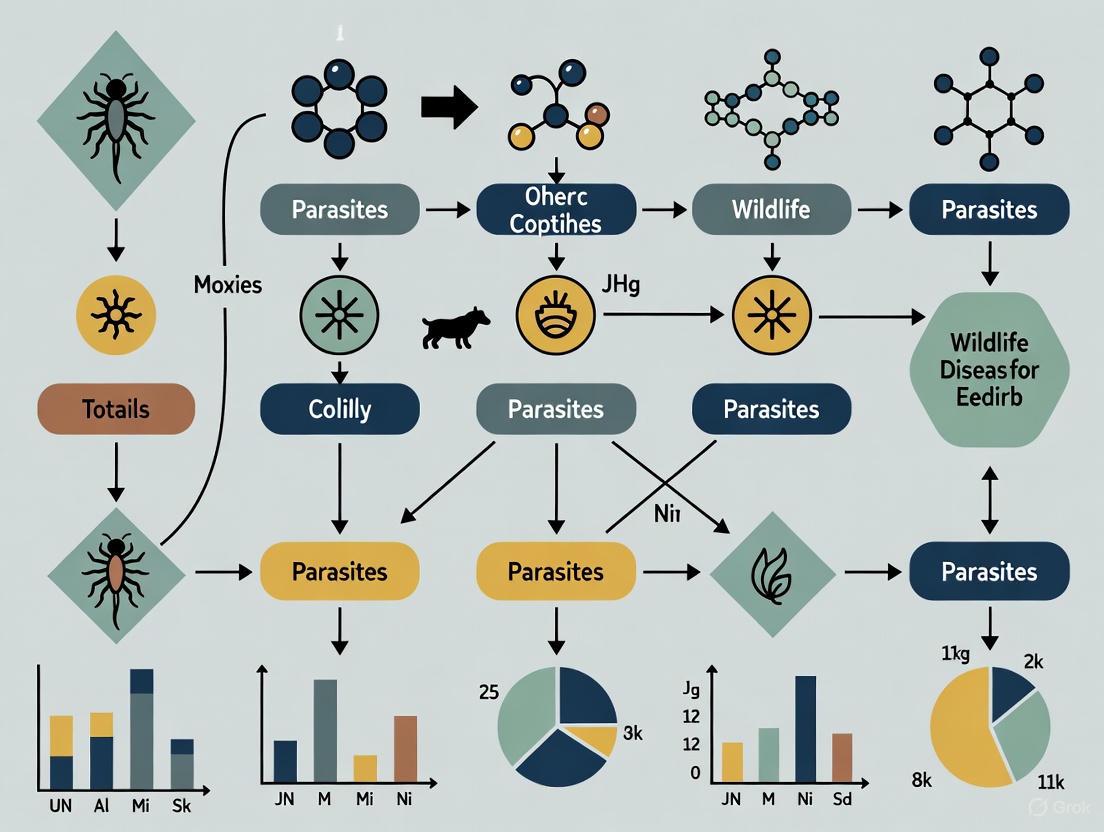
This article synthesizes current research on the multifaceted roles of parasites in wildlife disease ecology, addressing a professional audience of researchers, scientists, and drug development specialists.
Parasites in Wildlife Disease Ecology: From Ecological Roles to One Health Interventions
Abstract
This article synthesizes current research on the multifaceted roles of parasites in wildlife disease ecology, addressing a professional audience of researchers, scientists, and drug development specialists. It explores the foundational ecological principles of parasitism, including their critical functions in trophic interactions, population regulation, and biodiversity maintenance. The content delves into advanced methodological approaches such as social network analysis and long-term ecological monitoring for studying parasite transmission. It further examines the ecological consequences of parasite removal and the challenges of drug-induced environmental impacts, framed within the One Health context. Finally, the article evaluates innovative therapeutic strategies, including natural product discovery and computational biology, for managing parasitic diseases while considering ecosystem sustainability.
The Unseen Regulators: Ecological Roles of Parasites in Wildlife Populations and Ecosystems
Within the framework of wildlife disease ecology, parasites, traditionally viewed through a pathological lens, are increasingly recognized as critical mediators of ecosystem structure and stability. This whitepaper synthesizes evidence establishing parasites as keystone species whose impacts are disproportionately large relative to their biomass. Through direct regulation and indirect trait-mediated effects, parasites dictate community composition, influence energy flow, and modulate biodiversity. This document presents a quantitative analysis of these impacts, details standardized methodologies for their study, and proposes essential tools for a research framework integrating parasitology into ecosystem-level analysis. The objective is to provide researchers and drug development professionals with a technical foundation for investigating parasite roles in ecological networks, thereby informing conservation strategies and public health initiatives.
The keystone species concept, originally demonstrated in predator-prey dynamics, describes a species with a disproportionate influence on ecosystem structure and function relative to its abundance [1]. A growing body of evidence extends this concept to parasites, entities traditionally overlooked in ecosystem models. Parasitism represents the most widespread consumer strategy in nature, and its ecological impacts can equal or surpass those of free-living organisms [2].
Parasites function as keystone species through several mechanistic pathways: they can regulate host population densities, alter host behavior and physiology, and mediate competitive outcomes between species, a process known as parasite-mediated competition [2] [3]. These interactions can ultimately dictate community composition, energy flow through food webs, and overall ecosystem stability. The study of these dynamics is no longer a purely academic pursuit; it is critical for predicting ecosystem responses to change, managing wildlife diseases, and understanding the ecological consequences of pharmaceutical interventions in both domestic and wild animal populations.
Ecological Mechanisms of Keystone Parasites
Parasites exert their keystone influence through a variety of direct and indirect mechanisms. Understanding these pathways is essential for designing targeted ecological studies and interpreting their outcomes.
Direct and Indirect Effects on Host Populations
The impact of parasitism on community structure can be categorized into three primary modes of action [3]:
- Direct Effects: Parasites can directly reduce host survival and fecundity, thereby regulating host population sizes. When this impact is asymmetrical across host species, it can alter the competitive hierarchy within a community.
- Density-Mediated Indirect Effects: By reducing the population density of a host species that is a keystone predator or competitor, a parasite can initiate a trophic cascade, indirectly affecting the abundance and distribution of other species in the community.
- Trait-Mediated Indirect Effects: Even without significant mortality, parasites can alter host phenotypes, including behavior, morphology, and physiology. These changes can modify the host's ecological role, for instance, by increasing its susceptibility to predation or altering its foraging efficiency, thereby indirectly affecting other species in the ecosystem.
The following diagram illustrates the logical relationships and pathways through which parasites act as keystone species, integrating these direct and indirect mechanisms.
Figure 1: Conceptual framework of parasite keystone effects. This diagram outlines the primary pathways—direct, density-mediated, and trait-mediated indirect effects—through which parasites influence ecosystem structure and biodiversity.
Parasite-Mediated Competition and Biodiversity
A quintessential keystone effect of parasites is their ability to modulate competition between host species, a process termed parasite-mediated competition [2]. The outcome of this process can either increase or decrease local biodiversity, depending on which host species is most affected.
- Reducing Biodiversity: Invasions can be facilitated when a parasite disproportionately affects a native species. In Britain, the introduced grey squirrel is a reservoir for the Squirrelpox Virus (SQPV), which is highly virulent to the native red squirrel. This parasite-mediated competition has driven the decline of red squirrels, reducing biodiversity [2] [3].
- Enhancing Biodiversity: Conversely, parasites can promote coexistence by suppressing a competitively dominant species. On the Caribbean island of St. Maarten, the malarial parasite Plasmodium azurophilum more severely affects the competitively dominant lizard Anolis gingivinus. This reduces its competitive advantage, allowing the inferior competitor Anolis wattsi to coexist, thereby maintaining higher species diversity [2].
Quantitative Analysis of Ecosystem-Wide Impacts
The following case studies provide quantitative evidence of the profound ecosystem-level changes driven by parasitic infections. The data are synthesized into tables for clear comparison of impacts across different ecosystems.
Case Study 1: Rinderpest Virus in African Ungulates
The introduction and subsequent eradication of the rinderpest virus in Africa represents a large-scale, unintentional experiment demonstrating the keystone role of a pathogen [2] [3].
Table 1: Ecosystem impacts of rinderpest virus introduction and eradication in Africa.
| Ecosystem Component | Impact of Virus Introduction (c. 1890) | Impact of Virus Eradication (c. 1950s) |
|---|---|---|
| Virus & Host | Introduced via domestic livestock; spread continent-wide in ~10 years [3]. | Widespread vaccination led to local eradication [3]. |
| Primary Host Populations | Drastic reduction in populations of buffalo, wildebeest, and other native ungulates [2] [3]. | Populations of wild ungulates recovered significantly [3]. |
| Trophic Cascades | Altered grazing pressure on primary producers [3]. | Recovery of ungulate populations changed plant community structure [3]. |
| Predator Communities | Predators relying on ungulates as prey were impacted [3]. | Predator communities recovered with increased prey availability [3]. |
| Ecosystem Structure | Disruption of the entire grassland ecosystem [3]. | Shift back towards a pre-rinderpest ecosystem state [3]. |
Case Study 2: Microbial Pathogens of Diadema Urchins
A mass mortality event of the long-spined sea urchin Diadema antillarum in the Caribbean provides a stark example of a parasite acting on a keystone herbivore [2].
Table 2: Impacts of the Diadema urchin mass mortality event on Caribbean coral reefs.
| Ecosystem Metric | Pre-Outbreak State | Post-Outbreak State | Reference |
|---|---|---|---|
| Parasite/Pathogen | Presumed absence of a virulent pathogen. | Mass die-off associated with microbial pathogens. | [2] |
| Keystone Host (Diadema) | High population density; intense grazing on reefs. | Populations eliminated or severely reduced. | [2] |
| Trophic Cascade (Algae) | Algal cover kept low (~1%) by urchin grazing. | Algal cover increased dramatically to ~95%. | [2] |
| Ecosystem Engineers (Corals) | Mature corals dominant; new coral settlement possible. | Algae displaced mature corals and prevented new settlement. | [2] |
| Ecosystem State | Coral-dominated ecosystem. | Algae-dominated ecosystem; reduced biodiversity. | [2] |
Case Study 3: Trematode Parasites in Aquatic Food Webs
Trematode parasites in estuarine systems demonstrate that parasites can contribute significantly to ecosystem energetics, with biomass comparable to that of top predators [2].
Table 3: Quantitative measures of parasite impact in estuarine and grassland ecosystems.
| Ecosystem & Location | Parasite Group | Key Quantitative Finding | Ecological Implication |
|---|---|---|---|
| Estuarine System, California | Trematodes | Yearly parasite productivity was higher than the biomass of birds. [2] | Parasites are major contributors to energy flow, challenging the traditional Eltonian pyramid. |
| Salt Marsh, California | Parasites (general) | Parasites were involved in 78% of all trophic links; increased food web connectance by 93%. [2] | Parasites dramatically increase food web complexity, which may influence stability. |
| Grassland, Minnesota | Plant fungal pathogens | Biomass of fungal pathogens was comparable to that of herbivores. [2] | Parasites can exert top-down control on primary producers rivaling that of herbivores. |
Experimental Protocols for Key Studies
To ground the theoretical framework in empirical science, this section details the methodologies underpinning key studies cited in this whitepaper.
Documenting Parasite-Induced Trophic Cascades
Objective: To quantify the ecosystem-wide effects of a parasite that regulates a keystone host species. Methodology Overview: This approach combines long-term ecological monitoring, manipulative experiments, and historical data analysis, as exemplified by research on the rinderpest virus [3] and Diadema urchins [2].
Baseline Data Collection:
- Host Population Surveys: Conduct standardized transect or aerial surveys to establish population densities of the keystone host and other community members before and after a parasite introduction or eradication event.
- Ecosystem State Assessment: Measure relevant ecosystem metrics (e.g., algal cover on reefs, grassland plant biomass, tree recruitment) using quadrant sampling or remote sensing.
Parasite Monitoring:
- Pathogen Surveillance: Collect host tissue, blood, or environmental samples (e.g., water, soil) for molecular analysis (e.g., PCR) to detect and quantify parasite presence and load [4].
- Serological Testing: Use assays like ELISA to screen host populations for pathogen antibodies, providing data on exposure history and herd immunity [4].
Data Integration and Causal Inference:
- Comparative Analysis: Statistically compare ecosystem states before, during, and after the parasite's impact. Control sites (where the parasite is absent) are crucial for establishing causality.
- Pathway Modeling: Use structural equation modeling (SEM) or similar statistical techniques to test the strength of causal pathways linking parasite presence to host decline and subsequent ecosystem changes.
Investigating Trait-Mediated Indirect Effects
Objective: To determine how parasite-induced alterations in host phenotype influence trophic interactions and community structure. Methodology Overview: This involves controlled laboratory and field experiments to isolate the effects of parasite infection on host behavior and its ecological consequences, as demonstrated in trematode-infected killifish and amphibians [2].
Host Phenotype Characterization:
- Behavioral Assays: Compare the behavior of infected vs. uninfected hosts in controlled arenas. Key metrics include:
- Activity Level: Measured via movement tracking software.
- Predator Avoidance: Assessed by recording response to simulated predator attacks (e.g., model birds).
- Foraging Efficiency: Quantified as food consumption rate in a standard timeframe.
- Morphological Assessment: Document parasite-induced physical deformities (e.g., limb malformations in amphibians) through morphometric analysis and imaging.
- Behavioral Assays: Compare the behavior of infected vs. uninfected hosts in controlled arenas. Key metrics include:
Quantifying Ecological Consequences:
- Predation Risk Experiment: In mesocosms (controlled outdoor tanks) or natural enclosures, introduce a known number of infected and uninfected hosts along with their natural predators. Monitor and compare predation rates on each group over a set period (e.g., 24-48 hours). The 30x higher susceptibility of infected killifish to bird predators was quantified this way [2].
Field Validation:
- Population Correlation: Survey natural populations to correlate local parasite prevalence with the abundance of the predator species that relies on trophic transmission, providing real-world validation of experimental findings.
The experimental workflow for investigating trait-mediated effects is visualized below.
Figure 2: Experimental workflow for trait-mediated effects. This flowchart outlines the key steps, from laboratory phenotyping to field validation, for investigating how parasite-induced changes in host phenotype create ecosystem-level effects.
The Scientist's Toolkit: Research Reagents & Solutions
Advancing the study of parasites as keystone species requires a multidisciplinary toolkit. The following table details essential reagents, technologies, and methodologies critical for experimental and observational research in this field.
Table 4: Essential research reagents and solutions for studying wildlife parasites and their ecosystem impacts.
| Category / Item | Specific Examples | Function & Application |
|---|---|---|
| Molecular Diagnostics | PCR, qPCR, ELISA | Detecting and quantifying parasite presence, load, and host immune response in tissue, blood, or environmental samples. [4] |
| Sample Collection & Preservation | RNAlater, Ethanol, Sterile Swabs, Fecal Collection Kits | Preserving host and pathogen genetic material and antigen integrity during field collection and storage. [4] |
| Field Monitoring & Tracking | GPS, Camera Traps, Acoustic Recorders, Drones | Monitoring host population density, behavior, and spatial distribution non-invasively at the landscape level. |
| Data Standardization | FAIR Data Principles, Darwin Core Standards | Ensuring collected data are Findable, Accessible, Interoperable, and Reusable; critical for meta-analyses and global health security. [4] |
| Microbiome Analysis | 16S rRNA Sequencing, Metagenomics | Characterizing the gut or skin microbiome of hosts to understand its role in health, disease susceptibility, and response to anthelmintics. [5] |
The evidence presented solidifies the role of parasites as potent keystone species capable of dictating ecosystem structure, function, and biodiversity. Moving forward, the field of wildlife disease ecology must integrate several key priorities. First, the widespread adoption of minimum data standards is paramount to ensure that wildlife disease data are transparent, reusable, and globally interoperable, thereby enhancing our early warning systems for emerging zoonotic threats [4]. Second, research must expand beyond single-host, single-parasite systems to embrace the complexity of the host microbiome, understanding how these microbial communities influence host health, parasite susceptibility, and the efficacy of pharmaceutical treatments [5]. Finally, there is a critical need to move from observation to prediction by developing models that can forecast ecosystem outcomes following parasite introductions or control measures. By incorporating parasites into the core of ecological theory and practice, researchers, conservationists, and drug development professionals can better anticipate and mitigate the wide-ranging consequences of pathogen dynamics in a changing world.
Parasites represent a critical, yet often overlooked, component of ecosystem structure and function. Framing parasitic interactions within the established principles of trophic ecology reveals their dual roles as both consumers (predators) and resources (prey) within complex food webs. This whitepaper examines parasites not merely as pathogens, but as integral trophic nodes that influence energy flow, population dynamics, and community organization. Understanding these interactions is fundamental to wildlife disease ecology, as it provides a mechanistic framework for predicting how parasites affect host fitness, regulate populations, and respond to environmental change. The One Health perspective underscores that parasitic relationships are mediated by complicated ecological, socioeconomic, and behavioral factors operating at the human-animal-environment interface [6]. This document synthesizes current research and methodologies to provide researchers, scientists, and drug development professionals with a technical guide for quantifying and modeling parasitic interactions within trophic networks.
Quantitative Framework: Parasite Energetics and Trophic Transfer
The integration of parasites into food webs necessitates a quantitative understanding of their energetic demands and the efficiency with which they are transmitted between hosts. The foundational concept of energy transfer between trophic levels, where typically only 10% of energy is transferred from one level to the next, provides a critical lens through which to view parasite population dynamics and their ecosystem impacts [7].
Parasite-Mediated Energy Flow
Parasites, like free-living consumers, require energy from their hosts for survival and reproduction. This energy derivation represents a diversion of host resources, which can reduce host growth, reproduction, and survival. The table below summarizes key quantitative relationships in parasite trophic dynamics, illustrating the dose-dependent nature of infections and the resultant energetic costs to hosts.
Table 1: Quantitative Relationships in Parasite Trophic Dynamics
| Host-Parasite System | Key Quantitative Relationship | Experimental Findings | Ecological Implications |
|---|---|---|---|
| Daphnia magna-Pasteuria ramosa [8] | Dose-dependent infection probability following a host heterogeneity model | Among 14 host clone-parasite isolate combinations, 5 showed pronounced dose-dependency; best fit to a model accounting for non-inherited phenotypic differences in host susceptibility | Challenges mass-action principle; highlights importance of individual host heterogeneity in disease outcomes |
| General Trophic Theory [7] | 10% energy transfer rule between trophic levels | Of the energy at one trophic level, only ~10% is available to the next level; explains why food chains are typically limited to 4-5 levels | Parasites, as consumers, further reduce the net energy available to the host for growth and reproduction, potentially shortening viable food chain length |
| Zoonotic Parasites (e.g., Echinococcus multilocularis, Sarcoptes scabiei) [6] | Prevalence linked to ecological drivers and host density | Fox feces density (and parasite prevalence) correlated with vegetation and proximity to urban centers; camel-to-human transmission poses occupational risk | Parasites act as sentinels of ecosystem health, with transmission dynamics modified by land use and wildlife-livestock-human interfaces |
Trophic Transmission and Food Web Links
Many parasites rely on predator-prey interactions for transmission, creating explicit trophic links. For instance, a trophically transmitted parasite encysts in the tissue of an intermediate host (prey), which must be consumed by a definitive host (predator) to complete the life cycle. This positions the parasite as both prey (for the definitive host) and a predator (exploiting the intermediate host). The quantitative relationship between parasite dose and infection probability, as demonstrated in the Daphnia-Pasteuria system, is central to modeling the strength of these trophic links [8].
Experimental Protocols: Quantifying Parasite Trophic Roles
Robust experimental design is essential for elucidating the mechanisms governing parasite trophic interactions. The following protocols provide a framework for investigating dose-response relationships and transmission dynamics in both laboratory and field settings.
Protocol 1: Dose-Response Infection Assay
This laboratory-based protocol is designed to quantify the relationship between parasite exposure dose and the probability of successful host infection, moving beyond the simple mass-action assumption [8].
Objective: To determine the infection probability across a gradient of parasite doses and identify the best-fit mathematical model (e.g., mass-action, parasite antagonism, host heterogeneity) for the relationship.
Materials:
- Subjects: Genetically defined host clones (e.g., Daphnia magna water fleas) [8].
- Pathogen: Standardized parasite isolate (e.g., bacterial endoparasite Pasteuria ramosa) [8].
- Equipment: Multi-well tissue culture plates, micropipettes, environmental growth chambers, microscope.
Methodology:
- Parasite Dilution Series: Prepare a logarithmic dilution series of the parasite inoculum (e.g., 8 different doses) in a sterile medium.
- Host Exposure: Randomly assign individual hosts from multiple clones to each dose treatment group. Expose each host to a defined volume of the parasite suspension.
- Control Groups: Maintain control hosts exposed to a sterile medium.
- Incubation and Monitoring: Maintain all hosts under standardized environmental conditions (temperature, photoperiod, food supply). Monitor hosts daily for mortality and signs of infection.
- Endpoint Assessment: After a predetermined period, dissect hosts or use diagnostic tools (e.g., microscopy, PCR) to confirm infection status.
- Data Analysis: Calculate the fraction of infected hosts at each dose level. Use a likelihood approach to compare the fit of different mathematical models (mass-action, antagonism, host heterogeneity) to the observed dose-infection data [8].
Protocol 2: Field Surveillance of Trophic Transmission
This protocol leverages field observation and molecular tools to track parasites across the wildlife-domestic interface, a key frontier in the One Health framework [6].
Objective: To document parasite presence, prevalence, and genotype sharing between wildlife, livestock, and environmental sources (e.g., water) to infer trophic transmission pathways.
Materials:
- Sample Collection: Sterile swabs, fecal collection kits, water sampling equipment, GPS units.
- Sample Storage: Liquid nitrogen or dry ice for field transport, -80°C freezers for long-term storage.
- Laboratory Analysis: DNA/RNA extraction kits, PCR thermocyclers, primers for specific parasites (e.g., Echinococcus, Cryptosporidium, Enterocytozoon bieneusi), sequencing equipment.
Methodology:
- Site Selection: Choose study sites based on ecological gradients (e.g., urban-rural, varying vegetation) and known host density [6].
- Sample Collection: Systematically collect fecal samples from target wildlife (e.g., foxes, rodents, Tibetan antelope) and sympatric livestock [6]. Collect water samples from shared water sources.
- Environmental Data: Record GPS coordinates, habitat type, and proximity to human settlements for each sample.
- Laboratory Processing: Extract genetic material from all samples. Use PCR and sequencing to identify parasite species and genotypes.
- Data Integration: Construct a matrix of parasite genotypes across host species and environmental samples. Analyze the distribution to identify shared genotypes, which indicate potential cross-species transmission and trophic interactions (e.g., predation, scavenging). Statistical models (e.g., network analysis) can then be used to infer the most likely transmission pathways.
Visualization of Parasite Trophic Networks
Diagrams are essential for conceptualizing the complex roles parasites play in food webs. The following Graphviz-generated diagram illustrates a simplified trophic network incorporating parasitic interactions.
Diagram 1: Parasite-Integrated Trophic Network. This diagram depicts a food web where parasites (ellipses) are integrated as nodes. Solid arrows represent traditional energy flow (predation, grazing), while colored dashed/dotted arrows represent parasitic relationships (infection, trophic transmission). Note the dual role of the Tissue Parasite, which is prey for the Carnivore and a predator of the Herbivore. The Hyperparasite illustrates a parasite that itself becomes prey.
The Scientist's Toolkit: Essential Research Reagents and Materials
Cutting-edge research into parasite trophic ecology relies on a suite of specialized reagents and tools. The following table details key materials for the experimental protocols outlined in this guide.
Table 2: Research Reagent Solutions for Parasite Trophic Ecology
| Item Name | Function/Application | Specific Use Case Example |
|---|---|---|
| Genetically Defined Host Clones [8] | Controls for host genetic background in experiments; allows dissection of genetic vs. non-genetic susceptibility. | Dose-response infection assays using Daphnia magna clones to model host heterogeneity [8]. |
| Standardized Parasite Isolates [8] | Provides a consistent, quantifiable source of parasites for experimental challenges. | Preparing dilution series for dose-response experiments with the bacterial endoparasite Pasteuria ramosa [8]. |
| Species-Specific PCR Primers | Enables detection and identification of parasites from complex field samples with high sensitivity and specificity. | Identifying Echinococcus multilocularis in fox feces or Pentatrichomonas hominis in Tibetan antelope samples during field surveillance [6]. |
| Computational Biology Tools (Virtual Screening) | Identifies potential drug targets or inhibitory compounds against parasitic pathogens through in silico methods. | Screening for effective inhibitors (e.g., ZINC67974679) against Rickettsia felis via virtual screening and docking analysis [6]. |
| Natural Compound Libraries | Source of novel therapeutic agents with potential anti-parasitic activity for drug repurposing and development. | Evaluating the anti-cryptosporidial effect of eugenol or the use of artesunate against Babesia microti [6]. |
The integration of parasites into food web ecology is not merely an academic exercise; it is a necessary step for developing a predictive understanding of ecosystem dynamics and disease risk. By quantifying their roles as both predators and prey, we can better model energy flows, appreciate their function in regulating host populations, and anticipate the ecological consequences of their removal or introduction. Future research must prioritize cross-sectoral collaboration, combining molecular biology, field ecology, computational science, and veterinary epidemiology to build a holistic understanding [6]. Furthermore, building diagnostic and research capacity in low-resource environments, where parasitic burdens are often highest, is an essential component of the global One Health agenda. As climate change and habitat alteration shift the ranges and interactions of hosts and parasites, the framework outlined here will be critical for mitigating emerging threats to wildlife, domestic animal, and human health.
Understanding the mechanisms that regulate species coexistence and maintain biodiversity is a fundamental objective in ecology. This complex interplay dictates population dynamics, community structure, and ecosystem function. The traditional framework for investigating these processes has centered on competition for abiotic resources and predation. However, a paradigm shift is underway, recognizing that a complete understanding requires integrating the pivotal, yet often overlooked, role of parasites and pathogens [6]. These organisms are not merely passengers but active mediators of ecological interactions, influencing competition, driving evolutionary adaptations, and altering habitat use. Their effects resonate across scales, from regulating individual host populations to shaping entire community assemblages and ecosystem stability. This whitepaper provides an in-depth technical guide to the mechanisms by which competition and its mediators, with a specific focus on parasites, structure biodiversity, framed within modern wildlife disease ecology research.
Theoretical Foundations of Competition and Coexistence
The conceptual models explaining species coexistence and population regulation provide the foundation for empirical research. The dominant theories highlight distinct mechanistic pathways.
Niche-Based Competition vs. Ecological Neutrality
A long-standing paradigm posits that species coexist by occupying distinct ecological niches, thereby minimizing direct competition. This limiting-similarity competition predicts that assemblages will be composed of species with dissimilar trait values, reflecting their differential use of resources, space, or time [9]. In contrast, the neutral theory explores the structure of communities under the assumption of ecological equivalence, where species exhibit community drift dynamics analogous to genetic drift [10]. The critical distinction lies in the mechanisms of population regulation: community drift emerges only when the density-dependent effects of each species on itself are identical to its effects on every other guild member. If each species limits itself more than it limits others, coexistence is possible even among functionally similar species [10].
Trait-Mediated Interactions and Hierarchical Competition
Mounting evidence suggests that absolute trait dissimilarity does not solely reflect niche differences. Hierarchical differences in trait values can distinguish competitive abilities for a common resource, leading to trait-mediated hierarchical competition [9]. For instance, an invasive species might succeed not by exploiting a different niche, but by possessing superior traits (e.g., larger body size, higher thermal tolerance, or greater aggression) that allow it to outcompete natives for shared resources. The resulting community patterns are complex, with some traits showing overdispersion (driven by limiting similarity) and others showing clustering (driven by environmental filtering or hierarchical competition) [9]. This necessitates a multi-trait approach to accurately infer assembly processes.
Parasites as Key Mediators in Ecological Networks
Parasites are integral components of ecosystems, acting at the interface of human, animal, and environmental health—the core of the One Health framework [6]. Their influence on competition and biodiversity is multifaceted and profound.
Table 1: Mechanisms by Which Parasites Mediate Competition and Biodiversity
| Mechanism | Functional Description | Impact on Community |
|---|---|---|
| Regulation of Dominant Competitors | Parasites disproportionately impact abundant host species, reducing their competitive superiority and freeing up resources for inferior competitors. | Promotes species coexistence and increases local diversity. |
| Induction of Apparent Competition | Shared parasites create a hidden interaction network; a rise in one host species can increase parasite density, negatively affecting a second host species. | Alters host community composition; can lead to exclusion of susceptible species. |
| Modification of Host Behavior & Traits | Parasites can alter host foraging, habitat selection, or boldness, thereby changing their ecological role and competitive interactions. | Modifies interaction strengths in food webs; can shift competitive hierarchies. |
| Immunomodulation & Cross-Protection | Infection with one parasite can modulate the host immune system, altering susceptibility to secondary infections or other pathologies. | Creates complex disease dynamics; pre-infection with Trichinella spiralis was shown to prevent hepatic fibrosis from Schistosoma mansoni in a murine model [6]. |
The surveillance of parasites in wildlife is crucial for understanding disease ecology. For example, the detection of Pentatrichomonas hominis in Tibetan antelope and the varied genotypes of Enterocytozoon bieneusi in wild rodents across China highlight the role of wildlife as reservoirs and the potential for parasite adaptation and translocation in changing environments [6]. Furthermore, the re-emergence of zoonotic Sarcoptes scabiei from dromedary camels to humans underscores the dynamic nature of parasitic disease boundaries and the necessity for integrated veterinary and human health monitoring [6].
Quantitative Frameworks for Measuring Biodiversity Change
Human pressures—including habitat change, pollution, climate change, and the introduction of invasive species and their parasites—are driving unprecedented biodiversity change. Quantifying these changes requires robust metrics that capture different dimensions of diversity.
Alpha (α) and Beta (β) Diversity
Ecologists measure biodiversity at different scales. α-diversity refers to the diversity within a single community or habitat, while β-diversity quantifies the difference in species composition between communities [11]. Assessing β-diversity is critical for understanding biotic homogenization (decreasing compositional variation among sites) or biotic differentiation (increasing variation) in response to anthropogenic pressures [12].
Qualitative vs. Quantitative β-Diversity Measures
The choice of β-diversity metric can dramatically influence ecological inference, as they reveal different aspects of community change.
Table 2: Comparison of Qualitative and Quantitative Beta-Diversity Measures
| Feature | Qualitative Measures (e.g., unweighted UniFrac) | Quantitative Measures (e.g., weighted UniFrac) |
|---|---|---|
| Data Used | Presence/absence of taxa. | Relative abundance of each taxon. |
| Sensitivity To | Factors that determine which taxa can live in an environment (e.g., temperature, pH, restrictive filters). | Factors that influence the success of taxa (e.g., nutrient availability, transient disturbances). |
| Reveals Patterns of | Founding populations, historical colonization, and environmental filtering. | Blooms of specific taxa and changes in dominant species. |
| Interpretation | High value indicates communities share few taxa. | High value indicates communities differ in the relative abundance of lineages. |
A landmark global meta-analysis of human impacts demonstrated that while human pressures consistently decrease local α-diversity and shift community composition, their effect on β-diversity is scale-dependent. Contrary to long-held expectations, there is no general pattern of biotic homogenization; instead, pressures like resource exploitation and pollution cause biotic differentiation at local scales, while homogenization is more likely at larger scales [12]. This highlights the necessity of multi-scale assessments in biodiversity monitoring.
Experimental Protocols for Key Mechanisms
Elucidating the causal mechanisms structuring communities requires rigorous experimental designs. Below are detailed protocols for investigating two critical areas: parasite-mediated competition and trait-based invasion ecology.
Protocol 1: Assessing Parasite-Mediated Apparent Competition
Objective: To determine if a shared parasite facilitates apparent competition between two sympatric host species. Background: Apparent competition occurs when two host species, which do not directly compete for resources, are linked by a shared pathogen. An increase in the density of one host species can elevate pathogen prevalence, leading to a decline in the second host species. Materials:
- Mesocosms (field enclosures or laboratory microcosms).
- Experimental populations of two host species (e.g., rodent species A and B).
- A defined shared parasite (e.g., a helminth with a direct life cycle).
- Diagnostic tools (e.g., PCR primers, ELISA kits, microscope) for parasite detection and quantification.
- Mark-recapture equipment (traps, tags).
Methodology:
- Pre-treatment Baseline: Establish replicate, isolated populations of each host species at controlled densities. Conduct a pre-treatment census and screen all individuals for the target parasite to ensure a naive starting state.
- Experimental Treatment: Assign mesocosms to one of three treatments:
- Treatment 1 (Control): Single-species populations of A and B.
- Treatment 2 (Single Infection): Single-species populations, but introduce the parasite to Species A populations only.
- Treatment 3 (Apparent Competition): Mixed-species populations of A and B; introduce the parasite to Species A only.
- Monitoring: Conduct weekly censuses to track host population densities, survival, and fecundity. Collect fecal or blood samples regularly to monitor parasite prevalence and load in both host species in all treatments.
- Data Analysis: Compare the population growth rates and fitness measures of Species B across treatments. A significant decline in Species B's fitness in Treatment 3 compared to Treatments 1 and 2 provides evidence for parasite-mediated apparent competition, as the presence of Species A amplifies the parasite's impact on Species B.
Protocol 2: Trait-Based Analysis of Invasion Mechanisms
Objective: To disentangle the roles of environmental filtering, limiting-similarity competition, and hierarchical competition in driving a biological invasion. Background: The success of an invasive species can be attributed to fitting the abiotic environment (filtering), exploiting an empty niche (limiting similarity), or simply being a superior competitor (hierarchical competition). These mechanisms can be distinguished by analyzing the traits of the invader relative to the resident community [9]. Materials:
- Defined study plots (e.g., 4m x 4m quadrats) across invaded and uninvaded areas.
- Pitfall traps, bait stations, or other species-specific collection methods.
- Calibrated instruments for morphological measurement (digital calipers, microscope with camera).
- Equipment for physiological trait measurement (e.g., thermal tolerance chamber).
- High-resolution camera and behavioral tracking software.
Methodology:
- Community Sampling: Quantify the abundance of the invader and all resident species in each plot using standardized methods (e.g., pitfall traps over 48 hours, followed by bait station observations) [9].
- Trait Characterization: Measure a comprehensive suite of traits for the invader and all resident species. Key traits include:
- Morphological: Body size, leg length, mandible length.
- Physiological: Critical thermal maximum (CTmax).
- Dietary: Trophic position via stable isotope analysis.
- Behavioral: Interference ability (e.g., outcomes of aggressive encounters at baits).
- Data Analysis:
- Environmental Filtering: Test if the invader's presence/abundance is correlated with abiotic variables (e.g., ground cover, temperature).
- Limiting Similarity: For each trait, calculate the absolute dissimilarity between the invader and each resident species. Use generalized linear models to test if invasion success is higher when the invader is more dissimilar from the resident community.
- Hierarchical Competition: For each trait, calculate the hierarchical difference (the invader's trait value minus the resident's value). Test if invasion success is higher when the invader's trait values are superior (e.g., larger size, higher CTmax, greater aggression).
Visualization of Conceptual Models and Workflows
Visualizing the complex relationships and experimental workflows is essential for clarity. The following diagrams, generated using Graphviz DOT language, illustrate key concepts and protocols.
Diagram 1: Mechanisms of Community Assembly
This diagram outlines the primary pathways through which environmental and biotic filters shape ecological communities, leading to distinct trait distribution patterns.
Title: Community Assembly Mechanisms
Diagram 2: Parasite-Mediated Apparent Competition Workflow
This chart details the experimental workflow for investigating how a shared parasite can indirectly link the fates of two host species.
Title: Apparent Competition Experimental Protocol
The Scientist's Toolkit: Essential Research Reagents and Materials
Cutting-edge research in disease ecology and competition relies on a suite of specialized reagents, technologies, and analytical tools.
Table 3: Key Research Reagent Solutions for Wildlife Disease Ecology
| Category / Item | Specific Examples | Function & Application |
|---|---|---|
| Field Sampling & Monitoring | Pitfall traps, bait stations, camera traps, thermologgers, soil corers. | Standardized collection of arthropods, observation of behavior, and recording of microclimatic data. |
| Parasite Detection & Diagnostics | PCR/RT-PCR primers & probes, ELISA kits, monoclonal antibodies, portable DNA sequencers. | Sensitive and specific detection, quantification, and genotyping of parasites in host tissues and environmental samples. |
| Host & Parasite Characterization | Stable isotope analyzers (C, N), thermal tolerance chambers (CTmax), high-resolution microscopes, digital calipers. | Measuring trophic position, physiological limits, and morphological traits for functional diversity studies. |
| Computational & Analytical Tools | R packages (e.g., phyloseq, picante), UniFrac software, GIS software, meta-analysis packages. |
Statistical analysis of community data, phylogenetic diversity calculations, spatial mapping, and large-scale data synthesis. |
| Experimental Manipulation | Mesocosms (field/enclosure), selective whole-genome amplification (SWGA) kits, anti-helminthic drugs (e.g., Albendazole). | Conducting controlled manipulative experiments, enriching pathogen DNA from low-biomass samples, and treating infections to test causality. |
The application of computational tools is vital. For instance, weighted and unweighted UniFrac are used to quantify microbial β-diversity from sequencing data, revealing how factors like temperature (qualitative) or nutrient blooms (quantitative) structure communities [11]. Furthermore, selective whole genome amplification (SWGA) is a crucial method for generating genomic data from pathogens present in low abundance in wildlife host tissues, enabling the study of parasite diversity and evolution [6].
The intricate dance of species coexistence and population regulation is governed by a complex interplay of competitive abilities, environmental filters, and critical biotic mediators, chief among them being parasites. A holistic understanding of biodiversity dynamics is no longer possible without integrating the principles of wildlife disease ecology and the One Health framework. Future research must prioritize several key areas: 1) the fortification of integrated surveillance networks that monitor parasites across human, animal, and environmental interfaces; 2) the application of advanced computational biology and phylogenetic tools to predict the ecological consequences of parasite-mediated interactions; and 3) the explicit incorporation of trait-based hierarchical competition into models of invasion biology and community assembly. By embracing this integrated and mechanistic approach, researchers can better predict biodiversity responses to global change and inform effective conservation and public health strategies.
Avian malaria, caused by parasites of the genera Plasmodium and Haemoproteus, provides a powerful model system for investigating the impacts of climate change on wildlife disease ecology. This review synthesizes evidence from long-term studies demonstrating significant range expansions, increased prevalence, and altered transmission dynamics of avian malaria parasites in response to climatic warming. We present quantitative data from empirical studies, detail methodological frameworks for monitoring and prediction, and discuss the implications for global biodiversity, particularly in previously protected or naive host populations. The findings underscore the critical role of parasites in wildlife disease ecology and the urgent need for multidisciplinary approaches to forecast and mitigate climate-change-driven disease emergence.
Within the broader thesis on the role of parasites in wildlife disease ecology, avian malaria systems exemplify how environmental change can disrupt host-parasite dynamics. The genetic diversity, broad host range, and vector-borne nature of avian malaria parasites make them exceptionally sensitive to climatic variables [13] [14]. Long-term datasets now provide compelling evidence that rising global temperatures are facilitating parasite expansion into new geographic regions and host populations, with potentially devastating consequences for avian health and conservation [15] [16]. This technical guide synthesizes current evidence, experimental methodologies, and theoretical frameworks essential for researchers and drug development professionals working at the intersection of climate change and parasitic disease.
Avian Malaria as a Model System in Disease Ecology
Avian malaria parasites, particularly those of the genus Plasmodium, are structurally and functionally similar to human malaria parasites, offering an invaluable model for studying general principles of parasite ecology and evolution [16]. Key features enhancing their utility include:
- Phylogenetic Position: Genomic analyses confirm that avian Plasmodium species form an outgroup to mammalian-infective lineages, having diverged approximately 10 million years ago, providing an evolutionary baseline for comparative studies [16].
- Broad Host Specificity: Species like Plasmodium relictum can infect birds from over 300 species across 11 orders, enabling studies of cross-species transmission and host switching events in changing environments [13] [14].
- Complex Life Cycle: Avian malaria parasites undergo two obligate exoerythrocytic cycles in the reticuloendothelial system, unlike mammalian parasites that primarily infect hepatocytes, offering insights into diverse host-parasite interactions [16].
- Global Distribution: These parasites are found on all continents except Antarctica, providing replicated systems for studying geographic variation in climate responses [14].
The following table summarizes key parasite species and their characteristics relevant to climate change studies:
Table 1: Key Avian Malaria Parasite Species and Characteristics
| Parasite Species | Primary Host Range | Geographic Distribution | Climate Sensitivity | Conservation Impact |
|---|---|---|---|---|
| Plasmodium relictum | Broad (11 bird orders) | Global except Antarctica | High - temperature affects development in vectors | High - responsible for honeycreeper declines in Hawaii |
| Plasmodium gallinaceum | Narrow (primarily galliformes) | Southeast Asia | Moderate - limited by host distribution | Moderate - poultry industry concerns |
| Lineage P43 | Restricted (e.g., black-capped chickadee) | Boreal regions | High - correlated with summer temperatures | Emerging - potential range expansion |
Empirical Evidence for Climate-Driven Range Expansions
Long-Term Temporal Studies in Boreal Regions
A decade-long study (2006-2015) of black-capped chickadees (Poecile atricapillus) in Alaska provides compelling evidence for climate-driven changes in avian malaria epidemiology. Key findings from this research include:
- Prevalence Correlates with Temperature: Analysis of over 2,000 blood samples revealed that interannual variation in Plasmodium prevalence at different sites was positively correlated with summer temperatures at the local scale, though not with statewide temperatures [15].
- Single Lineage Dominance: Sequence analysis of the parasite cytochrome b gene revealed a single Plasmodium lineage (P43), indicating specific climate responses rather than community-level shifts [15].
- Host Condition Effects: Birds with avian keratin disorder (a disease causing accelerated keratin growth in the beak) were 2.6 times more likely to be infected with Plasmodium than unaffected birds, demonstrating how host condition interacts with climate to influence disease outcomes [15].
Latitudinal and Habitat Gradients
Research along latitudinal gradients provides additional evidence for climate limitations on avian malaria distribution:
- Arctic Limitations: Shorebird studies in the High Arctic found an absence of avian malaria infections, while conspecifics in tropical West Africa showed significant infection rates [17].
- Habitat-Mediated Exposure: Shorebirds utilizing freshwater inland habitats showed significantly higher malaria prevalence than those in marine coastal habitats, attributed to differential vector exposure and environmental conditions favorable to parasite development [17].
- Migration Effects: Infections were not detected in birds migrating through temperate Europe despite being present in the same species in tropical Africa, suggesting thermal constraints on parasite development at higher latitudes [17].
The table below quantifies prevalence variations across habitats and host characteristics:
Table 2: Avian Malaria Prevalence Across Habitats and Host Characteristics
| Study System | Habitat Type | Host Species | Prevalence (%) | Key Correlates |
|---|---|---|---|---|
| Alaskan boreal forest | Boreal forest | Black-capped chickadee | Variable by year (0.5-5.2%) | Summer temperatures, host age, avian keratin disorder |
| West African shorebirds | Freshwater inland | Multiple shorebird species | 12.8-24.3% | Habitat type, adult age class |
| West African shorebirds | Marine coastal | Multiple shorebird species | 0-3.1% | Lower vector exposure, salinity effects |
| European temperate | Various | Migratory shorebirds | 0% | Seasonal absence of suitable temperatures |
Methodological Frameworks for Studying Range Expansions
Field Sampling and Molecular Diagnostics
Long-term monitoring of avian malaria requires standardized field and laboratory methodologies:
- Blood Sample Collection: Blood samples (typically 10-50 μL) are collected via venipuncture of the brachial vein, stored in nucleic acid preservation buffer, and kept cool until laboratory analysis [15].
- Molecular Detection: DNA extraction followed by nested PCR amplification of the cytochrome b gene using primers targeting a approximately 480-bp fragment [15]. Protocols should include positive and negative controls to detect contamination.
- Lineage Identification: PCR products are sequenced and compared to databases such as MalAvi to identify known lineages and detect novel variants [14].
- Morphological Confirmation: Microscopic examination of blood smears stained with Giemsa should complement molecular methods to characterize parasite morphology and detect co-infections [13].
Metabolic Theory and Predictive Modeling
The metabolic theory of ecology provides a framework for predicting climate change impacts on parasite distributions:
- Fundamental Thermal Niche: This approach calculates the temperature range between the lowest and highest temperatures in which a specific parasite prospers, based on metabolic constraints [18].
- Parameter Estimation: The model uses knowledge of parasite body size and life cycle to predict how temperature alterations affect mortality, development, reproduction, and infectivity [18].
- Application to Avian Malaria: For Plasmodium species, the model incorporates temperature effects on development in mosquito vectors, which are critical transmission bottlenecks [18].
Diagram 1: Climate Impact on Parasite Range
Genomic Approaches
Comparative genomics of avian malaria parasites reveals features associated with lineage-specific evolution and host adaptation:
- Genome Sequencing: Advanced methods for separating parasite DNA from host DNA include methylated DNA depletion for host background reduction and sequencing from oocysts from dissected mosquito guts [16].
- Genetic Markers: The cytochrome b gene remains the standard for lineage identification, but additional markers such as the nuclear gene MSP1 (merozoite surface protein) reveal geographic genetic variation [14].
- Expanded Gene Families: Genomic analyses identify expansions in invasion-related gene families including the surf multigene family and reticulocyte binding protein homologs, which may facilitate host switching during range expansions [16].
Research Tools and Reagent Solutions
Table 3: Essential Research Reagents and Tools for Avian Malaria Studies
| Category | Specific Product/Kit | Application | Technical Considerations |
|---|---|---|---|
| Sample Collection | Nucleic acid preservation cards/cards | Field sample stabilization | Maintains DNA integrity without refrigeration |
| DNA Extraction | DNeasy Blood & Tissue Kit (Qiagen) | High-quality DNA extraction from blood | Effective with nucleated avian erythrocytes |
| Molecular Detection | Avian malaria-specific primers (e.g., HaemNF/R, HaemF/R) | PCR amplification of cytochrome b | Detects both Plasmodium and Haemoproteus infections |
| Sequence Analysis | MalAvi database | Lineage identification | Curated database of avian haemosporidian lineages |
| Microscopy | Giemsa stain | Blood smear examination | Enables morphological identification to species level |
| Vector Studies | Mosquito trapping equipment | Vector collection and identification | Critical for understanding transmission ecology |
Implications for Wildlife Disease Ecology and Conservation
The range expansions of avian malaria parasites under climate change illustrate several fundamental principles in wildlife disease ecology:
- Host-Parasite Coevolution: Climate change disrupts evolved balances between hosts and parasites, potentially leading to novel interactions with severe consequences for naive host populations [19].
- Honeymoon Phases: During range expansion, "honeymoon phases" occur where invasion-front host populations experience a temporary release from parasites, which lag behind due to serial founder events and transmission failure in low-density frontal populations [19].
- Conservation Tragedies: The introduction of Plasmodium relictum to Hawaii, where it caused devastating declines and extinctions in native honeycreepers, exemplifies the potential consequences of parasite range expansions into naive host populations [14].
- Physiological Mismatches: Hosts in newly invaded areas may lack evolved resistance mechanisms, leading to more severe disease outcomes than in regions with long-standing host-parasite associations [19].
Diagram 2: Molecular Workflow for Detection
Future Research Directions
Critical gaps remain in our understanding of climate change impacts on avian malaria parasites, presenting opportunities for future research:
- Translational Framework Implementation: Adoption of a formal translational framework composed of serial phases along a "bidirectional continuum of research" would enhance the application of basic research to conservation solutions [20].
- Integrated Climate-Parasite Models: Development of models that incorporate both metabolic constraints and ecological factors such as host immunity, vector distribution, and land use change [18].
- Genomic Surveillance: Expanded genomic studies to identify genetic markers associated with thermal tolerance and host specificity, enabling better predictions of future range expansions [16].
- Multidisciplinary Approaches: Integration of human psychology and sociology into wildlife disease research to improve intervention strategies and public engagement [20].
Long-term studies of avian malaria provide compelling evidence that climate change is driving significant range expansions and altered transmission dynamics of parasitic diseases. The methodological frameworks, empirical data, and conceptual models presented in this review provide researchers and drug development professionals with the tools necessary to investigate, predict, and mitigate these changes. As climate change accelerates, understanding and addressing parasite range expansions becomes increasingly critical for wildlife conservation, ecosystem management, and broader ecological health. The avian malaria system exemplifies the complex interactions between environmental change, host ecology, and parasite dynamics that will define challenges in wildlife disease ecology for decades to come.
Parasite-mediated competition (PMC) is a pivotal ecological and evolutionary process wherein a parasite indirectly alters competitive interactions between host species. This paradigm provides a crucial framework for understanding population dynamics, species distributions, and conservation outcomes in wildlife disease ecology. Through detailed examination of two canonical host-parasite systems—Anolis lizards infected with Plasmodium and red-gray squirrel competition facilitated by squirrelpox virus—this review synthesizes fundamental principles, experimental methodologies, and quantitative evidence underpinning the PMC paradigm. The analysis reveals that differential parasite virulence, rather than direct competition, often determines species replacement and coexistence, with profound implications for biodiversity conservation, invasive species management, and emerging infectious disease response.
Parasite-mediated competition represents a sophisticated indirect interaction where two species competing for resources are differentially affected by a shared parasite, thereby altering the competitive balance between them [21]. This phenomenon moves beyond traditional concepts of direct interference or exploitation competition by introducing a pathogenic third party that disproportionately impacts one competitor. The theoretical foundation suggests that when species vary in their susceptibility or response to infection, the less susceptible species may gain a competitive advantage, potentially leading to the exclusion of the more susceptible species from shared habitats [21]. Within wildlife disease ecology, PMC has transitioned from a theoretical curiosity to a recognized driver of population dynamics and community structure, particularly in systems experiencing species invasions or environmental change. The investigation of PMC requires integration of field observation, population monitoring, molecular diagnostics, and experimental manipulation to disentangle the complex web of direct and indirect interactions shaping ecological outcomes.
Theoretical Framework and Ecological Context
The PMC paradigm operates within the broader framework of apparent competition, where two species negatively affect each other not through direct resource competition but through shared natural enemies, including predators, parasites, or pathogens [21]. Unlike direct competition, where superior resource acquisition or interference capabilities determine outcomes, PMC hinges on differential pathogenicity and asymmetric virulence between host species.
Theoretical models predict that PMC can drive competitive exclusion under specific conditions: (1) when the parasite exhibits high virulence in one host species but low virulence in another; (2) when the more resistant host species maintains higher parasite prevalence in the environment; and (3) when transmission rates are sufficient to impact population growth rates of the susceptible host [22]. The population dynamics of such systems can be modeled using modified Lotka-Volterra equations that incorporate parasite transmission and host-specific mortality terms, revealing thresholds where parasite effects overwhelm direct competitive interactions.
The ecological context of PMC extends beyond two-host, one-parasite systems to include environmental reservoirs, vector dynamics, and community-level interactions that modify transmission and impact. Habitat fragmentation, climate change, and anthropogenic disturbance can further modulate PMC outcomes by altering host distributions, parasite viability, and transmission opportunities, making this paradigm increasingly relevant to conservation biology and ecosystem management.
Canonical Case Study: Anolis Lizards and Malaria Parasites
The Anolis lizard system on the Caribbean island of St. Maarten provides a foundational example of PMC in natural populations. Two lizard species, Anolis gingivinus and Anolis wattsi, exhibit similar body sizes and ecological requirements, creating strong competitive pressures [23]. Under typical conditions, A. gingivinus represents the superior competitor and occupies the entire island, while A. wattsi remains restricted to central hill regions. The malarial parasite Plasmodium azurophilum infects both red and white blood cells of these lizards but demonstrates striking differential virulence between host species [23].
Empirical Evidence and Distribution Patterns
Research has revealed a precise spatial correlation between parasite distribution and species coexistence. Where P. azurophilum infects A. gingivinus, both lizard species coexist, but where the parasite is absent, only A. gingivinus persists [23]. This distribution pattern occurs over remarkably small spatial scales (hundreds of meters), suggesting localized PMC dynamics. The parasite imposes significant physiological costs on A. gingivinus, including increased immature erythrocytes, decreased hemoglobin, elevated monocytes and neutrophils, and reduced acid phosphatase production in infected white blood cells [24]. This pathology likely reduces the competitive dominance of A. gingivinus, permitting the persistence of A. wattsi in parasite-present areas.
Table 1: Pathological Effects of Plasmodium azurophilum in Anolis gingivinus from St. Maarten
| Physiological Parameter | Effect of Infection | Functional Consequence |
|---|---|---|
| Erythrocyte maturation | Increase in immature cells | Reduced oxygen transport capacity |
| Hemoglobin concentration | Significant decrease | Impaired aerobic performance |
| Leukocyte profiles | Increased monocytes/neutrophils | Immune activation; energetic costs |
| Acid phosphatase production | Decreased in white cells | Reduced intracellular digestion capacity |
Experimental Approaches and Methodological Framework
Field studies of PMC in Anolis lizards employ integrated approaches combining:
- Population monitoring: Systematic surveys of species distribution and abundance across habitat gradients
- Parasite screening: Blood collection and microscopic examination of stained blood smears for parasite detection
- Physiological assessment: Hematological analysis including cell counts, hemoglobin measurement, and cytochemical staining
- Spatial analysis: Mapping of parasite prevalence and host distribution to identify correlation patterns
The methodological protocol for establishing PMC in this system involves:
- Blood collection: Capture of lizards via noosing or manual techniques followed by blood sampling from the retroorbital sinus or caudal veins
- Parasite detection: Preparation of thin blood smears, methanol fixation, Giemsa staining, and microscopic examination under oil immersion
- Pathology assessment: Differential blood cell counts, hemoglobin quantification, and functional assays of immune cell activity
- Population mapping: Geographic information system (GIS) analysis of species distributions relative to parasite prevalence
Canonical Case Study: Red and Gray Squirrels and Squirrelpox Virus
The competitive displacement of native Eurasian red squirrels (Sciurus vulgaris) by invasive Eastern gray squirrels (Sciurus carolinensis) in the United Kingdom represents a well-documented case of PMC with significant conservation implications [22]. While direct competition for resources occurs, the presence of squirrelpox virus (SQPV) dramatically accelerates population declines of red squirrels. SQPV, which is carried asymptomatically by gray squirrels, causes lethal squirrelpox (SQPx) disease in red squirrels, creating a powerful asymmetric interaction [22].
Quantitative Population Impacts
Long-term monitoring (2002-2012) in Merseyside, England, has provided robust quantitative evidence of SQPV impacts on red squirrel populations. Analysis demonstrates that SQPx incidence has a significant negative effect on red squirrel densities and population growth rates, while gray squirrel density shows little direct impact [22]. The dynamics of red squirrel SQPx cases are determined partly by previous infection in local gray squirrels, identifying gray squirrels as initiators of SQPx outbreaks in red squirrels [22]. Serological evidence suggests only approximately 8% of red squirrels exposed to SQPV survive infection during epidemics, highlighting the extreme virulence of this pathogen in the native species [22].
Table 2: Population-Level Impacts of Squirrelpox Virus on Red Squirrels in Merseyside, UK
| Population Parameter | Impact of SQPx Infection | Statistical Significance |
|---|---|---|
| Red squirrel density | Significant negative impact | P < 0.05 |
| Population growth rate | Significant negative impact | P < 0.05 |
| Survival rate during epidemics | Approximately 8% survive | Based on retrospective serology |
| Outbreak initiation | Associated with prior gray squirrel infection | Significant correlation |
Monitoring and Diagnostic Methodologies
Research on the squirrel-SQPV system employs comprehensive field and laboratory techniques:
- Line transect surveys: Standardized walking transects (600-1200m) conducted biannually to monitor squirrel abundance and distribution
- Postmortem examination: Systematic necropsy of carcasses discovered by public or wildlife officers
- Virus detection: Histopathological confirmation of SQPV infection in cutaneous and tissue samples
- Serological analysis: Antibody detection to identify previous exposure and survival rates
The experimental protocol for this research includes:
- Population monitoring: Establishment of permanent transects walked consistently by trained volunteers recording species observations and perpendicular distances for density estimation
- Disease surveillance: Collection and pathological examination of deceased squirrels with tissue sampling from major organs and characteristic lesion sites
- Diagnostic confirmation: Gross lesion identification combined with histopathological analysis of tissue changes consistent with poxviral infection
- Data analysis: Integration of population density estimates with temporal and spatial patterns of disease incidence using statistical modeling
Conceptual Model of Parasite-Mediated Competition
The following diagram illustrates the general structure of parasite-mediated competition as observed in both case studies, highlighting the asymmetric relationships between host species and their shared parasite:
Figure 1: General Model of Parasite-Mediated Competition. The non-native host serves as an asymptomatic reservoir for the shared parasite, which causes lethal disease in the native host. Environmental transmission maintains the parasite, while direct competition (dashed line) may co-occur but is often less impactful than the parasitic effect.
Molecular and Analytical Techniques in PMC Research
Advanced molecular techniques have significantly enhanced understanding of PMC dynamics, particularly in characterizing parasite diversity and transmission patterns. Research on lizard malaria parasites exemplifies this approach, combining traditional morphological identification with molecular phylogenetics [25]. Molecular methods enable detection of subclinical infections, discrimination of parasite strains, and reconstruction of transmission networks.
Molecular Characterization Protocols
Methodologies for molecular analysis of blood parasites include:
- DNA extraction: Protocol using Kapa Express DNA extraction kits from ethanol-preserved blood samples
- Nested PCR amplification: Target amplification of cytochrome b gene regions using Plasmodium-specific primers
- Sequencing and phylogenetic analysis: Sequence alignment and tree construction to establish parasite relationships
- Microsatellite analysis: Genotyping using multiple loci to determine multiplicity of infection (MOI) and clone distribution
Studies of Plasmodium mexicanum in lizards demonstrate that parasite clone distribution follows zero-inflated statistical models, suggesting heterogeneous exposure risk and partial immunity in host populations [26]. This sophisticated analysis moves beyond simple prevalence estimates to reveal complex transmission dynamics underlying PMC.
Experimental Workflow for Molecular Studies
The following diagram illustrates the integrated methodological approach for molecular characterization of parasites in PMC research:
Figure 2: Integrated Workflow for Parasite Characterization. Combined morphological and molecular approaches enable comprehensive understanding of parasite diversity, distribution, and dynamics in PMC systems.
The Scientist's Toolkit: Essential Research Reagents and Methods
Table 3: Essential Research Materials and Methods for PMC Investigation
| Tool/Reagent | Application in PMC Research | Specific Examples from Case Studies |
|---|---|---|
| Giemsa stain | Blood smear staining for parasite visualization | Identification of Plasmodium azurophilum in Anolis lizard blood cells [23] |
| Line transect protocols | Population density estimation | Monitoring red and gray squirrel abundance in Sefton Coast, UK [22] |
| Histopathology reagents | Tissue fixation and staining for lesion characterization | Formalin fixation, paraffin embedding, H&E staining for SQPV diagnosis [22] |
| PCR primers for parasite genes | Molecular detection and genotyping | Cytochrome b amplification for Plasmodium species identification [25] |
| Microsatellite markers | Multiplicity of infection (MOI) analysis | Determining clone distribution in Plasmodium mexicanum infections [26] |
| Serological assays | Antibody detection for exposure history | SQPV antibody screening to estimate survival rates in red squirrels [22] |
| GIS technology | Spatial analysis of host and parasite distributions | Mapping correlation between malaria presence and Anolis species coexistence [23] |
Implications for Wildlife Management and Conservation
The PMC paradigm has profound implications for conservation practice, particularly in managing invasive species and protecting threatened populations. The squirrel-SQPV system demonstrates that successful conservation of red squirrels requires integrated disease management alongside habitat protection, including gray squirrel control in critical areas [22]. Theoretical insights from disease ecology highlight the importance of understanding transmission dynamics, reservoir host ecology, and heterogeneity in susceptibility when designing intervention strategies [27].
Wildlife disease management increasingly incorporates ecological theory, with concepts such as density-dependent transmission, reservoir host dynamics, and environmental persistence informing management decisions [27]. However, emerging theoretical concepts including pathogen evolutionary responses to management, biodiversity-disease relationships, and within-host parasite interactions have not yet been fully integrated into conservation practice, representing a critical frontier for applied PMC research.
The One Health framework, which recognizes the interconnectedness of human, animal, and environmental health, provides a comprehensive approach for addressing PMC in anthropogenic landscapes [6]. Parasite research at the human-wildlife-domestic animal interface reveals the complex ecological, socioeconomic, and behavioral factors influencing disease dynamics, emphasizing the need for transdisciplinary solutions to PMC-driven conservation challenges.
Parasite-mediated competition represents a powerful ecological force shaping species distributions, population dynamics, and conservation outcomes across diverse ecosystems. The examination of lizard malaria and squirrel-squirrelpox systems reveals consistent patterns of asymmetric virulence, reservoir host facilitation, and spatial correlation between parasite presence and competitive outcomes. These case studies demonstrate the necessity of integrating disease ecology with community ecology to fully understand species interactions and coexistence mechanisms.
Future research in PMC should prioritize:
- Molecular characterization of parasite diversity and virulence mechanisms across host species
- Experimental manipulations to establish causality in suspected PMC systems
- Long-term monitoring to capture dynamic responses to environmental change
- Integrated modeling incorporating both direct competition and parasite effects
- Management interventions informed by theoretical principles of disease ecology
As anthropogenic changes continue to alter species distributions and contact rates, PMC will likely play an increasingly important role in determining wildlife community composition and ecosystem function. Advancing our understanding of this paradigm remains essential for effective biodiversity conservation, invasive species management, and wildlife health protection in a rapidly changing world.
Advanced Tools for Tracing Transmission: Network Models, Surveillance, and Diagnostics
Social network analysis (SNA) has emerged as a transformative framework for understanding the ecology and transmission of parasites in wildlife systems. This approach moves beyond traditional models that assume homogeneous mixing within host populations, instead explicitly capturing the heterogeneous contact patterns that fundamentally shape disease dynamics [28]. By representing hosts as nodes and their interactions as edges, network models provide a powerful methodology for quantifying transmission pathways, identifying superspreading individuals, and testing targeted control strategies for wildlife parasites [29] [30].
The application of SNA to wildlife parasitology has expanded significantly from its initial focus on epidemic microparasites to encompass a diverse range of endemic parasites with complex life cycles [29]. This technical guide details the conceptual frameworks, methodological approaches, and analytical techniques for applying SNA to study parasite transmission in wildlife populations, with particular emphasis on its integration within broader wildlife disease ecology research.
Theoretical Foundations: Network Theory in Disease Ecology
Basic Network Epidemiology Principles
In epidemiological terms, the transmission rate (β) can be conceptualized as the product of the probability of pathogen transmission given a contact (γ) and the contact rate between individuals (K), expressed as β = γ × K [28]. Social network analysis provides a methodology to quantify the contact matrix (K) that serves as the conduit for transmission pathways. The resulting transmission network is typically a subset of the contact network, as not all contacts lead to successful parasite transmission [28].
Network models are particularly valuable for capturing the heterogeneous contact structures that characterize most wildlife and livestock populations. These heterogeneities arise from social systems, territorial behavior, spatial distribution across landscapes, or management practices in domesticated animals [28]. Unlike conventional compartmental models that assume homogeneous mixing, network approaches naturally incorporate superspreaders—individuals responsible for a disproportionate number of transmission events—and allow for targeted interventions based on network position [28].
Ecological Multiplex Framework for Complex Parasite Life Cycles
Many wildlife parasites, including those of significant conservation and zoonotic concern, have complex life cycles involving multiple transmission routes and host species. The "ecomultiplex" framework addresses this complexity by modeling interdependent transmission pathways as a spatially explicit multiplex network [31]. In this model, different types of ecological interactions (e.g., predator-prey relationships, vector-host contacts, spatial co-occurrence) are represented as distinct layers within a unified network structure [31].
This approach is particularly valuable for parasites like Trypanosoma cruzi, the causative agent of Chagas disease, which can be transmitted through both contaminative routes (via triatomine vectors) and trophic routes (when susceptible predators consume infected vectors or prey) [31]. The ecomultiplex model reveals how the interplay between different interaction layers can lead to phenomena such as parasite amplification, where top predators may unexpectedly facilitate parasite spread through their feeding ecology [31].
Table 1: Key Network Topologies and Their Epidemiological Implications
| Network Topology | Structural Characteristics | Epidemiological Implications | Wildlife Examples |
|---|---|---|---|
| Scale-Free Network | Power-law degree distribution with highly connected hubs | High vulnerability to targeted attacks; presence of superspreaders | Jackal communities with ample food resources [28] |
| Small-World Network | High clustering with short path lengths via few shortcuts | Rapid pathogen spread throughout entire network | Various fission-fusion bird societies [32] [33] |
| Spatially Structured Network | Connections determined by spatial proximity or home range overlap | Limited transmission distance; landscape effects | Lizard-tick systems with refuge sharing [29] |
| Ecomultiplex Network | Multiple layers representing different interaction types | Complex transmission pathways across interaction types | T. cruzi host communities with vectorial and trophic transmission [31] |
Methodological Approaches: Data Collection and Network Construction
Defining Epidemiologically Relevant Contacts
The first critical step in constructing transmission-relevant networks is to define what constitutes an epidemiologically relevant contact based on the specific parasite of interest. This definition varies considerably across pathogen types and transmission modes [28]:
- For directly transmitted parasites (e.g., gyrodactylid trematodes in guppies), contacts may involve physical interactions or close proximity [29].
- For fecal-oral transmitted parasites (e.g., nematodes in Japanese macaques), grooming interactions or spatial overlap may represent relevant pathways [29].
- For vector-borne parasites or those with environmental transmission, edges may represent shared vector use or asynchronous use of common refuges [29].
- For trophically transmitted parasites, predator-prey relationships in food webs form the relevant transmission pathways [31].
This definition should guide data collection efforts, as different observation methods capture different types of interactions with varying relevance for specific parasites [28] [34].
Data Collection Techniques
Table 2: Data Collection Methods for Wildlife Contact Networks
| Method Category | Specific Techniques | Data Type Generated | Strengths | Limitations |
|---|---|---|---|---|
| Direct Observation | Focal sampling, scan sampling, behavioral observations | Association rates, physical contacts, grooming networks | High-resolution behavioral data | Labor-intensive; potentially intrusive |
| Bio-logging | GPS tags, proximity loggers, acoustic monitoring | Spatio-temporal co-occurrence, physical proximity | Continuous data collection; minimal observer effect | Costly; potential device effects on behavior |
| Genetic Methods | Parasite genetic sequencing, kinship analysis | Actual transmission events, relatedness networks | Direct evidence of transmission pathways | Requires sufficient genetic variation; costly |
| Citizen Science | eBird, BirdTrack, complete checklists | Species co-occurrence, landscape-scale patterns | Large spatial and temporal scales | Varying data quality; detection heterogeneity |
| Experimental Approaches | Controlled transmission experiments, manipulated interactions | Causal inference about transmission mechanisms | Strong inference about transmission mechanisms | Artificial conditions; ethical considerations |
Network Construction Workflow
The following diagram illustrates the conceptual workflow for constructing and analyzing transmission networks in wildlife parasitology:
Analytical Framework: Key Metrics and Their Interpretation
Node-Level Metrics for Identifying Key Hosts
Individual hosts vary considerably in their potential to acquire and transmit parasites, a variation captured through various centrality metrics:
- Degree centrality represents the number of direct contacts an individual has, with higher degree indicating greater connectedness and potentially higher exposure risk [33]. In directed networks, in-degree and out-degree may differ significantly, reflecting asymmetries in transmission potential.
- Betweenness centrality quantifies how frequently a node lies on the shortest paths between other nodes, identifying individuals that connect otherwise separate network components and may act as transmission bridges [35] [33].
- Eigenvector centrality measures a node's influence based on both its direct connections and the centrality of those connections, identifying individuals connected to other well-connected hosts [33].
In wildlife networks, certain individual hosts function as superspreaders—an extreme form of heterogeneity where a small proportion of individuals contributes disproportionately to transmission [28]. This concept can extend to supershedders (heavily contaminating the environment) or supermovers (connecting distant network parts) [28].
Network-Level Metrics for Characterizing Population Vulnerability
At the population level, several structural properties influence overall transmission dynamics:
- Degree distribution describes the variation in connectedness across the population, with right-skewed distributions indicating the presence of highly connected individuals who may act as superspreaders [33].
- Modularity quantifies the extent to which a network is divided into distinct subgroups with dense within-group connections but sparse between-group connections [28]. High modularity can slow parasite spread and potentially contain outbreaks within specific modules [28] [35].
- Path length measures the average number of steps required to connect any two nodes, with shorter path lengths facilitating more rapid parasite spread throughout the network [33].
- Clustering coefficient indicates the degree to which nodes tend to form tightly connected groups, with high clustering potentially increasing local transmission while slowing global spread [33].
Table 3: Advanced Network Metrics for Wildlife Parasite Studies
| Metric Category | Specific Metrics | Biological Interpretation | Application Example |
|---|---|---|---|
| Centrality Measures | Degree, Betweenness, Eigenvector, Closeness | Identification of key hosts in transmission pathways | High-betweenness cattle bridging wildlife-livestock interfaces [28] |
| Community Structure | Modularity, Clustering Coefficient, Components | Population subdivision affecting outbreak dynamics | Social groups in jackals with varying resource availability [28] |
| Connectivity | Density, Diameter, Path Length | Speed and extent of potential parasite spread | HPAI transmission in wild bird communities [35] |
| Multiplex Metrics | Layer overlap, Interspecies connectivity | Integration across transmission pathways | T. cruzi spread through combined vectorial and trophic layers [31] |
Advanced Modeling Approaches
Multi-Scale Networks for Complex Pathogen Systems
Complex pathogen systems like Highly Pathogenic Avian Influenza (HPAI) require integration across multiple spatial and organizational scales. A nested network approach incorporates:
- Local community networks where edges represent direct interactions between individuals at specific locations like farms or wetlands [35].
- Landscape-scale networks where edges represent larger-scale social associations between species, such as co-occurrence patterns inferred from survey data [35].
- Intercontinental networks where edges represent shared migratory routes that connect regional transmission networks across flyways [35].
This multi-scale framework allows researchers to identify potential transmission bridges between different host communities and prioritize surveillance efforts for pathogens like HPAI that operate across extensive geographical ranges [35].
Integrating Network Analysis with Phylogenetics
The combination of social network analysis with pathogen genetic data represents a powerful frontier in wildlife disease ecology. This integration allows researchers to:
- Compare hypothesized transmission pathways from network models with actual transmission events inferred from pathogen genetic similarity [35].
- Identify gaps in transmission chains where intermediate hosts may be missing from phylogenetic reconstructions but appear as central nodes in social networks [35].
- Validate the epidemiological relevance of specific contact types by testing whether more strongly connected hosts in the network harbor more genetically similar pathogen strains [34].
This "socio-molecular" approach is particularly valuable for zoonotic parasites with complex multi-host life cycles, where understanding both ecological and evolutionary dynamics is essential for effective control [34].
The Scientist's Toolkit: Essential Methodologies and Reagents
Table 4: Research Reagent Solutions for Wildlife Contact Network Studies
| Tool Category | Specific Tools/Reagents | Function/Application | Technical Considerations |
|---|---|---|---|
| Data Collection | GPS tags, proximity loggers, camera traps | Quantifying movement patterns and interactions | Battery life, data storage, retrieval success |
| Genetic Analysis | Microsatellite markers, SNP panels, whole-genome sequencing | Kinship analysis, population structure, transmission tracking | Resolution for different questions, cost, expertise |
| Pathogen Detection | PCR assays, serological tests, parasitological exams | Determining infection status, prevalence, and intensity | Sensitivity, specificity, cross-reactivity |
| Statistical Analysis | R packages (asnipe, igraph, bipartite), ERGMs, SIENA | Network construction, visualization, and analysis | Computational intensity, model assumptions |
| Experimental Tools | Immunomarking techniques, simulated pathogens | Tracing potential transmission pathways in field settings | Environmental persistence, detection efficiency |
Experimental Protocols for Validating Transmission Networks
Protocol for Empirical Validation of Potential Transmission Pathways
Objective: To validate whether hypothesized transmission pathways based on social network position actually predict parasite transmission in wild populations.
Materials: Proximity loggers, GPS tags, pathogen detection assays (species-appropriate), marking techniques (dyes, biologgers), data logging equipment.
Methodology:
- Network Construction:
- Fit a representative sample of the study population (≥30% for good representation) with appropriate tracking technology [34].
- Collect interaction data over a period relevant to the parasite's transmission dynamics (considering incubation periods and infectious duration).
- Construct social networks using appropriate edge definitions (duration, frequency, or type of contact based on pathogen characteristics).
Node Identification:
- Calculate centrality metrics (degree, betweenness, eigenvector) for all instrumented individuals.
- Categorize individuals into strategic groups: high-centrality potential "spreaders," high-betweenness potential "bridges," and low-centrality "peripheral" individuals.
Transmission Tracking:
- Use natural infection status or experimental challenges (where ethically permissible) to introduce markers or actual parasites.
- Monitor transmission patterns through regular pathogen surveillance using molecular, serological, or culturing methods appropriate to the parasite.
- Track the spatiotemporal spread of infection through the population.
Data Analysis:
- Compare observed transmission chains with network-based predictions using maximum likelihood or Bayesian approaches.
- Test whether network position predicts infection timing, risk, or individual reproductive number (R₀).
- Validate specific pathways using genetic relatedness of pathogen strains where possible.
Applications: This approach has been successfully applied to systems ranging from hantavirus in rodents to Mycobacterium bovis in badgers and tuberculosis in cattle-wildlife interfaces [28] [34].
Protocol for Testing Control Strategies via Network Simulation
Objective: To use empirically derived wildlife contact networks to simulate and compare potential parasite control strategies.
Materials: Empirical network data, statistical computing environment (R, Python), epidemiological simulation frameworks, high-performance computing resources for large simulations.
Methodology:
- Network Parameterization:
- Construct networks from empirical contact data, preserving observed heterogeneity.
- Incorporate individual-level attributes (species, sex, age, prior exposure) that may affect susceptibility or infectiousness.
- Define transmission parameters (probability per contact) based on literature estimates or preliminary experiments.
Intervention Simulation:
- Define candidate control strategies: random removal, targeted removal of high-centrality individuals, vaccination, or movement restrictions.
- Simulate parasite spread using stochastic individual-based models with and without interventions.
- Run sufficient replicates (typically ≥1000) to account for stochasticity in transmission.
Outcome Assessment:
- Compare intervention effectiveness using metrics like final outbreak size, epidemic duration, and probability of major outbreak.
- Evaluate resource efficiency by comparing the proportion of population targeted with the reduction in transmission.
- Assess robustness to surveillance errors (imperfect detection of high-centrality individuals).
Validation:
- Where possible, compare predictions with observed intervention outcomes in similar systems.
- Use sensitivity analysis to identify which network parameters most strongly influence predictions.
Applications: This approach has informed management of sarcoptic mange in wolves, bovine tuberculosis in badger-cattle systems, and Tasmanian devil facial tumor disease [28] [31].
Social network analysis provides a powerful, flexible framework for understanding and predicting parasite transmission in wildlife systems. By explicitly capturing the heterogeneous contact structures that characterize natural populations, network approaches offer unprecedented insight into transmission dynamics and opportunities for targeted interventions. The ongoing integration of network ecology with molecular epidemiology, spatial analysis, and advanced modeling techniques promises to further enhance our ability to manage wildlife diseases of conservation and public health significance. As this field advances, emphasis should be placed on validating network-based predictions with empirical data and developing standardized protocols that facilitate cross-system comparisons and meta-analyses.
Integrating Molecular Diagnostics with Field Ecology for Parasite Surveillance
The surveillance of parasitic diseases in wildlife is a critical component of understanding and mitigating emerging infectious diseases, many of which are of zoonotic origin [36]. Traditional parasitological methods, while foundational, often lack the sensitivity and specificity required for comprehensive surveillance and can miss subclinical, co-, or novel infections [37]. The integration of advanced, field-deployable molecular diagnostics with ecological surveillance principles represents a paradigm shift, enabling a more proactive and profound understanding of parasite dynamics within host populations and ecosystems. This technical guide details the methodologies and frameworks for this integration, providing researchers and drug development professionals with the tools for advanced wildlife disease ecology research.
Current Molecular Diagnostic Platforms for Field Deployment
The evolution of molecular diagnostics has transitioned from purely laboratory-based systems to platforms that can be deployed in resource-limited field settings, which is essential for real-time wildlife surveillance.
Portable Real-Time PCR Systems
Systems like the bCUBE qPCR platform (Hyris) exemplify this transition. This portable real-time PCR system has been validated for detecting Plasmodium species in both human blood and mosquito vectors [38]. Its performance is notable for its high sensitivity and correlation with standard laboratory-based qPCR systems.
Table 1: Performance Metrics of a Portable qPCR System for Malaria Surveillance
| Metric | Performance | Experimental Context |
|---|---|---|
| Linear Correlation | R² = 0.993 | Comparison with standard lab qPCR [38] |
| Sensitivity in Blood | 0.5 parasites/µl | Detection in mock P. falciparum whole-blood mixtures [38] |
| Sensitivity in Mosquitoes | 1 oocyst (midgut), 5-10 sporozoites (salivary glands) | Detection in experimentally infected An. gambiae [38] |
| Species Discrimination | Successful discrimination between P. falciparum, P. vivax, P. malariae, P. ovale, P. knowlesi | Used TaqMan probes targeting 18S rRNA [38] |
High-Throughput Sequencing-Based Assays
For broad-spectrum parasite detection, next-generation sequencing (NGS) assays like the universal parasite diagnostic (nUPDx) offer a powerful, albeit less portable, approach. This assay uses nested amplification and deep-amplicon sequencing of the eukaryotic 18S rDNA gene, followed by bioinformatic analysis [37]. A key feature is a restriction enzyme digestion step that reduces host-derived sequencing reads, thereby enhancing the detection of parasite DNA [37]. This method is particularly valuable for identifying unknown or unexpected pathogens and coinfections that are often missed by targeted PCRs.
Table 2: Performance of nUPDx Applied to Animal Specimens
| Host Group | Sensitivity (nUPDx vs. Other Methods) | Key Findings and Advantages |
|---|---|---|
| Mammals | 24/32 confirmed infections detected | Detected several undetected coinfections [37] |
| Birds | 6/13 confirmed infections detected | Identified 4 previously undetected apicomplexans in negative samples [37] |
| Reptiles | 1/2 confirmed infections detected | -- |
| Whole Parasites | 10/10 identified to genus or family level | Corrected one misidentification made by morphology [37] |
Experimental Protocols for Integrated Surveillance
Implementing an integrated surveillance system requires standardized protocols for sample collection, nucleic acid extraction, and molecular analysis that are robust yet feasible in field conditions.
Protocol A: Field-Deployable qPCR for Mosquito Surveillance
This protocol is adapted for detecting Plasmodium falciparum in field-collected Anopheles mosquitoes using the bCUBE system [38].
- Sample Collection: Collect mosquitoes using standard methods (e.g., CDC light traps, aspiration). Sort individuals into pools of up to 25 mosquitoes.
- Field DNA Extraction (using DNAzol):
- Homogenize individual mosquitoes or pools in an appropriate volume of DNAzol reagent (e.g., 100 µl for 1-5 mosquitoes) using a pestle.
- Centrifuge the homogenate briefly (2 min) in a portable tabletop mini centrifuge.
- Transfer 100 µl of supernatant to a PCR tube.
- Add 100 µl of absolute ethanol to precipitate DNA. Invert gently and incubate for 10 minutes at room temperature.
- Centrifuge for 8 minutes to pellet the DNA.
- Wash the pellet twice with 0.2 ml of 75% ethanol, centrifuging for 3 minutes each time.
- Air-dry the pellet and resuspend in 50 µl of 8 mM NaOH.
- qPCR Setup and Run:
- Prepare a master mix containing TaqMan probes targeting the 18S rRNA gene of the target Plasmodium species.
- Load the prepared DNA samples and master mix into the portable qPCR system.
- Run the pre-programmed qPCR cycle. The system provides real-time fluorescence data and cycle threshold (Ct) values.
- Data Analysis: Analyze the amplification curves to determine positive/negative results. Use Ct values for relative quantification of parasite load.
Protocol B: Universal Parasite Detection via 18S rDNA Sequencing
This protocol utilizes the nUPDx method for broad detection of parasites in various animal tissues and is typically performed in a central laboratory [37].
- Sample and DNA Preparation: Extract DNA from host blood, tissues, or other biological specimens using a standard kit (e.g., Qiagen DNeasy Blood and Tissue Kit). Ensure DNA is of sufficient quality and concentration for PCR.
- Nested PCR Amplification of 18S rDNA:
- Primary PCR: Perform the first PCR amplification using universal eukaryotic primers that target a region of the 18S rDNA gene.
- Restriction Digestion: Digest the primary PCR product with a restriction enzyme that cuts within the vertebrate 18S rDNA sequence but not in common parasite sequences. This step depletes host DNA, enriching the sample for parasite DNA.
- Secondary PCR: Use a second set of primers (nested inside the first) to re-amplify the 18S rDNA target from the digested product. This increases sensitivity and specificity.
- Library Preparation and Sequencing: Purify the nested PCR products and prepare them for high-throughput sequencing on an Illumina platform using a standard library prep kit.
- Bioinformatic Analysis:
- Process raw sequencing reads for quality control (trimming, filtering).
- Cluster high-quality sequences into operational taxonomic units (OTUs) or map them to a reference database.
- Use taxonomic assignment tools (e.g., BLAST) against curated parasite 18S rDNA databases to identify the parasites present in the sample.
Integrating Ecological Data with Molecular Diagnostics
A truly integrated surveillance system requires the synthesis of molecular findings with ecological and epidemiological data to move from simple detection to ecological understanding.
Data Types and Their Integration
Molecular diagnostics and ecology generate complementary data types that, when combined, provide a complete picture.
- Quantitative vs. Qualitative Data: Molecular tools generate quantitative data (e.g., parasite load from qPCR Ct values, read counts from sequencing), which answers "how much" or "how many." Ecological studies often generate qualitative data (e.g., behavioral observations, habitat descriptions, host condition), which provides context and answers "why" and "how" [39] [40].
- Structured vs. Unstructured Data: The quantitative data from molecular assays is typically structured data, easily organized into rows and columns (e.g., sample IDs, Ct values, species identifiers). Ecological data, such as field notes or interview transcripts, is often unstructured data [39]. The power of integrated surveillance lies in structuring this unstructured data (e.g., using standardized categories for habitat type or host behavior) to enable correlation with molecular results.
Proactive Surveillance and Phylogenetic Frameworks
Moving beyond reactive surveillance requires a proactive approach that predicts and prevents emergence. Key to this is understanding host specificity—the range of hosts a parasite can infect [36]. Phylogenetic metrics, which use the evolutionary relationships among species, are powerful tools. Closely related host species are more likely to share physiological traits and, therefore, parasites [36]. By mapping known host-parasite associations and phylogenetic relationships, researchers can:
- Identify unknown reservoirs of current zoonotic parasites.
- Predict potential host shifts by highlighting susceptible host species based on phylogenetic proximity to known reservoirs.
- Prioritize surveillance efforts in wildlife species and geographic areas with the highest risk of parasite sharing and emergence.
The Scientist's Toolkit: Essential Research Reagents and Materials
Successful implementation of integrated surveillance relies on a core set of reagents and materials.
Table 3: Research Reagent Solutions for Molecular Parasite Surveillance
| Item | Function / Application |
|---|---|
| DNAzol Reagent | A ready-to-use reagent for rapid, field-compatible isolation of genomic DNA from blood, tissues, and homogenized mosquitoes [38]. |
| TaqMan Probe Assays | Fluorogenic probes used in real-time qPCR for the sensitive, specific detection and quantification of target parasite DNA (e.g., targeting Plasmodium 18S rRNA) [38]. |
| Universal 18S rDNA Primers | PCR primers designed to bind conserved regions of the eukaryotic 18S ribosomal RNA gene, enabling broad-range amplification of parasite DNA from diverse samples [37]. |
| Restriction Enzymes (e.g., for nUPDx) | Enzymes used to selectively digest host-derived 18S rDNA amplicons post-PCR, thereby enriching the sample for parasite DNA before nested PCR and sequencing [37]. |
| Portable qPCR System (e.g., bCUBE) | A compact, field-deployable thermocycler and fluorescence detector that enables real-time PCR analysis outside of a traditional laboratory [38]. |
| High-Throughput Sequencer (e.g., Illumina) | A platform for deep-amplicon sequencing of PCR products (e.g., from nUPDx), allowing for the simultaneous detection and identification of multiple parasite species in a single sample [37]. |
Long-term ecological studies provide a critical foundation for understanding how climate change drives shifts in parasite prevalence and disease risk in wildlife populations. This whitepaper synthesizes current research methodologies, key findings, and analytical frameworks essential for investigating climate-parasite dynamics. We examine the thermal mismatch hypothesis as a central theoretical framework, present standardized protocols for field and laboratory investigations, and introduce essential computational tools for data analysis. Within the broader context of parasite roles in wildlife disease ecology, this review serves as a technical resource for researchers designing studies to monitor and predict how climate-driven changes in parasite distribution and abundance affect host-pathogen relationships across ecosystems. The complex interactions between changing climate variables and parasite prevalence necessitate integrated research approaches that span multiple spatial and temporal scales to effectively inform conservation and public health strategies.
Climate change represents a fundamental driver of infectious disease dynamics in wildlife populations, altering host-parasite interactions through multiple pathways. The thermal environment directly affects parasite development rates, survival, and transmission potential, while indirectly influencing host susceptibility, distribution, and abundance. Long-term ecological studies are particularly valuable for disentangling these complex relationships because they capture temporal trends that span climatic cycles and ecological transitions.
The scientific consensus indicates that infectious disease outbreaks among wildlife have surged in recent decades alongside global climate change [41]. This trend is particularly concerning given that approximately 60.3% of emerging infectious diseases (EIDs) are of zoonotic origin, with 71.8% of these originating from wildlife reservoirs [42]. The rapid pace of climate change, with the global mean surface temperature having increased by 1.09°C compared to the pre-industrial era, is creating novel selective pressures on host-parasite systems [42].
Understanding these dynamics requires a multidisciplinary approach that integrates concepts from disease ecology, climatology, and conservation biology. This technical guide outlines the theoretical frameworks, methodologies, and analytical tools needed to investigate these relationships systematically, with particular emphasis on study design elements that enable researchers to detect climate signals in parasite prevalence data across diverse host-parasite systems.
Theoretical Framework: Thermal Mismatch Hypothesis
Core Principles
The thermal mismatch hypothesis has emerged as a powerful predictive framework for understanding how climate change alters wildlife infectious disease risk across different climate zones. This hypothesis proposes that hosts from cool and warm climates experience increased disease risk at abnormally warm and cool temperatures, respectively [41] [43]. The theoretical foundation rests on several key biological principles:
- Thermal performance curves differ between hosts and parasites, with parasites generally having broader thermal tolerances than their hosts
- Host defense mechanisms are often highly temperature-dependent, particularly in ectothermic organisms
- Parasite replication rates may remain high at temperatures that compromise host immune function
This hypothesis predicts that infection risk peaks at temperatures that deviate from the host's optimal thermal range but remain within the parasite's tolerance limits, creating "thermal mismatches" that favor parasite transmission and establishment.
Empirical Support and Global Patterns
A comprehensive global analysis provides compelling evidence for the thermal mismatch hypothesis across diverse host-parasite systems. One study amassed a spatiotemporal dataset describing parasite prevalence across 7,346 wildlife populations and 2,021 host-parasite combinations, compiling local weather and climate records at each location [43]. The findings demonstrated that:
- The thermal mismatch effect was most pronounced in ectothermic hosts and nonmigratory species
- Systems with direct parasite transmission (without vectors or intermediate hosts) showed stronger thermal mismatch effects
- The pattern persisted across both terrestrial and freshwater systems with similar magnitude
Projections based on climate change models indicate that ectothermic wildlife hosts from temperate and tropical zones may experience sharp increases and moderate reductions in disease risk, respectively, though the magnitude of these changes depends on parasite identity [41]. Specifically, helminth parasites show the greatest prevalence increases in temperate zones, while fungal parasite prevalence decreases most substantially in tropical zones [43].
Table: Thermal Mismatch Predictions for Different Climate Zones
| Host Adaptation | Abnormal Condition | Expected Prevalence Change | Strongest Effects Observed In |
|---|---|---|---|
| Cool-adapted | Warming | Sharp increase | Ectothermic hosts, helminth parasites |
| Warm-adapted | Cooling | Moderate increase | Non-migratory species, directly-transmitted parasites |
| Temperate zone | Climate warming | Largest increases | Freshwater and terrestrial systems |
| Tropical zone | Climate warming | Mild reductions | Fungal parasites |
Methodological Approaches for Long-Term Monitoring
Study Design Considerations
Effective long-term ecological studies of parasite prevalence require careful design to detect climate signals amidst natural variation. Key design elements include:
- Standardized sampling protocols across multiple time points to capture seasonal and interannual variation
- Appropriate spatial replication across environmental gradients to disentangle climate effects from other factors
- Consistent diagnostic methods throughout the study period to ensure data comparability
- Integration of abiotic data collection including temperature, precipitation, and habitat characteristics
Research has demonstrated the importance of compiling both short-term weather records during each survey and long-term climate data (e.g., 1970-2000 mean temperatures) to properly contextualize findings [43]. This allows researchers to distinguish between acute weather effects and chronic climate influences on parasite prevalence.
Field Sampling Techniques
Field methodologies must be tailored to specific host-parasite systems while maintaining consistency for long-term comparisons:
- Host capture and examination using standardized techniques (e.g., mist-netting for birds, trapping for small mammals, aquatic sampling for amphibians and fish)
- Non-lethal sampling whenever possible to minimize impacts on host populations during longitudinal studies
- Multi-tissue sampling (blood, feces, skin swabs) to detect diverse parasite taxa
- Geographic information system (GIS) coordinates and precise habitat characterization at each sampling location
For example, studies of zoonotic malaria (Plasmodium knowlesi) have successfully combined primatology field techniques with entomological sampling to understand how deforestation and climate change affect transmission dynamics at the primate-human interface [44].
Laboratory Diagnostic Methods
Accurate parasite detection and quantification are essential for prevalence studies. Common approaches include:
- Molecular techniques (PCR, qPCR, metabarcoding) for sensitive, taxon-specific detection
- Microscopic examination for morphological identification and quantification
- Serological assays to detect immune responses to infection
- Culture-based methods for viable parasite isolation
The choice of diagnostic method involves trade-offs between sensitivity, specificity, cost, and throughput that must be balanced against study objectives and scale. Molecular methods have become increasingly prevalent in long-term studies due to their high sensitivity and ability to detect cryptic parasite diversity.
Data Analysis and Modeling Framework
Statistical Approaches
Sophisticated statistical models are required to analyze complex parasite prevalence data from long-term studies. The global analysis of thermal mismatches employed binomial mixed-effects models to examine how interactions between climate, weather, and host/parasite traits influenced parasite prevalence [43]. Key components of this modeling approach included:
- Thermal mismatch interactions represented as statistical interactions between climate and weather variables
- Three-way interactions to evaluate how biological traits influence the strength of thermal mismatch effects
- Random effects to account for non-independence of data from the same study or host taxa
- Control variables for confounding factors such as monthly precipitation
This approach demonstrated that thermal mismatch effects were strongest in ectothermic hosts and similar in terrestrial and freshwater systems, highlighting how model structures can reveal general patterns across diverse systems.
Forecasting and Projection Methods
Predicting future disease risk under climate change scenarios requires integration of ecological models with climate projections. Effective forecasting approaches include:
- Ensemble modeling that combines multiple climate change models to quantify uncertainty
- Species distribution modeling techniques adapted to host-parasite systems
- Mechanistic models that incorporate thermal performance curves for hosts and parasites
- Integrated assessment frameworks that combine climate, ecological, and socioeconomic data
For example, ecological forecast models have been used to predict seasonal risk of zoonoses from environmentally linked demographic and infection dynamics among reservoir species [44]. Such models can inform public health decisions, including short-term resource allocation and long-term health system planning.
Essential Research Tools and Reagents
Table: Research Reagent Solutions for Climate-Parasite Studies
| Category | Specific Tools/Reagents | Research Application | Technical Considerations |
|---|---|---|---|
| Field Sampling | Mist nets, live traps, water sampling equipment, GPS units | Host capture and location data collection | Standardization across sampling events crucial for long-term data comparability |
| Environmental Monitoring | Temperature loggers, rain gauges, remote sensing data | Microclimate characterization and weather validation | Deployment duration and calibration protocols affect data quality |
| Parasite Detection | PCR primers, microscopy supplies, preservatives, ELISA kits | Parasite identification and prevalence quantification | Method sensitivity/specificity trade-offs must be documented |
| Host Assessment | Blood collection supplies, morphometric tools, genetic sampling kits | Host health status and demographic data collection | Non-lethal methods preferred for longitudinal monitoring |
| Data Management | Database software, spatial analysis tools, metadata standards | Data integration, quality control, and archival | FAIR principles (Findable, Accessible, Interoperable, Reusable) ensure long-term value |
Case Studies in Climate-Parasite Dynamics
Vector-Borne Disease Systems
Vector-borne diseases demonstrate particularly sensitive responses to climate change due to temperature dependencies in both vector and parasite life cycles. Research on Rift Valley fever has shown how seasonal temperature and water availability shape mosquito populations and virus persistence [44]. Similarly, the geographic distributions of tick vectors responsible for Lyme borreliosis are likely to shift as climates change, potentially altering disease risk landscapes across continents [44].
The zoonotic malaria parasite Plasmodium knowlesi provides a compelling case study of how deforestation and climate change interact to affect disease emergence. Incidence of this primate malaria has risen in recent decades as land use changes and climatic factors alter the overlap between mosquito vectors, macaque reservoirs, and human populations [44].
Directly-Transmitted Parasites
Directly-transmitted parasites also show climate-sensitive dynamics, though through different mechanisms. Studies of Lassa fever in West Africa have documented how increasing rainfall and agricultural expansion may expand suitable habitat for the rodent reservoir host, with future shifts in rainfall seasonality potentially affecting reservoir population cycles and human risk patterns [44].
Rodent-borne hantavirus diseases provide another instructive example, with human cases following predictable host population cycles linked to rainfall and vegetation patterns [44]. These relationships enable the development of forecasting models that can inform public health preparedness weeks or months in advance of expected case increases.
Aquatic Systems
Freshwater ecosystems face particular vulnerability to climate-driven changes in parasite prevalence. One global analysis found that thermal mismatch effects in aquatic systems were similar in magnitude to those in terrestrial environments [43]. Ectothermic hosts in both marine and freshwater environments may experience particularly strong responses to warming temperatures, with significant implications for aquatic wildlife health and fisheries productivity.
Long-term ecological studies provide indispensable insights into how climate change alters parasite prevalence and disease risk in wildlife populations. The thermal mismatch hypothesis offers a unifying theoretical framework that predicts increased disease risk for cool-adapted hosts during warming and warm-adapted hosts during cooling periods. Evidence from diverse host-parasite systems supports this model while highlighting the importance of host traits, parasite identity, and transmission mode in mediating these relationships.
Future research should prioritize several key areas:
- Expanded taxonomic coverage to encompass understudied host and parasite groups
- Integrated monitoring networks that combine standardized protocols across broad geographic scales
- Enhanced modeling frameworks that incorporate evolutionary responses to rapid climate change
- Improved translation of ecological insights into public health and conservation practice
As climate change accelerates, the insights gained from long-term ecological studies of parasite prevalence will become increasingly vital for predicting, preventing, and managing emerging disease threats at the interface of wildlife, domestic animal, and human populations.
Within the broader context of wildlife disease ecology, surveillance at the wildlife-domestic animal interface represents a critical frontier for predicting and preventing emerging zoonotic diseases. The study of parasite ecology is fundamentally concerned with understanding the dynamics of parasite sharing—the process by which pathogens are transmitted between different host species. A significant majority of human emerging infectious diseases are of animal origin, and zoonotic diseases contribute substantially to the global health burden, incurring severe economic losses [36]. Current surveillance paradigms are often reactive, typically initiated only after a novel illness is detected in human populations [36]. This technical guide outlines a proactive, systematic framework for early warning surveillance, designed to identify potential zoonotic parasites before they successfully emerge in humans, thereby aligning wildlife parasitology with overarching global health security goals.
The Imperative for Proactive Surveillance
Historically, many diseases causing significant global burden, such as malaria and tuberculosis, crossed the species barrier from animals to humans thousands of years ago, while others like HIV, SARS, and influenza A/H1N1 have emerged more recently [36]. Analyses of these emergence events have identified a diverse array of interacting drivers, including social, political, environmental, biological, and ecological factors [36]. Reactive surveillance, which focuses on situations that increase human exposure to animal parasites (e.g., bushmeat hunting, wildlife trade, land use expansion), has documented novel viruses but remains inherently limited [36]. A proactive surveillance approach facilitates the precursory development of vaccines or treatments, highlights potential transmission routes and reservoir species to efficiently isolate disease spread after an initial epidemic, and aids in the classification of sentinel species for monitoring outbreaks prior to their appearance in human populations [36]. This shift necessitates baseline documentation of multi-host animal parasites, including knowledge of contemporary infectious diseases in wildlife and domesticated animals, and an understanding of their ecology [36].
Current Surveillance Frameworks and Methodological Gaps
Identifying Knowledge Gaps and Host Specificity
A foundational step in proactive surveillance is the systematic documentation of existing host-parasite associations to identify taxonomic and geographic sampling gaps. Gap analysis techniques, as demonstrated by Hopkins and Nunn [36], utilize comprehensive databases and geographical distribution maps to highlight regions and host taxa where parasite sampling is most lacking with respect to host diversity, taxonomy, threat status, and parasite taxonomy. This allows for targeted sampling in areas and species most likely to harbor undocumented parasites.
Complementing this, the concept of host specificity—the range of hosts a parasite infects—is critical for predicting parasite transmission dynamics and outbreak potential [36]. While traditionally defined as the absolute number of host species utilized, modern metrics incorporate geography, ecology, and phylogenetic distances among hosts.
Table: Metrics for Assessing Host Specificity in Surveillance
| Metric Type | Description | Application in Surveillance |
|---|---|---|
| Phylogenetic Specificity | Quantifies evolutionary relatedness of host species. | Acts as a proxy for shared physiological traits; closely related species are more likely to share parasites. |
| Structural Specificity | Incorporates differential parasite prevalence among hosts. | Identifies key reservoir species responsible for maintenance and transmission. |
| β-specificity | Measures change in host use across geographic space. | Predicts spatial dynamics of parasite spread and risk areas for cross-species transmission. |
Phylogenetic metrics are particularly valuable when host traits determining parasite preference are unknown. Experimental cross-infection studies have confirmed that decreasing phylogenetic distance between hosts promotes successful parasite infection and reproduction [36]. Therefore, phylogeny and geographic distribution are strong predictors of parasite sharing, allowing researchers to predict a parasite's potential host range, which is vital for prioritizing surveillance as animal ranges shift and human land use expands [36].
The Critical Role of Data Standardization
A significant barrier to effective surveillance has been fragmented and inconsistent data reporting. A recent (2025) initiative has proposed a minimum data standard to enhance the transparency, reusability, and global utility of wildlife disease research [4]. This flexible standard encompasses 40 data fields (9 required) and 24 metadata fields (7 required), designed to document diagnostic outcomes, sampling context, and host characteristics at the finest possible taxonomic, spatial, and temporal resolutions [4].
The standard mandates the inclusion of negative results and contextual metadata, which have long been neglected. Most published datasets are limited to summary tables or only report positive detections, severely constraining secondary analysis and prevalence comparisons [4]. By aligning with the FAIR principles (Findable, Accessible, Interoperable, and Reusable), this standard ensures datasets deposited in platforms like PHAROS, Zenodo, and GBIF remain discoverable and actionable for global health security [4]. The standard also includes detailed guidance for the ethical and secure obfuscation of high-resolution location data to prevent misuse, such as wildlife culling, when dealing with threatened species or dangerous pathogens [4].
Table: Core Components of the Minimum Data Standard for Wildlife Disease Surveillance
| Category | Required Fields | Purpose |
|---|---|---|
| Host Information | Species identification, life stage, sex | Provides essential biological context for infection and identifies potential reservoir species. |
| Sampling Context | Date, geographic location, sampling method | Enables temporal and spatial trend analysis and identification of emerging hotspots. |
| Diagnostic Results | Pathogen/target, assay type, result (positive/negative), test specificity | Ensures data interoperability and allows for accurate assessment of pathogen prevalence and distribution. |
| Project Metadata | Principal investigator, institution, data license, persistent identifiers (DOIs, ORCIDs) | Promotes data discoverability, ensures citation credit, and clarifies terms of reuse. |
Implementing Surveillance: Protocols and Workflows
Implementing an effective early warning system requires a structured workflow from planning and sampling to data analysis and reporting. The following protocol and corresponding diagram detail this process.
Detailed Experimental & Field Protocols
Protocol 1: Integrated Field Surveillance and Sample Collection
- Site Selection & Host Targeting: Based on gap and host-specificity analyses, select field sites with high wildlife diversity, known interfaces with domestic animals, and/or previous history of zoonotic emergence. Target host species that are phylogenetically close to known reservoirs, have high contact rates with domestic animals, or are ecologically resilient and abundant [36].
- Sample Collection:
- Host Data: Record species, sex, age, weight, and morphological measurements. Note any visible signs of disease.
- Biological Samples: Collect blood (for serology and molecular work), feces, saliva, and ectoparasites (e.g., ticks) using sterile techniques. Store samples in liquid nitrogen or on dry ice in the field, then transfer to -80°C freezers.
- Contextual Metadata: Record precise GPS coordinates, date, time, habitat type, and proximity to human settlements or livestock farms. This information is critical for the minimum data standard [4].
- Diagnostic Testing:
- Molecular Screening: Use broad-range PCR or metagenomic sequencing for pathogen discovery. Use specific qPCR assays for targeted detection of known pathogens. Always include positive and negative controls.
- Serological Assays: Employ ELISA to detect antibodies, indicating past or current infection. Virus Neutralization Tests can provide confirmatory, functional data.
- Data Recording: Meticulously record all results, including negative data, in accordance with the standardized framework [4].
Protocol 2: Data Integration and Phylogenetic Analysis for Risk Prediction
- Data Curation: Compile all host, pathogen, and contextual data into a unified database using the prescribed minimum data standard format (e.g., .csv) [4].
- Phylogenetic Reconciliation: Construct phylogenetic trees for host species using published genetic data. Map all detected parasites onto the host tree to visualize and quantify patterns of parasite sharing.
- Risk Modeling: Use statistical models (e.g., generalized linear models) to identify factors (e.g., phylogenetic distance, geographic overlap, ecological traits) that significantly predict parasite sharing between wildlife, domestic animals, and humans. Parasites with low host specificity and high connectivity to human-associated hosts represent the highest priority risk.
The Scientist's Toolkit: Research Reagent Solutions
Successful implementation of these surveillance protocols relies on a suite of essential reagents and tools. The following table details key items and their functions.
Table: Essential Research Reagents for Zoonotic Parasite Surveillance
| Research Reagent / Tool | Function in Surveillance |
|---|---|
| Broad-range PCR Primers | Target conserved genomic regions (e.g., 16S rRNA for bacteria, CO1 for helminths) to detect a wide range of known and novel pathogens from a single sample. |
| Pathogen-Specific qPCR Assays | Provide highly sensitive and quantitative detection of specific zoonotic pathogens for prevalence studies and outbreak investigation. |
| ELISA Kits (Species-specific) | Detect host immune response (IgG/IgM) to specific pathogens, indicating exposure history and helping to identify reservoir hosts. |
| Next-Generation Sequencing (NGS) Kits | Enable whole genome sequencing of isolated pathogens for溯源 and functional studies, and metagenomic analysis for undiscovered pathogen discovery. |
| Virus Transport Media (VTM) | Preserves viability and nucleic acid integrity of viral pathogens in field-collected samples during transport to the laboratory. |
| FAIR-Compliant Data Repositories (e.g., Zenodo, PHAROS) | Platforms for depositing surveillance data with persistent identifiers (DOIs) to ensure data is Findable, Accessible, Interoperable, and Reusable [4]. |
Technical Specifications for Accessible Visualizations
Creating clear and accessible data visualizations is a core tenet of effective science communication. Adherence to the following technical specifications ensures that diagrams and charts are interpretable by all colleagues, including those with color vision deficiencies.
Accessible Color Palette and Contrast Rules
The approved color palette is: #4285F4 (Blue), #EA4335 (Red), #FBBC05 (Yellow), #34A853 (Green), #FFFFFF (White), #F1F3F4 (Light Grey), #202124 (Dark Grey/Black), #5F6368 (Mid Grey).
Critical Contrast Rules:
- Text Contrast: For any node containing text, the
fontcolormust be explicitly set to have high contrast against the node'sfillcolor. For light backgrounds, use #202124 or #5F6368. For dark backgrounds, use #FFFFFF or #F1F3F4. - Foreground-Background Contrast: Arrows, symbols, and node borders must use a color that has sufficient contrast against the background color of the graph or underlying elements. Avoid using red (#EA4335) and green (#34A853) as the sole differentiating feature, as this is problematic for the most common forms of color-blindness [45] [46].
- Verification: Use online contrast checker tools to ensure a minimum contrast ratio of 4.5:1 for standard text and 3:1 for large text, as per WCAG guidelines [47] [48].
Creating Color-Blind Accessible Charts
The following diagram illustrates the recommended strategies for designing accessible data visualizations, moving beyond problematic color combinations.
Best Practices for Accessible Data Visualization:
- Avoid Red-Green Combinations: This classic color pair is the most common source of inaccessibility; replace with alternatives like yellow/blue, magenta/green, or red/cyan [45].
- Utilize Textures and Patterns: In bar charts or maps, use stripes, dots, or cross-hatching in addition to color to distinguish elements.
- Leverage Direct Labeling: Place labels directly on chart elements (e.g., on line chart trajectories) instead of relying on a color-coded legend [46].
- Employ Monochromatic Scales: For heatmaps or density plots, use a single-color gradient varying in lightness (e.g., light blue to dark blue) which is robust to all forms of color-blindness [46].
- Verify with Simulation Tools: Use software like Color Oracle or built-in simulators in ImageJ and Adobe Photoshop to proof images for common forms of color-blindness like protanopia and deuteranopia [45].
The One Health framework is an integrated, unifying approach that aims to sustainably balance and optimize the health of people, animals, and ecosystems [49] [50]. It recognizes that the health of humans, domestic and wild animals, plants, and the wider environment are closely linked and inter-dependent [50]. In the context of parasitology, this approach is particularly crucial as parasitic diseases exemplify the multidimensional nature of health challenges at the human-animal-environment interface [6]. These diseases are often maintained through complicated ecological, socioeconomic, and behavioral factors that transcend traditional disciplinary boundaries [6].
The interconnectedness of parasitic diseases requires a collaborative approach that mobilizes multiple sectors, disciplines, and communities at varying levels of society [49]. This is especially relevant for wildlife disease ecology, where parasites function as direct and indirect disease mediators, influenced by ecological fluctuations, global trade patterns, land use changes, human-wildlife interactions, and climate change [6]. The management of health risks at these interfaces cannot be effectively addressed in isolation by a single sector, but requires the full cooperation of the animal, human, plant, and environment health sectors [50].
Table: Key One Health Definitions and Their Relevance to Parasite Monitoring
| Term | Definition | Relevance to Parasite Monitoring |
|---|---|---|
| One Health | "An integrated, unifying approach that aims to sustainably balance and optimize the health of people, animals and ecosystems" [50] | Provides overarching framework for multidisciplinary parasite surveillance |
| Relational One Health | Novel theoretical framework expanding One Health boundaries by clearly defining environmental domain and incorporating critical theory [51] | Challenges biomedical reductionism, incorporates political, cultural, social contexts |
| EcoHealth | "Recognizes the inextricable dynamic linkages between the health of all species and their environments" [51] | Focuses on aggregations rather than individuals, relevant to ecosystem-level parasite surveillance |
| Health Bearer | "A being or entity which can possess health or suffer from ill health" [51] | Expands focus beyond humans to include animals and ecosystems in parasite monitoring |
Theoretical Foundations and Evolution of One Health
Historical Development and Conceptual Frameworks
The conceptual foundations of One Health date back to the 19th century when physicians Rudolf Virchow and William Osler first noticed and discussed the relationship between human and animal health [49]. In its contemporary form, the concept is generally credited to Calvin Schwabe at the University of California, Davis in the 1960s and 1970s, who coined the term "One Medicine" to reflect the similarities between animal and human medicine and stress the importance of collaboration between veterinarians and physicians [49]. This evolved significantly in 2004 when the Wildlife Conservation Society held the "One World, One Health" conference at Rockefeller University, producing the twelve Manhattan Principles that described a unified approach to preventing epidemic diseases [49].
The Relational One Health framework represents a recent theoretical advancement that seeks to address limitations in traditional One Health approaches [51]. This framework positions the distribution of health as a collective over and within humans, non-human animals, and ecosystems, with each considered health bearers [51]. In this model, ecosystems subsume animals, and animals subsume humans, reflecting the relationality between them [51]. These health bearers share a common environment with social, cultural, historical, political, economic, and biophysical dimensions that determine health distribution [51].
Critical Limitations in Traditional Approaches
Traditional One Health approaches have often exhibited biomedical reductionism, resulting in a predominant focus on human health threats from animals, while commonly ignoring the environmental domain and more-than-biomedical contexts [51]. This has led to an implicit hierarchy that places humans over other beings, where animals are frequently viewed as "exposures" or threats to human health rather than health bearers in their own right [51]. Even when animals are considered, exceptions to this anthropocentric view are usually framed in terms of agricultural productivity and economic losses, thus still reflecting human priorities [51].
The environmental domain has been particularly neglected in many One Health implementations, despite being a core component of the original conceptualization [51]. The environment can be defined very broadly—encompassing all elements of the physical, cultural, social, and political milieu—or narrowly as the immediate built environment and its hazards, making this omission non-trivial [51]. This neglect has motivated the advent of complementary movements such as Planetary Health in 2014, though this alternative framework takes an anthropocentric view of health, aligning more with Global Health than with the holistic vision of One Health [51].
Quantitative Monitoring Frameworks for Parasites
Sampling Approaches and Methodological Considerations
Quantitative monitoring of parasites in domestic ruminants and wildlife populations requires standardized approaches to determine parasitic burdens at the herd/flock level and differentiate among sub-groups [52]. The control of parasites in ruminants generally relies on group-based diagnostics, since individual analyses and selective treatments remain logistically complex in many cases [52]. For gastrointestinal nematodes (GIN), sampling sizes suggested in literature typically involve 10 animals (ranging from 7 to 20) per farm or 10% of the flock [52]. However, some experts suggest that the number of animals sampled should not necessarily be increased/decreased proportionally to the farm size, advocating instead for a statistically determined sample size that considers practical and logistical constraints [52].
The sampling approach can be based on either individual or pooled samples, each with distinct advantages [52]. Individual samples provide a more complete portrait of infection burden, while pooled samples offer lower costs and reduced labor requirements [52]. For gastrointestinal nematodes, pool sizes in research have ranged from 5 to 20 in cows and from 3 to 20 in sheep, with only one study performed on goats using 3-8 samples per pool [52]. The concordance between pooled and individual samples is generally high, though studies have shown that as egg output increases, fecal egg counts based on pooled samples may provide lower estimates compared to the mean from corresponding individual samples in sheep, while the opposite trend has been observed in goats [52].
Table: Quantitative Monitoring Approaches for Different Parasite Groups in Ruminants
| Parasite Group | Recommended Sample Size | Sampling Method | Quantitative Estimation | Key Monitoring Challenges |
|---|---|---|---|---|
| Gastrointestinal Nematodes (GIN) | 10 animals (7-20 range) or 10% of flock [52] | Individual or pooled samples (pool size: 3-20) [52] | Fecal egg count (FEC) | Standardization needed; pooled vs individual variation |
| Coccidia | 7-10 animals per flock or 6-16 young animals [52] | Often individual samples from young animals [52] | Oocyst count | Specific age classes (calves/kids) must be targeted |
| Liver Flukes | 20 animals per farm (composite) [52] | Composite fecal egg sedimentation [52] | Presence/Detection rather than burden | Focus on detection rather than burden estimation |
| Bronchopulmonary Nematodes | Varies by host age [52] | Protostrongylids: 10 pools of 6 samples [52] | Larval count/Detection | Sampling heifers requires fewer animals than cows |
| Permanent Ectoparasites (lice, mange mites) | 10 mature cows + 10 calves OR 10 sheep [52] | Hair partings, lamp test, table locks test [52] | Direct count/Detection | Method standardization lacking; individual evaluation |
Diagnostic Thresholds and Treatment Decisions
The development and application of treatment thresholds represents a critical component in quantitative parasite monitoring, helping field veterinarians decide when and which groups of animals to treat [52]. In ruminant health management, the presence of parasites does not necessarily imply the need for treatment, depending on the parasite group and species involved [52]. While the scientific community has promoted targeted selective treatments (TST) as the ideal drenching strategy to combat antimicrobial resistance, targeted treatments (TT) are likely to remain the main control strategy for endoparasites in the near future in many ruminant production systems [52].
The literature on quantitative monitoring varies significantly across different parasite groups [52] [53]. For gastrointestinal nematodes, a wide-ranging literature exists, while more limited data are available for coccidia, and no specific indications have been reported for tapeworms [52] [53]. For liver flukes, bronchopulmonary nematodes, and permanent ectoparasites (lice and mange mites), the diagnostic process is typically aimed at detection of the parasite rather than burden estimation [52] [53]. This highlights significant research gaps that require further investigation, particularly regarding standardization of quantitative approaches for some parasite groups and confirmation of usefulness for others [52].
Experimental Protocols and Field Methodologies
Integrated Surveillance Workflows
The following diagram illustrates the core relational framework and integrated workflow for parasite monitoring within a One Health context:
Standardized Parasite Monitoring Protocol
The following experimental workflow provides a detailed methodology for comprehensive parasite monitoring in wildlife and domestic animal populations:
Research Reagent Solutions for Parasite Monitoring
Table: Essential Research Reagents and Materials for Parasite Monitoring
| Reagent/Material | Function | Application Examples |
|---|---|---|
| Fecal Egg Count Kits | Quantitative estimation of gastrointestinal nematode eggs through flotation | McMaster technique for GIN monitoring in ruminants [52] |
| Sedimentation Solutions | Concentration and detection of trematode eggs (e.g., liver flukes) | Composite Fasciola hepatica fecal egg sedimentation test [52] |
| Larval Culture Media | Development of nematode larvae to L3 stage for species identification | Baermann technique for bronchopulmonary nematodes [52] |
| Molecular Biology Kits | DNA/RNA extraction, PCR amplification, and sequencing for parasite identification | Genotype characterization of Echinococcus multilocularis and Enterocytozoon bieneusi [6] |
| Microscopy Stains | Enhancement of parasite visibility and morphological differentiation | Identification of Cryptosporidium oocysts and Giardia cysts in water samples [6] |
| Immunodiagnostic Assays | Detection of parasite-specific antibodies or antigens | Serological surveillance for echinococcosis and cysticercosis [54] |
| Environmental DNA Kits | Detection of parasite DNA in environmental samples | Water monitoring for Cryptosporidium contamination [6] |
Case Studies in Wildlife Parasite Ecology
Echinococcus multilocularis in Hokkaido, Japan
Japanese investigators have demonstrated the complex transmission dynamics of Echinococcus multilocularis, a highly pathogenic zoonotic cestode, through complementary studies in domestic and wild hosts [6]. One study reported a unique case of E. multilocularis infection in a domestic dog with gastrointestinal manifestations, highlighting the hazard and need for monitoring in companion animal veterinary practices [6]. Simultaneously, complementary research evaluated ecological drivers, including vegetation patterns and proximity to urban centers, affecting the density of fox feces (through which parasite prevalence can be inferred) in endemic regions [6]. This integrated approach connects wildlife ecology with population health monitoring and demonstrates the importance of surveillance across multiple host species within the same ecosystem.
The ecological dimension of this case study is particularly relevant to wildlife disease ecology, as it illustrates how environmental factors such as vegetation patterns and urbanization influence parasite transmission dynamics [6]. This aligns with the Relational One Health framework's emphasis on ecosystems as health bearers that subsume both animals and humans [51]. The detection of this typically sylvatic parasite in a domestic dog also demonstrates the permeability of boundaries between wild and domestic cycles, emphasizing the need for surveillance systems that transcend traditional sectoral divisions [6].
Zoonotic Scabies Transmission from Dromedary Camels
Research by Christiana et al. documented an alarming incident of Sarcoptes scabiei infection transmitted from dromedary camels to humans, posing significant risks to occupational health in pastoral societies [6]. This case highlights the changing boundaries of zoonotic parasitism and underscores the necessity for integrated early warning systems within both veterinary and human healthcare systems [6]. The study emphasizes the importance of diagnostic awareness and the need for coordinated responses when zoonotic transmission occurs at the human-animal interface, particularly in occupational settings with frequent cross-species contact.
This case study exemplifies how socioeconomic factors and livelihood practices can influence parasitic disease dynamics, a key consideration in the Relational One Health framework [51]. Pastoral societies maintain close physical proximity with their livestock, creating ideal conditions for zoonotic transmission while simultaneously facing potential barriers to healthcare access [6]. The re-emergence of zoonotic scabies in this context demonstrates how cultural practices, economic constraints, and occupational exposures intersect to shape disease dynamics at the human-animal interface.
Cryptosporidium Environmental Transmission Dynamics
Research by Rafiq et al. investigated Cryptosporidium prevalence in goats and local water sources, establishing linkages between infectivity of the pathogen, environmental contamination, and sustained infection rates [6]. Their work demonstrates the importance of combined livestock-water monitoring and enhanced protozoan diagnostics to reduce environmental contamination [6]. Complementary research investigated novel treatments for cryptosporidiosis, evaluating the anti-cryptosporidial effect of eugenol, a natural compound, through both initial in vitro and subsequent in vivo evaluations [6]. The positive results support the utility of plant-based and inexpensive therapeutic solutions, particularly amid growing antimicrobial resistance and the general lack of effective cryptosporidiosis treatments [6].
This case study highlights the environmental dimension of parasitic disease transmission, particularly the role of water as a vehicle for parasite dissemination [6]. The integration of environmental monitoring with animal and human health surveillance represents a core principle of the One Health approach, emphasizing the interconnectedness of health across domains [50]. The simultaneous investigation of novel therapeutic approaches also demonstrates how integrated research can address multiple aspects of disease control, from transmission interruption to treatment improvement.
Future Directions and Research Priorities
Technological Innovations and Methodological Advances
The future of parasite monitoring within a One Health framework will be significantly shaped by technological innovations across multiple domains. Molecular approaches hold potential to increase understanding of parasite interactions within hosts, while advances in immunological knowledge make immunological parameters viable measures of parasite exposure and useful tools for improving understanding of causal mechanisms [55]. Computational biology approaches are already demonstrating utility, as illustrated by researchers who used virtual screening, pharmacokinetic modeling, and docking analysis to identify effective inhibitors against Rickettsia felis, a pathogen causative in flea-borne spotted fever [6].
Novel diagnostic technologies are particularly needed for wildlife disease surveillance, where current efforts are often hampered by lack of adaptable diagnostic tools and comprehensive pathological insights [56]. The development and application of rapid, field-adapted diagnostic methods would represent a significant advancement, especially for monitoring in remote locations or resource-limited settings [56] [6]. Similarly, research into drug repurposing and natural compounds offers promising avenues for addressing neglected parasitic diseases that typically receive limited pharmaceutical industry investment [6].
Implementation Challenges and Equity Considerations
Significant implementation challenges remain in applying One Health approaches to parasite monitoring, particularly regarding capacity building in low-resource environments [6]. A large proportion of the highest parasitic disease burdens occurs in locations with the most limited diagnostic capacity, creating a need for targeted investment in local laboratories, field-based training, and community education [6]. The development of practical guidelines for monitoring is similarly encouraged, as standardized approaches would facilitate more consistent data collection and interpretation across different settings and research groups [52] [53].
Cross-scale interactions associated with parasitism represent an important frontier for future research, as these interactions may offer key insights into bigger picture questions such as when and how different regulatory factors are important, when disease can cause species extinctions, and what characteristics are indicative of functionally resilient ecosystems [55]. Research is needed to characterize the circumstances and conditions under which both fluxes in parasite biomass and trait-mediated effects are significant in ecosystem processes, and to demonstrate that parasites do indeed increase 'ecosystem health' [55]. This will require more empirical testing of predictions and subsequent development of theory in the classic research cycle, utilizing experimental field studies, meta-analyses, collection and analysis of long-term data sets, and data-constrained modeling [55].
Managing Unintended Consequences: From Drug Resistance to Ecosystem Disruption
Veterinary antiparasitic pharmaceuticals represent a significant class of emerging environmental pollutants, with macrocyclic lactones such as ivermectin raising particular concerns due to their widespread use, environmental persistence, and high potency against non-target invertebrates [57]. The environmental dissemination of these compounds occurs primarily through the excreta of treated livestock, with profound implications for wildlife disease ecology and ecosystem health. Understanding the ecotoxicological profile of these substances is fundamental to researching host-parasite dynamics in wild populations, as these pharmaceuticals can disrupt the delicate balance between parasites and their hosts in natural systems. This whitepaper synthesizes current research on the environmental behavior and effects of ivermectin and related compounds, providing technical guidance for researchers and drug development professionals working at the intersection of veterinary pharmaceuticals, environmental toxicology, and wildlife disease ecology.
Environmental Contamination Pathways
Ivermectin enters agricultural environments primarily through livestock excretion, with contamination patterns significantly influenced by administration routes and animal behavior.
Table 1: Ivermectin Residues in Swine Farm Environments Based on Administration Route
| Sample Type | Administration Route | Time Post-Treatment | Concentration | Ecological Risk |
|---|---|---|---|---|
| Swine faeces | Oral | 1 day | Median = 930.25 µg kg⁻¹ | High potential for downstream effects |
| Swine faeces | Injection | 1 day | Median = 14.84 µg kg⁻¹ | Lower initial contamination |
| Swine faeces | Injection | 10 days | Higher than day 1 | Extended excretion period |
| Soil | Slurry fertilization | - | Up to 39.23 µg kg⁻¹ | Exceeds ecotoxicological thresholds for some species |
| Slurry/Wastewater | Both routes | - | Below detection limits | Low immediate risk due to dilution/hydrophobicity |
A critical behavioral aspect in cattle is interspecific licking, which significantly influences environmental contamination patterns. Research demonstrates that nearly 70% of a pour-on ivermectin dose is recovered as parent drug in the faeces of cattle allowed to lick themselves and each other, compared to only 6.6% in animals prevented from licking [58]. This behavioral factor not only increases environmental loading but also contributes to unexpected residues in untreated animals through cross-contamination, potentially leading to subtherapeutic exposures that may influence drug resistance development in parasite populations [58].
Figure 1: Environmental Contamination Pathways of Ivermectin from Livestock Treatment
Ecotoxicological Effects on Non-Target Organisms
Terrestrial Ecosystem Impacts
Ivermectin residues in livestock faeces can profoundly affect terrestrial invertebrates, with consequences for ecosystem functioning. Soil fertilized with swine farm slurry has been found to contain ivermectin residues reaching 39.23 µg kg⁻¹, exceeding ecotoxicological thresholds for sensitive non-target species like dung beetles and earthworms [57]. The broader ecological consequences were demonstrated in field trials where faeces from ivermectin-treated calves failed to degrade normally due to the absence of dung-degrading insects, whereas control pats contained characteristic invertebrate communities and were largely degraded within 100 days [59]. This disruption of decomposition processes has implications for nutrient cycling in pasturelands.
Aquatic Ecosystem Impacts
Aquatic organisms are exposed to ivermectin through surface runoff and direct contamination of water bodies, with particular risk for sediment-dwelling organisms due to the compound's hydrophobicity and tendency to partition to sediments.
Table 2: Ecotoxicological Effects of Ivermectin on Aquatic Organisms
| Organism | Life Stage | Exposure Concentration | Exposure Duration | Effects Observed |
|---|---|---|---|---|
| Danio rerio (zebrafish) | Embryo-larval | 50-200 µg L⁻¹ | 96 hpf | Hatching delay, malformations, cell death [60] |
| Danio rerio (zebrafish) | Juvenile | 17.21 µg L⁻¹ (EC₅₀) | - | Behavioral and biochemical alterations [60] |
| Hediste diversicolor (polychaete) | Adult | Environmentally relevant levels | - | Significant disturbances in mobility and burrowing activity [61] |
| Hediste diversicolor (polychaete) | Adult | Low levels | - | Alterations of metabolic and antioxidant defense efficacy [61] |
| Daphnia magna (water flea) | - | 0.001 µg L⁻¹ (LOEC) | 21 days | Effects on growth rate, reproduction, and sex ratio [60] |
| Ceriodaphnia dubia (water flea) | - | Moxidectin: 250-750 µg kg⁻¹ | - | Lethal toxicity when exposed via spiked cattle dung [62] |
The polychaete Hediste diversicolor, a sediment-dwelling organism crucial for ecosystem functioning in estuarine areas, demonstrates significant biochemical and behavioral perturbations when exposed to environmentally relevant concentrations of ivermectin, including compromised mobility and burrowing activity alongside alterations in metabolic and antioxidant defense systems [61]. These sublethal effects may have population-level consequences through impacts on feeding, predator avoidance, and reproduction.
Synergistic Toxicity with Other Contaminants
A concerning aspect of ivermectin ecotoxicology is its potential interaction with other environmental contaminants. When combined with the pyrethroid insecticide cypermethrin at concentrations that individually show no toxic effects (IVM 100 + CYP 5 μg L⁻¹), ivermectin induced hatching delay, malformations at 96 hpf, and significant induction of cell death in zebrafish larvae [60]. This synergistic effect highlights the complex toxicological interactions that can occur in environments with multiple contaminant presence, a common scenario in agricultural watersheds.
Methodologies for Ecotoxicological Assessment
Standardized Aquatic Toxicity Testing
The Fish Embryo Toxicity (FET) test following OECD guideline 203 and ISO 15088 provides a standardized approach for assessing ivermectin effects on aquatic vertebrates [60]. The methodology involves:
- Embryo Collection: Fertilized zebrafish eggs are collected and bleached, with non-fertilized eggs discarded. Only embryos reaching the blastula stage are used for experiments.
- Exposure Setup: Healthy embryos at 4 hours post fertilization (hpf) are transferred into 24-well plates with test solutions and incubated at 28°C with a 14:10 h day/night light regime.
- Test Solutions: Ivermectin stock solution (5 mg L⁻¹) is prepared in acetone (0.1%) with test concentrations (e.g., 50, 100, and 200 μg L⁻¹) prepared by dilution using filtered tap water.
- Endpoint Assessment: Embryonic development is monitored at 24, 48, 72, and 96 hpf for survival, heartbeat, hatching rate, and malformations such as pericardial edema, pigmentation, and axial spinal curvature.
- Molecular Analysis: Additional endpoints may include biochemical markers of oxidative stress, apoptosis assays, and behavioral assessments.
Figure 2: Experimental Workflow for Zebrafish Embryo Toxicity Testing
Sediment-Dwelling Organism Bioassays
For sediment-dwelling organisms like Hediste diversicolor, laboratory bioassays typically involve:
- Sediment Spiking: Artificial or natural sediments are spiked with known concentrations of ivermectin using carrier solvents.
- Organism Exposure: Individuals are exposed to spiked sediments under controlled conditions for specified durations.
- Behavioral Assessment: Burrowing activity and mobility are quantitatively measured using standardized scoring systems.
- Biochemical Analysis: Metabolic parameters (e.g., energy reserves) and antioxidant defense systems (e.g., catalase activity) are analyzed using spectrophotometric methods.
Analytical Methods for Residue Quantification
Liquid chromatography-tandem mass spectrometry (LC-MS/MS) represents the gold standard for quantifying ivermectin residues in environmental matrices including faeces, soil, water, and biological tissues [57]. This method offers the sensitivity and specificity required to detect trace levels of ivermectin and its metabolites in complex environmental samples.
Research Reagent Solutions Toolkit
Table 3: Essential Research Materials and Methodologies for Ivermectin Ecotoxicology
| Category | Specific Items | Application/Function | Technical Notes |
|---|---|---|---|
| Test Organisms | Danio rerio (zebrafish) | Vertebrate model for developmental and behavioral toxicity | Use wild-type strains; 6 months old for breeding [60] |
| Hediste diversicolor (polychaete) | Sediment-dwelling organism for sublethal effects assessment | Monitor burrowing behavior and antioxidant responses [61] | |
| Ceriodaphnia dubia (water flea) | Planktonic crustacean for acute toxicity screening | 48-hour acute toxicity tests [62] | |
| Exposure Systems | 24-well plate systems | Zebrafish embryo toxicity testing | 20 eggs per replicate, 3 replicates per concentration [60] |
| Sediment-water microcosms | Integrated system for benthic organism testing | Simulates natural environment for sediment-dwelling species [62] | |
| Analytical Equipment | LC-MS/MS System | Quantification of ivermectin residues in environmental samples | High sensitivity required for environmental concentrations [57] |
| Spectrophotometer | Biochemical analyses (protein content, enzyme activities) | Used for oxidative stress biomarkers [61] | |
| Key Reagents | Ivermectin standards | Analytical quantification and dosing solutions | Prepare stock solutions in acetone (0.1%) [60] |
| MS-222 (tricaine methanesulfonate) | Anesthetic for zebrafish handling | Overdose (>0.6 μg L⁻¹) for ethical euthanasia [60] | |
| Catalase assay kit | Antioxidant defense system assessment | Measure H₂O₂ decomposition rate [61] |
Implications for Wildlife Disease Ecology Research
The environmental impacts of ivermectin and similar pharmaceuticals extend beyond direct toxicity to non-target organisms to include potentially significant alterations to wildlife disease ecology. Standardized data collection frameworks for wildlife disease surveillance are increasingly recognized as essential for detecting such changes [4]. The "One Health" approach, which integrates human, animal, and environmental health, provides a conceptual framework for understanding these complex interactions.
Environmental contamination with veterinary pharmaceuticals may influence parasite dynamics in wildlife populations through several mechanisms:
- Direct Effects on Wildlife Parasites: Low-level environmental exposure may exert selective pressure on parasite populations in wildlife, potentially leading to resistance development.
- Disruption of Decomposition Ecosystem Services: Reduced dung beetle activity and slower dung decomposition [59] may alter nutrient cycling and habitat structure, indirectly affecting parasite transmission pathways.
- Trophic Transfer Effects: The accumulation of ivermectin in aquatic food webs [62] may expose higher trophic levels to unintended pharmacological effects.
Future research directions should include long-term ecological monitoring to assess population-level impacts on non-target organisms, investigation of mixture toxicity with other environmental contaminants, and development of standardized protocols for assessing sublethal effects on ecosystem functions. Such approaches are vital for understanding the full implications of antiparasitic drug pollution within the broader context of wildlife disease ecology and global ecosystem health.
Drug Resistance Mechanisms in Wildlife Parasites and Vectors
The study of drug resistance mechanisms in wildlife parasites and vectors represents a critical frontier in wildlife disease ecology. The emergence and spread of antimicrobial resistance (AMR) constitutes a major human and animal health problem, with wildlife increasingly recognized as both victims and contributors to this global challenge [63]. While healthcare facilities and agricultural practices are primary drivers of AMR emergence and evolution, virtually every ecosystem participates in its dissemination to some degree [63]. Understanding drug resistance in wildlife parasites requires a dual approach encompassing both One Health perspectives, which examine interconnected local ecosystems, and Global Health considerations, which address cross-continental dissemination through mechanisms such as animal migration [63].
The presence of antibiotic resistance genes (ARGs) and antibiotic-resistant bacteria (ARB) in wild animals typically signifies anthropogenic pollution rather than de novo selection within wildlife populations [63]. However, once established in wildlife, these resistant organisms can contribute significantly to transmission dynamics across different ecosystems. Wildlife thus functions as an important reservoir and transmission route for resistance elements, with potentially serious implications for conservation efforts, livestock health, and human public health [63] [64]. This whitepaper examines the current state of knowledge regarding drug resistance mechanisms in wildlife parasites and vectors, providing technical guidance for researchers and drug development professionals working at this critical interface.
Mechanisms of Drug Resistance
Fundamental Resistance Pathways
Drug resistance in parasites and vectors operates through several conserved biological mechanisms that enable pathogens to survive chemotherapeutic exposure. While literature specifically addressing wildlife parasite resistance is limited, insights from human and veterinary parasitology provide foundational understanding. The principal mechanisms include:
- Enzymatic inactivation: Production of enzymes that modify or degrade therapeutic compounds, rendering them ineffective. β-lactamase production in bacteria represents a classic example of this mechanism [63].
- Target site modification: Genetic mutations that alter drug binding sites, reducing therapeutic efficacy. Methicillin-resistant Staphylococcus aureus (MRSA) lineages detected in hedgehogs demonstrate how target site modifications can emerge even in wildlife populations [63].
- Efflux pumps: Membrane transporters that actively export drugs from pathogen cells, preventing intracellular accumulation. Multidrug efflux pump systems like AcrA-TolC contribute to this resistance strategy [63].
- Reduced permeability: Modifications to cell membranes or walls that decrease drug uptake, limiting intracellular concentrations.
- Metabolic bypassing: Development of alternative metabolic pathways that circumvent drug-inhibited steps.
Emerging Resistance Patterns in Wildlife
Current evidence suggests that clinically relevant antimicrobial resistance in wildlife primarily results from anthropic pollution rather than selection within wildlife populations [63]. Studies of Australian sea turtles have demonstrated that their microbiomes contain antibiotic-resistant Enterobacteriaceae, including human commensals/pathogens like Klebsiella, Citrobacter, and Escherichia, with higher resistance levels observed near urban areas [63]. Similarly, research on Iguana delicatissima in the Lesser Antilles found more frequent multi-drug resistant strains in animals from anthropized sites, suggesting human-associated bacteria and their ARGs are acquired through ecosystem contamination [63].
Table 1: Documented Antibiotic Resistance in Wildlife Species
| Wildlife Species | Location | Resistance Elements Documented | Associated Human Impact |
|---|---|---|---|
| Australian sea turtles | Australia | Antibiotic-resistant Enterobacteriaceae (Klebsiella, Citrobacter, Escherichia) | Higher resistance near urban areas [63] |
| Iguana delicatissima | Lesser Antilles | Multi-drug resistant Enterobacteriaceae | More frequent findings in anthropized sites [63] |
| Swedish wild gulls | Sweden | ESBL-producing Escherichia coli with similar plasmids to human isolates | Anthropic pollution [63] |
| Captive great apes | Multiple | Enriched human-associated bacterial species and higher ARG abundance | Interchange with humans through direct contact or food/water supply [63] |
| Hedgehogs | Europe | Methicillin-resistant Staphylococcus aureus (MRSA) | Natural selection from β-lactams produced by dermatophyte Trichophyton erinacei [63] |
Quantitative Monitoring Methodologies
DARTE-QM: Advanced ARG Detection
The Diversity of Antibiotic Resistance genes and Transfer Elements-Quantitative Monitoring (DARTE-QM) method represents a significant advancement for monitoring antimicrobial resistance in environmental samples, including wildlife specimens [65]. This method implements TruSeq high-throughput sequencing to simultaneously sequence thousands of antibiotic resistant gene targets representing a full spectrum of antibiotic resistance classes common to environmental systems [65].
DARTE-QM employs 796 primer pairs designed to target 67 antibiotic-resistant families and 662 ARGs, plus a synthetic oligonucleotide reference sequence and the V4 region of the 16S rRNA gene in a multiplexed amplicon library preparation [65]. Subsequent paired-end sequencing of 150 base pair reads is conducted using the Illumina MiSeq platform. This targeted approach offers advantages over whole-genome shotgun metagenomic methods by specifically enriching for ARGs, which often comprise only a fraction of a percent of total environmental DNA [65].
Table 2: DARTE-QM Performance Metrics from Validation Studies
| Performance Measure | Result | Experimental Context |
|---|---|---|
| Specificity | 98.2% (55/56 ARG targets) | Mock-community microbiome [65] |
| Sensitivity | 94.7% (902/952) | Consistent identification across 16 samples [65] |
| Mean reads per sample | 192,415 | Mock-community samples [65] |
| Mean reads aligned to ARG references | 44,440 | Mock-community samples [65] |
| Overall recovery of targeted reads | ~34% | Includes ARG targets and 16S rRNA targets [65] |
| Correlation for synthetic oligonucleotide | R² = 0.91 | Between read abundance and experimental concentration [65] |
Experimental Protocol: DARTE-QM Implementation
Materials Required:
- DNA extraction kit suitable for environmental samples
- 796 predefined primer pairs targeting ARGs
- TruSeq library preparation kit
- Illumina MiSeq sequencing platform
- Bioinformatics pipeline for data processing
Procedure:
- DNA Extraction: Extract genomic DNA from wildlife samples (feces, tissue, or vectors) using protocols optimized for complex environmental matrices that may contain PCR inhibitors [65].
- Library Preparation: Perform multiplexed amplicon library preparation using the predefined primer panel. Include a synthetic oligonucleotide reference sequence for quantification calibration [65].
- Quality Control: Assess library quality and quantity using appropriate methods (e.g., bioanalyzer, qPCR).
- Sequencing: Conduct paired-end sequencing (2×150 bp) on Illumina MiSeq platform.
- Bioinformatic Analysis:
- Quality filter raw sequences (remove samples with <5,000 reads)
- Align reads to ARG reference database
- Identify and quantify ARG targets
- Perform statistical analyses (e.g., PERMANOVA for resistome profile comparison)
Troubleshooting Notes: Environmental samples from manure and soil often contain PCR inhibitors that may reduce sequencing coverage [65]. Artifact reads with poly-A and poly-T elements may account for significant portions of sequencing data (47% in quality-passed samples, 85% in failed samples) [65]. Sample source significantly affects artifact production, with mock-community samples showing significantly lower artifact reads compared to environmental samples [65].
Visualization of Resistance Monitoring Workflow
The following workflow diagram illustrates the DARTE-QM procedure for detecting antibiotic resistance genes in wildlife samples:
DARTE-QM Workflow for Wildlife ARG Detection
Research Reagent Solutions
Table 3: Essential Research Reagents for Wildlife Parasite Drug Resistance Studies
| Reagent/Category | Specific Examples | Function/Application |
|---|---|---|
| Primer Panels | DARTE-QM primer set (796 pairs) | Targeted amplification of 662 ARGs and 67 resistance families [65] |
| Sequencing Platforms | Illumina MiSeq, Oxford Nanopore MinION | High-throughput sequencing; portable field sequencing [65] [66] |
| Reference Materials | Synthetic oligonucleotide sequences | Quantification calibration and quality control [65] |
| DNA Extraction Kits | Kits for environmental samples | Optimal DNA recovery from complex matrices like feces and soil [65] |
| Bioinformatics Tools | Custom pipelines for ARG analysis | Quality filtering, ARG database alignment, resistome profiling [65] |
| Long-Read Technologies | PacBio, Oxford Nanopore | Coverage of highly variable, complex genomic regions [66] |
One Health Implications and Transmission Dynamics
The role of wildlife in antimicrobial resistance spread occurs at two distinct levels with different implications for public health intervention. The following diagram illustrates the transmission dynamics of antibiotic resistance involving wildlife:
Wildlife Role in AR Transmission Dynamics
For non-migrating animals, resistance transfer occurs primarily at a local level, representing a One Health challenge. Paradigmatic examples include animals that cohabit with humans such as cockroaches, fleas, and rats, which may function as "bioreactors" for horizontal gene transfer of ARGs among human pathogens [63]. These species facilitate resistance dissemination within localized ecosystems through their proximity to human waste, food sources, and habitation spaces.
In contrast, migrating animals such as gulls, fishes, or turtles may participate in AR dissemination across different geographic areas, even between continents, constituting a Global Health issue [63]. These species can transport resistant microorganisms over vast distances, potentially introducing resistance elements into previously unaffected ecosystems. This distinction is critical for developing appropriately targeted containment strategies.
Climate change, agricultural practices, and landscape modifications have exacerbated ecosystem fragmentation and increased parasite spillover from wildlife to humans and domestic animals, and vice versa [64]. Wild animals play crucial roles in maintaining and spreading pathogens to domestic animals and humans, with most of these pathogens affecting multiple animal species, complicating control efforts in nature [64]. The emergence of zoonotic parasitic infections like Plasmodium knowlesi in Malaysia demonstrates how spillover events from animal reservoirs (macaques) to humans via mosquito vectors can create new transmission dynamics with potential for further adaptation [66].
Future Research Directions and Grand Challenges
Several grand challenges shape the future research agenda for drug resistance in wildlife parasites and vectors. First, the One Health approach requires better integration to forecast potential pandemics and understand the changing ecology and epidemiology of zoonotic parasitic infections [66]. This necessitates interdisciplinary collaboration between wildlife ecologists, parasitologists, public health experts, and veterinary scientists.
Second, the complexity of co-infections presents both challenges and potential opportunities. Co-infections with multiple pathogens can have varying impacts on disease severity and progression, depending on interactions between species and their host [66]. For instance, soil-transmitted helminth infection modulates immune responses and may reduce severity of other infections including HIV, malaria, and schistosomiasis through reduction of proinflammatory cytokines [66]. Understanding these interactions is essential for predicting how targeted interventions against one pathogen might affect susceptibility to others.
Third, harnessing new technologies represents a critical pathway forward. Next-generation sequencing approaches with greater sensitivity and depth allow resolution of low-density infections contaminated with large amounts of host material [66]. The emergence of long-read sequencing technologies offers greater breadth of coverage for genomes, effectively covering highly variable, complex, and repetitive genomic regions that short-read platforms cannot access [66]. The simplification and portability of molecular analysis platforms, such as the Oxford Nanopore MinION sequencing platform, is bringing the laboratory closer to the field, which is particularly relevant to the predominantly field-based disciplines of ecology and epidemiology [66].
Advanced analytical approaches must be developed alongside these multi-systems biology approaches to manage large and complex datasets [66]. Methods to analyze omics data at individual, population, and multi-systems levels, combined with advanced biostatistics approaches like machine learning, mathematical modeling, and geospatial approaches will increase precision of associations with ecological and epidemiological variables [66]. These technological advances, properly integrated with ecological theory and field observations, will dramatically improve our understanding of drug resistance mechanisms in wildlife parasites and vectors, ultimately contributing to more effective control strategies at the interface of human, animal, and environmental health.
{/* Use a raw code block to ensure the Dot language is output exactly as provided, without any formatting or rendering. */}
Figure 1. Disease-Mediated Trophic Cascade in the Serengeti. The eradication of Rinderpest virus initiated an ecological chain reaction, leading to woodland recovery [67].
{/* Use a raw code block to ensure the Dot language is output exactly as provided, without any formatting or rendering. */}
Figure 2. Coextinction Pathway in Captive Breeding. Standard conservation practices can inadvertently eradicate host-specific affiliates, leading to a loss of biodiversity and potential unintended consequences [68] [69] [70].
Balancing Eradication Goals with Ecosystem Function: Lessons from Rinderpest and Condor Louse
The relentless pursuit of pathogen eradication represents one of humanity's greatest public health and agricultural achievements. The eradication of smallpox and rinderpest stand as testaments to this effort, resulting in immense benefits for human and animal health globally [71] [72] [70]. However, these successes have also yielded profound ecological insights, revealing that parasites and pathogens can play critical, often overlooked roles in maintaining ecosystem structure and function. The prevailing view of parasites as unqualified scourges requiring annihilation fails to account for their integration into complex ecological networks. This whitepaper examines two pivotal case studies—the eradication of rinderpest and the extirpation of the California condor louse—to elucidate the complex interplay between disease control and ecosystem dynamics. Framed within a broader thesis on wildlife disease ecology, we argue for a more nuanced approach to disease management that considers the potential ecological ramifications of parasite removal, particularly for species embedded in tightly co-evolved relationships with their hosts. The evidence suggests that a paradigm shift is necessary, moving from indiscriminate eradication towards strategic management that acknowledges the functional roles of parasites in ecosystems.
Case Study 1: Rinderpest Eradication and Ecosystem-Level Trophic Cascades
Background and Pathogen Biology
Rinderpest, or "cattle plague," was a highly contagious viral disease caused by a paramyxovirus of the genus Morbillivirus, closely related to the viruses causing canine distemper and human measles [71]. The disease primarily affected cloven-hoofed animals, with mortality rates reaching 90-100% in naive cattle and wildlife populations [71] [72]. Clinical presentation followed the "famous 4Ds": Depression, Ocular and Nasal Discharges, Diarrhea, and Death, often within 10-15 days post-infection [72]. Transmission occurred primarily through direct contact with infected animals or their bodily fluids [73]. After centuries of devastating impacts on agriculture and food security, a globally coordinated effort led by the World Organisation for Animal Health (WOAH) and the Food and Agriculture Organization (FAO) successfully eradicated the disease, with the last confirmed case reported in 2001 [71] [72].
Documented Ecological Consequences
The removal of this virulent pathogen from the Serengeti ecosystem functioned as a landscape-scale natural experiment, revealing a powerful trophic cascade. The cascade began with the elimination of disease-induced mortality in susceptible ungulates, particularly wildebeest.
Table 1: Ecosystem Changes in the Serengeti Following Rinderpest Eradication
| Ecosystem Component | Pre-Eradication State (Pre-1960s) | Post-Eradication State (Post-1970s) | Data Source/Method |
|---|---|---|---|
| Wildebeest Population | Low numbers, suppressed by disease | Dramatic increase from ~200,000 to ~1.4 million individuals | Aerial surveys and population modeling [67] |
| Fire Frequency & Extent | High frequency and extent | Widespread reduction in burned area | Analysis of satellite imagery and historical fire records [67] |
| Tree Density | Declining or stable low density | Significant increase and recovery, particularly in Acacia species | Analysis of long-term photopanorama data (44-year series) [67] |
| Carbon Sequestration | Net carbon source | Shift to net carbon sink | Modeling of soil organic carbon and biomass carbon pools [67] |
The mechanism linking these changes is well-established: increased wildebeest herbivory reduced grass biomass, thereby decreasing fuel availability and fire frequency. The reduction in fire intensity and extent released tree seedlings from fire-induced mortality, facilitating a transition towards woodland ecosystems [67]. This cascade demonstrates that a pathogen can act as a critical top-down regulator, controlling herbivore populations and indirectly modulating fundamental ecosystem processes like fire regimes and carbon cycling.
Key Experimental Protocols and Analyses
The evidence for this cascade was robustly quantified using a Bayesian state-space model (BSS) to analyze a 44-year time series (1960-2003) of ecosystem data [67].
Methodological Workflow:
- Data Collection: Long-term data on wildebeest and elephant populations, satellite-derived fire maps, rainfall records, and tree density estimates from repeated photopanoramas were compiled.
- Model Formulation: Ten competing models were constructed to test the effects of grazer abundance and rainfall on fire, and the influence of fire, elephants, grazers, rainfall, and atmospheric CO₂ on tree density changes.
- Model Fitting & Selection: Models were fitted using Bayesian methods. The model identifying wildebeest (via grazing impact) and intra-annual rainfall variation as the best predictors of fire, and fire as the primary driver of tree density change, received the strongest support based on the Deviance Information Criterion (DIC).
- Inference: The analysis provided statistically rigorous evidence for the disease-mediated trophic cascade, effectively ruling out alternative hypotheses, such as elephant browsing or rising CO₂ levels, as the primary drivers of observed tree recovery during this period [67].
Case Study 2: Conservation-Induced Coextinction of the California Condor Louse
Background and Taxonomic Context
In a starkly different example, the well-intentioned rescue of the California condor (Gymnogyps californianus) led to the inadvertent extinction of its host-specific ectoparasite, the California condor louse (Colpocephalum californici). This chewing louse (Order: Psocodea; Infraorder: Phthiraptera) was a highly specialized, non-harmful affiliate species, first described in 1963 from nine specimens collected from condors [68]. The louse was considered non-pathogenic, causing no apparent harm to its host [68] [69] [74].
The Coextinction Event
During the 1980s, with the condor population critically endangered, all remaining wild individuals were brought into captivity for a captive breeding program. As a standard veterinary procedure, the birds were treated with pesticides to eliminate parasites. This delousing process eradicated C. californici, which was entirely dependent on the condor for its survival [68]. The condor population has since recovered to over 400 individuals, but the louse remains extinct—a classic case of conservation-induced coextinction [68] [69].
Ecological and Scientific Implications
The loss of C. californici represents more than just the disappearance of a single species; it highlights a critical blind spot in conservation policy.
- Loss of Evolutionary History and Ecological Information: Affiliate species like lice are "great repositories of history" [74]. They often co-evolve with their hosts, and because they reproduce faster and have higher genetic diversity, their genomes can provide a more detailed history of host population structure, migration, and evolutionary history than the host's own DNA [68] [74]. This information is now permanently lost.
- Uncertainty Regarding the Role of "Beneficial" Parasites: The assumption that all parasites are harmful is being challenged. Parasites may play a role in calibrating host immune systems; for example, wolves denuded of mites were more susceptible to viruses upon reintroduction [69]. The functional role of C. californici was never assessed.
- Ethical and Biodiversity Considerations: This case forces a confrontation with the values underlying conservation. Is the goal to preserve only charismatic species, or the full tapestry of biodiversity, including the often-despised components? The extinction was knowingly caused, yet received little scrutiny at the time [68] [69].
The Scientist's Toolkit: Research Reagents and Methodologies
The following table outlines key reagents and materials essential for research in wildlife disease ecology and eradication programs, as derived from the case studies.
Table 2: Key Research Reagents and Materials for Disease Ecology and Eradication
| Reagent / Material | Function & Application | Contextual Example |
|---|---|---|
| Tissue Culture Rinderpest Vaccine (TCRV) | An inactivated vaccine inducing lifelong immunity without major side effects; crucial for mass vaccination campaigns [71]. | The cornerstone of the Global Rinderpest Eradication Programme (GREP), allowing for effective herd immunity in cattle populations [71] [72]. |
| Bayesian State-Space Models (BSS) | A statistical framework for integrating complex time-series data and accounting for observation error; used to infer ecological interactions [67]. | Used to rigorously establish the causal links between rinderpest eradication, wildebeest increase, fire reduction, and tree recovery in the Serengeti [67]. |
| Oxidizing Disinfectants (e.g., Sodium Hypochlorite) | Chemical agents used to decontaminate premises, equipment, and clothing by inactivating fragile viruses like rinderpest [73]. | A key component of "stamping-out" protocols in rinderpest contingency plans to eliminate environmental viral persistence [73]. |
| Topical Pesticides (e.g., for Ectoparasite Control) | Compounds used to eliminate arthropod parasites from host animals, often used in captive wildlife management. | The direct cause of the extinction of Colpocephalum californici during the California condor captive breeding program [68]. |
| High-Containment Biosafety Level 3 (BSL-3) Facilities | Secure laboratories for safely storing and working with highly contagious pathogens or viral stocks. | WOAH-designated facilities now securely store all remaining rinderpest virus-containing material to prevent accidental release [72]. |
Synthesis and Forward-Looking Guidelines
The contrasting cases of rinderpest and the condor louse illuminate a central dilemma in disease management: the need to balance unequivocal human and animal health benefits against the preservation of ecological complexity and biodiversity. To navigate this dilemma, researchers, conservationists, and policy makers should adopt the following guidelines:
- Implement Rigorous Pre-Eradication Ecological Risk Assessments. Before launching eradication campaigns for wildlife diseases, particularly for pathogens of ecologically influential host species, models should be developed to forecast potential trophic cascades and ecosystem-level consequences. The rinderpest case provides a template for such analysis.
- Integrate Parasite Conservation into Captive Breeding Programs. As proposed by contemporary parasitologists, the default practice of delousing hosts upon entry into captivity should be re-evaluated [69] [70]. For non-harmful or functionally ambiguous affiliate species, conservation should aim to preserve the host-parasite unit through "controlled lousing" or the establishment of parasite ark populations.
- Prioritize Research on Parasite Function. The profound ignorance of parasite ecology remains the largest barrier to informed decision-making [69] [70]. Research must focus on identifying the functional roles of parasites in regulating host immune function, population dynamics, and community structure.
- Adopt a "One Health" Perspective that Includes Parasites. The One Health framework, which integrates human, domestic animal, and wildlife health, should be expanded to explicitly consider the roles of parasites and pathogens as components of ecosystem health, rather than solely as adversaries.
The eradication of rinderpest was a monumental achievement, and the rescue of the California condor from extinction remains a conservation triumph. Yet, these victories have come with unintended costs, revealing that pathogens and parasites can be deeply embedded in the ecological networks they inhabit. The lessons from these case studies are critical as we face future decisions regarding disease management in a rapidly changing world. A sophisticated, evidence-based approach that moves beyond a simplistic "parasite-as-enemy" paradigm is required. By doing so, the scientific community can develop disease management strategies that not only protect human and animal health but also safeguard the intricate and often surprising workings of the natural world.
The discovery and development of new pharmaceutical compounds traditionally focus on efficacy, safety, and pharmacokinetics in human patients. However, green drug discovery expands this paradigm to include environmental considerations throughout the development pipeline. After administration, pharmaceuticals are excreted as parent compounds or metabolites that often persist through wastewater treatment and enter aquatic ecosystems, where they may exert unintended toxic effects on wildlife [75]. This environmental threat is particularly relevant in the context of wildlife disease ecology, where pharmaceutical contaminants may disrupt host-parasite dynamics, alter immune function in wildlife, or exert selective pressures that favor resistant pathogens [6].
The scale of this challenge is substantial: an estimated 30% of commercially used chemicals may have neurotoxic potential alone, and current regulatory frameworks often fail to capture eco-neurotoxic effects on diverse species [76]. For parasitic diseases, drug development has historically focused on human and veterinary applications without fully considering environmental consequences of widespread pharmaceutical use. This whitepaper provides a comprehensive technical guide for incorporating ecotoxicological screening into drug discovery pipelines, with particular attention to implications for wildlife disease ecology and ecosystem health.
Computational Approaches for Early-Stage Ecotoxicological Screening
QSAR Modeling and Predictive Toxicology
Quantitative Structure-Activity Relationship (QSAR) modeling represents a powerful first tier in ecotoxicological screening, enabling prediction of adverse effects based on chemical structure without laboratory testing. QSAR models establish mathematical relationships between molecular descriptors of compounds and their biological activity or toxicity, allowing for virtual screening of compound libraries early in development [77].
Key Software Tools for QSAR Modeling: Table 1: Computational tools for ecotoxicological prediction
| Software Tool | Key Features | Application in Ecotoxicology |
|---|---|---|
| QSARPro | Performs group-based QSAR approach | Establishes correlation between chemical group variation and biological activity [77] |
| McQSAR | Free program using genetic function approximation | Generates QSAR equations for toxicity prediction [77] |
| PADEL | Calculates molecular descriptors and fingerprints | Provides structural parameters for toxicity models [77] |
| Codessa | Uses quantum mechanics-derived descriptors | Develops QSAR models based on electronic properties [77] |
| Alvascience | Software package for chemical dataset analysis | Evaluates physico-chemical and ecotoxicological properties [77] |
The selection of appropriate physicochemical descriptors is prerequisite for robust QSAR predictions. Molecular descriptors commonly employed include logP (octanol-water partition coefficient), molecular weight, topological surface area, hydrogen bonding capacity, and electronic properties, all which influence environmental fate and bioavailability [77].
Machine Learning and Deep Learning Applications
Advanced computational approaches now leverage machine learning (ML) and deep learning (DL) to analyze complex toxicological datasets. These methods are particularly valuable for identifying patterns across diverse chemical structures and biological endpoints:
- Random Forest (RF) and Support Vector Machines (SVM) frequently demonstrate strong performance in classifying compounds by toxicity [77]
- Deep Neural Networks (DNNs) can model high-level abstractions in chemical data, capturing complex structure-activity relationships [77]
- Gradient Boosting Machines (GBM) have shown excellent performance in predicting specific toxicity endpoints like mitochondrial toxicity [77]
These computational approaches enable rapid screening of virtual compound libraries before synthesis, aligning with the "3Rs" principle (Replacement, Reduction, Refinement) by reducing animal testing while identifying potentially problematic compounds early [77].
Experimental Ecotoxicology: Methodologies and Protocols
Standardized Aquatic Toxicity Testing
Conventional ecotoxicity testing employs standardized assays with model organisms representing different trophic levels. These tests provide critical data for environmental risk assessment and regulatory submission:
Algal Growth Inhibition Test (OECD 201)
- Objective: Assess effects on primary producers (green algae)
- Test organisms: Pseudokirchneriella subcapitata (freshwater)
- Duration: 72 hours
- Endpoint: Inhibition of growth rate based on cell count or biomass
- Key parameters: EC₅₀ values (concentration causing 50% effect)
- Protocol details: Algae exposed to serial dilutions of test compound under controlled light and temperature; growth measured daily [78]
Daphnia sp. Acute Immobilization Test (OECD 202)
- Objective: Evaluate toxicity to aquatic invertebrates
- Test organisms: Daphnia magna or other cladocerans
- Duration: 48 hours
- Endpoint: Immobilization (lack of movement)
- Key parameters: EC₅₀ values
- Protocol details: Neonatal daphnids (<24 hours old) exposed to test compound; immobilization recorded at 24 and 48 hours [78]
Fish Acute Toxicity Test (OECD 203)
- Objective: Determine effects on vertebrate species
- Test organisms: Zebrafish (Danio rerio), fathead minnow (Pimephales promelas), or medaka (Oryzias latipes)
- Duration: 96 hours
- Endpoint: Mortality
- Key parameters: LC₅₀ values (concentration lethal to 50% of population)
- Protocol details: Fish exposed to concentration range under flow-through or semi-static conditions; mortality recorded at 24-hour intervals [78]
These standardized tests form the foundation of tiered environmental risk assessment required for pharmaceutical registration in many jurisdictions.
Advanced and Mechanistic Bioassays
Beyond standard tests, advanced bioassays provide deeper insight into specific mechanisms of ecotoxicity:
Lemna sp. Growth Inhibition Test (OECD 221)
- Objective: Assess effects on aquatic plants
- Test organism: Duckweed (Lemna minor)
- Duration: 7 days
- Endpoints: Frond number, chlorophyll content, growth rate
- Significance: Particularly relevant for herbicides and compounds affecting plant physiology [78]
Sediment Toxicity Tests
- Objective: Evaluate impacts on benthic organisms
- Test organisms: Chironomus riparius (midge) or Hyalella azteca (amphipod)
- Duration: 10-28 days depending on endpoint
- Endpoints: Survival, growth, emergence (chironomids)
- Protocol details: Organisms exposed to spiked sediment; endpoints measured after exposure period [79]
Cell-Based Assays for Specific Mechanisms
- Neurotoxicity screening: Using SH-SY5Y neuroblastoma cells or primary neuronal cultures
- Endocrine disruption: Yeast assays or mammalian cell lines with receptor activation endpoints
- Mitochondrial toxicity: Assessment of oxygen consumption and membrane potential [76]
Figure 1: Tiered Ecotoxicity Screening Workflow in Drug Development
Integrating Ecotoxicology with Parasite Ecology and One Health
Environmental Impacts on Host-Parasite Dynamics
Pharmaceutical residues in the environment may significantly alter host-parasite relationships through multiple mechanisms:
- Immunomodulation: Drugs designed to modulate immune function may affect wildlife immunocompetence, altering susceptibility to parasitic infections [6]
- Direct effects on parasites: Antiparasitic drugs may exert selective pressures on environmental stages of parasites or non-target parasites [6]
- Microbiome disruption: Antibiotics and other drugs may alter gut microbiota in wildlife, indirectly affecting resistance to parasitic infections [6]
Recent research demonstrates that parasitic infection can significantly alter the host's microbial community, suggesting potential interactions between pharmaceutical exposures, microbiome composition, and parasite establishment [6]. These complex interactions underscore the importance of considering pharmaceutical impacts within ecological contexts rather than isolated toxicity endpoints.
Antiviral Resistance Development in Wildlife
The mass use of antiviral drugs during the COVID-19 pandemic highlighted concerns about environmentally acquired antiviral drug resistance (EDR). When animal reservoirs continuously ingest environmental waters containing antiviral drugs and metabolites, viruses inside their bodies may develop resistance through rapid mutations [75]. This phenomenon was previously documented for influenza A virus during past outbreaks and represents a significant One Health concern for SARS-CoV-2 and other viruses with wildlife reservoirs [75].
Case Study: Ecotoxicological Risk of COVID-19 Therapeutics
Recent modeling of COVID-19 therapeutic agents illustrates the potential environmental consequences of大规模药物使用: Table 2: Predicted environmental concentrations and risks of selected COVID-19 therapeutics [75]
| Therapeutic Agent | Original Purpose | Predicted Environmental Concentration (ng/L) | Risk Quotient | Removal in WWTP |
|---|---|---|---|---|
| Favipiravir | Influenza | 4231 | >1 (High) | 1.9% |
| Lopinavir | HIV | 730 | >1 (High) | 92% |
| Ritonavir | HIV | Not specified | >1 (High) | Not specified |
| Remdesivir | Ebola | 319 | >0.1 (Medium) | Not specified |
| Ribavirin | Viral infections | 7402 | >0.1 (Medium) | Not specified |
| Chloroquine | Malaria | Not specified | >0.1 (Medium) | 63% |
| Dexamethasone | Corticosteroid | Not specified | <0.1 (Low) | 2.2% |
This analysis demonstrates concerning environmental persistence for several antiviral agents, with risk quotients >1 indicating potential ecological threats [75]. The low removal efficiencies for many compounds highlight limitations of conventional wastewater treatment.
High-Throughput and Novel Approaches in Ecotoxicology
Emerging Technologies for Rapid Screening
Modern ecotoxicology is increasingly adopting high-throughput approaches to efficiently assess large compound libraries:
High-Throughput Screening (HTS) Systems
- Automated bioanalytical platforms enable rapid toxicity screening using cell-free and cell-based assays [80]
- Microfluidics and organs-on-a-chip technologies recreate simplified organ systems for mechanistic studies [80]
- High-content imaging coupled with automated analysis quantifies sublethal effects at cellular level [80]
Computational Advances
- Adverse Outcome Pathway (AOP) frameworks organize knowledge about measurable key events leading to adverse outcomes [77]
- Toxicological Priority Index (ToxPi) visualization integrates multiple data streams for comparative hazard assessment [79]
- Integrated Approaches to Testing and Assessment (IATA) combine information from various sources for safety decisions [77]
The Scientist's Toolkit: Essential Research Reagents
Table 3: Key research reagents for ecotoxicological screening
| Reagent/Category | Specification | Research Application |
|---|---|---|
| Model Organisms | Pseudokirchneriella subcapitata | Freshwater algal growth inhibition tests [78] |
| Daphnia magna | Aquatic invertebrate toxicity testing [78] | |
| Lemna minor | Aquatic plant toxicity assessment [78] | |
| Cell Lines | SH-SY5Y neuroblastoma | Neurotoxicity screening [76] |
| HepG2 liver cells | Cytotoxicity and metabolism studies [76] | |
| Biochemical Assays | Caspase activity kits | Apoptosis detection [76] |
| Oxidative stress markers | Reactive oxygen species measurement [76] | |
| ATP quantification kits | Mitochondrial function assessment [77] | |
| Computational Tools | Molecular descriptors | QSAR model development [77] |
| Toxicity databases | Read-across and predictive modeling [77] |
Strategic Implementation Framework
Incorporating Ecotoxicology into Drug Development Pipelines
Successful integration of ecotoxicological assessment requires strategic planning across the drug development continuum:
Early Discovery Phase (Target Identification to Hit Selection)
- Implement computational predictions for all new chemical entities
- Establish green chemistry principles for compound design
- Screen for structural features associated with environmental persistence
Lead Optimization Phase
- Conduct rapid in vitro screening for specific ecotoxicological endpoints
- Assess potential for bioaccumulation using in silico models
- Consider environmental metabolites alongside parent compounds
Preclinical Development
- Execute standardized tier 1 ecotoxicity tests (algae, daphnia, fish)
- Evaluate chronic and sublethal effects for high-priority compounds
- Develop environmental risk assessment based on predicted exposure
Figure 2: Pharmaceutical Pathways Through Ecosystems to Wildlife Health
Environmental Risk Assessment Framework
The European Medicines Agency (EMEA) provides guidelines for environmental risk assessment of medicinal products, involving a tiered approach:
Phase I: Exposure Estimation
- Predict environmental concentration based on usage patterns and metabolism
- Apply threshold of 0.01 μg/L for progression to Phase II
Phase II: Fate and Effects Assessment
- Tier A: Determine fate in environment (persistence, bioaccumulation)
- Tier B: Conduct ecotoxicity testing with standard species
- Calculate predicted no-effect concentration (PNEC) and risk quotient (PEC/PNEC)
Phase III: Risk Management
- Implement risk mitigation strategies if unacceptable risk identified
- Consider extended monitoring for compounds with high uncertainty
Future Directions and Research Needs
The field of green drug discovery requires continued innovation to address emerging challenges:
Methodological Advancements
- Development of standardized bioassays for eco-neurotoxicity [76]
- High-throughput systems for assessing immunomodulatory effects in wildlife [80]
- Improved in vitro to in vivo extrapolation models for ecological species [77]
Integrative Approaches
- One Health frameworks connecting pharmaceutical design to ecosystem integrity [6]
- Integration of eco-toxicological data with parasite ecology research [6]
- Advanced monitoring techniques for detecting pharmaceutical impacts in field settings [76]
Regulatory Science
- Harmonized testing requirements across jurisdictions
- Updated assessment frameworks addressing mixture toxicity and transformation products
- Incentives for developing environmentally benign pharmaceuticals
Integrating ecotoxicological screening throughout the drug development pipeline represents both an ethical responsibility and practical necessity for sustainable pharmaceutical innovation. By adopting computational predictions, standardized testing, and advanced bioassays early in development, researchers can identify and mitigate potential environmental impacts while there is maximum flexibility for molecular design. This proactive approach aligns with green chemistry principles and positions pharmaceutical companies as leaders in environmental stewardship.
The complex interactions between pharmaceutical contaminants, wildlife health, and parasite ecology underscore the importance of a One Health perspective in drug discovery. As research continues to reveal these intricate connections, environmentally intelligent drug design will become increasingly crucial for protecting both human health and ecosystem integrity. The methodologies and frameworks presented in this technical guide provide a roadmap for incorporating ecotoxicological assessment into comprehensive drug safety evaluation, ultimately contributing to more sustainable healthcare solutions.
Parasitic diseases represent a critical challenge at the interface of human, animal, and environmental health, characterized by complex ecological, socioeconomic, and behavioral factors [6]. The management of these diseases, particularly in wildlife contexts, requires therapeutic interventions that inevitably carry risks for non-target organisms and ecosystem processes. Non-target effects are defined as the unintended consequences of interventions, which may impact species, ecological functions, or entire ecosystems beyond the intended target [81]. These effects present significant ethical and practical challenges for researchers, scientists, and drug development professionals working within the framework of wildlife disease ecology.
The One Health paradigm emphasizes transdisciplinary approaches to address zoonotic threats, recognizing that parasites serve as important ecosystem health sentinels and under-recognized risks to human and animal health [6]. This technical guide explores sustainable treatment strategies within this integrative framework, providing methodologies to anticipate, monitor, and mitigate unintended consequences while advancing therapeutic interventions for parasitic diseases in wildlife.
Quantifying Non-Target Effects: Empirical Evidence and Data Synthesis
Understanding the magnitude and frequency of non-target effects requires careful analysis of empirical data from field studies and controlled experiments. The following tables synthesize quantitative findings from relevant research contexts to inform risk assessment and management decisions.
Table 1: Documented Non-Target Effects in Ecological Management Interventions
| Management Context | Target Species | Non-Target Impact | Magnitude/Scale | Reference |
|---|---|---|---|---|
| Coastal Dune Restoration | Invasive beachgrass (Ammophila spp.) | Native plant diversity | Reduced richness and abundance | [82] |
| Pest Control Treatments | Various pest species | Beneficial insects & local fauna | Variable; ecosystem-dependent | [83] |
| Parasite Treatment in Wildlife | Zoonotic parasites | Non-target species & microbiome | Altered microbial communities | [6] |
Table 2: Quantitative Framework for Assessing Non-Target Risks in Parasite Management
| Risk Factor | Assessment Metric | Measurement Method | Application in Wildlife Parasitology |
|---|---|---|---|
| Taxonomic Proximity | Phylogenetic distance | Genetic analysis | Cross-reactivity risk for related species |
| Ecological Function | Trophic position | Stable isotope analysis | Food web impacts of treatment |
| Exposure Pathway | Habitat overlap | Spatial analysis & telemetry | Likelihood of non-target encounter |
| Physiological Sensitivity | Receptor specificity | In vitro binding assays | Potential for off-target effects |
Research by Zarnetske et al. demonstrates that nearly 20 years of management targeted at removal of invasive beachgrass for plover recovery inadvertently reduced richness and abundance of native dune plants, highlighting how single-species focused management can produce unintended ecological consequences [82]. Similarly, interventions in parasitic disease systems must consider these broader ecosystem connections to develop truly sustainable treatment approaches.
Methodological Framework: Integrated Strategies for Sustainable Intervention
Integrated Parasite Management (IPM) Foundations
Integrated Pest Management (IPM) strategies provide a foundational framework for minimizing non-target impacts through holistic, ecologically-sensitive approaches [83]. Adapted for wildlife parasitology, these principles emphasize:
- Understanding parasite ecology and host-parasite dynamics to develop targeted interventions that minimize broad-spectrum impacts
- Long-term prevention through habitat management and ecosystem resilience building rather than reactive chemical treatments
- Combination of multiple control methods to reduce reliance on any single approach and minimize cumulative non-target effects
Implementation requires thorough risk assessments that identify potential non-target species and their vulnerabilities before intervention, particularly for sensitive taxa and keystone species in the ecosystem [83].
Advanced Application Timing and Techniques
The timing and methodology of treatment application significantly influence non-target exposure risks. Strategic approaches include:
- Life-stage targeting: Applying treatments during specific parasite life stages when they are most vulnerable, reducing required dosage and exposure windows [83]
- Temporal avoidance: Scheduling applications during periods when non-target species are least active or vulnerable (e.g., late evening for many bird species) [83]
- Precision delivery systems: Utilizing shielded sprayers, targeted nozzles, and baiting systems that localize treatments to specific hosts or habitats [83]
Environmental conditions must be carefully considered, with applications timed to avoid wind drift or runoff conditions that could disperse treatments into adjacent habitats [83].
Target-Specific Therapeutic Development
Advances in specificity represent the most promising avenue for reducing non-target effects in wildlife parasite treatment:
- Species-specific drug design: Levering genomic differences between target parasites and non-target organisms to develop highly selective therapeutics
- Novel delivery mechanisms: Utilizing controlled-release systems that maintain therapeutic concentrations in target hosts while minimizing environmental dissemination
- Biological controls: Employing natural enemies, parasites, or pathogens with narrow host ranges for specific parasite management
Recent research on plant-based therapeutics like eugenol against cryptosporidiosis demonstrates the potential of natural compounds with favorable environmental safety profiles [6]. Similarly, drug repurposing approaches, such as artesunate for Babesia microti infection, offer opportunities to utilize compounds with established safety data [6].
Experimental Protocols for Non-Target Effect Assessment
Pre-Intervention Risk Assessment Protocol
Objective: Systematically evaluate potential non-target effects before field application of parasitic treatments.
Methodology:
- Ecological characterization: Map the study area with documentation of all potential non-target species, with emphasis on:
- Phylogenetically related species to target parasites
- Species with similar physiological pathways or receptors
- Keystone species and those with critical ecosystem functions
- Endangered, threatened, or sensitive species
Tiered toxicity screening:
- In silico assessment: Computational modeling of compound interactions with non-target species proteins [6]
- In vitro testing: Cell-based assays using primary cells from representative non-target species
- Microcosm studies: Small-scale contained ecosystem simulations
- Mesocosm trials: Intermediate-scale semi-natural systems
Exposure pathway analysis: Identify potential direct and indirect exposure routes through:
- Trophic transfer studies
- Environmental persistence and degradation profiling
- Bioaccumulation potential assessment
Data analysis: Develop species sensitivity distributions (SSDs) to establish protective thresholds and identify the most vulnerable non-target taxa.
Post-Intervention Monitoring Protocol
Objective: Detect and quantify non-target effects following treatment application to inform adaptive management.
Methodology:
- Sentinel species monitoring: Establish monitoring programs for indicator species representing:
- Different trophic levels
- Various taxonomic groups
- Multiple habitat types
Ecosystem function assessment: Measure key processes including:
- Decomposition rates
- Nutrient cycling
- Primary productivity
- Pollinator activity
Pathogen and parasite community surveillance: Monitor non-target parasites and pathogens that might be indirectly affected through competitive release or host immunity alterations.
Long-term population tracking: Implement mark-recapture, camera trapping, or acoustic monitoring to detect delayed or cumulative effects on wildlife populations.
Adaptive management integration: Establish predefined triggers for management modification based on monitoring data, ensuring rapid response to unexpected non-target impacts.
Visualization Framework for Non-Target Effect Assessment
The following diagrams provide conceptual frameworks for understanding, predicting, and mitigating non-target effects in wildlife parasite management.
Non-Target Effect Assessment Pathway
Integrated Parasite Management Workflow
The Scientist's Toolkit: Research Reagent Solutions
Table 3: Essential Research Reagents for Non-Target Effect Assessment
| Reagent/Category | Primary Function | Specific Application in Parasite Research |
|---|---|---|
| Species-Specific Molecular Probes | Detection and quantification of non-target exposure | Track compound distribution in non-target organisms; assess tissue-specific accumulation |
| High-Throughput Screening Assays | Rapid toxicity profiling | Screen compound libraries against representative non-target species cells |
| Stable Isotope Tracers | Trophic transfer studies | Document bioaccumulation and biomagnification in food webs |
| Environmental DNA (eDNA) Tools | Non-invasive species monitoring | Detect subtle changes in community composition post-treatment |
| CRISPR-Based Biosensors | Pathway-specific activity detection | Monitor specific physiological pathway disruptions in non-target species |
| Computational Modeling Platforms | In silico risk prediction | Virtual screening of compound libraries against non-target species proteins [6] |
| Immunomodulatory Reagents | Host-parasite interaction studies | Investigate indirect effects on parasite communities and host immunity |
Sustainable treatment strategies for wildlife parasites require a fundamental shift from narrow therapeutic targeting to holistic ecological management. By integrating advanced monitoring technologies, target-specific therapeutic approaches, and adaptive management frameworks, researchers and drug development professionals can significantly reduce non-target effects while effectively managing parasitic diseases. The ongoing revolution in molecular tools, computational biology, and ecological modeling presents unprecedented opportunities to develop precision interventions that balance efficacy with ecological safety.
Future directions must include enhanced surveillance systems spanning multiple species and ecosystems, cross-sectoral collaboration integrating molecular biology, computational science, and veterinary epidemiology, and capacity building in low-resource environments where parasitic disease burdens are often highest [6]. Furthermore, climate-aware intervention strategies that account for changing parasite ranges and host dynamics will be essential for sustainable management in an era of global environmental change. Through committed application of these integrative approaches, we can advance wildlife health while honoring our responsibility to protect the intricate ecological networks that sustain biodiversity.
Therapeutic Innovations and Intervention Strategies: Validation in Wildlife and One Health Contexts
Parasitic diseases remain a significant global health burden, disproportionately affecting tropical regions and populations living in poverty. The World Health Organization estimates that 1.5 billion people worldwide are infected with soil-transmitted helminths alone, with the bulk of this burden falling on developing countries [84]. The management of these infections faces considerable challenges, primarily due to the emergence of drug resistance to current therapies and the toxicity profiles of existing drugs [84] [85] [86]. Within the broader context of wildlife disease ecology, parasites not only threaten human and domestic animal health but also present significant conservation challenges by driving wildlife population declines and even extinctions [27]. This intersection creates a critical need for continued antiparasitic drug discovery.
Natural products have served as a cornerstone for antiparasitic pharmacotherapy, providing some of the most effective treatments available today [85] [86]. These compounds, derived from plants, marine organisms, and microorganisms, offer diverse chemical structures and novel mechanisms of action that can overcome existing resistance mechanisms [86]. The study of natural products is particularly relevant to wildlife disease ecology, as natural compounds often co-evolve with parasites in ecological systems, providing insights into host-parasite interactions that can inform management strategies for wildlife diseases [27] [87].
This review examines the vital role of natural products in antiparasitic drug discovery, focusing on the landmark discoveries of artemisinin and quinine, exploring promising novel compounds from diverse sources, and contextualizing their use within wildlife disease management frameworks where theoretical ecological concepts are increasingly applied to control parasitic diseases in wild populations [27].
Historical Context of Natural Products in Antiparasitic Therapy
Natural products have formed the foundation of antiparasitic therapy for centuries, with many traditional medicines providing the initial lead compounds for modern drug development. The cinchona bark, source of the antimalarial quinine, was used by indigenous South American populations long before its active principle was isolated in the 19th century [84]. Similarly, Artemisia annua (qinghao) was documented in traditional Chinese medicine for fever management over 2,000 years before artemisinin's discovery [88] [89]. These historical uses demonstrate the invaluable knowledge embedded in traditional medicine systems and highlight nature's chemical diversity as a resource for addressing parasitic diseases.
The scientific validation of these traditional remedies has led to some of the most important antiparasitic drugs in modern medicine. Quinine and its derivatives became the mainstay of malaria treatment for centuries, while artemisinin and its derivatives have become the most important and effective antimalarial drugs in the modern era [89]. The success of these natural products has inspired continued exploration of biodiversity for new antiparasitic compounds, particularly from underexplored ecosystems like marine environments [86].
The drug discovery process from natural products typically begins with ethnobotanical knowledge or bioactivity-guided fractionation of crude extracts from organisms. Promising compounds are isolated and characterized structurally, followed by mechanistic studies, toxicity assessments, and efficacy evaluations in animal models before clinical development [85] [86]. This approach has yielded compounds with diverse chemical structures and mechanisms of action, providing valuable tools against parasitic diseases that continue to evolve resistance to synthetic drugs.
Artemisinin: Mechanism, Clinical Applications, and Derivatives
Chemical Properties and Source
Artemisinin is a sesquiterpene lactone containing a distinctive endoperoxide bridge that is essential for its antimalarial activity [88] [89]. It is isolated from the aerial parts of Artemisia annua (sweet wormwood), a plant used in traditional Chinese medicine for centuries. The endoperoxide moiety undergoes activation by heme iron or intracellular iron in parasites, generating reactive carbon-centered radicals that alkylate and damage parasitic proteins [89]. This unique mechanism distinguishes artemisinin from other antimalarials and contributes to its efficacy against multidrug-resistant Plasmodium strains.
Antiparasitic Mechanisms and Signaling Pathways
Artemisinin and its derivatives (including artesunate, artemether, and dihydroartemisinin) exert their antiparasitic effects through multiple mechanisms. The primary mechanism involves iron-activated cleavage of the endoperoxide bridge, generating carbon-centered free radicals that cause oxidative damage to parasitic membranes, proteins, and DNA [89]. In Plasmodium species, artemisinin targets the sarco/endoplasmic reticulum Ca²⁺-ATPase (SERCA) ortholog, disrupting calcium homeostasis and leading to parasitic death [89].
Beyond its direct antiparasitic effects, artemisinin exhibits anti-inflammatory properties and immune modulation, which may contribute to its therapeutic benefits [88] [89]. Recent research has also revealed that artemisinin activates cellular signaling pathways including AKT/GSK/NRF2/HO1 and BDNF/TrkB/ERK/CREB pathways, which are involved in cellular survival, antioxidant response, and neuroprotection [88]. These pathways are particularly relevant to artemisinin's newly discovered potential applications in neurological conditions and its protective effects against corticosterone-induced toxicity.
The following diagram illustrates the key molecular mechanisms and signaling pathways through which artemisinin exerts its effects:
Experimental Protocols for Evaluating Artemisinin Activity
In Vitro Antiparasitic Assay (Plasmodium falciparum)
Purpose: To evaluate the antiparasitic efficacy of artemisinin and its derivatives against blood-stage malaria parasites.
Methods:
- Parasite Culture: Maintain asynchronous cultures of P. falciparum (chloroquine-sensitive 3D7 and resistant Dd2 strains) in human erythrocytes at 2% hematocrit in complete RPMI 1640 medium supplemented with 0.5% Albumax under mixed gas (5% O₂, 5% CO₂, 90% N₂) at 37°C [89] [86].
- Drug Treatment: Prepare serial dilutions of artemisinin compounds in DMSO (final concentration <0.1%) and add to synchronized ring-stage parasite cultures.
- Incubation: Incubate for 48-72 hours to allow for complete parasite cycle progression.
- Assessment: Measure parasite viability via SYBR Green I fluorescence-based assay measuring DNA content or microscopic examination of Giemsa-stained blood smears.
- Data Analysis: Calculate IC₅₀ values using non-linear regression analysis of dose-response curves [86].
In Vivo Antidepressant Activity Assessment (Chronic Unpredictable Mild Stress Model)
Purpose: To evaluate the neuroprotective and antidepressant-like effects of artemisinin in a mouse model, revealing its broader pharmacological potential.
Methods:
- Animal Model: Use C57BL/6J mice (8-10 weeks old) subjected to chronic unpredictable mild stress (CUMS) for 6 weeks, involving various stressors (restraint, cold swim, cage tilt, social isolation, wet bedding) administered randomly [88].
- Drug Administration: Administer artemisinin (50-100 mg/kg) or vehicle orally daily during the final 3 weeks of CUMS exposure.
- Behavioral Tests:
- Sucrose Preference Test: Measure anhedonia by presenting mice with 1% sucrose solution and water after 12-hour food/water deprivation.
- Tail Suspension Test: Record immobility time during 6-minute suspension by tail.
- Forced Swim Test: Measure immobility time during 6-minute forced swim in cylindrical tank.
- Molecular Analysis: After behavioral tests, euthanize mice and extract hippocampal tissue for Western blot analysis of AKT, ERK, CREB phosphorylation, and BDNF expression levels [88].
Clinical Applications Beyond Malaria
While best known for antimalarial activity, artemisinin and its derivatives have demonstrated efficacy against other parasitic diseases:
Table: Clinical Applications of Artemisinin and Derivatives Beyond Malaria
| Disease | Parasite | Clinical Evidence | Efficacy | Research Phase |
|---|---|---|---|---|
| Schistosomiasis | Schistosoma japonicum, S. mansoni | Phase III trials; significant reduction in infection rate and intensity [89] | High | Phase III |
| Toxoplasmosis | Toxoplasma gondii | Limited studies; in vitro and animal model efficacy [89] | Moderate | Preclinical/Phase I |
| Leishmaniasis | Leishmania species | Mixed results; some activity in cutaneous forms [89] | Variable | Phase I/II |
| Other Helminths | Fasciola species | Case reports and small studies [89] | Promising | Early phase |
Artemisinin derivatives have also shown antiviral, anti-tumor, and anti-inflammatory activities in preclinical and clinical studies, suggesting their potential as multipurpose therapeutic agents [89]. The favorable safety profile of artemisinin compounds—with most clinical studies reporting only mild adverse events—supports their repurposing for other indications [89].
Quinine: Historical Impact and Modern Relevance
Source and Chemical Characteristics
Quinine is a quinoline alkaloid derived from the bark of Cinchona species, particularly C. calisaya and C. ledgeriana [84]. Its complex structure featuring a quinoline ring linked to a quinuclidine ring through a secondary alcohol served as the chemical blueprint for later synthetic antimalarials including chloroquine and mefloquine. The natural origin of quinine exemplifies how natural product structures can inspire entire classes of therapeutic agents.
Mechanisms of Action and Unanticipated Biological Effects
Quinine's primary antimalarial mechanism involves inhibition of hemozoin formation in the parasite's digestive vacuole, leading to toxic accumulation of heme that damages parasitic membranes and causes death [84] [90]. However, recent research has revealed that quinine has broader biological effects beyond its antimalarial action:
- Serotonin Pathway Disruption: Quinine competitively inhibits tryptophan hydroxylase (TPH2), the rate-limiting enzyme in serotonin biosynthesis, reducing serotonin production in neuronal and other cells [90].
- Receptor Interactions: Quinine inhibits 5-HT receptor activation, disrupting serotonin-mediated signaling and cellular proliferation [90].
- Tryptophan Uptake Interference: Quinine perturbs cellular uptake of the essential amino acid tryptophan, potentially explaining why patients with low plasma tryptophan are predisposed to adverse quinine reactions [90].
These findings provide important new insights into quinine's action on mammalian cells and may explain some of its side effects, including nausea, vomiting, and cinchonism (tinnitus, hearing loss, confusion) [90].
Experimental Protocol: Evaluating Serotonin Pathway Disruption
Purpose: To assess quinine's effect on serotonin biosynthesis and function.
Methods:
- Cell Culture: Maintain SHSY5Y human neuroblastoma cells in DMEM/F12 medium with 10% FBS and penicillin/streptomycin at 37°C in 5% CO₂ [90].
- Treatment: Expose cells to quinine (0-100 μM) for 24-72 hours with appropriate vehicle controls.
- Serotonin-Induced Proliferation Assay: Treat cells with serotonin (5-HT) and quinine simultaneously, then measure proliferation via MTT assay after 48 hours.
- Serotonin Measurement: Extract intracellular serotonin and measure via HPLC with electrochemical detection or ELISA.
- Tryptophan Hydroxylase Kinetics: Assay TPH2 activity with varying tryptophan concentrations (0-100 μM) in presence or absence of quinine; measure product (5-HTP) formation via HPLC [90].
- Data Analysis: Determine inhibition constants (Kᵢ) and mechanism of inhibition using Lineweaver-Burk plots.
Emerging Natural Products with Antiparasitic Potential
Marine-Derived Compounds
Marine ecosystems represent a rich source of structurally diverse antiparasitic compounds with novel mechanisms of action. The following table summarizes promising marine-derived natural products with demonstrated antiparasitic activity:
Table: Promising Marine-Derived Natural Products with Antiparasitic Activity
| Compound | Source | Chemical Class | Target Parasites | IC₅₀/Activity | Mechanism Insights |
|---|---|---|---|---|---|
| Pseudoceratidine (1) | Marine sponge Tedania brasiliensis | Bromotyrosine alkaloid | P. falciparum, Leishmania spp., T. cruzi | Moderate activity (IC₅₀ 1-20 μM) [86] | Additive effects with artesunate; activity depends on polyamine chain length and bromine atoms |
| Ptilomycalin E | Sponge Monanchora unguiculata | Pentacyclic guanidine alkaloid | P. falciparum (chloroquine-sensitive) | IC₅₀ = 0.35 μM [86] | High potency related to five-ring structure |
| Ptilomycalin F | Sponge Monanchora unguiculata | Pentacyclic guanidine alkaloid | P. falciparum (chloroquine-sensitive) | IC₅₀ = 0.23 μM [86] | High potency related to five-ring structure |
| Fromiamycalin | Sponge Monanchora unguiculata | Acyclic guanidine alkaloid | P. falciparum (chloroquine-sensitive) | IC₅₀ = 0.24 μM [86] | High potency against malaria parasites |
| Bisaprasin | Marine sponge | Bromotyrosine alkaloid | T. cruzi | IC₅₀ = 0.61 μM [86] | Moderate efficacy against Chagas disease parasite |
| Various cyanobacterial compounds | Moorea, Okeania, Leptolyngbya | Mixed (lipopeptides, alkaloids) | P. falciparum, T. brucei | IC₅₀ < 1 μM for most active [86] | Disruption of mitochondrial function and membrane integrity |
Plant-Derived Neolignans: Licarin A and Analogues
Licarin A, a neolignan isolated from Nectandra oppositifolia (Lauraceae), has demonstrated significant activity against trypomastigote forms of Trypanosoma cruzi, the causative agent of Chagas disease [85]. Structure-activity relationship studies have revealed:
- The 2-allyl derivative (compound 1d) exhibited enhanced activity (IC₅₀ = 5.0 μM) compared to the natural product [85].
- The phenolic hydroxyl group contributes to cytotoxicity against mammalian cells, suggesting that masking or replacing this group improves selectivity [85].
- Molecular simplification of the complex licarin A structure yielded compounds with improved drug-likeness, better permeability profiles, and maintained or enhanced antitrypanosomal activity [85].
Mechanistic studies indicate that licarin A analogues induce oxidative stress in trypomastigotes, increase ATP levels suggesting high energy expenditure by the parasite to maintain homeostasis, and cause mitochondrial membrane hyperpolarization, disrupting the unique mitochondrial apparatus of T. cruzi [85].
Semi-Synthetic Optimization of Natural Products
The optimization of natural products through semi-synthesis has emerged as a powerful strategy to enhance their drug-like properties while maintaining bioactivity. Key approaches include:
- Structural Simplification: Reducing molecular complexity while retaining pharmacophore elements, as demonstrated with licarin A analogues, improves synthetic accessibility and drug-likeness [85].
- Derivatization: Introducing specific functional groups (e.g., allyl, acetyl, methyl) can enhance potency and reduce toxicity [85].
- Prodrug Design: Creating derivatives that undergo enzymatic activation in vivo can improve bioavailability and therapeutic index [85].
These approaches address common limitations of natural products, including excessive lipophilicity, poor water solubility, and complex synthesis, while leveraging their structural diversity and validated bioactivity [85] [86].
Wildlife Disease Ecology and Antiparasitic Drug Discovery
Theoretical Foundations for Wildlife Disease Management
The integration of disease ecology theory into wildlife disease management (WDM) has advanced significantly, with theoretical concepts increasingly applied to control parasitic diseases in wild populations [27]. Key theoretical concepts with management applications include:
- Density-dependent transmission: Host density reductions may reduce disease transmission, and density thresholds for disease persistence may exist [27].
- Multi-host species disease dynamics: Reservoir hosts can drive extinction of alternate hosts; management may need to target multiple host species [27].
- Individual-level variation and superspreading: Heterogeneity in individual resistance and infectiousness can lead to 'superspreaders' that account for disproportionate transmission; management can target these individuals [27].
- Environmental reservoirs and indirect transmission: Duration of disease control must scale with environmental persistence of parasites [27].
These theoretical concepts provide a framework for designing targeted interventions that maximize efficacy while minimizing ecological disruption [27].
Minimum Data Standards for Wildlife Disease Research
The development of standardized data reporting for wildlife disease research has facilitated data sharing, aggregation, and comparative analyses across systems [91]. A proposed minimum data standard includes 40 core data fields (9 required) and 24 metadata fields (7 required) covering:
- Sample data: Collection method, preservation approach, specimen type
- Host data: Species identification, age, sex, health status
- Parasite data: Detection method, primer sequences, test result, parasite identification [91]
This standardization enables more robust comparative analyses and meta-analyses, supporting the identification of broader patterns in host-parasite interactions and treatment efficacy across wildlife species [91].
Challenges in Wildlife Disease Management
Wildlife disease management presents unique challenges that distinguish it from human or livestock medicine:
- Diagnostic Limitations: Difficulties in monitoring infection status in free-ranging populations without capture or invasive procedures [27] [91].
- Treatment Delivery: Practical challenges in administering treatments to wild animals, particularly for species that are cryptic, wide-ranging, or difficult to handle [27].
- Ecological Complexity: Multi-host parasite systems, environmental transmission stages, and complex transmission dynamics that complicate intervention strategies [27].
- Evolutionary Consequences: Interventions may select for resistant parasites or alter host-parasite coevolutionary dynamics [27].
These challenges highlight the need for continued research integrating disease ecology theory with practical management applications [27].
The Scientist's Toolkit: Essential Research Reagents and Methods
Table: Essential Reagents and Materials for Antiparasitic Natural Products Research
| Reagent/Material | Application | Function | Examples from Literature |
|---|---|---|---|
| Cell Lines | In vitro screening | Provide biological systems for efficacy and toxicity testing | PC12 cells (neuroprotective studies) [88]; NCTC cells (cytotoxicity) [85] |
| Parasite Cultures | Antiparasitic assays | Maintain parasites for drug screening | P. falciparum (3D7, Dd2 strains) [86]; T. cruzi (trypomastigotes) [85] |
| Primary Neurons | Neuropharmacology studies | Assess effects on primary neural cells | Primary hippocampal neurons [88] |
| Animal Models | In vivo efficacy testing | Evaluate therapeutic effects in whole organisms | CUMS mouse model (depression) [88]; Murine malaria models |
| Selective Inhibitors | Mechanism elucidation | Block specific pathways to determine mechanisms | PD98059 (MEK/ERK inhibitor) [88]; LY294002 (PI3K/AKT inhibitor) [88] |
| Antibodies | Protein detection | Detect expression and phosphorylation of pathway components | Anti-pAKT, anti-pERK, anti-BDNF, anti-CREB [88] |
| Detection Kits | Cellular assessment | Measure apoptosis, oxidative stress, mitochondrial function | Annexin V: FITC (apoptosis) [88]; JC-1 (mitochondrial membrane potential) [88] |
| HPLC-ECD/MS | Metabolite quantification | Measure compounds, metabolites, neurotransmitters | Serotonin detection [90] |
The following diagram illustrates a generalized experimental workflow for evaluating natural product antiparasitic activity, from initial extraction to mechanism elucidation:
Natural products continue to play an indispensable role in antiparasitic drug discovery, providing novel chemical scaffolds with unique mechanisms of action that can circumvent existing resistance mechanisms. The landmark discoveries of artemisinin and quinine demonstrate the profound impact that natural products can have on global health, while more recent investigations of marine-derived compounds and semi-synthetic analogues highlight the continued potential of nature to inspire new therapeutics.
The future of natural product-based antiparasitic drug discovery will likely involve:
- Enhanced Exploration of Underexplored Ecosystems: Marine environments, microbiomes, and extreme habitats offer largely untapped reservoirs of chemical diversity [86].
- Integration of Omics Technologies: Genomic, transcriptomic, and metabolomic approaches can accelerate the identification of bioactive compounds and their biosynthetic pathways [86].
- Application of Structural Biology and Computational Methods: Structure-based drug design and molecular modeling can guide the optimization of natural product scaffolds for improved potency and drug-like properties [85].
- Strengthened Integration of Ecological Theory: Deeper incorporation of disease ecology principles into drug development may yield interventions that are more ecologically sustainable and less likely to drive resistance evolution [27] [91].
The ongoing challenge of antiparasitic drug resistance, combined with the ecological complexities of managing wildlife diseases, underscores the need for continued innovation in natural product research. By leveraging nature's chemical diversity while applying sophisticated ecological and pharmacological principles, researchers can develop the next generation of antiparasitic agents to address both human and wildlife health challenges.
The emerging field of wildlife disease ecology faces unique challenges in managing parasitic diseases that threaten biodiversity, livestock, and human health. Traditional drug discovery approaches are often inefficient and ill-suited for addressing the complex ecological dimensions of wildlife parasitology. Computational methods have revolutionized pharmaceutical development by enabling rapid, cost-effective identification of therapeutic targets and drug candidates. This whitepaper explores the integration of virtual screening and pharmacokinetic modeling within a One Health framework, demonstrating how these computational approaches can be strategically applied to identify and optimize interventions for parasitic diseases affecting wildlife populations.
The One Health paradigm recognizes the interconnectedness of human, animal, and environmental health, making it particularly relevant for addressing wildlife diseases where ecological reservoirs play crucial roles in disease persistence [6]. Computational methods offer powerful tools for navigating the complex host-parasite interactions that characterize these systems, allowing researchers to prioritize targets and compounds before committing to costly field studies or clinical trials.
Virtual Screening in Drug Discovery
Fundamental Concepts and Methodologies
Virtual screening represents a cornerstone of modern computational drug discovery, employing computer-based methods to evaluate large chemical libraries for biological activity. Unlike traditional high-throughput screening which physically tests compounds in laboratories, virtual screening uses computational algorithms to predict how molecules will interact with biological targets, dramatically reducing the time and resources required for initial candidate identification [92].
The process typically begins with molecular docking, where compound libraries are computationally screened against three-dimensional protein structures to predict binding affinities and orientations. Pharmacophore modeling identifies the essential spatial and electronic features necessary for molecular recognition. More recently, machine learning approaches have enhanced virtual screening by recognizing complex patterns in chemical and biological data that correlate with therapeutic activity [93]. These methods can process millions of compounds in silico, identifying promising candidates for further experimental validation.
Applications in Parasitic Disease Research
Virtual screening offers particular advantages for neglected parasitic diseases that may not attract sufficient commercial research investment. In wildlife contexts, these methods can identify compounds targeting parasites while minimizing harm to host species and the broader ecosystem.
For tick-borne diseases, virtual screening has identified inhibitors targeting pathogens like Anaplasma marginale and Babesia species [94]. Similarly, computational approaches have been used to discover compounds effective against Echinococcus multilocularis, a zoonotic cestode that poses significant threats to wildlife and human health [6]. The ability to rapidly screen compound libraries against multiple parasite targets simultaneously makes virtual screening particularly valuable for understanding and disrupting complex parasite life cycles.
Pharmacokinetic Modeling in Wildlife Therapeutics
Principles and Computational Frameworks
Pharmacokinetic (PK) modeling uses mathematical frameworks to predict the absorption, distribution, metabolism, and excretion (ADME) of compounds in biological systems. These models integrate physiological parameters, compound properties, and environmental factors to simulate drug behavior over time, providing critical insights for dosage optimization and safety assessment [95].
Computational PK modeling typically employs compartmental models where the body is represented as a series of interconnected compartments between which drugs transfer at specific rates. These models can be developed using specialized software platforms such as Simcyp and incorporate physiologically-based pharmacokinetic (PBPK) approaches that scale parameters across species based on anatomical and physiological differences [96]. For wildlife applications, these models must often accommodate unique physiological characteristics of non-model species and environmental variables not typically considered in human drug development.
Integrating PK-PD Relationships for Wildlife Applications
The true power of pharmacokinetic modeling emerges when combined with pharmacodynamic (PD) data, creating PK-PD relationships that link drug exposure to biological effects. This integration is particularly valuable for wildlife diseases where direct measurement of drug concentrations in target species may be impractical or unethical.
In a notable application, researchers developed a PK model for fluralaner in Peromyscus leucopus mice to optimize acaricide treatment for reducing Lyme disease transmission [95]. The study established critical efficacy thresholds (196±54 to 119±62 ng/mL) and used simulations to identify optimal dosing regimens that would maintain effective concentrations throughout the tick active season while minimizing potential toxicity to non-target species. This approach demonstrates how PK-PD modeling can bridge laboratory findings to field applications in ecological settings.
Integrated Computational Workflows
Sequential Implementation for Drug Discovery
The most effective computational approaches integrate virtual screening and pharmacokinetic modeling into cohesive workflows that streamline the drug discovery pipeline. These integrated frameworks begin with target identification through protein-protein interaction (PPI) networks and Graph Convolutional Networks (GCNs) to identify critical proteins in disease pathways [97]. Following target selection, virtual screening employs 3D-Convolutional Neural Networks (3D-CNNs) and molecular docking to identify hit compounds with optimal binding characteristics.
The subsequent lead optimization phase uses Reinforcement Learning (RL) to iteratively refine chemical structures for improved efficacy and safety profiles [97]. Finally, ADMET prediction (Absorption, Distribution, Metabolism, Excretion, and Toxicity) evaluates the pharmacokinetic and toxicological properties of optimized candidates using computational tools like SwissADME and admetSAR [96]. This integrated approach ensures that only the most promising candidates advance to experimental validation, significantly reducing development timelines and costs.
Case Study: Computational Approaches for Tick-Borne Disease Intervention
A comprehensive study demonstrates the practical application of integrated computational approaches for managing tick-borne diseases in wildlife reservoirs [95]. Researchers combined pharmacokinetic studies with efficacy assessments to develop a fluralaner-based intervention targeting Peromyscus leucopus mice, the primary reservoir for Lyme disease. The workflow included:
Pharmacokinetic Characterization: Establishing compartmental models for fluralaner in both laboratory mice (Mus musculus) and wild-derived Peromyscus leucopus to understand absorption and elimination patterns.
Efficacy Threshold Determination: Conducting controlled infestations with Ixodes scapularis larvae to correlate acaricide plasma concentrations with tick mortality, identifying the target concentration range of 119-196 ng/mL for 100% efficacy.
Toxicological Assessment: Performing comprehensive clinical, anatomical, and histological examinations to ensure safety at proposed dosing regimens.
Treatment Simulation: Using PK parameters to simulate various dosing strategies and identify optimal regimens that would maintain effective concentrations throughout the tick active season with minimal intervention frequency.
This integrated approach enabled researchers to overcome significant ecological and operational challenges inherent in wildlife disease management, demonstrating how computational methods can bridge laboratory research and field application.
Quantitative Data and Experimental Protocols
Pharmacokinetic Parameters from Experimental Studies
Table 1: Experimental Pharmacokinetic Parameters of Fluralaner in Mouse Models [95]
| Parameter | Mus musculus (CD1) | Peromyscus leucopus (Pexx) | Units |
|---|---|---|---|
| T~max~ (Time to maximum concentration) | 24.0 | 12.0 | hours |
| C~max~ (Maximum concentration) | 1320 | 1750 | ng/mL |
| α-t~1/2~ (Distribution half-life) | 1.2 | 3.5 | days |
| β-t~1/2~ (Elimination half-life) | 7.3 | Not fully characterized | days |
| Efficacy Threshold | 119-196 | 119-196 | ng/mL |
Table 2: Virtual Screening Platforms and Their Applications in Parasitology
| Platform/Method | Primary Function | Application in Wildlife Parasitology | Reference |
|---|---|---|---|
| Molecular Docking | Predicts ligand binding to target proteins | Screening compound libraries against parasite enzymes | [92] |
| Pharmacophore Modeling | Identifies essential structural features for bioactivity | Designing targeted inhibitors for parasite-specific pathways | [93] |
| 3D-Convolutional Neural Networks | Analyzes spatial molecular structures for binding prediction | Predicting drug-target interactions in zoonotic parasites | [97] |
| SwissADME | Evaluates pharmacokinetic properties | Screening for optimal drug-like characteristics in lead compounds | [96] |
| admetSAR | Predicts absorption, distribution, metabolism, excretion, and toxicity | Assessing safety profiles for non-target species in wildlife interventions | [96] |
Detailed Experimental Protocol: Pharmacokinetics and Efficacy Assessment
The following protocol outlines the integrated approach for evaluating acaricide efficacy in wildlife reservoirs, as demonstrated in the fluralaner study [95]:
I. Pharmacokinetic Study Design
- Utilize two model systems: Laboratory-bred Mus musculus (CD1 lineage) and wild-derived Peromyscus leucopus (Pexx lineage)
- Administer fluralaner via two methods: direct force-feeding for complete PK profiling and self-treatment through medicated baits for field-relevant data
- Collect blood samples at strategic time points: 2, 8, 12, 24, 36, 48, 72, 96, 120, 144, 168, 336, 504, 672, 1344 hours post-administration
- Quantify plasma concentrations using validated analytical methods (e.g., LC-MS/MS)
II. Efficacy Assessment
- Conduct experimental infestations with Ixodes scapularis larvae at days 4, 11, 18, and 25 post-treatment
- Apply approximately 100 larvae per mouse using specially designed containment chambers
- Assess tick attachment and viability 24 hours post-infestation
- Calculate percent reduction in attached living larvae compared to placebo-treated controls
III. Toxicological Evaluation
- Monitor clinical signs including behavior, food consumption, and weight weekly
- Conduct complete necropsy with organ weight measurement (liver, kidneys, spleen, heart, lungs)
- Perform histological examination of filter organs (liver, kidneys) and potential target tissues
- Analyze clinical chemistry parameters including hepatic and renal function markers
IV. Pharmacokinetic Modeling and Simulation
- Develop compartmental models using specialized software (e.g., Monolix, NONMEM)
- Estimate transfer rate constants between compartments using nonlinear mixed-effects modeling
- Validate models using goodness-of-fit criteria and visual predictive checks
- Simulate various dosing regimens to identify optimal treatment strategies
Table 3: Computational Tools for Virtual Screening and Pharmacokinetic Modeling
| Tool/Resource | Category | Primary Function | Application Context |
|---|---|---|---|
| Schrödinger | Molecular Modeling | Comprehensive suite for drug discovery including molecular docking | Structure-based virtual screening against parasite targets |
| OpenEye Scientific | Cheminformatics | Molecular design and screening tools | Ligand-based virtual screening for antiparasitic compounds |
| SwissADME | ADMET Prediction | Web-based tool for predicting pharmacokinetic properties | Initial assessment of drug-likeness for hit compounds |
| admetSAR | Toxicity Prediction | Database and prediction tool for ADMET properties | Evaluating potential toxicity to non-target wildlife species |
| Simcyp | PBPK Modeling | Physiologically-based pharmacokinetic modeling platform | Interspecies scaling and dose prediction for wildlife applications |
| Cytoscape | Network Analysis | Visualization and analysis of biological networks | Identifying hub proteins in parasite-host interaction networks |
| STRING Database | Protein Interactions | Database of known and predicted protein-protein interactions | Constructing disease-specific networks for target identification |
| GEE (Google Earth Engine) | Geospatial Analysis | Cloud-based platform for environmental data analysis | Modeling environmental determinants of parasite distribution |
Future Directions and Implementation Challenges
Emerging Technologies and Methodological Advances
The field of computational drug discovery continues to evolve rapidly, with several emerging technologies poised to enhance virtual screening and pharmacokinetic modeling for wildlife parasitology. Artificial intelligence and machine learning are increasingly being integrated into drug discovery pipelines, with Graph Convolutional Networks (GCNs) showing particular promise for analyzing complex biological networks and predicting drug-target interactions [97]. These approaches can identify subtle patterns in high-dimensional data that might escape traditional computational methods.
Geospatial technologies including Geographic Information Systems (GIS) and remote sensing are becoming valuable tools for understanding the ecological dimensions of wildlife diseases [98]. When integrated with pharmacokinetic modeling, these technologies can help predict how environmental factors influence drug distribution and efficacy in wildlife populations. Similarly, cloud computing platforms like Google Earth Engine enable large-scale analyses of environmental determinants of parasite distribution, supporting targeted intervention strategies [98].
Implementation Challenges in Wildlife Contexts
Despite their significant potential, computational approaches face several challenges when applied to wildlife disease contexts. Data scarcity for non-model species remains a significant limitation, particularly for pharmacokinetic modeling where species-specific physiological parameters are essential for accurate predictions. Regulatory considerations for wildlife interventions require careful evaluation of potential impacts on non-target species and ecosystem dynamics [99].
The translational gap between computational predictions and field efficacy presents another challenge, particularly for interventions targeting ecological disease reservoirs [95]. Future research should focus on validating computational predictions through carefully designed field studies and developing integrated modeling approaches that incorporate ecological complexity into drug discovery pipelines.
Parasitic diseases represent a critical component of wildlife disease ecology, acting as direct mediators of disease and sensitive indicators of ecosystem health [6]. The study of parasites at the human-animal-environment interface has gained significant importance due to the emergence of new infectious diseases, changing environmental conditions, and escalating animal-human interactions [6]. The One Health framework, which fosters transdisciplinary approaches to understand and reduce the threat of zoonoses, recognizes parasitic diseases as exemplary models of the multidimensional challenges encountered at this interface [6]. Drug repurposing—the process of identifying new therapeutic uses for existing approved drugs—has emerged as a valuable strategy for addressing parasitic diseases in wildlife, offering potential reductions in development time and costs compared to traditional drug discovery pathways [100].
The complex ecological, socioeconomic, and behavioral factors influencing parasitic disease dynamics in wildlife necessitate innovative approaches to treatment development [6]. Climate change, ecological fluctuations, global trade patterns, human land utilization, and wildlife encounters all contribute to shifting parasite distributions and host ranges [6]. Recent research has documented surprising expansions in parasite host spectra, including the identification of Brugia species infections in captive lions and Giardia intestinalis in commercially farmed fur animals, highlighting the dynamic nature of wildlife parasitology and the continuous need for therapeutic interventions [6]. Drug repurposing strategies offer particular promise in this context, as they can potentially accelerate the availability of treatments for emerging wildlife parasitic diseases.
Computational Drug Repurposing Methodologies
Topological Data Analysis for Target Identification
Topological Data Analysis (TDA) represents a novel computational approach for identifying drug repurposing candidates by comparing three-dimensional protein structures [101]. This method operates on the principle that drugs known to target specific proteins would likely target other proteins presenting high degrees of topological similarities [101]. The TDA-based workflow involves:
- Protein Structure Acquisition: Retrieving three-dimensional structures of viral, bacterial, or parasite proteins from the Protein Data Bank (PDB).
- Persistent Betti Function Calculation: Computing topological descriptors for each protein structure that capture essential shape characteristics.
- Similarity Measurement: Comparing protein structures through persistent similarity measures to identify proteins with structural similarities above a defined threshold (typically >0.9).
- Drug Target Matching: Mapping similar proteins to known drug targets from databases like DrugBank to identify repurposing candidates [101].
This approach has been successfully applied to SARS-CoV-2, identifying three viral structures (3CL protease, RNA-dependent RNA polymerase, and NSP15 endoribonuclease) with high topological similarity to proteins targeted by approved drugs, leading to the identification of compounds including rutin, dexamethasone, and vemurafenib as potential repurposing candidates [101].
Network-Based Drug Repurposing
Network-based drug repurposing utilizes knowledge of gene and protein interactions to prioritize drug candidates. This approach involves:
- Network Construction: Building comprehensive interaction networks incorporating host and parasite proteins.
- Hub Identification: Identifying highly connected nodes (hubs) within subnetworks containing disease-related genes.
- Drug Prioritization: Querying drug-gene interaction databases to identify FDA-approved drugs that target these hub genes [101].
In the context of visceral leishmaniasis (Kala-Azar), network-based repurposing using the Drugst.One platform identified nifuroxazide as a top candidate targeting the host JAK2/TYK2-STAT3 axis, with molecular dynamics simulations confirming high stability of the drug-target complex [100].
Molecular Docking and Dynamics Simulations
Molecular docking and dynamics simulations provide atomistic insights into drug-target interactions:
- Virtual Screening: Using computational methods to screen large compound libraries against specific parasite targets.
- Binding Affinity Assessment: Calculating docking scores and binding energies to prioritize compounds.
- Complex Stability Validation: Employing molecular dynamics (MD) simulations to validate the stability of predicted drug-target complexes over time (typically 100-200 ns) [100].
Application of this methodology to visceral leishmaniasis targeting Leishmania donovani proteins Rab5a and pteridine reductase 1 (PTR1) identified entecavir and valganciclovir as promising repurposing candidates, with Glide Scores of -9.36 and -9.10 kcal/mol, respectively, and favorable MM-GBSA ΔG_bind values [100].
Table 1: Computational Methods for Drug Repurposing Against Wildlife Parasites
| Method | Key Features | Applications in Wildlife Parasitology | Strengths |
|---|---|---|---|
| Topological Data Analysis | Compares 3D protein structures using persistent Betti functions | Identification of rutin, dexamethasone, vemurafenib against viral targets [101] | Structure-based approach; does not require sequence homology |
| Network-Based Repurposing | Utilizes protein-protein interaction networks and hub gene identification | Prioritization of nifuroxazide for visceral leishmaniasis via STAT3 pathway [100] | Captures system-level properties; incorporates host-pathogen interactions |
| Molecular Docking & Dynamics | Predicts binding poses and simulates temporal evolution of drug-target complexes | Identification of entecavir and valganciclovir against L. donovani proteins [100] | Provides atomistic detail; assesses binding stability quantitatively |
| Transcriptomic Signature Matching | Compares disease gene signatures with drug-induced gene expression profiles | EGFR tyrosine kinase inhibitors for insulin resistance [102] | Captures complex polypharmacology; uses available LINCS database resources |
Experimental Validation Frameworks
In Vitro Validation Protocols
Parasite Culture and Maintenance Establish axenic cultures of target parasites using appropriate medium formulations. For intracellular parasites, maintain host cell lines (e.g., macrophages for Leishmania species) under standard culture conditions (37°C, 5% CO₂) [100].
Compound Screening
- Prepare stock solutions of repurposed drug candidates in appropriate solvents (DMSO, ethanol, or water).
- Serially dilute compounds across concentration ranges (typically 0.1-100 μM) in culture medium.
- Incolate parasites with compounds for predetermined durations (24-72 hours).
- Assess parasite viability using metrics including:
- IC₅₀ determination using colorimetric assays (MTT, Alamar Blue)
- Morphological changes via microscopy
- Parasite load quantification through qPCR or luminescence-based assays [100]
Anti-Cryptosporidial Evaluation Example A recent study investigated the anti-cryptosporidial effect of eugenol, a natural compound, through both initial in vitro and subsequent in vivo evaluations. The positive results support the utility of plant-based therapeutic solutions, particularly amid growing antimicrobial resistance concerns [6].
In Vivo Validation in Animal Models
Infection Model Establishment
- Select appropriate animal models (typically rodents, but also relevant wildlife species when feasible).
- Infect animals with target parasite via relevant routes (oral, subcutaneous, intravenous).
- Monitor infection progression through parasite burden measurements and clinical symptoms.
Drug Treatment Protocol
- Administer repurposed drug candidates via appropriate routes (oral gavage, intraperitoneal injection, topical application).
- Include appropriate controls (vehicle-only, positive control drug if available).
- Monitor animal health and behavior throughout treatment period.
- Assess therapeutic efficacy through:
- Parasite burden reduction in target tissues
- Clinical symptom improvement
- Histopathological analysis of affected tissues
- Host immune response modulation [6]
Host Microbiome Considerations Recent research has explored the impact of gastrointestinal parasites on the host microbiome. Studies evaluating rats infected with Anisakis pegreffii showed that parasitic infection can bias the host's microbial community, suggesting that potential therapeutics or diagnostics may emerge from targeting microbiome-parasite interactions rather than directly eliminating parasites [6].
Table 2: Key Experimental Assays for Validating Anti-Parasitic Activity of Repurposed Drugs
| Assay Type | Specific Readouts | Wildlife Parasite Application Examples | Considerations for Repurposed Drugs |
|---|---|---|---|
| In Vitro Viability | IC₅₀ values, parasite count reduction, morphological changes | Eugenol against cryptosporidiosis [6] | Species-specific metabolism may differ from original indication |
| In Vivo Efficacy | Parasite burden, clinical scores, survival rates | Artesunate for Babesia microti infection in mice [6] | Host-pathogen interactions may modulate drug efficacy |
| Host-Pathogen Interaction | Cytokine profiles, immune cell recruitment, microbiome changes | Anisakis pegreffii infection altering rat microbiome [6] | Repurposed drugs may have immunomodulatory effects beyond direct anti-parasitic activity |
| ADMET Profiling | Absorption, distribution, metabolism, excretion, toxicity parameters | Nifuroxazide for visceral leishmaniasis [100] | Wildlife species may have different metabolic pathways than standard models |
Visualization of Drug Repurposing Workflows
Computational Screening Pipeline
Diagram 1: Computational Screening Workflow
Integrated Validation Framework
Diagram 2: Integrated Validation Framework
The Scientist's Toolkit: Research Reagent Solutions
Table 3: Essential Research Reagents for Wildlife Parasite Drug Repurposing Studies
| Reagent Category | Specific Examples | Research Application | Technical Considerations |
|---|---|---|---|
| Protein Structure Databases | Protein Data Bank (PDB) [101] | Source of 3D protein structures for TDA and molecular docking | Structure resolution and completeness vary; multiple structures per protein recommended |
| Drug-Target Databases | DrugBank [101] | Comprehensive repository of drug-target interactions | Annotations may be incomplete for wildlife parasite targets |
| Parasite Culture Systems | Axenic cultures, host cell co-cultures [100] | In vitro compound screening and mechanism studies | Some wildlife parasites cannot be cultured axenically; require host cells |
| Animal Infection Models | Rodent models, wildlife species when feasible [6] | In vivo efficacy and safety assessment | Species-specific differences in drug metabolism and immune responses |
| Molecular Dynamics Software | GROMACS, AMBER, Desmond [100] | Simulation of drug-target interactions and stability | Computational resource intensive; requires expertise in parameterization |
| ADMET Prediction Platforms | SwissADME, QikProp [100] | In silico prediction of drug absorption, distribution, metabolism, excretion, and toxicity | Predictions are approximations; require experimental validation |
Case Studies in Wildlife Parasitology
Visceral Leishmaniasis (Kala-Azar)
Visceral leishmaniasis, caused by Leishmania donovani, represents a significant challenge in wildlife and human medicine, with current therapies limited by high toxicity, poor efficacy, and immunosuppressive complications [100]. A recent multi-pronged computational approach identified several promising repurposing candidates:
Guanine Analogs: Entecavir and valganciclovir demonstrated strong binding to L. donovani proteins Rab5a and PTR1 respectively, with excellent Glide Scores and MM-GBSA ΔG_bind values confirming stable interactions and repurposing potential [100].
Nitrofuran Derivatives: Nifuroxazide emerged as the top network-based candidate targeting the host JAK2/TYK2-STAT3 axis, displaying favorable ADMET profiles including oral bioavailability, membrane permeability, and absence of PAINS (Pan-Assay Interference Compounds) alerts [100].
These candidates exemplify a dual strategy targeting both parasite biology and host immunoregulation, potentially offering improved efficacy against this neglected tropical disease [100].
Echinococcosis and Zoonotic Parasitism
Echinococcosis, caused by Echinococcus multilocularis, represents an exemplary model of complex wildlife disease ecology. Recent Japanese investigations have highlighted:
Companion Animal Transmission: Domestic dog infections with E. multilocularis exhibiting gastrointestinal manifestations underscore the hazard this parasite poses at the human-wildlife-domestic animal interface [6].
Ecological Drivers: Vegetation patterns and proximity to urban centers affect the density of fox feces (the definitive host), connecting wildlife ecology directly to parasite monitoring and control strategies [6].
Similarly, zoonotic scabies has re-emerged as a significant concern, with documented transmission of Sarcoptes scabiei infection from dromedary camels to humans, posing occupational health risks to pastoral societies and highlighting the need for integrated diagnostics and awareness [6].
Environmental Spillover and Waterborne Transmission
Water serves as a major transmission channel for parasitic infections, particularly in pastoral and peri-urban areas where wildlife, livestock, and humans share water resources:
Cryptosporidium Research: Investigations linking Cryptosporidium prevalence in goats to local water contamination demonstrate how environmental pollution sustains infection rates, necessitating combined livestock-water monitoring approaches [6].
Natural Compound Discovery: Anti-cryptosporidial effects of eugenol, a natural compound, have been demonstrated through both in vitro and subsequent in vivo evaluations, supporting the utility of plant-based, inexpensive therapeutic solutions amid growing antimicrobial resistance concerns [6].
Future Directions and Integration Priorities
The field of drug repurposing for wildlife parasites faces several important future directions that align with broader One Health priorities:
Fortifying Surveillance Systems: Enhanced surveillance is needed across diverse species and ecosystems to identify emerging threats in a timely manner. This includes monitoring everything from companion animals to forest-dwelling wildlife [6].
Cross-Sectoral Collaboration: Parasitology research must utilize integrated toolboxes from molecular biology, computational science, social sciences, and veterinary epidemiology to deliver complete, multidisciplinary solutions [6].
Capacity Building in Low-Resource Environments: Given that the highest parasitic disease burdens often occur in regions with the most limited diagnostic capacity, investment in local laboratory infrastructure and field-based training is crucial [6].
Drug Innovation and Repurposing: Beyond conventional pharmaceuticals, natural compounds continue to show pharmaceutical promise, with drugs like artesunate demonstrating efficacy against Babesia microti infection in mice [6].
Climate and Ecological Awareness: Research must adapt to changing parasite ranges driven by global environmental changes, incorporating ecological modeling and long-term surveillance as essential components of analysis [6].
The contributions to wildlife parasitology research enhance our understanding of parasitism at the interface between humans, animals, and the environment, emphasizing the continued relevance of parasitic diseases to global health. Addressing these complex challenges will require innovation, equity, and collaboration—the foundational principles of the One Health philosophy [6].
The management of parasitic diseases is a critical challenge at the intersection of veterinary medicine, wildlife conservation, and public health. Within the broader context of wildlife disease ecology, the choice between natural and synthetic antiparasitic agents carries significant implications for treatment efficacy, environmental safety, and the evolutionary trajectory of parasite resistance. This review synthesizes current knowledge on the comparative performance of these two therapeutic approaches, examining their distinct mechanisms of action, safety profiles, and environmental impacts, with particular emphasis on their application within ecological systems and the often-overlooked ecological roles of parasites themselves.
The study of host-parasite dynamics has revealed that parasites are integral components of ecosystems, contributing to biodiversity and influencing community structure through complex interactions [103]. As such, antiparasitic interventions must be evaluated not merely on their direct efficacy against target organisms, but also on their broader ecological consequences, including effects on non-target species and potential disruption of ecosystem organization and resilience [103].
Mechanisms of Action and Efficacy Profiles
Synthetic Antiparasitics: Neurotoxic Targeting
Synthetic antiparasitics predominantly function through neurotoxic mechanisms, exhibiting high specificity for invertebrate nervous systems. The major chemical classes and their modes of action are summarized below:
- Organophosphates and Carbamates: These compounds inactivate acetylcholinesterase (AChE) at synapses in nervous tissue and neuromuscular junctions, leading to acetylcholine accumulation and persistent neurotransmission. This results in uncontrolled nerve firing, paralysis, and death of the parasite [104].
- Pyrethroids: These synthetic derivatives of natural pyrethrins alter the function of voltage-gated sodium channels in neuronal membranes, disrupting electrical signaling and causing rapid paralysis in insects and mites [104].
- Organochlorines: Compounds such as DDT inactivate sodium channels, preventing gate closure and resulting in neuronal depolarization and hyperactivity [104].
- Macrocyclic Lactones (e.g., ivermectin): These bind to glutamate-gated chloride channels in nematode and arthropod nerve and muscle cells, increasing cell membrane permeability to chloride ions and causing hyperpolarization, paralysis, and death [104].
The efficacy of these synthetic compounds is well-documented in controlled settings. For instance, field trials of Zoetis's antiparasitic for cattle demonstrated a 95% reduction in parasite load [105]. Similarly, pilot programs for Bayer's topical formulation showed improved absorption and fewer side effects, leading to regulatory approval in multiple regions [105].
Natural Antiparasitics: Diverse Bioactive Pathways
Natural antiparasitics, derived from bacteria, fungi, plants, and other organisms, encompass a more chemically diverse array of compounds with varied mechanisms. Plant-derived alkaloids, terpenes, and phenolics have demonstrated antiparasitic properties of surprising efficacy and selectivity [106]. A prominent success story is Artemisinin, a sesquiterpene lactone from Artemisia annua, which has revolutionized malaria treatment [106]. Its action involves interaction with iron in parasite cells, generating free radicals that damage parasitic proteins and membranes.
Other natural products under investigation include:
- Alkaloids: Nitrogen-containing compounds that often interfere with neuroreception or ion channels.
- Terpenes: Hydrocarbon-based compounds that can disrupt cellular membranes.
- Phenolics: Aromatic compounds that may inhibit enzyme function or generate oxidative stress.
While many natural product groups show promising efficacy and selectivity, they often face chemico-physical challenges such as poor solubility, which necessitates innovative drug formulations and carrier systems [106].
Table 1: Comparative Mechanisms of Action of Major Antiparasitic Classes
| Antiparasitic Class | Primary Mechanism of Action | Key Molecular Target |
|---|---|---|
| Synthetic | ||
| Organophosphates & Carbamates | Acetylcholinesterase inhibition | Cholinergic synapses |
| Pyrethroids | Sodium channel modulation | Neuronal membranes |
| Organochlorines | Sodium channel inactivation | Neuronal membranes |
| Macrocyclic Lactones | Chloride channel activation | Nerve & muscle cells |
| Natural | ||
| Artemisinin | Free radical generation | Heme/iron in parasite |
| Various Alkaloids | Neuroreception interference | Ion channels & receptors |
| Various Terpenes | Membrane disruption | Cellular membranes |
Resistance Development and Mechanisms
Resistance to Synthetic Antiparasitics
Antiparasitic resistance is defined as the genetic ability of parasites to survive treatment with a drug that was generally effective in the past [107]. This resistance is an evolutionary process driven by selection pressure; treatment eliminates susceptible parasites, allowing resistant individuals to survive and pass on resistance genes [107]. The overuse and inappropriate application of chemical ectoparasiticides have led to increased parasite resistance, prompting producers to sometimes increase dosage and application rates, which exacerbates the problem by accelerating resistance development and increasing environmental contamination [104].
The primary molecular mechanisms underlying resistance to synthetic chemicals include:
- Metabolic Detoxification: Enhanced activity of enzyme systems such as cytochrome P450 monooxygenases, which break down the toxicant before it reaches its site of action [104].
- Target-Site Mutations: Genetic mutations that alter the drug's binding site (e.g., in sodium channels or AChE enzymes), reducing the compound's affinity and effectiveness [104].
- Reduced Penetration: Changes in the parasite's cuticle or cellular membranes that decrease drug absorption [104].
This resistance has been documented globally in grazing livestock and horses, and is also emerging in swine and poultry, particularly with the growing trend of pasture-raising these animals [107]. The U.S. Food and Drug Administration (FDA) acknowledges that resistance cannot be stopped, but its development can be slowed through sustainable use practices [107].
Resistance to Natural Antiparasitics
The resistance landscape for natural antiparasitics is less documented, which may reflect their more complex, multi-target mechanisms of action. Compounds that interact with multiple biochemical pathways pose a higher evolutionary barrier for resistance development compared to synthetic compounds with single, specific targets. The reduced selection pressure from natural products, often due to lower environmental persistence, may also contribute to slower resistance emergence. However, this does not imply immunity to resistance, and continued monitoring is essential as usage increases.
Safety and Ecotoxicological Profiles
Environmental Impact of Synthetic Antiparasitics
The environmental footprint of synthetic antiparasitics, particularly those used prophylactically in companion animals, is a growing concern. These chemicals are not intended for the wider environment but can enter it via multiple pathways, including washing off treated animals, excretion in feces and urine, and improper disposal of unused products [108].
Ecotoxicological studies reveal that all parasiticides display higher toxicity towards invertebrates than vertebrates, which is the basis for their use [108]. However, this non-target toxicity becomes problematic when chemicals enter ecosystems. Imidacloprid (a neonicotinoid) and fipronil are two widely used insecticides found in a high proportion of sampled English rivers, with several sites exceeding chronic toxicity levels for aquatic organisms [108]. These compounds can persist in the environment and are highly toxic to beneficial insects, aquatic life, and other non-target species.
The regulatory assessment of environmental risk for many companion animal parasiticides is often limited. The European Medicines Agency's (EMA) guidance may halt the assessment at Phase I for products deemed to have low environmental exposure potential, based on their use for individual animal treatment [108]. This approach may underestimate the cumulative impact of widespread prophylactic use across millions of pets.
Safety and Environmental Considerations for Natural Antiparasitics
While generally perceived as safer, natural antiparasitics are not without potential ecological impact. The environmental fate and ecotoxicity of many plant-derived compounds are not fully characterized. However, their typically faster degradation rates in the environment compared to synthetic persistent chemicals suggest a lower risk of chronic accumulation and long-term ecological damage. The primary safety advantage of natural products lies in their potentially lower toxicity to non-target vertebrates and their reduced bioaccumulation potential.
Table 2: Comparative Ecotoxicological Profiles of Selected Antiparasitic Compounds
| Compound | Primary Use | Environmental Persistence | Key Ecotoxicological Concerns |
|---|---|---|---|
| Synthetic | |||
| Imidacloprid | Insecticide | High - detected in 65.9% of UK rivers [108] | Highly toxic to aquatic invertebrates and bees |
| Fipronil | Insecticide | High - detected in 98.6% of UK rivers [108] | Toxic to bees, fish, and aquatic invertebrates |
| Permethrin | Insecticide | Moderate - can persist in eggs >14 days [104] | Highly toxic to aquatic and amphibian species; toxic to cats |
| Natural | |||
| Artemisinin | Antimalarial | Low - rapid degradation | Limited data on environmental toxicity |
| Pyrethrins | Insecticide | Low - rapid photodegradation | Low toxicity to mammals; highly toxic to fish and bees |
The Scientist's Toolkit: Research Reagent Solutions
Research in antiparasitic drug development and resistance monitoring relies on a suite of essential reagents and methodologies. The following table outlines key tools for evaluating efficacy, resistance, and environmental impact.
Table 3: Key Research Reagents and Methodologies for Antiparasitic Studies
| Research Reagent/Method | Primary Function | Application Context |
|---|---|---|
| Fecal Egg Count Reduction Test (FECRT) | Quantitative measure of anthelmintic efficacy | In vivo assessment of resistance in livestock; measures reduction in parasite egg output post-treatment [107] |
| Larval Development Assay | In vitro assessment of parasite susceptibility | Screening for resistance; evaluates ability of eggs to develop into larvae in presence of drug [107] |
| Triplex PCR (chuA, yjaA, TSPE4.C2) | Assigns E. coli isolates to phylogenetic groups | Microbial ecology; tracking antibiotic-resistant E. coli strains in wildlife and environment [109] |
| Enzyme-Linked Immunosorbent Assay (ELISA) | Detect and quantify drug residues or specific antigens | Monitoring drug levels in tissues; detecting environmental contamination; diagnosing infections [104] |
| Cytochrome P450 Assay Kits | Measure metabolic detoxification activity | Resistance mechanism studies; evaluates parasite's ability to metabolize drugs [104] |
| High-Performance Liquid Chromatography (HPLC) | Separate, identify, and quantify compounds | Analysis of drug concentrations in biological and environmental samples; purity assessment [108] |
Conceptual Framework for Antiparasitic Action and Resistance
The following diagram illustrates the core mechanisms of action of major antiparasitic classes and the corresponding pathways through which parasites develop resistance. This highlights the direct relationship between a drug's specific target and the parasite's evolutionary countermeasures.
Diagram 1: Mechanisms of antiparasitic action and corresponding resistance development. Synthetic neurotoxicants (red) typically select for specific resistance mechanisms like target-site mutations, while natural products (blue) with multi-target actions require a combination of resistance mechanisms, posing a higher evolutionary barrier.
Discussion: Integrating Antiparasitic Strategies within Wildlife Disease Ecology
The comparative analysis of natural and synthetic antiparasitics reveals a critical trade-off: synthetic compounds often offer higher, more reliable efficacy with well-characterized pharmacokinetics, but at the cost of greater environmental persistence, non-target toxicity, and accelerated resistance development. Natural products, while often less potent and more chemically challenging to formulate, present advantages in environmental compatibility and potentially slower resistance development due to their multi-modal actions.
This evaluation must be contextualized within a modern understanding of wildlife disease ecology, which recognizes that parasites are not merely pathogens to be eliminated, but integral components of ecosystems. A "healthy ecosystem" may indeed be one that is rich in parasite diversity, as parasites can contribute to ecosystem organization and resilience by mediating competition between host species, influencing energy flow, and promoting biodiversity [103]. For instance, specialist parasites can increase biodiversity by preventing any single host species from becoming dominant, a concept aligned with the Janzen-Connell hypothesis [103].
Therefore, the goal of antiparasitic interventions in wildlife and managed ecosystems should shift from eradication to sustainable control. This approach embraces an "evolutionarily enlightened management" perspective [110], which acknowledges the inevitable evolution of resistance and seeks to slow its progression. Key strategies include:
- Integrated Pest Management (IPM): Combining chemical, biological, and environmental control methods to reduce selection pressure.
- Targeted Selective Treatment (TST): Treating only those animals showing signs of clinically significant parasite burdens, rather than entire populations.
- Pharmaceutical Rotation: Alternating between classes of antiparasitics with different modes of action to disrupt resistance selection.
- Environmental Monitoring: Employing tools from the "Scientist's Toolkit" to track drug residues and resistance alleles in the environment.
Furthermore, the "spill-over" and "spill-back" of parasites between humans, domestic animals, and wildlife [111] highlight the interconnectedness of disease dynamics. The establishment of wildlife reservoirs for parasites of human or domestic animal origin (e.g., Giardia [111]) complicates control efforts and underscores the need for a One Health approach that considers the health of humans, domestic animals, wildlife, and ecosystems as interconnected.
The dichotomy between natural and synthetic antiparasitics is not a simple choice between good and bad. Each class possesses distinct advantages and limitations concerning efficacy, safety, and resistance potential. Synthetic antiparasitics remain indispensable tools for managing acute, high-burden parasitic diseases due to their potent and predictable efficacy. However, their unsustainable use poses significant threats to environmental health and long-term efficacy. Natural products offer a complementary approach with a potentially lower ecological footprint and a higher barrier to resistance, though they often require more sophisticated formulation and may have variable efficacy.
Future directions in antiparasitic therapy and wildlife disease management should focus on harnessing the strengths of both approaches. This includes developing semi-synthetic derivatives of natural products to improve their physicochemical properties, incorporating natural compounds into integrated pest management schemes to reduce synthetic chemical loads, and rigorously monitoring the environmental impact of all antiparasitic agents. Ultimately, effective and sustainable parasite control requires a nuanced strategy that respects the complex role of parasites in ecosystems, mitigates the drivers of resistance, and safeguards ecosystem health for the conservation of biodiversity and ecosystem services.
The study of parasites in wildlife disease ecology is increasingly intersecting with the fields of immunomodulation and microbiome science. The One Health framework, which recognizes the interconnectedness of human, animal, and environmental health, provides critical context for understanding parasitic diseases as complex ecological phenomena influenced by immunological interactions [6]. Parasites function not merely as pathogens but as sophisticated modulators of host immune systems, creating dynamic interfaces where ecological relationships determine disease outcomes [6].
The manipulation of host microbiomes represents a novel non-chemotherapeutic approach to managing parasitic diseases in wildlife systems. Research demonstrates that parasitic infection can significantly alter the host's microbial community, which in turn influences disease progression and immunological outcomes [6]. This bidirectional relationship between parasites and host microbiomes offers promising avenues for ecological interventions that enhance host resilience without relying on pharmaceutical agents. As wildlife populations face increasing threats from emerging parasitic diseases in changing environments, understanding these complex immunomodulatory relationships becomes essential for effective conservation and disease management strategies [6].
Theoretical Foundations: Host-Parasite-Microbiome Interactions
Parasite-Mediated Immunomodulation Mechanisms
Parasites have evolved sophisticated mechanisms to modulate host immune responses, facilitating their survival and persistence. These immunomodulatory effects occur through multiple pathways:
Microbiome Alteration: Gastrointestinal parasites directly influence the host's gut microbial composition. Studies in rat models infected with Anisakis pegreffii demonstrated significant shifts in the host microbial community, which correlated with modified immune responses and disease outcomes [6]. These microbiome changes can either exacerbate or limit pathology depending on the specific host-parasite interaction.
Cross-Protective Immunomodulation: Some parasitic infections can induce immunological states that protect against subsequent infections or pathological conditions. Research has demonstrated that pre-existing Trichinella spiralis infection can prevent the development of hepatic fibrosis typically caused by Schistosoma mansoni infection, suggesting parasite-induced immunomodulation may have therapeutic potential [6].
Cytokine Network Regulation: Parasites frequently manipulate host cytokine signaling pathways to create favorable environments for their survival. This includes modulation of interferon-gamma (IFN-γ), various interleukins (IL), and tumor necrosis factor-alpha (TNF-α) responses, which can suppress or redirect host immunity [112].
Microbiome as an Immunological Interface
The microbiome serves as a critical interface between host physiology and parasitic挑战, functioning as both a physical barrier and an immunomodulatory organ:
Competitive Exclusion: Beneficial microbial communities compete with parasites for resources and attachment sites, limiting parasitic establishment [112].
Metabolite-Mediated Regulation: Commensal bacteria produce short-chain fatty acids (SCFAs) and other metabolites that regulate host immune responses, potentially enhancing resistance to parasitic invasion [112].
Innate Immune Priming: Specific microbiome compositions can prime mucosal immunity, enhancing rapid response to parasitic threats while maintaining tolerance to commensals [112].
Table 1: Documented Parasite-Induced Microbiome Modifications and Immunological Consequences
| Parasite Species | Host System | Microbiome Alterations | Immunological Consequences |
|---|---|---|---|
| Anisakis pegreffii | Rat model | Significant shift in microbial community structure | Modified disease progression and immune response outcomes [6] |
| Eimeria spp. | Poultry | Reduced microbial diversity; pathogen expansion | Compromised gut barrier function; enhanced inflammation [112] |
| Helminths | Various mammals | Increased microbial diversity; SCFA-producing bacteria | Enhanced regulatory T-cell activity; reduced inflammation [6] |
Experimental Approaches and Methodologies
Microbiome Manipulation Techniques
Probiotic Administration Protocols
Probiotic interventions utilize beneficial microorganisms to directly modulate host microbial communities and immune function:
Strain Selection and Validation: Select probiotic strains with demonstrated immunomodulatory properties. Lactic acid bacteria (LAB), including Lactobacillus and Bacillus species, have shown efficacy in enhancing host immunity against parasitic challenges [112]. Validation should include in vitro screening for immunomodulatory metabolites and adherence capabilities.
Dosing and Administration: Adminerve probiotics at 10⁸–10¹⁰ CFU/g feed daily for a minimum of 14 days prior to parasitic exposure. For aquatic species, water bath administration at 10⁵–10⁶ CFU/mL for 2 hours weekly provides effective supplementation [112].
Efficacy Assessment: Monitor efficacy through immunological parameters (phagocytic activity, respiratory burst, cytokine expression), microbiome analysis (DGGE, T-RFLP, or NGS), and parasite load quantification [112].
Prebiotic Supplementation Strategies
Prebiotics are non-digestible food ingredients that selectively stimulate growth of beneficial gut microorganisms:
Compound Selection: Beta-glucans, fructooligosaccharides (FOS), mannan-oligosaccharides (MOS), and inulin have demonstrated efficacy in enhancing anti-parasitic immunity [112]. Beta-glucans particularly enhance phagocytic activity and respiratory burst in multiple species.
Supplementation Protocol: Incorporate prebiotics at 0.5–2.0% of complete diet for 4–8 weeks. Gradual introduction prevents gastrointestinal disruption while allowing microbial community adaptation [112].
Monitoring and Optimization: Regular assessment of microbial community changes through molecular techniques (NGS, DGGE) allows protocol optimization based on individual host response patterns [112].
Immunological Assessment Methodologies
Comprehensive evaluation of immunomodulatory interventions requires multidimensional assessment:
Innate Immunity Parameters: Quantify phagocytic activity (PI) and respiratory burst activity (RBA) using nitroblue tetrazolium (NBT) or dichlorofluorescein diacetate (DCFH-DA) assays. Measure alternative complement pathway (ACH) activity via hemolytic assays [112].
Cytokine Profiling: Analyze cytokine expression patterns (IL, IFN-γ, TNF-α, TGF-β) using species-specific ELISA kits or quantitative PCR. Focus on pro-inflammatory and regulatory cytokines to assess immunomodulatory balance [112].
Cell Population Analysis: Characterize immune cell populations (CD4+, CD8+, regulatory T cells) using flow cytometry with species-specific antibodies. Monitor shifts in cell populations following interventions [112].
Table 2: Standardized Immunological Assays for Assessing Intervention Efficacy
| Parameter | Assay Method | Sample Type | Key Indicators |
|---|---|---|---|
| Phagocytic Activity | NBT reduction assay | Macrophages/leukocytes | Formazan deposit intensity; spectrophotometric quantification [112] |
| Respiratory Burst | DCFH-DA fluorescence assay | Whole blood/leukocytes | Fluorescence intensity; oxidative radical production [112] |
| Complement Activity | Hemolytic assay using SRBC | Blood serum | Hemolysis percentage; alternative pathway activation [112] |
| Cytokine Expression | qRT-PCR | Tissue samples (spleen, gut) | Fold change in gene expression; pro-inflammatory/regulatory balance [112] |
Technical Implementation and Workflow
The following diagram illustrates the complete experimental workflow for evaluating microbiome-based interventions in parasite research:
Diagram 1: Experimental workflow for evaluating microbiome-based interventions against parasitic infection.
Immunological Signaling Pathways in Microbiome-Parasite Interactions
The complex interactions between microbiome manipulations, host immunity, and parasitic infections involve multiple interconnected signaling pathways:
Diagram 2: Immunological signaling pathways modulated by microbiome-based interventions.
The Scientist's Toolkit: Essential Research Reagents and Materials
Table 3: Essential Research Reagents for Microbiome and Immunomodulation Studies
| Reagent/Material | Specific Examples | Research Application | Technical Considerations |
|---|---|---|---|
| Probiotic Strains | Lactobacillus sakei BK19, Saccharomyces cerevisiae P13, Bacillus spp. | Direct immunomodulation; microbiome engineering | Species-specific efficacy; viability maintenance during administration [112] |
| Prebiotic Compounds | Beta-glucans (Mushroom BG mixture), FOS, MOS, Inulin | Selective stimulation of beneficial microbes | Dose-dependent effects; solubility and stability in delivery matrix [112] |
| Immunoassays | ELISA kits (Cytokine quantification), NBT, DCFH-DA | Immune parameter quantification | Species-specific reagent availability; assay validation requirements [112] |
| Molecular Tools | DGGE, T-RFLP, NGS (16S/18S rRNA sequencing) | Microbiome composition analysis | Nucleic acid preservation; appropriate marker gene selection [112] |
| Cell Culture Media | RPMI-1640, Leibovitz's L-15, specific supplements | In vitro immune cell studies | Osmolarity adjustment for aquatic species; serum requirements [112] |
Data Analysis and Interpretation Framework
Quantitative Assessment of Intervention Efficacy
Table 4: Efficacy Metrics for Microbiome-Based Interventions Against Parasites
| Evaluation Metric | Measurement Method | Expected Outcomes with Effective Intervention | Statistical Considerations |
|---|---|---|---|
| Parasite Load Reduction | Quantitative parasitology; qPCR for parasite DNA | 40-70% reduction in parasite burden | Poisson distribution accounting; zero-inflated models for aggregated data |
| Microbiome Diversity | Shannon/Simpson indices; Phylogenetic diversity | Increased alpha-diversity; stabilized beta-diversity | Rarefaction to equal sequencing depth; PERMANOVA for community differences |
| Immunological Enhancement | Phagocytic index; Respiratory burst activity | 20-50% increase in innate immune parameters | Repeated measures ANOVA; baseline covariate adjustment |
| Disease Severity Scoring | Clinical pathology indices; histopathological evaluation | Reduced pathology scores; improved tissue integrity | Ordinal regression models; blinded scoring to reduce bias |
| Survival/Mortality | Kaplan-Meier survival analysis | Significant improvement in survival curves | Log-rank test; Cox proportional hazards modeling |
Integration with Ecological Parameters
Effective translation of immunomodulatory interventions to wildlife contexts requires integration with ecological data:
Host Density and Contact Rates: Incorporate population density estimates and contact network data to predict intervention efficacy at population levels [6].
Environmental Reservoirs: Monitor environmental parasite stages and intermediate host populations to understand reinfection risks [6].
Seasonal Variation: Account for seasonal fluctuations in parasite pressure and host physiological state when timing interventions [6].
Landscape Connectivity: Consider host movement patterns and habitat fragmentation that influence parasite exposure and transmission dynamics [6].
The integration of immunomodulation and microbiome manipulation strategies represents a paradigm shift in wildlife parasite management, moving beyond conventional chemotherapeutic approaches toward ecological and physiological interventions. The documented successes of probiotic and prebiotic applications in enhancing host resistance to parasitic challenges, coupled with growing understanding of parasite immunomodulation mechanisms, provides a robust foundation for developing novel conservation and wildlife management tools [6] [112].
Future research priorities should include elucidating the specific molecular mechanisms underlying microbiome-parasite interactions, developing targeted delivery systems for wildlife applications, and validating intervention efficacy across diverse host-parasite systems. Additionally, understanding how climate change and environmental stressors alter these complex relationships will be crucial for developing resilient intervention strategies [6]. As we advance our knowledge of these intricate biological networks, microbiome-based immunomodulation offers promising approaches for managing parasitic diseases while maintaining ecological integrity and supporting wildlife conservation efforts.
Conclusion
The intricate roles of parasites in wildlife disease ecology extend far beyond traditional pathogen-centric views, revealing their fundamental importance in ecosystem stability, energy flow, and community structure. The synthesis of ecological knowledge with advanced methodological approaches provides powerful tools for understanding and predicting parasite dynamics in a changing climate. Future directions must prioritize the development of sustainable intervention strategies that balance therapeutic efficacy with ecological preservation, firmly grounded in One Health principles. This requires strengthened cross-disciplinary collaboration, enhanced wildlife parasitology surveillance, and investment in green drug discovery pipelines that incorporate early ecotoxicological testing. By recognizing parasites as integral components of ecosystems rather than mere targets for eradication, researchers and drug developers can create more nuanced and effective approaches to managing parasitic diseases while maintaining critical ecological functions.
References
- 1. Role of Keystone in an Species Ecosystem [https://education.nationalgeographic.org/resource/role-keystone-species-ecosystem/]
- 2. Ecological Consequences of Parasitism | Learn Science at Scitable [https://www.nature.com/scitable/knowledge/library/ecological-consequences-of-parasitism-13255694/?error=cookies_not_supported&code=82730d49-ca24-4da1-bf99-421270efe25c]
- 3. of Aquatic Impact on Host Community Structure | SpringerLink Parasites [https://link.springer.com/chapter/10.1007/978-3-031-83903-0_8]
- 4. Standardizing Wildlife Data for Global Health Security Disease [https://globalbiodefense.com/2025/06/24/wildlife-disease-data-standard/]
- 5. Frontiers | Editorial: Unveiling the potential of microbiome in semi- wild ... [https://www.frontiersin.org/journals/microbiology/articles/10.3389/fmicb.2025.1623783/full]
- 6. Frontiers | Editorial: Parasites at the one health interface [https://www.frontiersin.org/journals/veterinary-science/articles/10.3389/fvets.2025.1685326/full]
- 7. level Trophic - GeeksforGeeks Diagram [https://www.geeksforgeeks.org/biology/trophic-level-diagram/]
- 8. A quantitative test of the relationship between parasite dose and... [https://pubmed.ncbi.nlm.nih.gov/18198145/]
- 9. Trait- mediated drives an ant invasion and alters... competition [https://pmc.ncbi.nlm.nih.gov/articles/PMC9240689/]
- 10. Disentangling ecologically equivalent from neutral species : The... [https://pubmed.ncbi.nlm.nih.gov/31330057/]
- 11. Quantitative and Qualitative β Diversity Measures Lead to Different Insights into Factors That Structure Microbial Communities - PMC [https://www.ncbi.nlm.nih.gov/pmc/articles/PMC1828774/]
- 12. The global human impact on biodiversity | Nature [https://www.nature.com/articles/s41586-025-08752-2]
- 13. Keys to the avian malaria parasites | Malaria Journal | Full Text [https://malariajournal.biomedcentral.com/articles/10.1186/s12936-018-2359-5]
- 14. Avian malaria - Wikipedia [https://en.wikipedia.org/wiki/Avian_malaria]
- 15. in a boreal resident species: Avian - malaria temporal... long term [https://pubmed.ncbi.nlm.nih.gov/26828894/]
- 16. Complete avian malaria parasite genomes reveal features associated with lineage-specific evolution in birds and mammals - PMC [https://pmc.ncbi.nlm.nih.gov/articles/PMC5880244/]
- 17. (PDF) Disease-limited distributions ? Contrasts in the prevalence of... [https://www.academia.edu/105758967/Disease_limited_distributions_Contrasts_in_the_prevalence_of_avian_malaria_in_shorebird_species_using_marine_and_freshwater_habitats]
- 18. March of the pathogens: Parasite metabolism can foretell disease... [https://www.princeton.edu/news/2013/02/25/march-pathogens-parasite-metabolism-can-foretell-disease-ranges-under-climate]
- 19. and pathogens lag behind their host during periods of host... Parasites [https://pubmed.ncbi.nlm.nih.gov/20426344/]
- 20. A translational framework for wildlife disease research [https://researchoutput.csu.edu.au/en/publications/a-translational-framework-for-wildlife-disease-research]
- 21. Species Interactions and Competition | Learn Science at Scitable [https://www.nature.com/scitable/knowledge/library/species-interactions-and-competition-102131429/?error=cookies_not_supported&code=6778d91a-ec8e-4454-ba68-7e0e8ede8812]
- 22. European red squirrel population dynamics driven by squirrelpox at a gray squirrel invasion interface - PMC [https://pmc.ncbi.nlm.nih.gov/articles/PMC4301051/]
- 23. - Parasite in Anolis mediated competition lizards [https://pubmed.ncbi.nlm.nih.gov/28311812/]
- 24. - Parasite in Anolis mediated | Oecologia competition lizards [https://link.springer.com/article/10.1007/BF00317262]
- 25. A new lizard parasite Plasmodium intabazwe n. sp.... malaria [https://parasitesandvectors.biomedcentral.com/articles/10.1186/s13071-016-1702-3]
- 26. Distribution of clones among hosts for the lizard parasite... malaria [https://pmc.ncbi.nlm.nih.gov/articles/PMC8570175/]
- 27. Taming wildlife disease: bridging the gap between science and management - PMC [https://pmc.ncbi.nlm.nih.gov/articles/PMC7166616/]
- 28. Infectious disease transmission and contact in networks and... wildlife [https://pmc.ncbi.nlm.nih.gov/articles/PMC4410373/]
- 29. Networks and the ecology of parasite transmission: A framework for wildlife parasitology - PMC [https://pmc.ncbi.nlm.nih.gov/articles/PMC3862525/]
- 30. Networks and the ecology of parasite transmission: A framework for wildlife parasitology - ScienceDirect [https://www.sciencedirect.com/science/article/pii/S2213224413000254]
- 31. multiplex interactions determine the role of species for... Ecological [https://elifesciences.org/articles/32814]
- 32. learning mechanisms shape Social through... transmission pathways [https://elifesciences.org/articles/85703]
- 33. Social Network Visualization in Epidemiology - PMC [https://pmc.ncbi.nlm.nih.gov/articles/PMC3337680/]
- 34. (PDF) Comparing transmission potential networks based on social ... [https://www.academia.edu/144765661/Comparing_transmission_potential_networks_based_on_social_network_surveys_close_contacts_and_environmental_overlap_in_rural_Madagascar]
- 35. The spread of highly pathogenic avian influenza virus is a social ... [https://journals.plos.org/plospathogens/article?id=10.1371/journal.ppat.1013233]
- 36. The study of parasite sharing for surveillance of zoonotic diseases ... [https://pmc.ncbi.nlm.nih.gov/articles/PMC7106949/]
- 37. Application of a universal parasite diagnostic test to biological specimens collected from animals - PMC [https://pmc.ncbi.nlm.nih.gov/articles/PMC9803608/]
- 38. Off-grid field -deployable molecular platform for malaria... diagnostic [https://parasitesandvectors.biomedcentral.com/articles/10.1186/s13071-025-06779-y]
- 39. Qualitative & Quantitative vs Structured & Unstructured Data : The... [https://medium.com/@okontaagape/qualitative-quantitative-vs-structured-unstructured-data-the-data-power-couples-9ff4352e8d4b]
- 40. Qualitative vs Quantitative Metrics: A Comprehensive Comparison [https://www.launchnotes.com/blog/qualitative-vs-quantitative-metrics-a-comprehensive-comparison]
- 41. Divergent impacts of warming weather on wildlife disease risk across climates - PubMed [https://pubmed.ncbi.nlm.nih.gov/33214248/]
- 42. Climate Change and Zoonotic Disease Outbreaks: Emerging Evidence from Epidemiology and Toxicology - PMC [https://pmc.ncbi.nlm.nih.gov/articles/PMC12193306/]
- 43. Divergent impacts of warming weather on wildlife disease risk across climates - PMC [https://pmc.ncbi.nlm.nih.gov/articles/PMC8588056/]
- 44. Ecosystem perspectives are needed to manage zoonotic risks in a changing climate - PMC [https://pmc.ncbi.nlm.nih.gov/articles/PMC7662085/]
- 45. How to make scientific figures accessible to readers with color-blindness - ASCB | ASCB [https://www.ascb.org/diversity-equity-and-inclusion/how-to-make-scientific-figures-accessible-to-readers-with-color-blindness/]
- 46. The best charts for color blind viewers | Blog | Datylon [https://www.datylon.com/blog/data-visualization-for-colorblind-readers]
- 47. Text has enhanced contrast | ACT Rule | WAI | W3C [https://www.w3.org/WAI/standards-guidelines/act/rules/09o5cg/]
- 48. Text has minimum contrast[proposed] | ACT Rule | WAI | W3C [https://www.w3.org/WAI/standards-guidelines/act/rules/afw4f7/proposed/]
- 49. - Wikipedia One Health [https://en.wikipedia.org/wiki/One_Health]
- 50. - WOAH - World Organisation for Animal Health One Health [https://www.woah.org/en/what-we-do/global-initiatives/one-health/]
- 51. Relational One : A more-than-biomedical Health for... framework [https://pmc.ncbi.nlm.nih.gov/articles/PMC11247262/]
- 52. Quantitative Monitoring of Selected Groups of Parasites in Domestic Ruminants: A Comparative Review - PMC [https://pmc.ncbi.nlm.nih.gov/articles/PMC8467286/]
- 53. Quantitative Monitoring of Selected Groups of Parasites in Domestic Ruminants: A Comparative Review - PubMed [https://pubmed.ncbi.nlm.nih.gov/34578205/]
- 54. Control of Neglected Tropical Diseases [https://www.who.int/teams/control-of-neglected-tropical-diseases/interventions/strategies/one-health-neglected-parasitic-zoonoses]
- 55. : from individuals to ecosystems Wildlife diseases [https://pubmed.ncbi.nlm.nih.gov/20735792/]
- 56. Frontiers | Surveillance and Control of Wildlife : Integrating... Diseases [https://www.frontiersin.org/research-topics/65258/surveillance-and-control-of-wildlife-diseases-integrating-ecology-pathology-and-public-health]
- 57. Does Ivermectin Pollute the Surroundings of Swine Farms? [https://pubmed.ncbi.nlm.nih.gov/41075279/]
- 58. (PDF) Licking behaviour and environmental arising... contamination [https://www.academia.edu/144586461/Licking_behaviour_and_environmental_contamination_arising_from_pour_on_ivermectin_for_cattle]
- 59. Environmental consequences of treating cattle with the antiparasitic ... [https://www.nature.com/articles/327418a0?error=cookies_not_supported&code=e675afe9-da23-4c1e-8eab-d7939ef23900]
- 60. RETRACTED: Environmental Impact of Pharmaceutical Pollutants: Synergistic Toxicity of Ivermectin and Cypermethrin - PMC [https://pmc.ncbi.nlm.nih.gov/articles/PMC9325130/]
- 61. Effect of sublethal concentrations of the antiparasitic on... ivermectin [https://link.springer.com/article/10.1007/s10646-021-02444-z]
- 62. Effects of the Antiparasitic Drug Moxidectin in Cattle Dung on Zooplankton and Benthic Invertebrates and its Accumulation in a Water-Sediment System - PubMed [https://pubmed.ncbi.nlm.nih.gov/29846763/]
- 63. and Antibiotic Wildlife - PMC Resistance [https://pmc.ncbi.nlm.nih.gov/articles/PMC9130706/]
- 64. Parasitology: Emerging Wildlife and Neglected Diseases Parasites [https://www.frontiersin.org/research-topics/51348/wildlife-parasitology-emerging-diseases-and-neglected-parasites/magazine]
- 65. Diversity of Antibiotic Resistance genes and Transfer... [https://www.nature.com/articles/s42003-022-03155-9?error=cookies_not_supported&code=b836ccbc-beb3-41d1-a45d-92f441b1f2f0]
- 66. Frontiers | Grand challenges in parasite epidemiology and ecology [https://www.frontiersin.org/articles/10.3389/fpara.2022.1034819/full]
- 67. A Disease-Mediated Trophic Cascade in the Serengeti... | PLOS Biology [https://journals.plos.org/plosbiology/article?id=10.1371/journal.pbio.1000210]
- 68. Colpocephalum californici - Wikipedia [https://en.wikipedia.org/wiki/Colpocephalum_californici]
- 69. Conservationists Should Save Parasites Alongside More Charismatic Animals - The Atlantic [https://www.theatlantic.com/science/archive/2015/09/save-the-parasites/407701/]
- 70. A world without parasites: exploring the hidden ecology of infection... [https://pmc.ncbi.nlm.nih.gov/articles/PMC5222570/]
- 71. : Causes, Symptoms & Rinderpest Explained Eradication [https://www.vedantu.com/biology/rinderpest]
- 72. - WOAH - World Organisation for Animal Health Rinderpest [https://www.woah.org/en/disease/rinderpest/]
- 73. Manual on the preparation of rinderpest contingency plans [https://www.fao.org/4/x2720e/X2720E03.htm]
- 74. The power and plight of the parasite - High Country News [https://www.hcn.org/blogs/goat/the-power-and-plight-of-the-parasite/]
- 75. Predicted occurrence, ecotoxicological risk and environmentally... [https://pmc.ncbi.nlm.nih.gov/articles/PMC7883697/]
- 76. An ecotoxicological view on neurotoxicity assessment | Environmental... [https://enveurope.springeropen.com/articles/10.1186/s12302-018-0173-x]
- 77. Overview of Computational Toxicology Methods Applied in Drug and Green Chemical Discovery - PMC [https://pmc.ncbi.nlm.nih.gov/articles/PMC11677645/]
- 78. effects of ciprofloxacin on freshwater species: data... Ecotoxicological [https://link.springer.com/article/10.1007/s10646-012-0871-x]
- 79. Assessment of Ecotoxicity - A Framework to Guide Selection of Chemical Alternatives - NCBI Bookshelf [https://www.ncbi.nlm.nih.gov/books/NBK253975/]
- 80. High-throughput screening paradigms in ecotoxicity testing: Emerging prospects and ongoing challenges - PubMed [https://pubmed.ncbi.nlm.nih.gov/35944679/]
- 81. animal welfare and uncertainty — Wild Animal Initiative Wild [https://www.wildanimalinitiative.org/blog/uncertainty-and-wild-animal-welfare]
- 82. (PDF) Non - target of invasive species management... effects [https://www.academia.edu/143478216/Non_target_effects_of_invasive_species_management_beachgrass_birds_and_bulldozers_in_coastal_dunes]
- 83. How to minimize non - target ... - Redi National Pest Eliminators wildlife [https://redinational.com/how-to-minimize-non-target-wildlife-exposure-to-pest-control-treatments/]
- 84. drug types | Antiparasitic Starters | EBSCO Research Research [https://www.ebsco.com/research-starters/health-and-medicine/antiparasitic-drug-types]
- 85. Improving the drug-likeness of inspiring natural products - evaluation of the antiparasitic activity against Trypanosoma cruzi through semi-synthetic and simplified analogues of licarin A | Scientific Reports [https://www.nature.com/articles/s41598-020-62352-w]
- 86. Promising Antiparasitic Natural and Synthetic Products from Marine Invertebrates and Microorganisms [https://www.mdpi.com/1660-3397/21/2/84]
- 87. Wildlife Disease Ecology [https://www.cambridge.org/core/books/wildlife-disease-ecology/D3750098BDFE4A82175C90C07DED5589]
- 88. Frontiers | Artemisinin exerts antidepressant-like effects via activation... [https://www.frontiersin.org/journals/pharmacology/articles/10.3389/fphar.2025.1642167/full]
- 89. New clinical application prospects of artemisinin and its derivatives... [https://idpjournal.biomedcentral.com/articles/10.1186/s40249-023-01152-6]
- 90. The antimalarial drug quinine interferes with serotonin biosynthesis... [https://orbit.dtu.dk/en/publications/the-antimalarial-drug-quinine-interferes-with-serotonin-biosynthe]
- 91. A minimum data standard for wildlife disease research and surveillance | Scientific Data [https://www.nature.com/articles/s41597-025-05332-x]
- 92. Technology Service in the Real World: 5 Uses You'll... Virtual Screening [https://www.linkedin.com/pulse/virtual-screening-technology-service-real-world-5-quyof]
- 93. disease: Targeting approaches for Computational ... drug target [https://pubmed.ncbi.nlm.nih.gov/40175040/]
- 94. Linking tick and wildlife host distributions to map risk of tick-borne diseases | Parasites & Vectors | Full Text [https://parasitesandvectors.biomedcentral.com/articles/10.1186/s13071-025-07096-0]
- 95. Pharmacological studies and pharmacokinetic to support... modelling [https://www.nature.com/articles/s41598-024-63799-x?error=cookies_not_supported&code=67f583ec-7ae2-4f73-a49f-672343eaa3e0]
- 96. Insights into Computational Profiling of Amygdalin... Pharmacokinetic [https://jazindia.com/index.php/jaz/article/view/935]
- 97. Early Drug Discovery: Target , Identification and... Screening [https://www.ijert.org/early-drug-discovery-target-identification-screening-and-optimization-using-gcn]
- 98. Frontiers | Editorial: One Health approaches and modeling in parasitology in the climate change framework and possible supporting tools adopting GIS and remote sensing [https://www.frontiersin.org/journals/parasitology/articles/10.3389/fpara.2025.1560799/full]
- 99. Medicating the environment: assessing risks of pharmaceuticals to... [https://pmc.ncbi.nlm.nih.gov/articles/PMC4213582/]
- 100. for Kala-Azar Drug Repurposing [https://pubmed.ncbi.nlm.nih.gov/40871042/]
- 101. A COVID-19 Drug through Repurposing ... Strategy Quantitative [https://pmc.ncbi.nlm.nih.gov/articles/PMC8066156/]
- 102. A human-based multi-gene signature enables quantitative ... drug [https://elifesciences.org/articles/68832]
- 103. Is a healthy ecosystem one that is rich in parasites? - ScienceDirect [https://www.sciencedirect.com/science/article/abs/pii/S0169534706001522]
- 104. Ectoparasiticide - an overview | ScienceDirect Topics [https://www.sciencedirect.com/topics/agricultural-and-biological-sciences/ectoparasiticide]
- 105. Top Antiparasitics Companies & How to Compare Them ( 2025 ) [https://www.linkedin.com/pulse/top-antiparasitics-companies-how-compare-them-2025-3dkce]
- 106. products as Natural drugs antiparasitic [https://pubmed.ncbi.nlm.nih.gov/12937967/]
- 107. | FDA | U.S. Food and Drug Administration Antiparasitic Resistance [https://www.fda.gov/animal-veterinary/safety-health/antiparasitic-resistance]
- 108. A rapid evidence assessment of the potential risk to the environment presented by active ingredients in the UK’s most commonly sold companion animal parasiticides - PMC [https://pmc.ncbi.nlm.nih.gov/articles/PMC9209362/]
- 109. Potential impact of antimicrobial resistance in wildlife , environment... [https://pmc.ncbi.nlm.nih.gov/articles/PMC3913889/]
- 110. Applying evolutionary concepts to wildlife disease ecology and management - PMC [https://pmc.ncbi.nlm.nih.gov/articles/PMC4227862/]
- 111. Parasite Zoonoses and Wildlife: Emerging Issues - PMC [https://pmc.ncbi.nlm.nih.gov/articles/PMC2672361/]
- 112. An overview of the immunomodulatory effects exerted by probiotics and... [https://link.springer.com/article/10.1007/s10499-019-00491-2]