Parasites as Paleomigration Probes: Leveraging Helminth and Protozoan Genetics to Decipher Ancient Human Dispersals
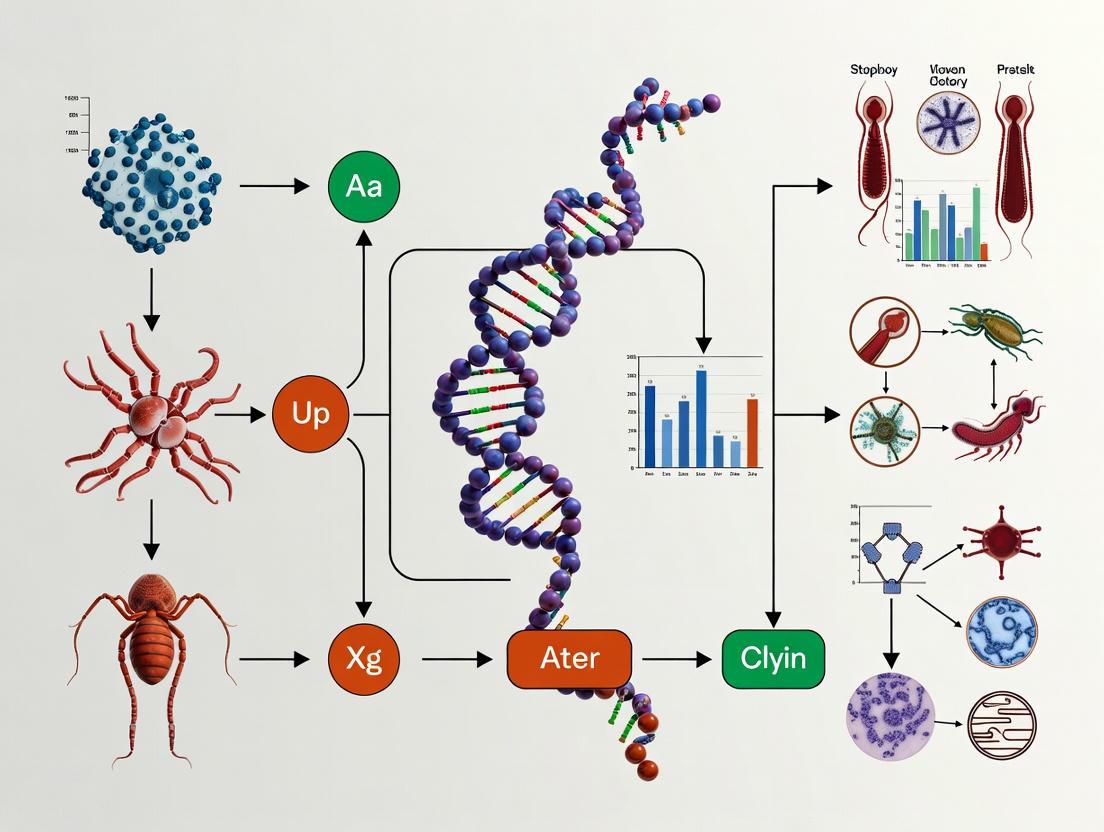
This article synthesizes the critical role of parasitology in reconstructing prehistoric human migration patterns.
Parasites as Paleomigration Probes: Leveraging Helminth and Protozoan Genetics to Decipher Ancient Human Dispersals
Abstract
This article synthesizes the critical role of parasitology in reconstructing prehistoric human migration patterns. It explores the foundational concept of 'heirloom' and 'souvenir' parasites as biological markers, detailing the methodological evolution from archaeoparasitology to modern genomic analyses of parasite populations. For researchers and drug development professionals, the review addresses key challenges in data interpretation, including distinguishing between migration and alternative transmission events. It further validates parasitological data through comparison with other disciplines like archaeology and genetics. The conclusion underscores how insights from past host-parasite co-evolution can inform contemporary understanding of parasite dissemination, drug resistance spread, and the design of targeted control strategies in an era of increased human connectivity.
Heirloom Parasites and Souvenir Pathogens: Foundational Concepts for Tracing Human Dispersal
The concepts of "heirloom" and "souvenir" parasites provide a critical framework for tracing human migration patterns through parasitological evidence. Heirloom parasites are those inherited from ancestral hominins in Africa, while souvenir parasites were acquired as humans migrated into new environments and encountered novel animal reservoirs [1] [2]. This paradigm utilizes paleoparasitological data from coprolites, mummies, and latrine sediments to reconstruct migration pathways and contact events throughout human history [1] [3]. The distinction offers powerful insights into co-evolutionary relationships between humans and their pathogens, with significant implications for understanding modern emerging infectious diseases and the historical biogeography of human pathogens [1] [4].
Human migration has been a fundamental factor in shaping global parasite distribution. The heirloom-souvenir classification system, first explicitly defined by Kliks (1990), establishes parasitological markers for tracking prehistoric human movements [2]. This framework is grounded in the principle that certain parasite species have maintained long-term evolutionary relationships with humans and their ancestors, while others represent more recent host-switching events following contact with animals during global dispersal [1] [4].
The utility of parasites as migration proxies stems from their biological characteristics: many produce environmentally robust eggs identifiable to species level, survive for millennia in archaeological contexts, and exhibit host specificity that reveals ancient contact patterns [1] [3]. This review synthesizes current knowledge of heirloom and souvenir parasites, detailing their classification, evidence base, and application to migration studies, while providing methodological guidance for contemporary research.
Conceptual Framework: Definitions and Evolutionary Significance
Heirloom Parasites: Ancient Co-evolutionary Partners
Heirloom parasites are species that infected hominin ancestors and early Homo sapiens in Africa, subsequently spreading globally with human migrations [1]. These parasites demonstrate long-term co-evolution with humans, often exhibiting varying degrees of host specificity. The ten core heirloom parasites include Ascaris lumbricoides (roundworm), Trichuris trichiura (whipworm), Enterobius vermicularis (pinworm), and Strongyloides stercoralis (threadworm), among others [1]. These species were likely distributed throughout the Old World and Americas via human migration routes beginning approximately 100,000 years ago [1].
Souvenir Parasites: Zoonotic Acquisitions
Souvenir parasites represent species acquired by humans after migrating out of Africa, typically through contact with animal reservoirs in new environments [1] [2]. Unlike heirlooms, most souvenir parasites are zoonoses maintained in non-human animal populations. Examples include Paragonimus spp. (lung flukes) acquired from freshwater crustaceans, and Cryptocotyle spp. obtained from marine fish [2]. The acquisition of souvenir parasites often reflects specific subsistence activities, ecological exposures, and dietary practices in new habitats [1].
Evolutionary and Ecological Distinctions
The primary distinctions between these categories lie in their evolutionary history with humans and their transmission ecology. Heirloom parasites typically show evidence of co-evolution and often require only human hosts to complete their life cycles, whereas souvenir parasites frequently utilize animal reservoirs and represent more recent host-switching events [1] [4]. This fundamental difference makes them valuable markers for different aspects of human migration and adaptation.
Classification and Evidence Base
Table 1: Characteristic Features of Heirloom and Souvenir Parasites
| Feature | Heirloom Parasites | Souvenir Parasites |
|---|---|---|
| Evolutionary History | Co-evolved with hominins in Africa | Acquired from animals during/after migration |
| Host Specificity | Often high specificity to humans | Typically zoonotic, with animal reservoirs |
| Global Distribution | Widespread with human migrations | Regionally restricted to acquisition zones |
| Archaeological Evidence | Found in early African sites & globally | Absent in Africa, appear in regional contexts |
| Examples | Ascaris lumbricoides, Trichuris trichiura, Enterobius vermicularis | Paragonimus spp., Cryptocotyle spp., some Echinococcus species |
Table 2: Major Heirloom Parasites and Their Archaeological Evidence
| Parasite Species | Type | Earliest Evidence | Distribution Pattern |
|---|---|---|---|
| Ascaris lumbricoides | Roundworm | Ancient Africa | Global with human migration |
| Trichuris trichiura | Whipworm | Ancient Africa | Global with human migration |
| Enterobius vermicularis | Pinworm | Ancient Africa | Global with human migration |
| Strongyloides stercoralis | Threadworm | Ancient Africa | Global with human migration |
| Hookworms (Ancylostoma/Necator) | Hookworm | Ancient Africa | Global (with climate limitations) |
| Taenia saginata | Tapeworm | Ancient Africa | Global with human/cattle dispersal |
Table 3: Major Souvenir Parasites and Their Proposed Origins
| Parasite Species | Type | Animal Reservoir | Geographical Origin |
|---|---|---|---|
| Paragonimus spp. | Lung fluke | Freshwater crustaceans | Asia, Americas |
| Cryptocotyle spp. | Intestinal fluke | Marine fish | Various coastal regions |
| Some Echinococcus spp. | Tapeworm | Canids, livestock | Various regions |
| Plasmodium vivax | Malaria parasite | Primates (zoonotic transfer) | Southeast Asia/Africa |
| Trypanosoma cruzi | Trypanosome | Triatomine bugs | South America |
Methodological Approaches in Paleoparasitology
Core Analytical Techniques
Paleoparasitological research employs multiple complementary methodologies to recover and identify parasites from archaeological contexts:
Microscopic Analysis: The foundational approach involves microscopic examination of coprolites, mummified tissues, and sediment samples for parasite eggs and larvae [1]. Specific morphological characteristics allow identification to genus or species level, particularly for robust helminth eggs such as Ascaris, Trichuris, and Enterobius [1].
Immunological Assays: Enzyme-linked immunosorbent assays (ELISA) and immunohistochemistry detect parasite-specific antigens in ancient samples [1]. These techniques have successfully identified Giardia duodenalis antigens in coprolites and Plasmodium spp. proteins in mummified tissues [1] [4].
Molecular Analysis: DNA extraction and amplification via polymerase chain reaction (PCR), followed by sequencing and phylogenetic analysis, provide species confirmation and evolutionary relationships [4] [5]. Next-generation sequencing (NGS) enables comprehensive analysis of parasite diversity in archaeological specimens [5].
Experimental Protocol: Comprehensive Parasite Recovery and Identification
Table 4: Protocol for Paleoparasitological Analysis
| Step | Procedure | Purpose | Key Considerations |
|---|---|---|---|
| Sample Collection | Excavation of latrine sediments, coprolites, mummified tissues | Obtain archaeological material with preserved parasite elements | Avoid contamination; document archaeological context |
| Rehydration & Cleaning | Treatment with aqueous trisodium phosphate solution (0.5% for 72 hours) | Soften and clean specimens without damaging parasite elements | Time varies with specimen preservation |
| Microscopy | Light microscopy of prepared slides (100-400x magnification) | Identify and count parasite eggs/larvae | Use morphological keys for species identification |
| DNA Extraction | Silica-based extraction of ancient DNA from samples | Recover genetic material for molecular identification | Use aDNA precautions; prevent contamination |
| Molecular Identification | PCR amplification of specific markers (e.g., 5S rRNA, ITS regions) | Confirm species identity and determine phylogenetic relationships | Target multi-copy genes for better recovery |
| Data Interpretation | Correlate parasitological findings with archaeological context | Reconstruct migration patterns and human behavior | Consider taphonomic factors and sample limitations |
Research Toolkit: Essential Reagents and Materials
Table 5: Essential Research Reagents and Materials for Paleoparasitology
| Reagent/Material | Application | Function | Example Use |
|---|---|---|---|
| Trisodium Phosphate Solution (0.5%) | Sample rehydration | Softens desiccated specimens without destroying parasite elements | Rehydrating coprolites before microscopy |
| Glycerol Gelatin Mountant | Microscope slide preparation | Preserves and clarifies parasite elements for morphological identification | Permanent slides of parasite eggs |
| Silica-based DNA Extraction Kits | Ancient DNA isolation | Purifies degraded DNA from archaeological specimens | Extracting DNA from mummified tissues |
| Species-specific Primers | PCR amplification | Targets conserved genetic regions for parasite identification | Amplifying Enterobius vermicularis 5S rRNA |
| ELISA Kits for Parasite Antigens | Immunological detection | Identifies parasite-specific proteins in ancient samples | Detecting Giardia antigens in coprolites |
| Next-generation Sequencing Platforms | Metagenomic analysis | Comprehensively characterizes all parasite DNA in a sample | Assessing complete parasite diversity |
Applications to Major Migration Debates
Peopling of the Americas
The heirloom/souvenir paradigm has profoundly influenced theories about human migration into the Americas [3]. The presence of hookworms (Necator americanus), whipworms (Trichuris trichiura), and other heirloom parasites in pre-Columbian contexts presents a paradox: these species require warm, moist soils for larval development and could not have survived the Beringian land bridge during the last glaciation [3]. This discrepancy provides compelling evidence for alternative coastal migration routes that allowed passage of humans and their temperature-sensitive parasites [3].
Transoceanic Contacts
Parasitological evidence has illuminated potential pre-Columbian transoceanic contacts. For instance, the presence of Strongyloides species and hookworms in ancient American populations suggests possible maritime connections, as these parasites could have survived longer ocean voyages in human hosts [4] [3]. The rapid migration of a "tropical parasite complex" along coastal routes would explain the widespread distribution of these heirlooms throughout the Americas despite climatic barriers [3].
Recent Migrations and Parasite Spread
Historical migrations, including the African slave trade, European colonization, and modern population movements, have similarly redistributed parasites globally [4]. Genetic studies indicate that Plasmodium falciparum was likely introduced to the Americas through the slave trade, while Leishmania infantum arrived with European colonizers and their dogs [4]. Contemporary migrations continue to reshape parasite distributions, with imported malaria cases increasingly associated with immigrants visiting friends and relatives in endemic countries [4].
Research Framework and Future Directions
The analytical framework for using parasites in migration studies integrates multiple lines of evidence, from archaeological context to molecular phylogenetics. Future research priorities include:
- Systematic analysis of parasites from underrepresented regions, particularly Africa
- Advanced ancient DNA techniques to reconstruct more robust parasite phylogenies
- Integration of parasitological data with climate models and archaeological evidence
- Development of more sensitive detection methods for fragile parasite remains
Paleoparasitology Research Workflow
Parasite-Host Coevolution Pathways
The heirloom/souvenir parasite framework establishes parasitology as essential to understanding human migration history. This paradigm provides unique insights into the timing, routes, and ecological contexts of human global dispersal that complement archaeological, genetic, and linguistic evidence. As methodological innovations continue to enhance parasite detection and analysis from archaeological contexts, parasitological evidence will increasingly resolve outstanding questions in human migration history while illuminating the deep evolutionary relationships between humans and their pathogens.
The study of past human migration has traditionally relied on archaeological artifacts and genetic analyses of human remains. However, an often-overlooked source of critical evidence comes from the parasites that accompanied human populations on their journeys across the globe. Parasite survival exerts a powerful biogeographical imperative that constrains viable migration route hypotheses, as parasitic organisms possess specific environmental requirements, host dependencies, and biological constraints that directly impact their ability to survive transit and establish in new territories.
Contemporary research in parasitology reveals sophisticated mechanisms through which parasites influence and are influenced by host movement. The host-parasite-environment relationship creates a tripartite system that must remain viable throughout migration journeys, imposing strict limitations on the timing, route, and success of human population movements [6]. This paper examines the biological foundations of this imperative, presents key experimental methodologies for its investigation, and explores its implications for understanding historical human migration patterns.
Parasite-Host Dynamics: Biological Mechanisms Constraining Migration
Parasite Manipulation of Host Behavior
Recent studies have revealed that parasites can actively manipulate host behavior to enhance their own survival and transmission, creating a biological feedback loop that directly influences migration patterns:
Neurological Manipulation: Ectoparasites such as fleas (Xenopsylla cheopis) induce anxiety-like behavior and reduce exploratory activity in rodent hosts through metabolic and functional alterations in specific brain regions. Research demonstrates increased glucose uptake in the prefrontal cortex, thalamus, and hippocampus following flea bites, accompanied by microglial activation and reduction in GABAergic neurons [7]. This suppression of host exploratory behavior effectively limits dispersal, constraining potential migration routes.
Molecular Mechanisms: Transcriptome sequencing of parasitized rodents reveals significant alterations in gene expression, particularly in genes related to synaptic plasticity, signal transduction, and neuronal development. Neurotransmitter metabolomics further shows disruption of tyrosine and tryptophan metabolism pathways, critical for synthesizing dopamine, norepinephrine, and serotonin [7].
Tissue Migration and Barrier Penetration
Parasites demonstrate highly specific mechanisms for traversing host biological barriers, mechanisms that must remain viable throughout migration journeys:
Fibrinolytic System Exploitation: Fasciola hepatica newly excysted juveniles (FhNEJ) utilize host plasminogen to generate plasmin, facilitating degradation of extracellular matrix components during intestinal wall penetration. This dependency on the host fibrinolytic system creates a biological constraint on migration success [8].
Active Tissue Migration: Toxoplasma gondii tachyzoites employ multiple migration strategies, including paracellular gliding through tissue tight junctions, "Trojan horse" mechanisms within host immune cells, and direct transcellular penetration [9]. The efficiency of these mechanisms varies significantly between parasite strains, with type I strains exhibiting hypermotility compared to types II and III [9].
Table 1: Parasite Migration Mechanisms and Their Biogeographical Implications
| Parasite Species | Migration Mechanism | Biological Constraint | Impact on Host Mobility |
|---|---|---|---|
| Fasciola hepatica | Plasmin-mediated ECM degradation | Dependent on host fibrinolytic system | Limited by intestinal barrier integrity requirements |
| Toxoplasma gondii | Paracellular gliding; Trojan horse | Strain-dependent motility variations | Differential dissemination based on parasite genotype |
| Filarial nematodes | miRNA-mediated immune modulation | Host-specific miRNA targeting | Restricted to compatible host species [10] |
| Ectoparasites | Neurobehavioral manipulation | CNS inflammation pathways | Reduced exploratory behavior [7] |
Environmental Tolerance Ranges
Parasites exhibit specific environmental tolerances that must be maintained throughout migration routes:
Elevational Constraints: Studies of parasite communities in wild takin (Budorcas taxicolor) reveal significant shifts in eukaryotic communities across elevations ranging from 1,100-2,500 meters, with specific parasite genera including Oesophagostomum, Dictyocaulus, Entamoeba, and Eimeria showing distinct distribution patterns [11].
Climate Vulnerabilities: The complex life cycles of many parasites involve intermediate hosts or environmental stages with narrow temperature and humidity requirements, creating seasonal constraints on viable migration timing [6].
Experimental Approaches and Methodologies
Tracking Parasite Migration in Experimental Models
Understanding parasite migration capabilities requires sophisticated experimental models that simulate in vivo conditions:
Fasciola hepatica Intestinal Migration Model
Objective: To investigate the role of host fibrinolysis in Fasciola hepatica newly excysted juvenile (FhNEJ) migration through the intestinal wall.
Methods:
- Cell Culture: Mouse primary small intestinal epithelial cells (mPSIEC) are cultured in gelatin-coated dishes with complete epithelial cell medium at 37°C in 5% CO₂ [8].
- Parasite Excystment: F. hepatica metacercariae are incubated in 0.02 M sodium dithionite for 1 hour at 37°C, washed, and transferred to excystment medium (Hank's balanced salt solution with 10% lamb bile and 30 mM HEPES, pH 7.4) [8].
- Co-culture System: 200 FhNEJ are added to confluent mPSIEC monolayers with 10 μg/mL human plasminogen (PLG). Control conditions include FhNEJ alone, PLG alone, and FhNEJ + PLG + 50 mM ε-ACA (lysine analogue) [8].
- Outcome Measures: Plasmin generation assays, extracellular matrix degradation analysis, and proteomic profiling of host cell responses.
This model demonstrates that FhNEJ-stimulated plasmin generation enhances collagen degradation and urokinase-type plasminogen activator secretion, facilitating parasite migration [8].
Toxoplasma gondii Migration Assays
Objective: To characterize strain-specific migration capabilities of T. gondii across biological barriers.
Methods:
- In Vitro Barrier Models: Polarized epithelial monolayers or Matrigel systems assess paracellular migration efficiency [9].
- Dendritic Cell Infection: In vitro infection of dendritic cells to evaluate "Trojan horse" migration mechanisms [9].
- Genomic Analysis: Multilocus restriction fragment length polymorphism (RFLP) typing and whole-genome sequencing to correlate migration phenotypes with genetic markers [9] [12].
These assays reveal that type I T. gondii strains exhibit hypermigratory phenotypes compared to types II and III, with distinct genomic architectures underlying these differences [9].
Molecular Detection of Parasite-Host Interactions
Advanced molecular techniques enable precise tracking of parasite dissemination and host responses:
miRNA Sequencing: Detection of parasite-derived miRNAs in host circulation, as demonstrated in Brugia malayi-infected felines, where 185 parasite miRNAs were identified in host plasma, targeting immune genes including Ptgs1, Irf4, Irf5, Numbl, Tnfsf15, Stat3, and Txlnb [10].
Metagenomic Sequencing: 18S rRNA amplicon sequencing of fecal samples to characterize parasite community composition and abundance, as applied in takin populations [11].
Metabolic Imaging: 18F-FDG PET-CT scanning to map glucose uptake changes in specific brain regions following parasite infection, revealing altered activity in prefrontal cortex, thalamus, and hippocampus [7].
The Scientist's Toolkit: Essential Research Reagents
Table 2: Key Research Reagents for Parasite Migration Studies
| Reagent/Catalog Number | Application | Experimental Function | Example Use |
|---|---|---|---|
| Human Plasminogen (Origene) | Fibrinolysis studies | Zymogen for plasmin generation | Fasciola migration models [8] |
| 2-deoxy-2-[18F]fluoro-D-glucose | Metabolic imaging | Glucose analog for PET-CT | Neurobehavioral parasite effects [7] |
| ε-ACA (6-aminocaproic acid) | Fibrinolysis inhibition | Lysine analogue blocking PLG activation | Control for plasmin-dependent effects [8] |
| Allen Brain Atlas | Neuroanatomical reference | Standardized brain region mapping | Localization of parasite-induced changes [7] |
| 18S rRNA primers (1391f/EukBr) | Biodiversity assessment | Amplification of eukaryotic V9 region | Parasite community profiling [11] |
| CTAB extraction buffer | DNA isolation | Cell lysis and nucleic acid preservation | Fecal sample processing [11] |
| RIPA Buffer | Protein extraction | Cell lysis for proteomic analysis | Host response profiling [8] |
Visualization of Parasite Migration Mechanisms
Parasite Migration Pathways Across Host Barriers
Diagram 1: Parasite migration pathways across host intestinal barriers. Parasites (red) traverse from the environmental lumen through mucosal layers via plasmin-mediated ECM degradation (green mechanisms).
Neurobehavioral Manipulation by Ectoparasites
Diagram 2: Ectoparasite manipulation of host behavior via the skin-brain axis. Flea bites trigger microglial activation and neurotransmitter changes that reduce exploratory behavior and restrict host mobility.
Implications for Human Migration Research
The biological constraints imposed by parasite survival provide a powerful framework for evaluating hypothesized human migration routes:
Reconstructing Viable Migration Corridors
Parasite environmental requirements and host dependencies create clear biogeographical filters that must be accommodated in migration models:
Temperature and Humidity Constraints: Parasites with environmental stages (e.g., Fasciola, soil-transmitted helminths) require specific temperature and humidity ranges for development and survival, eliminating migration routes through extreme environments [6].
Intermediate Host Availability: The complex life cycles of many human parasites require specific intermediate host species, restricting viable migration routes to regions where these hosts are present or can be established [6] [13].
Dating Migration Events Through Parasite Genetics
Molecular analyses of parasite populations can provide independent dating of migration events:
Hybridization Chronology: Studies of Toxoplasma gondii in South America reveal that hybridization events between Old World domestic lineages and native wild strains correspond with the introduction of domestic cats by European settlers, providing a biological timestamp for this migration [12].
Molecular Clock Analyses: Mutation-rate-based dating of parasite genomes can establish divergence times that correlate with human population movements and host switches [12].
Resolving Migration Controversies
Parasite evidence can help resolve controversies in human migration studies:
Beringian Standstill Hypothesis: Parasite constraints supporting coastal versus interior migration routes could be evaluated through reconstruction of parasite environmental tolerances and host requirements.
Polynesian Settlement Patterns: The presence or absence of specific parasites in archaeological remains could help trace the sequence and timing of island colonization.
The biogeographical imperative imposed by parasite survival provides a critical framework for understanding historical human migration patterns. Parasites create biological constraints that eliminate theoretically possible migration routes that would be incompatible with their environmental requirements, host dependencies, and biological capabilities. Contemporary research reveals the sophisticated mechanisms through which parasites manipulate host behavior, traverse biological barriers, and adapt to new environments—mechanisms that directly impact the viability of migration routes.
Integrating parasitological evidence with traditional archaeological and genetic approaches provides a more comprehensive understanding of human migration history. The experimental methodologies and analytical frameworks presented here offer researchers powerful tools for incorporating parasite data into migration models, potentially resolving long-standing controversies and revealing new insights into the peopling of our planet. As parasitology continues to advance our understanding of host-parasite dynamics, its contributions to migration research will undoubtedly grow, shedding new light on the complex journey of human populations across the globe.
This case study explores the transformative role of parasitology in understanding prehistoric human migrations, focusing on the trans-oceanic migration hypothesis into the Americas. The presence of specific helminth parasites in pre-Columbian contexts provides compelling biological evidence for alternative migration routes beyond the traditional Bering Land Bridge theory. We synthesize archaeological, paleoparasitological, and genomic data to demonstrate how parasite assemblages challenge conventional narratives and indicate ancient oceanic crossings. The findings underscore the value of parasitological evidence as a robust proxy for tracing human dispersal patterns and populating historical models.
The peopling of the Americas remains one of the most debated topics in human history. The traditional "Clovis First" model, postulating that humans crossed the Bering Land Bridge around 13.5 thousand years before present (ka BP), has been increasingly challenged by archaeological, genetic, and paleoparasitological evidence [14]. Notably, the discovery of human-specific parasites in pre-Columbian archaeological sites across the Americas has provided a unique line of evidence supporting alternative migration routes.
Parasitology offers a powerful tool for reconstructing human migrations through the study of "heirloom parasites" – organisms that co-evolved with human ancestors over millennia – and "souvenir parasites" – those acquired from animals in new environments [3]. The distribution of these parasites in the archaeological record provides a biological footprint of human movement, offering temporal and spatial constraints that complement other archaeological findings. This case study examines the critical evidence provided by parasite assemblages, particularly hookworms, whipworms, and threadworms, in support of trans-oceanic or coastal migration hypotheses.
Theoretical Framework: Parasites as Migration Proxies
Heirloom vs. Souvenir Parasites
The concept of heirloom and souvenir parasites provides a theoretical foundation for using parasitological evidence in migration studies. Heirloom parasites are those inherited from our hominid ancestors through deep evolutionary time, having co-evolved with the Homo lineage for over 400,000 years [3]. These include parasites such as pinworms (Enterobius vermicularis) and certain tapeworms. In contrast, souvenir parasites were acquired by humans as they migrated into new territories and encountered novel animal species and ecological conditions.
This distinction is crucial for migration studies because heirloom parasites must have been carried by humans throughout their entire migratory journey, whereas souvenir parasites provide evidence of contact with specific ecological zones during migration. The presence of heirloom parasites in the Americas therefore necessitates a migration route that would have allowed these temperature-sensitive organisms to survive the journey.
Parasite Life Cycle Constraints as Evidence
The biological requirements of specific parasites provide critical constraints for evaluating migration routes. As shown in Table 1, certain helminths require specific environmental conditions to complete their life cycles, making them effective markers for evaluating the feasibility of different migration routes.
Table 1: Key Parasites and Their Environmental Constraints in Migration Studies
| Parasite | Type | Life Cycle Requirements | Climate Constraints | Significance for Migration |
|---|---|---|---|---|
| Hookworms (Ancylostoma duodenale, Necator americanus) | Soil-transmitted helminth | Eggs hatch in soil; larvae require warm, moist conditions for development; penetrate human skin | Cannot develop below 22-25°C; require warm, shaded soils | Impossible to survive Beringian crossing; indicates alternative routes |
| Whipworm (Trichuris trichiura) | Soil-transmitted helminth | Eggs embryonate in soil; require 3 weeks at optimal conditions to become infective | Warm, moist, shaded soils; development inhibited by cold | Difficult to sustain in arctic conditions |
| Threadworm (Strongyloides stercoralis) | Soil-transmitted helminth | Complex cycle with free-living and parasitic generations | Requires warm, moist environments | Supports warm-climate migration route |
| Pinworm (Enterobius vermicularis) | Direct transmission | Direct human-to-human transmission; no soil phase | Not climate-dependent | Could survive Beringian crossing |
The life cycle constraints of these parasites, particularly hookworms, create a parasitological paradox: these heat-adapted species could not have survived the frigid conditions of the Bering Land Bridge during the last glacial maximum [3]. This paradox strongly suggests that alternative migration pathways must have existed.
Critical Evidence: Parasite Assemblages in the Americas
Archaeological Findings of Pre-Columbian Parasites
Paleoparasitological studies of mummies and coprolites from North and South America have provided tangible evidence of parasitic infections prior to European contact. Findings include:
- Hookworm eggs in human coprolites from Unai, Minas Gerais, Brazil [3]
- Helminth eggs in Brazilian mummies, confirming pre-Columbian presence [3]
- Multiple parasite species including whipworm and threadworm in various archaeological sites across the Americas
These findings are particularly significant because they demonstrate that these temperature-sensitive parasites were established in the Americas long before European colonization. The consistency of these findings across multiple sites suggests widespread distribution rather than isolated incidents.
The Hookworm Evidence and Its Implications
Hookworm evidence provides the strongest parasitological argument against exclusive migration via Beringia. Both major human hookworm species (Ancylostoma duodenale and Necator americanus) require specific conditions for transmission:
- Eggs passed in feces require warm, moist soil to hatch
- Larvae need 5-10 days under optimal conditions (22-25°C) to become infective
- Infective larvae penetrate human skin upon contact
- Complete development cannot occur below 22°C [3]
The hypobiotic potential (ability to arrest development) of hookworms has been proposed as a possible mechanism for survival during a Beringian crossing. However, this hypothesis fails to explain how the parasites would have completed their life cycle and established sustainable populations in human hosts under arctic conditions. Even if dormant larvae survived in human tissues, transmission to new hosts would have been impossible in frozen ground, leading to eventual extinction of the parasite in the migrating population.
Supporting Evidence from Multiple Disciplines
Oceanographic and Climate Modeling
Numerical simulations of transoceanic crossings provide support for the feasibility of prehistoric voyages. Modeling studies using present-day and Last Glacial Maximum conditions indicate that:
- The fastest transoceanic crossings occurred between Japan and North America (83 days) and northern Africa and South America (91 days) [14]
- The crossing with the highest probability of occurrence (13-18%) was between southern Africa and South America
- Mid-latitude crossings were shorter and more probable during the Last Glacial Maximum [14]
Table 2: Simulated Transoceanic Crossing Times and Probabilities Under Present-Day Conditions
| Route | Fastest Crossing Time (days) | Probability of Occurrence (<180 days) |
|---|---|---|
| Australia to New Zealand | 23 | ≥5% |
| Japan to North America | 83 | Not specified |
| Northern Africa to South America | 91 | 5-10% |
| Southern Africa to South America | 70-110 | 13-18% (with paddling) |
| Central Europe to Iceland/Greenland | 72 | Not specified |
These simulations demonstrate that transoceanic crossings were physically possible with primitive watercraft, particularly when considering that Last Glacial Maximum conditions may have been even more favorable for certain routes.
Genetic Evidence of Parasite Dispersal
Genomic studies of parasites provide independent lines of evidence for human migration patterns. Research on Plasmodium vivax origins in the Americas reveals:
- American P. vivax populations form a monophyletic cluster with European and West African lineages [15]
- Divergence between American and European populations occurred ~100-300 years ago
- Major admixture events occurred approximately 200 years ago [15]
- Introduction happened in multiple waves: early European colonization and 19th century European immigration
This pattern of multiple introductions parallels the established colonization history of P. falciparum, which entered the Americas through multiple introductions from West/Central Africa during the slave trade period [15]. The genetic evidence thus supports complex migration and contact patterns that could have facilitated the introduction of various parasites.
Methodological Framework
Paleoparasitological Techniques
The recovery and identification of ancient parasites requires specialized methodologies:
Sample Collection and Processing:
- Excavation of coprolites and mummified tissues from archaeological contexts
- Rehydration in aqueous trisodium phosphate solution
- Micro-sieving to concentrate parasite eggs
- Chemical staining for microscopic examination
Identification and Authentication:
- Morphometric analysis of eggs and larvae
- Molecular identification using ancient DNA (aDNA) techniques
- Amplification of specific genetic markers (e.g., 5S ribosomal RNA intergenic spacer for Enterobius vermicularis) [3]
- Phylogenetic analysis to determine evolutionary relationships
Experimental Controls:
- Strict contamination controls for aDNA work
- Multiple independent confirmations of findings
- Radiocarbon dating of samples to establish chronology
Molecular and Genomic Approaches
Modern parasitology utilizes sophisticated genomic tools to trace migration patterns:
- Whole-genome sequencing of parasite populations from different geographical regions
- Phylogenetic analysis to determine relationships and divergence times
- Approximate Bayesian Computation (ABC) to test competing colonization scenarios [15]
- Population genetic statistics to infer demographic history and gene flow
These methods allow researchers to reconstruct the evolutionary history of parasites and correlate it with human migration timelines.
The Scientist's Toolkit: Essential Research Reagents and Materials
Table 3: Key Research Reagents and Materials for Paleoparasitology and Migration Studies
| Reagent/Material | Function/Application | Specific Examples/Protocols |
|---|---|---|
| Coprolite/Mummy Samples | Primary archaeological material for analysis | Excavated from authenticated pre-Columbian contexts [3] |
| Trisodium Phosphate Solution | Rehydration of ancient biological materials | 0.5% solution for reconstituting desiccated specimens |
| Microscopy Equipment | Identification of parasite eggs and larvae | Light microscopy with morphometric capabilities |
| Ancient DNA (aDNA) Extraction Kits | Isolation of degraded DNA from archaeological specimens | Commercial kits optimized for ancient specimens |
| PCR Reagents | Amplification of specific parasite genetic markers | Primers for 5S ribosomal RNA, SL1 RNA gene [3] |
| Next-Generation Sequencing Platforms | Whole-genome sequencing of parasite populations | Illumina, PacBio for population genomics [15] |
| SNP Panels | Genotyping and population structure analysis | High-resolution panels for genetic assignment [16] |
| Computational Tools for ABCTesting competing migration hypotheses | ABC-RF for model selection [15] |
Conceptual Framework Diagram
The following diagram illustrates the logical relationships between migration hypotheses, parasite evidence, and supporting disciplines in evaluating trans-oceanic migration routes:
Discussion and Implications
Resolving the Parasitological Paradox
The evidence from parasite assemblages presents a compelling case for re-evaluating traditional migration models. The presence of heat-adapted helminths in pre-Columbian contexts cannot be reconciled with an exclusive Beringian migration route. Instead, the parasitological evidence supports Montenegro's coastal migration model, which proposes that ancient peoples migrated rapidly along coastlines from the Old World to the Americas [3]. This route would have allowed temperature-sensitive parasites to survive the journey and establish in the New World.
The distributions of hookworm, whipworm, and threadworm in prehistoric Americas are best explained by a coastal or trans-oceanic migration model that enabled the rapid transport of these parasites from tropical Old World regions to the Americas without extended exposure to arctic conditions [3].
Implications for Understanding Ancient Human Mobility
This case study demonstrates that parasitology provides unique insights into prehistoric human mobility that complement other archaeological and genetic approaches. Key implications include:
- Parasites as biological artifacts: Unlike stone tools or cultural artifacts, parasites provide direct evidence of human biology and health status
- Constraints on migration timing and routes: The environmental requirements of parasites help rule out certain migration scenarios while supporting others
- Evidence of contact and isolation: Parasite assemblages can indicate periods of population contact or isolation
- Correlation with other disciplines: Parasitological evidence aligns with emerging genetic and archaeological findings that support complex migration patterns
The study of parasite assemblages provides compelling evidence for trans-oceanic or coastal migration routes to the Americas, challenging the traditional Bering Land Bridge paradigm. The biological constraints of temperature-sensitive helminths, particularly hookworms, create a parasitological paradox that cannot be resolved within the framework of exclusive Beringian migration. Supported by oceanographic modeling, genetic evidence, and archaeological findings, parasitology emerges as a powerful tool for reconstructing ancient human migrations.
Future research in this field should focus on expanding paleoparasitological sampling across the Americas, applying sophisticated genomic tools to ancient parasite DNA, and developing more refined models that integrate parasitological evidence with other lines of inquiry. As this case study demonstrates, parasites—often overlooked as mere pathogens—provide unique and valuable insights into the epic journeys that peopled our planet.
From Microscopy to Metagenomics: Methodological Tools for Tracking Migration Through Parasites
Archaeoparasitology, the study of ancient parasites, has emerged as a critical discipline for understanding human history, health, and migration. By analyzing parasitological evidence preserved in coprolites and mummified remains, researchers can reconstruct disease burden, dietary practices, and human mobility across millennia. This technical guide explores the methodologies, analytical frameworks, and significant applications of archaeoparasitology, with particular emphasis on its growing role in tracing past human migration patterns through parasite vector distributions. We present standardized protocols for evidence recovery, quantitative analysis techniques, and molecular approaches that together form a comprehensive toolkit for investigating ancient human-parasite relationships.
Archaeoparasitology is a specialized interdisciplinary field that integrates parasitology with archaeology to recover and identify parasite remains from archaeological contexts. The field has evolved from initial descriptive studies to sophisticated quantitative and molecular analyses that provide insights into ancient human ecology [17]. The primary sources of evidence include coprolites (preserved fecal specimens) and mummified soft tissues, which preserve parasite eggs, larvae, and sometimes adult forms through processes of desiccation, mineralization, or freezing [18].
The preservation of parasite evidence depends significantly on taphonomic conditions and burial environments. Specimens from sites protected by caves and rock shelters typically exhibit the best preservation, while mineralization processes can replace original organic materials with carbonate or phosphate minerals, potentially complicating biochemical analysis [18]. The first archaeoparasitological analysis was undertaken by Ruffer on Egyptian mummies, but it was not until the 1960s-1980s that standardization of the field occurred [19].
Over recent decades, research goals have expanded from simple documentation of parasite presence to understanding parasite prevalence, infection intensity, and their relationship to human cultural practices, subsistence strategies, and migration patterns [17]. The application of molecular biological techniques has further revolutionized the field, allowing for more precise species identification and phylogenetic studies of ancient parasites [18].
Experimental Protocols and Methodologies
Macroscopic and Microscopic Analysis
The initial examination of coprolites and mummified tissues begins with morphological assessment and microscopic analysis for parasite evidence.
Protocol 1: Standardized Parasite Egg Recovery and Quantification
- Sample Rehydration: Rehydrate coprolite samples (0.5-1.0 g) in a 0.5% trisodium phosphate solution for 72 hours with occasional agitation [17].
- Microsieving: Pass the rehydrated sample through a series of stacked sieves (250μm, 160μm, and 25μm mesh sizes) to concentrate parasite eggs while removing larger debris.
- Microscopy: Prepare slides from the sediment collected on the 25μm sieve and examine under light microscopy (100-400x magnification) for parasite eggs, larvae, or cysts.
- Eggs Per Gram (EPG) Quantification: Count all parasite eggs in a measured aliquot and calculate EPG values using the formula: EPG = (egg count × dilution factor) / sample weight (g). This quantitative approach enables estimation of infection intensity and comparison across samples [17].
- Statistical Analysis for Overdispersion: Apply negative binomial distribution models to identify aggregation patterns where a minority of hosts carries the majority of parasites—a phenomenon consistently observed in modern and ancient populations [17].
Protocol 2: Morphological Classification of Coprolites
Document external morphological features before destructive analysis, as these may provide clues about the producer and preservation status:
- Shape Classification: Categorize as discoidal, spiral, round, rod-like, kidney-shaped, or irregular [18].
- Surface Examination: Note presence of spiral marks, constrictions, desiccation cracks, or evidence of coprophagous activity.
- Measurement: Record maximum length, diameter, and weight.
- Inclusion Documentation: Note visible macroscopic inclusions such as bone fragments, plant fibers, or hair.
Table 1: Standard Coprolite Morphological Classification System
| Morphotype | Description | Potential Producer Clues |
|---|---|---|
| Spiral | Distinct spiral patterning | Carnivores, some fish |
| Rod-like | Cylindrical, uniform diameter | Herbivores, omnivores |
| Discoidal | Disc-shaped, flattened | Various species |
| Round | Spherical or ovoid | Birds, small mammals |
| Irregular | No defined shape | Often altered by taphonomic processes |
Molecular Archaeoparasitology Techniques
Advanced molecular methods have significantly enhanced the specificity of parasite identification and enabled phylogenetic studies.
Protocol 3: Ancient DNA (aDNA) Extraction and Analysis
- Pre-extraction Treatment: Expose samples to UV irradiation (254nm) for 30 minutes each side to reduce modern surface contamination.
- DNA Extraction: Use silica-based extraction methods specifically optimized for ancient fecal and mummified tissue samples. These methods typically involve digestion with proteinase K and guanidinium thiocyanate-based binding solutions [18].
- PCR Amplification: Employ targeted PCR using primers specific to parasite mitochondrial genes (e.g., cytochrome b, COX1). Include appropriate controls (extraction blanks, negative PCR controls) to detect contamination.
- Sequencing and Phylogenetic Analysis: Sequence amplified products and compare with reference sequences in databases to establish phylogenetic relationships. This approach has been successfully used to trace human louse populations and their migration patterns [20].
Protocol 4: Immunodiagnostic Detection of Parasite Antigens
- Antigen Extraction: Prepare soluble extracts from coprolite or tissue samples using phosphate-buffered saline with protease inhibitors.
- Enzyme-Linked Immunosorbent Assay (ELISA): Incubate samples in plates coated with capture antibodies specific to target parasite antigens.
- Detection: Use enzyme-conjugated detection antibodies and appropriate substrates to generate measurable signals.
- Validation: Compare with positive and negative controls to validate results. This method is particularly useful for protozoan parasites that may not leave distinctive morphological evidence [6].
The workflow below illustrates the integrated approach to archaeoparasitological analysis:
Quantitative Data Analysis in Archaeoparasitology
The application of quantitative methods has transformed archaeoparasitology from a descriptive to an analytical science capable of generating epidemiological insights.
Prevalence and Infection Intensity Metrics
Prevalence calculation follows the same statistical concept used in modern parasitology: the number of cases of infection present in a particular population at a given time. Archaeologically, this requires careful assessment of the actual population represented by the coprolite series through provenience-based sampling strategies [17].
Eggs Per Gram (EPG) quantification provides a measure of infection intensity, allowing researchers to estimate the pathological potential of parasitism in ancient populations. The development of EPG protocols for archaeological specimens represents a significant methodological advancement, enabling comparisons between ancient and modern infection levels [17].
Table 2: Parasite Prevalence Data from Selected Archaeological Studies
| Site/Region | Time Period | Sample Size | Ascaris Prevalence | Trichuris Prevalence | Reference |
|---|---|---|---|---|---|
| La Cueva de los Muertos Chiquitos | 1,200 years BP | 121 coprolites | 28% | 41% | [17] |
| Korean Sites | Joseon Dynasty (1400s-1800s) | Multiple coprolites | Comparable to modern | Higher than modern | [17] |
| Lower Pecos Canyonlands | Archaic Period | 200+ coprolites | 15-30% | 20-35% | [17] |
Overdispersion Analysis in Ancient Populations
Parasite distributions typically follow a negative binomial pattern characterized by overdispersion, where the majority of parasites aggregate in a minority of host populations. This pattern has been demonstrated in archaeological contexts through quantitative analysis:
- Analysis of pinworm (Enterobius vermicularis) infections at La Cueva de los Muertos Chiquitos revealed that 66% of samples were negative for pinworms, while the ten samples with the highest EPG counts contained 76% of the eggs [17].
- This aggregation pattern mirrors modern clinical studies where 72% of pinworms were recorded in just 13% of subjects while 53% were uninfected [17].
- Recognition of overdispersion in archaeological contexts is essential for accurate interpretation of disease burden in past populations, as it indicates that parasitic disease was likely concentrated in specific segments of ancient communities.
The Scientist's Toolkit: Essential Research Reagents and Materials
Successful archaeoparasitological research requires specialized reagents and equipment adapted to the unique challenges of ancient biological samples.
Table 3: Essential Research Reagents and Equipment for Archaeoparasitology
| Item | Function | Application Notes |
|---|---|---|
| Trisodium phosphate solution (0.5%) | Coprolite rehydration | Optimized for restoring tissue flexibility without destroying parasite eggs |
| Microsieves (25-250μm mesh) | Size-fractionation of rehydrated samples | Critical for concentrating parasite eggs while removing debris |
| Light microscope with calibrated micrometer | Parasite egg identification and measurement | Essential for morphological identification and counting |
| Proteinase K | Ancient DNA extraction | Digests proteins while preserving degraded DNA |
| Silica-based DNA binding columns | aDNA purification | More effective than organic extraction for degraded samples |
| Species-specific PCR primers | Target amplification | Designed against conserved parasite mitochondrial genes |
| Phosphate-buffered saline with protease inhibitors | Antigen extraction | Preserves protein epitopes for immunodetection |
| Reference parasite egg collections | Comparative morphology | Essential for accurate identification of parasite types |
Archaeoparasitology and Human Migration Studies
The analysis of ancient parasites provides crucial insights into human migration patterns through several mechanisms. Parasites, particularly those with limited environmental persistence, serve as biological markers for tracking human movements and contacts.
Human Lice as Migration Markers
Studies of ancient head lice eggs have revealed previously unsuspected human migrations. Molecular analysis of seven ancient head louse eggs from archaeological sites in Israel identified mitochondrial sub-clades specific to West Africa, suggesting connections between these geographically distant populations [20]. This finding demonstrates the potential of parasite genetics to complement and sometimes challenge existing migration models based on traditional archaeological evidence.
The diagram below illustrates how parasite evidence contributes to understanding human migration:
Regional Case Studies
East Asian Parasite Records: Integrated analysis of traditional Chinese medical texts and archaeological findings has documented parasitic infections in early Chinese populations, identifying roundworm (Ascaris lumbricoides), Asian schistosoma (Schistosoma japonicum), and tapeworm (Taenia sp.) as prevalent parasites [21]. The continuity of certain parasite species from ancient to modern times in Korea and China demonstrates long-term host-parasite relationships, while changes in prevalence and distribution reflect shifting environmental conditions and human activities [17].
South American Paleoepidemiology: Quantitative analysis of coprolites from multiple South American sites has enabled reconstruction of parasite pathoecology—the study of how cultural and environmental factors created contexts for parasite transmission. These reconstructions have revealed how agricultural intensification and settlement patterns influenced parasite prevalence in ancient Andean populations [17].
Future Directions and Technological Advances
The future of archaeoparasitology lies in the continued integration of advanced molecular techniques and sophisticated quantitative approaches. Several emerging technologies show particular promise:
High-Throughput Sequencing: Metagenomic next-generation sequencing allows characterization of entire parasite communities and their interactions without prior knowledge of species present. This approach has already demonstrated that coprolites preserve information about ancient gastrointestinal microbiomes in addition to parasitic infections [18].
Proteomic Approaches: Matrix-assisted and surface-enhanced laser desorption ionization time-of-flight mass spectrometry (MALDI-TOF and SELDI-TOF) enable detection of protein biomarkers from parasitic infections, offering an alternative to morphological and DNA-based identification methods [6].
Improved Quantification Methods: Refined protocols for estimating parasite burden in archaeological remains will enable more precise comparisons between ancient and modern populations and better understanding of how parasitic diseases have shaped human health across time.
As these technical advances continue, archaeoparasitology will play an increasingly important role in understanding the complex relationships between humans, their parasites, and the environment throughout history—providing unique insights into both past human migrations and the co-evolution of hosts and their parasites.
Parasitology has emerged as a revolutionary tool for reconstructing past human migrations, providing independent lines of evidence that complement traditional archaeological and anthropological approaches. The population genetics of parasites, particularly through the application of neutral genetic markers, offers a powerful methodology for inferring host demography and migration patterns across millennia. This technical guide examines the theoretical foundations and experimental protocols enabling researchers to utilize parasite genetic data to reconstruct host population histories, with particular relevance to human migration research.
The fundamental premise rests on the tight co-evolutionary history between hosts and their specific parasites. As human populations migrated across the globe, they carried their parasites, creating a parallel historical record within parasite genomes. By analyzing the genetic structure of parasite populations using neutral markers—regions of DNA not under natural selection—researchers can trace historical host migration routes, estimate divergence times between host populations, and identify previously unknown contact events between human groups [3] [22].
Theoretical Framework
Heirloom vs. Souvenir Parasites
In the context of human migration, parasites are categorized based on their origin and co-evolutionary history with human hosts:
Heirloom Parasites: These are parasites inherited from earlier hominid ancestors that have co-evolved with the Homo lineage for hundreds of thousands of years. Examples include the pinworm Enterobius vermicularis, whipworm Trichuris trichiura, and body lice Pediculus humanus [3]. These parasites provide the most reliable genetic records of deep human migrations because their evolutionary history is inextricably linked with that of humans.
Souvenir Parasites: These are parasites acquired from animals or the environment in new geographic regions after human migration and settlement. Examples include Taenia tapeworms acquired from domesticated animals and Trypanosoma cruzi acquired from triatomine bugs in the Americas [3]. While less useful for tracing ancient migrations, they provide valuable insights into historical human subsistence practices and environmental adaptations.
Population Genetic Principles
The application of neutral markers to infer host demography relies on several key population genetic principles:
Gene Flow and Genetic Drift: Parasite populations experience gene flow when hosts migrate and introduce parasites to new populations. Conversely, genetic drift occurs when host populations become isolated, leading to random changes in parasite allele frequencies [23].
Effective Population Size (Nₑ): The genetic diversity of parasite populations is influenced by the effective population size of their hosts. Larger, more connected host populations maintain greater parasite genetic diversity [24].
Isolation by Distance: Parasite populations often show genetic differentiation that increases with geographical distance between host populations, mirroring patterns observed in their hosts [25].
Founder Effects: When small groups of humans colonized new territories, they carried limited parasite diversity, creating genetic bottlenecks visible in contemporary parasite populations [26].
Molecular Approaches and Neutral Markers
Marker Selection Criteria
Selecting appropriate neutral markers is critical for accurately inferring host demographic history. Ideal markers should:
- Evolve at a rate appropriate for the timescale of migration events under investigation
- Be located in genomic regions not subject to natural selection
- Provide sufficient polymorphism to resolve population structure
- Be technically feasible to amplify from often degraded or limited parasite material
Commonly Used Genetic Markers
Table 1: Molecular Markers Used in Parasite Population Genetics
| Marker Type | Specific Markers | Resolution | Applications | Advantages/Limitations |
|---|---|---|---|---|
| Mitochondrial DNA | Cytochrome c oxidase I (COI), NADH dehydrogenase subunits (nad), cytochrome b | High for within-species diversity | Phylogeography, population structure, demographic history | Advantages: High mutation rate, haploid inheritance, no recombinationLimitations: Maternal inheritance only, sensitive to selection |
| Nuclear DNA | Internal Transcribed Spacer (ITS), microsatellites, single nucleotide polymorphisms (SNPs) | Variable (depends on marker) | Species delimitation, gene flow estimates, hybridization detection | Advantages: Biparental inheritance, genome-wide coverage possibleLimitations: Slower evolution, recombination complications |
| Complete Genomes | Mitochondrial genomes, nuclear genome-wide SNPs | Highest resolution | Fine-scale population structure, selection detection, comprehensive demographic inference | Advantages: Maximum information contentLimitations: Costly, computationally intensive, requires high-quality DNA |
Technical Considerations for Marker Selection
Multilocus Approaches: Studies combining mitochondrial and nuclear markers provide the most robust inferences by compensating for the limitations of individual marker systems [23].
Mutation Rate Calibration: Accurate demographic inference requires careful calibration of molecular clocks, often through fossil records or known historical divergence events [27].
Cryptic Species Detection: Nuclear markers, particularly ITS regions, are essential for identifying cryptic parasite species that might confound population genetic analyses [23].
Experimental Workflows and Protocols
Sample Collection and Preservation
Table 2: Research Reagent Solutions for Parasite Population Genetics
| Reagent/Material | Function | Application Notes |
|---|---|---|
| Ethanol (70-95%) | Fixation and preservation of parasite specimens | Maintains DNA integrity while preventing excessive tissue hardening; optimal for long-term storage at -20°C |
| Proteinase K | Digestion of proteins and release of nucleic acids | Essential for DNA extraction from tough parasite structures like egg shells or cyst walls |
| PCR Reagents | Amplification of target DNA regions | Requires optimization for specific parasite taxa; may need specialized polymerases for compromised DNA |
| Sanger Sequencing Reagents | Generation of sequence data for individual loci | Cost-effective for studies focusing on few markers; suitable for degraded DNA from archaeological samples |
| Next-Generation Sequencing Platforms | Genome-wide marker discovery and genotyping | Enables analysis of thousands of SNPs; requires high-quality, high-quantity DNA inputs |
| Restriction Enzymes | RFLP analysis for rapid genotyping | Cost-effective method for screening large sample sizes for specific genetic variants |
DNA Extraction and Amplification
Standardized protocols for DNA extraction from parasites must accommodate diverse life stages (eggs, larvae, adults) and preservation methods. Key considerations include:
Ancient DNA Protocols: For archaeological parasite material (coprolites, mummies), specialized ancient DNA extraction methods are required to address fragmentation, damage, and contamination [3].
Multiple Displacement Amplification: When working with single parasites or limited material, whole genome amplification can provide sufficient DNA for subsequent analyses.
The following workflow diagram illustrates a generalized experimental approach for generating population genetic data from parasite specimens:
Data Analysis Workflow
The analytical pipeline for inferring host demography from parasite genetic data involves multiple steps, each addressing specific research questions:
Case Studies in Human Migration Research
Peopling of the Americas
Parasitological evidence has fundamentally challenged traditional models of the peopling of the Americas. The Bering Land Bridge hypothesis alone cannot explain the presence of certain parasites in pre-Columbian America:
Hookworms and Whipworms: The presence of Necator americanus, Ancylostoma duodenale, and Trichuris trichiura in pre-Columbian archaeological sites presents a paradox—these soil-transmitted helminths require warm, moist soils for larval development and could not have survived the cold, arid conditions of the Bering Land Bridge [3].
Alternative Migration Routes: The distribution of these parasites in the Americas supports coastal migration routes along the Pacific coast, where milder conditions would have allowed parasite survival during human transit [3].
Mitochondrial genome analyses of Plasmodium species have revealed complex introduction histories to the Americas:
Table 3: Malaria Parasite Introduction to the Americas
| Parasite Species | Primary Introduction Route | Genetic Evidence | Timing |
|---|---|---|---|
| Plasmodium falciparum | Transatlantic slave trade from Africa | Mitochondrial lineages Ame1 and Ame2 closely related to African haplotypes [27] | Post-Columbian (mid-1500s to mid-1800s) |
| Plasmodium vivax | Multiple introductions: Africa, Asia, and Melanesia | Significant genetic diversity with contributions from African, South Asian, and Melanesian lineages [4] [27] | Both pre-Columbian (via Australasian peoples) and post-Columbian |
| Plasmodium simium | Recent human-to-monkey transfer in South America | Limited genetic diversity compared to P. vivax; shared haplotypes between humans and monkeys in Atlantic Forest [27] | Recent (post-colonization) |
Old World Parasites in the Americas
Genetic studies of diverse parasite groups have provided additional insights into human migration patterns:
Trypanosoma cruzi: The agent of Chagas disease shows complex genetic structure that reflects both ancient sylvatic transmission cycles and more recent human-mediated dispersal across the Americas [28].
Leishmania infantum: Phylogenetic evidence indicates this visceral leishmaniasis agent was introduced to South America approximately 500 years ago by European settlers and their dogs [4].
Methodological Considerations and Limitations
Confounding Factors
Several factors can complicate inferences about host demography from parasite genetic data:
Host Specificity: Parasites with low host specificity (e.g., Aspidodera raillieti infecting multiple marsupial species) may show genetic structure reflecting multiple host associations rather than human migration patterns [25].
Parasite Dispersal Ability: The population genetic structure of parasites is influenced by the dispersal capabilities of their hosts. For example, Trichobilharzia querquedulae infecting migratory ducks maintains a well-connected global metapopulation, while species with less mobile hosts show greater population structure [24].
Evolutionary Rate Variation: Different parasite taxa evolve at different rates, requiring careful calibration of molecular clocks for accurate dating of migration events.
Analytical Best Practices
To maximize robust inferences of host demography:
Multiple Marker Systems: Combine fast-evolving (e.g., microsatellites) and slower-evolving (e.g., mitochondrial genomes) markers to capture different timescales of evolutionary history [23].
Comparative Phylogeography: Analyze multiple parasite species from the same host to distinguish host-mediated patterns from parasite-specific evolutionary histories [3].
Integration with Other Data Sources: Correlate genetic findings with archaeological, linguistic, and paleoclimatic data to develop comprehensive migration models.
Future Directions
The field of parasite population genetics continues to evolve with technological advancements:
Paleoparasitomics: Application of ancient DNA techniques to archaeological parasite remains provides direct evidence of historical parasite distributions [3].
Genome-Wide Approaches: Next-generation sequencing enables analysis of thousands of nuclear markers, providing unprecedented resolution for demographic inference [23].
Model-Based Approaches: Improved computational methods allow for more sophisticated testing of competing demographic models using multilocus genetic data.
As these methodologies advance, parasite genetic data will continue to provide unique insights into human history, complementing other lines of evidence to reconstruct the complex journey of human populations across the globe.
Genome-Wide Linkage Disequilibrium and Effective Population Size as Proxies for Host History
This technical guide explores the utilization of genomic signatures in parasites—specifically, genome-wide linkage disequilibrium (LD) and effective population size (Ne)—to infer the demographic and evolutionary history of their hosts. Framed within parasitological research on past human migrations, we detail the theoretical foundations, computational methodologies, and key analytical protocols for leveraging parasite genetic data. The guide synthesizes current literature to provide a framework for researchers aiming to use these proxies to reconstruct host genealogy and ecology, highlighting the conditions under which parasites serve as superior historical archives compared to host genetics.
The reconstruction of host evolutionary history, including past migrations, population bottlenecks, and divergence events, can be challenging using host genetic data alone. Host genetic patterns may be obscured by factors such as ancestral polymorphism or a lack of population structure [29]. Parasites, particularly those with high host specificity and coupled life histories, can serve as complementary, and sometimes more informative, proxies for elucidating this history [29].
The core premise is that parasites and their hosts can share a common genealogical history through processes of co-speciation and co-differentiation. When this occurs, the parasite's genome accumulates signals of the demographic forces that also shaped the host population. Key among these signals are:
- Linkage Disequilibrium (LD): The non-random association of alleles at different loci. LD patterns reflect population-level processes like genetic drift, which is inversely related to effective population size, and recombination [30] [31].
- Effective Population Size (Ne): A measure of the size of an idealized population that would experience the same rate of genetic drift as the population in question. Temporal shifts in Ne can indicate population expansions, contractions, and bottlenecks [32] [33] [34].
Parasites can provide a more resolved genetic signal than their hosts when they have a smaller effective population size and shorter generation time, which reduces the confounding effects of ancestral polymorphism and accelerates the coalescence of gene genealogies towards the species tree [29]. This guide details how to capture and interpret these signals.
Theoretical Foundations and Key Concepts
Effective Population Size (Ne) and its Implications
The effective population size (Ne) is a foundational concept in population genetics, quantifying the intensity of genetic drift and inbreeding [33] [35]. A small Ne enhances the power of genetic drift, increasing the chance that slightly deleterious variants, such as certain Transposable Element (TE) insertions, may reach fixation [36]. This relationship is central to the Mutational Hazard Hypothesis (MHH), which posits that lineages with low Ne are more tolerant of genome size expansion via TE accumulation [36].
For parasites, the Ne is influenced by host traits. A study on 71 species of dove feather lice (Columbicola) found that parasite Ne was more strongly correlated with host body size than with host population size. This suggests that the local infrapopulation size (the group of parasites on a single host) is a better predictor of long-term Ne than the total number of available hosts, likely because parasite populations are highly subdivided, with each host representing a distinct deme [32].
Linkage Disequilibrium (LD) and Demographic Inference
Linkage Disequilibrium measures the non-random association between alleles at different loci and decays over generations due to recombination [30]. The rate of this decay is informative about a population's history. In a small or declining population, genetic drift dominates, leading to stronger and more extended LD as alleles are co-inherited through bottlenecks [33] [31].
The relationship between LD and recombination rate (c) provides a window into past demography. It has been established that the LD between loci with a specific recombination rate c reflects the Ne of approximately 1/(2c) generations ago [31]. This principle allows for the inference of historical Ne trajectories from contemporary genomic data.
When Do Parasites Reflect Host History?
Not all parasites are ideal proxies. The likelihood of a parasite sharing a common history with its host depends on several traits, summarized in the table below.
Table 1: Parasite Traits Determining Their Usefulness as Host Proxies [29]
| Parasite Trait | Ideal Characteristic for a Host Proxy | Rationale |
|---|---|---|
| Host Specificity | High (Strict) | Minimizes host-switching events, which create incongruence between host and parasite genealogies. |
| Effective Population Size (Ne) | Smaller than the host's Ne | Reduces ancestral polymorphism and incomplete lineage sorting, yielding a more resolved genetic signal. |
| Generation Time | Shorter than the host's | Faster generation turnover accelerates the coalescence of gene lineages to the species tree. |
| Dispersal Ability | Low (co-dependent with host) | Ensures parasite gene flow mirrors host gene flow, preserving shared phylogeographic structure. |
| Life Cycle | Permanent, direct transmission | Simplifies the population model and strengthens the correlation between host and parasite demography. |
Methodologies and Experimental Protocols
This section outlines standard protocols for estimating LD and Ne from genomic data, with a focus on applications in parasitology.
Estimating Genome-Wide Linkage Disequilibrium
LD can be estimated from single-nucleotide polymorphism (SNP) data derived from whole-genome sequencing of parasite specimens.
Protocol: LD Estimation Workflow
- Data Quality Control (QC): Use tools like PLINK to filter genomic data.
- Remove SNPs and individuals with high missing genotype rates (e.g., >5%).
- Remove SNPs with low minor allele frequency (MAF) (e.g., < 1-5%) and those deviating from Hardy-Weinberg equilibrium [33].
- LD Calculation: Compute pairwise LD between SNPs. The squared Pearson correlation (r²) is a commonly used statistic as it is less sensitive to allele frequency and sample size [33] [30].
- Scalable LD Computation: For biobank-scale datasets with many SNPs (m), traditional methods scaling as (\mathcal{O}(nm^2)) are prohibitive. Use stochastic algorithms like X-LDR, which reduces complexity to (\mathcal{O}(nmB)) by applying Girard-Hutchinson trace estimation to approximate genome-wide mean LD ((\ell_g)) [30].
The following diagram illustrates the logical workflow and key computational considerations for LD analysis.
Inferring Effective Population Size (Ne)
Several methods exist for inferring Ne from genomic data, each with strengths and limitations.
Protocol 1: LD-based Inference with GONE2 and currentNe2 This protocol is suitable for inferring recent demographic history from a single sampling time point.
- Input Data: A single sample of unphased SNP genotypes from the parasite population [31].
- Accounting for Population Structure: Use GONE2 (if a genetic map is available) or currentNe2 (without a genetic map) to estimate Ne. These tools explicitly model population subdivision (e.g., an island model) to avoid underestimating Ne, which is a common pitfall of panmictic models [31].
- Parameter Estimation: The software solves for key parameters—including total metapopulation size (Nₜ), migration rate (m), number of subpopulations (s), and differentiation index (Fₛₜ)—by combining information from:
- LD between unlinked sites (different chromosomes).
- LD between weakly linked sites (same chromosome).
- The average inbreeding coefficient in the sample [31].
- Output: A trajectory of Ne estimates over recent generations (e.g., up to 200-400 generations ago for GONE2).
Protocol 2: Inference from Identity-by-Descent (IBD) Segments in Time-Series Data This protocol is ideal when ancient DNA (aDNA) samples are available from different time periods.
- Input Data: Genomic data from parasites sampled at different time points (a time transect) [34].
- IBD Detection: Screen for long, identical haplotypes shared between pairs of individuals, which indicate recent shared co-ancestry.
- Demographic Modeling: Use software like Ttne (Time-Transect Ne) that models time-structured sampling. This approach increases the resolution for inferring recent population fluctuations by leveraging the temporal dimension [34].
- Output: A recent trajectory of Ne, which can reveal population growth or decline aligned with archaeological records.
Table 2: Comparison of Key Methods for Effective Population Size Inference
| Method | Data Requirements | Key Features | Inferred Timescale | Considerations for Parasitology |
|---|---|---|---|---|
| GONE2 / currentNe2 [31] | Single sample of SNP data. GONE2 requires a genetic map. | Accounts for population structure; robust to genotyping errors and low sequencing depth. | Recent (~ 1-400 gens) | Crucial for parasites, as infrapopulations are naturally structured demes on individual hosts [32]. |
| Ttne [34] | Time-series data (e.g., aDNA). | High resolution for recent fluctuations; models temporal sampling explicitly. | Very Recent (last ~100 gens) | Applicable to parasite specimens from archaeological or museum collections. |
| dN/dS Ratio [36] | High-quality reference genomes for multiple species. | Measures long-term Ne; proxy for genetic drift over deep evolutionary time. | Long-Term (Phylogenetic) | Useful for testing co-speciation and broad-scale co-divergence over millions of years. |
The Scientist's Toolkit: Essential Research Reagents and Materials
Successful research in this field relies on a suite of wet-lab and computational tools.
Table 3: Key Research Reagent Solutions and Their Functions
| Category | Item / Software | Primary Function | Application Note |
|---|---|---|---|
| Wet-Lab | Qiagen QIAamp DNA Micro Kit | Extraction of high-quality genomic DNA from small parasite specimens. | Critical for non-model organisms with limited tissue, like feather lice [32]. |
| Wet-Lab | Illumina NovaSeq 6000 | High-throughput whole-genome sequencing to generate SNP data. | Enables genome-wide analyses; target coverage of 30-60x is typical [32]. |
| Computational | PLINK 1.9 | Data management and quality control for genotype data. | Standard for pre-processing SNP data before LD and Ne analysis [33]. |
| Computational | X-LDR | Efficient, scalable computation of genome-wide LD patterns. | Essential for analyzing large datasets generated from numerous parasite infrapopulations [30]. |
| Computational | GONE2 / currentNe2 | Inference of recent effective population size trajectories from LD. | Superior for structured parasite populations compared to panmictic models [31]. |
| Computational | SNeP 1.1 | Estimation of Ne from LD patterns over different distance bins. | Used in livestock and other species; implements the relationship between LD, recombination, and Ne [33]. |
Case Studies in Parasitology
Dove Feather Lice and Host Traits
A study of 71 Columbicola louse species found that the parasites' long-term Ne was more strongly correlated with host body size (a proxy for the size of the local infrapopulation) than with the overall host population size. This highlights that in highly subdivided parasite populations, the demographic parameters of the local deme (infrapopulation) can be more critical for determining genetic drift than the total number of hosts [32]. This finding is crucial for modeling parasite Ne in the context of host history.
Varroa Mite Host Switches
Genomic analysis of Varroa destructor and V. jacobsoni mites that switched from their ancestral host (Apis cerana) to the western honey bee (Apis mellifera) revealed the demographic dynamics of the host switch. Despite a genetic bottleneck, the founding population for V. destructor was estimated to be equivalent to tens of individuals, and some gene flow from the original host population persisted. This suggests that even rapid host switches, which are key events in host-parasite history, may not involve extreme founder events and that ongoing genetic exchange can provide material for adaptation [37].
Genome-wide LD and Ne are powerful, model-based proxies for reconstructing host history from parasite genetic data. The efficacy of this approach depends critically on the biology of the parasite—specifically, its host specificity, population structure, and generation time.
Future advancements will come from:
- Improved Modeling: Further development of demographic models that explicitly account for the complex life histories and population structures of parasites.
- Ancient DNA: The increasing application of aDNA from ancient parasite remains, integrated with methods like Ttne, will provide direct temporal windows into host-parasite dynamics through time [34].
- Multi-Omics Integration: Combining demographic inference with functional genomics to understand not just the "when" and "where" of host history, but also the "how" of adaptation during co-divergence and host switches.
When carefully applied, parasitological data can break through analytical barriers in host genealogy, offering a unique and powerful lens for viewing the past.
The phylogeography of human parasites serves as a powerful tool for reconstructing historical human migration patterns. By analyzing the genetic diversity and spatial distribution of parasite lineages, scientists can trace the movement of their human hosts across continents and through millennia. This in-depth technical guide explores the modern applications of phylogeography in two significant genera, Plasmodium and Trypanosoma, detailing the experimental protocols, computational frameworks, and reagent solutions that enable researchers to decode the historical narratives embedded within parasite genomes. The findings frame parasitology not merely as a biomedical discipline but as a fundamental source of historical and anthropological insight.
Phylogeography, the study of the spatial distribution of genetic lineages, operates on the principle that the evolutionary history of parasites is often intertwined with the migration history of their hosts. For human parasites, this connection provides a unique biological record of human dispersal. As human populations migrated, they carried parasites with them, creating a series of founder events and population bottlenecks that are reflected in the parasite's genetic structure today [4].
The value of this approach is particularly evident for parasites like Plasmodium vivax and Trypanosoma cruzi, whose complex histories and genetic diversity offer a rich, albeit challenging, source of information. Modern advancements in high-throughput sequencing and Bayesian phylogeographic inference have transformed this field, allowing researchers to move from descriptive studies to quantitative reconstructions of migration routes and timelines. This guide examines the technical foundations of these advancements, focusing on their application to Plasmodium and Trypanosoma species, and their critical role in elucidating past human journeys.
Phylogeography ofPlasmodiumSpecies
Genetic Insights into Human Migration
The geographic origin and spread of Plasmodium species, particularly P. vivax, have been instrumental in testing hypotheses about human migration to the Americas. For decades, a central question was whether malaria was a post-Columbian introduction or present in the pre-Columbian New World. Phylogeographic evidence has been crucial in resolving this debate.
Genetic studies of mitochondrial DNA diversity in P. vivax populations indicate a significant contribution from African and South Asian lineages to the strains found in the Americas today. This finding strongly suggests that the parasite was introduced in post-Columbian times, most likely via the transatlantic slave trade and migration from Asia [4]. Furthermore, the detection of P. vivax antigens in South American mummies dating from 3,000 to 600 years ago also hints at a potential, earlier introduction by Melanesian seafarers before European contact [4]. This complex pattern underscores how parasite genomics can reveal multiple waves of human contact and colonization.
Technical Case Study:P. vivaxin Honduras
A 2025 study on the genetic diversity of P. vivax in Honduras provides a model of modern phylogeographic analysis focused on transmission-blocking vaccine (TBV) candidate genes, pvs47 and pvs48/45 [38].
- Objective: To characterize the genetic diversity and phylogeographic structure of TBV candidate genes in Honduran P. vivax isolates and place them within a global context.
- Methods:
- Sample Collection: 31 dried blood spot samples were collected from seven malaria-endemic regions of Honduras (2023-2024) [38].
- DNA Extraction: Genomic DNA was extracted using the Extracta DNA Prep for PCR kit [38].
- Gene Amplification: Target genes were amplified via a nested/semi-nested PCR approach. Primary and secondary PCRs were performed in 50 µL reactions containing Taq Master Mix, primers, BSA, and DNA template. The thermal profile included an initial denaturation at 95°C for 5 min, 25-35 cycles of denaturation/annealing/extension, and a final extension at 72°C for 10 min [38].
- Sequencing and Analysis: Amplicons were sequenced, and sequences were assembled and aligned using Geneious Prime. Analyses included calculating nucleotide (π) and haplotype (Hd) diversity, identifying polymorphic sites, and performing phylogenetic reconstruction with global sequences [38].
- Key Findings: The study found low genetic diversity and no geographic structuring within Honduras. However, at a global scale, Honduran sequences shared variants with other Latin American strains and exhibited region-specific amino acid signatures, suggesting adaptation to local mosquito vectors [38].
Table 1: Genetic Diversity Metrics for P. vivax TBV Genes in Honduras [38]
| Gene | Number of Sequences | Nucleotide Diversity (π) | Haplotype Diversity (Hd) | Number of Haplotypes |
|---|---|---|---|---|
| pvs47 | 31 | Low | Data not specified | Data not specified |
| pvs48/45 | 31 | Low | Data not specified | Data not specified |
The experimental workflow for this type of analysis is outlined below.
Phylogeography ofTrypanosomaSpecies
Unraveling the Diversity and Spread of Trypanosomes
Trypanosoma species, such as the Chagas disease agent T. cruzi and various bat trypanosomes, exhibit remarkable genetic diversity and complex transmission cycles. Their phylogeography helps scientists understand not only human migration but also the ecological and evolutionary history of the parasites themselves.
- Trypanosoma cruzi: This parasite is classified into seven Discrete Typing Units (DTUs: TcI-TcVI and TcBat). Comparative genomics of 52 strains revealed that DTU structuration is confirmed at the whole-genome level, with evidence of sub-structuring often correlated with geography [39]. For instance, TcI genomes from the US or Panama formed distinct geographic clusters. This spatial clustering provides insights into both ancient and modern parasite dispersal facilitated by human activities.
- Bat Trypanosomes: A 2025 study in Thailand detected a diversity of trypanosomes, including T. dionisii and T. noyesi, in bats and sand flies [40] [41]. The detection of T. dionisii is of particular interest due to its recent identification in a human case of Chagas disease in Brazil and in human infections in China, suggesting a previously underestimated zoonotic potential and a more recent spread linked to host and vector movements [40].
Technical Case Study: Trypanosomes in Bats and Sand Flies
- Objective: To simultaneously screen trypanosomes in diverse bat hosts and sand fly vectors to understand host-vector interactions and transmission pathways in Thailand [40] [41].
- Methods:
- Field Collection: Bats and phlebotomine sand flies were captured at ten locations across Thailand (2021-2023). Bat blood and whole sand flies were collected [40] [41].
- DNA Extraction: Genomic DNA was extracted from bat blood using the NucleoSpin Blood Kit and from sand flies using the NucleoSpin Tissue Kit, with modified elution steps for higher yield [40].
- Molecular Screening: Nested and semi-nested PCRs targeted the Small Subunit Ribosomal RNA (SSU rRNA) and glycosomal glyceraldehyde-3-phosphate dehydrogenase (gGAPDH) genes [40] [41].
- Genetic and Phylogenetic Analysis: Sequences were analyzed using BLASTn, pairwise genetic distances, phylogenetic reconstruction, haplotype networks, and species delimitation methods [40] [41].
- Key Findings: Of 368 bats, 40 (10.9%) were positive for trypanosomes, representing four species. Only 1 of 189 sand flies was positive for an unnamed anuran trypanosome. The study confirmed bats as key reservoirs but could not definitively implicate sand flies as vectors in this context, highlighting the complexity of transmission cycles [40] [41].
Table 2: Trypanosoma Species Detected in Bats and Sand Flies from Thailand [40] [41]
| Species | Host/Vector | Prevalence / Detection | Notes |
|---|---|---|---|
| T. dionisii | Bats | Detected | Bat-specific, but with emerging zoonotic potential |
| T. noyesi | Bats | Detected | Belongs to the T. cruzi clade |
| Uncharacterized bat-associated species | Bats | Two types detected | Highlights diversity of bat trypanosomes |
| Unnamed anuran trypanosome | Sand fly (Phlebotomus stantoni) | 1/189 flies | Blood meal source undetermined |
Essential Methodologies and Computational Tools
Core Molecular and Analytic Workflows
Modern phylogeographic studies rely on a standardized pipeline, from wet-lab procedures to computational analysis.
- DNA Extraction and PCR: High-quality genomic DNA is extracted from clinical or field samples using commercial kits. Target genes are amplified, often via multiplex or nested PCR protocols, to ensure sufficient template for sequencing, especially from low-parasitemia samples [38] [40].
- Sequencing and Genotyping: While Sanger sequencing of specific loci is common for genotyping, Whole Genome Sequencing (WGS) is increasingly used for high-resolution studies. WGS allows for the analysis of thousands of genetic markers, providing unparalleled power to distinguish lineages and reconstruct deep evolutionary histories [39].
- Phylogeographic Inference: Software like BEAST/BEAST2 implements Bayesian evolutionary models to jointly infer phylogenetic relationships, divergence times, and geographic locations of ancestral nodes. This process generates a posterior distribution of time-calibrated trees annotated with location data [42] [43].
Advanced Visualization with EvoLaps
Interpreting complex phylogeographic data requires advanced visualization tools. EvoLaps is a specialized web application designed for this purpose.
- Functionality: EvoLaps visualizes continuous phylogeographic reconstructions by plotting transitions between ancestral locations as graphical paths on a map. It takes an annotated tree (e.g., from BEAST) as input [42] [43].
- Key Features:
- Enhanced Path Display: Uses graphical variables (line thickness, curvature, opacity, color) with time-dependent gradients to improve readability [42].
- Cross-Highlighting: Allows selection of a clade on the phylogenetic tree to instantly highlight the corresponding migration paths on the map, and vice versa [42].
- Spatial Clustering: Dynamically clusters sampled and ancestral locations to simplify complex scenarios and create synthetic views at different spatio-temporal scales [42] [43].
The Scientist's Toolkit: Key Research Reagents and Materials
Successful phylogeographic research depends on a suite of reliable reagents and materials. The following table details essential items referenced in the studies discussed.
Table 3: Essential Research Reagents and Materials for Phylogeographic Studies
| Item | Specific Example | Function in Research |
|---|---|---|
| DNA Extraction Kit | Extracta DNA Prep for PCR Kit; NucleoSpin Blood/Tissue Kits | Purifies genomic DNA from diverse sample types like dried blood spots, whole blood, or insect vectors for downstream molecular applications. |
| PCR Master Mix | GoTaq Probe qPCR Master Mix; Standard Taq Master Mix | Provides optimized enzymes, buffers, and nucleotides for efficient and specific amplification of target parasite genes. |
| Primer Sets | Species-specific primers for pvs47/pvs48/45; generic primers for SSU rRNA/gGAPDH | Designed to bind and amplify specific genetic loci of interest for sequencing and genotyping. |
| Sequencing Service | Commercial providers (e.g., Psomagen Inc.) | Provides high-quality Sanger or next-generation sequencing of prepared DNA samples. |
| Sequence Analysis Software | Geneious Prime; DnaSP | Integrated platforms for sequence assembly, alignment, editing, and population genetic analysis (e.g., calculating diversity indices). |
| Phylogenetic Software | BEAST/BEAST2 | Performs Bayesian evolutionary analysis, including phylogenetic reconstruction, molecular dating, and continuous phylogeographic inference. |
| Visualization Tool | EvoLaps | Specialized web application for visualizing and interpreting complex phylogeographic reconstructions on maps. |
Phylogeography has transformed parasitology into a key discipline for understanding human history. The genetic signatures of Plasmodium and Trypanosoma species provide independent and compelling evidence that complements archaeological and linguistic data in tracing human migration. Technical advancements in high-throughput sequencing, Bayesian phylogeographic modeling, and advanced visualization tools like EvoLaps continue to refine our ability to decode these signatures. As these methodologies become more accessible and are applied to a wider range of parasites, they will undoubtedly unveil further insights into the complex journey of humans across the globe, solidifying the role of parasites as unexpected but powerful narrators of our shared past.
Interpreting Complex Signals: Challenges and Optimized Approaches in Migration Parasitology
Distinguishing Multiple Migration Waves from Post-Colonization Transmission
The field of parasitology provides a unique and powerful lens through which to view past human migration. Parasites, particularly those with limited mobility and a long-standing co-evolutionary history with humans, serve as biological archives, recording historical patterns of human movement and contact. By analyzing the genetic diversity and distribution of parasites, researchers can distinguish between large-scale, foundational migration waves and subsequent, smaller-scale post-colonization transmission events. This technical guide outlines the core principles, methodologies, and analytical frameworks used to disentangle these complex historical processes, contributing critical evidence to our understanding of human history that often complements or challenges findings from archaeology and linguistics.
Theoretical Framework and Key Concepts
Defining Migration and Transmission Patterns
Multiple Migration Waves refer to distinct historical events where human populations carried their parasite assemblages into new territories. These events are characterized by the introduction of founding parasite lineages. Evidence for multiple waves is found when contemporary parasite populations in a region show deep genetic splits that correlate with lineages from different geographic origins, indicating separate introduction events [4] [15].
Post-Colonization Transmission encompasses the ongoing, local spread of parasites following their initial establishment. This includes localized outbreaks, cross-border importation sustained by continuous human mobility, and the homogenization of parasite populations through gene flow. Genetic signals of this process include the repeated importation of similar lineages, the presence of admixed genotypes, and the formation of spatially structured populations over fine geographical scales [44] [45].
Parasite-Host Dynamics in Migration Studies
The process of parasite dispersal is governed by complex host-parasite dynamics during migration. The conceptual model below illustrates how host migration interacts with parasite populations, leading to different outcomes that can be observed in genetic data.
Figure 1. Host-Parasite Dynamics During Migration. This diagram illustrates the theoretical framework of how migration affects parasite populations, leading to distinct outcomes with characteristic genetic signatures that researchers can detect.
The model shows that migratory hosts are not simply passive carriers of parasites. The dynamics of migration itself can filter parasite populations through several mechanisms:
- Migratory Escape: Hosts leave behind contaminated environments or transmission hotspots, leading to declining parasite burdens [46].
- Migratory Culling: Heavily infected hosts die during migration, removing certain parasite lineages from the population [46].
- Migratory Stalling: Parasitism reduces host movement capacity, creating a spatial sorting where heavily infected hosts lag behind or stop migrating [46].
- Superspreading: Migrating hosts successfully introduce parasites to new regions, establishing novel transmission foci [46].
These processes leave distinct genetic signatures in contemporary parasite populations that can be traced back to determine whether parasites arrived through multiple foundational migration waves or through ongoing post-colonization transmission networks.
Empirical Evidence from Human-Parasite Systems
Case Study: Plasmodium vivax in the Americas
The colonization history of Plasmodium vivax in the Americas provides a compelling model system for distinguishing migration waves from ongoing transmission. Genetic evidence reveals a complex history of multiple introductions rather than a single founding event.
Table 1: Genetic Evidence for Multiple Migration Waves of P. vivax to the Americas
| Genetic Evidence | Implied Migration Wave | Timing | Primary Source Regions |
|---|---|---|---|
| Distinct mitochondrial lineages clustering with European, African, South Asian, and Melanesian populations [4] [27] | Multiple separate introductions | Pre-Columbian to post-colonial periods | Europe, Africa, South Asia, Melanesia |
| Monophyletic cluster of American P. vivax populations with substructure (Central American vs. Amazonian groups) [15] | Single ancestral source or multiple introductions from similar/admixed populations | Post-colonization period | Possibly now-extinct European lineages |
| Lower genetic diversity in Pacific coastal vs. Amazonian populations [15] | Differential transmission dynamics post-colonization | Contemporary period | Local transmission networks |
| Genetic divergence between American and European populations estimated at ~100-300 years ago, with admixture ~200 years ago [15] | Two major waves: early European colonization and 19th century European settlement | 17th-19th centuries | Europe (possibly extinct lineages) |
Genetic analyses of P. vivax mitogenomes show that South American lineages are widely spread across phylogenetic trees, with three well-supported clades comprising nearly half of all samples [27]. This pattern is inconsistent with a single introduction event and instead suggests multiple separate introductions from different source populations. The Ame1 haplotype, which occupies a central position in median-joining networks of New World P. vivax, shows direct relationships to both African and European lineages, further supporting complex introduction history [27].
Case Study: Comparative Patterns in Other Parasites
Other parasite systems provide corroborating evidence for the distinction between migration waves and ongoing transmission:
Trypanosoma evansi: The spread of this livestock pathogen from Africa to the Middle East, India, and eventually South America reflects both ancient military campaigns (8th century BCE) and more recent colonial activities (16th-19th centuries) [4]. The stepwise pattern of spread across continents, with genetic evidence of bottlenecks at each introduction, clearly distinguishes foundational migration events from subsequent local transmission.
Leishmania infantum: Phylogenetic analysis indicates that L. chagasi in South America is identical to L. infantum and was introduced approximately 500 years ago, coinciding with European colonization, with dogs serving as important reservoirs for ongoing local transmission [4]. This represents a clear case of a single migration wave followed by post-colonization establishment and spread.
Methodological Framework
Genomic Approaches and Data Generation
Distinguishing migration waves from ongoing transmission requires sophisticated genomic approaches that can capture different temporal and spatial scales of parasite movement.
Table 2: Genomic Approaches for Analyzing Parasite Migration History
| Method | Application | Resolution | Key Parameters |
|---|---|---|---|
| Mitochondrial DNA sequencing [4] [27] | Tracing deep historical relationships and major migration routes | High for between-population differences, lower for within-population | Haplotype diversity, phylogenetic relationships |
| Whole-genome sequencing [15] | Fine-scale population structure, detecting admixture, dating divergence events | Very high for both between and within populations | SNP diversity, linkage disequilibrium, FST |
| Microsatellite genotyping [44] | Analyzing contemporary gene flow and connectivity patterns | Moderate to high for within-population dynamics | Allele frequencies, heterozygosity, relatedness |
| Approximate Bayesian Computation (ABC) [15] | Testing competing colonization scenarios using simulated genetic data | Statistical support for different historical models | Posterior probabilities for competing migration models |
The workflow for genomic analysis typically begins with sample collection from diverse geographic locations, followed by DNA extraction and sequencing using either target capture (for mitochondrial genomes) or whole-genome approaches. For Plasmodium species, this often involves processing blood samples from infected humans, mosquitoes, or historical specimens [27] [44].
Analytical and Modeling Techniques
Once genetic data is generated, multiple analytical approaches are applied to infer migration history:
Population Genetic Structure Analysis: Principal Component Analysis (PCA), ADMIXTURE analysis, and phylogenetic reconstruction are used to identify genetic clusters and their relationships. For example, global P. vivax populations show four distinct genetic groups (Oceania/East Asia, Africa, Middle East/South Asia, and Central/South America) with finer substructuring within the American cluster [15].
Network-Based Analysis: Median-joining networks help visualize relationships between haplotypes and identify central, potentially ancestral haplotypes versus recently derived variants. In P. vivax, the Ame1 haplotype occupies a central position with single-step connections to African, Melanesian, and Southeast Asian lineages [27].
Demographic Inference: Coalescent-based methods and Approximate Bayesian Computation (ABC) are used to estimate divergence times and test competing colonization scenarios. For American P. vivax, ABC analyses support a scenario with divergence from European populations ~100-300 years ago and a major admixture event ~200 years ago [15].
Spatial Genetic Analysis: Measures like Wright's FST quantify genetic differentiation between populations. P. falciparum in South America shows high FST values (>0.50) compared to most other regions, indicating limited recent gene flow and supporting historical rather than ongoing introduction [27].
The Scientist's Toolkit: Essential Research Reagents and Materials
Successful research in this field requires specialized reagents and materials for sample collection, genetic analysis, and data processing.
Table 3: Essential Research Reagents and Materials for Parasite Migration Studies
| Reagent/Material | Application | Specific Examples | Technical Considerations |
|---|---|---|---|
| Rapid Diagnostic Tests (RDTs) [44] | Field collection of parasite biomass from infected hosts | HRP2-based tests for P. falciparum | Potential for false negatives due to pfhrp2/3 deletions [45] |
| Dried Blood Spot (DBS) cards [44] | Sample preservation and DNA source for genetic analysis | Whatman FTA cards, silica gel packs | Stable at room temperature for transport from field sites |
| Whole genome amplification kits | Amplifying limited DNA from low-parasitemia samples | Multiple Displacement Amplification (MDA) kits | Potential for amplification bias; requires validation |
| Target capture baits [15] | Enriching parasite DNA from host-contaminated samples | Mitochondrial genome capture, custom panel baits | Essential for sequencing parasites from human blood samples |
| High-fidelity PCR kits | Amplifying specific genetic markers from ancient/degraded samples | Long-range PCR for mitochondrial genomes | Reduced error rates critical for haplotype determination |
| Reference genome sequences | Alignment and variant calling for population genomics | P. falciparum 3D7, P. vivax P01 | Quality of reference impacts variant discovery |
| Bioinformatic pipelines [44] | Processing raw sequencing data into analyzable genetic variants | GATK, PLINK, ADMIXTURE | Computational resources scale with sample number and sequencing depth |
Integrative Analysis: Combining Genetic and Supplementary Data
Corroborating with Human Mobility Data
Genetic evidence of parasite movement is most powerful when integrated with complementary data on human mobility:
Travel History Surveys: Collecting self-reported travel history from malaria cases helps identify potential importation events. However, these data are often incomplete or inaccurate due to recall bias or disincentives to report foreign travel [44].
Mobile Phone Data: Anonymized call data records (CDR) can estimate general human movement patterns at population scale. In Namibia, mobile phone data correlated with genetic evidence of local transmission but missed cross-border importation detected by parasite genetics [44].
Historical Records: Shipping manifests, slave trade records, and migration documents provide independent evidence for testing hypotheses generated from genetic data. The estimated timing of P. vivax introduction to the Americas (~100-300 years ago) aligns with historical records of European colonization and the transatlantic slave trade [15].
Experimental Workflow for Integrated Analysis
The following diagram outlines a comprehensive workflow for integrating multiple data types to distinguish migration waves from ongoing transmission.
Figure 2. Integrative Analysis Workflow. This diagram outlines the comprehensive approach combining genetic, mobility, and historical data to distinguish between multiple migration waves and post-colonization transmission patterns.
Implications for Public Health and Disease Control
Understanding the historical patterns of parasite introduction and spread has direct applications for modern disease control efforts:
Targeted Intervention Strategies: When genetic evidence indicates strong local population structure with limited ongoing importation, as seen in some Colombian P. falciparum populations [45], control efforts can focus on intensive local elimination. Conversely, when genetics reveals extensive cross-border connectivity, as documented in Namibia [44], regional coordination becomes essential.
Anticipating Drug Resistance Spread: The distribution of drug resistance mutations often reflects historical migration patterns. In Colombia, monitoring of P. falciparum genotypes associated with artemisinin resistance is crucial given migration from Venezuela and other regions where resistance has emerged [45].
Surveillance System Design: Genetic data can identify gaps in traditional surveillance. In Namibia, parasite genetics detected cross-border importation that was missed by travel history surveys and mobile phone data [44], suggesting need for enhanced border screening.
The distinction between multiple migration waves and post-colonization transmission represents a fundamental challenge in understanding parasite biogeography and human history. Through the integrated application of genomic analyses, population genetic theory, and complementary data on human mobility, researchers can reconstruct historical patterns of parasite dispersal with increasing resolution. The case studies of Plasmodium species and other parasites demonstrate how genetic signatures preserved in contemporary populations can reveal deep historical events of human migration while also illuminating ongoing transmission dynamics that inform current public health interventions. As genomic technologies advance and sampling becomes more comprehensive, parasitology will continue to provide unique insights into both human history and the dynamics of infectious diseases.
The field of parasitology is undergoing a profound transformation, driven by technological advancements that are overcoming long-standing diagnostic limitations. This evolution is not only refining disease management but also providing an unprecedented lens through which to view human history. The genetic analysis of parasites is now a powerful tool for reconstructing past human migrations, offering unique insights into population movements that complement archaeological and anthropological data. This review details the journey from traditional morphological diagnostics to cutting-edge molecular and bioinformatics platforms, framing these technological shifts within the context of a broader thesis on the role of parasitology in understanding past human migration research. We provide a comprehensive analysis of current methodologies, their applications in tracing human-parasite co-evolution, and the emerging tools that are set to further revolutionize this interdisciplinary field.
Parasitic infections represent a significant global health challenge, affecting millions, particularly in developing nations with limited healthcare infrastructure [47]. For decades, diagnosis relied on traditional methods such as microscopy, serological testing, and histopathology. While foundational, these techniques are often time-consuming, require a high level of expertise, and can be impractical in resource-limited endemic regions [47]. The limitations of these conventional tools have historically constrained our understanding of parasitic disease dynamics and, by extension, the historical narratives that can be gleaned from them.
The role of parasitology in understanding past human migration research is rooted in a simple but powerful concept: parasites have been constant companions of humans throughout our evolutionary history. As Homo sapiens migrated out of Africa and across the globe, they carried their parasites with them [4]. These "heirloom" parasites, such as the pinworm Enterobius vermicularis and the whipworm Trichuris trichiura, provide a biological record of human movement [4]. Consequently, the technological evolution in diagnosing and characterizing these parasites in both contemporary and ancient samples directly impacts the resolution and accuracy with which we can interpret past human migrations. This review explores how overcoming diagnostic limitations through technological advancement has fundamentally enhanced data interpretation, turning parasitology into a key discipline for historical and anthropological research.
The Diagnostic Trajectory: From Morphology to Molecular Analysis
The history of parasitic diagnosis is a story of increasing sensitivity, specificity, and scalability. This evolution has critical implications for research, as the precision of modern tools allows scientists to trace parasite lineages with a clarity that was previously impossible.
Traditional Methods and Their Constraints
The first significant step in parasitic diagnosis was microscopy, a tool that remains a diagnostic gold standard to this day [6]. The examination of wet mounts and stained slides, while relatively inexpensive and accessible, is labour-intensive and requires significant expertise [6]. Its success also depends on the submission of appropriate biological material and the presence of intact parasite forms, limitations that can obscure true infection rates and diversity.
Immunodiagnostics emerged to address these challenges, focusing on the detection of parasite antigens or host antibodies [6]. Techniques like Enzyme-Linked Immunosorbent Assay (ELISA) and Lateral Flow Assays (LFAs) offered increased sensitivity and the potential for automation [6]. However, issues with cross-reactivity, variable serological responses, and a lack of standardization between assays persisted [6]. From a research perspective, these methods provide limited genetic information, making them less useful for tracing the fine-scale phylogenetic relationships that are essential for mapping migration pathways.
The Molecular Revolution
The advent of molecular biology fundamentally changed the diagnostic and research landscape. Nucleic Acid Amplification Tests (NAAT), including traditional PCR, nested PCR, and multiplex PCR, offered superior sensitivity and specificity [6]. Multiplexed gastrointestinal panels, for instance, can simultaneously detect common parasitic agents like Giardia lamblia, Cryptosporidium spp., and Entamoeba histolytica [6]. While powerful, these panels are often limited to a few common species, potentially missing other clinically and anthropologically relevant parasites [6].
The transformative leap came with high-throughput metagenomic next-generation sequencing (NGS). This technology allows for the sequencing of the entire genome of parasites within a day, providing a comprehensive view of parasite genomics and the diseases they cause [6]. For migration studies, NGS enables the reconstruction of complete parasite genomes from ancient remains or modern isolates, allowing researchers to build detailed phylogenetic trees and track the geographic spread of specific lineages over millennia.
Table 1: Evolution of Diagnostic Technologies in Parasitology
| Technology Era | Key Methodologies | Advantages | Limitations for Research |
|---|---|---|---|
| Morphological | Light microscopy, Stains (e.g., Giemsa, Trichrome) | Low cost, accessible; allows direct visualization | Low throughput, requires intact forms, limited phylogenetic data |
| Immunological | ELISA, Lateral Flow Assays (LFA), Immunofluorescence | Increased sensitivity, automation potential | Cross-reactivity, indirect measurement, no genetic lineage data |
| Molecular | PCR, Multiplex PCR, Loop-mediated isothermal amplification (LAMP) | High sensitivity & specificity, detects multiple pathogens | Targeted approach may miss unknown/rare pathogens |
| Genomic & Post-Genomic | Next-Generation Sequencing (NGS), Mass Spectrometry, CRISPR-Cas | Untargeted discovery, high-resolution genomic data, identifies biomarkers | High cost, complex data analysis, requires specialized expertise |
Advanced Diagnostic Technologies: A Detailed Technical Guide
The cutting edge of diagnostic parasitology is defined by a suite of technologies that offer unprecedented accuracy and depth of information.
Next-Generation Sequencing (NGS) and Metagenomics
Experimental Protocol for Metagenomic Sequencing of Parasites in Ancient Coprolites:
- Sample Preparation: Under sterile conditions, pulverize a small sample (~100 mg) of ancient coprolite.
- DNA Extraction: Use a commercial ancient DNA extraction kit, incorporating steps to remove PCR inhibitors common in such samples (e.g., humic acids). Include negative controls to monitor for contamination.
- Library Preparation: Convert the extracted DNA into a sequencing library using a kit designed for degraded DNA, employing partial uracil-DNA-glycosylase (UDG) treatment to reduce cytosine deamination damage, a common issue in ancient DNA.
- Hybridization Capture: To enrich for parasite DNA, design RNA baits complementary to the mitochondrial and ribosomal DNA of target parasites (e.g., Ascaris, Trichuris). Incubate the library with these baits and isolate the bound fragments.
- Sequencing: Sequence the enriched library on a high-throughput platform (e.g., Illumina NovaSeq).
- Bioinformatic Analysis:
- Quality Control: Use tools like FastQC to assess read quality.
- Alignment/Mapping: Map reads to a database of reference parasite genomes.
- Variant Calling: Identify single nucleotide polymorphisms (SNPs) and other genetic variants to define specific lineages.
- Phylogenetic Analysis: Construct phylogenetic trees using maximum likelihood or Bayesian methods to compare ancient sequences with modern global isolates.
CRISPR-Cas Based Diagnostics
CRISPR-Cas systems have been repurposed from gene-editing tools into highly sensitive diagnostic platforms. These systems, such as those based on Cas12 or Cas13, can be programmed to detect specific parasite DNA or RNA sequences with single-base resolution [47]. Upon recognition of the target, the Cas enzyme exhibits collateral activity, cleaving nearby reporter molecules to generate a fluorescent or colorimetric signal that can be detected with simple readers or even visually [47]. This makes them ideal for point-of-care testing in field settings and for the rapid screening of samples in a research context.
Nanotechnology and Biosensors
Nanotechnology has introduced a new level of sensitivity to parasite detection. Nano-biosensors utilize the unique properties of nanoparticles (e.g., gold, magnetic, quantum dots) for the highly precise detection of parasitic diseases [47]. These sensors can be functionalized with antibodies or DNA probes that bind to specific parasite antigens or nucleic acids. The binding event induces a physical or chemical change in the nanoparticle (e.g., aggregation, fluorescence shift), which is easily measurable [47]. This technology is particularly valuable for detecting low-level infections that would be missed by traditional methods, a common scenario in ancient or degraded samples.
Multi-Omics Integration
The integration of data from genomics, transcriptomics, proteomics, and metabolomics—collectively known as multi-omics—provides a holistic view of parasite biology and host-parasite interactions [47]. For migration studies, this approach is invaluable. Genomic data can reveal ancestry and divergence times; proteomic and metabolomic analyses of ancient remains can identify parasite-specific proteins or host immune response markers, confirming the presence of an infection even when DNA is poorly preserved. This comprehensive data integration enhances diagnostic accuracy and provides a deeper understanding of the co-evolutionary history between humans and their parasites.
The Scientist's Toolkit: Key Research Reagent Solutions
The application of advanced technologies requires a specialized set of reagents and materials.
Table 2: Essential Research Reagents for Advanced Parasitology Studies
| Reagent/Material | Function | Example Application |
|---|---|---|
| Ancient DNA Extraction Kits | To isolate highly degraded and contaminated DNA from historical specimens | Recovering parasite DNA from mummified tissues or coprolites |
| UDG Enzyme | To reduce sequencing errors caused by cytosine deamination in ancient DNA | Pre-treatment of DNA libraries from ancient samples to improve data fidelity |
| RNA Baits for Hybridization Capture | To selectively enrich sequencing libraries for target parasite DNA | Isolating Plasmodium or Leishmania DNA from a complex background of human and environmental DNA |
| CRISPR-Cas Reagents (e.g., Cas12a, gRNA) | To create highly specific and sensitive diagnostic assays | Rapid detection of specific parasite lineages in field-collected samples |
| Functionalized Nanoparticles | To serve as signal amplifiers in biosensors | Ultrasensitive detection of parasite antigens in low-concentration samples |
| Multiplex PCR Panels | To simultaneously detect multiple parasitic pathogens from a single sample | Screening clinical or archaeological samples for a range of "heirloom" parasites |
| Reference Genome Databases | For accurate alignment and variant calling in NGS data | Comparing ancient parasite sequences to modern global diversity to determine origin |
Data Interpretation: Linking Parasite Genetics to Human Migration
The power of advanced diagnostics is fully realized in the interpretation of genetic data to reconstruct historical events. The core premise is that the evolutionary trees of parasites often mirror those of their human hosts.
Notable Case Studies
- The Origin of Plasmodium vivax in the Americas: The arrival of the malaria parasite P. vivax in the New World has long been debated. Genetic studies analyzing mitochondrial DNA diversity in P. vivax populations have revealed significant contributions from African and South Asian lineages, with some input from Melanesian lineages [4]. This genetic evidence points to an introduction in post-Columbian times, primarily via the transatlantic slave trade from Africa and migration from Asia, rather than an earlier migration across the Bering land bridge [4].
- Leishmania infantum in South America: The causative agent of visceral leishmaniasis in the Americas, L. chagasi, is now known to be genetically identical to L. infantum from the Mediterranean. Bayesian phylogenetic analysis indicates that the parasite experienced a genetic bottleneck around 500 years ago, coinciding with the period of European colonization [4]. This provides strong evidence that the parasite was introduced by European settlers and their dogs [4].
- Pre-Columbian Pinworms: The finding of the pinworm Enterobius vermicularis in pre-Columbian coprolites in the Americas provides clear evidence that some parasites were carried by the first human migrants into the New World, serving as a biological marker of these ancient journeys [4].
These case studies demonstrate how precise genetic data, enabled by modern diagnostics, can distinguish between different hypotheses of human migration, be it ancient trans-Bering movements, medieval transoceanic contacts, or post-Columbian colonial activities.
Visualizing the Research Workflow
The process from sample collection to historical inference involves a complex, integrated workflow, which can be visualized as follows:
Diagram 1: Workflow for Using Parasite Genetics to Trace Human Migration.
This diagram illustrates the logical flow from raw biological material to historical insight, highlighting the critical role of advanced diagnostic technologies as the engine of discovery.
The technological evolution in diagnostic parasitology, from the simple microscope to sophisticated multi-omics platforms, has fundamentally overcome previous limitations in data interpretation. This progress has transcended the immediate goals of clinical management, elevating parasitology to a key historical discipline. By providing the tools to generate high-resolution genetic data from both contemporary and ancient parasites, this evolution allows researchers to trace human migration with a new level of precision. The continued integration of One Health approaches—linking human, animal, and environmental data—alongside emerging technologies like artificial intelligence and portable sequencers, promises to further refine our understanding of the intricate, co-evolutionary journey of humans and their parasites, illuminating the pathways of our shared past.
Accounting for Contemporary Human Mobility in Ancient Pattern Analysis
The study of ancient human migration has been revolutionized by interdisciplinary approaches, with paleoparasitology emerging as a critical field for understanding past population movements. This discipline studies ancient parasites preserved in archaeological contexts to provide valuable insights into past human hygiene, dietary practices, waste management, and the interactions between humans, animals, and their environment [48]. By analyzing the spatiotemporal distribution of pathogen DNA recovered from ancient human remains, researchers can reconstruct migration patterns and identify pivotal epidemiological transitions in human history. This technical guide outlines the methodologies and analytical frameworks for integrating contemporary human mobility data with ancient parasitological evidence, creating a unified approach for understanding human migration across millennia.
Theoretical Framework: Parasites as Proxies for Human Mobility
The Paleoparasitological Foundation
Parasites and pathogens have served as constant companions throughout human evolutionary history, their transmission dynamics inextricably linked to human mobility. Paleoparasitology leverages this relationship through:
- Microscopic and molecular detection of parasite eggs or DNA in sediments, burials, and ancient latrines [48]
- Reconstruction of hygiene, diet, and human-environment relations through systematic sampling of specific body areas or archaeological layers
- Interdisciplinary analysis combining archaeology, biology, and paleopathology to interpret findings
The field operates on the principle that parasite transmission depends critically on climate conditions and human activity patterns, making it a sensitive proxy for tracking population movements and contact networks [48].
The Epidemiological Transition Hypothesis
Current research investigates the long-debated "first epidemiological transition" hypothesis which posits that the Neolithic transition to agriculture and animal domestication led to increased infectious disease burdens [49]. Recent archaeogenetic evidence from 1,313 ancient humans covering 37,000 years of Eurasian history demonstrates that zoonotic pathogens are only detected from around 6,500 years ago, peaking roughly 5,000 years ago and coinciding with widespread livestock domestication [49]. This pattern provides direct evidence that lifestyle changes resulted in increased infectious disease burdens, with pathogen spread increasing substantially during subsequent millennia coinciding with pastoralist migrations from the Eurasian Steppe.
High-Resolution Migration Datasets
Modern migration analysis leverages unprecedented data resolution. Recent advances include:
Table 1: Contemporary Migration Data Sources and Applications
| Data Type | Spatial Resolution | Temporal Coverage | Primary Applications |
|---|---|---|---|
| Gridded Net Migration [50] | ~10 km (5 arcmin) | Annual (2000-2019) | Subnational trend analysis, rural-urban migration dynamics |
| Google Trends & Search Data [51] | Country-level | Near real-time | Migration intention measurement, predictive modeling |
| Gallup World Poll [51] | National | 2005-present (annual) | Migration aspiration benchmarking, survey validation |
These data sources reveal that approximately 50% of the world's urban population lives in areas where migration accelerates urban growth, while a third of the global population lives in provinces where rural areas experience positive net migration [50]. Socioeconomic factors consistently demonstrate stronger association with migration patterns than climatic factors [50].
Digital Trace Data and Methodological Challenges
Internet search data, particularly from Google Trends, offers promising avenues for measuring migration intentions through queries related to passports, visas, and asylum procedures [51]. However, significant methodological challenges include:
- Sample selectivity biases from non-random user populations
- Variable platform adoption across countries and time periods
- Inconsistent data availability, particularly in Global South countries
- Opaque location history algorithms and unknown usage rates
Validation models integrating traditional survey data (Gallup World Poll) with digital traces reveal that in many Global South countries, migration intentions are more accurately predicted by Google adoption rates than search topics per se [51], highlighting the critical importance of correcting for user selection biases.
Ancient Pathogen Detection: Experimental Protocols
Sample Collection and Processing
Paleoparasitological research requires specialized protocols for field collection and laboratory analysis:
- Systematic sediment sampling from domestic pits, household areas, and burial contexts [48]
- Targeted sampling from specific body areas, particularly dental calculus and petrous bones, which often preserve higher endogenous pathogen DNA [49]
- Use of protocols like Remote Health Monitoring (RHM) to isolate parasite remains from complex archaeological matrices [48]
For the Cucuteni-Trypillia culture analysis in Eastern Europe, sediment samples from the proto-urban site of Stolniceni in Moldova were systematically collected from domestic pits and household areas to investigate waste management, livestock keeping, and daily health conditions within these early settlements [48].
Shotgun Sequencing and Pathogen Screening Workflow
The most comprehensive ancient pathogen screening to date analyzed approximately 405 billion sequencing reads from 1,313 ancient individuals across Eurasia, spanning ~37,000 years [49]. The methodological workflow includes:
Table 2: Ancient Pathogen Screening Methodology
| Step | Method | Parameters | Quality Control |
|---|---|---|---|
| DNA Extraction | Silica-based purification | Negative controls throughout | Minimum aDNA damage rate (Z-score ≥ 1.5 from metaDMG) |
| Library Preparation | Single-stranded aDNA protocols | UDG treatment to reduce damage | Authentication through characteristic deamination patterns |
| Sequencing | Shotgun sequencing | 2×75bp or 2×100bp reads | Assessment of exogenous environmental DNA |
| Metagenomic Classification | k-mer based alignment | 11,553 bacterial/protozoan species; 259,979 viral species | Topic modeling to distinguish oral microbiome from soil taxa |
| Authentication | aDNA damage analysis | 136 bacterial/protozoan genera; 1,356 viral genera | BLASTn verification for hits with n≤100 reads |
This workflow identified 5,486 authenticated individual hits against 492 species from 136 genera, with 3,384 involving known human pathogens [49]. The highest numbers were observed in bacterial genera associated with the human oral microbiome (e.g., Actinomyces - 28.5% of samples; Streptococcus - 18.1% of samples) or soil environments (e.g., Clostridium - 18.9% of samples) [49].
Pathogen Authentication and Validation
Critical authentication steps include:
- aDNA damage assessment using metaDMG with Z-score threshold ≥ 1.5 for authentication [49]
- BLASTn verification for hits with low read numbers (n ≤ 100 final reads), with most hits showing ≥80% of reads assigned to the same species [49]
- Average Nucleotide Identity (ANI) analysis to assess genetic similarity to modern reference assemblies
- Multi-allele rate quantification to detect mixtures of ancient microbial DNA from multiple strains or species
Species representing likely cases of pathogenic infections (e.g., Yersinia pestis and Mycobacterium leprae) were often characterized by higher ANI and/or low multi-allele rate, consistent with pathogen load predominantly originating from a single dominant strain [49].
Integrative Analytical Framework
Network Analysis and Visualization Methods
The complex relationships between pathogen distributions, human migrations, and environmental factors necessitate sophisticated network analysis approaches:
Table 3: Network Analysis Tools for Migration-Pathogen Studies
| Tool | Primary Application | Key Features | Interface |
|---|---|---|---|
| Gephi [52] | Visualization and exploration | Leading open-source graph software | Graphical user interface |
| Cytoscape [52] | Complex network visualization | Integration with attribute data | Graphical user interface |
| igraph [52] | Network analysis and visualization | Connectors for R, Python, Mathematica | Programming library |
| NetworkX [52] | Creation, manipulation, and study of networks | Python package for complex networks | Programming library (Python) |
| visNetwork [52] | Interactive network visualization | R package built on vis.js Javascript | Programming library (R) |
Graph theory provides the formal basis for network analysis across domains, with methods including modularity maximization for detecting network communities, centrality measures for identifying key elements, and motif analysis for characterizing local connection patterns [53]. These approaches are particularly valuable for identifying pathogen transmission networks and migration corridors.
Spatiotemporal Modeling Approaches
Integrative modeling combines contemporary and ancient data through:
- Aspirational Gravity (AG) Models that incorporate both conventional migration drivers and people's intentions to migrate [51]
- Time-series analysis of pathogen detection rates across different archaeological periods
- Spatial interpolation techniques to map pathogen distributions across Eurasia
The generic AG model formulation:
ln M̃ₜ = a + b ln M̂ₜ₋₁ + c ln Dₜ₋₁ + uₜ
where M̃ₜ is the actual migration rate, M̂ₜ₋₁ is ex-ante migration intentions, Dₜ₋₁ represents push and pull factors, and uₜ is an error term [51]. This framework enables the linkage between migration intentions and outcomes, conceptually important for understanding the causal chain from intention to action.
Paleoparasitology and Genomic Research Reagents
Table 4: Essential Research Reagents and Computational Tools
| Reagent/Tool | Application | Function | Specifications |
|---|---|---|---|
| Silica-based purification kits | aDNA extraction | Isolation of degraded DNA from ancient samples | Modified protocols for ancient tissue |
| UDG treatment | Library preparation | Reduction of cytosine deamination damage at fragment ends | Partial or full UDG treatment protocols |
| metaDMG [49] | aDNA authentication | Damage-based authentication of ancient metagenomic reads | Z-score ≥ 1.5 for authentication |
| k-mer based classifiers | Metagenomic screening | Taxonomic classification of ancient microbial DNA | Custom database of 11,553 species |
| Multiresolution consensus clustering [53] | Network community detection | Identification of modules across spatial scales | Aggregation of degenerate partitions |
- Global Net Migration Dataset [50]: Provides annual net migration at ~10km resolution (2000-2019)
- Google Trends API [51]: Enables tracking of migration-related search queries
- Gallup World Poll [51]: Offers benchmark data on migration aspirations across 140+ countries
The integration of contemporary human mobility data with ancient parasitological evidence represents a transformative approach for understanding human migration across temporal scales. This interdisciplinary framework leverages cutting-edge genomic techniques for pathogen detection alongside high-resolution contemporary migration data to reconstruct population movements and their disease burdens. Future research directions should prioritize:
- Enhanced temporal resolution through improved dating methods and annual-scale contemporary data
- Expanded geographical coverage beyond Eurasia to global contexts
- Methodological refinement of digital trace data validation and bias correction
- Theoretical development of unified models bridging ancient and contemporary mobility
This integrative approach demonstrates that microscopic traces from the past, when combined with contemporary mobility patterns, can illuminate how human decisions and environmental change have shaped disease patterns across time, linking ancient behaviors to contemporary public health concerns [48].
The study of past human migration has evolved from simplistic correlative models to sophisticated analyses that acknowledge the profound complexity of human movement. This transformation has been driven by the critical recognition that no single discipline can fully capture the multifaceted nature of human migration patterns. Instead, an integrative framework combining archaeology, genetics, climate science, and parasitology provides unprecedented insights into how ancient populations moved, adapted, and transformed in response to environmental and social pressures. The archaeology of climate change serves as a foundational interdisciplinary field that explores long-term human-environment interactions, using the archaeological record to calibrate climate models and generate testable hypotheses about human adaptation [54].
Within this integrative framework, paleoparasitology—the study of ancient parasites—has emerged as a powerful biological proxy for tracking human migration pathways. By analyzing parasite remains in archaeological contexts, researchers can reconstruct movement patterns that often remain invisible through traditional archaeological methods alone. This technical guide details the methodologies, experimental protocols, and analytical frameworks that enable the effective integration of archaeological, genetic, climatic, and parasitological data to advance our understanding of past human mobility. The approach demonstrates how microscopic biological evidence can illuminate macroscopic patterns of human movement and interaction across millennia, revealing how ancient societies responded to climate change and other environmental challenges [48].
Theoretical Foundations: Bridging Conceptual Divides
Complex Systems Theory in Migration Studies
The theoretical underpinning of modern migration research rests on complex systems theory, which provides a robust framework for understanding the nonlinear interactions between humans and their environments. Earth Systems Science (ESS) and Complex Adaptive Systems (CAS) approaches have been particularly influential in shaping contemporary research paradigms. These perspectives recognize that cultural systems are dynamic entities that continuously interact with the biosphere and other biological systems, creating feedback loops that shape migration patterns [54]. From this viewpoint, human migration is not merely a response to environmental change but an integral component of complex socio-ecological systems with emergent properties that cannot be predicted by studying individual components in isolation.
A key insight from complex systems theory is that spatial context—defined as the abundance, distribution, and connectivity of environmental variables—serves as the critical link between biophysical and cultural systems. This recognition has led to the development of modeling approaches that bridge scales, connecting large-scale climate processes with local-scale social processes. The archaeology of climate change leverages these theoretical frameworks to create integrative workflows that overcome the conceptual barriers between traditionally separate disciplines, enabling researchers to generate testable hypotheses about human-climate interactions across both macro and microevolutionary scales [54].
Defining Mobility and Migration in Past Populations
Bioarchaeological approaches to mobility recognize the importance of developing nuanced terminology that captures the continuum of human movement behaviors:
- Mobility: Encompasses individual or group movement across shorter distances, typically within cultural and political boundaries, often following transient or cyclical patterns [55].
- Migration: Generally refers to long-term or permanent relocation across significant environmental, political, or cultural borders, representing a dynamic process that can span generations [55].
Contemporary research emphasizes that these categories are not rigid dichotomies but exist along a spectrum of movement behaviors influenced by factors including scale (time and distance), participant identity (age, sex, gender, status), and motivating factors (environmental, economic, social). This refined conceptualization enables more sophisticated interpretations of how and why populations moved across landscapes [55].
Table: Scale and Participant Identity in Mobility and Migration
| Factor | Mobility | Migration |
|---|---|---|
| Temporal Scale | Short-term, cyclical, seasonal | Long-term, permanent, multi-generational |
| Spatial Scale | Shorter distances, within known interaction spheres | Longer distances, across perceived boundaries |
| Group Size | Small groups with relative autonomy | Can involve large, formally organized groups |
| Participant Identity | Often specific segments (traders, pastoralists) | Can involve entire communities or selected subgroups |
Methodological Approaches: An Integrated Toolkit
Paleoparasitology Methods and Protocols
Paleoparasitology operates at the intersection of archaeology, parasitology, and molecular biology, providing methodologies for detecting ancient parasite remains in archaeological contexts. The discipline employs systematic sampling protocols that target specific body areas of skeletal remains or archaeological features such as latrines, domestic pits, and household areas [48]. The standard workflow involves:
- Sample Collection: Systematic recovery of sediments from pelvic regions of skeletons, ancient latrines, coprolites, or domestic pits using contamination-control protocols.
- Microscopic Analysis: Processing samples using techniques such as RHM (Remote Health Monitoring) to isolate and identify parasite eggs based on morphological characteristics.
- Molecular Methods: Extraction and amplification of parasite DNA using targeted approaches for specific genetic markers, enabling species identification and phylogenetic analysis.
This methodology has revealed crucial evidence about human migration patterns, particularly through the study of heirloom parasites (those that co-evolved with human ancestors over millennia) and souvenir parasites (acquired from new environments during migration). For instance, the presence of heat-sensitive helminths like hookworms and whipworms in pre-Columbian American contexts has provided evidence for trans-oceanic or coastal migration routes, as these parasites could not have survived the cold climate of the Bering Land Bridge [3].
Table: Key Parasite Taxa in Migration Research
| Parasite Taxon | Requirements for Transmission | Migration Insights |
|---|---|---|
| Hookworms (Necator americanus, Ancylostoma duodenale) | Warm, moist soils; skin penetration | Evidence for coastal migration routes to Americas |
| Whipworms (Trichuris trichiura) | Warm, moist soils for egg embryonation | Indicates tropical/subtropical origin points |
| Threadworms (Strongyloides stercoralis) | Favorable environmental conditions | Part of tropical parasite complex tracing movements |
Ancient DNA Analysis in Migration Studies
The revolutionary development of paleogenomics has provided an unprecedented window into past population movements. Advanced laboratory protocols now enable researchers to recover and sequence nuclear DNA from ancient human remains, even in challenging preservation environments. The standard workflow includes:
- Contamination-Controlled Sampling: Extraction of bone or tooth powder from well-preserved archaeological specimens in dedicated clean-room facilities.
- DNA Extraction and Library Preparation: Use of silica-based methods to extract short DNA fragments and prepare sequencing libraries with unique barcodes.
- Next-Generation Sequencing: High-throughput sequencing to generate genome-wide data from multiple individuals.
- Population Genetic Analysis: Application of statistical methods including Principal Component Analysis (PCA), ADMIXTURE, and f-statistics to detect patterns of genetic affinity and admixture.
A recent study of 85 ancient individuals from Shandong Province, China, demonstrates the power of this approach. The research revealed complex migration and integration patterns in East Asia over 6,000 years, identifying two major waves of genetic influence from northern inland populations into coastal groups during the Dawenkou culture period (6,000-4,600 years ago) and the early dynastic period (3,500-1,500 years ago). Furthermore, the study traced genetic connections between Shandong populations and ancient inhabitants of Miyako Island in southern Japan, with the Nagabaka population inheriting approximately 75% of their ancestry from Shandong groups during the Longshan period (4,600-4,000 years ago) [56].
Climate Modeling and Species Distribution Approaches
Climate scientists have developed sophisticated Earth System Models (ESMs) that simulate the interaction of natural and anthropogenic processes across temporal and spatial scales. When applied to migration research, these models are often integrated with Species Distribution Models (SDMs) to reconstruct past habitats suitable for human occupation and predict migration corridors [54]. The methodology involves:
- Paleoclimate Reconstruction: Integration of proxy data from ice cores, marine sediments, pollen records, and speleothems to reconstruct past climate conditions.
- Habitat Suitability Modeling: Use of maximum entropy algorithms (MaxEnt) or other machine learning approaches to identify regions with favorable environmental conditions for human habitation.
- Connectivity Analysis: Application of circuit theory or least-cost path analyses to model potential movement corridors between suitable habitats.
These approaches have been particularly valuable for testing hypotheses about migration routes, such as the coastal migration theory for the peopling of the Americas. By combining parasite evidence with paleoclimate modeling, researchers have demonstrated that a rapid coastal migration would have allowed ancient peoples to maintain tropical parasites that would have been lost during a protracted journey through cold northern latitudes [3].
Integrated Workflows and Visualization
Interdisciplinary Research Workflow
The integration of archaeology, genetics, climate science, and parasitology requires carefully designed workflows that maintain methodological rigor while enabling cross-disciplinary data synthesis. The following diagram illustrates this integrated approach:
Parasite Life Cycle Constraints on Migration
The study of parasite life cycles provides critical constraints on possible human migration routes, as different parasites have specific environmental requirements for completion. The following diagram illustrates how parasite evidence informs migration models:
Essential Research Reagents and Materials
Successful interdisciplinary research requires specialized reagents and materials tailored to the unique challenges of working with ancient and degraded samples. The following table details key solutions and their applications:
Table: Research Reagent Solutions for Interdisciplinary Migration Research
| Research Reagent/Material | Application | Technical Function |
|---|---|---|
| Silica-based DNA Extraction Kits | aDNA isolation from skeletal remains | Selective binding of minute DNA fragments; removal of inhibitors |
| Morphological Identification Keys | Parasite egg identification | Taxonomic classification based on size, shape, surface features |
| Species-specific PCR Primers | Parasite DNA amplification | Targeted detection of specific helminth taxa in mixed samples |
| Stable Isotope Standards | Geographic provenance analysis | Calibration of mass spectrometry for strontium, oxygen, carbon |
| Paleoclimate Proxy Materials | Climate reconstruction | Processing of ice cores, sediment samples, speleothems |
| Radiocarbon Dating Kits | Chronological framework | Sample preparation for accelerator mass spectrometry |
Case Studies in Integrated Migration Research
East Asian Population Dynamics
The recent genomic study of 85 ancient individuals from Shandong Province exemplifies the power of integrated approaches. By combining detailed archaeological context with comprehensive genetic analysis, researchers identified that ancestral groups from northern and southern East Asia began mixing in coastal regions at least 7,700 years ago—earlier than previously believed [56]. The genetic data from the Xiaojingshan population showed strong links to both southern East Asian and ancient Heilongjiang River Basin populations, updating the timeline of north-south genetic interactions in the region.
Crucially, this study demonstrated that genetic exchanges did not always align with known cultural interactions, such as those between the Yangshao and Dawenkou cultures, suggesting complex demographic dynamics beyond simple cultural connections. The research also revealed Shandong's role as a genetic bridge connecting inland, coastal, and island populations over millennia, with significant genetic ties to the ancient inhabitants of Miyako Island in the Ryukyu archipelago, southern Japan [56]. This finding clarifies a previously unknown East Asian component in the Ryukyu triple-origin model and explains genetic differences between Ryukyu and mainland Japanese populations.
Parasitological Evidence for New World Migration
Paleoparasitology has provided compelling evidence for alternative migration routes to the Americas. The presence of heat-sensitive helminths—including hookworms (Necator and Ancylostoma), whipworms (Trichuris trichiura), and other parasites—in pre-Columbian archaeological contexts has challenged the traditional model of exclusive migration via the Bering Land Bridge [3]. These parasites require specific warm, moist conditions for their life cycles and could not have survived the cold climate of Beringia during the last glacial period.
When considered as a complex of parasites with similar environmental constraints, this evidence strongly supports models of trans-oceanic or coastal migrations that would have allowed ancient peoples to rapidly transport these tropical parasites into the Americas. Montenegro et al. proposed a coastal migration model that aligns with both archaeological hookworm findings and paleoclimate data, demonstrating how parasitology can test and refine migration hypotheses derived from other disciplines [3]. This case study highlights the value of using biological proxies with specific environmental requirements to constrain possible migration routes and timing.
The integration of archaeology, genetics, climate modeling, and parasitology represents a paradigm shift in migration studies, moving beyond simple correlative approaches to develop sophisticated, process-oriented understandings of human movement. Future research directions should focus on:
- Enhanced Temporal Resolution: Applying increasingly refined dating methods to establish precise chronologies of migration events and their relationship to climate fluctuations.
- High-Throughput Molecular Methods: Leveraging advances in sequencing technologies to recover genomic data from increasingly degraded samples, including parasite DNA.
- Improved Computational Modeling: Developing more sophisticated simulation approaches that incorporate feedback between environmental change, cultural evolution, and migration decisions.
- Global Comparative Frameworks: Expanding research to understudied regions to build comprehensive global perspectives on human migration patterns.
The critical role of interdisciplinary collaboration lies in its ability to overcome the conceptual and methodological limitations of individual disciplines, creating a holistic understanding of human migration that acknowledges the complex interplay of environmental, biological, and cultural factors. As demonstrated by the cases reviewed in this guide, this integrated approach reveals not only how ancient populations moved across landscapes but how these movements shaped—and were shaped by—social organization, cultural practices, biological adaptations, and environmental constraints. By continuing to refine these collaborative frameworks, researchers can address fundamental questions about human resilience, adaptation, and the dynamic relationship between human societies and their environments across deep time.
Validating the Narrative: Corroborating Parasitological Data with Independent Lines of Evidence
The study of human migration has traditionally relied on archaeological findings and human genetic markers. However, these approaches can present an incomplete picture, limited by the degradation of material evidence and the complex reshuffling of human genes through generations. Parasitology offers a complementary and powerful lens through which to view human history. The phylogeographic patterns of human parasites, particularly when compared with host genetic data, can reveal subtle population movements, contact events, and isolation that are otherwise invisible to researchers. This in-depth technical guide explores the methodologies, key findings, and experimental protocols for comparing parasite and human genetic phylogenies, framing this analysis within the broader thesis that parasites serve as living archives of human historical ecology and migration.
Theoretical Framework: Heirloom vs. Souvenir Parasites
The interpretation of shared phylogenies between hosts and parasites is guided by two principal models describing the origin of the association [4].
- Heirloom Parasites: These are parasites that Homo sapiens inherited from hominid ancestors and carried along during their global dispersal. The prediction is that their phylogeny should closely mirror that of their human hosts, showing significant phylogenetic concordance. Pinworms (Enterobius vermicularis) are a classic example of a heirloom parasite believed to have migrated with humans out of Africa [4].
- Souvenir Parasites: These are parasites acquired from local animal populations (zoonotic transfer) after human populations had already become established in a new region. In these cases, the parasite phylogeny reflects the history of the original animal host and shows phylogenetic discordance with the human host tree. The origins of Plasmodium vivax, with evidence pointing to a transfer from non-human primates, illustrate the complex signature a souvenir parasite can leave [4].
Visualizing Heirloom and Souvenir Parasite Models
The following diagram illustrates the theoretical pathways through which parasites become associated with human populations, leading to concordant or discordant phylogenies.
Key Historical Inferences from Comparative Phylogeography
Comparative phylogenetic studies have resolved long-standing debates about the origins of major parasites in human populations, directly illuminating paths of human migration. The table below summarizes key examples where parasite genetics have clarified human migration history.
Table 1: Resolved Historical Debates via Parasite Phylogenetics
| Parasite | Disease | Historical Insight | Type of Evidence | Inference for Human Migration |
|---|---|---|---|---|
| Plasmodium falciparum (Malaria) [4] | Severe Malaria | Originated in Africa ~4,000-6,000 years ago; absent from pre-Columbian Americas. | Genomic bottleneck, mitochondrial DNA diversity. | Introduced to the Americas via the transatlantic slave trade (post-Columbian). |
| Plasmodium vivax (Malaria) [4] | Relapsing Malaria | Origin likely in Africa; spread via multiple lineages. | Mitochondrial DNA analysis of modern and historical samples. | Complex introduction to Americas: major contributions from African slaves & South Asian migrants, with potential pre-Columbian introduction by Melanesian seafarers. |
| Leishmania infantum* (Visceral Leishmaniasis) [4] | Visceral Leishmaniasis | L. chagasi in South America is identical to L. infantum. | Bayesian phylogenetic analysis, bottleneck signature. | Introduced to South America ~500 years ago by European settlers and their dogs. |
| Soil-transmitted helminths (e.g., whipworm, roundworm) [4] | Various | Found in pre-Columbian American coprolites and mummies. | Paleoparasitological analysis of archaeological specimens. | Carried by the founding populations entering America via the Bering land bridge (pre-Columbian). |
Note: *Leishmania chagasi is now considered identical to L. infantum.
Methodological Workflow for Comparative Phylogenetic Analysis
Robust comparison of parasite and human phylogenies requires a structured, multi-stage workflow. The following diagram and subsequent text detail the key stages of this methodology.
Detailed Experimental Protocols
Genomic Data Collection and Curation
The foundation of any phylogenetic study is high-quality genomic data. For parasites, this often involves large-scale comparative genomics projects [57].
- Sample Sourcing: Collect parasite isolates from diverse geographical locations and host populations. For human data, utilize existing genomic databases or collect from corresponding populations. Ethical approval is mandatory for human samples.
- Sequencing & Assembly: Use whole-genome sequencing (e.g., Illumina, PacBio) to generate draft genomes. For the 45 nematode and platyhelminth species sequenced in a major comparative study, this resulted in the prediction of ~0.8 million protein-coding genes (9,132–17,274 genes per species) [57]. Assess assembly quality using metrics like N50 and BUSCO scores.
- Gene Family Definition: Infer gene families from predicted proteomes using tools like Ensembl Compara [57]. This places proteins into families for which phylogenetic trees can be built, allowing for the inference of orthology and paralogy. One study of 91 species placed 1.4 million proteins into 108,351 families [57].
Phylogenetic Reconstruction
- Alignment and Model Selection: For gene families of interest, perform multiple sequence alignment (e.g., with MAFFT or MUSCLE). Select the best-fit model of evolution (e.g., JTT, WAG) using tools like ProtTest or ModelTest.
- Tree Building: Construct phylogenetic trees using maximum likelihood (e.g., RAxML, IQ-TREE) or Bayesian methods (e.g., MrBayes, BEAST2). For dating divergence events, Bayesian approaches incorporating molecular clocks are essential. Support for nodes is typically assessed via bootstrapping (e.g., 1000 replicates) or posterior probabilities.
Tree Comparison and Statistical Tests for Concordance
- Topological Comparison: Quantify the congruence between the host and parasite tree topologies using metrics such as Robinson-Foulds distance or the Matching Splits distance. Lower distances indicate higher concordance.
- Testing for Co-divergence (Cophylogenetic Analysis): Use specialized software packages like Jane (for event-based methods) or ParaFit (a statistical test for global host-parasite co-evolution). These tools can statistically test the null hypothesis that the host and parasite trees are independent and quantify the contribution of co-divergence versus other events (e.g., host switching, duplication) to the observed association.
Cut-edge research in this field relies on a suite of bioinformatic tools, databases, and experimental resources. The following table details key components of the research toolkit.
Table 2: Essential Research Reagents and Resources
| Resource / Reagent | Type | Primary Function | Application in Research |
|---|---|---|---|
| EuPathDB [58] | Database | Integrated genomic and functional genomic database for eukaryotic pathogens. | Primary source for accessing and querying parasite genomics data. |
| ParaDIGM [58] | Knowledgebase / Model | Collection of genome-scale metabolic models for protozoan parasites. | Enables in silico comparison of metabolic capabilities and prediction of drug targets across species. |
| Ensembl Compara [57] | Software / Pipeline | System for comparative genomics analysis across species. | Inference of gene families, orthology, and paralogy from proteomic data. |
| RAxML / IQ-TREE [57] | Software | Tools for maximum likelihood phylogenetic inference. | Construction of robust phylogenetic trees from sequence alignments. |
| Jane / ParaFit | Software | Cophylogenetic analysis tools. | Statistically testing for congruence and reconstructing co-evolutionary history between host and parasite trees. |
| axe-core [59] | Software Library | Open-source JavaScript accessibility engine for web development. | (Included as per instruction; relevance to core phylogenetic analysis is limited.) Ensures web-based data portals and tools are accessible. |
| Reference Genomes | Biological Data | High-quality, annotated genomes for humans and key parasite species. | Essential baseline for read mapping, variant calling, and evolutionary comparisons. |
Case Study: Resolving the Origin of Leishmania infantum in the New World
The presence of visceral leishmaniasis in the Americas, caused by Leishmania infantum (syn. L. chagasi), presented a classic historical puzzle. Applying the methodological workflow provided a clear resolution [4].
- Data Collection & Phylogeny Building: High-quality genomes of L. infantum isolates from Europe, Africa, and the Americas were sequenced and used to build a robust, time-calibrated phylogenetic tree.
- Tree Comparison & Analysis: The phylogeny revealed that South American strains formed a monophyletic clade nested within Portuguese L. infantum lineages. The limited genetic diversity in the American strains indicated a strong population bottleneck.
- Historical Interpretation: The Bayesian phylogenetic analysis indicated the introduction into South America occurred approximately 500 years ago. The timing and source population pointed unequivocally to introduction by European settlers and their dogs in the post-Columbian era, rather than an ancient migration across the Bering land bridge. This is a clear example of a "souvenir" parasite, whose New World phylogeny is discordant with pre-Columbian human phylogenies but concordant with the history of European colonial movement.
Plasmodium vivax, the most prevalent human malaria parasite in Latin America, possesses a complex colonization history that has been the subject of long-standing scientific debate. For years, the origin of P. vivax in the Americas was contested, with hypotheses ranging from an ancient pre-Columbian introduction to a more recent post-colonial spread. This case study examines how advanced parasite genomics has resolved this debate, providing compelling evidence for a dual-origin model involving multiple migratory waves. The validation of this model exemplifies the critical role of parasitology in reconstructing human migration patterns, as the genetic footprints of pathogens serve as complementary biomarkers to archaeological and human genetic data. Genomic analyses reveal that contemporary P. vivax populations in Latin America primarily descend from a now-extinct European lineage, introduced during early European contact, with subsequent introductions, potentially from West Africa, during the transatlantic slave trade and later human migrations [60] [61]. The following sections detail the genomic evidence, methodologies, and analytical workflows that underpin this conclusion, offering a technical resource for researchers and drug development professionals.
The co-evolution and co-migration of humans and their pathogens mean that the genomic history of infectious agents is intimately woven into the history of human populations. Plasmodium vivax, a parasite with a wide global distribution and a complex evolutionary history, serves as a powerful proxy for tracking human migration. The Americas, being the last continent colonized by humans carrying malaria parasites, present a particularly compelling case study. The key question has been whether P. vivax was introduced in the pre-Columbian era via human migration across the Bering land bridge, during the European colonization in the 16th century, or through multiple waves [62] [61].
Initial, non-genomic evidence was fragmented and suggestive. Immunohistochemistry tests on pre-Columbian Peruvian and Chilean mummies (dated between 3,000 and 600 years BP) identified P. vivax antigens but not P. falciparum, pointing to the possible presence of P. vivax before European contact [62] [61]. However, these findings required confirmation from more definitive genetic evidence. The application of next-generation sequencing (NGS) and population genomic techniques to modern and ancient parasite DNA has since provided the resolution needed to delineate the origin and migration routes of P. vivax in the New World with unprecedented clarity, confirming a dual origin [63] [60].
Genomic Evidence for a Dual Origin
Comparative genomic analyses of P. vivax isolates from across the globe have revealed distinct population genetic signatures that trace the parasite's journey to the Americas. The evidence supporting a dual origin is summarized below.
| Genomic Metric | Evidence for Pre-Columbian/Ancient Introduction | Evidence for Post-Columbian Introduction |
|---|---|---|
| Genetic Diversity | American P. vivax populations are as diverse (π ≈ 5.2-6.2 × 10⁻⁴) as those in high-transmission regions like Southeast Asia, suggesting an older, more complex history than a single recent bottleneck [64]. | A now-extinct European lineage is identified as a major contributor to modern American populations, confirmed through ancestry analysis and demographic modeling [63] [60]. |
| Linkage Disequilibrium (LD) | LD decays rapidly with distance, indicating frequent outcrossing and a historically large, stable population, inconsistent with a single, recent founder event [64]. | Higher LD in American populations compared to Asian ones was initially interpreted as a sign of a recent colonization event [61]. |
| Population Structure | Relatively low between-population differentiation (pairwise FST 0.025–0.092) across Latin America suggests a shared, well-admixed ancestral population [64]. | Genomic analyses support distinct introduction routes for P. vivax and P. falciparum; the latter was introduced via the transatlantic slave trade [62] [63]. |
| Ancestry & Modeling | --- | Approximate Bayesian Computation (ABC) modeling indicates P. vivax arrived in multiple waves, including during early European contact and later in the late 19th century [60]. |
| Ancient DNA | Ancient P. vivax mitochondrial genomes have been identified in Eurasia from as early as the 4th millennium BCE, demonstrating a long-standing presence in human populations [63]. | Ancient parasite genomes from the Americas show similarities to European strains, directly implicating them as the source [63]. |
The Zoonotic Connection:P. simiumas a Mirror of History
The existence of Plasmodium simium, a parasite morphologically and genetically indistinguishable from P. vivax that infects New World monkeys, provides further supporting evidence for a complex introduction history. Key genomic observations include:
- Extremely Low Genetic Diversity: P. simium exhibits significantly lower genetic diversity (π ≈ 0.00013-0.00016) than human P. vivax (π ≈ 0.00056-0.00121) [65].
- Direction of Host Transfer: The low diversity of P. simium is characteristic of a recent evolutionary origin. Genomic evidence confirms that P. simium resulted from a host transfer from humans to New World monkeys, rather than the reverse, ruling out a New World monkey origin for human P. vivax [65]. This transfer likely occurred within the last 500 years, coinciding with post-Columbian human activity [65] [61]. Furthermore, outbreaks of vivax malaria in Brazil have been traced to zoonotic transmissions of P. simium from howler monkeys back to humans, illustrating an ongoing dynamic interface [65].
Figure 1: A simplified model of the dual origin and subsequent zoonosis of P. vivax in the New World, as revealed by genomic studies.
Technical Guide: Genomic Epidemiological Workflows
Validating the dual-origin hypothesis requires a robust genomic epidemiology pipeline. The following section outlines the critical experimental and bioinformatic protocols.
Sample Preparation & Whole Genome Sequencing
Objective: To obtain high-quality, whole-genome data from diverse P. vivax isolates (modern and ancient) for comparative analysis.
Protocol Details:
Sample Collection & Preservation:
- Modern Clinical Isolates: Collect blood samples from infected individuals in endemic regions. Preserve samples in EDTA or on filter paper. For high-quality DNA, prioritize samples with >80% parasitemia [64].
- Ancient Specimens: Source archaeological remains, such as mummified tissues (spleen, liver) or coprolites. Handle samples in dedicated ancient DNA facilities to prevent contamination [63] [61].
DNA Extraction:
Library Preparation & Sequencing:
- Next-Generation Sequencing (NGS): For modern isolates, prepare short-insert, paired-end libraries and sequence on platforms such as Illumina HiSeq/X Ten to achieve high coverage (>50x) [64] [60].
- Ancient DNA Modifications: For ancient libraries, incorporate dual-indexing unique molecular identifiers (UMIs) to track and exclude modern contamination. Use partial UDG treatment to reduce cytosine deamination damage [63].
- Third-Generation Sequencing (TGS): For improved genome assembly, especially for repetitive regions, use long-read technologies like PacBio SMRT or Oxford Nanopore sequencing, often in a hybrid approach with NGS data [66].
Bioinformatic Analysis & Population Genomic Inference
Objective: To process raw sequencing data into formats suitable for population genetic analysis and to test specific demographic models.
Protocol Details:
Data Processing & Variant Calling:
- Quality Control: Use FastQC and AdapterRemoval to assess and trim raw reads.
- Alignment: Map reads to a P. vivax reference genome (e.g., PvP01 from PlasmoDB) using BWA-MEM or similar aligners [64] [60].
- Variant Calling: For ancient DNA, use a specialized pipeline like "paleomix" or "EAGER." For modern data, use GATK's best practices for haplotype calling. Filter for high-quality biallelic SNPs [63] [60].
Population Genomic Analysis:
- Diversity & Divergence: Calculate nucleotide diversity (π), Watterson's θ, and fixation index (FST) between populations using VCFtools or PopGenome [64].
- Population Structure: Perform Principal Component Analysis (PCA) with SMARTPCA and individual ancestry estimation using ADMIXTURE or NGSAdmix [60].
- Linkage Disequilibrium (LD): Calculate r² between pairwise SNPs and plot its decay over physical distance using PopLDdecay [64] [61].
- Phylogeny & Demography: Build maximum-likelihood phylogenies with IQ-TREE. Reconstruct demographic history and date divergence events using MSMC or the Relate algorithm [60].
Demographic Scenario Testing:
- Approximate Bayesian Computation (ABC): Use DIY-ABC or its Random Forest extension (DIYABC-RF) to compare the statistical fit of multiple pre-defined demographic scenarios (e.g., single vs. multiple waves of colonization) to the observed genetic data [60]. This method was pivotal in confirming that a model with multiple introductions from Europe and West Africa provided the best fit for the Latin American P. vivax genome data [60].
Figure 2: A generalized bioinformatic workflow for genomic epidemiological studies of P. vivax origins.
The Scientist's Toolkit: Essential Research Reagents & Materials
Successful genomic exploration of parasite origins relies on a suite of specific reagents, databases, and analytical tools.
Table: Key Research Reagents and Resources
| Category | Item/Reagent | Specific Function in Research |
|---|---|---|
| Sample Prep | QIAamp DNA Blood Mini Kit | High-quality DNA extraction from modern clinical blood samples [64]. |
| Silica-based ancient DNA extraction kit | Isolves degraded DNA from archaeological specimens while reducing contaminants [63]. | |
| Partial UDG treatment mix | Reduces cytosine deamination damage in ancient DNA libraries, improving data authenticity [63]. | |
| Sequencing | Illumina DNA PCR-Free Library Prep Kit | Prepares libraries for short-read, high-throughput sequencing of modern isolates. |
| PacBio SMRTbell Prep Kit | Prepares libraries for long-read sequencing to resolve complex genomic regions and improve assembly [66]. | |
| Bioinformatics | P. vivax PvP01 Reference Genome (PlasmoDB) | Reference sequence for read alignment and variant calling [64] [60]. |
| BWA-MEM / Bowtie2 | Aligns sequencing reads to the reference genome. | |
| GATK HaplotypeCaller | Calls genetic variants (SNPs, indels) from aligned reads. | |
| SAMtools / BCFtools | Processes and manipulates alignment and variant files. | |
| Analysis & Visualization | VCFtools / PLINK | Performs population genetic analyses (FST, π, LD) [64] [60]. |
| ADMIXTURE / NGSAdmix | Infers individual ancestry and population structure [60]. | |
| DIYABC-RF | Tests and compares alternative demographic scenarios using Approximate Bayesian Computation [60]. | |
| IQ-TREE | Infers phylogenetic relationships between parasite isolates. |
The resolution of the dual origin of New World P. vivax through parasite genomics powerfully demonstrates how pathogen genomes serve as historical records. This case study validates that parasitology is not merely a biomedical discipline but a foundational tool for anthropological and historical inquiry, tracing human migration and contact with a resolution that complements and sometimes surpasses traditional archaeological evidence.
From a public health perspective, understanding the evolutionary history and population structure of P. vivax is not an academic exercise. It has direct implications for malaria control and elimination efforts in the Americas. Knowledge of the origins and genetic diversity of circulating strains informs surveillance strategies, helps anticipate patterns of drug resistance emergence (evidenced by non-synonymous substitutions in genes like dhfr, dhps, and mdr1 [64]), and is crucial for vaccine development, which must account for regional genetic variation. As elimination efforts continue, this genomic baseline will be vital for distinguishing between endemic transmission and new introductions, ultimately guiding more effective and targeted interventions.
The study of past human migration has traditionally relied on disciplines like archaeology, linguistics, and paleogenomics. However, parasitology offers a unique and underutilized source of evidence for reconstructing human movement. Parasites, particularly helminths, have accompanied human populations for millennia, with evidence found in coprolites and mummified remains dating back 1.5 million years [6]. The core premise of using parasite proxies rests on establishing specific parasite species as biomarkers for population movements, leveraging their long-term association with human hosts and distinctive geographical distributions.
The "Spatial and Temporal Calibration" framework proposed in this technical guide provides a methodology for validating these parasite proxies against historically documented human migrations. This approach allows researchers to establish quantifiable relationships between parasite genetic diversity, spatial distribution, and host migration patterns, creating calibrated models that can be applied to prehistoric contexts where historical records are absent. This guide details the databases, molecular techniques, spatial analysis methods, and validation protocols required to implement this emerging research paradigm.
Foundational Concepts and Rationale
Theoretical Basis for Parasites as Migration Proxies
Parasites serve as excellent proxies for human migration due to several intrinsic biological and ecological characteristics:
- Host Specificity and Co-evolution: Many parasite species, particularly helminths, have evolved alongside humans, resulting in shared evolutionary histories. Population bottlenecks, founder effects, and genetic drift affecting human populations similarly impact their obligate parasites [6].
- Environmental Persistence: Parasite life cycles often involve environmental stages (e.g., eggs) that can be preserved in archaeological contexts, providing a direct biological record of past infections [6].
- Differential Geographic Distribution: The endemicity of many parasite species is constrained by specific environmental conditions, making their presence in new regions indicative of introduction via host movement [67].
- Molecular Clock Applications: Parasites accumulate genetic mutations at predictable rates, allowing researchers to estimate divergence times that can be correlated with migration chronologies [68].
Key Parasite Taxa with Proven Proxy Potential
Table 1: Parasite Taxa with Documented Utility as Human Migration Proxies
| Parasite Taxon | Type | Life Cycle | Archaeological Preservation | Notable Migration Studies |
|---|---|---|---|---|
| Trichuris trichiura (whipworm) | Helminth | Direct, soil-transmitted | Eggs preserve exceptionally well in latrine sediments | Roman trade routes, Viking expansions |
| Ascaris lumbricoides (roundworm) | Helminth | Direct, soil-transmitted | High egg preservation in diverse conditions | Transatlantic slave trade, ancient Silk Road |
| Entamoeba histolytica (amoeba) | Protozoa | Direct, fecal-oral | Cysts identifiable in coprolites | Pre-Columbian migrations to Americas |
| Schistosoma spp. (blood fluke) | Helminth | Indirect, requires specific snail host | Eggs preserve in mummified tissues and sediments | Ancient Egyptian population movements |
| Ancylostoma duodenale (hookworm) | Helminth | Direct, skin penetration | Limited preservation; requires specialized recovery | Austronesian expansion |
Database Infrastructure for Spatial Parasite Analysis
Effective spatial calibration requires integrating data from multiple sources to build comprehensive parasite-host association maps. The complementary nature of global databases addresses different aspects of the data requirements for migration studies.
Table 2: Core Databases for Parasite-Host Association and Spatial Data
| Database | Primary Content | Spatial Resolution | Strengths | Limitations |
|---|---|---|---|---|
| NCBI Nucleotide | Nucleic acid sequences | Variable (30.7% have coordinates) [67] | Extensive molecular data for phylogenetic analysis | Incomplete georeferencing; human host overrepresentation (70.3%) [67] |
| GBIF (Global Biodiversity Information Facility) | Biodiversity occurrence records | High (nearly 100% georeferenced) [67] | Superior spatial data; complements NCBI gaps | Incomplete host association data |
| Brazilian Mammal Parasite Occurrence Data (BMPO) | Curated parasite-mammal associations | High (3,246/3,281 associations georeferenced) [67] | Integrated host traits and zoonotic status | Regional focus (Brazil) |
| Global Mammal Parasite Database v.2.0 (GMPD2) | Parasite-host associations | Moderate | Focused on wildlife parasites with human disease links | Limited taxonomic coverage (only 18 zoonotic microparasites) [67] |
| Enhanced Infectious Diseases Database (EID2) | Infectious disease associations | Moderate | Includes historical context for disease emergence | Less current than NCBI/GBIF |
Database Integration Methodology
The integration of NCBI Nucleotide and GBIF databases demonstrates how complementary data sources can overcome individual limitations:
Data Retrieval Protocol:
- Query NCBI Nucleotide using parasite-specific genetic markers (e.g., COX1 for helminths, 18S rRNA for protozoa)
- Extract associated host and location metadata from sequence records
- Cross-reference with GBIF using taxonomy filters (parasite and host species) and geographic constraints
- Resolve discrepancies through manual curation of primary literature
Spatial Data Enhancement:
- For records with country-level but no coordinate data, apply municipality centroid georeferencing
- Biome-level assignment for records lacking precise coordinates (e.g., 125 associations in BMPO) [67]
- Coordinate uncertainty assessment and documentation using the Georeferencing Calculator Toolkit
Taxonomic Harmonization:
- Standardize parasite and host nomenclature according to authoritative sources (e.g., ITIS, WORMS)
- Resolve synonymies and historical name changes
- Document taxonomic uncertainty where applicable
Database Integration Workflow for Parasite Migration Studies
Molecular and Analytical Techniques
Environmental DNA (eDNA) Methods
Environmental DNA approaches have revolutionized the detection of parasites in both contemporary and archaeological contexts, offering non-invasive and comprehensive methods for assessing parasite diversity and abundance [68].
Protocol 4.1: Ancient Sediment eDNA Extraction and Parasite Detection
Sample Collection:
- Collect sediment cores from archaeological sites (latrines, burial contexts, settlement layers)
- Maintain chain of custody and contamination prevention protocols
- Store at -20°C until processing
DNA Extraction:
- Use commercial soil DNA extraction kits with modifications for ancient DNA
- Incorporate digestion buffer with proteinase K and detergent
- Include extraction blanks to monitor contamination
Target Amplification:
- Design lineage-specific primers for parasite taxa of interest
- Utilize multiplex PCR approaches for simultaneous detection of multiple parasites
- Implement replication to address stochastic amplification
Sequencing and Analysis:
- Employ high-throughput metagenomic sequencing for comprehensive parasite community assessment
- Apply bioinformatic filters to identify parasite sequences
- Quantify relative abundance through read mapping
Population Genetic Analysis of Parasites
Genetic analysis of contemporary parasites provides the foundation for interpreting ancient DNA results and establishing migration correlations.
Protocol 4.2: Parasite Population Genetics for Migration Inference
Genetic Marker Selection:
- Choose appropriate genetic markers based on evolutionary rate:
- Rapidly evolving: Microsatellites, mitochondrial sequences for recent migrations (<2,000 years)
- Moderately evolving: Single-copy nuclear genes for intermediate timescales
- Slowly evolving: Ribosomal RNA genes for deep divergences
- Choose appropriate genetic markers based on evolutionary rate:
Population Genetic Statistics:
- Calculate FST values to measure population differentiation
- Perform Principal Components Analysis (PCA) to visualize genetic structure
- Implement Bayesian clustering algorithms (STRUCTURE, ADMIXTURE) to identify genetic mixtures
Phylogeographic Analysis:
- Construct haplotype networks for visual representation of geographic patterning
- Perform molecular dating using Bayesian evolutionary analysis (BEAST)
- Test migration models using approximate Bayesian computation (ABC)
Spatial Analysis and Calibration Framework
Spatial Dynamics of Host-Parasite Systems
Understanding the spatial ecology of host-parasite relationships provides critical context for interpreting migration patterns. Research on intertidal oyster reefs has demonstrated that habitat characteristics such as patch size and edge-to-interior ratios significantly influence parasite prevalence and distribution [69]. These principles can be adapted to human migration contexts:
- Habitat Fragmentation Effects: As human populations migrate, they create fragmented habitat patches that influence parasite transmission dynamics [69]
- Edge Effects: Parasitism rates often vary between edge and interior habitats, analogous to how migrant populations may experience different disease exposure at cultural boundaries [69]
- Density-Dependent Transmission: Host density thresholds determine parasite persistence, relevant to understanding founder effects during migration [69]
Calibration Against Known Historical Migrations
The core calibration methodology involves testing parasite-based inferences against historically documented human migrations.
Table 3: Historical Migrations for Calibrating Parasite Proxies
| Historical Migration Event | Time Period | Documented Route | Expected Parasite Signature | Validation Metrics |
|---|---|---|---|---|
| Bantu Expansion | 3000-1500 BP | West Africa to Southern Africa | Introduction of Schistosoma mansoni to new river systems | Genetic divergence of S. mansoni populations along migration corridor |
| Austronesian Settlement of Pacific | 3500-700 BP | Southeast Asia to Remote Oceania | Loss of soil-transmitted helminths due to founder effects | Decreasing parasite diversity with increasing migration distance |
| Viking Expansion | 800-1100 CE | Scandinavia to North Atlantic, Eastern Europe | Transport of human-specific parasites to Iceland, Greenland | Presence of Norse-specific parasite haplotypes in settlement areas |
| Transatlantic Slave Trade | 1500-1800 CE | West Africa to Americas | Introduction of Schistosoma mansoni and Onchocerca volvulus to New World | Genetic similarity between source and introduced parasite populations |
| Roman Empire Expansion | 27 BCE-476 CE | Mediterranean Basin to Europe | Spread of enteric parasites along trade routes and military campaigns | Concordance between parasite distribution and archaeological evidence of Romanization |
Protocol 5.1: Spatial Calibration Against Known Migrations
Define Study System:
- Select a historical migration with well-documented timing and routes
- Identify parasite taxa known to be present in source population
- Establish sampling strategy along migration corridor
Genetic Data Collection:
- Sample modern parasite populations from source and descendant populations
- Generate genetic data using appropriate markers
- Include archaeological parasite specimens where available
Spatial Modeling:
- Create resistance surfaces based on environmental variables
- Test multiple migration routes using circuit theory or least-cost path analysis
- Compare observed genetic patterns with predicted migration routes
Model Validation:
- Quantify correlation between genetic distance and historical migration chronology
- Calculate sensitivity and specificity of parasite proxies for detecting known migration events
- Establish confidence intervals for divergence time estimates
Spatial-Temporal Calibration Framework for Migration Studies
The Scientist's Toolkit: Essential Research Reagents and Materials
Successful implementation of parasite proxy research requires specialized reagents and computational tools. The following table details essential components of the research toolkit.
Table 4: Research Reagent Solutions for Parasite Migration Studies
| Reagent/Material | Specifications | Application | Example Products |
|---|---|---|---|
| Ancient DNA Extraction Kit | Modified for low-biomass, high-contamination samples | Isolation of parasite DNA from archaeological specimens | QIAamp PowerFecal Pro DNA Kit (modified), Dabney et al. (2013) silica-based method |
| Lineage-Specific Primers | Designed for parasite taxa of interest; minimized cross-reactivity with host DNA | Targeted amplification of parasite genetic markers | Custom-designed using Primer-BLAST; validated against host genome |
| Hybridization Capture Baits | 80-120mer RNA baits tiling across target loci; biotinylated | Enrichment of parasite DNA from complex mixtures | MYbaits Custom (Arbor Biosciences), SureSelect (Agilent) |
| Metagenomic Library Prep Kit | Optimized for degraded DNA; dual indexing to minimize index hopping | Preparation of sequencing libraries from ancient samples | NEBNext Ultra II FS DNA Library Prep Kit, SRSLY PTP Ultra Low |
| Environmental Sampling Kit | Sterile containers, ethanol preservative, cold chain maintenance | Field collection of modern parasite specimens | Whirl-Pak sampling bags, 95% ethanol, portable freezer |
| GIS Software | Capable of raster analysis, least-cost path modeling, and circuit theory | Spatial analysis of parasite distribution and migration routes | QGIS (open source), ArcGIS Pro (commercial), Circuitscape |
| Population Genetics Pipeline | Suite for variant calling, diversity estimates, and structure analysis | Analysis of parasite genetic data to infer population history | Stacks (RADseq), ANGSD (low-coverage), ADMIXTURE, fineSTRUCTURE |
Experimental Protocols for Validation Studies
Controlled Experimental Validation
Before applying parasite proxies to unresolved migration questions, controlled experiments using known systems establish methodological validity.
Protocol 7.1: Experimental Validation Using Model Systems
Establish Model System:
- Select laboratory host-parasite system with known genealogy (e.g., mice-Heligmosomoides)
- Create controlled migration events between enclosures
- Monitor parasite population genetics over multiple generations
Blinded Analysis:
- Conceal migration history from analysts
- Apply full parasite proxy protocol to infer migration timing and routes
- Compare inferences with known migration parameters
Sensitivity Analysis:
- Systematically vary sampling intensity and distribution
- Test different genetic marker systems
- Evaluate impact of missing data on inference accuracy
Statistical Framework for Uncertainty Quantification
Robust migration inference requires explicit quantification of uncertainty in parasite-based conclusions.
Protocol 7.2: Bayesian Framework for Migration Inference
Prior Probability Specification:
- Define prior distributions for migration timing based on archaeological context
- Establish prior probabilities for potential routes using environmental constraints
- Incorporate uncertainty in molecular clock calibrations
Likelihood Calculation:
- Compute probability of observed genetic data under different migration scenarios
- Account for sampling error and stochastic evolutionary processes
- Incorporate spatial and temporal autocorrelation
Posterior Probability Estimation:
- Use Markov Chain Monte Carlo (MCMC) sampling to approximate posterior distributions
- Calculate credible intervals for migration parameter estimates
- Perform model comparison using Bayes factors
The spatial and temporal calibration of parasite proxies represents a methodological advance in the study of human migration. By rigorously testing parasite-based inferences against historically documented population movements, researchers can establish validated models for application to prehistoric contexts. The integration of modern molecular techniques, spatial analysis, and ancient DNA approaches creates a powerful interdisciplinary framework that leverages parasitology's unique potential to illuminate human history.
Future directions in this field should focus on expanding the reference database of parasite-host associations, developing more sophisticated spatial modeling approaches that incorporate cultural and environmental variables, and increasing the application of ancient DNA methods to archaeological parasites. As these methodologies mature, parasite proxies will become an increasingly essential component of the multidisciplinary toolkit for reconstructing human migration patterns across time and space.
Parasitology has traditionally relied on single-host-single-parasite models, yet this approach fails to capture the complex ecological and evolutionary dynamics shaping parasite distributions. The study of multi-parasite systems—where multiple parasite species interact within and across host individuals and species—provides a powerful framework that significantly strengthens ecological inference and reveals patterns invisible to single-species approaches. This paradigm is particularly transformative for research on past human migration, where parasite assemblages serve as biological archives of host dispersal history, ecological change, and species interactions. This technical guide details the conceptual foundations, methodological frameworks, and analytical tools for implementing multi-parasite system analyses, demonstrating how they yield more robust insights into historical human movements, parasite community ecology, and the complex interactions that drive disease transmission across landscapes.
The study of multi-parasite systems examines the communities of parasites that co-occur within individual hosts, populations, and across host species. These systems are characterized by interactions among parasites—including competition, facilitation, and coevolution—that fundamentally influence their distribution, prevalence, and evolution [70]. In the context of human migration research, parasites have historically served as "heirlooms" (carried by humans from their origins) or "souvenirs" (acquired from animals during migration), providing biological markers of human dispersal and contact [4]. For example, the pre-Columbian presence of the whipworm Trichuris trichiura and the roundworm Ascaris lumbricoides in the Americas provides evidence of ancient human migration patterns [4].
Single-parasite studies often yield incomplete or misleading conclusions because they cannot account for the complex biotic interactions that shape parasite distributions. Multi-parasite systems enable researchers to:
- Detect cryptic migration routes through parasite community assemblages
- Identify ecological interactions between parasite species that affect their persistence
- Understand how cross-species transmission impacts parasite evolution
- Reconstruct more robust historical biogeographic scenarios based on multiple parasite lineages
The power of the multi-parasite approach lies in its ability to reveal patterns emerging from species interactions, environmental filtering, and shared evolutionary history—patterns that remain invisible when parasites are studied in isolation [70] [71]. This framework is revolutionizing parasitology's contribution to understanding human history, particularly when integrated with genetic, archaeological, and ecological data.
Methodological Frameworks for Multi-Parasite System Analysis
Statistical and Modeling Approaches
Advanced statistical frameworks are essential for disentangling the complex relationships within multi-parasite systems. The Hierarchical Modeling of Species Communities (HMSC) provides a powerful approach for characterizing how parasite community structure varies across space, time, and host species [70]. This joint species distribution model incorporates fixed effects (e.g., host sex) and random effects (e.g., study site, sampling year) to quantify parasite associations after accounting for environmental and host variation.
Network analysis offers another transformative approach for visualizing and quantifying multi-host, multi-parasite interactions. Bipartite networks depict interactions between hosts and parasites, while projected unipartite "transmission-potential networks" connect host individuals based on parasite sharing [71]. These networks reveal modularity patterns where subgroups of hosts interact with similar parasite assemblages, often influenced by host phylogeny and ecological traits.
For parasites with complex life cycles, mathematical models of host manipulation explore how competing parasites can coexist when they share intermediate hosts but have different definitive hosts [72]. These models identify three key conditions for parasite coexistence: (1) the parasite infecting the competitively inferior predator is more prone to dead-end transmission, (2) co-infected hosts are manipulated to increase predation by the inferior predator, and (3) host-parasite community dynamics exhibit limited fluctuations [72].
Genetic and Molecular Tools
Population genetics provides critical insights into parasite origins and transmission pathways across host species and geographical landscapes. Variable Number Tandem Repeat (VNTR) analysis enables researchers to genotype parasites and quantify genetic structure across lakes, host species, and sampling dates [73]. This approach revealed that the bacterium Pasteuria ramosa shows significant genetic structuring by lake, host species, and time within daphniid hosts, indicating barriers to cross-species transmission and spatial dispersal despite occasional cross-infection [73].
Molecular epidemiology tools have demonstrated how parasite hybridization creates new transmission dynamics, as seen with schistosome hybrids in Senegal that can spread beyond original geographical boundaries even without ongoing zoonotic transmission [74]. This highlights the importance of considering multi-pathogen interactions alongside multi-host dynamics in understanding disease persistence and spread.
Table 1: Analytical Methods for Multi-Parasite Systems
| Method | Key Function | Data Requirements | Applications in Migration Research |
|---|---|---|---|
| HMSC Framework | Quantifies parasite associations after accounting for host and environmental variables | Presence-absence or abundance data for multiple parasite species across host individuals | Identifying core parasite assemblages indicative of historical host dispersal routes |
| Network Analysis | Visualizes and quantifies connectivity between hosts based on parasite sharing | Comprehensive host-parasite interaction records | Revealing transmission modules and host shifts during migration events |
| Population Genetics | Measures genetic structure and gene flow among parasite populations | Genetic markers from parasites across host species and locations | Tracing parasite origins and distinguishing between heirloom and souvenir parasites |
| Mathematical Modeling | Simulates population dynamics under different interaction scenarios | Life history parameters, transmission rates, host densities | Testing hypotheses about parasite coexistence during host range expansions |
Experimental Protocols for Multi-Parasite Research
Field Sampling and Parasite Community Assessment
Objective: To comprehensively document parasite communities across host individuals and species to establish baseline data for multi-parasite system analysis.
Protocol:
- Host Sampling: Collect host individuals using standardized methods (e.g., trapping grids, standardized effort). Sample size should be sufficient to capture rare parasite species and host heterogeneity [70]. For human migration contexts, archaeological remains from well-dated contexts provide comparable data.
- Parasite Examination: Conduct thorough necropsy of host individuals, examining both internal and external parasites. Preserve specimens for morphological and molecular identification [70]. For archaeological samples, use coprolite analysis and sediment sampling from burial contexts.
- Data Recording: Document parasite presence/absence and abundance for each host individual. Record host traits (species, sex, age, weight) and geographical data (site, habitat type, coordinates) [70].
- Sample Preservation: Preserve parasite specimens in appropriate media (e.g., 90% ethanol for DNA analysis) for subsequent genetic characterization [73].
- Metadata Collection: Document ecological variables (season, vegetation type, climate data) that may influence parasite transmission and community assembly.
This protocol generated the data used in the Sonoran desert small mammal study, which examined 65 parasite species across 1,347 individual hosts from 22 species, revealing generally positive associations among parasite species after accounting for host and environmental factors [70].
Genetic Structuring Analysis of Multi-Host Parasites
Objective: To determine the relative contributions of spatial separation versus host species barriers to parasite transmission and population structure.
Protocol:
- Sample Collection: Collect infected hosts from multiple populations and host species at regular intervals (e.g., every two weeks throughout epidemic season) [73].
- DNA Extraction: Use commercial extraction kits (e.g., Qiagen mericon bacteria plus DNA extraction kit) to obtain high-quality parasite DNA from infected tissues [73].
- Molecular Genotyping: Employ appropriate genetic markers (e.g., VNTRs for bacteria, microsatellites for eukaryotes) to characterize parasite genetic diversity.
- Population Genetic Analysis: Calculate genetic distances between parasite samples and test for effects of lake of origin, host species, and sampling date using AMOVA and related methods.
- Transmission Inference: Interpret genetic structure patterns to identify predominant transmission pathways (environmental spore banks, within-host-species spatial transmission, or cross-species transmission).
This approach revealed that Pasteuria ramosa populations were structured by lake, host species, and sampling date, but occasional cross-infection of closely related host species and spread between nearby lakes occurred, demonstrating partial barriers to transmission across species and space [73].
Genetic Analysis Workflow: Diagram showing the process for determining parasite transmission pathways through population genetic structure analysis.
The Scientist's Toolkit: Essential Research Reagents and Materials
Table 2: Key Research Reagents for Multi-Parasite System Studies
| Reagent/Material | Application | Function | Example Use |
|---|---|---|---|
| Qiagen mericon Bacteria Plus DNA Kit | DNA extraction from bacterial parasites | High-quality DNA extraction from infected tissues | Genotyping Pasteuria ramosa from daphniid hosts [73] |
| Variable Number Tandem Repeat (VNTR) Markers | Parasite population genetics | Highly variable genetic markers for strain discrimination | Assessing genetic structure of Pasteuria ramosa across lakes and host species [73] |
| Ethanol (90%) | Sample preservation | Preservation of parasite specimens for morphology and DNA | Preserving infected hosts for subsequent parasite identification and genotyping [73] |
| Hierarchical Modeling of Species Communities (HMSC) Framework R Package | Statistical analysis | Joint species distribution modeling for parasite communities | Quantifying parasite associations in Sonoran desert small mammals [70] |
| MS-222 (Tricaine Methanesulfonate) | Anesthetic for aquatic organisms | Humane euthanasia of fish hosts | Sampling Arctic charr for parasite community analysis [75] |
Case Studies in Human Migration and Multi-Parasite Dynamics
Parasites as Historical Biogeographic Markers
The multi-parasite approach has revolutionized understanding of human migration to the Americas. While single-parasite studies generated conflicting hypotheses about Plasmodium vivax origins, multi-parasite analysis incorporating helminth data provides more robust reconstructions. Archaeological evidence demonstrates that hookworms (Ancylostoma duodenale and Necator americanus), whipworms (Trichuris trichiura), and roundworms (Ascaris lumbricoides) were present in pre-Columbian America [4]. These helminths share similar thermal constraints and transmission requirements, forming a consistent biogeographic signal of ancient human migration across the Bering land bridge [4].
In contrast, Plasmodium vivax shows complex patterns explained by multiple introductions. Genetic studies reveal significant contributions from African, South Asian, and Melanesian lineages to New World P. vivax populations, indicating introduction in post-Columbian times likely via the slave trade and Asian migration [4]. Simultaneous analysis of multiple parasite systems thus provides a more nuanced understanding of complex human migration history than any single parasite could reveal.
Contemporary Migration and Parasite Spread
The multi-parasite framework also illuminates modern disease dynamics driven by human migration. The Venezuelan political crisis triggered massive population movements through the Amazon jungle, creating ideal conditions for simultaneous emergence of multiple diseases [28]. Migrants were exposed to anthropophilic vectors like Anopheles darlingi while traveling and in overcrowded settlements, leading to a 1200% increase in malaria cases in Venezuela [28].
This system exemplifies multi-parasite facilitation, where political instability, environmental change, and population displacement created synergistic effects on multiple parasite species. The crisis also increased incidence of Chagas disease as triatomine bugs expanded into substandard urban settlements, and dengue outbreaks surged due to disrupted vector control programs [28]. The multi-parasite perspective reveals how political and social factors simultaneously affect multiple parasite transmission cycles, with profound implications for public health interventions.
Table 3: Parasites as Historical Markers of Human Migration
| Parasite | Origin | Introduction to Americas | Evidence | Migration Implications |
|---|---|---|---|---|
| Trichuris trichiura | Africa/Eurasia | Pre-Columbian | Archaeological specimens in coprolites and mummies [4] | Ancient migration via Bering land bridge |
| Ascaris lumbricoides | Africa/Eurasia | Pre-Columbian | Archaeological specimens [4] | Ancient migration via Bering land bridge |
| Plasmodium vivax | Africa | Post-Columbian & Pre-Columbian | Genetic studies showing African/S. Asian lineages; antigens in mummies [4] | Multiple introductions: Melanesian seafarers pre-Columbian, slave trade post-Columbian |
| Plasmodium falciparum | Africa | Post-Columbian | Genetic bottleneck studies; mitochondrial DNA diversity [4] | Introduction via transatlantic slave trade |
| Leishmania infantum | East Africa | Post-Columbian | Bayesian phylogenetic analysis with Portuguese strains [4] | Introduction by European settlers and their dogs |
The multi-parasite system paradigm represents a fundamental shift in parasitology, enabling researchers to move beyond simplified single-species models to embrace the ecological complexity that characterizes natural systems. For migration research, this approach provides more robust inferences about historical human movements by integrating multiple biological markers that collectively filter out noise and reveal consistent patterns. The methodological toolkit for multi-parasite research—spanning statistical modeling, network analysis, population genetics, and field ecology—continues to expand in sophistication and accessibility.
Future research should prioritize:
- Developing integrated databases that combine archaeological, genetic, and ecological data for multiple parasite species
- Applying multi-parasite frameworks to understudied migration routes, particularly ocean crossings and high-latitude dispersals
- Exploring how parasite communities reassemble during host range expansions and contractions
- Investigating how changing climate conditions differentially affect parasite species with contrasting thermal tolerances
As these approaches mature, parasitology will continue to provide unique insights into human history, while simultaneously addressing pressing challenges in disease ecology and emerging infectious diseases. The power of multi-parasite systems lies in their ability to reveal the complex, interconnected biological reality that has shaped human migration and parasite distribution throughout history.
Conclusion
The study of parasites provides an independent and powerful line of evidence for reconstructing ancient human migrations, offering unique insights where archaeological and genetic data may be silent. The synthesis of foundational concepts, advanced genomic methodologies, careful troubleshooting of complex signals, and rigorous validation against other disciplines creates a robust framework for this research. For biomedical and clinical professionals, understanding these deep historical host-parasite relationships is not merely an academic exercise. It elucidates the origins and dissemination of parasitic diseases, informs the population genetics of drug resistance, and highlights the perpetual impact of human mobility on pathogen spread—a critical consideration for designing elimination strategies in the 21st century. Future research should focus on expanding genomic databases for a wider range of parasite species and developing more sophisticated analytical models to integrate parasitological data directly into the broader narrative of human history and disease ecology.
References
- 1. The origins of human parasites: Exploring the evidence for ... [https://www.sciencedirect.com/science/article/abs/pii/S187998171300082X]
- 2. Helminths as heirlooms and souvenirs: a review of new ... [https://pubmed.ncbi.nlm.nih.gov/15463308/]
- 3. Parasites as probes for prehistoric human migrations? [https://www.sciencedirect.com/science/article/abs/pii/S1471492208000329]
- 4. The spreading of parasites by human migratory activities - PMC [https://pmc.ncbi.nlm.nih.gov/articles/PMC7549983/]
- 5. Prevalence and Genetic Diversity of Parasites in Humans ... [https://www.mdpi.com/2076-0817/14/2/186]
- 6. Parasitology of the twenty-first century: are we moving in the ... [https://pmc.ncbi.nlm.nih.gov/articles/PMC12451759/]
- 7. Ectoparasites enhance survival by suppressing host ... [https://www.nature.com/articles/s41467-025-59601-9]
- 8. Early host–parasite interaction models reveal a key role for ... [https://parasitesandvectors.biomedcentral.com/articles/10.1186/s13071-025-06992-9]
- 9. Comprehensive analysis of Toxoplasma gondii migration ... [https://pmc.ncbi.nlm.nih.gov/articles/PMC12312914/]
- 10. Brugia malayi miRNAs and potential targets within the ... [https://www.sciencedirect.com/science/article/pii/S2667114X25000895]
- 11. Analysis of parasite communities and potentially ... [https://www.frontiersin.org/journals/veterinary-science/articles/10.3389/fvets.2025.1555400/full]
- 12. Toxoplasmosis in South America: a hybridization-driven ... [https://www.sciencedirect.com/science/article/abs/pii/S1471492225002922]
- 13. Parasites - Emerging Infectious Diseases journal [https://wwwnc.cdc.gov/eid/spotlight/parasites]
- 14. Modelling pre-historic transoceanic crossings into the ... [https://www.sciencedirect.com/science/article/abs/pii/S0277379105003215]
- 15. Plasmodium vivax origins in the Americas: A Tale of Multiple ... [https://communities.springernature.com/posts/plasmodium-vivax-origins-in-the-americas-a-tale-of-multiple-migrations]
- 16. Between oceans: stepping-stone dispersal and the Pacific ... [https://www.frontiersin.org/journals/marine-science/articles/10.3389/fmars.2025.1662755/full]
- 17. Recovering parasites from mummies and coprolites [https://parasitesandvectors.biomedcentral.com/articles/10.1186/s13071-018-2729-4]
- 18. The Technological Advance and Application of Coprolite ... [https://www.frontiersin.org/journals/ecology-and-evolution/articles/10.3389/fevo.2021.797370/full]
- 19. Coprolites, gut contents and molecular archaeoparasitology [https://www.arch.ox.ac.uk/publication/1261628/ora-hyrax]
- 20. Studies of Ancient Lice Reveal Unsuspected Past ... [https://pubmed.ncbi.nlm.nih.gov/26078317/]
- 21. A comparison of ancient parasites as seen from ... [https://www.sciencedirect.com/science/article/pii/S1879981718301736]
- 22. Parasites, Migrations, and Epidemics (Chapter 10) [https://www.cambridge.org/core/books/parasites-in-past-civilizations-and-their-impact-upon-health/parasites-migrations-and-epidemics/07CA2CEB57F618BA9CD9B2020CBFA837]
- 23. Molecular Approaches for Investigating the Population ... [https://link.springer.com/chapter/10.1007/978-3-031-83903-0_9]
- 24. Legacy parasite collections reveal species-specific ... [https://www.nature.com/articles/s41598-025-93985-4]
- 25. Population genetic structure and phenotypic diversity of ... [https://parasitesandvectors.biomedcentral.com/articles/10.1186/s13071-022-05288-6]
- 26. Genetic diversity and population structure of parasite ... [https://pmc.ncbi.nlm.nih.gov/articles/PMC12045269/]
- 27. Human migration and the spread of malaria parasites to ... [https://www.nature.com/articles/s41598-018-19554-0]
- 28. Human migrations, anthropogenic changes, and insect-borne ... [https://parasitesandvectors.biomedcentral.com/articles/10.1186/s13071-024-06598-7]
- 29. Review Parasites: proxies for host genealogy and ecology? [https://www.sciencedirect.com/science/article/abs/pii/S0169534706003788]
- 30. X-LDR: an atlas of linkage disequilibrium across species [https://genomebiology.biomedcentral.com/articles/10.1186/s13059-025-03863-5]
- 31. Accounting for population structure and data quality in ... [https://www.nature.com/articles/s41467-025-61378-w]
- 32. Host body size, not host population size, predicts genome ... [https://pmc.ncbi.nlm.nih.gov/articles/PMC10355176/]
- 33. Estimating Linkage Disequilibrium and Effective Population ... [https://pmc.ncbi.nlm.nih.gov/articles/PMC12617354/]
- 34. Estimating effective population size trajectories from time- ... [https://pubmed.ncbi.nlm.nih.gov/39854269/]
- 35. Characteristics of the variance effective population size ... [https://www.sciencedirect.com/science/article/abs/pii/S0040580913001032]
- 36. Effective population size does not explain long-term ... [https://elifesciences.org/reviewed-preprints/100574v1]
- 37. The first steps toward a global pandemic [https://pmc.ncbi.nlm.nih.gov/articles/PMC11105409/]
- 38. Genetic Diversity and Phylogeography of Plasmodium vivax Transmission-Blocking Vaccine Candidate Genes pvs47 and pvs48/45 in Honduras [https://www.mdpi.com/2673-6772/5/3/36]
- 39. Assessing Trypanosoma cruzi Parasite Diversity through ... [https://www.mdpi.com/2076-0817/10/2/212]
- 40. A comprehensive genetic and phylogenetic study of ... [https://parasitesandvectors.biomedcentral.com/articles/10.1186/s13071-025-06934-5]
- 41. A comprehensive genetic and phylogenetic study of ... [https://pubmed.ncbi.nlm.nih.gov/40713862/]
- 42. EvoLaps 2: Advanced phylogeographic visualization - PMC [https://pmc.ncbi.nlm.nih.gov/articles/PMC10771281/]
- 43. EvoLaps: a web interface to visualize continuous ... [https://bmcbioinformatics.biomedcentral.com/articles/10.1186/s12859-021-04386-z]
- 44. Using parasite genetic and human mobility data to infer ... [https://elifesciences.org/articles/43510]
- 45. Spatio-temporal dynamics of Plasmodium falciparum ... [https://www.nature.com/articles/s41598-020-60676-1]
- 46. A unifying framework for the transient parasite dynamics of ... [https://pmc.ncbi.nlm.nih.gov/articles/PMC7245128/]
- 47. Recent advancements in the diagnosis of parasitic diseases [https://www.sciencedirect.com/science/article/abs/pii/S0166685125000428]
- 48. Tracing Ancient Parasites to Understand the Past [https://www.dainst.blog/crossing-borders/2025/11/10/tracing-ancient-parasites-to-understand-the-past-parasitology-research-at-the-rgk/]
- 49. The spatiotemporal distribution of human pathogens in ... [https://www.nature.com/articles/s41586-025-09192-8]
- 50. World's human migration patterns in 2000–2019 unveiled ... [https://www.nature.com/articles/s41562-023-01689-4]
- 51. Can internet search data predict human migration intentions? [https://comparativemigrationstudies.springeropen.com/articles/10.1186/s40878-025-00450-2]
- 52. Network Visualization - Data Visualization [https://guides.library.jhu.edu/datavisualization/network]
- 53. Graph theory methods: applications in brain networks - PMC [https://pmc.ncbi.nlm.nih.gov/articles/PMC6136126/]
- 54. The archaeology of climate change: a blueprint for ... [https://www.nature.com/articles/s41467-025-60450-9]
- 55. Moving Forward: A Bioarchaeology of Mobility and Migration [https://link.springer.com/article/10.1007/s10814-020-09155-9]
- 56. Ancient Genomic Study Unveils Migration and Integration ... [https://english.cas.cn/newsroom/cas_media/202502/t20250211_900388.shtml]
- 57. Comparative genomics of the major parasitic worms [https://www.nature.com/articles/s41588-018-0262-1]
- 58. Comparative analyses of parasites with a comprehensive ... [https://pmc.ncbi.nlm.nih.gov/articles/PMC8901074/]
- 59. Elements must meet minimum color contrast ratio thresholds [https://dequeuniversity.com/rules/axe/4.8/color-contrast]
- 60. Genomic exploration of the journey of Plasmodium vivax in ... [https://journals.plos.org/plospathogens/article?id=10.1371/journal.ppat.1012811]
- 61. Evolutionary history of Plasmodium vivax ... - PubMed Central [https://pmc.ncbi.nlm.nih.gov/articles/PMC9066938/]
- 62. Origin of the New World Plasmodium vivax - PubMed Central [https://pmc.ncbi.nlm.nih.gov/articles/PMC6612473/]
- 63. Ancient Plasmodium genomes shed light on the history of ... [https://www.nature.com/articles/s41586-024-07546-2]
- 64. Genome-wide diversity and differentiation in New World ... [https://journals.plos.org/plosntds/article?id=10.1371/journal.pntd.0005824]
- 65. Origin of the human malaria parasite Plasmodium vivax - PMC [https://pmc.ncbi.nlm.nih.gov/articles/PMC11588016/]
- 66. Analytic Approaches in Genomic Epidemiological Studies of ... [https://pmc.ncbi.nlm.nih.gov/articles/PMC12017464/]
- 67. Integrating databases for spatial analysis of parasite-host ... [https://pmc.ncbi.nlm.nih.gov/articles/PMC10622529/]
- 68. Diverse Applications of Environmental DNA Methods in ... [https://www.sciencedirect.com/science/article/pii/S1471492215001506]
- 69. Spatial Dynamics of Two Host-Parasite Relationships on ... [https://www.mdpi.com/1424-2818/13/6/260]
- 70. Detecting parasite associations within multi-species host and ... [https://pmc.ncbi.nlm.nih.gov/articles/PMC6790755/]
- 71. Potential Parasite Transmission in Multi-Host Networks Based ... [https://journals.plos.org/plosone/article?id=10.1371/journal.pone.0117909]
- 72. When can multiple parasites with complex life cycles ... [https://www.sciencedirect.com/science/article/pii/S0020751925001584]
- 73. A common multi-host parasite shows genetic structuring at ... [https://pmc.ncbi.nlm.nih.gov/articles/PMC11427981/]
- 74. New research reveals the complex multi-host-species and ... [https://www.rvc.ac.uk/research/programmes/livestock-production-and-health/news/new-research-reveals-the-complex-multi-host-species-and-multi-parasite-species-transmission-dynamics-of-a-major-disease]
- 75. Contrasting associations between breeding coloration and ... [https://www.nature.com/articles/s41598-019-47083-x]