Parasite Biodiversity Loss: Conservation Challenges and Biomedical Implications in the Era of Coextinction
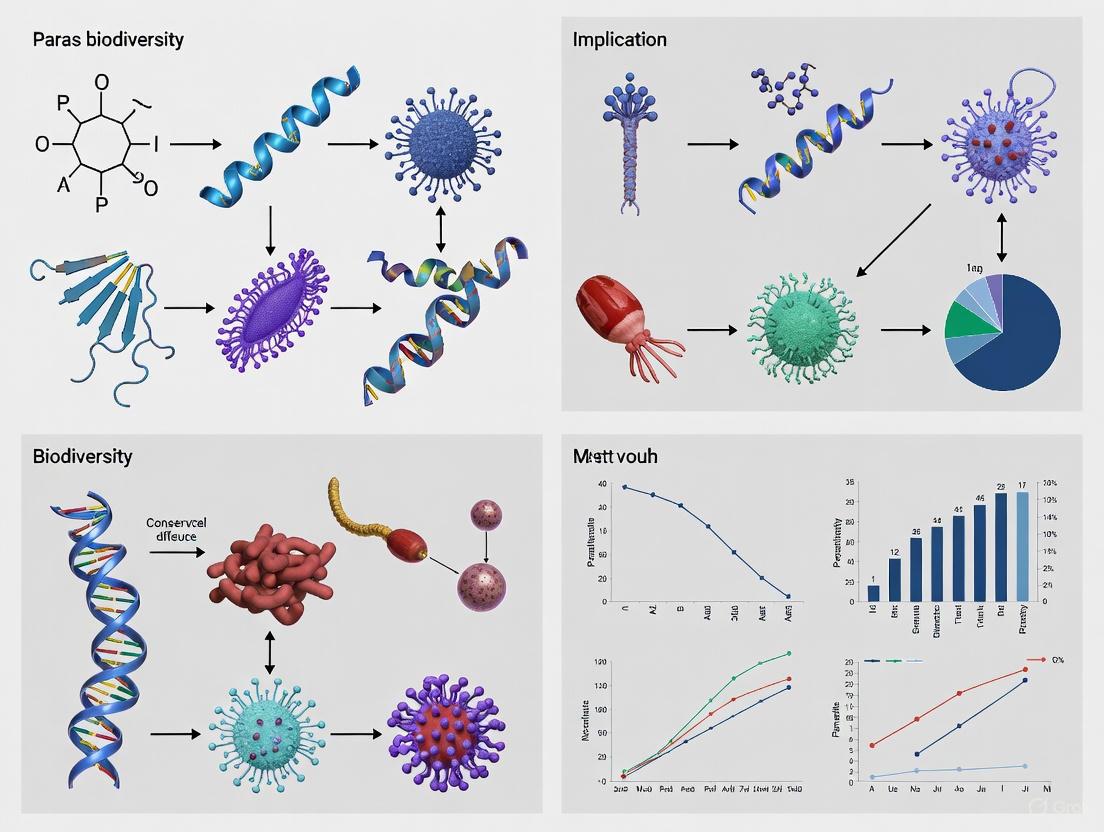
This article synthesizes current research on parasite biodiversity and its conservation, addressing a critical knowledge gap for researchers and drug development professionals.
Parasite Biodiversity Loss: Conservation Challenges and Biomedical Implications in the Era of Coextinction
Abstract
This article synthesizes current research on parasite biodiversity and its conservation, addressing a critical knowledge gap for researchers and drug development professionals. It explores the foundational concept of parasite coextinction, exemplified by recent findings that over 80% of parasite taxa have been lost in endangered host populations. The content examines methodological advances in documenting parasite loss through ancient DNA analysis and computational bioprospecting. It further investigates the paradoxical role of biodiversity in buffering disease and troubleshoots the challenges of integrating parasites into conservation frameworks. Finally, it validates the untapped value of parasitic organisms as a source for novel therapeutic agents, linking conservation imperatives directly to future drug discovery pipelines for neglected tropical diseases.
The Unseen Extinction: Documenting the Scale and Drivers of Parasite Biodiversity Loss
Coextinction represents a critical, yet often overlooked, frontier in the global biodiversity crisis. It is defined as the phenomenon where the loss of one species leads to the secondary extinction of another species that depends on it [1] [2]. For parasites, which constitute a substantial proportion of the planet's biological diversity, this process poses an existential threat. Parasitism is the most common consumer strategy on Earth, and the dependency of parasites on their hosts creates a fundamental vulnerability when host populations decline [3]. The conservation of parasites has historically been neglected in favor of more charismatic fauna, yet a growing body of evidence demonstrates that parasites are ecologically significant and highly susceptible to coextinction events [3] [4]. This technical guide examines the mechanisms and implications of parasite coextinction, framing the issue within the broader context of parasite biodiversity and conservation science.
The Coextinction Mechanism and Parasite Vulnerability
The coextinction process operates through direct and indirect pathways that link parasite survival to host availability. The fundamental mechanism can be visualized as a dependency network where host extinction triggers a cascade of secondary losses.
The vulnerability of parasites to coextinction is primarily governed by two key factors: the rate of host extinctions and the degree of host specificity exhibited by the parasite species [1]. Host specificity refers to the range of host species a parasite can successfully exploit, with specialists (those dependent on a single host species) being at greatest risk. Evidence from eriophyoid mites demonstrates this extreme specialization, where approximately 80% of known species depend on a single host plant species, 95% on a single plant genus, and 99% on a single plant family [1]. This dependency creates a direct pathway to coextinction when host plants disappear.
Parasites face the additional threat of falling below their transmission threshold host population size, which can occur well before host extinction becomes irreversible [3]. This transmission threshold represents the minimum host population density required for parasites to maintain viable populations, making parasites vulnerable to host population declines that may not immediately threaten the hosts themselves.
Table 1: Factors Influencing Parasite Vulnerability to Coextinction
| Factor | Impact Mechanism | Example |
|---|---|---|
| High Host Specificity | Limits adaptability to alternative hosts; complete dependency on single host species | Eriophyoid mites (80% single-host dependent) [1] |
| Complex Life Cycles | Require multiple specific host species; disruption at any stage prevents completion | Trematodes requiring intermediate hosts [3] |
| Low Dispersal Ability | Limits capacity to locate new hosts or populations | Permanent mammalian mites lacking free-living stages [5] |
| Specialized Transmission | Dependent on specific behaviors, ecological interactions, or environmental conditions | Monarch butterfly protozoan requiring larval food plant [6] |
Quantitative Evidence and Case Studies
Eriophyoid Mites and Host Plants
The eriophyoid mites (Prostigmata: Eriophyoidea) present a compelling case study in parasite coextinction risk. These microscopic mites demonstrate extreme host specificity and have been documented from a enormous range of annual and perennial plants [1]. With a global species estimate of at least 250,000, and potentially much higher, this group represents a significant component of global biodiversity that is vulnerable to coextinction. The ongoing destruction of natural habitats, particularly tropical forests, coupled with climate change, poses extreme threats to these mites due to their dependency on host plants [1]. Notably, with approximately one-third of Earth's plant species currently threatened with extinction, the potential for massive coextinction events among eriophyoid mites is substantial [1].
Mammalian Parasitic Mites
Research on permanently parasitic mammalian mites provides quantitative insights into host-parasite relationships and extinction risks. A comprehensive global dataset encompassing 1,984 mite species and 1,432 mammal species reveals critical patterns in parasite host range and vulnerability [5]. Analysis shows that single-host parasites face higher extinction risk as their survival is entirely dependent on their host's persistence [5]. Certain mammalian lineages, including Rodentia (rodents), Chiroptera (bats), and Carnivora, are overrepresented as hosts for mites in the multi-host risk group, highlighting both their vulnerability to parasitic infestations and their potential role as reservoirs for parasites that could shift to new hosts [5].
Table 2: Documented and Projected Coextinction Risks Across Parasite Groups
| Parasite Group | Host Association | Conservation Status | Projected Loss |
|---|---|---|---|
| Eriophyoid Mites | Highly host-specific (80% on single plant species) | Threatened by habitat destruction and climate change | Many thousands of species disappearing in current extinction event [1] |
| Mammalian Mites | Varying specificity; ~50% single-host | Vulnerable to host population declines | Single-host species at higher extinction risk; some predicted to become multi-host [5] |
| Wildlife Parasites (General) | Diverse dependencies | Threatened by ecosystem disturbance, pollution, climate change | Significant proportion threatened or already extinct [3] |
Methodological Framework for Studying Coextinction
Experimental Approaches
Understanding coextinction processes requires both observational studies and controlled experiments. Research on the monarch butterfly (Danaus plexippus) and its protozoan parasite Ophryocystis elektroscirrha (OE) provides a methodological template for investigating host density effects on parasite transmission [6].
Experimental Protocol: Host Density and Parasite Transmission
Host Preparation: Source monarch families from non-inbred genetic stocks. Collect eggs on greenhouse-reared milkweed plants (Asclepias curassavica).
Treatment Assignment: Randomly assign 2nd instar larvae to density treatments:
- Singles: one caterpillar per plant
- Doubles: two caterpillars per plant
- Tens: ten caterpillars per plant
Parasite Exposure: Apply parasite spores at varying doses:
- Control: 0 spores
- Low dose: 10-100 spores (Experiment 1) or 100-1,000 spores (Experiment 2)
- High dose: 100 spores (Experiment 1) or 1,000-10,000 spores (Experiment 2)
Measurement Parameters:
- Infection rates (proportion of infected hosts)
- Parasite load (spore count per infected adult)
- Adult lifespan and morphological characteristics
Statistical Analysis: Compare infection metrics across density treatments to test for foraging dilution effects [6].
This experimental design demonstrated that crowded hosts can reduce per-capita infection risk through foraging dilution, where crowded caterpillars removed more parasites from their environment, thereby lowering individual exposure [6].
Predictive Modeling of Host Range Expansion
Advanced statistical modeling approaches enable prediction of which single-host parasites are most likely to become multi-host, representing a key methodology for anticipating coextinction risks.
Modeling Protocol: Predicting Host Range Expansion
Data Assembly: Compile comprehensive dataset of host-parasite associations (e.g., 1,984 mite species vs. 1,432 mammal species).
Predictor Variables: Incorporate parameters related to:
- Parasite biology (feeding specialization, immune system interaction)
- Host traits (phylogenetic similarity, spatial co-distribution)
- Environmental factors (temperature, humidity, habitat disturbance)
Addressing Data Challenges:
- Implement down-sampling or up-sampling to correct class imbalance
- Apply positive-unlabeled learning to account for unobserved multi-hosts
- Weight data by publication counts to address sampling bias
Model Validation: Use k-fold cross-validation with independent test datasets to evaluate predictive performance.
Risk Assessment: Identify single-host parasite species with high probability of host range expansion and host lineages enriched with risk-group mites [5].
The most effective model identified statistically significant predictors including the parasite's contact level with the host immune system, host phylogenetic similarity, and spatial co-distribution [5].
Table 3: Essential Research Reagents and Methodological Tools
| Research Tool | Application | Function in Coextinction Research |
|---|---|---|
| Host-Parasite Databases | Compilation of known associations | Baseline data for modeling extinction risks and host specificity [5] |
| Molecular Identification | Species delimitation and phylogenetics | Accurate identification of parasite species and evolutionary relationships [5] |
| Environmental Chamber Systems | Controlled experiments | Maintain standardized conditions for host-parasite interaction studies [6] |
| Statistical Modeling Platforms | Predictive analytics | Forecast host range expansion and identify at-risk parasite species [5] |
| Geographic Information Systems | Spatial analysis | Map host distributions and identify areas of high coextinction risk [5] |
Conservation Implications and Future Directions
The conservation of parasitic biodiversity requires a fundamental shift in perspective, recognizing parasites as meaningful conservation targets rather than undesirable entities to be eliminated [3] [4]. Arguments for parasite conservation include their intrinsic value as components of biodiversity, their functional roles in ecosystem processes, and their value as indicators of ecosystem health [4]. Effective conservation strategies must address the unique challenges of preserving species that exist in dependent relationships.
A proposed decision tree for integrating parasites into conservation planning begins with assessing whether the parasite is host-specific, then evaluates the conservation status of required hosts, identifies critical resources needed for parasite transmission, and finally implements targeted conservation actions [4]. This approach emphasizes that conserving parasites requires maintaining access to suitable hosts and the ecological conditions that permit successful transmission [4].
Ecosystem-centered conservation may prove more effective than species-centered approaches for preventing parasite extinctions, as intact ecosystems maintain the complex ecological networks necessary for host-parasite dynamics [4]. However, current criteria for identifying protected areas typically lack information on the ecological conditions required for effective parasite transmission, representing a critical gap in conservation planning [4].
Coextinction represents a potent threat to global parasite biodiversity, with potentially thousands of species disappearing unnoticed as their hosts decline. The vulnerability of parasites to coextinction is primarily determined by their host specificity and the population trajectories of their required hosts. Understanding these linked fates through rigorous experimental and modeling approaches provides the foundation for effective conservation strategies that recognize parasites as integral components of ecological communities. As the biodiversity crisis intensifies, incorporating parasite conservation into broader conservation frameworks becomes increasingly urgent to preserve the ecological and evolutionary processes that sustain life on Earth.
The global biodiversity crisis extends beyond the loss of charismatic vertebrate species to include the less visible, but ecologically significant, decline of parasitic organisms. This case study examines the quantification of historical parasite loss in the critically endangered kākāpō parrot (Strigops habroptila) through ancient DNA (aDNA) analysis, establishing a paradigm for understanding coextinction dynamics. Research indicates that parasite coextinction represents a major, yet underdocumented, component of overall biodiversity loss [7]. As host populations decline, their dependent parasites often face an extinction debt, disappearing even before their hosts do due to diminished transmission opportunities [8] [9]. The kākāpō, with its comprehensive scat and coprolite record spanning centuries of population decline and intensive conservation management, provides an unparalleled model system for quantifying these hidden extinctions through paleogenomic approaches [7].
Results: Quantifying Parasite Loss in the Kākāpō
Magnitude of Parasite Disappearance
Analysis of kākāpō fecal samples revealed a dramatic reduction in parasite diversity between historical and contemporary populations, with over 80% of parasite taxa detected in pre-1990 samples no longer present in modern populations [8] [9]. This represents the loss of 13 of the original 16 parasite taxa identified in the historical record [7].
Table 1: Timeline of Parasite Loss in Kākāpō Populations
| Time Period | Parasite Taxa Present | Parasite Taxa Lost | Cumulative Loss |
|---|---|---|---|
| Pre-1990 (Historical) | 16 | 0 | 0% |
| Pre-1990 to 1990 | 7 | 9 | 56% |
| Post-1990 (Management Era) | 3 | 4 | 81% |
Patterns of Taxon Vulnerability
The research identified differential vulnerability among parasite species, with four of seven recurrent, possibly host-specific parasite taxa (57%) undetected in contemporary samples and potentially extinct [7]. This suggests that specialist parasites with complex life cycles or narrow host ranges face disproportionately higher extinction risk compared to generalist species.
Table 2: Parasite Community Composition Across Time Periods
| Parasite Characteristic | Pre-1990 Community | Contemporary Community | Change |
|---|---|---|---|
| Total Taxa Richness | 16 | 3 | -81% |
| Recurrent/Host-Specific Taxa | 7 | 3 | -57% |
| Taxonomic Diversity | High | Low | Severe reduction |
| Transmission Potential | Stable | Diminished | Significantly reduced |
Experimental Protocols: Methodologies for Ancient Parasite DNA Analysis
Sample Collection and Preservation
The research utilized scats and coprolites from fourteen localities, with samples dating from over 800 years ago to recent specimens [7]. This temporal spread enabled comparison of parasite communities before and after the kākāpō's near-extinction and subsequent intensive management. Proper sample preservation is crucial for aDNA survival, with dry, cool, and stable conditions providing optimal preservation environments.
DNA Extraction and Purification
The sediment DNA (sedaDNA) extraction protocol followed established ancient DNA methodologies with specific modifications for parasite recovery [10] [11]:
- Subsampling: 0.25g of material was subsampled in dedicated ancient DNA facilities to prevent contamination [10] [11].
- Chemical Disruption: Samples were placed in garnet PowerBead tubes with lysis buffer containing 750 μL of 181 mM NaPO₄ and 121 mM guanidinium isothiocyanate [10] [11].
- Mechanical Disruption: Bead beating for 15 minutes physically broke down organo-mineralized content and resilient parasite eggs, significantly improving DNA recovery [10].
- Protein Digestion: Proteinase K was added after bead beating, with tubes continuously rotated in an oven at 35°C overnight [10] [11].
- Inhibitor Removal: Samples were centrifuged at 4500 rpm at 4°C for 6-24 hours to precipitate enzymatic inhibitory compounds common in sediment and fecal samples [10].
- DNA Binding and Elution: Silica-based purification methods following Dabney et al. protocols were used, with final elution in 50 μL elution buffer [10].
Library Preparation and Sequencing
- Double-Stranded Library Construction: DNA libraries were prepared for Illumina sequencing using a double-stranded method with modifications for blunt end repair [10].
- Metabarcoding Approach: Ancient DNA metabarcoding was employed to target and amplify parasite-specific genetic markers across multiple samples [7].
- Microscopic Analysis: Complementary microscopic examination of samples provided morphological confirmation of parasite remains and enabled a multimethod approach to parasite identification [7].
Data Analysis and Authentication
- Metagenomic Classification: Initial screening assigned sequencing reads to taxonomic groups.
- Damage Pattern Authentication: Characteristic ancient DNA damage patterns were used to distinguish authentic ancient sequences from modern contamination [12].
- Reference Database Comparison: Curated, decontaminated reference databases are essential for accurate parasite identification, as standard databases often contain contaminated sequences that yield false positives [13].
Diagram 1: Ancient Parasite DNA Analysis Workflow. This flowchart illustrates the major steps in recovering and analyzing parasite DNA from historical specimens, from sample collection through data interpretation.
The Scientist's Toolkit: Essential Research Reagents and Materials
Table 3: Key Research Reagents and Materials for Ancient Parasite DNA Studies
| Reagent/Material | Function | Application Notes |
|---|---|---|
| Guanidinium Isothiocyanate | Chemical disruption of cells and nucleoproteins | Component of lysis buffer for releasing DNA from complex matrices [10] |
| Proteinase K | Protein digestion | Breaks down structural proteins and nucleases after mechanical disruption [10] [11] |
| Silica Columns | DNA binding and purification | Selective binding of DNA while removing PCR inhibitors [10] |
| Garnet PowerBeads | Mechanical disruption | Physical breakdown of tough parasite eggs and sediment matrices [10] |
| NaPO₄ Buffer | Lysis buffer component | Maintains optimal pH and ionic conditions for DNA release [10] |
| Illumina Sequencing Chemistry | High-throughput sequencing | Enables parallel sequencing of multiple samples [10] |
| Parasite-Specific Primers | Target enrichment | Amplification of parasite DNA from complex mixtures [7] |
| ParaRef Database | Taxonomic reference | Decontaminated reference database for accurate parasite identification [13] |
Technical Considerations and Methodological Challenges
Contamination Management in Reference Databases
The pervasive issue of contamination in public genome databases presents significant challenges for accurate parasite detection. Recent research has demonstrated that over 50% of scaffold-level and contig-level parasite genome assemblies contain contaminating sequences, with some assemblies consisting entirely of contaminant DNA from bacteria or host species [13]. The development of decontaminated reference databases like ParaRef, created by systematically screening 831 published endoparasite genomes, significantly reduces false detection rates and improves overall detection accuracy in metagenomic studies [13].
Multimethod Validation
Relying solely on genetic approaches may provide an incomplete picture of historical parasite communities. Studies comparing microscopy, ELISA, and sedimentary ancient DNA demonstrate that a multimethod approach provides the most comprehensive reconstruction of parasite diversity [10] [11]. Microscopy proves most effective for identifying helminth eggs, ELISA provides superior sensitivity for detecting protozoa that cause diarrhea, while sedimentary DNA analysis can identify additional taxa and confirm species identification [11].
Diagram 2: Multimethod Validation Strategy. A combined approach utilizing complementary techniques provides the most comprehensive assessment of historical parasite communities, leveraging the unique advantages of each methodology.
Implications for Parasite Biodiversity and Conservation
The kākāpō case study demonstrates that vertebrate population declines can result in permanent parasite loss, with unknown consequences for host health and ecosystem functioning [7]. The research documented that parasite extinctions may be far more prevalent than previous estimates suggested, highlighting the need for a "global parasite conservation plan" to address these hidden losses [8] [9].
From a conservation perspective, these findings reveal that even successfully recovering host populations may harbor only fractions of their original parasite communities [8]. This has potential implications for host immune system development, as parasites may help with immune function and compete to exclude more harmful parasites [8] [9]. The kākāpō paradigm thus provides a quantitative framework for assessing coextinction risk across endangered species worldwide and emphasizes the importance of considering dependent organisms in conservation planning.
The intricate and often fragile relationships between hosts and their parasites are being fundamentally reshaped by anthropogenic global change. Invasive species and habitat loss and fragmentation (HLF) act as synergistic "threat multipliers," disrupting co-evolved interactions and vacating ecological niches for parasites [14] [15]. While often perceived negatively, parasites are integral components of ecosystem biodiversity, contributing to stable food webs and regulating host populations [16]. The erosion of this parasitic fauna through the vacated niche phenomenon carries profound implications for ecosystem health, disease dynamics, and conservation outcomes.
This technical guide synthesizes current research to delineate the mechanistic pathways through which invasive species and HLF vacate parasite niches. We frame these processes within the broader context of parasite biodiversity conservation, providing researchers and drug development professionals with a foundational understanding of the underlying ecological theory, key methodological approaches for its study, and the consequent implications for disease emergence and ecosystem management.
Theoretical Frameworks and Key Hypotheses
Understanding host-parasite dynamics in changing environments requires a synthesis of several ecological hypotheses, which provide predictive frameworks for research and intervention.
The Vacated Niche Hypothesis
The Vacated Niche Hypothesis posits that the extinction, elimination, or loss of a parasite species leaves an ecological niche open that can be invaded and exploited by another species, most likely a taxonomically or ecologically similar parasite [14]. This hypothesis draws on the principle that related parasite species compete more strongly for resources within hosts, including direct competition for space and nutrients and indirect immune-mediated competition [14]. The niche overlap among related parasites suggests that host susceptibility to one parasite is likely similar for its relatives, enabling a new parasite to exploit the host more successfully in the absence of competitors. This hypothesis moves beyond classic case studies (e.g., smallpox eradication and subsequent monkeypox concerns) to establish a general pattern in parasite community assembly [14].
The Enemy Release Hypothesis
The Enemy Release Hypothesis (ERH) is a cornerstone of invasion ecology, stating that invasive species are successful, in part, because they escape natural enemies—including parasites—from their native range [14] [17]. This release from regulation often facilitates rapid population growth and expansion of the invader. The ERH is intrinsically linked to the Vacated Niche Hypothesis, as the process of parasite loss (enemy release) creates the vacated niches that can subsequently be filled by new parasite acquisitions [14].
Synthesizing the Frameworks
These hypotheses are not mutually exclusive but represent interconnected stages in a dynamic process. Enemy release through parasite loss creates vacated niches. The filling of these niches through the acquisition of new parasites can then lead to transient enemy release, where the initial competitive advantage of the invader is gradually eroded [14]. Furthermore, habitat fragmentation can disrupt the delicate co-evolutionary arms race between hosts and parasites, potentially pushing one or both parties toward extinction and creating further vacant niche space [15]. The conceptual relationship between these drivers and outcomes is illustrated in Figure 1.
Figure 1. Conceptual model of threat multiplier pathways. This diagram illustrates the logical relationships showing how primary anthropogenic drivers lead to vacated parasite niches and ecological consequences, integrating the Enemy Release and Vacated Niche hypotheses.
Quantifying Niche Vacancy: Methodologies and Experimental Approaches
Robust, multi-faceted methodologies are required to detect and quantify vacated parasite niches and their consequences.
Macroecological Analysis and Taxonomic Null Modeling
Large-scale analyses of host-parasite associations across native and invasive ranges provide powerful evidence for niche vacancy dynamics.
Data Acquisition and Preparation:
- Primary Data Source: The Global Mammal Parasite Database (GMPD) is a core resource, containing meticulously curated records of parasite associations for terrestrial mammals [14] [18].
- Host-Parasite Fate Classification: For each invasive host species, parasites are categorized into four fates based on their presence across the host's native and introduced ranges:
- Retention: Parasites carried with the host during invasion.
- Loss: Parasites not carried with the host during invasion.
- Acquisition: Parasites newly picked up by the host post-invasion.
- Non-acquisition: Parasites not picked up by the host post-invasion [14].
- Net Enemy Release Calculation: The difference in parasite species richness between the native and invasive ranges is calculated to test for net enemy release [14].
Taxonomic Null Modeling: This novel analytical approach tests whether acquired parasites are taxonomically more similar to lost parasites than expected by chance.
- Taxonomic Tree Construction: For each parasite group (arthropods, bacteria, helminths, protozoa, viruses), a taxonomic tree is built based on their Linnaean classification [18].
- Pairwise Distance Calculation: The taxonomic distance between each lost parasite and each acquired parasite is computed.
- Null Distribution Generation: Random sets of parasites are drawn from the regional pool to create a null distribution of expected pairwise taxonomic distances.
- Z-score Calculation: A z-score is computed to determine if the observed mean distance between lost and acquired parasites is significantly smaller than the null expectation, indicating taxonomic replacement [14] [18].
Table 1: Key Quantitative Findings from Macroecological Studies
| Study System | Key Metric | Finding | Implication |
|---|---|---|---|
| Invasive Terrestrial Mammals [14] | Net Parasite Richness | Significant reduction in parasite species richness in invasive ranges | Supports the Enemy Release Hypothesis |
| Invasive Terrestrial Mammals [14] | Null Model Z-score | Significantly negative z-scores across multiple parasite taxa | Acquired parasites are taxonomically similar to lost ones, supporting the Vacated Niche Hypothesis |
| Cane Toad (Rhinella marina) [19] | Realized Niche Overlap (Schoener's D) | Low niche equivalence (D = 0.28) between native and invasive ranges | Demonstrates a realized niche shift in the invaded range |
Individual-Based Simulation of Coevolutionary Dynamics
Computational models are essential for studying how HLF affects coevolutionary processes that are otherwise impossible to observe directly.
Model Framework for Cuckoo-Host Brood Parasitism: This individual-based model simulates the antagonistic coevolution between a brood parasite (e.g., common cuckoo, Cuculus canorus) and its host, incorporating both stochastic inheritance and reinforcement learning [15].
Key Parameters and Initialization:
- Virtual Populations: Construct virtual cuckoo and host groups with parameters for lifespan, egg number, and behavioral probabilities (e.g., parasitism success, host rejection) [15].
- Stochastic Processes: Incorporate natural variability using:
- Truncated normal distributions for probabilistic parameters (e.g., hatching rates).
- Truncated Weibull distributions for long-tailed variables (e.g., lifespan).
- Truncated Poisson distributions for discrete variables (e.g., egg number) [15].
Simulation Workflow: The simulation proceeds iteratively over a given number of years, modeling key biological processes. Figure 2 outlines the core workflow and its integration with habitat constraints.
Figure 2. Coevolutionary simulation workflow. This experimental workflow diagrams the key processes in an individual-based simulation model for studying how habitat loss and fragmentation (HLF) affects host-parasite coevolution, based on cuckoo-host systems.
Application to HLF: The model is run under different habitat scenarios (intact, moderate HLF, severe HLF). The primary finding is that severe HLF significantly narrows the range of host rejection rates that allow for the stable coexistence of both cuckoos and hosts, thereby increasing the extinction risk for the parasite and disrupting the coevolutionary arms race [15].
Experimental Manipulation of Parasitism and Competition
Controlled experiments are critical for establishing causality and elucidating the mechanisms underlying patterns observed in the field.
Protocol: Effects of Parasitism on Invasive vs. Native Plant Competition [20]
Objective: To test whether the parasitic plant Cuscuta grovonii differentially affects the competitive abilities of invasive and native host plants.
Experimental Design:
- Factors: The experiment employs a fully factorial design with three factors:
- Host Plant Invasive Status: Three invasive species vs. three native congeners.
- Parasitism: Presence or absence of the parasitic plant Cuscuta grovonii.
- Competition Status: Host plant grown alone or in competition with a native competitor (Coix lacryma-jobi).
- Replication: Six replicates per treatment combination [20].
Key Procedures:
- Plant Cultivation: Host plants and the competitor are grown from seeds or cuttings in a standardized substrate under controlled greenhouse conditions.
- Parasitism Treatment: Four weeks after transplantation, a 10 cm stem of C. grovonii is wound around the stems of host plants in the parasitism treatment group.
- Harvest and Measurement: Aboveground biomass of all plants is harvested, dried, and weighed after a predetermined growth period [20].
Data Analysis:
- Relative Competition Intensity (RCI): Calculated as
(Biomass_alone - Biomass_competition) / Biomass_aloneto measure the impact of competition on a plant's growth. - Deleterious Effect (DE): Calculated as
(Biomass_parasitized - Biomass_unparasitized) / Biomass_unparasitizedto quantify the harm caused by the parasite [20].
Key Finding: Parasitism increased the competitive ability of invasive plants but did not affect that of native plants, suggesting that parasitic plants can inadvertently facilitate plant invasion by differentially impacting competitors [20].
The Scientist's Toolkit: Research Reagent Solutions
Table 2: Essential Research Materials and Reagents for Studying Vacated Niches
| Tool / Reagent | Primary Function | Specific Application Example |
|---|---|---|
| Global Mammal Parasite Database (GMPD) | Provides structured, global data on host-parasite associations for macroecological analysis. | Serves as the primary data source for analyzing parasite retention, loss, and acquisition in invasive mammals [14] [18]. |
| WorldClim Bioclimatic Variables | Supplies high-resolution global climate data for ecological niche modeling. | Used to extract bioclimatic data for ecoregions associated with native and invasive host ranges to control for environmental effects [18]. |
| PanTHERIA Database | A comprehensive database of life history, ecology, and geographic traits for mammals. | Provides species-level trait data (e.g., body mass, litter size) for use as covariates in enemy release analyses [18]. |
| Molecular Assays (e.g., PCR, NGS) | Enables precise taxonomic identification of parasites and detection of co-infections. | Critical for identifying host-specific parasites in conservation contexts and for studying parasite community composition [16]. |
| R Statistical Environment | An open-source platform for statistical computing and graphics. | The core software used for data cleaning, analysis, null modeling, and visualization in contemporary parasitology research [18]. |
Implications for Parasite Biodiversity and Conservation
The vacated niche phenomenon directly threatens parasite biodiversity, necessitating a paradigm shift in conservation science.
- Co-extinction Risk: Host-specific parasites are particularly vulnerable to co-extinction if their host population declines or disappears. Many such parasites may be lost before they are even known to science, especially those associated with endangered hosts [16].
- Conservation Translocations: Translocating endangered hosts presents an opportunity for holistic conservation that includes their parasites. Success in co-translocating parasites has been variable, driven by factors that are not yet fully predictable, highlighting a critical need for integrated monitoring and reporting [16].
- Shifting Perceptions and Practice: Effective parasite conservation requires reshaping public and scientific perceptions to recognize parasites as intrinsic components of biodiversity. Initiatives like the Global Parasitologist Coalition are developing innovative science communication tools—such as parasite personality quizzes and trading cards—to bridge the gap between ecological research and public understanding [16].
Invasive species and habitat fragmentation act as potent threat multipliers, driving the vacancy and subsequent taxonomic reshuffling of parasite niches through defined ecological pathways. The interplay of the Enemy Release and Vacated Niche hypotheses provides a robust framework for understanding these complex dynamics, which can be quantitatively investigated through macroecological null modeling, individual-based simulations, and controlled experimentation.
The implications extend beyond pure ecology to influence emerging infectious disease risk, the success of biocontrol efforts, and the design of effective conservation strategies. A proactive approach to research, integrating the methodologies detailed in this guide, is essential for predicting and mitigating the consequences of these changes. Ultimately, the conservation of ecosystem health in the Anthropocene will depend on our ability to conserve not only the hosts but also their diverse and ecologically significant parasitic fauna.
Parasites have historically been overlooked in ecology, often perceived as mere consumers that negatively impact their hosts. However, a paradigm shift is occurring as research reveals their profound influence on ecosystem structure and function. Parasitism represents the most widespread life-history strategy in nature, arguably more common than traditional predation as a consumer lifestyle [21]. Despite constituting approximately 40% of described species [22], parasites have been conspicuously absent from traditional ecological models and conservation frameworks. This whitepaper synthesizes current understanding of parasitic biodiversity and its functional significance, arguing for a systematic re-evaluation of parasites as integral components of ecosystem diversity beyond their biomass contributions alone.
The ecological interactions of parasites often challenge observation, as many live secretively in intimate contact with their hosts [21]. This cryptic nature has historically led to the assumption that parasites play less important roles in community ecology than free-living organisms. Yet advances in disease ecology demonstrate that parasites exert influences that equal or surpass those of free-living species in shaping community structure [21]. This document frames parasite diversity within broader biodiversity and conservation research, providing technical guidance for researchers and drug development professionals seeking to understand the complex roles these organisms play in ecosystem functioning.
The Ecological Significance of Parasites
Parasites as Regulators of Ecosystem Processes
Parasites function as critical regulators across multiple levels of ecological organization, from host individuals to entire ecosystems. Their effects extend beyond host pathology to include mediating species interactions, energy flow, and nutrient cycling.
Trophic Interactions: Parasites engage in specialized predation and serve as important prey sources. Predators on islands in the Gulf of California are significantly more abundant on islands with sea bird colonies because they feed on bird ectoparasites [21]. This demonstrates how parasites can represent substantial energy flows within food webs despite their small size and cryptic nature.
Food Web Architecture: Incorporating parasites into food webs dramatically alters web topology. In a California salt marsh food web, parasites were involved in 78% of all links and increased connectance estimates by 93% [21]. This enhanced complexity has potential implications for web stability and challenges the traditional Eltonian pyramid model, suggesting parasites may occupy the pinnacle when their feeding above host levels is considered [21].
Ecosystem Energetics: Contrary to assumptions of negligible contribution, parasite biomass can be substantial at ecosystem scales. In some estuarine systems, parasite biomass is comparable to that of top predators, with yearly productivity of trematode parasites exceeding bird biomass [21]. Similarly, plant fungal pathogen biomass equals that of herbivores in grassland ecosystems, with top-down control by pathogens more important than herbivory in predicting grass biomass [21].
Table 1: Quantitative Assessments of Parasite Functional Significance
| Ecosystem Role | System | Measurement | Impact | Source |
|---|---|---|---|---|
| Food Web Complexity | California Salt Marsh | Link Involvement | Parasites involved in 78% of links | [21] |
| Biomass Comparison | Estuarine Systems | Trematode Productivity | Higher than bird biomass | [21] |
| Population Control | African Ungulates | Rinderpest Elimination | Herbivore populations increased several-fold | [22] |
| Primary Production Regulation | Minnesota Grasslands | Fungal Pathogen Effects | Stronger control than herbivory | [21] |
Biodiversity Mediation Through Parasitism
Parasites significantly influence biodiversity through multiple mechanisms, with effects that can be both negative and positive depending on ecological context.
Parasite-Mediated Competition: Parasites alter competitive outcomes between host species. A classic example involves the displacement of red squirrels by grey squirrels in Britain, potentially facilitated by a parapoxvirus [21]. The virus infects both species, but native red squirrels experience severe effects while invasive grey squirrels show minor symptoms, reducing local biodiversity through competitive exclusion.
Coexistence Facilitation: Conversely, parasites can promote biodiversity by allowing competitively inferior species to persist. On St. Maarten, Anolis gingivinus outcompetes Anolis wattsi except where the dominant lizard is heavily parasitized by Plasmodium azurophilum [21]. This suggests malaria reduces competitive ability, enabling coexistence.
Keystone Species Effects: The ecological impacts of parasites are particularly pronounced when they infect keystone species. Caribbean Diadema urchins experienced mass mortality from microbial pathogens, eliminating their roles as grazers and bioeroders [21]. This triggered a phase shift from coral- to algal-dominated reefs, demonstrating how parasites can indirectly restructure entire ecosystems.
The introduction and subsequent removal of rinderpest in African ungulates provides another compelling example. Following its eradication, herbivore abundance increased dramatically, triggering increases in predator populations, reductions in fire frequency due to more efficient grazing, and a shift from grassland to woodland ecosystems [22]. The Serengeti transformed from a carbon source to a carbon sink, illustrating profound ecosystem-level consequences of parasite removal [22].
Quantitative Assessment of Parasite Diversity
The Scale of Unrecognized Diversity
The true extent of parasite diversity remains largely unknown, with current estimates suggesting the majority of species await discovery and description. Helminth parasites alone demonstrate this knowledge gap, with global totals estimated at 100,000–350,000 species, of which 85–95% are unknown to science [23]. This staggering lack of description has profound implications for understanding ecosystem complexity and function.
Analysis of accumulation curves for helminth parasites reveals no evidence of a slowing description rate, indicating we remain far from a complete catalogue [23]. Since 1897, an average of 163 helminth species have been described annually, with a linear trend (R² = 0.991, p < 0.001) showing no sign of approaching an asymptote [23]. At current rates, comprehensive sampling and description would require centuries, highlighting the immense scale of the task.
Table 2: Global Diversity Estimates for Helminth Parasites of Vertebrates
| Taxonomic Group | Estimated Global Richness | Proportion Undescribed | Notes | Source |
|---|---|---|---|---|
| Helminths (total) | 100,000–350,000 species | 85–95% | Endoparasites only | [23] |
| Nematodes | Not specified | Majority | Potential for 80M+ species of nematode parasites of arthropods | [23] |
| Amphibian/Reptile Parasites | Not specified | Most poorly described | Sampling priority | [23] |
| Bird/Bony Fish Parasites | Not specified | Majority of undescribed species | Largest pool of unknown diversity | [23] |
Biases in Research Effort
Research on parasite diversity suffers from significant taxonomic and geographical biases that limit comprehensive understanding. Analysis of over 2,500 helminth species reveals that research effort correlates with factors unrelated to ecological significance [24].
Taxonomic Bias: Descriptions of acanthocephalans and nematodes receive more citations than other helminths, while cestodes are less frequently mentioned in literature [24]. This creates uneven knowledge bases across taxonomic groups.
Host Conservation Status: Helminths infecting host species of conservation concern receive less research attention, likely due to constraints associated with working with threatened animals [24]. This creates a critical gap in understanding parasites in vulnerable ecosystems.
Geographical Disparities: Research effort correlates negatively with human population size of the country where a species was discovered, though not with economic strength [24]. This suggests sampling biases toward less populated regions regardless of economic development.
Description Practices: Species originally described by many co-authors subsequently attract more research effort than those described by few authors [24], indicating sociological factors influence scientific attention.
Most concerning is the finding that the majority of parasite species are not studied again after their initial discovery and description [24]. This lack of follow-up research severely limits understanding of parasite ecology, evolution, and ecosystem function.
Methodological Approaches for Parasite Biodiversity Research
Molecular Genetic Tools for Parasite Identification
Modern parasitology employs sophisticated molecular techniques to characterize parasite diversity, moving beyond traditional morphological approaches. These methods have revolutionized our ability to identify species, strains, and phylogenetic relationships.
Molecular Workflow for Parasite Diversity Studies
Microsatellite Analysis Protocol: Microsatellite loci provide abundant, putatively neutral, and highly polymorphic genetic markers ideal for analyzing parasite diversity [25]. The following protocol is adapted from Plasmodium falciparum genetic diversity studies:
Sample Collection: Obtain dried blood spots or tissue samples from infected hosts [25].
DNA Extraction: Use commercial kits (e.g., DNeasy Blood and Tissue extraction kit, Qiagen) following manufacturer protocols [25].
Semi-nested PCR Amplification: Amplify 12 microsatellite loci (Poly A, PfG377, TA81, ARA2, TA87, TA40, TA42, 2490, TA1, TA60, TA109, PfPk2) using fluorescently labeled primers [25].
Fragment Analysis: Pool labeled PCR products for electrophoresis on genetic analyzers (e.g., ABI 3500XL Genetic Analyzer) [25].
Data Processing: Use peak scanning software (e.g., PeakScanner, GeneMarker) to determine allele lengths and peak heights [25]. Consider minor peaks >20% the height of the predominant peak as multiple alleles.
Population Genetic Analysis: Calculate expected heterozygosity (He), allelic richness (Ar), effective alleles (Ne), and differentiation indices (Fst) using specialized software (e.g., GENALEX, ARLEQUIN, FSTAT) [25].
Key Genetic Metrics:
- Expected Heterozygosity (He): Probability of infection by two parasites with different alleles at a locus, calculated as He = n/(n-1), where n = number of isolates, p = allele frequency [25].
- Fixation Index (Fst): Measures population divergence, with values 0-0.05 indicating little differentiation, 0.05-0.15 moderate, and 0.15-0.25 great differentiation [25].
- Linkage Disequilibrium: Non-random association of alleles across loci, typically weaker in high-transmission regions due to frequent recombination [25].
Essential Research Reagents and Tools
Table 3: Research Reagent Solutions for Parasite Biodiversity Studies
| Reagent/Tool | Specific Example | Function | Application Context |
|---|---|---|---|
| DNA Extraction Kit | DNeasy Blood & Tissue Kit (Qiagen) | Nucleic acid purification | General parasite DNA isolation [25] |
| Microsatellite Primers | 12 P. falciparum loci (Poly A, PfG377, etc.) | Genetic marker amplification | Population genetics, strain differentiation [25] |
| Genetic Analyzer | ABI 3500XL System | Fragment separation and detection | High-resolution genotyping [25] |
| Analysis Software | GENALEX, ARLEQUIN, FSTAT | Population genetic statistics | Diversity quantification, structure analysis [25] |
| Museum Collections | US National Parasite Collection | Reference specimens | Taxonomic validation, historical comparisons [23] |
| Host-Parasite Databases | NHM Host-Parasite Database | Occurrence records | Distribution patterns, host associations [23] |
Conservation Implications and Future Directions
The Case for Parasite Conservation
The conservation of parasite biodiversity presents both ethical and practical challenges, yet compelling arguments support their inclusion in conservation planning.
Intrinsic Value: From an ecological perspective, parasites possess objective intrinsic value due to their evolutionary heritage and potential, independent of human valuation [26]. This philosophical foundation suggests parasites deserve protection equally with their hosts when equally endangered.
Ecosystem Services: Parasites contribute to supporting, regulating, and provisioning ecosystem services through their roles in population regulation, nutrient cycling, and community organization [26]. They can act as biological indicators of ecosystem health due to their sensitivity to environmental change [26].
Functional Roles: Evidence demonstrates that parasites mediate predatory and competitive interactions, shape community structure and diversity, enhance food web complexity, and influence energy flow [26]. Loss of parasite diversity potentially disrupts these critical functions.
The extinction of the California condor louse (Colpocephalum californici) during captive breeding efforts illustrates the conservation dilemma [26]. The investment of over $115 million across 35 years saved one free-living species but cost one parasitic species, raising questions about conservation priorities and the ecological consequences of single-species parasite extinction.
Threats to Parasite Diversity
Parasites face numerous threats with extinction rates potentially exceeding those of their hosts, yet they remain dramatically underrepresented on threatened species lists.
Invasive Species Impact: Invasive mammals reduce parasite diversity by replacing native hosts, supporting the "vacated niche hypothesis" [27]. Invasive mammals typically carry fewer parasite species than native counterparts, causing declines in parasites adapted to native hosts [27].
Host Population Declines: As host species decrease in abundance and distribution, their specific parasites face heightened extinction risk. This co-extinction process represents a largely hidden biodiversity crisis [28].
Habitat Fragmentation: Parasites with complex life cycles requiring multiple hosts are particularly vulnerable to habitat disruption that interferes with transmission pathways [26].
Climate Change: Alterations in temperature and precipitation regimes affect parasite development rates, survival, and transmission, potentially eliminating species unable to adapt or shift distributions [29].
Threats and Conservation Strategies for Parasite Diversity
Research Priorities and Framework
Addressing knowledge gaps in parasite ecology and conservation requires strategic research investment and methodological innovation.
Global Parasite Project: Inspired by initiatives like the Human Genome Project and Global Virome Project, a coordinated global effort could transform parasitology by inventorying parasite diversity at an unprecedented pace [23]. Such an endeavor would require substantial funding but yield invaluable baseline data.
Standardized Methodologies: Developing and implementing standardized sampling protocols, molecular techniques, and data curation standards would enable meaningful cross-system comparisons and meta-analyses [23] [25].
Integrated Conservation Planning: Effective parasite conservation requires maintaining access to suitable hosts and ecological conditions that permit successful transmission [26]. Ecosystem-centered conservation may prove more effective than species-centered approaches.
Parasite-Function Relationships: Research should focus on quantifying how specific parasite taxa influence ecosystem processes and services, moving beyond general observations to mechanistic understanding [29].
The thought experiment of "a world without parasites" reveals potential consequences extending from host individuals to populations, communities, and entire ecosystems [22]. While many uncertainties remain, available evidence suggests such a world would differ profoundly from current reality, emphasizing the need to incorporate parasitic diversity into comprehensive biodiversity conservation strategies.
Parasites represent a critical yet understudied component of global biodiversity with profound influences on ecosystem structure and function. Moving beyond biomass-based assessments to recognize their roles as regulators of trophic interactions, mediators of competition, and contributors to ecosystem stability provides a more comprehensive understanding of ecological complexity. The staggering proportion of undocumented parasite diversity, coupled with biases in research effort and significant threats from environmental change, underscores the urgency of focused research and conservation attention.
For researchers and drug development professionals, understanding parasite diversity extends beyond academic interest to practical applications in disease management, ecosystem health assessment, and conservation prioritization. Integrating parasites into ecological models and conservation frameworks will require methodological innovations, standardized approaches, and coordinated global efforts. By re-evaluating parasites as essential components of ecosystem diversity rather than mere pathogens, we advance toward a more complete understanding of the ecological networks that sustain life on Earth.
Advanced Tools for a Hidden World: Genomic, Computational, and Ecological Methods in Parasitology
Paleoparasitology represents a critical interdisciplinary field at the intersection of archaeology, parasitology, and ecology, dedicated to recovering and analyzing parasite remains from archaeological materials and museum specimens. This discipline provides unparalleled insights into the evolutionary history of parasites, their historical distribution, and their long-term relationships with host populations [30]. The value of this research extends far beyond historical documentation; it offers fundamental data for understanding contemporary parasite biodiversity and informing conservation strategies [27]. As modern ecosystems face rapid changes due to human activity, climate change, and species invasions, paleoparasitological data provide crucial baseline information on pre-industrial parasite diversity and host-parasite coevolutionary relationships.
The field has demonstrated particular relevance to the "vacated niche hypothesis" in conservation biology, which posits that invasive species replacing native hosts can dramatically reduce parasite diversity due to host-specificity in many parasite lineages [27]. Recent research confirms that invasive mammals typically carry fewer parasite species compared to their native counterparts, leading to an overall reduction in parasite diversity as native hosts disappear [27]. This erosion of parasite biodiversity represents a significant yet often overlooked conservation concern, as parasites play vital ecological roles in regulating host populations, maintaining ecosystem stability, and contributing to overall biodiversity [27]. This whitepaper provides researchers and drug development professionals with comprehensive methodological guidance for reconstructing historical parasite communities, framing these techniques within contemporary parasite biodiversity and conservation implications research.
Core Materials and Sample Types
Archaeological Source Materials
Paleoparasitological investigations utilize specific archaeological and historical materials to extract parasite evidence. The most common sources include:
- Coprolites: Preserved or desiccated feces from humans and animals, which provide direct evidence of intestinal parasites [31]. These represent the most abundant source material for intestinal parasite studies.
- Mummified Remains: Both natural and intentional mummies, from which pelvic soil, visceral tissues, and intestinal contents can be sampled [30] [32].
- Skeletal Remains: Soil samples collected from the pelvic region and skull or foot areas of skeletons (the latter serving as control samples) [32].
- Sediment Samples: Environmental samples from latrines, middens, and occupation layers containing parasite eggs [33].
Museum Specimens
Historical biological collections, including preserved hosts in museum collections, provide complementary materials for studying more recent parasitological changes and validating molecular techniques [33].
Table 1: Paleoparasitological Sample Types and Their Applications
| Sample Type | Primary Analysis | Key Parasites Recoverable | Limitations |
|---|---|---|---|
| Human Coprolites | Microcopy, ELISA, aDNA | Helminths, Protozoa (e.g., Giardia, Cryptosporidium) | Limited to intestinal parasites; taphonomic bias [31] |
| Animal Coprolites | Microscopy, aDNA | Zoonotic parasites, wildlife parasites | Host identification challenges; ecological context required [31] |
| Mummy Visceral Tissues | Microscopy, immunohistochemistry, aDNA | Tissue-dwelling parasites (e.g., Trypanosoma cruzi) | Rare survival of soft tissues; invasive sampling [30] |
| Pelvic Soil Samples | Microscopy, aDNA | Common helminths (e.g., Ascaris, Trichuris) | Contamination risk; control samples essential [32] |
| Sediment Samples | Microscopy, ELISA | Environmental parasite stages | Difficult to associate with specific hosts [33] |
Critical Methodological Approaches
Conventional Microscopy Techniques
The foundation of paleoparasitology remains the microscopic identification of parasite eggs, larvae, and cysts, leveraging their remarkable preservation potential in archaeological contexts.
- Rehydration-Homogenization-Micro-sieving (RHM) Protocol: This standard approach begins with rehydration in aqueous tri-sodium phosphate solution (0.5% for 48+ hours), followed by homogenization and sequential micro-sieving with meshes typically ranging from 250μm to 20-25μm to concentrate parasite remains [33] [31]. For protozoan parasites like Cryptosporidium with small oocysts (4-6μm), modifications are required as the standard 20-25μm mesh would retain these elements.
- Brightfield Optical Microscopy: Standard light microscopy remains the primary tool for identifying helminth eggs based on size, shape, ornamentation, and biological origin [32]. This technique successfully identified thirty Ascaridida eggs in pelvic samples from 6 individuals (6.7-30% of samples) from Late Iron Age Italian necropolises [32].
- Quantitative Microscopy - Eggs Per Gram (EPG): EPG quantification provides crucial data about infection intensity and enables paleoepidemiological studies [31]. This method applies statistical techniques to estimate parasite prevalence and pathological potential in ancient populations, allowing comparison between archaeological and modern clinical data [31].
Molecular and Immunological Techniques
Advanced molecular methods have dramatically expanded paleoparasitological capabilities, particularly for protozoan parasites that leave minimal microscopic evidence.
- Ancient DNA (aDNA) Analysis: PCR-based amplification of parasite DNA fragments enables species-specific identification and phylogenetic studies [30] [33]. This approach was successfully validated through experimental "mummification" of infected mice at 40°C until complete desiccation, establishing protocols later applied to archaeological material [30]. Paleogenetic analysis complements microscopic examination, though taphonomic factors can limit DNA recovery [32].
- Enzyme-Linked Immunosorbent Assay (ELISA): Immunodiagnostic techniques detect parasite-specific antigens in archaeological remains, proving particularly valuable for protozoan identification [30] [33]. ELISA kits have successfully detected Entamoeba histolytica in ancient samples, revealing its circulation in Western Europe since at least the Neolithic period (5,700 years BP) [33].
- Immunodiagnostic Standardization: Ongoing research focuses on standardizing immunodiagnostic techniques for specific parasites like Leishmania species and developing serological methods for antigen detection in archaeological remains [30].
Table 2: Molecular and Immunological Techniques in Paleoparasitology
| Technique | Target | Sensitivity | Applications | Key Findings |
|---|---|---|---|---|
| PCR | Parasite aDNA fragments | High with preservation | Species identification, evolutionary history | Confirmed T. cruzi infection in 3,500-year-old Brazilian remains [30] |
| ELISA | Parasite antigens | Moderate to High | Protozoan detection (e.g., Giardia, Entamoeba) | Tracked E. histolytica from Neolithic Europe to pre-Columbian Americas [33] |
| Microscopy with Staining | Egg morphology | Limited by preservation | Helminth identification, quantification | Revealed hookworm in pre-Columbian coprolites, questioning Bering Strait migration [30] |
| Whole Genome Sequencing | Complete parasite genomes | Limited by aDNA fragmentation | Evolutionary studies, virulence factors | Emerging approach with technical challenges [33] |
Research Reagent Solutions and Essential Materials
Successful paleoparasitological research requires specific reagents and materials tailored to ancient and historical samples.
Table 3: Essential Research Reagents and Materials for Paleoparasitology
| Reagent/Material | Composition/Type | Function | Application Notes |
|---|---|---|---|
| Tri-Sodium Phosphate Solution | 0.5% aqueous solution | Rehydrates desiccated coprolites and tissues | 48+ hour rehydration standard; enables microscopic analysis [31] |
| Micro-sieving Meshes | 250μm, 160μm, 20-25μm mesh sizes | Concentrates parasite remains by size | Smaller meshes (≤5μm) needed for Cryptosporidium recovery [33] |
| PCR Master Mix | Custom formulations for aDNA | Amplifies degraded DNA fragments | Requires optimization for inhibitor-rich archaeological samples [30] |
| ELISA Kits | Commercial or custom antibody preparations | Detects parasite-specific antigens | Validated for Entamoeba histolytica, Giardia duodenalis [33] |
| DNA Extraction Kits | Silica-column or solution-based | Isulates aDNA from coprolites, tissues, sediments | Must accommodate co-extraction of PCR inhibitors [30] |
| Mounting Media | Glycerol, chemical fixatives | Preserves samples for microscopy | Maintains structural integrity of parasite elements [31] |
Experimental Workflows and Visualization
Integrated Paleoparasitology Workflow
The following workflow diagram illustrates the comprehensive approach to analyzing archaeological materials for parasite evidence, incorporating both traditional and molecular methods:
Pathoecological Analysis Framework
Understanding ancient parasite transmission requires reconstructing the ecological context of parasite-host relationships, as visualized below:
Data Interpretation and Paleoepidemiological Applications
Quantitative Analysis and Overdispersion
A significant advancement in paleoparasitology has been the adoption of quantitative epidemiological approaches, particularly the analysis of parasite overdispersion - the phenomenon where the majority of parasites aggregate in a minority of host populations [31].
- Negative Binomial Distribution: Analysis of coprolites from La Cueva de los Muertos Chiquitos demonstrated that 66% of samples were negative for pinworms, while the ten samples with the highest EPG counts contained 76% of the eggs, mirroring the overdispersion pattern observed in modern clinical studies [31].
- Comparative Paleoepidemiology: Korean studies comparing Joseon Dynasty (1400s-1800s) parasitological data with late 20th-century surveys found consistent distributions of Trichuris trichiura and Ascaris lumbricoides between periods, but higher prevalence and broader distribution of trematodes in ancient times, with hookworm emerging only after the Joseon Dynasty [31].
- Infection Intensity and Pathology: EPG quantification enables estimation of infection intensity and its health implications in past populations, connecting parasitological data with skeletal indicators of stress and disease [31].
Conservation Implications and Biodiversity Research
Paleoparasitological data provide critical insights for contemporary conservation biology, particularly regarding parasite biodiversity loss and ecosystem health.
- Vacated Niche Hypothesis: Invasive mammals carry fewer parasite species than native counterparts, reducing overall parasite diversity as they replace native hosts [27]. This represents a significant biodiversity loss with potential ecosystem consequences.
- Baseline Biodiversity Establishment: Paleoparasitology establishes pre-industrial parasite diversity baselines, essential for measuring anthropogenic impact on parasite communities and understanding coevolutionary histories [27].
- Parasite Conservation Significance: Parasites play vital ecological roles in regulating host populations, maintaining ecosystem stability, and contributing to overall biodiversity, making their conservation an important consideration [27].
Paleoparasitology has evolved from primarily documenting parasite presence to sophisticated quantitative analyses of infection patterns in historical contexts. The integration of microscopic, molecular, and immunological techniques enables comprehensive reconstruction of historical parasite communities, providing unprecedented insights into parasite-host relationships through time. For contemporary researchers and conservation professionals, this historical perspective offers crucial baseline data for understanding current parasite biodiversity loss and its ecosystem implications. As invasive species continue to alter ecosystems worldwide, displacing native hosts and their specific parasites, paleoparasitological data become increasingly valuable for informing conservation strategies that consider the complete ecosystem, including parasitic organisms. The methodological framework outlined in this whitepaper provides researchers with the tools necessary to generate robust data on historical parasite communities, contributing to both scientific understanding of parasite evolution and practical conservation applications in an rapidly changing world.
The accurate characterization of parasite communities is fundamental to understanding infectious disease dynamics, ecosystem health, and the evolutionary history of host-parasite interactions. Traditional morphological methods, while foundational, are often limited by taxonomic resolution, sensitivity, and throughput. The advent of high-throughput sequencing has revolutionized this field, with metabarcoding and shotgun metagenomics emerging as the two primary molecular approaches for profiling parasite diversity across ancient and modern samples [34] [35]. These methods are particularly powerful for studying complex assemblages of eukaryotic endosymbionts—including helminths, protozoa, and other parasites—in both clinical and archaeological contexts [36].
Metabarcoding, a PCR-based approach, amplifies and sequences a short, standardized genomic region to identify taxa present in a sample. In contrast, metagenomics involves the direct, untargeted sequencing of all DNA fragments, providing a potentially unbiased view of the entire genetic content [37] [38]. This technical guide provides an in-depth comparison of these methodologies, details optimized experimental protocols, and discusses their applications and limitations within the broader context of parasite biodiversity research and conservation.
Core Technological Principles and Comparative Analysis
Methodological Workflows
The fundamental workflows for metabarcoding and metagenomics differ significantly, from initial sample processing to final data analysis, each with distinct advantages and challenges. The following diagram illustrates the key steps and decision points in each pathway.
Performance Comparison and Selection Criteria
The choice between metabarcoding and metagenomics involves trade-offs between specificity, sensitivity, cost, and analytical scope. The table below summarizes their core characteristics based on comparative studies.
Table 1: Core Characteristics of Metabarcoding and Metagenomics for Parasite Detection
| Feature | Metabarcoding | Shotgun Metagenomics |
|---|---|---|
| Core Principle | Targeted amplification of a specific DNA barcode region (e.g., 18S V4/V9) [39] [36] | Untargeted sequencing of all DNA in a sample [37] |
| Key Strength | High sensitivity for specific taxa; cost-effective for large sample sets [39] | Freedom from PCR bias; detection of unknown/unexpected parasites; potential for genomic and functional analysis [37] [38] |
| Primary Limitation | PCR amplification bias; primer complementarity issues; limited to targeted taxa [37] [38] [36] | High cost for sufficient sequencing depth; vast majority of sequences unassignable due to limited reference databases [37] [38] |
| Taxonomic Resolution | Species to genus level, dependent on barcode region [39] [36] | Species to strain level, dependent on reference database quality [13] |
| Best Application Context | High-throughput screening for known parasite groups; paleoparasitology with well-preserved aDNA [34] [40] | Discovery of novel parasites; detailed community analysis without primer bias; studies of parasite function and evolution [37] [13] |
The performance differences between these methods have significant practical implications. A comparative study on marine sediment cores spanning 8000 years found limited taxonomic overlap, with only three metazoan genera detected by both methods [37]. Furthermore, metabarcoding detections became inconsistent in samples older than 2000 years, while metagenomics provided more consistent detection throughout the time series, highlighting its potential for ancient DNA (aDNA) studies where DNA is highly fragmented [37]. Conversely, in dietary analysis of pipefishes, metabarcoding failed to detect key copepod species due to amplification bias, a limitation overcome by metagenomics [38].
Optimized Experimental Protocols
Metabarcoding: The VESPA Protocol for Eukaryotic Endosymbionts
The VESPA (Vertebrate Eukaryotic endoSymbiont and Parasite Analysis) protocol represents an optimized metabarcoding workflow designed specifically for host-associated eukaryotes [36]. The key steps are:
- DNA Extraction: Employ a robust extraction method suitable for the sample type (e.g., feces, sediment). For bulk soil nematode communities, elutriation from large soil quantities (up to 500g) is recommended before extraction to increase sensitivity [40].
- PCR Amplification: Use the VESPA primer set targeting the 18S rRNA V4 region. The primers were selected for:
- Broad Taxonomic Coverage: Effective across helminths, protozoa, and microsporidia.
- Minimal Off-Target Amplification: Specifically designed to avoid amplification of host and prokaryotic DNA, which can dominate samples and consume sequencing resources [36].
- Library Preparation and Sequencing: Follow standard Illumina MiSeq library preparation protocols. The V4 region is optimally suited for the read length constraints of MiSeq v2 chemistry [36].
- Bioinformatic Analysis: Process sequences using standard pipelines (e.g., QIIME 2) for denoising, chimera removal, and clustering into Amplicon Sequence Variants (ASVs) [39] [36]. Taxonomic assignment requires a curated reference database.
Metagenomics: A Curated Database Workflow
Shotgun metagenomics for parasites requires careful wet-lab and computational steps to ensure reliable results [34] [13]:
- Library Preparation without Amplification: To avoid PCR bias, library preparation is performed directly on fragmented genomic DNA. This is crucial for capturing the true composition of the community [37].
- High-Depth Sequencing: Sequence to a sufficient depth (often hundreds of millions of reads) to detect low-abundance parasite DNA, which may represent a tiny fraction of the total DNA in a sample [37].
- Reference Database Curation: This is a critical step. The pervasive contamination in public parasite genome databases can lead to false positives. Use a decontaminated database like ParaRef, a curated resource of 831 endoparasite genomes systematically cleaned of contaminant sequences using FCS-GX and Conterminator tools [13]. This significantly reduces false detection rates.
- Taxonomic Profiling: Map sequencing reads against the curated database for species-level identification. For aDNA, tools like
mapDamagecan be used to authenticate ancient sequences by examining cytosine deamination patterns at fragment ends [34].
Essential Research Reagents and Tools
Successful implementation of these molecular approaches relies on a suite of specific reagents, reference materials, and computational tools.
Table 2: The Scientist's Toolkit for Parasite Metagenomics and Metabarcoding
| Category | Item | Specific Example / Properties | Function & Importance |
|---|---|---|---|
| Primers | 18S rRNA V4 Primers | VESPA primers [36] | Optimized for broad coverage of vertebrate eukaryotic endosymbionts with minimal off-target amplification. |
| 18S rRNA V9 Primers | 1391F / EukBR [39] | An alternative barcode region used for general eukaryotic screening. | |
| Nematode-specific 18S | NF1/18Sr2b [40] | Provides optimal coverage and taxonomic resolution for soil or gut nematode communities. | |
| Reference Databases | Curated Parasite Database | ParaRef [13] | A decontaminated database of 831 endoparasite genomes; crucial for reducing false positives in metagenomics. |
| Custom NCBI Extractions | NCBI nucleotide database (18S rRNA subset) [39] | Used for building custom taxonomic classifiers for metabarcoding. | |
| Standards & Kits | Mock Community Standards | Cloned 18S V4 plasmids from 11 parasite species [39] [36] | Essential for validating and optimizing metabarcoding protocols and assessing PCR bias. |
| DNA Extraction Kit | For soil/sediment (e.g., Fast DNA SPIN Kit for Soil) [34] [39] | Robust lysis for recalcitrant parasite eggs and environmental samples. | |
| Bioinformatic Tools | Sequence Processing | QIIME 2, DADA2, Cutadapt [34] [39] | Demultiplexing, quality filtering, denoising, and chimera removal. |
| Contamination Screening | FCS-GX, Conterminator [13] | Identifies and removes contaminant sequences from reference genomes and sample data. | |
| aDNA Authentication | mapDamage [34] | Evaluates damage patterns to confirm the ancient origin of DNA sequences. |
Implications for Biodiversity and Conservation Research
The application of metabarcoding and metagenomics is reshaping our understanding of parasite biodiversity and its conservation implications.
- Reconstructing Historical Baselines: Paleoparasitology using these methods on archaeological samples (e.g., cesspits, coprolites) provides long-term time series data on parasite communities [34] [37]. This helps establish historical baselines, track species' responses to past environmental changes, and understand the evolution of human-parasite interactions, informing predictions of future dynamics under climate change.
- Soil Health Monitoring: Molecular-based nematode community analysis offers a powerful bioindicator for soil health. Metabarcoding-derived Nematode-based Indices (NBIs) can be applied at large scales to monitor the impacts of agricultural practices and land-use change on ecosystem functioning [40].
- Conservation of Endangered Species: Dietary analysis of endangered species via fecal samples (e.g., the estuarine pipefish) reveals critical ecological requirements and potential interspecific competition, guiding habitat restoration and conservation strategies [38].
- Combating Anthelmintic Resistance: In veterinary and human medicine, these tools enable precise monitoring of parasite populations. They can identify the emergence of multi-species infections and detect genetic markers of anthelmintic resistance, which is critical for managing drug efficacy and preserving treatment options [35].
Metabarcoding and metagenomics are complementary pillars in the modern parasitologist's toolkit. Metabarcoding remains the most cost-effective method for targeted, high-throughput surveillance of known parasite assemblages. In contrast, shotgun metagenomics, empowered by curated databases like ParaRef, offers an unbiased approach for discovery-based research and functional insights, despite its higher cost and computational demands.
The choice between them must be guided by the specific research question, sample type, and available resources. As reference databases continue to improve and sequencing costs decline, the integration of both approaches will undoubtedly provide the most holistic view of parasite diversity. This integrated molecular perspective is essential for advancing our fundamental knowledge of parasite ecology and for informing effective, evidence-based conservation and public health interventions.
Parasitic diseases represent a significant and persistent global health burden, disproportionately affecting low- and middle-income regions across Latin America, Africa, and Asia [41]. Diseases such as malaria, soil-transmitted helminthiases, schistosomiasis, leishmaniasis, and human African trypanosomiasis cause substantial morbidity, mortality, and long-term disability [42]. Despite this immense burden, the pipeline for new antiparasitic drugs remains limited, a challenge exacerbated by the complexity of parasite biology, the emergence of drug resistance, and the high costs associated with traditional drug discovery pathways [41] [42].
Within this context, natural products (NPs) offer a chemically diverse and biologically validated resource for antiparasitic drug discovery. Historically, NPs have played a decisive role in this field, providing bioactive scaffolds from plants, fungi, and microorganisms [41] [42]. However, the traditional process of isolating, characterizing, and optimizing NPs is often slow, resource-intensive, and hampered by structural complexity [41]. Concurrently, the field of parasitology is undergoing a paradigm shift, recognizing parasites not merely as pathogens but as integral components of ecosystem biodiversity. The loss of parasite species, driven by factors such as invasive species outcompeting native hosts, can disrupt ecological balance and reduce parasite diversity, with consequences that are only beginning to be understood [27] [43]. This evolving perspective underscores the need for precise therapeutic strategies that target detrimental parasites while conserving ecological function.
The integration of advanced computational methodologies presents a transformative strategy to accelerate antiparasitic drug discovery from NPs. The convergence of artificial intelligence (AI), molecular modeling, and structural bioinformatics is creating a new frontier: computational bioprospecting. This approach enables the rapid in-silico screening, prioritization, and optimization of NP-derived lead compounds, making the discovery process more efficient and sustainable [41] [44] [45]. By leveraging these tools, researchers can bridge the rich chemical diversity of nature with modern drug design, potentially expediting the development of novel therapies while fostering a more nuanced approach to parasite management that acknowledges their ecological roles.
Computational Foundations for Antiparasitic Discovery
The application of computational methods in antiparasitic drug discovery relies on a foundation of specialized techniques that predict how small molecules interact with biological targets at an atomic level. These methods can be broadly categorized into structure-based and ligand-based approaches, each with distinct strengths.
Structure-Based Drug Design (SBDD)
SBDD utilizes the three-dimensional structure of a macromolecular target, typically derived from X-ray crystallography or homology modeling, to identify and optimize potential drugs [46].
Molecular Docking: This technique predicts the preferred orientation (pose) and binding affinity (score) of a small molecule within a target's binding site. The binding affinity is often estimated by a scoring function that sums various energy terms:
ΔGbinding = ΔGgauss + ΔGrepulsion + ΔGhydrophobic + ΔGhydrogenbonding + ΔGtorsional [46]
Software like AutoDock Vina and RosettaVS are widely used. RosettaVS, for instance, incorporates receptor flexibility and an improved scoring function (RosettaGenFF-VS) that combines enthalpy (ΔH) and entropy (ΔS) calculations, leading to superior performance in virtual screening benchmarks [47].
Molecular Dynamics (MD) Simulations: MD simulations model the physical movements of atoms and molecules over time, providing insights into the stability and dynamic behavior of protein-ligand complexes. Using software packages like GROMACS with force fields such as AMBER, researchers can simulate complexes in a solvated environment, validating the stability of docking predictions and capturing induced-fit conformational changes [46].
Ligand-Based and AI-Driven Approaches
When target structural data is limited, ligand-based methods and AI models offer powerful alternatives.
- Pharmacophore Modeling: This approach identifies the essential steric and electronic features responsible for a molecule's biological activity, which can be used for virtual screening of compound libraries [41].
- AI-Assisted Molecular Generation: AI models can design new drug-like molecules or optimize existing NPs. These are divided into two categories:
- Target-Interaction-Driven Models: Use protein-ligand complex data to guide targeted structural modifications. Examples include DeepFrag, which suggests molecular fragments to improve binding affinity [45].
- Molecular Activity-Data-Driven Models: In cases of unknown targets, these models predict activity and guide structural modifications based on the structure-activity relationships of known active molecules. Frameworks like ScaffoldGVAE and SyntaLinker are capable of "scaffold hopping" to discover novel chemotypes [45].
Integrated Workflow for Computational Bioprospecting
A robust, multi-stage computational workflow is essential for efficiently navigating from a vast virtual chemical space to a handful of high-priority experimental candidates. The following diagram and table outline this integrated process.
Diagram 1: Integrated AI-Driven Workflow for NP-Based Antiparasitic Discovery
Table 1: Key Stages in the Computational Bioprospecting Workflow
| Stage | Key Objectives | Representative Tools/Methods | Output |
|---|---|---|---|
| 1. Target Identification & Preparation | Select and prepare a validated parasitic target protein (e.g., NS3 protease, NS5B polymerase). Obtain 3D structure via PDB or homology modeling (MODELLER, I-TASSER). Define the binding site [46]. | MODELLER, I-TASSER, PDB, UniProt | Prepared 3D protein structure for simulation |
| 2. Library Curation | Compile diverse, drug-like virtual libraries of natural products and synthetic derivatives for screening [42]. | ZINC database, NP-specific databases (e.g., COCONUT, SuperNatural) | Curated library of candidate molecules |
| 3. AI-Accelerated Virtual Screening | Rapidly screen billions of compounds. VS-Express (VSX) mode performs initial fast docking. Active Learning trains a model to select promising candidates for VS-High Precision (VSH) mode, which incorporates full receptor flexibility [47]. | RosettaVS, OpenVS platform, AutoDock Vina, AI-based active learning | A prioritized list of hit compounds |
| 4. Binding Affinity & Stability Validation | Refine and validate top hits using Molecular Dynamics (MD) simulations. Calculate binding free energy via methods like MM-GBSA to assess stability and interaction strength [41] [46]. | GROMACS, AMBER, MM-GBSA | Validated, stable protein-ligand complexes |
| 5. AI-Driven Lead Optimization | Optimize hit compounds for greater potency and druggability. Use AI models for "group modification" or "scaffold hopping" to generate novel analogs with improved properties [45]. | DeepFrag, DEVELOP, ScaffoldGVAE, SyntaLinker | A set of optimized lead candidates |
| 6. Experimental Validation & Feedback | Synthesize or procure top lead candidates for in vitro and in vivo testing against parasites. Experimental results feed back into computational models to improve future design cycles [45]. | High-throughput screening, phenotypic assays | Biologically validated lead compounds |
Experimental Protocols for Computational-Experimental Translation
For researchers aiming to validate computational predictions, detailed and reliable experimental protocols are crucial. Below is a generalized protocol for evaluating the in vitro efficacy of computationally identified hits against protozoan parasites.
In Vitro Antiplasmodial Activity Assay
Objective: To determine the half-maximal inhibitory concentration (IC50) of a candidate compound against the blood stages of Plasmodium falciparum.
Materials:
- Plasmodium falciparum cultures (e.g., 3D7 strain)
- Test compounds (identified from virtual screening)
- Reference drugs (e.g., artemisinin, chloroquine)
- Complete RPMI 1640 culture medium
- Sorbitol
- SYBR Green I fluorescent nucleic acid stain
- 96-well black microplates
- CO2 incubator
- Fluorescence plate reader
Methodology:
- Parasite Culture Synchronization: Synchronize asynchronous P. falciparum cultures using 5% sorbitol to obtain a population of primarily ring-stage parasites.
- Compound Preparation: Prepare serial dilutions of the test and reference compounds in complete culture medium, typically spanning a range from 100 µM to 1 nM.
- Assay Setup: In a 96-well plate, add 100 µL of the synchronized parasite culture (at 1-2% parasitemia and 2% hematocrit) to wells containing 100 µL of the compound dilutions. Include control wells with no drug (growth control) and no parasites (blank).
- Incubation: Incub the plate for 72 hours at 37°C in a gaseous environment of 5% CO2, 5% O2, and 90% N2.
- Parasite Growth Quantification: a. After incubation, freeze the plate at -80°C for at least 4 hours to lyse the erythrocytes. b. Thaw the plate and add 100 µL of a SYBR Green I solution (diluted in lysis buffer) to each well. c. Incubate the plate in the dark for 1 hour. d. Measure the fluorescence (excitation ~485 nm, emission ~535 nm) using a plate reader.
- Data Analysis: Calculate the percent inhibition of parasite growth for each compound concentration relative to the untreated control wells. Plot the dose-response curve and calculate the IC50 value using non-linear regression analysis (e.g., four-parameter logistic curve fit) in software such as GraphPad Prism.
This high-throughput assay, adapted from established phenotypic screening methods, provides a direct measure of a compound's antiparasitic potency and is a critical first step in experimental validation [44].
Successful computational bioprospecting relies on a suite of software tools, databases, and experimental reagents. The following table details key resources for building an integrated discovery pipeline.
Table 2: Essential Research Reagents and Computational Tools
| Category | Item | Function & Application |
|---|---|---|
| Computational Tools & Platforms | OpenVS Platform | An open-source, AI-accelerated virtual screening platform that integrates active learning to efficiently screen billion-compound libraries [47]. |
| RosettaVS | A state-of-the-art physics-based docking protocol within OpenVS, featuring VSX and VSH modes for high-accuracy pose and affinity prediction [47]. | |
| GROMACS | A molecular dynamics simulation package used to simulate the dynamic behavior of protein-ligand complexes and calculate binding free energies [46]. | |
| DeepFrag & ScaffoldGVAE | AI molecular generation models for lead optimization via fragment-based growth and scaffold hopping, respectively [45]. | |
| Databases | Protein Data Bank (PDB) | Primary repository for 3D structural data of proteins and nucleic acids, used for obtaining target structures and docking templates [46]. |
| ZINC Database | A freely available database of commercially available compounds for virtual screening, containing over 230 million molecules [46] [47]. | |
| UniProt | A comprehensive resource for protein sequence and functional information, used for target sequence retrieval and analysis [46]. | |
| Experimental Reagents | Recombinant Parasitic Enzymes | Purified target proteins (e.g., PfNS3 protease, TbNMT) for biochemical inhibition assays and structural studies (e.g., X-ray crystallography) [47]. |
| Plasmodium falciparum Cultures | Continuous in vitro cultures of the malaria parasite for phenotypic screening of antimalarial activity [42]. | |
| SYBR Green I Assay | A fluorescent DNA-binding dye used in high-throughput assays to quantify parasite growth and viability in a 96-well format [44]. |
Implications for Parasite Biodiversity and Conservation
The advancement of computational bioprospecting must be contextualized within a modern, holistic understanding of parasitology. Parasites constitute a substantial proportion of Earth's biodiversity and play critical, yet underappreciated, roles in ecosystem stability. They can regulate host population growth, influence energy flow, and contribute to competitive dynamics that maintain community diversity [16] [43].
The "vacated niche hypothesis" illustrates a direct threat to this diversity. Invasive mammal species, which often carry a lower diversity of parasites, can outcompete and replace native host species. This leads to a dramatic loss of parasite species that were uniquely adapted to those native hosts, resulting in a net reduction of parasite diversity at the ecosystem level [27]. Such co-extinction events represent a silent but significant biodiversity crisis.
Precision drug discovery, powered by computational methods, aligns with the goals of parasite conservation in two key ways:
- Target Specificity: By enabling the design of drugs that act on highly specific molecular targets unique to a pathogenic parasite, these approaches minimize the risk of off-target effects on non-target parasite species, which can be ecologically important [43].
- Conservation-Informed Prioritization: The computational workflow allows for the strategic prioritization of drug targets against parasites that are genuine threats to human and animal health, while implicitly advocating for the conservation of the vast majority of parasite species that are neutral or beneficial to ecosystem health [16].
Integrating social science is also critical for overcoming barriers to parasite conservation. Misconceptions of risks, taxonomic biases, and differing conservation values can hinder support [43]. Science communication initiatives, such as the Global Parasitologist Coalition's "Phenomenal Parasites" cards and parasite personality quizzes, are vital for reshaping public perceptions and fostering appreciation for parasite conservation [16]. A cohesive philosophical basis for why and which parasites should be conserved is necessary to guide these efforts and ensure that drug discovery and conservation are seen as complementary, not opposing, forces [43].
Computational bioprospecting represents a paradigm shift in the fight against parasitic diseases. By leveraging the synergistic power of AI, molecular modeling, and natural product chemistry, this approach offers an unprecedentedly efficient path to discovering and optimizing novel antiparasitic agents. The integrated workflow—from AI-accelerated screening of vast chemical libraries to AI-driven structural optimization—dramatically shortens the discovery timeline and enhances the success rate of identifying viable lead compounds.
As this field advances, it is imperative to frame progress within the broader context of parasite biodiversity and ecosystem health. The same computational tools that enable precise targeting of pathogenic parasites also provide the means to understand and appreciate the ecological roles of their non-pathogenic relatives. Embracing an interdisciplinary strategy that combines cutting-edge computational drug discovery with ecology, social science, and conservation ethics will ensure that our efforts to combat disease also contribute to the preservation of the intricate and vital tapestry of global biodiversity.
Parasites, traditionally overlooked in conservation, are increasingly recognized as critical indicators of ecosystem health and biodiversity. The integration of parasite surveys into conservation health assessments provides a powerful tool for monitoring environmental change, tracking ecosystem dynamics, and informing management strategies. This technical guide outlines the conceptual frameworks, field methodologies, and data analysis techniques required to effectively embed parasitological data into conservation science. Framed within the broader context of parasite biodiversity research, this document provides researchers, scientists, and drug development professionals with the protocols and tools necessary to advance this interdisciplinary field.
The Conceptual Framework: Parasites as Ecosystem Sentinels
The foundational principle of this approach is that parasite communities are sensitive biomarkers of environmental stress and ecological integrity. The IMPACT project (Integrated Monitoring of Parasites in Changing Environments), active from 2024-2026, exemplifies this paradigm, aiming to integrate parasites into aquatic biodiversity monitoring directives and environmental decision-making [48]. This project and others establish that shifts in parasite prevalence, diversity, and community composition can signal broader changes in the ecosystem, often before those changes become apparent in host population surveys.
Key conservation implications of parasite biodiversity research include:
- Trophic Network Indicators: The complex life cycles of many parasites make them effective proxies for food web structure and connectivity.
- Host Population Health: Parasite load and diversity can reflect the immunocompetence and nutritional status of host species.
- Ecosystem Perturbation: Environmental stressors, such as pollution and climate change, can directly and indirectly alter host-parasite dynamics, making parasites valuable bioindicators.
Quantitative Foundations of Parasite Ecology
Effective monitoring requires a clear understanding of core quantitative metrics. The following table summarizes the key parameters and their significance in conservation assessments.
Table 1: Key Quantitative Metrics for Parasite Monitoring in Conservation
| Metric | Definition | Conservation Significance & Example |
|---|---|---|
| Prevalence | The proportion of hosts in a sample infected with a specific parasite [49]. | Indicates the commonness of a parasite; low prevalence may signal ecosystem imbalance or host population decline. |
| Intensity | The number of parasites of a specific species within a single infected host. | High intensity can suggest host immunocompromise or high environmental contamination; used in monitoring helminths like Wuchereria bancrofti [50]. |
| Species Richness | The total number of different parasite species within a host population. | A measure of parasite biodiversity; often correlates with overall ecosystem health and host diversity. |
| Population Density | A risk factor identified in studies, where living in rural areas (population <40,000) was a moderate risk factor for certain parasitic infections [49]. | Informs surveillance targeting; populations in high-risk settings may require more frequent or intensive monitoring. |
Field and Laboratory Methodologies
Integrated Field Survey Protocols
A multi-pronged approach to data collection ensures robust and comprehensive data.
- Host Examination and Sample Collection: Standardized necropsies or non-invasive sampling (feces, blood) from target host species are fundamental. The Terrestrial Parasite Tracker (TPT) project highlights the importance of digitizing host:parasite interaction data from specimens, which is crucial for understanding relationship dynamics [51].
- Environmental DNA (eDNA) Sampling: This emerging method is being critically evaluated for its ability to provide a holistic overview of fish parasite communities. Key methodological considerations from ongoing research (IMPACT project, WP3) include [48]:
- Sample Types: Comparative analysis of water versus sediment samples.
- Filtration: Optimization of filter types and pore sizes for different parasite taxa.
- Volume: Determination of optimal water volumes for adequate detection.
- Primer Development: Creating eDNA-suited primers and filling gaps in public reference databases.
Diagnostic and Laboratory Workflow
Modern parasitology testing relies on an integrated system of hardware and software. The core building blocks include [52]:
- Hardware: Microscopes, centrifuges, and automated analyzers for sample preparation and examination.
- Software: Laboratory Information Systems (LIS) for tracking samples and recording results. Advanced systems incorporate artificial intelligence (AI) algorithms to recognize parasite structures in images, reducing human error.
- Interoperability: The use of standards like HL7 and FHIR facilitates seamless data exchange between laboratory instruments and electronic health records, creating a connected healthcare and research environment.
The following diagram illustrates a generalized workflow for an integrated parasitology survey, from field collection to data integration.
Data Management and Analysis
Navigating the Vector Data Ecosystem
Parasite data is often part of a larger "Vector Data Ecosystem," comprising numerous databases and aggregation efforts. Key characteristics of this ecosystem include [51]:
- Accessibility: Ranges from fully open to partially limited due to privacy, ownership, or resource constraints.
- Interoperability: The ability of different database efforts to work together is crucial for tracking a specimen through its entire data lifecycle.
- Major Databases: Fully accessible resources include:
- GBIF (Global Biodiversity Information Facility): A worldwide index for species occurrence records, containing millions of vector and parasite records [51].
- VectorBase: A long-standing, extensive resource for genomic and other data related to invertebrate vectors of human pathogens [51].
- Terrestrial Parasite Tracker (TPT): An NSF-funded project to digitize arthropod ectoparasite specimens and integrate data into GBIF [51].
Quantitative Modeling for Conservation Goals
Mathematical models are essential tools for interpreting survey data and informing policy. The NTD Modelling Consortium provides a template for using models to validate control strategies, evaluate new tools, and guide end-game goals for elimination [50]. For conservation, models can:
- Predict Trends: Incorporate climatic and ecological data to forecast changes in parasite distribution and impact [53].
- Assess Intervention Impact: Evaluate the potential success of different management strategies in achieving specific conservation goals, such as reducing parasite-driven morbidity in a keystone species.
- Identify Key Transmission Groups: Models often highlight the importance of population groups that are at highest risk of infection or re-infection, and who may not be accessing interventions, acting as a reservoir [50].
The following diagram outlines the specific eDNA analysis workflow for detecting parasite communities, as used in contemporary research projects.
The Scientist's Toolkit: Essential Research Reagents & Materials
Table 2: Key Research Reagent Solutions for Parasitology Surveys
| Item | Function & Application |
|---|---|
| Automated Analyzers | Hardware for preparing and examining biological samples with high throughput, reducing human error [52]. |
| eDNA Suited Primers | Specially designed primers for PCR amplification of parasite DNA from environmental samples; a key focus of current development to fill database gaps [48]. |
| High-Throughput Screening Tests (e.g., EIA, PCR) | Enzyme Immunoassays (EIAs) and Polymerase Chain Reaction (PCR) tests used for efficient screening of common parasites like Giardia and Cryptosporidium, optimizing lab resource allocation [49]. |
| Laboratory Information System (LIS) | Software vital for tracking samples, recording results, and maintaining compliance with health standards; often integrated with AI for image analysis [52]. |
| Digital Microscopes with AI | High-resolution imaging systems that use artificial intelligence algorithms to recognize and identify parasite structures in samples, increasing throughput and accuracy [52]. |
| Interoperability Standards (HL7/FHIR) | Data standards that enable seamless exchange of laboratory and parasitology data between different instruments and electronic health record systems [52]. |
Conservation in Conflict: Navigating the Practical and Ethical Challenges of Parasite Preservation
Parasites are traditionally viewed through a public health lens as agents of disease to be eradicated. However, a paradigm shift is occurring in ecological science that recognizes parasites as essential components of ecosystems that contribute significantly to biodiversity and play critical roles in ecological stability [16]. This whitepaper examines the dilution effect, a phenomenon wherein increased biodiversity buffers against pathogenic parasites, reducing disease transmission and impact. The dilution effect represents a powerful ecological mechanism that can be leveraged for practical disease management while advancing a more holistic approach to conservation that includes parasite biodiversity.
The scientific community now recognizes that only approximately 4% of known parasites can infect humans, with the majority serving critical ecological roles such as regulating host populations and mediating species coexistence [54]. Despite this, parasites remain dramatically understudied and underrepresented in conservation efforts, with only about 10% of parasite species identified and characterized [54]. This knowledge gap presents both a challenge and an opportunity for researchers and drug development professionals seeking to understand and harness host-parasite interactions for ecosystem health and human benefit.
Theoretical Foundations of the Dilution Effect
Ecological Mechanisms
The dilution effect hypothesis proposes that increased biodiversity reduces disease risk through several interconnected mechanisms. In diverse communities, competent host species become diluted among numerous less competent or incompetent hosts, creating ecological barriers to transmission [55]. This occurs because parasites, particularly specialists, encounter reduced opportunities for successful transmission when their specific hosts are dispersed within a richer community of non-hosts.
Theoretical models based on multi-host susceptible-infected-recovered (SIR) frameworks demonstrate that dilution effects are most pronounced in frequency-dependent transmission scenarios, where infection rates depend on the proportion of infected individuals rather than absolute density [56]. Under density-dependent transmission, the dilution effect depends critically on community assembly patterns, appearing most strongly in substitutive communities where total host abundance remains constant while diversity increases [56].
Higher-Order Interactions
Recent theoretical work has revealed that higher-order interactions – where the presence of a third species modifies interactions between two others – significantly influence dilution dynamics [56]. These interactions can either enhance or diminish the dilution effect depending on the ecological context:
- Negative higher-order interactions: Neighboring species impede pathogen transmission, potentially enhancing dilution effects or neutralizing amplification effects.
- Positive higher-order interactions: Neighboring species facilitate pathogen transmission, potentially diminishing dilution effects or creating amplification effects [56].
Modeling suggests that the strength and direction of these higher-order interactions can even reverse expected disease-diversity relationships, helping explain the context-dependency observed in empirical studies [56].
Experimental Evidence and Key Studies
Plant Community Experiments
A comprehensive 2023 study provided robust empirical evidence linking pathogen dilution to biodiversity-ecosystem function relationships [55]. The researchers integrated field biodiversity manipulations with greenhouse assays and feedback modeling to demonstrate that specialist pathogen dilution drives productivity benefits in diverse plant communities.
Table 1: Key Findings from Plant Diversity-Pathogen Study
| Research Component | Experimental Approach | Key Finding |
|---|---|---|
| Field Biodiversity Manipulation | Planted 18 prairie species across richness levels (1-6 species) and phylogenetic groupings | Above-ground productivity increased with planted species richness (F₃,₂₃₆ = 25.7, p < 0.0001) |
| Microbial Community Analysis | Sequenced soil and root samples for bacteria, fungi, AMF, and oomycetes | Fungal and oomycete pathogen dissimilarities predicted pairwise plant-soil feedback values |
| Greenhouse Feedback Assays | Used field soils as inocula to test plant-microbiome interactions | Negative pairwise plant-soil feedbacks were common (95% CI -0.48 to -0.24, p < 0.0001) |
| Complementarity Analysis | Calculated overyielding and complementarity in field mixtures | Complementarity increased with pathogen-driven plant-soil feedback strength |
The experimental workflow below illustrates the comprehensive approach taken in this study:
Diagram 1: Experimental workflow for assessing pathogen dilution effects.
This research demonstrated that the accumulation of specialist pathogens in monocultures decreased host plant yields, while pathogen dilution in diverse mixtures predicted productivity gains [55]. The connection between pairwise plant-soil feedback and subsequent overyielding in the field provided particularly compelling evidence for causal mechanisms.
Invasive Species Impact on Parasite Diversity
Recent research on invasive mammals provides additional evidence for dilution mechanics, demonstrating that invasive species typically carry fewer parasite species compared to native counterparts [27]. This "vacated niche hypothesis" suggests that as invasive species replace native hosts, parasites specialized on those native hosts decline due to lack of suitable hosts, effectively reducing overall parasite diversity in the ecosystem [27].
This reduction in parasite diversity carries significant ecological consequences, as parasites play vital roles in regulating host populations and contributing to ecosystem stability [27]. The study underscores the importance of considering parasite-host dynamics in conservation strategies aimed at managing invasive species and protecting native biodiversity.
Methodological Framework for Dilution Effect Research
Experimental Protocols
The following detailed methodology is adapted from the pioneering plant diversity-pathogen study [55], providing a replicable framework for investigating dilution effects:
Field Site Establishment
- Select a field site with homogeneous environmental conditions to minimize confounding factors
- Establish plots with varying levels of species richness (e.g., 1, 2, 3, and 6 species)
- Manipulate phylogenetic relatedness by selecting species from single or multiple families
- Utilize a randomized complete block design to account for spatial heterogeneity
- Allow the plant communities to establish for at least one full growing season before sampling
Soil and Root Sampling
- Collect soil and root samples from each experimental plot at consistent time intervals (e.g., 4 months post-establishment)
- Use standardized soil coring techniques to ensure consistent sample volumes across plots
- Process samples immediately for microbial analysis or store at -80°C to preserve microbial communities
- Record relevant environmental data (temperature, moisture, etc.) at time of collection
Microbiome Characterization
- Extract total DNA from soil and root samples using commercial kits with modifications for difficult soils
- Amplify marker genes for different microbial groups:
- Fungi: ITS region sequencing
- Bacteria: 16S rRNA gene sequencing
- Oomycetes: specific primer sets
- Arbuscular mycorrhizal fungi: 18S rRNA or specific markers
- Sequence amplified products on an appropriate high-throughput sequencing platform
- Process sequence data through standard bioinformatics pipelines (QIIME2, UPARSE, etc.) to obtain operational taxonomic units (OTUs) or amplicon sequence variants (ASVs)
Greenhouse Feedback Assays
- Establish a greenhouse experiment with sterile growth medium
- Inoculate with field-collected soils in a fully reciprocal design
- Monitor plant growth and health indicators over a standardized period
- Quantify pathogen effects through biomass measurements and disease symptom scoring
- Calculate pairwise plant-soil feedback values using established formulas [55]
Data Integration and Modeling
- Parameterize feedback models with empirically derived plant-microbiome interaction strengths
- Test predictions against field observations of productivity and complementarity
- Use structural equation modeling to disentangle direct and indirect effects of diversity on disease and productivity
Research Reagent Solutions
Table 2: Essential Research Reagents and Materials for Dilution Effect Studies
| Reagent/Material | Specific Function | Application Example |
|---|---|---|
| Soil DNA Extraction Kits (e.g., DNeasy PowerSoil) | High-quality DNA extraction from complex soil matrices | Microbial community characterization via marker gene sequencing |
| PCR Primers for marker genes (ITS, 16S, 18S) | Amplification of taxonomic barcode regions | Identification of fungal, bacterial, and eukaryotic microbial communities |
| High-Throughput Sequencing Platforms (Illumina, PacBio) | Characterization of microbial community composition | Assessing pathogen dissimilarity between plant species |
| Sterile Growth Media (e.g., sand, vermiculite mixtures) | Standardized plant growth medium for feedback assays | Greenhouse experiments testing plant-soil feedback |
| Environmental Data Loggers | Monitoring temperature, moisture, and other abiotic factors | Controlling for environmental variables in field experiments |
| Camera Traps/Acoustic Recorders | Monitoring wildlife presence and behavior | Assessing host diversity in animal-focused dilution studies [57] |
Conservation Implications and Applications
Parasite-Inclusive Conservation Strategies
The dilution effect provides a compelling scientific foundation for integrating parasite conservation into broader biodiversity protection efforts. Conservation translocations present particularly promising opportunities for practical application of parasite conservation principles [16]. By considering parasite communities when translocating host species, conservationists can maintain important ecological relationships while potentially enhancing dilution effects.
However, outcomes of parasite-inclusive translocations have been varied, ranging from complete failure of parasites to persist to successful establishment in new host populations [16]. Success appears to depend on multiple factors, including transmission dynamics, host specificity, and stochastic processes, highlighting the need for better monitoring and reporting of parasite outcomes in conservation translocations.
Addressing Sociocultural Barriers
Significant sociocultural barriers impede wider adoption of parasite conservation, including public misconceptions about parasite risks, taxonomic biases in conservation prioritization, and differences in conservation values [43]. Targeted science communication initiatives are essential for shifting public perceptions and fostering appreciation for parasites' ecological roles.
The Global Parasitologist Coalition has developed innovative outreach materials, including Parasite Personality Quizzes, trading cards (Phenomenal Parasites), and educational comics to make parasite conservation more accessible [16]. Such efforts demonstrate how combining interactive digital tools, tangible exhibits, and personal engagement can transform public understanding of parasite ecology.
Future Research Directions and Applications
Drug Discovery and Human Health
Marine biodiversity represents a particularly promising frontier for drug discovery, with marine organisms producing novel compounds with potential pharmaceutical applications [58]. The natural products platform Marbio exemplifies how interdisciplinary teams can screen marine materials for anti-inflammatory, anti-cancer, and antibacterial properties [58].
This biodiscovery pipeline depends critically on maintaining biodiversity, as emphasized by researchers: "If we're losing the biodiversity, we're also losing the chemical diversity that we could tap into" [58]. The interdependence between biodiversity conservation and medical discovery creates compelling synergies for collaborative research between ecologists and pharmaceutical scientists.
Technological Innovations
Artificial intelligence and advanced monitoring technologies offer powerful new approaches for studying dilution effects and biodiversity-disease relationships. AI can analyze complex biodiversity data from multiple sources, including acoustic recordings, environmental DNA, camera trap footage, and satellite imagery [57]. These technologies enable more comprehensive assessments of biodiversity-disease relationships across spatial and temporal scales.
International agreements like the Cali Fund represent innovative financing mechanisms that recognize the value of biodiversity data for technological development [57]. The fund proposes that companies benefiting from digital sequence information contribute to biodiversity conservation, creating a potential funding stream for parasite conservation and dilution effect research.
The dilution effect represents a powerful ecological mechanism with significant implications for disease management, ecosystem conservation, and human health. Experimental evidence confirms that diverse communities can dilute specialist pathogens, reducing disease burden and enhancing ecosystem productivity [55]. This understanding necessitates a paradigm shift in conservation biology toward more holistic approaches that recognize parasites as integral components of biodiversity.
Future research should focus on elucidating the context-dependency of dilution effects, particularly how higher-order interactions [56] and environmental change modify biodiversity-disease relationships. Integrating technological innovations, including AI and advanced monitoring, with traditional ecological approaches will accelerate our understanding of these complex systems. Furthermore, collaboration between ecologists, parasitologists, and drug discovery professionals will ensure that conservation of parasite biodiversity receives appropriate attention within broader efforts to protect and restore global ecosystems.
Within conservation science, parasites present a complex duality: they are simultaneous drivers of ecosystem function and potential threats to host populations. This whitepaper examines the critical equilibrium in host-parasite relationships, establishing a framework for distinguishing between parasitic threats requiring management and parasitic species warranting conservation. Through analysis of ecological theory, co-extinction risk assessments, and emerging conservation protocols, we provide a methodological guide for researchers and conservation practitioners. The synthesis reveals that context-dependent factors including virulence, host population status, functional role, and network position determine a parasite's status. We further present standardized protocols for ecological assessment, mathematical modeling, and experimental validation to support evidence-based decision-making in parasite conservation and management.
Parasitism represents the most common consumer strategy on the planet, yet parasitic biodiversity remains largely overlooked in conservation planning [3]. This neglect persists despite growing recognition that parasites constitute a substantial proportion of Earth's total biodiversity, potentially comprising 40-70% of all species [59]. The fundamental paradox of parasite conservation lies in the dual nature of parasites as both ecological threats and conservation targets. While some parasites pose significant risks to human health, food security, and endangered species, others play critical roles in ecosystem stability, energy flow, and evolutionary processes [4] [3].
The conceptual framework for this analysis emerges from the synthesis of parasite ecology, conservation biology, and disease dynamics. Parasites contribute to ecosystem services including nutrient cycling, wildlife population control, and the maintenance of ecosystem stability [60]. Conversely, parasitic diseases can act as contributing threats in the endangerment of wildlife hosts and occasionally cause severe population declines [3]. Resolving this conservation paradox requires understanding the host-parasite equilibrium—the dynamic balance where parasites exert selective pressure without necessarily causing population-level damage to host species.
This technical guide establishes criteria, methodologies, and analytical frameworks for distinguishing parasitic threats from conservation targets, providing researchers with evidence-based protocols for integrating parasite biodiversity into conservation decision-making.
Quantitative Framework for Parasite Classification
The classification of parasites as threats or conservation targets requires evaluation across multiple quantitative dimensions. The following parameters provide a standardized assessment framework.
Table 1: Quantitative Assessment Parameters for Parasite Status Classification
| Parameter | Threat Indicator Range | Conservation Target Indicator Range | Measurement Protocol |
|---|---|---|---|
| Virulence Impact on Host Fitness | >15% reduction in host reproductive success or survival | <5% reduction in host fitness parameters | Comparative cohort studies with infected vs. uninfected hosts |
| Host Specificity | Low (generalist; >3 host species) | High (specialist; 1-2 host species) | Host range analysis through field surveys and literature review |
| Transmission Rate (R₀) | >1.5 in susceptible populations | <0.8 in endemic populations | Mathematical modeling of transmission dynamics [61] |
| Population-Level Impact | Significant host population decline (>25%) observed | Stable host population despite infection | Long-term population monitoring data |
| Ecosystem Role | Minimal or disruptive to existing trophic interactions | Key structural role in food webs or nutrient cycles | Network analysis of trophic interactions [62] |
| Co-extinction Risk | Low (persists without specific host) | High (obligate relationship with threatened host) | Host-parasite dependency matrix analysis |
Table 2: Conservation Status Assessment Matrix for Parasite Species
| Conservation Priority | Threat Status | Ecosystem Role Value | Co-extinction Risk | Recommended Action |
|---|---|---|---|---|
| Critical | Endangered | Keystone species in network | High (>80% with host loss) | Active conservation measures |
| High | Vulnerable | Significant modularity contribution | Medium (50-80%) | Monitoring and habitat protection |
| Moderate | Near Threatened | Moderate functional role | Low (<50%) | Research and documentation |
| Low | Least Concern | Limited known function | Very low | Baseline surveillance |
Methodological Approaches for Parasite Conservation Research
Host-Parasite Network Analysis
Protocol Objective: Quantify the structural role of parasites in ecological networks to assess their conservation value based on contribution to ecosystem stability.
Experimental Workflow:
- Data Collection: Compile comprehensive host-parasite interaction matrices through systematic literature review and field surveys
- Network Construction: Develop bipartite network models with hosts and parasites as separate node classes
- Structural Analysis: Calculate nestedness (NODF metric) and modularity (Barber's Q statistic) using null model comparisons
- Species-Level Contribution: Determine individual parasite contributions to network structure through iterative randomizations
- Trait Correlation: Use regression tree analysis to identify host and parasite traits associated with network significance
Key Metrics:
- Nestedness contribution (Ci): Measures a parasite's role in maintaining interaction hierarchies
- Modularity contribution (Qi): Quantifies a parasite's function within specialized subcommunities
- Co-extinction risk: Probability of secondary extinction following host removal [62]
This methodology revealed that a small proportion of hosts contribute substantially to network structure, and their removal results in rapid declines in parasite diversity and network integrity [62]. Parasites associated with these key hosts may merit higher conservation priority due to their disproportionate role in maintaining ecosystem architecture.
Mathematical Modeling of Host-Parasite Dynamics
Protocol Objective: Predict population dynamics and transmission thresholds to classify parasites as potential threats or stable components of ecosystems.
Theoretical Framework: Mathematical modeling provides essential tools for understanding host-parasite dynamics and predicting outcomes under various scenarios [61]. The basic reproductive ratio (R₀) serves as a fundamental threshold parameter—when R₀ > 1, infection can invade susceptible populations, indicating potential threat status.
Model Selection Protocol:
- Discrete-Time Models: Appropriate for systems with non-overlapping generations (e.g., seasonal breeders)
- Nicholson-Bailey framework: (N{t+1} = \lambda Nt e^{-a Pt}), (P{t+1} = Nt (1 - e^{-a Pt})) [63]
- Applications: Insect host-parasitoid systems with type I functional response
- Continuous-Time Models: Suitable for systems with overlapping generations and continuous transmission
- Lotka-Volterra framework: (\frac{dN}{dt} = rN - aNP), (\frac{dP}{dt} = \gamma aNP - \delta P) [63]
- Applications: Vertebrate host-parasite systems with density-dependent transmission
- Stochastic Models: Essential for small populations where random events significantly impact dynamics
- Applications: Endangered host populations with specialized parasites
Functional Response Quantification: The functional response describes how parasite attack rates vary with host density, categorized into three types:
- Type I: Linear response ((h(N, P) = uN))
- Type II: Asymptotic response ((h(N, P) = uN / (v + N)))
- Type III: Sigmoidal response ((h(N, P) = uN^2 / (v^2 + N^2))) [63]
Type II and III responses often indicate more stable host-parasite dynamics, potentially shifting classification toward conservation target rather than threat.
Co-extinction Risk Assessment
Protocol Objective: Evaluate parasite vulnerability to extinction resulting from host population declines.
Methodological Steps:
- Host Threat Assessment: Compile IUCN Red List status for all known host species
- Dependency Mapping: Determine parasite specificity through phylogenetic analysis of host range
- Population Viability Analysis: Model host population trajectories under various threat scenarios
- Transmission Threshold Modeling: Identify minimum host population sizes required for parasite persistence
- Co-extinction Cascade Projection: Simulate secondary extinctions across host-parasite networks
Application: This protocol revealed that up to 30% of parasite species may be threatened with extinction in the next century [64], with co-extinction considered a predominant cause of biodiversity loss [59]. Specialist parasites with complex life cycles occupying high trophic levels demonstrate particular vulnerability.
Decision Framework for Conservation Planning
The integration of parasites into conservation management requires a systematic decision-making process. The following diagram illustrates the key decision nodes for classifying parasites as conservation targets versus management threats:
Diagram 1: Decision Framework for Parasite Classification. This workflow provides a systematic approach to classifying parasites based on host status, ecological impact, and conservation priority.
The decision framework emphasizes context-dependent classification, where the same parasite species may be classified differently across ecosystems or host populations. For example, a parasite causing minimal impact in a stable host population may become a serious threat in an endangered host population with reduced genetic diversity or additional environmental stressors.
Essential Research Tools and Reagents
The following toolkit provides essential resources for conducting research on host-parasite systems and implementing the classification protocols outlined in this guide.
Table 3: Research Reagent Solutions for Parasite Conservation Studies
| Research Tool Category | Specific Applications | Protocol Implementation |
|---|---|---|
| Molecular Identification Kits | DNA barcoding of unknown parasites; host specificity determination | Standardized DNA extraction and amplification for phylogenetic analysis of host and parasite lineages |
| Network Analysis Software | Bipartite network construction; nestedness and modularity calculations | Use of R packages (bipartite, vegan) to quantify parasite roles in ecological networks [62] |
| Population Modeling Platforms | Transmission dynamics simulation; R₀ calculation; co-extinction risk modeling | Implementation of deterministic and stochastic models in programming environments (R, Python) with specialized libraries [61] |
| Parasite Biobanking Protocols | Long-term preservation of parasite specimens for future research | Standardized cryopreservation methods for different parasite life stages; metadata documentation standards |
| Field Sampling Kits | Non-lethal parasite sampling from host populations | Standardized protocols for blood, fecal, and external parasite collection with minimal host disturbance |
| Host Population Assessment Tools | Demographic monitoring of host species | Capture-mark-recapture methods; genetic census techniques; camera trapping where appropriate |
Case Studies in Parasite Conservation
Successful Integration: IUCN Parasite Specialist Group
The IUCN Species Survival Commission established the Parasite Specialist Group in 2023 to address the critical gap in parasite conservation. Their mission focuses on assessing extinction risks for metazoan parasites using vertebrate hosts, developing best practice guidelines, and creating species recovery plans for threatened parasites [64]. This institutional recognition represents a paradigm shift in conservation biology, formally acknowledging parasites as legitimate conservation targets.
Methodological Approach: The specialist group employs a systematic assessment protocol:
- Red List Assessment: Applying standardized IUCN criteria to parasite species
- Threat Mapping: Identifying primary threats to parasite persistence
- Conservation Planning: Developing targeted recovery strategies
- Stakeholder Engagement: Building cross-sectoral support for parasite conservation
As of 2023, fewer than 10 metazoan parasites had been assessed for the IUCN Red List, despite estimates that 30% of parasite species may be threatened with extinction [64]. This case demonstrates the institutional capacity building needed to address the parasite conservation gap.
Co-extinction in Fish-Parasite Networks
Research on Neotropical fish-parasite networks demonstrated that extinction order significantly impacts parasite diversity loss and network structure. The study examined a system with 72 fish species and 324 parasite taxa, revealing that:
- Targeted removal of hosts with high parasite richness caused rapid declines in parasite diversity
- A small proportion of host species contributed disproportionately to network stability
- Parasite species richness and host family were key predictors of species-level contributions to network structure [62]
Methodological Innovation: This research employed a novel combination of bipartite network analysis, regression tree modeling, and simulated extinction scenarios to predict co-extinction cascades. The approach provides a template for identifying key hosts whose conservation would provide the greatest protective benefit to dependent parasite communities.
The host-parasite equilibrium represents a dynamic interface where ecological theory meets conservation practice. Classification of parasites as threats or conservation targets requires nuanced assessment across multiple dimensions, including virulence, host specificity, ecosystem function, and co-extinction risk. The frameworks and methodologies presented in this whitepaper provide researchers with standardized approaches for evidence-based decision-making.
Critical knowledge gaps remain in parasite conservation biology. Future research priorities should include:
- Comprehensive Biodiversity Assessment: Accelerating the discovery and description of parasite species, as only a fraction have been formally identified [60]
- Functional Ecology Studies: Quantifying the ecosystem services provided by diverse parasite taxa
- Integrated Conservation Planning: Developing protocols that simultaneously address host and parasite conservation needs
- Monitoring Methodologies: Establishing standardized longitudinal studies of parasite population trends
The ongoing global biodiversity crisis demands urgent attention to all components of ecosystem complexity, including the parasitic species that contribute substantially to ecological structure and function. As Windsor proclaimed, parasites represent "a cohesive force that holds ecosystems together" [59], and their conservation is essential for maintaining the integrity of natural systems in the Anthropocene.
Parasites represent a fundamental, yet often neglected, component of biodiversity that play critical roles in ecosystem structure and function [21] [3]. Historically, species recovery plans have viewed parasites solely as threats to be mitigated, a perspective that risks overlooking their ecological significance and contributing to silent co-extinctions [3] [65]. This technical guide provides a structured decision framework for conservation managers and researchers to integrate parasitic biodiversity into species recovery planning. By synthesizing current research on parasite ecology and conservation, we outline a pragmatic process for assessing parasite communities, evaluating their ecological roles, and implementing conservation strategies that consider the entire host-parasite assemblage. The framework emphasizes practical methodologies, including modern molecular techniques and robust statistical analyses, to inform decision-making. Integrating parasites into conservation represents a paradigm shift towards more holistic ecosystem management, ensuring that these hidden but integral components of biodiversity are preserved for their functional roles and intrinsic value.
The stated goal of conservation biology is to maintain biodiversity and the evolutionary processes that sustain it [3]. To ignore parasites is to ignore the most common consumer strategy on the planet; parasitism is more common than traditional predation and represents the most widespread life-history strategy in nature [21] [3]. Parasites can constitute approximately 40% of described species and are at least twice as rich in species as their vertebrate hosts [22]. Despite this, parasitic biodiversity has been largely excluded from conservation priorities, often viewed through a lens of direct antagonism due to health and economic impacts [3].
A growing body of evidence demonstrates that parasites are integral to ecological and evolutionary processes. They function as predators and prey within food webs, influence host population dynamics, mediate competitive interactions between host species, and can act as keystone species, whose impact on ecosystems is disproportionate to their biomass [21] [3]. The eradication of the rinderpest virus in Africa serves as a powerful case study: its removal led to a dramatic increase in herbivore populations, which in turn triggered increases in predator abundance, reductions in wildfire frequency due to more intensive grazing, and a shift from grassland to woodland ecosystems [21] [22]. This demonstrates the profound, cascading effects that parasite removal can have on ecosystem structure and function.
The primary threat to parasites is co-extinction, the loss of a parasite species following the decline or extinction of its host [3]. Many parasite species are believed to be threatened or already extinct due to host population declines, habitat fragmentation, pollution, and climate change [3] [65]. Consequently, a recovery plan that fails to consider the host's parasite community is incomplete. This framework provides the necessary tools to rectify this oversight, enabling managers to make informed, ecologically balanced decisions for comprehensive species recovery.
A Decision Framework for Integrating Parasites
The following structured framework guides managers through the process of incorporating parasite conservation into species recovery plans. The workflow progresses from initial assessment to implementation and monitoring, with key decision points at each stage.
Framework Workflow and Decision Pathway
The following diagram visualizes the logical sequence of steps and decisions involved in the framework.
Detailed Framework Components
Step 1: Assess the Native Parasite Community The first critical step is to establish a baseline of the parasite biodiversity associated with the target host species. This moves beyond a simple checklist to quantify the composition and abundance of the parasite community.
- Recommended Protocol: DNA Metabarcoding. Traditional morphological identification is time-consuming and requires specialized taxonomic expertise, often with poor resolution [66]. DNA metabarcoding—the simultaneous DNA-based identification of multiple species from a single sample—is a high-throughput alternative.
- Sample Types: Fecal matter (non-invasive), gastrointestinal tract contents (post-mortem), or cloacal swabs [66].
- Genetic Markers: The choice of marker depends on the parasite group. Common targets include:
- Nematodes: Internal Transcribed Spacer 2 (ITS-2) rDNA
- Cestodes and Trematodes: 28S rDNA and ITS-2
- Broad-spectrum assays: 18S rDNA or COX1 [66].
- Workflow: Sample collection → DNA extraction → PCR amplification with barcoded primers → High-throughput sequencing → Bioinformatic analysis against reference databases [66].
Step 2: Identify Ecologically Critical Parasites Not all parasites have equal ecological impact. Use the baseline data to identify parasites that may play disproportionately important roles. Key categories are defined in Table 1.
Table 1: Categories of Ecologically Critical Parasites and Their Potential Impacts
| Category | Ecological Function | Potential Impact of Loss | Example |
|---|---|---|---|
| Keystone Parasites | Exert strong control on host population or community structure. | Trophic cascade, regime shift in ecosystem. | The trematode Ribeiroia ondatrae causes limb deformities in amphibians, increasing predation and regulating amphibian populations [21]. |
| Mediators of Competition | Influence competitive outcomes between host species. | Loss of biodiversity; competitive exclusion. | A malarial parasite (Plasmodium azurophilum) reduces the competitive ability of a dominant lizard species, allowing an inferior competitor to coexist [21]. |
| Trophic Regulators | Serve as significant food sources for other species. | Disruption of energy flow in food webs. | Predators (lizards, scorpions) on islands are far more abundant where they can feed on seabird ectoparasites [21]. |
| Parasitic Castrators | Divert host metabolism for their own reproduction, strongly regulating host density. | Increase in host population density with knock-on effects on host's resources. | Various trematodes and nematodes that sterilize their hosts, directly controlling host population growth [3]. |
Step 3: Evaluate Risks and Benefits This is the core decision-making step, requiring a balanced assessment of the costs and benefits of parasite conservation in the specific recovery context. The following table provides a structured evaluation matrix.
Table 2: Risk-Benefit Evaluation Matrix for Parasite Conservation Actions
| Factor to Evaluate | Conservation Benefit (of preserving parasite) | Conservation Risk (of preserving parasite) | Data Needed for Assessment |
|---|---|---|---|
| Host Health Impact | Maintains evolutionary arms race and potential immunoregulatory benefits [66]. | Morbidity or mortality in a threatened, small host population. | Prevalence, mean intensity of infection, pathogenicity data from wild and captive hosts. |
| Ecological Function | Maintains food web links, regulates host populations, facilitates coexistence [21] [22]. | Unknown or negligible function in the specific ecosystem. | Research on parasite's role (see Table 1); evidence from similar systems. |
| Co-Extinction Risk | Prevents loss of unique evolutionary lineage. | High if parasite is host-specific and host population is small. | Data on parasite host-specificity and host population viability. |
| Translocation Outcome | Maintains full ecological community; may prevent disease release in new habitat. | Introduces a pathogen to a naive host population or a new environment. | Screening of source and recipient host populations and environments. |
Step 4: Select and Implement Conservation Strategy Based on the evaluation, select an appropriate strategy. Key actions include:
- In-Situ Conservation: Protect the host-parasite system within its natural habitat. This is the preferred and most effective method.
- Parasite-Friendly Host Translocations: When host translocations are necessary, revise protocols to conserve parasites. This contrasts with past efforts focused solely on delousing hosts [65]. The flowchart in Section 2.1 outlines this key decision.
- Ex-Situ Conservation: For critically endangered hosts, archive parasite material (genetic samples, specimens) prior to medical treatment in captivity [65].
Step 5: Monitor and Adaptively Manage Monitoring is essential to assess the success of the integrated plan. Use the same metabarcoding protocols from Step 1 to track changes in parasite community composition over time. Employ robust statistical methods (see Section 3.2) to analyze data and inform adaptive management decisions.
The Scientist's Toolkit: Methods and Reagents
Essential Research Reagents and Solutions
The shift to molecular parasitology requires specific reagents. The following table details key solutions used in modern parasite research, from field collection to genetic analysis.
Table 3: Key Research Reagent Solutions for Parasite Ecology Studies
| Reagent / Solution | Composition / Key Features | Primary Function in Research |
|---|---|---|
| Parasite Fixative | Solutions like glutaraldehyde (~0.5-2%) in buffer [67]. | Preserves parasite morphology for traditional microscopy and counting immediately after collection. |
| DNA/RNA Shield | Commercial or laboratory-made lysis buffer that stabilizes nucleic acids. | Inactivates nucleases and protects DNA/RNA in field-collected samples (e.g., feces, tissue) during transport and storage, crucial for metabarcoding. |
| PCR Master Mix | Contains heat-stable DNA polymerase, dNTPs, MgCl₂, and reaction buffer. | Enzymatically amplifies specific parasite DNA barcode regions (e.g., ITS-2, 18S) for subsequent sequencing. |
| Luciferin Solution | D-luciferin substrate dissolved in sterile buffer [67]. | Used in bioluminescence imaging to quantify parasite burden in real-time in live animal models (e.g., Leishmania), enabling disease progression monitoring [67]. |
| HEPES-buffered Culture Medium | Schneider's or similar medium, supplemented with FBS, antibiotics, and specific factors like hemin [67]. | Supports the in vitro growth and maintenance of live parasites for experimental studies, ensuring viability and virulence. |
Statistical Analysis of Parasite Data
Parasite count data are typically aggregated, meaning most hosts have few or no parasites, while a few hosts harbor many [68] [69]. This distribution violates the assumptions of many common statistical tests (e.g., t-test on untransformed data). Therefore, careful choice of descriptive and inferential statistics is paramount.
Descriptive Statistics:
- Prevalence: The proportion of infected hosts in a sample. (Number infected / Total examined).
- Mean Intensity: The average number of parasites per infected host. (Total parasites / Number infected).
- Avoid "mean ± SD": This is misleading for skewed data and can suggest negative values, which is nonsensical for counts [69]. The median intensity or the interquartile range are more appropriate for describing the central tendency and spread.
Inferential Statistics:
- Recommended: Generalized Linear Models (GLMs) with negative binomial or Poisson distributions are the standard for analyzing count data and comparing parasite burdens between groups [69].
- Alternative: Non-parametric tests (e.g., Mann-Whitney U, Kruskal-Wallis) are valid for comparing distributions but do not explicitly model the count process [69].
- Software: Freely available tools like Quantitative Parasitology (QP) web provide a suite of validated statistical procedures designed specifically for parasitological data [68].
Integrating parasites into species recovery plans is a sophisticated and necessary evolution in conservation practice. This framework provides a actionable pathway for managers to move from theory to implementation. By systematically assessing parasite communities, evaluating their functional roles, and applying modern molecular and statistical tools, we can make informed decisions that conserve the full tapestry of biodiversity. The goal is not to preserve harm indiscriminately, but to apply a nuanced understanding of ecology to ensure that conservation outcomes are robust, resilient, and truly holistic. The hidden world of parasites, once ignored, must now be recognized as an essential part of the conservation story.
Veterinary interventions in managed populations, particularly culling strategies, are implemented with the primary goal of controlling or eradicating infectious diseases. However, within the broader context of parasite biodiversity and conservation, these interventions generate complex selective pressures that can alter the evolutionary trajectory of parasite populations in unanticipated ways. The application of eco-evolutionary theory reveals that strategies targeting specific host classes—susceptible (S), infected (I), or recovered (R)—can drive significant shifts in parasite virulence and transmission dynamics [70]. This whitepaper examines these evolutionary consequences through quantitative models, experimental methodologies, and theoretical frameworks, providing researchers and drug development professionals with a comprehensive analysis of how management practices shape parasite evolution. Understanding these dynamics is crucial not only for effective disease control but also for considering the ecological roles parasites play and the conservation implications of altering parasite communities through intensive management.
Theoretical Framework: Modeling Virulence Evolution Under Culling Pressure
Core Epidemiological Models
The evolutionary impact of culling can be conceptualized through compartmental models that track host populations based on infection status. The general framework for wildlife populations is defined by the following system [70]:
- dS/dt = b(N) - βSI - (d + qd)S - cS S + ηR
- dI/dt = βSI + p*b(I) - (d + α + γ + qd)I - cI I
- dR/dt = γI - (d + qd)R - ηR - cR R
Where N = S + I + R represents total population density, b is the birth rate, d is natural mortality, β is transmission coefficient, α is disease-induced mortality (virulence), γ is recovery rate, η is waning immunity rate, and p represents vertical transmission proportion. The terms c_S, c_I, and c_R represent class-specific culling rates, while q_d incorporates density-dependent regulation.
In contrast, livestock systems typically maintain constant population size through restocking, creating different ecological feedbacks for evolution. The importation of potentially infected individuals during restocking operates similarly to vertical transmission in evolutionary models [70].
Evolutionary Trade-Offs and Selective Pressures
Parasite evolution is fundamentally constrained by life-history trade-offs, primarily between transmission (β) and virulence (α). While increased replication rates may enhance transmission, they typically exact costs through increased host mortality (virulence), thereby reducing infectious periods [70]. The evolutionary stable level of virulence balances these competing pressures, which culling strategies can disrupt. Furthermore, models incorporating a trade-off between virulence and recovery rate (γ) predict different evolutionary outcomes, as higher recovery rates may select for different virulence strategies than those favored under mortality-based trade-offs [70].
Table 1: Key Parameters in Virulence Evolution Models
| Parameter | Biological Meaning | Evolutionary Significance |
|---|---|---|
| α | Disease-induced mortality rate (virulence) | Direct fitness cost to parasite through host death |
| β | Transmission coefficient | Determines between-host fitness |
| γ | Recovery rate | Influences duration of infectious period |
| p | Vertical transmission proportion | Creates parent-offspring transmission route |
| R₀ | Basic reproductive number | Determines invasion potential and endemic stability |
Quantitative Analysis of Targeted Culling Strategies
Comparative Evolutionary Outcomes
Targeted culling exerts distinct selective pressures depending on which host class is removed. The established result that indiscriminate culling selects for increased virulence represents a special case within a broader spectrum of evolutionary outcomes [70].
Table 2: Evolutionary Consequences of Targeted Culling Strategies
| Culling Target | Virulence Outcome | Mechanism | Management Implications |
|---|---|---|---|
| Infected (I) individuals | Increased virulence | Selects for parasites with shorter pre-symptomatic periods and higher replication rates | May increase R₀, complicating eradication efforts |
| Susceptible (S) individuals | Decreased virulence | Reduces host density, favoring parasites that conserve hosts | Can reduce disease impact but may maintain endemic state |
| Recovered (R) individuals | Decreased virulence | Removes immune hosts, altering herd immunity dynamics | Similar to S-targeting but with immune class effects |
| Indiscriminate culling | Increased virulence | Reduces average host lifespan, favoring "fast" life histories | Consistent across wildlife and livestock systems |
Wildlife vs. Livestock Systems
The ecological context of management creates divergent evolutionary pressures. In wildlife populations regulated by parasite-induced mortality, virulence evolution is strongly influenced by density-dependent host responses. In contrast, livestock systems with constant population sizes (maintained through restocking) create different selection pressures, particularly for parasites that confer long-term immunity, as restocking enhances the density of susceptible individuals [70]. Vertical transmission generally selects for lower virulence in both systems, though this effect is less pronounced in livestock populations for parasites conveying long-term immunity [70].
Methodological Framework: Experimental Protocols for Virulence Assessment
In Vitro Selection Protocol
Objective: To experimentally evolve parasites under simulated culling regimes and quantify evolutionary changes in virulence-associated traits.
Materials:
- Laboratory host model system (e.g., bacterial hosts with phage, Tribolium with microsporidia, cell cultures with viruses)
- Controlled environment chambers maintaining stable temperature/humidity
- Automated monitoring systems for host viability and transmission events
- Molecular biology tools for parasite genotyping and phenotyping
Procedure:
- Establish replicate host-parasite populations across multiple treatment lines
- Apply defined culling regimes:
- Treatment A: Remove 30% of infected individuals each transfer
- Treatment B: Remove 30% of susceptible individuals each transfer
- Treatment C: Remove 30% of individuals randomly (indiscriminate culling)
- Control: No culling intervention
- Passage parasites at regular intervals (e.g., weekly) by transferring infectious material
- Monitor and quantify evolutionary changes through:
- Virulence assays: Measure host mortality rates in standardized challenges
- Transmission efficiency: Quantify horizontal transmission rates
- Vertical transmission: Assess parent-to-offspring transmission frequency
- Genetic markers: Track allele frequency changes at virulence-associated loci
- Continue selection for ≥50 passages to observe significant evolutionary change
- Compare evolved lines against ancestral parasites in common garden experiments
Field Validation Protocol
Objective: To document virulence evolution in natural and managed populations subject to different intervention strategies.
Procedure:
- Identify paired field sites with similar initial parasite communities but different management approaches
- Collect longitudinal data on:
- Host infection status and parasite load
- Host mortality and fecundity
- Parasite transmission rates using mark-recapture methods
- Genetic diversity of parasite populations
- Monitor for 3-5 years to capture evolutionary changes
- Use molecular clock analyses to infer selection on virulence genes
- Correlate management practices with shifts in parasite life-history traits
Experimental Evolution Workflow for Assessing Culling Impacts
The Scientist's Toolkit: Essential Research Reagents and Materials
Table 3: Key Research Reagents for Parasite Evolution Studies
| Reagent/Material | Function | Application Examples |
|---|---|---|
| Specific Pathogen Free (SPF) host lines | Provides genetically standardized hosts | Controlled evolution experiments; virulence assays |
| Cryopreservation system | Maintains ancestral and evolved parasite banks | Evolutionary comparisons; resurrection experiments |
| Molecular markers for genotyping | Tracks genetic changes in parasite populations | Identifying selected loci; population genomics |
| Pathogen challenge stocks | Standardized infectious material | Cross-infection studies; virulence quantification |
| Automated cell counters/monitors | Quantifies host and parasite densities | High-throughput fitness measurements |
| Environmental control chambers | Maintains constant experimental conditions | Reduces non-selective mortality in evolution experiments |
| Immunoassay kits | Measures host immune responses | Correlating immune evasion with virulence evolution |
| Next-generation sequencing platforms | Characterizes genomic evolution | Identifying mutations under culling selection |
Ecological and Conservation Implications
Parasite Biodiversity in Managed Ecosystems
The impact of intervention strategies extends beyond targeted parasites to affect broader parasite communities. Recent research on invasive mammals demonstrates how host replacement can reduce parasite diversity through the "vacated niche hypothesis" - when invasive species outcompete native hosts, parasites specific to those native hosts decline due to lack of suitable hosts [27]. Similarly, intensive veterinary interventions that reduce host diversity or abundance may inadvertently eliminate parasite species with important ecological functions.
Parasites play vital roles in ecosystem regulation, including:
- Stabilizing host population dynamics through density-dependent regulation
- Mediating competitive interactions between host species
- Contributing to ecosystem energy flows and nutrient cycling
- Maintaining immunological diversity in host populations
The reduction of parasite diversity through eradication programs represents a conservation concern that parallels the more widely recognized issue of animal and plant biodiversity loss [27].
Integrated Management Approaches
Conservation-minded parasite management requires strategies that balance disease control with biodiversity preservation:
Ecological Feedback Framework for Parasite Management
Veterinary interventions in managed populations present a complex balancing act between immediate disease control objectives and long-term evolutionary consequences. Targeted culling strategies, while effective for short-term reduction of infection prevalence, can drive unintended evolutionary trajectories that ultimately compromise control efforts and ecosystem health. The theoretical models, experimental protocols, and analytical frameworks presented here provide researchers and drug development professionals with tools to anticipate these evolutionary consequences and design intervention strategies that account for parasite adaptation.
Future management approaches should incorporate evolutionary perspectives into parasite control, considering not only the direct epidemiological impacts but also the evolutionary pressures imposed by interventions and their implications for parasite biodiversity conservation. Such evolutionarily informed management represents a crucial advancement in our approach to sustainable disease control in both wildlife and livestock populations.
From Ecological Value to Biomedical Utility: Validating the Tangible Benefits of Parasite Diversity
Natural products have served as a cornerstone in the development of antiparasitic agents, providing some of the most transformative treatments in modern medicine. These compounds, derived from plants, microbes, and other biological sources, exhibit unparalleled chemical diversity and biological activity that have revolutionized parasite control. The discoveries of artemisinin and ivermectin represent landmark achievements in this field, demonstrating the profound impact natural products can have on global health by combating devastating parasitic diseases affecting hundreds of millions of people worldwide [71] [72].
Within the broader context of parasite biodiversity and conservation, these pharmaceutical interventions present a complex duality. While essential for alleviating human suffering, their widespread application can significantly impact parasite populations and ecosystems, potentially reducing parasitic biodiversity which represents a substantial component of planetary life [3]. This whitepaper examines the validated successes of artemisinin and ivermectin, explores the future pipeline of natural product-derived antiparasitics, and frames these developments within an ecological perspective that acknowledges both therapeutic necessity and conservation implications.
Historical Successes: Foundation Compounds
Ivermectin: A Broad-Spectrum Endectocide
Ivermectin originated from a single microorganism, Streptomyces avermitilis, discovered by Satoshi Ōmura from a Japanese soil sample in 1973 [73] [74]. This pioneering drug represented the world's first endectocide – a compound effective against both internal and external parasites [74]. The semisynthetic derivative of avermectin demonstrated unprecedented potency against a wide spectrum of nematodes and arthropods, acting at exceptionally low doses with no cross-resistance to existing antiparasitic compounds [73].
Table 1: Key Properties of Ivermectin
| Property | Description |
|---|---|
| Origin | Fermentation product of Streptomyces avermitilis [73] |
| Chemical Structure | Semisynthetic mixture of 80% 22,23-dihydroavermectin-B1a and 20% 22,23-dihydroavermectin-B1b [73] |
| Mode of Action | Potentiation of glutamate-gated chloride channels, causing hyperpolarization of neuronal membranes and parasite paralysis [73] |
| Spectrum of Activity | Broad-spectrum against nematodes, insects, and acarine parasites [73] |
| Administration | Oral, topical, or parental [73] |
Ivermectin's primary molecular target involves glutamate-gated chloride channels, with minor effects on γ-aminobutyric acid (GABA) receptors [73]. This mechanism disrupts neurotransmission in invertebrate nerve and muscle cells, leading to hyperpolarization of the neuronal membrane and ultimately paralysis of somatic muscles [73]. The drug's exceptional safety profile in vertebrates stems from the restriction of GABAergic neurons to the central nervous system and ivermectin's inability to cross the blood-brain barrier [73].
The global health impact of ivermectin is profound, particularly through its donation as Mectizan, which has been provided free of charge for the treatment of onchocerciasis and lymphatic filariasis since 1987 [73] [74]. By 2017, an estimated 250 million people were taking ivermectin annually to combat these devastating diseases, with the drug donation program approving 1.5 billion treatments since its inception [73]. The unprecedented success of ivermectin has shifted disease management goals from control to elimination, with global elimination targets set for 2025 [73].
Artemisinin: The Antimalarial Revolution
Artemisinin was isolated in 1972 from the sweet wormwood plant (Artemisia annua), known as 'Qinghao' in traditional Chinese medicine where it had been used for centuries to treat fevers [75]. Professor Youyou Tu and her team identified the active compound through a process involving drying the plant's leaves and extracting the active ingredient with solvents [75]. This discovery earned Professor Tu the 2015 Nobel Prize in Physiology or Medicine and transformed malaria treatment worldwide [75].
Table 2: Key Properties of Artemisinin and Derivatives
| Property | Description |
|---|---|
| Origin | Natural sesquiterpene lactone from Artemisia annua [76] |
| Derivatives | Artesunate, artemether, dihydroartemisinin [75] [76] |
| Mode of Action | Activation by heme iron cleaving endoperoxide bridge, generating reactive oxygen species that attack parasite proteins and lipids [75] |
| Primary Target | Malaria parasite during asexual blood ring stage [75] |
| Administration | Oral, intravenous, intramuscular, rectal [75] |
Artemisinin's unique mechanism involves its endoperoxide bridge, which is cleaved by heme iron in the parasite, generating reactive oxygen species that attack key parasite components [75]. It primarily targets the malaria parasite during the young ring stage of its asexual blood cycle, rapidly reducing parasite burden and fever [75]. Because artemisinin derivatives have short plasma half-lives, they are combined with longer-acting partner drugs in artemisinin-based combination therapies (ACTs) to prevent resistance development and eliminate remaining parasites [75].
The World Health Organization recommends ACTs as first-line treatment for Plasmodium falciparum malaria, with artesunate particularly valuable for severe malaria due to its water solubility and suitability for intravenous administration [75]. The development of child-friendly formulations like Coartem Dispersible has significantly improved treatment for pediatric populations [75]. Between 2006 and 2019, ACTs contributed to reducing global malaria cases by 30% and deaths by 37%, demonstrating their profound impact on public health [76].
Experimental Validation: Methodological Approaches
Standardized Assays for Antiparasitic Activity Evaluation
The evaluation of natural products for antiparasitic activity requires standardized methodologies to ensure reproducible results across research laboratories. The following protocols represent current best practices for evaluating compound efficacy against major parasitic diseases.
In vitro Plasmodium Falciparum Sensitivity Assay
- Culture Conditions: Maintain synchronized P. falciparum cultures in human erythrocytes at 2% hematocrit in RPMI 1640 medium supplemented with 0.5% Albumax under 90% N₂, 5% O₂, and 5% CO₂ atmosphere [72].
- Drug Exposure: Prepare serial dilutions of artemisinin or test compounds in 96-well plates. Add synchronized ring-stage parasites (1% parasitemia) and incubate for 72 hours [77].
- Viability Assessment: Measure parasite viability using the hypoxanthine incorporation assay or SYBR Green I fluorescence method. Calculate IC₅₀ values using non-linear regression analysis [72] [77].
- Quality Control: Include chloroquine-resistant and sensitive strains as controls. Ensure artemisinin IC₅₀ values fall within 10-30 nM range for validation [72].
Microfilarial Motility Inhibition Assay
- Sample Collection: Collect Onchocerca volvulus or Brugia malayi microfilariae from animal models or donor patients [73].
- Compound Incubation: Incubate microfilariae with serial dilutions of ivermectin or test compounds in RPMI 1640 medium at 37°C for 24-72 hours [73].
- Motility Assessment: Score microfilarial motility every 24 hours using standardized motility scales (0 = no movement to 4 = vigorous movement). Calculate IC₅₀ values for motility reduction [73].
- Confirmation Testing: Validate results with MTT/formazan-based colorimetric assays to confirm cytotoxicity [73].
In Vivo Efficacy Models
Murine Malaria Model (Plasmodium berghei)
- Infection: Inject mice intravenously with 1×10⁷ P. berghei-infected erythrocytes [72].
- Treatment: Administer test compounds orally once daily for 4 days beginning 2 hours post-infection [72].
- Evaluation: Monitor parasitemia daily by thin blood smears stained with Giemsa. Record survival time and mean survival time compared to controls [72].
- Efficacy Criteria: Compounds reducing parasitemia by ≥90% at ≤30 mg/kg/day are considered highly active [72].
Jird Filarial Model (Brugia malayi)
- Infection: Infect jirds (Meriones unguiculatus) subcutaneously with 100 infective third-stage larvae [73].
- Treatment: Administer single oral dose of test compounds when microfilaremia reaches ≥50 microfilariae/μL [73].
- Evaluation: Quantify microfilariae in peripheral blood 7 days post-treatment. Perform necropsy at day 30 to count adult worms in peritoneal cavity [73].
- Efficacy Criteria: ≥95% reduction in microfilariae and ≥80% reduction in adult worms indicates high efficacy [73].
Biodiversity and Conservation Implications
The development of antiparasitic agents from natural sources intersects critically with biodiversity conservation in several dimensions. Parasites themselves represent a substantial component of global biodiversity, with the phylum Apicomplexa alone comprising more than 6,000 known species [72]. Parasitism represents the most common consumer strategy on Earth, playing critical roles in ecological and evolutionary processes including energy flow through food webs, host population regulation, and influencing competitive interactions [3].
The conservation status of parasitic biodiversity is increasingly concerning, with many species threatened by co-extinction as host populations decline [3]. Environmental changes, pollution, and deliberate control efforts have all contributed to reductions in parasite abundance and diversity [3]. This loss extends beyond the parasites themselves to their evolutionary histories and ecological functions, representing a little-recognized dimension of the biodiversity crisis [3].
The environmental impacts of antiparasitic pharmaceuticals further complicate this relationship. Veterinary pharmaceuticals, including antiparasite drugs and their metabolites, have been detected in natural environments globally, with over 700 active pharmaceutical ingredients found in European Union waters alone [78]. Ivermectin, for example, demonstrates insecticidal effects on ecologically important insect species and aquatic organisms, potentially disrupting ecosystem processes [78]. These findings highlight the need for a One Health approach that considers the complex interconnections between human, animal, and environmental health in antiparasitic drug development and use [78].
Table 3: Conservation Considerations for Antiparasitic Development
| Consideration | Implication | Mitigation Strategy |
|---|---|---|
| Parasite Biodiversity | Parasites represent majority of consumer species; perform ecosystem services [3] | Targeted control rather than broad eradication; conservation of parasite archives |
| Co-extinction Risk | Host population declines threaten specialist parasites with extinction [3] | Document parasite diversity before host conservation programs |
| Environmental Contamination | Antiparasitic residues affect non-target species in ecosystems [78] | Develop environmentally biodegradable pharmaceuticals; ecopharmacovigilance |
| One Health Approach | Interdependence of human, animal, and environmental health [78] | Integrate ecotoxicological testing early in drug development pipelines |
Emerging Natural Products and Future Pipeline
The future pipeline of natural product-derived antiparasitics includes both novel compounds and existing molecules with newly discovered applications. Several promising natural products and their derivatives currently under investigation demonstrate potential as next-generation antiparasitic agents.
Carolacton: This macrolide keto-carboxylic acid, produced by the myxobacterium Sorangium cellulosum, acts as a methylenetetrahydrofolate dehydrogenase 1 (MTHFD1) inhibitor [77]. It has demonstrated potent activity against SARS-CoV-2 replication in Vero cells (IC₅₀ = 0.14 μM) and shows potential as a broad-spectrum antiviral agent, though scale-up synthesis remains challenging [77].
Homoharringtonine: Originally isolated from Cephalotaxus harringtonii and approved for chronic myeloid leukemia, this compound exhibits broad-spectrum antiviral activity [77]. It has shown efficacy against SARS-CoV-2 replication (EC₅₀ = 2.55 μM) in Vero E6 cells and has demonstrated activity against multiple viruses including mouse hepatitis virus and herpes simplex virus type 1 [77].
Emetine: Derived from Psychotria ipecacuanha, this tetrahydroisoquinoline alkaloid inhibits protein synthesis and demonstrates broad-spectrum antiviral activity [77]. It exhibits potent inhibition of SARS-CoV-2 replication (EC₅₀ = 0.46 μM) and shows particularly favorable distribution to lung tissue, achieving concentrations 300 times higher than in blood [77].
The discovery and development pipeline for these and other natural product-derived antiparasitics faces significant challenges, including high attrition rates, sustainable sourcing issues, intellectual property constraints, and technical obstacles in synthesis and optimization [71] [79]. Public-private partnerships have emerged as crucial mechanisms for advancing antiparasitic drug development, particularly for neglected diseases that offer limited financial returns [79]. Organizations such as the Medicines for Malaria Venture (MMV) and Drugs for Neglected Diseases Initiative (DNDi) have played pivotal roles in building and managing diversified portfolios of antiparasitic drug candidates [75] [79].
The Scientist's Toolkit: Essential Research Reagents
Table 4: Key Reagents for Antiparasitic Natural Products Research
| Reagent/Category | Function | Examples/Specifications |
|---|---|---|
| Parasite Culture Systems | Maintain parasite life cycles for drug screening | Plasmodium falciparum (continuous culture in human erythrocytes), Trypanosoma cruzi (cell culture systems) [72] |
| Animal Infection Models | Evaluate in vivo efficacy and toxicity | P. berghei-mouse model (malaria), Brugia malayi-jird model (filariasis) [73] [72] |
| Compound Libraries | Source of novel natural product leads | Pre-fractionated natural product extracts; diversity-oriented synthesis libraries [79] |
| Target-Based Assays | Elucidate mechanisms of action | Receptor binding assays; enzyme inhibition assays; ion channel modulation tests [73] |
| Analytical Instruments | Compound identification and quantification | HPLC-MS systems for compound purification and characterization [71] |
| Molecular Biology Tools | Target identification and validation | CRISPR-Cas9 for gene editing; RNAi for gene silencing; heterologous expression systems [72] |
Natural products continue to offer exceptional value as sources of and inspiration for antiparasitic agents, as demonstrated by the landmark successes of artemisinin and ivermectin. Their unique structural diversity and biological activities provide starting points for addressing the ongoing challenge of antiparasitic resistance and the need for treatments with improved safety and efficacy profiles. The future pipeline of natural product-derived antiparasitics shows significant promise, though substantial challenges remain in sustainable sourcing, optimization, and development.
Critically, the discovery and deployment of these pharmaceutical agents must be contextualized within a broader ecological framework that acknowledges the importance of parasitic biodiversity and ecosystem function. The conservation implications of antiparasitic interventions present complex trade-offs between human health priorities and environmental stewardship. Future research directions should prioritize the integration of ecotoxicological assessments early in drug development pipelines, the application of novel technologies to overcome supply and optimization challenges, and the adoption of a One Health perspective that recognizes the interconnectedness of human, animal, and environmental well-being in the ongoing battle against parasitic diseases.
Parasites are traditionally viewed through the lens of their costs to host health, yet a growing body of evidence reveals their integral roles in ecosystem functioning, stability, and biodiversity. This review synthesizes current research to provide a comparative analysis of the ecosystem services provided by parasites against their perceived costs. We quantify these roles wherever possible, detail methodologies for their study, and present conceptual frameworks for understanding host-parasite dynamics. The analysis underscores that parasites are foundational components of ecological networks, whose conservation is critical for maintaining ecosystem integrity. This perspective is framed within the broader context of parasite biodiversity and its implications for conservation science.
Parasitism represents one of the most common life-history strategies on Earth, with parasites comprising an estimated 40% of described species [22]. Far from being merely consumers, parasites are now recognized as ecosystem engineers that influence energy flow, trophic dynamics, and species coexistence [21] [29]. The central thesis of this analysis is that a comprehensive understanding of parasite ecology requires balancing their undeniable costs with their essential ecosystem services. This balance has profound implications for conservation planning, as efforts to eradicate parasites without considering their ecological roles may have unintended consequences for ecosystem functioning [22] [4].
The perceived costs of parasitism are well-documented and include reduced host fitness, population regulation, and economic impacts on agriculture and human health [80] [81]. Conversely, their ecosystem services include enhancing biodiversity through parasite-mediated competition, regulating host populations, contributing to energy flow, and even detoxifying environments [21] [82]. This review provides a technical guide for researchers and conservation professionals, integrating quantitative data, experimental methodologies, and conceptual models to reframe parasites as critical components of biodiversity.
Quantitative Comparison of Parasite Services and Costs
The following tables provide a comparative summary of key ecosystem services and costs associated with parasites, synthesizing data from empirical studies.
Table 1: Quantified Ecosystem Services Provided by Parasites
| Ecosystem Service | Mechanism | Quantitative Evidence | Scale of Impact |
|---|---|---|---|
| Biomass Contribution | Parasites contribute significant biomass to ecosystems, supporting food webs. | Trematode parasite biomass comparable to that of top predators in some estuarine systems [21]. | Ecosystem |
| Trophic Regulation | Parasites can alter host behavior, morphology, or abundance, affecting trophic cascades. | Rinderpest eradication led to a several-fold increase in herbivore abundance, triggering increases in predator numbers and a shift from grassland to woodland [22]. | Community to Ecosystem |
| Biodiversity Maintenance | Parasite-mediated competition allows inferior competitors to coexist with dominant species. | In a Caribbean lizard community, malaria reduced the competitive ability of the dominant Anolis gingivinus, allowing A. wattsi to coexist where high malaria prevalence occurs [21]. | Community |
| Pollutant Sequestration | Intestinal helminths bioaccumulate contaminants from host tissues. | Acanthocephalans accumulated lead at concentrations 2,700 times higher than in the muscle of their fish host [82]. | Individual to Population |
Table 2: Quantified Perceived Costs of Parasitism
| Perceived Cost | Mechanism | Quantitative Evidence | Scale of Impact |
|---|---|---|---|
| Host Mortality & Population Declines | Pathogens can cause mass mortality, especially in naïve host populations. | The amphibian chytrid fungus Batrachochytrium dendrobatidis has caused population declines and extinctions of frogs on a global scale [21]. | Population to Species |
| Reduced Host Fitness | Resource allocation to immunity and reproduction creates a trade-off, reducing host fecundity. | Theoretical models show the evolutionarily stable strategy (ESS) involves balanced, not maximal, investment in immunity, accepting some parasite persistence and associated fitness costs [80]. | Individual to Population |
| Economic & Health burdens | Parasites affect livestock, wildlife, and human health. | Lyme disease, transmitted by tick parasites, results in approximately 467,000 diagnosed human cases annually in the United States [81]. | Societal |
Detailed Experimental Protocols for Key Areas of Parasite Research
Protocol: Quantifying Parasite Roles in Food Webs and Ecosystem Energetics
Objective: To measure the contribution of parasite biomass and energy flow to an ecosystem, challenging the classical Eltonian pyramid.
Methodology:
- Field Sampling: Conduct systematic sampling of a defined ecosystem (e.g., salt marsh, grassland). Collect a representative number of host organisms across multiple trophic levels.
- Parasite Extraction and Identification: Perform necropsies on host specimens. Isolate and identify all macroparasites (helminths, arthropods) and quantify microparasites (e.g., via PCR or histology).
- Biomass Calculation:
- Weigh all collected parasites by taxonomic group.
- Extrapolate to the ecosystem scale by multiplying mean parasite biomass per host by host population density estimates.
- Compare total parasite biomass to that of free-living organisms, particularly top predators and primary producers.
- Food Web Construction: Create a food web model that includes parasites as nodes. Calculate key web characteristics (e.g., connectance, food chain length) with and without parasites to quantify their topological impact [21] [29].
Key Reagents and Tools:
- Preservation Solutions: (e.g., 70% ethanol, 10% formalin) for fixing parasite specimens.
- Molecular Assays: (e.g., PCR kits, primers) for identifying and quantifying cryptic or micro-parasite species.
- Statistical Software: (e.g., R with
igraphorbipartitepackages) for food web network analysis.
Protocol: Assessing Parasite-Mediated Competition and Biodiversity
Objective: To determine how a parasite alters the outcome of competitive interactions between two host species.
Methodology:
- Field Survey & Correlation:
- Survey a natural gradient where the distributions of two competing host species overlap.
- Measure parasite prevalence (proportion of infected hosts) and intensity in both species across the gradient.
- Correlate the relative abundance of the two host species with local parasite prevalence.
- Exclusion Experiment:
- Establish replicated field enclosures.
- Manipulate parasite presence (e.g., using anti-helminthic drugs in food or insecticide to reduce vectors) in a cross-design with host species composition (species A alone, species B alone, both species together).
- Monitor host survival, reproduction, and competitive ability (e.g., resource use) over multiple generations.
- Data Analysis: Use generalized linear mixed models (GLMMs) to analyze host population outcomes, with parasite treatment, host community composition, and their interaction as fixed effects [21].
Key Reagents and Tools:
- Anti-Parasitic Drugs: (e.g., ivermectin, praziquantel) for creating parasite-free treatment groups.
- Diagnostic Tools: (e.g., microscopic examination of host blood or feces, serological ELISA tests) to confirm infection status and measure prevalence and intensity.
- Mark-Recapture Equipment: (e.g., PIT tags, telemetry) to track individual host survival and movement in field experiments.
Protocol: Evaluating Parasite Bioaccumulation of Pollutants
Objective: To test the hypothesis that intestinal helminths can reduce contaminant burdens in their hosts, providing a net benefit in polluted environments.
Methodology:
- Controlled Laboratory Exposure:
- Randomly assign host organisms (e.g., fish, amphibians) to four treatment groups: (1) infected + exposed to pollutant, (2) uninfected + exposed to pollutant, (3) infected + control, (4) uninfected + control.
- Infect the relevant groups with a specific helminth parasite (e.g., the acanthocephalan Pomphorhynchus laevis in fish).
- Expose groups to a sublethal concentration of a model pollutant (e.g., lead, PCB).
- Tissue Analysis:
- After a set exposure period, euthanize hosts and dissect.
- Collect samples of host tissue (muscle, liver) and the entire parasite biomass.
- Analyze pollutant concentration in all samples using inductively coupled plasma mass spectrometry (ICP-MS) for metals or gas chromatography-mass spectrometry (GC-MS) for organic compounds.
- Host Health Metrics: Measure physiological stress markers in host tissues (e.g., oxidative stress biomarkers, histopathological alterations) and overall host condition (e.g., Fulton's condition factor) [82].
Key Reagents and Tools:
- Analytical Chemistry Standards: Certified reference materials for quantifying pollutants via mass spectrometry.
- Biomarker Kits: Commercial kits for measuring oxidative stress (e.g., lipid peroxidation, antioxidant enzyme activity).
- Histology Supplies: Fixatives, stains, and embedding media for assessing tissue damage.
Conceptual Frameworks and Theoretical Models
The Resource Allocation Trade-Off and Evolutionarily Stable Strategy (ESS)
A foundational model in evolutionary ecology posits that hosts face a trade-off in resource allocation between reproduction and immunity [80]. Mathematical models demonstrate that the Evolutionarily Stable Strategy (ESS) is not maximal investment in immunity to eliminate parasites, but a balanced investment that maintains parasites in the population at a non-zero level. A host employing this ESS can even use parasites as a "biological weapon" to invade other host populations through parasite-mediated competition. The following diagram illustrates this core trade-off and its population-level consequences.
Parasite-Mediated Competition and Coexistence
Parasites can profoundly alter competitive hierarchies. The "vacated niche hypothesis" states that when invasive species outcompete natives, native-specific parasites are lost, reducing overall parasite diversity [27]. Conversely, parasites can promote biodiversity when they disproportionately affect a competitively dominant species, allowing an inferior competitor to persist. The case of Anolis lizards on St. Maarten, where a malarial parasite reduces the competitive ability of the dominant lizard, is a classic example [21]. The following flowchart models this dynamic.
The Scientist's Toolkit: Essential Research Reagents and Materials
Table 3: Key Research Reagents and Solutions for Parasite Ecology Studies
| Reagent / Tool | Primary Function | Application Examples |
|---|---|---|
| Anti-Parasitic Drugs (e.g., Ivermectin) | Selective removal of parasites from hosts in experimental groups. | Creating parasite-free control groups in exclusion experiments to study parasite effects on competition or ecosystem function [22]. |
| Molecular Assays (PCR, qPCR, Primers) | Detection, identification, and quantification of parasites, especially microparasites or cryptic species. | Identifying unknown parasite specimens from endangered hosts [16]; measuring infection intensity and prevalence. |
| Mass Spectrometry (GC-MS, ICP-MS) | Precise quantification of pollutant concentrations (organic, metals) in biological samples. | Measuring bioaccumulation factors of lead or PCBs in host tissues versus parasite biomass [82]. |
| Stable Isotope Analysis | Determining trophic positions and energy flow pathways in food webs. | Verifying that absorptive parasites like acanthocephalans occupy a lower trophic level than their host [82]. |
| Fixatives & Preservation Solutions (Ethanol, Formalin) | Long-term preservation of parasite specimens for morphological identification and voucher collections. | Building reference libraries for parasite taxonomy, crucial for conservation efforts [16]. |
This analysis demonstrates that the ecological roles of parasites extend far beyond their traditional perception as mere pathogens. The quantifiable services they provide—including structuring food webs, maintaining biodiversity, regulating populations, and even mitigating pollutants—are fundamental to ecosystem health and stability. The theoretical framework of the ESS explains why complete parasite eradication is not a typical evolutionary outcome and highlights the latent power of parasites in mediating ecological interactions.
The conservation implication is clear: parasites constitute a significant portion of Earth's biodiversity and their exclusion from conservation planning is ecologically shortsighted. The documented reduction of parasite diversity by invasive mammals underscores the fragility of these interactions [27]. Future research, employing the detailed protocols and tools outlined herein, must continue to elucidate the complex roles of parasites. Integrating parasites into conservation, as advocated by the IUCN SSC Parasite Specialist Group, represents a more holistic and resilient approach to preserving ecological complexity in a changing world [4] [16].
The conventional perception of parasites as merely agents of disease is being radically overturned by a growing body of evidence establishing their critical value as bioindicators of ecosystem health. As fundamental components of ecological communities, parasites respond sensitively to environmental change and provide integrated measures of ecosystem integrity that often surpass the information provided by free-living organisms alone [83] [84]. The field of environmental parasitology has emerged to formalize the study of parasite-pollutant interactions and their application in environmental monitoring [85]. This paradigm shift recognizes that parasites are not only ubiquitous in natural systems but their diverse life histories, complex host interactions, and population dynamics offer multidimensional insights into environmental conditions [83] [86].
The scientific basis for using parasites as bioindicators rests on several foundational principles. First, parasites are integral to ecosystem functioning, playing crucial roles in population regulation, energy flow, and food web stability [84] [86]. Second, their complex life cycles often involve multiple host species, making them sensitive to disruptions at various trophic levels [87] [86]. Third, many parasite taxa directly accumulate environmental contaminants, serving as natural biomonitors for pollutant availability [85]. This whitepaper synthesizes current evidence validating parasites as bioindicators, details methodological frameworks for their implementation, and explores the conservation implications of incorporating parasitological data into ecosystem health assessments.
Theoretical Foundations: Ecological Principles Supporting Parasites as Bioindicators
Parasite Diversity Reflects Ecosystem Integrity
Parasite diversity metrics provide powerful indicators of ecosystem stability and complexity. Rich parasite communities typically reflect healthy ecosystems with intact host populations and trophic interactions [83] [84]. The vacated niche hypothesis demonstrates this principle: when invasive species replace native hosts, parasite diversity declines due to the loss of host-specific parasites, thereby reducing overall ecosystem biodiversity [27]. This phenomenon was quantified in a recent analysis showing that invasive mammals carry significantly fewer parasite species compared to their native counterparts, resulting in simplified parasite communities and potential ecosystem imbalances [27].
The relationship between parasite community structure and environmental stress follows predictable patterns. Pollution gradients typically trigger shifts from complex, heteroxenous parasite life cycles (requiring multiple hosts) to simpler, monoxenous cycles (completing development in a single host) [83] [85]. This occurs because environmental stressors disproportionately affect parasites with complex life cycles by disrupting the precise ecological conditions required for transmission between multiple host species [83]. Consequently, the ratio of heteroxenous to monoxenous species serves as a sensitive barometer of ecosystem disturbance, with higher proportions of monoxenous parasites indicating degraded environmental conditions [85].
Parasites in Trophic Transmission and Food Web Dynamics
Parasites with complex life cycles provide natural tracers of trophic interactions and food web connectivity. Their obligatory passage through specific host sequences creates a permanent record of predator-prey relationships that might otherwise remain unobserved [87] [86]. For example, the presence of larval nematodes of the genus Anisakis in marine mammals confirms their consumption of specific fish intermediate hosts, thereby revealing critical trophic linkages [86].
Mathematical models demonstrate that host-manipulating parasites can significantly alter ecosystem dynamics. When multiple parasites share an intermediate host but require different definitive hosts, they face conflicts in manipulation strategies that influence host predation rates [87]. These interactions create delicate balances that can be disrupted by environmental changes, causing regime shifts in community composition [87]. The fragility of these coexisting systems underscores the sensitivity of parasite communities to environmental disturbance and their utility as early warning indicators [87].
Table 1: Ecological Principles Supporting Parasites as Bioindicators
| Ecological Principle | Mechanism | Parasite Example | Ecosystem Application |
|---|---|---|---|
| Vacated Niche Hypothesis | Invasive species replace native hosts, reducing host-specific parasite diversity | Invasive mammals carrying fewer parasite species than native counterparts [27] | Measuring biodiversity impact of species invasions |
| Life Cycle Complexity | Environmental stressors disproportionately affect parasites requiring multiple hosts | Shift from heteroxenous to monoxenous species along pollution gradients [83] [85] | Assessing ecosystem disturbance and habitat fragmentation |
| Trophic Transmission | Parasites document predator-prey relationships through obligatory host sequences | Anisakis nematodes in marine mammals revealing fish consumption [86] | Mapping food web structure and identifying critical trophic linkages |
| Parasite-Mediated Competition | Shared parasites alter competitive outcomes between host species | Meningeal worm (P. tenuis) limiting moose occupancy in white-tailed deer habitats [88] | Understanding population regulation and species distributions |
Parasites as Accumulation Indicators for Environmental Contaminants
Metal Accumulation Capacities Across Parasite Taxa
Certain parasite taxa demonstrate remarkable capacities to accumulate heavy metals and organic pollutants, often at concentrations several orders of magnitude higher than their host tissues [85]. Acanthocephalans and cestodes consistently show the highest accumulation potential for toxic elements like cadmium (Cd) and lead (Pb). The acanthocephalan Pomphorhynchus laevis accumulates Cd and Pb at concentrations up to 2,700 times higher than host muscle tissues [85]. Similarly, cestodes have demonstrated Pb concentrations 1,175 times higher than host tissues [85]. This extraordinary bioconcentration ability makes these parasites exceptionally sensitive indicators for detecting even trace levels of environmental contaminants.
The physiological mechanism underlying this accumulation differs between parasite groups. Acanthocephalans and cestodes lack digestive systems and absorb nutrients—and consequently pollutants—directly through their teguments [85]. This trait is particularly valuable for demonstrating biological availability of pollutants, as detected substances must have crossed biological membranes rather than merely adhering to external surfaces or passing through the gut without absorption [85]. Laboratory studies indicate that acanthocephalans primarily uptake metals as bile-metal complexes from their host's intestine, effectively interrupting the hepatic-intestinal cycling of these contaminants [85].
Table 2: Pollutant Accumulation Capacities of Major Parasite Taxa
| Parasite Taxon | Accumulation Capacity | Primary Pollutants | Comparative Concentration (vs. Host Tissues) | Mechanism of Uptake |
|---|---|---|---|---|
| Acanthocephala | Very High | Cd, Pb, PCBs | Up to 2,700× higher [85] | Tegumental absorption of bile-metal complexes |
| Cestoda | Very High | Cd, Pb, PCBs | Up to 1,175× higher [85] | Tegumental absorption throughout body surface |
| Nematoda | Moderate-High | Essential elements, Cd, Pb | Varies by species and element [85] | Intestinal absorption and tegumental uptake |
| Digenea | Moderate | Cd, Pb, organic pollutants | Elevated but typically lower than acanthocephalans/cestodes [85] | Combined oral and tegumental uptake |
| Monogenea | Limited Data Available | Limited studies | Insufficient comparative data [85] | Primarily tegumental absorption |
Parasites as Pollutant Sinks and Implications for Host Health
The substantial accumulation of pollutants in parasite tissues has led to the "parasite sink hypothesis," which proposes that parasites may reduce pollutant burdens in host tissues by sequestering contaminants [85]. This phenomenon has potentially significant implications for host health, as infected hosts might experience lower toxic effects from environmental pollutants. Studies on marine mammals in the Neotropics provide supporting evidence, with Guiana dolphins (Sotalia guianensis) displaying lower hepatic Hg concentrations when infected with nematodes [86].
This protective function demonstrates a complex parasite-host-pollutant interaction that challenges simplistic views of parasitism as purely detrimental. From an ecotoxicological perspective, this relationship underscores the importance of considering parasitism when interpreting biomarker responses in free-living indicator species [85]. The unexpected finding that infection can potentially mitigate pollutant toxicity has profound implications for both environmental risk assessment and our understanding of host-parasite coevolution in contaminated environments.
Methodological Framework: Protocols for Implementing Parasite Bioindication
Field Sampling and Parasite Collection Protocols
Standardized methodologies are essential for generating comparable, high-quality data on parasite bioindicators. The following protocols outline recommended approaches for field sampling and laboratory processing:
Host Examination and Parasite Collection: Comprehensive necropsy of host specimens should include systematic examination of all organs and tissues. Parasites must be carefully removed, identified to the lowest possible taxonomic level, and processed for specific analyses [85]. For prevalence and intensity studies, standardized counting procedures should be employed across all samples. Molecular identification techniques, such as DNA barcoding, are recommended for ambiguous specimens and to confirm species identities [84] [16].
Sample Preservation for Different Analyses: Preservation methods must align with subsequent analytical procedures. For metal analysis, parasites should be rinsed in distilled water, blotted dry, and stored at -20°C [85]. For molecular studies, preservation in 95% ethanol or RNA-later is recommended. For biodiversity assessments, fixed specimens should be stored in appropriately labeled vials with corresponding host and collection data [16].
Spatio-Temporal Sampling Design: Sampling should strategically encompass gradients of environmental stress or pollution to enable comparative analyses. Seasonal variations in parasite populations must be accounted for through temporal replication [83] [85]. Sample sizes should be sufficient to detect expected effects, with power analyses conducted during experimental design phases.
Analytical Techniques for Pollution Assessment
Metal Analysis in Parasite Tissues: Inductively Coupled Plasma Mass Spectrometry (ICP-MS) provides the most sensitive approach for quantifying metal concentrations in parasite tissues [85]. Sample preparation involves digestion of dried parasite material in high-purity nitric acid, followed by appropriate dilution. Quality control measures should include analysis of certified reference materials, method blanks, and replicate samples.
Molecular Biomarker Assessment: Molecular tools can enhance parasite bioindication through several approaches. DNA barcoding enables precise species identification, especially for morphologically similar taxa [84] [16]. Quantitative PCR (qPCR) assays can quantify infection intensities and detect cryptic infections [84]. Transcriptomic and proteomic approaches can reveal sublethal effects of pollutants on parasites themselves [84].
Parasite Community Analysis: Biodiversity indices provide valuable metrics for ecosystem assessment. Species richness, abundance, Shannon diversity index, and evenness should be calculated for parasite communities [83]. The proportion of heteroxenous to monoxenous species serves as a particularly sensitive indicator of ecosystem disturbance [83] [85].
The Scientist's Toolkit: Essential Research Reagents and Materials
Table 3: Essential Research Reagents and Materials for Parasite Bioindicator Studies
| Category | Specific Items | Application Purpose | Technical Considerations |
|---|---|---|---|
| Sample Collection | Dissection kits, sterile forceps/scalpels, specimen containers, distilled water, GPS unit, data loggers | Field collection of hosts and parasites | Maintain cold chain for molecular samples; avoid cross-contamination for metal analysis |
| Sample Preservation | 95% ethanol, RNAlater, liquid nitrogen, -80°C freezer, buffered formalin, glutaraldehyde | Preserving specimens for different analyses | Match preservation method to planned analyses (e.g., ethanol for DNA, freezing for metals) |
| Molecular Identification | DNA extraction kits, PCR reagents, species-specific primers, DNA ladder, agarose, gel electrophoresis system, sequencing reagents | Species identification and quantification | Include positive and negative controls; validate primer specificity for target taxa |
| Metal Analysis | High-purity nitric acid, ICP-MS calibration standards, certified reference materials, Teflon digestion vessels, ultrapure water | Quantifying pollutant accumulation | Use trace metal clean techniques; include method blanks and replicates for quality control |
| Microscopy | Light microscopes, staining solutions (e.g., carmine, hematoxylin), microscope slides and coverslips, digital imaging systems | Morphological identification and documentation | Maintain reference collections for comparative morphology |
| Statistical Analysis | R or Python with ecological packages (vegan, biodiversityR), GIS software, multivariate statistical tools | Data analysis and visualization | Account for imperfect detection in occupancy models; use appropriate diversity indices |
Case Studies: Empirical Validation of Parasites as Bioindicators
Parasite-Mediated Competition in Cervid Communities
A recent investigation of moose (Alces alces) and white-tailed deer (Odocoileus virginianus) interactions provides a compelling case study of parasite-mediated competition structuring ecological communities [88]. Researchers leveraged two years of detection/non-detection data and parasite loads in fecal samples within a hierarchical abundance-mediated interaction model to test hypotheses regarding direct competition versus indirect parasite-mediated effects.
The study demonstrated that moose occupancy was limited primarily by parasite-mediated competition rather than direct competitive interactions with deer [88]. Specifically, meningeal worm (Parelaphostrongylus tenuis) and giant liver fluke (Fascioloides magna)—both shed by deer but causing severe disease in moose—created asymmetric impacts that restricted moose distribution and density. This research provides robust empirical evidence for how shared parasites can alter competitive outcomes and influence species distributions, with direct implications for wildlife management and conservation planning [88].
Marine Parasites as Indicators of Ecosystem Health
Marine ecosystems present particularly compelling applications for parasite bioindicators. The sensitivity of marine parasites to environmental conditions makes them valuable sentinels for detecting anthropogenic impacts [86]. For example, the nematode Anisakis has been shown to accumulate toxic metals like Cd and Pb at higher concentrations than host tissues, providing a sensitive indicator of metal pollution in marine food webs [86].
Studies on harbor porpoises (Phocoena phocoena) have demonstrated that parasite communities reflect host health and environmental conditions [86]. Similarly, acanthocephalan fish parasites have been investigated as biomarkers for metal pollution in marine systems [86]. The complex life cycles of many marine parasites, often involving multiple host species across different trophic levels, makes them particularly sensitive to disruptions in food web structure and function [86].
Implications for Parasite Conservation and Ecosystem Management
Integrating Parasites into Conservation Practice
The recognized importance of parasites as bioindicators and ecosystem components has spurred growing interest in parasite conservation [16] [43]. This represents a fundamental shift from traditional conservation approaches that often viewed parasites solely as threats to be eradicated. Contemporary conservation biology increasingly recognizes that parasites constitute a significant proportion of Earth's biodiversity and play indispensable ecological roles [16] [43].
Practical applications of parasite conservation are emerging, particularly in the context of species translocations. Conservation translocations present opportunities to implement holistic approaches that include parasites, though outcomes have varied [16]. Success depends on multiple factors, including the specificity of host-parasite relationships, transmission dynamics, and environmental conditions at release sites [16]. Systematic monitoring and reporting of parasite status in translocation programs would significantly advance understanding of how to successfully conserve parasites alongside their hosts.
Addressing Sociocultural and Philosophical Barriers
Despite scientific support for parasite conservation, significant barriers impede implementation. Sociocultural challenges include deeply ingrained negative perceptions of parasites, taxonomic biases in conservation prioritization, and economic constraints [43]. Addressing these barriers requires interdisciplinary approaches that integrate conservation social science to understand human values and attitudes mediating conservation practices [43].
The philosophical foundation for parasite conservation requires further development, including coherent criteria for determining which parasites merit conservation and clearer explanations of how different conservation values apply to parasite biodiversity [43]. Conservationists must also reconcile the apparent conflict between host and parasite conservation, recognizing that these interests are not necessarily oppositional and that parasite diversity often indicates healthy host populations [16] [43].
The validation of parasites as bioindicators represents a paradigm shift in ecosystem health assessment, moving beyond disease-centric perspectives to recognize the multifaceted value of parasites as environmental sentinels. Their demonstrated sensitivity to environmental change, capacity to accumulate pollutants, and integration across trophic levels positions parasites as powerful tools for quantifying ecosystem integrity [83] [85] [86].
Future research directions should focus on standardizing methodologies, expanding the taxonomic and ecosystem scope of studies, and developing integrated assessment frameworks that combine parasitological data with other ecological indicators [85] [43]. The emerging field of parasite conservation underscores the broader recognition that comprehensive ecosystem protection must include all biological components, including the often-unseen but ecologically critical parasite communities [16] [43].
As environmental challenges intensify, parasites offer unique insights into ecosystem functioning and health. Their implementation in monitoring programs will enhance our ability to detect anthropogenic impacts, assess conservation interventions, and promote holistic ecosystem management. The integration of parasitological data into environmental assessment represents not merely a technical advancement but a fundamental evolution in our understanding of biodiversity and ecosystem health.
{#context} This whitepaper provides a technical and economic framework for evaluating parasite biodiversity, contextualized within broader conservation implications research. It synthesizes current data on the economic burdens of parasitic disease and the often-overlooked value of parasitic organisms to ecosystem stability and biomedical discovery, offering methodologies for researchers and drug development professionals to quantify these relationships. {/context}
{/section/}
Parasites present a profound paradox in ecological economics. They are significant drivers of economic loss through their impacts on human health and agriculture, yet as components of biodiversity, they provide critical ecosystem services and represent an unexplored library of biological information with potential high-value applications. The World Health Organization classifies diseases like schistosomiasis and echinococcosis as neglected tropical diseases, underscoring their substantial yet often unquantified economic burden [89] [90]. Simultaneously, a growing body of literature argues that parasites should be conserved for their intrinsic value and their functional role in ecosystems [26] [4]. A recent global conservation plan notes that parasites are "unseen heroes that maintain ecosystem stability" but are highly threatened by global change, with one study estimating one in every three parasite species might be at risk of extinction in the next 50 years [60]. This whitepaper provides a technical guide for quantifying both sides of this economic equation to inform rational conservation and research investment decisions.
{/section/}
Quantifying the Economic Costs of Parasitic Diseases
A rigorous economic assessment requires translating the health and agricultural impacts of parasitism into quantifiable macroeconomic terms. The following sections detail methodologies and findings from recent studies.
Macroeconomic Burden of Human Parasitic Diseases
The health-augmented macroeconomic (HAM) model is a state-of-the-art framework for estimating the full economic burden of a disease. It moves beyond simple cost-of-illness calculations by dynamically modeling how disease-induced mortality and morbidity affect labor supply, human capital accumulation, and physical capital investment [91].
A 2025 study applied a HAM model to estimate the macroeconomic burden of schistosomiasis across 25 endemic countries from 2010 to 2050 [90] [91]. The model was constructed using data from the Global Burden of Disease Study 2021, World Bank databases, IMF, ILO, and relevant literature. The core methodology involved:
- Modeling Gross Domestic Product (GDP) under two scenarios: one with the current burden of schistosomiasis, and one without.
- The model incorporated:
- The impact of schistosomiasis mortality and morbidity on the quantity and quality of labor supply, accounting for age and gender differences in education and work experience.
- The impact of treatment costs on savings rates and physical capital accumulation.
- The economic burden was quantified as the difference in total GDP between the two scenarios, with results discounted at 3% in the main analysis [91].
{#table1} Table 1: Macroeconomic Burden of Schistosomiasis in Select Endemic Countries (2010-2050, in constant 2017 INT$) [90] [91]
| Country | Estimated Economic Burden (Millions INT$) | Uncertainty Interval (Millions INT$) |
|---|---|---|
| Egypt | 11,400 | 11,221 – 11,578 |
| Brazil | 9,779 | 9,717 – 9,841 |
| South Africa | 6,744 | 6,676 – 6,811 |
| 25 Countries (Total) | 49,504 | 48,668 – 50,339 |
{/table1}
The study concluded that the total burden across these 25 countries is equivalent to 0.0174% of their total projected GDP, highlighting a substantial and inequitably distributed drain on economic development [90] [91].
Economic Losses in the Livestock Sector
Cystic echinococcosis (CE) serves as a prime model for quantifying direct agricultural losses. A 2025 monitoring study in Punjab, Pakistan, demonstrated a protocol for assessing losses at the abattoir level [89].
Experimental Protocol for Abattoir-Based Economic Monitoring:
- Sample Collection: During post-mortem inspection at a slaughterhouse, a total of 1195 animals (1036 buffaloes, 159 cows) were examined.
- Pathology Assessment: The liver and lungs of each animal were visually inspected and palpated for the presence of hydatid cysts. Infected organs were condemned.
- Data Recording: For each infected organ, data was recorded on the species of animal, organ affected (lung or liver), and the condition of the cyst (sterile or fertile).
- Economic Calculation: The total economic loss was calculated by summing:
- Direct Loss: The market value of the condemned organs. The study used a price of 1.31 USD/kg for liver and 2.62 USD/kg for lungs.
- Indirect Loss: Estimated reductions in carcass weight (2-5 kg per infected animal) and milk production [89].
Findings: The study found a 21.34% prevalence of CE in the sampled animals. Lungs were more frequently infected (54.51%) than livers (45.49%). The total annualized financial loss from organ condemnation alone was estimated at 4,930 USD for the Sihala slaughterhouse, providing a replicable, localized measure of the economic impact [89].
{/section/}
The Economic and Ecological Value of Parasite Biodiversity
Counterbalancing the costs of parasitism is the emerging understanding of the value embedded within parasite biodiversity, derived from their ecosystem functions and bioprospecting potential.
Ecosystem Services Provided by Parasites
Parasites are integral components of ecosystem organization and function. Their conservation is argued on the grounds of intrinsic value and their role in providing vital ecosystem services [26] [4].
{#table2} Table 2: Ecosystem Services Provided by Parasites
| Service Category | Specific Function | Mechanism & Impact |
|---|---|---|
| Regulating Services | Population Regulation | Parasites impose energetic demands that reduce host growth, fecundity, and survival, thereby acting as a top-down regulator of host population size and preventing overgrazing or host population explosions [26] [92]. |
| Trophic Network Stability | By mediating predatory and competitive interactions among free-living species, parasites shape community structure, increase food web complexity, and control energy flow through the ecosystem [26] [93]. | |
| Supporting Services | Nutrient Cycling | Biomass of parasites represents a significant store and pathway for nutrients within ecosystems, contributing to biogeochemical cycles [60]. |
| Bioindicator Services | Environmental Monitoring | Certain parasite groups (e.g., acanthocephalans, cestodes) bioaccumulate pollutants like heavy metals at concentrations much higher than their hosts or the environment, making them highly sensitive biomarkers for monitoring ecosystem health and anthropogenic impact [26]. |
{/table2}
The case of the California condor conservation program illustrates a trade-off: the successful rescue of the host species came at the cost of the extinction of its host-specific louse, Colpocephalum californici [26]. This highlights the practical and ethical necessity of considering hosts and their parasites as a threatened ecological community in conservation planning [26] [4].
Parasites as a Resource for Biomedical Discovery
The unique biochemical strategies parasites have evolved for survival within their hosts make them a promising resource for novel drug discovery and immunological research.
- Immunomodulation Research: Parasites must evade or suppress host immune responses to survive. The molecules involved in this process are sophisticated immunomodulators with potential therapeutic applications for treating autoimmune diseases (e.g., inflammatory bowel disease, multiple sclerosis) and preventing transplant rejection [26].
- Bioaccumulation Studies: The ability of acanthocephalans and cestodes to accumulate heavy metals from their hosts is not only useful as a bioindicator but also provides a model system for studying metal-binding proteins and peptides, which could inform new approaches for bioremediation or detoxification [26].
{#dot-diagram-1}
Biomedical Discovery Pipeline {/dot-diagram-1}
{/section/}
Threats to Parasite Biodiversity and the Risk of Unrealized Value
Parasites are highly vulnerable to global environmental changes, which threatens the ecosystem services and bioprospecting potential they represent.
- Primary Threats: The major direct drivers of biodiversity loss for parasites, in order of importance, are habitat change, overexploitation, climate change, invasive species, and pollution [93].
- Differential Vulnerability: The effects are not uniform. Parasites with complex life cycles that are trophically transmitted are often more at risk than generalist parasites or directly transmitted ectoparasites. This is because they depend on the presence and abundance of multiple host species, making them susceptible to co-extinction if any host in the cycle is lost [93].
- Synergistic Effects: Environmental stressors can have synergistic impacts. For example, a 2024 study on Arctic muskoxen demonstrated that high gastrointestinal nematode abundance was associated with poorer body condition and reduced reproductive status in females. The researchers concluded that this parasitic burden likely increased the population's vulnerability to a subsequent severe icing event, which triggered a mass die-off [92]. This illustrates how parasitism can interact with climatic extremes to precipitate population crashes.
{#dot-diagram-2}
Anthropogenic Stressors on Host-Parasite Systems {/dot-diagram-2}
{/section/}
Methodologies for Integrating Parasites into Conservation and Research
A Decision Framework for Parasite Conservation
To operationalize parasite conservation, a structured decision tree is recommended to identify appropriate actions for threatened parasites [26] [4].
Conservation Decision Protocol:
- Assessment: Is the parasite species threatened? This requires baseline data on distribution and abundance, which is often the primary limiting factor.
- Feasibility: Is targeted conservation action for the parasite feasible and cost-effective?
- Action:
- If YES, implement species-centered conservation (e.g., including the parasite in the host's faunal translocation protocols, captive breeding programs).
- If NO, pursue ecosystem-centered conservation. The most effective strategy for preventing parasite extinction is often to maintain or restore the ecological conditions that permit natural transmission cycles between hosts. This involves protecting host populations and the environmental features required for transmission [26] [4].
The Scientist's Toolkit: Essential Reagents and Methods
{#table3} Table 3: Key Research Reagent Solutions for Parasitological Research
| Reagent / Material | Primary Function in Research | Exemplary Application |
|---|---|---|
| Pepsin-HCl Digestion Solution | Digestion of host tissue (e.g., abomasum, intestine) to isolate and quantify larval stages of parasitic helminths that are embedded in the mucosa. | Used in the muskoxen study to digest abomasal tissue and count larval nematodes, providing a measure of tissue-invasive parasite burden [92]. |
| Formalin (10%) | Fixation and preservation of parasite specimens collected from host tissues or environmental samples. Prevents degradation and allows for long-term storage and morphological analysis. | Used to preserve subsamples of abomasal content and digested tissue for later parasitological examination [92]. |
| Modified Wisconsin Sugar Flotation Solution | Concentration of parasite eggs and oocysts from fecal samples via flotation, based on specific gravity. Essential for non-invasive diagnosis and quantification of parasite infections. | Standard protocol for quantifying eggs per gram (EPG) of feces, a common metric for monitoring infection intensity in wildlife and livestock [92]. |
| Morphological Identification Keys | Taxonomic classification of recovered adult parasites based on microscopic examination of specialized structures (e.g., reproductive organs, synlophe). | Enabled the identification of nematodes like Teladorsagia boreoarcticus and Marshallagia marshalli to species level in the muskoxen study [92]. |
{/table3}
{/section/}
The economic argument for parasite biodiversity is not one-sided. While parasitic diseases like schistosomiasis and cystic echinococcosis impose a demonstrable and heavy macroeconomic burden, the wholesale loss of parasite diversity carries its own profound, if less immediately apparent, economic risks. These risks include the erosion of ecosystem stability, the loss of regulatory services that control wildlife populations, and the irreversible destruction of a unique biological library from which future discoveries in immunology and drug development could be drawn.
A critical finding from the search results is the high cost-effectiveness of intervention: for malaria, every $24.11 spent on control averted one case and prevented $139.70 in broader GDP losses [94]. This demonstrates a compelling return on investment for proactive management. The central challenge for researchers, conservationists, and policymakers is to move beyond a purely pathogenic view of parasites and develop nuanced, quantitative frameworks that can weigh the localized costs of parasitism against the globalized value of parasite biodiversity. The methodologies and data synthesized in this guide provide a foundation for such an integrated assessment, which is a prerequisite for developing conservation strategies that protect both human well-being and the full tapestry of biological diversity, parasites included.
Conclusion
The conservation of parasite biodiversity is not a peripheral concern but an integral component of holistic ecosystem management and a critical reservoir for future biomedical discovery. Evidence confirms that parasite coextinction is widespread, occurring even before host extinction and often accelerated by conservation interventions. The documented loss of parasite taxa, as seen in the kākāpō, represents an irreversible erosion of ecological and genetic libraries. For researchers and drug development professionals, this loss directly threatens a vital source of chemical scaffolds, like those found in natural products, which have historically yielded life-saving antiparasitic drugs. Future efforts must integrate parasites into conservation planning using advanced genomic tools and develop ethical frameworks for their management. The path forward requires a paradigm shift: recognizing parasites as elements of biodiversity worthy of conservation in their own right, both for their intrinsic ecological roles and their immense, untapped potential in therapeutic development for neglected diseases.
References
- 1. Coextinction is magnifying the current extinction crisis, as ... [https://www1.montpellier.inrae.fr/CBGP/acarologia/article.php?id=4573]
- 2. Ecological Co-Extinction → Area [https://lifestyle.sustainability-directory.com/area/ecological-co-extinction/]
- 3. Neglected wild life: Parasitic biodiversity as a conservation ... [https://pmc.ncbi.nlm.nih.gov/articles/PMC3862516/]
- 4. Conservation of parasites: A primer [https://www.sciencedirect.com/science/article/pii/S2213224423000536]
- 5. Predicting host range expansion in parasitic mites using a ... [https://www.nature.com/articles/s41467-024-49515-3]
- 6. Crowding reduces per-capita parasite infection risk in a ... [https://pmc.ncbi.nlm.nih.gov/articles/PMC12419877/]
- 7. Long-term parasite decline associated with near extinction ... [https://pubmed.ncbi.nlm.nih.gov/40712582/]
- 8. Kākāpō decline reveals threat of parasite coextinction [https://www.adelaide.edu.au/newsroom/news/list/2025/07/29/kakapo-decline-reveals-threat-of-parasite-coextinction]
- 9. Ancient bird droppings reveal a hidden extinction crisis [https://www.sciencedaily.com/releases/2025/08/250803233059.htm]
- 10. Sedimentary ancient DNA as part of a multimethod ... [https://pmc.ncbi.nlm.nih.gov/articles/PMC12151383/]
- 11. Sedimentary ancient DNA as part of a multimethod ... [https://journals.plos.org/plosntds/article?id=10.1371/journal.pntd.0013135]
- 12. The spatiotemporal distribution of human pathogens in ... [https://www.nature.com/articles/s41586-025-09192-8]
- 13. ParaRef: a decontaminated reference database for parasite ... [https://genomebiology.biomedcentral.com/articles/10.1186/s13059-025-03818-w]
- 14. Evidence for the Vacated Niche Hypothesis in Parasites of ... [https://pmc.ncbi.nlm.nih.gov/articles/PMC11808211/]
- 15. Anthropogenic Habitat Loss and Fragmentation May Alter ... [https://pmc.ncbi.nlm.nih.gov/articles/PMC12264393/]
- 16. Parasite conservation: from theory to practice | ICCB 2025 [https://www.globalpc.org/iccb2025-parasite]
- 17. Parasite Ecology of Invasive Species [https://www.sciencedirect.com/science/article/abs/pii/S147149221830117X]
- 18. Evidence for the vacated niche hypothesis in parasites of ... [https://datadryad.org/dataset/doi:10.5061/dryad.37pvmcvsp]
- 19. Realized niche shift during a global biological invasion - PMC [https://pmc.ncbi.nlm.nih.gov/articles/PMC4104887/]
- 20. Effects of Parasitism on the Competitive Ability of Invasive ... [https://www.mdpi.com/2075-1729/12/11/1800]
- 21. Ecological Consequences of Parasitism | Learn Science at ... [https://www.nature.com/scitable/knowledge/library/ecological-consequences-of-parasitism-13255694/]
- 22. A world without parasites: exploring the hidden ecology of ... [https://pmc.ncbi.nlm.nih.gov/articles/PMC5222570/]
- 23. What would it take to describe the global diversity of ... [https://pmc.ncbi.nlm.nih.gov/articles/PMC7739500/]
- 24. why some helminth species attract more research than others [https://www.sciencedirect.com/science/article/pii/S2213224423000330]
- 25. Genetic diversity and population structure of Plasmodium ... [https://pmc.ncbi.nlm.nih.gov/articles/PMC8152046/]
- 26. Conservation of parasites: A primer - PMC - PubMed Central [https://pmc.ncbi.nlm.nih.gov/articles/PMC10359719/]
- 27. Study Finds Invasive Mammals Reduce Parasite Diversity | CEID [https://www.ceid.uga.edu/2025/03/07/study-finds-invasive-mammals-reduce-parasite-diversity/]
- 28. Neglected wild life: Parasitic biodiversity as a conservation ... [https://www.sciencedirect.com/science/article/pii/S2213224413000230]
- 29. Parasitism and the Biodiversity-Functioning Relationship [https://www.sciencedirect.com/science/article/abs/pii/S0169534718300272]
- 30. The Paleoparasitology in Brazil and Findings in Human ... [https://pmc.ncbi.nlm.nih.gov/articles/PMC5127545/]
- 31. Recovering parasites from mummies and coprolites [https://parasitesandvectors.biomedcentral.com/articles/10.1186/s13071-018-2729-4]
- 32. Paleoparasitological evidence of helminth infections in ... [https://www.sciencedirect.com/science/article/pii/S1879981725000427]
- 33. From modern-day parasitology to paleoparasitology [https://pmc.ncbi.nlm.nih.gov/articles/PMC10622768/]
- 34. and microscope revealed T. trichiura and other... Metagenomics [https://www.nature.com/articles/s41598-020-69497-8?error=cookies_not_supported&code=1e390b67-bc72-4c6f-8229-76a10bd4b5d7]
- 35. Worms and bugs of the gut: the search for diagnostic signatures using... [https://pmc.ncbi.nlm.nih.gov/articles/PMC8973539/]
- 36. VESPA: an optimized protocol for accurate metabarcoding ... [https://pmc.ncbi.nlm.nih.gov/articles/PMC10776621/]
- 37. Navigating Past Oceans: Comparing Metabarcoding and ... [https://pmc.ncbi.nlm.nih.gov/articles/PMC12225701/]
- 38. eDNA metabarcoding vs metagenomics: an assessment of ... [https://www.frontiersin.org/journals/marine-science/articles/10.3389/fmars.2023.1116741/full]
- 39. Optimization of 18 S rRNA metabarcoding for the ... [https://www.nature.com/articles/s41598-024-76304-1]
- 40. Advancing the use of metabarcoding derived nematode ... [https://www.sciencedirect.com/science/article/pii/S0038071725000653]
- 41. Natural Products and Computational Approaches for Drug ... [https://www.frontiersin.org/research-topics/76009/natural-products-and-computational-approaches-for-drug-discovery-in-parasitic-diseases]
- 42. Therapeutic Potential of Natural Products as Innovative ... [https://www.mdpi.com/2673-6772/5/3/49]
- 43. An interdisciplinary approach to improving conservation ... [https://pubmed.ncbi.nlm.nih.gov/39827902/]
- 44. Artificial intelligence in parasitic disease control: A paradigm ... [https://pmc.ncbi.nlm.nih.gov/articles/PMC10911181/]
- 45. Artificial Intelligence for Structural Modification of Natural ... [https://communities.springernature.com/posts/artificial-intelligence-for-structural-modification-of-natural-products]
- 46. Structural bioinformatics approaches for predicting novel ... [https://www.nature.com/articles/s41598-025-12563-w]
- 47. An artificial intelligence accelerated virtual screening ... [https://www.nature.com/articles/s41467-024-52061-7]
- 48. Integrated Monitoring of Parasites in Changing ... [https://www.uni-due.de/aquatische_oekosystemforschung/project-impact.php]
- 49. Triage and protocol recommendations for the parasitology ... [https://pmc.ncbi.nlm.nih.gov/articles/PMC4277158/]
- 50. Quantitative analyses and modelling to support achievement ... [https://parasitesandvectors.biomedcentral.com/articles/10.1186/s13071-015-1235-1]
- 51. Characterizing the Vector Data Ecosystem - PMC [https://pmc.ncbi.nlm.nih.gov/articles/PMC9989832/]
- 52. How Parasitology Testing Works — In One Simple Flow ... [https://www.linkedin.com/pulse/how-parasitology-testing-works-one-simple-flow-2025-synonm-partners-jwb8c/]
- 53. Digital and technological innovation in vector-borne ... [https://www.sciencedirect.com/science/article/pii/S2542519621001418]
- 54. New studies show how to save parasites and why it's important [https://marinebiology.uw.edu/2020/08/10/7788/]
- 55. Dilution of specialist pathogens drives productivity benefits ... [https://www.nature.com/articles/s41467-023-44253-4]
- 56. Higher-order interactions on disease transmission can ... [https://www.sciencedirect.com/science/article/abs/pii/S0304380022002575]
- 57. What is AI's role in financing biodiversity conservation? [https://www.lse.ac.uk/granthaminstitute/explainers/what-is-ais-role-in-financing-biodiversity-conservation/]
- 58. How Marine Biodiversity Can Drive Drug Discovery and ... [https://www.embrc.eu/marine-biodiversity-drug-discovery-pandemic-preparedness/]
- 59. Aquatic Parasite Conservation [https://link.springer.com/chapter/10.1007/978-3-031-83903-0_13]
- 60. A Global Plan for Parasite Conservation [https://www.nceas.ucsb.edu/news/global-plan-parasite-conservation]
- 61. Modelling the Dynamics of Host-Parasite Interactions [https://pmc.ncbi.nlm.nih.gov/articles/PMC7122337/]
- 62. Co-extinction in a host-parasite network: identifying key ... [https://www.nature.com/articles/srep13185]
- 63. Host-Parasitoid Models | Mathematical Biology Group [https://www.colorado.edu/project/mathbio/2018/05/02/host-parasitoid-models]
- 64. IUCN SSC Parasite Specialist Group [https://iucn.org/our-union/commissions/group/iucn-ssc-parasite-specialist-group]
- 65. A global parasite conservation plan - ScienceDirect [https://www.sciencedirect.com/science/article/abs/pii/S0006320719319937]
- 66. Transforming gastrointestinal helminth parasite identification ... [https://parasitesandvectors.biomedcentral.com/articles/10.1186/s13071-024-06388-1]
- 67. Leishmania Parasite Quantification by Bioluminescence in ... [https://en.bio-protocol.org/en/bpdetail?id=3431&type=0]
- 68. Biostatistics for Parasitologists – A Primer to Quantitative ... [https://www.sciencedirect.com/science/article/abs/pii/S1471492219300157]
- 69. Analysis of Parasite and Other Skewed Counts - PMC [https://pmc.ncbi.nlm.nih.gov/articles/PMC3468795/]
- 70. The evolution of parasite virulence under targeted culling ... [https://pmc.ncbi.nlm.nih.gov/articles/PMC10660816/]
- 71. Natural products in antiparasitic drug discovery [https://pubs.rsc.org/en/content/articlelanding/2025/np/d5np00007f]
- 72. A review of natural products as a source of next-generation ... [https://www.nature.com/articles/s44259-025-00119-x]
- 73. Ivermectin: enigmatic multifaceted 'wonder' drug continues ... [https://www.nature.com/articles/ja201711]
- 74. Ivermectin, 'Wonder drug' from Japan: the human use ... [https://pmc.ncbi.nlm.nih.gov/articles/PMC3043740/]
- 75. Artemisinin: a game-changer in malaria treatment [https://www.mmv.org/malaria/symptoms-and-treatments/treatments-about-ACTs]
- 76. New clinical application prospects of artemisinin and its ... [https://idpjournal.biomedcentral.com/articles/10.1186/s40249-023-01152-6]
- 77. Turning the Tide: Natural Products and ... [https://www.frontiersin.org/journals/pharmacology/articles/10.3389/fphar.2020.01013/full]
- 78. Environmental impacts of drugs against parasitic vector-borne ... [https://pmc.ncbi.nlm.nih.gov/articles/PMC11555358/]
- 79. Opportunities and Challenges in Antiparasitic Drug Discovery [https://www.nature.com/articles/nrd1824]
- 80. The unavoidable costs and unexpected benefits of parasitism [https://pmc.ncbi.nlm.nih.gov/articles/PMC3401544/]
- 81. Debunking common myths about parasites [https://www.dvm360.com/view/debunking-common-myths-about-parasites]
- 82. Benefits of Parasitism in Polluted Environments: A Review ... [https://www.frontiersin.org/journals/ecology-and-evolution/articles/10.3389/fevo.2022.847869/full]
- 83. Parasites of the superorganism: Are they indicators ... [https://www.sciencedirect.com/science/article/abs/pii/S0020751905000688]
- 84. integrating disease and molecular ecology to aid biological ... [https://pmc.ncbi.nlm.nih.gov/articles/PMC7371965/]
- 85. Parasite responses to pollution: what we know and where we ... [https://parasitesandvectors.biomedcentral.com/articles/10.1186/s13071-017-2001-3]
- 86. Parasites as “Ecological Indicators” for Marine Vertebrates ... [https://www.intechopen.com/chapters/1198902]
- 87. When can multiple parasites with complex life cycles ... [https://www.sciencedirect.com/science/article/pii/S0020751925001584]
- 88. Parasite‐Mediated Competition Limits Dominant Cervid ... [https://pmc.ncbi.nlm.nih.gov/articles/PMC12188285/]
- 89. Economic loss monitoring due to cystic echinococcosis (CE ... [https://www.sciencedirect.com/science/article/pii/S2405939025001169]
- 90. Estimation and prediction on the economic burden of ... [https://pubmed.ncbi.nlm.nih.gov/40524274/]
- 91. Estimation and prediction on the economic burden of ... [https://idpjournal.biomedcentral.com/articles/10.1186/s40249-025-01330-8]
- 92. Direct and indirect costs of parasitism preceding a ... [https://www.nature.com/articles/s41598-024-67904-y]
- 93. Major drivers of biodiversity loss and their impacts on ... [https://www.cambridge.org/core/journals/journal-of-helminthology/article/major-drivers-of-biodiversity-loss-and-their-impacts-on-helminth-parasite-populations-and-communities/A360A9526D4A34851789451CCBCC3BD6]
- 94. The economic impact of us funding for malaria [https://www.oxfordeconomics.com/resource/the-economic-impact-of-us-funding-for-malaria/]