Overcoming PCR Inhibition in Parasite DNA Barcoding: Advanced Strategies for Accurate Detection in Complex Samples
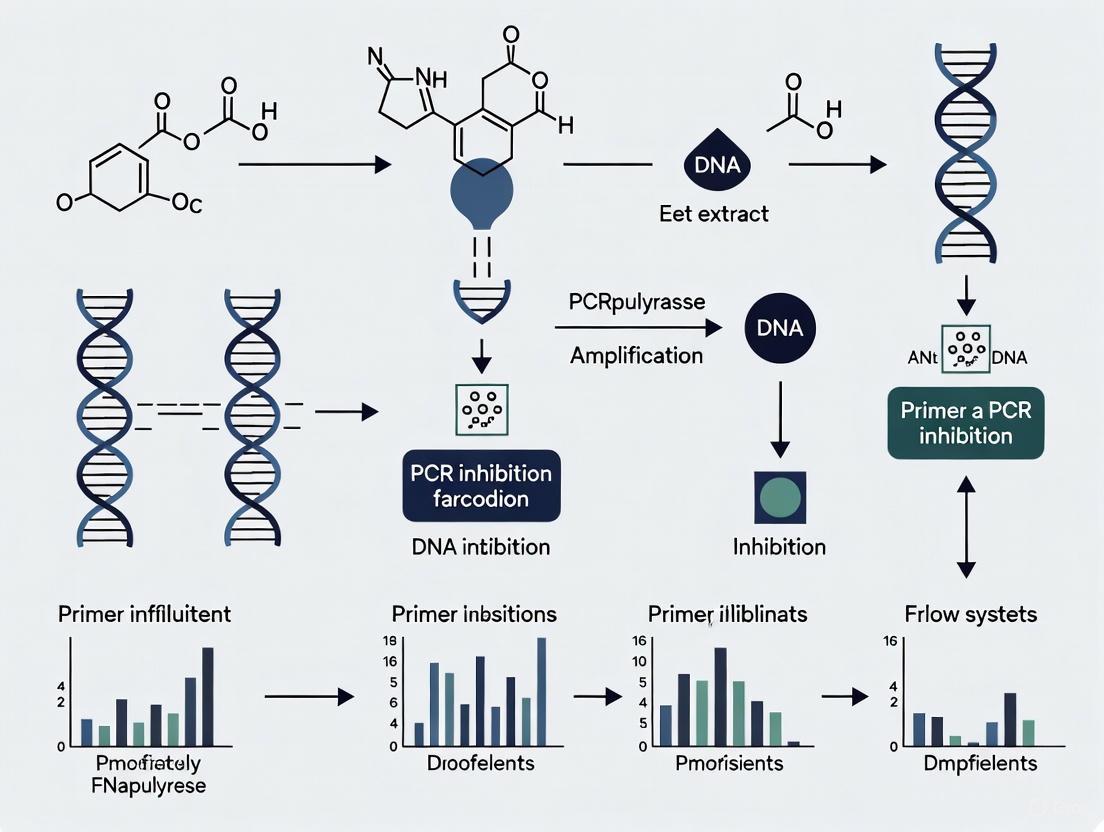
DNA barcoding has revolutionized parasite detection and biodiversity studies, yet its effectiveness is often compromised by PCR inhibition from host DNA and complex sample matrices.
Overcoming PCR Inhibition in Parasite DNA Barcoding: Advanced Strategies for Accurate Detection in Complex Samples
Abstract
DNA barcoding has revolutionized parasite detection and biodiversity studies, yet its effectiveness is often compromised by PCR inhibition from host DNA and complex sample matrices. This article synthesizes current methodologies for overcoming these critical bottlenecks, exploring foundational inhibition mechanisms and innovative blocking strategies like C3-spacer modified oligos and peptide nucleic acid (PNA) clamps. We detail optimization techniques for reagent selection, cycling conditions, and sample processing to enhance sensitivity and specificity. The article further evaluates validation frameworks and comparative performance of emerging approaches, providing researchers and drug development professionals with a comprehensive toolkit for reliable molecular parasitology applications across clinical, environmental, and research settings.
Understanding PCR Inhibition: Mechanisms and Challenges in Parasite Detection
In the field of parasite DNA barcoding research, the accuracy and sensitivity of PCR-based assays are often compromised by the presence of inhibitory substances. These PCR inhibitors originate from the sample matrices themselves, such as stool or blood, from the complex chemical composition of parasites, or from reagents used during sample collection and processing. Understanding these sources and types is the first critical step in developing effective strategies to overcome PCR inhibition, thereby ensuring reliable molecular diagnostics, genotyping, and biodiversity studies.
Troubleshooting FAQs
PCR inhibitors in parasitology samples originate from three primary sources:
- The Sample Matrix: Stool samples are a major source, containing complex mixtures of bile salts, complex polysaccharides, lipids, and bilirubin [1] [2]. Blood samples contain immunoglobulin G (IgG), hemoglobin, lactoferrin, and anticoagulants like EDTA and heparin [1]. Soil or sediment on environmental samples can introduce humic acids, fulvic acids, and humin, which are potent inhibitors [1].
- The Parasites Themselves: Certain parasites have robust structures that are difficult to lyse, and their components can interfere with PCR. For example, the strong eggshells of helminths like Ascaris lumbricoides or the tough cyst walls of Giardia duodenalis can require harsh lysis methods that co-purify inhibitory substances [3] [2].
- Reagents and Collection Materials: Substances introduced during sample processing can also be inhibitory. For instance, reagents from fecal sample preservation or materials from certain swabs used for sampling can contribute to the inhibitor load [1].
Why do some DNA extraction methods perform better than others with difficult samples?
The performance of a DNA extraction method depends on its efficiency in lysing the target organism and its ability to remove PCR inhibitors while yielding high-quality DNA. Comparative studies consistently show that methods incorporating mechanical lysis and specialized purification matrices outperform conventional techniques.
The table below summarizes findings from a study comparing four DNA extraction methods for various intestinal parasites, demonstrating significant differences in performance [3]:
| Extraction Method | Key Features | PCR Detection Rate | Parasites Detected |
|---|---|---|---|
| Phenol-Chloroform (P) | Chemical lysis, no mechanical disruption | 8.2% | Only Strongyloides stercoralis |
| Phenol-Chloroform + Beads (PB) | Chemical lysis with bead-beating | 32.9% | Higher yield for some helminths |
| QIAamp Fast DNA Stool Kit (Q) | Silica-column based | 47.1% | Protozoa and some helminths |
| QIAamp PowerFecal Pro Kit (QB) | Bead-beating + inhibitor removal chemistry | 61.2% | All tested parasite groups |
This data shows that the QIAamp PowerFecal Pro Kit (QB), which uses a combination of mechanical bead-beating and a specialized reagent designed to remove inhibitors, was the most effective, successfully detecting DNA from all groups of parasites tested, including tough helminth eggs and fragile protozoa [3].
What can I do to overcome PCR inhibition after DNA extraction?
If inhibition is suspected in extracted DNA, several PCR-enhancing strategies can be employed:
- Use of PCR Enhancers: Adding certain compounds to the PCR reaction can neutralize inhibitors.
- Proteins like Bovine Serum Albumin (BSA) and T4 gene 32 protein (gp32) bind to inhibitory substances such as humic acids and polyphenolics, preventing them from interfering with the DNA polymerase. One study found gp32 to be particularly effective in restoring detection in inhibited wastewater samples [4].
- Non-ionic detergents like Tween-20 can also help counteract inhibitory effects on the DNA polymerase [4].
- Sample Dilution: A simple 10-fold dilution of the DNA extract can reduce the concentration of inhibitors to a level that no longer affects the PCR. However, this also dilutes the target DNA and can reduce sensitivity, making it unsuitable for samples with low parasite load [4].
- Inhibitor-Tolerant Enzyme Mixes: Using modern, inhibitor-tolerant DNA polymerase enzymes (e.g., Platinum II Taq, SuperScript IV) or pre-formulated master mixes designed for difficult samples can significantly improve resistance to a wide range of inhibitors [5] [1].
Experimental Data & Workflows
Quantitative Impact of Inhibitors and Enhancers
The following table compiles quantitative data on the effects of inhibitors and the efficacy of various enhancement strategies from experimental studies:
| Factor | Experimental Finding | Context / Source |
|---|---|---|
| DNA Extraction Method | Automated (swab) vs. Manual (stool) extraction detected 40/76 vs. 54/76 positives (p < 0.05) [6]. | Blastocystis detection in human stool [6]. |
| Inhibitor Effect | Mean Ct value for manually extracted, inhibitor-affected samples: 34.37 ± 5.05 vs. 19.38 ± 5.93 for unaffected samples (p < 0.001) [6]. | Blastocystis qPCR [6]. |
| PCR Enhancer (gp32) | Addition of 0.2 μg/μL T4 gp32 protein eliminated false-negative results and provided the most significant inhibition removal [4]. | SARS-CoV-2 RT-qPCR in wastewater [4]. |
| PCR Enhancer (BSA) | The addition of BSA was one of four approaches that successfully eliminated false-negative results [4]. | SARS-CoV-2 RT-qPCR in wastewater [4]. |
| PCR Enhancer (Dilution) | A 10-fold dilution of the extracted sample eliminated false-negative results [4]. | SARS-CoV-2 RT-qPCR in wastewater [4]. |
Workflow: Overcoming PCR Inhibition in Parasite DNA Barcoding
The diagram below outlines a logical workflow for diagnosing and addressing PCR inhibition in a parasitology research setting.
Research Reagent Solutions
The following table lists key reagents and materials used to overcome PCR inhibition in parasitology research, as featured in the cited experiments.
| Reagent / Material | Function | Example Use Case |
|---|---|---|
| QIAamp PowerFecal Pro DNA Kit | DNA extraction with mechanical and chemical lysis for hard-to-lyse organisms and inhibitor removal. | Effective for diverse intestinal parasites (helminths and protozoa); highest PCR detection rate in comparative study [3]. |
| Bovine Serum Albumin (BSA) | PCR enhancer; binds to inhibitors (e.g., polyphenolics, humics) in the reaction mix. | Used to mitigate inhibition in wastewater and fecal samples, restoring amplification [4] [2]. |
| T4 Gene 32 Protein (gp32) | PCR enhancer; binds to single-stranded DNA and inhibitors, stabilizing replication. | Most effective enhancer for eliminating false negatives in inhibited wastewater samples [4]. |
| Inhibitor-Tolerant Polymerase (e.g., Platinum II Taq) | Enzyme engineered for resistance to common PCR inhibitors found in complex samples. | Key component of in-house RT-qPCR mixes for detecting viruses in inhibitory food matrices [5]. |
| Glass Beads (for bead-beating) | Mechanical lysis aid; breaks open tough parasitic structures like cyst and egg walls. | Added during DNA extraction to improve yield from Giardia cysts and helminth eggs [6] [3] [2]. |
| Phenol-Chloroform-Isoamyl Alcohol | Organic solvent for traditional DNA purification; separates DNA from proteins and other contaminants. | Can yield high DNA concentration but may be less effective at removing PCR inhibitors compared to modern kits [2]. |
FAQ: What are the main mechanisms by which substances inhibit DNA polymerase in PCR?
PCR inhibitors disrupt the DNA polymerization process through several distinct biochemical mechanisms. The primary modes of action include:
Direct Enzyme Binding: Many inhibitors, such as hemoglobin, lactoferrin, and IgG found in blood samples, form reversible complexes with the DNA polymerase enzyme itself. This binding physically blocks the enzyme's active site, preventing its interaction with the DNA template and effectively halting polymerization [7] [8].
Cofactor Depletion: Certain inhibitors function by chelating or binding to essential co-factors required for polymerase activity. Magnesium ions (Mg²⁺) are critical cofactors for DNA polymerase, and compounds like EDTA, humic substances, and tannic acid deplete the available Mg²⁺ in the reaction mix [9] [8]. Calcium ions can also compete with magnesium for binding sites on the polymerase [10] [8].
Nucleic Acid Interaction: Some inhibitors, including humic acids and polysaccharides, bind directly to the DNA template. This interaction interferes with strand separation during the denaturation step and prevents primer annealing by masking the template sequence from the polymerase [7] [9].
Fluorescence Quenching: For real-time quantitative PCR (qPCR) and digital PCR (dPCR), certain molecules can interfere with detection through fluorescence quenching. This occurs via collisional quenching, where the quenching molecule contacts the excited-state fluorophore, or static quenching, where the quencher forms a non-fluorescent complex with the fluorophore [7].
The following diagram illustrates how these different inhibition mechanisms disrupt the PCR process at specific points:
FAQ: How do PCR inhibitors specifically affect fluorescence-based detection methods?
In fluorescence-based PCR methods like qPCR and dPCR, inhibitors can compromise results through dual mechanisms—affecting both the amplification chemistry and the detection system.
Fluorescence Quenching: Certain inhibitor molecules directly interfere with fluorophore function through collisional quenching (where the quencher contacts the excited-state fluorophore) or static quenching (where a non-fluorescent complex forms with the fluorophore) [7]. This reduces the detected fluorescence signal independent of amplification efficiency, leading to inaccurate quantification.
Amplification Delay and Complete Inhibition: In qPCR, inhibitors cause elevated quantification cycle (Cq) values by slowing amplification kinetics, which directly skews template quantification [7]. With severe inhibition, amplification may fail entirely, resulting in false negatives.
Reduced dPCR Partition Efficiency: While digital PCR is generally more tolerant of inhibitors because it uses end-point rather than kinetic measurements, high inhibitor concentrations still prevent amplification in affected partitions, reducing the apparent template concentration and potentially causing underestimation [7].
The table below summarizes the comparative effects of inhibitors on different PCR platforms:
Table 1: Comparative Effects of PCR Inhibitors on Fluorescence-Based Methods
| Inhibition Mechanism | Impact on qPCR | Impact on dPCR | Impact on MPS |
|---|---|---|---|
| Polymerase Binding | Elevated Cq values, reduced amplification efficiency | Reduced positive partition count, quantification bias | Poor library preparation, low sequencing depth |
| Cofactor Depletion | Delayed amplification, complete reaction failure | Partial amplification failure across partitions | Incomplete sequencing adaptor ligation |
| Fluorescence Quenching | Depressed fluorescence, inaccurate Cq determination | Minimal impact (end-point detection) | Potential signal interference in sequencing-by-synthesis |
| DNA Template Binding | Reduced amplification of larger fragments | Size-dependent amplification bias across partitions | Fragmented coverage, preferential sequencing of shorter fragments |
FAQ: What experimental protocols can detect and quantify PCR inhibition?
Several established methodologies can identify and measure inhibition in PCR reactions. Here are three key experimental approaches:
Protocol 1: Dilution Series Analysis (for qPCR/dPCR)
This method detects inhibition by comparing amplification efficiency between diluted and undiluted samples [9].
- Prepare a serial dilution (e.g., 1:2, 1:5, 1:10) of the test DNA extract using nuclease-free water or the appropriate elution buffer.
- Run qPCR with all dilution levels using the same reaction conditions and primer/probe sets.
- Analyze the Cq shift pattern: In uninhibited samples, each 2-fold dilution should produce a ~1 cycle Cq increase. A smaller Cq shift indicates the presence of inhibitors, as dilution reduces their concentration and improves efficiency [9].
- For dPCR, compare template concentration estimates across dilutions. In uninhibited samples, measured concentration should decrease proportionally with dilution factor.
Protocol 2: Internal Control Spiking
This approach uses a known quantity of control DNA to assess inhibition levels directly in the sample [8].
- Add a consistent amount of control template (non-competitive synthetic sequence or organism-specific DNA not expected in samples) to both the test sample and a no-inhibition control reaction.
- Perform amplification with primers/probes specific to the control template.
- Compare the Cq values (qPCR) or template concentration (dPCR) between the test sample and control reaction.
- A significant delay (higher Cq) or reduced concentration in the test sample indicates the presence of PCR inhibitors.
Protocol 3: Fluorescence Signal Trajectory Analysis
Specific to real-time PCR platforms, this method examines the fluorescence progression curve to identify inhibition patterns [7].
- Run qPCR with the test sample and a known uninhibited control.
- Compare the amplification plot shapes: Inhibited reactions typically show reduced slope efficiency and lower plateau fluorescence than controls.
- Check for abnormal curve progression: Severe inhibition may cause sigmoidal distortion or complete absence of amplification.
- Differentiate polymerase inhibition (altered slope) from fluorescence quenching (depressed plateau) based on curve characteristics.
FAQ: What specialized reagents and methodologies can overcome PCR inhibition in parasite DNA barcoding?
Parasite DNA barcoding from complex samples often requires specialized approaches to overcome inhibition and host DNA contamination. The following solutions have demonstrated efficacy:
Table 2: Research Reagent Solutions for Overcoming PCR Inhibition
| Solution Category | Specific Examples | Mechanism of Action | Application Context |
|---|---|---|---|
| Inhibitor-Tolerant Polymerases | Phusion Flash, specialized enzyme blends | Enhanced resistance to polymerase-binding inhibitors | Direct PCR from blood, soil, fecal samples [7] |
| Blocking Primers | C3 spacer-modified oligos, PNA clamps | Selective suppression of host DNA amplification | Parasite detection in blood samples [11] |
| PCR Additives | BSA, betaine, commercial enhancers | Binding inhibitors or stabilizing polymerase | Improving amplification from inhibitor-rich samples [12] |
| Inhibitor Removal Technologies | Silica columns, magnetic beads, OneStep PCR Inhibitor Removal Kit | Physical removal of inhibitory compounds during extraction | Processing humic acid-rich environmental samples [9] [8] |
| Modified Nucleic Acid Extraction | Chelex-100, CTAB, column-based purification | Exclusion of co-purified inhibitors during DNA isolation | Complex samples including shells, soils, feces [13] |
Specialized Methodology: Blocking Primers for Parasite Barcoding
The application of blocking primers is particularly valuable in parasite DNA barcoding from blood samples, where host DNA typically overwhelms the target parasite signal [11]. The experimental workflow involves:
- Primer Design: Design universal primers targeting a conserved region (e.g., 18S rDNA V4-V9 for eukaryotes) to amplify both host and parasite DNA [11].
- Blocking Primer Development: Create sequence-specific blocking primers complementary to the host DNA sequence. These primers incorporate 3' modifications (C3 spacer) or utilize peptide nucleic acid (PNA) chemistry to prevent polymerase elongation [11].
- Reaction Optimization: Titrate the blocking primer concentration against the universal primers to find the optimal ratio that maximizes host DNA suppression while maintaining parasite detection sensitivity.
- Validation: Test the optimized assay using mock communities with known ratios of host and parasite DNA to verify specific parasite detection enhancement.
This methodology has successfully detected blood parasites including Trypanosoma brucei rhodesiense, Plasmodium falciparum, and Babesia bovis in human blood samples with high sensitivity [11].
The following diagram illustrates the specialized workflow for parasite DNA barcoding using blocking primer technology:
Frequently Asked Questions (FAQs)
1. What is the "Host DNA Problem" in molecular research? The "Host DNA Problem" refers to the analytical challenge that occurs when using universal PCR primers to detect a specific target, such as a parasite, in a host sample. The primers amplify DNA from both the target organism and the host, resulting in an overwhelming majority of host DNA sequences. This drowns out the target signal, reducing detection sensitivity and sequencing efficiency [11] [14].
2. Why is overcoming host DNA background particularly important in parasite research? Accurate and sensitive detection of parasite DNA is crucial for timely diagnosis and effective treatment of parasitic diseases. Traditional methods like microscopy can miss low-level infections or misidentify species. Molecular methods offer higher sensitivity, but their utility is compromised when host DNA dominates the sample, potentially leading to false negatives, especially in low-parasitemia infections [11] [15].
3. What are the main strategies to suppress host DNA amplification? Two primary molecular strategies are employed:
- Blocking Primers: Short oligonucleotides designed to bind specifically to host DNA during PCR. They are modified at their 3' end to prevent polymerase elongation, thereby competitively inhibiting the amplification of host DNA [11] [14].
- PCR Enhancers: Additives like Bovine Serum Albumin (BSA) or T4 gene 32 protein (gp32) that increase PCR robustness by binding to inhibitory substances present in complex samples like blood or wastewater, which can otherwise prevent amplification of the target DNA [16] [7] [4].
4. My PCR from blood samples often fails. Is this related to inhibition? Yes, PCR inhibition is a common issue with blood samples. Substances like hemoglobin, immunoglobulin G, lactoferrin, and anticoagulants (e.g., heparin, EDTA) are known PCR inhibitors. They can interfere with DNA polymerase activity, leading to failed or suboptimal amplification [7].
5. How does the choice of sequencing platform influence the host DNA challenge? Platforms like nanopore sequencing are portable and useful for field applications but can have higher error rates. Using a longer DNA barcode (e.g., V4–V9 regions of 18S rDNA) instead of a short one (e.g., V9 only) on these platforms provides more sequence information, which improves the accuracy of species identification despite sequencing errors [11].
Troubleshooting Guides
Problem: Low Detection Sensitivity for Parasite DNA in Blood Samples
Potential Cause: Host mammalian DNA is being co-amplified, overwhelming the parasite signal.
Solutions:
- Implement Blocking Primers:
- Principle: Use a primer that binds specifically to the host DNA sequence and is modified to block polymerase extension [11] [14].
- Design: Two effective designs include:
- C3 Spacer-modified Oligo: Competes with the universal reverse primer for binding sites on host DNA. The C3 spacer at the 3' end permanently blocks polymerase elongation [11].
- Peptide Nucleic Acid (PNA) Oligo: A synthetic molecule that binds more strongly to DNA. It inhibits elongation by physically blocking the polymerase on the host DNA template [11].
- Protocol: Include the blocking primer at an optimized concentration (e.g., 0.5–5 µM) in the standard PCR reaction mixture alongside your universal primers.
- Optimize the DNA Barcode Region:
- Principle: Using a longer barcode region increases the genetic information available, which is critical for accurate species identification on error-prone sequencing platforms [11].
- Protocol: For broad eukaryotic parasite detection, target the ~1.2 kb V4–V9 hypervariable regions of the 18S rRNA gene. Use universal primers such as F566 (5'-CAGCAGCCGCGGTAATTCC-3') and 1776R (5'-CCTTCTGGCAAATCCTTTA-3') [11].
Problem: PCR Inhibition from Complex Samples (Blood, Tissue)
Potential Cause: The sample contains substances that inhibit DNA polymerase.
Solutions:
- Use PCR Enhancers:
Dilute the DNA Template:
Apply Inhibitor-Tolerant Polymerases:
- Principle: Specialized DNA polymerase blends are engineered to be more resistant to common inhibitors found in biological samples [7].
Experimental Protocol: Host DNA Depletion for Blood Parasite Detection
This protocol is adapted from a study on nanopore-based parasite identification [11].
Objective: To detect blood parasite DNA in human blood samples with high sensitivity by suppressing host DNA amplification.
Workflow:
Step-by-Step Methodology:
DNA Extraction:
- Extract total genomic DNA from a blood sample (e.g., 200 µL) using a commercial blood DNA extraction kit. Elute DNA in a suitable buffer (e.g., TE or nuclease-free water).
PCR Reaction Setup:
- Prepare a 50 µL PCR reaction mixture containing:
- Template DNA: 5 µL of extracted DNA.
- Universal Primers: F566 and 1776R primers (10 µM each) [11].
- Blocking Primers: A combination of a C3 spacer-modified oligo (e.g., 3SpC3_Hs1829R) and a PNA oligo designed against human 18S rDNA. Test concentrations between 0.5–5 µM for optimal suppression.
- PCR Master Mix: Includes inhibitor-tolerant DNA polymerase, dNTPs, and MgSO₄.
- PCR Enhancer: Consider adding BSA to a final concentration of 0.1 µg/µL to counter any residual inhibition [16] [4].
- Prepare a 50 µL PCR reaction mixture containing:
Thermocycling Conditions:
- Use a standard thermocycling protocol suitable for your polymerase and the ~1.2 kb amplicon. An example:
- Initial Denaturation: 98°C for 2 min.
- 35 cycles of: Denaturation (98°C, 15 sec), Annealing (60°C, 30 sec), Extension (72°C, 90 sec).
- Final Extension: 72°C for 5 min.
- Use a standard thermocycling protocol suitable for your polymerase and the ~1.2 kb amplicon. An example:
Downstream Analysis:
- Purify the PCR product and proceed to library preparation for sequencing on a portable nanopore sequencer (like MinION).
- Analyze the sequencing data using bioinformatic tools, comparing the sequences to reference databases (e.g., BOLD, SILVA) for parasite species identification [11].
Table 1: Performance of PCR Enhancers in Complex Samples
| Enhancer | Optimal Concentration | Inhibition Reduction | Sample Type Tested | Key Mechanism |
|---|---|---|---|---|
| T4 gp32 [4] | 0.2 µg/µL | Significant improvement; eliminated false negatives | Wastewater | Binds to inhibitory substances (e.g., humic acids) |
| BSA [16] [4] | 0.1 - 0.5 µg/µL | Lowered PCR failure rate to 0.1% in buccal swabs; removed inhibition in wastewater | Buccal Swabs, Wastewater | Binds to inhibitors, freeing the polymerase |
| Sample Dilution [4] | 10-fold | Eliminated inhibition (but dilutes target) | Wastewater | Reduces concentration of inhibitors and target DNA |
Table 2: Sensitivity of Targeted NGS with Host Blocking
| Parasite Species | Limit of Detection (Parasites/µL of Blood) | Methodology |
|---|---|---|
| Trypanosoma brucei rhodesiense [11] | 1 | V4-V9 18S rDNA barcoding with host blocking primers |
| Plasmodium falciparum [11] | 4 | V4-V9 18S rDNA barcoding with host blocking primers |
| Babesia bovis [11] | 4 | V4-V9 18S rDNA barcoding with host blocking primers |
The Scientist's Toolkit: Research Reagent Solutions
Table 3: Essential Reagents for Overcoming the Host DNA Problem
| Reagent / Tool | Function / Explanation | Example Use Case |
|---|---|---|
| Blocking Primers (C3 or PNA) | Competitively inhibits amplification of host DNA by binding to its template and blocking polymerase extension. | Enriching parasite 18S rDNA from human blood samples [11]. |
| PCR Enhancers (BSA, gp32) | Proteins that bind to and neutralize common PCR inhibitors present in complex biological matrices. | Improving PCR success rates from inhibitor-rich samples like blood, feces, or wastewater [16] [7] [4]. |
| Long-Range Barcodes (e.g., 18S V4-V9) | Provides more genetic information for accurate species-level identification, compensating for sequencing errors from platforms like nanopore. | Distinguishing between closely related Plasmodium species [11]. |
| Inhibitor-Tolerant Polymerase | Engineered enzyme blends that maintain activity in the presence of common inhibitors like humic acid or hemoglobin. | Enabling direct PCR from minimally purified samples, reducing DNA loss [7]. |
| Universal Primers (e.g., 18S rDNA) | Amplifies a conserved gene region across a wide taxonomic range, allowing for the detection of expected and unexpected pathogens. | Comprehensive detection of eukaryotic blood parasites without prior knowledge of the target [11] [17]. |
In parasite DNA barcoding research, the accuracy of molecular detection platforms is critically threatened by PCR inhibition. Substances found in complex sample matrices—from hemoglobin in blood to humic acids in environmental samples and polysaccharides in plant or fecal matter—can compromise enzymatic reactions, leading to reduced sensitivity or false-negative results. This technical support guide examines the impact of these inhibitors on three fundamental platforms—qPCR, dPCR, and Next-Generation Sequencing (NGS)—and provides targeted troubleshooting methodologies to ensure data reliability in parasite detection assays.
Platform Comparison: Sensitivity and Inhibitor Tolerance
The selection of an appropriate detection platform is pivotal for success in parasite barcoding. The table below summarizes the key characteristics of qPCR, dPCR, and NGS in the context of inhibitor tolerance.
Table 1: Comparison of Nucleic Acid Detection Platforms in the Presence of Inhibitors
| Platform | Quantification Method | Tolerance to PCR Inhibitors | Key Strengths | Key Limitations |
|---|---|---|---|---|
| Quantitative PCR (qPCR) | Relative or absolute (requires standard curve) | Low to Moderate [18] [19] | High speed, well-established protocols, broad dynamic range [19] | Data collected during exponential phase makes it highly susceptible to efficiency changes caused by inhibitors [18] [19] |
| Digital PCR (dPCR) | Absolute (no standard curve needed) | High [20] [19] | High precision, superior accuracy for detecting small fold changes and rare alleles (<1%), robust quantification due to sample partitioning [19] | Higher precision subject to Poisson statistics [19] |
| Next-Generation Sequencing (NGS) | Relative or targeted absolute | Variable (Depends on library prep and PCR steps) | Comprehensive, untargeted detection; high sensitivity for pathogen detection in complex samples [21] [11] | Susceptible to host DNA contamination overwhelming target signal; requires specialized bioinformatics [22] [11] |
The core of dPCR's robustness lies in its partitioned reaction design. By dividing a single PCR reaction into thousands of individual reactions, the impact of inhibitors is localized. Even if a inhibitor reduces amplification efficiency in some partitions, others can proceed normally, and the binary (positive/negative) end-point detection is less affected by changes in amplification efficiency than the real-time monitoring of qPCR [19]. In one study, droplet digital PCR (ddPCR) demonstrated good sensitivity (70%) for detecting HPV16 DNA in plasma samples, matching the performance of NGS and significantly outperforming qPCR (20.6% sensitivity) [21].
Troubleshooting Guide & FAQs
This section addresses common experimental challenges related to PCR inhibition across the different platforms.
Frequently Asked Questions
Q1: My qPCR assays are showing delayed quantification cycles (Cq) and poor efficiency. How can I confirm this is due to inhibitors?
A: Key indicators of inhibition in qPCR include:
- Delayed Cq Values: A consistent increase in Cq values across all samples and controls suggests the presence of inhibitors [18].
- Abnormal Amplification Efficiency: The efficiency of an optimal qPCR reaction should be 90–110%. A slope steeper than -3.1 or shallower than -3.6 in your standard curve indicates inhibition affecting the polymerase [18].
- Use of an Internal PCR Control (IPC): Spiking a known, control template into your reactions can help differentiate between true inhibition (delayed IPC Cq) and simply low target concentration (normal IPC Cq) [18].
Q2: I am using universal primers for 18S rRNA metabarcoding of fecal samples, but my sequencing results are overwhelmed by host and fungal DNA, masking parasite signals. What can I do?
A: This is a common challenge in metabarcoding. A novel solution is Suppression/Competition PCR. This method uses specialized primers or probes to selectively reduce the amplification of unwanted DNA templates. In one application, this technique reduced fungal and plant reads by over 99%, allowing parasite sequences to comprise over 98% of the total reads, compared to just 36% without suppression [22]. Another effective strategy is to use blocking primers—oligos with a 3′-terminal C3 spacer or Peptide Nucleic Acid (PNA) chemistry—that bind specifically to the host DNA and stop polymerase elongation, thereby enriching for your target parasite sequences [11].
Q3: What are the most common sources of PCR inhibitors in parasite research samples?
A: Inhibitors originate from the sample itself or the laboratory preparation process [18] [23]:
- Biological Samples: Hemoglobin (blood), heparin (plasma), immunoglobulins, lactoferrin [18] [23].
- Environmental & Food Samples: Humic and fulvic acids (soil, water), polyphenols, pectin, and xylane (plants), tannins (food) [18] [23].
- Fecal Samples: Complex polysaccharides, bil salts, bacterial debris [22].
- Laboratory Reagents: Phenol, ethanol, isopropyl alcohol, detergents like SDS, and excess salts (e.g., EDTA, which chelates essential Mg²⁺ ions) [12] [18] [23].
Troubleshooting Common Scenarios
Table 2: Troubleshooting Guide for PCR Inhibition
| Observation | Possible Cause | Recommended Solution |
|---|---|---|
| No Product or Low Yield | PCR inhibitors from sample | - Dilute the template DNA to dilute the inhibitor [23].- Re-purify the template using column-based clean-up or ethanol precipitation [12] [18] [24].- Use a DNA polymerase with high inhibitor tolerance [25]. |
| Non-Specific Bands or High Background (Gel) | Non-specific priming due to suboptimal conditions | - Increase the annealing temperature in 2°C increments [12] [23].- Use a hot-start DNA polymerase to prevent activity at room temperature [12] [24].- Optimize Mg²⁺ concentration, as excess can promote non-specific binding [12] [24]. |
| Low Fidelity/Sequence Errors | Polymerase misincorporation | - Use a high-fidelity DNA polymerase [24].- Ensure dNTP concentrations are balanced and fresh [12] [23].- Reduce the number of PCR cycles to minimize cumulative errors [12] [24]. |
| Inconsistent dPCR/qPCR Results | Inhibitors affecting reaction efficiency | - Switch to dPCR for its higher tolerance to inhibitors [20] [19].- Add reaction enhancers like BSA (Bovine Serum Albumin) or trehalose to stabilize the enzyme [18]. |
Key Experimental Protocols for Parasite DNA Barcoding
Protocol: Suppression/Competition PCR for Metabarcoding
This protocol is adapted from methods used to minimize unwanted amplicons in fecal samples for parasite detection [22].
Objective: To selectively reduce amplification of abundant non-target DNA (e.g., host, fungal, plant) in a metabarcoding PCR, thereby enriching for low-abundance parasite 18S rDNA sequences.
Materials:
- Template DNA from sample (e.g., fecal, soil).
- High-fidelity DNA polymerase, suitable for long-amplicon PCR.
- Universal 18S rRNA gene primers (e.g., targeting a near-complete fragment).
- Suppression Oligos: Blocking primers with sequence complementarity to the unwanted 18S rDNA (e.g., fungal, plant). These are modified at the 3'-end with a C3 spacer or are PNA-based to prevent polymerase extension [11].
- PCR reagents (dNTPs, Mg²⁺, buffer).
Method:
- Reaction Setup: Prepare two parallel PCR reactions for each sample:
- Standard PCR: Contains template, universal primers, and master mix.
- Suppression PCR: Contains template, universal primers, master mix, and a optimized concentration of suppression oligos.
- Thermocycling: Run both reactions with the same cycling conditions, which include an initial denaturation, followed by 35-40 cycles of denaturation, annealing, and extension, with a final extension.
- Purification and Sequencing: Purify the PCR products and proceed with library preparation for nanopore or other NGS sequencing.
- Analysis: Compare the sequencing results. The suppression PCR should show a dramatic reduction (e.g., >99%) in reads mapping to the unwanted taxa, allowing for the detection of previously obscured parasites [22].
Workflow: Selective NGS Enrichment for Blood Parasites
The following diagram illustrates a targeted NGS workflow designed to overcome host DNA contamination in blood samples, using blocking primers for selective enrichment of parasite DNA.
The Scientist's Toolkit: Research Reagent Solutions
Selecting the right reagents is a critical step in mitigating the effects of PCR inhibition.
Table 3: Essential Reagents for Overcoming PCR Inhibition
| Reagent / Material | Function / Application | Key Consideration |
|---|---|---|
| Inhibitor-Tolerant DNA Polymerases | Engineered polymerases (e.g., OmniTaq, GoTaq Endure) that maintain activity in the presence of common inhibitors from blood, soil, and plants [18] [25]. | Intrinsic tolerance reduces the need for exhaustive sample clean-up, saving time and conserving precious sample [25]. |
| Hot-Start Polymerases | DNA polymerases inactive at room temperature, preventing non-specific primer binding and primer-dimer formation before PCR begins [12] [24]. | Crucial for improving specificity and yield in complex assays, especially with low-copy-number targets. |
| PCR Additives & Enhancers | Substances like BSA, trehalose, or commercial enhancers that stabilize the polymerase or help denature difficult templates (e.g., GC-rich regions) [12] [18]. | BSA is particularly effective against inhibitors like humic acid and polyphenols. Always test concentration for optimal results. |
| Blocking Primers (C3-spacer or PNA) | Sequence-specific oligos that bind to non-target DNA (e.g., host 18S rDNA) and block polymerase extension, enriching for target sequences in NGS libraries [11]. | Essential for metabarcoding from samples with high host DNA background (e.g., blood, tissue). PNA clamps offer very high binding affinity. |
| High-Quality Nucleic Acid Purification Kits | Kits designed for specific sample types (e.g., soil, stool, blood) to remove a broad spectrum of PCR inhibitors during DNA/RNA extraction [18]. | The first line of defense. Inadequate purification can introduce insurmountable levels of inhibitors. |
| dPCR Master Mixes | Optimized reagents for digital PCR platforms, often formulated for robust performance despite the presence of inhibitors [19]. | Leverages the innate inhibitor tolerance of the dPCR platform to provide reliable absolute quantification in difficult samples. |
Troubleshooting Guides
Why is my PCR reaction from a soil sample failing, and how can I fix it?
Problem: PCR amplification from soil-derived DNA is inefficient or fails completely, often yielding no product or non-specific bands. This is primarily due to co-extraction of humic substances (HS), which are complex organic polymers in soil that inhibit PCR [26].
Solutions:
- Assess DNA Purity: Check the absorbance ratios of your extracted DNA. Pure DNA typically has A260/A280 ratios of ~1.8-2.0 and A260/A230 ratios of ~2.0-2.2. Significantly lower A260/A230 ratios indicate contamination with humic substances [26].
- Implement Additional Purification: If HS contamination is suspected, subject the DNA extract to additional purification steps. These can include silica-column-based cleanups, size-exclusion chromatography, or agarose gel electrophoresis followed by gel extraction to separate DNA from smaller inhibitor molecules [26].
- Use Inhibitor-Tolerant Master Mixes: Employ PCR master mixes specifically designed to be resistant to inhibitors. These often include additives like Bovine Serum Albumin (BSA) or specialized polymerases that can function in the presence of common inhibitors [27] [1].
My qPCR from an environmental sample shows low fluorescence, suggesting inhibition, but my endpoint PCR works. What is happening?
Problem: In qPCR assays using DNA-binding dyes (e.g., SYBR Green I, EvaGreen), the fluorescence signal is suppressed, leading to flat or lower amplification plots, even though the DNA amplification itself may be occurring. This is a phenomenon known as detection inhibition or fluorescence quenching [28].
Solutions:
- Identify the Quencher: Humic acid (HA) is a potent detection inhibitor. It can quench fluorescence via static or collisional mechanisms by binding directly to the dye molecules [28].
- Switch Detection Chemistry: If humic acid is the suspected inhibitor, consider switching from DNA-binding dyes to hydrolysis probes (e.g., TaqMan probes). The fluorescence from hydrolyzed probes is separated from the quencher and is less affected by HA [28].
- Purify DNA Extracts: As with amplification inhibition, further purification of the DNA to remove humic acids is the most direct solution to prevent fluorescence quenching [28].
What is the most effective method to extract PCR-quality DNA from human stool samples for parasite detection?
Problem: Stool samples contain a complex mixture of PCR inhibitors, including bile salts, complex polysaccharides, and dietary compounds. Furthermore, parasite eggshells and cuticles are difficult to lyse, leading to false-negative PCR results [29] [30] [3].
Solutions:
- Choose a Robust Extraction Kit: Not all commercial kits perform equally. Comparative studies have shown that the QIAamp PowerFecal Pro DNA Kit (QB) significantly outperforms other methods, including standard phenol-chloroform extraction and other commercial kits, for the detection of a broad range of intestinal parasites [29] [3].
- Incorporate Mechanical Lysis: Ensure the DNA extraction method includes a bead-beating step with glass beads. This mechanical disruption is crucial for breaking down the tough structures of helminth eggs and larvae, thereby releasing their DNA [29] [3].
- Validate with a Spike Test: To confirm the presence of residual PCR inhibitors in your final DNA extract, perform a spike test. Add a known quantity of a control plasmid or DNA to the reaction. Failure to amplify the spike confirms the presence of inhibitors, indicating a need for further dilution or purification [29].
How do I handle PCR inhibition from blood samples?
Problem: Blood components are common PCR inhibitors. Key inhibitors include hemoglobin from erythrocytes, lactoferrin from leukocytes, and immunoglobulin G from plasma [27].
Solutions:
- Select an Inhibitor-Tolerant Polymerase: The sensitivity of different DNA polymerases to blood inhibitors varies greatly. For example,
rTthandTlipolymerases are highly resistant to hemoglobin, whileAmpliTaq GoldandPwoare more susceptible [27]. - Use Amplification Facilitators: Add Bovine Serum Albumin (BSA) to the PCR reaction. BSA has been shown to effectively relieve inhibition from both hemoglobin and lactoferrin, allowing for successful amplification in the presence of much higher inhibitor concentrations [27].
- Optimize Sample Preparation: Methods like aqueous two-phase systems can separate PCR inhibitors from target bacteria or DNA in fecal and other complex samples, improving detection sensitivity by several orders of magnitude [30].
Frequently Asked Questions (FAQs)
FAQ 1: What are the most common sources of PCR inhibitors in sample types relevant to parasite research? Common inhibitors vary by sample type [1]:
- Soil/Sediment: Humic substances (humic acid, fulvic acid) are the primary inhibitors.
- Stool: A wide range of inhibitors exists, including bile salts, complex carbohydrates, and various metabolic byproducts.
- Blood: Major inhibitors are hemoglobin, lactoferrin, immunoglobulin G, and anticoagulants like EDTA and heparin.
FAQ 2: How can I quickly check if my DNA extract contains PCR inhibitors? Two common methods are:
- Spectrophotometry: Measure the A260/A230 and A260/A280 ratios. A low A260/A230 ratio (e.g., below 1.5) often indicates contamination with organic compounds like humic acids or carbohydrates [26] [29].
- Spike Test: Add a known, amplifiable DNA template (e.g., a control plasmid) to your PCR reaction containing the test DNA extract. If the control fails to amplify, it confirms the presence of PCR inhibitors in your sample [29].
FAQ 3: My DNA yield from soil is high, but PCR fails. Why? A high DNA yield does not equate to PCR-quality DNA. The extract likely contains a high concentration of humic substances, which have similar physicochemical properties to nucleic acids and are co-extracted. These substances inhibit the DNA polymerase enzyme, leading to PCR failure even with abundant template DNA [26].
FAQ 4: Are some DNA polymerases more resistant to inhibitors than others?
Yes, significant differences exist. Studies have shown that polymerases like rTth and Tli are highly resistant to inhibitors like hemoglobin, whereas others like AmpliTaq Gold and Pwo are more susceptible. Using a polymerase blend or an inhibitor-tolerant enzyme is a key strategy to overcome inhibition [27] [1].
FAQ 5: What is the single most important factor for successful DNA extraction from tough helminth eggs in stool? The incorporation of a mechanical lysis step, specifically bead-beating, is critical. The sturdy chitinous eggshells of parasites like Ascaris lumbricoides are not efficiently broken down by chemical and enzymatic lysis alone. Bead-beating physically disrupts these structures, enabling DNA release [29] [3].
Experimental Data & Protocols
Inhibitor Tolerance Thresholds of Common Substances
Table 1: Maximum Tolerable Concentrations of Common PCR Inhibitors. Data shows concentrations that inhibit amplification for sensitive DNA polymerases like AmpliTaq Gold [27] [28].
| Inhibitor | Source | Maximum Tolerable Concentration | Key Impact |
|---|---|---|---|
| Humic Acid | Soil, Sediment | ≤ 500 ng (quenching); Varies for amplification | Fluorescence quenching & DNA polymerase inhibition [28] |
| Hemoglobin | Blood (Erythrocytes) | ≤ 1.3 μg per 25 μL reaction | Inhibits DNA polymerase activity [27] |
| Lactoferrin | Blood (Leukocytes) | ≤ 25 ng per 25 μL reaction | Inhibits DNA polymerase activity [27] |
| FeCl₃ | Hemoglobin Degradation | 5 μM (reduces fluorescence to 17%) | Interferes with DNA synthesis [27] |
| Heparin | Anticoagulant | 0.01 IU/mL (reduces fluorescence to 51%) | Interferes with DNA synthesis [27] |
Comparative Performance of DNA Extraction Methods from Stool
Table 2: Comparison of DNA Extraction Methods for PCR Detection of Intestinal Parasites in Human Stool (n=85 samples) [29] [3].
| Extraction Method | Key Features | Average DNA Yield | Overall PCR Detection Rate | Notes |
|---|---|---|---|---|
| Phenol-Chloroform (P) | Conventional chemical lysis | Highest (~4x others) | 8.2% | High inhibitor carry-over; detected only S. stercoralis [29] |
| Phenol-Chloroform + Beads (PB) | P method with bead-beating | High | Not Specified | Improved over P, but less effective than specialized kits [29] |
| QIAamp Fast DNA Stool Kit (Q) | Silica-column based | Low | Not Specified | Better than P, but inferior to QB [29] |
| QIAamp PowerFecal Pro Kit (QB) | Bead-beating + silica-column | Low | 61.2% | Most effective for diverse parasites; lowest inhibitor carry-over [29] |
Detailed Protocol: DNA Barcoding PCR for Species Identification
This protocol is adapted for identifying parasites, fungi, plants, or mammals from extracted DNA [31].
Principle: Amplify a short, standardized region of the genome (a "barcode") that varies between species but is flanked by conserved sequences.
Reagents and Equipment:
- Extracted DNA template (diluted 1:10 in PCR-grade water)
- 5X FIREPol Master Mix (or similar)
- Primer Mix (Select based on target):
- Fungi: ITS1F/ITS4
- Birds: Bird F1/Bird R1
- Mammals: LCO1490/HCO2198
- Plants: rbcL primers
- PCR-grade water
- Thermocycler (e.g., Bento Lab)
- Adjustable pipettes and sterile tips
Procedure:
- Prepare PCR Reaction Mix: For a single 20 μL reaction, combine:
- 4 μL of 5X FIREPol Master Mix
- 12 μL of PCR-grade water
- 2 μL of primer mix
- Total Master Mix = 18 μL
- For multiple samples, prepare a batch mix plus 10% extra to account for pipetting error.
Assemble Reactions:
- Aliquot 18 μL of the PCR reaction mix into each PCR tube.
- Add 2 μL of DNA template to each corresponding tube. For the negative control, add 2 μL of PCR-grade water.
- Close lids and mix by inverting the tubes. Tap gently to collect liquid at the bottom.
Thermocycling: Place tubes in the thermocycler and run the appropriate program. Below is an example for mammalian DNA barcoding [31]:
- Initial Denaturation: 95°C for 15 minutes.
- 35 Cycles of:
- Denaturation: 95°C for 60 seconds.
- Annealing: 40°C for 60 seconds.
- Extension: 72°C for 90 seconds.
- Final Extension: 72°C for 7 minutes.
- Hold: 15°C forever.
Analysis: Verify successful amplification via gel electrophoresis (e.g., 1.5% agarose gel, run at 50V for 30 minutes). A single, clear band should be visible for successful reactions.
Workflow Diagrams
Workflow for Managing PCR Inhibition
The Scientist's Toolkit: Key Reagent Solutions
Table 3: Essential Reagents for Overcoming PCR Inhibition in Challenging Samples.
| Reagent | Function / Mechanism | Example Applications |
|---|---|---|
| Bovine Serum Albumin (BSA) | Binds to inhibitors, preventing them from interacting with the DNA polymerase. Relieves inhibition from humic substances, hemoglobin, and lactoferrin [27]. | Adding 0.4% BSA to PCR reactions [27]. |
| Inhibitor-Tolerant DNA Polymerases | Engineered polymerases or blends that maintain activity in the presence of common inhibitors. | rTth and Tli for blood samples; Phusion Flash for direct PCR [27] [1]. |
| Silica-Based Purification Kits | Selectively bind DNA, allowing wash steps to remove impurities like humic acids and salts. | QIAamp PowerFecal Pro Kit for stool [29]; various kits for soil and blood. |
| Mechanical Lysis Aids (Beads) | Physically disrupt tough cell walls and eggshells (e.g., from helminths) to release DNA. | 0.5mm glass beads used in a bead-beater for stool samples [29] [3]. |
| Aqueous Two-Phase Systems | Sample prep method that partitions PCR inhibitors into one polymer phase and target cells/DNA into another. | Composed of PEG and Dextran to remove bile salts from fecal samples [30]. |
Advanced Technical Solutions: Blocking Primers and Enrichment Strategies
In parasite DNA barcoding research, the detection of pathogen DNA is often challenged by the presence of overwhelming host DNA in the sample. Universal primers used to amplify a broad range of eukaryotic organisms will co-amplify the host's genetic material, which can dominate the reaction and mask the target parasite sequences, leading to failed experiments and inaccurate results [14] [11]. Blocking primers offer a powerful solution to this problem by selectively inhibiting the amplification of non-target DNA.
This technical support center guide provides a detailed overview of the two primary blocking primer mechanisms—annealing inhibition and elongation arrest—and offers troubleshooting advice to help researchers overcome common experimental hurdles in PCR-based parasite detection.
Understanding Blocking Primer Mechanisms
Blocking primers are oligonucleotides designed to bind specifically to non-target DNA (e.g., host DNA) and prevent its amplification during PCR, thereby enriching for the amplification of rare target sequences (e.g., parasite DNA) [14] [32]. They achieve this through two distinct mechanistic strategies.
Annealing Inhibition Primers
These primers are designed to overlap with the binding site of a universal primer on the non-target DNA sequence. Their physical presence occupies the binding site, preventing the universal primer from annealing and initiating amplification [14] [33]. They are typically modified at their 3' end to prevent themselves from being extended by the DNA polymerase.
Elongation Arrest Primers
These primers bind to a region of the non-target DNA that is between the two universal primer binding sites. When the DNA polymerase encounters this bound blocking primer during the elongation phase, it is physically blocked from continuing the synthesis of the new DNA strand [32] [33].
Mechanism Comparison and Selection Guide
The choice between annealing inhibition and elongation arrest depends on your specific experimental goals and constraints. The following table summarizes the key characteristics of each mechanism.
Table 1: Comparative Analysis of Blocking Primer Mechanisms
| Feature | Annealing Inhibition | Elongation Arrest |
|---|---|---|
| Mechanism of Action | Competes with universal primer for binding site [14] | Binds internally, halting polymerase progression [32] |
| Binding Site Location | Overlaps universal primer site [33] | Internal to the amplicon, between universal primers [33] |
| Design Flexibility | Requires conserved region adjacent to primer site [14] | More flexible, can bind to any unique internal sequence [32] |
| Reported Efficiency | Highly efficient; >99.9% suppression shown [14] | Effective, but may be less efficient than annealing inhibition [33] |
| 3' End Modification | Essential (C3 spacer, inverted dT) to prevent extension [14] [32] | Essential (C3 spacer, inverted dT) to prevent extension [32] [33] |
| Typical Application | Preferred for its high effectiveness and simpler design [14] [33] | Used when a suitable primer-overlap site is not available [32] |
Troubleshooting Guide: Common Experimental Issues
Q1: My blocking primer is ineffective and host DNA is still being amplified. What should I do?
Possible Cause: Suboptimal blocking primer concentration.
- Solution: Titrate the concentration of your blocking primer. A concentration that is too low will be ineffective, while one that is too high may inhibit the entire PCR reaction or cause non-specific binding. Test a range of concentrations (e.g., 0.1–1.0 µM) to find the optimal level for your assay [32].
Possible Cause: Poor binding specificity or affinity.
- Solution: Redesign the blocking primer. Verify that its sequence is perfectly complementary to the host target and check for secondary structures that might hinder binding. Using a longer primer or incorporating locked nucleic acids (LNAs) can increase binding affinity (Tm) and improve blocking efficiency [11].
Possible Cause: The blocking primer is being extended.
- Solution: Confirm that the 3' end modification (e.g., C3 spacer) was correctly synthesized and is present on all oligonucleotides. An unmodified 3' end will allow the blocking primer to function as a PCR primer, amplifying the very sequence you are trying to suppress [33].
Q2: I am getting no PCR product at all after adding the blocking primer. Why?
Possible Cause: Excessive blocking primer concentration.
- Solution: As above, titrate the blocking primer concentration. High concentrations can sterically hinder the universal primers or directly inhibit the DNA polymerase, leading to complete PCR failure [32].
Possible Cause: The blocking primer is non-specifically binding to and blocking the target parasite DNA.
- Solution: Carefully re-evaluate the blocking primer sequence in silico against your target parasite sequences. Ensure there is no significant homology. Re-design the primer to ensure maximum specificity for the host DNA [14].
Possible Cause: Inhibition of the DNA polymerase.
Q3: How can I validate that my blocking primer is working correctly?
- Solution: Use a controlled experimental setup.
- Create Mock Communities: Mix known quantities of host DNA and target parasite DNA. A good starting point is a 100:1 or 1000:1 host-to-parasite DNA ratio [14] [33].
- Run Parallel PCRs: Perform PCR with and without the blocking primer on these mock samples.
- Evaluate Results:
- Gel Electrophoresis: A clear reduction in host amplicon intensity indicates success [14].
- qPCR: A significant increase in the Cq value for the host target confirms inhibition [14].
- DNA Metabarcoding: The most robust validation; sequence the products to quantify the relative abundance of host reads. Effective blocking primers can reduce host reads by >99.9% [14].
Detailed Experimental Protocol
The following workflow outlines the key steps for designing and testing an annealing inhibition blocking primer, which is often the most efficient type [14] [33].
Procedure:
- Sequence Alignment and Target Selection: Collect 18S rDNA (or other barcode gene) sequences for the host organism, your target parasites, and other non-target eukaryotes likely present in the sample. Perform a multiple sequence alignment to identify a region within the host sequence that is:
- Primer Design and Ordering: Design the blocking primer to be 20-30 nucleotides long, extending from the universal primer binding site into the host-specific region. When ordering, mandatorily specify a 3' end modification to prevent elongation. A C3 spacer is a standard and effective choice [14] [32] [33].
- PCR Optimization: Set up your standard PCR reaction with the universal primers. Add the blocking primer and use a gradient PCR cycler to optimize the annealing temperature. The optimal annealing temperature is often similar to or slightly higher than that of the universal primers [12] [34].
- Concentration Titration: Perform a concentration gradient of the blocking primer (e.g., 0.1, 0.5, and 1.0 µM) against a fixed concentration of universal primers using the mock community samples. Analyze the results via gel electrophoresis or qPCR to determine the concentration that gives the strongest suppression of host DNA without diminishing the target signal [32].
Research Reagent Solutions
Table 2: Essential Reagents for Blocking Primer Experiments
| Reagent / Tool | Function / Purpose | Example / Note |
|---|---|---|
| Blocking Primer (3' modified) | Selectively binds to and inhibits amplification of host DNA. | Must be ordered with a 3' C3 spacer or inverted dT modification [32] [33]. |
| Universal Primers | Amplify target DNA barcode region from a wide range of organisms. | e.g., Primers targeting 18S rDNA V4-V9 region [11]. |
| Inhibitor-Tolerant DNA Polymerase | Robust enzyme less susceptible to inhibition from sample carryover or high primer concentrations. | e.g., Phusion Flash, Hot-start polymerases [7] [34]. |
| PCR Enhancers | Proteins or compounds that stabilize PCR reactions and counteract inhibitors. | BSA or T4 gene 32 protein (gp32) are highly effective [4]. |
| Mock Community Controls | Defined mix of host and parasite DNA used for validation and optimization. | Critical for quantifying blocking primer efficacy [14]. |
Frequently Asked Questions (FAQs)
Q: Can I use a blocking primer without a 3' modification?
A: No. The 3' modification (C3 spacer, inverted dT, etc.) is essential to prevent the blocking primer from being extended by the DNA polymerase. If the blocking primer is not modified, it will act as a second primer and amplify the host DNA, defeating its purpose [32] [33].
Q: Which mechanism is better for parasite DNA barcoding?
A: The annealing inhibition mechanism is often preferred and reported to be highly efficient, with studies showing >99.9% suppression of host DNA [14]. It is generally the recommended starting point for new assay development due to its proven high effectiveness [33].
Q: My target sequence is very similar to the host sequence. Can I still use a blocking primer?
A: This is challenging. The success of blocking primers relies on sequence divergence between host and target. If the target and host sequences are identical in the primer-binding region, a blocking primer cannot distinguish between them. Your options are to:
- Find a different, more variable genetic region for your barcoding assay.
- Consider using multiple specific primers instead of a universal primer approach [14].
Q: Are there alternatives to blocking primers?
A: Yes, but they have limitations. Peptide Nucleic Acids (PNAs) are synthetic analogs that can also block amplification and have higher binding affinity, but they are more expensive and have longer synthesis times [11] [33]. Another alternative is to use restriction enzymes to digest host DNA post-PCR, but this requires a unique restriction site and does not help if host DNA has already dominated the PCR [32].
In parasite DNA barcoding research, the polymerase chain reaction (PCR) is a critical step for identifying pathogenic organisms. However, a significant challenge arises when universal primers, designed to amplify a broad range of species, simultaneously amplify abundant host DNA (e.g., from human blood or animal tissue). This overwhelms the signal from the target parasite DNA, leading to failed or insensitive detections. C3-spacer modified oligonucleotides, known as blocking primers, provide a sophisticated solution by selectively inhibiting the amplification of host DNA, thereby enriching for the target parasite sequences. This technical guide explores their application and troubleshooting within 18S rRNA assays.
Frequently Asked Questions (FAQs)
1. What is a C3-spacer modified oligo, and how does it block amplification? A C3-spacer modification is a synthetic, non-nucleotide molecule (a three-carbon chain) attached to the 3'-end of an oligonucleotide [35] [36]. In a blocking primer, this modification performs a critical function: while the primer can bind sequence-specifically to its target host DNA, the C3 spacer prevents DNA polymerase from extending the DNA strand [35] [37]. This effectively "blocks" the host DNA template from being amplified, allowing universal primers to preferentially amplify the non-host, parasite DNA.
2. Why is host DNA suppression crucial in parasite 18S rRNA barcoding? The 18S ribosomal RNA gene is a common barcode for identifying eukaryotic pathogens [32] [11]. When using universal primers on samples rich in host cells (like blood), the host's 18S rDNA is co-amplified because the primers cannot distinguish between host and parasite sequences. If the sample contains host sequences at relatively high concentrations, the less concentrated sequences of other eukaryotes are often not amplified, as PCR favors the dominant DNA types [32]. Blocking primers suppress this overwhelming host amplification, dramatically improving the detection of parasite DNA [11].
3. What is the typical inhibition rate I can expect with a well-designed blocking primer? The efficacy can be very high. One study developing a blocker for shrimp 18S rDNA reported an inhibition rate of 99% for its target host [32]. The same study noted that the blocking primer's effect can vary across species, showing a 17% inhibition rate for a related oyster host, highlighting the importance of specificity [32].
4. Can I use a C3-spacer blocking primer with other enrichment techniques? Yes, combining methods is often beneficial. One research group developed a highly sensitive test for blood parasites by using two different blocking strategies simultaneously: a C3-spacer modified oligo and a Peptide Nucleic Acid (PNA) oligo [11]. This combined approach provided robust suppression of host 18S rDNA amplification.
Troubleshooting Guide
Table 1: Common Issues and Solutions with Blocking Primers
| Problem | Potential Cause | Solution |
|---|---|---|
| Poor Inhibition | Blocking primer concentration is too low. | Titrate the blocking primer. Optimal concentration is critical and must be determined empirically [32]. |
| No PCR Product | Blocking primer concentration is too high, inhibiting all reactions. | Reduce the concentration of the blocking primer and ensure your universal primer concentrations are optimal [32]. |
| Inconsistent Results | Co-purified PCR inhibitors from the sample. | Use a PCR inhibitor-resistant DNA polymerase or master mix [7] [38], or re-purify the DNA extract. |
| Low Specificity | Blocking primer sequence binds non-specifically to non-host targets. | Re-evaluate the primer specificity using alignment tools and re-design if it binds to non-target organisms of interest [32]. |
Experimental Protocol: Incorporating a Blocking Primer in a 18S rDNA PCR
The following protocol is adapted from published methodologies for detecting eukaryotic microorganisms in the presence of dominant host DNA [32] [11].
1. Primer and Blocking Primer Design
- Universal Primers: Select primers that amplify the desired variable region (e.g., V4-V9) of the 18S rRNA gene from a broad eukaryotic range [11].
- Blocking Primer: Design a primer that is complementary to a unique, conserved region of the host's 18S rDNA sequence. The 5'-end can be identical to the universal forward or reverse primer to create competition, and it must be synthesized with a C3 spacer at the 3'-end to block extension [32].
2. PCR Reaction Setup A standard 25 µL reaction mixture can be set up as follows:
- Master Mix: 12.5 µL (or as per manufacturer's instructions of an inhibitor-resistant polymerase)
- Forward Universal Primer: 0.5 µL of 10 µM
- Reverse Universal Primer: 0.5 µL of 10 µM
- Blocking Primer (C3-modified): Variable (Start with 1 µL of 10 µM and titrate)
- DNA Template: 2-5 µL
- Nuclease-free Water: to 25 µL
3. Thermal Cycling Use the standard cycling conditions for your universal 18S rDNA primers. No modification to the temperature profile is typically required.
4. Post-PCR Analysis
- Analyze PCR products by gel electrophoresis. Successful blocking will show a reduction or disappearance of the host DNA amplicon band.
- For downstream applications like high-throughput sequencing, the enrichment of non-host DNA can be verified by the sequence read distribution [32].
Research Reagent Solutions
Table 2: Essential Materials for Blocking Primer Experiments
| Reagent / Tool | Function / Description | Example / Note |
|---|---|---|
| C3-Spacer Modified Oligo | The core blocking agent; must be custom synthesized. | Specify "3' C3 Spacer" during oligo synthesis [36]. |
| Inhibitor-Tolerant DNA Polymerase | Resists PCR inhibitors co-extracted from complex samples (e.g., blood, stool). | Critical for success with challenging samples [7]. |
| Silica-Based DNA Purification Kit | To obtain high-quality, inhibitor-free DNA from complex matrices. | QIAamp PowerFecal Pro DNA Kit was effective for stool [29]. |
| Automated Nucleic Acid Purification System | For high-throughput, consistent DNA extraction. | ABI PRISM 6100 Nucleic Acid PrepStation can be used [39]. |
Workflow Diagram: How a Blocking Primer Enriches Parasite DNA
The following diagram illustrates the molecular mechanism by which a C3-spacer blocking primer selectively inhibits host DNA amplification during PCR.
Core Principle: How PNA Clamps Achieve Selective Inhibition
Peptide Nucleic Acids (PNAs) are synthetically engineered polymers that serve as highly specific molecular clamps to suppress the amplification of non-target DNA during Polymerase Chain Reaction (PCR). Their unique structure and binding properties are fundamental to their function.
- Backbone Composition: Unlike natural DNA or RNA, which have a sugar-phosphate backbone, PNAs feature a backbone of repeating N-(2-aminoethyl)-glycine units linked by peptide bonds. The nucleobases (adenine, thymine, guanine, and cytosine) are attached to this backbone via methylene carbonyl bonds [40] [41] [42].
- Enhanced Binding Affinity: This synthetic backbone is achiral and uncharged, eliminating the electrostatic repulsion that occurs between two negatively charged natural DNA strands. Consequently, PNA binds to complementary DNA sequences with higher affinity and thermal stability than equivalent DNA-DNA duplexes, typically resulting in a 1°C increase in melting temperature (Tm) per base pair [40] [42].
- Mechanism of PCR Inhibition: PNA clamps inhibit amplification through two primary mechanisms:
- Elongation Arrest: A PNA molecule bound to a template DNA within the amplification region physically obstructs the progression of the DNA polymerase enzyme [40] [43].
- Competitive Primer Exclusion: A PNA designed to bind overlapping the primer-binding site on the DNA template competitively prevents the primer from annealing, thereby blocking the initiation of PCR [40] [41].
- Single-Nucleotide Specificity: The stability of the PNA-DNA duplex is exquisitely sensitive to mismatches. A single base pair mismatch between the PNA and its DNA target causes significant destabilization, which is much more pronounced than in a DNA-DNA duplex. This allows PNAs to discriminate between wild-type and mutant sequences that differ by only a single nucleotide, making them ideal for detecting single-nucleotide polymorphisms (SNPs) [40] [44].
Application in Parasite DNA Barcoding Research
In parasite research, a significant challenge is detecting pathogen DNA against an overwhelming background of host DNA. PNA clamps are designed to bind host-derived DNA sequences, suppressing their amplification and thereby enriching for target parasite sequences.
- Overcoming Host Contamination: Universal primers used in metabarcoding can co-amplify host 18S rDNA, mitochondrial (16S rRNA), or chloroplast sequences, which can constitute over 95% of the sequencing reads, obscuring the detection of low-abundance parasites [45] [11]. PNA clamps specific to these host sequences are added to the PCR to block their amplification.
- Enhanced Sensitivity for Blood Parasites: A 2025 study developed a targeted NGS test for blood parasites using a long (V4–V9) 18S rDNA barcode. To suppress the amplification of host (human) 18S rDNA, the researchers employed a PNA oligo that inhibits polymerase elongation. This approach, combined with a second blocking primer, enabled the sensitive detection of Trypanosoma brucei rhodesiense, Plasmodium falciparum, and Babesia bovis in spiked human blood samples [11].
- Improved Microbiome Profiling: In plant microbiome studies, host chloroplast and mitochondrial 16S rRNA genes are major contaminants. Applying universal PNA clamps in PCR assays has been shown to reduce host plant contamination by up to 27.2 times, dramatically increasing the number of microbial reads and allowing for a more accurate profile of the associated prokaryotic community, including root-associated parasites [45].
Table 1: Effectiveness of PNA Clamps in Reducing Host DNA Amplification in Various Studies
| Research Context | Host System | Target of PNA Clamp | Reported Efficacy | Citation |
|---|---|---|---|---|
| Blood Parasite Detection | Human blood | 18S rDNA | Enabled detection of 1-4 parasites/μL | [11] |
| Root Microbiome (Maize/Wheat) | Cereal crops | Mitochondria & Chloroplast 16S | Host contamination reduced by 2.4-27.2x | [45] |
| Oak Microbiome | Oak trees | Mitochondria & Chloroplast 16S | Host sequences reduced by 46-99% across tissues | [43] |
The following diagram illustrates the general workflow of using PNA clamps for selective amplification in a host-dominated sample, such as in parasite detection from blood.
Figure 1: Workflow of PNA clamping for selective amplification. The PNA clamp binds to host DNA, preventing its amplification, while parasite DNA is freely amplified and detected.
The Scientist's Toolkit: Research Reagent Solutions
Successful implementation of PNA clamping relies on specific reagents and optimized protocols. The table below lists key materials and their functions.
Table 2: Essential Research Reagents for PNA Clamping Experiments
| Reagent / Tool | Function / Description | Example Sequences / Notes |
|---|---|---|
| PNA Clamps | Synthetic molecules that bind to and block amplification of non-target DNA. | Catalog clamps available (e.g., mPNA: GGCAAGTGTTCTTCGGA; pPNA: GGCTCAACCCTGGACAG) [41]. |
| Universal Primers | Primers that amplify target regions from a wide range of organisms. | E.g., 18S rDNA primers F566 & 1776R for eukaryotic parasites [11]. |
| High-Fidelity PCR Mix | A robust PCR master mix capable of efficient amplification even with PNA present. | AccuPrime Pfx DNA Polymerase has been used successfully [45]. |
| Custom PNA Design | Service for creating clamps for novel host or target species. | Necessary if catalog clamps are unsuitable for the host species under study [41]. |
Troubleshooting Guide: Common Issues and Solutions
Researchers may encounter specific challenges when establishing PNA clamping protocols. Here are solutions to common problems.
Problem: Incomplete Inhibition of Host DNA
- Potential Cause: Suboptimal PNA concentration.
- Solution: Titrate the PNA concentration. Effective concentrations typically range from 0.5 μM to 6.0 μM [41]. A 2025 study on cereal crops found a concentration of 1.0 μM to be optimal for reducing host DNA without distorting the microbial community profile, while higher concentrations (e.g., 4.0 μM) may be needed for other systems [45].
Problem: PCR Failure or Reduced Target Amplification
- Potential Cause: The PNA clamp is non-specifically binding to or interfering with the amplification of the target DNA.
- Solution: Verify the specificity of the PNA sequence in silico against the target parasite DNA. Even a single mismatch can be sufficient to prevent binding and allow amplification, but two or more mismatches are more reliable [46]. Optimize the PNA clamping temperature; a range from 65°C to 80°C (around 10°C below to 5°C above the PNA's predicted Tm) is recommended [41].
Problem: Introduction of Bias in Community Profiles
- Potential Cause: The PNA clamp, at high concentrations, might partially inhibit closely related non-target microbes.
- Solution: Use the minimum effective concentration of PNA. Studies have shown that with proper optimization, PNA clamps do not introduce significant bias to the prokaryotic community structure [45] [43].
Experimental Protocol: PNA-Mediated PCR for Parasite Detection
This protocol is adapted from a 2025 study on blood parasite identification and microbiome profiling [45] [11].
A. PNA Clamp and Primer Design
- Identify Target Sequence: Align the host and parasite DNA sequences to identify a region in the host DNA (e.g., 18S rDNA, mitochondrial 16S) that is not present in the parasite.
- Design PNA Clamp: Design a PNA oligomer (typically 15-18 bases) that is fully complementary to the conserved host sequence. The melting temperature (Tm) of the PNA-DNA duplex can be estimated using online calculators [11] [46].
- Select Universal Primers: Choose primers that amplify a informative barcode region (e.g., V4-V9 of 18S rDNA for parasites) from your target organisms [11].
B. PCR Setup and Thermal Cycling
- Prepare Reaction Mix:
- Thermal Cycling Conditions:
Frequently Asked Questions (FAQs)
Q1: How does a PNA clamp differ from a standard PCR blocking primer? A1: While both inhibit amplification, traditional blocking primers are DNA-based and modified at the 3'-end (e.g., with a C3 spacer) to prevent extension. PNA clamps have an entirely different, non-extendable pseudopeptide backbone that confers higher binding affinity and greater specificity for distinguishing single-nucleotide mismatches [40] [11].
Q2: Can PNA clamps be used to detect single-nucleotide polymorphisms (SNPs) in parasites? A2: Yes, the core principle of PNA clamping was established for SNP detection. A PNA clamp designed to perfectly match a wild-type (e.g., drug-sensitive) parasite sequence will inhibit its amplification, thereby enriching the amplification of a mutant (e.g., drug-resistant) sequence that has a single-base mismatch with the PNA [40] [44].
Q3: Why is the PNA clamping temperature typically higher than the primer annealing temperature? A3: The clamping step is performed at a higher temperature (often 75°C) to favor the binding of the PNA to its DNA template over the re-annealing of the DNA strands. The high thermal stability of PNA-DNA duplexes allows for efficient binding at these elevated temperatures, ensuring effective blockage before primers anneal at a lower temperature in the next step of the cycle [45] [41].
Q4: Are PNA clamps reusable for different host-parasite systems? A4: Universal PNA clamps targeting conserved host sequences (e.g., common mitochondrial or chloroplast regions) can be applied across studies involving the same host. However, if the host species changes or the sequence differs, a new, species-specific PNA clamp must be designed [41]. For example, a universal "mPNA" works for many plants, but a specific "Quercus mPNA" was designed for oak trees [43] [41].
FAQs
How do PCR inhibitors specifically affect primer binding and barcode amplification in parasite detection?
PCR inhibitors disrupt parasite DNA barcoding through multiple mechanisms. They can interfere with DNA polymerase activity, impair primer annealing to template DNA, and quench fluorescence signals essential for detection in qPCR and sequencing-by-synthesis MPS platforms [7]. Inhibitors like humic substances (common in soil samples) interact with nucleic acids, while hemoglobin and immunoglobulin G from blood samples affect DNA polymerization [7]. This is particularly problematic for parasite detection from complex samples like blood, feces, or soil, where inhibitor concentrations are high and target DNA may be scarce. The impact varies by amplification target size—larger barcode regions demonstrate greater susceptibility to inhibition than smaller fragments [7].
What strategies can overcome PCR inhibition when working with challenging parasite samples?
- Inhibitor-Tolerant Polymerase Blends: Specialized DNA polymerases like Phusion Flash demonstrate superior performance with inhibited samples, enabling direct PCR approaches that minimize DNA loss [7].
- Sample Purification Trade-offs: Silica-based filters and magnetic beads provide effective purification but typically yield only 10-80% DNA recovery [7]. Balance purification intensity against potential target loss.
- Digital PCR Advantage: dPCR demonstrates greater resistance to inhibitors compared to qPCR due to end-point measurement and sample partitioning, providing more accurate quantification with inhibited samples [7].
- Direct PCR Methods: Minimizing or eliminating sample preparation preserves DNA but requires robust polymerase systems tolerant of high inhibitor loads [7].
How should I evaluate and select appropriate primers for parasite barcoding in my specific research context?
Primer selection requires balancing four key metrics as demonstrated in fish barcoding studies [47]:
Table 1: Primer Evaluation Metrics
| Metric | Calculation | Interpretation |
|---|---|---|
| Sensitivity | Target species条形码数/数据库中目标物种条形码数 | Measures primer binding site conservation across target taxa |
| Non-Specificity | Non-target species条形码数/数据库中非-target物种条形码数 | Indicates likelihood of amplifying non-target organisms |
| Coverage | Target species覆盖科数/数据库中目标物种科总数 | Reflects performance across higher taxonomic levels |
| Resolution | (Species clusters/Total species)×100% | Measures discriminatory power between closely related species |
Optimal selection combines computational simulation with experimental validation. For example, while L1091.H1478 primers showed highest resolution (94%) in fish studies, their sensitivity was lowest, demonstrating the inherent trade-offs in primer design [47].
Troubleshooting Guides
Problem: Poor Amplification Efficiency with Complex Sample Matrices
Potential Causes and Solutions:
Table 2: Troubleshooting PCR Inhibition
| Symptom | Likely Cause | Solution |
|---|---|---|
| Complete amplification failure | High inhibitor concentration | Implement additional purification or dilute extract 1:10 |
| Reduced sensitivity in qPCR | Fluorescence quenching | Switch to dPCR or validate with inhibitor-tolerant polymerases |
| Inconsistent results across samples | Variable inhibitor loads | Add internal amplification controls to detect inhibition |
| Size-dependent amplification bias | Inhibitor interference | Target smaller barcode regions (<150 bp) for better efficiency |
Problem: Insufficient Taxonomic Resolution or Coverage
Evaluation Protocol:
- In Silico Analysis: Conduct simulated matching using specialized databases to calculate the four key metrics in Table 1 [47]
- Experimental Validation: Test top candidate primers (2-3) with well-characterized control samples representing your target taxonomic range [47]
- Cross-Platform Assessment: Compare performance across your intended detection methods (qPCR, dPCR, or MPS)
- Environmental Testing: Validate selected primers with actual field samples, as computational predictions don't always match experimental results [47]
Research Reagent Solutions
Table 3: Essential Research Reagents
| Reagent/Category | Function | Application Notes |
|---|---|---|
| Inhibitor-Tolerant Polymerases | Maintain activity in presence of PCR inhibitors | Phusion Flash enables direct PCR from blood stains [7] |
| Silica-Based Purification | DNA binding and inhibitor removal | Effective for humic substances but yields variable recovery [7] |
| Magnetic Bead Systems | High-throughput nucleic acid isolation | Suitable for automated processing of multiple samples [7] |
| Direct PCR Kits | Minimize sample preparation | Ideal for samples with abundant template DNA [7] |
| Internal Amplification Controls | Detect inhibition in individual reactions | Essential for validating negative results in complex samples |
Experimental Workflows
Primer Selection Workflow
PCR Inhibition Management
In parasite DNA barcoding research, a significant analytical challenge is the efficient amplification of target parasite DNA when it is overwhelmed by host DNA in the sample. PCR inhibition caused by dominant host sequences can severely compromise detection sensitivity and metabarcoding accuracy. This technical support guide explores advanced dual blocking approaches that combine C3-modified primers and Peptide Nucleic Acid (PNA) clamps to achieve maximum suppression of host DNA amplification, thereby enabling clearer analysis of target parasite communities.
FAQs: Understanding Blocking Oligos
What are blocking primers and PNA clamps, and how do they work?
Blocking primers and PNA clamps are specialized oligonucleotides designed to suppress the amplification of non-target DNA (e.g., host DNA) during PCR, thereby enriching for target sequences (e.g., parasite DNA).
- C3-Modified Blocking Primers: These are conventional primers modified at the 3'-end with a C3 spacer (1-dimethoxytrityloxy-propanediol-3-succinoyl-long chain alkylamino). This modification prevents DNA polymerase from extending the primer, effectively blocking amplification of the host DNA to which it binds [32]. They can be designed to compete with the amplification primers for binding sites (annealing-inhibiting) or to bind between amplification primers to prevent elongation (elongation-arrest) [32].
- PNA (Peptide Nucleic Acid) Clamps: PNAs are synthetic molecules with a peptide-like backbone instead of a sugar-phosphate backbone. This structure allows them to bind to complementary DNA sequences with high affinity and specificity. When bound, they form a clamp that physically blocks DNA polymerase progression, halting PCR amplification [48]. A 2022 study found that a PNA clamp suppressed 99.3%–99.9% of fish DNA amplification in mock community samples, significantly outperforming blocking primers [48].
Why would I combine C3-modified and PNA oligos in a single assay?
Combining these two technologies can leverage their complementary strengths for enhanced suppression. While PNA clamps generally show higher suppression efficiency, C3-modified primers can be designed to target different regions of the host DNA, creating a multi-point blocking strategy. This dual approach increases the likelihood of effective host DNA suppression, especially in complex samples or when dealing with multiple host species or genetic variants [32] [48].
What are the key factors for optimizing a dual-blocking PCR?
Successful implementation depends on several critical factors:
- Concentration: The concentration of blocking oligos in the PCR mix is crucial. Too little may yield insufficient suppression, while too much can inhibit the entire reaction or cause off-target effects [32].
- Annealing Temperature: The optimal annealing temperature must be determined to ensure specific binding of both the blocking oligos and the amplification primers [48].
- Specificity: The blocking oligos must be meticulously designed to target host-specific sequences with minimal homology to the target parasite DNA to avoid unintended suppression of the organisms of interest [32].
Troubleshooting Guide
| Problem | Possible Causes | Recommended Solutions |
|---|---|---|
| Insufficient Host DNA Suppression | - Blocking oligo concentration too low- Suboptimal annealing temperature- Poorly designed oligo with low specificity/hybridization efficiency | - Titrate blocking oligo concentration (test a range from 0.1–1 µM) [32] [48]- Perform a gradient PCR to optimize annealing temperature [12]- Re-design oligo to target a more unique host sequence; verify specificity with alignment tools [32] |
| Reduced or No Target Amplification | - Blocking oligo concentration too high, causing general PCR inhibition- Off-target binding of blocking oligos to non-host DNA- Imbalanced primer-to-blocker ratio | - Dilute the blocking oligo and/or decrease the number of PCR cycles [49]- Check oligo sequence for homology to target DNA; use a hot-start, inhibitor-tolerant DNA polymerase [1]- Re-optimize the ratio of forward/reverse primers to blocking oligos [12] |
| Non-Specific Amplification or Primer-Dimer Formation | - Blocking oligos binding non-specifically- Low annealing temperature- Excess of primers or DNA polymerase | - Increase annealing temperature stepwise (1-2°C increments) [12]- Use a hot-start DNA polymerase to prevent activity at low temperatures [12] [49]- Optimize primer and Mg²⁺ concentrations [49] |
Experimental Protocol: Implementing a Dual-Blocking Assay
Step 1: Design of Blocking Oligonucleotides
- Sequence Selection: Align the 18S rDNA sequences (or other barcode genes) of the host and expected parasites/prey. Identify regions unique to the host that are within the region flanked by your universal primers [32].
- C3-Modified Primer Design: Design a primer complementary to the selected host-specific sequence. Add a C3 spacer (C3-Spacer) to the 3'-end during synthesis to prevent elongation [32].
- PNA Clamp Design: Design a PNA oligo (typically 15-18 bases) targeting a different host-specific region. PNA clamps do not require a 3' modification as their chemistry inherently halts polymerase progression [48].
Step 2: Initial Testing and Optimization
- Concentration Titration: Test a range of concentrations for each blocking oligo individually (e.g., 0.1, 0.5, and 1.0 µM) in a PCR reaction with host DNA alone. Visualize the PCR products on a gel to determine the concentration that yields the strongest suppression [32] [48].
- Combine and Re-optimize: Use the optimal concentrations from individual tests as a starting point for the dual-blocking assay. Fine-tune the total concentration of blocking agents to maximize host suppression without affecting target amplification [48].
Step 3: Validation with Mock Communities
- Create a mock sample containing a known, small quantity of host DNA mixed with DNA from a diverse set of target parasites.
- Perform metabarcoding with and without the dual-blocking oligos.
- Compare the sequencing results. Success is indicated by a dramatic reduction in host sequence reads and a concurrent increase in the diversity and abundance of parasite sequences in the blocked sample [48].
Research Reagent Solutions
| Reagent / Tool | Function in Blocking Experiments |
|---|---|
| C3-Modified Blocking Primer | Binds specifically to host DNA and, via a 3' C3 spacer, blocks polymerase extension [32]. |
| PNA Clamp | Binds with high affinity to host DNA with a peptide backbone, physically blocking polymerase progression [48]. |
| Inhibitor-Tolerant DNA Polymerase | A robust polymerase (e.g., hot-start) that is less affected by potential inhibitors in sample or from high oligo concentrations [12] [1]. |
| Universal 18S rDNA Primers | Amplifies the barcode region from a wide range of eukaryotic organisms in the sample (e.g., parasites) [32]. |
Workflow Visualization
Dual Blocking PCR Workflow
This workflow illustrates how C3-modified primers and PNA clamps are integrated into a standard PCR process to selectively inhibit host DNA amplification while allowing parasite DNA to be amplified, leading to more accurate downstream results.
FAQs: Overcoming PCR Inhibition in Parasite DNA Barcoding
Q1: My PCR reactions for parasite DNA from stool/soil samples consistently fail. What is the most likely cause?
The most common cause is the presence of PCR inhibitors in complex sample matrices. Substances such as complex polysaccharides, bilirubin, bile salts, and humic acids can co-purify with DNA and inhibit DNA polymerases. Evidence shows that the limit of detection (LOD) for M. tuberculosis in stool samples can be over 200 times higher than in saline solution (6,800 CFU/ml vs. 33 CFU/ml) due to inhibition and other factors [50]. Similarly, soil samples are notorious for containing PCR inhibitors [51].
Q2: How can I physically separate parasite oocysts from inhibitory substances in soil samples?
A sucrose flotation method is a highly effective concentration technique. This procedure separates targets based on buoyant density. A recent study on Cyclospora cayetanensis demonstrated that flotation in saturated sucrose solution yielded significantly lower cycle threshold (CT) values in qPCR compared to several commercial DNA isolation kits, indicating superior recovery of target DNA and reduction of inhibitors [51]. The method was able to detect as few as 10 oocysts in 10 g of soil [51].
Q3: My DNA extraction from plant or stool samples results in a viscous solution that inhibits PCR. What is happening and how can I fix it?
The viscosity is likely due to co-purification of polysaccharides. Optimization of the lysis buffer is key. For plant materials, the classic CTAB (cetyltrimethylammonium bromide) method is recommended. The CTAB buffer, which includes a high salt concentration (e.g., 1.4M NaCl), helps to precipitate polysaccharides while keeping DNA in solution. Adding PVP (polyvinylpyrrolidone) can further help adsorb polyphenols [52].
Q4: I am working with buccal swabs and experiencing sporadic PCR inhibition. What is a simple additive to improve reliability?
Incorporating Bovine Serum Albumin (BSA) into the PCR reaction mixture is a proven strategy. BSA acts as a competitive binding agent for common inhibitors. In a high-throughput study, adding BSA reduced PCR failure rates to 0.1% across over a million buccal swab samples [53]. It is thought that BSA binds to and neutralizes inhibitors such as polyphenols and polysaccharides [53].
Q5: Beyond traditional methods, what advanced PCR technology can help overcome inhibition and detect rare parasites?
Digital PCR (dPCR) is a third-generation PCR technology with superior tolerance to inhibitors. dPCR partitions a sample into thousands of nanoreactions, effectively diluting inhibitors and allowing for absolute quantification without a standard curve. This makes it exceptionally powerful for detecting rare genetic mutations and low-abundance pathogens, which is directly applicable to detecting paucibacillary parasitic infections [54].
Troubleshooting Guides
Guide 1: Troubleshooting Failed PCR Amplification from Complex Samples
| Symptom | Possible Cause | Recommended Solution |
|---|---|---|
| No amplification or very late CT in qPCR | PCR inhibitors from sample matrix (stool, soil, plant) | - Add BSA (0.1-0.5 μg/μL) or T4 gene 32 protein (0.5-1 μM) to the reaction [12] [53].- Dilute the DNA template (5-10 fold) to dilute inhibitors.- Re-purify DNA using silica columns or ethanol precipitation with 70% ethanol wash [12] [52]. |
| Low DNA yield/poor recovery | Inefficient lysis of hardy oocysts/cysts | - Incorporate a bead-beating step for mechanical disruption [51] [52].- Extend protease K digestion time and/or increase temperature [52].- Use a pre-lysis concentration step like sucrose flotation [51]. |
| Smeared bands or multiple products on gel | Non-specific priming | - Optimize Mg2+ concentration (0.5-5.0 mM) [55].- Use a hot-start DNA polymerase [12].- Increase the annealing temperature in 1-2°C increments [12] [55]. |
| Faint or no bands, but positive control works | Insufficient template DNA or degradation | - Increase the amount of input DNA (e.g., use 10-100 ng genomic DNA) [55].- Check DNA integrity by gel electrophoresis [12] [52].- Increase the number of PCR cycles to 35-40 for low-copy targets [12]. |
Guide 2: Optimizing DNA Extraction from Inhibitor-Rich Samples
| Step | Challenge | Optimization Strategy |
|---|---|---|
| Sample Collection & Storage | DNA degradation | Store samples at -80°C. For tissues, flash-freeze in liquid nitrogen. Use EDTA tubes for blood [52]. |
| Cell Lysis | Inefficient breakdown of parasite cell walls | Use a combination of mechanical (bead beating), chemical (CTAB, SDS), and enzymatic (proteinase K) lysis [51] [52]. |
| Inhibitor Removal | Co-purification of polysaccharides, polyphenols, humic acids | - CTAB method for plants/stools [52].- Flotation in sucrose or NaCl solutions for soil/oocysts [50] [51].- Silica-column purification to replace phenol-chloroform [52]. |
| DNA Precipitation | Carry-over of salts or inhibitors | Wash the DNA pellet thoroughly with 70% ethanol to remove salts and other small molecules [12] [52]. |
Table 1: Lower Limit of Detection (LOD) of GeneXpert MTB/RIF Assay in Spiked Non-Respiratory Samples. This data illustrates how the sample matrix dramatically affects PCR efficiency [50].
| Sample Type | Median LOD (CFU/ml) | Statistical Significance (vs. Saline) |
|---|---|---|
| Saline Solution | 33 | (Baseline) |
| Cerebrospinal Fluid (CSF) | 25 | Not Significant (P > 0.05) |
| Gastric Aspirate | 58 | Not Significant (P > 0.05) |
| Homogenized Tissue | 1,525 | Significant (P ≤ 0.05) |
| Emulsified Stool | 6,800 | Highly Significant (P ≤ 0.0005) |
Table 2: Performance Comparison of DNA Isolation Methods for Cyclospora cayetanensis in Soil. This data demonstrates the advantage of a simple flotation method over commercial kits for a parasite in soil [51].
| Method | Sample Size | Oocyst Input | Result (CT Value) | Detection Limit |
|---|---|---|---|---|
| Sucrose Flotation + BAM 19b | 10 g | 100 | Significantly lower CT | 1 oocyst/g |
| FastDNA SPIN Kit for Soil | 10 g | 100 | Higher CT | Not specified |
| Quick-DNA Fecal/Soil Midiprep | 10 g | 100 | Higher CT | Not specified |
| DNeasy PowerMax Soil Kit | 10 g | 100 | Higher CT | Not specified |
Experimental Protocol: Sucrose Flotation for Oocyst Concentration
This protocol is adapted from a study on detecting Cyclospora cayetanensis in soil [51].
Title: Concentration of Parasite Oocysts from Soil Samples Using Sucrose Flotation
Application: Efficient recovery and purification of parasite oocysts (e.g., C. cayetanensis, Toxoplasma gondii) from soil samples prior to DNA extraction and PCR, to reduce the impact of PCR inhibitors.
Reagents and Materials:
- Soil sample (5-10 g)
- Saturated sucrose solution (Sheather's solution, specific gravity ~1.27)
- Centrifuge and 50 mL centrifuge tubes
- Disposable pipettes
- DNA extraction kit (e.g., with bead-beating)
Procedure:
- Weigh and Hydrate: Weigh 5-10 g of soil into a 50 mL centrifuge tube. Add 15 mL of distilled water, cap, and vortex thoroughly to suspend the sample.
- First Centrifugation: Centrifuge the suspension at 1,500 × g for 10 minutes. Carefully decard the supernatant.
- Sucrose Flotation: Resuspend the pellet in 15 mL of saturated sucrose solution. Vortex vigorously for 1 minute to ensure complete mixing.
- Second Centrifugation: Centrifuge at 1,500 × g for 10 minutes. The oocysts will float to the surface due to their lower density.
- Recovery of Oocysts: Using a disposable pipette, carefully collect the top layer (approximately 2-3 mL, including the meniscus surface film) and transfer it to a new 15 mL tube.
- Washing: Fill the new tube with distilled water (to dilute the sucrose and allow oocysts to sediment) and centrifuge at 1,500 × g for 10 minutes. Decard the supernatant.
- DNA Extraction: The resulting pellet is now enriched with oocysts and significantly devoid of soil inhibitors. Proceed with DNA extraction using a robust mechanical method (e.g., bead-beating) as per your chosen kit's protocol [51].
Workflow Diagram: Overcoming PCR Inhibition
Workflow for Overcoming PCR Inhibition
The Scientist's Toolkit: Essential Research Reagents
Table 3: Key Reagents for Overcoming PCR Inhibition in Parasite Research.
| Reagent | Function | Application Example |
|---|---|---|
| Bovine Serum Albumin (BSA) | Binds to and neutralizes PCR inhibitors (phenolics, polysaccharides, bile salts) in the reaction mix. | Added to PCR mix for buccal swabs, soil, and plant extracts [53]. |
| Sucrose (Sheather's solution) | Creates a high-density flotation medium to concentrate parasite oocysts/eggs away from denser debris and inhibitors. | Used to concentrate Cyclospora and Toxoplasma oocysts from soil samples [51]. |
| CTAB (Cetyltrimethylammonium bromide) | A cationic detergent that effectively lyses cells and precipitates polysaccharides while keeping nucleic acids in solution. | Gold standard for DNA extraction from plant tissues and stools rich in polysaccharides [52]. |
| Polyvinylpyrrolidone (PVP) | Binds to and removes polyphenols, preventing their oxidation and subsequent co-purification with DNA. | Added to CTAB lysis buffer for polyphenol-rich samples like tea leaves and grapes [52]. |
| Proteinase K | A broad-spectrum serine protease that degrades proteins and inactivates nucleases. | Essential for digesting tough tissue samples and inactivating DNases during cell lysis [52]. |
| Silica Columns/Magnetic Beads | Provide a rapid, clean method for DNA purification by selectively binding DNA under high-salt conditions. | Used in commercial kits to replace toxic phenol-chloroform extraction [52]. |
Optimization Framework: Enhancing Sensitivity and Specificity in Challenging Samples
Frequently Asked Questions (FAQs)
Q1: Why is DNA polymerase selection critical for parasite DNA barcoding from complex samples like blood or stool? Parasite DNA barcoding often relies on samples like blood, stool, or environmental substrates that contain potent PCR inhibitors. These substances, such as humic acid (from soil/plant material), hemoglobin (from blood), or complex polysaccharides (from stool), can co-purify with nucleic acids and directly inhibit DNA polymerases, leading to false-negative results [7] [56]. Selecting an inhibitor-tolerant polymerase is therefore essential for successful amplification and accurate barcoding.
Q2: What is the fundamental difference between inhibitor tolerance and fidelity in DNA polymerases? These are two distinct properties:
- Inhibitor Tolerance: Refers to the enzyme's ability to maintain its function in the presence of substances that typically interfere with PCR, such as those found in complex biological samples [7] [56].
- Fidelity: Refers to the enzyme's accuracy in copying DNA, measured as its error rate. High-fidelity polymerases have proofreading activity (3'→5' exonuclease) that corrects misincorporated nucleotides, which is crucial for generating accurate barcode sequences for downstream analysis like sequencing [57] [58].
Q3: Can I use a single DNA polymerase for both high-inhibitor samples and high-fidelity applications? Yes, many modern engineered enzymes are designed to possess both properties. For instance, Phusion DNA polymerases are high-fidelity enzymes created by fusing a proofreading enzyme with a dsDNA-binding domain, which also confers greater tolerance to common inhibitors [57]. Similarly, a study on a modified Taq polymerase (Taq-Sto) showed that fusion with a dsDNA-binding protein (Sto7d) enhanced both its inhibitor tolerance and its processivity, making it suitable for direct amplification from challenging samples while maintaining accuracy [59].
Q4: How does digital PCR (dPCR) compare to quantitative PCR (qPCR) when dealing with inhibitors? dPCR has been demonstrated to be less affected by PCR inhibitors than qPCR [7]. The primary reason is that dPCR relies on end-point measurements for quantification, unlike qPCR, which depends on amplification kinetics (Cq values). Any inhibition that skews Cq values in qPCR will directly affect quantification accuracy. Furthermore, the partitioning of the sample in dPCR may reduce interactions between inhibitor molecules and reaction components, thereby enhancing resistance [7].
Q5: Besides polymerase choice, what other strategies can help overcome PCR inhibition? A multi-pronged approach is often most effective:
- Sample Purification: Using specialized DNA purification kits to remove inhibitors, though this can sometimes lead to DNA loss [7] [60].
- PCR Additives: Including bovine serum albumin (BSA) or betaine in the reaction mix can sometimes reduce the inhibitory effect [56].
- Dilution: Diluting the DNA extract can reduce inhibitor concentration, but this also dilutes the target DNA and may not be suitable for low-copy samples [7] [60].
- Direct PCR Enzymes: Using specially engineered polymerases that allow for amplification with minimal sample purification [59].
Troubleshooting Guide: PCR Inhibition
| Observation | Possible Cause | Recommended Solution |
|---|---|---|
| No amplification or very weak signal | Co-purified inhibitors from sample (e.g., humic acid, hemoglobin, heparin) | Primary: Switch to an inhibitor-tolerant DNA polymerase (e.g., Phusion Plus, engineered Taq mutants) [57] [56]. Secondary: Further purify the DNA template (e.g., ethanol precipitation, clean-up kits) or dilute the extract [60]. |
| Reduced amplification efficiency (higher Cq in qPCR) | Partial inhibition of the DNA polymerase | Optimize the amount of DNA polymerase; increase the number of PCR cycles; use a DNA polymerase known for high sensitivity and processivity [12]. |
| Inconsistent results between replicates, especially with low-copy targets | Variable levels of inhibitors carried over into the reaction | Ensure homogeneous mixing of reagents and template; use a hot-start, inhibitor-tolerant polymerase to enhance robustness; implement digital PCR for absolute quantification, as it is less prone to inhibition-related skewing [7] [12]. |
| Inaccurate sequencing or barcode results post-amplification | Low-fidelity polymerase introducing errors during amplification | Use a high-fidelity DNA polymerase with proofreading activity for all applications requiring sequence accuracy, such as barcoding and cloning [60] [58]. Ensure balanced dNTP concentrations and optimize Mg²⁺ levels [60]. |
Technical Data & Comparison Tables
Quantitative Inhibitor Tolerance of Selected DNA Polymerases
The following table summarizes the performance of various polymerases against common inhibitors relevant to parasite research, as documented in manufacturer data and peer-reviewed studies.
| DNA Polymerase | Fidelity (Relative to Taq) | Tolerance to Humic Acid | Tolerance to Whole Blood | Key Feature / Mechanism |
|---|---|---|---|---|
| Wild-Type Taq (Baseline) | 1x | Low (inhibited by <1 ng/reaction [56]) | Low (inhibited by 0.1-1% [56]) | Baseline for comparison. |
| Engineered Taq Mutants [56] | ~1x | High (N/A) | High (functions in 0.1-10% blood) | N-terminal deletion and point mutations (e.g., E742G) confer resistance. |
| Phusion Plus DNA Polymerase [57] | >100x | High (0.5 µg/mL) [57] | N/A | Fusion protein technology; robust amplification in presence of humic acid, hemin, and xylan. |
| Taq-Sto (Sso7d-fused) [59] | N/A | High (TaqMan qPCR compatible) | High (TaqMan qPCR compatible) | Enhanced DNA-binding affinity from fused dsDNA-binding protein (Sto7d). |
High-Fidelity DNA Polymerases for Accurate Barcoding
This table compares high-fidelity enzymes suitable for ensuring sequence accuracy in downstream applications.
| DNA Polymerase | Fidelity (Relative to Taq) | Proofreading | Recommended for Parasite Barcoding? |
|---|---|---|---|
| Phusion Plus DNA Polymerase [57] | >100x | Yes | Yes. Excellent for cloning and sequencing due to very high fidelity. |
| Phusion High-Fidelity DNA Polymerase [57] | 52x | Yes | Yes. High accuracy for standard barcoding applications. |
| PfuTurbo DNA Polymerase [61] | Higher than Taq (N/A) | Yes | Yes. Very low error rate, suitable for sequencing. |
| Platinum Taq [58] | ~1x | No | No. Best for routine PCR where ultimate fidelity is not critical. |
Experimental Protocols
Protocol: Direct PCR Amplification from Inhibitor-Rich Samples Using an Engineered Polymerase
This protocol is adapted from studies on inhibitor-resistant mutant Taq polymerases and is suitable for crude extracts from blood or soil [56].
1. Reagent Setup:
- DNA Polymerase: An inhibitor-resistant mutant Taq polymerase (e.g., Klentaq with E742G mutation or similar), 2 U per 50 µL reaction [56].
- PCR Buffer: For Klentaq mutants, use 50 mM Tris (pH 9.2), 16 mM (NH₄)₂SO₄, 3.5 mM MgCl₂, and 0.1% Tween-20 [56].
- Additives: Supplement with 1.3 M betaine [56].
- Primers: 200 nM each.
- dNTPs: 200 µM each.
- Template: 1-10% (v/v) of whole blood or crude soil extract, added last. Note: No DNA purification is required.
2. Thermal Cycling Conditions (Example):
- Initial Denaturation: 2 min at 95°C.
- Amplification (35-40 cycles):
- Denaturation: 30-40 s at 95°C.
- Annealing: 40 s at 60-64°C (optimize based on primer Tm).
- Extension: 2-4 min at 70°C.
- Final Extension: 5 min at 70°C.
3. Post-PCR Analysis:
- For reactions with blood, a brief spin (20-30 s) may be necessary to pellet precipitated material before loading the supernatant on an agarose gel [56].
Protocol: High-Fidelity PNA Clamp PCR for Detecting Minority Variants
This protocol, based on a study of K-ras mutations, is ideal for detecting a specific parasite genotype in a background of wild-type or other parasite DNA, which is common in mixed infections [58].
1. Reagent Setup:
- DNA Polymerase: Phusion Hot Start High-Fidelity DNA Polymerase, 0.02 U/µL.
- PCR Buffer: 1X Phusion HF Buffer.
- Primers: 0.15 µM each forward and reverse.
- PNA Clamp: 0.25 µM, wild-type specific.
- dNTPs: 0.2 mmol/L each.
- Detection: 0.75 µL of 1:200 SYBR Green I in DMSO.
- Template DNA: 200 ng.
2. Thermal Cycling Conditions (Run on a real-time PCR instrument):
- Initial Denaturation/Activation: 98°C for 30 s.
- Amplification (45 cycles):
- Denaturation: 10 s at 98°C.
- PNA Annealing: 10 s at 76°C. This critical step allows the PNA to bind and block wild-type sequences.
- Primer Annealing: 20 s at 60°C.
- Extension: 20 s at 72°C.
- Perform a melting curve analysis to verify product purity.
Workflow Visualization
The following diagram illustrates the decision-making workflow for selecting the appropriate DNA polymerase and strategy when dealing with challenging samples in parasite DNA barcoding.
The Scientist's Toolkit: Research Reagent Solutions
| Reagent / Material | Function in Inhibitor-Prone PCR | Key Notes |
|---|---|---|
| Inhibitor-Tolerant DNA Polymerase (e.g., Phusion Flash, engineered Taq mutants) | Core enzyme resistant to inactivation by humic acid, hemoglobin, etc. | Enables direct PCR from crude samples, minimizing DNA loss from purification [7] [57]. |
| High-Fidelity DNA Polymerase (e.g., Phusion, PfuTurbo) | Ensures accurate DNA replication for reliable sequencing and barcoding. | Essential when the PCR product will be used for cloning, sequencing, or variant detection [57] [58]. |
| PCR Additives (BSA, Betaine) | Acts as a "competitive sink" for inhibitors, stabilizing the polymerase. | BSA can slightly reduce the inhibitory effect of substances like humic acid; betaine was used in protocols with mutant Taq [56]. |
| Hot-Start Polymerase | Prevents non-specific amplification and primer degradation at room temperature. | Improves specificity and yield, which is particularly valuable when working with complex, inhibitor-containing samples [57]. |
| dUTP and UNG (uracil-N-glycosylase) | Prevents carryover contamination from previous PCR products. | Critical for maintaining the integrity of high-sensitivity diagnostic or barcoding assays [57]. |
FAQs: Core Principles of PCR Reagent Optimization
Q1: Why is optimizing Mg²⁺ concentration critical for PCR success, especially with inhibitor-prone samples like parasite DNA? Magnesium ions (Mg²⁺) are an essential cofactor for DNA polymerase activity. They facilitate the binding of the enzyme to the DNA template and are directly involved in the catalytic reaction for forming new phosphodiester bonds [62]. The optimal concentration is a careful balance; too little Mg²⁺ results in low enzyme efficiency and poor yield, while too much can reduce specificity and promote non-specific amplification and primer-dimer formation [62] [63]. When working with complex samples like parasite stool samples, which contain PCR inhibitors, the effective Mg²⁺ concentration can be affected, making optimization even more crucial [29] [64].
Q2: How does balancing dNTPs relate to Mg²⁺ concentration? Deoxyribonucleoside triphosphates (dNTPs) and Mg²⁺ are biochemically linked in the PCR reaction. Mg²⁺ ions in the solution bind to dNTPs to form a substrate complex that the DNA polymerase recognizes [62] [63]. An imbalance in dNTPs can therefore disrupt the availability of free Mg²⁺. Excessively high dNTP concentrations can chelate (bind) nearly all available Mg²⁺, effectively starving the DNA polymerase of its necessary cofactor and bringing the reaction to a halt. A typical 50 μL PCR reaction uses a final concentration of 200 μM for each dNTP (dATP, dCTP, dGTP, and dTTP) [55].
Q3: What is the primary function of PCR additives like DMSO or betaine? PCR additives, or enhancers, are used to overcome common amplification challenges by modifying the properties of the DNA template or the reaction environment. Their functions can be categorized as follows:
- Lowering DNA Secondary Structure: Additives like Dimethyl sulfoxide (DMSO) and betaine reduce the stability of DNA secondary structures and lower the melting temperature (Tm). This is particularly beneficial for amplifying GC-rich regions, which tend to form stable, complex structures that hinder polymerase progression [62] [63].
- Counteracting PCR Inhibitors: Bovine Serum Albumin (BSA) can bind to and neutralize inhibitors commonly found in clinical and environmental samples, such as phenolic compounds, thereby protecting the DNA polymerase [55] [62].
- Increasing Specificity: Additives like formamide and tetramethylammonium chloride (TMAC) can help reduce non-specific priming by promoting more stable and specific binding between the primer and the target template DNA [62].
Table 1: Common PCR Additives and Their Applications
| Additive | Common Final Concentration | Primary Mechanism | Typical Application |
|---|---|---|---|
| DMSO | 2% - 10% [62] | Reduces DNA secondary structure, lowers Tm [62] [63] | GC-rich templates [63] |
| Betaine | 0.5 M - 2.5 M [55] | Equalizes Tm across sequence, disrupts base composition bias [62] [63] | GC-rich templates, difficult amplicons [63] |
| BSA | 10 - 100 μg/mL [55] | Binds and neutralizes PCR inhibitors [55] [62] | Crude samples (e.g., blood, stool) [64] |
| Formamide | 1.25% - 10% [55] | Destabilizes DNA duplex, reduces non-specific binding [62] | Improves specificity, complex templates |
| Mg²⁺ | 0.5 mM - 5.0 mM [55] | Essential DNA polymerase cofactor [62] | Fundamental for all PCR; requires optimization |
Troubleshooting Guides
Problem 1: No Amplification or Weak Yield
This is a common issue when analyzing parasite samples, where inhibitors from stool or heme from blood can co-purify with DNA [29] [64].
Step-by-Step Optimization Protocol:
- Verify DNA Quality and Quantity: Ensure your DNA extraction method is effective. For stool samples containing parasites, a bead-beating step combined with a specialized kit like the QIAamp PowerFecal Pro DNA Kit has been shown to provide superior DNA quality and PCR detection rates compared to traditional phenol-chloroform methods [29].
- Systematically Titrate Mg²⁺: Prepare a series of reactions with Mg²⁺ concentrations ranging from 1.0 mM to 4.0 mM in increments of 0.5 mM [55] [62]. A standard starting point is 1.5 mM, but many protocols require higher levels.
- Incorporate PCR Enhancers: Add a combination of additives known to mitigate inhibition.
- Use BSA at a final concentration of 0.8 mg/mL to bind inhibitors [62].
- Include 1-10% DMSO to assist with DNA denaturation [55] [62].
- A study on direct amplification from blood demonstrated that a PCR enhancer cocktail (PEC) containing non-ionic detergents, l-carnitine, and trehalose enabled successful amplification from samples containing 25% plasma, serum, or whole blood [64].
Problem 2: Non-Specific Amplification or Primer-Dimers
This occurs when primers bind to non-target sequences or to each other, often visualized as multiple bands or a smear on a gel.
Step-by-Step Optimization Protocol:
- Check Primer Design: Ensure primers are 15-30 bases long, have a GC content of 40-60%, and do not have complementary 3' ends. Use tools like NCBI Primer-BLAST for specificity checking [55].
- Optimize Thermal Cycling Conditions: Increase the annealing temperature in 1-2°C increments. Perform a temperature gradient PCR to find the optimal annealing stringency.
- Adjust Mg²⁺ Concentration: Reduce the Mg²⁺ concentration by 0.5 mM steps. High Mg²⁺ can reduce specificity and stabilize non-specific primer-template interactions [62] [63].
- Use Additives that Enhance Specificity:
Problem 3: Failure to Amplify GC-Rich Targets
Parasite genes or barcode regions can have high GC content, leading to strong secondary structures that block polymerase progression.
Step-by-Step Optimization Protocol:
- Employ Betaine and DMSO in Tandem: A widely used and effective strategy is to combine 1-1.7 M betaine with 2-10% DMSO [62] [63]. Betaine homogenizes the melting temperature across the DNA strand, while DMSO directly destabilizes secondary structures.
- Consider a Specialist Polymerase: Use a DNA polymerase mix specifically formulated for GC-rich or difficult templates, which often includes these enhancers.
- Use a "Hot Start" Protocol: This prevents non-specific amplification and primer-dimer formation during reaction setup, which is common in challenging PCRs.
Table 2: Troubleshooting Guide for Common PCR Problems
| Problem | Possible Causes | Recommended Reagent Optimization Steps |
|---|---|---|
| No/Westrong Yield | PCR inhibitors, insufficient Mg²⁺, poor DNA quality | Titrate Mg²⁺ (1.0-4.0 mM); Add BSA (0.8 mg/mL) and DMSO (2-10%); Improve DNA extraction method [29] [64] |
| Non-Specific Bands/Smear | Excess Mg²⁺, low annealing temperature, poor primer design | Lower Mg²⁺ concentration; Increase annealing temperature; Add formamide (1-5%) or TMAC (15-100 mM) [55] [62] |
| Failure on GC-Rich DNA | Stable secondary structures | Use a combination of 1-1.7 M Betaine and 2-10% DMSO; Use a high-fidelity polymerase mix [62] [63] |
The Scientist's Toolkit: Research Reagent Solutions
Table 3: Essential Reagents for PCR Optimization in Parasite Research
| Reagent / Kit | Function / Application | Key Feature / Rationale for Use |
|---|---|---|
| QIAamp PowerFecal Pro DNA Kit | DNA extraction from difficult stool samples | Bead-beating mechanical lysis breaks tough parasite eggshells/cuticles, and silica-membrane technology removes PCR inhibitors effectively [29]. |
| OmniTaq / Omni Klentaq DNA Polymerase | Enzyme for direct PCR from crude samples | Mutant Taq polymerases engineered for high resistance to potent PCR inhibitors found in blood and soil [64]. |
| PCR Enhancer Cocktail (PEC) | Additive mix for direct amplification | A proprietary or lab-made mix (e.g., with non-ionic detergent, l-carnitine, trehalose) that enables PCR from high concentrations of crude sample without DNA purification [64]. |
| Betaine Monohydrate | Additive for GC-rich targets | Disrupts base composition dependence of DNA melting, facilitating the amplification of templates with high GC-content [62] [63]. |
| DMSO | Additive for complex templates | Reduces DNA secondary structure and overall melting temperature, aiding in primer binding and polymerase progression [62]. |
Experimental Workflow for PCR Optimization
The following diagram illustrates a systematic, step-by-step workflow for troubleshooting and optimizing a PCR experiment, integrating the key concepts of reagent adjustment covered in this guide.
FAQ: Resolving Common PCR Challenges in Parasite Detection
1. I am getting non-specific PCR products when trying to amplify parasite DNA from a blood sample. What thermal cycling modifications can help?
Non-specific amplification is often due to primer binding to non-target sequences at low temperatures during reaction setup. To address this:
- Employ Hot-Start PCR: Use a hot-start DNA polymerase. These enzymes are inactive at room temperature, preventing spurious amplification during reaction preparation. They are activated only after the initial high-temperature denaturation step, greatly improving specificity and yield of the desired target [65] [66]. Hot-start technology is particularly beneficial for minimizing false positives in complex samples [65].
- Optimize the Annealing Temperature: Use a temperature gradient on your thermal cycler to empirically determine the ideal annealing temperature for your primer-template combination. Start by testing a range from 3–5°C below the calculated Tm of your primers up to the extension temperature. Increase the temperature incrementally to enhance specificity [67] [68].
- Adjust Cycle Numbers: Excessive cycle numbers can lead to accumulation of non-specific products. Typically, 25–35 cycles are sufficient. If template DNA is limited (fewer than 10 copies), you may go up to 40 cycles, but avoid more than 45 cycles [67].
2. My PCR sensitivity is low for detecting low-abundance parasites. How can I modify my protocol to improve yield?
Low sensitivity can result from inefficient amplification, often exacerbated by PCR inhibitors or suboptimal conditions.
- Increase Cycle Number: For very low copy numbers (e.g., fewer than 10 copies of target DNA), increasing the number of cycles to up to 40 can improve detection [67].
- Ensure Complete Extension: Optimize the final extension step. A final extension of 5–15 minutes can ensure all amplicons are fully synthesized, improving yield. This is especially important for longer targets [67].
- Combat PCR Inhibition: Inhibitors in biological samples like blood can drastically reduce amplification efficiency. To overcome this:
- Use Inhibitor-Tolerant Polymerases: Select DNA polymerases with high processivity and proven tolerance to common inhibitors found in blood, soil, or plant tissues [12] [69].
- Incorporate PCR Enhancers: Additives like bovine serum albumin (BSA) or betaine can help mitigate the effects of inhibitors and improve amplification of difficult targets [70] [55].
- Dilute the Template: A simple 10-fold dilution of the DNA template can sometimes dilute inhibitors below their effective concentration, though this may risk reducing sensitivity [70].
3. My parasite DNA barcoding assay suffers from high background from host DNA. Are there specific thermal cycling strategies to suppress host amplification?
This is a common challenge in parasite detection from host blood. Blocking primers are a powerful tool to address this.
- Use Blocking Primers: These are primers designed to bind specifically to the host DNA template. They are modified at their 3' end (e.g., with a C3 spacer or using Peptide Nucleic Acid (PNA) chemistry) to prevent the polymerase from extending them. When included in the PCR, they selectively suppress the amplification of the host DNA, thereby enriching for the parasite target [11] [14].
- Integrated Pre-PCR Processing: Overcoming inhibition requires an integrated approach. This involves optimizing sample preparation (e.g., DNA extraction methods that remove inhibitors) combined with the molecular chemistry of PCR (e.g., choice of polymerase and use of blocking primers) to produce samples optimal for amplification [69].
Troubleshooting Guide: Thermal Cycling Parameters
The following table summarizes common issues and specific thermal cycling adjustments to resolve them.
| Observation | Possible Cause | Thermal Cycling & Protocol Adjustments |
|---|---|---|
| No Product or Low Yield | Suboptimal annealing temperature | Use a temperature gradient to find the optimal annealing temperature. Start 3–5°C below the primer Tm [67] [68]. |
| Inefficient denaturation | Increase denaturation time/temperature, especially for GC-rich templates or complex genomic DNA [67]. | |
| Insufficient number of cycles | Increase the number of cycles to 35-40 for low-copy-number targets [67]. | |
| Incomplete extension | Prolong the extension time, particularly for long amplicons, and include a final extension step of 5-15 minutes [67]. | |
| Multiple or Non-Specific Bands | Primer-dimer or mispriming at low temp | Use a hot-start DNA polymerase to prevent pre-amplification activity [65] [68]. |
| Annealing temperature too low | Increase the annealing temperature in 2–3°C increments to improve stringency [67]. | |
| Excessive cycle number | Reduce the number of PCR cycles to prevent accumulation of non-specific products late in the reaction [67]. | |
| High Background from Host DNA | Co-amplification of host sequences | Include a blocking primer with a 3' C3 spacer or PNA modification in the reaction to selectively inhibit host DNA amplification [11] [14]. |
Experimental Protocol: Optimizing Annealing Temperature Using a Gradient
This protocol provides a methodology for determining the ideal annealing temperature for your primers, a critical step in assay development.
1. Objective: To empirically determine the annealing temperature that provides the highest yield and specificity for a given PCR assay, particularly for parasite DNA barcoding.
2. Materials and Reagents:
- Template DNA (e.g., DNA extracted from a blood sample spiked with parasite DNA)
- Specific primer set for the parasite target
- Hot-start DNA polymerase and its recommended buffer
- dNTP mix
- Sterile, nuclease-free water
- Thermal cycler with gradient functionality
3. Methodology: 1. Prepare Master Mix: Scale up and combine all PCR reaction components except the template DNA into a single tube to ensure consistency across reactions. 2. Aliquot: Dispense the master mix into individual PCR tubes. 3. Add Template: Add the template DNA to each tube. 4. Set Gradient Parameters: Program the thermal cycler with a gradient across the annealing step. The gradient should span a range of temperatures, for example, from 50°C to 65°C, bracketing the calculated Tm of your primers. 5. Run PCR: Start the cycling program. A standard program may include: * Initial Denaturation: 98°C for 2-3 minutes (also activates hot-start polymerase). * Amplification (35 cycles): * Denaturation: 98°C for 15-30 seconds. * Annealing: Gradient from 50°C to 65°C for 20-30 seconds. * Extension: 72°C for 1 minute per kb. * Final Extension: 72°C for 5-10 minutes. 6. Analyze Results: Analyze the PCR products using agarose gel electrophoresis. The optimal annealing temperature will be the one that produces the strongest band of the correct size with the least or no non-specific products.
The workflow for this optimization process is outlined below.
The Scientist's Toolkit: Research Reagent Solutions
The following table lists key reagents and their specific functions in optimizing PCR for parasite DNA barcoding, as evidenced by recent research.
| Research Reagent | Function in Parasite DNA Barcoding |
|---|---|
| Hot-Start DNA Polymerase | Suppresses non-specific amplification and primer-dimer formation during reaction setup, crucial for sensitivity in complex samples [65] [66]. |
| Blocking Primers (C3 spacer/PNA) | Selectively inhibits the amplification of abundant host DNA (e.g., human or cattle) by binding to host sequence and blocking polymerase extension, thereby enriching parasite target detection [11] [14]. |
| PCR Enhancers (BSA, Betaine) | Mitigates the effect of PCR inhibitors carried over from sample types like blood, soil, or plant tissues. Betaine also aids in denaturing GC-rich secondary structures [12] [70] [55]. |
| Inhibitor-Removal Kits | Specialized nucleic acid extraction kits (e.g., with Inhibitor Removal Technology) are designed to remove potent PCR inhibitors like humic acids from complex biological samples [70]. |
| Universal 18S rDNA Primers | Primers targeting conserved regions, such as the V4-V9 hypervariable regions of the 18S rRNA gene, allow for broad detection of diverse eukaryotic parasites in a single assay [11]. |
The mechanism of a blocking primer, a key tool for host DNA suppression, is illustrated below.
Template DNA Quality Assessment and Quantification Best Practices
This guide provides troubleshooting and best practices for template DNA quality assessment and quantification, specifically framed within parasite DNA barcoding research where PCR inhibition is a major challenge.
▍FAQs on DNA Quality and PCR Inhibition
What are the most common PCR inhibitors in parasite DNA samples?
PCR inhibitors are substances that interfere with in vitro DNA polymerization or fluorescence measurements, leading to failed amplification or inaccurate quantification [7]. Common inhibitors vary by sample origin:
- Environmental Samples (e.g., soil, feces): Primarily humic and fulvic acids, which are degradation products of organic matter like plant lignin. They can interact with the DNA template and DNA polymerase to prevent the enzymatic reaction [7] [71].
- Blood Samples: Hemoglobin, immunoglobulin G (IgG), lactoferrin, and anticoagulants like heparin or EDTA [7] [71]. Heparin can be particularly difficult to remove, while EDTA acts as a chelator, binding magnesium ions that are essential for DNA polymerase activity [71].
- General Organic Inhibitors: Polysaccharides, polyphenols, melanin, and collagen can form complexes with the DNA polymerase or the template DNA [71].
My PCR failed. How can I determine if the cause is inhibitors or poor DNA quality?
A systematic triage is the fastest way to identify the problem [72].
- Perform a Dilution Test: Dilute your template DNA 1:5 to 1:10 and run it in a new PCR. If the diluted sample amplifies successfully but the undiluted one does not, inhibition is the likely culprit. Diluting the sample reduces the concentration of inhibitors [72] [4].
- Check DNA Purity with Spectrophotometry: Use a spectrophotometer to measure the A260/280 and A260/230 ratios. For pure DNA, you expect an A260/280 ratio of ~1.8 and an A260/230 ratio between 2.0 and 2.3 [73]. Significant deviations can indicate contamination with proteins/phenol (affecting A260/280) or carbohydrates/EDTA (affecting A260/230) [72].
- Run a Gel for Integrity: Analyze your DNA on an agarose gel. Degraded DNA will appear as a smear rather than a tight, high-molecular-weight band. This is especially important for samples that may be partially degraded [12] [74].
- Use a Positive Control: Amplify a control gene (e.g., a host gene or a universal mini-barcode) to confirm the DNA is amplifiable. Failure here suggests a general DNA quality or inhibition issue [72].
My DNA is pure according to the nanodrop, but PCR still fails. Why?
Spectrophotometric ratios are a useful first check but do not guarantee the absence of specific PCR inhibitors. Some inhibitors, like humic substances, may not drastically alter these ratios but remain potent PCR inhibitors [7]. Your sample may also have low template DNA or be degraded. To investigate further:
- Use Fluorometry: Quantify your DNA using a fluorescence-based method (e.g., Qubit). Unlike spectrophotometry, which measures all nucleic acids, fluorometry uses dyes that bind specifically to double-stranded DNA, providing a more accurate concentration of intact DNA [72].
- Try an Inhibitor-Tolerant Polymerase: Switch to a DNA polymerase blend engineered for high tolerance to common inhibitors found in blood, soil, and plants [7] [12].
- Add PCR Enhancers: Include Bovine Serum Albumin (BSA) or T4 gene 32 protein (gp32) in your reaction. These proteins can bind to inhibitors, preventing them from interfering with the polymerase [4].
What are the best methods to remove inhibitors from my DNA extract?
The classical approach is purification, but this often involves a trade-off with DNA yield [7].
- Silica Column/Magnetic Bead Purification: These are standard and effective for many contaminants. Some kits are specifically designed to remove humic acids and polyphenolic compounds [4].
- Ethanol Precipitation: This can help remove salts and other small molecules, but may be less effective for certain organic inhibitors [12] [71].
- Specialized Solutions: The DPX file format provides a bead-free method for nucleic acid extraction that avoids the risk of bead carryover, which can itself inhibit downstream PCR [75].
- Direct PCR Methods: For samples with high DNA content, a "direct PCR" approach using an inhibitor-tolerant DNA polymerase can bypass the extraction and purification steps entirely, avoiding DNA loss [7].
▍Troubleshooting Guide: Symptoms and Solutions
| Symptom | Possible Causes | Recommended Solutions |
|---|---|---|
| No or faint amplification band | PCR inhibitors, low DNA template, degraded DNA, primer mismatch [72] | Dilute template 1:5-1:10 [72] [4]. Add PCR enhancers (e.g., BSA, gp32) [4]. Increase cycle number (up to 40) [71]. Use an inhibitor-tolerant DNA polymerase [7] [12]. |
| Smear or non-specific bands on gel | Excess template, high Mg2+, low annealing temperature, primer-dimer formation [12] [72] | Reduce template input [12] [71]. Optimize Mg2+ concentration [12] [76]. Increase annealing temperature [12] [71]. Use touchdown PCR [72] [71]. |
| Low DNA yield after extraction | Incomplete lysis, inefficient binding to purification matrix, inefficient elution [75] | Increase lysis incubation time or enzyme concentration [75]. Ensure proper mixing with binding buffer [73]. Pre-warm elution buffer and ensure sufficient incubation time [73]. |
| Inaccurate quantification | Contaminants affecting spectrophotometry, degraded DNA | Use fluorometric quantification for accurate DNA concentration [72]. Run gel electrophoresis to check DNA integrity [12]. |
▍Research Reagent Solutions
| Reagent / Material | Function in Overcoming Inhibition |
|---|---|
| BSA (Bovine Serum Albumin) | Binds to and neutralizes a range of inhibitors, particularly effective for phenolics and humic acids [72] [4]. |
| T4 gp32 Protein | A single-stranded DNA binding protein that can stabilize DNA and prevent the action of inhibitory substances; shown to be highly effective in complex matrices like wastewater [4]. |
| Inhibitor-Tolerant DNA Polymerase Blends | Specially formulated enzyme mixes with high resistance to PCR inhibitors found in blood, soil, and plant tissues, reducing the need for extensive DNA purification [7] [12]. |
| Magnetic Beads / Silica Columns | Solid-phase matrices used to bind and purify DNA, separating it from inhibitory contaminants during extraction and cleanup [7] [75]. |
| dUTP/UNG Carryover Prevention System | Incorporates dUTP in PCR reactions, allowing subsequent treatment with Uracil-N-Glycosylase (UNG) to degrade PCR products from previous reactions, preventing false positives from amplicon contamination [76] [72]. |
▍Workflow for DNA Quality Control in Parasite Barcoding
The following diagram outlines a logical workflow for assessing template DNA quality and troubleshooting common issues in parasite DNA barcoding.
▍Best Practices for Sample Collection and Storage to Preserve DNA Quality
Proper handling before extraction is critical for success, especially for irreplaceable field samples [74].
- Minimize Degradation: DNA degrades through oxidation, hydrolysis, and enzymatic activity. For long-term storage, flash-freeze samples in liquid nitrogen and store at -80°C. Use EDTA-containing tubes for blood samples to chelate metal ions and inhibit nucleases [74] [75].
- Avoid Repeated Freeze-Thaw Cycles: This fragments DNA. Aliquot DNA extracts into single-use portions [75].
- Use Appropriate Preservation Buffers: When immediate freezing is not possible, use chemical preservatives designed to stabilize nucleic acids and inhibit nucleases [74].
- Optimize Lysis for Tough Samples: Parasite cysts or oocysts may require a combination of mechanical disruption (e.g., bead beating) and optimized chemical lysis (e.g., with detergents and Proteinase K) to efficiently release DNA while minimizing shearing [74] [75].
In parasite DNA barcoding research, the success of PCR amplification is paramount for accurate species identification. A critical factor influencing this success is the meticulous design of PCR primers. Poorly designed primers can lead to PCR failure, non-specific amplification, or false results, challenges often compounded by the presence of PCR inhibitors in complex sample matrices. This guide provides detailed, actionable guidelines for designing primers, with a specific focus on overcoming common obstacles in parasite DNA barcoding.
Core Primer Design Parameters
The following parameters form the foundation of effective primer design. Adhering to these guidelines enhances the likelihood of specific and efficient amplification, which is crucial for downstream applications like sequencing.
Table 1: Core Parameter Guidelines for PCR Primer Design
| Parameter | Ideal Range | Key Considerations & Tips |
|---|---|---|
| Primer Length | 18–30 nucleotides [77] [78] [79] | Shorter primers (18-24 bp) anneal more efficiently [80] [79]. |
| Melting Temperature (Tm) | 55–75°C; Forward & Reverse within 5°C [81] [77] [78] | Use the nearest-neighbor method for calculation [79]. The two primers should be within 2–5°C of each other [81] [78]. |
| GC Content | 40–60% [81] [77] [80] | Aim for ~50% [77]. |
| GC Clamp | Presence of G or C bases at the 3' end [81] | The last 1-2 bases at the 3' end should be G or C [78] [79]. Avoid more than 3 G/C in the last 5 bases [81] [80]. |
Ensuring Primer Specificity and Avoiding Secondary Structures
To ensure primers amplify only the intended target, specific checks and design strategies must be employed.
Table 2: Specificity and Structural Checks
| Feature to Avoid | Description | Impact on PCR |
|---|---|---|
| Self-Dimers / Cross-Dimers | Complementarity between two identical primers (self) or between forward and reverse primers (cross) [80] [79]. | Primers anneal to each other instead of the template, reducing yield and forming primer-dimer artifacts [80]. |
| Hairpins | Intra-primer homology where a primer folds back and anneals to itself [80] [79]. | Can prevent the primer from binding to the template DNA, leading to failed amplification [80]. |
| Runs & Repeats | Consecutive identical bases (e.g., AAAAA) or dinucleotide repeats (e.g., ATATAT) [81] [78] [79]. | Can cause mispriming, where the primer binds to incorrect sites on the template [78] [79]. |
Specificity Checks via Database Search
Always verify that your primer sequences are unique to your target parasite gene by using tools like NCBI Primer-BLAST [82] [77]. This tool checks your primer pairs for specificity against the entire NCBI database and returns only pairs that are likely to be target-specific, which is essential for distinguishing between closely related parasite species [82].
Spanning Exon-Exon Junctions
When amplifying from cDNA (e.g., from parasite mRNA), design primers to span an exon-exon junction. This ensures amplification of the spliced mRNA and not contaminating genomic DNA [82].
Diagram: Designing a primer to span an exon-exon junction helps differentiate amplification from cDNA versus genomic DNA.
Troubleshooting Common PCR Issues
Even with well-designed primers, experiments can fail. Here are common issues and their solutions.
FAQ 1: My PCR shows no product (amplification failure). What should I check first?
- Cause: This is often due to PCR inhibition, low template quality/quantity, or a primer-related issue [12] [72].
- Solutions:
- Inhibition: Dilute your DNA template 1:5 to 1:10 to reduce the concentration of potential inhibitors. Adding BSA (0.1-0.5 μg/μL) to the reaction can also mitigate many inhibitors [72].
- Primer Binding: Verify the annealing temperature is optimal by performing a gradient PCR. Ensure the Tm has been calculated correctly and is not too high [12] [79].
- Template: Check the integrity and concentration of your template DNA. For difficult samples like parasites in clinical matrices, use DNA polymerases with high processivity and inhibitor tolerance [12].
FAQ 2: My gel shows a smear or multiple non-specific bands. How can I improve specificity?
- Cause: The primers are annealing to non-target sequences, often due to low annealing stringency or problematic primer design [12] [72].
- Solutions:
- Increase Annealing Temperature: Raise the temperature in 1-2°C increments. The optimal Ta is typically 3-5°C below the primer Tm [12] [77].
- Use Touchdown PCR: This method starts with a high annealing temperature and gradually lowers it, favoring the most specific amplification early on [72].
- Check Primer Design: Re-analyze your primers for self-complementarity and ensure they are specific to your target using BLAST [12] [77].
- Optimize Mg²⁺: High Mg²⁺ concentration can reduce fidelity and promote non-specific binding. Titrate the Mg²⁺ concentration downward [12].
FAQ 3: I get a clean PCR product, but my Sanger sequencing trace is messy with double peaks. Why?
- Cause: This typically indicates a mixed template, which could be from co-amplification of nuclear mitochondrial DNA segments (NUMTs) in parasite barcoding, contamination with multiple species, or poor PCR cleanup [72].
- Solutions:
- Clean Amplicons: Perform enzymatic (e.g., Exo-SAP) or bead-based cleanup of your PCR product before sequencing to remove leftover primers and dNTPs [72].
- Sequence Both Directions: Sequence the product with both forward and reverse primers. If the double peaks persist, it suggests a true mixed template or NUMTs [72].
- Check for NUMTs: For COI barcoding, translate your sequence. The presence of frameshifts or stop codons suggests amplification of a non-functional NUMT. Validate with a second, independent locus [72].
Experimental Protocols for Validation
Protocol 1: Empirical Annealing Temperature Optimization
The theoretical Ta is a starting point; empirical determination is crucial.
- Prepare PCR Master Mix: Create a standard master mix containing your template, primers, polymerase, and buffer.
- Set Up Gradient PCR: Aliquot the mix into multiple tubes or wells. Set your thermal cycler to run an annealing temperature gradient (e.g., from 50°C to 68°C).
- Analyze Results: Run the PCR products on an agarose gel. The temperature that produces the brightest, single band of the correct size is the optimal annealing temperature [79].
Protocol 2: Checking for Primer-Dimer and Secondary Structures
Use online tools to analyze potential secondary structures.
- Use an Oligo Analyzer Tool: Tools like the IDT OligoAnalyzer are free and easy to use [77].
- Input Sequences: Enter your forward and reverse primer sequences individually and in combination.
- Analyze Results: Check for hairpins and self-dimers. The ΔG value for any structure should be weaker (more positive) than -9.0 kcal/mol to be considered acceptable [77].
The Scientist's Toolkit
Table 3: Essential Research Reagent Solutions
| Item | Function in Primer Design/PCR |
|---|---|
| Hot-Start DNA Polymerase | Reduces non-specific amplification and primer-dimer formation by remaining inactive until the initial denaturation step [12]. |
| Inhibitor-Tolerant Polymerase Blends | Essential for amplifying DNA from complex samples (e.g., blood, soil, feces) that may contain PCR inhibitors [12] [1]. |
| BSA (Bovine Serum Albumin) | A PCR additive that can bind to and neutralize common inhibitors found in biological samples [72]. |
| NCBI Primer-BLAST | An online tool that combines primer design with a specificity check against the NCBI database to ensure target-specificity [82]. |
| Oligo Analyzer Tool (e.g., IDT) | Used to calculate Tm using the nearest-neighbor method and to check for problematic secondary structures like hairpins and dimers [77]. |
Quick-Reference Troubleshooting Guide
The table below summarizes common PCR issues, their potential causes, and recommended solutions for parasite DNA barcoding research.
| Observation | Likely Causes | Recommended Solutions |
|---|---|---|
| No/Low Amplification (No band or faint band on gel) | PCR inhibitors (plant polyphenols, hemeproducts), low DNA template, poor primer binding, degraded DNA [72] [12] [83]. | Dilute template (1:5-1:10); add BSA (200-400 ng/µL) [72] [84]; use inhibitor-tolerant polymerases; switch to validated mini-barcode primers for degraded DNA [72]. |
| Non-Specific Bands/Smears (Multiple bands or smears on gel) | Low annealing temperature, excess primer/template, high Mg2+ concentration, mispriming [12] [85] [86]. | Increase annealing temperature (use gradient PCR); optimize Mg2+ concentration; reduce template input; use hot-start DNA polymerase; employ touchdown PCR [72] [12] [84]. |
| False Positive Results (Amplification in negative controls) | Cross-contamination from amplicons, reagents, or samples; primer-dimer formation [87] [84]. | Implement physical pre/post-PCR separation; use dUTP/UNG carryover prevention [72] [84]; include no-template controls (NTCs); use fresh reagents and dedicated equipment [84]. |
| False Negative Results (No amplification when target is present) | PCR inhibitors, suboptimal reaction conditions, poor DNA quality, reagent failure, sequence variation in target [87] [88]. | Add an internal control (e.g., housekeeping gene) [84]; purify DNA template; optimize reagent concentrations; test new reagent batches with a known positive control [87] [88]. |
| Primer-Dimer Formation (Low molecular weight band ~20-60 bp) | High primer concentration, primers with complementary 3' ends, low annealing stringency [12] [85]. | Reduce primer concentration (optimize between 0.1-1 µM) [12]; improve primer design; set up reactions on ice; use hot-start polymerase [12] [85]. |
FAQs and Detailed Troubleshooting Protocols
How can I overcome PCR inhibition from complex parasite samples?
PCR inhibition is a major cause of false negatives and low amplification in parasite DNA barcoding. Inhibitors common in parasite samples include hematin from blood, complex polysaccharides, and humic substances [1] [83].
Mechanism of Inhibition: Inhibitors can act through several mechanisms, including:
- Binding to DNA polymerase: Degrading or altering the enzyme's activity (e.g., via proteases or ionic detergents) [83].
- Depleting essential cofactors: Substances like EDTA or humic acid can chelate Mg2+ ions, which are essential for polymerase activity [12] [83].
- Interacting with nucleic acids: Inhibitors may bind to the DNA template, preventing primer annealing [1].
Solutions:
- Sample Dilution: A simple 1:5 or 1:10 dilution of the DNA extract can reduce inhibitor concentration below a critical threshold [72].
- Additives: Include Bovine Serum Albumin (BSA) in your reaction mix (200-400 ng/µL). BSA binds to a wide range of inhibitors, such as phenolics and humic acids, neutralizing their effects [72] [84]. Betaine or DMSO can be added to facilitate amplification of difficult templates [83].
- Polymerase Selection: Use inhibitor-tolerant DNA polymerases (e.g., rTth, Tfl, or specially engineered mutants) that are more resistant to components in blood, soil, and plant tissues [12] [83].
- Purification: Re-purify DNA using silica-column or magnetic bead-based methods to remove contaminants. Be aware that this can lead to DNA loss [12] [1].
What steps can I take to reduce non-specific amplification and smearing?
Non-specific products compete with your target amplicon, reducing yield and complicuting sequencing.
Optimize Thermal Cycling Conditions:
- Annealing Temperature: The most common fix is to increase the annealing temperature. Use a gradient thermal cycler to determine the optimal temperature, typically 3–5°C below the primer Tm [12] [86].
- Touchdown PCR: Start with an annealing temperature 5–10°C above the calculated Tm and decrease it by 1–2°C per cycle over several cycles. This ensures that only the most specific primer-template hybrids initiate amplification in the early cycles [72] [84].
- Hot-Start PCR: Use a hot-start DNA polymerase. These enzymes are inactive until a high-temperature activation step, preventing non-specific priming and primer-dimer formation during reaction setup [12] [84].
Optimize Reaction Chemistry:
How do I prevent false positives and false negatives in my diagnostics?
Implementing rigorous controls and laboratory practices is critical for reliable results.
Preventing False Positives:
- Contamination Control: Physically separate pre- and post-PCR workspaces with dedicated equipment, lab coats, and pipettes [72] [84]. Use UNG/dUTP carryover prevention: incorporate dUTP in your PCR mixes and treat reactions with Uracil-DNA Glycosylase (UNG) before amplification. UNG will degrade any uracil-containing carryover amplicons from previous runs [72] [84].
- Controls: Always include a No-Template Control (NTC). Amplification in the NTC indicates contamination of your reagents or environment [72] [87].
Preventing False Negatives:
- Internal Controls: Spike samples with a known, non-interfering control (e.g., a synthetic DNA fragment or a housekeeping gene) to confirm that the PCR itself is functioning correctly. Failure to amplify the internal control indicates the presence of inhibitors or reaction failure [84].
- Reagent Quality and Handling: Be aware that different reagent batches, even from the same manufacturer, can sometimes cause assay-specific failures [88]. Validate new batches with a full set of controls. Ensure reagents are stored properly and aliquoted to avoid freeze-thaw cycles.
My barcoding PCR was clean, but Sanger sequencing shows messy traces. What happened?
Double peaks in Sanger sequencing chromatograms suggest a mixed template.
Causes:
- Co-amplification of Non-Target DNA: This could be due to contamination, non-specific products, or nuclear mitochondrial DNA segments (NUMTs) that co-amplify with the mitochondrial COI barcode [72].
- Incomplete PCR Cleanup: Residual primers or dNTPs from the PCR can interfere with the sequencing reaction.
Solutions:
- Gel Purification: After PCR, excise the correct-sized band from the agarose gel to isolate the target amplicon from any non-specific products [72].
- Enzymatic Cleanup: Use enzymatic cleanup kits (e.g., Exo-SAP) to degrade leftover primers and dNTPs before sequencing [72].
- Sequence Both Directions: Sequence the amplicon with both forward and reverse primers. If the double peaks are consistent in both directions, it may indicate a true heterozygosity or NUMT. If they are not consistent, it is more likely a sequencing artifact [72].
- Confirm with a Second Locus: If NUMTs are suspected, amplify a different barcoding locus (e.g., ITS for fungi) for confirmation [72].
Research Reagent Solutions
The table below lists key reagents and materials essential for overcoming common challenges in parasite DNA barcoding.
| Reagent/Material | Function | Application Notes |
|---|---|---|
| BSA (Bovine Serum Albumin) | Binds to and neutralizes a wide range of PCR inhibitors (phenolics, humics, hematin) [72] [83]. | Add to PCR mix at 200-400 ng/µL. Particularly useful for blood, soil, and plant-derived samples. |
| Hot-Start DNA Polymerase | Reduces non-specific amplification and primer-dimer formation by remaining inactive until a high-temperature step [12] [86]. | Essential for improving specificity. Choose inhibitor-tolerant versions for complex samples. |
| UNG/dUTP System | Prevents carryover contamination by degrading PCR amplicons from previous reactions [72] [84]. | Incorporate dUTP in all PCR mixes. Treat new reactions with UNG prior to thermal cycling. |
| Inhibitor-Tolerant Polymerase Blends | Engineered for high resistance to PCR inhibitors found in blood, feces, and soil [1] [83]. | Use when standard polymerases fail. Examples include polymerases from Thermus thermophilus (rTth). |
| Mini-Barcode Primers | Target shorter regions of the standard barcode genes (e.g., COI, rbcL) [72]. | Crucial for recovering sequence data from degraded or formalin-fixed parasite samples. |
| Magnetic Bead Cleanup Kits | Purify DNA extracts and PCR products, removing salts, proteins, and inhibitors [72] [1]. | Preferable over traditional methods for automation and reduced use of hazardous chemicals like phenol. |
PCR Troubleshooting Workflow
The following diagram outlines a logical workflow for diagnosing and resolving common PCR issues in a barcoding context.
Diagram Title: Logical Flow for PCR Troubleshooting
Validation and Comparative Analysis: Assessing Method Efficacy and Application Scope
FAQ: Understanding Blocking Primer Fundamentals
What are blocking primers and how do they improve sensitivity in parasite detection? Blocking primers are specialized oligonucleotides designed to suppress the amplification of non-target DNA during PCR, thereby improving the detection of target sequences. In parasite DNA barcoding from blood samples, host DNA (e.g., human or mammalian) typically overwhelms the reaction, making parasite DNA difficult to detect. Blocking primers specifically bind to host DNA templates and prevent their amplification through two primary mechanisms: annealing inhibition (where the blocker overlaps with the universal primer binding site) or elongation arrest (where the blocker binds downstream and physically blocks polymerase progression) [11] [14]. By selectively inhibiting host DNA amplification, these primers enrich the target parasite DNA, significantly improving detection sensitivity and enabling identification of low-parasitemia infections [11].
What are the key modifications that make blocking primers effective? The effectiveness of blocking primers is enhanced by specific 3'-end modifications that prevent the primer itself from being extended by the DNA polymerase. The most common modifications include:
- C3 Spacers: A synthetic alkyl group attached to the 3' end that permanently terminates elongation [11] [14].
- Peptide Nucleic Acid (PNA) Oligos: Synthetic DNA mimics that bind more strongly to complementary sequences and are not recognized by DNA polymerases, thus halting elongation [11].
These modifications are critical for ensuring that the blocking primer acts as a termination point rather than a replication starting point.
FAQ: Quantitative Evaluation of Blocking Efficiency
How is blocking efficiency calculated and what improvement constitutes a successful experiment? Blocking efficiency is quantitatively measured by comparing the number of sequencing reads from non-target DNA (e.g., host DNA) in reactions with and without the blocking primer. The formula for this calculation is [14]:
Blocking Efficiency (%) = [1 - (Readsnon-target WITH blocker / Readsnon-target WITHOUT blocker)] × 100
Successful blocking primers demonstrate exceptionally high efficiency. In validated studies, well-designed blocking primers have been shown to suppress host DNA reads by > 99.9% in mock communities and significantly improve target sequence recovery from various sample types [14].
What level of sensitivity improvement can be expected with optimized blocking primers? The implementation of optimized blocking primers, combined with long-range barcoding strategies (e.g., V4–V9 18S rDNA), can lead to dramatic improvements in detection sensitivity. The following table summarizes the detection limits achieved in one study for key blood parasites in spiked human blood samples [11]:
Table 1: Sensitivity of Parasite Detection with Targeted NGS and Blocking Primers
| Parasite Species | Detection Limit (parasites/μL of blood) |
|---|---|
| Trypanosoma brucei rhodesiense | 1 |
| Plasmodium falciparum | 4 |
| Babesia bovis | 4 |
This level of sensitivity allows for the detection of co-infections with multiple parasite species, which is crucial for accurate diagnosis and field surveillance [11].
Troubleshooting Guide: Common Issues and Solutions
Table 2: Troubleshooting Blocking Primer Performance
| Problem | Potential Causes | Recommended Solutions |
|---|---|---|
| Insufficient Blocking | Blocker concentration too low; suboptimal binding affinity. | - Titrate blocker concentration (test 0.5–2x the concentration of universal primers) [14].- Re-design blocker for a perfect sequence match and optimal length (e.g., 18-25 bp) [14]. |
| PCR Failure / Low Yield | Over-suppression of amplification; PCR inhibitors. | - Verify primer and blocker specificity using in silico tools [72].- Dilute template DNA 1:5–1:10 to reduce inhibitors; add BSA (0.1-0.5 μg/μL) to the reaction [72] [89]. |
| Non-specific Amplification | Blocker not specific enough; low PCR stringency. | - Increase annealing temperature in 2°C increments [12] [89].- Use a hot-start DNA polymerase to prevent mis-priming at low temperatures [12] [90]. |
| Reduced Sensitivity for Target | Blocker partially binds to target DNA. | - Re-check blocker sequence for homology to target parasite DNA and re-design if necessary.- Validate with a known positive control to confirm target amplifiability [72]. |
Experimental Protocol: Evaluating Blocking Primer Efficiency
This protocol provides a step-by-step methodology for testing and validating blocking primers designed to suppress host DNA in blood samples for parasite detection [11] [14].
Step 1: Design and Preparation of Blocking Primers
- Sequence Selection: Identify a unique sequence region within the host's 18S rDNA that is not conserved in the target parasites.
- Modification: Synthesize the primer with a 3' C3 spacer or as a PNA oligo to prevent polymerase extension [11].
- Purification: Request HPLC purification for standard DNA blockers to ensure sequence fidelity [14].
Step 2: Setup of Mock Communities
- Prepare samples with known ratios of host DNA (e.g., human blood DNA) and target parasite DNA. A typical series might include host DNA spiked with parasite DNA at concentrations ranging from 100 to 0.1 copies/μL to establish a detection limit [11] [14].
Step 3: PCR Amplification with Universal and Blocking Primers
- Use universal primers that amplify a broad taxonomic range (e.g., eukaryotic 18S rDNA primers F566 and 1776R for a ~1.2 kb V4–V9 fragment) [11].
- Set up parallel reactions for each mock community:
- Reaction A: Universal primers only.
- Reaction B: Universal primers + blocking primer(s).
- PCR Mix (50 μL):
- Thermal Cycling Conditions (example):
Step 4: Quantitative Analysis The efficiency of the blocking primer is evaluated using multiple methods, ideally in combination [14]:
- Gel Electrophoresis: Visually compare the intensity of the host DNA amplicon band in Reactions A and B. A successful blocker will show a fainter or absent host band in Reaction B.
- Quantitative PCR (qPCR): Run the PCR products on a qPCR system with host-specific probes. Calculate the difference in Ct values (ΔCt) between reactions with and without the blocker. A large ΔCt indicates strong suppression.
- DNA Metabarcoding: Sequence the final PCR products on a platform like Nanopore or Illumina. Calculate the blocking efficiency using the formula in Section 2. This is the most definitive assessment.
The Scientist's Toolkit: Essential Reagents for Blocking Primer Experiments
Table 3: Key Research Reagents and Their Functions
| Reagent / Material | Function / Explanation |
|---|---|
| C3 Spacer-Modified Oligos | A blocking primer with a 3' C3 spacer prevents polymerase elongation, effectively halting the amplification of non-target host DNA [11]. |
| PNA (Peptide Nucleic Acid) Oligos | Synthetic polymers that bind to DNA with high affinity and specificity; they are not recognized by DNA polymerases, making them powerful elongation arrest blockers [11]. |
| High-Fidelity DNA Polymerase | Essential for accurate amplification of long barcode regions (e.g., >1 kb 18S rDNA) and for reducing errors in sequences used for species identification [11] [12]. |
| Universal 18S rDNA Primers | Primer pairs (e.g., F566 & 1776R) that anneal to conserved regions to amplify a broad range of eukaryotic pathogens from a single reaction [11]. |
| BSA (Bovine Serum Albumin) | A PCR additive that helps to neutralize inhibitors commonly found in blood and other complex biological samples, improving amplification reliability [72] [89]. |
| dUTP/UNG Carryover Prevention System | Incorporates dUTP in place of dTTP during PCR. Subsequent treatment with Uracil-N-Glycosylase (UNG) destroys contaminating amplicons from previous reactions, preventing false positives [72]. |
Workflow and Mechanism Visualization
Blocking Primer Evaluation Workflow
Blocking Primer Mechanisms
A Researcher's FAQ on Mock Communities
What is the primary purpose of a mock community in parasite DNA barcoding? Mock communities are composed of DNA from known species in defined ratios. They are essential for validating metabarcoding methods, as they allow researchers to assess the accuracy of their results by comparing the expected composition of the community to the sequencing output, thereby identifying and quantifying biases [91].
How can I prevent the predator's DNA from overwhelming the signal in a dietary study? A highly effective method is to use blocking primers. These are specially designed primers that bind to the predator's DNA and suppress its amplification during PCR, allowing for the preferential amplification of prey DNA. One study successfully suppressed sea lamprey reads by > 99.9% in mock communities, dramatically improving host DNA sequence recovery [14].
My PCR is failing; could inhibitors be the problem and how can I overcome them? Yes, PCR inhibition is a common hurdle. Inhibitors such as humic substances (from soil), hemoglobin (from blood), or urea (from urine) can co-extract with DNA and interfere with the polymerase [7]. Effective solutions include:
- Diluting the DNA template (e.g., 1:5 to 1:10) to reduce inhibitor concentration [72].
- Adding BSA (Bovine Serum Albumin) to the PCR reaction, which can mitigate many inhibitors [72] [92].
- Using inhibitor-tolerant DNA polymerase blends [7].
- Employing specialized purification during DNA extraction, such as adding Tris-EDTA to dissolve crystals in urine samples [93].
How effective are mini-barcodes for identifying degraded DNA? DNA mini-barcoding, which uses short DNA segments (≤200 bp), is a powerful complementary tool when full-length barcodes fail due to DNA degradation in processed samples [94]. For example, one study developed high-efficiency mini-barcodes for the endangered Taxus genus, with amplicons of 117-200 bp, achieving 100% identification power at the genus level from various environmental materials [95].
What is a key control to include in every batch to detect contamination? Always include a no-template control (NTC) in your PCR batches. This control contains all PCR reagents except the DNA template. A positive signal in the NTC indicates contamination of your reagents or workflow with exogenous DNA, prompting you to quarantine the batch and repeat the analysis [72].
Troubleshooting Guide: From Symptom to Solution
Table: Common Experimental Issues and Recommended Actions
| Symptom | Likely Cause | First Fixes |
|---|---|---|
| No or faint PCR band on gel | Inhibitor carryover, low template DNA, primer mismatch [72] | Dilute template DNA 1:5–1:10; Add BSA; Try a validated mini-barcode primer set [72] [94]. |
| Smears or non-specific bands on gel | Too much template, low annealing stringency, primer-dimer formation [72] | Reduce template input; Optimize Mg²⁺ concentration and annealing temperature; Use touchdown PCR [72]. |
| Clean PCR but messy Sanger trace (double peaks) | Mixed template, heteroplasmy, NUMTs (nuclear mitochondrial sequences), poor PCR cleanup [72] | Perform post-PCR cleanup (e.g., EXO-SAP); Re-amplify from a diluted template; Sequence both directions [72]. |
| NGS: Low reads per sample | Over-pooling, adapter/primer dimers, low-diversity amplicons [72] | Re-quantify libraries with qPCR or fluorometry; Perform bead cleanup to remove dimers; Spike in PhiX control [72]. |
| Contamination in blanks/NTCs | Aerosolized amplicons, template carryover, shared pre- and post-PCR tools [72] | Physically separate pre-PCR and post-PCR spaces; Adopt dUTP/UNG carryover control; Use fresh reagents [72]. |
Detailed Experimental Protocol: Testing Blocking Primer Efficiency
The following protocol is adapted from a study that developed blocking primers for dietary analysis in sea lamprey, providing a framework for controlled testing with known DNA ratios [14].
Objective: To design and test blocking primers that suppress the amplification of predator DNA (e.g., sea lamprey) when using universal primers, thereby improving the detection and recovery of prey (host) DNA sequences.
Workflow Overview:
Materials:
- DNA Templates: Purified genomic DNA from the predator species (e.g., sea lamprey) and one or more host/prey species.
- Primers: Universal primer pair for the target barcode region (e.g., vertebrate-universal 12S rRNA primers) and candidate blocking primers.
- PCR Reagents: Standard PCR master mix, nucleotides, nuclease-free water.
- Equipment: Thermocycler, gel electrophoresis system, qPCR instrument, and next-generation sequencer.
Methodology:
- Blocking Primer Development:
- Obtain sequences of the target gene region (e.g., mitochondrial 12S rRNA) for your predator species.
- Design several candidate blocking primers that bind specifically to the predator sequence. The study tested eight primers that differed in:
- Base pair length
- 3' end modification (e.g., C3 spacer or inverted dT to prevent elongation)
- Purification method [14].
- An annealing inhibition design, where the blocker overlaps the universal primer binding site, is often selected for higher efficiency [14].
Create Mock Communities:
- Prepare DNA mixtures with known concentrations and ratios of predator-to-host DNA. For example, create a series of samples with ratios like 1:1, 10:1, and 100:1 (predator:host) to test blocker efficacy under different conditions [14].
PCR Amplification:
- Set up multiple PCR reactions for each mock community.
- Each reaction should contain the universal primers, and test the effect of adding (or omitting) the candidate blocking primers.
- Include controls without any blocking primer and a no-template control.
Effectiveness Assessment: Use multiple methods to evaluate the blockers:
- Gel Electrophoresis: Visually check for the suppression of the predator-sized band and the presence of the host-sized band [14].
- Quantitative PCR (qPCR): Measure cycle threshold (Cq) values to quantitatively assess the reduction in predator DNA amplification [14].
- DNA Metabarcoding: Sequence the final PCR products. The key metric is the percentage of reads belonging to the predator. A successful blocking primer suppressed sea lamprey reads by > 99.9% in mock communities [14].
The Scientist's Toolkit: Key Research Reagent Solutions
Table: Essential Reagents for Mock Community and DNA Barcoding Experiments
| Reagent / Tool | Function in the Experiment |
|---|---|
| Blocking Primers [14] | Suppresses amplification of non-target DNA (e.g., predator DNA) to improve recovery of target sequences. |
| BSA (Bovine Serum Albumin) [72] [92] | Mitigates the effects of PCR inhibitors often found in complex samples, improving amplification success. |
| PhiX Control Library [72] | Spiked into low-diversity amplicon libraries during NGS to improve cluster identification and data quality. |
| UNG/dUTP System [72] | A chemical carryover prevention method; UNG enzyme degrades PCR products from previous reactions containing dUTP, preventing false positives. |
| Mini-barcode Primers [94] [95] | Short, optimized primers that amplify degraded DNA more efficiently than full-length barcodes, crucial for processed or ancient samples. |
| Tris-EDTA Buffer [93] | Helps dissolve crystals that form in stored urine samples, leading to improved bacterial DNA recovery and reduced PCR inhibition. |
| Unique Dual Indexes (UDI) [72] | Used in NGS library preparation to minimize index hopping (tag-jumping) between samples, ensuring accurate sample demultiplexing. |
Molecular diagnostics and environmental DNA (eDNA) research rely heavily on three powerful technological platforms: quantitative PCR (qPCR), digital PCR (dPCR), and metabarcoding. Each platform offers distinct advantages and limitations for detecting and quantifying nucleic acids, with performance significantly influenced by experimental conditions, sample type, and the specific research question. For researchers working with challenging samples, such as in parasite DNA barcoding where PCR inhibitors are common, understanding these platform characteristics is crucial for experimental success.
This technical support guide provides a comparative analysis of qPCR, dPCR, and metabarcoding performance, with specialized troubleshooting advice for overcoming common experimental challenges, particularly PCR inhibition in parasite research.
Technical Performance Comparison
Quantitative Performance Characteristics
Table 1: Comparative performance metrics for qPCR, dPCR, and metabarcoding
| Performance Parameter | qPCR | dPCR | Metabarcoding |
|---|---|---|---|
| Quantification Type | Relative quantification (against standard curve) | Absolute quantification (single molecule counting) | Semi-quantitative (read count based) |
| Sensitivity for Single Species | High (detects low copy numbers) [96] | Very High (more sensitive than qPCR in direct comparisons) [97] | Variable (can match qPCR sensitivity for some parasites) [96] |
| Detection of Multiple Species | Requires multiple specific assays | Requires multiple specific assays | Simultaneous detection of multiple taxa in one assay [98] [96] |
| Effect of PCR Inhibitors | Highly susceptible (skews quantification kinetics) [7] | Less susceptible (end-point measurement, partitioning reduces inhibitor effects) [7] | Susceptible (inhibition affects library preparation) [7] |
| Accuracy in Inhibited Samples | Skewed quantification (Cq values affected) [7] | More accurate quantification in presence of inhibitors [7] | Reduced detection sensitivity and skewed community representation |
| Ability to Detect Mixed Infections | Limited with standard assays | Limited with standard assays | Excellent (can detect co-infections) [99] |
| Throughput | High | Medium | High (massively parallel) |
| Cost per Sample | Low to Medium | Medium to High | Medium to High |
Platform Selection Guidelines
Table 2: Recommended applications for each platform based on research goals
| Research Goal | Recommended Platform | Rationale | Key Considerations |
|---|---|---|---|
| Absolute quantification of rare targets | dPCR | Superior sensitivity and accuracy without standard curves [97] | Particularly advantageous for low abundance targets in complex backgrounds |
| Multi-species community profiling | Metabarcoding | Simultaneous detection of hundreds of taxa [100] [96] | Provides broader ecological context beyond target species |
| High-throughput targeted detection | qPCR | Established workflows, cost-effective for large sample numbers | Optimal for well-defined questions with known targets |
| Analysis of inhibitor-rich samples | dPCR | Greater tolerance to PCR inhibitors [7] | Reduced need for sample dilution or purification |
| Detection of mixed infections | Genus-specific nested PCR or Metabarcoding | Specifically designed to identify co-infections [99] | Standard single-plex qPCR/dPCR may miss mixed infections |
| Validation of metabarcoding results | qPCR or dPCR | Confirmatory analysis with different methodological approach | Provides orthogonal validation of key findings |
Troubleshooting PCR Inhibition
FAQ: Addressing Common Inhibition Problems
Q1: How can I quickly determine if my sample contains PCR inhibitors? A: The most rapid test is to spike your sample with a known quantity of control DNA and measure the change in amplification efficiency. A significant increase in Ct value (for qPCR) or reduction in positive partitions (for dPCR) indicates inhibition. Alternatively, perform a 1:5 or 1:10 dilution of your DNA extract - if amplification improves in diluted samples, inhibition is likely present [72] [7].
Q2: What are the most common PCR inhibitors in parasite DNA barcoding? A: Common inhibitors vary by sample source:
- Stool samples: Complex polysaccharides, bile salts, hemoglobin derivatives [6]
- Blood samples: Hemoglobin, immunoglobulin G, lactoferrin, heparin/EDTA (anticoagulants) [7]
- Environmental samples: Humic and fulvic acids from soil organic matter [7]
- Tissue samples: Collagen, myoglobin, lipids [72]
Q3: Why is dPCR less affected by inhibitors than qPCR? A: dPCR's relative resistance to inhibitors stems from two key factors: (1) End-point measurement rather than reliance on amplification kinetics means that any delay in amplification doesn't affect quantification, and (2) Partitioning of the reaction into thousands of miniature reactions reduces the local concentration of inhibitors, allowing some reactions to proceed unimpeded [7].
Q4: My metabarcoding results show unusual community composition - could this be inhibition? A: Yes, inhibition can create significant bias in metabarcoding results by preferentially inhibiting amplification of certain taxa, leading to distorted community representations. This is particularly problematic when comparing samples with different inhibitor loads, as the observed differences may reflect inhibition patterns rather than true biological variation [7].
Q5: What specific steps can I take to overcome inhibition when extracting DNA from stool samples for parasite detection? A: Research comparing DNA extraction methods for detecting Blastocystis sp. in stool samples found that manual extraction using the QIAamp DNA Stool MiniKit detected significantly more positive specimens than automated extraction methods (54/76 vs 40/76 positive samples). The manual method was particularly more effective for samples with low parasite loads [6].
Inhibition Mitigation Protocols
Protocol 1: Dilution Series for Inhibition Identification and Removal
- Prepare a 5-fold dilution series of your DNA extract (neat, 1:5, 1:25) in molecular grade water.
- Run all dilutions in your standard qPCR/dPCR assay alongside a positive control.
- Compare amplification efficiency across dilutions.
- If inhibition is present, select the dilution with optimal performance for downstream analysis.
- Document the dilution factor used for accurate quantification calculations [72].
Protocol 2: BSA Enhancement for Inhibitor-Rich Samples
- Prepare PCR master mix as usual, but supplement with bovine serum albumin (BSA) at a final concentration of 0.1-0.5 μg/μL.
- BSA acts as a competitive binding agent for many common inhibitors, particularly humic acids and polyphenols.
- Note that BSA concentration requires optimization - excessive BSA can itself inhibit amplification.
- This approach is particularly effective for environmental samples and plant-derived material [72].
Protocol 3: Inhibitor-Tolerant Polymerase Selection
- When working with consistently challenging samples, select DNA polymerases specifically engineered for inhibitor tolerance.
- Polymerase blends often provide superior performance in inhibited samples compared to single enzymes.
- For metabarcoding applications, validate polymerase performance with mock communities to ensure balanced amplification across taxa [7].
Experimental Design and Workflow Optimization
Decision Pathway for Method Selection
Diagram 1: Method selection pathway for molecular detection assays
Advanced Parasite Detection Workflow
Diagram 2: Comprehensive workflow for parasite detection and identification
Research Reagent Solutions
Table 3: Essential reagents and materials for optimizing parasite DNA detection
| Reagent/Material | Function | Application Notes |
|---|---|---|
| Inhibitor-Tolerant DNA Polymerases | Enhanced amplification in presence of inhibitors | Polymerase blends often superior to single enzymes; essential for direct PCR protocols [7] |
| Bovine Serum Albumin (BSA) | Competitively binds inhibitors | Effective against humic acids, polyphenols; optimize concentration (0.1-0.5 μg/μL) [72] |
| Manual DNA Extraction Kits (QIAamp Stool MiniKit) | Maximizing DNA yield from complex matrices | Outperformed automated systems for parasite detection in stool samples [6] |
| Genus-Specific Nested PCR Primers | Improved detection of mixed infections | Enables lineage identification while detecting co-infections; better than standard nested PCR [99] |
| Pre-filtration Systems | Increasing processed water volume for eDNA | Enables larger sample volumes; reduces clogging; improves detection sensitivity [100] |
| UNG/dUTP Carryover Prevention | Controlling contamination in high-throughput labs | Prevents amplification product carryover between runs without affecting native DNA [72] |
| PhiX Control | Improving sequence quality in metabarcoding | Stabilizes sequencing of low-diversity amplicon libraries; essential for metabarcoding [72] |
| Unique Dual Indexes | Reducing index hopping in multiplexed sequencing | Minimizes misassignment of reads in metabarcoding experiments [72] |
The selection between qPCR, dPCR, and metabarcoding should be guided by specific research objectives, sample characteristics, and analytical requirements. For parasite DNA barcoding research where inhibition is common, dPCR provides superior quantification accuracy, while metabarcoding offers unparalleled ability to detect mixed infections and broader community context. Implementation of the troubleshooting guides and optimized protocols presented here will significantly enhance detection reliability and analytical accuracy in challenging sample matrices.
Cross-platform validation remains a powerful approach for high-confidence results, particularly when combining the absolute quantification power of dPCR with the community profiling breadth of metabarcoding. As demonstrated in recent studies, this integrated methodology provides both specific quantification of target parasites and valuable ecological context of co-occurring species [97] [96].
Troubleshooting Guide: Overcoming PCR Inhibition in Parasite DNA Barcoding
This guide addresses common challenges in parasite DNA barcoding, focusing on practical solutions for field applications across clinical, environmental, and veterinary contexts.
Frequently Asked Questions (FAQs)
Q1: My PCR reactions consistently fail when working with soil-contaminated predator gut samples. What can I do to overcome this inhibition?
A: PCR inhibition from soil contaminants is a common challenge in dietary studies of soil-living invertebrates. Effective solutions include:
- Add Bovine Serum Albumin (BSA): Adding ≥1.28 μg/μL BSA to your PCR reaction mix can effectively counteract inhibitors, enabling prey DNA detection up to 48 hours post-feeding [101].
- Implement Multiplex PCR: Design a multiplex assay that simultaneously screens for prey DNA and checks for PCR inhibitors by including predator-specific primers. This approach saves time and costs compared to singleplex assays while maintaining sensitivity [101].
- Optimize DNA Extraction: Use DNA extraction and purification methods specifically designed for complex biological samples, though additional countermeasures like BSA may still be necessary [101].
Q2: How can I prevent the amplification of host DNA when trying to barcode parasite DNA from blood samples?
A: Host DNA amplification can overwhelm parasite target signals. Two effective blocking strategies include:
- C3 Spacer-Modified Blocking Primers: These oligos compete with the universal reverse primer and feature a 3' C3 spacer that halts polymerase extension [102].
- Peptide Nucleic Acid (PNA) Oligos: PNA oligos bind to host DNA and inhibit polymerase elongation at the binding site [102].
- Combined Approach: Using both C3 spacer-modified oligos and PNA oligos together provides superior host DNA suppression, significantly enriching parasite DNA amplification [102].
Q3: My DNA barcoding produces smeared gels or non-specific bands. How can I improve specificity?
A: Non-specific amplification indicates primer specificity issues:
- Reduce Template Input: Excessive template DNA can cause smearing [72].
- Optimize Annealing Conditions: Run an annealing temperature gradient (±3-5°C around Tm) to identify optimal stringency [72].
- Use Touchdown PCR: This technique progressively lowers the annealing temperature during initial cycles to tighten amplification specificity [72].
- Switch to Validated Primers: Use established barcode primers (COI, rbcL, matK, ITS) with proven specificity [72].
Q4: How can I detect multiple parasite species in a single sample without running multiple individual PCRs?
A: DNA metabarcoding enables simultaneous identification of multiple parasite species:
- Universal Primer Selection: Choose primers targeting conserved regions (e.g., 18S rDNA V4-V9) that provide broad taxonomic coverage across eukaryotic parasites [102] [103].
- High-Throughput Sequencing: Apply next-generation sequencing platforms to characterize entire parasite communities from fecal matter, gastrointestinal tracts, or cloacal swabs [103].
- Bioinformatic Analysis: Use specialized databases and pipelines (e.g., Nemabiome) for accurate species identification [103].
This approach yields higher taxonomic resolution than traditional microscopy and is versatile across geographical locations, sample types, and vertebrate hosts [103].
Experimental Protocols for Critical Applications
Protocol 1: Blocking Primer Design and Validation for Host DNA Suppression
Application: Selective amplification of parasite DNA in host tissue or blood samples.
Methodology:
- Sequence Alignment: Retrieve and align target gene sequences (e.g., mitochondrial 12S rRNA) from host and parasite species [14].
- Primer Design: Design blocking primers complementary to host-specific regions:
- Validation: Assess blocker effectiveness using:
Performance Metrics:
- Effective blocking primers suppress host DNA reads by >99.9% in mock communities [14]
- Improve target sequence recovery across various sample types [14]
Protocol 2: Nanoplate-Based Digital PCR for Low-Abundance Parasite Detection
Application: Absolute quantification of parasite DNA in clinical samples with complex backgrounds.
Methodology:
- Assay Design: Target conserved gene regions (e.g., spike protein for coronaviruses) [104]
- Partitioning: Divide samples into ~20,000 nanoscale reactions [104]
- Endpoint PCR: Amplify target sequences in each partition [104]
- Quantification: Apply Poisson statistics to determine absolute target concentration without standard curves [104]
Advantages Over qPCR:
- 100-fold greater sensitivity for low viral loads [104]
- Superior performance with inhibitor-containing samples [104]
- Absolute quantification without reference standards [104]
Quantitative Data Comparison
Table 1: Comparison of PCR-Based Detection Methods for Pathogen Identification
| Method | Detection Limit | Quantification Capability | Inhibitor Tolerance | Best Application Context |
|---|---|---|---|---|
| Conventional PCR | Varies by target | Qualitative only | Low | Initial screening of high-titer samples [104] |
| qPCR | ~15 copies/μL | Relative quantification | Moderate | Routine diagnostics with standard samples [105] [104] |
| Digital PCR | ~1.83 copies/μL | Absolute quantification | High | Low-abundance targets, complex samples [104] |
| Metabarcoding | Species-dependent | Semi-quantitative | Variable | Multi-species detection, community analysis [14] [103] |
Table 2: Effectiveness of PCR Inhibition Countermeasures
| Solution | Mechanism | Effectiveness | Implementation Complexity |
|---|---|---|---|
| BSA (1.28 μg/μL) | Binds inhibitors in reaction mix | Enables detection up to 48h post-feeding [101] | Low (simple additive) |
| Template Dilution | Reduces inhibitor concentration | Often rescues amplification [72] | Low (easy optimization) |
| Blocking Primers | Prevents host DNA amplification | >99.9% host read suppression [14] | Moderate (requires design) |
| PNA Clamps | Inhibits polymerase at host sites | Significant host signal reduction [102] | High (specialized reagents) |
The Scientist's Toolkit: Essential Research Reagents
Table 3: Key Reagents for Overcoming PCR Inhibition in Parasite Barcoding
| Reagent/Technique | Function | Application Context |
|---|---|---|
| Bovine Serum Albumin (BSA) | Binds PCR inhibitors; stabilizes reaction | Soil-contaminated samples; complex biological materials [101] [72] |
| Blocking Primers (C3-modified) | Suppresses host DNA amplification; overlaps with universal primer binding sites | Host-dominated samples (blood, tissues); dietary studies [14] [102] |
| Peptide Nucleic Acid (PNA) | Inhibits polymerase elongation; binds tightly to host DNA | Extreme host:parasite DNA ratios; requires high specificity [102] |
| UNG/dUTP System | Prevents amplicon carryover contamination; degrades uracil-containing DNA | High-throughput labs; prevents false positives [72] |
| PhiX Control | Improves base calling; increases sequence diversity | Low-diversity amplicon libraries on Illumina platforms [72] |
| Unique Dual Indexes | Reduces index hopping; enables sample multiplexing | Large-scale metabarcoding studies; population screening [72] |
Advanced Technical Solutions
Molecular Barcoding for Error Correction
Application: Sensitive detection of rare parasite variants and elimination of polymerase errors.
Methodology:
- Unique Identifier (UID) Ligation: Attach UIDs to starting DNA molecules before amplification [106]
- Consensus Sequencing: Group daughter molecules by UID and generate consensus sequences [106]
- Error Pattern Analysis: Distinguish true mutations from polymerase errors using lineage tracking [106]
Benefits:
- Detects mutations at frequencies as low as 0.125% [106]
- Systematically identifies and removes sequencing errors [106]
- Particularly valuable for detecting rare variants in heterogeneous parasite populations [106]
This technical support resource provides evidence-based solutions for the most common challenges in parasite DNA barcoding, enabling researchers to optimize their protocols for clinical, environmental, and veterinary applications.
Integrating blood meal analysis with parasite detection provides a powerful, multi-faceted approach to understanding vector-host dynamics and pathogen transmission cycles. This combined methodology offers complementary data: blood meal analysis identifies recent host feeding patterns through direct identification of vertebrate blood sources, while parasite detection reveals historical feeding events and transmission potential, extending the window of detectability beyond blood digestion [107] [108]. This technical support center provides comprehensive troubleshooting guidance and experimental protocols to overcome common challenges, particularly PCR inhibition, in parasite DNA barcoding research.
Experimental Workflow: Integrated Approach
The diagram below illustrates the sequential workflow for combining blood meal analysis with parasite detection, highlighting key steps where technical challenges commonly occur.
Troubleshooting Guides
Common PCR Issues and Solutions
Table 1: PCR Amplification Problems and Recommended Solutions
| Symptom | Possible Causes | Recommended Solutions |
|---|---|---|
| No amplification or faint bands | PCR inhibitors, low template DNA, primer mismatch | Dilute template 1:5-1:10 to reduce inhibitors; add BSA; optimize annealing temperature; increase cycle number modestly [72] [12] |
| Smears or non-specific bands | Excessive template, high Mg²⁺, low annealing stringency | Reduce template input; optimize Mg²⁺ concentration; use touchdown PCR; validate primer specificity [72] [109] |
| Multiple bands or primer-dimer formation | Low annealing temperature, excess primers, contaminated DNA | Increase annealing temperature; optimize primer concentrations; use hot-start DNA polymerases; re-purify DNA [12] [109] |
| Inconsistent results between replicates | Improper mixing, temperature gradients, nuclease contamination | Mix reagents thoroughly; verify thermocycler calibration; use fresh solutions; include controls [12] [109] |
Blood Meal Analysis Specific Issues
Table 2: Blood Meal Analysis Challenges and Solutions
| Challenge | Impact | Solution |
|---|---|---|
| Rapid blood digestion | Limited detection window (<72 hours post-feeding) | Use sensitive PCR assays; analyze fresh specimens; employ multiple genetic markers [110] |
| Mixed blood meals | Difficulty distinguishing multiple hosts | Use species-specific primers; employ cloning or deep sequencing; utilize capillary electrophoresis [110] |
| Low DNA quantity from small blood meals | Failed amplification | Use nested PCR; increase cycle number; employ whole genome amplification [107] [110] |
| Host DNA degradation during digestion | Partial or failed host identification | Target shorter DNA fragments; use mini-barcodes; optimize DNA extraction methods [72] [110] |
Parasite Detection Specific Issues
Table 3: Parasite Detection Challenges in Mixed Samples
| Challenge | Impact | Solution |
|---|---|---|
| Overwhelming host DNA background | Reduced sensitivity for parasite detection | Use blocking primers (C3 spacer-modified oligos or PNA) to inhibit host DNA amplification [102] |
| Low parasite load in vectors | False negative results | Use large volume DNA extraction; employ targeted enrichment; implement pre-amplification strategies [102] [111] |
| Multiple parasite co-infections | Difficulty in species identification | Use multi-locus sequencing; employ species-specific probes; implement bioinformatic filtering [102] [107] |
| Non-vector parasites (incidental) | Misinterpretation of vector competence | Combine with dissection methods; assess parasite development stage; use multiple detection methods [107] [108] |
Research Reagent Solutions
Table 4: Essential Reagents for Blood Meal and Parasite Analysis
| Reagent/Category | Specific Examples | Function/Application |
|---|---|---|
| Blocking Primers | C3 spacer-modified oligos, Peptide Nucleic Acid (PNA) | Selectively inhibit amplification of host DNA in blood-rich samples [102] |
| DNA Polymerases | Hot-start polymerases, High-fidelity enzymes | Reduce non-specific amplification; improve accuracy for sequencing [12] [109] |
| PCR Additives | BSA, GC enhancers, DMSO | Mitigate PCR inhibitors; improve amplification of difficult templates [72] [12] |
| Primer Sets | 18S rDNA primers (NF1/18Sr2b), COI primers | Target specific barcode regions for parasites or vertebrate hosts [102] [112] |
| Extraction Kits | Inhibitor-removal kits, Magnetic bead systems | Improve DNA purity from complex samples like feces or blood-fed insects [113] [111] |
Frequently Asked Questions (FAQs)
Q1: What is the optimal time window for detecting blood meals after feeding? Host DNA from blood meals remains detectable by PCR for up to 72 hours post-feeding, with success rates declining over time. At 72 hours, human DNA detection rates are approximately 73%, while monkey DNA detection falls to 33%. Beyond 72 hours, detection becomes unreliable [110].
Q2: How can we overcome overwhelming host DNA when detecting blood parasites? Two effective strategies include:
- Using C3 spacer-modified blocking primers that compete with universal reverse primers
- Employing peptide nucleic acid (PNA) oligos that inhibit polymerase elongation of host DNA These approaches have successfully enabled detection of Trypanosoma brucei rhodesiense, Plasmodium falciparum, and Babesia bovis in human blood samples with sensitivities as low as 1-4 parasites per microliter [102].
Q3: What controls are essential for contamination monitoring? Include three critical controls in every batch:
- Extraction blanks to detect contamination during DNA isolation
- No-template controls (NTCs) to identify reagent or aerosol carryover
- Positive controls to verify assay performance If any control shows contamination, quarantine the batch and repeat from the last clean step [72].
Q4: How does the combined approach provide better insights than either method alone? Blood meal analysis identifies recent host interactions (direct evidence), while parasite detection reveals historical feeding patterns and transmission potential. For example, blood meal analysis might show only mammalian hosts, while parasite detection can indicate previous feeding on birds, providing a more complete picture of vector feeding behavior [107] [108].
Q5: What are the key considerations for selecting genetic markers? For parasite detection, the 18S rDNA V4-V9 region provides better species identification than the V9 region alone, especially with error-prone portable sequencers. For blood meal analysis, the mitochondrial 12S rRNA and COI genes are commonly used for host identification [102] [107] [110].
Advanced Methodologies
Protocol: Combined Blood Meal and Parasite Detection from Field-Collected Mosquitoes
Sample Collection and Preservation
- Collect blood-fed mosquitoes using appropriate methods (HLC, aspirators, traps)
- Store specimens at -20°C or in 95% ethanol until processing
- Record collection data (date, location, species)
DNA Extraction with Inhibitor Removal
- Use inhibitor-resistant extraction kits (e.g., QIAamp DNA Mini Kit with modifications)
- Incorporate bead-beating step for thorough tissue disruption
- Include wash steps with PBS to remove PCR inhibitors [111]
- Elute DNA in TE buffer or molecular-grade water
- Quantify DNA using spectrophotometry (A260/280 ratio ~1.8-2.0)
Blood Meal Analysis via PCR
- Amplify vertebrate-specific markers (12S rRNA or COI genes)
- Use primers: 12S3F/12S5R for 12S rRNA amplification [107]
- PCR conditions: Initial denaturation 94°C/3min; 35 cycles of 94°C/30s, 52°C/30s, 72°C/45s; final extension 72°C/5min
- Include control reactions with known vertebrate DNA
Parasite Detection PCR
Sequencing and Data Analysis
- Purify PCR products (Exo-SAP or bead-based cleanup)
- Sequence bidirectional using Sanger or NGS platforms
- Analyze sequences against reference databases (BOLD, GenBank)
- For mixed blood meals, use cloning or deep sequencing approaches
Protocol: Host DNA Blocking for Enhanced Parasite Detection
Blocking Primer Design
- Design primers complementary to host 18S rDNA sequence
- Add C3 spacer modification at 3' end to prevent polymerase extension
- Alternatively, use PNA oligos for more efficient blocking
- Test blocking efficiency at different concentrations (50-500 nM)
Optimized PCR with Blocking
- Include both universal eukaryotic primers and blocking primers
- Use thermal profile: 95°C/3min; 35 cycles of 95°C/30s, 55°C/30s, 72°C/90s; 72°C/7min
- Adjust primer ratios to maximize parasite detection while minimizing host amplification
- Validate with control samples (known parasite DNA in host DNA background) [102]
Troubleshooting Guides and FAQs
This technical support resource addresses common experimental challenges in parasite DNA barcoding, specifically within the context of overcoming PCR inhibition. The following guides and FAQs provide targeted solutions for researchers, scientists, and drug development professionals.
Frequently Asked Questions
FAQ 1: How can I detect the presence of PCR inhibitors in my sample extracts? The most reliable method is to use an internal amplification control. This involves adding a known quantity of control DNA (e.g., a plasmid with a cloned target sequence or genomic pathogen DNA) to the reaction mix containing the sample DNA extract. A significant delay in the quantification cycle (Cq) or cycle of positivity (Cp) for this control, compared to a clean control reaction, indicates the presence of inhibitors. For example, a sample is typically considered inhibited if the Cq shift is ≥3 cycles [114] [115].
FAQ 2: My PCR assays for different targets are inhibited to different degrees. Is this normal? Yes, this is a well-documented phenomenon. Different PCR assays, based on their primer sequences, amplicon length, and reagents, can exhibit varying susceptibility to the same inhibitor. In general, assays with longer amplicons are more susceptible to failure in the presence of inhibitors [7] [116]. This underscores the importance of using an inhibition control that is relevant to your specific assay.
FAQ 3: Does digital PCR (dPCR) offer an advantage over qPCR for inhibited samples? Yes, dPCR is often more resilient to the effects of PCR inhibitors. Because dPCR relies on end-point measurement of thousands of partitioned reactions rather than amplification efficiency, it can provide more accurate quantification in the presence of inhibitors that would skew qPCR Cq values. However, complete inhibition can still occur at very high inhibitor concentrations [7] [4].
FAQ 4: Can I use a human gene assay (e.g., albumin, RNase P) to check for inhibition in my parasite DNA barcoding assay? This is not recommended. Studies have shown that human gene-based PCRs are poor predictors of inhibition in pathogen-specific assays. The two methods can detect different sets of samples as inhibited due to differing susceptibilities to various inhibitors. A pathogen-specific amplification control is vastly superior for this purpose [114].
Troubleshooting Guide: Overcoming PCR Inhibition
Table 1: Strategies for Mitigating PCR Inhibition
| Strategy | Description | Common Applications | Key Considerations |
|---|---|---|---|
| Sample Dilution | Diluting the DNA extract to reduce inhibitor concentration. | Universal first-step troubleshooting [117] [4]. | Simple but reduces sensitivity; may not work for low-copy targets [7]. |
| Additives & Facilitators | Adding substances to the PCR mix that bind or neutralize inhibitors. | Complex samples (e.g., soil, feces, wastewater). | Requires optimization. BSA binds inhibitors; T4 gp32 protein protects DNA polymerases; DMSO destabilizes DNA helix [116] [115] [4]. |
| Inhibitor-Tolerant Enzymes | Using specialized DNA polymerase blends or engineered enzymes resistant to inhibitors. | Direct PCR protocols; challenging samples (e.g., blood, humic substances) [7]. | Commercial kits are available. Phusion Flash is one example used in forensic direct PCR [7]. |
| Improved DNA Extraction | Switching to a more rigorous DNA purification method. | Samples known for high inhibitor content (e.g., stool, soil). | Manual silica-column methods (e.g., QIAamp DNA Stool Minikit) can outperform automated systems for some parasites [6]. |
| Blocking Primers | Using modified primers to suppress amplification of host DNA, enriching for target sequences. | Parasite barcoding from host-rich samples like blood [11]. | Increases specificity and effective sensitivity for the target organism. |
Table 2: Quantitative Impact of PCR Inhibitors on Different Techniques
| Inhibition Effect | qPCR / RT-qPCR | Digital PCR (dPCR) | Reference |
|---|---|---|---|
| Quantification Accuracy | Skewed; Cq values become unreliable, leading to underestimation. | More accurate; relies on end-point counting, not amplification kinetics. | [7] |
| Reported Inhibition Rate | Varies by sample matrix (e.g., 34% in diverse water samples). | Generally less affected, but not immune. | [115] |
| False Negative Results | More likely, especially with low target concentration. | Less likely; partial inhibition may reduce positive droplet count without complete failure. | [115] [4] |
Workflow: Assessing and Mitigating PCR Inhibition
The following diagram outlines a logical workflow for diagnosing and addressing PCR inhibition in the laboratory.
Research Reagent Solutions
Table 3: Essential Reagents for Overcoming PCR Inhibition
| Reagent / Kit | Function / Application | Key Characteristic |
|---|---|---|
| Inhibitor-Tolerant Polymerase Blends | Amplification from crude or complex samples. | Engineered for resilience to common inhibitors like humic acid, hematin, and tannins [7]. |
| Bovine Serum Albumin (BSA) | PCR additive; binds to inhibitory substances. | Effectively mitigates inhibition from a wide range of compounds, including humic acids and proteases [116] [4]. |
| T4 Gene 32 Protein (gp32) | PCR additive; binds single-stranded DNA. | Particularly effective at relieving inhibition from humic acids and improving amplification of long targets [115] [4]. |
| Blocking Primers (C3-spacer, PNA) | Suppresses host DNA amplification in barcoding. | 3'-end modification halts polymerase extension; enriches for parasite 18S rDNA in host-dominated samples [11]. |
| Silica-Based Extraction Kits | DNA purification from challenging matrices. | Manual kits (e.g., QIAamp DNA Stool Minikit) can provide higher sensitivity for parasites than automated systems [6]. |
| Chelex 100 Resin | Rapid DNA purification for relatively clean samples. | A quick, cost-effective method used in forensic protocols, but may be insufficient for highly inhibited samples [7]. |
Conclusion
The successful application of parasite DNA barcoding in complex samples requires a multifaceted approach addressing both technical and biological challenges. The integration of advanced blocking technologies—particularly C3-spacer modified primers and PNA clamps—with optimized PCR protocols and inhibitor-tolerant enzymes provides a powerful framework for overcoming host DNA interference and environmental inhibitors. As validation studies demonstrate, these methods enable sensitive detection of diverse parasites from blood, feces, and environmental samples, revealing previously overlooked diversity and host-parasite interactions. Future directions should focus on standardizing protocols, expanding reference databases, developing portable field applications, and integrating molecular data with ecological and clinical parameters. These advances will significantly enhance parasite surveillance, drug development targeting, and our fundamental understanding of parasite biodiversity in an increasingly complex diagnostic landscape.
References
- 1. PCR inhibition in qPCR, dPCR and MPS—mechanisms ... [https://link.springer.com/article/10.1007/s00216-020-02490-2]
- 2. Evaluation of Three Protocols of DNA Extraction for ... [https://brieflands.com/journals/jjm/articles/63096]
- 3. Comparative Study of DNA Extraction Methods for the PCR ... [https://www.mdpi.com/2075-4418/12/11/2588]
- 4. Evaluation of PCR-enhancing approaches to reduce ... [https://www.sciencedirect.com/science/article/abs/pii/S0048969724069250]
- 5. Development of an in-house, one-step RT-qPCR mix and ... [https://pmc.ncbi.nlm.nih.gov/articles/PMC12648481/]
- 6. Comparison of DNA Extraction Methods and Real-Time ... [https://pmc.ncbi.nlm.nih.gov/articles/PMC7696706/]
- 7. PCR inhibition in qPCR, dPCR and MPS—mechanisms and ... [https://pmc.ncbi.nlm.nih.gov/articles/PMC7072044/]
- 8. PCR Inhibitors: Effects on PCR Reactions and Removal ... [https://bioclone.net/technology-pcr-inhibitors/?srsltid=AfmBOopBAmb38ShV3yqxkmcPKcFX_-ByGoz23eVbKjdcKYQEUiIAIguM]
- 9. What Are PCR Inhibitors? [https://www.zymoresearch.de/blogs/blog/what-are-pcr-inhibitors]
- 10. Troubleshooting your PCR [https://www.takarabio.com/learning-centers/pcr/faq/troubleshooting?srsltid=AfmBOoo2UR9uJGKHJI421fkBi_3AbJKXPgQX9xzqMaHL4bL0BgMUkoAz]
- 11. Enhanced blood parasite species identification using V4– ... [https://www.nature.com/articles/s41598-025-25108-y]
- 12. PCR Troubleshooting Guide | Thermo Fisher Scientific - US [https://www.thermofisher.com/us/en/home/life-science/cloning/cloning-learning-center/invitrogen-school-of-molecular-biology/pcr-education/pcr-reagents-enzymes/pcr-troubleshooting.html]
- 13. From Shell to Sequence: Optimizing DNA Extraction and ... [https://www.mdpi.com/2073-4441/17/8/1162]
- 14. Development of PCR Blocking Primers Enabling DNA ... [https://pmc.ncbi.nlm.nih.gov/articles/PMC12367867/]
- 15. Status and prospects of DNA barcoding in medically ... [https://www.sciencedirect.com/science/article/abs/pii/S1471492214001603]
- 16. PCR optimization for buccal swab-derived samples [https://pubmed.ncbi.nlm.nih.gov/41272443/]
- 17. DNA barcoding [https://en.wikipedia.org/wiki/DNA_barcoding]
- 18. Overcoming qPCR Inhibitors: Strategies for Reliable ... [https://www.promegaconnections.com/overcoming-qpcr-inhibitors-strategies-for-reliable-quantification/]
- 19. dPCR vs qPCR [https://www.qiagen.com/us/applications/digital-pcr/beginners/dpcr-vs-qpcr]
- 20. Comparative analysis of three next-generation sequencing ... [https://www.sciencedirect.com/science/article/pii/S0013935124002500]
- 21. Comparison of next generation sequencing, droplet ... - PubMed [https://pubmed.ncbi.nlm.nih.gov/35334415/]
- 22. Suppression/competition PCR: A novel method to minimize ... [https://pubmed.ncbi.nlm.nih.gov/41192621/]
- 23. Troubleshooting your PCR [https://www.takarabio.com/learning-centers/pcr/faq/troubleshooting?srsltid=AfmBOorSOFKCWQ0GnvdeggIZIxCpUrbkWHt6r_nvD8fP9MCsr1imPx9-]
- 24. PCR Troubleshooting Guide [https://www.neb.com/en-us/tools-and-resources/troubleshooting-guides/pcr-troubleshooting-guide?srsltid=AfmBOorlAlP_fbPzVY1-22UsiimUzp5bt-CFiF6SJJxsCJ6DeOAZNDKH]
- 25. Live culture-based qPCR screening of Taq DNA ... [https://www.frontiersin.org/journals/bioengineering-and-biotechnology/articles/10.3389/fbioe.2025.1624735/full]
- 26. The effects of humic substances on DNA isolation from soils [https://pmc.ncbi.nlm.nih.gov/articles/PMC7384437/]
- 27. Purification and Characterization of PCR-Inhibitory ... [https://pmc.ncbi.nlm.nih.gov/articles/PMC87763/]
- 28. Humic substances cause fluorescence inhibition in real- ... [https://www.sciencedirect.com/science/article/pii/S0003269715003401]
- 29. Comparative Study of DNA Extraction Methods for the PCR Detection... [https://pmc.ncbi.nlm.nih.gov/articles/PMC9689707/]
- 30. Removal of PCR inhibitors from human faecal samples ... [https://www.sciencedirect.com/science/article/abs/pii/S0167701297009792]
- 31. Protocol - Primer Mix | Bento Lab DNA Barcoding PCR [https://bento.bio/protocol/dna-barcoding/dna-barcoding-pcr-protocol/]
- 32. Development of a Blocking Primer to Inhibit the PCR ... [https://pmc.ncbi.nlm.nih.gov/articles/PMC6489566/]
- 33. Blocking primers to enhance PCR amplification of rare ... [https://frontiersinzoology.biomedcentral.com/articles/10.1186/1742-9994-5-12]
- 34. PCR Troubleshooting Guide [https://www.neb.com/en-us/tools-and-resources/troubleshooting-guides/pcr-troubleshooting-guide?srsltid=AfmBOopqhhFAESq-A092CY2fQ0VxHqhr6XtcFZy1zmul2OVkMaxgDAwN]
- 35. Know your oligo mod: 3' Spacer C3 - LGC [https://blog.biosearchtech.com/know-your-oligo-mod-spacer-c3]
- 36. C3 Spacer Oligonucleotide Modification [https://www.biosyn.com/c3-spacer-oligo-modification.aspx]
- 37. Oligo Spacers: Your Flexible Friends | LGC, Biosearch Technologies [https://www.biosearchtech.com/support/nac/oligo-spacers]
- 38. A Non-Destructive High-Speed Procedure to Obtain DNA ... [https://www.mdpi.com/2075-4450/13/8/679]
- 39. Development of a Sensitive, Easy and High-Throughput ... [https://pmc.ncbi.nlm.nih.gov/articles/PMC10530873/]
- 40. PNA Clamping in Nucleic Acid Amplification Protocols to ... [https://pmc.ncbi.nlm.nih.gov/articles/PMC7070360/]
- 41. PCR Blockers for Mutation Detection [https://pnabio.com/pcr-blockers/]
- 42. Application of peptide nucleic acid (PNA)-PCR clamping ... [https://www.sciencedirect.com/science/article/abs/pii/S0167701212004113]
- 43. (PNA) Peptide reduce amplification of host... nucleic acid clamps [https://environmentalmicrobiome.biomedcentral.com/articles/10.1186/s40793-025-00674-w]
- 44. A peptide nucleic acid (PNA)-mediated polymerase chain ... [https://www.sciencedirect.com/science/article/abs/pii/S0890850814000255]
- 45. Peptide nucleic acid (PNA) clamps enhance root ... [https://pmc.ncbi.nlm.nih.gov/articles/PMC12639905/]
- 46. Efficiency of Peptide -Directed Nucleic and Its... Acid PCR Clamping [https://journals.plos.org/plosone/article?id=10.1371/journal.pone.0025715]
- 47. 环境DNA宏条形码技术,鱼类检测引物如何选择? 原创 [https://blog.csdn.net/Magigene/article/details/147564982]
- 48. Effectiveness of blocking primers and a peptide nucleic acid ... [https://journals.plos.org/plosone/article?id=10.1371/journal.pone.0266268]
- 49. PCR Troubleshooting Guide [https://www.neb.com/en-us/tools-and-resources/troubleshooting-guides/pcr-troubleshooting-guide?srsltid=AfmBOorI-8PZ0QwoLh2m7YJwx5jaP2wuaH92F18d7j9Wo_5iQ7TW9_As]
- 50. Can a Simple Flotation Method Lower the Limit of ... [https://pmc.ncbi.nlm.nih.gov/articles/PMC3405589/]
- 51. Comparative Evaluation of an Easy Laboratory Method for ... [https://pmc.ncbi.nlm.nih.gov/articles/PMC9322252/]
- 52. Advances in DNA Extraction: Methods, Improvement and ... [https://www.cd-genomics.com/blog/dna-extraction-methods-optimization-troubleshooting/]
- 53. PCR optimization for buccal swab-derived samples [https://bmcgenomics.biomedcentral.com/articles/10.1186/s12864-025-12350-x]
- 54. Digital PCR: from early developments to its future application ... [https://pmc.ncbi.nlm.nih.gov/articles/PMC12278255/]
- 55. Polymerase Chain Reaction: Basic Protocol Plus ... [https://pmc.ncbi.nlm.nih.gov/articles/PMC4846334/]
- 56. Mutants of Taq DNA polymerase resistant to PCR inhibitors ... [https://pmc.ncbi.nlm.nih.gov/articles/PMC2655666/]
- 57. Phusion DNA & Master... | Thermo Fisher Scientific - RU Polymerases [https://www.thermofisher.com/ru/ru/home/brands/thermo-scientific/molecular-biology/thermo-scientific-pcr/high-fidelity-dna-polymerases-master-mixes-thermo-scientific.html]
- 58. High-Fidelity DNA Polymerase Enhances the Sensitivity of ... [https://pmc.ncbi.nlm.nih.gov/articles/PMC2438201/]
- 59. Molecular Modification of Taq DNA Polymerase and Its ... [https://www.sciopen.com/article/10.12141/j.issn.1000-565X.230090]
- 60. PCR Troubleshooting Guide [https://www.neb.com/en/tools-and-resources/troubleshooting-guides/pcr-troubleshooting-guide?srsltid=AfmBOoqPBgyqgdmjjyc8A_ivl_GIk4lxyOX3qSiUpJADalnFjV0cpckE]
- 61. PfuTurbo DNA Polymerase for PCR [https://www.agilent.com/en/product/polymerase-chain-reaction-(pcr)/pcr-enzymes-reagents/high-fidelity-dna-polymerases-for-pcr/pfuturbo-dna-polymerase-785912?srsltid=AfmBOoofQD42hrsY_JWxyUqY98hojopbZzU3ofBtzDIvnqzF_Nz4aS8L]
- 62. Enhancement of DNA amplification efficiency by using ... [https://www.bocsci.com/blog/enhancement-of-dna-amplification-efficiency-by-using-pcr-additives/?srsltid=AfmBOor6ovI4Qy5JE8aX2M21RfRh-MTWy8rKPeRo2RVznqic81e3uajM]
- 63. Types, mechanisms, and applications in long-range PCR [https://www.sciencedirect.com/science/article/abs/pii/S0300908422000499]
- 64. Direct DNA Amplification from Crude Clinical Samples ... [https://pmc.ncbi.nlm.nih.gov/articles/PMC2871721/]
- 65. How is Hot-Start Technology Beneficial For Your PCR [https://www.thermofisher.com/us/en/home/brands/thermo-scientific/molecular-biology/molecular-biology-learning-center/molecular-biology-resource-library/spotlight-articles/hot-start-technology-benefits-PCR.html]
- 66. Hot-Start PCR: Higher specificity, higher yield, ... [https://www.genaxxon.com/shop/en/blog/hot-start-pcr-higher-specificity-higher-yield-higher-sensitivity]
- 67. PCR Cycling Parameters—Six Key Considerations for ... [https://www.thermofisher.com/us/en/home/life-science/cloning/cloning-learning-center/invitrogen-school-of-molecular-biology/pcr-education/pcr-reagents-enzymes/pcr-cycling-considerations.html]
- 68. PCR Troubleshooting Guide [https://www.neb.com/en-us/tools-and-resources/troubleshooting-guides/pcr-troubleshooting-guide?srsltid=AfmBOopIEjbDX6P1-tU3dwAZ5QB3J-tnUV-V-9QNjY_DQ5boR9C6xOqS]
- 69. Overcoming inhibition in real-time diagnostic PCR [https://pubmed.ncbi.nlm.nih.gov/23104280/]
- 70. Tips for coping with PCR inhibitors [https://www.npdn.org/newsletter/2020/12/article/3]
- 71. Troubleshooting your PCR [https://www.takarabio.com/learning-centers/pcr/faq/troubleshooting?srsltid=AfmBOooHWYm9bOhDkWh7X7QsFIBJ5Xki-lgQDQ5f6mHzMkM4U_8U0EWS]
- 72. DNA Barcoding Troubleshooting: Fix PCR, Low Reads & ... [https://www.cd-genomics.com/pop-genomics/resources/dna-barcoding-troubleshooting.html]
- 73. Essential Tips for PCR & DNA Cleanup: Maximize Your ... [https://www.neb.com/en-us/nebinspired-blog/essential-tips-for-pcr-and-dna-cleanup-maximize-your-dna-purity-and-yield?srsltid=AfmBOoreTp3sQ4xthhuKwbTxlnzx4O3U18YUcwiyq9RZmqbW7SyV0_Ud]
- 74. How to Work with Challenging or Limited Genomic ... [https://blog.omni-inc.com/blog/how-to-work-with-challenging-or-limited-genomic-samples-updated-for-2025]
- 75. Optimizing Sample Preparation for DNA Extraction [https://dpxtechnologies.com/optimizing-sample-preparation-for-dna-extraction/]
- 76. PCR Setup—Six Critical Components to Consider [https://www.thermofisher.com/us/en/home/life-science/cloning/cloning-learning-center/invitrogen-school-of-molecular-biology/pcr-education/pcr-reagents-enzymes/pcr-component-considerations.html]
- 77. Rules and Tips for PCR & qPCR Primer Design | IDT [https://www.idtdna.com/page/support-and-education/decoded-plus/how-to-design-primers-and-probes-for-pcr-and-qpcr/]
- 78. How to design PCR primers [https://www.minipcr.com/how-to-design-pcr-primers/]
- 79. How to design primers for PCR - INTEGRA Biosciences [https://www.integra-biosciences.com/united-states/en/blog/article/how-design-primers-pcr]
- 80. Primer design guide - 5 tips for best PCR results [https://the-dna-universe.com/2022/09/05/primer-design-guide-the-top-5-factors-to-consider-for-optimum-performance/]
- 81. PCR Primer Design Tips - Behind the Bench [https://www.thermofisher.com/blog/behindthebench/pcr-primer-design-tips/]
- 82. Primer designing tool - NCBI - NIH [https://www.ncbi.nlm.nih.gov/tools/primer-blast/]
- 83. Inhibit inhibition: PCR inhibition and how to prevent it [https://www.bioecho.com/blog/inhibit-inhibition-pcr-inhibition-and-how-to-prevent-it]
- 84. Preventing False Positive and False Negative PCR Results [https://www.clinicallab.com/preventing-false-positive-and-false-negative-pcr-results-26261]
- 85. Troubleshooting Non-Specific Amplification [https://bento.bio/resources/bento-lab-advice/troubleshooting-non-specific-amplification-with-bento-lab/]
- 86. PCR Troubleshooting Guide [https://www.neb.com/en-us/tools-and-resources/troubleshooting-guides/pcr-troubleshooting-guide?srsltid=AfmBOopOaqjg_OAeplVKK6PrHmIcVCYVQs3XtasZS5UpKfJfD3z7FSWw]
- 87. Understanding False Positive and False Negative PCR ... [https://geneticeducation.co.in/false-positive-and-false-negative-pcr-results/]
- 88. Pitfalls in PCR troubleshooting: Expect the unexpected? [https://pmc.ncbi.nlm.nih.gov/articles/PMC4822207/]
- 89. Troubleshooting your PCR [https://www.takarabio.com/learning-centers/pcr/faq/troubleshooting?srsltid=AfmBOor3AqLwbuE3P1Hqh7hHxdM6fQzL9AZpgPMyQLwvJy5fHKfQu4Cf]
- 90. PCR Basic Troubleshooting Guide [https://www.creative-biogene.com/blog/pcr-basic-troubleshooting-guide]
- 91. VESPA: an optimized protocol for accurate metabarcoding ... [https://pmc.ncbi.nlm.nih.gov/articles/PMC10776621/]
- 92. Lichen DNA Barcoding - From Sample to PCR product [https://bento.bio/protocol/lichen-dna-barcoding-from-sample-to-pcr-product/]
- 93. Optimizing bacterial DNA extraction in urine | PLOS One [https://journals.plos.org/plosone/article?id=10.1371/journal.pone.0222962]
- 94. DNA Mini-Barcoding: A Derived Barcoding Method for ... [https://pmc.ncbi.nlm.nih.gov/articles/PMC6724574/]
- 95. Developing High-Efficiency PCR Mini-Barcoding to Enforce ... [https://www.mdpi.com/2673-7159/5/4/62]
- 96. Comparison of qPCR and metabarcoding for environmental ... [https://pmc.ncbi.nlm.nih.gov/articles/PMC11074384/]
- 97. Development of an eDNA-based qPCR and dPCR method ... [https://www.sciencedirect.com/science/article/pii/S235198942500112X]
- 98. Comparison of a multiplex PCR with DNA barcoding for ... [https://parasitesandvectors.biomedcentral.com/articles/10.1186/s13071-024-06255-z]
- 99. Raising the bar: genus-specific nested PCR improves ... [https://www.frontiersin.org/journals/cellular-and-infection-microbiology/articles/10.3389/fcimb.2024.1385599/full]
- 100. Assessing the Performance of Environmental DNA ... [https://link.springer.com/article/10.1007/s12237-025-01613-1]
- 101. Tools to overcome PCR-inhibition in DNA-gut-content ... [https://www.sciencedirect.com/science/article/abs/pii/S0038071706000678]
- 102. Enhanced blood parasite species identification using V4–V9 ... [https://pmc.ncbi.nlm.nih.gov/articles/PMC12639079/]
- 103. Transforming gastrointestinal helminth parasite identification ... [https://parasitesandvectors.biomedcentral.com/articles/10.1186/s13071-024-06388-1]
- 104. Development and validation of nanoplate-based RT-dPCR ... [https://bmcvetres.biomedcentral.com/articles/10.1186/s12917-025-04807-8]
- 105. One-step and two-step qPCR assays for CAPRV2023 [https://www.frontiersin.org/journals/veterinary-science/articles/10.3389/fvets.2025.1620997/full]
- 106. Correcting errors in PCR-derived libraries for rare allele ... [https://www.nature.com/articles/s42003-025-08537-3]
- 107. Combining blood meal analysis and parasite detection yields ... [https://parasitesandvectors.biomedcentral.com/articles/10.1186/s13071-025-06931-8]
- 108. Combining blood meal analysis and parasite detection ... [https://pubmed.ncbi.nlm.nih.gov/40685354/]
- 109. PCR Troubleshooting Guide [https://www.neb.com/en-us/tools-and-resources/troubleshooting-guides/pcr-troubleshooting-guide?srsltid=AfmBOormETASpZwRAbPSRWiXXSOHmcgofAaf_7TVXZa3OiXENo0DW9vB]
- 110. Blood meal analysis of Anopheles vectors of simian ... [https://www.nature.com/articles/s41598-021-04106-w]
- 111. Assessing the diagnostic value of qPCR for Trichuris trichiura [https://www.frontiersin.org/journals/parasitology/articles/10.3389/fpara.2025.1679294/full]
- 112. Advancing the use of metabarcoding derived nematode ... [https://www.sciencedirect.com/science/article/pii/S0038071725000653]
- 113. Development of PCR, qPCR and LAMP methods for the ... [https://pmc.ncbi.nlm.nih.gov/articles/PMC12508883/]
- 114. Inhibition of polymerase chain reaction: Pathogen-specific ... [https://pmc.ncbi.nlm.nih.gov/articles/PMC6764677/]
- 115. Measuring and mitigating inhibition during quantitative real ... [https://www.sciencedirect.com/science/article/abs/pii/S0043135412002850]
- 116. Forensic implications of PCR inhibition—A review [https://www.sciencedirect.com/science/article/abs/pii/S1872497311001797]
- 117. The Inhibitors Haunting Your PCR [https://bitesizebio.com/35727/inhibitors-haunting-pcr/]