Optimizing qPCR Reaction Volume for Enhanced Parasite Detection: A Comprehensive Guide for Biomedical Researchers
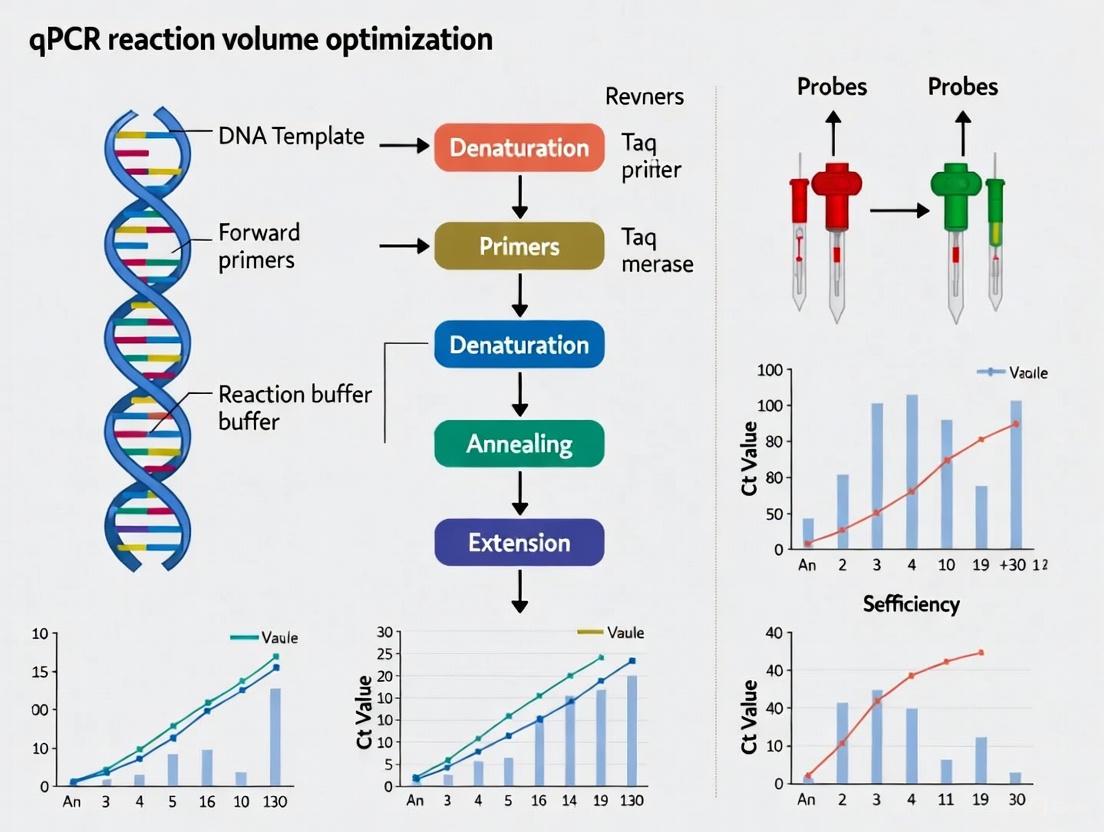
This article provides a systematic guide for researchers and drug development professionals on optimizing quantitative PCR (qPCR) reaction volumes for sensitive and reliable parasite detection.
Optimizing qPCR Reaction Volume for Enhanced Parasite Detection: A Comprehensive Guide for Biomedical Researchers
Abstract
This article provides a systematic guide for researchers and drug development professionals on optimizing quantitative PCR (qPCR) reaction volumes for sensitive and reliable parasite detection. Covering foundational principles through advanced validation, we explore the critical impact of reaction volume on assay sensitivity, specificity, and efficiency. The content includes practical methodologies for volume optimization across various parasitic pathogens, troubleshooting strategies for common pitfalls, and rigorous validation techniques comparing qPCR with conventional diagnostic methods. With a focus on practical application in clinical and research settings, this resource aims to enhance molecular diagnostic capabilities for parasitic diseases through standardized qPCR optimization protocols.
Understanding qPCR Fundamentals and Volume Impact on Parasite Detection Sensitivity
Quantitative Polymerase Chain Reaction (qPCR) is a cornerstone molecular technique for detecting and quantifying parasite DNA in clinical and research settings. The choice of detection chemistry—SYBR Green or probe-based systems—significantly impacts the specificity, sensitivity, and cost-effectiveness of diagnostic assays. This application note delineates the core principles of these two predominant chemistries and provides a detailed protocol optimized for parasite detection, incorporating strategies for reaction volume optimization to enhance accessibility and scalability in resource-limited environments. Within the context of a broader thesis on qPCR optimization, this guide aims to equip researchers and drug development professionals with the knowledge to implement robust, reliable molecular diagnostics for parasitic diseases.
Real-time quantitative PCR (qPCR) is a powerful and widely used technique for quantifying nucleic acids. Its application in parasitology ranges from diagnosing infections to monitoring treatment efficacy and conducting epidemiological surveys. The core of qPCR technology involves the fluorescent detection of amplified DNA, with the fluorescence signal being directly proportional to the amount of PCR product generated. Two primary chemistries dominate this field: SYBR Green dye-based detection and sequence-specific probe-based detection (e.g., TaqMan probes).
The selection between these chemistries is not trivial and involves a trade-off between cost, specificity, and multiplexing capability. For parasite detection, where high specificity is often required to distinguish between closely related species or to detect low parasitaemia in clinical samples, this choice becomes critically important. Furthermore, the ongoing need to make molecular testing more accessible and sustainable, particularly in field settings or laboratories with budget constraints, has spurred innovations such as reaction volume optimization, which reduces reagent usage without compromising assay performance.
Core Principles and Comparative Analysis
SYBR Green Dye-Based Chemistry
SYBR Green is an asymmetrical cyanine dye that binds non-specifically to the minor groove of all double-stranded DNA (dsDNA) molecules. When unbound, the dye exhibits minimal fluorescence; however, upon binding to dsDNA, its fluorescence increases 20- to 100-fold [1] [2]. This property makes it a simple and cost-effective reporter for DNA amplification, as it requires only the addition of standard PCR primers.
A significant limitation of SYBR Green is its lack of inherent sequence specificity. The dye will bind to any dsDNA in the reaction, including non-specific amplification products (e.g., primer-dimers), which can lead to overestimation of the target concentration and false-positive results [1] [2]. Consequently, a post-amplification melting curve analysis is mandatory to distinguish between the specific amplicon and other products based on their distinct melting temperatures (Tm). SYBR Green is also unsuitable for multiplex reactions, as it cannot differentiate between different amplicons in a single tube [2].
Probe-Based Chemistry (TaqMan)
TaqMan probes are sequence-specific oligonucleotides labeled with a fluorescent reporter dye at the 5' end and a quencher molecule at the 3' end. The close proximity of the quencher to the reporter suppresses the reporter's fluorescence via Fluorescence Resonance Energy Transfer (FRET) when the probe is intact [1]. During the PCR amplification cycle, the probe anneals to its specific target sequence located between the forward and reverse primers. The 5' to 3' exonuclease activity of the Taq DNA polymerase then cleaves the probe, separating the reporter from the quencher and resulting in a permanent increase in fluorescence signal that is proportional to the target amplification [1].
This mechanism confers several key advantages. TaqMan assays offer superior specificity by detecting only the intended amplicon, thereby minimizing false positives from non-specific amplification. They also enable multiplexing—the simultaneous detection of multiple targets in a single reaction—by using probes labeled with different, spectrally distinct reporter dyes [1] [2]. This is particularly useful for speciating parasites or for including internal controls. The primary disadvantage is the higher cost associated with the synthesis of the fluorescently-labeled probe for each target [2].
Table 1: Comparative Analysis of SYBR Green and TaqMan qPCR Chemistries
| Feature | SYBR Green | TaqMan Probes |
|---|---|---|
| Principle | Intercalates into all dsDNA | Sequence-specific probe hydrolysis |
| Specificity | Lower (requires melt curve) | Higher (inherent in probe design) |
| Cost | Lower (primers only) | Higher (primers + probe) |
| Multiplexing | Not possible | Possible with different fluorophores |
| Background | Higher due to non-specific binding | Lower (signal from specific cleavage only) |
| Ease of Design/Use | Simpler | More complex (probe design required) |
| Sensitivity | Can be high with optimized primers | Generally higher and more reliable [2] |
Performance in Parasite Detection
Comparative studies in parasitology have demonstrated the practical implications of these chemistry differences. Research on canine leishmaniasis (CanL) found that both SYBR Green and TaqMan qPCRs performed reliably when used with conjunctival swabs, a non-invasive sample, for determining Leishmania infantum infection stages [3] [4]. However, the inherent specificity of probe-based assays often makes them the preferred choice for complex diagnostic scenarios.
For instance, in malaria detection, SYBR Green assays can be effective for drug screening under optimal laboratory conditions. However, their performance can be compromised when testing clinical samples with high background DNA, such as whole blood. One study reported a significantly higher limit of detection (LOD) for SYBR Green in whole blood (0.55% IRBC) compared to a probe-based HRP2 ELISA (0.022% IRBC), highlighting its reduced sensitivity in the presence of non-parasite DNA [5]. This underscores the importance of chemistry selection based on the sample matrix.
Diagram 1: Decision workflow for selecting qPCR chemistry.
Reaction Volume Optimization: Principles and Protocol
The Rationale for Volume Reduction
Reaction volume optimization is a key strategy for increasing the cost-efficiency and throughput of qPCR assays, which is especially valuable in large-scale surveillance studies or resource-limited settings. The principle involves reducing the total volume of the qPCR reaction—typically from a standard 20-25 µL to a half-reaction (e.g., 10-12.5 µL) or even lower—while maintaining the final concentration of all reaction components.
Studies have validated this approach, demonstrating that halving the reaction volume does not adversely affect assay performance. One investigation on viral load testing for Hepatitis B, Hepatitis C, and CMV found that half-reactions maintained PCR efficiencies between 100.9% and 105.7%, with coefficient of determination (R²) values of 1, indicating a robust and reliable correlation comparable to standard reactions [6]. This optimization can effectively halve the reagent costs per sample, making large-scale testing more feasible.
Detailed Protocol: Half-Volume qPCR Setup
This protocol is adapted from a study that successfully optimized half-volume viral load qPCR assays [6] and can be applied to parasite DNA detection.
Pre-Optimization Requirements:
- A previously validated and optimized qPCR assay (either SYBR Green or TaqMan) with known primer and probe concentrations.
- A calibrated pipetting system capable of accurately dispensing low volumes (e.g., 0.5 µL, 1 µL).
Reagent Setup: The table below outlines a direct comparison between standard and half-volume reactions for a TaqMan probe-based assay. For SYBR Green, omit the probe and adjust the water volume accordingly.
Table 2: Reaction Setup for Standard vs. Half-Volume TaqMan qPCR
| Reagent Component | Standard Reaction (25 µL) | Half-Reaction (12.5 µL) |
|---|---|---|
| 2x Master Mix | 12.5 µL | 6.25 µL |
| Forward Primer (10 µM) | 1.0 µL | 0.5 µL |
| Reverse Primer (10 µM) | 1.0 µL | 0.5 µL |
| Probe (5 µM) | 1.0 µL | 0.5 µL |
| Nuclease-Free Water | 4.5 µL | 2.25 µL |
| DNA Template | 5.0 µL | 2.5 µL |
| Total Volume | 25 µL | 12.5 µL |
Experimental Procedure:
- Pilot Experiment: Begin with a pilot study comparing the standard and half-volume reactions using a standard dilution series of a known positive control (e.g., plasmid DNA, synthetic gBlock, or known positive sample DNA). This is crucial for validating the performance of the scaled-down assay [6].
- Master Mix Preparation: Prepare a master mix for the number of reactions needed (including extra for pipetting error) by combining all components except the DNA template. Mix thoroughly by gentle vortexing and brief centrifugation.
- Aliquoting: Precisely aliquot the appropriate volume of the master mix into each well of a qPCR plate. For a 12.5 µL half-reaction, aliquot 10 µL of master mix per well.
- Template Addition: Add the designated volume of DNA template (2.5 µL in this example) to each well. Include no-template controls (NTCs) by adding nuclease-free water instead of DNA.
- Sealing and Centrifugation: Seal the plate with an optical adhesive film and centrifuge briefly to collect the contents at the bottom of the wells and eliminate air bubbles.
- qPCR Run: Place the plate in the real-time PCR instrument and run the previously optimized thermal cycling protocol. No changes to the cycling conditions are typically required.
- Data Analysis:
- Construct a standard curve from the serial dilutions run in both standard and half-reactions.
- Compare the PCR efficiency (E), coefficient of determination (R²), and Ct values between the two reaction volumes.
- A successful optimization is achieved when the half-reaction demonstrates E = 100 ± 5% and R² ≥ 0.99 [7], with Ct values highly concordant with the standard reaction.
Diagram 2: Experimental workflow for half-reaction volume optimization.
The Scientist's Toolkit: Essential Reagents and Materials
Successful implementation of qPCR for parasite detection, particularly with optimized volumes, relies on high-quality reagents and precise laboratory practices.
Table 3: Research Reagent Solutions for qPCR Assay Development
| Item | Function/Description | Application Notes |
|---|---|---|
| SYBR Green Master Mix | A ready-to-use mix containing DNA polymerase, dNTPs, buffer, and the SYBR Green dye. | Simplifies reaction setup; choose mixes with inhibitor-resistant enzymes for complex samples like blood [8]. |
| TaqMan Master Mix | A ready-to-use mix optimized for probe-based assays, containing DNA polymerase with 5'→3' exonuclease activity. | Essential for TaqMan reactions; ensures efficient probe hydrolysis and fluorescence generation. |
| Sequence-Specific Primers | Oligonucleotides (typically 18-22 bp) designed to amplify a unique region of the parasite's DNA/RNA. | Design based on SNPs to distinguish between homologous genes or parasite species [7]. |
| TaqMan Probes | Oligonucleotides labeled with a reporter (e.g., FAM) and quencher (e.g., BHQ). | Dual-labeled probes are common; MGB probes offer higher specificity and stability [1]. |
| gBlock Gene Fragments | Synthetic double-stranded DNA fragments containing the target amplicon sequence. | Used as quantitative standards for generating standard curves; offer advantages over plasmid DNA [9]. |
| Nucleic Acid Extraction Kit | For purifying DNA (and RNA if doing RT-qPCR) from clinical samples (e.g., blood, swabs, tissue). | Critical step; efficiency impacts final results. Protocols may need modification for specific samples like conjunctival swabs [3]. |
| Nuclease-Free Water | Ultrapure water free of nucleases. | Used to bring the reaction to the desired volume; ensures reaction integrity. |
| Optical qPCR Plates & Seals | Plates and adhesive films designed for use in real-time PCR instruments. | Ensure optimal thermal conductivity and prevent evaporation and contamination during cycling. |
The strategic selection between SYBR Green and TaqMan probe-based qPCR chemistries is fundamental to the success of parasite detection assays. While SYBR Green offers a cost-effective and flexible solution, TaqMan probes provide unmatched specificity and are indispensable for multiplex applications. Furthermore, the implementation of reaction volume optimization, as demonstrated by the robust performance of half-volume protocols, presents a practical and validated path toward more sustainable and scalable molecular testing. By integrating these principles and protocols, researchers can enhance the precision, efficiency, and accessibility of their work in parasitology and drug development, contributing to improved disease management and public health outcomes globally.
Critical Reaction Components and Their Concentration Thresholds in Reduced Volumes
The optimization of quantitative polymerase chain reaction (qPCR) reaction volumes is a critical step in parasitology research, directly impacting the sensitivity, specificity, and cost-effectiveness of molecular diagnostics. Efficient volume reduction strategies are particularly valuable for parasite detection studies where sample material is often limited, such as with blood samples for malaria detection or stool samples for soil-transmitted helminths [10] [11]. This application note details the critical reaction components and their concentration thresholds in reduced-volume qPCR setups, providing a structured framework for researchers developing diagnostic assays for parasitic diseases. The protocols and data presented herein support the broader thesis that optimized miniaturized qPCR reactions maintain analytical performance while enhancing resource utilization in parasitology research and drug development.
Critical Reaction Components and Concentration Thresholds
Successful qPCR volume reduction requires precise adjustment of key reaction components. The following table summarizes the optimal concentration ranges for standard (50 μL) and reduced (10-20 μL) reaction volumes, drawing from established parasitology detection protocols [10] [12].
Table 1: Component Concentration Thresholds in Standard vs. Reduced Volume qPCR
| Reaction Component | Standard Volume (50 μL) | Reduced Volume (10-20 μL) | Function & Optimization Notes |
|---|---|---|---|
| Template DNA | 5–50 ng (gDNA) [12] | 1–20 ng (gDNA) | Function: Source of target sequence [12].Notes: Higher amounts increase nonspecific amplification; lower amounts reduce yield. Parasite DNA from clinical samples (e.g., blood, stool) may require optimization based on extraction efficiency [10] [11]. |
| DNA Polymerase | 1–2 Units [12] | 0.2–0.8 Units | Function: Enzymatic amplification of target DNA [12].Notes: Thermostable enzymes (e.g., Taq) are essential. Excess enzyme can cause nonspecific products; too little reduces yield [12]. |
| Primers | 0.1–1.0 μM each [12] | 0.1–0.5 μM each | Function: Bind flanking regions to define the amplicon [12].Notes: Must be designed with Tm 55–70°C, 40–60% GC content, and no self-complementarity. High concentrations cause mispriming and nonspecific amplification [12]. |
| dNTPs | 0.2 mM each [12] | 0.1–0.2 mM each | Function: Building blocks for new DNA strands [12].Notes: Equimolar amounts of dATP, dCTP, dGTP, dTTP are critical. Higher concentrations can inhibit PCR [12]. |
| Magnesium Ions (Mg²⁺) | 1.5–2.5 mM (as MgCl₂) [12] | 1.0–2.0 mM | Function: Essential cofactor for DNA polymerase activity [12].Notes: Concentration is critical for enzyme activity, primer annealing, and template denaturation. Its optimal level is often determined empirically [12]. |
Experimental Protocol: qPCR Setup for Parasite Detection in Reduced Volumes
This protocol is adapted from a malaria diagnostic study that successfully utilized a 20 μL HRM-qPCR reaction [10].
Sample Preparation and DNA Extraction
- Sample Collection: Collect clinical samples (e.g., peripheral blood for malaria parasites [10] or ethanol-preserved stool for soil-transmitted helminths [11]).
- DNA Extraction: Perform genomic DNA extraction using a commercial kit (e.g., QIAamp DNA Mini Kit [10] [11]).
- Critical Step: Follow manufacturer's protocols with potential modifications for complex samples. For stool samples, a wash step with PBS may be added to remove PCR inhibitors [11].
- DNA Quantification: Quantify DNA concentration using a spectrophotometer (e.g., NanoDrop [10]). Adjust samples to a consistent concentration within the working range (e.g., 10 ng/μL) using nuclease-free water.
Reduced-Volume qPCR Master Mix Preparation
- Calculate Reactions: Calculate the total master mix volume for the number of reactions plus ~10% excess to account for pipetting error.
- Prepare Master Mix: For a single 20 μL reaction, combine components in a sterile tube in the following order:
- 12.8 μL of Nuclease-free Water
- 2.0 μL of 10X PCR Buffer (final concentration 1X)
- 0.8 μL of MgCl₂ (25 mM stock, final concentration 2.0 mM) [12]
- 0.4 μL of dNTP Mix (10 mM each, final concentration 0.2 mM each) [12]
- 0.4 μL of Forward Primer (10 μM stock, final concentration 0.2 μM) [10] [12]
- 0.4 μL of Reverse Primer (10 μM stock, final concentration 0.2 μM) [10] [12]
- 0.2 μL of DNA Polymerase (5 U/μL stock, final concentration 0.5 U/μL) [12]
- 1.0 μL of 20X Evagreen or SYBR Green fluorescent dye (if using intercalating dye chemistry)
- Aliquot Master Mix: Mix thoroughly by pipetting or gentle vortexing. Centrifuge briefly. Aliquot 18 μL of master mix into each well of a 96-well qPCR plate.
- Add Template DNA: Add 2 μL of template DNA (10 ng/μL, for 20 ng total input) to respective wells. For negative control, add 2 μL of nuclease-free water.
- Seal the Plate: Apply an optical adhesive seal firmly to prevent evaporation during thermal cycling.
qPCR Amplification and Data Acquisition
- Load Plate: Place the sealed plate into the real-time PCR instrument (e.g., Light Cycler 96 [10]).
- Set Thermal Cycler Protocol: Program the instrument with the following cycling conditions, optimized for the 18S SSU rRNA target for Plasmodium species [10]:
- Initial Denaturation: 95°C for 5 minutes
- Amplification (40 cycles):
- Denaturation: 94°C for 45 seconds
- Annealing: 60°C for 45 seconds
- Extension: 72°C for 70 seconds
- High-Resolution Melting (HRM) Analysis (if applicable):
- 95°C for 1 minute
- 40°C for 1 minute
- Continuous ramp to 95°C at 0.2°C per second with continuous fluorescence acquisition [10].
- Initiate Run: Start the qPCR protocol. The instrument will collect fluorescence data during each cycle and, if applicable, the melt curve stage.
Data Analysis
- Threshold and Ct Determination: Set the fluorescence threshold within the exponential phase of amplification above the baseline. The instrument will assign a Cycle threshold (Ct) value for each reaction [13].
- Calculate PCR Efficiency: For absolute quantification, generate a standard curve using serial dilutions of a known DNA standard. Calculate amplification efficiency using the formula: Efficiency (%) = (10^(-1/Slope) - 1) × 100. Optimal efficiency ranges from 90–110% [13].
- Species Identification via HRM: If HRM was performed, analyze the melting curve profiles. Different parasite species can be distinguished by their characteristic melting temperatures (Tm). For example, HRM analysis of the 18S SSU rRNA gene achieved a significant difference of 2.73°C to distinguish between P. falciparum and P. vivax [10].
Diagram 1: qPCR experimental workflow for parasite detection.
Troubleshooting and Validation in Reduced Volumes
When transitioning to reduced-volume qPCR, researchers should validate assay performance rigorously.
- Reproducibility: Include technical replicates (at least n=3) to assess precision. The coefficient of variation (CV) for Ct values should be <5% for reliable quantification [11].
- Inhibition Check: Spiking a known amount of control DNA into test samples can help identify the presence of PCR inhibitors, which may be more concentrated in smaller volume reactions.
- Evaporation Control: Ensure optical seals are applied correctly. Evaporation can significantly affect reaction kinetics in small volumes, leading to inconsistent results.
Data Analysis and Interpretation in Parasite Research
Accurate data analysis is fundamental for interpreting qPCR results in a research context. The two primary quantification methods are absolute and relative quantification [13] [14].
Absolute Quantification determines the exact copy number of a target DNA sequence in a sample, essential for applications like measuring parasite load [13]. This requires a standard curve of known concentrations.
Relative Quantification compares the expression level of a target gene between different samples (e.g., treated vs. untreated) relative to a reference (housekeeping) gene [13] [14]. The comparative Ct (ΔΔCt) method is commonly used, assuming amplification efficiencies of target and reference genes are close to 100% [13].
Diagram 2: qPCR data analysis and quantification pathway.
The Scientist's Toolkit: Essential Research Reagent Solutions
Table 2: Key Reagents and Materials for qPCR-Based Parasite Detection
| Item | Function/Application | Example from Literature |
|---|---|---|
| Nucleic Acid Extraction Kit | Purification of genomic DNA from complex clinical samples (blood, stool). | QIAamp DNA Mini Kit [10] [11] |
| DNA Polymerase | Thermostable enzyme for PCR amplification. | Taq DNA Polymerase [12] |
| Optical Reaction Plates & Seals | Compatible with real-time PCR instruments; prevent evaporation. | 96-well plates for Light Cycler 96 [10] |
| Real-Time PCR Instrument | Equipment for amplification and fluorescence detection. | Light Cycler 96 Instrument (Roche) [10] |
| Fluorescent Detection Chemistry | Signal generation for real-time monitoring (intercalating dyes or probe-based). | SYBR Green, Evagreen, TaqMan Probes [13] [14] |
| Species-Specific Primers | Target unique genomic regions of parasites for identification. | Primers for 18S SSU rRNA of Plasmodium spp. [10] |
The Relationship Between Reaction Volume, Sensitivity, and Limit of Detection
Quantitative PCR (qPCR) is a cornerstone technique for pathogen detection, offering the sensitivity required to identify low-abundance targets such as parasites. A critical, yet often overlooked, factor that significantly influences assay performance is reaction volume. This application note, framed within parasite detection research, delineates the intrinsic relationship between reaction volume, analytical sensitivity, and the limit of detection (LoD). We provide detailed protocols and data to guide researchers in optimizing qPCR reactions for superior diagnostic accuracy in drug development and clinical research.
The fundamental principle is that, for a given template concentration, smaller reaction volumes concentrate the target molecules, thereby increasing the probability of detection in each reaction and improving the overall LoD [15]. This relationship is paramount when working with scarce clinical samples or aiming to detect low parasitic loads.
Theoretical Foundations: LoD and LoQ in qPCR
In diagnostic qPCR, two parameters are vital for characterizing assay sensitivity: the Limit of Detection (LoD) and the Limit of Quantification (LoQ).
- Limit of Detection (LoD) is defined as the lowest quantity of an analyte that can be reliably distinguished from its absence. For qPCR, this is the smallest number of target copies per reaction that yield a positive signal in at least 95% of replicates [15].
- Limit of Quantification (LoQ) is the lowest quantity of an analyte that can be quantitatively determined with stated acceptable precision and accuracy [15].
qPCR presents a unique analytical challenge because the output, the quantification cycle (Cq), is proportional to the logarithm of the initial target concentration. This log-linear relationship means conventional methods for determining LoD, which assume a linear response, are not directly applicable [15]. Consequently, estimating LoD in qPCR requires a probability-based approach using multiple replicates at low target concentrations to model the detection probability [15].
The Impact of Reaction Volume on Key Assay Parameters
Reaction volume is a primary determinant in configuring a qPCR assay, directly influencing the number of reactions obtainable from a kit and the fundamental sensitivity of the test.
Standard Reaction Volumes by Platform
The choice of reaction volume is largely dictated by the instrumentation and consumables. The table below summarizes standard volumes for common qPCR platforms.
Table 1: Standard qPCR Reaction Volumes for Different Platforms
| Platform or Well Format | Typical Reaction Volume | Key Considerations |
|---|---|---|
| 96-well plate | 20-μL | Common standard volume; balances reagent use and sensitivity [16] |
| 384-well plate | 10-μL | Higher throughput; requires precise liquid handling [16] |
| 1,536-well plate | 2-μL | Very high throughput; used in specialized screening systems [16] |
| SmartChip System | 100-nL (0.1-μL) | Ultra-high throughput nanoscale PCR [16] |
Reaction Volume and Kit Economics
Master mixes are typically sold as concentrated solutions (e.g., 2X or 5X). The total volume of master mix provided in a kit determines the number of reactions achievable, which is inversely proportional to the chosen reaction volume.
Table 2: Example of Reactions Obtained from a 2X Master Mix (Total volume: 2.52 mL)
| Reaction Volume | Number of Reactions |
|---|---|
| 50-μL | 100 |
| 25-μL | 200 |
| 20-μL | 250 |
| 10-μL | 500 |
| 5-μL | 1,000 |
As illustrated, reducing the reaction volume from 20μL to 10μL doubles the number of reactions from a single kit, significantly reducing the cost per reaction [16].
Relationship Between Volume, Sensitivity, and LoD
The core relationship between reaction volume and sensitivity is governed by the principles of concentration. For a given sample with a fixed target copy number per microliter, a smaller total reaction volume means a higher concentration of target molecules in that reaction, thereby improving the probability of detection.
The following diagram illustrates the logical workflow and key relationships between reaction volume, experimental parameters, and final assay performance outcomes.
This relationship is critical for parasite detection, where the goal is often to identify a minimal parasitic load. A study developing a qPCR assay for Haemophilus parasuis demonstrated that a carefully optimized system could achieve an LoD of less than 10 copies/µL, a sensitivity crucial for detecting low bacterial loads in complex samples [17]. This highlights that while reducing volume can improve sensitivity, achieving a superior LoD also depends on robust primer/probe design and rigorous optimization.
Experimental Protocol: Determining LoD for a Low-Volume qPCR Assay
This protocol provides a detailed methodology for establishing the LoD of a low-volume qPCR assay, suitable for parasite detection research.
The Scientist's Toolkit: Key Reagents and Materials
Table 3: Essential Reagents for Low-Volume qPCR LoD Determination
| Item | Function / Key Feature | Example & Notes |
|---|---|---|
| qPCR Master Mix | Contains DNA polymerase, dNTPs, buffer, and salts. | Use a 2X concentrate for low-volume setups (e.g., TB Green Premix Ex Taq) [16]. |
| Sequence-Specific Primers & Probe | Enables specific amplification and detection of the target parasite DNA. | Design primers with Tm ~60–62°C and a probe with Tm 5–10°C higher [18]. |
| Nuclease-Free Water | Solvent for reactions; ensures no enzymatic degradation of components. | Critical for maintaining reaction integrity. |
| Reference Standard | A known quantity of the target sequence for generating the standard curve. | Can be a plasmid clone or synthetic gBlock of the target gene [17] [19]. |
| qPCR Instrument | Thermocycler with fluorescence detection capabilities. | Must be compatible with low-volume plates (e.g., 384-well) [16]. |
| Optical Plate & Seals | Vessel for the reaction; must be optically clear for fluorescence detection. | Ensure seals are airtight to prevent evaporation. |
Step-by-Step Workflow
Step 1: Prepare a Serial Dilution of the Target Begin by preparing a dilution series of the reference standard (e.g., plasmid containing the target sequence). A 7-fold dilution series in triplicate is effective for LoD determination, covering a range from a high concentration down to a level expected to be near the detection limit [17].
- Dilute the stock standard in nuclease-free water or a background of naive host gDNA (e.g., 1,000 ng/reaction) to mimic the sample matrix [19].
- The final dilution points should encompass a range where some replicates yield a Cq value and others do not.
Step 2: Set Up the Low-Volume qPCR Reaction For a 10-μL reaction in a 384-well plate [16]:
- 2X TB Green Advantage qPCR Premix: 5 μL
- Forward Primer (10 μM): 0.5 μL
- Reverse Primer (10 μM): 0.5 μL
- DNA Template: 1 μL
- Nuclease-Free Water: 3 μL
- Total Reaction Volume: 10 μL
Step 3: Perform Amplification Run the qPCR using cycling conditions optimized for your master mix and amplicon. A typical protocol is:
- UNG Incubation (if applicable): 50°C for 5 min [17].
- Polymerase Activation: 95°C for 2 min [17].
- 40–50 Cycles of:
- Denaturation: 95°C for 15 sec.
- Annealing/Extension: 60°C for 30–60 sec [19].
Step 4: Data Analysis and LoD Calculation The LoD is determined using a statistical, probability-based model, as the standard linear approach is not suitable [15].
- Record Results: For each replicate at every dilution, record a "1" for a detected result (Cq < cut-off) and a "0" for not detected.
- Perform Logistic Regression: Input the data (log10 concentration vs. detection rate) into statistical software (e.g., GenEx [15]) to fit a logistic regression curve.
- Calculate LoD: The LoD is defined as the concentration at which 95% of the replicates test positive. The software will calculate this based on the fitted model, providing a precise copy number for your assay's LoD [15].
Discussion and Best Practices for Optimization
Critical Factors for Robust Low-Volume qPCR
Primer and Probe Design: For parasite detection, target a conserved, single-copy gene specific to the parasite to ensure specificity and accurate quantification [17] [20]. BLAST analysis is essential to confirm lack of cross-reactivity with the host or co-infecting organisms [18].
Precision Liquid Handling: Low-volume reactions are highly susceptible to pipetting errors. Use calibrated pipettes and consider automated liquid handlers for improved reproducibility and precision [19].
Inhibition Testing: The presence of PCR inhibitors in complex sample matrices (e.g., blood, stool) can significantly affect amplification efficiency. Include a control with a 10-fold dilution of the sample to check for inhibition [18].
Troubleshooting Common Issues
- High Variation in Replicate Cq Values: This often indicates pipetting inaccuracies or an inhomogeneous reaction mix. Ensure thorough mixing of all components and centrifuge the plate before running.
- Failure to Detect Low Copy Number Targets: Re-optimize primer and probe concentrations and consider further reducing the reaction volume to increase target concentration, provided instrumentation allows.
- Non-Specific Amplification: Increase the annealing temperature or use a hot-start polymerase to improve specificity [21]. A melt curve analysis for SYBR Green assays is essential [22].
Optimizing qPCR reaction volume is a powerful strategy for enhancing assay sensitivity and achieving a lower Limit of Detection. This is particularly critical in parasite detection research, where identifying low-level infections can directly impact diagnosis, treatment, and disease control. By understanding the theoretical principles and implementing the detailed protocols outlined in this document, researchers can effectively develop and validate robust, cost-effective, and highly sensitive qPCR assays for their specific research and drug development applications.
The accurate detection and quantification of parasitic pathogens via quantitative PCR (qPCR) is paramount for effective disease diagnosis, drug efficacy trials, and epidemiological surveillance. However, this field is confronted by three persistent and interconnected challenges: the reliable detection of low parasitemia levels often found in asymptomatic or chronic infections, the presence of PCR inhibitors co-extracted from complex biological and environmental samples, and the accurate identification of mixed-species infections. These challenges are further compounded when optimizing qPCR reaction volumes, as factors affecting inhibitor concentration, template distribution, and assay sensitivity become critically dependent on reaction setup [23] [11]. This document outlines detailed application notes and protocols to help researchers overcome these hurdles, ensuring robust and reproducible results in parasite detection research.
The following tables summarize key performance metrics for various molecular detection methods applied to parasitic pathogens, providing a basis for assay selection and optimization.
Table 1: Analytical Performance of PCR-Based Assays for Protozoan Parasites
| Parasite (Target Gene) | Method | Sensitivity | Specificity | Limit of Detection (LoD) | Citation |
|---|---|---|---|---|---|
| Plasmodium spp. (multi-target) | SYBR Green qPCR | 100% | 100% | 0.064 - 1.6 parasites/µL | [24] |
| Plasmodium spp. (multi-target) | Multiplex dPCR | 98.0% | 100% | 0.557 copies/µL | [25] |
| Cyclospora cayetanensis (mit1 gene) | TaqMan qPCR (Mit1C) | N/A | 98.9% | 5 oocysts in lettuce | [26] |
Table 2: Performance of Molecular Assays for Helminth Parasites
| Parasite (Target Gene) | Method | Sensitivity / LoD | Amplification Efficiency | Key Finding | Citation |
|---|---|---|---|---|---|
| Spirometra mansoni (cytb gene) | TaqMan qPCR | 100 copies/µL | 107.6% (R² = 0.997) | CV < 5%; suitable for quantification | [27] |
| Spirometra mansoni (cox1 gene) | Conventional PCR | 0.7 ng/µL (egg DNA) | N/A | Sampling site did not affect detection | [27] |
| Trichuris trichiura | qPCR vs. Kato-Katz | Higher sensitivity post-treatment | N/A | Complements microscopy in clinical trials | [11] |
Experimental Protocols
Protocol 1: An Optimized SYBR Green qPCR Assay for Detection of HumanPlasmodiumSpecies
This protocol, adapted from a 2021 study, provides a sensitive and cost-effective method for detecting and distinguishing all five human malaria-causing parasites using a single amplification condition [24].
I. Research Reagent Solutions
- DNA Extraction Kit: QIAamp Blood Mini Kit (Qiagen, Cat. No. 51306)
- qPCR Master Mix: 2x iQ SYBR Green Supermix (Bio-Rad)
- Primers: Species-specific primers for P. falciparum, P. vivax, P. malariae, P. ovale, and P. knowlesi (for sequences, refer to [24] Supplementary Table S1).
- Equipment: CFX-96 Real-Time PCR Detection System (Bio-Rad)
- Nuclease-Free Water
II. Step-by-Step Procedure
Nucleic Acid Extraction:
- Extract genomic DNA from 200 µL of whole blood using the QIAamp Blood Mini Kit according to the manufacturer's instructions.
- Elute DNA in 50-100 µL of nuclease-free water or the provided elution buffer.
- Quantify DNA concentration using a spectrophotometer (e.g., NanoDrop) and store at -20 °C until use.
qPCR Reaction Setup:
- Prepare the master mix on ice. The reaction components for a single 20 µL reaction are:
- 10 µL of 2x iQ SYBR Green Supermix
- 0.7 µL of 10 µM Forward Primer (specific to target species)
- 0.7 µL of 10 µM Reverse Primer (specific to target species)
- 5.6 µL of Nuclease-Free Water
- 3.0 µL of DNA Template
- Pipette 17 µL of master mix into each well of a 96-well PCR plate, then add 3 µL of DNA template. Seal the plate with an optical adhesive film.
- Centrifuge the plate briefly to collect contents at the bottom of the well.
- Prepare the master mix on ice. The reaction components for a single 20 µL reaction are:
Thermocycling Conditions:
- Run the qPCR with the following optimized program on the CFX-96 system:
- Initial Denaturation: 95 °C for 10 minutes.
- Amplification (35 cycles):
- Denaturation: 95 °C for 1 minute.
- Annealing: 57 °C for 15 seconds.
- Elongation: 61 °C for 30 seconds. Acquire fluorescence at the end of this step.
- Melt Curve Analysis: 60 °C for 10 minutes, then increase from 65 °C to 85 °C in 0.5 °C increments with a 10-second hold per step.
- Run the qPCR with the following optimized program on the CFX-96 system:
III. Data Analysis
- Determine Cycle threshold (Cq) values using the instrument's software.
- For species identification, analyze the melt curve. Each species-specific amplicon will produce a distinct melting temperature (Tm) peak.
- For absolute quantification, run a standard curve of known copy numbers in parallel.
Protocol 2: A Robust qPCR Protocol for Inhibitor-Prone Samples (e.g., Stool, Soil)
This protocol is designed for challenging sample types like feces and soil, which contain high levels of PCR inhibitors, and incorporates steps for effective inhibitor removal [23] [11] [28].
I. Research Reagent Solutions
- Inhibitor-Tolerant Master Mix: e.g., GoTaq Endure qPCR Master Mix (Promega)
- Faecal DNA Extraction Kit: e.g., Faecal Genomic DNA Extraction Kit (Solarbio)
- Additional Inhibitor Removal: PowerBead Tubes (Qiagen, Cat. No. 13113050)
- PCR Facilitators: Bovine Serum Albumin (BSA), molecular biology grade
- Wash Buffer: Phosphate-Buffered Saline (PBS), pH 7.4
II. Step-by-Step Procedure
Enhanced Nucleic Acid Extraction from Stool:
- Transfer 250 µL of ethanol-preserved stool suspension to a 2 mL PowerBead tube.
- Centrifuge at 14,000 × g for 1 minute and discard the ethanol supernatant.
- Critical Step: Wash the pellet with 1,000 µL of PBS to remove residual ethanol and soluble inhibitors. Centrifuge again and discard the supernatant [11].
- Proceed with DNA extraction using a faecal DNA kit, following the manufacturer's protocol but starting from the washed pellet.
Inhibitor-Tolerant qPCR Setup:
- Prepare the master mix. A single reaction may include:
- 1X Inhibitor-Tolerant Master Mix (e.g., GoTaq Endure)
- 0.2 - 0.4 µM each of forward and reverse primer
- 0.5 µM TaqMan probe (if using probe-based chemistry)
- 0.1 - 0.5 mg/mL BSA (optimize concentration)
- DNA template (typically 2-5 µL)
- Nuclease-free water to the final volume (e.g., 20 µL).
- Optimization Note: The concentration of MgCl₂ can be adjusted (e.g., 1.5 mM, 2.0 mM, 2.5 mM) to counteract chelators like heparin if needed [23] [27].
- Prepare the master mix. A single reaction may include:
Thermocycling and Inhibition Monitoring:
- Use standard thermocycling conditions appropriate for the primer-probe set.
- Include an Internal PCR Control (IPC): A known quantity of exogenous DNA template should be spiked into every reaction. A significant delay in the IPC's Cq value compared to a no-inhibitor control indicates the presence of residual inhibition in the sample [23] [29].
The Scientist's Toolkit: Key Research Reagent Solutions
Table 3: Essential Reagents for Overcoming qPCR Challenges in Parasitology
| Reagent / Material | Function / Application | Example Product / Citation |
|---|---|---|
| Inhibitor-Tolerant Polymerase | Resists common inhibitors in complex matrices (humic acid, hemoglobin, polysaccharides). Essential for direct PCR or dirty samples. | GoTaq Endure qPCR Master Mix [23] |
| Bovine Serum Albumin (BSA) | Binds to inhibitory substances, stabilizing the polymerase and improving amplification efficiency. | Molecular biology grade BSA [23] [29] |
| Internal PCR Control (IPC) | Distinguishes true target absence from PCR failure due to inhibition. Can be exogenous or endogenous. | Synthetic DNA/RNA sequence [23] [29] |
| Inhibitor-Removal Beads | Mechanical and chemical disruption for efficient DNA extraction from tough samples (spores, cysts, stool). | PowerBead Tubes [11] |
| Digital PCR (dPCR) | Provides absolute quantification without a standard curve and is less susceptible to inhibition due to endpoint partitioning. | Bio-Rad QX200 ddPCR System [25] |
| Species-Specific Primers/Probes | Enable specific detection and differentiation in mixed infections. Designed from unique genomic regions (e.g., cytb, cox1). | Custom TaqMan assays [27] [24] |
Workflow and Conceptual Diagrams
The following diagrams outline the core workflows and relationships for addressing key challenges in parasitic pathogen detection.
Diagram 1: Overall workflow for reliable parasite detection, highlighting critical steps for inhibitor management.
Diagram 2: Sources and mechanisms of PCR inhibitors, linking them to observed effects in qPCR results.
Theoretical Framework: How Volume Affects Reaction Kinetics and Efficiency
Within the realm of molecular diagnostics, the optimization of quantitative polymerase chain reaction (qPCR) is paramount for the accurate detection and quantification of pathogens, including parasites. While factors such as primer design and cycling conditions are frequently optimized, the role of reaction volume is a critical yet often underexplored variable. This application note establishes a theoretical framework examining how reaction volume directly influences the fundamental kinetics and efficiency of qPCR reactions. The primary mathematical model describing PCR amplification is expressed as:
NC = N0 · (E + 1)C [30]
Where NC is the number of amplicon molecules after cycle C, N0 is the initial number of target molecules, and E is the amplification efficiency (with a maximum value of 1, representing 100% efficiency) [30]. This relationship is the cornerstone of qPCR quantification, and any factor affecting E or the accurate determination of N0 directly impacts the reliability of the assay. This document details how reaction volume can perturb these core parameters, outlines rigorous experimental protocols for volume optimization, and situates this investigation within a broader research thesis focused on enhancing parasite detection.
Theoretical Foundations of Volume-Mediated Kinetics
The principle that reaction volume can alter kinetics is rooted in physical chemistry. In a qPCR context, the key consideration is that a change in total reaction volume, while maintaining constant concentrations of primers, probes, and reagents, inherently alters absolute molecule counts and surface-to-volume ratios, which can subsequently influence reaction dynamics.
Kinetic and Equilibrium Models in qPCR
Advanced models of qPCR move beyond the assumption of constant amplification efficiency and incorporate the kinetics of the annealing phase. These stepwise kinetic equilibrium models treat efficiency as a variable dependent on the concentrations of targets and primers at each cycle [31]. The model can be conceptualized by the equilibrium for primer-template hybridization:
A + a ⇌ A-a
Where A represents a single-stranded target molecule and a represents its complementary primer. The equilibrium constant, K, for this reaction is defined as K = [A-a] / ([A][a]). When the total reaction volume is reduced, the absolute number of molecules required to reach a given concentration is lower. However, in sub-microliter volumes, stochastic effects become significant; the random distribution of a small number of target molecules N0 can lead to pronounced variation in the observed Cq (Quantification Cycle) value [30] [32]. This fundamental relationship underscores that volume reduction, without adequate replication, can compromise quantification accuracy, especially at low target concentrations typical in parasite burden studies.
The f0% Method and Volume Considerations
The classical threshold cycle (CT) method for qPCR analysis has known limitations, including its susceptibility to variations in amplification efficiency [33]. The novel f0% method has been developed to overcome these drawbacks by using a modified flexible sigmoid function to fit the amplification curve and estimate the initial fluorescence as a percentage of the predicted maximum [33]. This method has demonstrated a significant reduction in the coefficient of variation (CV%) and absolute relative error compared to the CT method [33]. When optimizing reaction volume, the f0% method provides a more robust analytical tool. Its ability to accurately model the entire amplification curve, rather than relying on a single threshold-crossing point, makes it less sensitive to volume-induced shifts in amplification kinetics and baseline fluorescence, thereby providing a more reliable metric for comparing the performance of different reaction volumes.
Experimental Protocol for Volume Optimization
The following protocol provides a detailed methodology for systematically evaluating the effect of reaction volume on qPCR kinetics and efficiency, specifically tailored for parasite DNA detection.
Research Reagent Solutions
The following reagents are essential for executing the volume optimization experiments.
Table 1: Key Research Reagent Solutions for qPCR Volume Optimization
| Reagent/Solution | Function & Rationale |
|---|---|
| Parasite gDNA Standard | Provides a known, quantifiable target for constructing standard curves and assessing accuracy and dynamic range. |
| qPCR Master Mix | Contains DNA polymerase, dNTPs, and optimized buffer. Essential for robust and efficient amplification. |
| Sequence-Specific Primers/Probes | Ensures specific amplification of the target parasite DNA sequence. |
| DNA Intercalating Dye (e.g., SYBR Green I) | Fluorescent dye that binds double-stranded DNA, allowing for real-time monitoring of amplicon accumulation [30] [33]. |
| Nuclease-Free Water | Serves as a diluent and volume adjuster, ensuring no enzymatic degradation of reaction components. |
Step-by-Step Procedure
Preparation of DNA Standard Dilution Series:
- Begin with a high-concentration stock of purified parasite genomic DNA (gDNA) with a known concentration (e.g., 108 copies/µL).
- Perform a serial log10 dilution (e.g., from 107 to 101 copies/µL) in nuclease-free water. Use at least five dilution points to establish a robust standard curve [30] [33].
- Prepare a sufficient volume of each dilution to accommodate all planned replicate reactions across the different volume conditions.
qPCR Reaction Setup:
- Define the reaction volumes to be tested. A typical range might include 50 µL, 25 µL, 10 µL, and 5 µL.
- For each volume and each DNA standard concentration, prepare a master mix containing all common components (2X qPCR master mix, primers/probe, water) according to the manufacturer's instructions.
- Critical Note: Maintain the final concentration of all reaction components constant across all volume conditions. Only the total volume is varied.
- Aliquot the appropriate volume of the master mix into the designated wells of a PCR plate or disc.
- Add the template DNA to achieve the desired final copy number per reaction. Include no-template controls (NTCs) for each volume condition to monitor contamination.
- Perform a minimum of four technical replicates for each combination of volume and template concentration to allow for statistical analysis of variation [30].
Thermocycling and Data Acquisition:
- Run the qPCR protocol using the cycling conditions optimized for the specific primer set and detection chemistry. A typical protocol includes: initial denaturation (95°C for 2 min), followed by 45 cycles of denaturation (95°C for 15 s) and annealing/extension (60°C for 1 min) [34].
- Ensure the qPCR instrument's software is configured to collect fluorescence data at the end of each annealing/extension step for every channel used.
Data Analysis:
- Baseline and Threshold Setting: Manually set the baseline cycles to the early phases of amplification (e.g., cycles 5-15) to correct for background fluorescence variations. Set a consistent fluorescence threshold for all reactions that lies within the exponential phase of all amplification curves, ensuring the log-linear plots are parallel [32].
- Standard Curve Generation: For each reaction volume, plot the mean Cq values against the logarithm of the known initial template concentration (Log10(N0)). Perform linear regression analysis. The slope of the line is used to calculate the amplification efficiency: E = 10(–1/Slope) – 1 [30].
- Statistical Comparison: Compare the slope, efficiency (E), and linear regression coefficient (R2) of the standard curves across different volumes. Lower R2 and abnormal efficiency values indicate poorer performance.
- Precision Assessment: Calculate the intra-assay coefficient of variation (CV%) for the Cq values of replicates at each concentration and volume. Digital PCR (dPCR), which partitions reactions into thousands of nanoreactors, has been shown to have lower intra-assay variability (median CV%: 4.5%) than qPCR, highlighting the value of minimizing volume-based stochasticity [34].
Diagram 1: Experimental workflow for qPCR reaction volume optimization, outlining the process from initial setup to data-driven decision-making.
Data Presentation and Analysis
The quantitative data gathered from the protocol must be synthesized to facilitate clear comparison and informed decision-making.
Table 2: Exemplary qPCR Performance Metrics Across Reaction Volumes for Parasite DNA Detection
| Reaction Volume (µL) | Standard Curve Slope | Amplification Efficiency (E) | R² of Standard Curve | Mean CV% of Cq (10³ copies) | Limit of Detection (LOD) |
|---|---|---|---|---|---|
| 50 | -3.32 | 1.00 (100%) | 0.999 | 1.5% | 10 copies/µL |
| 25 | -3.31 | 1.01 (101%) | 0.998 | 1.8% | 10 copies/µL |
| 10 | -3.35 | 0.99 (99%) | 0.995 | 2.5% | 15 copies/µL |
| 5 | -3.45 | 0.95 (95%) | 0.985 | 5.2% | 25 copies/µL |
Data Interpretation:
- Amplification Efficiency: Ideal efficiency (100%, slope = -3.32) is maintained in larger volumes (50, 25, 10 µL) but drops in the 5 µL reaction, indicating suboptimal kinetics [30].
- Precision (CV%): The coefficient of variation for Cq values increases as volume decreases, highlighting greater variability and the impact of stochastic effects in smaller volumes [34].
- Assay Linearity (R²): The goodness-of-fit (R²) remains high for larger volumes but declines in the 5 µL format, suggesting reduced reliability across the dynamic range.
- Sensitivity (LOD): The limit of detection is adversely affected at the lowest volume, a critical finding for detecting low-level parasite infections.
Diagram 2: Logical relationship map illustrating the cascade of effects from reducing qPCR reaction volume to the final impact on key performance metrics.
This application note establishes a rigorous theoretical and practical framework for understanding and investigating the impact of reaction volume on qPCR kinetics. The experimental data demonstrates that while moderate volume reduction is feasible, very low volumes (e.g., 5 µL) can lead to a significant decline in performance metrics, including reduced amplification efficiency, increased variability, and a poorer limit of detection.
Within the broader thesis on qPCR optimization for parasite detection, these findings are critical. The choice of reaction volume is not merely a technical detail but a strategic decision that influences the sensitivity, precision, and overall robustness of the diagnostic assay. For parasites often present in low abundance in clinical samples, maintaining high efficiency and a low detection limit is paramount. Therefore, this framework recommends a balanced approach: select the smallest volume that maintains optimal kinetic performance (e.g., 10-25 µL in the example data) to conserve precious reagents and samples without compromising the quantitative accuracy essential for reliable parasite detection and subsequent drug development research.
Step-by-Step Protocol Development for Volume Optimization in Parasite qPCR
Systematic Approach to Primer Design and Validation for Parasite Targets
The detection and quantification of parasitic infections through quantitative polymerase chain reaction (qPCR) have revolutionized parasitology research and diagnostics. This methodology offers exceptional sensitivity and specificity, capable of detecting low-level infections that often evade conventional microscopic examination [10] [11]. The foundation of any successful qPCR assay lies in the systematic design and rigorous validation of target-specific primers, particularly when working with complex parasite genomes and challenging sample matrices such as stool, blood, or environmental samples. Within the broader context of qPCR reaction volume optimization for parasite detection research, primer design represents the most critical variable determining assay performance, efficiency, and reproducibility. This application note provides a comprehensive framework for designing, validating, and implementing qPCR primers specifically tailored for parasite targets, incorporating recent advances in the field and practical protocols for research and drug development applications.
Primer Design Fundamentals for Parasite Targets
Core Design Parameters
Effective primer design requires careful balancing of multiple thermodynamic and sequence-based parameters to ensure optimal amplification efficiency and specificity. Table 1 summarizes the key design characteristics for PCR and qPCR primers based on current industry standards and empirical research findings [35].
Table 1: Optimal Primer and Probe Design Characteristics for Parasite qPCR Assays
| Parameter | Ideal Range | Recommendation | Rationale |
|---|---|---|---|
| Length | 18-30 bases | 20-24 bases | Balances specificity with appropriate Tm |
| Melting Temperature (Tm) | 60-64°C | ~62°C | Compatible with standard cycling conditions |
| Primer Pair Tm Difference | ≤2°C | ≤1°C | Ensures simultaneous annealing |
| GC Content | 35-65% | 40-60% | Prevents secondary structures |
| 3'-End Stability | - | Avoid GC-rich 3' ends | Reduces mispriming |
| Self-Complementarity | ΔG > -9.0 kcal/mol | No 4+ consecutive Gs | Minimizes dimer formation |
| Amplicon Length | 70-150 bp | 100-120 bp | Optimal for amplification efficiency |
For parasite detection, additional considerations include targeting multi-copy genes to enhance sensitivity, such as the 18S SSU rRNA region used for Plasmodium species differentiation [10] or mitochondrial genes like cox1 and cytb employed for Spirometra mansoni detection [27]. This approach is particularly valuable when working with samples containing minimal parasite material, such as early infections or preserved field specimens.
Target Selection and Specificity Considerations
When designing primers for parasite targets, selection of an appropriate genomic region is paramount. Comparative analysis of candidate genes across multiple parasite species and strains ensures adequate conservation for broad detection while maintaining sufficient sequence divergence for species differentiation. The internal transcribed spacer (ITS) regions have proven effective for fungal pathogens like Alternaria tenuissima and Sclerotium rolfsii [36], while mitochondrial genes offer excellent targets for helminths and protozoa due to their multi-copy nature and evolutionary conservation.
Specificity verification through alignment tools such as NCBI BLAST is essential to minimize cross-reactivity with host DNA or co-infecting organisms [35]. This is particularly crucial for parasite targets that may coexist in endemic areas, such as the differentiation between Plasmodium falciparum and Plasmodium vivax in malaria research [10]. When designing assays for gene expression studies during parasite development or drug exposure, spanning exon-exon junctions prevents amplification of genomic DNA contaminants [35].
Comprehensive Validation Framework
Experimental Validation Workflow
A systematic approach to primer validation ensures reliable assay performance across diverse laboratory conditions and sample types. The following workflow diagram illustrates the key stages in the primer validation process:
Diagram 1: Sequential workflow for systematic primer validation.
Specificity and Sensitivity Assessment
Primer specificity must be empirically validated using both target and non-target DNA samples to confirm exclusive amplification of the intended parasite sequence. Recent research on soil-borne phytopathogenic fungi demonstrates that well-designed primers can achieve cycle threshold (Cq) values below 25 for target organisms, while non-target DNA exhibits delayed amplification (Cq > 35) or no amplification [36]. This significant Cq difference ensures reliable species identification in complex samples.
Sensitivity testing establishes the limit of detection (LOD) through serial dilution of target DNA. For parasite detection, sensitivity below 100 copies/μL has been achieved for Spirometra mansoni [27], while assays for Cyclospora cayetanensis can detect as few as five oocysts in fresh produce samples [26]. The table below summarizes validation data from recent parasite detection studies:
Table 2: Experimental Validation Metrics from Recent Parasite Detection Studies
| Parasite Target | Assay Type | Sensitivity | Specificity Observations | Reference |
|---|---|---|---|---|
| Plasmodium spp. | HRM-qPCR | 100% agreement with sequencing | Distinguished P. falciparum and P. vivax with 2.73°C Tm difference | [10] |
| Trichuris trichiura | qPCR | Complemented Kato-Katz microscopy | Detected low-intensity infections post-treatment | [11] |
| Spirometra mansoni | qPCR | 100 copies/μL | No cross-reactivity with common parasites | [27] |
| Soil-borne fungi | qPCR | 1 fg plasmid DNA (~290 copies) | Cq difference >10 cycles between target and non-target | [36] |
| Cyclospora cayetanensis | qPCR | 5 oocysts in lettuce | 98.9% specificity in multi-laboratory validation | [26] |
Efficiency Calculations and Optimization
Amplification efficiency quantifies the rate at which target DNA is duplicated during each PCR cycle, with ideal efficiency ranging from 90-110% [37] [38]. Efficiency is calculated from the slope of a standard curve generated using serial dilutions of target DNA: $$ \text{Efficiency} (E) = [10^{(-1/\text{slope})} - 1] \times 100 $$
Efficiencies exceeding 100% often indicate PCR inhibition in concentrated samples or the presence of polymerase activators [37]. The following relationship visualization illustrates how efficiency impacts amplification:
Diagram 2: Interpretation of qPCR efficiency values and their implications for assay performance.
For relative quantification using the ΔΔCq method, the target and reference genes must exhibit nearly identical amplification efficiencies to avoid substantial quantification errors [38]. A validation experiment should confirm that the difference in Cq values (ΔCq) remains constant across template dilutions, with a slope of <0.1 when plotting ΔCq versus log template concentration.
Detailed Experimental Protocols
Primer Design and In Silico Analysis Protocol
Materials:
- Oligonucleotide design software (e.g., IDT SciTools, Primer3)
- Sequence alignment tool (e.g., MEGA, Clustal Omega)
- BLAST access for specificity screening
Procedure:
- Target Identification: Retrieve target gene sequences from reliable databases (e.g., GenBank, WormBase). For parasite detection, prioritize multi-copy genes (e.g., 18S rRNA, mitochondrial genes) to enhance sensitivity [10] [27].
Consensus Sequence Alignment: Align sequences from multiple parasite strains and related species using MEGA 11 or similar software [36]. Identify conserved regions for broad detection or variable regions for species-specific identification.
Primer Design: Using design software, apply parameters from Table 1. For qPCR assays, design amplicons of 70-150 bp to optimize efficiency. For high-resolution melting (HRM) analysis, design amplicons that generate distinct melting profiles for different species [10].
In Silico Validation:
- Check secondary structures using OligoAnalyzer or UNAFold tools
- Verify ΔG values for hairpins and self-dimers are > -9.0 kcal/mol [35]
- Conduct BLAST analysis to ensure specificity for target parasite
- Check for absence of polymorphisms in binding sites that could affect detection
Probe Design (if applicable): For hydrolysis probes, design with Tm 5-10°C higher than primers. Avoid G at the 5' end and place the fluorophore away from the 5' terminus. Consider double-quenched probes to reduce background fluorescence [35].
Wet-Lab Validation Protocol
Materials:
- Extracted DNA from target parasite and related non-target organisms
- qPCR master mix (e.g., 2× Real-Time PCR Master Mix For SYBR Green I)
- Real-time PCR instrument
- Spectrophotometer (NanoDrop) or fluorometer for DNA quantification
Specificity Testing Procedure:
- Sample Preparation: Extract genomic DNA from target parasites and phylogenetically related non-target organisms using appropriate kits (e.g., QIAamp DNA Mini Kit for stool samples [11]). Include a negative control (PBS or nuclease-free water).
Reaction Setup: Prepare 20 μL reactions containing 1× master mix, 200 nM each primer (optimized concentration), and 20 ng of template DNA. For probe-based assays, use 100-200 nM probe [27].
Amplification Conditions: Program thermal cycler with initial denaturation at 95°C for 15 min, followed by 40 cycles of 95°C for 20 s, 55-60°C for 30 s, and 72°C for 20 s [36]. Include a melting curve analysis for SYBR Green assays.
Specificity Assessment: Analyze amplification curves and melting temperatures. Target samples should amplify efficiently (Cq < 25), while non-target samples should show no amplification or significantly delayed amplification (Cq > 35) [36].
Sensitivity and Efficiency Testing Procedure:
- Standard Curve Preparation: Create a 10-fold serial dilution series of target DNA (e.g., 10 ng/μL to 1 fg/μL) or plasmid containing the target sequence.
qPCR Amplification: Run all dilutions in triplicate using optimized primer concentrations and cycling conditions.
Data Analysis:
- Plot Cq values against log DNA concentration to generate a standard curve
- Calculate amplification efficiency from the slope: E = [10^(-1/slope) - 1] × 100
- Determine the limit of detection (LOD) as the lowest concentration that amplifies consistently
- Calculate the limit of quantification (LOQ) as the lowest concentration with a coefficient of variation < 35%
Reproducibility Assessment: Determine intra-assay and inter-assay precision by testing replicates within the same run and across different runs. Calculate coefficients of variation (CV) for Cq values, with acceptable CV typically < 5% [27].
The Scientist's Toolkit: Research Reagent Solutions
Table 3: Essential Reagents and Kits for Parasite qPCR Assays
| Reagent/Kits | Function | Application Notes |
|---|---|---|
| QIAamp DNA Mini Kit | Genomic DNA extraction | Effective for diverse samples; additional inhibitor removal may be needed for stool [11] |
| EasyPure Genomic DNA Kit | DNA extraction from parasites | Used for Spirometra mansoni egg and adult worm DNA [27] |
| Faecal Genomic DNA Extraction Kit | Stool DNA isolation | Optimized for challenging stool matrices; includes inhibitor removal [27] |
| 2× Real-Time PCR Master Mix For SYBR Green I | qPCR amplification | Provides consistent results for fungal pathogen detection [36] |
| Light Cycler 96 Instrument | Real-time PCR platform | Used for HRM analysis of Plasmodium species [10] |
| NanoDrop Spectrophotometer | Nucleic acid quantification | Essential for quality control of extracted DNA [10] [27] |
Troubleshooting and Optimization Strategies
Addressing Common Primer Design Challenges
Poor Amplification Efficiency:
- Cause: Suboptimal primer design, secondary structures, or inappropriate annealing temperature
- Solution: Redesign primers with stricter adherence to design parameters, optimize annealing temperature using gradient PCR, or add PCR enhancers such as DMSO or betaine
Non-Specific Amplification:
- Cause: Primer dimer formation or mispriming to non-target sequences
- Solution: Increase annealing temperature, reduce primer concentration (100-200 nM), or shorten extension time. Verify specificity using BLAST and check for cross-homology [35]
Inhibition in Complex Samples:
- Cause: Carryover of inhibitors from sample matrices (e.g., stool, soil)
- Solution: Dilute template DNA, implement additional purification steps, or use inhibitor-resistant polymerases. For stool samples, washing with PBS before extraction improves results [11]
Reaction Volume Optimization in Parasite Detection
When optimizing reaction volumes for parasite detection, consider the following aspects:
- Miniaturization: Scaling down to 10-15 μL reactions conserves precious reagents and clinical samples while maintaining performance
- Primer Concentration Titration: Test concentrations from 50-500 nM to identify the lowest concentration that provides robust amplification without increasing non-specific products
- Template Volume Optimization: Balance between sufficient template for detection and avoiding inhibition. For stool DNA, 2-5 μL of eluted DNA typically works well [11]
Recent research on Trichuris trichiura detection demonstrates that well-optimized qPCR assays complement traditional microscopy, particularly for low-intensity infections where microscopic methods lack sensitivity [11]. This highlights the importance of rigorous primer validation in accurate parasite burden assessment.
A systematic approach to primer design and validation is fundamental to successful parasite detection using qPCR technologies. By adhering to established design principles, implementing comprehensive validation workflows, and applying rigorous troubleshooting protocols, researchers can develop robust assays that advance our understanding of parasite biology and improve diagnostic capabilities. The integration of these optimized primer systems within appropriately scaled reaction volumes further enhances the efficiency, cost-effectiveness, and reproducibility of parasite detection methodologies, ultimately supporting drug development efforts and epidemiological studies in diverse laboratory and field settings.
Establishing Optimal Master Mix Composition and Component Concentrations
Quantitative polymerase chain reaction (qPCR) has become an indispensable tool in molecular parasitology, enabling sensitive detection and quantification of pathogens. However, achieving optimal performance requires precise optimization of master mix components and reaction volumes. This application note provides a systematic framework for establishing robust qPCR protocols for parasite detection, with particular emphasis on reaction volume optimization without compromising analytical sensitivity. We present validated protocols and component concentrations that researchers can implement to enhance reproducibility while reducing costs in parasite surveillance and drug development research.
The detection and quantification of parasitic pathogens through qPCR has transformed diagnostic parasitology and therapeutic monitoring. Conventional PCR, while inexpensive, suffers from prolonged processing times, substantial reagent consumption, and limited sensitivity exceeding 10 parasites/μL [24]. In contrast, properly optimized qPCR can detect parasite densities as low as 0.02 parasites/μL of blood [24], making it particularly valuable for identifying asymptomatic carriers and monitoring treatment efficacy.
Reaction volume optimization represents a critical strategy for enhancing the cost-effectiveness of large-scale surveillance studies while maintaining diagnostic precision. This technical note synthesizes experimental data and protocols from multiple parasitology studies to establish evidence-based recommendations for master mix composition and volume configuration, specifically contextualized within parasite detection research.
Critical Master Mix Components and Their Optimization
The performance of qPCR for parasite detection depends on the careful optimization of several key reaction components. The table below summarizes the core components and their established optimal concentrations for parasite detection assays.
Table 1: Optimal Concentration Ranges for qPCR Master Mix Components in Parasite Detection
| Component | Concentration Range | Parasitology-Specific Considerations | Impact of Deviation |
|---|---|---|---|
| DNA Polymerase | 1–2 units/50 μL reaction [12] | Higher amounts may help with inhibitor-rich samples [12] | Increased nonspecific products with excess enzyme [12] |
| Primers | 0.1–1 μM [12] | 0.3–1 μM favorable for degenerate bases or long PCR [12] | Mispriming at high concentrations; low yield at low concentrations [12] |
| dNTPs | 0.2 mM each [12] | Lower concentrations (0.01–0.05 mM) improve fidelity with non-proofreading enzymes [12] | Inhibition at high concentrations; incorporation failures below Km (0.010–0.015 mM) [12] |
| MgCl₂ | 2.5–4 mM [10] | Concentration must be optimized with dNTPs as Mg²⁺ binds dNTPs [12] | Reduced polymerase activity and primer annealing if suboptimal [12] |
| Probes | 150–250 nM [39] | MGB probes improve specificity for shorter sequences [40] | Reduced fluorescence signal and detection sensitivity if too low |
| Template DNA | 5–50 ng gDNA/reaction [12] | Parasite DNA often in complex with host DNA; inhibitor presence varies by sample type [41] | Increased nonspecific amplification with excess; reduced yield with insufficient input [12] |
Special Considerations for Parasite Detection
Parasite detection presents unique challenges that influence master mix optimization:
- Inhibitor-rich samples: DNA extracted from blood or stool samples often contains PCR inhibitors that may necessitate increased DNA polymerase concentrations (up to 2–2.5 units/50 μL) to maintain amplification efficiency [12].
- Low parasite density: For asymptomatic infections or treatment monitoring, assays must detect minimal target copies. The optimized SYBR Green qPCR protocol for Plasmodium detection achieves sensitivities of 0.064 parasites/μL for P. falciparum and 1.6 parasites/μL for P. vivax [24].
- Multi-species discrimination: When detecting multiple parasite species in a single assay (e.g., Plasmodium species differentiation), primer and probe concentrations require careful balancing to prevent competitive inhibition and maintain uniform amplification efficiency across targets [24].
Reaction Volume Optimization: Evidence and Protocols
Volume reduction in qPCR presents a viable strategy for resource conservation while maintaining analytical performance. The following section provides experimental evidence and detailed protocols for implementing reduced-volume qPCR in parasite detection workflows.
Half-Reaction Volume Validation
A comprehensive study evaluating half-reaction volumes (7.5 μL instead of 15 μL) for viral load detection demonstrated maintained efficiency despite volume reduction. The qPCR efficiencies for half reactions were 100.9% for Hepatitis B, 101.2% for Hepatitis C, and 105.7% for CMV, with R² values of 1, indicating robust performance comparable to standard volumes [6]. While this study focused on viral targets, the principles apply directly to parasitic pathogen detection, particularly for large-scale surveillance studies.
Table 2: Comparison of Standard vs. Half-Reaction Volume Performance
| Parameter | Standard Reaction (15 μL) | Half Reaction (7.5 μL) |
|---|---|---|
| Master Mix Volume | 11 μL | 5.5 μL |
| Primer/Probe Mix | 2 μL | 1 μL |
| Internal Control Primer/Probe | 2 μL | 1 μL |
| Template Volume | 15 μL | 7.5 μL |
| HBV Efficiency | 98% | 100.9% |
| HCV Efficiency | 99% | 101.2% |
| Cost Per Reaction | 100% (Reference) | ~50–60% |
| Sensitivity Maintenance | Reference standard | Equivalent performance maintained |
Detailed Protocol: Half-Volume qPCR for Parasite Detection
Principle: This protocol adapts the validated half-volume approach for detection of parasitic pathogens such as Plasmodium species, Trypanosoma cruzi, and other blood-borne parasites.
Reagents and Equipment:
- Luna Universal qPCR Master Mix (2X) or equivalent SYBR Green master mix [42]
- Species-specific primers (10 μM)
- Nuclease-free water
- Optical plates or strips compatible with real-time PCR instruments
- Real-time PCR detection system (e.g., Bio-Rad CFX96, Light Cycler 96)
Procedure:
- Reaction Setup: Prepare master mix on ice with the following components per reaction:
- 5.5 μL 2X qPCR Master Mix
- 0.7–1.4 μL primer mix (final concentration 0.1–1 μM each)
- X μL nuclease-free water to adjust volume
- Total master mix volume: 5.5 μL per reaction
Template Addition: Add 2 μL template DNA (adjusted to 10–100 ng/μL depending on application)
Total Reaction Volume: 7.5 μL
qPCR Cycling Conditions:
Data Analysis: Calculate efficiency using standard curves from serial dilutions of control DNA
Validation Notes:
- For Plasmodium detection: The half-volume protocol should maintain sensitivity to at least 1.6 parasites/μL for P. vivax and 0.064 parasites/μL for P. falciparum [24]
- Include appropriate controls: no-template controls, positive controls, and internal amplification controls to detect inhibition
- For multiplex detection: Adjust primer concentrations to balance amplification efficiency across targets
Diagram 1: qPCR Optimization Workflow for Parasite Detection. This workflow outlines the systematic approach to optimizing master mix components and reaction volumes for sensitive detection of parasitic pathogens.
Research Reagent Solutions for Parasite Detection
Successful implementation of optimized qPCR protocols requires high-quality reagents specifically validated for pathogen detection. The following table details essential research reagents and their functions in parasite detection assays.
Table 3: Essential Research Reagents for qPCR-Based Parasite Detection
| Reagent Category | Specific Examples | Function in Parasite Detection | Application Notes |
|---|---|---|---|
| qPCR Master Mixes | Luna Universal qPCR Master Mix [42], Bio-Rad iTaq Universal Probes Supermix [41] | Provides optimized buffer, enzymes, dNTPs, and tracking dye for sensitive detection | Contains dUTP/UDG system for carryover prevention; compatible with multiple detection chemistries [42] |
| Nucleic Acid Extraction Kits | Omega Biotek E.Z.N.A. Blood DNA Maxi Kit [41], QIAamp Blood Mini Kit [24] | Isolation of inhibitor-free DNA from complex samples (blood, tissues) | Critical for sensitive detection in inhibitor-rich samples; processing cell pellets increases sensitivity [41] |
| DNA Polymerases | Hot Start Taq DNA Polymerase [42] | Specific amplification of target parasite sequences | Engineered polymerases available for improved sensitivity with difficult templates [12] |
| Primer/Probe Design Tools | NCBI Primer BLAST [40], Primer Express 3.0 [40] | Bioinformatic design of species-specific assays | Enables targeting of conserved parasite genes (18S rRNA, cox1) with high specificity [10] [40] |
| Internal Controls | gBlocks Gene Fragments [41], Alea Internal Control [40] | Monitoring extraction efficiency and PCR inhibition | Essential for distinguishing true negatives from inhibition-caused false negatives [40] [41] |
Application Note: Trypanosoma cruzi Detection Protocol
The following detailed protocol exemplifies the application of optimized master mix composition and volume reduction for sensitive detection of Trypanosoma cruzi in blood samples, achieving exceptional sensitivity through a "deep-sampling" approach [41].
Background: T. cruzi, the causative agent of Chagas disease, often presents with low-level parasitemia in chronic phases, requiring highly sensitive detection methods for accurate diagnosis and treatment monitoring.
Optimized Master Mix Composition (20 μL Reaction):
- 10 μL 2X iTaq Universal Probes Supermix
- 1.5 μL each forward and reverse primer (10 μM)
- 0.2 μL IAC primers (10 μM)
- 0.4–1 μL probe (depending on optimization)
- 0.2 μL nuclease-free water
- 5 μL template DNA (fragmented using cup-horn sonication) [41]
Critical Steps for Sensitivity Enhancement:
- DNA Fragmentation: Subject extracted DNA to 5 cycles of 50-second sonication at 60% amplitude using a cuphorn sonicator to generate smaller fragments for improved amplification efficiency [41]
- Contamination Control: Use separate work areas for pre- and post-amplification steps; employ UDG carryover prevention systems where available [41]
- Reaction Volume Adjustment: Scale reaction to 10 μL while maintaining component proportions for cost-effective high-throughput screening
Performance Characteristics:
- Enables detection of low-abundance targets in chronic infections
- Internal Amplification Control (IAC) implemented using gBlock fragments
- Maintains sensitivity while reducing reagent costs by approximately 50% in half-volume format
Optimal master mix composition and reaction volume configuration are achievable through systematic optimization of individual components followed by volume scaling. The protocols and data presented herein demonstrate that reaction volumes can be reduced by 50% while maintaining analytical sensitivity for parasite detection applications.
Key Recommendations:
- Prioritize Component Optimization before implementing volume reduction to ensure robust assay performance
- Validate Sensitivity using standardized control materials at clinically relevant detection limits specific to each parasite
- Implement Internal Controls to monitor inhibition and extraction efficiency, particularly when processing complex biological samples
- Consider Multiplexing with melt curve analysis for species differentiation in epidemiological studies [24]
The optimized protocols presented herein provide researchers with a framework for establishing cost-effective, sensitive qPCR assays for parasite detection that are suitable for both clinical diagnostics and drug development applications.
Template DNA Quantity and Quality Assessment for Reliable Results
Within the broader context of optimizing qPCR reaction volumes for parasite detection research, the assessment of template DNA quantity and quality forms the foundational step that determines experimental success. The accuracy of diagnostic assays for detecting parasitic infections, such as Trichuris trichiura and Plasmodium species, depends critically on both the amount and integrity of starting nucleic acid material [43] [10]. This technical note provides detailed protocols and application guidelines for researchers, scientists, and drug development professionals working in molecular parasitology, with specific frameworks for preparing template DNA that ensures reliable, reproducible qPCR results in both clinical and research settings.
The critical relationship between template DNA characteristics and qPCR outcomes cannot be overstated, particularly when working with challenging samples such as stool specimens containing PCR inhibitors or blood samples with low parasitemia [43] [10]. Proper assessment strategies enable researchers to distinguish true negative results from amplification failures due to insufficient template quality, a crucial consideration when evaluating anthelmintic drug efficacy or diagnosing low-intensity parasitic infections.
DNA Quality and Quantity Assessment Methods
Quantitative Assessment
Accurate quantification of DNA concentration provides the basis for normalizing template input across reactions, which is essential for obtaining comparable cycle threshold (Cq) values. Multiple approaches exist for DNA quantification, each with distinct advantages and limitations.
Table 1: DNA Quantification Methods for qPCR Applications
| Method | Principle | Sample Volume | Concentration Range | Advantages | Limitations |
|---|---|---|---|---|---|
| UV Spectrophotometry (NanoDrop) | Absorption at 260 nm | 1-2 μL | 2-3700 ng/μL | Fast, minimal sample consumption | Does not distinguish between DNA and RNA [10] |
| Fluorescence-based Quantitation | Fluorophore binding to dsDNA | 1-20 μL | 0.5-1000 ng/μL (Qubit HS) | DNA-specific, highly sensitive | Requires standard curve, additional cost [44] |
| qPCR-based Quantification | Comparison to standard curve | Variable | Depends on standard range | Functional assessment, most relevant | Time-consuming, complex [45] |
For parasite detection research, particularly with clinical samples, fluorescence-based methods are preferred as they provide DNA-specific quantification and avoid overestimation from contaminating RNA [10]. The inclusion of an internal control virus, such as Phocine Herpesvirus-1 (PhHV), during extraction further validates successful nucleic acid recovery and helps identify inhibition issues [43].
Qualitative Assessment
Quality assessment evaluates DNA purity and integrity, both critical factors for efficient qPCR amplification. The following parameters should be routinely checked:
- Purity Ratios: The A260/A280 ratio indicates protein contamination, with optimal values between 1.8-2.0 [44]. The A260/A230 ratio assesses organic compound contamination (optimal range: 2.0-2.2). Deviations from these ranges may lead to PCR inhibition and reduced amplification efficiency.
- Integrity Verification: Gel electrophoresis can reveal DNA degradation, which appears as smearing rather than discrete bands. High-molecular-weight DNA is preferred for amplification of longer targets, though shorter amplicons (80-200 bp) are more tolerant of partial degradation [44].
- Inhibitor Screening: The inclusion of an internal amplification control in qPCR reactions helps identify the presence of inhibitors that may affect polymerase activity [43]. Common inhibitors in parasite samples include heme in blood samples [10] and complex polysaccharides in stool specimens [43].
DNA Quality Control Workflow: This diagram illustrates the sequential assessment process for template DNA prior to qPCR analysis.
Experimental Protocols
DNA Extraction from Stool Samples for Parasite Detection
This protocol, adapted from helminth detection research, optimizes inhibitor removal for reliable PCR amplification [43]:
Materials:
- QIAamp DNA Mini Kit (Qiagen, cat. 51306)
- 2% polyvinylpolypyrrolidone (PVPP; Supelco, cat. 77627)
- Phosphate-buffered saline (PBS; Sigma-Aldrich, cat. D8537)
- PowerBead tubes containing 1.4 mm ceramic beads (Qiagen, cat. 13113050)
- TissueLyser II (Qiagen)
- Ethanol-preserved stool samples
- Internal control (Phocine Herpesvirus-1; EVAg, cat. 011V-00884)
Procedure:
- Transfer 250 μL of ethanol-preserved stool suspension to a 2 mL PowerBead tube.
- Centrifuge at 14,000 × g for 1 minute and discard the ethanol supernatant.
- Wash the pellet with 1,000 μL of PBS, centrifuge again, and remove supernatant.
- Add 200 μL of 2% PVPP to reduce PCR inhibitors.
- Perform bead-beating for 10 minutes using the TissueLyser II.
- Freeze samples at -80°C for 30 minutes, then return to room temperature.
- Vortex briefly and incubate at 100°C for 10 minutes.
- Centrifuge briefly and proceed with DNA extraction according to the QIAamp DNA Mini Kit protocol, with the following modification: use 400 μL of AL buffer spiked with PhHV internal control.
- Elute DNA in 200 μL of elution buffer and store at 2-8°C until qPCR analysis.
Quality Control Notes:
- Include a negative extraction control (PBS) with each batch of 24 samples [43].
- Process samples within the same calendar year to maintain DNA integrity.
- For long-term storage, keep DNA at -20°C to prevent degradation.
DNA Extraction from Blood Samples for Malaria Parasite Detection
This protocol is optimized for blood samples with low parasitemia, based on malaria diagnostic research [10]:
Materials:
- Qiagen DNA Mini Kit (QIAGEN, Germany) or Gent Bio PrimePrepTM kit
- NanoDrop spectrophotometer (Thermo OneC Microvolume UV-Vis, USA)
- Giemsa-stained blood smears for parallel microscopy
- EDTA or heparin blood collection tubes
Procedure:
- Extract genomic DNA from 200 μL of whole blood using the manufacturer's protocol.
- Determine DNA concentration using NanoDrop spectrophotometer.
- Verify DNA purity through A260/A280 and A260/A230 ratios.
- Store extracted DNA at -20°C until PCR analysis.
- For low parasitemia samples (e.g., <10 parasites/μL), consider nested PCR approaches to increase sensitivity [10].
qPCR Setup and Validation
This general qPCR protocol can be adapted for various parasite detection targets:
Reaction Setup:
- Prepare reactions in a 20 μL volume containing:
- 1× PCR buffer
- 2.5 mM MgCl₂ (optimize concentration as needed)
- 200 μM dNTPs
- 200 nM forward and reverse primers
- 1U Taq DNA polymerase (hot-start recommended)
- 10 ng DNA template (optimize based on target abundance)
- SYBR Green I dye or appropriate probe [44]
Thermal Cycling Conditions:
- Initial denaturation: 95°C for 5 minutes
- 40 cycles of:
- Denaturation: 94°C for 45 seconds
- Annealing: 60°C for 45 seconds (optimize based on primer Tm)
- Extension: 72°C for 70 seconds
- Final extension: 72°C for 10 minutes
- Include melt curve analysis for SYBR Green assays
Validation Steps:
- Include no-template controls to detect contamination
- Use positive controls for each target parasite
- Incorporate internal extraction controls (e.g., PhHV) [43]
- Perform standard curve analysis for efficiency determination
- Assess reproducibility through inter-assay and intra-assay coefficients of variation [46]
Research Reagent Solutions
Table 2: Essential Reagents for Parasite DNA Detection by qPCR
| Reagent/Category | Specific Examples | Function | Application Notes |
|---|---|---|---|
| DNA Extraction Kits | QIAamp DNA Mini Kit | Nucleic acid purification | Effective for stool samples with inhibitor removal [43] |
| DNA Polymerase | Hot-start Taq | DNA amplification | Reduces non-specific amplification [44] |
| dNTPs | dATP, dCTP, dGTP, dTTP/dUTP | Nucleotide substrates | dUTP allows UNG treatment to prevent carryover contamination [44] |
| PCR Additives | PVPP | Inhibitor removal | Critical for complex samples like stool [43] |
| Reference Dyes | ROX, fluorescein | Signal normalization | Required for some instrument platforms [44] |
| Internal Controls | Phocine Herpesvirus-1 | Process monitoring | Validates extraction and amplification [43] |
| Positive Controls | Plasmid standards, synthetic oligonucleotides | Assay calibration | Enables absolute quantification [45] |
Data Analysis and Interpretation
Baseline and Threshold Settings
Proper data analysis is crucial for accurate interpretation of qPCR results:
- Baseline Correction: Set baseline using early cycles (typically cycles 5-15) to account for background fluorescence variations. Avoid the first few cycles (1-5) due to reaction stabilization artifacts [45].
- Threshold Setting: Position the threshold at a point where all amplification curves in the logarithmic phase are parallel. Ensure it is high enough to avoid background fluorescence but within the logarithmic phase, not the plateau [45].
Incorrect baseline and threshold settings can significantly impact Cq values; one example showed a difference of 2.68 cycles (28.80 vs. 26.12) between incorrect and correct baseline settings [45].
Quantitative Approaches
Table 3: qPCR Quantification Methods for Parasite Detection
| Method | Principle | Calculation | Applications |
|---|---|---|---|
| Absolute Quantification | Standard curve relating Cq to known concentrations | Linear regression of log concentration vs. Cq | Determining parasite load (e.g., eggs/gram stool) [43] |
| Relative Quantification (Comparative Cq) | Target abundance relative to reference gene | 2^(-ΔΔCq) | Gene expression in parasites under drug treatment [47] |
| Efficiency-Corrected Relative Quantification | Accounts for amplification efficiency differences | (Etarget)^ΔCqtarget / (Eref)^ΔCqref | More accurate relative quantification [45] |
DNA Quality to Diagnostic Results: This diagram shows the relationship between template DNA quality and final diagnostic outcomes.
Application in Parasite Research
In parasite detection research, template DNA quality directly impacts diagnostic sensitivity and specificity. For example, in a study evaluating albendazole-ivermectin combination therapy against Trichuris trichiura, qPCR demonstrated superior sensitivity compared to Kato-Katz microscopy, particularly for detecting low-intensity infections post-treatment [43]. The complex relationship between cycle threshold values and true parasite burden necessitates careful interpretation, as DNA quantity does not always directly correlate with egg counts due to biological variables affecting genomic DNA copy number per egg [43].
For malaria diagnosis, PCR-based methods can detect as low as 0.02 parasites/μL of blood, significantly surpassing the sensitivity of microscopic examination (10-50 parasites/μL) [10]. This enhanced detection capability is particularly valuable for identifying asymptomatic infections and monitoring treatment efficacy in low-transmission settings.
The development of multiplex qPCR panels for simultaneous detection of multiple parasite species, such as the ST panel (targeting Schistosoma spp. and T. trichiura) and ANAS panel (targeting Ancylostoma duodenale, Necator americanus, A. lumbricoides, and S. stercoralis), represents a significant advancement in molecular parasitology [43]. These assays require high-quality DNA templates to maintain sensitivity across multiple targets in a single reaction.
Proper assessment of template DNA quantity and quality is a prerequisite for reliable qPCR results in parasite detection research. Through implementation of the protocols and quality control measures outlined in this technical note, researchers can achieve the sensitivity and specificity required for accurate diagnosis and drug efficacy evaluation. As molecular technologies continue to evolve, maintaining rigorous standards for template DNA preparation will remain essential for advancing our understanding of parasitic diseases and developing improved control strategies.
Thermal Cycling Parameter Optimization for Different Reaction Volumes
Quantitative polymerase chain reaction (qPCR) is a powerful tool for gene expression analysis and pathogen detection, including applications in parasite research. However, optimizing thermal cycling parameters for different reaction volumes presents significant challenges, particularly when working with limited reagents or precious samples, as is common in resource-limited settings. This application note provides a detailed protocol for optimizing thermal cycling parameters across different reaction volumes, specifically contextualized for parasite detection research. We demonstrate that half-reaction (7.5 μL) volumes can achieve performance metrics comparable to standard (15 μL) reactions, with qPCR efficiencies of 100.9-105.7% and R² values of 1.0 for viral targets, offering substantial cost savings while maintaining analytical sensitivity [6]. The principles established for viral detection are directly applicable to parasite research, where sensitive detection is critical for accurate diagnosis and monitoring. By implementing the optimized protocols outlined in this document, researchers and drug development professionals can significantly reduce reagent costs without compromising assay performance, enabling more sustainable and accessible molecular diagnostics for parasitic diseases.
Quantitative PCR has become an indispensable tool in molecular diagnostics and research, particularly in the field of parasitology where sensitive detection and quantification of pathogenic organisms is essential for both clinical management and research applications. The detection and quantification of parasite DNA in environmental and clinical samples using qPCR has revolutionized disease monitoring, as demonstrated in studies detecting the myxozoan parasite Ceratomyxa shasta in river water samples [48]. However, the expense of qPCR reagents presents a significant barrier, especially in resource-limited settings where parasitic diseases are often most prevalent.
Reaction volume optimization represents a crucial strategy for reducing costs while maintaining assay performance. Studies have successfully demonstrated that halving reaction volumes from standard 15μL to 7.5μL maintains excellent efficiency (100.9-105.7%) and linearity (R²=1) for viral load detection [6]. Similar principles can be applied to parasite detection assays, though careful optimization of thermal cycling parameters is essential when scaling down reaction volumes. This application note establishes a framework for systematically optimizing these parameters, specifically contextualized for parasite detection research where sensitivity is often critical due to low target abundance in clinical and environmental samples.
Materials and Methods
Research Reagent Solutions
Table 1: Essential reagents and materials for qPCR volume optimization
| Item | Function | Application Notes |
|---|---|---|
| qPCR Master Mix | Provides enzymes, dNTPs, and buffer for amplification | Compatible with low-volume reactions; contains hot-start polymerase [49] |
| Sequence-Specific Primers | Target-specific amplification | 15-30 nucleotides; 40-60% GC content; Tm ≈ 60°C; designed to avoid secondary structures [7] |
| Hydrolysis Probes | Sequence-specific detection | Double-quenched recommended; Tm 5-10°C higher than primers; avoid 5'-G [49] |
| Template DNA/RNA | Target nucleic acid for amplification | High quality, purified; for cDNA, dilute at least 1:20 before addition [49] |
| Nuclease-Free Water | Volume adjustment | PCR-grade; maintains reaction integrity |
| Internal Control | Process control | Detected in separate channel; validates nucleic acid extraction and amplification [6] |
Experimental Design for Volume Optimization
Reaction Setup and Volume Comparison
Table 2: Reaction component comparison between standard and reduced volumes
| Component | Standard Reaction (15 μL) | Half Reaction (7.5 μL) | Optimization Notes |
|---|---|---|---|
| Master Mix | 11.0 μL | 5.5 μL | Scale proportionally; ensure thorough mixing |
| Primer/Probe Mix | 2.0 μL | 1.0 μL | Maintain final concentration; may require re-optimization |
| Internal Control Primer/Probe | 2.0 μL | 1.0 μL | Critical for process control in both volumes [6] |
| Nucleic Acid Template | 15.0 μL | 7.5 μL | Maintain input concentration; extraction efficiency crucial |
| Total Volume | 30.0 μL | 15.0 μL | Scale according to platform requirements |
Figure 1: Workflow for systematic optimization of reaction volumes
Thermal Cycling Parameter Optimization
Initial thermal cycling conditions should be established based on the target parasite DNA characteristics and primer properties. For parasite detection assays, the following parameters serve as a starting point:
Standard Cycling Conditions (Adapted from Viral Load Protocols) [6]:
- Initial Denaturation: 94°C for 3 minutes (activates hot-start polymerase)
- Amplification Cycles (35-45 cycles):
- Denaturation: 94°C for 30 seconds
- Annealing/Extension: 55-60°C for 30-45 seconds
- Final Extension: 72°C for 1 minute (optional)
For reduced volume reactions, thermal transfer is more efficient, potentially allowing for reduced dwell times. However, parasite detection often targets complex genomic regions requiring robust amplification. A stepwise optimization approach is recommended [7]:
- Annealing Temperature Optimization: Test a gradient (typically ±5°C from theoretical Tm)
- Cycle Number Optimization: Balance sensitivity with background (40-45 cycles for low-abundance targets)
- Ramp Rate Considerations: Utilize fast ramp speeds where applicable [49]
Table 3: Thermal cycling parameter comparison for different reaction volumes
| Parameter | Standard Volume (15-30 μL) | Reduced Volume (7.5-10 μL) | Optimization Guidelines |
|---|---|---|---|
| Initial Denaturation | 94°C for 3 min | 94°C for 2-3 min | Maintain for polymerase activation; >2 min not recommended [50] |
| Denaturation Cycles | 94°C for 30 sec | 94°C for 15-30 sec | Can often be reduced due to improved heat transfer |
| Annealing Temperature | Primer-specific (e.g., 55-60°C) | May require 1-2°C adjustment | Optimize using gradient PCR [7] |
| Annealing Time | 30-45 sec | 20-30 sec | Can typically be reduced in small volumes |
| Extension Time | 15-60 sec (amplicon-dependent) | 15-45 sec | Scale according to amplicon length [49] |
| Cycle Number | 40-45 | 40-45 | Maintain for low-abundance targets [48] |
| Ramp Rate | Standard | Fast (where applicable) | Improved thermal transfer in small volumes [49] |
Results and Data Analysis
Performance Validation Metrics
Successful optimization of thermal cycling parameters for different reaction volumes requires validation using established performance metrics. For parasite detection assays, the following criteria should be met:
Efficiency and Linearity: The optimal reaction should demonstrate PCR efficiency between 90-110% (ideal: 100±5%) with R² ≥ 0.99 across a minimum of 3 log10 dilutions of template [49] [7]. In half-reaction volume optimizations for viral targets, efficiencies of 100.9-105.7% with R² values of 1.0 have been achieved, demonstrating that reduced volumes can maintain excellent performance [6].
Sensitivity and Detection Limit: The limit of detection (LOD) should be established for each reaction volume. Studies have demonstrated detection of as few as 1 parasite spore per liter of environmental water using qPCR assays [48], and volume reduction should not significantly impact this sensitivity. Digital PCR has shown superior sensitivity for low-abundance targets compared to qPCR [34], providing a benchmark for performance evaluation.
Precision and Reproducibility: Intra-assay variability should be minimized, with coefficient of variation (CV%) typically below 5% for well-optimized assays. Digital PCR has demonstrated lower intra-assay variability (median CV%: 4.5%) compared to qPCR [34], highlighting the importance of precision in quantitative applications.
Figure 2: Critical performance metrics for validation of optimized protocols
Troubleshooting Common Optimization Challenges
Inhibition Management: Environmental samples for parasite detection often contain PCR inhibitors. Reduction of template volume and inclusion of bovine serum albumin in the reaction can overcome inhibition, though occasionally a second purification step is required [48].
Low Abundance Targets: For parasite detection where target DNA may be scarce, increasing cycle number to 45 cycles and ensuring high-quality nucleic acid extraction is crucial. Digital PCR has shown particular advantage for detecting low-level bacterial loads [34], suggesting its potential application for challenging parasite detection scenarios.
Volume Transfer Accuracy: Small volume reactions require precision pipetting and mixing. Utilize calibrated pipettes and consider liquid handling robotics for high-throughput applications. Master mix preparation is highly recommended to give best reproducibility [50].
Discussion
Applications in Parasite Detection Research
The optimization of thermal cycling parameters for different reaction volumes has significant implications for parasite detection research. The ability to maintain assay performance while reducing reagent volumes by 50% directly addresses the challenges of resource-limited settings where parasitic diseases are often endemic [6]. This approach enables more sustainable surveillance programs, such as monitoring water sources for parasite contamination [48], by reducing per-test costs and extending reagent supplies.
The principles established in this application note support the development of robust detection assays for various parasitic pathogens. The correlation between qPCR results and sentinel fish exposures for detecting Ceratomyxa shasta demonstrates the utility of molecular methods in environmental parasite monitoring [48]. Similar approaches can be applied to clinically relevant parasites, where sensitive detection is critical for diagnosis and treatment monitoring.
Implications for Diagnostic Assay Development
The optimization strategies outlined here facilitate the development of cost-effective diagnostic assays without compromising performance. The demonstrated success of half-reaction volumes for viral load quantification [6] provides a validated framework for adapting parasite detection assays to reduced volumes. Furthermore, the stepwise optimization protocol [7] ensures that assay performance is systematically evaluated and validated.
Emerging technologies like digital PCR offer additional opportunities for enhanced quantification of parasitic pathogens [34], particularly for low-abundance targets or when absolute quantification is required. The optimization principles described in this document provide a foundation for implementing these advanced technologies in parasite research and diagnostics.
Thermal cycling parameter optimization for different reaction volumes is a critical step in developing robust, cost-effective qPCR assays for parasite detection. This application note has detailed protocols and considerations for successfully implementing reduced-volume reactions while maintaining assay performance. By following the systematic optimization approach, researchers can achieve excellent PCR efficiency (100±5%), linearity (R²≥0.99), and sensitivity comparable to standard volume reactions, as demonstrated in viral detection systems [6]. The reduced reagent consumption enables more sustainable monitoring programs and increases accessibility to molecular diagnostics in resource-limited settings where parasitic diseases often present significant health burdens. The principles and protocols outlined herein provide researchers and drug development professionals with a validated framework for implementing volume-optimized qPCR assays in parasite detection research.
Quantitative polymerase chain reaction (qPCR) has become a cornerstone of parasitic disease diagnostics and research, offering superior sensitivity and specificity over traditional microscopic methods [51] [24]. The accuracy of this technique, however, is highly dependent on meticulous optimization of reaction parameters. While much attention is given to primer design and annealing temperatures, reaction volume optimization is a critical, yet often overlooked, factor that can significantly impact assay performance, cost-effectiveness, and reproducibility, particularly in a high-throughput research or drug development setting. This application note provides detailed case studies and protocols for optimizing qPCR reaction volumes and conditions for the detection of key parasitic pathogens, including Plasmodium spp., Trichuris trichiura, Entamoeba histolytica, and Onchocerca volvulus.
Case Study 1: Plasmodium Species Detection via HRM and SYBR Green qPCR
Optimization of a High-Resolution Melting (HRM) Analysis Protocol
A 2025 study successfully optimized a real-time PCR platform using HRM analysis for discriminating between Plasmodium species in southeastern Iran [51] [10]. The protocol was designed for use with the Light Cycler 96 Instrument (Roche).
Reaction Volume and Composition: The 20 µL reaction mixture contained [51]:
- 1x PCR buffer
- 2.5 mM MgCl₂
- 200 µM dNTPs
- 200 nM of each primer (MEH and UNR, targeting the 18S SSU rRNA gene)
- 1 U of Taq DNA-polymerase
- Approximately 10 ng of DNA template
Thermal Cycling Protocol:
- Initial Denaturation: 95°C for 5 min
- 40 Cycles of:
- Denaturation: 94°C for 45 s
- Annealing: 60°C for 45 s
- Extension: 72°C for 70 s
- Final Extension: 72°C for 10 min
- HRM analysis was performed post-amplification.
Key Findings: The HRM method achieved a significant melting temperature difference of 2.73°C, enabling clear distinction between P. falciparum and P. vivax. The results showed complete agreement with sequencing, confirming its reliability as a closed-tube, cost-effective diagnostic method [51].
Optimization of a SYBR Green-Based Single-Protocol Method
Another study developed a highly sensitive and specific real-time qPCR method to detect five human Plasmodium species in a single amplification reaction [24].
Reaction Volume and Composition: The 20 µL reaction was optimized as follows [24]:
- 10 µL of 2x iQ SYBR Green supermix (Bio-Rad)
- 0.7 µL each of 10 µM forward and reverse primers
- 5.6 µL of nuclease-free water
- 3 µL of DNA template
Thermal Cycling Protocol:
- Initial Denaturation: 95°C for 10 min
- 35 Cycles of:
- Denaturation: 95°C for 1 min
- Annealing: 57°C for 15 s
- Extension: 61°C for 30 s (fluorescence acquired at this step)
- Melt curve analysis: 60°C to 85°C with a 0.5°C increment.
Performance Data: The assay demonstrated a lower limit of detection of 0.064 parasites/µL for P. falciparum and 1.6 parasites/µL for P. vivax, with 100% clinical sensitivity and specificity [24].
Table 1: Optimized qPCR Parameters for Plasmodium Detection
| Parameter | HRM Case Study [51] | SYBR Green Case Study [24] |
|---|---|---|
| Total Reaction Volume | 20 µL | 20 µL |
| Master Mix | Custom (Taq, buffer, MgCl₂, dNTPs) | 2x iQ SYBR Green supermix |
| Primer Concentration | 200 nM each | 0.7 µL of 10 µM each (~350 nM final) |
| DNA Template Volume | ~10 ng DNA (volume not specified) | 3 µL |
| Thermal Cycler | Light Cycler 96 (Roche) | CFX-96 (Bio-Rad) |
| Detection Limit | Comparable to sequencing | 0.064 parasites/µL (P. falciparum) |
Case Study 2: Trichuris trichiura Drug Efficacy Evaluation
A multi-country clinical trial (ALIVE trial) evaluated the efficacy of an albendazole-ivermectin combination versus albendazole alone for treating T. trichiura. The study compared qPCR against the traditional Kato-Katz (KK) method [11].
- Sample Processing: Stool samples were preserved in ethanol. DNA was extracted from 250 µL of this preserved suspension using the QIAamp DNA Mini Kit with modifications for enhanced inhibitor removal, including a bead-beating step and a PBS wash [11].
- qPCR Role: The study highlighted that qPCR is particularly valuable post-treatment, where parasite burdens are low, and KK sensitivity declines. While qPCR confirmed the superior efficacy of the combination therapy, it also revealed lower cure rates than KK in some arms, suggesting it can detect residual DNA or low-level infections missed by microscopy [11].
- Interpretation Note: A critical consideration is that the quantity of parasite DNA (Ct-value) does not always directly correlate with KK egg counts due to biological variables like egg maturation and genomic DNA copy number, complicating the definition of infection intensity based on Ct-value alone [11].
Case Study 3: Optimization for Other Clinically Relevant Parasites
Entamoeba histolytica TaqMan qPCR Optimization
Researchers optimized a TaqMan-based qPCR for diagnosing E. histolytica by using droplet digital PCR (ddPCR) as a gold standard for evaluation [52].
- Optimization Process: Twenty different primer-probe sets were screened. Amplification efficacy was evaluated based on absolute positive droplet counts and mean fluorescence intensity in ddPCR across different PCR cycles and annealing temperatures [52].
- Key Outcome: The study logically determined a cut-off Ct value of 36 cycles for their optimized primer-probe set. This highlights the importance of establishing a validated cut-off to avoid false positives from high Ct values, a common challenge in diagnostic qPCR [52].
Onchocerca volvulus Detection in Blackfly Vectors
For monitoring transmission of O. volvulus, a qPCR assay targeting the mitochondrial OvND5 gene was developed to screen pools of blackfly vectors [53].
- Performance: The OvND5 assay was more sensitive and species-specific than the established O150 PCR-ELISA, detecting 19 out of 20 pools spiked with a single L3 larva [53].
- Significance: This optimized, standardized tool is vital for making data-driven decisions about stopping mass drug administration programs, as it can detect low-level transmission that might be missed by less sensitive methods [53].
Table 2: qPCR Assay Performance for Various Parasites
| Parasite | Assay Type | Key Optimization Feature | Application Context | Reference |
|---|---|---|---|---|
| Entamoeba histolytica | TaqMan qPCR | Cut-off Ct value (36) determined via ddPCR | Stool sample diagnosis; reduces false positives | [52] |
| Onchocerca volvulus | qPCR (OvND5 target) | Mitochondrial target for higher sensitivity/specificity | Detection in pooled blackfly vectors for transmission monitoring | [53] |
| Plasmodium spp. | Field-deployable qPCR (bCUBE) | Use of DNAzol for field-compatible DNA isolation | Portable surveillance in resource-limited settings | [54] |
The Scientist's Toolkit: Essential Reagents and Materials
Table 3: Key Research Reagent Solutions for Parasite qPCR
| Reagent/Material | Function/Description | Example Use Case |
|---|---|---|
| QIAamp DNA Mini Kit | Silica-membrane based genomic DNA extraction from blood, stool, and tissues. | Standardized DNA extraction in Plasmodium [51] and Trichuris [11] studies. |
| iQ SYBR Green Supermix | Ready-to-use mix containing Hot Start Taq DNA polymerase, dNTPs, and SYBR Green dye. | Enabled sensitive detection of Plasmodium species in a single reaction [24]. |
| DNAzol | A ready-to-use reagent for rapid isolation of DNA from biological samples, suitable for field use. | Used for field-compatible DNA isolation in a portable Plasmodium qPCR platform [54]. |
| TaqMan Probes | Hydrolysis probes that provide high specificity through a primer-and-probe-based detection system. | Optimized for specific detection of Entamoeba histolytica [52]. |
| Custom Primers | Oligonucleotides designed to target species-specific genomic regions (e.g., 18S rRNA, mitochondrial genes). | Critical for differentiating Plasmodium species via HRM [51] and for O. volvulus OvND5 assay [53]. |
Experimental Workflow for qPCR Volume and Protocol Optimization
The following diagram illustrates a generalized, step-by-step workflow for optimizing a qPCR assay for parasite detection, integrating critical steps from the cited case studies.
Optimizing qPCR reaction parameters, including volume, is not a trivial exercise but a fundamental requirement for generating reliable, reproducible, and clinically meaningful data in parasite research and drug development. The case studies presented demonstrate that a meticulously optimized qPCR protocol, whether based on SYBR Green, TaqMan, or HRM technology, can achieve exceptional sensitivity and specificity. This is crucial for applications ranging from diagnosing low-level malaria infections and evaluating anthelmintic drug efficacy to monitoring parasite transmission. Adhering to a structured optimization workflow and leveraging the appropriate reagents and controls ensures that qPCR assays will perform robustly, ultimately supporting the accurate data needed to inform public health interventions and therapeutic development.
Identifying and Resolving Common qPCR Volume Optimization Challenges
Primer Dimer Formation and Non-Specific Amplification in Reduced Volumes
The optimization of quantitative polymerase chain reaction (qPCR) assays is a critical step in molecular diagnostics and research, particularly in fields such as parasite detection where sensitivity and specificity are paramount. A significant challenge in this optimization process, especially when downscaling reaction volumes, is the occurrence of primer dimer (PD) formation and non-specific amplification. PDs are short, unintended amplification artifacts that arise when primers anneal to each other or to themselves instead of the target DNA template [55]. In reduced-volume qPCR, reaction components become more concentrated, potentially exacerbating the formation of these artifacts and leading to reduced amplification efficiency, false-positive signals, and inaccurate quantification [56] [12]. This application note explores the underlying mechanisms of PD formation in reduced volumes and provides a detailed, systematic protocol for its prevention and troubleshooting, framed within the context of parasite detection research.
Mechanisms and Impact of Primer Dimers
Formation Mechanisms
Primer dimers form through two primary mechanisms: self-dimerization and cross-dimerization. Self-dimerization occurs when a single primer contains regions that are complementary to each other, creating a structure that DNA polymerase can extend. Cross-dimerization happens when forward and reverse primers have complementary regions, allowing them to anneal to each other [55]. The 3' ends of the primers are particularly critical, as DNA polymerase requires a free 3'-OH group to initiate synthesis. The formation of these dimers is driven by the principles of chemical kinetics; in reduced reaction volumes, the effective concentration of primers increases, raising the probability of unintended primer-primer interactions [12].
Consequences for qPCR Assays
The impact of PDs on qPCR assays is multifaceted. PDs compete with the target DNA for essential reaction components, including primers, dNTPs, and DNA polymerase, thereby reducing the overall amplification efficiency and sensitivity of the assay [56]. In SYBR Green-based qPCR, PDs generate fluorescent signals that can be misinterpreted as specific amplification, leading to false positives. This is particularly problematic in diagnostic applications for parasites, where accurate detection is crucial [56] [46]. Furthermore, the presence of PDs can complicate data analysis, especially in the late cycles of amplification, potentially rendering results inconclusive and necessitating repeat testing, which increases costs and causes delays [56].
Table 1: Consequences of Primer Dimer Formation in qPCR
| Aspect | Impact | Manifestation in Parasite Detection |
|---|---|---|
| Amplification Efficiency | Reduced due to competition for reagents | Decreased sensitivity for low-parasite-load samples |
| Signal Specificity | False-positive fluorescence | Misdiagnosis of negative samples as positive/inconclusive |
| Data Reliability | Inaccurate quantification cycle (Cq) values | Compromised assessment of infection intensity or drug efficacy |
| Operational Workflow | Increased need for repeat runs | Higher costs and delays in reporting results [56] |
Experimental Evidence and Data
Case Study: SARS-CoV-2 Diagnostic Assays
A salient example of PD-related issues comes from SARS-CoV-2 diagnostics. Research on the CDC's N2 primer-probe set revealed that dimer formation led to late, unspecific amplifications in 56.4% of negative samples and 57.1% of no-template controls (NTCs) [56]. These nonspecific signals, visualized as late amplification curves, were confirmed to be primer dimers through in silico analysis and gel electrophoresis, which showed fragments of less than 50 bp, distinct from the expected 72 bp target amplicon [56]. This underscores that PDs are a practical problem even in widely adopted, commercially available assay systems.
Optimization Outcomes
The same study demonstrated that systematic optimization of reaction parameters could drastically reduce PD formation. By adjusting primer and probe concentrations, MgSO₄ levels, and thermal cycling conditions, the researchers successfully lowered the rate of unspecific amplification from 56.4% to 11.5% in negative samples and NTCs [56]. This highlights the critical importance of protocol optimization, particularly when establishing new assays or modifying existing ones, such as during reaction volume reduction.
Table 2: Quantitative Data on Primer Dimer Reduction from Experimental Optimization
| Parameter | Pre-Optimization | Post-Optimization | Change |
|---|---|---|---|
| Unspecific Amplification in Negative Samples | 56.4% | 11.5% | -44.9% |
| Unspecific Amplification in NTC | 57.1% | 11.5% | -45.6% |
| Key Optimized Parameters | --- | Primers: 213 nM, Probe: 54 nM, MgSO₄: 6 mM, Annealing: 63°C | --- |
Detailed Protocols for Optimization and Troubleshooting
Stepwise Optimization of qPCR in Reduced Volumes
This protocol provides a systematic approach to minimize PD formation in low-volume qPCR assays, crucial for sensitive parasite detection.
Preliminary In Silico Primer Design and Assessment
- Objective: To bioinformatically design and select primers with minimal propensity for dimer formation.
- Procedure:
- Design: Design primers targeting unique genomic regions of the parasite. Ensure primers are 15-30 nucleotides long with a Tm between 55-70°C (within 5°C of each other). Maintain GC content between 40-60% and avoid stretches of three or more G/C bases at the 3' end [12] [7].
- Analyze: Use software tools such as OligoAnalyzer or Primer-BLAST to check for potential self-complementarity, cross-dimer formation, and secondary structures [56] [7]. Prioritize primer pairs with the lowest calculated ΔG values for dimer formation (more positive, i.e., less negative, values are better) [56].
- Validate Specificity: For parasite genomes, BLAST the primers against the host genome and related sympatric parasite species to ensure specificity and avoid cross-reactivity [46] [7].
Empirical Optimization of Reaction Components
- Objective: To experimentally determine the optimal concentrations of reaction components that suppress PDs while maintaining high amplification efficiency.
- Procedure:
- Prepare Master Mix: Prepare a master mix containing buffer, a hot-start DNA polymerase (to prevent pre-PCR mispriming), dNTPs (typically 0.2 mM each), and the template (e.g., parasite genomic DNA or cDNA) [12] [55].
- Titrate Primers: Set up a series of reactions with primer concentrations ranging from 0.1 μM to 0.5 μM (e.g., 0.1, 0.2, 0.3, 0.4, 0.5 μM). Keep all other variables constant [56] [12].
- Titrate Mg²⁺: In parallel, titrate Mg²⁺ concentration around the manufacturer's recommended level (e.g., 1.5 mM, 3.0 mM, 4.5 mM). Mg²⁺ stabilizes nucleic acid interactions, and its optimal concentration is critical [56] [12].
- Include Controls: For each condition, include a no-template control (NTC) to monitor PD formation specifically.
- Run qPCR: Perform qPCR with a thermal protocol that includes an initial denaturation/activation step (e.g., 95°C for 2-5 min), followed by 40-50 cycles of denaturation (95°C for 15 s), annealing (5°C below the lower primer's Tm for 15-30 s), and extension (72°C for 15-30 s per kb) [56] [7].
- Analyze: Evaluate amplification curves and melt curves (for SYBR Green). Select the primer and Mg²⁺ concentration that yields the lowest Cq for positive samples, the highest fluorescence amplitude, a single peak in the melt curve, and no signal in the NTC.
Thermal Cycling Parameter Refinement
- Objective: To fine-tune the thermal profile for enhanced specificity.
- Procedure:
- Test Annealing Temperature (Ta): Using the optimized reagent concentrations, perform a thermal gradient qPCR. Test a Ta range from 2-3°C below to 2-3°C above the calculated Tm of the primers [7].
- Evaluate: Select the highest Ta that provides the lowest Cq and strongest fluorescence for the target amplicon without generating PDs in the NTC. A higher Ta stringently reduces mispriming events [56] [55].
- (Optional) Increase Denaturation Time: If PDs persist, consider increasing the denaturation time at 95°C from 15 s to 20-30 s to more thoroughly separate any primer duplexes formed during cycling [55].
Verification and Validation Workflow
Diagram 1: A sequential workflow for the stepwise optimization of a qPCR assay to prevent primer dimer formation. The process begins with in-silico design and progresses through empirical and thermal optimization to final validation of assay performance.
The Scientist's Toolkit: Research Reagent Solutions
Table 3: Essential Reagents and Kits for Optimizing Low-Volume qPCR
| Reagent / Kit | Function / Rationale | Application Notes |
|---|---|---|
| Hot-Start DNA Polymerase | Enzyme activated only at high temps; minimizes nonspecific amplification & PD formation during reaction setup [55]. | Critical for low-volume reactions where local concentrations are high. Available in specialized qPCR master mixes. |
| dNTP Mix (balanced) | Building blocks for new DNA strands. Unbalanced concentrations can increase misincorporation rates [12]. | Use a final concentration of 0.2 mM for each dNTP as a starting point for optimization. |
| Magnesium Salt (MgCl₂/MgSO₄) | Cofactor for DNA polymerase; stabilizes primer-template binding. Concentration directly affects specificity & efficiency [56] [12]. | Requires precise titration. Excess Mg²⁺ can stabilize primer-dimer complexes and reduce fidelity [12]. |
| qPCR Plates & Seals | Physical vessel for the low-volume reaction. | Ensure seals are optically clear and provide a tight seal to prevent evaporation, which is a significant issue in low-volume setups. |
| No-Template Control (NTC) | Control containing all reaction components except the template DNA. | Essential for detecting contamination and primer-dimer formation [56] [55]. |
| Software (e.g., OligoAnalyzer) | For in-silico analysis of primer secondary structures, self-dimers, and cross-dimers [56]. | A free online tool provided by IDT. Calculates ΔG values to predict dimer stability. |
Primer dimer formation and non-specific amplification present significant challenges in the development of robust and reliable low-volume qPCR assays for parasite detection. These artifacts can severely compromise diagnostic sensitivity and specificity. However, as demonstrated, a systematic approach to optimization—encompassing rigorous in-silico primer design, empirical titration of reaction components, and refinement of thermal cycling parameters—can effectively mitigate these issues. The protocols and reagents outlined in this application note provide a clear roadmap for researchers and drug development professionals to establish highly specific and efficient qPCR assays, thereby enhancing the rigor and reproducibility of their molecular analyses in parasite research.
Inhibition and Contamination Control in Small Volume Reactions
Quantitative PCR (qPCR) is an indispensable tool for nucleic acid analysis, offering high sensitivity and specificity for parasite detection and drug development research [23]. However, the high sensitivity of this technique also makes it particularly vulnerable to two major challenges: PCR inhibition and contamination [57]. These issues become increasingly critical when working with small volume reactions, which are often essential for optimizing reagent use, processing limited sample types, and increasing throughput in parasite detection assays. In the context of a broader thesis on qPCR reaction volume optimization for parasite detection, controlling for these factors is paramount to generating reliable, reproducible data.
PCR inhibitors are substances that interfere with in vitro DNA polymerization or fluorescence detection, potentially leading to delayed quantification cycles (Cq), reduced amplification efficiency, or complete reaction failure [28] [23]. Contamination, often from amplicon carryover or contaminated reagents, can cause false-positive results and render data unusable [57] [58]. This application note provides detailed protocols and strategies to identify, mitigate, and control for inhibition and contamination in small volume qPCR setups, specifically framed within parasite detection research.
Understanding PCR Inhibition in Small Volumes
In qPCR, efficient in vitro DNA polymerization requires high DNA polymerase activity and favourable interactions between nucleic acids. Any compound affecting the critical reagents or sub-reactions in this process acts as an inhibitor [28]. Inhibition mechanisms can include:
- Interference with DNA polymerase activity through binding or denaturation.
- Interaction with nucleic acids, preventing denaturation or primer annealing.
- Fluorescence quenching, which disturbs the detection of fluorophores [28].
In small volume reactions, inhibitors become more concentrated, potentially amplifying their effects. Common inhibitors relevant to parasite detection research include heme and immunoglobulin G from blood samples [28], humic substances from environmental samples [28], and polysaccharides from fecal material [23].
Table 1: Common qPCR Inhibitors and Their Effects in Parasite Detection
| Source | Example Inhibitors | Primary Effect on qPCR | Relevance to Parasite Research |
|---|---|---|---|
| Biological Samples | Hemoglobin (blood), heparin (plasma) | Polymerase inhibition, co-factor chelation | Blood-borne parasites (e.g., Plasmodium, Trypanosoma) [28] [23] |
| Environmental Samples | Humic acids, fulvic acids (soil, water) | DNA degradation, fluorescence interference | Environmental monitoring of parasite oocysts (e.g., Cryptosporidium) [28] [29] |
| Sample Processing | Polysaccharides, polyphenols (plant, fecal) | Template precipitation, primer binding disruption | Food safety, gastrointestinal parasites [23] |
| Laboratory Reagents | SDS, ethanol, salts | Disruption of polymerase activity | Co-purified during nucleic acid extraction [23] |
Identifying Inhibition in qPCR Experiments
Detecting inhibition is the first step toward mitigation. Key indicators include [23]:
- Delayed Cq Values: A systematic increase in Cq values across samples and controls suggests the presence of inhibitors.
- Poor Amplification Efficiency: Optimal qPCR efficiency ranges from 90–110%. Efficiency falling outside this range, indicated by a standard curve slope steeper than -3.1 or shallower than -3.6, suggests inhibition.
- Abnormal Amplification Curves: Flattened curves, a lack of clear exponential phase, or failure to cross the detection threshold indicate interference.
The following workflow diagram outlines the process for identifying and mitigating inhibition:
Inhibition Identification and Mitigation Workflow
Protocols for Inhibition Control and Mitigation
Protocol 1: Systematic Detection of Inhibition Using Internal Controls
Purpose: To accurately distinguish true target quantification issues from PCR inhibition. Principle: An Internal PCR Control (IPC)—a known quantity of non-target nucleic acid—is added to each reaction. Inhibition is indicated by a delay in the IPC's Cq value compared to a reference [23] [29].
Materials:
- qPCR master mix
- Target-specific primers/probe
- IPC template (e.g., synthetic oligonucleotide, non-competitive control sequence)
- IPC-specific primers/probe (with distinct fluorophore if multiplexed)
- Test DNA samples
- Nuclease-free water
Procedure:
- Prepare Reaction Mix: For each test sample and control, prepare a multiplex qPCR reaction containing:
- 1X inhibitor-resistant qPCR master mix (e.g., GoTaq Endure)
- Target-specific primers and probe (e.g., FAM-labeled)
- IPC-specific primers and probe (e.g., VIC/HEX-labeled)
- IPC template at a predetermined concentration
- Template DNA (or nuclease-free water for NTC)
- Adjust total volume to desired small volume (e.g., 10-20 µL).
Run qPCR: Perform amplification using cycling conditions optimized for both target and IPC.
Analyze Results:
- Calculate ΔCq(IPC) = Cq(IPC in sample) - Cq(IPC in NTC).
- Interpret results: A ΔCq(IPC) > 0.5-1.0 cycles indicates significant inhibition [29].
Protocol 2: Mitigation Through Dilution and Enhanced Purification
Purpose: To reduce inhibitor concentration to a level that does not interfere with amplification. Principle: Diluting the DNA extract decreases the concentration of inhibitors while maintaining detectable target levels, provided the initial target concentration is sufficiently high [23] [29].
Materials:
- Extracted DNA sample
- Nuclease-free water
- High-quality nucleic acid purification kit (e.g., column-based)
- Bovine Serum Albumin (BSA), molecular biology grade
- Inhibitor-resistant master mix (e.g., GoTaq Endure)
Procedure: A. Dilution Approach:
- Prepare a dilution series of the extracted DNA (e.g., 1:2, 1:5, 1:10) in nuclease-free water.
- Use each dilution as a template in the qPCR assay (including IPC) as described in Protocol 1.
- Identify the dilution factor where the ΔCq(IPC) returns to < 0.5, indicating sufficient inhibitor removal.
- Use the Cq value from the target channel at this dilution for quantification, applying the appropriate correction factor.
B. Additive Enhancement:
- To the qPCR master mix, add BSA to a final concentration of 0.1-0.5 µg/µL. BSA can bind inhibitory substances and stabilize the polymerase [23] [29].
- For inhibitors that act as chelators (e.g., heparin), optimize MgCl₂ concentration in the reaction (increase by 0.5-1.0 mM) [23].
Table 2: Research Reagent Solutions for Inhibition Mitigation
| Reagent/Method | Function/Mechanism | Application Notes |
|---|---|---|
| Inhibitor-Resistant DNA Polymerase Blends | Engineered enzymes or blends with enhanced tolerance to inhibitors [28]. | Ideal for direct PCR protocols minimizing sample purification; e.g., Phusion Flash [28]. |
| BSA (Bovine Serum Albumin) | Binds to inhibitory substances, preventing interaction with polymerase [29]. | Use at 0.1-0.5 µg/µL final concentration; requires optimization. |
| dUTP/UNG Carryover Prevention System | Incorporates dUTP in amplicons; UNG enzyme degrades contaminating uracil-containing DNA pre-amplification [57] [58]. | Critical for preventing false positives from amplicon contamination. |
| Internal PCR Control (IPC) | Exogenous control to distinguish inhibition from true target absence [23] [29]. | Essential for validating negative results, especially in complex samples. |
| Column-Based Purification Kits | Silica membranes selectively bind DNA, separating from impurities [28]. | Balance between inhibitor removal and potential DNA loss; automated options available. |
Contamination Control in Small Volume qPCR
Contamination poses a severe risk to qPCR integrity, especially in high-sensitivity parasite detection. The most significant source is carryover contamination from amplified PCR products (amplicons) which, even in minute aerosolized quantities, can lead to false positives [57] [58]. Other sources include contaminated reagents (e.g., enzymes containing bacterial DNA), cross-contamination between samples during handling, and contaminated laboratory equipment [57].
Protocols for Contamination Prevention
Protocol 3: Establishing a Unidirectional Workflow and Laboratory Decontamination
Purpose: To physically separate amplification products from pre-amplification areas and reagents. Principle: Spatial separation and dedicated equipment prevent amplicons from contaminating new reactions [58].
Procedure:
- Designate Separate Areas: Establish physically separated rooms or dedicated cabinets for:
- Area 1: Reagent Preparation (pre-amplification, template-free)
- Area 2: Sample Preparation/Nucleic Acid Extraction
- Area 3: Amplification (thermocycler location)
- Area 4: Post-Amplification Analysis (e.g., gel electrophoresis)
Implement Unidirectional Workflow: Personnel must move from clean (Area 1) to dirty (Area 4) areas only, not the reverse. If re-entry to a clean area is necessary, change lab coat and gloves thoroughly.
Use Dedicated Equipment and Supplies: Assign pipettes, tips, racks, and other consumables exclusively to one area. Use aerosol-resistant filter tips in all pre-amplification steps.
Surface Decontamination: Regularly clean all work surfaces and equipment (pipettes, centrifuges) with a 10-15% fresh bleach solution, followed by wiping with 70% ethanol and nuclease-free water to remove residual bleach [58].
Protocol 4: Utilizing UNG Treatment to Prevent Amplicon Carryover
Purpose: To enzymatically degrade contaminating amplicons from previous PCR reactions. Principle: A master mix containing dUTP is used, incorporating uracil into all amplification products. In subsequent reactions, pre-incubation with Uracil-N-glycosylase (UNG) degrades any uracil-containing contaminants before the amplification cycle begins [57] [58].
Materials:
- qPCR master mix containing dUTP and UNG enzyme (e.g., many commercially available mixes)
- Standard reaction components (primers, probe, template)
Procedure:
- Reaction Setup: Prepare reactions on ice using the UNG-containing master mix.
- UNG Incubation: Ensure the qPCR protocol includes a hold step at 25-50°C for 2-10 minutes before the initial denaturation. This allows UNG to be active and cleave uracil bases in any contaminating DNA.
- Enzyme Inactivation: The subsequent high-temperature denaturation step (e.g., 95°C) permanently inactivates the UNG, preventing degradation of the newly synthesized uracil-containing amplicons.
- Amplification: Proceed with standard cycling conditions.
The following workflow visualizes the key steps in maintaining a contamination-free qPCR environment:
Essential Contamination Control Practices
Effective management of inhibition and contamination is not merely a quality control step but a fundamental component of robust qPCR assay design, especially in the context of small volume reaction optimization for parasite detection. The protocols outlined here—employing internal controls, strategic dilution, inhibitor-resistant enzymes, physical workflow separation, and UNG technology—provide a comprehensive framework to safeguard data integrity. By integrating these practices, researchers can significantly enhance the reliability and accuracy of their qPCR results, thereby supporting the development of sensitive diagnostic tools and effective therapeutic interventions in parasitology and drug development.
Optimizing Primer and Probe Concentrations for Maximum Efficiency
In the field of molecular parasitology, quantitative polymerase chain reaction (qPCR) has emerged as an indispensable tool for detecting and quantifying parasitic infections with superior sensitivity compared to traditional microscopic methods [10] [11]. The diagnostic performance of qPCR is critically dependent on precise optimization of reaction components, particularly primer and probe concentrations. Within the broader context of qPCR reaction volume optimization for parasite detection research, establishing ideal primer and probe concentrations represents a fundamental step that directly impacts assay efficiency, sensitivity, and specificity. This application note provides detailed protocols and data for researchers seeking to optimize these critical parameters in their parasite detection assays, with applications spanning basic research, drug development, and clinical diagnostics.
Theoretical Foundations of Concentration Optimization
The concentration of primers and probes in a qPCR reaction directly influences the reaction kinetics and detection capability. Optimal concentrations ensure efficient amplification while minimizing non-specific binding and background noise. For hydrolysis (TaqMan) probe-based assays, the probe must be present in sufficient quantity to bind all amplified targets without interfering with the amplification process [59].
Primer concentration affects both specificity and efficiency. Excessive primer concentrations may promote secondary priming and create spurious amplification products, while insufficient concentrations result in reduced amplification efficiency and sensitivity [59]. The ideal concentration range typically falls between 100-900 nM, with specific optimal concentrations depending on the assay design and target [59].
Probe concentration must be carefully balanced to ensure adequate signal strength without inhibiting the PCR reaction. The probe must be present in molar excess to the amplicon but not at levels that cause background fluorescence or inhibit polymerase activity [59] [60]. Generally, the probe Tm should be 5-10°C higher than the primer Tm to ensure all targeted sequences are saturated with probe prior to amplification [59].
Establishing Baseline Concentrations
Recommended Starting Concentrations
Based on comprehensive optimization studies, the following table summarizes recommended starting concentrations for primer and probe optimization in parasite detection assays:
Table 1: Recommended primer and probe concentration ranges for qPCR assay development
| Component | Dye-Based qPCR | Probe-Based qPCR | Multiplex qPCR | References |
|---|---|---|---|---|
| Primers | 100-500 nM | 200-900 nM | May require lower concentrations for high copy targets | [59] |
| Optimal Primer Concentration | 250 nM | 400 nM | Target-dependent | [59] |
| Probes | Not applicable | 100-500 nM | 100-500 nM per probe | [59] |
| Optimal Probe Concentration | Not applicable | 200 nM | May require adjustment based on target abundance | [59] |
Concentration Optimization Workflow
The following diagram illustrates the systematic workflow for optimizing primer and probe concentrations:
Experimental Protocols for Concentration Optimization
Primer Concentration Optimization Protocol
This protocol outlines a systematic approach for determining optimal primer concentrations in hydrolysis probe qPCR assays for parasite detection.
Materials Required:
- Extracted DNA from parasite samples or synthetic controls
- qPCR master mix suitable for probe-based detection
- Forward and reverse primers (lyophilized, resuspended in TE buffer or nuclease-free water)
- Hydrolysis probe
- Nuclease-free water
- qPCR plates and sealing films
- Real-time PCR instrument
Procedure:
- Prepare Primer Stocks: Resuspend lyophilized primers to create 100 µM stock solutions. Verify concentrations spectrophotometrically at 260 nm absorbance [60].
Set Up Primer Concentration Gradient: Prepare a series of reactions testing primer concentrations across the recommended range (e.g., 200, 300, 400, 500, 600, 700, 800, 900 nM) while maintaining a constant probe concentration (start with 200 nM).
Assemble Reactions: For each concentration point, prepare a 20 µL reaction containing:
- 1X qPCR master mix
- Variable primer concentrations as per experimental design
- 200 nM probe
- Template DNA (e.g., 5 µL of extracted parasite DNA)
- Nuclease-free water to final volume
Run qPCR Program: Use the following cycling conditions:
Data Analysis:
- Record Cq values for each primer concentration
- Calculate amplification efficiency using the formula: E = -1+10^(-1/slope) [37]
- Evaluate specificity by examining melt curves (for SYBR Green assays) or checking for non-specific amplification
- Select the primer concentration that yields the lowest Cq value with efficiency closest to 100% (90-110% acceptable) [37]
Probe Concentration Optimization Protocol
Once optimal primer concentrations are established, this protocol determines the ideal probe concentration for maximum signal-to-noise ratio.
Procedure:
- Prepare Probe Stock: Resuspend lyophilized probe to create 10 µM stock solution. Protect from light during handling and storage.
Set Up Probe Concentration Gradient: Using the optimized primer concentration, prepare reactions testing probe concentrations across the recommended range (e.g., 100, 150, 200, 250, 300, 400, 500 nM).
Assemble Reactions: For each concentration point, prepare a 20 µL reaction containing:
- 1X qPCR master mix
- Optimized primer concentration (determined in Section 3.1)
- Variable probe concentrations as per experimental design
- Template DNA
- Nuclease-free water to final volume
Run qPCR Program: Use the same cycling conditions as in the primer optimization.
Data Analysis:
- Record Cq values and fluorescence intensity (ΔRn) for each probe concentration
- Calculate signal-to-noise ratio by comparing ΔRn values of positive samples to no-template controls
- Select the probe concentration that provides the lowest Cq value with the highest signal-to-noise ratio without increasing background fluorescence
Dual qPCR Optimization for Multiplex Parasite Detection
For assays detecting multiple parasite targets or incorporating internal controls, this protocol enables simultaneous optimization of multiple primer-probe sets.
Procedure:
- Design Strategy: Identify all targets to be detected (e.g., different parasite species, resistance markers, or internal controls).
Initial Singleplex Optimization: First optimize each primer-probe set individually using the protocols in Sections 3.1 and 3.2.
Systematic Combination Testing: Test different concentration ratios of the optimized primer-probe sets. As demonstrated in CRAB detection research, effective ratios may include 300 nM:500 nM, 400 nM:500 nM, or 500 nM:500 nM for different targets [61].
Fluorophore Compatibility: Ensure reporter dyes have non-overlapping emission spectra and are compatible with your qPCR instrument's detection channels [59] [40].
Validation: Confirm that multiplexing does not reduce efficiency or sensitivity compared to singleplex reactions. Adjust concentrations as needed to maintain performance across all targets.
Data Analysis and Interpretation
Evaluating qPCR Efficiency
qPCR efficiency should be calculated using a standard curve with serial dilutions of target DNA. Ideal efficiency ranges from 90-110%, with R² values ≥0.99 indicating excellent linearity [59] [37]. Efficiencies exceeding 110% may indicate polymerase inhibition, pipetting errors, or presence of contaminants [37].
Table 2: Troubleshooting suboptimal primer and probe performance
| Problem | Potential Causes | Solutions | References |
|---|---|---|---|
| Low Efficiency (<90%) | Poor primer design, non-optimal primer concentration, secondary structures | Redesign primers, optimize concentration, test different annealing temperatures | [59] [37] |
| High Efficiency (>110%) | Polymerase inhibition, pipetting errors, primer dimers | Dilute sample, use inhibitor-tolerant master mix, improve pipetting technique | [37] |
| High Background Fluorescence | Excessive probe concentration, non-specific probe binding | Reduce probe concentration, improve probe specificity, increase annealing temperature | [59] [60] |
| Late Cq Values | Insufficient primer or probe concentration, suboptimal reaction conditions | Increase primer/probe concentration within optimal range, ensure high-quality template | [59] |
Case Study: Optimization Data from Parasite Detection Assays
Recent studies on parasite detection demonstrate the practical application of these optimization principles:
Table 3: Experimentally determined optimal concentrations from published parasite detection assays
| Assay Target | Optimal Primer Concentration | Optimal Probe Concentration | Resulting Efficiency | References |
|---|---|---|---|---|
| Carbapenem-Resistant A. baumannii | 300-500 nM (16sRNA) 500-600 nM (OXA-23) | 150-300 nM | Not specified | [61] |
| Spirometra mansoni | Not specified | Not specified | 107.6% | [46] |
| Toxocara sp. and E. multilocularis | 5 pmol per reaction (est. 250 nM) | 0.4 pmol per reaction (est. 20 nM) | Validated by LOD studies | [40] |
| Viral Load (HBV, HCV, CMV) | Not specified | Not specified | 100.9-105.7% | [6] |
The Scientist's Toolkit: Essential Research Reagents
Table 4: Key reagents and materials for optimizing primer and probe concentrations
| Reagent/Material | Function | Usage Notes | References |
|---|---|---|---|
| High-Quality DNA Template | PCR template | Use purified DNA from parasite samples; ensure 260/280 ratio ~1.8-2.0 | [59] [37] |
| Probe-Based qPCR Master Mix | Reaction backbone | Contains DNA polymerase, dNTPs, buffer; select inhibitor-tolerant formulations for complex samples | [59] [11] |
| HYDROLYSIS Probes | Target detection | Dual-labeled with reporter/quencher; MGB probes increase Tm for shorter sequences | [40] [60] |
| Nuclease-Free Water | Reaction solvent | Ensures no RNase/DNase contamination | [59] |
| Spectrophotometer/Nanodrop | Nucleic acid quantification | Verify primer/probe concentrations and sample purity | [37] [61] |
Integration with Reaction Volume Optimization
The optimization of primer and probe concentrations should be considered in conjunction with overall reaction volume optimization, particularly in parasite detection research where sample may be limited or high-throughput processing is required. Studies have successfully demonstrated that half-volume reactions (10-15 µL) can maintain efficiency comparable to standard volumes when primer and probe concentrations are properly adjusted [6].
When scaling down reaction volumes, maintain the same final concentration of primers and probes rather than simply halving absolute amounts. This may require preparing more concentrated stock solutions to ensure accurate pipetting of small volumes [6]. Additionally, ensure thorough mixing of scaled-down reactions, as the reduced surface area can affect reaction kinetics.
Optimal primer and probe concentrations are fundamental to developing robust qPCR assays for parasite detection. The systematic optimization protocols outlined in this application note provide researchers with a structured approach to establishing these critical parameters. By methodically testing concentration ranges and analyzing resulting efficiency metrics, researchers can develop highly sensitive and specific assays capable of detecting low-abundance parasites in complex biological samples. These optimized assays are particularly valuable for monitoring treatment efficacy in drug development studies, where accurate quantification of parasite burden is essential for evaluating therapeutic outcomes [11].
Addressing Evaporation and Pipetting Inaccuracies in Low-Volume Systems
In parasite detection research, quantitative PCR (qPCR) reaction volume optimization presents significant practical challenges, particularly concerning evaporation control and pipetting accuracy. The movement toward low-volume systems (10μL or less) offers substantial benefits for cost reduction and reagent conservation, especially important in resource-limited settings where parasitic diseases like malaria are endemic [62]. However, this transition introduces technical hurdles that can compromise data reliability if not properly addressed. Evidence indicates that low target concentrations, common in asymptomatic parasitic infections, are particularly vulnerable to these technical variations, which can exceed the magnitude of biologically meaningful differences and lead to false conclusions [63]. This application note systematically addresses these challenges within the context of parasite detection research, providing evidence-based protocols to maintain analytical sensitivity and specificity while implementing volume-reduced qPCR assays.
The fundamental challenge stems from the fact that as reaction volumes decrease, the impact of evaporation and pipetting inaccuracies becomes magnified. Studies demonstrate that while reduced volumes can maintain excellent efficiency (101-106%), they require meticulous optimization of handling procedures and reaction components [62]. For parasite detection, where accurately identifying species and quantifying load directly impacts clinical decision-making and treatment outcomes, implementing robust low-volume protocols is essential for reliable diagnostic results.
Understanding Evaporation and Pipetting Challenges
Evaporation in Low-Volume Systems
Evaporation represents a critical concern in low-volume qPCR systems due to the increased surface-area-to-volume ratio, which accelerates solvent loss during plate setup and thermal cycling. Even minimal evaporation can significantly alter reagent concentrations, leading to elevated Cq values, reduced amplification efficiency, and potentially false negative results—a particularly concerning outcome in low-parasitemia infections. Evaporation occurs primarily during the plate setup phase when reactions are exposed to ambient conditions, and during thermal cycling if plate seals are imperfect. The impact is more pronounced in low-volume reactions where a small absolute volume loss represents a substantial percentage of total reaction volume.
Several strategies effectively minimize evaporation: using plate seals with enhanced adhesive properties, reducing setup time on benchtops, employing pre-sealed plates where possible, and maintaining adequate humidity in the thermal cycler chamber. For parasite detection assays, which often involve processing numerous clinical samples, implementing workflow modifications to minimize sample exposure is essential. Studies validating half-volume reactions for SARS-CoV-2 detection demonstrated that with proper technique, low-volume reactions can maintain efficiency parameters equivalent to standard volumes [62].
Pipetting Inaccuracies in Low-Volume Systems
Pipetting variability represents an under-investigated source of experimental error in molecular diagnostics, with significant implications for data quality [64]. The table below summarizes key concerns and their impacts on low-volume qPCR performance:
Table 1: Pipetting Challenges in Low-Volume qPCR Systems
| Challenge | Impact on Low-Volume qPCR | Evidence |
|---|---|---|
| Small volume transfer | Increased coefficient of variation; higher stochastic effects | 1μL volumes showed "markedly increased variability" with multiple non-detections [63] |
| Manual pipetting fatigue | Inconsistent reagent delivery across plates; interrupted workflows | Repetitive procedures require "high levels of concentration" to maintain accuracy [65] |
| Variable liquid properties | Uneven reagent distribution in master mixes | Viscosity variations affect accuracy, especially with "sticky" nucleic acids [65] |
| Temperature-sensitive reagents | Altered enzyme activity and reaction kinetics | Temperature fluctuations affect viscosity and dispensing accuracy [65] |
Research specifically investigating pipetting accuracy reveals that while 1μL volumes demonstrate "markedly increased variability" with multiple non-detections, volumes of 2.5μL and above can be dispensed with sufficient precision for reliable quantification [63]. This finding establishes a practical lower limit for manual pipetting in diagnostic qPCR applications. For parasite detection assays targeting low-abundance targets, maintaining volumes above this threshold is critical for analytical reliability.
Research Reagent Solutions for Low-Volume qPCR
Implementing appropriate reagent solutions is essential for overcoming the challenges of low-volume qPCR systems. The selection of master mixes, additives, and consumables significantly impacts evaporation resistance and pipetting accuracy.
Table 2: Research Reagent Solutions for Low-Volume qPCR
| Solution Category | Specific Products/Technologies | Function in Low-Volume Systems |
|---|---|---|
| Specialized Master Mixes | GoTaq Endure qPCR Master Mix; SuperScript III One-Step RT-PCR System | Enhanced inhibitor tolerance; stabilized enzyme formulations maintain efficiency in volume-reduced reactions [23] [62] |
| Evaporation-Reducing Additives | Trehalose; BSA (Bovine Serum Albumin) | Increase solution viscosity to reduce evaporation rates; stabilize enzyme activity with fluctuating concentrations [23] |
| Low-Retention Consumables | Eppendorf epT.I.P.S. LoRetention; INTEGRA GripTips | Hydrophobic surface minimizes residue retention for accurate small-volume transfers [66] [65] |
| Liquid Handling Systems | INTEGRA VIAFLO electronic pipettes; ASSIST PLUS pipetting robot | "Repeat dispense" mode enables consistent aliquoting; reduces repetitive strain injuries [65] |
The integration of inhibitor-resistant master mixes is particularly valuable for parasite detection from complex biological samples (blood, tissue) where inhibitors like hemoglobin, heparin, or polysaccharides may be concentrated in low-volume reactions [23]. These specialized formulations often include stabilizers that incidentally provide some protection against evaporation effects. Additionally, low-retention tips are essential for accurate dispensing of detergent-containing solutions (common in master mixes), which otherwise form films on conventional tip surfaces, leading to significant volume inaccuracies in the 1-5μL range [66].
Experimental Protocols for Volume Optimization
Protocol 1: Volume Reduction and Evaporation Control Assessment
This protocol evaluates the feasibility of reducing reaction volumes while maintaining detection sensitivity for parasite targets, with specific controls for evaporation effects.
Materials:
- qPCR instrument with humidity control (e.g., Bio-Rad CFX Opus, Applied Biosystems QuantStudio)
- Low-retention tips (e.g., Eppendorf LoRetention, INTEGRA GripTips)
- Optical plates with enhanced sealing films (e.g., optically clear adhesive seals)
- Inhibitor-resistant qPCR master mix (e.g., GoTaq Endure)
- Parasite DNA standards (e.g., Plasmodium falciparum, Trypanosoma cruzi)
- Template DNA at varying concentrations (high: >10,000 copies/μL; low: <100 copies/μL)
Method:
- Reaction Preparation:
- Prepare master mix containing 1× qPCR master mix, forward and reverse primers (400nM each), probe (200nM if using probe-based chemistry), and nuclease-free water.
- Aliquot master mix to sterile microcentrifuge tubes for each test volume (20μL, 10μL, 5μL).
- Add template DNA to each master mix aliquot, maintaining constant template concentration across volumes.
- Include no-template controls (NTC) for each volume to monitor contamination.
Plate Setup:
- Dispense triplicate reactions for each volume to a 96-well plate: 20μL, 10μL, and 5μL.
- For evaporation assessment, include additional wells for each volume to be left unsealed for 30 minutes before sealing.
- Seal plate using manufacturer-recommended method, ensuring firm contact around all well edges.
- Centrifuge plate at 1000 × g for 1 minute to eliminate bubbles and collect contents.
qPCR Amplification:
- Use cycling parameters appropriate for the parasite target: Initial denaturation: 95°C for 2-5 minutes; 40-45 cycles of: 95°C for 15 seconds, 55-60°C for 30-60 seconds.
- Ensure the instrument's humidity control is activated if available.
- Include a dye read step appropriate for the detection chemistry (FAM for probes, SYBR Green channel for intercalating dyes).
Data Analysis:
- Compare Cq values, amplification efficiency, and linearity across volumes.
- Calculate reaction efficiency using dilution series: Efficiency (%) = [10(-1/slope) - 1] × 100
- Assess variability using coefficient of variation (CV) for triplicate Cq values.
- Valid performance criteria: Efficiency = 90-110%, R² ≥ 0.980, CV < 2% for Cq values [62].
Expected Outcomes: Research indicates that volume reduction to 10μL typically maintains efficiency (101-106%) and sensitivity when properly optimized [62]. The 5μL reactions may show slightly increased variability but remain reliable for higher template concentrations. Reactions below 5μL require specialized equipment and techniques to maintain reliability.
Protocol 2: Pipetting Accuracy and Precision Validation
This protocol establishes a quality control procedure to validate pipetting performance for low-volume qPCR applications, crucial for maintaining reproducibility in parasite detection assays.
Materials:
- Analytical balance with 0.0001g precision
- Nuclease-free water
- Low-retention tips
- Single-channel and multichannel pipettes (covering 0.5-10μL range)
- Weighing boats or light-walled tubes
Gravimetric Method:
- Equipment Calibration:
- Allow all materials to equilibrate to room temperature for 2 hours.
- Pre-weigh an empty receiving vessel for each pipette volume to be tested.
- Set the test volumes based on intended use: 1μL, 2μL, 5μL (critical for low-volume reactions).
Measurement:
- For each volume and pipette, dispense 10 replicates of nuclease-free water into the pre-weighed vessel, recording weight after each dispense.
- Calculate the actual volume dispensed using water density at the recorded temperature (approximately 1g/μL at 20°C).
- Perform assessments using both single-channel and multichannel pipettes if both will be used in the workflow.
Data Analysis:
- Calculate accuracy as percent deviation from target volume: [(Mean actual volume - Target volume)/Target volume] × 100
- Calculate precision as coefficient of variation: (Standard deviation/Mean) × 100
- Establish acceptability thresholds: Accuracy within ±5%, precision CV < 3% for volumes ≥2μL; wider tolerances may be necessary for 1μL volumes [63] [64].
Spectrophotometric Alternative: For laboratories without analytical balances, a dye-based spectrophotometric method can be employed using diluted compounds with known extinction coefficients (e.g., Orange G) measured in low-volume cuvettes or plate readers.
Implementation:
- Integrate pipetting validation into regular laboratory competency assessments.
- Use results to establish volume thresholds for manual pipetting (typically 2-2.5μL minimum).
- Identify operators requiring additional training based on performance metrics.
Workflow Optimization Strategies
Implementing an optimized workflow is essential for maintaining reproducibility and accuracy in low-volume qPCR systems for parasite detection. The following diagram illustrates the recommended workflow with critical control points:
Master Mix Preparation and Distribution
The master mix approach—preparing a homogeneous mixture of all common reaction components before distribution to individual wells—is fundamental to reducing variation in low-volume qPCR [66]. This strategy minimizes the number of small-volume pipetting steps and ensures consistent reagent ratios across all reactions. When preparing master mixes:
- Calculate with excess: Prepare at least 10% extra volume to compensate for liquid retention in tips and pipetting inaccuracies [66]. For a 96-well plate of 5μL reactions, calculate for 106 wells rather than 96. -Mix thoroughly: After adding all components, mix the master mix by gentle vortexing followed by a brief centrifugation to collect liquid at the tube bottom.
- Consider detergent effects: Master mixes containing detergents can foam during pipetting, leading to inaccurate volume delivery. Use low-retention tips and allow foam to settle before aliquoting [66].
- Distribute master mix first: Aliquot the master mix to all reaction wells before adding template DNA to minimize cross-contamination risk.
Template Addition and Cross-Contamination Prevention
For parasite detection assays, where target concentrations may vary widely between samples, precise template addition is critical:
- Maintain consistent volumes: Use the same template volume across all samples to minimize volume-related variability. Research indicates that 2-5μL template volumes provide optimal balance between reliability and conservation of sample [63] [62].
- Implement workflow segregation: Perform template addition in a separate area from master mix preparation to prevent amplicon contamination.
- Use barrier tips: For all steps involving template DNA, use aerosol-resistant tips to prevent cross-contamination between samples.
- Include controls: Incorporate no-template controls (NTC) to detect contamination and positive controls to verify reaction efficiency.
Data Analysis and Quality Control
Robust data analysis and quality control measures are essential for interpreting results from low-volume qPCR systems, particularly when applied to parasite detection where quantification thresholds may influence clinical decisions.
Establishing Quality Control Parameters
Implement stringent quality control parameters to ensure data reliability:
Table 3: Quality Control Parameters for Low-Volume qPCR
| Parameter | Acceptance Criteria | Corrective Actions if Failed |
|---|---|---|
| Amplification Efficiency | 90-110% [7] [62] | Re-optimize primer concentrations; check reagent integrity; verify pipette calibration |
| Standard Curve Linearity (R²) | ≥0.980 [62] | Check for dilution errors; assess template quality; verify reaction mix homogeneity |
| Inter-Replicate Variation (CV) | <2% for Cq values [63] | Improve pipetting technique; use electronic pipettes; check for plate sealing issues |
| Limit of Detection (LoD) | Consistent with clinical requirements | Increase template volume; optimize primer/probe sequences; use inhibitor-resistant master mix |
| Inhibition Control | ΔCq < 1 cycle in IPC | Purify template further; dilute sample; use inhibitor-resistant master mix [23] |
Statistical Considerations for Low-Volume Systems
When implementing low-volume qPCR for parasite detection, additional statistical considerations apply:
- Increase replication: At low target concentrations (<100 copies/reaction), increase technical replicates to 5 or more to account for Poisson distribution effects [63].
- Establish confidence intervals: Use bootstrap methods or other resampling techniques to determine confidence intervals for copy number estimates, particularly important near the limit of detection [63].
- Report variability metrics: Include standard deviation or coefficient of variation for fold-change calculations rather than just mean values to communicate measurement uncertainty [63].
- Validate against gold standards: Compare low-volume results with standard volume reactions or digital PCR to verify quantitative accuracy across the dynamic range [63].
Implementing low-volume qPCR systems for parasite detection requires careful attention to evaporation control and pipetting accuracy, but offers significant benefits in reagent conservation and cost efficiency. Based on current evidence and practical experience, the following recommendations support successful implementation:
- Establish 2-2.5μL as the practical lower limit for manual pipetting in routine parasite detection assays, as 1μL volumes demonstrate unacceptable variability [63].
- Implement master mix strategies with adequate excess (minimum 10%) to compensate for low-volume pipetting inaccuracies and liquid retention [66].
- Validate individual operator competence with regular pipetting accuracy assessments using gravimetric or spectrophotometric methods [64].
- Select appropriate reagent systems including inhibitor-resistant master mixes, low-retention tips, and proper plate seals to minimize technical variation [65] [66] [23].
- Maintain rigorous quality control with established criteria for amplification efficiency, replicate variability, and detection limits to ensure reliable clinical or research data [63] [62].
When properly optimized, low-volume qPCR systems can achieve performance metrics equivalent to standard volumes while expanding testing capacity and reducing costs—particularly valuable in parasite detection research and diagnostic applications where resource constraints often limit testing capacity. The protocols and recommendations provided herein offer a pathway to reliable implementation while maintaining the analytical sensitivity required for accurate parasite detection and quantification.
Analyzing Amplification Curves and Melt Curves for Quality Assessment
In parasite detection research, the optimization of qPCR reaction volumes is a critical step for achieving sensitive and specific identification of target organisms. The quality assessment of these reactions through the analysis of amplification and melt curves is fundamental to generating reliable, reproducible data. This is particularly crucial when monitoring low-abundance parasites in clinical or environmental samples, where the accuracy of detection can directly impact public health decisions [67]. For assays utilizing intercalating dyes, such as SYBR Green, melt curve analysis serves as an essential, post-amplification quality control step to verify that the detected fluorescence originates from a single, specific amplicon and not from non-specific products like primer-dimers [68] [69]. This protocol details the methodologies for analyzing these curves within the context of optimizing qPCR for parasite detection, providing a framework to ensure data integrity.
Key Principles of qPCR Curve Analysis
The Amplification Curve
An amplification curve represents the accumulation of PCR product in real-time throughout the cycling process. The position of this curve, quantified by the quantification cycle (Cq), is directly related to the starting concentration of the target DNA [70]. The Cq value is defined as the number of cycles required for the fluorescence signal to cross a predetermined threshold. Accurate interpretation requires the calculation of PCR efficiency (E), which represents the fold-increase of amplicon per cycle. An ideal reaction has an efficiency of 2, meaning the DNA doubles every cycle. The relationship between Cq, efficiency, and starting quantity is expressed in the equation:
Cq = log(Nq) - log(N0) / log(E)
where Nq is the quantity at the threshold, and N0 is the initial target copy number [70]. Deviations from a curve with a distinct exponential phase and a clear plateau can indicate issues with reaction optimization.
The Melt Curve
A melt curve analysis is performed after the amplification cycles are complete. The temperature is incrementally increased from approximately 60°C to 95°C, while fluorescence is continuously monitored. As the temperature rises, the double-stranded DNA (dsDNA) denatures, causing the intercalating dye to dissociate and resulting in a decrease in fluorescence [68] [71]. The derivative of this fluorescence change over temperature (-dF/dT) is plotted, typically resulting in peaks that represent the melting temperature (Tm) of the amplicons. A single, sharp peak is generally interpreted as indicating a single, pure PCR product [69]. However, it is a critical misconception that multiple peaks always signify multiple amplicons; a single amplicon with regions of differing stability (e.g., G/C-rich domains) can also produce multiple melting phases [68].
Experimental Protocols
Protocol for Assessing Amplification Curve Quality
This protocol outlines the steps for evaluating the performance of a qPCR run based on amplification curve characteristics.
1. Instrument Setup and Data Collection:
- Program the qPCR instrument according to the manufacturer's guidelines for your master mix and assay chemistry (e.g., SYBR Green or probe-based).
- After the run, export the raw fluorescence data and the calculated Cq values for analysis.
2. Qualitative Visual Inspection:
- Plot the amplification curves on a logarithmic fluorescence scale (log(F) vs. Cycle). This makes the exponential phase appear linear and easier to evaluate [70].
- Assess Curve Shape: Look for smooth, sigmoidal curves with a well-defined linear exponential phase, a clear transition into the linear phase, and a final plateau.
- Identify Anomalies: Note any curves that show irregular shapes, such as delayed amplification (high Cq), early plateaus, or "noisy" trajectories, which may suggest inhibitor presence or pipetting errors.
3. Quantitative Parameter Calculation:
- PCR Efficiency: Generate a standard curve using a serial dilution of a known template. The slope of the line (Cq vs. log template quantity) is used to calculate efficiency with the formula:
E = 10^(-1/slope). Ideal efficiency is 90-110% (E = 1.9 to 2.1) [70]. - Regression Coefficient (R²): From the standard curve, the R² value should be >0.99, indicating a strong linear relationship and precise serial dilutions.
4. Data Interpretation:
- Reactions with efficiencies outside the ideal range or low R² values should be investigated. Causes can include poor primer design, reaction inhibition, or suboptimal reagent concentrations.
Protocol for Melt Curve Analysis
This protocol is used following a SYBR Green qPCR run to confirm amplicon specificity.
1. Instrument Setup:
- Program the melt curve ramp following the amplification cycles. A typical protocol ramps from 60°C to 95°C with a slow temperature increment (e.g., 0.5°C/step) and a continuous fluorescence measurement [71] [69].
2. Data Visualization and Analysis:
- Plot the data as the derivative of fluorescence over temperature (-dF/dT) vs. Temperature. This converts the gradual fluorescence drop into identifiable peaks.
- Identify Peaks: A single, narrow peak typically indicates a single, specific product. Multiple peaks, broad peaks, or shoulders on a main peak can indicate non-specific amplification, primer-dimer formation, or a single amplicon with complex structure [68] [69].
3. Validation of Results:
- For a Single Peak: The result suggests a specific reaction. For definitive confirmation, the PCR product can be analyzed by agarose gel electrophoresis, which should show a single band of the expected size [68] [69].
- For Multiple or Atypical Peaks:
- Use prediction software like uMelt (a free online tool) to input your amplicon sequence and predict its theoretical melt curve. This can determine if multiple peaks are an inherent property of the amplicon [68].
- If the multiple peaks are not predicted, optimize the reaction by increasing the annealing temperature, adjusting primer concentrations, or redesigning primers to reduce non-specific binding and primer-dimer formation [69].
Table 1: Quantitative Metrics for qPCR Quality Assessment
| Parameter | Optimal Value/Range | Interpretation of Sub-Optimal Values |
|---|---|---|
| Amplification Efficiency (E) | 90% - 110% (1.9 - 2.1) | <90%: Inhibition, poor primer design. >110%: PCR artifacts, pipetting errors. |
| Regression Coefficient (R²) | > 0.99 | Indicates imprecision in standard dilution series. |
| Melting Peak Width | Narrow, symmetric | Broad peaks: Multiple products of similar Tm or non-specific amplification. |
| Number of Melting Peaks | Single (for a pure product) | Multiple peaks: Non-specific amplification, primer dimers, or a complex amplicon. |
Table 2: Troubleshooting Common Curve Anomalies in Parasite Detection
| Observation | Potential Cause | Corrective Action |
|---|---|---|
| High Cq, delayed amplification | Low parasite DNA concentration, PCR inhibitors. | Concentrate sample, use inhibitor removal kits, increase reaction volume. |
| Amplification in no-template control (NTC) | Contamination. | Decontaminate workspaces, use UV-treated plastics, prepare fresh reagents. |
| Multiple melt curve peaks | Non-specific binding to non-target DNA, primer-dimer. | Increase annealing temperature, use touchdown PCR, redesign primers. |
| Low amplification efficiency | Poor primer design, inhibitor presence. | Re-design primers with stricter criteria, check DNA purity. |
The Scientist's Toolkit: Research Reagent Solutions
Table 3: Essential Reagents and Tools for qPCR Quality Control
| Item | Function/Application | Example Use in Protocol |
|---|---|---|
| SYBR Green Master Mix | Intercalating dye for dsDNA detection; enables melt curve analysis. | The standard chemistry for SYBR Green-based assays and subsequent melt curve generation [71] [69]. |
| TaqMan Probe Master Mix | Probe-based chemistry for sequence-specific detection; higher specificity. | Used in parasite detection assays like the OvND5 assay for Onchocerca volvulus; reduces need for melt curve analysis [67] [71]. |
| uMelt Software | Free online tool to predict theoretical melt curves for a given DNA sequence. | Determine if multiple melt peaks are due to amplicon sequence or non-specific amplification [68]. |
| Agarose Gel Electrophoresis System | Gold standard for visualizing PCR product size and purity. | Confirm that a single melt peak corresponds to a single band on a gel [68] [69]. |
| Inhibitor Removal Kits | Purify DNA samples from complex matrices (e.g., stool, soil). | Improve amplification efficiency and Cq values in samples prone to inhibition [67]. |
Workflow and Data Interpretation
The following diagram illustrates the integrated workflow for quality assessment, from qPCR setup to final data interpretation, incorporating key decision points based on curve analysis.
Application in Parasite Detection Research
The rigorous application of these quality assessment protocols is vital in parasite research. For example, in the development of a qPCR assay for detecting Onchocerca volvulus in blackfly vectors, researchers compared mitochondrial (OvND5) and repetitive sequence (O150) targets. The sensitivity and specificity of the assay were critically evaluated by analyzing amplification curves to ensure low Cq values and high efficiency, and by using melt curve analysis (for SYBR Green) or probe-based specificity to confirm accurate detection of the parasite without cross-reactivity [67]. Similarly, a study on Spirometra mansoni detection in cat and dog feces emphasized the importance of a low limit of detection and high reproducibility (CV < 5%), metrics derived from a well-optimized standard curve and consistent amplification profiles [46]. In a reaction volume optimization thesis, these curve analyses become the primary data proving that a reduced volume maintains or improves these key assay parameters, ensuring that the optimized protocol remains robust and reliable for diagnosing parasitic infections.
Validation Strategies and Performance Comparison of Optimized qPCR Protocols
PCR-Stop Analysis and Other Methods for Assay Validation
In the field of molecular parasitology, the reliability of quantitative PCR (qPCR) data is paramount for accurate parasite detection, drug efficacy studies, and surveillance. Assay validation provides the foundation for confidence in experimental results, ensuring that the measured fluorescence signals accurately reflect the true parasite load [72]. Without proper validation, researchers risk generating misleading data that can compromise study conclusions and hamper scientific progress. This is particularly crucial in parasite detection research, where low-abundance targets and complex sample matrices like stool present significant analytical challenges [46] [11]. The context of qPCR reaction volume optimization adds another layer of complexity, as modifications to established protocols require re-validation to confirm that assay performance remains uncompromised.
The Minimum Information for Publication of Quantitative Real-Time PCR Experiments (MIQE) guidelines established a framework for qPCR validation, yet implementation varies widely across laboratories [73] [72]. More recently, consensus guidelines have emerged to bridge the gap between research-use-only assays and the rigorous standards required for clinical research, emphasizing fit-for-purpose validation tailored to the specific context of use [73]. For parasite research, this often means validating assays for detecting low-intensity infections, differentiating between morphologically similar species, and accurately quantifying pathogen load before and after treatment interventions [11] [74].
The Validation Toolbox: Key Methods and Parameters
Comprehensive Validation Parameters
A robust qPCR validation assesses multiple performance parameters to establish the boundaries within which an assay generates reliable data. These parameters collectively define the assay's capabilities and limitations:
Inclusivity and Exclusivity: Inclusivity measures the assay's ability to detect all intended target strains or species (e.g., different genetic variants of a parasite), while exclusivity (cross-reactivity) confirms that genetically similar non-target organisms are not amplified [72]. Validation should include both in silico analysis using genetic databases and experimental testing with well-characterized samples.
Linear Dynamic Range: This defines the range of template concentrations over which the fluorescent signal is directly proportional to the DNA input [72] [75]. Typically assessed using a 7-10 fold dilution series of known standards, the linear range establishes the quantitative boundaries of the assay, with R² values ≥0.980 generally considered acceptable [72].
Limits of Detection and Quantification: The limit of detection (LOD) represents the lowest number of DNA copies that can be detected with stated probability (though not necessarily quantified precisely), while the limit of quantification (LOQ) defines the lowest concentration that can be measured with acceptable precision and accuracy [75]. For parasite detection, especially in monitoring treatment efficacy where target numbers may be low, establishing these limits is critical [11].
Accuracy and Precision: Accuracy (trueness) reflects how close measured values are to the true value, while precision measures the agreement between repeated measurements [73] [75]. Precision is further divided into repeatability (intra-assay variance) and reproducibility (inter-assay variance across different days, operators, or instruments) [75].
Efficiency: PCR efficiency, ideally ranging between 90-110%, indicates how effectively the target sequence is amplified during each cycle [62]. Efficiency is typically derived from the slope of a standard curve and profoundly impacts quantitative interpretations, especially in comparative methods like 2−ΔΔCt [76].
Specialized Validation Methods
PCR-Stop Analysis
PCR-Stop analysis represents a specialized validation method that investigates assay performance during the initial qPCR cycles, providing insights often obscured in conventional validation [76]. Unlike calibration curve-based approaches that reflect average performance across a dilution series, PCR-Stop analysis specifically examines quantitative and qualitative resolution in the range >10 initial target molecule numbers (ITMN) [76].
The fundamental principle involves executing six batches of samples (ideally n=8 per batch) with ascending numbers of pre-amplification cycles (0-5 cycles) before subjecting all batches to a complete qPCR run [76]. This design creates a snapshot of amplification efficiency during the critical early cycles where subtle assay imperfections can significantly impact final quantification. A perfect assay would demonstrate exact doubling of ITMN with each pre-run cycle and no variation between replicates [76].
Four key criteria are evaluated in PCR-Stop analysis:
- DNA duplication accuracy during pre-runs, reflecting consistent amplification efficiency
- Relative standard deviation (RSD) between replicates within batches, indicating assay consistency
- Steady increase of values across batches, demonstrating quantitative resolution
- Negative sample analysis to establish qualitative detection limits [76]
In practical applications, PCR-Stop has revealed significant assay deficiencies that conventional validation missed. In one comparison, an assay showing excellent efficiency (100.6%) and linearity (R²=0.998) by standard calibration curve analysis exhibited substantial irregularities (109.6% efficiency, R²=0.6981) in PCR-Stop analysis at 10 ITMN, indicating poor performance at lower target concentrations [76]. This method is particularly valuable when optimizing reaction volumes, as it can detect subtle changes in early-cycle efficiency that might otherwise go unnoticed.
Poisson Analysis
Poisson analysis provides complementary validation for the lower end of the quantification spectrum (<10 ITMN), where molecular discreteness significantly impacts amplification behavior [76]. This method is based on Poisson distribution statistics, which describe the probability of template molecule distribution across replicate reactions when average concentrations are near detection limits [76].
For parasite detection, Poisson analysis is particularly valuable when validating assays intended to detect low-intensity infections or when evaluating treatment efficacy where parasite loads may be substantially reduced [11]. The method reveals both quantitative and qualitative resolution limits in this critical range, helping researchers establish the minimum detectable target number with statistical confidence [76].
Standard Curve Validation
The conventional approach to qPCR validation employs standard curves based on serial dilutions of known DNA quantities, typically spanning 6-8 orders of magnitude [72]. From these curves, researchers derive amplification efficiency, linear dynamic range, and correlation coefficients [76] [72]. While this method provides essential performance parameters, it primarily reflects average performance across the dilution series and may miss irregularities at specific concentration ranges [76].
Table 1: Comparison of qPCR Validation Methods
| Method | Target Range | Key Parameters Assessed | Applications in Parasitology |
|---|---|---|---|
| PCR-Stop Analysis | >10 ITMN | Early-cycle efficiency, quantitative resolution, qualitative detection limits | Volume optimization studies, assay troubleshooting [76] |
| Poisson Analysis | <10 ITMN | Low-concentration detection limits, quantitative and qualitative resolution | Post-treatment monitoring, low-intensity infection detection [76] [11] |
| Standard Curve Validation | Broad dynamic range | Amplification efficiency, linearity, sensitivity | Routine assay validation, inter-laboratory standardization [72] |
| Limit of Detection Studies | Lowest detectable concentration | Analytical sensitivity, detection probability | Determining minimum detection thresholds for surveillance [74] [75] |
PCR-Stop Analysis: Detailed Experimental Protocol
Workflow and Experimental Design
The PCR-Stop analysis protocol systematically evaluates assay performance across initial amplification cycles. The following workflow diagram illustrates the complete experimental procedure:
Diagram Title: PCR-Stop Analysis Workflow
Step-by-Step Protocol
Sample Preparation and Experimental Setup
Sample Selection and Allocation:
- Prepare a DNA sample with known concentration exceeding the Poisson distribution limit (>10 ITMN) [76].
- Aliquot this sample into 48 identical replicates (6 batches × 8 replicates) to ensure consistent starting material across all tests.
- For parasite detection assays, consider using cloned target sequences or well-characterized positive controls at concentrations relevant to expected biological samples [46] [11].
Pre-run Amplification Setup:
- Program the thermal cycler with the standard cycling parameters for your qPCR assay, limiting the number of cycles according to the batch requirements.
- Batch 1: Place directly into cooler without pre-amplification (0 cycles)
- Batch 2: Subject to 1 cycle of PCR amplification
- Batch 3: Subject to 2 cycles of PCR amplification
- Batch 4: Subject to 3 cycles of PCR amplification
- Batch 5: Subject to 4 cycles of PCR amplification
- Batch 6: Subject to 5 cycles of PCR amplification [76]
- Ensure all reaction components except templates are identical across batches to maintain consistency.
Main qPCR Run:
- Transfer all batches (including the unamplified Batch 1) to the real-time PCR thermal cycler.
- Perform a complete qPCR run with the full number of cycles (typically 40-45 cycles) using your standard detection chemistry (SYBR Green or probe-based) [76].
- Maintain consistent reaction volumes across all samples; if validating volume optimization, include a control set with established volumes.
Data Analysis and Interpretation
Efficiency Calculation:
- Calculate the average Cq value for each batch (n=8).
- Plot the average Cq values against the number of pre-run cycles.
- Determine the efficiency using the formula: Efficiency = (2^(-1/slope) - 1) × 100%
- Compare this experimentally determined efficiency with the efficiency derived from standard calibration curves [76].
Precision Assessment:
- Calculate the relative standard deviation (RSD) for the eight replicates within each batch.
- Compute the average RSD across all batches to assess overall assay consistency.
- Well-performing assays typically show RSD values below 25% across batches [76].
Resolution Evaluation:
- Assess the steady increase in signal intensity with increasing pre-run cycles.
- Check for linearity in the relationship between pre-run cycle number and Cq values.
- Identify any deviations from expected doubling patterns that might indicate assay irregularities [76].
Table 2: PCR-Stop Analysis Acceptance Criteria Based on Experimental Data
| Performance Parameter | Optimal Performance | Acceptable Range | Deficient Performance | Example: prfA Assay [76] | Example: exB Assay [76] |
|---|---|---|---|---|---|
| Amplification Efficiency | 95-105% | 90-110% | <90% or >110% | 93.7% (PCR-Stop) 94.6% (calibration) | 109.6% (10 ITMN) 93% (100 ITMN) |
| Average RSD | <15% | <25% | >25% | ~20% | Approaching 300% (10 ITMN) |
| Linearity (R²) | >0.99 | >0.95 | <0.95 | Not specified | 0.6981 (10 ITMN) 0.9833 (100 ITMN) |
| Quantitative Resolution | Clear 2-fold increments | Consistent increments | Irregular or inconsistent | Demonstrated | Irregular at low ITMN |
Application in Parasite Detection and Volume Optimization
qPCR Validation in Parasitology Research
The application of rigorous qPCR validation methods is particularly important in parasite detection research, where sample complexities and low target abundances present unique challenges:
Species Differentiation: Validated qPCR assays can differentiate between morphologically similar parasites, such as different human-infecting Plasmodium species or hookworm variants, requiring demonstrated specificity through exclusivity testing [46] [74].
Treatment Efficacy Monitoring: In clinical trials for anthelmintic drugs, qPCR demonstrates superior sensitivity to conventional microscopy, especially for low-intensity infections post-treatment [11]. However, this advantage depends on proper validation to ensure accurate quantification across the expected concentration range.
Detection of Low-Density Infections: Asymptomatic carriers with low parasite densities serve as reservoirs for ongoing transmission [74]. Sensitive qPCR detection of these infections requires validation of limits of detection and quantification appropriate to the epidemiological context.
Reaction Volume Optimization
The optimization of qPCR reaction volumes presents both economic and practical benefits, particularly for large-scale surveillance studies in resource-limited settings:
Cost Reduction: Reducing reaction volumes by half can significantly decrease reagent costs without necessarily compromising assay performance when properly validated [62].
Maintained Performance: Studies evaluating half-volume reactions for SARS-CoV-2 detection demonstrated comparable efficiency (101.2% for N1, 105.7% for N2) to standard reactions, with maintained clinical sensitivity and specificity of 100% [62].
Validation Requirements: Any modification to established protocols, including volume reduction, necessitates re-validation using the comprehensive methods described previously. PCR-Stop analysis is particularly valuable in this context, as it can detect subtle changes in early-cycle efficiency that might not be apparent in standard validation [76].
Table 3: Impact of Reaction Volume Modifications on Validation Parameters (Based on SARS-CoV-2 Detection Study) [62]
| Validation Parameter | Standard Reaction (20μL) | Half-Reaction (10μL) | Acceptance Criteria |
|---|---|---|---|
| N1 Efficiency | 84.4% | 101.2% | 90-110% |
| N2 Efficiency | 104.7% | 105.7% | 90-110% |
| N1 Limit of Detection | Not specified | 20 copies/μL | Context-dependent |
| N2 Limit of Detection | Not specified | 80 copies/μL | Context-dependent |
| Clinical Sensitivity | 100% (reference) | 100% | >95% for diagnostic use |
| Clinical Specificity | 100% (reference) | 100% | >95% for diagnostic use |
Research Reagent Solutions
Successful implementation of qPCR validation, particularly PCR-Stop analysis, requires specific reagents and materials selected for performance and consistency:
Table 4: Essential Research Reagents for qPCR Validation Studies
| Reagent/Material | Function in Validation | Application Notes |
|---|---|---|
| High-Quality DNA Polymerase | Catalyzes DNA amplification; critical for efficiency | Performance varies significantly between polymerases; replacement requires re-validation [77] |
| Well-Characterized DNA Standards | Creates calibration curves; determines efficiency and linearity | Should be quantified accurately; cloned target sequences ideal for parasite detection assays [76] [72] |
| Inhibition Controls | Detects PCR inhibitors in sample matrices | Essential for complex samples like stool; monitors extraction efficiency [11] |
| Negative Extraction Controls | Monitors contamination during nucleic acid extraction | Should be included in every extraction batch; consists of PBS or nuclease-free water [11] |
| Species-Specific Primers/Probes | Target detection with sequence specificity | Should be validated for inclusivity/exclusivity; in silico analysis before experimental testing [72] |
| Nucleic Acid Extraction Kits | Isulates DNA from complex matrices | Choice affects yield, purity, and inhibition; should be consistent throughout validation [11] |
PCR-Stop analysis represents a powerful specialized tool in the comprehensive validation of qPCR assays, particularly valuable for detecting subtle performance issues in the critical initial amplification cycles. When combined with Poisson analysis for low target concentrations and conventional standard curve validation, it provides a complete picture of assay performance across the dynamic range. For parasite detection research, where accurate quantification directly impacts treatment decisions and public health interventions, this rigorous validation approach is indispensable. The growing emphasis on reaction volume optimization to increase testing capacity and reduce costs further underscores the need for robust validation methods that can detect even minor changes in assay performance. By implementing the protocols and considerations outlined in this document, researchers can ensure their qPCR data—whether for basic research or clinical applications—meets the highest standards of reliability and reproducibility.
Comparing Optimized qPCR with Microscopy and Traditional PCR for Parasite Detection
The shift from traditional diagnostic methods to molecular techniques represents a significant advancement in parasitology. While microscopy remains the historical gold standard for parasite detection and quantification, molecular methods, particularly quantitative PCR (qPCR), offer superior sensitivity and specificity for identifying parasitic infections [78]. This is especially crucial for detecting low-intensity and asymptomatic infections, which play a key role in disease transmission yet often go undetected by conventional methods [78]. The performance of qPCR is not inherent but can be significantly enhanced through meticulous optimization of parameters such as reaction volume. This application note details protocols for optimizing qPCR, specifically focusing on reaction volume, and provides a comparative analysis with microscopy and traditional PCR for parasite detection, framed within the context of advanced molecular diagnostics.
Performance Comparison of Diagnostic Methods
The following table summarizes the key characteristics of microscopy, traditional PCR, and qPCR for parasite detection, drawing from recent comparative studies.
Table 1: Comparative analysis of microscopy, traditional PCR, and qPCR for parasite detection.
| Method | Sensitivity & Limit of Detection (LOD) | Key Advantages | Key Limitations | Suitable Applications |
|---|---|---|---|---|
| Microscopy | LOD: ~5-100 parasites/µL [78]. Sensitivity lower at low parasitaemia (<100 parasites/µL) [78]. | Low cost; Species identification and parasite staging; Quantification of parasitaemia [78]. | Inter-observer variability; Requires extensive training; Low sensitivity for low-intensity infections [78]. | Routine clinical diagnosis in resource-limited settings; Gold standard for high-parasite-density quantification. |
| Traditional PCR | Higher sensitivity than microscopy; Qualitative or semi-quantitative. | High specificity; Detects low-level infections; Differentiation of morphologically similar species [11]. | Not truly quantitative; Post-PCR processing required (gel electrophoresis); Risk of contamination. | Species-specific confirmation; Epidemiological studies for presence/absence data. |
| qPCR | LOD: 1-5 parasites/µL [78]. Sensitivity of 100 copies/µL demonstrated for specific parasite targets [46]. | High sensitivity/specificity; Absolute quantification; High throughput; Detects low-density/asymptomatic infections [78]. | Higher cost; Requires specialized equipment and technical expertise; Susceptible to PCR inhibitors [78]. | Gold standard for research; Clinical trials; Drug efficacy studies; Molecular surveillance [78] [11]. |
Recent field studies underscore this performance gap. A 2025 survey in Tanzania comparing rapid diagnostic tests (RDTs), microscopy, and qPCR for Plasmodium detection found a prevalence of 44.4% by RDTs, 32.1% by microscopy, and 39.8% by qPCR [78]. Using qPCR as a reference, microscopy showed a sensitivity of 74.6%, which dropped significantly at very low parasitaemia (<100 parasites/µL) [78]. Similarly, in helminth research, a 2025 clinical trial for Trichuris trichiura found that the Kato-Katz microscopy method has reduced sensitivity post-treatment, whereas qPCR provides a more reliable measure of cure rates and drug efficacy in low-intensity infections [11].
The Scientist's Toolkit: Essential Reagents for qPCR
Successful qPCR relies on a set of core reagents and instruments. The following table lists essential components for setting up a qPCR assay for parasite detection.
Table 2: Key research reagent solutions and materials for qPCR-based parasite detection.
| Item | Function / Role | Examples & Notes |
|---|---|---|
| Nucleic Acid Extraction Kit | Isolates high-quality, inhibitor-free DNA from complex samples like blood or stool. | QIAamp DNA Blood Mini Kit, QIAamp DNA Stool Mini Kit (Qiagen) [78] [11]. Inhibitor removal is critical for stool samples. |
| qPCR Master Mix | Contains DNA polymerase, dNTPs, buffer, and MgCl₂ for efficient amplification. Often includes a reference dye. | Probe-based kits (e.g., TaqMan) offer high specificity. Mg²⁺ concentration may require optimization [27]. |
| Primers & Probes | Specifically target and detect parasite DNA. Primers amplify the target; probes enable quantification. | Targets include 18S rRNA gene for Plasmodium [78] and mitochondrial genes (e.g., cytb, cox1) for other parasites [46] [27]. |
| Standard Curve DNA | Enables absolute quantification by providing known copy numbers of the target gene. | Plasmid DNA [79] or synthetic oligonucleotides [80]. Essential for converting Ct values to copies/µL or parasites/µL. |
| dPCR System (Optional) | Provides absolute quantification without a standard curve and can be used for qPCR validation. | QIAcuity One (nanoplate-based) [80]. Useful for assessing low-abundance targets and verifying qPCR accuracy [34]. |
Experimental Protocol: qPCR Reaction Volume Optimization
This protocol outlines a systematic approach to optimizing qPCR reaction volume for the detection of parasitic DNA, using Plasmodium species as a model.
Background and Principle
Reaction volume is a critical but often overlooked parameter in qPCR optimization. Smaller reaction volumes can increase the effective concentration of the target template and reagents, potentially improving amplification efficiency and sensitivity. A study on malaria qPCR demonstrated that as the total reaction volume decreased from 10 µL to 1 µL (while keeping template DNA volume constant at 1 µL), the qPCR assays became progressively more efficient [79]. This protocol is designed to identify the most efficient reaction volume for a specific assay.
Materials and Equipment
- DNA Samples: Positive control DNA (e.g., from reference parasite strains or clinical samples) and no-template control (NTC, nuclease-free water).
- qPCR Reagents: Master mix (e.g., TaqMan Fast Advanced Master Mix), primer and probe sets specific to the target parasite (e.g., Plasmodium spp. 18S rRNA).
- Instrumentation: Real-time PCR instrument (e.g., Light Cycler 96, Roche [10]), microcentrifuge, and pipettes capable of accurately dispensing low volumes (e.g., 0.5-10 µL).
- Consumables: Optical qPCR plates or strips and compatible seals.
Step-by-Step Procedure
- Primer and Probe Validation: Prior to volume optimization, validate primer and probe sequences in silico (e.g., using BLAST) and empirically test them to ensure specific amplification of the target parasite DNA.
- Reaction Master Mix Preparation: Prepare a bulk master mix for the number of reactions needed, plus ~10% excess. For a single reaction, the components are listed in the table below. Scale accordingly.
Table 3: Master mix components for a single reaction.
Component Volume per Reaction (for a 10µL total volume scale) 2x qPCR Master Mix 5.0 µL Forward Primer (e.g., 10 µM) 0.5 µL Reverse Primer (e.g., 10 µM) 0.5 µL Probe (e.g., 5 µM) 0.2 µL Nuclease-free Water 2.8 µL Total Master Mix per Rxn 9.0 µL - Reaction Volume Titration Setup:
- Aliquot the master mix into separate tubes for each total reaction volume to be tested (e.g., 10 µL, 5 µL, 2 µL, 1 µL).
- For each total volume condition, prepare reactions in triplicate for both the positive control and the NTC.
- Keep the volume of template DNA constant at 1 µL across all conditions. Adjust the volume of nuclease-free water in the master mix to achieve the desired final total volume.
Table 4: Pipetting scheme for reaction volume titration.
Total Volume Master Mix (µL) Template DNA (µL) Total (µL) 10 µL 9.0 1.0 10.0 5 µL 4.0 1.0 5.0 2 µL 1.0 1.0 2.0 1 µL 0.0 1.0 1.0
- qPCR Run:
- Pipette the reactions carefully into the qPCR plate. Ensure seals are applied properly to prevent evaporation, especially for low-volume reactions.
- Centrifuge the plate to collect all liquid at the bottom.
- Load the plate into the real-time PCR instrument and run using the following standard cycling conditions, optimized for the target:
- Initial Denaturation: 95°C for 2-5 minutes.
- 45 Cycles of:
- Denaturation: 95°C for 15 seconds.
- Annealing/Extension: 60°C for 1 minute (optimize temperature based on primer Tm).
Data Analysis and Interpretation
- Amplification Efficiency (E): Calculate the efficiency for each volume condition using the slope of the standard curve (if included) with the formula: E = [10^(-1/slope) - 1] * 100%. An ideal efficiency is 90-110%.
- Cycle Threshold (Ct): Compare the mean Ct values for the positive control across the different volumes. A lower Ct value for the same starting template indicates a more efficient reaction.
- Precision: Assess the reproducibility by examining the standard deviation or coefficient of variation (CV) of the Ct values for the triplicate reactions. Lower variability indicates higher precision.
- Signal Intensity: Check the fluorescence amplitude of the reactions. Robust, high-amplitude curves are desirable.
- Optimal Volume Selection: The optimal reaction volume is the one that provides the best combination of low Ct (high efficiency), low inter-replicate variation (high precision), and robust amplification, while also considering practical pipetting constraints and cost.
Experimental Workflow and Signaling Pathways
The following diagram illustrates the logical workflow for method selection and optimization in parasite detection, as discussed in this application note.
The molecular detection of parasites via qPCR relies on the specific amplification of a target DNA sequence. The core principle involves the hydrolysis probe (TaqMan) technology, depicted below.
Optimized qPCR represents a powerful tool in the parasitologist's arsenal, offering unparalleled sensitivity and quantitative accuracy over microscopy and traditional PCR. The systematic optimization of parameters like reaction volume is crucial for unlocking the full potential of this technology, enabling reliable detection of low-level infections critical for effective disease surveillance, drug efficacy trials, and eventual eradication efforts.
Statistical Analysis of Efficiency, Sensitivity, and Reproducibility
Quantitative PCR (qPCR) has become an indispensable technique in molecular biology, particularly in sensitive applications such as parasite detection, where accurate quantification of target nucleic acids is paramount. The reliability of qPCR data hinges on the rigorous statistical assessment of three fundamental parameters: efficiency, sensitivity, and reproducibility. These parameters are intrinsically linked; the efficiency of the amplification reaction directly influences the sensitivity of detection, while reproducibility ensures that results are consistent and reliable across multiple experiments. In diagnostic and drug development contexts, such as in parasite detection research, failure to properly analyze these aspects can lead to false negatives or inaccurate quantification, with significant implications for both research conclusions and clinical outcomes. The international MIQE (Minimum Information for Publication of Quantitative Real-Time PCR Experiments) guidelines emphasize transparent reporting and thorough validation of these assay characteristics to ensure the repeatability and reproducibility of qPCR results [81] [82]. This protocol provides a detailed framework for the statistical analysis of these critical parameters, framed within the context of optimizing qPCR for parasite detection.
Key Concepts and Definitions
- Amplification Efficiency (E): The efficiency of a qPCR reaction is a measure of how effectively the target sequence is amplified during each cycle. A reaction with 100% efficiency indicates a perfect doubling of the target amplicon at every cycle. In practice, efficiencies between 90% and 110% are generally considered acceptable [83] [82]. Efficiency is calculated from the slope of a standard curve generated from serially diluted template DNA: ( E = (10^{-1/slope} - 1) \times 100 ). A slope of -3.32 corresponds to 100% efficiency [82].
- Quantification Cycle (Cq): Formerly known as Ct, the Cq value is the PCR cycle number at which the fluorescence of a reaction rises appreciably above the background fluorescence, thus crossing a set threshold. It is a relative measure of the target concentration in the initial sample; a lower Cq indicates a higher starting concentration [84] [83].
- Sensitivity (Limit of Detection - LOD): The LOD is the lowest concentration of the target template that can be reliably detected in a sample. It is often defined as the lowest concentration at which 95% of positive samples are detected. The theoretical limit, based on a Poisson distribution, is approximately 3 target molecules per PCR reaction [82].
- Reproducibility: This refers to the precision and reliability of the qPCR assay, typically measured as the variation (e.g., standard deviation or coefficient of variation) in Cq values among technical or biological replicates. High reproducibility is indicated by low variation between replicate reactions [82].
Experimental Protocols for Parameter Assessment
This section outlines the detailed experimental methodologies required to generate data for the subsequent statistical analysis of efficiency, sensitivity, and reproducibility.
Protocol for Determining Amplification Efficiency and Dynamic Range
The generation of a standard curve is a prerequisite for calculating PCR efficiency and defining the dynamic range of the assay. This is especially critical when adapting qPCR for novel parasite targets or when optimizing reaction volumes.
- Template Preparation: Prepare a series of at least five (preferably tenfold) serial dilutions of a known quantity of the target DNA. For parasite genomics, this could be a synthetic gBlock gene fragment, a plasmid containing the target sequence, or purified genomic DNA from the parasite [9]. The dilution series should span the expected concentration range of your unknown samples.
- qPCR Run: Amplify each dilution in triplicate (or more) using your optimized qPCR master mix and cycling conditions. Include no-template controls (NTCs) to check for contamination.
- Data Collection: The qPCR instrument software will record the Cq value for each reaction.
- Standard Curve Generation:
- Plot the mean Cq value (Y-axis) against the logarithm (base 10) of the initial template concentration (X-axis) for each dilution.
- Perform a linear regression analysis to fit a trendline to the data points. The coefficient of determination (R²) indicates the linearity of the assay, with an ideal value of ≥ 0.99 [82] [7].
- Calculate the amplification efficiency using the slope of the trendline: ( \text{Efficiency} (\%) = (10^{-1/\text{slope}} - 1) \times 100 ).
Protocol for Assessing Sensitivity (Limit of Detection)
The LOD is determined empirically by analyzing replicates of samples with very low template concentrations.
- Low Concentration Sample Preparation: Prepare a dilution of the target template that is estimated to be near the theoretical detection limit (e.g., containing ~10 copies per reaction).
- Replicate Testing: Run a large number of replicates (e.g., 20-40) of this low-concentration sample in a single qPCR run [82].
- LOD Calculation: The LOD is the concentration at which 95% of these replicates return a positive amplification signal. This confirms the assay's reliability for detecting low-level parasite infections.
Protocol for Establishing Reproducibility (Precision)
Reproducibility should be assessed at multiple levels: within a run (repeatability) and between runs (inter-assay reproducibility).
- Sample Selection: Select a few samples representing different target concentrations (high, medium, low).
- Replicate Analysis:
- Intra-assay Precision: For each selected concentration, run multiple technical replicates (e.g., 5-8) within the same qPCR plate.
- Inter-assay Precision: For the same samples, run multiple replicates across different qPCR runs, performed on different days and/or by different operators.
- Statistical Calculation: For each set of replicates, calculate the mean Cq value and the standard deviation (SD). The coefficient of variation (%CV) for Cq values can also be calculated. A variation of less than 1 Cq between replicates is a typical benchmark for good precision [82].
The following workflow diagram illustrates the stepwise process for optimizing and validating a qPCR assay, integrating these key protocols.
Figure 1: A workflow for the stepwise optimization and validation of a qPCR assay, from primer design to final acceptance based on key performance parameters.
Statistical Analysis and Data Interpretation Workflow
Once experimental data is collected, a systematic statistical analysis is performed to validate the assay. The "dots in boxes" method provides a high-throughput way to visualize and evaluate multiple targets or conditions simultaneously [82].
Calculation of Key Performance Metrics
Table 1: Key qPCR performance metrics, their calculation methods, and acceptance criteria.
| Parameter | Calculation Method | Interpretation & Acceptance Criteria |
|---|---|---|
| Amplification Efficiency | ( E = (10^{-1/slope} - 1) \times 100 ) | 90% - 110%. Values outside this range suggest suboptimal reaction conditions, inhibitor presence, or issues with the standard curve dilutions [83] [82] [7]. |
| Linearity (R²) | Coefficient of determination from the standard curve linear regression. | ≥ 0.98. A high R² value indicates a strong linear relationship between log template amount and Cq, which is essential for accurate quantification across the dynamic range [82]. |
| Sensitivity (LOD) | Lowest concentration where 95% of replicates are positive. | Depends on application. For parasite detection, a lower LOD is critical for identifying low-level infections. Theoretically, 3 molecules/reaction [82]. |
| Precision (ΔCq) | ( \Delta Cq = Cq{(NTC)} - Cq{(lowest input)} ) | ΔCq ≥ 3. A larger ΔCq indicates a robust distinction between the lowest template concentration and background noise from the NTC, confirming specificity and sensitivity [82]. |
| Specificity | Melt curve analysis (for SYBR Green) or probe-based detection. | A single, sharp peak in the melt curve or a single amplification signal with a probe. Confirms amplification of the intended target only, crucial for avoiding false positives in complex samples like parasite genomic DNA [84] [9]. |
Visualization for High-Throughput Analysis: The "Dots in Boxes" Method
For projects involving many targets or conditions, the "dots in boxes" method offers a concise visual summary of assay performance [82]. This two-dimensional graph plots PCR efficiency on the Y-axis against the ΔCq (see Table 1) on the X-axis. An ideal "box" is defined by an efficiency of 90-110% and a ΔCq ≥ 3. Each assay is represented by a single dot positioned within this graph. The dot's size and opacity can be further coded to represent a composite quality score (e.g., 1-5) that incorporates additional factors like linearity (R²), curve shape, and signal consistency. This allows for the rapid identification of assays that are high-performing (dots inside the box, large and solid) and those that require further optimization (dots outside the box, small and transparent).
The logical process of data analysis, from raw Cq values to final interpretation, is outlined below.
Figure 2: The data analysis workflow for calculating key qPCR performance parameters and visualizing them for final quality assessment.
Application to Parasite Detection and Reaction Volume Optimization
In the specific context of a thesis focused on reaction volume optimization for parasite detection, the statistical framework described above is applied to validate the performance of downscaled reactions.
- Efficiency in Volume Optimization: When reducing reaction volumes (e.g., from 25µL to 10µL or less), it is critical to demonstrate that amplification efficiency is maintained within the 90-110% range. A significant drop in efficiency in a smaller volume could indicate issues with enzyme kinetics or inhibitor susceptibility, which would compromise the accuracy of quantification for determining parasite load [7].
- Sensitivity (LOD) for Low Parasite Loads: The primary goal of many parasite detection assays is to identify low-level infections. Therefore, the optimized, low-volume reaction must be validated to have an LOD that is at least as good as, if not better than, the standard reaction. This ensures that the volume reduction does not come at the cost of missing true positive cases.
- Reproducibility in High-Throughput Formats: A key driver for reducing reaction volumes is to enable high-throughput screening, which is essential in drug development and large-scale surveillance. Demonstrating high inter-assay precision (low variation in Cq values across many plates) is necessary to prove the robustness of the miniaturized protocol for these applications [82].
The Scientist's Toolkit: Research Reagent Solutions
Table 2: Essential reagents and materials for a validated qPCR assay, particularly for parasite detection applications.
| Reagent / Material | Function / Role in Analysis | Considerations for Parasite Detection |
|---|---|---|
| High-Quality DNA Template | The target nucleic acid for amplification. Purity and integrity are critical for achieving high efficiency and sensitivity. | For parasites, DNA is often extracted from complex clinical or environmental matrices. A260/A280 ratio of ~1.8-2.0 indicates pure DNA, free of contaminants like phenol or proteins that can inhibit PCR [84]. |
| Sequence-Specific Primers | Designed to flank the target region of the parasite genome for specific amplification. | Design must be based on unique sequences or SNPs to differentiate between homologous genes or closely related parasite species, preventing false positives [7]. |
| Hot-Start Taq DNA Polymerase | Enzyme that catalyzes DNA synthesis. "Hot-start" versions reduce non-specific amplification and primer-dimer formation at low temperatures. | Essential for maintaining specificity and high efficiency, especially in low-volume reactions where reagent concentrations are higher [84]. |
| Intercalating Dye (SYBR Green) or Hydrolysis Probe (TaqMan) | Fluorescent reporter systems to monitor amplicon accumulation in real-time. | SYBR Green is cost-effective but requires melt curve analysis to confirm specificity. TaqMan probes offer superior specificity in complex samples (e.g., metagenomic DNA from stool or blood) and are ideal for multiplexing [84] [9]. |
| No-Template Control (NTC) | A control reaction containing all reagents except the template DNA. | Critical for identifying contamination or primer-dimer formation, which is vital for diagnostic accuracy in parasite detection [82]. |
| Synthetic Standard (gBlocks) | Known quantities of a synthetic DNA fragment identical to the target, used to generate the standard curve. | Provides an absolute standard for quantifying parasite copy number without the need for cultivating live parasites. More consistent than plasmid standards [9]. |
| Internal Reference Dye (ROX) | A passive reference dye used in some qPCR instruments to normalize for well-to-well variations in reaction volume or fluorescence. | Particularly important for normalizing signal in low-volume reactions where pipetting errors can have a proportionally larger impact [84]. |
The reproducibility of quantitative polymerase Chain Reaction (qPCR) data across different laboratories is a cornerstone of reliable scientific research, particularly in the field of parasite detection. Multicenter validation is the process that establishes this reproducibility, ensuring that a single, optimized protocol delivers consistent, accurate, and robust results irrespective of the laboratory performing the assay. For research focused on qPCR reaction volume optimization, such as for the detection of parasites like Plasmodium species [24] [10] or intestinal helminths [40], a successful multicenter validation confirms that the optimized method is transferable and resilient to the minor, inevitable variations in instrumentation, reagent batches, and technical personnel found across sites. This document outlines the critical procedures and considerations for planning and executing a successful multicenter validation of an optimized qPCR protocol.
Experimental Protocol for Multicenter Validation
A structured approach is vital for a conclusive validation study. The following protocol details the key stages.
Pre-Validation Phase: Standard Operating Procedure (SOP) Development
Before distribution, a detailed SOP must be established. This document is the foundation of the validation.
- Reaction Composition: The SOP must precisely define all components. For a volume-optimized assay, this includes specifying the final optimized volume (e.g., 10 µL), the master mix composition, and the exact concentrations of primers, probes, and DNA template [24] [6]. The SOP should mandate the use of a probe-based qPCR to enhance specificity and facilitate multiplexing, a crucial recommendation for regulated bioanalysis [19].
- Thermal Cycling Parameters: Provide exact cycling conditions, including denaturation, annealing/extension temperatures and durations, and the total number of cycles, as demonstrated in malaria qPCR studies [24] [10].
- Data Analysis and Acceptance Criteria: Predefine the formulas for calculating efficiency (E) and the squared correlation coefficient (R²). Establish strict acceptance criteria, for example: Amplification Efficiency (E) = 90–110%, R² ≥ 0.985 [19]. These criteria must be uniformly applied by all participating laboratories.
Validation Phase: Inter-Laboratory Testing
With the SOP finalized, the inter-laboratory testing can begin.
- Centralized Material Preparation: To control variability, a central laboratory should prepare and aliquot all critical reagents, including the master mix, primers, probes, and standardized DNA samples. This ensures all sites test identical materials [85].
- Sample Panel Design: Distribute a blinded panel of samples to all sites. This panel should include:
- Negative Controls: To confirm the absence of false-positive results.
- Positive Controls: Including high, medium, and low concentrations of the target parasite DNA to assess sensitivity and linearity. The lower limit of detection (LLOD) should be confirmed, as seen in protocols detecting Plasmodium falciparum at levels as low as 0.064 parasites/µL [24].
- Inhibition Controls: To identify the presence of PCR inhibitors in sample matrices.
- Data Collection and Reporting: Each site runs the assay according to the SOP and reports raw data (Ct values, fluorescence readings) and calculated results (copy numbers, efficiency) to the coordinating laboratory for centralized analysis.
Key Parameters for Assessing Robustness
The data collected from all sites should be aggregated and evaluated against the pre-defined acceptance criteria for the following performance parameters [19]:
Table 1: Key qPCR Performance Parameters for Multicenter Validation
| Parameter | Definition | Acceptance Criteria | Importance in Validation |
|---|---|---|---|
| Amplification Efficiency (E) | The rate of target amplification per cycle. | 90% – 110% | Indicates consistent reaction kinetics across different laboratories and reagent batches. |
| Linearity (R²) | The squared correlation coefficient of the standard curve. | ≥ 0.985 | Demonstrates a stable, linear relationship between Ct value and log concentration across all sites. |
| Sensitivity (LLOD) | The lowest concentration consistently detected. | Defined per assay (e.g., < 0.1 parasites/µL) | Confirms the protocol's ability to detect low-level infections, critical for asymptomatic carrier screening [24]. |
| Specificity | The ability to distinguish target from non-target. | No amplification in negative controls | Ensures the assay does not yield false positives from non-target parasites or host DNA. |
| Precision (CV%) | The coefficient of variation for replicate samples. | ≤ 25% for Ct values | Measures repeatability and reproducibility, which is the ultimate goal of the multicenter study. |
Table 2: Exemplary Multicenter Validation Data for a 10 µL Plasmodium qPCR Assay
| Sample Type | Expected Result | Lab A Ct | Lab B Ct | Lab C Ct | Inter-lab CV% |
|---|---|---|---|---|---|
| Standard (High) | 1000 copies/µL | 22.1 | 22.4 | 21.9 | 1.1% |
| Standard (Low) | 10 copies/µL | 29.5 | 29.9 | 30.2 | 1.2% |
| Clinical Sample 1 | Positive (P. vivax) | 25.3 | 25.8 | 25.5 | 1.0% |
| Clinical Sample 2 | Negative | Undetected | Undetected | Undetected | N/A |
| Amplification Efficiency | 90-110% | 98% | 101% | 99% | N/A |
The following workflow diagram summarizes the key stages of the multicenter validation process:
The Scientist's Toolkit: Research Reagent Solutions
The following table details essential materials and reagents required for implementing a robust, volume-optimized qPCR protocol for parasite detection.
Table 3: Essential Research Reagents for Volume-Optimized qPCR
| Item | Function / Role | Application Notes |
|---|---|---|
| Probe-based qPCR Master Mix | Enzymatic amplification and fluorescence detection. | Essential for specificity in multicenter studies [19]. Compatible with low-volume reactions. |
| Sequence-Specific Primers & Probes | Targets and detects unique parasite DNA sequences. | Designed for genes like 18S SSU rRNA for Plasmodium [10] or cox1 for helminths [40]. |
| Standardized DNA Quantitation Tools | Accurately measures nucleic acid concentration and quality. | NanoDrop spectrophotometer or equivalent, as used in malaria studies [10], is critical for SOP adherence. |
| Synthetic DNA Standards (gBlocks) | Creates absolute quantification standard curves. | Used as external standards for absolute quantification of antibiotic resistance genes [86] and parasites. |
| Inhibition Control (e.g., Internal Control) | Detects PCR inhibitors in sample matrices. | Crucial for validating results from complex biological samples like stool or blood [40]. |
A meticulously planned multicenter validation is indispensable for transforming a locally optimized qPCR protocol into a trusted, standardized tool for the scientific community. By adhering to rigorous SOP development, centralized reagent control, and systematic analysis of key performance parameters, researchers can ensure their volume-optimized assays for parasite detection yield robust, reproducible, and clinically meaningful data across all laboratories. This process ultimately strengthens collaborative research and accelerates advancements in the diagnosis and management of parasitic diseases.
Cost-Benefit Analysis of Volume Reduction in High-Throughput Screening
High-Throughput Screening (HTS) serves as a foundational tool in modern drug discovery and diagnostic development, enabling the rapid testing of thousands of chemical or biological compounds. A key trend in this field is assay miniaturization, which directly controls escalating reagent costs and increases testing throughput [87] [88]. For research laboratories, particularly those focused on molecular diagnostics for parasite detection, the financial and operational benefits of miniaturization are substantial. This application note provides a detailed cost-benefit analysis and practical protocols for implementing volume reduction in qPCR-based HTS, specifically contextualized for parasite detection research.
Cost-Benefit Analysis of Volume Reduction
Economic Advantages of Miniaturization
Miniaturization in HTS directly addresses the most significant cost drivers in laboratory testing. The primary economic benefit stems from a drastic reduction in reagent consumption, which constitutes the largest proportion of operational costs in many molecular labs.
Table 1: Quantitative Benefits of a Miniaturized Dispensing System
| Parameter | Standard System | Modified System | Improvement Factor |
|---|---|---|---|
| Dead Volume | Baseline | 5-fold reduction | 5 [87] |
| Reagent Consumption | High | Significantly Lower | Not quantified |
| Assay Robustness & Reliability | Standard | High under HTS conditions | Maintained [87] |
A specific case study demonstrated that modifying a standard liquid-handling device (PerkinElmer's FlexDrop Precision IV) with newly built internal reservoirs connected directly to the dispenser banks reduced dead volume by a factor of 5 compared to the manufacturer's original reservoirs [87]. This modification did not compromise critical liquid-handling parameters such as accuracy and precision, and the system displayed high robustness and reliability under routine HTS conditions [87]. The associated cost savings are realized through more efficient use of valuable reagents, allowing a given volume of master mix, enzymes, or other costly components to support a greater number of reactions.
The Multiplexing Consideration in qPCR
The economic argument for volume reduction is further strengthened when considering assay multiplexing. The choice between dye-based (e.g., SYBR Green) and probe-based (e.g., TaqMan) qPCR assays has significant cost implications, especially as the number of targets per reaction increases.
- Dye-Based Assays (SYBR Green): While often perceived as cheaper, the cost of SYBR-based systems multiplies with each additional target because each target must be run in a separate reaction, consuming more master mix [89]. Master mix is typically the most expensive consumable in a qPCR experiment.
- Probe-Based Assays (TaqMan): Although the initial per-reaction cost is higher, probe-based assays allow for the detection of multiple targets in a single well (multiplexing). This capability means that adding a second or third target only marginally increases the cost per reaction, as the same volume of master mix is used [89].
Table 2: Cost Per Reaction Comparison: SYBR Green vs. Probe-Based qPCR
| Number of Targets | SYBR Green Cost/Reaction | Probe-Based Cost/Reaction |
|---|---|---|
| 1 | $0.56 | $0.82 |
| 2 | ~$1.13 (doubles) | ~$0.89 (marginal increase) |
| Key Takeaway | Cost multiplies per added target | Cost-effective for multiplexing [89] |
For laboratories engaged in parasite detection, where analyzing a sample for multiple parasitic targets (e.g., a target of interest and a reference gene) is common, a probe-based, multiplexed approach in a miniaturized format offers superior long-term cost-efficiency [89] [19]. This strategy not only saves on reagents but also reduces technical variability by allowing normalization within the same well [89].
Application Notes for Parasite Detection Research
Context within Parasite Diagnostics
Molecular detection of parasites, such as Spirometra mansoni, often requires highly sensitive and specific methods to replace traditional microscopy, which has low sensitivity and detection rates [27]. Research has successfully established PCR, qPCR, and LAMP detection systems for S. mansoni in the faeces of definitive hosts, demonstrating the applicability of molecular HTS in parasitology [27]. These methods offer high sensitivity, strong specificity, and operational simplicity, suitable for early diagnosis and epidemiological risk assessment [27].
The developed qPCR assay for S. mansoni, targeting the cytb gene, demonstrated a sensitivity of 100 copies/μL with excellent reproducibility (intra-batch and inter-batch coefficients of variation < 5%), making it suitable for accurate quantitative detection [27]. Such robust and quantifiable assays are ideal candidates for miniaturization and transition into HTS pipelines to expand surveillance capabilities and reduce per-sample costs.
The Scientist's Toolkit: Essential Research Reagent Solutions
Table 3: Key Reagent Solutions for qPCR-based HTS in Parasite Detection
| Item | Function in the Workflow |
|---|---|
| TaqMan Probes | Dual-labeled hydrolysis probes (e.g., FAM-BHQ1) provide superior specificity for multiplexed detection of parasitic DNA/RNA, reducing false positives [27] [19]. |
| Master Mix | A robust, optimized ready-to-use solution containing DNA polymerase, dNTPs, and buffer. It is the primary cost driver, making its efficient use via miniaturization critical [89] [19]. |
| gBlock Gene Fragments | Synthetic double-stranded DNA used as a quantifiable reference standard for creating standard curves in absolute qPCR quantification [86]. |
| Primer/Probe Sets | Sequence-specific oligonucleotides for amplifying and detecting parasite target genes (e.g., cox1, cytb). Careful design is paramount for specificity and sensitivity [27] [86]. |
| Matrix DNA | Genomic DNA extracted from naive host tissues. It is added to standard and QC samples to mimic the background of actual clinical samples (e.g., faecal DNA) and test for inhibition [19]. |
Experimental Protocols
Protocol 1: Dead Volume Reduction in a Liquid Handler
This protocol is adapted from a published solution that reduced dead volume by a factor of 5 [87].
- Assessment: Determine the baseline dead volume of your current dispenser system (e.g., FlexDrop Precision IV) using the manufacturer's specifications and dye-based volume measurements.
- Design & Fabrication: In collaboration with a technical development lab or workshop, design internal reservoirs that can be directly connected to the dispenser banks, eliminating the need for long, volume-wasting tubing.
- Installation: Carefully install the newly fabricated reservoirs onto the liquid handling system according to the designed specifications.
- Validation: Validate the modified system's performance.
- Accuracy & Precision: Dispense a series of low-volume droplets (nL to μL range) onto a precision balance or into a plate for spectrophotometric analysis. Calculate the coefficient of variation (CV).
- Dead Volume Measurement: Repeat the baseline measurement to confirm the reduction in dead volume.
- Robustness Testing: Run the system under prolonged HTS conditions to ensure reliability.
Protocol 2: Miniaturized qPCR Assay for Parasite DNA Detection
This protocol outlines a miniaturized, probe-based qPCR assay, ideal for HTS applications. The reaction volume can be scaled down to 10-20 μL while maintaining performance [27] [19].
Reaction Setup:
- Master Mix Preparation: In a sterile tube, combine the following components on ice. Volumes are per reaction and can be scaled for a 384-well format.
- 1X TaqMan Universal Master Mix
- Forward and Reverse Primers (optimized concentration, typically 300-900 nM each)
- TaqMan Probe (optimized concentration, typically 100-300 nM)
- Nuclease-free water
- Total Master Mix Volume: Adjust based on the final desired reaction volume (e.g., 15 μL).
- Aliquoting: Dispense the master mix into the wells of a qPCR plate using a miniaturized, non-contact liquid handler to minimize dead volume and cross-contamination.
- Sample Addition: Add the required mass of sample DNA (e.g., up to 1000 ng in 5 μL) to each well. For standard curves, use a serial dilution of a gBlock containing the target sequence.
qPCR Cycling Conditions:
- Enzyme Activation: 95°C for 10 minutes (1 cycle).
- Amplification: 40 cycles of:
- Denaturation: 95°C for 15 seconds.
- Annealing/Extension: 60°C for 30-60 seconds (ensure probe compatibility) [19].
Data Analysis:
- Generate a standard curve from the serially diluted gBlocks.
- Use the slope of the standard curve to calculate the amplification efficiency (E): E = (10^(-1/slope) - 1) * 100%. An efficiency between 90% and 110% is typically acceptable [19].
- Determine the copy number of the target gene in unknown samples by interpolating from the standard curve.
The strategic implementation of volume reduction in high-throughput screening presents a compelling cost-benefit case for laboratories engaged in qPCR-based parasite detection. The synergy of assay miniaturization, which conserves reagents and increases throughput, and probe-based multiplexing, which optimizes information yield per reaction, creates a highly efficient and financially sustainable research workflow. The provided protocols and cost analyses offer a practical roadmap for scientists to adopt these practices, thereby enhancing the scale and economic viability of their diagnostic and discovery research.
Conclusion
Optimizing qPCR reaction volume represents a critical advancement in parasite detection methodology, significantly enhancing diagnostic sensitivity while potentially reducing reagent costs. The systematic approach outlined—from foundational principles through rigorous validation—ensures development of robust, reliable assays capable of detecting low-level parasitic infections that often evade conventional diagnostic methods. Future directions should focus on standardizing these optimization protocols across research institutions, adapting them for point-of-care applications, and expanding their utility to emerging parasitic pathogens. The integration of machine learning for predicting optimal conditions and the development of multiplexed volume-optimized assays present promising avenues for advancing parasitic disease management and drug development efforts. Through careful implementation of these optimization strategies, researchers can achieve superior diagnostic performance that directly translates to improved patient outcomes and enhanced epidemiological monitoring.
References
- 1. All About Probe-Based Real-Time qPCR Assays [https://www.goldbio.com/blogs/articles/all-about-probe-based-qpcr?srsltid=AfmBOordTZxAgI2oCbIiv89A-uNT7nm9xxfL8Q7xfTSXFfm5fdO4-ATT]
- 2. Should I use probe-based detection or dye ... [https://www.aatbio.com/resources/faq-frequently-asked-questions/should-i-use-probe-based-detection-or-dye-based-detection-for-my-qpcr-analysis]
- 3. Comparative Study of Real-Time PCR (TaqMan Probe and ... [https://pmc.ncbi.nlm.nih.gov/articles/PMC8704913/]
- 4. Comparative Study of Real-Time PCR (TaqMan Probe and ... [https://pubmed.ncbi.nlm.nih.gov/34946227/]
- 5. The SYBR Green I Malaria Drug Sensitivity Assay [https://pmc.ncbi.nlm.nih.gov/articles/PMC2829899/]
- 6. Half Reaction Volume Optimization of Viral Load Real Time ... [https://www.gavinpublishers.com/article/view/half-reaction-volume-optimization-of-viral--load-real-time-pcr-lessons-challenges-and-experience-in-a-resource-limited-setting]
- 7. An optimized protocol for stepwise optimization of real-time ... [https://www.nature.com/articles/s41438-021-00616-w]
- 8. Development of an in-house, one-step RT-qPCR mix and ... [https://www.sciencedirect.com/science/article/pii/S2215016125005473]
- 9. Optimization and validation of a consolidated Set ... [https://pmc.ncbi.nlm.nih.gov/articles/PMC12455071/]
- 10. Optimization of the real-time PCR platform method using ... [https://www.nature.com/articles/s41598-025-16972-9]
- 11. Assessing the diagnostic value of qPCR for Trichuris trichiura [https://www.frontiersin.org/journals/parasitology/articles/10.3389/fpara.2025.1679294/full]
- 12. PCR Setup—Six Critical Components to Consider [https://www.thermofisher.com/us/en/home/life-science/cloning/cloning-learning-center/invitrogen-school-of-molecular-biology/pcr-education/pcr-reagents-enzymes/pcr-component-considerations.html]
- 13. How To Interpret RT-qPCR Results [https://www.goldbio.com/blogs/articles/how-to-interpret-rt-qpcr-results?srsltid=AfmBOopV5KF18g2CYKauZ6YSCNar0EQ3mATtjj7KXelvd29683QSAcXQ]
- 14. Introduction to Quantitative PCR (qPCR) Gene Expression ... [https://www.thermofisher.com/us/en/home/life-science/pcr/real-time-pcr/real-time-pcr-learning-center/gene-expression-analysis-real-time-pcr-information/introduction-gene-expression.html]
- 15. Methods to determine limit of detection and ... [https://pmc.ncbi.nlm.nih.gov/articles/PMC5496743/]
- 16. Reaction size guidelines for qPCR [https://www.takarabio.com/learning-centers/real-time-pcr/reaction-size-guidelines?srsltid=AfmBOortWrpAk1ilvBw_jo4wRVfD1FAlBXSGSfCGRKaQS5Dn-GlWl5Sg]
- 17. Establishment and validation of a simple and accurate ... [https://www.nature.com/articles/s41598-025-92803-1]
- 18. qPCR Steps: Creating a Successful Experiment | IDT [https://www.idtdna.com/page/support-and-education/decoded-plus/successful-qpcr/]
- 19. qPCR and qRT-PCR analysis: Regulatory points to ... [https://pmc.ncbi.nlm.nih.gov/articles/PMC7786041/]
- 20. Recommendations for Method Development and ... [https://link.springer.com/article/10.1208/s12248-023-00880-9]
- 21. Optimizing your PCR [https://www.takarabio.com/learning-centers/pcr/faq/optimization?srsltid=AfmBOorYKrevboTWfvv7tfXJPnxCumGHrblCRYGV0JZbkuTh0emcqWh-]
- 22. Universal SYBR Green qPCR Protocol [https://www.sigmaaldrich.com/US/en/technical-documents/protocol/genomics/qpcr/sybr-green-qpcr?srsltid=AfmBOopc2-eGIjMEBMpAtQKBxzShMzYRpI1z_J84CORMcnfAs9_Kw0dN]
- 23. Overcoming qPCR Inhibitors: Strategies for Reliable ... [https://www.promegaconnections.com/overcoming-qpcr-inhibitors-strategies-for-reliable-quantification/]
- 24. An Optimized Real-Time qPCR Method for the Effective ... [https://pmc.ncbi.nlm.nih.gov/articles/PMC8142979/]
- 25. A rapid multiplex assay of human malaria parasites by ... [https://www.sciencedirect.com/science/article/pii/S0009898122014036]
- 26. Multi-laboratory validation of a modified real-time PCR ... [https://www.sciencedirect.com/science/article/pii/S0740002025000073]
- 27. Development of PCR, qPCR and LAMP methods for the ... [https://pmc.ncbi.nlm.nih.gov/articles/PMC12508883/]
- 28. PCR inhibition in qPCR, dPCR and MPS—mechanisms and ... [https://pmc.ncbi.nlm.nih.gov/articles/PMC7072044/]
- 29. Measuring and mitigating inhibition during quantitative real ... [https://www.sciencedirect.com/science/article/abs/pii/S0043135412002850]
- 30. Mathematics of quantitative kinetic PCR and the ... [https://pmc.ncbi.nlm.nih.gov/articles/PMC169985/]
- 31. Stepwise kinetic equilibrium models of quantitative ... [https://bmcbioinformatics.biomedcentral.com/articles/10.1186/1471-2105-13-203]
- 32. PCR/qPCR Data Analysis [https://www.sigmaaldrich.com/US/en/technical-documents/technical-article/genomics/qpcr/data-analysis?srsltid=AfmBOorBGBNZpsZlX1ZLczQwypeTcBh2H8_G5nlR__mfHdZT3CZfFlpQ]
- 33. a reliable and accurate approach for qPCR analysis | BMC ... [https://bmcbioinformatics.biomedcentral.com/articles/10.1186/s12859-024-05630-y]
- 34. Digital PCR outperforms quantitative real-time PCR for the ... [https://pmc.ncbi.nlm.nih.gov/articles/PMC12288185/]
- 35. Rules and Tips for PCR & qPCR Primer Design | IDT [https://www.idtdna.com/page/support-and-education/decoded-plus/how-to-design-primers-and-probes-for-pcr-and-qpcr/]
- 36. Design and Validation of Specific qPCR Primers for Soil- ... [https://pmc.ncbi.nlm.nih.gov/articles/PMC12332406/]
- 37. Understanding qPCR Efficiency and Why It Exceeds 100% [https://biosistemika.com/blog/qpcr-efficiency-over-100/]
- 38. PCR efficiency | Determining amplification efficiencies [https://www.qiagen.com/us/knowledge-and-support/knowledge-hub/bench-guide/pcr/pcr-quantification/determining-amplification-efficiencies]
- 39. At what concentration should I use my probes in my qPCR? [https://www.idtdna.com/pages/support/faqs/at-what-concentration-should-i-use-my-probes-in-my-qpcr]
- 40. qPCR assays for parasite detection and host identification. [https://bio-protocol.org/exchange/minidetail?id=2624011&type=30]
- 41. DNA extraction and qPCR protocol for sensitive detection ... [https://www.protocols.io/view/dna-extraction-and-qpcr-protocol-for-sensitive-det-dyq57vy6.html]
- 42. Luna® Universal qPCR Master Mix [https://www.neb.com/en-us/products/m3003-luna-universal-qpcr-master-mix?srsltid=AfmBOoo1PomxQEufzwnjiNHlngM3xOWfHLqZstpkZpDxeIFstIlW0lSy]
- 43. Assessing the diagnostic value of qPCR for Trichuris trichiura [https://pmc.ncbi.nlm.nih.gov/articles/PMC12629931/]
- 44. Universal SYBR Green qPCR Protocol [https://www.sigmaaldrich.com/US/en/technical-documents/protocol/genomics/qpcr/sybr-green-qpcr?srsltid=AfmBOoo2k9et7SSaX55anmOCLC3vqhRZ2rlmpV_83U7KB-bTJ-9iLvIq]
- 45. PCR/qPCR Data Analysis [https://www.sigmaaldrich.com/US/en/technical-documents/technical-article/genomics/qpcr/data-analysis?srsltid=AfmBOoqhhQgm1N8cM6VEacwpBMYdz4uwRdh6GUCOHD8Yv7ZN5SXa7baI]
- 46. Development of PCR, qPCR and LAMP methods for the ... [https://www.sciencedirect.com/science/article/pii/S2405676625000381]
- 47. Analyzing real-time PCR data by the comparative CT method [https://www.nature.com/articles/nprot.2008.73]
- 48. of a real-time Application assay to PCR and quantify the... detect [https://pubmed.ncbi.nlm.nih.gov/16956058/]
- 49. Optimization Tips for Luna® qPCR [https://www.neb.com/en-us/tools-and-resources/usage-guidelines/optimization-tips-for-luna-qpcr?srsltid=AfmBOor5X03g43dhmyhOtGUiNodQpbim1hO-AiHDJ-zy3FXGtKic5fa4]
- 50. Probe QPCR for Gene-Level Expression [https://www.sigmaaldrich.com/US/en/technical-documents/technical-article/genomics/qpcr/probe-based-quantitative-pcr-to-measure-gene-level-expression?srsltid=AfmBOor5fe_IsNPCUMUsy6UDMB_AOkhlekNTxmbDjpKLW2PU_b-LiDep]
- 51. Optimization of the real-time PCR platform method using high ... [https://pmc.ncbi.nlm.nih.gov/articles/PMC12491414/]
- 52. Optimization of TaqMan-based quantitative PCR diagnosis for ... [https://journals.plos.org/plosntds/article?id=10.1371/journal.pntd.0012935]
- 53. Optimized strategy for real-time qPCR detection of ... [https://journals.plos.org/plosntds/article?id=10.1371/journal.pntd.0011815]
- 54. Off-grid field-deployable molecular diagnostic platform for ... [https://pubmed.ncbi.nlm.nih.gov/40269892/]
- 55. Troubleshooting primer dimer in PCR [https://www.minipcr.com/primer-dimer-pcr/]
- 56. Adjusting RT-qPCR conditions to avoid unspecific ... [https://pmc.ncbi.nlm.nih.gov/articles/PMC7598553/]
- 57. Controlling for contamination in qPCR testing - LGC [https://blog.biosearchtech.com/how-to-control-for-contamination-in-qpcr-testing]
- 58. Avoiding Contamination | Thermo Fisher Scientific - ES [https://www.thermofisher.com/us/en/home/life-science/pcr/real-time-pcr/real-time-pcr-learning-center/real-time-pcr-basics/good-laboratory-practice-avoid-contamination-qpcr-experiments.html]
- 59. Optimization Tips for Luna® qPCR [https://www.neb.com/en-us/tools-and-resources/usage-guidelines/optimization-tips-for-luna-qpcr?srsltid=AfmBOopJfwctLcNmGHkEzGO3yn5KlBLhRsVp1F2k6_ENnGRnhFN8cjCc]
- 60. Top Ten Pitfalls in Quantitative Real-time PCR Primer ... [https://www.thermofisher.com/us/en/home/references/ambion-tech-support/rtpcr-analysis/general-articles/top-ten-pitfalls-in-quantitative-real-time-pcr-primer.html]
- 61. Establishment and validation of a dual qPCR method for ... [https://www.frontiersin.org/journals/cellular-and-infection-microbiology/articles/10.3389/fcimb.2025.1490528/full]
- 62. RT-qPCR half-reaction optimization for the detection of ... [https://pmc.ncbi.nlm.nih.gov/articles/PMC8687447/]
- 63. When Two-Fold Is Not Enough: Quantifying Uncertainty in Low ... [https://pmc.ncbi.nlm.nih.gov/articles/PMC12387016/]
- 64. Assessing variations in manual pipetting: An under- ... [https://www.sciencedirect.com/science/article/pii/S2667145X23000317]
- 65. The best PCR pipetting strategies - Integra Biosciences [https://www.integra-biosciences.com/united-states/en/stories/simplify-your-pcr-pipetting-strategy-tips-and-tricks-industry]
- 66. What Should Be Considered when Pipetting PCR Mixtures? [https://www.eppendorf.com/us-en/lab-academy/life-science/molecular-biology/what-should-be-considered-when-pipetting-pcr-mixtures]
- 67. Optimized strategy for real-time qPCR detection of ... [https://pmc.ncbi.nlm.nih.gov/articles/PMC10754622/]
- 68. Explaining multiple peaks in qPCR melt curve analysis | IDT [https://www.idtdna.com/page/support-and-education/decoded-plus/interpreting-melt-curves-an-indicator-not-a-diagnosis/]
- 69. Trust your SYBR Green qPCR Data [https://www.thermofisher.com/blog/behindthebench/trust-your-sybr-green-qpcr-data/]
- 70. Use and Misuse of Cq in qPCR Data Analysis and Reporting [https://pmc.ncbi.nlm.nih.gov/articles/PMC8229287/]
- 71. qPCR and RT-qPCR [https://www.promega.com/resources/guides/nucleic-acid-analysis/qpcr-and-rt-qpcr-amplification/]
- 72. Quantitative PCR validation for research scientists: Part 1 of 2 [https://virologyresearchservices.com/2023/01/13/quantitative-pcr-validation-part-1-of-2/]
- 73. Consensus guidelines for the validation of qRT-PCR ... [https://pmc.ncbi.nlm.nih.gov/articles/PMC8792405/]
- 74. Performance of rapid diagnostic tests, microscopy, and qPCR ... [https://malariajournal.biomedcentral.com/articles/10.1186/s12936-025-05361-2]
- 75. Quantitative PCR validation for research scientists: Part 2 of 2 [https://virologyresearchservices.com/2023/01/13/quantitative-pcr-validation-for-research-scientists-part-2-of-2/]
- 76. PCR-Stop analysis as a new tool for qPCR assay validation [https://www.nature.com/articles/s41598-018-26116-x]
- 77. Essential role of polymerases for assay performance [https://www.sciencedirect.com/science/article/pii/S2214753518300093]
- 78. Performance of rapid diagnostic tests, microscopy, and qPCR ... [https://pmc.ncbi.nlm.nih.gov/articles/PMC11984112/]
- 79. Multiplex qPCR for Detection and Absolute Quantification of ... [https://journals.plos.org/plosone/article?id=10.1371/journal.pone.0071539]
- 80. Comparing the precision of two digital PCR applications for ... [https://www.nature.com/articles/s41598-025-13143-8]
- 81. MIQE 2.0: Revision of the Minimum Information for ... [https://pubmed.ncbi.nlm.nih.gov/40272429/]
- 82. High-Throughput Data Analysis for qPCR [https://www.neb.com/en-us/tools-and-resources/feature-articles/development-of-a-high-throughput-data-analysis-method-for-quantitative-real-time-pcr?srsltid=AfmBOorIiOnO5liBKsr1pyAWALtkCuSwsHTgsa2iZD-hYxTF3wdxmQ_Z]
- 83. How To Interpret RT-qPCR Results [https://www.goldbio.com/blogs/articles/how-to-interpret-rt-qpcr-results?srsltid=AfmBOooLvXb9JKQrOONXCZIIWhTt2Ai_abX69kJydlCut6xBTzLo9AIQ]
- 84. Universal SYBR Green qPCR Protocol [https://www.sigmaaldrich.com/US/en/technical-documents/protocol/genomics/qpcr/sybr-green-qpcr?srsltid=AfmBOortkguWJ-Q9vpyBMwiJV0sttnqeIbcr_IrJG6shG_fCEpDm4Kwu]
- 85. Standard Operating Procedures (SOPs) for non-invasive ... [https://www.sciencedirect.com/science/article/pii/S1040842823000513]
- 86. Optimization and validation of a consolidated Set ... [https://www.sciencedirect.com/science/article/pii/S2215016125004443]
- 87. A Cost-Effective Solution to Reduce Dead Volume of a ... [https://pubmed.ncbi.nlm.nih.gov/16490776/]
- 88. What is High-Throughput Screening? [https://dispendix.com/blog/what-is-high-throughput-screening]
- 89. How Much is Your qPCR Assay Really Costing You? - LGC [https://blog.biosearchtech.com/how-much-is-your-qpcr-assay-really-costing-you]