Optimizing DNA Extraction from Cryptosporidium Oocysts: A Comprehensive Guide for Molecular Diagnostics and Research
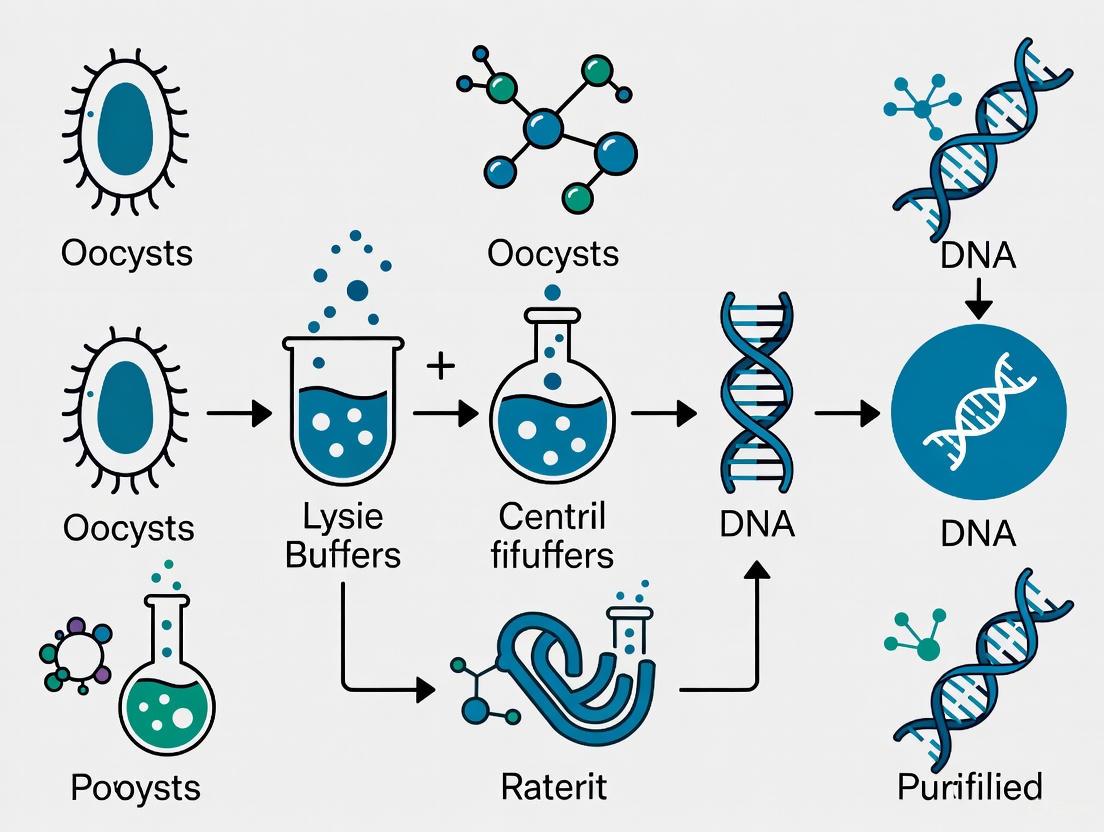
Efficient DNA extraction from the resilient oocysts of Cryptosporidium is a critical and challenging prerequisite for sensitive molecular detection, impacting diagnostics, public health surveillance, and drug development.
Optimizing DNA Extraction from Cryptosporidium Oocysts: A Comprehensive Guide for Molecular Diagnostics and Research
Abstract
Efficient DNA extraction from the resilient oocysts of Cryptosporidium is a critical and challenging prerequisite for sensitive molecular detection, impacting diagnostics, public health surveillance, and drug development. This article provides a comprehensive analysis for researchers and scientists, covering the foundational challenges of the robust oocyst wall, a detailed examination of methodological approaches from conventional to novel rapid protocols, evidence-based strategies for troubleshooting and optimization—particularly mechanical pretreatment. It also offers a comparative validation of commercial systems and 'in-house' PCR methods, synthesizing key performance metrics to guide protocol selection and enhance detection sensitivity in clinical, environmental, and research applications.
Understanding the Challenge: The Cryptosporidium Oocyst Wall and Its Impact on DNA Extraction
The oocyst wall of Cryptosporidium represents a critical biological structure in the life cycle and transmission of this apicomplexan parasite. This robust, multi-layered enclosure protects the internal sporozoites from harsh environmental conditions and enables the parasite to survive standard water disinfection methods, including chlorination [1] [2]. The structural integrity and chemical composition of this wall present substantial challenges for researchers, particularly in the context of molecular diagnostics that require efficient DNA extraction for pathogen detection [3] [4]. Understanding the detailed architecture and macromolecular components of the oocyst wall is therefore fundamental to advancing diagnostic methodologies and developing novel therapeutic interventions against cryptosporidiosis, a disease responsible for significant morbidity and mortality in children and immunocompromised individuals worldwide [2].
Structural and Molecular Architecture of the Oocyst Wall
Ultrastructural Layers
The Cryptosporidium oocyst wall exhibits a complex, multi-layered architecture that provides exceptional protection. Electron microscopy analyses reveal a sophisticated structure composed of several distinct layers:
- An outer electron-dense layer that provides initial environmental resistance [1].
- A translucent middle layer rich in waxy hydrocarbons, which may confer temperature-dependent permeability [1].
- Two inner electron-dense layers that contribute significantly to the structural integrity of the wall [1].
- A suture structure embedded within the inner electron-dense layers, serving as the predetermined opening from which sporozoites emerge during excystation [1] [2].
External to this primary wall structure, a glycocalyx layer has been observed through freeze-substitution techniques and Alcian Blue staining, though this feature appears ephemeral and is not present on all oocysts [1]. This surface layer contributes immunogenicity and attachment properties, explaining the variable surface characteristics noted in hydrologic transport studies [1].
Molecular Composition
Biochemical analyses of purified oocyst walls have revealed a diverse macromolecular composition that underpins the structural resilience of this protective enclosure:
- Carbohydrate components that contribute to the structural matrix [1].
- Medium- and long-chain fatty acids that likely contribute to the impermeability of the wall [1].
- Aliphatic hydrocarbons within the electron-translucent layer that may regulate temperature-dependent permeability [1].
- Total protein content of approximately 7.5%, with five major protein bands identified through SDS-PAGE analysis [1].
- Hydrophobic proteins detected through magnesium anilinonaphthalene-8-sulfonic acid staining [1].
Recent proteomic investigations have significantly expanded our understanding of the protein composition of the oocyst wall. A comprehensive analysis using label-free qualitative HPLC fractionation and mass spectrometry identified 798 proteins in the C. parvum oocyst wall, representing approximately 20% of the predicted proteome for this organism [5]. This extensive proteomic framework includes numerous enzymes, structural proteins, and proteins of unknown function that collectively contribute to the biomechanical properties and environmental resistance of the oocyst wall.
Table 1: Biochemical Composition of the Cryptosporidium Oocyst Wall
| Component Type | Specific Elements | Proposed Function |
|---|---|---|
| Structural Layers | Outer electron-dense layer, Translucent middle layer, Inner electron-dense layers, Suture | Sequential barriers against environmental stresses [1] |
| Protein Families | Cryptosporidium Oocyst Wall Proteins (COWPs 1-9), Hydrophobic proteins, ~800 identified proteins | Structural integrity, wall formation, disulfide bonding for rigidity [1] [2] [5] |
| Lipid Components | Medium- and long-chain fatty acids, Aliphatic hydrocarbons, Acid-fast lipids | Impermeability to liquids and chemicals, temperature-dependent permeability [1] |
| Carbohydrates | Structural polysaccharides, Glycocalyx (ephemeral) | Matrix formation, immunogenicity, attachment properties [1] |
The Cryptosporidium Oocyst Wall Protein (COWP) Family
Genomic sequencing has revealed a family of nine Cryptosporidium Oocyst Wall Proteins (COWPs) that play crucial roles in wall assembly and structural integrity [2]. Recent research utilizing CRISPR/Cas9-mediated fluorescent tagging has confirmed that COWPs 2-9 all localize to the oocyst wall, with COWPs 2-4 specifically targeting the suture region where excystation occurs [2]. Interestingly, COWP6 and COWP8 were observed to be expressed by female parasites and localize to organelles called wall-forming bodies, which store and secrete material for oocyst wall formation [2].
Functional genetic studies have revealed that not all COWP family members are essential for oocyst viability and transmission. Specifically, parasites lacking the cowp8 gene produce oocysts with normal morphology that remain fully infectious and transmissible in laboratory settings [2]. Biomechanical measurements further demonstrated that COWP8 is dispensable for the structural strength of the oocyst wall, suggesting functional redundancy or compensatory mechanisms among wall protein family members [2].
DNA Extraction Challenges and Methodological Considerations
The resilient nature of the oocyst wall presents substantial technical challenges for DNA extraction, which is a critical prerequisite for molecular detection and genotyping of Cryptosporidium parasites. The inner layer of cysteine-rich oocyst wall proteins forms extensive disulfide bonds that create a rigid structure capable of withstanding mechanical forces and preventing liquid intrusion [5]. This structural robustness necessitates specialized disruption methods to effectively liberate genetic material for downstream applications.
Impact of Oocyst Disruption on DNA Yield
The efficiency of DNA recovery is highly dependent on the method employed for oocyst wall disruption. Recent comparative studies have evaluated various pretreatment, extraction, and amplification combinations, revealing that optimal DNA recovery requires methods capable of effectively compromising the structural integrity of the multi-layered oocyst wall [6]. The selection of disruption technique significantly influences the sensitivity of subsequent molecular detection assays.
Table 2: Oocyst Disruption Methods for DNA Extraction
| Method | Principles | Efficiency & Applications | Limitations |
|---|---|---|---|
| Bead Beating | Mechanical disruption using glass beads [3] [7] | High efficiency; effective for environmental samples [7] [4] | Requires specialized equipment; potential DNA shearing [8] |
| Freeze-Thaw Cycling | Repeated freezing (-196°C) and thawing (56°C) [8] | Established reference method; effective for DNA release [8] | Time-consuming; requires liquid nitrogen handling [8] |
| Nanoparticle Lysis | Uses Ag or ZnO nanoparticles to disrupt wall integrity [8] | Comparable to freeze-thaw; ZnO NPs show concentration-dependent efficacy [8] | Emerging technique; optimization ongoing [8] |
| Heat Lysis | High temperature exposure in TE buffer [3] | Rapid and simple; suitable for LAMP detection [3] | May be insufficient for some applications [3] |
Comparative Efficiency of DNA Extraction Methods
The performance of DNA extraction methods varies considerably depending on the specific protocols and commercial kits employed. Studies evaluating different DNA isolation techniques have demonstrated that methods utilizing paramagnetic resins (e.g., MAGNEX DNA Kit) show superior sensitivity, detecting as few as 100 oocysts/mL compared to 10⁴ oocysts/mL for alternative silica membrane-based methods [4]. Similarly, investigations comparing the DNeasy Powersoil Pro and QIAamp DNA Mini kits found that bead-beating pretreatment significantly enhanced DNA recoveries, increasing yields to 314 gc/μL and 238 gc/μL of DNA, respectively, while freeze-thaw pretreatment reduced recoveries, likely through DNA degradation [7].
The critical importance of method selection is further highlighted by research demonstrating that among 30 distinct protocol combinations for C. parvum detection in stool samples, optimal performance was achieved through mechanical pretreatment combined with the Nuclisens Easymag extraction method and FTD Stool Parasite DNA amplification [6]. This combination achieved 100% detection efficiency, underscoring the necessity of compatible pretreatment, extraction, and amplification methodologies for reliable molecular diagnosis [6].
Experimental Protocols for Oocyst Wall Analysis and DNA Extraction
Protocol 1: Oocyst Wall Purification for Structural and Compositional Analysis
This protocol details the procedure for obtaining purified oocyst walls for ultrastructural and biochemical characterization [1] [5]:
- Oocyst Purification: Isolate oocysts from infected calf feces using continuous-flow differential density sucrose flotation. Store purified oocysts in distilled water with antibiotics (100 μg/mL streptomycin sulfate, 0.25 μg/mL amphotericin B, 100 U/mL penicillin G) at 4°C [1].
- In Vitro Excystation:
- Wash approximately 5.0 × 10⁹ oocysts with Hanks' balanced salt solution (HBSS).
- Resuspend in acidified HBSS (pH 2.5) and incubate for 3 h at 37°C.
- Wash with phosphate-buffered saline (PBS) and HBSS.
- Resuspend in HBSS with sodium bicarbonate (2.2%) and sodium deoxycholate (1%), then incubate at 37°C for 3 h [1].
- Wall Purification:
- Add excysted suspensions to microcentrifuge tubes containing 0.5-mm glass beads and PBS.
- Disrupt using a bead beater at 1,600 rpm for 1.5 min.
- Centrifuge at 11,300 × g for 3 min and resuspend in PBS-Tween.
- Purify through discontinuous sucrose density gradient centrifugation (specific gravity 1.22 and 1.18).
- Collect the oocyst wall band, dilute in PBS, and verify purity by differential interference contrast microscopy [1].
Protocol 2: Direct Heat Lysis for Rapid Molecular Detection
This streamlined protocol eliminates commercial kit-based DNA isolation, enabling rapid detection of Cryptosporidium [3]:
- Oocyst Concentration: Isulate oocysts from water samples using immunomagnetic separation (IMS) with anti-Cryptosporidium monoclonal antibody-conjugated magnetic beads [3].
- Heat Lysis:
- Suspend magnetically isolated oocysts in TE buffer (10 mM Tris, 0.1 mM EDTA, pH 7.5).
- Incubate at 95°C for 10-15 minutes to disrupt oocysts and release DNA.
- Centrifuge briefly to pellet debris [3].
- Loop-Mediated Isothermal Amplification (LAMP):
- Use 2-5 μL of the supernatant directly in LAMP reactions.
- Perform amplification at 65°C for 30-60 minutes using WarmStart Colorimetric or Fluorescent LAMP Master Mix.
- Detect results through color change or fluorescence measurement [3].
This method has demonstrated detection sensitivity of 5-10 oocysts per 10 mL of tap water, providing a practical approach for field-based testing without requiring sophisticated laboratory infrastructure [3].
Protocol 3: Nanoparticle-Enhanced Oocyst Lysis
This novel approach utilizes nanoparticles to disrupt the oocyst wall for DNA release [8]:
- Nanoparticle Preparation:
- Prepare stock suspensions of zinc oxide (ZnO) nanoparticles at 1 mg/mL in deionized water.
- Sonicate for 16 minutes to ensure uniform dispersion.
- Dilute to working concentrations (0.125-1 mg/mL) in DI water [8].
- Oocyst Disruption:
- Add 200 μL of nanoparticle suspension to oocyst samples.
- Incubate at room temperature; optimal DNA release occurs at 0.5 mg/mL ZnO NPs with immediate processing.
- Proceed directly to DNA extraction without nanoparticle removal [8].
- DNA Extraction and Purification:
- Add proteinase K and incubate at 56°C for 1 hour.
- Complete DNA purification using commercial silica-membrane kits.
- Perform qPCR detection using Cryptosporidium-specific primers and probes [8].
This method demonstrates equivalent efficiency to freeze-thaw cycling while offering advantages in processing time and equipment requirements [8].
The Scientist's Toolkit: Essential Research Reagents
Table 3: Essential Research Reagents for Oocyst Wall Studies and DNA Extraction
| Reagent/Category | Specific Examples | Function & Application |
|---|---|---|
| Disruption Beads | 0.5-mm glass beads [1], 1.0 mm glass beads [3] | Mechanical oocyst wall breakage for content release |
| Lysis Buffers | TE buffer [3], Proteinase K [8], SDS/Urea buffer [5] | Chemical disruption of oocyst walls and protein digestion |
| DNA Extraction Kits | DNeasy Powersoil Pro Kit [7], QIAamp DNA Mini Kit [7], MAGNEX DNA Kit [4] | Nucleic acid purification; paramagnetic resin kits show highest sensitivity [4] |
| Nanoparticles | Zinc Oxide (ZnO) NPs [8], Silver (Ag) NPs [8] | Alternative oocyst wall disruption agents |
| Enzymes | Bst polymerase for LAMP [3], Proteinase K [8], Trypsin [5] | DNA amplification (isothermal) and protein digestion |
| Centrifugation Media | Sucrose gradients [1], Percoll [5] | Oocyst and oocyst wall purification via density separation |
| Antibodies | Anti-Cryptosporidium monoclonal antibodies [3] | Immunomagnetic separation for oocyst concentration |
The structural fortitude of the Cryptosporidium oocyst wall stems from its sophisticated multi-layered architecture and complex biochemical composition. The intricate organization of electron-dense and translucent layers, reinforced by cysteine-rich proteins and lipid components, creates a formidable barrier that protects the parasite from environmental stresses and chemical disinfectants. This resilience directly impacts diagnostic capabilities, necessitating robust disruption methods for efficient DNA extraction. Advances in our understanding of COWP protein localization and function, coupled with innovative lysis techniques including nanoparticle-mediated disruption, are paving the way for improved detection strategies. A comprehensive understanding of oocyst wall composition and structure remains fundamental to developing effective countermeasures against this significant waterborne pathogen.
The following diagram illustrates the complex structure of the Cryptosporidium oocyst wall and its implications for DNA extraction:
Molecular diagnostics have become fundamental for the accurate identification of pathogens, yet the efficacy of these advanced techniques is often constrained by the initial sample processing step: DNA extraction. This challenge is particularly acute for robust organisms like Cryptosporidium oocysts, where the formidable oocyst wall significantly impedes efficient DNA release for subsequent molecular analysis. The integrity of this extraction process directly governs the sensitivity, accuracy, and reproducibility of polymerase chain reaction (PCR), quantitative PCR (qPCR), and other amplification-based detection methods. This application note details the specific bottlenecks in DNA extraction from Cryptosporidium oocysts, evaluates current methodological solutions with structured quantitative data, and provides optimized protocols to enhance diagnostic sensitivity for researchers and scientists in drug development and public health.
The Oocyst Wall as a Primary Bottleneck
The critical barrier to efficient DNA extraction from Cryptosporidium is the structural robustness of the oocyst wall. This complex, multi-layered structure functions to protect the internal sporozoites from harsh environmental conditions, including disinfectants like chlorine. Consequently, it also exhibits significant resistance to conventional chemical and physical lysis methods used in standard DNA extraction protocols [9] [10]. Failure to effectively disrupt this wall results in low DNA yield and poor quality, severely compromising the limit of detection (LOD) in downstream molecular assays.
The diagnostic implications are profound. In clinical settings, inefficient lysis can lead to false negatives, especially in cases with low oocyst burden. This directly impacts patient management and public health surveillance, as evidenced by a Danish study which found that Cryptosporidium was historically considered a rare, travel-associated infection until the adoption of improved syndromic PCR testing, which revealed its true endemic status [9]. The transition to more efficient, high-throughput molecular methods unmasked a high number of local cases, demonstrating that previous diagnostic sensitivity was inadequate.
Comparative Evaluation of DNA Extraction Methodologies
Overcoming the extraction bottleneck requires a robust pretreatment step to disrupt the oocyst wall prior to nucleic acid purification. Various mechanical, thermal, and chemical approaches have been developed, each with distinct performance characteristics.
Performance Comparison of Pretreatment and Extraction Methods
Table 1: Comparison of Oocyst Disruption Pretreatment Methods
| Pretreatment Method | Key Principle | Relative Efficiency | Practical Considerations |
|---|---|---|---|
| Bead Beating (Ceramic, 1.4 mm) | Mechanical shearing using grinding beads | High (83-100% sensitivity) [10] [11] | Requires specialized equipment; optimal bead type and speed critical |
| Freeze-Thaw (Liquid Nitrogen) | Thermal stress cycling to fracture wall | Moderate [12] [11] | Requires handling of liquid nitrogen; time-consuming |
| Nanoparticle Lysis (ZnO) | Chemical-physical disruption of wall integrity | Comparable to freeze-thaw [12] | Low-cost; minimal facility requirements |
| Heat Lysis (in TE Buffer) | Thermal disruption in low-ionic-strength buffer | Effective for simplified protocols [3] | Ultra-simplified; suitable for resource-limited settings |
Table 2: Evaluation of Commercial DNA Extraction Kits for Cryptosporidium Detection
| Extraction Kit / Method | Sample Type | Key Findings / Performance | Reference |
|---|---|---|---|
| DNeasy Powersoil Pro Kit | Wastewater | Bead-beating pretreatment increased DNA recovery to 314 gc/μL; outperformed freeze-thaw. | [7] |
| QIAamp DNA Mini Kit | Wastewater | Bead-beating pretreatment increased DNA recovery to 238 gc/μL. | [7] |
| NucliSENS easyMAG | Stool Samples | Automated extraction using Boom technology; performance enhanced when combined with bead-beating pretreatment. | [10] |
| K-SL DNA Extraction Kit | Whole Blood | Magnetic bead-based; 77.5% accuracy for E. coli; incorporates bacterial isolation. | [13] |
| Direct Heat Lysis + LAMP | Water | Avoids commercial kits; LOD of 5-10 oocysts/10 mL water; rapid, field-deployable. | [3] |
Impact on Assay Sensitivity
The choice of DNA extraction method directly dictates the analytical sensitivity of detection. Studies have consistently shown that methods incorporating mechanical disruption, particularly bead beating, achieve superior limits of detection. For instance, one study demonstrated that a protocol using bead beating could detect as few as 1 oocyst per gram of fecal sample, whereas a freeze-thaw method with liquid nitrogen had a sensitivity of only 10 oocysts per gram [11]. This order-of-magnitude improvement is critical for detecting low-intensity infections and asymptomatic carriers.
Furthermore, the efficiency of DNA extraction is not uniform across sample types. Inhibitors present in complex matrices like stool, wastewater, or blood can co-purify with DNA, further reducing assay sensitivity. The integration of purification technologies, such as magnetic bead-based isolation, can mitigate this issue. For example, in wastewater surveillance, concentration by centrifugation yielded oocyst recovery rates of 39-77%, but subsequent DNA extraction efficacy was highly dependent on the kit and pretreatment used [7].
Optimized Protocols for Enhanced Diagnostic Sensitivity
Based on the comparative evaluation, the following protocols are recommended for robust DNA extraction from Cryptosporidium oocysts.
Protocol 1: Bead-Beating Based DNA Extraction from Stool Samples
This protocol is optimized for maximum disruption of the oocyst wall and is suitable for clinical stool samples.
Research Reagent Solutions:
- Lysis Matrix Tube containing 1.4 mm ceramic beads [10]
- NucliSENS easyMAG lysis buffer (BioMérieux) [10]
- Automated nucleic acid extraction system (e.g., NucliSENS easyMAG) or silica-column based kit (e.g., DNeasy Powersoil Pro Kit) [7] [10]
Step-by-Step Procedure:
- Sample Preparation: Transfer 0.5 mL of fresh or preserved stool sample into a Lysis Matrix tube.
- Mechanical Pretreatment: Add 1 mL of lysis buffer to the tube. Securely cap the tube and process it in a high-speed grinder/homogenizer (e.g., FastPrep-24) at a speed of 6.0 m/s for 60 seconds [10].
- Incubation and Centrifugation: Incubate the homogenized suspension at room temperature for 10 minutes. Centrifuge at 10,000 × g for 10 minutes to pellet debris.
- Nucleic Acid Extraction: Transfer 250 μL of the supernatant to the automated extraction system or proceed with the manual kit protocol according to the manufacturer's instructions.
- Elution: Elute the purified DNA in 50-100 μL of elution buffer. Store at -20°C until PCR analysis.
Protocol 2: Rapid Lysis and LAMP Detection for Water Samples
This simplified protocol eliminates commercial kit purification, favoring speed for field-based or rapid diagnostic applications.
Research Reagent Solutions:
- Immunomagnetic beads conjugated with anti-Cryptosporidium antibody [3]
- TE Buffer (10 mM Tris, 0.1 mM EDTA, pH 7.5) [3]
- WarmStart Colorimetric LAMP Master Mix (New England Biolabs) [3]
Step-by-Step Procedure:
- Oocyst Concentration: Concentrate oocysts from water samples via filtration or centrifugation.
- Immunomagnetic Separation (IMS): Isulate oocysts from the concentrate using antibody-conjugated magnetic beads per standard IMS protocols [3].
- Direct Heat Lysis: Resuspend the isolated oocyst-bead complex in 50 μL of TE buffer. Incubate the suspension at 99°C for 5-10 minutes to lyse the oocysts and release DNA [3].
- Loop-Mediated Isothermal Amplification (LAMP): Briefly centrifuge the lysate. Use 2-5 μL of the supernatant directly as template in a 25 μL LAMP reaction prepared according to the master mix instructions.
- Detection: Incubate the reaction at 65°C for 30-60 minutes. A color change from pink to yellow indicates a positive amplification. Results can also be confirmed via real-time fluorescence detection [3].
The extraction of DNA from Cryptosporidium oocysts remains a significant bottleneck in molecular diagnostics, primarily due to the resilience of the oocyst wall. The evidence presented demonstrates that the choice of pretreatment and extraction methodology has a direct and substantial impact on diagnostic sensitivity. Methods that incorporate rigorous mechanical disruption, such as optimized bead beating, consistently provide the highest yields and lowest limits of detection, which is crucial for accurate clinical diagnosis and effective public health surveillance. Furthermore, the development of simplified, kit-free lysis protocols coupled with isothermal amplification holds great promise for deploying sensitive molecular detection in resource-limited settings. Researchers and drug development professionals must prioritize the optimization of this critical first step to ensure the accuracy and reliability of their Cryptosporidium detection assays.
Environmental DNA (eDNA) analysis represents a transformative tool for exploring and monitoring aquatic ecosystems and studying biodiversity. Environmental samples consist of both biotic and abiotic components, representing a diverse community of microbes, animals, and plants [14]. For the detection of protozoan parasites like Cryptosporidium spp.—significant causes of diarrheal illness worldwide, especially among children and immunocompromised patients—moving beyond clinical specimens to environmental matrices introduces substantial methodological complexities [15]. The accurate detection of these pathogens in water, soil, and agricultural products is crucial for public health protection, yet the low parasite concentrations, pervasive inhibitors, and inefficient DNA extraction from robust oocysts present formidable challenges to reliable molecular detection [16]. This application note details these challenges and provides optimized protocols for the detection and quantification of Cryptosporidium within environmental matrices, framed within a broader thesis on DNA extraction methods from oocysts.
The primary obstacle in environmental Cryptosporidium research is that commonly used methods in water monitoring and surveys cannot distinguish species (microscopic observation) or oocyst viability (PCR), as dead oocysts in water could retain gross structure and DNA content for weeks to months [17]. This distinction is critical because only viable oocysts truly pose a health risk. Furthermore, the lack of standardized wastewater surveillance methods for Cryptosporidium spp. challenges implementation design and comparability between studies [7]. This document addresses these gaps by synthesizing recent advances in concentration, extraction, and detection methodologies, providing researchers with a consolidated framework for advancing environmental Cryptosporidium surveillance.
Key Challenges in Environmental Matrices
Inhibitors and Matrix Effects
Environmental samples, including water, soil, and fresh produce, contain numerous substances that can inhibit downstream molecular analyses like PCR. These inhibitors include humic substances, heavy metals, and various organic compounds that co-extract with DNA and interfere with polymerase activity [18]. Wastewater presents a particularly challenging matrix due to its complex composition and high concentration of potential PCR inhibitors [7]. The efficiency of DNA extraction and subsequent detection can be significantly influenced by water quality parameters, including conductivity, pH, and dissolved organic carbon [19]. Inhibitors can lead to false-negative results, reduced sensitivity, and inaccurate quantification, ultimately compromising the reliability of surveillance data.
Studies have demonstrated that recovery efficiency for different extraction methods is dependent on the size of the DNA, and extraction techniques significantly affect the downstream PCR and functional diversity derived from eDNA [19]. For Cryptosporidium specifically, the major problem of the PCR method for the search of protozoan cysts/oocysts in environmental samples is the presence of inhibitors, making DNA extraction methods capable of removing inhibitory substances of environmental origin crucial for PCR efficiency [4]. The resistance of the oocyst wall itself presents an additional challenge, requiring efficient breaking steps to release sufficient DNA for detection [4].
Methodological Considerations for Different Matrices
The performance of DNA extraction methods varies significantly across different environmental matrices. Recent research evaluating Cryptosporidium detection in the water-soil-plant-food nexus found that extraction performance varied by matrix, with two spin-column kits excelling for water and another for soil and produce [16]. This matrix-dependent performance underscores the importance of selecting and optimizing methods for specific sample types rather than applying a one-size-fits-all approach.
Surface water samples often present challenges related to turbidity, which can quickly clog filters during processing [14]. Soils amended with both fertilizer and manure have shown particularly high Cryptosporidium contamination rates (45% in one study), but also contain substantial inhibitors that complicate DNA extraction [16]. Among vegetables, roots demonstrate the highest contamination levels (46.7%), followed by fruiting (40%) and leafy greens (30.15%), each presenting unique extraction challenges [16]. These variations highlight the need for matrix-specific protocols to ensure accurate detection across diverse environmental samples.
Comparative Method Evaluation
Concentration Methods
Various methods have been developed for concentrating Cryptosporidium oocysts from water samples prior to DNA extraction, each with different efficiency profiles. A comparative study evaluating concentration methods for wastewater surveillance found significant variation in oocyst recovery percentages [7].
Table 1: Comparison of Concentration Methods for Cryptosporidium Oocysts in Water
| Concentration Method | Recovery Percentage | Key Advantages | Limitations |
|---|---|---|---|
| Centrifugation | 39-77% | High recovery; simple protocol | May not efficiently process large volumes |
| Nanotrap Microbiome Particles | 24% | Moderate recovery | Specialized reagents required |
| Electronegative Filtration with PBST elution | 22% | Processes larger volumes | Lower recovery rate |
| Envirocheck HV Capsule Filtration | 13% | Standardized format | Lowest recovery efficiency |
Filtration remains the most commonly used concentration method for general aquatic eDNA samples, largely because it facilitates large volume processing to obtain high eDNA yields [14]. However, samples with high turbidity and large debris can easily clog filters, so prefiltering may be necessary [14]. Pore size and filter material can significantly impact eDNA collection depending on the sample type, with most macroorganism eDNA effectively captured using filters with pore sizes 1–10 μm, whereas microorganism eDNA may require pore sizes <1 μm [14].
DNA Extraction and Detection Methods
The selection of appropriate DNA extraction and detection methods significantly impacts the sensitivity and specificity of Cryptosporidium detection in environmental samples. Recent research has comprehensively evaluated various approaches across different matrices.
Table 2: Performance Comparison of DNA Extraction and Detection Methods for Cryptosporidium
| Method Category | Specific Method | Limit of Detection | Matrix Applications | Key Findings |
|---|---|---|---|---|
| DNA Extraction Kits | DNeasy Powersoil Pro Kit | High DNA recovery (314 gc/μL with bead-beating) | Wastewater, soil | Bead-beating pretreatment enhanced DNA recoveries [7] |
| DNA Extraction Kits | QIAamp DNA Mini Kit | Moderate DNA recovery (238 gc/μL with bead-beating) | Wastewater | Comparable to Powersoil Pro in absence of pretreatment [7] |
| DNA Extraction Kits | MAGNEX DNA Kit | 100 oocysts/mL | Water samples | Best for low-DNA environmental samples; uses paramagnetic resins [4] |
| DNA Extraction Kits | FastDNA SPIN Kit for Soil | High concentration of carp eDNA | Aquatic samples, plankton communities | Outperformed four other commercial kits in freshwater reservoir study [14] |
| Detection Platforms | 18S qPCR | 0.1 oocyst/reaction | Multiple matrices | More sensitive and broadly specific than COWP qPCR [7] |
| Detection Platforms | ddPCR | Occasionally detects 5 oocysts | Water, soil, produce | Less prone to PCR inhibitors; detected Cryptosporidium in 13.6% of water, 23.3% of soil, and 34.7% of produce samples when qPCR failed [16] |
| Detection Platforms | LAMP | 5-10 oocysts/10 mL water | Tap water, environmental waters | Eliminates DNA isolation and purification; resistant to ionic inhibitors [3] |
When comparing various commercial DNA extraction kits, studies have found that MP Bio's FastDNA SPIN Kit yielded the highest concentration of carp eDNA and was the most sensitive for eDNA detection [14]. Similarly, another study showed that this kit outperformed four other commercial kits in environmental DNA extraction of plankton communities from a freshwater reservoir [14]. For low-DNA environmental samples, extraction methods should include an efficient oocyst wall breaking step, and the best Cryptosporidium DNA extraction methods are those that use paramagnetic resins [4].
Detailed Experimental Protocols
Protocol 1: Concentration and DNA Extraction from Water Samples Using Centrifugation and Spin-Column Kits
This protocol is adapted from methods evaluated in recent studies for optimal recovery of Cryptosporidium DNA from water matrices [7] [4].
Materials and Reagents:
- DNeasy Powersoil Pro Kit (Qiagen) or QIAamp DNA Mini Kit (Qiagen)
- Phosphate-buffered saline (PBS)
- Centrifuge tubes (50 mL)
- Bench-top centrifuge capable of 2800 × g
- Bead-beating instrument (e.g., FastPrep-24 5G)
- Liquid nitrogen (for freeze-thaw method alternative)
Procedure:
- Sample Concentration: Transfer 50 mL of water sample to a 50 mL centrifuge tube. Centrifuge at 2800 × g for 30 minutes at 4°C to pellet oocysts. Carefully decant the supernatant without disturbing the pellet.
- Mechanical Lysis: Add the provided lysis buffer from the extraction kit to the pellet. Transfer the mixture to a tube containing ceramic beads for mechanical lysis. Vortex vigorously or use a bead beater (e.g., 6 m/s for 40 seconds) to homogenize the sample. Repeat bead beating twice for thorough lysis.
- DNA Extraction: Follow the manufacturer's protocol for the selected DNA extraction kit. For the DNeasy Powersoil Pro Kit:
- Add the supernatant to a spin column and centrifuge for 30-60 seconds.
- Wash with the provided wash buffers according to manufacturer's instructions.
- Elute DNA in 30-100 μL of elution buffer or DNA-free water.
- DNA Storage: Store the eluted DNA at -20°C or -80°C for long-term storage until downstream analysis.
Notes: Bead-beating pretreatment has been shown to enhance DNA recoveries to a greater extent than freeze-thawing pretreatment [7]. If a bead beater is unavailable, an alternative freeze-thaw method can be employed: freeze the sample in liquid nitrogen for 1 minute and thaw in boiling water for 1 minute, repeating for a total of six cycles [15].
Protocol 2: Rapid Detection via Direct Heat Lysis and LAMP Amplification
This protocol provides a simplified approach for rapid detection of Cryptosporidium in water samples, eliminating the need for commercial DNA extraction kits [3].
Materials and Reagents:
- TE buffer (10 mM Tris, 0.1 mM EDTA, pH 7.5)
- WarmStart Colorimetric LAMP 2× Master Mix (NEB)
- LAMP primers targeting Cryptosporidium genes
- Water bath or heat block (65°C and 95°C)
- Magnetic stand (if using immunomagnetic separation)
Procedure:
- Oocyst Concentration: Concentrate oocysts from 10 mL water samples via centrifugation (2800 × g for 30 minutes) or filtration through a 0.8 μm cellulose nitrate filter.
- Direct Heat Lysis: Resuspend the concentrated oocysts in 100 μL of TE buffer. Incubate at 95°C for 10 minutes in a heat block to lyse oocysts and release DNA.
- LAMP Reaction Setup: Prepare the LAMP reaction mixture containing:
- 12.5 μL WarmStart Colorimetric LAMP 2× Master Mix
- 2.5 μL primer mix (FIP/BIP: 1.6 μM each; F3/B3: 0.2 μM each; LF/LB: 0.8 μM each)
- 5 μL of the heat-lysed sample
- Nuclease-free water to 25 μL total volume
- Isothermal Amplification: Incubate the reaction at 65°C for 30-60 minutes in a water bath or heat block.
- Result Interpretation: Visual detection through color change from pink to yellow indicates positive amplification. Include positive and negative controls in each run.
Notes: This method has demonstrated detection of as low as 5 and 10 oocysts per 10 mL of tap water without and with simulated matrices, respectively [3]. The method is particularly suitable for resource-limited settings or field applications due to minimal equipment requirements.
Protocol 3: Viability Assessment via qRT-PCR
This protocol enables quantification of viable Cryptosporidium oocysts, which is crucial for accurate risk assessment, by targeting mRNA transcripts that indicate metabolic activity [17].
Materials and Reagents:
- TaqMan qRT-PCR reagents
- Primers and probes targeting cgd6_3920 gene (for C. parvum and C. hominis)
- RNA extraction kit (e.g., Monarch Total RNA Miniprep Kit, NEB)
- DNase treatment kit
- Real-time PCR instrument
Procedure:
- Oocyst Concentration: Concentrate oocysts from water samples as described in Protocol 1.
- RNA Extraction: Extract RNA using a commercial kit according to manufacturer's instructions. Include a DNase treatment step to remove contaminating DNA.
- Reverse Transcription and qPCR: Set up the qRT-PCR reaction containing:
- 5 μL extracted RNA
- 1× TaqMan RT-PCR mix
- 0.9 μM forward and reverse primers
- 0.25 μM probe
- Nuclease-free water to 20 μL total volume
- Amplification Parameters: Conduct reverse transcription at 48°C for 15-30 minutes, followed by initial denaturation at 95°C for 10 minutes, and 40-50 cycles of 95°C for 15 seconds and 60°C for 1 minute.
- Quantification: Use a standard curve generated from known quantities of viable oocysts to calculate the number and ratio of viable oocysts in specimens.
Notes: This assay achieves excellent analytical specificity and sensitivity (limit of quantification = 0.25 and 1.0 oocyst/reaction for C. parvum and C. hominis, respectively) [17]. This method is particularly valuable for assessing the efficiency of oocyst deactivation protocols in water treatment processes.
Workflow Visualization
Diagram 1: Methodological Pathways for Cryptosporidium Detection in Environmental Samples. This workflow illustrates three primary approaches for detecting Cryptosporidium in environmental matrices, highlighting the balance between comprehensive analysis and practical field application.
The Scientist's Toolkit: Essential Research Reagents
Table 3: Key Research Reagent Solutions for Cryptosporidium Environmental Research
| Reagent/Material | Function | Application Notes |
|---|---|---|
| Cellulose Nitrate Filters (0.45-0.8 μm) | eDNA capture from water samples | Optimal for macroorganism eDNA; appropriate pore size depends on water turbidity [14] [20] |
| Ceramic Beads (0.5-1.0 mm) | Mechanical lysis for oocyst disruption | Essential for breaking robust oocyst walls; used in bead-beating systems [3] |
| Silica Columns/Magnetic Beads | DNA binding and purification | Paramagnetic resins show superior performance for low-DNA environmental samples [7] [4] |
| Inhibitor Removal Buffers (e.g., ASL buffer) | Removal of PCR inhibitors | Critical for samples with humic substances or complex matrices [15] [18] |
| LAMP Master Mix | Isothermal amplification | Enables rapid detection without DNA purification; resistant to ionic inhibitors [3] |
| TaqMan Probes | Quantitative PCR detection | Provides specific quantification of target sequences; 18S rRNA target offers broad Cryptosporidium detection [17] [7] |
| Immunomagnetic Separation Beads | Selective oocyst capture | Improves specificity but may be unsuitable for wastewater due to matrix interference [7] [3] |
| Longmire's Buffer/Ethanol | Filter preservation | Enables ambient temperature storage; useful for field applications [14] [20] |
The detection of Cryptosporidium in environmental matrices presents distinct challenges that require specialized approaches beyond those used for clinical specimens. The complex nature of water, soil, and agricultural samples demands meticulous attention to concentration methods, DNA extraction efficiency, and inhibitor removal to ensure sensitive and reliable detection. The protocols and comparative data presented in this application note provide a foundation for researchers to select appropriate methods based on their specific matrix and detection requirements.
Future directions in environmental Cryptosporidium research will likely focus on further simplifying detection workflows while improving the differentiation of viable oocysts, which represent the true health risk. The integration of isothermal amplification methods with simplified sample processing holds particular promise for field-deployable monitoring systems. Additionally, standardization of methods across laboratories will enhance data comparability and improve risk assessment models. By addressing the unique challenges of environmental matrices, researchers can contribute significantly to public health protection through improved surveillance of this important waterborne pathogen.
The reliability of molecular detection and characterization of Cryptosporidium spp. in environmental and clinical samples is fundamentally dependent on the quality of the extracted DNA. The complex and robust structure of the oocyst wall, coupled with the ubiquitous presence of PCR inhibitors in sample matrices, presents significant challenges for nucleic acid isolation [7] [4]. Consequently, establishing standardized, quantitative metrics is essential for objectively evaluating DNA extraction protocols. This application note defines the three core success metrics—Extraction Yield, Purity, and Freedom from Inhibition—within the context of Cryptosporidium oocyst research. We provide detailed experimental protocols for their determination and summarize performance data for various methods to guide researchers in selecting and optimizing protocols for robust downstream molecular applications.
Defining and Measuring Core Success Metrics
Extraction Yield
Definition: Extraction yield quantifies the total amount of recoverable DNA obtained from a given number of Cryptosporidium oocysts. It is a direct measure of the protocol's efficiency in breaking the resilient oocyst wall and liberating intracellular DNA.
Measurement Protocol:
- Standard Preparation: Use a known quantity of purified Cryptosporidium parvum oocysts (e.g., 1,000 oocysts determined by hemocytometer count or flow cytometry sorting) as a starting material [21].
- DNA Quantification: Quantify the eluted DNA using a fluorescence-based method, such as Qubit or PicoGreen, which is superior to UV absorbance for this purpose as it is specific for dsDNA and less affected by contaminants.
- Calculation: Calculate the total yield (e.g., in nanograms) and then determine the yield per oocyst.
Purity
Definition: Purity assesses the presence of co-extracted contaminants that absorb UV light, such as proteins, phenols, and carbohydrates. These impurities can interfere with downstream enzymatic reactions like PCR and accurate DNA quantification.
Measurement Protocol:
- Spectrophotometric Analysis: Measure the absorbance of the eluted DNA solution at 230 nm, 260 nm, and 280 nm using a microvolume spectrophotometer.
- Ratio Calculation: Calculate the following ratios:
- A260/A280: A ratio of ~1.8 is generally accepted as indicating pure DNA. A lower ratio suggests protein contamination.
- A260/A230: A ratio in the range of 2.0-2.2 is desirable. A lower ratio indicates contamination by chaotropic salts, carbohydrates, or phenols, which are common in kit-based extractions [22].
Inhibition
Definition: Inhibition refers to the reduction or complete blockade of PCR amplification due to the presence of substances in the DNA extract. It is a critical metric for determining the suitability of an extract for direct molecular analysis.
Measurement Protocol:
- Spiked Amplification: Use a standardized quantitative PCR (qPCR) assay, such as one targeting the Cryptosporidium 18S rRNA gene [7].
- Internal Control: For each test sample, run two qPCR reactions:
- Reaction A: Contains DNA extracted from the environmental/clinical sample.
- Reaction B: Contains the same volume of DNA from Reaction A, spiked with a known, low copy number of a control DNA template (e.g., a synthetic gene or plasmid).
- Calculation and Interpretation: Compare the Cq values of the spiked reactions (B) to a control reaction containing only the spike-in DNA. A significant delay (e.g., ΔCq > 2) or failure in amplification in the spiked sample reaction indicates the presence of PCR inhibitors in the extracted DNA [21].
Performance Comparison of Extraction Methods
The selection of a DNA extraction method significantly impacts the success metrics. The tables below summarize the performance of various approaches as reported in recent literature.
Table 1: Comparative Performance of Oocyst Concentration Methods for Wastewater Samples [7]
| Concentration Method | Average Oocyst Recovery (%) | Key Advantages / Disadvantages |
|---|---|---|
| Centrifugation | 39 - 77% | Highest recovery; simple but may be less scalable. |
| Nanotrap Microbiome Particles | ~24% | Moderate recovery; designed for microbiome studies. |
| Electronegative Filtration | ~22% | Common in water testing; recovery depends on elution efficiency. |
| Envirocheck HV Capsule | ~13% | Standardized for water monitoring; lower recovery observed. |
Note: Immunomagnetic separation (IMS) purification was found to be unsuitable for complex wastewater matrices due to significant interference [7].
Table 2: Evaluation of DNA Extraction Kits and Pretreatments for Wastewater Oocysts [7]
| DNA Extraction Kit | Pretreatment | Average DNA Yield (gc/μL) | Key Findings |
|---|---|---|---|
| DNeasy Powersoil Pro | Bead-beating | 314 | Highest DNA recovery; effective lysis. |
| QIAamp DNA Mini | Bead-beating | 238 | Good performance, enhanced by mechanical disruption. |
| DNeasy Powersoil Pro | Freeze-thaw | <92 | Significantly reduced yield; potential DNA degradation. |
| QIAamp DNA Mini | Freeze-thaw | <92 | Significantly reduced yield; not recommended. |
Table 3: Sensitivity of Different DNA Extraction Methods in Spiked Environmental Samples [4]
| DNA Extraction Method / Kit | Principle | Reported Detection Limit |
|---|---|---|
| MAGNEX DNA Kit | Paramagnetic resin | 100 oocysts/mL |
| GFX Kit | Silica membrane | 104 oocysts/mL |
| Phenol-Chloroform-Isoamyl Alcohol | Organic separation | Variable; high purity potential but hazardous |
Detailed Experimental Protocols
Protocol A: Direct DNA Extraction using Bead-Beating and a Soil Kit
This protocol, adapted from [7] [21], is optimized for complex environmental samples like wastewater concentrates.
Workflow: Direct DNA Extraction for Environmental Oocysts
Materials:
- Sample: Water concentrate pellet (0.5 mL) [21].
- Lysis Kit: FastDNA SPIN Kit for Soil (MP Biomedicals) or DNeasy Powersoil Pro Kit (QIAGEN) [7] [21].
- Equipment: Bead-beater or vortex adapter for 2 mL tubes, microcentrifuge, thermomixer.
Step-by-Step Procedure:
- Sample Transfer: Transfer a 0.5 mL water concentrate pellet to a 2 mL tube containing lysing matrix (e.g., Lysing Matrix E).
- Mechanical Lysis: Add the appropriate lysis buffer from the kit. Securely cap the tube and process using a bead-beater at maximum speed for 10 minutes [21]. This step is critical for breaking the tough oocyst wall.
- Centrifugation: Centrifuge the tube at 14,000 × g for 10 minutes to pellet debris.
- DNA Binding: Transfer the supernatant to a new tube. Follow the manufacturer's instructions for binding DNA to the silica membrane (in column or plate format).
- Washing: Perform two wash steps using the provided wash buffers (e.g., Buffers AW1 and AW2) to remove impurities.
- Elution: Elute the DNA in 50-100 μL of elution buffer or nuclease-free water.
- Storage: Store the extracted DNA at -20 °C until use.
Protocol B: Overcoming PCR Inhibition
PCR inhibitors are a major hurdle in Cryptosporidium detection [21]. The following workflow and strategies are recommended to mitigate their effects.
Workflow: Strategies to Overcome PCR Inhibition
Materials:
- PCR Facilitators: Non-acetylated Bovine Serum Albumin (BSA), T4 Gene 32 Protein [21].
- Purification Kits: Ultrafiltration units (e.g., Amicon).
Step-by-Step Procedure:
- PCR with Facilitators: Incorporate one of the following into the PCR master mix:
- Run Inhibition Test: Perform the spiked amplification assay as described in Section 2.3.
- Post-Extraction Purification (if needed): If inhibition persists, purify the DNA extract using an ultrafiltration device according to the manufacturer's instructions to remove low molecular weight inhibitors [21].
The Scientist's Toolkit: Key Research Reagent Solutions
Table 4: Essential Reagents and Kits for Cryptosporidium DNA Extraction Research
| Item | Function / Application | Example Use Case |
|---|---|---|
| DNeasy Powersoil Pro Kit (QIAGEN) | DNA extraction from tough environmental samples; effective against inhibitors. | High-yield DNA extraction from wastewater oocysts with bead-beating pretreatment [7]. |
| FastDNA SPIN Kit for Soil (MP Biomedicals) | Direct DNA extraction using mechanical lysis via bead-beating. | Protocol for direct detection of Cryptosporidium in water concentrates without IMS purification [21]. |
| QIAamp DNA Stool Mini Kit (QIAGEN) | DNA extraction from stool, designed to remove PCR inhibitors. | Detection of Cryptosporidium and Giardia in human fecal specimens [22]. |
| Nuclisens Easymag (bioMérieux) | Automated magnetic silica-based nucleic acid extraction. | Part of an optimal combination for detecting C. parvum in stool samples [6]. |
| Non-acetylated BSA | PCR facilitator; binds to inhibitors, relieving amplification suppression. | Added to PCR mixes at 400 ng/μL to overcome inhibition in water and stool extracts [21]. |
| Lysing Matrix E | Mixture of silica and other ceramics for efficient mechanical cell disruption. | Used in conjunction with bead-beating to break Cryptosporidium oocyst walls [21]. |
The rigorous evaluation of DNA extraction protocols using the quantitative metrics of yield, purity, and freedom from inhibition is fundamental to successful downstream molecular analysis of Cryptosporidium. Current evidence strongly supports the use of bead-beating-based mechanical lysis combined with specialized commercial kits (e.g., DNeasy Powersoil Pro, FastDNA SPIN for Soil) for optimal DNA recovery from robust oocysts, particularly in challenging environmental matrices like wastewater [7] [4]. The systematic application of the protocols and metrics outlined in this document will enable researchers to make informed decisions, ensure data comparability across studies, and ultimately enhance the reliability of molecular detection and characterization of this significant waterborne pathogen.
From Classical to Cutting-Edge: A Review of DNA Extraction Methodologies
The thick, resilient wall of the Cryptosporidium oocyst represents a significant barrier in molecular diagnostics and research, protecting the internal sporozoites but also impeding efficient DNA extraction for subsequent analysis. Mechanical disruption via bead-beating has emerged as a critical pretreatment step to overcome this challenge. This method utilizes rapid shaking of samples with specialized beads to physically fracture the robust oocyst wall, facilitating the release of genetic material. Compared to alternative methods such as thermal or chemical disruption, mechanical pretreatment using bead-beating has demonstrated superior performance for Cryptosporidium oocyst disruption, significantly improving DNA yield and the sensitivity of downstream molecular detection methods including PCR and LAMP assays [3] [10]. The efficiency of this process, however, is highly dependent on several key parameters: the equipment used, the physical properties of the beads, and the precise protocol conditions. This guide synthesizes current research to provide detailed methodologies for implementing bead-beating in Cryptosporidium research workflows.
Bead-Beating Equipment and Operational Principles
Bead-beating homogenizers function by rapidly shaking samples contained with grinding beads, creating shear forces that lyse tough cellular structures. For routine laboratory processing of Cryptosporidium oocysts, two main types of equipment are prevalent.
The vortex mixer offers a simple, low-cost approach. Samples in tubes containing beads and oocyst suspension are vortexed at maximum power for a defined period, typically 2-3 minutes [23] [24]. While accessible, this method can be inconsistent, especially with larger sample numbers, and may require extended processing times.
For higher throughput and reproducibility, specialized laboratory mill homogenizers are recommended. The FastPrep-24 grinder is frequently cited in Cryptosporidium protocols, often operated at a speed of 6.0 m/s for 60 seconds to effectively disrupt oocysts [3] [10]. Similarly, Mixer Mills (e.g., Retsch MM 400) provide automated, simultaneous processing of up to 20 samples in 1.5 or 2.0 mL tubes, ensuring uniform disruption across all samples and eliminating cross-contamination [25]. These systems are ideal for standardizing the pretreatment step in both diagnostic and research settings.
A critical consideration during bead-beating is temperature control, as prolonged processing can generate significant heat that may degrade DNA. For sensitive applications, using a cooled adapter, like the one available for the Mixer Mill MM 500 control, or manually interrupting the process to cool samples in an ice bath, helps maintain sample integrity [25].
Optimizing Bead Selection for Oocyst Disruption
The composition, size, and shape of the grinding beads are among the most critical factors determining the efficiency of oocyst disruption. A comparative study of eleven commercial mechanical pretreatment matrices revealed that performance varies significantly based on these physicochemical properties [10].
Bead Composition and Size
The hardness and density of the bead material influence its ability to fracture the oocyst wall. The study found that ceramic beads, particularly those with a diameter of 1.4 mm, yielded the best performance for C. parvum DNA extraction from stool samples [10]. Other commonly used materials include silica/glass beads and garnet beads. For smaller volume oocyst suspensions, glass beads with diameters ranging from 0.1 mm to 0.5 mm are often employed [23] [25].
The table below summarizes key characteristics and performance of different bead types evaluated for C. parvum DNA extraction.
Table 1: Comparison of Bead Types for Cryptosporidium Oocyst Disruption
| Bead Composition | Recommended Size | Hardness (Vickers Scale) | Relative Performance | Typical Application |
|---|---|---|---|---|
| Technical Ceramic | 1.4 mm diameter | ~1300 HV | Best [10] | Stool samples, high-yield DNA extraction |
| Silica/Glass | 0.1 - 0.5 mm diameter | ~700 HV | Good [23] [25] | Oocyst suspensions in water or buffer |
| Garnet | 1.4 mm / 2.3 mm diameter | ~1350 HV | Variable [10] | Stool samples |
| Zirconium Silicate | 1.5 mm / 2.3 mm diameter | ~800 HV | Good [10] | General purpose |
Protocol-Dependent Parameters
Beyond bead type, other parameters must be optimized within the protocol:
- Bead-to-Sample Ratio: Sufficient beads must be added to create effective shear forces. A common practice is to add 0.05 g of 0.5-0.71 mm glass beads to a 150 µL oocyst suspension in a microcentrifuge tube [24].
- Homogenization Speed and Duration: As established, 6.0 m/s for 60 seconds is a widely effective setting for laboratory mills [10]. For vortexing, 2-3 minutes at maximum power is typical [24].
- Sample Matrix: The sample type (e.g., water, stool, soil) influences the choice of protocol. Stool samples often require more robust beating parameters compared to purified oocyst suspensions in water [7] [26].
Integrated Workflow for Cryptosporidium DNA Extraction
Bead-beating is a single, albeit crucial, component of a complete workflow for detecting Cryptosporidium. The following diagram illustrates the integrated process, from sample preparation to molecular detection.
Detailed Experimental Protocols
Protocol 1: Bead-Beating for Oocyst Suspensions in Water
This protocol is adapted from a rapid detection method that couples bead-beating with direct heat lysis and LAMP amplification, bypassing commercial DNA purification kits [3].
5.1.1 Research Reagent Solutions
Table 2: Essential Reagents and Equipment for Protocol 1
| Item | Function/Description | Example/Supplier |
|---|---|---|
| Glass Beads | Mechanical disruption of oocyst wall. Size: 0.1-0.5 mm. | Sigma-Aldrich [3] [23] |
| FastPrep-24 Homogenizer | High-speed grinder for consistent bead-beating. | MP Biomedicals [3] |
| TE Buffer (10 mM Tris, 0.1 mM EDTA, pH 7.5) | Lysis buffer for heat treatment post bead-beating. | [3] |
| WarmStart Colorimetric LAMP Master Mix | For isothermal amplification of target DNA. | New England Biolabs (NEB) [3] |
5.1.2 Step-by-Step Procedure
- Oocyst Concentration: Concentrate Cryptosporidium oocysts from water samples via filtration or immunomagnetic separation (IMS) [3].
- Bead-Beating Setup: Transfer the concentrated oocyst pellet to a tube containing 0.1 mm glass beads and an appropriate lysis buffer.
- Mechanical Disruption: Process the sample using a FastPrep-24 homogenizer at 6.0 m/s for 40 seconds. Perform two rounds of beating for maximum efficiency [3].
- Direct Heat Lysis: Following bead-beating, incubate the lysate at high temperature (e.g., 99°C for 5-15 minutes) to complete the lysis and inactivate nucleases [3] [24].
- Clarification: Centrifuge the lysate at 10,000-16,000 × g for 5-10 minutes to pellet debris and beads.
- Molecular Detection: Use a portion of the supernatant directly as a template in a colorimetric or fluorescent LAMP or PCR reaction [3] [24]. This method has demonstrated detection of as few as 5 oocysts per 10 mL of tap water [3].
Protocol 2: Bead-Beating for Complex Matrices (Stool, Soil)
This protocol is designed for challenging sample types that contain PCR inhibitors and require more rigorous purification [7] [10] [26].
5.2.1 Research Reagent Solutions
Table 3: Essential Reagents and Equipment for Protocol 2
| Item | Function/Description | Example/Supplier |
|---|---|---|
| Ceramic Beads (1.4 mm) | Optimal bead type for disrupting oocysts in stool. | MP Biomedical Lysis Matrix Tubes [10] |
| Proteinase K | Proteolytic enzyme that digests proteins and enhances lysis. | Often used in combination with bead-beating [23] [26] |
| NucliSENS easyMAG | Automated nucleic acid extraction system based on boom technology. | bioMérieux [10] [6] |
| DNeasy PowerSoil Pro Kit | Spin-column kit designed for inhibitor-rich environmental samples. | Qiagen [7] [26] |
5.2.2 Step-by-Step Procedure
- Sample Inactivation: To ensure biosafety, mix ~0.5 mL of stool sample or soil suspension with lysis buffer.
- Bead-Beating Pretreatment: Transfer the mixture to a tube containing a lysating matrix with 1.4 mm ceramic beads. Homogenize using a FastPrep-24 instrument at 6.0 m/s for 60 seconds [10].
- Enzymatic Digestion (Optional): For increased yield, incubate the homogenized sample with proteinase K. This step, combined with bead-beating, has been shown to increase DNA recovery significantly [23] [26].
- Nucleic Acid Extraction: Following pretreatment, extract DNA using an automated system like the NucliSENS easyMAG or a manual spin-column kit like the DNeasy PowerSoil Pro Kit [7] [10] [6].
- Inhibitor-Resistant Detection: Perform detection using qPCR or ddPCR. Droplet Digital PCR (ddPCR) is particularly recommended for complex samples as it is less affected by PCR inhibitors and has demonstrated a higher detection rate in environmental samples [7] [26].
Bead-beating is a powerful and often indispensable mechanical pretreatment for robust DNA extraction from Cryptosporidium oocysts. The efficacy of the protocol is highly dependent on the selection of appropriate equipment and, most critically, the optimization of bead parameters including composition, size, and homogenization kinetics. The integration of this physical disruption method with subsequent chemical or enzymatic lysis and inhibitor-resistant molecular techniques like LAMP or ddPCR creates a comprehensive and sensitive workflow. This enables reliable detection and analysis of Cryptosporidium across diverse sample matrices, from clinical specimens to environmental waters, thereby advancing public health research and diagnostic capabilities.
Within the broader scope of a thesis on DNA extraction methods from Cryptosporidium oocysts, evaluating the efficiency of lysis techniques is a fundamental step. The robust, multilayer oocyst wall, essential for environmental survival, presents a significant barrier to efficient nucleic acid release for downstream molecular applications [27]. This application note provides a detailed comparative analysis of two primary lysis strategies—thermal (freeze-thaw) and chemical (including SDS-based and novel nanoparticle methods)—framed within the context of optimizing protocols for research and drug development.
Comparative Analysis of Lysis Methods
The following table summarizes the key performance characteristics of different lysis methods as reported in recent literature.
Table 1: Quantitative comparison of lysis methods for Cryptosporidium oocyst disruption.
| Lysis Method | Key Experimental Conditions | Reported Efficiency / Outcome | Key Advantages | Key Limitations |
|---|---|---|---|---|
| Freeze-Thaw Cycling [28] [8] | • 10 cycles in liquid nitrogen (-196°C) and 56°C water bath.• Applicable to environmental matrices. | • No increase in DNA detection with increasing cycles beyond a point [28].• Benchmark method for comparison [8]. | • No chemical additives.• Widely accessible. | • Time-consuming.• Requires handling of liquid nitrogen [8].• Potential for sample cross-contamination. |
| Bead Beating (Mechanical) [10] | • Silica/ceramic beads (1.4 mm diameter).• Speed: 6.0 m/s for 60 sec. | • Highest DNA extraction performances vs. other bead types [10].• Crucial for automated extraction systems. | • Highly effective for tough oocyst walls.• Amenable to high-throughput. | • Requires specialized equipment (homogenizer).• Potential for DNA shearing. |
| Nanoparticle (Chemical) [8] | • Zinc Oxide (ZnO) NPs at 0.5-1 mg/mL.• Room temperature incubation. | • As effective as freeze-thaw method.• Ct values significantly decreased with higher NP concentration [8]. | • Rapid, low-cost.• Minimal facilities required. | • Optimization needed for different samples.• Potential interference in downstream steps. |
| Direct Heat Lysis [3] | • Incubation in TE buffer at high temperature.• Used prior to LAMP detection. | • Successfully detected as low as 5 oocysts/10 mL tap water.• Eliminates commercial kit DNA isolation. | • Simple and rapid.• Suitable for field applications. | • May not be sufficient for high-toughness oocysts alone.• Risk of DNA degradation. |
Detailed Experimental Protocols
Freeze-Thaw Lysis Protocol
This protocol is adapted from comparative studies on environmental samples and nanoparticle lysis [28] [8].
Principle: Repeated cycles of rapid freezing and thawing create mechanical stress through the formation of ice crystals, fracturing the tough oocyst wall.
Materials:
- Liquid nitrogen
- Dry ice or -80°C freezer (as an alternative, though less effective)
- Heating block or water bath (56°C and 95°C)
- Microcentrifuge tubes
- Cryogenic vials (if using liquid nitrogen)
Procedure:
- Oocyst Suspension: Prepare a concentrated oocyst suspension in a 1.5 mL microcentrifuge tube. A typical starting volume is 100-200 µL.
- Freezing: Completely immerse the tube in liquid nitrogen for 1 minute. Ensure the entire sample is frozen.
- Thawing: Rapidly transfer the tube to a heating block or water bath set at 56°C. Incubate until the sample is completely thawed.
- Repetition: Repeat steps 2 and 3 for 10 complete cycles [8].
- Final Incubation: After the last thaw, a further incubation at 95°C for 10-15 minutes can be incorporated to ensure complete lysis of sporozoites and denaturation of proteins [29].
- Clarification: Centrifuge the lysate at >10,000 × g for 2 minutes to pellet debris.
- Recovery: Carefully transfer the supernatant containing the released DNA to a new tube for downstream purification or direct use in molecular assays.
Chemical Lysis with SDS-Based Buffer
While not explicitly detailed in the search results, SDS-based lysis is a foundational chemical method. The principles can be inferred and integrated with findings on oocyst wall composition [27].
Principle: Sodium Dodecyl Sulfate (SDS) is an ionic detergent that disrupts lipid membranes and solubilizes proteins, compromising the integrity of both the oocyst wall and the sporozoites within.
Materials:
- Lysis Buffer (e.g., 1% SDS, 100 mM NaCl, 10 mM Tris-Cl pH 8.0, 25 mM EDTA)
- Proteinase K (20 mg/mL stock)
- Heating block or water bath (56°C and 95°C)
Procedure:
- Pretreatment: To a pellet of purified oocysts, add 100 µL of lysis buffer.
- Proteinase K Digestion: Add Proteinase K to a final concentration of 100 µg/mL. Mix thoroughly by vortexing.
- Incubate: Incubate the mixture at 56°C for 1-3 hours with occasional mixing to digest the proteinaceous components of the oocyst wall [8].
- Heat Denaturation: Increase the temperature to 95°C for 10 minutes to inactivate Proteinase K and denature any remaining proteins.
- Clarification: Centrifuge the lysate at >10,000 × g for 2 minutes to pellet insoluble debris.
- Recovery: Transfer the supernatant to a new tube. The DNA may require further purification (e.g., phenol-chloroform extraction, column-based purification) to remove SDS and other inhibitors before PCR.
The Scientist's Toolkit: Essential Research Reagents
Table 2: Key reagents and materials for Cryptosporidium oocyst lysis.
| Item | Function / Application | Example / Note |
|---|---|---|
| Silica/Ceramic Beads (1.4 mm) | Mechanical disruption of the oocyst wall via bead beating [10]. | Optimal performance shown in comparative studies [10]. |
| Zinc Oxide Nanoparticles (ZnO NPs) | Chemical lysis agent; disrupts oocyst wall integrity [8]. | Effective at 0.5-1 mg/mL concentration [8]. |
| Proteinase K | Enzyme that digests proteins in the oocyst wall, synergizing with chemical lysants [8]. | Used in conjunction with lysis buffers post-mechanical disruption. |
| Lysis Matrix Tubes | Commercial tubes pre-filled with optimized beads for homogenization [10]. | Standardizes the mechanical pretreatment step. |
| Hypochlorite (Bleach) | Permeabilizes the oocyst wall to facilitate cryoprotectant agent (CPA) uptake for cryopreservation studies [30]. | Not a direct lysis agent, but critical for wall permeabilization. |
Workflow and Decision Pathway
The following diagram illustrates a logical workflow for selecting and applying lysis methods based on experimental goals.
Lysis Method Selection Workflow: This chart outlines a decision-path for selecting an appropriate lysis method based on the researcher's primary goal, leading to recommended techniques and their ideal applications.
The choice between thermal and chemical lysis methods is not merely a technical step but a strategic decision that influences the success of downstream molecular analyses in Cryptosporidium research. Mechanical methods, particularly bead beating with optimized ceramic beads, currently demonstrate superior performance for maximum DNA yield from challenging samples like stools [10]. However, for rapid detection or resource-limited settings, direct heat lysis coupled with LAMP [3] or nanoparticle-based lysis [8] offer compelling alternatives. The integration of these protocols, with a clear understanding of their strengths and limitations as detailed in this application note, provides researchers and drug development professionals with a solid foundation for developing robust, reproducible, and efficient DNA extraction workflows for Cryptosporidium oocysts.
The molecular detection of Cryptosporidium oocysts is a critical process in clinical diagnostics, public health surveillance, and drug development research. The robust, multi-layered wall of the oocyst presents a significant challenge for efficient DNA release, making the extraction step paramount to assay success [31]. This application note delineates the workflows, performance metrics, and experimental protocols for manual and automated DNA extraction systems, providing researchers with a definitive guide for method selection within a broader thesis on Cryptosporidium research methodologies.
Performance Comparison: Manual vs. Automated Extraction Systems
The selection of a DNA extraction method significantly influences the sensitivity, throughput, and reproducibility of subsequent Cryptosporidium detection assays. The table below summarizes key performance characteristics of various systems as evaluated in comparative studies.
Table 1: Performance Comparison of DNA Extraction Systems for Cryptosporidium Detection
| Extraction System / Kit | System Type | Key Performance Findings | Limit of Detection (Oocysts/mL) | References |
|---|---|---|---|---|
| Quick DNA Fecal/Soil Microbe Microprep Kit (ZymoResearch) | Manual | Showed the best overall performances in a multicenter study; highly effective for low oocyst concentrations. | 33.3-100% detection at 10-50 oocysts/mL | [31] |
| QIAamp DNA Stool Mini Kit (Qiagen) | Manual | Performance highly dependent on protocol; amended protocol (boiling, InhibitEX) raised sensitivity to 100%. | ≈2 oocysts theoretically detectable with optimized protocol | [32] |
| NucliSENS easyMAG (BioMérieux) | Automated | Consistently high performance; optimal when combined with mechanical pretreatment. Identified as a top-performing system. | Excellent detection of low concentrations | [6] [31] [33] |
| EZ1 Advanced XL (Qiagen) | Semi-Automated | Faster, higher throughput, and lower contamination risk than manual QIAamp kit; yielded higher DNA concentration and purity. | Comparable or better performance for multiple enteric pathogens | [34] |
| DNeasy Powersoil Pro Kit (Qiagen) | Manual | Performed comparably to QIAamp DNA Mini Kit for wastewater; bead-beating pretreatment greatly increased DNA recovery. | Effective for environmental/wastewater surveillance | [7] |
The Scientist's Toolkit: Essential Research Reagents and Materials
Successful DNA extraction from resilient Cryptosporidium oocysts requires a suite of specialized reagents and materials. The following table details the essential components of an effective workflow.
Table 2: Key Research Reagent Solutions for Cryptosporidium DNA Extraction
| Item | Function / Application | Examples & Key Parameters |
|---|---|---|
| Mechanical Lysis Matrix | Disrupts the robust oocyst wall to release DNA. A critical pretreatment step. | - Lysing Matrix E (MP Biomedicals): Ceramic (1.4 mm), silica, and glass beads. Consistently high performance [10] [31].- ZR BashingBeads (ZymoResearch): Ultra-high density, chemically inert beads [31] [33]. |
| Lysis Buffer | Creates a chemical environment for cell lysis and stabilizes the released DNA. | - NucliSENS lysis buffer (used with easyMAG) [10].- ASL buffer (Qiagen stool kits) [34] [32]. |
| Inhibitor Removal Technology | Removes PCR inhibitors common in stool and environmental samples (e.g., bile salts, humic acids). | - InhibitEX Tablets (Qiagen): Adsorb impurities [34] [32].- Paramagnetic Resins (e.g., in MAGNEX kit): Effective purification from complex samples [4]. |
| Silica Membrane/Column | Binds DNA for purification from other lysate components. | Found in most modern manual and automated kits (e.g., QIAamp, DNeasy kits) [4] [32]. |
| Nucleic Acid Elution Buffer | A low-salt buffer that releases purified DNA from the silica membrane. | - AE Buffer (Qiagen).- Using a small elution volume (e.g., 50-100 µL) increases final DNA concentration [32]. |
Experimental Protocols for Cryptosporidium DNA Extraction
Optimized Mechanical Pretreatment Protocol
Mechanical disruption using bead beating is a cornerstone of effective Cryptosporidium oocyst lysis. The following protocol is optimized based on multicenter comparative studies.
- Principle: The application of high-frequency mechanical force through grinding beads fractures the resilient oocyst wall, facilitating the release of DNA for subsequent purification [10] [31].
- Materials:
- Homogenizer (e.g., FastPrep-24 (MP Biomedicals), TissueLyser II (Qiagen))
- Lysis tubes containing grinding beads (e.g., Lysing Matrix E, ZR BashingBeads)
- Sample suspension (e.g., stool in saline, water concentrate)
- Appropriate lysis buffer
- Step-by-Step Procedure:
- Transfer 0.5 mL of well-homogenized sample suspension into a mechanical lysis tube.
- Add 1 mL of the appropriate lysis buffer (e.g., NucliSENS lysing buffer) to the tube.
- Securely cap the tube and place it in the homogenizer.
- Process the sample using the optimized parameters:
- Centrifuge the tube briefly to settle the aerosol and debris.
- Incubate the lysate at room temperature for 10 minutes.
- Centrifuge at 10,000 × g for 10 minutes.
- Carefully transfer the required volume of supernatant (e.g., 250 µL) to a new tube for the DNA extraction procedure.
- Critical Parameters:
Manual DNA Extraction Workflow (QIAamp DNA Stool Mini Kit with Amendments)
This protocol details an optimized manual method suitable for processing a low to moderate number of samples.
- Principle: This method combines thermal, chemical, and mechanical lysis with silica-membrane-based purification to isolate high-purity DNA while removing PCR inhibitors [32].
- Materials:
- QIAamp DNA Stool Mini Kit (Qiagen)
- Water bath or heating block (capable of 95°C)
- Microcentrifuge
- Mechanical homogenizer and beads (as in Section 4.1)
- Proteinase K
- Step-by-Step Procedure:
- Mechanical Pretreatment: Follow the protocol in Section 4.1 using 0.2-0.25 g of stool sample and 1.3 mL of ASL lysis buffer from the kit.
- Thermal Lysis: After bead beating, incubate the sample suspension at 95°C for 10 minutes (increased from standard protocol) to enhance lysis [32].
- Inhibitor Removal: Centrifuge the lysate and transfer supernatant to a new tube. Add an InhibitEX tablet, vortex immediately and continuously for 1 minute, and then incubate at room temperature for 5 minutes (extended incubation). Centrifuge again.
- Protein Digestion: Transfer supernatant to a new tube. Add Proteinase K and Buffer AL, mix, and incubate at 56°C for 10 minutes or overnight.
- DNA Binding: Add ethanol, mix, and apply the mixture to a QIAamp spin column. Centrifuge.
- Washing: Wash the column with Buffers AW1 and AW2.
- Elution: Elute DNA in 50-100 µL of Buffer AE (using a small volume increases concentration). Use pre-cooled ethanol in the binding step for higher yields [32].
Automated DNA Extraction Workflow (NucliSENS easyMAG System)
This protocol describes an automated workflow ideal for high-throughput laboratories requiring consistency and minimal hands-on time.
- Principle: The easyMAG system uses Boom technology (guanidinium thiocyanate and silica-coated magnetic particles) for nucleic acid extraction, which is highly effective when coupled with a mechanical pretreatment step [6] [31].
- Materials:
- NucliSENS easyMAG automated system (BioMérieux)
- Disposable easyMAG tips and reaction vessels
- NucliSENS lysis buffer and other required reagents
- Pretreated sample lysate (from Section 4.1)
- Step-by-Step Procedure:
- Sample Input: Transfer 250 µL of the supernatant from the mechanical pretreatment protocol (Section 4.1, Step 8) into an easyMAG reaction vessel.
- System Setup: Place the vessel into the automated extractor along with the necessary reagents (lysis buffer, wash buffers, elution buffer).
- Program Selection: Start the appropriate extraction protocol as defined by the manufacturer (e.g., "Generic" or "Off-board" protocol).
- Elution: The system completes the process of binding, washing, and eluting the nucleic acids automatically. The purified DNA is typically eluted in 50-100 µL of elution buffer.
- Key Advantages:
- Throughput: Processes multiple samples in a single run with minimal operator intervention.
- Reproducibility: Standardized robotic handling reduces human error and inter-assay variability.
- Performance: Consistently ranked among the top methods for sensitive detection of Cryptosporidium in stool samples [6] [31].
Workflow Visualization and Decision Pathway
The following diagram illustrates the integrated workflow for Cryptosporidium DNA extraction, highlighting the critical decision points and procedural steps for both manual and automated systems.
The choice between manual and automated DNA extraction systems for Cryptosporidium research is not a matter of absolute superiority but of strategic alignment with project goals. Manual kits offer flexibility and lower upfront costs, proving highly sensitive when protocols are meticulously optimized. Automated systems provide unparalleled reproducibility, higher throughput, and reduced hands-on time, which is crucial for large-scale studies and routine diagnostics. Ultimately, the most critical factor for success across all platforms is the incorporation of a robust mechanical pretreatment step, which is non-negotiable for breaking down the resilient oocyst wall to liberate DNA for reliable downstream detection.
The detection of the protozoan parasite Cryptosporidium, a significant waterborne pathogen, is crucial for public health. Conventional diagnostics, such as the USEPA Method 1623.1, rely on fluorescent microscopy or PCR-based methods that are time-consuming, require centralized laboratories, and involve complex DNA extraction steps [3]. This application note details a streamlined protocol that bypasses commercial DNA isolation kits by integrating direct heat lysis of magnetically isolated oocysts with loop-mediated isothermal amplification (LAMP). This method offers a rapid, sensitive, and field-deployable solution for detecting Cryptosporidium oocysts in water samples, demonstrating significant efficiency improvements over traditional techniques [3].
Within the broader scope of DNA extraction methodologies for Cryptosporidium research, there is a growing imperative to develop techniques that are suitable for point-of-care (POC) or field settings. Current standard methods are hampered by their dependency on multi-step DNA isolation and purification procedures, which are laborious, expensive, and require specialized equipment and personnel [3]. Furthermore, microscopic detection can yield false positives from auto-fluorescent debris [3].
Isothermal nucleic acid amplification tests (iNAATs), particularly LAMP, have emerged as powerful alternatives to PCR. LAMP reactions occur at a constant temperature, eliminating the need for thermal cyclers and reducing infrastructure demands [35]. Its robustness to inhibitors present in environmental samples makes it exceptionally suited for field applications [3]. The paradigm is shifting towards co-designing sample preparation and amplification, with extraction-free methods being a key focus to meet the REASSURED (Real-time connectivity, Ease of specimen collection, Affordable, Sensitive, Specific, User-friendly, Rapid and robust, Equipment-free or simple, Deliverable to end-users) criteria for ideal POC tests [35]. The method described herein embodies this shift by combining direct heat lysis with LAMP, creating a rapid and portable diagnostic pipeline.
Performance of Direct LAMP for Cryptosporidium Detection
The direct LAMP method, which uses heat lysis in TE buffer followed by amplification, has been rigorously evaluated. Table 1 summarizes its analytical performance and compares it with other molecular detection techniques.
Table 1: Comparative Performance of Molecular Detection Methods for Cryptosporidium
| Method | Sample Processing | Target Gene | Limit of Detection (LOD) | Dynamic Range | Key Advantages |
|---|---|---|---|---|---|
| Direct LAMP [3] | Direct heat lysis in TE buffer | Intron-less gene | 0.17 copies/μL (gDNA); 5-10 oocysts/10 mL water | 1.05 to 1.05 × 10⁴ copies/μL | Rapid, field-deployable, avoids DNA extraction, cost-effective |
| qPCR (COWP target) [36] | Commercial kit extraction | COWP (1 copy/genome) | 9.55 × 10⁴ copies/μL | Not specified | Absolute quantification, high specificity |
| USEPA Method 1623.1 [3] | Immunomagnetic Separation (IMS) | N/A (Microscopy) | Varies with analyst | N/A | Gold standard for water testing, but prone to false positives |
| FTD Stool Parasites PCR [37] | Standardized kit extraction | DNA J-like protein | 1 oocyst/gram (C. parvum) | N/A | High sensitivity, detects rare species |
The direct LAMP assay demonstrated a detection limit of 0.17 copies per μL of genomic DNA [3]. In practice, this translated to the detection of as few as 5 oocysts per 10 mL of tap water, and 10 oocysts per 10 mL in tap water with a simulated matrix (e.g., added mud), confirming its robustness to environmental inhibitors [3]. The assay's high sensitivity is attributed to targeting an intron-less gene and the inherent efficiency of the LAMP reaction [3].
The Role of Direct Lysis in Point-of-Care Testing
Eliminating nucleic acid extraction is a critical step for field deployment. Traditional column-based extraction methods are a significant bottleneck, requiring time, expertise, and infrastructure [35]. Direct lysis strategies, such as simple heat treatment in a suitable buffer, effectively release nucleic acids while minimizing the number of processing steps. This approach has been successfully demonstrated not only for Cryptosporidium [3] but also for other pathogens, such as SARS-CoV-2, where heat-treated swab samples were directly amplified via RT-LAMP [38]. The primary challenge is balancing efficient lysis with the minimization of amplification inhibitors in the crude lysate, a balance successfully achieved in the outlined protocol [35].
Protocol: Direct Lysis and LAMP for Cryptosporidium Detection
Research Reagent Solutions
Table 2: Essential Materials and Reagents
| Item | Function/Description | Example |
|---|---|---|
| Anti-Cryptosporidium mAb | Immunomagnetic separation (IMS) of oocysts from water samples | ab54066 (Abcam) [3] |
| Streptavidin Magnetic Beads | Solid support for antibody-coated oocyst capture | Dynabeads MyOne Streptavidin C1 [3] |
| TE Buffer (10 mM Tris, 0.1 mM EDTA, pH 7.5) | Lysis buffer; heat-stable medium for nucleic acid release and storage | [3] |
| LAMP Master Mix | Isothermal amplification reagents; contains strand-displacing Bst polymerase | WarmStart Colorimetric LAMP 2× Master Mix (NEB) [3] |
| LAMP Primers | Set of 4-6 primers for specific, high-efficiency amplification of target | Designed against an intron-less gene [3] |
Detailed Experimental Workflow
The following workflow diagram illustrates the complete process from sample to result:
Step 1: Immunomagnetic Separation (IMS) of Oocysts
- Filter a known volume (e.g., 10 mL) of water sample to concentrate oocysts [3].
- Isolate oocysts from the concentrate using Immunomagnetic Separation. Incubate the sample with anti-Cryptosporidium monoclonal antibodies conjugated to magnetic beads (e.g., via a biotin-streptavidin system) [3].
- Use a magnet to separate the bead-bound oocysts from the sample matrix. Wash the beads to remove potential inhibitors.
Step 2: Direct Heat Lysis
- Resuspend the washed, oocyst-bound magnetic beads in 50-100 μL of TE Buffer (10 mM Tris, 0.1 mM EDTA, pH 7.5) [3].
- Perform heat lysis by incubating the suspension at 95°C for 5-10 minutes in a heating block or water bath. This step ruptures the oocysts and releases genomic DNA.
- Briefly centrifuge the tube and use the supernatant directly as the template for the LAMP reaction. Alternatively, the lysate can be stored at -20°C for future analysis.
Step 3: Loop-Mediated Isothermal Amplification (LAMP)
- Prepare the LAMP reaction mix on ice. A typical 25 μL reaction contains:
- 12.5 μL of 2x WarmStart Colorimetric LAMP Master Mix.
- 5 μL (or less) of the prepared crude lysate (supernatant from Step 2).
- 1 μL of 10x primer mix (containing FIP, BIP, F3, B3, and optionally Loop F/B primers).
- Nuclease-free water to 25 μL.
- Run the isothermal amplification in a portable device or heating block at 65°C for 30-60 minutes.
- Detect results:
Discussion
The protocol described herein represents a significant advancement in molecular diagnostics for waterborne pathogens. By integrating direct lysis with LAMP, it successfully addresses key limitations of traditional methods, namely complexity, time, and reliance on central labs.
The key innovation is the elimination of commercial DNA purification kits. The direct heat lysis in a mild, hot-start-compatible buffer like TE is a simple yet effective workaround for the tough Cryptosporidium oocyst wall [3]. This aligns perfectly with the "Ease of specimen collection" and "Equipment-free" principles of REASSURED diagnostics [35]. The use of a colorimetric LAMP master mix further enhances field applicability by enabling visual interpretation without instrumentation [3] [38].
This method's robustness is confirmed by its performance in a simulated matrix (tap water with mud), where the LOD only marginally increased from 5 to 10 oocysts per 10 mL [3]. This resilience to inhibitors is a hallmark of LAMP, attributed to the Bst polymerase, making it superior to PCR for complex environmental samples [3].
For future applications, this direct LAMP framework can be adapted to detect a wide range of pathogens in water, food, and clinical samples. Further optimization, such as integrating lysis and amplification into a single tube or developing lyophilized reagent formats, could push this technology even closer to a true "sample-to-answer" field device.
Maximizing Yield: Evidence-Based Strategies for Protocol Optimization
The robust, multi-layered oocyst wall of Cryptosporidium poses a significant challenge for molecular diagnostics, necessitating an optimized mechanical pretreatment step for efficient DNA release. This application note synthesizes recent research findings to provide detailed protocols for the mechanical pretreatment of Cryptosporidium oocysts, specifically addressing the critical parameters of bead composition, size, and homogenization settings. Data demonstrate that proper optimization of these parameters can significantly enhance DNA extraction efficiency and subsequent PCR detection sensitivity, with ceramic beads of 1.4 mm diameter processed at 4-6 m/s for 60 seconds yielding superior results. These guidelines aim to standardize and improve the molecular detection of Cryptosporidium in clinical and environmental samples, supporting more accurate diagnosis and surveillance.
Cryptosporidium spp. are protozoan parasites of significant medical and veterinary importance, causing gastroenteritis in humans and various vertebrate hosts. The diagnosis of cryptosporidiosis has increasingly shifted from microscopic techniques to molecular methods, primarily polymerase chain reaction (PCR)-based detection [40] [31]. However, the thick, robust oocyst wall of Cryptosporidium, composed of three distinct layers of filamentous glycoproteins and acid-fast lipids, presents a substantial barrier to efficient DNA extraction [31] [41]. This multi-layered structure protects the internal sporozoites but also impedes DNA release by conventional methods, potentially reducing the sensitivity of molecular detection assays.
Mechanical pretreatment using grinding beads has emerged as a highly effective approach to disrupt the resilient oocyst wall and facilitate DNA release [40] [31]. Despite its proven utility, the optimization of this critical step remains challenging, with performance varying significantly based on multiple parameters including the physicochemical features of the grinding beads (composition, size, shape) and the homogenization conditions (speed, duration) [40]. This application note provides evidence-based guidelines for optimizing mechanical pretreatment protocols to enhance Cryptosporidium DNA extraction efficiency, framed within the broader context of a thesis on DNA extraction methods from Cryptosporidium oocysts.
Key Experimental Findings
Impact of Bead Composition and Size
A comprehensive comparative study evaluated eleven commercial mechanical lysis matrixes with varying bead compositions and sizes for their efficacy in improving C. parvum oocyst DNA extraction [40]. The findings demonstrated that bead composition significantly influences DNA extraction efficiency, with ceramic beads (zirconium dioxide) achieving the best performance, particularly those with a median diameter of 1.4 mm.
Table 1: Comparison of Bead Types for Mechanical Pretreatment of Cryptosporidium Oocysts
| Bead Composition | Relative Density | Hardness (Mohs Scale) | Recommended Size | Performance Notes |
|---|---|---|---|---|
| Ceramic (Zirconium oxide) | 5.5–6.1 | 6–7 (1050 HV) | 1.4 mm diameter | Highest DNA recovery; optimal for tough oocyst walls |
| Silica (SiO₂) | 2.5 | 5–6 | 1.0 mm beads | Moderate performance; suitable for general use |
| Garnet (Fe₃Al₂(SiO₄)₃) | 4.0–4.1 | 7.5–8 | 0.56–0.7 mm flakes | High hardness but smaller size may reduce impact |
| Mixed Composition Matrices | Varies | Varies | Combination of sizes | Variable performance; depends on specific formulation |
The superior performance of ceramic beads (zirconium dioxide) with a diameter of 1.4 mm is attributed to their optimal balance of density, hardness, and impact force, which effectively disrupts the resilient oocyst wall without excessively shearing the released DNA [40]. Mixed matrices, such as Lysing Matrix E which combines ceramic spheres (1.4 mm), silica spheres (0.1 mm), and a large glass bead (4 mm), have also demonstrated excellent performance in multicenter studies [31].
Optimization of Homogenization Parameters
The homogenization process itself requires careful parameter optimization. A multicenter comparative study established that both speed and duration significantly influence DNA extraction efficacy [31]. The optimal parameters were identified as a grinding speed of 4-6 m/s for a duration of 60 seconds using a high-speed homogenizer such as the FastPrep-24 system.
Table 2: Homogenization Parameters for Mechanical Pretreatment
| Parameter | Suboptimal Range | Optimal Range | Experimental Evidence |
|---|---|---|---|
| Speed | <4 m/s | 4-6 m/s | Significantly improved detection at low oocyst concentrations (10-50 oocysts/mL) [31] |
| Duration | <60 seconds | 60 seconds | Highest percentage of positive PCR results across multiple centers [31] |
| Equipment | Vortex homogenizer | Oscillating bead mill (e.g., FastPrep-24) | Superior cell disruption efficiency with oscillating movement [31] |
Notably, the combination of optimal bead composition and homogenization parameters dramatically improved detection sensitivity at low oocyst concentrations (10-50 oocysts/mL), with positive PCR results increasing from 0-94.4% and 33.3-100%, respectively, across different extraction systems [31].
Experimental Protocols
Recommended Standard Protocol for Stool Samples
This protocol is adapted from the multicenter comparative study by Valeix et al. (2020) and optimized based on the comparative analysis of eleven mechanical pretreatment matrices [40] [31].
Materials Required:
- Lysing Matrix E tubes (MP Biomedicals) containing a mixture of 1.4 mm ceramic spheres, 0.1 mm silica spheres, and one 4 mm glass bead
- FastPrep-24 homogenizer (MP Biomedicals) or equivalent high-speed bead beater
- Physiological saline (0.09% NaCl)
- Stool samples (type 7 according to Bristol Stool Form Scale recommended for optimal processing)
- NucliSens lysis buffer (bioMérieux) or equivalent
Procedure:
- Sample Preparation: Prepare a stool suspension by mixing 20 g of stool sample with 50 mL of physiological saline. Filter through a large mesh strainer to remove large particulate matter.
- Aliquot Transfer: Pipette 0.5 mL of the prepared stool suspension into a Lysing Matrix E tube.
- Lysis Buffer Addition: Add 1 mL of NucliSens lysis buffer to the tube.
- Mechanical Homogenization: Secure the tube in the FastPrep-24 homogenizer and process at a speed of 6.0 m/s for 60 seconds.
- Post-Pretreatment Processing: Centrifuge the tube briefly to collect the homogenate from the lid and walls. The resulting lysate is now ready for DNA extraction using your preferred method.
Validation Notes: This protocol demonstrated 100% detection sensitivity for samples containing 50 oocysts/mL or higher when combined with the Quick DNA Fecal/Soil Microbe-Miniprep extraction kit [31].
Protocol Adaptation for Wastewater Samples
Wastewater surveillance presents additional challenges due to matrix complexity and potential inhibitors. Based on method evaluation studies, the following adaptations are recommended [42]:
Modifications:
- Concentration Step: Begin with oocyst concentration via centrifugation (39-77% recovery) rather than filtration methods which show lower recovery rates (13-24%).
- Bead Beating Enhancement: Incorporate bead beating pretreatment using the DNeasy Powersoil Pro kit, which demonstrated highest DNA yields (314 gc/μL DNA) compared to freeze-thaw methods.
- IMS Consideration: Note that Immunomagnetic Separation (IMS) may be unsuitable for wastewater due to matrix interference, reducing recovery rates to 0.03-4%.
The Scientist's Toolkit: Essential Research Reagents
Table 3: Key Research Reagent Solutions for Mechanical Pretreatment
| Product Name | Manufacturer | Composition | Primary Function |
|---|---|---|---|
| Lysing Matrix E | MP Biomedicals | Mix of 1.4 mm ceramic spheres, 0.1 mm silica spheres, and one 4 mm glass bead | Comprehensive sample disruption for diverse biological materials |
| FastPrep-24 | MP Biomedicals | High-speed benchtop homogenizer | Efficient cell lysis through simultaneous homogenization of multiple samples |
| NucliSens Lysis Buffer | bioMérieux | Guanidine thiocyanate-based buffer | Chemical lysis and nucleic acid stabilization |
| Quick DNA Fecal/Soil Microbe-Miniprep | Zymo Research | Silica-based membrane technology | Efficient DNA purification from complex samples |
| DNeasy Powersoil Pro Kit | Qiagen | Inhibitor removal technology with bead beating | Optimal DNA extraction from environmental samples with high inhibitor content |
Workflow and Decision Pathway
The following diagram illustrates the optimized workflow and critical decision points for mechanical pretreatment of Cryptosporidium oocysts:
Optimization of mechanical pretreatment parameters is crucial for enhancing the molecular detection of Cryptosporidium oocysts. The evidence-based guidelines presented in this application note demonstrate that bead composition, size, and homogenization parameters significantly impact DNA extraction efficiency and subsequent PCR sensitivity. Specifically, ceramic beads with a diameter of 1.4 mm, processed at 6.0 m/s for 60 seconds using a high-speed homogenizer, provide the most effective mechanical disruption of the resilient oocyst wall. Implementation of these optimized protocols can substantially improve the sensitivity and reliability of Cryptosporidium detection in both clinical and environmental samples, contributing to more accurate disease surveillance and outbreak investigation.
In molecular research on Cryptosporidium, the efficiency of DNA extraction from the environmentally resistant oocyst wall directly determines the success of all downstream diagnostic applications. The robust, multi-layered oocyst structure presents a formidable barrier to conventional lysis methods, while complex sample matrices like stool, soil, and water introduce potent PCR inhibitors including complex polysaccharides, polyphenols, and humic substances [26] [10]. These challenges are particularly acute in agricultural and environmental surveillance, where low parasite concentrations and high inhibitor loads frequently converge [26]. Consequently, the strategic incorporation of specific chemical and buffer additives during the extraction process is not merely beneficial but essential for obtaining DNA of sufficient purity and yield for reliable amplification. This Application Note details optimized chemical strategies for overcoming these barriers, providing researchers with validated protocols to enhance detection sensitivity for this significant pathogen.
Key Challenges in Cryptosporidium Oocyst DNA Extraction
The journey to pure Cryptosporidium DNA is fraught with two primary obstacles: the physical barrier of the oocyst wall and ubiquitous chemical inhibitors. The oocyst wall is a robust, thick structure composed of three distinct layers that protect the internal sporozoites, making it notoriously difficult to disrupt by conventional methods [10]. Simultaneously, co-extracted substances from sample matrices act as potent PCR inhibitors. Common inhibitors include:
- Polysaccharides and Polyphenols: Abundant in plant material and stool samples, they inhibit polymerase activity [43].
- Humic Acids and Fulvic Acids: Common in environmental water and soil samples, they interfere with the PCR reaction [26].
- Calcium Ions: Present in high concentrations in shelled organisms and can act as DNase cofactors [44].
- EDTA: While used as a chelating agent to inhibit DNases, it can itself become a PCR inhibitor if not properly balanced in the extraction buffer [45].
Optimized Chemical Additives and Their Mechanisms of Action
A strategic combination of chemical additives is required to effectively lyse oocysts and neutralize PCR inhibitors. The table below summarizes key additives, their concentrations, and primary functions.
Table 1: Key Chemical Additives for Combating PCR Inhibitors in DNA Extraction
| Additive | Common Concentrations | Primary Function | Considerations |
|---|---|---|---|
| Polyvinylpyrrolidone (PVP) | 1-2% (w/v) [43] | Binds to and neutralizes polyphenolic compounds [46]. | Especially crucial for plant, soil, and stool samples. |
| Proteinase K | Varies by protocol | Digests proteins, enhancing cell wall lysis and degrading contaminating nucleases [26]. | Requires specific temperature and time for optimal activity. |
| EDTA (Ethylenediaminetetraacetic acid) | 0.2 mM - 10 mM [45] [43] | Chelates divalent cations (Mg²⁺), inhibiting DNase activity [45]. | Can itself inhibit PCR if not thoroughly removed or balanced [45]. |
| Sodium Metabisulfite | 0.5% (w/v) [43] | Antioxidant that prevents oxidative damage to DNA. | Part of a comprehensive inhibitor neutralization strategy. |
| SDS (Sodium Dodecyl Sulfate) | 0.1-1% (w/v) [43] | Ionic detergent that disrupts lipid membranes and solubilizes proteins. | Can inhibit PCR if carried over; requires adequate washing. |
| CTAB (Cetyltrimethylammonium bromide) | Varies by protocol [46] | Precipitates polysaccharides and other contaminants while keeping nucleic acids in solution [46]. | Effective for samples rich in polysaccharides. |
| Salt Solutions (e.g., NaCl) | Varies by protocol [44] | Aids in precipitating proteins and other contaminants during extraction. | Concentration must be optimized for the specific sample type. |
Integrated Protocol for Cryptosporidium Oocyst DNA Extraction
This optimized protocol integrates mechanical pretreatment with a customized chemical lysis buffer to maximize DNA recovery from Cryptosporidium oocysts in complex matrices like stool samples.
Materials and Reagents
- Mechanical Lysis Matrix Tube: Containing 1.4 mm diameter ceramic beads [10].
- FastPrep-24 Homogenizer or equivalent bead-beating system.
- NucliSENS easyMAG or similar magnetic silica bead-based extraction system.
- Lysis Buffer (see Table 2 for composition).
- Proteinase K.
- Wash Buffers (typically supplied with commercial kits).
- Elution Buffer (10 mM Tris-HCl, pH 8.0).
Table 2: Composition of Optimized Lysis Buffer for Cryptosporidium Oocysts
| Component | Final Concentration | Purpose |
|---|---|---|
| Tris-HCl (pH 8.0) | 100 mM | Maintains stable pH for enzyme activity. |
| EDTA | 10 mM | Chelates Mg²⁺, inactivating DNases. |
| NaCl | 1.4 M | Aids in protein precipitation and disrupts ionic bonds. |
| CTAB | 2% (w/v) | Precipitates polysaccharides. |
| PVP-40 | 1% (w/v) | Binds polyphenols. |
| SDS | 1% (w/v) | Disrupts lipid membranes and solubilizes proteins. |
| Proteinase K | 1 mg/mL | Digests structural proteins and enzymes. |
Step-by-Step Procedure
Mechanical Pretreatment: a. Transfer 0.5 mL of stool sample (or oocyst suspension) to a mechanical lysis matrix tube containing 1.4 mm ceramic beads [10]. b. Add 1 mL of the optimized lysis buffer (Table 2) to the tube. c. Secure the tubes in a bead-beater homogenizer and process at 6.0 m/s for 60 seconds [10]. This critical step physically fractures the tough oocyst wall, enabling the chemical lysis buffer to access the internal contents.
Chemical Lysis and Digestion: a. Incubate the homogenized sample at 56°C for 30-60 minutes with gentle agitation. This allows Proteinase K and SDS to effectively digest proteins and disrupt membranes. b. Centrifuge the tubes at 10,000 × g for 10 minutes to pellet debris.
Nucleic Acid Purification: a. Transfer 250 μL of the supernatant to the automated nucleic acid extraction system. b. Proceed with the manufacturer's protocol for binding, washing, and elution. The use of magnetic silica beads in a chaotropic salt-based system (Boom technology) has demonstrated superior performance for Cryptosporidium DNA extraction [10].
Elution: a. Elute the purified DNA in 50-100 μL of Elution Buffer. b. Store the DNA at -20°C for short-term use or -80°C for long-term storage.
The following workflow diagram illustrates the complete optimized protocol:
Research Reagent Solutions for Enhanced Detection
Beyond extraction, the choice of downstream reagents is critical for overcoming persistent inhibitors. The following table outlines essential solutions for robust Cryptosporidium detection.
Table 3: Research Reagent Solutions for Cryptosporidium Detection
| Reagent / Kit | Function / Application | Key Advantage |
|---|---|---|
| Droplet Digital PCR (ddPCR) Reagents | Absolute quantification of Cryptosporidium DNA without a standard curve [26]. | Superior resistance to PCR inhibitors compared to real-time PCR, providing reliable results from complex matrices [26]. |
| SHIFT-SP Magnetic Beads | Rapid, high-yield nucleic acid extraction using optimized silica beads [47]. | High DNA recovery efficiency (up to 96% binding) in under 7 minutes, ideal for low-concentration targets [47]. |
| PowerLyzer DNA Extraction Kit | Spin-column based DNA purification from soil and stool [26]. | High sensitivity for Cryptosporidium recovery when combined with proteinase K treatment [26]. |
| HotShot Vitis (HSV) Buffer | Rapid alkaline lysis buffer adapted for inhibitor-rich tissues [43]. | Fast (30 min), low-cost extraction of PCR-amplifiable DNA, effective for large-scale screening [43]. |
The relentless challenge of PCR inhibitors in Cryptosporidium research demands a multifaceted strategy that integrates robust mechanical disruption with intelligent chemical additive use. The protocol detailed herein, leveraging a synergistic combination of ceramic bead beating and a chemically enhanced lysis buffer, provides a robust framework for obtaining high-quality, amplifiable DNA from resistant oocysts. Furthermore, embracing inhibitor-resistant detection platforms like ddPCR can significantly improve surveillance accuracy. By adopting these optimized chemical and methodological solutions, researchers can significantly enhance the sensitivity and reliability of their molecular diagnostics, thereby strengthening public health and environmental monitoring efforts against this pervasive parasite.
The molecular detection of the protozoan parasite Cryptosporidium, a significant cause of waterborne and foodborne diarrheal illness, is critically dependent on the efficient extraction of DNA from its robust oocysts. Standard commercial DNA extraction kits, while optimized for many cell types, often fail to completely disrupt the resilient oocyst wall of Cryptosporidium, leading to sub-par DNA yield and potential diagnostic false negatives [3] [48]. This application note details targeted, evidence-based modifications—specifically to the lysis temperature and incubation time—that can be integrated into common kit-based protocols to significantly enhance the efficiency of DNA release from Cryptosporidium oocysts. By framing these protocol adjustments within a broader methodology for tackling difficult-to-lyse pathogens, we provide researchers and drug development professionals with a strategic framework to improve the sensitivity and reliability of their molecular assays for more accurate surveillance and outbreak investigations [26].
The Challenge: Inefficient Lysis in Standard Protocols
The primary obstacle in the molecular detection of Cryptosporidium is its complex oocyst wall, which is notoriously resistant to standard chemical lysis methods used in many commercial DNA extraction kits. This wall protects the sporozoites inside and can withstand harsh environmental conditions, as well as the action of common detergents [48].
Traditional and commercially kit-based methods often rely on enzymatic degradation or detergent-based lysis at moderate temperatures, which may be sufficient for breaking bacterial or mammalian cells but are inadequate for completely breaking down the layered, proteinaceous oocyst wall of Cryptosporidium [3]. Inefficient lysis directly results in low DNA yield, which compromises the sensitivity of downstream molecular detection methods such as qPCR, LAMP, and next-generation sequencing (NGS) [26] [48]. One study noted that methods like quick freeze-thaw cycles or heating to 100°C for 10–15 minutes are sometimes used, but these can be time-consuming or risk damaging the DNA, respectively [48]. Consequently, there is a clear need for a controlled and optimized lysis step that can be seamlessly incorporated into existing workflows to overcome this physical barrier without compromising nucleic acid integrity.
Optimized Lysis Parameters: Evidence and Rationale
The strategic application of heat is a key lever for disrupting tough cellular structures. The optimization of lysis conditions involves balancing sufficient force to break the oocyst wall with the preservation of DNA quality.
Critical Parameter 1: Lysis Temperature
Elevating the lysis temperature is a primary mechanism for weakening the oocyst wall. Higher temperatures can denature structural proteins and increase the efficacy of detergents like SDS.
- Evidence from Direct Oocyst Lysis: Research on Cryptosporidium oocysts has demonstrated that a heat lysis approach using a simple TE buffer (10 mM Tris, 0.1 mM EDTA, pH 7.5) at high temperature can effectively replace multi-step commercial kit-based DNA isolation [3]. This direct heat lysis, when followed by loop-mediated isothermal amplification (LAMP), successfully detected as few as 5 to 10 oocysts in water samples, showcasing the efficacy of thermal disruption [3].
- Broader Principle from Yeast DNA Extraction: The principle of using elevated temperature to disrupt resilient cell walls is further supported by protocols from other challenging systems. An optimized genomic DNA extraction protocol from yeasts uses a lysis solution containing SDS at 70°C for 5-15 minutes to effectively weaken the yeast cell wall [49]. This parallel confirms that sustained heat is a universally applicable strategy for tough biological envelopes.
Critical Parameter 2: Incubation Time
The duration of incubation at an elevated temperature must be sufficient to allow for complete penetration of the lysis buffer and structural breakdown. An optimal incubation time ensures maximum lysis without unnecessarily prolonging the protocol.
- General Guidance for Robust Structures: For solid and pectin-rich plant cell walls, which present a challenge similar to oocysts, lysis protocols often require incubation times of 30 minutes or more, sometimes at elevated temperatures (e.g., 65°C), to achieve effective disintegration [50]. This indicates that for Cryptosporidium oocysts, a longer incubation than typically used in standard kit protocols is likely necessary.
- Importance of Empirical Optimization: The required incubation time is often dependent on the specific sample matrix and the concentration of oocysts. As highlighted in cell viability assays, selecting the correct incubation time is a critical point for obtaining accurate and reliable results, and it must be determined empirically for the system in question [51].
Table 1: Summary of Optimized Lysis Parameters for Cryptosporidium Oocysts
| Parameter | Standard Kit Recommendation (Typical) | Proposed Optimization for Cryptosporidium | Rationale and Evidence |
|---|---|---|---|
| Lysis Temperature | Often room temperature to 56°C | 70°C - 100°C | Effectively denatures structural proteins of the tough oocyst wall. Supported by direct Cryptosporidium lysis and yeast cell wall protocols [3] [49]. |
| Incubation Time | 10-30 minutes | 15 minutes at 100°C or 5-15 minutes at 70°C (as part of a buffer incubation) | Ensures sufficient time for complete cell wall disruption. Aligns with successful protocols for other resilient structures [3] [49] [50]. |
| Lysis Buffer Additive | Variable | 1% SDS or Proteinase K (if compatible) | SDS is a strong ionic detergent that solubilizes lipids and proteins. Proteinase K digests proteins in the oocyst wall [49] [50]. |
Proposed Modified Protocol for Enhanced Oocyst Lysis
This protocol can be adapted to the initial lysis step of many commercial spin-column kits (e.g., Qiagen DNeasy Blood & Tissue Kit, MP Biomedicals FastDNA SPIN Kit) by replacing their standard lysis incubation.
Materials and Reagents
Table 2: Research Reagent Solutions for Oocyst Lysis
| Reagent / Solution | Function in the Protocol |
|---|---|
| Commercial DNA Extraction Kit (e.g., DNeasy PowerLyzer) | Provides the framework for binding, washing, and eluting DNA after the initial lysis. |
| TE Buffer (10 mM Tris, 0.1 mM EDTA, pH 7.5-8.0) | A stable chemical environment for DNA during lysis, maintaining optimal pH [3] [50]. |
| SDS (Sodium Dodecyl Sulfate) | A strong ionic detergent that disrupts lipid membranes and solubilizes proteins, critical for breaking the oocyst wall [50]. |
| Proteinase K | A broad-spectrum serine protease that digests proteins and helps degrade the oocyst wall. Must be added separately after the initial heat step if using high temperatures (>60°C) [50]. |
| Ethanol (96-100%) | Used to precipitate DNA after lysis in some protocols, or as part of wash buffers in kit protocols [49]. |
Step-by-Step Workflow
Pre-modification Checkpoint: Begin with a concentrated pellet of Cryptosporidium oocysts obtained from immunomagnetic separation (IMS) or filtration of your water or sample concentrate [3] [26].
- Resuspension: Thoroughly resuspend the oocyst pellet in the lysis buffer provided in your commercial kit. For enhanced lysis, the buffer can be modified by supplementing it with a final concentration of 0.5% - 1% SDS [49] [50].
- High-Temperature Incubation (The Critical Modification): Transfer the suspension to a heat block or water bath preheated to 70°C. Incubate for 15 minutes. For even more rigorous lysis, incubation at 100°C for 10-15 minutes has been successfully applied, though DNA shearing should be considered for downstream long-fragment applications [3] [48].
- Cooling and Optional Proteinase K Digestion: Briefly centrifuge the tubes to remove condensation and cool the samples to room temperature. If the kit protocol and downstream applications allow, add Proteinase K and incubate further at ~56°C for 30 minutes to digest proteins. Note: Add Proteinase K after the high-temperature step to prevent enzyme denaturation [50].
- Continue with Standard Kit Protocol: After this modified lysis step, proceed with the remaining steps of the commercial kit's protocol as directed by the manufacturer (e.g., binding to columns, wash steps, and elution) [26] [52].
Downstream Application and Validation
DNA extracted via this optimized protocol is suitable for a wide range of sensitive downstream molecular analyses.
- Loop-mediated isothermal amplification (LAMP): The lysate from direct heat lysis in TE buffer can be used directly in colorimetric or fluorescent LAMP assays without further purification, making it ideal for rapid, field-deployable detection [3].
- Real-time PCR (qPCR) and Droplet Digital PCR (ddPCR): For greater sensitivity and resistance to PCR inhibitors, the extracted DNA can be used with qPCR. Studies have shown that ddPCR is significantly less prone to inhibitors common in environmental samples (water, soil) compared to real-time PCR, providing more reliable detection in complex matrices [26].
- Next-Generation Sequencing (NGS): Efficient lysis is a prerequisite for metagenomic detection. A rapid 3-minute lysis using a device like the OmniLyse, followed by whole genome amplification, has enabled the identification of as few as 100 oocysts on 25g of lettuce via MinION sequencing [48].
Modifying the lysis temperature and incubation time in commercial DNA extraction kits represents a simple yet powerful strategy to overcome the significant challenge of disrupting Cryptosporidium oocysts. By adopting the optimized parameters of 70°C for 15 minutes, researchers can achieve markedly improved DNA yields, which directly translates to enhanced detection sensitivity in qPCR, LAMP, and cutting-edge metagenomic applications. This protocol adjustment, grounded in published evidence, provides a critical tool for advancing public health research and ensuring accurate monitoring of this important pathogen within the water-soil-plant-food nexus.
Within the broader scope of a thesis on DNA extraction methods from Cryptosporidium oocysts, this document addresses a critical challenge: no single protocol is optimal for all sample types. The robust, multi-layered oocyst wall, which protects the parasite in harsh environments, also poses a significant barrier to efficient DNA release for molecular diagnostics [40] [10]. Furthermore, the complex composition of various sample matrices—from inhibitor-rich stool to large-volume water samples—introduces substantial obstacles for polymerase chain reaction (PCR) amplification. Consequently, the development of sample-specific protocols is not merely beneficial but essential for achieving sensitive and reliable detection in both clinical and environmental settings. These application notes provide detailed, experimentally validated methodologies for extracting Cryptosporidium DNA from stool, water, and complex agricultural matrices, leveraging the most recent advances in the field.
Sample-Specific Challenges and Strategic Approaches
The selection of an appropriate DNA extraction strategy must be guided by the specific sample matrix, as each presents unique challenges and requires tailored solutions for optimal oocyst disruption and inhibitor removal. The following table summarizes the key obstacles and strategic responses for different sample types.
Table 1: Key Challenges and Strategic Approaches for Different Sample Matrices
| Sample Matrix | Primary Challenges | Recommended Strategic Approach |
|---|---|---|
| Stool Samples | High concentrations of PCR inhibitors (e.g., bilirubin, bile salts); robust oocyst wall [32]. | Mechanical Pretreatment: Bead-beating is critical for wall disruption [40] [10]. Optimized Chemistry: Use of specialized stool DNA kits with inhibitor-removal technology [32]. |
| Water Samples | Low oocyst concentration; requirement to process large volumes; potential ionic inhibitors [3] [53]. | Sample Concentration: Filtration and Immunomagnetic Separation (IMS) [3]. Inhibitor-Resistant Detection: ddPCR for superior resistance to environmental inhibitors [26]. |
| Complex Matrices (Soil, Produce) | Complex biopolymers (e.g., humic acids, polysaccharides) that co-extract with DNA and inhibit PCR [26]. | Matrix-Specific Kits: Use of power-soil or power-lyzer kits designed for complex environmental samples [26]. Proteinase K Enhancement: Boosts oocyst recovery and DNA yield [26]. |
Protocols for Stool Samples
Optimized Mechanical Pretreatment and DNA Extraction
The following protocol, optimized from comparative studies, is designed to maximize the disruption of the resilient oocyst wall and the recovery of high-quality DNA from human stool.
Research Reagent Solutions:
- Lysing Matrix E (Ceramic Beads 1.4 mm): MP Biomedical, Cat. No. 116914050-CF [40] [10]
- NucliSENS easyMAG Automated System: BioMérieux [6] [10]
- FastPrep-24 Grinder/ Homogenizer: MP Biomedical [40]
- QIAamp DNA Stool Mini Kit: Qiagen [32]
Experimental Protocol:
- Sample Preparation: Suspend approximately 200 mg of stool in 1.5 mL of physiological saline (0.09% NaCl) and vortex thoroughly.
- Mechanical Pretreatment: a. Transfer 500 µL of the stool suspension into a Lysing Matrix E tube. b. Add 1 mL of NucliSENS lysis buffer. c. Homogenize using the FastPrep-24 instrument at a speed of 6.0 m/s for 60 seconds [40] [10].
- Incubation and Centrifugation: Incubate the homogenized suspension at room temperature for 10 minutes. Centrifuge at 10,000 × g for 10 minutes.
- DNA Extraction:
a. Transfer 250 µL of the supernatant to the NucliSENS easyMAG system for automated extraction following the manufacturer's protocol [10].
- Alternative/Optimized Manual Protocol (QIAamp Kit): i. After bead-beating, incubate the sample at boiling temperature (95-100°C) for 10 minutes to enhance lysis [32]. ii. Add the sample to an InhibitEX tablet, vortex immediately, and incubate at room temperature for 5 minutes to maximize inhibitor binding. iii. Proceed with the standard kit protocol, using pre-cooled ethanol for precipitation and eluting DNA in a small volume (50-100 µL) to increase final DNA concentration [32].
The workflow for this optimized stool sample processing protocol is as follows.
Performance Data for Stool Protocols
The sensitivity of detection is profoundly influenced by the choice of pretreatment and extraction combination.
Table 2: Performance Comparison of Stool DNA Extraction Methods
| Extraction Method | Pretreatment Method | Detection Limit | Key Findings / Sensitivity |
|---|---|---|---|
| QIAamp DNA Stool Mini Kit (Standard) | None / Thermal | Not Specified | 60% sensitivity for Cryptosporidium [32]. |
| QIAamp DNA Stool Mini Kit (Optimized) | Boiling Lysis + Extended InhibitEX | ≈2 oocysts/cysts | 100% sensitivity for Cryptosporidium, Giardia, and E. histolytica [32]. |
| NucliSENS easyMAG | Mechanical (Lysing Matrix E) | Not Specified | Optimal combination for C. parvum detection, outperforming other method pairs [6] [40]. |
| FTD Stool Parasite Protocol | Mechanical Pretreatment | Not Specified | Achieved 100% detection rate in a comparative study of 30 protocol combinations [6]. |
Protocols for Water and Wastewater Samples
Concentration and DNA Extraction for Liquid Matrices
Detecting Cryptosporidium in water requires concentrating oocysts from large volumes prior to DNA extraction. The following protocol is optimized for wastewater and environmental water.
Research Reagent Solutions:
- Aluminium Chloride (AlCl₃): For adsorption-precipitation concentration [53].
- Dynabeads Anti-Cryptosporidium: For Immunomagnetic Separation (IMS) [3].
- DNeasy Blood & Tissue Kit: Qiagen [26] [3].
- PowerLyzer DNA Extraction Kit: Used for inhibitor-rich water concentrates [26].
Experimental Protocol:
- Sample Concentration: a. For Wastewater: Use the aluminium chloride (AlCl₃) adsorption-precipitation method. Add AlCl₃ to the sample, adjust pH, and allow oocysts to flocculate and precipitate. Centrifuge to collect the pellet [53]. b. For Tap/Environmental Water: Filter a defined volume (e.g., 10 L) through a cartridge filter. Elute oocysts from the filter. Further concentrate and purify oocysts by Immunomagnetic Separation (IMS) using Dynabeads coated with anti-Cryptosporidium antibodies [3].
- Oocyst Lysis: a. Direct Heat Lysis (for rapid protocols): Suspend the IMS-isolated oocyst pellet in TE buffer (10 mM Tris, 0.1 mM EDTA, pH 7.5) and heat at 95°C for 10 minutes. Use the lysate directly in amplification reactions without purification [3]. b. Mechanical Lysis (for higher yield): Resuspend the oocyst pellet in a bead-beating tube containing 0.1 mm silica beads. Homogenize at 6 m/s for 2 cycles of 40 seconds each [3].
- DNA Extraction: a. For mechanically lysed samples, proceed with DNA purification using the DNeasy Blood & Tissue Kit or the PowerLyzer Kit, following the manufacturer's instructions [26] [3].
The workflow for water sample processing, featuring a dual-path for DNA extraction, is as follows.
Protocols for Complex Matrices: Soil and Fresh Produce
DNA Extraction from Agricultural and Environmental Matrices
Detection of Cryptosporidium in food systems (e.g., soil, irrigated produce) is critical for outbreak prevention. These matrices contain potent PCR inhibitors that require specialized handling.
Research Reagent Solutions:
- PowerLyzer PowerSoil DNA Isolation Kit: Qiagen [26]
- Proteinase K: Added to enhance oocyst recovery [26]
- Droplet Digital PCR (ddPCR) Supermix: Bio-Rad [26]
Experimental Protocol:
- Sample Preparation: a. Soil: Weigh 0.25-0.5 g of soil. For soil amended with manure/fertilizer, sample from the amended zone. b. Produce (Leafy Greens, Fruiting Vegetables): Cut 25-50 g from the relevant part (roots show highest contamination). Rinse in elution buffer to recover surface oocysts, then concentrate the rinseate by centrifugation [26].
- DNA Extraction: a. Use the PowerLyzer PowerSoil DNA Isolation Kit, which is specifically designed to remove humic acids and other inhibitors from environmental samples. b. Incorporate a Proteinase K digestion step (incubate at 56°C for 30-60 minutes) during lysis to degrade the oocyst wall and enhance DNA recovery [26]. c. Include the recommended bead-beating step in the kit protocol for mechanical disruption.
- Detection: a. It is strongly recommended to use ddPCR for detection. ddPCR demonstrates greater resistance to the inhibitors co-extracted from these complex matrices compared to real-time PCR (qPCR), leading to significantly higher detection rates (e.g., 34.7% in produce via ddPCR vs. 0% via qPCR) [26].
Detection and Analytical Techniques
Comparative Performance of Amplification Methods
The final step of any protocol is the amplification and detection of the target DNA. The choice of technology can define the success of the entire workflow, especially when analyzing inhibitor-prone samples.
Table 3: Comparison of Molecular Detection Methods for Cryptosporidium
| Detection Method | Key Principle | Advantages | Disadvantages / Limitations |
|---|---|---|---|
| Real-time PCR (qPCR) | Fluorescence-based quantification during thermal cycling. | Quantitative, high-throughput, well-established. | Highly susceptible to PCR inhibitors present in complex matrices [26]. |
| Droplet Digital PCR (ddPCR) | End-point quantification by partitioning sample into thousands of nanodroplets. | High inhibitor tolerance; absolute quantification without standard curves; superior sensitivity for low-target samples [26]. | Higher cost per reaction; requires specialized equipment. |
| Loop-Mediated Isothermal Amplification (LAMP) | Isothermal amplification with multiple primers for high specificity. | Rapid; resistant to inhibitors; does not require thermal cycler; suitable for field use [3]. | Primer design is more complex; not as easily quantitative as PCR. |
| Direct Fluorescent Antibody (DFA) | Microscopy with fluorescently-labeled antibodies. | Considered a gold standard; detects whole oocysts [54]. | Labor-intensive; requires skilled personnel; subjective; lower throughput. |
| Modified Acid-Fast Staining | Microscopic staining of oocyst wall. | Low cost; accessible [54]. | Low sensitivity and specificity; requires experience. |
A Rapid, Kit-Free LAMP Detection Assay
For resource-limited or field-based settings, a simplified, direct detection method has been developed.
Experimental Protocol (Direct LAMP):
- Oocyst Isolation: From a 10 mL water sample, concentrate and isolate oocysts using immunomagnetic beads (Dynabeads MyOne Streptavidin C1 conjugated with anti-Cryptosporidium biotinylated antibody) [3].
- Direct Lysis: Resuspend the isolated oocyst-bead complex in 50 µL of TE buffer. Incubate at 95°C for 10 minutes to lyse the oocysts and release DNA. Centrifuge briefly.
- LAMP Amplification: Use 5-10 µL of the crude lysate (without DNA purification) in a 25 µL colorimetric or fluorescent LAMP reaction. Amplify at 65°C for 30-60 minutes [3].
- Result Interpretation: A color change (colorimetric) or fluorescence increase (fluorescent) indicates a positive result. This method can detect as few as 5 oocysts per 10 mL of tap water [3].
The efficient molecular detection of Cryptosporidium is intrinsically linked to the use of sample-specific extraction and detection protocols. As demonstrated, the rigorous mechanical pretreatment of stool samples, the effective concentration and inhibitor-tolerant detection for water, and the use of specialized kits for complex matrices like soil and produce are non-negotiable requirements for sensitive and reliable results. The integration of advanced detection platforms like ddPCR and LAMP further enhances the robustness of diagnostic and surveillance workflows. The protocols detailed in these application notes provide researchers and drug development professionals with a refined toolkit to advance studies on the epidemiology, pathogenesis, and control of this significant pathogen. Future work will continue to refine these methods, with a focus on automation, miniaturization for point-of-care use, and the development of even more inhibitor-resistant chemistry.
Benchmarking Performance: Sensitivity, Specificity, and Comparative Analysis of Methods
Cryptosporidium parvum represents a significant public health concern worldwide, causing gastrointestinal illness that can be life-threatening in immunocompromised populations. The robust, multi-layered oocyst wall of Cryptosporidium presents particular challenges for molecular diagnostics, necessitating efficient DNA extraction methods for reliable detection [31]. Within clinical laboratories, significant variability exists in pretreatment and extraction protocols, leading to inconsistent diagnostic performance. This application note synthesizes findings from multicenter comparative studies to evaluate extraction system performance for Cryptosporidium detection, providing evidence-based recommendations for clinical and research applications.
Comparative Performance Data
Extraction System Sensitivity Comparison
Table 1: Detection sensitivity of six extraction protocols with mechanical pretreatment for C. parvum oocysts in stool samples [31] [55] [56]
| Extraction System | Mechanical Pretreatment | Sensitivity at 10 oocysts/mL (%) | Sensitivity at 50 oocysts/mL (%) |
|---|---|---|---|
| Quick DNA Fecal/Soil Microbe-Miniprep | FastPrep-24 (4 m/s, 60 s) with Lysing Matrix E | 94.4 | 100 |
| NucliSENS easyMAG | FastPrep-24 (4 m/s, 60 s) with Lysing Matrix E | 88.9 | 100 |
| QIAamp PowerFecal DNA Kit | BeadTubes with vortex homogenizer | 77.8 | 100 |
| Quick DNA Fecal/Soil Microbe-Miniprep | BashingBead Lysis Tube | 66.7 | 100 |
| NucliSENS easyMAG | MagnaLyser Green Tubes | 55.6 | 88.9 |
| QIAamp DNA Mini Kit | Tube Lysing Matrix E | 33.3 | 77.8 |
Mechanical Bead Composition Performance
Table 2: Impact of bead composition on C. parvum DNA extraction efficiency [10]
| Bead Composition | Representative Products | Relative Performance | Key Characteristics |
|---|---|---|---|
| Technical Ceramic | Ceramic beads (1.4 mm diameter) | Excellent | Optimal hardness and density for oocyst disruption |
| Zirconium Silicate | Zirconium silicate beads | Good to Excellent | High density, effective for mechanical disruption |
| Silica/Glass | Glass beads, Silica spheres | Variable | Performance depends on size and formulation |
| Garnet | Garnet beads (0.5 mm) | Fair | Smaller size may limit disruption efficiency |
Experimental Protocols
Stool Sample Preparation Protocol
- Matrix Preparation: Use human feces negative for common digestive parasites by microscopy and PCR methods as seed matrix [31]
- Stool Suspension: Prepare Type 7 stools according to the Bristol Stool Form Scale using 20 g of stool in 50 mL physiological saline (0.09% NaCl) [31] [10]
- Filtration: Filter suspension through a large mesh strainer to remove large particulates
- Spiking: Dilute C. parvum oocysts in the stool suspension to achieve final concentrations of 10, 50, 100, 500, and 1000 oocysts/mL for sensitivity testing [31]
- Storage: Maintain samples at 4°C until processing, with transport at 4°C within 24 hours
Optimal Mechanical Pretreatment Protocol
- Sample Volume: Transfer 0.5 mL of stool sample to mechanical lysis matrix tube [10]
- Buffer Addition: Add 1 mL of appropriate lysing buffer (e.g., NucliSENS lysing buffer)
- Mechanical Grinding: Process using FastPrep-24 grinder/homogenizer at speed of 6.0 m/s for 60 seconds [10]
- Incubation: Incubate stool suspension at room temperature for 10 minutes
- Centrifugation: Centrifuge at 10,000 × g for 10 minutes
- Supernatant Collection: Transfer 250 μL of supernatant to automated extraction system [10]
DNA Extraction and Amplification Protocol
- Extraction Methods: Implement either manual (Quick DNA Fecal/Soil Microbe-Miniprep) or automated (NucliSENS easyMAG) systems according to manufacturer instructions with modifications as needed [31]
- Amplification: Use real-time PCR targeting Cryptosporidium-specific genetic markers
- Inhibition Control: Include internal control PCRs to detect potential inhibitors in each extraction [31]
- Quality Assessment: Evaluate extraction efficiency based on detection limits and consistency across replicates
Experimental Workflow
Bead Selection Decision Pathway
The Scientist's Toolkit: Research Reagent Solutions
Table 3: Essential reagents and materials for optimized Cryptosporidium DNA extraction [31] [10]
| Reagent/Material | Specific Product Examples | Function in Protocol |
|---|---|---|
| Mechanical Lysis Matrix | Lysing Matrix E (MP Biomedicals), ZR BashingBead Lysis Tubes | Oocyst wall disruption through bead beating |
| DNA Extraction Kits | Quick DNA Fecal/Soil Microbe-Miniprep (Zymo Research), NucliSENS easyMAG (BioMérieux) | Nucleic acid purification and isolation |
| Homogenizer System | FastPrep-24 (MP Biomedicals), MagnaLyser (Roche) | Mechanical disruption through high-speed shaking |
| Lysing Buffers | NucliSENS lysis buffer, Manufacturer-provided lysis solutions | Cell membrane disruption and nucleic acid stabilization |
| PCR Master Mixes | SensiFAST SYBR, Luna Universal One-Step RT-qPCR Kit | Amplification of target DNA sequences |
| Negative Matrix | Parasite-negative human stool samples | Control matrix for sensitivity experiments |
Discussion and Applications
The multicenter comparative studies demonstrate that mechanical pretreatment is a critical factor influencing extraction efficiency, with optimal performance achieved using ceramic beads of 1.4 mm diameter at grinding speeds of 4-6 m/s for 60 seconds [31] [10]. The combination of mechanical pretreatment with silica-membrane based extraction technologies (either manual or automated) consistently yielded the highest sensitivity for low oocyst concentrations (10-50 oocysts/mL).
These findings have significant implications for clinical diagnostics, outbreak investigations, and environmental monitoring where detection sensitivity directly impacts public health outcomes. Laboratories should prioritize optimization of the mechanical pretreatment step when establishing Cryptosporidium detection protocols, as this appears to be more influential than the specific extraction technology implemented.
Future development in this field should focus on standardizing pretreatment protocols across platforms and exploring integrated approaches that combine efficient mechanical disruption with simplified extraction methodologies to enhance reproducibility across laboratory settings.
Within the broader scope of research on deoxyribonucleic acid (DNA) extraction methods from Cryptosporidium oocysts, the analytical sensitivity of subsequent polymerase chain reaction (PCR) detection is paramount. The Limit of Detection (LOD) is a critical performance parameter that defines the lowest quantity of a target analyte that can be reliably distinguished from its absence. For researchers and drug development professionals working with pathogens present in low numbers, such as Cryptosporidium oocysts in environmental or clinical samples, selecting a detection method with a sufficiently low LOD is crucial for assay success. This application note provides a structured comparison of the LOD of commercial PCR kits versus in-house developed assays across various pathogens, summarizing quantitative data and detailing the experimental protocols used for these evaluations.
Comparative LOD Analysis of Commercial vs. In-House Assays
The following tables summarize the quantitative results of recent studies that directly compared the analytical sensitivity of various PCR methods.
Table 1: LOD Comparison for Viral and Bacterial Pathogens
| Pathogen/Target | Assay Type | Assay Name | Limit of Detection (LOD) | Reference / Context |
|---|---|---|---|---|
| Candida auris | Laboratory-Developed | EMC LDA | 8 conidia/reaction | [57] |
| Laboratory-Developed | CDC LDA | 16 conidia/reaction | [57] | |
| Commercial | AurisID, FungiXpert | 19 conidia/reaction | [57] | |
| Commercial | Fungiplex | 596 conidia/reaction | [57] | |
| Hepatitis D Virus (HDV) | Commercial | AltoStar | 3 IU/mL | [58] |
| Commercial | RealStar | 10 IU/mL | [58] | |
| Commercial | RoboGene | 31 IU/mL | [58] | |
| Commercial | EuroBioplex | 100 IU/mL | [58] | |
| Herpes Viruses (HSV, VZV, EBV) | In-House Multiplex | Not Applicable | 6.25 to 25 copies/mL | [59] |
| Commercial Kit | Altona Diagnostics | Comparison showed strong agreement | [59] | |
| Respiratory Pathogens | Laboratory-Developed | FMCA-based Multiplex | 4.94 - 14.03 copies/µL | [60] |
| Borrelia burgdorferi | Commercial (11 Kits) | Various CE-IVD | Most detected 10-10^4 copies/5µL | Three kits had higher LOD than in-house [61] |
Table 2: LOD and Recovery in Cryptosporidium Oocyst Detection from Shellfish
This table compares methods for recovering oocysts from a complex food matrix, a critical step that precedes DNA extraction and PCR and directly impacts the overall LOD of the analytical workflow.
| Parameter | Method A: Pepsin + IMS | Method B: Pepsin-HCl | Method C: Strainer + IMS |
|---|---|---|---|
| Description | Pepsin digestion followed by Immunomagnetic Separation | Pepsin-HCl treatment without IMS | Direct extraction & separation with IMS |
| Average Oocyst Recovery | ≥66% | ≥66% | 83.3% - 100% |
| Method Accuracy (r²) | 0.968 | 0.9996 | 1.0 |
| Limit of Detection (LOD) | Highest among methods | Not Specified | ≈4 oocysts/3g sample |
| Limit of Quantification (LOQ) | Highest among methods | Not Specified | ≈12 oocysts/3g sample |
| Key Finding | Non-linear results at higher oocyst counts | Good accuracy | Best recovery, accuracy, and precision [62] |
Detailed Experimental Protocols for LOD Determination
The following sections outline standardized protocols for conducting LOD comparisons, as reflected in the cited literature.
Protocol for Comparative LOD Assessment of PCR Assays
This protocol is adapted from methodologies used in the evaluation of Candida auris and HDV assays [57] [58].
1. Sample Preparation and Panel Creation: - Strain Selection: Select a panel of well-characterized target strains. For inclusivity, include strains representing major clades or genotypes (e.g., 10 C. auris strains from five clades [57]). For exclusivity, include genetically related species and common flora to test cross-reactivity. - Quantification: Use quantified genomic DNA, international standard materials (e.g., WHO standard for HDV [58]), or precisely counted microbial suspensions (e.g., conidia for C. auris [57]). - Serial Dilution: Prepare a log-scale serial dilution series of the target in an appropriate matrix. For DNA, this may be a buffer containing human DNA (e.g., 2 ng/µL) to prevent adsorption [61]. For oocysts, dilute in a sterile solution or seed into a representative matrix like shellfish homogenate [62].
2. Nucleic Acid Extraction: - Extract nucleic acids from all dilution levels and negative controls using the method specified by the commercial kit's instructions or a standardized in-house protocol. - Automated extraction systems (e.g., MagNA Pure 96, Roche [57]) are often used for consistency. The input and output volumes should be recorded as they impact the final LOD calculation.
3. PCR Amplification and Data Collection: - Perform real-time PCR according to the manufacturer's instructions for commercial kits or optimized thermocycling conditions for in-house assays. - Test each dilution level in a sufficient number of replicates (e.g., 20 replicates [57] [60]) to allow for robust statistical analysis. - Include no-template controls (NTC) in every run to monitor for contamination.
4. LOD Determination and Data Analysis: - The LOD is typically determined using Probit analysis, which calculates the concentration at which the target is detected with ≥95% probability [57] [60]. - Compare the measured concentration of serial dilutions to the expected concentration to assess accuracy [58]. - Evaluate precision by calculating the intra-assay and inter-assay coefficient of variation (CV) [58] [59]. - For oocyst recovery methods, linear regression analysis of recovered vs. seeded oocysts is used to determine LOD, LOQ, and accuracy (r²) [62].
Protocol for Validating an In-House Multiplex Assay
This protocol is based on the development and validation of a multiplex PCR for respiratory pathogens and herpesviruses [59] [60].
1. Assay Design: - Target Selection: Identify conserved, specific genomic regions for each target pathogen (e.g., flaB gene for Borrelia [61], ITS2 for C. auris [57]). - Primer/Probe Design: Design primers and probes with similar melting temperatures (Tm). Use software to check for dimers or hairpins. Probes should be labeled with distinct fluorescent dyes. To enhance robustness against variants, consider base-free modifications like tetrahydrofuran (THF) in probes [60]. - Asymmetric PCR: Employ an unequal primer ratio to generate single-stranded DNA, improving probe hybridization and melting curve analysis resolution [60].
2. Analytical Validation: - Specificity: Test against a panel of non-target pathogens to ensure no cross-reactivity. - Sensitivity/LOD: Follow the LOD determination protocol in Section 3.1. - Precision: Assess repeatability (intra-assay) and reproducibility (inter-assay) using multiple concentrations and different operators/days [59] [60].
3. Clinical/Application Validation: - Test the in-house assay against a large set of real-world samples (e.g., 1005 nasopharyngeal swabs [60] or 270 patient plasma samples [59]). - Compare the performance (sensitivity, specificity) to established commercial kits or reference methods approved by regulatory bodies.
Workflow Visualization
The following diagram illustrates the key decision points and steps in the comparative LOD evaluation process.
The diagram below outlines the core development and validation pathway for establishing a new in-house PCR assay, a process critical for applications where commercial kits are unavailable or insufficient.
The Scientist's Toolkit: Essential Research Reagents and Materials
Table 3: Key Reagents and Materials for LOD Comparison Studies
| Item | Function & Application | Example from Literature |
|---|---|---|
| International Standard | Provides a universal benchmark for quantifying target analyte and standardizing results across labs. | WHO International Standard for HDV-RNA [58] |
| Characterized Strain Panel | Used for analytical inclusivity (different clades) and exclusivity (cross-reactivity testing). | Panel of 10 C. auris strains from 5 clades [57] |
| Immunomagnetic Separation (IMS) Kits | Specifically isolate and concentrate target organisms (e.g., oocysts) from complex matrices to improve LOD. | Used for Cryptosporidium oocyst recovery from shellfish [62] |
| Automated Nucleic Acid Extractors | Ensure consistent, high-quality DNA/RNA extraction, minimizing variability and contamination. | MagNA Pure 96 System (Roche), Qiagen EZ1 [57] |
| Real-Time PCR Thermocyclers | Platforms for amplification and fluorescent signal detection; choice may be kit-dependent. | LightCycler 480 (Roche), ABI 7500 (Thermo Fisher) [61] [57] |
| Fluorescent Probes & Dyes | Enable specific target detection and quantification in real-time PCR; different dyes allow multiplexing. | TaqMan probes; FAM, ROX, CY5 labels [57] [60] |
Cryptosporidium is a significant enteric protozoan parasite affecting humans and a wide range of animals worldwide. While Cryptosporidium parvum and Cryptosporidium hominis account for the majority of human infections, over 40 Cryptosporidium species and 120 genotypes have been identified, many with zoonotic potential [63] [64]. Accurate detection of these less common species is crucial for understanding transmission dynamics, epidemiology, and outbreak investigation.
Recent advancements in diagnostic technologies, particularly the adoption of syndromic gastrointestinal panels and optimized molecular methods, have dramatically improved our capacity to identify rare Cryptosporidium species that were previously undetected or misidentified [9] [65]. This application note provides a comprehensive assessment of current methodological capabilities for detecting rare Cryptosporidium species, framed within the broader context of DNA extraction from oocysts.
The Challenge of Rare Cryptosporidium Species Detection
Ecological and Clinical Significance
The ecological landscape of Cryptosporidium extends far beyond C. parvum and C. hominis. Recent surveillance data from Denmark revealed a surprising diversity of Cryptosporidium species in human infections, including C. mortiferum (2.5%), C. meleagridis (1.7%), C. felis (1.2%), and C. erinacei (0.8%) [9]. Similar diversity has been observed across Asia, with 23 distinct Cryptosporidium species reported in regional studies [64].
The clinical significance of these rare species varies. Some, like C. meleagridis, are established human pathogens, while others represent emerging or opportunistic infections. Immunocompromised individuals are particularly vulnerable to severe and prolonged infections from these non-traditional species [10]. Understanding their prevalence and pathogenicity requires detection methods with enhanced sensitivity and specificity.
Technical Challenges in Detection
The oocyst wall presents a primary technical challenge for molecular detection of all Cryptosporidium species. This robust, thick structure composed of three distinct layers of filamentous glycoproteins and acid-fast lipids protects internal sporozoites but impedes DNA extraction by conventional methods [31] [10]. Without effective disruption of this barrier, detection sensitivity—particularly for low-abundance rare species—is compromised.
Additional challenges include:
- Low abundance in clinical and environmental samples
- Sequence variations affecting primer binding in molecular assays
- Competition for amplification resources in multi-species infections
- Limited reference sequences for some rare species
Critical Methodological Considerations
Sample Pretreatment Optimization
Mechanical pretreatment has consistently demonstrated superior performance for disrupting the resilient Cryptosporidium oocyst wall compared to thermal or chemical methods [31] [10]. The composition, size, and shape of grinding beads significantly impact disruption efficiency.
Table 1: Comparison of Mechanical Pretreatment Matrix Compositions and Their Performance
| Bead Composition | Size (mm) | Relative Performance | Key Applications |
|---|---|---|---|
| Ceramic (zirconium oxide) | 1.4 | Excellent | General purpose Cryptosporidium detection |
| Silica/Glass | 0.1-1.6 | Variable | Multipurpose nucleic acid extraction |
| Garnet | 0.5 | Moderate | Specialized applications |
| Zirconium silicate | 0.1-0.5 | Good | Sensitive detection of low abundance targets |
A comprehensive evaluation of eleven commercial mechanical lysis matrixes found that ceramic beads with a median diameter of 1.4 mm delivered optimal performance for C. parvum oocyst disruption [10]. The optimal grinding protocol utilized a FastPrep-24 homogenizer at 6.0 m/s for 60 seconds [10].
DNA Extraction Method Performance
DNA extraction efficiency varies considerably between methods and significantly impacts detection sensitivity for rare species. Comparative studies have evaluated numerous extraction systems, with performance measured by detection limit for low oocyst concentrations.
Table 2: Performance Comparison of DNA Extraction Methods for Cryptosporidium Detection
| Extraction System | Type | Detection Limit (Oocysts/mL) | Sensitivity at 10 Oocysts/mL | Sensitivity at 50 Oocysts/mL |
|---|---|---|---|---|
| Quick DNA Fecal/Soil Microbe-Miniprep | Manual | <10 | 94.4% | 100% |
| NucliSENS easyMAG | Automated | 10-50 | 33.3-94.4% | 33.3-100% |
| QIAamp PowerFecal DNA kit | Manual | 10-50 | Variable | Variable |
| Zymo Research Quick DNA kit | Manual | 10-50 | Variable | Variable |
The manual Quick DNA Fecal/Soil Microbe-Miniprep kit demonstrated superior performance in multicenter comparisons, achieving 94.4% detection at 10 oocysts/mL and 100% detection at 50 oocysts/mL [31]. However, automated systems like NucliSENS easyMAG offer advantages for high-throughput laboratories when optimized with appropriate mechanical pretreatment [31] [6].
Detection and Amplification Technologies
Syndromic PCR Panels
The adoption of gastrointestinal syndromic testing panels (e.g., QIAstat-Dx Gastrointestinal Panel) has revolutionized Cryptosporidium detection in clinical settings [9]. These multiplex PCR assays enable simultaneous screening for multiple pathogens from a single sample, dramatically improving detection rates for both common and rare Cryptosporidium species.
In Denmark, implementation of these panels correlated with a substantial increase in identified cryptosporidiosis cases and revealed previously unrecognized endemicity and species diversity [9] [65]. During seasonal peaks (August-October), Cryptosporidium was detected in >2% of patient samples tested [9].
Emerging CRISPR-Based Detection
Novel isothermal amplification methods coupled with CRISPR/Cas systems show exceptional promise for detecting low-abundance targets. The RPA-CRISPR/Cas12a-FQ (Recombinase Polymerase Amplification-CRISPR/Cas12a-Fluorescence Quenching) system can detect as few as 6.0 DNA copies/μL within 35 minutes [66].
This technology demonstrated superior performance for rare species detection compared to both qPCR and high-throughput sequencing (AUC = 0.883), with a significant linear correlation (R² = 0.682) between CRISPR signal and species abundance [66]. While initially applied to environmental DNA monitoring for rare fish species, this approach has clear applications for detecting rare Cryptosporidium species where sensitivity and rapid turnaround are critical.
Application Notes & Protocols
Optimized Protocol for Rare Cryptosporidium Detection
Protocol: Comprehensive Detection of Rare Cryptosporidium Species in Stool Samples
Principle: This protocol combines mechanical oocyst disruption, optimized DNA extraction, and sensitive amplification to maximize detection of low-abundance Cryptosporidium species.
Specimen Collection and Handling:
- Collect fresh stool samples in clean, leak-proof containers
- Process within 24-72 hours of passage or store at 4°C
- For long-term storage, freeze at -20°C or -70°C
Materials and Reagents:
- FastPrep-24 grinder/homogenizer (MP Biomedicals)
- Lysing Matrix E tubes containing 1.4 mm ceramic beads (MP Biomedicals)
- Quick DNA Fecal/Soil Microbe-Miniprep kit (Zymo Research) or NucliSENS easyMAG system (BioMérieux)
- QIAstat-Dx Gastrointestinal Panel (QIAGEN) or custom PCR reagents
- Thermal cycler or real-time PCR instrument
Procedure:
Sample Pretreatment
- Transfer 0.5 mL of well-mixed stool sample to Lysing Matrix E tube
- Add 1 mL of appropriate lysing buffer
- Secure tubes in FastPrep-24 grinder/homogenizer
- Process at 6.0 m/s for 60 seconds [10]
- Centrifuge at 10,000 × g for 10 minutes
DNA Extraction
- Transfer 250 μL of supernatant to fresh tube
- Proceed with DNA extraction using preferred method:
- Elute DNA in 50-100 μL of elution buffer
- Store extracted DNA at -20°C if not used immediately
Amplification and Detection
- Option A: Syndromic Panel Testing
- Use 5-10 μL extracted DNA with QIAstat-Dx Gastrointestinal Panel according to manufacturer's instructions [9]
- Option B: Species-Specific PCR
- Option C: Advanced Detection (for low-abundance targets)
- Implement RPA-CRISPR/Cas12a system with species-specific crRNAs [66]
- Option A: Syndromic Panel Testing
Species Identification and Confirmation
Quality Control:
- Include positive controls containing known quantities of C. parvum oocysts
- Include negative controls (extraction and amplification)
- Monitor inhibition using internal control targets
- Participate in external quality assessment programs when available
Performance Characteristics:
- Limit of detection: 10-50 oocysts/mL depending on extraction method [31]
- Time to result: 4-6 hours for standard protocols; 35 minutes for RPA-CRISPR/Cas12a [66]
- Species coverage: All known Cryptosporidium species with conserved target regions
The Scientist's Toolkit: Essential Research Reagents
Table 3: Key Research Reagent Solutions for Rare Cryptosporidium Detection
| Reagent/Kit | Manufacturer | Function | Application Notes |
|---|---|---|---|
| Lysing Matrix E | MP Biomedicals | Mechanical oocyst disruption | Contains 1.4mm ceramic beads for optimal disruption |
| Quick DNA Fecal/Soil Microbe-Miniprep | Zymo Research | Manual DNA extraction | Highest sensitivity for low oocyst concentrations |
| NucliSENS easyMAG | BioMérieux | Automated DNA extraction | Suitable for high-throughput laboratories |
| QIAstat-Dx Gastrointestinal Panel | QIAGEN | Multiplex pathogen detection | Includes Cryptosporidium in syndromic testing |
| FastPrep-24 | MP Biomedicals | Sample homogenization | Consistent grinding at 6.0 m/s for 60s |
| CRISPR/Cas12a enzymes | Integrated DNA Technologies | Nucleic acid detection | Enables ultra-sensitive detection of rare targets |
Discussion and Future Perspectives
The field of Cryptosporidium detection is rapidly evolving, with significant implications for identifying rare species. The implementation of syndromic testing panels has already demonstrated how methodological advances can reshape our understanding of disease epidemiology, transforming Cryptosporidium from a "rare" pathogen to an recognized endemic concern in regions like Denmark [9] [65].
Future directions include:
- Standardization of extraction protocols across laboratories to improve comparability
- Development of expanded reference databases for rare species identification
- Integration of advanced detection technologies like CRISPR/Cas systems into routine diagnostics
- Implementation of genomic sequencing for direct detection and characterization without amplification bias
The growing recognition of Cryptosporidium species diversity and its public health significance underscores the need for continued optimization of detection methods. The protocols and application notes presented here provide a foundation for laboratories seeking to enhance their capability to detect and characterize both common and rare Cryptosporidium species.
As detection methods continue to improve, our understanding of the true diversity, distribution, and clinical significance of non-parvum, non-hominis Cryptosporidium species will undoubtedly expand, informing more effective public health interventions and clinical management strategies.
The accurate detection and quantification of Cryptosporidium spp. is a critical objective in clinical diagnostics and public health surveillance. This protozoan parasite remains a leading cause of waterborne diarrheal disease and mortality in children worldwide, with accurate diagnosis essential for effective patient management and outbreak control [68] [69]. The robust, multi-layered oocyst wall presents a fundamental challenge for molecular detection, as it efficiently protects sporozoites from conventional lysis methods, potentially leading to false-negative results and underestimated parasite loads [31] [10]. Consequently, the DNA extraction Workflow—specifically the efficiency of oocyst disruption and nucleic acid recovery—serves as the primary determinant of success in subsequent molecular analyses, including PCR, qPCR, and sequencing.
This Application Note examines the crucial relationship between DNA extraction methodologies and final diagnostic outcomes within the context of Cryptosporidium research. We present a systematic analysis of pretreatment, extraction, and amplification protocols, correlating specific technical parameters with quantitative measures of analytical sensitivity and detection limits. The data and protocols herein are designed to guide researchers and drug development professionals in optimizing molecular detection systems for Cryptosporidium, ensuring that DNA yield accurately reflects true pathogen burden in clinical and environmental samples.
Quantitative Analysis of Method Performance
The correlation between protocol selection and diagnostic performance can be quantitatively demonstrated through comparative studies evaluating oocyst recovery rates, DNA yield, and ultimate detection sensitivity.
Table 1: Comparison of Oocyst Concentration Methods from Wastewater Samples
| Concentration Method | Average Oocyst Recovery (%) | Key Advantages | Key Limitations |
|---|---|---|---|
| Centrifugation [7] | 39 - 77% | High recovery; simple protocol | May co-precipitate inhibitors |
| Nanotrap Microbiome Particles [7] | 24% | Potential for automation | Lower recovery rate |
| Electronegative Filtration (with PBST elution) [7] | 22% | Handles large volumes | Complex protocol |
| Envirocheck HV Capsule Filtration [7] | 13% | Standardized for water | Moderate recovery |
Table 2: Performance of DNA Extraction and Pretreatment Methods
| Extraction Method | Pretreatment | DNA Yield (gc/μL) | Relative Detection Sensitivity |
|---|---|---|---|
| DNeasy Powersoil Pro Kit [7] | Bead-beating | 314 | Highest |
| QIAamp DNA Mini Kit [7] | Bead-beating | 238 | High |
| DNeasy Powersoil Pro Kit [7] | Freeze-thaw | <92 | Reduced |
| QIAamp DNA Mini Kit [7] | Freeze-thaw | <92 | Reduced |
| Quick DNA Fecal/Soil Microbe-Miniprep [31] | Bead-beating (60s at 4m/s) | Best performing in multicenter study | Highest sensitivity for low oocyst counts |
Table 3: Impact of Bead Composition on Mechanical Pretreatment Efficiency
| Bead Composition | Size (mm) | Relative PCR Detection Efficiency | Recommended Application |
|---|---|---|---|
| Ceramic [10] | 1.4 | Highest | Optimal for routine diagnostics |
| Silica/Glass [10] | Mixed (0.1-1.4) | High | General use |
| Garnet [10] | 0.5 | Moderate | Limited utility |
| Zirconium [10] | Mixed | Variable | Protocol-specific |
Experimental Protocols
Optimal Mechanical Pretreatment for Stool Samples
Principle: Mechanical disruption using specialized beads provides the most effective means of fracturing the resilient Cryptosporidium oocyst wall, facilitating the release of genomic DNA for subsequent extraction and amplification [31] [10].
Reagents and Equipment:
- Lysing Matrix E (MP Biomedicals) containing 1.4 mm ceramic beads
- FastPrep-24 homogenizer (MP Biomedicals) or equivalent high-speed bead beater
- NucliSENS lysis buffer (BioMérieux) or similar guanidinium-based lysis solution
- Fresh or preserved stool sample
Procedure:
- Transfer 0.5 mL of well-mixed stool sample into a tube containing Lysing Matrix E.
- Add 1 mL of NucliSENS lysis buffer to the sample tube.
- Secure tubes securely in the FastPrep-24 homogenizer adapter.
- Process at a speed of 6.0 m/s for 60 seconds [10].
- Incubate the homogenized sample at room temperature for 10 minutes.
- Centrifuge at 10,000 × g for 10 minutes to pellet debris.
- Transfer 250 μL of supernatant to a clean tube for automated DNA extraction.
Technical Notes:
- Ceramic beads (1.4 mm diameter) demonstrate superior performance compared to glass, silica, or garnet beads [10].
- The optimized protocol of 60 seconds at 6.0 m/s represents the consensus from systematic evaluation of speed and duration parameters [10].
- Avoid freeze-thaw pretreatment as it significantly reduces DNA yield, potentially through DNA shearing [7].
DNA Extraction Using NucliSENS easyMAG System
Principle: Magnetic silica technology provides efficient nucleic acid purification from complex samples, with automated processing reducing variability and increasing throughput [31] [10].
Reagents and Equipment:
- NucliSENS easyMAG automated extraction system (BioMérieux)
- NucliSENS easyMAG magnetic silica reagents
- Elution buffer (10 mM Tris-HCl, pH 8.0)
- Pretreated sample supernatant from Protocol 3.1
Procedure:
- Transfer 250 μL of pretreated sample supernatant to a clean extraction tube.
- Add 50 μL of NucliSENS easyMAG magnetic silica.
- Load samples onto the automated platform and initiate "Generic 2.0.1" protocol.
- Perform elution in 100 μL of elution buffer.
- Store extracted DNA at 4°C if proceeding to PCR within 48 hours, or at -20°C for long-term storage.
Technical Notes:
- The Boom technology (silica-based nucleic acid binding) employed in this system demonstrates superior performance for Cryptosporidium DNA extraction [10].
- Manual extraction kits such as Quick DNA Fecal/Soil Microbe-Miniprep also show excellent performance but require more hands-on time [31].
18S rRNA qPCR Detection and Quantification
Principle: The 18S rRNA gene provides a highly sensitive and specific target for Cryptosporidium detection, with conserved regions enabling broad species detection and variable regions allowing for species differentiation [68] [7].
Reagents and Equipment:
- qPCR master mix (e.g., TaqMan Environmental Master Mix 2.0)
- Forward primer: Crypto-F: 5'-GGTGACTCATAATAACTTTACGG-3' [68]
- Reverse primer: Crypto-R: 5'-CGCTATTGGAGCTGGAATTAC-3' [68]
- TaqMan probe (if using): FAM-5'-TCCGGTAAAACGAAAAGAGTC-3'-MGBNFQ
- qPCR instrument (e.g., Applied Biosystems 7500)
Procedure:
- Prepare qPCR reaction mix according to the following formulation:
- 10 μL of 2× qPCR master mix
- 0.5 μL of each primer (10 μM stock)
- 0.25 μL of probe (10 μM stock, if using)
- 4.75 μL of nuclease-free water
- 4 μL of DNA template
- Load samples into appropriate qPCR plates or tubes.
- Run the following thermal cycling conditions:
- Initial denaturation: 95°C for 5 minutes
- 45 cycles of:
- Denaturation: 95°C for 15 seconds
- Annealing/Extension: 60°C for 60 seconds
- Analyze amplification curves and determine Cq values.
- Quantify against a standard curve generated from known oocyst equivalents.
Technical Notes:
- The 18S rRNA qPCR assay demonstrates a 5-fold lower detection limit compared to the COWP gene target [7].
- This assay detects a wider range of Cryptosporidium species, making it suitable for general surveillance [7].
- For absolute quantification, standard curves can be generated from serial dilutions of a known concentration of oocysts or cloned target genes [69].
Workflow Visualization
Diagram 1: Correlation of Protocol Choices with Diagnostic Outcomes. This workflow illustrates how strategic decisions at each stage of the molecular detection process directly impact the final diagnostic result. Optimal methods at each stage maximize DNA yield and detection sensitivity.
The Scientist's Toolkit: Essential Research Reagents
Table 4: Key Reagent Solutions for Cryptosporidium DNA Extraction and Detection
| Reagent/Kit | Manufacturer | Primary Function | Performance Notes |
|---|---|---|---|
| Lysing Matrix E (with 1.4mm ceramic beads) [10] | MP Biomedicals | Mechanical oocyst disruption | Optimal for oocyst wall fracture |
| NucliSENS easyMAG [31] [10] | BioMérieux | Automated nucleic acid extraction | Superior sensitivity in multicenter trials |
| Quick DNA Fecal/Soil Microbe-Miniprep [31] | Zymo Research | Manual DNA extraction | Excellent performance for low oocyst counts |
| DNeasy Powersoil Pro Kit [7] | Qiagen | DNA extraction from complex matrices | High DNA yield with bead-beating pretreatment |
| FastPrep-24 Homogenizer [10] | MP Biomedicals | Mechanical sample homogenization | Optimized for 6.0 m/s for 60s protocol |
| TaqMan Environmental Master Mix 2.0 | Thermo Fisher | qPCR amplification | Compatible with inhibitor-rich samples |
The correlation between DNA extraction efficiency and diagnostic outcomes in Cryptosporidium detection is unequivocal. Methodological choices at each stage—from initial oocyst concentration through mechanical pretreatment, DNA purification, and target amplification—collectively determine the sensitivity, accuracy, and reliability of the final diagnostic result. The data presented in this Application Note demonstrates that optimized mechanical pretreatment with ceramic beads, coupled with automated silica-based extraction and 18S rRNA-targeted qPCR, provides the most robust framework for accurate parasite detection and quantification. Implementation of these standardized protocols will enhance the comparability of research findings across laboratories and improve the detection of this significant pathogen in both clinical and environmental contexts.
Conclusion
The evolution of DNA extraction methods for Cryptosporidium oocysts is pivotal for advancing molecular diagnostics and research. The evidence consistently shows that a optimized mechanical pretreatment step is non-negotiable for disrupting the robust oocyst wall and achieving high-yield, pure DNA. While commercial automated systems offer reproducibility, protocol-specific adjustments are often required to maximize sensitivity, especially for low oocyst counts or rare species. The move towards simplified, direct lysis methods coupled with isothermal amplification holds great promise for decentralized and rapid testing. Future efforts must focus on standardizing these optimized protocols across laboratories, developing integrated extraction-amplification devices for point-of-care use, and validating these methods against clinical outcomes to fully realize their potential in outbreak control, drug efficacy trials, and global disease surveillance.
References
- 1. Significance of Wall Structure, Macromolecular ... - PMC - NIH [https://pmc.ncbi.nlm.nih.gov/articles/PMC2838015/]
- 2. Cryptosporidium oocyst wall proteins are true components of ... [https://journals.plos.org/plospathogens/article?id=10.1371/journal.ppat.1013561]
- 3. a rapid method for Cryptosporidium oocyst detection [https://pubs.rsc.org/en/content/articlehtml/2025/sd/d4sd00344f]
- 4. Evaluation of Different Oocyst DNA Extraction Methods for ... [https://pubmed.ncbi.nlm.nih.gov/32533417/]
- 5. Enrichment and proteomic identification of Cryptosporidium ... [https://parasitesandvectors.biomedcentral.com/articles/10.1186/s13071-022-05448-8]
- 6. Performance of 30 protocol combinations for the detection ... [https://www.sciencedirect.com/science/article/pii/S1684118225000064]
- 7. Evaluation of molecular-based methods for the detection ... [https://www.sciencedirect.com/science/article/pii/S0048969724043675]
- 8. Nanoparticle Lysis of Cryptosporidium Oocysts [https://www.mdpi.com/2409-9279/7/5/66]
- 9. enhanced detection uncovers Cryptosporidium endemicity ... [https://pmc.ncbi.nlm.nih.gov/articles/PMC12291217/]
- 10. Comparative Study of Eleven Mechanical Pretreatment ... [https://www.mdpi.com/2076-2607/9/2/297]
- 11. The Sensitivity of PCR Detection of Cryptosporidium ... [https://pubmed.ncbi.nlm.nih.gov/15068384/]
- 12. Nanoparticle Lysis of Cryptosporidium Oocysts - PMC [https://pmc.ncbi.nlm.nih.gov/articles/PMC11417895/]
- 13. Comparison evaluation of bacterial DNA extraction ... [https://www.nature.com/articles/s41598-025-87225-y]
- 14. How to Prepare Aquatic DNA Samples [https://www.mpbio.com/in/how-to-prepare-aquatic-dna-samples?srsltid=AfmBOooZiwU-aof9nGAWlPf1X7gF2DOhGdQurtoT48om7nIqxMJvYhcG]
- 15. DETECTION AND QUANTIFICATION OF ... [https://pmc.ncbi.nlm.nih.gov/articles/PMC2253489/]
- 16. Optimized Molecular Detection of Cryptosporidium within ... [https://pubmed.ncbi.nlm.nih.gov/40571259/]
- 17. Novel strategy to quantify the viability of oocysts ... [https://www.sciencedirect.com/science/article/pii/S0043135424006894]
- 18. eDNA Primer - DNA Extraction [https://edna.dnabarcoding101.org/dna-extraction.html]
- 19. Extracting cell-free extracellular DNA from wastewater [https://www.sciencedirect.com/science/article/pii/S2772416624000019]
- 20. Methods to maximise recovery of environmental DNA from ... [https://pmc.ncbi.nlm.nih.gov/articles/PMC5467897/]
- 21. Development of Procedures for Direct Extraction ... [https://pmc.ncbi.nlm.nih.gov/articles/PMC1065175/]
- 22. Evaluation of Three Protocols of DNA Extraction for ... [https://brieflands.com/journals/jjm/articles/63096]
- 23. Rapid Reverse Purification DNA Extraction Approaches to ... [https://pmc.ncbi.nlm.nih.gov/articles/PMC10056086/]
- 24. An ultra-simplified protocol for PCR template preparation ... [https://pmc.ncbi.nlm.nih.gov/articles/PMC11840485/]
- 25. Cell Disruption & Biological Samples [https://www.retsch.com/applications/cell-disruption-biological-samples/]
- 26. Optimized Molecular Detection of Cryptosporidium Within ... [https://www.sciencedirect.com/science/article/pii/S0362028X25001206]
- 27. Cryptosporidium oocyst wall proteins are true components ... [https://pmc.ncbi.nlm.nih.gov/articles/PMC12548878/]
- 28. Comparison of freeze-thaw cycles for nucleic acid ... [https://pubmed.ncbi.nlm.nih.gov/30468750/]
- 29. Metagenomic detection of protozoan parasites on leafy ... [https://pmc.ncbi.nlm.nih.gov/articles/PMC11949954/]
- 30. Cryopreservation of infectious Cryptosporidium parvum ... [https://www.nature.com/articles/s41467-018-05240-2]
- 31. Multicenter Comparative Study of Six Cryptosporidium ... [https://pmc.ncbi.nlm.nih.gov/articles/PMC7564494/]
- 32. DNA Extraction from Protozoan Oocysts/Cysts in Feces for ... [https://pmc.ncbi.nlm.nih.gov/articles/PMC4096637/]
- 33. Multicenter comparative study of Enterocytozoon bieneusi ... [https://www.nature.com/articles/s41598-024-66154-2]
- 34. Evaluation of two DNA extraction methods for the PCR-based ... [https://bmcresnotes.biomedcentral.com/articles/10.1186/s13104-018-3300-2]
- 35. Point-of-care isothermal nucleic acid amplification tests [https://pmc.ncbi.nlm.nih.gov/articles/PMC11514575/]
- 36. Development and validation of qPCR assay targeting ... [https://www.sciencedirect.com/science/article/abs/pii/S030440172500264X]
- 37. Comparative Performance of Eight PCR Methods to Detect ... [https://www.mdpi.com/2076-0817/10/6/647]
- 38. Development of a rapid LFA test based on direct RT-LAMP ... [https://www.sciencedirect.com/science/article/pii/S2352551724000830]
- 39. Loop mediated isothermal amplification (LAMP) as a rapid ... [https://www.nature.com/articles/s41598-025-18738-9]
- 40. Comparative Study of Eleven Mechanical Pretreatment ... [https://pmc.ncbi.nlm.nih.gov/articles/PMC7912823/]
- 41. Cryptosporidium-host interactions: What's new? - PMC [https://pmc.ncbi.nlm.nih.gov/articles/PMC12271909/]
- 42. Evaluation of Molecular-based Methods for the Detection ... [https://www.medrxiv.org/content/10.1101/2024.03.01.24303624v1.full-text]
- 43. An optimized DNA extraction protocol for reliable PCR-based ... [https://plantmethods.biomedcentral.com/articles/10.1186/s13007-025-01460-y]
- 44. From Shell to Sequence: Optimizing DNA Extraction and ... [https://www.mdpi.com/2073-4441/17/8/1162]
- 45. How to Work with Challenging or Limited Genomic ... [https://blog.omni-inc.com/blog/how-to-work-with-challenging-or-limited-genomic-samples-updated-for-2025]
- 46. Optimized protocol for culturing and extracting DNA from ... [https://journals.plos.org/plosone/article?id=10.1371/journal.pone.0337218]
- 47. A rapid and high-yield method for nucleic acid extraction [https://www.nature.com/articles/s41598-025-95226-0]
- 48. Metagenomic detection of protozoan parasites on leafy ... [https://www.frontiersin.org/journals/microbiology/articles/10.3389/fmicb.2025.1566579/full]
- 49. of genomic Extraction from yeasts for pcr-based applications - pmc dna [https://pmc.ncbi.nlm.nih.gov/articles/PMC3182553/]
- 50. Buffer For Lysis : Importance, Recipe and Preparation DNA Extraction [https://geneticeducation.co.in/lysis-buffer-for-dna-extraction/]
- 51. Standard Operating Procedure to Optimize Resazurin-Based ... [https://pmc.ncbi.nlm.nih.gov/articles/PMC11048620/]
- 52. | Thermo Fisher Scientific - ID DNA Extraction Protocols [https://www.thermofisher.com/id/en/home/references/protocols/nucleic-acid-purification-and-analysis/dna-extraction-protocols.html]
- 53. Wastewater-based epidemiology for waterborne protozoa [https://www.sciencedirect.com/science/article/pii/S0048969725014305]
- 54. Investigation of the Frequency of Cryptosporidium spp. in ... [https://turkiyeparazitolderg.org/articles/investigation-of-the-frequency-of-lessemgreatercryptosporidiumlessemgreater-spp-in-immunosuppressed-patients-with-diarrhea/tpd.galenos.2025.88700]
- 55. Multicenter Comparative Study of Six Cryptosporidium ... [https://pubmed.ncbi.nlm.nih.gov/32971858/]
- 56. Multicenter Comparative Study of Six Cryptosporidium ... [https://hal.science/hal-02964505/]
- 57. Performance Evaluation of Five Real‐Time PCR Assays ... [https://pmc.ncbi.nlm.nih.gov/articles/PMC12048891/]
- 58. Comparison of diagnostic performances of HDV-RNA ... [https://www.sciencedirect.com/science/article/pii/S1386653225000927]
- 59. Comparison of an In-House Multiplex Real-Time PCR ... [https://pubmed.ncbi.nlm.nih.gov/41031247/]
- 60. Development and clinical validation of a novel multiplex ... [https://www.nature.com/articles/s41598-025-16434-2]
- 61. Analytical comparison of 11 CE-IVD marked real-time PCR ... [https://pmc.ncbi.nlm.nih.gov/articles/PMC12619792/]
- 62. Comparison of Cryptosporidium oocyst recovery methods ... [https://pubmed.ncbi.nlm.nih.gov/30826538/]
- 63. A review of recent Cryptosporidium hominis and ... [https://pmc.ncbi.nlm.nih.gov/articles/PMC12304688/]
- 64. Cryptosporidium and cryptosporidiosis: An update of Asian ... [https://www.sciencedirect.com/science/article/pii/S2667114X25000718]
- 65. enhanced detection uncovers Cryptosporidium endemicity ... [https://pubmed.ncbi.nlm.nih.gov/40609035/]
- 66. Ultra-sensitive detection of ecologically rare fish from ... [https://pmc.ncbi.nlm.nih.gov/articles/PMC10448165/]
- 67. A review of recent Cryptosporidium hominis and ... [https://www.sciencedirect.com/science/article/pii/S2667114X25000524]
- 68. Molecular characterization and phylogenetic analysis of ... [https://pmc.ncbi.nlm.nih.gov/articles/PMC12410485/]
- 69. Assessment of differences between DNA content of cell ... [https://parasitesandvectors.biomedcentral.com/articles/10.1186/s13071-019-3851-7]