Optimized DNA Extraction from Parasite Oocysts and Formalin-Fixed Samples: A Comprehensive Guide for Biomedical Research
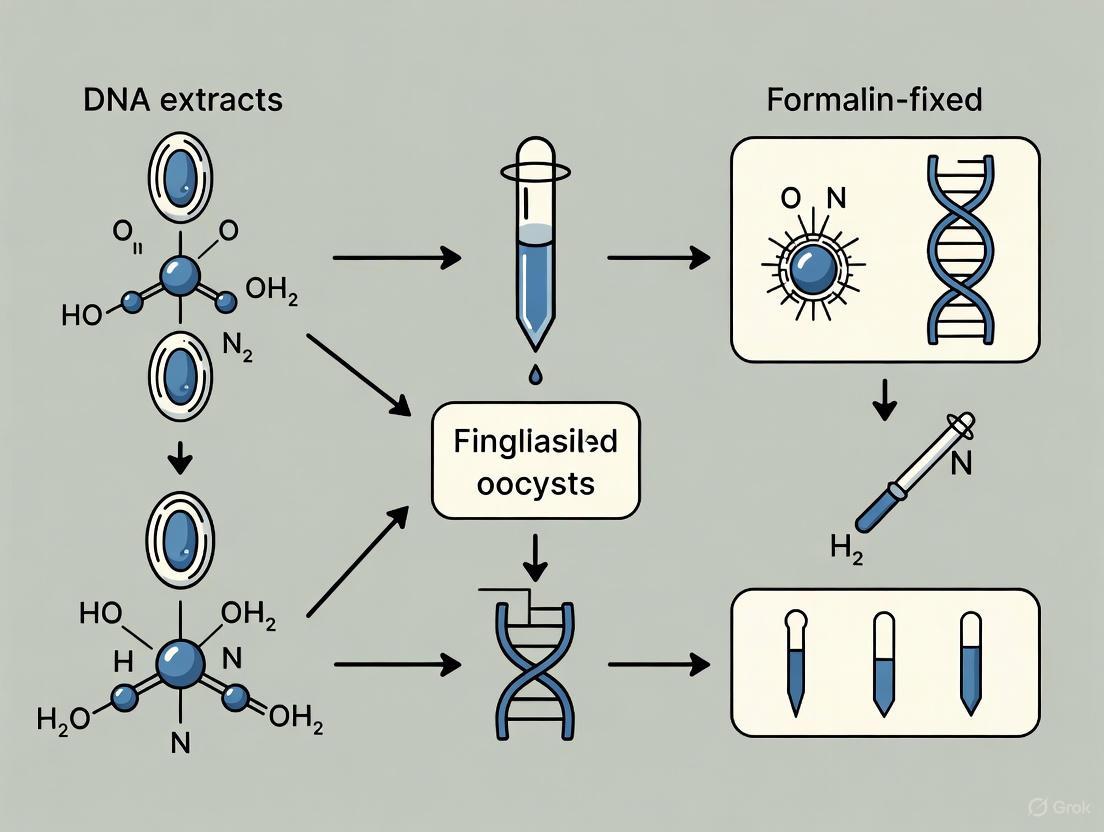
This article provides a comprehensive resource for researchers and scientists on the challenges and optimized protocols for extracting high-quality DNA from two particularly difficult sample types: parasite oocysts/cysts and formalin-fixed,...
Optimized DNA Extraction from Parasite Oocysts and Formalin-Fixed Samples: A Comprehensive Guide for Biomedical Research
Abstract
This article provides a comprehensive resource for researchers and scientists on the challenges and optimized protocols for extracting high-quality DNA from two particularly difficult sample types: parasite oocysts/cysts and formalin-fixed, paraffin-embedded (FFPE) tissues. It explores the foundational obstacles, including robust oocyst walls and formalin-induced cross-links, and details current methodological approaches, from commercial kits to innovative in-house protocols. The content further delves into practical troubleshooting and optimization strategies to maximize DNA yield and purity, and concludes with a comparative analysis of method validation, supporting reliable downstream molecular applications in diagnostics, drug development, and genomic studies.
Understanding the Key Challenges in DNA Extraction from Resilient Samples
The oocysts of Cryptosporidium and cysts of Giardia duodenalis represent some of the most formidable biological structures in parasitology, functioning as nature's ultimate survival pods. These environmental stages are encased within robust, multilayer walls that provide exceptional protection against chemical disinfectants, environmental stressors, and physical damage. The structural integrity of these walls presents a significant scientific challenge for researchers, particularly in the field of molecular diagnostics where efficient DNA recovery is paramount for accurate detection and identification. The biochemical composition of these walls, characterized by complex glycoproteins and rigid filaments, creates a formidable barrier that standard lysis methods frequently fail to penetrate effectively [1]. This resilience is not merely incidental but essential to the parasite's life cycle, enabling prolonged environmental survival and transmission through contaminated water, soil, and food sources.
Within the broader context of DNA extraction research from challenging samples, protozoan oocysts and cysts share surprising commonalities with formalin-fixed paraffin-embedded (FFPE) tissues. Both represent structurally fortified biological materials where genetic material is protected by extensive cross-linking—either through naturally occurring biochemical bonds in parasite walls or formaldehyde-induced protein-nucleic acid cross-links in FFPE samples [2] [3]. This parallel underscores the necessity for specialized, optimized protocols that can overcome these structural defenses without compromising the integrity of the target DNA. The increasing importance of molecular methods in disease surveillance, outbreak investigations, and clinical diagnostics has driven significant innovation in disruption techniques, moving beyond traditional mechanical and chemical approaches to more sophisticated integrated methodologies [4] [1] [5].
Application Notes: Quantitative Performance of Oocyst Disruption and DNA Detection Methods
Performance Metrics of DNA Extraction and Detection Methods
Table 1: Comparative analysis of DNA extraction and detection methods for protozoan parasites
| Method Category | Specific Technique | Limit of Detection | Sample Type | Key Advantages | Major Limitations |
|---|---|---|---|---|---|
| Direct Lysis Methods | Heat lysis in TE buffer (without purification) | 5-10 oocysts/10 mL water [5] | Water | Rapid (minimal sample preparation); Suitable for field application | Potential PCR inhibition from sample matrix |
| OmniLyse device mechanical lysis | 100 oocysts/25g lettuce [1] | Lettuce | Rapid (3 min lysis); Compatible with metagenomic sequencing | Requires specialized equipment | |
| Commercial Kit-Based DNA Extraction | DNeasy Blood & Tissue Kit (Qiagen) | 5 oocysts in spiked samples (variable by matrix) [4] | PBS, water, soil, produce | Standardized protocol; Effective for various matrices | Susceptible to PCR inhibitors in complex matrices |
| PowerLyzer DNA Extraction Kit | 5 oocysts in spiked samples (variable by matrix) [4] | Soil, fresh produce | Enhanced inhibitor resistance; Effective for tough environmental samples | Higher cost per sample | |
| Detection Platforms | Loop-mediated isothermal amplification (LAMP) | 0.17 copies/μL gDNA [5] | Water samples after lysis | Resistant to inhibitors; Isothermal conditions; No sophisticated equipment needed | Limited multiplexing capability |
| Droplet Digital PCR (ddPCR) | Enhanced detection in inhibitor-rich samples [4] | Environmental samples (water, soil, produce) | Superior inhibitor resistance; Absolute quantification without standards | Higher cost; Specialized equipment required | |
| Metagenomic NGS (MinION) | 100 oocysts/25g lettuce [1] | Lettuce after lysis | Comprehensive pathogen identification; No prior knowledge of pathogens needed | Bioinformatics expertise required; Higher cost per sample |
Impact of Sample Matrix on Detection Efficiency
Table 2: Method performance across different sample matrices
| Sample Matrix | Optimal DNA Extraction Method | Optimal Detection Method | Detection Sensitivity | Inhibitor Resistance |
|---|---|---|---|---|
| Water | DNeasy Kit [4] or Direct Heat Lysis [5] | ddPCR [4] or LAMP [5] | 5 oocysts/10 mL (LAMP) [5] | High with ddPCR/LAMP [4] [5] |
| Soil | PowerLyzer Kit [4] | ddPCR [4] | 5 oocysts/sample (ddPCR) [4] | Moderate with real-time PCR, High with ddPCR [4] |
| Fresh Produce | PowerLyzer Kit [4] | ddPCR [4] | 5 oocysts/sample (ddPCR) [4] | Moderate with real-time PCR, High with ddPCR [4] |
| Cat Feces | Inhibitor removal protocols (QIAamp DNA Stool Mini Kit) [6] | B1 gene Real-Time PCR [6] | 1-50 oocysts/sample [6] | High with optimized flotation and extraction [6] |
Parallels with FFPE Tissue DNA Extraction Challenges
The challenges faced in DNA extraction from protozoan oocysts share remarkable similarities with those encountered in FFPE tissues. Both involve robust structural barriers that protect genetic material—parasite walls with their complex glycoprotein matrices and FFPE tissues with formaldehyde-induced protein-nucleic acid cross-links [2] [3]. In FFPE samples, formalin fixation creates methylene bridges between proteins and nucleic acids, leading to fragmentation and cross-linking that significantly impedes DNA extraction and amplification [3]. Similarly, the oocyst wall of Cryptosporidium presents a multi-layered structure resistant to conventional lysis methods. Research has demonstrated that the same principles of optimized lysis—whether through specialized mechanical disruption, enzymatic digestion, or combination approaches—can be applied to both sample types with significant improvements in DNA yield and quality [1] [3].
The duration of formalin fixation significantly impacts DNA quality, with prolonged fixation (>24-48 hours) causing extensive DNA damage [3]. This parallels how oocyst wall integrity affects DNA accessibility, where older environmental samples may require more aggressive lysis conditions. The use of buffered formalin (pH ~7) in tissue preservation results in longer DNA fragments (~1 kb) compared to unbuffered formalin (100-300 bp) [3], similar to how gentle lysis methods preserve DNA integrity in oocyst extraction. These parallels highlight the transferability of disruption strategies between these challenging sample types and suggest that advances in one field can inform methodology in the other.
Experimental Protocols
Protocol 1: Direct Heat Lysis and LAMP Detection for Water Samples
This protocol eliminates commercial kit-based DNA isolation, enabling rapid detection of Cryptosporidium oocysts in water samples [5].
Principle: The method combines immunomagnetic separation of oocysts with direct heat lysis in low-EDTA TE buffer, followed by loop-mediated isothermal amplification (LAMP) for detection. The approach leverages the inhibitor resistance of Bst polymerase to bypass purification steps.
Step 1: Immunomagnetic Separation (IMS)
- Prepare biotinylated anti-Cryptosporidium antibody using Lightning-Link Biotin Conjugation Kit.
- Bind antibody to Dynabeads MyOne Streptavidin C1 (10 µg antibody/mg beads) in PBS with 0.1% BSA for 30 minutes at room temperature with gentle rotation.
- Concentrate 10 mL water samples by centrifugation at 15,000 × g for 10 minutes.
- Resuspend pellet in 1 mL PBS and add prepared magnetic beads.
- Incubate for 1 hour with gentle mixing to capture oocysts.
- Wash beads-oocyst complex three times with PBS using magnetic separation.
Step 2: Direct Heat Lysis
- Resuspend washed bead-oocyst complex in 50 µL TE buffer (10 mM Tris, 0.1 mM EDTA, pH 7.5).
- Incubate at 95°C for 10 minutes in a thermal cycler.
- Immediately place on ice for 5 minutes.
- Pulse-centrifuge and retain supernatant containing released DNA.
- Use 5 µL of lysate directly in LAMP reaction without purification.
Step 3: LAMP Amplification and Detection
- Prepare 25 µL reaction containing:
- 12.5 µL WarmStart Colorimetric LAMP 2× Master Mix
- 1.6 µM each inner primer (FIP/BIP)
- 0.2 µM each outer primer (F3/B3)
- 0.8 µM each loop primer (LF/LB) when targeting intron-less genes
- 5 µL template lysate
- Nuclease-free water to 25 µL
- Incubate at 65°C for 30-60 minutes.
- Visualize results by color change from pink to yellow (colorimetric) or fluorescence measurement.
- Prepare 25 µL reaction containing:
Troubleshooting Notes: For inhibitor-rich samples (e.g., water with mud), increase heat lysis time to 15 minutes and dilute lysate 1:2 before LAMP. Target intron-less genes (e.g., SAM gene) for enhanced sensitivity [5].
Protocol 2: Metagenomic NGS Detection from Fresh Produce
This protocol enables comprehensive parasite identification on leafy greens using metagenomic next-generation sequencing, capable of detecting multiple protozoan parasites simultaneously [1].
Principle: The method combines efficient mechanical lysis of oocysts/cysts with whole genome amplification and nanopore sequencing, allowing for simultaneous detection and differentiation of Cryptosporidium species, Giardia duodenalis, and Toxoplasma gondii without prior knowledge of pathogens present.
Step 1: Sample Processing and Oocyst Recovery
- Place 25 g lettuce leaves in sterile stomacher bag.
- Spike with oocysts/cysts in PBS and air-dry for 15 minutes.
- Add 40 mL buffered peptone water with 0.1% Tween.
- Homogenize in stomacher at 115 rpm for 1 minute.
- Filter homogenate through custom 35 μm filter under vacuum.
- Centrifuge filtrate at 15,000 × g for 60 minutes at 4°C.
- Discard supernatant and retain pellet.
Step 2: Mechanical Lysis and DNA Extraction
- Resuspend pellet in 1 mL PBS.
- Transfer to lysing matrix tube containing ceramic beads.
- Process using OmniLyse device or bead beater for 3 minutes.
- Centrifuge at 12,000 × g for 5 minutes to remove debris.
- Transfer supernatant to new tube.
- Extract DNA using acetate precipitation:
- Add 0.1 volume 3M sodium acetate (pH 5.2) and 2 volumes 100% ethanol.
- Incubate at -20°C for 30 minutes.
- Centrifuge at 15,000 × g for 15 minutes at 4°C.
- Wash DNA pellet with 70% ethanol.
- Air-dry and resuspend in TE buffer.
Step 3: Whole Genome Amplification and Sequencing
- Amplify extracted DNA using REPLI-g Single Cell Kit per manufacturer's instructions.
- Assess DNA quantity by fluorometry (target: 0.16-8.25 μg).
- Prepare sequencing libraries using Nanopore Ligation Sequencing Kit.
- Load onto MinION flow cell (FLO-MIN106D).
- Sequence for 24 hours using MinKNOW software.
- Analyze fastq files with CosmosID bioinformatics platform for parasite identification.
Validation: Confirm results with alternate sequencing platform (Ion Gene Studio S5) for concordance [1].
Protocol 3: Flotation-Based Concentration and PCR Detection from Fecal Samples
This optimized protocol for cat feces demonstrates the importance of flotation fluid selection and inhibitor removal for sensitive Toxoplasma gondii oocyst detection [6].
Principle: The method uses NaNO3 flotation for oocyst concentration followed by silica-based DNA extraction with specialized inhibitor removal, enabling sensitive B1 gene-targeted PCR detection.
Step 1: Oocyst Concentration by Flotation
- Emulsify 1 g fecal sample in 10 mL distilled water.
- Filter through sieve (250 μm pore size) to remove large debris.
- Centrifuge filtrate at 2,500 × g for 10 minutes.
- Resuspend pellet in 5 mL saturated NaNO3 solution (specific gravity 1.33).
- Centrifuge at 2,500 × g for 10 minutes.
- Carefully transfer top layer containing oocysts to clean tube.
- Wash oocysts with distilled water by centrifugation (2,500 × g, 10 minutes) to remove NaNO3 residue.
Step 2: DNA Extraction with Inhibitor Removal
- Use QIAamp DNA Stool Mini Kit with modifications:
- Incubate sample with InhibitEX tablet for 10 minutes at room temperature with vortexing.
- Centrifuge at 14,000 × g for 3 minutes to pellet inhibitors.
- Transfer supernatant to new tube.
- Add proteinase K and buffer AL, incubate at 70°C for 10 minutes.
- Add ethanol and apply to QIAamp spin column.
- Wash with buffers AW1 and AW2.
- Elute DNA in 50-100 μL buffer AE.
- Use QIAamp DNA Stool Mini Kit with modifications:
Step 3: Real-Time PCR Detection
- Prepare 25 μL reaction containing:
- 12.5 μL 2× Real-Time PCR Master Mix
- 0.4 μM each primer (B1 gene: forward 5'-GGAACTGCATCCGTTCATGAG-3', reverse 5'-TCTTTAAAGCGTTCGTGGTC-3')
- 0.2 μM TaqMan probe (FAM-5'-TGCATAGGTTGCAGTCACTG-3'-TAMRA)
- 5 μL template DNA
- Run on real-time PCR instrument with cycling conditions:
- 95°C for 10 minutes
- 45 cycles of: 95°C for 15 seconds, 60°C for 1 minute
- Analyze amplification curves and determine Cq values.
- Prepare 25 μL reaction containing:
Optimization Notes: NaNO3 demonstrates superior performance over saccharose, MgSO4, or ZnSO4 solutions due to minimal effects on oocyst integrity and PCR amplification [6].
The Scientist's Toolkit: Essential Research Reagent Solutions
Table 3: Key reagents and equipment for protozoan oocyst DNA extraction research
| Reagent/Equipment | Specific Example | Function in Workflow | Application Notes |
|---|---|---|---|
| Mechanical Homogenizers | OmniLyse Device [1] | Rapid mechanical disruption of robust oocyst walls | 3-minute lysis; Compatible with metagenomic sequencing |
| Bead Ruptor Elite [7] | Efficient cell disruption using bead beating | Programmable speed/duration; Specialized beads for different samples | |
| Lysis Buffers | TE Buffer (10 mM Tris, 0.1 mM EDTA) [5] | Direct heat lysis medium | Low EDTA concentration prevents polymerase inhibition |
| Proteinase K [3] [6] | Enzymatic digestion of structural proteins | Critical for breaking protein-DNA crosslinks; Enhanced lysis efficiency | |
| DNA Extraction Kits | DNeasy Blood & Tissue Kit [4] [5] | Silica-membrane based DNA purification | Effective for water samples; Standardized protocol |
| PowerLyzer DNA Extraction Kit [4] | Inhibitor-resistant DNA isolation | Optimal for complex matrices (soil, produce) | |
| QIAamp DNA Stool Mini Kit [6] | DNA purification with inhibitor removal | Contains InhibitEX technology for complex samples | |
| Amplification Master Mixes | WarmStart Colorimetric LAMP 2× Master Mix [5] | Isothermal amplification with visual detection | Bst polymerase resistant to inhibitors; No specialized equipment needed |
| SensiFAST SYBR No-ROX Kit [5] | Real-time PCR detection | Sensitive detection; Compatible with multiple DNA targets | |
| Flotation Solutions | Saturated NaNO3 [6] | Oocyst concentration from fecal samples | Specific gravity 1.33; Minimal PCR inhibition |
| Enzymes | Bst Polymerase [5] | Strand displacement for LAMP | Tolerant to sample inhibitors; Isothermal activity |
| Antibodies & Beads | Biotinylated Anti-Cryptosporidium Antibody [5] | Immunomagnetic separation | Specific oocyst capture from complex samples; Coupled with streptavidin beads |
Workflow and Pathway Visualizations
The structural fortress presented by protozoan oocysts and cysts continues to challenge researchers, yet significant advances in disruption methodologies have enabled increasingly sensitive detection across diverse sample matrices. The integration of mechanical, thermal, and chemical lysis strategies—often in combinatorial approaches—has progressively overcome the biological barriers that once impeded reliable DNA recovery. The parallel challenges and solutions observed in FFPE tissue research further enrich this field, demonstrating how methodological innovations can transcend traditional disciplinary boundaries. As detection technologies continue to evolve toward greater sensitivity, portability, and multiplexing capability, the fundamental requirement of efficient DNA access from these robust structures remains paramount. The protocols and applications detailed herein provide both practical tools and conceptual frameworks for advancing research in parasitology, food safety, and public health diagnostics.
Formalin-Fixed Paraffin-Embedded (FFPE) tissue preservation represents the gold standard in pathology and histopathology, enabling long-term storage and detailed morphological examination [3] [8]. The process involves tissue fixation in formalin, typically a 10% neutral-buffered formalin solution corresponding to 4% formaldehyde, followed by dehydration, clearing, and embedding in paraffin wax [3] [8]. While this method excellently preserves tissue architecture, it introduces significant challenges for molecular analyses due to formalin-induced biochemical modifications that fragment nucleic acids and create complex protein-DNA cross-links [3] [9]. For researchers working with parasite oocysts and other formalin-fixed samples, understanding these mechanisms is crucial for developing effective DNA extraction strategies that overcome these limitations while leveraging the vast archives of existing FFPE specimens.
The Molecular Mechanisms of Formalin-Induced Damage
Protein-Nucleic Acid Cross-linking
Formalin fixation primarily induces the formation of protein-nucleic acid cross-links through methylene bridge (-CH2-) formation between reactive amino acid side chains and DNA bases [3] [10]. Recent mass spectrometry studies reveal that the dominant reaction product adds 24 Da to the total mass of two cross-linked peptides, rather than the traditionally assumed 12 Da addition for a simple methylene bridge [10]. This cross-linking creates a complex network that physically traps nucleic acids, significantly reducing extraction efficiency and accessibility for molecular analyses [3].
The cross-linking reaction shows preference for specific amino acids, with lysine and arginine residues being most prevalent, though a significant fraction of cross-links also involve asparagine, histidine, aspartic acid, tyrosine, and glutamine residues [10]. This cross-linking network not only impedes DNA extraction but also sterically hinders enzymes used in downstream applications such as PCR and sequencing [3].
DNA Fragmentation and Chemical Modification
Beyond cross-linking, formalin fixation causes substantial DNA fragmentation through hydrolytic processes and introduces base modifications that compromise genetic analyses [3] [11]. The fixation process leads to:
- DNA backbone cleavage resulting in short fragments typically ranging from 100-300 bp in unbuffered formalin to ~1 kb in buffered formalin [3]
- Cytosine deamination to uracil, leading to artifactual C>T/G>A transitions during amplification [11]
- Base modifications with altered base-pairing capabilities that introduce sequencing errors [11]
The extent of damage is significantly influenced by fixation conditions. Prolonged fixation (>24-48 hours) markedly increases DNA damage, while the use of buffered formalin (pH ~7) instead of unbuffered formalin (pH <4) substantially improves DNA quality by limiting hydrolysis and fragmentation [3].
Table 1: Factors Affecting DNA Quality in FFPE Tissues
| Factor | Effect on DNA Quality | Mechanism | Recommendation |
|---|---|---|---|
| Fixation Time | Prolonged fixation >24-48 hours markedly increases damage | Increased cross-linking and fragmentation | Limit fixation to 24-48 hours maximum |
| Formalin Type | Buffered formalin (pH ~7) preserves longer fragments | Reduces hydrolysis and fragmentation | Always use neutral-buffered formalin |
| Storage Duration | Extended storage increases degradation | Additional fragmentation over time | Optimize extraction for fragment size |
| Fixative pH | Acidic formalin (pH<4) causes intense degradation | Promotes DNA hydrolysis and C>T transitions | Maintain neutral pH with phosphate buffering |
Quantitative Assessment of DNA Damage in FFPE Tissues
DNA Yield and Quality Metrics
Evaluation of DNA extracted from FFPE tissues reveals characteristic patterns of degradation that differentiate it from DNA obtained from fresh or frozen tissues. Studies using the Maxwell RSC Xcelerate DNA FFPE Kit demonstrate that while relatively high DNA yields can be obtained with consistently low degradation indices, the functional utility for genetic analyses remains limited [3]. Quantitative comparisons show:
- DNA concentration values ranging from 11-12 ng/μl across different extraction methods [12]
- Protein contamination (260/280 ratios) varying from 1.5-1.8 across methods, with higher values indicating purer DNA [12]
- Carbohydrate contamination (230/280 ratios) ranging from 1.2-1.7 [12]
Despite favorable quantitative metrics, the functional performance in downstream applications is often compromised. Short Tandem Repeat (STR) profiling success rates are frequently poor, with partial or incomplete profiles characterized by allele dropout and imbalance being common [3].
Impact on Downstream Molecular Applications
The formalin-induced damage significantly impacts various molecular techniques essential for parasitology and genetic research:
- STR Profiling: Often generates partial profiles with allele dropout despite adequate DNA quantification [3]
- Next-Generation Sequencing: Increased error rates due to cytosine deamination artifacts, particularly C>T transitions [11]
- PCR Amplification: Reduced efficiency, especially for longer amplicons, due to fragmentation [3]
- Methylation Analysis: Possible with specialized restoration protocols, achieving β-value correlations of ρ=0.9590 between fresh-frozen and restored FFPE samples [13]
Table 2: Performance of Molecular Techniques with FFPE-Derived DNA
| Application | Success Rate/Quality | Key Limitations | Potential Solutions |
|---|---|---|---|
| STR Profiling | Often incomplete (allele dropout) | Fragmentation, cross-linking | Use miniSTR kits with shorter amplicons |
| Next-Generation Sequencing | Variable, high error rates | C>T artifacts, fragmentation | Enzymatic repair, duplicate sequencing |
| Targeted PCR | Moderate for short targets | Cross-linking inhibits enzymes | Optimized proteinase K digestion |
| Methylation Analysis | High with restoration (ρ=0.959) | DNA fragmentation | DNA restoration protocols [13] |
| Sanger Sequencing | Moderate for short regions | Background noise from damage | Increase template concentration |
Experimental Protocols for DNA Analysis from FFPE Tissues
DNA Extraction Using Commercial Kits
The Maxwell RSC Xcelerate DNA FFPE Kit protocol demonstrates a standardized approach for DNA recovery from FFPE tissues [3]:
- Sectioning: Cut 4-10 μm sections from FFPE blocks using a microtome, collecting in sterile tubes
- Deparaffinization: Add 1 ml xylene, incubate until paraffin dissolves, centrifuge at 14,000 rpm for 10 minutes, discard supernatant
- Wash: Repeat xylene step, then add 0.5 ml absolute ethanol, incubate at room temperature for 5 minutes, centrifuge, discard supernatant
- Proteinase K Digestion: Add TG1 buffer and Proteinase K, incubate at 60°C for 48 hours to reverse cross-links
- Heat Inactivation: Incubate at 90°C for 30 minutes to inactivate enzymes
- Binding and Elution: Add binding buffer and ethanol, transfer to purification column, centrifuge, wash, and elute with elution buffer
This method achieves higher DNA yields with lower degradation indices compared to traditional methods, though STR profiling success remains challenging [3].
Modified Boiling Method for DNA Extraction
For resource-limited settings or specialized applications, a modified boiling method offers an effective alternative [12]:
- Deparaffinization: Add 25 mg tissue slices to 1 ml xylene, incubate until paraffin dissolves completely
- Centrifugation: Centrifuge at 14,000 rpm for 10 minutes, remove supernatant
- Repeat: Repeat xylene treatment to ensure complete deparaffinization
- Ethanol Wash: Add 0.5 ml absolute ethanol to tissue sediment, incubate 5 minutes at room temperature, repeat
- Acetone Treatment: Add 100 μl acetone, incubate overnight at room temperature
- Homogenization: Crush tissue thoroughly with sterile rod
- DNA Release: Add 100 μl TE buffer (Tris-HCL 10 mM + EDTA 1 mM), boil for 15 minutes
- Collection: Cool sample, centrifuge at 14,000 rpm for 15 minutes, collect supernatant containing DNA
This method yielded DNA with the lowest rate of contamination and the best electrophoretic band quality in comparative studies [12].
DNA Extraction Workflow from FFPE Tissue
Research Reagent Solutions for FFPE Tissue Analysis
Table 3: Essential Research Reagents for FFPE Tissue DNA Analysis
| Reagent/Kit | Primary Function | Application Notes | References |
|---|---|---|---|
| Maxwell RSC Xcelerate DNA FFPE Kit | DNA extraction from FFPE tissues | Consistently low degradation indices, high yield | [3] |
| Proteinase K | Enzymatic digestion of cross-linked proteins | Extended incubation (48h) at 60°C needed | [12] |
| Xylene | Dissolution and removal of paraffin | Critical for complete deparaffinization | [12] |
| Neutral-Buffered Formalin | Tissue fixation while preserving DNA | Maintains pH ~7, significantly improves DNA quality | [3] |
| IDT xGen cfDNA and FFPE DNA Library Prep Kit | NGS library preparation from degraded DNA | Optimized for fragmented DNA, 4-hour workflow | [8] |
| Infinium HumanMethylation450 BeadChip | DNA methylation analysis | Requires DNA restoration protocol for FFPE samples | [13] |
Implications for Parasitology Research and Future Directions
The challenges and solutions for DNA analysis from FFPE tissues have direct relevance to parasitology research, particularly for studies utilizing archived clinical specimens containing parasite oocysts or other parasitic forms. The formalin-induced damage patterns observed in human tissues similarly affect parasitic DNA within specimens, requiring analogous approaches for successful genetic analysis.
Future research directions should focus on:
- Enzymatic repair strategies to reverse formalin-induced damage before amplification [3]
- Modified fixation protocols that maintain morphological preservation while reducing nucleic acid damage [14]
- Advanced extraction methods specifically optimized for the simultaneous recovery of host and parasite DNA [12]
- Computational correction methods to account for formalin-induced sequencing artifacts [11]
The ability to leverage archived FFPE specimens for genetic analyses of parasites opens tremendous opportunities for retrospective studies and longitudinal analyses of parasite evolution, drug resistance development, and host-parasite interactions over time.
Formalin Effects on DNA and Potential Mitigation Strategies
The polymerase chain reaction (PCR) has become a cornerstone technique in molecular diagnostics and research, enabling the sensitive detection of nucleic acids. However, the accuracy and sensitivity of PCR-based assays can be severely compromised by the presence of inhibitory substances in complex biological samples. Fecal specimens represent one of the most challenging sample matrices for molecular analysis due to their heterogeneous composition and the presence of numerous potent PCR inhibitors [15]. Among these, heme, bilirubins, and bile salts constitute significant barriers to efficient DNA amplification, particularly in diagnostic applications targeting intestinal parasites and gut microbiota.
Understanding the mechanisms of these inhibitors and developing robust mitigation strategies is especially crucial within parasite oocyst research and formalin-fixed paraffin-embedded (FFPE) sample analysis, where sample integrity is often compromised and target DNA may be limited. This application note examines the inhibitory mechanisms of heme, bilirubins, and bile salts in fecal samples and provides detailed protocols for overcoming these challenges in research and diagnostic settings.
Mechanisms of PCR Inhibition in Fecal Samples
PCR inhibitors present in fecal samples interfere with amplification through multiple mechanisms, ultimately leading to reduced sensitivity, false-negative results, or complete amplification failure.
| Inhibitor Category | Specific Compounds | Primary Sources in Feces | Mechanism of Inhibition |
|---|---|---|---|
| Blood-Derived Pigments | Heme/Hemin | Degraded hemoglobin from GI bleeding | Binds to DNA polymerase; releases iron ions affecting pH [16] [17] |
| Hemoglobin | Dietary blood, gastrointestinal bleeding | Inhibits after proteinase K digestion [17] | |
| Bile Pigments & Salts | Bilirubin | Hemoglobin breakdown product | Interferes with polymerase activity [16] |
| Bile salts | Liver secretion for lipid digestion | Disrupts enzyme function; reduces fluorescence in real-time PCR [18] | |
| Other Fecal Components | Complex polysaccharides | Plant materials, dietary fiber | Binds to DNA or polymerase [15] |
| Immunoglobulin G (IgG) | Plasma component in feces | Forms complexes with single-stranded DNA [18] [17] | |
| Bacterial metabolites | Gut microbiota | Varies by individual and diet [15] |
Heme and its derivatives represent particularly potent inhibitors in fecal samples. As a component of hemoglobin, heme can be released through digestive processes or from gastrointestinal bleeding. The inhibitory effect of heme is concentration-dependent, with studies showing that ≤1.3 μg of hemoglobin can completely inhibit sensitive DNA polymerases like AmpliTaq Gold [18]. The mechanism involves heme binding directly to DNA polymerase, while released iron ions disrupt reaction pH and interfere with polymerase activity, primer annealing, and probe binding in real-time PCR assays [17].
Bilirubin and bile salts present additional challenges as they are natural components of intestinal fluid. Bilirubin, a breakdown product of hemoglobin, can co-purify with DNA during extraction procedures. Bile salts exhibit detergent-like properties that can disrupt enzyme function. In quantitative studies, 0.25 to 0.1 mg/mL of bile reduced fluorescence signals to approximately 76% in real-time DNA synthesis monitoring [18], demonstrating their significant impact on PCR efficiency.
Methodological Approaches for Overcoming Inhibition
DNA Extraction Method Comparison for Fecal Samples
The DNA extraction methodology critically influences the efficiency of inhibitor removal and subsequent PCR success. Different approaches yield substantially different outcomes:
| Extraction Method | DNA Yield | Inhibitor Removal Efficiency | PCR Detection Rate | Best Applications |
|---|---|---|---|---|
| Phenol-Chloroform (P) | High (~4x kits) [19] | Low | 8.2% [19] | High DNA yield when inhibitors are not a concern |
| Phenol-Chloroform with Bead-Beating (PB) | High [19] | Moderate | Not specified | Tough-walled organisms (parasite oocysts) |
| QIAamp Fast DNA Stool Mini Kit (Q) | Moderate [19] | High | Lower than QB [19] | Routine bacterial pathogen detection |
| QIAamp PowerFecal Pro DNA Kit (QB) | Moderate [19] | Very High | 61.2% (highest) [19] | Superior for diverse intestinal parasites [19] |
Comparative studies demonstrate that the QIAamp PowerFecal Pro DNA Kit (QB) provides the most effective solution for PCR detection of intestinal parasites from stool samples, achieving the highest detection rate (61.2%) across diverse organisms including Blastocystis sp., Ascaris lumbricoides, Trichuris trichiura, hookworm, and Strongyloides stercoralis [19]. This method significantly outperformed phenol-chloroform techniques, which despite yielding higher DNA quantities, showed poor PCR detection rates due to co-purification of inhibitors.
PCR Enhancement Strategies
When complete inhibitor removal during DNA extraction is not achievable, several PCR enhancement strategies can improve amplification success:
PCR Additives and Facilitators
Bovine serum albumin (BSA) serves as one of the most effective amplification facilitators, binding to inhibitors such as heme and phenols, thereby preventing their interaction with DNA polymerase. Studies demonstrate that the addition of 0.4% (wt/vol) BSA enabled AmpliTaq Gold to amplify DNA in the presence of 20μg of hemoglobin instead of just 1μg without BSA [18].
Other effective additives include:
- Nonionic detergents (Tween 20, Triton X-100, Nonidet P-40) [20] [17]
- l-carnitine inner salt and d-(+)-trehalose (component of novel PCR enhancer cocktails) [20]
- Betaine and glycerol - biologically compatible solutes [17]
- Polymer additives (polyethylene glycol, dextran) [17]
- Single-stranded DNA-binding proteins (gp32) - 0.02% (wt/vol) concentration reduced inhibitory effects of hemoglobin and lactoferrin [18]
Inhibitor-Resistant Enzyme Formulations
Specialized DNA polymerase formulations demonstrate enhanced resistance to PCR inhibitors. For example, rTth and Tli polymerases were found to resist inhibition from at least 100μg of hemoglobin, while AmpliTaq Gold was inhibited by ≤1.3μg [18]. Novel mutant Taq enzymes such as OmniTaq and Omni Klentaq show superior tolerance to inhibitors found in blood and soil when combined with specialized enhancer cocktails [20].
Experimental Protocols
Optimized DNA Extraction from Fecal Samples with High Inhibitor Content
This protocol is adapted from comparative studies evaluating methods for intestinal parasite detection [19]:
Reagents and Equipment:
- QIAamp PowerFecal Pro DNA Kit (QIAGEN)
- 70% ethanol
- Sterile distilled water
- Microcentrifuge tubes (2mL)
- Centrifuge
- Vortex with adapter for 2mL tubes
- Water bath or incubator (65°C)
Procedure:
- Sample Pretreatment: Preserve approximately 200mg of stool sample in 500μL of 70% ethanol. Wash three times with sterile distilled water by centrifugation at 13,000×g for 2 minutes between washes.
- Lysis: Transfer 200mg of washed stool to a 2mL tube containing garnet beads from the kit. Add 800μL of CD1 solution and vortex vigorously for 10 minutes.
- Incubation: Transfer the supernatant to a new tube and incubate at 65°C for 10 minutes.
- Inhibitor Removal: Add 200μL of CD2 solution, mix, and centrifuge at 13,000×g for 5 minutes. Transfer up to 600μL of supernatant to a new tube.
- DNA Binding: Add 600μL of CD3 solution and load onto an MB spin column. Centrifuge at 13,000×g for 1 minute.
- Washing: Wash with 500μL of EA and 500μL of C5 solutions with appropriate centrifugations.
- Elution: Elute DNA in 50-100μL of C6 solution.
Validation: Include a plasmid spike (10^4 copies) in parallel reactions to detect residual inhibitors. Compare to positive and negative controls.
PCR Setup with Inhibitor-Resistant Formulations
This protocol utilizes enhanced enzyme formulations for challenging fecal samples:
Reagent Composition:
- 1× concentration of supplied reaction buffer
- 2.5-3.5mM MgCl₂ (optimize for target)
- 200μM each dNTP
- 0.2μM each primer
- 2U OmniTaq or Omni Klentaq DNA polymerase [20]
- 0.4% BSA (wt/vol) [18]
- 0.1% Tween 20 [17]
- 10mM trehalose [20]
- 5-50ng fecal DNA template
- PCR-grade water to 25-50μL
Thermal Cycling Conditions:
- Initial denaturation: 95°C for 10 minutes
- 40 cycles of:
- Denaturation: 95°C for 30 seconds
- Annealing: Primer-specific temperature for 30 seconds
- Extension: 72°C for 30-60 seconds (depending on amplicon size)
- Final extension: 72°C for 7 minutes
Post-Amplification: Include appropriate controls and analyze 5μL by gel electrophoresis.
The Scientist's Toolkit: Essential Research Reagents
| Reagent/Category | Specific Examples | Function/Application |
|---|---|---|
| Inhibitor-Resistant Enzymes | OmniTaq, Omni Klentaq [20], rTth [18] | Tolerant to heme, IgG, and other fecal inhibitors |
| PCR Enhancers | BSA (0.4%) [18], Tween 20 (0.1%) [17], Trehalose [20] | Bind inhibitors, stabilize enzymes, improve efficiency |
| DNA Extraction Kits | QIAamp PowerFecal Pro DNA Kit [19], ReliaPrep FFPE gDNA Miniprep System [21] | Optimized for tough samples (feces, FFPE) |
| DNA Repair Enzymes | NEBNext FFPE DNA Repair Mix [22], PreCR Repair Mix | Fix damage in FFPE-DNA (deamination, crosslinks) |
| Mechanical Disruption | Garnet beads (0.1-0.5mm) [19], Bead beater | Break tough parasite oocysts and cell walls |
Integration with Broader Research Applications
The challenges presented by PCR inhibitors in fecal samples share important parallels with other complex sample types, particularly formalin-fixed paraffin-embedded (FFPE) tissues commonly used in parasite research and histopathology. Both sample types require specialized approaches to overcome barriers to successful PCR amplification.
In FFPE samples, formalin fixation induces DNA cross-linking and fragmentation, while also promoting cytosine deamination (C→T transitions) that can be misinterpreted as true variants [23]. These artifacts compound the challenges presented by traditional PCR inhibitors. The ERROR-FFPE-DNA framework recommends a comprehensive approach addressing: (I) pre-analytical sample quality control, (II) DNA repair treatments, (III) analytical sample preparation, and (IV) bioinformatic analysis [23].
Similar to the inhibitor mitigation strategies for fecal samples, FFPE processing benefits from specialized extraction systems like the ReliaPrep FFPE gDNA Miniprep System, which uses optimized lysis conditions to reverse formalin-induced modifications without requiring overnight digestion [21]. DNA repair enzymes such as those in the NEBNext UltraShear FFPE DNA Library Prep Kit selectively target damaged bases while preserving true mutations [22].
For both fecal and FFPE samples, amplification of smaller targets significantly improves success rates. When working with FFPE-derived DNA, a dramatic decrease in amplifiable DNA is observed when comparing 300bp versus 100bp amplicons [21]. This principle similarly applies to fecal samples where inhibitor effects are magnified with longer amplicons.
Visualizing Inhibition Mechanisms and Solutions
The following diagram illustrates the mechanisms of PCR inhibition by heme, bilirubins, and bile salts, along with the corresponding mitigation strategies:
This workflow illustrates how different fecal inhibitors disrupt PCR through distinct mechanisms and highlights the specific mitigation strategies that address each inhibitory pathway.
Successful PCR amplification from fecal samples requires a comprehensive approach addressing both the diverse inhibitors present and the challenges of recovering intact DNA from robust structures like parasite oocysts. The interplay between heme, bilirubins, and bile salts as PCR inhibitors necessitates optimized DNA extraction methods, with the QIAamp PowerFecal Pro DNA Kit demonstrating superior performance for diverse intestinal parasites. Supplementing with BSA, inhibitor-resistant polymerases, and chemical enhancers provides additional protection against residual inhibitors.
These principles align closely with strategies for FFPE samples in parasitology research, where DNA damage and cross-linking present analogous challenges. By implementing the detailed protocols and methodologies outlined in this application note, researchers can significantly improve the reliability and sensitivity of molecular assays for fecal samples, enabling more accurate detection and characterization of intestinal parasites and gut microbiota.
The integrity of DNA in biological samples is paramount for the success of downstream molecular analyses, including PCR, next-generation sequencing (NGS), and metagenomic applications. The choice of fixative between formalin and ethanol-based solutions represents a critical decision point in research, particularly in fields such as parasitology, museomics, and forensic science [24] [25] [26]. This application note provides a detailed, evidence-based comparison of these preservation methods, framing the discussion within the context of challenging samples like parasite oocysts and formalin-fixed archives [27] [28]. We summarize quantitative data on DNA yield and quality, provide optimized protocols for DNA extraction from these sample types, and visualize the core mechanisms and workflows to assist researchers in making informed decisions for their specific applications.
Mechanisms of Action and Consequences for DNA
The fundamental difference between formalin and ethanol preservation lies in their mechanism of action, which directly dictates the quality and quantity of recoverable DNA.
Formalin: A Crosslinking Fixative
Formalin (a 3.7% aqueous solution of formaldehyde) acts by creating covalent cross-links between proteins and other macromolecules, including DNA [24]. This efficiently preserves tissue morphology and even in situ DNA-protein interactions, which can be leveraged for epigenetic studies like chromatin accessibility profiling [24]. However, this crosslinking comes at a significant cost to nucleic acid integrity:
- DNA Degradation and Fragmentation: The cross-linking process leads to both chemical and physical stress on DNA, resulting in fragmentation [28]. Furthermore, formalin can gradually form formic acid, which also contributes to DNA degradation [26].
- Chemical Modifications: Formaldehyde can lead to the formation of hydroxymethyl groups on nucleic acid bases and create apurinic/apyrimidinic sites through hydrolysis of N-glycosylic bonds [26].
- PCR Inhibition: The extensive cross-linking and chemical modifications result in heavily fragmented DNA and can lead to a lack of amplification for longer DNA targets, making it unsuitable for assays requiring high molecular weight DNA [29] [26].
Ethanol: A Coagulant Fixative
Ethanol preserves tissue through dehydration and coagulation of proteins [26]. It kills decomposing microorganisms, removes water to slow enzymatic processes, and denatures DNA-degrading enzymes, thereby preventing further enzymatic degradation [30]. Its effects on DNA are generally less destructive:
- Superior DNA Preservation: Alcohol-based fixatives preserve higher molecular weight DNA (>200 bp), making them more suitable for applications like Short Tandem Repeat (STR) typing and PCR [29] [26].
- Maintained RNA Integrity: For immersion fixation, 70% ethanol has been shown to be superior to formalin for mRNA preservation, with RNA yield from ethanol-fixed tissues being about 70% of that from fresh frozen specimens [31].
- Trade-off with Morphology: A key trade-off is that high ethanol concentrations (e.g., 95-100%) can make specimens, particularly insects, brittle and prone to damage, which can compromise morphological examination [30].
The diagram below illustrates the fundamental mechanisms of each preservative.
Quantitative Comparison of DNA Integrity
The theoretical mechanisms described above are reflected in concrete, quantitative outcomes from experimental studies. The data below summarize the comparative performance of formalin and ethanol preservation on DNA quality and usability.
Table 1: Quantitative Comparison of DNA Yield and Quality from Formalin vs. Ethanol Preservation
| Preservative | DNA Yield & Concentration | DNA Quality/Purity (260/280 OD) | Successful STR Typing / PCR | Key Experimental Context |
|---|---|---|---|---|
| Formalin | Decidedly lower; 6.25–25 ng after 7 days [29]. Mean conc. 657.19 ng/μL (cadaver tissue) [28]. | Lower purity; mean OD 1.49 (cadaver tissue) [28]. Signs of heavy degradation on gels [29] [26]. | Partial STR profiles; lack of amplification for loci >200 bp [29] [26]. | Human tissues fixed for 3-90 days [29] [26]. |
| Ethanol | High and stable over time; 5–35 μg, unchanged up to 90 days [29]. Mean conc. 580.29 ng/μL (cadaver tissue) [28]. | Higher purity; mean OD 1.52 (cadaver tissue) [28]. High molecular weight DNA preserved [26]. | Complete STR profiles [29] [26]. 93-99% COI barcode success from macroinvertebrates [32]. | Human tissues [29] [26] and benthic macroinvertebrates [32]. |
Table 2: Impact of Ethanol Concentration on Morphology and DNA in Insect Specimens [30]
| Ethanol Concentration | Morphological Integrity (Brittleness) | Long-term DNA Preservation (COI Amplicons) | Recommended Use Case |
|---|---|---|---|
| 70-80% | Lower brittleness; better for morphological examination and mounting [30]. | Significant decrease in PCR amplicons compared to 95% ethanol over time [30]. | Primary morphology-based taxonomy. |
| ≥90-95% | Induces brittleness; specimens more prone to breaking and damage [30]. | Optimal for long-term DNA preservation; significantly better amplicon yield [30]. | Molecular studies requiring high-quality DNA. |
Application Notes for Challenging Samples
DNA Extraction from Parasite Oocysts
The robust wall of parasite oocysts and cysts (e.g., Cryptosporidium, Eimeria, Giardia) presents a unique challenge for DNA extraction, where the preservation method is only one part of the puzzle [27]. A critical finding for protozoan parasites is that efficient lysis of oocysts and cysts is a prerequisite for the sensitive detection of parasite DNA [27].
- Lysis is Key: For Eimeria oocysts, disruption of the oocyst wall was identified as the most critical step, with pretreatment by sodium hypochlorite or post-lysis DNA purification offering less significant benefits [33].
- Rapid Lysis Method: A metagenomic study for detecting protozoa on lettuce used a rapid 3-minute lysis of oocysts/cysts using the OmniLyse device, followed by DNA extraction via acetate precipitation and whole genome amplification, enabling sensitive detection via nanopore sequencing [27].
- Ultra-Simplified Protocol: An optimized protocol for Eimeria tenella involves disrupting oocysts suspended in distilled water via bead-beating, followed by heating at 99°C for 5 minutes. This template preparation method, which foregoes commercial kits, detected as few as 0.16 oocysts per PCR [33].
Recovering DNA from Formalin-Fixed Archives
While formalin-fixed specimens are suboptimal, their vast numbers in biobanks and museums make them invaluable. Recovery requires specialized approaches to break cross-links and retrieve fragmented DNA.
- Specimen Vetting: Prior to destructive sampling, assess tissue integrity, residual formaldehyde content, and storage media pH (optimal pH 6-8) [24].
- Specialized Extraction Methods: Standard DNA extraction methods often fail. Success has been achieved with hot alkaline lysis and modified, prolonged proteinase K digestion to reverse cross-links [24].
- Targeted Sequencing: Due to fragmentation, whole genome sequencing is challenging. Techniques like target capture sequencing for phylogenetics and MNase-seq or FAIRE-seq for chromatin accessibility profiling are more feasible and fruitful [24].
The generalized workflow for obtaining sequenceable DNA from these challenging samples is summarized below.
The Scientist's Toolkit: Key Reagents and Equipment
Table 3: Essential Research Reagents and Solutions for Sample Preservation and DNA Extraction
| Item | Function/Application | Key Considerations |
|---|---|---|
| Neutral Buffered Formalin (10%) | Gold standard for morphological and histological preservation [26]. | Minimizes acidification but still causes cross-linking. Not suitable for long-term DNA preservation. |
| Ethanol (95-100%) | Optimal preservative for long-term DNA integrity [30] [26]. | Causes tissue brittleness; may require glycerin addition for morphological work [30] [32]. |
| Proteinase K | Enzyme for digesting proteins and reversing cross-links in formalin-fixed samples [24]. | Requires extended digestion times and specialized buffers for fixed tissues [24]. |
| OmniLyse Device | Rapid, efficient mechanical lysis of robust structures like parasite oocysts [27]. | Enables lysis in as little as 3 minutes, suitable for metagenomic applications [27]. |
| Bead Beater | Mechanical disruption of tough cell walls (e.g., oocysts, spores) [33]. | Critical step in ultra-simplified protocols for preparing PCR templates from oocysts [33]. |
| Whole Genome Amplification (WGA) Kits | Amplifies limited DNA from precious samples (e.g., washed from lettuce) for NGS [27]. | Essential for metagenomic sequencing when starting DNA quantity is very low [27]. |
| MiniSTR Amplification Kits (e.g., MiniFiler) | Targets shorter amplicons for profiling degraded DNA from formalin-fixed sources [26]. | Successfully generates complete STR profiles where standard kits fail [26]. |
Concluding Recommendations
The choice between formalin and ethanol is ultimately dictated by the primary research goal.
- For Morphology and Histology: Formalin remains the gold standard, providing excellent preservation of tissue architecture [24] [26].
- For Genomic and Molecular Analyses: Ethanol (95-100%) is unequivocally superior for preserving DNA integrity and enabling a wide range of molecular techniques, from PCR to NGS [30] [31] [26].
- For Integrated Studies: When both morphology and DNA are required, a two-stage preservation protocol can be considered, or researchers must accept the trade-offs. For molecular work on formalin-fixed collections, specialized extraction methods and assays designed for fragmented DNA are required [24].
For parasite researchers specifically, investing in and optimizing the initial lysis and disruption step is more critical than the choice of downstream DNA purification kit [27] [33]. The methodologies and data outlined here provide a foundation for developing robust protocols that maximize the yield of high-quality genetic information from even the most challenging preserved samples.
Proven DNA Extraction Protocols for Oocysts and FFPE Tissues
The efficacy of downstream molecular analyses is fundamentally contingent upon the quality and quantity of extracted nucleic acids. This application note provides a critical evaluation of commercial DNA extraction kits designed for two particularly challenging sample types: stool specimens, exemplified by the QIAamp DNA Stool Mini Kit, and formalin-fixed, paraffin-embedded tissues. The performance of these kits is evaluated within the context of research involving parasite oocysts and archival FFPE samples, providing detailed protocols and quantitative data to guide researchers and drug development professionals in selecting and optimizing DNA extraction methodologies.
Performance of the QIAamp DNA Stool Mini Kit
The QIAamp DNA Stool Mini Kit enables rapid purification of genomic DNA from fresh or frozen stool samples. Its key advantage lies in the use of a novel InhibitEX Buffer which efficiently removes common PCR inhibitors such as complex polysaccharides, bile salts, and lipids, thereby streamlining the workflow by eliminating the need for hazardous organic chemicals [34].
Table 1: Performance Characteristics of the QIAamp DNA Stool Mini Kit
| Performance Metric | Specification | Supporting Data |
|---|---|---|
| Typical DNA Yield | 5–50 µg | Consistently higher yields than comparable kits from alternative suppliers [34] |
| Hands-on Time | Reduced | Streamlined protocol with fewer steps [34] |
| Total Processing Time | As little as 25 minutes | Fast spin-column procedure [34] |
| Cell Lysis Efficiency | ~95% | Validated for gut microbiota studies [35] |
| Inhibitor Removal | Efficient | Enables reliable qPCR with consistently low CT values [34] |
| Automation Compatibility | Yes | Suitable for automation on instruments like the QIAcube [34] |
Independent validation in ecological studies of gut microbiota confirmed that the kit achieves approximately 95% bacterial cell lysis efficiency and produces high-quality DNA extracts suitable for PCR-DGGE profiling and 16S rRNA gene sequencing [35].
Performance of Specialty Kits for FFPE Tissues
FFPE samples present significant challenges for DNA extraction due to formalin-induced DNA-protein cross-links, fragmentation, and chemical modifications [3]. The performance of specialty kits is often measured by DNA yield, quality, and success in downstream applications like STR profiling or NGS.
Table 2: Performance Characteristics of FFPE DNA Extraction Kits
| Kit / Study Focus | Key Findings on DNA Yield & Quality | Downstream Application Success |
|---|---|---|
| Maxwell RSC Xcelerate DNA FFPE Kit (Promega) | Recovery of relatively high DNA yields with consistently low degradation indices [3]. | Generation of complete STR profiles was often unsuccessful; partial profiles with allele dropout were frequent [3]. |
| QIAamp DNA FFPE Tissue Kit (Qiagen) | Standardized tool used in quality control studies; effective for DNA extraction from FFPE tissue [36]. | When combined with enzymatic repair, showed improved DNA integrity and amplification efficiency for NGS [36]. |
| General FFPE RNA Kits (Comparative Study) | The ReliaPrep FFPE Total RNA miniprep (Promega) yielded the best ratio of both quantity and quality on tested tissue samples [37]. | High-quality RNA is crucial for the reliability of RNASeq data from FFPE samples [37]. |
A 2025 study underscores the persistent challenge with FFPE samples: even with effective DNA recovery, the generation of complete and interpretable STR profiles remains limited due to DNA fragmentation and fixation-related artifacts [3]. The pre-analytical factors, particularly the use of buffered formalin and fixation time, profoundly impact the outcomes. DNA from tissues fixed in buffered formalin can reach lengths of up to ~1 kb, compared to only 100–300 bp from unbuffered formalin [3].
Experimental Protocols
Protocol: DNA Extraction from Stool Samples using QIAamp DNA Stool Mini Kit
This protocol is designed for the isolation of genomic DNA from approximately 180-220 mg of fresh or frozen human stool [34].
Workflow Overview:
Detailed Procedure:
- Sample Preparation: Weigh 180-220 mg of stool into a 2 ml microcentrifuge tube.
- Inhibitor Removal: Add 1.4 ml of InhibitEX Buffer and vortex continuously for 1 minute or until the sample is thoroughly homogenized. Incubate the suspension at 70°C for 5-10 minutes.
- Centrifugation: Centrifuge the sample at full speed (≥14,000 rpm) for 1-3 minutes. Pelleted inhibitors and stool particles will form a tight pellet.
- Lysate Transfer: Pipet up to 1.2 ml of the supernatant into a new 2 ml microcentrifuge tube, avoiding the pellet.
- Protein Digestion: Add 40 µl of Proteinase K and 400 µl of AL Buffer to the supernatant. Mix by pulse-vortexing for 15 seconds. Incubate at 70°C for 10-15 minutes.
- Ethanol Addition: Add 400-600 µl of ethanol (96-100%) to the lysate and mix thoroughly by pulse-vortexing.
- Binding: Apply the entire mixture (including any precipitate) to the QIAamp Mini spin column. Centrifuge at 14,000-16,000 rpm for 1 minute. Discard the flow-through.
- First Wash: Add 700 µl of AW1 buffer to the column. Centrifuge at 14,000-16,000 rpm for 1 minute. Discard the flow-through.
- Second Wash: Add 700 µl of AW2 buffer to the column. Centrifuge at 14,000-16,000 rpm for 1 minute. Discard the flow-through.
- Final Centrifugation: Place the column in a clean 2 ml collection tube and centrifuge at full speed for 3 minutes to dry the membrane completely.
- Elution: Place the column in a clean 1.5 ml microcentrifuge tube. Apply 100-200 µl of AE Buffer or nuclease-free water to the center of the membrane. Incubate at room temperature for 3-5 minutes, then centrifuge at 14,000-16,000 rpm for 1-2 minutes to elute the DNA.
Protocol: DNA Extraction from FFPE Tissues
This protocol outlines the general workflow for extracting DNA from FFPE tissue sections using a specialized kit like the QIAamp DNA FFPE Tissue Kit, incorporating critical pre- and post-extraction considerations [3] [36].
Workflow Overview:
Detailed Procedure:
- Sectioning: Cut 2-3 sections of 5-10 µm thickness from the FFPE block using a microtome. To avoid biases, sections can be systematically distributed across tubes, ensuring each tube contains representative tissue from different regions of the block [37].
- Deparaffinization: Add 1-2 ml of xylene to the tube, vortex, and incubate at room temperature for 5-10 minutes. Centrifuge at full speed for 5 minutes. Carefully remove the supernatant without disturbing the pellet.
- Wash the pellet by adding 1-2 ml of 70-100% ethanol, vortexing, and centrifuging for 5 minutes. Remove the ethanol supernatant completely.
- Drying: Air-dry the pellet for 10-15 minutes to remove residual ethanol.
- Lysis: Resuspend the pellet in 180-360 µl of Buffer ATL. Add 20-40 µl of Proteinase K. Vortex thoroughly and incubate at 56°C for 1-3 hours, or until the tissue is completely lysed. Vortex occasionally during incubation.
- Cross-link Reversal (Optional but Recommended): Incubate the sample at 90°C for 30-60 minutes. This critical step helps reverse formalin-induced cross-links [3].
- Binding and Washing: Briefly centrifuge the tube. Add 200-400 µl of AL Buffer and 200-400 µl of ethanol (96-100%) to the lysate. Mix by pulse-vortexing.
- Column Purification: Transfer the mixture to a QIAamp Mini spin column and proceed with wash steps (using AW1 and AW2 buffers) and elution as described in the stool protocol (steps 7-11).
Protocol: Enzymatic DNA Repair for FFPE-Derived DNA
For heavily degraded FFPE samples, a post-extraction enzymatic repair step can significantly improve downstream analysis outcomes [36].
Procedure:
- Setup: Use a commercial DNA repair mix (e.g., PreCR Repair Mix from NEB).
- Reaction Assembly: Combine the following in a nuclease-free tube:
- X µl FFPE DNA (up to 1 µg)
- 5 µl 10x Repair Buffer
- 2 µl Repair Mix
- Nuclease-free water to a final volume of 50 µl
- Incubation: Incubate at 37°C for 30-60 minutes.
- Enzyme Inactivation: The enzyme can be heat-inactivated at 75°C for 15 minutes, or the repaired DNA can be purified using a standard column-based clean-up protocol.
The Scientist's Toolkit: Essential Research Reagent Solutions
Table 3: Key Reagents and Kits for DNA Extraction from Challenging Samples
| Reagent / Kit | Primary Function | Application Note |
|---|---|---|
| InhibitEX Buffer (Qiagen) | Efficiently removes PCR inhibitors (bile salts, complex polysaccharides) from stool samples. | Critical for obtaining PCR-amplifiable DNA from stool; liquid format is more convenient than tablets [34]. |
| Proteinase K | Broad-spectrum serine protease that digests proteins and inactivates nucleases. | Essential for breaking down cross-linked proteins in FFPE samples and lysing bacterial & parasitic oocysts in stool [34] [3]. |
| AL Buffer (Qiagen) | Lysis buffer containing chaotropic salts that denature proteins and facilitate DNA binding to silica membrane. | A key component in the lysis and binding process for both stool and FFPE protocols [34]. |
| PreCR Repair Mix (NEB) | Enzyme mix containing, e.g., Endonuclease IV, T4 PDG, and DNA polymerase, to repair damaged bases and nicks. | Can reduce base substitution artifacts and improve amplification efficiency from degraded FFPE DNA [36]. |
| Magnetic Beads (e.g., Dynabeads) | Solid support for immunomagnetic separation (IMS) of specific targets like parasite oocysts. | Used for concentrating and purifying Cryptosporidium oocysts from water samples prior to DNA extraction [5]. |
| Bst Polymerase | Strand-displacing DNA polymerase used in Loop-Mediated Isothermal Amplification (LAMP). | Enables rapid, isothermal amplification; resistant to inhibitors, suitable for direct use with crude lysates [5]. |
The selection and optimization of DNA extraction protocols are pivotal for the success of research on complex sample matrices. The QIAamp DNA Stool Mini Kit provides a robust, inhibitor-tolerant workflow ideal for stool-based parasitology and microbiome studies. For FFPE tissues, specialized kits are necessary, but researchers must manage expectations as even high-quality extractions can yield fragmented DNA, limiting certain applications like STR profiling. Incorporating a pre-screening QC framework using gel electrophoresis and qPCR, along with an enzymatic repair step, can dramatically improve the utility of FFPE-derived DNA in sensitive downstream assays like next-generation sequencing.
Within the context of DNA extraction from parasite oocysts and formalin-fixed samples, mechanical cell lysis represents a critical first step for accessing high-quality genetic material for downstream research and drug development. The robust wall of protozoan oocysts, such as those of Cryptosporidium, Cyclospora, and Cyclospora cayetanensis, presents a significant barrier to efficient nucleic acid extraction [38] [39]. These oocysts possess very robust cell walls that are resistant to many commonly used DNA extraction techniques, making mechanical disruption not merely advantageous but often essential [39]. This application note details optimized protocols for bead beating and homogenization, techniques that utilize mechanical force to disrupt these resilient structures, thereby facilitating subsequent genomic analysis.
The challenges are particularly pronounced when working with formalin-fixed specimens, where cross-linking can further complicate DNA recovery. Mechanical methods offer distinct advantages over alternative approaches; they avoid the potential inhibition of downstream enzymatic reactions that can occur with chemical lysis detergents and provide a more universal disruption method that isn't species-specific, unlike enzymatic lysis [40]. For researchers investigating parasitic diseases, establishing a reproducible and efficient lysis protocol is a prerequisite for reliable PCR detection, genotyping, and whole genome sequencing—tools essential for understanding pathogenesis and developing therapeutic interventions.
Technical Challenges in Oocyst Disruption
The primary technical challenge in DNA extraction from protozoan oocysts lies in the inherent resilience of the oocyst wall. This robust structure protects the internal sporozoites but also acts as a formidable barrier to efficient lysis, often leading to incomplete disruption and low DNA yields [38]. This problem is compounded in fecal and formalin-fixed samples, which introduce additional complexities.
Fecal specimens are among the most challenging starting materials. They contain PCR inhibitors such as heme, bilirubins, bile salts, and carbohydrates, which can co-extract with nucleic acids and impair subsequent molecular analysis [38]. Furthermore, the heterogeneous and dense nature of stool can shield oocysts from efficient lysis and provide a source of contaminating microbial DNA that can overwhelm target sequences in metagenomic studies. Formalin fixation, while preserving morphological structure, introduces additional hurdles by creating protein-nucleic acid cross-links that can fragment DNA and reduce its quality [41].
These challenges necessitate a mechanical disruption method that is powerful enough to breach the oocyst wall yet controllable enough to preserve DNA integrity and minimize the co-extraction of inhibitors. Bead beating, when properly optimized, meets these criteria by providing a physical means to break open the oocysts without relying on harsh chemicals that might interfere with later analytical steps.
Optimized Bead Beating Protocol for Oocyst Disruption
The following protocol is optimized for the disruption of protozoan oocysts from fecal or formalin-fixed samples, with the goal of maximizing DNA yield for downstream applications such as PCR and next-generation sequencing.
Materials and Equipment
- Sample: Concentrated sediment of fresh or formalin-preserved stool [41]. Other clinical specimens such as duodenal fluid or pulmonary samples may also be used.
- Bead Beating Homogenizer: A high-speed homogenizer such as the Mini-Beadbeater 16 (BioSpec) or FastPrep-24 (MP Bio) is required [42].
- Lysing Matrix Tubes: Use tubes containing a combination of hard, dense beads. Zirconia-silica beads of 0.1 mm diameter are effective for microbial cell walls [43], while a combination of sizes (e.g., 0.1 mm and 2.3 mm) may enhance tissue disruption [42].
- Lysis Buffer: A standard sucrose-TKM buffer (Sucrose 0.25 M, Tris 80 mM, KCl 25 mM, MgCl₂ 5 mM, pH 7.4) supplemented with 5% SDS can be used [43].
- Safety Equipment: Lab coat, gloves, and safety glasses.
Step-by-Step Procedure
- Sample Preparation: If working with stool, begin with a purification step to reduce contaminating debris. Discontinuous density gradient centrifugation in the presence of a detergent like 0.75% Alconox has been shown to substantially improve the separation of Cyclospora cayetanensis oocysts from fecal contaminants [39]. For formalin-fixed samples, ensure they are adequately washed in PBS to remove fixative residues.
- Loading Tubes: Transfer up to 200 mg of purified sample pellet into a lysing matrix tube. Add 1 mL of lysis buffer. Ensure the sample volume does not exceed one-sixth of the tube's capacity, and that the beads and liquid combined do not fill more than half the tube to allow for efficient agitation [44].
- Mechanical Disruption: Secure the tubes in the bead beater homogenizer. Process the samples at a high speed for a defined duration. Optimization is critical here. Studies on lung tissue for microbial recovery identified 60 seconds as an optimal time for maximizing viability and yield [42]. However, for DNA extraction from tough-walled oocysts, longer durations may be necessary. One study on pig feces found that 20 minutes of bead beating was most appropriate for maximizing the lysis of difficult-to-lyse microbes, though this extreme duration should be optimized for the specific sample and oocyst type [45].
- Cooling: Following disruption, place the tubes on ice for several minutes to dissipate heat generated during the process, which can degrade DNA.
- Clarification: Centrifuge the tubes at 12,000 × g for 5 minutes to pellet debris and beads.
- DNA Extraction: Carefully transfer the supernatant containing the liberated nucleic acids to a fresh tube. Proceed with a standard DNA purification protocol, such as the QIAamp DNA Stool Mini Kit, which has been successfully used for protozoan DNA extraction from feces [38]. For the toughest oocysts, a supplementary lysis step, such as raising the lysis temperature to the boiling point for 10 minutes, may be incorporated to maximize DNA recovery [38].
Critical Optimization Parameters
The efficiency of bead beating is governed by several key parameters that must be optimized for the specific application:
- Bead Material and Size: The hardness of the bead material must exceed that of the sample. Zirconium oxide and silicon carbide are high-density, durable materials suitable for breaking tough and hard cell membranes [44]. Smaller beads (0.1-0.5 mm) provide greater surface area for impact and are better for disrupting microbial cells, while larger beads (e.g., 2.3 mm) can be more effective for breaking apart tissue matrices [42] [44].
- Duration: Bead-beating time must balance complete lysis against the risk of shearing genomic DNA. Start with shorter times (60 seconds) and increase incrementally, monitoring yield and DNA fragment size [42] [45].
- Sample-to-Bead Ratio: An imbalance can reduce efficiency. The lysing matrix should generally not occupy more than one-third of the vessel volume [44].
Table 1: Bead Beating Parameter Optimization Guide
| Parameter | Effect on Lysis | Recommended Setting for Oocysts | Considerations |
|---|---|---|---|
| Bead Material | Determines impact force and shear. | Zirconium oxide/silicate, Silicon Carbide [44]. | Hardness must exceed that of the oocyst wall. |
| Bead Size | Smaller beads provide more contact points. | 0.1 mm for pure oocysts; mixed sizes for tissue [42] [43]. | A mix of sizes may provide the most comprehensive disruption. |
| Bead Beating Time | Longer time increases lysis efficiency. | 60 s to 20 min, requires empirical testing [42] [45]. | Must be balanced against DNA shearing and heat generation. |
| Sample Mass | Too much sample shields cells from beads. | ≤ 200 mg per 2 mL tube [44]. | Overloading is a common cause of low and variable yield. |
Comparative Analysis of Mechanical Lysis Methods
While bead beating is highly effective, it is one of several mechanical disruption techniques. The table below compares common methods used in parasitology and microbiome research.
Table 2: Comparison of Mechanical Cell Disruption Methods
| Method | Mechanism of Action | Best For | Advantages | Disadvantages |
|---|---|---|---|---|
| Bead Beating | High-speed shaking with microbeads generates impaction and shear forces [44]. | Oocysts/cysts, spores, Gram-positive bacteria, fungal hyphae, and tissues [42] [45]. | Highly effective for tough cell walls; high-throughput capability; reproducible. | Can generate heat; may shear genomic DNA if over-processed. |
| Sonication | Uses high-frequency sound waves to create cavitation bubbles that implode, disrupting cells. | Bacterial cells, mammalian cells, and liquid samples [43]. | Rapid process; suitable for small volumes. | Less effective for thick-walled oocysts; potential for free radical damage; inefficient with solid tissues. |
| Homogenization | Shears cells through forced passage through a narrow space (e.g., Dounce homogenizer). | Soft animal tissues, plant tissues [43]. | Good for large sample volumes; established protocol. | Less effective for microscopic, robust structures like oocysts; can cross-contaminate samples. |
| Freeze-Thaw | Repeated cycling between freezing and thawing causes ice crystal formation and cell rupture [39]. | Can be used as a supplementary method for oocysts [39]. | Simple; low-cost; no special equipment. | Time-consuming; less effective as a primary method for tough walls; requires multiple cycles (e.g., 25x for oocysts) [39]. |
Essential Research Reagent Solutions
Successful implementation of mechanical lysis requires careful selection of consumables and reagents. The following toolkit outlines key components for setting up bead beating protocols.
Table 3: Research Reagent and Material Toolkit for Oocyst Disruption
| Item | Function/Application | Examples/Specifications |
|---|---|---|
| Lysing Matrix Tubes | Pre-filled tubes containing beads of defined size, shape, and material for standardized lysis. | MP Bio's Lysing Matrix A (all-purpose) or I (for tough tissues); 2 mL to 50 mL formats [44]. |
| High-Speed Homogenizer | Instrument that vigorously agitates sample tubes to facilitate bead-sample collisions. | MP Bio FastPrep-24 or FastPrep-96; BioSpec Mini-Beadbeater-16 [42] [44]. |
| DNA Extraction Kit | For purification of nucleic acids from complex lysates post-disruption. | QIAamp DNA Stool Mini Kit (Qiagen), often with protocol modifications [38] [45]. |
| Detergent Additives | Improves separation of oocysts from fecal contaminants during pre-purification. | Alconox (0.75% w/v) in density gradient solutions [39]. |
| Density Gradient Media | Purifies oocysts from bulk stool material prior to lysis, improving downstream analysis. | Sucrose or Percoll gradients [39]. |
Experimental Workflow and Data Interpretation
The complete workflow from sample collection to DNA analysis involves multiple critical steps, each influencing the final outcome. The following diagram visualizes the integrated protocol for bead beating and DNA extraction from oocyst samples.
To interpret the success of the protocol, researchers should evaluate:
- DNA Yield and Purity: Use spectrophotometry (NanoDrop) or fluorometry (Qubit) to quantify DNA. A significant increase in yield after optimizing bead-beating parameters indicates improved lysis efficiency. The purity (A260/A280 ratio) can indicate the level of protein contamination from the complex sample matrix.
- Downstream PCR Amplification: The ultimate test of DNA quality is successful amplification of target genes. For example, a diagnostic PCR for Cryptosporidium should show a strong, clear band with DNA extracted using an optimized bead-beating protocol compared to a method without mechanical disruption [38].
- Metagenomic Profiling: For whole-genome sequencing, the percentage of sequencing reads that map to the target parasite's genome versus contaminating bacterial or host DNA is a key metric. One study demonstrated that flow cytometry sorting of purified oocysts, following efficient lysis, increased the percentage of on-target reads from less than 25% to over 80% [39].
Bead beating homogenization stands as a powerful and versatile method for disrupting the resilient walls of parasite oocysts, a crucial step in genomic studies of these important pathogens. The effectiveness of this technique is highly dependent on the systematic optimization of parameters including bead characteristics, processing time, and sample preparation. By integrating a robust bead beating protocol with subsequent purification steps—and potentially supplementary lysis methods—researchers can achieve the high-quality DNA yields required for advanced molecular analyses, including the development of novel typing tools and outbreak investigation capabilities. The protocols and guidelines detailed in this application note provide a foundation for standardizing and improving DNA extraction from these challenging but clinically critical sample types.
Formalin-fixed paraffin-embedded (FFPE) tissue specimens represent an invaluable resource for biomedical research, particularly in parasitology and oncology. However, the formalin fixation process creates methylene bridges that cross-link biomolecules, resulting in fragmented nucleic acids that are challenging to extract and analyze [46] [47]. This application note details optimized protocols for breaking these cross-links through heat-induced and alkaline retrieval methods, enabling superior DNA recovery from FFPE samples for downstream molecular applications.
The challenges of working with FFPE-derived DNA are particularly relevant for parasitology research, where archival tissues may be the only available source material for studying rare pathogens or conducting retrospective studies. Efficient reversal of formalin-induced cross-links is essential for obtaining DNA of sufficient quality and quantity for PCR, next-generation sequencing (NGS), and other molecular analyses [48] [49].
Quantitative Comparison of DNA Retrieval Methods
Performance Metrics Across Extraction Techniques
Table 1: Comparative performance of DNA extraction methods for FFPE tissues
| Method | DNA Yield Range (ng/μL) | A260/A280 Purity Ratio | Time Requirements | Downstream PCR Success | Key Advantages |
|---|---|---|---|---|---|
| Microwave Method [46] | 100-150 | 1.70-2.00 | ~15 hours | High (sharp 280bp bands) | Superior yield and quality |
| HiTE Alkaline Method [47] | 3X increase vs. commercial kits | Optimal for sequencing | Protocol-dependent | Enhanced library complexity | Optimized for NGS |
| Hot Alkaline Lysis [50] | 1-2μg per 50mg tissue | Suitable for sequencing | Protocol-dependent | Up to 25X WGS coverage | Ideal for fragmented DNA |
| QIAamp DNA FFPE Kit [46] | 95-135 | 1.75-2.10 | 3 hours | Moderate | Commercial standardization |
| Phenol-Chloroform [46] | 50-98 | 1.65-2.23 | 15 hours | Variable | No specialized kits required |
| M/10 NaOH [46] | 12-25 | 2.08-2.40 | 45 minutes | Low | Rapid processing |
Impact on Downstream Applications
The quality of extracted DNA significantly influences downstream analytical performance. The microwave method demonstrates excellent results in PCR amplification of a 280-base pair sequence, producing prominent and sharp bands with minimal shearing [46]. For next-generation sequencing applications, the HiTE method generates sequencing libraries with three times higher yield and improved reproducibility compared to standard commercial kits, with longer insert sizes and more even genomic coverage [47]. Hot alkaline lysis has proven particularly effective for whole-genome sequencing of formalin-fixed specimens, achieving up to 25X nuclear genome coverage even from challenging samples like minute formalin-fixed tuna larvae (2-3 mm in length) [50].
Experimental Protocols
Microwave-Based DNA Retrieval for FFPE Tissues
Principle
The microwave method applies controlled thermal energy to reverse formaldehyde-induced cross-links, analogous to antigen retrieval techniques used in immunohistochemistry. The mechanism involves breaking the reversible methylol groups and Schiff bases that form during the initial fixation stages [46].
Protocol
- Deparaffinization: Cut 5 serial sections of 5-μm thickness (16-20 mm² area) and place in microcentrifuge tubes. Deparaffinize using xylene or alternative solvents [46].
- Washing: Transfer deparaffinized tissues to 0.1M phosphate-buffered saline (PBS) and wash to remove residual solvents.
- Microwave Treatment: Heat samples in PBS solution using the following cycle parameters:
- 2 minutes at 400 MW
- 2 minutes at 800 MW [46]
- Homogenization and Lysis: Homogenize microwave-treated tissues and add 500 μL lysis buffer containing:
- 10 mM Tris-HCl (pH 8.0)
- 100 mM EDTA (pH 8.0)
- 50 mM NaCl
- 0.5% SDS
- 200 μg/mL proteinase K (added immediately before use) [46]
- Incubation: Incubate the lysate at 56°C for 1-3 hours or until complete tissue digestion.
- DNA Purification: Continue with standard phenol-chloroform extraction and ethanol precipitation or use commercial purification columns.
Quality Assessment
- Assess DNA quantity using Nanodrop or Qubit systems
- Evaluate DNA quality by 0.8% agarose gel electrophoresis at 80W
- Expect A260/A280 ratios of approximately 1.80 [46]
- Verify amplifiability using PCR with β-actin primers (280bp amplicon)
HiTE (High-Concentration Tris) Extraction Method
Principle
The HiTE method employs high concentrations of the formalin scavenger tris(hydroxymethyl)aminomethane (Tris) to competitively reverse protein-nucleic acid cross-links, combined with optimized incubation conditions to maximize DNA recovery while minimizing damage [47].
Protocol
Deparaffinization:
- Add 500 μL white mineral oil to FFPE sections (10-μm thickness, ~25 mm²)
- Incubate at 56°C for 10 minutes with occasional vortexing
- Centrifuge at 5000 × g for 2 minutes, discard supernatant
- Repeat twice for complete paraffin removal [47]
Proteinase K Digestion:
- Add 180 μL Buffer ATL and 20 μL proteinase K (Qiagen)
- Incubate at 56°C for 1 hour [47]
Reverse-Crosslinking with High-Concentration Tris:
- Add optimized concentration of Tris buffer (acting as formalin scavenger)
- Incubate at optimized temperature and duration (protocol-specific)
- The high Tris concentration enhances reverse-crosslinking efficiency [47]
DNA Purification:
- Add 200 μL Buffer AL and ethanol
- Load mixture onto DNeasy column
- Wash sequentially with 500 μL Buffer W1 and W2
- Elute DNA with 100 μL Buffer AE [47]
Quality Assessment
- Measure DNA yield fluorometrically
- Assess fragment size distribution using Bioanalyzer or TapeStation
- For sequencing applications, evaluate library complexity and coverage uniformity
Hot Alkaline Lysis for Archival Tissues
Principle
This method uses alkaline conditions (pH 13) combined with heat to simultaneously lyse tissues and reverse formalin-induced cross-links, making it particularly suitable for highly degraded archival specimens [50].
Protocol
- Tissue Preparation: Use 50 mg of formalin-fixed tissue, avoiding over-fixed specimens when possible.
- Hot Alkaline Lysis:
- Add 500 μL of alkaline lysis buffer (0.1M NaOH, 1% SDS, pH 13)
- Incubate at elevated temperature (protocol-specific) for reverse-crosslinking [50]
- DNA Extraction:
- Perform phenol:chloroform extraction
- Use small-fragment optimized SPRI bead clean-up instead of ethanol precipitation to maximize recovery of short DNA fragments [50]
- DNA Elution: Elute in low-EDTA or EDTA-free buffer to prevent inhibition of downstream enzymatic reactions.
Quality Assessment
- Quantify DNA yield using fluorometric methods
- Expect mean fragment sizes of 50-150 bp
- For sequencing, assess percentage of reads mapping to reference genome (typically 20-60% for well-preserved specimens)
Workflow Visualization
Figure 1: Decision workflow for selecting appropriate DNA extraction methods based on sample characteristics and research objectives. The pathway highlights three optimized protocols for breaking formalin-induced cross-links in FFPE tissues.
The Scientist's Toolkit: Essential Research Reagents
Table 2: Key reagents and their applications in FFPE DNA extraction protocols
| Reagent/Category | Specific Examples | Function in Protocol | Application Notes |
|---|---|---|---|
| Deparaffinization Agents | White mineral oil, xylene | Removes paraffin embedding matrix | Mineral oil less hazardous than xylene [47] |
| Lysis Buffers | Alkaline lysis buffer (NaOH/SDS), ATL buffer | Tissue disruption and initial DNA release | High pH (13) enhances reverse-crosslinking [50] |
| Formalin Scavengers | Tris(hydroxymethyl)aminomethane (Tris) | Competitively reverses protein-nucleic acid cross-links | High concentrations (HiTE method) improve yield [47] |
| Enzymatic Digestion | Proteinase K | Digests proteins and releases cross-linked DNA | Essential for complete tissue lysis [46] [47] |
| DNA Purification Methods | Phenol-chloroform, SPRI beads, Silica columns | Separates DNA from contaminants | SPRI beads optimize small fragment recovery [50] |
| Commercial Kits | QIAamp DNA FFPE Tissue Kit, Norgen DNA FFPE Tissue Kit | Standardized protocols | Provide consistency but may have lower yields [46] |
Heat-induced and alkaline retrieval methods represent significant advances in breaking the formalin-induced cross-links that complicate DNA extraction from FFPE samples. The microwave method provides superior DNA yield and quality for routine PCR applications, while the HiTE and hot alkaline lysis protocols offer enhanced performance for next-generation sequencing, even from challenging archival specimens. These protocols are particularly valuable in parasitology research, where FFPE tissues often constitute the primary material available for studying rare pathogens or conducting retrospective analyses. By selecting the appropriate method based on sample characteristics and research objectives, scientists can maximize the molecular utility of precious FFPE collections for advanced genomic applications.
The pursuit of high-quality genomic DNA from challenging biological samples is a cornerstone of advanced molecular research. For scientists working with formalin-fixed specimens and parasite oocysts, conventional DNA extraction methods often yield fragmented, cross-linked nucleic acids with limited downstream applicability. This application note details three innovative protocols—microwave, mineral oil, and Chelex-100—that address these fundamental challenges. These methods offer significant improvements in DNA yield, quality, and practicality for demanding applications in parasitology and archival tissue research, providing powerful tools for drug development and diagnostic innovation.
The microwave method leverages thermal energy to reverse formaldehyde cross-linkages, while mineral oil substitution eliminates toxic xylene in deparaffinization, and Chelex-100 resin provides a rapid, cost-effective purification approach. The table below summarizes the core characteristics and performance metrics of these three innovative methods.
Table 1: Performance Comparison of Innovative DNA Extraction Methods
| Method | Optimal Sample Type | Average DNA Yield | A260/A280 Purity Ratio | Key Advantage | Downstream Application Success |
|---|---|---|---|---|---|
| Microwave | Formalin-Fixed Paraffin-Embedded (FFPE) Tissues | 100–150 ng/μL [46] | 1.70–2.00 [46] | Superior yield and quality for PCR | Significantly better PCR amplification [46] |
| Mineral Oil | Archival FFPE Tissues | Variable (lower than xylene but sufficient) [51] | 1.8–2.0 [51] | Non-toxic, rapid deparaffinization (20 min) [52] | High PCR success (97% for microsatellites) [53] |
| Chelex-100 | Dried Blood Spots (DBS), Insect Vouchers | 590% more vs. silica kits [54] | Lower purity (no purification steps) [55] | Fast, cost-effective, high efficiency | Effective for qPCR and rare allele detection [54] |
Table 2: Technical and Practical Considerations
| Parameter | Microwave Method | Mineral Oil Method | Chelex-100 Method |
|---|---|---|---|
| Hands-on Time | ~15 hours total protocol [46] | ~20 minutes for deparaffinization [52] | ~24 hours (mostly passive) [55] |
| Toxicity | Lower (avoids xylene) [46] | Very low (non-toxic oil) [51] | Very low [56] |
| Cost Profile | Moderate | Low | Very low [55] |
| Sample Integrity | Suitable for fragmented DNA | Best for short fragments (<200 bp) [53] | Stable through freeze-thaw cycles [54] |
| Throughput | Moderate | High | High |
| Ease of Use | Requires optimization | Simple protocol [52] | Straightforward, minimal steps [56] |
Detailed Experimental Protocols
Microwave-Assisted DNA Extraction from FFPE Tissues
The microwave method effectively breaks formalin-induced cross-linkages through thermal energy retrieval, significantly improving DNA quality and PCR performance [46].
Table 3: Reagent List for Microwave Protocol
| Reagent | Function | Specifications |
|---|---|---|
| 0.1M Phosphate-Buffered Saline (PBS) | Tissue washing medium | pH 7.4, molecular biology grade |
| Lysis Buffer | Cell membrane disruption and DNA release | 10 mM Tris–HCl, 100 mM EDTA, 50 mM NaCl, 0.5% SDS |
| Proteinase K | Proteolytic enzyme for protein digestion | 200 μg/ml, added fresh before use |
| Phenol-Chloroform | Organic extraction and protein removal | Molecular biology grade |
| Absolute Ethanol | DNA precipitation | Molecular biology grade, cold |
| 70% Ethanol | DNA wash to remove salts | Molecular biology grade, cold |
Step-by-Step Protocol:
- Deparaffinization: Cut five serial sections of 5-μm thickness from the FFPE tissue block. Place them in microcentrifuge tubes and perform deparaffinization using xylene or an alternative agent [46].
- Microwave Retrieval: Transfer the deparaffinized tissue to 0.1M PBS solution. Heat in a microwave oven for 2 minutes at 400 W, followed by 2 minutes at 800 W [46].
- Homogenization and Lysis: Homogenize the microwaved tissues and mix with 500 μL of lysis buffer containing Proteinase K. Incubate at appropriate temperature until complete lysis.
- DNA Extraction: Perform standard phenol-chloroform extraction: add an equal volume of phenol-chloroform-isoamyl alcohol (25:24:1), mix, and centrifuge. Transfer the aqueous phase to a new tube [46].
- DNA Precipitation: Precipitate DNA by adding 3 volumes of 100% ethanol and 0.1 volume of 3M sodium acetate. Incubate at -20°C overnight [46].
- DNA Washing and Elution: Pellet DNA by centrifugation, wash with 70% ethanol, air-dry, and resuspend in an appropriate elution buffer (TE or nuclease-free water).
Mineral Oil-Based Deparaffinization for Archival FFPE Tissues
This protocol utilizes molecular biology-grade mineral oil as a non-toxic alternative to xylene for efficient paraffin removal, significantly reducing processing time and health hazards [52] [53].
Step-by-Step Protocol:
- Sample Preparation: Place 3-4 sequential sections (5-μm thick) of FFPE tissue in a 1.5 ml microcentrifuge tube [53].
- Deparaffinization: Add 300 μl of molecular biology-grade mineral oil to the tube. Incubate at 90°C for 20 minutes to completely dissolve the paraffin wax [52] [53].
- DNA Extraction: Without removing the mineral oil, proceed directly to DNA extraction using a commercial silica-based kit (e.g., QIAamp DNA FFPE Tissue Kit, DNeasy Blood & Tissue Kit), following the manufacturer's instructions for tissue lysis and DNA binding [52] [53].
- Elution: Elute the purified DNA in 50-100 μl of elution buffer provided with the kit.
Chelex-100 Resin Extraction for Challenging Samples
Chelex-100 resin, a chelating polymer, efficiently extracts DNA by binding metal ions that catalyze DNA degradation, making it ideal for suboptimal samples like dried blood spots and insect vouchers [54] [56] [55].
Step-by-Step Protocol:
- Sample Preparation:
- For Dried Blood Spots (DBS): Punch one 6 mm disk from the DBS card and place it in a 1.5 ml tube. Incubate overnight at 4°C in 1 mL of 0.5% Tween-20 in PBS. Remove the Tween solution, add 1 mL of fresh PBS, incubate for 30 minutes at 4°C, then remove the PBS [55].
- For Insect Specimens: Surface-clean ethanol-preserved specimens with 90% ethanol and 2.5% bleach washes. Place the specimen in a tube with 50 μL TES buffer and 2 μL Proteinase K (10 mg/mL). Incubate at 55°C overnight. Transfer 50 μL of the resultant liquid to a fresh tube [56].
- Chelex Addition: Add 40 μL of a pre-heated 5% (w/v) Chelex-100 resin suspension (50-100 mesh) to the sample [56] [55].
- Heat Incubation: Incubate the tube at 95°C for 15 minutes, with brief vortexing every 5 minutes [55].
- Resin Pelletion: Centrifuge at 14,000 rpm for 3 minutes to pellet the Chelex beads and any residual debris [54] [55].
- Supernatant Collection: Carefully transfer the supernatant (containing the extracted DNA) to a fresh tube. A second centrifugation step is recommended to ensure no Chelex carryover, which can inhibit downstream PCR [54].
Workflow Visualization
The Scientist's Toolkit: Research Reagent Solutions
Table 4: Essential Reagents for Alternative DNA Extraction Methods
| Reagent/Kits | Specific Function | Research Application Context |
|---|---|---|
| QIAamp DNA FFPE Tissue Kit | Silica-membrane purification of DNA from FFPE tissues | Used in conjunction with mineral oil deparaffinization; provides standardized purification [46] [52] |
| Chelex-100 Resin | Chelates divalent cations to prevent DNA degradation | Protects DNA in crude extracts; ideal for low-resource settings and high-throughput screening [54] [55] |
| Molecular Biology-Grade Mineral Oil | Non-toxic solvent for dissolving paraffin wax | Replaces hazardous xylene; reduces procedural time and safety concerns [52] [53] |
| Proteinase K | Serine protease that digests proteins and nucleases | Essential for breaking down tissues and reversing formalin cross-links in all protocols [46] [56] |
| Phenol-Chloroform-Isoamyl Alcohol | Organic denaturation and removal of proteins | Used in conventional and microwave protocols for high-purity DNA extraction [46] [57] |
The microwave, mineral oil, and Chelex-100 protocols represent significant advancements in DNA extraction technology, each offering unique benefits for specific research contexts. The microwave method provides superior DNA quality from FFPE tissues, mineral oil deparaffinization enables safer and faster processing of archival samples, and Chelex-100 resin offers an unparalleled cost-effective solution for high-throughput applications. For researchers investigating parasite oocysts and formalin-fixed samples, these protocols provide robust, reproducible methodologies that enhance DNA recovery from challenging specimens, thereby facilitating more accurate genetic analyses in drug development and diagnostic research.
Maximizing DNA Yield and Quality: A Troubleshooting and Optimization Guide
Effective cell lysis is the critical first step in nucleic acid extraction, determining the success of all downstream molecular analyses. This process is particularly challenging when working with resilient sample types such as parasite oocysts and formalin-fixed, paraffin-embedded (FFPE) tissues, which possess robust structural barriers that hinder efficient DNA release. Within the broader context of DNA extraction research, optimizing lysis conditions—specifically temperature, duration, and buffer formulations—is paramount for obtaining high-quality, amplifiable DNA from these difficult samples.
Parasite oocysts, including those of Cryptosporidium species, are protected by sturdy walls that resist conventional lysis methods [27]. Similarly, FFPE tissues present unique challenges due to formalin-induced cross-linking and DNA fragmentation [23]. This application note provides detailed protocols and data-driven recommendations for optimizing lysis conditions to overcome these challenges, enabling reliable DNA extraction for sensitive downstream applications including PCR, LAMP, and next-generation sequencing.
Theoretical Foundations of Lysis Optimization
Key Lysis Parameters and Their Mechanistic Impacts
The efficiency of cell lysis is governed by three interdependent parameters that must be optimized for specific sample types. Understanding the underlying mechanisms provides a foundation for protocol development.
Temperature directly influences kinetic energy and reaction rates. Elevated temperatures accelerate chemical reactions, enhance detergent efficacy, and destabilize cellular membranes. However, excessive heat can promote DNA degradation through hydrolysis and oxidation [7]. For heat-labile proteins, cold-induced lysis may be preferable to maintain functionality.
Duration of lysis must be sufficient for complete disruption but minimized to reduce exposure to endogenous nucleases. Extended incubation in lysis buffers can increase yield but risks DNA fragmentation, especially in suboptimal pH conditions [23].
Buffer formulations function through multiple mechanisms: detergents solubilize membranes, chaotropic salts denature proteins, chelating agents inhibit nucleases, and reducing agents break disulfide bonds [58] [59]. The optimal buffer composition varies significantly between sample types, requiring empirical determination.
Sample-Specific Challenges
Parasite Oocysts feature multilayered walls resistant to osmotic shock and many detergents. Their structural robustness necessitates specialized disruption methods combining mechanical, chemical, and thermal approaches [27] [5].
FFPE Tissues present DNA cross-linked to proteins through methylene bridges, fragmenting the DNA and creating apurinic/apyrimidinic sites. These formalin-induced alterations require reversal before effective extraction can occur [23].
Lysis Optimization for Parasite Oocysts
Comparative Analysis of Oocyst Lysis Methods
Table 1: Quantitative comparison of oocyst lysis methods for Cryptosporidium detection
| Lysis Method | Temperature | Duration | Buffer Composition | Detection Limit | Downstream Application | Key Advantages |
|---|---|---|---|---|---|---|
| OmniLyse Mechanical [27] | Room temperature | 3 minutes | Not specified | 100 oocysts | Metagenomic NGS | Rapid, efficient DNA release for sequencing |
| Heat Lysis [5] | 65-95°C | 30-60 minutes | TE buffer (10 mM Tris, 0.1 mM EDTA, pH 7.5) | 5-10 oocysts/10 mL water | LAMP, PCR | No commercial kits required, suitable for field applications |
| Bead Beating [5] | Room temperature | 2 cycles of 40s at 6 m/s | Lysis buffer from commercial kits | Varies with kit | qPCR, RT-qPCR | Effective for tough oocyst walls |
| Freeze-Thaw [27] | Liquid nitrogen to 37°C | Multiple cycles | PBS | 100-1000 oocysts | Conventional PCR | No specialized equipment needed |
Detailed Protocol: Heat Lysis for Cryptosporidium Oocysts
This protocol from Mahmudunnabi et al. (2025) enables efficient DNA release from Cryptosporidium oocysts without commercial kits, ideal for resource-limited settings [5].
Materials Required
- TE buffer (10 mM Tris, 0.1 mM EDTA, pH 7.5)
- Thermal block or water bath
- Microcentrifuge tubes
- Vortex mixer
- Cryptosporidium oocysts concentrated from water samples
Procedure
- Concentrate oocysts from water samples using immunomagnetic separation (IMS)
- Resuspend oocyst pellet in 100 μL TE buffer
- Incubate at 65-95°C for 30-60 minutes
- Vortex briefly to mix
- Centrifuge at 10,000 × g for 2 minutes to pellet debris
- Transfer supernatant containing DNA to a fresh tube
- Use 2-5 μL of lysate directly in LAMP or PCR reactions
Optimization Notes
- For difficult-to-lyse oocysts, increase temperature to 95°C with longer incubation (up to 60 minutes)
- For minimal fragmentation, use lower temperatures (65°C) with extended incubation
- The simple TE buffer avoids inhibitors that might interfere with downstream amplification
Detailed Protocol: Mechanical Lysis for Metagenomic Sequencing
This protocol from Lalonde & Gajadhar (2025) provides high-quality DNA for sensitive metagenomic detection of multiple parasites on leafy greens [27].
Materials Required
- OmniLyse device (or similar mechanical homogenizer)
- Lysis buffer appropriate for sample type
- Centrifuge with cooling capability
- Stomacher bags or appropriate containers
Procedure
- Wash parasites from contaminated lettuce (25 g) with 40 mL buffered peptone water + 0.1% Tween
- Filter through 35 μm filter to remove plant debris
- Pellet oocysts by centrifugation at 15,000 × g for 60 minutes at 4°C
- Resuspend pellet in appropriate lysis buffer
- Process using OmniLyse device for 3 minutes at room temperature
- Centrifuge to remove insoluble debris
- Recover supernatant containing DNA for whole genome amplification and sequencing
Optimization Notes
- Mechanical lysis for 3 minutes provides complete oocyst disruption
- Combine with proteinase K treatment for enhanced DNA recovery
- This method enables simultaneous detection of multiple parasites (C. parvum, C. hominis, G. duodenalis, T. gondii)
Lysis Optimization for FFPE Tissues
DNA Damage Mechanisms in FFPE Tissues
Formalin fixation introduces multiple chemical modifications that challenge DNA extraction and downstream applications [23]:
- Cross-linking: Covalent methylene bridges between DNA and proteins or within DNA strands
- Deamination: Cytosine deamination to uracil causing C>T/G>A transitions during amplification
- AP site formation: Depurination/depyrimidination creating abasic sites prone to strand breaks
- Fragmentation: Backbone cleavage producing short DNA fragments
These alterations result in both information loss (reduced library complexity) and false signals (sequencing artifacts) that must be addressed through optimized lysis and extraction conditions.
Comparative Analysis of FFPE Lysis Methods
Table 2: Lysis and repair strategies for FFPE-derived DNA
| Parameter | Standard Conditions | Optimized Conditions | Impact on DNA Quality |
|---|---|---|---|
| Lysis Temperature | 56°C overnight | 65-72°C for 2-4 hours | Higher temperatures reverse cross-links more effectively |
| Proteinase K | Single addition | Supplemental additions every 2-3 hours | Complete digestion of cross-linked proteins |
| Incubation Time | 4-16 hours | 16-24 hours with agitation | Extended incubation improves yield of longer fragments |
| DNA Repair | Not always included | Pre-sequencing repair with specialized enzymes | Reduces false positives from deamination |
| Buffer Composition | Standard lysis buffer | Buffer with 1-2% SDS, higher EDTA | Improved reversal of cross-links and nuclease inhibition |
Detailed Protocol: Optimized Lysis for FFPE Tissues
This protocol integrates recommendations from the ERROR-FFPE-DNA checklist and methylation sequencing studies to maximize DNA quality from FFPE samples [23] [60].
Materials Required
- Lysis buffer: 100 mM Tris-HCl (pH 8.0), 1-2% SDS, 10 mM EDTA
- Proteinase K (20 mg/mL stock)
- Thermal shaker or water bath with agitation
- Bioruptor or sonicator for DNA shearing control
Procedure
- Cut 2-3 FFPE sections (10-20 μm thick) into small pieces
- Add 500 μL lysis buffer and 20 μL proteinase K solution
- Incubate at 65°C with agitation (800-1000 rpm) for 2 hours
- Add supplemental Proteinase K (10 μL) and continue incubation for 2-4 hours
- Heat to 85°C for 45 minutes to reverse formalin cross-links
- Cool to room temperature and centrifuge at 10,000 × g for 5 minutes
- Transfer supernatant to fresh tube
- (Optional) Sonicate to normalize fragment size if needed for NGS
Optimization Notes
- For older samples (>10 years), extend proteinase K treatment to 24 hours with supplemental additions every 3-4 hours
- Include DNA repair enzymes (UDG, Fpg) pre-amplification to reduce deamination artifacts
- For methylation studies, minimize heat exposure after cross-link reversal to preserve methylation marks [60]
The Scientist's Toolkit: Essential Research Reagents
Table 3: Key reagents for optimizing lysis conditions
| Reagent Category | Specific Examples | Function | Application Notes |
|---|---|---|---|
| Detergents | SDS, Triton X-100, Tween-20 | Membrane disruption, protein solubilization | SDS optimal for tough samples; milder detergents for protein activity preservation |
| Chaotropic Salts | Guanidine HCl, Urea | Protein denaturation, nuclease inhibition | Enhance DNA yield but may inhibit downstream reactions if not removed |
| Chelating Agents | EDTA, EGTA | Metalloenzyme inhibition (DNases) | Critical for DNA preservation during lysis |
| Reducing Agents | β-mercaptoethanol, DTT | Disulfide bond reduction | Important for samples with extensive cross-linking |
| Enzymes | Proteinase K, Lysozyme | Protein digestion, cell wall degradation | Proteinase K essential for FFPE; lysozyme for bacterial samples |
| Buffers | Tris, HEPES, PBS | pH maintenance | Tris-HCl most common; avoid phosphate buffers for phosphorylation studies |
Workflow Visualization
Optimizing lysis conditions through systematic adjustment of temperature, duration, and buffer formulations is essential for successful DNA extraction from challenging sample types like parasite oocysts and FFPE tissues. The protocols and data presented here provide evidence-based guidance for researchers developing extraction methods for molecular analysis. As molecular applications continue to advance, particularly in fields requiring analysis of difficult samples, refined lysis strategies will remain fundamental to obtaining reliable, reproducible results in genomic research.
Strategies for Effective PCR Inhibition Removal
Polymerase chain reaction (PCR) inhibition remains a significant challenge in molecular diagnostics and research, particularly when analyzing complex samples such as parasite oocysts and formalin-fixed paraffin-embedded (FFPE) tissues. These sample types contain inherent inhibitors that can severely compromise DNA extraction efficiency and amplification fidelity. Inhibitors may include contaminants from feces, robust oocyst walls resistant to chemical and mechanical force, polysaccharides, pigments, proteins, and formalin-induced cross-linking byproducts [61] [62]. The presence of these substances can lead to reduced amplification efficiency, false-negative results, and inaccurate quantification, ultimately affecting diagnostic reliability and research outcomes. This application note outlines evidence-based strategies and detailed protocols for effective PCR inhibition removal, specifically framed within the context of DNA extraction from challenging sample matrices like parasite oocysts and archival FFPE tissues.
Understanding PCR Inhibitors in Complex Samples
The nature of PCR inhibitors varies considerably depending on the sample source and processing methods. In parasitology, oocysts from pathogens like Cryptosporidium and Eimeria present dual challenges: their resilient walls require vigorous disruption methods, and their common presence in fecal or environmental samples introduces numerous PCR inhibitors [61] [63]. Similarly, FFPE tissues, while invaluable for archival preservation, introduce inhibitors through formalin-induced cross-linking and paraffin embedding [64] [62].
The table below summarizes common inhibitors found in these challenging sample types:
Table 1: Common PCR Inhibitors in Parasite Oocysts and FFPE Tissues
| Sample Type | Primary Inhibitors | Impact on PCR |
|---|---|---|
| Parasite Oocysts (e.g., Cryptosporidium, Eimeria) | Fecal contaminants, polysaccharides, bile salts, oocyst wall components [61] [63] | Reduced DNA yield, inhibition of polymerase activity [61] |
| FFPE Tissues | Formalin cross-links, porphyrins from heme, proteins, fragments of paraffin [64] [62] | DNA fragmentation, polymerase activity interference [62] |
Mechanisms of Inhibition
PCR inhibitors function through several mechanisms, primarily by interfering with DNA polymerase activity, chelating essential cofactors like magnesium ions, or damaging the DNA template itself [62]. In FFPE samples, formalin fixation creates methylol derivatives and cross-links between proteins and DNA, while also fragmentating nucleic acids [64]. For oocysts, the tough wall composed of tyrosine-rich proteins and lipids acts as a physical barrier, while co-purified substances from feces or environmental samples contain enzymatic inhibitors that directly affect polymerase function [61].
Comparative Analysis of Inhibition Removal Strategies
Recent studies have systematically evaluated numerous approaches for overcoming PCR inhibition. A comprehensive assessment of 30 protocol combinations for detecting Cryptosporidium parvum in stool samples revealed that optimal performance requires careful consideration of all processing stages: pretreatment, extraction, and amplification [63]. The most effective combinations utilized mechanical pretreatment, automated extraction systems like Nuclisens Easymag, and optimized amplification kits such as FTD Stool Parasite DNA [63].
Table 2: Efficacy of Different Inhibition Removal Strategies for Various Sample Types
| Strategy Category | Specific Methods | Sample Applicability | Key Advantages | Limitations |
|---|---|---|---|---|
| Physical Disruption | Bead-beating, heat treatment (99°C, 5 min) [61] | Parasite oocysts | Highly effective for tough walls; minimal reagents [61] | May further fragment DNA if over-used |
| Chemical Treatment | Proteinase K digestion [62], NaClO pretreatment [61] | Oocysts, FFPE tissues | Digests proteinaceous material and walls [62] | May not remove all inhibitor types |
| Purification Methods | Phenol/chloroform, silica-membrane columns, Centricon-30 membranes [62] | FFPE tissues, oocyst lysates | Removes a broad spectrum of inhibitors [62] | Time-consuming; requires specialized equipment |
| Simplified Protocols | Direct lysis in distilled water with bead-beating and heating [61] | Parasite oocysts | Rapid, cost-effective, field-deployable [61] | May not suit all downstream applications |
| Commercial Kits | FTD Stool Parasite, QIAamp DNA Mini Kit, REDExtract-N-Amp [65] [63] | Stool, FFPE tissues, various tissues | Standardized, optimized protocols [65] | Cost may be prohibitive for high-throughput |
Detailed Experimental Protocols
Ultra-Simplified Protocol for Parasite Oocysts
This protocol, adapted from studies on Eimeria tenella oocysts, provides an efficient and cost-effective approach for preparing PCR templates while effectively addressing inhibition [61].
Principle: The method combines mechanical disruption via bead-beating with thermal lysis to break robust oocyst walls while minimizing the introduction of inhibitory substances through simplified processing.
Reagents and Equipment:
- Distilled water (DNase/RNase-free)
- Glass beads (0.500-0.710 mm diameter)
- Microcentrifuge tubes
- Vortex mixer with adapter for tubes
- Heating block or thermal cycler
- Centrifuge
Procedure:
- Oocyst Suspension: Prepare oocyst suspension in distilled water and aliquot 150 µL into a 1.5 mL microcentrifuge tube.
- Bead-Beating: Add approximately 0.05 g of glass beads to the suspension.
- Mechanical Disruption: Vortex the mixture at maximum power for 2 minutes.
- Thermal Lysis: Incubate the sample at 99°C for 5 minutes.
- Separation: Centrifuge at 5,200 × g for 5 minutes.
- Collection: Carefully transfer 100 µL of the supernatant to a fresh tube.
- PCR Template: Use the supernatant directly as a PCR template (typically 1-5 µL per reaction).
Validation: This protocol demonstrated exceptional sensitivity, detecting as low as 0.16 oocysts per PCR reaction for Eimeria tenella [61].
Optimized Protocol for FFPE Tissues
This protocol integrates effective deparaffinization, protein digestion, and inhibitor removal strategies tailored for challenging archival tissues [64] [65] [62].
Principle: Sequential removal of paraffin, digestion of cross-linked proteins, and purification of DNA through organic extraction or specialized columns effectively reduces inhibitors while maximizing DNA yield.
Reagents and Equipment:
- Xylene
- Graded ethanol series (100%, 90%, 70%, 50%, 30%)
- Proteinase K (20 mg/mL)
- Phenol:chloroform:isoamyl alcohol (25:24:1)
- Centricon-30 centrifugal filter devices (optional)
- Alternatively: REDExtract-N-Amp Tissue PCR Kit [65]
Procedure:
- Sectioning: Cut 10-μm thick sections from FFPE blocks and transfer to microcentrifuge tubes.
- Deparaffinization:
- Add 1 mL xylene to tubes, vortex, and incubate at 65°C for 5 minutes.
- Centrifuge briefly, discard supernatant.
- Repeat xylene treatment 2-3 times until paraffin is completely removed.
- Rehydration:
- Wash sequentially with 1 mL of 100%, 90%, 70%, 50%, and 30% ethanol.
- Incubate for 2 minutes at each concentration, centrifuge, and discard supernatant.
- Protein Digestion:
- Add 200-500 μL of digestion buffer (e.g., TE with 1% SDS) containing 1-2 mg/mL Proteinase K.
- Incubate at 56°C overnight or until tissue is completely lysed.
- Inhibitor Removal:
- Extract with equal volume phenol:chloroform:isoamyl alcohol.
- Centrifuge at 10,000 × g for 10 minutes.
- Transfer aqueous phase to a new tube.
- DNA Purification:
- Option 1: Precipitate with 2 volumes ethanol and 0.1 volume sodium acetate.
- Option 2: Further purify using Centricon-30 centrifugal filters per manufacturer's instructions.
- Resuspension: Resuspend DNA in TE buffer or nuclease-free water.
Alternative Commercial Protocol (REDExtract-N-Amp):
- Add 100 μL Extraction Solution + 25 μL Tissue Preparation Solution to 5 mg tissue.
- Incubate at room temperature for 10 minutes, then at 95°C for 3 minutes.
- Add 100 μL Neutralization Solution B, mix thoroughly.
- Use 4 μL of extract directly in PCR [65].
Validation: Studies demonstrate that proteinase K digestion followed by phenol/chloroform extraction and Centricon-30 filtration effectively removes inhibitors from FFPE tissues, enabling successful amplification of human genomic genes [62].
Workflow Visualization
The following diagram illustrates the strategic decision-making process for selecting appropriate inhibition removal methods based on sample type and research goals:
The Scientist's Toolkit: Research Reagent Solutions
Table 3: Essential Reagents and Kits for Effective PCR Inhibition Removal
| Reagent/Kit | Primary Function | Application Context |
|---|---|---|
| Glass Beads (0.5-0.7 mm) | Mechanical disruption of tough oocyst walls [61] | Parasite oocysts |
| Proteinase K | Digests proteins and cross-links in FFPE tissues [62] | FFPE tissues, various samples |
| Phenol:Chloroform | Organic extraction removes proteins, lipids, inhibitors [62] | FFPE tissues, complex samples |
| Centricon-30 MWCO Filters | Size-exclusion purification removes small inhibitors [62] | FFPE tissues, DNA purification |
| REDExtract-N-Amp Kit | Integrated extraction/amplification with inhibition neutralization [65] | FFPE tissues, animal tissues |
| QIAamp DNA Mini Kit | Silica-membrane purification efficiently binds DNA, removes inhibitors [66] | Various sample types |
| FTD Stool Parasite Kits | Optimized for inhibition removal from challenging stool samples [63] | Parasitology, stool samples |
| DNAzol Direct | Single-tube reagent for direct DNA isolation [61] | Various biological samples |
Effective PCR inhibition removal requires a tailored approach based on sample type and the specific inhibitors present. For parasite oocysts, physical disruption methods like bead-beating combined with simplified processing in distilled water provides an excellent balance of efficacy and practicality [61]. For FFPE tissues, comprehensive strategies involving deparaffinization, proteinase K digestion, and purification through organic extraction or specialized columns have proven most effective [64] [62]. The growing availability of commercial kits optimized for specific sample types offers standardized alternatives, though cost may be a consideration for some laboratories [65] [63].
Emerging technologies like digital PCR (dPCR) show particular promise for overcoming residual inhibition challenges, as they demonstrate higher tolerance to inhibitors compared to conventional quantitative PCR [67] [66]. Future directions will likely involve further optimization of integrated workflows that combine simplified sample preparation with inhibition-resistant amplification technologies, ultimately expanding our capacity to obtain reliable molecular data from the most challenging sample sources.
The efficacy of downstream molecular applications, from routine PCR to next-generation sequencing, is fundamentally constrained by the quality and quantity of input DNA. This is particularly challenging when working with suboptimal sample sources such as parasite oocysts, which can be difficult to lyse, and formalin-fixed samples, where DNA is often fragmented and cross-linked. Within the broader context of parasitology and archival tissue research, optimizing the DNA extraction workflow is not merely a preliminary step but a critical determinant of experimental success. This application note synthesizes recent research to provide detailed, evidence-based protocols focusing on three pivotal leverage points: elution volume, binding conditions, and the use of chemical preservatives to mitigate degradation. The following data and methods provide a toolkit for researchers aiming to maximize DNA recovery from precious and challenging samples.
The following tables consolidate key quantitative findings from recent methodological studies to guide protocol optimization.
Table 1: Impact of Elution Volume on DNA Concentration and Yield
| Sample Type | Original Elution Volume | Optimized Elution Volume | DNA Concentration (Original) | DNA Concentration (Optimized) | Key Finding | Source |
|---|---|---|---|---|---|---|
| Dried Blood Spots (DBS) | 150 µL | 50 µL | Baseline | Significantly increased (p-value calculated) | Decreasing elution volume significantly increased DNA concentration without compromising total yield. | [68] |
| PCR & DNA Cleanup | N/A | 5-20 µL | N/A | High Concentration | Eluting in as little as 5 µL yields highly concentrated DNA suitable for downstream applications. | [69] |
Table 2: Effect of Binding Conditions and Preservation on DNA Yield and Quality
| Optimization Factor | Standard Condition | Optimized Condition | Impact on DNA Recovery | Sample Type | Source |
|---|---|---|---|---|---|
| Binding Buffer pH | pH 8.6 | pH 4.1 | ↑ Binding efficiency (98.2% vs 84.3%) | Solid-phase extraction | [70] |
| Bead Mixing Mode | Orbital shaking | "Tip-based" pipette mixing | ↑ Binding efficiency (85% vs 61% in 1 min) | Magnetic silica bead protocol | [70] |
| Pre-cooled Ethanol | Direct freezing | Post-thaw in 95% EtOH | No significant improvement in HMW DNA | Frozen tissue (Marine species) | [71] |
| EDTA Treatment | Direct freezing | Post-thaw in 250 mM EDTA, pH 10 | Significantly improved HMW DNA yield and % | Frozen tissue (Marine species) | [71] |
| Bead Beating | Post-supernatant removal | Prior to supernatant removal | ↑ DNA yield and Shannon diversity | Subgingival plaque | [72] |
Detailed Experimental Protocols
Protocol 1: Optimized Binding and Elution for Silica-Based Extraction
This protocol, adapted from high-yield nucleic acid extraction research, is ideal for maximizing recovery from samples with low starting material, such as purified oocysts [70].
1. Sample Lysis:
- Lyse samples according to the standard protocol for your sample type (e.g., using a commercial kit's lysis buffer with proteinase K for oocysts).
- Ensure the lysate is free of large particulate matter by brief centrifugation.
2. Optimized Binding:
- Adjust Binding Buffer pH: To the lysate, add a binding buffer adjusted to a pH of 4.1. This lower pH reduces the negative charge on silica, minimizing electrostatic repulsion with DNA and enhancing binding efficiency [70].
- Employ "Tip-Based" Mixing: Instead of orbital shaking, use a pipette to repeatedly aspirate and dispense the mixture containing the sample lysate, binding buffer, and magnetic silica beads. Perform this for 1-2 minutes. This method exposes the beads to the entire sample volume more effectively than shaking [70].
- Incubate at 62°C: Maintain the binding mixture at 62°C during the mixing process to facilitate rapid and efficient DNA adsorption to the beads.
3. Washing:
- Perform standard wash steps as per your chosen protocol to remove salts, proteins, and other impurities.
4. Optimized Elution:
- Use Low Volume: Apply 5-20 µL of a recommended elution buffer (e.g., 10 mM Tris, 0.1 mM EDTA, pH 8.5) to the center of the dried matrix [69].
- Pre-warm Buffer: For eluting large DNA fragments (>10 kb), pre-warm the elution buffer to 50°C [69].
- Incubate: Allow the buffer to sit on the matrix for at least 1 minute (or 5 minutes for large fragments) to maximize elution efficiency before centrifugation [69].
Protocol 2: Treatment of Frozen Tissues with EDTA to Preserve High Molecular Weight (HMW) DNA
This protocol is critical for recovering HMW DNA from frozen tissues, including formalin-fixed samples after deparaffinization, where thawing can trigger rapid nuclease degradation [71].
1. Tissue Preparation:
- On a pre-chilled aluminum plate, dissect the frozen tissue sample to obtain a tissue sample of desired weight (e.g., 25-100 mg).
2. EDTA Treatment:
- Place the frozen tissue piece directly into a 1.5 mL microcentrifuge tube.
- Immediately add 1 mL of 250 mM EDTA, pH 10. The high pH enhances EDTA's chelating efficiency, effectively inactulating metal-dependent DNases [71].
- Store the tube at 4°C overnight (approximately 16-24 hours) to allow the tissue to thaw and the EDTA to penetrate fully.
3. DNA Extraction:
- After the incubation, remove a subsample of the tissue for DNA extraction.
- Proceed with your standard DNA extraction protocol, such as the phenol-chloroform method or a commercial kit designed for HMW DNA.
Protocol 3: Bead Beating Enhancement for Robust Microbial Samples
For tough-to-lyse samples like bacterial spores or parasite oocysts, mechanical disruption can be integrated into the initial steps.
1. Sample Collection:
- Collect the sample (e.g., subgingival plaque, purified oocysts) into a lysis-compatible tube.
2. Integrated Bead Beating:
- Add ceramic beads (e.g., 1.4 mm diameter) to the sample before any processing or supernatant removal [72].
- Vortex or homogenize the sample with beads to mechanically disrupt the tough cell walls.
- Proceed directly with supernatant removal and subsequent steps of your standard DNA extraction protocol. This method protects the microbial pellet and significantly improves DNA yield and microbial diversity profiles [72].
Workflow Visualization
The following diagram illustrates the core decision-making pathway for selecting and applying the optimized protocols based on sample type and research goals.
The Scientist's Toolkit: Research Reagent Solutions
Table 3: Essential Reagents for Optimized DNA Recovery
| Reagent / Solution | Function / Rationale | Key Application Notes |
|---|---|---|
| EDTA (250 mM, pH 10) | Chelates divalent cations (Mg²⁺, Ca²⁺), inactivating DNases. High pH increases chelation efficacy. | Critical for preserving HMW DNA during thawing of frozen tissues and formalin-fixed samples [71]. Superior to ethanol for this purpose. |
| Low-pH Binding Buffer (pH ~4.1) | Reduces electrostatic repulsion between negatively charged silica and DNA backbone, enhancing binding efficiency. | Use in silica-based magnetic bead or column protocols to maximize recovery, especially from samples with low DNA content [70]. |
| Ceramic Beads (1.4 mm) | Provides mechanical disruption for robust cell lysis. | Adding beads before supernatant removal protects the DNA in the microbial pellet during processing of tough samples [72]. |
| Pre-warmed Elution Buffer (50°C) | Increases DNA solubility and desorption kinetics from the silica matrix. | Essential for eluting large DNA fragments (>10 kb); use with a 5-minute incubation for maximum yield [69]. |
| DESS Solution | Aqueous preservative (DMSO, EDTA, Saturated NaCl) that stabilizes DNA at room temperature. | Ideal for field collection or storage without reliable freezing; maintains DNA integrity for long periods [73]. |
| Neutral-Buffered Formalin (NBF) | Fixative that cross-links proteins while better preserving DNA integrity compared to unbuffered formalin. | For sample fixation prior to embedding; results in significantly higher DNA quality (Q-ratio) for downstream sequencing [74]. |
Optimizing DNA recovery is a multifaceted challenge that requires a tailored approach based on sample type and intended analysis. The data and protocols presented here demonstrate that significant gains can be made by focusing on fundamental steps: dramatically reducing elution volume to increase concentration, optimizing binding conditions like pH and mixing to maximize adsorption, and strategically using chemical treatments like alkaline EDTA to protect DNA integrity during critical phases like tissue thawing. For researchers working with recalcitrant parasite oocysts or compromised formalin-fixed archives, integrating these evidence-based methods—summarized in the provided workflows and reagent tables—will provide a robust foundation for obtaining high-quality DNA, thereby enabling more reliable and informative genetic analyses in parasitology and biomedical research.
Balancing Mechanical Disruption and DNA Fragmentation for High-Quality Output
The extraction of high-quality DNA from challenging biological samples represents a fundamental yet complex task in molecular biology research. This challenge is particularly acute when working with robust parasite oocysts, such as Cryptosporidium and Giardia, and heavily cross-linked formalin-fixed paraffin-embedded (FFPE) tissues. These sample types share a common obstacle: the imperative to apply sufficient disruptive force to liberate nucleic acids from their protective environments without causing excessive DNA fragmentation that compromises downstream applications.
The mechanical disruption of oocysts is essential because their robust walls resist conventional lysis methods. As Mahmudunnabi et al. (2025) note, "The genetic material of these protozoa, to be isolated, is enclosed mainly in oocysts/cysts which possess very robust cell walls" [5]. Similarly, FFPE tissues present a different but related challenge, where formaldehyde fixation creates a tight meshwork of crosslinks between proteins, nucleic acids, and other biomolecules that must be reversed [75]. Success in nucleic acid extraction from these materials requires a nuanced understanding of disruption mechanics and their direct impact on DNA integrity, which this application note explores through specific protocols and experimental data.
Theoretical Framework: Disruption Forces and DNA Integrity
Mechanisms of DNA Degradation
DNA degradation occurs through several distinct biochemical pathways, each with particular relevance to extraction protocols:
- Oxidative Damage: Caused by reactive oxygen species (ROS) when samples are exposed to environmental stressors like heat or UV radiation, leading to strand breaks and base modifications [7].
- Hydrolytic Damage: Occurs when water molecules break phosphodiester bonds in the DNA backbone, potentially causing depurination and strand fragmentation [7] [76].
- Enzymatic Breakdown: Primarily mediated by endonucleases and exonucleases that rapidly degrade DNA if not properly inactivated during extraction [7] [76].
- Mechanical Shearing: Results from overly aggressive physical disruption methods that generate sufficient hydrodynamic forces to break DNA strands [7].
The interaction between these degradation pathways is particularly problematic for tough samples. As one research group notes, "DNA degradation starts within minutes or hours after sampling from a live specimen and will continue to degrade regardless of how the DNA has been preserved" [76].
The Oocyst and FFPE Challenge Matrix
Parasite oocysts present a dual challenge: their sturdy walls necessitate vigorous disruption methods, while the intracellular DNA is susceptible to fragmentation from these same methods. Research indicates that "oocysts/cysts possess very robust cell walls" [38], requiring methods that can compromise this structural integrity without destroying the genetic material within.
FFPE tissues introduce different complications. The fixation process creates methylene bridges between nucleic acids and proteins [75], demanding harsh reversal conditions that inevitably damage DNA. The age of FFPE samples further exacerbates this problem, as "chemical damage appears to increase with the age of the FFPE samples, even though paraffin embedding should displace all water and air from the tissue matrix" [75].
Methodologies and Experimental Protocols
DNA Extraction from Parasite Oocysts
Optimized Protocol for Oocyst Disruption
Based on recent research, the following protocol has demonstrated efficacy for DNA extraction from Cryptosporidium oocysts:
- Sample Preparation: Concentrate oocysts from water samples using immunomagnetic separation (IMS) with Dynabeads MyOne Streptavidin C1 conjugated with anti-Cryptosporidium monoclonal antibody [5].
- Primary Disruption: Transfer isolated oocysts to a microcentrifuge tube containing 1.0 mm glass beads and TE buffer (10 mM Tris, 0.1 mM EDTA, pH 7.5) [5].
- Mechanical Lysis: Process samples using a high-speed benchtop homogenizer (e.g., FastPrep-24 5G or Bead Ruptor Elite) with the following parameters: 2 cycles of disruption at 6 m/s for 30-40 seconds, with 15-second delays between cycles [5] [77].
- Thermal Lysis: Incubate the bead-beaten samples at 95-100°C for 10 minutes to complete oocyst wall disruption and inactivate nucleases [5] [38].
- Debris Removal: Centrifuge at 15,000 × g for 5 minutes to pellet debris and transfer the supernatant containing DNA to a clean tube [5].
- DNA Purification: Use the supernatant directly in downstream applications or purify further using silica-based columns (e.g., NucleoSpin Soil kit) following manufacturer's protocols [77].
Critical Optimization Parameters
Research by Hawash (2014) highlighted that raising the lysis temperature to the boiling point for 10 minutes significantly improved DNA recovery from Cryptosporidium oocysts [38]. Additional optimizations included:
- Extension of incubation time with InhibitEX tablet to 5 minutes
- Use of pre-cooled ethanol for nucleic acid precipitation
- Small elution volumes (50-100 µL) to increase DNA concentration [38]
DNA Extraction from FFPE Tissues
Optimized Protocol for FFPE Samples
The MagMAX FFPE DNA/RNA Ultra Kit protocol provides an effective balance between reversal of crosslinks and DNA preservation:
- Deparaffinization: Incubate FFPE tissue sections (up to 20 µm total thickness) in a proprietary solution that penetrates and lifts away wax without requiring organic solvents [75].
- Proteolytic Digestion: Digest tissues in a 96-well plate with buffer, protease, and a specialized additive at 60°C for 60 minutes [75].
- Crosslink Reversal: Incubate at 80°C for 30 minutes to reverse formaldehyde crosslinks [75].
- Nucleic Acid Isolation: Use magnetic bead-based purification (MagMAX magnetic beads) with sequential wash buffers to remove contaminants [75].
- DNase Treatment (if isolating RNA only): Perform on-bead DNase treatment for 15 minutes at room temperature [75].
- Elution: Elute DNA in heated nuclease-free water or low-EDTA TE buffer [75].
Alternative FFPE Extraction Method
The RecoverAll Total Nucleic Acid Isolation Kit offers an alternative approach:
- Deparaffinization: Sequential soaks in xylene (or limonene substitute) and ethanol/water solutions [75].
- Digestion: Protease digestion in a tube with buffer for 15 minutes at 50°C followed by 15 minutes at 80°C [75].
- Isolation: Filter-based nucleic acid capture on glass-fiber filters in single tubes [75].
- Elution: Room temperature elution for RNA; heated elution for DNA [75].
Quantitative Comparison of Extraction Performance
Performance Metrics Across Sample Types
Table 1: Comparison of DNA Extraction Efficiency Across Methodologies
| Sample Type | Extraction Method | LOD/Detection Sensitivity | DNA Yield | Fragment Size | Downstream Application Success |
|---|---|---|---|---|---|
| Cryptosporidium oocysts in water | Direct heat lysis + LAMP [5] | 5-10 oocysts/10 mL water | N/R | Suitable for LAMP | 100% detection with optimized protocol |
| Cryptosporidium in feces | QIAamp DNA Stool Kit (modified) [38] | ≈2 oocysts | N/R | Suitable for PCR | Sensitivity increased from 60% to 100% with protocol modifications |
| Eimeria in feces | NucleoSpin Soil Kit [77] | N/R | N/R | Suitable for qPCR | Better health outcome predictor than oocyst counts |
| Lettuce spiked with C. parvum | OmniLyse + WGA + sequencing [27] | 100 oocysts/25g lettuce | 0.16–8.25 μg (median 4.10 μg) | Suitable for mNGS | Successful identification and differentiation of protozoa |
| Dried Blood Spots | Chelex boiling [55] | N/R | Significantly higher than column methods | Suitable for qPCR | Excellent for TREC DNA analysis in neonatal screening |
| FFPE tissues | MagMAX FFPE DNA/RNA Ultra Kit [75] | N/R | Comparable to other methods | Short fragments (<1kb) | Suitable for TaqMan assays, better with short amplicons |
Table 2: Impact of Storage Conditions on DNA Quality
| Preservation Method | Storage Temperature | Storage Duration | Effect on DNA Fragment Size | Suitability for Genomic Applications |
|---|---|---|---|---|
| DESS [76] | Ambient (~20°C) | 3 months | Moderate degradation | Moderate |
| Ethanol [76] | Ambient (~20°C) | 24 hours | High degradation | Low |
| DESS [76] | 4°C | 3 months | Minimal degradation | High |
| Ethanol [76] | 4°C | 3 months | Moderate degradation | Moderate |
| Flash freezing [7] | -80°C | Long-term (years) | Minimal degradation | High |
Mechanical Disruption Parameter Optimization
Table 3: Optimization of Mechanical Disruption Parameters
| Disruption Method | Optimal Parameters | Sample Types | DNA Quality Outcome | Potential Pitfalls |
|---|---|---|---|---|
| Bead beating [5] [77] | 2 cycles at 6 m/s for 30-40s, with 15s delays | Oocysts, feces, tissues | High yield, moderate fragmentation | Over-processing causes shearing; heat generation |
| Bead Ruptor Elite [7] | Optimized speed, cycle duration, and bead type | Bacterial, metagenomic, tough tissues | Controlled fragmentation | Requires parameter optimization for sample type |
| Sonication [78] | Short pulses with cooling intervals | Cells, tissues | Variable depending on protocol | Significant heat generation; difficult standardization |
| Grinding under liquid N₂ [78] | Until powdered consistency | Tough tissues, plants | Preserves high molecular weight DNA | Manual process; not easily scalable |
The Scientist's Toolkit: Essential Research Reagents
Table 4: Key Reagents for DNA Extraction from Challenging Samples
| Reagent / Kit | Primary Function | Application Specifics |
|---|---|---|
| Dynabeads MyOne Streptavidin C1 [5] | Immunomagnetic separation of oocysts | Concentration of target organisms from complex matrices |
| FastDNA SPIN Kit for Soil [5] | DNA extraction from environmental samples | Effective for oocysts in water with bead beating |
| NucleoSpin Soil Kit [77] | DNA purification with inhibitor removal | Suitable for faecal samples and environmental samples |
| QIAamp DNA Stool Mini Kit [38] | DNA isolation from faecal samples | Requires protocol modifications for optimal oocyst recovery |
| MagMAX FFPE DNA/RNA Ultra Kit [75] | Nucleic acid isolation from FFPE tissues | No separate deparaffinization required; high-throughput capability |
| RecoverAll Total Nucleic Acid Isolation Kit [75] | Nucleic acid isolation from FFPE tissues | Requires organic solvent deparaffinization |
| Chelex-100 Resin [55] | Ion-exchange purification | Rapid, cost-effective for PCR-based applications; lower purity |
| WarmStart Colorimetric LAMP 2× Master Mix [5] | Isothermal amplification | Resistant to inhibitors; ideal for field detection |
| DESS Solution [76] | Tissue preservation | 20% DMSO, 0.25 M EDTA, NaCl; superior to ethanol for DNA preservation |
Workflow Visualization
DNA Extraction Decision Workflow: This diagram illustrates the parallel pathways for processing challenging sample types like parasite oocysts and FFPE tissues, highlighting the specialized steps required for each before converging on downstream analytical applications.
Balancing mechanical disruption with DNA fragmentation requires sample-specific optimization rather than a universal approach. For parasite oocysts, combining brief mechanical disruption with thermal lysis provides effective liberation of DNA while maintaining sufficient integrity for detection. For FFPE tissues, controlled thermal and enzymatic reversal of crosslinks followed by solid-phase extraction yields DNA suitable for amplification-based assays, particularly with short amplicons.
Emerging technologies like the OmniLyse device offer promising rapid lysis alternatives, achieving "efficient lysis of oocysts and cysts within 3 minutes" [27]. Similarly, isothermal amplification methods like LAMP demonstrate particular utility for field-based detection from minimally processed samples, as they can bypass conventional DNA purification requirements [5].
The future of DNA extraction from challenging samples lies in continued refinement of integrated disruption-purification systems that maximize yield while preserving nucleic acid integrity, enabling more accurate detection and analysis in both clinical and research settings.
Validating and Comparing Extraction Methods for Reliable Results
Polymersse chain reaction (PCR) sensitivity and amplification efficiency are fundamental to the success of molecular diagnostics and research, particularly when working with challenging sample types like parasite oocysts and formalin-fixed specimens. Effective DNA extraction and amplification are complicated by inhibitory substances in complex biological samples and by damage or modification to nucleic acids caused by preservation methods. This application note details key performance metrics and optimized protocols to achieve reliable, sensitive PCR detection, providing a framework for researchers to benchmark their own molecular assays against established standards in the field.
Quantitative Benchmarking of PCR Performance
Sensitivity and Detection Limits
Table 1: Analytical Sensitivity of PCR Methods for Pathogen Detection
| Pathogen / Context | Method | Limit of Detection (LOD) | Specificity | Reference |
|---|---|---|---|---|
| Plasmodium spp. (malaria) | Optimized SYBR Green qPCR | 0.064 parasites/µL (P. falciparum) | 100% | [79] |
| 1.6 parasites/µL (P. vivax) | 100% | [79] | ||
| 0.32 parasites/µL (P. malariae) | 100% | [79] | ||
| Trypanosoma cruzi (Chagas) | Deep-sampling PCR | ≤10-7 parasite equivalents/reaction | Not Specified | [80] |
| Old World Leishmania spp. | Universal ITS2 PCR | 0.01 - 0.1 pg DNA from cultured promastigotes | 100% | [81] |
| Intestinal Protozoa (Cryptosporidium, Giardia, E. histolytica) | Optimized stool DNA extraction + PCR | ≈2 oocysts/cysts | 100% for Giardia & E. histolytica | [38] |
Impact of PCR Protocol Stringency
The pursuit of faster results can compromise assay performance. A study comparing universal and fast PCR cycling conditions for Epstein-Barr virus mRNA found that faster protocols were associated with a significant loss of sensitivity and higher variability, though specificity was maintained [82]. This highlights the critical need to validate any changes to established cycling parameters, especially for quantitative applications.
Sample Preservation and Its Effects
The choice of preservative creates a critical trade-off between morphological and molecular analysis. A study on capuchin monkey fecal samples found that 10% formalin was superior for the morphological identification of gastrointestinal parasites, providing better preservation of larval structures. Conversely, 96% ethanol is less toxic and more suitable for subsequent genetic analyses, as formalin causes protein-DNA cross-links and DNA fragmentation [14]. For FFPE tissues, the formalin fixation process requires specialized deparaffinization and proteinase digestion to reverse cross-links before nucleic acid isolation can be effective [83] [84].
Optimized Experimental Protocols
DNA Extraction from Protozoan Oocysts/Cysts in Feces
This optimized protocol for the QIAamp DNA Stool Mini Kit significantly improves DNA recovery from robust protozoan oocyst/cyst walls [38].
- Sample Input: 180-220 mg of fresh or frozen feces.
- Lysis Enhancement: Add 1.6 mL of ASL buffer to the sample and vortex vigorously. Incubate the suspension at 95°C (boiling temperature) for 10 minutes to disrupt tough oocyst/cyst walls.
- Inhibition Removal: Centrifuge the lysate and transfer 1.2 mL of supernatant to a 2 mL tube. Add an InhibitEX tablet, vortex for 1 minute, and incubate at room temperature for 5 minutes to maximize binding of PCR inhibitors.
- DNA Binding and Washing: Centrifuge, transfer the supernatant to a new tube, and add 25 µL of Proteinase K and 1 mL of AL buffer. Incubate at 70°C for 10 minutes. Add 1 mL of pre-cooled ethanol and mix. Apply the mixture to the QIAamp spin column, wash with AW1 and AW2 buffers as per the standard protocol.
- Elution: Elute DNA in 50-100 µL of a small volume of AE buffer or nuclease-free water to increase final DNA concentration.
Real-Time qPCR for Multi-Species Plasmodium Detection
This protocol enables sensitive detection and differentiation of five human Plasmodium species in a single reaction condition using SYBR Green [79].
- Reaction Setup: For a 20 µL reaction, combine 10 µL of 2x iQ SYBR Green Supermix, 0.7 µL each of 10 µM forward and reverse primers, 3 µL of DNA template, and 5.6 µL of nuclease-free water.
- Primer Selection: Use well-established primers from conventional nested PCR systems (e.g., targeting the 18S rRNA gene).
- Cycling Conditions (CFX-96 System):
- Initial Denaturation: 95°C for 10 min.
- Amplification (35 cycles):
- Denaturation: 95°C for 1 min.
- Annealing: 57°C for 15 s.
- Elongation: 61°C for 30 s.
- Fluorescence Acquisition: At the end of each elongation step.
- Post-Amplification Analysis: Perform melt curve analysis from 65°C to 85°C with a stepwise increase of 0.5°C to confirm amplicon specificity based on melting temperature (Tm).
DNA Extraction from Formalin-Fixed Paraffin-Embedded (FFPE) Tissue
FFPE samples require dedicated protocols to break protein-nucleic acid cross-links [83] [84] [85].
- Deparaffinization:
- Cut 1-3 sections of 10 µm thickness and place in a microfuge tube.
- Add 1 mL of xylene (or use automated alternatives like Applied Biosystems AutoLys M Tubes) to remove paraffin. Vortex and centrifuge. Discard supernatant.
- Wash twice with 1 mL of 100% ethanol to remove xylene. Air-dry the pellet.
- Proteinase K Digestion:
- Add 180-400 µL of a lysis buffer (e.g., ATL buffer from QIAamp kit) and 20-40 µL of Proteinase K.
- Incubate at 56°C with shaking for several hours or overnight until the tissue is completely lysed. A second aliquot of Proteinase K can be added for difficult samples.
- Optional: Incubate at 90°C for 1 hour to reverse formalin cross-links.
- DNA Purification: Purify the lysate using a silica column-based kit (e.g., QIAamp DNA FFPE Tissue Kit) according to the manufacturer's instructions, with a final elution in 50-100 µL of buffer.
Visualization of Factors Affecting PCR Amplification Efficiency
The following diagram illustrates the key factors influencing PCR amplification efficiency, which is critical for accurate benchmarking.
Diagram 1: Key Factors Influencing PCR Amplification Efficiency. The diagram outlines primary elements that determine PCR success, including sample preservation methods, extraction protocol rigor, PCR cycling parameters, and intrinsic template properties, which can either enhance (green) or impair (red) final results [14] [82] [86].
The Scientist's Toolkit: Essential Research Reagents & Materials
Table 2: Key Reagent Solutions for PCR from Challenging Samples
| Reagent / Kit | Primary Function | Application Notes |
|---|---|---|
| QIAamp DNA Stool Mini Kit (Qiagen) | DNA isolation from complex feces. | Requires protocol optimization (e.g., boiling lysis) for robust oocyst/cyst wall disruption [38]. |
| QIAamp DNA FFPE Tissue Kit (Qiagen) | DNA isolation from FFPE samples. | Integrates deparaffinization and proteinase K digestion to reverse cross-links [83]. |
| InhibitEX Tablets (included in some kits) | Adsorption of PCR inhibitors. | Critical for removing heme, bilirubins, and bile salts from fecal and blood DNA [38]. |
| SYBR Green Supermix | Intercalating dye for qPCR. | Enables cost-effective, sensitive detection and melt curve analysis for species discrimination [79]. |
| Proteinase K | Proteolytic digestion of proteins. | Essential for lysing tissues and degrading nucleases in FFPE and stool samples [83] [38]. |
| PVP (Polyvinylpyrrolidone) | Polyphenol binding agent. | Used in plant DNA isolation kits to remove secondary metabolites that co-precipitate with DNA; can be adapted for parasite samples [84]. |
| MagMAX DNA Multi-Sample Ultra 2.0 (Thermo Fisher) | Bead-based DNA isolation. | Suitable for automating extraction from various sample types (blood, tissue, saliva) on KingFisher systems [84]. |
The molecular diagnosis of intestinal protozoan infections presents significant challenges for clinical laboratories, primarily due to the robust wall structure of parasitic oocysts which complicates DNA extraction [87]. Within this diagnostic landscape, a key decision for researchers and laboratory professionals lies in selecting between standardized commercial PCR kits or developing custom in-house assays. Commercial kits offer standardization and convenience, whereas in-house methods provide flexibility and potential cost reductions, making comparative performance data essential for informed decision-making [87]. This is particularly critical within parasitology research, where the efficiency of DNA recovery from fixed specimens and parasite oocysts directly impacts diagnostic sensitivity. This application note synthesizes findings from a multicenter study to provide detailed protocols and performance data comparing these two approaches for detecting major intestinal protozoa, framed within the context of optimizing DNA extraction from challenging sample types like formalin-fixed stools [87].
The following table summarizes the key quantitative findings from the multicenter evaluation, comparing the performance of a commercial RT-PCR test (AusDiagnostics) and an in-house RT-PCR assay against conventional microscopy for the detection of major intestinal protozoa [87].
Table 1: Comparative Performance of Commercial vs. In-House PCR Assays for Intestinal Protozoa Detection
| Parasite Target | Sample Type | Commercial RT-PCR (AusDiagnostics) | In-House RT-PCR | Conventional Microscopy | Key Observations & Challenges |
|---|---|---|---|---|---|
| Giardia duodenalis | Fresh & Fixed | High Sensitivity & Specificity [87] | High Sensitivity & Specificity [87] | Reference Method [87] | Complete agreement between both PCR methods [87]. |
| Cryptosporidium spp. | Fresh & Fixed | High Specificity, Limited Sensitivity [87] | High Specificity, Limited Sensitivity [87] | Reference Method [87] | Limited sensitivity likely from inadequate DNA extraction from oocysts [87]. Bead-beating pretreatment can enhance DNA recovery [88]. |
| Entamoeba histolytica | Fresh & Fixed | Critical for accurate diagnosis [87] | Critical for accurate diagnosis [87] | Cannot differentiate from non-pathogenic Entamoeba species [87] | Molecular methods are essential to differentiate from non-pathogenic E. dispar [87]. |
| Dientamoeba fragilis | Fresh & Fixed | High Specificity, Inconsistent Detection [87] | High Specificity, Inconsistent Detection [87] | Reference Method [87] | Detection was inconsistent across methods [87]. |
| General Workflow | Fixed (Preserved) | Better results from preserved samples [87] | Better results from preserved samples [87] | Standard for fresh samples [87] | Preserved samples showed superior DNA preservation and better PCR results overall [87]. |
Detailed Experimental Protocols
Sample Collection and Preparation
The following protocol outlines the sample handling procedures used in the multicenter study [87].
- Sample Collection: A total of 355 stool samples were collected across 18 participating laboratories. This comprised 230 freshly collected samples and 125 samples stored in Para-Pak preservation media [87].
- Microscopic Examination: All samples underwent conventional microscopic examination following World Health Organization (WHO) and U.S. Centers for Disease Control and Prevention (CDC) guidelines. Fresh samples were stained with Giemsa, while fixed samples were processed using the formalin-ethyl acetate concentration technique (FECT) [87].
- Sample Storage: Following microscopic examination, all samples were promptly frozen and stored at -20°C until nucleic acid extraction could be performed [87].
DNA Extraction Protocol
The standardized DNA extraction method used in the comparative study is detailed below. This protocol is critical for the lysis of hardy parasite oocysts.
- Method: Automated DNA extraction using the MagNA Pure 96 System and the MagNA Pure 96 DNA and Viral NA Small Volume Kit (Roche Applied Sciences) [87].
- Pre-treatment: A critical step for efficient DNA extraction from parasites involves mechanical disruption. While not explicitly detailed in the main protocol, comparative studies strongly recommend incorporating a bead-beating pretreatment to break down the robust oocyst walls of parasites like Cryptosporidium [89] [88]. This can be done by adding ~0.5 mm glass beads to the sample and lysate and homogenizing using a vortex adapter or homogenizer at maximum speed for 10 minutes [89].
- Procedure:
- Mix 350 µL of Stool Transport and Recovery Buffer (S.T.A.R. Buffer; Roche) with approximately 1 µL of fecal sample using a sterile loop.
- Incubate the mixture for 5 minutes at room temperature.
- Centrifuge at 2000 rpm for 2 minutes.
- Carefully transfer 250 µL of the supernatant to a fresh tube.
- Add 50 µL of the provided internal extraction control.
- Load the samples onto the MagNA Pure 96 instrument and execute the extraction protocol according to the manufacturer's instructions [87].
PCR Amplification Protocols
In-House RT-PCR Assay
- Reaction Mix:
- 5 µL of extracted DNA template
- 12.5 µL of 2× TaqMan Fast Universal PCR Master Mix (Thermo Fisher Scientific)
- 2.5 µL of primer and probe mix
- Sterile water to a final reaction volume of 25 µL [87]
- Amplification: A multiplex tandem PCR assay was performed. The specific thermocycling conditions and sequences of the primers and probes, validated for detecting Giardia duodenalis, Cryptosporidium spp., Entamoeba histolytica, and Dientamoeba fragilis, were not fully detailed in the provided literature but should be optimized and validated in-house [87].
Commercial RT-PCR Assay
- Kit: AusDiagnostics PCR kit (distributed by Nuclear Laser Medicine, Milan, Italy).
- Procedure: The assay was performed strictly according to the manufacturer's instructions on the same extracted DNA samples used for the in-house assay [87].
Experimental Workflow and Data Analysis
The following diagram visualizes the end-to-end experimental workflow from sample collection to result analysis.
Research Reagent Solutions
Table 2: Essential Materials and Reagents for Parasite DNA Extraction and PCR
| Item | Function/Description |
|---|---|
| Para-Pak Preservation Media | Used for storing stool samples; studies show better DNA preservation and PCR results from fixed samples compared to fresh [87]. |
| S.T.A.R. Buffer | Stool Transport and Recovery Buffer used to homogenize samples and stabilize nucleic acids prior to DNA extraction [87]. |
| MagNA Pure 96 System | Automated, high-throughput platform for nucleic acid purification, used in the primary study to ensure consistency [87]. |
| DNeasy PowerFecal Pro DNA Kit | A commercial kit identified in comparative studies as highly effective for extracting DNA from a wide range of intestinal parasites, including hardy helminth eggs, due to its bead-beating formulation [89]. |
| Glass Beads (0.5 mm) | Used for mechanical disruption (bead-beating) of tough parasite oocysts and eggshells during lysis, significantly improving DNA yield [89]. |
| TaqMan Fast Universal PCR Master Mix | Ready-to-use reaction mix for real-time PCR, providing enzymes, dNTPs, and buffer for highly sensitive detection [87]. |
| AusDiagnostics PCR Kit | Example of a commercial, multiplexed PCR kit for the detection of intestinal protozoa, offering a standardized workflow [87]. |
Molecular analysis of biologically complex or chemically challenging samples is a cornerstone of modern parasitology and clinical research. The quality and integrity of isolated nucleic acids are pivotal for the success of downstream applications such as quantitative PCR (qPCR), genotyping, and next-generation sequencing (NGS). This application note provides a structured evaluation of DNA extraction methodologies and their performance impacts on downstream molecular techniques, focusing on two particularly difficult sample types: parasite oocysts and formalin-fixed, paraffin-embedded (FFPE) tissues. Within parasite research, robust lysis of resilient oocyst walls is essential for efficient DNA recovery [27]. Similarly, in FFPE samples, DNA fragmentation and cross-linking caused by formalin fixation present significant analytical hurdles [23]. This document provides detailed protocols and comparative data to guide researchers in selecting and optimizing extraction methods for their specific downstream applications.
Performance Comparison of DNA Extraction Methods
The selection of DNA extraction methodology significantly influences DNA yield, quality, and its subsequent performance in various analytical applications. The following tables summarize comparative performance data across different sample types, reagents, and downstream techniques.
Table 1. Comparative Performance of DNA Extraction Methods for Parasite Oocysts in Various Matrices
| Sample Matrix | Extraction Method/Kit | Key Pretreatment | Detection Method | Key Performance Finding | Reference |
|---|---|---|---|---|---|
| Anopheles mosquitoes | Heating (95°C) | None | qPCR (TaqMan) | 78% sensitivity for ≥1 oocyst; 82% for single oocysts | [90] |
| Anopheles mosquitoes | Conventional column-based | None | qPCR (TaqMan) | 60% sensitivity for sporozoites | [90] |
| Lettuce | OmniLyse lysis + acetate precipitation | Mechanical lysis (3 min) | Metagenomic NGS (MinION) | Detection of 100 C. parvum oocysts in 25g lettuce | [27] [1] |
| Stool | QIAamp PowerFecal Pro DNA Kit (QB) | Bead-beating | PCR | Highest detection rate (61.2%) for diverse intestinal parasites | [89] |
| Stool | Phenol-Chloroform (P) | None | PCR | Lowest detection rate (8.2%) | [89] |
| Stool | Phenol-Chloroform + Bead-beating (PB) | Bead-beating | PCR | Higher DNA yield than kit-based methods | [89] |
| Stool | QIAamp Fast DNA Stool Mini Kit (Q) | Thermal (95°C, 5 min) | PCR | Lower detection rate than QB method | [89] |
| Water, Soil, Produce | DNeasy PowerSoil Pro / DNeasy PowerLyzer | Bead-beating + Proteinase K | ddPCR / qPCR | High sensitivity; detection of 5 oocysts possible | [4] |
| Wastewater | DNeasy PowerSoil Pro Kit | Bead-beating | 18S qPCR | Enhanced DNA recovery (314 gc/μL) with bead-beating | [88] |
| Wastewater | QIAamp DNA Mini Kit | Bead-beating | 18S qPCR | Improved DNA recovery (238 gc/μL) with bead-beating | [88] |
| Wastewater | QIAamp DNA Mini Kit | Freeze-thaw | 18S qPCR | Reduced DNA recovery (<92 gc/μL) | [88] |
Table 2. Suitability of Extracted DNA for Downstream Applications
| Extraction Method / Sample Type | qPCR / ddPCR | Genotyping (STR) | Sequencing (NGS) | Key Considerations |
|---|---|---|---|---|
| Parasite Oocysts: Heating | Excellent (High sensitivity) [90] | Not Assessed | Not Recommended (Potential DNA damage) [27] | Rapid, low-cost; ideal for screening. |
| Parasite Oocysts: Column-based (with bead-beating) | Excellent (High sensitivity, inhibitor resistance) [4] [88] | Good (Requires validation) | Good (Requires WGA) [27] | Bead-beating is critical for robust oocyst lysis. |
| Parasite Oocysts: Phenol-Chloroform | Poor (High inhibitor carry-over) [89] | Not Assessed | Not Recommended | High yield but poor quality for PCR. |
| FFPE Tissues: Maxwell RSC Xcelerate FFPE | Good (Accurate quantification needed) | Fair (Allele dropout, imbalance) [3] | Good (With repair enzymes) [23] | STR profiles often partial; suboptimal for forensics. |
| FFPE Tissues: Optimized MC-seq Protocol | Not Primary Use | Not Primary Use | Excellent (Strong correlation with fresh-frozen) [60] | Reliable for methylation and variant studies. |
| FFPE Tissues: Ampli-Fi Protocol for HiFi Sequencing | Not Primary Use | Excellent (Full-gene phasing) [91] | Excellent (SV detection, 2-3 kb reads) [91] | Enables long-read sequencing from low-input FFPE DNA. |
The Scientist's Toolkit: Key Research Reagent Solutions
Table 3. Essential Reagents and Kits for DNA Extraction from Challenging Samples
| Reagent / Kit Name | Primary Function | Applicable Sample Types | Key Advantage |
|---|---|---|---|
| OmniLyse Device | Mechanical lysis of oocysts/cysts | Food, Environmental samples [27] [1] | Rapid (3-min) and efficient lysis of resilient walls |
| QIAamp PowerFecal Pro DNA Kit | DNA extraction with inhibitor removal | Stool, Soil [89] [4] | Bead-beating enhances lysis; superior PCR detection |
| DNeasy PowerSoil Pro Kit | DNA extraction with inhibitor removal | Wastewater, Soil [88] | High DNA recovery from complex environmental matrices |
| Proteinase K | Enzymatic digestion of proteins | Oocysts, FFPE tissues [89] [3] | Breaks down cross-links and digests proteins for DNA release |
| Maxwell RSC Xcelerate DNA FFPE Kit | Automated DNA extraction from FFPE | FFPE tissues [3] | Good DNA yield with low degradation indices |
| Ampli-Fi Protocol (PacBio) | Library prep for long-read sequencing | FFPE tissues, low-input DNA [91] | Enables HiFi sequencing from fragmented FFPE DNA |
| Bead-beating (0.5mm glass beads) | Mechanical disruption of cells/walls | Stool, Oocysts, Environmental [89] [88] | Critical for breaking tough parasite oocysts and spores |
Experimental Protocols
Protocol A: qPCR Detection of Plasmodium vivax in Mosquitoes using a Heating Method
This protocol is adapted from the study comparing heating versus conventional DNA extraction for detecting P. vivax oocysts and sporozoites in Anopheles farauti mosquitoes [90].
Workflow Diagram: qPCR Detection via Heating Method
Materials:
- Lysis buffer (e.g., 20 mM Tris-HCl, 2.5 mM MgCl₂, 50 mM KCl, 0.5% Tween-20)
- Proteinase K (optional, for initial homogenization)
- Thermal cycler or heating block
- TaqMan qPCR master mix
- Plasmodium vivax-specific primers and minor groove binding (MGB) probe [90]
Procedure:
- Sample Preparation: Dissect mosquito midguts (for oocysts) or head/thorax (for sporozoites) 7 or 14 days post-infection, respectively.
- Homogenization: Place individual mosquito tissues in a microcentrifuge tube with 50-100 µL of lysis buffer. Homogenize thoroughly using a micropestle. Proteinase K (150 µg/mL) may be added at this stage and incubated at 65°C for 30 minutes.
- Heat-mediated DNA Release: Incubate the homogenate at 95°C for 10 minutes to lyse the oocysts/sporozoites and liberate DNA.
- Clarification: Centrifuge at ≥13,000 rpm for 2 minutes to pellet debris.
- qPCR Reaction: Use 2-5 µL of the supernatant directly as template in a 20-25 µL TaqMan qPCR reaction.
- Thermocycling Conditions: Standard cycling conditions for TaqMan assays (e.g., 50°C for 2 min, 95°C for 10 min, followed by 40 cycles of 95°C for 15 sec and 60°C for 1 min).
Key Considerations:
- This method showed 82% sensitivity for detecting single oocysts and an overall sensitivity of 78% for ≥1 oocyst [90].
- It is significantly faster and lower cost than column-based methods, making it ideal for high-throughput screening in transmission-blocking intervention studies [90].
Protocol B: Metagenomic Detection of Protozoan Parasites on Leafy Greens
This protocol outlines a method for detecting multiple protozoan parasites (Cryptosporidium, Giardia, Toxoplasma) from lettuce using metagenomic NGS (mNGS) [27] [1].
Workflow Diagram: Metagenomic NGS for Parasite Detection
Materials:
- Romaine lettuce (Lactuca sativa)
- Buffered Peptone Water (BPW) with 0.1% Tween
- Stomacher or pulsifier
- Custom 35 μm filter unit
- OmniLyse device or equivalent mechanical lyser
- Whole Genome Amplification kit (e.g., REPLI-g)
- MinION sequencer (Oxford Nanopore Technologies) or Ion Gene Studio S5
Procedure:
- Sample Spiking and Processing:
- Spike 25g of lettuce leaves with a known number of oocysts/cysts (e.g., 100-100,000) and air-dry for 15 min [27].
- Place leaves in a stomacher bag with 40 mL of BPW + 0.1% Tween and homogenize at 115 rpm for 1 min.
- Concentration and Lysis:
- Pass the wash fluid through a 35 μm filter under vacuum to remove plant debris.
- Centrifuge the filtrate at 15,000 × g for 60 min at 4°C. Discard the supernatant.
- Resuspend the pellet and lyse using the OmniLyse device for 3 minutes for efficient oocyst/cyst disruption [27].
- DNA Extraction and Amplification:
- Recover DNA from the lysate using acetate precipitation.
- Subject the extracted DNA to Whole Genome Amplification (WGA) to generate sufficient DNA (median 4.10 μg) for sequencing [27].
- Sequencing and Analysis:
- Prepare libraries according to the platform's instructions (MinION or Ion S5).
- Sequence the DNA and analyze the resulting fastq files using the CosmosID bioinformatic platform for taxonomic identification of parasites [27].
Key Considerations:
- This mNGS assay can consistently detect as few as 100 C. parvum oocysts in 25g of lettuce [27].
- It allows for the simultaneous detection and differentiation of multiple protozoan parasites (C. parvum, C. hominis, C. muris, G. duodenalis, T. gondii) in a single test, functioning as a universal detection method [27] [1].
Protocol C: Optimized Workflow for FFPE Tissue DNA for Methylation Sequencing
This protocol is adapted from studies on obtaining high-quality methylation and sequencing data from archival FFPE samples [91] [23] [60].
Workflow Diagram: FFPE-DNA to Methylation Data
Materials:
- FFPE tissue sections (5-10 µm thick)
- Xylene or other deparaffinization agent
- Ethanol series (100%, 95%, 70%)
- Proteinase K
- Optimized DNA extraction kit (e.g., Maxwell RSC Xcelerate, or kits compatible with Ampli-Fi protocol)
- DNA repair enzyme mix (e.g., PreCR Repair Mix)
- Methylation capture sequencing kit (e.g., for MC-seq)
Procedure:
- Sample Selection and De-paraffinization:
- DNA Extraction:
- Digest tissue with Proteinase K overnight at 56°C to break protein-DNA cross-links.
- Extract DNA using an optimized kit. The Maxwell RSC Xcelerate DNA FFPE Kit has demonstrated good recovery of DNA with low degradation indices [3]. For long-read sequencing, the Ampli-Fi protocol enables HiFi sequencing from ultra-low (1 ng) FFPE-DNA inputs [91].
- DNA Quality Control (QC) and Repair:
- Assess DNA quantity and quality using spectrophotometry and fragment analysis (e.g., DNA Integrity Number - DIN). Even degraded samples (DIN ~2.0) can be suitable with proper processing [23].
- Treat DNA with DNA repair enzymes to address formalin-induced damage such as apurinic/apyrimidinic (AP) sites and base deamination [23].
- Library Preparation and Sequencing:
- For methylation analysis, use Methylation Capture Sequencing (MC-seq). FFPE-derived DNA shows high mapping efficiency (average 71.6%) and strong correlation (r ≥ 0.97) with fresh-frozen samples in methylation profiles [60].
- For comprehensive variant detection and phasing, utilize the Ampli-Fi protocol on a long-read sequencer (e.g., PacBio Revio). This can phase entire genes (e.g., ~200 kb EGFR) and detect structural variants from FFPE samples [91].
Key Considerations:
- DNA from FFPE tissues is inherently fragmented. Focus assays on short amplicons or use NGS methods compatible with short fragments.
- Bioinformatic pipelines must incorporate strategies to filter FFPE-induced artefacts, particularly C>T/G>A transitions caused by cytosine deamination [23].
Selecting the optimal DNA extraction method is critical for successful downstream molecular applications. For parasite oocysts, mechanical disruption via bead-beating or specialized lysis devices combined with inhibitor-removal chemistry provides the most robust DNA for sensitive qPCR/ddPCR and NGS. For FFPE tissues, dedicated extraction and repair protocols unlock the vast potential of archival samples for even demanding applications like methylation profiling and long-read sequencing. By matching the extraction methodology to both the sample characteristics and the requirements of the intended downstream analysis, researchers can maximize data quality and reliability.
Statistical Analysis of DNA Yield, Purity, and Taxonomic Representation
The efficacy of downstream molecular analyses, including polymerase chain reaction (PCR), quantitative PCR (qPCR), and next-generation sequencing (NGS), is fundamentally constrained by the quality, quantity, and purity of the input DNA. This challenge is particularly acute in parasitology and pathology, where researchers routinely work with recalcitrant sample types such as formalin-fixed, paraffin-embedded (FFPE) tissues and robust parasite oocysts and eggs. The fixation process in FFPE samples introduces formalin-induced cross-links that fragment nucleic acids and complicate extraction, while the rigid, resilient walls of parasitic oocysts present a formidable physical barrier to lysis. This Application Note provides a statistical and methodological framework for the extraction of DNA from these complex sample types, presenting comparative data on yield and purity, detailed protocols, and a curated toolkit to guide researchers in selecting and optimizing methods for their specific applications.
Comparative Performance of DNA Extraction Methods
The choice of DNA extraction method significantly impacts the yield, purity, and subsequent analytical success. The following sections provide a statistical comparison across different sample matrices.
DNA Extraction from Formalin-Fixed, Paraffin-Embedded (FFPE) Tissues
A comparative study of ten FFPE tissue samples evaluated six DNA extraction methods, quantifying DNA concentration and purity (A260/A280) [46]. The results are summarized in Table 1.
Table 1: Comparison of DNA Extraction Methods from FFPE Tissues
| Protocol Used | Concentration of DNA (ng/μL) | A260/280 Range |
|---|---|---|
| Microwave Method | 100–150 | 1.70–2.00 |
| QIAamp DNA FFPE Tissue Kit | 95–135 | 1.75–2.10 |
| Phenol-Chloroform (PC) Method | 50–98 | 1.65–2.23 |
| Norgen DNA FFPE Tissue Kit | 28–50 | 1.55–2.05 |
| Mineral Oil Method | 21–63 | 1.50–2.30 |
| M/10 NaOH Method | 12–25 | 2.08–2.40 |
The microwave method provided significantly higher DNA yields compared to all other methods (p ≤ 0.032), and the quality was superior to the mineral oil method (p < 0.001) [46]. In downstream PCR amplification of a 280-bp β-actin fragment, the microwave method and the QIAamp kit produced the most consistent and prominent bands, indicating more successful amplification [46].
DNA Extraction from Stool Samples for Intestinal Parasite Detection
The efficiency of DNA extraction from stool samples is critical for the molecular detection of intestinal parasites, which vary greatly in structural robustness. A study of 85 stool samples compared four methods for extracting DNA from parasites including fragile protozoa like Blastocystis sp. and helminths with resilient eggs like Ascaris lumbricoides [89]. The results, detailed in Table 2, highlight trade-offs between DNA quantity and quality suitable for PCR.
Table 2: Comparison of DNA Extraction Methods from Stool for Parasite Detection
| Extraction Method | Average DNA Yield | PCR Detection Rate | Key Findings |
|---|---|---|---|
| QIAamp PowerFecal Pro DNA Kit (QB) | ~4x lower than P/PB | 61.2% | Most effective for broad-range parasite detection; incorporates bead-beating. |
| Phenol-Chloroform with Bead-Beating (PB) | High | 49.4% | Improved detection over P method. |
| QIAamp Fast DNA Stool Mini Kit (Q) | Low | 38.8% | Lower performance. |
| Phenol-Chloroform (P) | Highest | 8.2% | High yield but poorest PCR detection; only detected S. stercoralis. |
The QIAamp PowerFecal Pro DNA Kit (QB), which includes a bead-beating step, was the most effective method for broad-range parasite detection via PCR, despite yielding lower quantifiable DNA compared to phenol-chloroform methods. This underscores that for molecular diagnostics, DNA quality and accessibility are more critical than total yield [89].
DNA Extraction forCryptosporidiumOocysts
The detection of Cryptosporidium oocysts in water and stool samples is a key application in parasitology. Studies have shown that methods combining chemical, enzymatic, and mechanical lysis at elevated temperatures (≥56°C) are most efficient for breaking the tough oocyst wall to release DNA [92]. Furthermore, a 2025 study demonstrated that bead-beating pretreatment significantly enhances DNA recovery from oocysts compared to freeze-thaw pretreatment [88]. For water samples, a rapid method that avoids commercial kits altogether has been developed, involving immunomagnetic separation (IMS) of oocysts followed by direct heat lysis in a Tris-EDTA buffer and detection via loop-mediated isothermal amplification (LAMP) [5].
Detailed Experimental Protocols
Microwave-Based DNA Extraction from FFPE Tissues
This protocol is adapted from the method that demonstrated superior yield and quality [46].
- Sample Preparation: Cut five 5-μm thick sections of FFPE tissue and place them in a microcentrifuge tube. Deparaffinize the tissues using xylene or a similar agent.
- Lysis Buffer Preparation: Prepare a lysis buffer containing:
- 10 mM Tris–HCl (pH 8.0)
- 100 mM EDTA (pH 8.0)
- 50 mM NaCl
- 0.5% SDS
- 200 μg/mL proteinase K (added immediately before use)
- Microwave Treatment:
- Place the deparaffinized tissue in 0.1M phosphate-buffered saline (PBS).
- Heat the sample in a microwave for 2 minutes at 400 W, followed by 2 minutes at 800 W.
- Digestion and Purification:
- Homogenize the microwave-treated tissue.
- Add 500 μL of the prepared lysis buffer to the homogenate.
- Incubate the mixture at 56°C for several hours (or overnight) to complete digestion.
- Follow standard phenol-chloroform extraction and ethanol precipitation steps to purify the DNA.
- DNA Resuspension: Resuspend the final DNA pellet in 50-100 μL of TE buffer or nuclease-free water.
Bead-Beating Enhanced DNA Extraction from Stool for Parasites
This protocol is based on the highly effective QIAamp PowerFecal Pro DNA Kit methodology [89].
- Homogenization: Add approximately 200 mg of stool sample to a tube containing lysis buffer and silica beads (0.5 mm diameter).
- Mechanical Lysis: Horizontally vortex the mixture at maximum speed for 10 minutes. This bead-beating step is critical for breaking tough eggshells and cuticles.
- Incubation: Incubate the lysate at 65°C for 10-15 minutes to further facilitate lysis.
- Inhibitor Removal: Centrifuge the sample and transfer the supernatant to a new tube containing an inhibitor removal solution.
- DNA Binding and Washing: Bind the DNA to a silica membrane in a spin column, and wash with provided buffers to remove impurities.
- Elution: Elute the pure DNA in a small volume (e.g., 100 μL) of TE buffer or elution buffer.
Workflow Diagram: DNA Extraction from Complex Samples
The following diagram illustrates the two primary workflows discussed in this note for processing FFPE tissues and parasitic oocysts.
The Scientist's Toolkit: Essential Research Reagents and Instruments
Selecting the appropriate reagents and instruments is paramount for successful DNA extraction and analysis. Table 3 catalogs key solutions used in the featured studies.
Table 3: Research Reagent Solutions for DNA Extraction and Analysis
| Item | Function/Application | Key Features |
|---|---|---|
| QIAamp DNA FFPE Advanced Kit | DNA purification from FFPE tissues. | Designed to reverse formalin cross-links; optimized for fragmented DNA [93]. |
| QIAamp PowerFecal Pro DNA Kit | DNA isolation from stool and soil. | Incorporates bead-beating and inhibitor removal technology for tough samples [89]. |
| Anti-Cryptosporidium Antibody & Magnetic Beads | Immunomagnetic separation (IMS) of oocysts from water. | Enables specific concentration and purification of target oocysts from complex matrices [5]. |
| Proteinase K | Enzymatic digestion of proteins. | Critical for breaking down cellular structures and nucleoproteins during lysis [46] [89]. |
| WarmStart Colorimetric LAMP Master Mix | Isothermal amplification of DNA. | Allows for rapid, equipment-light detection of pathogen DNA, ideal for field use [5]. |
| NanoDrop Spectrophotometer | Microvolume nucleic acid quantification and purity assessment. | Provides rapid A260/A280 and A260/230 purity ratios [46] [94] [95]. |
| Qubit Fluorometer | Accurate dsDNA quantification. | Uses dsDNA-specific dyes; more accurate than spectrometry for determining functional DNA concentration [94] [95]. |
The statistical data and protocols presented herein underscore that there is no universal "best" method for DNA extraction; rather, the optimal protocol is dictated by the sample origin and the intended downstream application. For FFPE tissues, the microwave method, which leverages heat to break formalin-induced cross-links, provides a significant advantage in both DNA yield and quality for PCR [46]. For complex parasitological samples like stool and water, the incorporation of a mechanical disruption step, such as bead-beating, is non-negotiable for efficient lysis of oocysts and helminth eggs [89] [88]. The superior PCR performance of kits like the QIAamp PowerFecal Pro, despite lower spectrophotometric yields, highlights a critical principle: the success of molecular diagnostics depends on the quality and amplifiability of DNA, not merely its total quantity.
Furthermore, the choice of quantification method is crucial. While spectrophotometers (NanoDrop, DeNovix) are useful for assessing purity, they can overestimate DNA concentration due to interference from RNA, free nucleotides, and contaminants [94]. For sensitive downstream applications like NGS library preparation, fluorometric methods (Qubit) that specifically quantify double-stranded DNA are recommended for accurate normalization [94] [96].
In conclusion, robust statistical analysis of DNA yield, purity, and taxonomic representation confirms that rigorous, sample-tailored extraction protocols are the foundation of successful molecular research and diagnostics in parasitology and histopathology.
Conclusion
Successful DNA extraction from challenging samples like parasite oocysts and FFPE tissues is achievable through a nuanced understanding of the inherent obstacles and a strategic approach to protocol selection and optimization. Key takeaways include the critical importance of aggressive, often mechanical, lysis for oocysts; the necessity of specialized chemical or heat-based treatments to reverse formalin cross-links; and the significant impact of seemingly minor steps, such as elution volume and inhibition removal, on final DNA quality. The future of this field lies in the continued refinement of integrated protocols that are both highly effective and standardized, enabling robust, reproducible molecular analyses that will accelerate breakthroughs in parasitology, retrospective clinical studies, and personalized medicine.
References
- 1. Metagenomic detection of protozoan parasites on leafy ... [https://pmc.ncbi.nlm.nih.gov/articles/PMC11949954/]
- 2. Optical super-resolution histology of formalin-fixed paraffin ... [https://pmc.ncbi.nlm.nih.gov/articles/PMC12589544/]
- 3. Forensic DNA Recovery from FFPE Tissue Using the ... [https://pmc.ncbi.nlm.nih.gov/articles/PMC12469798/]
- 4. Optimized Molecular Detection of Cryptosporidium Within ... [https://www.sciencedirect.com/science/article/pii/S0362028X25001206]
- 5. a rapid method for Cryptosporidium oocyst detection [https://pubs.rsc.org/en/content/articlehtml/2025/sd/d4sd00344f]
- 6. Optimization of flotation, DNA extraction and PCR methods ... [https://www.aaem.pl/Optimization-of-flotation-DNA-extraction-and-PCR-methods-for-detection-of-Toxoplasma,97402,0,2.html]
- 7. How to Work with Challenging or Limited Genomic ... [https://blog.omni-inc.com/blog/how-to-work-with-challenging-or-limited-genomic-samples-updated-for-2025]
- 8. Unlocking the secrets of FFPE: Common FAQs [https://www.idtdna.com/page/support-and-education/decoded-plus/unlocking-the-secrets-of-ffpe-common-faqs/]
- 9. What is Formalin-Fixed Paraffin-Embedded (FFPE) tissue? [https://biomodal.com/blog/what-is-formalin-fixed-paraffin-embedded-ffpe-tissue/]
- 10. Mass spectrometry reveals the chemistry of formaldehyde ... [https://www.nature.com/articles/s41467-020-16935-w]
- 11. Applications of FFPE samples in modern research [https://www.lexogen.com/blog/applications-of-ffpe-samples-in-modern-research/]
- 12. Comparison of various methods for DNA extraction from ... [https://pmc.ncbi.nlm.nih.gov/articles/PMC7410950/]
- 13. Formalin-fixed, paraffin-embedded (FFPE) tissue ... [https://www.sciencedirect.com/science/article/pii/S0023683722023248]
- 14. Assessing morphological preservation of gastrointestinal ... [https://www.nature.com/articles/s41598-024-53915-2]
- 15. Application of PCR-Based Techniques for the Identification ... [https://www.mdpi.com/2036-7449/16/5/75]
- 16. DNA Extraction and Quantitation for Forensic Analysts [https://nij.ojp.gov/nij-hosted-online-training-courses/dna-extraction-and-quantitation-forensic-analysts/dna-analysis-considerations/inhibitors]
- 17. Reducing PCR Inhibition in Forensic Science [https://www.news-medical.net/life-sciences/Reducing-PCR-Inhibition-in-Forensic-Science.aspx]
- 18. Purification and Characterization of PCR-Inhibitory ... [https://pmc.ncbi.nlm.nih.gov/articles/PMC87763/]
- 19. Comparative Study of DNA Extraction Methods for the PCR ... [https://www.mdpi.com/2075-4418/12/11/2588]
- 20. Direct DNA Amplification from Crude Clinical Samples ... [https://pmc.ncbi.nlm.nih.gov/articles/PMC2871721/]
- 21. The ReliaPrep™ FFPE gDNA Miniprep System [https://www.promega.com/resources/pubhub/overcoming-challenges-of-dna-purification-from-ffpe-samples/]
- 22. Overcoming challenges in FFPE DNA library prep [https://www.neb.com/en-us/nebinspired-blog/overcoming-challenges-in-ffpe-dna-library-prep?srsltid=AfmBOooUUdAoy4ubE1tl0GuwB-uAv15hVxqV4c_Dnm26V8m9hgKpHVob]
- 23. A critical spotlight on the paradigms of FFPE-DNA ... [https://pmc.ncbi.nlm.nih.gov/articles/PMC10415133/]
- 24. Reframing Formalin: A Molecular Opportunity Enabling ... [https://pmc.ncbi.nlm.nih.gov/articles/PMC11887604/]
- 25. Pros and Cons of using FFPE vs Cell-free DNA in NGS ... [https://www.biochain.com/blog/pros-and-cons-of-using-ffpe-vs-cell-free-dna-in-ngs-applications/]
- 26. Quantitative and qualitative study of STR DNA from ethanol ... [https://www.sciencedirect.com/science/article/abs/pii/S037907381630024X]
- 27. Metagenomic detection of protozoan parasites on leafy ... [https://www.frontiersin.org/journals/microbiology/articles/10.3389/fmicb.2025.1566579/full]
- 28. Comparing the Quality and Quantity of Extracted ... [https://pmc.ncbi.nlm.nih.gov/articles/PMC12221102/]
- 29. STR typing of fixed human tissue: formalin vs. an alcohol- ... [https://www.sciencedirect.com/science/article/abs/pii/S0531513103016601]
- 30. The effect of ethanol concentration on the morphological ... [https://pmc.ncbi.nlm.nih.gov/articles/PMC7883690/]
- 31. Comparison of Ethanol Versus Formalin Fixation on ... [https://pmc.ncbi.nlm.nih.gov/articles/PMC8096012/]
- 32. Evaluating Ethanol-based Sample Preservation to Facilitate ... [https://journals.plos.org/plosone/article?id=10.1371/journal.pone.0051273]
- 33. An ultra-simplified protocol for PCR template preparation ... [https://www.sciencedirect.com/science/article/pii/S0032579125000471]
- 34. Fast QIAamp DNA Stool Mini Kit [https://www.qiagen.com/us/products/discovery-and-translational-research/dna-rna-purification/dna-purification/genomic-dna/qiaamp-fast-dna-stool-mini-kit]
- 35. Evaluation of QIAamp for ecological studies of gut... DNA Stool Mini Kit [https://pubmed.ncbi.nlm.nih.gov/12732417/]
- 36. A nanoscale quality control framework for assessing FFPE ... [https://pubs.rsc.org/en/content/articlehtml/2025/nh/d5nh00176e]
- 37. Systematic comparison of quantity and quality of RNA ... [https://translational-medicine.biomedcentral.com/articles/10.1186/s12967-024-05890-5]
- 38. DNA Extraction from Protozoan Oocysts/Cysts in Feces for ... [https://pmc.ncbi.nlm.nih.gov/articles/PMC4096637/]
- 39. Purification of Cyclospora cayetanensis oocysts obtained from ... [https://gutpathogens.biomedcentral.com/articles/10.1186/s13099-018-0272-7]
- 40. Cell Disruption Comparison: Mechanical vs. Non- ... [https://www.pion-inc.com/blog/cell-disruption-comparison-mechanical-vs-non-mechanical-methods]
- 41. Stool Specimens – Staining Procedures [https://www.cdc.gov/dpdx/diagnosticprocedures/stool/staining.html]
- 42. Optimization of lung tissue pre-treatment by bead ... [https://www.nature.com/articles/s41598-024-69736-2]
- 43. Comparative Evaluation of Different Cell Lysis and Extraction ... [https://pmc.ncbi.nlm.nih.gov/articles/PMC3709193/]
- 44. Bead Beating Technology Explained [https://www.mpbio.com/bs/bead-beating-technology-explained?srsltid=AfmBOoqoapigct42HwIf3W6Z17y6NGa1vVnAamLJ5le-7pNdlm_LCd0_]
- 45. Optimisation of a bead-beating procedure for simultaneous ... [https://www.sciencedirect.com/science/article/pii/S2772694022000097]
- 46. A novel approach for extracting DNA from formalin-fixed ... [https://pmc.ncbi.nlm.nih.gov/articles/PMC7399553/]
- 47. An efficient procedure for the recovery of DNA ... [https://pmc.ncbi.nlm.nih.gov/articles/PMC9351614/]
- 48. Development of a qPCR molecular diagnostic assay for the ... [https://link.springer.com/article/10.1007/s00436-025-08521-0]
- 49. Technical challenges regarding the use of formalin-fixed ... [https://bmcmicrobiol.biomedcentral.com/articles/10.1186/s12866-021-02359-z]
- 50. Hot alkaline lysis gDNA extraction from formalin-fixed archival ... [https://journals.plos.org/plosone/article?id=10.1371/journal.pone.0296491]
- 51. Effectiveness of Xylene and Mineral Oil in DNA Extraction ... [https://ejurnal-analiskesehatan.web.id/index.php/JAK/article/view/447]
- 52. Deparaffinization with mineral oil: a simple procedure for ... [https://pubmed.ncbi.nlm.nih.gov/24897067/]
- 53. High-quality genomic DNA extraction from formalin-fixed ... [https://pmc.ncbi.nlm.nih.gov/articles/PMC2764035/]
- 54. Optimization of Chelex 100 resin-based extraction ... [https://pmc.ncbi.nlm.nih.gov/articles/PMC7334876/]
- 55. Comparison and Optimization of DNA Extraction Methods ... [https://pmc.ncbi.nlm.nih.gov/articles/PMC11932244/]
- 56. Chelex-based DNA extraction protocol for insect museum ... [https://www.protocols.io/view/chelex-based-dna-extraction-protocol-for-insect-mu-c8iczuaw.html]
- 57. Evaluation and Comparison of Genomic DNA Extraction ... [https://www.mdpi.com/2075-4418/12/5/1219]
- 58. Lysate preparation protocol for western blotting [https://www.abcam.com/en-us/technical-resources/protocols/lysate-preparation-for-western-blot]
- 59. How To Optimize Your Cell Lysis Method [https://www.mpbio.com/us/how-to-optimize-your-cell-lysis-method?srsltid=AfmBOopxEcISVkLpL4GYfQuXHaqoRwqSAPiwnpoGBgvB8G9BwD29gAor]
- 60. Optimization of methylation capture sequencing workflow ... [https://www.sciencedirect.com/science/article/pii/S136883752500291X]
- 61. An ultra-simplified protocol for PCR template preparation ... [https://pmc.ncbi.nlm.nih.gov/articles/PMC11840485/]
- 62. Removal of inhibitor(s) of the polymerase chain reaction ... [https://pmc.ncbi.nlm.nih.gov/articles/PMC496633/]
- 63. Performance of 30 protocol combinations for the detection ... [https://www.sciencedirect.com/science/article/pii/S1684118225000064]
- 64. Effect of duration of fixation with formalin on mRNA ... [https://pmc.ncbi.nlm.nih.gov/articles/PMC12283036/]
- 65. Extract-N-Amp™ FFPE Tissue PCR Protocol [https://www.sigmaaldrich.com/US/en/technical-documents/protocol/genomics/pcr/redextract-n-amp-tissue-ffpe-protocol?srsltid=AfmBOorr2EkxhFq5canpnXBK1zbJEK03f77L1Mf3lLNGWHvSmziN0Zt9]
- 66. Digital PCR outperforms quantitative real-time PCR for the ... [https://pmc.ncbi.nlm.nih.gov/articles/PMC12288185/]
- 67. Comparison of two digital PCR platforms for quantification ... [https://pubmed.ncbi.nlm.nih.gov/41220334/]
- 68. Comparison and Optimization of DNA Extraction Methods ... [https://www.mdpi.com/2036-7503/17/2/30]
- 69. Essential Tips for PCR & DNA Cleanup: Maximize Your ... [https://www.neb.com/en-us/nebinspired-blog/essential-tips-for-pcr-and-dna-cleanup-maximize-your-dna-purity-and-yield?srsltid=AfmBOop3VHobj2a2vmQDcZFeV1o9bDaVa_MDbFYHdwXHfIZRjeDyPAU0]
- 70. A rapid and high-yield method for nucleic acid extraction [https://www.nature.com/articles/s41598-025-95226-0]
- 71. Perish the thawed? EDTA reduces DNA degradation ... [https://pmc.ncbi.nlm.nih.gov/articles/PMC12132941/]
- 72. Impact of optimised sample preparation method on DNA ... [https://www.sciencedirect.com/science/article/pii/S000399692500127X]
- 73. DNA Specimen Preservation Using DESS and ... [https://www.mdpi.com/2079-7737/14/6/730]
- 74. Formalin-fixed paraffin-embedded sample conditions for ... [https://pmc.ncbi.nlm.nih.gov/articles/PMC5726294/]
- 75. Extraction of Nucleic Acids from FFPE Samples [https://www.thermofisher.com/us/en/home/references/ambion-tech-support/rna-isolation/general-articles/extraction-of-nucleic-acids-from-ffpe-samples.html]
- 76. DNA degradation in fish: Practical solutions and guidelines ... [https://pmc.ncbi.nlm.nih.gov/articles/PMC7452763/]
- 77. DNA-based quantification and counting of transmission stages ... [https://parasitesandvectors.biomedcentral.com/articles/10.1186/s13071-021-05119-0]
- 78. DNA Purification | DNA Extraction Methods [https://www.promega.com/resources/guides/nucleic-acid-analysis/dna-purification/]
- 79. An Optimized Real-Time qPCR Method for the Effective ... [https://pmc.ncbi.nlm.nih.gov/articles/PMC8142979/]
- 80. Serial 'deep-sampling' PCR of fragmented DNA reveals the ... [https://elifesciences.org/reviewed-preprints/104547]
- 81. Performance of a universal PCR assay to identify different ... [https://parasitesandvectors.biomedcentral.com/articles/10.1186/s13071-020-04261-5]
- 82. Faster quantitative real-time PCR protocols may lose ... [https://pmc.ncbi.nlm.nih.gov/articles/PMC1297710/]
- 83. Extraction of DNA and RNA from Formalin-fixed Paraffin- ... [https://bio-protocol.org/exchange/protocoldetail?id=4095&type=1]
- 84. DNA Extraction Guide: Mastering 7 Essential Sample Types [https://www.thermofisher.com/blog/life-in-the-lab/dna-extraction-guide-mastering-7-essential-sample-types/]
- 85. RNA and DNA extraction from formalin-fixed paraffin- ... [https://www.protocols.io/view/rna-and-dna-extraction-from-formalin-fixed-paraffi-dvja64ie.html]
- 86. Predicting sequence-specific amplification efficiency in ... [https://www.nature.com/articles/s41467-025-64221-4]
- 87. Comparative analysis of commercial and “In-House ... [https://pmc.ncbi.nlm.nih.gov/articles/PMC12317615/]
- 88. Evaluation of molecular-based methods for the detection ... [https://www.sciencedirect.com/science/article/pii/S0048969724043675]
- 89. Comparative Study of DNA Extraction Methods for the PCR ... [https://pmc.ncbi.nlm.nih.gov/articles/PMC9689707/]
- 90. Using qPCR to compare the detection of Plasmodium vivax ... [https://www.frontiersin.org/journals/parasitology/articles/10.3389/fpara.2023.1063452/full]
- 91. Cancer research gains a powerful new tool as Ampli-Fi ... [https://www.pacb.com/blog/cancer-research-gains-a-powerful-new-tool-as-ampli-fi-makes-hifi-sequencing-possible-for-preserved-ffpe-samples/]
- 92. Evaluation of five commercial methods for the extraction ... [https://www.sciencedirect.com/science/article/abs/pii/S0167701216301075]
- 93. QIAcube Protocol Sheet: Purification of DNA from formalin- ... [https://www.qiagen.com/us/resources/resourcedetail?id=397260f1-9839-42f2-a708-e711c492065f&lang=en]
- 94. Comparison of DeNovix, NanoDrop and Qubit for DNA ... [https://pmc.ncbi.nlm.nih.gov/articles/PMC11182499/]
- 95. Evaluation of DNA yield from various tissue and sampling ... [https://pmc.ncbi.nlm.nih.gov/articles/PMC11101418/]
- 96. Comparison of DNA Quantification Methods for Next ... [https://www.nature.com/articles/srep24067]