Optimized DNA Barcoding and Metabarcoding Protocols for Parasite Egg Detection in Fecal Samples
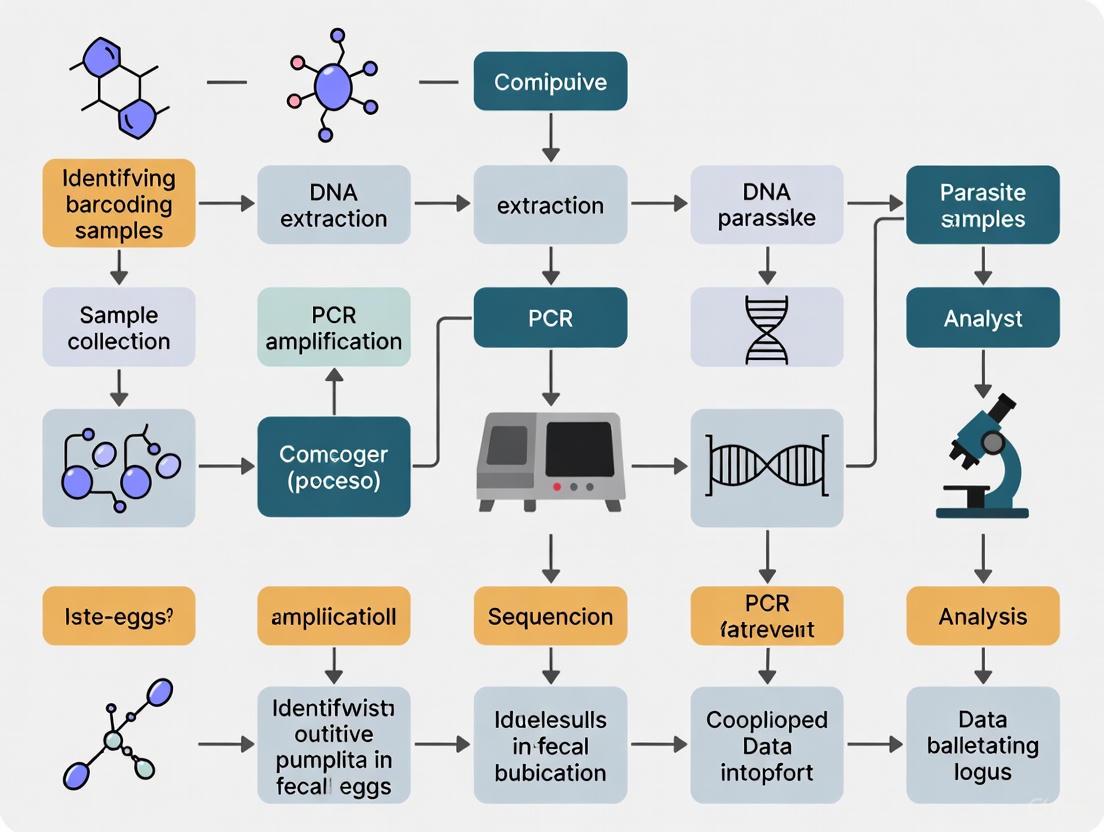
This article provides a comprehensive guide for researchers and drug development professionals on implementing DNA barcoding and metabarcoding for the identification of gastrointestinal parasites from fecal samples.
Optimized DNA Barcoding and Metabarcoding Protocols for Parasite Egg Detection in Fecal Samples
Abstract
This article provides a comprehensive guide for researchers and drug development professionals on implementing DNA barcoding and metabarcoding for the identification of gastrointestinal parasites from fecal samples. It covers the foundational principles, from explaining the transition from traditional microscopy to high-throughput molecular methods. Detailed, optimized protocols for sample preservation, DNA extraction, and primer selection are presented, with a focus on overcoming the challenge of lysing robust helminth egg shells. The content includes rigorous troubleshooting and optimization strategies, and validates the methodology by comparing its superior sensitivity and taxonomic resolution against classical techniques like microscopy and fecal egg counts. The synthesized information aims to empower scientists to effectively apply these powerful molecular tools in diagnostic, surveillance, and research settings.
From Microscopy to Molecular Analysis: Foundations of Parasite Egg DNA Barcoding
The Limitations of Traditional Parasitological Techniques
Parasitic infections represent a significant global health challenge, particularly in tropical and subtropical regions, where they contribute to malnutrition, anemia, and increased susceptibility to other diseases [1]. Accurate diagnosis is fundamental for effective treatment, disease control, and surveillance efforts [1]. For decades, traditional parasitological techniques, primarily based on morphological identification, have been the cornerstone of parasite diagnosis. However, these methods face substantial limitations in sensitivity, specificity, and scalability [2] [3]. Within the context of developing DNA barcoding protocols for parasite eggs in fecal samples, understanding these limitations is crucial for justifying the transition to molecular methods. This document details the specific constraints of traditional techniques, providing a foundation for the adoption of advanced molecular diagnostics like DNA metabarcoding.
Key Limitations of Traditional Techniques
The constraints of traditional parasitological diagnostics can be categorized into several areas, which are summarized in the table below.
Table 1: Key Limitations of Traditional Parasitological Techniques
| Limitation Category | Specific Challenge | Impact on Diagnosis and Research |
|---|---|---|
| Taxonomic Resolution | Inability to distinguish morphologically similar species [2]. | Leads to misidentification and an incomplete understanding of parasite community composition and epidemiology [4] [2]. |
| Sensitivity & Specificity | Reliance on visual acuity and expertise; difficulty detecting low-intensity or chronic infections [3]. | Results in false negatives and false positives, compromising treatment and control efforts [3]. |
| Throughput & Efficiency | Process is manual, time-consuming, and labor-intensive [2] [5]. | Impractical for large-scale surveillance or studies, creating bottlenecks in diagnostics and research [1] [5]. |
| Quantitative Accuracy | Inaccurate enumeration of eggs or parasites in a sample [6]. | Limits the ability to reliably assess parasite burden and monitor treatment efficacy [6]. |
| Expertise Dependency | Requires highly trained and skilled taxonomists [2] [3]. | Creates a scarcity of expert resources, especially in resource-limited settings where parasitic diseases are often endemic [3]. |
In-Depth Analysis of Limitations
Low Taxonomic Resolution: Many helminth species exhibit nearly identical morphology, making them impossible to distinguish using visual identification methods alone, even when they are taxonomically distinct species with different ecological niches and impacts on the host [2]. This limitation is particularly problematic in communities with multiple, co-occurring species. For instance, the Faecal Egg Count Reduction Test (FECRT) for assessing anthelmintic resistance in livestock often relies on larval culture and morphological identification at the genus level. One study found that this genus-level identification led to a 25% false negative diagnosis of resistance; when DNA-based identification was used, resistance was detected in at least one species that was masked in the genus-level analysis [4].
Time Consumption and Labor Intensity: Traditional methods like manual microscopic examination are inherently slow. The process of preparing slides, systematically examining them, and identifying parasites requires significant human effort [5]. This makes it unsuitable for high-volume clinical settings or large-scale epidemiological studies [5]. The laborious nature of these methods can lead to delays in diagnosis and treatment, negatively affecting patient outcomes and public health interventions [1].
The Transition to Molecular Diagnostics: DNA Metabarcoding
The limitations of traditional techniques have catalyzed the development of molecular methods, particularly DNA metabarcoding. This technique involves the simultaneous DNA-based identification of multiple species within a single sample using high-throughput sequencing [2]. The following workflow diagram illustrates the core steps of a DNA metabarcoding protocol for parasite eggs in fecal samples.
DNA Metabarcoding Workflow
Diagram 1: DNA metabarcoding workflow for parasite identification.
Experimental Protocol: DNA Metabarcoding for Gastrointestinal Helminths
Objective: To characterize the diversity and relative abundance of gastrointestinal helminth parasites in a fecal sample using DNA metabarcoding.
Materials:
- Sample: Fecal sample, fresh or preserved in 95% ethanol or on specialized dry cards (e.g., FTA cards) [7] [2].
- DNA Extraction Kit: Kits designed for soil or stool samples, such as those from QIAGEN (e.g., PowerBead Pro Tubes) [7].
- PCR Reagents: DNA polymerase, dNTPs, and primers targeting a standardized genetic barcode region.
- Common Genetic Markers:
- Sequencing Platform: Illumina MiSeq or similar high-throughput sequencer [8] [2].
Procedure:
- Sample Collection and DNA Extraction:
- Collect fecal sample non-invasively.
- For dry card storage, smear a thin layer of feces on the card and allow it to air-dry completely [7].
- Extract total genomic DNA from a representative aliquot (e.g., ~0.25 g) of the sample or from punched discs of the dry card. Use a bead-beating step for efficient lysis of parasite eggs [7] [2].
- Quantify the extracted DNA and assess quality.
PCR Amplification and Library Preparation:
- Amplify the target barcode region (e.g., ITS2) using primers that include Illumina adapter sequences and sample-specific barcodes [8]. This allows multiple samples to be pooled in a single sequencing run.
- Purify the PCR amplicons and normalize their concentrations.
- Pool the purified amplicons to create a sequencing library.
Sequencing and Bioinformatic Analysis:
- Sequence the library on an Illumina MiSeq or comparable platform to generate paired-end reads [8].
- Process the raw sequence data through a bioinformatic pipeline:
The Scientist's Toolkit: Essential Research Reagents
Table 2: Key Research Reagents for DNA Metabarcoding of Parasites
| Item | Function/Application |
|---|---|
| Dry Blood Spot (DBS) / FTA Cards | Allows for room-temperature storage and transport of fecal samples by stabilizing DNA, ideal for field collection [7]. |
| Bead-Beating Tubes (e.g., PowerBead Pro) | Provides mechanical lysis via bead beating, crucial for breaking open resilient parasite egg walls to release DNA [7]. |
| Barcoded Primers (e.g., ITS2 primers) | Contains unique nucleotide sequences to label PCR amplicons from individual samples, enabling multiplexing in a single sequencing run [8] [2]. |
| Curated Reference Database | A collection of validated DNA sequences from known parasite species; essential for accurate taxonomic assignment of sequenced amplicons [8] [2]. |
Traditional parasitological techniques, while foundational, are hampered by significant limitations in taxonomic resolution, throughput, and operator dependency. These constraints hinder accurate diagnosis, effective surveillance, and advanced research into parasite epidemiology and anthelmintic resistance. DNA metabarcoding emerges as a superior approach, offering high-resolution, high-throughput, and non-invasive characterization of complex parasite communities. By leveraging standardized genetic markers and high-throughput sequencing, this protocol provides a robust framework for advancing research on parasite ecology, evolution, and control, directly addressing the critical gaps left by traditional microscopy-based methods.
In the fields of molecular ecology and biodiversity research, DNA barcoding and DNA metabarcoding are core molecular tools designed to overcome the limitations of traditional morphological identification [9]. Both techniques are grounded in the sequencing of standardized genetic marker regions but are fundamentally differentiated by the scale of their application; DNA barcoding targets individual organisms, while DNA metabarcoding characterizes complex communities within mixed samples [9] [10]. The research on parasite eggs in fecal samples presents a prime example of their utility, enabling non-invasive, high-resolution monitoring of gastrointestinal parasitic nematode (GIN) communities in wildlife and livestock, which has been historically challenging with traditional parasitological methods [11] [12]. This note details the core principles, protocols, and applications of these two techniques within this specific research context.
DNA Barcoding: Individual Specimen Identification
DNA barcoding is a technique for species identification of a single biological specimen via the analysis of a short, standardized gene fragment [9] [13]. The concept, proposed by Hebert et al. in 2003, functions as a molecular "ID card" for a species, relying on genetic markers that exhibit high conservation within a species but sufficient variation between species [9] [14]. The process typically involves Sanger sequencing, which produces a single, long-read sequence per reaction, allowing for accurate comparison against reference databases like the Barcode of Life Data System (BOLD) [9] [14].
DNA Metabarcoding: Complex Community Characterization
DNA metabarcoding is a community-scale extension of the barcoding principle. It enables the simultaneous identification of many taxa within a single, complex environmental sample—such as soil, water, or feces—by combining universal PCR with high-throughput sequencing (HTS) [9] [10]. Instead of a single sequence from one specimen, metabarcoding generates millions of short sequences, resulting in a sample-by-species matrix that details community composition [9]. This method is particularly powerful for analyzing the "nemabiome," the community of gastrointestinal nematodes present in a host, directly from fecal samples [11].
Table 1: Essential Characteristics of DNA Barcoding and DNA Metabarcoding
| Characteristic | DNA Barcoding | DNA Metabarcoding |
|---|---|---|
| Core Definition | Species identification of a single organism [9] | Simultaneous identification of multiple taxa in a mixed sample [10] |
| Research Scale | Individual level [9] | Community level [9] |
| Sample Input | Single biological individual or tissue [9] | Mixed sample (e.g., soil, water, feces) containing DNA from multiple organisms [9] [10] |
| Sequencing Technology | Sanger sequencing [9] | Next-Generation Sequencing (NGS), e.g., Illumina [9] |
| Primary Output | A single, high-quality barcode sequence (e.g., ~650 bp COI) [9] | A sample x OTU/ASV abundance matrix (millions of short reads) [9] |
| Taxonomic Resolution | High for individual specimens | High for the entire community, dependent on reference database quality [12] |
| Key Application in Parasitology | Identification of isolated adult worms or eggs [11] [12] | Non-invasive profiling of the complete GIN community (nemabiome) from feces [11] |
Workflow and Protocol for Fecal Sample Analysis
The methodological pipeline for both techniques involves several stages, from sample collection to data analysis, with critical divergences in the laboratory workflow.
Sample Collection and DNA Extraction
For fecal-based parasite research, proper sample handling is crucial. Samples should be collected fresh, divided into multiple aliquots, and stored at -80°C without preservatives or preserved in ethanol or potassium dichromate [15]. Maximizing starting material volume and using a DNA isolation method that includes mechanical cell disruption can enhance the detection of parasite DNA, especially during periods of low egg shedding [11].
Detailed Protocol for DNA Extraction from Fecal Specimens [15]: This protocol utilizes the FastDNA Kit for the isolation of parasite DNA.
- Sample Wash: Centrifuge 300-500 µL of fecal specimen at 14,000 × g at 4°C for 5 minutes. Suspend the pellet in 1 mL of PBS-EDTA and repeat the centrifugation two more times.
- Lysis: Resuspend the final pellet in PBS-EDTA to a volume of ~300 µL. Transfer to a tube containing Lysing Matrix Multi Mix E. Add 400 µL of CLS-VF (Cell Lysis Solution), 200 µL of PPS (Protein Precipitation Solution), and PVP to a final concentration of 0.1-1%.
- Homogenization: Homogenize the sample in a benchtop disrupter (e.g., FastPrep FP120) at a speed of 5.0-5.5 for 10 seconds.
- Purification: Centrifuge the homogenate at 14,000 × g for 5 minutes. Transfer 600 µL of supernatant to a new tube.
- DNA Binding: Add 600 µL of Binding Matrix to the supernatant, mix by inversion, and incubate at room temperature for 5 minutes. Centrifuge at 14,000 × g for 1 minute and discard the supernatant.
- Wash and Elution: Resuspend the pellet in 500 µL of SEWS-M (Salt/Ethanol Wash Solution), centrifuge, and discard the supernatant. Remove residual liquid and resuspend the matrix in 100 µL of DES (DNA Elution Solution). Incubate for 2-3 minutes, then centrifuge for 2 minutes.
- Final Storage: Transfer the supernatant containing purified DNA to a clean tube. Store at 4°C until PCR amplification. An optional additional purification step using a QIAquick spin column may be necessary for samples with PCR inhibitors [15].
Laboratory Workflow: From PCR to Sequencing
Bioinformatic Analysis
The bioinformatics pipelines for the two methods differ significantly in complexity.
- DNA Barcoding: The analysis is straightforward. The single Sanger sequence is quality-controlled (e.g., using Chromas, MEGA), and the consensus sequence is compared against reference databases like BOLD or GenBank using BLAST for species identification [9]. A sequence similarity threshold of ≥98% is often used for species-level assignment [9].
- DNA Metabarcoding: This involves a multi-step process. After sequencing, the millions of raw reads (in FASTQ format) are demultiplexed using the sample barcodes. Subsequent steps include quality filtering, merging of paired-end reads, dereplication, and clustering into Operational Taxonomic Units (OTUs) or denoising into Amplicon Sequence Variants (ASVs) [9]. These features are then taxonomically classified by comparing them to a curated reference database [9] [11]. The final output is a table detailing the abundance of each taxonomic unit in each sample.
The Scientist's Toolkit: Essential Research Reagents and Materials
Table 2: Key Research Reagent Solutions for Fecal DNA Analysis
| Reagent / Material | Function / Description | Example Use Case |
|---|---|---|
| FastDNA Kit [15] | A commercial kit optimized for DNA extraction from complex samples, utilizing a lysing matrix and chemical solutions for cell disruption and DNA purification. | DNA extraction from fecal samples for parasite detection. |
| Lysing Matrix Multi Mix E [15] | A mixture of ceramic and silica particles designed for efficient mechanical cell lysis during homogenization in a benchtop disrupter. | Disrupting tough parasite egg shells and microbial cells in feces to release DNA. |
| PVP (Polyvinylpyrrolidone) [15] | A compound used to bind polyphenols and other PCR inhibitors commonly found in fecal and plant material. | Adding to the lysis buffer to improve DNA purity and subsequent PCR success. |
| Sample-Specific Barcodes (MIDs) [9] [10] | Short, unique DNA sequences added to the 5' end of PCR primers during library preparation. | Multiplexing hundreds of samples in a single NGS run by tagging each sample's amplicons. |
| CLS-VF & PPS Solutions [15] | Cell Lysis Solution (CLS-VF) solubilizes DNA, while Protein Precipitation Solution (PPS) removes proteins and other contaminants. | Part of the FastDNA kit protocol for purifying DNA after mechanical lysis. |
| ITS2 rDNA Primers (e.g., NC1-NC2) [11] | Universal primers that amplify the Internal Transcribed Spacer 2 region of ribosomal DNA, a key barcode for parasitic nematodes. | Metabarcoding of the gastrointestinal nematode (GIN) community (nemabiome) from fecal DNA. |
Quantitative Comparison and Method Evaluation
Empirical studies directly comparing these methods with traditional techniques and with each other provide critical insights for researchers.
Table 3: Quantitative Performance in Species Detection and Identification
| Study Context / Metric | DNA Barcoding | DNA Metabarcoding | Traditional Methods |
|---|---|---|---|
| Nematode Community Analysis [12] | 20 OTUs (28S rDNA) | 48 OTUs (28S rDNA) | 22 species (Morphology) |
| GIN Detection in Moose Feces [11] | Not directly assessed | Slightly higher sensitivity than egg/larvae counts | Egg and larva counting (McMaster, Baermann) |
| Taxonomic Resolution | High for single specimens [9] | High for community, depends on database [11] [12] | Low (e.g., strongyle-type eggs grouped) [11] |
| Quantitative Capability | Not applicable (presence/absence) | Correlated with, but not strictly quantitative of, parasite load [11] [6] | Quantitative (e.g., eggs per gram) [11] |
A 2020 study comparing methods for nematode identification found that while all methods could recover dominant species, there was a surprising lack of overlap in the species identified by morphology, barcoding, and metabarcoding, highlighting the need for improved reference databases and method standardization [12]. In wildlife parasitology, metabarcoding has been shown to provide better taxonomic resolution than traditional egg and larva counts, which often group morphologically similar eggs (e.g., strongyle-type eggs) [11]. While metabarcoding read counts are not a direct measure of parasite burden, studies indicate a correlation between sequence proportion and parasitologically determined load, suggesting its potential as a quantitative index [11]. It is important to note that DNA-based dietary studies using metabarcoding can accurately determine the presence of plant species in goat diets but are not yet fully quantitative [6].
DNA barcoding and metabarcoding are complementary tools that have revolutionized the identification and monitoring of parasitic organisms in fecal samples. DNA barcoding remains the gold standard for verifying the identity of specific specimens, while metabarcoding offers a powerful, non-invasive approach for comprehensive community profiling, or the nemabiome [11]. The choice between them depends on the research question: targeted identification of specific parasites versus a holistic view of the entire parasitic community.
Future developments in this field will focus on standardizing protocols, expanding and curating reference DNA barcode libraries (e.g., within BOLD and GenBank), and refining the quantitative potential of metabarcoding data [11] [12] [14]. As sequencing costs continue to decrease and bioinformatic tools become more accessible, these DNA-based methods are poised to become fundamental, high-throughput tools for large-scale parasite monitoring, ecological studies, and conservation efforts in wildlife and livestock populations [11] [14].
Advantages for Biomedical Research and Drug Development
DNA barcoding represents a transformative approach in biomedical research, utilizing short, standardized genomic sequences for the precise identification of biological specimens [16]. In the context of human intestinal parasitic infections (IPIs)—which affect approximately 3.5 billion people globally and cause more than 200,000 deaths annually—accurate diagnosis is a critical public health challenge [17]. Traditional diagnostic methods for parasite detection in fecal samples, such as the Kato-Katz smear or Formalin-Ether Concentration Technique (FECT), rely on microscopic examination but are limited by subjective interpretation, variable sensitivity, and labor-intensive processes [18] [17]. DNA barcoding technology addresses these limitations by leveraging the specificity of nucleic acid sequences, enabling high-throughput, multiplex identification of parasite eggs even in complex multi-species infections [16]. This protocol outlines the application of DNA barcoding for parasite egg identification, framing it within a broader thesis on advancing diagnostic precision for drug development and epidemiological research.
Key Advantages of DNA Barcoding
The adoption of DNA barcoding offers several distinct advantages over conventional copromicroscopy, enhancing both research capabilities and diagnostic accuracy as detailed in the table below.
Table 1: Comparative Advantages of DNA Barcoding vs. Traditional Methods
| Feature | DNA Barcoding | Traditional Microscopy |
|---|---|---|
| Specificity & Identification | High specificity based on unique genetic sequences; discriminates between morphologically similar species and identifies novel isolates [16]. | Relies on morphological expertise; prone to misidentification with degraded or similar-looking eggs [17]. |
| Sensitivity & Detection Limit | High sensitivity, capable of detecting low-intensity and pre-patent infections; identifies parasites from minimal genetic material [16]. | Sensitivity is highly variable (e.g., Kato-Katz sensitivity ~52%); limited by parasite load and egg output fluctuation [19] [17]. |
| Multiplexing & High-Throughput | Enables simultaneous identification of numerous species from a single sample using high-throughput sequencing [16]. | Generally analyzes one sample per test; time-consuming for large-scale studies or mixed infections [18]. |
| Data Analysis & Standardization | Provides objective, sequence-based data that is digitizable, shareable, and suitable for building reference libraries [16]. | Subjective analysis based on technician skill and experience; results are difficult to standardize globally [17]. |
| Sample Throughput & Automation | Highly amenable to automation from sample processing to data analysis, facilitating large-scale screening studies [20]. | Primarily a manual process, limiting scalability and speed for population-level screening [18]. |
Beyond the comparative advantages, DNA barcodes are inheritable, meaning they are passed from parent to offspring, which allows researchers to track the lineage and spread of specific parasite strains [16]. Furthermore, the technology is highly manipulable and adaptable. Barcode sequences can be engineered for various molecular applications and detected through multiple methods, including PCR, sequencing, or direct hybridization, offering flexibility in assay design [16].
Experimental Protocols and Workflows
Sample Collection and DNA Barcoding Workflow
A standardized protocol is essential for generating reliable, reproducible results. The following workflow diagram outlines the key stages from sample collection to data analysis.
Detailed Protocol Steps
1. Sample Collection and Preservation
- Procedure: Collect fresh stool samples in clean, sterile containers. For field surveys, immediately preserve at least 1-2 grams of stool in a non-cross-linking fixative like 95% ethanol or specific commercial preservation buffers that maintain DNA integrity. For comparative studies, note that collecting multiple stool samples over consecutive days significantly increases detection rates, as a single sample may miss up to 100% of Isospora belli and over half of Trichuris trichiura infections [19].
- Quality Control: Record sample metadata including collection date, patient demographics, and clinical symptoms. Store preserved samples at 4°C (short-term) or -20°C (long-term).
2. DNA Extraction and Purification
- Procedure: Use commercial DNA extraction kits designed for soil or stool samples, which effectively overcome PCR inhibitors like humic acids. Protocols typically involve mechanical (e.g., bead beating) or enzymatic lysis followed by column-based purification.
- Reagent Solution: Inhibitor Removal Technology (IRT) Columns are essential for purifying high-quality DNA from complex stool samples by binding and removing common PCR inhibitors [21].
- Quality Control: Assess DNA purity and concentration using spectrophotometry (e.g., Nanodrop). A 260/280 ratio of ~1.8 is ideal.
3. PCR Amplification of Barcode Region
- Procedure: Perform multiplex PCR using primers targeting standardized, taxon-specific barcode regions. For helminths, the cytochrome c oxidase I (COI) gene is often used. The reaction mix typically includes:
- Template DNA: 2-5 µL
- Primer Mix (10 µM each): 1 µL
- PCR Master Mix (with proofreading enzyme): 12.5 µL
- Nuclease-free H2O: to 25 µL
- Thermocycler Conditions:
- Initial Denaturation: 95°C for 5 min
- 35-40 Cycles: Denature at 95°C for 30s, Anneal at 50-55°C for 30s, Extend at 72°C for 45s
- Final Extension: 72°C for 7 min
- Quality Control: Verify amplification success and specificity by running PCR products on a 1.5% agarose gel.
4. High-Throughput Sequencing (HTS) and Analysis
- Procedure: Prepare sequencing libraries from purified PCR amplicons using a platform-specific kit (e.g., Illumina). The core advantage of DNA barcoding is that each unique sequence acts as a specific identifier, enabling the simultaneous analysis of dozens of samples (multiplexing) in a single HTS run [16].
- Bioinformatic Analysis:
- Demultiplexing: Assign raw sequence reads to individual samples based on index barcodes.
- Quality Filtering: Remove low-quality reads and sequences.
- Clustering: Cluster sequences into Molecular Operational Taxonomic Units (MOTUs).
- Taxonomic Assignment: Compare MOTUs against a curated reference database (e.g., BOLD Systems) for species-level identification.
Research Reagent Solutions
Successful implementation of DNA barcoding relies on a suite of specialized reagents and tools.
Table 2: Essential Research Reagents for DNA Barcoding Protocols
| Reagent / Material | Function | Example Application / Note |
|---|---|---|
| Nucleic Acid Preservation Buffer | Stabilizes DNA/RNA at ambient temperatures for transport and storage. | Critical for field surveys in remote areas; prevents DNA degradation [17]. |
| Inhibitor-Removal DNA Extraction Kits | Purifies high-quality genomic DNA from complex biological samples like stool. | Removes PCR inhibitors (polysaccharides, humic acids) crucial for downstream success [21]. |
| Taxon-Specific PCR Primers | Amplifies the standardized barcode region from target parasite species. | Enables specific detection; designed from conserved flanking regions [16]. |
| High-Fidelity DNA Polymerase | Performs accurate PCR amplification with low error rates. | Essential for generating correct barcode sequences for reliable identification [20]. |
| Multiplexing Index Barcodes | Unique oligonucleotide sequences added to samples during library prep. | Allows pooling and simultaneous sequencing of hundreds of samples [16] [20]. |
| Curated Reference Database | Digital library of verified species-specific barcode sequences. | BOLD Systems database is essential for accurate taxonomic assignment [16]. |
Quantitative Performance Data
The diagnostic performance of novel methods is best evaluated through comparative studies. The following table summarizes key metrics from recent research, positioning DNA barcoding in the context of other advanced and conventional techniques.
Table 3: Quantitative Performance Comparison of Diagnostic Methods
| Method | Reported Sensitivity | Reported Specificity | Key Advantages & Context |
|---|---|---|---|
| DNA Barcoding (Theoretical/General) | High (Capable of single egg detection) [16] | High (Based on unique sequence) [16] | Gold standard for specificity; enables species and strain-level resolution. |
| Deep Learning Model (DINOv2-large) | 78.00% [17] | 99.57% [17] | High-throughput automated image analysis; performance varies with parasite morphology. |
| ParaEgg Diagnostic Tool | 85.7% [18] | 95.5% [18] | Optimized copromicroscopy method; recovery rates: 81.5% (Trichuris), 89.0% (Ascaris) [18]. |
| Conventional FECT (Human Expert) | Variable; can miss >50% of T. trichiura with one sample [19] | High (with expert user) [17] | Established routine method; sensitivity highly dependent on number of samples tested [19]. |
DNA barcoding presents a paradigm shift in the identification of parasite eggs in fecal samples, offering unparalleled specificity, sensitivity, and scalability over traditional microscopy. Its ability to provide unambiguous, data-driven results makes it an indispensable tool for modern biomedical research and drug development. The technology is particularly vital for tracking drug-resistant strains, understanding parasite epidemiology, and validating new therapeutic agents. As reference databases expand and sequencing costs decrease, DNA barcoding is poised to become the cornerstone of high-precision parasitology, ultimately contributing to more effective global parasite control and eradication strategies.
DNA barcoding has revolutionized the field of parasitology by enabling precise species identification, which is crucial for diagnosis, treatment, and understanding parasite ecology. For researchers analyzing parasite eggs in fecal samples, selecting appropriate genetic markers is a fundamental decision that directly impacts the accuracy and reliability of results. The 18S ribosomal RNA (18S rRNA), Internal Transcribed Spacer 2 (ITS2), and Cytochrome c Oxidase Subunit 1 (CO1) genes have emerged as pivotal tools in this domain. Each marker offers distinct advantages and limitations for parasite detection and differentiation [22] [23] [24]. This application note provides a comparative analysis of these key genetic markers and details optimized protocols for their implementation in metabarcoding studies of parasitic infections.
Comparative Analysis of Genetic Markers
The selection of an appropriate genetic marker depends on several factors, including taxonomic resolution, amplification efficiency, and database completeness. The table below summarizes the key characteristics of the three major genetic markers used in parasite identification:
Table 1: Comparison of Key Genetic Markers for Parasite DNA Barcoding
| Feature | 18S rRNA | ITS2 | CO1 |
|---|---|---|---|
| Primary Application | Broad-spectrum parasite detection & community analysis [22] | Species-level differentiation of closely related parasites [25] [26] | Species identification for specific helminth groups [24] |
| Taxonomic Resolution | High for higher taxa, variable for species [22] | High interspecific divergence [27] [28] | High for specific taxa, low for others [28] [24] |
| Sequence Length | V9 region: ~150-200 bp [23] | ~233 bp average [27] | ~648 bp [24] |
| PCR Efficiency | High with universal primers [22] | High, even with degraded DNA [27] | Variable across parasite taxa [28] |
| Key Advantage | Comprehensive coverage of eukaryotic parasites [22] | High discrimination for closely related species [25] | Established animal barcode standard [24] |
| Main Limitation | May not distinguish all closely related species [22] | Limited database for some parasite groups | Inconsistent amplification across parasites [28] [24] |
The 18S rRNA gene, particularly the V4 and V9 hypervariable regions, has become the marker of choice for comprehensive parasite community analysis due to its conserved nature and universal presence across eukaryotic organisms [22] [23]. The V9 region, approximately 150-200 base pairs in length, demonstrates sufficient variability to discriminate between many parasite species while being short enough for robust amplification from challenging samples like feces [23].
ITS2, part of the ribosomal internal transcribed spacer region, typically averages 233 bp in length and exhibits higher interspecific divergence compared to conserved genes, making it particularly valuable for distinguishing between closely related parasite species [27]. Its shorter length relative to full ITS regions (approximately 634 bp) provides superior amplification success from suboptimal samples, including archived specimens and medicinal materials where DNA may be degraded [27].
The CO1 mitochondrial gene, while established as a standard barcode for many animal groups, shows variable performance across parasite taxa. Studies on Halichondriidae sponges and diatoms revealed that CO1 exhibited high genetic divergence but was not appropriate for species discrimination in some parasite groups, whereas ITS regions proved more suitable [28] [24].
Table 2: Performance of Genetic Markers Across Parasite Taxa
| Parasite Group | Recommended Marker | Identification Efficiency | Supporting Evidence |
|---|---|---|---|
| Intestinal Protozoa | 18S V9 region [23] | 100% detection in mock communities [23] | Simultaneous detection of 11 parasite species [23] |
| Ascetosporean Parasites | ITS1-5.8S-ITS2 combination [25] | Maximal support for species separation [25] | Discriminated Marteilia and Paramarteilia species [25] |
| Diatoms | ITS (5.8S+ITS-2) [24] | p-distance of 1.569 [24] | Highest divergence among tested markers [24] |
| Halichondriidae Sponges | ITS regions [28] | 17.28% congeneric variation in ITS1 [28] | Outperformed CO1 and CO3 markers [28] |
| Sarcocystidae | ITS1-5.8S-ITS2 with 28S [26] | Improved species identification [26] | Overcame 18S rRNA "blind spot" [26] |
Experimental Protocols
18S rRNA Metabarcoding for Intestinal Parasites
Principle: The 18S rRNA V9 region provides sufficient sequence variation for discriminating a broad range of intestinal parasites while maintaining reliable amplification efficiency from fecal samples [23].
Sample Preparation:
- DNA Extraction: Use the Fast DNA SPIN Kit for Soil or similar optimized for environmental samples
- Quality Assessment: Verify DNA concentration using fluorometry (e.g., Quantus Fluorometer)
- Plasmid Controls: Include cloned 18S V9 regions as positive controls and quantification standards
PCR Amplification:
- Primers: 1391F (5'-TCGTCGGCAGCGTCAGATGTGTATAAGAGACAGGTACACACCGCCCGTC-3') and EukBR (5'-GTCTCGTGGGCTCGGAGATGTGTATAAGAGACAGTGATCCTTCTGCAGGTTCACCTAC-3') [23]
- Reaction Setup:
- KAPA HiFi HotStart ReadyMix: 12.5 μL
- Forward Primer (10 μM): 1.25 μL
- Reverse Primer (10 μM): 1.25 μL
- Template DNA: 3 μL
- Nuclease-free water: to 25 μL total volume
- Thermocycling Conditions:
- Initial denaturation: 95°C for 5 minutes
- 30 cycles of:
- Denaturation: 98°C for 30 seconds
- Annealing: 55°C for 30 seconds
- Extension: 72°C for 30 seconds
- Final extension: 72°C for 5 minutes
- Hold: 4°C indefinitely
Sequencing and Analysis:
- Library Preparation: Perform limited-cycle (8 cycles) amplification to add multiplexing indices and Illumina adapters
- Sequencing: Use Illumina iSeq 100 platform with iSeq 100 i1 Reagent v2 kit (2x150 bp paired-end)
- Bioinformatic Processing:
Optimization Notes: Annealing temperature significantly impacts relative abundance of output reads. Test temperatures from 40-70°C in 3°C increments for specific parasite communities [23]. DNA secondary structures also affect read distribution, with complex structures potentially reducing representation.
Figure 1: 18S rRNA Metabarcoding Workflow for Parasite Detection. This protocol enables comprehensive screening of multiple parasite species from fecal samples.
ITS2-Based Differentiation of Closely Related Parasites
Principle: ITS2 sequences exhibit high interspecific divergence due to lower evolutionary constraint, enabling discrimination of morphologically similar parasite species [27] [25].
Sample Processing:
- DNA Extraction: Use mechanical lysis methods (bead beating) for parasites with resistant structures
- Quality Enhancement: Include additional purification steps for fecal samples with PCR inhibitors
PCR Amplification:
- Primer Design: Target conserved flanking regions (5.8S and 28S) for broad applicability
- Reaction Composition:
- High-Fidelity Master Mix: 12.5 μL
- ITS2-specific primers: 1.25 μL each (10 μM)
- Template DNA: 2-5 μL (adjust based on concentration)
- Nuclease-free water: to 25 μL
- Thermocycling Parameters:
- Initial denaturation: 98°C for 3 minutes
- 35-40 cycles of:
- Denaturation: 98°C for 15 seconds
- Annealing: 58-62°C (optimize for specific primers) for 30 seconds
- Extension: 72°C for 45 seconds
- Final extension: 72°C for 7 minutes
Analysis Pipeline:
- Sequence Quality Control: Filter based on Phred scores (>Q30)
- Multiple Sequence Alignment: Use MAFFT or ClustalOmega
- Phylogenetic Analysis: Construct trees using Maximum Likelihood or Bayesian methods
- Secondary Structure Prediction: Incorporate RNA folding algorithms (e.g., RNAfold) for additional discriminatory power
Validation: Compare results with morphological identification where possible. For novel parasites, use multiple genetic regions for confirmation [25].
Multi-Locus Approach for Comprehensive Parasite Profiling
Principle: Combining markers compensates for individual limitations, providing both broad detection (18S) and species-level resolution (ITS2) [25] [26].
Implementation Strategy:
- Primary Screening: Use 18S V4 or V9 regions for community overview
- Targeted Sequencing: Apply ITS2 or CO1 to specific taxa requiring finer resolution
- Long-Amplicon Approach: For critical diagnostics, amplify 18S-ITS1-5.8S-ITS2-28S regions [26]
Long-Range PCR Protocol:
- Primers: 18S S5 F (published) and 28S R6 R (new) for Sarcocystidae [26]
- Reaction Setup:
- Q5 Hot Start High-Fidelity 2X Master Mix: 12.5 μL
- Forward and Reverse Primers (10 μM): 1.25 μL each
- Template DNA: 3 μL
- Nuclease-free water: 7 μL NA
- Thermocycling Conditions:
- Initial denaturation: 98°C for 3 minutes
- 40 cycles of:
- Denaturation: 98°C for 10 seconds
- Annealing: 70°C for 45 seconds
- Extension: 72°C for 4 minutes
- Final extension: 72°C for 7 minutes
Application: This approach is particularly valuable for emerging pathogens and taxonomic clarification where single-gene analysis provides ambiguous results [26].
The Scientist's Toolkit
Table 3: Essential Research Reagents and Materials for Parasite DNA Barcoding
| Category | Specific Product | Application | Performance Notes |
|---|---|---|---|
| DNA Extraction Kits | PowerSoil DNA Isolation Kit [23] | Environmental/fecal samples | Efficient lysis of resistant parasite structures |
| Fast DNA SPIN Kit for Soil [23] | Diverse sample types | Includes mechanical lysis for tough cysts | |
| PCR Reagents | KAPA HiFi HotStart ReadyMix [23] | 18S amplification | High fidelity for accurate sequence representation |
| Q5 Hot Start High-Fidelity Master Mix [26] | Long-range PCR | Maintains processivity for 4kb amplicons | |
| Cloning Systems | TOPcloner TA Kit [23] | Control preparation | Efficient cloning of reference sequences |
| NEB PCR Cloning Kit [26] | Environmental amplicons | High efficiency for diverse sequences | |
| Sequencing Platforms | Illumina iSeq 100 [23] | Routine metabarcoding | Cost-effective for moderate throughput |
| Illumina MiSeq [22] | Comprehensive analysis | V2 chemistry for 2x250 bp reads | |
| Bioinformatic Tools | QIIME 2 [23] | Community analysis | Integrated pipeline with DADA2 |
| BROCC [29] | Taxonomic assignment | BLAST-based classifier for eukaryotes |
The strategic selection of genetic markers is paramount for successful DNA barcoding of parasite eggs in fecal samples. The 18S rRNA gene serves as an excellent foundation for comprehensive parasite community profiling, while ITS2 provides superior resolution for distinguishing closely related species. The CO1 gene, though valuable for specific taxa, shows inconsistent performance across the full spectrum of parasitic organisms. For robust experimental design, researchers should implement a tiered approach: beginning with 18S rRNA metabarcoding for broad-spectrum detection followed by ITS2 sequencing for precise differentiation of clinically or ecologically significant parasites. The protocols and reagents detailed in this application note provide a validated framework for implementing these genetic markers in parasite surveillance, drug efficacy studies, and ecological research. As DNA sequencing technologies continue to advance, the integration of multi-locus data will further enhance our capacity to understand and manage parasitic infections affecting human and animal health.
A Step-by-Step Protocol: From Sample Collection to Sequencing
Optimal Sample Collection and Preservation Methods (RNAlater, Ethanol, DESS)
The reliability of DNA barcoding results in parasitology research is fundamentally dependent on the initial steps of sample collection and preservation. For researchers working with parasite eggs in fecal samples, selecting an appropriate preservation method is critical to maintaining both morphological integrity for initial identification and nucleic acid quality for subsequent molecular analysis. The choice between common preservatives like RNAlater, various concentrations of ethanol, and DESS (Dimethyl Sulfoxide-EDTA-Saturated Salt) solution involves significant trade-offs between DNA stability, morphological preservation, practicality for fieldwork, and cost-effectiveness. Each method presents distinct advantages and limitations that must be carefully considered within the experimental design framework. This protocol provides a structured comparison and detailed methodologies for implementing these three preservation approaches, specifically contextualized for DNA barcoding protocols targeting parasite eggs in fecal specimens.
Comparative Analysis of Preservation Methods
The selection of a preservation method directly influences downstream analytical success. The table below provides a quantitative comparison of the three primary methods discussed, based on current research findings.
Table 1: Comparative performance of preservation methods for parasite eggs in fecal samples.
| Preservation Method | Recommended Storage Temperature | DNA Integrity (Long-Term) | Morphological Preservation | Key Advantages | Key Limitations |
|---|---|---|---|---|---|
| RNAlater | 1 day at 37°C; 1 week at 25°C; 1 month at 4°C; long-term at -20°C or -80°C [30] | High (for RNA and DNA) | Moderate (tissue structure may be altered) | - Excellent for RNA/DNA integrity- Simplifies sample disruption [30] | - Requires frozen storage for stability- Can denature proteins [30] |
| Ethanol (95-100%) | Room temperature (for DNA), 4°C or -20°C recommended [31] | High (but concentration-dependent) [31] | Low (induces brittleness, appendage loss) [31] | - Excellent DNA preservative- Readily available | - Poor for morphology; makes specimens brittle [31]- Tissue dehydration |
| DESS Solution | Room temperature (effective for years) [32] [33] | High (fragments >15 kb maintained) [32] | High (effective for nematode morphometry) [33] | - Maintains both DNA & morphology [33]- Room-temperature storage [32]- Low-cost & safe for fieldwork [33] | - Not ideal for species with calcium carbonate structures [32] |
Table 2: Suitability for specific research applications and parasite types.
| Application | Recommended Method | Justification | Supporting Evidence |
|---|---|---|---|
| DNA Barcoding (Primary Goal) | DESS or 95-100% Ethanol | Optimal balance of high DNA quality and utility for field collection. | DESS maintained DNA viable after 2 years; 95% ethanol superior for DNA preservation versus 70% [31] [33]. |
| Parallel Morphological Analysis | DESS | Superior preservation of morphological features critical for taxonomy. | Effective for adult nematode morphometry identification after 2 years [33]. |
| RNA & DNA Co-Analysis | RNAlater | Specifically designed to maintain RNA integrity, which degrades rapidly. | RNAlater is an aqueous solution designed specifically to maintain RNA integrity [30]. |
| Fieldwork / Remote Collection | DESS | No refrigeration required, non-hazardous, and low-cost. | An "advisable alternative" for fieldwork without refrigeration [33]. |
Detailed Experimental Protocols
Sample Collection and Preservation with DESS
DESS is highly recommended for the long-term preservation of nematodes from fecal samples, as it effectively maintains both DNA integrity and morphological features at room temperature [33].
- DESS Solution Preparation: The standard DESS formulation is a saturated NaCl solution containing 20% Dimethyl Sulfoxide (DMSO) and 250 mM EDTA (Ethylenediaminetetraacetic acid) [32]. Mix thoroughly until a consistent solution is achieved.
- Field Collection and Preservation:
- Collect fresh fecal samples in clean, wide-mouth containers.
- Immerse the fecal sample or isolated parasite eggs directly in 5-10 volumes of DESS solution to ensure complete coverage [32].
- Securely close the container and mix by gentle inversion.
- Storage Conditions: Samples preserved in DESS can be stored stably at room temperature for extended periods. DNA integrity has been confirmed after two years of such storage, and nematode samples have maintained DNA quality for up to a decade [32] [33].
- Downstream DNA Extraction: For non-destructive DNA extraction, the preservative supernatant can be used directly for DNA barcoding PCR, leaving the specimen intact for morphological study [32]. Alternatively, the specimen itself can be used in standard homogenization and isolation protocols.
Sample Collection and Preservation with Ethanol
The concentration of ethanol is a critical factor, creating a trade-off between preserving DNA and maintaining morphological integrity [31].
- Optimal Concentration for DNA Preservation: For long-term DNA preservation, 95% ethanol is significantly superior to 70% ethanol. DNA preserves less well at lower concentrations when stored at room temperature, becoming increasingly fragmented over time [31].
- Field Collection and Preservation:
- For morphological studies, a final concentration of 70-80% ethanol is recommended for long-term storage to prevent excessive brittleness [34]. Since field samples contain water, starting with 95% ethanol is advised to achieve the correct final concentration.
- Use a 1:1 ratio of preservative to sample material. If the sample is large, split it into multiple containers to ensure adequate preservation [34].
- Morphological Trade-off: Note that ethanol concentrations at or above 90% make insects and other invertebrates more brittle, leading to an increased risk of losing appendages during handling [31]. This fragility can complicate subsequent morphological examination.
Sample Collection and Preservation with RNAlater
RNAlater is an aqueous solution designed to stabilize and protect cellular RNA and DNA in fresh tissue and cell samples [30].
- Field Collection and Preservation:
- Long-term Storage: For stable, long-term preservation, samples must be transferred to a -20°C or -80°C freezer [30].
- Downstream Processing: RNAlater is compatible with common RNA isolation methods and many DNA isolation protocols. It denatures proteins, so it is not suitable for applications requiring native protein structure [30].
Downstream DNA Barcoding Protocol
The following workflow, applicable to samples preserved using any of the above methods, outlines the key steps for DNA barcoding of parasite eggs.
Diagram 1: DNA barcoding workflow for parasite identification.
- DNA Extraction: Use a commercial soil or stool DNA kit (e.g., Fast DNA SPIN Kit for Soil) according to the manufacturer's protocol to effectively lyse robust parasite egg walls [23].
- PCR Amplification: Amplify the barcode region, such as the 18S rDNA V9 region, using universal eukaryotic primers (e.g., 1391F and EukBR) [23]. The annealing temperature can be optimized (e.g., tested between 40–70°C) to improve the relative abundance of reads for specific parasites [23].
- Next-Generation Sequencing (NGS) & Analysis: Sequence the amplicons on a platform like Illumina iSeq 100. Process the data using a bioinformatic pipeline (e.g., QIIME 2) with steps including demultiplexing, denoising with DADA2, chimera removal, and taxonomic assignment against a reference database [23].
The Scientist's Toolkit: Essential Research Reagents
Table 3: Key reagents and materials for sample preservation and DNA barcoding.
| Item | Function/Application | Specifications/Notes |
|---|---|---|
| DESS Solution | Room-temperature preservative for DNA and morphology. | 20% DMSO, 250 mM EDTA, saturated NaCl. Ideal for fieldwork [32] [33]. |
| RNAlater | Stabilizing solution for nucleic acids (RNA/DNA). | Requires frozen storage for long-term stability [30]. |
| Ethanol (95-100%) | Preservative for long-term DNA storage. | Higher concentrations optimize DNA preservation but compromise morphology [31]. |
| Fast DNA SPIN Kit for Soil | DNA extraction from complex samples. | Effective for breaking down robust parasite egg walls [23]. |
| 1391F & EukBR Primers | PCR amplification of 18S rDNA V9 barcode region. | For universal eukaryotic metabarcoding [23]. |
| Nalgene HDPE Jars | Sample containers for field collection. | Heavy-duty, wide-mouth, screw-top jars prevent leaks [34]. |
| Rite in the Rain Paper | Labeling samples in wet conditions. | Pencil or Pigma Micron pen ensures legibility [34]. |
Selecting the optimal preservation method is a foundational decision in DNA barcoding research for parasite eggs in fecal samples. For studies where the primary goal is high-quality DNA for barcoding and where logistical constraints like lack of refrigeration exist, DESS solution emerges as the superior choice, effectively balancing DNA stability, morphological preservation, and practical field application. RNAlater is indispensable for research requiring concurrent RNA analysis but imposes a cold chain requirement. While high-concentration ethanol excels as a DNA preservative, its detrimental effects on specimen morphology limit its utility for integrative taxonomic studies. Researchers should align their selection with the specific objectives of their protocol, giving strong consideration to DESS for a robust and effective preservation strategy in parasitology research.
The molecular diagnosis of parasitic helminths presents a significant challenge due to the robust structural nature of their eggs and larval cuticles. These physical barriers, composed of tough, cross-linked proteins and chitin, are resistant to conventional chemical lysis methods, leading to inefficient DNA release and false-negative results in polymerase chain reaction (PCR)-based assays [35]. This technical obstacle is particularly problematic in epidemiological studies and drug development programs that require high sensitivity for detecting low-intensity infections.
Mechanical disruption via bead beating has emerged as a critical pre-analytical step to overcome these challenges. This protocol details the application of mechanical lysis for effective DNA extraction from resilient parasite eggs, framed within the context of a DNA barcoding pipeline for fecal samples. The methods described herein are validated for common intestinal parasites, including Ascaris lumbricoides, Trichuris trichiura, hookworm, and Strongyloides stercoralis, whose eggshells and larval stages exhibit extreme durability [35]. By integrating this mechanical lysis step, researchers can achieve a substantial improvement in DNA yield and PCR detection rates, thereby enhancing the accuracy of downstream genetic analyses.
Key Experimental Data and Comparative Performance
The critical importance of the bead-beating step is demonstrated by quantitative comparisons of DNA extraction methods. Research shows that while traditional methods may yield higher total DNA, methods incorporating mechanical lysis enable significantly more successful PCR detection by liberating DNA from refractory parasite structures [35].
Table 1: Comparative Performance of DNA Extraction Methods for Intestinal Parasites
| Extraction Method | Approximate DNA Yield | PCR Detection Rate (%) | Key Advantages | Key Limitations |
|---|---|---|---|---|
| Phenol-Chloroform (P) | Highest (~4x other methods) | 8.2% | High raw DNA yield; cost-effective for bulk extraction | Very poor liberation of DNA from robust eggshells; high inhibitor carryover |
| Phenol-Chloroform with Bead-Beating (PB) | High | Not Specified | Improved lysis of tough structures compared to P | Complex procedure; may still contain inhibitors |
| QIAamp Fast DNA Stool Mini Kit (Q) | Moderate | Not Specified | Streamlined, commercial protocol | May not efficiently lyse all parasite eggs |
| QIAamp PowerFecal Pro DNA Kit (QB) | Moderate | 61.2% | Effective mechanical & chemical lysis; superior inhibitor removal; highest sensitivity | Commercial kit cost |
The data unequivocally demonstrates that the QIAamp PowerFecal Pro DNA Kit (QB), which incorporates a bead-beating step, provides the highest PCR detection rate despite yielding less total DNA than phenol-chloroform methods. This highlights that the critical factor is not the quantity of total DNA, but the successful liberation of intact parasite DNA from robust structures and the subsequent removal of PCR inhibitors [35]. Furthermore, a specialized protocol for Toxocara eggs in soil samples established that a workflow combining mechanical lysis with beads, DNA extraction using the DNeasy PowerMax Soil Kit, and an additional DNA clean-up step achieved a limit of detection as low as 4 eggs in a 10-gram sand sample [36].
Detailed Experimental Protocols
Mechanical Lysis Using a Bead-Beating Homogenizer
This protocol is adapted from the optimized methods used in the QIAamp PowerFecal Pro DNA Kit and related comparative studies [35] [36].
A. Materials and Reagents
- Biological Material: 200 mg of preserved (e.g., in 70% ethanol) or fresh stool sample.
- Lysing Matrix: Sterile garnet or silica beads (0.1-0.5 mm diameter). Note: Garnet beads provide greater abrasive force for tough eggshells [36].
- Lysis Buffer: A solution containing a chaotropic salt (e.g., guanidine hydrochloride) and detergent (e.g., SDS) to denature proteins and protect released DNA.
- Equipment: High-speed benchtop homogenizer (e.g., FastPrep-24) or vortex adapter capable of vigorous horizontal shaking.
- Safety Equipment: Lab coat, gloves, and safety glasses.
B. Procedure
- Sample Preparation: Transfer 200 mg of stool and 200-400 µL of lysis buffer into a 2 mL microcentrifuge tube containing ~250 mg of sterile lysing matrix beads.
- Homogenization: Secure the tube tightly in the homogenizer. Process the sample at a speed of 5.5-6.0 m/s for 40-60 seconds [36].
- Cooling and Repetition: Briefly centrifuge the tube to settle the contents. Perform 2-3 homogenization cycles in total, allowing the samples to cool on ice for 1-2 minutes between cycles to prevent heat-induced DNA degradation.
- Recovery: After the final cycle, centrifuge the tube at full speed for 1-2 minutes to pellet stool debris and beads. The supernatant, containing the lysate, is now ready for downstream DNA purification.
C. Critical Steps and Troubleshooting
- Cycle Optimization: Excessive beating can shear genomic DNA, while insufficient beating will not break open all eggs. The number and duration of cycles may require optimization for specific parasite species.
- Inhibitor Management: Stool samples contain potent PCR inhibitors. The use of a lysis buffer designed to adsorb inhibitors is crucial. If inhibition persists, a post-extraction DNA clean-up with magnetic beads (e.g., Agencourt AMPure XP) is highly effective [36].
Validation via PCR and Inhibitor Testing
After DNA extraction, it is essential to validate the success of the lysis and the quality of the DNA.
A. Materials and Reagents
- Extracted DNA Template
- PCR Master Mix: Including a polymerase resistant to common stool inhibitors.
- Parasite-Specific Primers: Targeting a conserved, multi-copy gene for maximum sensitivity.
- Positive Control: Plasmid DNA containing the target sequence.
- Equipment: Thermal cycler, gel electrophoresis system.
B. Procedure
- Standard PCR: Set up PCR reactions using the extracted DNA and parasite-specific primers. Include a no-template control (NTC) and a positive control.
- Spike Test for Inhibitors: For samples that are PCR-negative, perform a "spike" test. Add a known quantity of the positive control plasmid to the PCR reaction containing the test DNA. If the spiked reaction is also negative, this indicates the presence of PCR inhibitors that must be addressed with further clean-up [35].
Workflow Visualization
The following diagram illustrates the logical workflow for processing a stool sample to achieve successful DNA-based detection of parasites with robust eggshells.
The Scientist's Toolkit: Essential Research Reagents
Table 2: Key Research Reagent Solutions for Mechanical Lysis and DNA Extraction
| Item | Function/Application | Example Products & Kits |
|---|---|---|
| Lysing Matrix | Provides abrasive mechanical force to crack open tough eggshells and cyst walls. | Garnet beads (0.1-0.5 mm), Lysing Matrix A (MP Biomedicals), Silica beads [35] [36]. |
| Inhibitor-Removal Lysis Buffer | Chemical lysis of cells, denaturation of proteins, and inactivation of PCR inhibitors commonly found in stool. | Solutions in QIAamp PowerFecal Pro DNA Kit (Qiagen), DNeasy PowerMax Soil Kit (Qiagen) [35] [36]. |
| High-Speed Homogenizer | Instrumentation to provide the rapid, violent shaking necessary for effective bead-beating. | FastPrep-24 (MP Biomedicals), Vortex with tube adapter, Bead Mill homogenizers [36]. |
| Magnetic Bead Clean-up Kits | Post-extraction purification to remove residual PCR inhibitors, improving assay sensitivity. | Agencourt AMPure XP (Beckman Coulter) [36]. |
| Inhibitor-Resistant Polymerase | DNA polymerase engineered to be tolerant of common biological inhibitors that may remain after extraction. | PerfectTa, KAPA Robust, AmpliTaq Gold (Inhibitor-Resistant Formulation). |
Selecting and Validating Primer Sets for Comprehensive Detection
Within the framework of a DNA barcoding protocol for the identification of parasite eggs in fecal samples, the selection and validation of primer sets are arguably the most critical steps for achieving comprehensive detection. Metabarcoding, the coupling of high-throughput sequencing (HTS) with DNA barcoding, allows for biodiversity characterization at unprecedented scales [37]. However, the reliability of this technique is highly dependent on the primers used to amplify the target gene region. Mismatches between primers and template DNA can lead to significant amplification bias, skewing read abundances and potentially leading to false negatives where certain species in a community are not detected [37]. This application note details a rigorous protocol for selecting and validating primer sets to ensure accurate and comprehensive parasite detection in complex fecal samples.
Primer Design and Selection Criteria
The initial step involves the careful design or selection of primer sets targeting a standardized barcode region, most commonly a portion of the cytochrome c oxidase subunit I (COI) gene, due to its extensive reference databases and good taxonomic resolution [37].
Core Design Principles
Adherence to fundamental primer design principles is essential for efficient and specific amplification [38] [39] [40].
- Length: Optimal primer length is generally 18–24 bases. This is long enough to ensure specificity but short enough to facilitate efficient binding [38] [39].
- Melting Temperature (Tm): Primers should have a Tm between 60–64°C, with the forward and reverse primers having Tms within 2°C of each other to ensure simultaneous binding [40].
- GC Content: The GC content should be between 35–65%, ideally around 50%, to provide sufficient sequence complexity while avoiding overly stable structures [39] [40].
- 3' End Stability: The 3' end of the primer is critical for elongation. It should not contain strong secondary structures or more than 4 consecutive G/C repeats, as this can promote mis-priming [39] [40].
- Specificity: Primer sequences must be checked for self-dimers, hairpins, and cross-dimers. The free energy (ΔG) for any such structures should be weaker (more positive) than –9.0 kcal/mol [40]. Tools like the IDT OligoAnalyzer are suitable for this analysis [40].
Considerations for Fecal Samples and Metabarcoding
When designing for the metabarcoding of parasite eggs in fecal samples, additional factors must be considered:
- Degeneracy and Inosine: To maximize the detection of diverse parasite species, primers with high degeneracy or those incorporating inosine (a nucleotide that can base-pair with multiple others) are beneficial. These features help account for genetic variation in the primer-binding site across different taxa [37].
- Amplicon Length: For potentially degraded DNA, such as that which may be extracted from environmental or fecal samples, shorter amplicons are preferable. A primer set like fwhF2 + fwhR2n, which generates a short fragment, is "ideal when targeting degraded DNA" [37]. For standard qPCR, amplicons of 70–150 bp are recommended [41] [40].
- In Silico Validation: Before laboratory testing, perform an in silico analysis using tools like Primer-Blast [41] or PrimerMiner [37] to check for primer binding site conservation across a broad range of target parasite sequences and to ensure specificity against host (e.g., human or animal) DNA.
Table 1: Key Parameters for Primer Design and Selection
| Parameter | Ideal Value/Range | Rationale | Validation Method |
|---|---|---|---|
| Primer Length | 18–24 bases [38] [39] | Balances specificity with efficient binding. | OligoAnalyzer [40] |
| Melting Temp (Tm) | 60–64°C [40] | Optimizes enzyme efficiency; primers should be within 2°C of each other. | Tm calculation tools (e.g., OligoAnalyzer) |
| GC Content | 35–65% (ideal: 50%) [39] [40] | Ensures sequence complexity without promoting stable secondary structures. | Sequence analysis |
| Amplicon Length | 75–250 bp (shorter for degraded DNA) [37] [41] | Shorter fragments are more reliably amplified from low-quality/damaged DNA. | Primer-Blast [41] |
| 3' End Sequence | Avoid G/C repeats (>4) and secondary structures [39] | Prevents mis-priming and non-specific amplification. | OligoAnalyzer (hairpin, dimer check) [40] |
Experimental Validation Protocol
After initial design and in silico screening, wet-lab validation is mandatory to confirm primer performance. The following protocol uses a tiered approach for robust validation.
Materials and Reagents
- Mock Community: A defined mixture of genomic DNA from known parasite species, representing the expected biodiversity. This serves as a positive control to measure detection efficiency [37].
- qPCR Master Mix: A commercial SYBR Green or probe-based master mix.
- Primer Sets: The candidate primers to be validated.
- Thermal Cycler: Equipped with gradient PCR functionality.
- DNA Extraction Kit: A kit suitable for complex fecal samples (e.g., Zymo Research Quick-DNA Kit) [39].
- Agarose Gel Electrophoresis equipment.
Table 2: Research Reagent Solutions for Primer Validation
| Item | Function | Example Product/Note |
|---|---|---|
| Mock Community DNA | Positive control to assess primer inclusivity and bias against a known set of targets. | Composed of 374 insect species in a referenced study [37]. |
| qPCR Master Mix | Provides enzymes, buffers, and fluorescent dyes for quantitative amplification. | SYBR Green or TaqMan probe-based mixes. |
| Hot-Start DNA Polymerase | Reduces non-specific amplification and primer-dimer formation by requiring heat activation. | ZymoTaq DNA Polymerase [39]. |
| DNA Clean & Concentrator Kit | Purifies and concentrates PCR products for downstream analysis. | Zymo Research DNA Clean & Concentrator [39]. |
| DNase I, RNase-free | Removes residual genomic DNA from RNA samples prior to reverse transcription. | Critical for RT-qPCR assays [40]. |
Step-by-Step Validation Procedure
Step 1: Gradient PCR and Specificity Check
- PCR Setup: Perform gradient PCRs with each primer set using the mock community DNA. Annealing temperatures should span a range (e.g., 40–60°C) to identify the optimal temperature [37].
- Specificity Analysis: Analyze PCR products by agarose gel electrophoresis (e.g., 1.5%) to confirm a single, bright band of the expected size, indicating specific amplification [41].
- Melt Curve Analysis: For qPCR, run a melt curve after amplification. A single, sharp peak indicates that a single, specific product was amplified [41].
Step 2: Metabarcoding with a Mock Community
- Library Preparation: Select the most promising primer sets from Step 1 (e.g., those showing strong, specific amplification at lower annealing temperatures) for metabarcoding library preparation on the mock community [37].
- High-Throughput Sequencing: Sequence the amplified libraries on an HTS platform.
- Bioinformatic Analysis: Process the sequence data to determine the proportion of species in the mock community that were successfully recovered by each primer set. Primer sets recovering >95% of species are considered highly effective [37].
Step 3: Determination of PCR Efficiency and Linear Dynamic Range
- Dilution Series: Prepare a serial dilution (e.g., 10-fold) of a standardized DNA template [42].
- qPCR Run: Amplify each dilution in triplicate using the candidate primer set.
- Data Analysis: Plot the quantification cycle (Cq) values against the logarithm of the template concentration. The slope of the line is used to calculate PCR efficiency (E), where E = 10^(-1/slope) - 1. Optimal primers will have an efficiency between 90–110% and a linear dynamic range of 6–8 orders of magnitude with a correlation coefficient (R²) of ≥0.980 [42] [41].
Step 4: Testing with Complex Field Samples
- Field Sample Processing: Extract DNA from a representative fecal field sample (e.g., using a DNeasy Blood & Tissue kit) [37].
- Metabarcoding: Apply the validated primer sets to the field sample.
- Result Congruence: Compare the results with those from the mock community. Be aware that primer sets generating very short amplicons, while good for degraded DNA, can sometimes yield potential false positives and require careful bioinformatic filtering [37].
The following workflow diagram summarizes the key steps in the primer selection and validation process:
Diagram 1: A hierarchical workflow for the selection and validation of primer sets. Failure at any stage requires a return to the design phase.
Key Validation Metrics and Data Interpretation
Successful primer validation is quantified through several key performance metrics, which should be summarized for easy comparison.
Table 3: Key Performance Metrics for Primer Validation
| Metric | Target/Threshold | Interpretation | How to Assess |
|---|---|---|---|
| Inclusivity | Detect all target strains/isolates [42]. | Failure indicates genetic variants of the target parasite may be missed. | Test against a panel of well-defined target strains (in silico and experimental) [42]. |
| Exclusivity | No amplification from non-targets [42]. | Failure indicates cross-reactivity with host DNA or non-target parasites, leading to false positives. | Test against genetically similar non-target organisms and host DNA [42]. |
| PCR Efficiency | 90–110% [41] | Efficiency outside this range compromises quantitative accuracy. | Analysis of a standard curve from a dilution series [41]. |
| Linear Dynamic Range | 6–8 orders of magnitude, R² ≥ 0.980 [42] | The range over which quantification is reliable. | Analysis of a standard curve from a dilution series [42]. |
| Species Recovery | >95% from a mock community [37] | Direct measure of a primer set's comprehensiveness in a complex sample. | Metabarcoding of a defined mock community and analysis of recovered taxa [37]. |
Special Considerations for Fecal Samples
The nature of fecal samples presents unique challenges that must be addressed in the protocol.
- Inhibitor Removal: Fecal samples contain PCR inhibitors (bile salts, complex polysaccharides). Use DNA extraction kits specifically designed to remove these contaminants. Including an inhibitor removal step in your extraction protocol is crucial.
- Handling Degraded DNA: Parasite egg DNA in stored or old samples may be fragmented. As noted in the research, primers generating shorter amplicons (e.g., fwhF2 + fwhR2n) are more likely to successfully amplify degraded DNA [37].
- Genomic DNA Contamination: When working with RNA or designing primers for mRNA targets, treat samples with DNase I and design primers to span exon-exon junctions to avoid false positives from genomic DNA [39] [40].
The following diagram illustrates the concept of primer binding and amplicon generation in a metabarcoding context, highlighting the challenge of template variation.
Diagram 2: The impact of primer-template mismatches on amplification efficiency in a mixed sample. Degenerate primers or those with inosine can help bind to variants with mismatches, improving species recovery.
A methodical approach to primer selection and validation, as outlined in this application note, is fundamental to the success of any DNA barcoding study targeting parasite eggs in fecal samples. By employing a combination of in silico design, rigorous laboratory testing with mock communities, and careful performance metric evaluation, researchers can identify primer sets that minimize bias and maximize detection. The recommended primer sets, such as BF3 + BR2 for maximal taxonomic resolution or fwhF2 + fwhR2n for degraded DNA, provide a strong starting point [37]. Adherence to this protocol will ensure the generation of reliable, comprehensive, and reproducible data for both biodiversity assessment and clinical diagnostics.
Benchmarking with Engineered Mock Community Standards
The advent of DNA metabarcoding has revolutionized the detection and identification of gastrointestinal parasite eggs in fecal samples, moving beyond the limitations of traditional microscopy [22] [43]. However, the accuracy of these molecular methods hinges on rigorous validation against known standards. Engineered mock community standards—precisely defined mixtures of parasite DNA or organisms—provide an essential benchmark for evaluating metabarcoding protocol performance, enabling researchers to quantify sensitivity, specificity, and amplification biases in a controlled setting [22]. Their implementation is fundamental for transitioning these methods from research tools to reliable diagnostic and surveillance applications.
The necessity for such standards arises from the technical challenges inherent to parasite metabarcoding. These include primer complementarity issues, off-target amplification, and the lack of standardized protocols for eukaryotic endosymbionts compared to their bacterial and fungal counterparts [22]. Mock communities allow researchers to directly compare primer sets, DNA extraction methods, and bioinformatic pipelines, thereby identifying the most effective strategies for capturing the true diversity and relative abundance of parasite communities.
Experimental Design and Construction of Mock Communities
Community Composition Design
The design of a mock community should reflect the research question and expected parasite diversity. A well-constructed community typically includes representatives from major helminth groups (nematodes, cestodes, trematodes) and protozoans, spanning a range of phylogenetic lineages and anticipated abundances [22] [44]. For instance, a comprehensive community might comprise 10 platyhelminths and 10 nematodes to ensure broad taxonomic coverage [44].
The known composition and quantity of each member is the defining feature of a mock community, serving as the ground truth against which metabarcoding results are compared. This allows for the calculation of key performance metrics such as species recovery rates, false positive and false negative frequencies, and the correlation between input biomass and output sequence reads.
Types of Mock Communities and Their Applications
Researchers have employed various mock community types, each with distinct advantages:
- No Environment Matrix Communities: Consist solely of purified DNA or organisms from target species. These are used for initial validation of genetic markers and primer sets without the complicating factors of inhibitors or background DNA [44].
- Artificial Matrix-Spiked Communities: Parasite material is spiked into complex environmental matrices such as human fecal material, garden soil, or pond water [44]. These communities are crucial for evaluating protocol performance under realistic conditions, accounting for factors like PCR inhibition and co-extraction of contaminating DNA.
- Cloned DNA Standards: Some protocols, like VESPA, utilize cloned DNA from eukaryotic endosymbiont lineages across the Tree of Life to create reproducible and scalable standards [22].
Table 1: Mock Community Types and Their Applications in Validation
| Community Type | Composition | Primary Application | Key Advantage |
|---|---|---|---|
| No Matrix | Purified DNA/target organisms | Primer and marker validation | Assesses amplification bias without interference |
| Matrix-Spiked | Parasites spiked into fecal/soil/water samples | Protocol robustness testing | Evaluates performance under realistic conditions |
| Cloned DNA | Cloned DNA from target lineages | Assay reproducibility and scaling | Provides highly reproducible and consistent material |
Benchmarking Key Experimental Protocols
VESPA Protocol for Eukaryotic Endosymbionts
The VESPA (Vertebrate Eukaryotic endoSymbiont and Parasite Analysis) protocol was developed to address the lack of standardized methods for host-associated eukaryotes [22]. Its development involved a comparative series of experiments using mock communities.
Methodology:
- Primer Selection: The VESPA primers target the 18S V4 region, chosen for its high entropy and taxonomic resolution within the size constraints of common sequencing platforms like MiSeq [22].
- In Silico Evaluation: Twenty-two published 18S V4 primer sets were first evaluated in silico for eukaryotic endosymbiont coverage and off-target amplification of prokaryotic DNA [22].
- Mock Community Testing: The candidate primers were then tested against engineered mock community standards. The VESPA primer set demonstrated higher effectiveness in resolving host-associated eukaryotic assemblages and minimizing off-target amplification compared to previously published methods [22].
- Microscopy Validation: Finally, the optimized protocol was applied to clinical samples from humans and non-human primates, with results benchmarked against the gold standard of microscopy, proving to reconstruct communities more accurately and at a finer taxonomic resolution [22].
Mitochondrial rRNA Gene Metabarcoding Protocol
This protocol evaluates the use of mitochondrial 12S and 16S rRNA genes as genetic markers for a broad range of parasitic helminths (nematodes, trematodes, cestodes) [44].
Methodology:
- Mock Community Preparation: Twenty representative parasitic helminth species were selected to create mock communities. These were tested in two forms: without an environment matrix and artificially spiked into various matrices including human fecal material, garden soil, tissue, and pond water [44].
- DNA Extraction and Amplification: DNA is extracted from the mock communities, followed by PCR amplification using primers specifically designed for the 12S and 16S rRNA genes of platyhelminths and nematodes.
- Sequencing and Analysis: Amplicons are sequenced on a high-throughput platform (e.g., Illumina). The resulting sequences are filtered and analyzed to determine the percentage of target-specific sequences recovered and the proportion of helminth species successfully identified [44].
- Performance Assessment: The 12S rRNA gene demonstrated high sensitivity, successfully recovering a broad range of parasitic helminths to the species level across different life-cycle stages and environmental matrices [44].
ITS2 Nemabiome Metabarcoding for Strongyles
This assay focuses on characterizing mixed infections of equine strongyle nematodes using the ITS2 region [8].
Methodology:
- Sample Preparation: Infective third-stage larvae (L3s) are cultured from fecal samples of infected horses and pooled.
- DNA Extraction and Library Preparation: DNA is extracted from pools of L3s. The ITS2 region is amplified with equine-specific strongyle primers and prepared for sequencing.
- Quantitative Validation: To test the quantitative potential, the proportion of amplicon reads assigned to different species is compared against the known proportion of larvae from morphological counts. The assay has been validated to show that read proportions scale linearly with the number of larvae present, providing reliable data on the relative representation of species in a sample [8].
- Repeatability Testing: The assay's repeatability is assessed by comparing results from technical replicates (aliquots of the same fecal sample) and biological replicates (samples from the same horse collected over multiple days or months) [8].
Figure 1: A generalized workflow for benchmarking DNA metabarcoding protocols using engineered mock community standards, illustrating the sequence from community design to final protocol validation.
Key Results and Data Interpretation from Mock Community Studies
Performance of Genetic Markers
Benchmarking with mock communities has yielded critical, quantitative data on the performance of various genetic markers. The VESPA (18S V4) primers were shown to be more effective at resolving host-associated eukaryotic assemblages than previously published methods [22]. Similarly, the mitochondrial 12S rRNA gene demonstrated high sensitivity, successfully recovering a wide range of helminth species in mock communities, outperforming the 16S rRNA gene for overall species recovery [44].
Table 2: Performance Metrics of Genetic Markers from Mock Community Studies
| Genetic Marker | Target Organisms | Key Strength | Limitation / Consideration |
|---|---|---|---|
| 18S V4 (VESPA) | Broad eukaryotic endosymbionts | High taxonomic resolution; minimal off-target amplification [22] | Requires validation for specific parasite groups |
| Mitochondrial 12S | Nematodes, Trematodes, Cestodes | High sensitivity; broad range for platyhelminths [44] | Variable performance for nematodes |
| ITS2 | Gastrointestinal nematodes | Excellent species-level resolution for strongyles [8] | High variability can challenge PCR; primarily for nematodes |
| Mitochondrial 16S | Platyhelminths | Effective for trematodes and cestodes [44] | Lower species recovery than 12S for some communities |
Impact of DNA Extraction Methods
The DNA extraction method significantly impacts the recovery of parasite biodiversity. Studies comparing commercial kits have found that protocols incorporating mechanical cell disruption and utilizing larger starting material volumes maximize the detection rates of parasitic gastrointestinal nematodes (GINs) in fecal samples [11]. This is particularly important for detecting parasites during periods of low egg shedding. Furthermore, for individual helminth eggs and larvae, low-input DNA extraction methods that avoid whole-genome amplification have been successfully used for whole-genome sequencing, demonstrating feasibility for diagnostic and surveillance applications [45] [46].
Quantitative Potential and Repeatability
Mock community studies are essential for validating the quantitative nature of metabarcoding. While metabarcoding is not strictly quantitative, studies have shown a correlation between the proportion of target nematode sequences and parasitologically determined parasite loads [11]. For the equine strongyle ITS2 assay, the proportion of amplicon reads assigned to different species scaled linearly with the number of larvae present, and the assay demonstrated high repeatability across technical and biological replicates [8]. This provides confidence that the method can yield reliable information on the relative representation of species within a sample.
The Scientist's Toolkit: Essential Research Reagents and Materials
Successful benchmarking requires a set of well-characterized reagents and materials. The following toolkit outlines essential components for experiments involving engineered mock communities.
Table 3: Essential Research Reagents and Materials for Benchmarking
| Item | Function / Application | Examples / Considerations |
|---|---|---|
| Engineered Mock Community | Gold standard for validation | Commercially available or custom-made from cloned DNA/purified organisms [22] |
| FTA Cards | Non-invasive storage & transport of samples | Preserves individual parasite eggs/larvae for DNA analysis without cold chain [45] [46] |
| DNA Extraction Kits | Isolation of high-quality DNA from complex samples | Kits for soil or feces that allow large starting volumes and mechanical disruption are preferred [11] |
| Barcoding Primers | Amplification of target genetic marker | VESPA (18S V4), ITS2, mitochondrial 12S/16S rRNA primers [22] [44] [8] |
| High-Fidelity Polymerase | Accurate PCR amplification | Reduces errors during amplification for more representative sequence data |
| Quantitative PCR (qPCR) Reagents | Absolute quantification of DNA | Used in multiplex assays to enumerate and identify specific parasite eggs [47] |
Figure 2: A decision logic diagram for the benchmarking process, showing how results from mock community analysis guide protocol iteration and validation.
Practical Applications in Parasitology
The insights gained from benchmarking with mock communities directly enhance several applied areas:
- Anthelmintic Resistance Monitoring: Species-level identification via DNA metabarcoding significantly improves the accuracy of the Faecal Egg Count Reduction Test (FECRT). Genus-level identification was shown to result in a 25% false negative diagnosis of resistance, which is overcome by DNA methods [4].
- Non-Invasive Wildlife Monitoring: Metabarcoding of fecal samples enables large-scale, non-invasive monitoring of parasitic GINs in wild ungulate populations, providing higher taxonomic resolution and sensitivity than traditional egg and larval counts [11].
- Diagnostic Development: The validation of low-input DNA extraction methods enables the use of individual parasite eggs or larvae for whole-genome sequencing, opening new avenues for sensitive, specific, and information-rich diagnostics [45] [46].
Benchmarking with engineered mock community standards is a non-negotiable step in the development and validation of DNA metabarcoding protocols for parasite eggs in fecal samples. It provides the empirical evidence needed to select optimal genetic markers, refine DNA extraction methodologies, and assess the quantitative potential and repeatability of an assay. As the field moves toward standardized, high-throughput monitoring and diagnostics, the use of well-characterized mock communities will ensure that metabarcoding data is both reliable and actionable for researchers, clinicians, and drug development professionals working to understand and control parasitic diseases.
Solving Common Challenges: A Troubleshooting Guide for Parasite DNA Workflows
Overcoming PCR Inhibition from Fecal Compounds
The molecular analysis of parasite eggs in fecal samples via DNA barcoding and PCR-based techniques is a cornerstone of modern parasitology research and diagnostic drug development [48]. A paramount challenge in this field is the presence of PCR inhibitors in fecal samples, which can severely compromise the accuracy, sensitivity, and reliability of molecular assays [49] [50]. These inhibitory substances are co-extracted with nucleic acids and interfere with the polymerase chain reaction through various mechanisms, leading to false-negative results, reduced sensitivity, and inaccurate quantification [49] [51]. Successfully overcoming this inhibition is therefore not merely an optimization step but a fundamental requirement for generating robust and reproducible data in parasite detection and genotyping.
The sources of PCR inhibitors in feces are diverse. They can originate from the complex chemical composition of the stool itself, including bilirubin, bile salts, complex polysaccharides, and lipids [51] [50]. Furthermore, the sample origin and handling can introduce additional inhibitors, such as humic substances from soil or plant matter, hemoglobin from blood, or anticoagulants like heparin and EDTA [49]. The impact of these inhibitors is profound; for instance, one study on the detection of Mycobacterium avium subsp. paratuberculosis (MAP) in cattle feces found that 19.94% of fecal DNA extracts showed evidence of inhibition, and relieving this inhibition through a simple five-fold dilution increased the test sensitivity of the qPCR from 55% to 80% compared to fecal culture [50]. This highlights the critical diagnostic and quantitative implications of unaddressed PCR inhibition.
Mechanisms of PCR Inhibition
Understanding the mechanisms by which fecal compounds inhibit PCR is essential for selecting the most appropriate countermeasures. Inhibition generally occurs through two primary pathways: interference with the DNA polymerization process and quenching of fluorescence detection [49].
Biochemical Interference with DNA Polymerization
- Binding to DNA Polymerase: Many inhibitors, such as humic acids and bile salts, can bind directly to the DNA polymerase enzyme, obstructing its active site and reducing its enzymatic activity [49] [51]. This prevents efficient primer extension and amplification.
- Interaction with Nucleic Acids: Inhibitors like polysaccharides and humic substances can interact with the template DNA, either by binding to it and making it unavailable for polymerization or by degrading it [51].
- Chelation of Essential Cofactors: Magnesium ions (Mg²⁺) are essential co-factors for DNA polymerase function. Certain compounds can chelate these ions, effectively removing them from the reaction and bringing the amplification to a halt [50].
Fluorescence Quenching
In real-time quantitative PCR (qPCR), the accurate quantification of amplification relies on the detection of fluorescent signals from probes or intercalating dyes. Some fecal compounds can quench this fluorescence through collisional quenching or by forming non-fluorescent complexes with the fluorophores in their ground state, leading to an underestimation of the initial DNA template quantity [49].
The following diagram illustrates the two main inhibitory pathways and the points where various solutions intervene.
Strategies and Reagents to Overcome Inhibition
A multi-faceted approach is required to effectively mitigate PCR inhibition. Strategies can be implemented at various stages of the workflow, from sample collection and nucleic acid extraction to the amplification reaction itself.
Sample Preparation and DNA Extraction
The goal of this stage is to physically separate inhibitors from the target nucleic acids.
- Inhibitor-Tolerant DNA Polymerases: Using engineered or blends of DNA polymerases that are inherently more resistant to inhibitors is a straightforward and powerful solution [49]. These enzymes are often specifically marketed for direct PCR or analysis of complex samples.
- Mechanical Separation of Bacteria: For the analysis of gut microbiomes or bacterial parasites, one effective strategy involves first separating bacteria from other fecal residues before DNA extraction. This pre-enrichment step reduces the co-extraction of inhibitory compounds [48].
- Specialized DNA Extraction Kits: Numerous commercial kits are designed for fecal DNA extraction. They typically incorporate reagents and purification steps aimed at removing common inhibitors. For example, the QIAamp DNA Stool Mini Kit (Qiagen) and similar kits from other manufacturers have been successfully used in parasitology and microbiome studies [48] [52]. These kits often include inhibitor-removal steps, such as the use of power bead tubes for mechanical lysis and subsequent washes to remove impurities [52].
PCR Amplification Enhancements
When inhibitors persist in the DNA extract, chemical and physical enhancements to the PCR mixture itself can restore amplification.
- Sample Dilution: A simple 5- to 10-fold dilution of the DNA extract is one of the most common and effective strategies to reduce inhibitor concentration [51] [50]. A study on wastewater analysis found that a 10-fold dilution successfully eliminated false-negative results caused by inhibition [51]. The primary drawback is a concomitant dilution of the target DNA, which can reduce sensitivity for low-abundance targets.
- Protein Additives: The addition of proteins that bind to inhibitors is highly effective.
- Bovine Serum Albumin (BSA): BSA can bind to inhibitors like humic acids, preventing them from interfering with the DNA polymerase. It is commonly used at concentrations of 0.1 to 0.5 μg/μL [51].
- T4 Gene 32 Protein (gp32): This single-stranded DNA-binding protein is particularly effective. A recent study identified the addition of gp32 (at a final concentration of 0.2 μg/μL) as the most significant method for removing inhibition in complex wastewater samples, even outperforming BSA and commercial inhibitor removal kits [51].
- Other Chemical Enhancers: Various other compounds can be added to the PCR mix to improve performance in the presence of inhibitors, though their efficacy is variable and target-specific. These include dimethyl sulfoxide (DMSO), formamide, glycerol, and detergents like Tween-20 [51].
Digital PCR (dPCR)
The partitioning of a single PCR reaction into thousands of nanoliter-sized reactions in dPCR fundamentally changes its interaction with inhibitors. The compartmentalization can separate inhibitor molecules from the target DNA and polymerase, making the reaction less susceptible to partial inhibition. Furthermore, dPCR uses end-point quantification rather than relying on amplification efficiency, making it inherently more robust for quantifying targets in inhibited samples compared to qPCR [49] [51]. Studies have shown that dPCR can provide more accurate quantification than qPCR in the presence of inhibitors like humic acid [49].
Internal and External Controls
The use of controls is critical for diagnosing inhibition and ensuring data integrity.
- Internal Amplification Controls (IAC): An IAC is a non-target DNA sequence added to each PCR reaction. If the IAC fails to amplify, it indicates the presence of inhibition in the sample, allowing for the identification of false-negative results [50].
- Spike-In DNA Standards: Adding a known quantity of DNA from an organism not expected to be in the sample (e.g., an extremophile) during the DNA extraction process allows for the monitoring of extraction efficiency and the detection of inhibition across the entire workflow [53]. This also enables data normalization between different samples and batches.
Table 1: Summary of Key PCR Enhancement Reagents and Their Functions
| Reagent | Primary Function | Typical Working Concentration | Key Considerations |
|---|---|---|---|
| T4 Gene 32 Protein (gp32) | Binds to inhibitors (e.g., humic acids), preventing them from inactivating DNA polymerase [51]. | 0.2 μg/μL [51] | Identified as one of the most effective enhancers in complex matrices. |
| Bovine Serum Albumin (BSA) | Binds to inhibitors, acts as a stabilizer for the polymerase [51]. | 0.1 - 0.5 μg/μL [51] | Widely available and cost-effective. |
| Dimethyl Sulfoxide (DMSO) | Lowers DNA melting temperature (Tm), can help destabilize secondary structures [51]. | 1-5% (v/v) | Effectiveness is variable and target-dependent. |
| Polyvinylpyrrolidone (PVP) | Binds polyphenolic compounds (e.g., humic substances) [49]. | 0.1 - 1% (w/v) | Particularly useful for environmental/soil-borne inhibitors. |
| Inhibitor-Tolerant Polymerase Blends | Engineered enzymes resistant to a broad spectrum of PCR inhibitors [49]. | As per manufacturer | A direct and powerful solution; often proprietary formulations. |
Comparative Data of Inhibition-Reduction Strategies
Evaluating the performance of different strategies is crucial for selecting the right method for a specific application. The following table synthesizes quantitative data from studies that have directly compared various approaches.
Table 2: Quantitative Comparison of PCR Inhibition-Reduction Strategies
| Strategy | Experimental Context | Key Performance Metric | Result & Efficacy Notes |
|---|---|---|---|
| 5-fold Dilution | Detection of M. avium subsp. paratuberculosis in cattle feces [50]. | Test Sensitivity vs. Fecal Culture | Increased sensitivity from 55% (undiluted) to 80% (diluted) [50]. |
| T4 gp32 (0.2 μg/μL) | SARS-CoV-2 detection in inhibited wastewater samples [51]. | Removal of False Negatives | Eliminated false negatives; provided the most significant inhibition relief among 8 tested approaches [51]. |
| 10-fold Dilution | SARS-CoV-2 detection in inhibited wastewater samples [51]. | Removal of False Negatives | Eliminated false negatives; a common and effective strategy [51]. |
| BSA Addition | SARS-CoV-2 detection in inhibited wastewater samples [51]. | Removal of False Negatives | Eliminated false negatives; a reliable and standard enhancement method [51]. |
| Inhibitor Removal Kit | SARS-CoV-2 detection in inhibited wastewater samples [51]. | Removal of False Negatives | Eliminated false negatives; effective but adds cost and processing time [51]. |
| Digital PCR (dPCR) | General PCR inhibition (e.g., humic acid) [49]. | Quantification Accuracy | More accurate quantification in presence of inhibitors compared to qPCR; less affected by amplification kinetics [49]. |
Detailed Application Protocol: qPCR for STH in Feces with Inhibition Control
This protocol, adapted from high-throughput STH detection platforms and inhibition mitigation strategies, provides a robust framework for detecting parasite DNA in fecal samples [51] [50] [54].
Sample Collection and Storage
- Collect 200-500 mg of feces from the internal core of a stool sample to ensure representativeness [55].
- Immediately preserve the sample in >70% ethanol or a dedicated nucleic acid preservation buffer. Ethanol fixation is effective for parasite eggs and stabilizes DNA for transport and storage [52].
- Store samples at -20°C or -80°C for long-term preservation. Short-term storage at room temperature (for up to 10 days) may be acceptable if fixed in a stabilizing buffer, though freezing is always preferred [56] [55].
DNA Extraction with Inhibitor Removal
This procedure uses a commercial kit with modifications to enhance inhibitor removal.
- Materials:
- Fecal DNA Extraction Kit (e.g., QIAamp DNA Stool Mini Kit, QIAamp PowerFecal Pro Kit, or similar).
- PowerBead Tubes or equivalent tubes containing ceramic/silica beads for mechanical lysis.
- Phosphate-Buffered Saline (PBS).
- Optional: Lysozyme and Proteinase K for enhanced lysis.
- Procedure:
- Wash Step: Transfer 250 μL of ethanol-preserved stool suspension to a 2 mL PowerBead tube. Centrifuge at 14,000 × g for 1 minute and carefully discard the ethanol supernatant. This wash step reduces the initial load of soluble inhibitors [52].
- PBS Wash: Add 1,000 μL of PBS to the pellet, vortex thoroughly, centrifuge again at 14,000 × g for 1 minute, and discard the supernatant. This further removes inhibitors and residual ethanol.
- Lysis: Add the recommended lysis buffer from the kit to the washed pellet. Include proteinase K if required. Homogenize thoroughly using a bead beater or vortexer for 5-10 minutes.
- Purification: Continue with the manufacturer's protocol for the remainder of the extraction, including incubation, binding, washing, and elution steps.
- Elution: Elute the DNA in 50-100 μL of the provided elution buffer or TE buffer. Determine the DNA concentration and purity (A260/A280 and A260/A230 ratios) using a spectrophotometer. Store extracts at -20°C.
qPCR Setup with Enhancers
This protocol is designed for a 20 μL qPCR reaction.
- qPCR Reaction Master Mix (per reaction):
- 10 μL of 2x Inhibitor-Tolerant PCR Master Mix (or a standard master mix supplemented with gp32/BSA).
- 0.1 - 0.4 μM each of forward and reverse primer (optimize for your target).
- 0.1 - 0.25 μM of target-specific probe (e.g., TaqMan).
- 1-2 μL of DNA template (see "Inhibition Check" below).
- PCR-grade water to 20 μL.
- Critical Enhancement:
- Add T4 gp32 to a final concentration of 0.2 μg/μL [51]. Alternatively, BSA can be used at 0.1-0.5 μg/μL.
- Inhibition Check:
- Include an Internal Amplification Control (IAC) in each reaction. If the IAC fails to amplify, it indicates persistent inhibition.
- For inhibited samples (IAC failure), dilute the DNA template 5-fold or 10-fold and re-run the qPCR [50].
- qPCR Cycling Conditions:
- Initial Denaturation: 95°C for 5 minutes.
- 40-45 Cycles of:
- Denaturation: 95°C for 15 seconds.
- Annealing/Extension: 60°C for 1 minute (optimize temperature based on primer Tm).
- (For SYBR Green assays, add a melt curve step.)
The following workflow diagram summarizes the key steps of this protocol, integrating the strategies for overcoming inhibition.
The Scientist's Toolkit: Essential Reagents for Inhibition Management
Table 3: Research Reagent Solutions for Overcoming Fecal PCR Inhibition
| Item / Reagent | Function / Purpose | Example Product / Note |
|---|---|---|
| Inhibitor-Tolerant DNA Polymerase | Core enzyme for amplification; resistant to a wide range of inhibitors. | Phusion Flash [49], commercial "direct PCR" or "stool PCR" master mixes. |
| Fecal DNA Extraction Kit | Standardized system for nucleic acid purification with built-in inhibitor removal steps. | QIAamp DNA Stool Mini Kit [48], QIAamp PowerFecal Pro Kit. |
| T4 Gene 32 Protein (gp32) | Highly effective PCR enhancer that binds inhibitors [51]. | Recombinant, E. coli-derived; use at 0.2 μg/μL final concentration. |
| Bovine Serum Albumin (BSA) | Protein-based PCR enhancer that binds inhibitors and stabilizes reactions [51]. | Molecular biology grade, acetylated BSA; a standard lab reagent. |
| Internal Amplification Control (IAC) | Non-target DNA sequence to distinguish true negatives from inhibition-derived false negatives [50]. | Can be synthesized or a cloned fragment; must be validated for the assay. |
| Spike-In DNA Standard | Exogenous DNA added to sample to monitor extraction efficiency and overall inhibition [53]. | e.g., DNA from extremophiles not found in sample; allows for normalization. |
| PowerBead Tubes | Tubes containing ceramic beads for mechanical lysis of tough cells/spores in feces. | Essential for efficient lysis of parasite eggs and Gram-positive bacteria [52]. |
Successfully overcoming PCR inhibition from fecal compounds is an achievable goal through a systematic and layered approach. The strategies outlined here—ranging from optimized sample preparation and the use of specialized DNA extraction kits to the inclusion of powerful enhancers like T4 gp32 in the PCR mix and the diagnostic power of dilution and internal controls—provide a robust toolkit for researchers. For the most challenging samples or for applications requiring absolute quantification, digital PCR presents a superior technological alternative. By rigorously implementing and validating these protocols, researchers can ensure that their DNA barcoding data for parasite eggs in fecal samples is both sensitive and reliable, thereby underpinning high-quality research and effective drug development efforts.
Optimizing Bead-Beating for Maximum Egg Shell Disruption
Within the framework of developing a robust DNA barcoding protocol for parasite eggs in fecal samples, efficient and complete genomic material extraction is a critical foundational step. The resilience of parasitic helminth egg shells presents a significant analytical challenge, often acting as a primary barrier to effective polymerase chain reaction (PCR) amplification. Inadequate lysis leads to false negatives and substantial underestimation of parasite load, particularly in samples with low egg counts [57]. Mechanical disruption, specifically bead beating, has emerged as the gold-standard method to overcome this barrier. Its stochastic nature ensures that even tough-to-lyse organisms and structures are effectively broken open, mitigating the profile bias common in chemical or thermal lysis techniques [58]. This application note details a optimized, evidence-based bead-beating protocol to maximize egg shell disruption for downstream DNA barcoding applications, ensuring accurate and sensitive detection of parasitic helminths.
The Critical Role of Bead Beating in Parasite Egg Lysis
The structural composition of parasite egg shells, which often include chitinous and keratinous layers, makes them notoriously refractory to standard enzymatic or chemical lysis methods. Inefficient lysis directly causes microbial profile bias, leading to overrepresentation of easy-to-lyse organisms and under-detection of target parasites [58]. This is a crisis-level issue in microbiomics, as poor inter-lab reproducibility due to biased lysis techniques has plagued the field [58].
Mechanical lysis methodologies, particularly bead beating, are considered superior due to their stochastic nature, providing a physical means to crack open resilient egg shells. However, unoptimized protocols suffer from problems such as low nucleic acid yields, excessive shearing, non-uniform lysis, and inefficient disruption of tough-to-lyse eggs [58]. A study focused on extracting DNA from Toxocara eggs in soil samples—a analogous challenge to fecal samples—found that mechanical disruption using beads was the most effective method among several alternatives, including enzymatic lysis with proteinase K and thermal disruption via freeze-thaw cycles [57]. The optimization of parameters like beating time, speed, buffer volume, and bead type is not merely beneficial but essential for achieving accurate, reproducible results in parasitic diagnostics [59].
Experimental Comparison of Egg Disruption Methods
A systematic evaluation of six different egg disruption methods was conducted on pure Toxocara canis egg suspensions to identify the most effective approach for DNA release [57]. The methods compared are summarized in the table below.
Table 1: Comparison of Toxocara Egg Disruption Methods and Their Efficacy
| Method Code | Disruption Method | Key Steps | Findings |
|---|---|---|---|
| PK | Enzymatic Lysis | Incubation with proteinase K and SDS at 56°C for 2 hours. | Less effective than mechanical methods. |
| TD | Thermal Disruption | Five cycles of freezing in liquid nitrogen and thawing in boiling water. | Less effective than mechanical methods. |
| FPA | Mechanical Beading (Matrix A) | Bead beating using lysing matrix A beads at 6 m/s for 40 s (3 cycles). | Effective, but performance depends on bead type. |
| FPD | Mechanical Beading (Matrix D) | Bead beating using lysing matrix D beads at 6 m/s for 40 s (3 cycles). | One of the most effective single methods. |
| TD-FPD | Combined Thermal & Mechanical | TD followed by FPD method. | Highly effective, combining physical stresses. |
| TD-FPD-PK | Combined Thermal, Mechanical & Enzymatic | TD followed by FPD and then PK digestion. | Most effective overall protocol. |
The study concluded that protocols combining multiple physical stresses achieved the highest efficiency. The TD-FPD-PK method, which integrates thermal shock, mechanical beating with Lysing Matrix D beads, and a final enzymatic digestion, was identified as the most effective strategy for disrupting resilient Toxocara eggs [57]. This multi-pronged approach ensures the compromise of the eggshell through various mechanisms, facilitating maximum DNA recovery.
Optimized Bead-Beating Protocol for Parasite Eggs
Based on published research and validated protocols, the following workflow and detailed procedures are recommended for the disruption of parasite eggs in fecal and environmental samples.
Sample Preparation and Bead Selection
- Sample Input: Use approximately 0.5 g of fecal sample [60]. For soil samples, 10 g samples have been successfully used [57].
- Lysing Matrix: Select beads based on sample type. Lysing Matrix D (containing a mixture of ceramic, silica, and glass beads) has been validated as highly effective for disrupting Toxocara eggs [57]. For general microbial lysis, 2 ml BashingBead tubes are also recommended [58].
- Buffer: Use the lysis buffer provided with your chosen DNA extraction kit.
Device-Specific Bead Beating Parameters
The following validated protocols, optimized using microbial community standards to minimize bias, should be followed precisely [58].
Table 2: Validated Bead Beating Parameters for Different Homogenizers
| Homogenizer Device | Tube Type | Validated Protocol Parameters | Total Beating Time |
|---|---|---|---|
| FastPrep-24 | 2 ml BashingBead | 1 minute at max speed, 5 minutes rest. Repeat cycle 5 times. | 5 minutes |
| Mini-BeadBeater-96 | 2 ml BashingBead | 5 minutes at Max RPM, 5 minutes rest. Repeat cycle 4 times. | 20 minutes |
| Mini-BeadBeater-96 | 96-well lysis rack | 5 minutes at Max RPM, 5 minutes rest. Repeat cycle 8 times. | 40 minutes |
| Precelys Evolution | 2 ml BashingBead | 1 minute at 9,000 RPM, 2 minutes rest. Repeat cycle 4 times. | 4 minutes |
| Vortex Genie | 2 ml BashingBead | 40 minutes of continuous bead beating (max 18 tubes). | 40 minutes |
Post-Beating DNA Extraction and Purification
Following bead beating, proceed immediately with DNA extraction using a commercial kit suitable for complex samples.
- Recommended Kits: The DNeasy PowerMax Soil Kit has demonstrated superior performance for extracting DNA from Toxocara eggs in soil matrices compared to other kits [57].
- Critical Clean-up Step: After extraction, perform a DNA clean-up step using magnetic beads (e.g., Agencourt AMPure). This is crucial for removing PCR inhibitors common in fecal and soil samples. A subsequent 1:10 dilution of the purified DNA further mitigates inhibition and has been shown to significantly improve qPCR detection limits [57].
Research Reagent Solutions Toolkit
The following reagents and kits are essential for implementing the optimized bead-beating protocol.
Table 3: Essential Reagents and Kits for the Workflow
| Item Name | Function/Description | Example Vendor/Type |
|---|---|---|
| Lysing Matrix D | A specialized mixture of beads for mechanical disruption of tough cells and spores. | MP Biomedicals |
| BashingBead Tubes | Pre-filled lysis tubes containing beads optimized for cell disruption. | Zymo Research |
| DNeasy PowerMax Soil Kit | DNA extraction kit designed to purify high-quality DNA from complex samples like soil and feces. | Qiagen |
| Agencourt AMPure Beads | Magnetic beads used for post-extraction DNA purification and PCR inhibitor removal. | Beckman Coulter |
| FastDNA SPIN Kit for Soil | Alternative DNA extraction kit combining bead beating and spin-column purification. | MP Biomedicals |
| Proteinase K | Enzyme used in a supplementary enzymatic lysis step post-bead beating. | Various |
The meticulous optimization of bead beating is not a peripheral consideration but a central factor in the success of DNA-based identification of parasite eggs. The application of a validated, harsh mechanical disruption protocol, potentially combined with supplementary thermal and enzymatic steps, is required to overcome the resilience of helminth egg shells. The protocol detailed herein, which specifies bead type, device parameters, and a mandatory post-extraction clean-up, provides a reliable path to maximizing DNA yield and quality. By adopting this standardized and evidence-based approach, researchers can significantly enhance the sensitivity and reproducibility of their DNA barcoding assays, thereby improving the surveillance and diagnosis of parasitic infections in both human and animal populations.
Strategies for Handling Low-Input and Low-Quantity DNA Samples
The genomic analysis of parasite eggs present in fecal samples presents a significant bio-molecular challenge, primarily due to the extremely limited quantity and often compromised quality of recoverable DNA. These "low-input, low-quantity" scenarios are common in non-invasive wildlife monitoring, human clinical diagnostics, and large-scale epidemiological studies [11]. Success in downstream applications, such as DNA barcoding and whole-genome sequencing, is critically dependent on the initial steps of sample preservation, DNA extraction, and library preparation. This application note synthesizes current methodologies and provides detailed protocols optimized for the unique challenges posed by parasitic gastrointestinal nematode (GIN) eggs and other helminth stages isolated from fecal matter, framing them within the context of a DNA barcoding pipeline for parasite research.
Impact of DNA Extraction Method on Parasite DNA Recovery
The DNA extraction method is a pivotal factor determining the success of subsequent molecular analyses. Comparative studies have systematically evaluated different extraction methodologies for their efficacy in recovering DNA from a broad spectrum of intestinal parasites, ranging from fragile protozoa to helminths with resilient eggshells or cuticles.
A comprehensive study comparing four DNA extraction methods on stool samples infected with various parasites demonstrated clear differences in performance [35]. The results, summarized in Table 1, highlight that methods incorporating mechanical lysis and designed to handle PCR inhibitors consistently outperform traditional approaches.
Table 1: Comparison of DNA Extraction Methods for Intestinal Parasites from Stool Samples
| Extraction Method | Key Characteristics | Average DNA Yield (ng/μL) | PCR Detection Rate (%) | Key Findings and Recommendations |
|---|---|---|---|---|
| Phenol-Chloroform (P) | Chemical lysis, no bead-beating | ~80 | 8.2% | Lowest cost; poorest performance; detected only S. stercoralis; high inhibitor carry-over. |
| Phenol-Chloroform + Bead-Beating (PB) | Chemical lysis with mechanical disruption | ~80 | 43.5% | High yield but moderate detection; improved over P but still suboptimal. |
| QIAamp Fast DNA Stool Kit (Q) | Commercial kit, spin-column based | ~20 | 49.4% | Good detection; designed for stool but may not fully lyse hardy helminth eggs. |
| QIAamp PowerFecal Pro Kit (QB) | Commercial kit with bead-beating & inhibitor removal | ~20 | 61.2% | Highest detection rate; effective for all tested parasites (protozoa and helminths); best for removing PCR inhibitors. |
Furthermore, research on wild moose populations confirmed that for the metabarcoding of GINs from frozen fecal samples, DNA isolation methods that included mechanical cell disruption and utilized a larger volume of starting material (e.g., 200-300 mg) significantly maximized parasite species detection rates [11]. This approach helps fracture the tough chitinous shell of nematode eggs, releasing more DNA for subsequent analysis.
For individual parasite stages, such as single eggs or larvae, specialized low-input protocols are essential. Doyle et al. (2019) successfully evaluated multiple low-input DNA extraction methods for whole-genome sequencing of individual helminth eggs and larvae stored on FTA cards, achieving viable sequencing libraries without whole-genome amplification—a common but costly and potentially biased step [45].
Detailed Experimental Protocols
Protocol A: Optimal DNA Extraction from Fecal Samples for Parasite Detection
This protocol is adapted from the comparative study by Sukcharoen et al. (2022) and is recommended for the broad detection of both protozoan and helminth parasites [35].
- Principle: To efficiently lyse a wide range of parasite stages (cysts, eggs, larvae) through mechanical and chemical means while effectively removing common PCR inhibitors present in feces.
- Application: DNA barcoding, metabarcoding, and PCR-based detection of intestinal parasites from human or animal fecal samples.
- Reagents and Equipment:
- QIAamp PowerFecal Pro DNA Kit (QIAGEN)
- Microcentrifuge tubes (2 mL)
- Bead tube containing garnets (provided in the kit)
- Microcentrifuge
- Vortexer with adapter for horizontal tube mixing
- Heated thermomixer or water bath
- Procedure:
- Sample Preparation: Aliquot 180-220 mg of fresh or preserved (washed free of ethanol) stool into a 2 mL microcentrifuge tube.
- Initial Lysis: Add 800 μL of Solution CD1 to the tube. Vortex thoroughly until the sample is fully homogenized.
- Heat Lysis: Incubate the tube at 95°C for 5-10 minutes to initiate lysis and begin inactivation of nucleases.
- Mechanical Lysis: Transfer the entire lysate to the bead tube provided in the kit. Secure the tube tightly in a vortex adapter and vortex at maximum speed for 10-15 minutes.
- Centrifugation: Centrifuge the bead tube at ≥13,000 × g for 1 minute to pellet stool particles and debris.
- Supernatant Transfer: Pipet 400-600 μL of the supernatant into a new 2 mL microcentrifuge tube, avoiding the pellet.
- Inhibitor Removal: Add 200 μL of Solution CD2 to the supernatant, vortex for 5 seconds, and incubate on ice for 5 minutes. Centrifuge at ≥13,000 × g for 5 minutes to pellet inhibitor complexes.
- DNA Binding: Transfer the supernatant (up to 600 μL) to a new tube. Add 300 μL of Solution CD3 and mix by vortexing. Load the entire mixture onto a MB Spin Column and centrifuge at ≥13,000 × g for 1 minute. Discard the flow-through.
- Wash Steps:
- Add 500 μL of Solution EA to the column. Centrifuge at ≥13,000 × g for 1 minute. Discard the flow-through.
- Add 600 μL of Solution EB to the column. Centrifuge at ≥13,000 × g for 1 minute. Discard the flow-through.
- Perform an additional empty spin at ≥13,000 × g for 2 minutes to dry the membrane.
- DNA Elution: Place the column in a clean 1.5 mL elution tube. Apply 50-100 μL of nuclease-free water (pre-heated to 55-60°C) to the center of the membrane. Incubate at room temperature for 3-5 minutes. Centrifuge at ≥13,000 × g for 1 minute to elute the DNA.
- Quality Control: Assess DNA concentration using a fluorescence-based method (e.g., Qubit) and purity via spectrophotometry (A260/280 ratio ~1.8). Test DNA integrity and the absence of PCR inhibitors with a spike-in PCR assay [35].
Protocol B: Low-Input DNA Extraction from Individual Helminth Eggs/Larvae
This protocol is designed for the genomic analysis of individual parasitic stages, enabling high-information-output diagnostics and surveillance [45].
- Principle: To isolate maximum DNA from a single, isolated parasite egg or larval stage using a low-input-optimized commercial kit, without the need for whole-genome amplification.
- Application: Whole-genome sequencing, SNP genotyping, and species identification from individual helminth eggs or larvae.
- Reagents and Equipment:
- Arcturus PicoPure DNA Extraction Kit (Applied Biosystems)
- Whatman FTA Classic Cards or similar for sample storage
- Sterile fine-tip dissection tools
- Proteinase K
- PCR cabinet or clean workspace to prevent contamination
- Microcentrifuge tubes (0.2 mL or 0.5 mL)
- Procedure:
- Sample Collection and Storage: Using a dissecting microscope and fine tools, pick a single egg or larva from a purified sample. For storage and transport, spot the specimen onto a marked area of an FTA card and allow it to dry completely.
- Sample Retrieval: Using a clean sterile pipette tip or punch, excise the portion of the FTA card containing the single parasite. Transfer this card segment to a 0.2 mL PCR tube.
- Lysis Buffer Preparation: Prepare an extraction buffer by combining 10 μL of PicoPure Extraction Buffer with 1-2 μL of Proteinase K (provided in the kit).
- Cell Lysis: Add the prepared buffer directly onto the card segment in the tube, ensuring it is fully submerged. Incubate the tube at 65°C for 1-2 hours, followed by a 10-minute incubation at 95°C to inactivate the Proteinase K.
- DNA Purification: The resulting lysate contains the extracted DNA and can be used directly in downstream low-input library preparation protocols. For cleaner DNA, follow the column-based purification steps included in the PicoPure kit, eluting in a minimal volume (e.g., 10-15 μL).
- Quality Control: Due to the extremely low yield, DNA concentration is best assessed via a highly sensitive fluorescence method. The success of extraction is ultimately validated by the ability to generate a sequencing library.
Workflow Visualization
The following diagram illustrates the integrated workflow for handling low-input DNA samples, from collection to sequencing, incorporating the key decision points and strategies discussed.
The Scientist's Toolkit: Essential Research Reagents
Table 2: Key Reagent Solutions for Low-Input DNA Studies on Parasites
| Reagent / Kit | Function | Application Note |
|---|---|---|
| QIAamp PowerFecal Pro DNA Kit (QIAGEN) | DNA extraction from tough samples; combines mechanical lysis (bead-beating) with chemical removal of PCR inhibitors. | Optimal for bulk fecal samples containing hardy helminth eggs; maximizes detection of diverse parasites [35]. |
| Arcturus PicoPure DNA Extraction Kit | DNA extraction from microscopic, low-input samples like single cells or individual parasite stages. | Validated for whole-genome sequencing of individual helminth eggs/larvae without whole-genome amplification [45]. |
| FastDNA Kit / FastPrep Instrument | Rapid mechanical disruption of tough biological samples using high-speed shaking with beads. | CDC-recommended for breaking parasite eggshells and cysts in stool prior to DNA purification [15]. |
| Whatman FTA Classic Cards | Room-temperature storage and preservation of nucleic acids from individual organisms spotted onto the card. | Enables non-invasive collection and stable transport of single eggs/larvae from field to lab [45]. |
| Milk Cream Separator | Rapid, low-cost physical separation and concentration of nematode eggs from bulk fecal debris. | A novel sample preparation step that provides a cleaner, concentrated egg sample for DNA extraction [61]. |
Effective handling of low-input and low-quantity DNA samples is paramount for advancing molecular research on parasitic helminths. The strategies outlined herein—emphasizing robust mechanical lysis for bulk samples, specialized low-input kits for individual specimens, and inhibitor-aware protocols—provide a reliable foundation for successful DNA barcoding and genomic sequencing. By adopting these optimized methods, researchers can enhance the sensitivity, specificity, and informational yield of their studies, thereby improving non-invasive monitoring, diagnostic accuracy, and our overall understanding of parasite ecology and evolution.
Minimizing Host and Bacterial DNA Contamination
The accuracy of DNA barcoding for parasite eggs in fecal samples is critically dependent on the purity of the extracted DNA. Fecal samples present a complex and challenging matrix, comprising not only target parasite DNA but also abundant host DNA and diverse bacterial DNA from the gut microbiome. This non-target DNA can significantly reduce the sensitivity and specificity of diagnostic assays by overwhelming the signal from the parasitic organisms, potentially leading to false negatives or obscuring species-level identification [44] [45]. The challenge is particularly acute for parasite eggs, which represent a low-biomass target compared to the surrounding material [45]. Effective minimization of host and bacterial DNA contamination is therefore not merely a procedural refinement but a fundamental requirement for generating robust, reliable, and reproducible data in parasitology research and diagnostics. This document outlines detailed, evidence-based protocols to achieve this goal.
Key Principles of Contamination Avoidance
The foundation of effective contamination control lies in understanding its sources and implementing a layered defense strategy. Contamination can be introduced at every stage, from sample collection to data analysis [62]. The core principles are:
- Physical Separation: Pre-polymerase chain reaction (PCR) and post-PCR procedures must be conducted in separate, dedicated areas to prevent amplicon contamination [63].
- Process Discipline: The use of dedicated equipment, reagents, and personal protective equipment (PPE) for each stage of the workflow is non-negotiable [63] [62].
- Rigorous Controls: The inclusion of negative controls (e.g., blank extraction and PCR controls) and positive controls is essential for identifying and quantifying contamination [62].
Experimental Protocols for Minimizing Contamination
Sample Collection and Storage
Proper initial handling is crucial for preserving sample integrity before it reaches the laboratory.
- Materials:
- Procedure:
- Decontaminate Surfaces: Clean the external sampling area with 80% ethanol followed by a nucleic acid-degrading solution (e.g., dilute bleach) to remove environmental DNA [62].
- Use Barriers: Wear fresh gloves and other appropriate PPE to limit contact between the sample and potential contaminants from the operator [62].
- Collect Controls: At the time of sampling, prepare field blanks by exposing a sterile swab to the air or placing sterile preservation solution into an empty collection vessel. This helps identify contaminants introduced during collection [62].
- Preserve Specimens: Immediately place the fecal sample into a suitable preservative. FTA cards have been validated for storing individual helminth eggs and larvae, stabilizing DNA for transport without a cold chain [45].
DNA Extraction in a Controlled Laboratory Environment
The extraction phase presents the highest risk for the introduction of contaminating DNA from reagents and cross-contamination between samples.
- Materials:
- Procedure:
- Work in Dedicated Areas: Perform all DNA extraction and PCR setup in a pre-PCR room or cabinet that never encounters amplified DNA products [63].
- Decontaminate Workstations: Before use, clean the laminar flow cabinet and surfaces with a DNA decontamination solution (e.g., 5% bleach, followed by ethanol to remove bleach residues) [62]. Perform routine wipe-tests to monitor for contamination [63].
- Extract Using Low-Input Protocols: Follow a validated low-input DNA extraction protocol. Table 1 summarizes the performance of different methods tested on individual helminth stages, demonstrating that successful whole-genome sequencing without whole-genome amplification is feasible with the right method [45].
- Include Extraction Controls: Process a blank control (containing no sample) through the entire DNA extraction protocol alongside the experimental samples. This controls for kit reagent contamination [62].
Table 1: Evaluation of Low-Input DNA Extraction Methods for Individual Helminth Stages
| Helminth Species | Life Stage | Optimal Extraction Method Performance | Key Finding |
|---|---|---|---|
| Haemonchus contortus | Egg, L1 | Successful | Protocol effective for early life stages [45] |
| Schistosoma mansoni | Miracidia | Successful | Feasible for individual miracidia [45] |
| Ancylostoma caninum | Egg | Successful | Broad applicability across nematodes [45] |
| Trichuris muris | Egg | Successful | Method validated for multiple species [45] |
PCR Setup and Amplification
Preventing contamination at the amplification stage is critical to avoid false positives.
- Materials:
- Plugged pipette tips.
- Dedicated sets of micropipettes for PCR setup.
- PCR reagents aliquoted in small volumes.
- Procedure:
- Set Up PCR in a Dedicated Space: Use a separate workstation or hood for assembling PCR reactions [63].
- Use Physical Barriers: Always use filtered pipette tips to prevent aerosol contamination from the pipette shaft [63].
- Change Gloves Frequently: Change gloves when moving between workstations and after handling any potential source of contamination [63].
- Include PCR Controls: Every PCR run should include a no-template control (NTC) containing water instead of DNA to detect contamination in the master mix or during setup.
Workflow Visualization
The following diagram illustrates the core procedural workflow for minimizing contamination, highlighting the critical practice of physical separation.
The Scientist's Toolkit: Essential Research Reagents and Materials
Table 2: Key Reagents and Materials for Contamination-Free DNA Barcoding
| Item | Function | Considerations for Low-Biomass Parasite Research |
|---|---|---|
| FTA Cards | Solid medium for collection, storage, and lysis of samples; inactivates pathogens. | Validated for storage of individual helminth eggs (e.g., H. contortus) and miracidia (e.g., S. mansoni) without cold chain [45]. |
| Filtered Pipette Tips | Prevent aerosol and liquid from contaminating the pipette shaft, reducing cross-contamination. | Essential for all liquid handling, especially during PCR setup and working with low-concentration DNA extracts [63]. |
| DNA Decontamination Solution | Degrades extraneous DNA on surfaces and equipment. | Sodium hypochlorite (bleach) is effective. Use before ethanol decontamination on work surfaces and equipment [62]. |
| Commercial Low-Biomass DNA Kits | Extract and purify DNA from small quantities of starting material. | Select kits designed for low-input samples. Performance should be validated with mock communities of parasite eggs [45]. |
| Negative Control Materials | Sterile water or buffer processed alongside samples to monitor for contamination. | Includes field blanks, extraction blanks, and no-template PCR controls. Critical for interpreting results from low-biomass samples [62]. |
Minimizing host and bacterial DNA contamination is a systematic process that requires diligence at every stage, from experimental design to data interpretation. By adhering to the principles of physical separation, rigorous use of controls, and disciplined laboratory practice as outlined in this protocol, researchers can significantly improve the sensitivity and specificity of DNA barcoding for parasite eggs in fecal samples. The implementation of these evidence-based strategies is fundamental to producing high-quality, reliable data that can advance research in parasitology, drug development, and clinical diagnostics.
Protocol Selection for Time- and Cost-Effectiveness in Large-Scale Studies
Intestinal parasitic infections represent a significant global health burden, affecting an estimated 1.5 billion people worldwide [23]. Accurate diagnosis is fundamental for effective treatment, prevention, and control strategies, yet traditional methods present considerable limitations for large-scale studies. Conventional techniques such as microscopic examination are time-consuming, labor-intensive, and require specialized expertise, while their accuracy is highly dependent on technician skill and parasite load [23]. Similarly, enzyme-linked immunosorbent assay (ELISA) can be prone to false results due to cross-reactivity, and polymerase chain reaction (PCR), though specific, typically targets only single parasites, making comprehensive screening inefficient and costly [23].
Molecular technologies, particularly DNA metabarcoding, have emerged as powerful tools for overcoming these limitations. This approach enables the simultaneous screening of multiple parasite species within a single sample by deep sequencing of short, standardized DNA barcode regions [23] [22]. However, the selection of an optimal protocol is critical, as variations in target gene regions, primer design, and laboratory workflows directly impact diagnostic accuracy, throughput, and resource requirements. This review evaluates available metabarcoding protocols and presents an optimized, cost-effective framework suitable for large-scale parasitological studies, framed within the context of diagnosing parasite eggs in fecal samples.
Comparative Analysis of Parasite Detection Methodologies
The table below summarizes the key characteristics of major diagnostic approaches, highlighting their suitability for large-scale applications.
Table 1: Comparison of Parasite Detection Methodologies for Large-Scale Studies
| Methodology | Throughput | Multiplexing Capacity | Relative Cost | Time Requirements | Key Advantages | Major Limitations |
|---|---|---|---|---|---|---|
| Microscopy | Low | Limited (morphology-dependent) | Low | High (labor-intensive) | Low direct cost; visual confirmation | Labor-intensive; subjective; requires expertise; low sensitivity [23] |
| Singleplex PCR | Medium | Low (single target) | Medium | Medium | High specificity for targeted parasite | Requires prior knowledge of pathogen; multiple reactions needed for community analysis [23] |
| Automated Image Analysis (YCBAM) | High | High (morphology-dependent) | Medium (after setup) | Low (after setup) | Extreme speed (~ms/image); high precision (99.7%) [5] | Requires high-quality, standardized images; cannot identify cryptic species |
| Metabarcoding (18S V9) | High | High (community-wide) | High (sequencing) | Medium (library prep + sequencing) | Broad eukaryotic detection; discovers unexpected taxa [23] | Primer bias affects read count; bioinformatics complexity [23] |
| Metabarcoding (VESPA - 18S V4) | High | High (optimized community) | High (sequencing) | Medium (library prep + sequencing) | Superior taxonomic resolution; minimized off-target amplification [22] | Optimized for vertebrate endosymbionts; may exclude some taxa |
Optimized Metabarcoding Protocols
VESPA Protocol for Eukaryotic Endosymbionts
The VESPA (Vertebrate Eukaryotic endoSymbiont and Parasite Analysis) protocol represents a recently optimized method specifically designed for host-associated eukaryotic communities [22]. It addresses critical shortcomings of earlier metabarcoding approaches.
- Gene Region: 18S ribosomal RNA V4 hypervariable region. This region was selected over the V9 region due to its higher entropy within the size constraints of common sequencing platforms (e.g., Illumina MiSeq), providing finer taxonomic resolution [22].
- Primer Design: The VESPA primers were designed through a comprehensive review of 54 published studies and in silico testing of 22 published 18S V4 primer sets. Candidate primers were evaluated for:
- Taxonomic Coverage: Effective recognition of key helminth and protozoan parasites (e.g., Giardia, Plasmodium).
- Minimized Off-Target Amplification: Selection against primer sets with significant (>5%) coverage of prokaryotic (bacterial/archaeal) sequences, which constitute the majority of genetic material in fecal samples and can overwhelm sequencing output [22].
- Experimental Workflow:
- DNA Extraction: Use of robust extraction kits suitable for complex fecal samples (e.g., Fast DNA SPIN Kit for Soil).
- PCR Amplification: Application of VESPA primers with attached Illumina adapter sequences. The use of a high-fidelity hot-start ready mix is recommended to minimize PCR errors.
- Library Preparation & Sequencing: A limited-cycle amplification step adds multiplexing indices and complete adapter sequences. Pooled libraries are sequenced on platforms like Illumina iSeq 100 or MiSeq.
- Bioinformatic Analysis: Processing using standardized pipelines such as QIIME 2. Steps include demultiplexing, quality filtering (e.g., DADA2 for denoising), chimera removal, and taxonomic assignment against curated databases of parasite 18S rRNA sequences [23] [22].
Diagram 1: VESPA Metabarcoding Workflow
18S rDNA V9 Metabarcoding Protocol
An alternative established method targets the 18S rDNA V9 region, as described in studies for diagnosing intestinal parasites [23].
- Key Experimental Considerations:
- Plasmid Controls: The use of cloned plasmid controls for the V9 region of 11 parasite species has been instrumental in quantifying protocol efficiency and identifying bias [23].
- Linearization: Treatment of circular plasmids with restriction enzymes (e.g., NcoI) to minimize steric hindrance during amplification, which can improve efficiency.
- Bias Identification: This method has demonstrated that the number of output sequencing reads per parasite species is not uniform and can be negatively associated with the complexity of the DNA secondary structure of the amplicon [23]. Furthermore, variations in amplicon PCR annealing temperature significantly affect the relative abundance of reads for each parasite.
- Protocol Optimization:
- Primers: 1391F (5′-GTACACACCGCCCGTC-3′) and EukBR (5′-TGATCCTTCTGCAGGTTCACCTAC-3′), with Illumina adapters attached for sequencing.
- PCR Conditions: 30 cycles of amplification (98°C for 30s; 55°C for 30s; 72°C for 30s) using a high-fidelity polymerase [23].
- Sequencing: Platforms like Illumina iSeq 100.
Economic and Time Efficiency in Large-Scale Study Design
The transition to advanced molecular methods must be justified by their economic and temporal efficiency, especially in large-scale settings. Evidence from clinical trial design can be informatively applied to parasitological screening studies.
Table 2: Economic and Time Analysis: Platform Trials vs. Conventional Trials
| Evaluation Metric | Platform Trial (Single Infrastructure) | Series of 10 Conventional Two-Group Trials | Percentage Change |
|---|---|---|---|
| Cumulative Setup Cost | Baseline | 391.1% higher (IQR: 365.3%-437.9%) | +391.1% [64] |
| Total Trial Cost | Baseline | 57.5% higher (IQR: 43.1%-69.9%) | +57.5% [64] |
| Cumulative Trial Duration | Baseline | 311.9% higher (IQR: 282.0%-349.1%) | +311.9% [64] |
The data demonstrates that despite a larger initial investment in a single, unified protocol (platform trial), the cumulative savings in both cost and time are substantial [64]. This model is directly analogous to adopting a single, multiplexed metabarcoding protocol for long-term parasitological surveillance versus conducting multiple, separate, single-parasite surveys or tests. The "platform" infrastructure—including standardized sampling kits, laboratory workflows, sequencing pipelines, and bioinformatic expertise—achieves significant economies of scale.
Diagram 2: Economic Impact of Study Design Choice
The Scientist's Toolkit: Research Reagent Solutions
Table 3: Essential Reagents and Materials for Parasite Metabarcoding
| Reagent/Material | Function/Application | Specific Examples & Notes |
|---|---|---|
| DNA Extraction Kit | Isolation of high-quality genomic DNA from complex fecal samples. | Kits designed for soil or stool samples (e.g., Fast DNA SPIN Kit for Soil) are effective for breaking down parasite egg walls and removing PCR inhibitors [23]. |
| Metabarcoding Primers | PCR amplification of the target barcode region from a broad range of eukaryotes. | VESPA Primers (18S V4): Optimized for host-associated eukaryotes with minimal off-target amplification [22]. V9 Primers (1391F/EukBR): Well-established for eukaryotic diversity surveys [23]. |
| High-Fidelity PCR Master Mix | Accurate amplification of the target region with low error rates for subsequent sequencing. | KAPA HiFi HotStart ReadyMix [23]. Reduces incorporation of errors during PCR, which is critical for correct sequence variant calling. |
| Cloned Plasmid Controls | Quality control and quantification of bias in the metabarcoding workflow. | Plasmids containing cloned 18S rDNA target regions from specific parasites. Pooled equimolar controls reveal amplification biases due to secondary structure or primer binding [23]. |
| Restriction Enzyme | Linearization of circular plasmid controls to improve amplification efficiency. | Enzymes with a single cut site in the plasmid backbone (e.g., NcoI) [23]. |
| Illumina Sequencing Kit | Generation of sequence data from the prepared libraries. | iSeq 100 i1 Reagent v2 kit [23]. Suitable for lower-throughput runs, or MiSeq reagents for higher throughput. |
| Bioinformatics Tools | Processing raw sequence data into taxonomic assignments. | QIIME 2: A comprehensive platform for data demultiplexing, quality control, and analysis [23]. DADA2: Used within QIIME 2 for denoising and inferring exact amplicon sequence variants (ASVs) [23]. |
For large-scale studies targeting parasite eggs in fecal samples, an integrated approach that combines strategic protocol selection with scalable study design is paramount. The VESPA protocol, targeting the 18S V4 region, currently represents the most refined metabarcoding method due to its optimized primer design, superior taxonomic resolution, and minimized co-amplification of non-target DNA [22]. The initial investment in establishing this robust molecular and bioinformatic pipeline aligns with the "platform trial" model, yielding significant long-term efficiencies in both cost and time compared to serial application of less comprehensive methods [64].
Future directions should focus on the continued refinement of universal primer sets, the development of standardized, commercially available eukaryotic mock community standards for cross-laboratory validation, and the integration of automated data analysis pipelines to further reduce operational burdens. The application of such optimized, cost-effective protocols will greatly enhance large-scale surveillance, epidemiological studies, and the evaluation of public health interventions aimed at controlling intestinal parasitic infections.
Benchmarking Performance: Validation Against Gold Standards and Comparative Analysis
Correlation with Microscopy and Fecal Egg Count (FEC) Data
The accurate identification and quantification of gastrointestinal parasite eggs in fecal samples are foundational to veterinary science, drug development, and wildlife management. For decades, microscopy-based fecal egg count (FEC) has been the cornerstone technique, providing a direct measure of parasite egg shedding [43]. However, this method is labor-intensive, requires specialized taxonomic expertise, and lacks the resolution to distinguish between morphologically similar species, which can have vastly different pathogenicities or drug susceptibilities [43].
The advent of DNA barcoding and metabarcoding has introduced a powerful molecular toolset that can overcome these limitations. These methods utilize high-throughput sequencing of standardized DNA regions to identify all parasite species present in a complex sample. A critical step in validating these molecular techniques is establishing their correlation with traditional, well-understood methods like microscopy and FEC. This application note synthesizes current research to detail the protocols for and evaluate the correlation between DNA barcoding and established microscopic analyses.
Correlation Data: Molecular vs. Traditional Methods
Studies have systematically compared the performance of DNA metabarcoding against traditional morphological identification and FEC. The data below summarize key findings regarding their congruence and the additional insights provided by molecular methods.
Table 1: Summary of Correlation Studies Between Metabarcoding and Morphological Identification
| Study Focus | Key Finding on Congruence | Taxonomic Resolution | Additional Value of DNA Barcoding |
|---|---|---|---|
| Stream Monitoring (Fauna) [65] | High congruence for fishes (99%) and most invertebrates (93%). Dissimilarities occurred in 7% of invertebrates and 1% of fishes. | Morphology: 18 fish species, 104 invertebrate taxa.DNA Barcoding: 20 Barcode Index Numbers (BINs) for fish, 113 BINs for invertebrates. | DNA barcoding achieved species-level identification for 18% of invertebrate samples that morphology could only assign to a higher taxonomic level. |
| Gastrointestinal Nematodes (GIN) in Livestock [66] | The nematode community composition and alpha diversity from FECPAK_G2 egg nemabiome metabarcoding were not significantly different from traditional morphological larval differentiation. | Technique enables precise identification of nematode species, including those that are morphologically cryptic. | Integrates a remote digital fecal egg count platform with ITS2 metabarcoding, allowing for transport of samples without a cold chain. |
| Vertebrate Eukaryotic Endosymbionts (VESPA) [22] | When applied to human and non-human primate samples, the VESPA metabarcoding protocol enabled reconstruction of eukaryotic endosymbiont communities more accurately and at a finer taxonomic resolution than microscopy. | Resolves cryptic species complexes (e.g., pathogenic Entamoeba histolytica from benign E. dispar). | Minimizes off-target amplification and provides a standardized, validated protocol for diverse host-associated eukaryotes. |
The correlation extends beyond simple presence/absence. Research on goat diets using fecal DNA metabarcoding demonstrated that the technique is a powerful qualitative tool for determining species composition. However, the study found significant differences from the known dietary composition when used for quantitative estimation, indicating that while it is excellent for identifying what is present, quantifying the exact proportions requires further methodological development [6].
Detailed Experimental Protocols
Below are detailed methodologies for key experiments that establish correlation between molecular and traditional techniques.
This protocol combines quantitative FEC with high-resolution species identification.
1. Sample Collection and FEC:
- Procedure: Fresh fecal samples are collected and analyzed using the FECPAK_G2 system. This platform digitalizes fecal egg counts, providing quantitative data on strongyle egg output.
- Key Step: After imaging, concentrated strongyle eggs are harvested directly from the FECPAK_G2 cassette using a repurposed pipette tip.
2. Egg Storage and DNA Isolation:
- Storage: The harvested eggs can be stored in either DNA isolation lysis buffer or 80% ethanol (v/v) for at least 60 days without impacting identification results, enabling transport without a cold chain.
- DNA Extraction: Isolate genomic DNA from the harvested eggs using a preferred commercial kit or CTAB method. The stored eggs in lysis buffer may undergo continued embryonation, leading to higher DNA yields.
3. Nematode Metabarcoding:
- PCR Amplification: Amplify the Internal Transcribed Spacer 2 (ITS2) rDNA region using universal nematode primers. The ITS2 region provides sufficient variation for species-level identification.
- Sequencing: Purify the pooled amplicons and sequence them using Illumina next-generation sequencing (NGS) platforms.
- Bioinformatic Analysis: Process the raw sequencing data through a bioinformatics pipeline (e.g., the Nemabiome pipeline) to assign sequences to taxonomic units by comparing them to a curated reference database.
This protocol outlines the steps for a head-to-head comparison of metabarcoding and microscopy.
1. Sample Processing and Splitting:
- Procedure: Homogenize the fecal sample or gastrointestinal tract content. Split the sample into two aliquots: one for morphological analysis and one for DNA extraction.
2. Morphological Analysis (Gold Standard):
- Microscopy: Process one aliquot using standardized quantitative flotation or sedimentation techniques for FEC. For species identification, perform larval culture and morphological differentiation based on anatomical features.
- Data Recording: Record the egg count (FEC) and the species identity based on morphological characteristics.
3. DNA Metabarcoding Analysis:
- DNA Extraction: Extract total DNA from the second aliquot using a robust method, such as the CTAB protocol, which has been shown to yield good DNA purity and PCR amplification success from complex samples [67].
- Marker Selection and PCR: Amplify a suitable genetic marker. The 18S rRNA V4 region (as used in the VESPA protocol) is highly effective for a broad range of eukaryotic endosymbionts, while COI is standard for animals [22] [67].
- Sequencing and Analysis: Perform Illumina MiSeq amplicon sequencing. Analyze the resulting sequences using a dedicated bioinformatics pipeline (e.g., the CITESspeciesDetect pipeline) to identify species present.
4. Data Correlation:
- Statistical Comparison: Compare the species list generated by metabarcoding with that from morphological identification. Calculate metrics of community similarity (e.g., Jaccard index). Correlate the relative sequence read abundances from metabarcoding with microscopic FEC data, noting that read counts are not a direct quantitative measure of biomass [43].
Workflow Visualization
The following diagram illustrates the integrated workflow for correlating traditional and molecular methods, as described in the protocols.
Integrated Workflow for FEC and Metabarcoding Correlation
The Scientist's Toolkit: Essential Research Reagents & Solutions
Successful implementation of these correlative studies requires specific reagents and tools. The following table details key solutions for the molecular biology components.
Table 2: Key Research Reagent Solutions for DNA Metabarcoding of Parasite Eggs
| Item | Function/Description | Example Use Case |
|---|---|---|
| CTAB DNA Isolation Buffer | A non-commercial, effective method for extracting high-purity DNA from complex and processed samples, including feces. Provides better PCR amplification success for challenging samples compared to some commercial kits [67]. | DNA extraction from traditional medicine products and complex fecal samples for multi-locus metabarcoding [67]. |
| DNeasy Blood & Tissue Kit (Qiagen) | A commercial silica-membrane-based kit for rapid and reliable purification of total DNA from various tissues, including parasites. | Standardized DNA extraction protocol for generating DNA barcodes from fish tissue for the FDA [68]. |
| Illumina MiSeq Platform | A next-generation sequencing system that enables high-throughput, paired-end amplicon sequencing (e.g., 2x300 bp). Ideal for metabarcoding studies. | Used in the FECPAK_G2 nemabiome and VESPA protocols for sequencing ITS2 and 18S V4 amplicons, respectively [66] [22]. |
| 18S V4 Primers (VESPA) | Optimized PCR primers that target the hypervariable V4 region of the 18S rRNA gene for broad identification of vertebrate-associated eukaryotic endosymbionts with minimal off-target amplification [22]. | Profiling the full community of eukaryotic endosymbionts (protozoa, helminths) in human and non-human primate samples [22]. |
| ITS2 rDNA Primers | Primers that target the Internal Transcribed Spacer 2 region, which is highly variable and provides species-level resolution for nematodes and other fungi/parasites. | Identifying gastrointestinal nematode species in livestock via the Nemabiome approach [66] [43]. |
| CITESspeciesDetect Pipeline | A bioinformatics pipeline with a user-friendly web interface designed to process NGS data for accurate identification of CITES-listed and other species in complex mixtures [67]. | Analyzing multi-locus metabarcoding data from traditional medicines and food supplements for enforcement purposes [67]. |
Assessing Sensitivity, Specificity, and Taxonomic Resolution
Within the field of parasitology, accurate diagnosis of helminth and protozoan infections is fundamental to disease control, treatment, and research. The limitations of conventional microscopic techniques, including low sensitivity and an inability to differentiate between morphologically identical species, have driven the adoption of molecular methods [22] [69]. DNA barcoding, and its high-throughput extension, DNA metabarcoding, present powerful alternatives by targeting and sequencing standardized genomic regions to provide precise species identification [67]. This Application Note details protocols and validation metrics for applying these methods to the complex challenge of identifying parasite eggs in fecal samples, a critical step in advancing epidemiological studies and anthelmintic drug development.
Performance Comparison of Diagnostic Methods
The evaluation of any diagnostic test requires a clear understanding of its sensitivity and specificity compared to a reference standard. Sensitivity measures the test's ability to correctly identify true positives, while specificity measures its ability to correctly identify true negatives [70]. These metrics are intrinsically linked; often, increasing sensitivity can lead to a decrease in specificity, and vice versa [70].
The following table compares the performance of various diagnostic techniques for different parasitic infections, highlighting the general trend of molecular methods outperforming traditional microscopy.
Table 1: Diagnostic Performance of Microscopy, Rapid Tests, and Molecular Assays
| Parasite / Disease | Diagnostic Method | Sensitivity (%) | Specificity (%) | Reference Standard | Citation |
|---|---|---|---|---|---|
| Malaria (Plasmodium spp.) | Rapid Diagnostic Test (RDT) | 95.2 | 93.7 | PCR | [71] |
| Malaria (Plasmodium spp.) | Microscopy | 90.4 | 100.0 | PCR | [71] |
| Malaria (Plasmodium spp.) | Laboratory HRP2 Detection | 97.9 | 48.1 | PCR | [71] |
| Taeniasis | Formalin-Ethyl Acetate Concentration Technique (FECT) | 71.2 | >99.0 | Bayesian Latent Class Model | [72] |
| Taeniasis | McMaster2 Method | 51.3 | >99.0 | Bayesian Latent Class Model | [72] |
| Taeniasis | rrnS PCR | 91.5 | >99.0 | Bayesian Latent Class Model | [72] |
| STHs (Soil-Transmitted Helminths) | SIMPAQ Lab-on-a-Disk (vs. McMaster) | 91.4 - 95.6 | N/R | McMaster / Flotation | [69] |
For molecular assays, taxonomic resolution—the ability to distinguish between closely related species—is paramount. The choice of genetic marker directly influences this resolution. The 18S rRNA gene, particularly the V4 and V9 hypervariable regions, is widely used for eukaryotic parasites due to its conserved primer binding sites and variable sequence regions suitable for discriminating species [22] [23]. A study optimizing 18S rRNA V9 metabarcoding successfully detected 11 different intestinal parasite species from a mock community, though the read counts varied significantly between species, from 17.2% for Clonorchis sinensis to 0.9% for Enterobius vermicularis [23]. This variation can be attributed to factors such as DNA secondary structure and PCR annealing efficiency [23].
Multi-locus approaches enhance resolution and reliability. A validated multi-locus DNA metabarcoding method using 12 different barcode markers (e.g., COI, matK, rbcL, cyt b) demonstrated high reproducibility and sensitivity, capable of detecting species present in a complex mixture at just 1% dry weight content [67]. Using multiple barcodes acts as an internal quality control, confirming species identification with more than one line of genetic evidence [67].
Table 2: Key Genetic Markers for Parasite DNA Barcoding and Metabarcoding
| Genetic Marker | Organism Group | Key Characteristics | Primer Example (Target Region) | Citation |
|---|---|---|---|---|
| 18S rRNA (V4 region) | Eukaryotic endosymbionts (helminths, protozoa) | High taxonomic resolution within MiSeq read-length limits; widely used. | VESPA primers | [22] |
| 18S rRNA (V9 region) | Broad eukaryotes, intestinal parasites | Broader range of eukaryotes captured; suitable for Illumina platforms. | 1391F / EukBR | [23] |
| Cytochrome c Oxidase I (COI) | Animals, metazoans | Standard animal barcode; useful for degraded DNA as a "mini-barcode". | Various mini-barcodes | [67] |
| ribosomal RNA, small subunit (rrnS) | Taenia spp. | Higher sensitivity for taeniasis compared to cox1 and microscopy. | rrnS primers | [72] |
| matK, rbcL | Plants | Standard plant barcodes; used for detecting plant-derived parasites or ingredients. | Various universal primers | [67] |
Detailed Experimental Protocols
Protocol 1: VESPA (Vertebrate Eukaryotic endoSymbiont and Parasite Analysis) Metabarcoding
The VESPA protocol was designed to overcome issues of primer complementarity and off-target amplification in vertebrate-associated eukaryotic communities [22].
Procedure:
- DNA Extraction: Extract total genomic DNA from approximately 200 mg of fecal sample using a robust method such as the CTAB (cetyltrimethylammonium bromide) protocol. The CTAB method has been shown to yield better DNA purity and PCR amplification success from complex samples compared to some commercial kits [67].
- PCR Amplification: Amplify the 18S rRNA V4 region using the optimized VESPA primer set.
- The primer design involves multiple candidate forward primers and one reverse primer to ensure broad coverage of eukaryotic endosymbionts while minimizing off-target amplification of host and prokaryotic DNA [22].
- Use a high-fidelity PCR master mix (e.g., KAPA HiFi HotStart ReadyMix) to reduce amplification errors.
- Thermocycling Conditions:
- Initial Denaturation: 95°C for 5 minutes.
- 30-35 cycles of:
- Denaturation: 98°C for 30 seconds.
- Annealing: 55°C for 30 seconds (optimization of this temperature is critical; see below) [23].
- Extension: 72°C for 30 seconds.
- Final Extension: 72°C for 5 minutes.
- Library Preparation and Sequencing: Purify the PCR amplicons. A limited-cycle (e.g., 8-cycle) amplification is then performed to add Illumina sequencing adapters and multiplexing indices. Pool the final libraries and sequence on an Illumina MiSeq or iSeq 100 platform using v2 chemistry [22] [23].
Optimization Notes:
- Annealing Temperature: The annealing temperature during amplicon PCR can significantly bias the relative abundance of reads for each parasite. A systematic test of temperatures from 40°C to 70°C is recommended to find the optimal condition for a specific primer set and sample type [23].
- Mock Communities: Include engineered mock community standards comprising cloned DNA from a range of parasite lineages to validate the protocol's accuracy and sensitivity in each run [22].
Protocol 2: Multi-Locus DNA Metabarcoding for Complex Samples
This protocol is validated for detecting endangered species in complex mixtures like traditional medicines and is directly applicable to multi-species parasite detection in feces [67].
Procedure:
- DNA Extraction: Use the CTAB DNA isolation method for optimal yield and purity from complex and potentially processed samples [67].
- Multi-Locus PCR: Perform separate PCR amplifications using a panel of 12 pre-selected DNA barcode primer sets. These should include markers for both animals (e.g., COI, cyt b) and plants (e.g., matK, rbcL) if relevant.
- A single, unified PCR protocol is used for all primer sets to streamline the process [67].
- Library Pooling and Sequencing: Pool the amplified products from all reactions in equimolar ratios. Purify the pooled library and sequence using Illumina MiSeq paired-end 300 technology [67].
- Bioinformatic Analysis: Process raw sequencing data through a dedicated pipeline (e.g., the CITESspeciesDetect pipeline). The pipeline should handle demultiplexing, quality filtering, denoising, and taxonomic assignment against a curated reference database [67].
Protocol 3: Microscopy and PCR Workflow for Taeniasis
For pathogens like Taenia solium, a combined approach leverages the cost-effectiveness of microscopy and the specificity of PCR.
Procedure:
- Microscopy Screening: Process fecal samples using the Formalin-Ethyl Acetate Concentration Technique (FECT) to concentrate parasite eggs [72].
- DNA Extraction: From microscopy-positive samples, or all samples if resources allow, extract DNA from both formalin-fixed and ethanol-fixed aliquots.
- Molecular Confirmation: Perform conventional PCR using the rrnS primer set, which has demonstrated superior sensitivity for taeniasis compared to other molecular markers like cox1 and microscopic methods [72].
- Sequencing: Sanger sequence the PCR products to confirm the species of Taenia [72].
Workflow Visualization
Diagram 1: Molecular Workflow for Parasite Detection
The Scientist's Toolkit: Research Reagent Solutions
Table 3: Essential Reagents and Kits for DNA Barcoding of Fecal Parasites
| Item | Function / Application | Example Product / Component |
|---|---|---|
| CTAB Lysis Buffer | Effective cell lysis and DNA isolation from complex/fixed samples, removing polysaccharides and polyphenols. | Hexadecyltrimethylammonium bromide (CTAB), β-mercaptoethanol [67]. |
| Fast DNA SPIN Kit for Soil | Optimized for difficult environmental samples like feces; efficient for breaking down hardy structures like helminth eggs. | MP Biomedicals kit [23]. |
| High-Fidelity PCR Master Mix | Reduces errors during amplification of barcode regions, critical for accurate sequence data. | KAPA HiFi HotStart ReadyMix [23]. |
| VESPA Primers | Optimized primer set for 18S V4 region targeting vertebrate eukaryotic endosymbionts with minimal off-target amplification. | Custom oligonucleotides [22]. |
| Illumina iSeq/MiSeq Reagents | Next-generation sequencing platform for high-throughput metabarcoding. | Illumina iSeq 100 i1 Reagent v2 kit [23]. |
| QIIME 2 & DADA2 | Bioinformatic packages for processing raw NGS data, including denoising, chimera removal, and taxonomic assignment. | Open-source software [23]. |
| CITESspeciesDetect Pipeline | Specialized bioinformatics pipeline with web interface for identifying species in complex mixtures against reference databases. | Web-based tool [67]. |
Comparative Analysis of DNA Extraction Kits and Commercial Protocols
Within the framework of a broader thesis on DNA barcoding protocols for parasite eggs in fecal samples, the selection and optimization of a DNA extraction protocol is a critical first step. The quality and quantity of DNA recovered directly influence the success of downstream molecular applications, including PCR, qPCR, and next-generation sequencing (NGS)-based metabarcoding. Fecal samples present a particularly complex matrix, containing PCR inhibitors such as bilirubin, bile salts, and complex carbohydrates, while parasite eggs themselves, especially helminths, can have tough walls that are difficult to lyse. This application note provides a comparative analysis of DNA extraction methodologies and detailed protocols to guide researchers in selecting the optimal approach for their parasitological studies.
Comparative Performance of DNA Extraction Methods
The selection of a DNA extraction method involves trade-offs between DNA yield, purity, potential for inhibition, processing time, and cost. The following table summarizes the key performance characteristics of various methods as reported in recent literature.
Table 1: Comparative Performance of DNA Extraction Methods for Fecal and Parasite Samples
| Method / Kit Name | Sample Type Evaluated | Key Performance Findings | Throughput & Cost Considerations |
|---|---|---|---|
| Manual Silica Column (QIAamp DNA Stool Mini Kit) | Human stools for Blastocystis detection [73] | Superior sensitivity; identified significantly more positive specimens, especially those with low parasite loads, compared to an automated method. | Manual processing; more time-consuming but effective for inhibition removal. |
| Automated DNA Extraction (QIAsymphony) | Human stools for Blastocystis detection [73] | Reduced sensitivity; significant loss of detection, particularly for low-load samples (mean Ct value >34 for false negatives). | Faster processing; recommended for high-throughput labs but may compromise yield. |
| Chelex-100 Boiling Method | Dried Blood Spots (DBS) [74] | Highest DNA concentrations; significantly outperformed column-based kits in DNA yield as measured by qPCR for the ACTB gene. | Rapid and cost-effective; ideal for low-resource settings and large-scale screening programs. |
| Silica Column with GuSCN (CCDB method) | Timber species (Rosewood, Agarwood) [75] | Served best for difficult samples with good quality and quantity; effective against tannins, phenolics, and lignin (analogous to fecal inhibitors). | Robust for inhibitor-prone samples; manual protocol. |
| MagPure Fast Stool DNA Kit (Protocol MP) | Human gut microbiota [76] | Performance matched standardized Protocol Q; high accuracy in bacterial abundance estimations from a mock community. | Faster and more cost-effective than other benchmarked protocols; recommended for large-scale studies. |
| Bead Beating with Variable Bead Sizes | Microbial Mock Community (incl. yeast) [76] | Bead size is determining factor; protocols using larger beads (0.5-0.8 mm) yielded significantly higher fungal DNA and better yeast genome recovery. | Essential for effective lysis of tough structures like parasite egg walls and fungal cells. |
Detailed Experimental Protocols
Manual Silica-Based DNA Extraction from Fecal Samples
This protocol, adapted from the QIAamp DNA Stool Mini Kit and supported by findings from [73], is recommended for maximal sensitivity in parasite detection.
Reagents and Equipment:
- QIAamp DNA Stool Mini Kit (Qiagen)
- Polyvinylpolypyrrolidone (PVPP)
- Phosphate-Buffered Saline (PBS)
- Bead-beating system (e.g., Precellys Evolution) or vortex with beads
- Microcentrifuge
- Water bath or incubator
Procedure:
- Homogenization: Weigh 180-220 mg of fecal sample into a microcentrifuge tube. Add 1.4 mL of buffer ASL and 0.1 g of PVPP. PVPP is critical for binding polyphenolic inhibitors.
- Bead Beating: Add a mixture of zirconia/silica beads (e.g., 0.1 mm and 0.5 mm beads) to the tube. Homogenize using a bead beater at 30 m/s for 3 minutes [76] [73].
- Inhibition Removal: Incubate the homogenate at 70°C for 5 minutes. Centrifuge at 20,000 × g for 1 minute.
- Protein Precipitation: Transfer 1.2 mL of the supernatant to a new tube. Add one InhibitEX tablet, vortex immediately for 1 minute until dissolved, and incubate at room temperature for 1 minute. Centrifuge at 20,000 × g for 3 minutes.
- DNA Binding: Transfer 200 µL of the supernatant to a new tube containing 15 µL of Proteinase K. Add 200 µL of buffer AL, mix by vortexing, and incubate at 70°C for 10 minutes.
- Silica Column Purification: Add 200 µL of ethanol (96-100%) to the lysate, mix, and apply the entire mixture to a QIAamp Mini spin column. Centrifuge at 20,000 × g for 1 minute. Discard flow-through.
- Washing: Place the column in a clean collection tube. Wash twice: first with 500 µL of Buffer AW1, then with 500 µL of Buffer AW2, centrifuging after each wash.
- DNA Elution: Elute DNA in 50-100 µL of Buffer AE or nuclease-free water pre-heated to 70°C. Incubate for 5 minutes before centrifuging.
Optimized Chelex-100 Protocol for Maximum DNA Yield
Based on [74], this protocol is a cost-effective alternative, particularly useful when DNA purity requirements for downstream applications are not exceptionally stringent.
Reagents and Equipment:
- Chelex-100 resin (50-100 mesh, sodium form)
- PBS and Tween20
- Thermal shaker or heating block
- Microcentrifuge
Procedure:
- Sample Preparation: Transfer one 6 mm punch of a fecal smear or ~20 mg of stool to a tube.
- Pre-Wash: Incubate the sample overnight at 4°C in 1 mL of Tween20 solution (0.5% in PBS). Remove the solution, add 1 mL of PBS, and incubate for 30 minutes at 4°C. Remove the PBS.
- Chelex Extraction: Add 50 µL of pre-heated 5% (w/v) Chelex-100 solution. Pulse-vortex for 30 seconds.
- Cell Lysis: Incubate at 95°C for 15 minutes, with brief pulse-vortexing every 5 minutes.
- Pellet Resin: Centrifuge for 3 minutes at 11,000 rcf.
- Recovery of DNA: Carefully transfer the supernatant to a new tube. Re-centrifuge this supernatant and perform a final transfer to a clean tube to ensure all Chelex beads are removed. The DNA extract is now ready for use or storage at -20°C [74].
Workflow Visualization for Parasite DNA Barcoding
The following diagram outlines the complete workflow for DNA barcoding of parasite eggs from fecal samples, integrating the critical steps of extraction and downstream analysis.
Diagram 1: Workflow for Parasite DNA Barcoding from Fecal Samples.
The Scientist's Toolkit: Essential Research Reagents
Table 2: Key Reagent Solutions for DNA Extraction from Fecal Samples for Parasite Detection
| Reagent / Kit | Primary Function | Application Note in Parasitology |
|---|---|---|
| Silica Membrane Columns (QIAamp kits) | Selective binding and purification of DNA, removing contaminants and inhibitors. | Proven superior sensitivity for detecting low-abundance parasites like Blastocystis [73]. Essential for reliable downstream PCR. |
| Chelex-100 Resin | Chelates divalent cations, denatures proteins, and protects DNA from nucleases during boiling. | A cost-effective alternative that provides high DNA yields, ideal for large-scale screening programs and qPCR-based detection [74]. |
| InhibitEX Tablets / PVPP | Adsorbs and removes PCR inhibitors commonly found in feces (e.g., bilirubin, complex polysaccharides). | Critical for improving amplification efficiency. PVPP is particularly effective against plant-derived compounds in herbivore feces [75]. |
| Guanidine Thiocyanate (GuSCN) | A chaotropic salt that denatures proteins, facilitates cell lysis, and promotes DNA binding to silica. | A key component in robust binding buffers for difficult samples, effective against a wide range of inhibitors [75]. |
| Zirconia/Silica Beads | Mechanical disruption of tough cellular and cyst walls through bead beating. | Bead size is crucial. Larger beads (0.5-0.8 mm) are more effective for breaking tough parasite egg walls and fungal cells [76]. |
| 18S rRNA V4 Primers (VESPA) | PCR primers for amplifying a hypervariable region of the 18S gene for metabarcoding. | Provides high taxonomic resolution for diverse eukaryotic endosymbiont communities, outperforming other primer sets for parasite detection [77]. |
The choice of DNA extraction protocol profoundly impacts the diagnostic and research outcomes in the DNA barcoding of parasite eggs from fecal samples. Based on current evidence, manual silica-column methods offer the highest sensitivity for detecting parasites, particularly those present in low abundances. However, Chelex-based methods present a compelling, cost-effective alternative for large-scale studies where qPCR is the primary downstream application. Incorporating a robust bead-beating step with a mix of bead sizes is non-negotiable for efficient lysis of resilient parasite eggs. By carefully considering the trade-offs between yield, purity, cost, and throughput outlined in this application note, researchers can robustly optimize their DNA barcoding pipelines for parasitology.
Evaluating Quantitative Potential vs. Qualitative Community Profiling
Within DNA barcoding protocols for parasite eggs in fecal samples, integrating quantitative (e.g., parasite load) and qualitative (e.g., community composition) data is critical for comprehensive profiling. This document outlines application notes and experimental protocols for evaluating these dimensions, focusing on metabarcoding workflows, reagent solutions, and data visualization. The content is framed within a broader thesis on advancing eukaryotic endosymbiont research, aligning with methods like VESPA (Vertebrate Eukaryotic endoSymbiont and Parasite Analysis) to address taxonomic resolution and off-target amplification challenges [22].
Experimental Protocols
Protocol 1: Metabarcoding for Eukaryotic Endosymbionts
Objective: Amplify and sequence the 18S V4 region to characterize parasite communities [22]. Steps:
- DNA Extraction: Use commercial kits (e.g., DNeasy PowerSoil) for fecal samples.
- Primer Design: Employ VESPA primers (e.g., Forward: 5′-XXX-3′; Reverse: 5′-YYY-3′) targeting the 18S V4 region to minimize off-target amplification [22].
- PCR Amplification:
- Mix: 12.5 μL PCR master mix, 1 μL primer pair (10 μM), 2 μL DNA template, and 9.5 μL nuclease-free water.
- Conditions: 95°C for 5 min; 35 cycles of 95°C/30 s, 55°C/30 s, 72°C/1 min; final extension at 72°C/7 min.
- Sequencing: Use Illumina MiSeq v2 chemistry (2 × 250 bp).
- Bioinformatics: Process reads with QIIME2 or DADA2; assign taxonomy via SILVA or NCBI databases.
Protocol 2: Microscopy Validation
Objective: Validate metabarcoding results via microscopic examination [22]. Steps:
- Sample Preparation: Fix fecal samples in 10% formalin.
- Staining: Apply trichrome stain for protozoa and acid-fast stain for coccidia.
- Imaging: Use bright-field microscopy at 400× magnification; count parasite eggs/gram.
Protocol 3: Mock Community Analysis
Objective: Assess accuracy using engineered standards with known eukaryotic DNA [22]. Steps:
- Community Design: Mix DNA from 10+ parasite lineages (e.g., Giardia, Plasmodium).
- Sequencing & Analysis: Compare observed vs. expected composition via Bray-Curtis dissimilarity.
Data Presentation
Table 1: Quantitative vs. Qualitative Metrics in Parasite Profiling
| Metric | Quantitative Approach | Qualitative Approach |
|---|---|---|
| Parasite Load | Reads per taxon; qPCR cycle threshold | Presence/absence; relative abundance |
| Taxonomic Resolution | Species-level OTUs from 18S V4 [22] | Genus/family-level clustering |
| Sensitivity | Detection limit: 0.01% abundance | Morphological ID via microscopy [22] |
| Data Output | Numerical (e.g., diversity indices) | Descriptive (e.g., community structure) |
| Validation Method | Mock community standards [22] | Microscopy/staining [22] |
Table 2: Comparison of 18S Primer Sets for Eukaryotic Endosymbionts
| Primer Set | Eukaryotic Coverage (%) | Off-Target Amplification (%) | Key Parasites Detected |
|---|---|---|---|
| VESPA (This protocol) | 95.2 | <1% | Giardia, Plasmodium, helminths [22] |
| Bates et al. [22] | 80.4 | 0% | Helminths, protozoa |
| Bradley et al. [22] | 48.9 | 0% | Plasmodium |
| Hugerth et al. [22] | 96.3 | 47.9% (archaea) | Broad eukaryotes |
Visualization of Workflows
Diagram 1: Metabarcoding Wet-Lab workflow
Title: DNA Barcoding Wet-Lab Workflow
Diagram 2: In Silico Primer Evaluation
Title: In Silico Primer Selection
The Scientist's Toolkit
Table 3: Research Reagent Solutions for Eukaryotic Metabarcoding
| Reagent/Material | Function |
|---|---|
| VESPA Primers | Target 18S V4 region; minimize off-target amplification in eukaryotes [22] |
| Mock Community Standards | Validate accuracy via cloned DNA from known parasite lineages [22] |
| DNeasy PowerSoil Kit | Extract high-quality DNA from fecal samples |
| Illumina MiSeq v2 | Sequence amplicons with 2 × 250 bp chemistry |
| Trichrome Stain | Microscopic identification of protozoa in fecal samples [22] |
| SILVA Database | Assign taxonomic classifications to 18S sequences |
Discussion
Quantitative potential (e.g., parasite load via read counts) and qualitative profiling (e.g., community diversity) are complementary. The VESPA protocol enhances both by optimizing primer specificity and leveraging mock communities for validation [22]. Future directions include longitudinal assays to track dynamic changes in parasite assemblages.
DNA barcoding and metabarcoding have revolutionized the detection and identification of parasites, offering a powerful, high-resolution alternative to traditional morphological methods. These techniques enable researchers to profile complex parasite communities and diet compositions from various sample types, including feces, with unprecedented detail. This application note details specific protocols and case studies applying these methods across wildlife, livestock, and human medicine, providing a practical resource for researchers developing assays for parasite eggs in fecal samples.
The following tables consolidate key quantitative findings from recent applied studies, highlighting the performance and outputs of DNA barcoding methodologies.
Table 1: Methodological Comparison and Output in Diet Analysis Studies
| Study Subject | Sample Type | Genetic Marker(s) | Key Quantitative Findings | Reference |
|---|---|---|---|---|
| Golden Alpine Salamander | Stomach flushing | Two COI fragments (157 bp, 313 bp) | Detected 177 prey taxa (103 to species level); significantly higher than morphology. | [78] |
| Wintering Red-crowned Cranes | Fecal samples | rbcL (plants), COI (animals) | Obtained 230 plant OTUs and 371 animal OTUs; revealed monthly variation in diversity. | [79] |
| Goats | Fecal samples | trnL | Useful for qualitative diet composition; estimates significantly different (P ≤ 0.04) from known diet for most plants. | [6] |
| Human Diet Assessment | Fecal samples | trnL-P6 | Detected plant DNA from 111 different markers (46 families, 72 species); wheat found in 96% of participants. | [80] |
Table 2: Detection Efficacy in Parasitology and Microbiome Studies
| Study Focus | Target / Method | Key Quantitative Findings | Reference |
|---|---|---|---|
| Intestinal Parasite Diagnosis | 18S rRNA V9 region | From a mock community of 11 parasites, 434,849 reads were generated; detection rates varied from 0.9% (Enterobius vermicularis) to 17.2% (Clonorchis sinensis). | [23] |
| Eukaryotic Endosymbiont Communities | VESPA primers (18S V4) | Demonstrated superior resolution and minimized off-target amplification compared to 22 previously published primer sets. | [22] |
| FIT Sample Microbiome Stability | Full-length 16S rRNA | Microbiome profiles were stable across sampling sites and storage conditions; median reads: 116,691 (range: 1,956–602,613). | [56] |
Detailed Experimental Protocols
Protocol for Amphibian Diet Analysis from Stomach Flushing Contents
This protocol, adapted from the study on the golden alpine salamander, details a metabarcoding workflow for stomach contents, which is also directly applicable to fecal samples [78].
1. Sample Collection and Preservation:
- Non-Lethal Sampling: Salamanders were captured by hand using sterile gloves. Stomach flushing was performed using 10–30 ml of water, and the effluent was collected in sterile 50 ml Falcon tubes [78].
- Immediate Preservation: Samples were preserved in 70% ethanol at room temperature until DNA extraction [78].
2. DNA Extraction and Concentration:
- Homogenization: Samples were mechanically fractured and homogenized in liquid nitrogen using a sterile ceramic pestle and mortar.
- Filtration: The homogenate was filtered through a Sterivex-GP 0.22 μm Filter unit (Millipore) to concentrate the genetic material.
- Extraction: Total DNA was extracted from the filters using the DNeasy PowerWater Sterivex Kit (Qiagen), following the manufacturer's instructions. DNA was eluted in 100 µL of EB buffer. Negative extraction controls are essential [78].
3. PCR Amplification:
- Target Genes: Two regions of the Cytochrome c Oxidase I (COI) gene were amplified to broaden taxonomic coverage.
- Reaction Mix (50 µL volume):
- 10 µL of Promega Flexi Buffer 5X
- 6 µL of MgCl₂ (25µM)
- 2 µL of each forward and reverse primer (10 ρmol/µl)
- 0.25 µL of dNTPs (10mM each)
- 0.25 µL of Promega - GoTaq HS G2 (5U/µL)
- 5 µL of template DNA
- Sterile H₂O to 50 µL
- Thermocycling Conditions:
- Initial Denaturation: 95°C for 5 minutes.
- Cycling (35-40 cycles): Denaturation at 95°C for 30 seconds, Annealing at 50-55°C for 30 seconds, Extension at 72°C for 30 seconds.
- Final Extension: 72°C for 5 minutes. Include PCR negative controls [78].
4. Library Preparation and Sequencing:
- Purify PCR products using the MinElute PCR Purification Kit (QIAGEN).
- Prepare libraries using the Nextera XT Index Kit (Illumina).
- Sequence on an Illumina MiSeq platform with a 2 × 300 bp paired-end approach, targeting at least 30,000 reads per sample [78].
5. Bioinformatic Analysis:
- Merge paired-end reads, trim primers, and filter by quality and length using a pipeline like MICCA [78].
- Denoise sequences, cluster into Amplicon Sequence Variants (ASVs), or assign to Operational Taxonomic Units (OTUs).
- Assign taxonomy by comparing sequences to curated reference databases (e.g., NCBI BLAST).
Protocol for Eukaryotic Endosymbiont Analysis Using VESPA
The VESPA protocol is optimized for the metabarcoding of vertebrate-associated eukaryotic parasites and commensals from fecal samples [22].
1. Sample Preparation:
- Extract DNA from fecal samples using a kit suitable for complex samples, such as the Fast DNA SPIN Kit for Soil (MP Biomedicals) or similar [23].
2. PCR Amplification with VESPA Primers:
- Target Gene: 18S ribosomal RNA V4 region. The VESPA primers are designed to maximize coverage of eukaryotic endosymbionts while minimizing off-target amplification of host and prokaryotic DNA [22].
- Validation: The protocol has been validated using engineered mock community standards to ensure accuracy and reproducibility [22].
3. Library Preparation and Sequencing:
- Follow standard Illumina library preparation protocols, such as those using the Nextera XT Index Kit.
- Sequence on Illumina platforms (e.g., MiSeq, iSeq 100) [23].
4. Data Analysis:
- Process sequences using the QIIME 2 pipeline.
- Denoise with DADA2 to generate ASVs.
- Perform taxonomic assignment using a comprehensive database, such as the NCBI nucleotide database, which contains a wide range of parasite 18S rRNA sequences [23].
The Scientist's Toolkit: Essential Research Reagents and Materials
Table 3: Key Reagent Solutions for Fecal DNA Metabarcoding
| Item | Function / Application | Specific Examples / Notes |
|---|---|---|
| DNA Extraction Kit | Isolation of inhibitor-free DNA from complex fecal samples. | PowerWater Sterivex Kit (for flushed contents) [78]; Fast DNA SPIN Kit for Soil [23]. |
| PCR Enzyme Master Mix | Robust amplification of often-degraded DNA from samples. | KAPA HiFi HotStart ReadyMix [23]; Promega GoTaq HS G2 [78]. |
| Metabarcoding Primers | Target-specific amplification of barcode regions. | COI primers: ZBJ-ArtF1c/ArtR2c, mlCOIintF/jgHCO2198 [78]. 18S primers: VESPA primers (V4 region) [22]; 1391F/EukBR (V9 region) [23]. |
| Library Prep Kit | Preparation of amplicon libraries for NGS sequencing. | Nextera XT DNA Library Preparation Kit (Illumina) [78]. |
| Mock Community Standards | Validation of protocol accuracy, precision, and bias. | Engineered plasmids with cloned 18S rDNA V9 regions of 11 parasites [23]; defined communities for eukaryotic endosymbionts [22]. |
| Bioinformatic Pipelines | Processing raw sequence data into taxonomic assignments. | QIIME 2 [23]; MICCA [78]; DADA2 for denoising [23]. |
Conclusion
DNA metabarcoding represents a paradigm shift in parasitology, offering unparalleled resolution and sensitivity for characterizing complex gastrointestinal parasite communities from fecal samples. The synthesis of evidence confirms that this method is superior to traditional microscopy for species-level identification, especially for morphologically similar eggs, and is a powerful tool for large-scale, non-invasive monitoring. Critical to success is an optimized protocol that includes mechanical disruption via bead-beating for effective egg lysis and careful selection of genetic markers like the 18S V4 region. Future directions involve standardizing protocols across laboratories, developing commercial community standards for eukaryotes, and further exploring the quantitative potential of sequence data. For biomedical and clinical research, the adoption of these protocols will accelerate drug discovery, enhance surveillance of anthelmintic resistance, and provide deeper insights into host-parasite dynamics and the functional role of parasites within the broader microbiome.
References
- 1. Parasitic diagnosis: A journey from basic microscopy to cutting ... [https://pmc.ncbi.nlm.nih.gov/articles/PMC12617590/]
- 2. Transforming gastrointestinal helminth parasite ... [https://pmc.ncbi.nlm.nih.gov/articles/PMC11265005/]
- 3. Recent advancements in the diagnosis of parasitic diseases [https://www.sciencedirect.com/science/article/abs/pii/S0166685125000428]
- 4. The faecal egg count reduction test: Will identification of ... [https://www.sciencedirect.com/science/article/pii/S2211320725000120]
- 5. Automated detection of pinworm parasite eggs using YOLO ... [https://pmc.ncbi.nlm.nih.gov/articles/PMC12568454/]
- 6. Evaluating Fecal DNA Metabarcoding to Estimate the ... [https://www.sciencedirect.com/science/article/pii/S1550742424000447]
- 7. DNA extraction protocols for animal fecal material on blood ... [https://journals.plos.org/plosone/article?id=10.1371/journal.pone.0313808]
- 8. A repeatable and quantitative DNA metabarcoding assay ... [https://www.sciencedirect.com/science/article/abs/pii/S0020751920303106]
- 9. DNA Barcoding vs. Metabarcoding: Five Comparing Parts [https://www.cd-genomics.com/microbioseq/resource-dna-barcording-metabarcoding-comparison.html]
- 10. Metabarcoding [https://en.wikipedia.org/wiki/Metabarcoding]
- 11. Faecal metabarcoding provides improved detection and ... [https://pmc.ncbi.nlm.nih.gov/articles/PMC9847159/]
- 12. Comparison of morphological, DNA barcoding, and ... [https://pmc.ncbi.nlm.nih.gov/articles/PMC7083658/]
- 13. DNA barcoding, an effective tool for species identification [https://pubmed.ncbi.nlm.nih.gov/36308581/]
- 14. DNA Barcoding: Species Detection and High Throughput ... [https://www.the-scientist.com/dna-barcoding-species-detection-and-high-throughput-assays-71860]
- 15. Extraction of Parasite DNA from Fecal Specimens [https://www.cdc.gov/dpdx/diagnosticprocedures/stool/dnaextraction.html]
- 16. What are the advantages of DNA barcoding? [https://nanostring.com/blog/what-are-the-advantages-of-dna-barcoding/]
- 17. Performance validation of deep-learning-based approach in ... [https://parasitesandvectors.biomedcentral.com/articles/10.1186/s13071-025-06878-w]
- 18. A comparative study with conventional copromicroscopy [https://www.sciencedirect.com/science/article/pii/S240567312500042X]
- 19. Factors associated with detecting pathogenic intestinal ... [https://pmc.ncbi.nlm.nih.gov/articles/PMC12549424/]
- 20. Barcodes based on nucleic acid sequences [https://www.spandidos-publications.com/10.3892/mmr.2025.13552]
- 21. Barcodes based on nucleic acid sequences - PubMed Central [https://pmc.ncbi.nlm.nih.gov/articles/PMC12076290/]
- 22. VESPA: an optimized protocol for accurate metabarcoding ... [https://pmc.ncbi.nlm.nih.gov/articles/PMC10776621/]
- 23. Optimization of 18 S rRNA metabarcoding for the ... [https://www.nature.com/articles/s41598-024-76304-1]
- 24. Comparison of potential diatom 'barcode' genes (the 18S ... [https://pubmed.ncbi.nlm.nih.gov/25604341/]
- 25. Long amplicons as a tool to identify variable regions of ... [https://www.frontiersin.org/journals/ecology-and-evolution/articles/10.3389/fevo.2023.1266151/full]
- 26. From 18S to 28S rRNA Gene: An Improved Targeted ... [https://pmc.ncbi.nlm.nih.gov/articles/PMC8045662/]
- 27. The Short ITS2 Sequence Serves as an Efficient ... [https://pmc.ncbi.nlm.nih.gov/articles/PMC3581084/]
- 28. Identification of Genes Suitable for DNA Barcoding ... [https://www.sciencedirect.com/science/article/pii/S1016847823073776]
- 29. A tool kit for quantifying eukaryotic rRNA gene sequences ... [https://pmc.ncbi.nlm.nih.gov/articles/PMC4053730/]
- 30. RNAlater FAQs | Thermo Fisher Scientific - US [https://www.thermofisher.com/us/en/home/references/ambion-tech-support/rna-isolation/tech-notes/rnalater-faqs.html]
- 31. The effect of ethanol concentration on the morphological ... [https://pmc.ncbi.nlm.nih.gov/articles/PMC7883690/]
- 32. DNA Specimen Preservation Using DESS and DNA Extraction ... [https://pmc.ncbi.nlm.nih.gov/articles/PMC12189647/]
- 33. Assessing DESS solution for the long-term preservation of ... [https://www.sciencedirect.com/science/article/pii/S0034528822003307]
- 34. Taxonomy sample collection and preservation. [https://www.ecoanalysts.com/sample-collection-and-preservation]
- 35. Comparative Study of DNA Extraction Methods for the PCR ... [https://pmc.ncbi.nlm.nih.gov/articles/PMC9689707/]
- 36. Optimized DNA-based identification of Toxocara spp. eggs in ... [https://parasitesandvectors.biomedcentral.com/articles/10.1186/s13071-021-04904-1]
- 37. Validation of COI metabarcoding primers for terrestrial ... [https://pmc.ncbi.nlm.nih.gov/articles/PMC6786254/]
- 38. Protocol - How to Design Primers [https://www.addgene.org/protocols/primer-design/]
- 39. How to Design Primers for PCR Experiments [https://www.zymoresearch.com/blogs/blog/how-to-design-primers-for-pcr-experiments?srsltid=AfmBOoqKyj1ptOWYPS-MD2GNOCSXf--ki21kRRFfb9mPzh6wfxtdyK4P]
- 40. Rules and Tips for PCR & qPCR Primer Design | IDT [https://www.idtdna.com/page/support-and-education/decoded-plus/how-to-design-primers-and-probes-for-pcr-and-qpcr/]
- 41. Real-Time Quantitative PCR: Primer Design, Reference ... [https://pmc.ncbi.nlm.nih.gov/articles/PMC10384377/]
- 42. Quantitative PCR validation for research scientists: Part 1 of 2 [https://virologyresearchservices.com/2023/01/13/quantitative-pcr-validation-part-1-of-2/]
- 43. Transforming gastrointestinal helminth parasite identification ... [https://parasitesandvectors.biomedcentral.com/articles/10.1186/s13071-024-06388-1]
- 44. Sensitive and accurate DNA metabarcoding of parasitic ... [https://www.nature.com/articles/s41598-022-14176-z]
- 45. Evaluation of DNA Extraction Methods on Individual ... [https://www.frontiersin.org/journals/genetics/articles/10.3389/fgene.2019.00826/full]
- 46. Evaluation of DNA Extraction Methods on Individual ... [https://pmc.ncbi.nlm.nih.gov/articles/PMC6764475/]
- 47. DNA-based methodology for the quantification of ... [https://pubmed.ncbi.nlm.nih.gov/24149045/]
- 48. Application of PCR-Based Techniques for the Identification of ... [https://pmc.ncbi.nlm.nih.gov/articles/PMC11506915/]
- 49. PCR inhibition in qPCR, dPCR and MPS—mechanisms and ... [https://pmc.ncbi.nlm.nih.gov/articles/PMC7072044/]
- 50. PCR Inhibition of a Quantitative PCR for Detection ... [https://www.frontiersin.org/journals/microbiology/articles/10.3389/fmicb.2017.00115/full]
- 51. Evaluation of PCR-enhancing approaches to reduce ... [https://www.sciencedirect.com/science/article/abs/pii/S0048969724069250]
- 52. Assessing the diagnostic value of qPCR for Trichuris trichiura [https://www.frontiersin.org/journals/parasitology/articles/10.3389/fpara.2025.1679294/full]
- 53. DNA Standards for Metagenomic Research [https://www.sigmaaldrich.com/US/en/technical-documents/technical-article/genomics/next-gen-sequencing/metagenomic-research-into-microbiome-communities?srsltid=AfmBOopFAuitgCH6zjzY1V9Oro8-3ICiX6LcqJel8B_DZL31TzToXSsp]
- 54. Development and validation of a high-throughput qPCR ... [https://journals.plos.org/plosntds/article?id=10.1371/journal.pntd.0012760]
- 55. Development of PCR, qPCR and LAMP methods for the ... [https://pmc.ncbi.nlm.nih.gov/articles/PMC12508883/]
- 56. Fecal microbiomes from screening sampling tubes are ... [https://www.nature.com/articles/s41598-025-12506-5]
- 57. Optimized DNA-based identification of Toxocara spp. eggs ... [https://pmc.ncbi.nlm.nih.gov/articles/PMC8390219/]
- 58. Microbiome standard used to validate several bead beaters [https://www.zymoresearch.com/blogs/blog/the-lysis-bias-crisis?srsltid=AfmBOopdT7GNNvriqejC6F6FeFyn_st39t1Ylf0OvD8JvlTDKotPBwzq]
- 59. A strategy for optimizing quality and quantity of DNA ... [https://pubmed.ncbi.nlm.nih.gov/11295193/]
- 60. Diagnostic performance evaluation of ParaEgg for ... [https://pmc.ncbi.nlm.nih.gov/articles/PMC12303041/]
- 61. Rapid preparation of gastrointestinal nematode eggs from ... [https://www.sciencedirect.com/science/article/abs/pii/S0167701221001251]
- 62. Guidelines for preventing and reporting contamination in ... [https://www.nature.com/articles/s41564-025-02035-2]
- 63. 14.2: Avoidance of contamination [https://www.transfusionguidelines.org/red-book/chapter-14-guidelines-for-the-use-of-dna-pcr-techniques-in-blood-establishments/14-2-avoidance-of-contamination]
- 64. Economic Evaluation of Cost and Time Required for a ... - PMC [https://pmc.ncbi.nlm.nih.gov/articles/PMC9277502/]
- 65. Adding DNA barcoding to stream monitoring protocols [https://journals.plos.org/plosone/article?id=10.1371/journal.pone.0244598]
- 66. FECPAK G2 egg nemabiome metabarcoding [https://www.sciencedirect.com/science/article/pii/S0020751922000182]
- 67. Development and validation of a multi-locus DNA ... [https://pmc.ncbi.nlm.nih.gov/articles/PMC5632295/]
- 68. Single Laboratory Validated Method for DNA-Barcoding [https://www.fda.gov/food/reference-databases-and-monitoring-programs-food/single-laboratory-validated-method-dna-barcoding-species-identification-fish]
- 69. A Modified Sample Preparation Protocol for High-Efficiency ... [https://pmc.ncbi.nlm.nih.gov/articles/PMC12388490/]
- 70. Diagnostic Testing Accuracy: Sensitivity, Specificity, Predictive ... [https://www.ncbi.nlm.nih.gov/books/NBK557491/]
- 71. Sensitivity and specificity for malaria classification of febrile ... [https://pubmed.ncbi.nlm.nih.gov/35504551/]
- 72. Sensitivity and specificity of microscopic and molecular ... [https://www.sciencedirect.com/science/article/pii/S0001706X2400295X]
- 73. Comparison of DNA Extraction Methods and Real-Time ... [https://pmc.ncbi.nlm.nih.gov/articles/PMC7696706/]
- 74. Comparison and Optimization of DNA Extraction Methods ... [https://pmc.ncbi.nlm.nih.gov/articles/PMC11932244/]
- 75. Comparison of DNA extraction methods on CITES-listed ... [https://www.nature.com/articles/s41598-022-27195-7]
- 76. Assessment of fecal DNA extraction protocols for ... [https://pmc.ncbi.nlm.nih.gov/articles/PMC7355182/]
- 77. VESPA: an optimized protocol for accurate metabarcoding- ... [https://www.nature.com/articles/s41467-023-44521-3]
- 78. DNA metabarcoding analysis of stomach flushing contents ... [https://www.nature.com/articles/s41598-025-14757-8]
- 79. Fecal DNA metabarcoding reveals the dietary composition ... [https://www.sciencedirect.com/science/article/pii/S2053716623000713]
- 80. DNA Barcoding Identifies the Plants a Person Has Eaten [https://today.duke.edu/2023/06/dna-barcoding-identifies-plants-person-has-eaten]