Morphological Identification of Intestinal Parasites: Foundational Techniques, Modern Innovations, and Diagnostic Optimization
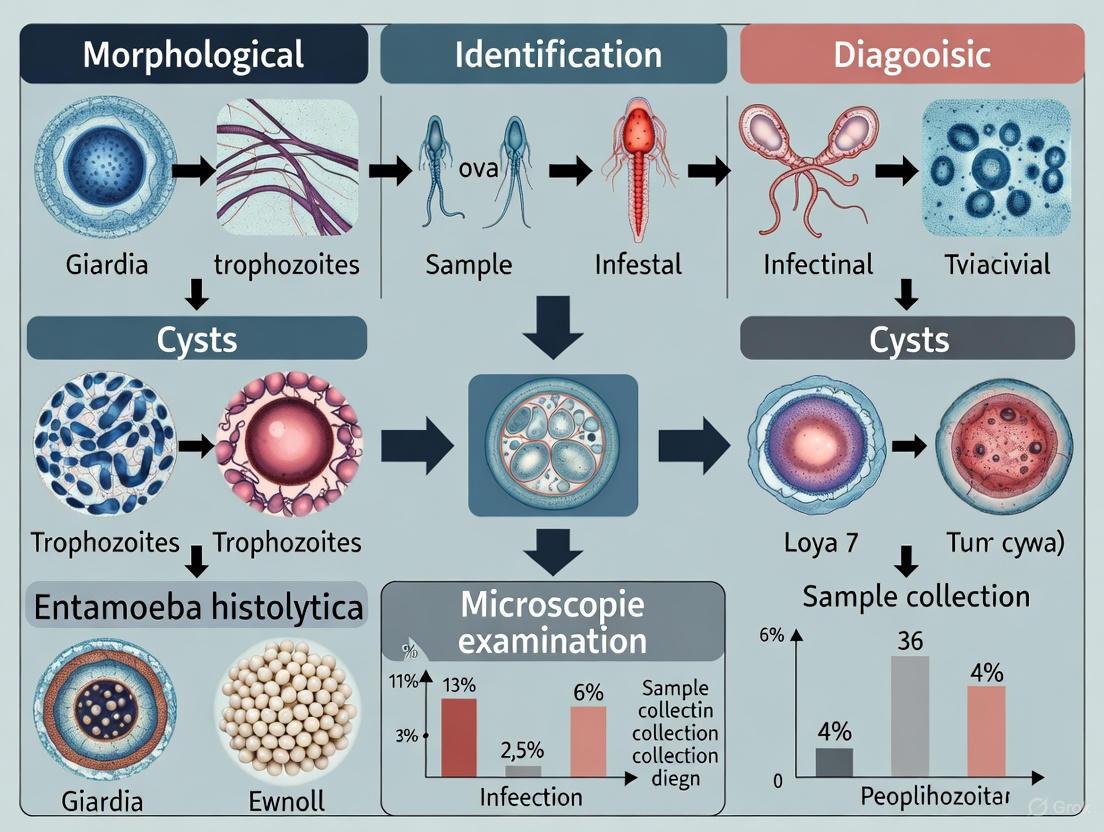
This article provides a comprehensive overview of the morphological identification of intestinal parasitic infections, a cornerstone of parasitological diagnosis.
Morphological Identification of Intestinal Parasites: Foundational Techniques, Modern Innovations, and Diagnostic Optimization
Abstract
This article provides a comprehensive overview of the morphological identification of intestinal parasitic infections, a cornerstone of parasitological diagnosis. It explores the foundational principles of parasite morphology and the persistent challenges of low sensitivity and operator dependency. The scope extends to established and emerging methodological protocols, including optimized multi-sample collection and novel processing techniques like Dissolved Air Flotation (DAF). It critically examines strategies for troubleshooting and optimizing diagnostic yield, such as the impact of preservatives and patient-specific factors. Finally, the article validates morphological diagnostics against cutting-edge automated and AI-driven systems, discussing their comparative performance and integration into modern laboratory workflows to enhance accuracy, efficiency, and clinical application for researchers and drug development professionals.
The Morphological Basis of Parasite Identification: From Classic Microscopy to Current Challenges
The morphological identification of intestinal parasitic elements—eggs, cysts, larvae, and adult parasites—remains a cornerstone technique in both clinical diagnostics and research settings, despite advancements in molecular methods. Within the context of a broader thesis on morphological identification of intestinal parasitic infections, this technical guide establishes the foundational principles required for accurate parasite differentiation. These infections affect over a billion people globally, causing significant health burdens including malnutrition, developmental delays, and economic losses [1]. While molecular techniques like quantitative real-time polymerase chain reaction (qPCR) offer high sensitivity and are increasingly used in research, microscopy-based identification provides a direct, cost-effective method for detecting a wide spectrum of parasites, which is particularly valuable in resource-limited settings and for epidemiological studies [1] [2]. The core challenge lies in the need for highly trained personnel to interpret morphological features, as the diagnostic sensitivity of traditional techniques can vary from low to moderate depending on the methodology and examiner expertise [1] [3]. This guide details the essential morphological criteria, modern methodologies, and quality control measures necessary for precise identification in research on intestinal parasitic infections.
Morphological Characteristics of Major Intestinal Parasites
Accurate identification relies on recognizing key distinguishing features under microscopy. The following characteristics are essential for differentiating common protozoa and helminths.
Intestinal Protozoa
Protozoan parasites exist in different stages, primarily as trophozoites (the active, feeding stage) and cysts (the dormant, infective stage). Identification is based on size, nuclear characteristics, and internal structures [4].
- Giardia lamblia: Cysts are oval, measuring 11–14 µm × 7–10 µm, and contain four nuclei, four axonemes, and four median bodies. Trophozoites have a characteristic "tear-drop" shape and paired organelles that give a "face-like" appearance [4].
- Entamoeba histolytica: Trophozoites range from 12–60 µm and may contain ingested red blood cells (a definitive sign of pathogenicity). Cysts are spherical, 12–15 µm in diameter, with 2–4 nuclei and may contain cigar-shaped chromatoid bodies. It is morphologically identical to the non-pathogenic E. dispar unless erythrophagocytosis is observed [4].
- Cryptosporidium spp.: Oocysts are spherical and small, 4–6 µm in diameter. They stain bright red with modified acid-fast staining and may contain sporozoites [4].
- Blastocystis hominis: Measures 6–40 µm and exhibits a prominent central body (vacuole) surrounded by multiple small nuclei (up to six). In trichrome stains, the central body shows characteristic red, green, or blue staining [4].
Intestinal Helminths
Helminth eggs and larvae have distinct sizes, shapes, shell structures, and internal contents that allow for differentiation.
- Ascaris lumbricoides: Eggs can be fertilized or unfertilized. Fertilized eggs are round to oval, 45–75 µm long, with a thick, mammillated coat. Unfertilized eggs are longer and narrower [3].
- Hookworms (Ancylostoma duodenale, Necator americanus): Eggs are oval, thin-shelled, and measure approximately 60 µm × 40 µm. In fresh stools, they often contain a developing embryo in the 2–8 cell stage [5].
- Trichuris trichiura (whipworm): Eggs are barrel-shaped, 50–55 µm long, with prominent bipolar plugs (opercula) that give them a "lemon" shape [5].
- Strongyloides stercoralis: The diagnostic stage is the larva (rhabditiform larva), not an egg. Larvae have a short buccal cavity and a prominent genital primordium [3].
Table 1: Diagnostic Stages and Key Morphological Features of Common Intestinal Parasites
| Parasite | Primary Diagnostic Stage(s) | Size | Key Morphological Features | Staining Characteristics |
|---|---|---|---|---|
| Giardia lamblia | Cyst, Trophozoite | 11-14 µm (cysts) | Cysts: 4 nuclei, median bodies. Trophozoites: Flagella, ventral disc. | Trichrome: Blue-green cytoplasm, red structures. |
| Entamoeba histolytica | Cyst, Trophozoite | 12-60 µm (troph), 12-15 µm (cyst) | Trophozoite may have ingested RBCs. Cysts: Up to 4 nuclei, chromatoid bars. | Trichrome: Differentiated nuclear morphology. |
| Cryptosporidium spp. | Oocyst | 4-6 µm | Spherical, contains sporozoites. | Modified acid-fast: Stains bright red. |
| Blastocystis hominis | Cyst/Central Body Form | 6-40 µm | Large central body, multiple peripheral nuclei. | Trichrome: Central body stains red/green/blue. |
| Ascaris lumbricoides | Egg | 45-75 µm | Thick, mammillated outer shell. | Direct smear: Visible without specific stain. |
| Hookworms | Egg | ~60 µm x 40 µm | Oval, thin-shelled, often segmented embryo. | Direct smear: Visible without specific stain. |
| Trichuris trichiura | Egg | 50-55 µm | Barrel-shaped with prominent bipolar plugs. | Direct smear: Visible without specific stain. |
| Strongyloides stercoralis | Larva | Variable (larva) | Rhabditiform esophagus, prominent genital primordium. | Direct smear: Motile in fresh samples. |
Modern Methodologies and Protocols for Parasite Identification
A combination of techniques increases diagnostic sensitivity and provides a more comprehensive analysis of a fecal sample.
Standard Microscopic Techniques
These form the backbone of traditional parasitology diagnostics [4].
- Macroscopic Examination: The stool is first inspected grossly for consistency (formed, soft, liquid), color, presence of blood or mucus, and adult worms or proglottids. Consistency can indicate the likely parasitic stages present (e.g., trophozoites in diarrhea, cysts in formed stool) [4].
- Direct Wet Mount: A small amount of stool is emulsified in saline (and sometimes iodine) on a slide and examined under a coverslip. This allows for the observation of motile trophozoites and a preliminary view of cysts and helminth eggs. Iodine enhances the contrast of internal structures of cysts but kills motility [4].
- Concentration Techniques: These methods increase the detection yield by removing debris and concentrating parasitic elements.
- Formalin-Ethyl Acetate Sedimentation: This is a common, robust method. Stool is fixed in formalin, then mixed with ethyl acetate and centrifuged. Parasitic elements are concentrated in the sediment for examination. It is highly effective for recovering protozoan cysts and helminth eggs and larvae [4].
- Flotation Techniques: Using solutions with high specific gravity (e.g., zinc sulfate, saturated sodium chloride), parasite eggs and cysts float to the surface and can be collected. While excellent for certain parasites, it can distort fragile organisms [1].
- Permanent Stained Smears: This is critical for the definitive identification of intestinal protozoa.
- Trichrome Stain: Provides polychromatic contrast, allowing for detailed observation of nuclear morphology, cytoplasmic inclusions, and differentiation between parasites and artifacts. It is compatible with preserved specimens and creates a permanent record [4].
- Modified Acid-Fast Stain: Used to identify oocysts of Cryptosporidium spp., Cyclospora cayetanensis, and Cystoisospora belli, which stain red against a blue or green background [4].
Advanced and Automated Identification Systems
Research is increasingly focused on automating diagnostics to reduce human error and increase throughput.
- Automated Digital Imaging Systems: Systems like the Automated Diagnosis of Intestinal Parasites (DAPI) integrate a specialized parasitology protocol with a microscope, high-resolution camera, and computer system. They require a clean sample preparation protocol (e.g., TF-Test) to minimize debris, enabling software to accurately identify parasite structures [1]. Studies report sensitivity ranging from 80.88% to 100% depending on the parasite and protocol used [1].
- Molecular Methods (qPCR): While not morphological, qPCR is a vital research tool that complements microscopy. It targets specific DNA regions (e.g., ribosomal ITS, repetitive genomic elements) and offers high sensitivity, especially in low-intensity infections where microscopy may fail [2]. A 2024 study demonstrated a strong correlation between qPCR results and egg/larvae counts for Trichuris trichiura (Kendall's Tau-b 0.86-0.87) and Ascaris lumbricoides (0.60-0.63), confirming its effectiveness as a diagnostic tool [2].
Table 2: Comparison of Diagnostic Techniques for Intestinal Parasites
| Technique | Principle | Key Parasites Detected | Advantages | Limitations | Reported Sensitivity/Specificity |
|---|---|---|---|---|---|
| Direct Wet Mount | Microscopy of fresh smear. | Motile trophozoites (Giardia), cysts, helminth eggs. | Rapid, low cost, assesses motility. | Low sensitivity, requires immediate examination. | Sensitivity is low as a standalone test [4]. |
| Formalin-Ethyl Acetate Sedimentation | Concentration by sedimentation. | Protozoan cysts, helminth eggs/larvae. | High yield for a broad range of parasites, robust. | Trophozoites may be destroyed. | Considered a gold-standard concentration method [4]. |
| Permanent Stain (Trichrome) | Differential staining of structures. | Intestinal protozoa (cysts/trophozoites). | Detailed morphology, permanent record. | Requires expertise in interpretation. | Essential for specific protozoan identification [4]. |
| Automated Digital Imaging | Computer-assisted image analysis. | Multiple parasites per system design. | Reduces subjective error, potential for high throughput. | Requires clean sample prep and robust image database. | 80.88%-100% sensitivity in studies [1]. |
| Quantitative PCR (qPCR) | Detection of parasite DNA. | Species-specific detection (e.g., STHs). | High sensitivity and specificity, quantifiable. | High cost, requires specialized lab, does not detect non-viable parasites. | Strong correlation with egg counts for some STHs [2]. |
The Scientist's Toolkit: Essential Research Reagents and Materials
Successful morphological identification depends on the consistent use of specific, high-quality reagents and materials.
Table 3: Key Research Reagent Solutions for Morphological Identification
| Reagent/Material | Function/Application | Technical Notes |
|---|---|---|
| 10% Formalin | Universal fixative for preservation of stool samples for concentration procedures. | Preserves morphology of cysts, eggs, and larvae; allows for safe transport and storage. |
| Polyvinyl Alcohol (PVA) | Preservative for stool samples intended for permanent staining. | Serves as an adhesive and fixative, ideal for preparing smears for trichrome staining. |
| Ethyl Acetate | Solvent used in sedimentation concentration techniques. | Aids in the removal of fats and debris from the sample, resulting in a cleaner sediment. |
| Trichrome Stain | Polychromatic stain for permanent smears. | Differentiates nuclear and cytoplasmic structures of protozoa, critical for species identification. |
| Modified Acid-Fast Stain | Specific stain for coccidian parasites. | Stains oocysts of Cryptosporidium, Cyclospora, and Cystoisospora for visualization. |
| Iodine Solution (e.g., Lugol's) | Contrast enhancer for wet mounts. | Stains glycogen and nuclei of protozoan cysts, improving visualization of internal structures. |
| Specific Gravity Solutions (e.g., ZnSO₄) | Flotation medium for concentration. | Causes buoyant parasite elements to rise to the surface for collection. |
Experimental Workflow for Comprehensive Analysis
A rigorous experimental protocol is mandatory for high-quality research on intestinal parasites. The following workflow integrates key methodologies to ensure accurate and sensitive detection.
Experimental Workflow for Morphological ID
Detailed Protocol for the Formalin-Ethyl Acetate Sedimentation Technique
This is a widely used concentration method [4].
- Emulsification: Emulsify 1–2 grams of fresh or formalin-preserved stool in 10 mL of 10% formal saline solution in a 50 mL centrifuge tube.
- Filtration: Filter the suspension through gauze or a sieve into a new centrifuge tube to remove large particulate matter.
- First Centrifugation: Centrifuge at 500 x g for 10 minutes. Carefully decant the supernatant.
- Resuspension and Solvent Addition: Resuspend the sediment in fresh 10% formalin. Add 3–4 mL of ethyl acetate to the tube. Cap the tube and shake it vigorously for at least 30 seconds.
- Second Centrifugation: Centrifuge again at 500 x g for 10 minutes. This will result in four layers: a plug of debris at the top (ethyl acetate and fecal debris), a formalin layer, a sediment of parasitic elements, and a plug of debris at the top.
- Sediment Collection: Loosen the debris plug by ringing it with an applicator stick and carefully decant all supernatant layers. The final sediment contains the concentrated parasites.
- Microscopy: Prepare a wet mount from the sediment using a drop of iodine for examination under 10x and 40x objectives.
Quality Control and Analytical Considerations in Research
Robust research demands strict adherence to quality control measures to ensure data integrity.
- Specimen Collection and Preservation: Stool should be collected in a clean, dry container without contamination by urine, water, or toilet paper. Preservatives like formalin or PVA must be added promptly if immediate processing is not possible to prevent degradation of parasites, especially trophozoites [4].
- Multiple Specimens: Due to the intermittent shedding of many parasites (e.g., Giardia, Strongyloides), a single stool examination has a sensitivity of approximately 60%. Analyzing three specimens collected every other day increases detection sensitivity to over 95% [4].
- Interfering Substances: Specimens should not be collected within 7–10 days of administration of barium, bismuth, antibiotics, antimalarials, or mineral oil, as these substances can mask or eliminate parasites from the stool [4].
- Data Verification: In a research context, morphological identification should be verified by a second trained microscopist. Discordant results should be resolved by a senior expert or confirmed with an alternative method, such as qPCR [1] [2].
The Global Health Burden of Intestinal Parasitic Infections
Intestinal parasitic infections (IPIs) represent a significant global health challenge, particularly in developing nations, where they contribute substantially to morbidity and mortality [6]. These infections, caused by a diverse group of protozoa and helminths, affect over one billion people worldwide, with soil-transmitted helminths alone infecting an estimated 880 million individuals [7] [8]. The World Health Organization identifies parasitic diseases as major causes of disability-adjusted life years (DALYs), with foodborne parasitic diseases resulting in an estimated 6.64 million DALYs globally [9]. The morphological identification of these parasites remains fundamental to epidemiological research, diagnostic protocols, and public health interventions, despite advances in molecular techniques [10] [3]. This technical guide examines the global burden of IPIs through the lens of morphological research, providing researchers and drug development professionals with comprehensive data analysis and standardized methodological approaches for investigating these pervasive infections.
Global Epidemiology and Health Impact
Prevalence and Distribution
Intestinal parasitic infections demonstrate remarkable geographical variation, with the highest prevalence observed in tropical and subtropical regions characterized by inadequate sanitation, insufficient pure water supply, and low socioeconomic status [7]. Sub-Saharan Africa, Asia, and Latin America bear the disproportionate burden, with prevalence rates exceeding 50% in some regions [7]. A 2024 study in Northwest Ethiopia revealed a 33.5% prevalence among food handlers, identifying nine different parasite species with E. histolytica/dispar (8.2%) and Ascaris lumbricoides (6.6%) as the predominant organisms [6]. The high prevalence of mixed infections (9.3%) further complicates control efforts in endemic areas [6].
In developed countries, IPIs are increasingly being detected due to globalization of food, international travel, and migration [7]. In the United States, giardiasis represents the most common parasitic diarrhea, with intestinal protozoal infections generally exceeding helminthic infections in prevalence [7]. Refugee populations resettled in North America show parasitic infection prevalence ranging from 8% to 86%, depending on geographic origin, previous living conditions, and educational level [11].
Table 1: Global Prevalence and Impact of Major Intestinal Parasitic Infections
| Parasite | Estimated Global Infections | Annual Mortality | Key Endemic Regions | Major Health Impacts |
|---|---|---|---|---|
| Soil-transmitted helminths (Ascaris, Trichuris, Hookworms) | 880 million [8] | ~150,000 [8] | Sub-Saharan Africa, Asia, Latin America [7] | Malnutrition, anemia, impaired childhood development [11] |
| Strongyloides stercoralis | Unknown (seroprevalence 25-46% in some refugee groups) [11] | Significant in hyperinfection syndrome [3] | Tropical and subtropical regions [11] | Chronic infection, hyperinfection in immunocompromised [3] |
| Giardia duodenalis | 7-30% (variable by region) [7] | Low, except in vulnerable groups | Global [7] | Diarrhea, malabsorption, failure to thrive [7] |
| Entamoeba histolytica | Variable, ~10% global prevalence [7] | ~55,000 annually [7] | Developing countries [7] | Dysentery, liver abscesses [3] |
| Foodborne trematodes | millions [9] | Contributes to ~2.02 million DALYs [9] | East Asia, Southeast Asia [9] | Hepatic, pulmonary, and intestinal manifestations [9] |
Morbidity and Mortality Burden
The health impacts of IPIs extend beyond acute gastrointestinal symptoms to include chronic nutritional deficiencies, impaired cognitive development, and increased susceptibility to other infections [6] [7]. The disability-adjusted life year (DALY) metric quantifies this burden by combining years of life lost to premature mortality and years lived with disability [12]. Foodborne parasites alone account for an estimated 8.78 million DALYs globally, with cysticercosis (2.78 million DALYs), foodborne trematodosis (2.02 million DALYs), and toxoplasmosis (825,000 DALYs) representing the highest burdens [9].
Children bear the most significant morbidity burden, with chronic IPIs contributing to malnutrition, iron deficiency anemia, stunted growth, and impaired cognitive development [7] [11]. Hookworm infection contributes to iron deficiency anemia through intestinal blood loss, while Ascaris lumbricoides competes for nutrients in the intestinal lumen [3] [7]. The economic impact is substantial, including healthcare costs, lost productivity, and reduced educational attainment [6]. Plant-parasitic nematodes cause estimated agricultural losses of $125-350 billion annually, indirectly affecting human nutrition and economic stability [12].
Morphological Identification of Intestinal Parasites
Fundamental Principles and Diagnostic Significance
Morphological identification remains the cornerstone of parasitic diagnosis in clinical and research settings, providing cost-effective, accessible methods that form the basis of epidemiological surveillance and treatment efficacy studies [10] [3]. Despite advances in molecular techniques, microscopy continues to serve as the gold standard in many diagnostic laboratories, particularly in resource-limited settings where intestinal parasites are most prevalent [10]. The copromicroscopic identification of gastrointestinal parasites relies on recognizing characteristic morphological features including size, shape, shell thickness, internal structures, and developmental stages [10].
The morphological approach does present significant challenges, including the need for highly trained personnel, morphological similarity between related species, and variability in preservation quality [10]. Experienced parasitologists often maintain broad taxonomic classifications (e.g., "strongyle-type eggs") to accommodate uncertainty in species-level identification [10]. Nevertheless, morphological preservation and identification remain essential for understanding host-parasite interactions and conducting field studies in remote locations [10].
Comparative Preservation Methods for Morphological Studies
The choice of preservation medium significantly impacts morphological quality and identification accuracy. A 2024 study systematically compared 96% ethanol versus 10% formalin for preserving gastrointestinal parasites from non-human primate fecal samples [10]. The research developed a standardized degradation grading scale, finding that formalin-preserved samples yielded greater parasitic morphotype diversity, while both mediums showed no significant difference in parasites per fecal gram (PFG) for common parasites like Filariopsis barretoi larvae and Strongyle-type eggs [10].
Table 2: Preservation Methods for Morphological Analysis of Intestinal Parasites
| Preservation Method | Mechanism of Action | Advantages | Limitations | Suitability for Morphology |
|---|---|---|---|---|
| 10% Formalin [10] | Forms amino acid cross-links between proteins, preventing autolysis and putrefaction [10] | Excellent morphological preservation; maintains tissue form long-term [10] | Causes DNA fragmentation; toxic; requires careful handling [10] | Excellent; superior for larval forms and delicate structures [10] |
| 96% Ethanol [10] | Dehydrates tissues; denatures proteins [10] | Less toxic; suitable for molecular analyses; maintains DNA integrity [10] | Causes tissue dehydration and brittleness; may alter morphology [10] | Good; adequate for eggs and cysts but suboptimal for larvae [10] |
| Formalin-Ether Concentration Technique (FECT) [6] [13] | Combines fixation and concentration | Increases detection sensitivity; standard in clinical laboratories [13] | Requires multiple steps; chemical handling | Excellent; improves yield for morphological identification |
Diagnostic Workflows and Protocols
The complete morphological identification process involves multiple stages from sample collection to final diagnosis. The following workflow diagram illustrates the standard procedure:
Sample Collection and Processing
Optimal diagnostic accuracy requires collecting multiple stool samples over several days to account for intermittent parasite excretion [13]. A 2025 retrospective study demonstrated that collecting three stool specimens increased detection rates from 61.2% (first specimen) to 100% (cumulative after three specimens) [13]. Specific parasites showed varying detection patterns, with hookworms typically detected in the first sample, while Trichuris trichiura and Isospora belli often required multiple samples for detection [13].
The formalin-ether concentration technique (FECT) represents the standard method for processing stool specimens in clinical laboratories [6] [13]. This method involves:
- Homogenization: Stool samples are homogenized with distilled water or saline
- Filtration: Coarse particulate matter is removed through cheesecloth filtration
- Centrifugation: Samples are centrifuged to concentrate parasitic elements
- Formalin fixation: Preserves morphological integrity
- Ether extraction: Removes fats and debris
- Microscopic examination: Sediment examined under light microscopy [6] [13]
Alternative concentration methods include the Kato-Katz technique, recommended by WHO for field studies of soil-transmitted helminths, with a reported sensitivity of approximately 0.52 (0.48-0.57) [13].
Morphological Differentiation Guide
The identification of intestinal parasites relies on recognizing key morphological characteristics:
- Protozoan cysts: Size, shape, number of nuclei, presence of inclusions
- Helminth eggs: Size, shape, shell thickness, ornamentation, embryonic development
- Larvae: Size, anatomical features (esophagus, genital primordium, tail shape)
- Adult worms: Size, anatomical structures (mouthparts, reproductive organs)
For reliable morphological identification, laboratories should maintain reference collections of well-preserved specimens and digital images for comparison [10] [3]. Quality control programs including proficiency testing and inter-laboratory comparisons help maintain diagnostic accuracy [3].
Research Reagents and Materials
Table 3: Essential Research Reagents for Morphological Studies of Intestinal Parasites
| Reagent/Material | Application | Technical Specifications | Research Function |
|---|---|---|---|
| 10% Buffered Formalin [10] | Sample preservation | 10% formaldehyde in buffer, pH 7.0 | Cross-links proteins to maintain morphological integrity for microscopic examination [10] |
| 96% Ethanol [10] | Sample preservation | 96% ethanol, undenatured | Dehydrates specimens; suitable for combined morphological and molecular studies [10] |
| Formalin-Ether Concentration Kit [6] [13] | Parasite concentration | Formalin, ethyl acetate, centrifugation tubes | Concentrates parasitic elements from stool specimens to enhance detection sensitivity [6] |
| Trichrome Stain [7] | Staining of protozoa | Chromotrope-based staining solution | Differentiates internal structures of protozoan trophozoites and cysts for identification [7] |
| Kato-Katz Materials [13] | Quantitative egg counts | Template, cellophane, glycerol-malachite green | Standardized method for quantifying soil-transmitted helminth eggs in stool samples [13] |
| Direct Fluorescent Antibody (DFA) Kits [7] | Immunofluorescence detection | Fluorophore-conjugated antibodies | Highly sensitive (93-100%) and specific (99.8-100%) detection of Giardia and Cryptosporidium [7] |
Intestinal parasitic infections continue to impose a substantial global health burden, disproportionately affecting vulnerable populations in resource-limited settings. Morphological identification remains an essential component of parasitic disease research, providing accessible, cost-effective methods for diagnosis and surveillance. The integration of standardized preservation techniques, optimized diagnostic workflows, and quality-controlled morphological analysis ensures reliable data collection for epidemiological studies and intervention monitoring. Future research should focus on refining preservation methods compatible with both morphological and molecular approaches, developing improved concentration techniques to enhance detection sensitivity, and establishing digital reference libraries to standardize identification criteria across laboratories. Despite technological advances in molecular diagnostics, morphological methods will continue to play a crucial role in understanding and combating the global burden of intestinal parasitic infections, particularly in field settings and regions where these infections remain endemic.
The morphological identification of intestinal parasitic infections (IPIs), long considered the diagnostic cornerstone in both clinical and research settings, is fundamentally constrained by three inherent limitations: intermittent shedding of parasites, frequently low parasite loads, and significant morphological overlap between species. These challenges compromise diagnostic accuracy, impede drug efficacy evaluations, and can bias epidemiological studies. This whitepaper delineates the technical foundations of these limitations, presenting quantitative data on their impact and discussing advanced methodological approaches that integrate molecular techniques to augment traditional microscopy. The objective is to provide researchers and drug development professionals with a refined framework for critically assessing and improving diagnostic protocols in IPI research.
Intestinal parasitic infections (IPIs) remain a critical global health problem, affecting over one billion people worldwide and causing significant morbidity and mortality [7]. The morphological identification of eggs, larvae, cysts, or trophozoites in stool specimens via optical microscopy is the historical and still-widely-used foundation for diagnosis, particularly in resource-limited settings [14] [15]. This method provides direct evidence of active infection and is often the only accessible tool in endemic areas.
However, the reliability of this cornerstone technique is undermined by several inherent biological and analytical challenges. The sensitivity and specificity of microscopy are perpetually contested by the realities of parasite biology and the limitations of human observation. This whitepaper examines three core limitations—intermittent shedding, low parasite loads, and morphological overlap—situating them within the context of a broader research thesis aimed at improving the accuracy and utility of IPI diagnostics. Understanding these constraints is paramount for researchers designing clinical trials, epidemiologists estimating disease burden, and drug developers assessing treatment efficacy, as undetected infections or misidentified species can lead to flawed conclusions and inadequate public health interventions.
The Problem of Intermittent Shedding
Intermittent shedding refers to the phenomenon where an infected host does not consistently release parasite transmission stages (e.g., cysts, oocysts, eggs) in their feces. This is not an artifact of poor sampling but a biological reality for many parasite species, driven by factors such as asynchronous parasite reproduction cycles and host immune responses [16] [15].
Quantitative Impact on Detection Sensitivity
A 2024 study on paediatric Giardia duodenalis infections provides a stark quantification of this issue. Using a hierarchical model to analyze repeated stool samples from 276 children, researchers disentangled the probability of infection from the probability of shedding in a given sample [16] [15].
Table 1: Probabilities of Detection for Giardia duodenalis Infection Based on Hierarchical Modeling
| Parameter | Symbol | Estimated Probability (θ or p) | Implication for Detection |
|---|---|---|---|
| Per-sample shedding probability | θ | 0.440 ± 0.116 | Even with a perfect test, only ~44% of samples from infected children contain the parasite. |
| Test sensitivity (Senior microscopist) | p_Senior | 0.639 ± 0.080 | In a shedding-positive sample, an expert has a ~64% chance of seeing it. |
| Test sensitivity (Junior microscopist) | p_Junior | 0.460 ± 0.071 | A trained junior microscopist has a lower detection probability of ~46%. |
| Overall clinical sensitivity (Junior) | Pr(d|i) = θ × p | 0.44 × 0.46 ≈ 0.20 | The net probability of a junior microscopist detecting a true infection from a single stool sample is only about 20%. |
This data demonstrates that even under ideal conditions, single-sample microscopy is profoundly limited. The study concluded that the true infection frequency in the cohort (34-54%) was more than double the observed frequency (16-25%) due to the combined effects of intermittent shedding and imperfect test sensitivity [16] [15].
Recommended Experimental Protocols to Mitigate Intermittent Shedding
To counter the effect of intermittent shedding, research protocols must incorporate repeated sampling.
- Protocol for Repeated Stool Sampling: Collect three stool samples from each participant over a period of several days to consecutive weeks [7] [16]. This protocol is based on statistical modeling showing that pooling three replicate samples increases the probability of detecting a shedding parasite to approximately θ̂₃s ≈ 1 − (1 − 0.44)³ ≈ 0.82 [15].
- Sample Processing: Each collected sample should be processed independently using a concentration technique such as Formalin-Ether Concentration (FEC) to maximize the yield of parasitic elements [14]. Multiple slides from each sample should be examined to further increase sensitivity.
Figure 1: Diagnostic Workflow Impacted by Intermittent Shedding. This diagram illustrates how the failure to detect an infection in a single stool sample due to a non-shedding event can be mitigated by collecting and testing serial samples, thereby increasing the cumulative probability of capture.
The Challenge of Low Parasite Loads
Low parasite loads, where few diagnostic stages are present in a sample, push microscopy to its limits of detection. The concentration of parasites in feces can be influenced by the intensity of the infection, the stage of the disease, and host factors.
Sensitivity Comparisons of Diagnostic Methods
A 2017 study in Mozambique provided a direct comparison of several classical microscopic techniques against real-time PCR for detecting a broad spectrum of parasites [14]. The results underscore the inadequacy of relying on a single microscopic method.
Table 2: Comparative Sensitivity of Diagnostic Methods for Selected Parasites
| Parasite | Direct Smear | Formalin-Ether Concentration (FEC) | Kato Smear | Baermann Method | Real-Time PCR |
|---|---|---|---|---|---|
| Strongyloides stercoralis | + | + | - | + | + [14] |
| Hookworm | + | + | + | - | + [14] |
| Schistosoma mansoni | - | + | + | - | + [14] |
| Giardia intestinalis | + | + | - | - | + [14] |
| Ascaris lumbricoides | + | + | + | - | + [14] |
Note: "+" denotes the method is considered adequate for detection; "-" denotes it is suboptimal or not recommended. The table synthesizes data on the range of species detectable by each method, where FEC detected the broadest spectrum by microscopy, but PCR was superior overall [14].
The study found that PCR outperformed all microscopic techniques in terms of sensitivity and the range of parasite species detected, as it can amplify a detectable signal from minimal genetic material, even a single parasite [17] [14]. For example, a real-time PCR assay for Leishmania infantum was able to achieve a sensitivity of 1 parasite/mL reaction, a level unattainable by routine microscopy [17].
Molecular Protocol for Quantifying Low Parasite Loads
For research requiring high sensitivity and quantification, a real-time PCR (qPCR) protocol is recommended.
- DNA Extraction: Use a commercial kit (e.g., NucleoSpin Soil Kit) with mechanical lysis via a homogenizer for efficient disruption of hardy parasite cysts and oocysts [18].
- qPCR Assay: Employ a TaqMan probe-based system targeting a multi-copy gene target for maximum sensitivity. For instance, target the kinetoplast DNA (kDNA) for Leishmania, which has ~36 copies per parasite cell, or the 18S rRNA gene for other protozoa [17].
- Quantification: Include a standard curve of known parasite concentrations (e.g., from cultured parasites or a cloned plasmid) in each run. This allows for the absolute quantification of parasite load in genome copies per gram of stool, providing a quantitative endpoint for research [17] [18].
The Limitation of Morphological Overlap
Morphological overlap between pathogenic and non-pathogenic species, as well as between different life-cycle stages, is a major source of diagnostic error. This challenge requires significant expertise to navigate and even then, can lead to misidentification.
Key Examples of Morphological Confusion
The Centers for Disease Control and Prevention (CDC) provides detailed comparative morphology tables that highlight these diagnostic pitfalls [19].
- Intestinal Amebae: Distinguishing the pathogenic Entamoeba histolytica from the non-pathogenic Entamoeba coli is critical. Key differentiators under permanent stain include the number of nuclei in mature cysts (4 for E. histolytica vs. 8 for E. coli), the structure of the peripheral chromatin (fine and uniform vs. coarse and irregular), and the appearance of chromatoid bodies (blunt, rounded ends vs. splinter-like with pointed ends) [19].
- Intestinal Flagellates: Giardia duodenalis trophozoites have a characteristic "falling leaf" motility and a distinctive morphology with a ventral sucking disc and two median bodies. However, in poorly preserved samples, identification can be challenging [19].
Integrating Molecular Identification for Specificity
To resolve morphological ambiguities, molecular identification is the definitive solution. A 2025 study from Iran on intestinal parasites exemplifies this integrated approach [20]:
- Primary Screening: All stool samples (n=540) were first examined by direct smear and formalin-ether sedimentation.
- Specific Investigation: Suspected samples were subject to specialized techniques (agar plate culture for Strongyloides).
- Molecular Confirmation: DNA was extracted from samples containing Trichostrongylus spp. eggs. PCR targeting the ITS2 gene region and the mitochondrial COX1 gene was performed.
- Sequencing: The PCR products were sequenced via the Sanger method, which confirmed the species as Trichostrongylus colubriformis and Strongyloides stercoralis, providing unambiguous identification [20].
This protocol ensures that species-level data, crucial for understanding epidemiology and transmission dynamics, is accurate.
The Scientist's Toolkit: Essential Research Reagent Solutions
Navigating the limitations of morphological identification requires a suite of reliable reagents and techniques. The following table details key solutions used in the field.
Table 3: Key Research Reagent Solutions for Intestinal Parasite Identification
| Research Reagent / Material | Function in Diagnosis/Research | Example Use Case |
|---|---|---|
| Formalin-Ether (FEC) | Concentrates parasitic elements (cysts, eggs, oocysts) from stool by differential sedimentation. | Broad-spectrum detection of helminths and protozoa in a single sample [14]. |
| Permanent Stains (e.g., Trichrome) | Stains internal structures of protozoan trophozoites and cysts for detailed morphological analysis. | Differentiating Entamoeba histolytica from non-pathogenic amebae [19]. |
| Agar Plate Culture | Supports growth and development of larvae from stool, enhancing detection of Strongyloides stercoralis. | Isolation and observation of characteristic tracks made by migrating larvae [14]. |
| qPCR Master Mix with Probes | Enables real-time amplification and quantification of parasite-specific DNA sequences. | Sensitive detection and quantification of low-load Cryptosporidium infections [17] [14]. |
| Cloned Plasmid Standards | Provides known copy number targets for generating a standard curve in qPCR assays. | Absolute quantification of Leishmania parasite load in clinical samples [17]. |
| Species-Specific Primers | Amplifies unique genetic regions for molecular identification and differentiation of species. | Confirming Trichostrongylus colubriformis via ITS2 gene amplification [20]. |
The inherent limitations of intermittent shedding, low parasite loads, and morphological overlap are not merely operational hurdles but fundamental constraints that shape the accuracy and interpretation of intestinal parasite research. Quantitative data reveals that these factors can lead to a greater than 50% underestimation of true infection prevalence if unaddressed. While sophisticated morphological analysis remains a valuable skill, the research community must pivot towards integrated diagnostic protocols that systematically incorporate repeated sampling, concentration techniques, and, where resources allow, molecular assays for confirmation and quantification. Embracing this multi-faceted approach is essential for generating robust, reliable data that can effectively inform public health interventions, drug discovery, and our understanding of parasitic disease dynamics.
The Impact of Parasite Life Cycle and Biology on Detection in Fecal Samples
The morphological identification of intestinal parasitic infections represents a cornerstone of parasitological research and diagnostic practice. The accurate detection of parasites in fecal samples is not merely a technical challenge but a complex problem fundamentally governed by the biological and life history traits of the parasites themselves. These intrinsic factors directly influence key diagnostic parameters including patency periods, shedding dynamics, and the morphological characteristics of transmission stages, thereby shaping the efficacy of all detection methodologies [21] [18].
Historically, conventional microscopy has served as the gold standard, providing a direct visualization of parasites. However, the limitations of this approach—particularly its sensitivity and taxonomic resolution—have become increasingly apparent, especially for parasites with low or intermittent shedding patterns or morphologically similar eggs [21] [22]. The emergence of molecular techniques has revolutionized the field, yet these methods also are subject to the influence of parasite biology, particularly the timing and location of different life cycle stages within the host [18]. This technical guide examines the interplay between parasite life history and detection efficacy, framing this relationship within the broader context of morphological identification research and its evolution toward integrated diagnostic paradigms.
Parasite Biological Factors Influencing Fecal Detection
The detectability of an intestinal parasite in a host's feces is not a constant feature but a variable one, deeply rooted in the parasite's biological and life history strategies. Understanding these factors is essential for selecting appropriate diagnostic methods and interpreting their results accurately.
Life Cycle Complexity and Developmental Timing
The parasite's life cycle dictates the nature, timing, and quantity of stages excreted in feces.
- Prepatent Period: The duration from initial host infection to the onset of reproductive stage shedding is a critical biological determinant. Molecular techniques, such as quantitative PCR (qPCR), can detect parasite DNA during this prepatent period, often before morphological stages (e.g., oocysts, eggs) appear. For instance, in Eimeria ferrisi infections in mice, DNA was detected in feces earlier than the first appearance of oocysts [18].
- Tissue Localization and Asexual Replication: Many parasites undergo complex cycles involving asexual replication in specific host tissues before the sexual stages produce transmissive forms in the intestines. The presence of DNA from these asexual stages in feces can lead to discrepancies between molecular and morphological counts. Research on Eimeria ferrisi demonstrated that the intensity of parasite DNA in feces was a stronger predictor of host weight loss than oocyst counts, suggesting DNA quantifies the total parasite burden (including tissue stages), not just the reproductive output [18].
Shedding Dynamics and Reproductive Strategy
The pattern and quantity of transmission stage excretion are crucial for detection sensitivity.
- Intermittent Shedding: Many parasites do not shed eggs or oocysts continuously. This can lead to false negatives if samples are collected during non-shedding periods. The U.S. Centers for Disease Control and Prevention (CDC) therefore recommends examining three specimens passed at intervals of 2-3 days to improve detection rates [23].
- Reproductive Investment and Host Specificity: A parasite's reproductive strategy is linked to its host specificity. Studies on parasitic copepods suggest that generalist parasites (with low host specificity) may invest more in reproductive output (r-selected strategy), potentially leading to higher and more detectable shedding levels in feces, depending on the host-parasite system [24]. Conversely, specialist parasites (K-selected) might produce fewer transmission stages, making them harder to detect, especially at low infection intensities.
Impact of Parasite Load and Host Immunity
The interaction between the host's immune response and the parasite population directly affects what is detectable in feces.
- Infection Intensity: The number of parasites within a host (parasite load) influences the concentration of eggs, cysts, or DNA in feces. Higher infection intensities are naturally easier to detect with any method. Molecular methods like qPCR have been shown to be more sensitive than microscopy, especially at these lower intensities [22].
- Age-Dependent Infection Risk: The host's age profile of infection risk, shaped by immune development and exposure, can influence optimal diagnostic strategies. Modeling studies indicate that the relationship between a host's life history (e.g., age at reproductive maturity) and optimal immune specificity is mediated by how epidemiological risks (like parasite infection) change with age [25]. This, in turn, can affect parasite prevalence and load in different age classes, impacting sampling and diagnostic frameworks.
Table 1: Impact of Parasite Biology on Key Diagnostic Metrics
| Parasite Biological Factor | Impact on Morphological Detection | Impact on Molecular Detection |
|---|---|---|
| Long Prepatent Period | Delays detection until patency; early infections missed. | Allows for earlier detection of infection before egg/oocyst shedding begins [18]. |
| Intermittent Shedding | Leads to false negatives during non-shedding periods; requires repeated sampling [23]. | Similar challenges, but potentially higher sensitivity during low-shedding periods due to detection of residual DNA from other stages. |
| Low Reproductive Output | Results in low egg/oocyst counts, challenging microscopic detection limits. | Quantitative PCR (qPCR) can be more sensitive, detecting low levels of DNA [22]. |
| Complex Tissue Migration | Only intestinal stages are detected; extra-intestinal phases are invisible. | May detect DNA from extra-intestinal or asexual stages, providing a different measure of total infection burden [18]. |
Comparative Analysis of Detection Methodologies
The evolution from purely morphological techniques to molecular and advanced biosensor platforms represents a paradigm shift in diagnostic parasitology. Each methodological class possesses distinct strengths and limitations, often directly interacting with the biological factors of the parasite.
Conventional Morphological Techniques
These traditional methods form the historical basis of parasitology and are characterized by the direct visualization of parasites.
- Direct Smear and Flotation: Simple flotation techniques using solutions with high specific gravity (e.g., saturated sodium chloride, zinc-chloride) concentrate eggs and cysts for microscopic examination. The McMaster egg counting technique is a standardized quantitative version of this, providing an estimate of eggs per gram (EPG) of feces [21] [22]. A key limitation is the inability to distinguish between morphologically similar eggs, such as those of many strongyle-type nematodes, which are often grouped together [21].
- Larval Culture and Identification: For parasites like many strongyles, culturing feces allows eggs to hatch into larvae, which can then be identified to genus or species level based on morphological characteristics. While this improves taxonomic resolution, it is labor-intensive and adds several days to the diagnostic process [21] [22].
Molecular Techniques
Molecular methods detect parasite-specific nucleic acids, offering a different perspective on infection that is less dependent on the parasite's reproductive timing.
- DNA Metabarcoding: This technique utilizes high-throughput sequencing of a DNA barcode region (e.g., the ITS2 region of rDNA) to characterize entire communities of gastrointestinal nematodes (the "nemabiome") from a single fecal sample. It provides superior taxonomic resolution compared to egg counts and can detect multiple species simultaneously. Protocol optimization, such as using DNA isolation methods with mechanical cell disruption and larger starting material volumes, maximizes species detection rates [21].
- Quantitative PCR (qPCR) and Loop-Mediated Isothermal Amplification (LAMP): These techniques allow for the sensitive and specific detection of parasite DNA. qPCR is particularly powerful for quantifying parasite intensity (genome copies per gram) and has been shown to be more sensitive than microscopy or LAMP for detecting Haemonchus contortus [22]. A crucial finding is that DNA-based intensity can be a better predictor of host health impact (e.g., weight loss in Eimeria infection) than counts of transmissive stages, as it potentially reflects the total burden of asexual and sexual stages [18].
Table 2: Comparison of Diagnostic Method Performance Characteristics
| Method | Sensitivity | Taxonomic Resolution | Quantification | Throughput & Speed |
|---|---|---|---|---|
| McMaster/Flotation | Low to Moderate (e.g., 50 EPG limit) [22] | Low (eggs often grouped) [21] | Semi-quantitative (EPG) | High / Fast (hours) |
| Larval Culture | Moderate (depends on egg viability) | High for larvae | Semi-quantitative | Low / Slow (days) |
| qPCR | High [22] | High (species-specific) | Quantitative (genome copies/g) | Moderate (hours) |
| LAMP | Moderate to High [22] | High | Semi-quantitative (Ct values) | Moderate (hours) |
| DNA Metabarcoding | High [21] | Very High (multi-species) | Semi-quantitative (relative abundance) | Low / Slow (days) |
Experimental Protocols for Method Comparison
To illustrate the practical application and validation of these methods, the following section details specific experimental protocols as drawn from key comparative studies.
Protocol: DNA Metabarcoding of Gastrointestinal Nematodes
This protocol is adapted from faecal metabarcoding studies in wild ungulates, which demonstrated improved detection and taxonomic resolution over parasitological techniques [21].
1. Sample Collection and Preservation:
- Collect fresh fecal samples directly from the rectum or from the immediate environment soon after defecation.
- For long-term storage, freeze samples at -20°C until DNA extraction. Avoid preservatives that inhibit PCR, such as high-concentration formalin, if molecular work is planned [23].
2. DNA Extraction (Critical Step for Biodiversity Recovery):
- Starting Material: Use a larger volume of starting material (e.g., 3g of feces) to maximize the capture of sporadic parasite DNA.
- Cell Lysis: Employ a method that includes mechanical cell disruption (e.g., using a benchtop homogenizer with cycles of disruption at 6000 rpm) in addition to chemical lysis. This has been shown to significantly improve parasite DNA yield [21] [18].
- Kit Selection: Commercial kits designed for soil or stool DNA extraction (e.g., NucleoSpin Soil kit) are suitable, as they accommodate inhibitory compounds in feces.
3. PCR Amplification and Sequencing:
- Amplify the ITS2 region of rDNA using primers such as NC1–NC2, which are specific for clade V parasitic nematodes.
- Perform the PCR reaction with high-fidelity polymerase.
- Purity the amplicons and sequence them on a high-throughput sequencing platform (e.g., Illumina MiSeq).
4. Bioinformatic Analysis:
- Process raw sequences using a bioinformatic pipeline (e.g., the "nemabiome" pipeline) to filter, cluster sequences into Operational Taxonomic Units (OTUs), and assign taxonomy by comparing to a curated reference database (e.g., www.nemabiome.ca).
Protocol: Comparative Diagnosis ofHaemonchus contortusUsing Microscopy and Molecular Assays
This protocol is derived from a study comparing four diagnostic methods for detecting H. contortus eggs in sheep feces [22].
1. Sample Preparation and Microscopy:
- McMaster Egg Counting: Homogenize 3g of feces in 42mL of saturated NaCl solution. Load chambers and count eggs. Identify H. contortus eggs based on morphological characteristics (average ~70μm x 45μm with dark blastomeres).
- Peanut Agglutinin (PNA) Staining: Enrich eggs by flotation. Incubate the egg pellet with FITC-conjugated PNA lectin. Wash and examine under a fluorescence microscope. H. contortus eggs bind PNA and fluoresce.
2. DNA Extraction from Floated Eggs:
- Wash the floated eggs and transfer to a tube.
- Incubate overnight at 56°C with proteinase K in lysis buffer with gentle shaking.
- Extract DNA using a commercial kit (e.g., Nucleospin Tissue Kit).
3. Molecular Detection:
- qPCR: Use species-specific primers targeting the ITS2 region (e.g., Hc forward: 5′-GTT ACA ATT TCA TAA CAT CAC GT-3′ and Hc reverse: 5′-TTT ACA GTT TGC AGA ACT TA-3′). Perform reactions in duplicate with a SYBR Green master mix.
- LAMP: Use a dedicated set of six to eight primers recognizing distinct regions of the H. contortus target gene. Perform isothermal amplification (e.g., at 65°C for 30-60 minutes) and detect amplification via turbidity or fluorescence.
4. Data Analysis:
- For qPCR, determine the cycle threshold (Ct) for each sample. A lower Ct indicates a higher initial amount of target DNA.
- Compare the prevalence and relative quantification from each method. The study found the sensitivity ranking to be: McMaster < PNA staining < LAMP < qPCR [22].
Advanced and Emerging Detection Technologies
The field of parasite diagnostics is moving beyond microscopy and conventional PCR toward technologies that offer new levels of sensitivity, multiplexing, and ease of use.
- Biosensor-Based Platforms: These devices aim to convert a biological binding event (e.g., antibody-antigen, nucleic acid hybridization) into a quantifiable electrical or optical signal. They are being developed for parasitic diseases to create rapid, simple, sensitive, and affordable diagnostic tests, which are crucial for point-of-care (POC) applications in resource-limited settings [26]. The ultimate goal is devices with multiplex capabilities for detecting several parasites simultaneously.
- Proteomic and Biomarker Discovery: Mass spectrometry-based proteomics is being used to identify specific protein biomarkers secreted or excreted by parasites during infection. These biomarkers, which may be found in host biological fluids or in secreted microvesicles like exosomes, offer potential targets for highly specific diagnostic assays [26].
- Integration of Artificial Intelligence (AI): AI and deep learning, particularly convolutional neural networks, are beginning to revolutionize parasitic diagnostics by enhancing the accuracy and efficiency of detecting and identifying parasites in digital microscopy images [27].
The Scientist's Toolkit: Essential Research Reagents and Materials
Table 3: Key Reagents and Materials for Fecal Parasite Detection Research
| Item | Function/Application | Example Use Case |
|---|---|---|
| Saturated NaCl / ZnCl2 Solution | Flotation fluid for concentrating parasite eggs and cysts via density. | McMaster egg counting; initial step for egg enrichment prior to DNA extraction [21] [22]. |
| Formalin & PVA (Polyvinyl-Alcohol) | Chemical fixatives and preservatives for stool specimens. Formalin is excellent for helminth eggs and cysts; PVA is superior for protozoan trophozoites and cysts for permanent staining [23]. | Long-term preservation of clinical samples for morphological reference and staining. |
| Nucleic Acid Extraction Kits (e.g., for Soil/Stool) | Isolation of high-quality DNA from complex fecal material, removing PCR inhibitors. | Essential first step for all molecular detection methods (qPCR, LAMP, metabarcoding) [21] [18]. |
| Species-Specific Primers & Probes | Oligonucleotides designed to bind unique DNA sequences of a target parasite for amplification/detection. | Enabling specific identification and quantification of parasites in qPCR and LAMP assays [22]. |
| Metabarcoding Primers (e.g., NC1-NC2) | PCR primers that amplify a standardized, informative genomic region from a broad group of organisms. | Profiling the entire gastrointestinal nematode community (nemabiome) from a single DNA sample [21]. |
| High-Throughput Sequencing Kit | Reagents for preparing DNA libraries and sequencing on platforms like Illumina. | Generating millions of sequence reads for metabarcoding studies to determine parasite community composition [21]. |
| Fluorescent Lectins (e.g., PNA) | Carbohydrate-binding molecules that selectively stain the outer shell of specific parasite eggs. | Fluorescence-based microscopic differentiation of Haemonchus contortus eggs from other strongyles [22]. |
Visualizing Diagnostic Workflows and Biological Relationships
The following diagrams illustrate the core experimental workflows and the biological concepts governing parasite detectability.
Integrated Workflow for Parasite Detection in Feces
This diagram outlines a comprehensive pathway for diagnosing parasitic infections, integrating both traditional and modern methods.
Parasite Biology Dictates Detectable Signals
This diagram conceptualizes how different biological stages and strategies of a parasite produce the signals detected by various diagnostic methods.
The detection of parasites in fecal samples is a discipline at a crossroads, where the foundational principles of morphological identification are being powerfully augmented by molecular biology and bioinformatics. The central thesis of this guide is that the life cycle and intrinsic biology of a parasite are the ultimate determinants of its detectability. Factors such as the prepatent period, tissue tropism, and reproductive strategy create a dynamic biological backdrop against which all diagnostic methods must be evaluated.
The evidence is clear that no single method provides a complete picture. Morphological techniques offer direct confirmation of transmissive stages but lack sensitivity and resolution. Molecular methods, particularly DNA metabarcoding and qPCR, provide exquisite sensitivity and taxonomic precision, often revealing a broader, more complex parasite community and a more biologically relevant measure of infection intensity. The future of diagnostic parasitology lies not in the supremacy of one technique over another, but in their strategic integration. This requires a deep understanding of the target parasite's biology to select the appropriate methodological combination, ensuring that the detection strategy is as sophisticated and adaptable as the parasites it seeks to reveal.
Advanced Protocols and Techniques for Enhanced Morphological Detection
The morphological identification of intestinal parasitic infections remains a cornerstone of medical and veterinary parasitology, providing the foundation for diagnosis, surveillance, and research. Copromicroscopy, the microscopic examination of feces, encompasses several techniques of varying complexity and diagnostic performance [28]. Within the context of broader research on parasitic morphology, understanding the precise applications, limitations, and methodologies of these core techniques is paramount for accurate data generation. This guide details the three standard methods—direct smears, flotation, and sedimentation—framing them as essential tools in the researcher's arsenal for the identification and study of helminth eggs, protozoan cysts, and larvae [29] [19].
The choice of technique directly influences diagnostic sensitivity and specificity, which is a critical consideration in both clinical and research settings [30] [31]. No single method is universally superior; rather, each has specific indications based on the target parasite and the objectives of the investigation, ranging from rapid morphological assessment to the concentration of scarce parasitic elements [29] [28].
Core Techniques and Their Methodologies
Direct Smear
Principle and Application: The direct smear is a rapid qualitative technique that involves examining a small amount of feces mixed with a saline or iodine solution under a coverslip [29] [31]. Its primary research application is for the observation of motile trophozoites (e.g., Giardia, Trichomonas), as the preparation does not destroy their motility or morphology [29]. It can also provide a quick assessment of parasitic stages in fresh samples.
Limitations: The major drawback is its poor sensitivity due to the very small sample size (typically 1-2 mg) examined [29] [31]. This makes it unreliable for excluding infection, particularly with low parasite burdens.
Detailed Protocol:
- Sample: Place a drop of physiological saline (0.85% NaCl) on one end of a microscope slide and a drop of Lugol's iodine solution on the other end [31].
- Preparation: Using an applicator stick, emulsify a very small portion of feces (approximately 1-2 mg) in each drop to create a homogeneous suspension. The saline mount is for observing motility and general structure, while the iodine stain highlights nuclear details of cysts [19] [31].
- Mounting: Apply a coverslip (22 x 22 mm) to each preparation.
- Examination: Systematically scan the entire area under the coverslip using the 10x objective, switching to the 40x objective for higher magnification and detailed morphological observation. The saline preparation should be examined immediately for motile organisms [29] [31].
Flotation
Principle and Application: Flotation is a concentration technique that exploits differences in the specific gravity (SG) between parasitic elements (eggs, cysts, oocysts) and fecal debris. When a fecal suspension is mixed with a flotation solution of higher SG, parasitic elements float to the surface while heavier debris sinks [29]. This method is excellent for recovering protozoan cysts, most nematode eggs, and cestode eggs [29] [30]. There are two main types: passive (simple) flotation and centrifugal flotation.
Centrifugal Flotation, which uses mechanical force to enhance recovery, is consistently more sensitive than passive flotation [29] [30]. One study demonstrated that while passive flotation detected hookworm eggs in only about 70% of cases, centrifugal flotation achieved 100% detection in the same samples [29].
Key Flotation Solutions:
- Sodium Nitrate (SG 1.18-1.20): Commonly used in veterinary practices; it floats a wide range of eggs and cysts but can crystallize quickly [29].
- Zinc Sulfate (SG 1.18-1.20): Preferred for protozoan cysts as it causes less distortion. A specific gravity of 1.18 is often used [31].
- Sheather's Sugar Solution (SG 1.27): Very efficient for centrifugation due to its high viscosity, which helps maintain the meniscus and prevents collapse of delicate structures. It allows for longer examination times as preparations can be refrigerated [29].
Detailed Protocol: Centrifugal Flotation
- Sample Preparation: Weigh 1-2 grams of feces. For formed feces, use at least 1 gram; for liquid feces, up to 4-6 grams may be necessary [29]. Mix thoroughly with 10-15 mL of flotation solution and strain through a sieve (e.g., cheesecloth or a tea strainer) to remove large debris [29].
- Centrifugation: Pour the filtrate into a centrifuge tube. For a swinging bucket rotor, add more flotation solution to create a reverse meniscus. Gently place a coverslip on top. Centrifuge at 600-800 x g for 10 minutes [29] [30].
- Sample Collection: After centrifugation, without disturbing the tube, carefully remove the coverslip. The parasitic elements will be adhered to it.
- Examination: Place the coverslip onto a clean microscope slide. Scan the entire area systematically under the microscope [29].
Sedimentation
Principle and Application: Sedimentation techniques concentrate parasitic elements by allowing them to settle by gravity or centrifugal force in a liquid medium, typically water or formalin. This method is indispensable for recovering operculated eggs (e.g., Diphyllobothrium, Fasciola), heavy eggs (e.g., Uncinaria), and eggs that are often distorted or do not float well in standard flotation solutions [29] [28]. The formalin-ether sedimentation (FEC) technique is a widely used standard that preserves specimens for later analysis [31] [32].
Detailed Protocol: Formalin-Ether Sedimentation (FEC)
- Emulsification: Emulsify 1-2 grams of feces in 10 mL of 10% formalin in a container. Strain the suspension through a sieve into a centrifuge tube [31].
- Fixation and Concentration: Add 3-4 mL of ethyl acetate to the filtrate. Stopper the tube and shake vigorously for 30 seconds. The mixture will separate into layers.
- Centrifugation: Centrifuge at 500 x g for 2-3 minutes. Four layers will form: a sediment containing parasites, a layer of formalin, a plug of debris, and a layer of ethyl acetate at the top.
- Sample Collection: Loosen the debris plug with an applicator stick and carefully decant the top three layers, leaving the sediment.
- Examination: Mix the remaining sediment with a small amount of saline or formalin. Transfer to a microscope slide, apply a coverslip, and examine the entire preparation [31].
Specialized and Comparative Methods
Other techniques serve specific research purposes. The Baermann funnel method is the gold standard for isolating live, motile larvae (e.g., Aelurostrongylus abstrusus, Strongyloides), using warm water and gravity to encourage larvae to migrate from the sample [29] [30]. Mini-FLOTAC is a more recent, quantitative method that does not require centrifugation and provides counts of parasitic elements, making it valuable for epidemiological studies and assessing infection intensity [30] [31] [32].
Table 1: Comparative Performance of Copromicroscopic Techniques for Detecting Common Parasites
| Parasite / Group | Direct Smear | Flotation | Sedimentation (FEC) | Mini-FLOTAC | Baermann |
|---|---|---|---|---|---|
| Hookworms (Ancylostomatidae) | Low | High (Centrifugal) [29] | Moderate [31] | High [30] | Not Applicable |
| Toxocara spp. | Low | High [30] | Moderate | High [30] | Not Applicable |
| Trichuris spp. | Low | High [30] | Moderate | High [30] | Not Applicable |
| Giardia cysts | Low (but for trophozoites) | Moderate to High [29] | High [31] | Variable [32] | Not Applicable |
| Entamoeba histolytica cysts | Low | Moderate | High [31] | Lower than for helminths [32] | Not Applicable |
| Tapeworms (e.g., Taenia) | Low | Moderate | High [32] | Moderate | Not Applicable |
| Lungworms (e.g., Aelurostrongylus) | Very Low | Very Low | Low | Low [30] | High (Method of choice) [30] |
Table 2: Diagnostic Sensitivity of Techniques in Experimental and Field Studies
| Study Context | Direct Smear | Passive Flotation | Centrifugal Flotation | Sedimentation (FEC) | Mini-FLOTAC |
|---|---|---|---|---|---|
| Experimental detection of hookworm eggs [29] | 25% | 70% | 100% | Not Provided | Not Provided |
| Field study on human intestinal parasites [31] | Low (Qualitative) | Not Directly Tested | 98.2% (Accuracy) | 98.2% (Accuracy) | High for helminths, lower for protozoa |
| Field study on dog and cat parasites [30] | Not the focus | Not the focus | 55% (Dogs), 20.9% (Cats) | Not the focus | 52% (Dogs), 20.9% (Cats) |
Experimental Workflow for Morphological Identification
The following workflow integrates the described methods into a logical sequence for comprehensive parasitological research. This workflow is also depicted visually in Figure 1.
- Sample Acquisition and Gross Examination: Collect a fresh, uncontaminated stool sample. Begin with a gross examination for adult worms, tapeworm segments (proglottids), blood, or mucus, which can guide the subsequent microscopic analysis [29].
- Initial Direct Smear: Perform a direct saline and iodine smear. This rapid step is crucial for detecting motile trophozoites that may be destroyed by concentration procedures [31].
- Concentration Phase (Flotation vs. Sedimentation):
- Flotation: Employ centrifugal flotation with an appropriate solution (e.g., ZnSO₄, SG 1.20; or Sheather's sugar, SG 1.27) as the primary screening tool for most nematode eggs, cestode eggs, and protozoan cysts [29] [30].
- Sedimentation: If flotation is negative but clinical or research suspicion remains high, or if targeting operculated trematode eggs, perform the formalin-ether sedimentation (FEC) technique [29] [31].
- Specialized Testing:
- Microscopy and Morphological Analysis: Examine all prepared slides systematically. Use morphological criteria—including size, shape, color, shell thickness, and internal structures (e.g., presence of hooks, nuclei, granules)—to identify the parasite to the species level. Reference comparative morphology tables are essential for this step [19].
Figure 1: Copromicroscopy Analysis Workflow.
The Scientist's Toolkit: Essential Research Reagents and Materials
Table 3: Key Reagents and Materials for Copromicroscopy Research
| Item | Function / Application |
|---|---|
| Microscope | Essential for visualization of parasitic elements. Objectives of 10x, 40x, and 100x (oil immersion) are standard. |
| Centrifuge (Swinging Bucket Rotor) | Critical for performing centrifugal flotation and sedimentation techniques, significantly increasing sensitivity [29] [30]. |
| Flotation Solutions | |
| Formalin (10%) | A fixative and preservative used in sedimentation techniques (FEC) to maintain parasite morphology and allow safe storage and transport [31] [32]. |
| Ethyl Acetate | Solvent used in FEC to clear debris and extract fats from the fecal suspension, resulting in a cleaner sediment for examination [31]. |
| Lugol's Iodine Solution | A temporary stain that enhances the visualization of nuclear structures and glycogen vacuoles in protozoan cysts in direct smears [19] [31]. |
| Baermann Apparatus | Specialized setup (funnel, tubing, clamp) used to isolate and concentrate motile larvae from fresh fecal samples [30]. |
| Mini-FLOTAC Apparatus | A quantitative device (chamber and disc) used with the Fill-FLOTAC for counting eggs per gram of feces without centrifugation [30] [31]. |
The standard copromicroscopic methods—direct smear, flotation, and sedimentation—are fundamental techniques in parasitology research. A critical understanding of their principles, standardized protocols, and performance characteristics is non-negotiable for rigorous morphological identification of intestinal parasites. While centrifugal flotation generally offers the highest sensitivity for a broad range of parasites, sedimentation remains indispensable for specific heavy or operculated eggs, and the direct smear is key for detecting fragile trophozoites [29] [30] [31].
The continued relevance of these methods lies in their accessibility, cost-effectiveness, and direct link to parasite morphology. For comprehensive research, a multi-method approach, often incorporating modern quantitative techniques like Mini-FLOTAC, is recommended to overcome the limitations of any single test and to fully characterize parasitic infections [30] [28]. This integrated methodology ensures the generation of robust and reliable data for studies on the biology, epidemiology, and control of intestinal parasitic diseases.
The Critical Role of Multi-Sample Collection Over Consecutive Days
The morphological identification of intestinal parasitic infections (IPIs) remains a cornerstone of parasitological research and clinical diagnosis, particularly in resource-limited settings. A critical factor influencing the accuracy of these methods is the protocol for stool sample collection. Despite advancements in molecular diagnostics, the reliance on microscopy for parasite egg, cyst, and larval detection creates a fundamental dependency on the timing and number of samples analyzed. This guide examines the substantial body of evidence demonstrating that the collection and analysis of multiple stool specimens over consecutive days is not merely a recommendation but a critical practice for ensuring diagnostic sensitivity and generating reliable research data. The intermittent shedding of parasites and the low sensitivity of single-sample microscopy examinations necessitate a multi-sample approach to mitigate false-negative results and accurately characterize parasitic communities within host populations [13] [33]. Within the context of morphological research, this practice is indispensable for obtaining a complete picture of parasitic fauna and ensuring the validity of prevalence studies and host-parasite interaction analyses.
The Quantitative Evidence: Diagnostic Yield of Multiple Samples
Empirical data consistently reveals a significant increase in the detection rate of intestinal parasites when more than one stool specimen is examined. The following tables summarize key findings from recent studies, highlighting the gains in sensitivity achieved through serial sampling.
Table 1: Cumulative Detection Rates for Pathogenic Intestinal Parasites
| Number of Specimens Analyzed | Cumulative Detection Rate | Study/Context |
|---|---|---|
| One | 61.2% | [13] |
| Two | 85.4% | [13] |
| Three | 100% | [13] |
| One | 75.9% | [34] |
| Two | 92.0% | [34] |
| Three | 100% | [34] |
Table 2: Impact of Sample Number on Overall Prevalence Estimates in a Cuban Pediatric Cohort (n=332) [33]
| Parasite Detected | Prevalence from One Sample | Cumulative Prevalence from Two Samples | Cumulative Prevalence from Three Samples |
|---|---|---|---|
| Blastocystis spp. | -- | Significantly increased vs. one sample | Not significantly increased vs. two samples |
| Giardia duodenalis | -- | Not significantly increased vs. one sample | Not significantly increased vs. two samples |
| Entamoeba spp. | -- | Not significantly increased vs. one sample | Not significantly increased vs. two samples |
The data in Table 1, derived from a 2025 study, demonstrates a stark improvement in detection, with over a third of infections missed if only a single sample is collected [13]. A foundational 1999 study in a high-prevalence setting corroborates this, showing that examining a second specimen increases diagnostic sensitivity from 75.9% to 92% [34]. While the third sample can achieve 100% cumulative detection in some cohorts, its marginal yield (8% in the 1999 study) is a key consideration for resource allocation [34]. As shown in Table 2, the value of a second or third sample can also vary by parasite species; for instance, detection of Blastocystis spp. was significantly improved with a second sample, whereas this was not the case for other protozoa like Giardia [33].
Factors Influencing Detection and the Need for Multiple Samples
Parasite-Specific Intermittent Shedding
The necessity for multiple samples is fundamentally driven by the biological reality that many parasites are not uniformly shed in every stool. The diagnostic yield therefore varies significantly by species.
- Highly Intermittent Shedders: Strongyloides stercoralis is a prime example, whose parasitic larvae appear only intermittently in feces. Research indicates that up to seven stool samples may be required to achieve 100% sensitivity in its detection [13]. Similarly, a 2025 study found that more than half of all patients infected with Trichuris trichiura and all patients infected with Isospora belli were missed if only one stool specimen was examined [13].
- More Consistent Shedders: In contrast, some parasites like hookworms are more readily detected in the first sample submitted [13]. This underscores that a one-size-fits-all sampling protocol may not be optimal, and the target parasite should influence study design.
Host-Specific Factors
Host characteristics also play a critical role in determining how many samples are needed for an accurate diagnosis.
- Immune Status: A key 2025 finding was that immunocompetent hosts were significantly more likely (adjusted ordinal odds ratio = 3.94) to have pathogenic intestinal parasites detected in the second or third stool specimen compared to the first [13]. This suggests that a robust immune response may modulate parasite shedding in ways that necessitate repeated sampling to capture an infection.
- Clinical Symptoms: Studies have shown that patients without diarrhea, or those who defecate fewer than three times per day, realize a significantly higher diagnostic yield when two or three specimens are submitted compared to a single specimen [13]. This is a critical consideration when screening asymptomatic populations in research studies.
Experimental Protocols for Multi-Sample Studies
To ensure consistency and reliability in research, standardized protocols for the collection, preservation, and analysis of serial stool samples are essential. The following workflow and methodologies are drawn from cited studies.
Sample Collection and Preservation Workflow
The diagram above outlines a standard multi-sample collection workflow. Key steps involve:
- Collection Schedule: Samples are typically collected every other day over a 5-day period, resulting in three separate specimens [33]. This spacing accounts for daily variations in parasite shedding.
- Preservation: Immediate preservation is critical to maintain morphological integrity. Common preservatives include:
- 10% Buffered Formalin: Excellent for morphological preservation; cross-links proteins to prevent tissue degradation [34] [10].
- 96% Ethanol: Suitable for both morphological and subsequent molecular analyses; dehydrates tissues, which can cause shrinkage and brittleness [10]. A comparative study on capuchin monkey feces found that while formalin preserved more parasitic morphotypes, both mediums were generally suitable for morphological identification after long-term storage [10].
Core Microscopic Techniques for Morphological Identification
Multiple concentration and staining techniques are employed to maximize detection across different parasite stages.
- Formalin-Ethyl Acetate Sedimentation (FECT): A common concentration technique used to separate parasites from fecal debris, increasing the chance of detection [34].
- Kato-Katz Thick Smear: A quantitative technique widely used in field surveys, particularly for detecting and counting soil-transmitted helminth eggs [13] [33]. Its sensitivity for a single sample is approximately 52% [13].
- Direct Wet Mount with Lugol's Stain: A rapid method for detecting motile trophozoites, cysts, and eggs, but it has lower sensitivity compared to concentration techniques [33].
- Flotation Methods (e.g., Willis): Uses a high-specific-gravity solution to float parasite eggs and cysts to the surface for easier detection. This method has been shown to detect helminth eggs missed by wet mount [33].
- Permanent Staining (e.g., Trichrome): Used on polyvinyl alcohol-preserved specimens to allow for detailed observation of internal structures of protozoan cysts and trophozoites, facilitating species-level identification [34].
The Scientist's Toolkit: Essential Research Reagents and Materials
Table 3: Key Reagents and Materials for Morphological Parasitology Research
| Item | Function/Application |
|---|---|
| 10% Buffered Formalin | Primary preservative for morphological studies; fixes tissues by protein cross-linking, maintaining parasite structure for microscopy [34] [10]. |
| Ethanol (70%-96%) | Alternative preservative; less toxic and suitable for combined morphological and molecular studies, though may cause tissue dehydration [10]. |
| Lugol's Iodine Stain | Stains internal structures of protozoan cysts (e.g., nuclei, glycogen) for easier visualization and identification in wet mounts [33]. |
| Formalin-Ethyl Acetate | Key reagents for the sedimentation concentration technique, which enhances detection by concentrating parasites into a pellet [34]. |
| Malachite Green/Methylene Blue | Added to glycerol in the Kato-Katz technique to stain helminth eggs and improve contrast against the green background [33]. |
| Polyvinyl Alcohol (PVA) | A resin used as a fixative and adhesive for preparing permanent stained smears (e.g., with Trichrome stain) [34]. |
| Kato-Katz Template | Standardizes the amount of feces used for a smear (typically 41.7 mg), allowing for quantitative egg counts [13]. |
The evidence from multiple studies unequivocally supports the critical role of multi-sample collection over consecutive days in the morphological identification of intestinal parasites. While a single sample may suffice in certain low-prevalence or clinical scenarios, research aiming for comprehensive data on parasitic community composition and accurate prevalence estimates must adopt a multi-sample strategy. The significant increases in detection rates, the species-specific nature of parasitic shedding, and the influence of host factors like immune status all argue against reliance on a single snapshot. By implementing standardized protocols for serial sample collection, preservation, and analysis, researchers can significantly reduce false-negative findings, obtain a more complete understanding of host-parasite dynamics, and generate robust, reproducible data that advances the field of parasitology.
Intestinal parasitic infections remain a significant global health challenge, necessitating advancements in diagnostic methodologies. This technical guide explores the application of Dissolved Air Flotation (DAF), an established separation process from environmental engineering, as a novel processing method for superior parasite recovery in fecal samples. The DAF technique demonstrates remarkable efficacy in concentrating parasitic structures—including eggs, larvae, and cysts—by leveraging microbubble adhesion to separate parasites from fecal debris. When integrated with emerging artificial intelligence (AI) diagnostic systems, DAF processing achieves sensitivity rates of 94% and substantial kappa agreement of 0.80 with gold standard methods, significantly outperforming conventional techniques. This whitepaper provides a comprehensive technical overview of DAF principles, optimized protocols, performance metrics, and integration with automated diagnostic platforms, framing these advancements within the context of morphological identification research for intestinal parasitic infections.
Traditional parasitological examination of feces, while practical and low-cost, suffers from limitations in diagnostic sensitivity, particularly in cases of low parasite load. The Ova and Parasite (O&P) examination requires scientific and technological improvements to enhance its diagnostic validity [35]. Dissolved Air Flotation (DAF) presents an innovative solution—this efficient technical principle separates suspended solids in a liquid medium and has now been adapted for diagnostic parasitology [35] [36].
The DAF process operates on the fundamental principle of selective interaction between generated microbubbles and parasitic structures in fecal suspensions. When microbubbles are introduced into a prepared fecal sample, they adhere to parasites and transport them to the supernatant region of the flotation column. This physical separation mechanism allows for significantly improved recovery of diagnostic structures compared to conventional sedimentation or flotation techniques. Imaging studies have confirmed this selective interaction between microbubbles and parasite eggs and larvae, validating the mechanism for diagnostic applications [36].
Technical Principles and Mechanisms
Fundamental DAF Operation
The DAF process for parasite recovery relies on a precisely engineered system comprising three core components: an air saturation chamber, an air compressor, and a rack for flotation tubes [37]. The process begins with the saturation chamber being filled with treated water containing a surfactant, pressurized typically at 5 bar with a saturation time of 15 minutes [37]. This creates a supersaturated solution that, when released into the fecal suspension, generates microbubbles with diameters ranging between 34-170μm [36].
The adhesion of microbubbles to parasitic structures is governed by interfacial chemistry principles. Surfactants play a critical role in modifying surface charges and reducing bubble coalescence, thereby enhancing parasite-bubble attachment efficiency. The Extended Derjaguin-Landau-Verwey-Overbeek (XDLVO) theory provides a theoretical framework for predicting attachment between air bubbles and particles, accounting for Van der Waals, electrostatic, and hydrophobic forces [38]. This interaction can be empirically modeled based on system and particle properties, including particle size, bubble size, density, Hamaker constant, contact angle, and solid load [38].
Comparative Advantage Over Conventional Methods
DAF demonstrates distinct advantages over traditional parasitological techniques:
- Superior Recovery Efficiency: DAF achieves parasite recovery rates ranging from 37.85% for Giardia duodenalis to 91.89% for Strongyloides stercoralis, significantly outperforming conventional methods [36].
- Reduced Fecal Debris: The process effectively separates parasites from confounding fecal impurities, resulting in cleaner microscopic preparations [37].
- Adaptability to Automation: The standardized DAF protocol integrates seamlessly with automated diagnostic systems, enabling high-throughput analysis [37].
Table 1: Comparative Performance of DAF Versus Conventional Methods
| Parameter | DAF Protocol | Conventional TF-Test |
|---|---|---|
| Sensitivity | 94% [37] | 86% [37] |
| Specificity | 100% [35] | Not reported |
| Kappa Agreement | 0.80 (Substantial) [37] | 0.62 (Substantial) [37] |
| Maximum Slide Positivity | 73% [37] | 57% [37] |
| Parasite Recovery Range | 37.85%-91.89% [36] | Not quantified |
Optimized DAF Experimental Protocol
Equipment and Reagent Specifications
The following research reagent solutions and essential materials are required for implementing the DAF protocol:
Table 2: Essential Research Reagents and Materials for DAF Protocol
| Item | Specification | Function |
|---|---|---|
| Surfactant | 7% Hexadecyltrimethylammonium bromide (CTAB) [37] | Modifies surface charges, enhances parasite-bubble attachment |
| Alternative Surfactant | 10% Cetylpyridinium chloride (CPC) [37] | Cationic surfactant for parasite recovery |
| Polymer Additive | PolyDADMAC (MW <100,000) at 0.25% [37] | Charge-modifying chemical reagent |
| Saturation System | Jartest 218-3LDB (Ethik Technology) [37] | Air saturation under pressure |
| Pressurization | BCP390/SCN compressor (Biomec) at 5 bar [37] | Creates supersaturated air solution |
| Flotation Tubes | 10ml or 50ml tubes [37] | No significant difference in recovery |
| Staining Solution | 15% Lugol's dye [37] | Creates contrast for microscopic analysis |
| Filtration System | 400μm and 200μm mesh filters [37] | Removes large fecal debris |
Step-by-Step Procedural Workflow
Sample Collection: Collect 300mg of fecal material in each of three collection tubes from the TF-Test parasitological kit on alternate days, totaling approximately 900mg of fecal sample [37].
Filtration: Couple collection tubes to a set of filters containing mesh with orifices of 400μm and 200μm diameter. Agitate the set for 10 seconds in vortex equipment to mechanically filter fecal contents [37].
Transfer: Transfer 9ml of the filtered sample volume to a 10ml or 50ml test tube [37].
Saturation Injection: Insert the depressurization system using a cannula device into the lower part of the tubes. Inject saturated fractions of 1ml or 5ml (10% volume proportion) into these tubes [37].
Flotation: Allow 3 minutes for microbubble action to separate parasitic structures. The rack supports up to 20 tubes for simultaneous processing [37].
Sample Recovery: Retrieve 0.5ml of the floated sample from the supernatant region of the tube using a Pasteur pipette. Transfer to a microcentrifuge tube containing 0.5ml of ethyl alcohol [37].
Slide Preparation: Homogenize the recovered sample with a Pasteur pipette. Transfer a 20μL aliquot to a microscope slide. Add 40μL of 15% Lugol's dye solution and 40μL of saline solution or distilled water for observation under conventional light optical microscope [37].
Critical Parameter Optimization
Research indicates that several parameters significantly impact DAF efficiency:
- Surfactant Selection: Cationic surfactants, particularly 7% CTAB, demonstrate optimal performance with parasite recovery ranges between 41.9% and 91.2% in the float supernatant [37].
- Saturated Volume Proportion: A 10% saturated volume proportion shows regularity and high parasite recovery (80%) [35].
- Tube Geometry: No significant difference in parasite recovery was observed between 10ml and 50ml tubes (P > 0.05), providing flexibility in sample processing scale [37].
- Needle Device Configuration: Modifications to the needle device did not significantly influence parasite recovery (p > 0.05) [35].
DAF Integration with Automated Diagnostic Systems
The true potential of DAF processing is realized when integrated with automated diagnostic platforms. The combination addresses both pre-analytical (collection/processing) and analytical (detection) challenges in parasitological diagnosis [37].
DAF with Automated Diagnosis of Intestinal Parasites (DAPI)
The DAPI system represents a comprehensive automated diagnostic approach comprising a computer, motorized optical microscope with digital camera, and specialized software that interfaces to automatically control the microscope, capture images from microscopy slides, and analyze obtained images [37]. The integration follows this workflow:
- Sample Processing: Fecal samples are processed using the optimized DAF protocol to concentrate parasites and reduce fecal debris.
- Slide Preparation: Processed samples are prepared on microscopy slides using standardized staining protocols.
- Automated Image Acquisition: The motorized microscope automatically scans slides and captures digital images.
- Computational Analysis: Artificial intelligence algorithms, including convolutional neural networks (CNN), detect and classify parasitic structures.
This integrated approach has demonstrated a sensitivity of 94% with substantial kappa agreement (k = 0.80) when compared to gold standard methods [37]. The DAF protocol's effectiveness in eliminating fecal debris creates ideal conditions for automated image analysis, significantly reducing false positives and improving diagnostic accuracy.
Diagram Title: DAF Diagnostic Workflow
Artificial Intelligence Integration
Artificial intelligence plays a pivotal role in the modern implementation of DAF-based diagnosis. Machine learning algorithms, particularly deep convolutional neural networks, achieve sensitivities between 74% and 99% for simultaneous detection of multiple parasite species [37]. The DAF processing protocol creates optimal conditions for AI analysis by:
- Reducing Background Artifacts: Minimizing fecal debris that could be misinterpreted by algorithms
- Concentrating Targets: Increasing the density of parasitic structures in microscopic fields
- Enhancing Contrast: Improving differentiation between parasites and background through optimized staining
The combination of DAF processing with AI analysis represents a significant advancement over manual microscopy, reducing human interpretation errors that may occur due to fatigue, lack of training, or the presence of artifacts [39].
Performance Analysis and Validation
Diagnostic Accuracy Metrics
Robust validation studies demonstrate the superior performance of DAF-based methods:
Table 3: Comprehensive Performance Metrics of DAF Protocol
| Parasite Species | Recovery Efficiency | Sensitivity | Specificity |
|---|---|---|---|
| Ascaris lumbricoides | 73.27% [36] | Not specified | Not specified |
| Strongyloides stercoralis | 91.89% [36] | Not specified | Not specified |
| Giardia duodenalis | 37.85% [36] | Not specified | Not specified |
| Hymenolepis diminuta | 58.12% [36] | Not specified | Not specified |
| Overall Protocol | 80% [35] | 91% (manual) [35], 94% (DAPI) [37] | 100% [35] |
The DAF protocol demonstrates substantial agreement with gold standard methods, with kappa values of 0.64 for manual microscopy [35] and 0.80 when integrated with the DAPI system [37]. This represents a significant improvement over the modified TF-Test technique, which shows 86% sensitivity and kappa agreement of 0.62 [37].
Impact on Slide Positivity
The improved recovery efficiency directly translates to enhanced diagnostic sensitivity in practical applications. Slides prepared using DAF processing with 7% CTAB surfactant demonstrate a maximum positivity of 73%, significantly higher than the 57% positivity achieved with the modified TF-Test technique [37]. This 16% increase in slide positivity rate has profound implications for detecting low-intensity infections in both clinical and research settings.
Implications for Morphological Identification Research
The integration of DAF processing within morphological identification research represents a paradigm shift in diagnostic parasitology. This advancement addresses fundamental challenges in the field:
- Enhanced Detection Sensitivity: The improved recovery of parasitic structures, particularly in low-intensity infections, enables more accurate prevalence studies and therapeutic monitoring.
- Standardization of Methods: The precisely controlled parameters of DAF processing reduce technical variability between laboratories, facilitating multi-center research collaborations and data comparison.
- Bridging Traditional and Modern Methods: DAF processing creates an optimal interface between conventional morphological identification and computational approaches, preserving the wealth of morphological knowledge while leveraging AI capabilities.
The application of DAF principles to parasitological diagnosis demonstrates how technological cross-pollination from environmental engineering can drive innovation in biomedical research. This approach maintains the fundamental importance of morphological identification while significantly enhancing its efficiency and reliability.
Dissolved Air Flotation represents a significant advancement in the processing of fecal samples for the morphological identification of intestinal parasites. The technique's ability to efficiently separate parasitic structures from fecal debris through microbubble adhesion results in substantially improved recovery rates and diagnostic sensitivity. When integrated with automated artificial intelligence platforms, the DAF protocol achieves performance metrics surpassing conventional methods, with sensitivity of 94% and substantial kappa agreement of 0.80.
The optimized DAF protocol using 7% CTAB surfactant in 10ml or 50ml tubes with a 10% saturated volume proportion provides researchers with a standardized, reproducible method for parasite concentration. This approach effectively addresses both pre-analytical and analytical challenges in parasitological diagnosis, reducing background artifacts while enhancing target concentration for morphological analysis.
For the research community focused on morphological identification of intestinal parasites, DAF processing offers a robust platform that bridges conventional microscopy with modern computational approaches. The method's adaptability to high-throughput automated systems positions it as a cornerstone technology for future parasitological research, drug development studies, and large-scale epidemiological investigations where diagnostic accuracy and efficiency are paramount.
The selection of an appropriate preservation medium is a critical methodological step in parasitology research, directly influencing the reliability of morphological identification and the potential for subsequent molecular analyses. This whitepaper provides an in-depth technical comparison between two widely used preservatives—10% formalin and 96% ethanol—evaluating their efficacy in maintaining the morphological integrity of gastrointestinal parasites from non-invasively collected fecal samples. Drawing upon recent comparative studies involving wild primate populations, we demonstrate that while formalin shows a slight advantage in preserving certain larval structures, both media are largely effective for morphological identification after long-term ambient storage. The findings underscore a critical trade-off: formalin offers superior tissue fixation for some morphotypes, whereas ethanol enables complementary molecular studies without precluding morphological analysis. This guide provides researchers with evidence-based protocols, quantitative preservation data, and a structured decision framework to optimize preservation strategies for integrative parasitological studies.
The copromicroscopic identification of gastrointestinal parasites is a cornerstone of veterinary and ecological parasitology, providing a cost-effective method vital for understanding host-parasite interactions, disease dynamics, and ecosystem health [40]. The efficacy of this morphological approach depends fundamentally on the effective preservation of samples between collection and laboratory analysis [40]. For decades, 10% formalin has been regarded as the gold standard preservative for morphological studies, while high-percentage ethanol (70-96%) has been traditionally favored for genetic analyses [40] [41].
Each preservative functions through distinct chemical mechanisms. Formalin (a aqueous solution of formaldehyde) preserves tissue by forming amino acid cross-links between proteins, creating a matrix that prevents autolysis and putrefaction, thus maintaining cellular and tissue architecture [40]. However, these cross-links fragment DNA, making genetic analyses challenging [40] [42]. Conversely, ethanol acts as a dehydrating agent, precipitating proteins and disrupting hydrogen bonding without creating extensive cross-links, thereby preserving DNA integrity but potentially causing tissue shrinkage and brittleness that may compromise morphological fidelity [40] [43].
Within the context of a broader thesis on morphological identification of intestinal parasitic infections, this technical guide provides a systematic comparison of these preservatives, offering detailed protocols, quantitative data on preservation efficacy, and strategic recommendations for researchers navigating the dual demands of morphological and molecular parasitology.
Experimental Protocols for Comparative Studies
Sample Collection and Preservation Workflow
A standardized protocol for comparative preservation studies was established in recent research involving wild Costa Rican capuchin monkeys (Cebus imitator) [40]. The following workflow ensures controlled conditions for direct comparison between preservatives:
Figure 1. Experimental workflow for the comparative evaluation of preservation media.
Field Collection Protocol:
- Sample Collection: Collect fresh fecal samples immediately following defecation from known individual hosts to control for host-specific effects [40].
- Sample Partitioning: Using sterile instruments, partition each fecal mass into two approximately equal halves of 2 grams each [40].
- Preservation: Place one half into a 15 ml tube containing 10 ml of 10% buffered formalin. Place the matching half into a separate 15 ml tube containing 6 ml of 96% ethanol. Ensure the sample is fully submerged [40].
- Initial Storage: Gently agitate the tubes to assist with solvent permeation through the sample. Store samples at ambient temperature until shipment and subsequent analysis [40].
Laboratory Processing and Morphological Analysis
Sedimentation Technique:
- Separation: Separate the preserved fecal solids from the liquid preservative and record the exact fecal weight for quantitative analysis [40].
- Homogenization: Homogenize the sample with distilled water and strain through a double-layered cheese cloth to remove large debris [40].
- Concentration: Centrifuge the resulting solution at 1500 rpm for 10 minutes. Discard the supernatant and resuspend the pellet in 5-10 ml of distilled water [40].
- Microscopy: Transfer the suspension to a 6-well microscopy plate for systematic screening using a standard microscope (e.g., Olympus CKX53) equipped with a digital camera for documentation [40].
Parasite Identification and Degradation Grading: Parasites are identified based on established morphological characteristics (shape, size, shell thickness for eggs; internal and external structures for larvae) [40]. A standardized three-point grading scale is applied to quantify preservation quality separately for each preservative, as degradation manifests differently (e.g., cuticle shrinkage in ethanol vs. internal 'bubbling' in formalin) [40].
- Grade 3 (Excellent): Well-preserved with fully intact cuticle (larvae) or shell (eggs), visible internal structures, and identifiable, unaltered external features [40].
- Grade 2 (Moderate): Degradation of either the cuticle/shell or internal structures that partially interferes with morphological identification [40].
- Grade 1 (Poor): Heavy degradation making identification difficult or impossible, with significant changes to cuticle and internal structures [40].
Quantitative Comparison of Preservation Efficacy
Morphological Diversity and Parasite Counts
Comparative studies yield specific quantitative results on the performance of each preservative. The table below summarizes key findings from a controlled study of capuchin monkey feces [40].
Table 1. Quantitative comparison of formalin and ethanol preservation for gastrointestinal parasites.
| Parameter Measured | 10% Formalin | 96% Ethanol | Statistical Significance |
|---|---|---|---|
| Parasite Morphotype Diversity | Significantly higher number of morphotypes identified [40] | Fewer morphotypes identified [40] | Formalin superior (p < 0.05) [40] |
| Overall Parasites per Fecal Gram (PFG) | No significant difference [40] | No significant difference [40] | Not significant (p > 0.05) [40] |
| Filariopsis Larvae Preservation Rating | Better preserved [40] | Poorer preserved [40] | Formalin superior (p < 0.05) [40] |
| Strongyle-type Egg Preservation Rating | No significant difference [40] | No significant difference [40] | Not significant (p > 0.05) [40] |
| Suitability for DNA Analysis | Poor (causes DNA fragmentation) [40] [42] | Excellent (maintains DNA integrity) [40] [41] | Ethanol superior for molecular work |
| Toxicity & Handling | High toxicity (carcinogen, requires careful handling) [40] | Low toxicity (easier and safer to handle) [40] | Ethanol superior for safety |
Molecular Compatibility and Long-Term Storage
The preservation medium has a profound impact on the potential for downstream molecular analyses. While 70-96% ethanol is less common in purely morphological studies, it maintains stable DNA levels during long-term storage, making it indispensable for PCR-based diagnostics, deep amplicon sequencing, and phylogenetics [40] [41]. One study found that 95% ethanol provided a pragmatic and effective choice for preserving hookworm DNA in stool samples, especially under simulated tropical ambient temperatures (32°C) [41]. In contrast, formalin fixation severely compromises DNA and RNA recovery, yielding low quantities of fragmented nucleic acids that challenge PCR amplification and other molecular techniques [40] [42] [43].
For long-term morphological integrity alone, both media are effective. Research confirms that parasites preserved in both ethanol and formalin remain morphologically identifiable in samples stored at ambient temperature for periods of one to two years [40] [44]. A study on myxosporean spores also found that 80% ethanol fixation caused no notable changes in spore size, making it suitable for deposition as type material in parasitological collections [45].
The Scientist's Toolkit: Essential Research Reagents
Table 2. Key reagents and materials for parasitological preservation studies.
| Reagent/Material | Function & Specification | Technical Notes |
|---|---|---|
| 10% Buffered Formalin | Primary fixative for morphological preservation; cross-links proteins to stabilize tissue structure [40]. | Always use buffered formalin to prevent acid formation and tissue artifact. Handle with appropriate PPE due to toxicity and carcinogenicity [40]. |
| 96% Ethanol (or 95% Ethanol) | Dehydrating preservative; ideal for concurrent morphological and molecular studies [40] [41]. | High concentration (≥70%) rapidly penetrates cellular membranes to deactivate nucleases, preserving DNA integrity [41]. |
| Sterile 15 ml Conical Tubes | Sample containment and storage; must be leak-proof for transport [40]. | Ensure sufficient volume (e.g., 6-10 ml) to fully submerge the fecal sample in preservative [40]. |
| Double-Layered Cheese Cloth | For initial filtration of homogenized fecal samples during sedimentation protocol [40]. | Removes large particulate matter that can obscure microscopy. |
| Microscopy Plates (6-well) | Holds sediment for systematic microscopic screening [40]. | Transparent, flat-bottom plates are ideal for scanning at various magnifications. |
| Digital Microscope Camera | Documentation and image analysis of parasite morphology (e.g., Olympus DP72) [40]. | Critical for creating a permanent record and for collaborative diagnosis. |
Decision Framework for Preservation Strategy
The choice between formalin and ethanol is not a simple binary but a strategic decision based on research objectives, logistical constraints, and the target parasites. The following decision pathway synthesizes the experimental data to guide researchers.
Figure 2. Decision pathway for selecting between formalin and ethanol preservation media.
The comparative analysis of 10% formalin and 96% ethanol reveals a nuanced landscape for the preservation of gastrointestinal parasites. Formalin remains the optimal choice for studies where high-fidelity morphological identification of delicate structures, particularly larvae, is the paramount and exclusive goal. However, ethanol emerges as a highly versatile and robust preservative, capable of supporting reliable morphological identification for most common parasite eggs while simultaneously preserving nucleic acids for sophisticated molecular analyses. The slight trade-off in morphological detail for some nematode larvae is balanced by ethanol's lower toxicity, easier handling, and the future-proofing of samples for genetic studies.
For researchers framing a thesis on the morphological identification of intestinal parasites, the strategic implication is clear: the ideal approach is not to choose one medium exclusively, but to adopt a dual-path strategy where resources allow. Partitioning samples at collection, as detailed in the provided protocols, maximizes scientific yield and flexibility. This integrative methodology, leveraging the respective strengths of both formalin and ethanol, will most effectively advance our understanding of parasitic diversity, host-parasite interactions, and the ecological dynamics of infectious disease.
Solving Diagnostic Dilemmas: Strategies to Maximize Detection Accuracy
Determining the Optimal Number of Stool Specimens for Accurate Diagnosis
The accurate morphological identification of intestinal parasitic infections (IPIs) remains a cornerstone of public health and clinical diagnostics, particularly in resource-limited settings. The diagnostic process is complicated by the fact that many parasitic diseases do not cause characteristic symptoms, requiring laboratory confirmation for definitive diagnosis [28]. A fundamental challenge in this diagnostic pathway is determining the optimal number of stool specimens needed to reliably detect pathogens, balancing diagnostic accuracy with practical constraints on patients and laboratory resources.
The inherent biological characteristics of intestinal parasites significantly impact their detection dynamics. Protozoa are unicellular and can multiply within the human body, whereas helminths are multicellular and generally cannot multiply in the human body [7]. Furthermore, the intermittent excretion of eggs, cysts, or larvae creates natural fluctuations in the parasitic load present in stool samples, making single samples potentially unrepresentative of the true infection status [46]. This technical brief examines the evidence-based recommendations for stool specimen collection within the broader context of morphological identification research, providing researchers and laboratory professionals with optimized protocols to enhance diagnostic accuracy.
The Diagnostic Challenge of Intermittent Parasite Excretion
The morphological identification of intestinal parasites depends on visualizing the parasitic forms at the precise moment of stool sampling. Multiple biological and technical factors contribute to the variability in detection sensitivity:
- Biological Variation: Parasites exhibit natural fluctuations in their shedding patterns. For example, Strongyloides stercoralis larvae are intermittently present in stool, requiring multiple samples for reliable detection [46].
- Stool Consistency: The formation and consistency of stool can affect the distribution and visibility of parasitic elements. Diarrheal samples may have different diagnostic yields compared to formed stools [46].
- Parasite Lifecycle Stage: The presence of diagnostic morphological forms (cysts, eggs, trophozoites) varies according to the parasite's developmental stage and the host's immune response [7].
These factors collectively necessitate a strategic approach to specimen collection that accounts for temporal variations in parasite excretion.
Quantitative Evidence: The Diagnostic Yield of Multiple Specimens
A recent retrospective cross-sectional study provides compelling quantitative data on the incremental value of multiple stool specimens. The study, conducted at a tertiary care hospital outpatient clinic, included 103 patients with confirmed parasitic infections who submitted three stool samples each [46].
Table 1: Cumulative Detection Rate of Pathogenic Intestinal Parasites
| Number of Specimens | Detection Rate (%) | Cumulative Increase |
|---|---|---|
| One specimen | 61.2% | - |
| Two specimens | 85.7% | +24.5% |
| Three specimens | 100% | +14.3% |
The data demonstrates that relying on a single stool specimen would have missed the diagnosis in nearly 40% of infected patients. The second specimen provided a significant diagnostic gain of 24.5%, while the third specimen added another 14.3% to achieve complete detection in the study population [46].
The required number of specimens also varies significantly by parasite species due to differences in their biological characteristics and excretion patterns:
Table 2: Optimal Specimen Number by Parasite Species
| Parasite Species | Detection Pattern | Recommended Minimum Specimens |
|---|---|---|
| Hookworms | Easily detected in first sample | 1 |
| Trichuris trichiura | >50% missed with single specimen | 2-3 |
| Isospora belli | 100% missed with single specimen | 3 |
| Strongyloides stercoralis | Intermittent larval excretion | Up to 7 for 100% sensitivity |
| General Intestinal Parasites | Variable excretion patterns | 2-3 over consecutive days |
These findings highlight that a one-size-fits-all approach to stool specimen collection is insufficient for comprehensive parasitic diagnosis. Species-specific considerations must inform laboratory protocols [46].
Patient Factors Influencing Detection Timing
The same study employed ordinal logistic regression analysis to identify patient factors associated with the timing of positive detection. Immunocompetent hosts were significantly more likely to have pathogenic intestinal parasites detected in later stool specimens (adjusted ordinal odds ratio = 3.94 [95% confidence interval: 1.34–14.05]) [46]. This suggests that patients with competent immune systems may exhibit more controlled, variable parasite shedding patterns that require multiple samples for detection.
Patients without diarrhea who defecate fewer than three times per day also show significantly higher diagnostic yield when multiple specimens are submitted [46]. This may relate to the concentration of parasitic elements in more formed stools or the natural fluctuation of parasite excretion in individuals with normal bowel function.
Comprehensive Methodological Framework for Stool Analysis
Specimen Collection and Processing
The diagnostic accuracy of morphological identification begins with proper specimen collection and handling:
- Collection Protocol: Collect stool specimens over several days, ideally on consecutive days, to account for intermittent shedding [7]. The American Society of Parasitologists notes that single concentrated specimens may be sufficient for protozoa that are regularly released in stool [46].
- Preservation and Transport: Immediate preservation is crucial for maintaining morphological integrity. Polyvinyl alcohol (PVA) fixative is recommended for protozoan trophozoites, while formalin is suitable for cysts and helminth eggs [19].
- Homogenization: Thorough mixing of the stool specimen is essential as parasitic elements are not uniformly distributed throughout the sample.
Morphological Identification Techniques
A combination of specialized staining and microscopy techniques enables accurate morphological differentiation:
- Direct Wet Mounts: Saline and iodine preparations allow initial examination for motile trophozoites, cysts, and eggs [19].
- Concentration Methods: Formal-ethyl acetate concentration technique (FECT) increases detection sensitivity by concentrating parasitic elements [46].
- Permanent Staining: Trichrome staining provides detailed morphological characteristics for protozoan identification, allowing differentiation of species based on nuclear structure, cytoplasmic inclusions, and overall size [19].
Table 3: Essential Research Reagents for Morphological Identification
| Reagent/Fixative | Primary Function | Target Parasites |
|---|---|---|
| Polyvinyl Alcohol (PVA) | Preserves trophozoite morphology for staining | Intestinal amoebae, flagellates |
| 10% Formalin | Preserves cysts, oocysts, and helminth eggs | All intestinal parasites |
| Trichrome Stain | Differentiates nuclear and cytoplasmic structures | Protozoa, especially amoebae |
| Kato-Katz Reagents | Quantitative assessment of helminth eggs | Soil-transmitted helminths |
| Modified Acid-Fast Stain | Identifies cryptosporidium oocysts | Coccidian parasites |
Decision Framework for Specimen Collection
The following workflow diagram illustrates an evidence-based approach to determining the optimal number of stool specimens based on clinical presentation and suspected pathogens:
The determination of optimal stool specimen numbers represents a critical methodological consideration in morphological identification research for intestinal parasitic infections. The evidence clearly demonstrates that collecting multiple stool specimens—typically two to three collected over consecutive days—significantly enhances detection sensitivity for most parasitic species. This approach must be tailored to account for specific parasite characteristics, patient immune status, and clinical presentation.
Future research directions should focus on refining species-specific sampling protocols, exploring the cost-effectiveness of multiple sampling in various healthcare settings, and integrating molecular methods with traditional morphological techniques to further improve diagnostic accuracy. By implementing these evidence-based collection protocols, researchers and laboratory professionals can significantly enhance the reliability of intestinal parasite diagnosis and contribute to more effective patient management and public health interventions.
The accurate morphological identification of intestinal parasitic infections (IPIs) remains a cornerstone of public health and clinical diagnostics, particularly in resource-limited settings. However, the reliability of these diagnostic findings is not absolute and is significantly influenced by a range of patient-specific factors. Within the broader context of research on morphological identification, it is critical to recognize that the host's immune status and the symptomatic presentation of disease directly impact parasite load, life cycle stages, and the resultant detectability of the pathogen in clinical samples. Failure to account for these variables can lead to false-negative results, misdiagnosis, and an inaccurate understanding of the true disease burden. This technical guide examines the interplay between host immunity, clinical symptoms, and the efficacy of detection methods, providing researchers and drug development professionals with a framework for optimizing diagnostic protocols and interpreting results within complex clinical scenarios.
The Influence of Host Immune Status on Parasite Detection
The host immune system is a primary determinant of the course and outcome of a parasitic infection. Its competence, or lack thereof, dramatically alters parasite proliferation, geographical distribution within the host, and the resultant diagnostic profile.
The Immunocompromised Host
Immunocompromised individuals—including those with HIV/AIDS, undergoing chemotherapy, receiving immunosuppressive drugs post-transplantation, or with HTLV-1 co-infection—present a distinct and challenging landscape for parasite detection.
Pathogen Proliferation and Altered Life Cycles: A key example is Strongyloides stercoralis. In immunocompetent hosts, this helminth typically causes a chronic, often asymptomatic infection with low-level larval output, making detection in stool samples inherently challenging. However, in immunocompromised hosts, the parasite's autoinfective cycle can proceed unchecked, leading to the hyperinfection syndrome [47]. This state is characterized by a massive increase in the number of filariform larvae, which can disseminate throughout the body. While this increases the theoretical probability of detecting larvae in stool, it also fundamentally changes the clinical priorities and sample requirements. Larvae may be found in sputum, bronchoalveolar lavage fluid, or other typically sterile sites, necessitating a broader diagnostic approach beyond standard stool examination [47].
Diminished Immune Biomarkers: A critical pitfall in diagnosing parasitic infections in immunocompromised patients is the reliance on certain indirect biomarkers. Eosinophilia, a classic indicator of helminth infection, is frequently absent in disseminated strongyloidiasis patients receiving corticosteroids [47]. Furthermore, immunocompromised hosts may fail to generate or may exhibit a delayed specific antibody response to acute infection, rendering serological tests unreliable [47]. For instance, HTLV-1 infection creates a Th1-biased immune environment, leading to decreased levels of IL-4 and IgE, which can undermine the typical immune control of Strongyloides and reduce the utility of IgE as a diagnostic marker [47].
Reactivation of Latent Infection: For parasites like Toxoplasma gondii, immunocompromise poses a different challenge. The primary infection in a healthy host is controlled, and the parasite enters a latent, encysted stage. Reactivation of these latent cysts, particularly in the central nervous system, is a grave risk for immunocompromised individuals [47]. Diagnosis in this context shifts from detecting the acute infection to identifying the re-emergence of the parasite, often requiring tissue sampling or PCR-based methods to demonstrate the presence of the pathogen in clinical specimens.
Table 1: Impact of Immunocompromised States on Specific Parasitic Infections
| Immunocompromising Condition | Parasite | Impact on Infection and Detection |
|---|---|---|
| Corticosteroid Therapy, HTLV-1 | Strongyloides stercoralis | Hyperinfection syndrome; increased larval load in stool and extra-intestinal sites; absence of eosinophilia [47]. |
| Hematologic Malignancy, Transplantation | Toxoplasma gondii | Reactivation of latent infection; often central nervous system involvement; need for direct detection methods (PCR, histology) [47]. |
| HIV/AIDS | Cryptosporidium spp. | More frequent and severe infections; higher parasite load can improve direct detection from stool [48]. |
| HTLV-1 Co-infection | Strongyloides stercoralis | Suppressed IgE response; reduced efficacy of serological tests; increased parasite burden [47]. |
Immunological Mechanisms and Detectable Signals
The cellular immune response is critical for controlling parasitic infections. Immunity to T. gondii, for example, is largely T-cell mediated, relying on CD4+ and CD8+ T lymphocytes, IFN-γ, and IL-12 to control tachyzoite replication [47]. The absence of these specific cellular responses, as seen in immunocompromised patients, allows for uncontrolled replication and reactivation. While traditional morphological diagnosis does not directly assay these pathways, understanding them is vital for explaining variations in parasite load and for developing advanced diagnostic tools that measure T-cell activity, such as interferon-gamma release assays [49].
Symptomatology and Its Direct Impact on Diagnostic Yield
The clinical symptoms manifested by a patient are outward signs of the underlying parasitic burden and the host's inflammatory response. These symptoms are not merely diagnostic clues but are directly correlated with the likelihood of successful pathogen detection.
Symptom Severity and Parasite Load
The presence of severe gastrointestinal symptoms, such as persistent diarrhea and dysentery, often indicates a high parasite burden and active tissue invasion. This is diagnostically advantageous. For example, during acute amebic dysentery caused by Entamoeba histolytica, motile trophozoites containing ingested red blood cells are shed in large numbers in the stool, making them easier to identify via microscopic examination of a fresh, warm stool sample [48]. Conversely, in chronic or asymptomatic infections, only the dormant, hardy cysts may be shed, and their release can be intermittent and in low numbers, significantly reducing the sensitivity of a single stool examination.
Table 2: Correlation Between Symptoms, Parasite Load, and Optimal Detection Methods
| Symptom Profile | Associated Parasites | Impact on Detection & Diagnostic Considerations |
|---|---|---|
| Bloody Diarrhea (Dysentery) | Entamoeba histolytica | High yield for trophozoites in fresh, warm stool; direct wet mount is time-sensitive [48] [50]. |
| Watery Diarrhea, Bloating | Giardia lamblia, Cryptosporidium spp. | Trophozoites (Giardia) or oocysts (Cryptosporidium) in stool; concentration techniques improve yield [48] [51]. |
| Asymptomatic or Chronic Infection | Many protozoa and helminths | Intermittent, low-level cyst/egg shedding; requires multiple samples (3+), concentration methods, and/or molecular tests [48] [52]. |
| Loeffler's syndrome, Larva Currens | Ascaris lumbricoides, Strongyloides stercoralis | Larvae in sputum (migratory phase); eggs in stool (established intestinal infection) [51] [47]. |
| Anal Pruritus | Enterobius vermicularis | Low egg yield in stool; Scotch tape test is the gold standard [51]. |
The Challenge of Asymptomatic and Chronic Infections
A significant challenge in morphological identification is the patient with an asymptomatic or chronic, low-grade infection. Studies consistently show that a large proportion of IPIs are subclinical. A 9-year retrospective study in Ghana found an overall prevalence of 21.20%, with the majority of parasites being intestinal flagellates, often detected in individuals without overt symptoms [50]. In such cases, parasite shedding is often minimal and intermittent. Reliance on a single stool sample can be highly misleading. The diagnostic protocol must, therefore, incorporate the collection of multiple stool samples over several days to increase the probability of detection [48] [52]. Furthermore, the use of concentration techniques, such as the formal-ether concentration method, becomes paramount to increase diagnostic sensitivity compared to a simple direct wet mount [52].
Optimized Diagnostic Protocols for Variable Patient Factors
Accounting for patient-specific factors requires a flexible, multi-pronged diagnostic strategy. The following experimental protocols and technical workflows are recommended to mitigate the risks of false-negative diagnoses.
Protocol 1: Comprehensive Stool Examination for Immunocompetent Patients
This protocol is suitable for community-level surveys or symptomatic immunocompetent patients.
- Sample Collection: Collect three stool samples on alternating days to account for intermittent shedding [48].
- Macroscopic Examination: Note consistency (formed, loose, watery). Loose or watery samples are optimal for detecting trophozoites, while formed stools typically contain cysts or eggs [50].
- Microscopic Examination:
- Direct Saline and Iodine Wet Mount: Emulsify a small portion of stool in saline and iodine on a slide. The saline mount identifies motile trophozoites, while the iodine stain highlights cysts (revealing nuclei, glycogen) [52].
- Formol-Ether Concentration Technique: This is critical for detecting low-level infections [52].
- Emulsify 1-2 grams of stool in 10% formalin to preserve parasites.
- Filter the suspension through a sieve or gauze to remove large debris.
- Add diethyl ether to the filtrate, shake, and centrifuge. This separates debris and fats into the ether layer, concentrating parasites in the sediment.
- Examine the sediment under microscopy for eggs, larvae, and cysts.
- Quality Control: All procedures should be performed by two qualified laboratory technicians to ensure accuracy [52].
Protocol 2: Enhanced Workflow for Immunocompromised Patients
For high-risk immunocompromised patients, a more aggressive and expansive diagnostic approach is required.
- Multi-Sample Stool Testing: Perform the comprehensive protocol (direct wet mount and concentration) on at least three stool samples without delay.
- Expanded Sample Types: If Strongyloides hyperinfection is suspected, request sputum, bronchoalveolar lavage (BAL), or other relevant fluid samples for direct microscopic examination for larvae [47].
- Serological Testing (with caveats): Employ tests like ELISA for Strongyloides-specific IgG. A positive result can provide supportive evidence, but a negative result does not rule out infection in an immunocompromised host due to potential seronegativity [47].
- Molecular Methods: Where available, polymerase chain reaction (PCR) tests for parasites like Strongyloides, Toxoplasma, and Cryptosporidium offer high sensitivity and specificity, and are less dependent on the host's immune response or the parasite's life cycle stage [48].
The following workflow outlines the key decision points in the diagnostic process for a patient with suspected parasitic infection, emphasizing how immune status guides the strategy.
Diagnostic Strategy Based on Immune Status
The Scientist's Toolkit: Key Research Reagent Solutions
Table 3: Essential Reagents and Materials for Parasitology Research and Diagnosis
| Reagent / Material | Function / Application |
|---|---|
| 10% Formalin | A universal fixative and preservative for stool samples; used to maintain parasite morphology for concentration techniques and delayed examination [52]. |
| Diethyl Ether | Used in the formal-ether concentration technique to separate and remove debris and fats from the stool suspension, resulting in a cleaner sediment enriched with parasites [52]. |
| Lugol's Iodine Solution | A vital stain used in wet mounts to color the nuclei and internal structures of protozoan cysts, facilitating morphological identification and differentiation [52]. |
| Specific Antibodies (e.g., Anti-CD3) | Used in advanced diagnostic techniques, such as immunomagnetic separation, to isolate specific cell populations (e.g., T-cells) for downstream analysis of cellular immune responses [49]. |
| Peptide Antigens (S & N Proteins) | Used to stimulate T-cells in vitro to assess antigen-specific cellular immunity, as demonstrated in assays measuring IFN-γ response [49]. |
| PCR Master Mix | Essential for molecular detection of parasite DNA, offering high sensitivity and the ability to identify species-specific genetic markers, crucial for detecting low-level infections [48]. |
Within the framework of morphological identification research, acknowledging the profound influence of patient-specific factors is not an ancillary concern but a fundamental prerequisite for diagnostic accuracy. The host's immune status dictates the very behavior of the parasite, altering its life cycle, burden, and distribution, thereby directly determining the probability of detection through standard means. Similarly, the symptomatic presentation of the disease is a direct reflection of the underlying parasite load and the intensity of the host-parasite interaction, guiding the selection of the most appropriate diagnostic modality and sampling strategy. Future research must continue to integrate immunology and clinical medicine with parasitology, developing and validating refined diagnostic algorithms that are responsive to these patient-specific variables. This integrated approach is essential for improving individual patient outcomes and for generating the high-quality, reliable data required for robust epidemiological surveillance and effective drug development.
The morphological identification of intestinal parasitic infections remains a cornerstone of parasitological diagnosis, yet it presents significant challenges for specific parasites. Among these, the soil-transmitted helminths Trichuris trichiura (whipworm) and Strongyloides stercoralis (threadworm) present distinct diagnostic complexities that can lead to underdetection and misdiagnosis. Trichuriasis, caused by T. trichiura, is considered a Neglected Tropical Disease and represents the second most common helminth infection in humans, with an estimated 513 million people infected worldwide [53] [54]. Strongyloidiasis, caused by S. stercoralis, exhibits a unique autoinfective cycle that enables lifelong persistence in hosts, with recent estimates suggesting 300-600 million global infections [55] [56]. This technical guide examines the specific detection pitfalls associated with these parasites within the broader context of morphological identification research, providing detailed methodologies and analytical frameworks for researchers, scientists, and drug development professionals.
2Trichuris trichiura: Detection Challenges and Methodological Approaches
Parasite Biology and Life Cycle
Trichuris trichiura is a nematode parasite with a direct life cycle characterized by several key stages. The unembryonated eggs are passed with the stool into the environment, where they develop into a 2-cell stage, advance to a cleavage stage, and then embryonate in the soil over 15 to 30 days [57]. These embryonated eggs become infective and are ingested by humans through soil-contaminated hands or food. After ingestion, the eggs hatch in the small intestine, releasing larvae that mature and establish themselves as adults in the colon [57]. The adult worms, approximately 4 cm in length, live primarily in the cecum and ascending colon, with their anterior portions threaded into the intestinal mucosa [57]. The females begin oviposition 60 to 70 days after infection, shedding between 3,000 and 20,000 eggs per day, with an adult life span of approximately one year [57].
Key Detection Challenges
The diagnosis of T. trichiura presents several specific challenges for morphological identification:
- Variable Egg Shedding: The irregular shedding of eggs in feces can lead to false-negative results in light infections, necessitating concentration techniques for reliable detection [57] [53].
- Atypical Egg Morphology: While typically barrel-shaped with distinctive polar plugs, variations in egg size and appearance can complicate morphological identification [57].
- Differentiation from Other Nematodes: In tissue sections, morphological differentiation from other nematodes requires expertise in recognizing the characteristic features of T. trichiura [57].
- Asymptomatic Nature: Light infections frequently remain asymptomatic, reducing clinical suspicion and testing likelihood despite potential chronicity [53] [58].
Diagnostic Methods and Protocols
Conventional Stool Microscopy
The primary diagnostic method for T. trichiura remains microscopic identification of eggs in stool specimens. The standard protocol involves:
- Sample Collection: Collect fresh stool sample in clean, dry container.
- Direct Wet Mount Preparation:
- Emulsify approximately 2 mg of stool in saline on microscope slide
- Apply coverslip and examine systematically at 100x and 400x magnification
- Concentration Techniques (for increased sensitivity):
- Formalin-ethyl acetate sedimentation or flotation techniques
- Prepare slides from concentrated sediment and examine microscopically
T. trichiura eggs are typically 50-55 micrometers by 20-25 micrometers, barrel-shaped, with thick shells and prominent polar plugs at each end [57]. The eggs are unembryonated when passed in stool. Figure A in the DPDx resource shows a typical egg in an iodine-stained wet mount, while Figures B through D demonstrate variations in size and appearance within the species [57].
Colonoscopy and Histological Examination
Adult worms may be visualized during colonoscopy, appearing as whitish, whip-shaped structures with the anterior end embedded in the colonic mucosa [53]. For histological identification:
- Tissue Processing: Fix colonic biopsy specimens in formalin, process through graded alcohols, embed in paraffin
- Sectioning and Staining: Cut 4-5 μm sections and stain with hematoxylin and eosin (H&E)
- Morphological Identification: Identify cross-sections of adults by their characteristic stichosome esophagus and bacillary bands [57]
3Strongyloides stercoralis: Complex Life Cycle and Diagnostic Limitations
Unique Biological Characteristics
Strongyloides stercoralis possesses a complex life cycle with both free-living and parasitic phases, creating significant diagnostic challenges. The parasitic cycle begins when filariform larvae in contaminated soil penetrate human skin [59]. After migration through the bloodstream or lymphatics, the larvae reach the small intestine, where they molt twice and become adult female worms [59] [60]. These females live embedded in the submucosa of the small intestine and produce eggs via parthenogenesis, as parasitic males do not exist [59]. The eggs yield rhabditiform larvae, which can either be passed in the stool or develop into infective filariform larvae that can penetrate the intestinal mucosa or perianal skin, resulting in autoinfection [59]. This autoinfection cycle allows the parasite to persist for decades without external reinfection and can lead to hyperinfection syndrome in immunocompromised hosts [60].
Critical Detection Pitfalls
The diagnosis of S. stercoralis is particularly challenging due to several parasite-specific factors:
- Low Larval Output: Intermittent and scanty larval excretion in stool leads to low sensitivity of single stool examinations [60] [61].
- Larval Morphology Misidentification: Difficulty in differentiating rhabditiform larvae from those of hookworms and other nematodes [59] [55].
- Limitations of Conventional Methods: Standard ova and parasite examinations have poor sensitivity for detecting Strongyloides larvae [61] [56].
- Inadequate Gold Standard: The absence of a reliable reference standard complicates test evaluation and comparison [61] [56].
Advanced Diagnostic Methodologies
Parasitological Techniques
For enhanced detection of S. stercoralis, several specialized parasitological methods are employed:
Baermann Concentration Technique Protocol:
- Place 10-20g fresh stool on gauze suspended in funnel filled with warm water
- Allow larvae to migrate downward through gauze into funnel stem
- After several hours, collect fluid from stem and centrifuge
- Examine sediment microscopically for characteristic larvae
- Identify larvae by notched tail (filariform) or short buccal canal and prominent genital primordium (rhabditiform) [59] [55]
Agar Plate Culture (APC) Protocol:
- Prepare nutrient agar plates
- Place 2-5g fresh stool in center of plate and seal
- Incubate at 26-33°C for 48-72 hours
- Examine daily for characteristic bacterial trails or furrows
- Wash plate with formalin and examine sediment for larvae [61] [56]
Molecular and Serological Approaches
Advanced techniques address limitations of morphological methods:
Molecular Detection Protocols:
- Real-time PCR: Extracts DNA from stool samples and amplifies species-specific sequences [62] [61]
- Loop-mediated isothermal amplification (LAMP): Provides rapid, equipment-light alternative for resource-limited settings [62]
- Droplet digital PCR (ddPCR): Offers absolute quantification without standard curves [62]
Serological Testing:
- ELISA: Uses recombinant antigens (NIE, SsIR) to detect IgG antibodies [56]
- Rapid Diagnostic Tests (RDTs): Immunochromatographic tests detecting IgG4 antibodies provide point-of-care options [55] [56]
Comparative Analysis of Diagnostic Performance
Method Efficacy and Operational Considerations
Table 1: Comparison of Diagnostic Methods for S. stercoralis
| Diagnostic Method | Sensitivity (%) | Specificity (%) | Technical Complexity | Time to Result | Resource Requirements |
|---|---|---|---|---|---|
| Direct smear microscopy | 5.2 | ~100 | Low | Minutes | Minimal |
| Formol-ether concentration | 5.2 | ~100 | Low | 1-2 hours | Low |
| Spontaneous sedimentation | 10.3 | ~100 | Moderate | 1-2 hours | Low |
| Baermann technique | 26.4 | ~100 | High | 24-48 hours | Moderate |
| Agar plate culture | 28.0 | ~100 | High | 48-72 hours | Moderate |
| Real-time PCR | 73.9 | ~100 | High | 4-6 hours | High |
| IgG4 RDT | ~85-90* | ~90-95* | Low | 15-20 minutes | Low |
Data derived from [61] and [56]; *Performance compared to composite reference
Table 2: Diagnostic Method Comparison for T. trichiura and S. stercoralis
| Parameter | T. trichiura | S. stercoralis |
|---|---|---|
| Primary diagnostic target | Eggs in stool | Larvae in stool, serology |
| Optimal conventional method | Kato-Katz quantification | Baermann/APC combination |
| Sensitivity of single stool exam | Moderate (60-80%) | Low (0-30%) |
| Key morphological features | Barrel-shaped eggs with polar plugs | Rhabditiform larvae with short buccal canal, genital primordium |
| Utility of concentration techniques | High (increases egg detection) | Moderate (Baermann superior to FECT) |
| Molecular methods available | Limited development | Well-developed (RT-PCR, LAMP, ddPCR) |
| Serological methods | Not routinely used | Well-established (ELISA, RDT) |
Implementation Challenges in Resource-Limited Settings
Recent operational research highlights practical barriers to effective diagnosis. A 2025 Rwandan study evaluating integration of S. stercoralis diagnostics into soil-transmitted helminth control programs found that while implementation was feasible, intensive training was crucial for reliable larval identification [55]. Technicians initially reported difficulties with Baermann and APC techniques, primarily citing "insufficient previous training" and challenges in "larvae identification" [55]. Similarly, a 2022 Ethiopian study demonstrated that a combination of RT-PCR with APC and/or BCT provided optimal detection of S. stercoralis infections, with RT-PCR showing substantial agreement (κ=0.775) with a composite reference standard [61].
Experimental Workflows and Research Reagents
Diagnostic Workflow Visualization
Essential Research Reagents and Materials
Table 3: Research Reagent Solutions for Parasite Detection
| Reagent/Material | Application | Specific Function | Technical Considerations |
|---|---|---|---|
| Nutrient agar plates | APC for S. stercoralis | Supports larval migration and development | Must be fresh; quality affects larval visibility |
| Baermann apparatus | Larval concentration | Uses thermotaxis to separate larvae from stool | Requires precise temperature control |
| Formalin-ethyl acetate | Stool concentration | Preserves and concentrates parasites | Less effective for Strongyloides larvae |
| Sheather's sugar solution | Egg flotation | Concentrates helminth eggs by flotation | Optimal for T. trichiura egg identification |
| H&E staining reagents | Histology | Highlights morphological structures in tissue | Identifies adult worms in intestinal mucosa |
| DNA extraction kits (e.g., QIAamp) | Molecular diagnostics | Extracts parasite DNA from stool samples | Critical for PCR sensitivity and specificity |
| Recombinant antigens (NIE, SsIR) | Serological tests | Target antigens for ELISA and RDT development | Reduce cross-reactivity in serodiagnosis |
| Species-specific primers | PCR amplification | Amplifies target sequences in parasite DNA | Must be validated for geographical strains |
The morphological identification of Trichuris trichiura and Strongyloides stercoralis presents distinct yet interconnected challenges that significantly impact diagnosis and control efforts. For T. trichiura, the primary challenges relate to egg detection sensitivity in light infections and morphological recognition of atypical forms. In contrast, S. stercoralis detection is complicated by its unique autoinfective cycle, low larval output, and limitations of conventional diagnostic methods. The integration of advanced molecular techniques alongside improved parasitological methods represents a promising pathway for enhanced detection. However, implementation requires consideration of technical complexity, cost, and operational feasibility, particularly in resource-limited settings where these infections are most prevalent. Future research should focus on standardizing protocols, developing point-of-care tests meeting ASSURED criteria, and addressing geographical variations in parasite strains that affect diagnostic performance.
Optimizing Preservation and Sample Handling to Minimize Degradation
The morphological identification of gastrointestinal parasites remains a cornerstone of parasitology research and diagnostic practice. The efficacy of this method, however, is fundamentally dependent on the initial steps of sample preservation and handling, which directly influence the degree of morphological degradation and subsequent diagnostic accuracy [10]. Proper preservation maintains key morphological features—including egg shell integrity, larval cuticle structure, and internal organ visibility—that are essential for reliable microscopic identification and differentiation of parasite species [10]. Within the context of intestinal parasitic infection research, optimizing these pre-analytical procedures is crucial for generating valid, reproducible data that can accurately reflect parasite biodiversity, infection dynamics, and host-parasite interactions. This technical guide synthesizes current evidence and methodologies to establish best practices for preserving fecal samples intended for morphological parasite analysis, providing researchers with evidence-based protocols to minimize degradation throughout the research workflow.
Comparative Analysis of Preservation Media
The choice between ethanol and formalin-based preservation significantly impacts both immediate morphological quality and long-term research flexibility. A direct comparative study of parasites from wild capuchin monkeys revealed distinctive preservation profiles for these common media [10].
Table 1: Morphological Preservation Profile of Ethanol vs. Formalin for Gastrointestinal Parasites
| Parameter | 10% Buffered Formalin | 96% Ethanol |
|---|---|---|
| Morphotype Diversity | Identified significantly more parasitic morphotypes [10] | Identified fewer morphotypes compared to formalin [10] |
| Parasite Count (PFG) | No significant difference in parasites per fecal gram found [10] | No significant difference in parasites per fecal gram found [10] |
| Larval Preservation | Superior for Filariopsis barretoi larvae; better cuticle integrity and visible internal structures [10] | Inferior larval preservation; caused cuticle degradation, shrinking, and puckering [10] |
| Egg Preservation | Effective for strongyle-type eggs; no significant difference from ethanol [10] | Equally effective for strongyle-type eggs; no significant difference from formalin [10] |
| Effect on DNA | Causes protein cross-links and DNA fragmentation, impeding genetic analyses [10] | Maintains stable DNA levels during long-term storage, suitable for molecular studies [10] |
| Safety & Logistics | Toxic; requires careful handling to prevent inhalation and skin contact [10] | Less toxic; easier to source and handle in field conditions [10] |
The underlying mechanisms of preservation differ substantially between these media. Formalin acts by forming amino acid cross-links between tissue proteins, creating a matrix that prevents autolysis and putrefaction, thereby maintaining structural form [10]. In contrast, ethanol primarily dehydrates tissues, which can lead to morphological alterations such as brittleness and shrinkage over time [10]. The study employed a standardized degradation grading scale, rating parasites from 3 (well-preserved) to 1 (heavily degraded), and found that while formalin was superior for larval preservation, both media were equally effective for egg preservation when stored at ambient temperature for 8-19 months [10].
Critical Steps in Sample Handling and Processing
Sample Collection and Storage
The integrity of parasitological analysis begins at the moment of collection. Researchers should collect fresh fecal samples immediately following defecation whenever possible. For comparative studies of preservation media, a standardized protocol involves partitioning samples into two equal portions (approximately 2g each) and storing them in separate containers with adequate volumes of 10% buffered formalin (10mL) or 96% ethanol (6mL) to ensure full sample submersion [10]. Gentle agitation after collection promotes uniform preservative penetration throughout the sample. While ambient temperature storage has demonstrated efficacy for over one year, consistent temperature control is recommended for long-term biobanking [10].
Multiple studies emphasize the importance of collecting more than one stool sample from a host to maximize detection sensitivity. Research in a hospital setting revealed that analyzing three stool specimens collected within a 7-day period increased cumulative parasite detection rates to 100%, compared to 61.2% with a single sample [13]. This is particularly crucial for detecting parasites with intermittent excretion patterns, such as Trichuris trichiura and Strongyloides stercoralis [13].
Concentration Techniques for Microscopic Diagnosis
After preservation, appropriate concentration methods are essential for optimizing parasite recovery before microscopic examination. A hospital-based study comparing diagnostic techniques demonstrated significant variability in detection efficacy among different concentration methods [63].
Table 2: Comparison of Diagnostic Performance of Stool Concentration Techniques
| Technique | Detection Rate | Advantages | Limitations |
|---|---|---|---|
| Formalin-Ethyl Acetate Concentration (FAC) | 75% [63] | Highest recovery rate; effective for detecting dual infections [63] | Requires centrifugation and chemical handling [63] |
| Formalin-Ether Concentration (FEC) | 62% [63] | Established standardized procedure [63] | Lower recovery compared to FAC [63] |
| Direct Wet Mount | 41% [63] | Rapid results; minimal equipment needed [63] | Low sensitivity, especially for low-intensity infections [63] |
The FAC technique follows a specific workflow: emulsify approximately 1g of stool with 7mL of 10% formol saline followed by a 10-minute fixation period, strain through gauze, mix filtrate with 3mL of ethyl acetate, centrifuge at 1500 rpm for 5 minutes, and examine the sediment [63]. This method has demonstrated particular effectiveness for detecting protozoan infections, with Blastocystis hominis, Entamoeba coli, Entamoeba histolytica, and Giardia lamblia being the most commonly identified species [63].
Innovative Processing Techniques
Emerging technologies are addressing limitations of conventional methods, particularly for low-intensity infections. The SIMPAQ (Single-Image Parasite Quantification) device utilizes lab-on-a-disk technology to concentrate and trap parasite eggs using two-dimensional flotation, combining centrifugation and flotation forces [64]. This system uses a saturated sodium chloride flotation solution, which is slightly denser than parasite eggs, causing them to float while most stool particles sediment [64]. Modified protocols that reduce channel length from 37mm to 27mm and add surfactants to the flotation solution have minimized egg loss and improved capture efficiency in the imaging zone [64].
The Dissolved Air Flotation (DAF) technique represents another advanced processing method that effectively recovers parasites while eliminating fecal debris. Laboratory standardization identified that using the cationic surfactant hexadecyltrimethylammonium bromide (CTAB) at 7% concentration achieved a maximum slide positivity of 73% [65]. The DAF protocol involves saturating water with surfactant under pressure (5 bar) for 15 minutes, filtering fecal samples through 400μm and 200μm filters, injecting saturated fractions into tubes, allowing 3 minutes for microbubble action, and recovering 0.5mL of floated supernatant for analysis [65]. When combined with automated diagnosis via artificial intelligence systems, this processing method achieved 94% sensitivity with substantial agreement (kappa = 0.80) with reference standards [65].
The Scientist's Toolkit: Essential Research Reagents and Materials
Successful morphological preservation requires specific chemical reagents and materials, each serving distinct functions in the research workflow.
Table 3: Essential Research Reagents for Parasite Preservation and Processing
| Reagent/Material | Function | Application Notes |
|---|---|---|
| 10% Buffered Formalin | Cross-links proteins to maintain structural integrity; prevents autolysis [10] | Superior for larval preservation; toxic; requires careful handling [10] |
| 96% Ethanol | Dehydrates tissues; maintains DNA stability [10] | Suitable for molecular studies; may cause shrinkage; less toxic [10] |
| Ethyl Acetate | Organic solvent for lipid extraction in concentration techniques [63] | Used in FAC; does not distort parasite morphology [63] |
| Diethyl Ether | Organic solvent for lipid extraction in concentration techniques [63] | Used in FEC; requires proper ventilation due to volatility [63] |
| Hexadecyltrimethylammonium Bromide (CTAB) | Cationic surfactant that modifies surface charge [65] | Enhances parasite recovery in DAF at 7% concentration [65] |
| Saturated Sodium Chloride | Flotation solution with high specific gravity [64] | Causes parasite eggs to float while debris sediments [64] |
| Whatman Filter Paper No. 3 | Cellulose-based matrix for sample storage [66] | Used in dried blood spots; preserves nucleic acids at ambient temperature [66] |
| FTA Cards | Chemically-treated filter paper for nucleic acid preservation [66] | Contains denaturants to prevent enzymatic degradation; more expensive [66] |
Optimizing preservation and sample handling is a critical determinant of success in the morphological identification of intestinal parasites. The choice between formalin and ethanol represents a fundamental trade-off between morphological excellence and molecular flexibility, with formalin providing superior preservation of larval structures while ethanol maintains DNA integrity for genetic studies. Complementary concentration techniques, particularly FAC and emerging technologies like DAF and SIMPAQ, significantly enhance detection sensitivity by improving parasite recovery rates. Through the systematic application of these evidence-based protocols and reagents, researchers can effectively minimize degradation artifacts, thereby ensuring the reliability and reproducibility of morphological data in intestinal parasite research.
Benchmarking Morphology: AI, Automation, and the Future of Parasite Diagnosis
This technical guide provides a comprehensive validation framework for automated fecal analyzers, using the KU-F40 as a case study within broader research on the morphological identification of intestinal parasitic infections. Through systematic analysis of recent comparative studies, this whitepaper demonstrates that the KU-F40 fully automatic fecal analyzer significantly outperforms traditional manual microscopy in parasite detection sensitivity (8.74% vs. 2.81% detection rates) while maintaining high specificity (94.7%) [67] [68]. The integration of artificial intelligence for initial screening with confirmatory manual review establishes a hybrid approach that enhances diagnostic accuracy while addressing the limitations of subjective manual microscopy. This validation paradigm offers researchers, scientists, and drug development professionals an evidence-based foundation for implementing automated fecal analysis systems in both clinical and research settings.
The morphological identification of intestinal parasites represents a fundamental diagnostic challenge in parasitology research and clinical practice. Traditional manual microscopy, while considered the historical gold standard, suffers from significant limitations including operational cumbersome processes, low detection sensitivity, high biosafety risks, and substantial inter-observer variability due to examiner subjectivity [67]. These limitations have profound implications for both epidemiological research and drug development efforts, where accurate parasite identification and quantification are essential for assessing disease burden and treatment efficacy.
Within this context, automated fecal analyzers have emerged as promising technological solutions that leverage digital imaging and artificial intelligence to standardize and optimize the detection process. The KU-F40 fully automatic fecal analyzer (Zhuhai Keyu Biological Engineering Co., Ltd.) represents an advanced system that employs flow counting chambers and high-definition cameras coupled with AI algorithms to identify parasitic elements and other formed components in stool specimens [67] [68]. This whitepaper systematically evaluates the validation evidence for this automated system against manual microscopy, with particular emphasis on its application within research on morphological identification of intestinal parasites.
Comparative Performance Data
Detection Rates and Sensitivity Analysis
Table 1: Comparative Detection Rates of KU-F40 vs. Manual Microscopy
| Detection Method | Sample Size | Positive Detections | Detection Rate | Statistical Significance |
|---|---|---|---|---|
| KU-F40 Instrumental | 50,606 | 4,424 | 8.74% | χ² = 1661.333, P < 0.05 |
| Manual Microscopy | 51,627 | 1,450 | 2.81% | Reference value |
| Relative Performance | 3.11× higher |
Large-scale retrospective studies demonstrate the superior detection capability of the KU-F40 system compared to conventional manual microscopy. Analysis of 102,233 fecal samples revealed that the automated system detected parasites at a rate approximately three times higher than manual methods (8.74% vs. 2.81%), with statistically significant differences (χ² = 1661.333, P < 0.05) [67] [69]. This enhanced detection sensitivity addresses a critical limitation in parasitic disease research and diagnostics, particularly in field studies where accurate prevalence data directly impacts public health interventions and drug development priorities.
Prospective validation studies using identical specimen sets have corroborated these findings, demonstrating significantly higher detection rates for the KU-F40 normal mode method (16.3%) compared to direct smear microscopy (13.1%), with P < 0.05 [68]. The sensitivity of the KU-F40 normal mode method was measured at 71.2% compared to 57.2% for direct smear microscopy, representing a substantial improvement in detection capability while maintaining a specificity of 94.7% [68].
Parasite Species Identification Capabilities
Table 2: Parasite Species Detection Comparison
| Parasite Species | Manual Microscopy Detection | KU-F40 Detection | Statistical Significance |
|---|---|---|---|
| Clonorchis sinensis eggs | Detected | Higher detection | P < 0.05 |
| Hookworm eggs | Detected | Higher detection | P < 0.05 |
| Blastocystis hominis | Detected | Higher detection | P < 0.05 |
| Tapeworm eggs | Detected | Higher detection | P > 0.05 |
| Strongyloides stercoralis | Detected | Higher detection | P > 0.05 |
| Additional species | 5 total species | 9 total species | Expanded capability |
The KU-F40 system demonstrated superior parasite identification capabilities, detecting nine distinct parasite species compared to only five species identified through manual microscopy [67]. This expanded detection range has significant implications for comprehensive parasitological research, particularly in endemic regions where polyparasitism is common and accurate species-specific data informs targeted control strategies.
Statistical analysis revealed significantly higher detection levels for Clonorchis sinensis eggs, hookworm eggs, and Blastocystis hominis using the automated system (P < 0.05) [67]. Although detection levels for tapeworm eggs and Strongyloides stercoralis were also higher with the KU-F40, these differences did not reach statistical significance (P > 0.05), suggesting that manual microscopy retains utility for certain parasite species while the automated system provides broader advantages for overall detection sensitivity.
Experimental Protocols and Methodologies
Manual Microscopy Protocol
The manual microscopy methodology followed established parasitological procedures as outlined in the "National Clinical Laboratory Operating Procedures" (4th edition) [67]:
Sample Preparation: A match-head sized fecal sample (approximately 20 mg) was collected using a wooden applicator stick and placed on a sterile glass slide.
Suspension Creation: One to two drops of 0.9% saline were added to the sample and mixed thoroughly to create a uniform suspension. For samples containing mucus, pus, or blood, these abnormal components were prioritized for sampling.
Slide Preparation: The suspension was covered with a coverslip, with thickness standardized to ensure newspaper print remained legible beneath the slide.
Microscopic Examination: Initial screening was performed using a 10×10 low-power objective to observe the entire slide (minimum 10 fields of view), followed by detailed examination with a 10×40 high-power objective to identify suspected parasitic elements (minimum 20 fields of view).
Temporal Considerations: All samples were processed within 2 hours of collection to prevent degradation of parasitic structures.
This protocol represents the traditional standard against which automated systems are validated, but introduces significant variability through examiner subjectivity, limited sample volume, and inconsistent field selection.
KU-F40 Automated Analysis Protocol
The KU-F40 automated system employs a standardized approach that addresses many limitations of manual microscopy [67] [68]:
Sample Collection: A soybean-sized fecal specimen (approximately 200 mg) was collected in a dedicated sterile container, representing a tenfold increase in sample volume compared to manual methods.
Automated Processing: The instrument automatically performed dilution, mixing, and filtration processes within a completely enclosed environment, significantly reducing biosafety risks.
Flow Cell Analysis: Exactly 2.3 mL of the diluted fecal sample was transferred to a flow counting chamber and allowed to precipitate for a standardized duration.
Digital Imaging and AI Identification: The system captured comprehensive digital images using high-definition cameras, with artificial intelligence algorithms analyzing the images to identify parasites and other formed elements based on morphological characteristics.
Manual Verification: Suspected parasites (eggs) identified by the AI system were flagged for manual review by laboratory personnel before final report generation, creating a hybrid validation system.
This automated workflow ensures consistent sample processing, eliminates subjective field selection, and maintains complete sample traceability—features particularly valuable in research settings requiring standardized, reproducible methodologies.
Figure 1: Comparative Methodological Workflows for Fecal Parasite Detection
Validation Study Designs
Multiple study designs have been employed to validate the KU-F40 system against established methodologies:
Large-Sample Retrospective Study [67] [69]:
- Design: Comparison of results from 51,627 samples tested by manual microscopy (Jan-Jun 2023) with 50,606 samples tested by KU-F40 (Jan-Jun 2024)
- Population Control: Same season and hospital to minimize seasonal and population variability
- Analysis Parameters: Detection rates, species identification, statistical significance (χ² test)
Prospective Method Comparison [68]:
- Design: 1,030 specimens tested by four methods: KU-F40 (normal mode), KU-F40 (floating-sedimentation mode), acid-ether sedimentation, and direct smear microscopy
- Blinding: Samples numbered using blind method to eliminate observer bias
- Outcome Measures: Sensitivity, specificity, coincidence rate, Kappa values for agreement
Performance Verification Study [70] [71]:
- Design: 1,822 fecal samples tested by both manual method and KU-F40
- Reference Standard: Manual microscopy as gold standard
- Statistical Analysis: Sensitivity, specificity, coincidence rate, Kappa values for various formed elements
These complementary study designs provide a comprehensive validation framework that assesses the automated system across different operational conditions and specimen populations, strengthening the evidence base for research applications.
The Scientist's Toolkit: Research Reagent Solutions
Table 3: Essential Research Materials for Fecal Parasitology Studies
| Research Tool | Specification | Research Application | Functional Significance |
|---|---|---|---|
| KU-F40 Fully Automatic Feces Analyzer | Zhuhai Keyu Biological Engineering Co., Ltd. | Automated parasite detection | AI-driven morphological identification with 8.74% detection rate [67] |
| Sample Collection Cups | Manufacturer-specific containers | Standardized specimen collection | Ensures consistent sample volume (200 mg) and compatibility [68] |
| Flow Counting Chambers | Instrument-specific components | Automated sample analysis | Enables standardized precipitation and imaging [67] |
| 0.9% Saline Solution | Laboratory-grade | Manual microscopy preparations | Creates appropriate suspension for traditional methods [67] |
| 50% Hydrochloric Acid | Analytical grade | Acid-ether sedimentation method | Digestive agent for concentration techniques [68] |
| Diethyl Ether | Laboratory-grade | Flotation concentration | Separation medium for parasite elements [68] |
| 10% Buffered Formalin | Histological grade | Sample preservation | Optimal for morphological studies but compromises DNA integrity [10] |
| 96% Ethanol | Molecular biology grade | Alternative preservation | Maintains DNA stability but may cause tissue dehydration [10] |
This toolkit represents essential materials for comprehensive parasitology research, particularly studies comparing traditional and automated methodologies. The selection of appropriate preservatives requires careful consideration of research objectives, as formalin demonstrates superior morphological preservation while ethanol maintains DNA integrity for molecular studies [10]. This distinction is particularly relevant for research integrating morphological identification with genetic characterization of parasite populations.
Implications for Parasitology Research
Advancements in Morphological Identification
The integration of automated fecal analyzers like the KU-F40 represents a paradigm shift in morphological parasitology research by addressing fundamental limitations of manual microscopy:
Standardization of Methodology: Automated systems eliminate the inter-observer variability that has historically complicated multi-center research studies and longitudinal surveillance efforts [67]. By implementing standardized imaging and classification algorithms, these systems ensure consistent application of identification criteria across different operators and timepoints.
Enhanced Detection Sensitivity: The significantly higher detection rates demonstrated by the KU-F40 system (8.74% vs. 2.81%) have profound implications for epidemiological research, drug efficacy trials, and surveillance programs [67]. Improved sensitivity reduces false-negative results that can undermine prevalence estimates and intervention assessments.
Expanded Taxonomic Range: The ability of automated systems to identify more parasite species (9 vs. 5 in manual microscopy) enhances the comprehensiveness of parasitological surveys [67]. This expanded capability is particularly valuable in regions with diverse parasite populations where polyparasitism is common.
Integration with Molecular Methods
Recent research on preservation methods informs strategic approaches for studies integrating morphological and molecular parasitology:
Preservation Medium Selection: Comparative studies of formalin and ethanol preservation demonstrate that 10% formalin maintains superior morphological integrity for parasite identification, while 96% ethanol better preserves DNA for molecular analyses [10]. This tradeoff necessitates careful consideration of research priorities when selecting preservation methods.
Hybrid Methodological Approaches: The KU-F40 system's combination of AI-driven initial screening with manual verification represents an optimal hybrid approach that leverages the strengths of both automated and expert morphological identification [67] [68]. This model can be extended to integrate molecular confirmation for ambiguous or research-critical specimens.
Morphological-Molecular Correlation: Advanced preservation protocols that maintain both morphological integrity and DNA stability enable direct correlation between traditional morphological identification and genetic characterization [10]. This integration is particularly valuable for validating molecular assays against morphological standards.
Validation evidence comprehensively demonstrates that the KU-F40 fully automatic fecal analyzer significantly outperforms traditional manual microscopy in parasite detection sensitivity, species identification range, and methodological standardization. The system's 3.11× higher detection rate (8.74% vs. 2.81%), ability to identify nearly twice as many parasite species, and maintenance of 94.7% specificity establish it as a superior methodological approach for parasitology research [67] [68].
The hybrid validation model—combining AI-driven digital imaging with expert manual verification—represents an optimal framework for maintaining methodological rigor while leveraging technological advancements. This approach is particularly valuable for large-scale epidemiological studies, drug efficacy trials, and surveillance programs where standardized, reproducible parasite detection is essential.
For the research community focused on morphological identification of intestinal parasites, automated fecal analyzers offer solutions to persistent methodological challenges including inter-observer variability, limited detection sensitivity, and biosafety concerns. The integration of these systems with established preservation techniques and molecular methods creates new opportunities for comprehensive parasitological characterization that advances both basic science and applied public health interventions.
As automated technologies continue to evolve, ongoing validation against established standards remains essential to ensure methodological integrity while leveraging technological advancements to address fundamental challenges in parasitology research.
The Role of Artificial Intelligence (AI) in Automated Image Analysis and Classification
The morphological identification of intestinal parasitic infections (IPIs) remains a cornerstone of global public health diagnostics, yet it is burdened by limitations of conventional microscopy, including operator dependency, time-intensive procedures, and diagnostic variability [72]. Artificial intelligence (AI), particularly deep learning, is revolutionizing this field by introducing automated, high-throughput, and highly accurate image analysis and classification systems. These technologies leverage convolutional neural networks (CNNs) to learn hierarchical features directly from microscopic image data, enabling the automated detection and classification of parasitic structures such as eggs, cysts, and larvae [73] [74]. This technical guide explores the core AI methodologies, their application within IPI research, and detailed experimental protocols, providing a framework for researchers and drug development professionals to integrate these tools into their workflows.
Core AI Architectures and Mechanisms
Convolutional Neural Networks (CNNs): The Fundamental Engine
CNNs form the backbone of modern image analysis due to their unique architecture, which is inspired by the biological visual cortex. They are exceptionally adept at processing pixel data and learning spatial hierarchies of features, from simple edges and textures to complex morphological structures [75] [74].
A CNN functions through a two-stage pipeline [75]:
- Front-End Feature Extraction: This stage involves a series of convolutional layers, activation functions, and pooling layers that progressively transform raw pixel values into compact, informative feature maps.
- Back-End Classification Head: This stage typically consists of fully connected layers that convert the extracted feature maps into final class labels or predictions.
Table 1: Core Components of a CNN for Image Analysis
| Component | Function | Key Details |
|---|---|---|
| Convolutional Layer | Feature Detection | Slides learnable filters (e.g., 3x3) across the image to detect patterns like edges and textures. |
| Activation Function (ReLU) | Introduce Non-linearity | Replaces negative values with zero, allowing the network to learn complex, non-linear relationships. |
| Pooling Layer | Dimensionality Reduction | Downsamples feature maps (e.g., Max Pooling) to reduce computational load and provide translation invariance. |
| Fully Connected Layer | Classification | Synthesizes all extracted features to produce the final output (e.g., classification probabilities). |
Advanced Architectures in Practice
Beyond basic CNNs, specific architectures have been tailored for medical imaging tasks:
- U-Net: This architecture is predominantly used for image segmentation tasks. It features a symmetric "U-shaped" design with an encoder (contracting) path to capture context and a decoder (expanding) path that enables precise localization, making it ideal for segmenting individual parasites or eggs from the background [73].
- YOLO (You Only Look Once) and DINOv2: YOLO models are one-stage object detectors that excel at real-time, multi-object identification within a single image pass [72]. In contrast, DINOv2 is a self-supervised learning model based on Vision Transformers (ViTs) that can learn powerful features from unlabeled datasets, which is particularly advantageous when annotated medical data is scarce [72].
AI-Driven Analysis of Intestinal Parasitic Infections: A Technical Workflow
The application of AI for stool examination follows a structured pipeline, from image preparation to final diagnosis.
AI Parasite Diagnostic Workflow
Image Pre-processing and Enhancement
Raw microscopic images of stool samples are often afflicted by noise, uneven illumination, and low contrast. Pre-processing is critical to enhance image quality and improve AI model performance [73].
- Denoising: The Block-Matching and 3D Filtering (BM3D) technique is highly effective at removing various types of noise (e.g., Gaussian, Speckle) while preserving morphological details of parasitic structures [73].
- Contrast Enhancement: Contrast-Limited Adaptive Histogram Equalization (CLAHE) is used to improve the contrast between the parasitic targets and the complex fecal background, making features more distinguishable for the network [73].
Segmentation and Feature Extraction
Segmentation isolates regions of interest (ROIs) from the image. In a seminal study, a U-Net model was employed for this task, optimized using the Adam optimizer, and achieved pixel-level accuracy of 96.47% and precision of 97.85% [73]. Following segmentation, a watershed algorithm is often applied to separate touching or overlapping objects, ensuring accurate ROI extraction for subsequent classification [73].
Classification and Detection
This is the core of the AI system, where the extracted ROIs are identified as specific parasite species. CNNs automatically learn and classify features in the spatial domain. Object detection models like YOLOv8 and self-supervised models like DINOv2-large have demonstrated exceptional performance, with the latter achieving accuracy up to 98.93% and specificity of 99.57% in parasite identification [72]. Their ability to handle multiple objects in a single image makes them suitable for diagnosing mixed infections.
Table 2: Performance Metrics of Select AI Models in Parasite Identification
| Model / Architecture | Task | Accuracy | Precision | Sensitivity (Recall) | Specificity | F1-Score |
|---|---|---|---|---|---|---|
| U-Net (Optimized) [73] | Segmentation | 96.47% | 97.85% | 98.05% | N/R | N/R |
| CNN Classifier [73] | Classification | 97.38% | N/R | N/R | N/R | 97.67% (Macro Avg) |
| DINOv2-Large [72] | Classification | 98.93% | 84.52% | 78.00% | 99.57% | 81.13% |
| YOLOv8-m [72] | Detection | 97.59% | 62.02% | 46.78% | 99.13% | 53.33% |
N/R: Not explicitly reported in the source material.
Experimental Protocol for AI-Based Parasite Detection
The following provides a detailed methodology for developing and validating an AI model for intestinal parasite identification, reflecting current best practices in the field [73] [72].
Data Collection and Ground Truth Establishment
- Sample Preparation and Imaging:
- Collect stool samples and prepare slides using standardized parasitological techniques such as the Formalin-Ethyl Acetate Centrifugation Technique (FECT) or Merthiolate-Iodine-Formalin (MIF) staining [72].
- Acquire a large set of digital microscopic images (e.g., 1000x magnification) using a digital microscope camera. The dataset should encompass a wide variety of parasite species and imaging conditions.
- Data Labeling:
- For Classification: Expert parasitologists or medical technologists label each image with the correct parasite species. This set of labels serves as the ground truth.
- For Segmentation & Detection: Experts create pixel-wise masks (e.g., using U-Net) or draw bounding boxes (e.g., for YOLO models) around every parasitic egg, cyst, or larva in the images [73] [72].
Model Development and Training
- Data Partitioning: Randomly split the labeled dataset into a training set (e.g., 80%) for model learning and a testing set (e.g., 20%) for final evaluation [72].
- Model Selection and Training:
- Choice of Architecture: Select an appropriate model architecture based on the task (e.g., U-Net for segmentation, YOLO for detection, ResNet or DINOv2 for classification) [72].
- Training Loop: Train the model on the training set. This involves a forward pass (making a prediction), calculating the error using a loss function (e.g., cross-entropy, Dice loss), and then using backpropagation to adjust the model's weights to minimize this error [75]. This cycle is repeated for many epochs.
- Data Augmentation: Artificially expand the training dataset by applying random, realistic transformations to the images, such as rotation, flipping, brightness adjustment, and scaling. This technique is crucial for improving model robustness and preventing overfitting [75].
Model Validation and Statistical Analysis
- Performance Evaluation: Use the held-out test set to compute standard metrics via a confusion matrix. Key metrics include Accuracy, Precision, Sensitivity (Recall), Specificity, and F1-Score [72].
- Statistical Agreement: Perform statistical analyses to validate the AI model against human experts.
- Cohen's Kappa: Calculate this statistic to measure the level of agreement between the AI model and human technologists, beyond what would be expected by chance. A kappa score >0.90 indicates almost perfect agreement [72].
- Bland-Altman Analysis: Use this method to visualize the agreement between quantitative outputs (e.g., egg counts per slide) from the AI and human counters, assessing any potential biases [72].
The Scientist's Toolkit: Essential Research Reagents and Materials
Table 3: Key Reagents and Materials for AI-Assisted Parasitology
| Item | Function in the Experimental Protocol |
|---|---|
| Formalin-Ethyl Acetate (FECT) | A concentration technique used to prepare stool samples, improving the detection of parasites by removing debris and concentrating parasitic elements. Serves as a gold standard for ground truth [72]. |
| Merthiolate-Iodine-Formalin (MIF) | A staining and fixation solution used to preserve stool samples and enhance the contrast of parasitic cysts and eggs for easier visual and digital identification [72]. |
| Digital Microscope & Camera | Essential hardware for acquiring high-resolution digital images of microscope fields, which form the primary input data for the AI model [72]. |
| Annotation Software | Software tools used by domain experts to manually label images by drawing segmentation masks or bounding boxes, creating the ground-truth data for supervised learning [73] [72]. |
| Deep Learning Framework (e.g., PyTorch, TensorFlow) | Software libraries that provide the building blocks for designing, training, and evaluating deep learning models like CNNs, U-Nets, and YOLO. |
Comparative Analysis of AI and Human Performance
The integration of AI does not necessarily seek to replace human experts but to augment their capabilities. Studies have shown that deep-learning-based approaches can perform on par with, and in some aspects surpass, human technologists. For instance, AI models like DINOv2 have demonstrated strong agreement with human experts (Cohen's Kappa > 0.90), indicating their reliability for clinical use [72]. The primary advantages of AI systems include:
- High Throughput: Ability to analyze hundreds of images rapidly.
- Unwavering Consistency: Elimination of fatigue-related errors and subjective bias.
- High Specificity: Reduced false positive rates, as evidenced by specificities exceeding 99% [72].
The following diagram illustrates the position of AI models relative to human performance and traditional methods in the diagnostic landscape.
AI vs Human Diagnostic Roles
The morphological identification of intestinal parasitic infections (IPIs) remains a cornerstone of public health, particularly in resource-limited and high-burden regions. Despite the emergence of advanced molecular and serological techniques, microscopy-based methods continue to be the most widely used diagnostic tools in clinical and research settings globally due to their relative affordability and immediate availability [27]. However, these methods present significant challenges related to diagnostic accuracy, which encompasses sensitivity and specificity, and workflow efficiency, which affects throughput and operational feasibility in large-scale studies.
This technical guide provides an in-depth analysis of the comparative diagnostic performance of various techniques used in the morphological identification of intestinal parasites. It examines traditional methods, automated systems, and molecular approaches within the context of a research environment focused on drug development and epidemiological studies. The core thesis is that while traditional microscopy offers a foundational approach, integrating automated systems and targeted molecular methods creates an optimized diagnostic pathway that maximizes both accuracy and efficiency for research purposes. Understanding the nuanced performance characteristics of each method is crucial for researchers designing studies, allocating resources, and interpreting results in the field of parasitology.
Comparative Performance of Diagnostic Methods
The diagnostic landscape for intestinal parasites is diverse, with techniques ranging from basic manual microscopy to fully automated systems and molecular assays. The performance of these methods varies significantly, influencing their suitability for different research applications.
Table 1: Comparative Performance of Diagnostic Methods for Intestinal Parasites
| Diagnostic Method | Target Parasites | Sensitivity (Range or Estimate) | Specificity (Range or Estimate) | Key Advantages | Key Limitations |
|---|---|---|---|---|---|
| Direct Wet Mount | Broad spectrum | Low (varies by parasite) | Moderate | Rapid, low cost, minimal equipment | Low sensitivity, operator-dependent |
| Formol-Ether Concentration (FECT) | Broad spectrum | Moderate; e.g., 71.2% for taeniasis [76] | High (>99%) [76] | Increased sensitivity vs. wet mount, cost-effective | Labor-intensive, requires chemical handling |
| Kato-Katz Thick Smear | Soil-transmitted helminths | ~52% (for general STH) [13] | High | Quantifies worm burden, standardized | Less sensitive for light infections, messy |
| Automated Microscopy (SediMAX2) | Broad spectrum | 89.5% overall [77] | 98.2% overall [77] | High throughput, digital archiving, reduced labor | High initial equipment cost, may miss low-density infections |
| rnS PCR | Taenia species | 91.5% for taeniasis [76] | >99% [76] | Very high sensitivity, species identification | High cost, requires specialized lab, technical expertise |
| Multi-Stool Sampling (3 samples) | Broad spectrum | Cumulative ~100% [13] | Not Applicable | Maximizes detection sensitivity | Increased patient and laboratory burden |
The data reveal a clear trade-off between the sensitivity, specificity, and practicality of different methods. Traditional microscopy, while foundational, is hampered by variable and often low sensitivity. For instance, the Kato-Katz method has a reported sensitivity of approximately 52% for soil-transmitted helminths, meaning nearly half of true infections may be missed in a single sample [13]. This low sensitivity is often due to the irregular shedding of parasites and the technical limitations of human examiners.
The formal-ether concentration technique (FECT) improves upon basic wet mounts by concentrating parasitic elements, achieving a sensitivity of 71.2% for taeniasis, as demonstrated in a Bayesian latent class analysis [76]. However, this method remains labor-intensive. A critical strategy to overcome the inherent sensitivity limitations of a single stool exam is the collection of multiple samples. One study found that the detection rate for pathogenic intestinal parasites increased with each subsequent sample, achieving a cumulative detection rate of 100% after three specimens [13]. This is particularly important for parasites with intermittent shedding, such as Trichuris trichiura and Isospora belli.
Automated microscopy systems like the SediMAX2 represent a significant advancement in workflow efficiency. One validation study reported an overall sensitivity of 89.51% and specificity of 98.15% compared to manual wet mount examination [77]. This technology digitizes the microscopic field, allowing for faster processing and review of samples while creating a permanent digital record, which is invaluable for quality control and training in research settings.
Molecular methods, such as PCR, set the benchmark for sensitivity. A specific rrnS PCR for taeniasis demonstrated a sensitivity of 91.45%, statistically superior to the FECT, McMaster, and Malachite smear methods [76]. While its high cost and technical demands may preclude its use for every sample in a large-scale study, it serves as an excellent confirmatory tool or for use in drug efficacy trials where detecting a parasite clearance is critical.
Detailed Experimental Protocols
To ensure reproducibility and provide a clear framework for laboratory implementation, detailed protocols for key diagnostic methods are outlined below.
Formol-Ether Concentration Technique (FECT)
The FECT is a widely used method to concentrate parasitic cysts, ova, and larvae, thereby improving detection sensitivity.
Workflow Overview
Materials and Reagents:
- Stool Sample: 1-2 grams of fresh or formalin-fixed stool.
- Formalin (10%): Used as a fixative and preservative.
- Ethyl Acetate: Serves as a lipid solvent and de-foaming agent.
- Saline Solution (0.85% NaCl): For suspension and washing.
- Centrifuge Tubes (15mL conical).
- Gauze or Metal Sieve: For filtering coarse debris.
- Centrifuge: Capable of achieving 500 x g.
- Microscope Slides, Coverslips, and Microscope.
Step-by-Step Protocol:
- Emulsification: Emulsify 1-2 grams of stool in 10 mL of 10% formalin in a centrifuge tube.
- Filtration and Preliminary Centrifugation: Strain the suspension through gauze or a sieve into a second centrifuge tube to remove large particulate matter. Centrifuge at 500 x g for 1 minute.
- Washing: Decant the supernatant. Resuspend the sediment in 7 mL of saline solution.
- Solvent Addition: Add 3 mL of ethyl acetate to the suspension. Securely cap the tube and shake vigorously for 30 seconds.
- Final Centrifugation: Centrifuge at 500 x g for 5 minutes. This will result in four distinct layers: a pellet of sediment at the bottom, a layer of formalin, a plug of debris, and a top layer of ethyl acetate.
- Separation: Loosen the debris plug with an applicator stick and carefully decant the top three layers (ethyl acetate, debris plug, and formalin). The sediment containing the parasites remains at the bottom.
- Examination: Using a swab stick, transfer a portion of the sediment to a microscope slide, add a coverslip, and examine systematically under 10x and 40x objectives.
Automated Microscopy Analysis with SediMAX2
This protocol outlines the use of an automated system for standardized, high-throughput sample analysis.
Workflow Overview
Materials and Reagents:
- SediMAX2 Automated Microscopy System (77 Elektronika, Budapest, Hungary).
- Proprietary Disposable Cuvettes for the SediMAX2.
- Pre-processed Stool Sample: Sediment obtained from the FECT protocol.
- Saline Solution (0.85% NaCl).
Step-by-Step Protocol:
- Sample Preparation: Begin with the sediment from the FECT protocol.
- Dilution: Dilute the sediment with saline solution at a ratio of 1:20.
- Loading: The SediMAX2 auto-homogenizes the diluted sample and transfers 20 µL into a specialized disposable cuvette.
- Automated Analysis: The instrument centrifuges the cuvette for a few seconds to sediment the material onto a viewing window. It then automatically captures high-definition, whole-field images of the sediment.
- Image Review: A total of 60 images are captured and stored digitally per sample. These images are then reviewed by a technician on a computer screen for the presence of parasitic structures. The software can include measurement tools to aid in identification.
- Interpretation: Parasites are identified based on their morphological characteristics in the digital images, similar to conventional microscopy.
Multi-Sample Diagnostic Yield Assessment
This protocol is designed for research studies where maximum diagnostic sensitivity is paramount, such as in drug efficacy trials.
Procedure:
- Sample Collection: Instruct participants to collect three separate stool specimens. To account for intermittent shedding, these should be collected on non-consecutive days within a 7-day window from the first specimen [13].
- Laboratory Processing: Process each stool sample independently using a standardized concentration method (e.g., FECT).
- Microscopic Examination: Examine each sample separately under the microscope.
- Data Recording and Analysis: Record the results for each sample. A patient is considered positive if any of the three samples test positive for a pathogenic parasite. Calculate the cumulative detection rate after each sample to demonstrate the added diagnostic yield.
The Scientist's Toolkit: Research Reagent Solutions
Table 2: Essential Research Reagents and Materials for Parasitology Diagnosis
| Item | Function/Application | Key Considerations for Researchers |
|---|---|---|
| Sodium Acetate-Acetic Acid-Formalin (SAF) | A common fixative and preservative for stool samples that preserves protozoan trophozoites and cysts for later concentration and staining. | Preferred over formalin alone for its superior preservation of morphology, especially for delicate trophozoites. Safer for laboratory personnel. |
| Ethyl Acetate | A solvent used in concentration techniques (e.g., FECT) to dissolve lipids and remove debris, resulting in a cleaner sediment for examination. | Effectively clears the sample of organic debris, improving the visibility of parasites. Requires proper ventilation and storage as it is highly flammable. |
| Lugol's Iodine Solution | A staining reagent used in wet mounts to enhance the visualization of nuclear structure and cytoplasm of protozoan cysts, aiding in species differentiation. | Differentiates glycogen masses and nuclei. Critical for precise morphological identification of cysts. The solution deteriorates with time and exposure to light. |
| Modified Ziehl-Neelsen Stain | A special stain used to identify oocysts of coccidian parasites like Cryptosporidium spp., Cyclospora, and Isospora. | Essential for detecting opportunistic intestinal coccidia, which are often missed by routine microscopy and are of high clinical significance in immunocompromised cohorts. |
| PCR Master Mix (for rrnS targets) | A pre-mixed solution containing enzymes, dNTPs, and buffers for the specific amplification of Taenia DNA via conventional or real-time PCR. | Enables highly sensitive and specific detection of taeniasis. Requires validated primer sets (e.g., for the rrnS gene) and access to thermocyclers and sequencing facilities for confirmation [76]. |
| Digital Image Archiving System | Software and hardware (e.g., as part of SediMAX2) for storing and reviewing digital microscopic images. | Facilitates second opinions, quality control, creation of training datasets, and longitudinal tracking of parasite morphology in longitudinal studies [77]. |
Discussion and Strategic Implementation
The data and protocols presented highlight a fundamental principle in diagnostic parasitology: no single method is superior in all aspects of sensitivity, specificity, and workflow efficiency. The choice of method must be strategically aligned with the research objectives, population prevalence, and available resources.
For large-scale epidemiological surveys aimed at determining the prevalence of common soil-transmitted helminths, the Kato-Katz technique, despite its moderate sensitivity, offers a practical balance of cost, throughput, and the unique ability to quantify worm burden [13]. In contrast, studies focusing on protozoan infections or drug efficacy trials, where detecting a true positive is critical, require more sensitive methods. The FECT provides a solid, cost-effective foundation for such studies.
A pivotal finding that should inform all research design is the proven increase in diagnostic yield from analyzing multiple stool samples. Relying on a single sample can lead to significant underreporting of prevalence and an underestimation of drug efficacy. For example, one study found that all patients infected with Isospora belli would have been missed if only one specimen was examined [13]. Therefore, the research protocol should mandate the collection of at least two to three stool samples per participant where logistically feasible.
The integration of automated microscopy presents a compelling solution to the workflow inefficiencies of manual methods. Systems like SediMAX2 can process samples faster, reduce technologist fatigue, and create a digital audit trail, enhancing the reproducibility of research findings [77]. While the initial investment is high, the gains in standardization and throughput can be cost-effective for large, high-volume research centers.
Finally, molecular methods represent the new gold standard for sensitivity and specificity for specific parasites. The rrnS PCR for taeniasis, with a sensitivity of 91.45%, significantly outperforms all microscopic techniques [76]. A pragmatic and efficient research workflow involves using a highly sensitive screening method (like FECT) followed by molecular confirmation and species identification of positive samples. This two-tiered approach conserves resources while providing the highest possible diagnostic confidence for key outcomes.
In conclusion, optimizing diagnostic performance in intestinal parasite research requires a nuanced, multi-method approach. By understanding the strengths and limitations of each technique and strategically combining them, researchers can design robust studies that generate reliable, actionable data for drug development and public health intervention.
Integrating Morphology with Molecular and Serological Diagnostics
The morphological identification of intestinal parasitic infections (IPIs), primarily through stool microscopy, has long been the cornerstone of parasitology diagnostics. However, reliance on a single diagnostic method presents significant limitations, including variable sensitivity and technician-dependent interpretation. Research demonstrates that the diagnostic yield for intestinal parasites increases substantially with the examination of multiple stool samples, with one study reporting a cumulative detection rate of 100% after three specimens, compared to missing more than half of Trichuris trichiura and all Isospora belli infections with a single sample [13]. This evidence underscores the inherent limitations of standalone morphological exams due to intermittent parasite excretion and low sensitivity of routine microscopy [13].
The integration of morphology with molecular and serological techniques represents a paradigm shift, addressing these limitations by creating a synergistic diagnostic framework. This multimodal approach enhances detection sensitivity, provides precise species identification, and offers insights into host-parasite interactions and associated disease risks. For instance, a recent meta-analysis of 70 studies revealed a significant association between intestinal parasitic infections and colorectal cancer (CRC), with infected individuals having 3.61 times higher odds (95% CI: 2.41-5.43) of developing CRC, and a pooled IPI prevalence of 19.67% (95% CI: 14.81% to 25.02%) among CRC patients [78] [79]. Such findings highlight the critical need for precise diagnostic integration not only for detection but also for understanding the long-term health implications of parasitic infections.
Methodological Framework: Core Integrated Diagnostic Techniques
Morphological Techniques
Morphological identification remains the fundamental first step in parasite diagnosis, providing initial characterization and context for subsequent molecular analyses.
Standard Stool Microscopy: Conventional microscopic examination of stool specimens using direct wet mounts and concentration techniques (e.g., formalin-ethyl acetate concentration) enables visualization of eggs, cysts, larvae, and adult parasites. The Kato-Katz thick smear technique, recommended by the WHO for field studies, has a sensitivity of approximately 0.52 (0.48-0.57) for detecting helminth infections [13].
Protocol for Sequential Stool Sampling:
- Collect three stool specimens on consecutive days within a 7-day period
- Process each specimen using standardized concentration methods
- Examine multiple slides from each specimen systematically
- Record morphological features including size, shape, internal structures, and staining characteristics
- Integrate findings across all specimens for cumulative diagnosis [13]
Enhanced Stool Microscopy: Modifications including permanent staining techniques (e.g., trichrome, modified acid-fast) improve detection of protozoan parasites and allow for specimen archiving. The integration of rapid on-site evaluation (ROSE) during collection procedures ensures sample adequacy for both morphological and subsequent molecular testing [80].
Molecular Techniques
Molecular methods provide unparalleled specificity and sensitivity, particularly for detecting low-level infections, differentiating morphologically similar species, and identifying genetic markers of drug resistance.
High-Throughput Sequencing (HTS): Next-generation sequencing of conserved genetic markers (e.g., 18S rRNA) enables comprehensive profiling of complex parasite communities from minimal fecal samples. HTS demonstrates higher breadth and sensitivity compared to routine microscopy, allowing simultaneous detection of multiple parasite taxa including mixed infections [81].
Protocol for 18S rRNA Amplicon Sequencing:
- DNA Extraction: Use mechanical lysis and commercial kit-based extraction from 200mg stool sample
- PCR Amplification: Amplify V4-V5 hypervariable regions of 18S rRNA gene using pan-eukaryotic primers
- Library Preparation: Normalize amplicon concentrations, barcode samples, and pool libraries
- Sequencing: Perform paired-end sequencing (2x250bp) on Illumina MiSeq or similar platform
- Bioinformatic Analysis: Process sequences through quality filtering, OTU clustering, and taxonomic assignment against curated parasite databases [81]
Targeted PCR and Real-time PCR: Species-specific PCR assays provide rapid, sensitive detection of clinically significant parasites. Multiplex real-time PCR platforms simultaneously detect common enteric pathogens with detection limits of 1-10 organisms per reaction.
Protocol for Multiplex Real-time PCR:
- Nucleic Acid Extraction: Automated extraction using magnetic bead-based systems
- Reaction Setup: Prepare master mix with TaqMan probes labeled with distinct fluorophores
- Amplification Parameters: 95°C for 2min, followed by 45 cycles of 95°C for 15sec and 60°C for 1min
- Analysis: Determine cycle threshold (Ct) values and interpret using validated cutoffs [80]
Serological Techniques
Serologic assays detect host immune responses to parasitic infections, providing valuable information about tissue-invasive parasites and chronic infections where direct detection may be challenging.
Enzyme-Linked Immunosorbent Assay (ELISA): Automated ELISA systems detect parasite-specific IgG, IgM, or IgA antibodies, or circulating parasite antigens. Antigen detection assays offer advantages over antibody detection by indicating active infection rather than previous exposure.
Immunoblotting: Western blot and line immunoassay formats serve as confirmatory tests for positive or equivocal ELISA results, leveraging specific antigen bands to enhance diagnostic specificity.
Rapid Diagnostic Tests (RDTs): Lateral flow immunochromatographic tests provide point-of-care capabilities for rapid screening, particularly in resource-limited settings, though with variable sensitivity compared to laboratory-based serology [80].
Integrated Diagnostic Workflows
The strategic combination of diagnostic modalities creates synergistic workflows that enhance overall diagnostic accuracy and clinical utility.
Diagram 1: Integrated Diagnostic Pathway for Intestinal Parasites illustrating the workflow combining morphological, molecular, and serological methods for comprehensive parasite identification and characterization.
Quantitative Evidence Supporting Diagnostic Integration
Robust empirical evidence demonstrates the enhanced diagnostic performance achieved through integrating multiple diagnostic modalities.
Table 1: Comparative Diagnostic Yields of Single vs. Multiple Stool Examinations for Intestinal Parasite Detection [13]
| Parasite Species | Detection Rate with One Sample | Detection Rate with Two Samples | Detection Rate with Three Samples | Clinical Implications |
|---|---|---|---|---|
| Hookworms | High (>90%) | Nearly 100% | 100% | Single sample often sufficient |
| Trichuris trichiura | <50% | Significantly increased | ~100% | Multiple samples essential |
| Isospora belli | 0% (consistently missed) | Moderate improvement | 100% | Mandatory multiple sampling |
| Overall | Baseline | Significant increase | Cumulative 100% | Three samples eliminate false negatives |
Table 2: Performance Comparison of Diagnostic Modalities for Intestinal Parasite Detection [13] [78] [81]
| Diagnostic Method | Sensitivity Range | Specificity Range | Key Advantages | Principal Limitations |
|---|---|---|---|---|
| Direct Microscopy | 52-75% | >95% | Low cost, visual confirmation, widespread availability | Low sensitivity, operator-dependent, limited speciation |
| Concentration Methods | 60-85% | >95% | Improved sensitivity, cost-effective | Misses low-burden infections, processing time |
| Coproantigen Detection | 80-95% | 90-98% | Rapid, detects current infection, technical simplicity | Limited parasite spectrum, cost |
| Conventional PCR | 90-98% | 95-100% | High sensitivity, species identification, strain typing | Equipment needs, contamination risk |
| Real-time PCR | 95-100% | 98-100% | Quantification, rapid, high throughput, reduced contamination | High equipment cost, technical expertise |
| High-Throughput Sequencing | >99% | >99% | Unbiased detection, novel pathogen discovery, community analysis | Cost, bioinformatics requirement, turnaround time |
The Scientist's Toolkit: Essential Research Reagents and Materials
Successful implementation of integrated parasitology diagnostics requires specific laboratory reagents and materials optimized for each methodological approach.
Table 3: Essential Research Reagents for Integrated Parasitology Diagnostics
| Reagent/Material | Primary Application | Function and Importance | Technical Considerations |
|---|---|---|---|
| Formalin-Ethyl Acetate | Stool concentration | Preserves morphology, separates parasites from debris | Standardized protocols essential for consistency [13] |
| Kato-Katz Materials | Quantitative morphology | Quantifies egg burden for epidemiological studies | Thick smear technique requires specific glycerol-malachite green [13] |
| Trichrome & Acid-Fast Stains | Enhanced morphology | Differentiates protozoan cysts and spores | Staining quality critical for cryptosporidia identification [80] |
| DNA/RNA Shield | Nucleic acid stabilization | Preserves genetic material pre-extraction, inhibits nucleases | Enables accurate molecular results from stored samples [81] |
| Magnetic Bead Extraction Kits | Nucleic acid purification | Islates high-quality DNA/RNA from complex stool matrix | Automation-friendly for high-throughput processing [81] |
| 18S rRNA Primers | HTS amplification | Targets conserved eukaryotic regions with variable domains | Pan-eukaryotic primers require careful bioinformatic filtering [81] |
| TaqMan Probe Master Mix | Real-time PCR | Enables multiplex detection with high specificity | Fluorophore selection crucial for multiplexing capacity [80] |
| Recombinant Parasite Antigens | Serological assays | Provides standardized targets for antibody detection | Native antigen purification often superior to recombinant [80] |
Advanced Applications and Research Implications
The integration of morphological, molecular, and serological data creates new opportunities for understanding parasite biology, host-parasite interactions, and disease mechanisms.
Association Between Parasitic Infections and Colorectal Cancer
Epidemiological evidence demonstrates a significant association between intestinal parasitic infections and colorectal cancer development. Chronic inflammation induced by parasites promotes carcinogenesis through multiple mechanisms, including increased oxidative stress causing DNA damage, production of inflammatory cytokines (IL-6, TNF-α, NF-κB) that enhance cell proliferation, and modifications in the local microenvironment [78]. The meta-analysis of 46 studies confirmed a pooled prevalence of 19.67% for IPIs among CRC patients, with an odds ratio of 3.61 for CRC development in infected individuals [78] [79]. These findings underscore the importance of precise parasite detection and characterization in cancer risk assessment.
Host-Specific Parasite Patterns and Microbial Interactions
High-throughput sequencing reveals complex ecological relationships between parasites and other gut microorganisms. Co-occurrence network analysis demonstrates significant positive associations between specific parasites and fungi/protozoa, suggesting potential ecological interactions that may influence infection course and clinical presentation [81]. Host-specific infection patterns are evident, with studies showing striking differences between related species; for example, Cryptosporidium exhibited exclusive presence in Chinese blue-tailed skinks (57.1%) compared to complete absence in tokay geckos (p = 5.32 × 10⁻⁵) [81]. Understanding these complex interactions requires the integrated application of morphological characterization, molecular profiling, and host immune response monitoring.
Experimental Protocols for Integrated Parasitology Research
Comprehensive Stool Processing Protocol for Multiple Analyses
This integrated protocol enables concurrent morphological, molecular, and antigen-based testing from a single stool specimen, maximizing diagnostic information while conserving sample material.
Materials Required:
- Clean, dry, leak-proof stool collection containers
- Sodium acetate-acetic acid-formalin (SAF) fixative
- DNA/RNA stabilization buffer
- 2.0ml cryovials for aliquot storage
- Equipment for centrifugation, DNA extraction, and microscopy
Procedure:
- Sample Collection and Homogenization:
- Collect fresh stool specimen in clean, dry container
- Thoroughly mix stool to ensure homogeneous distribution of parasites
- Record consistency, color, and presence of blood or mucus
Sample Partitioning for Multiple Analyses:
- Aliquot 1: Transfer 500mg to SAF fixative for morphological examination (concentration techniques and permanent stains)
- Aliquot 2: Mix 200mg with DNA/RNA shield buffer for molecular testing, vortex thoroughly, and store at -80°C until extraction
- Aliquot 3: Preserve 200mg without fixative for coproantigen testing, freeze at -20°C if not tested immediately
- Aliquot 4: Reserve any unusual fragments or adult worms in saline for morphological reference
Parallel Processing:
- Process morphological aliquot within 24 hours using concentration methods and examine multiple slides
- Extract nucleic acids from stabilized aliquot using bead-beating mechanical lysis followed by column-based purification
- Perform antigen testing according to manufacturer specifications, validating with appropriate controls
Data Integration:
Advanced Molecular Characterization of Parasite Communities
This protocol utilizes high-throughput sequencing to comprehensively profile eukaryotic communities in stool samples, enabling detection of parasitic infections alongside other eukaryotic constituents.
Materials Required:
- PowerFecal DNA extraction kit or equivalent
- PCR reagents for 18S rRNA amplification (primers, polymerase, dNTPs)
- Library preparation kit compatible with sequencing platform
- Agarose gel electrophoresis equipment
- Bioanalyzer or tape station for quality control
- Illumina or comparable sequencing platform
Procedure:
- DNA Extraction and Quality Control:
- Extract genomic DNA from 200mg stool using mechanical lysis and chemical disruption
- Quantify DNA yield using fluorometric methods (Qubit)
- Assess integrity by agarose gel electrophoresis or bioanalyzer
Library Preparation and Sequencing:
- Amplify V4-V5 hypervariable region of 18S rRNA gene using pan-eukaryotic primers
- Clean amplification products using magnetic bead-based purification
- Index samples with dual barcodes to enable multiplexing
- Pool libraries in equimolar concentrations after quantification
- Sequence on Illumina MiSeq or NovaSeq platform (2×250bp paired-end)
Bioinformatic Analysis:
- Process raw sequences through quality filtering, denoising, and chimera removal
- Cluster sequences into operational taxonomic units (OTUs) or amplicon sequence variants (ASVs)
- Assign taxonomy using reference databases (Silva, NCBI) with curated parasite entries
- Analyze community composition and generate prevalence statistics
- Construct co-occurrence networks to identify parasite-microbe interactions [81]
The integration of morphological, molecular, and serological diagnostics represents the new gold standard for comprehensive parasitology research and clinical practice. This multimodal approach overcomes the limitations of individual methods, providing enhanced sensitivity, precise speciation, and insights into host-parasite relationships. The synergistic combination of these techniques enables researchers to address complex questions about parasite epidemiology, pathogenesis, and interactions with the host microbiome and immune system.
As molecular technologies continue to advance and become more accessible, integrated diagnostic frameworks will become increasingly essential for understanding the full spectrum of intestinal parasitic infections and their clinical implications. The standardized protocols, reagent systems, and analytical workflows presented in this technical guide provide a foundation for implementing these powerful integrated approaches in diverse research settings, ultimately advancing both diagnostic capabilities and our fundamental understanding of parasite biology.
Conclusion
Morphological identification remains an indispensable, cost-effective tool for diagnosing intestinal parasites, but its future lies in strategic integration with technological advancements. The evidence confirms that optimizing pre-analytical factors—specifically collecting multiple stool samples and selecting appropriate preservatives—significantly enhances diagnostic yield. Concurrently, the validation of automated systems and AI demonstrates a paradigm shift, offering substantial improvements in sensitivity, standardization, and biosafety. For researchers and drug developers, this evolving landscape underscores the need for continued innovation in protocol refinement and the development of hybrid diagnostic approaches. Future directions should focus on creating accessible, high-throughput platforms that combine the rich morphological data of traditional microscopy with the precision and objectivity of computational analysis to better combat the global burden of parasitic diseases.
References
- 1. Automated Diagnostics: Advances in the Diagnosis of Intestinal Parasitic Infections in Humans and Animals - PMC [https://pmc.ncbi.nlm.nih.gov/articles/PMC8650151/]
- 2. Comparison of multi-parallel quantitative real-time PCRs ... [https://parasitesandvectors.biomedcentral.com/articles/10.1186/s13071-024-06464-6]
- 3. Practical Guidance for Clinical Microbiology Laboratories [https://pmc.ncbi.nlm.nih.gov/articles/PMC5740970/]
- 4. Stool Ova and Parasite Test [https://emedicine.medscape.com/article/2117799-overview]
- 5. Prevalence, type of infections and comparative analysis of ... [https://pmc.ncbi.nlm.nih.gov/articles/PMC9375965/]
- 6. Burden and factors influencing intestinal parasitic infections ... [https://pmc.ncbi.nlm.nih.gov/articles/PMC11198874/]
- 7. Intestinal Parasitic Infections in 2023 - PMC - PubMed Central [https://pmc.ncbi.nlm.nih.gov/articles/PMC10284646/]
- 8. Worldwide distributions of some major parasitic human diseases [https://www.ncbi.nlm.nih.gov/books/NBK579956/table/CSHLP5087CH43TB1/]
- 9. World Health Organization Estimates of the Global and ... [https://journals.plos.org/plosmedicine/article?id=10.1371/journal.pmed.1001920]
- 10. Assessing morphological preservation of gastrointestinal ... [https://www.nature.com/articles/s41598-024-53915-2]
- 11. Intestinal Parasites | Immigrant and Refugee Health [https://www.cdc.gov/immigrant-refugee-health/hcp/domestic-guidance/intestinal-parasites.html]
- 12. Global impact of parasitic infections and the importance ... [https://www.frontiersin.org/journals/parasitology/articles/10.3389/fpara.2025.1546195/full]
- 13. Factors associated with detecting pathogenic intestinal ... [https://pmc.ncbi.nlm.nih.gov/articles/PMC12549424/]
- 14. Detection of Intestinal Parasites in Fecal Samples ... [https://pmc.ncbi.nlm.nih.gov/articles/PMC5289637/]
- 15. Disentangling the effects of intermittent faecal shedding and ... [https://journals.plos.org/plosntds/article?id=10.1371/journal.pntd.0012719]
- 16. Disentangling the effects of intermittent faecal shedding and ... [https://pmc.ncbi.nlm.nih.gov/articles/PMC11717355/]
- 17. Quantification of Parasite Load by a Real-Time PCR Assay ... [https://pmc.ncbi.nlm.nih.gov/articles/PMC8308825/]
- 18. DNA-based quantification and counting of transmission stages ... [https://parasitesandvectors.biomedcentral.com/articles/10.1186/s13071-021-05119-0]
- 19. Morphologic comparison of intestinal parasites [https://www.cdc.gov/dpdx/diagnosticprocedures/stool/morphcomp.html]
- 20. Investigating intestinal parasitic infections with emphasis ... [https://www.sciencedirect.com/science/article/pii/S2405673123000296]
- 21. Faecal metabarcoding provides improved detection and ... [https://pmc.ncbi.nlm.nih.gov/articles/PMC9847159/]
- 22. Comparison of Four Diagnostic Methods for Detection and ... [https://www.frontiersin.org/journals/veterinary-science/articles/10.3389/fvets.2017.00239/full]
- 23. CDC - DPDx - Diagnostic Procedures - Stool Specimens [https://www.cdc.gov/dpdx/diagnosticprocedures/stool/specimencoll.html]
- 24. Host specificity and the reproductive strategies of parasites [https://pmc.ncbi.nlm.nih.gov/articles/PMC11010520/]
- 25. Optimal immune specificity at the intersection of host life ... [https://journals.plos.org/ploscompbiol/article?id=10.1371/journal.pcbi.1009714]
- 26. Sensing parasites: Proteomic and advanced bio-detection ... [https://www.sciencedirect.com/science/article/abs/pii/S1874391916300057]
- 27. Parasitic diagnosis: A journey from basic microscopy to cutting ... [https://pmc.ncbi.nlm.nih.gov/articles/PMC12617590/]
- 28. Effective Laboratory Diagnosis of Parasitic Infections of the ... [https://pmc.ncbi.nlm.nih.gov/articles/PMC11475984/]
- 29. Microscopic Fecal Exam Procedures [https://capcvet.org/articles/fecal-exam-procedures/]
- 30. Comparison of Different Copromicroscopic Techniques in ... [https://pmc.ncbi.nlm.nih.gov/articles/PMC9558989/]
- 31. Intestinal Parasite Infections and Accuracy of Direct Thin ... [https://pmc.ncbi.nlm.nih.gov/articles/PMC5361532/]
- 32. Mini-FLOTAC Versus Other Copromicroscopic Methods in ... [https://scialert.net/fulltext/?doi=jp.2018.36.46]
- 33. Is there added value from using three serial samples when ... [https://pmc.ncbi.nlm.nih.gov/articles/PMC10235807/]
- 34. Utility of Multiple-Stool-Specimen Ova and Parasite ... [https://pmc.ncbi.nlm.nih.gov/articles/PMC85240/]
- 35. Detection of intestinal in human faecal samples using... parasites [https://pubmed.ncbi.nlm.nih.gov/36261920/]
- 36. as potential new mechanism for Dissolved ... air flotation intestinal [https://repositorio.unesp.br/entities/publication/a17cc0f9-19aa-48b3-94c3-76b1ffd928cb]
- 37. Laboratory validation of the automated diagnosis of intestinal ... [https://pmc.ncbi.nlm.nih.gov/articles/PMC11363502/]
- 38. Modelling and application of dissolved air flotation for ... [https://www.sciencedirect.com/science/article/pii/S2213343724009941]
- 39. Toward automating the diagnosis of gastrointestinal ... [https://www.sciencedirect.com/science/article/abs/pii/S0010482523006686]
- 40. Assessing morphological preservation of gastrointestinal ... [https://pmc.ncbi.nlm.nih.gov/articles/PMC10864282/]
- 41. A comparative analysis of preservation techniques for the ... [https://pmc.ncbi.nlm.nih.gov/articles/PMC5773002/]
- 42. Comparison of Ethanol Versus Formalin Fixation on ... [https://pmc.ncbi.nlm.nih.gov/articles/PMC8096012/]
- 43. Effect of Fixatives and Tissue Processing on the Content and ... [https://pmc.ncbi.nlm.nih.gov/articles/PMC1850907/]
- 44. (PDF) Short Communications: Assessing morphological ... preservation [https://www.academia.edu/145009696/Short_Communications_Assessing_morphological_preservation_of_gastrointestinal_helminths_in_ethanol_versus_formalin]
- 45. Effect of 80% ethanol or 10% formalin fixation, freezing at [https://www.sciencedirect.com/science/article/pii/S2213224422000931]
- 46. Factors associated with detecting pathogenic intestinal ... [https://link.springer.com/article/10.1007/s00436-025-08570-5]
- 47. The immunology of parasite infections in immunocompromised hosts - PMC [https://pmc.ncbi.nlm.nih.gov/articles/PMC3109637/]
- 48. Effective Laboratory Diagnosis of Parasitic Infections of the Gastrointestinal Tract: Where, When, How, and What Should We Look For? [https://www.mdpi.com/2075-4418/14/19/2148]
- 49. Rapid diagnostic test for assessment of cellular immune ... [https://www.sciencedirect.com/science/article/pii/S0925400524009158]
- 50. The burden and trend of intestinal parasitosis among women ... [https://bmcinfectdis.biomedcentral.com/articles/10.1186/s12879-024-10188-4]
- 51. Intestinal Parasites & Worms: Symptoms, Types, Treatment [https://my.clevelandclinic.org/health/diseases/intestinal-parasites]
- 52. Prevalence of intestinal parasitic infections and associated ... [https://pmc.ncbi.nlm.nih.gov/articles/PMC10919636/]
- 53. Unmasking an Incidental Trichuris Infection in a Patient With... trichiura [https://pmc.ncbi.nlm.nih.gov/articles/PMC11962648/]
- 54. Trichuris trichiura (Linnaeus, 1771) From Human and Non ... [https://pmc.ncbi.nlm.nih.gov/articles/PMC7934208/]
- 55. Integration of diagnostics for Strongyloides stercoralis into ... [https://www.nature.com/articles/s41467-025-63715-5]
- 56. Strongyloides stercoralis prevalence and diagnostic efficacy of ... [https://parasitesandvectors.biomedcentral.com/articles/10.1186/s13071-025-06910-z]
- 57. DPDx - Trichuriasis [https://www.cdc.gov/dpdx/trichuriasis/index.html]
- 58. Trichuris trichiura [https://researchsafety.gwu.edu/pathogen-data-sheets/trichuris-trichiura]
- 59. DPDx - Strongyloidiasis [https://www.cdc.gov/dpdx/strongyloidiasis/index.html]
- 60. Strongyloidiasis - StatPearls - NCBI Bookshelf - NIH [https://www.ncbi.nlm.nih.gov/books/NBK436024/]
- 61. Evaluation of five diagnostic methods for Strongyloides ... [https://pmc.ncbi.nlm.nih.gov/articles/PMC8962492/]
- 62. Molecular detection of Strongyloides stercoralis: Emerging ... [https://pubmed.ncbi.nlm.nih.gov/39923908/]
- 63. Evaluation of different concentration techniques for ... [https://www.ovid.com/journals/jfmpc/pdf/10.4103/jfmpc.jfmpc_1510_24~evaluation-of-different-concentration-techniques-for]
- 64. A Modified Sample Preparation Protocol for High-Efficiency ... [https://www.mdpi.com/2072-666X/16/8/847]
- 65. Laboratory validation of the automated diagnosis of intestinal ... [https://parasitesandvectors.biomedcentral.com/articles/10.1186/s13071-024-06434-y]
- 66. Nucleic acid degradation after long-term dried blood spot ... [https://pmc.ncbi.nlm.nih.gov/articles/PMC12498251/]
- 67. The clinical application value of the KU - F fully 40 ... automatic fecal [https://www.nature.com/articles/s41598-025-09935-7?error=cookies_not_supported&code=ca6fe4af-726b-4ab6-850e-8c764ae53364]
- 68. Evaluation of alarm notification of artificial intelligence in ... [https://pmc.ncbi.nlm.nih.gov/articles/PMC11441955/]
- 69. The clinical application value of the KU - F fully 40 ... automatic fecal [https://pubmed.ncbi.nlm.nih.gov/40624366/]
- 70. Performance Evaluation of KU-F40 Automatic Feces Analyzer [https://pubmed.ncbi.nlm.nih.gov/38084681/]
- 71. Clinical Laboratory [https://www.clin-lab-publications.com/article/4689]
- 72. Performance validation of deep-learning-based approach in ... [https://parasitesandvectors.biomedcentral.com/articles/10.1186/s13071-025-06878-w]
- 73. An artificial intelligence-based approach for human ... [https://www.sciencedirect.com/science/article/pii/S2772442525000516]
- 74. Deep Convolutional Neural Networks in Medical Image ... [https://www.mdpi.com/2078-2489/16/3/195]
- 75. CNNs for Microscopy Image Analysis | AI Fundamentals [https://mediacy.com/blog/ai-essentials-cnns-microscopy/]
- 76. Sensitivity and specificity of microscopic and molecular ... [https://www.sciencedirect.com/science/article/pii/S0001706X2400295X]
- 77. Automated parasitological diagnosis in clinical ... [https://www.nature.com/articles/s41598-021-92441-3]
- 78. Global prevalence and correlation of intestinal parasitic ... [https://bmcgastroenterol.biomedcentral.com/articles/10.1186/s12876-025-04144-y]
- 79. Global prevalence and correlation of intestinal parasitic ... [https://pubmed.ncbi.nlm.nih.gov/40804378/]
- 80. Reimagining cytopathology in the molecular era [https://cytojournal.com/reimagining-cytopathology-in-the-molecular-era-integration-or-fragmentation/]
- 81. High-Throughput Sequencing-Based Assessment of ... [https://www.mdpi.com/2076-2615/15/22/3298]