Integrating One Health: Advanced Strategies for Intestinal Protozoa Epidemiology and Control
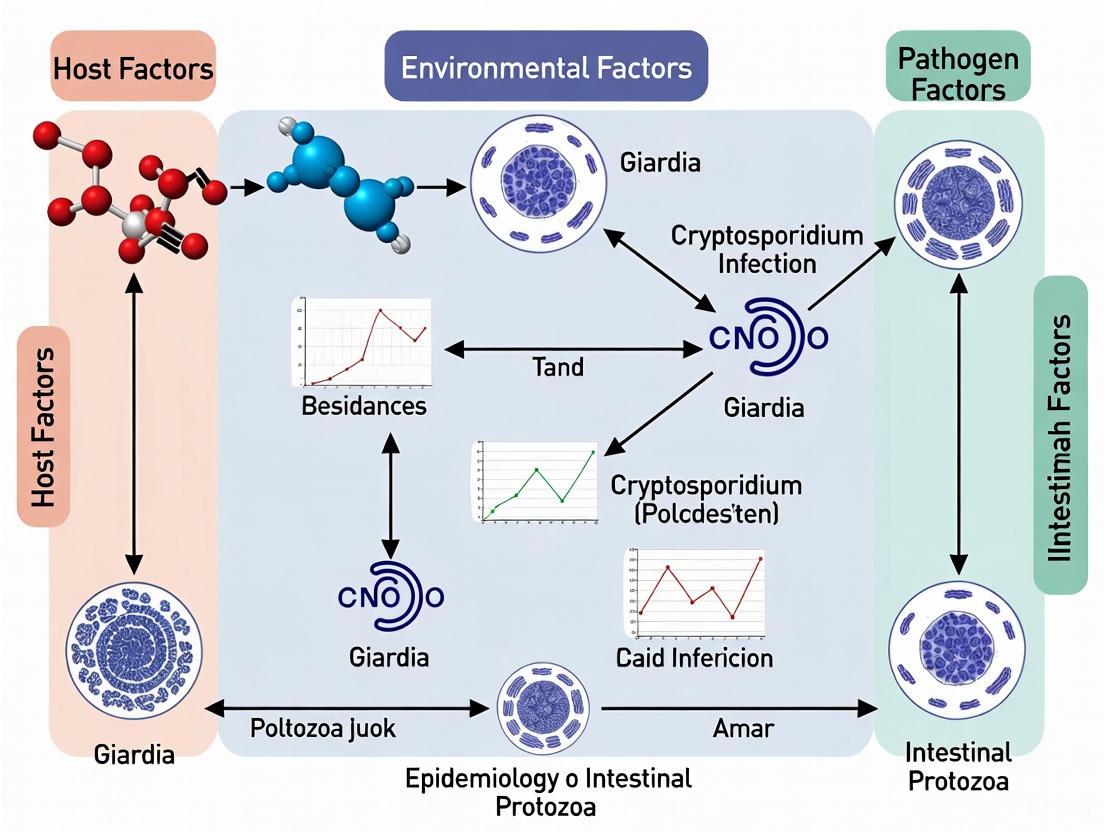
Intestinal protozoal infections, caused by pathogens like Cryptosporidium, Giardia duodenalis, and Entamoeba histolytica, represent a significant global health burden with complex transmission dynamics at the human-animal-environment interface.
Integrating One Health: Advanced Strategies for Intestinal Protozoa Epidemiology and Control
Abstract
Intestinal protozoal infections, caused by pathogens like Cryptosporidium, Giardia duodenalis, and Entamoeba histolytica, represent a significant global health burden with complex transmission dynamics at the human-animal-environment interface. This article synthesizes the latest research and frameworks for applying a One Health approach to the epidemiology of these parasites. Aimed at researchers, scientists, and drug development professionals, it provides a comprehensive overview from foundational concepts and molecular detection methods to the challenges of data integration and the validation of interventions. By examining recent global case studies and emerging technologies, we highlight the critical need for interdisciplinary collaboration and integrated surveillance systems to effectively prevent and control parasitic diseases, ultimately contributing to improved public health outcomes and sustainable development goals.
The One Health Imperative: Understanding the Triad of Human, Animal, and Environmental Transmission
The One Health concept represents an integrated, unifying approach that aims to sustainably balance and optimize the health of people, animals, and ecosystems [1]. This collaborative, multisectoral, and transdisciplinary approach operates at local, regional, national, and global levels to achieve optimal health outcomes by recognizing the interconnection between people, animals, plants, and their shared environment [2]. The approach acknowledges that the health of humans, domestic and wild animals, plants, and the wider environment are closely linked and interdependent [1]. The COVID-19 pandemic, which led to the loss of millions of lives and trillions of dollars from the global economy, has particularly underscored the urgent need to strengthen the One Health approach with greater emphasis on connections to animal health and the environment [1] [3].
In the specific context of intestinal protozoa epidemiology, the One Health framework provides an essential paradigm for understanding and combating zoonotic pathogens like Cryptosporidium, Giardia duodenalis, and Enterocytozoon bieneusi, which cause gastrointestinal diseases in both humans and various animal species [4]. These pathogens exemplify the critical interconnections between human, animal, and environmental health, as their transmission often occurs through contaminated water, soil, or direct contact across species boundaries [4] [5]. The application of One Health principles to intestinal protozoa research enables a more comprehensive understanding of transmission dynamics, genetic relationships between pathogens circulating in different hosts, and the environmental factors that facilitate their spread, thereby contributing to more effective control strategies and public health interventions.
Core Principles and Definitions
Official Definitions from Leading Health Organizations
The World Health Organization (WHO) and the U.S. Centers for Disease Control and Prevention (CDC) provide complementary definitions that capture the essence of the One Health framework:
WHO Definition: "One Health is an integrated, unifying approach that aims to sustainably balance and optimize the health of people, animals, and ecosystems. It recognizes that the health of humans, domestic and wild animals, plants, and the wider environment (including ecosystems) are closely linked and interdependent." [1] The approach can be applied at community, subnational, national, regional, and global levels and relies on shared and effective governance, communication, collaboration, and coordination [1].
CDC/U.S. Government Definition: "One Health is a collaborative, multisectoral, and transdisciplinary approach — working at the local, regional, national, and global levels — with the goal of achieving optimal health outcomes recognizing the interconnection between people, animals, plants, and their shared environment." [2] This definition was officially established in 2017 and emphasizes the practical implementation of One Health across different sectors and disciplines.
Fundamental Principles of the One Health Approach
The conceptual relationship between the core domains of One Health and their application to disease research can be visualized as follows:
The One Health approach is guided by several fundamental principles that distinguish it from traditional sector-specific health approaches:
Interconnection and Interdependence: The approach fundamentally recognizes that the health of humans, animals, and ecosystems are inextricably linked and interdependent [1] [3]. Changes in these relationships can increase the risk of new human and animal diseases developing and spreading.
Multisectoral Collaboration: One Health relies on shared and effective governance, communication, collaboration, and coordination across multiple sectors and disciplines [1] [2]. This includes professionals in human health (physicians, nurses, public health practitioners, epidemiologists), animal health (veterinarians, agricultural workers), environment (ecologists, wildlife experts), and other relevant areas including law enforcement, policymakers, and communities [2].
Holistic Optimization: Rather than focusing solely on human health outcomes, the approach aims to "sustainably balance and optimize" health across all three domains—people, animals, and ecosystems [1]. This recognizes that optimizing for one domain at the expense of others is ultimately unsustainable.
Integrated Disease Management: By linking humans, animals, and the environment, One Health helps address the full spectrum of disease control—from prevention to detection, preparedness, response, and management—and contributes to global health security [1]. This is particularly relevant for zoonotic diseases like those caused by intestinal protozoa.
Equitable and Holistic Solutions: The approach emphasizes shared and effective governance that enables people to better understand "the co-benefits, risks, trade-offs, and opportunities to advance equitable and holistic solutions" [1].
Table 1: Key Application Areas of the One Health Framework
| Application Area | Significance | Examples |
|---|---|---|
| Zoonotic Diseases | 60% of emerging infectious diseases reported globally come from animals; 75% of new human pathogens have originated in animals [3]. | Rabies, Salmonella infection, West Nile virus, Ebola, Avian influenza [2] [3]. |
| Antimicrobial Resistance (AMR) | Resistant germs can spread through communities, food supply, healthcare facilities, and environment [2]. | Tracking AMR in humans, animals, and retail meat through NARMS [6]. |
| Food Safety and Security | Diseases in food animals can threaten supplies, livelihoods, and economies [2]. | Campylobacteriosis, salmonellosis, yersiniosis [7]. |
| Environmental Contamination | Water and soil contamination can transmit pathogens to humans and animals [2]. | Harmful Algal Blooms (HABs) monitored through OHHABS [6]. |
| Vector-Borne Diseases | Warmer temperatures expand mosquito and tick habitats, increasing disease transmission [2]. | Malaria, dengue fever, Lyme disease [3]. |
Operationalizing One Health in Research and Policy
Global and National Implementation Frameworks
The operationalization of One Health has been institutionalized through several key frameworks and collaborative bodies:
Quadripartite Collaboration: WHO works with three key partner organizations—the Food and Agriculture Organization (FAO), the World Organisation for Animal Health (WOAH), and the United Nations Environment Programme (UNEP)—in what is known as the "Quadripartite" collaboration [1]. This collaboration has developed a comprehensive One Health Joint Plan of Action aimed at mainstreaming and operationalizing One Health at global, regional, and national levels; supporting countries in establishing national targets; mobilizing investment; and enabling collaboration across regions, countries, and sectors [1].
One Health High-Level Expert Panel (OHHLEP): WHO serves as the secretariat for OHHLEP, which provides scientific advice to the Quadripartite partners on One Health priority setting, policies, and strategies [3]. This includes recommendations on good practice guidelines, a model One Health Surveillance System, and comprehensive lists of upstream drivers of zoonotic disease spillover with recommendations to mitigate these risks [3].
U.S. National One Health Framework: In January 2025, the CDC, U.S. Department of Agriculture (USDA), and Department of the Interior (DOI) released the first-ever National One Health Framework to Address Zoonotic Diseases and Advance Public Health Preparedness in the United States [8]. Developed at the direction of Congress, this framework seeks to inform One Health collaboration across the U.S. government for the next five years, describing a common vision, mission, and goals for key federal partners implementing the One Health approach [8].
Economic and Public Health Rationale
The adoption of the One Health approach is supported by compelling economic and public health evidence:
According to the World Bank, the expected benefit of One Health to the global community was estimated in 2022 to be at least US$37 billion per year, while the estimated annual need for expenditure on prevention is less than 10% of these benefits [3].
Since 2003, the world has seen over 15 million human deaths and US$4 trillion in economic losses due to disease and pandemics, in addition to immense losses from food and water safety hazards, which are One Health-related health threats [3].
The economic argument for One Health demonstrates that "proactive, multisectoral approaches are cheaper in the long run than reactionary, fragmented responses" [6]. The immense economic costs of COVID-19 were mitigated using One Health measures that could prevent or lessen future pandemics.
Application to Intestinal Protozoa Epidemiology
One Health in Protozoan Research Methodology
The application of the One Health framework to intestinal protozoa research requires specific methodological approaches that integrate data from human, animal, and environmental samples. The following diagram illustrates a generalized experimental workflow for such studies:
Recent research on intestinal protozoa has effectively demonstrated the application of this One Health approach. For example, a 2024 study on Cryptosporidium, Giardia duodenalis, and Enterocytozoon bieneusi in Inner Mongolia collected and analyzed 393 samples from cattle, humans, soil, and water sources at a Simmental cattle ranch [4]. The study revealed an overall infection rate of 20.5% (76/371) in cattle, 54.5% (6/11) in ranch workers, 14.3% (1/7) in water samples, and 50% (2/4) in soil samples, demonstrating clear connections across the three One Health domains [4]. The genetic and evolutionary analyses further revealed that pathogen sequences from humans, cattle, water, and soil showed 99-100% similarity, suggesting possible transmission or contamination between animals and the environment [4].
Research Reagents and Methodological Tools
The molecular detection and characterization of intestinal protozoa in One Health research requires specific research reagents and methodological approaches:
Table 2: Essential Research Reagents and Methods for One Health Protozoan Studies
| Research Reagent/Method | Function in One Health Research | Specific Examples from Literature |
|---|---|---|
| Multiplex PCR Panels | Simultaneous detection of multiple protozoan pathogens from human, animal, and environmental samples. | Allplex Gastrointestinal Panel-Parasite Assay used for detecting Giardia duodenalis, Cryptosporidium spp., Blastocystis in rats [9]. |
| DNA Extraction Kits | Standardized nucleic acid isolation from diverse sample types including feces, soil, and water. | Fast DNA Spin Kit (MP Biomedicals) for soil DNA extraction [4]; QIAamp DNA Stool Mini Kit for intestinal content [9]. |
| Genetic Markers for Genotyping | Identification of species, genotypes, and sub-genotypes to track transmission pathways. | ITS region for E. bieneusi; β-giardin (bg) gene and SSU rRNA for G. duodenalis; SSU rRNA for Cryptosporidium [4] [5]. |
| Phylogenetic Analysis Software | Reconstruction of genetic relationships between pathogens from different hosts and environments. | MEGA11 for phylogenetic tree construction; DnaSP27 for haplotype identification; TCS Networks for statistical parsimony network analysis [4]. |
| Fecal Concentration Methods | Protozoan cyst/oocyst recovery and concentration from environmental and fecal samples. | Midi Parasep SF fecal parasite concentrator for intestinal content [9]; EnviroChek-HV method for water samples [4]. |
Another study from 2021 investigating pathogenic intestinal protozoa among laboratory macaques, animal facility workers, and nearby villagers in China collected 360 fecal samples from these different sources [5]. The research utilized nested PCR assays targeting specific genetic markers for protozoan detection and conducted phylogenetic and haplotype network analysis to examine genetic structure and shared patterns of E. bieneusi and Cyclospora cayetanensis [5]. The study identified 33 ITS genotypes of E. bieneusi, including five known genotypes and six novel genotypes, confirming the presence of zoonotic subtypes in both NHPs and humans [5].
Key Epidemiological Findings from One Health Studies
Research conducted through a One Health lens has revealed crucial epidemiological patterns in intestinal protozoan infections:
Table 3: Epidemiological Findings from One Health Studies on Intestinal Protozoa
| Epidemiological Factor | Findings from One Health Studies | Research Context |
|---|---|---|
| Temporal Variation | Infection rates were higher in June (26.3%) than January (16.3%) in cattle [4]. | Seasonal monitoring of Cryptosporidium, Giardia, and E. bieneusi in Inner Mongolia [4]. |
| Age-associated Risk | Calves showed higher infection rates than adult cattle [4]. | Comparison across age groups in cattle populations [4]. |
| Health Status Correlation | Higher infection rates in diarrheal calves than healthy calves [4]. | Health status comparison in cattle [4]. |
| Environmental Contamination | Higher infection rates in pathogen-contaminated water source sheds than uncontaminated sheds [4]. | Water source quality and infection rates in cattle [4]. |
| Occupational Risk | Facility workers with direct contact to macaques had significantly higher infection rates (OR=0.31, 95% CI: 0.09-1.00, P<0.05) [5]. | Comparison between facility workers and villagers [5]. |
| Urban Reservoirs | Norway rats in urban sewage systems showed high prevalences: Blastocystis (83.5%), Giardia duodenalis (37.7%), Cryptosporidium spp. (34.1%) [9]. | Urban rat population study in Barcelona, Spain [9]. |
The value of this integrated approach is further demonstrated by a systematic review of community-based zoonotic parasite studies operating under a One Health framework, which found that research simultaneously collecting specimens from all three OH domains (people, animals, and the environment) provided critical insights into mapping parasite transmission dynamics and reducing disease incidence [10]. The review identified that surveillance of blood-borne and gastrointestinal protozoa were most frequently reported (19 of 32; 59%), followed by trematodes, nematodes, and cestodes [10].
The One Health framework, as defined by WHO, CDC, and other global health authorities, provides an essential paradigm for addressing complex health challenges at the human-animal-environment interface. Its core principles of integration, collaboration, and balanced optimization of health across domains offer a transformative approach to understanding and combating public health threats. In the specific context of intestinal protozoa epidemiology, the application of this framework enables researchers to unravel complex transmission dynamics, identify environmental reservoirs, understand genetic relationships between pathogens circulating in different hosts, and develop more effective intervention strategies.
The technical guidelines and methodological approaches outlined in this document provide researchers with the tools necessary to implement One Health principles in their studies of intestinal protozoa and other zoonotic pathogens. By adopting the standardized protocols, molecular tools, and integrated analytical frameworks presented here, the research community can generate comparable data across studies and geographic regions, ultimately contributing to more effective global control of parasitic diseases that transcend species and ecosystem boundaries. As human populations continue to expand into new geographic areas, climate change alters ecological relationships, and the movement of people, animals, and animal products increases internationally, the One Health approach will become increasingly vital for protecting global health security.
Intestinal protozoan pathogens represent a significant global health challenge, disproportionately affecting populations in resource-limited settings. Cryptosporidium spp., Giardia duodenalis (also known as G. lamblia or G. intestinalis), and Entamoeba histolytica are among the most clinically relevant parasites causing gastrointestinal disease worldwide [11]. The One Health approach, which recognizes the interconnectedness of human, animal, and environmental health, provides an essential framework for understanding the epidemiology and control of these pathogens. These protozoans share simple biological cycles without intermediate hosts; infection occurs through ingestion of environmentally resistant (oo)cysts excreted in feces, enabling transmission via contaminated water, food, or direct contact [11]. The persistence and distribution of these pathogens are profoundly influenced by anthropogenic factors, including sanitation infrastructure, water treatment practices, and land use, underscoring the necessity of an integrated perspective for effective disease management [12] [13].
Global Epidemiology and Disease Burden
Prevalence and Regional Distribution
A recent systematic review and meta-analysis covering studies from 1999 to 2024 revealed a global protozoan prevalence of 7.5% (95% CI: 5.6%-10.0%) in diarrheal cases, with the highest burden in the Americas and Africa [14] [15]. These pathogens collectively account for an estimated 500 million annual diarrheal cases worldwide, contributing substantially to childhood morbidity, malnutrition, and developmental delays [15]. The geographical distribution of these pathogens demonstrates striking disparities, reflecting socioeconomic conditions and public health infrastructure.
Table 1: Global Prevalence and Health Impact of Key Intestinal Protozoa
| Pathogen | Global Prevalence in Diarrheal Cases | Annual Incidence Estimates | Primary Health Consequences | High-Risk Populations |
|---|---|---|---|---|
| Cryptosporidium spp. | 1-4% worldwide; up to 10% in children in low-income regions [15] | ~200,000 annual deaths [15] | Severe watery diarrhea; life-threatening in immunocompromised [15] | Children under 5, immunocompromised individuals [15] [11] |
| Giardia duodenalis | 2-7% in developed countries; 30-40% in developing countries [15] | 280 million people affected yearly [15] | Giardiasis - watery diarrhea, bloating, malabsorption [15] | Young children, travelers, immunocompromised [11] |
| Entamoeba histolytica | About 1-2% true infections (10% carry Entamoeba species) [15] | 100 million annual cases [11] | Amoebiasis - bloody diarrhea, dysentery, liver abscess [15] | Populations in endemic areas with poor sanitation [11] |
One Health Transmission Dynamics
The zoonotic potential of these pathogens creates complex transmission dynamics that necessitate integrated surveillance. Molecular studies have identified zoonotic genotypes in both human and animal populations, confirming cross-species transmission pathways.
Table 2: One Health Transmission Dynamics and Environmental Reservoirs
| Pathogen | Zoonotic Potential & Key Reservoirs | Primary Transmission Routes | Environmental Persistence |
|---|---|---|---|
| Cryptosporidium | C. parvum has high zoonotic potential; cattle are important reservoirs [11] | Waterborne, person-to-person, animal-to-person [11] | Oocysts resistant to standard water treatment [15] |
| Giardia | Assemblages A and B are zoonotic; assemblage E also potentially pathogenic for humans [11] [12] | Waterborne, foodborne, person-to-person [11] | Cysts survive in water and soil for extended periods [12] |
| E. histolytica | Primarily human-specific; minimal zoonotic transmission | Fecal-oral, waterborne, foodborne [11] | Cysts can survive in environment for weeks/months |
Recent studies illustrate these transmission patterns. In Inner Mongolia, China, a One Health study detected Cryptosporidium species (C. bovis, C. andersoni, C. parvum, C. ryanae, and C. suis) with 99-100% genetic similarity between isolates from humans, cattle, water, and soil, suggesting active cross-transmission [12]. Similarly, urban rats in Barcelona showed significant prevalences of Giardia duodenalis (37.7%) and Cryptosporidium spp. (34.1%), highlighting their role as urban reservoirs [16]. In southern Chile, zoonotic subtypes of Giardia duodenalis and Blastocystis sp. were detected in humans, with substantial environmental contamination in public parks creating transmission cycles [13].
Pathobiology and Clinical Manifestations
Infection Strategies and Host Response
These intestinal protozoa employ distinct infection strategies but share common pathophysiological mechanisms that lead to diarrheal disease.
Giardia lamblia colonizes the duodenum, jejunum, and ileum without invading the intestinal mucosa. Trophozoites attach to enterocytes via a microtubule-based ventral disk and specific surface constituents including lectins [17]. This attachment can trigger host signaling pathways leading to increased intestinal permeability through disruption of tight junctions and microvillous shortening, resulting in malabsorptive diarrhea [17]. Host responses include upregulation of chemokines (CCL2, CCL20, CXCL1-3) and defensins via matrix metalloprotease 7 (Mmp7) [17].
Cryptosporidium parvum also colonizes the small intestine but occupies an intracellular but extracytoplasmic niche within epithelial cells [11]. Infection causes diarrhea through mechanisms involving increased intestinal permeability, chloride secretion, and malabsorption [11]. The parasite induces complex host cell signaling and cytoskeletal rearrangements at the attachment site [17].
Entamoeba histolytica exhibits a more invasive pathobiology, colonizing the colon and potentially disseminating to extraintestinal sites, primarily the liver [11]. Trophozoites can lyse host cells through direct contact utilizing galactose-binding lectins, pore-forming peptides, and cysteine proteases [17]. This invasion triggers inflammatory responses and can lead to severe complications including amoebic colitis and liver abscesses [11].
Diagram 1: Pathogenic Strategies of Intestinal Protozoa
Research Methodologies and Experimental Protocols
Integrated One Health Field Sampling
Contemporary studies employ comprehensive sampling frameworks that encompass human, animal, and environmental components to elucidate transmission dynamics:
Human Sampling: Cross-sectional studies typically collect fecal samples from consenting participants across different age groups and risk categories. For example, the Chile One Health study collected triplicate fecal samples from 157 participants, with portions preserved in both PAF (Phenol, Alcohol, Formaldehyde) fixative for microscopy and 70% ethanol for molecular analysis [13].
Animal Sampling: Domestic dogs, livestock, and peri-domestic animals are sampled based on their potential interaction with human populations. The Ecuador study analyzed 500 domestic dogs from marginalized urban and rural sectors, with careful documentation of animal demographics and husbandry practices [18].
Environmental Sampling: Soil and water samples are systematically collected from high-risk transmission sites. The Inner Mongolia study tested water sources and soil from cattle sheds, while the Chile study collected soil from public parks at depths of 3-5cm from children's play areas [12] [13].
Laboratory Detection and Characterization
Microscopic Examination: Direct smear, flotation, and sedimentation techniques remain fundamental for initial detection. The Modified Burrows Method (PAFS) is commonly employed for concentration and microscopic examination [13] [18].
Molecular Detection: Multiplex PCR assays enable simultaneous detection and differentiation of multiple pathogens. The Allplex Gastrointestinal Panel-Parasite Assay has been successfully used for detecting protozoans in both human and animal samples [16]. Specific gene targets include:
- SSU rRNA for Cryptosporidium spp. and G. intestinalis [5]
- ITS rRNA for E. bieneusi and C. cayetanensis [5]
- β-Giardin gene for G. duodenalis subtyping [13]
- 18S rRNA for Blastocystis sp. subtyping [13]
Next-Generation Sequencing (NGS): For high-resolution subtyping and population genetics, NGS approaches targeting specific genes provide detailed characterization of zoonotic transmission. The Chile study employed NGS on the 18S rRNA and β-Giardin genes to identify zoonotic subtypes circulating in human populations [13].
Serological Analysis: ELISA-based detection of anti-parasite antibodies (e.g., anti-Toxocara canis IgG) provides complementary data on exposure history, particularly for parasites with tissue migration phases [13].
Diagram 2: Integrated One Health Research Workflow
The Scientist's Toolkit: Essential Research Reagents
Table 3: Key Research Reagents and Their Applications in Protozoan Research
| Reagent/Kit | Primary Application | Technical Function | Example Use Case |
|---|---|---|---|
| E.Z.N.A. Stool DNA Kit | DNA extraction from fecal samples | Efficient isolation of PCR-quality DNA from complex fecal matrices | DNA extraction for multiplex PCR detection of multiple parasites [5] |
| Allplex Gastrointestinal Panel-Parasite Assay | Multiplex pathogen detection | Simultaneous PCR-based detection of multiple protozoan pathogens in a single reaction | Detection of Giardia, Cryptosporidium, Blastocystis in human and rat samples [16] |
| NovaLisa ELISA Kits | Serological detection | Enzyme-linked immunosorbent assay for antibody detection in serum | Detection of anti-Toxocara canis IgG antibodies in human serum [13] |
| PAF Fixative | Sample preservation | Phenol-Alcohol-Formaldehyde solution preserves parasite morphology for microscopy | Long-term storage of fecal samples for morphological analysis [13] |
| NGS Platforms | High-resolution genotyping | Next-generation sequencing for subtype identification and transmission tracking | Identification of Giardia and Blastocystis subtypes in human populations [13] |
Discussion: Implications for Public Health and Drug Development
The substantial disease burden caused by Cryptosporidium, Giardia, and Entamoeba histolytica underscores the urgent need for enhanced control strategies. The high prevalence rates observed in marginalized communities - reaching 31.87% in humans and 78% in domestic dogs in Ecuadorian coastal communities - highlight the syndemic nature of these infections, where poverty, inadequate sanitation, and zoonotic transmission converge [18]. The One Health approach provides the most comprehensive framework for addressing these challenges, offering insights for public health interventions, drug discovery, and vaccine development.
From a therapeutic perspective, the limited treatment options underscore the need for continued drug development. Nitazoxanide remains the only FDA-approved drug for cryptosporidiosis, with emerging resistance posing additional challenges [15]. The complex zoonotic transmission cycles documented in recent studies suggest that effective control will require integrated approaches combining human chemotherapy with environmental management and animal health interventions. The successful application of molecular tools to track transmission pathways provides valuable methodologies for evaluating intervention effectiveness and identifying persistent transmission hotspots.
Future research should prioritize the development of point-of-care diagnostics that can be deployed in resource-limited settings, expanded veterinary public health programs targeting zoonotic reservoirs, and novel therapeutic agents that address current limitations in treatment options. The integration of genomic epidemiology with field-based studies offers promising approaches for unraveling the complex transmission dynamics of these persistent pathogens and developing targeted, effective control strategies grounded in the One Health paradigm.
The One Health approach is critical for understanding the complex epidemiology of intestinal protozoa, which involves interconnected transmission dynamics between humans, animals, and environments. Zoonotic spillover events, where pathogens jump from animal populations to humans, represent significant public health threats that are increasingly recognized at the human-animal-ecosystem interface. This whitepaper examines two distinct geographical contexts—Inner Mongolia, China, and Ecuador—to illustrate how local ecological factors, agricultural practices, and wildlife reservoirs contribute to the transmission of parasitic zoonoses. Through these case studies, we demonstrate the necessity of integrated surveillance systems and molecular epidemiological tools for effective pathogen tracking and control strategy development.
The growing burden of zoonotic diseases, which account for approximately 60% of emerging human pathogens and around 75% of all emerging infectious diseases, underscores the importance of this research [19]. In both Inner Mongolia and Ecuador, unique environmental conditions and human activities create favorable circumstances for pathogen persistence and transmission, highlighting the need for region-specific One Health interventions.
Case Study 1: Inner Mongolia, China
Alveolar Echinococcosis in a Pastoral Community
A recent case report documented the first human alveolar echinococcosis (AE) infection in Inner Mongolia, resulting from infection with the Mongolian genotype of Echinococcus multilocularis [20]. This case represents a significant epidemiological milestone, challenging previous classifications of the region as non-endemic for AE.
The patient was a 58-year-old female pastoralist with prolonged occupational contact with dogs and no travel history to known endemic areas [20]. Clinical presentation included a massive hepatic lesion exceeding 10 cm in diameter, elevated eosinophils (0.90 × 10⁹/L), and elevated basophils (0.08 × 10⁹/L) [20]. Despite undergoing liver transplantation, the patient succumbed postoperatively, demonstrating the high mortality profile associated with advanced AE [20].
Table 1: Clinical Profile of AE Case in Inner Mongolia
| Clinical Parameter | Patient Value | Reference Range | Units |
|---|---|---|---|
| Eosinophil count | 0.90 ↑ | 0.02–0.52 | 10⁹/L |
| Basophil count | 0.08 ↑ | 0.00–0.06 | 10⁹/L |
| Alkaline phosphatase | 179 ↑ | < 135 | U/L |
| γ-glutamyl transferase | 58 ↑ | 7–45 | U/L |
| D-dimer | 0.87 ↑ | 0–0.55 | mg/L FEU |
Environmental Transmission Cycle
Molecular analysis confirmed the presence of genotype-matched E. multilocularis in corsac fox (Vulpes corsac) feces from grasslands along Hulun Lake in northeastern Inner Mongolia, providing evidence of a potential zoonotic transmission source [20]. The region's ecosystem supports a sylvatic cycle involving definitive hosts (foxes and dogs) that shed infective eggs in their feces, contaminating vegetation consumed by intermediate hosts (rodents) and accidentally by humans [20].
The case highlights how semi-nomadic pastoralism and close human-animal cohabitation in Inner Mongolia create conditions favorable for zoonotic transmission, particularly through occupational exposure to infected canids [20].
Case Study 2: Ecuador
Multipathogen Surveillance in Diverse Ecosystems
Ecuador's significant biodiversity, environmental factors, and high interaction between wildlife and human activities create favorable conditions for multiple zoonotic pathogens. Recent surveillance data reveal several circulating parasitic organisms with zoonotic potential across different regions of the country.
Table 2: Zoonotic Pathogen Prevalence Across Ecuadorian Ecosystems
| Pathogen | Host Species | Prevalence | Region | Sampling Year |
|---|---|---|---|---|
| Histoplasma capsulatum | Wild mammals (Chiroptera) | 14% overall, 80% in bats | Coast, Andean, Amazon | 2022-2023 [21] |
| Toxoplasma gondii | Free-roaming dogs | 39.7% overall | Nationwide (4 regions) | 2018-2019 [22] |
| Toxoplasma gondii | Free-roaming dogs | 55.6% | Galapagos (Santa Cruz) | 2018-2019 [22] |
| Histoplasma capsulatum | Wild mammals (Rodentia) | 15% | Coast, Andean, Amazon | 2022-2023 [21] |
Environmental Drivers of Transmission
Ecuador's diverse climatic regions—Coast, Andean, and Amazon—create varied ecological niches for pathogen persistence. Ecological niche modeling has identified suitable environmental conditions for H. capsulatum concentrated in Ecuador's Coast region with isolated patches in the Andean and Amazon regions [21]. The fungus thrives in nitrogen-rich soils enriched by avian and chiropteran guano, with dissemination facilitated by migratory bat species [21].
The high seropositivity of T. gondii (39.7%) in free-roaming dogs across all sampled regions demonstrates widespread environmental contamination, with no significant differences between urban and rural settings [22]. This even distribution suggests ubiquitous environmental exposure to the parasite throughout Ecuador.
Experimental Methodologies for One Health Surveillance
Molecular Detection Protocols
Nested PCR for Protozoan Identification
The detection and genotyping of intestinal protozoa like Enterocytozoon bieneusi typically employ nested PCR targeting the internal transcribed spacer (ITS) region [23]. The protocol follows these specifications:
- Primary PCR: Uses primers ITSF1 (5'-GATGGTCATAGGGATGAAGAGCTT-3') and ITSR1 (5'-TATGCTTAAGTCCAGGGAG-3') with annealing at 55°C, producing a 392 bp amplicon [23]
- Secondary PCR: Uses nested primers ITSF2 (5'-AGGGATGAAGAGCTTCGGCTCTG-3') and ITSR2 (5'-AGTGATCCTGTATTAGGGATATT-3') with annealing at 55°C [23]
- Target Region: A standardized 243 bp fragment of the ITS region spanning the terminal portion of the 18S rRNA gene, the complete ITS, and part of the 5.8S rRNA gene [23]
This method achieved an overall infection rate of 32.9% in sheep, 4.5% in cattle, and 1.6% in humans in Lishui, China, with all human cases occurring in occupationally exposed farm workers [23].
Phylogenetic and Haplotype Analysis
To determine genetic structure and cross-species transmission patterns:
- Sequence Alignment: Multiple sequence alignment performed using MEGA 11 software with sequences trimmed to target gene regions [23]
- Phylogenetic Reconstruction: Neighbor-joining method with 1000 bootstrap replicates to assess tree topology robustness [23]
- Haplotype Network Analysis: Conducted using DnaSP version 27 with TCS network constructed at 95% connection limit, visualized with PopART software [23]
Wastewater-Based Epidemiology (WBE)
WBE has emerged as a valuable tool for community-level surveillance of parasitic pathogens. An optimized protocol for detecting waterborne protozoa includes:
- Concentration Method: Aluminium-based adsorption-precipitation combined with three freeze-thaw cycles [24]
- DNA Extraction: Magnetic-beads-based nucleic acid extraction [24]
- Detection Limits: qPCR detection limits of 1.29 × 10⁴ oocysts/L for Cryptosporidium molecular targets [24]
Application in hospital and wastewater treatment plant (WWTP) surveillance revealed a higher prevalence of T. gondii (46.67%) in hospital wastewater, followed by C. parvum and C. hominis (13.33%) [24].
The Scientist's Toolkit: Research Reagent Solutions
Table 3: Essential Research Reagents for Zoonotic Parasite Surveillance
| Reagent / Kit | Application | Specifications | Reference |
|---|---|---|---|
| Fast DNA Spin Kit | DNA extraction from fecal samples | Protocol: ~500 mg sample, biosafety cabinet use | [23] |
| E.Z.N.A. Stool DNA Kit | DNA extraction from stool | Protocol: ~200 mg/ml sample input | [5] |
| Allplex Gastrointestinal Panel-Parasite Assay | Multiplex PCR detection | Identifies multiple protozoa simultaneously | [16] |
| ID Screen Toxoplasmosis Indirect Multi-species | ELISA serological detection | Detects antibodies against P30 protein of T. gondii | [22] |
| QIAamp DNA FFPE Kit | DNA from formalin-fixed tissue | Used for histopathological confirmation | [20] |
| Glass milk methodology | Silica-based DNA extraction | Uses silicon dioxide powder in guanidine-HCl solution | [21] |
Discussion: One Health Implications for Disease Control
Integrated Surveillance Strategies
The case studies from Inner Mongolia and Ecuador demonstrate that effective control of zoonotic protozoa requires integrated surveillance across human, animal, and environmental compartments. Molecular tools enable the identification of shared genotypes between humans and animals, providing evidence of cross-species transmission routes [23] [5]. In Ecuador, the prioritization of zoonotic diseases through collaborative workshops with PAHO/WHO represents a step toward implementing this approach [25].
The detection of E. bieneusi genotypes BEB6, J, and I in both livestock and occupationally exposed humans in China demonstrates the value of phylogenetic analyses in tracing transmission pathways [23]. Similarly, haplotype network reconstruction revealing shared haplotypes between human and livestock samples from the same farms provides powerful evidence of zoonotic spillover events [23].
Environmental and Occupational Risk Factors
Agricultural practices significantly influence transmission dynamics. In Lishui, China, significantly higher E. bieneusi infection rates were observed in intensively managed herds and in young animals under one year of age [23]. Similarly, occupational exposure remains a critical risk factor, with facility workers having direct contact with macaques showing significantly higher positive rates for pathogenic intestinal protozoa (OR = 0.31, 95% CI: 0.09–1.00) [5].
Environmental factors including heavy rainfall and dense water networks facilitate pathogen transmission in regions like Lishui, where abundant precipitation creates favorable conditions for waterborne spread of pathogens [23]. The high seropositivity of T. gondii in free-roaming dogs across diverse Ecuadorian ecosystems further highlights how mobile reservoir hosts can maintain environmental contamination across large geographical areas [22].
The case studies from Inner Mongolia and Ecuador illustrate how zoonotic spillover events are shaped by complex interactions between environmental factors, animal reservoirs, and human activities. Molecular epidemiological tools provide critical insights into transmission dynamics and genetic relationships between isolates from different hosts, enabling targeted interventions.
A comprehensive One Health framework that integrates surveillance data from human, animal, and environmental sources is essential for effective control of intestinal protozoa. Future research should focus on optimizing wastewater-based epidemiology, developing point-of-care diagnostic tools for field use, and implementing integrated control strategies that address the specific ecological and socioeconomic contexts of each region.
The shifting patterns of disease distribution evidenced by the first reported AE case in Inner Mongolia and the widespread detection of H. capsulatum across Ecuador's ecosystems underscore the need for ongoing surveillance and flexible public health responses to emerging zoonotic threats.
Socioeconomic and Ecological Drivers of Infection
The epidemiology of intestinal protozoan infections is a critical field of study within the One Health framework, which recognizes the interconnectedness of human, animal, and environmental health. These pathogens, including Giardia duodenalis, Cryptosporidium spp., and Entamoeba histolytica, constitute a significant global public health burden, particularly in low- and middle-income countries. Understanding the drivers of these infections is essential for developing effective, targeted control strategies. This whitepaper synthesizes current research to provide an in-depth technical analysis of the socioeconomic and ecological factors that propagate the transmission of intestinal protozoa, with a specific focus on implications for researchers, scientists, and drug development professionals.
The Socioeconomic and Ecological Interface in Disease Transmission
The Relative Importance of Driver Types
Recent macro-level analyses of global zoonotic disease outbreaks provide critical insights into the differential roles of socioeconomic versus ecological drivers. A 2025 study re-analyzing 300 zoonotic outbreaks from 1977-2017 revealed distinct driver profiles for different pathogen types [26]. Socioeconomic factors—such as food and water contamination, local livestock production, and public health infrastructure—more frequently triggered outbreaks of bacterial pathogens [26]. In contrast, ecological and environmental factors—including weather conditions, changes in vector abundance, and climate change—more often triggered viral outbreaks [26].
However, this analysis also identified a crucial interaction: while ecological factors might initiate viral outbreaks, socioeconomic factors acted as powerful transmission amplifiers, with outbreaks driven by a larger proportion of socioeconomic factors resulting in higher case numbers [26]. This nuanced understanding highlights the necessity of considering both driver categories in outbreak prevention and control planning.
Specific Drivers and Their Mechanisms
Table 1: Key Socioeconomic and Ecological Drivers of Intestinal Protozoan Infections
| Driver Category | Specific Driver | Pathogens Affected | Mechanism of Influence | Geographic Context |
|---|---|---|---|---|
| Socioeconomic | Lack of Maternal Education | G. lamblia, E. histolytica [27] | Limits health literacy and adoption of protective hygiene practices | Central Ethiopia [27] |
| Socioeconomic | Absence of Functional Sanitation | G. lamblia, E. histolytica [27] | Increases environmental contamination with infectious cysts | Central Ethiopia [27], Southwest Thailand [28] |
| Socioeconomic | Inadequate Hand Hygiene | G. lamblia, E. histolytica [27] | Facilitates direct fecal-oral transmission between individuals | Central Ethiopia [27] |
| Socioeconomic | Food Contamination | Various protozoa [26] | Enables transmission through contaminated food products | Global outbreak analysis [26] |
| Socioeconomic | Water Contamination | Cryptosporidium, Giardia [26] | Leads to waterborne outbreaks affecting large populations | Global outbreak analysis [26], Inner Mongolia [4] |
| Socioeconomic | Poverty & Marginalization | Soil-transmitted helminths, protozoa [28] | Creates conditions of poor housing, sanitation, and limited healthcare access | Southwest Thailand [28] |
| Ecological | Animal Contact (Domestic) | G. lamblia, E. histolytica [27] | Creates zoonotic transmission pathways at the human-animal interface | Central Ethiopia [27] |
| Ecological | Weather Conditions | Various protozoa [26] | Influences survival and dispersal of infectious stages in environment | Global outbreak analysis [26] |
| Ecological | Changes in Vector/Reservoir Abundance | Various protozoa [26] | Alters population dynamics of key intermediate hosts | Global outbreak analysis [26] |
| Ecological | Climate Change | Various protozoa [26] | Causes long-term shifts in transmission seasons and geographic range | Global outbreak analysis [26] |
Methodologies for Investigating Drivers in Field Studies
Cross-Sectional Survey Design and Parasitological Diagnosis
A standardized approach for investigating intestinal protozoa infections and associated risk factors involves a cross-sectional survey design, as demonstrated in a 2023 study of under-five children in Ethiopia [27] and a 2023 study of ethnic minorities in Thailand [28].
Protocol: Stool Sample Collection and Microscopic Analysis
- Sample Collection: Collect single stool samples from consented participants using labeled, sterile containers [28] [27].
- Sample Preservation: Preserve samples in 10% formalin for transport and subsequent laboratory analysis [28].
- Microscopic Examination:
- Perform a direct wet smear examination with saline and iodine for initial parasite detection [28] [27].
- For increased sensitivity, subject samples negative by direct smear to a formalin-ethyl acetate concentration technique (e.g., Richie's modified method) to concentrate parasitic elements [28] [27].
- Identification: Identify and report parasite species based on morphological characteristics observed under microscopy [28].
Molecular Characterization and Phylogenetic Analysis
Molecular tools are indispensable for understanding transmission dynamics and zoonotic potential, as applied in a 2024 One Health study in Inner Mongolia [4] and a 2021 study on macaques and humans [5].
Protocol: DNA Extraction, PCR, and Genotyping
- DNA Extraction: Extract genomic DNA from approximately 200 mg of fecal sample using commercial stool DNA kits [4] [5].
- Nested PCR Amplification: Perform nested PCR assays targeting specific genetic loci:
- Sequencing and Genotyping: Purify positive PCR products and perform direct sequencing. Identify species and genotypes by comparing obtained sequences with known sequences in genomic databases using BLAST analysis [4] [5].
- Phylogenetic and Haplotype Analysis:
- Construct phylogenetic trees using the neighbor-joining method in software like MEGA11 to visualize evolutionary relationships [4].
- Perform haplotype network analysis using statistical parsimony in software like PopART to infer shared patterns and transmission pathways between hosts and the environment [4].
Socioeconomic and Behavioral Data Collection
Gathering accurate data on risk factors requires tailored approaches, especially in populations with low literacy.
Protocol: Structured Questionnaires and Interviews
- Questionnaire Development: Develop a structured questionnaire based on standard instruments (e.g., from national health ministries) to capture data on [28] [27]:
- Sociodemographic characteristics (education, occupation).
- Sanitary conditions (toilet availability, waste management).
- Water sources and handwashing practices.
- Animal contact and livestock management.
- Implementation: Administer questionnaires via personal interviews. To overcome language and literacy barriers, employ picture-based questionnaires and enlist local interpreters or bilingual community members to assist with communication [28].
- Data Analysis: Use statistical software (e.g., SPSS) to perform bivariate and multivariate logistic regression analyses. This identifies factors significantly associated with infection, expressed as odds ratios (OR) with 95% confidence intervals (CI) [27].
- One Health Research Workflow: This diagram illustrates the integrated methodological approach for investigating the drivers of intestinal protozoan infections, combining field-based data collection with laboratory analysis [28] [4] [27].
The Researcher's Toolkit: Essential Reagents and Materials
Table 2: Key Research Reagent Solutions for Intestinal Protozoa Studies
| Reagent/Material | Application | Technical Function | Example Use Case |
|---|---|---|---|
| 10% Formalin | Parasitology | Preserves stool samples for transport and morphological analysis; fixes parasitic stages [28]. | Field sample preservation in community surveys [28]. |
| Formalin-Ethyl Acetate | Parasitology | Concentration of parasitic cysts and ova from fecal samples by differential sedimentation [28] [27]. | Increasing detection sensitivity in microscopic diagnosis [28]. |
| Stool DNA Extraction Kit | Molecular Biology | Isolation of high-quality genomic DNA from complex fecal samples for downstream PCR [4] [5]. | DNA preparation for genotyping Cryptosporidium, Giardia, and E. bieneusi [4] [5]. |
| PCR Master Mix | Molecular Biology | Enzymatic amplification of target DNA sequences with primers, nucleotides, and polymerase [4] [5]. | Nested PCR for pathogen detection and genotyping [4] [5]. |
| Specific Primers (ITS, bg, SSU rRNA) | Molecular Biology | Targets specific gene regions for pathogen identification and differentiation at species/genotype level [4] [5]. | Amplifying the ITS region of E. bieneusi or the bg gene of G. duodenalis [4]. |
| Agarose Gel Electrophoresis System | Molecular Biology | Separates and visualizes PCR amplification products by molecular weight to confirm success [5]. | Post-PCR analysis to check for amplicons of expected size before sequencing [5]. |
| Potassium Dichromate (2.5%) | Parasitology | Preserves stool samples intended for molecular analysis, maintaining DNA integrity [5]. | Long-term storage of samples for future molecular studies [5]. |
A comprehensive One Health approach is paramount to effectively address the persistent burden of intestinal protozoan infections. The evidence clearly demonstrates that disease transmission is perpetuated by a complex interplay of socioeconomic marginalization—such as poverty, illiteracy, and inadequate sanitation—and ecological factors—including animal contact, weather, and climate. Successful control and elimination strategies must therefore be equally integrated, moving beyond purely medical interventions to include improvements in water, sanitation, and hygiene (WASH) infrastructure, public health education, and sustainable agricultural and environmental management. For researchers and drug developers, this holistic understanding is critical. It informs the design of robust surveillance studies, highlights the need for diagnostics that can identify zoonotic transmission, and emphasizes that therapeutic advances must be deployed in tandem with broader public health measures that address the underlying socioeconomic and ecological drivers of infection.
Current Knowledge Gaps and Emerging Research Priorities
The One Health approach, which recognizes the interconnected health of people, animals, plants, and their shared environment, provides an essential framework for tackling complex public health challenges. Nowhere is this holistic perspective more critical than in the epidemiology of intestinal protozoal infections, a significant global health concern affecting an estimated 450 million people and contributing to substantial morbidity and mortality worldwide [29] [30]. Despite decades of research, significant knowledge gaps persist in understanding the complex transmission dynamics of pathogens like Giardia duodenalis, Cryptosporidium spp., and Entamoeba histolytica across human, animal, and environmental interfaces.
Recent evidence underscores the substantial burden of these infections. A comprehensive One Health study in an urban area of Valdivia, Chile, revealed parasite prevalence of 28% in humans, 26% in owned dogs, and 44% in environmental dog feces, with soil contamination identified in up to 30.5% of public park samples [13]. Similarly, a meta-analysis in Malaysia found an overall pooled prevalence of intestinal protozoal infections of 24%, with Entamoeba spp. having the highest prevalence at 18% [30]. These findings highlight the ongoing transmission of these pathogens and the need for integrated approaches to their control.
This whitepaper synthesizes current evidence on knowledge gaps and emerging research priorities for intestinal protozoa within a One Health context. It is intended to guide researchers, scientists, and drug development professionals in targeting their efforts toward the most pressing questions and innovative methodologies needed to advance the field.
Current Evidence Base and Identified Knowledge Gaps
Table 1: Prevalence of Intestinal Protozoa in Human Populations Across Different Regions
| Region/Country | Overall Prevalence | Entamoeba spp. | Giardia spp. | Cryptosporidium spp. | Key Population Studied | Citation |
|---|---|---|---|---|---|---|
| Malaysia | 24% | 18% | 11% | 9% | General population | [30] |
| Chile (Valdivia) | 28% | Not specified | Detected (subtypes) | Not specified | Urban community | [13] |
| Turkey (Van) | 41% | E. coli: 4% | G. intestinalis: 9% | 15% | Disabled patients | [31] |
| Kazakhstan | Not applicable | Not applicable | Detected in calves | 49.2% in young calves | Dairy calves | [32] |
| Inner Mongolia, China | Not applicable | Not applicable | Detected (assemblages B&E) | Multiple species identified | Cattle and ranch workers | [12] |
Table 2: Environmental Contamination with Zoonotic Parasites in One Health Studies
| Study Location | Sample Type | Contamination Rate | Key Parasites Identified | Implications for Human Health | |
|---|---|---|---|---|---|
| Valdivia, Chile | Soil from public parks | 30.5% | Toxocara sp., Trichuris vulpis | Significant environmental transmission risk | [13] |
| Valdivia, Chile | Dog feces (environmental) | 44% | Zoonotic parasites | Dogs as key contamination source | [13] |
| Inner Mongolia, China | Water samples | 14.3% (1/7) | Pathogenic intestinal protozoa | Water as transmission route | [12] |
| Inner Mongolia, China | Soil samples | 50% (2/4) | Pathogenic intestinal protozoa | Environmental persistence | [12] |
Critical Knowledge Gaps
Several significant knowledge gaps hinder effective control of intestinal protozoal infections within a One Health framework:
2.2.1 Limited Integrated Surveillance Data Despite recognition that intestinal protozoa circulate at the human-animal-environment interface, comprehensive surveillance systems that simultaneously monitor all three components remain rare. Most existing studies focus on human populations, with limited parallel data from animal reservoirs and environmental sources [13] [12]. This gap prevents a complete understanding of transmission dynamics and the relative importance of different exposure routes.
2.2.2 Insufficient Understanding of Zoonotic Transmission Pathways While zoonotic transmission is suspected for several intestinal protozoa, the specific pathways, including the role of various animal species as reservoirs, requires further elucidation. Molecular studies have identified zoonotic subtypes of Giardia duodenalis and Blastocystis sp. in humans [13], and cattle have been established as a reservoir for Cryptosporidium and Giardia species infectious to humans [32]. However, the extent of zoonotic transmission varies across geographical regions and is poorly quantified in many areas [32] [12].
2.2.3 Diagnostic Limitations and Subtype Characterization Current diagnostic methods vary significantly in sensitivity and specificity, and many cannot distinguish between pathogenic and non-pathogenic species or subtypes. For example, microscopic examination cannot differentiate between E. histolytica, E. dispar, and E. moshkovskii [30], complicating accurate burden assessment and clinical management. There is also limited application of next-generation sequencing in routine surveillance to understand subtype distribution and zoonotic potential [13].
2.2.4 Insufficient Data from Vulnerable Populations and High-Risk Settings Studies on intestinal protozoa in immunocompromised individuals, particularly people with HIV in Malaysia, remain limited [30]. Similarly, disabled individuals, especially those with conditions like spina bifida, show dramatically higher infection rates (83.3% in one study) [31], yet remain understudied. Industrial animal agricultural settings, such as the intensive dairy farms in Central Asia, represent another significant knowledge gap despite their potential role in zoonotic transmission [32] [12].
Emerging Research Priorities
Integrated Surveillance Systems
The highest-ranked future research priority identified in a global One Health Horizon Scanning exercise is the development of integrated surveillance systems that unite human, livestock, agricultural, and ecosystem experts to support early detection, community engagement, and rapid response [33]. Such systems should:
- Establish standardized protocols for simultaneous sampling of human, animal, and environmental matrices
- Incorporate molecular techniques for pathogen identification and subtyping
- Utilize data-sharing platforms that integrate information across sectors
- Include community-based surveillance components for enhanced detection
This priority reflects systematic gaps in public health infrastructure, particularly in African regions, while European and North American respondents showed greater interest in predictive modeling and zoonotic risk forecasting [33].
Climate Change and Emerging Diseases
Climate change alters key environmental factors such as temperature, humidity, and precipitation, potentially facilitating parasite persistence and spread in both endemic and non-endemic regions [13]. Research priorities include:
- Understanding how climate variables affect protozoal survival and transmission in different environments
- Modeling future geographic distribution of intestinal protozoa under climate change scenarios
- Developing climate-resilient prevention and control strategies
- Investigating interactions between climate change and other environmental drivers of disease
Governance Mechanisms and Cross-Sectoral Collaboration
Effective One Health implementation requires robust governance mechanisms that facilitate collaboration across human health, animal health, and environmental sectors. Research should focus on:
- Identifying optimal governance structures for coordinated action across sectors
- Developing economic arguments demonstrating that proactive, multisectoral approaches are more cost-effective than fragmented responses [6]
- Creating clear, concise plans to overcome inter-agency cooperation challenges, such as siloed funding and differing priorities [33] [6]
- Establishing metrics for evaluating One Health collaboration effectiveness
Socio-Environmental Drivers and Health Equity
Socio-environmental factors and health equity considerations have emerged as critical research priorities, particularly among younger and female respondents in the Horizon Scanning exercise [33]. Key research areas include:
- Investigating how factors like poverty, inadequate sanitation, and limited access to clean water drive protozoal transmission
- Developing interventions that address structural determinants of health
- Integrating indigenous knowledge and community perspectives into research
- Examining gender-specific risks and vulnerabilities to intestinal protozoal infections
Experimental Protocols and Methodologies
Integrated One Health Field Sampling Protocol
Objective: To simultaneously assess intestinal protozoal prevalence in human, animal, and environmental compartments within a defined geographic area.
Human Sampling:
- Collect fecal and blood samples from consenting human participants
- Use standardized questionnaires to document socioeconomic factors, hygiene practices, water sources, and animal contact [13]
- Process fecal samples using concentration methods (e.g., Modified Burrows Method) and preserve aliquots for molecular analysis [13]
- Test serum for anti-parasite antibodies using validated ELISA protocols [13]
Animal Sampling:
- Collect fresh fecal samples from owned, stray, and production animals
- Include companion animals (dogs, cats) and livestock with human contact
- Process samples using parallel laboratory methods as human samples to enable direct comparison [13] [32]
Environmental Sampling:
- Collect soil samples from public spaces (parks, playgrounds) and residential areas using systematic sampling grids [13]
- Sample water sources (surface water, drinking water) using large-volume filtration methods
- Process soil samples using zinc sulfate flotation concentration techniques [13]
- Analyze water samples using immunomagnetic separation or filtration concentration
Molecular Characterization:
- Perform next-generation sequencing targeting specific genes (e.g., β-giardin for G. duodenalis, 18S rRNA for Blastocystis sp.) [13]
- Conduct phylogenetic analysis to identify subtypes and assess zoonotic potential
- Compare genetic sequences across human, animal, and environmental isolates to track transmission [12]
Laboratory Diagnostic Methods for Intestinal Protozoa
Table 3: Research Reagent Solutions for Intestinal Protozoa Studies
| Reagent/Kit | Application | Key Features | Examples in Cited Studies |
|---|---|---|---|
| Commercial ELISA kits | Serological detection of anti-parasite antibodies | High throughput, quantitative results | NovaLisa kit for anti-Toxocara canis IgG detection [13] |
| PAF (Phenol, Alcohol, Formaldehyde) fixative | Fecal sample preservation | Preserves parasite morphology for microscopy | Used in Modified Burrows Method for fecal concentration [13] |
| 70% Ethanol | Fecal sample preservation for molecular studies | Maintains DNA integrity for PCR and sequencing | Storage at -20°C until molecular analysis [13] |
| ZnSO4 flotation solution | Parasite egg concentration from soil samples | Separates parasites based on density | Used for soil sample processing in environmental studies [13] |
| Modified acid-fast staining reagents | Detection of coccidian parasites | Differential staining of Cryptosporidium, Cyclospora | Identification of Cryptosporidium spp. and C. cayetanensis [31] |
| PCR and NGS reagents | Molecular identification and subtyping | High sensitivity and specificity | β-giardin gene amplification for G. duodenalis subtyping [13] |
Diagram 1: Integrated One Health Research Workflow for Intestinal Protozoa Studies. This diagram illustrates the comprehensive approach needed to investigate protozoal transmission across human, animal, and environmental compartments.
Addressing the knowledge gaps and research priorities outlined in this whitepaper requires sustained commitment to the One Health approach. The interconnected nature of intestinal protozoal transmission demands collaborative efforts that transcend traditional disciplinary and sectoral boundaries. Emerging priorities, particularly integrated surveillance systems, climate change impacts, governance mechanisms, and socio-environmental drivers, represent both challenges and opportunities for meaningful advancement in the field.
Research in this area should balance coordinated global action with flexibility to respond to local needs and conditions [33]. By leveraging existing frameworks, such as the U.S. National One Health Framework to Address Zoonotic Diseases and international collaborations through the Quadripartite (WHO, FAO, WOAH, UNEP) [6], researchers can build upon current knowledge while addressing critical gaps. The success of One Health initiatives in controlling other zoonotic diseases, such as rabies elimination in Sri Lanka and Hendra virus control in Australia [6], provides proven models that can be adapted to intestinal protozoa.
Ultimately, advancing a genuinely global One Health agenda for intestinal protozoa epidemiology will require investment in platforms, processes, and partnerships that generate robust evidence and translate it into effective interventions across the human-animal-environment interface.
From Field to Lab: Cutting-Edge Detection, Surveillance, and Data Integration Methods
The application of advanced molecular diagnostics has fundamentally transformed intestinal protozoa epidemiology research, enabling unprecedented precision in detecting and characterizing these pervasive pathogens. Within the One Health framework—which recognizes the interconnectedness of human, animal, and environmental health—techniques such as Polymerase Chain Reaction (PCR), quantitative PCR (qPCR), and Next-Generation Sequencing (NGS) provide indispensable tools for tracing transmission pathways across reservoirs and understanding complex epidemiological dynamics [34] [35]. Intestinal protozoa including Giardia duodenalis, Cryptosporidium spp., Entamoeba histolytica, Blastocystis sp., and Dientamoeba fragilis exhibit global distribution, affecting approximately 3.5 billion people annually and causing significant diarrheal disease burden, particularly in tropical regions where ecological factors favor their transmission [35] [36]. The limitations of conventional microscopy, including inadequate sensitivity, inability to differentiate morphologically identical species, and reliance on experienced technicians, have driven the adoption of molecular methods that offer superior detection capabilities and provide crucial genetic information for subtype analysis and zoonotic potential assessment [37] [36]. This technical guide examines the principles, applications, and implementation of PCR, qPCR, and NGS methodologies within One Health-oriented intestinal protozoa research, providing researchers with comprehensive protocols, comparative analyses, and practical frameworks for advancing epidemiological investigations.
Technical Foundations of Molecular Detection Methods
Conventional PCR (cPCR) and Real-Time Quantitative PCR (qPCR)
Conventional PCR (cPCR) employs sequence-specific primers to amplify target DNA regions through thermal cycling, with detection occurring post-amplification typically via gel electrophoresis. This method provides qualitative assessment of parasite presence and allows for subsequent sequencing of amplified products for species or genotype identification [37] [36]. In contrast, quantitative PCR (qPCR)—also known as real-time PCR—incorporates fluorescent reporter molecules to monitor amplification kinetics as they occur, enabling both target detection and quantification based on cycle threshold (Ct) values [38]. The fundamental distinction lies in qPCR's capacity to quantify initial DNA template concentration, correlating with pathogen load in clinical or environmental samples—a critical parameter for understanding infection intensity and transmission dynamics.
qPCR assays typically utilize either TaqMan hydrolysis probes or SYBR Green intercalating dyes for detection. The TaqMan approach, noted for higher specificity, employs sequence-specific probes with fluorophore-quencher pairs that separate during amplification, generating fluorescence proportional to amplicon yield [38]. This method has been successfully applied for protozoan detection, with one study targeting a 118 bp fragment of the Blastocystis small subunit ribosomal RNA (SSU rRNA) gene, demonstrating superior sensitivity compared to conventional PCR [38]. The quantitative capacity of qPCR enables researchers to estimate fecal protozoan load, categorizing results as mild (100–101 cells/reaction), moderate (102–103 cells/reaction), or high (104–105 cells/reaction) based on standardization curves generated from known cell quantities [38].
Next-Generation Sequencing (NGS)
Next-Generation Sequencing technologies represent a paradigm shift from targeted amplification to comprehensive genomic characterization, enabling unbiased detection of multiple pathogens and genetic variants in a single assay [35] [39]. Several NGS approaches are relevant to intestinal protozoa research:
Amplicon Sequencing: Targets specific genomic regions (e.g., SSU rRNA, ITS) for PCR amplification followed by high-throughput sequencing, enabling sensitive subtype identification and mixed infection detection [38] [40].
Metagenomic Sequencing: Sequences all nucleic acids in a sample without targeted amplification, providing comprehensive profile of microbial communities and enabling detection of unexpected or novel pathogens [39].
Whole Genome Sequencing (WGS): Focuses on complete genome sequencing of specific pathogens from cultured isolates or enriched clinical samples, yielding maximum phylogenetic resolution for outbreak investigation and transmission tracking [41].
Targeted NGS (tNGS): Uses multiplex primer panels to simultaneously amplify multiple genomic targets of interest from various pathogens, combining sensitivity of PCR with comprehensiveness of NGS [40].
The key advantage of NGS in One Health research lies in its ability to generate extensive genetic data that facilitates precise comparison of isolates across human, animal, and environmental sources, enabling resolution of transmission networks and zoonotic spillover events that would remain undetected with conventional methods [41] [35] [5].
Comparative Performance of Molecular Detection Methods
Sensitivity and Detection Capabilities
Multiple studies have systematically compared the performance characteristics of molecular detection methods for intestinal protozoa. A comprehensive 2022 evaluation of Blastocystis detection in 288 stool samples from gut-healthy individuals demonstrated the superior sensitivity of qPCR over conventional PCR, with qPCR detecting 29% prevalence (83/288) compared to 24% (71/288) by cPCR, a statistically significant improvement (p < 0.05) [38]. The study identified 12 additional positive samples using qPCR that were missed by conventional methods, highlighting its enhanced detection capability for epidemiological surveillance.
A 2025 multicenter study comparing commercial and in-house molecular tests across 18 Italian laboratories further elucidated method performance across different protozoa [36]. The research analyzed 355 stool samples (230 fresh, 125 preserved) for Giardia duodenalis, Cryptosporidium spp., Entamoeba histolytica, and Dientamoeba fragilis using conventional microscopy, commercial RT-PCR (AusDiagnostics), and in-house RT-PCR assays. The results demonstrated complete agreement between commercial and in-house PCR methods for G. duodenalis detection, with both exhibiting high sensitivity and specificity comparable to microscopy. However, for Cryptosporidium spp. and D. fragilis, both molecular methods showed high specificity but variable sensitivity, attributed to challenges in DNA extraction from resistant parasite oocysts and cysts [36].
Table 1: Comparative Performance of Molecular Detection Methods for Intestinal Protozoa
| Method | Detection Principle | Sensitivity | Throughput | Quantification | Subtyping Capacity | Key Applications |
|---|---|---|---|---|---|---|
| Conventional PCR | Target amplification + gel electrophoresis | Moderate (24% for Blastocystis) [38] | Low | No | Limited (requires additional sequencing) | Initial detection, species identification |
| qPCR/RT-PCR | Fluorescence detection during amplification | High (29% for Blastocystis) [38] | Medium | Yes (via Ct values) | Moderate (with specific probes) | Prevalence studies, load quantification, treatment monitoring |
| Amplicon NGS | Target amplification + high-throughput sequencing | Highest (detects mixed infections) [38] | High | Semi-quantitative | High (multiple subtypes simultaneously) | Subtype diversity, transmission dynamics, zoonotic tracking |
| Metagenomic NGS | Sequencing of all DNA in sample | Variable (depends on pathogen load) | High | Semi-quantitative | Broad (without prior knowledge) | Pathogen discovery, co-infection analysis, microbiome studies |
| Targeted NGS | Multiplex amplification + sequencing | High (88.7% pathogen detection in dogs) [40] | High | Semi-quantitative | High (focused on pre-selected targets) | Comprehensive pathogen profiling, surveillance programs |
Subtype Discrimination and Mixed Infection Detection
The enhanced resolution of NGS for subtype discrimination represents a significant advancement for understanding protozoan epidemiology. Research comparing NGS with Sanger sequencing for Blastocystis subtyping demonstrated that NGS was largely concordant with Sanger sequencing but exhibited superior sensitivity for detecting mixed subtype infections within individual hosts [38]. This capability is crucial for accurately characterizing parasite diversity and understanding complex transmission patterns, particularly in One Health contexts where multiple subtypes may circulate across different hosts.
The application of tNGS for vector-borne pathogen detection in dogs from Chad illustrates the power of this approach, identifying an overall pathogen prevalence of 88.7%, with 62.9% of animals co-infected with two or more pathogens [40]. The methodology employed a multiplex primer system targeting 15 different canine vector-borne pathogens in a single reaction, demonstrating the efficiency of NGS approaches for comprehensive surveillance [40]. Similarly, NGS-based analysis in China revealed complex transmission dynamics of Enterocytozoon bieneusi between laboratory macaques and humans, identifying 33 ITS genotypes including five known and six novel genotypes, confirming zoonotic transmission risks in occupational settings [5].
Experimental Protocols for Molecular Detection
DNA Extraction and Quality Control
Robust DNA extraction represents a critical first step in molecular detection of intestinal protozoa, with method selection significantly impacting downstream results. The comparative study of commercial and in-house PCR methods highlighted that DNA extraction efficiency varies across protozoan species, particularly for environmentally resistant forms such as Cryptosporidium oocysts [36]. The recommended protocol incorporates several key steps:
Sample Preparation: emulsify approximately 1μl of fecal sample in 350μl of Stool Transport and Recovery Buffer (S.T.A.R. Buffer; Roche Applied Sciences) using a sterile loop, followed by incubation for 5 minutes at room temperature and centrifugation at 2000 rpm for 2 minutes [36].
Nucleic Acid Extraction: transfer 250μl of supernatant to a fresh tube and combine with 50μl of internal extraction control. Extract DNA using automated systems such as MagNA Pure 96 System (Roche Applied Sciences) with the MagNA Pure 96 DNA and Viral NA Small Volume Kit, following manufacturer's protocols [36].
Inhibition Testing: include internal controls or perform separate inhibition assays using foreign DNA (e.g., rat beta-2 microglobulin gene) with specific primers and TaqMan probes to identify potential PCR inhibitors in sample extracts [38].
The study on dog vector-borne pathogens in Chad utilized a Maxwell RSC 48 instrument (Promega Corporation) with Maxwell RSC Tissue DNA Kit for nucleic acid extraction from whole blood samples, demonstrating the adaptability of automated extraction platforms across different sample matrices [40].
qPCR Protocol for Blastocystis Detection
The following protocol, adapted from Stensvold et al. and applied in comparative sensitivity studies, details qPCR detection of Blastocystis [38]:
Primers and Probe: Target a 118 bp fragment of the SSU rDNA using TaqMan chemistry with a fluorescently labeled probe.
Reaction Setup: Prepare 20μl reactions containing 1× TaqMan Environmental Master Mix, 900nM forward and reverse primers, 200nM probe, and 5μl of template DNA.
Thermal Cycling Conditions:
- Initial denaturation: 95°C for 10 minutes
- 45 cycles of:
- Denaturation: 95°C for 15 seconds
- Annealing/Extension: 60°C for 1 minute
Equipment: Process samples using a LightCycler LC 480 I (Roche) or comparable real-time PCR system.
Quantification: Generate a standard curve using serial dilutions of cultured Blastocystis ST3 containing 100 to 105 cells per reaction to estimate fecal protozoan load in clinical samples [38].
Amplicon NGS for Protozoan Subtyping
For comprehensive subtype characterization, the following NGS protocol enables high-resolution discrimination of Blastocystis subtypes [38]:
Library Preparation:
- Amplify an approximately 450 bp fragment of the SSU rDNA using subtype-specific primers.
- Incorporate indexing sequences via a second PCR to enable sample multiplexing.
- Purify amplified products using magnetic bead-based clean-up protocols.
Sequencing:
- Pool indexed libraries in equimolar ratios.
- Sequence on an Illumina MiSeq instrument using the Reagent Kit v2 (500-cycles) for 2×250 bp paired-end reads.
- Include 5-10% PhiX control DNA to improve base calling accuracy for low-diversity libraries.
Bioinformatic Analysis:
- Merge paired-end reads using tools such as USEARCH or VSEARCH.
- Perform quality filtering based on expected error rates.
- Cluster sequences into operational taxonomic units (OTUs) or amplicon sequence variants (ASVs) at 97-100% similarity.
- Assign subtypes by comparing to reference databases using BLAST or specialized classification algorithms.
Diagram 1: Integrated Workflow for Molecular Detection of Intestinal Protozoa in One Health Research
Research Reagent Solutions for Molecular Detection
Table 2: Essential Research Reagents and Kits for Protozoan Molecular Detection
| Reagent Category | Specific Product Examples | Application Notes | Performance Considerations |
|---|---|---|---|
| DNA Extraction Kits | QIAamp DNA Stool Mini Kit (QIAGEN), MagNA Pure 96 DNA and Viral NA Small Volume Kit (Roche), Maxwell RSC Tissue DNA Kit (Promega) | Critical step affecting downstream results; automated systems improve reproducibility [9] [36] [40] | Efficiency varies for different protozoa; particularly challenging for Cryptosporidium oocysts [36] |
| Commercial PCR Assays | AllplexTM Gastrointestinal Panel-Parasite Assay (Seegene), AusDiagnostics Parasite PCR | Multiplex panels available for simultaneous detection of multiple protozoa [9] [36] | Complete agreement with in-house methods for Giardia; variable sensitivity for other parasites [36] |
| qPCR Master Mixes | TaqMan Fast Universal PCR Master Mix (Thermo Fisher), LightCycler 480 Probes Master (Roche) | Optimized for probe-based detection; include reference dyes for normalization | Essential for quantitative applications; superior sensitivity for Blastocystis detection [38] |
| NGS Library Prep | Ion AmpliSeq Kit for Chef DL8 (Thermo Fisher), Illumina DNA Prep | Targeted NGS panels enable focused pathogen detection [40] | Amplicon NGS shows superior sensitivity for mixed subtype infections [38] |
| Sequencing Consumables | MiSeq Reagent Kit v2 (Illumina), Ion 530 Kit (Thermo Fisher) | Choice depends on required read length and coverage | 2×250 bp paired-end suitable for protozoan subtyping [38] |
| Bioinformatics Tools | SPAdes, Geneious Prime, Torrent Suite Server | Specialized pipelines like Parapipe available for specific parasites [41] [40] | Whole-genome analysis provides greater phylogenetic resolution than conventional typing [41] |
One Health Applications and Epidemiological Insights
Zoonotic Transmission and Wildlife Reservoirs
Molecular techniques have been instrumental in elucidating the zoonotic potential of intestinal protozoa through high-resolution genetic comparison of isolates from human and animal hosts. A study of laboratory macaques, animal facility workers, and nearby villagers in China demonstrated significant transmission risks, with facility workers who had direct contact with macaques showing significantly higher infection rates (OR = 0.31, 95% CI: 0.09–1.00, P < 0.05) [5]. The research identified 33 ITS genotypes of Enterocytozoon bieneusi, including five known and six novel genotypes, with phylogenetic analysis confirming zoonotic subtypes in both NHPs and humans [5].
Urban wildlife, particularly Norway rats (Rattus norvegicus), have been identified as significant reservoirs for zoonotic intestinal protozoa in urban environments. Research in Barcelona, Spain revealed high prevalence in sewer rats: Blastocystis (83.5%), Giardia duodenalis (37.7%), Cryptosporidium spp. (34.1%), and Dientamoeba fragilis (14.1%) [9]. The study estimated approximately 262,000 rats circulating in Barcelona's sewage system (0.16 rats/person), highlighting the substantial pathogen reservoir in urban ecosystems and the utility of rats as sentinels for zoonotic parasite distribution [9].
Environmental Surveillance and Water Safety
NGS approaches have revolutionized water quality assessment by enabling comprehensive detection of pathogenic protozoa and their genetic diversity in water systems. These methods overcome limitations of culture-based approaches that fail to detect viable but non-culturable cells and slow-growing organisms [39]. The application of NGS to water and wastewater systems provides insights into:
- Taxonomic classification and pathogen detection in source water, treatment processes, and distribution systems
- Functional gene characterization related to protozoan survival and pathogenicity
- Antimicrobial resistance gene profiling in bacterial co-inhabitants
- Virus characterization including enteric viruses that share transmission routes with protozoan parasites [39]
The integration of NGS into water safety planning enables identification of contamination sources, assessment of treatment efficacy, and investigation of disease outbreaks with unprecedented resolution, supporting public health interventions within the One Health framework [39].
Outbreak Investigation and Transmission Tracking
The enhanced resolution of whole-genome sequencing enables precise tracking of parasite transmission during outbreak investigations. The Parapipe pipeline, specifically designed for Cryptosporidium NGS data analysis, demonstrates how bioinformatic tools can leverage genomic data for public health action [41]. This ISO-accreditable pipeline, built using Nextflow DSL2 and containerized with Singularity, provides:
- High-throughput analysis of Cryptosporidium NGS data
- Superior phylogenetic resolution compared to conventional gp60 molecular typing
- Mixed infection analysis for understanding complex transmission scenarios
- Integration of epidemiological metadata with genomic data to identify outbreak sources and transmission networks [41]
Such approaches significantly advance genomic surveillance of intestinal protozoa, offering streamlined, reproducible analytical frameworks that support public health agencies in mitigating disease burden through targeted interventions [41].
Implementation Considerations and Method Selection Guidelines
Resource-Limited Settings and Portable Solutions
The implementation of molecular diagnostics for intestinal protozoa in tropical regions—where disease burden is often highest—requires consideration of infrastructure limitations and resource constraints. The development of portable sequencing technologies (e.g., Oxford Nanopore MinION) and point-of-care molecular platforms offers potential solutions for decentralized testing in field settings [35]. Successful implementation strategies include:
- Strategic outreach and education to ensure local uptake of technologies
- Development of regional sequencing capabilities through initiatives like the Africa BioGenome Project
- Leveraging global partnerships to transfer expertise and establish sustainable research programs [35]
The establishment of institutions such as the Centre for Tropical Bioinformatics and Molecular Biology (CTBMB) in Australia and continent-wide initiatives like the Institute for Pathogen Genomics in Africa demonstrates growing capacity for advanced molecular diagnostics in tropical regions [35].
Integrated Diagnostic Approaches
Despite advancements in molecular methods, microscopy retains value in diagnostic algorithms for intestinal protozoa by providing broad detection of diverse parasites without requiring specific molecular targets. As noted in the multicenter comparative study, "microscopic examination can reveal additional parasitic intestinal infections that are not targeted by PCR assays" [36]. Therefore, rather than complete replacement, integrated diagnostic approaches that combine method strengths often provide optimal outcomes:
- Microscopy for initial broad screening and detection of non-target parasites
- qPCR for sensitive detection and quantification of specific pathogens
- NGS for comprehensive subtyping, outbreak investigation, and transmission studies
This integrated approach is particularly valuable in clinical settings where unexpected parasitic infections may be present, or in surveillance programs seeking to characterize the full spectrum of parasitic diseases in a population [36].
Advanced molecular diagnostics including PCR, qPCR, and NGS have fundamentally transformed intestinal protozoa research within the One Health framework, providing powerful tools for pathogen detection, quantification, and genetic characterization. The superior sensitivity of qPCR over conventional methods enables more accurate prevalence estimation, while NGS technologies reveal complex subtype distributions and mixed infections that were previously undetectable. As these technologies continue to evolve and become more accessible, their integration into public health surveillance, clinical diagnostics, and research programs will enhance our understanding of protozoan transmission dynamics across human, animal, and environmental interfaces. The ongoing development of standardized protocols, bioinformatic tools, and portable sequencing platforms will further expand applications in resource-limited settings where the burden of intestinal protozoa is greatest. Through continued refinement and implementation of these molecular approaches, researchers and public health professionals can advance toward more effective control strategies for intestinal protozoan infections within the comprehensive One Health paradigm.
The One Health approach recognizes that the health of humans, domestic and wild animals, plants, and the environment are deeply interconnected and interdependent [42]. Global anthropogenic change serves as a key driver of disease emergence and spread, simultaneously leading to biodiversity loss and ecosystem function degradation, which themselves further accelerate disease emergence [42]. Pathogen spill-over events and subsequent disease outbreaks, including pandemics, in humans, animals, and plants often occur when these factors driving disease emergence converge [42]. Integrated surveillance moves beyond conventional sector-specific disease monitoring by creating coordinated systems across human, animal, plant, and environmental health sectors to address shared health threats more effectively.
The imperative for integrated surveillance is particularly strong for intestinal protozoa, including Blastocystis, which represents a globally prevalent gut protist colonizing over a billion people worldwide [43]. Despite its prevalence, the epidemiology, transmission dynamics, and clinical significance of Blastocystis remain underexplored, partly due to siloed surveillance approaches [43]. This whitepaper provides a technical framework for designing integrated surveillance systems that can effectively address these complex cross-sectoral health challenges, with particular emphasis on applications within intestinal protozoa epidemiology research.
Core Principles and Conceptual Framework
Foundational Concepts
Effective One Health surveillance systems require integration not only for known and unknown pathogens but also for surveillance of drivers of disease emergence to improve prevention and mitigation of spill-over events [42]. This represents a significant evolution from traditional disease-based surveillance toward a more comprehensive approach that addresses the root causes of disease emergence. The conceptual framework recognizes that shared health outcomes are interdependent across humans, animals, and ecosystems, requiring infrastructure for coordinating, collecting, integrating, and analyzing data across sectors [44].
A systematic analysis of implementation across European Union/European Economic Area (EU/EEA) countries reveals that while collaborations between human and animal health sectors are reasonably established, greater integration of the environmental sector is needed to strengthen One Health partnerships substantially [45]. This analysis identified political leadership as pivotal to driving policy coherence in nexus areas, embedding collaborative activities within core funding, and facilitating cross-sectoral partnerships at the technical level [45]. The cyclical relationship between political leadership and technical collaboration creates a self-reinforcing system where successful collaborative outcomes raise awareness and encourage further political action.
Operational Framework Components
The integrated surveillance framework encompasses several interconnected components that must work in coordination. Based on analysis of existing systems, successful One Health data integration requires addressing multiple points along the surveillance pathway: (1) sample or data collection, (2) data storage and aggregation, (3) data analysis and interpretation, and (4) dissemination or outcome communication [44]. Moving from a single-sector surveillance system to a One Health surveillance system requires multi-sector coordination at each point along this surveillance pathway.
The operationalization of this framework faces significant challenges, including data dispersion across many domains, heterogeneous data collection methods, lack of semantic interoperability, and complex data governance [44]. Additionally, informatics capacity varies widely across systems, from paper data collection to complex systems with standardized and automated reporting [44]. Data jurisdiction and organizational mandates differ significantly between sectors, particularly public health, animal health, plant health, and environmental health and food safety, creating governance challenges that must be addressed systematically [44].
Fig. 1 One Health Surveillance Operational Framework. This diagram illustrates the cyclical relationship between political leadership and technical collaboration that drives successful integrated surveillance systems, with data flowing through collection, integration, analysis, and dissemination phases.
Technical Architecture and Data Integration
Data Integration Framework
A robust One Health data integration framework must address the complex challenges of coordinating data across sectors with different mandates, jurisdictions, and technical capabilities [44]. Unlike data interoperability problems faced within a single organization or sector, data coordination and integration across One Health sectors requires engagement among partners to develop shared goals and capacity at the response level [44]. The framework must accommodate varying levels of informatics sophistication while maintaining data integrity and utility for decision-making.
Critical considerations that separate One Health frameworks from generalized informatics frameworks include complex partner identification, requirements for engagement and co-development of system scope, complex data governance, and a requirement for joint data analysis, reporting, and interpretation across sectors for success [44]. These systems are most effective when developed to provide early warning for impending One Health events, promote identification of novel hypotheses and insights, and allow for integrated One Health solutions [44]. The integration of pathogen genomic data alongside traditional epidemiological data represents a particularly promising advancement for understanding transmission dynamics across the human-animal-environment interface.
Genomic Data Integration
Pathogen genomic sequencing provides host-agnostic data that, when combined with phylogenetic analysis, enables assessment of transmission dynamics at the human-animal-environment interface [44]. This technology can be applied across bacterial, viral, fungal, and parasitic pathogens, including intestinal protozoa, to elucidate transmission pathways and reservoirs [44]. Implementation of integrated genomic surveillance allows for early outbreak detection and improved understanding of pathogen evolution and modes of transmission, enabling proactive prevention of One Health threats [44].
The application of integrated genomic epidemiology has been most successfully implemented in food-borne disease surveillance, with systems such as PulseNet, GenomeTrakr, and the European Food Safety Authority (EFSA) One Health Whole Genome Sequencing (WGS) System demonstrating the value of collecting genomic and epidemiological data from human, veterinary, food, and environmental domains [44]. However, expansion of this approach to zoonotic or vector-borne disease pathogens, including intestinal protozoa, has not yet been widely implemented, despite clear multisector benefits for understanding transmission at the local human-animal-environment interface [44]. Effective genomic epidemiologic analyses require compilation of data and metadata systematically across sectors, utilizing emerging technologies such as application programming interfaces (APIs), artificial intelligence (AI), machine learning (ML), and alternative data systems to enable automated data collection from diverse sources and improved cross-domain analytics [44].
Implementation Methodology
System Development Process
The development of integrated One Health surveillance systems follows a systematic process that incorporates both technical and engagement components. Based on successful implementations, this process includes four key stages: (1) review of existing literature and systems to draft an initial framework, (2) key informant interviews including review of the draft framework, (3) synthesis of information and incorporation into design of the framework, and (4) key informant review and revision of the framework for finalization [44]. This iterative approach ensures that the resulting system addresses both technical requirements and stakeholder needs.
Implementation must address the significant logistical challenges of data dispersion across many domains, heterogeneous data collection methods, and lack of semantic interoperability [44]. Within the United States, state and local governments often have aging data infrastructure and an urgent need for data modernization, with funding typically vertically allocated with limited or no resources available for cross-sector work [44]. Successful implementations often begin with strengthening existing cross-sectoral relationships, which have the potential to generate self-reinforcing progress and enhance emergency preparedness through incremental steps [45].
Stakeholder Engagement and Governance
Establishing effective governance structures is essential for sustainable integrated surveillance. The experience from EU/EEA countries indicates that a variety of institutions across national and regional levels typically participate as One Health actors [45]. While the specific actors vary by country, most belong to the sectors of human, animal, or environmental health, with only limited involvement from other sectors such as ministries of the interior or foreign affairs, except during health emergencies [45]. The governance model must explicitly address complex data jurisdiction and organizational mandates that differ between sectors, particularly public health, animal health, plant health, and environmental health and food safety [44].
Table 1: Key One Health Actors by Sector and Level Based on EU/EEA Analysis
| Level | Category | Key Actors | Reporting Frequency |
|---|---|---|---|
| National | Ministries | Ministry of Health (14/15 countries), Ministry of Agriculture and Food (13/15), Ministry of Environment (8/15) | Constant |
| National | Agencies | Public Health (15/15), Food safety, animal health, and agriculture (14/15), Environment or plant protection (8/15) | Constant |
| Sub-national | Agencies | Public Health (12/15), Food safety, animal health and agriculture (9/15), Environment (3/15) | Variable |
| Other | Institutions | Universities and national research institutes (6/15), Reference laboratories (5/15) | Project-dependent |
Applied Framework for Intestinal Protozoa Surveillance
Blastocystis Case Study
The COST Action CA21105: Blastocystis under One Health provides an exemplary case study for implementing integrated surveillance for intestinal protozoa [43]. This initiative developed a comprehensive protocol for mapping Blastocystis epidemiology and diagnostic practices across Europe, addressing significant gaps in understanding of its epidemiology, particularly in animal and environmental reservoirs [43]. The protocol acknowledges that Blastocystis represents a unique model for One Health research due to its broad host range and zoonotic potential, with the protist found in diverse environments from wastewater to livestock and wildlife reservoirs [43].
The methodology includes two primary strategies: first, an online survey to assess Blastocystis awareness and diagnostic approaches across Europe to unify methods and provide evidence-based guidelines on diagnostics and research; second, a scientific literature review to identify relevant studies on the prevalence and genetic diversity of Blastocystis across Europe to ascertain its geographical distribution patterns and transmission dynamics among human, animal, and environmental reservoirs [43]. This approach facilitates interdisciplinary collaboration, integrating microbiologists, parasitologists, clinicians, veterinarians, and environmental scientists to advance Blastocystis research [43].
Standardized Diagnostic Protocol
A critical component of integrated surveillance for intestinal protozoa is the establishment of standardized methodologies to ensure reproducibility and comparability across studies [43]. For Blastocystis, this includes standardized detection methodologies to improve diagnostic accuracy, assessment of prevalence and subtype diversity across Europe by collecting data from clinical, veterinary, and environmental laboratories, and establishment of an open-access Blastocystis surveillance network [43]. The implementation of this protocol involves multiple rounds of revision to guarantee that data collection instruments are phrased accurately without redundancy, have no ambiguous or misleading interpretations, and are easy to complete logically and intuitively [43].
The survey implementation follows a structured process including selection of participating countries to guarantee geographical representativity, estimation of participating institutions per country to ensure representation of disciplines and research areas, design of the survey with multiple-choice and open-ended questions, refinement through multidisciplinary consensus, pilot testing for comprehensibility and operational issues, recruitment of participating institutions through national representatives, and data collection and curation to guarantee accuracy and consistency of submitted responses [43]. This systematic approach ensures that the resulting data supports the development of guidelines and standardized protocols, facilitating inter-laboratory comparisons, reproducibility, and knowledge exchange [43].
Fig. 2 Integrated Surveillance Workflow for Intestinal Protozoa. This diagram illustrates the sequential process for implementing cross-sectoral surveillance, from initial survey design through integrated data analysis, with contributions from human, animal, and environmental sectors.
Essential Research Reagents and Methodologies
Core Research Toolkit
The implementation of integrated surveillance for intestinal protozoa requires specific research reagents and methodological approaches that enable standardized detection and characterization across sectors. Based on the Blastocystis case study and broader One Health surveillance experience, the essential toolkit includes reagents for sample processing, molecular detection, genotyping, and data integration. These reagents must be applicable across human, animal, and environmental sample types to enable direct comparability of results.
Table 2: Essential Research Reagents for Integrated Protozoa Surveillance
| Reagent Category | Specific Examples | Application in Surveillance | Sector Compatibility |
|---|---|---|---|
| Sample Preservation | Sodium acetate-acetic acid-formalin (SAF), Polyvinyl alcohol (PVA), Frozen stool buffers | Maintains protozoal integrity for microscopy and molecular analysis | Human, Animal, Environmental |
| DNA Extraction Kits | Commercial stool DNA kits (e.g., QIAamp PowerFecal, Norgen Stool DNA kits) | Standardized nucleic acid isolation for PCR-based detection | Human, Animal, Environmental |
| PCR Master Mixes | Protozoa-specific PCR reagents, Internal control systems | Detection and quantification of protozoal DNA | Human, Animal, Environmental |
| Sequencing Reagents | Next-generation sequencing libraries, SSU rRNA gene primers | Genotyping and subtype identification | Human, Animal, Environmental |
| Culture Media | Jones' medium, Robinson's medium, Xenic culture systems | Protozoal isolation and propagation | Human, Animal |
| Quality Controls | Positive control DNA, Negative extraction controls, Inhibition detection systems | Assurance of assay performance and result validity | Human, Animal, Environmental |
Methodological Standards
Standardized laboratory protocols are essential for generating comparable data across sectors and geographical regions. The Blastocystis protocol emphasizes the importance of methodological consistency in DNA extraction, amplification, and sequencing procedures to enable meaningful comparisons between human, animal, and environmental isolates [43]. This includes standardized approaches for sample collection from diverse sources, nucleic acid extraction optimized for difficult sample matrices, PCR amplification targeting conserved and variable genomic regions, and sequencing methods that enable subtype identification and phylogenetic analysis.
For intestinal protozoa surveillance, the methodological framework must accommodate different diagnostic approaches used across sectors, including microscopy-based detection in clinical settings, culture-based methods in research laboratories, and molecular detection across all sectors [43]. The integration of omics approaches, including genomic, transcriptomic, and metabolomic analyses, provides additional layers of data that can enhance understanding of transmission dynamics, pathogenicity, and host adaptation [43]. The protocol must include rigorous quality control measures at each step, from sample collection through data analysis, to ensure the reliability and interpretability of surveillance data.
Data Management, Analysis, and Visualization
Data Management Framework
Effective data management for integrated surveillance requires infrastructure for coordinating, collecting, integrating, and analyzing data across sectors [44]. This includes implementing basic data management organization techniques, storing data in useful and meaningful ways, developing methods to extract knowledge from structured and unstructured data, applying data analytics and visualization principles to inform public health action, and articulating and distributing data, analysis, and outcomes to appropriate audiences [46]. The framework must address the significant challenges of data heterogeneity, semantic interoperability, and complex governance across sectors [44].
A key consideration in One Health data management is the variation in informatics capacity across systems, ranging from paper data collection to complex systems with standardized and automated reporting [44]. Successful implementations often utilize web-based data collection platforms with user-friendly interfaces accessible from any internet-connected device, automatic saving capabilities, offline functionality, automatic data aggregation for real-time analysis, and easy export features [43]. These technical features facilitate efficient data collection and collaboration across the diverse institutions participating in integrated surveillance.
Analytics and Visualization Standards
Data visualization plays a critical role in making integrated surveillance data accessible and actionable for diverse stakeholders. Implementation should follow established data visualization standards that create better data visualizations with less effort [46]. For integrated protozoa surveillance, this includes developing dashboards that display epidemiological data from human, animal, and environmental sectors side-by-side, mapping geographical distribution patterns, visualizing temporal trends in prevalence and subtype distribution, and illustrating potential transmission pathways between reservoirs.
A critical technical consideration in visualization is ensuring color contrast standards to make visualizations accessible to all users, including those with color vision deficiencies [47] [48]. The Web Content Accessibility Guidelines (WCAG) recommend minimum contrast ratios of 4.5:1 for normal text and 3:1 for large text and user interface components [48]. These standards ensure that surveillance data visualizations are interpretable by diverse audiences, including researchers, public health officials, and policymakers who must make decisions based on the integrated data.
Integrated surveillance system design represents a paradigm shift in how we approach disease surveillance, moving from sector-specific monitoring to coordinated cross-sectoral systems that address health challenges at the human-animal-environment interface. The technical framework outlined in this whitepaper provides a roadmap for designing, implementing, and maintaining these complex systems, with specific application to intestinal protozoa epidemiology research. As demonstrated by the Blastocystis case study, successful implementation requires careful attention to stakeholder engagement, governance structures, methodological standardization, data integration, and visualization.
The future development of integrated surveillance systems will likely incorporate increasingly sophisticated technologies, including expanded use of pathogen genomics, advanced data analytics, artificial intelligence, and machine learning to extract insights from complex multi-sectoral data streams [44]. However, the fundamental principles of collaboration, standardization, and shared governance will remain essential to generating the evidence needed to understand and address complex One Health challenges. By implementing robust integrated surveillance frameworks, the research community can significantly advance our understanding of intestinal protozoa epidemiology and contribute to more effective prevention and control strategies across all sectors.
Application of Pathogen Genomics and Phylogenetic Analysis for Tracking Transmission
The One Health approach recognizes that the health of humans, animals, and ecosystems are interconnected. This is particularly relevant for intestinal protozoa, such as Cryptosporidium spp. and Giardia duodenalis, which can circulate between humans, livestock, and the environment [12]. The application of pathogen genomics and phylogenetic analysis is a powerful tool for reconstructing transmission pathways within and between these reservoirs. By analyzing the genetic sequences of pathogens, researchers can infer who-infected-whom, identify sources of infection, and detect zoonotic spillover events, thereby providing critical data for targeted disease control [49] [50].
In the specific context of intestinal protozoa, which include significant zoonotic pathogens, this molecular approach moves beyond traditional epidemiology. It allows for the high-resolution tracking of outbreaks, even when they involve multiple host species or environmental contamination. For instance, a One Health study in Inner Mongolia demonstrated that pathogen sequences from humans, cattle, water, and soil showed 99–100% similarity, providing strong evidence for cross-species transmission and environmental dissemination [12]. This guide details the core technical methodologies, from data generation to phylogenetic reconstruction and transmission tree inference, that underpin such investigations.
Core Technical Methodologies
Genomic Data Acquisition and Preparation
The first step in phylogenetic tracking is obtaining high-quality genetic data from pathogen samples. For intestinal protozoa, this typically involves molecular detection from fecal or environmental samples.
Experimental Protocol: Molecular Detection of Intestinal Protozoa
- Sample Collection and Preparation: Fecal samples are collected from humans and animals, while water and soil samples are also gathered from the study environment. Intestinal content is preserved in 70-80% ethanol. Samples are filtered and concentrated by centrifugation using a solvent-free fecal parasite concentrator to isolate protozoan cysts, oocysts, and spores [9] [12].
- DNA Extraction: DNA is extracted from approximately 200 µL of the fecal concentrate using a commercial DNA Stool Mini Kit, following the manufacturer's instructions [9].
- Multiplex PCR: A multiplex real-time PCR is performed using a panel designed to detect human protist parasites. This panel typically targets SSU rRNA genes of pathogens like Giardia duodenalis, Cryptosporidium spp., Blastocystis hominis, and Dientamoeba fragilis. The reaction mix includes specific primers, a PCR master mix, and the extracted DNA. Amplification is run on a real-time PCR system, with results analyzed using dedicated software. Samples are considered positive if the cycle threshold (Ct) is ≤43 cycles [9].
- Sequencing and Genotyping: Isolates that test positive are further analyzed by sequencing specific genetic loci (e.g., the SSU rRNA gene for Blastocystis, or the GP60 locus for Cryptosporidium) to determine species, genotypes, and subtypes [9].
Phylogenetic and Phylogenomic Analysis
Once genetic sequences are obtained, they are used to reconstruct evolutionary relationships.
Experimental Protocol: Phylogenomics-Based Species Tree Reconstruction This protocol uses a supermatrix approach to reconstruct a robust species tree from genomic data [51].
- Selection of Universal Orthologs (UOs): Identify a set of UO genes that show 1:1 orthologous relationships and are present across the genomes of interest. For instance, a set of 31 UOs originally identified for their phylogenetic utility can be used [51].
- Sequence Mapping and Retrieval: Map these UOs to the protozoan genome data available in public databases using best BLAST hits (e-value < 1-e50) and manually verify the annotation. Download the corresponding protein sequences in FASTA format [51].
- Multiple Sequence Alignment: Align the protein sequences for each UO using a multiple alignment tool with default parameters [51].
- Supermatrix Construction and Tree Inference: Concatenate the aligned sequences from multiple UOs to create a supermatrix. This large alignment, containing data from many genes, is then used to infer a species tree using phylogenetic software. The increased amount of data improves the reliability of the tree compared to single-gene phylogenies [51].
An alternative, rapid method bypasses genome assembly entirely:
Experimental Protocol: Direct Phylogeny from Raw Reads (Read2Tree)
- Read Alignment: Directly align raw sequencing reads (Illumina, PacBio, or ONT) to nucleotide sequences of reference OGs [52].
- Sequence Reconstruction: Within each OG, reconstruct consensus sequences from the aligned reads [52].
- Consensus Selection and Alignment: Select the best reference-guided reconstructed sequence based on the number of reconstructed nucleotide bases. Add the selected consensus to the OG's multiple sequence alignment (MSA) [52].
- Tree Inference: With the MSA prepared, proceed with standard tree inference methods to generate the phylogeny [52].
Transmission Tree Inference
A phylogeny shows how pathogen strains are related, but not necessarily who infected whom. Transmission tree inference methods bridge this gap.
Experimental Protocol: Bayesian Transmission Inference (BadTrIP) BadTrIP is a Bayesian approach that models within-host pathogen evolution and transmission to infer who-infected-whom [50].
- Data Input: The model requires two types of data:
- Genetic data: For each sample and each genome position, the nucleotide counts from sequencing reads (e.g., 59 As, 0 Cs, 12 Gs, 1 Ts).
- Epidemiological data: For each host, the time intervals when they could have been infected, been infectious, and been sampled.
- Model Assumptions: The model assumes that different genomic positions are unlinked and uses a population genetic model to describe how nucleotide frequencies change within a host over time (genetic drift and mutation) [50].
- Inference Process: The method explores possible transmission trees. At each transmission event, it models a population bottleneck, where only a small number of pathogen units found the infection in the new host. It compares the observed nucleotide counts in the samples to those expected under the model to compute the likelihood of each proposed transmission tree. This is done within a Bayesian statistical framework to sample plausible transmission trees and estimate their probabilities [50].
Table 1: Key Computational Tools for Phylogenetic and Transmission Analysis
| Tool Name | Primary Function | Key Features | Application in Protozoan Research |
|---|---|---|---|
| Read2Tree [52] | Species tree inference | Works directly from raw reads, bypassing assembly; fast and versatile. | Useful for rapid phylogenomic studies on large sets of protozoan samples. |
| BadTrIP [50] | Transmission tree inference | Uses within-host variants and epidemiological data; models transmission bottlenecks. | Inferring transmission chains in outbreaks of protozoa like Cryptosporidium. |
| STraTUS [49] | Transmission tree counting & sampling | Calculates and uniformly samples possible transmission trees consistent with a given phylogeny. | Exploring the range of possible transmission scenarios for a protozoan phylogeny. |
| Nextstrain [53] | Real-time pathogen tracking | Open-source platform for phylogenetic analysis and visualization. | Real-time tracking and sharing of results for protozoan outbreaks (e.g., Cryptosporidium). |
| TransPhylo [54] | Transmission tree inference | Integrates genomic and temporal data to infer transmission trees. | Used in comparative studies on outbreak reconstruction for multi-host pathogens. |
Workflow Visualization
The following diagram illustrates the integrated workflow from sample collection to transmission inference, highlighting the key steps in the process.
The Scientist's Toolkit: Research Reagent Solutions
Table 2: Essential Research Reagents and Kits for Molecular Tracking of Intestinal Protozoa
| Reagent/Kit | Function | Example Use Case |
|---|---|---|
| QIAamp DNA Stool Mini Kit (QIAGEN) [9] | Extraction of high-quality PCR-grade DNA from stool samples. | Standardized DNA extraction from human, cattle, and environmental samples for downstream PCR. |
| Allplex Gastrointestinal Panel-Parasite Assay (Seegene) [9] | Multiplex real-time PCR for simultaneous detection of multiple protozoan parasites. | Initial screening and identification of pathogenic intestinal protozoa in a single reaction. |
| Midi Parasep SF (Apacor Ltd.) [9] | Solvent-free fecal parasite concentrator for clean concentration of cysts, oocysts, and eggs. | Preparation of fecal samples prior to DNA extraction to increase detection sensitivity. |
| Universal Ortholog (UO) Sets [51] | Curated sets of genes present across diverse species for robust phylogenomic trees. | Constructing reliable species trees for protozoan parasites to understand their evolutionary relationships. |
| BEAST2 Platform & BadTrIP Package [50] | Bayesian evolutionary analysis software with package for transmission tree inference. | Modeling within-host evolution and inferring who-infected-whom in an outbreak scenario. |
Application to Intestinal Protozoa and One Health
The techniques outlined above have been successfully applied to study intestinal protozoa within a One Health framework. For example, a study in Barcelona using multiplex PCR found significant prevalences of zoonotic intestinal protozoans (ZIP) in urban rats, including Blastocystis (83.5%), Giardia duodenalis (37.7%), and Cryptosporidium spp. (34.1%) [9]. This highlights the role of urban wildlife as a reservoir for human pathogens. Similarly, research on a ranch in Inner Mongolia used genetic and evolutionary analyses to identify prevalent subtypes of E. bieneusi and G. duodenalis, and several Cryptosporidium species. The high genetic similarity (99-100%) of pathogen sequences from humans, cattle, water, and soil provided direct molecular evidence of potential cross-transmission, affirming the value of an integrated One Health approach [12].
These applications demonstrate that pathogen genomics and phylogenetic analysis are not merely academic exercises but are essential for understanding the complex epidemiology of intestinal protozoa. By precisely identifying transmission links and reservoirs, this methodology provides the evidence base for designing targeted interventions, such as improved sanitation, livestock management, and wildlife control, to reduce the burden of these zoonotic diseases.
The One Health approach, which recognizes the interconnected health of humans, animals, and ecosystems, is particularly crucial for understanding the epidemiology of intestinal protozoa. Zoonotic parasites, including Blastocystis, Giardia duodenalis, Cryptosporidium spp., and Dientamoeba fragilis, circulate at the human-animal-environment interface, yet surveillance data remain largely siloed within separate sectors [9]. This fragmentation impedes a comprehensive understanding of transmission dynamics and hampers effective public health interventions. Molecular studies of Norway rats (Rattus norvegicus) in urban Barcelona revealed significant prevalences of zoonotic intestinal protozoa (ZIP), with Blastocystis at 83.5%, Giardia duodenalis at 37.7%, Cryptosporidium spp. at 34.1%, and Dientamoeba fragilis at 14.1% in sewer systems, highlighting their role as potential reservoirs and sentinels for human parasitic diseases [9]. Similarly, research in Cauca, Colombia, demonstrated complex transmission dynamics where children and their pets shared genetically similar subtypes of Blastocystis and Giardia assemblages, confirming cross-species transmission [55].
The COVID-19 pandemic, climate change, and increasing urbanization are amplifying human-animal interactions, making the need for integrated One Health surveillance more urgent than ever [9]. Overcoming data silos through interoperable platforms is therefore not merely a technical challenge but a fundamental prerequisite for controlling intestinal protozoan infections within a genuine One Health framework.
Foundational Concepts and Quantitative Evidence
The One Health Paradigm in Parasitology
The "One Medicine" concept, coined in 1984, has evolved into the One Health approach, emphasizing the interdependence of human, animal, and ecosystem health [9]. For parasitic diseases, this approach is particularly relevant as traditional single-sector interventions often fail to address underlying transmission dynamics at the interface of different sectors. Effectively implementing One Health requires infrastructure for coordinating, collecting, integrating, and analyzing data across human health, animal health, and environmental surveillance sectors [44].
Epidemiological Burden of Intestinal Protozoa
Molecular epidemiological studies across different hosts and geographies consistently reveal high prevalence and complex transmission patterns for intestinal protozoa. The following table summarizes key prevalence data from recent studies, underscoring the widespread distribution of these pathogens.
Table 1: Prevalence of Zoonotic Intestinal Protozoa (ZIP) Across Different Hosts and Regions
| Host / Source | Location | Blastocystis spp. | Giardia duodenalis | Cryptosporidium spp. | Dientamoeba fragilis | Other Protozoa | Citation |
|---|---|---|---|---|---|---|---|
| Norway Rats (Rattus norvegicus) | Barcelona, Spain | 83.5% | 37.7% | 34.1% | 14.1% | - | [9] |
| Preschool Children | Amhara, Ethiopia | - | 10.4% | - | - | Entamoeba histolytica/dispar: 3.3% | [56] |
| School-Aged Children | Cauca, Colombia | 39.2% (qPCR) | 10.6% (qPCR) | 9.8% (qPCR) | - | Entamoeba complex: 0.4% (PCR) | [55] |
| Chimpanzees (Pan troglodytes) | Senegal | 97.9% | 2.1% | 0% | 25.0% | - | [57] |
| Gorillas (Gorilla gorilla) | Republic of Congo | 100% | 26.3% | 0% | 0% | Balantidium coli: 57.9%, Encephalitozoon intestinalis: 5.3% | [57] |
| Gorillas (Gorilla gorilla) | Captive, France | 88.9% | 0% | 0% | 0% | Balantidium coli: 77.8% | [57] |
Molecular characterization reveals extensive genetic diversity within these protozoan species, which has important implications for understanding transmission pathways. For instance, studies in Colombia identified Blastocystis subtypes ST1 (alleles 4, 8, 80), ST2 (alleles 11, 12, 15), ST3 (alleles 31, 34, 36, 38, 57, 151), and ST4 (alleles 42, 91), as well as G. duodenalis assemblages AII, BIII, BIV, and D in children [55]. Similarly, in great apes, Blastocystis subtypes ST1, ST2, and ST5 were identified, with ST1 being predominant (81.1%) [57]. These findings highlight the complex population structures of these parasites and the value of molecular data in tracing infection sources.
Conceptual Framework for One Health Data Integration
A Systematic Framework for Implementation
Developing interoperable platforms for One Health data requires a structured approach that addresses the unique challenges of cross-sectoral integration. Based on a systematic literature review and expert interviews, the following framework outlines the critical stages for implementing One Health data integration, particularly for protozoan disease surveillance [44].
Figure 1: One Health Data Integration Framework
This framework differs from generalized informatics approaches through several critical considerations [44]:
- Complex Partner Identification: Requires engagement across human health, animal health, plant health, and environmental sectors, each with different organizational mandates and data jurisdictions.
- Co-development Requirement: Success depends on joint development of system scope and objectives across sectors rather than unilateral implementation.
- Complex Data Governance: Must address varying data ownership, sharing protocols, and privacy concerns across sectors.
- Joint Analysis Imperative: Requires analytical capacity to integrate and interpret diverse data types for cross-sectoral insights.
Key Challenges in One Health Data Integration
Multiple logistical, technical, and governance barriers obstruct the development of integrated One Health data systems [44]:
- Data Dispersion and Heterogeneity: Parasite data is scattered across domains with heterogeneous collection methods, terminologies, and storage systems.
- Semantic Interoperability Gaps: Lack of standardized vocabularies and data models prevents meaningful integration across sectors.
- Variable Informatics Capacity: Ranges from paper-based data collection in some animal health settings to complex electronic systems in human healthcare.
- Resource Allocation Limitations: Funding is typically vertically allocated within sectors with limited resources for cross-sector work.
- Policy and Mandate Gaps: Absence of state or federal mandates supporting One Health coordination at local levels.
Technical Architectures and Methodological Approaches
Multiple data sources can be leveraged for integrated protozoan surveillance, each with complementary strengths:
- NCBI Nucleotide Database: Provides molecular sequence data with pathogen genetic information but often lacks detailed geographical metadata (only 30.7% of records contain coordinates) [58].
- GBIF (Global Biodiversity Information Facility): Offers biodiversity occurrence data with better geographical precision but sometimes incomplete host-parasite association details [58].
- Specialized Pathogen Databases: Resources like VEuPathDB, CryptoDB, and PlasmoDB provide curated genomic information for specific pathogens [59].
- Local Surveillance Systems: Public health, veterinary, and food safety agencies maintain sector-specific data that can be integrated.
Research demonstrates the complementary nature of these sources. A study of parasite-host associations in Brazil found that 40 zoonotic microparasites with georeferenced data in GBIF were absent from NCBI Nucleotide, while 88 in NCBI were missing from GBIF [58]. Integrating these sources created a more comprehensive picture than either could provide alone.
The "One Sample Many Analyses" (OSMA) Approach
The OSMA framework proposes collecting environmental samples and subjecting them to multiple analyses for different health hazards, creating a cost-effective surveillance system [60]. For example, wastewater can be simultaneously tested for intestinal protozoa, antimicrobial resistance markers, chemical contaminants, and other pathogens.
Table 2: Applications of Wastewater-Based Epidemiology for Protozoan Surveillance
| Analysis Type | Target Protozoa | Detection Method | Public Health Application | Citation |
|---|---|---|---|---|
| Pathogen Detection | Cryptosporidium parvum, C. hominis, Giardia duodenalis | Metagenomic NGS (MinION) | Outbreak detection, community transmission monitoring | [61] |
| Genomic Surveillance | Cryptosporidium subtypes, Giardia assemblages | Whole Genome Sequencing, GP60 gene typing | Transmission route identification, zoonotic potential assessment | [59] [61] |
| Chemical Marker Analysis | Not applicable (indirect measure) | Analytical chemistry | Anthropogenic impact assessment, antibiotic usage estimation | [60] |
| AMR Gene Tracking | Not pathogen-specific | Multiplex PCR, NGS | Antimicrobial resistance circulation monitoring | [60] |
Molecular and Genomic Tools for Protozoan Surveillance
Advanced molecular techniques are revolutionizing protozoan detection and characterization in One Health contexts:
- Multiplex Real-Time PCR: Assays like the Allplex Gastrointestinal Panel-Parasite Assay enable simultaneous detection of multiple protozoa (Giardia duodenalis, Cryptosporidium spp., Blastocystis, Dientamoeba fragilis) with high sensitivity and specificity [9] [55].
- Metagenomic Next-Generation Sequencing (mNGS): Allows culture-independent detection and characterization of multiple parasites in a single test. Recent research demonstrates detection of as few as 100 Cryptosporidium oocysts in 25g of lettuce using nanopore sequencing [61].
- Whole Genome Sequencing (WGS): Provides high-resolution pathogen differentiation for outbreak investigation and transmission tracking. For apicomplexan parasites, WGS has been applied to study transmission dynamics, evolution, and drug resistance mechanisms [59].
The following diagram illustrates a representative workflow for metagenomic detection of protozoa in environmental samples:
Figure 2: Metagenomic Workflow for Protozoan Detection
The Scientist's Toolkit: Essential Research Reagents and Materials
Table 3: Key Research Reagents and Materials for Protozoan Molecular Epidemiology
| Reagent/Material | Application | Specific Examples | Function in Protocol | Citation |
|---|---|---|---|---|
| DNA Extraction Kits | Nucleic acid purification from complex samples | QIAamp DNA Stool Mini Kit, OmniLyse device | Efficient lysis of robust oocysts/cysts and DNA purification free of inhibitors | [9] [61] |
| Multiplex PCR Assays | Simultaneous detection of multiple pathogens | Allplex Gastrointestinal Panel-Parasite Assay | Targeted detection of specific protozoa in a single reaction | [9] |
| Whole Genome Amplification Kits | DNA amplification from low-biomass samples | Multiple Displacement Amplification (MDA) kits | Generation of sufficient DNA for sequencing from limited starting material | [61] |
| Sequencing Platforms | Genomic characterization | MinION (Nanopore), Ion GeneStudio S5, Illumina | Generation of sequence data for pathogen identification and genotyping | [59] [61] |
| Reference Databases | Bioinformatic analysis | VEuPathDB, CryptoDB, PlasmoDB, NCBI | Taxonomic classification and phylogenetic analysis of sequence data | [59] |
| Parasite Concentration Systems | Sample preparation | Midi Parasep SF | Solvent-free concentration of helminth eggs, larvae, protozoan cysts, and oocysts | [9] |
Implementation Pathways and Future Directions
Building on Existing Frameworks and Successes
The quadripartite memorandum of understanding (MoU) signed in 2022 by FAO, WOAH, UNEP, and WHO provides a legal and structural framework for cross-sectoral collaboration [60]. This agreement explicitly recognizes antimicrobial resistance (AMR) as a key area for collaboration, and the successful Global Action Plan on AMR can serve as a template for similar efforts targeting intestinal protozoa [60]. The Tripartite Zoonoses Guide (TZG) further supports countries in adopting multisectoral, One Health approaches to address zoonotic diseases [60].
Practical Recommendations for Researchers
- Prioritize Metadata Collection: Ensure geographical coordinates, collection dates, host information, and methodological details are consistently recorded with all samples to facilitate future integration.
- Adopt Common Data Standards: Utilize standardized terminology for reporting parasite genotypes and subtypes to enable comparison across studies.
- Leverage Complementary Databases: Combine NCBI Nucleotide data with GBIF records to enhance both genetic and geographical resolution of parasite distributions.
- Implement OSMA Principles: Where possible, design sampling strategies that allow for multiple analyses from single samples to maximize cost efficiency and data yield.
- Engage Cross-Sectoral Partners Early: Include human health, veterinary, and environmental experts in study design to ensure data collection addresses needs across sectors.
Emerging Technologies and Approaches
- Pathogen Genomic Integration: Phylogenetic analysis of whole genome sequence data allows assessment of transmission dynamics across the human-animal-environment interface, providing powerful evidence for zoonotic transmission [44] [59].
- Artificial Intelligence and Machine Learning: AI/ML approaches can enhance cross-domain analytics, identifying patterns and associations that may not be apparent through traditional analysis [44].
- Portable Sequencing Technologies: Platforms like MinION enable real-time, field-based genomic surveillance, potentially revolutionizing outbreak response [61].
- Advanced Data Integration Platforms: Application programming interfaces (APIs) and cloud-based platforms facilitate automated data collection from diverse sources and enable real-time analytics [44].
Integrating data across human, animal, and environmental sectors through interoperable platforms is essential for advancing our understanding of intestinal protozoan epidemiology within a One Health framework. The conceptual models, technical approaches, and implementation strategies outlined provide a roadmap for overcoming traditional data silos. As global changes increase interactions between humans, animals, and ecosystems, building robust, integrated surveillance systems becomes increasingly urgent. By adopting the frameworks and methodologies described, researchers, scientists, and public health professionals can better detect, monitor, and respond to parasitic threats at the human-animal-environment interface, ultimately contributing to more effective control strategies for intestinal protozoan diseases.
Intestinal protozoan infections, caused by pathogens such as Cryptosporidium spp., Giardia duodenalis, and Entamoeba histolytica, represent a significant global health burden, affecting approximately 450 million people worldwide and disproportionately impacting children and immunocompromised individuals in low- and middle-income countries [62]. The One Health approach is critical for understanding and controlling these infections, as it recognizes the interconnectedness of human, animal, and environmental health. Transmission of these protozoa is inherently linked to environmental reservoirs and driven by factors such as inadequate water, sanitation, and hygiene (WASH) conditions, poverty, malnutrition, and close human-animal interactions [62]. Current research has predominantly focused on human surveillance, creating a significant knowledge gap regarding contamination pathways and environmental reservoirs [62]. This guide addresses this gap by providing detailed methodologies for the environmental sampling of water, soil, and animal reservoirs, which is essential for mapping transmission dynamics, identifying sources of outbreaks, and developing targeted interventions within a comprehensive One Health strategy.
Methodological Approaches for Integrated Environmental Sampling
Water Sampling and Concentration Protocols
Water serves as a major transmission route for protozoan parasites. Effective monitoring requires sensitive methods to detect low levels of (oo)cysts in large water volumes.
Wastewater and Surface Water Concentration Methods: A comparative study of analytical methods for detecting Cryptosporidium in wastewater found that the aluminium chloride (AlCl₃) adsorption-precipitation method demonstrated high recovery efficiency. When combined with three freeze-thaw cycles and a magnetic-bead-based nucleic acid extraction, this protocol achieved quantitative PCR (qPCR) detection limits of 1.29 × 10⁴ oocysts/L for the selected molecular targets [24]. This method is particularly suitable for wastewater-based epidemiology (WBE).
Approved Monitoring Methods: For routine monitoring of waterborne cysts and oocysts, methods such as the USEPA 1622 and 1623 have been established. These methods outline standardized procedures for concentration, purification, and detection of Cryptosporidium oocysts and Giardia cysts from water samples. The process typically involves three key steps [63]:
- Sample Concentration: Filtering a large volume of water (10-100 L) to capture (oo)cysts.
- Purification: Using immunomagnetic separation (IMS) to isolate (oo)cysts from other particulate matter.
- Detection: Employing microscopy (with fluorescent antibodies) or molecular methods for identification and enumeration.
Soil and Agricultural Sample Collection
While specific protocols for soil sampling for protozoa are less detailed in the available literature, sampling should target areas with a high likelihood of fecal contamination. Standard approaches include:
- Collection Sites: Agricultural fields where manure is applied, areas frequented by wildlife or domestic animals, and gardens where human excreta is used as fertilizer.
- Sampling Technique: Using a sterile trowel or corer to collect soil from the top 2-5 cm. Composite sampling from multiple spots within a defined area is recommended to account for heterogeneity.
- Sample Processing: Elution of (oo)cysts from soil particles using solutions such as phosphate-buffered saline (PBS) with surfactants, followed by concentration through centrifugation or filtration before detection.
Animal Reservoir Sampling Strategies
Zoonotic transmission is a key component of protozoan epidemiology. Surveillance in animal populations is essential for identifying reservoirs and sources of human infection.
Systematic One Health Surveillance: A systematic review of community-based zoonotic parasite studies operating under a One Health framework highlighted that the most effective studies simultaneously collected and analyzed specimens from humans, domestic animals, wildlife, and the environment [10]. These studies predominantly screened for blood-borne and gastrointestinal protozoa using molecular tools like PCR across all three domains [10].
Sample Types and Targets:
- Domestic Animals: Fresh fecal samples should be collected from cattle, sheep, goats, dogs, and cats. Cryptosporidium parvum is commonly found in calves and is a major zoonotic species [62].
- Wildlife: Sampling non-human primates, rodents, and birds can reveal wildlife reservoirs. For instance, Entamoeba histolytica has been identified in De Brazza monkeys and baboons in Kenya [62].
- Livestock: Pigs have been found to harbor Entamoeba coli [62].
Current Detection and Molecular Characterization Technologies
Moving beyond traditional microscopy to modern molecular techniques is crucial for accurate identification, genotyping, and understanding transmission dynamics.
Transition from Traditional to Molecular Methods
Microscopy, while widely used (64% of studies in Kenya), has limited sensitivity and specificity. It cannot differentiate between pathogenic and non-pathogenic species, such as E. histolytica and E. dispar [62] [64].
Molecular methods, particularly Polymerase Chain Reaction (PCR), have become the gold standard for environmental and animal samples. Real-time PCR (qPCR) offers high sensitivity (80-100%) and allows for the detection of parasitic DNA in preserved samples [64]. Molecular studies have been increasingly adopted in the last decade, enabling precise species and genotype identification [62].
Molecular Characterization for Source Tracking
Genotyping isolates from environmental and animal samples allows researchers to trace contamination sources and understand transmission cycles.
- Cryptosporidium: The 60-kDa glycoprotein (gp60) gene is the most common marker for subtyping. C. hominis (with subtypes like Ia, Ib, Id, and Ie) is largely anthroponotic, while C. parvum (with subtypes like IIa and IId) is zoonotic and commonly found in livestock [64] [62]. Other species detected in animal and environmental samples include C. canis, C. felis, C. muris, and C. andersoni [62].
- Giardia duodenalis: Assemblages A and B are responsible for most human infections. Assemblages C and D are found in canines, and assemblage E in cattle [64]. Molecular characterization uses genes such as triosephosphate isomerase (tpi) and glutamate dehydrogenase (gdh) [64].
- Blastocystis: Subtyping based on the small subunit ribosomal RNA (SSU rRNA) gene identifies subtypes (ST) with different host specificities. ST1-ST4 are common in humans, while ST5-ST17 are more often found in animals [64].
- Entamoeba Complex: PCR is required to differentiate the pathogenic E. histolytica from the non-pathogenic E. dispar and E. moshkovskii [64].
Workflow Visualization: From Sample to Result
The following diagram illustrates the integrated workflow for the detection and molecular characterization of intestinal protozoa from environmental and animal reservoirs.
Synthesis of Quantitative Data on Protozoan Prevalence and Method Performance
Prevalence of Protozoa in Environmental and Animal Reservoirs
Table 1: Selected Prevalence Data for Intestinal Protozoa from One Health Studies
| Protozoa | Sample Source | Location | Prevalence / Level | Species/Genotypes Identified | Citation |
|---|---|---|---|---|---|
| Cryptosporidium spp. | Hospital Wastewater | Spain | 13.33% (C. parvum/C. hominis) | C. parvum, C. hominis | [24] |
| Cryptosporidium spp. | Urban WWTP Influent | Spain | 52.38% (C. parvum) | C. parvum | [24] |
| Cryptosporidium spp. | Rivers | Kenya | Detected | Not Specified | [62] |
| Cryptosporidium spp. | Baboons | Kenya | Detected | Not Specified | [62] |
| Toxoplasma gondii | Hospital Wastewater | Spain | 46.67% | T. gondii | [24] |
| Toxoplasma gondii | Urban WWTP Influent | Spain | 47.62% | T. gondii | [24] |
| Giardia lamblia | Dogs | Kenya | Limited Data | Not Specified | [62] |
| Entamoeba histolytica | Pigs, Monkeys | Kenya | Detected | E. histolytica | [62] |
Performance Comparison of Detection and Concentration Methods
Table 2: Comparison of Analytical Method Performance for Protozoan Detection
| Method Category | Specific Method | Target | Reported Performance / Application | Key Advantages | Citation |
|---|---|---|---|---|---|
| Water Concentration | AlCl₃ Precipitation + Magnetic Bead DNA Extraction | Cryptosporidium | Detection Limit: 1.29 × 10⁴ oocysts/L | High recovery efficiency from wastewater | [24] |
| Water Concentration | USEPA 1623 Method | Cryptosporidium/Giardia | Approved for routine monitoring | Standardized protocol | [63] |
| Detection | Microscopy (Stool) | General Protozoa | Used in 64% of Kenyan studies | Low cost, widely available; Low sensitivity | [62] |
| Detection | PCR / qPCR | General Protozoa | High sensitivity (80-100%) | Species identification, genotyping | [64] |
| Detection | PCR in One Health Studies | Blood/GI Protozoa | Used in 16/32 studies across all domains | Enables integrated analysis | [10] |
The Researcher's Toolkit: Essential Reagents and Materials
Table 3: Key Research Reagent Solutions for Environmental Protozoan Sampling
| Item | Function/Application | Specific Examples / Notes |
|---|---|---|
| Aluminium Chloride (AlCl₃) | Flocculant for concentrating (oo)cysts from large water volumes in wastewater. | Used in adsorption-precipitation method; effective for wastewater-based epidemiology [24]. |
| Immunomagnetic Separation (IMS) Kits | Purification of specific (oo)cysts from concentrated samples using antibody-coated magnetic beads. | Part of USEPA 1623 method; improves specificity for Cryptosporidium and Giardia [63]. |
| DNA Extraction Kits (Magnetic Bead-Based) | Isolation of high-purity genomic DNA from complex environmental samples for PCR. | More efficient recovery compared to other methods; reduces PCR inhibitors [24]. |
| PCR & qPCR Reagents | Molecular detection and quantification of parasite DNA. | Includes primers and probes for specific targets (e.g., gp60, tpi, SSU rRNA) [64] [62]. |
| Fluorescent-Antibody Stains | Microscopic detection and enumeration of (oo)cysts. | Used for visualization in USEPA methods and microscopy-based studies [63]. |
| SAF Fixative | Preservation of fecal samples for morphological and molecular analysis. | Sodium acetate-acetic acid-formalin; used for stool sample preservation [64]. |
Environmental sampling of water, soil, and animal reservoirs is a cornerstone of the One Health approach to intestinal protozoa epidemiology. The integration of sophisticated concentration methods, such as AlCl₃ precipitation, with sensitive molecular detection techniques like qPCR, provides a powerful toolkit for identifying and tracking contamination sources. The data synthesized in this guide underscores the widespread presence of pathogenic protozoa like Cryptosporidium, Giardia, and Toxoplasma in environmental matrices, confirming their role in disease transmission.
Future efforts must focus on standardizing these methodologies across different settings and scaling up environmental surveillance, particularly in high-endemic regions. Closing the gap in environmental and animal reservoir data is not merely a technical exercise; it is a fundamental prerequisite for designing targeted public health interventions that disrupt the transmission cycle of intestinal protozoa and safeguard the health of humans, animals, and the environment.
Navigating Real-World Challenges: Barriers to One Health Implementation and Systemic Solutions
The One Health approach is an integrative paradigm that recognizes the interconnected health of humans, animals, and ecosystems, proving particularly crucial for understanding and controlling complex infectious disease cycles [65]. This framework is indispensable for tackling intestinal protozoa, a group of parasites including Giardia duodenalis, Cryptosporidium spp., Entamoeba histolytica, and Blastocystis sp., which circulate at the human-animal-environment interface [13] [5]. These pathogens contribute significantly to the global burden of neglected tropical diseases (NTDs), causing millions of infections annually with symptoms ranging from self-limiting diarrhea to severe cognitive and growth impairments in children [56] [18].
Despite the demonstrated value of integrated surveillance and control, the practical implementation of One Health strategies faces persistent structural challenges. Sectoral silos within government ministries, academic disciplines, and healthcare delivery systems create fragmented responses to inherently interconnected health threats [66] [67]. Concurrently, funding gaps undermine sustained surveillance and research initiatives, while variable capacity across regions and institutions leads to inconsistent diagnostic capabilities and response readiness [67]. This technical analysis examines these interconnected hurdles within the specific context of intestinal protozoa research, providing a foundation for developing more robust and integrated epidemiological approaches.
Quantitative Data on One Health Parasitology Studies
Epidemiological studies conducted through a One Health lens consistently reveal high prevalence rates of intestinal protozoa across humans, animals, and environments, underscoring the interconnected nature of transmission cycles. The table below summarizes key findings from recent studies conducted in different geographical regions.
Table 1: Prevalence of Intestinal Parasites Across One Health Studies
| Study Location | Human Prevalence | Animal Prevalence | Environmental Contamination | Key Pathogens Identified |
|---|---|---|---|---|
| Valdivia, Chile [13] | 28% | 26% (owned dogs), 44% (stray dogs) | 30.5% of park soil samples | Toxocara sp., Giardia duodenalis, Blastocystis sp. |
| Guayas Province, Ecuador [18] | 31.87% | 78% (domestic dogs) | Not specified | Entamoeba coli, E. histolytica, Ancylostoma caninum |
| Amhara Region, Ethiopia [56] | 10.4% (Giardia), 3.3% (Entamoeba) | Not studied | Not specified | Giardia lamblia, Entamoeba histolytica/dispar |
| Israeli Population [68] | 28.4% (overall by PCR) | Not studied | Not specified | Dientamoeba fragilis (29%), Blastocystis spp., Giardia lamblia |
| Laboratory Macaques & Workers, China [5] | 56% (facility workers), 28% (villagers) | 36.4% (macaques) | Not specified | Enterocytozoon bieneusi, Cyclospora cayetanensis |
Molecular diagnostic methods have significantly enhanced detection capabilities, with studies employing PCR and next-generation sequencing identifying zoonotic subtypes of Giardia duodenalis and Blastocystis sp. in human populations [13]. These findings confirm active cross-species transmission and highlight the necessity of integrated approaches. The variation in prevalence rates across studies reflects differences in diagnostic methodologies (conventional microscopy versus molecular techniques), geographical factors, and socioeconomic conditions, all of which influence disease dynamics and surveillance capabilities.
Methodologies for Integrated One Health Surveillance
Implementing effective One Health surveillance for intestinal protozoa requires standardized methodologies that enable comparable data collection across human, animal, and environmental domains. The following experimental protocols represent best practices derived from recent studies.
Cross-Sectional Sampling Framework
Human Participant Recruitment and Sampling: Studies employ community-based recruitment through local health centers with ethical approval. Participants provide informed consent and complete socioeconomic surveys covering water source, sanitation infrastructure, contact with animals, and education level [13] [56]. Multiple fecal samples collected over several days (e.g., every other day) into preservatives (PAF for microscopy, 70% ethanol for molecular analysis) enhance detection sensitivity [13]. Serum collection enables serological analysis for parasites like Toxocara canis using commercial ELISA kits according to manufacturer protocols [13].
Animal Surveillance Protocols: For domestic animals, particularly dogs with close human contact, fecal samples are collected from identified households. Stray animal surveillance involves collecting fresh fecal samples from public areas during standardized transect walks [13]. Sample processing employs coproparasitic techniques including direct smear, flotation, sedimentation, and modified Baermann methods for larval recovery [18]. Molecular characterization of zoonotic subtypes uses targeted genes (e.g., β-giardin for G. duodenalis, 18S rRNA for Blastocystis sp.) followed by next-generation sequencing to identify transmission pathways [13].
Environmental Sampling and Analysis: Soil samples are systematically collected from high-risk areas such as public parks, children's playgrounds, and peridomestic environments. Sampling follows a grid pattern at 1-meter intervals from a depth of 3-5 cm [13]. Parasite recovery employs the zinc sulfate flotation method, while parallel samples undergo physicochemical analysis (pH, organic matter content, humidity) to assess environmental factors affecting parasite survival [13]. Broader environmental surveillance includes water sampling from sources used by communities and agricultural activities.
Table 2: Core Methodological Approaches in One Health Parasitology
| Method Category | Specific Techniques | Key Applications | Considerations |
|---|---|---|---|
| Parasitological Diagnostics | Modified Burrows method, zinc sulfate flotation, ether-concentration | Initial detection and morphological identification | Lower sensitivity than molecular methods but cost-effective |
| Molecular Characterization | Nested PCR, real-time multiplex PCR, next-generation sequencing | Species/genotype identification, tracking transmission pathways | Higher sensitivity, enables zoonotic subtype identification |
| Serological Assays | ELISA for anti-Toxocara IgG antibodies | Exposure assessment, particularly for tissue-dwelling parasites | Indicates historical exposure but not necessarily active infection |
| Environmental Analysis | Soil physicochemical testing (pH, organic matter, humidity) | Understanding environmental persistence of parasites | Identifies factors favoring transmission and environmental survival |
Data Integration and Analysis
The integration of epidemiological, molecular, and environmental data enables sophisticated analysis of transmission dynamics. Phylogenetic analysis and haplotype network construction identify genetic relationships between isolates from different hosts, confirming zoonotic transmission [5]. Statistical analyses, including chi-square tests and logistic regression models, identify significant associations between infection prevalence and risk factors such as water source, sanitation infrastructure, and direct animal contact [13] [18]. Spatial analysis techniques map disease distribution relative to environmental and demographic factors, guiding targeted interventions.
Conceptual Framework of One Health Implementation
The following diagram illustrates the interconnected components and workflows essential for effective One Health implementation in parasitology research, highlighting both the collaborative pathways and common barriers.
Diagram 1: One Health implementation framework and barriers. This workflow illustrates the essential collaboration needed between sectors and where common hurdles disrupt the process.
The conceptual framework demonstrates how integrated surveillance forms the foundation of the One Health approach, relying on data sharing and coordinated efforts across human, animal, and environmental sectors. This surveillance informs a unified response to intestinal protozoa threats, enabling more efficient and effective control measures. The diagram also highlights where the three primary barriers—sectoral silos, funding gaps, and variable capacity—disrupt this ideal workflow, creating friction points that undermine the collaborative process.
Critical Barriers to Effective One Health Implementation
Sectoral Silos and Governance Challenges
The persistence of sectoral silos represents perhaps the most fundamental barrier to implementing One Health approaches for intestinal protozoa control. Traditional government structures maintain separate ministries for health, agriculture, and environment with distinct mandates, budgets, and operational procedures [66] [67]. This institutional separation creates communication gaps that delay information sharing during outbreak investigations. For example, during the 1999 West Nile virus outbreak in New York, veterinarians reported crow deaths months before human cases emerged, but the lack of established communication channels between animal and human health officials prevented this information from informing the public health response [67].
The absence of formal coordination mechanisms further exacerbates these silos. While some countries have established One Health platforms (e.g., Bangladesh's One Health Secretariat, Liberia's One Health Coordination Platform), most lack permanent institutional structures for cross-sectoral collaboration [67]. This results in ad-hoc responses to disease threats rather than sustained, integrated programs. Research in India highlights that attempts to build "single overarching units" to address these challenges have achieved only partial success, suggesting that alternative organizational models may be necessary [66]. Additionally, disciplinary divides between human medicine, veterinary science, and environmental research perpetuate narrow approaches to intestinal protozoa that fail to address the complete transmission cycle.
Funding Gaps and Resource Limitations
Significant funding disparities between human health programs and animal health or environmental monitoring create substantial obstacles to comprehensive One Health implementation. Financial investments heavily favor human clinical treatment over preventive surveillance in animal reservoirs or environmental sources, despite evidence that prevention strategies yield substantial long-term savings [67]. A World Bank analysis indicates that upfront investments of $3.4 billion annually in One Health capacity could avoid over $30 billion in zoonotic disease response costs each year worldwide [67].
The competition for limited resources between sectors undermines collaborative potential, as ministries and agencies operate within separate budget lines with minimal flexibility for joint initiatives [66]. This problem is particularly acute in low and middle-income countries where intestinal protozoa are most prevalent, yet health systems are most financially constrained [18]. Furthermore, research funding for neglected tropical diseases, including intestinal protozoa, remains insufficient despite their significant disease burden [18]. The result is inadequate surveillance infrastructure and limited laboratory capacity for advanced diagnostic techniques like molecular characterization of pathogens, which are essential for tracking transmission pathways across species.
Variable Capacity and Technical Limitations
Diagnostic capability disparities create significant inconsistencies in intestinal protozoa detection and characterization across regions and institutions. While reference laboratories in high-income countries increasingly adopt multiplex PCR panels that detect multiple protozoa simultaneously with high sensitivity, many endemic regions still rely on conventional microscopy with substantially lower detection rates [68]. A nationwide study in Israel demonstrated that molecular testing identified protozoa in 28.4% of samples compared to just 4.6% by microscopy [68], highlighting how diagnostic capacity affects prevalence data.
The workforce training gaps in One Health principles and practices further challenge integrated approaches. Many health professionals receive discipline-specific training with minimal exposure to the interconnected nature of human, animal, and environmental health [69]. This creates a shortage of personnel capable of designing and implementing integrated surveillance programs for intestinal protozoa. Additionally, infrastructure limitations in laboratory facilities, equipment maintenance, and sample transport systems create operational bottlenecks, particularly in remote areas where zoonotic transmission risks may be highest [18]. The cumulative effect is surveillance systems with inconsistent sensitivity and geographic coverage, resulting in incomplete understanding of intestinal protozoa transmission dynamics.
Essential Research Tools and Reagents
The following table catalogizes critical laboratory reagents and their applications in One Health research on intestinal protozoa, providing a reference for establishing integrated surveillance capabilities.
Table 3: Essential Research Reagents for One Health Parasitology
| Reagent/Category | Specific Examples | Application in One Health Research | Considerations |
|---|---|---|---|
| Sample Preservation | PAF (Phenol, Alcohol, Formaldehyde), 70% ethanol, 2.5% potassium dichromate | Maintains parasite morphology for microscopy (PAF) and nucleic acid integrity for molecular analysis (ethanol) | Choice affects downstream applications; ethanol preferred for PCR-based methods |
| DNA Extraction Kits | E.Z.N.A. Stool DNA Kit, QIAamp DNA Stool Mini Kit | Simultaneous nucleic acid extraction from human, animal, and environmental samples | Enables standardized processing across different sample types for comparative analysis |
| PCR Reagents | Primers targeting ITS region, SSU rRNA, β-giardin, gp60 genes; polymerase master mixes | Species identification, genotyping, tracking transmission pathways | Multiplex PCR panels increase efficiency for surveillance; sequencing confirms zoonotic subtypes |
| Serological Assays | NovaLisa Toxocara canis IgG ELISA kits | Seroepidemiology to estimate exposure to zoonotic parasites | Useful for tissue-invasive parasites where direct detection in stools is difficult |
| Parasitological Stains | Zinc sulfate, iodine, modified acid-fast stains | Concentration and visualization of parasites in fecal and environmental samples | Lower sensitivity than molecular methods but cost-effective for initial screening |
The selection of appropriate research reagents must balance sensitivity, specificity, and cost-effectiveness to enable sustainable surveillance across the human-animal-environment interface. Standardized protocols using these reagents facilitate data comparability across studies and regions, enhancing understanding of intestinal protozoa transmission dynamics. Molecular reagents specifically enable identification of zoonotic subtypes, providing critical evidence for cross-species transmission that informs targeted interventions [13] [5].
The interconnected challenges of sectoral silos, funding gaps, and variable capacity continue to impede effective implementation of One Health approaches to intestinal protozoa control. Addressing these hurdles requires systemic changes including development of formal coordination mechanisms between human, animal, and environmental health sectors; sustainable financing models that recognize the cost-effectiveness of preventive integrated surveillance; and capacity building initiatives that standardize diagnostic capabilities across regions. Molecular tools have dramatically improved understanding of zoonotic transmission pathways for intestinal protozoa, but their potential remains unrealized without parallel investments in collaborative infrastructure. Future success depends on translating the conceptual framework of One Health into practical, funded programs that proactively address the complex transmission cycles of intestinal protozoa at the human-animal-environment interface.
Optimizing Cross-Sectoral Communication and Governance Structures
The study of intestinal protozoa epidemiology presents complex challenges that transcend traditional disciplinary and organizational boundaries. Pathogens like Blastocystis and Cryptosporidium circulate freely between human, animal, and environmental reservoirs, necessitating an integrated One Health approach that bridges sectoral divides [43] [12]. Effective research in this domain depends not only on scientific expertise but also on robust organizational frameworks that facilitate collaboration across institutional silos.
Cross-sectoral communication represents the vital exchange of information, ideas, and strategies among distinct segments of society—including government, business, non-profit organizations, academia, and public health institutions [70]. When optimized alongside supportive governance structures, this communication enables researchers to address sustainability and health challenges that no single sector can resolve in isolation [70] [71]. Within the context of intestinal protozoa research, this translates to coordinated efforts between clinicians, veterinarians, environmental scientists, microbiologists, and public health authorities to comprehensively understand and mitigate transmission pathways.
This technical guide examines the principles, governance models, and practical methodologies for implementing effective cross-sectoral approaches to intestinal protozoa epidemiology, with particular emphasis on optimizing communication channels and decision-making structures for maximum research impact and public health benefit.
Theoretical Foundations: Core Principles of Cross-Sectoral Communication
Fundamental Principles
Effective cross-sectoral communication in One Health research rests on several foundational principles. First, mutual respect is paramount—each sector must acknowledge the value and legitimacy of others' perspectives and contributions [70]. For intestinal protozoa researchers, this means valuing clinical observations from physicians alongside epidemiological data from public health agencies, environmental sampling data, and veterinary findings without privileging one perspective over others.
Second, clear and transparent communication channels are essential for establishing mechanisms for regular dialogue, information sharing, and feedback [70]. This becomes particularly important when coordinating multi-country surveillance studies, such as the COST Action CA21105 mapping of Blastocystis epidemiology across Europe [43].
Third, shared goals and objectives must be defined collaboratively. While different sectors may have divergent priorities—academic researchers may prioritize publication, while public health agencies focus on intervention implementation—identifying common ground around reducing protozoan disease burden aligns efforts toward shared outcomes [70].
Finally, trust and relationship building are foundational to sustained collaboration. Trust is cultivated through consistent, transparent, and ethical communication over time, which is especially important when navigating the different organizational cultures present in cross-sectoral research consortia [70] [72].
Intermediate Challenges and Strategic Approaches
At intermediate implementation levels, cross-sectoral communication must navigate several inherent challenges that complicate One Health research initiatives:
Differing Sectoral Languages and Jargon: Clinical microbiologists, veterinary pathologists, and environmental scientists each employ specialized terminology that can create communication barriers. For instance, the term "prevalence" may hold different methodological connotations across disciplines, potentially leading to misinterpretation of combined datasets [70].
Conflicting Priorities and Agendas: Academic researchers often operate on publication timelines, while public health agencies respond to outbreak emergencies, creating potential alignment challenges in collaborative protozoa studies [70].
Power Imbalances and Resource Disparities: Well-funded research institutions may wield disproportionate influence compared to public health laboratories with limited resources, potentially skewing research agendas [70].
Historical Mistrust: Past negative experiences or perceived conflicts of interest can hinder collaboration, particularly when pharmaceutical industry partners engage with academic researchers [70].
Strategic approaches to overcome these challenges include stakeholder mapping and analysis to identify all relevant actors, their interests, and communication styles; facilitated dialogues to create spaces for constructive conversation; and joint problem-solving that actively involves all stakeholders in developing shared solutions [70].
Governance Structures: Frameworks for Collaborative Research
Governance Models and Their Applications
Governance structures play pivotal roles in shaping power relations and decision-making processes within cross-sectoral research initiatives [73]. Several distinct models have emerged with relevance to One Health research on intestinal protozoa:
Table 1: Governance Models in Cross-Sectoral Research Initiatives
| Governance Model | Key Characteristics | Potential Applications in Protozoa Research | Examples from Literature |
|---|---|---|---|
| Traditional Hierarchical | Centralized decision-making, concentrated authority | National public health response coordination | NFL/MLB governance structures [73] |
| Franchise/Decentralized | Balanced authority between central coordination and operational autonomy | Multi-center research studies with standardized protocols | NBA franchise model [73] |
| Multi-Stakeholder Collaborative | Joint decision-making with representative governance | One Health consortia with multiple sector representation | NHL Players' Association [73] |
| Network Governance | Distributed authority with fluid participation | Researcher networks for emerging pathogen surveillance | COST Action CA21105 [43] |
ESG Principles in Research Governance
Environmental, Social, and Governance (ESG) principles offer valuable frameworks for optimizing governance structures in cross-sectoral research. The growing global focus on ESG standards necessitates that organizations balance economic, social, and ecological responsibilities [71]. For intestinal protozoa research consortia, this translates to:
- Environmental Responsibility: Implementing sustainable fieldwork practices and considering the environmental impact of research methodologies [71].
- Social Inclusion: Ensuring equitable representation of researchers from diverse geographic and institutional backgrounds in decision-making processes.
- Governance Transparency: Establishing clear accountability mechanisms and open communication channels among all participating organizations [71].
Companies and research institutions that optimize their governance structures to strengthen social and environmental responsibility synergies demonstrate improved operational effectiveness and greater impact—principles equally applicable to research consortia [71].
Case Study: The Blastocystis One Health European Research Network
The COST Action CA21105: "Blastocystis under One Health" represents a contemporary example of optimized cross-sectoral communication and governance in intestinal protozoa research [43]. This large-scale European initiative aims to map Blastocystis epidemiology and diagnostic practices across clinical, veterinary, and environmental sectors, establishing the foundation for standardized methodologies and future research collaboration.
The project employs a sophisticated governance structure that combines centralized coordination with distributed implementation. Working Groups (WGs) with specific mandates (e.g., WG1 focused on epidemiology and diagnostics) operate with considerable autonomy while adhering to overall project objectives [43]. This hybrid approach mirrors the franchise governance model observed in professional sports leagues, balancing central direction with operational flexibility [73].
Communication Optimization Strategies
The Blastocystis project implemented several innovative communication strategies to overcome common cross-sectoral challenges:
Structured Information Flow: The project established clear communication protocols, including regular virtual meetings, shared digital platforms, and formal reporting channels that respected the different operational timelines of clinical, veterinary, and environmental sectors [43].
Consensus-Based Decision Making: Critical methodological decisions, such as survey design and sampling strategies, were refined through multiple rounds of revision among core group members followed by broader working group consultation, ensuring multidisciplinary input [43].
Geographically Distributed Leadership: National representatives from each participating country were responsible for identifying institutions, disseminating surveys, and tracking data collection, creating communication pathways sensitive to local contexts [43].
The governance and communication structure of this initiative can be visualized as follows:
Diagram 1: Blastocystis Project Governance Structure (Chars: 98)
Experimental Protocol: Multi-Sectoral Epidemiological Survey Methodology
Standardized Survey Implementation
The Blastocystis research network developed a comprehensive protocol for assessing diagnostic methodologies and awareness across Europe [43]. This methodology offers a replicable template for cross-sectoral intestinal protozoa research:
Table 2: Cross-Sectoral Survey Implementation Protocol for Intestinal Protozoa Research
| Protocol Stage | Key Activities | Cross-Sectoral Considerations | Quality Control Measures |
|---|---|---|---|
| Participant Identification | Proportional sampling by country population; targeting human, veterinary, and environmental institutions | Ensure representative inclusion of all relevant sectors | Validation by experienced epidemiologists to minimize demographic bias [43] |
| Survey Design | 62 questions across three sections: institutional information, clinical awareness, diagnostic methodologies | Balance comprehensiveness with completion time (15-20 minutes) | Multiple refinement rounds with multidisciplinary input; pilot testing in Turkey [43] |
| Data Collection | Online platform (Google Forms) with multi-channel dissemination | Accommodate different sector preferences for communication | National representatives track responses; gentle reminders to non-respondents [43] |
| Analysis | Collaboration with experienced epidemiologists; data curation for accuracy | Address sector-specific interpretations of questions | Identify and correct inconsistent responses; planned open-access data sharing [43] |
Field Sampling and Laboratory Workflow
Complementing survey methodologies, field and laboratory protocols must also optimize cross-sectoral coordination. The One Health study on intestinal parasites in Inner Mongolia exemplifies this approach, collecting and analyzing samples from multiple reservoirs [12]:
Diagram 2: One Health Sampling & Analysis Workflow (Chars: 98)
This integrated sampling approach enabled researchers to demonstrate possible transmission between animals and the environment, with pathogen sequences from humans, cattle, water, and soil showing 99-100% similarity [12].
Research Reagent Solutions
Successful cross-sectoral research on intestinal protozoa requires standardized reagents and methodologies that enable comparable results across institutions and sectors:
Table 3: Essential Research Reagents for Cross-Sectoral Intestinal Protozoa Studies
| Reagent/Method | Function | Cross-Sectoral Application | Standardization Importance |
|---|---|---|---|
| Multi-Locus Sequence Typing (MLST) | Genetic characterization of protozoan subtypes | Enables comparison of human, animal, and environmental isolates | Critical for identifying transmission pathways across sectors [43] |
| Species-Specific PCR Primers | Detection and differentiation of pathogenic intestinal protozoa | Standardized primer sets allow direct comparison across studies | Facilitates inter-laboratory reproducibility [43] [12] |
| Digital Survey Platforms | Distributed data collection on diagnostic practices | Enables coordinated assessment across clinical, veterinary, and environmental institutions | Google Forms provided universal accessibility across sectors [43] |
| Open-Access Sequence Databases | Repository for genetic sequence data | Allows researchers from all sectors to compare findings | Foundation for collaborative subtype distribution tracking [43] |
Strategic Communication Tools
Beyond laboratory reagents, successful cross-sectoral research requires specialized communication tools:
- Stakeholder Mapping Templates: Systematic approaches to identify all relevant sectors, their interests, priorities, and communication styles [70].
- Cultural Intelligence Training: Resources to help researchers navigate not just national cultural differences but distinct organizational cultures across academia, clinical medicine, veterinary science, and public health [72].
- Shared Digital Platforms: Collaborative workspaces that enable ongoing dialogue between cross-sectoral partners, such as the shared digital platforms used by the Blastocystis network [43] [72].
Implementation Framework: Optimizing Governance and Communication
Practical Strategies for Research Consortia
Based on successful implementations across sectors, research consortia can optimize their cross-sectoral communication and governance through these evidence-based strategies:
Develop Cross-Sector Intelligence: Researchers should continually deepen their understanding of other sectors through diverse reading, attending cross-sector conferences, and seeking immersion opportunities in different settings [72]. For intestinal protozoa researchers, this might include shadowing veterinary parasitologists or public health microbiologists to understand their operational constraints.
Create Alignment Through Shared Vision: Successful cross-sectoral alliances are built on a shared vision that articulates how consortium goals connect to the mission and priorities of each partner organization [72]. In protozoa research, this might emphasize how standardized methodologies benefit all sectors through comparable data.
Design Governance that Creates Joint Value: Governance structures must generate value for all parties to be sustainable [72]. This requires mapping how each partner can benefit from and contribute to the research consortium, ensuring balanced value creation.
Build Trust Through Transparency and Accountability: Establishing regular, open communication channels between partners at multiple organizational levels helps build and maintain essential trust [72]. This might include cross-sector team meetings, joint working groups, and shared digital platforms for ongoing dialogue.
Evaluating Cross-Sectoral Research Impact
The effectiveness of optimized governance and communication structures can be evaluated through both quantitative and qualitative metrics:
- Research Output: Publications with multi-sector authorship, shared datasets, and standardized methodologies adopted across sectors.
- Public Health Impact: Improved surveillance systems, earlier detection of outbreaks, and more targeted interventions based on integrated data.
- Capacity Building: Sustainable networks that continue to collaborate beyond initial funding periods, with early-career researchers developing cross-sectoral competencies.
The Blastocystis network exemplifies these principles, having established an open-access surveillance network that enables researchers and public health authorities to track trends in prevalence and subtype distribution across Europe [43].
Optimizing cross-sectoral communication and governance structures is not merely an administrative exercise but a scientific imperative in intestinal protozoa research. The complex epidemiology of organisms like Blastocystis, Cryptosporidium, and Giardia duodenalis demands integrated approaches that transcend traditional sectoral boundaries [43] [12]. By implementing the principles, governance models, and practical methodologies outlined in this technical guide, researchers can build more robust, collaborative, and impactful research initiatives that ultimately enhance our understanding of these pathogens and improve public health outcomes across the One Health spectrum.
Intestinal protozoan diseases, such as those caused by Cryptosporidium and Giardia, represent a significant global health burden, disproportionately affecting resource-limited settings [74] [7]. These pathogens exemplify the core principle of One Health, which recognizes the inextricable linkages between human, animal, and ecosystem health [7] [75]. Zoonotic species, including Cryptosporidium parvum, circulate in livestock, particularly young calves, which can shed hundreds of millions of highly robust oocysts, leading to extensive environmental contamination and transmission to humans [74]. The economic and health impacts are profound, contributing to growth stunting and cognitive deficits in malnourished children and causing substantial production losses in livestock-dependent communities [74]. Controlling these diseases requires moving beyond siloed approaches to embrace integrated, cost-effective, and adaptable interventions that are feasible in settings with constrained financial resources, limited laboratory infrastructure, and a shortage of specialized technical expertise [76] [77]. This whitepaper outlines strategic, interdisciplinary interventions for the epidemiology and control of intestinal protozoa, grounded in the One Health paradigm.
Integrated Intervention Strategies: A One Health Approach
Effective management of intestinal protozoa necessitates coordinated interventions across human, animal, and environmental domains. The following table summarizes the core strategies and their specific applications.
Table 1: One Health Intervention Strategies for Intestinal Protozoa Control
| Intervention Domain | Specific Strategy | Key Action Points | Considerations for Resource-Limited Settings |
|---|---|---|---|
| Animal Health | Livestock Vaccination [74] | Develop vaccines to reduce shedding of Cryptosporidium oocysts in calves and other livestock. | A key long-term goal; requires investment in R&D and accessible delivery systems. |
| Veterinary Surveillance [74] [75] | Implement integrated genotyping to track zoonotic subtypes and inform epidemiology. | Leverage shared laboratory capacity with public health sectors. | |
| Public Health | Point-of-Care Diagnostics [77] | Deploy rapid diagnostic tests (RDTs) for field use in clinics and community settings. | Low-cost, minimal equipment, and rapid results enable widespread use. |
| Drug Discovery & Combination Therapy [78] | Prioritize repurposing existing drugs and developing combination therapies to improve efficacy, shorten treatment, and reduce toxicity. | More cost-effective and faster than de novo drug discovery. | |
| Environmental Health | Sanitation & Waste Treatment [74] | Develop methods to treat contaminated livestock and human waste to reduce environmental oocyst load. | Can be adapted to local practices; prevents contamination of water catchments. |
| Water Safety [74] [7] | Protect water catchments; implement boil-water notices and public advisories during outbreaks. | Requires community engagement and knowledge exchange. |
The implementation of these strategies can be visualized as an integrated workflow, where actions in one domain directly impact the others, creating a reinforcing cycle for disease control.
Figure 1: Integrated One Health Intervention Workflow. This diagram illustrates the interconnected actions across animal, environmental, and public health domains that form a comprehensive strategy for controlling intestinal protozoa.
Advanced, Field-Adaptable Diagnostic Techniques
Accurate diagnosis is the cornerstone of effective disease control. While traditional methods like microscopy remain in use, their limitations in time, required expertise, and sensitivity drive the need for advanced, field-adaptable solutions [77].
Molecular and Immunological Advances
The diagnostic landscape for parasitic diseases is being revolutionized by technologies that offer enhanced sensitivity, specificity, and suitability for resource-limited settings.
- Isothermal Amplification (e.g., LAMP): This technique amplifies DNA at a constant temperature, eliminating the need for expensive thermal cyclers. It is highly suitable for field clinics as it provides rapid results with minimal equipment [77].
- Rapid Diagnostic Tests (RDTs) and Lateral Flow Immunoassays (LFIA): These are immunochromatographic tests that detect parasite-specific antigens or host antibodies from samples like whole blood or stool. They are low-cost, provide results in minutes, and require no cold chain or technical training, making them ideal for community-based screening [77].
- CRISPR-Cas Based Diagnostics: Leveraging the precision of CRISPR-Cas systems, these tools can be designed for highly specific and sensitive detection of parasite DNA or RNA. They can be configured into portable, low-cost formats for point-of-care use, representing a significant advance in field diagnostics [77].
- Nanotechnology and Biosensors: The use of nanoparticles in biosensors has enabled highly sensitive and precise detection of parasitic infections. These platforms can address the limitations of traditional methods, such as low sensitivity and lengthy procedures, and are being developed for use in complex laboratory settings [77].
The Scientist's Toolkit: Key Research Reagents
The development and deployment of these advanced diagnostics rely on a core set of research reagents and materials.
Table 2: Essential Research Reagents for Protozoan Disease Investigation
| Reagent / Material | Primary Function in Research & Diagnostics |
|---|---|
| Polymerase Chain Reaction (PCR) Assays | Gold standard for specific detection and genotyping of protozoan parasites; essential for surveillance and source tracking [74] [77]. |
| Next-Generation Sequencing (NGS) | Provides comprehensive data on pathogen genomics, enabling outbreak investigation, drug resistance monitoring, and studies of parasite diversity [77]. |
| Parasite-Specific Monoclonal Antibodies | Used as capture/detection components in immunoassays (e.g., ELISA, RDTs) for antigen detection [77]. |
| CRISPR-Cas Enzymes & Guide RNA | Form the core of novel nucleic acid detection platforms, allowing for highly specific and portable diagnostic systems [77]. |
| Functionalized Nanoparticles | Serve as signal amplifiers or probes in advanced biosensors, improving the sensitivity and limit of detection for parasitic antigens or DNA [77]. |
| Axenic Parasite Cultures | Provide biological material for fundamental research on host-pathogen interactions, drug screening, and vaccine development [78]. |
The application of these diagnostic tools and reagents within a structured surveillance system provides critical data for public health action. The flow of information, from sample collection to intervention, is key to a cost-effective response.
Figure 2: Diagnostic & Surveillance Workflow. This diagram outlines a tiered diagnostic approach, from rapid field triage to centralized laboratory confirmation, facilitating efficient resource allocation.
Experimental Protocols for One Health Research
Implementing a One Health approach requires robust, cross-sectoral methodologies. The following protocols provide a framework for generating critical epidemiological and efficacy data.
Protocol: Integrated Genotyping for Source Tracking
Objective: To identify and differentiate Cryptosporidium species and subtypes in human, animal, and environmental samples to understand transmission dynamics and inform targeted interventions [74].
Materials: DNA extracted from human stool, livestock manure, and environmental water filters; PCR reagents; primers for specific genetic markers (e.g., gp60); sequencing apparatus or services.
Methodology:
- Sample Collection: Collect matched samples from clinical cases, potential animal reservoirs (e.g., neonatal calves), and suspected environmental sources (e.g., irrigation water) within a defined geographical area and time frame.
- DNA Extraction: Use standardized commercial kits or validated in-house protocols to extract genomic DNA from all sample types.
- Molecular Amplification: Perform nested PCR targeting a highly polymorphic genetic locus, such as the gp60 gene, to amplify parasite DNA.
- Sequencing and Analysis: Sequence the PCR amplicons and analyze the sequences using bioinformatics tools. Compare the genotypes found in human cases with those from animals and the environment to identify potential links and transmission pathways.
Protocol: In Vivo Efficacy Testing for Novel Therapeutics
Objective: To evaluate the pharmacodynamic efficacy and recrudescence behavior of new therapeutic compounds or combinations against intestinal protozoa using relevant animal models [79].
Materials: Laboratory mouse models (e.g., immunodeficient mice for human-infecting species); infectious parasite inoculum; candidate drug compounds; control drugs; materials for drug administration (e.g., oral gavage).
Methodology:
- Infection and Grouping: Infect cohorts of mice with a standardized dose of the parasite. Randomly assign animals to treatment groups (candidate drug, positive control, negative control) once parasitemia is established.
- Drug Administration: Administer the test compound at various doses and regimens (e.g., single dose, multiple days). Monitor animals for acute adverse effects.
- Parasite Monitoring: Quantify parasite density in stool or blood frequently during and after treatment. In the P. berghei-mouse model, this is typically done by microscopic examination of blood smears.
- Data Analysis: Calculate parasite reduction ratios and monitor for recrudescence (return of infection) after the end of treatment. Model the host-parasite-drug interactions to translate efficacy from the murine system to predicted human efficacious exposure [79].
Addressing the persistent challenge of intestinal protozoa in resource-limited settings demands a fundamental shift towards integrated, cost-effective, and adaptable strategies. As detailed in this whitepaper, the One Health paradigm provides the essential framework for this approach, unifying interventions across human, animal, and environmental sectors. The strategic deployment of field-adaptable diagnostics, sustainable waste management, targeted veterinary interventions, and optimized therapeutic regimens creates a synergistic defense against these pervasive pathogens. For researchers and drug development professionals, success will hinge on continued innovation in accessible tools and, crucially, a deep commitment to transdisciplinary collaboration, knowledge exchange, and community engagement. By operationalizing the One Health approach, we can build resilient systems capable of reducing the significant health and economic burdens imposed by intestinal protozoan diseases worldwide.
Addressing Data Governance and Informatics Capacity Building
This technical guide examines the critical intersection of data governance and informatics within the One Health paradigm for intestinal protozoa epidemiology research. Intestinal protozoa including Cryptosporidium spp., Giardia duodenalis, and Entamoeba histolytica present complex transmission dynamics across human, animal, and environmental interfaces. Effective research requires robust data integration frameworks capable of harmonizing disparate data sources while addressing significant governance challenges. This whitepaper outlines structured approaches for implementing FAIR (Findability, Accessibility, Interoperability, Reusability) principles, establishing interoperable systems, and building sustainable informatics capacity to support One Health initiatives targeting intestinal protozoa.
Intestinal protozoa represent a persistent global health challenge, with approximately 67.2 million illnesses and 492,000 disability-adjusted life years annually according to World Health Organization estimates [37]. The One Health approach recognizes that shared health outcomes are interdependent, requiring integrated surveillance systems that bridge human, animal, and environmental sectors [44]. Research from Inner Mongolia demonstrates this interconnectedness, showing 20.5% prevalence in cattle, 54.5% in ranch workers, 14.3% in water samples, and 50% in soil samples for pathogenic intestinal parasites, with genetic analysis confirming 99-100% similarity between pathogen sequences from different sources [12]. Similar studies in Chile revealed 28% parasite prevalence in humans, 26% in owned dogs, and 44% in environmental dog feces, with significant soil contamination (30.5% of park samples) containing zoonotic parasites [13].
The sectorized data systems traditionally used in public health create significant barriers to understanding these transmission dynamics. Moving toward integrated One Health surveillance requires multi-sector coordination throughout the surveillance pathway: (1) sample or data collection, (2) data storage and aggregation, (3) data analysis and interpretation, and (4) dissemination or outcome communication [44]. This transition demands sophisticated data governance frameworks and enhanced informatics capacity to overcome heterogeneity in data collection methods, ensure semantic interoperability, and navigate complex data governance challenges across organizational mandates [44].
Data Governance Frameworks for One Health Research
Foundational Principles and International Standards
Data governance for One Health encompasses agreed-upon data sharing and interoperability standards that promote open science and global collaboration while addressing ethical, legal, and social issues raised by data collection [80]. Several key international frameworks guide this effort:
- FAIR Guiding Principles: Framework for scientific data management and stewardship emphasizing Findability, Accessibility, Interoperability, and Reusability [80]
- UNESCO Recommendations: Proclaim the right for people to benefit from scientific advancement, forming a foundation of open science [80]
- WHO Data Sharing Guidelines: Capture lessons learned from COVID-19 pandemic for responsible health-related data sharing [80]
- GDPR Requirements: European legal framework for individual privacy protection with extraterritorial applicability [80]
The Digital One Health (DOH) framework consolidates these principles into five pillars: (a) Harmonization of standards to establish trust, (b) Automation of data capture to enhance quality and efficiency, (c) Integration of data at point of capture to limit bureaucracy, (d) Onboard data analysis to articulate utility, and (e) Archiving and governance to safeguard the OH data resource [81].
Implementation Challenges and Solutions
One Health data governance faces particular challenges in balancing data access with protection. International data transfers require careful consideration, particularly under frameworks like GDPR which mandates a two-step process for transfers outside the EU [80]. The "growing pains" of digital transformation in many regions further complicate governance implementation, as existing infrastructure may lack capacity for cross-sector data integration [80].
Successful governance models emphasize proportional governance that aligns protection levels with data sensitivity, and regulatory interoperability between different jurisdictional requirements [80]. The NIH Data Management and Sharing Policy demonstrates one approach, making funding contingent on detailed data management plans that address data types, tools, repositories, and use limitations [80].
Table 1: Data Governance Implementation Challenges and Mitigation Strategies
| Challenge Area | Specific Challenges | Proposed Mitigation Strategies |
|---|---|---|
| Regulatory Compliance | Differing national privacy laws; GDPR restrictions on international transfers; Nagoya Protocol for genetic data | Develop regulatory interoperability frameworks; Implement tiered consent models; Establish data transfer agreements |
| Technical Barriers | Heterogeneous data collection methods; Lack of semantic interoperability; Aging data infrastructure | Adopt common data elements; Implement FHIR standards; Modernize through phased implementation |
| Operational Challenges | Complex partner identification; Vertical funding streams; Lack of informatics support during planning | Establish cross-sector memoranda of understanding; Create dedicated One Health funding lines; Develop technical assistance programs |
Informatics Capacity Building Strategies
Core Infrastructure Requirements
Informatics capacity building for One Health requires both technical infrastructure and human resource development. The specialized needs of intestinal protozoa research further dictate specific requirements:
Laboratory Diagnostic Informatics: Intestinal protozoa diagnosis has evolved from traditional microscopy (with sensitivity of 54.8% for Cryptosporidium with modified acid-fast stain) to immunodiagnostic methods (sensitivity 80-94% for E. histolytica antigen detection) and molecular techniques [37]. Each method generates distinct data types requiring specialized informatics support. Next-generation sequencing approaches for Giardia duodenalis (targeting β-giardin gene) and Blastocystis sp. (targeting 18rRNA gene) produce complex genomic data requiring bioinformatics expertise [13].
Integrated Data Systems: Unlike siloed surveillance systems, One Health informatics requires unified platforms capable of integrating human, animal, and environmental data. The Washington State One Health collaborative model demonstrates this approach through cross-agency data sharing workgroups focused on improving data integration and visualization [44].
Implementation Framework
A systematic framework for One Health data integration was developed through literature review and expert interviews, identifying critical success factors for informatics capacity [44]. Key components include:
- Partner Identification and Engagement: Complex stakeholder mapping across human, animal, and environmental sectors
- Co-development of System Scope: Joint requirement gathering ensuring utility across sectors
- Shared Technical Infrastructure: Common data models, APIs, and visualization tools
- Cross-sector Analytics Capacity: Tools and training for joint data interpretation
This framework emphasizes moving beyond planning to actual system development, production, and joint analyses, with particular attention to resource-limited settings [44].
Experimental Protocols and Methodologies
Integrated Sample Collection and Diagnostic Approaches
One Health research on intestinal protozoa requires standardized methodologies across human, animal, and environmental domains:
Human Subject Sampling: Protocols from Chile demonstrate comprehensive approach including fecal samples collected in PAF (Phenol, Alcohol, and Formaldehyde) fixative for parasitological analysis and 70% ethanol for molecular analysis, with serum collection for serological assays like Toxocara canis IgG detection by ELISA [13].
Environmental Sampling: Systematic soil collection from parks (5g samples from 3-5cm depth) processed through zinc sulfate flotation methods, with parallel physicochemical analysis of pH, total carbon, soil organic matter, and humidity [13].
Molecular Characterization: Next-generation sequencing protocols targeting specific genes: β-giardin for Giardia duodenalis genotyping and 18s rRNA for Blastocystis sp. subtyping [13]. Phylogenetic analysis of pathogens like Cryptosporidium species (C. bovis, C. andersoni, C. parvum, C. ryanae, C. suis) and E. bieneusi subtypes (J, I, BEB4) enables transmission pathway mapping [12].
Data Collection and Integration Protocols
Epidemiological Data Standardization: Studies in Ecuador demonstrate comprehensive data collection including sociodemographic surveys, environmental assessments, and epidemiological indicators through structured instruments [82]. This includes water source, sanitation infrastructure, barefoot walking, and peridomiciliary habitat of dogs as risk factors.
Unified Laboratory Reporting: Implementation of electronic laboratory reporting (ELR) systems capable of capturing diagnostic results from multiple domains, including microscopy, immunodiagnostic, and molecular methods [83].
Table 2: Research Reagent Solutions for Intestinal Protozoa Studies
| Reagent/Category | Specific Examples | Application in One Health Research |
|---|---|---|
| Sample Preservation | PAF (Phenol, Alcohol, Formaldehyde); 70% ethanol | Maintains parasite morphology for microscopy (PAF) and nucleic acid integrity for molecular analysis (ethanol) across human, animal, and environmental samples |
| Immunodiagnostic Kits | NovaLisa Toxocara canis IgG ELISA; E. histolytica Gal/GalNAc lectin detection kits | Serosurveillance for zoonotic transmission; Differentiates active infection from exposure |
| Molecular Assays | β-giardin gene primers; 18s rRNA targets; Modified acid-fast staining | Genotyping of Giardia duodenalis; Blastocystis sp. subtyping; Cryptosporidium detection and differentiation |
| Environmental Testing | Zinc sulfate flotation solutions; Soil physicochemical analysis kits | Concentration of parasite elements from soil/water samples; Correlation of environmental conditions with parasite survival |
Case Studies and Applications
Successful One Health Implementation Models
The Washington State One Health collaborative represents an operational model for cross-sector data integration, with representatives from human, animal, and environmental health institutions meeting quarterly to maintain collaborative relationships, supplemented by monthly Data Systems Workgroup meetings focused on technical implementation [44]. This structure has enabled development of integrated surveillance systems despite jurisdictional and technical challenges.
The Inner Mongolia ranch study demonstrates practical application of genomic integration, where pathogen sequences from humans, cattle, water, and soil showed 99-100% similarity, confirming transmission pathways and enabling targeted interventions [12]. This study also revealed important epidemiological patterns including higher infection rates in June versus January, higher rates in calves than adults, and association with diarrheal illness.
Antimicrobial Resistance Surveillance Pilot
A Digital One Health framework pilot for antimicrobial resistance surveillance demonstrates scalable approaches to data integration [81]. This implementation focuses on creating data as a shared resource while overcoming structural barriers and addressing ethical and legal concerns through the five-pillar approach (harmonization, automation, integration, analysis, and governance).
Building robust data governance and informatics capacity for One Health approaches to intestinal protozoa research requires addressing technical, operational, and ethical challenges through structured frameworks. The integration of pathogen genomic data with traditional epidemiological information offers particular promise for understanding transmission dynamics at the human-animal-environment interface.
Future efforts should focus on developing standardized data exchange protocols specific to intestinal protozoa research, building sustainable bioinformatics capacity in public health systems, and creating flexible governance models that can adapt to evolving ethical considerations and technological opportunities. By implementing comprehensive data governance and informatics strategies, researchers can better leverage the One Health approach to reduce the significant disease burden attributed to intestinal protozoa globally.
The fight against intestinal protozoan diseases represents a critical frontier in global public health, where successes and failures offer invaluable lessons for future interventions. This in-depth technical guide examines international control programs through the lens of the One Health framework, which recognizes the inextricable linkages between human, animal, and environmental health. By synthesizing quantitative data from decades of intervention strategies, molecular epidemiological findings, and innovative therapeutic approaches, this analysis provides researchers, scientists, and drug development professionals with a comprehensive evaluation toolkit. The complex transmission dynamics of pathogens like Giardia duodenalis, Cryptosporidium spp., and Entamoeba histolytica necessitate integrated approaches that move beyond traditional siloed interventions. Recent advances in molecular diagnostics, drug repurposing strategies, and systems epidemiology are reshaping the landscape of parasitic disease control, offering new hope for eliminating these pervasive infections that disproportionately affect vulnerable populations in low-resource settings.
Intestinal protozoan infections constitute a formidable global health challenge, affecting over one billion people worldwide and causing substantial morbidity and mortality, particularly in developing nations [84] [85]. The One Health approach provides an essential conceptual framework for addressing these pathogens, recognizing that their transmission and persistence are mediated through complex interactions between humans, animals, and shared environments [86] [87]. This interconnectedness demands multisectoral collaboration that transcends traditional disciplinary boundaries, mobilizing expertise from human medicine, veterinary science, environmental health, and social sciences.
The World Health Organization estimates that intestinal protozoa collectively infect hundreds of millions of people globally, with the highest burden concentrated in regions with inadequate sanitation infrastructure and limited access to clean water [84]. The most clinically significant protozoa include Giardia duodenalis, Cryptosporidium spp., Entamoeba histolytica, and Blastocystis spp., each presenting distinct diagnostic and therapeutic challenges [55] [85]. These pathogens demonstrate remarkable genetic diversity and zoonotic potential, with multiple subtypes and assemblages circulating among human and animal populations, facilitating ongoing transmission and complicating control efforts [55].
Quantitative Analysis of Program Outcomes
Table 1: Comparative Analysis of Intestinal Parasite Control Program Outcomes Across Decades
| Program Parameter | 1992-1996 Period | 2010-2011 Period | Reduction Odds Ratio (95% CI) | Key Intervention Factors |
|---|---|---|---|---|
| Overall Parasite Prevalence | 81.3% (257/316) | 23.8% (88/370) | 0.10 (0.07-0.15)* | SANEAR sanitation infrastructure |
| A. lumbricoides | 64.6% | 14.1% | 0.10 (0.07-0.15)* | Improved sewage systems |
| T. trichiura | 53.5% | 9.2% | 0.11 (0.07-0.16)* | Health education initiatives |
| G. duodenalis | 19.3% | 3.8% | 0.16 (0.09-0.29)* | Expanded piped water access |
| Entamoeba complex | 29.4% | 2.2% | 0.06 (0.03-0.12)* | Socioeconomic improvements |
| Key Risk Factors | Playing in streets | >5 residents/household; unpaved floors; lack of piped water | - | Targeted environmental modifications |
*Statistical significance: p<0.001 Data derived from longitudinal study in Fortaleza, Brazil [88]
The dramatic reduction in intestinal parasite prevalence evidenced in Table 1 demonstrates the profound impact of sustained public health interventions. The Fortaleza Sewage Infrastructure Program (SANEAR), which expanded sewage network coverage from approximately 17% to 64% between the studied decades, played a pivotal role in disrupting fecal-oral transmission cycles [88]. This environmental modification, coupled with improved socioeconomic conditions and health education, resulted in statistically significant declines across all measured parasite species, with particularly notable reductions in helminth infections.
The shifting risk factor profile between the two periods highlights the evolving epidemiology of intestinal parasites following broad-scale interventions. While playing in streets was the predominant risk factor in the 1990s, this was replaced by household-level factors in the subsequent decade, suggesting that public space contamination decreased while household-level transmission persisted in specific vulnerable populations [88]. This epidemiological shift underscores the importance of targeted approaches for residual transmission hotspots after broad infrastructure improvements have been implemented.
Methodological Approaches and Comparative Diagnostics
Molecular Versus Microscopic Diagnostic Performance
Table 2: Diagnostic Modality Performance for Intestinal Protozoa Detection
| Parasite | Microscopy Prevalence | qPCR Prevalence | Kappa Concordance | Molecular Subtypes/Assemblages Identified | Zoonotic Potential |
|---|---|---|---|---|---|
| Blastocystis | 25.19% | 39.22% | 0.24 (Low) | ST1 (alleles 4,8,80); ST2 (alleles 11,12,15); ST3 (alleles 31,34,36,38,57,151); ST4 (alleles 42,91) | High (multiple animal hosts) |
| G. duodenalis | 8.14% | 10.59% | 0.31 (Low) | Assemblages AII, BIII, BIV, D | High (assemblages A&B zoonotic) |
| Cryptosporidium | Not detected | 9.8% | N/A | C. parvum IIa; C. hominis IbA9G3R2 | High (C. parvum zoonotic) |
| Entamoeba complex | 0.78% | 0.39% (conventional PCR) | 0.28 (Low) | E. histolytica (pathogenic) | Low (E. dispar/Entamoeba moshkovskii more common) |
Data from cross-sectional study in Popayán, Colombia [55]
The striking disparity in detection sensitivity between molecular and conventional microscopic methods underscores a critical limitation in historical program evaluations. Quantitative PCR (qPCR) consistently identified higher prevalence rates across all protozoan species, with particularly notable gaps for Cryptosporidium spp., which was virtually undetectable by standard microscopy [55]. This diagnostic sensitivity gap has profound implications for program assessment, as interventions may appear more successful than they truly are if measured solely by insensitive microscopic methods.
The molecular characterization of protozoan subtypes provides invaluable insights into transmission dynamics and zoonotic potential. The identification of Blastocystis ST1-ST4 in human populations, alongside G. duodenalis assemblages AII and BIII/IV, demonstrates the complex interplay between human and animal hosts in disease transmission [55]. This genetic epidemiology approach enables researchers to distinguish between anthroponotic and zoonotic transmission cycles, informing targeted interventions that address the most significant transmission routes in specific ecological contexts.
Experimental Protocol: Integrated One Health Surveillance
Protocol Title: Molecular Epidemiology of Intestinal Protozoa in Human-Animal-Environment Interfaces
Sample Collection and Preservation:
- Collect human and animal (particularly dogs, cats, livestock) fecal samples in sterile containers
- Preserve immediately in SAF solution (sodium acetate-acetic acid-formalin) for microscopic analysis and 95% ethanol for molecular studies
- Collect water samples from household sources, recreational water, and agricultural run-off using ultrafiltration methods
- Soil samples from household compounds, playgrounds, and agricultural areas using coring devices
DNA Extraction and Purification:
- Utilize commercial stool DNA extraction kits with mechanical disruption (bead beating)
- Include inhibition controls in extraction process to detect PCR inhibitors
- Implement vacuum filtration for water samples followed by DNA extraction
- Use soil DNA extraction kits with enhanced humic acid removal steps
Molecular Detection and Characterization:
- Perform multiplex qPCR assays for simultaneous detection of major protozoan pathogens
- Utilize subtype-specific PCR protocols for Blastocystis (SSU rRNA gene), G. duodenalis (tpi and gdh genes), and Cryptosporidium (gp60 gene)
- Include positive and negative controls in all molecular assays
- Sequence amplified products and compare with reference sequences in genomic databases
Data Integration and Analysis:
- Geospatial mapping of infection hotspots using GPS coordinates of positive samples
- Statistical analysis of risk factors using multivariate regression models
- Network analysis to identify transmission pathways between humans, animals, and environmental compartments
This comprehensive surveillance protocol enables the systematic evaluation of transmission dynamics across the One Health spectrum, providing the evidence base for targeted interventions [55] [87].
Evaluation of Intervention Strategies
Pharmaceutical Interventions and Limitations
Table 3: Current Therapeutic Arsenal Against Intestinal Protozoa and Limitations
| Disease | First-Line Treatment | Alternative Agents | Major Limitations | Drug Resistance Status |
|---|---|---|---|---|
| Giardiasis | Metronidazole (5-7 days) | Tinidazole, Albendazole, Nitazoxanide | Alcohol intolerance, neurotoxicity, gastrointestinal side effects | Emerging resistance, especially in refractory cases |
| Amebiasis | Metronidazole (7-10 days) + Luminal agent | Tinidazole, Ornidazole, Secnidazole | Multi-drug regimen required, cannot eradicate cysts alone | Limited evidence but experimental decreased susceptibility |
| Cryptosporidiosis | Nitazoxanide (3 days) | Paromomycin, Azithromycin | Limited efficacy in immunocompromised patients | No established resistance but limited efficacy |
| Trichomoniasis | Metronidazole (single dose) | Tinidazole, Secnidazole | Alcohol intolerance, treatment failure in up to 10% of cases | Well-documented resistance mechanisms |
| Blastocystis | Metronidazole (varies) | Trimethoprim-Sulfamethoxazole | Uncertain efficacy, spontaneous clearance common | Unknown, treatment failure common |
Therapeutic data synthesized from current literature [84] [89] [85]
The limited therapeutic arsenal for intestinal protozoa represents a critical vulnerability in control programs. The heavy reliance on nitroimidazole derivatives, particularly metronidazole, creates a precarious situation where emerging resistance threatens to undermine clinical management [85]. This drug class has been the mainstay of treatment for decades, yet its limitations—including adverse effects, alcohol intolerance, and variable efficacy against different parasite stages—compromise program effectiveness and patient compliance.
The resistance landscape varies considerably across protozoan species, with well-documented mechanisms in T. vaginalis and G. duodenalis, while evidence for E. histolytica remains limited [85]. This disparity reflects both biological differences in drug susceptibility and surveillance intensity across these pathogens. The paucity of drug development for neglected tropical diseases has resulted in few new chemical entities reaching clinical use, necessitating innovative approaches to expand the therapeutic toolkit [84] [89].
Systems Epidemiology in Program Design
The application of systems thinking to parasitology represents a paradigm shift in how we conceptualize and implement control programs. Traditional reductionist approaches have focused on linear cause-effect relationships between individual risk factors and infection outcomes, but this fails to capture the complex, multidirectional, and non-linear interdependencies that characterize protozoan transmission systems [90].
Systems epidemiology employs influence diagrams and computational modeling to visualize and analyze the complex web of biological, environmental, socioeconomic, and behavioral factors that collectively determine transmission dynamics [90]. This approach helps identify high-leverage intervention points that may not be apparent when examining system components in isolation. For example, a systems approach might reveal how agricultural policies influence livestock management practices, which affect environmental contamination with zoonotic protozoa, which subsequently impacts human infection rates—a pathway that would be fragmented across multiple disciplines in traditional research.
The transdisciplinary nature of systems epidemiology creates space for integrating formal scientific knowledge with tacit knowledge from community members and local health practitioners, resulting in more contextually appropriate and sustainable interventions [90]. This co-creative process is particularly valuable for addressing systematically neglected population groups who are often disproportionately affected by intestinal protozoa yet frequently excluded from both research and intervention programs.
The Scientist's Toolkit: Research Reagent Solutions
Table 4: Essential Research Reagents for Intestinal Protozoa Investigations
| Reagent/Category | Specific Examples | Research Application | Technical Considerations |
|---|---|---|---|
| Fixation Media | SAF (Sodium Acetate-Acetic Acid-Formalin), 10% Formalin, 95% Ethanol | Sample preservation for microscopy and molecular studies | SAF preserves morphology for microscopy while ethanol is superior for DNA recovery |
| DNA Extraction Kits | QIAamp DNA Stool Mini Kit, PowerSoil DNA Isolation Kit | Nucleic acid extraction from complex matrices | Must include mechanical disruption (bead beating) for cyst/oocyst wall disruption |
| PCR Master Mixes | Multiplex PCR kits, SYBR Green, TaqMan probes | Detection and quantification of parasite DNA | Multiplex assays increase efficiency; probe-based assays offer higher specificity |
| Primary Antibodies | Commercial monoclonal antibodies (e.g., anti-Giardia cyst wall, anti-Cryptosporidium oocyst) | Immunofluorescence detection, antigen capture assays | Variable cross-reactivity between species and assemblages; require validation |
| Reference Strains | ATCC protozoan strains (e.g., G. duodenalis Portland-1, E. histolytica HM-1:IMSS) | Method validation, experimental controls | Culture conditions vary significantly by species; cryopreservation essential |
| Sequence Databases | GenBank, PubMLST, CryptoDB, GiardiaDB | Molecular epidemiology, subtype identification | Curated databases essential for accurate subtype designation |
Methodological references [88] [55] [85]
The reagent selection process must be guided by specific research questions and sample types, as performance varies considerably across different matrices. For longitudinal studies and program evaluations, reagent consistency is paramount to ensure comparability of results over time. The expanding availability of commercial monoclonal antibodies against protozoan antigens has enhanced diagnostic capabilities, though their performance must be validated in local contexts given the genetic diversity of circulating strains.
The critical importance of appropriate reference materials and standardized protocols cannot be overstated in multisite collaborations and surveillance networks. The establishment of quality assurance frameworks that include proficiency testing, external quality assessment, and standardized reporting metrics strengthens the validity and comparability of findings across different research groups and geographic regions [55].
Visualizing One Health Implementation Frameworks
One Health Implementation Framework diagram visualizing the three core pathways and their sectoral engagement, based on systematic review evidence [87].
The disproportionate representation of pathway 2 (organizational development and multisectoral coordination) in current One Health implementations reflects the foundational nature of collaboration structures, while the underrepresentation of environmental sectors highlights a critical gap in comprehensive One Health operationalization [87]. This imbalance potentially undermines the effectiveness of protozoa control programs, as environmental reservoirs and transmission pathways may be neglected.
Future Directions and Innovative Approaches
Drug Repurposing and Development Strategies
The therapeutic innovation landscape for intestinal protozoa is being reshaped by drug repurposing approaches, which offer accelerated development pathways and reduced costs compared to novel drug discovery [89]. This strategy leverages existing pharmacological and safety data for approved drugs, identifying new antiprotozoal applications through systematic screening and target-based approaches.
Promising repurposing candidates include:
- Antimalarial drugs (e.g., artemisinins, mefloquine) showing cross-reactivity against intestinal protozoa
- Antibiotics with incidental antiparasitic activity (e.g., clofoctol, auranofin)
- Kinase inhibitors developed for cancer applications that target conserved protozoan signaling pathways
- Natural products with historically documented antiparasitic properties
The emerging role of artificial intelligence in drug repurposing represents a paradigm shift, enabling rapid analysis of complex chemical-biological interaction networks to predict novel drug-protozoa relationships [89]. These computational approaches integrate structural information, genomic data, and pharmacological profiles to prioritize candidates for experimental validation, dramatically accelerating the identification of new therapeutic options.
Community Engagement and Educational Innovations
The Train-the-Trainer Program implemented by One Health Lessons demonstrates the potential of educational interventions to amplify reach and impact [86]. This program significantly improved trainee confidence in science communication (0.1 scale points) and teaching novice audiences (0.3 scale points), while downstream assessments showed that 90.8% of classroom teachers reported wanting to continue teaching about One Health after the trainee's lesson [86].
The cultural adaptation of educational materials emerges as a critical success factor, with programs delivered in local languages by community ambassadors showing substantially higher engagement and retention. This approach aligns with the systems epidemiology principle of integrating tacit knowledge from affected populations, creating educational content that resonates with local realities and belief systems [90] [86].
The evaluation of international programs targeting intestinal protozoa reveals several cross-cutting lessons for future interventions. Successful programs consistently integrate multiple intervention modalities, combining infrastructure improvements with targeted chemotherapy, community education, and environmental modifications [88]. The most effective initiatives embrace the One Health principle of multisectoral collaboration, though significant gaps remain in fully engaging environmental sectors [87].
The critical importance of diagnostic capacity cannot be overstated, as evidenced by the substantial disparity between microscopic and molecular detection rates [55]. Program evaluations relying solely on insensitive diagnostic methods risk overestimating success and missing persistent transmission. Future initiatives should incorporate molecular epidemiology to understand transmission dynamics and zoonotic potential, enabling precisely targeted interventions.
For researchers and drug development professionals, the therapeutic pipeline requires strengthening through both repurposing strategies and novel compound development [89] [85]. The emerging threats of drug resistance and refractory infections demand renewed investment in antiprotozoal drug discovery, leveraging modern tools from genomics, structural biology, and computational chemistry.
The path forward requires greater integration of systems thinking, molecular tools, multisectoral collaboration, and community engagement to develop sustainable solutions for intestinal protozoan diseases within the comprehensive One Health framework.
Measuring Impact: Validating One Health Interventions Through Case Studies and Outcome Analysis
Robust evaluation is the cornerstone of successful integrated control programs for infectious diseases. Within the One Health paradigm, which recognizes the interconnectedness of human, animal, and ecosystem health, this evaluation becomes particularly complex, requiring a multifaceted set of metrics [91]. This technical guide provides researchers, scientists, and drug development professionals with a comprehensive framework for selecting and applying efficacy metrics in the context of intestinal protozoa control, drawing on concrete examples from recent research. These pathogens, including Cryptosporidium spp., Giardia duodenalis, and Enterocytozoon bieneusi, often circulate at the human-animal-environment interface, necessitating an integrated approach to intervention and assessment [5] [4]. The precise measurement of outcomes across these domains is critical for validating interventions, securing funding, and informing public health policy.
Core Metric Categories for Integrated Control Programs
Effective monitoring of intervention programs requires quantifiable measures that track performance and effectiveness [92]. For integrated control programs targeting intestinal protozoa, these metrics can be organized into several key categories, each serving a distinct purpose in evaluating success from a One Health perspective.
The following table summarizes the primary metric categories and their applications in intestinal protozoa research:
Table 1: Key Metric Categories for Evaluating Intervention Efficacy in One Health Programs
| Metric Category | Definition | Application Examples in Intestinal Protozoa Control | One Health Domain |
|---|---|---|---|
| Effectiveness Metrics | Measure how well controls achieve intended objectives [92] | Reduction in prevalence/incidence rates; Odds Ratio (OR) with 95% Confidence Intervals (CI) [5] [4] | Human, Animal |
| Efficiency Metrics | Evaluate resource utilization of internal controls [92] | Cost per case averted; Time from sample collection to diagnosis; Cost-benefit of preventive measures | Economic |
| Compliance Metrics | Track adherence to regulations and protocols [92] | Percentage of protocol deviations; Adherence to treatment regimens; Water safety standard compliance | Human, Environmental |
| Risk Metrics | Evaluate effectiveness of risk mitigation efforts [92] | Incidence in high-risk groups (e.g., calves, immunocompromised); Contamination levels in water sources [4] | Human, Animal, Environmental |
| Molecular Epidemiology Metrics | Assess genetic diversity and transmission pathways | Genotype diversity; Zoonotic subtype identification; Haplotype network complexity [5] [4] | Human, Animal, Environmental |
Selecting and Interpreting Key Outcome Metrics
When comparing quantitative data between groups, a clear summary of the central findings is essential. The data should be summarized for each group, and the difference between the means and/or medians should be computed [93]. For intestinal protozoa interventions, several metrics are particularly critical:
- Prevalence and Incidence Rates: The fundamental measures of disease burden. For example, a study in Inner Mongolia found an overall 20.5% infection rate in cattle, with significant variation between calves and adults [4]. Tracking these rates pre- and post-intervention is the most direct measure of efficacy.
- Odds Ratios (OR) with Confidence Intervals (CI): Used to quantify the strength of association between risk factors and outcomes. A study on laboratory macaques found that facility workers with direct contact had a significantly higher infection rate (OR = 0.31, 95% CI: 0.09–1.00) [5], highlighting a key risk factor for intervention.
- Genotype/Subtype Distribution: Molecular metrics are crucial for understanding transmission dynamics. The identification of zoonotic subtypes (e.g., C. parvum in cattle and humans) provides evidence of cross-species transmission and helps target interventions more precisely [4].
Experimental Protocols for Key Assessments
Cross-Sectional Prevalence Study with Molecular Characterization
This foundational protocol is designed to establish baseline data and evaluate intervention impact on pathogen prevalence and genetic diversity across One Health domains.
Table 2: Essential Research Reagents for Molecular Epidemiological Studies
| Research Reagent | Specific Example | Function in Protocol |
|---|---|---|
| DNA Extraction Kit | Fast DNA Spin Kit (MP Biomedicals) [4] | Extracts genomic DNA from fecal, water, or soil samples for subsequent PCR amplification. |
| PCR Primers | ITS rRNA gene primers for E. bieneusi; SSU rRNA gene primers for Cryptosporidium [5] [4] | Target specific gene regions of pathogens for sensitive detection and genotyping via nested PCR. |
| Positive Control DNA | Known positive control strains from reference laboratories | Validates the PCR process and ensures reagents are functioning correctly. |
| Nucleotide Sequencing Kit | Sanger sequencing reagents | Determines the nucleotide sequence of positive PCR products for genotype identification. |
Detailed Methodology:
- Sample Collection: Collect a representative number of fecal samples from target human and animal populations. Simultaneously, collect environmental samples (water, soil) from shared environments [4]. Preserve samples appropriately (e.g., in 2.5% potassium dichromate or at -20°C) until DNA extraction [5].
- DNA Extraction: Use commercial kits (e.g., E.Z.N.A. Stool DNA Kit or Fast DNA Spin Kit) to extract genomic DNA from approximately 200-500 mg of each sample [5] [4].
- Nested PCR Amplification: Perform nested PCR assays targeting appropriate genetic markers:
- Genotyping and Phylogenetic Analysis: Purify positive secondary PCR products and perform direct sequencing. Edit and align sequences using software like DNASTAR or MEGA11. Identify species and genotypes by comparing with known sequences in GenBank using BLAST. Construct phylogenetic trees (e.g., using the Neighbor-Joining method in MEGA11) to assess genetic relationships and infer zoonotic potential [5] [4].
- Data Analysis: Calculate prevalence rates. Use chi-square tests to compare infection rates between groups, calculating odds ratios (OR) with 95% confidence intervals (CI) and corresponding p-values (with statistical significance typically set at p < 0.05) [5] [4]. GraphPad Prism or similar software can be used for this analysis.
Molecular Epidemiology Workflow
Intervention Efficacy Trial with a One Health Cohort
This protocol measures the direct impact of an intervention (e.g., a new drug, vaccine, or management practice) on disease outcomes in a target population, while monitoring for potential shifts in other domains.
Detailed Methodology:
- Study Design: Implement a randomized controlled trial (RCT) or a quasi-experimental design. Define clear intervention and control groups. For a One Health approach, this may involve parallel trials in animal populations (e.g., calves) with coordinated monitoring in human cohorts (e.g., farm workers) and the environment [91].
- Baseline Assessment: Conduct a full cross-sectional study (as in Protocol 3.1) in all groups prior to intervention.
- Intervention Implementation: Apply the intervention according to the protocol. The control group should receive a placebo or standard of care.
- Longitudinal Monitoring: Collect and analyze samples (fecal, environmental) at regular intervals post-intervention (e.g., 1, 3, 6, and 12 months). This allows for the measurement of incidence and reinfection rates, providing a more dynamic picture of efficacy than a single post-test.
- Outcome Analysis:
- Primary Outcome: Compare the change in prevalence/incidence of the target pathogen(s) between intervention and control groups.
- Secondary Outcomes: Compare the reduction in clinical signs (e.g., diarrhea); changes in molecular subtype diversity; reduction in environmental contamination; and economic metrics such as cost-benefit ratios.
Data Visualization and Analysis for One Health Outcomes
Visualizing Comparative Data
Effectively communicating the results of intervention studies requires appropriate data visualization. When comparing quantitative data—such as infection intensity or prevalence across different groups—the choice of graph is critical [93].
- Boxplots: These are excellent for comparing the distribution of a quantitative variable (e.g., oocyst counts) across multiple groups (e.g., different intervention arms). They visually represent the median, quartiles, and potential outliers, providing a quick summary of the data's central tendency and spread [93].
- Bar Charts: Ideal for comparing summary statistics, such as mean prevalence rates or incidence, between distinct categorical groups (e.g., control vs. treatment group, or humans vs. cattle) [94].
- Line Charts: Useful for displaying trends over time, such as the change in prevalence in a community before, during, and after an intervention is rolled out [94].
Data Analysis & Visualization Pathway
Molecular Data Analysis and Visualization
Genetic data is a powerful component of evaluating intervention efficacy, particularly for understanding whether an intervention disrupts transmission chains.
- Haplotype Network Analysis: This analysis, performed with tools like TCS Networks and PopART, visualizes the genetic relationships between pathogen isolates [5] [4]. A successful intervention may lead to fewer shared haplotypes between human and animal populations, indicating a reduction in zoonotic transmission.
- Phylogenetic Reconstruction: Phylogenetic trees, built using software like MEGA11, can confirm the presence of zoonotic subtypes in different host species and environments [5] [4]. Post-intervention, the clustering of isolates should become more distinct by host species if transmission is being blocked.
Evaluating the efficacy of integrated control programs for intestinal protozoa demands a rigorous, multi-dimensional set of metrics grounded in the One Health approach. By integrating traditional epidemiological measures (prevalence, OR) with molecular genotyping data (haplotypes, phylogenetics) and economic and compliance metrics, researchers can build a compelling evidence base for their interventions. The standardized protocols and metric categories outlined in this guide provide a pathway for generating comparable, high-quality evidence across different settings and interventions. This, in turn, is essential for advancing the field, informing policy, and ultimately achieving sustainable control of these pervasive zoonotic pathogens.
The One Health approach, which recognizes the interconnected health of humans, animals, and ecosystems, is critical for tackling intestinal protozoal diseases. These pathogens, including Giardia duodenalis, Cryptosporidium spp., and Entamoeba histolytica, cause significant health burdens worldwide, particularly in resource-limited settings. The transmission dynamics and public health impacts of these parasites are shaped by regional variations in ecology, socioeconomic factors, and research infrastructure. This technical review provides a comparative analysis of One Health methodologies, epidemiological findings, and control strategies for intestinal protozoa across Asia, Africa, and South America, synthesizing data for researchers and drug development professionals engaged in global health initiatives.
Table 1: Regional Prevalence of Major Intestinal Protozoa
| Region/Country | Parasite | Host/Matrix | Prevalence (%) | Diagnostic Method | Key Risk Factors |
|---|---|---|---|---|---|
| Africa | |||||
| Multiple countries | Giardia duodenalis | Humans | 8.8 (microscopy) | Microscopy | Poor WASH conditions [95] |
| 14.3 (antigen) | Copro-antigen test | ||||
| 19.5 (molecular) | Molecular methods | ||||
| Giardia duodenalis | Pigs | 25.2 | Molecular methods | Animal husbandry practices [95] | |
| Giardia duodenalis | Water | 11.9 | Microscopy | Water contamination [95] | |
| Nigeria | Giardia duodenalis | Animals | 20.1 | Molecular methods | - [95] |
| Tunisia | Giardia duodenalis | Water | 37.3 | Microscopy | - [95] |
| South America | |||||
| Ecuador | Entamoeba coli | Humans | 18.1 | Coproparasitic techniques | Poor sanitation, water source [82] |
| E. histolytica | Humans | 10.0 | Coproparasitic techniques | Barefoot walking, dog habitat [82] | |
| Ancylostoma caninum | Dogs | 53.6 | Coproparasitic techniques | Peridomiciliary habitat [82] | |
| Toxocara canis | Dogs | 12.4 | Coproparasitic techniques | - [82] | |
| Argentina | Cryptosporidium spp. | Humans | Varied | Multiple | Immunocompromised status [96] |
| C. parvum | Calves | Prevalent | Molecular methods | Animal management [96] | |
| Cryptosporidium spp. | Water | Detected | Standard methods | Water treatment standards [96] | |
| Asia | |||||
| Kazakhstan | Cryptosporidium spp. | Calves (1-30 days) | 49.2 | Flotation microscopy | Age, intensive farming [97] |
| Eimeria spp. | Calves (31-90 days) | Increased | Flotation microscopy | Age [97] | |
| Giardia spp. | Calves | 5.2 | Flotation microscopy | - [97] | |
| Malaysia | E. histolytica, G. lamblia, C. parvum | Humans | Under review | Systematic review | Socioeconomic, sanitation [29] |
Table 2: Regional Research Focus and Methodological Approaches
| Region | Primary Research Focus | Dominant Detection Methods | Sampling Framework | One Health Integration Level |
|---|---|---|---|---|
| Africa | Zoonotic transmission, waterborne spread | Microscopy, copro-antigen, molecular methods | Cross-sectional surveys, meta-analyses | High: Concurrent human, animal, environmental sampling [95] |
| South America | Eco-epidemiology, socio-environmental determinants | Coproparasitic techniques, morphometric confirmation | Community-based, cross-sectional with environmental assessment | High: Integrated human-animal-environment with socioeconomic data [82] |
| Asia | Livestock productivity, age dynamics | Flotation microscopy, molecular techniques | Cross-sectional farm surveys, stratified random sampling | Intermediate: Focus on livestock with human health implications [97] |
Methodological Frameworks and Experimental Protocols
Standardized Diagnostic Workflows
A core experimental protocol for One Health parasitology research emerges across regions, with variations in application and emphasis:
Sample Collection and Processing:
- Human and Animal Fecal Samples: Fresh stool samples are collected in sterile containers, preserved appropriately based on intended analysis (fixatives for molecular work, fresh for microscopy), and processed using concentration techniques such as formalin-ethyl acetate sedimentation or flotation methods [82] [97].
- Water Samples: Large-volume water sampling (10-100L) through membrane filtration followed by elution and concentration steps. Immunomagnetic separation (IMS) is often employed for specific parasite concentration prior to detection [95] [96].
Diagnostic Techniques:
- Microscopy: Direct wet mounts, iodine staining, and concentration techniques (e.g., ZnSO4 flotation, Fuelleborn method) remain foundational for initial screening and morphological identification [82] [97].
- Immunoassays: Enzyme-linked immunosorbent assays (ELISA) and immunochromatographic rapid tests detect parasite-specific antigens (e.g., Giardia CWP1, Cryptosporidium wall antigen) with improved sensitivity over microscopy [95].
- Molecular Methods: DNA extraction from feces or environmental concentrates followed by PCR, multiplex PCR, or real-time PCR assays targeting species-specific genetic markers (e.g., Giardia gdh, Cryptosporidium COWP) [29] [95]. Molecular characterization enables genotype identification critical for tracking transmission pathways.
The Scientist's Toolkit: Essential Research Reagents and Materials
Table 3: Core Research Reagents for One Health Parasitology Studies
| Reagent/Material | Function | Application Examples |
|---|---|---|
| Microscopy Stains (Iodine, Kinyoun's, Ziehl-Neelsen) | Enhances visualization of cysts, oocysts, and internal structures | Morphological identification of Giardia cysts, Cryptosporidium oocysts, Eimeria oocysts [82] [97] |
| Fecal Concentration Solutions (ZnSO4, Sheather's sugar, Formalin-ethyl acetate) | Concentrates parasitic elements by flotation or sedimentation | Increases detection sensitivity in human and animal fecal samples [82] [97] |
| Commercial Antigen Detection Kits (ELISA, Rapid Immunochromatographic tests) | Detects parasite-specific antigens | High-throughput screening for Giardia, Cryptosporidium in field studies [95] |
| DNA Extraction Kits (QIAamp DNA Stool Mini Kit, PowerSoil DNA Isolation Kit) | Extracts inhibitor-free DNA from complex matrices | Molecular characterization and genotyping from feces, water, environmental samples [29] [95] |
| PCR Master Mixes and Species-Specific Primers | Amplifies parasite DNA for detection and identification | Species differentiation, virulence marker detection, molecular epidemiology [29] [95] |
| Immunomagnetic Separation (IMS) Beads (Dynabeads) | Concentrates specific parasites from water samples | Cryptosporidium oocyst recovery from large-volume water samples [96] |
Comparative Analysis of Regional Research Paradigms
African Research: Large-Scale Meta-Epidemiology
African research demonstrates strength in comprehensive systematic reviews and multi-country collaborations, synthesizing vast datasets to establish continent-wide prevalence estimates. The Capacitating One Health in Eastern and Southern Africa (COHESA) project exemplifies this approach, spanning 12 countries with a €9.2 million budget to build society-wide capacity for One Health solutions [98]. African studies notably highlight diagnostic sensitivity disparities, with Giardia prevalence nearly tripling from 8.8% (microscopy) to 19.5% (molecular methods), underscoring the limitation of routine diagnostics [95].
Research in this region emphasizes the waterborne transmission pathway, with Tunisia reporting 37.3% Giardia contamination of water bodies – the highest rate documented in the African meta-analysis [95]. The One Health approach is operationalized through concurrent sampling of humans, animals (with Nigeria showing the highest animal prevalence at 20.1%), and water resources, providing integrated transmission insights [95].
South American Research: Community-Focused Eco-Epidemiology
South American studies excel in detailed eco-epidemiological assessments that explicitly link parasitic infections with socioeconomic and environmental determinants. Ecuadorian research reveals stark prevalence differences between humans (31.87%) and domestic dogs (78%), with statistical models identifying specific risk factors: water source, sanitation infrastructure, barefoot walking, and peridomiciliary dog habitat [82].
The Argentine research paradigm focuses on molecular epidemiology of cryptosporidiosis, identifying five Cryptosporidium species (C. hominis, C. parvum, C. suis, C. scrofarum, and C. varanii) across human, animal, and environmental samples [96]. This region demonstrates sophisticated environmental sampling, detecting Cryptosporidium in recreational and drinking water, highlighting deficiencies in water treatment standards as a critical control point [96].
Asian Research: Agricultural Production Systems
Asian studies, particularly from Kazakhstan, emphasize livestock health and production impacts within intensive farming systems. Research distinguishes age-dependent infection patterns: Cryptosporidium spp. predominantly affects youngest calves (1-30 days) at 49.2% prevalence, while Eimeria spp. increases with age [97]. This temporal patterning informs targeted intervention strategies, suggesting age-targeted approaches over seasonal controls [97].
The Malaysian research protocol exemplifies the systematic review approach to address knowledge gaps in intestinal protozoan epidemiology, focusing on risk factor identification and diagnostic method evaluation across diverse studies [29]. This methodology is particularly valuable in regions with fragmented primary research.
Knowledge Gaps and Future Research Agendas
Despite advances in One Health parasitology research, significant knowledge gaps persist across regions:
Genetic Diversity and Zoonotic Potential: Most regions lack comprehensive molecular characterization of parasite isolates. Argentina has identified only five Cryptosporidium species despite global recognition of over 40 species, limiting understanding of transmission dynamics and zoonotic potential [96]. Similarly, Central Asian countries have minimal data on species and genotypes circulating in cattle, despite their recognized role as human infection reservoirs [97].
Environmental Transmission Pathways: While all regions acknowledge environment-mediated transmission, systematic studies of parasite persistence in soil, on vegetables, and in various water sources remain limited. Argentina reported no Cryptosporidium detection in soil, but this likely reflects limited sampling rather than true absence [96].
Intervention Effectiveness: Controlled studies evaluating integrated One Health interventions are scarce across all regions. Future research should prioritize intervention trials that simultaneously address human, animal, and environmental components to establish evidence-based control strategies.
The successful implementation of One Health approaches requires intersectoral policies, integrated surveillance systems, prudent antimicrobial use, and investment in translational science [99]. Coordinating these strategies is essential to limit pathogen spread, protect biodiversity, and safeguard global health against the rising threat of parasitic diseases.
Validating Molecular Subtyping for Source Attribution of Outbreaks
Source attribution is a critical epidemiological methodology that aims to reconstruct the transmission of an infectious disease to specific sources, such as animal reservoirs, environmental vehicles, or infected individuals [100]. Within the context of intestinal protozoa—a significant global health burden causing approximately 67.2 million illnesses and 492,000 disability-adjusted life years annually—effective source attribution is fundamental to breaking transmission cycles [37]. Molecular source attribution, a subfield that utilizes pathogen molecular characteristics (most often genomic data) to reconstruct transmission events, has emerged as a powerful approach for linking human infections to their origins [100]. The validation of these molecular subtyping methods ensures their reliability in attributing infections caused by protozoa like Entamoeba histolytica, Giardia duodenalis, and Cryptosporidium spp. to specific sources within a One Health framework that recognizes the interconnectedness of human, animal, and environmental health [74] [101].
The integration of molecular subtyping into epidemiological practice requires rigorous validation to ensure that genetic differences accurately reflect transmission patterns rather than random mutation or evolutionary events. This technical guide provides a comprehensive overview of the experimental protocols, analytical frameworks, and validation criteria necessary for implementing molecular subtyping methods to attribute intestinal protozoan outbreaks to their sources. By establishing standardized approaches, researchers can generate comparable data across different settings and timeframes, enhancing our ability to track and control protozoan infections within a One Health paradigm.
Molecular Subtyping Fundamentals and Genetic Targets
Core Concepts and Terminology
Molecular subtyping, or strain typing, employs laboratory methods to assign microbial samples to subtypes based on distinct genetic characteristics [100]. The fundamental premise is that pathogens undergo minimal genetic change during transmission, meaning infections sharing the same subtype are likely epidemiologically related through recent transmission events [100]. The discriminatory power of subtyping depends on achieving an optimal balance between overly broad categories (which group unrelated isolates) and excessively fine resolution (where nearly every isolate appears unique) [100].
For intestinal protozoa, several key genetic markers have been established for subtyping, providing varying levels of resolution and suitability for different research questions. These markers target regions of the genome that exhibit sufficient polymorphism to distinguish between strains while maintaining enough conservation to identify related isolates. The selection of appropriate genetic targets depends on the specific protozoan species, the required discriminatory power, and the practical constraints of the laboratory setting.
Established Genetic Markers for Major Intestinal Protozoa
Table 1: Primary Genetic Targets for Molecular Subtyping of Intestinal Protozoa
| Protozoan Pathogen | Genetic Targets | Typing Method | Resolution Level | Key Differentiable Subtypes/Assemblages |
|---|---|---|---|---|
| Blastocystis | Small subunit ribosomal RNA (SSU rRNA) | ST/allele typing | High (subtype level) | ST1-ST9, ST12 in humans; 151+ alleles identified [55] |
| Giardia duodenalis | Triosephosphate isomerase (tpi), glutamate dehydrogenase (gdh) | Assemblage typing | Moderate-high | Assemblage A (AI, AII), B (BIII, BIV), C-H host-adapted [55] |
| Cryptosporidium spp. | 60-kDa glycoprotein (gp60), small subunit rRNA (SSU) | Species/subtype typing | High | C. parvum (IIa-IIp), C. hominis (Ia-Ik); zoonotic vs. anthroponotic transmission [74] [55] |
| Entamoeba complex | Various species-specific loci | Species differentiation | Species level | E. histolytica (pathogenic), E. dispar, E. moshkovskii [55] |
The validation of these genetic markers for source attribution requires demonstrating that subtypes are stably maintained during transmission and exhibit sufficient diversity to distinguish unrelated outbreaks. For Cryptosporidium, the gp60 gene has become the gold standard for subtyping as it provides high discrimination between isolates and can differentiate zoonotic (C. parvum) from anthroponotic (C. hominis) transmission routes [74]. Similarly, for Giardia duodenalis, the combination of tpi and gdh genes allows identification of assemblages with different host specificities, enabling researchers to trace infections to human or animal sources [55].
Experimental Design and Workflow for Method Validation
Validating molecular subtyping methods requires a structured approach that assesses reproducibility, discriminatory power, and epidemiological concordance. The following workflow provides a systematic framework for establishing validated protocols.
Sample Collection and Preparation Protocols
Comprehensive sample collection across the One Health spectrum is fundamental for robust validation studies. Specimens should be obtained from human cases, potential animal reservoirs (livestock, pets, wildlife), and relevant environmental sources (water, soil, produce) [74] [55]. For human studies, collect fecal samples in duplicate—one preserved in SAF solution (sodium acetate-acetic acid-formalin) for microscopy, and another without preservative for molecular analysis, stored at -20°C until processing [55]. Standardized metadata collection is essential, including demographic information, clinical symptoms, exposure history, and temporal-spatial data [55].
DNA extraction should utilize kits validated for parasitic DNA recovery, with inclusion of appropriate inhibition controls. For Cryptosporidium, methods optimizing oocyst disruption (e.g., bead beating) significantly improve DNA yield [74]. DNA quality and quantity should be assessed using spectrophotometry (e.g., Nanodrop) and fluorometry (e.g., Qubit), with minimum quality thresholds established (e.g., A260/A280 ratio of 1.8-2.0) [55]. The validation process should include testing extraction reproducibility across multiple operators and lots of extraction kits to establish performance consistency.
Molecular Subtyping Methodologies
Single and Multi-Locus Typing
For many intestinal protozoa, established multi-locus sequence typing (MLST) schemes provide standardized approaches for subtyping. Conventional PCR followed by Sanger sequencing remains a robust, cost-effective method for targeted subtyping. Protocols should include positive controls (reference strains with known subtypes) and negative controls (no-template) in each run to monitor performance and contamination [55].
For Blastocystis subtyping, a nested PCR protocol targeting the SSU rRNA gene has been widely validated [55]. The first round uses primers RD5 (5'-GATCTGGTTGATCCTGCCAGT-3') and BhRDr (5'-GAGCTTTTTAACTGCAACAACG-3') with cycling conditions: 94°C for 3 min; 35 cycles of 94°C for 30s, 57.5°C for 30s, 72°C for 1min; final extension 72°C for 7min. The second round uses primers F1 (5'-TGGATCCTGCCAGTAGT-3') and R1 (5'-CTGAGCTTTTTAACTGCA-3') with similar cycling but an annealing temperature of 52.5°C [55]. Amplicons are sequenced bidirectionally, and sequences submitted to specialized databases like the Blastocystis Subtype (18S) and Sequence Typing (MLST) database for subtype assignment.
For Cryptosporidium, the gp60 subtyping protocol involves nested PCR with subtype-specific primers [55]. Similar approaches exist for Giardia assemblages targeting the tpi and gdh genes [55]. Method validation requires demonstrating that these protocols can reliably amplify and sequence the target genes from low template concentrations (e.g., ≤10 cysts/oocysts) and produce consistent results across repeated testing.
Whole-Genome Sequencing Approaches
Next-generation sequencing (NGS) technologies enable whole-genome sequencing of protozoan pathogens, providing maximum resolution for source attribution [100]. Library preparation protocols vary by platform (Illumina, PacBio, Oxford Nanopore), but generally involve DNA shearing, adapter ligation, and amplification [100]. For intestinal protozoa, whole-genome amplification may be necessary due to limited starting material.
Bioinformatic processing includes quality control (FastQC), read trimming (Trimmomatic), and assembly using reference-based mapping or de novo approaches (SPAdes, Velvet) [102]. Single nucleotide polymorphisms (SNPs) are identified using variant callers (FreeBayes, GATK) with filtering based on quality scores, depth of coverage, and strand bias [102]. Validation of WGS-based subtyping requires establishing thresholds for genetic relatedness (e.g., ≤5 SNPs for closely related isolates in an outbreak) through controlled studies comparing known transmission pairs.
Analytical Validation Criteria
Table 2: Analytical Performance Metrics for Molecular Subtyping Validation
| Validation Parameter | Target Performance | Experimental Approach | Acceptance Criteria |
|---|---|---|---|
| Analytical Sensitivity | Detection of ≤10 cysts/oocysts | Spiking experiments with quantified parasites | ≥95% detection at target concentration |
| Analytical Specificity | No cross-reactivity with commensals | Testing against non-target organisms | 100% specificity against panel of common gut microbiota |
| Reproducibility | Consistent results across runs | Repeated testing by different operators | ≥95% concordance in subtype calls |
| Discriminatory Power | Ability to distinguish unrelated strains | Analysis of epidemiologically unlinked isolates | Simpson's Diversity Index ≥0.95 |
| Sequence Quality | High-confidence base calls | Quality metrics across sequencing runs | Q-score ≥30 for ≥80% of bases |
Integration with Epidemiological Data and One Health Application
Concordance with Epidemiological Investigations
Molecular subtyping data gains meaningful context when integrated with epidemiological information. Validation requires demonstrating that genetic relatedness correlates with epidemiological links through outbreak investigations with known transmission chains [55]. Statistical methods such as the Cramer's V coefficient or regression analyses can quantify the association between subtype clusters and shared exposures (e.g., contaminated water sources, zoonotic contacts, food vehicles) [55].
For the One Health approach, this integration involves triangulating data from human, animal, and environmental sectors. Spatial analysis (geographic mapping of subtypes) and temporal analysis (evolutionary rates of genetic change) further strengthen inference [74]. Successful validation is demonstrated when molecular subtyping identifies previously unrecognized transmission pathways that are subsequently confirmed through targeted epidemiological investigation.
Advanced Analytical Frameworks for Source Attribution
Several statistical models have been adapted for source attribution using molecular subtyping data. Frequency-matching approaches (e.g., the Hald model) compare the distribution of subtypes in human cases to those in potential animal and environmental sources, estimating the proportion of human infections attributable to each source [103]. Population genetics approaches (e.g., STRUCTURE, STRUCTURE) use multilocus genotype data to probabilistically assign isolates to source populations based on allele frequencies [103].
Machine learning algorithms are increasingly applied to source attribution, using genetic features to classify isolates by likely source with demonstrated accuracy exceeding 85% for some pathogen-source combinations [103]. These models require validation through cross-validation approaches (e.g., k-fold, leave-one-out) and testing on independent datasets not used in model training.
Essential Research Tools and Reagents
Table 3: Essential Research Reagent Solutions for Molecular Subtyping
| Reagent/Category | Specific Examples | Function/Application | Validation Considerations |
|---|---|---|---|
| DNA Extraction Kits | QIAamp DNA Stool Mini Kit, FastDNA SPIN Kit | Parasite DNA isolation from stools | Consistent yield from low-density samples; inhibition removal |
| PCR Reagents | GoTaq G2 Master Mix, Q5 High-Fidelity Master Mix | Target gene amplification | Low error rates; efficiency with GC-rich targets |
| Sanger Sequencing | BigDye Terminator v3.1 | Capillary electrophoresis sequencing | High Q-scores; minimal signal degradation |
| NGS Library Prep | Illumina DNA Prep, Nextera XT | Next-generation sequencing library construction | Minimal bias; even coverage |
| Positive Controls | Reference strains (ATCC) | Assay performance monitoring | Stable storage; documented subtype |
| Bioinformatic Tools | Geneious Prime, CLC Genomics Workbench | Sequence analysis and visualization | Reproducible results; customizable workflows |
The validation of molecular subtyping methods for source attribution of intestinal protozoan outbreaks represents a critical advancement in the application of One Health principles to disease control. As molecular technologies continue to evolve, with alignment-free sequence comparisons and real-time sequencing offering new possibilities, the fundamental requirement for rigorous validation remains constant [104]. Only through standardized, validated approaches can molecular subtyping reliably inform public health interventions that address the interconnected reservoirs of intestinal protozoa across human, animal, and environmental domains.
The ultimate validation of these methods comes from their successful application in reducing disease burden through targeted interventions. Future work should focus on establishing international validation frameworks that enable comparison of subtyping data across laboratories and borders, creating a global network for protozoan disease surveillance and control. By strengthening these methodological foundations, the public health community can better confront the significant challenges posed by intestinal protozoan infections worldwide.
The One Health framework, which recognizes the interconnected health of humans, animals, and ecosystems, has gained significant traction in public health discourse. However, translating its conceptual appeal into actionable policy often requires demonstrating tangible economic benefits to secure funding and institutional buy-in. Economic Impact Assessments (EIAs) provide a critical methodology for quantifying these benefits, offering decision-makers evidence to justify investments in cross-sectoral health initiatives. Within the specific context of intestinal protozoa epidemiology, which includes pathogens like Cryptosporidium spp., Giardia duodenalis, and Entamoeba histolytica, these assessments are particularly valuable. These parasites impose a substantial global burden, causing an estimated 450 million clinical illnesses annually, predominantly affecting children and immunocompromised individuals in low- and middle-income countries (LMICs) due to inadequate water, sanitation, and hygiene (WASH) conditions, poverty, malnutrition, and low literacy levels [29] [105]. A systematic literature review published in 2024 found a growing body of evidence demonstrating the economic value of One Health initiatives, with 78 out of 97 included studies reporting a positive economic return or value [106]. This guide provides researchers and public health professionals with a technical framework for conducting robust EIAs that effectively capture the full societal benefits of applying a One Health approach to control intestinal protozoan diseases.
Conceptual Framework: Linking One Health Principles to Economic Analysis
The fundamental premise of a One Health EIA is that traditional, sector-specific cost analyses (focusing solely on human health, animal health, or environmental management) fail to capture the full economic picture. They risk overlooking cross-sectoral spillover effects and the true avoidable costs of disease. A well-constructed EIA must therefore account for the complex feedback loops and inter-dependencies between human, animal, and environmental health systems [107] [108].
The One Health Disease Ecology of Intestinal Protozoa
Intestinal protozoa exist at the intersection of human, animal, and environmental health. Their transmission is driven by a combination of factors:
- Poor WASH conditions, which facilitate the fecal-oral transmission route [105].
- Close human-animal interactions, enabling zoonotic transmission. Molecular characterization studies have identified Giardia duodenalis assemblages A and B and Cryptosporidium parvum in both humans and animals, confirming the potential for cross-species transmission [64].
- Environmental contamination of water and soil, which acts as a reservoir and dissemination pathway for protozoan cysts and oocysts [105] [109].
The emergence of animal farming, both historically and in contemporary wildlife farming contexts, is a prime example of a niche-constructing activity that creates new opportunities for pathogen transmission and sustained endemicity by bringing humans and animals into closer, more intense contact [107]. A One Health EIA must conceptualize these interconnected pathways to identify all relevant cost and benefit categories.
A Modified Risk Analysis for Economic Evaluation
A robust framework for One Health EIA is a modified risk analysis, which integrates epidemiological and economic modeling [108]. This approach moves beyond a simple accounting of losses to inform optimal resource allocation for disease control.
The following diagram illustrates this integrated, stepwise framework for conducting a One Health Economic Impact Assessment.
Methodological Protocols for One Health Economic Impact Assessment
Implementing the conceptual framework requires a structured, stepwise methodology. The following protocols detail the key activities for each stage of the assessment, with a focus on intestinal protozoan diseases.
Step 1: Estimate Disease Burden and Potential Spread
This step involves building an integrated understanding of the disease system using combined epidemiological and economic tools.
Protocol 1.1: Integrated Transmission Modeling
- Objective: Develop a dynamic model of pathogen flow between humans, animal reservoirs (e.g., livestock, pets, wildlife), and the environment (water, soil).
- Methodology: Construct a compartmental model (e.g., SIR - Susceptible, Infected, Recovered) or an agent-based model that explicitly parameters transmission routes (zoonotic, human-to-human, waterborne). Data on prevalence in different hosts from studies like those in Kenya, which utilize stool microscopy and molecular methods, can inform this model [105].
- Data Requirements: Pathogen prevalence data from human and animal populations (via surveillance and molecular studies), environmental sampling data (water quality), and behavioral data on human-animal contact and hygiene practices.
Protocol 1.2: Economic Epidemiology Integration
- Objective: Link the transmission model to an economic framework to project the economic consequences of disease spread under a business-as-usual scenario.
- Methodology: Map the outputs of the transmission model (e.g., number of human and animal cases, productivity losses) to economic cost units. This requires close collaboration between epidemiologists and health economists.
Step 2: Estimate Cross-Sectoral Economic Costs
This is the core of the EIA, where the total societal cost of the disease is calculated. The key is to move beyond a narrow health sector perspective.
- Protocol 2.1: Cost Categorization and Measurement
- Objective: Identify and quantify all direct and indirect costs across multiple sectors.
- Methodology: Use a standardized data extraction form to collect cost data. The table below outlines the major cost categories relevant to intestinal protozoa.
Table 1: Cross-Sectoral Cost Categories for Intestinal Protozoan Infections
| Sector | Direct Costs | Indirect Costs |
|---|---|---|
| Human Health | Medical costs (diagnosis, treatment, hospitalization), public health response costs [108] [110]. | Productivity losses due to illness and caregiver absence, long-term cognitive and growth impairment in children [108] [110]. |
| Agriculture & Livestock | Veterinary care costs, livestock mortality, costs of condemnation of contaminated food products [108] [110]. | Reduced livestock productivity (weight loss, reduced milk yield), impact on food security, decreased market access and trade [108] [110]. |
| Household & Livelihoods | Out-of-pocket health expenditures [108]. | Loss of income, sale of assets to cover costs, reduced coping capacity, impact on gender equality (as women often bear caregiver burdens) [108]. |
| Environment & Water | Costs of environmental monitoring and remediation [105]. | Economic impact of water source contamination on tourism and recreation, costs of implementing improved WASH infrastructure [105]. |
- Protocol 2.2: Analytical Approach - Avoidable vs. Total Losses
- Objective: Shift focus from total production losses to the more policy-relevant concept of avoidable losses [110].
- Methodology: Compare the estimated costs under the current scenario (with existing control measures) against a counterfactual scenario with an enhanced, integrated One Health intervention in place. The difference represents the avoidable cost, which is the potential economic benefit of the intervention.
Step 3: Assess Cost-Effectiveness of One Health Interventions
This step evaluates the economic efficiency of potential control strategies.
- Protocol 3.1: Intervention Costing and Benefit-Cost Analysis (BCA)
- Objective: Determine whether the economic benefits of a One Health intervention outweigh its costs.
- Methodology:
- Cost the Intervention: Include all costs of designing and implementing the integrated strategy (e.g., joint human-animal surveillance, mass drug administration, water sanitation programs, health education).
- Quantity Benefits: Calculate the avoidable costs (from Protocol 2.2) as the primary benefit.
- Calculate Benefit-Cost Ratio (BCR): BCR = Total Benefits / Total Costs. A BCR > 1 indicates the intervention is economically efficient.
- Case Example: A study on brucellosis control in Mongolia found that while livestock mass vaccination was not cost-effective from a public health sector perspective alone, it became highly cost-effective with a societal benefit-cost ratio of 3.2 when agricultural and private sector benefits were included, justifying cross-sectoral cost-sharing [108].
Step 4: Identify Factors Affecting Adoption and Implementation
Even cost-effective interventions can fail if stakeholder behavior is not considered.
Protocol 4.1: Stakeholder Analysis
- Objective: Understand the knowledge, attitudes, perceptions, and economic constraints of all stakeholders (e.g., farmers, households, private veterinarians, public health officials) [108].
- Methodology: Conduct surveys, focus group discussions, and key informant interviews. Analyze factors that would influence the adoption of proposed control measures.
Protocol 4.2: Assessment of Cross-Sectoral Coordination
- Objective: Evaluate the institutional readiness and barriers to implementing a coordinated One Health response.
- Methodology: Review existing policies and conduct institutional mapping to identify gaps in communication, collaboration, and coordination between human health, animal health, and environmental agencies.
The Scientist's Toolkit: Essential Reagents and Methods
Successful implementation of the methodological protocols, particularly the integrated surveillance component, relies on a suite of research reagents and diagnostic tools.
Table 2: Key Research Reagent Solutions for One Health Protozoa Studies
| Reagent / Tool | Function / Application | Considerations for One Health Studies |
|---|---|---|
| Microscopy Stains (e.g., Lugol's Iodine, Giemsa, Carbol Fuchsin) | Initial morphological identification of cysts and oocysts in stool samples via direct smear and concentration techniques (e.g., formalin-ethyl acetate) [111] [112]. | Low cost and widely available, but has limited sensitivity and specificity; cannot differentiate between pathogenic and non-pathogenic species or subtypes [64] [112]. |
| Immunochromatographic Tests (ICTs) | Rapid, qualitative detection of specific protozoan antigens (e.g., for G. intestinalis, E. histolytica, Cryptosporidium spp.) in fecal samples [112]. | Provides faster results than microscopy and is useful for field studies. However, it is typically limited to a few key pathogens and may have varying sensitivity compared to molecular methods [112]. |
| Nucleic Acid Extraction Kits | Isolation of high-quality DNA/RNA from diverse sample types: human and animal feces, water, and soil samples. | Must be optimized for efficient lysis of robust protozoan cysts/oocysts and for removing PCR inhibitors common in environmental and fecal samples. |
| PCR, qPCR, and Multiplex PCR Assays | Molecular detection and differentiation of species, assemblages, and subtypes. qPCR allows for quantification of pathogen load. Primers targeting genes like SSU rRNA (for Blastocystis subtyping and Cryptosporidium spp. identification), tpi and gdh (for Giardia assemblage typing), and GP60 (for Cryptosporidium subtyping) are crucial [64]. | Essential for understanding transmission dynamics. Identifying identical subtypes (e.g., Blastocystis ST1-ST4 or G. duodenalis assemblage AII/BIII) in humans, animals, and environmental samples provides concrete evidence of cross-transmission [64]. |
| Next-Generation Sequencing (NGS) Reagents | Comprehensive analysis of pathogen diversity, microbiome changes in infected hosts, and detection of novel or unexpected pathogens. | Provides the highest resolution data but is more costly and computationally intensive. Useful for exploring complex interactions, such as how anisakid nematode infection can alter the host's gut microbiota [109]. |
The following workflow diagram maps the application of these tools within a coordinated One Health research and response plan.
Data Synthesis and Visualization for Decision-Makers
The final step is to synthesize the complex, multi-sectoral data into a format that is accessible for policymakers and funders.
- Protocol 5.1: Develop a Comprehensive Benefit-Cost Summary Table
- Objective: Present a clear, consolidated view of the costs, benefits, and net returns of the proposed One Health intervention.
- Methodology: Create a table that breaks down costs and benefits by sector, highlighting the distribution of investments and returns. This is critical for negotiating cost-sharing arrangements.
Table 3: Illustrative Benefit-Cost Summary for an Integrated Protozoa Control Program
| Item | Human Health Sector | Agricultural Sector | Household Level | Total Societal |
|---|---|---|---|---|
| Intervention Costs | $1.5M (Health education, diagnosis) | $1.0M (Animal vaccination, farm biosecurity) | $0.5M (Time cost for participation) | $3.0M |
| Estimated Benefits (Avoidable Costs) | $2.0M (Reduced medical costs, productivity gains) | $2.5M (Reduced livestock mortality, productivity gains) | $1.0M (Increased income, reduced out-of-pocket expenses) | $5.5M |
| Net Benefit (Benefits - Costs) | $0.5M | $1.5M | $0.5M | $2.5M |
| Benefit-Cost Ratio (BCR) | 1.3 | 2.5 | 2.0 | 1.8 |
- Protocol 5.2: Quantify Added Value of Cross-Sectoral Collaboration
- Objective: Explicitly demonstrate the economic advantage of the integrated One Health approach over traditional, sectoral interventions.
- Methodology: Compare the societal BCR of the integrated program (as in Table 3) against the BCRs of isolated sector-specific programs. The 2024 systematic review found that 28 studies successfully demonstrated this added value, showing that a cross-sectoral approach yielded greater returns than separate, unilateral actions [106].
Quantifying the economic impact of a One Health approach is no longer a theoretical exercise but an operational necessity. For the control of intestinal protozoa, which circulate freely at the human-animal-environment interface, traditional economic assessments are inherently incomplete. The frameworks and protocols outlined in this guide provide a roadmap for conducting robust Economic Impact Assessments that capture the full societal value of integrated interventions. By systematically estimating cross-sectoral costs, evaluating the cost-effectiveness of coordinated responses, and explicitly demonstrating added value, researchers and public health professionals can generate the compelling evidence needed to justify strategic investments. This, in turn, promotes broader implementation of the most efficient and effective control measures, contributing to improved health outcomes, secured livelihoods, and sustainable macroeconomic growth [108] [106]. The future of One Health economics lies in standardizing these assessment methodologies and building regional capacity to apply them, ensuring that resources are allocated to where they can generate the greatest benefit for all sectors of society.
Benchmarking Against International Standards and Best Practices
Intestinal protozoan pathogens, including Giardia duodenalis, Cryptosporidium spp., Entamoeba histolytica, and Dientamoeba fragilis, represent a significant global health burden, causing an estimated 1.7 billion episodes of diarrheal disease annually [113]. Research and control of these pathogens are inherently a One Health challenge, as they circulate at the human-animal-environment interface. Effective surveillance, reliable diagnostics, and valid cross-species comparisons are foundational to tackling these protozoan infections, and they all depend on robust benchmarking against international standards and best practices. Standardized protocols ensure that data generated in different laboratories, across human, animal, and environmental sectors, are comparable, reproducible, and translatable into evidence-based policy and interventions. This technical guide outlines the critical components of such a benchmarking framework, providing researchers and drug development professionals with detailed methodologies and benchmarks for intestinal protozoa epidemiology research within a One Health paradigm.
Benchmarking Diagnostic Assays for Intestinal Protozoa
The accuracy of pathogen detection is the cornerstone of epidemiology. Microscopy, long considered the gold standard, is a complex procedure with subjective interpretation, leading to significant inter-laboratory variation [114]. Molecular methods, while offering improved sensitivity and specificity, face challenges in standardization, particularly for protozoa with robust cell walls that complicate DNA extraction [113].
Establishing a Quality Assurance Framework for Microscopy
A robust Quality Assurance (QA) program is essential for maintaining diagnostic confidence. A key tool is the blinded resubmission of clinical samples to assess result reproducibility. One study established a protocol using sodium acetate-acetic acid-formalin (SAF)-preserved stool specimens, which can be stored for months and used for periodic QA testing [114].
Experimental Protocol: Blinded Resubmission for QA
- Sample Preparation: Select SAF-preserved clinical stool specimens with a balance of protozoan-positive and negative samples, covering a range of parasite concentrations.
- Blinding and Resubmission: A technologist not involved in analysis retrieves selected specimens, dilutes them with SAF if necessary for homogenization, and relabels them with new accession numbers and fictional patient information.
- Integration into Workflow: These blinded specimens are mixed into the routine laboratory workflow for processing and analysis by other technologists.
- Data Analysis: Concordance between the initial and resubmitted reports is calculated. The study established a benchmark concordance rate of approximately 80% for pathogenic protozoa like Giardia lamblia, Entamoeba histolytica/Entamoeba dispar, and Dientamoeba fragilis* [114].
Quantitation of parasite concentration is critical for benchmarking. The following scale can be used for microscopic examination [114]:
Table 1: Microscopic Quantitation of Protozoal Organisms
| Designation | Protozoal Organisms per Visual Field |
|---|---|
| 1+ | 1 to 5 organisms per coverslip |
| 2+ | 6 to 20 organisms per coverslip |
| 3+ | ≥1 organism per low-power field (×100) |
| 4+ | ≥1 organism per high-power field (×400) |
| 5+ | ≥1 organism per oil immersion field (×1,000) |
Benchmarking Molecular Assays
Molecular diagnostics like real-time PCR (RT-PCR) are gaining traction but require benchmarking against traditional methods and other molecular platforms. A multicentre study compared a commercial RT-PCR test and an in-house RT-PCR assay to conventional microscopy for identifying key intestinal protozoa [113].
Experimental Protocol: Assay Comparison
- Sample Collection: Collect and process stool samples (both fresh and preserved) according to WHO and CDC guidelines for microscopy [113].
- DNA Extraction: Use automated, standardized nucleic acid extraction systems (e.g., MagNA Pure 96 System with the MagNA Pure 96 DNA and Viral NA Small Volume Kit) to ensure consistency [113].
- PCR Amplification: Perform RT-PCR using both commercial and in-house assays. Reaction mixtures should be standardized; for example, a 25 µl mixture containing 5 µl of DNA suspension, 12.5 µl of 2× TaqMan Fast Universal PCR Master Mix, and primers/probe mix [113].
- Data Analysis: Calculate sensitivity, specificity, and percentage agreement between methods. The study found complete agreement between commercial and in-house PCR for G. duodenalis, but noted limited sensitivity for D. fragilis and Cryptosporidium spp., potentially due to DNA extraction issues [113].
For metabarcoding of complex eukaryotic endosymbiont communities, the VESPA (Vertebrate Eukaryotic endoSymbiont and Parasite Analysis) protocol provides an optimized method. It uses primers targeting the 18S V4 region, which was selected for its high taxonomic resolution and low off-target amplification, achieving species-level resolution for 98.3% of sequences in validation tests [115].
A One Health Approach to Protocol Implementation
The One Health approach necessitates collaborative, cross-sectoral projects. The International Livestock Research Institute (ILRI) has pioneered such initiatives, providing a framework for their implementation and evaluation [98].
Key Mechanism: Realist Evaluation Framework This framework analyzes initiatives based on Context, Mechanisms, and Outcomes [98].
- Context: The historical, institutional, and environmental setting. ILRI's context includes 50 years of experience in zoonoses and state-of-the-art laboratories in Africa and Asia [98].
- Mechanisms: The processes and resources that drive the initiative. This includes generating cross-sectoral capacity, strengthening governance, and conducting integrated research [98].
- Outcomes: The results of the initiative. Successful One Health projects translate research into actionable strategies and develop context-specific interventions [98].
Table 2: Exemplar One Health Initiatives for Benchmarking
| Initiative Name | Primary Objective | Key Focal Areas |
|---|---|---|
| CGIAR Initiative on One Health (OHI) [98] | To demonstrate how One Health principles integrated into food systems can benefit health | Zoonoses, Food Safety, Antimicrobial Resistance, Environment (Water), Economics, Governance, and Behaviour |
| One Health Research, Education and Outreach Centre in Africa (OHRECA) [98] | To enhance health through applied One Health research and capacity building | Preventing emerging infectious diseases, Controlling neglected zoonoses, Ensuring safe food, Reducing AMR |
| Capacitating One Health in Eastern and Southern Africa (COHESA) [98] | To generate society-wide capacity to deliver solutions to One Health issues | Knowledge sharing, Governance, Education and research, Delivery of One Health solutions |
The following diagram illustrates the integrated workflow of a One Health project, from context to outcome, incorporating key benchmarking activities:
The Scientist's Toolkit: Essential Research Reagents and Materials
Successful benchmarking relies on consistent and high-quality materials. The following table details key reagents and their functions as derived from the cited protocols.
Table 3: Key Research Reagent Solutions for Intestinal Protozoa Research
| Reagent / Kit | Function / Application |
|---|---|
| Sodium Acetate-Acetic Acid-Formalin (SAF) Preservative | Long-term preservation of stool specimens for morphology and blinded quality assurance resubmission studies [114]. |
| MagNA Pure 96 DNA and Viral NA Small Volume Kit | Automated, standardized nucleic acid extraction for consistent molecular results, crucial for multi-center study comparisons [113]. |
| VESPA Primers | Optimized primers for the 18S V4 region for metabarcoding; provide comprehensive taxonomic coverage of vertebrate eukaryotic endosymbionts with minimal off-target amplification [115]. |
| NEBNext Microbiome DNA Enrichment Kit | Depletion of host DNA in samples with high host-to-microbe ratios (e.g., intestinal biopsies), improving sensitivity for bacterial metagenomic sequencing [116]. |
| Para-Pak Stool Preservation Media | Commercial media for stabilizing stool samples for transport and storage prior to microscopic and molecular analysis [113]. |
| TaqMan Fast Universal PCR Master Mix | Ready-to-use reaction mix for standardized, high-performance real-time PCR amplification [113]. |
Future Directions: Computational and Metabolic Modeling Benchmarks
Emerging computational methods provide new avenues for benchmarking and comparison, especially for data-poor organisms.
Genome-Scale Metabolic Models (GEMs) serve as biochemical knowledgebases, enabling quantitative comparisons of metabolic capabilities across parasites. An automated pipeline has been used to create GEMs for 192 protozoan parasite genomes. These models allow researchers to predict species-specific gene essentiality and pathway utilization, moving beyond phylogeny to functional benchmarking for selecting appropriate experimental model systems [117].
Computational Vaccinology leverages immuno-informatics and artificial intelligence to benchmark and select vaccine targets. These tools enable the prediction of immunogenic epitopes and the design of multivalent vaccines targeting conserved antigens across species, which is essential for controlling protozoa within a One Health framework [118].
Benchmarking against international standards and best practices is not a one-time activity but a continuous cycle that underpins the scientific rigor and translational impact of intestinal protozoa research. By adopting standardized QA protocols for diagnostics, implementing integrated One Health frameworks for project execution, and leveraging new computational tools for functional comparison, the research community can generate reliable, comparable, and actionable data. This disciplined approach is fundamental to understanding the complex epidemiology of these pathogens and developing effective interventions that protect human, animal, and environmental health.
Conclusion
The One Health approach is not merely an alternative but a necessary paradigm for effectively addressing the complex epidemiology of intestinal protozoa. Evidence from recent studies consistently demonstrates that successful prevention and control hinge on integrated surveillance, joint data analysis, and collaborative intervention across human, animal, and environmental health sectors. Future efforts must prioritize the development of scalable, context-specific strategies, strengthen interdisciplinary education, and foster robust political commitment to fund and institutionalize One Health frameworks. For biomedical and clinical research, this translates into pursuing novel, cross-cutting diagnostics and therapeutics, while for global health policy, it means building resilient, interconnected systems capable of mitigating not only endemic parasitic diseases but also the next pandemic threat.
References
- 1. One health [https://www.who.int/health-topics/one-health]
- 2. About One Health [https://www.cdc.gov/one-health/about/index.html]
- 3. One Health [https://www.who.int/news-room/fact-sheets/detail/one-health]
- 4. A one health study on phylogenetics and risk of pathogenic ... [https://pmc.ncbi.nlm.nih.gov/articles/PMC11980621/]
- 5. Risk Evaluation of Pathogenic Intestinal Protozoa Infection ... [https://www.frontiersin.org/journals/veterinary-science/articles/10.3389/fvets.2021.696568/full]
- 6. Why and How to Apply the One Health Concept/Approach ... [https://onehealthinitiative.com/why-and-how-to-apply-the-one-health-concept-approach-within-u-s-and-internationally-october-24-2025/]
- 7. One World, One Health: Zoonotic Diseases, Parasitic ... [https://www.mdpi.com/2227-9032/12/9/922?]
- 8. U.S. Government Releases First National One Health Plan ... [https://www.cdc.gov/media/releases/2025/us-government-releases-national-one-health-plan.html]
- 9. Molecular Detection of Intestinal Protozoans in an Urban ... [https://pmc.ncbi.nlm.nih.gov/articles/PMC7998591/]
- 10. Community-based surveillance of zoonotic parasites in a ' ... [https://www.sciencedirect.com/science/article/pii/S2352771416300180]
- 11. Comparative Pathobiology of the Intestinal Protozoan ... [https://pmc.ncbi.nlm.nih.gov/articles/PMC6789772/]
- 12. A one health study on phylogenetics and risk of pathogenic ... [https://www.sciencedirect.com/science/article/pii/S2352771424002386]
- 13. High parasite prevalence driven by the human-animal ... [https://www.frontiersin.org/journals/veterinary-science/articles/10.3389/fvets.2025.1536861/full]
- 14. A Systematic Review and Meta-Analysis, 1999-2024 [https://pubmed.ncbi.nlm.nih.gov/41049918/]
- 15. Burden and Distribution of Protozoan Pathogens in Diarrhea ... [https://pmc.ncbi.nlm.nih.gov/articles/PMC12494489/]
- 16. One Health Approach to Zoonotic Parasites: Molecular ... [https://pubmed.ncbi.nlm.nih.gov/33799948/]
- 17. Infection Strategies of Intestinal Parasite Pathogens and ... [https://www.frontiersin.org/journals/microbiology/articles/10.3389/fmicb.2016.00256/full]
- 18. Ecoepidemiology and zoonotic risk of intestinal parasites in ... [https://pmc.ncbi.nlm.nih.gov/articles/PMC12365122/]
- 19. The Impact of Human Activities on Zoonotic Infection ... [https://pmc.ncbi.nlm.nih.gov/articles/PMC10215220/]
- 20. first case report of human alveolar echinococcosis in Inner ... [https://pmc.ncbi.nlm.nih.gov/articles/PMC12288280/]
- 21. Histoplasma capsulatum in wild mammals from Ecuador - PMC [https://pmc.ncbi.nlm.nih.gov/articles/PMC12404641/]
- 22. High prevalence of Toxoplasma gondii infection in free- ... [https://www.frontiersin.org/journals/veterinary-science/articles/10.3389/fvets.2025.1672769/full]
- 23. Molecular epidemiology and cross-species transmission risk ... [https://pmc.ncbi.nlm.nih.gov/articles/PMC12495323/]
- 24. Wastewater-based epidemiology for waterborne protozoa [https://www.sciencedirect.com/science/article/pii/S0048969725014305]
- 25. Ecuador prioritizes zoonotic and emerging diseases to ... [https://www.paho.org/en/news/2-6-2025-ecuador-prioritizes-zoonotic-and-emerging-diseases-guide-its-national-strategy]
- 26. Socioeconomic and Eco-Environmental Drivers ... [https://pmc.ncbi.nlm.nih.gov/articles/PMC11945676/]
- 27. Intestinal protozoa infections and associated factors among ... [https://www.sciencedirect.com/science/article/pii/S2405673125000017]
- 28. An Epidemiological Survey of Intestinal Parasitic Infection and ... [https://pmc.ncbi.nlm.nih.gov/articles/PMC10055958/]
- 29. Epidemiological Characteristics of Intestinal Protozoal ... [https://www.researchprotocols.org/2025/1/e66350]
- 30. Prevalence and risk factors of intestinal protozoal infections ... [https://pmc.ncbi.nlm.nih.gov/articles/PMC12425333/]
- 31. Frequency of Intestinal Protozoa in Patients Receiving ... [https://www.turkiyeparazitolderg.org/articles/frequency-of-intestinal-protozoa-in-patients-receiving-treatment-at-van-special-physioactive-special-education-and-rehabilitation-center/doi/tpd.galenos.2025.69875]
- 32. Prevalence and infestation dynamics of intestinal protozoa ... [https://pmc.ncbi.nlm.nih.gov/articles/PMC12533579/]
- 33. Integrated surveillance tops future One Health research ... [https://www.cabi.org/news-article/integrated-surveillance-tops-future-one-health-research-priorities/]
- 34. One Health Solutions [https://www.promega.com/applications/one-health-solutions/]
- 35. Harnessing genomic technologies for one health solutions ... [https://pmc.ncbi.nlm.nih.gov/articles/PMC11566161/]
- 36. Comparative analysis of commercial and “In-House ... [https://parasitesandvectors.biomedcentral.com/articles/10.1186/s13071-025-06879-9]
- 37. Diagnostic Methods of Common Intestinal Protozoa [https://pmc.ncbi.nlm.nih.gov/articles/PMC9606991/]
- 38. Comparison of molecular diagnostic approaches for the ... [https://pmc.ncbi.nlm.nih.gov/articles/PMC9153396/]
- 39. Next generation sequencing approaches to evaluate water ... [https://www.sciencedirect.com/science/article/abs/pii/S0043135421001056]
- 40. High prevalence of vector-borne protozoa and bacteria in ... [https://www.nature.com/articles/s41598-025-13431-3]
- 41. Parapipe: a pipeline for parasite next-generation ... [https://pubmed.ncbi.nlm.nih.gov/40988887/]
- 42. Developing One Health surveillance systems [https://www.sciencedirect.com/science/article/pii/S2352771423001374]
- 43. A protocol for mapping Blastocystis epidemiology and ... [https://pmc.ncbi.nlm.nih.gov/articles/PMC12171710/]
- 44. Developing a one health data integration framework ... [https://pmc.ncbi.nlm.nih.gov/articles/PMC11841253/]
- 45. A framework for facilitating sustainable One Health ... [https://pmc.ncbi.nlm.nih.gov/articles/PMC12579316/]
- 46. Data Analytics, Visualization, and Reporting | DMI Support [https://www.cdc.gov/csels/dmi-support/guidance-portal/data-analytics-visualizations-and-reporting.html]
- 47. Text has minimum contrast[proposed] | ACT Rule | WAI [https://www.w3.org/WAI/standards-guidelines/act/rules/afw4f7/proposed/]
- 48. Color contrast - Accessibility - MDN Web Docs - Mozilla [https://developer.mozilla.org/en-US/docs/Web/Accessibility/Guides/Understanding_WCAG/Perceivable/Color_contrast]
- 49. Transmission Trees on a Known Pathogen Phylogeny [https://pmc.ncbi.nlm.nih.gov/articles/PMC6526902/]
- 50. Bayesian reconstruction of transmission within outbreaks ... [https://pmc.ncbi.nlm.nih.gov/articles/PMC5927459/]
- 51. Phylogenomics-Based Reconstruction of Protozoan ... [https://pmc.ncbi.nlm.nih.gov/articles/PMC3153122/]
- 52. Inference of phylogenetic trees directly from raw ... [https://www.nature.com/articles/s41587-023-01753-4]
- 53. Nextstrain [https://nextstrain.org/]
- 54. Outbreak reconstruction with a slowly evolving multi-host ... [https://www.sciencedirect.com/science/article/pii/S1755436524000550]
- 55. Molecular and descriptive epidemiology of intestinal ... [https://bmcinfectdis.biomedcentral.com/articles/10.1186/s12879-019-3810-0]
- 56. Epidemiology of Soil-Transmitted Helminth and Intestinal ... [https://pmc.ncbi.nlm.nih.gov/articles/PMC5392634/]
- 57. Occurrence of Ten Protozoan Enteric Pathogens in Three ... [https://pmc.ncbi.nlm.nih.gov/articles/PMC8001678/]
- 58. Integrating databases for spatial analysis of parasite-host ... [https://www.nature.com/articles/s41597-023-02636-8]
- 59. Analytic Approaches in Genomic Epidemiological Studies of ... [https://pmc.ncbi.nlm.nih.gov/articles/PMC12017464/]
- 60. Realising a global One Health disease surveillance ... [https://www.nature.com/articles/s41467-024-49417-4]
- 61. Metagenomic detection of protozoan parasites on leafy ... [https://www.frontiersin.org/journals/microbiology/articles/10.3389/fmicb.2025.1566579/full]
- 62. Prevalence and Risk Factors of Waterborne and Foodborne ... [https://pmc.ncbi.nlm.nih.gov/articles/PMC11757905/]
- 63. Methods for parasitic protozoans detection in the ... [https://pubmed.ncbi.nlm.nih.gov/19839263/]
- 64. Molecular and descriptive epidemiology of intestinal ... [https://pmc.ncbi.nlm.nih.gov/articles/PMC6390308/]
- 65. The One Health Concept - PMC - PubMed Central - NIH [https://pmc.ncbi.nlm.nih.gov/articles/PMC10902059/]
- 66. Organising for One Health in a developing country - PMC [https://pmc.ncbi.nlm.nih.gov/articles/PMC10425406/]
- 67. Implementing One Health approaches to confront emerging ... [https://onehealthoutlook.biomedcentral.com/articles/10.1186/s42522-019-0007-9]
- 68. The epidemiology of intestinal protozoa in the Israeli ... [https://pubmed.ncbi.nlm.nih.gov/39012121/]
- 69. Advancing One Health education: integrative pedagogical ... [https://www.sciencedirect.com/science/article/pii/S2949704324000180]
- 70. Cross Sectoral Communication → Term [https://fashion.sustainability-directory.com/term/cross-sectoral-communication/]
- 71. Optimization of corporate governance structures in ESG Practice [https://systems.enpress-publisher.com/index.php/jipd/article/view/7570/0]
- 72. Strategies for negotiating cross-sector alliances - I by IMD [https://www.imd.org/ibyimd/brain-circuits/strategies-for-negotiating-cross-sector-alliances/]
- 73. Exploring the dynamics of governance - PubMed Central - NIH [https://pmc.ncbi.nlm.nih.gov/articles/PMC11259793/]
- 74. A One Health Approach to Tackle Cryptosporidiosis - PMC [https://pmc.ncbi.nlm.nih.gov/articles/PMC7106497/]
- 75. One Health—Key to Adequate Intervention Measures ... [https://pmc.ncbi.nlm.nih.gov/articles/PMC10057313/]
- 76. Steps towards operationalizing One Health approaches [https://www.sciencedirect.com/science/article/pii/S2352771424000661]
- 77. Recent advancements in the diagnosis of parasitic diseases [https://www.sciencedirect.com/science/article/abs/pii/S0166685125000428]
- 78. Challenges in drug discovery targeting TriTryp diseases with ... [https://pmc.ncbi.nlm.nih.gov/articles/PMC6195035/]
- 79. Ensemble modeling highlights importance of ... [https://www.nature.com/articles/s41598-020-61304-8]
- 80. Data Governance Principles for Life Science Research ... - NCBI [https://www.ncbi.nlm.nih.gov/books/NBK603488/]
- 81. A Digital One Health framework to integrate data for public ... [https://www.sciencedirect.com/science/article/pii/S2949915123000112]
- 82. Ecoepidemiology and zoonotic risk of intestinal parasites in ... [https://www.nature.com/articles/s41598-025-13886-4]
- 83. Informatics in Disease Prevention and Epidemiology - PMC [https://pmc.ncbi.nlm.nih.gov/articles/PMC7123923/]
- 84. Drug Development to Protozoan Diseases - PMC [https://pmc.ncbi.nlm.nih.gov/articles/PMC3103878/]
- 85. An Overview of Mucosa-Associated Protozoa: Challenges ... [https://www.frontiersin.org/journals/cellular-and-infection-microbiology/articles/10.3389/fcimb.2022.860442/full]
- 86. Evaluation of a global training program in One Health ... [https://www.oaepublish.com/articles/ohir.2023.12]
- 87. One Health implementation: A systematic scoping review ... [https://pmc.ncbi.nlm.nih.gov/articles/PMC11953970/]
- 88. Comparison between Two Decades of Prevalence of Intestinal ... [https://pmc.ncbi.nlm.nih.gov/articles/PMC4673330/]
- 89. Exploration of innovative drug repurposing strategies for ... [https://www.sciencedirect.com/science/article/pii/S2095177924001813]
- 90. A Call for Systems Epidemiology to Tackle the Complexity ... [https://www.mdpi.com/2414-6366/4/1/21]
- 91. Demystifying and Demonstrating the Value of a One Health Approach to Parasitological Challenges - ScienceDirect [https://www.sciencedirect.com/science/article/abs/pii/S0304401720301825]
- 92. Internal control metrics: Key to better governance in 2025 [https://community.trustcloud.ai/docs/grc-launchpad/grc-101/governance/what-are-internal-control-metrics/]
- 93. 14 Comparing quantitative data between individuals [https://bookdown.org/pkaldunn/SRM-Textbook/BetweenQuantData.html]
- 94. 7 Best Comparison Charts for Effective Data Visualization [https://ninjatables.com/types-of-comparison-charts/?srsltid=AfmBOorD_rs1t9An0xofbCkSQqomRQACoM63syyghhEtWC9kGushLzVH]
- 95. A 'One Health' perspective of Africa-wide distribution and ... [https://pmc.ncbi.nlm.nih.gov/articles/PMC10478065/]
- 96. Frontiers | Cryptosporidium spp. in Argentina: epidemiology and... [https://www.frontiersin.org/journals/microbiology/articles/10.3389/fmicb.2025.1592564/full]
- 97. Prevalence and infestation dynamics of intestinal protozoa ... [https://www.frontiersin.org/journals/veterinary-science/articles/10.3389/fvets.2025.1635456/full]
- 98. Insights and future directions: Applying the One Health ... [https://pmc.ncbi.nlm.nih.gov/articles/PMC11929046/]
- 99. Presence of Microorganisms in the Environment: One ... [https://www.mdpi.com/2076-2607/13/11/2435]
- 100. Molecular source attribution | PLOS Computational Biology [https://journals.plos.org/ploscompbiol/article?id=10.1371/journal.pcbi.1010649]
- 101. Prevalence and Risk Factors of Waterborne ... [https://weekly.chinacdc.cn/en/article/doi/10.46234/ccdcw2025.014]
- 102. Molecular Biology and Sequence Analysis Tools [https://www.geneious.com/features/prime]
- 103. A Review on Microbiological Source Attribution Methods of ... [https://pmc.ncbi.nlm.nih.gov/articles/PMC10924193/]
- 104. Alignment-free sequence comparison: benefits, applications ... [https://genomebiology.biomedcentral.com/articles/10.1186/s13059-017-1319-7]
- 105. Prevalence and Risk Factors of Waterborne and Foodborne Protozoan ... [https://pubmed.ncbi.nlm.nih.gov/39867818/]
- 106. Current evidence of the economic value of One Health ... [https://www.sciencedirect.com/science/article/pii/S2352771424000818]
- 107. Conceptualizing emergent animal farming and infectious ... [https://pmc.ncbi.nlm.nih.gov/articles/PMC12599305/]
- 108. A One Health Framework for Estimating the Economic Costs of ... [https://pmc.ncbi.nlm.nih.gov/articles/PMC3415616/]
- 109. Editorial: Parasites at the one health interface [https://www.frontiersin.org/journals/veterinary-science/articles/10.3389/fvets.2025.1685326/full]
- 110. Improving the assessment of the economic impact ... [https://www.sciencedirect.com/science/article/abs/pii/S0304401799000400]
- 111. A decade of intestinal protozoan epidemiology among settled ... [https://pmc.ncbi.nlm.nih.gov/articles/PMC4974681/]
- 112. Retrospective Evaluation of Intestinal Protozoa Parasites in ... [https://turkiyeparazitolderg.org/articles/doi/tpd.galenos.2024.52386]
- 113. Comparative analysis of commercial and “In-House ... [https://pmc.ncbi.nlm.nih.gov/articles/PMC12317615/]
- 114. Detection of Pathogenic Protozoa in the Diagnostic ... [https://pmc.ncbi.nlm.nih.gov/articles/PMC2446938/]
- 115. VESPA: an optimized protocol for accurate metabarcoding- ... [https://www.nature.com/articles/s41467-023-44521-3]
- 116. Benchmarking microbial DNA enrichment protocols from ... [https://www.frontiersin.org/journals/genetics/articles/10.3389/fgene.2023.1184473/full]
- 117. Comparative analyses of parasites with a comprehensive ... [https://journals.plos.org/ploscompbiol/article?id=10.1371/journal.pcbi.1009870]
- 118. Computational vaccine development against protozoa [https://www.sciencedirect.com/science/article/pii/S2001037025002260]