Integrated Taxonomy: Bridging Traditional Morphology and DNA Barcoding for Accurate Species Identification in Research and Drug Development
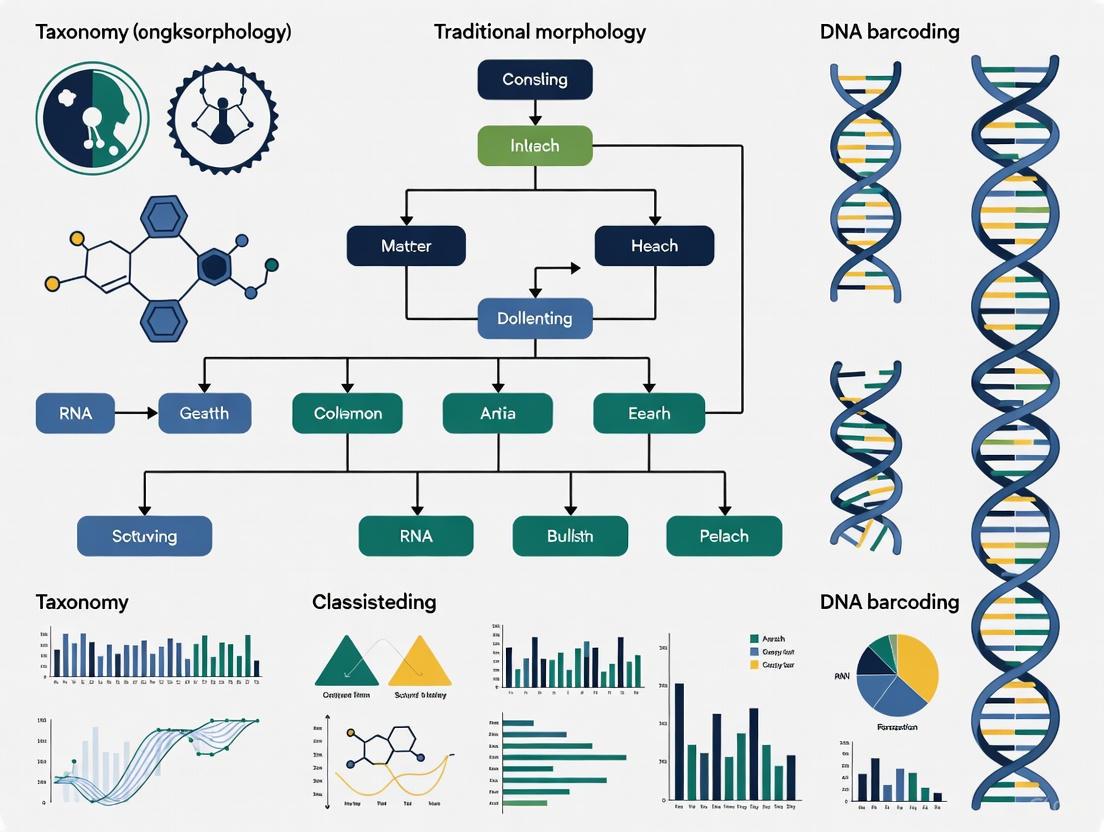
This article explores the integrated taxonomic approach, which combines traditional morphological analysis with modern DNA barcoding to achieve robust species identification.
Integrated Taxonomy: Bridging Traditional Morphology and DNA Barcoding for Accurate Species Identification in Research and Drug Development
Abstract
This article explores the integrated taxonomic approach, which combines traditional morphological analysis with modern DNA barcoding to achieve robust species identification. Aimed at researchers, scientists, and drug development professionals, we examine the foundational principles of both methods, detail practical methodologies and applications across diverse organisms, address common challenges and optimization strategies and present comparative studies validating the approach's efficacy. This synthesis is critical for ensuring taxonomic accuracy in biodiversity assessment, ecological studies, and the authentication of biological materials used in pharmaceutical research, ultimately safeguarding drug safety and efficacy.
The Pillars of Identification: Uniting Classical and Molecular Taxonomy
The accurate identification of species is a cornerstone of biological research, with critical applications in fields ranging from ecology to drug discovery. For centuries, traditional morphological taxonomy was the unchallenged method for species identification and classification. The advent of DNA barcoding in the early 21st century promised a revolutionary tool for rapid, precise species identification using short, standardized gene regions [1]. While each method offers distinct strengths, reliance on either one alone reveals significant limitations. A growing body of research now underscores that an integrated approach, combining the depth of morphological analysis with the precision of genetic data, is not just beneficial but essential for accurate biodiversity assessment and reliable scientific outcomes [2] [3]. This guide objectively compares the performance of these methodological approaches, providing the experimental data and protocols that demonstrate why their integration is the path forward.
Experimental Comparison: Single-Method vs. Integrated Performance
To quantitatively assess the efficacy of different identification methods, researchers have conducted numerous comparative studies. The following table summarizes key findings from experiments on diverse organism groups.
Table 1: Experimental Performance Comparison of Identification Methods
| Organism Group | Morphology-Only Identification | DNA Barcode(s) Used | DNA-Only Identification Rate | Integrated Approach Performance | Key Experimental Findings |
|---|---|---|---|---|---|
| Tachinid Flies [3] | Misinterpreted 16 generalist species | Mitochondrial COI, nuclear 28S & ITS1 | Revealed numerous specialist species | Combined genetic, ecological, and morphological data confirmed mostly specialist species | DNA barcoding corrected ecological assumptions; integration provided robust species delimitation. |
| Syringa Plants [4] | Inefficient due to hybridization and similar phenotypes | ITS2, psbA-trnH, trnL-trnF, trnL | Varies by barcode: Single barcodes (e.g., psbA-trnH) were insufficient | ITS2+psbA-trnH+trnL-trnF combination achieved 98.97% identification rate (BLAST) | Multi-locus barcodes outperformed any single barcode; integration with morphology is optimal. |
| Chironomid Larvae [2] | Difficult or impossible at larval stage; high phenotypic plasticity | Standard COI-like barcodes | Effective for sister/cryptic species | A "hybrid approach" is suggested as the "optimal methodological solution" | Overcomes limitations of larval morphology and incomplete barcode libraries. |
| Greater Bay Area Seed Plants [5] | Challenging for early growth stages/processed specimens | matK, rbcL, ITS2 | High accuracy, overcoming morphological limits | A comprehensive reference library was constructed to support accurate ID | DNA barcoding is a valuable tool for monitoring and conserving regional biodiversity. |
Analysis of Experimental Results
The data consistently demonstrates that single-method approaches have inherent constraints. Morphological identification often struggles with cryptic species complexes, phenotypic plasticity, and incomplete developmental stages [2] [4]. Conversely, while DNA barcoding excels in discriminating such species, its success is highly dependent on the choice of genetic marker and the completeness of reference databases [4] [5]. The most reliable results, as seen in the Syringa study, are achieved through integration, where multi-locus barcoding and morphological data are combined to achieve near-perfect identification rates [4].
Detailed Experimental Protocols
To ensure reproducibility and provide a clear technical roadmap, this section outlines the standard methodologies employed in the studies cited.
Protocol 1: Traditional Morphological Taxonomy
The morphological approach is iterative and comparative, relying on expert knowledge and reference specimens [6].
- Specimen Collection: Organisms are collected from the field, often using taxon-specific methods (e.g., light traps for moths, sweep nets for vegetation).
- Preservation and Curation: Specimens are preserved (e.g., dried, pinned, ethanol-fixed) and curated with precise locality and habitat data.
- Morphological Examination: Using microscopes and dissection, taxonomists examine a wide array of phenotypic characters (e.g., shape, size, color, anatomical structures).
- Character Analysis and Comparison: The observed characters are compared against original species descriptions, diagnostic keys, and authenticated reference specimens (vouchers and types) in museum collections.
- Hypothesis and Identification: A hypothesis of species identity is formed based on the constellation of morphological characters. This process is inherently comparative and relies on a deep understanding of intraspecific variation and interspecific differences.
Protocol 2: DNA Barcoding Workflow
The DNA barcoding workflow is a molecular pipeline designed for standardization and scalability [4] [5].
- Sample Collection and Tissue Preservation: A tissue sample is taken from the specimen and typically preserved in silica gel or ethanol to prevent DNA degradation.
- DNA Extraction: Total genomic DNA is extracted from the tissue. The cetyl trimethyl ammonium bromide (CTAB) method is a widely used protocol for plant and fungal tissues [5].
- PCR Amplification: The target barcode region (e.g., ITS2 for plants, COI for animals) is amplified using universal primers in a polymerase chain reaction (PCR). The reaction mixture includes:
- PCR Buffer (Tris-HCl, KCl, MgCl₂)
- Forward and Reverse Primers (10 µM each)
- dNTPs (2.5 µM)
- DNA Template (~20-30 ng)
- Taq DNA Polymerase
- ddH₂O [5]
- Sequencing: The PCR products are purified and sequenced using Sanger sequencing on an analyzer (e.g., ABI3730) [5].
- Data Analysis: Raw sequences are assembled and aligned using bioinformatics tools (e.g., Geneious, MAFFT). The resulting barcode sequence is compared to a reference database (e.g., BOLD, GenBank) for identification [5] [1].
The diagram below illustrates the logical relationship and workflow between these two primary methods, leading to the integrated taxonomic framework.
Research Reagent Solutions for Integrated Taxonomy
Successful integrated taxonomy relies on a suite of essential laboratory reagents and materials. The following table details key solutions and their functions in the experimental workflow.
Table 2: Essential Research Reagents and Materials for Taxonomic Research
| Reagent/Material | Function in Experimental Protocol |
|---|---|
| Silica Gel | Rapid desiccation and preservation of tissue samples for long-term DNA stability [5]. |
| CTAB (Cetyl Trimethyl Ammonium Bromide) Buffer | A detergent-based lysis buffer used in DNA extraction to break down cell membranes and precipitate polysaccharides, particularly effective for plants [5]. |
| Universal Barcode Primers | Short, single-stranded DNA sequences designed to bind to and amplify a standardized genomic region (e.g., rbcL, matK, ITS2) across a wide range of taxa [5]. |
| dNTPs (Deoxynucleotide Triphosphates) | The building blocks (dATP, dCTP, dGTP, dTTP) used by DNA polymerase to synthesize new DNA strands during PCR amplification [5]. |
| Taq DNA Polymerase | A thermostable enzyme essential for PCR that synthesizes new DNA strands from primers using dNTPs [5]. |
| Sanger Sequencing Kit | A reagent kit containing fluorescently labeled dideoxynucleotides (ddNTPs) and enzymes for chain-termination sequencing, generating the raw barcode sequence data [5]. |
| Voucher Specimen Mounts | Physical preservation of the whole specimen (e.g., insect pinning, plant herbarium sheet) to serve as a permanent, verifiable reference for the morphological and genetic data [3]. |
Visualizing the Hybrid Taxonomic Framework
The integration of morphology and DNA barcoding is not merely sequential but synergistic. The following diagram outlines the conceptual framework of this hybrid approach, which leverages the strengths of each method to compensate for the other's weaknesses.
The experimental data and comparative analysis presented in this guide lead to an unequivocal conclusion: neither morphological taxonomy nor DNA barcoding alone provides a complete solution for species identification. The limitations of single-method approaches are real and consequential, potentially leading to misidentification, flawed ecological inferences, and inefficiencies in discovery [2] [3] [6]. The future of taxonomy and its application in fields like drug development lies in a pragmatic, integrated framework. By combining the rich contextual and descriptive power of morphology with the discriminatory precision and standardization of DNA barcoding, researchers can achieve a level of accuracy and reliability that is unattainable by either method in isolation. This hybrid approach represents the most robust and scientifically sound path forward for exploring and understanding global biodiversity.
Core Principles of Traditional Morphological Taxonomy
Traditional morphological taxonomy, the science of classifying organisms based on their physical and structural characteristics, has served for centuries as the foundational system for understanding biological diversity. This guide outlines the core principles, methodologies, and practical applications of traditional morphological taxonomy, objectively comparing its performance and limitations with modern DNA barcoding techniques. By examining experimental data and case studies, we demonstrate that an integrated approach, leveraging the strengths of both morphological and molecular data, provides the most robust framework for species identification and classification, which is crucial for fields such as drug discovery from natural products.
Taxonomy, the scientific study of naming, defining, and classifying groups of biological organisms, is a fundamental discipline that enables scientists to communicate about biodiversity reliably [7]. For the majority of biology's history, this classification has been based primarily on morphology—the study of the size, shape, and structure of animals, plants, and microorganisms [8]. This traditional morphological approach relies on observing and analyzing a wide array of physical traits, from the gross anatomy of bones and leaves to microscopic cell structures, to group organisms based on perceived similarities and differences. The resulting hierarchical system, pioneered by Carl Linnaeus, organizes life into a nested structure of ranks, such as domain, kingdom, phylum, class, order, family, genus, and species, creating a universal language for biologists [9].
However, the advent of molecular biology has introduced powerful new tools for classification. DNA barcoding, a method that uses a short genetic sequence from a standardized portion of the genome as a unique identifier for species, has emerged as a complementary and sometimes challenging alternative [10] [11]. This guide explores the core principles of traditional morphological taxonomy within the modern context of integrated taxonomy, which seeks to combine morphological, ecological, molecular, and other data to achieve a more complete and accurate understanding of evolutionary relationships [2] [11]. For researchers in drug development, where the correct identification of a source organism is paramount, understanding the strengths and limitations of each method is critical.
Core Principles and Definitions
What is Traditional Morphological Taxonomy?
Traditional morphological classification is a method of organizing living organisms based on their physical characteristics, especially focusing on shape, size, and structural features [12]. This approach emphasizes observable traits to group organisms into categories that reflect evolutionary relationships and adaptations. In essence, it is the practice of identifying taxonomic characters—attributes such as the shape of a leaf, the number of segments in an insect's antenna, or the dentition pattern of a mammal—and using them to delineate species and higher taxa [7]. These characters are the evidence used to infer phylogeny, the evolutionary history of a species.
The discipline is deeply rooted in comparative morphology, which studies similar structures across different species [8]. This practice allows taxonomists to identify homologies—structures shared between species due to common ancestry—which are the true indicators of evolutionary relationship. Conversely, it also helps identify analogous structures, which look similar due to convergent evolution but do not indicate a close common ancestor. For example, the wing of a bat and the wing of a bird are analogous; they serve similar functions but evolved from different ancestral structures.
The Linnaean Hierarchical System
The Linnaean system provides the structural backbone for morphological taxonomy, organizing organisms into a series of increasingly inclusive ranks. The following diagram illustrates this nested hierarchical structure and the types of morphological characters used to define each rank.
Table: Taxonomic Rank of the Hawaiian Goose (Nēnē) as a Model [9]
| Taxon Rank | Classification | Key Morphological Characteristics |
|---|---|---|
| Domain | Eukarya | DNA contained within a nucleus |
| Kingdom | Animalia | Must consume other organisms for energy |
| Phylum | Chordata | Possesses a notochord, dorsal nerve cord, gill slits |
| Class | Aves | Has feathers and hollow bones |
| Order | Anseriformes | Webbed front toes |
| Family | Anatidae | Broad bill, keeled sternum, feathered oil gland |
| Genus | Branta | Bold plumage, black bill and legs |
| Species | sandvicensis | Specific characteristics of the Hawaiian goose |
This hierarchical system is not merely a filing cabinet for species; it is a hypothesis about evolutionary relationships. Organisms within the same genus share a more recent common ancestor than those in the same family, and so on up the taxonomic ladder.
Methodological Workflow in Morphological Taxonomy
The process of describing and classifying a new species based on morphology follows a systematic workflow. The flowchart below outlines the key stages, from initial specimen collection to formal publication.
Character Identification and Analysis
The cornerstone of morphological taxonomy is the identification and analysis of diagnostic characters. These characters are features or attributes that can be observed and used comparatively. They are typically divided into distinct character states (e.g., "petal color: white" vs. "petal color: red") [13].
Types of Morphological Characters:
- Vegetative vs. Reproductive: Plant taxonomists often separate features of leaves, stems, and roots (vegetative) from those of flowers, fruits, and seeds (reproductive). Reproductive characters are often considered more evolutionarily stable and thus more reliable for classification [13].
- Qualitative vs. Quantitative: Descriptive traits (e.g., shape, presence/absence) versus measurable traits (e.g., length, number of segments) [13].
- Anatomical and Microscopic: Internal anatomy, pollen morphology, and cellular structures revealed through dissection and microscopy [7] [8].
A "good" taxonomic character is one that is genetically fixed, largely unaffected by the environment, and relatively constant throughout a population, providing a reliable signal of evolutionary history [13].
The Scientist's Toolkit: Essential Research Reagents and Materials
Successful morphological research requires a suite of tools and reagents for the collection, preservation, and examination of specimens.
Table: Essential Research Reagents and Materials for Morphological Taxonomy
| Item | Function |
|---|---|
| Field Collection Equipment (e.g., nets, traps, presses, silica gel) | For capturing and immediately preserving plant and animal specimens to prevent degradation of morphological structures. |
| Fixatives and Preservatives (e.g., Formalin, Ethanol, Lactophenol) | To preserve tissue integrity and morphological details for long-term storage and study. Lactophenol is specifically used for clearing nematodes and small insects for microscope viewing [11]. |
| Dissecting Microscope with Camera Lucida | For observing fine morphological details and creating accurate illustrative diagrams of structures like sensory papillae or genitalia, which are key for identification [11]. |
| Light and Electron Microscopes | For examining microscopic and ultrastructural characters, such as cell wall patterns, scales, and cilia, which are invisible to the naked eye [8]. |
| Taxonomic Literature & Dichotomous Keys | Reference materials containing descriptions, illustrations, and identification keys for comparing unknown specimens to known species. |
| Herbarium or Museum Voucher Collection | A curated repository of reference specimens that serve as the physical evidence for a taxonomic study and allow for future verification [7]. |
Performance Comparison: Morphology vs. DNA Barcoding
To objectively evaluate the efficacy of traditional morphological taxonomy, we compare its performance against DNA barcoding across several key metrics. The following table synthesizes data from multiple empirical studies.
Table: Comparative Performance of Traditional Morphology and DNA Barcoding
| Criterion | Traditional Morphological Taxonomy | DNA Barcoding | Supporting Experimental Data |
|---|---|---|---|
| Fundamental Basis | Physical form, structure, and anatomy [12] [8] | Sequence variation in standardized gene regions (e.g., matK, rbcL, coxI) [10] [11] | |
| Identification of Cryptic Species | Often fails when morphological differences are subtle or non-existent [2] | Highly effective; can distinguish genetically distinct but morphologically similar species [2] [11] | Filarioid worm study found DNA barcoding (coxI) could distinguish sister species and infer potential new species where morphology was insufficient [11]. |
| Handling of Phenotypic Plasticity | Prone to misclassification; similar forms may be classified as single species [12] | Unaffected by environmentally induced shape or size changes | Chironomid midge identification is confounded by high phenotypic plasticity, which DNA barcoding overcomes [2]. |
| Requirement for Diagnostic Characters | Requires access to specific life stages or body parts with key features [10] [11] | Can identify organisms from any tissue or life stage (e.g., larvae, eggs) [11] | Filarioid nematode juveniles and fragments from hosts/vectors were successfully identified via DNA barcoding, overcoming the lack of adult morphological characters [11]. |
| Impact of Convergent Evolution | High risk of misclassifying unrelated species with similar adaptations as closely related [12] | Low risk; analogous structures do not produce similar DNA barcodes | Traditional classification can group organisms based on superficial similarities, while genetic data often reveals true lineage [12]. |
| Speed and Throughput | Can be slow, requiring expert training and manual examination | Potentially high-throughput and automatable once reference library is established | |
| Cost and Infrastructure | Requires microscopy, specimen collections, and extensive taxonomic expertise | Requires molecular lab infrastructure, reagents, and sequencing capabilities [2] |
Case Study: Dipterocarp Trees in Sumatra
A 2019 study in Sumatra, Indonesia, directly contrasted morphological taxonomy and DNA barcoding for the identification of ecologically and economically vital dipterocarp trees [10]. Researchers used three DNA barcode markers (matK, rbcL, and trnL-F) on 80 herbarium specimens.
Key Findings:
- Agreement: Molecular data were "mostly in agreement" with morphological identification for major clades like Anthoshorea, Hopea, and Parashorea [10].
- Resolution: The chloroplast gene matK was the most polymorphic and provided the best discriminatory power among species. However, a combination of markers was deemed essential for reliable identification at lower taxonomic levels [10].
- Paraphyly: The molecular phylogeny revealed that the genus Shorea was paraphyletic, a complex evolutionary relationship that was obscured by morphology alone [10].
This case demonstrates that while morphology can effectively delineate broad groups, DNA barcoding provides higher resolution for species-level identification and can uncover inaccuracies in morphology-based phylogenetic trees.
The Integrated Taxonomy Framework
The limitations of both morphological and molecular methods, when used in isolation, have led to the widespread advocacy for an integrated taxonomy [2] [11]. This framework does not view morphology and DNA as competitors but as complementary sources of data.
Principles and Workflow of Integrated Taxonomy
The core principle is that taxonomic conclusions are strongest when multiple, independent lines of evidence converge. The following diagram visualizes this synergistic process.
This integrated approach was successfully applied to filarioid worms, where it resulted in a "very strong" coherence between DNA-based and morphological identification [11]. The study concluded that DNA barcoding provides a "reliable, consistent, and democratic tool" for routine identification but is most powerful when combined with traditional methods. This hybrid model is particularly advocated for complex groups like chironomid midges, where it is deemed the "optimal methodological solution" for accurate biodiversity assessment [2].
Traditional morphological taxonomy remains an indispensable tool in the biological sciences. Its strengths lie in providing a direct, intuitive understanding of organismal form and function, and it forms the historical foundation upon which all biological classification is built. However, as the comparative data show, it has inherent limitations, particularly with cryptic species, phenotypic plasticity, and convergent evolution.
DNA barcoding does not render morphology obsolete. Instead, it provides a powerful, complementary data stream that can test morphological hypotheses, identify inaccessible life stages, and reveal hidden genetic diversity. The future of taxonomy lies in a unified, integrated approach that synthesizes morphological, molecular, ecological, and behavioral data. For the scientific and drug development communities, adopting this integrated framework is essential for accurately surveying biodiversity, identifying novel species that may be sources of new pharmaceuticals, and ensuring the reproducibility of research dependent on precise species identification.
DNA barcoding has revolutionized species identification and discovery by providing a standardized, molecular-based approach to taxonomy. This method involves sequencing a short, standardized gene region from an organism and comparing it to reference databases for identification purposes [14]. For animals, the cytochrome c oxidase subunit 1 (cox1 or COI) mitochondrial gene has gained widespread acceptance as the "gold standard" barcode region [15] [16]. The fundamental principle behind DNA barcoding relies on the existence of a "barcoding gap"—a clear break in the distribution of genetic distances where intra-species variation is significantly less than inter-species variation [15]. Typical barcoding gap values, calculated using Kimura 2-parameter (K2P) genetic distances, range between 2-4%, with distances above this threshold generally considered representative of inter-species variation [15].
The strength of DNA barcoding lies in its ability to identify any life stage of an organism, even from fragmentary remains, and correlate it to a specific Molecular Operational Taxonomic Unit (MOTU) without necessarily requiring taxonomy-skilled personnel for data generation [11]. This approach has become particularly valuable for identifying cryptic species complexes, where morphologically similar species exhibit significant genetic, biological, and behavioral differences [16]. However, the limitations of single-locus barcoding have led to the development of multi-locus systems that provide more robust species identification and delimitation, especially for recently diverged taxa or organisms with large effective population sizes [15] [16].
Marker Comparison: Single-Locus vs. Multi-Locus Approaches
The COI Barcode: Strengths and Limitations
The COI gene fragment, often called the "Folmer fragment," has become the cornerstone of animal DNA barcoding due to its sufficient variation to distinguish most species, ease of amplification with universal primers, and extensive reference databases [15]. Research on filarioid nematodes demonstrated that COI barcoding and morphology-based identification revealed high coherence, with COI proving to be a manageable and effective marker for species discrimination [11]. The study found that using COI with a defined level of nucleotide divergence could successfully delimit species boundaries and even infer potential new species [11].
However, the COI barcoding approach faces significant challenges, particularly for common, abundant, and widely distributed species with large effective population sizes [15]. Paradoxically, these species are most likely to be misclassified by COI barcoding alone. For example, the American house dust mite (Dermatophagoides farinae), a globally distributed species with a very large population size, exhibits two distinct, sympatric COI lineages with 4.2% divergence—a value that falls within the typical "barcoding gap" and would suggest separate species under traditional barcoding interpretation [15]. Yet, nuclear genes show evidence of introgression between these COI groups, indicating they represent a single species [15].
Table 1: Performance Comparison of DNA Barcoding Markers
| Marker | Typical Genetic Distance Threshold | Key Advantages | Major Limitations |
|---|---|---|---|
| COI | 2-4% K2P [15] | Standardized for animals; extensive reference databases; sufficient variation for most species [15] [16] | Poor performance for recently diverged species; excessive splitting in taxa with large population sizes; influenced by ancestral polymorphism [15] [16] |
| 12S rDNA | Variable | Easy to amplify; good source of synapomorphies; abundant in databases [11] | Performance affected by alignment algorithms and gap treatment; less standardized than COI [11] |
| ITS2 | Variable | Useful for plants and increasingly for animals; multi-copy nature can provide enhanced signal [16] | Intra-genomic variation can cause ambiguous sequences; may require cloning [16] |
Multi-Locus Systems: Enhanced Resolution Power
Multi-locus barcoding approaches address the limitations of single-marker systems by combining data from multiple genetic regions, often including both mitochondrial and nuclear markers. A study on the Anopheles strodei subgroup mosquitoes demonstrated the superior performance of multi-locus systems [16]. When used individually, the COI barcode failed to resolve An. albertoi and An. strodei, while the ITS2 barcode failed to resolve An. arthuri [16]. However, a multi-locus COI-ITS2 barcode successfully resolved all species in the subgroup and identified all species queries using the "best close match" approach [16].
Similar advantages have been observed in other taxonomic groups. For filarioid worms, researchers compared two mitochondrial markers (COI and 12S rDNA) and found that while both allowed high-quality performances, only COI proved to be readily manageable [11]. The performance of 12S rDNA was significantly affected by alignment algorithms, gap treatment, and criteria for defining threshold values [11].
Table 2: Multi-Locus Barcoding Performance in Different Taxa
| Taxonomic Group | Loci Used | Single-Locus Performance | Multi-Locus Performance |
|---|---|---|---|
| Filarioid nematodes [11] | COI, 12S rDNA | COI: High quality and manageable; 12S rDNA: Alignment-sensitive | Integrated approach provided higher discrimination power |
| Anopheles strodei subgroup [16] | COI, ITS2, white gene | COI: 92% ID success; ITS2: 60% ID success | COI-ITS2: 100% identification success |
| Scab mites (Caparinia) [15] | COI, nuclear genes | COI: 7.4-7.8% divergence suggested separate species | Nuclear genes: 0.06-0.53% divergence suggested single species |
Integrated Taxonomy: Combining Morphological and Molecular Data
The Integrated Approach Framework
Integrated taxonomy represents a powerful framework that combines traditional morphological analysis with molecular data, including DNA barcoding, to provide more accurate species identification and discovery [14]. This approach recognizes that both methodologies have complementary strengths and weaknesses—while DNA barcoding offers standardization and the ability to identify fragmentary material or immature life stages, morphological analysis provides essential context and validation for molecular-based species hypotheses [11] [14].
The coherence between DNA-based and morphological identification has been demonstrated in multiple studies. Research on filarioid nematodes found a very strong consistency between these approaches for almost all species examined [11]. The integrated approach allows researchers to clearly identify where DNA-based and morphological identifications are consistent and where they are not, providing a more robust foundation for taxonomic decisions [11].
Case Studies in Integrated Taxonomy
In the Anopheles strodei subgroup, integrated taxonomic approaches have revealed previously unrecognized diversity. Bayesian phylogenetic analysis of COI, ITS2, and the white gene supported seven clades in the subgroup, corroborating the existence of An. albertoi, An. CP Form, and An. strodei while identifying four informal species under An. arthuri [16]. This resolution has important implications for vector incrimination, as individuals previously found naturally infected with Plasmodium vivax and reported as An. strodei are likely to have been An. arthuri C [16].
For parasitic nematodes, integrated taxonomy has proven particularly valuable because laboratories often deal with fragments or single developmental stages where diagnostic morphological characters may be absent [11]. The combination of morphological anatomical analysis—studying characters such as measurements, sensory papillae patterns on head and male tail, and different parts of the reproductive system—with DNA barcoding creates a more reliable identification system [11].
Experimental Protocols and Methodologies
DNA Extraction and Amplification Protocols
Standard protocols for DNA barcoding begin with proper specimen preservation and DNA extraction. For small organisms or tissue samples, commercial kits such as the QIAgen DNeasy Blood and Tissue Kit are commonly employed [16]. Extracted DNA is typically diluted to working concentrations (e.g., 200 μL) with appropriate buffers and stored at -80°C for long-term preservation [16].
For COI amplification, the standard primers are:
- LCO-1490: 5'-GGT CAA CAA ATC ATA AAG ATA TTG G-3'
- HCO-2198: 5'-TAA ACT TCA GGG TGA CCA AAA ATC A-3' [16]
A typical PCR reaction mixture for COI amplification includes:
- 1 μL DNA extraction solution
- 1X PCR buffer
- 1.5 mM MgCl₂
- 1.25 μL dimethyl sulfoxide (DMSO)
- 0.1 μM of each primer
- 0.2 mM each dNTP
- 1.25 U Taq Platinum polymerase [16]
The thermal cycling profile for COI generally follows:
- 95°C for 2 minutes
- 35 cycles of: 94°C for 1 minute, 57°C for 1 minute, 72°C for 1 minute
- Final extension: 72°C for 7 minutes [16]
For ITS2 amplification, common primers include:
- 5.8SF: 5'-ATC ACT CGG CTC GTG GAT CG-3'
- 28SR: 5'-ATG CTT AAA TTT AGG GGG TAG TC-3' [16]
The PCR conditions for ITS2 are similar but may require adjustments:
- 94°C for 2 minutes
- 34 cycles of: 94°C for 30 seconds, 57°C for 30 seconds, 72°C for 30 seconds
- Final extension: 72°C for 10 minutes [16]
Data Analysis and Species Delimitation Methods
Multiple analytical approaches are used for species delimitation in DNA barcoding studies:
Distance-based methods rely on calculating genetic distances (typically using K2P model) and applying threshold values or automatic gap discovery (ABGD) [15].
Tree-based methods include building neighbor-joining trees and assessing monophyly or using the "best close match" approach [16].
Multispecies coalescent methods such as BPP, STACEY, and PHRAPL incorporate population genetic parameters, ancestral population sizes, and divergence times to estimate species boundaries [15]. These methods can be computationally intensive but provide more biologically realistic delimitations, particularly for recently diverged species [15].
DNA Barcoding Workflow
Advanced Species Delimitation Techniques
Beyond Barcoding: Coalescent-Based Approaches
Advanced species delimitation methods based on multispecies coalescent models offer significant improvements over traditional barcoding approaches, particularly for taxonomically challenging groups. Methods such as BPP, STACEY, and PHRAPL incorporate population genetic parameters that are typically unknown in standard barcoding approaches [15]. These methods estimate species trees under a coalescent process, assuming neutral evolution and no selection for single or multiple loci [15].
The advantages of these approaches include:
- Accounting for ancestral population sizes and divergence times
- Calculating posterior probabilities for alternative species delimitation models
- Objectively selecting the best-fitting model
- Incorporating gene flow in some implementations (PHRAPL) [15]
However, these methods also have limitations:
- Need to estimate population genetic parameters typically unknown
- Requirement for phased sequences of nuclear loci
- Often need a priori specimen assignment to "minimal" populations
- Computationally prohibitive for large datasets [15]
Case Study: Contrasting Delimitation Scenarios
Research comparing these methods on different model systems reveals their relative strengths. In scab mites of the genus Caparinia (with small population sizes), COI divergence between lineages was high (7.4-7.8%), while nuclear gene divergence was low (0.06-0.53%) [15]. Different delimitation algorithms inferred different species boundaries:
- STACEY recovered the Caparinia lineages as two species
- BPP agreed when the prior on ancestral effective population sizes was set to expected values
- No other COI species delimitation algorithms inferred the American house dust mite (D. farinae) as a single species, despite nuclear gene evidence for introgression [15]
This highlights that COI barcoding alone may result in excessive species splitting, particularly for taxa with large effective population sizes [15].
Species Delimitation Approaches
Research Toolkit: Essential Materials and Reagents
Table 3: Essential Research Reagents for DNA Barcoding Studies
| Reagent/Equipment | Specification/Example | Primary Function |
|---|---|---|
| DNA Extraction Kit | QIAgen DNeasy Blood and Tissue Kit [16] | High-quality DNA extraction from various sample types |
| PCR Primers | LCO-1490/HCO-2198 (COI) [16]; 5.8SF/28SR (ITS2) [16] | Target-specific amplification of barcode regions |
| PCR Reagents | PCR buffer, MgCl₂, dNTPs, Taq Platinum polymerase [16] | Enzymatic amplification of target DNA fragments |
| Sequencing Platform | Sanger sequencing or next-generation systems | Determination of nucleotide sequences |
| Reference Databases | GenBank, BOLD [15] | Sequence comparison and species identification |
| Morphological Tools | Optical microscope with camera lucida [11] | Traditional taxonomic characterization |
DNA barcoding has evolved significantly from its initial focus on a single mitochondrial gene to sophisticated multi-locus systems integrated with morphological data. The COI marker remains the cornerstone for animal barcoding but shows significant limitations for recently diverged species, taxa with large effective population sizes, and cases of mito-nuclear discordance [15]. Multi-locus approaches that combine mitochondrial and nuclear markers provide substantially improved resolution for species identification and discovery [16].
Integrated taxonomy, which combines traditional morphological expertise with molecular approaches, represents the most robust framework for species delimitation [11] [14]. This integrated approach is particularly valuable for cryptic species complexes where morphological differences are minimal but genetic and ecological differences are significant [16]. Future developments in DNA barcoding will likely focus on standardizing multi-locus systems, improving reference databases, and refining coalescent-based species delimitation methods that can better account for complex evolutionary histories [15].
For researchers and drug development professionals, understanding these DNA barcoding fundamentals is essential for accurate species identification, particularly when working with disease vectors or parasites where misidentification can have significant practical consequences [11] [16]. The complementary use of COI barcoding for initial screening followed by multi-locus verification for problematic taxa represents a balanced approach that maximizes both efficiency and accuracy in species identification.
The accurate identification of species forms the foundational bedrock of biological research, with direct implications for biodiversity conservation, ecological monitoring, and the authentication of medicinal resources in drug development [17] [18]. For centuries, traditional morphological taxonomy served as the sole authoritative method for species discovery and description, relying on the comparative analysis of physical characteristics such as anatomy, structure, and coloration [19]. The advent of molecular biology, however, introduced DNA barcoding—a technique that uses short, standardized gene sequences to discriminate between species [11] [20]. Initially, these approaches were often viewed as competitive, yet a growing consensus among scientists recognizes that their integration creates a robust framework for species identification that neutralizes the individual weaknesses of each method when used in isolation [17] [2].
This paradigm, known as integrative taxonomy, argues for a synergistic approach where multiple lines of evidence—morphological, molecular, and ecological—are cumulatively employed to delimit species boundaries [17]. This guide objectively compares the performance of traditional morphology and DNA barcoding, demonstrating through experimental data and defined protocols how their integration provides a more powerful tool for researchers confronting the challenges of modern biodiversity science and the quality control of biological materials.
Individual Method Performance: A Comparative Analysis
Traditional Morphological Taxonomy
Core Principle: This method identifies and classifies organisms based on observable and measurable physical traits (morphology), including macroscopic features, microscopic anatomy, and ultra-structural details [21] [19].
Experimental Protocol: The standard workflow involves:
- Specimen Collection: Organisms are collected from the field and preserved using techniques appropriate for morphological study (e.g., drying, fluid preservation) [11].
- Macroscopic Examination: Gross morphology is examined, photographed, and illustrated. Key diagnostic characters are identified (e.g., leaf venation in plants, sensory papillae in nematodes) [11] [10].
- Microscopic Analysis: Specimens or tissue sections are examined under magnification. This may involve clearing and staining tissues, creating thin sections for histology, or using electron microscopy for ultra-structural details [21].
- Character Measurement and Comparison: Taxonomic keys and comparative descriptions from established literature are used to compare the specimen's characters against known species [10]. Measurements and qualitative descriptions are recorded.
- Expert Interpretation: A trained taxonomist synthesizes all morphological data to assign a species identity [11].
Performance Data: The following table summarizes the strengths and limitations of morphological taxonomy as evidenced by recent research:
Table 1: Performance assessment of traditional morphological taxonomy
| Aspect | Performance & Characteristics | Experimental Context |
|---|---|---|
| Resolution Power | High for well-differentiated species; fails for cryptic species and immature life stages [11] [2] | Identification of filarioid nematodes; chironomid larvae identification [11] [2] |
| Required Expertise | High demand for specialized taxonomic skills; subjective to expert interpretation [11] [4] | Analysis of filarioid worms by international experts; Syringa species identification [11] [4] |
| Specimen Requirements | Often requires intact, adult specimens; destructive for dissections and histology [11] [21] | Dissection and clearing of nematodes; histological sectioning [11] [21] |
| Throughput & Speed | Low to moderate; a slow, painstaking process [17] | General assessment of the taxonomic impediment [17] |
| Cost | Lower financial cost for equipment; high cost in time and specialized training [21] | Comparison of morphological techniques vs. digital scanning [21] |
DNA Barcoding
Core Principle: This method uses a short genetic sequence from a standardized portion of the genome—such as the mitochondrial coxI gene in animals or the rbcL and matK genes in plants—as a universal identifier for species [11] [20] [10].
Experimental Protocol: A typical DNA barcoding workflow includes:
- Tissue Sampling: A small piece of tissue is collected from the specimen and preserved for DNA analysis (e.g., in silica gel or ethanol) [10].
- DNA Extraction: Genomic DNA is purified from the tissue using commercial kits or standard protocols like CTAB [10].
- PCR Amplification: The target barcode region is amplified using universal or taxon-specific primers in a polymerase chain reaction (PCR) [11] [10].
- DNA Sequencing: The amplified PCR product is sequenced using Sanger or next-generation sequencing platforms [11].
- Data Analysis: The resulting sequence is compared to a reference database (e.g., BOLD or GenBank) using genetic distance calculations (e.g., K2P model), BLAST searches, or phylogenetic tree construction to assign a species identity [11] [10] [4].
Performance Data: The table below summarizes the capabilities and constraints of DNA barcoding based on current studies:
Table 2: Performance assessment of DNA barcoding
| Aspect | Performance & Characteristics | Experimental Context |
|---|---|---|
| Resolution Power | High for many species; can reveal cryptic diversity; fails with low variation or hybrid complexes [11] [22] | Filarioid nematode identification; discrimination of Syringa species [11] [4] |
| Required Expertise | Requires molecular biology skills; less dependent on deep taxonomic knowledge [11] | DNA barcoding of parasitic nematodes [11] |
| Specimen Requirements | Minimal tissue; effective on fragments, juveniles, and environmental samples (eDNA) [11] [2] | Identification of juvenile nematode stages from vectors [11] |
| Throughput & Speed | High; amenable to automation and high-throughput sequencing [20] | Prospective lineage tracking with DNA barcodes [20] |
| Cost | Moderate to high financial cost for reagents and sequencing; lower time investment [21] | General comparison of methodological costs [21] |
| Technical Limitations | Susceptible to DNA degradation, PCR contamination, and sequencing errors [22] | Challenges in barcoding old or poorly preserved specimens [22] |
| Database Dependency | Efficacy constrained by completeness and accuracy of reference libraries [22] | Underrepresentation of tropical dipterocarps and fungi in databases [10] [22] |
The Integrated Workflow: A Synergistic Protocol
Integrative taxonomy is not merely the sequential application of two methods, but a holistic process where data from morphology and DNA barcoding are generated and interpreted collaboratively to test species hypotheses [17]. The following diagram illustrates the synergistic workflow that allows each method to compensate for the other's weaknesses.
This workflow embodies two primary frameworks for integration [17]:
- Integration by Congruence: Requires concordant results from multiple independent data sets (e.g., morphology and DNA) to confirm a species hypothesis. This promotes taxonomic stability but may overlook recently diverged species [17].
- Integration by Cumulation: Allows a species hypothesis to be established based on a single compelling line of evidence, which is then enriched with data from other sources. This is more sensitive to recent speciation events but carries a higher risk of false positives if not critically evaluated [17].
The integrated approach directly addresses key limitations:
- It uses DNA data to objectively refine morphological classifications and identify cryptic species [11].
- It uses morphological expertise to validate and ground-truth molecular operations, preventing errors from database inaccuracies and providing biological context for genetic divergences [2].
Case Studies in Integration: Supporting Data
Medicinal Plant Authentication
The herbal product industry faces significant challenges with adulteration and misidentification, which impacts drug safety and efficacy [18]. While chemical fingerprinting is used for quality control, it cannot identify biological ingredients in processed products. DNA barcoding excels at this, but requires a morphological framework for validation.
- Experimental Data: Studies show that using a combination of the nuclear ITS2 region with chloroplast psbA-trnH and trnL-trnF markers achieved an identification rate of 98.97% for nine medicinal Syringa species, which are sources of traditional Chinese medicine [4]. This multi-locus barcode provided the resolution needed for accurate authentication where morphology alone was challenging due to hybridization and similar appearances.
Biodiversity Surveys of Difficult Taxa
Chironomid midges (Diptera) are crucial bioindicators in freshwater ecosystems, but their larval stages are morphologically cryptic and nearly impossible to identify using traditional means alone [2].
- Experimental Data: An integrated "hybrid approach" is now considered the optimal methodological solution. DNA barcoding rapidly clusters larvae into Molecular Operational Taxonomic Units (MOTUs), while morphological analysis of associated adult specimens provides the definitive taxonomic identity, linking MOTUs to established Linnaean species [2]. This synergy allows for accurate, high-throughput assessment of water quality.
Resolving Parasitic Nematode Identification
Accurate identification of filarioid worms is critical for diagnosing parasitic diseases, but juvenile stages and fragments recovered from hosts or vectors lack diagnostic morphological characters [11].
- Experimental Data: Research comparing morphology and DNA barcoding (coxI and 12S rDNA markers) revealed very strong coherence between the methods for most known species. More importantly, the integrated approach was able to infer potential new species by highlighting specimens with significant genetic divergence that were morphologically cryptic [11]. This demonstrates how integration becomes a discovery tool.
The Scientist's Toolkit: Essential Research Reagents & Materials
The following table details key reagents and materials required for conducting integrated taxonomic research, as derived from the experimental protocols cited.
Table 3: Essential research reagents and materials for integrated taxonomy
| Item | Function in Research | Specific Examples from Literature |
|---|---|---|
| Herbarium Specimens / Voucher Specimens | Provides a permanent morphological reference that is linked to molecular data; essential for validation. | Cross-referencing collected dipterocarps with herbarium specimens at Herbarium Bogoriense [10]. |
| Silica Gel | Rapidly desiccates tissue samples for stable DNA preservation prior to extraction. | Used for preserving leaf tissue of Dipterocarpaceae and Syringa species [10] [4]. |
| DNA Extraction Kit | Purifies high-quality genomic DNA from tissue samples. | DNeasy 96 Plant Mini Kit (Qiagen) used for dipterocarp DNA extraction [10]. |
| Universal PCR Primers | Amplifies the target DNA barcode region from diverse taxa. | Primers coIintF & coIintR for nematode coxI [11]; universal primers for plant rbcL, matK, trnL-F [10]. |
| DNA Sequencer | Determines the nucleotide sequence of the amplified barcode region. | Sanger sequencing platforms are standard for individual barcodes [11]. |
| Reference DNA Databases | Repository of known barcode sequences for comparative identification. | Barcode of Life Data System (BOLD), GenBank [11] [22]. |
| Lactophenol | Clearing and mounting medium for microscopic examination of nematodes and other small organisms. | Used for clearing filarioid worms for optical microscopy [11]. |
The debate between traditional morphology and DNA barcoding is counterproductive. As the experimental data and protocols presented in this guide affirm, neither method is infallible alone. Morphology provides essential biological context and a link to centuries of taxonomic literature, but can be subjective and limited by phenotypic plasticity. DNA barcoding offers a powerful, standardized, and high-throughput identification engine, but is constrained by technical artifacts, evolutionary complexities, and incomplete reference libraries.
The future of robust species identification, particularly in applications critical to drug development and biodiversity conservation, lies in integration. By deliberately combining these approaches, researchers can leverage their complementary strengths, creating a synergistic system where morphological evidence validates molecular outputs, and molecular data provides objective clarity to morphological ambiguities. This integrated framework overcomes individual weaknesses, resulting in a more accurate, efficient, and democratic tool for understanding and cataloging biodiversity.
From Theory to Bench: A Practical Guide to Integrated Taxonomic Workflows
Standardized DNA Barcoding Markers for Animals (COI) and Plants (ITS2, matK, rbcL)
DNA barcoding has emerged as a revolutionary tool for species identification, complementing traditional morphological taxonomy by using short, standardized gene sequences to discriminate between species [23]. This method addresses significant challenges in morphology-based identification, including the existence of cryptic species, phenotypic plasticity, damaged specimens, and the requirement for high taxonomic expertise [2] [24]. The core premise of DNA barcoding relies on the "barcoding gap"—the concept that genetic variation between species exceeds variation within species, allowing for reliable differentiation [23]. In integrated taxonomy, DNA barcoding does not replace morphological examination but rather provides an independent, complementary line of evidence, leading to more accurate species identification, discovery, and delineation [2] [24]. This guide objectively compares the standard barcoding markers for animals and plants, providing researchers and drug development professionals with the experimental data and methodologies necessary for their implementation.
Standardized Barcoding Markers for Animals and Plants
Universal Animal Barcode: Cytochrome c Oxidase I (COI)
The mitochondrial gene cytochrome c oxidase I (COI) serves as the universal barcode for animals and some protists [23]. A 658-base pair (bp) region near the 5' end of the COI gene is the standard benchmark [24]. COI is favored due to its high mutation rate, which provides sufficient interspecific variability for distinguishing even closely related species, while its flanking regions are conserved enough for universal primer design [23] [24]. Additionally, the haploid nature and lack of recombination in mitochondrial DNA, coupled with the high copy number of mitochondrial genomes per cell, facilitate successful DNA retrieval even from degraded or small tissue samples [23].
Standardized Plant Barcodes
Unlike animals, no single gene universally discriminates all plant species. Plant mitochondrial genes evolve too slowly for barcoding purposes [23]. Consequently, the Plant Working Group of the Consortium for the Barcode of Life (CBOL) has endorsed a multi-locus approach. The core plant barcode combines two plastid genes, ribulose-1,5-bisphosphate carboxylase/oxygenase large subunit (rbcL) and maturase K (matK) [10] [25]. Furthermore, the nuclear Internal Transcribed Spacer 2 (ITS2) is widely used as a complementary barcode, especially for medicinal plants and closely related species [26] [27] [25].
- rbcL: A coding gene known for high amplification success and robust sequence recovery across land plants. It provides strong phylogenetic signal at higher taxonomic levels but may lack sufficient variation for species-level discrimination in some genera [10] [25].
- matK: A faster-evolving plastid gene that offers better species-level resolution than rbcL. However, its universality has been challenging due to difficulties in primer design, though primer cocktails have improved amplification success [10] [28] [25].
- ITS2: A non-coding spacer region in nuclear ribosomal DNA characterized by high interspecific divergence, ease of amplification, and the availability of conserved flanking regions for universal primers. Its secondary structure can provide additional data for species identification [26] [27].
Performance Comparison of Standardized Barcodes
Quantitative Discrimination Power
The effectiveness of a DNA barcode is quantitatively assessed by its success rate in PCR amplification, sequencing, and, most importantly, its power to correctly identify species. The tables below summarize key performance metrics for the standard plant barcodes and the animal COI barcode.
Table 1: Comparative Performance of Standard Plant DNA Barcodes
| Criterion | rbcL | matK | ITS2 |
|---|---|---|---|
| Type | Plastid (coding) | Plastid (coding) | Nuclear (non-coding spacer) |
| Primary Strength | Very high universality and robust alignments; ideal "backbone" marker [25] | Higher species resolution than rbcL; plastid "sharpening lens" [10] [25] | Often the highest species-level power, especially in angiosperms and medicinal plants [26] [27] [25] |
| Amplification Success | Very high [10] [25] | Moderate to high (improved with primer cocktails) [25] | High in many angiosperms and herbs [27] [25] |
| Species Resolution | Moderate ("backbone" phylogeny) [25] | Higher than rbcL [10] [25] | High; identified 76.1% of dicots and 91.7% of animals in large-scale studies [27] |
| Common Pitfalls | Limited power among closely related species (congeners) [25] | Historical gaps in universality across plant groups [28] [25] | Potential for paralogues/pseudogenes; requires careful QC [25] |
Table 2: Performance in Specific Plant Groups and Animals
| Organism Group | Marker(s) | Key Finding | Study Context |
|---|---|---|---|
| Jewel Orchids (Vietnam) | rbcL vs. matK | rbcL demonstrated higher distinguishing potential than matK alone or the combination of both genes [29] [30]. | 21 orchid accessions [30] |
| Dipterocarps (Sumatra, Indonesia) | matK, rbcL, trnL-F | matK was the most polymorphic marker; a combination of barcoding markers is essential for reliable lower-level taxonomy [10]. | 80 specimens in a biodiversity hotspot [10] |
| Physalis species (Kenya) | ITS2 | ITS2 was effective for identification and discrimination, revealing significant inter-specific divergences and a clear barcoding gap [26]. | 34 accessions for nutritional/medicinal use [26] |
| Mosquitoes (Singapore) | COI | COI-based DNA barcoding achieved a 100% success rate in identifying the 45 mosquito species studied [24]. | 128 specimens across 13 genera [24] |
| Cross-Kingdom (Database) | ITS2 | Identification success rates at species level: Dicotyledons (76.1%), Monocotyledons (74.2%), Animals (91.7%) [27]. | Analysis of 50,790 plant and 12,221 animal sequences [27] |
Case Study Evidence
The quantitative data is reinforced by specific case studies that highlight the practical performance and limitations of these markers:
- Unexpected Performance in Orchids: Contrary to the CBOL recommendation, a study on Jewel orchids in Vietnam found that rbcL alone had a higher distinguishing power than matK or the rbcL+matK combination, demonstrating that the optimal marker can be taxon-specific [29] [30].
- Resolution within Complex Genera: Research on Dipterocarps in Sumatra showed that while matK was the most polymorphic of the three chloroplast markers tested, it was still inefficient at resolving relationships within the Rubroshorea group. This underscores the need for a multi-locus approach or supplemental markers for challenging taxa [10].
- Efficacy in Medically Important Groups: For the medicinal genus Physalis, the ITS2 region provided significant inter-specific divergence, a clear barcoding gap, and high identification efficiency, making it a potent tool for authenticating medicinal materials [26].
Experimental Protocols for DNA Barcoding
A standardized DNA barcoding workflow involves sample collection, DNA extraction, target amplification, sequencing, and data analysis. The following protocol synthesizes common methodologies from the cited research.
Sample Collection and DNA Extraction
- Sampling: Tissue samples (e.g., leaf, leg, scale) are collected, ensuring tools are sterilized between specimens to prevent cross-contamination. It is recommended to collect duplicate samples, one for DNA analysis and one as a voucher specimen for archival in a museum or herbarium [23]. For eDNA studies, strict protocols using DNA-free materials are essential [23].
- Preservation: Tissues are typically dried in silica gel or stored in ethanol at room temperature until DNA extraction [30] [24].
- DNA Extraction: Protocols like the CTAB (cetyl trimethyl ammonium bromide) method [30] or commercial kits (e.g., DNeasy Blood and Tissue Kit, Qiagen) are used [10] [24]. The extraction must include steps to remove inhibitors like polyphenols and polysaccharides that can affect downstream PCR [23].
PCR Amplification and Sequencing
Polymerase Chain Reaction (PCR) is used to amplify the target barcode region. The reaction components and cycling conditions must be optimized for each marker and taxonomic group.
Table 3: Example PCR Protocols from Literature
| Component / Condition | Protocol A: Orchid matK & rbcL [30] | Protocol B: Mosquito COI [24] |
|---|---|---|
| Reaction Volume | 15 µL | 50 µL |
| DNA Template | 20 ng | 5 µL |
| Primers | 0.2 µM each | 0.3 µM each |
| Polymerase | 2X Mytaq Mix (Bioline) | 1.5 U Taq DNA Polymerase (Promega) |
| PCR Cycling | 1. 95°C for 2 min (initial denaturation)2. 35 cycles of: - 95°C for 30 s (denaturation) - 55°C for 30 s (annealing) - 72°C for 1 min (extension)3. 72°C for 5 min (final extension) | 1. 95°C for 5 min (initial denaturation)2. 5 cycles of: - 94°C for 40 s - 45°C for 1 min - 72°C for 1 min3. 35 cycles of: - 94°C for 40 s - 51°C for 1 min - 72°C for 1 min4. 72°C for 10 min (final extension) |
- Primer Sequences: Successful amplification requires universal or taxon-specific primers.
- matK: e.g.,
matK-390F (5'-CGATCTATTCATTCAATATTTC-3')andmatK-1326R (5'-TCTAGCACACGAAAGTCGAAGT-3')[30]. - rbcL: e.g.,
rbcL-aF (5'-ATGTCACCACAAACAGAGACTAAAGC-3')andrbcL-aR (5'-GTAAAATCAAGTCCACCRCG-3')or other variants [10] [25]. - ITS2: Universal primers targeting the conserved flanking 5.8S and 28S regions are used [26] [27].
- COI: e.g.,
LCO1490 (5'-GGTCAACAAATCATAAAGATATTGG-3')andHCO2198 (5'-TAAACTTCAGGGTGACCAAAAAATCA-3')or other universal primers [23] [24].
- matK: e.g.,
- Sequencing: PCR products are purified and then sequenced using Sanger sequencing on platforms like ABI 3100 DNA analyzers with the BigDye Terminator Cycle Sequencing Kit [30] [24].
Data Analysis and Species Identification
- Sequence Processing: Raw sequence chromatograms are assembled and edited using software like FinchTV or Lasergene. The sequences are trimmed to a standardized length to avoid missing data [30] [24].
- Alignment and Genetic Distance: Sequences are aligned using algorithms such as ClustalW (implemented in MEGA software). Intra- and inter-specific genetic distances are calculated using models like the Kimura-2-Parameter (K2P) [10] [26] [24].
- Phylogenetic Analysis: Neighbor-Joining (NJ) or Maximum-Likelihood (ML) trees are constructed with bootstrap support (e.g., 1000 replicates) to visualize species clustering and validate identifications [10] [30] [24].
- Database Query: The final step is comparing the unknown barcode sequence against reference libraries. The two primary databases are:
- Barcode of Life Data Systems (BOLD): A curated database with voucher specimens and associated metadata [30] [23].
- GenBank (NCBI): A comprehensive public database searched using the BLASTn tool [30] [26]. Identification is deemed reliable when the query sequence shows a high percentage identity (e.g., >97-99%) with a reference sequence from the expected species or genus [30] [24].
The Integrated Taxonomy Workflow: Morphology and DNA
Integrated taxonomy synergistically combines morphological and molecular approaches for robust species identification. The following diagram illustrates this hybrid workflow.
Diagram 1: Integrated Taxonomy Workflow combining morphological and DNA barcoding data. Discrepancies between the two lines of evidence trigger a re-evaluation process that may include more detailed morphological study or sequencing additional genetic markers.
Essential Research Reagents and Materials
Successful DNA barcoding relies on a suite of reliable reagents and materials. The following table details key solutions used in standard protocols.
Table 4: Research Reagent Solutions for DNA Barcoding
| Reagent / Kit | Function | Example Use-Case |
|---|---|---|
| Silica Gel | Rapid desiccation and preservation of tissue samples for long-term DNA stability at room temperature. | Preserving leaf/insect tissue post-collection in the field [30]. |
| CTAB Buffer | Lysis buffer for plant DNA extraction; effective at removing polysaccharides and polyphenols. | DNA extraction from silica-dried plant leaves (e.g., orchids, Physalis) [30] [26]. |
| DNeasy Blood & Tissue Kit (Qiagen) | Spin-column based purification of high-quality DNA from animal and other tissues. | DNA extraction from mosquito legs or other small animal tissues [24]. |
| MyTaq / Standard Taq Polymerase | Thermostable DNA polymerase for PCR amplification of target barcode regions. | Amplification of matK, rbcL, and ITS2 in plants [30] and COI in animals [24]. |
| Universal Barcoding Primers | Oligonucleotides designed to bind conserved flanking regions of the target barcode locus. | Amplifying COI, matK, rbcL, or ITS2 across a wide taxonomic range [30] [24] [27]. |
| BigDye Terminator Kit (Applied Biosystems) | Cycle sequencing kit containing fluorescently labeled dideoxynucleotides for Sanger sequencing. | Generating sequence data from PCR amplicons on an ABI sequencer [30] [24]. |
| Agarose | Polysaccharide gel matrix for electrophoretic separation and visualization of DNA fragments. | Confirming the size and success of PCR amplification [30] [24]. |
The standardized DNA barcoding markers—COI for animals and the combination of rbcL, matK, and ITS2 for plants—provide powerful, complementary tools to traditional morphology for precise species identification. The experimental data and case studies presented in this guide demonstrate that while these markers are highly effective, their performance is taxon-dependent. A multi-locus approach is often necessary to achieve sufficient discriminatory power, particularly in complex plant genera. The integrated taxonomy framework, which leverages the strengths of both morphological and molecular data, offers the most robust and defensible system for species identification. This is particularly critical for applications in drug development, where the accurate authentication of medicinal plant species is paramount for efficacy and safety. As reference libraries continue to expand, the utility and accuracy of DNA barcoding will only increase, solidifying its role as an indispensable tool in modern biological research.
Multi-Locus Barcoding and Super-Barcoding with Chloroplast Genomes
The integration of traditional morphology with molecular techniques represents a paradigm shift in taxonomic science. While morphological classification provides the foundational language of taxonomy, DNA barcoding has emerged as a powerful complementary tool that offers objective, standardized identification across diverse biological samples [31]. The concept of DNA barcoding was first introduced in 2003 using the mitochondrial cytochrome c oxidase I (COI) gene for animal identification, but finding suitable markers for plants proved more challenging due to slower evolutionary rates in plant mitochondrial genomes [32] [31]. This limitation prompted researchers to explore alternative genomic regions, leading to the development of multi-locus barcoding systems that combine several chloroplast markers and, more recently, the emergence of super-barcoding using entire chloroplast genomes [33] [34].
The fundamental principle underlying DNA barcoding is that certain DNA sequences evolve at rates that generate sufficient variation for species discrimination while maintaining enough conservation for universal amplification [31]. In plant taxonomy, this balance has been achieved through different approaches over time: first through single-locus barcodes, then multi-locus combinations, and currently through complete chloroplast genome analysis. This evolution reflects an ongoing effort to increase discriminatory power for challenging taxonomic groups, particularly closely related species and medicinal plants where accurate identification carries practical implications for drug development and consumer safety [32] [34].
Within the framework of integrated taxonomy, DNA barcoding does not seek to replace morphological expertise but rather enhances it by providing a verifiable molecular dimension to species identification. This integrated approach is particularly valuable when dealing with cryptic species, fragmented specimens, or processed materials where morphological characters are incomplete or unreliable [31]. For pharmaceutical applications and herbal medicine authentication, this molecular validation ensures the authenticity and safety of medicinal products, addressing the concerning issue of adulteration that affects approximately 4.2% of herbal products in commercial markets [32].
Technical Foundations: From Single Locus to Super-Barcodes
Conventional DNA Barcoding Approaches
Traditional DNA barcoding in plants has relied on a combination of nuclear and chloroplast markers. The internal transcribed spacer (ITS/ITS2) regions of nuclear ribosomal DNA have emerged as the most widely used single-locus barcodes due to their high variability and discriminatory power [33] [34]. Studies evaluating DNA barcodes across 50,790 plants and 12,221 animals demonstrated that ITS2 could successfully identify 67.1%-91.7% of species at the species level [33]. The advantages of ITS2 include easy amplification, sufficient variability to distinguish closely related species, and relatively small intra-genomic distances compared to inter-specific variants [33].
For chloroplast-based markers, several candidate regions have been systematically evaluated by the Consortium for the Barcoding of Life (CBOL) Plant Working Group. The most prominent chloroplast barcodes include:
- matK: Coding region with relatively high substitution rate
- rbcL: Coding region with reliable amplification and sequencing
- trnH-psbA: Non-coding intergenic spacer with high variability
- trnL-trnF: Non-coding intergenic spacer [33] [34]
No single-locus barcode has proven universally effective across all plant taxa, which necessitated the development of multi-locus approaches. The CBOL Plant Working Group initially recommended the combination of matK + rbcL as a core barcode, while subsequent research by Chen et al. proposed ITS2 + psbA-trnH as an optimal combination for medicinal plant identification [34]. The multi-locus barcode trnH-psbA + ITS2 demonstrated the highest identification efficiency in 41 of 47 families in a comprehensive evaluation [33].
The Super-Barcoding Revolution
Super-barcoding represents a significant technological advancement that utilizes complete chloroplast genomes as extended barcodes for species identification [35] [33]. Chloroplast genomes in land plants typically range from 120 to 160 kilobases and exhibit a conserved quadripartite structure consisting of a large single-copy (LSC) region, a small single-copy (SSC) region, and two inverted repeat (IR) regions [36] [37]. This structural conservation, combined with a sufficient number of variable sites, makes chloroplast genomes ideal for phylogenetic studies and species identification.
The primary advantage of super-barcoding lies in its dramatically increased resolution for distinguishing closely related species that cannot be differentiated using standard barcode regions [35]. For example, studies on Fritillaria species demonstrated that conventional barcodes (ITS2, trnH-psbA, trnL-trnF) failed to provide species-specific discrimination, while complete chloroplast genomes successfully resolved phylogenetic relationships at the species level [35]. Similarly, research on Polygonatum species revealed that chloroplast genomes provided significantly higher resolution than traditional molecular markers, enabling the development of species-specific markers for medicinally important species [36].
The typical chloroplast genome contains approximately 110-130 genes, including protein-coding genes, transfer RNAs, and ribosomal RNAs [38] [37]. Comparative analyses have identified highly variable regions such as ycf1, ndhF, rpl22, and various intergenic spacers that provide the highest discriminatory power for species identification [39] [38]. For instance, in Viola species, specific variable sites in ndhF, rpl22, and ycf1 were able to distinguish V. philippica from closely related species [38].
Table 1: Comparison of DNA Barcoding Approaches in Plants
| Feature | Single-Locus Barcoding | Multi-Locus Barcoding | Super-Barcoding |
|---|---|---|---|
| Typical Targets | ITS2, matK, rbcL | ITS2+psbA-trnH, matK+rbcL | Complete chloroplast genome |
| Sequence Length | 400-800 bp | 800-2,000 bp | 120,000-160,000 bp |
| Discrimination Power | Moderate (varies by taxon) | High for most species | Very high for closely related species |
| Cost and Accessibility | Low cost, highly accessible | Moderate cost and accessibility | Higher cost, requires NGS |
| Primary Applications | Initial screening, well-differentiated species | Most routine identification needs | Difficult taxa, closely related species |
| Success Rate | 67-92% with ITS2 [33] | >90% with optimal combinations [33] | >90% across various taxa [35] [36] |
Performance Comparison: Analytical Data and Experimental Evidence
Resolution and Discrimination Power
Comparative studies across diverse plant groups have consistently demonstrated the superior performance of super-barcoding compared to multi-locus approaches. In medicinal Chrysanthemum cultivars ('Boju', 'Huaiju', 'Hangbaiju', and 'Gongju'), conventional barcodes provided limited resolution, while chloroplast genome analysis identified 9 highly variable regions with nucleotide diversity (Pi) values ≥ 0.004, including petN-psbM, trnR-UCU-trnT-GGU, ndhC-trnV-UCA, and ycf1 [39]. These variable regions enabled clear discrimination between cultivars that are morphologically similar and frequently confused in herbal markets.
A comprehensive study on Fritillaria species, which are frequently adulterated in traditional Chinese medicine, revealed that single-locus barcodes (ITS2, trnH-psbA, trnL-trnF) failed to distinguish between closely related species [35]. However, phylogenetic trees constructed from complete chloroplast genomes showed high discrimination power with individuals of each species forming monophyletic clades with strong bootstrap support [35]. The chloroplast genomes of 26 individuals from 10 Fritillaria species exhibited sufficient sequence variation to resolve taxonomic relationships that remained ambiguous with conventional barcodes.
Similarly, research on Polygonatum species demonstrated that chloroplast genomes could validate 82.46% of current taxonomic classifications with strong support (90.63%) for species represented by multiple sequences [36]. The study developed a scalable framework for converting species-specific SNPs and InDels into practical molecular markers, enabling rapid authentication of medicinal Polygonatum species from potential adulterants.
Case Study: Viola Philippica Authentication
The authentication of Viola philippica Cav., the genuine source of "Zi Hua Di Ding" in traditional Chinese medicine, illustrates the practical advantages of super-barcoding. Due to morphological similarities among Viola species, many related species are misused as substitutes [38]. Analysis of 24 complete chloroplast genomes from Viola species identified 16 highly divergent sequences that could serve as reliable identification markers [38].
The chloroplast genomes of Viola species ranged from 156,483 bp to 158,940 bp, containing 110 unique genes (76 protein-coding genes, 30 tRNAs, and 4 rRNAs) [38]. Researchers identified unique variable sites in ndhF, rpl22, and ycf1 that specifically distinguished V. philippica from all other Viola species, including its most closely related counterparts. These markers were successfully applied to authenticate "Zi Hua Di Ding" samples purchased from traditional medicine pharmacies, demonstrating the practical utility of super-barcoding for quality control in herbal medicine [38].
Table 2: Performance Metrics of DNA Barcoding Methods in Various Plant Groups
| Plant Group | Single-Locus Success | Multi-Locus Success | Super-Barcoding Success | Key Variable Regions Identified |
|---|---|---|---|---|
| Fritillaria species [35] | Low (inconclusive) | Moderate (limited resolution) | High (species-specific clades) | Intergenic spacer regions |
| Medicinal Chrysanthemum [39] | Moderate (some discrimination) | High (most cultivars) | Very high (all cultivars) | petN-psbM, ycf1, ndhC-trnV-UCA |
| Polygonatum species [36] | Not reported | Moderate (generic level) | High (82.46% species validation) | Species-specific SNPs/InDels |
| Viola species [38] | Challenging (morphologically cryptic) | Moderate (some species) | Very high (species-specific sites) | ndhF, rpl22, ycf1 |
| General Angiosperms [33] [34] | 67-92% (ITS2) | >90% (optimal combinations) | >90% (most closely related species) | Dependent on taxonomic group |
Experimental Workflows and Methodologies
Standardized Super-Barcoding Protocol
The implementation of super-barcoding follows a systematic workflow from sample collection to data analysis. The following protocol synthesizes methodologies from multiple recent studies [39] [35] [36]:
Sample Collection and DNA Extraction:
- Collect fresh plant leaves and preserve in silica gel for DNA stabilization
- Extract total genomic DNA using modified CTAB methods or commercial kits (e.g., DNeasy Plant Mini Kit)
- Assess DNA quality using spectrophotometry (NanoDrop) and gel electrophoresis
- Require DNA concentration >20 ng/μL and A260/A280 ratio of 1.8-2.0 for optimal sequencing
Library Preparation and Sequencing:
- Prepare sequencing libraries with 350-bp insert sizes using appropriate kits (e.g., MagicSeq DNA Library Prep Kit)
- Sequence on high-throughput platforms (Illumina HiSeq X, BGI DNBSEQ-T7)
- Generate minimum 3 Gb clean data per sample to ensure adequate chloroplast genome coverage
- Include positive controls and replicate samples for quality assurance
Chloroplast Genome Assembly and Annotation:
- Filter raw reads to remove low-quality sequences using Fastp or similar tools
- Perform de novo assembly using GetOrganelle or NOVOPlasty with appropriate k-mer values
- Annotate genomes using PGA or CpGAVAS with reference genomes
- Validate assembly quality through PCR and Sanger sequencing of junction regions
Comparative Analysis and Marker Development:
- Identify highly variable regions using mVISTA or similar comparative tools
- Calculate nucleotide diversity (Pi) values to quantify sequence variation
- Develop species-specific primers targeting diagnostic SNPs or InDels
- Validate markers across multiple individuals and related species
Figure 1: Super-Barcoding Workflow from Sample to Marker Development
Data Analysis Pipelines
The analytical framework for super-barcoding involves multiple steps to ensure accurate species identification and phylogenetic resolution:
Sequence Alignment and Comparison:
- Perform whole chloroplast genome alignment using MAFFT or ProgressiveMauve
- Identify simple sequence repeats (SSRs) and nucleotide diversity hotspots using MISA and DnaSP
- Calculate pairwise genetic distances and similarity matrices
- Visualize sequence divergence using Circos plots or similarity heatmaps
Phylogenetic Reconstruction:
- Construct phylogenetic trees using maximum likelihood (IQ-TREE) and Bayesian inference (MrBayes) methods
- Assess node support with bootstrap analysis (1000 replicates) and posterior probabilities
- Compare topological consistency across different analytical methods
- Root trees using appropriate outgroup species
Species Delimitation:
- Apply multiple molecular species delimitation methods (ABGD, PTP, GMYC)
- Evaluate support for current taxonomic boundaries
- Identify discordance between morphological and molecular classifications
- Develop integrative taxonomic recommendations
Marker Validation:
- Test species-specific primers across multiple populations and closely related species
- Verify amplification efficiency and specificity under standardized PCR conditions
- Establish reference databases with voucher specimens and reference sequences
- Implement quality control protocols for routine application
Essential Research Reagents and Tools
Table 3: Research Reagent Solutions for Super-Barcoding Studies
| Category | Specific Products/Kits | Application Note | Performance Metric |
|---|---|---|---|
| DNA Extraction | DNeasy Plant Mini Kit (QIAGEN), CTAB method | Optimal for fresh and silica-dried leaves | Yield: 20-100 ng/μL; Purity: A260/A280 1.8-2.0 |
| Library Preparation | MagicSeq DNA Library Prep Kit, Illumina DNA Prep | 350-bp insert size recommended | >95% library efficiency for chloroplast enrichment |
| Sequencing Platforms | Illumina HiSeq X, NovaSeq, BGI DNBSEQ-T7 | Minimum 3 Gb data per sample | >100x chloroplast genome coverage |
| Assembly Software | GetOrganelle, NOVOPlasty, SOAPdenovo | K-mer optimization required | >95% complete chloroplast assembly |
| Annotation Tools | PGA, CpGAVAS, GeSeq | Reference-based annotation | >90% gene annotation accuracy |
| Comparative Genomics | mVISTA, MAFFT, Circos | Shuffle-LAGAN mode for alignment | Identification of hypervariable regions |
| Phylogenetic Analysis | IQ-TREE, MrBayes, RAxML | Model testing recommended | Bootstrap support >80% for key nodes |
| Species Delimitation | ABGD, PTP, GMYC | Multi-method validation | >80% congruence with morphology |
Implications for Pharmaceutical and Research Applications
The implementation of super-barcoding has significant implications for drug development, herbal medicine authentication, and biodiversity conservation. For pharmaceutical professionals, the technology offers a reliable method for authenticating medicinal plant materials throughout the supply chain, from raw material procurement to finished products [32] [34]. This is particularly crucial given that adulteration affects approximately 4.2% of herbal products in commercial markets, with some surveys reporting misidentification rates as high as 7.5% for certain medicinal seeds [32].
For research scientists, super-barcoding enables more accurate phylogenetic reconstruction and species delimitation, especially in taxonomically complex groups with morphological convergence or cryptic speciation [36] [38]. The technology has proven valuable in resolving ambiguous relationships within genera such as Polygonatum, Viola, and Fritillaria, where traditional morphological characters and single-locus barcodes provided insufficient resolution [35] [36] [38].
The development of species-specific markers from chloroplast genome data further enhances practical applications in quality control and regulatory enforcement. These markers can be implemented in routine testing laboratories using conventional PCR methods, making super-barcoding-derived authentication accessible beyond specialized genomics facilities [36] [38]. As sequencing costs continue to decline and bioinformatics tools become more user-friendly, super-barcoding is poised to become an integral component of integrated taxonomic practice, complementing morphological expertise with molecular precision.
The combination of super-barcoding with emerging technologies like mini-barcoding (for degraded DNA) and meta-barcoding (for mixture analysis) creates a comprehensive molecular toolkit for biodiversity assessment and product authentication [33] [34]. This multi-faceted approach represents the future of DNA-based identification in both academic research and applied pharmaceutical sciences, bridging the gap between traditional taxonomy and modern genomic science.
Best Practices for Specimen Collection and Data Curation
In modern biodiversity research and drug development, integrated taxonomy has emerged as a powerful approach that combines traditional morphological observation with molecular techniques like DNA barcoding. This multidisciplinary framework provides a more comprehensive understanding of species diversity, particularly for microorganisms and marine organisms with potential pharmaceutical applications. The effectiveness of this integrated approach fundamentally depends on two critical pillars: rigorous specimen collection and meticulous data curation. Proper specimen handling ensures that biological samples retain their diagnostic morphological characters while preserving biomolecular integrity for genetic analyses. Simultaneously, comprehensive data curation guarantees that the associated information remains findable, accessible, interoperable, and reusable (FAIR), creating a valuable resource for future research and drug discovery efforts [40] [41].
The synergy between traditional morphology and DNA barcoding allows researchers to overcome the limitations of either method used in isolation. Morphological taxonomy provides essential information about physical traits, ecology, and behavior, while DNA barcoding offers a standardized, genetic framework for identification that can discriminate between cryptic species and resolve phylogenetic relationships. For researchers and drug development professionals, this integrated approach is particularly valuable in bioprospecting for novel compounds, authenticating medicinal materials, and understanding the biodiversity of sources with pharmaceutical potential. This guide systematically compares current specimen collection methods and data curation practices, providing evidence-based recommendations to optimize research outcomes within this integrated taxonomic framework.
Comparative Analysis of Specimen Collection Techniques
Methodological Approaches and Performance Metrics
The choice of specimen collection technique significantly impacts both morphological preservation and DNA quality, thereby affecting downstream analyses. Recent research has systematically evaluated various methods across multiple performance dimensions, particularly in contexts where samples are limited or valuable.
Table 1: Comparison of Specimen Collection Techniques for Integrated Taxonomy
| Collection Method | Diagnostic Yield | Molecular Test Adequacy | Key Advantages | Primary Limitations |
|---|---|---|---|---|
| Funnel Filtration | 92.5% [42] | 88.3% [42] | Minimal cellular loss; cost-effective; convenient processing [42] | May require specialized equipment |
| Centrifugation | 87.7% [42] | 82.0% (96.5% with cell pellet) [42] | High cellular yield; can combine with cell pellets from residual medium [42] | Equipment-dependent; multiple processing steps |
| Filter Paper | 84.7% [42] | 57.7% [42] | Simple technology; accessible in resource-limited settings | Significant cellular loss; messy processing; inadequate for low-biomass samples [42] |
| Fingerstick Sampling | N/A (Not applicable for solid tissues) | High for blood-based analyses [43] | Minimal invasiveness; suitable for self-collection; simplified transport [43] | Limited to liquid blood samples; small sample volume |
| Venipuncture Sampling | N/A | Standard for liquid blood [43] | Large sample volume; familiar methodology | Requires trained personnel; cold chain for transport; patient discomfort [43] |
| Arterial Sampling | N/A | Specific for blood gas/CO2 [43] | Essential for certain metabolic parameters | Limited to hospital settings; increased patient risk; specialized training needed [43] |
Experimental Evidence and Technical Considerations
The quantitative comparison above derives from substantive research, including a comprehensive study of Endobronchial Ultrasound-Guided Transbronchial Needle Aspiration (EBUS-TBNA) techniques that examined 1,941 samples from 1,450 patients [42]. This investigation provides crucial insights into cellular yield preservation across different methodologies, with clear implications for integrated taxonomy.
The funnel filtration method demonstrated superior performance with 92.5% diagnostic yield and 88.3% adequacy for molecular testing in non-small cell lung cancer samples [42]. This approach minimizes cellular loss by reducing sample dispersion in fixative medium, providing both cost-efficiency and processing convenience. The technical protocol involves expelling aspirated materials directly into a simple funnel device, allowing tissue coagulum formation without significant cellular disruption. The resulting specimens preserve architectural features for morphological assessment while maintaining DNA integrity for barcoding applications.
The centrifugation method achieved 87.7% diagnostic yield, but its true potential emerged when CBs were combined with cell pellets retrieved from residual fixative medium, boosting molecular testing adequacy to 96.5% [42]. The experimental protocol involves rinsing aspirated materials into a centrifuge tube with normal saline or RPMI medium, followed by centrifugation to concentrate cellular material into a pellet. While this method requires laboratory equipment and involves multiple processing steps, it maximizes cellular recovery, making it particularly valuable for precious samples with limited biomass.
The filter paper technique, while simple and accessible, showed significant limitations with only 84.7% diagnostic yield and 57.7% molecular testing adequacy [42]. The methodology involves collecting aspirated materials on pre-cut filter paper, allowing air-drying to facilitate tissue clot formation. However, researchers noted substantial tumor cell retention in the residual fixative medium, indicating considerable cellular loss during processing [42]. This method proves particularly problematic for samples with insufficient blood content to form adequate tissue coagulum clots.
For blood-based collections relevant to vertebrate taxonomy or medical applications, fingerstick sampling offers distinct advantages through microsampling devices that require only minimal blood volumes from fingertip puncture [43]. The experimental protocol involves using a lancet for the puncture followed by collection with a portable microsampling device. This approach facilitates dried blood spot preservation, eliminating cold chain requirements during transport and reducing contamination risks. The resulting specimens are particularly suitable for DNA analysis while being more acceptable to patients and feasible in remote field conditions.
Specimen Processing Workflows for Integrated Taxonomy
The integration of morphological and molecular data requires careful coordination of specimen processing workflows. The following diagram illustrates the optimal pathway from specimen collection to data generation and curation:
This integrated workflow emphasizes the parallel processing of morphological and molecular data streams, with convergence at the data integration and curation stage. The maintenance of voucher specimens in permanent scientific collections ensures the verifiability of taxonomic identifications and enables future re-evaluation as analytical techniques advance [40]. The workflow specifically addresses the needs of integrated taxonomy by maintaining both physical specimens and their associated data in accessible repositories.
Data Curation Frameworks and Molecular Database Management
Data Curation Standards and Implementation
Effective data curation transforms raw observations and sequences into reusable scientific assets. According to the CRediT (Contributor Role Taxonomy) taxonomy, data curation encompasses "management activities to annotate (produce metadata), scrub data and maintain research data for initial use and later re-use" [44]. The Data Curation Network (DCN) emphasizes that proper curation addresses the inherent messiness of raw data, which often lacks sufficient context for interpretation and reuse [41].
The DCN has developed a standardized CURATE(D) model that provides a systematic framework for data curation:
- Check: Verify file integrity, format, and completeness
- Understand: comprehend content, context, and potential reuse scenarios
- Request: Seek missing information or documentation from researchers
- Augment: Enhance metadata and documentation for clarity
- Transform: Convert formats for improved accessibility and preservation
- Evaluate: Assess overall quality and reusability
- (D)ocument: Record all curation actions for transparency [41]
This framework operates across multiple levels of intensity, from basic metadata review (Level 1) to comprehensive data-level curation including content annotation and editing (Level 4) [41]. The appropriate level depends on available resources, data significance, and anticipated reuse value.
DNA Barcode Data Management and Quality Control
For DNA barcoding within integrated taxonomy, specific curation practices ensure data reliability and interoperability. The West Coast Ocean Biomolecular Observing Network (WC-OBON) has established comprehensive guidelines for developing DNA reference barcode sequences, emphasizing FAIR (Findable, Accessible, Interoperable, Reusable) and CARE (Collective Benefit, Authority to Control, Responsibility, and Ethics) principles [40] [45].
Table 2: Essential Research Reagent Solutions for DNA Barcoding Workflows
| Reagent/Resource | Primary Function | Application in Integrated Taxonomy |
|---|---|---|
| RPMI Medium/Normal Saline | Specimen transport and preservation [42] | Maintains cellular integrity during transfer from field to lab |
| DNA Extraction Kits | Nucleic acid purification and isolation | Obtains high-quality DNA from diverse specimen types |
| PCR Master Mixes | Amplification of barcode regions | Targets specific gene regions (e.g., COI, ITS, rbcL) |
| Sanger Sequencing Reagents | DNA sequence generation | Produces reliable barcode sequences for reference databases |
| Plasma-Thrombin | Artificial clot formation for CB preparation [42] | Concentrates cellular material from dilute suspensions |
| Formalin Solution | Tissue fixation and preservation | Maintains morphological structures for anatomical study |
| DNA Polymerase | PCR amplification | Specifically engineered for amplification from preserved specimens |
The critical pathway for DNA barcode data curation involves:
- Sequence Quality Assessment: Evaluating chromatograms for base call accuracy and resolving ambiguous positions [46]
- Public Database Submission: Uploading validated sequences to repositories like GenBank or BOLD with complete specimen metadata [40] [46]
- Taxonomic Identification Verification: Ensuring voucher specimens are authoritatively identified and deposited in accessible collections [40]
- Metadata Annotation: Including comprehensive collection details, identifier information, and methodological parameters [47]
The creation of voucher-based reference sequences represents a particularly important best practice, as it permanently links genetic data to authoritatively identified physical specimens, enabling future verification and study [40]. This approach is especially valuable in pharmaceutical applications where misidentification of source organisms could have significant consequences.
Integrated Data Management Workflow
The complete integration of specimen data and genetic information requires a coordinated system that connects physical specimens with their digital representations. The following diagram illustrates this comprehensive framework:
This data management workflow highlights the critical interconnections between physical specimens and their associated data, ensuring traceability from collection through analysis to publication. The specimen database structure referenced in the diagram aligns with standardized models such as those described in the Species File Group specifications, which include essential tables for specimens, collection events, localities, identifications, and depositories [47]. This systematic approach to data interlinking is fundamental to integrated taxonomy, as it maintains the connection between morphological observations and molecular sequences, enabling comprehensive taxonomic synthesis.
The integration of traditional morphological approaches with DNA barcoding represents a transformative advancement in taxonomic science, with significant implications for biodiversity research and drug discovery. The evidence-based comparison presented in this guide demonstrates that specimen collection methods significantly impact downstream analytical success, with funnel filtration and centrifugation techniques outperforming traditional filter paper approaches for cellular yield and molecular test adequacy. Similarly, systematic data curation practices following the FAIR and CARE principles ensure that the resulting data remains accessible and reusable for future research.
For researchers and drug development professionals, these best practices enable more reliable species identification, authentication of medicinal resources, and discovery of novel bioactive compounds from diverse organisms. The continued refinement of integrated workflows—particularly through emerging technologies like genome skimming for "ultra-barcodes" and decentralized microsampling—will further enhance our ability to document and utilize global biodiversity [40] [43] [45]. As these methodologies evolve, maintaining the fundamental connection between physical voucher specimens and their genetic data through rigorous curation will remain essential for producing authoritative, verifiable scientific knowledge with applications across the pharmaceutical and biotechnology sectors.
Filarioid nematodes, the parasitic worms responsible for lymphatic filariasis (LF), represent a significant global health burden, affecting over 1.3 billion people across 72 countries and causing debilitating conditions such as lymphedema and hydrocele [48] [49]. The control of this neglected tropical disease relies heavily on mass drug administration (MDA) of synthetic anthelmintics like ivermectin, diethylcarbamazine (DEC), and albendazole. However, these drugs primarily target the microfilarial stage, exhibit limited efficacy against adult worms, and can cause severe adverse effects, prompting the urgent need for alternative therapeutic strategies [50] [51]. Concurrently, accurate identification and surveillance of these parasites are fundamental to elimination efforts. In response to these challenges, an integrated approach combining traditional morphology and modern DNA barcoding has emerged as a powerful tool for parasite identification, while medicinal plant research offers a promising pipeline for novel drug discovery. This guide objectively compares the performance of these diagnostic and therapeutic methodologies, providing supporting experimental data for researchers and drug development professionals.
Comparative Analysis: Traditional Morphology vs. DNA Barcoding
The reliable identification of filarioid nematodes is the cornerstone of diagnosis and surveillance. The table below compares the performance of the traditional morphological approach with DNA barcoding.
Table 1: Performance Comparison of Traditional Morphology and DNA Barcoding for Filarioid Nematode Identification
| Feature | Traditional Morphology | DNA Barcoding (coxI marker) |
|---|---|---|
| Primary Basis | Physical characteristics (sensory papillae, tail morphology, measurements) [11] | Nucleotide sequence divergence in mitochondrial gene cytochrome c oxidase I (coxI) [11] [52] |
| Identification Accuracy | High for intact adult specimens with key morphological features [11] | High coherence with morphology-based identification; can infer potential new species [11] [52] |
| Key Strength | Provides foundational taxonomic description; does not require specialized molecular equipment [11] | Manages diverse data handling; suitable for creating a standardized, universal tool [11] |
| Key Limitation | Difficult or impossible for juvenile stages, fragments, or damaged specimens [11] | Requires DNA sequencing infrastructure and technical expertise [11] |
| Best Suited For | Identification of well-preserved adult worms by taxonomy-skilled personnel [11] | High-throughput screening, identification of all life stages, and detection of cryptic species [11] |
Experimental Protocol for Integrated Taxonomy
The integrated workflow, as validated by Ferri et al., combines both approaches to achieve maximum discriminatory power [11] [52] [53]. The key methodological steps are as follows:
- Sample Collection: Parasites are recovered from naturally infected hosts during necropsy or from vectors. Specimens are stored in ethanol or other appropriate fixatives for both morphological and molecular analysis [11].
- Morphological Identification: Worms are cleared in lactophenol and examined under an optical microscope equipped with a camera lucida. Experts identify species based on validated characters, including:
- The number and arrangement of sensory papillae on the head and male tail.
- Measurements of key anatomical structures.
- Other species-specific morphological features [11].
- DNA Extraction and Amplification: Genomic DNA is extracted from tissue samples. The mitochondrial cytochrome c oxidase I (coxI) gene is amplified via PCR using specific primers (e.g., coIintF and coIintR) [11].
- DNA Barcoding Analysis: The amplified coxI fragments are sequenced. The resulting sequences are compared within and between species to calculate molecular distances and establish species boundaries. A defined level of nucleotide divergence is used to delimit species and flag potential new taxa [11] [52].
The synergy of these methods is visually summarized in the workflow below.
Case Studies: Therapeutic Applications of Medicinal Plants
The limitations of current MDA drugs have ignited research into plant-derived antifilarial agents. The following case studies highlight specific medicinal plants with documented efficacy against filarioid nematodes.
Table 2: Anti-filarial Efficacy of Selected Medicinal Plants and Their Bioactive Compounds
| Plant Species (Family) | Key Bioactive Constituents | Reported Anti-filarial Activities & Experimental Data |
|---|---|---|
| Azadirachta indica (Meliaceae) [50] [49] | Azadirachtin, Nimbolide, Quercetin [50] | - In vitro macrofilaricidal activity: Leaf extracts showed efficacy against microfilariae of Setaria cervi (LC50: 15-18 ng/ml) [49].- Anti-inflammatory activity: Modulates p53, NF-κB, and VEGF pathways in animal models, reducing edema [50].- Antimicrobial activity: Effective against Staphylococcus aureus, a common pathogen in lymphedema wounds [50]. |
| Andrographis paniculata (Acanthaceae) [49] | Andrographolides (diterpene lactones) [49] | - In vivo prophylactic effect: Demonstrated significant anti-filarial activity in a study against Brugia malayi [49].- Broad pharmacological profile: Known for immune-modulating, anti-oxidant, and anti-inflammatory properties [49]. |
| Ricinus communis (Euphorbiaceae) [49] | Ricinoleic acid [49] | - Dose-dependent macrofilaricidal activity: Organic solvent seed extracts showed 40-90% activity against B. malayi [49].- Microfilarial suppression: Ethanol fraction (1 mg/ml) caused complete suppression of Setaria digitata microfilariae within 1 hour, 40 minutes [49]. |
| Haliclona oculata (Marine sponge) [49] | Mimosamycin, Xestospongin-C, Araguspongin-C (Alkaloids) [49] | - In vivo macrofilaricidal efficacy: Methanolic extract at 100 mg/kg for 5 days demonstrated 51.3% to 70.7% efficacy in animal models [49].- In vitro adulticidal activity: Chloroform extract was effective against adult B. malayi at low concentrations (15.6 µg/ml) [49]. |
Experimental Protocol for Screening Plant-Based Antifilarials
The evaluation of medicinal plants for anti-filarial activity typically follows a multi-stage protocol, progressing from in vitro assays to in vivo models.
- Plant Material Extraction: Active compounds are extracted from plant parts (e.g., leaves, seeds) using solvents of varying polarity (e.g., methanol, ethanol, water) [49] [54].
- In Vitro Motility and Viability Assays:
- Motility Assay: Adult worms or microfilariae are incubated with different concentrations of plant extracts. The reduction or cessation of motility is observed and recorded over 24-48 hours [48] [49].
- Viability Assay: A biochemical test like the MTT-reduction assay is used to measure metabolic activity and confirm worm death [48].
- In Vivo Animal Models: Promising extracts from in vitro screens are administered to filaria-infected animal models such as jirds (Meriones unguiculatus) or rodents (Mastomys coucha). Parameters assessed include:
- Mechanistic Studies: For potent compounds, further studies are conducted to elucidate the mechanism of action, such as:
The Scientist's Toolkit: Essential Research Reagents & Materials
Successful research in this field relies on a suite of specific reagents and materials. The following table details key solutions required for the experimental protocols cited in this guide.
Table 3: Essential Research Reagent Solutions for Integrated Filarioid Research
| Research Reagent / Material | Critical Function & Application |
|---|---|
| Lactophenol | Used for clearing filarioid nematodes for morphological examination, making internal structures visible under a microscope [11]. |
| coxI & 12S rDNA Primers | Specific oligonucleotide primers (e.g., coIintF/coIintR) for amplifying mitochondrial DNA regions via PCR for DNA barcoding and phylogenetic studies [11]. |
| MTT Reagent | A yellow tetrazole used in biochemical viability (MTT-reduction) assays to measure metabolic activity and confirm the death of parasites in anti-filarial drug screens [48]. |
| Polar Solvents (Methanol, Ethanol) | Used for the extraction of a wide range of bioactive phytochemicals (e.g., flavonoids, alkaloids) from plant materials for subsequent anti-filarial testing [49] [54]. |
| Animal Models (e.g., Meriones unguiculatus) | Suitable rodent models for maintaining the life cycle of filarial parasites and conducting in vivo pre-clinical trials of potential anti-filarial drugs [48] [49]. |
The interplay between the therapeutic actions of key phytochemicals and their observed biological effects can be visualized as follows.
The fight against filarioid nematodes is being advanced on two complementary fronts: precise diagnostics and therapeutic innovation. The integrated use of traditional morphology and DNA barcoding provides a robust, reliable framework for species identification that is essential for surveillance, especially in the context of emerging zoonotic threats and complex transmission cycles in high-mobility regions [55]. Simultaneously, medicinal plants represent a rich and promising source of novel anti-filarial compounds, with specific candidates like Azadirachta indica and Andrographis paniculata demonstrating measurable efficacy against multiple stages of the parasite, alongside crucial anti-inflammatory and antimicrobial benefits for managing lymphedema [50] [48] [49]. For researchers and drug developers, this comparative guide underscores that a multi-disciplinary approach—leveraging both cutting-edge molecular tools and the vast potential of the plant kingdom—holds the key to achieving the ultimate goal of eliminating lymphatic filariasis.
Navigating Pitfalls: Solving Common Challenges in Integrated Taxonomy
The reliability of public biological databases is fundamental to modern scientific research, influencing domains ranging from taxonomic classification to drug discovery. However, two pervasive issues—misidentification and sequence contamination—continually compromise data integrity, potentially leading to erroneous biological conclusions and wasted research resources. Misidentification occurs when sequences are incorrectly labeled taxonomically, while contamination involves the inadvertent inclusion of foreign DNA from sources such as reagents, host organisms, or cross-contamination during sample processing [56] [57]. Within the framework of integrated taxonomy, which combines traditional morphological analysis with DNA barcoding, these data quality issues present significant challenges that can obscure true biodiversity and phylogenetic relationships [11] [14].
This guide objectively compares the performance of leading methodologies and tools designed to detect and remediate these issues. By synthesizing current experimental data and protocols, we provide researchers with a evidence-based resource for safeguarding their analyses against the pervasive problem of database inaccuracies.
Comparative Analysis of Contamination Detection Tools
The landscape of contamination detection tools is diverse, with methodologies ranging from marker-gene based analyses to comprehensive whole-genome comparisons. The table below summarizes the performance characteristics of several key tools as reported in recent studies.
Table 1: Performance Comparison of Contamination Detection Tools
| Tool Name | Underlying Method | Primary Application | Reported Contamination Detected | Strengths | Limitations |
|---|---|---|---|---|---|
| CheckM [56] | Single-copy marker genes | Genome quality assessment | Dubious results for 12,326/111,088 RefSeq bacterial genomes [56] | High performance on well-characterized clades; widely adopted | Limited to 14 bacterial phyla; unreliable phylogenetic placement can affect results [56] |
| Physeter [56] | Genome-wide LCA (k-folds algorithm) | Decontamination of genomic data | Identified 239 contaminated genomes missed by CheckM [56] | Reduces bias from pre-contaminated reference databases; broader taxonomic application | Auto-detection mode incompatible with self-match skipping [56] |
| Conterminator [57] | Exhaustive all-against-all sequence comparison | Large-scale database screening | 2,161,746 entries in RefSeq; 114,035 in GenBank [57] | Linear scalability with input size; processes 3.3TB in 12 days; finds small contaminants [57] | Computationally intensive for very large datasets |
| COI Barcoding [58] | Mitochondrial COI gene sequence analysis | Contamination in Insecta data | 32/2796 (1.14%) WGS and 152/1382 (11.0%) TSA assemblies [58] | High species discrimination; vast reference libraries (e.g., BOLD) [58] | Limited to detecting eukaryotic contamination; requires sufficient reference data |
The data reveal that tool performance is highly context-dependent. CheckM, while being the most cited tool, produced dubious results for over 12,000 bacterial genomes in one analysis, primarily due to difficulties in phylogenetic placement for certain taxa [56]. In contrast, genome-wide tools like Physeter and Conterminator offer more generalizable approaches but come with different computational trade-offs. Notably, transcriptomic assemblies (TSA) appear to be significantly more susceptible to contamination than whole-genome shotgun (WGS) data, with one study reporting contamination rates of 11.0% versus 1.14%, respectively [58].
Quantifying the Contamination Problem
The scale of contamination in public databases is substantial, with significant variance across database types and taxonomic groups. The following table compiles key findings from recent large-scale surveys.
Table 2: Documented Contamination Levels Across Databases and Taxa
| Database / Taxonomic Group | Contamination Level | Key Findings | Source |
|---|---|---|---|
| NCBI RefSeq (Bacteria) | 12,326 dubious genomes | CheckM produced dubious results; Physeter confirmed 239 contaminated genomes among these. | [56] |
| NCBI GenBank & RefSeq | >2.2 million contaminated entries | Eukaryotic genomes were most contaminated in GenBank; leading contaminants include H. sapiens and S. cerevisiae. | [57] |
| Insecta Genomic/Transcriptomic Data | 4.40% overall contamination rate | Contamination varied by order: Hemiptera (9.22%), Hymenoptera (7.66%), Coleoptera (3.48%), Diptera (1.89%). | [58] |
| High-Quality Model Organisms | Isolated cases | Contamination found in C. elegans reference genome (~4kb E. coli insertion) and human GRCh38 alternate scaffold (~18kb bacterial sequence). | [57] |
These findings underscore that no database or genome is immune to contamination, including the reference sequences of key model organisms [57]. The variation among insect orders highlights how biological factors (e.g., diet, parasitism) can influence contamination prevalence [58]. Consequently, proactive contamination screening should be considered a mandatory step in any genomic or metagenomic study.
Experimental Protocols for Contamination Detection
Protocol 1: Genome-Wide Contamination Screening with Conterminator
Conterminator is designed for large-scale, cross-kingdom contamination detection in nucleotide databases through an exhaustive all-against-all sequence comparison [57].
- Data Acquisition: Download the target genomic or transcriptomic assemblies from databases like GenBank or RefSeq.
- Software Setup: Install Conterminator from its GitHub repository (GPLv3 license). The tool utilizes the MMseqs2 software suite for efficient sequence comparisons.
- Database Processing: Execute Conterminator on a multi-core server. The method employs the linear-time Linclust algorithm followed by exhaustive alignments with MMseqs2. Processing 3.3 TB of data takes approximately 12 days on a 32-core machine with 2 TB of RAM [57].
- Result Interpretation: The output is a list of contaminated sequences. The algorithm reports contamination when a sequence segment aligns to a sequence from a different taxonomic kingdom and the target sequence is shorter than a defined length (e.g., 20 kb) [57].
- Validation: For high-priority findings, validate contaminants by aligning independent sequencing reads (e.g., Illumina reads) back to the contaminated region. A dramatic drop in read coverage in the suspect region, as seen in the C. elegans contamination case, supports the finding [57].
Protocol 2: COI Barcoding for Insect Contamination Survey
This workflow uses the mitochondrial COI gene as a barcode to identify contamination within insect genomic and transcriptomic data [58].
- Data Download: Obtain WGS and TSA assemblies for the insect orders of interest from GenBank.
- COI Sequence Extraction: Use MitoGeneExtractor (v1.9.5) to scan the assemblies and extract potential COI sequences. The tool uses Insecta and Mammalia COI amino acid references to guide this process.
- Taxonomic Classification: Assign taxonomy to the extracted COI sequences using the RDP classifier (v2.13) against the nucleotide collection (nr/nt) database via BLAST.
- Contamination Filtering: Apply a two-step filtering process to identify true contaminants:
- Step 1: Retain only taxonomic assignments with a strict confidence score of at least 0.8 from the RDP classifier.
- Step 2: Identify the best BLAST hit (top bitscore) and confirm contamination if the alignment meets threshold values (e.g., ≥70% query coverage and ≥80% sequence identity) and the assigned taxonomy differs from the expected host [58].
- Source Analysis: Classify the likely cause of contamination (e.g., food, parasitism, collection error, cross-contamination) based on the biological relationship between the host and contaminant organisms.
Diagram 1: COI-based contamination screening workflow.
Integrated Taxonomy: A Framework for Data Validation
Integrated taxonomy, which synthesizes traditional morphological methods with molecular techniques like DNA barcoding, provides a powerful framework for identifying and rectifying data quality issues [11] [14]. This approach leverages the complementary strengths of each method: morphology provides a direct, often visual, link to classical taxonomy, while DNA barcoding offers a standardized, sequence-based identification system that can be applied to fragments, juveniles, or cryptic species [11].
The coherence between DNA-based and morphological identifications is often very strong, as demonstrated in filarioid nematodes, allowing researchers to pinpoint where the two methods are consistent and, crucially, where they are not [11]. Such discordances can flag potential misidentifications in sequence databases or reveal the existence of cryptic species. Initiatives like the GEANS project for North Sea macrobenthos highlight the importance of building curated DNA reference libraries where sequences are backed by vouchered specimens and expert taxonomic identifications [59]. This practice is essential for improving the reliability of DNA metabarcoding in environmental monitoring and biodiversity research.
Diagram 2: Integrated taxonomy validation workflow.
The Scientist's Toolkit: Essential Research Reagents and Materials
The following table details key reagents, software, and databases essential for conducting contamination checks and integrated taxonomic research.
Table 3: Essential Research Reagents and Resources
| Item Name | Type | Function in Research | Example Use Case |
|---|---|---|---|
| COI Amino Acid References [58] | Reference Data | Provides a curated set of COI sequences for specific taxonomic groups to guide gene identification. | Used by MitoGeneExtractor to accurately locate and extract COI sequences from genomic data. |
| NCBI nr/nt Database [58] | Reference Database | A comprehensive nucleotide sequence collection used as a reference for BLAST searches. | Taxonomic classification of unknown sequences in the RDP classifier pipeline. |
| Barcode of Life Data System (BOLD) [59] [60] | Reference Database | A curated data platform specializing in DNA barcode records linked to vouchered specimens. | Validating species identifications via DNA barcoding; crucial for metabarcoding studies [59]. |
| MitoGeneExtractor [58] | Software Tool | Scans WGS/TSA assemblies to identify and extract mitochondrial genes, including COI barcodes. | First step in a contamination screening pipeline for insect or other animal sequence data. |
| RDP Classifier [58] | Software Tool | Assigns taxonomic labels to DNA sequences based on a Bayesian classification algorithm. | Assigning preliminary taxonomic identity to extracted COI sequences post-BLAST. |
| Vouchered Specimen Collection [11] [59] | Biological Material | A physically preserved specimen that provides a permanent reference for a morphological identification. | Serves as the ground truth for linking a DNA barcode to a morphologically identified species in integrated taxonomy. |
| FDA-ARGOS Database [57] | Reference Database | A curated set of complete microbial genomes developed as quality-controlled reference standards. | Used as a control set of high-quality genomes for validating contamination detection methods [57]. |
Misidentification and contamination in public databases are not merely logistical nuisances but represent significant sources of error that can distort biological interpretation and hinder scientific progress. As evidenced by the large-scale contamination reports, reliance on a single detection method is insufficient; a multi-tool strategy, such as combining CheckM with orthogonal tools like Physeter or Conterminator, is a more robust approach [56] [57].
The future of reliable data curation lies in the widespread adoption of integrated taxonomic practices and the development of curated, specimen-verified reference libraries [59] [14]. By employing the experimental protocols and tools outlined in this guide, researchers can critically assess data quality, contribute to the cleansing of public resources, and ensure the foundational integrity of their research in genomics, taxonomy, and drug development.
In the field of taxonomy, discordance between traditional morphological characteristics and DNA-based evidence presents a significant challenge for researchers and scientists. Such conflicts arise when species identified based on physical traits do not align with groupings revealed by genetic analysis. This discordance can stem from various biological phenomena, including phenotypic plasticity, cryptic species complexes, and mito-nuclear discordance, creating substantial implications for fields ranging from biodiversity conservation to drug development where accurate species identification is paramount. As scientific disciplines increasingly embrace integrated taxonomic approaches, resolving these discrepancies has become crucial for establishing reliable biological classifications. This guide examines the sources of morphological-DNA discordance and provides experimentally validated protocols for achieving resolution, offering researchers a structured framework for navigating these complex taxonomic challenges.
Discordance between morphological and molecular data can arise from multiple biological and technical sources. Understanding these underlying causes is essential for selecting appropriate resolution strategies.
Phenotypic Plasticity: Environmental factors can significantly influence morphological expression, creating the illusion of distinct species where only one exists. In the freshwater snail genus Radix, shell morphology proved unsuitable for defining homogeneous groups because variation was continuous and primarily determined by environmental conditions, whereas DNA-based methods delineated congruent, biologically distinct species [61].
Cryptic Species: Morphologically similar but genetically distinct lineages represent a major source of discordance. Genomic studies on Western Atlantic red snappers revealed that what was traditionally lumped as a single species based on morphology comprised two independent species with significant genetic divergence, a distinction missed by mitochondrial DNA analysis alone [62].
Methodological Limitations: Technical constraints of either approach can drive discordance. DNA degradation in processed medicinal leeches necessitates mini-barcoding approaches as conventional barcoding fails with degraded templates [63]. Conversely, incomplete reference databases and PCR biases in metabarcoding can lead to inaccurate diversity assessments compared to morphological counts [64].
Evolutionary Incongruence: Biological processes such as mito-nuclear discordance, where mitochondrial and nuclear genomes show different phylogenetic signals, can create apparent conflicts. This often results from historical introgression, incomplete lineage sorting, or selective sweeps, requiring genome-wide approaches for resolution [62].
Comparative Case Studies: Morphology vs. DNA
The following case studies illustrate how discordance manifests across different organisms and how integrated approaches resolve these taxonomic challenges.
Table 1: Comparative Case Studies of Morphological-DNA Discordance
| Organism Group | Morphological Assessment | DNA-Based Assessment | Resolution & Cause of Discordance | Reference |
|---|---|---|---|---|
| Freshwater Snails (Radix) | Continuous shell variation preventing reliable species delimitation | Five distinct Molecular Operational Taxonomic Units (MOTUs) confirmed by crossing experiments | Phenotypic Plasticity: Shell shape influenced by habitat; DNA reflects biological species boundaries. | [61] |
| Western Atlantic Red Snappers | Two species (L. campechanus and L. purpureus) | mtDNA: Single species; Genomics: Two distinct species | Cryptic Species & Mito-nuclear Discordance: Genome-wide SNPs (15,000-42,000) confirmed morphology, overturning misleading mtDNA results. | [62] |
| Nematodes (Community Sample) | 22 species identified via microscopy | Metabarcoding: 48 OTUs (28S rDNA); Barcoding: 20 OTUs (28S rDNA) | Methodological Limitations: Only three species (13.6%) shared across all methods; highlights need for improved databases and technique integration. | [64] |
| Medicinal Leeches | Three species in Chinese Pharmacopoeia | Mini-barcoding uncovered mislabeling in commercial products | Degraded DNA & Identification Errors: Mini-barcodes successfully identified species in processed medicines where full-length barcodes failed. | [63] |
| Ficus Species (Plants) | Traditional taxonomy based on leaf anatomy | DNA barcoding (ITS) and metabolic profiling | Confirmation via Integration: Anatomical delimination matched ITS sequence analysis, validating traditional classification. | [65] |
Resolution Methodologies: An Integrated Workflow
Resolving taxonomic discordance requires a systematic, multi-stage approach that leverages the strengths of both morphological and molecular techniques. The following workflow provides a structured pathway from initial discovery to final validation.
Stage 1: Critical Re-assessment of Data
Begin by rigorously examining the quality of both morphological and molecular datasets.
Morphological Re-evaluation: Re-examine specimens for phenotypic plasticity and cryptic morphological traits. In Radix snails, morphometric analysis revealed continuous shell variation that did not correspond to genetic divisions, indicating environmental influence on morphology [61]. For Ficus species, detailed anatomical study of leaf epidermis and stomatal complexes provided diagnostic characters that aligned with molecular data [65].
Molecular Data Verification: Assess technical factors including DNA quality, marker selection, and amplification efficiency. When studying processed medicinal leeches, researchers found that column-based DNA extraction kits yielded superior quality compared to single-tube methods for degraded samples [63]. Marker choice is equally critical; in nematodes, the 28S rDNA locus identified 20 OTUs versus only 12 with 18S rDNA [64].
Stage 2: Advanced Molecular Approaches
When standard barcoding fails, advanced genomic techniques provide greater resolution.
Genome-Wide Approaches: Techniques like RAD sequencing generate thousands of SNP markers capable of resolving species boundaries where individual genes fail. In red snappers, analysis of 15,000-42,000 SNPs clearly differentiated two species that mitochondrial DNA could not separate [62].
Multi-Locus Barcoding: Supplement standard COI or ITS markers with additional genetic regions. For medicinal leeches, researchers developed four mini-barcode primer sets (ND1, 12S rDNA, 16S rDNA, COX1) to overcome amplification challenges with degraded DNA [63].
Mito-Nuclear Discordance Investigation: When mitochondrial and nuclear DNA conflict, employ additional nuclear markers and tests for hybridization. Genomic analysis of red snappers revealed ongoing interspecific hybridization with unidirectional introgression, explaining the mito-nuclear discordance [62].
Stage 3: Independent Validation
Corroborate findings with complementary evidence from other biological disciplines.
Crossing Experiments: Assess reproductive compatibility to test species boundaries. In Radix snails, crossing experiments provided definitive evidence—pairings between different MOTUs produced no offspring, while those within MOTUs were fertile, confirming the MOTUs represented biological species [61].
Ecological & Geographical Data: Incorporate distribution patterns and habitat specificity. Radix MOTUs showed distinct geographic distributions, providing independent support for their status as separate evolutionary lineages [61].
Metabolic Profiling: Use biochemical markers as additional taxonomic evidence. In Ficus species, metabolic compounds like H-cycloprop-azulen-7-ol and phytol showed species-specific fluctuation patterns, serving as chemotaxonomic markers that supported the molecular and morphological findings [65].
Essential Research Reagents and Tools
Successfully resolving taxonomic discordance requires specific laboratory reagents and analytical tools. The following table details essential solutions for integrated taxonomic research.
Table 2: Research Reagent Solutions for Integrated Taxonomy
| Category | Specific Product/Kit | Application in Discordance Resolution | Key Experimental Consideration |
|---|---|---|---|
| DNA Extraction | Ezup Column Animal Genomic DNA Purification Kit | Superior yield from degraded samples (e.g., processed medicines) [63] | Column-based methods outperform single-tube kits for challenged samples. |
| DNA Extraction | Standard CTAB/Phenol-Chloroform Protocol | Reliable DNA from diverse tissue types, especially plants [65] | Effective for fresh/frozen specimens with high-quality tissue. |
| PCR Amplification | Custom mini-barcode primers (ND1, 12S, 16S, COX1) | Targets short, preserved regions in degraded DNA [63] | Design primers for 150-250 bp amplicons; validate specificity via Primer-BLAST. |
| Capillary Electrophoresis | QIAxcel Advanced System with DNA High Resolution Cartridge | High-throughput analysis of DNA topoisomers and PCR products [66] | Enables rapid, automated size separation with superior resolution to gels. |
| Sequencing | RAD-seq (Restriction-site Associated DNA sequencing) | Genome-wide SNP discovery for resolving complex species boundaries [62] | Generates 10,000+ markers; requires bioinformatics expertise for analysis. |
| Microscopy | Scanning Electron Microscope (SEM) with gold palladium coating | High-resolution imaging of micro-morphological characters (e.g., leaf epidermis) [65] | Critical for revealing cryptic morphological traits not visible macroscopically. |
| Chemical Analysis | GC-MS/Fluorescence spectroscopy | Metabolic profiling for chemotaxonomic validation [65] | Identifies species-specific chemical markers as independent evidence. |
Resolving discordance between morphology and DNA represents a fundamental challenge in modern taxonomy with significant implications for biological research and applied sciences. The cases and methodologies presented demonstrate that neither morphological nor molecular approaches alone provide infallible species delimitation. Rather, an integrated framework incorporating critical morphological re-examination, advanced genomic tools, and independent experimental validation offers the most robust path to taxonomic consensus. As technological advances continue to enhance both morphological imaging and genomic sequencing, the potential for resolving even the most complex taxonomic disputes will steadily improve. By adopting the systematic, multi-evidence approach outlined in this guide, researchers can transform taxonomic discordance from a frustrating obstacle into an opportunity for discovering novel biological insights and achieving more accurate species classifications.
Handling Cryptic Diversity and Incomplete Lineage Sorting
In the field of evolutionary biology and systematics, researchers are increasingly confronted with two complex phenomena that challenge accurate species delimitation and phylogenetic reconstruction: cryptic diversity and incomplete lineage sorting (ILS). Cryptic diversity refers to the presence of multiple distinct species classified as a single species due to morphological similarity [67]. Incomplete lineage sorting describes a phenomenon where ancestral genetic polymorphisms persist during rapid speciation events, creating incongruence between gene trees and species trees [68]. Both present significant challenges for traditional morphology-based taxonomy and require integrated approaches combining morphological, molecular, and ecological data.
The growing recognition of these challenges comes at a critical time. DNA studies are revealing that cryptic species are found from the poles to the equator across all major taxonomic groups, with a recent meta-analysis reporting 996 new cryptic species in insects, 267 in mammals, 151 in fishes, and 94 in birds [67]. Simultaneously, ILS has been shown to affect substantial portions of genomes—over 31% in the South American monito del monte marsupial and approximately 23% of DNA sequence alignments in hominids [68] [69]. This article provides a comparative guide to methodologies addressing these challenges within the framework of integrated taxonomy.
Comparative Analysis of Challenges and Methodological Approaches
Table 1: Comparison of Cryptic Diversity and Incomplete Lineage Sorting
| Feature | Cryptic Diversity | Incomplete Lineage Sorting |
|---|---|---|
| Definition | Presence of multiple distinct species classified as one due to morphological similarity [67] | Incongruence between gene trees and species trees due to persistence of ancestral polymorphisms [68] |
| Primary detection methods | DNA barcoding, phylogeography, geometric morphometrics [67] [70] | Multi-locus phylogenomics, coalescent theory, population genetic analyses [68] [69] |
| Impact on taxonomy | Underestimation of species diversity, misclassification [67] | Incorrect phylogenetic inference, misinterpretation of evolutionary relationships [68] |
| Genomic prevalence | Varies by taxon; common across all major groups [67] | Can affect >50% of genomes in rapid radiations [69] |
| Typical solutions | Integrated taxonomy combining molecular and morphological data [70] | Genome-wide data analysis, coalescent-based methods [68] [69] |
Experimental Approaches and Workflows
DNA Barcoding for Cryptic Diversity Detection
DNA barcoding has become a fundamental tool for revealing cryptic species undetectable through morphological examination alone. The standard workflow employs the cytochrome c oxidase subunit I (COI) gene for animals, with established laboratory protocols and analysis pipelines [59].
Experimental Protocol:
- Sample Collection: Specimens collected from target locations with detailed morphological documentation and geographical data [59] [71]
- DNA Extraction: Tissue samples processed using appropriate extraction methods (e.g., salt extraction for processed samples) [72]
- PCR Amplification: Using universal primers (e.g., LCO1490/HCO2198) targeting the COI gene region [59]
- Sequencing: Bidirectional Sanger sequencing or high-throughput sequencing for multiple specimens
- Data Analysis: Sequence alignment, genetic distance calculation (e.g., K2P), and phylogenetic tree construction [59] [71]
- Species Delimitation: Application of analytical methods such as Automatic Barcode Gap Discovery (ABGD) and phylogenetic reconstruction [59]
For degraded DNA samples, such as those from processed food products, mini-barcoding approaches using shorter sequences (320-401 bp) have proven effective when full-length barcodes (658 bp) cannot be amplified [72].
Table 2: DNA Barcoding Efficacy Across Sample Types
| Sample Type | Successful Amplification Rate | Key Considerations |
|---|---|---|
| Fresh tissue | High (>90%) [59] | Optimal for reference libraries |
| Processed products | Full-barcode: 19.3%; Mini-barcode: 90.2% [72] | DNA degradation requires mini-barcodes |
| Historical specimens | Variable | Dependent on preservation method |
| Microscopic life stages | High [59] | Enables identification of larvae/eggs |
Phylogenomic Approaches for Incomplete Lineage Sorting
For ILS, phylogenomic approaches using genome-scale data are necessary to distinguish true evolutionary relationships from stochastic lineage sorting [68] [69].
Experimental Protocol:
- Genome Sequencing: Whole genome sequencing or reduced-representation approaches (e.g., RADseq) for multiple individuals per species [69]
- Variant Calling: Identification of orthologous regions and genetic variants across taxa
- Gene Tree Inference: Construction of individual gene trees for multiple loci across the genome
- Species Tree Reconstruction: Application of coalescent-based methods (ASTRAL, MP-EST) to account for ILS [69]
- ILS Quantification: Calculation of the proportion of the genome affected by discordant genealogies using metrics like genealogical divergence index (gdi) [69]
- Functional Validation: Experimental tests of phenotypic effects suggested by ILS patterns, such as gene editing or expression analysis [69]
Visualization of Key Concepts and Workflows
Incomplete Lineage Sorting Mechanism
Incomplete Lineage Sorting Process: This diagram illustrates how ancestral polymorphisms persisting through rapid speciation events lead to incongruence between gene trees and species trees, a fundamental challenge in phylogenetic reconstruction [68].
Integrated Taxonomy Workflow
Integrated Taxonomy Workflow: This workflow demonstrates the comprehensive approach combining morphological, molecular, and geographical data for robust species delimitation in the face of cryptic diversity and ILS [70].
Essential Research Reagent Solutions
Table 3: Essential Research Reagents and Materials
| Reagent/Material | Function | Application Examples |
|---|---|---|
| Salt extraction buffers | DNA extraction from degraded samples | Processed fish products, historical specimens [72] |
| Universal COI primers (LCO1490/HCO2198) | Amplification of standard barcode region | Initial species screening, reference library building [59] |
| Mini-barcode primers (320-401 bp) | Targeting degraded DNA | Processed products, formalin-fixed specimens [72] |
| Whole genome sequencing kits | Comprehensive genome data | ILS detection, phylogenomic analyses [69] |
| Multiplex PCR reagents | Simultaneous amplification of multiple loci | Multi-locus phylogenetics, population genomics [69] |
| Geometric morphometrics software | Quantitative shape analysis | Differentiating morphologically similar species [70] |
Case Studies and Empirical Data
Cryptic Diversity in Giraffes and Frogs
Contrary to paradigms that cryptic species are rare in megafauna, giraffes revealed at least six distinct lineages through phylogeographic and population genetic analysis, with divergence times estimated between 1.6 million years and 113,000 years ago [67]. Similarly, Amazonian leaflitter frogs showed deep divergences dating back to Oligocene and Miocene periods (24-9 million years ago), challenging the notion that cryptic species primarily result from recent speciation [67].
ILS in Marsupials and Hominids
Genomic analyses of marsupials revealed that over 50% of their genomes are affected by ILS, which has directly contributed to hemiplasy in morphological traits established during rapid speciation approximately 60 million years ago [69]. Functional experiments validated phenotypic effects suggested by ILS patterns. In hominids, approximately 23% of 23,000 DNA sequence alignments did not support the known sister relationship of chimpanzees and humans, complicating phylogenetic reconstruction [68].
DNA Barcoding Applications
North Sea Macrobenthos Monitoring: A curated DNA reference library was developed for ecosystem health assessment, containing 4,005 COI barcode sequences from 715 species, covering over 29% of North Sea macrobenthos diversity [59].
Processed Fish Product Authentication: Analysis of 305 processed fish products revealed that 36.4% were inconsistent with product labels, demonstrating the practical application of DNA barcoding for consumer protection and regulation enforcement [72].
Cryptic diversity and incomplete lineage sorting represent significant challenges that require integrated methodological approaches. DNA barcoding has proven highly effective for detecting cryptic species, with success rates exceeding 90% for mini-barcodes even in degraded samples [72]. For ILS, phylogenomic approaches analyzing hundreds to thousands of loci are necessary to resolve complex evolutionary histories, as single-gene trees frequently provide misleading results [68] [69].
The integration of traditional morphological expertise with modern molecular techniques provides the most robust framework for addressing these challenges. As demonstrated by multiple case studies, this integrated approach reveals previously overlooked biodiversity and provides more accurate evolutionary histories, with direct implications for conservation, ecosystem management, and evolutionary biology [67] [70] [59].
Optimizing Workflows for Degraded DNA and Processed Samples
The analysis of degraded DNA has become a critical frontier in fields ranging from forensic science and ancient DNA studies to biodiversity conservation and drug discovery. Compromised DNA samples present significant obstacles for researchers, leading to substantial losses in valuable research time and resources due to failed extractions, contamination issues, and suboptimal processing methods [73]. These challenges are particularly acute when working with irreplaceable samples from archaeological contexts, forensic scenes, or rare biological specimens where the opportunity for repeated analysis is limited or nonexistent.
The integrity of DNA is constantly threatened by multiple degradation mechanisms, including oxidation, hydrolysis, enzymatic breakdown, and physical shearing [73]. Understanding these processes is fundamental to developing effective countermeasures. Oxidation occurs when DNA is exposed to environmental stressors like heat, UV radiation, or reactive oxygen species, leading to base modifications and strand breaks. Hydrolysis involves the breakdown of DNA backbone bonds by water molecules, resulting in depurination and fragmentation. Enzymatic activity from nucleases can rapidly degrade DNA if not properly inhibited, while mechanical stress during processing causes DNA shearing [73]. These degradation pathways collectively contribute to DNA fragmentation, making subsequent analysis through PCR, sequencing, or other downstream applications increasingly challenging.
Within this context, this review examines optimized workflows for handling degraded DNA, with a specific focus on integrating traditional morphological approaches with DNA barcoding techniques. By comparing established and emerging methodologies, we provide researchers with evidence-based guidance for maximizing recovery and analysis of compromised genetic material across diverse application scenarios.
DNA Degradation Mechanisms and Their Implications
Primary Degradation Pathways
Degraded DNA exhibits characteristic patterns of damage that directly impact analytical success. The primary mechanisms include:
Oxidative Damage: Caused by exposure to heat, UV radiation, or reactive oxygen species, leading to base modifications and strand breaks that interfere with replication and sequencing. Antioxidants and proper storage conditions at -80°C or in oxygen-free environments can slow this process [73].
Hydrolytic Damage: Results from water molecules breaking chemical bonds in the DNA backbone, causing depurination (loss of purine bases) and leaving abasic sites that stall polymerases during amplification. Using buffered solutions and storing samples in dry or frozen conditions can reduce hydrolysis-related degradation [73].
Enzymatic Breakdown: Primarily caused by nucleases present in biological samples, which rapidly degrade DNA if not properly inactivated through heat treatment, chelating agents like EDTA, or nuclease inhibitors [73].
DNA Shearing and Fragmentation: Often caused by overly aggressive mechanical processing during extraction, resulting in DNA fragments too short for downstream applications like STR analysis or sequencing [73].
Impact on Downstream Applications
The degree of DNA degradation directly influences the success of various genetic analyses. Short Tandem Repeat (STR) markers, widely used in forensic and genetic disciplines, typically require fragment sizes between 100-450 base pairs for successful amplification [74]. As degradation progresses, STR profiles become increasingly incomplete, resulting in loss of discriminatory power. For highly degraded samples where nuclear DNA analysis fails, researchers often turn to mitochondrial DNA (mtDNA) due to its higher copy number per cell and increased resistance to degradation. MtDNA analysis can sometimes retrieve information from fragments smaller than 50 base pairs [74].
The field of ancient DNA (aDNA) research faces particularly extreme challenges, as DNA from archaeological remains is typically highly fragmented and present in low copy numbers. Ancient plant remains, such as seeds, present additional complications due to co-extraction of inhibitors like polyphenols, sugars, and humic acids that can interfere with downstream enzymatic reactions [75].
Comparative Analysis of DNA Recovery Methods
Evaluation of Extraction Method Performance
Various DNA extraction methods have been developed and optimized for different sample types and degradation states. The table below summarizes the performance characteristics of four approaches evaluated for ancient grape seed analysis:
Table 1: Performance comparison of DNA extraction methods for ancient plant remains
| Extraction Method | Principle | Advantages | Limitations | Success Rate |
|---|---|---|---|---|
| Silica-Power Beads DNA Extraction (S-PDE) | Silica-based binding with inhibitor removal | Effective inhibitor removal, high DNA yield, suitable for NGS | Requires specialized reagents | Highest yield across sites [75] |
| Phenol-Chloroform | Organic phase separation | Effective for tough tissues, high DNA quality | Toxic chemicals, moderate yield | Variable performance [75] |
| CTAB-based | Precipitates polysaccharides | Good for fresh tissues, removes polysaccharides | Less effective for aDNA, complex protocol | Lower yield for ancient samples [75] |
| DNeasy Plant Mini Kit | Silica-membrane technology | Convenient, rapid, non-toxic | Lower efficiency for degraded DNA | Lowest efficiency for aDNA [75] |
Mechanical Homogenization Approaches
The Bead Ruptor Elite system represents an advanced mechanical homogenization approach that provides precise control over parameters including speed, cycle duration, and temperature. This system enables efficient lysis while minimizing mechanical stress on DNA, addressing the critical challenge of balancing effective sample disruption with DNA preservation [73]. The instrument's sealed tube format reduces contamination risk, while optional cryo cooling protects against thermal damage during processing [73].
For particularly challenging samples like bone, a combination approach using chemical agents (e.g., EDTA for demineralization) with powerful mechanical homogenization has proven effective. However, careful optimization is required as EDTA, while effective at demineralization, can also act as a PCR inhibitor if not properly balanced [73].
Artificial Degradation for Method Validation
To standardize the validation of methods for degraded DNA analysis, researchers have developed protocols for creating artificially degraded DNA. One recently developed method uses UV-C irradiation at 254 nm to generate reproducible degradation patterns in just five minutes [74]. This approach creates photochemical changes including cyclobutane pyrimidine dimers and 6-4-photoproducts between neighboring pyrimidines, mimicking natural degradation patterns [74].
Table 2: UV-C degradation parameters and effects on DNA quality
| UV-C Exposure Time | mt143bp Target | mt69bp Target | Nuclear DNA | Degradation Index |
|---|---|---|---|---|
| 0 minutes | 98,556 mtGE/μL | 89,995 mtGE/μL | 7.0 ng/μL | Baseline [74] |
| 2.5 minutes | 15,208 mtGE/μL | 24,488 mtGE/μL | 1.0 ng/μL | Significant decrease [74] |
| 5.0 minutes | 3,153 mtGE/μL | 8,344 mtGE/μL | 0.2 ng/μL | Severe degradation [74] |
This method produces gradual decreases in DNA quantity and fragment size suitable for validating genotyping applications with degraded samples, providing a standardized approach for evaluating new markers and technologies [74].
Integrated Taxonomic Approaches: Morphology and DNA Barcoding
Complementary Strengths and Limitations
The integration of traditional morphological taxonomy with DNA barcoding has emerged as a powerful approach for species identification, particularly when dealing with degraded or challenging samples. Each method offers distinct advantages and limitations:
Morphological Taxonomy: Provides comprehensive phenotypic information and established taxonomic frameworks but can be challenging for cryptic species, juvenile stages, or incomplete specimens [2] [10]. For dipterocarp identification, morphological approaches successfully distinguished species based on vegetative traits including trunk characteristics, bark, twigs, stipules, and leaves [10].
DNA Barcoding: Enables identification through standardized genetic markers (e.g., COI, matK, rbcL) regardless of life stage or specimen completeness but requires validated reference databases and can struggle with recently diverged species or hybridization events [2] [10] [76]. In cetacean studies, coxI barcoding correctly identified approximately 93% of samples across 33 species [76].
DNA Barcode Marker Performance
Different genetic markers exhibit varying performance characteristics for taxonomic identification:
Table 3: Comparison of DNA barcode markers for plant identification
| DNA Marker | Type | Amplification Success | Discriminatory Power | Best Applications |
|---|---|---|---|---|
| matK | Chloroplast gene | Moderate | High (avg. interspecific distance: 0.020) | Dipterocarps, angiosperms [10] |
| rbcL | Chloroplast gene | High | Moderate | Broad plant identification [10] |
| trnL-F | Non-coding chloroplast | High | Variable | Complementary marker [10] |
| COI | Mitochondrial gene | High for animals | Generally high | Animal identification, metazoans [76] [77] |
For plant identification, the combination of rbcL and matK was proposed by the Consortium for the Barcoding of Life to increase discriminatory power [10]. The matK gene has demonstrated particularly high evolutionary rates in dipterocarps, making it valuable for distinguishing closely related species [10].
Database Reliability and Coverage
The effectiveness of DNA barcoding depends heavily on the quality and comprehensiveness of reference databases. A recent evaluation of COI barcode coverage for marine metazoans in the Western and Central Pacific Ocean revealed significant differences between major databases [77]:
- NCBI exhibited higher barcode coverage but lower sequence quality compared to BOLD
- BOLD demonstrated better sequence quality due to stricter curation protocols but had lower coverage
- Significant barcode deficiencies were observed in south temperate regions and for certain phyla (Porifera, Bryozoa, Platyhelminthes)
- Common database issues included ambiguous nucleotides, incomplete taxonomic information, conflicting records, and insufficient representation of certain taxa [77]
The Barcode Index Number (BIN) system in BOLD provides an automated method for clustering sequences into operational taxonomic units, helping to identify cryptic diversity and problematic records [77].
Advanced Applications and Workflow Integration
DNA Barcoding in Drug Discovery
DNA-encoded compound libraries represent an innovative application of barcoding principles in pharmaceutical research. This technology allows screening of billions of compounds simultaneously in a single test tube, compared to traditional high-throughput screening which requires individual wells for each compound [78]. Scientists add DNA-encoded compounds to a mixture with target proteins, identify which bind, then read the DNA "barcodes" to determine the active compounds [78].
This approach is particularly valuable for challenging protein targets with large surface areas and shallow binding sites, and for quickly assessing whether novel targets are "druggable" [78]. The main limitation is that these screens only identify binding events, not functional activity, making complementary assays necessary for full characterization [78].
Nanotechnology Integration
The integration of DNA barcoding with nanotechnology has opened new possibilities for detecting pathogens, cancer markers, and allergens from biofluids. Nano-based DNA barcodes including nanotubes, quantum dots, and metallic nanoparticles offer ultra-sensitive detection with minimal reagents and reduced processing time [79]. These systems can provide 10 times greater sensitivity compared to conventional methods like ELISA, PCR, or culture-based techniques [79].
Applications include profiling relative inhibition simultaneously in mixtures (PRISM) for oncology drug screening, where each cell line is labeled with unique 24-nucleotide barcodes, enabling high-throughput compound screening [79].
Ancient Plant DNA Recovery
Optimized workflows for ancient plant DNA recovery have enabled breakthroughs in understanding plant evolution and domestication. A recently developed protocol combining sediment-optimized extraction (Power Beads Solution) with silica-based aDNA purification has demonstrated superior performance for archaeological plant remains [75]. This method effectively removes inhibitors like humic acids while recovering highly fragmented endogenous DNA suitable for next-generation sequencing [75].
Key innovations include fragmentation of seeds using low-speed drilling (approximately 100 RPM) to minimize heat damage, followed by rigorous surface decontamination using UV treatment [75]. This approach has successfully recovered processable DNA from waterlogged grape seeds dating back to the 8th-11th century CE, significantly improving library production metrics compared to traditional CTAB or commercial kit-based methods [75].
Experimental Protocols for Degraded DNA Workflows
Optimized Extraction Protocol for Ancient Plant Remains
Based on recent advancements, the following protocol has demonstrated superior performance for recovering DNA from archaeological plant materials:
Surface Decontamination: Remove external contaminants with sterile water and tools under microscope, followed by 20-minute UV treatment [75].
Sample Fragmentation: Use a low-speed drill (approximately 100 RPM) with small drill bit (1.3 mm) to create fine powder while minimizing heat generation [75].
DNA Extraction: Employ silica-power beads DNA extraction (S-PDE) method:
- Use Power Beads Solution (Qiagen) for effective inhibitor removal
- Implement silica-based binding specifically optimized for aDNA fragment recovery
- Include appropriate blank controls to monitor contamination [75]
DNA Purification: Silica-based purification targeting short DNA fragments [75].
Quantification and Quality Control: Use fluorometric analysis (Qubit High Sensitivity assay) coupled with fragment analysis to assess DNA size distribution [73] [75].
Integrated Taxonomic Identification Workflow
For comprehensive species identification combining morphological and molecular approaches:
Field Collection and Documentation:
Morphological Analysis:
- Examine vegetative and reproductive structures
- Compare with herbarium specimens and taxonomic keys
- Document diagnostic characteristics [10]
DNA Barcoding:
Data Integration:
Research Reagent Solutions
Table 4: Essential reagents and materials for degraded DNA workflows
| Reagent/Material | Function | Application Notes |
|---|---|---|
| EDTA | Chelating agent that inhibits nucleases | Effective for demineralization of bone samples; requires optimization as it can inhibit PCR [73] |
| Power Beads Solution | Removes inhibitors like humic acids | Particularly effective for archaeological samples and sediments [75] |
| Silica-based purification columns | Binds DNA fragments based on size | Selective recovery of short DNA fragments crucial for aDNA work [75] |
| CTAB buffer | Precipitates polysaccharides | Effective for fresh plant tissues; less optimal for ancient remains [75] |
| Proteinase K | Digests proteins and inactivates nucleases | Essential for lysis of tough tissues; requires extended incubation for some sample types [73] |
| Specialized bead tubes | Mechanical homogenization | Ceramic or stainless steel beads provide effective disruption without excessive DNA shearing [73] |
Workflow Visualization
Integrated Workflow for Morphological and DNA-Based Identification
Degraded DNA Processing and Extraction Decision Tree
Optimizing workflows for degraded DNA requires a multifaceted approach that addresses the entire process from sample collection to data analysis. The integration of traditional morphological methods with DNA barcoding provides a robust framework for species identification, particularly when working with challenging samples. Recent advancements in extraction technologies, especially methods adapted from sediment DNA studies, have significantly improved recovery rates from ancient and degraded plant materials.
For researchers working with compromised DNA samples, key recommendations include: (1) implementing appropriate preservation methods immediately after collection, (2) selecting extraction protocols matched to sample type and degradation state, (3) utilizing mechanical homogenization with precise parameter control to balance disruption efficiency with DNA preservation, (4) applying multiple genetic markers when possible to overcome limitations of individual barcodes, and (5) validating morphological identifications with molecular data and vice versa.
As reference databases continue to improve in both coverage and quality, and as new technologies like DNA-encoded libraries and nano-barcoding platforms mature, the potential for extracting meaningful information from even highly degraded samples will continue to expand. The ongoing integration of established morphological expertise with cutting-edge molecular approaches ensures that researchers will be increasingly equipped to overcome the challenges posed by compromised DNA samples across diverse fields of inquiry.
Measuring Success: Validating and Comparing Taxonomic Methods
The accurate identification of biological species is a cornerstone of various scientific fields, from ecological monitoring to pharmaceutical discovery. For centuries, morphological taxonomy, which relies on observable physical characteristics, served as the primary method for species classification and identification. However, the advent of molecular biology introduced DNA barcoding, a technique that uses short, standardized genetic markers to distinguish between species. This guide provides an objective comparison of these two methodologies, quantifying their coherence and performance through empirical data.
The concept of integrated taxonomy has emerged as a unifying framework, advocating for the synergistic use of both traditional and molecular approaches. This is particularly relevant in pharmaceutical sciences, where precise biological identification can directly impact drug discovery and development pipelines. Research in this sector often requires high-throughput screening of natural compounds, where misidentification of source organisms can lead to failed experiments and wasted resources [80] [81]. Understanding the strengths and limitations of each identification method ensures the reliability of biological starting materials, thereby supporting the development of consistent, high-quality therapeutics.
Methodological Foundations & Experimental Protocols
Principles of Morphological Taxonomy
Morphological identification is based on the comparative analysis of phenotypic characters. The standard workflow involves specimen collection, preservation, microscopic examination, and character state scoring against validated taxonomic keys.
- Specimen Preparation: Collected samples are cleaned and may be cleared in lactophenol to improve visibility of internal structures for microscopic examination [11].
- Character Analysis: Taxonomists study specific morphological traits. For nematode identification, these include the number and arrangement of sensory papillae on the head and male tail, the structure of reproductive organs, and overall body measurements [11].
- Identification and Validation: Characters are compared against dichotomous keys and descriptions in standard taxonomic literature. Identifications are often cross-referenced with voucher specimens in herbariums or collections [10].
Principles of DNA Barcoding
DNA barcoding uses molecular data to assign individuals to species. The protocol involves DNA extraction, amplification of specific marker regions, sequencing, and bioinformatic analysis.
- DNA Extraction and Purification: Tissue samples are subjected to DNA extraction kits, such as the DNeasy 96 Plant Mini Kit. The extracted DNA is then purified, often using an innuPREP Gel Extraction Kit, and quantified via agarose gel electrophoresis [10].
- PCR Amplification: Polymerase Chain Reaction (PCR) is performed using universal primers for standard barcode regions. Common markers include:
- Data Analysis: Sequences are aligned algorithmically, and genetic distances are calculated. Individuals are clustered into Molecular Operational Taxonomic Units (MOTUs), which are compared to reference libraries for species identification [82] [11].
Quantitative Data Comparison
Comparative Performance Across Ecosystems and Taxa
Empirical studies directly comparing these methods reveal significant, and sometimes contradictory, trends. The table below summarizes key performance metrics from recent research.
Table 1: Comparative performance of morphological and molecular identification methods across different studies
| Study Organism/Context | Morphological Identification Outcome | DNA Barcoding Outcome | Key Marker(s) Used | Observed Coherence |
|---|---|---|---|---|
| Soil Fauna (Cross-European Survey) [83] | Higher biodiversity in woodlands/grasslands vs. croplands | Higher biodiversity in intensively managed croplands | Environmental DNA (eDNA) | Contradictory Trends: Method-dependent results; eDNA may detect relic DNA. |
| Dipterocarp Trees (Sumatra) [10] | Distinct clades (e.g., Anthoshorea, Hopea) identified | Paraphyletic genus (Shorea) revealed; supported most morphological clades | matK, rbcL, trnL-F | Generally Coherent with Added Resolution: matK most polymorphic; clarified complex relationships. |
| Panagrolaimus Nematodes (Cultured Isolates) [82] | Five populations classified as a single morphospecies | Sequences clearly separated populations into two distinct groups | Small Subunit Ribosomal RNA (SSU) | Incongruent: Molecular data revealed cryptic species undetected by morphology. |
| Filarioid Worms (Nematoda) [11] | Species identification based on anatomical characters | High-quality species discrimination; potential new species inferred | coxI, 12S rDNA | Very Strong Coherence: Both markers effective; coxI found more manageable. |
Statistical Efficacy of DNA Barcode Markers
The discriminatory power of DNA barcoding is heavily dependent on the choice of genetic marker. Research on Dipterocarps quantified this using average interspecific genetic distance, a measure of sequence divergence between species.
Table 2: Efficacy of different DNA barcode markers for Dipterocarp identification [10]
| DNA Barcode Marker | Type | Average Interspecific Genetic Distance | Noted Advantages and Challenges |
|---|---|---|---|
| matK | Chloroplast gene | 0.020 | Highest discriminatory power; suggests higher evolutionary rate. |
| rbcL | Chloroplast gene | Lower than matK | Higher PCR amplification success but lower discriminatory power. |
| trnL-F | Non-coding chloroplast region | Not specified | Useful in combination with coding regions. |
| Combined matK + rbcL | Multi-locus | Higher than single markers | Recommended for improved accuracy and reliable identification. |
Analysis of Coherence and Discrepancy
The data presented in Table 1 demonstrates that the coherence between morphological and molecular identifications is not absolute but varies with context.
- High Coherence in Well-Studied Taxa: For filarioid worms, which have a solid foundation in classical taxonomy, DNA barcoding showed very strong consistency with morphological identification [11]. This congruence validates both approaches when a robust taxonomic framework exists.
- Incongruence Revealing Cryptic Diversity: The study on Panagrolaimus nematodes showed that morphology failed to distinguish between five culture populations, while molecular barcoding clearly separated them into two groups, a finding supported by breeding data [82]. This highlights molecular biology's power to uncover cryptic species complex.
- Contradictory Ecological Trends: The most striking discrepancies arise in ecological surveys. A cross-European study of soil fauna found that molecular methods (eDNA) indicated higher biodiversity in croplands, while morphological assessments showed the opposite trend [83]. This suggests methodological biases, where eDNA may detect relict DNA from transient organisms or soil samples, thereby inflating diversity estimates compared to morphological counts of intact organisms.
These findings underscore that discrepancies are not necessarily failures of one method but often reflect different aspects of biological reality. An integrated approach provides a more comprehensive picture.
The Scientist's Toolkit: Essential Research Reagents and Materials
Successful implementation of these identification methods relies on specific laboratory reagents and tools.
Table 3: Key research reagents and solutions for taxonomic identification
| Research Reagent / Tool | Function in Research | Common Examples / Kits |
|---|---|---|
| DNA Extraction Kit | Isolves and purifies genomic DNA from tissue samples. | DNeasy Plant Mini Kit (Qiagen) [10] |
| PCR Reagents | Amplifies target DNA barcode regions for sequencing. | Primers for matK, rbcL, coxI, 12S rDNA; polymerase enzymes [10] [11] |
| Gel Electrophoresis System | Separates and visualizes DNA fragments by size to check quality and quantity. | Agarose gel, TAE buffer, DNA stains (e.g., Roti-Safe) [10] |
| DNA Sequencing Kit | Determines the nucleotide sequence of the amplified PCR product. | Sanger sequencing or Next-Generation Sequencing (NGS) platforms |
| Taxonomic Reference Collection | Provides authoritative specimens for comparative morphological identification and molecular validation. | Herbarium specimens (e.g., Herbarium Bogoriense) [10] |
Visualizing Workflows and Relationships
Integrated Taxonomy Identification Workflow
The following diagram illustrates a synergistic workflow that leverages both morphological and molecular data for robust species identification, helping to resolve discrepancies and validate results.
Method Comparison and Outcome Relationships
This diagram maps the logical relationships between methodological choices and their potential outcomes, explaining why coherence varies across studies.
Quantitative comparisons reveal that neither morphological taxonomy nor DNA barcoding is universally superior. Instead, they function as complementary tools. Morphology provides the essential foundational framework and ecological context, while molecular methods offer high resolution for distinguishing cryptic species and processing large numbers of samples. The observed coherence between these methods is very strong in taxonomically well-understood groups but can break down in areas with cryptic diversity or when different biological signals are measured.
The future of species identification lies in integrated taxonomy, which strategically combines both approaches to leverage their respective strengths. For researchers in drug development, where the accurate identification of biological source material is critical, adopting this integrated framework mitigates the risk of misidentification. This synergy ultimately supports the discovery and sustainable development of new pharmaceuticals, ensuring that scientific progress is built upon a reliable taxonomic foundation [80] [81] [84].
Comparative Analysis of Identification Success Rates Across Single and Multi-Locus Barcodes
Accurate species identification is a cornerstone of biological research, with implications for biodiversity conservation, ecological monitoring, and pharmaceutical development. The emergence of DNA barcoding has provided scientists with a powerful tool for species delineation, complementing traditional morphological taxonomy. This comparative guide examines the performance of single-locus versus multi-locus DNA barcoding approaches, providing experimental data and methodological insights to help researchers select appropriate strategies for their taxonomic challenges.
The fundamental principle of DNA barcoding involves using short, standardized genetic markers to identify species. While single-locus barcoding, particularly using the mitochondrial COI gene for animals, has been widely adopted for its simplicity and cost-effectiveness, multi-locus approaches are increasingly recognized for their superior discriminatory power in complex taxonomic groups [2] [85]. This analysis synthesizes recent comparative studies to objectively evaluate these competing approaches.
Performance Comparison: Single vs. Multi-Locus Barcoding
Table 1: Summary of DNA Barcoding Performance Across Taxonomic Groups
| Study Organism | Single-Locus Marker | Success Rate | Multi-Locus Combination | Success Rate | Reference |
|---|---|---|---|---|---|
| Ray-finned fishes (Siniperca) | COI | 0% | 90 nuclear loci | ~100% | [85] |
| Terminalia trees | matK | 55.56% | matK + ITS | 94.44% | [86] [87] |
| Terminalia trees | rbcL | 33.33% | rbcL + matK | 77.78% | [86] [87] |
| Terminalia trees | ITS | 77.78% | All 3 markers | 97.22% | [86] [87] |
| Dipterocarps | matK | Highest resolution | rbcL + matK + trnL-F | Improved resolution | [10] |
| Mosquitoes | COI | 100% | Not tested | - | [24] |
Table 2: Genetic Distance Analysis in Terminalia Species
| Genetic Distance Type | matK | ITS | matK + ITS | |
|---|---|---|---|---|
| Average intra-specific variation | 0.0028 | 0.0348 | 0.0188 ± 0.0019 | |
| Distance to nearest neighbor | 0.0152 | 0.1971 | 0.106 ± 0.009 | |
| Barcoding gap | Present but small | Present | Significantly larger | [86] [87] |
The comparative data reveal a consistent trend: multi-locus barcoding systems demonstrate markedly higher identification success rates across diverse taxonomic groups. In ray-finned fishes, where single-locus COI barcoding completely failed (0% success), the incorporation of 90 nuclear loci achieved nearly perfect identification (~100%) for the Siniperca species pair [85]. Similarly, in the complex tree genus Terminalia, the combination of matK and ITS provided a 94.44% resolution rate, substantially outperforming any single marker alone [86] [87].
The enhanced performance of multi-locus approaches is further evidenced by genetic distance analyses. The combination of matK and ITS in Terminalia created a significantly larger "barcoding gap" - the critical separation between intra-specific and inter-specific genetic variation - which is essential for reliable species delimitation [86] [87]. This pattern holds true even when comparing different multi-locus combinations, with three-marker approaches generally outperforming two-marker systems.
Experimental Protocols and Methodologies
Standard DNA Barcoding Workflow
Key Experimental Protocols
Multi-Locus Barcoding in Ray-Finned Fishes
The pioneering multi-locus barcoding study on ray-finned fishes developed a three-step pipeline for species identification. Researchers selected 500 independent nuclear markers from 4,434 candidate loci, focusing on those with minimal missing data across taxa and sufficient variability based on p-distance values. Specimens from challenging sister species pairs (Siniperca chuatsi vs. Siniperca kneri and Sicydium altum vs. Sicydium adelum) were selected where COI barcoding had previously failed. DNA extraction followed standard protocols, with subsequent gene capture and next-generation sequencing. Sequence alignment and p-distance calculations were performed for increasing numbers of loci to determine the threshold for reliable species discrimination [85].
The critical finding was that for Siniperca, intraspecific and interspecific p-distances became distinguishable only when more than 90 loci were included in the analysis. The barcoding gap continued to improve until approximately 400 loci were reached, after which additional markers provided diminishing returns. For Sicydium, where species are subject to ongoing gene flow, even multi-locus barcoding struggled, highlighting the limitations of DNA barcoding in specific evolutionary contexts [85].
Plant Barcoding in Terminalia Species
Researchers conducted comprehensive barcoding on 222 individuals representing 41 Terminalia species using single loci (rbcL, matK, ITS, psbA-trnH) and their combinations. DNA extraction employed a modified CTAB protocol with increased β-mercaptoethanol (2% v/v) and PVP (4% w/v) to counteract secondary metabolites. An additional chloroform-isoamyl alcohol purification step was incorporated to remove residual contaminants. PCR amplification followed CBOL plant-working group guidelines, though psbA-trnH was ultimately excluded due to amplification challenges [86] [87].
Three analytical methods were compared: distance-based neighbor-joining, character-based maximum parsimony, and tree-based maximum likelihood. The study found that distance-based methods outperformed character-based approaches for identifying frequently traded species prone to adulteration, such as T. arjuna, T. chebula, and T. tomentosa. The combination of matK+ITS emerged as optimal, despite not being the officially recommended barcode for plants [86] [87].
Integrated Taxonomy: Bridging Morphological and Molecular Approaches
The integration of traditional morphological taxonomy with DNA barcoding represents a powerful hybrid approach for species identification. This is particularly valuable for groups like chironomid larvae, where morphological identification is often difficult or impossible due to phenotypic plasticity, cryptic species, and incomplete reference specimens [2].
Table 3: Research Reagent Solutions for DNA Barcoding Studies
| Reagent/Kit | Function | Application Examples |
|---|---|---|
| DNeasy Blood & Tissue Kit | DNA extraction from animal tissue | Mosquito identification [24] |
| Modified CTAB Protocol | DNA extraction from plant tissue | Terminalia species barcoding [86] [87] |
| Fast Extract DNA Solution | Rapid DNA extraction | Aquatic insect biomonitoring [88] |
| Universal Primers (LCO1490/HCO2198) | COI gene amplification | Animal barcoding [88] |
| matK, rbcL, ITS Primers | Plant barcode amplification | Dipterocarp and Terminalia identification [10] [86] |
Integrated taxonomy combines the best aspects of both methodologies: the contextual understanding and diagnostic character assessment of morphology with the standardization and discriminatory power of molecular approaches. This hybrid framework is particularly important for biomonitoring applications, such as those under the Water Framework Directive, where accurate species-level identification is crucial for assessing ecological status [2] [88].
Recent assessments of reference databases like BOLD reveal both progress and limitations in DNA barcoding. For aquatic insect orders important in biomonitoring (Ephemeroptera, Plecoptera, Trichoptera, Coleoptera, and Diptera), approximately 61% of sequences can be reliably assigned to a unique Linnaean species, while 33% match multiple species and 6% remain unidentified. These challenges arise from various factors including misidentification, synonymy, low COI divergence, mitochondrial introgression, and incomplete lineage sorting [88].
This comparative analysis demonstrates that while single-locus barcoding remains effective for many taxonomic groups, multi-locus approaches consistently provide higher identification success rates, particularly for complex genera, recently diverged species, and groups with historical gene flow. The optimal barcode combination varies across taxonomic groups, with matK+ITS performing best for plants like Terminalia, while large panels of nuclear markers are necessary for challenging fish species pairs.
The integration of molecular barcoding with traditional morphological identification creates a robust framework for species delimitation, overcoming the limitations of either approach used in isolation. As reference databases continue to improve in completeness and quality, DNA barcoding will play an increasingly important role in biodiversity assessment, conservation planning, and pharmaceutical development involving natural products.
Evaluating the Performance of Morphology, Barcoding, and Metabarcoding in Community Studies
The accurate assessment of species diversity is a cornerstone of ecological monitoring, biomonitoring, and pharmaceutical quality control. For decades, morphological identification has been the traditional gold standard for taxonomic classification in community studies [18]. However, the advent of molecular techniques has introduced two powerful alternatives: DNA barcoding (single-specimen analysis) and DNA metabarcoding (high-throughput analysis of bulk samples or environmental DNA) [64]. Each method possesses distinct strengths and weaknesses, and their performance varies significantly across different organismal groups, ecosystems, and research objectives. This guide provides an objective comparison of these three core methodologies—morphology, barcoding, and metabarcoding—by synthesizing current experimental data from diverse field applications. Furthermore, it frames this comparison within the broader thesis of integrated taxonomy, which advocates for combining molecular and traditional approaches to achieve a more accurate and comprehensive understanding of biodiversity [2] [52] [89].
Performance Comparison Across Ecosystems
The performance of morphological, barcoding, and metabarcoding methods has been evaluated in a variety of ecosystems, from marine environments to freshwater systems and herbal product supply chains. The table below summarizes key comparative findings from recent studies.
Table 1: Performance comparison of identification methods across different ecosystems and organism groups.
| Ecosystem/Organism | Morphological Identification | DNA Barcoding (Single Specimen) | DNA Metabarcoding (Bulk Sample/eDNA) | Key Study Findings |
|---|---|---|---|---|
| Marine Zooplankton (Copepods) [90] | 34 species from 25 genera identified. | Not separately applied; compared to metabarcoding. | 31 species from 20 genera identified. | Complementary insights: Morphology better for Cyclopoida; metabarcoding more sensitive for specific Calanoid species. Positive correlation (Rho=0.70) between counts and reads at genus level. |
| Intertidal Turf & Foliose Algae [91] | Species identification based on morphological traits. | Not the focus of the study. | Detected more taxa than morphology; better discrimination between regions. | Metabarcoding more efficient: Differentiated morphologically similar species and detected unicellular organisms missed by morphology. |
| Freshwater Nematodes [64] | 22 species identified. | 20 OTUs (28S rDNA); 12 OTUs (18S rDNA). | 48 OTUs, 17 ASVs (28S); 31 OTUs, 6 ASVs (18S). | Low taxonomic overlap: Only 3 species (13.6%) shared across all three methods. Morphology and barcoding showed comparable OTU numbers for dominant species. |
| Freshwater Macroinvertebrates [92] | Community composition baseline. | Not the focus of the study. | Aggressive-lysis: 70% similarity to morphology.Soft-lysis: 58% similarity.eDNA: 20% similarity. | Protocol-dependent performance: Aggressive-lysis on sorted samples best replicated traditional morphology. eDNA showed low overlap. |
| Arctic Glacial Fjord Benthos [93] | More accurate for larger species and reliable quantitative data. | Not the focus of the study. | Detected inconspicuous taxa overlooked by morphology. | Complementary methods: Metabarcoding and morphology revealed different taxonomic compositions. Recommended for use together. |
Detailed Experimental Protocols
To ensure reproducibility and provide context for the data in the performance comparison, this section outlines the standard experimental workflows for each method.
Traditional Morphological Identification
The protocol for morphological identification varies by organism but follows a core workflow.
- Sample Collection: Organisms are collected using habitat-appropriate methods (e.g., plankton nets for zooplankton, benthic grabs for seabed fauna, pond nets for freshwater macroinvertebrates) [90] [92].
- Sorting and Preservation: Samples are often live-sorted in the field or lab. Specimens are preserved in solutions like 96% ethanol to maintain structural integrity for later examination [92].
- Microscopic Examination: Taxonomic identification is performed using stereomicroscopes and compound microscopes. Identifiers rely on taxonomic keys and reference literature to analyze diagnostic morphological characters (e.g., setation, appendage morphology, body shape, and size) [64].
- Data Recording: Species identities and absolute counts (abundance) are recorded. This provides quantitative data on community composition [90].
DNA Barcoding (Single-Specimen)
DNA barcoding links a specific morphological specimen to a DNA sequence.
- Specimen Selection & DNA Extraction: A single specimen is selected, and its genomic DNA is extracted using destructive methods (e.g., aggressive lysis) [64] [92].
- PCR Amplification: Polymerase Chain Reaction (PCR) is used to amplify a standardized, short genetic marker. The Cytochrome c Oxidase I (COI) gene is a common marker for animals, while ribosomal genes (18S SSU, 28S LSU) are used for various groups, including nematodes [64] [52].
- Sanger Sequencing: The amplified PCR product is purified and sequenced using the Sanger method, which produces a single, high-quality DNA sequence for that specimen [52].
- Sequence Analysis & Database Matching: The resulting sequence is compared to a reference database (e.g., BOLD, NCBI GenBank). Identification is confirmed if the sequence shows a high percentage of similarity to a voucher specimen in the database [52].
DNA Metabarcoding
Metabarcoding extends barcoding to entire communities by using High-Throughput Sequencing (HTS).
- Bulk DNA Extraction: DNA is extracted from an entire sample containing multiple organisms or from environmental samples (eDNA) like water or sediment. Protocols can be:
- Destructive (Aggressive-lysis): The sample is homogenized, providing high DNA yield but destroying specimens for verification [92].
- Non-destructive (Soft-lysis): Specimens are incubated in a lysis buffer to release DNA without being fully destroyed, allowing subsequent morphological vouchering [92].
- PCR Amplification with HTS-Compatible Primers: PCR is performed with primers designed to amplify the barcode region from a wide range of taxa. These primers include adapter sequences needed for HTS platforms [64].
- High-Throughput Sequencing: The amplified PCR products (libraries) are sequenced on platforms like Illumina, generating millions of sequence reads from a single run.
- Bioinformatics Processing: The raw sequence data is processed through a pipeline that includes:
- Demultiplexing & Quality Filtering: Assigning reads to samples and removing low-quality sequences.
- Clustering into OTUs/ASVs: Grouping similar sequences into Operational Taxonomic Units (OTUs) or resolving them into exact Amplicon Sequence Variants (ASVs) [64].
- Taxonomic Assignment: Comparing OTUs/ASVs to reference databases to assign taxonomic identities. The number of reads per taxon is often used as a proxy for relative abundance [64].
The following workflow diagram illustrates the key steps and decision points in these methodologies.
Essential Research Reagents and Materials
The successful application of these taxonomic methods relies on a suite of specific reagents and materials. The following table details key solutions and their functions in molecular protocols.
Table 2: Key research reagents and materials used in DNA barcoding and metabarcoding workflows.
| Reagent/Material | Function in Experimental Protocol |
|---|---|
| Lysis Buffers | To break open cells and release genomic DNA from specimens. Composition varies for aggressive (destructive) vs. soft (non-destructive) lysis protocols [92]. |
| Proteinase K | A broad-spectrum serine protease used to digest proteins and inactivate nucleases during the lysis step, improving DNA yield and quality. |
| PCR Master Mix | A pre-mixed solution containing DNA polymerase, dNTPs, MgCl₂, and buffers necessary for the targeted amplification of the DNA barcode region [64]. |
| Universal Primers (COI, 18S, rbcL) | Short, conserved DNA sequences designed to bind to and amplify a standardized gene region (barcode) from a wide range of taxa [91] [64]. |
| Ethanol (96-100%) | Used for both preservation of morphological specimens and precipitation/purification of DNA during extraction protocols [92]. |
| Agarose | A polysaccharide used to make gels for electrophoretic separation and quality control of PCR products and DNA fragments. |
| DNA Size Marker (Ladder) | A mixture of DNA fragments of known sizes, run alongside samples on a gel to estimate the size of amplified PCR products. |
| Sanger Sequencing Kit | Reagents for cycle sequencing and subsequent cleanup for capillary electrophoresis sequencing of single barcodes [52]. |
| HTS Library Prep Kit | Commercial kits containing all necessary enzymes and buffers to prepare amplified DNA libraries for high-throughput sequencing platforms [64]. |
The experimental data consistently demonstrates that no single method is superior in all aspects of community studies. Instead, morphology, barcoding, and metabarcoding offer complementary insights, and their performance is highly context-dependent.
Morphological Identification remains the foundation for taxonomy, providing reliable quantitative data (absolute abundance) and direct verification of larger, well-described species [90] [93]. It is indispensable for describing new species and for groups with incomplete DNA reference databases. Its major limitations are its labor-intensive nature, reliance on rare expertise, and difficulty in identifying cryptic species, early life stages, or highly processed materials [18] [91].
DNA Barcoding serves as a crucial bridge between morphology and molecular high-throughput methods. It is excellent for verifying the identity of a single specimen, uncovering cryptic species, and populating reference databases [52]. Its high accuracy for individual specimens makes it a gold standard for validating results from metabarcoding. However, it is not scalable for processing entire communities.
DNA Metabarcoding excels in throughput, sensitivity, and speed, allowing for the simultaneous assessment of hundreds to thousands of samples [91]. It is particularly powerful for detecting cryptic diversity and species missed by morphological sorting [93]. Its main challenges include semiquantitative data (read counts are a proxy, not true abundance), PCR primer biases, and a heavy reliance on the completeness and quality of reference databases, which can lead to unidentifiable or misidentified sequences [64] [92].
The choice of method should be guided by the research question. For routine biomonitoring where speed and cost are concerns, metabarcoding is a powerful tool. For regulatory purposes or when absolute abundance is critical, morphology remains essential. For discovering and describing new species, an integrated approach is non-negotiable.
In conclusion, the future of biodiversity assessment lies not in choosing one method over the others, but in their strategic integration. As advocated by the integrated taxonomy framework, combining the quantitative rigor of morphology with the high-resolution and high-throughput power of DNA-based methods provides the most robust, accurate, and comprehensive understanding of community structure and dynamics [2] [52] [89]. This synergistic approach is key to addressing modern challenges in ecology, conservation, and the quality control of biologically derived products.
The traditional taxonomy of species, based on comparing morphological and physical traits, is increasingly seen as antiquated in the face of sustained advances in next-generation sequencing technologies [94]. Phylogeny-based methods are now refining and updating taxonomies, bridging the gap between understanding evolutionary relationships and classifying organisms [94]. This paradigm shift is crucial for achieving a more coherent Tree of Life and for accurately determining the taxonomic assignment of novel species [94]. However, phylogeny-based taxonomy currently lacks interactive visualization approaches, creating a barrier to its widespread adoption and effectiveness [94]. This guide explores the power of phylogenetic trees as validation tools for taxonomic hypotheses, objectively comparing the performance of traditional and molecular approaches within the framework of integrated taxonomy.
The debate no longer centers on whether to use molecular data, but on how to best leverage it alongside traditional methods. As explored in studies on diverse organisms like dipterocarps and filarioid worms, an integrated approach—combining morphological expertise with DNA-based discrimination—offers the highest power for species identification and validation [10] [11]. This guide provides researchers and drug development professionals with a comparative analysis of the available tools, protocols, and data interpretation methods that underpin this modern, phylogenetically-informed taxonomy.
Computational Tools for Phylogeny-Based Taxonomy
The transition to phylogeny-based taxonomy is supported by a suite of computational tools designed to handle genomic data. These tools can be broadly categorized into those for taxonomic classification and those for phylogenetic tree inference, with some newer methods blurring the lines between these categories.
Table 1: Comparison of Computational Tools for Phylogeny-Based Taxonomy
| Tool Name | Primary Function | Methodology | Key Application in Taxonomy |
|---|---|---|---|
| GTDB-Tk [94] | Taxonomic Classification | Average Nucleotide Identity (ANI) | Provides coherent taxonomic categorization based on genome comparisons. |
| PhyloPhlAn [94] | Taxonomic Classification | Average Nucleotide Identity (ANI) | Efficient calculation of ANI for accurate species definition. |
| MiGA [94] | Taxonomic Classification | Average Nucleotide Identity (ANI) | Facilitates adoption of ANI method for taxonomic categorization. |
| RAxML-NG [95] | Phylogenetic Inference | Maximum Likelihood | Heuristic tree search for large datasets; used for subtree construction in PhyloTune. |
| PhyloBayes MPI [95] | Phylogenetic Inference | Bayesian Inference | Mitigates computational burden for large-scale phylogenetic analysis. |
| phytools [96] | Comparative Analysis | Diverse phylogenetic comparative methods | R package for visualizing phylogenies, modeling trait evolution, and analyzing fitted models. |
| CAPT [94] | Visualization | Interactive linking & brushing | Web tool linking phylogenetic tree view with taxonomic icicle view for exploration and validation. |
| PhyloTune [95] | Phylogenetic Updates | DNA Language Model (BERT) | Accelerates integration of new taxa into existing trees by identifying taxonomic unit and valuable genomic regions. |
A groundbreaking development is the emergence of deep learning applications. PhyloTune, for instance, uses a pre-trained DNA language model to obtain high-dimensional sequence representations [95]. This approach identifies the smallest taxonomic unit of a newly collected sequence and pinpoints high-attention regions within DNA sequences that are most informative for phylogenetic inference, thereby accelerating the updating of existing trees without reconstructing them from scratch [95].
For visualization, which is critical for exploration and validation, Context-Aware Phylogenetic Trees (CAPT) is an interactive web tool that addresses the current lack of visualization methods [94]. It provides two linked views: a standard phylogenetic tree and a space-filling taxonomic icicle view that represents the seven major taxonomic rankings (domain to species), allowing researchers to visually validate taxonomic assignments against phylogenetic data [94].
Experimental Protocols for Method Comparison
To objectively evaluate the performance of taxonomic methods, researchers typically design experiments that contrast traditional morphology-based identification with DNA barcoding and other phylogenetic approaches. The following workflow and protocols outline a standard methodology for such comparisons.
Morphology-Based Species Identification
The traditional approach relies on expert examination of physical characteristics. For example, in a study of Dipterocarps, herbarium specimens were cross-referenced with existing collections and identified to species level by associated taxonomists [10]. Identifications were revised by comparing specimens to keys and descriptions in standard taxonomic literature and online herbarium repositories [10]. The process focused on vegetative traits (trunk, bark, twigs, stipules, and leaves) when reproductive material was unavailable [10]. Similarly, for filarioid nematodes, identification involves a morphological-anatomical analysis of worms cleared in lactophenol, using an optical microscope with a camera lucida to study validated characters such as measurements, and the number and disposition of sensory papillae on the head and male tail [11].
DNA Barcoding and Phylogenetic Analysis
The molecular protocol typically involves the following steps, as derived from research on dipterocarps and nematodes [10] [11]:
- DNA Extraction: DNA is extracted from dried leaf tissue (for plants) or parasite material using commercial kits (e.g., DNeasy 96 Plant Mini Kit). The concentration and quality of extracted DNA are checked using agarose gel electrophoresis.
- PCR Amplification: Polymerase chain reaction (PCR) is carried out using universal primers for selected DNA barcoding markers.
- Sequencing: The amplified DNA fragments are sequenced using standard procedures, such as Sanger sequencing.
- Sequence Alignment and Phylogenetic Inference: The generated sequences are aligned using tools like MAFFT [95]. Phylogenetic trees are then constructed using methods such as Maximum Likelihood (e.g., with RAxML-NG) or Bayesian Inference [95]. The resulting trees are used to assess monophyly (a key criterion for taxonomic validity) and to calculate genetic distances between species.
Performance Data and Comparative Analysis
Quantitative comparisons reveal the relative strengths and weaknesses of different taxonomic methods and DNA markers. The data below summarizes key findings from empirical studies.
Table 2: Performance Comparison of DNA Barcoding Markers
| DNA Marker | Genetic Distance (Avg. Interspecific) | Discriminatory Power | PCR Success | Remarks |
|---|---|---|---|---|
matK |
0.020 (in Dipterocarps) [10] | High | Moderate | Highest polymorphic rate among plant markers; suggests higher evolutionary rate [10]. |
rbcL |
Not Specified | Lower than matK |
High | Reliable but often requires combination with other markers for species-level identification [10]. |
trnL-F |
Not Specified | Variable | High (non-coding) | Non-coding region; joint use with coding regions improves power [10]. |
coxI |
Not Specified | High (in Nematodes) [11] | Manageable | Manageable and revealed high coherence with morphology; allows inference of new species [11]. |
12S rDNA |
Not Specified | High (in Nematodes) [11] | Easy to Amplify | Performance affected by alignment algorithm and gap treatment [11]. |
The integrated approach of combining morphology and DNA barcoding has proven highly effective. In filarioid nematodes, DNA barcoding and morphology-based identification showed high coherence, with both coxI and 12S rDNA allowing high-quality performances [11]. The consistency between DNA-based and morphological identification was very strong for almost all species examined, establishing DNA barcoding as a reliable tool for routine species discrimination [11].
Furthermore, phylogenetic trees have been instrumental in revealing taxonomic inconsistencies. For instance, phylogenies have shown that the genus Shorea (Dipterocarpaceae) is paraphyletic, with the genera Hopea, Parashorea, and Neobalanocarpus nested within it [10]. This provides a phylogeny-based hypothesis for a taxonomic revision that would be difficult to propose based on morphology alone.
The efficiency of new computational methods is also a key metric. PhyloTune demonstrates that updating trees by reconstructing only relevant subtrees based on high-attention regions can significantly reduce computational time (by 14.3% to 30.3%) with only a modest trade-off in topological accuracy compared to using full-length sequences [95]. This makes phylogenetic updates feasible in the face of ever-growing genomic data.
The Scientist's Toolkit: Essential Research Reagents and Materials
Successful phylogeny-based taxonomic research relies on a suite of essential reagents, materials, and software tools.
Table 3: Essential Research Reagents and Solutions for Integrated Taxonomy
| Item / Solution | Function / Application |
|---|---|
| Silica Gel | Rapid drying and preservation of tissue samples (leaf, parasite) for subsequent DNA extraction [10]. |
| DNeasy Plant Mini Kit (Qiagen) | Standardized protocol for high-quality DNA extraction from plant tissues [10]. |
Universal Primers (e.g., for matK, rbcL, coxI) |
Amplification of standardized DNA barcoding regions across a wide range of taxa for comparative analysis [10] [11]. |
| PCR Reagents (Taq Polymerase, dNTPs, Buffer) | Enzymatic amplification of target DNA barcodes for sequencing [10]. |
| innuPREP Gel Extraction Kit | Purification of DNA fragments from agarose gels after electrophoresis to ensure clean sequencing results [10]. |
| Lactophenol | Clearing agent for morphological study of nematodes and other small organisms, enabling observation of internal structures [11]. |
| R Environment | Core computing platform for statistical analysis and phylogenetic comparative methods [96]. |
| phytools R Package | For visualizing phylogenies, modeling trait evolution, reconstructing ancestral states, and analyzing diversification [96]. |
| ape R Package | Core R package for reading, writing, and manipulating phylogenetic trees [96]. |
The integration of phylogenetic trees into taxonomic practice has transformed the field, providing a powerful, evolutionary-based framework for validating and refining species hypotheses. As the data shows, no single method is infallible; traditional morphology can be ambiguous for some life stages or closely related species, while even robust molecular markers like matK and coxI can struggle to resolve recent radiations. The most accurate and reliable path forward is integrated taxonomy, which combines the deep, character-based knowledge of traditional morphology with the universal, comparable standard offered by DNA barcoding and phylogenetics. Tools like CAPT for visualization and PhyloTune for efficient tree updating, supported by the computational power of R packages like phytools, are making this integrated approach increasingly accessible. For researchers and drug development professionals, this means that species identification—critical for understanding biodiversity, disease vectors, and natural resource management—can now be achieved with greater consistency, accuracy, and democratic application.
Conclusion
Integrated taxonomy, which synergistically combines traditional morphology with DNA barcoding, is not merely an alternative but a necessity for reliable species identification in modern research. This approach provides a higher discrimination power than either method alone, ensuring consistency, revealing cryptic diversity, and enabling the detection of potential new species. For biomedical and clinical research, particularly in drug development from natural products, this robust framework is vital for authenticating herbal medicines, preventing adulteration, and ensuring patient safety. Future efforts must focus on building curated reference databases, standardizing workflows to minimize human error, and expanding the application of these integrative principles to understudied taxa. Embracing this holistic path forward is fundamental to advancing biodiversity science and developing high-quality, effective therapeutics.
References
- 1. The Future of DNA Barcoding: Reflections from Early ... [https://www.mdpi.com/1424-2818/13/7/313]
- 2. Morphological taxonomy and DNA barcoding: Should they ... [https://www.sciencedirect.com/science/article/pii/S1642359323001374]
- 3. DNA barcoding and the renaissance of taxonomy - PMC [https://pmc.ncbi.nlm.nih.gov/articles/PMC1829212/]
- 4. Morphological description and DNA barcoding research of ... [https://www.frontiersin.org/journals/genetics/articles/10.3389/fgene.2025.1544062/full]
- 5. A DNA barcode reference library of native seed plants in ... [https://www.nature.com/articles/s41597-025-05833-9]
- 6. DNA barcodes, morphology, and a damned dog [https://qwheeler.substack.com/p/dna-barcodes-morphology-and-a-damned]
- 7. Taxonomy (biology) [https://en.wikipedia.org/wiki/Taxonomy_(biology)]
- 8. Morphology | Definition & Examples [https://www.britannica.com/science/morphology-biology]
- 9. Classification of Life [https://manoa.hawaii.edu/exploringourfluidearth/biological/what-alive/classification-life]
- 10. Integrating DNA Barcoding and Traditional Taxonomy for the ... [https://pmc.ncbi.nlm.nih.gov/articles/PMC6918277/]
- 11. Integrated taxonomy: traditional approach and DNA barcoding ... [https://frontiersinzoology.biomedcentral.com/articles/10.1186/1742-9994-6-1]
- 12. key term - Traditional morphological classification [https://fiveable.me/key-terms/biological-anthropology/traditional-morphological-classification]
- 13. pbio 250 Lecture Notes -- Principles -- Spring 1998 [http://www.plantsystematics.org/reveal/pbio/pb250/prin.html]
- 14. DNA barcoding and traditional taxonomy: An integrative ... [https://www.journalcra.com/article/dna-barcoding-and-traditional-taxonomy-integrative-approach]
- 15. Cox1 barcoding versus multilocus species delimitation [https://pmc.ncbi.nlm.nih.gov/articles/PMC6321676/]
- 16. A multi-locus approach to barcoding in the Anopheles strodei ... [https://parasitesandvectors.biomedcentral.com/articles/10.1186/1756-3305-6-111]
- 17. The integrative future of taxonomy - Frontiers in Zoology [https://frontiersinzoology.biomedcentral.com/articles/10.1186/1742-9994-7-16]
- 18. Benefits and Limitations of DNA Barcoding ... [https://pmc.ncbi.nlm.nih.gov/articles/PMC5836936/]
- 19. Plant Taxonomy: A Historical Perspective, Current ... [https://pubmed.ncbi.nlm.nih.gov/33301085/]
- 20. What are the advantages of DNA barcoding? [https://nanostring.com/blog/what-are-the-advantages-of-dna-barcoding/]
- 21. A New Era of Morphological Investigations - PubMed Central [https://pmc.ncbi.nlm.nih.gov/articles/PMC10081917/]
- 22. DNA Barcoding: Challenges and Limitations [https://free-barcode.com/barcode/barcode-technology/dna-barcoding-challenges-limitations.asp]
- 23. DNA barcoding [https://en.wikipedia.org/wiki/DNA_barcoding]
- 24. DNA barcoding: complementing morphological identification ... [https://parasitesandvectors.biomedcentral.com/articles/10.1186/s13071-014-0569-4]
- 25. DNA Barcoding in Plants: Choosing rbcL, matK, and ITS2 [https://www.cd-genomics.com/pop-genomics/resources/dna-barcoding-in-plants-marker-selection.html]
- 26. Molecular identification, genetic diversity, and secondary ... [https://pmc.ncbi.nlm.nih.gov/articles/PMC11653582/]
- 27. Use of ITS2 Region as the Universal DNA Barcode for Plants ... [https://journals.plos.org/plosone/article?id=10.1371/journal.pone.0013102]
- 28. DNA barcodes: Genes, genomics, and bioinformatics - PMC [https://pmc.ncbi.nlm.nih.gov/articles/PMC2268532/]
- 29. Comparison of matK and rbcL DNA barcodes for genetic ... [https://www.sciencedirect.com/science/article/pii/S1687157X23006893]
- 30. Comparison of matK and rbcL DNA barcodes for genetic ... [https://pmc.ncbi.nlm.nih.gov/articles/PMC8217478/]
- 31. DNA Barcoding as a Plant Identification Method [https://www.mdpi.com/2076-3417/14/4/1415]
- 32. DNA barcoding: an efficient technology to authenticate ... [https://pmc.ncbi.nlm.nih.gov/articles/PMC9514984/]
- 33. DNA barcoding in herbal medicine: Retrospective and ... [https://pmc.ncbi.nlm.nih.gov/articles/PMC10257146/]
- 34. DNA barcoding: an efficient technology to authenticate plant ... [https://cmjournal.biomedcentral.com/articles/10.1186/s13020-022-00655-y]
- 35. Plant super-barcode: a case study on genome-based ... [https://pmc.ncbi.nlm.nih.gov/articles/PMC8256587/]
- 36. Chloroplast genome comparison and taxonomic ... [https://bmcgenomics.biomedcentral.com/articles/10.1186/s12864-025-12012-y]
- 37. Comparative Analysis of Chloroplast Genomes Across 20 ... [https://www.mdpi.com/2037-0164/16/3/105]
- 38. Application of chloroplast genome in the identification of ... [https://bmcgenomics.biomedcentral.com/articles/10.1186/s12864-022-08727-x]
- 39. Comparative and phylogenetic analysis of the chloroplast ... [https://pmc.ncbi.nlm.nih.gov/articles/PMC11495106/]
- 40. New Guide Seeks to Advance DNA Library of Marine Species [https://today.ucsd.edu/story/new-guide-seeks-to-advance-dna-library-of-marine-species]
- 41. Transforming Research with Data Curation Practices [https://www.cos.io/blog/data-curation]
- 42. Comparison of three specimen collection techniques in ... [https://www.sciencedirect.com/science/article/pii/S0344033824006411]
- 43. collecting a blood sample: 3 methods examined [https://www.neoteryx.com/microsampling-blog/the-best-way-to-collect-a-blood-sample-3-methods-examined]
- 44. Data curation [https://credit.niso.org/contributor-roles/data-curation/]
- 45. Introduction to Developing DNA Reference Barcode ... [https://www.pmel.noaa.gov/ocean-molecular-ecology/featured-publication/introduction-developing-dna-reference-barcode-sequences]
- 46. Guidelines for the Analysis of DNA Barcoding ... [https://pubmed.ncbi.nlm.nih.gov/38683333/]
- 47. Tables related to specimen [http://speciesfile.org/Design/Specimentables.aspx]
- 48. Phytochemical intervention for lymphatic filariasis and ... [https://www.frontiersin.org/journals/tropical-diseases/articles/10.3389/fitd.2023.1168668/full]
- 49. A Review on filaricidal activity of phytochemical extracts ... [https://www.microbiochemjournal.com/articles/ijcmbt-aid1004.php]
- 50. Use of medicinal plants as a remedy against lymphatic ... [https://pmc.ncbi.nlm.nih.gov/articles/PMC10224507/]
- 51. An appraisal of natural products active against parasitic ... [https://parasitesandvectors.biomedcentral.com/articles/10.1186/s13071-019-3537-1]
- 52. traditional approach and DNA barcoding for the ... [https://pubmed.ncbi.nlm.nih.gov/19128479/]
- 53. traditional approach and DNA barcoding for the identification ... [https://www.omicsdi.org/dataset/biostudies-literature/S-EPMC2657783]
- 54. Medicinal plants as a source of antiparasitics - PubMed Central [https://pmc.ncbi.nlm.nih.gov/articles/PMC10392325/]
- 55. Natural infection of filarioid nematodes in mosquitoes [https://journals.plos.org/plosntds/article?id=10.1371/journal.pntd.0013395]
- 56. Contamination in Reference Sequence Databases [https://pmc.ncbi.nlm.nih.gov/articles/PMC8570097/]
- 57. Terminating contamination: large-scale search identifies more ... [https://genomebiology.biomedcentral.com/articles/10.1186/s13059-020-02023-1]
- 58. Contamination Survey of Insect Genomic and ... [https://www.mdpi.com/2076-2615/14/23/3432]
- 59. A taxonomically reliable DNA barcode reference library for ... [https://www.nature.com/articles/s41597-025-05500-z]
- 60. DNA Barcoding Approach Updated – Focus on Taxonomic ... [https://www.neonscience.org/impact/observatory-blog/dna-barcoding-approach-updated-focus-taxonomic-confirmations-rather-genetic]
- 61. Comparing the efficacy of morphologic and DNA-based ... [https://bmcecolevol.biomedcentral.com/articles/10.1186/1471-2148-6-100]
- 62. Genomics overrules mitochondrial DNA , siding with morphology on... [https://www.academia.edu/62028962/Genomics_overrules_mitochondrial_DNA_siding_with_morphology_on_a_controversial_case_of_species_delimitation]
- 63. The development and application of mini-barcodes from ... [https://www.nature.com/articles/s41598-025-04610-3]
- 64. Comparison of morphological, DNA barcoding, and ... [https://pmc.ncbi.nlm.nih.gov/articles/PMC7083658/]
- 65. DNA barcoding, micromorphology and metabolic traits of ... [https://bmcplantbiol.biomedcentral.com/articles/10.1186/s12870-024-05683-4]
- 66. A rapid high- resolution for resolving method topoisomers - BMC... DNA [https://bmcresnotes.biomedcentral.com/articles/10.1186/s13104-018-3147-6]
- 67. Cryptic biodiversity in a changing world - PMC - PubMed Central [https://pmc.ncbi.nlm.nih.gov/articles/PMC2373901/]
- 68. Incomplete lineage sorting [https://en.wikipedia.org/wiki/Incomplete_lineage_sorting]
- 69. Incomplete lineage sorting and phenotypic evolution in ... [https://www.sciencedirect.com/science/article/pii/S0092867422003440]
- 70. A case of integrative taxonomy based on traditional ... [https://bioone.org/journals/systematic-and-applied-acarology/volume-27/issue-5/saa.27.5.6/A-case-of-integrative-taxonomy-based-on-traditional-morphology-molecular/10.11158/saa.27.5.6.full]
- 71. DNA barcoding reveals an extensive number of cryptic ... [https://www.frontiersin.org/journals/marine-science/articles/10.3389/fmars.2024.1415034/full]
- 72. Integrated DNA barcoding methods to identify species in ... [https://www.sciencedirect.com/science/article/pii/S0963996924002102]
- 73. How to Work with Challenging or Limited Genomic ... [https://blog.omni-inc.com/blog/how-to-work-with-challenging-or-limited-genomic-samples-updated-for-2025]
- 74. A Rapid, Reliable and Reproducible Protocol for DNA ... [https://pmc.ncbi.nlm.nih.gov/articles/PMC12610460/]
- 75. Optimizing ancient DNA recovery from archaeological plant ... [https://www.nature.com/articles/s41598-025-21743-7]
- 76. Integrating morphology and DNA barcoding to assess ... [https://link.springer.com/article/10.1007/s13364-021-00555-w]
- 77. Evaluation of DNA barcoding reference databases for ... [https://peerj.com/articles/19674/]
- 78. Using DNA 'Barcodes' in the Search for New Drugs [https://www.pfizer.com/news/articles/using-dna-%E2%80%98barcodes%E2%80%99-search-new-drugs]
- 79. Integration of DNA barcoding and nanotechnology in drug ... [https://www.sciencedirect.com/science/article/abs/pii/S0141813023001381]
- 80. Pharmaceutical Scientist [https://explorehealthcareers.org/careers/pharmacy-and-pharmacology/pharmaceutical-scientist/]
- 81. What Do Pharmaceutical Scientists Do? 6 Responsibilities [https://bouve.northeastern.edu/news/what-do-pharmaceutical-scientists-do/]
- 82. Comparison of Biological, Molecular, and Morphological ... [https://pmc.ncbi.nlm.nih.gov/articles/PMC2620612/]
- 83. Molecular and morphological identification methods show ... [https://www.sciencedirect.com/science/article/pii/S0929139325006377]
- 84. DNA Barcoding versus Morphological Taxonomy [https://scholarspace.manoa.hawaii.edu/items/ab3d868a-8639-4418-8044-9f7d60a1f8f6]
- 85. Multilocus DNA barcoding – Species Identification with ... [https://pmc.ncbi.nlm.nih.gov/articles/PMC5709489/]
- 86. Evaluation of single and multilocus DNA barcodes towards ... [https://journals.plos.org/plosone/article?id=10.1371/journal.pone.0182836]
- 87. Evaluation of single and multilocus DNA barcodes towards ... [https://pmc.ncbi.nlm.nih.gov/articles/PMC5567895/]
- 88. Is the DNA barcode database fit for purpose? Assessing ... [https://link.springer.com/article/10.1007/s11756-025-01999-0]
- 89. (PDF) dna and barcoding : an traditional ... taxonomy integrative [https://www.academia.edu/35994725/DNA_BARCODING_AND_TRADITIONAL_TAXONOMY_AN_INTEGRATIVE_APPROACH]
- 90. Integrating DNA metabarcoding and morphological ... [https://www.nature.com/articles/s41598-025-89684-9]
- 91. Performance of DNA Metabarcoding vs. Morphological ... [https://pubmed.ncbi.nlm.nih.gov/40270465/]
- 92. Cross-comparing different protocols for DNA ... [https://link.springer.com/article/10.1007/s10750-025-05993-0]
- 93. Sediment DNA metabarcoding and morphology provide ... [https://www.sciencedirect.com/science/article/pii/S0141113624002137]
- 94. Context-Aware Phylogenetic Trees for Phylogeny-Based ... [https://pmc.ncbi.nlm.nih.gov/articles/PMC9158481/]
- 95. PhyloTune: An efficient method to accelerate phylogenetic ... [https://www.nature.com/articles/s41467-025-61684-3]
- 96. phytools 2.0: an updated R ecosystem for phylogenetic ... comparative [https://pmc.ncbi.nlm.nih.gov/articles/PMC10773453/]