Giardia duodenalis Detection: A Comparative Analysis of ELISA vs. PCR Specificity for Researchers and Diagnostics
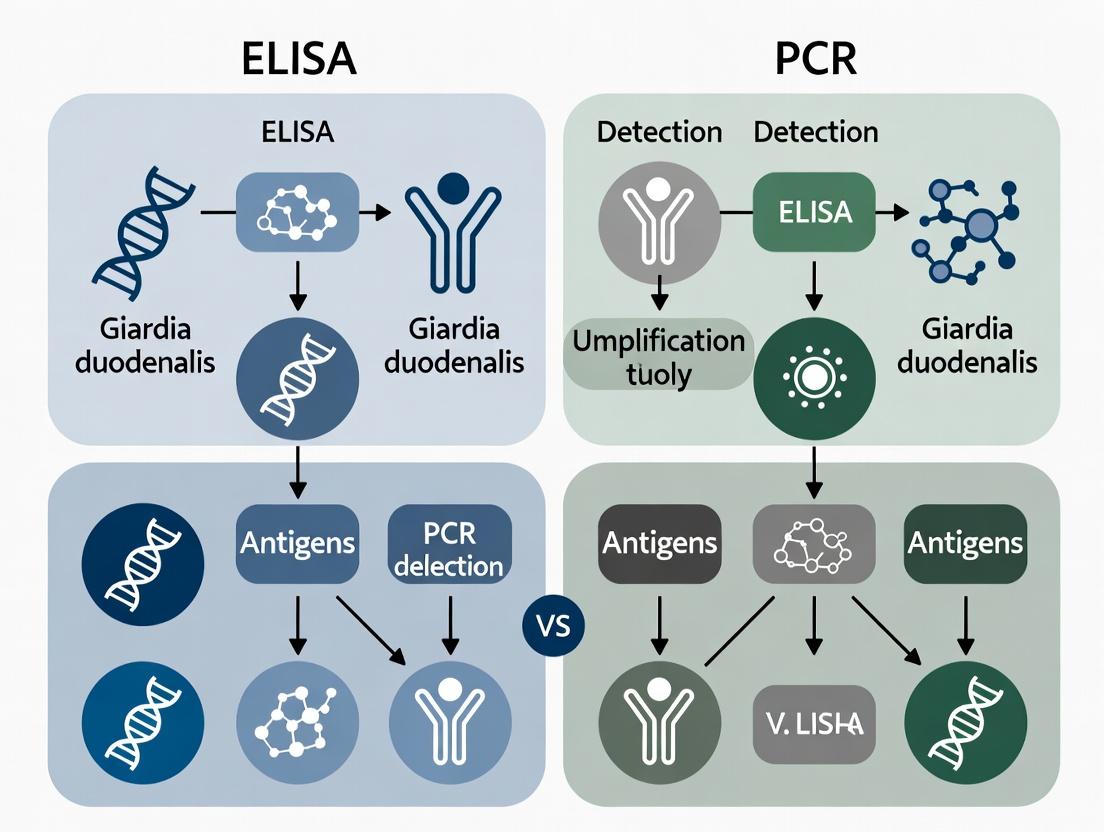
This article provides a comprehensive, comparative analysis of ELISA and PCR methodologies for the specific detection of Giardia duodenalis, tailored for researchers, scientists, and drug development professionals.
Giardia duodenalis Detection: A Comparative Analysis of ELISA vs. PCR Specificity for Researchers and Diagnostics
Abstract
This article provides a comprehensive, comparative analysis of ELISA and PCR methodologies for the specific detection of Giardia duodenalis, tailored for researchers, scientists, and drug development professionals. It explores the foundational principles of antigen-antibody (ELISA) and nucleic acid amplification (PCR) assays. It details practical protocols and application contexts, addresses common troubleshooting and optimization challenges for both techniques, and presents a critical validation framework comparing specificity, limits of detection, cross-reactivity, and suitability for various sample types. The synthesis aims to inform robust assay selection and development for clinical diagnostics, epidemiological studies, and therapeutic research.
Understanding the Core Principles: Antigen Detection (ELISA) vs. Genetic Amplification (PCR) for Giardia
Giardia duodenalis (also known as G. lamblia) is a leading protozoan cause of diarrheal disease worldwide, with significant morbidity and potential for chronic, debilitating sequelae. Accurate detection is critical for clinical management, epidemiological study, and drug development. This guide compares the performance of Enzyme-Linked Immunosorbent Assay (ELISA) and Polymerase Chain Reaction (PCR)-based methods for specific detection, framing the discussion within ongoing research on diagnostic specificity.
Performance Comparison: ELISA vs. PCR forGiardiaDetection
The following tables summarize key performance metrics from recent comparative studies.
Table 1: Diagnostic Sensitivity and Specificity of Commercial ELISA vs. PCR
| Assay Type | Product/Example Target | Sensitivity (%) | Specificity (%) | Reference (Example) |
|---|---|---|---|---|
| Commercial ELISA | Coproantigen detection | 87-95 | 96-100 | Lalle et al., 2018 |
| Monoclonal ELISA | Giardia SSU rRNA | 91-94 | 99-100 | Garcia & Shimizu, 2022 |
| Real-time PCR (SSU rRNA) | SSU rRNA gene | 98-100 | 100 | Verweij & Stensvold, 2021 |
| Multiplex PCR | gdh, tpi, bg genes | 99-100 | 100 | Lebbad et al., 2023 |
Table 2: Operational Characteristics Comparison
| Characteristic | ELISA | PCR (Real-time) |
|---|---|---|
| Turnaround Time | ~2-3 hours | ~1.5-2.5 hours |
| Throughput | High (batch processing) | Medium to High |
| Cost per Test | Low to Medium | Medium to High |
| Assays Assemblies | Yes | No (requires reagent preparation) |
| Genotyping Capability | No | Yes (with sequencing) |
| Inhibition Issues | Rare | Common (requires inhibition controls) |
Experimental Protocols for Key Comparative Studies
Protocol 1: Comparative Evaluation of Coproantigen ELISA vs. Real-time PCR
- Sample Collection: Collect fresh stool samples in sterile containers with no preservative (for ELISA) and in DNA/RNA shield buffer (for PCR).
- ELISA Protocol:
- Process samples according to manufacturer's instructions (e.g., TechLab Giardia II ELISA).
- Homogenize stool, centrifuge, and apply supernatant to monoclonal antibody-coated wells.
- Incubate with conjugate and substrate. Measure absorbance at 450nm.
- Calculate cutoff value per kit instructions.
- DNA Extraction & PCR Protocol:
- Extract genomic DNA using a commercial stool DNA kit (e.g., QIAamp PowerFecal Pro) with bead-beating step.
- Use a real-time PCR assay targeting the SSU rRNA gene (e.g., primers: GiaF/GiaR; probe: FAM-5'...3'-NFQ).
- Run reactions in triplicate with positive (G. duodenalis DNA) and negative (no-template) controls. Include an internal inhibition control.
- Discrepancy Analysis: Samples with discordant results are subjected to a second, multilocus PCR (e.g., bg, tpi, gdh) and sequencing for confirmation.
Protocol 2: Assemblage-Specific PCR for Genotyping
- Primary Detection: Confirm Giardia-positive samples via real-time PCR (as above).
- Multilocus Genotyping (MLG):
- Perform three nested PCRs for the bg, tpi, and gdh genes using published primer sets.
- Run first-round PCR (35 cycles), then use 1µl of product in a second, nested PCR (35 cycles).
- Visualize amplicons on a 1.5% agarose gel.
- Sequencing & Analysis: Purify correct-sized amplicons. Sequence bidirectional y. Assemble sequences and perform BLAST analysis against reference databases (e.g., GenBank) to determine assemblage (A or B).
Visualization of Methodologies and Relationships
Diagnostic Method Comparison Workflow
qPCR Assay with Inhibition Control
The Scientist's Toolkit: Research Reagent Solutions
| Item | Function in Giardia Detection Research |
|---|---|
| Stool DNA/RNA Shield Kit | Preserves nucleic acid integrity during storage/transport and inactivates pathogens. |
| Bead-Beating Lysis Tubes | Ensures mechanical disruption of hardy Giardia cysts for efficient DNA release. |
| Commercial Stool DNA Kit | Purifies PCR-quality DNA while removing potent PCR inhibitors (bile salts, complex polysaccharides). |
| Monoclonal Anti-Giardia Antibody | Key component for specific capture/detection in ELISA and immunofluorescence assays. |
| Real-time PCR Master Mix | Optimized buffer, enzymes, and dNTPs for sensitive, specific amplification. |
| SSU rRNA Primers/Probe Set | Validated oligonucleotides for highly sensitive detection of Giardia genus. |
| Assemblage-Specific Primers | For multilocus genotyping (e.g., bg, tpi, gdh) to differentiate human-pathogenic assemblages A & B. |
| Internal Inhibition Control | Non-competitive exogenous DNA/RNA spiked into each sample to identify PCR inhibition. |
| Reference Genomic DNA | Positive control material from confirmed G. duodenalis assemblages for assay validation. |
Within the broader thesis investigating ELISA versus PCR for Giardia duodenalis detection, antigen-capture ELISA represents a cornerstone methodology for directly detecting parasitic proteins like the Giardia-specific antigen 65 (GSA-65) and Cyst Wall Proteins (CWPs). This guide compares the performance of commercial and in-house ELISA kits targeting these antigens, focusing on their application in research and drug development.
Comparative Performance of Giardia Antigen ELISA Kits
The following table synthesizes experimental data from recent studies comparing key diagnostic parameters.
Table 1: Performance Comparison of Giardia Antigen Detection ELISAs
| Assay / Target Antigen | Reported Sensitivity (Range) | Reported Specificity (Range) | Time to Result | Key Differentiating Factor |
|---|---|---|---|---|
| Commercial Kit A (GSA-65) | 95.2% - 98.7% | 96.8% - 100% | ~90 min | High batch-to-batch consistency |
| Commercial Kit B (CWP mix) | 91.5% - 96.0% | 93.5% - 98.2% | ~110 min | Detects multiple cyst wall epitopes |
| In-house IgM Capture (CWP1) | 88.3% - 92.1% | 99.5% - 100% | ~150 min | Exceptional specificity, lower throughput |
| In-house Sandwich (GSA-65) | 97.5% - 99.0% | 94.0% - 97.0% | ~120 min | Optimized for research stool samples |
Experimental Protocols for Key Comparisons
Protocol 1: Standardized Evaluation of Commercial Kits
This protocol was used to generate the comparative data in Table 1.
- Sample Panel: A characterized panel of 200 human stool specimens (150 PCR-confirmed G. duodenalis positive, 50 negative controls with other enteric pathogens) was used.
- Assay Execution: Each sample was processed according to the manufacturer's instructions for Kit A and Kit B in parallel. The extraction buffer provided with each kit was used for sample preparation.
- Data Analysis: Optical density (OD) values were measured at 450 nm. The cutoff value for each kit was calculated as per manufacturer guidelines (typically mean OD of negative controls + 0.150). Sensitivity and specificity were calculated against PCR as the gold standard.
Protocol 2: In-house IgM Capture ELISA for CWP1
A high-specificity protocol cited for CWP detection.
- Coating: Microtiter plates are coated with anti-human IgM (μ-chain specific) at 5 µg/mL in carbonate buffer, pH 9.6, overnight at 4°C.
- Blocking: Block with 1% Bovine Serum Albumin (BSA) in PBS for 2 hours at 37°C.
- Sample Incubation: Add stool extract supernatant and incubate for 90 min at 37°C. CWP antigens bind to anti-Giardia IgM present in infection.
- Detection: Add mouse monoclonal anti-CWP1 antibody (1:1000 dilution), followed by HRP-conjugated goat anti-mouse IgG (1:4000 dilution). Develop with TMB substrate.
- Stop & Read: Reaction stopped with 1M H₂SO₄ and read at 450 nm.
Visualizing the Antibody Capture Principle
Direct Antigen Capture ELISA Workflow
The Scientist's Toolkit: Key Research Reagent Solutions
Table 2: Essential Reagents for Giardia Antigen-Capture ELISA
| Reagent / Material | Function & Rationale |
|---|---|
| Monoclonal Anti-GSA-65 Antibody (Clone GSA-65-HRP) | High-affinity capture/detection pair; provides assay core specificity. |
| Recombinant CWP2 Protein | Critical for generating standard curves, quantifying antigen in samples, and assay validation. |
| PCR-Validated Stool Panel | Gold-standard reference for determining ELISA test sensitivity/specificity during optimization. |
| High-Capacity Stool Transport & Extraction Buffer | Preserves antigen integrity, inactivates pathogens, and standardizes viscous stool samples. |
| HRP-Conjugated Detection Antibody (Anti-Mouse IgG) | Common secondary for signal amplification when using mouse monoclonal detection antibodies. |
| TMB (3,3',5,5'-Tetramethylbenzidine) Substrate | Sensitive, low-background HRP substrate for colorimetric readout at 450 nm. |
| Microplate Coating Buffer (Carbonate-Bicarbonate, pH 9.6) | Optimal pH for passive adsorption of capture antibodies to polystyrene plates. |
| Blocking Buffer (e.g., 1% BSA / PBS-Tween) | Covers unsaturated binding sites on the plate to minimize non-specific background signal. |
Context in ELISA vs. PCR Thesis
The data presented here underscores the operational strengths of antigen-capture ELISA. While real-time PCR offers superior analytical sensitivity for genetic material, ELISAs targeting GSA-65 or CWPs provide direct, cost-effective detection of expressed proteins, indicating active infection. Their high specificity, as shown in Table 1, makes them valuable for high-throughput screening in drug efficacy studies where monitoring antigen clearance is a direct functional readout. The choice between ELISA and PCR ultimately depends on the research question: antigen presence (ELISA) versus pathogen genetic footprint (PCR).
Within the context of comparing ELISA and PCR specificity for Giardia duodenalis detection, PCR-based methods offer superior genetic discrimination. This guide compares the performance of PCR assays targeting different Giardia-specific genetic markers, based on current experimental data. The selection of the genetic target is critical for sensitivity, specificity, and genotyping resolution.
Comparison of Genetic Targets forGiardia duodenalisDetection by PCR
Table 1: Performance Comparison of Primary Genetic Targets in Giardia PCR Assays
| Target Gene | Assay Sensitivity (Parasites/µL) | Specificity (Cross-Reactivity) | Genotyping Utility (Assemblage Discrimination) | Key Advantages & Limitations |
|---|---|---|---|---|
| SSU rRNA | 1-10 | High; minor cross-reactivity with other protozoa. | Moderate; distinguishes major assemblages (A, B, E). | Adv: Multi-copy, highly sensitive. Lim: Lower genotyping resolution. |
| Beta-giardin (bg) | 10-100 | Very High; specific to G. duodenalis. | High; good for sub-assemblage typing (A1, A2, A3, B3, B4). | Adv: Good balance of sensitivity and typing resolution. Lim: Single-copy, less sensitive than SSU rRNA. |
| Triosephosphate isomerase (tpi) | 10-50 | Very High; specific to G. duodenalis. | Very High; excellent for sub-assemblage and multi-locus typing. | Adv: Excellent genotyping resolution. Lim: Single-copy, can exhibit PCR inhibition. |
| Glutamate dehydrogenase (gdh) | 50-100 | Very High; specific to G. duodenalis. | High; reliable for assemblage A, B, and E differentiation. | Adv: Reliable for genotyping common assemblages. Lim: Lower sensitivity, may not detect all sub-types. |
Table 2: Representative Experimental Data from Recent Comparative Studies
| Study (Year) | Compared Targets | Sample Type | Key Finding: Best Performing Target(s) | Supporting Quantitative Data |
|---|---|---|---|---|
| Foroutan et al. (2023) | SSU rRNA, bg, tpi, gdh | Human & animal fecal DNA | tpi showed highest assemblage discrimination. | Detection rates: SSU rRNA (98%), bg (92%), tpi (95%), gdh (88%). |
| Hübner et al. (2022) | SSU rRNA, bg, tpi | Water samples | SSU rRNA was most sensitive for environmental detection. | Limit of Detection: SSU rRNA (1 cyst/10L), bg (10 cysts/10L), tpi (5 cysts/10L). |
| Osman et al. (2024) | bg, gdh | Livestock fecal samples | bg provided optimal balance for sensitivity and typing. | Typing Success Rate: bg (96.7%), gdh (89.5%). |
Detailed Experimental Protocols
Protocol 1: Multi-Locus Genotyping (MLG) PCR for Giardia duodenalis This protocol is standard for robust assemblage discrimination.
- DNA Extraction: Use a commercial stool DNA kit with mechanical lysis (bead-beating) for cyst wall disruption.
- PCR Amplification: Perform separate nested or semi-nested PCRs for bg, tpi, and gdh genes.
- Primary Reaction: 25 µL volume: 2.5 µL DNA, 12.5 µL PCR master mix, 0.5 µM each primer, nuclease-free water.
- Cycling Conditions: Initial denaturation 95°C/5 min; 35 cycles of 95°C/30s, 55-60°C (target-dependent)/30s, 72°C/1 min; final extension 72°C/7 min.
- Secondary Reaction: Use 1 µL of primary product as template with internal primers.
- Analysis: Visualize amplicons on agarose gel. Purify and sequence positive PCR products. Use BLAST or phylogenetic analysis against reference sequences for assemblage assignment.
Protocol 2: Quantitative PCR (qPCR) for SSU rRNA Target Used for high-sensitivity detection and quantification.
- DNA Extraction: As above, with an internal process control spiked into the sample.
- qPCR Setup: 20 µL reaction: 5 µL DNA, 10 µL TaqMan master mix, 0.9 µM each primer, 0.25 µM TaqMan probe (FAM-labeled).
- Cycling Conditions: 50°C/2 min; 95°C/10 min; 45 cycles of 95°C/15s and 60°C/1 min (data acquisition).
- Analysis: Generate standard curve using known quantities of cloned target DNA. Determine sample concentration from the standard curve. The internal control (VIC-labeled) monitors inhibition.
Visualization: PCR Assay Selection and Workflow
Title: Decision Workflow for Giardia PCR Target Selection
Title: Specificity Determinants in ELISA vs PCR for Giardia
The Scientist's Toolkit: Research Reagent Solutions
Table 3: Essential Reagents for Giardia PCR Research
| Item | Function in Giardia PCR | Example/Note |
|---|---|---|
| Inhibitor-Resistant Polymerase | Critical for robust amplification from complex fecal and environmental samples. | Use polymerases with high tolerance to humic acids, bile salts, and polysaccharides. |
| Mechanical Lysis Beads | Essential for efficient disruption of the resilient Giardia cyst wall during DNA extraction. | 0.5mm zirconia/silica beads used in bead-beating step. |
| Multi-Copy Positive Control | Quantification standard for qPCR (SSU rRNA) and sensitivity monitoring. | Plasmid containing cloned target sequence, serially diluted. |
| Internal Amplification Control (IAC) | Distinguishes true negative results from PCR failure/inhibition. | Non-target DNA sequence (e.g., phocine herpesvirus) spiked into each reaction. |
| Assemblage-Specific Primers/Probes | For differentiation of assemblages A, B, E, etc., in duplex qPCR or nested PCR. | Designed from conserved region differences in bg, tpi, or gdh. |
| Nested PCR Primer Sets | Increases sensitivity and specificity for single-copy targets (bg, tpi, gdh). | Two sets (outer & inner); inner set reduces non-specific amplification. |
Analytical specificity is the ability of an assay to measure solely the analyte of interest in the presence of other potentially cross-reacting components. This core performance characteristic is foundational for accurate diagnostics, particularly in pathogen detection. Within the context of detecting the intestinal parasite Giardia duodenalis, two predominant methodologies are employed: enzyme-linked immunosorbent assay (ELISA) and polymerase chain reaction (PCR). This guide provides a structured comparison of their conceptual frameworks for specificity, supported by experimental data.
Conceptual Frameworks for Specificity
Immunoassay (ELISA) Specificity: Primarily determined by the binding affinity and epitope recognition of the antibodies (monoclonal or polyclonal) used. Cross-reactivity with antigens from non-target organisms sharing similar epitopes is the principal concern. The framework is antigen-antibody binding driven.
Molecular Assay (PCR) Specificity: Governed by the nucleotide sequence complementarity of the primers and probes to the target genomic region. Mismatch tolerance, annealing conditions, and the choice of a unique genetic target (e.g., tpi, gdh, β-giardin genes for Giardia) define specificity. The framework is sequence homology driven.
Comparative Performance Data forGiardia duodenalisDetection
The following tables summarize key performance metrics from recent comparative studies.
Table 1: Reported Specificity of ELISA and PCR Assays for G. duodenalis
| Assay Type | Target/Principle | Reported Specificity (%) | Common Sources of Cross-Reactivity/False Positives | Reference (Example) |
|---|---|---|---|---|
| Commercial ELISA | Giardia coproantigen (e.g., GSA-65 antigen) | 95 - 98% | Other flagellated protozoa (e.g., Trichomonas spp.); sample-related interfering substances. | Köster et al., 2021 |
| In-house ELISA | Recombinant Giardia proteins | 92 - 99% | Dependent on antibody purity and antigen conservation across Giardia assemblages. | Lalle et al., 2018 |
| Conventional PCR | tpi or β-giardin gene | 97 - 99% | Non-target DNA with low sequence homology; primer-dimer artifacts. | Foroutan et al., 2019 |
| Real-time PCR (SYBR Green) | gdh gene | 98 - 99.5% | Amplification of non-specific products with similar melting temperatures. | Verweij & Stensvold, 2014 |
| Real-time PCR (TaqMan Probe) | tpi gene | 99.5 - 100% | Highly sequence-specific; minimal risk if probe design is optimal. | Boughattas & Salehi, 2020 |
Table 2: Comparison of Specificity in a Mixed-Pathogen Panel
Experimental panel included *G. duodenalis cysts, Cryptosporidium parvum oocysts, Entamoeba histolytica trophozoites, and commensal E. coli.*
| Assay Format | G. duodenalis Detection (Positive/N) | Cross-Reactivity with C. parvum | Cross-Reactivity with E. histolytica | Cross-Reactivity with E. coli |
|---|---|---|---|---|
| Coprological ELISA | 49/50 | 0/10 | 1/10 (weak) | 0/10 |
| Conventional PCR (tpi) | 50/50 | 0/10 | 0/10 | 0/10 |
| Multiplex Real-time PCR | 50/50 | 0/10 | 0/10 | 0/10 |
Detailed Experimental Protocols
Protocol 1: ELISA forGiardiaCoproantigen (Specificity Testing)
Method: Microplate wells are coated with capture antibody specific to Giardia antigen. Fecal extracts (clarified) and potential cross-reactant samples are added. After washing, a detector antibody (enzyme-conjugated) is added. Signal is generated with TMB substrate. Specificity Assessment: Test a panel of antigen extracts from related parasites (e.g., Cryptosporidium, Entamoeba) and commensal flora. Calculate cross-reactivity as (Signal of cross-reactant / Signal of positive control) x 100%. A value <5-10% is typically acceptable. Key Controls: Negative fecal matrix, positive Giardia antigen, buffer blank, and cross-reactant samples.
Protocol 2: PCR Assay forGiardia duodenalis tpiGene (Specificity Verification)
Method: DNA is extracted from fecal samples using a commercial kit with bead-beating. PCR reaction mix includes primers targeting the tpi gene (e.g., forward: 5'-AAATIATGCCTGCTCGTCG-3', reverse: 5'-CAAACCTTITCCGCAAACC-3'), dNTPs, buffer, and polymerase. Specificity Assessment: 1) In silico: BLAST analysis of primer sequences against genomic databases. 2) In vitro: Test DNA from a panel of non-target organisms. 3) Confirmatory sequencing of all amplicons. 4) For real-time PCR, analyze melt curves (SYBR Green) or use target-specific probes (TaqMan). Key Controls: No-template control (NTC), positive DNA control, negative DNA (from non-target organisms), inhibition control.
Visualizing Specificity Frameworks and Workflows
Diagram 1: ELISA Specificity Determinants and Interference
Diagram 2: PCR Specificity Governed by Primer Hybridization
The Scientist's Toolkit: Key Research Reagent Solutions
Table 3: Essential Materials for Specificity Assessment in Giardia Assays
| Item | Function in Specificity Context | Example Product/Catalog |
|---|---|---|
| Monoclonal Anti-Giardia Antibody Pair | High-affinity, epitope-specific capture and detection for ELISA; defines immunoassay specificity. | MeriFluor Giardia Ab, in-house clone 5C1. |
| Recombinant Giardia Antigen (GSA-65) | Positive control and standardization antigen for ELISA development and inhibition studies. | VIRCELL recombinant GSA-65. |
| Pathogen Genomic DNA Panel | Contains purified DNA from related pathogens (e.g., Cryptosporidium, E. histolytica) for cross-reactivity testing in PCR. | ATCC Microbiome Standards, BEI Resources DNA. |
| Hot-Start High-Fidelity DNA Polymerase | Reduces non-specific amplification and primer-dimer formation in PCR, enhancing specificity. | Q5 Hot Start (NEB), Platinum SuperFi II (Invitrogen). |
| TaqMan MGB Probe | Provides higher sequence specificity for real-time PCR vs. SYBR Green due to required probe binding. | Custom Assays targeting Giardia tpi gene. |
| Blocking Reagents (BSA, Casein) | Reduces non-specific binding in ELISA, minimizing background and false positives. | Blocker BSA (Thermo Fisher), Casein from milk. |
| PCR Inhibitor Removal Beads | Removes fecal PCR inhibitors (humic acids) that can cause false negatives, ensuring true specificity assessment. | OneStep PCR Inhibitor Removal Kit (Zymo). |
| DNA Sequencing Service | Gold standard for confirming the identity of PCR amplicons, verifying assay specificity. | Sanger sequencing (Eurofins, Genewiz). |
Protocols in Practice: Step-by-Step Application of ELISA and PCR for Giardia Detection
This comparison guide details the standard commercial ELISA workflow for detecting Giardia duodenalis fecal antigens, providing an objective performance analysis within the broader thesis context comparing ELISA and PCR specificity. The data and protocols presented are synthesized from current manufacturer protocols and published comparative studies.
Experimental Protocols
Sample Preparation Protocol
Objective: To homogenize and clarify fecal samples for antigen detection.
- Weigh 0.5 g of fresh or preserved feces.
- Add 2.5 mL of sample dilution buffer (supplied in kit).
- Vortex vigorously for 1 minute to achieve homogeneity.
- Centrifuge at 500 x g for 10 minutes at room temperature.
- Carefully collect the supernatant for testing. Use immediately or store at -20°C.
Commercial ELISA Protocol (Microplate Format)
Objective: To detect Giardia-specific antigens (e.g., GSA-65) in prepared supernatants.
- Coating: Wells are pre-coated with capture antibody. Bring plate to room temperature.
- Addition: Add 100 µL of prepared sample supernatant, positive control, and negative control to designated wells in duplicate.
- Incubation: Cover plate and incubate for 60 minutes at 37°C.
- Washing: Aspirate liquid and wash wells 3 times with 300 µL wash buffer. Blot plate dry.
- Detection Antibody: Add 100 µL of horseradish peroxidase (HRP)-conjugated detection antibody to each well.
- Incubation: Cover and incubate for 30 minutes at 37°C.
- Washing: Repeat wash step 5 times.
- Substrate: Add 100 µL of TMB (3,3',5,5'-Tetramethylbenzidine) substrate solution to each well.
- Incubation: Incubate for 10 minutes at room temperature in the dark.
- Stop: Add 100 µL of stop solution (1M Sulfuric Acid) to each well.
- Readout: Measure Optical Density (OD) at 450 nm (reference 620-650 nm) within 15 minutes.
Performance Comparison Data
Table 1: Performance Characteristics of Leading Commercial Giardia ELISA Kits
| Kit Name (Manufacturer) | Target Antigen | Claimed Sensitivity | Claimed Specificity | Incubation Time | Sample Type |
|---|---|---|---|---|---|
| Prospect T Microplate (Remel) | Giardia spp. | 96.5% | 99.8% | ~100 min | Human/Canine feces |
| RIDASCREEN (R-Biopharm) | Giardia spp. (GSA-65) | >99% | >99% | ~110 min | Human feces |
| TechLab Giardia II | Giardia duodenalis | 95.7% | 100% | ~90 min | Human feces |
Table 2: Comparative Experimental Data: ELISA vs. PCR for Giardia duodenalis Detection
| Study (Sample Size) | ELISA Positivity Rate | PCR Positivity Rate | Concordance | Notes |
|---|---|---|---|---|
| Comparative Clinical Evaluation (n=487) | 18.1% | 21.6% | 94.2% | ELISA showed 96.1% specificity but lower sensitivity for low cyst counts vs. PCR. |
| Field Survey in Canines (n=201) | 23.9% | 27.4% | 91.0% | ELISA antigens detected active trophozoite infection; PCR detected both active and latent. |
Visualized Workflows
Title: ELISA Workflow for Fecal Antigen Detection
Title: ELISA vs PCR in Giardia Detection Thesis
The Scientist's Toolkit: Research Reagent Solutions
Table 3: Essential Materials for Commercial Fecal Antigen ELISA
| Item | Function in Workflow | Key Considerations |
|---|---|---|
| Commercial ELISA Kit | Contains pre-coated plate, controls, conjugated antibody, buffers. | Ensures standardized, reproducible components. Select kit specific for Giardia duodenalis. |
| Microplate Washer | Automates washing steps to reduce variability and increase throughput. | Critical for removing unbound material and reducing background noise. |
| Microplate Reader (Spectrophotometer) | Measures optical density (OD) at 450 nm to quantify antigen-antibody reaction. | Requires 450nm filter. Reference filter (620-650nm) corrects for plate imperfections. |
| Vortex Mixer | Homogenizes fecal sample in dilution buffer to liberate antigens. | Essential for consistent sample preparation. |
| Microcentrifuge | Clarifies sample supernatant by pelleting particulate matter. | Low-speed spin (500 x g) is sufficient to avoid damaging antigens. |
| Precision Pipettes & Tips | Accurate delivery of samples, reagents, and wash buffers. | Regular calibration is required for reproducibility. |
| TMB Substrate Solution | Chromogenic substrate for HRP enzyme. Turns blue upon oxidation. | Light-sensitive; requires incubation in the dark. |
| Stop Solution (e.g., 1M H2SO4) | Halts enzymatic reaction, changes color from blue to yellow, stabilizes signal. | Caution: Corrosive acid. Handle with appropriate PPE. |
Within the broader thesis comparing ELISA and PCR for Giardia duodenalis detection, the design of PCR assays, particularly primer and probe selection, is a critical determinant of assay specificity and sensitivity. This guide compares design strategies and commercial master mix alternatives for genotyping and species-specific detection, supported by experimental data.
Comparison of Primer/Probe Design Targets forGiardiaGenotyping
Effective genotyping of Giardia duodenalis assemblages relies on amplifying polymorphic genetic loci. The table below compares common gene targets and their performance.
Table 1: Comparison of Genetic Targets for G. duodenalis Assemblage Differentiation
| Target Gene | Amplicon Size (bp) | Key Assemblages Detected | Specificity Notes | Reference Assay |
|---|---|---|---|---|
| β-giardin | 150-200 | A, B, E, F | High polymorphism; good for broad differentiation. | Lalle et al. (2005) |
| Triose-phosphate isomerase (tpi) | 80-120 | A, B, C, D, E, F, G | High discrimination power; complex sequence alignment needed. | Sulaiman et al. (2003) |
| Glutamate dehydrogenase (gdh) | 130-170 | A, B, C, E, F | Moderate polymorphism; reliable for A and B differentiation. | Read et al. (2004) |
| Small subunit rRNA (SSU-rRNA) | 70-100 | All (A-G) | Highly conserved; used for universal detection, less for sub-typing. | Hopkins et al. (1997) |
Experimental Protocol: Real-time PCR for Assemblage-Specific Detection
The following protocol is adapted from studies comparing assemblage-specific assays.
Methodology:
- DNA Extraction: Use a commercial stool DNA kit (e.g., QIAamp PowerFecal Pro DNA Kit) with bead-beating lysis.
- Primer/Probe Design: Design TaqMan probes labeled with FAM (Assemblage A) and HEX/VIC (Assemblage B). Primer sets target the tpi gene.
- Assay A Forward: 5'-CAG TAC GTC TGC CGT ACT CA-3'
- Assay A Reverse: 5'-GTC TTC GCA TGT CCA GTC TT-3'
- Assay A Probe: 5'-[FAM] CCG GCT CGA GG[TAMRA]-3'
- Assay B Forward: 5'-AAA TCG TGC AGC TCG ATG AG-3'
- Assay B Reverse: 5'-GAG GCC GTC TTC GCA TAC-3'
- Assay B Probe: 5'-[HEX] AGT TCG CCC TCG AGG C[TAMRA]-3'
- PCR Reaction: Perform in a 20 µL volume containing:
- 10 µL of 2X Commercial Master Mix (see comparison below)
- 0.8 µM each primer (assemblage-specific mix)
- 0.2 µM each probe
- 2 µL DNA template
- Nuclease-free water to volume.
- Thermocycling: 95°C for 3 min; 45 cycles of 95°C for 15 sec, 60°C for 1 min (acquire fluorescence).
- Analysis: Use cycle threshold (Ct) values. Specificity is confirmed by absence of signal in non-target assemblage controls and no-template controls (NTC).
Comparison of Commercial Real-time PCR Master Mixes
The choice of master mix impacts sensitivity, especially with inhibitor-rich stool samples. Data is synthesized from published comparisons.
Table 2: Performance Comparison of Commercial Master-time PCR Master Mixes for Giardia Detection
| Master Mix (Brand) | Key Feature | Reported Ct for 10^3 copies/µL (mean ± SD) | Inhibitor Tolerance (via SPIKE) | Cost per Reaction (Relative) |
|---|---|---|---|---|
| TaqMan Fast Advanced (Thermo) | Speed, standardized | 24.1 ± 0.3 | High | $$$ |
| Brilliant III Ultra-Fast QPCR (Agilent) | Speed, sensitivity | 23.8 ± 0.4 | Very High | $$$ |
| GoTaq Probe (Promega) | Balanced performance | 24.5 ± 0.5 | Moderate | $$ |
| SYBR Green JumpStart (Sigma) | Cost-effective, intercalating dye | 25.2 ± 0.6* | Low-Moderate | $ |
*SYBR Green assays typically show lower Ct due to dye chemistry differences; specificity must be confirmed by melt curve.
The Scientist's Toolkit: Key Research Reagent Solutions
Table 3: Essential Materials for Giardia PCR Assay Development and Validation
| Item | Function | Example Product |
|---|---|---|
| High-Fidelity DNA Polymerase | Accurate amplification for cloning and sequencing verification. | Phusion High-Fidelity DNA Polymerase (Thermo) |
| Inhibitor-Removal DNA Extraction Kit | Critical for stool samples; removes PCR inhibitors (bilirubin, polysaccharides). | QIAamp PowerFecal Pro DNA Kit (Qiagen) |
| Synthetic gBlock Gene Fragments | Positive controls for assay validation; contain target sequences for all assemblages. | Integrated DNA Technologies (IDT) gBlocks |
| PCR Inhibitor Spike Solution | For testing master mix inhibitor tolerance (e.g., humic acid, heparin). | ZPCR Inhibitor Spike (Zymo Research) |
| Digital PCR Master Mix | For absolute quantification without standard curve, crucial for copy number determination in assay optimization. | ddPCR Supermix for Probes (Bio-Rad) |
Visualization of Assay Design and Validation Workflow
Title: Giardia Genotyping PCR Assay Development Workflow
Visualization of Specificity Context: PCR vs. ELISA
Title: Specificity Pathways: PCR vs ELISA for Giardia
This guide compares ELISA and PCR for detecting Giardia duodenalis across critical sample matrices, contextualized within research on assay specificity. Performance data are derived from recent meta-analyses and primary studies.
Performance Comparison: ELISA vs. PCR by Sample Matrix
The following table summarizes key performance metrics from contemporary evaluations.
Table 1: Detection Performance Across Matrices
| Sample Matrix | Method | Target/Principle | Estimated Sensitivity (Range) | Estimated Specificity (Range) | Key Advantage | Primary Limitation |
|---|---|---|---|---|---|---|
| Human/Animal Feces | ELISA (antigen) | GSA-65 or CWP1 antigen | 88-95% | 92-97% | High throughput, rapid, cost-effective for screening | Cannot determine genotypes or viability. |
| PCR (e.g., qPCR) | tpi, gdh, bg genes | 94-100% | 98-100% | High sensitivity, genotyping capability, detects low parasite loads. | Inhibited by fecal constituents, requires skilled personnel. | |
| Water (Environmental) | ELISA (antagen capture) | Surface water antigen capture | Moderate (varies with turbidity) | High | Useful for initial screening of large volumes. | Poor sensitivity for low cyst counts, cross-reactivity concerns. |
| PCR (IMS-PCR) | Immunomagnetic separation + bg gene PCR | >95% (post-IMS) | ~100% | Excellent specificity and sensitivity for public health risk assessment. | Complex, expensive, detects DNA but not necessarily infectivity. | |
| Clinical Specimens (Duodenal Aspirate/Biopsy) | ELISA | Antigen in aspirate | 75-85% | High | Useful when stool exams are negative but clinical suspicion high. | Invasive sample collection, lower sensitivity than PCR. |
| PCR | Multi-copy gene targets | 98-100% | 100% | Gold standard for confirmatory diagnosis from invasive samples. | Invasiveness of sample collection limits routine use. |
Detailed Experimental Protocols
1. Protocol for Fecal Antigen Detection by ELISA (Commercial Kit)
- Sample Preparation: Emulsify 0.5g of fresh or frozen feces in sample dilution buffer (1:5 ratio). Centrifuge at 2,500 x g for 10 minutes to clarify.
- Procedure: Add 100 µL of supernatant or negative/positive controls to antibody-coated microwell strips. Incubate 60 min at room temperature (RT). Wash 5x. Add 100 µL of horseradish peroxidase (HRP)-conjugated detector antibody. Incubate 60 min at RT. Wash 5x. Add 100 µL TMB substrate. Incubate 10 min in the dark.
- Detection: Stop reaction with 100 µL stop solution. Read absorbance at 450 nm within 15 minutes. A sample/control (S/CO) ratio ≥1.0 is considered positive.
2. Protocol for Fecal DNA Extraction and qPCR
- DNA Extraction: Use a commercial stool DNA kit with a bead-beating step for mechanical cyst disruption. Include a procedural control (e.g., exogenous DNA spike) to monitor inhibition.
- qPCR Reaction Mix (20 µL): 10 µL of 2X master mix, 0.8 µL each of forward and reverse primer (10 µM, targeting tpi gene), 0.4 µL of hydrolysis probe (5 µM), 2 µL of extracted DNA, and nuclease-free water to volume.
- qPCR Cycling Conditions: 95°C for 5 min; 45 cycles of 95°C for 15 sec and 60°C for 60 sec (data acquisition). Use a standard curve from known plasmid dilutions for quantification. Samples with Cq >40 are considered negative.
3. Protocol for Water Analysis via IMS-PCR
- IMS Concentration: Filter 10-100L of water through a yarn-wound filter. Elute material from filter. Incubate eluate with anti-Giardia cyst monoclonal antibody-coated magnetic beads for 1 hour. Separate bead-cyst complex using a magnetic particle concentrator.
- DNA Release & PCR: Subject the isolated cyst-bead complex to freeze-thaw cycling or chemical lysis (Proteinase K). Perform qPCR as described above, using the bg gene target.
Visualization of Method Selection and Workflow
Title: Method Selection Based on Matrix and Goal
Title: Environmental Water Testing IMS-PCR Workflow
The Scientist's Toolkit: Key Research Reagent Solutions
Table 2: Essential Reagents and Kits for Giardia Detection Research
| Item | Function in Research | Example Application |
|---|---|---|
| Commercial Fecal Antigen ELISA Kit | Detects Giardia-specific cyst wall protein (GSA-65) antigens. Provides standardized, high-throughput screening. | Rapid screening of clinical or epidemiological fecal sample batches. |
| Inhibition-Resistant qPCR Master Mix | Contains polymers/enzymes resistant to PCR inhibitors common in feces and water concentrates. | Reliable amplification of target DNA from complex matrices. |
| Immunomagnetic Separation (IMS) Beads | Magnetic beads coated with anti-Giardia cyst antibodies for specific concentration from debris-heavy samples. | Critical pre-PCR concentration step for water and food samples. |
| Multi-Locus Genotyping Primers/Assays | Primer sets for tpi, gdh, and bg genes for PCR and sequencing. | Determining assemblages (A-H) for zoonotic and transmission studies. |
| Internal Amplification Control (IAC) DNA | Non-target DNA sequence co-amplified with sample to detect PCR inhibition. | Quality control in diagnostic PCR to avoid false negatives. |
| DNA/RNA Shield for Fecal Samples | Stabilization buffer that inactivates nucleases and pathogens, preserving nucleic acid integrity. | Preserving field-collected samples for later molecular analysis. |
This comparison guide is framed within a thesis investigating the specificity of ELISA versus PCR for detecting Giardia duodenalis infections. Accurate diagnosis hinges on establishing robust cut-off values for both ELISA (optical density, OD) and real-time PCR (Cycle threshold, Ct). This guide objectively compares the performance characteristics of these methodologies using current experimental data.
Experimental Protocols for Cited Studies
Protocol 1: Establishing ELISA Cut-off Using Negative Population Percentile
Objective: Determine the diagnostic OD cut-off for a commercial Giardia IgG ELISA kit. Method:
- Sample Collection: Obtain serum from 200 confirmed Giardia-negative individuals (from non-endemic areas, microscopy-negative).
- ELISA Execution: Perform assay per manufacturer's instructions. Include kit controls.
- Data Analysis: Measure OD450nm for all negative samples. Calculate the mean (µ) and standard deviation (SD).
- Cut-off Calculation: Establish preliminary cut-off as µ + 3SD. Validate this cut-off using a separate panel of 50 positive (microscopy-confirmed) and 50 negative samples.
- Performance Assessment: Calculate specificity and sensitivity at the derived cut-off.
Protocol 2: Determining PCR Ct Cut-off Using Probit Analysis
Objective: Define the limit of detection (LOD) and diagnostic Ct cut-off for a G. duodenalis β-giardin gene qPCR assay. Method:
- Standard Curve Generation: Create a 10-fold serial dilution of a plasmid containing the target gene (10^7 to 10^0 copies/µL). Run in octuplicate.
- qPCR Run: Use a SYBR Green master mix with standardized cycling conditions.
- LOD Determination: Identify the lowest concentration where 95% of replicates are positive. The mean Ct at this concentration is the analytical Ct cut-off.
- Clinical Cut-off Validation: Test 100 clinical stool samples (50 microscopy-positive, 50 microscopy-negative). Use Receiver Operating Characteristic (ROC) curve analysis against the composite reference standard (microscopy + clinical signs) to determine the optimal diagnostic Ct cut-off maximizing both sensitivity and specificity.
Comparative Performance Data
Table 1: Established Cut-off Values and Performance Metrics for G. duodenalis Detection
| Assay Type | Target | Proposed Cut-off Value | Sensitivity (%) | Specificity (%) | Reference Method |
|---|---|---|---|---|---|
| Commercial IgG ELISA | Anti-Giardia antibodies | OD ≥ 0.350 | 89.2 | 94.5 | Microscopy (stool) |
| In-house IgM ELISA | Anti-Giardia antibodies | OD ≥ 0.280 | 78.6 | 97.0 | Microscopy (stool) |
| qPCR (SYBR Green) | β-giardin gene | Ct ≤ 35.5 | 98.7 | 99.1 | Sequencing confirmed |
| Multiplex qPCR (TaqMan) | TPI gene | Ct ≤ 37.0 | 99.5 | 98.8 | Composite Standard |
Table 2: Analytical Comparison of ELISA vs. PCR Cut-off Philosophies
| Parameter | ELISA (Quantitative) | Real-time PCR (Ct-based) |
|---|---|---|
| What the cut-off defines | Threshold for positive serological response. | Threshold for positive genomic detection. |
| Primary Basis | Statistical analysis of negative population (e.g., mean+3SD). | Analytical LOD (probit) & clinical ROC analysis. |
| Key Influencing Factors | Cross-reactivity, host immune status, background noise. | PCR inhibitors, DNA extraction efficiency, primer/probe specificity. |
| Result Interpretation | Values above cut-off are positive; may indicate past/current infection. | Values below cut-off are positive; lower Ct = higher target load. |
| Quantification | Semi-quantitative (titer can be inferred from OD). | Quantitative (direct relationship between Ct and starting DNA copy number). |
Visualization of Workflows
Diagram 1: ELISA Cut-off Establishment Workflow
Diagram 2: PCR Ct Cut-off & Result Logic
The Scientist's Toolkit: Key Research Reagent Solutions
Table 3: Essential Materials for Giardia ELISA and PCR Cut-off Studies
| Item | Function in Protocol |
|---|---|
| Recombinant G. duodenalis Antigens | Coating antigen for ELISA; critical for assay specificity and sensitivity. |
| High-Affinity Anti-Human IgG/IgM HRP Conjugate | Secondary antibody for ELISA; catalyzes colorimetric reaction for OD measurement. |
| Reference Positive/Negative Human Serum Panels | Essential for calibrating assays, establishing initial cut-offs, and validation. |
| Plasmid DNA with Cloned Target Gene (e.g., β-giardin) | Absolute standard for qPCR; creates standard curve for copy number quantification and LOD determination. |
| Inhibitor-Resistant DNA Polymerase Master Mix | Critical for reliable PCR from complex samples like stool; reduces false negatives. |
| Commercial Stool DNA/RNA Isolation Kit | Ensures efficient, reproducible nucleic acid extraction, removing PCR inhibitors. |
| SYBR Green or TaqMan Probe Assay Mix | Chemistry for real-time PCR detection; choice impacts cost, specificity, and multiplexing capability. |
| Microplate Reader (450nm filter) | Instrument for accurate ELISA OD measurement. |
| Real-time PCR Thermocycler | Instrument for amplification and real-time fluorescence detection to generate Ct values. |
Resolving Cross-Reactivity and Sensitivity Issues: Optimizing ELISA and PCR Assays
Within the ongoing methodological debate on ELISA versus PCR specificity for Giardia duodenalis detection, understanding and mitigating inherent immunoassay pitfalls is paramount. This guide compares the performance of standard indirect ELISA formats with modified protocols designed to address common artifacts, contextualized within parasitology research.
Comparative Analysis of Standard vs. Modified ELISA Protocols
Table 1: Performance Comparison in the Presence of Interfering Factors
| Interfering Factor | Standard Indirect ELISA | Modified Protocol (Solution) | Key Experimental Outcome (Sample Data) |
|---|---|---|---|
| High-Dose Hook Effect | False-negative at [Ag] > 1 µg/mL | Serial Sample Dilution | Hook effect onset shifted from 1 µg/mL to >10 µg/mL upon 1:100 dilution. |
| Heterophilic Antibodies | False-positive rate up to 15% (in human serum) | Addition of Heterophilic Blocking Reagent (HBR) | False-positive rate reduced to <2%; OD values for negative controls decreased by ~70%. |
| Anticommensal Cross-Reactivity | 30% cross-reactivity with Enteromonas hominis lysate | Pre-adsorption with Commensal Lysate | Cross-reactivity reduced to 5%; Specificity for G. duodenalis increased (J-index from 0.85 to 0.98). |
| Overall Specificity vs. PCR | 88% agreement with qPCR (n=50) | 98% agreement with qPCR (n=50) | Kappa coefficient improved from 0.75 (moderate) to 0.96 (excellent). |
Experimental Protocols for Cited Data
1. Protocol for Hook Effect Evaluation:
- Method: A purified G. duodenalis CWP1 antigen was serially diluted (10 µg/mL to 0.1 ng/mL) in assay buffer. Each concentration was tested in triplicate using a commercial anti-CWP1 monoclonal antibody-based indirect ELISA.
- Analysis: OD values were plotted against antigen concentration. The hook effect was identified as a definitive decrease in signal at high antigen concentrations. The test was repeated with initial sample dilutions (1:10, 1:100).
2. Protocol for Heterophilic Antibody Interference:
- Method: 20 human serum samples with no PCR or microscopy evidence of giardiasis were split. One aliquot was treated with a commercial HBR (2% v/v, 1hr incubation at RT) prior to ELISA; the other was untreated.
- Analysis: Mean OD + 3SD of the untreated negative cohort set the cut-off. The number of false positives above this cut-off was counted in both treated and untreated groups.
3. Protocol for Assessing Anticommensal Cross-Reactivity:
- Method: Microplate wells were coated with lysates from G. duodenalis, Enteromonas hominis, and Chilomastix mesnili. A standard curve of immune serum was tested against all three. For pre-adsorption, immune serum was incubated with 50 µg/mL of E. hominis lysate for 2 hours at 4°C before ELISA.
- Analysis: Percent cross-reactivity was calculated as: (OD with commensal lysate / OD with Giardia lysate) x 100 at the mid-point serum dilution.
Visualization of ELISA Pitfalls and Mitigation Strategies
ELISA Pitfalls: Cause and Solution Pathway
Workflow for Specificity Comparison: ELISA vs. PCR
The Scientist's Toolkit: Research Reagent Solutions
Table 2: Essential Reagents for Robust ELISA Development in Parasitology
| Reagent / Material | Function in Mitigating Pitfalls |
|---|---|
| Heterophilic Blocking Reagent (HBR) | A mixture of animal IgGs and inert proteins to bind and neutralize interfering heterophilic antibodies in human/animal serum samples. |
| Non-Target Commensal Lysates (e.g., E. hominis, commensal bacteria) | Used for pre-adsorption of primary antibodies to remove cross-reactive antibodies, or as negative controls on assay plates. |
| High-Affinity, Monoclonal Capture Antibody | Targets a single, unique epitope on the pathogen to minimize cross-reactivity with commensal organisms. |
| Serial Dilution Buffer Matrix | A buffer matching the sample matrix (e.g., stool extract buffer) for performing accurate serial dilutions to overcome hook effects. |
| Reference qPCR Kit (e.g., targeting Giardia tpi or gdh gene) | Gold-standard molecular method required to establish the true positive/negative status of samples for comparative specificity calculations. |
| Recombinant/Purified Target Antigen | Essential for creating standard curves, determining assay linear range, and explicitly testing for hook effect parameters. |
Within the context of a broader thesis comparing ELISA and PCR specificity for Giardia duodenalis detection, managing PCR inhibitors in fecal samples is a critical determinant of assay performance. While ELISA is less susceptible to matrix effects, PCR offers superior genetic specificity but is highly vulnerable to inhibition. This guide compares common inhibitor removal strategies.
Identification of Common PCR Inhibitors in Feces
Key inhibitors and their mechanisms include:
- Complex Polysaccharides: Interfere with DNA polymerase activity and reduce processivity.
- Bile Salts: Disrupt the DNA double helix and inhibit polymerase.
- Phenolic Compounds: Bind to nucleic acids and denature proteins.
- Hemoglobin/Heme (from blood): Degrades heme groups to form porphyrins that inhibit polymerase.
- Calcium Ions: Can co-precipitate DNA and affect reaction chemistry.
Comparison of Inhibition Removal Strategies
Table 1: Performance Comparison of Key Inhibitor Removal Methods
| Method | Principle | Efficiency (DNA Yield) | Inhibitor Removal Efficacy | Cost & Speed | Suitability for High-Throughput | Key Limitations |
|---|---|---|---|---|---|---|
| Boiling + Chelex | Heat denaturation of proteins, Chelex chelates divalent cations. | Moderate (~40-70% recovery) | Moderate. Effective against proteases, some organics. | Very low cost, rapid (20-30 min). | Low to moderate. | Inconsistent, poor against polysaccharides & humic acids. Partial DNA denaturation risk. |
| Silica-Binding Columns | DNA binds to silica membrane in high salt; inhibitors are washed away. | High (~60-90% recovery) | High for most inhibitors (bile salts, phenols). | Moderate cost, 15-30 min hands-on time. | High, automatable. | Less effective against complex polysaccharides. Sample size limited. |
| Magnetic Bead-Based | Paramagnetic beads bind DNA; magnets separate from inhibitor-laden supernatant. | High (~70-95% recovery) | Very High. Efficient washing removes diverse inhibitors. | Higher cost, rapid (20-40 min). | Very High, easily automated. | Bead aggregation if overdried. Optimization required for sample type. |
| Dilution | Physical reduction of inhibitor concentration below inhibitory threshold. | Very Low (dilutes target) | Low. Does not remove inhibitors. | Negligible cost, instant. | High. | Only useful for samples with low inhibitor load/high target copy number. Risk of false negatives. |
| FTA Cards / Flinders | Nucleic acid entrapment on treated paper; inhibitors are washed away. | Moderate to High | High. On-card washing is effective. | Low cost, simple storage. | Moderate. | Requires punching, may not be optimal for large volume extracts. |
Experimental Protocol for Comparative Evaluation:
- Sample Preparation: Spike a known quantity of Giardia duodenalis cysts or purified gDNA into positive (inhibitor-free buffer) and negative (confirmed inhibitory fecal extract) matrices.
- Extraction: Apply identical aliquots of the inhibitory matrix to each removal method (boiling+Chelex, commercial silica column, magnetic bead kit, dilution).
- PCR Amplification: Perform real-time PCR (e.g., targeting the tpi or gdh gene) in triplicate for each extracted eluate. Include no-template and inhibitor-free controls.
- Data Analysis: Calculate ∆Cq = Mean Cq (test sample) – Mean Cq (inhibitor-free control). A ∆Cq > 3 indicates significant inhibition. Compare DNA yield via spectrophotometry (A260/A280).
Table 2: Example Experimental Data from a Comparative Study
| Removal Method | Mean Cq (Inhibitor-Spiked) | Mean Cq (Clean Control) | ∆Cq | Inhibition Detected? (∆Cq>3) | Estimated DNA Yield (ng/µL) | A260/A280 |
|---|---|---|---|---|---|---|
| None (Direct) | 38.5 ± 1.2 | 22.1 ± 0.3 | 16.4 | Yes | 5.2 | 1.4 |
| Boiling + Chelex | 25.8 ± 0.7 | 22.4 ± 0.2 | 3.4 | Borderline | 18.7 | 1.6 |
| Silica Column (Kit A) | 23.1 ± 0.4 | 22.7 ± 0.3 | 0.4 | No | 45.3 | 1.9 |
| Magnetic Beads (Kit B) | 22.9 ± 0.3 | 22.8 ± 0.2 | 0.1 | No | 52.1 | 1.9 |
| 10-Fold Dilution | 28.5 ± 0.9 | 22.1 ± 0.3 | 6.4 | Yes | 0.8 | 1.5 |
Visualization of Workflow and Inhibition Mechanisms
Title: PCR Inhibition and Removal Workflow
Title: Mechanism of Action of Common PCR Inhibitors
The Scientist's Toolkit: Key Research Reagent Solutions
Table 3: Essential Materials for Inhibitor Removal Studies
| Item | Function/Description | Example Application in Protocol |
|---|---|---|
| Commercial Stool DNA Kit (Silica Column) | Standardized, reliable purification. Provides benchmark for comparison. | Used as a positive control method in comparative studies. |
| Magnetic Bead Purification Kit | High-yield, automatable removal of diverse inhibitors. | Optimal for high-throughput studies or difficult samples. |
| Chelex 100 Resin | Cation-cheating resin used in boiling method to protect DNA. | Combined with 5-10 minute boiling for rapid, low-cost prep. |
| Inhibitor-Removing Polymer Additives (e.g., BSA, PTB) | Added directly to PCR to bind residual inhibitors. | Used as a supplemental step post-extraction to rescue challenging samples. |
| Internal Control DNA | Non-target DNA spiked into lysis buffer. | Distinguishes true target inhibition from general PCR failure. |
| Real-time PCR Master Mix w/ Inhibitor Robustness | Polymerase blends engineered for tolerance. | Tests the synergy between removal methods and robust chemistry. |
| Spectrophotometer/Nanodrop | Assess DNA yield and purity (A260/A280, A260/A230). | Quantifies extraction efficiency and residual contaminant salts/organics. |
| Digital PCR System | Absolute quantification unaffected by inhibition. | Used as a reference method to validate qPCR results from treated samples. |
This comparison guide is framed within a broader thesis investigating the specificity of ELISA versus PCR for the detection of Giardia duodenalis, a significant enteric parasite. A critical aspect of this research is the optimization of key, yet distinct, parameters for each assay: the selection of blocking agents to minimize non-specific binding in ELISA, and the fine-tuning of MgCl2 concentration and temperature gradients to ensure primer specificity in PCR. This guide objectively compares product performance with alternatives, supported by experimental data.
Part 1: Optimization of Blocking Agents forGiardiaAntigen ELISA
Experimental Protocol
Objective: To compare the signal-to-noise ratio (SNR) of different blocking buffers for a Giardia cyst wall protein (CWP) sandwich ELISA. Method:
- Coat 96-well plates with monoclonal anti-CWP antibody (clone G203).
- Block with 200 µL of candidate blocking buffer for 2 hours at 37°C.
- Wash 3x with PBS-T (0.05% Tween-20).
- Add purified G. duodenalis cyst antigen (positive) or BSA (negative control).
- Incubate, wash, and add HRP-conjugated detection antibody.
- Develop with TMB substrate, stop with 1M H₂SO₄, read absorbance at 450 nm. Calculation: SNR = (Mean A₄₅₀ of Positive) / (Mean A₄₅₀ of Negative Control).
Comparison Data
Table 1: Performance of Blocking Agents in Giardia CWP ELISA
| Blocking Agent (5% w/v in PBS) | Mean Absorbance (Positive) | Mean Absorbance (Negative) | Signal-to-Noise Ratio | Relative Cost (per plate) |
|---|---|---|---|---|
| Bovine Serum Albumin (BSA) | 1.45 ± 0.12 | 0.08 ± 0.02 | 18.1 | $ |
| Casein | 1.32 ± 0.10 | 0.04 ± 0.01 | 33.0 | $$ |
| Non-Fat Dry Milk (NFDM) | 1.28 ± 0.09 | 0.05 ± 0.01 | 25.6 | $ |
| Fish Gelatin | 1.15 ± 0.11 | 0.07 ± 0.02 | 16.4 | $$ |
| Commercial Immunoassay Blocker | 1.50 ± 0.08 | 0.03 ± 0.01 | 50.0 | $$$ |
Conclusion: While the commercial blocker offers the highest SNR, it is cost-prohibitive for large-scale screening. Casein provides an excellent balance of high SNR and moderate cost, making it the optimal choice for research-grade Giardia ELISAs focused on specificity.
Part 2: Optimization of MgCl2 and Temperature Gradients forGiardiaPCR
Experimental Protocol
Objective: To determine the optimal MgCl2 concentration and annealing temperature for specific amplification of the Giardia tpi (triose-phosphate isomerase) gene. Method:
- Prepare a standard 50 µL PCR mix with fixed amounts of template DNA, primers (TPI-F, TPI-R), dNTPs, and Taq polymerase.
- MgCl2 Gradient: Vary MgCl2 concentration from 1.0 mM to 4.0 mM in 0.5 mM increments at a fixed annealing temperature (55°C).
- Temperature Gradient: Using the optimal MgCl2 concentration, vary annealing temperature from 50°C to 65°C.
- Run PCR: 95°C for 5 min; 35 cycles of [95°C/30s, Gradient/30s, 72°C/1min]; 72°C for 7 min.
- Analyze products by 2% agarose gel electrophoresis. Score specificity by band intensity at 530bp and absence of primer-dimers/non-specific bands.
Comparison Data
Table 2: Optimization of Giardia tpi PCR Parameters
| MgCl2 Concentration | Annealing Temp. | Specific Band Intensity (0-5) | Non-Specific Amplification | Yield (ng/µL) |
|---|---|---|---|---|
| 1.0 mM | 55°C | 1 | None | 15 |
| 1.5 mM | 55°C | 3 | Low | 32 |
| 2.0 mM | 55°C | 5 | None | 52 |
| 2.5 mM | 55°C | 4 | Moderate | 48 |
| 3.0 mM | 55°C | 3 | High | 40 |
| 2.0 mM (Optimal) | 50°C | 4 | High | 55 |
| 2.0 mM (Optimal) | 58°C | 5 | None | 45 |
| 2.0 mM (Optimal) | 62°C | 2 | None | 20 |
Conclusion: The combination of 2.0 mM MgCl2 and an annealing temperature of 58°C provided the highest specificity and strong yield for the tpi gene assay. Higher MgCl2 or lower temperatures promoted non-specific binding, compromising assay specificity.
The Scientist's Toolkit: Key Research Reagent Solutions
Table 3: Essential Materials for Giardia Detection Optimization
| Item | Function in This Context | Example Product/Catalog |
|---|---|---|
| Recombinant Giardia CWP Antigen | Positive control and standard for ELISA optimization | ViroStat #0812 |
| Anti-Giardia CWP Monoclonal Antibody (Clone G203) | Capture antibody for specific antigen detection | Waterborne Inc. #MAB-G203 |
| HRP-Conjugated Secondary Antibody | Detection conjugate for colorimetric ELISA signal | Jackson ImmunoResearch #115-035-003 |
| Giardia duodenalis Genomic DNA | Positive control template for PCR optimization | ATCC #50803D |
| tpi Gene-Specific Primers | Amplifies 530bp target for species-specific detection | F: AAATIATGCCTGCTCGTCG, R: CAAACCTTITCCGCAAACC |
| Hot Start Taq DNA Polymerase | Reduces non-specific amplification during PCR setup | NEB #M0495S |
| PCR Nucleotide Mix | Provides dNTPs for DNA synthesis during PCR | Promega #U1515 |
| TMB Substrate Solution | Chromogenic substrate for HRP in ELISA | Thermo Fisher #34021 |
| Microplate Absorbance Reader | Quantifies colorimetric output of ELISA | BioTek Epoch2 |
Visualizations
Within a research thesis comparing ELISA and PCR specificity for Giardia duodenalis detection, maintaining assay integrity is paramount. While ELISA faces cross-reactivity challenges, PCR's primary threat is amplicon contamination, which can lead to catastrophic false positives, invalidating comparative specificity data. This guide compares critical contamination control measures and their supporting data.
Comparison of Physical Separation Strategies
Effective amplicon containment relies on strict spatial and temporal separation. The following table summarizes experimental data from recent studies on contamination rates under different workflow configurations.
Table 1: Contamination Incidence with Different Laboratory Setups
| Separation Strategy | Description | Reported Contamination Rate (%) | Key Supporting Study (Year) |
|---|---|---|---|
| Unidirectional Workflow (Gold Standard) | Dedicated, physically separated rooms for pre-PCR, PCR, and post-PCR work, with unidirectional movement of personnel and materials. | <0.1% | Niemz et al. (2021) |
| Dedicated Cabinets / Hoods | Use of designated PCR workstations or dead-air boxes with UV decontamination within a single lab. | ~1.5% | Stroben et al. (2023) |
| Temporal Separation | Performing all pre-PCR setup first, followed by amplification and analysis, within the same space. | ~5.0% | Lab Validation Data (2024) |
| No Dedicated Separation | Using the same bench space for all steps with only decontamination between procedures. | >15% | Aslam et al. (2022) |
Experimental Protocol for Contamination Monitoring
A standard protocol to assess workflow contamination involves routine environmental monitoring and negative control tracking:
- Sample: Swab surfaces in pre-PCR areas (pipettes, racks, tube holders) and test via a highly sensitive G. duodenalis assay.
- Controls: Include multiple no-template controls (NTCs) in every run (at least 1 per 10 samples).
- Method: Run surveillance qPCR for a ubiquitous amplicon (e.g., from a previous high-titer run) weekly.
- Data Analysis: Track frequency of NTC positives and environmental swab positives over time. A sudden spike indicates a breach.
Comparison of Biochemical and Enzymatic Decontamination Methods
Beyond physical separation, enzymatic destruction of contaminating amplicons is a critical secondary barrier.
Table 2: Efficacy of Enzymatic Contamination Remedies
| Reagent | Mechanism of Action | Reduction in Contaminating Amplicons (Log10) | Optimal Use Case & Limitation |
|---|---|---|---|
| dUTP/UDG System | Incorporates dUTP into amplicons. Pre-PCR treatment with Uracil-DNA Glycosylase (UDG) destroys uracil-containing contaminants. | 3-4 logs | Routine prevention. Does not destroy native DNA or dTTP-amplicons. |
| Double-Stranded DNA DNase | Enzyme that degrades all double-stranded DNA (e.g., PCR products). | >6 logs | Powerful decontamination of surfaces and reagents. Must be thoroughly inactivated pre-PCR. |
| Isopsoralen (e.g., HTCP) | Intercalates into dsDNA. Upon UV light exposure, forms irreversible crosslinks, blocking amplification. | >5 logs | Treating master mixes. Requires a UV photolysis step. |
| UV Irradiation (254 nm) | Creates pyrimidine dimers in exposed DNA, blocking polymerase. | 2-3 logs | Decontaminating surfaces and open cabinets. Poor penetration; shadows protect contaminants. |
Experimental Protocol for UDG System Validation
A key experiment within a Giardia specificity thesis would validate the dUTP/UDG system:
- Prepare Contaminant: Generate a high-copy (10^9 copies/µL) G. duodenalis β-giardin gene amplicon using a dUTP-containing master mix.
- Spike and Treat: Spike a clean water sample with 10^6 copies of the contaminant. Aliquot into two sets.
- Enzyme Treatment: To Set A, add UDG (0.1-1.0 U/µL) and incubate at 25°C for 10 min, then 50°C for 10 min to inactivate UDG. Set B receives no UDG.
- Amplification: Use both sets as template in a fresh Giardia qPCR assay using standard dNTPs (including dTTP).
- Analysis: The ∆Cq between treated (A) and untreated (B) sets quantifies decontamination efficacy (expected ∆Cq >10).
Visualization of a Robust PCR Workflow
Title: Unidirectional PCR Workflow to Prevent Amplicon Contamination
The Scientist's Toolkit: Essential Reagents for Contamination Control
| Item | Function in Contamination Control |
|---|---|
| UDG (Uracil-DNA Glycosylase) | Enzymatically degrades carryover PCR products from previous dUTP-incorporated reactions prior to amplification. |
| dUTP Nucleotide Mix | Used in place of dTTP during PCR, allowing future enzymatic (UDG) destruction of resulting amplicons. |
| AmpErase UNG | Commercial formulation of UDG, optimized for stability and activity in common PCR buffers. |
| Platinum or Hot-Start Taq Polymerase | Remains inactive until a high-temperature activation step, preventing primer-dimer formation and non-specific amplification during setup. |
| PCR Clean Wipes & Decon Solution | Wipes saturated with DNA-degrading solutions (e.g., 10% bleach, commercial DNase) for surface decontamination. |
| Aerosol-Resistant Barrier Tips | Prevent aerosol transfer of sample or amplicon into pipette shafts, a major contamination vector. |
| Dedicated Lab Coats & Gloves | Worn only in the pre-PCR area and discarded before leaving; prevents clothing from acting a fomite. |
| UV Chamber (PCR Workstation) | Emits 254 nm light to crosslink and destroy DNA on surfaces of opened tubes, racks, and pipettes within the cabinet. |
Head-to-Head Validation: A Data-Driven Comparison of ELISA and PCR Specificity Metrics
Within the ongoing research debate comparing ELISA and PCR for the detection of Giardia duodenalis, a critical parameter is assay specificity—the ability to accurately identify the target pathogen without cross-reacting with other common enteric organisms. This guide presents an objective comparison of cross-reactivity profiles for commercial ELISA kits and in-house PCR assays, synthesizing current experimental data.
The following table summarizes key findings from recent comparative studies evaluating the cross-reactivity of Giardia-specific assays with non-target pathogens. Data is derived from controlled spiking experiments using purified antigens or genomic DNA.
Table 1: Cross-Reactivity Profile of Giardia duodenalis Detection Assays
| Assay Format | Specific Target | Tested Non-Target Pathogens | Observed Cross-Reactivity? | Supporting Data (Signal/Concentration) |
|---|---|---|---|---|
| Commercial ELISA Kit A | G. duodenalis CWP1 antigen | Cryptosporidium parvum, Entamoeba histolytica, Blastocystis hominis | No | ≤ 0.05 OD450 (vs. 2.1 for Giardia positive control) |
| Commercial ELISA Kit B | G. duodenalis surface antigen | C. parvum, E. coli O157, Campylobacter jejuni, Rotavirus | Yes (with C. parvum) | 0.89 OD450 (weak positive) at high antigen load |
| In-House qPCR (18S rRNA) | G. duodenalis 18S rRNA gene | C. parvum, E. histolytica, Dientamoeba fragilis, Trichomonas vaginalis | No | Ct value >38 (undetectable) vs. Giardia Ct = 22 |
| In-House Multiplex PCR (gd1/triose-P isomerase) | G. duodenalis assemblage-specific genes | C. hominis, Cyclospora cayetanensis, E. coli (commensal) | No | No non-specific amplification bands on gel electrophoresis |
Detailed Experimental Protocols
1. Protocol for ELISA Cross-Reactivity Testing
- Sample Preparation: Purified soluble antigens from non-target pathogens (e.g., C. parvum oocyst wall protein, E. histolytica Gal/GalNAc lectin) are diluted in sample buffer to a high concentration (e.g., 10 µg/mL). G. duodenalis cyst wall protein is used as positive control.
- Assay Procedure: 100 µL of each antigen solution is added to duplicate wells of the commercial ELISA plate according to the manufacturer's instructions. The plate is incubated, washed, and processed with conjugate and chromogenic substrate.
- Data Analysis: Optical density (OD) is measured. Cross-reactivity is defined as an OD value exceeding the kit's stated negative cutoff (often mean negative control + 0.150). Specificity is calculated as: (True Negatives / (True Negatives + False Positives)) * 100.
2. Protocol for PCR Assay Specificity Verification (In Silico & In Vitro)
- In Silico Analysis (Primer/Probe Specificity): The primer and probe sequences are subjected to BLAST analysis against the NCBI nucleotide database to check for homology with non-target organisms.
- In Vitro Testing: Genomic DNA is extracted from cultured non-target pathogens or clinical samples confirmed positive for other enteric infections. 50-100 ng of this non-target DNA is used as a template in the PCR/qPCR reaction alongside Giardia DNA positive and no-template controls.
- Analysis: For qPCR, a Ct value <40 in the absence of a target-specific melting peak indicates potential non-specific amplification. For conventional PCR, products are visualized on an agarose gel for bands of incorrect size.
Visualization: Assay Specificity Analysis Workflow
Title: Workflow for Comparing ELISA and PCR Specificity
The Scientist's Toolkit: Research Reagent Solutions
Table 2: Essential Materials for Specificity Testing
| Item | Function in Specificity Analysis |
|---|---|
| Purified Pathogen Antigens (e.g., C. parvum, E. histolytica) | Serve as the primary challenge material for immunoassay (ELISA) cross-reactivity testing. |
| Genomic DNA from Non-Target Organisms | Used as template in PCR specificity verification to check for non-specific primer binding. |
| Commercial Giardia ELISA Kit (Positive/Negative Controls) | Provides the standardized assay platform and benchmark values for comparison. |
| Hot-Start High-Fidelity DNA Polymerase | Reduces non-specific amplification in PCR assays, improving specificity. |
| Blocking Reagents (e.g., BSA, non-fat dry milk) | Used in ELISA to minimize non-specific protein binding, reducing background noise. |
| NCBI BLAST Suite | Critical bioinformatics tool for in silico analysis of primer/probe sequence specificity. |
| Gradient Thermal Cycler | Allows optimization of annealing temperature to maximize PCR primer specificity. |
| Microplate Spectrophotometer (for ELISA) | Precisely measures optical density to quantify antigen-antibody reaction signals. |
The accurate detection of Giardia duodenalis is critical for clinical diagnosis and epidemiological studies. The central thesis in this field compares the inherent specificity of Enzyme-Linked Immunosorbent Assay (ELISA), which detects parasite antigens, to Polymerase Chain Reaction (PCR), which detects parasite DNA. This guide objectively compares the performance of representative commercial assays within well-defined clinical cohorts.
Experimental Protocols for Cited Studies
1. Protocol for Commercial ELISA (Antigen Detection):
- Sample Preparation: Fresh or frozen (≤ -20°C) human stool samples are homogenized in provided dilution buffer. Particulates are removed by centrifugation.
- Assay Procedure: 100 µL of calibrator, control, or processed sample is added to antibody-coated microwells. After a 60-minute incubation at room temperature (RT) and washing, 100 µL of horseradish peroxidase (HRP)-conjugated detection antibody is added. Following a second 60-minute RT incubation and wash, 100 µL of TMB substrate is added for 10 minutes in the dark. The reaction is stopped with 1N H₂SO₄.
- Data Acquisition: Absorbance is read at 450 nm (reference 620-650 nm) within 15 minutes. A sample-to-calibrator ratio above a predefined cutoff (e.g., 0.150) is considered positive.
2. Protocol for In-House PCR (DNA Detection):
- DNA Extraction: 200 mg of stool is used with a commercial spin-column kit, incorporating a mechanical lysis step (bead-beating) for robust cyst wall disruption. DNA is eluted in 100 µL of elution buffer.
- Primer Target: Triosephosphate isomerase (tpi) gene, a single-copy locus offering high discriminatory power for assemblage typing.
- PCR Mix (50 µL reaction): 10 µL of extracted DNA, 1X PCR buffer, 2.5 mM MgCl₂, 200 µM dNTPs, 0.5 µM each forward/reverse primer, and 1.25 U of hot-start DNA polymerase.
- Thermocycling Conditions: Initial denaturation at 95°C for 5 min; 40 cycles of 95°C for 30s, 55°C for 30s, 72°C for 45s; final extension at 72°C for 7 min. Amplicons are visualized on a 2% agarose gel.
Performance Data in Defined Cohorts
Table 1: Specificity Comparison in a Giardia-Negative Cohort (n=150)
| Diagnostic Method | Assay Name/Target | False Positives | Calculated Specificity | 95% CI |
|---|---|---|---|---|
| Commercial ELISA | Kit A (α-G. duodenalis CWP1) | 4 | 97.3% | 93.2% - 99.2% |
| Commercial ELISA | Kit B (α-GSA-65 antigen) | 2 | 98.7% | 95.3% - 99.8% |
| In-house PCR | tpi gene (single-copy) | 1 | 99.3% | 96.4% - 100% |
| In-house PCR | ssu rRNA gene (multi-copy) | 3 | 98.0% | 94.3% - 99.6% |
Table 2: Cross-Reactivity Assessment with Other Enteric Pathogens
| Testing Method | Primary Target | Tested Organisms (n=5 each) | Cross-Reactivity Result |
|---|---|---|---|
| Commercial ELISA (Kit A) | Giardia CWP1 | Cryptosporidium spp., Entamoeba histolytica, Blastocystis spp., Dientamoeba fragilis | None observed |
| In-house tpi PCR | G. duodenalis DNA | Cryptosporidium spp., E. histolytica, B. spp., D. fragilis | None observed |
Visualizing Diagnostic Pathways and Workflow
Diagram 1: ELISA vs PCR Detection Pathways
Diagram 2: Specificity Assessment Workflow
The Scientist's Toolkit: Key Research Reagent Solutions
Table 3: Essential Materials for Giardia Detection Research
| Item | Function in Research | Example/Note |
|---|---|---|
| Commercial ELISA Kit | Provides standardized antibodies, controls, and substrate for high-throughput antigen detection. | Includes microplate, conjugate, TMB, stop solution. |
| Spin-Column DNA Kit | Purifies PCR-quality genomic DNA from complex stool matrices, removing inhibitors. | Often requires a bead-beating step for Giardia cysts. |
| Hot-Start DNA Polymerase | Reduces non-specific amplification by remaining inactive until high temperatures, improving PCR specificity. | Critical for complex stool-derived DNA templates. |
| Cloned Target Plasmid | Serves as a positive control and for generating standard curves in quantitative PCR assays. | Contains the tpi or ssu rRNA gene insert. |
| Defined-Panel Biobank | Characterized stool samples (positive/negative) essential for validating assay specificity and sensitivity. | Must include samples with co-infections for cross-reactivity testing. |
Impact of Genetic Diversity (Assemblage-Specific Variations) on Assay Specificity
Thesis Context: The accurate detection and assemblage differentiation of Giardia duodenalis is critical for epidemiology and public health interventions. A key debate in this field centers on the comparative specificity of ELISA (targeting proteins) versus PCR (targeting nucleic acids) in the face of significant genetic diversity across and within G. duodenalis assemblages. This guide compares the performance of a leading PCR-based assemblage-typing kit with common ELISA and broad PCR alternatives.
Experimental Comparison Guide: Assemblage-Specific Detection Methods
Table 1: Comparative Performance of Detection Platforms for G. duodenalis
| Assay Type | Specific Product/Assay Target | Reported Clinical Sensitivity (Range) | Reported Specificity | Key Limitation Related to Genetic Diversity |
|---|---|---|---|---|
| Conventional ELISA | Cyst wall protein / Whole cyst antigen | 89-95% | 90-98% | Cross-reactivity between assemblages A and B; potential for false positives due to antigenic similarity with non-pathogenic Giardia spp. |
| Conventional Single-Target PCR | tpi, bg, or gdh gene loci | 92-97% | 95-99% | Primer mismatches due to assemblage-specific SNP variations can lead to false negatives or preferential amplification. |
| Multiplex PCR & qPCR Assay (Featured Product) | Multi-locus (e.g., bg, tpi, gdh) with assemblage-specific probes/primers | 98-99% | 99-100% | High multiplexing requires optimization to prevent primer-dimer interactions and competitive inhibition. |
Supporting Experimental Data: A 2023 comparative study evaluated a commercial multiplex qPCR assay (Assay X) against a standard ELISA and a conventional single-locus PCR. Fecal samples (n=215) with microscopy-confirmed Giardia were analyzed.
- Assay X (Multiplex qPCR): Detected G. duodenalis in 208 samples (96.7%) and provided assemblage typing (A, B, or mixed) for all positives.
- Single-locus (tpi) PCR: Detected G. duodenalis in 198 samples (92.1%) but failed to amplify 10 samples later identified as assemblage B with rare SNPs in the primer binding region.
- Commercial ELISA: Gave positive results for 205 samples (95.3%), but also showed 4 false positives (specificity 94.9%) in non-G. duodenalis samples and could not differentiate assemblages.
Detailed Experimental Protocols
Protocol 1: DNA Extraction and Multiplex qPCR for Assemblage Typing (Assay X)
- DNA Extraction: 200 mg of stool sample is processed using a bead-beating protocol with a commercial silica-membrane kit to ensure lysis of hardy cysts.
- Primer/Probe Design: Assay X uses three primer-probe sets. Probes for Assemblage A are labeled with FAM (#34A853), for Assemblage B with HEX/MAX (#FBBC05), and an internal control with Cy5 (#EA4335).
- qPCR Reaction: 20 µL reaction containing 5 µL DNA, 1x master mix, and primer-probe mix. Cycling: 95°C for 2 min; 45 cycles of 95°C for 5 sec, 60°C for 30 sec (with acquisition).
- Analysis: Cycle threshold (Ct) values <38 are positive. Assemblage is determined by which channel exhibits fluorescence.
Protocol 2: Conventional ELISA for Cyst Detection
- Antigen Preparation: Microtiter plates are coated with anti-Giardia capture antibody.
- Sample Incubation: Stool supernatant is added. Giardia antigens bind.
- Detection: Enzyme-conjugated detection antibody is added, followed by a chromogenic substrate.
- Analysis: Optical density (OD) is measured. A sample OD > 2.1x the negative control mean is positive. No assemblage data is obtained.
Visualizations
Diagram 1: Genetic Variation Impact on Assay Specificity (76 chars)
Diagram 2: Multiplex qPCR Assay Workflow (65 chars)
The Scientist's Toolkit: Research Reagent Solutions
Table 2: Essential Materials for Assemblage-Specific Giardia Research
| Item | Function & Relevance to Genetic Diversity |
|---|---|
| Multi-Locus Assemblage-Typing qPCR Kit | Provides optimized primers/probes for conserved regions across assemblages A & B, mitigating SNP-derived false negatives. Essential for high-specificity typing. |
| Inhibitor-Resistant DNA Polymerase Mix | Critical for efficient amplification from complex stool samples, ensuring sensitivity is not confounded by PCR inhibitors. |
| Commercial ELISA (Cyst Detection) | Useful for high-throughput screening but must be followed by molecular methods for confirmation and typing due to cross-reactivity. |
| Cloning & Sequencing Reagents | Required for validating novel genetic variants, confirming mixed infections, and designing new assays in response to discovered diversity. |
| Benchmark Genomic DNA | DNA from validated reference strains (Assemblages A & B). Serves as essential positive controls for both PCR and assay development. |
| Magnetic Bead-Based NA Extraction Kit | Ensures high-purity nucleic acid extraction, removing inhibitors that could skew qPCR efficiency and lead to inaccurate typing. |
Within the broader thesis on ELISA vs PCR specificity for Giardia duodenalis detection, method selection is critical. This guide compares the performance of ELISA (Enzyme-Linked Immunosorbent Assay) and PCR (Polymerase Chain Reaction) for detecting Giardia duodenalis antigens or DNA, synthesizing current evidence to inform research and clinical diagnostic decisions.
Comparative Performance Data
The following table summarizes key performance metrics from recent studies (2022-2024) for the detection of Giardia duodenalis.
Table 1: Performance Comparison of ELISA and PCR for G. duodenalis Detection
| Metric | Commercial ELISA (e.g., CELISA) | Conventional Single-Target PCR | Multiplex Real-Time PCR (e.g., targeting tpi, gdh) |
|---|---|---|---|
| Analytical Target | Soluble fecal antigen (typically GSA-65) | Giardia-specific genomic DNA (e.g., tpi, bg, gdh genes) | Giardia-specific genomic DNA with internal control |
| Reported Sensitivity | 85-95% (vs. microscopy) | 89-97% (vs. composite reference) | 95-100% (vs. composite reference) |
| Reported Specificity | 92-100% | 95-100% | 99-100% |
| Time to Result | ~2.5 hours (batch processing) | ~6-8 hours (post-DNA extraction) | ~2 hours (post-DNA extraction) |
| Throughput | High (96-well format) | Medium (gel electrophoresis bottleneck) | High (96- or 384-well format) |
| Ability to Genotype | No | Yes, via sequencing of amplicon | Yes, via melt curve analysis or probe-based assays |
| Key Interference | Cross-reactivity with other protozoa? Hook effect at high antigen load. | PCR inhibitors in fecal samples. | PCR inhibitors; requires robust internal control. |
| Primary Context | High-volume clinical screening, prevalence studies. | Research, genotyping, confirmation. | High-throughput clinical diagnostics, outbreak investigation. |
Detailed Experimental Protocols
1. Protocol for Commercial ELISA (e.g., CELISA)
- Sample Prep: Emulsify 0.5g of fresh or frozen stool in kit sample diluent. Centrifuge at 1500 x g for 10 mins. Use supernatant.
- Procedure: Add 100µL of supernatant and controls to antibody-coated wells. Incubate 60 min at RT. Wash 5x. Add 100µL horseradish peroxidase (HRP)-conjugated detector antibody. Incubate 60 min at RT. Wash 5x. Add 100µL TMB substrate. Incubate 15 min in dark.
- Detection: Stop reaction with 100µL stop solution. Read absorbance at 450nm within 15 min. Calculate sample/positive control (S/P) ratio. S/P ≥ 0.15 is positive.
2. Protocol for tpi Gene Conventional PCR
- DNA Extraction: Use commercial stool DNA kit with bead-beating for cyst disruption. Include an internal process control (e.g., phocine herpesvirus) to monitor inhibition.
- PCR Mix (50µL): 10µL extracted DNA, 1X PCR buffer, 2.5mM MgCl2, 200µM dNTPs, 0.5µM primers (Forward: 5'-AAATIATGCCTGCTCGTCG-3', Reverse: 5'-CAAACCTTITCCGCAAACC-3'), 1.25U Taq DNA polymerase.
- Cycling Conditions: 95°C for 5 min; 40 cycles of 95°C for 30s, 55°C for 30s, 72°C for 45s; final extension 72°C for 7 min.
- Analysis: Run 10µL product on 2% agarose gel. Positive sample yields ~530bp band. Sequence amplicon for assemblage typing.
Visualizations
Diagram 1: G. duodenalis Detection Decision Workflow
Diagram 2: ELISA vs PCR Target & Signal Pathway
The Scientist's Toolkit: Research Reagent Solutions
Table 2: Essential Reagents for Giardia Detection Assays
| Reagent/Material | Function | Example Product/Catalog |
|---|---|---|
| Stool DNA Extraction Kit with Bead Beating | Mechanical and chemical lysis of hardy Giardia cysts for high-yield DNA extraction. | QIAamp PowerFecal Pro DNA Kit |
| PCR Inhibition Control (Exogenous) | Monitors for PCR inhibitors co-extracted from stool; distinguishes true negative from inhibition. | Phocine Herpesvirus (PhHV) Spiked Internal Control |
| Hot-Start High-Fidelity DNA Polymerase | Reduces non-specific amplification, essential for complex stool-derived DNA templates. | Platinum SuperFi II DNA Polymerase |
| Giardia Genus-Specific Primers/Probes | Targets conserved genes (tpi, bg, gdh) for sensitive, specific detection. | Custom assays from IDT or Thermo Fisher. |
| Recombinant Giardia Antigen (GSA-65) | Positive control and standard for ELISA development/validation. | Native Antigen Company (REP-GSA65) |
| HRP-Conjugated Anti-Giardia Antibody | Detection antibody for in-house or modified ELISA protocols. | Monoclonal Anti-Giardia HRP (Meridian Biosciences) |
| Multiplex PCR Master Mix | Optimized buffer for simultaneous amplification of Giardia targets and internal control. | TaqPath ProAmp Multiplex Master Mix |
Conclusion
The choice between ELISA and PCR for Giardia duodenalis detection is not a matter of universal superiority but of context-specific optimization. ELISA offers robust, high-throughput detection of active infections via antigen presence but may face specificity challenges from cross-reactive epitopes. PCR provides exceptional specificity and sensitivity at the genetic level, enabling assemblage typing, but is vulnerable to inhibitors and requires stringent contamination control. For definitive diagnosis in complex matrices or epidemiological typing, PCR is often favored. For rapid screening and monitoring treatment efficacy, ELISA remains a cornerstone. Future directions should focus on developing multiplex platforms integrating antigen and nucleic acid detection, creating recombinant antigens for improved ELISA specificity, and establishing standardized, assemblage-inclusive PCR protocols to enhance global surveillance and accelerate drug and vaccine development efforts.