Flotation vs. Sedimentation vs. Centrifugation: A Comparative Analysis for Diagnostic and Research Applications
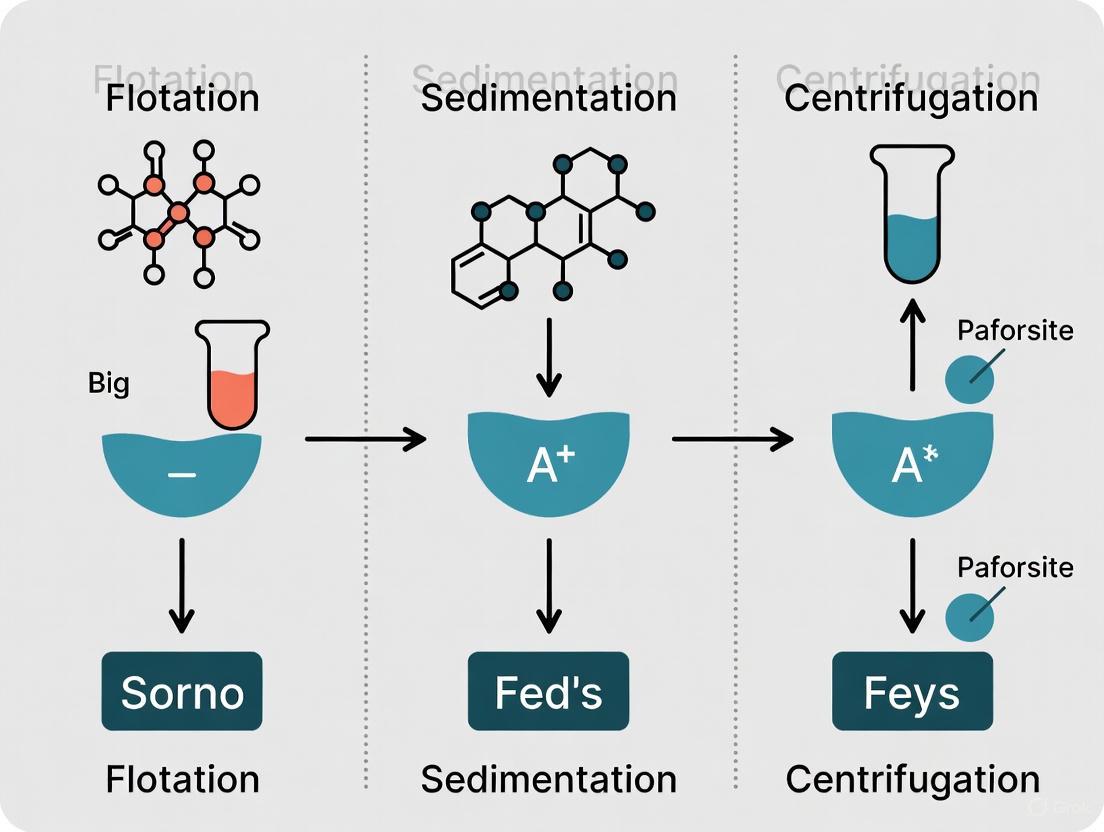
This article provides a comprehensive comparative analysis of flotation, sedimentation, and centrifugation methods, foundational techniques for particle separation in biomedical research and clinical diagnostics.
Flotation vs. Sedimentation vs. Centrifugation: A Comparative Analysis for Diagnostic and Research Applications
Abstract
This article provides a comprehensive comparative analysis of flotation, sedimentation, and centrifugation methods, foundational techniques for particle separation in biomedical research and clinical diagnostics. Tailored for researchers, scientists, and drug development professionals, it explores the core principles, historical development, and technical parameters governing these methods. The scope extends from established parasitological diagnostics, where these techniques are vital for detecting intestinal parasites, to advanced applications in nanotechnology for characterizing drug carriers like liposomes and polymeric nanoparticles. The content details standard operating procedures, examines common pitfalls and optimization strategies, and synthesizes empirical evidence from validation studies comparing diagnostic sensitivity, specificity, and quantitative precision. This review serves as a critical resource for selecting and refining separation protocols to enhance accuracy and efficiency in both research and clinical settings.
Core Principles and Historical Evolution of Separation Techniques
In both industrial processes and scientific research, the separation of particles from a liquid medium is a fundamental unit operation. The efficacy of this separation directly influences outcomes in fields ranging from pharmaceutical development and bioanalysis to water treatment and energy production. This guide provides a comparative analysis of three core separation techniques—flotation, sedimentation, and centrifugation—focusing on the unifying physical principles of specific gravity and buoyancy that govern their operation. By examining experimental data and protocols, we aim to equip professionals with the knowledge to select the optimal separation strategy for their specific application.
Theoretical Foundations: Specific Gravity and Buoyancy in Separation
All three separation methods rely on the balance of forces acting on a particle in a fluid, primarily driven by the density difference between the particle and the surrounding liquid.
- Sedimentation is the separation of particles that are heavier (more dense) than the liquid. In a quiescent (still) or semi-quiescent state, these particles will sink under the influence of gravity, collecting at the base of the container [1].
- Flotation is the converse process, where particles less dense than the liquid will rise to the surface [1]. This process is often enhanced by introducing air bubbles to which particles adhere, facilitating the rise of neutrally buoyant or even slightly dense particles [2].
- Centrifugation amplifies these natural processes by applying a centrifugal force. Particles are forced outward, separating from the liquid based on their size, shape, and density. The centrifugal force can be thousands of times greater than Earth's gravity, dramatically increasing separation speed [3].
The terminal velocity of a spherical particle in a laminar flow regime, which applies to most water and wastewater treatment scenarios, is described by Stokes' Law [1]: \begin{equation} vs=\frac{{g({\rho}}s-\rho)d^2}{18\mu} \end{equation}
Where:
- ( v_s ) = settling or flotation velocity
- ( g ) = gravitational (or centrifugal) acceleration
- ( \rho_s ) = density of the particle
- ( \rho ) = density of the liquid
- ( d ) = particle diameter
- ( \mu ) = liquid viscosity
This equation highlights that the separation velocity is directly proportional to the density difference (( \rho_s - \rho )) and the square of the particle diameter.
Comparative Performance Data
The choice between flotation, sedimentation, and centrifugation involves trade-offs between efficiency, energy consumption, cost, and suitability for the target particles. The following tables summarize key performance metrics from recent studies.
Table 1: Comparative Analysis of Separation Methods in Different Applications
| Application | Method | Key Performance Metric | Experimental Conditions | Reference |
|---|---|---|---|---|
| Microalgae Harvesting | Dissolved Air Flotation + Filtration | 93% Harvesting Efficiency; 1.7 kWh/m³ Energy Use | Pilot-scale (5 m³/h flotation, 10 kg/h filtration) | [2] |
| Centrifugation | Benchmark Efficiency; ~4.3 kWh/m³ Energy Use (calculated) | Common industrial standard | [2] | |
| Nanoparticle Separation | Low-Gradient Magnetic Separation | 97.3% Separation Efficiency | Depletion flocculation with anionic polymer | [4] |
| Centrifugation (400 x g) | High Efficiency; Most Cost-Effective (RM 0.02/30 min) | Depletion flocculation with anionic polymer | [4] | |
| Drug Solubility Measurement | Sedimentation (Reference) | Least intrusive, preserves equilibrium | 18-hour sedimentation phase | [5] |
| Centrifugation (5 min, 5000 rpm) | Closest to reference values; low standard deviation | After 6h stir + 18h sediment | [5] | |
| Centrifugation (20 min, 10,000 rpm) | Overestimated solubility by 60-70% | No prior sedimentation | [5] |
Table 2: Intrinsic Characteristics and Typical Use Cases
| Characteristic | Sedimentation | Flotation | Centrifugation |
|---|---|---|---|
| Driving Force | Earth's Gravity (1 × g) | Earth's Gravity (1 × g), often with air bubbles | Centrifugal Force (up to 1,000,000 × g) |
| Primary Separation Target | Particles heavier than liquid | Particles lighter than liquid (or attached to bubbles) | Particles of different densities/sizes |
| Separation Speed | Very Slow (hours to days) | Moderate to Fast | Very Fast (minutes) |
| Energy Consumption | Very Low | Low to Moderate | Very High |
| Capital & Operating Cost | Low | Moderate | High |
| Best For | Large, dense particles; low-throughput; gentle separation | Low-density particles; small particles; microalgae | High-throughput; fine particles; sub-cellular components |
Experimental Protocols for Method Validation
To ensure accurate and reproducible results, it is critical to follow standardized protocols. Below are detailed methodologies for key experiments cited in this guide.
Protocol: Saturation Shake-Flask Method for Equilibrium Solubility
This protocol, used to study centrifugation parameters [5], is a gold standard for determining drug solubility.
Objective: To determine the equilibrium solubility of a compound and evaluate the impact of different phase separation methods (sedimentation vs. centrifugation).
Materials:
- Model compound (e.g., Diclofenac sodium, Hydrochlorothiazide)
- Britton-Robinson buffer solutions at target pH
- Centrifuge (e.g., Sartorius 2–16P)
- Centrifugation tubes
- µDISS Profiler or similar agitation system
- HPLC-UV or other suitable analytical instrument
Procedure:
- Create Suspension: Add an excess amount of the solid compound to a known volume of buffer in a vial to create a heterogeneous suspension.
- Agitate: Place the vial in an agitator (e.g., µDISS Profiler) maintained at 25.0 ± 0.5 °C. Stir at a constant speed (e.g., 150 rpm) for a set period.
- Sample Preparation (Two Approaches):
- Approach A (with sedimentation): Stir for 6 hours, then stop agitation and allow the sample to sediment for 18 hours.
- Approach B (continuous stirring): Stir continuously for 24 hours.
- Phase Separation: Transfer 10 mL aliquots to centrifugation tubes.
- For centrifugation, spin samples at varying speeds and durations (e.g., 5, 10, 20 min at 5000 or 10,000 rpm).
- For sedimentation-only reference, do not centrifuge; carefully extract the supernatant after the sedimentation period.
- Analyze: Sample the clear supernatant, dilute if necessary, and determine the compound concentration using a validated analytical method.
Key Insight: Studies show that centrifugation without a prior sedimentation step can violently disturb the solid-liquid equilibrium, leading to overestimation of solubility. Using a pre-sedimentation step or milder centrifugation parameters (lower speed, shorter time) yields results closer to the sedimentation-only reference [5].
Protocol: Flotation and Centrifugation of Flocculated Nanoparticles
This protocol compares the efficiency of natural and accelerated separation of nanoparticles [4].
Objective: To compare the separation efficiency and cost-effectiveness of natural sedimentation and centrifugation for flocculated magnetic nanoparticles (Fe₃O₄ MNPs).
Materials:
- Fe₃O₄ Magnetic Nanoparticles (MNPs)
- Anionic polymer flocculant (e.g., PSS 70K)
- Laboratory centrifuge
- Low-gradient magnetic separation (LGMS) system
Procedure:
- Functionalize & Flocculate: Functionalize MNPs to enhance colloidal stability. Induce depletion flocculation by adding an anionic polymer (e.g., PSS 70K) to the MNP suspension.
- Separate:
- Natural Sedimentation: Allow the flocculated suspension to stand undisturbed for a defined period (e.g., 30 minutes) and monitor particle settlement.
- Centrifugation: Subject aliquots of the flocculated suspension to centrifugation at different relative centrifugal forces (RCF or ×g), such as 400 ×g.
- Control: Use Low-Gradient Magnetic Separation (LGMS) as a high-efficiency benchmark.
- Analyze: Measure the separation efficiency for each method, typically by analyzing the clarity of the supernatant or the mass of the collected pellet. Conduct a cost analysis based on energy and time consumption.
Key Insight: While LGMS can achieve the highest separation efficiency (>97%), centrifugation at optimized g-force (e.g., 400 ×g) can provide a highly cost-effective solution for large-scale operations without a significant compromise in efficiency [4].
Workflow and Pathway Visualizations
The following diagrams illustrate the decision pathways and technical workflows for the separation methods discussed.
Method Selection Pathway
Saturation Shake-Flask Experimental Workflow
The Scientist's Toolkit: Essential Research Reagents and Materials
Successful implementation of these separation techniques requires specific reagents and equipment. The following table details key items used in the featured experiments.
Table 3: Essential Research Reagents and Materials
| Item Name | Function / Role in Separation | Example Application |
|---|---|---|
| Anionic Polymer (e.g., PSS 70K) | Flocculant that causes particle aggregation via depletion flocculation, increasing effective particle size and enhancing settlement or flotation speed. | Separation of functionalized magnetic nanoparticles (Fe₃O₄ MNPs) [4]. |
| Density Gradient Media (e.g., Sucrose, Cesium Chloride) | Forms layers of varying density in a centrifuge tube, allowing for separation of particles based on their buoyant density at equilibrium (isopycnic centrifugation). | Isolation of subcellular organelles, viruses, or macromolecules [6]. |
| Britton-Robinson Buffer (BRB) | A universal buffer system capable of maintaining a stable pH across a wide range (pH 2-11), crucial for studying solubility and separation of ionizable compounds. | Equilibrium solubility measurements of APIs at various pH levels [5]. |
| Formalin-Ethyl Acetate Solution | A preservative and processing solution for stool samples; formalin preserves parasitic structures, while ethyl acetate acts as a solvent/extractant in the concentration step. | Parasite egg and cyst concentration via centrifugation-sedimentation (FECT method) [7]. |
| Molecularly Imprinted Polymers (MIPs) | Synthetic polymers with specific recognition sites for a target molecule. Used in spin columns for selective solid-phase extraction during sample preparation. | Selective extraction and clean-up of specific analytes from complex biological samples prior to analysis [8]. |
The selection of an appropriate separation method is a critical decision that hinges on a clear understanding of the physical principles of specific gravity and buoyancy. Sedimentation offers a low-energy, gentle process but is prohibitively slow for many applications. Flotation is highly effective for low-density particles and can be optimized with flocculants, showing great promise in fields like microalgae harvesting. Centrifugation remains the workhorse for high-speed, high-resolution separations but at a significantly higher energy cost.
Experimental evidence consistently shows that protocol details, such as centrifugation speed and time or the use of flocculants, are not mere technicalities but are central to achieving accurate, reproducible, and cost-effective results. By applying the comparative data, standardized protocols, and decision frameworks outlined in this guide, researchers and drug development professionals can make informed choices to optimize their separation processes, ultimately saving time, reducing costs, and enhancing the reliability of their outcomes.
The separation and analysis of microscopic entities, whether parasitic organisms or engineered nanoparticles, have been fundamental to scientific and medical progress for over a century. The techniques of flotation, sedimentation, and centrifugation form a continuous thread connecting early 20th-century parasitology with contemporary nanotechnology. In parasitology, these methods enabled the identification and study of pathogens affecting global health, while in nanotechnology, they facilitate the precise characterization and manipulation of materials that drive modern innovation. This comparative guide examines the evolution of these core methodologies, tracing their development from basic diagnostic tools in medicine to sophisticated instruments for nanomaterial analysis, all while maintaining a common physical principle: the separation of particles based on their density, size, and shape under gravitational and centrifugal forces.
Historical Foundations in Parasitology
The early 20th century marked a critical period in parasitology, with scientists developing fundamental techniques to recover and identify intestinal parasites from fecal samples. These methods relied primarily on gravity-driven separation to concentrate parasitic structures for microscopic examination.
Key Technical Principles and Their Evolution
- Spontaneous Sedimentation: Developed in the early 20th century, this technique utilized gravity to concentrate helminth eggs and protozoan cysts from fecal suspensions in water. The formalin-ethyl acetate sedimentation method, a variation, became a widely adopted standard in clinical laboratories [7].
- Flotation Techniques: Using zinc sulfate or other solutions with specific density, flotation methods allowed parasitic elements to float to the surface for easier collection. The specific gravity of the solution was calibrated to be greater than that of the parasites but less than that of debris [7].
- Centrifugal Sedimentation: First reported by Telemann in 1908, this approach applied centrifugal force to a suspension containing ether, hydrochloric acid, and fecal material to separate parasites more efficiently than gravity alone permitted [7].
Comparative Performance of Historical Techniques
Table 1: Comparison of Traditional Parasitological Techniques [7] [9]
| Technique | Primary Principle | Key Applications | Advantages | Limitations |
|---|---|---|---|---|
| Spontaneous Sedimentation | Gravity-based settling | Concentration of helminth eggs and protozoa | Simple, low-cost, no specialized equipment | Time-consuming, lower sensitivity for low infections |
| Formalin-Ethyl Acetate Sedimentation | Centrifugal sedimentation with chemical preservation | Broad detection of parasitic structures | Improved recovery, preserves morphology | Requires centrifuge, chemical handling |
| Zinc Sulfate Flotation | Flotation in specific gravity solution | Recovery of protozoan cysts and lighter eggs | Good recovery for certain parasites | May distort delicate structures, specific gravity critical |
Modern Transformation in Nanotechnology
The fundamental separation principles developed for parasitology were progressively adapted and refined for nanotechnology applications, where precision requirements extend to the nanoscale. The need to characterize and separate nanoparticles with high resolution drove significant technological innovation in centrifugation methodologies.
The Shift to Centrifugal Fields
For nanoparticles, gravitational fields became insufficient due to significant Brownian motion. The transition to analytical and differential centrifugation provided the necessary external force for nanoparticle separation and analysis [10].
Differential Centrifugal Sedimentation (DCS) emerged as a powerful benchtop technique for measuring high-resolution size distributions of nanoparticles. In DCS, particles sediment through a density gradient fluid under centrifugal force, with their arrival time at a detector being dependent on both size and density [11].
A key innovation was the development of flotation mode centrifugation for particles with density lower than the suspension medium. This modification enabled the analysis of low-density polymer particles, liposomes, and oil droplets that would otherwise not sediment [11].
Advanced Centrifugation Techniques for Complex Nanomaterials
Table 2: Modern Centrifugation Techniques for Nanoparticle Analysis [11] [10] [12]
| Technique | Operating Principle | Size Range | Measured Parameters | Key Applications |
|---|---|---|---|---|
| Differential Centrifugal Sedimentation (DCS) | Sedimentation through density gradient under centrifugal force | 1-3000 nm | Hydrodynamic diameter, density | Polystyrene particles, metal nanoparticles, quantum dots |
| Analytical Ultracentrifugation (AUC) | In-situ monitoring of sedimentation in centrifugal field | 0.1-1000 nm | Size, shape, density, molecular weight | Protein complexes, nanoparticle conjugates, self-assembled structures |
| Density Gradient Centrifugation | Separation based on buoyant density in pre-formed gradient | 1-1000 nm | Density, size | Carbon nanotubes, lipoprotein separation, virus purification |
| Multi-Dimensional Centrifugation | Simultaneous separation by multiple particle properties | 1-1000 nm | Size, density, shape | Anisotropic nanoparticles, hybrid materials, complex nanostructures |
Direct Comparative Analysis: Performance and Applications
Quantitative Method Comparison
Table 3: Experimental Recovery Rates of Different Techniques Across Applications [11] [9]
| Technique | Particle Type | Size Range | Recovery Efficiency/Accuracy | Key Limitations |
|---|---|---|---|---|
| Sedimentation | Fasciola hepatica eggs | ~150 μm | 73-85% at 50-100 EPG | Lower sensitivity at low infection intensities |
| Flotation (Mini-FLOTAC) | Calicophoron daubneyi eggs | ~100-150 μm | 82-90% at 50-100 EPG | Specific gravity critical, may miss denser particles |
| Flukefinder | Fasciola hepatica eggs | ~150 μm | 75-88% at 50-100 EPG | Requires specialized equipment |
| DCS (Sedimentation Mode) | Polystyrene nanoparticles | 120-600 nm | >95% vs. SAXS reference | Requires density knowledge for pure size measurement |
| DCS (Flotation Mode) | Low-density polymer particles | 100-600 nm | >95% vs. SAXS reference | Requires careful gradient preparation |
Experimental Protocols for Modern Nanotechnology Applications
Protocol 1: Measuring Nanoparticle Size and Density by Centrifugal Sedimentation and Flotation [11]
- Instrument Setup: CPS Disk Centrifuge instrument (e.g., Model DC24000) in both sedimentation and flotation configurations.
- Density Gradient Preparation:
- Sedimentation: Sucrose/water gradient with average density of 1.011 g cm⁻³
- Flotation: Sucrose/D₂O gradient with average density of 1.14 g cm⁻³
- Equipment Parameters:
- Rotational frequency: 24,000 rpm
- Detection: Diode laser at 405 nm wavelength
- Injection volume: 100 μL
- Calibration Standards:
- Sedimentation: Polystyrene particles (522 nm, density 1.05 g cm⁻³)
- Flotation: Polybutadiene particles (510 nm, density 0.91 g cm⁻³)
- Sample Preparation:
- Dilute nanoparticle samples 20,000× from original solution
- Use ultrapure water for sedimentation experiments
- Use 16% (w/w) sucrose solution in D₂O for flotation experiments
- Data Analysis: Apply Stokes' law for rigid spheres to calculate diameter and density from sedimentation times.
Protocol 2: Multi-Dimensional Separation in Tubular Centrifuges [12]
- Apparatus Setup: Tubular centrifuge capable of high centrifugal accelerations (up to 80,000× g).
- Online Monitoring: Integrated UV/vis spectroscopy for real-time analysis of centrate composition.
- Soft Sensor Implementation: Data-driven regression models to extract multiple target variables from optical spectra.
- Process Parameters:
- Continuous adjustment of rotor speed based on real-time monitoring
- Consideration of sediment buildup effects on separation efficiency
- Mathematical Modeling: Dynamic simulation of time- and space-dependent mass transport for both single- and multi-component systems.
The Scientist's Toolkit: Essential Research Reagent Solutions
Table 4: Key Reagents and Materials for Centrifugation-Based Separations [11] [9] [12]
| Reagent/Material | Function | Application Examples | Critical Parameters |
|---|---|---|---|
| Sucrose Solutions | Density gradient medium | Rate-zonal centrifugation, size distribution analysis | Concentration purity, density calibration |
| D₂O (Deuterium Oxide) | High-density solvent for flotation | Low-density nanoparticle analysis | Density, isotopic purity, cost |
| Zinc Sulfate Solutions | Flotation medium for parasitology | Protozoan cyst recovery | Specific gravity (typically 1.18-1.20 g/cm³) |
| Formalin-Ethyl Acetate | Preservation and sedimentation | Broad parasitological diagnosis | Fixation quality, safety handling |
| Monodisperse Size Standards | Calibration reference | Instrument calibration, method validation | Certified size, stability, material properties |
| Stokes' Law Calculator | Size/density determination | Data analysis for sedimentation methods | Viscosity, density inputs, shape factors |
Method Selection Workflow and Future Perspectives
The selection of appropriate separation methodology depends on the analytical goals, particle properties, and available resources. The following workflow diagram illustrates the decision process for selecting the optimal technique based on particle characteristics and analytical requirements:
Emerging Trends and Future Directions
The field of particle separation continues to evolve with several emerging trends shaping its future:
- Multi-Dimensional Separation: Advanced centrifugation techniques now enable simultaneous separation by size, density, and shape, moving beyond traditional one-dimensional classification [12].
- In-Situ Analytics: Integration of real-time monitoring systems, such as UV/vis spectroscopy and light scattering, provides immediate feedback on separation efficiency and enables dynamic process adjustments [12].
- Computational Modeling: Dynamic simulation tools now model time- and space-dependent mass transport in centrifuges, predicting separation outcomes for complex multi-component systems before physical experiments [12].
- Automation and High-Throughput Processing: Growing demand for automated systems that reduce manual intervention while increasing processing capacity, particularly in pharmaceutical and biotechnology applications [13].
The historical journey from early 20th-century parasitology to modern nanotechnology reveals a consistent thread of innovation in separation science. While the fundamental principles of flotation, sedimentation, and centrifugation remain constant, their application has evolved from diagnosing parasitic infections to enabling precise nanomaterial characterization. The experimental data and protocols presented in this guide demonstrate that method selection depends critically on the specific analytical requirements, with each technique offering distinct advantages for particular applications. As separation science continues to advance, the integration of real-time analytics and computational modeling promises to further enhance our ability to characterize and manipulate particles across the size spectrum, from pathogenic organisms to engineered nanomaterials.
The diagnostic efficacy of techniques for recovering parasitic elements from fecal samples is governed by fundamental physicochemical and mechanical principles. Flotation, sedimentation, and centrifugation, the cornerstones of coproscopic analysis, rely on the precise manipulation of key technical parameters—specific gravity, viscosity, centrifugal force, and time—to separate and concentrate target organisms from fecal debris [7]. The optimal calibration of these parameters directly determines the analytical sensitivity and specificity of any parasitological examination [14] [15]. These methods are indispensable in both clinical veterinary practice and epidemiological research, where accurate detection of gastrointestinal parasites informs treatment decisions and control strategies [14] [16]. This guide provides a comparative analysis of these techniques, underpinned by experimental data, to serve as a reference for researchers and drug development professionals in selecting and optimizing diagnostic protocols.
Comparative Analysis of Technical Principles
Fundamental Principles of Parasite Recovery
The separation of parasitic elements (eggs, cysts, oocysts, larvae) in fecal samples is achieved by exploiting differences in density between the parasites and the surrounding medium.
- Flotation: This technique employs a solution with a specific gravity higher than that of the target parasites. The parasites rise to the surface (float) when the fecal suspension is centrifuged or allowed to stand, allowing them to be collected from the meniscus [17]. The success of flotation hinges on the buoyant force overcoming gravity and the viscosity of the solution [17].
- Sedimentation: This method relies on gravity or centrifugal force to concentrate heavier parasitic elements, including those with a density greater than the flotation solution, at the bottom of a container. The sediment is then examined microscopically [14] [7]. While effective for dense objects, the resulting preparation often contains more fecal debris [14].
- Centrifugation: The application of centrifugal force accelerates both sedimentation and flotation processes. It forces heavier debris to pellet more rapidly and, in flotation, helps overcome the solution's viscosity, driving lighter parasites to the surface more efficiently than gravity alone [17]. Research confirms that centrifugal flotation is more effective than passive flotation in recovering parasites, particularly heavier eggs like those of Trichuris vulpis (whipworms) and Taenia species (tapeworms) [17].
Direct Comparison of Flotation vs. Sedimentation
A study on canine intestinal parasites directly compared centrifugation-sedimentation (CS) and centrifugation-flotation (CF) on 254 dog fecal samples. The calculated analytical sensitivity indicated that CF was more accurate (P < 0.01) in detecting infections of Ancylostoma, Toxocara canis, T. vulpis, and Giardia [14]. However, this difference was statistically significant only for Ancylostoma when compared to the other methods in the study. The kappa index of diagnostic agreement between a commercial test (TF-test) and CF was high for T. canis (83%) and moderate for Giardia (72%) and Ancylostoma (63%) [14].
A separate study on human intestinal parasites in children compared zinc sulphate flotation (ZS) and centrifugal sedimentation (CS) [18]. The results, summarized in the table below, show that the choice of method significantly impacts the detection of specific parasites, influenced by the specific gravity of their eggs or cysts.
Table 1: Comparison of Parasite Detection by Zinc Sulphate Flotation and Centrifugal Sedimentation [18]
| Parasite | Zinc Sulphate Flotation (ZS) | Centrifugal Sedimentation (CS) | Kappa Index (95% CI) | Agreement Level |
|---|---|---|---|---|
| Trichuris trichiura | 39/330 (11.8%) | 13/330 (3.9%) | 0.264 (0.102-0.427) | Low |
| Giardia duodenalis | 74/83 (89.1%) | 67/83 (80.7%) | 0.775 (0.691-0.859) | Substantial |
| Blastocystis spp. | 33/46 (71.7%) | 38/46 (82.6%) | 0.669 (0.537-0.801) | Substantial |
| Enterobius vermicularis | 5/330 (1.5%) | 0/330 (0%) | Not Calculated | Detected only by ZS |
| Strongyloides stercoralis | 3/330 (0.9%) | 0/330 (0%) | Not Calculated | Detected only by ZS |
| Schistosoma mansoni | 0/330 (0%) | 4/330 (1.2%) | Not Calculated | Detected only by CS |
Comparison of Quantitative and Semi-Quantitative Methods
A study on equine helminths compared a semi-quantitative combined sedimentation/flotation method with two quantitative methods: Mini-FLOTAC and FECPAKG2 [16]. The sedimentation/flotation method demonstrated the highest sensitivity, detecting the greatest number of samples positive for strongyle and Parascaris spp. eggs. When compared to the combined result of all three methods, sedimentation/flotation showed almost perfect agreement (κ ≥ 0.94), while Mini-FLOTAC showed strong agreement (κ ≥ 0.83). FECPAKG2 showed moderate and weak agreements for strongyle (κ = 0.62) and Parascaris (κ = 0.51) eggs, respectively [16]. The variance was highest for the sedimentation/flotation method, indicating lower precision compared to the quantitative techniques.
Table 2: Performance Comparison of Coproscopic Methods in Equine Diagnostics [16]
| Method | Method Type | Multiplication Factor | Sensitivity (Strongyles & Parascaris) | Agreement (κ) with Combined Result | Key Finding |
|---|---|---|---|---|---|
| Sedimentation/Flotation | Semi-quantitative | Not applicable (raw counts) | Highest | Almost perfect (κ ≥ 0.94) | Best for simple detection; higher variance |
| Mini-FLOTAC | Quantitative | 5 | Intermediate | Strong (κ ≥ 0.83) | More precise for Faecal Egg Count Reduction Tests |
| FECPAKG2 | Quantitative | 45 | Lowest | Moderate to Weak (κ = 0.51-0.62) | Comparable to Mini-FLOTAC for applying epg thresholds |
Detailed Experimental Protocols and Parameters
Protocol 1: Centrifugal Flotation for Companion Animals
This protocol, adapted for veterinary practice, optimizes the recovery of common parasite eggs and cysts [17].
- Sample Preparation: Emulsify at least 2g of feces in a flotation solution. Pour the mixture through a strainer or gauze to remove large debris. Transfer the filtrate to a test tube.
- Centrifugation: Use a swinging bucket centrifuge. Add flotation solution to the tube to form a meniscus, gently place a coverslip on top, and centrifuge at a target speed of 800 rpm for 10 minutes. The gradual acceleration of the rotor is critical to prevent dislodging the coverslip.
- Sample Collection: After the centrifuge stops, remove the coverslip in one deliberate upward motion and place it on a microscope slide for examination.
- Key Parameters:
- Specific Gravity: The flotation solution must have a specific gravity higher than the target parasites. Common solutions include sodium nitrate (NaNO₃, SG=1.20-1.25), zinc sulfate (ZnSO₄, SG=1.18-1.35), and sucrose (SG=1.20-1.30) [15] [17] [18].
- Centrifugal Force & Time: Centrifuge at approximately 800-1200 rpm for 5-10 minutes [17]. This force is superior to passive flotation for recovering heavier eggs.
- Viscosity: High-viscosity solutions like sucrose may require longer standing times after centrifugation (15-20 minutes) to ensure all parasites have floated to the surface [17].
Protocol 2: Mini-FLOTAC for Wildlife Parasitology
The Mini-FLOTAC technique is a quantitative, multi-chamber system designed for high-sensitivity analysis, particularly useful for samples with high fiber content, such as from folivore-frugivore primates [15].
- Sample Preparation: Homogenize a fecal sample (up to 0.2g) in a vial filled with 2 ml of water or a preservative (dilution ratio 1:10, 1:20, or 1:25). The sample is sieved (pore size 250 μm) to remove debris.
- Flotation and Centrifugation: The sieved suspension is directly transferred to the Mini-FLOTAC chambers, which are then filled with a flotation solution. The apparatus is rotated to mix the contents and then centrifuged at 1000× rpm (120 RCF) for five minutes.
- Sample Collection: After centrifugation, the parasitic elements are suspended in the two ruled grids of the chamber, which are directly read under a microscope.
- Key Parameters:
- Specific Gravity: The choice of flotation solution is critical. A study on howler monkeys found that for the trematode Controrchis spp., more eggs per gram (EPG) were recorded with zinc sulfate (SG=1.35), whereas for the nematode Trypanoxyuris spp., the best results were with a sucrose-formaldehyde solution (SG=1.20) [15].
- Dilution Ratio: Optimal dilution varies by parasite. For Controrchis spp., 1:20 and 1:25 dilutions were best, while for Trypanoxyuris spp., a 1:10 dilution was superior [15].
- Analytical Sensitivity: The Mini-FLOTAC has an analytical sensitivity of 5 EPG [15].
Signaling Pathways and Workflows
The decision-making process for selecting and optimizing a parasitological diagnostic method is guided by the interplay of technical parameters and research objectives. The workflow below maps this logical pathway.
Diagram Title: Diagnostic Method Selection Workflow
Research Reagent Solutions
The choice of flotation solution is a critical parameter, as its specific gravity and viscosity directly determine the spectrum of parasites that can be recovered.
Table 3: Common Flotation Solutions and Their Applications
| Reagent Solution | Typical Specific Gravity | Key Characteristics & Parasite Targets |
|---|---|---|
| Zinc Sulfate (ZnSO₄) [15] [18] | 1.18 - 1.35 | Effective for light helminth eggs (e.g., Trichuris, Enterobius) and protozoan cysts (e.g., Giardia). A study showed superior detection of T. trichiura compared to sedimentation [18]. |
| Sucrose (with or without formaldehyde) [15] [17] | 1.20 - 1.30 | High viscosity solution; requires longer standing times. Ideal for delicate structures as it is less likely to cause distortion. Effective for nematodes like Trypanoxyuris [15]. |
| Sodium Nitrate (NaNO₃) [15] | 1.20 - 1.25 | A common, widely used flotation solution in wildlife parasitology studies [15]. |
| Sodium Chloride (NaCl) [15] | 1.20 | A readily available and inexpensive option for routine flotation. |
| Magnesium Sulfate (MgSO₄) [15] | 1.28 | An alternative salt solution with a moderately high specific gravity. |
This guide explores the fundamental role of density-based separation principles across two seemingly distinct fields: diagnostic parasitology and pharmaceutical nanotechnology. Flotation, sedimentation, and centrifugation are core techniques in both domains, determining the efficiency of parasite egg recovery from biological samples and the characterization of drug-loaded nanoparticles. We objectively compare the performance of standard and emerging diagnostic protocols for detecting helminth eggs, drawing direct parallels to the metrics used to evaluate nanocarrier systems like PLGA nanoparticles. By presenting experimental data and standardized protocols, this analysis aims to provide researchers and drug development professionals with a unified framework for optimizing separation processes, enhancing diagnostic sensitivity, and improving the therapeutic efficacy of anti-parasitic nanomedicines.
The effective separation and analysis of microscopic entities in complex suspensions are cornerstone challenges in both parasitology and nanomedicine. The density of a target particle—whether a helminth egg or a synthetic nanoparticle—directly dictates its behavior in a density gradient under centrifugal force. Mastering these principles is critical for advancing diagnostic accuracy and therapeutic performance.
In parasitology, diagnostic sensitivity depends heavily on efficiently separating parasite eggs from fecal debris [19]. Concurrently, in pharmaceutical development, the drug delivery efficiency of nano-formulations is governed by particle characteristics like size, surface charge, and density, which influence biodistribution and targetability [20] [21]. For orphan and neglected parasitic diseases such as alveolar echinococcosis (AE) and fasciolosis, improving diagnostic and therapeutic tools is a pressing public health concern [20] [22]. This guide demonstrates how a deeper understanding of density-based protocols bridges these two fields, fostering innovation in the fight against parasitic diseases.
Comparative Analysis of Parasite Egg Recovery Methods
The accurate diagnosis of helminth infections hinges on the recovery and identification of eggs in fecal samples. Different concentration methods leverage density and size-based separation with varying efficiencies. The table below summarizes the performance of key techniques as evidenced by recent comparative studies.
Table 1: Quantitative Comparison of Diagnostic Methods for Parasite Egg Recovery
| Method | Target Parasite(s) | Reported Diagnostic Sensitivity | Key Advantages | Key Limitations |
|---|---|---|---|---|
| Sequential Sieving (SF-SSV) | Toxocara spp. [19] | Highest (Significantly higher than qPCR) [19] | Highest analytical sensitivity; Effective cleaning of copro-inhibitors for downstream PCR [19] | Requires multiple sieving steps; More specialized equipment [19] |
| Sedimentation-Flotation (SF) | Toxocara spp., General helminths [19] [16] | 87% for combined SF [19] | Well-established; Good sensitivity for a broad range of parasites [19] [16] | Time-consuming for large sample sets; Requires microscopy expertise [19] |
| Centrifugation-Flotation (CF) | Canine intestinal parasites (e.g., Ancylostoma) [14] | More accurate for Ancylostoma than CS or TF-test [14] | High accuracy for specific nematodes [14] | Does not recover all parasite types (e.g., some fluke and tapeworm eggs) [14] |
| Mini-FLOTAC | Equine strongyles, Parascaris spp. [16] | Strong agreement with combined results (κ ≥ 0.83) [16] | Quantitative (epg); Reduced debris improves visibility; Intermediate multiplication factor (5) [16] | Lower sensitivity than SF for simple detection [16] |
| FECPAKG2 | Equine strongyles [16] | Moderate agreement for strongyles (κ = 0.62) [16] | Digital imaging; Remote evaluation possible; Standardized for non-experts [16] | Lower sensitivity for Parascaris spp. (κ = 0.51) [16] |
| qPCR (Multiplex) | Toxocara canis/cati [19] | Substantial agreement with microscopy [19] | Species-specific diagnosis; High-throughput potential for large sample sets [19] | Lower diagnostic sensitivity than SF-SSV; Susceptible to PCR inhibitors in feces [19] |
Experimental Protocols for Key Methods
- Initial Processing: Begin with the supernatant (approx. 45 mL) obtained from a standard sedimentation-flotation (SF) technique.
- Sequential Sieving: Decant the supernatant through a series of three nylon sieves:
- First, a 105-µm mesh to remove large particulate matter.
- Second, a 40-µm mesh to capture matter (including Toxocara spp. eggs) in the 40 µm–105 µm size range.
- Third, a 20-µm mesh to capture fragmented eggs and smaller particles (20 µm–40 µm).
- Analysis: The material captured on the 40-µm and 20-µm meshes can be analyzed directly under a microscope or processed further for DNA extraction and qPCR.
- Sample Preparation: Weigh 3 g of feces and suspend it in approximately 20 mL of tap water. Sieve the suspension through a coarse strainer (8–11 mm mesh) into a conical cylinder, and fill to 250 mL with tap water.
- Sedimentation: Allow the sample to sediment overnight (approx. 15 hours). Sharply decant and discard the supernatant.
- Flotation: Transfer up to 7 mL of the sediment to a 50-mL centrifuge tube and fill with a concentrated sugar solution (specific gravity ~1.3). Centrifuge at 1800 g for 10 minutes.
- Microscopy: Using an inoculating loop, collect 5 drops from the surface meniscus, transfer to a microscope slide, and examine at 20x magnification.
Nanoparticle Characterization: The PLGA Paradigm
In nanomedicine, the physical characterization of drug carriers is as crucial as the isolation of parasites in diagnostics. Poly (lactic-co-glycolic acid) (PLGA) nanoparticles exemplify a widely used, biocompatible, and biodegradable drug delivery system approved by regulatory bodies [20]. Their performance is quantified through a set of key parameters.
Table 2: Key Characterization Metrics for PLGA Nanoparticles (H1402-NP Example) [20]
| Characterization Parameter | Experimental Result for H1402-loaded PLGA NPs | Significance in Drug Delivery |
|---|---|---|
| Mean Particle Size | 55 nm | Influences tissue penetration, cellular uptake, and biodistribution. |
| Encapsulation Efficiency | 82.1% | Measures the fraction of successfully loaded drug; impacts cost and efficacy. |
| Drug Loading Content | 8.2% | Determines the amount of drug per unit mass of carrier. |
| Particle Morphology | Uniform spherical shape (by TEM) | Affects flow properties, stability, and interaction with biological systems. |
| In Vivo Therapeutic Outcome | Significant reduction in parasitic burden in hepatic AE model | The ultimate measure of delivery system success. |
The synthesis of H1402-loaded PLGA nanoparticles involves using PLGA-PEG-PLGA polymers as carrier materials. The anti-parasitic drug H1402 is dissolved in DMSO and added to a polymer solution in water. After stirring, the mixture is dialyzed against water to remove unencapsulated drug, resulting in a suspension of nanoparticles ready for characterization and use [20]. Advanced techniques like dynamic light scattering (DLS) and transmission electron microscopy (TEM) are employed to determine size and morphology, respectively [20] [21].
The Density Bridge: Visualizing the Connecting Workflow
The following diagram illustrates the parallel processes and shared principles of density-based separation and characterization in parasitology and nanomedicine, highlighting how optimization in one field can inform the other.
The Scientist's Toolkit: Essential Research Reagents and Materials
Successful experimentation in both fields relies on a foundation of specific reagents and materials. The following table details key solutions and their functions.
Table 3: Essential Research Reagents and Materials
| Item | Function/Application | Field |
|---|---|---|
| PLGA-PEG-PLGA Polymers | Biocompatible, biodegradable copolymer used as the nanocarrier material for drug encapsulation. | Nanomedicine [20] |
| High-Density Flotation Solutions (e.g., Zinc chloride, Sheather's sucrose solution) | Solutions with specific gravity >1.3 used to float parasite eggs away from debris during centrifugation. | Parasitology [19] [16] |
| Stannous 2-ethylhexanoate | Catalyst used in the ring-opening polymerization to synthesize PLGA polymers. | Nanomedicine [20] |
| Cyanine 5.5 (Cy5.5) | Near-infrared fluorescent dye used to label nanoparticles for in vivo and ex vivo tracking of biodistribution. | Nanomedicine [20] |
| Nylon Sieve Meshes (20µm, 40µm, 105µm) | For sequential sieving (SF-SSV) to size-select and enrich parasite eggs based on their diameter. | Parasitology [19] |
| Solutol HS-15 | A non-ionic surfactant used to stabilize nanoparticle formulations and improve drug solubility. | Nanomedicine [20] |
| Hydroxypropyl-β-cyclodextrin | An excipient used to enhance the solubility and stability of poorly water-soluble drugs. | Nanomedicine [20] |
This comparative guide demonstrates that the density bridge is more than a metaphorical link; it is a practical and conceptual framework with profound implications for research and development. The continuous improvement of sedimentation-flotation protocols in diagnostics, exemplified by the high sensitivity of the sequential sieving (SF-SSV) method, directly parallels the meticulous optimization of nanoparticle properties for drug delivery.
For researchers and drug development professionals, this synergy offers valuable insights. Advances in understanding particle-size dynamics and separation efficiency in wastewater treatment [23] can inform the design of nanocarriers. Conversely, the precise control over particle size and surface functionality achieved in nanotechnology can inspire new approaches to isolating biological targets. For diseases like alveolar echinococcosis, where current treatments like albendazole are suboptimal [20], this interdisciplinary approach is not just beneficial—it is essential. By leveraging the shared principles of the density bridge, the scientific community can accelerate the development of more sensitive diagnostics and more effective, targeted therapies for parasitic and other neglected diseases.
Protocols and Applications in Biomedical and Pharmaceutical Research
The accurate diagnosis of gastrointestinal (GI) parasites remains a fundamental component of both clinical practice and public health initiatives. For decades, centrifugal fecal flotation has served as a cornerstone technique in parasitology laboratories worldwide, providing a reliable method for detecting helminth eggs, protozoan cysts, and coccidian oocysts in fecal specimens [7]. This technique leverages differential density separation to concentrate parasitic elements, significantly enhancing detection sensitivity compared to direct smear methods [24]. Within the context of comparative methodologies, centrifugal flotation occupies a critical position between simple sedimentation and advanced molecular diagnostics, offering an optimal balance of sensitivity, specificity, cost-effectiveness, and practical feasibility for routine screening [14] [7].
The diagnostic utility of centrifugal flotation is particularly evident when compared to passive (or simple) flotation techniques. Centrifugal force actively separates parasitic stages from fecal debris, substantially improving recovery rates for even the heaviest common parasite eggs, such as those of Trichuris vulpis (whipworm) [25]. The persistence of this technique in modern laboratories, despite the emergence of antigen detection and molecular methods, is a testament to its foundational value. It provides not only diagnostic information but also enables morphological confirmation, which is crucial for species identification and for validating newer testing platforms [26] [27]. This guide details the experimental protocols and presents comparative data to contextualize the performance of centrifugal flotation within the broader landscape of diagnostic parasitology.
Comparative Performance Data
The selection of a diagnostic technique is guided by its performance characteristics. The following tables summarize key quantitative data comparing centrifugal flotation to other common methods, highlighting its relative sensitivity and operational attributes.
Table 1: Comparative Sensitivity of Flotation Techniques for Detecting Major Canine Parasites (Using a Known Positive Sample) [25]
| Parasite | Passive Flotation with Sheather’s Sugar (sg=1.275) | Centrifugal Flotation with Sheather’s Sugar (sg=1.275) | Centrifugal Flotation with Zinc Sulfate (sg=1.18) |
|---|---|---|---|
| Toxocara canis (Roundworm) | 60% | 95% | 93% |
| Trichuris vulpis (Whipworm) | 38% | 96% | 80% |
| Ancylostoma caninum (Hookworm) | 70% | 96% | 95% |
Table 2: Comparison of General Diagnostic Method Characteristics [26] [28] [14]
| Method | Relative Sensitivity | Key Advantages | Inherent Limitations |
|---|---|---|---|
| Centrifugal Flotation | Moderate to High | Low cost; Allows morphological identification; Broad parasite spectrum. | Operator-dependent; Cannot detect non-floaters (e.g., trematode eggs); Limited speciation. |
| Sedimentation | Low to Moderate (for fluke eggs: High) | Effective for heavy eggs (e.g., trematodes, operculated tapeworms). | High debris content obscures identification. |
| Fecal Antigen ELISA | High for specific targets | Detects infection pre-patency; High throughput; Automatable. | Limited to targeted antigens; Does not provide morphological data. |
| qPCR/Panel | Very High | Superior sensitivity; Detects genetic markers (e.g., resistance, zoonotic potential); Speciation. | Higher cost; Requires specialized equipment and expertise; Longer turnaround. |
Experimental Protocols: Centrifugal Fecal Flotation
Standardized protocols are critical for achieving consistent, reliable results. The following detailed methodology is adapted from established guidelines from sources such as the CDC and the Companion Animal Parasite Council (CAPC) [29] [24].
Research Reagent Solutions and Essential Materials
Table 3: Key Research Reagent Solutions for Centrifugal Fecal Flotation
| Item | Function / Specification | Notes on Application |
|---|---|---|
| Flotation Solution | Liquid medium of defined specific gravity (SG) to buoy parasites. | Sheather's Sugar (SG=1.27): Good for most parasites but can distort Giardia. Zinc Sulfate (SG=1.18-1.20): Preferred for Giardia and fragile cysts [24] [25]. |
| Hydrometer | Validates the specific gravity of flotation solutions. | Essential for quality control; solutions must be checked weekly or with each new batch [25]. |
| Centrifuge | Applies force to separate particles by density. | Must have a swinging bucket or fixed-angle rotor capable of 500-1500 x g [29] [17]. |
| Centrifuge Tubes | Holds sample during centrifugation. | 15 mL conical tubes are standard. |
| Coverslips & Microscope Slides | For collecting and examining the concentrated sample. | - |
| Fecal Strainer | Removes large particulate debris. | Cheesecloth, gauze, or a commercial tea strainer is used [17]. |
Step-by-Step Standard Operating Procedure
- Gross Examination and Sample Preparation: Begin with a visual inspection of the fecal sample for the presence of adult worms, proglottids, or blood/mucus. Weigh out 2-5 grams of feces for optimal sensitivity; smaller samples (e.g., from fecal loops) increase the risk of false negatives [24] [25].
- Commencing the Fecal Suspension: Place the weighed feces into a clean container and add approximately 10-15 mL of the selected flotation solution. Mix thoroughly until a uniform suspension is achieved.
- Straining the Suspension: Pour the homogenized mixture through a strainer (cheesecloth or a tea strainer) into a second clean container. This critical step removes large, heavy debris that can interfere with microscopy.
- Loading Centrifuge Tubes: Pour the strained filtrate into a 15 mL conical centrifuge tube.
- Centrifugation Parameters: Place the tube in a balanced configuration within the centrifuge.
- Post-Centrifugation Flotation:
- Swinging Bucket Rotor: After centrifugation, carefully add more flotation solution to fill the tube, forming a positive meniscus. Gently place a coverslip directly on top of the tube, ensuring contact with the solution. Let it stand for 5-10 minutes to allow parasites to float onto the coverslip [25] [17].
- Fixed-Angle Rotor: After centrifugation, decant the supernatant, leaving the sediment undisturbed. Re-suspend the pellet in a small amount of flotation solution and transfer to a smaller tube or pipette into a standard tube. Add flotation solution to form a meniscus, apply a coverslip, and let stand for 10-20 minutes [24] [17].
- Microscopic Examination: Carefully and deliberately lift the coverslip straight up from the tube and place it onto a clean microscope slide. Systematically examine the entire area under the coverslip using 10x objective, confirming suspicious structures with the 40x objective. For sugar-based solutions, sealing the coverslip edges with nail polish can prevent drying and permit oil immersion examination [24].
Workflow Visualization
The following diagram illustrates the two primary methodological pathways for centrifugal fecal flotation.
Analysis of Alternatives and Emerging Technologies
While centrifugal flotation remains a standard, understanding its performance relative to other technologies is essential for a complete comparative analysis.
Sedimentation Techniques
Sedimentation methods, such as formalin-ethyl acetate sedimentation, rely on gravity or centrifugal force to concentrate parasites into a pellet, without relying on flotation. Their principal advantage is the recovery of heavy parasite elements that do not float in standard solutions, including most trematode eggs and operculated tapeworm eggs [14] [24]. However, the resulting sediment contains a significant amount of fecal debris, which can obscure the view and complicate microscopic identification [14] [7]. Consequently, sedimentation is generally used as a complementary technique rather than a primary screening tool.
Molecular Diagnostics (qPCR/PCR Panels)
Real-time quantitative polymerase chain reaction (qPCR) panels represent the most significant technological advancement in GI parasite detection. A 2023 comparative study of 931 canine and feline samples demonstrated that a broad qPCR panel detected a significantly higher overall parasite frequency (n=679) compared to ZCF (n=437), identifying 2.6 times more co-infections [28] [27]. The advantages of qPCR extend beyond sensitivity:
- Detection of Genetic Markers: qPCR can identify markers for anthelmintic resistance (e.g., benzimidazole resistance in Ancylostoma caninum) and determine the zoonotic potential of Giardia assemblages [28] [27].
- Superior Sensitivity for Low Burdens: The technique detects parasite DNA even when egg shedding is intermittent or at low levels, a common scenario in well-managed animals [26] [27]. The primary constraints for qPCR are higher cost, longer turnaround time in some laboratory settings, and the inability to provide morphological data [28].
Fecal Antigen Testing
Enzyme-linked immunosorbent assays (ELISAs) for detecting parasite-specific antigens in feces have become widely adopted, particularly in veterinary practice. A large-scale study comparing fecal antigen testing and centrifugal flotation in 898,300 samples found that antigen testing alone identified up to two times more infections than centrifugal flotation alone [26]. A key strength of antigen testing is its ability to detect infections during the pre-patent period and in single-sex infections where no eggs are produced [26]. It is often used in conjunction with, rather than as a full replacement for, centrifugal flotation to maximize diagnostic coverage.
Centrifugal fecal flotation remains an indispensable, robust, and cost-effective technique for the diagnosis of intestinal parasites. Its position in the diagnostic arsenal is secure, particularly in settings where resources are limited and for purposes requiring morphological confirmation. The experimental data clearly establishes its superior sensitivity over passive flotation methods, especially for heavier eggs like those of Trichuris vulpis.
However, a modern, evidence-based diagnostic paradigm recognizes that no single method is universally superior. The future of GI parasite screening lies in the strategic combination of these complementary technologies. Centrifugal flotation provides a broad, morphological overview, while antigen testing and molecular assays like qPCR offer profound advantages in sensitivity, specificity, and the ability to glean advanced information on zoonotic risk and anthelmintic resistance. Researchers and diagnosticians must therefore select and interpret methodologies within a framework that acknowledges the distinct advantages and limitations of each technique.
Standardized Sedimentation Techniques for Liver Fluke and Heavy Helminth Egg Detection
The diagnosis of parasitic helminth infections, particularly those caused by liver flukes and other heavy eggs, remains a cornerstone of veterinary and human parasitology. These infections, including those from Fasciola hepatica, Fasciola gigantica, and rumen flukes like Calicophoron daubneyi, cause significant global economic losses in livestock production and substantial human morbidity in endemic areas [30] [31]. Accurate detection is fundamental for effective treatment, control programs, and drug development efforts. Within the context of comparative studies on flotation, sedimentation, and centrifugation methods, this guide objectively evaluates the performance of standardized sedimentation techniques against other diagnostic alternatives, providing researchers with evidence-based data to inform their methodological selections.
Comparative Analysis of Diagnostic Techniques
Performance Characteristics of Major Diagnostic Methods
The selection of a diagnostic method involves balancing sensitivity, specificity, cost, throughput, and technical requirements. The table below summarizes the key characteristics of major techniques used for detecting liver flukes and heavy helminth eggs.
Table 1: Comparison of diagnostic methods for liver fluke and heavy helminth egg detection.
| Diagnostic Method | Target Parasites | Sensitivity/Detection Rate | Key Advantages | Major Limitations |
|---|---|---|---|---|
| Sedimentation | Trematode eggs (e.g., Fasciola, Amphimerus), heavy helminth eggs [32] [24] | 50-58% for Amphimerus [32]; >90% for F. hepatica at >20 EPG [30] | Simple, low-cost, requires no specialized equipment, effective for dense eggs that do not float well [32] [24] | Lower sensitivity for low-intensity infections, time-consuming, contains more debris [32] |
| Centrifugal Flotation | Nematode eggs (e.g., hookworm, Ascaris), some protozoan cysts [29] [24] | Higher than passive flotation for hookworm [24] | Consistently more sensitive than passive flotation for many nematodes and cestodes [24] [33] | Less effective for trematode eggs and many cestode/trematode eggs; high density solutions can distort delicate stages [29] [24] |
| FLOTAC/Mini-FLOTAC | Broad spectrum of helminths, including F. hepatica and C. daubneyi [30] [34] | 71-92.6% for F. hepatica; most accurate for intensity estimation [30] [34] | High sensitivity, allows quantification, examines larger sample size [34] | Requires specialized apparatus, specific flotation solutions, and centrifugation [30] |
| qPCR | Fasciola spp., Amphimerus spp. [31] [32] | 26.4% for Fasciola spp. (higher than sedimentation in one study) [31] | High sensitivity, detects pre-patent infections, can differentiate species [31] | Higher cost, requires specialized lab, does not indicate active patent infection or burden [31] |
| Coproantigen ELISA (cELISA) | Fasciola hepatica [35] | Detects pre-patent and patent infections; useful for monitoring treatment efficacy [35] | High throughput, indicates current infection, not dependent on egg production [35] | Cannot differentiate between species, may not correlate directly with egg count, cost [35] |
Quantitative Method Comparison in Experimental Studies
Direct comparisons in controlled settings and field studies provide crucial data for method selection. The following table synthesizes quantitative findings from key studies.
Table 2: Experimental data from comparative studies of diagnostic techniques.
| Study & Model | Compared Methods | Key Quantitative Findings | Conclusion |
|---|---|---|---|
| Spiked Cattle Faeces [30] | Mini-FLOTAC (MF), Flukefinder (FF), Sedimentation (SED) | At 10 EPG: FF showed best recovery. At 50/100 EPG: MF recovered most eggs. Sensitivity >90% for all at >20 EPG. MF most accurate for intensity. | All three can estimate farm-level prevalence, but MF was superior for quantifying infection intensity. |
| F. hepatica in Rats [34] | FLOTAC vs. Sedimentation | FLOTAC sensitivity: 92.6%. Sedimentation (8 readings) sensitivity: 85.2%. Mean preparation/examination time: FLOTAC 21 min, Sedimentation 114 min. | FLOTAC showed higher sensitivity and efficiency for experimental detection and quantification. |
| Amphimerus in Humans [32] | Kato-Katz (KK), SSTT, FEC, DM | Combined method prevalence: 36.2%. Sensitivities: KK 71%, SSTT 58%, FEC 50%, DM 3%. KK+SSTT detected 95% of positives. | KK was most sensitive single method. Combining methods (KK+SSTT) significantly enhanced detection. |
| Bovine Fasciolosis in South Africa [31] | Sedimentation, qPCR, coproELISA | Sedimentation positivity: 13.0% (36/277). qPCR positivity: 26.4% (73/277). coproELISA: 0% (0/277). No significant agreement between qPCR and sedimentation. | qPCR detected the highest prevalence. Sedimentation showed low egg counts (1-20 EPG). |
SSTT: Spontaneous Sedimentation Technique in Tube; FEC: Formalin-Ether Concentration; *DM: Direct Smear Microscopy.
Experimental Protocols for Standardized Sedimentation
Standard Sedimentation Protocol for Liver Fluke Eggs
The following is a detailed methodology for the spontaneous sedimentation technique, adapted for the recovery of liver fluke eggs [30] [32].
- Sample Preparation: Weigh 5-10 grams of fresh feces [30] [32]. For larger sample sizes, as used in some protocols, up to 10 grams can be processed to increase sensitivity [30].
- Homogenization and Filtration: Place the sample in a beaker and emulsify it with 10-50 mL of warm saline solution or water. Strain the resulting suspension through a series of sieves (e.g., 1 mm, 250 μm, 212 μm, and 63 μm) or a single layer of cheesecloth into a conical glass or tube to remove large particulate matter [30] [24].
- Sedimentation: Allow the filtered suspension to stand undisturbed for 4-5 minutes to permit the eggs to settle by gravity [30]. Alternatively, centrifugation at 500 × g for 10 minutes can be used to accelerate this step [29].
- Decanting and Washing: Carefully decant the supernatant, leaving the sediment undisturbed at the bottom. Resuspend the sediment in fresh water or saline, and repeat the sedimentation or centrifugation step. This washing process may be repeated several times until the supernatant is relatively clear [30].
- Microscopy: After the final decanting, transfer a portion of the sediment to a microscope slide, apply a coverslip, and examine systematically under a microscope (100x and 400x magnification) for the presence of helminth eggs [32].
- Quantification: If performing a quantitative Faecal Egg Count (FEC), the number of eggs observed is multiplied by the appropriate factor based on the amount of faeces examined. For a standard sedimentation using 10g of faeces, the multiplication factor is 0.1 to obtain Eggs Per Gram (EPG) [30].
Formalin-Ether Concentration (FEC) Sedimentation Protocol
This method is a refinement that uses formalin for preservation and ether for extraction of debris, yielding a cleaner sediment [32].
- Preservation and Emulsification: Emulsify 1-2 grams of stool (either fresh or preserved in 10% formalin) in 10 mL of 10% formalin saline solution.
- Filtration: Strain the suspension through a sieve or cheesecloth into a 15 mL conical centrifuge tube.
- Centrifugation: Centrifuge the filtered suspension at 500 × g for 10 minutes. Decant the supernatant completely.
- Solvent Extraction: Resuspend the sediment in 10 mL of 10% formalin. Add 3-4 mL of ethyl acetate (or ether), stopper the tube, and shake vigorously for 30 seconds.
- Second Centrifugation and Decanting: Centrifuge again at 500 × g for 10 minutes. This results in four layers: a plug of debris at the top (ethyl acetate and debris), a formalin layer, sediment (parasitic elements), and more debris. Free the debris plug by ringing the tube with an applicator stick and carefully decant the top three layers, leaving the sediment.
- Examination: Resuspend the remaining sediment in a small amount of formalin or saline, prepare a microscope slide, and examine for parasites.
The workflow below illustrates the key decision points in selecting and applying these techniques.
Diagram 1: Diagnostic technique selection workflow for researchers.
The Scientist's Toolkit: Essential Research Reagents and Materials
Successful implementation of sedimentation techniques and related diagnostics requires specific laboratory materials. The following table details key reagents and their functions.
Table 3: Essential research reagents and materials for sedimentation-based parasitological diagnosis.
| Item | Function/Application | Technical Notes |
|---|---|---|
| Formalin (10%) | Universal preservative for parasitic stages; fixes and deactivates pathogens [7]. | Used in FEC method to preserve morphology and facilitate clean sedimentation [32]. |
| Ethyl Acetate | Organic solvent used in FEC to extract fats and debris from fecal suspension [7]. | Creates a plug that traps debris, allowing for its removal and yielding a cleaner sediment for examination. |
| Sodium Nitrate (NaNO₃) Flotation Solution | Flotation medium (Specific Gravity ~1.20) for centrifugal flotation [29] [24]. | Effective for many nematode and cestode eggs; less effective for dense trematode eggs [29]. |
| Sheather's Sugar Solution | High-density flotation medium (SG ~1.27) [29] [24]. | Superior for floating most cestode and some trematode eggs; viscous nature aids in centrifugation [24]. |
| Zinc Sulfate (ZnSO₄) Flotation Solution | Flotation medium (SG ~1.18-1.20) [29] [24]. | Solution of choice for recovering Giardia cysts and other delicate protozoa; may not float heavier helminth eggs effectively [24] [33]. |
| Conical Centrifuge Tubes | Used for sedimentation and centrifugation steps [29]. | Conical shape facilitates the concentration of sediment and easy decanting of supernatant. |
| Standardized Sieves/Gauze | Removal of large fecal debris during sample preparation [30] [24]. | Mesh sizes (e.g., 250 μm, 63 μm) can be selected to optimize recovery of specific parasitic elements [30]. |
The procedural steps for the core sedimentation protocol are visualized in the following diagram.
Diagram 2: Standardized sedimentation technique workflow.
The comparative data presented in this guide underscore that no single diagnostic method is universally superior for all parasites or research contexts. Traditional sedimentation techniques offer a robust, accessible, and highly specific means of detecting liver fluke and other heavy helminth eggs, making them indispensable for field studies and resource-limited settings. However, techniques like Mini-FLOTAC demonstrate superior sensitivity and quantification accuracy where equipment permits, while molecular methods like qPCR provide the highest sensitivity for detection, especially during pre-patent infections. The optimal diagnostic strategy often involves a complementary approach, leveraging the strengths of multiple techniques—such as combining sedimentation with Kato-Katz or integrating coproantigen tests with faecal egg counts—to maximize detection rates and obtain a comprehensive understanding of parasite epidemiology and burden, which is critical for effective drug development and control programs.
Advanced Centrifugal Sedimentation and Flotation for Nanoparticle Size and Density Measurement
The successful translation of nanoparticle-based systems, particularly in the pharmaceutical and medical sectors, depends critically on the ability to reliably measure key physical properties such as size and density [36]. Among the various characterization techniques available, analytical centrifugation methods based on centrifugal sedimentation and flotation have emerged as powerful tools for the simultaneous determination of both size and density distributions with excellent precision [36] [37]. These techniques are especially valuable for advanced nanoparticle systems including polymer-grafted inorganic particles, core-shell structures, and organic-inorganic hybrids where density provides crucial information about composition and successful synthesis [37]. This guide provides a comprehensive comparison of these centrifugal techniques against alternative characterization methods, supported by experimental data and detailed protocols to assist researchers in selecting the most appropriate methodology for their specific applications.
Comparative Analysis of Centrifugal Techniques
Fundamental Principles
Centrifugal sedimentation and flotation techniques operate on the principle of separating nanoparticles in a centrifugal field based on their sedimentation coefficients, which are absolute in nature and do not require prior knowledge of particle properties [37]. The sedimentation coefficient (s) is defined by the Svedberg equation:
S = u/ω²r
where u represents the particle velocity, ω is the angular velocity, and r is the radial distance from the center of rotation [37]. In practice, the velocity of the boundary is expressed as drbnd/dt, leading to s = (drbnd/dt)/ω²r, where the velocity increases with radial distance due to increasing gravitational force in the ultracentrifuge cell [37].
For composite nanoparticles, such as polymer-coated inorganic particles, the effective density (ρ_eff) becomes crucial for accurate size determination. The core-shell model allows estimation of this parameter through the equation:
t = C/[(ρeff - ρfl) × d²]
where t is sedimentation time, C is an instrument constant, ρ_fl is the fluid density, and d is the particle diameter [38]. This relationship enables the correlation between sedimentation behavior and particle properties for complex, multi-component systems.
Experimental Protocols
Line-Start Centrifugal Sedimentation and Flotation
The protocol for simultaneous size and density measurement involves two independent measurements [36]:
Sample Preparation: Prepare monodisperse nanoparticle suspensions in appropriate dispersants. For validation studies, polystyrene nanoparticles of different sizes are commonly used as reference materials.
Density Gradient Formation: Create a linear density gradient in the centrifugation cell using sucrose or other suitable density-modifying agents. The gradient should span densities above and below the expected nanoparticle density.
Centrifugation Parameters: For typical nanoparticle analysis in the sub-300 nm range, centrifugal forces between 10,000-100,000 × g are applied, with exact parameters optimized based on particle size and density.
Detection and Analysis: Monitor particle movement using in-situ visualization techniques (STEP-Technology) that track spatial and time-resolved particle concentration across the sample height [39]. The terminal sedimentation velocity is calculated from the kinetics of concentration changes.
Data Interpretation: Determine size distribution from sedimentation velocity using Stokes' law, while density is derived from the equilibrium position in the density gradient or from the combined sedimentation-flotation data.
Differential Centrifugal Sedimentation (DCS)
For high-resolution size distribution analysis of polymer-coated nanoparticles [38]:
System Calibration: Calibrate the DCS instrument using reference nanoparticles of known size and density. This establishes the constant C in the sedimentation equation.
Density Gradient Preparation: Form a stable sucrose density gradient (typically 8-24% w/v) in a spinning hollow disc. The gradient ensures particles of different sizes separate based on their sedimentation rates.
Sample Injection: Introduce nanoparticles as a narrow band at the center of the rotating disc.
Sedimentation Monitoring: Measure the time required for particles to travel to the detector position. The sedimentation time is inversely proportional to the square of the particle diameter and the density difference between particle and fluid.
Core-Shell Modeling: For polymer-coated nanoparticles, apply core-shell models to account for changes in effective density and calculate the true particle size from the apparent sedimentation size.
Performance Comparison with Alternative Techniques
Table 1: Comparison of Nanoparticle Characterization Techniques
| Technique | Measured Parameters | Size Range | Density Measurement | Resolution | Key Limitations |
|---|---|---|---|---|---|
| Centrifugal Sedimentation/Flotation | Size distribution, density | ~5 nm - several μm | Yes, primary measurement | High; distinguishes small size/density differences | Requires density information for complex particles |
| Multi-Angle Dynamic Light Scattering (MADLS) | Size distribution, concentration | ~1 nm - 1 μm | No, requires assumption | Moderate; 3:1 size resolution | Accuracy within 50% of nominal concentration value |
| Small-Angle X-ray Scattering (SAXS) | Size, shape, structure | < ~300 nm | Yes, for simple systems | High for small, spherical particles | Challenging for non-spherical or >100 nm particles |
| Single Particle ICP-MS | Size, concentration, composition | ~10-60 nm (material-dependent) | No | High for metallic elements | Limited to detectable elements; size detection limits vary |
| Particle Tracking Analysis (PTA) | Size distribution, concentration | ~50 nm - 1 μm | No | Limited for small nanoparticles | Requires very dilute samples; concentration estimates uncertain |
| Tunable Resistive Pulse Sensing (TRPS) | Size, concentration, charge | > ~50 nm | No | High size resolution | Requires electrolytes; limited to larger nanoparticles |
Table 2: Experimental Performance Data for Centrifugal Techniques
| Application | Nanoparticle System | Size Range (nm) | Density Precision | Validation Method | Key Findings |
|---|---|---|---|---|---|
| Method Validation [36] | Polystyrene nanoparticles | Up to ~300 nm | Excellent agreement with reference | SAXS | Size and density values identical to SAXS within experimental uncertainty |
| Polymer-Coated Nanoparticles [38] | Gold, quantum dots, silver, iron platinum | ~5 nm core | Detected density changes from polymer coating | TEM, DLS | Successful detection of polymer coating through sedimentation shift |
| Advanced Hybrid Systems [37] | Polystyrene-silica hybrids, core-shell particles | Not specified | Distinguished intermediate and final hybrid particles | Synthetic confirmation | Confirmed successful grafting and hybrid formation through sedimentation coefficient distributions |
| Magnetic Nanoparticles [4] | Fe₃O₄ with polymer flocculant | Not specified | Not measured | Separation efficiency | 97.3% separation efficiency with depletion flocculation |
Research Reagent Solutions
Table 3: Essential Research Reagents and Materials
| Reagent/Material | Function | Application Notes |
|---|---|---|
| Sucrose | Density gradient medium | Forms linear density gradients for separation; concentration typically 8-24% w/v |
| Polystyrene Reference Nanoparticles | Method validation and calibration | Monodisperse particles with known size and density for system qualification |
| Poly-(isobutylene-alt-maleic anhydride)-graft-dodecyl (PMA) | Polymer coating for functionalization | Provides hydrophilic coating and colloidal stability for inorganic nanoparticles |
| Anionic Polymer (PSS 70K) | Depletion flocculant | Enhances separation efficiency for magnetic nanoparticles |
| Density Marker Beads | Density calibration | Precisely characterized particles for establishing density gradients |
Technological Workflow
The following diagram illustrates the typical experimental workflow and decision process for characterizing nanoparticles using centrifugal sedimentation and flotation techniques:
Discussion
Centrifugal sedimentation and flotation techniques offer significant advantages for nanoparticle characterization, particularly for complex, multi-component systems where density provides critical information about composition, successful functionalization, and batch-to-batch consistency [36] [37]. The ability to simultaneously determine both size and density distributions with high precision makes these methods invaluable for quality control in nanoparticle production, especially for medical applications such as liposomes and polymeric drug carriers [36].
When compared to ensemble-averaging techniques like dynamic light scattering (DLS), centrifugal methods provide higher resolution for polydisperse samples and can distinguish subpopulations with small differences in size or density [37] [40]. However, for complete characterization of complex nanoparticle systems, a multi-technique approach is often necessary, combining centrifugal methods with complementary techniques such as electron microscopy, SAXS, or single-particle analysis to address limitations of any individual method [41] [38].
The emerging applications of these techniques extend beyond traditional size analysis to include characterization of hydrodynamic particle density, magnetophoretic velocity distributions for magnetic particles, and in-depth analysis of biomolecular coronas that form on nanoparticles in biological fluids [39] [38]. These advanced applications highlight the growing importance of centrifugal sedimentation and flotation techniques in the development and quality control of next-generation nanoparticle systems for drug delivery, diagnostic, and therapeutic applications.
The separation and concentration of particulate matter from a heterogeneous suspension are fundamental techniques that underpin advancements across multiple scientific disciplines. Flotation, sedimentation, and centrifugation represent three core methodological principles employed to achieve this separation, each with distinct physical mechanisms and application spectra. This guide provides a comparative analysis of these techniques, framing them within a broader thesis on their relative performance in two seemingly disparate fields: veterinary parasitology and pharmaceutical drug carrier analysis. In veterinary diagnostics, these methods are pivotal for isolating parasitic elements from fecal samples to ensure animal health and prevent zoonotic diseases [14] [24]. In parallel, within pharmaceutical sciences, the same principles are harnessed to characterize drug delivery systems, such as liposomes and self-emulsifying formulations, where particle size and concentration directly influence solubility, stability, and ultimate bioavailability [5] [42]. By objectively comparing experimental data and protocols, this article elucidates how the strategic selection and optimization of separation techniques can drive diagnostic accuracy and therapeutic efficacy.
Fundamental Principles and Comparative Mechanics
The operational principles of flotation, sedimentation, and centrifugation are governed by divergent physical forces, making each uniquely suited to specific analytical challenges.
Flotation: This process is a physicochemical technique that exploits differences in particle buoyancy. It separates materials based on their relative surface hydrophobicity and density compared to the surrounding liquid medium. In practice, a flotation solution (e.g., sodium nitrate or sucrose) is prepared with a specific gravity that allows target particles to float to the surface while debris sinks [24] [43]. The efficacy is highly dependent on the solution's specific gravity; solutions that are too dense may collapse delicate parasitic cysts or float excessive debris, complicating microscopic examination [24] [44]. In mineral processing, the process is enhanced using chemical reagents like collectors and frothers to modify particle-surface properties [43].
Sedimentation: This is a passive, gravity-dependent process where particles naturally settle out of a suspension over time. The rate of settling is governed by Stokes' Law, which relates to particle size, density, and the viscosity of the fluid. While minimally disruptive and ideal for preserving delicate equilibria—such as in solubility studies for drug development—its main drawback is the considerable time required, making it inefficient for processing large sample volumes or for detecting low-abundance targets [5] [45]. It is often the method of choice for concentrating dense parasite eggs, like trematode operculated eggs, that do not float well in standard flotation solutions [45].
Centrifugation: This technique employs centrifugal force to dramatically accelerate the separation of particles based on their size, shape, and density. By spinning samples at high speeds, it applies a force thousands of times greater than gravity, forcing denser particles to form a pellet rapidly. When combined with flotation (centrifugal flotation), it forces buoyrant particles to the surface of the tube, significantly enhancing recovery rates and diagnostic sensitivity compared to passive methods [24] [45]. Its primary advantage is speed and efficiency, though over-optimization of parameters like speed and duration can disrupt delicate systems, leading to overestimated solubility measurements in pharmaceutical testing [5].
The table below summarizes the core characteristics of these techniques.
Table 1: Core Characteristics of Separation Techniques
| Technique | Governing Force | Key Principle | Primary Advantage | Primary Limitation |
|---|---|---|---|---|
| Flotation | Buoyancy | Differential density & surface properties | Effective for buoyant elements (eggs, cysts) | Limited efficacy for dense particles; solution specificity |
| Sedimentation | Gravity | Passive settling under gravity | Preserves system equilibrium; simple setup | Very slow; inefficient for small/low-abundance targets |
| Centrifugation | Centrifugal Force | Rapid particle settling via applied force | High speed, sensitivity, and recovery potential | Can disrupt equilibria; requires optimization |
The following workflow illustrates the decision-making process for selecting and applying these techniques in a diagnostic or analytical context.
Diagram 1: Technique Selection Workflow
Application in Veterinary Parasitology
Experimental Protocols for Coproscopic Diagnosis
The accurate diagnosis of gastrointestinal parasites relies on standardized protocols for fecal examination. The key methods are detailed below.
Centrifugal Flotation Protocol:
- Sample Preparation: Mix 3-5 grams of feces with a flotation solution (e.g., zinc sulfate, specific gravity 1.18-1.27) and strain through cheesecloth to remove large debris [24] [45].
- Centrifugation: Pour the strained mixture into a centrifuge tube. Add flotation solution to create a slightly positive meniscus. Place a coverslip on the tube and centrifuge at 650-1500 rpm for 5-10 minutes [44] [45].
- Sample Analysis: Carefully remove the coverslip and place it on a microscope slide. Systematically examine the entire area under the coverslip using a 10x microscope objective [45].
Sedimentation Protocol:
- Sample Preparation: Mix 1-2 grams of feces with water and strain through cheesecloth into a test tube or beaker [45].
- Sedimentation: Allow the tube to stand undisturbed for 5 minutes. Pour off the supernatant, resuspend the sediment in fresh water, and repeat the process 2-3 times to clean the sample [45].
- Sample Analysis: Examine the final sediment under a microscope for the presence of dense parasite eggs [45].
Mini-FLOTAC Protocol:
- Sample Preparation: Homogenize 2 grams of feces in a Fill-FLOTAC apparatus with a high-specific-gravity flotation solution (e.g., sodium nitrate-sucrose, s.g. 1.450) to achieve a 1:10 dilution [46].
- Transfer and Assembly: Draw the suspension into the two chambers of the Mini-FLOTAC device [16].
- Sample Analysis: After a settling period, read the egg counts directly from the calibrated chambers of the device under a microscope. The multiplication factor to calculate eggs per gram (epg) is 5 [16].
Comparative Performance Data
Extensive studies have compared the diagnostic sensitivity of these methods. One study on 254 canine fecal samples found that centrifugal flotation was more accurate than sedimentation or a commercial assay (TF-test) in detecting infections, with a statistically significant higher sensitivity for Ancylostoma (hookworm) [14]. Another study in horses demonstrated that the combined sedimentation/flotation method detected the highest number of positive samples for strongyles and Parascaris, while Mini-FLOTAC provided more precise quantitative results for fecal egg count reduction tests [16]. A study on cetaceans found Mini-FLOTAC to have superior or equal sensitivity for all helminth taxa compared to sedimentation-flotation, except for Anisakis sp. [46].
Table 2: Comparative Sensitivity of Diagnostic Methods in Veterinary Parasitology
| Host Species | Target Parasite | Centrifugal Flotation | Passive Flotation | Sedimentation | Mini-FLOTAC | Data Source |
|---|---|---|---|---|---|---|
| Dog | Ancylostoma spp. | Highest (P < 0.01) | Not Reported | Lower | Lower | [14] |
| Dog | Giardia spp. | High | Not Reported | Lower | Not Reported | [14] |
| Horse | Strongyles | High | Not Reported | Highest Sensitivity | High | [16] |
| Horse | Parascaris spp. | High | Not Reported | Highest Sensitivity | High | [16] |
| Cetacean | Brachycladiid trematodes | Not Applicable | Not Applicable | Lower | Higher | [46] |
The Scientist's Toolkit: Key Reagents for Parasitology
Table 3: Essential Research Reagents for Fecal Concentration Techniques
| Reagent / Solution | Typical Specific Gravity | Primary Function | Key Considerations |
|---|---|---|---|
| Zinc Sulfate | 1.18-1.20 | Flotation medium | Considered optimal for recovering Giardia cysts [45]. |
| Sodium Nitrate | 1.18-1.20 | Flotation medium | Common commercial solution; can crystallize quickly [24] [44]. |
| Sheather's Sugar | ~1.27 | Flotation medium | High viscosity; excellent for preserving delicate morphology; does not crystallize rapidly [24]. |
| Sodium Nitrate-Sucrose | 1.450 | Flotation medium for Mini-FLOTAC | High specific gravity solution used for demanding applications [46]. |
| Formalin (10%) | N/A | Sample fixative | Preserves samples for long-term storage; can damage some protozoal trophozoites [44]. |
| Ether | N/A | Extraction solvent | Used in protocols like ParaEgg and FET to dissolve fat and debris, cleaning the sample [47]. |
Application in Pharmaceutical Analysis of Drug Carriers
Experimental Protocols for Solubility and Droplet Analysis
In pharmaceutical development, the principles of centrifugation and flotation are adapted to characterize drug formulations and their components.
Saturation Shake-Flask (SSF) Method for Equilibrium Solubility:
- Saturation: Add an excess amount of the solid drug to the solvent (e.g., Britton-Robinson buffer) to create a suspension [5].
- Equilibration: Agitate the suspension at a constant temperature (e.g., 25°C) for a defined period (e.g., 24 h) to reach equilibrium [5].
- Phase Separation: Separate the solid and liquid phases. Sedimentation is preferred as the least disruptive method. Centrifugation (e.g., 5,000 rpm for 5 min) is used when sedimentation is insufficient, but parameters must be carefully controlled to avoid overestimating solubility [5].
- Analysis: Sample the supernatant, dilute if necessary, and determine the drug concentration using a validated analytical method like HPLC [5].
Particle Size Analysis of Self-Emulsifying Drug Delivery Systems (SEDDS):
- Emulsion Formation: Introduce a small quantity of the SEDDS formulation (e.g., containing oil, surfactant, and drug) into an aqueous medium under gentle agitation to form an emulsion [42].
- Dilution & Mixing: Dilute the emulsion appropriately to avoid multiple scattering effects during analysis.
- Measurement: Analyze the diluted emulsion using dynamic light scattering (DLS) to determine the droplet size distribution (e.g., z-average diameter) and polydispersity index (PDI) [42].
Impact of Centrifugation on Solubility Measurements
The phase separation step in solubility measurements is critical. A 2025 study systematically evaluated the impact of centrifugation parameters on equilibrium solubility. It found that samples subjected to pre-sedimentation (6h stirring + 18h sedimentation) before centrifugation yielded solubility values closer to the sedimentation-only reference. In contrast, continuous stirring for 24h followed by centrifugation often led to overestimated values, particularly at higher speeds and longer durations (e.g., 10,000 rpm for 20 min). For the drug papaverine hydrochloride, this resulted in solubility values 60-70% higher than the reference. The study concluded that lower centrifugal forces and shorter durations (e.g., 5,000 rpm for 5 min) yielded results closest to the true equilibrium value with lower standard deviations [5].
Optimization of Drug Carrier Performance
Particle size is a critical quality attribute for drug carriers like SEDDS. Research has demonstrated that using a hybrid oil phase of medium-chain and long-chain triglycerides (MCT&LCT) can achieve a dramatic reduction in emulsion droplet size without increasing the surfactant-to-oil ratio. One study developed a progesterone SEDDS where the hybrid MCT&LCT formulation reduced the droplet size to 21.23 nm, compared to 113.50 nm for MCT alone and 371.60 nm for LCT alone. This reduction in size was correlated with a 3.82-fold increase in bioavailability compared to a commercial product in a mouse model, highlighting the profound impact of separation and characterization techniques on final product performance [42].
Integrated Discussion: A Cross-Disciplinary Perspective
The comparative data from both fields reveals a common theme: the choice of separation method is a trade-off between analytical sensitivity and the integrity of the system under study.
In veterinary diagnostics, the need for maximum sensitivity to detect low-abundance parasitic infections strongly favors centrifugal flotation. Experimental data consistently shows its superiority over passive flotation, a fact graphically demonstrated in classroom experiments where centrifugal flotation achieved 100% recovery of hookworm eggs, compared to 70% for passive flotation and 25% for direct smear [24]. However, the specific diagnostic question matters. For simple detection of parasites like Parascaris in foals, the highly sensitive sedimentation/flotation may be sufficient, whereas for precise quantitative monitoring in egg count reduction tests, Mini-FLOTAC is more appropriate [16].
Conversely, in pharmaceutical analysis, the priority often shifts to preserving thermodynamic equilibrium. Here, the less disruptive force of sedimentation is the gold standard for solubility measurement, while centrifugation is applied cautiously as a practical alternative. Its misuse, through excessively high speed or duration, actively disturbs the equilibrium, leading to artificially inflated solubility data [5]. Furthermore, the goal of creating sub-micron drug carriers like SEDDS directly leverages the principles of flotation and emulsion science, where achieving a small, stable droplet size is analogous to creating a stable suspension of buoyant particles, ultimately governing drug absorption and efficacy [42].
The following diagram outlines the critical trade-offs analyzed in this discussion, which inform the selection of a separation technique.
Diagram 2: Decision Factors and Consequences
The objective comparison of flotation, sedimentation, and centrifugation methods across veterinary and pharmaceutical domains reveals a consistent framework for selection based on the analytical goal. Centrifugal flotation stands out as the unequivocal champion for diagnostic sensitivity in parasitology, ensuring robust detection and monitoring of parasitic infections. In stark contrast, pharmaceutical analysis of delicate systems like equilibrium solubility demands a more conservative approach, where sedimentation is the benchmark and centrifugation is a carefully validated tool to avoid artifactual inflation of results. The performance of advanced drug carriers is itself dependent on the fundamental principles of emulsion and flotation science. Thus, the broader thesis is confirmed: the strategic application and optimization of these foundational separation techniques, informed by a deep understanding of their respective strengths and limitations, are critical for generating reliable data and driving innovation in both animal health and drug development.
Overcoming Limitations and Enhancing Method Performance
Within the broader research on sedimentation and centrifugation methods, flotation techniques remain a cornerstone diagnostic procedure in parasitology for isolating and identifying helminth eggs and protozoan oocysts in fecal samples [48]. The principle of fecal flotation relies on using a solution with a specific gravity (SG) sufficient to allow parasitic elements, which typically have a lower SG (between 1.05 and 1.23), to float to the surface, while debris sinks [48]. The selection of an appropriate flotation solution is therefore critical, as its properties—primarily specific gravity and viscosity—directly impact diagnostic sensitivity, the clarity of microscopic examination, and the morphological preservation of parasites [49] [50]. This guide provides a comparative analysis of common flotation solutions and methods to inform researchers and drug development professionals in selecting the optimal protocol for their experimental or diagnostic objectives.
Comparative Analysis of Common Flotation Solutions
The efficacy of a flotation solution is determined by its specific gravity, its chemical compatibility with different parasite species, and its viscosity, which influences floatation time and clarity. No single solution is universally superior; each presents a unique profile of advantages and limitations. The table below summarizes key characteristics of standard solutions.
Table 1: Comparison of Common Flotation Solutions Used in Parasitology
| Flotation Solution | Specific Gravity (SG) | Key Advantages | Key Limitations | Ideal for Preserving |
|---|---|---|---|---|
| Saturated Sodium Chloride (NaCl) | ~1.20 [49] | Low cost, readily available [49] | Can distort some protozoan cysts [48] | General helminth eggs |
| Sodium Nitrate (NaNO₃) | ~1.20 [49] [48] | Good general recovery for common eggs/oocysts [49] | May distort Giardia cysts [48] | Strongylid, ascarid, and trichurid eggs [29] |
| Zinc Sulfate (ZnSO₄) | 1.18–1.20 [29], or 1.35 [50] | Superior for preserving delicate structures like Giardia cysts [48] | Higher cost; SG requires careful verification | Protozoan cysts (e.g., Giardia), delicate eggs |
| Sheather's Sugar (Sucrose) | ~1.27 [29] [51] | High SG improves floatation of less buoyant eggs [51] | High viscosity; very sticky, can distort Giardia [48] | Tapeworm eggs (e.g., Anoplocephala perfoliata) [51] |
| Magnesium Sulfate (MgSO₄) | ~1.28 [29] [50] | Effective in specialized flotation protocols [50] | Less commonly used for general diagnostics | Varies with protocol |
The specific gravity of the solution must be matched to the target parasite. For instance, a study determining the SG of equine parasite eggs found that Anoplocephala perfoliata (tapeworm), Parascaris spp. (ascarid), and strongylid eggs had mean SGs of 1.06, 1.09, and 1.05, respectively [51]. This confirms that most parasite eggs will float effectively in solutions with an SG of 1.20-1.27 [51] [48]. However, for heavier eggs, such as some Taenia species, a higher SG solution like Sheather's Sugar is necessary [51].
Experimental Performance Data: Method Comparisons
Beyond the solution itself, the choice of flotation technique significantly impacts sensitivity and egg recovery rates. Studies consistently show that centrifugal flotation techniques are more sensitive than passive (gravity-based) methods [48]. Furthermore, newer quantitative techniques like Mini-FLOTAC offer enhanced precision.
Table 2: Comparative Performance of Flotation Techniques from Experimental Studies
| Study Context | Compared Techniques | Key Findings on Performance |
|---|---|---|
| GI Parasites in Sheep [52] | Mini-FLOTAC vs. Modified McMaster | Mini-FLOTAC demonstrated superior sensitivity, detected a broader parasite spectrum, and showed higher precision (CVs of 12.37%–18.94%) and reproducibility (>80% precision) than McMaster. |
| Liver and Rumen Flukes in Cattle [9] | Mini-FLOTAC (MF) vs. Flukefinder (FF) vs. Sedimentation (SED) | At 50 and 100 EPG spiked levels, MF recovered the highest number of eggs, followed by FF and SED. At a low infection level (10 EPG), FF performed best. MF was the most accurate for estimating infection intensity. |
| Primates (Howler Monkeys) [50] | FLOTAC vs. Mini-FLOTAC with different solutions | For samples preserved in 5% formalin, Mini-FLOTAC was the best for qualitative and quantitative analysis. The optimal flotation solution varied by parasite: FS7 (ZnSO₄, SG=1.35) for Controrchis spp. (trematode) and FS1 (sucrose, SG=1.20) for Trypanoxyuris spp. (nematode). |
Detailed Experimental Protocols
To ensure reproducibility and reliability of fecal egg counts, standardization of protocols is essential. The following are detailed methodologies for key techniques cited in comparative studies.
Centrifugal Fecal Flotation Technique
This two-step protocol, which includes a "wash" step to reduce debris, is commonly used in clinical and research settings for its high sensitivity [48].
- Homogenization and Straining: Mix a few grams of feces (~½ thumb-size) with a small amount of water to create a fluid suspension. Strain this mixture through a tea strainer or gauze (250 μm pore size) into a clean container [48] [52].
- Primary Centrifugation (Wash): Pour the filtrate into a centrifuge tube, counterbalance it, and centrifuge at 2000 rpm (approximately 500 × g) for 2-10 minutes [29] [48]. Decant the supernatant.
- Flotation: Resuspend the pellet in 5-10 mL of the chosen flotation solution (e.g., ZnSO₄, NaCl) [48]. Fill the tube to within an inch of the top with more flotation solution, counterbalance, and centrifuge at 2000 rpm for 3-5 minutes [48] [29]. Note: The brake should not be used, to avoid disturbing the meniscus [29].
- Sample Harvesting: After centrifugation, place a coverslip on the top of the tube's meniscus and let it stand for 5-10 minutes [29]. Carefully remove the coverslip, place it on a microscope slide, and examine under 10X and 40X magnification with reduced light [48].
Mini-FLOTAC Technique
The Mini-FLOTAC is a quantitative method that does not require centrifugation for sample processing, making it suitable for field settings [52] [50].
- Sample Preparation: Weigh 2 grams of fresh feces and place them into the Mini-FLOTAC fill-er. Add flotation solution (e.g., saturated sodium chloride with SG 1.20) to a total volume of 50 mL, creating a 1:10 dilution ratio [52]. Close the fill-er and shake thoroughly to homogenize.
- Filtration: Open the fill-er and pour the suspension through a strainer (250 μm pore size) to remove large debris.
- Chamber Filling: Draw the filtered suspension into the two 1 mL chambers of the Mini-FLOTAC apparatus. The chambers are designed to hold a precise volume equivalent to 0.2 grams of feces.
- Flotation: Allow the apparatus to stand undisturbed for 10-15 minutes to enable passive flotation of parasite eggs [52].
- Reading: After flotation, rotate the dials of the apparatus to bring the grid lines of the chambers into focus. Read both chambers under a microscope and multiply the total egg count by 5 to calculate the Eggs per Gram (EPG) of feces [52].
Decision Workflow for Flotation Solution and Method Selection
The following diagram illustrates the logical decision process for selecting an appropriate flotation protocol based on research objectives, target parasites, and available resources.
The Scientist's Toolkit: Essential Research Reagents and Materials
Successful implementation of flotation protocols requires a set of essential laboratory reagents and materials. The following table details key items and their functions in the experimental workflow.
Table 3: Essential Reagents and Materials for Fecal Flotation Experiments
| Item | Function/Description | Research Application |
|---|---|---|
| Flotation Solutions (NaNO₃, ZnSO₄, Sucrose, etc.) | Prepared to a precise SG to create a density gradient for parasite separation from fecal debris [49]. | The core reagent for all flotation procedures; selection is based on target parasite and preservation needs [48]. |
| Hydrometer | An instrument for measuring the specific gravity of liquids. | Critical for quality control to ensure flotation solutions are prepared to the correct SG, which should be checked periodically [48]. |
| Centrifuge | Equipment that uses centrifugal force to accelerate the separation of particles in a solution. | Used in centrifugal flotation and FLOTAC techniques to enhance egg recovery and sensitivity [48] [50]. |
| Microscope with 10x and 40x Objectives | For the identification and enumeration of parasitic elements (eggs, larvae, oocysts, cysts). | Essential for the final diagnostic and quantitative step in all flotation methods [48]. |
| McMaster or Mini-FLOTAC Slides | Specialized counting chambers with calibrated grids. | Enable quantitative fecal egg counts (FEC) to estimate parasite burden and anthelmintic efficacy [52] [49]. |
| Strainers/Gauze (150-250 µm pore size) | To remove large, coarse fecal debris from the sample suspension. | A standard step in both passive and centrifugal protocols to prepare a cleaner sample for examination [48] [52]. |
In scientific research and diagnostic practice, the accurate separation and analysis of target substances from a complex mixture is a fundamental step. Flotation, sedimentation, and centrifugation represent three cornerstone techniques for this purpose, each with distinct advantages and limitations. These methods are routinely employed across diverse fields, from pharmaceutical development to parasitological diagnosis. However, professionals consistently encounter three persistent challenges: debris obscuration that hampers visual identification, solution crystallization that disrupts procedural workflows, and operator variability that compromises result reproducibility. This guide provides a systematic comparison of these techniques, focusing on their relative susceptibility to these common pitfalls, supported by experimental data and clear protocols to inform method selection and optimization.
Technical Comparison of Separation Methods
The choice between flotation, sedimentation, and centrifugation involves trade-offs between analytical sensitivity, practical efficiency, and vulnerability to specific technical errors. The following table summarizes their key characteristics in relation to the highlighted pitfalls.
Table 1: Comparative Overview of Flotation, Sedimentation, and Centrifugation Methods
| Aspect | Flotation | Sedimentation | Centrifugation |
|---|---|---|---|
| Basic Principle | Separation based on density differences; targets float to surface in high-specific-gravity solution [53] [15]. | Separation based on density and gravity; heavier particles settle at the bottom over time [5] [7]. | Application of centrifugal force to rapidly separate components based on density and size [5] [54]. |
| Typical Applications | Concentration of parasitic elements (oocysts, eggs) from feces [14] [15]; nanoparticle characterization [11]. | Equilibrium solubility studies in drug development [5]; parasitological diagnosis via spontaneous sedimentation [7]. | Cell culture clarification [55] [56]; sperm selection in assisted reproduction [54]; phase separation in solubility assays [5]. |
| Debris Obscuration | Moderate to High (debris may also float, complicating analysis) [15]. | High (settled debris can co-pellet with targets) [14]. | Low (effective pelleting of debris can yield a clearer supernatant) [55]. |
| Crystallization Risk | High (sugars or salts in flotation solutions can crystallize rapidly, especially sucrose [53] and saturated saline [53]). | Not Applicable (typically uses aqueous buffers or water). | Low (typically uses solutions less prone to crystallization). |
| Operator Variability | High (sensitive to specific gravity accuracy, filling technique, and timing of collection [15] [7]). | Low (minimal steps and intervention required) [5]. | Moderate (dependent on parameter selection like speed and time, which can be standardized) [5]. |
Experimental Data and Performance Comparison
Quantitative Recovery and Sensitivity
Controlled studies directly comparing these methods provide critical performance data. Research on parasitological diagnostics offers clear quantitative comparisons.
Table 2: Comparative Analytical Sensitivity of Different Parasite Detection Methods [14] [15]
| Parasite / Method | Centrifugation-Flotation | Centrifugation-Sedimentation | FLOTAC | Mini-FLOTAC |
|---|---|---|---|---|
| Ancylostoma spp. | Highest Sensitivity [14] | Lower Sensitivity [14] | Information Missing | Information Missing |
| Trypanoxyuris spp. | Effective Detection [15] | Information Missing | 100% Detection Rate [15] | 100% Detection Rate [15] |
| Controrchis spp. | Effective Detection [15] | Information Missing | 83.3% Detection Rate [15] | 83.3% Detection Rate [15] |
| Giardia | Highest Sensitivity [14] | Lower Sensitivity [14] | Information Missing | Information Missing |
Impact of Technical Parameters on Results
Variability in protocol execution can significantly impact results. A systematic study on equilibrium solubility measurements demonstrated that centrifugation parameters directly influence measured solubility values. Without a pre-sedimentation step, continuous stirring followed by centrifugation at 10,000 rpm for 20 minutes led to a 60-70% overestimation of papaverine hydrochloride solubility compared to the sedimentation reference method. In contrast, milder centrifugation (5,000 rpm for 5 minutes) yielded values closest to the reference, highlighting how operator choices can introduce substantial variability [5].
Detailed Experimental Protocols
To ensure reproducibility and minimize operator variability, following detailed, validated protocols is essential.
Protocol 1: Mini-FLOTAC for Parasite Egg Detection
This method is designed for qualitative and quantitative analysis of parasitic elements in feces [15].
- Sample Preparation: Homogenize 1 gram of feces. For preserved samples (e.g., in 5% formalin), dilute at a 1:10 to 1:25 ratio (g feces/mL water) and sieve through a 250 μm mesh to remove large debris.
- Flotation: Transfer the filtered suspension to a tube and centrifuge at 1500 × g for 3 minutes. Discard the supernatant.
- Resuspension: Resuspend the pellet in 6 mL of an appropriate flotation solution (FS). For trematodes like Controrchis, FS7 (ZnSO₄, SG=1.35) is effective. For nematodes like Trypanoxyuris, FS1 (sucrose/formaldehyde, SG=1.20) is recommended [15].
- Loading and Centrifugation: Draw 1 mL of the homogenized suspension and load it into the two chambers of the Mini-FLOTAC apparatus. The device is then centrifuged at 1000 × g for 5 minutes.
- Analysis: After centrifugation, parasitic elements will be positioned within the grids of the chambers for counting under a light microscope (100x and 400x magnification). The count is used to calculate Eggs per Gram (EPG).
Protocol 2: Sedimentation-Only Equilibrium Solubility
This protocol is considered the "gold standard" for thermodynamic solubility measurement, minimizing the risk of disturbing the equilibrium [5].
- Saturation: Add an excess amount of the solid drug compound to a solvent (e.g., Britton-Robinson buffer at a specific pH) to create a saturated suspension.
- Agitation and Equilibrium: Agitate the suspension at a constant temperature (e.g., 25.0 ± 0.5 °C) for a defined period (e.g., 6 hours) to reach equilibrium between the solid and dissolved phases.
- Phase Separation by Sedimentation: Stop agitation and allow the suspension to stand undisturbed for a prolonged period (e.g., 18 hours) to let the undissolved solid settle naturally.
- Sampling: Carefully sample from the middle of the supernatant liquid phase, ensuring no disturbance of the settled solid.
- Analysis: Determine the concentration of the dissolved compound in the supernatant using a suitable analytical method (e.g., HPLC or UV-Vis spectroscopy).
Workflow and Decision Pathways
The following diagram illustrates a logical workflow for selecting a separation method based on the specific pitfalls and research objectives.
Research Reagent Solutions
The effectiveness of these separation techniques is highly dependent on the reagents used. The table below lists key solutions and their functions.
Table 3: Essential Reagents for Flotation, Sedimentation, and Centrifugation Protocols
| Reagent / Material | Function / Purpose | Field of Application |
|---|---|---|
| Sucrose Solution (FS1) | Flotation solution with specific gravity ~1.20; preserves parasite morphology but can crystallize [53] [15]. | Parasitology (e.g., Mini-FLOTAC) [15] |
| Zinc Sulfate Solution (FS7) | Flotation solution with specific gravity ~1.35; effective for recovering trematode eggs [15]. | Parasitology (e.g., FLOTAC) [15] |
| Saturated Saline Solution | High-specific-gravity flotation solution; very high crystallization risk [53]. | Parasitology [53] |
| Opti-prep (Iodixanol) | Non-ionic, iso-osmotic colloid for creating density gradients; low toxicity to cells [54]. | Cell Biology, Sperm Selection [54] |
| Formalin-Ethyl Acetate | Preservative and solvent for fecal debris in centrifugation-sedimentation protocols [7]. | Parasitology (FECT method) [7] |
| Britton-Robinson Buffer (BRB) | A universal buffer used to maintain constant pH and ionic strength during solubility studies [5]. | Pharmaceutical Research [5] |
| Polyethyleneimine (PEI) | Cationic polymer flocculant; aggregates cells and debris by charge neutralization [55]. | Bioprocessing (E. coli clarification) [55] |
The comparative analysis of flotation, sedimentation, and centrifugation reveals that no single method is universally superior. The optimal choice is a strategic decision based on the specific application and the relative importance of mitigating debris obscuration, crystallization, and operator variability. Centrifugation offers a robust balance, providing powerful separation with low debris interference and good parameter control, though it can disturb delicate equilibria. Sedimentation stands out as the least intrusive and most reproducible method for establishing true thermodynamic equilibrium, despite being time-consuming. Flotation techniques, while highly sensitive for specific targets like parasite eggs, require meticulous optimization to overcome their inherent vulnerabilities to crystallization and operator-dependent results. By understanding these core principles and pitfalls, researchers and drug development professionals can make informed decisions, optimize their protocols, and significantly enhance the reliability and reproducibility of their scientific data.
In the realm of laboratory science, the separation of sample components constitutes a critical foundational step that directly influences the accuracy, efficiency, and reproducibility of subsequent analyses. Within the context of a broader comparative study on separation methodologies, this guide objectively examines the specific roles of centrifugation speed and duration alongside crucial sample preparation refinements. These parameters serve as essential optimization levers, fine-tuning the performance of centrifugation against the backdrop of traditional flotation and sedimentation techniques.
Framed for researchers, scientists, and drug development professionals, this analysis moves beyond theoretical comparison to ground its evaluation in current experimental data. It details how strategic adjustments to centrifugal force and time can bridge the gap between merely adequate separation and optimal analytical outcomes, providing a clear framework for protocol selection and refinement in modern laboratory settings.
Comparative Analysis of Separation Techniques
To establish a baseline for understanding centrifugation's role, it is essential to compare its core principles and performance against two other conventional separation methods: flotation and sedimentation. The following table provides a high-level overview of these techniques.
Table 1: Fundamental Comparison of Flotation, Sedimentation, and Centrifugation
| Feature | Flotation | Sedimentation | Centrifugation |
|---|---|---|---|
| Separation Principle | Relies on density differences; target particles float to the surface in a solution with specific gravity [14] | Relies on gravity alone to settle particles to the bottom of a container [5] | Applies centrifugal force to rapidly separate particles based on size, density, and shape [8] [57] |
| Key Instrumentation | Centrifuge, flotation solution | Container, stand | Centrifuge, rotors, specialized tubes |
| Typical Applications | Diagnosis of gastrointestinal parasite eggs and cysts [14] [27] | Phase separation in equilibrium solubility studies; initial clarification steps [5] | Cell organelle isolation; nucleic acid purification; obtaining plasma/serum [8] [58] |
| Reported Advantages | Effective for specific parasites like Ancylostoma [14] | Considered the least intrusive method for equilibrium solubility measurement, preserving the solid-liquid equilibrium [5] | High speed, efficiency, and versatility; enables separation of sub-cellular structures [8] [57] |
| Reported Limitations | Less effective for all parasite types (e.g., fluke eggs, some tapeworms) [14] | Very slow kinetics; inefficient for particles with poor settling properties [5] | Requires optimization of speed and time; risk of damaging samples or overestimating solubility if parameters are too high [5] |
The Centrifugation Advantage and its Levers for Optimization
While flotation and sedimentation have their specific applications, centrifugation is distinguished by its application of a controllable centrifugal force, dramatically accelerating separation. The key parameters that serve as optimization levers are:
- Centrifugation Speed (RCF/g-force): Determines the force applied to the sample, influencing which particles will sediment and how quickly.
- Centrifugation Duration: Determines how long the separating force is applied.
- Sample Preparation Refinements: Pre-centrifugation steps, such as the use of specific reagents or preliminary sedimentation, can significantly impact the outcome.
The interplay of these levers is critical. A 2025 study on equilibrium solubility found that applying a high force (10,000 rpm/8720×g) for a long duration (20 min) without prior sample sedimentation led to a 60-70% overestimation of papaverine hydrochloride solubility. In contrast, lower speeds and shorter times (5 min at 5000 rpm/2180×g) yielded results closest to the reference sedimentation method [5]. This underscores that more force is not always better; optimal parameters are highly dependent on the sample and analytical goal.
Supporting Experimental Data and Protocols
The following section synthesizes quantitative data from recent studies to illustrate how speed, duration, and preparation refinements directly impact experimental outcomes across different fields.
Data from Clinical and Pharmaceutical Studies
Recent research in clinical diagnostics and pharmaceutical science provides clear evidence for optimizing centrifugation protocols.
Table 2: Impact of Centrifugation Parameters in Clinical and Pharmaceutical Assays
| Study Focus | Key Variable Tested | Optimal Parameters Identified | Performance Outcome |
|---|---|---|---|
| Chemical/Immunoassay Testing [59] | Centrifugation time at a fixed speed (2700×g) | 7 minutes (and 5 minutes for most assays) | 39 chemical and immunological assays remained within the acceptable performance range compared to manufacturer's longer protocol. LDH assay was affected at the 5-minute duration. |
| Equilibrium Solubility Measurement [5] | Speed (5000 vs 10,000 rpm) and Duration (5, 10, 20 min), with/without pre-sedimentation | 5 minutes at 5000 rpm (2180×g) with a 6h stir/18h sediment pre-treatment | Yielded solubility values closest to the sedimentation-only reference method, with lower standard deviations. Avoided overestimation caused by higher forces. |
| Gastrointestinal Parasite Detection [27] | Zinc Sulfate Centrifugal Flotation (ZCF) vs. qPCR | qPCR post-centrifugation | qPCR detected 2.6x more co-infections and a significantly higher overall parasite frequency (n=679 vs n=437) than ZCF microscopy, demonstrating the limit of centrifugal flotation for certain targets. |
Detailed Experimental Protocols
To ensure reproducibility, below are the detailed methodologies from the key cited experiments.
Protocol 1: Impact of Centrifugation Time Reduction in GLP Systems [59]
- Sample Collection: 40 leftover blood samples were collected in 4-mL vacutainer and 2-mL vacuette lithium heparin tubes.
- Centrifugation Device: Abbott Automation GLP system.
- Methodology:
- The first set of samples was centrifuged according to the manufacturer's guidelines (reference protocol).
- The second and third sets were centrifuged at 2700×g for 7 and 5 minutes, respectively.
- All samples were analyzed through 30 chemical and 9 immunological assays on Alinity ci analyzers.
- The allowable total error, paired t-test, slope, intercept, and correlation coefficient (R) were used to determine the significance of differences from the first set.
Protocol 2: Effects of Centrifugation on Equilibrium Solubility Measurements [5]
- Materials: Four model compounds (Diclofenac sodium, Hydrochlorothiazide, Papaverine hydrochloride, Progesterone) in Britton–Robinson buffers at three pH values.
- Sample Preparation (Two Approaches):
- Approach A (Standard): Stir samples for 6 hours, followed by 18 hours of sedimentation before centrifugation.
- Approach B (Continuous): Stir samples continuously for 24 hours without sedimentation.
- Centrifugation: A Sartorius 2–16P centrifuge was used. Aliquots were centrifuged for 5, 10, or 20 min at either 5000 rpm (2180×g) or 10,000 rpm (8720×g).
- Analysis: Concentration was measured using a μDISS Profiler equipped with UV probes, with dilution as necessary.
Visualization of Workflows and Logical Relationships
The following diagrams map the experimental and decision-making processes discussed in this guide.
Solubility Measurement Workflow
Separation Method Selection Logic
The Scientist's Toolkit: Essential Research Reagents and Materials
Successful separation requires not only optimal parameters but also the correct materials. The following table details key reagents and solutions used in the experiments cited in this guide.
Table 3: Key Research Reagent Solutions for Featured Experiments
| Item Name | Function/Description | Example Application in Context |
|---|---|---|
| Lithium Heparin Tubes | Vacutainer tubes containing lithium heparin as an anticoagulant to prevent blood clotting [59] | Collection of blood samples for clinical chemistry and immunological assay testing [59] |
| Britton–Robinson (BR) Buffer | A universal buffer solution with a wide pH range (2.0 to 11.0) prepared from acetic, phosphoric, and boric acids [5] | Used as a solvent for equilibrium solubility measurements of model drug compounds at various pH levels [5] |
| Zinc Sulfate Solution | A flotation medium with a specific gravity (e.g., 1.18) optimized to float parasite eggs and cysts for microscopic examination [27] | Used in the Zinc Sulfate Centrifugal Flotation (ZCF) technique for concentrating gastrointestinal parasites from fecal samples [27] |
| Molecularly Imprinted Polymers (MIPs) | Synthetic polymers with specific recognition sites for a target analyte, used as a sorbent material in sample preparation [8] | Packed in spin columns or tips for the selective extraction and clean-up of specific analytes from complex biological samples during centrifugation [8] |
The Impact of Sample Quality and Storage Conditions on Diagnostic Accuracy
Diagnostic accuracy in laboratory medicine is fundamentally dependent on the quality of the sample analyzed. The integrity of biological specimens—from collection through storage and processing—serves as the cornerstone of reliable diagnostic results, ultimately influencing clinical decision-making, treatment strategies, and research outcomes. Within the specific context of parasitological diagnostics, where techniques such as flotation, sedimentation, and centrifugation are routinely employed, pre-analytical variables can significantly alter test sensitivity and specificity.
This guide objectively compares the performance of different diagnostic methods against the backdrop of sample quality and storage conditions. It synthesizes current experimental data to provide researchers, scientists, and drug development professionals with evidence-based insights for selecting and optimizing diagnostic protocols. The following sections detail comparative performance metrics, experimental methodologies, and practical recommendations to enhance diagnostic accuracy.
Comparative Performance of Diagnostic Methods
The choice of diagnostic technique profoundly impacts the detection and quantification of pathogens. The tables below summarize experimental findings from recent studies, comparing the performance of flotation, sedimentation, and centrifugation methods under varying conditions.
Table 1: Comparison of Method Sensitivity for Detecting Various Parasites
| Parasite | Centrifugal Flotation | Simple Flotation | Sedimentation | Experimental Context |
|---|---|---|---|---|
| General Helminths (e.g., Hookworm) | High (100% recovery in controlled experiment) [24] | Moderate (70% recovery) [24] | Variable | Dog fecal sample with typical hookworm burden [24] |
| Toxocara spp. | Significantly higher recovery [17] [14] | Lower recovery [17] | Not Primary | Canine gastrointestinal parasites [14] |
| Trichuris vulpis | Significantly higher recovery [17] | Lower recovery [17] | Not Primary | Canine gastrointestinal parasites [17] |
| Fasciola hepatica | Mini-FLOTAC most accurate for intensity [9] | N/A | Lower egg recovery at 50/100 EPG [9] | Spiked bovine fecal samples [9] |
| Calicophoron daubneyi | Mini-FLOTAC most accurate for intensity [9] | N/A | Lower egg recovery at 50/100 EPG [9] | Spiked bovine fecal samples [9] |
Table 2: Impact of Sample Storage on Diagnostic Analytes
| Analyte / Diagnostic Target | Recommended Storage | Key Findings | Source Context |
|---|---|---|---|
| CLL Immunophenotyping (CD5, CD23, CD200) | Refrigerated temperature; analysis within 48 hours [60] | Significant antigen expression changes after 24-48h; diagnosis shifted to "atypical CLL" in 6/10 RT samples by 48h [60] | Human blood samples for flow cytometry [60] |
| Serum Glucose, AST, ALT, Creatinine, Potassium | -20°C; analyze within 48 hours [61] | Statistically significant changes after 72 hours [61] | Human serum for biochemical analysis [61] |
| Fecal Parasites (General) | Cool, dry, dark place; standard refrigerator ideal; examine ASAP [17] | Most parasites survive for days refrigerated; Giardia trophozoites and nematode larvae require immediate examination [17] | Companion animal fecal samples [17] |
Detailed Experimental Protocols
To ensure the reproducibility of diagnostic tests, a clear understanding of standardized protocols is essential. The following section details the methodologies cited in the comparative data.
Centrifugal Flotation for Intestinal Parasites
The protocol for centrifugal flotation, recognized for its high sensitivity, is described below [17] [24].
- Sample Preparation: A minimum of 1 to 2 grams of formed feces is recommended. For soft or liquid stool, a larger sample size (4-6 grams) is necessary to counter dilution effects. The sample is mixed with a flotation solution (e.g., sodium nitrate with a specific gravity of 1.18-1.20 or Sheather's sugar solution at 1.27) and strained through a sieve, cheesecloth, or gauze to remove large debris [24].
- Centrifugation: The strained filtrate is poured into a centrifuge tube. For a swinging bucket centrifuge, flotation solution is added to form a convex meniscus, and a coverslip is gently placed on top. The sample is then centrifuged at a target speed of 800-1200 rpm for 5-10 minutes. The centrifuge should be allowed to stop without braking [17] [24].
- Sample Analysis: After centrifugation, the coverslip is carefully removed from the tube and placed onto a microscope slide for examination. The entire area under the coverslip should be systematically scanned to identify parasite eggs, oocysts, or cysts [24].
Sequential Sieving and Flotation for Toxocara spp.
A modified sedimentation-flotation technique with sequential sieving (SF-SSV) has been developed to improve the detection of Toxocara eggs [62].
- Initial Processing: The first steps follow the standard sedimentation-flotation technique (SF). Approximately 3g of feces is suspended in water, sieved, and sedimented overnight. The supernatant is decanted, and the sediment is re-suspended in a high-density sugar solution (1.3 g/cm³) and centrifuged [62].
- Sequential Sieving (SSV): The supernatant from the flotation step is sequentially purified through three sieves of decreasing mesh sizes (105 µm, 40 µm, and 20 µm). The 40 µm sieve is critical for capturing Toxocara spp. eggs. The filtrate is drawn through the sieves under negative pressure from a vacuum pump [62].
- Analysis: The material captured on the 40 µm and 20 µm filters is then analyzed microscopically. This method has demonstrated superior analytical and diagnostic sensitivity compared to DNA detection methods like multiplex qPCR for Toxocara eggs [62].
Protocol for Assessing Sample Age on CLL Diagnosis
Research on chronic lymphocytic leukaemia (CLL) diagnosis provides a clear model for evaluating the impact of pre-analytical variables on flow cytometric results [60].
- Sample Collection and Storage: Blood samples are collected from CLL patients and aliquoted. The aliquots are stored under different conditions, typically at room temperature (approx. 20-25°C) and refrigerated (approx. 4°C) [60].
- Serial Analysis: Flow cytometric analysis is performed at predetermined time points (e.g., baseline, 24h, 48h, 72h, and 96h post-collection). The analysis focuses on key antigens used in CLL diagnosis, such as CD5, CD23, CD200, CD20, CD79b, and sIgM [60].
- Data Interpretation: The percentage and intensity of antigen expression are recorded. The stability of the immunophenotype is assessed by calculating the adapted and modified Matutes scores at each time point. A change in these scores can indicate a shift in diagnosis from classic CLL to atypical CLL (aCLL) [60].
Visualizing the Diagnostic Workflow
The following diagram illustrates the critical decision points in a diagnostic workflow that integrates multiple methods to maximize accuracy.
Diagnostic Parasitology Workflow
The Scientist's Toolkit: Key Research Reagent Solutions
Selecting the appropriate reagents and materials is critical for executing the described protocols with precision.
Table 3: Essential Reagents and Materials for Diagnostic Parasitology
| Reagent / Material | Function / Application | Example Specifications |
|---|---|---|
| Flotation Solutions | Separates parasitic elements based on density differences. | Sodium Nitrate (Sp.G. 1.18-1.20), Sheather's Sugar (Sp.G. 1.27), Zinc Sulfate [24]. |
| Centrifuge | Applies force to separate parasite eggs from fecal debris. | Swinging bucket or fixed-angle rotor; 800-1200 rpm capability [17] [24]. |
| Sequential Sieves | Purifies and enriches parasite eggs by size. | Nylon sieves with 105µm, 40µm, and 20µm mesh sizes [62]. |
| Fecal Sample Containers | Preserves sample integrity during transport and storage. | Airtight containers with lids; 3:1 preservative-to-fecal ratio for fixed samples [17] [7]. |
| Fixative Solutions | Preserves parasitic structures for later analysis. | 5-10% Buffered Formalin, Sodium Acetate-Acetic Acid-Formalin (SAF) [7]. |
The evidence demonstrates that diagnostic accuracy is not a function of the analytical technique alone but is inextricably linked to pre-analytical rigor. Centrifugal flotation consistently outperforms simple flotation in sensitivity for most common parasites [14] [24]. For specific targets like Toxocara spp., advanced methods like sequential sieving (SF-SSV) can offer superior recovery [62]. Furthermore, the stability of diagnostic targets—whether parasite eggs in feces or cell surface antigens in blood—is critically dependent on strict adherence to optimal storage conditions and timeframes [60] [61] [17].
Therefore, a rigorous diagnostic protocol must integrate three key elements: the selection of a method with demonstrated high sensitivity for the target pathogen, strict control of sample storage conditions, and a clear understanding of the time-dependent degradation of analytes. For the most reliable results, analysis should be performed as soon as possible after sample collection, leveraging the most sensitive techniques available to minimize the impact of pre-analytical variables on diagnostic accuracy.
Empirical Evidence and Diagnostic Performance Metrics
The accurate diagnosis of parasitic infections is a cornerstone of effective disease control, drug development, and clinical management. For researchers and scientists working in parasitology, the selection of a diagnostic method is a critical decision that directly impacts data quality, trial outcomes, and surveillance accuracy. This guide provides an objective, data-driven comparison of the performance characteristics—primarily sensitivity and specificity—of various diagnostic techniques across different parasite species. By synthesizing evidence from recent comparative studies, we aim to inform methodological choices in research settings, from routine fecal examinations to advanced molecular assays.
Comparative Performance Data of Diagnostic Methods
The following tables summarize key quantitative findings from head-to-head comparisons of diagnostic tests for a range of parasitic infections.
| Method | Target | Sensitivity (%) | Specificity (%) | Key Findings |
|---|---|---|---|---|
| Enzyme Immunoassay (EIA) | Cryptosporidium Copro-antigen | 63.6 | 75.9 | Higher sensitivity but moderate specificity; results can be questionable. |
| ELISA (2nd Generation) | Cryptosporidium Copro-antigen | 40.9 | 78.9 | Lower sensitivity compared to EIA. |
| Immuno-chromatographic Test (ICT) | Cryptosporidium Copro-antigen | 22.7 | 100.0 | Perfect specificity but unacceptably low sensitivity. |
| Polymerase Chain Reaction (PCR) | Cryptosporidium DNA | 100.0 (Reference) | 100.0 (Reference) | Used as the reference standard for validation. |
| Parasite | Double Centrifugation Flotation (Sheather's Sugar, SPG 1.27-1.28) | Mini-Parasep Flotation (ZnSO4, SPG 1.20) | Mini-Parasep Sedimentation |
|---|---|---|---|
| Platynosomum fastosum (Liver Fluke) | 97.1% | 47.1% | 32.4% |
| Ancylostoma tubaeforme (Hookworm) | 95.5% | 93.2% | 65.9% |
| Trichuris species (Whipworm) | 97.0% | 42.4% | 21.2% |
| Toxocara cati (Roundworm) | 100.0% | 37.5% | 25.0% |
| Infection | Test Method | Sensitivity (%) | Specificity (%) | Comments |
|---|---|---|---|---|
| Schistosoma mansoni | Kato-Katz (Microscopy) | Variable; decreases with low infection intensity [63] | 100.0 [63] | Specific but lacks sensitivity for light infections. |
| Schistosoma mansoni | POC-CCA (Urine Antigen Test) | Higher than Kato-Katz [63] | Lower than Kato-Katz; false positives occur [63] | More sensitive but may overestimate prevalence. |
| Schistosoma mansoni | Real-time PCR (SM1-7 gene) | High [63] | High [63] | Highly sensitive and specific; used as a comparator. |
| Plasmodium falciparum | CareStart Malaria pLDH (RDT) | 89.1 - 93.5 [64] | 97.4 - 98.0 [64] | Performance varies with species and mono/mixed infection. |
| Plasmodium falciparum | OptiMAL-IT (RDT) | 91.8 - 95.2 [64] | 94.7 - 95.4 [64] | |
| Non-P. falciparum | CareStart Malaria pLDH (RDT) | 77.0 - 78.5 [64] | 97.8 - 97.9 [64] | |
| Non-P. falciparum | OptiMAL-IT (RDT) | 90.0 - 90.2 [64] | 96.5 - 97.1 [64] |
Detailed Experimental Protocols
To ensure reproducibility and critical evaluation, the methodologies of key cited experiments are outlined below.
- Sample Collection: Stool samples were collected from 79 animals (pigs, calves, lambs) presenting with diarrhea and other clinical symptoms.
- Reference Standard: Polymerase Chain Reaction (PCR) followed by sequencing and phylogenetic analysis was used to definitively identify Cryptosporidium species and establish true positive and negative samples. DNA was extracted from stool samples homogenized with glass beads.
- Index Tests:
- RIDASCREEN Cryptosporidium (EIA): 100μL of diluted stool supernatant was added to a well with enzyme conjugate, incubated, washed, and substrate added. Optical density was measured at 450/620nm.
- Cryptosporidium 2nd Generation (ELISA): A similar immunoassay protocol was followed, with absorbance read at 450/630nm.
- RIDAQUICK Cryptosporidium (ICT): A test strip was immersed in diluted stool supernatant and results (blue band for positive) were read after 5-10 minutes.
- Data Analysis: Sensitivity, specificity, positive predictive value (PPV), and negative predictive value (NPV) were calculated for each immunoassay against the PCR reference standard.
- Sample Collection: Fecal samples were collected from 50 cats in an endemic area. Samples were refrigerated and analyzed within 7 days.
- Methods Compared:
- Double Centrifugation Flotation (DCFS): 1g of feces was mixed with water, strained, and centrifuged. The supernatant was discarded, and the sediment was re-suspended in Sheather's sugar solution (SPG 1.27-1.28), centrifuged again with a coverslip on the tube, and examined microscopically.
- Mini-Parasep Flotation (MPF): 1g of feces was mixed with the provided ZnSO4 solution (SPG 1.20), filtered, centrifuged, and a coverslip was added post-centrifugation for flotation.
- Mini-Parasep Sedimentation (MPS): 0.5g of feces was mixed with a Triton X/ethyl acetate solution, filtered, centrifuged, and the sediment was examined.
- Data Analysis: The number of eggs per gram (EPG) was counted for flotation methods. A sample was considered a true positive if it was positive by any of the three methods. Sensitivity for each method and parasite was calculated accordingly.
- Sample Collection: Blood samples were collected from cattle experimentally infected with T. brucei, T. congolense, or T. vivax.
- Index Test: RNA was extracted from blood samples. Species-specific Reverse Transcription quantitative PCR (RT-qPCR) assays were used to detect the parasite-derived 7SL small RNA.
- Comparator Tests: Microscopy (Buffy Coat Technique) and DNA-based PCR were performed in parallel.
- Data Analysis: Sensitivity and specificity of the 7SL sRNA assays were determined using a large panel of validated samples. Receiver Operating Characteristic (ROC) analysis was performed. Post-treatment decay of the 7SL sRNA signal was also monitored.
Diagnostic Workflow and Method Selection
The following diagram illustrates a generalized diagnostic workflow and the factors influencing method selection, as derived from the reviewed literature.
Research Reagent Solutions and Essential Materials
This table catalogs key reagents and materials critical for executing the diagnostic methods discussed in this guide.
Table 4: Essential Research Reagents for Parasitological Diagnostics
| Item | Function/Application | Example & Notes |
|---|---|---|
| Flotation Solutions | Concentrates parasite eggs/cysts based on density for microscopy. | Sheather's Sugar (SPG ~1.27): High efficiency for most helminths, preserves morphology [24] [65]. Zinc Sulfate (SPG 1.20-1.18): Common alternative [29]. |
| Commercial Copro-antigen Kits | Detects parasite-specific antigens in stool via immunoassay. | RIDASCREEN Cryptosporidium (EIA), RIDAQUICK Cryptosporidium (ICT): Used for comparative validation studies [66]. |
| Nucleic Acid Extraction Kits | Isolates DNA/RNA from samples (stool, blood) for molecular assays. | DNA-Sorb-B kit: Used for genomic DNA extraction from stool prior to PCR [66]. |
| PCR Master Mixes & Primers/Probes | Amplifies and detects parasite-specific DNA/RNA sequences. | Primers for 18S SSU rRNA gene: For nested PCR of Cryptosporidium [66]. SM1-7 primers/probe: For real-time PCR detection of S. mansoni [63]. |
| Rapid Diagnostic Tests (RDTs) | Immunochromatographic detection of parasite antigens or antibodies. | CareStart Malaria pLDH: For malaria species detection [64]. POC-CCA urine test: For detection of S. mansoni circulating antigen [63]. |
| Microscope & Centrifuge | Core equipment for conventional parasitology. | Swinging Bucket Centrifuge: Critical for high-sensitivity centrifugal flotation [24] [29]. |
Platynosomum fastosum, a hepatobiliary trematode of cats, poses significant diagnostic challenges in veterinary parasitology. The sensitivity of fecal-based diagnosis is highly dependent on the coprological technique employed. This case study demonstrates that double centrifugation flotation with Sheather's sugar solution (specific gravity 1.27-1.28) provides superior recovery of P. fastosum eggs compared to both Mini-Parasep flotation and sedimentation kits, achieving a diagnostic sensitivity of 97.1% in naturally infected cats [65] [67].
Feline platynosomiasis, caused by the liver fluke Platynosomum fastosum (syn. P. illiciens, P. concinnum), is an increasingly recognized parasitic infection in tropical and subtropical regions worldwide [68]. Infections range from asymptomatic to severe clinical disease characterized by weight loss, vomiting, diarrhea, icterus, and potentially fatal hepatobiliary obstruction [69] [68]. Accurate diagnosis is crucial for implementing appropriate anthelmintic therapy, particularly since the standard praziquantel dose of 5 mg/kg is ineffective against P. fastosum, requiring 20 mg/kg for multiple days [65] [70].
The intermittent shedding of eggs and potential biliary obstruction in heavy infections complicate fecal-based diagnosis [71] [68]. While various coprological techniques are available, including sedimentation and flotation methods with different solutions and specific gravities, their relative efficiencies for detecting P. fastosum eggs remain inadequately characterized. This case study directly compares the performance of three fecal analysis methods for identifying P. fastosum infections in naturally infected cats.
Experimental Protocol & Methodologies
Sample Collection and Processing
The comparative study analyzed feces from 50 cats with unknown infection status from a location endemic for P. fastosum [65] [67]. Fecal samples were collected from litter boxes of individually housed cats, refrigerated at 4-8°C, and analyzed within 7 days of collection. Prior to analysis, feces were thoroughly mixed by hand, and aliquots were removed for parallel testing with three different techniques [65].
Comparative Fecal Analysis Methods
Double Centrifugation with Sheather's Sugar Flotation (DCFS)
- Sample Preparation: 1 gram of feces mixed with water, strained, and centrifuged for 5 minutes at 500 g in a 15 mL test tube [65]
- Flotation Procedure: Supernatant poured off, sediment mixed with Sheather's sugar flotation solution (specific gravity 1.28) to form a positive meniscus [65]
- Centrifugation and Examination: Coverslip placed on tube prior to centrifugation (5 minutes at 500 g); samples sat for 10-15 minutes post-centrifugation before all parasitic stages under coverslip were counted [65]
Mini-Parasep Flotation Kit (MPF) with ZnSO₄
- Sample Preparation: 1 gram feces thoroughly mixed with ZnSO₄ (specific gravity 1.20; supplied by kit manufacturer) [65]
- Centrifugation: Single centrifugation (5 minutes at 500 g) [65]
- Flotation: Additional flotation solution added to form positive meniscus, coverslip placed on top and allowed to sit for 10-15 minutes; all parasitic stages counted [65]
Mini-Parasep Sedimentation Kit (MPS) with Triton X/Ethyl Acetate
- Sample Preparation: 0.5 grams feces mixed with Triton X/ethyl acetate solution [65]
- Centrifugation: Single centrifugation (3 minutes at 1200 g) [65]
- Sediment Examination: Approximately 200 µL sediment examined with all parasitic stages recorded [65]
Table 1: Key Parameters of Compared Fecal Analysis Methods
| Method | Solution Specific Gravity | Sample Weight (g) | Centrifugation Force & Time | Primary Processing Mechanism |
|---|---|---|---|---|
| Double Centrifugation with Sheather's Sugar | 1.27-1.28 | 1.0 | 500 g for 5 minutes | Flotation |
| Mini-Parasep Flotation Kit (ZnSO₄) | 1.20 | 1.0 | 500 g for 5 minutes | Flotation |
| Mini-Parasep Sedimentation Kit | N/A | 0.5 | 1200 g for 3 minutes | Sedimentation |
Diagnostic Criteria and Statistical Analysis
Egg identification was based on morphological characteristics using standard parasitological references [65]. Sensitivity and specificity were calculated using MedCalc Software, with samples positive by at least one method considered true positives, and samples negative by all three methods considered true negatives [65].
Results and Comparative Performance
Detection Sensitivity for P. fastosum
Of the 50 cats tested, 34 were identified as positive for P. fastosum by at least one method [65] [67]. The double centrifugation method detected infections in 33 of 34 positive cats, while the Mini-Parasep flotation and sedimentation kits identified only 16 and 11 positive cats, respectively [65].
Table 2: Comparative Sensitivity of Fecal Analysis Methods for P. fastosum Detection
| Method | Number of Positive Cats | Sensitivity (%) | 95% Confidence Interval |
|---|---|---|---|
| Double Centrifugation with Sheather's Sugar | 33/34 | 97.1% | 84.7–99.9% |
| Mini-Parasep Flotation Kit (ZnSO₄) | 16/34 | 47.1% | 29.8–64.9% |
| Mini-Parasep Sedimentation Kit | 11/34 | 32.4% | 17.4–50.5% |
The number of eggs per gram of feces (EPG) ranged from 1 to 106 (mean 14.2) with the double centrifugation method, while the Mini-Parasep flotation kit detected slightly lower egg counts (1-6 EPG; mean 1.7) [65].
Comparative Performance for Other Helminths
The superior performance of double centrifugation flotation extended to other helminth eggs, including Ancylostoma tubaeforme, Trichuris species, and Toxocara cati [65] [67]. The method demonstrated 100% sensitivity for detecting Toxocara cati infections (8/8 positive cats), compared to 37.5% and 25.0% for the Mini-Parasep flotation and sedimentation methods, respectively [65].
Table 3: Sensitivity Comparison for Detection of Other Helminth Infections
| Parasite | Double Centrifugation with Sheather's Sugar | Mini-Parasep Flotation Kit | Mini-Parasep Sedimentation Kit |
|---|---|---|---|
| Ancylostoma tubaeforme (n=44) | 95.5% | 93.2% | 65.9% |
| Trichuris species (n=33) | 97.0% | 42.4% | 21.2% |
| Toxocara cati (n=8) | 100% | 37.5% | 25.0% |
| Mammomonogamus ierie (n=30) | 80.0% | 90.0% | 56.7% |
Discussion
Technical Factors Influencing Detection Efficiency
The marked differences in sensitivity between methods can be attributed to several technical factors. The higher specific gravity of Sheather's sugar solution (1.27-1.28) compared to the ZnSO₄ solution in the Mini-Parasep flotation kit (1.20) likely contributed significantly to the superior egg recovery [65] [67]. Trematode eggs, including those of P. fastosum, typically have higher specific gravity than nematode eggs, necessitating flotation solutions with higher specific gravity for optimal recovery [14].
The double centrifugation process enhances sensitivity by first concentrating fecal debris and potential parasites through an initial centrifugation step, then using flotation to separate eggs based on density [65]. This two-step concentration process appears more effective than single centrifugation protocols.
For the sedimentation method, a primary limitation was the examination of only a small portion (approximately 200 µL) of the total sediment, despite analyzing more sediment than recommended in the manufacturer's instructions [65] [67]. Additionally, reading sedimentation slides was more time-consuming than flotation slides [65] [67].
Comparison with Previous Studies
Previous research has consistently highlighted the challenges in detecting P. fastosum eggs in feline feces. A study from Brazil found centrifugal fecal flotation in sugar solution detected 12.5% positive samples, while formalin-ether sedimentation failed to identify any positive cases [71]. This aligns with our findings regarding the superior performance of flotation techniques over sedimentation for this parasite.
The general principle that flotation methods outperform sedimentation for many parasitic elements is supported by canine studies, where centrifugation-flotation was more accurate for detecting Ancylostoma, Toxocara canis, Trichuris vulpis, and Giardia infections compared to centrifugation-sedimentation [14].
Implications for Clinical Diagnosis and Research
The demonstrated superiority of double centrifugation flotation with Sheather's sugar solution has important implications for both clinical diagnosis and research. In clinical settings, employing this method reduces false negatives, enabling appropriate anthelmintic treatment with higher-dose praziquantel regimens (20 mg/kg) rather than ineffective standard doses [65] [70].
For epidemiological studies and drug efficacy trials, the enhanced sensitivity of double centrifugation flotation provides more accurate prevalence data and treatment efficacy assessments. This is particularly important given that fecal and bile egg counts may not always reflect true infection status post-treatment [70].
The Scientist's Toolkit: Essential Research Reagents
Table 4: Essential Research Reagents for Fecal Parasitology Studies
| Reagent/Equipment | Specification | Research Application |
|---|---|---|
| Sheather's Sugar Solution | Specific gravity 1.27-1.28 | Flotation of helminth eggs, particularly those with higher specific gravity like P. fastosum |
| Zinc Sulfate (ZnSO₄) | Specific gravity 1.20 | Routine flotation of protozoan cysts and some nematode eggs |
| Formalin-Ether Solution | 10% formalin with ethyl acetate | Sedimentation techniques for trematode eggs and operculated eggs |
| Mini-Parasep Kits | Commercial fecal parasite concentrator | Standardized sample processing; includes mixing chamber, filter, and sedimentation/flotation chamber |
| Swing-Bucket Centrifuge | Capable of 500-1200 g | Separation of parasitic elements from fecal debris |
Methodological Workflow
The following diagram illustrates the methodological workflow for the superior double centrifugation flotation technique:
Double centrifugation flotation with Sheather's sugar solution (specific gravity 1.27-1.28) demonstrates significantly superior sensitivity (97.1%) for detecting P. fastosum infections compared to both Mini-Parasep flotation (47.1%) and sedimentation (32.4%) techniques. The higher specific gravity of the flotation solution and the two-step concentration process are key factors contributing to this enhanced performance. For researchers and veterinary diagnosticians working in P. fastosum endemic regions, this method represents the optimal choice for accurate detection, particularly in studies requiring high diagnostic sensitivity such as drug efficacy trials and epidemiological investigations.
In the field of veterinary parasitology, the shift from strategic, calendar-based deworming to surveillance-based parasite control programs has elevated the importance of reliable coproscopic diagnostics. The accurate detection and quantification of helminth eggs in feces are fundamental for evaluating infection intensity, making treatment decisions, and monitoring anthelmintic efficacy. This guide provides an objective, data-driven comparison of three diagnostic techniques: the sedimentation/flotation method, the Mini-FLOTAC, and the FECPAKG2 system. By synthesizing performance data and experimental protocols, this analysis aims to equip researchers and drug development professionals with the evidence needed to select the optimal tool for their specific diagnostic or research objectives.
Performance Comparison at a Glance
The table below summarizes key quantitative performance data for the three techniques, based on a study of 1067 equine fecal samples [16].
Table 1: Comparative Diagnostic Performance for Detecting Equine Helminths
| Performance Parameter | Sedimentation/Flotation | Mini-FLOTAC | FECPAKG2 |
|---|---|---|---|
| Strongyle Detection Sensitivity | Highest (Benchmark) | High | Moderate |
| Cohen's κ (Strongyles) vs. Combined Method | Almost perfect agreement (κ ≥ 0.94) | Strong agreement (κ ≥ 0.83) | Moderate agreement (κ = 0.62) |
| Cohen's κ (Parascaris spp.) vs. Combined Method | Almost perfect agreement (κ ≥ 0.94) | Strong agreement (κ ≥ 0.83) | Weak agreement (κ = 0.51) |
| Precision (Coefficient of Variance) | Highest Variance | No significant difference from others | No significant difference from others |
| Typical Multiplication Factor | Semi-quantitative | 5 | 45 |
| Best Application | Simple presence/absence detection | FECRT & precise quantification | Identifying animals above treatment thresholds |
Detailed Experimental Protocols
A rigorous comparative study analyzed 1067 horse fecal samples using all three methods in parallel [16]. The core methodologies are detailed below.
Combined Sedimentation/Flotation Protocol
This semi-quantitative method prioritizes sensitivity for egg detection [16] [72].
- Sample Preparation: 15 grams of feces are resuspended in 40 mL of tap water.
- Filtration and Sedimentation: The suspension is filtered through an 800-µm mesh sieve and centrifuged at 400 × g for 10 minutes.
- Flotation: The resulting pellet is resuspended in a saturated sucrose solution (specific density 1.26) and centrifuged at 200 × g for 10 minutes.
- Sample Collection & Reading: Three drops of the surface film are transferred to a glass slide using a horizontal wire loop. The results are categorized semi-quantitatively: negative, + (1–10 eggs), ++ (11–40 eggs), +++ (41–200 eggs), or ++++ (>200 eggs) [72].
Mini-FLOTAC Protocol
This quantitative method is designed for improved accuracy and precision [16] [73].
- Sample Homogenization: 5 grams of feces are added to the Fill-FLOTAC device and mixed with 45 mL of saturated sodium chloride (NaCl) flotation solution (specific density 1.2). The Fill-FLOTAC homogenizer has been shown to significantly improve the accuracy of egg counts compared to traditional stirring methods [73].
- Loading and Settling: The homogenized suspension is transferred to the two Mini-FLOTAC counting chambers and left to rest for about 10 minutes, allowing eggs to float to the top.
- Counting and Calculation: After rotating the reading disk, all eggs in both chambers are counted under a microscope. The raw egg count is multiplied by 5 to obtain the final eggs per gram (EPG) value [16].
FECPAKG2 Protocol
This method is an image-based diagnostic platform that decouples sample processing from egg counting [16].
- Sample Processing: Animal owners or technicians process the fecal sample using a standardized flotation technique in a dedicated container.
- Imaging: The container is placed in the FECPAKG2 instrument, which is essentially a specialized microscope with an electronic camera. The system captures digital images of the sample.
- Remote Counting & Calculation: The images are uploaded to a platform where a certified technician manually counts the eggs. The EPG is calculated using a multiplication factor of 45 [16].
Workflow and Logical Relationship Diagram
The following diagram illustrates the logical relationship between the choice of diagnostic method and the recommended application, based on the study findings that each technique excels in a specific niche [16].
The Scientist's Toolkit: Essential Research Reagents and Materials
The table below lists key materials required to perform the described techniques, emphasizing their function in the diagnostic process.
Table 2: Key Research Reagent Solutions and Materials
| Item | Function / Relevance |
|---|---|
| Saturated Sucrose Solution (Specific gravity 1.26) | High-specific-gravity flotation solution used in sedimentation/flotation and Cornell-Wisconsin methods to float helminth eggs [16] [74]. |
| Saturated Sodium Chloride (NaCl) Solution (Specific gravity 1.20) | A common, lower-cost flotation solution used in techniques like Mini-FLOTAC and McMaster for effective egg flotation [16] [75]. |
| Fill-FLOTAC Homogenizer | A dedicated device for homogenizing and filtering fecal samples. Its use is associated with significantly higher egg count accuracy compared to manual stirring [73] [76]. |
| Mini-FLOTAC Counting Chambers | A specialized counting chamber that examines a larger volume of fecal suspension (2 mL), contributing to lower detection limits and higher precision [16] [73]. |
| FECPAKG2 Imaging Hardware | A standardized, camera-equipped microscope designed for capturing digital images of prepared samples for remote analysis [16]. |
| Standardized Questionnaire Data | Collection of meta-data (e.g., age, deworming history, management) is crucial for epidemiological analysis and interpreting count results in a biological context [72]. |
In comparative studies of diagnostic methods, such as flotation and sedimentation techniques in parasitology, establishing the degree of agreement between methods is paramount. Kappa statistics (κ) provide a robust, chance-corrected measure of inter-rater or inter-method reliability for categorical data, making them ideal for comparing qualitative outcomes from different parasitological techniques [77] [78]. Unlike simple percent agreement, which can be misleadingly high due to chance concurrence, Kappa statistics quantify the proportion of agreement beyond what is expected randomly [79]. This analytical approach is essential for validating whether newer or alternative methods can reliably replace established techniques in research and clinical practice.
The Kappa statistic is defined by the formula: κ = (fO - fE) / (N - fE), where fO is the number of observed agreements, f_E is the number of agreements expected by chance, and N is the total number of observations [79]. The resulting value is interpreted on a standard scale: values ≤ 0 indicate no agreement, 0.01-0.20 slight agreement, 0.21-0.40 fair agreement, 0.41-0.60 moderate agreement, 0.61-0.80 substantial agreement, and 0.81-1.00 almost perfect agreement [78].
Comparative Analysis of Flotation and Sedimentation Methods
Technical Principles and Mechanisms
Flotation and sedimentation methods are both concentration procedures designed to separate parasitic elements from fecal debris, but they operate on different physical principles [7].
Flotation Techniques rely on the differential density (specific gravity) of parasitic structures versus fecal debris. A flotation solution (e.g., sodium nitrate, zinc sulfate, or sucrose) is prepared with a specific gravity greater than that of the target parasites (typically between 1.18 and 1.27) but lower than most fecal debris. During centrifugation, parasitic eggs, cysts, and oocysts float to the surface due to buoyant force, where they can be collected for examination [24]. Centrifugal flotation, which applies greater force than passive techniques, is consistently more sensitive for recovering most common parasite stages [24].
Sedimentation Techniques (including centrifugal-sedimentation) utilize gravity or centrifugal force to concentrate heavier parasitic elements at the bottom of a container. These methods are particularly crucial for recovering operculated eggs, trematode eggs, and most tapeworm eggs that do not float efficiently in standard flotation solutions [14] [7]. The spontaneous sedimentation method, formalin-ethyl acetate sedimentation, and Telemann's technique are common variants, all designed to separate parasites based on their settling velocity in a liquid medium [7].
Experimental Data and Kappa Agreement
A direct comparison of three concentration methods—centrifugation-sedimentation (CS), centrifugation-flotation (CF), and a commercial assay (TF-test)—on 254 canine fecal samples provides quantitative data on method agreement, calculated using the Kappa index [14].
Table 1: Kappa Index of Diagnostic Agreement Between TF-Test and Centrifugal Flotation
| Parasite Detected | Kappa Index Value | Interpretation of Agreement |
|---|---|---|
| Toxocara canis | 83% | High Agreement |
| Giardia | 72% | Moderate Agreement |
| Ancylostoma | 63% | Moderate Agreement |
The study concluded that centrifugal flotation demonstrated superior analytical sensitivity, detecting a significantly larger number of infections for Ancylostoma, T. canis, T. vulpis, and Giardia compared to the other methods [14]. This higher sensitivity of CF can influence Kappa values, as a method detecting more true positives may disagree with a less sensitive method on positive cases, potentially lowering the observed agreement for certain parasites.
Detailed Experimental Protocols
To ensure reproducibility in comparative studies, detailed protocols for each method are essential.
- Gross Examination: Examine the specimen for blood, mucus, or intact worms.
- Sample Preparation: Obtain at least 1-2 grams of formed feces. Mix the sample with flotation solution and sieve it through cheesecloth or a tea strainer to remove large debris.
- Centrifugation: Transfer the sieved mixture into a centrifuge tube. For a swinging bucket centrifuge, add flotation solution to create a reverse meniscus, gently apply a coverslip, and centrifuge at a maximum of 800 rpm for 10 minutes.
- Sample Collection: After the centrifuge stops, carefully remove the coverslip and place it on a microscope slide.
- Microscopy: Examine the entire area under the coverslip systematically. Sucrose preparations can be refrigerated for later examination, while salt-based preparations should be read immediately to avoid crystallization.
- Sample Fixation: Preserve the fecal sample in a formalin-based solution (e.g., 10% buffered formalin or sodium acetate-acetic acid-formalin) at a 3:1 preservative-to-fecal ratio.
- Straining: Strain the fixed sample to remove large particulate matter.
- Centrifugation: Centrifuge the suspension to sediment the parasitic elements.
- Microscopy: Examine the sediment directly under a microscope. A key limitation is that the preparation often contains a large amount of debris, which can obscure visualization [14].
Signaling Pathways and Workflow Visualizations
The following diagrams, generated using Graphviz DOT language, illustrate the logical workflow for method comparison and the statistical pathway for Kappa calculation.
Method Comparison Workflow
Kappa Calculation Pathway
The Scientist's Toolkit: Essential Research Reagents and Materials
Table 2: Key Research Reagents and Materials for Fecal Parasitology
| Item | Function in Experiment |
|---|---|
| Flotation Solutions (e.g., Sodium Nitrate, Zinc Sulfate, Sheather's Sucrose) | Create a medium with specific gravity that allows parasitic elements to float during centrifugation. Different solutions are optimal for different parasites [24]. |
| Fixatives (e.g., 10% Buffered Formalin, SAF, PVA) | Preserve parasitic morphology and prevent degradation of samples before and during processing [7]. |
| Centrifuge (Swinging Bucket Rotor) | Applies centrifugal force to efficiently separate parasites from debris based on density (flotation) or to pellet them (sedimentation) [24]. |
| Microscope Slides and Coverslips | Platform for preparing samples for microscopic examination. |
| Sieving Material (e.g., Cheesecloth, Tea Strainer) | Removes large, coarse fecal debris to create a homogenized suspension for analysis [24]. |
| Stains (e.g., Iodine, MIF, Trichrome) | Enhance visualization of specific parasitic structures, such as protozoan cysts and oocysts, under the microscope [7]. |
| Commercial Kits (e.g., TF-Test) | Provide standardized, all-in-one systems for fecal concentration, often designed to simplify the process and improve reproducibility [14]. |
Conclusion
The comparative analysis underscores that no single separation method is universally superior; the optimal choice is dictated by the specific application, target particle, and required performance metrics. Centrifugal flotation generally offers higher sensitivity for many parasites, while sedimentation remains crucial for detecting heavier helminth eggs. In nanotechnology, centrifugal techniques provide precise size and density data for complex particles like liposomes. The key takeaway is that methodological rigor—including optimized specific gravity, proper centrifugation, and standardized protocols—is paramount for reliability. Future directions point toward technological integration, including automation, digitalization, and the use of IoT for real-time monitoring, which promise to enhance reproducibility, reduce operator-dependent variability, and expand the applications of these fundamental techniques in pharmaceutical development and personalized medicine.
References
- 1. Sludge separation − gravitation/sedimentation [https://www.thembrsite.com/sludge-separation-gravitation-sedimentation]
- 2. Economic and demonstrative pilot-scale harvesting of ... [https://www.sciencedirect.com/science/article/abs/pii/S0960852424015967]
- 3. Centrifugation Theory - Fisher Scientific [https://www.fishersci.se/se/en/scientific-products/centrifuge-guide/centrifugation-theory.html]
- 4. Comparing natural sedimentation and centrifugation of ... [https://www.sciencedirect.com/science/article/pii/S2590123025010977]
- 5. Effects of Different Centrifugation Parameters on ... [https://www.mdpi.com/2409-9279/8/5/116]
- 6. Exploring the Role of Clinical Centrifuge in advancing ... [https://www.accumaxlab.com/clinical-centrifuges-advancing-modern-science/]
- 7. A historical review of the techniques of recovery ... [https://pmc.ncbi.nlm.nih.gov/articles/PMC7269538/]
- 8. Centrifugal-assisted sample preparation techniques [https://www.sciencedirect.com/science/article/abs/pii/S0165993624003923]
- 9. Comparison of Mini-FLOTAC, Flukefinder® and sedimentation ... [https://parasitesandvectors.biomedcentral.com/articles/10.1186/s13071-023-05890-2]
- 10. Ultracentrifugation Techniques for the Ordering of ... [https://pmc.ncbi.nlm.nih.gov/articles/PMC7912273/]
- 11. Measuring the size and density of nanoparticles by centrifugal ... [https://pubs.rsc.org/en/content/articlehtml/2018/ay/c8ay00237a]
- 12. Toward Multi-Dimensional Separation of Nanoparticles in ... [https://www.mdpi.com/2674-0516/4/1/4]
- 13. Sedimentation and Centrifugation Market Strategic Insights [https://www.marketreportanalytics.com/reports/sedimentation-and-centrifugation-market-14948]
- 14. Comparison of three concentration methods for the ... [https://www.sciencedirect.com/science/article/abs/pii/S0014489410001542]
- 15. Flotation techniques (FLOTAC and mini ... - Parasites & Vectors [https://parasitesandvectors.biomedcentral.com/articles/10.1186/s13071-017-2532-7]
- 16. Comparison of FECPAK G2 , a modified Mini-FLOTAC ... [https://parasitesandvectors.biomedcentral.com/articles/10.1186/s13071-022-05266-y]
- 17. Optimize intestinal parasite detection with centrifugal fecal ... [https://www.dvm360.com/view/optimize-intestinal-parasite-detection-with-centrifugal-fecal-flotation]
- 18. Concordance between the zinc sulphate flotation and ... [https://www.redalyc.org/journal/843/84348515005/html/]
- 19. Comparison of different diagnostic protocols for the ... [https://pmc.ncbi.nlm.nih.gov/articles/PMC11515329/]
- 20. Oral Delivery of Anti-Parasitic Agent-Loaded PLGA ... [https://pmc.ncbi.nlm.nih.gov/articles/PMC10259527/]
- 21. Progress in nanomaterials: Synthesis, characterization, ... [https://www.sciencedirect.com/science/article/pii/S2949829525001329]
- 22. Early host–parasite interaction models reveal a key role for ... [https://parasitesandvectors.biomedcentral.com/articles/10.1186/s13071-025-06992-9]
- 23. Empirical Characterization of Particle Size Distribution ... [https://www.mdpi.com/2504-3900/2/5/178]
- 24. Microscopic Fecal Exam Procedures [https://capcvet.org/articles/fecal-exam-procedures/]
- 25. Steps to Increase the Value of Fecal Diagnostics [https://www.ksvdl.org/resources/news/diagnostic_insights_for_technicians/december2017/fecal_diagnostics.html]
- 26. The Evolution of Fecal Testing in Veterinary Medicine [https://www.thevetiverse.com/en/latest/the-evolution-of-fecal-testing-in-veterinary-medicine-where-it-started-and-what-s-coming/]
- 27. Comparative study of a broad qPCR panel and centrifugal ... [https://parasitesandvectors.biomedcentral.com/articles/10.1186/s13071-023-05904-z]
- 28. Comparative study of a broad qPCR panel and centrifugal ... flotation [https://pmc.ncbi.nlm.nih.gov/articles/PMC10433665/]
- 29. Stool Specimens – Centrifugal Flotation for Intestinal ... [https://www.cdc.gov/dpdx/diagnosticprocedures/stool/specimen_cf.html]
- 30. Comparison of Mini-FLOTAC, Flukefinder® and sedimentation ... [https://pmc.ncbi.nlm.nih.gov/articles/PMC10399002/]
- 31. Comparison of Three Diagnostic Methods to Detect the ... [https://www.mdpi.com/2076-0817/11/12/1398]
- 32. A comparison of Kato-Katz technique to three other methods ... [https://journals.plos.org/plosone/article?id=10.1371/journal.pone.0203811]
- 33. Fecal Centrifugation [https://www.ksvdl.org/resources/news/diagnostic_insights_for_technicians/june2018/fecal_centrifugation.html]
- 34. Fasciola hepatica: Comparison of the sedimentation and ... [https://www.sciencedirect.com/science/article/abs/pii/S0014489410001372]
- 35. Comparative assessment of faecal diagnostics for ... [https://pmc.ncbi.nlm.nih.gov/articles/PMC7458369/]
- 36. Measuring the size and density of nanoparticles by ... [https://pubs.rsc.org/en/content/articlelanding/2018/ay/c8ay00237a]
- 37. Size and density dependent sedimentation analysis of ... [https://www.sciencedirect.com/science/article/abs/pii/S0021979710002936]
- 38. In depth characterisation of the biomolecular coronas ... [https://www.nature.com/articles/s41598-021-84029-8]
- 39. Comprehensive Characterization of Nano [https://www.jstage.jst.go.jp/article/kona/36/0/36_2019012/_html/-char/en]
- 40. Nanoparticle number concentration measurements by multi ... [https://link.springer.com/article/10.1007/s11051-020-04840-8]
- 41. Current and Near-Future Technologies to Quantify ... [https://pmc.ncbi.nlm.nih.gov/articles/PMC12025210/]
- 42. Droplet Size Reduction of Self-Emulsifying Drug Delivery ... [https://pmc.ncbi.nlm.nih.gov/articles/PMC12299120/]
- 43. Flotation Process - an overview [https://www.sciencedirect.com/topics/engineering/flotation-process]
- 44. The Veterinary Nurse's Guide to Fecal Flotation Techniques [https://todaysveterinarynurse.com/clinical-pathology/the-veterinary-nurses-guide-to-fecal-flotation-techniques/]
- 45. Parasitology in Veterinary Practice - Clinical Pathology and ... [https://www.merckvetmanual.com/clinical-pathology-and-procedures/parasitology/parasitology-in-veterinary-practice]
- 46. A Comparative Study of Mini-FLOTAC With Traditional ... [https://www.frontiersin.org/journals/veterinary-science/articles/10.3389/fvets.2022.908486/full]
- 47. Diagnostic performance evaluation of ParaEgg for ... [https://pmc.ncbi.nlm.nih.gov/articles/PMC12303041/]
- 48. Module 2.3: Fecal Flotation – Clinical Veterinary Diagnostic ... [https://pressbooks.umn.edu/cvdl/chapter/module-2-3-fecal-procedure-2-fecal-flotation/]
- 49. Veterinary Ready-Made Faecal Flotation Solutions [https://vetlabsupplies.co.uk/products/laboratory-consumables/flotation-solutions/]
- 50. Flotation techniques (FLOTAC and mini- ... [https://pmc.ncbi.nlm.nih.gov/articles/PMC5701314/]
- 51. Determination of the specific gravity of eggs of equine ... [https://www.sciencedirect.com/science/article/abs/pii/S0304401718302930]
- 52. a comparative study of McMaster and Mini-FLOTAC methods [https://pmc.ncbi.nlm.nih.gov/articles/PMC12590713/]
- 53. Evaluation of the detection method by a flotation ... [https://pmc.ncbi.nlm.nih.gov/articles/PMC11360122/]
- 54. A Modified Flotation Density Gradient Centrifugation ... [https://pmc.ncbi.nlm.nih.gov/articles/PMC8300244/]
- 55. Ultra Scale-Down Characterization of the Impact ... [https://pmc.ncbi.nlm.nih.gov/articles/PMC4153950/]
- 56. Disk-Stack Centrifuge Cell-Culture Clarification [https://www.bioprocessintl.com/separation-purification/shear-assessment-for-cell-culture-clarification-in-a-disc-stack-centrifuge]
- 57. Ultra-speed Centrifuges Analysis 2025 and Forecasts 2033 [https://www.archivemarketresearch.com/reports/ultra-speed-centrifuges-494634]
- 58. Guidelines for an optimized differential centrifugation of cells [https://www.sciencedirect.com/science/article/pii/S2405580823001668]
- 59. Impact of Centrifugation Time Reduction in GLP Systems [https://pubmed.ncbi.nlm.nih.gov/41098227/]
- 60. Effects of sample age and storage temperature on the flow ... [https://pubmed.ncbi.nlm.nih.gov/40470130/]
- 61. Effects of Storage on Serum Biochemical Parameters [https://jccpractice.com/article/effects-of-storage-on-serum-biochemical-parameters-a-cross-sectional-study-770/]
- 62. Comparison of different diagnostic protocols for the detection ... [https://parasitesandvectors.biomedcentral.com/articles/10.1186/s13071-024-06524-x]
- 63. Comparison of sensitivity and specificity of three diagnostic ... [https://journals.plos.org/plosone/article?id=10.1371/journal.pone.0202499]
- 64. Table 4 Sensitivity, specificity, positive and negative predictive ... [https://malariajournal.biomedcentral.com/articles/10.1186/1475-2875-8-241/tables/4]
- 65. Comparison of fecal analysis methods for the detection ... [https://pmc.ncbi.nlm.nih.gov/articles/PMC10814661/]
- 66. Sensitivity, specificity and comparison of three ... [https://pmc.ncbi.nlm.nih.gov/articles/PMC5790642/]
- 67. Comparison of fecal analysis methods for the detection ... [https://pubmed.ncbi.nlm.nih.gov/31084467/]
- 68. Platynosomum - an overview | ScienceDirect Topics [https://www.sciencedirect.com/topics/agricultural-and-biological-sciences/platynosomum]
- 69. Occurrence and Risk Factors Associated with ... [https://www.mdpi.com/2076-2615/14/7/1065]
- 70. Efficacy of Praziquantel in the Treatment of Platynosomum ... [https://www.mdpi.com/2306-7381/5/2/35]
- 71. Comparison of two coproparasitological techniques for the ... [https://www.sciencedirect.com/science/article/abs/pii/S0304401714002313]
- 72. Epidemiological study on factors influencing the ... [https://link.springer.com/article/10.1007/s00436-022-07765-4]
- 73. Effects of homogenizing methods on accuracy and ... [https://www.sciencedirect.com/science/article/abs/pii/S0304401718303066]
- 74. What makes a good fecal egg count technique? [https://www.sciencedirect.com/science/article/abs/pii/S0304401721001680]
- 75. Comparing the Performance of McMaster, FLOTAC and ... [https://www.mdpi.com/2076-0817/14/11/1075]
- 76. A Qualitative Market Analysis Applied to Mini-FLOTAC and ... [https://www.frontiersin.org/journals/veterinary-science/articles/10.3389/fvets.2020.580649/full]
- 77. Some common statistical methods for assessing rater ... [https://pmc.ncbi.nlm.nih.gov/articles/PMC12163189/]
- 78. A Method of Measuring Agreement in Dental Examinations [https://openpublichealthjournal.com/VOLUME/16/ELOCATOR/e18749445259818/FULLTEXT/]
- 79. Kappa Statistics - an overview [https://www.sciencedirect.com/topics/nursing-and-health-professions/kappa-statistics]