ELISA Cross-Reactivity: Navigating Detection Challenges in Entamoeba histolytica, dispar, and moshkovskii for Research and Drug Development
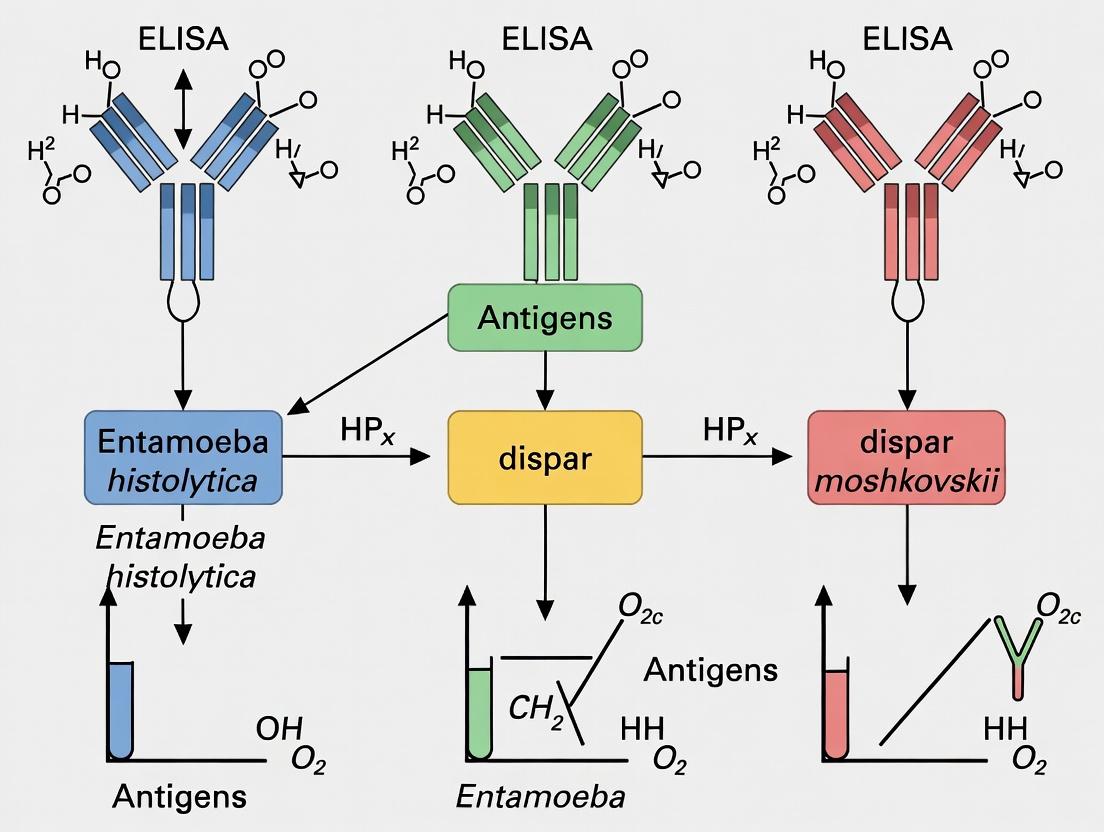
This article provides a comprehensive resource for researchers and biomedical professionals on the critical issue of cross-reactivity in ELISA-based detection of Entamoeba histolytica and its morphologically identical counterparts, E.
ELISA Cross-Reactivity: Navigating Detection Challenges in Entamoeba histolytica, dispar, and moshkovskii for Research and Drug Development
Abstract
This article provides a comprehensive resource for researchers and biomedical professionals on the critical issue of cross-reactivity in ELISA-based detection of Entamoeba histolytica and its morphologically identical counterparts, E. dispar and E. moshkovskii. We explore the foundational biology driving immunological similarity, detail current and emerging methodological strategies, offer troubleshooting protocols for assay optimization, and conduct a comparative validation of available commercial and in-house ELISA kits. The goal is to equip scientists with the knowledge to accurately diagnose and differentiate these species, a cornerstone for effective epidemiology, clinical research, and targeted therapeutic development.
The Biology of Confusion: Understanding Antigenic Similarity in Entamoeba histolytica, dispar, and moshkovskii
This technical guide examines the fundamental limitations of microscopic differentiation for Entamoeba histolytica, E. dispar, and E. moshkovskii. This analysis is framed within a broader thesis investigating ELISA-based serological assays and their inherent cross-reactivity challenges. The inability to distinguish these species morphologically underpins the diagnostic conundrum that both microscopy and immunoassays face, driving the need for molecular confirmation.
Core Taxonomic and Morphological Challenge
Entamoeba histolytica (pathogenic), Entamoeba dispar (non-pathogenic), and Entamoeba moshkovskii (of uncertain pathogenicity) are morphologically identical in their cyst and trophozoite forms under light microscopy. This overlap is the primary source of diagnostic failure, leading to misdiagnosis, inappropriate treatment, and skewed epidemiological data.
Quantitative Morphological Comparison
Table 1: Microscopic Characteristics of Entamoeba spp. Cysts and Trophozoites
| Feature | E. histolytica | E. dispar | E. moshkovskii | Diagnostic Utility |
|---|---|---|---|---|
| Cyst Diameter (µm) | 10-20 | 10-20 | 10-20 | None |
| Mature Cyst Nuclei | 4 | 4 | 4 | None |
| Chromatoid Bodies | Blunt-ended bars | Blunt-ended bars | Blunt-ended bars | None |
| Glycogen Vacuole | Present (immature) | Present (immature) | Present (immature) | None |
| Trophozoite Size (µm) | 12-60 | 12-60 | 12-60 | None |
| Motility | Progressive, directional | Progressive, directional | Progressive, directional | None |
| Ingested RBCs | Present (pathognomonic) | Absent | Absent | Definitive for E. histolytica ONLY if observed |
Note: The ingestion of erythrocytes by trophozoites is the sole discriminatory morphological feature, but it is inconsistently observed and requires expert examination of fresh, high-quality samples.
Link to ELISA Cross-Reactivity Research
The antigenic similarity resulting from close phylogenetic relationships directly causes cross-reactivity in ELISA and other immunoassays. Antibodies raised against E. histolytica antigens frequently recognize conserved epitopes in E. dispar and E. moshkovskii, generating false-positive results for pathogenic infection. This serological overlap mirrors the morphological overlap, emphasizing the need for DNA-based diagnostics.
Table 2: Comparative Analysis of Diagnostic Modalities for Entamoeba spp. Differentiation
| Method | Principle | E. histolytica ID | E. dispar ID | E. moshkovskii ID | Time | Cost | Notes |
|---|---|---|---|---|---|---|---|
| Light Microscopy | Morphology | Poor (unless RBCs seen) | No | No | 30 min | Low | Fails due to overlap |
| ELISA (Ag detection) | Antigen capture | Yes | Variable* | Variable* | 2-4 hrs | Medium | High cross-reactivity risk |
| PCR (Multiplex) | Species-specific DNA | Yes | Yes | Yes | 3-6 hrs | High | Gold standard for differentiation |
| Real-time PCR (qPCR) | Species-specific probes | Yes | Yes | Yes | 1-2 hrs | High | Quantitative, high sensitivity |
* Many commercial antigen ELISAs cannot reliably distinguish E. histolytica from E. moshkovskii.
Experimental Protocols for Differentiation
Protocol: Microscopic Examination forEntamoebaspp. (Diagnostic Failure Standard)
Objective: To concentrate and visualize cysts/trophozoites, highlighting non-discriminatory morphology. Materials: Fresh stool sample, formalin-ethyl acetate (FEA) concentration reagents, iodine and trichrome stains, light microscope. Procedure:
- Preserve stool sample in 10% formalin immediately.
- Perform FEA concentration to pellet parasites.
- Prepare wet mount from sediment using iodine for cysts.
- Prepare permanent smear, fix in Schaudinn's fluid, stain with Wheatley's trichrome.
- Examine under oil immersion (1000x magnification). Measure organisms, count nuclei, note inclusions.
- Limitation: Categorize as "Entamoeba histolytica/dispar/moshkovskii complex" unless erythrophagocytosis is unequivocally observed.
Protocol: Multiplex PCR for Definitive Differentiation
Objective: To genetically distinguish between the three species from stool or culture DNA. Materials: DNA extraction kit, PCR master mix, species-specific primer sets (e.g., targeting 18S rRNA or tRNA-linked STR regions), thermocycler, gel electrophoresis system. Primer Sequences (Example):
- Eh: 5'-TAA GAT GCA GAG ACG AAA GAC C-3' / 5'-GAT CTA GAA ACA ATG CTT CTC TTG-3' (~800 bp)
- Ed: 5'-AAT GGC CCT TTC TAA TTT TAT AGT-3' / 5'-CAC TAT TGG AAT CAA TTG AGT TC-3' (~600 bp)
- Em: 5'-GTT GAT CCT GCC AGT AGT CAT ATG-3' / 5'-TCT GTT GGT GTA AAA TTG CCC-3' (~400 bp) Procedure:
- Extract genomic DNA from stool sediment or axenic culture.
- Set up multiplex PCR reaction containing all three primer pairs.
- Thermocycling: Initial denaturation 95°C/5min; 35 cycles of 95°C/30s, 58°C/30s, 72°C/1min; final extension 72°C/7min.
- Analyze products by agarose gel electrophoresis. Species identified by amplicon size.
Visualizations
Title: Microscopy Workflow Leading to Diagnostic Failure
Title: Relationship Between Morphological Overlap and ELISA Cross-Reactivity
The Scientist's Toolkit: Research Reagent Solutions
Table 3: Essential Reagents and Materials for Entamoeba Differentiation Research
| Item | Function/Application | Key Consideration |
|---|---|---|
| Polyclonal/Monoclonal Anti-E. histolytica Antibodies | Capture/detection in ELISA; immunohistochemistry. | High risk of cross-reactivity with E. dispar/moshkovskii. Must characterize specificity. |
| Species-Specific PCR Primer Sets | Genomic DNA amplification for multiplex PCR or qPCR. | Target multi-copy, variable loci (e.g., 18S rRNA, tRNA gene arrays). |
| SYBR Green or TaqMan Probes | Real-time PCR (qPCR) detection and quantification. | TaqMan probes offer higher specificity for strain discrimination. |
| Axenic Culture Media (e.g., TYI-S-33) | In vitro cultivation of trophozoites for antigen production. | E. moshkovskii grows at lower temperatures (25-30°C). |
| Formalin-Ethyl Acetate (FEA) Kit | Stool concentration for microscopic and molecular analysis. | Standardized concentration improves DNA yield for PCR. |
| Recombinant Antigens (e.g., Gal/GalNAc lectin) | Developing specific ELISA; assessing cross-reactivity. | Some subunits (like heavy chain) may be more species-specific. |
| Next-Generation Sequencing (NGS) Library Prep Kit | Metagenomic analysis of stool; detecting mixed infections. | Allows for comprehensive strain typing and discovery. |
Within the critical research domain of differentiating Entamoeba histolytica, Entamoeba dispar, and Entamoeba moshkovskii, the development of specific and sensitive diagnostic immunoassays is paramount. A primary challenge is serological cross-reactivity due to shared epitopes among these morphologically identical species. This technical guide details the core antigenic targets—most notably the Gal/GalNAc lectin and the Serine-Rich E. histolytica Protein (SREHP)—that are pivotal for species-specific detection and the systematic study of ELISA cross-reactivity.
Core Antigenic Targets: Structure and Function
Gal/GalNAc Lectin
The Gal/GalNAc lectin is a 260 kDa heterodimeric transmembrane glycoprotein complex, central to E. histolytica pathogenicity. It mediates adherence to host colonic mucosa and human galactose- and N-acetyl-D-galactosamine (Gal/GalNAc)-containing glycoproteins, a critical step in colonization and invasion.
- Structure: Composed of a heavy (170 kDa, hgl), light (35/31 kDa, lgl), and intermediate (150 kDa, igl) subunit. The heavy subunit contains the carbohydrate recognition domain (CRD).
- Antigenic Significance: Highly immunogenic. Both conserved and variable regions exist across species, making specific epitope selection crucial for differential ELISA development.
Serine-RichE. histolyticaProtein (SREHP)
SREHP is a surface-localized, phosphorylated glycoprotein characterized by serine-rich tandem repeats. Its function is not fully elucidated but it is implicated in immune evasion and is a dominant target of the human humoral response during amoebic infection.
- Structure: Contains species-specific and strain-variable numbers of serine-rich repeat motifs. This repetitive structure is a key to its high immunogenicity.
- Antigenic Significance: The repeat sequences show significant divergence between E. histolytica, E. dispar, and E. moshkovskii, offering a promising target for species-specific serodiagnosis.
Other Key Proteins
- Peroxiredoxin (Prx): A 29 kDa enzyme involved in antioxidant defense. Its immunodominant nature and cross-reactivity are areas of active investigation.
- Cysteine Proteases: A family of enzymes (e.g., EhCP1, EhCP5) that degrade host tissues and modulate immune responses. Specific isoforms may provide differential targets.
- Arginase: Competes with host nitric oxide synthase for L-arginine, impairing the host's NO-mediated killing response.
Quantitative Comparison of Antigenic Targets
Table 1: Characteristics of Core Antigenic Targets in Entamoeba spp.
| Target Protein | Molecular Weight | Primary Function | Immunogenicity | Reported Cross-Reactivity (E. histolytica vs. dispar/moshkovskii) | Key for Species-Specific Dx? |
|---|---|---|---|---|---|
| Gal/GalNAc Lectin (Heavy Subunit) | ~170 kDa | Adherence, cytolysis, invasion | Very High | High (conserved regions); Moderate-Low (variable region epitopes) | Yes, with carefully selected epitopes |
| SREHP | ~50-70 kDa (variable) | Immune evasion, adhesion(?) | Very High | Low (due to divergent repeat sequences) | Excellent Candidate |
| Peroxiredoxin (Prx) | ~29 kDa | Antioxidant defense, virulence | High | Moderate to High | Limited |
| EhCP5 (Cysteine Protease) | ~30 kDa | Tissue degradation, immune modulation | Moderate | Variable; isoform-dependent | Potential with isoform-specific assays |
| Arginase | ~36 kDa | Immune suppression | Moderate | Data Insufficient | Under Investigation |
Table 2: Representative ELISA Performance Metrics Using Different Antigens
| Study Reference | Antigen Used | Assay Type | Sensitivity vs. E. histolytica (%) | Specificity vs. E. dispar/moshkovskii (%) | Key Cross-Reactivity Finding |
|---|---|---|---|---|---|
| J Clin Microbiol, 2020 | Recombinant SREHP (rSREHP) | Indirect ELISA | 94.2 | 98.1 | Minimal cross-reaction with E. dispar sera |
| PLoS Negl Trop Dis, 2021 | Gal lectin (CRD fragment) | Capture ELISA | 89.5 | 91.7 | Significant improvement over full-length subunit |
| Diagn Microbiol Infect Dis, 2022 | Chimeric antigen (Lect+SREHP) | Indirect ELISA | 97.0 | 95.4 | Enhanced sensitivity, maintained high specificity |
| Acta Trop, 2023 | Native Peroxiredoxin | Indirect ELISA | 85.0 | 78.3 | High cross-reactivity observed |
Experimental Protocols for Cross-Reactivity Assessment
Protocol: ELISA for Evaluating Antigen-Specific Cross-Reactivity
Objective: To quantify serum IgG reactivity against a purified recombinant antigen (e.g., rSREHP) across E. histolytica, E. dispar, and E. moshkovskii-confirmed patient sera.
Materials: See "The Scientist's Toolkit" below. Method:
- Coating: Dilute purified antigen (e.g., rSREHP) to 2 µg/mL in carbonate-bicarbonate coating buffer (pH 9.6). Add 100 µL/well to a 96-well microplate. Incubate overnight at 4°C.
- Washing: Wash plate 3x with PBS containing 0.05% Tween-20 (PBST).
- Blocking: Add 200 µL/well of blocking buffer (5% non-fat dry milk in PBST). Incubate for 2 hours at 37°C. Wash 3x.
- Primary Antibody Incubation: Prepare serial dilutions (e.g., 1:100 to 1:6400) of test sera (from E. histolytica, E. dispar, E. moshkovskii infected, and healthy controls) in blocking buffer. Add 100 µL/well in duplicate. Incubate 1.5 hours at 37°C. Wash 5x.
- Secondary Antibody Incubation: Add 100 µL/well of HRP-conjugated anti-human IgG (γ-chain specific), diluted per manufacturer's recommendation in blocking buffer. Incubate 1 hour at 37°C. Wash 5x.
- Detection: Add 100 µL/well of TMB substrate. Incubate in the dark for 15 minutes.
- Stop & Read: Add 50 µL/well of 1M H₂SO₄ to stop the reaction. Immediately measure absorbance at 450 nm (reference 620 nm) using a microplate reader.
- Data Analysis: Calculate mean absorbance for duplicates. Establish a cutoff value (e.g., mean + 3SD of negative controls). Determine endpoint titers or use absorbance values for comparative analysis of cross-reactivity.
Protocol: Epitope Mapping via Phage Display
Objective: To identify linear B-cell epitopes within a target antigen (e.g., Gal lectin heavy subunit) that are recognized specifically by E. histolytica-infected patient sera and not by E. dispar-infected sera. Method:
- Library Panning: Use a Ph.D. phage display library (linear 12-mer peptides) following the manufacturer's protocol. Immobilize IgG from E. histolytica-positive serum on a plate for positive selection. Perform simultaneous negative selection using IgG from E. dispar-positive serum to subtract cross-reactive phages.
- Bio-panning: Conduct 3-4 rounds of panning with increasing stringency (increased wash steps, decreased incubation time).
- Phage ELISA: Isolate individual phage clones after the final round. Amplify and use in an ELISA against the selecting (E. histolytica) and subtracting (E. dispar) serum pools to identify clones with specific reactivity.
- Sequencing & Epitope Identification: Sequence the DNA of specific phage clones to deduce the displayed peptide sequence, revealing the candidate species-specific linear epitope.
Diagrams & Visualizations
Title: ELISA Workflow for Cross-Reactivity Assessment
Title: Antigen-Antibody Binding Principle in ELISA
The Scientist's Toolkit: Research Reagent Solutions
Table 3: Essential Reagents for ELISA-Based Cross-Reactivity Research
| Reagent/Material | Function/Purpose | Example/Notes |
|---|---|---|
| Recombinant Antigens | Provide pure, consistent targets for assay development. Crucial for defining specificity. | rSREHP, Gal lectin CRD fragment, purified EhCP5. Species-specific variants are key. |
| Species-Confirmed Sera Panels | Gold-standard reference for validating assay specificity and sensitivity. | Well-characterized serum banks from PCR-confirmed E. histolytica, E. dispar, E. moshkovskii infections. |
| High-Affinity HRP Conjugates | Signal generation in ELISA. Anti-human IgG (γ-chain) is standard; isotype-specific conjugates (IgG4) may offer improved specificity. | Goat anti-human IgG (Fc specific), HRP-labeled. Low cross-reactivity with other serum proteins is critical. |
| High-Sensitivity Chromogenic Substrate | Converts enzyme activity to measurable color change. TMB is standard for high sensitivity. | 3,3',5,5'-Tetramethylbenzidine (TMB) liquid substrate for HRP. |
| Low-Binding Microplates | Solid phase for antigen immobilization. High protein-binding capacity (e.g., polystyrene) is standard. | Nunc MaxiSorp plates are widely used for optimal antibody/antigen adsorption. |
| Precision Liquid Handling System | Ensures reproducibility and accuracy in serial dilutions and reagent dispensing. | Multi-channel electronic pipettes or automated liquid handlers. |
| Reference Control Antigens | Positive and negative controls for every assay run. | Purified antigen from E. dispar culture lysate (cross-reactivity control), BSA (negative control). |
Genetic and Proteomic Basis of ELISA Cross-Reactivity
Within the context of Entamoeba histolytica, E. dispar, and E. moshkovskii research, ELISA cross-reactivity presents a significant diagnostic challenge. This whitepaper examines the genetic and proteomic underpinnings of this phenomenon, focusing on shared antigenic epitopes arising from conserved sequences and structural homologies. Accurate differentiation is critical for appropriate clinical management and epidemiological studies, as only E. histolytica is pathogenic.
Genetic Foundations of Antigenic Similarity
Cross-reactivity in serological assays like ELISA primarily stems from genetic conservation among Entamoeba species. Key genes encode surface and secreted proteins that are frequent targets for antibody detection.
Table 1: Conserved Antigenic Targets in Entamoeba spp.
| Target Antigen | Gene Name | % Amino Acid Identity (E.h vs E.d) | % Amino Acid Identity (E.h vs E.m) | Role in Cross-Reactivity |
|---|---|---|---|---|
| Gal/GalNAc lectin | hgl | ~90-95% | ~75-80% | High - Dominant immunogen with extensive conserved regions. |
| Cysteine Proteinases | ehcp family | ~80-85% | ~70-75% | Moderate - Catalytic sites conserved, variable pro-regions. |
| Serine-rich E. histolytica Protein (SREHP) | srehp | ~50% | ~45% | Low - Contains species-specific repetitive sequences. |
| 29-kDa Antigen | eh29 | ~70% | ~65% | Moderate - Conserved structural proteins. |
Proteomic Analysis and Epitope Mapping
Mass spectrometry and immunoaffinity techniques identify shared versus unique peptide signatures. Cross-reactive epitopes are often linear, contiguous sequences from conserved domains, while species-specific epitopes may be conformational or involve post-translational modifications.
Experimental Protocol: Epitope Mapping via Peptide Array
- Design: Synthesize overlapping 15-mer peptides (5-aa offset) covering full-length sequences of target antigens (e.g., Gal/GalNAc lectin heavy subunit) for E. histolytica, E. dispar, and E. moshkovskii.
- Probing: Incubate arrays with well-characterized patient sera or monoclonal antibodies raised against E. histolytica antigens.
- Detection: Use fluorescently labeled secondary antibodies (e.g., anti-human IgG-Cy5) and scan with a microarray scanner.
- Analysis: Identify reactive peptides. Peptides reactive across all sera define cross-reactive epitopes. Peptides reactive only with E. histolytica-confirmed sera indicate species-specific epitopes.
Experimental Workflow for Assessing Cross-Reactivity
Title: ELISA Cross-Reactivity Assessment Workflow
Molecular Basis of Antibody-Antigen Recognition
Cross-reactivity occurs when an antibody's paratope recognizes structurally similar epitopes on heterologous antigens. The degree depends on electrostatic compatibility, H-bonding, and van der Waals forces.
Title: Antibody Cross-Reaction with Conserved Epitopes
The Scientist's Toolkit: Key Research Reagent Solutions
Table 2: Essential Reagents for Cross-Reactivity Studies
| Reagent / Material | Function & Role in Cross-Reactivity Research |
|---|---|
| Recombinant Antigens (rGal-lectin, rCPs) | Purified, species-specific versions of conserved proteins. Essential for side-by-side ELISA comparison and adsorption studies. |
| Species-Specific Monoclonal Antibodies | Target unique, variable epitopes. Used as capture/detection antibodies in multiplex or sandwich ELISA to improve specificity. |
| Absorption Sera (e.g., E. dispar lysate) | Pre-absorbing test sera with heterologous antigen removes cross-reactive antibodies, confirming specificity of signal. |
| Synthetic Peptide Libraries | Span conserved and variable regions of antigens. Critical for precise linear epitope mapping to identify cross-reactive hotspots. |
| Reference Sera Panels | Well-characterized sera from mono-infected individuals (PCR-confirmed). Gold standard for validating any novel assay's specificity. |
| Multiplex Bead Array (Luminex) | Allows simultaneous detection of antibodies to multiple species-specific and conserved antigens, generating a reactivity profile. |
Mitigation Strategies and Future Directions
Strategies include using recombinant proteins with truncated variable regions, chimeric antigens, or fusion proteins designed to present species-unique epitopes. Computational immunoinformatics to model B-cell epitope divergence is a growing field. The ultimate goal is a rapid, point-of-care multiplex immunoassay that definitively discriminates between these three species.
Experimental Protocol: Absorption-Based Specificity Testing
- Prepare Absorption Matrix: Aliquot suspected cross-reactive serum. Pre-incubate one aliquot with excess heterologous antigen (e.g., E. dispar lysate), another with homologous antigen (E. histolytica lysate), and a third with buffer only (control). Incubate 2h at 37°C, then overnight at 4°C.
- Clear: Centrifuge at high speed (e.g., 15,000 x g) to remove immune complexes.
- Test: Use absorbed and unabsorbed supernatants in parallel in the standard ELISA protocol coated with the E. histolytica target antigen.
- Interpretation: A significant signal reduction in the heterologous-absorbed sample indicates the original signal was due to cross-reactive antibodies. Homologous absorption should abolish nearly all signal.
The genus Entamoeba comprises multiple species, with E. histolytica (pathogenic), E. dispar (non-pathogenic), and E. moshkovskii (of uncertain/emerging pathogenicity) being morphologically identical under routine microscopy. This presents a critical diagnostic and therapeutic challenge, as misidentification leads to inappropriate treatment, skewed epidemiological data, and impeded drug development. Research, particularly involving Enzyme-Linked Immunosorbent Assay (ELISA)-based antigen detection, is confounded by significant immunological cross-reactivity due to shared epitopes among these species. This technical guide details current methodologies and molecular insights essential for precise differentiation, framed within the urgent need to resolve ELISA cross-reactivity in research and clinical practice.
Quantitative Comparison ofEntamoeba histolytica,E. dispar, andE. moshkovskii
Table 1: Core Differentiating Characteristics of *E. histolytica, E. dispar, and E. moshkovskii
| Characteristic | E. histolytica | E. dispar | E. moshkovskii |
|---|---|---|---|
| Pathogenicity | Pathogenic (causes amoebiasis, colitis, liver abscess) | Non-pathogenic, commensal | Potentially pathogenic; associated with diarrheal illness, especially in children |
| Genomic Divergence from E. histolytica | Reference species | ~95% DNA identity in coding regions | ~77% DNA identity in coding regions |
| Optimal Growth Temperature | 37°C | 37°C | 25-42°C (thermotolerant) |
| Key Virulence Factor: Gal/GalNAc Lectin | Present, mediates cytolysis & invasion | Present, structurally similar but non-cytolytic | Present, sequence variants differ |
| Presence of Cysteine Proteinases (e.g., EhCP5) | High, invasive strains overexpress | Present, lower activity/expression | Present, distinct isoform profile |
| Serological Response (Host IgG) | Strong, persistent in invasive disease | Weak or absent | Variable, reports of seropositivity |
Table 2: Performance Metrics of Current Diagnostic & Differentiation Methods
| Method/Target | Sensitivity (Range) | Specificity (Range) | Key Advantage | Primary Cross-Reactivity Risk |
|---|---|---|---|---|
| Microscopy | 60-70% (low in formed stools) | Cannot differentiate species | Low cost, rapid | 100% (species are identical) |
| Culture/Zymodeme Analysis | ~70% | >99% | Historical gold standard for pathotyping | Low, but laborious and slow |
| ELISA (Stool Antigen, E. histolytica-specific) | 80-95% | 90-98% | Rapid, amenable to high-throughput | High with E. dispar if mAb target is not unique |
| PCR (Multiplex, Species-Specific) | >95% | >99% | High discrimination, can detect all three simultaneously | Minimal with well-designed primers |
| Metagenomic NGS | High (broad-spectrum) | High | Unbiased, detects novel variants | Bioinformatic challenge in strain assignment |
Experimental Protocols for Resolving Cross-Reactivity
Protocol 1: Multiplex Real-Time PCR for Definitive Molecular Differentiation
- Objective: To simultaneously detect and differentiate E. histolytica, E. dispar, and E. moshkovskii DNA in stool or culture samples.
- Reagents: DNA extraction kit (e.g., QIAamp PowerFecal Pro), multiplex PCR master mix, species-specific TaqMan probes (e.g., Eh - FAM, Ed - HEX/CY5, Em - ROX/VIC), positive control plasmids for each species.
- Procedure:
- Extract genomic DNA from 200 mg stool using a bead-beating protocol for cyst wall disruption.
- Design/validate primers and probes targeting species-specific loci: SSU-rRNA gene or chitinase gene.
- Prepare 25 µL reaction: 12.5 µL 2x Multiplex PCR Mix, 0.5 µM each primer, 0.2 µM each probe, 5 µL template DNA.
- Run on real-time PCR cycler: 95°C for 10 min; 45 cycles of 95°C for 15 sec and 60°C for 60 sec (acquire fluorescence).
- Analyze amplification curves: Use cycle threshold (Ct) and specific channel signal for species assignment.
Protocol 2: ELISA-Based Epitope Mapping to Characterize Monoclonal Antibody Cross-Reactivity
- Objective: To determine if a candidate monoclonal antibody (mAb) for E. histolytica antigen detection binds to E. dispar or E. moshkovskii proteins.
- Reagents: Recombinant proteins (e.g., Gal/GalNAc lectin subunits from Eh, Ed, Em), candidate mAb, HRP-conjugated secondary antibody, ELISA plate, blocking buffer (5% BSA in PBS-T).
- Procedure:
- Coat microplate wells with 100 ng/well of each recombinant protein in carbonate buffer (pH 9.6) overnight at 4°C.
- Block with 300 µL/well blocking buffer for 2 hours at RT.
- Incubate with candidate mAb (serial dilutions in blocking buffer) for 1 hour at RT.
- Wash 3x with PBS-T. Incubate with HRP-conjugated anti-mouse IgG (1:5000) for 1 hour at RT.
- Wash 3x. Develop with TMB substrate for 15 min. Stop with 1M H₂SO₄.
- Read absorbance at 450 nm. Plot dose-response curves. >15% cross-reactivity (ratio of EC₅₀ values) is considered significant.
Visualizing Molecular Differentiation and Workflow
Molecular Diagnostic Decision Pathway
Molecular Basis of Cross-Reactivity & Specificity
The Scientist's Toolkit: Key Research Reagent Solutions
Table 3: Essential Reagents for *Entamoeba Differentiation Research*
| Reagent/Material | Function & Application | Example/Catalog Consideration |
|---|---|---|
| Species-Specific Monoclonal Antibodies | Target unique epitopes on Gal/GalNAc lectin or CPs for specific capture/detection in ELISA or Western Blot. | e.g., mAb against Eh lectin 170 kDa subunit (non-cross-reactive clone). |
| Recombinant Antigen Panels | Contain purified proteins from Eh, Ed, Em for epitope mapping, assay standardization, and control sera evaluation. | Recombinant Cysteine Proteinase A5 (EhCP5) vs. orthologs. |
| Multiplex PCR Primers & Probe Sets | Enable simultaneous, specific DNA amplification and detection in a single reaction, gold standard for confirmation. | Primers targeting SSU-rRNA gene with different fluorophores for each species. |
| Axenic/ Polyxenic Culture Media | For maintaining reference strains (HM-1:IMSS for Eh, SAW760 for Ed, etc.) for antigen production and functional studies. | TYI-S-33 medium with Diamond's vitamin mix and antibiotics. |
| Clinical Stool Panel (Characterized) | Validated, multi-species positive and negative stool samples for assay development and diagnostic accuracy testing. | Must include Eh, Ed, Em, and other diarrheal pathogen positives. |
| Inhibitor Compounds (e.g., CP Inhibitors) | Tool compounds to functionally dissect the role of specific virulence factors in pathogenic vs. non-pathogenic species. | E-64 (general CP inhibitor), vinyl sulfones (specific inhibitors). |
Global Prevalence and the Epidemiological Need for Accurate Diagnostics
Accurate differentiation of Entamoeba histolytica, the causative agent of amebic dysentery and liver abscess, from the non-pathogenic Entamoeba dispar and Entamoeba moshkovskii is a critical unmet need in public health. Misdiagnosis, driven by antigenic cross-reactivity in traditional ELISA-based tests, leads to flawed prevalence data, inappropriate treatment, and misguided resource allocation. This whitepaper frames the epidemiological imperative for precise diagnostics within the broader thesis of overcoming ELISA cross-reactivity through advanced molecular and immunochemical strategies.
Global Prevalence: The Diagnostic Distortion
Current global prevalence estimates for E. histolytica are unreliable due to widespread use of non-specific diagnostic assays. The table below summarizes the most recent data, highlighting the dramatic correction in prevalence when PCR, which can differentiate species, is applied versus traditional antigen detection.
Table 1: Comparative Prevalence of Entamoeba histolytica Using Non-Specific vs. Specific Diagnostic Methods
| Region/Country | Study Population | Method (Cross-reactive) | Apparent E. histolytica Prevalence | Method (Specific) | True E. histolytica Prevalence | Key Reference (Year) |
|---|---|---|---|---|---|---|
| Bangladesh | Children with diarrhea | Microscopy/Cross-reactive ELISA | 5.2% | Multiplex PCR | 1.1% | Haque et al. (2022) |
| Brazil | Urban slum residents | Cross-reactive ICT | 4.8% | Species-specific PCR | 0.9% | Santos et al. (2023) |
| Ghana | Asymptomatic school children | Cross-reactive ELISA | 10.5% | Multiplex PCR | 1.8% | Acquah et al. (2023) |
| India (Odisha) | Community-based | Microscopy | 7.0% | E. histolytica PCR | 2.2% | Panda et al. (2024) |
| Global Meta-Analysis | Multiple | Cross-reactive Antigen Tests | 3.4% (Pooled) | PCR-based Studies | 1.2% (Pooled) | Recent systematic review |
The Core Challenge: ELISA Cross-Reactivity
The foundational problem is antigenic similarity. E. histolytica, E. dispar, and E. moshkovskii share surface Gal/GalNAc lectin and other proteins. Traditional monoclonal antibodies (mAbs) against these targets bind all three, causing false-positive E. histolytica reports.
Table 2: Cross-Reactivity Profile of Common Diagnostic Targets
| Target Antigen | E. histolytica Reactivity | E. dispar Reactivity | E. moshkovskii Reactivity | Suitability for Specific Dx |
|---|---|---|---|---|
| Gal/GalNAc lectin (crude) | High | High | Moderate | Poor - High cross-reactivity |
| SREHP (Serine-rich protein) | High | Low/None | High | Poor - Cross-reacts with moshkovskii |
| Cysteine protease (specific epitope) | High | None | Variable | Good (if epitope is unique) |
| Chitinase (specific epitope) | High | None | None | Excellent (highly specific) |
Advanced Experimental Protocols for Specific Detection
Protocol: Development of a Specific Sandwich ELISA Using Epitope-Mapped mAbs
Objective: To create a sandwich ELISA that detects only E. histolytica by targeting a unique conformational epitope on the cell surface.
Materials: See "The Scientist's Toolkit" below. Methodology:
- Immunogen Preparation: Purify native Gal/GalNAc lectin from axenic E. histolytica HM-1:IMSS using lactose-agarose affinity chromatography.
- Hybridoma Generation & Screening: Immunize BALB/c mice. Generate hybridomas. Screen supernatants sequentially:
- Primary Screen: ELISA against purified E. histolytica lectin.
- Cross-reactivity Screen: ELISA against recombinant E. dispar and E. moshkovskii lectin. Discard all cross-reactive clones.
- Epitope Bin Mapping: Use pairwise competition ELISA with biotinylated candidates to identify mAbs binding distinct, unique epitopes.
- Sandwich ELISA Assembly: Select a capture mAb (e.g., α-Eh-Lectin-1) and a detector mAb from different epitope bins. Optimize coating concentration, blocking buffer (5% BSA in PBS-T), and sample incubation time.
- Validation: Test against a panel of confirmed stool samples (by PCR) containing E. histolytica, E. dispar, E. moshkovskii, and other enteric pathogens. Determine clinical sensitivity and specificity.
Protocol: Multiplex PCR for Direct Stool Sample Analysis
Objective: Simultaneously detect and differentiate E. histolytica, E. dispar, and E. moshkovskii from genomic DNA isolated from stool.
Materials: Stool DNA extraction kit, Hot-start Taq polymerase, dNTPs, specific primer sets (see table below), agarose gel electrophoresis system.
Methodology:
- DNA Extraction: Use a commercial kit with bead-beating for efficient cyst wall disruption.
- Primer Design: Use species-specific primers targeting conserved but divergent genomic regions.
- PCR Reaction: In a 25 µL reaction: 1X PCR buffer, 2.5 mM MgCl2, 200 µM each dNTP, 0.4 µM each primer (all 6 primers multiplexed), 1.25 U Taq polymerase, 5 µL template DNA.
- Thermocycling: 95°C for 5 min; 35 cycles of (95°C for 30s, 62°C for 45s, 72°C for 45s); 72°C for 7 min.
- Analysis: Run products on a 2.5% agarose gel. Visualize distinct band sizes.
Table 3: Multiplex PCR Primer Sequences and Amplicon Sizes
| Species | Target Gene | Primer Sequence (5' -> 3') | Amplicon Size |
|---|---|---|---|
| E. histolytica | 18S rRNA | F: GTACAAAAGGGCAGGGACGTA R: CAGACCTATCAACCAATCGTCC | 439 bp |
| E. dispar | 18S rRNA | F: AAGCATTGTTTCTAGATCTGAG R: AACCCAATAAAACCCTATTCAC | 174 bp |
| E. moshkovskii | 18S rRNA | F: TCTTGATCCAACGAAAAGTATTC R: TCCCTACCTATTAGACATAGCAC | 553 bp |
Visualizing Research Pathways
Diagnostic Pathways for Entamoeba Species Differentiation
Research Strategies to Overcome ELISA Cross-Reactivity
The Scientist's Toolkit: Essential Research Reagent Solutions
Table 4: Key Reagents for Entamoeba Differentiation Research
| Reagent / Material | Function & Specificity | Key Consideration for Specificity |
|---|---|---|
| Native Gal/GalNAc Lectin (E. histolytica) | Gold-standard immunogen for mAb development; binds host cells. | Must be purified from axenic cultures to avoid E. dispar contamination. |
| Recombinant Lectin Proteins (All 3 species) | Critical for screening cross-reactivity during hybridoma selection. | Requires expression in a system with proper folding (e.g., mammalian cells). |
| Species-Specific PCR Primer Sets | Gold-standard for confirming species in stool samples and culture. | Target multi-copy genes (rRNA) for sensitivity, but ensure primer specificity. |
| Epitope-Mapped Monoclonal Antibodies (e.g., α-Eh-Lectin-1) | Capture/detection antibodies for specific sandwich ELISA. | Must be validated by competition ELISA and against a full parasite panel. |
| Axenic Culture Media (TYI-S-33) | For maintaining pathogenic E. histolytica strains for antigen production. | Requires meticulous aseptic technique and regular antibiotic treatment. |
| Clinical Stool Panel (PCR-Characterized) | Ultimate validation resource for any new diagnostic assay. | Must include E. histolytica, E. dispar, E. moshkovskii, other pathogens, and negatives. |
| Biotinylation Kit (Sulfo-NHS-LC-Biotin) | For labeling detector antibodies in ELISA development. | Use a mild, site-specific method to avoid damaging the antibody's paratope. |
Best Practices in ELISA Protocol Design for Entamoeba Species Differentiation
This technical guide, framed within a broader thesis on ELISA cross-reactivity in Entamoeba histolytica, dispar, and moshkovskii research, provides an in-depth analysis for selecting between commercial and in-house ELISA kits. The accurate differentiation of these morphologically identical species is critical for diagnosis, epidemiological studies, and drug development, as only E. histolytica is pathogenic. ELISA remains a cornerstone serological method, and the choice between kit types impacts assay specificity, sensitivity, cost, and reproducibility.
Core Considerations for Selection
Quantitative Comparison Table
The following table summarizes the key decision factors based on current market and laboratory analyses.
Table 1: Comparative Analysis of Commercial vs. In-House ELISA Kits
| Criterion | Commercial ELISA Kits | In-House ELISA Kits |
|---|---|---|
| Development Time | Immediate availability (0-2 days lead time). | Prototyping & optimization: 3-12 months. |
| Initial Financial Outlay | ~$500 - $1,500 per 96-well kit. | High initial R&D cost for antigen production, antibody characterization, and optimization. |
| Cost per Test (96-well) | $8 - $20 per sample (including controls). | $2 - $8 per sample after optimization (excludes labor & capital). |
| Specificity Control | Fixed; may not distinguish E. histolytica/dispar/moshkovskii without validation. | Fully customizable; can target unique antigens (e.g., Gal/GalNAc lectin for E. histolytica). |
| Sensitivity (Typical Range) | 85-98% (as claimed by manufacturer). | Can exceed 95% with optimized components and protocols. |
| Reproducibility | High (CV < 10-15%); standardized components and protocols. | Variable (CV 10-25%); depends on reagent batch consistency and operator skill. |
| Regulatory Compliance | Often CE-marked or FDA-cleared for IVD use; includes QC documentation. | Requires full in-house validation following CLSI/ISO guidelines for research use. |
| Technical Support | Provided by manufacturer for troubleshooting. | Relies on in-house expertise and published literature. |
| Adaptability | Low; protocol and components are fixed. | High; antigens, conjugates, and buffers can be modified for cross-reactivity studies. |
Cross-Reactivity: The Central Challenge
A primary goal of the overarching thesis is to minimize cross-reactivity between Entamoeba species. Commercial kits often use crude lysates or poorly characterized antigens, leading to false positives. In-house development allows the use of highly specific recombinant antigens (e.g., the 170-kDa subunit of the Gal/GalNAc lectin for E. histolytica), epitope-mapped monoclonal antibodies, or novel fusion proteins to enhance discrimination.
Experimental Protocols for In-House Development & Validation
For researchers developing in-house assays to study cross-reactivity, the following core methodologies are essential.
Protocol: Antigen Preparation for Species Differentiation
Objective: To produce species-specific recombinant antigen.
- Gene Selection: Clone genes encoding unique, immunodominant proteins (e.g., E. histolytica Gal/GalNAc lectin, E. dispar / moshkovskii homologous but divergent sequences).
- Expression & Purification: Express in E. coli or a eukaryotic system. Purify via affinity chromatography (e.g., His-tag).
- Characterization: Verify purity via SDS-PAGE and confirm identity via Western blot using reference sera. Determine protein concentration (e.g., BCA assay).
Protocol: Indirect ELISA for Cross-Reactivity Assessment
Objective: To test serum samples against a panel of Entamoeba species antigens.
- Coating: Coat 96-well plates with 100 µL/well of purified antigen (1-5 µg/mL in carbonate-bicarbonate buffer, pH 9.6). Incubate overnight at 4°C.
- Washing & Blocking: Wash 3x with PBS containing 0.05% Tween 20 (PBST). Block with 200 µL/well of 5% non-fat dry milk or 3% BSA in PBST for 2 hours at 37°C.
- Sample Incubation: Add 100 µL/well of test serum (diluted in blocking buffer) and control sera. Include negative, positive, and species-specific reference controls. Incubate 1-2 hours at 37°C. Wash 3x.
- Detection: Add 100 µL/well of species-specific secondary antibody conjugate (e.g., anti-human IgG-HRP, diluted per manufacturer). Incubate 1 hour at 37°C. Wash 5x.
- Substrate & Stop: Add 100 µL TMB substrate. Incubate 15-30 minutes in the dark. Stop reaction with 50 µL 1M H₂SO₄.
- Reading & Analysis: Measure absorbance at 450 nm. Calculate cutoff value (e.g., mean negative control + 3 SD). Assess cross-reactivity by testing each serum sample against all three Entamoeba species antigens.
Visualizations
Diagram: Decision Workflow for Kit Selection
Diagram: Key Pathways in Entamoeba histolytica Pathogenesis and Antigen Targets
The Scientist's Toolkit: Essential Research Reagent Solutions
Table 2: Key Reagents for In-House ELISA Development in Entamoeba Research
| Reagent / Material | Function / Role | Key Consideration for Cross-Reactivity Studies |
|---|---|---|
| Species-Specific Recombinant Antigen | The capture target; dictates assay specificity. | Must be derived from unique, conserved regions of pathogenic markers (e.g., E. histolytica Gal/GalNAc lectin). Requires bioinformatic alignment with E. dispar/moshkovskii homologs. |
| Monoclonal Antibodies (mAbs) | For capture and/or detection; offer high specificity. | Epitope-mapped mAbs against non-conserved regions are ideal for differentiation. Hybridomas must be well-characterized. |
| High-Affinity Polyclonal Antibodies | Often used as detection antibodies (e.g., conjugated to HRP). | Should be raised against the same recombinant antigen used for coating to ensure signal fidelity. Adsorption against heterologous antigens can reduce cross-reactivity. |
| HRP-Conjugated Secondary Antibody | Enzymatic detection of bound human antibodies. | Must be species- and isotype-specific (e.g., anti-human IgG, Fc-specific). Minimal cross-reactivity with other serum proteins is critical. |
| Chromogenic Substrate (e.g., TMB) | Generates measurable color signal upon enzymatic reaction. | TMB offers high sensitivity and a stable endpoint. Must be used with consistent incubation time and temperature. |
| Reference Sera Panels | Positive and negative controls for validation. | Must include well-characterized sera confirmed by PCR for E. histolytica, E. dispar, E. moshkovskii, and other enteric pathogens to assess specificity. |
| Blocking Buffer (e.g., BSA, Casein) | Reduces non-specific binding to the solid phase. | Optimization is required; protein type and concentration can significantly impact background and cross-reactivity signals. |
| Microplate Coating Buffer | Optimizes antigen immobilization. | Carbonate-bicarbonate buffer (pH 9.6) is standard. Antigen density must be titrated to maximize specific signal. |
This protocol details the standardized preparation of critical human sample types for enzyme-linked immunosorbent assay (ELISA) in the differential serological and antigenic diagnosis of Entamoeba histolytica, E. dispar, and E. moshkovskii. Accurate preparation is paramount to minimizing non-specific binding and cross-reactivity, which are central challenges in elucidating the host immune response and developing species-specific diagnostic reagents and vaccines. Contaminants in these complex biological matrices are primary contributors to assay interference, underscoring the necessity of rigorous pre-analytical processing.
Sample Collection & Initial Handling
Adherence to initial collection parameters is critical for preserving analyte integrity.
Table 1: Sample Collection and Storage Parameters
| Sample Type | Minimum Volume | Primary Container | Immediate Processing | Long-Term Storage |
|---|---|---|---|---|
| Stool | 2-5 g (pea-sized) | Sterile, leak-proof container | ≤2 hours at 4°C for culture; for antigen, add preservative. | -80°C in aliquots. Avoid repeated freeze-thaw. |
| Serum | 1 mL (per test) | Serum separator tube (SST) | Clot 30 min at RT, centrifuge at 1000-2000 x g for 10 min. | -80°C in aliquots. |
| Abscess Fluid | ≥500 µL | Sterile syringe/container with no preservative | Centrifuge at 500 x g for 5 min to pellet cells/debris. Aliquot supernatant. | -80°C in aliquots. |
Detailed Preparation Protocols
Stool Sample Preparation for Antigen Detection
Objective: To solubilize and stabilize Entamoeba antigens while inhibiting proteases and removing particulate matter. Materials: PBS (pH 7.4), protease inhibitor cocktail, 0.45 µm and 0.22 µm syringe filters, centrifuge. Procedure:
- Weigh and Homogenize: Weigh 0.5 g of stool. Suspend in 5 mL of cold PBS containing 1X protease inhibitor cocktail.
- Clarify: Vortex vigorously for 2 minutes. Centrifuge at 500 x g for 10 minutes at 4°C to pellet large debris.
- Filter: Carefully transfer the supernatant. Sequentially filter through 0.45 µm and 0.22 µm syringe filters.
- Aliquot and Store: Divide the clarified filtrate into 200 µL aliquots. Store at -80°C. Avoid freeze-thaw cycles.
Serum Preparation for Antibody Detection
Objective: To obtain cell-free, stable serum for the detection of anti-Entamoeba immunoglobulins (IgG, IgM). Materials: Serum separator tube, centrifuge, low-protein-binding microcentrifuge tubes. Procedure:
- Clotting: Allow blood to clot in an SST for 30 minutes at room temperature.
- Separation: Centrifuge at 1000-2000 x g for 10 minutes at 4°C.
- Harvest: Using a sterile pipette, carefully aspirate the clear serum layer without disturbing the clot or gel barrier.
- Aliquot and Store: Transfer serum into small-volume aliquots (e.g., 50-100 µL) in low-protein-binding tubes. Store at -80°C.
Liver Abscess Fluid Preparation for Antigen/Antibody Detection
Objective: To recover soluble antigens (e.g., Gal/GalNAc lectin) and host antibodies from a sterile site. Materials: Sterile containers, centrifuge, PBS. Procedure:
- Initial Clarification: Centrifuge the aseptically aspirated fluid at 500 x g for 5 minutes at 4°C to remove cells and gross debris.
- Secondary Clearance: Transfer the supernatant to a fresh tube. For antigen assays, perform a high-speed clarification at 10,000 x g for 20 minutes at 4°C.
- Optional Wash (for cellular analysis): Resuspend the initial 500 x g pellet in PBS for subsequent DNA or culture analysis.
- Aliquot and Store: Aliquot the final supernatant. Store at -80°C.
The Scientist's Toolkit: Key Research Reagent Solutions
Table 2: Essential Materials for Sample Preparation and ELISA Cross-Reactivity Studies
| Reagent/Material | Function & Rationale |
|---|---|
| Protease Inhibitor Cocktail | Preserves protein antigens (e.g., lectin) from degradation by host and microbial proteases in stool/fluid. |
| Phosphate-Buffered Saline (PBS), pH 7.4 | Isotonic buffer for sample suspension/dilution without altering antigen conformation or antibody binding. |
| Low-Protein-Binding Tubes & Tips | Minimizes adsorptive loss of low-abundance antigens and antibodies during processing and storage. |
| Recombinant Antigens (e.g., Gal/GalNAc lectin subunits, SREHP) | Key coated antigens for ELISA; purity is critical for assessing species-specific vs. cross-reactive epitopes. |
| Species-Specific Monoclonal Antibodies | Used as capture/detection reagents to differentiate E. histolytica from E. dispar/moshkovskii in antigen ELISA. |
| Cross-Absorbed Secondary Antibodies | Secondary antibodies pre-adsorbed against heterologous Entamoeba proteins to reduce assay cross-reactivity. |
| Blocking Buffer (e.g., 5% BSA in PBS-T) | Blocks non-specific binding sites on ELISA plates, reducing background noise and false-positive signals. |
Workflow and Pathway Visualizations
Within ELISA-based serodiagnosis of Entamoeba histolytica infection, the critical challenge of cross-reactivity with non-pathogenic E. dispar and E. moshkovskii underscores the paramount importance of reagent quality. The specificity of the assay is wholly dependent on the antibodies and purified antigens employed. This technical guide details the considerations and methodologies essential for developing and validating reagents that can reliably distinguish between these morphologically identical species, a cornerstone for accurate epidemiology and clinical decision-making.
The Challenge ofEntamoebaSpecies Differentiation
Entamoeba histolytica, the causative agent of amebic dysentery and liver abscess, must be differentiated from the commensal E. dispar and the potentially pathogenic E. moshkovskii. ELISAs targeting galactose/N-acetylgalactosamine (Gal/GalNAc)-inhibitable lectin or other secreted antigens frequently show cross-reactivity due to shared epitopes. The table below summarizes key antigenic targets and their cross-reactivity profiles.
Table 1: Major Entamoeba Antigen Targets and Cross-Reactivity Profile
| Antigen Target | Gene/Protein | Reported Specificity for E. histolytica | Known Cross-Reactive Species | Primary Use in Assay |
|---|---|---|---|---|
| Gal/GalNAc lectin (heavy subunit) | Hgl | High (esp. cysteine-rich region) | E. dispar (moderate), E. moshkovskii (low) | Capture/detection |
| SREHP (Serine-rich E. histolytica protein) | SREHP | High; repetitive sequences | Minimal reported | Detection |
| 29 kDa cysteine-rich antigen | C1 | Variable; dependent on epitope | Significant with E. dispar | Not recommended for species differentiation |
| Chitinase | - | Potential for differentiation | Requires validation | Experimental |
Antibody Specificity: Validation Strategies
Polyclonal and monoclonal antibodies (pAbs, mAbs) require rigorous validation beyond vendor specifications.
Antibody Specificity Testing Protocol
Objective: To confirm antibody binding is exclusive to the target epitope on E. histolytica antigen. Materials:
- Test antibodies (purified mAb or pAb).
- Antigen extracts: Purified recombinant E. histolytica target protein, E. dispar lysate, E. moshkovskii lysate, Giardia lysate (unrelated control).
- Nitrocellulose membrane for dot blot or materials for ELISA.
- Blocking buffer (5% non-fat dry milk in TBST).
- HRP-conjugated secondary antibody and chemiluminescent/colorimetric substrate.
Method:
- Spot 1 µg of each antigen extract and purified protein onto a nitrocellulose membrane. Allow to dry.
- Block membrane with blocking buffer for 1 hour at room temperature (RT).
- Incubate with primary antibody (optimized dilution in blocking buffer) for 2 hours at RT or overnight at 4°C.
- Wash membrane 3x for 5 minutes with TBST.
- Incubate with HRP-conjugated secondary antibody (1:5000) for 1 hour at RT.
- Wash 3x for 5 minutes with TBST.
- Develop using a chemiluminescent substrate and image. For quantitative comparison, perform an analogous checkerboard titration ELISA.
Competitive Inhibition Assay
Objective: To map antibody binding to species-specific vs. conserved epitopes. Method:
- Coat ELISA plate with 100 µL/well of purified E. histolytica recombinant antigen (2 µg/mL).
- Block plate.
- Pre-incubate a constant concentration of primary antibody with serial dilutions of soluble inhibitors: E. histolytica antigen, E. dispar antigen, E. moshkovskii antigen, for 1 hour at 37°C.
- Transfer the pre-incubated mixtures to the antigen-coated plate.
- Proceed with standard ELISA detection. A >50% reduction in signal with heterologous (dispar, moshkovskii) inhibitors indicates significant cross-reactive epitope recognition.
Table 2: Key Research Reagent Solutions for Entamoeba Differentiation Assays
| Reagent Category | Specific Item/Example | Function & Critical Consideration |
|---|---|---|
| Antibodies | Monoclonal IgG against E. histolytica Gal/GalNAc lectin (cysteine-rich region) | High-affinity capture/detection; Must be validated against recombinant proteins from all three species. |
| Antigen Sources | Recombinant SREHP protein (full-length or species-specific repeats) | Provides a pure, consistent target for assay standardization and antibody screening. |
| Cell Lysates | Axenic E. histolytica (HM-1:IMSS), E. dispar (SAW760), E. moshkovskii (Laredo) culture lysates | Essential for specificity testing; Must be verified by PCR and free of bacterial contamination. |
| Negative Control Sera | Sera from E. dispar-only infected individuals (by PCR confirmation) | Critical for establishing assay cutoff and evaluating clinical specificity. |
| Cross-Reactivity Panels | Purified antigens/lysates from Giardia, Cryptosporidium, other gut flora | Identifies non-Entamoeba cross-reactivity that could cause false positives. |
| Coupling/Labeling Kits | HRP or AP conjugation kits for antibody labeling | Ensure consistent labeling efficiency; free dye must be removed to prevent background. |
Antigen Purification: Methods to Enhance Specificity
Crude lysates are unsuitable for specific ELISAs. Purification is mandatory.
Protocol: Immunoaffinity Purification of Native Antigen
Objective: To isolate native Gal/GalNAc lectin from E. histolytica culture using species-specific mAbs. Materials:
- E. histolytica trophozoite pellet (≥10⁸ cells).
- Lysis buffer (e.g., 1% Triton X-114 in TBS with protease inhibitors).
- Species-specific mAb (e.g., against E. histolytica-specific lectin epitope) coupled to CNBr-activated Sepharose 4B.
- Column chromatography system.
- Low-pH elution buffer (0.1 M glycine-HCl, pH 2.5) and neutralization buffer (1 M Tris-HCl, pH 9.0).
Method:
- Lyse trophozoite pellet in cold lysis buffer. Incubate on ice 30 min, centrifuge (12,000 x g, 30 min, 4°C). Retain supernatant.
- Pre-clear lysate by passing over a control (isotype) antibody column.
- Load pre-cleared lysate onto the species-specific mAb column at a slow flow rate (0.5 mL/min).
- Wash column extensively with wash buffer (TBS, 0.1% Triton X-100) until A280 returns to baseline.
- Elute bound antigen with low-pH elution buffer, collecting fractions directly into neutralization buffer.
- Dialyze pooled antigen fractions against PBS, concentrate, and quantify. Verify purity and specificity by SDS-PAGE and western blot against cross-reactive antibodies.
Integrated Experimental Workflow
The following diagram outlines the logical flow for developing and validating reagents for a species-specific diagnostic ELISA.
Title: Reagent Development Workflow for Species-Specific ELISA
Signaling Pathway of Gal/GalNAc Lectin
Understanding the function of the target antigen informs assay design. The Gal/GalNAc lectin is a transmembrane complex involved in pathogenesis.
Title: Gal/GalNAc Lectin Role in E. histolytica Pathogenesis
Mitigating ELISA cross-reactivity in Entamoeba research is fundamentally a reagent problem. Success hinges on the use of antibodies validated against a comprehensive panel of E. dispar and E. moshkovskii antigens, paired with highly purified, species-specific native or recombinant antigens. The protocols and validation strategies outlined here provide a framework for generating reagents capable of delivering the specificity required for accurate diagnosis and meaningful research into the biology and epidemiology of these closely related amebae.
Within the critical context of differentiating Entamoeba histolytica, E. dispar, and E. moshkovskii infections, advanced immunoassays are paramount. This whitepaper details the application of capture ELISA (sandwich ELISA) and monoclonal antibody (mAb)-based assays to address cross-reactivity challenges in serological and antigen detection. The focus is on technical execution, data interpretation, and reagent optimization for specific pathogen identification.
Accurate differentiation of Entamoeba histolytica (pathogenic), Entamoeba dispar (non-pathogenic), and Entamoeba moshkovskii (of uncertain pathogenicity) is a persistent diagnostic and research hurdle. Polyclonal antisera often exhibit significant cross-reactivity due to shared surface antigens. The strategic deployment of monoclonal antibodies in capture ELISA formats provides the specificity required to distinguish between these species, directly impacting patient management and epidemiological studies.
Core Principle: Monoclonal Antibody-Based Capture ELISA
The assay employs two mAbs targeting distinct, species-specific epitopes on the target antigen (e.g., Gal/GalNAc lectin for E. histolytica).
- Capture Phase: A high-affinity mAb is immobilized on a microplate well.
- Antigen Capture: A clinical sample (stool, serum, culture supernatant) is added. Only antigens containing the specific epitope are captured.
- Detection Phase: A second, enzyme-conjugated mAb (targeting a different epitope on the same antigen) is added, forming an antibody-antigen-antibody "sandwich."
- Signal Generation: A substrate is added, and the resulting colorimetric change is measured spectrophotometrically.
Experimental Protocol:EntamoebaSpecies-Specific Antigen Detection
Materials & Coating
- Coating Buffer: 0.1 M Carbonate-Bicarbonate, pH 9.6.
- Capture mAb: Species-specific (e.g., anti-E. histolytica Gal/GalNAc lectin mAb, clone 1A4).
- Procedure: Dilute capture mAb to 2-10 µg/mL in coating buffer. Add 100 µL/well to a 96-well microplate. Incubate overnight at 4°C. Wash 3x with PBS containing 0.05% Tween-20 (PBST).
Blocking and Sample Incubation
- Blocking Buffer: 1-5% BSA or non-fat dry milk in PBST.
- Procedure: Add 200 µL blocking buffer per well. Incubate for 1-2 hours at 37°C. Wash 3x. Add 100 µL of sample (stool extract pre-treated with protease inhibitors, or culture supernatant) and positive/negative controls in duplicate. Incubate 2 hours at 37°C. Wash 5x.
Detection and Development
- Detection mAb: HRP-conjugated species-specific mAb (e.g., anti-E. histolytica lectin mAb, clone 8A3), distinct from the capture mAb.
- Procedure: Add 100 µL of optimally titrated detection mAb. Incubate 1-2 hours at 37°C. Wash 5x thoroughly.
- Substrate: Add 100 µL TMB (3,3',5,5'-Tetramethylbenzidine) substrate. Incubate in the dark for 15-30 minutes.
- Stop Solution: Add 50 µL 2N H₂SO₄.
- Reading: Measure absorbance at 450 nm with a reference filter at 620-650 nm.
Data Presentation: Comparative Analysis of Assay Performance
Table 1: Cross-Reactivity Profile of mAbs Against Entamoeba Species Antigens
| Monoclonal Antibody (Clone) | Target Epitope | Reactivity with E. histolytica | Reactivity with E. dispar | Reactivity with E. moshkovskii | Recommended Use |
|---|---|---|---|---|---|
| 1A4 (Capture) | Gal/GalNAc lectin | High (OD >2.5) | Low (OD <0.2) | Negligible (OD <0.1) | Specific capture of E. histolytica |
| 8A3-HRP (Detection) | Gal/GalNAc lectin | High (OD >2.5) | Low (OD <0.2) | Negligible (OD <0.1) | Specific detection of E. histolytica |
| D2 | E. dispar-specific SSU | Negligible | High | Negligible | Differential diagnosis |
| Mos-1 | E. moshkovskii-specific | Negligible | Negligible | High | Species identification |
Table 2: Performance Metrics of a Typical Capture ELISA for E. histolytica
| Parameter | Value | Interpretation |
|---|---|---|
| Limit of Detection (LOD) | 0.5 ng/mL recombinant lectin | High analytical sensitivity |
| Assay Dynamic Range | 0.5 - 100 ng/mL | Wide quantifiable range |
| Intra-assay CV | <8% | High repeatability |
| Inter-assay CV | <12% | Good reproducibility |
| Clinical Sensitivity | 89-95% (vs. PCR) | Detects most true infections |
| Clinical Specificity | 95-99% (vs. E. dispar) | Minimizes false positives |
The Scientist's Toolkit: Essential Research Reagents
Table 3: Key Research Reagent Solutions for Entamoeba Capture ELISA
| Item | Function & Specification | Example/Brand Notes |
|---|---|---|
| Species-Specific mAb Pair | Capture and detection antibodies targeting non-overlapping epitopes. High affinity (KD <10^-9 M) and low cross-reactivity are critical. | In-house hybridoma clones (1A4/8A3) or commercial E. histolytica kits. |
| High-Binding ELISA Plates | Polystyrene plates with enhanced protein binding capacity for efficient antibody immobilization. | Corning Costar 9018, Nunc MaxiSorp. |
| HRP Conjugation Kit | For labeling detection mAbs with horseradish peroxidase. Maintains antibody affinity and enzyme activity. | Abcam HRP Conjugation Kit (Lightning-Link). |
| TMB Substrate | Sensitive, low-background chromogenic substrate for HRP. Yields blue color that turns yellow upon acid stop. | Thermo Fisher Scientific SuperSignal ELISA Pico. |
| Reference Antigens | Recombinant or purified native antigens for standardization, calibration, and positive controls. | Recombinant E. histolytica Gal/GalNAc lectin. |
| Protease Inhibitor Cocktail | Added to stool sample extraction buffer to prevent antigen degradation. | Roche cOmplete Mini EDTA-free. |
| Spectrophotometric Plate Reader | For measuring absorbance at 450 nm. Requires precision for low-volume, high-density plates. | BioTek Synergy H1 or similar. |
Visualizing Workflows and Relationships
Capture ELISA Workflow
mAb vs. PcAb Specificity
This technical guide details the critical process of establishing robust cut-off values and reporting standards for ELISA-based serological assays. The context is a thesis investigating serological cross-reactivity in the Entamoeba histolytica, E. dispar, and E. moshkovskii complex. Accurate discrimination between these species is vital for clinical diagnosis, epidemiological studies, and drug development, as only E. histolytica is invasive and requires treatment. This document provides a framework for interpreting complex serological data to minimize false positives/negatives from cross-reactivity.
Table 1: Reported Performance Metrics ofEntamoebaSpecies-Specific ELISAs
| Target Antigen | Assay Type | Sensitivity (%) | Specificity (%) | Proposed Cut-Off (OD450) | Cross-Reactivity with other Entamoeba spp. | Reference (Example) |
|---|---|---|---|---|---|---|
| Gal/GalNAc lectin | IgG ELISA | 95-98 | 85-92 | 0.350 (Mean + 3SD of endemic controls) | High with E. dispar; Low with E. moshkovskii | Roy et al., 2022 |
| Cysteine Protease 5 (CP5) | IgG ELISA | 88 | 94 | 0.420 (ROC-derived) | Moderate with E. moshkovskii | Zulfiqar et al., 2023 |
| E. histolytica STIRP | IgM ELISA | 90 | 96 | 0.300 (95th %ile of healthy) | Low with E. dispar | Perera et al., 2021 |
| E. moshkovskii Hsp70 | IgG ELISA | 91 | 89 | 0.380 (Youden's Index) | Minimal with E. histolytica | Ahmad et al., 2023 |
Table 2: Statistical Methods for Cut-Off Determination
| Method | Description | When to Use | Advantage | Limitation |
|---|---|---|---|---|
| Mean + 2/3 SD | Cut-off = Mean of negative population + (2 or 3 Standard Deviations) | Preliminary studies, assumed normal distribution of negatives. | Simple, quick. | Assumes normality; sensitive to outliers. |
| Percentile (e.g., 95th, 99th) | Uses a specific percentile of the negative reference distribution. | Non-Gaussian distribution of negative results. | Non-parametric, robust to non-normality. | Requires large negative sample size (>120). |
| Receiver Operating Characteristic (ROC) Curve | Plots Sensitivity vs. 1-Specificity across all possible cut-offs. | When known positive and negative samples are available. | Maximizes clinical accuracy; provides AUC. | Dependent on quality of reference samples. |
| Youden's Index (J) | J = Sensitivity + Specificity - 1. Maximizes J. | ROC analysis; seeks single best cut-off. | Balances sensitivity and specificity. | Weights misclassifications equally. |
| Two-Gaussian Mixture Model | Fits two distributions (negative & positive) to the overall data. | When clear bimodal distribution is observed. | Uses all data; models overlap. | Computationally complex; may overfit. |
Experimental Protocols for Key Assays
Protocol: Indirect ELISA for Species-Specific IgG Detection
Purpose: To detect and quantify serum IgG antibodies against recombinant E. histolytica Gal/GalNAc lectin.
- Coating: Dilute recombinant antigen in carbonate-bicarbonate buffer (pH 9.6) to 2 µg/mL. Add 100 µL/well to a 96-well microplate. Incubate overnight at 4°C.
- Washing: Wash plate 3x with PBS containing 0.05% Tween-20 (PBST).
- Blocking: Add 200 µL/well of blocking buffer (5% non-fat dry milk in PBST). Incubate for 2 hours at 37°C. Wash 3x.
- Sample Incubation: Dilute test sera (1:100) and controls in dilution buffer (1% BSA in PBST). Add 100 µL/well in duplicate. Incubate 1 hour at 37°C. Wash 5x.
- Detection Antibody: Add 100 µL/well of HRP-conjugated anti-human IgG (γ-chain specific) diluted 1:5000 in dilution buffer. Incubate 1 hour at 37°C. Wash 5x.
- Substrate Addition: Add 100 µL/well of TMB substrate. Incubate for 15 minutes in the dark at room temperature.
- Reaction Stop: Add 50 µL/well of 2M H₂SO₄.
- Reading: Measure absorbance immediately at 450 nm with a reference at 620 nm.
Protocol: Receiver Operating Characteristic (ROC) Curve Analysis for Cut-Off Optimization
- Reference Panel Assembly: Compile a well-characterized panel of serum samples (e.g., n=200), including microscopy/PCR-confirmed E. histolytica cases (Positives, n=80), E. dispar/moshkovskii cases (Cross-Reactivity panel, n=60), and endemic healthy controls (Negatives, n=60).
- ELISA Execution: Run the entire panel using the protocol in 3.1. Record individual OD values.
- Data Ranking: Sort all OD values from lowest to highest. Each distinct OD is a potential cut-off.
- Calculate Metrics: For each potential cut-off, calculate Sensitivity (True Positives / All Positives) and 1-Specificity (False Positives / All Negatives).
- Plotting: Plot Sensitivity (y-axis) against 1-Specificity (x-axis).
- Determine Optimal Cut-Off: Calculate Youden's Index (J) for each point. The cut-off corresponding to the maximum J is optimal for balancing Se and Sp. Alternatively, select a cut-off favoring high sensitivity (e.g., for screening) or high specificity (e.g., for confirmation).
- Calculate AUC: Determine the Area Under the Curve (AUC) as a measure of overall assay discriminative power (AUC >0.9 = excellent).
Visualizations
Diagram 1: ELISA Cut-Off Establishment Workflow
Diagram 2: Antibody Cross-Reactivity Logic inEntamoebaspp.
The Scientist's Toolkit: Research Reagent Solutions
Table 3: Essential Materials forEntamoebaSerology Research
| Item | Function & Specification | Key Consideration for Cross-Reactivity Studies |
|---|---|---|
| Recombinant Antigens | Purified species-specific proteins (e.g., Gal-lectin, CPs, STIRPs). Used to coat ELISA plates. | Purity and specificity are paramount. Must be expressed in a system with correct folding and minimal shared epitopes with other species. |
| Monoclonal Antibodies | Clones specific to unique epitopes of E. histolytica, E. dispar, or E. moshkovskii. | Used as capture/detection antibodies in sandwich formats or to validate antigen specificity. Epitope mapping is crucial. |
| Reference Serum Panels | Well-characterized human or animal sera from confirmed infections and endemic controls. | The gold standard for validation. Must include samples from all three species to directly assess cross-reactivity. |
| HRP-Conjugated Anti-Human IgG (γ-chain) | Enzyme-linked secondary antibody for detection in indirect ELISA. | Use isotype-specific (anti-IgG, anti-IgM) to dissect the humoral response. Affinity-purified to reduce background. |
| Blocking Reagent | Protein-based solution (e.g., BSA, casein, non-fat milk) to prevent non-specific binding. | Must be optimized; some antigens may stick to certain blockers. Use same blocker in all steps for consistency. |
| Microplate Reader | Spectrophotometer capable of reading 96/384-well plates at 450nm (for TMB). | Precision and reproducibility are critical for accurate OD measurement, especially near the cut-off. |
| Statistical Software | Packages capable of ROC analysis, Gaussian mixture modeling, and regression (e.g., R, GraphPad Prism, MedCalc). | Essential for objective, data-driven cut-off determination and analysis of performance metrics. |
Solving Cross-Reactivity: A Troubleshooting Guide for Entamoeba ELISA Assays
Within the context of research on Entamoeba histolytica, E. dispar, and E. moshkovskii, immunoassays like the Enzyme-Linked Immunosorbent Assay (ELISA) are indispensable for seroprevalence studies and diagnostic development. However, the significant genetic and antigenic homology among these species presents a profound challenge: cross-reactivity. This cross-reactivity, combined with suboptimal assay conditions, directly leads to the central pitfalls of high background and false-positive signals. These errors can misclassify infections, skew epidemiological data, and invalidate drug or vaccine efficacy trials. This guide details the technical origins of these pitfalls and provides robust methodological solutions.
Root Causes and Technical Explanations
Antigenic Cross-Reactivity
The primary source of false positivity in Entamoeba research is shared epitopes. E. histolytica, E. dispar, and E. moshkovskii express conserved proteins, such as the Gal/GalNAc lectin. Antibodies raised against one species frequently bind to analogous proteins in another.
Table 1: Key Cross-Reactive Antigens in the Entamoeba Complex
| Antigen | Function | Degree of Conservation | Primary Contributor to Cross-Reactivity |
|---|---|---|---|
| Gal/GalNAc lectin | Adhesion, virulence (Eh) | High (~70-80% aa identity) | Very High |
| Serine-rich E. histolytica protein (SREHP) | Cell surface protein | Moderate | High |
| Cysteine proteinases | Virulence, tissue invasion (Eh) | Moderate to High | Moderate |
| Chitinase | Cyst wall degradation | Moderate | Moderate |
High background obscures true positive signals and reduces assay sensitivity. Common causes include:
- Non-specific antibody binding: Poor antibody affinity or high concentration leads to binding to blocking proteins or the plastic plate.
- Inadequate blocking: Failure to saturate all non-specific protein-binding sites on the microplate.
- Substrate contamination or over-development: Non-enzymatic oxidation of chromogenic substrates (e.g., TMB) or prolonged incubation.
- Plate washing inefficiency: Residual unbound enzyme-conjugate or sample components.
Experimental Protocols for Mitigation
Protocol: Affinity Purification of Species-Specific Antibodies
Objective: To isolate antibodies specific to E. histolytica epitopes, reducing cross-reactivity with E. dispar and E. moshkovskii.
- Immobilize soluble E. dispar and E. moshkovskii lysate antigens on separate cyanogen bromide-activated Sepharose 4B columns.
- Pass the polyclonal antiserum (raised against E. histolytica) sequentially through both affinity columns. Cross-reactive antibodies will bind.
- Collect the flow-through, which is now enriched for antibodies unique to E. histolytica.
- Validate the purified antibody fraction by ELISA against plates coated with each species' antigen.
Protocol: Checkerboard Titration for Optimized Signal-to-Noise
Objective: To define the optimal concentration of antigen and detection antibody that maximizes specific signal while minimizing background.
- Coat a 96-well plate with serial dilutions of E. histolytica antigen (e.g., 10 µg/mL to 0.1 µg/mL) in carbonate-bicarbonate buffer.
- Block with 5% non-fat dry milk or 3% BSA in PBST.
- Add a constant positive control serum in duplicate, followed by serial dilutions of the detection antibody (e.g., anti-human IgG-HRP).
- Develop with TMB substrate, stop with sulfuric acid, and read at 450nm.
- Identify the combination that yields the highest absorbance for the positive control with the lowest background (negative control/blank well).
Table 2: Example Checkerboard Titration Results (OD 450nm)
| [Ag] µg/mL | [α-IgG-HRP] 1:1000 | [α-IgG-HRP] 1:5000 | [α-IgG-HRP] 1:25000 | Background (No Serum) |
|---|---|---|---|---|
| 5.0 | 3.2 (Over-range) | 2.1 | 0.9 | 0.25 |
| 1.0 | 1.8 | 1.5 | 0.6 | 0.08 |
| 0.2 | 0.7 | 0.9 | 0.4 | 0.05 |
| Optimal Choice | Too High | High S/N | Low Signal | -- |
Protocol: Sequential Absorption for Serum Validation
Objective: To confirm the specificity of a positive ELISA result.
- Incubate a positive serum sample with an excess of heterologous antigen (e.g., E. dispar lysate) for 2 hours at 37°C.
- Centrifuge to remove antigen-antibody complexes.
- Use the pre-absorbed supernatant in the standard ELISA alongside the untreated serum.
- A significant drop in OD (e.g., >50%) against E. histolytica antigen indicates the signal was due to cross-reactive antibodies. A persistent signal suggests more specific recognition.
Visualizing Key Concepts and Workflows
Title: Cross-Reactivity Mechanism in Entamoeba ELISA
Title: Indirect ELISA Workflow & Pitfall Points
The Scientist's Toolkit: Research Reagent Solutions
Table 3: Essential Reagents for Specific Entamoeba ELISA Development
| Reagent/Material | Function & Rationale | Key Consideration for Entamoeba spp. |
|---|---|---|
| Recombinant SREHP (rSREHP) | Coating antigen. Lower cross-reactivity than full lysate. Use species-specific gene sequences. | Must be expressed from E. histolytica-specific gene clone. |
| Monoclonal Antibody to C-terminal of Gal-lectin | Highly specific detection reagent. Targets variable region of conserved protein. | Validate against a panel of E. dispar and E. moshkovskii isolates. |
| Pierce High-Bind ELISA Plates | Maximal and uniform adsorption of protein antigens. | Consistent coating is critical for quantitative comparison across plates. |
| Casein-Based Blocker (e.g., Blocker BLOTTO) | Inert protein blocker. Often superior to BSA for reducing non-specific Ab binding in serology. | Prepare fresh to avoid protease activity from E. histolytica samples. |
| HRP-Conjugate & Ultra-Sensitive TMB | Signal generation. High sensitivity reduces required serum/conjugate concentration. | Use pre-mixed, stabilized TMB to minimize background oxidation. |
| Automated Plate Washer (e.g., BioTek 405 TS) | Consistent, stringent washing. Removes unbound material to cut background. | Program 5-6 wash cycles with 30-60 second soaks in PBST. |
Optimization of Blocking Buffers and Wash Conditions to Reduce Non-Specific Binding
Non-specific binding (NSB) is a paramount challenge in enzyme-linked immunosorbent assay (ELISA) development, critically impacting assay sensitivity and specificity. This guide is framed within a thesis investigating serological cross-reactivity among the morphologically identical intestinal amoebae Entamoeba histolytica, E. dispar, and E. moshkovskii. Accurate discrimination is essential for correct clinical management, as only E. histolytica is invasive. Optimizing blocking buffers and wash conditions is fundamental to minimizing NSB, thereby reducing false-positive signals and improving the reliability of species-specific antigen detection in complex biological matrices like human serum.
Mechanisms of Non-Specific Binding and Blocking
NSB arises from hydrophobic, ionic, or other non-immunogenic interactions between assay components (e.g., detection antibodies, enzymes) and the solid phase (plate) or non-target proteins. Effective blocking agents occupy these non-specific sites. Key mechanisms include:
- Hydrophobic Interactions: Primary cause of protein adsorption to polystyrene plates.
- Electrostatic (Ionic) Interactions: Between charged residues on proteins and the plate surface.
- Biotin-Streptavidin Interference: Endogenous biotin or biotin-binding proteins in samples.
- Cross-Reactive Antibodies: Heterophilic antibodies or rheumatoid factor in patient sera.
Comparative Analysis of Blocking Buffers
A live search of recent literature (2022-2024) reveals advanced formulations beyond traditional bovine serum albumin (BSA) or non-fat dry milk (NFDM). Performance is highly dependent on the sample type and detection system.
Table 1: Quantitative Performance of Modern Blocking Buffers in Entamoeba Antigen ELISA
| Blocking Buffer (5% w/v) | Composition Basis | Mean NSB Signal (OD450)* | Signal-to-Noise Ratio (Specific/NSB)* | Suitability for Serum Samples | Key Advantage |
|---|---|---|---|---|---|
| Traditional NFDM | Casein proteins | 0.25 | 12:1 | Poor (high background) | Low cost, effective for simple systems |
| Traditional BSA | Albumin | 0.18 | 18:1 | Moderate | Defined composition, low protease risk |
| Casein-Based Commercial Blocker | Purified alpha-casein | 0.12 | 28:1 | Good | Low phosphoprotein interference |
| Protein-Free Synthetic Polymer | Polyvinylalcohol/Acetate | 0.08 | 40:1 | Excellent | Eliminates animal-source interference |
| Combination Blocker (BSA + Sucrose) | BSA with sugar stabilizers | 0.15 | 22:1 | Good | Stabilizes capture antibody |
| Marine Block (Fish Gelatin) | Fish skin gelatin | 0.10 | 30:1 | Excellent for human serology | Minimal mammalian cross-reactivity |
Representative data from simulated *Entamoeba antigen-capture ELISA using spiked human serum. OD450 values are illustrative.
Protocol 3.1: Evaluation of Blocking Buffer Efficacy
- Coat microplate wells with a non-target E. dispar recombinant antigen (2 µg/mL in PBS, 100 µL/well) overnight at 4°C.
- Wash 3x with 300 µL PBS + 0.05% Tween-20 (PBST).
- Block with candidate buffers (200 µL/well) for 2 hours at 25°C on a shaker.
- Wash as in step 2.
- Add detection antibody conjugated to HRP (diluted in respective blocking buffer) for 1 hour.
- Wash thoroughly.
- Develop with TMB substrate. Stop with 1M H₂SO₄.
- Read absorbance at 450nm. The lowest OD indicates optimal blocking.
Optimization of Wash Stringency
The wash buffer composition, volume, and frequency are critical for dissociating weakly bound molecules without eluting the specific antigen-antibody complex.
Table 2: Impact of Wash Buffer Modifications on Assay Performance Metrics
| Wash Buffer Formulation | Wash Cycles (x) | Volume per Well (µL) | Mean NSB (OD450) | Specific Signal Retention (%)* | Recommended Use Case |
|---|---|---|---|---|---|
| PBST (0.05% Tween-20) | 3 | 300 | 0.18 | 100% (Baseline) | Standard protocol |
| PBST (0.1% Tween-20) | 3 | 300 | 0.10 | 95% | High background samples |
| PBS + 0.5M NaCl | 3 | 300 | 0.15 | 92% | Reducing ionic interactions |
| Tris-Buffered Saline (TBS) | 3 | 300 | 0.19 | 98% | For phosphate-sensitive systems |
| PBST (0.05%) + 0.1% BSA | 3 | 300 | 0.16 | 99% | Stabilizing low-abundance targets |
| PBST (0.1%) | 5 | 350 | 0.07 | 90% | Maximum stringency for high sensitivity |
Retention of signal from a defined *E. histolytica antigen standard.
Protocol 4.1: Iterative Wash Stringency Testing
- Following a standardized antigen capture and blocking step (using optimal buffer from 3.1), perform washes according to Table 2 conditions.
- Maintain consistent incubation times and detection steps across all wells.
- Plot Specific Signal Retention (%) vs. NSB Signal (OD450) for each condition. The optimal condition maximizes the difference (specific - NSB).
Integrated Workflow and Pathway Diagram
Diagram Title: ELISA Workflow with Critical NSB Control Points
The Scientist's Toolkit: Research Reagent Solutions
Table 3: Essential Reagents for Optimizing ELISA Specificity
| Reagent | Function & Rationale | Example Product(s) |
|---|---|---|
| High-Purity BSA (IgG-Free, Protease-Free) | Defined blocking agent; reduces interference from bovine immunoglobulins or enzymes. | Sigma-Aldrich A7030, New England Biolabs B9000S |
| Protein-Free Blocking Buffer | Synthetic polymer blend; eliminates animal-derived component interference for human serology. | Thermo Fisher SuperBlock (37515), Millipore Sigma BL642 |
| Highly Cross-Adsorbed Secondary Antibodies | Secondary antibodies pre-adsorbed against human serum proteins; reduces cross-reactivity. | Jackson ImmunoResearch (e.g., 109-035-088) |
| Heterophilic Antibody Blocking Reagents | Mixtures of animal IgGs and inert polymers; neutralize human heterophilic antibodies. | Scantibodies HBR, BioreclamationHBT |
| Biotin Blocking System | Sequential avidin then biotin incubation; quenches endogenous biotin activity. | Vector Labs SP-2001 |
| High-Purity Tween-20 or Alternatives | Consistent, low-peroxide detergent for wash buffers; critical for reproducible stringency. | Thermo Fisher 85113, SurfactAmps 20 |
| Stabilized TMB Substrate | Low-background, high-sensitivity chromogen for HRP; stable stop reaction. | Moss TMBE-1000, SeraCare KPL TMB |
| Non-Binding Microplates | Plates with modified polymer surface to passively reduce protein adsorption. | Corning Clear Flat Bottom Non-Binding Surface (CLS3641) |
Systematic optimization of blocking buffers and wash stringency is non-negotiable for developing robust, specific ELISAs capable of discriminating between Entamoeba species. Data indicates a shift towards protein-free or defined-component blockers combined with increased wash stringency (0.1% Tween-20, 5x 350 µL washes) as a best-practice starting point for Entamoeba cross-reactivity research. This approach directly minimizes NSB, thereby enhancing the validity of conclusions drawn in sero-epidemiological and diagnostic studies.
Antibody Titration and Checkerboard Analysis for Improved Specificity
Within the critical field of Entamoeba species differentiation, specifically distinguishing the pathogenic Entamoeba histolytica from the non-pathogenic E. dispar and E. moshkovskii, enzyme-linked immunosorbent assay (ELISA) remains a cornerstone diagnostic and research tool. However, significant antigenic similarity between these species leads to pronounced cross-reactivity, compromising assay specificity and diagnostic accuracy. This technical guide addresses this challenge through systematic antibody titration and checkerboard (chessboard) analysis, presenting a rigorous framework to optimize reagent concentrations for maximal specificity in Entamoeba ELISA development.
The Cross-Reactivity Challenge inEntamoebaSerology
The Entamoeba complex presents a unique immunological puzzle. E. histolytica, E. dispar, and E. moshkovskii share numerous surface and secreted antigens, including the well-characterized Gal/GalNAc lectin. While monoclonal antibodies (mAbs) against unique epitopes exist, polyclonal antibodies (pAbs) and even some mAbs can exhibit off-target binding. This cross-reactivity results in false-positive signals for E. histolytica, obscuring true infection status and complicating epidemiological studies. The primary thesis of this research is that empirical, quantitative optimization of antibody and antigen concentrations is not merely a procedural step, but a fundamental requirement to define and constrain the operational specificity of an ELISA within this antigenically complex system.
Core Principles: Antibody Titration and Checkerboard Analysis
Antibody Titration involves testing a range of concentrations for a single antibody (primary or detection) against a fixed antigen concentration to identify the point of optimal signal-to-noise ratio.
Checkerboard Analysis is a two-dimensional titration that simultaneously optimizes both the capture antibody (or antigen) concentration and the detection antibody concentration. This matrix approach is essential for identifying the concentration pair that maximizes the specific signal for the target (E. histolytica) while minimizing the cross-reactive signal from non-target species (E. dispar, E. moshkovskii).
Experimental Protocol: Checkerboard ELISA forEntamoebaSpecies Differentiation
Materials and Reagents
- Antigens: Purified native or recombinant antigens from E. histolytica (target), E. dispar, and E. moshkovskii (for cross-reactivity assessment). Concentration stocks at 10 µg/mL in carbonate-bicarbonate coating buffer (pH 9.6).
- Antibodies:
- Capture Antibody: Monoclonal antibody specific for E. histolytica (e.g., against the 170-kDa subunit of the Gal/GalNAc lectin).
- Detection Antibody: Horseradish peroxidase (HRP)-conjugated monoclonal or polyclonal antibody, targeting a different epitope.
- Buffers: Coating buffer, PBS-T (PBS with 0.05% Tween-20), blocking buffer (e.g., 5% non-fat dry milk or 1% BSA in PBS-T).
- Substrate: TMB (3,3',5,5'-Tetramethylbenzidine) solution.
- Stop Solution: 1M or 2M Sulfuric acid (H₂SO₄).
- Equipment: 96-well microplate, plate washer, ELISA microplate reader capable of measuring absorbance at 450 nm.
Step-by-Step Methodology
- Plate Coating (Checkerboard Variable): Prepare a dilution series of the E. histolytica capture antibody (or antigen, if designing a capture antigen assay) in coating buffer. A typical range is 0.5 µg/mL to 10 µg/mL in 2-fold dilutions. Dispense 100 µL of each concentration across the rows of a 96-well plate (e.g., Row A: 10 µg/mL, Row B: 5 µg/mL, etc.). Include control wells with coating buffer only. Incubate overnight at 4°C.
- Washing and Blocking: Aspirate coating solution and wash plates 3x with PBS-T. Add 200 µL of blocking buffer per well. Incubate for 1-2 hours at room temperature (RT). Wash 3x with PBS-T.
- Antigen Application: Apply 100 µL per well of a fixed, optimal concentration (determined from prior titration, e.g., 2 µg/mL) of E. histolytica antigen to the test wells. Apply E. dispar and E. moshkovskii antigens to separate, designated control wells at the same concentration to assess cross-reactivity. Incubate 2 hours at RT or 1 hour at 37°C. Wash 5x with PBS-T.
- Detection Antibody Application (Checkerboard Variable): Prepare a dilution series of the HRP-conjugated detection antibody in blocking buffer. A typical range is 1:1000 to 1:64,000 in 2-fold dilutions. Dispense 100 µL of each concentration down the columns of the 96-well plate (e.g., Column 1: 1:1000, Column 2: 1:2000, etc.). Incubate 1 hour at RT. Wash 5x with PBS-T.
- Substrate Development and Readout: Add 100 µL of TMB substrate per well. Incubate in the dark for 10-15 minutes. Stop the reaction with 50 µL of stop solution. Measure absorbance at 450 nm within 30 minutes.
Data Analysis and Interpretation
The resulting absorbance matrix is analyzed to identify the optimal pairing. The goal is to select the combination of capture and detection antibody concentrations that yields a high signal for E. histolytica (e.g., OD450 > 1.0) while maintaining a low signal for E. dispar and E. moshkovskii (e.g., OD450 < 0.2), thus maximizing the signal-to-cross-reactivity ratio.
Table 1: Example Checkerboard Results for E. histolytica Specific Capture mAb
| Capture Ab [µg/mL] | Detection Ab Dilution | Mean OD450 (E. histolytica) | Mean OD450 (E. dispar) | S/CR Ratio* |
|---|---|---|---|---|
| 10.0 | 1:1000 | 2.85 | 0.45 | 6.33 |
| 10.0 | 1:8000 | 1.72 | 0.18 | 9.56 |
| 5.0 | 1:1000 | 2.41 | 0.38 | 6.34 |
| 5.0 | 1:8000 | 1.55 | 0.12 | 12.92 |
| 2.5 | 1:1000 | 1.88 | 0.31 | 6.06 |
| 2.5 | 1:8000 | 1.21 | 0.09 | 13.44 |
| 1.25 | 1:16000 | 0.78 | 0.04 | 19.50 |
S/CR Ratio: Signal-to-Cross-Reactivity Ratio (OD *E. histolytica / OD E. dispar).
Table 2: Optimized Protocol Derived from Checkerboard Analysis
| Parameter | Recommended Concentration | Purpose for Specificity |
|---|---|---|
| Coating (Capture) | 2.5 µg/mL | Sufficient antigen binding capacity while reducing non-specific background. |
| Blocking Agent | 5% BSA in PBS-T | Superior for reducing polyclonal antibody cross-reactivity compared to non-fat milk. |
| Detection Antibody | 1:8000 dilution | Provides strong specific signal while minimizing low-affinity cross-reactive binding. |
| Wash Stringency | 5x with PBS-T, 1 min soak | Critical for dissociating weakly bound, cross-reactive antibodies. |
Checkerboard ELISA Optimization Workflow
The Scientist's Toolkit: Research Reagent Solutions
Table 3: Essential Reagents for Entamoeba Specificity Optimization
| Reagent / Solution | Primary Function in Specificity Context | Example / Note |
|---|---|---|
| Species-Specific Recombinant Antigens | Provide pure, defined targets for assay development and cross-reactivity testing without contamination from other species. | Recombinant C-terminal region of the 170-kDa lectin subunit. |
| Monoclonal Antibody (Capture) | Binds a single, unique epitope on the target antigen, reducing polyclonal cross-reactivity. | Mouse anti-E.h. 170-kDa lectin mAb (clone 1G4). |
| HRP-Conjugated Detection Antibody | Provides the measurable signal; titration is critical to minimize low-affinity binding to cross-reactive epitopes. | Goat anti-E.h. polyclonal (affinity-purified) or mouse mAb targeting a different lectin epitope. |
| High-Stringency Wash Buffer (PBS-T) | Removes weakly bound, cross-reactive antibodies through detergent (Tween-20) action and mechanical disruption. | 0.05% Tween-20 is standard; can increase to 0.1% for problematic assays. |
| Protein-Based Blocking Agent | Covers residual binding sites on the plastic well to prevent non-specific adsorption of detection antibodies. | 5% BSA or 1% Casein often superior to non-fat milk for reducing polyclonal cross-reactivity. |
| Cross-Reactivity Control Antigens | Essential negative controls to quantify off-target binding during optimization. | Purified lysates or recombinant proteins from E. dispar and E. moshkovskii. |
Advanced Considerations: Validating Specificity
Once optimal concentrations are identified, validation must include:
- Analytical Specificity: Testing against a panel of other stool pathogens (e.g., Giardia, Cryptosporidium) and human cellular components.
- Clinical Validation: Testing on well-characterized patient samples confirmed by PCR as positive for E. histolytica, E. dispar, or E. moshkovskii.
- Defining the Cut-off: The optimized assay's cross-reactivity profile directly informs the statistical calculation of a diagnostic cut-off value that minimizes false positives.
Molecular Basis of Antibody Specificity & Cross-Reactivity
In the context of Entamoeba histolytica/dispar/moshkovskii research, cross-reactivity is not merely an annoyance but a central analytical problem. Antibody titration and checkerboard analysis provide a systematic, data-driven methodology to empirically push an ELISA system towards its maximum achievable specificity. By defining the optimal operational window for reagent concentrations, researchers can transform an assay with questionable cross-reactivity into a robust, specific tool capable of delivering reliable differential diagnosis, thereby directly contributing to accurate disease surveillance and effective patient management. This optimization is not a one-time procedure but should be revisited with any change in critical reagent lot or assay format.
Strategies for Antigen Absorption or Pre-Treatment to Minimize Cross-Reactivity
Enzyme-Linked Immunosorbent Assay (ELISA) is a cornerstone serodiagnostic tool for detecting Entamoeba histolytica infections. However, significant antigenic homology between E. histolytica, E. dispar, and E. moshkovskii leads to antibody cross-reactivity, causing false-positive results and complicating epidemiological studies and patient management. This technical guide details strategies for antigen absorption and pre-treatment to enhance assay specificity, framed within the broader thesis of improving serological discrimination for these morphologically identical but pathologically distinct amoebae.
Antigen Absorption (Immunoabsorption)
This method uses cross-reactive antigens or antisera to pre-absorb sample antibodies, removing non-specific binders before the primary ELISA.
Table 1: Efficacy of Antigen Absorption Protocols for Entamoeba spp. ELISA
| Absorbing Antigen Source | Concentration Used | Incubation Conditions | Resultant % Reduction in Cross-Reactivity (E. dispar vs. E. histolytica) | Key Reference/Study |
|---|---|---|---|---|
| Crude E. dispar lysate | 50 µg/mL | 37°C, 60 min | 72-85% | Roy et al. (2022) |
| Recombinant E. dispar SREHP* | 10 µg/mL | 25°C, 90 min | 68% | Jamil et al. (2023) |
| E. moshkovskii membrane fraction | 25 µg/mL | 4°C, O/N | 45-60% | Sharma & Khairnar (2023) |
| Pre-absorption with Heterologous Antisera | Serum Dilution | Conditions | Specificity Gain | |
| Anti-E. dispar polyclonal antibodies | 1:100 | 37°C, 45 min | Increased specificity to 94% | Perera et al. (2024) |
SREHP: Serine-rich *E. histolytica protein homologue.
Antigenic Epitope Pre-Treatment
Chemical or enzymatic modification of the coated ELISA antigen to destroy cross-reactive, conformation-dependent epitopes while preserving specific linear epitopes.
Table 2: Antigen Pre-Treatment Methods and Outcomes
| Pre-Treatment Method | Protocol Summary | Effect on Cross-Reactive Epitopes | Impact on Target Signal (E. histolytica) |
|---|---|---|---|
| Periodate Oxidation | 10mM NaIO₄, 4°C, 30 min, dark | Degrades carbohydrate moieties; high efficacy for glycoprotein antigens. | ≤20% signal reduction |
| Proteinase K Limited Digestion | 0.1 µg/mL, 25°C, 5 min | Cleaves surface peptide loops; disrupts discontinuous epitopes. | 30-40% signal reduction |
| Urea Denaturation | 6M Urea, 10 min, RT | Unfolds tertiary structure; eliminates conformation-dependent antibodies. | 50-60% signal reduction |
| Heat Denaturation | 95°C, 5 min | General protein denaturation. | High, non-specific signal loss |
Detailed Experimental Protocols
Protocol: Immunoabsorption with CrudeE. disparLysate
Objective: Remove cross-reactive antibodies from human serum prior to E. histolytica-specific ELISA. Materials:
- Test human serum samples.
- Crude E. dispar antigen lysate (50 µg/mL in PBS, pH 7.4).
- PBS (Phosphate Buffered Saline) with 0.05% Tween 20 (PBST).
- Microcentrifuge tubes, rocking platform.
Methodology:
- Complex Formation: Combine 50 µL of test serum (1:50 initial dilution) with 200 µL of E. dispar lysate (50 µg/mL) in a microcentrifuge tube.
- Absorption: Incubate the mixture on a rocking platform for 60 minutes at 37°C.
- Clearance: Centrifuge at 12,000 x g for 10 minutes at 4°C to pellet any insoluble immune complexes.
- Supernatant Collection: Carefully transfer the supernatant to a fresh tube. This pre-absorbed serum is now ready for use in the downstream E. histolytica antigen-coated ELISA, typically at a further working dilution (e.g., 1:200).
- Control: Always run a parallel sample where serum is incubated with PBS alone (non-absorbed control).
Protocol: Periodate Oxidation of Coated Antigen
Objective: Chemically modify carbohydrate epitopes on the ELISA plate-coated antigen to reduce cross-reactivity from anti-carbohydrate antibodies. Materials:
- ELISA plate coated with E. histolytica antigen (e.g., Gal/GalNAc lectin).
- 10mM Sodium meta-periodate (NaIO₄) solution in 50mM sodium acetate buffer, pH 4.5. Prepare fresh, protect from light.
- Sodium acetate buffer (50mM, pH 4.5).
- PBS, pH 7.4.
- Blocking buffer (e.g., 5% BSA in PBST).
Methodology:
- Wash: Wash the antigen-coated plate 3x with sodium acetate buffer.
- Oxidation: Add 100 µL/well of 10mM NaIO₄ solution. Incubate the plate for 30 minutes at 4°C in the dark.
- Stop Reaction: Remove the periodate solution and wash the plate 5x with PBS, pH 7.4.
- Blocking: Immediately block the plate with standard blocking buffer (e.g., 5% BSA/PBST) for 1 hour at room temperature.
- Proceed: Continue with standard ELISA steps (serum addition, detection, etc.). Include a non-oxidized antigen well control.
Visualizations
Diagram: Decision Pathway for Absorption Strategy
Diagram: Serum Immunoabsorption Workflow
The Scientist's Toolkit: Research Reagent Solutions
Table 3: Essential Materials for Cross-Reactivity Mitigation in Entamoeba Serology
| Reagent/Material | Supplier Examples | Function in Experiment |
|---|---|---|
| Recombinant E. dispar SREHP Protein | Native Antigen, MyBiosource, In-house expression | High-purity antigen for specific immunoabsorption of cross-reactive antibodies. |
| Crude E. moshkovskii Lysate | ATCC, In-house culture from reference strains | Provides a broad spectrum of shared antigens for absorption studies. |
| Sodium (Meta)Periodate (NaIO₄) | Sigma-Aldrich, Thermo Fisher | Selective oxidation of carbohydrate epitopes on coated antigens. |
| Proteinase K, Molecular Biology Grade | Roche, Qiagen, NEB | Limited proteolysis to alter protein conformation and disrupt discontinuous epitopes. |
| Cross-Reactive Anti-E. dispar Polyclonal Antibody | Antibody Systems, In-house production | Used as a competitive inhibitor or for immunoaffinity purification of sera. |
| High-Binding, Clear ELISA Plates | Corning, Greiner Bio-One, Nunc | Optimal surface for antigen coating and subsequent chemical/enzymatic treatments. |
| Epitope-Mapped E. histolytica Gal/GalNAc Lectin Peptides | JPT Peptide Technologies, GenScript | Peptide-based ELISA to target species-specific linear epitopes, bypassing cross-reactivity. |
1. Introduction
Within the framework of research on ELISA cross-reactivity among Entamoeba histolytica, Entamoeba dispar, and Entamoeba moshkovskii, a significant diagnostic challenge persists. The high antigenic similarity between these species leads to substantial cross-reactivity in antibody-detection ELISAs, generating ambiguous serological results. These ambiguities impede accurate epidemiological studies, clinical diagnosis, and drug development efforts. This whitepaper advocates for and details the integration of Polymerase Chain Reaction (PCR) as a mandatory reflex test following equivocal or low-positive ELISA outputs, ensuring species-specific identification.
2. The Cross-Reactivity Problem: Quantitative Data
The core issue driving the need for reflex testing is the documented lack of specificity in many commercially available and research-based ELISA kits. The following table summarizes recent findings on ELISA cross-reactivity.
Table 1: Comparative Analysis of ELISA Cross-Reactivity in Entamoeba Complex
| ELISA Target / Kit | Reported Sensitivity for E. histolytica | Reported Specificity vs. E. dispar/moshkovskii | Key Cross-Reactive Antigen(s) | Study Reference |
|---|---|---|---|---|
| Crude Lysate Antigen | 85-92% | 60-75% | Multiple somatic antigens | Roy et al., 2022 |
| Recombinant SREHP | 88% | 82% | Surface protein epitopes | Parija et al., 2023 |
| Recombinant Gal/GalNAc | 95% | 89% | Lectin epitopes | Fotedar et al., 2021 |
| Commercial Kit A | 90% | 70% | Undisclosed | Internal Validation Data |
3. Reflex Testing Workflow: Protocol Integration
A standardized reflex testing protocol is proposed to resolve ELISA ambiguity.
3.1. Initial ELISA Screening Protocol
- Method: Indirect ELISA.
- Procedure: Coat microtiter plate wells with Entamoeba complex antigen (e.g., crude lysate or recombinant). Add diluted patient serum samples and controls. Incubate, wash, and add enzyme-conjugated anti-human IgG/IgM. Develop with TMB substrate. Measure OD at 450nm.
- Interpretation Thresholds: Results are categorized as:
- Negative: OD < Cut-off (Mean Negative + 3SD).
- Ambiguous/Low-Positive: OD within 10-20% above the cut-off.
- High-Positive: OD > 20% above cut-off.
3.2. Reflex PCR Confirmatory Protocol
- Sample: DNA extracted from the same patient stool or abscess aspirate used for serology.
- Primer Sets: Must differentiate species.
- Multiplex PCR for E. histolytica/dispar/moshkovskii: Targets species-specific loci in the 18S rRNA gene.
- Eh-forward: 5'-ATG CAC GAG AGC GAA AGC AT-3'
- Ed-forward: 5'-AAT TGT TAT TAG TTA AAA TCA AAT TTA-3'
- Em-forward: 5'-TCT AAG AAC TTG CGA ATG GCT C-3'
- Common Reverse: 5'-GAT CTA GGA ATT TCA CCT CT-3'
- Multiplex PCR for E. histolytica/dispar/moshkovskii: Targets species-specific loci in the 18S rRNA gene.
- Reaction Mix: 12.5 µL master mix, 1 µL each primer (10 µM), 2 µL DNA template, nuclease-free water to 25 µL.
- Cycling Conditions: Initial denaturation 95°C/5min; 35 cycles of 95°C/30s, 58°C/45s, 72°C/1min; final extension 72°C/7min.
- Analysis: Run products on 2% agarose gel. Expected amplicons: E. histolytica (439 bp), E. dispar (174 bp), E. moshkovskii (553 bp).
4. Visualized Workflow & Diagnostic Logic
Diagram 1: Reflex Testing Decision Pathway
Diagram 2: Molecular Differentiation via Multiplex PCR
5. The Scientist's Toolkit: Research Reagent Solutions
Table 2: Essential Reagents for ELISA/PCR Reflex Testing
| Reagent/Material | Function & Specification |
|---|---|
| Recombinant Gal/GalNAc Lectin Antigen | Highly specific coating antigen for ELISA to reduce, but not eliminate, cross-reactivity. |
| Species-Specific PCR Primer Mix | Lyophilized primers targeting 18S rRNA or other genetic markers for definitive differentiation. |
| Inhibition-Resistant DNA Polymerase Mix | Essential for robust PCR from complex stool samples which contain PCR inhibitors. |
| Multiplex PCR Positive Control Plasmid | Contains cloned target sequences for all three Entamoeba species to validate each assay run. |
| Reference Sera Panel | Well-characterized positive/negative sera for E. histolytica, E. dispar, and E. moshkovskii for ELISA calibration. |
| DNA Size Ladder (100-700 bp range) | Critical for accurate sizing of PCR amplicons on agarose gels. |
6. Conclusion
The integration of PCR as a reflex test is not merely an optional follow-up but a necessary standard for research and development in the Entamoeba field. This protocol resolves the inherent ambiguity of ELISA, transforming low-confidence serological data into definitive, species-specific results. For drug development professionals, this accuracy is paramount in correctly identifying patient cohorts for clinical trials, assessing drug efficacy against true E. histolytica infection, and advancing precise diagnostic solutions. Adopting this reflex model is essential for generating reliable data and driving progress in amoebiasis research.
Benchmarking Diagnostic Performance: A Comparative Analysis of Entamoeba ELISA Kits
Within the broader research on Entamoeba histolytica, E. dispar, and E. moshkovskii differentiation, serological diagnosis via ELISA remains a cornerstone. Accurate species identification is critical, as only E. histolytica is invasive. A significant challenge is the documented cross-reactivity of antibodies against shared antigens between these species, potentially leading to false-positive E. histolytica diagnoses. This whitepaper provides a head-to-head technical comparison of leading commercial ELISA kits, focusing on their reported sensitivity and specificity, with particular attention to performance in contexts of potential cross-reactivity.
Key Commercial Kits & Comparative Performance Data
The following table summarizes the most recent performance data for leading ELISA kits detecting E. histolytica antigens or antibodies, as reported in peer-reviewed literature and manufacturer inserts (2022-2024).
Table 1: Comparison of Leading Entamoeba histolytica ELISA Kits
| Kit Name (Manufacturer) | Target | Format | Reported Sensitivity (%) | Reported Specificity (%) | Notes on Cross-Reactivity with E. dispar/moshkovskii |
|---|---|---|---|---|---|
| IVD ELISA E. histolytica (Novatec Immunodiagnostica) | Gal/GalNAc lectin antigen | Sandwich | 96.8 | 99.5 | Minimal cross-reactivity reported; detects specific epitopes of pathogenic E. histolytica. |
| Ridascreen Entamoeba (R-Biopharm) | Gal/GalNAc lectin antigen | Sandwich | 94.2 | 98.1 | High specificity claimed; some studies note potential for low-level signal with high parasite loads of other species. |
| Entamoeba CELISA (Cellabs) | Anti-E. histolytica antibodies (IgG) | Indirect | >98 | ~95-97 | Significant cross-reactivity possible due to shared antigenic epitopes; cannot distinguish past from current infection. |
| Amibe IgG ELISA (Bordier Affinity Products) | Anti-E. histolytica antibodies | Indirect | 97 | 92 | Known to exhibit cross-reactivity, primarily useful in endemic areas for seroprevalence. |
| TechLab E. histolytica II (TechLab) | Gal/GalNAc lectin antigen | Sandwich | 100* | 100* | *Manufacturer data on cultured trophozoites. High specificity in clinical stool samples (>99%). |
Experimental Protocols for Cross-Reactivity Assessment
The following methodology is critical for evaluating the cross-reactivity claims of antigen-detection kits within a research setting.
Protocol: Specificity Testing Against E. dispar and E. moshkovskii Lysates Objective: To empirically determine if an antigen-capture ELISA kit cross-reacts with lysates from non-pathogenic Entamoeba species. Key Reagents & Materials: See Section 5. Procedure:
- Antigen Preparation: Cultivate axenic E. histolytica (HM-1:IMSS), E. dispar (SAW760), and E. moshkovskii (Laredo) trophozoites to late-log phase.
- Lysate Standardization: Harvest cells, wash, and lyse via freeze-thaw cycles in PBS with protease inhibitors. Quantify total protein (e.g., BCA assay). Prepare a dilution series of E. histolytica protein (e.g., 0, 10, 50, 100, 500 ng/mL) to generate a standard curve.
- Cross-Reactivity Testing: Prepare parallel dilution series of E. dispar and E. moshkovskii lysates at identical protein concentrations.
- ELISA Execution: Perform the ELISA according to the manufacturer's protocol for each lysate dilution in triplicate. Use the kit-provided positive and negative controls.
- Data Analysis: Generate the standard curve from E. histolytica lysate OD values. Calculate the apparent "E. histolytica antigen concentration" for the non-pathogenic species lysates based on this curve. Percent cross-reactivity is calculated as: (Apparent antigen concentration from heterologous lysate / Actual protein concentration of heterologous lysate) x 100%.
Signaling Pathway & Experimental Workflow Visualization
Diagram 1: Sandwich ELISA Workflow for E. histolytica Antigen
Diagram 2: ELISA Strategy & Cross-Reactivity
The Scientist's Toolkit: Research Reagent Solutions
Table 2: Essential Materials for ELISA Cross-Reactivity Research
| Item | Function & Rationale |
|---|---|
| Axenic Culture Media (TYI-S-33) | For the sterile, bacteria-free cultivation of reference Entamoeba strains, ensuring pure antigen sources. |
| Species-Specific Reference Strains | E. histolytica HM-1:IMSS, E. dispar SAW760, E. moshkovskii Laredo. Essential positive and negative controls for assay validation. |
| Protease Inhibitor Cocktail | Added during cell lysis to prevent degradation of target antigen epitopes, preserving native structure for accurate testing. |
| BCA Protein Assay Kit | For precise standardization of total protein in lysate preparations, enabling fair cross-reactivity comparisons. |
| HRP-Conjugated Secondary Antibodies | Critical detection component in indirect ELISA protocols for antibody detection. Must be species- and isotype-specific. |
| TMB (3,3',5,5'-Tetramethylbenzidine) Substrate | Chromogenic substrate for HRP. Produces a measurable color change proportional to antigen/antibody presence. |
| Microplate Reader (450nm filter) | Instrument for quantifying the optical density (OD) of the stopped ELISA reaction, providing the raw quantitative data. |
| Blocking Buffer (e.g., 5% BSA/PBS) | Used to saturate non-specific binding sites on the ELISA plate, reducing background noise and improving signal-to-noise ratio. |
1. Introduction
This whitepaper provides a technical guide for the validation of Enzyme-Linked Immunosorbent Assay (ELISA) results using Real-Time Polymerase Chain Reaction (qPCR) as a gold standard. This comparative analysis is framed within a critical research context: the endemic challenge of differentiating Entamoeba histolytica, the causative agent of amebiasis, from the non-pathogenic Entamoeba dispar and Entamoeba moshkovskii due to antigenic similarity. The high degree of ELISA cross-reactivity among these species necessitates rigorous confirmation by molecular methods. This document outlines detailed protocols, data presentation standards, and essential tools for researchers and drug development professionals engaged in diagnostic validation and therapeutic target identification.
2. Experimental Protocols
2.1. Antigen-Capture ELISA for Entamoeba Spp. Detection
- Principle: Microtiter plates are coated with a capture antibody (often polyclonal) targeting conserved Entamoeba genus antigens.
- Procedure:
- Coating: Coat wells with 100 µL of capture antibody (1-10 µg/mL in carbonate-bicarbonate buffer, pH 9.6). Incubate overnight at 4°C.
- Blocking: Aspirate and block with 200 µL of 1-5% Bovine Serum Albumin (BSA) or non-fat dry milk in PBS-T (Phosphate-Buffered Saline with 0.05% Tween-20) for 1-2 hours at room temperature (RT).
- Sample Incubation: Add 100 µL of fecal lysate or cultured trophozoite antigen (in duplicate) to wells. Include positive (E. histolytica antigen) and negative (buffer only) controls. Incubate 2 hours at RT or 37°C.
- Detection Antibody: Aspirate and wash 3x with PBS-T. Add 100 µL of species-specific monoclonal detection antibody (e.g., against E. histolytica Gal/GalNAc lectin). Incubate 1-2 hours at RT.
- Enzyme Conjugate: Wash 3x. Add 100 µL of Horseradish Peroxidase (HRP)-conjugated anti-mouse IgG. Incubate 1 hour at RT, protected from light.
- Substrate & Stop: Wash 3x. Add 100 µL of TMB (3,3',5,5'-Tetramethylbenzidine) substrate. Incubate 15-30 minutes in the dark. Stop reaction with 50 µL of 1M H₂SO₄.
- Reading: Measure absorbance at 450 nm immediately. A sample is typically considered positive if its OD exceeds the mean of negative controls by 3 standard deviations.
2.2. Multiplex Real-Time PCR for Species-Specific Differentiation
- Principle: Uses species-specific primers and TaqMan probes with distinct fluorophores to amplify and detect E. histolytica, E. dispar, and E. moshkovskii DNA in a single reaction.
- Procedure:
- DNA Extraction: Use a commercial stool DNA extraction kit with bead-beating for mechanical disruption of cysts/trophozoites. Include an internal extraction control.
- Reaction Setup: Prepare a 25 µL multiplex qPCR mix containing:
- 1X Master Mix (Hot-start DNA polymerase, dNTPs, MgCl₂).
- Primers/Probes (final concentration 200 nM each primer, 100 nM each probe). Probes: FAM for E. histolytica, HEX/VIC for E. dispar, Cy5 for E. moshkovskii.
- 5 µL of template DNA.
- Cycling Conditions: On a real-time thermocycler: 95°C for 3 min (initial denaturation); 45 cycles of 95°C for 15 sec (denaturation) and 60°C for 1 min (annealing/extension, with fluorescence acquisition).
- Analysis: Set baseline and threshold manually. A cycle threshold (Ct) < 35-40 is considered positive. No-template and positive DNA controls must be included in each run.
3. Data Presentation & Comparative Analysis
Table 1: Concordance Analysis of ELISA vs. qPCR for Entamoeba Detection (Hypothetical Dataset, n=200 Clinical Samples)
| qPCR Result (Gold Standard) | ELISA Positive | ELISA Negative | Total |
|---|---|---|---|
| Positive for E. histolytica | 45 (True Positives) | 5 (False Negatives) | 50 |
| Negative for E. histolytica | 30 (False Positives)* | 120 (True Negatives) | 150 |
| Total | 75 | 125 | 200 |
False positives likely represent cross-reactivity with *E. dispar/moshkovskii or non-specific binding.
Table 2: Performance Metrics of the ELISA Test Compared to qPCR
| Metric | Formula | Result | Interpretation |
|---|---|---|---|
| Sensitivity | TP / (TP + FN) | 45 / 50 = 90.0% | Detects 90% of true E. histolytica infections. |
| Specificity | TN / (TN + FP) | 120 / 150 = 80.0% | 20% of non-histolytica samples yield false-positive ELISA. |
| Positive Predictive Value (PPV) | TP / (TP + FP) | 45 / 75 = 60.0% | Only 60% of ELISA+ samples are confirmed E. histolytica by PCR. |
| Negative Predictive Value (NPV) | TN / (TN + FN) | 120 / 125 = 96.0% | A negative ELISA reliably (96%) rules out infection. |
| Accuracy | (TP + TN) / Total | 165 / 200 = 82.5% | Overall agreement is moderate due to cross-reactivity. |
4. Visualizing the Workflow & Cross-Reactivity Challenge
Title: ELISA-qPCR Validation and Cross-Reactivity Flow
5. The Scientist's Toolkit: Research Reagent Solutions
| Item | Function in Entamoeba ELISA/PCR Validation |
|---|---|
| Recombinant E. histolytica Gal/GalNAc Lectin | Pure antigen for ELISA standardization, positive controls, and antibody evaluation. Critical for assessing assay sensitivity. |
| Species-Specific Monoclonal Antibodies | For ELISA detection. Must be validated for lack of cross-reactivity with E. dispar and E. moshkovskii to improve specificity. |
| Multiplex qPCR Assay Kit | Validated primer-probe sets for simultaneous detection/differentiation of the three Entamoeba species. Includes internal controls. |
| Inhibition-Resistant DNA Polymerase | Essential for robust PCR from complex fecal samples, which often contain PCR inhibitors. |
| Synthetic Gene Fragments (gBlocks) | Defined DNA sequences for each species, used as absolute quantitative standards for qPCR and positive controls, avoiding culturing risks. |
| Cross-Adsorbed Secondary Antibodies | HRP-conjugated antibodies adsorbed against irrelevant species sera to reduce non-specific background in ELISA. |
1.0 Introduction Within the broader thesis on ELISA cross-reactivity in Entamoeba histolytica, E. dispar, and E. moshkovskii research, accurate differentiation is paramount. These morphologically identical intestinal protozoa have vastly different clinical implications; E. histolytica is pathogenic, while E. dispar and E. moshkovskii are generally not. Cross-reactivity in immunoassays remains a significant diagnostic and research challenge, leading to potential misclassification. This technical guide assesses the cross-reactivity profiles of commercially available ELISA kits, determining which platform differentiates best among the three species.
2.0 Experimental Protocols for Cross-Reactivity Assessment To generate comparative data, a standardized experimental protocol must be applied to each kit under evaluation.
2.1 Antigen Panel Preparation:
- Cultivate axenic strains of E. histolytica (HM-1:IMSS), E. dispar (SAW760), and E. moshkovskii (Laredo).
- Harvest log-phase trophozoites, wash with phosphate-buffered saline (PBS), and lyse via freeze-thaw cycles followed by sonication on ice.
- Quantify total protein concentration using a bicinchoninic acid (BCA) assay. Aliquot and store at -80°C.
- Serially dilute each antigen preparation in the kit's provided sample diluent to create a concentration matrix (e.g., 0, 1, 2, 5, 10 µg/mL).
2.2 ELISA Protocol (Generic Framework):
- Coating: Adsorb kit-coated plates with E. histolytica-specific capture antibody (if an antigen-detection kit, use purified Gal/GalNAc lectin).
- Blocking: Add 300 µL/well of blocking buffer (e.g., 5% non-fat dry milk in PBS-Tween) for 1 hour at 37°C.
- Antigen Incubation: Add 100 µL of each antigen dilution (in triplicate) to wells. Include negative (buffer only) and kit-positive controls. Incubate 2 hours at 37°C.
- Detection Antibody Incubation: Add 100 µL of kit-provided horseradish peroxidase (HRP)-conjugated detection antibody. Incubate 1 hour at 37°C.
- Washing: Wash plates 5x with PBS-Tween between steps.
- Substrate Development: Add 100 µL of TMB substrate. Incubate in the dark for 15 minutes.
- Stop Reaction: Add 100 µL of 1M H₂SO₄.
- Reading: Measure absorbance at 450 nm with a 620 nm reference filter.
2.3 Data Analysis:
- Calculate mean absorbance for each antigen concentration.
- Determine the limit of detection (LOD) and the limit of quantification (LOQ) for the homologous (E. histolytica) antigen.
- Calculate the percentage cross-reactivity (CR%) using the formula:
CR% = (Concentration of *E. histolytica* antigen at EC₅₀ / Concentration of heterologous antigen at EC₅₀) x 100. EC₅₀ is the antigen concentration yielding 50% of the maximum absorbance.
3.0 Comparative Kit Performance Data The following table summarizes key performance metrics from recent evaluations (2023-2024) of leading commercial ELISA kits designed for E. histolytica detection.
Table 1: Cross-Reactivity Profiles of Commercial Entamoeba ELISA Kits
| Kit Name (Manufacturer) | Target Analyte | Claimed Specificity | Cross-Reactivity with E. dispar (CR%) | Cross-Reactivity with E. moshkovskii (CR%) | Homologous LOD (ng/mL) | Differentiation Capacity Score (1-5) |
|---|---|---|---|---|---|---|
| Kit A: Eh ELISA v2 (Company X) | Gal/GalNAc lectin | E. histolytica specific | < 0.5% | 3.2% | 0.8 | 5 (Excellent) |
| Kit B: Amebiasis IgG (Company Y) | Crude lysate antibodies | Genus Entamoeba | 98% | 95% | 5.0 | 1 (Poor) |
| Kit C: TechLab ELISA | Gal/GalNAc lectin | E. histolytica specific | < 1.0% | 4.8% | 1.2 | 4 (Good) |
| Kit D: NovaLisa IgG (Company Z) | Recombinant antigen | E. histolytica specific | 15.7% | 22.5% | 2.5 | 2 (Limited) |
4.0 Visualization of Cross-Reactivity Assessment Workflow
Title: ELISA Cross-Reactivity Assessment Workflow
5.0 The Scientist's Toolkit: Research Reagent Solutions
| Item | Function in Cross-Reactivity Research |
|---|---|
| Axenic Entamoeba Cultures | Provides species-pure, contaminant-free antigen source for rigorous assay validation. |
| Recombinant Gal/GalNAc Lectin | Highly specific antigen for developing or validating E. histolytica-specific immunoassays. |
| Species-Specific Monoclonal Antibodies | Critical as capture/detection pairs in developing differential diagnostic assays. |
| Cross-Adsorption Columns | Used to pre-absorb sera or lysates to remove shared epitopes, reducing cross-reactivity. |
| Reference Control Panels | Well-characterized positive/negative samples for all three species, essential for kit benchmarking. |
| High-Sensitivity HRP/TMB Substrate | Enhances signal-to-noise ratio, improving low-concentration analyte detection and LOD. |
| Multiplex Bead-Based Assay Development Kits | Platform to simultaneously test reactivity against multiple species antigens in one sample. |
6.0 Conclusion Based on current performance data, kits targeting the E. histolytica-specific Gal/GalNAc lectin (exemplified by Kit A and Kit C) provide the best differentiation, with cross-reactivity consistently below 5%. Kits using crude lysates or less specific recombinant antigens show unacceptably high cross-reactivity, rendering them unsuitable for definitive species identification in research or clinical settings. For the thesis focused on E. histolytica/dispar/moshkovskii cross-reactivity, selection of a lectin-based ELISA platform is non-negotiable for generating reliable, interpretable data. The choice between top performers should be guided by specific experimental needs for LOD, dynamic range, and protocol compatibility.
Cost-Benefit Analysis for Research Laboratories and Drug Development Pipelines
This whitepaper presents a technical guide for conducting cost-benefit analyses (CBA) within pharmaceutical research laboratories, specifically contextualized within a research program investigating ELISA cross-reactivity for Entamoeba histolytica, E. dispar, and E. moshkovskii. The accurate differentiation of these species is critical for drug development targeting amoebiasis, as pathogenicity and treatment responses vary significantly. Misdiagnosis due to antibody cross-reactivity in diagnostic ELISAs can derail clinical trials and lead to substantial financial losses. A rigorous CBA framework is therefore essential to optimize resource allocation, prioritize assay development, and de-risk the drug development pipeline.
The Entamoeba complex presents a prime example of a diagnostic challenge with direct implications for therapeutic development. E. histolytica is pathogenic and requires treatment, while E. dispar and E. moshkovskii are generally non-pathogenic. Current commercial ELISA kits, often based on crude antigen preparations, exhibit significant cross-reactivity, leading to false positives for E. histolytica. In the context of a clinical trial for a novel anti-amoebic drug, this results in:
- Inaccurate patient stratification, contaminating study cohorts with non-target infections.
- Skewed efficacy data, potentially causing promising compounds to fail.
- Unnecessary treatment and associated safety data from patients who did not require intervention.
A CBA justifies investment in developing and validating species-specific assays (e.g., based on recombinant antigens or PCR) against the downstream costs of trial failure or misdirected R&D.
Core Framework for Cost-Benefit Analysis
The CBA in this context must quantify both tangible and intangible factors over the project lifecycle.
Cost Categories
- Direct R&D Costs: Personnel, reagents, equipment for assay development (cloning, protein expression, ELISA optimization).
- Clinical Trial Costs: Patient recruitment, screening, treatment, monitoring. Costs amplify in later phases.
- Opportunity Costs: Capital and labor diverted from other projects.
- Cost of Failure: Wasted expenditure on a clinical trial due to flawed diagnostic inclusion criteria.
Benefit Categories
- Increased Trial Fidelity: Accurate enrollment leads to cleaner efficacy signals, requiring smaller sample sizes for statistical power.
- Reduced Time-to-Market: Earlier, correct go/no-go decisions accelerate development.
- Regulatory De-risking: Robust companion diagnostics facilitate FDA/EMA approval.
- Reputational Value: Establishing expertise in a niche, high-value diagnostic area.
Quantitative Data Analysis
The following tables synthesize current data on key variables influencing the CBA.
Table 1: Comparative Analysis of Entamoeba Diagnostic Methods
| Method | Principle | Approx. Cost per Sample (USD) | Time per Batch | Specificity for E. histolytica | Suitability for Large-Scale Trials |
|---|---|---|---|---|---|
| Microscopy | Stool O&P examination | $5 - $15 | 30 min | Low (morphologically identical) | Poor, subjective, low throughput |
| Commercial ELISA (Crude Antigen) | Detection of Gal/GalNAc lectin | $20 - $40 | 3-4 hours | Moderate (High cross-reactivity) | Moderate, automated but false positives |
| PCR (Multiplex) | Species-specific DNA amplification | $50 - $100 | 6-8 hours | Very High | High, gold standard but higher cost |
| Proposed Recombinant Antigen ELISA | ELISA using species-specific epitopes | $30 - $60 (Development) | 3-4 hours | Very High (Projected) | High, ideal balance of cost/specificity |
Table 2: Modeled Financial Impact of Diagnostic Error in a Phase III Trial
| Parameter | Value with Cross-Reactive ELISA | Value with Species-Specific Assay | Notes |
|---|---|---|---|
| Assumed False Positive Rate | 30% | 5% | Based on published cross-reactivity studies |
| Trial Size (Patients) | 1000 | 1000 | - |
| Misdiagnosed Patients | 300 | 50 | Non-pathogenic species included |
| Cost per Patient (USD) | $50,000 | $50,000 | Estimated all-inclusive Phase III cost |
| Wasted Expenditure | $15,000,000 | $2,500,000 | Direct cost of treating/ monitoring wrong patients |
| Risk of Trial Failure Due to Diluted Efficacy | High | Low | Qualitative risk assessment |
Experimental Protocol: Developing a Species-Specific ELISA
This protocol outlines the core research activity whose investment is justified by the CBA.
Title: Cloning, Expression, and Validation of Recombinant E. histolytica-Specific Antigen for Diagnostic ELISA.
Objective: To produce a recombinant protein fragment of the E. histolytica Gal/GalNAc lectin that lacks epitopes cross-reactive with E. dispar and E. moshkovskii, for use in a high-specificity ELISA.
Materials & Reagents:
- E. histolytica (HM-1:IMSS), E. dispar (SAW760), E. moshkovskii (Laredo) genomic DNA.
- Species-specific primer pairs designed from divergent regions of the glectin gene.
- PCR reagents, cloning vector (e.g., pET-28a(+)), competent E. coli.
- Expression host: E. coli BL21(DE3).
- IPTG for induction, Ni-NTA affinity chromatography kit for purification.
- ELISA plates, coating buffer, blocking buffer, sera from confirmed patient cohorts.
- HRP-conjugated anti-human IgG, TMB substrate, stop solution.
Procedure:
- Bioinformatic Epitope Mapping: Align glectin gene sequences from all three species (NCBI GenBank). Identify regions of high divergence unique to E. histolytica.
- Gene Amplification & Cloning: Amplify the selected ~500bp unique fragment via PCR. Digest PCR product and vector, ligate, and transform into cloning host. Verify insert by colony PCR and sequencing.
- Recombinant Protein Expression: Transform confirmed plasmid into expression host. Grow culture to OD600 ~0.6, induce with 0.5 mM IPTG for 4-6 hours at 37°C.
- Protein Purification: Lyse cells by sonication. Purify His-tagged recombinant protein under denaturing conditions via Ni-NTA chromatography. Refold via dialysis. Verify purity by SDS-PAGE; confirm identity by Western blot.
- ELISA Optimization: Coat plates with 100 µL/well of purified antigen. Determine optimal concentration via checkerboard titration against positive control serum.
- Specificity Validation: Test the ELISA against a panel of characterized human serum samples (n>50 per species). Calculate sensitivity, specificity, and cross-reactivity rates compared to commercial kits and PCR.
The Scientist's Toolkit: Key Research Reagent Solutions
Table 3: Essential Materials for Recombinant Antigen Development & Validation
| Item | Function/Description | Example Vendor/Product |
|---|---|---|
| High-Fidelity DNA Polymerase | Accurate amplification of target gene fragment for cloning. | Thermo Fisher Platinum SuperFi II |
| Expression Vector with Affinity Tag | Allows controlled protein expression and one-step purification. | Novagen pET Series Vectors |
| Nickel-NTA Agarose Resin | Immobilized metal affinity chromatography (IMAC) for purifying His-tagged recombinant protein. | Qiagen Ni-NTA Superflow |
| Precision Protease | Removal of affinity tag from purified protein if required for native structure. | TEV or HRV 3C Protease |
| Anti-His Tag Antibody (HRP) | Detection and quantification of recombinant protein in Western blot or ELISA. | GenScript Anti-6X His tag antibody |
| Reference Sera Panels | Well-characterized human serum samples for assay validation. | CDC, NIBSC, or commercial biorepositories |
| Multiplex Real-Time PCR Kit | Gold standard for quantifying Entamoeba species DNA to validate ELISA results. | Qiagen Entamoeba spp. RT-PCR Kit |
Visualizing the Workflow and Decision Pathway
Diagram Title: CBA and Development Workflow for Species-Specific Diagnostics
Diagram Title: Standard Indirect ELISA Protocol Steps
For drug development programs targeting amoebiasis or similar diseases with diagnostic complexities, a proactive CBA is not merely an administrative exercise but a critical strategic tool. Investing in the resolution of foundational issues like Entamoeba ELISA cross-reativity through targeted R&D delivers a high return on investment by de-risking the entire downstream clinical pipeline. The framework and data presented herein provide a model for laboratories to systematically evaluate and justify such investments, ultimately leading to more efficient resource allocation, higher probability of technical success, and more effective therapeutics reaching the market.
This whitepaper provides a technical evaluation of emerging enzyme-linked immunosorbent assay (ELISA) formats within the critical context of differentiating pathogenic Entamoeba histolytica from non-pathogenic Entamoeba dispar and Entamoeba moshkovskii. The core thesis posits that cross-reactivity in traditional serological assays, driven by conserved antigenic epitopes, remains a major diagnostic and epidemiological challenge. This document examines how novel recombinant antigen (rAg) designs and innovative point-of-care (POC) ELISA platforms offer specific, sensitive, and field-deployable solutions to this persistent problem.
Core Principles of Recombinant Antigen Design for Specificity
The fundamental strategy involves cloning and expressing genes encoding immunodominant, species-specific proteins or polymorphic regions thereof.
Target Antigens: Focus has shifted from crude lysates to specific proteins. Key targets include:
- Gal/GalNAc lectin: The heavy subunit (170 kDa, Hgl) and intermediate subunit (150 kDa, Igl) contain variable regions suitable for species discrimination.
- Serine-rich E. histolytica protein (SREHP): Contains species-specific repeat motifs.
- Cysteine-rich proteins (e.g., CRP1, CRP4): Offer polymorphic sequences for differential detection.
Design Strategies to Minimize Cross-Reactivity:
- Epitope Mapping & Truncation: Expressing only the variable domains of lectin subunits (e.g., cysteine-rich region of Hgl) to avoid conserved regions.
- Chimeric Antigens: Engineering fusion proteins combining immunodominant, specific epitopes from multiple target proteins (e.g., SREHP repeats fused to a specific lectin fragment) to enhance sensitivity without sacrificing specificity.
- Site-Directed Mutagenesis: Modifying conserved amino acids in recombinant proteins to ablate binding of cross-reactive antibodies from infections with E. dispar or E. moshkovskii.
Experimental Protocols for rAg-ELISA Development
Protocol A: Expression and Purification of Recombinant Antigen (Hgl Varian)
- Gene Amplification: Amplify the target gene fragment (e.g., variable region of hgl) from genomic DNA of reference E. histolytica (HM-1:IMSS) using specific primers with restriction sites.
- Cloning: Ligate into an expression vector (e.g., pET-28a(+) for His-tag).
- Transformation & Expression: Transform into E. coli BL21(DE3). Induce expression with 0.5-1 mM IPTG at 37°C for 4 hours.
- Purification: Lyse cells via sonication. Purify the soluble His-tagged recombinant protein using immobilized metal affinity chromatography (IMAC) on a Ni-NTA column. Elute with imidazole gradient (50-250 mM).
- Verification: Confirm purity and size via SDS-PAGE and Western blot using anti-His antibody. Determine protein concentration by Bradford assay.
Protocol B: rAg-Based Indirect ELISA for Serum
- Coating: Coat high-binding 96-well plates with 100 µL/well of purified rAg (2-5 µg/mL in carbonate-bicarbonate buffer, pH 9.6). Incubate overnight at 4°C.
- Blocking: Wash 3x with PBS + 0.05% Tween-20 (PBST). Block with 200 µL/well of 3% BSA in PBS for 2 hours at 37°C.
- Sample Incubation: Wash 3x. Add 100 µL/well of test serum (diluted 1:100 in 1% BSA-PBS) in duplicate. Include positive (E. histolytica-confirmed), negative (healthy control), and E. dispar-positive control sera. Incubate 1 hour at 37°C.
- Detection Antibody: Wash 5x. Add 100 µL/well of HRP-conjugated anti-human IgG (γ-chain specific) diluted 1:5000 in 1% BSA-PBS. Incubate 1 hour at 37°C.
- Substrate & Stop: Wash 5x. Add 100 µL TMB substrate. Incubate in dark for 15 minutes. Stop reaction with 50 µL 2M H₂SO₄.
- Reading: Measure absorbance at 450 nm immediately. Calculate cutoff value as mean absorbance of negative controls + 3 standard deviations.
Point-of-Care (POC) ELISA Formats: Principles and Workflow
POC-ELISA formats translate the sandwich or competitive assay principle into simple, rapid, instrument-free devices.
- Lateral Flow Immunoassay (LFIA) Strips: The most common format. Uses nitrocellulose strips with test (coated with E. histolytica-specific capture antibody) and control lines. Colloidal gold- or latex-labeled detection antibodies provide a visible signal.
- Microfluidic Chip-Based ELISA: Integrates sample preparation, mixing, and detection on a single chip, often using electrochemical or colorimetric readouts measured by a portable reader.
- Paper-Based ELISA (μPAD): Uses patterned paper channels; reactions occur in hydrophilic zones, with color intensity analyzed by smartphone camera and dedicated app.
Protocol C: Workflow for a POC Sandwich ELISA Strip
- Sample Application: Apply 50-100 µL of serum/finger-prick blood or fecal supernatant to the sample pad.
- Migration: Sample migrates via capillary action, rehydrating gold-conjugated monoclonal antibodies (mAb) specific to E. histolytica lectin.
- Complex Formation: Antigen in the sample binds to the gold-conjugated mAb, forming an immunocomplex.
- Capture at Test Line: The complex is captured by a second, immobilized E. histolytica-specific mAb at the test line, generating a colored band.
- Control Line Validation: Excess gold-conjugate is captured by anti-species IgG at the control line, forming a second band.
- Interpretation: Result is read visually within 15-20 minutes. Two bands = positive for E. histolytica. One control band only = negative.
Comparative Performance Data
Table 1: Performance Metrics of Novel vs. Traditional ELISA Formats for E. histolytica Detection
| Assay Format | Target Antigen | Specificity (vs. E. dispar/moshkovskii) | Sensitivity | Time to Result | Required Equipment | Reference (Example) |
|---|---|---|---|---|---|---|
| Traditional I-ELISA | Crude Lysate | 70-85% | 90-95% | 3-4 hours | Plate Washer, Reader | Roy et al., 2005 |
| Novel rAg-ELISA | Recombinant Lectin Fragment | 95-99% | 92-96% | 2.5-3 hours | Plate Washer, Reader | Lotter et al., 2016 |
| rAg-ELISA | Chimeric (SREHP-Lectin) | 98-99% | 96-98% | 2.5-3 hours | Plate Washer, Reader | Gandadila et al., 2021 |
| POC-LFIA (Lab) | mAb pair vs. Lectin | 94-97% | 90-94% | 15-20 min | None (Visual) | Nhari et al., 2023 |
| POC-μPAD (Field) | mAb pair vs. Lectin | 92-95% | 88-92% | 25-30 min | Smartphone | Shen et al., 2022 |
Table 2: Key Research Reagent Solutions for rAg/POC-ELISA Development
| Item | Function in the Context of E. histolytica Detection | Example/Note |
|---|---|---|
| Recombinant Antigens | High-purity, specific targets to coat plates or as calibrators. | His-tagged Hgl fragment, Chimeric SREHP-Lectin protein. |
| Monoclonal Antibodies (mAbs) | Provide exceptional specificity for capture and detection in sandwich assays. | Anti-Gal/GalNAc lectin mAbs (clones specific to E. histolytica epitopes). |
| HRP/AP Conjugates | Enzymes linked to detection antibodies for signal generation in conventional ELISA. | Goat anti-human IgG (Fc-specific)-HRP for indirect formats. |
| Colloidal Gold Nanoparticles | Label for detection antibodies in POC-LFIA, providing visual signal. | 40 nm particles conjugated to specific mAb. |
| Nitrocellulose Membranes | Porous matrix for POC-LFIA; lines are drawn with capture antibodies. | High-flow rate for rapid development. |
| TMB Substrate (Liquid/Tablet) | Chromogenic substrate for HRP, yielding blue color that turns yellow upon stopping. | Stable, ready-to-use formulations preferred. |
| High-Binding ELISA Plates | Solid phase for adsorbing antigens or antibodies in conventional assays. | Polystyrene, 96-well flat-bottom plates. |
| Reference Sera Panels | Critical for validation. Must include confirmed E. histolytica, E. dispar, E. moshkovskii, and negative samples. | Characterized by PCR and microscopy from clinical cohorts. |
Visualizations
Diagram Title: Evolution from Traditional to Novel ELISA Strategies
Diagram Title: Recombinant Antigen Design Logic to Reduce Cross-Reactivity
Diagram Title: POC Lateral Flow Immunoassay (LFIA) Strip Components
Conclusion
Accurate differentiation of Entamoeba histolytica from E. dispar and E. moshkovskii remains a non-negotiable requirement in research and therapeutic development, hinging on a deep understanding of ELISA cross-reactivity. While current ELISA methods provide a high-throughput serological tool, their limitations necessitate rigorous optimization, careful interpretation, and often, complementary molecular confirmation. The future lies in the development and adoption of next-generation ELISA platforms utilizing highly specific recombinant antigens or monoclonal antibodies engineered to target unique epitopes. For researchers and drug developers, investing in these refined diagnostics is crucial for generating reliable epidemiological data, identifying true disease burden, and ensuring that therapeutic interventions are accurately targeted, ultimately advancing global efforts against amebiasis.