DNA Barcoding of Bulk Samples: A Powerful Tool for Unlocking Parasite Diversity
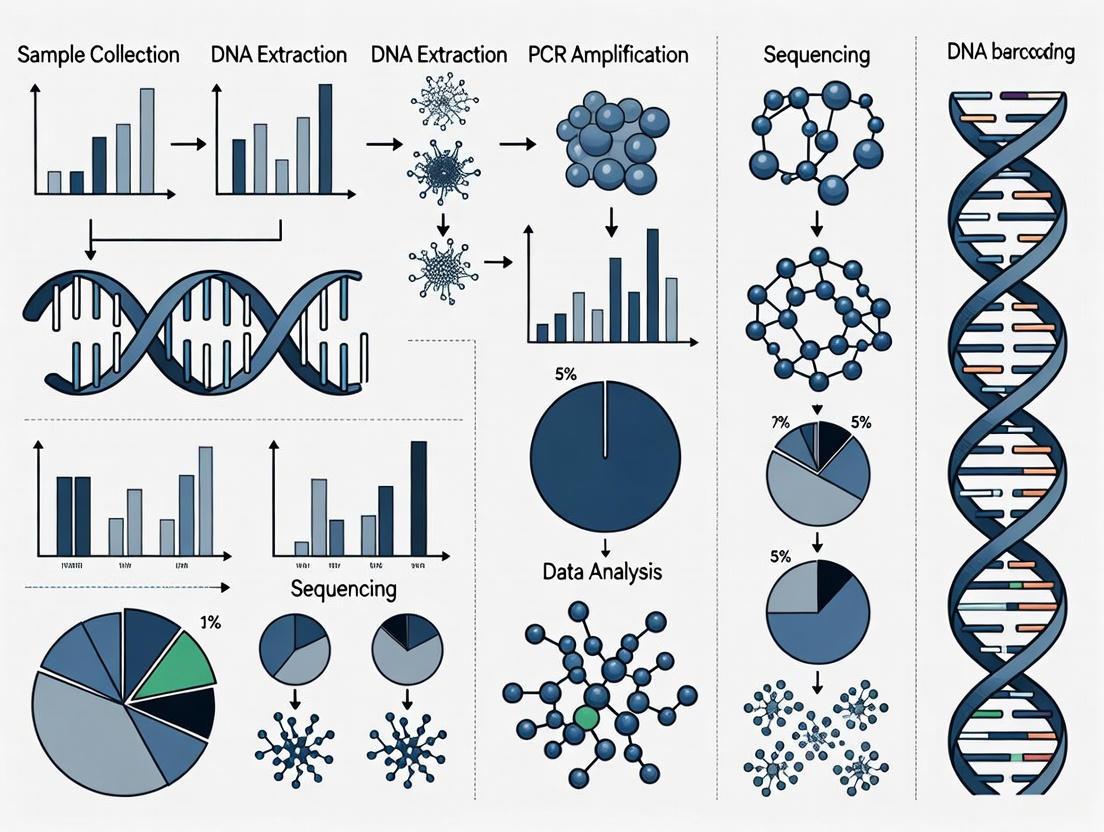
This article explores the transformative potential of DNA barcoding and metabarcoding of bulk samples for profiling parasite communities.
DNA Barcoding of Bulk Samples: A Powerful Tool for Unlocking Parasite Diversity
Abstract
This article explores the transformative potential of DNA barcoding and metabarcoding of bulk samples for profiling parasite communities. Tailored for researchers and drug development professionals, we detail the foundational principles, from selecting barcode regions like COI and 18S rRNA to the bioinformatic pipelines for data analysis. The content provides a critical evaluation of methodological workflows, addresses common troubleshooting scenarios, and validates the approach against traditional morphological techniques. By synthesizing current research and applications in human and veterinary parasitology, this guide serves as a comprehensive resource for implementing this efficient, high-throughput strategy in biodiversity monitoring, vector surveillance, and the discovery of novel therapeutic targets.
The Foundation of Parasite Barcoding: From Basic Concepts to Current Landscape
In the field of modern biodiversity research, DNA barcoding has emerged as a standardized method for identifying species using a short, standardized section of DNA from a specific gene or genes. The core premise is that by comparing this DNA sequence against a reference library, an individual sequence can be used to uniquely identify an organism to the species level, analogous to a supermarket scanner using a universal product code (UPC) to identify an item [1]. This method provides a powerful tool for non-experts to objectively identify species, even from small, damaged, or industrially processed materials [2].
When applied to environmental samples containing DNA from multiple organisms, the process is termed DNA metabarcoding [1]. Metabarcoding is particularly crucial for analyzing complex mixtures where the separation of different biological materials is impossible, such as in traditional medicine preparations [3], gut content analysis [1], or surveys of environmental samples like water or soil [1]. This approach allows for the simultaneous identification of multiple species within a single sample, making it indispensable for studying parasite diversity in bulk samples.
DNA Barcoding and Metabarcoding in Parasite Research
For parasite diversity research, DNA barcoding and metabarcoding offer transformative potential. Parasitic infections often contain substantial genetic diversity, which can manifest as multi-species infections or genetic variation within a single species [4]. This diversity influences clinically relevant phenotypes such as drug or vaccine response and can reveal whether an infection stems from a single or multiple transmission events [4].
The application of these methods is particularly valuable because:
- Multiplicity of Infection (MOI): Understanding the presence of multiple genetically distinct parasites within a host is crucial, as this diversity can drive the evolution of virulence, impact host fitness, and affect drug resistance development [4].
- Limitations of Traditional Methods: Bulk genome sequencing of parasite mixtures is biased toward the dominant genotype, concealing cell-to-cell variation and rare variants [4]. Single-cell sequencing approaches overcome this by allowing the genetic diversity and kinship in complex parasite populations to be deciphered [4].
Marker Selection for Parasites
The choice of genetic marker is fundamental to successful barcoding and depends on the taxonomic group being studied. The table below summarizes the primary barcode regions used for different organisms, with particular relevance to parasite research.
Table 1: Standard DNA Barcode Markers for Different Organism Groups
| Organism Group | Primary Barcode Marker(s) | Alternative Markers | Key Characteristics |
|---|---|---|---|
| Animals | Cytochrome c oxidase I (COI) [1] | Cytb, 12S, 16S [1] | Mitochondrial genes preferred for haploid inheritance and abundant copies [1]. |
| Plants | matK, rbcL [1] | ITS, trnH [1] | Chloroplast genes used due to low mutation rates in plant mitochondrial DNA [1]. |
| Fungi | ITS rDNA [1] | 28S LSU rRNA, COI (for some groups) [1] | Multiple markers often required; ITS is the most commonly used [1]. |
| Protists | 18S rRNA (V4 region), D1-D2/D3 regions of 28S rDNA [1] | ITS rDNA, COI [1] | Variety of markers used depending on the specific protist group [1]. |
| Bacteria | 16S rRNA gene [1] | rpoB, cpn60 [1] | 16S gene is highly conserved and widely used for prokaryote identification [1]. |
For parasite research specifically, the COI gene is often employed for metazoan parasites, while the 18S rRNA gene or ITS regions are typically used for protozoan parasites and fungi.
Experimental Protocols for Complex Samples
The successful application of DNA metabarcoding to complex samples, such as those encountered in parasite diversity studies, requires careful execution of a multi-step process. The workflow below outlines the key stages from sample collection to data analysis.
Sample Collection and Preservation
The initial step involves collecting and preserving samples in a manner that maintains DNA integrity while minimizing contamination.
- Bulk Samples: For parasite diversity studies, bulk samples may include blood, tissue, fecal matter, or environmental samples (water, soil) containing multiple organisms. Collection requires sterile tools to prevent cross-contamination, with recommendations to collect duplicate samples when possible—one for analysis and one for archival purposes [1].
- Environmental DNA (eDNA): This non-invasive approach detects species from cellular debris or extracellular DNA present in environmental samples. Using DNA-free materials and tools at each sampling site is crucial to avoid contamination, especially when target organism DNA is likely at low abundance [1].
- Single-Cell Isolation: For complex parasite mixtures, single-cell isolation enables the deconvolution of genetic diversity within a host. Methods include:
- Limiting Dilution Cloning: A statistical approach to isolate single cells through serial dilution; labor-intensive but preserves cell integrity [4].
- Fluorescence-Activated Cell Sorting (FACS): Uses fluorescent tagging to sort individual cells based on specific criteria; allows for high-purity isolation of target cells [4].
- Microfluidics (e.g., 10X Genomics): High-throughput platform that captures single cells in nanoliter droplets with barcoded beads; processes thousands of cells in parallel [4].
DNA Extraction, Amplification and Sequencing
- DNA Extraction: Methods must be selected based on sample type (tissue, bulk, eDNA), considering factors like cost, time, and DNA yield. The removal of inhibitor molecules that can affect downstream PCR amplification is critical [1].
- DNA Amplification: Polymerase chain reaction (PCR) is used to amplify the target barcode region. For eDNA, which is often fragmented, amplification typically focuses on smaller fragment sizes (<200 base pairs), though some studies suggest no direct relationship between amplicon size and detection rate [1].
- Sequencing: Next-Generation Sequencing (NGS) platforms are standard for metabarcoding due to their high throughput. For complex mixtures, long-read sequencing technologies like Single-Molecule Real-Time (SMRT) sequencing offer advantages in generating full-length barcodes without assembly, providing more enrichment information and higher identification efficiency [3].
Single-Cell Approaches for Parasite Diversity
For parasite research, single-cell sequencing is particularly valuable for characterizing complex infections. The workflow below details the specific process for single-cell analysis of parasites, which can be integrated with bulk metabarcoding approaches to provide a comprehensive view of parasite diversity.
The Scientist's Toolkit: Research Reagent Solutions
Successful implementation of DNA barcoding and metabarcoding for complex samples requires specific laboratory reagents and materials. The following table details essential solutions for the experimental workflow.
Table 2: Essential Research Reagents for DNA Barcoding and Metabarcoding
| Reagent/Material | Function/Application | Specific Examples/Considerations |
|---|---|---|
| DNA Extraction Kits | Isolation of high-quality DNA from various sample types (tissue, bulk, eDNA). | Plant Genomic DNA Kit [3]; inhibitor removal steps critical for eDNA [1]. |
| PCR Master Mix | Amplification of target barcode regions. | Contains DNA polymerase, dNTPs, buffers; used with specific primers [3]. |
| Barcode-Specific Primers | Taxon-specific amplification of standardized barcode regions. | ITS2 & psbA-trnH for plants [3]; CO1 for animals [3] [1]; 16S for bacteria [1]. |
| Whole Genome Amplification Kits | Genome amplification from single cells for diversity studies. | Multiple Displacement Amplification (MDA) for single-cell parasites [4]. |
| Library Preparation Kits | Preparation of DNA libraries for high-throughput sequencing. | Platform-specific kits (Illumina, PacBio); with dual indexing to avoid cross-talk [3]. |
| Fluorescent Cell Stains/Antibodies | Tagging cells for isolation by FACS in single-cell approaches. | Cell dyes or fluorescently labeled antibodies for parasite cell sorting [4]. |
| Reference Databases | Taxonomic identification of obtained sequences. | BOLD (Barcode of Life Data System) [1]; GenBank [2]; curated databases for specific taxa. |
Data Analysis and Interpretation
Following sequencing, bioinformatic processing is essential to derive biological meaning from the raw data. The process involves quality filtering, clustering sequences into operational taxonomic units (OTUs) or amplicon sequence variants (ASVs), and comparing these against reference databases for taxonomic identification [1].
The accuracy of identification heavily depends on the completeness and quality of the reference database used. Comprehensive reference libraries require detailed documentation of voucher specimens (sampling location, date, collector, images) and authoritative taxonomic identification [1]. For parasite research, this may involve comparing sequences against specialized databases containing known parasite sequences.
For quantitative assessment of diversity, data can be presented in frequency tables and graphical representations:
Table 3: Frequency Distribution of Parasite Haplotypes Identified in a Bulk Sample
| Parasite Haplotype | Absolute Frequency (n) | Relative Frequency (%) | Cumulative Relative Frequency (%) |
|---|---|---|---|
| Plasmodium A | 855 | 76.84 | 76.84 |
| Plasmodium B | 159 | 14.29 | 91.13 |
| Plasmodium C | 65 | 5.84 | 96.97 |
| Plasmodium D | 34 | 3.06 | 100.00 |
| Total | 1,113 | 100.00 |
These results can be visualized using bar charts for categorical distribution or histograms for continuous numerical data, ensuring graphical presentations are self-explanatory with clear titles and axis labels [5].
Why Bulk Samples? Advantages Over Single-Specimen Processing for Diversity Studies
This application note delineates the strategic advantages of bulk sample processing over single-specimen methods in molecular diversity studies, with a specific focus on parasite research. Bulk sampling, coupled with high-throughput sequencing and DNA metabarcoding, enables the simultaneous identification of multiple species from complex sample matrices, dramatically enhancing scalability, efficiency, and ecological insight. We provide a detailed experimental protocol for bulk sample analysis, from preservation to bioinformatic processing, alongside a curated toolkit of essential reagents and resources to facilitate implementation in parasitological and drug discovery pipelines.
The comprehensive characterization of biodiversity, particularly for cryptic and diverse groups like parasites, presents a significant methodological challenge. Traditional single-specimen DNA barcoding, which involves the individual processing and Sanger sequencing of each organism,, while highly accurate, is prohibitively slow, costly, and labor-intensive for large-scale surveys [6] [1].
Bulk sample processing emerges as a transformative approach. A bulk sample is an environmental sample containing numerous organisms of the targeted taxonomic group(s) [1]. The core methodology involves co-extracting DNA from the entire sample and using DNA metabarcoding—the parallel sequencing of a standardized DNA barcode region (e.g., COI for animals) from all organisms present—to identify species compositions via comparison to reference libraries [1]. For parasite research, this translates to an unparalleled ability to rapidly census host parasitomes, decipher complex life cycles, and detect cryptic co-infections, providing a rich, data-dense foundation for identifying potential therapeutic targets and understanding disease ecology.
Quantitative Advantages of Bulk Sampling
The transition from single-specimen to bulk processing confers substantial benefits across key research metrics. The table below provides a comparative summary.
Table 1: Comparative Analysis of Single-Specimen vs. Bulk Sample Processing
| Metric | Single-Specimen Processing | Bulk Sample Processing |
|---|---|---|
| Throughput | Low (tens to hundreds of specimens per sequencing run) [6] | High (hundreds to thousands of specimens per run via multiplexing) [6] |
| Cost Efficiency | High cost per specimen (individual DNA extraction, PCR, and sequencing) [6] | Low cost per specimen (pooled DNA extraction and library preparation) [6] |
| Processing Speed | Slow (specimen-specific workflow) | Rapid (parallelized workflow for the entire sample) |
| Detection Sensitivity | Excellent for individual specimens | High for diverse communities; can detect rare species and intraspecific variants [6] |
| Scope of Application | Well-identified voucher specimens | Environmental samples (eDNA), gut contents, parasitological swabs, and mixed infections [1] |
| Data Complexity | Single, clean sequences per specimen | Complex sequence datasets requiring sophisticated bioinformatic demultiplexing and curation [6] |
Beyond the metrics in Table 1, bulk sampling offers profound scientific advantages. It allows researchers to overcome the "digital mirror" effect of single-specimen approaches, providing a more holistic view of community structure and species interactions [6]. Furthermore, next-generation sequencing (NGS) platforms used in metabarcoding are capable of detecting intra-individual mitochondrial variability (heteroplasmy) and non-target sequences, such as those from endosymbiotic bacteria like Wolbachia, which can be prevalent in parasites [6].
Detailed Experimental Protocol for Bulk Sample Analysis
The following protocol is adapted from established DNA barcoding and metabarcoding workflows [6] [1] and tailored for parasitological studies, such as analyzing blood meals, gut contents, or homogenized host tissue for endoparasites.
Sampling, Preservation, and Non-Destructive DNA Extraction
Objective: To collect and preserve a bulk sample containing multiple parasite specimens or stages while maximizing DNA yield and integrity.
Materials:
- Fine forceps, dissection tools, and sterile containers.
- DESS Preservation Solution: 20% DMSO, 250 mM EDTA, saturated NaCl. This solution is critical for long-term stability of DNA at room temperature and is suitable for non-destructive DNA extraction [7].
- Molecular biology-grade water.
- Standard DNA extraction kit (e.g., Nucleospin Tissue kit or similar).
Procedure:
- Field Collection: Collect the bulk sample (e.g., a parasitized organ, a volume of blood, or a fecal sample) using sterile techniques to avoid cross-contamination.
- Preservation: Immediately transfer the sample into a sufficient volume of DESS solution (e.g., a 1:5 sample-to-preservative ratio). For non-destructive analysis of larger specimens, soaking the entire specimen in DESS is effective [7].
- Non-Destructive DNA Extraction: DNA can be extracted directly from the DESS supernatant without destroying the sample [7].
- a. Vortex the preserved sample and aliquot 500 µL of the supernatant into a sterile microcentrifuge tube.
- b. Add 500 µL of molecular biology-grade water to dilute the DESS components.
- c. Proceed with the standard protocol of your chosen DNA extraction kit, using the diluted supernatant as the input.
- DNA Quantification: Quantify the extracted DNA using a fluorometer. Store the DNA at -20°C for short-term use or -80°C for long-term storage. The original, preserved specimen can be retained as a voucher.
PCR Amplification and Library Preparation with Multiplex Identifiers (MIDs)
Objective: To amplify the target DNA barcode region (e.g., a fragment of COI) from the bulk DNA and tag the amplicons with unique sequences to allow for sample multiplexing.
Materials:
- PCR master mix (e.g., containing buffer, MgCl2, dNTPs, and Platinum Taq polymerase).
- Barcoding PCR primers (e.g., LepF1/LepR1 for COI) [6].
- A set of unique 10-mer Multiple Identifier (MID) tags. These are synthesized attached to the PCR primers.
- Thermocycler.
Procedure:
- Primer Design: Design PCR primers that include, from 5' to 3': (A) the NGS platform-specific adapter sequence, (B) a unique 10-mer MID tag, and (C) the gene-specific sequence (e.g., LepF1) [6].
- PCR Setup: For each bulk sample DNA extract, set up a 25 µL PCR reaction [6].
- 2 µL DNA template
- 17.5 µL H₂O
- 2.5 µL 10x PCR buffer
- 1 µL MgCl₂ (50 mM)
- 0.5 µL dNTPs (10 mM)
- 0.5 µL forward primer with MID (10 µM)
- 0.5 µL reverse primer with MID (10 µM)
- 0.5 µL Taq polymerase (5 U/µL)
- PCR Cycling:
- 95 °C for 5 min (initial denaturation)
- 35 cycles of: 94 °C for 40 s, 51 °C for 1 min, 72 °C for 30 s
- 72 °C for 5 min (final extension)
- Amplicon Pooling and Cleanup: Verify PCR success by gel electrophoresis. Pool equimolar amounts of the uniquely tagged amplicons from different bulk samples. Clean the pooled library using magnetic beads or a column-based kit to remove primers and dimers.
Sequencing and Bioinformatic Analysis
Objective: To generate sequence data from the pooled library and bioinformatically demultiplex and identify the constituent species.
Materials:
- High-throughput sequencer (e.g., Illumina, 454, or Nanopore).
- Bioinformatics pipeline (e.g., QIIME2, mothur, or DADA2).
Procedure:
- Sequencing: Submit the purified, pooled amplicon library for sequencing on an appropriate NGS platform, using the manufacturer's recommended protocol for amplicon sequencing.
- Bioinformatic Processing:
- a. Demultiplexing: Assign raw sequence reads to their original bulk sample based on the unique MID combinations [6].
- b. Quality Filtering & Clustering: Trim low-quality bases and remove chimeric sequences. Cluster high-quality sequences into Molecular Operational Taxonomic Units (MOTUs) based on a sequence similarity threshold (e.g., 97%).
- c. Taxonomic Assignment: Compare representative sequences from each MOTU against a curated reference DNA barcode library (e.g., BOLD Systems) for species-level identification [1].
Diagram 1: Bulk sample metabarcoding workflow.
The Scientist's Toolkit: Essential Research Reagent Solutions
Successful implementation of bulk sample metabarcoding relies on key reagents and resources. The following table details these essential components.
Table 2: Key Research Reagent Solutions for Bulk Sample DNA Metabarcoding
| Reagent/Resource | Function & Importance |
|---|---|
| DESS Preservation Solution | Enables long-term, room-temperature preservation of specimen morphology and DNA, facilitating non-destructive DNA extraction from the supernatant [7]. |
| Multiple Identifier (MID) Tags | Unique oligonucleotide sequences (e.g., 10-mers) attached to PCR primers, allowing multiple samples to be pooled and sequenced in a single run while retaining sample identity [6]. |
| Barcoding Primers (e.g., COI) | Standardized primer sets (e.g., LepF1/LepR1) that amplify a universally informative region of the genome for species discrimination [6] [1]. |
| High-Fidelity DNA Polymerase | Essential for accurate amplification of the target barcode region, minimizing PCR errors that could be misinterpreted as rare species. |
| Reference Database (e.g., BOLD) | Curated public library of DNA barcodes linked to authoritatively identified voucher specimens; crucial for accurate taxonomic assignment of sequences [1]. |
Bulk sample processing via DNA metabarcoding represents a paradigm shift for diversity studies, offering unmatched efficiency, scalability, and depth of information compared to single-specimen methods. For researchers investigating parasite diversity, this approach unlocks the potential to conduct comprehensive ecological surveys, elucidate complex host-parasite networks, and rapidly screen for emerging pathogens. The protocols and tools detailed herein provide a robust framework for integrating this powerful methodology into modern parasitological and drug discovery research.
Parasitology is increasingly transformed by molecular techniques, with DNA barcoding emerging as a powerful tool for assessing parasite diversity from complex samples. This approach is revolutionizing vector surveillance and the study of host-parasite interactions by overcoming limitations of traditional morphological identification, which can be hampered by specimen damage, the need for specialized taxonomic expertise, and the challenges of characterizing mixed infections [8]. This review explores current applications and methodological gaps in the use of DNA barcoding of bulk samples for parasite diversity research, providing detailed application notes and protocols for the field.
Application Notes: Current Applications of DNA Barcoding
Vector Surveillance and Species Identification
Application: DNA metabarcoding of bulk mosquito samples is being used to revolutionize vector surveillance programs. This approach allows for the rapid and species-level identification of entire trap catches, which is a critical indicator for implementing targeted control strategies [8].
- Current Benchmarking: A 2024 study benchmarked MinION nanopore sequencing against Illumina MiSeq for metabarcoding mosquito bulk samples using metazoan COI mini-barcode primers [8]. The results demonstrated a 93% overlap in mosquito species-level identifications between the two platforms, validating the use of the portable, rapid MinION for time-sensitive biosurveillance without a significant loss of fidelity [8].
- Workflow Optimization: The same study provided key data on optimizing field collection protocols, finding that CO₂ gas cylinders outperformed biogenic CO₂ sources by two-fold in terms of species recovered [8]. Research also indicates that specimen preservation and tissue biomass standardization (e.g., pooling only specimen heads to minimize size variation bias) can influence species detection rates in metabarcoding [8].
Unraveling Host-Parasite Interactions and Genetic Diversity
Application: High-quality genome sequencing of individual parasites is revealing how host immune pressures shape parasite genetic diversity, particularly through balancing selection [9].
- Hyper-divergent Haplotypes: Genomes of the model parasitic nematodes Heligmosomoides bakeri and H. polygyrus contain hyper-divergent haplotypes—genomic regions of exceptionally high diversity [9]. These haplotypes are significantly enriched for proteins that interact with the host immune response [9].
- Ancient Genetic Diversity: Many of these hyper-divergent haplotypes originated prior to the speciation of H. bakeri and H. polygyrus over a million years ago. Their maintenance suggests they have been preserved by long-term balancing selection (e.g., negative frequency-dependent selection), highlighting the persistent evolutionary arms race between host and parasite [9].
Resolving Complex Infections and Rare Genotypes
Application: Single-cell genome sequencing is a specialized approach to deconvolute genetically distinct parasites within a single host infection [4].
- Addressing Multiplicity of Infection (MOI): Infections often contain multiple, genetically distinct parasite strains. Bulk sequencing biases results toward the dominant genotype, masking rare variants and true cell-to-cell variation [4]. Single-cell sequencing enables the precise determination of the number, identity, and relative abundance of distinct haplotypes [4].
- Insights from Protozoans: In Plasmodium and Leishmania spp., single-cell sequencing has been used to dissect complex infections, measure mutation rates, and understand kinship and population dynamics within a host [4].
Experimental Protocols
Protocol: DNA Metabarcoding of Bulk Mosquito Samples for Vector Surveillance
This protocol is adapted from a 2024 study benchmarking MinION and Illumina platforms [8].
1. Sample Collection:
- Deploy BG-Sentinel or similar traps baited with CO₂ (gas cylinders are recommended for higher yield) [8].
- Store collected bulk samples either in cold storage or in ethanol to preserve DNA, though the influence of storage method on detection rates should be tested [8].
2. DNA Extraction:
- Homogenize the entire bulk sample or a standardized portion (e.g., all specimen heads) using a bead beater.
- Extract genomic DNA using a kit designed for animal tissue (e.g., DNeasy Blood & Tissue Kit, Qiagen). Include negative extraction controls.
3. Library Preparation and Sequencing:
- Amplify the COI mini-barcode region using universal metazoan primers via PCR.
- For Illumina MiSeq: Use a two-step PCR protocol to attach dual indices and sequencing adapters. Purify the final library and quantify by qPCR or fluorometry.
- For Oxford Nanopore MinION: Utilize the PCR Barcoding kit (SQK-PBK004) to attach barcodes and native adapters. Purify the library with beads.
- Sequence on the respective platform. For MinION, perform basecalling in real-time or after the run is complete.
4. Bioinformatic Analysis:
- Demultiplex sequences by sample barcode.
- Quality filter and trim reads (e.g., with Cutadapt, Trimmomatic for Illumina; with Guppy, Porechop for MinION).
- Cluster quality-filtered reads into Molecular Operational Taxonomic Units (MOTUs) using a tool like VSEARCH or USEARCH.
- Taxonomically assign MOTUs by comparing to a curated, high-quality reference database of local mosquito species barcodes using BLAST or a lowest common ancestor algorithm.
Protocol: Single-Cell Genome Sequencing of Blood-Stage Malaria Parasites
This protocol outlines methods for Plasmodium falciparum and P. vivax [4].
1. Single-Cell Isolation via Fluorescence-Activated Cell Sorting (FACS):
- Prepare a thin blood smear or culture of infected red blood cells (iRBCs).
- Stain the sample with a fluorescent DNA dye (e.g., Hoechst 33342). iRBCs will fluoresce, while uninfected RBCs will not.
- Using a FACS machine, sort single iRBCs into individual wells of a 96- or 384-well PCR plate containing a cell lysis buffer. Implement strict sterility controls to minimize contamination [4].
2. Whole Genome Amplification (WGA):
- Lyse the single cell and denature the genomic DNA.
- Perform Multiple Displacement Amplification (MDA) using phi29 DNA polymerase and random hexamer primers. This isothermal amplification method generates long fragments with high fidelity.
- Purify the amplified DNA.
3. Library Preparation and Sequencing:
- Fragment the WGA product to an appropriate size (e.g., via sonication).
- Prepare a sequencing library using a standard kit (e.g., Illumina Nextera XT).
- Sequence on an Illumina platform (MiSeq, HiSeq) to achieve sufficient coverage.
4. Data Analysis:
- Map reads to a reference parasite genome.
- Call single nucleotide polymorphisms (SNPs) and genotypes for each single cell.
- Reconstruct haplotypes and assess genetic relatedness between single cells from the same infection.
Visualization of Workflows
Single-Cell Sequencing of Parasites
DNA Metabarcoding for Vector Surveillance
Research Reagent Solutions
| Reagent / Material | Function in Protocol |
|---|---|
| COI mini-barcode primers | Amplification of a standardized short region of the cytochrome c oxidase I gene for taxonomic identification [8]. |
| Fluorescent DNA dye (e.g., Hoechst) | Staining of infected red blood cells (containing parasite DNA) for detection and isolation via FACS [4]. |
| phi29 DNA Polymerase | Enzyme used in Multiple Displacement Amplification (MDA) for high-fidelity whole-genome amplification of single cells [4]. |
| PacBio HiFi chemistry | Generation of long-read, high-fidelity sequence data suitable for de novo genome assembly of individual parasites [9]. |
| Hi-C library kit | Creation of chromatin conformation capture libraries to scaffold genome assemblies into chromosome-level references [9]. |
Comparison of Sequencing Platforms for Metabarcoding
| Parameter | Illumina MiSeq | Oxford Nanopore MinION |
|---|---|---|
| Read Technology | Short-read, high accuracy | Long-read, real-time |
| Portability | Benchtop lab instrument | USB-sized, highly portable |
| Typical Output | ~15-25 million reads | Dependent on flowcell version |
| Key Advantage | High per-base accuracy for confident MOTU calling | Rapid, on-site sequencing for time-sensitive surveillance [8] |
| Demonstrated Performance | Benchmark standard for species identification [8] | 93% congruence with Illumina for mosquito species [8] |
Single-Cell Isolation Methods for Parasites
| Method | Principle | Key Applications | Considerations |
|---|---|---|---|
| Limiting Dilution | Statistical isolation via serial dilution into multi-well plates [4]. | Generation of clonal parasite lines for in vitro culture [4]. | Labor-intensive; requires culture system; risk of multiple cells/well [4]. |
| Fluorescence-Activated Cell Sorting (FACS) | Laser-based detection and electrostatic sorting of fluorescently-labeled cells [4]. | Isolation of infected RBCs for sequencing (e.g., P. falciparum, P. vivax) [4]. | Requires specific equipment and staining; strict sterility needed to prevent contamination [4]. |
| Microfluidics (10X Genomics) | Captures single cells in nanoliter droplets with barcoded beads [4]. | High-throughput single-cell sequencing of thousands of cells [4]. | Lower coverage per cell; challenging for low parasitemia samples without enrichment [4]. |
Identified Gaps and Future Directions
Despite these advancements, significant gaps remain in the parasitology landscape. A major challenge is the development of robust bioinformatic pipelines and curated, high-quality reference databases to minimize misidentifications from public repositories [8]. Furthermore, the field requires continued innovation in low-input, high-quality genome sequencing to make chromosome-level assemblies accessible for a wider range of parasite species, particularly those that are small or difficult to obtain in large quantities [9]. Finally, translating single-cell sequencing from a research tool to a widespread method for routine surveillance and complex infection analysis requires the simplification of workflows and a reduction in associated costs [4]. Closing these gaps will be essential for fully realizing the potential of DNA barcoding and sequencing technologies in understanding and controlling parasitic diseases.
Within parasite diversity research, DNA barcoding of bulk samples has emerged as a transformative tool, enabling the detection and identification of multiple parasite species from a single environmental or host-derived sample. The selection of an appropriate genetic marker is a critical first step that dictates the success and accuracy of any metabarcoding study. This application note provides a structured comparison of the primary genetic markers—COI, 18S rRNA, and ITS—detailing their respective applications, strengths, and limitations to guide researchers in designing robust protocols for parasite biodiversity assessment.
Comparative Analysis of Key Genetic Markers
The table below summarizes the core characteristics, applications, and limitations of the three primary genetic markers used in parasite barcoding.
Table 1: Comparison of Key Genetic Markers for Parasite DNA Barcoding
| Genetic Marker | Best Application & Taxonomic Focus | Key Advantages | Primary Limitations & Challenges |
|---|---|---|---|
| COI (Cytochrome c Oxidase I) | Species-level identification of animals, including nematodes and arthropods (e.g., mosquitoes) [10]. | • High species-level resolution for many taxa [11] [10]• Extensive reference database (BOLD) [10]• Maternal inheritance, high copy number [10] | • Primer binding sites can be poorly conserved, leading to amplification bias [10]• Sequence saturation in distantly related taxa [10]• May not resolve all parasitic helminths effectively [12] |
| 18S rRNA (Nuclear Small Subunit Ribosomal RNA) | Broad eukaryotic surveys, phylum/family-level classification, and groups where COI fails (e.g., some Apicomplexa, nematodes) [13] [11] [14]. | • Highly conserved, providing broad taxonomic coverage [11]• Excellent for deeper phylogenetic relationships and unknown diversity [11]• Multiple variable regions (V1-V9) allow for resolution tuning [11] [14] | • Lower species-level resolution due to high conservation [11] [12]• Can co-amplify overwhelming host DNA in blood/tissue samples [14] |
| ITS (Internal Transcribed Spacer) | Species-level resolution within specific groups like fungi and some parasitic helminths ("nemabiome") [12] [10]. | • High variability offers excellent species-level discrimination [12] [10]• Useful for distinguishing cryptic species [10] | • High intra-individual and intra-species copy variation complicates analysis [10]• Lack of conserved primer sites across diverse parasites [12]• Limited reference databases for many parasite groups [10] |
| Mitochondrial rRNA (12S & 16S rRNA) | A promising alternative for sensitive metabarcoding of parasitic helminths (nematodes, trematodes, cestodes) [12]. | • Robust species-level resolution for platyhelminths [12]• High sensitivity for detecting various life-cycle stages [12]• More conserved primer regions compared to COI [12] [10] | • Reference databases are less populated than for COI or 18S [12] [10]• Performance for nematode species recovery can be variable [12] |
Decision Workflow for Barcode Selection
The following diagram outlines a systematic workflow for selecting the most appropriate genetic barcode based on research objectives and sample type.
Detailed Experimental Protocols
Protocol 1: 18S rRNA Metabarcoding for Broad Eukaryotic Parasite Detection
This protocol is optimized for comprehensive diversity studies from bulk samples, such as soil or water, where a wide range of unknown eukaryotic parasites might be present [15].
Workflow Overview:
Key Steps:
- DNA Extraction: Use a bulk DNA extraction kit suitable for the sample type (e.g., soil, water, or homogenized tissue). For nematode community DNA, elutriation from large soil quantities is recommended prior to extraction [15].
- PCR Amplification:
- Primers: For broad eukaryotic coverage, use primers F566 (5'-GYGYCAGCMGCCGCGGTAA-3') and 1776R (5'-RGYTKCCTGAGCRTCACYY-3') targeting the V4-V9 region [14]. For nematode-specific communities, primers NF1 and 18Sr2b provide optimal coverage [15].
- Reaction: Set up 25-50 µL reactions using a high-fidelity polymerase. Cycling conditions: initial denaturation at 94°C for 3 min; 35 cycles of 94°C for 30s, 55°C for 45s, 72°C for 90s; final extension at 72°C for 10 min.
- Library Preparation & Sequencing: Purify PCR amplicons and prepare sequencing libraries following the manufacturer's protocol for Illumina or Nanopore platforms. For error-prone platforms like Nanopore, longer 18S barcodes (e.g., V4-V9) are recommended for improved species identification [14].
- Bioinformatic Analysis: Process raw sequences using a pipeline like QIIME 2 or DADA2. For 18S data, using Amplicon Sequence Variants (ASVs) is often preferred over Operational Taxonomic Units (OTUs), as relaxed OTU clustering can bias diversity estimates [13]. Classify taxa against curated reference databases (e.g., SILVA).
Protocol 2: Mitochondrial rRNA Metabarcoding for Sensitive Helminth Detection
This protocol is designed for sensitive detection of parasitic helminths (nematodes, trematodes, cestodes) in complex samples, including those with high host DNA background [12].
Workflow Overview:
Key Steps:
- DNA Extraction: Extract total DNA from the sample (e.g., blood, tissue, feces) using a kit designed for complex starting materials.
- PCR with Blocking Primers:
- Primers: Use primer sets specific for the 12S or 16S mitochondrial rRNA of the target helminth group (e.g., 12S-nematode, 12S-platyhelminth, 16S-helminth) [12].
- Blocking Primers: Include host-specific blocking primers to increase the relative amplification of parasite DNA. For example, a C3 spacer-modified oligo (e.g., 3SpC3_Hs1829R) or a Peptide Nucleic Acid (PNA) oligo that binds to host 18S rRNA and inhibits polymerase elongation [14].
- Reaction: Optimize the ratio of universal primer to blocking primer (e.g., 1:5 to 1:10) to maximize host suppression without inhibiting specific amplification.
- Library Preparation & Sequencing: Follow similar steps as in Protocol 1. This approach is compatible with both short-read (Illumina) and long-read (Nanopore) platforms.
- Taxonomic Assignment: Classify sequences using BLASTn against NCBI NT or a custom helminth mitochondrial database. For data from error-prone sequencers, use BLASTn with the
-task blastnparameter (instead ofmegablast) for more accurate classification of error-containing reads [14].
The Scientist's Toolkit: Essential Research Reagents & Materials
Table 2: Key Reagents and Kits for Parasite DNA Barcoding Workflows
| Category | Item | Function & Application Notes |
|---|---|---|
| Primers | NF1 / 18Sr2b | Amplifies ~400-500 bp fragment of the 18S gene; optimal for nematode metabarcoding from soil and environmental samples [15]. |
| F566 / 1776R | Pan-eukaryotic primers generating a >1 kb 18S amplicon (V4-V9); provides superior species resolution for nanopore sequencing [14]. | |
| 12S & 16S mt rRNA primers | Group-specific primers for sensitive detection of nematodes and platyhelminths; demonstrates high recovery in mock communities [12]. | |
| Specialized Oligos | C3 Spacer-Modified Blocking Primer | Oligo with a 3' C3 spacer that binds specifically to host (e.g., mammalian) 18S rRNA and blocks polymerase extension, enriching parasite DNA in host-heavy samples [14]. |
| Peptide Nucleic Acid (PNA) Oligo | A synthetic DNA mimic that binds tightly to host 18S rRNA with high specificity, effectively inhibiting its amplification during PCR [14]. | |
| Reference Databases | SILVA / PR2 | Curated databases of aligned 18S rRNA sequences; essential for accurate taxonomic classification of eukaryotic metabarcoding data [15]. |
| Barcode of Life Data Systems (BOLD) | Primary repository for COI barcode sequences; critical for species-level identification of arthropod and nematode parasites [10]. | |
| Bioinformatics Tools | DADA2 | For inferring exact Amplicon Sequence Variants (ASVs) from raw sequencing reads; reduces biases associated with OTU clustering [13]. |
| QIIME 2 / VSEARCH | Integrated pipelines for processing metabarcoding data, including quality filtering, clustering (OTUs), and taxonomic analysis [13]. |
In the evolving field of biodiversity research, particularly in the study of parasite diversity from bulk samples, DNA barcoding has emerged as a transformative technology. This approach relies on comparing unknown genetic sequences against comprehensive, curated reference libraries to identify species. Two major systems dominate this landscape: the Barcode of Life Data System (BOLD) and GenBank [16]. For researchers investigating parasite communities through bulk samples and environmental DNA (eDNA), understanding the distinct strengths, limitations, and interoperability of these databases is fundamental to generating reliable, reproducible results. This application note provides a contemporary overview of these critical resources, framed within the context of parasite diversity research, to guide researchers in effectively navigating the molecular identification workflow.
Database Comparative Analysis
Barcode of Life Data System (BOLD)
BOLD is a specialized, curated data platform launched in 2005 that functions as an "informatics workbench" specifically for the acquisition, storage, analysis, and publication of DNA barcode records [16]. Its primary strength lies in its tight integration of genetic sequences with rich specimen-level metadata and morphological data, making it particularly valuable for taxonomic validation.
Data Composition and Scope: As of late 2025, BOLD's public data repository contains over 20.9 million sequences linked to more than 20.6 million specimens [17]. The system mandates seven key elements for a record to achieve "formal DNA barcode" status: (1) species name, (2) voucher data (catalog number and storing institution), (3) collection record (collector, date, and GPS coordinates), (4) specimen identifier, (5) barcode sequence, (6) PCR primers used for amplification, and (7) trace files [16]. This rigorous standard ensures high data quality for biodiversity applications.
Specialized Tools and Accessibility: BOLD offers Data Packages that provide structured, ready-to-use datasets in TSV and FASTA formats, accompanied by JSON metadata files following Barcode Core Data Model (BCDM) standards [17]. These resources support scalable data analysis from individual research to large international projects, significantly reducing the time and resources needed for data collection and preparation. For parasite researchers, this structured access facilitates the rapid assembly of custom reference libraries for targeted taxonomic groups.
GenBank
GenBank, maintained by the National Center for Biotechnology Information (NCBI), is a comprehensive, public-sequence data repository that forms part of the International Nucleotide Sequence Database Collaboration (INSDC), alongside the European Nucleotide Archive and DNA Data Bank of Japan [18].
Comprehensive Data Repository: As of 2025, GenBank houses a massive collection of 34 trillion base pairs from over 4.7 billion nucleotide sequences representing approximately 581,000 formally described species [18]. This extensive coverage includes not only barcode regions but also whole genomes, mitochondrial DNA, and various genetic markers, making it a universal resource for genetic data.
Data Submission and Integration: GenBank entries can be labeled as barcode data by including "BARCODE" in the KEYWORD field [16]. While it can store specimen metadata via qualifiers like
voucher_specimen,lat_lon, andcollection_date, this information is not mandatory, leading to inconsistent metadata completeness compared to BOLD. However, its integration with related NCBI resources (Taxonomy, BioProjects, BioSamples, and biomedical literature) provides a powerful ecosystem for cross-disciplinary research.
Table 1: Core Characteristics of BOLD and GenBank
| Feature | BOLD Systems | GenBank |
|---|---|---|
| Primary Focus | Specimen-based DNA barcoding | Comprehensive nucleotide repository |
| Data Volume | 20.9 million sequences (2025) [17] | 4.7 billion sequences (2025) [18] |
| Key Strengths | Rich specimen metadata, photographic evidence, data curation | Extensive sequence diversity, integration with NCBI tools, rapid data growth |
| Metadata Requirements | Strict requirements for formal barcodes | Flexible, often minimal specimen data |
| Ideal Use Case | Taxonomic validation, specimen-based studies | Broad sequence similarity searches, genomic contexts |
Database Integration in Research Workflows
Cross-Database Utilization for Enhanced Reliability
The most robust research strategies for parasite diversity often involve using BOLD and GenBank complementarily rather than exclusively. A study on North Sea macrobenthos demonstrated this integrated approach by creating a curated COI reference library combining new sequences with mined data from both BOLD and GenBank [19]. This cross-referencing allowed for validation and substantially improved taxonomic reliability.
Similarly, a survey of DNA barcoding data for fish, insects, and flowering plants revealed that only 26.2% of insect entries in GenBank contained a linked BOLD identifier, highlighting a significant gap in database integration that researchers must navigate [16]. The study also found that 7,693 species existed only in BOLD, underscoring the necessity of checking both repositories to maximize species coverage [16].
Practical Workflow for Parasite Diversity Studies
For parasite diversity research using bulk samples, a typical molecular workflow involves several critical stages where database selection profoundly impacts outcomes:
- Sample Collection & Preservation: Bulk samples or eDNA samples are collected from the environment (e.g., water, sediment) and preserved appropriately. The nondestructive DNA extraction method using DESS (20% DMSO, 250 mM EDTA, saturated NaCl) solution supernatant is particularly valuable for preserving specimen morphology while obtaining genetic material [7].
- DNA Extraction & Amplification: Community DNA is extracted from bulk samples using optimized protocols, such as those employing Qiagen PowerSoil Pro kits with TNES buffer for difficult environmental matrices [20]. Target barcode regions (e.g., COI for platyhelminths, 18S rRNA for nematodes) are then amplified.
- Sequencing & Data Processing: High-throughput sequencing generates amplicon data, which is processed into Amplicon Sequence Variants (ASVs) or Operational Taxonomic Units (OTUs).
- Taxonomic Assignment: Processed sequences are queried against reference databases. A sequential approach—starting with BOLD for its curated records, then GenBank for broader coverage—often yields the most comprehensive results while flagging potential misidentifications.
Database Integration in Parasite Diversity Workflow
Experimental Protocols for Parasite Diversity Studies
Protocol: eDNA Metabarcoding for Hidden Parasite Diversity
A recent study demonstrated the effectiveness of eDNA metabarcoding for uncovering hidden parasite diversity across coastal habitats during a "ParasiteBlitz" [21]. This protocol can be adapted for various bulk sample parasite surveys.
- Sample Collection:
- Water: Collect using active filtration (e.g., peristaltic pump with sterile filters) and passive methods (e.g., sedimentation traps).
- Sediment: Obtain using syringe corers or grab samplers, preserving subsamples immediately for DNA analysis.
- DNA Extraction: Use commercial soil kits (e.g., Qiagen PowerSoil Pro) optimized for environmental inhibitors. Include extraction controls.
- PCR Amplification: Employ a multi-locus approach targeting:
- Mitochondrial COI for platyhelminths
- 18S rRNA ribosomal gene for nematodes, myxozoans, microsporidians, and protists
- Library Preparation & Sequencing: Construct amplicon libraries using dual-indexing strategies to minimize cross-contamination. Sequence on appropriate Illumina platforms.
- Bioinformatic Analysis: Process raw sequences through standard pipelines (DADA2, QIIME2) to generate Amplicon Sequence Variants (ASVs). Query ASVs against custom-curated reference libraries from both BOLD and GenBank.
This approach successfully identified over 1,000 parasite ASVs corresponding to approximately 600 operational taxonomic units from six parasite groups in a single intensive survey, with microsporidians showing particularly high diversity [21].
Protocol: Nondestructive DNA Extraction from Specimens
For studies linking morphological and molecular identification, a nondestructive method allows DNA extraction while preserving specimen integrity for taxonomic validation [7].
- Preservation: Store specimens in DESS solution (20% DMSO, 250 mM EDTA, saturated NaCl) for long-term preservation at room temperature.
- DNA Extraction: Extract DNA from just 500µl of DESS supernatant, leaving specimens intact for morphological examination.
- Amplification & Sequencing: Amplify barcode regions using universal primers (e.g., COI for nematodes) and sequence using both Sanger and Nanopore platforms for validation.
- Data Deposition: Upload sequences to both BOLD (with full specimen metadata) and GenBank (with BOLD cross-references) to enhance future research.
This protocol has been successfully applied to nematodes preserved in DESS for over 10 years at room temperature, enabling combined morphological and molecular analyses [7].
Table 2: Research Reagent Solutions for DNA Barcoding of Bulk Samples
| Reagent/Kit | Application | Function | Source/Reference |
|---|---|---|---|
| DESS Solution | Specimen preservation | Long-term preservation of DNA and morphology at room temperature | [7] |
| TNES Buffer | Sample pre-treatment | Lysis buffer for difficult environmental samples prior to extraction | [20] |
| Qiagen PowerSoil Pro Kit | DNA extraction from bulk samples | Removes PCR inhibitors and yields high-quality DNA from sediment | [20] |
| Universal COI Primers | PCR amplification | Targets barcode region for metazoans, including many parasites | [19] [21] |
| 18S rRNA Primers | PCR amplification | Targets diverse microparasites (microsporidians, protists) | [21] |
Current Challenges and Future Directions
Despite advances in reference databases, significant challenges remain for parasite diversity research. Database incompleteness for many parasite groups, taxonomic inaccuracies, and the lack of specialized primers for detecting elusive taxa continue to limit the effectiveness of DNA-based approaches [21]. Furthermore, the differential performance of sampling methods—where actively filtered water captures all parasite groups while sediment samples yield higher ASV numbers but miss certain taxa—comprehensive survey design [21].
Future developments will likely focus on enhanced database integration, with initiatives to improve cross-linking between BOLD specimen records and GenBank sequences [16]. The growing application of genome skimming from low-coverage short-read data promises to expand phylogenetic marker recovery, further supporting biodiversity monitoring goals [22]. For parasite researchers, dedicated curation of parasite-specific reference libraries within these major databases will be essential for advancing the field.
BOLD and GenBank offer complementary resources for researchers conducting DNA barcoding of bulk samples for parasite diversity. BOLD provides superior specimen linkage and curation for taxonomic validation, while GenBank offers unparalleled sequence diversity and computational integration. By understanding their distinct strengths and employing integrated workflows that leverage both databases, researchers can significantly enhance the accuracy and scope of parasite diversity assessments. As these databases continue to evolve and improve interoperability, they will play an increasingly vital role in enabling large-scale, DNA-based parasite monitoring and discovery.
From Sample to Sequence: A Step-by-Step Metabarcoding Workflow for Parasites
Application Note: Strategic Approaches for Parasite DNA Sampling
The efficacy of DNA barcoding for characterizing parasite diversity is fundamentally dependent on the initial sample collection strategy. For researchers investigating parasitic helminths and other pathogens, strategic collection from environmental sources, vectors, and infected hosts is critical for generating representative genetic data. Current research highlights significant biases in existing genetic databases for parasites, which are skewed toward species infecting hosts of conservation concern or terrestrial habitats [23]. This necessitates carefully planned collection protocols to ensure genomic studies accurately reflect true parasite biodiversity and population structures, which is essential for robust phylogenetic analysis and diagnostic development [24].
Core Challenge: A primary obstacle in parasite genomics is the overwhelming abundance of host DNA in samples collected from infected tissues. In natural avian infections, for example, less than approximately 1/18,000 of the genetic material sequenced originates from haemosporidian parasites, due to avian nucleated red blood cells and large genome size [25]. This creates a significant barrier for population-level studies requiring high-quality parasite genome data.
Protocols for Sample Collection and Processing
Nondestructive DNA Extraction from Bulk Environmental Samples
This protocol enables DNA barcoding of small organisms from bulk environmental samples (e.g., sediment, seagrass) or individual specimens while preserving morphological integrity for subsequent taxonomic validation [7].
- Application: Ideal for longitudinal studies and archival of valuable specimens, allowing both genetic and morphological analysis from the same sample.
- Key Reagent: DESS Preservation Solution (20% DMSO, 250 mM EDTA, saturated with NaCl) [7].
Experimental Protocol:
- Sample Collection: Collect bulk environmental material (e.g., sediment, detritus) or individual specimens and immediately immerse in DESS solution at room temperature [7].
- Storage: Samples preserved in DESS can be stored long-term at room temperature. The protocol has been validated on samples stored for over 10 years [7].
- Nondestructive DNA Extraction:
- Vigorously vortex the sample tube to dislodge organisms and associated DNA from the substrate into the preservation solution.
- Transfer 500 µL of the DESS supernatant to a clean microcentrifuge tube for DNA extraction, leaving the original sample and specimens intact [7].
- Downstream Analysis:
Selective Whole Genome Amplification (SWGA) from Mixed Host-Parasite Samples
This protocol uses selective whole genome amplification to enrich parasite DNA from mixed samples where host DNA predominates, such as host blood or tissue, enabling dual host-parasite population genomics from a single sample [25].
- Application: Critical for generating parasite genomic data from wildlife host samples where parasitemia is low and controlled lab infections are not feasible.
- Key Principle: Uses specially designed primers that bind more frequently to the target parasite genome than to the background host genome, followed by isothermal amplification with phi29 DNA polymerase [25].
Experimental Protocol [25]:
Sample Preparation:
- Extract genomic DNA from host tissue (e.g., blood collected in SET buffer).
- Quantify DNA and dilute to a working concentration of 25 ng/µL.
Primer Design:
- Use software (e.g.,
swga2.0) to design primer sets with high affinity for the target parasite genome and low affinity for the host genome. - Example: For the avian haemosporidian Haemoproteus majoris, a successful primer set included [AAAAAATCAAA, AAAGAAACAAA, AAATGAAACT, AATAAAATATT] (phosphorothioate bonds indicated by *).
- Use software (e.g.,
Selective Amplification:
- Prepare a reaction mix on ice: 2 µL diluted DNA + 2.5 µL primer set mix (200 µM) + 0.5 µL 10× EquiPhi29 Reaction Buffer.
- Denaturation: Incubate at 95°C for 3 min, then immediately place on ice for 10 min.
- Prepare amplification master mix on ice (per sample): 1.5 µL 10× EquiPhi29 Reaction Buffer, 0.2 µL DTT (110 mM), 2 µL dNTP mix (10 mM each), 1 µL EquiPhi29 DNA polymerase (10 U/µL), 1 µL pyrophosphatase (0.1 U/µL), and 9.3 µL ultrapure water.
- Add 15 µL master mix to the 5 µL denatured DNA/primer mix.
- Isothermal Amplification: Incubate at 45°C for 3 hours, followed by enzyme deactivation at 65°C for 10 min.
Sequencing and Analysis:
- Proceed with short-read sequencing of the SWGA product.
- Bioinformatically separate sequence reads mapping to host and parasite genomes for concurrent population genetic analysis.
Quality Assurance and Control for Environmental Sampling
Robust QA/QC is essential due to the ubiquitous presence of plastic and other contaminants that can compromise sample integrity.
Critical QA/QC Measures [26]:
- Blanks: Process field blanks (empty or reagent-water-filled sampling containers) at each site or daily. Process laboratory blanks with every batch of 10-20 samples to monitor contamination.
- Clothing: Wear natural fiber clothing (e.g., cotton) and lab coats to minimize shedding of synthetic microplastic fibers.
- Air Control: Perform sample processing in a laminar flow hood or HEPA-filtered environment to reduce airborne fiber contamination by up to 97%.
- Equipment: Use glass and metal equipment and supplies. Avoid plastic containers and tubing where possible.
- Reagents: Filter all liquid reagents and processing water through 0.45 µm or 1 µm filters to remove background particulate contamination.
Workflow Visualization
Parasite DNA Collection Workflow
Research Reagent Solutions
Table 1: Essential reagents and materials for parasite DNA sampling from bulk and host-derived sources.
| Reagent/Material | Function/Application | Key Considerations |
|---|---|---|
| DESS Solution [7] | Long-term preservation of bulk samples and specimens for nondestructive DNA barcoding. Maintains DNA integrity and specimen morphology at room temperature. | Composition: 20% DMSO, 250 mM EDTA, saturated NaCl. Allows DNA extraction from supernatant. |
| SET Buffer [25] | Preservation of host blood and tissue samples for subsequent parasite DNA analysis. | Used for storage of samples prior to Selective Whole Genome Amplification (SWGA). |
| SWGA Primer Sets [25] | Selective amplification of target parasite genome from mixed host-parasite DNA. | Designed in silico (e.g., with swga2.0) for high-affinity binding to parasite genome. Contain phosphorothioate bonds. |
| EquiPhi29 DNA Polymerase [25] | Isothermal enzyme for Whole Genome Amplification in the SWGA protocol. | Highly processive, enabling amplification from trace amounts of parasite DNA. |
| Glass Fiber Filters [26] | Filtration of liquid reagents and environmental water samples to remove contaminating particles. | Preferred over plastic filters to avoid introducing microplastic contamination. |
Table 2: Impact of sample collection and processing strategies on genetic data outcomes.
| Parameter | Value / Finding | Context / Implication |
|---|---|---|
| DESS Storage Duration [7] | >10 years at room temperature | Enables long-term archival and retrospective genetic studies of preserved samples. |
| SWGA Efficacy [25] | Significant increase in parasite read percentage | Makes population genomics feasible from natural wildlife infections with low parasitemia. |
| SWGA Coverage (Parasite) [25] | Avg. 1.17X mean depth; ~33% genome coverage at 1X | Provides sufficient data for variant calling in population studies from host-dominated samples. |
| Genetic Data Bias [23] | Data availability skewed towards helminths with more host species, hosts of conservation concern, and terrestrial hosts | Phylogenetic analyses may not capture true evolutionary relationships without corrective sampling strategies. |
| Diagnostic Impact [24] | Substantial sequence variants found in diagnostic target regions | Genetic variation can affect qPCR assay sensitivity, requiring validation across diverse geographic isolates. |
The choice of DNA extraction method is a critical foundational step in molecular ecology, profoundly influencing the outcome of biodiversity surveys. For researchers investigating parasite diversity via DNA barcoding of bulk samples, this decision hinges on a fundamental trade-off: maximizing DNA yield versus preserving the physical integrity of valuable specimens. Destructive extraction methods, which involve grinding the entire sample, often yield higher quantities of DNA but consume the source material. In contrast, non-destructive (soft-lysis) protocols incubate samples in a lysis buffer to gently release DNA, keeping specimens intact for future morphological study or archival purposes [27] [28]. This application note provides a structured comparison of these approaches and details optimized protocols tailored for parasite diversity research, a field where samples range from environmental water and sediments to collected hosts and their nests [21] [29].
Method Comparison and Selection Guide
The decision between destructive and non-destructive DNA extraction is multifaceted. The following table summarizes the core characteristics and performance metrics of each approach, drawing from direct comparative studies.
Table 1: Comparative Overview of Destructive and Non-Destructive DNA Extraction Methods
| Feature | Destructive Extraction | Non-Destructive (Soft-Lysis) Extraction |
|---|---|---|
| Core Methodology | Complete grinding or homogenization of sample tissue. | Incubation of intact sample in lysis buffer [27]. |
| Specimen Integrity | Specimen is consumed and destroyed [28]. | Specimen is preserved for post-genetic morphological work [27] [28]. |
| Typical DNA Yield | Generally higher, as entire sample is processed. | Can be comparable to destructive methods when using lysis buffer [27]. |
| Cost & Time | Standard cost; includes tissue disruption time. | Can be more costly per sample (e.g., commercial lysis buffer); less hands-on time [27]. |
| Key Finding | Considered the traditional, high-yield standard. | Lysis buffer extraction yields high overlap in species composition with destructive methods [27]. |
| Ideal for Parasite Research | Abundant, non-unique samples where DNA yield is the absolute priority. | Type specimens, rare species, or any study requiring voucher specimens [28]. |
A key study directly comparing these methods for arthropod bulk samples found that non-destructive extraction using commercial lysis buffer yielded comparable species richness and a high overlap in species composition to the destructive, ground tissue extracts. However, a significantly divergent community was detected when DNA was extracted only from the preservative ethanol, highlighting that the specific non-destructive approach matters greatly [27].
Workflow Decision Diagram
The following diagram outlines the decision-making process for selecting an appropriate DNA extraction protocol in the context of parasite research, based on sample characteristics and research goals.
Detailed Experimental Protocols
Non-Destructive (Soft-Lysis) Protocol for Intact Specimens
This protocol is adapted from methods successfully used for arthropod bulk samples [27] and historic insect specimens [28], and is ideal for preserving parasite specimens collected from hosts.
- Sample Preparation: Place the intact specimen (e.g., a parasite or a piece of host tissue) into a sterile 1.5 mL microcentrifuge tube. For very small specimens, multiple individuals can be pooled as a bulk sample.
- Lysis Buffer Incubation: Add a sufficient volume of commercial lysis buffer (e.g., from a silica-column kit) or a custom buffer (containing Proteinase K) to fully submerge the sample. A typical volume is 45-200 µL, depending on sample size [28].
- Incubation: Incubate the tube at 56°C for several hours to overnight on a thermomixer with gentle agitation (450 rpm). Note: Extended incubation time did not show a consistent positive trend in species richness in one study, suggesting optimization may be needed for specific sample types [27].
- DNA Retrieval: After incubation, carefully remove and retain the lysis buffer containing the released DNA. The specimen itself can be retrieved, rinsed, and returned to a collection for morphological identification.
- DNA Purification: Transfer the lysis buffer to a new tube and proceed with a standard silica-column-based DNA purification protocol, following the manufacturer's instructions for binding, washing, and elution.
Optimized Destructive Protocol for Complex Samples
This protocol, incorporating insights from studies on challenging samples like stools and oils [30] [31], is designed to maximize DNA yield and overcome PCR inhibitors common in host-derived or environmental samples.
- Mechanical Lysis: Transfer the sample to a tube suitable for bead-beating or sonication.
- Bead-Beating: Add a mixture of silica/zirconia beads and subject to vigorous shaking for 1-3 minutes.
- Sonication: Alternatively, sonicate using an ultrasonic probe for 2 minutes [31]. This step is crucial for breaking down resilient cell walls (e.g., of some parasites or archaea).
- Enzymatic Lysis: Add lysis buffer and Proteinase K to the homogenized sample. Incubate at 56°C for 1-3 hours or overnight until fully digested.
- Inhibitor Removal: For samples rich in inhibitors (e.g., host feces, bile pigments, or oils [30]), add an inhibitor removal step. This may involve using a specialized stool DNA extraction kit [31] or a manual hexane-based wash to remove lipids [30].
- DNA Purification: Bind DNA to a silica column. Perform two rigorous wash steps with wash buffer, ensuring all ethanol is removed before elution.
- DNA Elution: Elute DNA in a small volume (e.g., 50 µL) of elution buffer or nuclease-free water to increase the final DNA concentration [32]. A double elution (eluting with the same volume twice) can also maximize total yield [31].
The Scientist's Toolkit: Essential Research Reagents
Successful DNA extraction, especially from complex samples, relies on a suite of key reagents. The following table details critical solutions and their functions in the protocols.
Table 2: Key Research Reagent Solutions for DNA Extraction
| Reagent/Solution | Function & Mechanism | Application Note |
|---|---|---|
| Lysis Buffer (with SDS) | Disrupts lipid membranes and denatures proteins via detergents. | The cornerstone of both destructive and soft-lysis methods [27] [28]. |
| Proteinase K | A broad-spectrum serine protease that digests histones and other cellular proteins, freeing DNA. | Essential for breaking down tissues and inactivating nucleases. |
| Chelex 100 Resin | A chelating ion-exchange resin that binds metal ions, inhibiting nuclease activity. | Key component of rapid, cost-effective boiling methods; ideal for PCR-based screens from DBSs [32]. |
| Silica Columns | Bind DNA under high-salt conditions, allowing impurities to be washed away. | The basis for most commercial kits; provides pure, PCR-ready DNA. |
| Inhibitor Removal Buffers | Contains compounds that sequestrate common PCR inhibitors like humic acids, bile salts, or heparin. | Critical for success with complex samples like feces, sediments, or processed tissues [31]. |
| CTAB (Cetyltrimethylammonium bromide) | A detergent effective in precipitating polysaccharides and removing other organic compounds. | Particularly useful for plant tissues or samples rich in polysaccharides [30]. |
Application in Parasite Diversity Research
The choice of extraction protocol directly impacts the conclusions drawn from parasite diversity studies. Non-destructive methods are invaluable for bioblitzes or surveys of rare hosts, where every collected specimen is taxonomically precious. For instance, an eDNA metabarcoding study of aquatic habitats successfully identified over 1,000 parasite amplicon sequence variants from water and sediment, a approach that inherently uses a form of "soft-lysis" on environmental material [21].
Furthermore, DNA extracted from birds' nests using a bulk sample approach can reveal a complex ecosystem, including insights into a bird's diet, ectoparasites, and disease agents [29]. In such a scenario, a non-destructive method would allow for the genetic analysis of the nest's arthropod community while preserving key specimens for definitive taxonomic confirmation. Ultimately, aligning the DNA extraction protocol with the specific research question—whether it is a comprehensive biodiversity audit or a targeted detection of a specific parasite—is paramount for generating robust and reproducible data in parasite research.
Within parasitology, molecular techniques have revolutionized our ability to document and understand global parasite diversity, a vast portion of which remains undescribed [33]. DNA barcoding of bulk samples presents a powerful approach for surveying this diversity, particularly for helminth endoparasites of vertebrates, whose global species total is estimated to be between 100,000 and 350,000, with 85-95% potentially unknown to science [33]. The success of such barcoding studies hinges on the careful design and selection of PCR primers that exhibit both broad taxonomic coverage across target parasite groups and high specificity to avoid amplification of host or non-target DNA. This protocol details a robust workflow for achieving this balance, enabling reliable molecular assessment of parasite communities.
Research Reagent Solutions
The following table catalogues essential computational tools and reagents critical for the primer design and validation workflow.
Table 1: Key Research Reagents and Tools for Primer Design and Evaluation
| Item Name | Function/Application | Key Features |
|---|---|---|
| PMPrimer [34] [35] | Automated design of multiplex PCR primers from diverse templates. | Python-based; uses Shannon's entropy for conserved region identification; evaluates template coverage and taxon specificity. |
| NCBI Primer-BLAST [36] [37] | Integrates primer design with in-silico specificity checking. | Combines Primer3 with BLAST to ensure primer pairs are specific to the intended target sequences. |
| DegePrime [38] | Designs degenerate primers for maximum coverage of aligned sequences. | Employs a "weighted randomized combination" heuristic to solve the maximum coverage degenerate primer design problem. |
| MUSCLE5 [34] | Multiple sequence alignment of input templates. | Creates the high-quality alignments necessary for identifying conserved regions for primer binding. |
| 95–100% Ethanol [39] | Preservation of field-collected tissue specimens for DNA barcoding. | Inhibits nucleases and microbial growth, preserving DNA integrity; ideal for animal tissues and whole arthropods. |
| Silica Gel [39] | Desiccation-based preservation of specimens. | Effective for plants, fungi, and insects; avoids liquid transport restrictions. |
| DESS/Longmire Buffer [39] | Room-temperature DNA preservation for swabs and soft tissues. | Useful when a cold chain or ethanol transport is impractical; components inhibit nucleases. |
Computational Workflow for Primer Design
The process of designing primers for diverse targets involves a multi-step computational pipeline, from data preparation to final validation.
Data Acquisition and Preprocessing
The initial phase involves gathering and curating high-quality sequence data, which forms the foundation for all downstream analyses.
- Sequence Collection: Compile a comprehensive set of nucleotide sequences for the target gene or barcode region from public databases (e.g., NCBI, SILVA) [34]. The dataset should encompass the known taxonomic breadth of the parasite group of interest.
- Data Preprocessing: Use a tool like PMPrimer to perform initial quality control. This includes:
Multiple Sequence Alignment and Conserved Region Identification
This phase identifies suitable, conserved binding sites for primers across the diverse input sequences.
- Multiple Sequence Alignment: Align the preprocessed sequences using a tool such as MUSCLE5, which is integrated into the PMPrimer pipeline [34]. A accurate alignment is critical for identifying regions of conservation.
- Identify Conserved Regions: PMPrimer identifies candidate primer binding sites by calculating Shannon's entropy at each position of the alignment [34]. A region with entropy below a set threshold (default: 0.12, corresponding to a major allele frequency of ~0.95) is considered conserved. Adjacent conserved regions are merged, and those meeting a minimum effective length (default: 15 bp) after gap subtraction are selected for primer design [34].
Degenerate and Multiplex Primer Design
This stage involves generating primer sequences from the identified conserved regions.
- Degenerate Primer Design (for single-copy markers): For a single conserved region, use a tool like DegePrime to design a single degenerate primer pair. DegePrime's algorithm finds an oligomer of a specified length and maximum degeneracy (
dmax) that matches the maximum number of sequences in the alignment window, effectively capturing sequence variation [38]. - Multiplex Primer Design (for complex diversity): For highly diverse targets where a single primer pair is insufficient, use PMPrimer to design a multiplex assay. The software extracts haplotype sequences from the conserved regions, designs optimal primers for each haplotype, and generates a set of degenerate primer pairs targeting different regions [34] [35]. Parameters such as melting temperature (
Tm) and maximum haplotype count can be set to ensure compatibility in a single reaction.
In-silico Validation of Primer Specificity and Coverage
Before laboratory testing, primers must be rigorously evaluated in silico.
- Template Coverage and Taxon Specificity: PMPrimer evaluates designed primers based on their theoretical coverage of the input templates and their specificity to the target taxon [34].
- Specificity Checking with Primer-BLAST: The definitive step for specificity validation is NCBI Primer-BLAST [36] [37]. This tool checks the proposed primer pairs against a user-selected database (e.g.,
ntorRefSeq Representative Genomes).- Parameters: Select the appropriate source organism or database. To ensure high specificity for parasites, use the "Any PCR product" option to exclude primers that amplify non-targets, including the host genome [37].
- Analysis: The output details all potential amplification targets, allowing researchers to confirm that the primers are specific to the intended parasite group and do not produce amplicons from host DNA or other non-target organisms.
Experimental Protocol: From Sample to Sequence
A standardized protocol for sample handling is essential to ensure the integrity of the DNA used for barcoding with the newly designed primers.
Sample Collection and Preservation for DNA Barcoding
Field choices directly impact downstream sequencing success, as DNA begins degrading immediately after collection [39].
- Animal Tissues/Fin Clips: Preserve samples in 95–100% ethanol, maintaining a generous ethanol-to-sample volume ratio (e.g., 5:1). Avoid formalin, as it cross-links DNA and complicates recovery [39].
- Insects and Arthropods: Preserve whole specimens in 95% ethanol or by desiccation using silica gel [39].
- Plants and Fungi: Collect small tissue pieces and dry them rapidly in fresh silica gel [39].
- Swabs and Trace Material: Use sterile swabs and preserve them in a validated room-temperature buffer like DESS or Longmire's buffer, especially if a cold chain is limited [39].
Wet-Lab Validation of Primer Pairs
After in-silico design, primers must be empirically tested.
- PCR Optimization: Perform PCR using the newly designed primers and DNA extracted from a panel of samples representing the expected taxonomic diversity and including negative controls (no template) to check for contamination.
- Gel Electrophoresis: Analyze PCR products on an agarose gel to verify the presence of a single amplicon of the expected size.
- Sanger Sequencing: Purify and sequence the PCR products to confirm they match the intended target region.
- Metabarcoding Application: For bulk samples, use the validated primers in a metabarcoding workflow: amplify, construct sequencing libraries, and perform high-throughput sequencing (e.g., Illumina). Include negative controls throughout to detect tag-jumping or index-hopping.
Application Notes for Parasite Diversity Research
The following considerations are paramount when applying these methods to parasite research.
- Addressing High Co-infection Rates: Longitudinal studies in other systems, like honeybee colonies, have revealed high rates of mixed parasite infections [40]. Primer systems must be designed and validated to detect multiple parasite species simultaneously without bias.
- The Host DNA Challenge: A primary challenge in parasite barcoding from host tissues is the overwhelming presence of host DNA. The in-silico specificity check using Primer-BLAST against the host genome is therefore a critical, non-negotiable step [36] [37].
- Primer Evaluation Metrics: When comparing candidate primers, key performance metrics from the computational pipeline should be compiled for easy comparison.
Table 2: Key Metrics for Evaluating Candidate Primer Pairs
| Primer Pair ID | Target Gene | Theoretical Template Coverage | Amplicon Length | Mean Melting Temp (Tm) | In-silico Specificity (BLAST) |
|---|---|---|---|---|---|
| PMPRegion01 | hsp65 | 98.5% | 450 bp | 59.5 °C | Specific to Mycobacteriaceae |
| DGV401 | 16S rRNA V4 | 95.2% | 380 bp | 60.1 °C | Specific to Archaea |
| MPtufSet1 | tuf | 99.1% (multiplex) | 150-300 bp | 58.0-60.5 °C | Specific to Staphylococci |
The strategic design and selection of primers is a foundational step in unlocking the vast, undescribed diversity of parasites through DNA barcoding. By integrating automated computational tools like PMPrimer and DegePrime for design with rigorous in-silico validation via Primer-BLAST, researchers can develop highly effective assays. Coupling this computational pipeline with standardized field and laboratory protocols ensures that the resulting data accurately reflect the true diversity and composition of parasite communities, thereby advancing our understanding of this critical component of global biodiversity.
DNA barcoding has emerged as a transformative tool in parasitology, enabling researchers to catalogue and identify parasite species with unprecedented speed and accuracy. This technique is particularly valuable for studying parasite diversity in bulk samples, where traditional morphology-based identification is often time-consuming, requires specialized expertise, and can miss cryptic species complexes [41]. The fundamental principle involves using short, standardized genetic markers to assign specimens to known species or flag potentially new taxa, creating a powerful scaffold for understanding parasite ecology, evolution, and distribution.
In the context of parasite research, DNA barcoding addresses extraordinary challenges related to the complex life cycles, small size, and frequent mixed infections of parasitic organisms [41] [40]. Recent advances in high-throughput sequencing technologies have further amplified this potential, allowing for the simultaneous identification of multiple parasite species across large numbers of samples. This approach overcomes the limitations and expenses associated with traditional cloning and Sanger sequencing, making comprehensive surveys of parasite diversity feasible [40]. The following sections detail the best practices for designing barcoding studies, preparing high-quality sequencing libraries, and selecting appropriate reagents to generate reliable data for parasite diversity research.
Best Practices in Barcode and Primer Design
The foundation of a successful DNA barcoding study lies in the careful design of the barcodes and the selection of effective PCR primers. These decisions directly impact the number of lineages that can be tracked, the fidelity of barcode amplification and sequencing, and the accuracy of lineage frequency estimates in downstream analyses [42].
DNA Barcode Design Considerations
Prospective lineage tracking studies typically involve transforming populations of cells with libraries of constructs containing a diversity of random DNA barcodes. The design of these barcode loci involves several critical considerations, as outlined in Table 1 [42].
Table 1: Key Considerations for DNA Barcode Locus Design
| Design Factor | Consideration | Impact on Experiment |
|---|---|---|
| Length & Composition | Sequence of random nucleotides (N's); balanced GC content. | Determines diversity of unique barcodes; affects PCR amplification efficiency. |
| Anchor Sequences | Short constant sequences breaking up variable regions. | Can improve sequencing reliability and barcode identification. |
| Restriction Sites | Avoidance of native restriction endonuclease recognition sites. | Prevents unintended DNA cleavage during cloning or in host organisms. |
| Integration Location | Genomic location where barcode will be inserted. | Can influence barcode stability and expression context. |
While the simplest barcodes consist of sequences of random nucleotides (e.g., "N" in oligo design), other effective designs incorporate short constant "anchor" sequences that interrupt variable regions or use alternating random bases constrained to be strong (S, G or C) or weak (W, A or T) to balance GC content and reduce PCR amplification biases [42]. These design elements help mitigate issues during amplification and sequencing, ensuring more accurate representation of lineage abundances.
Primer Design for Comprehensive Parasite Detection
In parasite diversity research, the choice of PCR primers is critical for accurate detection, especially given the high frequency of mixed infections in natural populations [40]. A multilocus approach, targeting multiple genetic markers, is highly recommended over reliance on a single barcode region.
Table 2: Multilocus Primer Approach for Parasite Detection
| Parasite Group | Genetic Targets | Advantage of Multilocus Approach | Application Example |
|---|---|---|---|
| Trypanosomatids | RPB1 (RNA polymerase II) and SSU (ribosomal) | Reveals higher species diversity; RPB1 showed 84.5% sensitivity vs. 55.2% for SSU [40]. | Detection of Lotmaria passim, Crithidia mellificae, and novel taxa in honeybees. |
| Nosematids | Actin and SSU loci | Actin locus enabled detection of Nosema ceranae and N. thomsoni; SSU only detected N. ceranae [40]. | First report of N. thomsoni in honeybees, revealing broader host spectra. |
| Avian Haemosporidia | Cytochrome b gene with new primers | Designed to amplify lineages not detected by conventional primers; revealed 44% multiple infections vs. 16% with conventional primers [43]. | Uncovered unique Leucocytozoon strains and higher lineage diversity in wild birds. |
The performance of different primer sets can vary significantly. For instance, in a study of honeybee parasites, primers targeting the Actin and RPB1 loci demonstrated higher sensitivity for nosematids and trypanosomatids, respectively, than primers targeting the Small-Subunit Ribosomal DNA (SSU) locus [40]. Furthermore, the choice of primers directly influences the spectrum of diversity detected; primers for the RPB1 locus revealed a wider variety of trypanosomatid species, including Crithidia bombi and Crithidia acanthocephali in honeybees, which were missed by SSU primers [40]. Similarly, newly designed cytochrome b primers for avian haemosporidia proved particularly suitable for revealing unique strains from multiple infections, uncovering a higher diversity of Leucocytozoon lineages in nature than previously expected [43]. This multilocus strategy is essential for producing an accurate and comprehensive description of parasite diversity patterns.
Protocols for Library Preparation and Sequencing
DNA Extraction and Quality Control
The initial step of DNA extraction is critical for the success of any sequencing project. The required protocol varies depending on the sample type.
Protocol for DNA Extraction from Fresh or Frozen Blood [44]:
- Start with 500 µL of fresh or frozen blood. For frozen samples, thaw at room temperature for 20-30 minutes.
- Centrifuge at 2664 RCF for 7 minutes at 4°C to aspirate plasma.
- Add 1 mL of RBC Lysis Buffer (0.155M NH₄Cl, 10mM KHCO₃, 0.1M EDTA, pH 7.6), mix gently, and incubate at room temperature for 1-2 minutes. Centrifuge at 2664 RCF for 6 minutes. Repeat until a white pellet is obtained.
- Add 500 µL of pre-warmed Extraction Buffer (1.5M Tris, 0.4M Na₂EDTA, 2.5M NaCl, 2% CTAB, pH 8.0), 30 µL of 10% SDS, and 2 µL of β-Mercaptoethanol. Incubate at 56-60°C for 1 hour.
- Add 500 µL of Chloroform:Isoamyl alcohol (24:1), shake well, and centrifuge at 10,656 RCF for 12 minutes at 4°C.
- Transfer the supernatant to a new tube containing chilled isopropanol. Shake until white DNA threads form, or keep at -20°C for 20 minutes. Centrifuge at 10,656 RCF for 12 minutes at 4°C.
- Discard the supernatant, wash the pellet with 500 µL of 90% alcohol, and centrifuge again. Repeat the wash with 500 µL of 70% alcohol.
- Discard the supernatant, dry the pellet at 37°C, and dissolve it overnight in 100 µL of TE buffer. Store at -20°C.
- Quality Control: Assess DNA purity spectrophotometrically (A260/A280 ratio of ~1.8 is ideal) and check for degradation via agarose gel electrophoresis [44].
Considerations for High-Molecular-Weight (HMW) DNA [45]:
- For long-read sequencing technologies (e.g., PacBio HiFi), HMW DNA is essential. Avoid vigorous pipetting and vortexing after cell lysis to prevent shearing.
- Use dedicated kits like the Nanobind PanDNA kit, which protects DNA from damage during extraction. For insect samples (e.g., parasite vectors), use only 30 mg of body mass to overcome challenges posed by chitin.
- Implement a size selection step, such as using a Short Read Eliminator (SRE) kit, to remove DNA fragments below 10 kb, enriching for HMW DNA crucial for long-read sequencing [45].
Library Preparation Workflows
The choice of library preparation method depends on the sequencing platform and the specific research goals. Below is a generalized workflow for a DNA barcoding experiment, integrating common steps from different platforms.
Figure 1. A generalized workflow for DNA barcoding library preparation and sequencing.
Illumina-Compatible Library Preparation (Zymo-Seq SPLAT Kit) [46]:
- This kit utilizes Splinted Ligation Adapter Tagging (SPLAT) technology, which allows for direct ligation of adapters onto the native ends of each DNA fragment. This eliminates the need for an end-repair step and preserves the original nucleotides, which is crucial for fragmentomics analysis.
- Procedure: The workflow is a two-step process. First, ligate single-stranded DNA with unique splinted adapters concurrently. Second, amplify the libraries via PCR using Unique Dual Indexes (UDIs). The total processing time is approximately 3 hours, with 1.5 hours of hands-on time.
- Input: 10 ng to 500 ng of pre-fragmented DNA (e.g., sonicated genomic DNA, cfDNA, or FFPE-derived DNA).
- Output: Libraries are compatible with all Illumina sequencing platforms. The use of UDIs minimizes index hopping and allows for multiplexing.
Oxford Nanopore-Compatible Library Preparation (Rapid Barcoding Kit V14) [47]:
- This protocol is optimized for speed and minimal equipment, with a total library preparation time of about 60 minutes.
- Procedure: The process begins with tagmentation of genomic DNA using rapid barcodes (15 minutes). This is followed by pooling of barcoded libraries and a clean-up step with AMPure XP Beads (25 minutes). Finally, sequencing adapters are attached to the DNA ends (5 minutes). The prepared library should be sequenced immediately after adaptation.
- Input: 200 ng of genomic DNA per sample for multiplexing. The kit allows for multiplexing of 24 or 96 samples.
- Sequencing & Analysis: Sequencing is started on a MinION or GridION device using MinKNOW software. Subsequent demultiplexing by barcode can be performed by MinKNOW, Dorado, or the EPI2ME platform.
The Scientist's Toolkit: Research Reagent Solutions
Selecting the appropriate reagents and kits is fundamental to the success of a DNA barcoding project. The following table summarizes key solutions for different stages of the workflow.
Table 3: Essential Research Reagents for DNA Barcoding Workflows
| Item | Function | Application Note |
|---|---|---|
| Nanobind PanDNA Kit [45] | Extracts High-Molecular-Weight (HMW) DNA from diverse sample types (blood, tissue, insects, plants). | Essential for long-read sequencing; shields DNA from damage during extraction, resulting in ultra-long fragments. |
| Zymo-Seq SPLAT DNA Library Kit [46] | Prepares sequencing libraries via splinted ligation, preserving true fragment ends. | Ideal for fragmented DNA inputs (cfDNA, FFPE-DNA); fast, 2-step workflow for Illumina platforms. |
| Oxford Nanopore Rapid Barcoding Kit V14 [47] | Enables fast library prep and multiplexing for nanopore sequencing via a tagmentation approach. | ~60 minute protocol; compatible with R10.4.1 flow cells for high-accuracy reads. |
| ZymoBIOMICS Microbial Standards [48] | Defined microbial community standards with known composition. | Validates the entire workflow (extraction to sequencing), assesses bias, and tests detection limits. |
| Short Read Eliminator (SRE) Kit [45] | Selectively removes DNA fragments below 10 Kb through precipitation. | Critical pre-library prep step for long-read sequencing to enrich for HMW DNA. |
| Unique Dual Index (UDI) Primers [46] | PCR primers with unique dual indexes for sample multiplexing. | Minimizes index hopping and allows for precise sample identification post-sequencing. |
Adherence to these best practices in library preparation and high-throughput sequencing is paramount for generating robust and reliable data in DNA barcoding studies of parasite diversity. A successful strategy integrates multiple elements: a thoughtful barcode and multilocus primer design to capture the full spectrum of diversity, a rigorous DNA extraction and quality control protocol to ensure input material integrity, and the selection of a library preparation method that is fit-for-purpose regarding the sequencing platform and research question. Furthermore, the use of standardized controls and validated reagents provides a critical framework for assessing technical performance and benchmarking results across experiments and laboratories. By implementing these guidelines, researchers can powerfully leverage DNA barcoding to uncover the hidden diversity, complex dynamics, and ecological interactions of parasites in bulk samples.
Within the field of parasitology, there is a pressing need to characterize the immense, and largely unknown, diversity of parasitic organisms. It is estimated that 85–95% of helminth endoparasites of vertebrates remain unknown to science, with the majority of undescribed species likely being parasites of birds and bony fish [33]. At current rates of discovery, it would take centuries to comprehensively sample, collect, and name these species [33]. DNA barcoding of bulk samples presents a powerful solution to this challenge, enabling researchers to quickly identify species from a tiny tissue sample of any organism by analyzing a specific, standardized region of DNA [49] [50]. This application note details a standardized wet-lab and bioinformatic pipeline for analyzing parasite diversity from complex bulk samples, providing a robust framework for ecological assessment, invasive species detection, and the discovery of cryptic species [49].
Experimental Protocols
Sample Collection and DNA Isolation
The initial phase of the pipeline is the isolation of high-quality DNA from samples, which can include tissue from parasites, host organisms, or environmental samples containing parasitic elements.
Rapid DNA Isolation
This protocol is inexpensive, fast, and does not require a water bath or centrifuge, making it accessible for various laboratory settings [51].
- Reagents: Lysis solution (6 M Guanidine Hydrochloride), Wash buffer, TE buffer, Whatman No.1 Chromatography paper discs (3-mm diameter) [51].
- Procedure:
- Obtain approximately 10 mg of tissue and place it in a labeled 1.5-mL microcentrifuge tube [51].
- Add 50 µL of lysis solution to the tube and grind the tissue forcefully for at least 2 minutes using a clean plastic pestle [51].
- Submerge a chromatography paper disc in the lysed extract for 1 minute to bind the DNA [51].
- Transfer the disc to a fresh tube containing 200 µL of wash buffer for 1 minute to remove contaminants [51].
- Air-dry the disc for 2 minutes to evaporate ethanol from the wash buffer, which can inhibit subsequent PCR [51].
- Transfer the dried disc to a fresh tube containing 30 µL of TE buffer and allow the DNA to elute for a minimum of 15 minutes at ambient temperature (soaking overnight at 4°C is optimal) [51].
- Store the disc in TE at 4°C for temporary storage or -20°C for long-term storage [51].
Silica DNA Isolation
This method is reproducible and works with almost any kind of specimen, providing a robust DNA extraction suitable for a wide range of parasite samples [51].
- Reagents: Lysis solution (6 M Guanidine Hydrochloride), Silica resin, Wash buffer, Distilled water or TE buffer [51].
- Procedure:
- Place ~10 mg of tissue in a labeled 1.5-mL tube, add 300 µL of lysis solution, and grind thoroughly with a pestle [51].
- Incubate the tube at 65°C for 10 minutes [51].
- Centrifuge the tube for one minute at maximum speed to pellet debris, then transfer 150 µL of the supernatant to a fresh tube [51].
- Add 3 µL of homogenous silica resin to the supernatant, mix well, and incubate at 57°C for 5 minutes to allow nucleic acids to bind to the resin [51].
- Centrifuge for 30 seconds to pellet the resin and carefully remove the supernatant [51].
- Wash the resin pellet twice by adding 500 µL of ice-cold wash buffer, resuspending the silica, centrifuging, and removing the supernatant after each wash [51].
- Add 100 µL of distilled water to the silica resin, mix well, and incubate at 57°C for 5 minutes to elute the DNA [51].
- Centrifuge for 30 seconds and transfer 50 µL of the supernatant (containing the purified DNA) to a fresh, labeled tube [51].
- Store the DNA sample on ice or at -20°C until ready for PCR [51].
PCR Amplification of Barcode Regions
The next step involves amplifying the target DNA barcode region using polymerase chain reaction (PCR). The choice of barcode region is critical and depends on the taxonomic group being studied [49].
- Universal Workflow: The extracted DNA is used as a template in a PCR reaction with primers specific to the DNA barcode region of interest. This creates millions of copies of the target region, which are then visualized by gel electrophoresis to confirm successful amplification [49].
- Barcode Regions by Kingdom:
- Animals: The gene for cytochrome c oxidase subunit 1 (CO1) is the standard barcode [49].
- Fungi: The internal transcribed spacer (ITS) region is most commonly used [49].
- Plants: Common barcodes include the chloroplast genes
matKandrbcL, though a combination of three or four loci (e.g.,trnH-psbA,trnL-trnF,rpl32-trnL,ycf1-a) is often necessary for finer-scale discrimination [52].
Sequencing
Following successful PCR amplification, the resulting amplicons are sequenced. This is typically achieved using Sanger sequencing services or portable sequencing technologies like the Oxford Nanopore MinION [49]. The output of this step is the raw DNA sequence data that forms the basis of the bioinformatic analysis.
The Scientist's Toolkit
Table 1: Essential Research Reagents and Materials for DNA Barcoding
| Item | Function | Protocol Application |
|---|---|---|
| Lysis Solution (6 M Guanidine Hydrochloride) | Dissolves membrane-bound organelles (nucleus, mitochondria, chloroplasts), releasing DNA into solution [51]. | Rapid DNA Isolation, Silica DNA Isolation |
| Silica Resin | A DNA-binding matrix that readily binds nucleic acids in the presence of lysis solution, facilitating purification from contaminants [51]. | Silica DNA Isolation |
| Wash Buffer | Removes contaminants and impurities from the sample while the DNA remains bound to the chromatography paper or silica resin, preventing PCR inhibition [51]. | Rapid DNA Isolation, Silica DNA Isolation |
| TE Buffer | A buffered solution used to elute purified DNA from the chromatography paper or silica resin and for stable storage of DNA extracts [51]. | Rapid DNA Isolation, Silica DNA Isolation |
| Whatman No. 1 Chromatography Paper | Binds DNA, helping to separate it from contaminants during the rapid isolation protocol [51]. | Rapid DNA Isolation |
| PCR Primers | Short, specific DNA sequences that define the start and end of the target barcode region to be amplified during PCR [49]. | PCR Amplification |
| DNA Polymerase | The enzyme that synthesizes new DNA strands from the template DNA during the PCR amplification process [49]. | PCR Amplification |
Bioinformatic Analysis Pipeline
The bioinformatic pipeline transforms raw sequence data into actionable taxonomic assignments.
The following diagram illustrates the logical flow and key steps of the bioinformatic pipeline.
Key Steps Explained
- Quality Control and Trimming: Raw sequences from the sequencer are assessed for quality. Low-quality bases and sequencing adapters are trimmed to ensure downstream analysis is based on reliable data.
- Clustering into Molecular Operational Taxonomic Units (MOTUs): Processed sequences are clustered into groups based on sequence similarity. Each group, or MOTU, is intended to represent a distinct taxonomic entity, such as a species, in the sample [49].
- Sequence Alignment (BLAST): A representative sequence from each MOTU is compared against a reference database, such as the National Center for Biotechnology Information (NCBI) database, using tools like the Basic Local Alignment Search Tool (BLAST) to find the closest species identity match [49].
- Taxonomic Assignment and Diversity Analysis: Based on the alignment results, a taxonomic identity is assigned to each MOTU. The results are compiled into a comprehensive taxonomic profile, which can be used for further ecological and diversity analyses, such as understanding community composition and the effect of anthropogenic changes [49].
Quantitative Data and Loci Selection
The selection of appropriate genetic loci is paramount for the successful identification of parasites, particularly when dealing with cryptic species or conducting intraspecific diversity analysis.
Table 2: DNA Barcode Loci for Taxonomic Identification
| Locus | Kingdom / Context | Key Characteristics & Applications |
|---|---|---|
| CO1 | Animals | Standard barcode region for animals; used for invertebrates, birds, fish, and mammals [49]. |
| ITS | Fungi | The most commonly used DNA barcode for fungi; can target the entire region or a subunit [49]. |
matK |
Plants | One of two core chloroplast barcodes for plants; proposed as a universal barcode but often requires combination with other loci for cultivar-level identification [52] [49]. |
rbcL |
Plants | A core chloroplast barcode for plants; highly conserved but useful in combination with more variable loci [52] [49]. |
trnH-psbA |
Plants | A highly variable intergenic spacer in chloroplast DNA; shows high resolving power for species-level identification in many plants [52]. |
ycf1-a |
Plants | An intergenic region identified as one of the most variable loci in chloroplast genomes, useful for intraspecific diversity analysis [52]. |
Table 3: Parasite Diversity Estimation and Description Rates
| Metric | Value / Range | Context and Significance |
|---|---|---|
| Global Helminth Species Estimate | 100,000 - 350,000 | Total estimated species of helminth endoparasites of vertebrates [33]. |
| Undescribed Helminth Species | 85% - 95% | The vast majority of helminth parasites are unknown to science, highlighting a massive knowledge gap [33]. |
| Average Annual Description Rate | ~163 species/year | The linear rate at which new helminth species have been described since 1897, which is insufficient for comprehensive cataloguing [33]. |
DNA barcoding of bulk samples has emerged as a transformative tool for parasite diversity research, enabling the simultaneous identification of multiple species from complex community samples. This approach is particularly valuable for studying parasitic trematodes, which require freshwater snails as intermediate hosts, and biting midges, which vector various pathogens. This case study details the application of DNA barcoding and related molecular techniques within a One Health framework, emphasizing protocols for large-scale surveillance and biodiversity assessment of these medically important organisms. The integration of high-throughput molecular methods with traditional field techniques provides an unprecedented capacity to map parasite transmission sites, detect invasive species, and characterize diverse trematode communities, thereby addressing critical gaps in our understanding of disease dynamics across human, animal, and environmental interfaces [53].
Application Note: Snail-Borne Trematode Surveillance
Field Collection and Sample Processing
Protocol 1: Malacological Surveillance in Freshwater Ecosystems
- Site Selection: Survey a diversity of hydrological settings, including lakes, streams, wetlands, and artificial springs. Prioritize sites with frequent human or animal water contact, as these are potential transmission hotspots [54] [53].
- Snail Collection:
- Active Sampling: Perform timed searches using fine-meshed scoop nets (1-mm mesh) for 30 minutes per site by one or more trained personnel. This method is effective for estimating relative snail abundance across different habitats [54] [55] [53].
- Passive Trapping: In fragile ecosystems like rice fields, deploy baited snail traps. A reusable funnel trap made from a 1.5-L plastic water bottle, baited with mango or standardized snail food, can be effective. Traps should be placed in the water for 18-24 hours before collection [56].
- Sample Processing:
- Transport live snails to the laboratory in ambient water.
- Identify snails to genus or species level using morphological keys [53].
- For trematode infection screening, place individual snails in multi-well tissue culture plates filled with rested borehole water. Keep them in the dark overnight, then expose them to light for several hours to stimulate cercarial shedding [53].
- Preserve a portion of the collected snails (shedding and non-shedding) in 80% ethanol for subsequent molecular analysis [53].
Protocol 2: Citizen Science-Driven Monitoring
Engaging local citizens can dramatically increase the spatiotemporal scale of monitoring.
- Training: Train citizen scientists in snail sampling, identification of key genera (e.g., Biomphalaria, Bulinus, Radix), and safe water contact practices [54] [55].
- Data Collection: Equip participants with smartphones pre-loaded with data collection applications (e.g., KoBoToolbox) and basic water testing equipment (thermometers, test strips) [55].
- Data Flow: Citizens submit weekly reports on snail presence, abundance, and water parameters. Experts perform remote, semi-automatic validation of submissions and provide targeted feedback to improve data quality [55]. Studies show this approach can achieve 70-86% binary agreement with expert malacologists in recording snail presence/absence [54].
Laboratory Analysis and Trematode Detection
Protocol 3: Molecular Identification of Snails and Trematodes
- DNA Extraction:
- Snail Tissue: Use a commercial Mollusc DNA Kit. An incision is made in the shell apex to extract the soft tissue for digestion [53].
- Individual Cercariae: Isolate single cercariae and extract DNA using a proteinase K-based lysis buffer (incubation at 65°C for 25 min, followed by 95°C for 10 min) [53].
- DNA Metabarcoding of Bulk Samples:
- Genetic Markers: For comprehensive trematode detection, target the mitochondrial 12S and 16S rRNA genes. These markers provide robust species-level resolution for a broad range of parasitic helminths (nematodes, trematodes, cestodes) and demonstrate high sensitivity in mock community studies [12].
- PCR Amplification: Use primers specifically designed for platyhelminths and nematodes. Performing PCR on bulk nucleic acids extracted from environmental samples (e.g., water, sediment) or pooled snail tissues enables the detection of the free-living stages of parasites and overall parasite diversity [57] [12].
- Sequencing and Analysis: Utilize next-generation sequencing (NGS) platforms. Process sequence reads through quality filtering, then compare them to reference databases (e.g., NCBI GenBank) for taxonomic assignment. Acknowledgment of the "barcoding void"—the underrepresentation of many trematode species in databases—is crucial for interpreting results [12] [53].
Protocol 4: Alternative Identification and Detection Methods
- MALDI-TOF MS: This protein-based method offers rapid, cost-effective identification of both frozen and ethanol-preserved snail species. A reference spectral database must be established for the target snail species [58].
- Immunoassay: A double monoclonal antibody-based sandwich ELISA can be developed for specific detection of trematode infections (e.g., Fasciola hepatica) within snail tissues, enabling high-throughput screening of pre-patent infections [59].
Key Findings and Data
Recent applications of these protocols have yielded critical insights into snail and trematode ecology.
Table 1: Snail Diversity and Trematode Infections in Recent Field Studies
| Location | Key Snail Species Found | Trematode Detection Method | Key Findings | Source |
|---|---|---|---|---|
| Zimbabwe (Chiredzi & Wedza) | 11 species, including first record of invasive Tarebia granifera; schistosome-competent Bulinus spp. & Biomphalaria pfeifferi | Shedding + molecular genotyping (RD-PCR) | 2.24% infection via shedding; 15 trematode species identified; 35.7% infection via RD-PCR; S. mansoni detected post-MDA | [53] |
| Senegal River Basin | Biomphalaria pfeifferi, Bulinus truncatus, B. globosus, B. senegalensis | Baited Trapping | Funnel traps with mango bait effective for passive monitoring in rice fields | [56] |
| Lake Albert, Uganda | Biomphalaria, Bulinus, Radix | Citizen Science + Expert Validation | 70-86% agreement between citizens and expert on snail presence/absence; false negatives decreased with data aggregation | [54] |
Table 2: Performance of Molecular Methods for Helminth Detection
| Method | Target | Sensitivity/Performance | Advantages | Source |
|---|---|---|---|---|
| mt rRNA metabarcoding (12S/16S) | Parasitic helminths (nematodes, trematodes, cestodes) | High sensitivity; recovered majority of species in mock communities; effective on various life-stages | Broad-range detection; good species-level resolution; suitable for diverse sample types (faeces, soil, water) | [12] |
| Monoclonal Antibody ELISA | Fasciola hepatica in snails | 100% sensitivity, 98-100% specificity in lab-reared snails; detects infection as early as day 4 post-exposure | High-throughput; detects pre-patent infections; cost-effective for large-scale surveillance | [59] |
| MALDI-TOF MS | Freshwater snail species | 100% identification accuracy for frozen and ethanol-stored specimens in blind queries | Rapid; low-cost; minimal expertise required after database creation | [58] |
The Scientist's Toolkit: Research Reagent Solutions
Table 3: Essential Reagents and Kits for Snail and Trematode Research
| Reagent/Kit | Function | Application Example |
|---|---|---|
| E.Z.N.A. Mollusc DNA Kit (Omega Bio-Tek) | Extraction of high-quality DNA from snail tissues | DNA extraction from snail foot for species ID or PCR-based infection screening [53]. |
| Proteinase K Lysis Buffer | Digestion of tissue and release of nucleic acids | Extraction of DNA from individual cercariae or small snail specimens [53]. |
| Platyhelminth & Nematode-specific 12S/16S rRNA Primers | PCR amplification of target genes for metabarcoding | Amplifying parasite DNA from bulk snail tissue or environmental DNA (eDNA) samples for NGS [12]. |
| Anti-Fasciola rediae Monoclonal Antibodies | Core component of sandwich ELISA | Detecting F. hepatica infection in lymnaeid snail tissues during surveillance [59]. |
| MALDI-TOF MS Matrix Solution | Co-crystallization with sample proteins for ionization | Creating protein spectral fingerprints for rapid identification of snail species [58]. |
Workflow and Pathway Visualization
Diagram 1: Integrated Workflow for Snail-Borne Trematode Surveillance. This diagram outlines the multidisciplinary approach, from field collection to data application, incorporating both expert-led and citizen science pathways.
Diagram 2: DNA Metabarcoding Workflow for Parasite Diversity. The workflow highlights the critical step of genetic marker selection, which directly influences the range and resolution of parasitic helminths detected in the study.
The integration of DNA barcoding and metabarcoding into surveillance protocols for snail-borne trematodes provides a powerful, high-resolution tool for parasite diversity research. The methodologies outlined—from citizen-enabled field monitoring to high-throughput molecular identification—enable researchers to overcome traditional bottlenecks of expertise and scale. The generated data is pivotal for a One Health approach, informing targeted control interventions for schistosomiasis and fasciolosis in human and animal populations, while also monitoring the health of ecosystems. As reference databases continue to expand and technologies like portable sequencing become more accessible, these protocols will form the foundation of even more rapid and comprehensive global parasite surveillance networks.
Overcoming Hurdles: Troubleshooting and Optimizing Your Barcoding Protocol
Addressing Inhibition and Low DNA Yield from Complex Bulk Samples
In the field of molecular ecology, particularly for parasite diversity research through DNA barcoding, the analysis of complex bulk samples presents significant challenges. The reliability of downstream results, from PCR to next-generation sequencing, is fundamentally dependent on the initial quality and quantity of isolated DNA. Two of the most pervasive obstacles in this process are the co-extraction of enzymatic inhibitors and unacceptably low DNA yields. Inhibitors such as humic substances, polyphenols, and polysaccharides can cripple molecular reactions, while low yields prevent robust statistical analysis in metabarcoding studies [61] [62]. This application note details standardized protocols to overcome these challenges, ensuring the isolation of high-quality, inhibitor-free DNA from even the most recalcitrant environmental and biological samples for reliable parasite detection and identification.
Core Challenges in Bulk DNA Extraction
Common Inhibitors and Their Effects
Table 1: Common Inhibitors in Bulk Samples and Their Impact on Downstream Applications
| Sample Type | Common Inhibitors | Impact on Downstream Applications |
|---|---|---|
| Soil/Sediment | Humic acids, fulvic acids, heavy metals [61] | Bind to enzymes and cofactors, inhibiting polymerase activity in PCR and sequencing [62]. |
| Plant Material | Polyphenols, polysaccharides, tannins [63] [62] | Oxidize nucleic acids, co-precipitate with DNA, and interfere with restriction enzymes and polymerases. |
| Stool/Human | Bile salts, complex carbohydrates, hemoglobin [63] | Denature proteins and inhibit enzymatic reactions critical for amplification. |
| Bodily Fluids | Urea, immunoglobulins, proteases [63] | Degrade or inhibit molecular components in assays. |
Causes of Low DNA Yield
Low DNA yield from bulk samples can stem from several factors:
- Inefficient Cell Lysis: Parasite cysts, bacterial spores, and organisms with tough cell walls (e.g., mycobacteria) may resist standard lysis methods [64].
- DNA Loss during Purification: Adsorption to tube walls, incomplete precipitation, or failure to bind to purification matrices can significantly reduce final DNA recovery [65].
- Inappropriate Sample Input: Overloading a purification system beyond its binding capacity can lead to wasted sample and inefficient recovery [65].
Optimized DNA Extraction Protocols
The following protocols are selected and adapted for their proven efficacy in handling complex samples rich in inhibitors and for their ability to yield high-molecular-weight DNA suitable for barcoding.
Magnetic Bead-Based Protocol for High-Throughput Processing
This method is ideal for processing multiple samples simultaneously and is easily automatable. The optimized SHIFT-SP (Silica bead based HIgh yield Fast Tip based Sample Prep) method demonstrates that factors like pH and mixing mode are critical for yield [66].
Workflow Diagram: Magnetic Bead-Based DNA Purification
Detailed Protocol:
Lysate Creation: Create a lysate using a lysis buffer containing guanidinium thiocyanate and a detergent like SDS, with optional proteinase K treatment for tough tissues [65] [66]. For soils and sediments, a bead-beating step is essential for thorough homogenization [67].
DNA Binding:
- Adjust the binding buffer to a low pH (~4.1) to enhance the binding of DNA to the silica surface of magnetic beads by reducing electrostatic repulsion [66].
- Use vigorous "tip-based" mixing (repeated aspiration and dispensing) for 1-2 minutes instead of orbital shaking. This dramatically increases binding efficiency and speed, achieving over 85% binding in 1 minute [66].
- Ensure the bead quantity is sufficient for the sample's DNA content.
Washing:
Elution:
- After a brief air-dry to evaporate residual ethanol, elute the DNA in a low-ionic-strength buffer such as TE buffer (pH 8.0) or nuclease-free water [65].
- For optimal recovery, elute at a slightly elevated pH (e.g., Tris-HCl, pH 8.5) and consider a 3-minute incubation at room temperature before final centrifugation [61] [66].
High-Salt PVP Protocol for Inhibitor-Rich Plant and Soil Samples
This "homebrew" method is highly effective for samples rich in polysaccharides and polyphenols, common in environmental bulk samples containing plant material and parasites [62].
Workflow Diagram: High-Salt PVP DNA Extraction
Detailed Protocol:
Lysis:
- Homogenize 50-100 mg of sample in a 2 mL tube with 400 µL of pre-warmed (60°C) Buffer 1 (200 mM Tris-HCl, 1.4 M NaCl, 0.5% Triton X-100, 3% CTAB, 0.1% PVP). The high salt concentration prevents polysaccharide solubilization, while PVP binds to and co-precipitates polyphenols [62].
- Incubate at 60°C for 30 minutes, vortexing intermittently.
Clearing:
- Add 400 µL of chloroform:isoamyl alcohol (24:1), shake vigorously for 2 minutes, and centrifuge at 10,000 × g for 15 minutes.
- Transfer the upper aqueous phase to a new tube.
Precipitation:
- Add 0.7 volumes of isopropanol to the supernatant to precipitate the nucleic acids. Mix by inversion and centrifuge at 10,000 × g for 10 minutes to pellet the DNA.
- Wash the pellet gently with 1 mL of 75% ethanol and centrifuge again. Air-dry the pellet.
Resuspension:
- Dissolve the purified DNA in 100 µL of TE buffer or nuclease-free water. Heat at 70°C for 10 minutes to aid dissolution [62].
Chloroform-Bead Method for Tough Microbial Cells
This universal protocol is particularly effective for gram-positive bacteria and mycobacteria, which are relevant in some parasite and microbial ecology studies, as it efficiently disrupts tough, lipid-rich cell walls [64].
Detailed Protocol:
Mechanical and Chemical Lysis:
- Transfer a loopful of cells (or 0.5 g of sample) to a screw-cap tube containing 600 mg of 0.2 mm glass beads, 700 µL of NaCl/TE buffer, and 500 µL of chloroform. Chloroform sterilizes the sample and dissolves lipids, while bead-beating provides mechanical disruption [64].
- Vortex at maximum speed for 7 minutes.
Purification:
- Centrifuge the mixture briefly to separate phases.
- Transfer the upper aqueous phase to a phase-lock tube.
- Perform phenol:chloroform extraction, followed by a chloroform-only extraction.
- Precipitate the DNA from the final aqueous phase with isopropanol, wash with 70% ethanol, and resuspend in elution buffer [64].
The Scientist's Toolkit: Essential Reagents for Success
Table 2: Key Research Reagent Solutions for DNA Extraction from Complex Samples
| Reagent | Function | Application Note |
|---|---|---|
| Guanidinium Salts (e.g., Thiocyanate, HCl) | Chaotropic agent; denatures proteins, inactivates nucleases, and promotes nucleic acid binding to silica [65] [66]. | Critical for efficient lysis and inhibitor removal in silica-based protocols. |
| Polyvinylpyrrolidone (PVP) | Binds polyphenols and tannins, preventing their co-extraction with DNA [62]. | Essential for plant-rich samples and humic-acid-rich soils. Use at 0.1-1% in lysis buffer. |
| Cetyltrimethylammonium Bromide (CTAB) | Surfactant; facilitates lysis and helps in separating DNA from polysaccharides [62]. | Ideal for plants and fungi. Often used in combination with high-salt buffers. |
| Silica-Magnetic Beads | Solid phase for DNA binding; enables rapid separation and washing in a magnetic field [65] [66]. | The core of high-throughput, automatable workflows. |
| Proteinase K | Broad-spectrum serine protease; digests proteins and nucleases [65] [64]. | Vital for degrading contaminating proteins and enzymes that degrade DNA. |
| Aluminium Ammonium Sulfate | Flocculating agent; precipitates humic acids and other inhibitory substances [61]. | Used in specific post-extraction inhibitor clean-up protocols. |
Performance Comparison of Methods
Table 3: Quantitative Comparison of DNA Extraction Method Performance
| Extraction Method | Reported DNA Yield | Purity (A260/A280) | Key Advantage | Best For |
|---|---|---|---|---|
| Quick-DNA HMW MagBead Kit (Zymo Research) | High yield of HMW DNA [68] | Optimal (Not specified) | Accurate detection in complex mock communities for sequencing [68]. | Shotgun metagenomics, long-read sequencing (Nanopore). |
| Chloroform-Bead Method | Median: 22.2 µg (for Mycobacteria) [64] | 1.92 (A260/A280) [64] | Universal for tough cell walls; fast (2 hours) and sterilizing [64]. | Mycobacteria, Gram-positive bacteria. |
| High-Salt PVP Protocol | Reproducible high yield [62] | ~1.9 (gel confirmation) [62] | Effectively removes polysaccharides and polyphenols. | Recalcitrant plant tissues (e.g., Betula, Grape). |
| SHIFT-SP Method | ~96% recovery efficiency [66] | Suitable for qPCR and sequencing [66] | Extremely rapid (6-7 minutes total). | High-throughput diagnostics and rapid testing. |
Obtaining high-quality DNA from complex bulk samples is an achievable goal when the correct strategies are employed. The protocols detailed herein—magnetic bead-based for efficiency, high-salt PVP for plant-derived inhibitors, and chloroform-bead for tough cells—provide a robust toolkit for researchers in parasite diversity and environmental genomics. By understanding the source of inhibitors and the principles behind yield optimization, scientists can select and tailor a method to their specific sample type, ensuring that the extracted DNA is of sufficient quality and quantity to support reliable, high-fidelity DNA barcoding and other downstream molecular analyses.
Tackling Primer Bias and Incomplete Reference Databases
This application note addresses two major technical challenges in DNA barcoding for parasite diversity research: amplification bias introduced during PCR and limitations posed by incomplete reference databases. We present a validated two-step PCR protocol that significantly reduces barcode-induced bias and a strategic framework for maximizing information recovery from existing databases. These methodologies are particularly crucial for bulk sample analysis in parasite surveillance, where accurate representation of community structure is essential for both ecological studies and drug development initiatives.
DNA barcoding of bulk samples has emerged as a powerful strategy for parallel characterization of parasite communities, enabling comprehensive diversity surveys and pathogen surveillance [69] [6]. However, the technical reproducibility and quantitative accuracy of these methods are compromised by two persistent issues.
Primer bias occurs when the nucleotide sequences of barcoded primers interact differentially with DNA templates, causing selective amplification of certain sequences and distorting true abundance ratios in the final library [69]. This bias is particularly problematic in multiplex amplicon sequencing approaches widely used for parasite diversity surveys.
Incomplete reference databases limit taxonomic resolution, as many parasite sequences cannot be matched to known species [70] [1]. This issue is exacerbated in environmental samples and understudied ecosystems where a significant portion of diversity may be uncharacterized.
Quantitative Assessment of Primer Bias
Impact on Community Profiles
The table below summarizes key quantitative findings on the effects of barcoded primer bias on microbial community analysis.
Table 1: Quantitative Impact of Barcoded Primer Bias on Community Analysis
| Parameter Measured | 1-Step bcPCR Performance | 2-Step bcPCR Performance | Assessment Method |
|---|---|---|---|
| Profile Reproducibility | Significantly less reproducible between different barcodes (P < 0.0001) [69] | Significantly improved reproducibility (P < 0.0001) [69] | T-RFLP profile comparison |
| Technical Variability | Greater than variability between DNA extractions (P < 0.0001) [69] | More similar than replicate DNA extractions with single barcode [69] | Pairwise distance of profiles |
| Genetic Diversity Recovery | Reduced species richness, evenness, and phylogenetic diversity [69] | Consistently recovered higher genetic diversity [69] | Pyrosequencing data analysis |
| Taxonomic Abundance Variation | Higher relative standard deviation for abundant families [69] | Reduced relative standard deviation of relative abundance data [69] | Relative abundance comparison |
Barcode-induced bias produces variable terminal restriction fragment length polymorphism (T-RFLP) and sequencing data from the same environmental DNA template [69]. This bias stems from interactions between the overhanging adapter and barcode region with the template DNA, leading to template-dependent selective amplification. Notably, this variability cannot be predicted by in silico secondary structure evaluation of primers, including folding stability, homodimer formation potential, or the identity of the nucleotide base proximal to the template-specific sequence [69].
Protocols for Bias Minimization
Two-Step Barcoded PCR Protocol
This protocol minimizes primer bias by separating template amplification from barcode addition [69].
First Step: Initial Amplification
- Primers: Use conventional primers containing only template-specific sequences without adapters or barcodes
- Reaction Setup:
- Template DNA: 1-10 ng bulk sample DNA extract
- Primer concentration: 0.3 μM each
- PCR components: Standard polymerase master mix
- Cycling Conditions:
- Initial denaturation: 95°C for 5 min
- Amplification: 20 cycles of:
- Denaturation: 94°C for 40 s
- Annealing: Temperature specific to primer set (e.g., 51°C for COI) [6]
- Extension: 72°C for 30-60 s depending on amplicon size
- Final extension: 72°C for 5 min
- Product Verification: Check amplification success on 2% agarose gel
Second Step: Barcode Addition
- Template: Use 1 μL of a 1:50 dilution of the first PCR product
- Primers: Barcoded primers containing:
- 5' sequencing adapter
- 8-nucleotide barcode sequence [69]
- Template-specific primer sequence
- Cycling Conditions:
- Initial denaturation: 95°C for 5 min
- Amplification: 5 cycles only using same temperature profile as first step
- Final extension: 72°C for 5 min
- Product Purification: Clean amplicons using MinElute PCR purification kit or equivalent [6]
Experimental Validation of Protocol Efficacy
To validate the success of the two-step PCR protocol in reducing bias, the following quality control measures are recommended:
T-RFLP Monitoring:
- Perform triplicate digestions with appropriate restriction enzymes (e.g., TaqI for SSU rDNA, Sau96I for functional genes) [71]
- Analyze profiles for consistency between technical replicates
- Calculate pairwise distance between profiles obtained with different barcodes
Sequencing Quality Metrics:
- Compare species richness estimates between 1-step and 2-step protocols
- Assess evenness of community composition
- Measure phylogenetic diversity using appropriate indices (e.g., UniFrac) [69]
Addressing Incomplete Reference Databases
Strategic Database Enhancement
The table below outlines practical approaches to mitigate limitations posed by incomplete reference databases in parasite research.
Table 2: Strategies for Overcoming Reference Database Limitations
| Challenge | Impact on Research | Recommended Solution | Application Example |
|---|---|---|---|
| Unavailable Reference Sequences | Inability to assign taxonomy to detected sequences | Generate local clone libraries from representative samples [70] | Create custom database for local parasite variants [72] |
| Fragment Size Impreciseness | Inaccurate binning of T-RFs | Use molecular weight instead of bp length; apply multiple bin windows [70] | Improve resolution in community analysis |
| Low Taxonomic Resolution | Inability to distinguish closely related species | Use multiple restriction enzymes; employ group-specific primers [70] [73] | Differentiate cryptic parasite species [74] |
| Database Quality Issues | Misidentification of sequences | Implement rigorous curation with voucher specimens [1] | Ensure reliable identification in diagnostic settings |
PCR-RFLP for Diversity Assessment in Low-Resource Settings
For research environments with limited sequencing capabilities, PCR-RFLP provides a valuable alternative for genetic diversity assessment:
Protocol for Polymorphic Gene Analysis:
- Target Selection: Choose highly polymorphic genes appropriate for your parasite system (e.g., Pvmsp-1 F2 and Pvmsp-3α for Plasmodium vivax) [72]
- Amplification: Use nested PCR if necessary to improve specificity [73]
- Digestion Strategy: Perform multiple single digestions with 4-base cutters for enhanced resolution [70]
- Fragment Analysis: Separate fragments by capillary electrophoresis; analyze profiles using multivariate statistics [70]
Data Interpretation:
- Identify dominant genotypes and rare variants in population samples
- Track specific strains across outbreaks or interventions
- Detect imported cases based on distinct RFLP profiles [75] [72]
The Scientist's Toolkit: Essential Research Reagents
The table below details key reagents and their applications in tackling the technical challenges discussed in this protocol.
Table 3: Essential Research Reagents for Bias-Free DNA Barcoding
| Reagent Category | Specific Examples | Function & Application | Technical Considerations |
|---|---|---|---|
| Barcoded Primers | 8-nucleotide barcodes from published lists [69] | Sample multiplexing in sequencing | Avoid barcodes with homopolymers; ensure differentiation from adapter sequences [6] |
| Restriction Enzymes | 4-base cutters (TaqI, Sau96I) [71] | T-RFLP analysis of community structure | Ensure complete digestion to avoid artefactual peaks; optimize digestion conditions [70] |
| Polymerase Systems | Platinum Taq polymerase [6] | Robust amplification of diverse templates | Use high-fidelity enzymes for complex communities; optimize MgCl₂ concentration |
| DNA Extraction Kits | Nucleospin Tissue kit [6], PrepFiler Express Forensic kit [75] | High-quality DNA from diverse sample types | Combine methods for comprehensive lysis; include inhibitor removal steps [70] |
| Quantification Reagents | PicoGreen dsDNA kit [71] | Precise DNA quantification for standardization | Enables accurate template normalization to reduce quantitative bias |
The two-step PCR protocol and strategic database management approaches outlined in this application note provide robust solutions to the major technical challenges in DNA barcoding of parasite communities. By implementing these methodologies, researchers can significantly improve the quantitative accuracy of their diversity assessments, particularly when working with bulk samples from complex communities. These protocols enable more reliable detection of rare taxa, better tracking of parasite dynamics across outbreaks and interventions, and more confident characterization of unknown diversity. For drug development professionals, these refined methods offer enhanced capability to monitor parasite population changes in response to therapeutic interventions, ultimately supporting more targeted and effective anti-parasitic strategies.
Strategies for Detecting Rare and Low-Abundance Parasite Species
The accurate detection of rare and low-abundance parasite species is a critical challenge in parasitology, with significant implications for public health, wildlife management, and biodiversity research. Traditional morphological identification methods are often insufficient for detecting scarce parasites or those present in early infection stages. DNA barcoding of bulk samples has emerged as a powerful alternative, enabling comprehensive parasite biodiversity assessments from complex environmental matrices. This approach is particularly valuable for uncovering cryptic parasite diversity that would otherwise remain undetected using conventional methods [76] [21].
The integration of environmental DNA (eDNA) metabarcoding represents a paradigm shift in parasitological research, allowing scientists to detect parasite communities without direct host examination. This methodology captures genetic material from various parasite life stages present in environmental samples, providing a non-invasive and efficient tool for large-scale biodiversity surveys. However, this approach requires careful optimization at every stage, from sample collection to bioinformatic analysis, to ensure sensitive detection of rare taxa [76] [77].
This application note outlines standardized protocols and innovative strategies for enhancing detection sensitivity for low-abundance parasites, framed within the broader context of DNA barcoding bulk samples for parasite diversity research. The methodologies described herein are designed to address the unique challenges posed by rare parasite species, including low DNA concentrations, high host-to-parasite DNA ratios, and limitations in reference database completeness.
Sample Collection and Preservation Strategies
Effective detection of rare parasites begins with appropriate sample collection and preservation. The chosen method must align with the target parasites' biology and the study's environmental context.
Environmental DNA Sampling Approaches:
- Water Samples: Actively filtered water samples have demonstrated superior performance for capturing diverse parasite communities. Research has shown this method can detect all major parasite groups, including microsporidians, platyhelminths, and nematodes [21] [77]. Passive water sampling yields lower DNA quantities but may capture unique taxa.
- Sediment Samples: Sediment collection via syringe coring can yield high eDNA concentrations but may not capture all parasite groups equally. While sediments yielded three times more amplicon sequence variants (ASVs) in one study, they only captured four of six parasite groups detected in water samples [21].
- Bulk Specimen Preservation: For biological samples, DESS solution (20% DMSO, 250 mM EDTA, saturated NaCl) enables nondestructive DNA extraction while preserving specimen morphology. This method has proven effective for nematodes preserved for up to ten years at room temperature [7].
Table 1: Comparison of Sample Collection Methods for Parasite eDNA Detection
| Method | Target Matrix | Parasite Groups Detected | Relative Efficiency | Key Considerations |
|---|---|---|---|---|
| Active Filtration | Water | All groups (microsporidians, platyhelminths, nematodes, etc.) | High | Captures buoyant/motile stages; requires equipment |
| Passive Collection | Water | Limited groups (3 of 6) | Low | Yields unique taxa; simple implementation |
| Sediment Coring | Sediment | Limited groups (4 of 6) | Variable | Effective for eggs/resistant stages; habitat-dependent |
| DESS Preservation | Specimens/Bulk samples | Wide taxonomic range | High for long-term storage | Non-destructive; maintains morphology |
DNA Extraction and Processing
DNA extraction protocols must be optimized for the specific sample type and target parasites. For unsorted bulk samples from aquatic environments, a modified Qiagen PowerSoil Pro kit protocol has been successfully implemented [20]. Key steps include:
- Pre-extraction Treatment: Replacement of preservation ethanol with TNES buffer (100 mM Tris-HCl, 100 mM EDTA, 1.5 M NaCl) and homogenization using stainless steel beads in a tissue homogenizer [20].
- Inhibition Management: Incorporation of appropriate washing steps and verification of DNA purity to ensure subsequent amplification efficiency.
- Non-destructive Approaches: For valuable specimens, DNA can be extracted from DESS preservation solution supernatant without damaging specimens, enabling both morphological and molecular analyses [7].
Molecular Target Selection and Primer Design
Choosing appropriate genetic markers is crucial for comprehensive parasite detection. No universal primers exist for all parasites due to their polyphyletic nature, requiring multi-assay approaches [77].
Key Genetic Markers:
- 18S rRNA Gene: The V4 region is commonly targeted for protists, nematodes, myxozoans, and microsporidians. Expanding to the V4-V9 regions provides enhanced species resolution, particularly valuable for error-prone sequencing platforms like nanopore [14].
- Mitochondrial Genes: COI, 12S, and 16S rRNA genes are effective for platyhelminths and other metazoan parasites [21] [77].
- Multi-locus Approaches: Implementing several primer sets targeting different genes increases detection probability for rare taxa.
Blocking Primers: To address the challenge of host DNA overwhelming parasite signal in blood samples, specially designed blocking primers can suppress host 18S rDNA amplification. Two effective types include:
- C3 Spacer-Modified Oligos: Compete with universal reverse primers but halt polymerase extension [14].
- Peptide Nucleic Acid (PNA) Oligos: Inhibit polymerase elongation at binding sites through high-affinity sequence-specific binding [14].
Enhanced Detection Protocols
Sensitive Amplification and Sequencing Methods
Advanced amplification and sequencing strategies significantly improve detection of low-abundance parasites.
Nanopore Targeted Sequencing: A portable nanopore sequencing approach targeting the 18S rDNA V4-V9 region has demonstrated high sensitivity, detecting blood parasites like Trypanosoma brucei rhodesiense, Plasmodium falciparum, and Babesia bovis at concentrations as low as 1-4 parasites per microliter of blood [14]. This method combines:
- Extended Barcode Regions: The >1kb V4-V9 region provides superior species identification compared to shorter regions like V9 alone [14].
- Host DNA Suppression: Implementation of both C3 spacer-modified and PNA blocking primers specifically designed for mammalian 18S rDNA [14].
- Portable Sequencing: Enables field deployment for rapid assessment in resource-limited settings.
Metabarcoding Workflows: eDNA metabarcoding from aquatic habitats has successfully identified extensive parasite diversity, with one study detecting >1,000 parasite amplicon sequence variants (ASVs) corresponding to approximately 600 operational taxonomic units from six parasite groups [21] [77]. Microsporidian assays demonstrated particularly high fidelity in these assessments.
Bioinformatic Analysis and AI Integration
Advanced computational approaches are essential for accurate identification of rare parasites from complex sequence data.
Traditional Bioinformatics:
- Reference Databases: Comprehensive, well-curated databases are critical for taxonomic assignment. Current limitations in parasite sequence representation constrain detection capabilities [76] [77].
- Multi-marker Analysis: Integration of results from several genetic markers improves detection confidence and taxonomic resolution.
AI-Assisted Metagenomic Analysis: Novel computational frameworks enhance pathogen identification through:
- Taxon-aware Compositional Inference Network (TCINet): A deep learning model that processes sequencing reads to produce taxonomic embeddings while enforcing sparsity and interpretability [78].
- Hierarchical Taxonomic Reasoning Strategy (HTRS): A post-inference module that refines predictions by enforcing compositional constraints and propagating evidence across taxonomic hierarchies [78].
- Hybrid Approaches: Integration of probabilistic modeling with deep learning improves accuracy in detecting low-abundance and novel parasites [78].
Research Reagent Solutions
Table 2: Essential Research Reagents for Detecting Rare Parasites
| Reagent/Category | Specific Examples | Function/Application | Key Features |
|---|---|---|---|
| Preservation Solutions | DESS (20% DMSO, 250 mM EDTA, saturated NaCl) | Long-term specimen preservation at room temperature | Non-destructive DNA extraction; maintains morphology [7] |
| TNES buffer (100 mM Tris-HCl, 100 mM EDTA, 1.5 M NaCl) | Pre-extraction treatment of bulk samples | Enhances DNA yield from complex environmental samples [20] | |
| DNA Extraction Kits | Qiagen PowerSoil Pro Kit (modified protocol) | DNA extraction from unsorted bulk samples | Effective inhibitor removal; compatible with diverse sample types [20] |
| Blocking Primers | C3 spacer-modified oligos | Host DNA depletion in blood samples | Competes with universal primers; halts polymerase extension [14] |
| Peptide Nucleic Acid (PNA) oligos | Host DNA depletion | Inhibits polymerase elongation; high binding affinity [14] | |
| PCR Reagents | Universal 18S rDNA primers (F566, 1776R) | Amplification of V4-V9 18S rDNA region | Broad eukaryotic coverage; enables species-level identification [14] |
| Multi-target primer sets (COI, ITS, etc.) | Comprehensive parasite detection | Compensates for genetic diversity; increases detection probability [21] [77] | |
| Sequencing Platforms | Portable nanopore sequencers | Field-deployable targeted sequencing | Long reads for species resolution; rapid results [14] |
Advanced Applications and Case Studies
Field Applications and Validation Studies
ParasiteBlitz Biodiversity Assessment: A concentrated eDNA metabarcoding survey across coastal habitats in South Carolina demonstrated the power of these methods for rapid biodiversity assessment. During this ParasiteBlitz, researchers implemented five amplicon libraries targeting different genetic markers, successfully identifying over 1,000 parasite ASVs from six parasite groups, with microsporidians showing the highest diversity [21] [77]. This approach highlighted how eDNA methods can reveal hidden parasite diversity during short, intensive surveys.
Blood Parasite Detection in Resource-Limited Settings: A targeted next-generation sequencing approach using a portable nanopore platform was specifically developed for sensitive parasite detection in settings with limited resources. This test successfully identified multiple Theileria species co-infections in field cattle blood samples, demonstrating practical application for veterinary parasitology [14].
Cutaneous Leishmaniasis Vector Surveillance: In endemic areas of Northeast Ethiopia, molecular methods including PCR were used to detect Leishmania DNA in sand fly vectors and identify blood meal sources. This approach revealed infection rates of 0.40-0.93% in Phlebotomus longipes and identified host preferences (70.7% cattle, 16.3% goats, 3.3% humans), providing critical data for targeted control strategies [79].
Automated Diagnostic Development
The CDC's Advanced Molecular Detection initiative has transformed parasite diagnostic development through automation. An automated system for analyzing potential protein targets for schistosomiasis diagnostics reduced the analysis time from approximately 10 days to just a few hours for 500 potential targets [80]. This approach has broader applications for other parasitic diseases including cysticercosis, Chagas disease, and strongyloidiasis.
Concluding Remarks
The detection of rare and low-abundance parasite species requires integrated methodological approaches that address challenges throughout the workflow, from sample collection to data analysis. DNA barcoding of bulk samples using eDNA metabarcoding represents a transformative tool for comprehensive parasite biodiversity assessment, particularly when combined with targeted sequencing strategies and advanced computational analyses.
Key considerations for optimizing detection sensitivity include:
- Sample Selection: Actively filtered water samples generally provide the broadest coverage of parasite taxa, while sediment sampling may be valuable for specific groups with environmental resistant stages.
- Host DNA Depletion: Implementation of blocking primers is essential for samples with high host-to-parasite DNA ratios, particularly blood samples.
- Multi-marker Approaches: Employing several genetic markers increases detection probability and taxonomic resolution for diverse parasite communities.
- Reference Databases: Ongoing expansion of curated reference sequences is critical for accurate taxonomic assignment, particularly for rare and cryptic species.
These optimized protocols provide researchers with standardized methodologies for uncovering hidden parasite diversity, with applications in disease surveillance, conservation biology, and ecosystem health assessment. The continued refinement of these approaches will further enhance our ability to detect and monitor rare parasite species across diverse environments and host systems.
Optimizing for Field Deployment and Use in Resource-Limited Settings
DNA barcoding has emerged as a powerful tool for parasite diversity research, enabling species identification through sequencing of short, standardized genetic regions. For researchers operating in resource-limited settings, the deployment of this technology presents unique challenges, including limited access to laboratory infrastructure, reliable electricity, and specialized equipment. This application note provides optimized protocols and methodologies for conducting DNA barcoding of bulk samples for parasite research in field settings, with a focus on practical implementation, cost-effectiveness, and reliability. The strategies outlined leverage recent advancements in portable sequencing technology and simplified DNA extraction methods to make parasite biodiversity assessment accessible in diverse field conditions.
Key Research Reagent Solutions
Table 1: Essential reagents and materials for field-deployable DNA barcoding of parasites.
| Reagent/Material | Function/Application | Field Optimization Considerations |
|---|---|---|
| DESS Preservation Solution [7] | Long-term stabilization of DNA at room temperature; enables non-destructive DNA extraction | 20% DMSO, 250 mM EDTA, saturated NaCl; stable for years at room temperature |
| Blocking Primers [14] | Selective inhibition of host DNA amplification during PCR; enriches parasite DNA | C3 spacer-modified oligos or Peptide Nucleic Acid (PNA) oligos that compete with universal primers |
| Universal Primers (18S rDNA) [14] | Amplification of barcode regions across diverse eukaryotic parasites | F566 and 1776R primers target V4-V9 regions (>1kb) for improved species resolution |
| CTAB Buffer [81] | DNA extraction from tough biological materials (e.g., spores, cysts) | Effective for complex plant and fungal tissues; suitable for parasite cysts |
| Portable Nanopore Sequencer [14] | Miniaturized, low-power sequencing platform for field use | Requires minimal infrastructure; enables real-time sequencing analysis |
Performance Comparison of DNA Barcoding Approaches
Table 2: Comparison of barcoding strategies and their performance characteristics for field deployment.
| Barcoding Method | Target Region/Locus | Amplification Efficiency | Species Resolution | Field Applicability |
|---|---|---|---|---|
| Single-Locus (18S V4-V9) [14] | 18S rDNA (V4-V9, ~1.2kb) | High with blocking primers | Enhanced species discrimination | Excellent with portable nanopore |
| Multi-Locus Plant Barcoding [81] | matK + rbcL + trnH-psbA | Variable (16% species ID) | Improved genus-level (74-79%) | Moderate (requires multiple PCRs) |
| COI Barcoding [82] | Cytochrome c oxidase I (519-526bp) | High for metazoan parasites | Effective for population genetics | Good for focused taxonomic groups |
| Megabarcoding [83] | Multi-locus approach | High success (87.5% of individuals) | Enables larval stage identification | Excellent for bulk biodiversity |
Optimized Field Protocols
Non-Destructive DNA Extraction from Bulk Samples Preserved in DESS
Principle: Utilization of DESS (20% DMSO, 250 mM EDTA, saturated NaCl) preservation solution enables room-temperature storage of samples while maintaining DNA integrity and specimen morphology for subsequent morphological verification [7].
Procedure:
- Sample Preservation: Collect bulk samples (soil, sediment, water) or individual specimens and immediately immerse in DESS solution (1:3-1:5 sample:preservative ratio)
- DNA Extraction: After storage (up to 10 years at room temperature), pipette 500μL of DESS supernatant from preserved sample
- DNA Purification: Process supernatant through standard silica-column or magnetic bead-based purification methods
- DNA Quantification: Assess DNA concentration using portable fluorometer or spectrophotometer; proceed directly to amplification
Advantages for Field Deployment:
- Eliminates requirement for cold chain (freezers, liquid nitrogen)
- Enables longitudinal studies with intermittent sample collection
- Non-destructive nature allows both genetic and morphological analysis
- Cost-effective for long-term storage in remote areas
Parasite-Enriched Amplification Using Host Blocking Primers
Principle: When processing blood or tissue samples with high host DNA content, specially designed blocking primers selectively inhibit amplification of host 18S rDNA, thereby enriching for parasite sequences without additional processing steps [14].
Procedure:
- Primer Design:
- Universal forward primer: F566 (5'-...-3')
- Universal reverse primer: 1776R (5'-...-3')
- Host blocking primer: 3SpC3_Hs1829R (C3 spacer-modified) or PNA oligo
PCR Setup:
- 25μL reaction containing 1X PCR buffer, 2.5mM MgCl₂, 0.2mM dNTPs
- 0.4μM each universal primer, 0.8-1.2μM blocking primer
- 1.25U DNA polymerase, 2-5μL template DNA
- Negative control: No template; Positive control: Known parasite DNA
Thermal Cycling:
- Initial denaturation: 95°C for 3 min
- 35 cycles: 95°C for 30s, 55-58°C for 45s, 72°C for 90s
- Final extension: 72°C for 5 min
Amplicon Verification: Run 5μL on portable agarose gel electrophoresis system
Field Optimization Notes:
- Pre-aliquoted, lyophilized PCR master mixes reduce cold storage requirements
- Blocking primer concentration may require optimization for specific host-parasite systems
- Enables detection of low-parasite-load samples (e.g., 1 parasite/μL blood) [14]
Portable Nanopore Sequencing for Parasite Identification
Principle: Miniaturized nanopore sequencers (e.g., MinION) enable real-time sequencing of barcoding amplicons in field settings with minimal infrastructure requirements [14].
Procedure:
- Library Preparation:
- PCR amplicons are purified using solid-phase reversible immobilization (SPRI) beads
- Sequencing adapters ligated using rapid barcoding kit
- Library loaded onto flow cell without quantitative precision requirements
Sequencing:
- Initiate sequencing run via laptop or mobile device
- Basecalling performed in real-time
- Run can be terminated once sufficient coverage is achieved (typically 10-50x)
Data Analysis:
- Real-time BLAST analysis against curated parasite database
- Species identification based on top hits with >97% similarity
- Multi-species infections detected through read proportion analysis
Field Advantages:
- Entire workflow powered via USB connection
- Minimal technical expertise required for operation
- Rapid turnaround (2-6 hours from sample to identification)
- Capable of identifying novel parasites through similarity analysis
Workflow Visualization
Figure 1: Optimized field workflow for parasite DNA barcoding, showing the integrated process from sample collection to identification with key optimization points highlighted.
Figure 2: Strategic approach to overcoming host DNA contamination using blocking primers, illustrating the problem-solution framework for field-based parasite detection.
Applications and Validation
The methodologies outlined have been validated across multiple systems and demonstrate robust performance for parasite diversity assessment:
Wildlife Parasite Screening: Copromicroscopical studies of grey wolf endoparasites in Italy achieved 92.4% prevalence detection using similar molecular approaches, identifying 13 different parasite taxa including Eucoleus spp. (82%), Sarcocystis spp. (36%), and hookworms (21%) [84].
Freshwater Ecosystem Assessment: Genetic diversity studies of trematode parasites (Halipegus occidualis and Haematoloechus complexus) in freshwater ponds successfully characterized population structure using COI barcoding, demonstrating applicability to complex multi-host parasite systems [82].
Biodiversity Monitoring: Massive DNA barcoding (megabarcoding) of forest soil macrofauna successfully identified 1124 additional individuals beyond the 130 that could be morphologically identified, demonstrating the power of molecular approaches for comprehensive biodiversity assessment [83].
The integration of non-destructive DNA extraction, host DNA blocking strategies, and portable sequencing technologies creates a robust framework for parasite diversity research in resource-limited settings. These methodologies democratize access to advanced molecular tools while maintaining scientific rigor, enabling researchers worldwide to contribute to our understanding of parasite biodiversity, emergence, and ecology. The protocols outlined prioritize practical implementation while generating data comparable to laboratory-based approaches, making them particularly valuable for long-term monitoring studies, disease surveillance programs, and ecological assessments in remote locations.
In the context of DNA barcoding and metabarcoding applied to bulk samples for parasite diversity research, the management of false positives and contamination represents a significant bottleneck. These technical artifacts can compromise data integrity, leading to inaccurate biodiversity assessments and erroneous ecological conclusions [85]. The challenges are particularly acute in bulk sample analyses, where specimen size heterogeneity, incomplete reference databases, and methodological biases interact to produce complex bioinformatic noise [86]. This application note outlines standardized protocols and experimental methodologies to mitigate these issues, with particular emphasis on their application to parasite diversity studies in bulk samples. We present a systematic approach covering experimental design, bioinformatic processing, and data filtration to enhance reliability in species detection and community composition analysis.
Experimental Protocols for Contamination Control
Non-Destructive DNA Extraction for Specimen Preservation
A critical advancement for bulk sample processing is the implementation of non-destructive DNA extraction methods that preserve voucher specimens for morphological validation. This approach is particularly valuable for parasite research where novel or cryptic species may require subsequent confirmation.
Protocol: Insect bulk samples are briefly air-dried to remove preservation ethanol, then immersed in QuickExtract DNA Extraction Solution (250 μL per 100 specimens) [87]. Samples are vortexed at 1400 RPM for 30 seconds, incubated at 65°C for 6 minutes, vortexed again for 15 seconds, and finally incubated at 98°C for 2 minutes [87]. The resulting DNA solution is transferred to a clean tube, while the intact specimens are preserved for morphological analysis.
Application Note: This method has demonstrated high sensitivity for detecting low-abundance pest insects within mixed trap catches, with post-extraction specimens remaining suitable for both morphological re-examination and confirmatory barcoding [87]. For parasite diversity research, this preserves critical voucher specimens while enabling comprehensive molecular analysis.
DNA Extraction Method Selection for Soil Invertebrates
The choice of DNA extraction method significantly impacts accuracy in metabarcoding results. Comparative studies using mock communities of soil invertebrates have demonstrated substantial variation in performance across extraction techniques.
Protocol Evaluation: In a controlled study comparing five DNA extraction methods using a mock community of 24 soil invertebrate species, the M-Sorb kit (mean Ct qPCR value 22.4) significantly outperformed the Power-Soil kit, GMO-B kit, Boiling method, and FastDNA kit (mean Ct qPCR value 28.9) [85]. Kits specifically designed for tissue extraction proved more effective than those developed for direct soil extraction or alkaline lysis without purification [85].
Application Note: For parasite diversity studies involving soil-transmitted parasites or environmental samples, the selection of tissue-optimized extraction kits is recommended to maximize DNA yield and quality while minimizing inhibition from environmental contaminants.
Bioinformatic Filtration Frameworks
Post-Bioinformatic Filtering for False Positive Reduction
Strategic post-processing of metabarcoding data dramatically increases the proportion of true positive identifications across taxonomic levels.
Protocol: Implementation of a dual-filter approach using (1) similarity thresholding and (2) read abundance filtering effectively reduces false positives [85]. For similarity thresholding, a 97% similarity cutoff serves as a conventional benchmark for species identification of invertebrates, though this requires adjustment for specific taxonomic groups [85]. For read abundance filtering, establishing minimum read thresholds based on negative controls (typically 1-10 reads) effectively removes spurious signals [85].
Performance Metrics: Application of these filtering techniques to mock community data increased true positive rates to 100% at the family level, over 73% at the genus level, and more than 60% at the species level [85]. In the best processing variant, metabarcoding yielded correct identification of 67% of species and 94% of families present in the mock community [85].
Multi-Locus Approach for Diagnostic Confidence
Utilizing multiple genetic markers strengthens detection confidence and mitigates primer bias, a crucial consideration for parasite detection where false negatives carry significant consequences.
Protocol: A multi-locus metabarcoding protocol employing COI, 18S, and 12S markers provides independent validation of target detection [87]. This approach compensates for limitations in reference databases and primer biases associated with individual markers. For nematode-based studies, the 18S rRNA barcode with NF1–18Sr2b primers provides optimal coverage and taxonomic resolution [15].
Application Note: While multi-locus approaches broaden species detection, lack of comprehensive reference sequences for 18S and 12S can restrict usefulness for estimating diversity in field samples [87]. Curating group-specific reference databases remains essential for parasite diversity research.
Methodological Comparisons and Performance Metrics
Table 1: Comparison of DNA Metabarcoding Approaches for Bulk Samples
| Method | Community Similarity to Morphology | Key Advantages | Key Limitations | Recommended Applications |
|---|---|---|---|---|
| Aggressive-lysis of sorted specimens | 70 ± 6% [88] | Highest comparability to traditional morphology; maximizes DNA yield | Destructive; no voucher for confirmation | General biodiversity surveys; non-priority samples |
| Soft-lysis/non-destructive | 58 ± 7% [88] | Preserves specimens for validation; compatible with diagnostic workflows | Lower detection for sclerotized taxa [88] | Target species detection; regulatory applications |
| Unsorted debris homogenization | 31 ± 9% [88] | Rapid processing; captures elusive species | Low taxonomic overlap with traditional methods | Initial screening; comprehensive diversity inventories |
| Water eDNA | 20 ± 9% [88] | Non-invasive; broad spatial coverage | Poor detection of key taxa [88] | Large-scale presence/absence surveys |
Table 2: Performance of Bioinformatic Filtering Techniques on Mock Community Data
| Filtering Method | True Positive Rate (Family Level) | True Positive Rate (Species Level) | Key Considerations |
|---|---|---|---|
| No filtering | <50% [85] | <30% [85] | High false positive rate; unreliable for diversity estimates |
| Similarity threshold (97%) | >90% [85] | >50% [85] | Requires adjustment for specific groups [85] |
| Read abundance threshold | >95% [85] | >55% [85] | Threshold setting requires control samples [85] |
| Combined filtering | 100% [85] | 67% [85] | Optimal balance of sensitivity and specificity |
The Scientist's Toolkit: Essential Research Reagents and Materials
Table 3: Key Research Reagent Solutions for Metabarcoding Workflows
| Reagent/Kit | Function | Application Notes | Performance Characteristics |
|---|---|---|---|
| QuickExtract DNA Extraction Solution | Non-destructive DNA extraction | Preserves specimen integrity; suitable for hard-bodied insects [87] | Compatible with subsequent morphological validation [87] |
| M-Sorb Extraction Kit | DNA extraction from tissue | Optimal for soil invertebrate mock communities [85] | Mean Ct qPCR value 22.4; superior to comparable kits [85] |
| Sorbolit Washing Buffer | Pre-extraction cleaning | Removes PCR inhibitors like humic acids [89] | Critical for samples containing soil or organic debris [89] |
| CTAB Buffer with phenol-chloroform | DNA extraction from plant-based products | Effective for processed materials with secondary compounds [89] | Includes RNase treatment; requires NaCl purification [89] |
Experimental Workflow for Bulk Sample Processing
The following workflow diagram illustrates the integrated process for managing contamination and false positives in DNA barcoding of bulk samples:
Integrated Workflow for Bulk Sample Analysis
This integrated workflow emphasizes critical control points for managing contamination and false positives throughout the analytical process, from sample collection through final validation.
Technical Considerations for Parasite Diversity Research
Specimen Size Fractionation to Mitigate Biomass Bias
The EntoSieve instrument provides an automated solution for sorting bulk insect samples into discrete size fractions, effectively reducing template concentration disparities that disproportionately favor large specimens during PCR amplification [86]. This motorized device utilizes customizable meshes to separate specimens with 92-99% efficiency within 18-60 minutes, minimizing cross-contamination risk between size classes through gentle processing that preserves specimen integrity [86]. For parasite diversity studies involving arthropod vectors, this approach ensures that small-bodied species and early life stages are adequately represented in sequencing results.
Reference Database Curation for Accurate Taxonomic Assignment
The accuracy of taxonomic assignments in metabarcoding studies is fundamentally constrained by the completeness and quality of reference databases [85]. Multi-database annotation strategies that incorporate NCBI, BOLD, and custom-curated databases significantly improve identification rates [85]. For parasite-specific research, creating customized databases with verified voucher specimens and implementing multi-label classification models that return zero or more predictions (rather than forced single assignments) can substantially reduce false positive identifications [90].
Effective management of contamination and false positives in DNA barcoding of bulk samples requires an integrated approach spanning experimental design, laboratory methodology, and bioinformatic processing. The protocols and frameworks presented here provide a standardized foundation for enhancing reliability in parasite diversity studies, with particular emphasis on maintaining specimen integrity for validation while implementing robust bioinformatic filters. As molecular methods continue to transform biodiversity assessment, these strategies offer pathways to improved accuracy and reproducibility in bulk sample metabarcoding applications.
Weighing the Evidence: Validation Against Morphology and Comparative Method Assessment
The accurate assessment of biodiversity is a cornerstone of ecological research, biomonitoring, and the study of parasite diversity. For decades, morphological identification by taxonomic experts has been the standard method. However, the rise of high-throughput DNA sequencing has enabled DNA metabarcoding—the simultaneous identification of multiple species from a single bulk or environmental sample. This Application Note benchmarks the accuracy of metabarcoding against traditional morphological identification. Framed within parasite diversity research, it provides a structured comparison of quantitative data, detailed experimental protocols, and analytical workflows to guide researchers and drug development professionals in selecting and implementing the most appropriate methods for their studies.
Extensive studies across diverse taxa and ecosystems have directly compared metabarcoding and morphological identification. The table below summarizes key performance metrics from recent research, highlighting their complementary strengths and weaknesses.
Table 1: Comparative Performance of Morphological Identification and DNA Metabarcoding
| Study System / Taxon | Morphological Identification Results | DNA Metabarcoding Results | Key Comparative Findings | Citation |
|---|---|---|---|---|
| Freshwater Nematodes | 22 species identified. | 20 OTUs (28S rDNA); 12 OTUs (18S rDNA). | Only 3 species (13.6%) were shared across all three methods (morphology, barcoding, metabarcoding). | [91] |
| Stream Macroinvertebrates | 45 taxa (mostly genera) from 8,276 individuals. | 44 species detected. | Significant positive correlation (Spearman’s) between logged read depth and morphological abundance. 92% of abundant individuals were correctly detected by metabarcoding. | [92] |
| Marine Copepods | 34 species from 25 genera identified. | 31 species from 20 genera detected. | Concordance was 70% at the family level but decreased at lower taxonomic levels. A significant positive correlation was found between individual counts and sequence reads (Rho=0.58, p<0.001). | [93] |
| Marine Invertebrates (ASUs) | Species richness and diversity metrics calculated. | Significantly correlated diversity metrics with morphology. | Both methods recovered known biogeographic patterns (e.g., lower diversity in Baltic Sea). Metabarcoding did not successfully sequence all groups. | [94] |
| Great Crested Newt (eDNA) | Used as a reference for qPCR/visual surveys. | Detected in 34% of ponds (0.028% threshold). | Metabarcoding sensitivity with no threshold was equivalent to stringent qPCR. Read count was positively associated with qPCR score (eDNA concentration). | [95] |
Experimental Protocols for Direct Comparison
To ensure valid and reproducible comparisons between morphological and metabarcoding methods, standardized protocols are essential. The following sections detail the core methodologies cited in the benchmark studies.
Protocol 1: Morphological Identification of Benthic Invertebrates
This protocol is adapted from studies on nematodes and stream macroinvertebrates [91] [92].
- Sample Collection: Collect sediment or substrate from the study area using standardized tools (e.g., grabs, nets). For stream macroinvertebrates, a Surber sampler is often used.
- Sample Preservation: Immediately fix subsamples in a suitable preservative. Ethanol (70-95%) is common, but DESS (Dimethyl Sulfoxide, EDTA, Saturated NaCl) is increasingly recommended for better DNA preservation in subsequent metabarcoding [96].
- Organism Isolation: In the laboratory, isolate target organisms (e.g., nematodes, macroinvertebrates) from debris under a stereomicroscope.
- Microscopy and Identification: Transfer individuals to slides and examine under a compound microscope. Identify specimens to the desired taxonomic level (species, genus, family) using dichotomous keys and taxonomic guides. This step requires significant expert knowledge.
Protocol 2: DNA Metabarcoding from Bulk Samples
This workflow is synthesized from multiple marine and freshwater studies [91] [97] [96].
Bulk DNA Extraction:
- Homogenization: For mixed-species bulk samples, cryogenically grind the material using a mortar and pestle or a tissue homogenizer to create a uniform lysate [97].
- Extraction Kit: Use a commercial kit designed for complex samples. The DNeasy PowerSoil Kit (Qiagen) is highly recommended for samples containing traces of sediment, as it effectively inhibits PCR inhibitors [96].
- DNA Quantification: Quantify the extracted DNA using a spectrophotometer (e.g., Nanodrop) and normalize the concentration for downstream steps.
PCR Amplification and Library Preparation:
- Marker Selection: Choose one or more genetic markers.
- COI (Cytochrome c Oxidase I): Standard metazoan barcode; useful for species-level discrimination but can have primer bias [97] [94].
- 18S rRNA (Small Subunit): More conserved; good for higher-level taxonomy and broader eukaryotic surveys [91].
- 28S rRNA (Large Subunit): Evolves at an intermediate rate; demonstrated utility for nematode species distinction [91].
- Primer and PCR: Use universal primers for the selected marker. A minimum of three PCR replicates per sample is recommended to detect rare species and account for stochastic amplification [96]. Avoid touchdown PCR profiles; use a fixed annealing temperature for better cross-study comparisons.
- Library Pooling and Cleaning: Purify pooled PCR amplicons using a kit (e.g., QIAquick PCR Purification Kit) and normalize concentrations before sequencing [97].
- Marker Selection: Choose one or more genetic markers.
Sequencing and Bioinformatic Analysis:
- Sequencing Platform: Utilize a high-throughput platform (e.g., Illumina MiSeq/HiSeq, 454 Pyrosequencing).
- Bioinformatic Processing:
- Quality Filtering: Remove low-quality reads and primers.
- Denoising & Clustering: Cluster sequences into Operational Taxonomic Units (OTUs) or Amplicon Sequence Variants (ASVs).
- Taxonomic Assignment: Assign taxonomy by comparing clustered sequences to reference databases (e.g., GenBank, BOLD). Database incompleteness is a major limitation [91] [96].
Diagram 1: Workflow for method comparison studies (13 words)
The Scientist's Toolkit: Essential Research Reagents & Materials
The following table lists key reagents and kits critical for executing the metabarcoding protocol, with their specific functions in the workflow.
Table 2: Essential Research Reagents for DNA Metabarcoding Workflows
| Reagent / Kit | Specific Function in Workflow | Application Note |
|---|---|---|
| DESS Solution | Field sample preservation; maintains DNA integrity better than ethanol for subsequent molecular work. | Recommended over ethanol for DNA metabarcoding studies to improve detection sensitivity [96]. |
| DNeasy PowerSoil Kit (Qiagen) | DNA extraction from complex bulk samples; efficiently removes humic acids and other PCR inhibitors. | Critical for samples containing sediment or organic matter, which are common in benthic and soil parasite studies [96]. |
| Universal Primers (COI, 18S, 28S) | PCR amplification of barcode regions from a wide range of taxa in a mixed sample. | Primer choice is a major source of bias. Using multiple markers increases taxonomic coverage and resolution [91] [96]. |
| High-Fidelity DNA Polymerase | PCR amplification with low error rates to minimize sequencing errors. | Essential for generating accurate sequence data for robust OTU/ASV calling. |
| QIAGEN QIAquick PCR Purification Kit | Purification and concentration of pooled PCR amplicons before sequencing. | Removes excess primers, dNTPs, and enzymes, ensuring clean libraries for sequencing [97]. |
Considerations and Limitations in Parasite Research
When applying these methods to parasite diversity research, several critical factors must be considered.
- Technical Biases: The entire metabarcoding workflow introduces biases. PCR bias can over-amplify or under-amplify certain species, skewing abundance estimates [97] [96]. Primer mismatch for some parasite groups can lead to non-detection. The selection of DNA extraction method also influences which taxa are recovered [96].
- Incomplete Reference Databases: Accurate taxonomic assignment hinges on comprehensive reference databases. Many parasites, particularly from understudied regions or hosts, are not represented in GenBank or BOLD, leading to unidentifiable sequences or misassignments [91] [98]. This remains a primary bottleneck.
- Semi-Quantitative Nature: While read abundance in metabarcoding often correlates with biomass, the relationship is not perfectly linear. It is more reliable for comparing relative abundance across samples for the same species than for inferring absolute abundance between different species [97] [92].
- Complementary, Not Replacement: Morphology and metabarcoding are best used together. Morphology provides validation and links to centuries of ecological and trait data. Metabarcoding offers unparalleled throughput and detection of cryptic diversity [94] [93]. For example, a study on ticks demonstrated that MALDI-TOF MS, molecular biology (16S/12S), and morphology provided congruent identifications, with each method validating the others [98].
Diagram 2: Key limitations in metabarcoding (6 words)
Metabarcoding is a powerful tool for assessing parasite diversity, offering high sensitivity, scalability, and the ability to detect cryptic species. However, its results are not identical to those from morphological identification. The two methods are complementary, and an integrated approach provides the most robust understanding of biodiversity [94] [93]. For researchers in drug development, where understanding the complete spectrum of parasite species is crucial, initiating studies with metabarcoding for rapid community profiling, followed by targeted morphological validation for species of interest, represents a powerful and efficient strategy. Continued efforts to standardize protocols and expand reference databases will further solidify the role of metabarcoding in future parasite surveillance and research.
Within modern biodiversity research and parasite diversity studies, DNA metabarcoding has emerged as a transformative tool for assessing species composition from complex samples. Two predominant methodological approaches have developed in parallel: bulk-sample DNA metabarcoding, which utilizes homogenized tissue from collected specimens, and environmental DNA (eDNA) metabarcoding, which analyzes genetic material shed into the environment such as trap fluids [99]. This application note provides a structured comparison of these methods, focusing on their technical execution, performance characteristics, and applicability within parasite research and broader taxonomic studies. The insights are framed to support researchers, scientists, and drug development professionals in selecting appropriate methodologies for their specific investigative contexts.
Performance Comparison: Bulk-Sample DNA vs. eDNA Metabarcoding
A comparative assessment of these methodologies reveals distinct strengths and limitations, which are quantified in the table below.
Table 1: Quantitative Performance Comparison of Bulk-Sample DNA and eDNA Metabarcoding
| Performance Metric | Bulk-Sample DNA Metabarcoding | eDNA Metabarcoding from Trap Fluids |
|---|---|---|
| Detection Accuracy | High (≥81% congruence with morphology) [100] | Moderate (55–68% congruence with morphology) [100] |
| Taxonomic Coverage | Better for specific indicator taxa (e.g., macroinvertebrates) [101] | Broader overall diversity, including non-metazoan taxa [101] [102] |
| Community Composition | Strongly resembles traditional survey data [101] | Detects different community segments; reveals more invasive/rare species [102] [103] |
| Sensitivity to Abundance | More reliable for abundance correlations [104] | Quantitative reliability can be variable; may not correlate directly with biomass [99] |
| Method Efficiency | 44% faster processing time than morphology [103] | 26% lower cost than morphology-based identification [103] |
Experimental Workflow for Comparative Studies
A robust comparative experiment involves parallel processing of bulk samples and trap fluids collected from the same source. The following workflow delineates the key stages.
Diagram 1: Comparative experimental workflow for bulk and eDNA metabarcoding.
Sample Collection and Preparation
- Trap Deployment: Surveillance traps (e.g., light traps with CO₂ and octenol attractants) are deployed in the study area. The preservative fluid is typically 70% ethanol [100].
- Sample Separation: Upon collection, the trap contents are separated. The solid specimens (insects, parasites) are retained for bulk analysis, while the preservative fluid is reserved for eDNA analysis [100].
- Field Controls: For eDNA workflows, field control bottles prefilled with distilled water should be opened during sampling to monitor for airborne contamination [105].
DNA Capture and Extraction
- Bulk-Sample DNA Extraction: Specimens are air-dried and homogenized mechanically in a grinding bag with CTAB buffer. Proteins are digested with Proteinase K, and DNA is purified using commercial kits (e.g., InviMag Plant Kit on a Kingfisher mL workstation) [100].
- eDNA Capture and Extraction: The trap fluid is filtered through a 0.2 µm nitrocellulose membrane under vacuum. The filter holder must be decontaminated with a 10% bleach solution between samples. DNA is then extracted from the filter using a kit such as the DNeasy Blood & Tissue kit [100].
The Scientist's Toolkit: Essential Research Reagents and Materials
Table 2: Key Research Reagent Solutions and Equipment
| Item | Function/Description | Example Use Case |
|---|---|---|
| CTAB Buffer | Lysis buffer containing cetyl trimethyl ammonium bromide; effective for disrupting cells and binding DNA in complex samples. | Homogenization of insect bulk samples during DNA extraction [105] [100]. |
| DNeasy Blood & Tissue Kit | Silica-membrane-based system for purifying DNA from various sample types. | Extraction of DNA from filters used for eDNA capture [100]. |
| InviMag Plant Kit | Optimized kit for purifying DNA from plant and environmental samples, often automated. | High-throughput DNA extraction from homogenized bulk samples [100]. |
| Universal Primers (COI) | Amplify a region of the Cytochrome c oxidase I gene for animal metabarcoding. | Used with primers LCO1490/HCO2198 or mlCOIintF/jgHCO2198 for community analysis [101] [100]. |
| Universal Primers (18S rRNA) | Amplify a region of the 18S ribosomal RNA gene for broader eukaryotic diversity. | Used with primers NF1/18Sr2b for nematode or parasite community analysis [15] [14]. |
| Blocking Primers (PNA/C3-spacer) | Designed to bind to and suppress amplification of host DNA, enriching for pathogen/parasite sequences. | Improving detection of blood parasites in host-derived samples by blocking mammalian 18S rDNA [14]. |
| Nitrofiltration Membranes | 0.2 µm pore size nitrocellulose filters for capturing eDNA fragments from liquid samples. | Capturing eDNA particles from trap fluid preservatives like ethanol [100]. |
Critical Methodological Considerations for Parasite Research
Primer and Marker Selection
The choice of genetic marker is critical and depends on the taxonomic scope.
- COI (Cytochrome c oxidase I): Highly degenerate COI primers are often the marker of choice for invertebrate diversity, providing good resolution for species-level identification of insects and some helminths [101] [100].
- 18S rRNA (Small Subunit Ribosomal RNA): This marker provides broader taxonomic coverage across eukaryotic lineages and is particularly useful for detecting diverse parasites, including nematodes, trematodes, and apicomplexans [15] [14] [106]. For enhanced species-level resolution on platforms with higher error rates, targeting longer fragments (e.g., the V4–V9 hypervariable regions) is beneficial [14].
Inhibition and Blocking Strategies
In samples with high levels of host DNA, the sensitivity for detecting parasite DNA can be drastically reduced. To mitigate this, blocking primers can be employed. These are oligonucleotides designed to bind specifically to host DNA sequences and suppress their amplification during PCR. They are modified at the 3' end with a C3 spacer or are constructed as Peptide Nucleic Acids (PNA) to prevent polymerase elongation, thereby enriching the target parasite DNA in the final sequencing library [14].
Contamination Control and Data Integrity
The high sensitivity of metabarcoding necessitates rigorous contamination control.
- Decontamination: All equipment (forceps, filter holders, etc.) should be sterilized between samples. A 10% bleach solution is effective, followed by rinsing with distilled water to remove residual bleach salts [105] [100].
- Negative Controls: Both field (e.g., distilled water exposed during sampling) and extraction-negative controls are mandatory to identify reagent contamination or cross-contamination [105] [100].
- Bioinformatic Filtering: Sequencing data must be processed to remove PCR errors, chimeras, and index hopping artifacts. Reads matching negative controls should be subtracted from the dataset [106].
Both bulk-sample DNA and eDNA metabarcoding from trap fluids offer powerful, high-throughput alternatives to traditional morphological identification. The decision to use one or both methods is context-dependent. Bulk-sample metabarcoding is highly accurate and better reflects traditional bioindicator analyses, making it suitable for structured biodiversity surveys where direct specimen association is important. Conversely, eDNA metabarcoding offers a non-destructive approach that can capture a broader spectrum of diversity, including rare and elusive species, with potentially lower overall effort and cost. For comprehensive parasite diversity research, a complementary approach, utilizing both methods where feasible, may provide the most robust and detailed understanding of community composition and dynamics.
Within the framework of DNA barcoding bulk samples for parasite diversity research, assessing the concordance between community composition and traditional diversity indices is a critical step. The integration of high-throughput molecular methods, such as DNA metabarcoding, with robust ecological metrics allows researchers to move beyond simple species lists and quantify the complex structure of parasitic communities [107]. This approach is invaluable for detecting subtle ecological patterns, such as host-parasite interactions and the impacts of environmental change, which might be missed by either method alone [21]. This Application Note provides detailed protocols for generating community composition data via DNA metabarcoding and for calculating and interpreting key diversity indices to ensure a comprehensive ecological assessment.
Experimental Protocols
DNA Metabarcoding Workflow for Parasite Communities
This protocol is adapted from methods used to characterize diverse symbiotic communities and hidden parasite diversity via environmental DNA (eDNA) [107] [21].
1. Sample Collection and Preservation
- Sediment/Water Collection: For aquatic or soil-dwelling parasites, collect sediment cores using a sterile syringe corer or water samples via active filtration through a sterile membrane (e.g., 0.22µm pore size) [21]. Include passive collection methods (e.g., artificial substrates) where appropriate.
- Host-Associated Sampling: For host-associated parasites (e.g., in gut, tissues), collect bulk samples from the host organism. Preserve all samples immediately in DNA stabilization buffer or >95% ethanol and store at -80°C until DNA extraction.
2. DNA Extraction and Quantification
- Extract total genomic DNA from filters, sediment, or host tissue using a column-based tissue DNA preparation kit.
- Quantify DNA concentration and purity using a spectrophotometer (e.g., NanoView Plus). Adjust all samples to a standardized concentration (e.g., 10 ng/µL) for downstream PCR [108].
3. PCR Amplification and Library Preparation
- Primer Selection: Perform multiplexed PCRs using primer sets targeting taxonomic-specific barcode regions. A recommended panel for broad parasite detection includes [21]:
- COI: For platyhelminths.
- 18S rRNA: For nematodes, myxozoans, microsporidians, and protists.
- Amplification Conditions: Perform reactions in a thermal cycler with the following profile [108]:
- Initial denaturation: 95°C for 5 min.
- 30-35 cycles of: Denaturation at 95°C for 30 sec, Annealing at primer-specific temperature (50-60°C) for 45 sec, Extension at 72°C for 1 min.
- Final extension: 72°C for 9 min.
- Library Preparation: Index PCR amplicons with unique barcodes for each sample. Pool equimolar amounts of each library for sequencing on a high-throughput platform (e.g., Illumina MiSeq).
4. Bioinformatic Processing
- Process raw sequencing reads using a pipeline (e.g., QIIME2, DADA2) to perform quality filtering, denoising, and chimera removal.
- Cluster sequences into Amplicon Sequence Variants (ASVs) or Operational Taxonomic Units (OTUs) at a 97% similarity threshold. Assign taxonomy using a reference database (e.g., SILVA, Greengenes for 16S/18S; BOLD for COI) [107] [21].
Quantifying Community Diversity
This protocol outlines the calculation of essential alpha-diversity indices from the ASV/OTU table generated in Section 2.1 [109].
1. Data Preparation
- Use the filtered ASV/OTU table, where rows represent samples and columns represent taxonomic units. The values are read counts or relative abundances.
2. Calculate Alpha-Diversity Indices
- For each sample, calculate the following indices using statistical software (e.g., R with the
veganpackage). - Species Richness (S): The total number of unique taxonomic units (ASVs/OTUs) detected in the sample.
- Shannon Index (H'):
- Formula: ( H' = -\sum{i=1}^{S} pi * \ln pi )
- ( pi ) is the proportion of the total sample represented by taxonomic unit i.
- Simpson's Index (D):
- Formula: ( D = \sum{i=1}^{S} pi^{2} )
- Often reported as its complement (1-D) or inverse (1/D) to represent diversity.
- Pielou's Evenness (J):
- Formula: ( J = \frac{H'}{H'{\max}} ), where ( H'{\max} = \ln S )
- Represents how evenly individuals are distributed among the taxonomic units.
The Scientist's Toolkit: Research Reagent Solutions
Table 1: Essential reagents and materials for DNA metabarcoding of parasite communities.
| Item | Function/Application |
|---|---|
| Column-based DNA Extraction Kit | Isolation of high-quality genomic DNA from complex samples like sediment, filters, or host tissue [108]. |
| Taxon-Specific PCR Primers | Amplification of barcode genes (e.g., COI, 18S) from target parasite groups; critical for specificity in metabarcoding [21] [108]. |
| High-Fidelity DNA Polymerase | Accurate amplification of template DNA with low error rates to minimize sequencing artifacts. |
| Quantitative PCR (qPCR) Assay | Quantification of total target DNA (e.g., fish 12S rDNA) to ensure sufficient template for detection and to interpret relative sequence abundance [110]. |
| Mock Community DNA | A controlled mixture of DNA from known species; used as a positive control to validate primer performance, sequencing accuracy, and bioinformatic pipelines [110]. |
Data Presentation and Analysis
Workflow and Data Relationships
The following diagram illustrates the integrated workflow from sample collection to ecological interpretation.
Figure 1. Integrated workflow for assessing community composition and diversity.
Quantitative Analysis of Diversity
Table 2: Key alpha-diversity indices used in ecological assessments. Formulas follow the notation where S = species richness, pi = proportion of species i, and N = total number of individuals [109].
| Index | Formula | Interpretation |
|---|---|---|
| Species Richness | ( S ) | The total number of different species in a sample. Does not account for abundance. |
| Shannon Index (H') | ( H' = -\sum{i=1}^{S} pi * \ln p_i ) | Measures uncertainty in predicting species identity. Increases with both richness and evenness. |
| Simpson's Index (D) | ( D = \sum{i=1}^{S} pi^{2} ) | Measures dominance; the probability two randomly selected individuals are the same species. |
| Pielou's Evenness (J) | ( J = \frac{H'}{\ln(S)} ) | Quantifies how similar the abundances of different species are. Ranges from 0 (uneven) to 1 (perfectly even). |
Application to Parasite Diversity Research
The integration of these protocols allows for powerful analyses in parasite research. For instance, eDNA metabarcoding has been successfully used to detect over 600 parasite operational taxonomic units from sediment and water samples, revealing distinct parasite communities across different habitats [21]. When combined with diversity indices, this approach can test hypotheses about how environmental gradients or host species influence parasite community structure.
A critical consideration is DNA concentration and detectability. Studies on fish communities have shown that total target DNA concentration in an extract significantly influences species detectability, particularly for rare taxa. Reliable detection of all species, including rare ones (≤0.5% proportion), requires a minimum total fish DNA concentration of approximately 23 pg/μL [110]. This highlights the importance of quantifying DNA post-extraction to guide the interpretation of metabarcoding data and avoid false negatives in parasite diversity assessments.
Furthermore, statistical models that account for taxon co-occurrence networks, rather than just assuming independent multinomial sampling, can provide more accurate estimates of diversity indices in complex communities, such as microbiomes [111]. Applying these advanced models to parasite communities can improve the precision of estimates and lead to more robust ecological conclusions.
Quantifying Detection Sensitivity and Specificity for Key Parasite Taxa
Accurate quantification of detection sensitivity and specificity is a cornerstone of effective parasite diversity research, particularly as the field moves towards molecular diagnostics for large-scale surveillance. The accurate detection of parasites in bulk samples via DNA barcoding is critical for monitoring infections, understanding transmission dynamics, and evaluating the impact of control programs. This is especially true for soil-transmitted helminths (STHs) and common luminal intestinal parasitic protists (CLIPPs), which collectively affect billions of people worldwide [24] [112]. Traditional microscopy-based diagnostics, while cost-effective, suffer from reduced sensitivity in low-prevalence and low-intensity settings, making post-treatment surveillance and validation of elimination campaigns challenging [24]. DNA-based methods, including qPCR and metabarcoding, offer a promising alternative due to their potential for higher sensitivity and specificity [24] [10]. However, the development and validation of these molecular assays are complicated by significant and often overlooked genetic diversity within parasite taxa, which can substantially impact diagnostic performance [24] [112]. This protocol outlines detailed methodologies for evaluating the sensitivity and specificity of DNA-based detection assays, providing a framework to ensure their reliability across genetically diverse parasite populations.
Research Reagent Solutions
The following table catalogs key reagents and their applications in parasite DNA barcoding workflows.
Table 1: Essential Research Reagents for Parasite DNA Barcoding
| Reagent/Material | Primary Function | Application Context |
|---|---|---|
| DESS Preservation Solution [7] | Long-term preservation of specimen morphology and DNA at room temperature. | Nondestructive DNA extraction from nematode specimens and bulk environmental samples. |
| TNES Buffer [20] | Lysis buffer for initial sample homogenization and DNA stabilization. | Bulk DNA extraction from complex environmental samples (e.g., unsorted river samples). |
| PowerSoil Pro Kit [20] | Silica-membrane-based purification of DNA from complex, inhibitor-rich samples. | Extraction of high-quality community DNA from bulk samples for downstream metabarcoding. |
| Pan-Mosquito 16S rRNA Primers [10] | Amplification of a mitochondrial ribosomal RNA gene for species identification. | DNA barcoding and metabarcoding of mosquitoes; offers an alternative to COI. |
| Universal COI Primers [113] [10] | Amplification of the standard animal barcode region. | Species identification and discovery of cryptic diversity in parasites and insect vectors. |
Workflow for Validating Detection Assays
The following diagram illustrates the comprehensive process for developing and validating a DNA-based detection assay, from initial sample preservation to final evaluation of its performance.
Experimental Protocols
Nondestructive DNA Extraction from Specimens and Bulk Samples Preserved in DESS
This protocol enables DNA extraction while preserving specimen integrity for morphological validation [7].
Materials:
- DESS preservation solution: 20% DMSO, 250 mM EDTA, saturated NaCl
- Bulk sample containers (e.g., CAPLUGS EVERGREEN, ref: 240-9750-W3L)
- Centrifuge and vortexer
- Standard reagents for PCR amplification
Procedure:
- Preservation: Collect specimens or bulk environmental samples (e.g., sediment, seagrass) and preserve them directly in DESS solution. Store at room temperature.
- DNA Extraction: Centrifuge the sample container to sediment solid material. Transfer 500 µL of the DESS supernatant to a clean tube.
- DNA Purification: Use the supernatant directly or with further purification as a template for PCR amplification.
- Amplification and Sequencing: Amplify DNA using universal primers targeting barcoding regions (e.g., COI, 18S). Perform sequencing using Sanger or Nanopore platforms.
- Morphological Analysis: The preserved specimens remain intact for parallel morphological examination and taxonomic classification.
Bulk DNA Extraction from Unsorted Environmental Samples
This method is optimized for processing complex bulk samples, such as kick-net samples from rivers, containing mixed biomass [20].
Materials:
- TNES buffer: 100 mM Tris-HCl, 100 mM EDTA, 1.5 M NaCl
- Qiagen PowerSoil Pro Kit
- Geno/Grinder homogenizer and stainless steel beads (one 10 mm and 100g of 5 mm beads per sample)
- 600 µm nylon mesh
- Biosafety cabinet, centrifuge, vortex
Procedure: Day 1: Pre-Extraction Treatment
- Under a biosafety cabinet, pour the preservation ethanol from the sample container through a 600 µm nylon mesh into a waste beaker. Ensure all biological material remains in the container.
- Add TNES buffer to the sample in a 2:1 ratio (TNES:sample) and homogenize by pipetting 12 times.
- Leave the sample in TNES overnight at 4°C.
Day 2: Grinding and Extraction
- Pour off the TNES through a fresh 600 µm mesh.
- Add the stainless steel beads to the sample container.
- Grind the sample using a Geno/Grinder: run 3 cycles of 5 x (2 min grinding + 30 sec pause) at 1500 rpm, with a 10-minute pause between cycles.
- Weigh up to 250 mg of the ground matrix into a PowerBead Pro Tube from the PowerSoil Pro kit.
- Continue with the manufacturer's protocol, adding solution CD1, homogenizing, and proceeding through the subsequent steps of adding CD2 and CD3, binding DNA to the MB Spin Column, washing with solutions EA and C5, and eluting with 70 µL of solution C6.
- Store the extracted DNA frozen for downstream applications.
Quantitative Data on Genetic Diversity and Diagnostic Impact
Genetic Diversity in Key Parasite Taxa
Table 2: Documented Genetic Diversity in Common Luminal Intestinal Parasitic Protists (CLIPPs)
| Parasite Genus | Observed Genetic Diversity | Implications for Diagnostics & Biology |
|---|---|---|
| Blastocystis [112] | >30 subtypes (ST); ST1-4 constitute ~95% of human colonization. | Limited evidence links specific STs to symptoms; ST6, ST7, ST8 are zoonotic and potentially symptomatic. |
| Entamoeba [112] | Significant cryptic diversity; E. coli and E. hartmanni comprise 3 ribosomal lineages each. | E. histolytica (pathogenic) and E. dispar (non-pathogenic) are morphologically identical but genetically distinct. |
| Dientamoeba [112] | Two known genotypes, with one showing clonal global expansion. | Requires DNA-based methods for accurate detection and genotyping. |
| Iodamoeba [112] | High genetic diversity (up to 30% difference in SSU rRNA); a species complex. | Challenges current species concepts and necessitates molecular characterization. |
Impact of Genetic Variation on Molecular Diagnostics
Table 3: Impact of Parasite Genetic Diversity on qPCR Diagnostic Assays
| Finding | Experimental Validation | Reference |
|---|---|---|
| Substantial sequence and copy number variants exist in current diagnostic target regions for STHs. | In vitro qPCR assays confirmed that natural genetic variation can impact diagnostic sensitivity and specificity. | [24] |
| Global genetic analysis of STHs reveals population-biased genetic variation. | Low-coverage genome sequencing of 1,000 samples from 27 countries identified differences in genetic connectivity and diversity. | [24] |
| The 16S rRNA gene possesses discriminatory power equivalent to COI for mosquito identification. | Sanger sequencing of 28 mosquito species and analysis via BOLD demonstrated high identification accuracy. | [10] |
| DNA barcoding reveals cryptic specialist species within morphologically generalist morphospecies. | Integrated analysis of COI, 28S, and ITS1 sequences from 2,134 tachinid flies corrected ecological classifications. | [113] |
Diagram: Marker Selection for Parasite DNA Barcoding
The logic for selecting an appropriate genetic marker for barcoding is summarized in the following diagram.
The accurate and timely identification of insect vectors and parasites is a cornerstone of effective biosecurity and disease surveillance programs. Traditional morphology-based identification is often slow, requires specialized taxonomic expertise, and struggles with cryptic species diversity, damaged specimens, and early life stages [114] [115]. DNA barcoding has emerged as a powerful molecular tool to overcome these limitations, enabling rapid, standardized species identification based on the analysis of a short, standardized gene region [50] [49]. For arthropod vectors and many other animals, the mitochondrial Cytochrome c oxidase subunit I (COI) gene serves as the primary barcode, providing significant interspecific variation for differentiation while being flanked by conserved regions for primer binding [114] [49].
The application of DNA barcoding has expanded from the identification of single specimens to DNA metabarcoding, which allows for the simultaneous identification of multiple species from bulk environmental samples or trap collections [116] [115] [49]. This is particularly valuable for national surveillance programs that process thousands of insects annually, where it can drastically reduce screening time and workload while improving detection accuracy [116] [115]. This Application Note details protocols and evaluates the efficacy of DNA barcoding and metabarcoding for the identification of vectors and parasites within biosecurity and surveillance contexts.
Performance Evaluation: Bulk-Sample Metabarcoding vs. Environmental DNA
A critical decision in designing a molecular surveillance program is the choice of sample type. A recent comparative study on the detection of Ceratopogonidae (biting midges) provides key quantitative data on the performance of two primary approaches: homogenized bulk insect samples and environmental DNA (eDNA) derived from trap preservative fluids [116] [115].
Table 1: Comparative Assessment of Bulk-Sample and eDNA Metabarcoding for Biting Midge Detection
| Parameter | Homogenized Bulk-Sample Metabarcoding | eDNA Metabarcoding (Trap Fluid) |
|---|---|---|
| Overall Detection Accuracy | >81% (for both primer sets) | 68.42% (LCO1490/HCO2198) to 55.26% (mlCOIintF/jgHCO2198) |
| Basis of Accuracy | Congruence with morphological identification | Congruence with morphological identification |
| Key Advantage | Higher detection accuracy for target species | Non-destructive; allows preservation of specimen vouchers |
| Primary Limitation | Destructive to specimens | Lower detection rate; potential issues with eDNA extraction efficiency or low target abundance |
| Community Composition | Similar insect community composition and diversity revealed by both approaches | Similar insect community composition and diversity revealed by both approaches |
The study concluded that while both methods provide comparable insights into overall insect community structure, bulk-sample metabarcoding is significantly more accurate for the specific detection of target vectors like biting midges and is therefore recommended for enhancing the efficiency of surveillance diagnostics [116] [115]. The eDNA approach, while less accurate, remains a viable non-destructive alternative for initial screening or when specimen preservation is paramount.
Detailed Experimental Protocols
Protocol 1: DNA Barcoding from a Single Specimen
This protocol is used for generating a reference barcode from an individual vector specimen and is the foundation for building a comprehensive DNA barcode library [50] [49] [117].
Workflow Diagram: DNA Barcoding from a Single Specimen
Materials & Reagents:
- Sample: Insect specimen (whole or part, e.g., leg(s))
- DNA Extraction Kit: e.g., DNeasy Blood & Tissue Kit (Qiagen) or GenElute Mammalian Genomic DNA Miniprep Kit (Sigma) [118] [117]
- PCR Reagents: PCR tubes, Platinum Taq DNA Polymerase (or equivalent), reaction buffer, MgCl₂, dNTPs, nuclease-free water [118]
- COI Primers: Universal primers LCO1490 (5'-GGTCAACAAATCATAAAGATATTGG-3') and HCO2198 (5'-TAAACTTCAGGGTGACCAAAAAATCA-3') [116] [117]
- Electrophoresis Equipment: Agarose, gel tank, power supply, DNA stain (e.g., Midori Green) [49] [118]
- Sequencing Service: Access to a Sanger sequencing service [49]
Procedure:
- DNA Extraction: Extract genomic DNA from the specimen using a commercial kit according to the manufacturer's protocol. If the specimen is intact, use one or more legs to preserve the rest as a voucher. Elute DNA in the provided buffer or nuclease-free water [118] [117].
- PCR Amplification: Prepare a PCR mix for a 20 µL reaction containing: 1x reaction buffer, 2-3 mM MgCl₂, 0.2 mM dNTPs, 0.2 µM of each primer, 0.5-1 unit of DNA polymerase, and 1-2 µL of template DNA. Typical PCR conditions: initial denaturation at 94°C for 2-5 min; 35-40 cycles of denaturation at 94°C for 30 s, annealing at 50-52°C for 30-45 s, and extension at 72°C for 1 min; final extension at 72°C for 5-10 min [118] [117].
- PCR Product Verification: Visualize 2-5 µL of the PCR product on a 1.5-2% agarose gel. A single, bright band at the expected size (~658 bp for LCO1490/HCO2198) indicates successful amplification [49].
- DNA Sequencing: Purify the remaining PCR product and submit it to a sequencing facility for Sanger sequencing in both forward and reverse directions.
- Data Analysis: Assemble the forward and reverse sequences. Use the BLAST tool on the NCBI website or the BOLD identification engine to compare the obtained barcode sequence against reference databases to identify the species [49].
Protocol 2: Metabarcoding from a Bulk Insect Sample
This protocol is designed for processing a trap catch containing dozens to hundreds of insects, enabling the detection of multiple species, including low-abundance or cryptic target vectors, in a single high-throughput sequencing run [116] [115].
Workflow Diagram: Bulk-Sample Metabarcoding for Surveillance
Materials & Reagents:
- Sample: Bulk insect sample from a surveillance trap (e.g., CO₂-baited light trap) [115].
- Preservative: 70% ethanol for sample preservation during transport [115].
- Homogenization: CTAB buffer, proteinase K, grinding bags, and a homogenizer (e.g., Homex grinder) [115].
- DNA Extraction Kit: DNeasy Blood & Tissue Kit or similar [115].
- PCR Reagents: As in Protocol 1, but using primers containing unique index sequences for multiplexing (e.g., mlCOIintF/jgHCO2198) [116].
- Sequencing: Access to an Illumina or other high-throughput sequencing platform.
Procedure:
- Sample Preparation: Transfer the bulk insect sample from the trap preservative fluid onto a sterile plate to air-dry briefly. The preservative fluid can be retained for eDNA analysis (see Protocol 3) [115].
- Homogenization and DNA Extraction: Place the entire bulk sample into a grinding bag with 10 mL of CTAB buffer and homogenize thoroughly. Aliquot the homogenate (e.g., 1 mL into each of three tubes), add Proteinase K, and incubate at 65°C. Centrifuge to pellet debris, and extract DNA from the supernatant using a commercial kit. Pool the triplicate eluates to maximize DNA yield and representativeness [115].
- Library Preparation and Sequencing: Amplify the COI barcode region using indexed primers in a PCR reaction. The resulting amplicons from multiple samples are then pooled in equimolar ratios to create a sequencing library. The library is sequenced on an appropriate high-throughput sequencing platform [116].
- Bioinformatic Analysis: Process the raw sequence data through a bioinformatic pipeline, which typically includes: demultiplexing (assigning sequences to samples), quality filtering, clustering sequences into Operational Taxonomic Units (OTUs) or Amplicon Sequence Variants (ASVs), and comparing these clusters to reference databases (e.g., BOLD) for taxonomic assignment [116] [114].
Protocol 3: Environmental DNA (eDNA) Metabarcoding from Trap Fluids
This non-destructive protocol analyzes the DNA shed by insects into the liquid preservative of collection traps, offering a way to screen for target vectors without destroying the specimens [116] [115] [119].
Procedure:
- Filtration: Within 48 hours of trap collection to minimize DNA degradation, filter the preservative ethanol from the insect trap through a 0.2 µm sterile nitrocellulose membrane using a vacuum pump and filter holder. To prevent cross-contamination, clean the filter holder thoroughly between samples with a 10% bleach solution, followed by rinsing with distilled water [115].
- DNA Extraction: Carefully cut the membrane containing the captured eDNA and extract DNA from it using the DNeasy Blood & Tissue kit, following the manufacturer's instructions [115].
- Sequencing and Analysis: The subsequent steps for PCR, library preparation, sequencing, and bioinformatic analysis are identical to those described in Protocol 2 for bulk samples [116] [115].
The Scientist's Toolkit: Essential Research Reagents & Materials
Table 2: Key Research Reagent Solutions for DNA Barcoding and Metabarcoding
| Item | Function/Application | Example Products/Formats |
|---|---|---|
| DNA Extraction Kit | Purification of genomic DNA from specimens, homogenates, or filters. | DNeasy Blood & Tissue Kit (Qiagen), GenElute Genomic DNA Kit (Sigma) [115] [117] |
| COI Primer Sets | Amplification of the standard barcode region for animals via PCR. | LCO1490/HCO2198, mlCOIintF/jgHCO2198 [116] [117] |
| PCR Master Mix | Enzymatic amplification of target DNA barcodes. | Contains Taq DNA Polymerase, dNTPs, buffers, MgCl₂. (e.g., Platinum Taq) [118] |
| High-Throughput Sequencer | Parallel sequencing of millions of DNA fragments for metabarcoding. | Illumina MiSeq/HiSeq, Oxford Nanopore MinION |
| Reference Databases | Repositories of known barcode sequences for species identification. | Barcode of Life Data System (BOLD), NCBI GenBank [114] [49] |
Discussion & Technical Notes
Efficacy and Limitations
While DNA barcoding is a powerful tool, users must be aware of its limitations. Cryptic species complexes may not be resolved by the standard COI barcode alone. For example, the malaria vectors Anopheles dirus and An. baimaii could not be distinguished by COI barcoding due to the lack of a sufficient "barcoding gap," requiring alternative methods like geometric morphometrics or the use of other genomic regions (e.g., ITS2) for reliable identification [118]. Similarly, identification of members within the Anopheles maculipennis complex often requires the ITS2 marker for confirmation [117].
Potential issues such as Wolbachia infections, pseudogenes, and recent speciation events can also confound results, highlighting the importance of a multidisciplinary approach that integrates morphological, molecular, and ecological data [114] [117].
Application in Parasite Diversity Research
The principles of DNA barcoding and metabarcoding extend beyond vector identification to the study of parasite diversity itself. Understanding the composition and dynamics of parasite communities within hosts is crucial, as parasite co-infection can significantly alter infection success and host pathology [120]. Metabarcoding of host tissues or environmental samples provides a powerful tool to profile these often-cryptic parasite communities, enabling research into how parasite richness and interactions influence disease dynamics and outcomes [120].
Conclusion
DNA barcoding of bulk samples represents a paradigm shift in parasitology, offering a scalable, sensitive, and cost-effective tool for uncovering parasite diversity. This synthesis confirms that while methodological choices significantly impact outcomes—with bulk DNA often outperforming eDNA in detection accuracy—the approach robustly captures ecological patterns essential for monitoring and control. Future directions must focus on closing critical gaps, including the expansion of curated reference libraries for understudied regions and parasites, the development of rapid, on-site diagnostic applications, and the integration of this technology into large-scale public health and veterinary surveillance systems. For biomedical research, this methodology opens new avenues for discovering novel parasites, understanding host-parasite interactions, and identifying potential targets for intervention, ultimately strengthening our global capacity to manage parasitic diseases.
References
- 1. DNA barcoding [https://en.wikipedia.org/wiki/DNA_barcoding]
- 2. Using DNA Barcodes to Identify and Classify Living Things [https://dnabarcoding101.org/lab/]
- 3. DNA Barcoding from Single Ingredient to Complex Mixtures [https://pmc.ncbi.nlm.nih.gov/articles/PMC6562688/]
- 4. Single-cell genome sequencing of protozoan parasites [https://pmc.ncbi.nlm.nih.gov/articles/PMC8364489/]
- 5. Presenting data in tables and charts - PMC [https://pmc.ncbi.nlm.nih.gov/articles/PMC4008059/]
- 6. Next-generation DNA barcoding [https://pmc.ncbi.nlm.nih.gov/articles/PMC4276293/]
- 7. Nondestructive DNA extraction from specimens and bulk ... [https://pubmed.ncbi.nlm.nih.gov/40772462/]
- 8. Metabarcoding mosquitoes: MinION sequencing of bulk ... [https://www.frontiersin.org/journals/tropical-diseases/articles/10.3389/fitd.2024.1223435/full]
- 9. Ancient diversity in host-parasite interaction genes in a ... [https://www.nature.com/articles/s41467-023-43556-w]
- 10. Barcoding of Italian mosquitoes (BITMO): generation and ... [https://parasitesandvectors.biomedcentral.com/articles/10.1186/s13071-024-06478-0]
- 11. Taxonomic Resolutions Based on 18S rRNA Genes: A Case ... [https://pmc.ncbi.nlm.nih.gov/articles/PMC4479608/]
- 12. Sensitive and accurate DNA metabarcoding of parasitic ... [https://www.nature.com/articles/s41598-022-14176-z]
- 13. DNA sequence capture and metabarcoding approaches ... [https://pubmed.ncbi.nlm.nih.gov/32462738/]
- 14. Enhanced blood parasite species identification using V4– ... [https://www.nature.com/articles/s41598-025-25108-y]
- 15. Advancing the use of metabarcoding derived nematode ... [https://www.sciencedirect.com/science/article/pii/S0038071725000653]
- 16. Cross-sectional use of barcode of life data system and ... [https://www.frontiersin.org/journals/ecology-and-evolution/articles/10.3389/fevo.2022.966605/full]
- 17. Data Packages [https://boldsystems.org/data/data-packages/]
- 18. GenBank - Database Commons [https://ngdc.cncb.ac.cn/databasecommons/database/id/1619]
- 19. A taxonomically reliable DNA barcode reference library for ... [https://www.nature.com/articles/s41597-025-05500-z]
- 20. DNA extraction for unsorted bulk river samples [https://www.protocols.io/view/dna-extraction-for-unsorted-bulk-river-samples-d3848ryw.html]
- 21. Exploring hidden parasite diversity during a ParasiteBlitz ... [https://pubmed.ncbi.nlm.nih.gov/41078228/]
- 22. The untapped potential of short-read sequencing in ... [https://www.sciencedirect.com/science/article/pii/S016895252500229X]
- 23. Biased availability of genetic data for parasites [https://www.sciencedirect.com/science/article/pii/S0020751925000980]
- 24. Global diversity of soil-transmitted helminths reveals ... [https://www.nature.com/articles/s41467-025-61687-0]
- 25. Simultaneous population genomics of hosts and their ... [https://pmc.ncbi.nlm.nih.gov/articles/PMC12587599/]
- 26. Sampling and analysis - Microplastics - ITRC [https://mp-1.itrcweb.org/sampling-and-analysis/]
- 27. Comparison of destructive and nondestructive DNA ... [https://pubmed.ncbi.nlm.nih.gov/35932285/]
- 28. Advantages of an easy-to-use DNA extraction method for ... [https://journals.plos.org/plosone/article?id=10.1371/journal.pone.0235222]
- 29. Biodiversity in a bird's nest: DNA as a tool for ... [https://biodiversitygenomics.net/newsroom/biodiversity-in-a-birds-nest-dna-as-a-tool-for-bird-conservation/]
- 30. Quantitative and qualitative analysis of three DNA ... [https://www.sciencedirect.com/science/article/pii/S266656622400008X]
- 31. Selection and Optimization of High-Yielding DNA Isolation ... [https://pmc.ncbi.nlm.nih.gov/articles/PMC8950361/]
- 32. Comparison and Optimization of DNA Extraction Methods ... [https://pmc.ncbi.nlm.nih.gov/articles/PMC11932244/]
- 33. What would it take to describe the global diversity of ... [https://pmc.ncbi.nlm.nih.gov/articles/PMC7739500/]
- 34. A tool to automatically design multiplex PCR primer pairs for specific targets using diverse templates | Scientific Reports [https://www.nature.com/articles/s41598-023-43825-0]
- 35. GitHub - AGIScuipeng/PMPrimer: Automatically design multiplex PCR primer pairs for diverse templates [https://github.com/AGIScuipeng/PMPrimer]
- 36. Design PCR primers and check them for specificity - NCBI - NIH [https://www.ncbi.nlm.nih.gov/guide/howto/design-pcr-primers]
- 37. Primer designing tool - NCBI - NIH [https://www.ncbi.nlm.nih.gov/tools/primer-blast/]
- 38. DegePrime, a Program for Degenerate Primer Design ... [https://pmc.ncbi.nlm.nih.gov/articles/PMC4135748/]
- 39. DNA Barcoding Sample Collection, Preservation & Shipping [https://www.cd-genomics.com/pop-genomics/resources/dna-barcoding-sample-collection-shipping.html]
- 40. Longitudinal analysis on parasite diversity in honeybee ... [https://www.nature.com/articles/s41598-020-67183-3]
- 41. DNA barcoding of parasites and invertebrate disease vectors [https://www.sciencedirect.com/science/article/abs/pii/S147149220300271X]
- 42. Best Practices in Designing, Sequencing, and Identifying ... [https://pmc.ncbi.nlm.nih.gov/articles/PMC10276077/]
- 43. New PCR primers targeting the cytochrome b gene reveal ... [https://pubmed.ncbi.nlm.nih.gov/36121563/]
- 44. A rapid and efficient DNA extraction protocol from fresh and ... [https://pmc.ncbi.nlm.nih.gov/articles/PMC6817243/]
- 45. DNA extraction tips and best practices for HiFi sequencing [https://www.pacb.com/blog/dna-extraction-tips-and-best-practices-for-hifi-sequencing/]
- 46. Zymo-Seq SPLAT DNA Library Kit [https://www.zymoresearch.com/products/zymo-seq-splat-dna-library-kit?srsltid=AfmBOoqwvoG7ypf6aVJ-ffEr00C5iJ9jkrF3j8V-tw4iD96eGRFf98Cb]
- 47. Rapid sequencing DNA V14 - barcoding (SQK-RBK114.24 ... [https://nanoporetech.com/document/rapid-sequencing-gdna-barcoding-sqk-rbk114]
- 48. Microbiome Standards [https://www.zymoresearch.com/pages/microbiome-standards?srsltid=AfmBOootf2Q9zzYGdhXOVKhJHpCGazoqgpcLfxfvm6ES9VOLfHHSJLpH]
- 49. for species identification | Bento Lab DNA barcoding [https://bento.bio/protocol/dna-barcoding/]
- 50. barcodes: methods and DNA protocols [https://pubmed.ncbi.nlm.nih.gov/22684949/]
- 51. Learning Center DNA 101 Barcoding [https://dnabarcoding101.org/lab/protocol-2.html]
- 52. DNA-Barcoding for Cultivar Identification and Intraspecific ... [https://www.mdpi.com/1422-0067/26/14/6808]
- 53. One Health monitoring reveals invasive freshwater snail ... [https://parasitesandvectors.biomedcentral.com/articles/10.1186/s13071-024-06307-4]
- 54. Citizens can help to map putative transmission sites for snail ... [https://pmc.ncbi.nlm.nih.gov/articles/PMC11020946/]
- 55. The Potential of Citizen-Driven Monitoring of Freshwater ... [https://theoryandpractice.citizenscienceassociation.org/articles/10.5334/cstp.388]
- 56. Use of snail traps for surveillance of schistosome-shedding ... [https://pmc.ncbi.nlm.nih.gov/articles/PMC11926025/]
- 57. Past, present, and future perspectives of environmental ... [https://www.sciencedirect.com/science/article/pii/S2351989418303500]
- 58. MALDI-TOF mass spectrometry for the identification of ... [https://journals.plos.org/plosntds/article?id=10.1371/journal.pntd.0009725]
- 59. A novel monoclonal antibody-based immunoenzymatic ... [https://www.sciencedirect.com/science/article/abs/pii/S0020751914002914]
- 60. High-throughput sequencing for community analysis [https://pmc.ncbi.nlm.nih.gov/articles/PMC7127999/]
- 61. Inhibitor removal from DNA extracts [https://www.protocols.io/view/inhibitor-removal-from-dna-extracts-cs9ewh3e.html]
- 62. An efficient protocol for isolation of inhibitor-free nucleic ... [https://pmc.ncbi.nlm.nih.gov/articles/PMC4752943/]
- 63. DNA Extraction Guide: Mastering 7 Essential Sample Types [https://www.thermofisher.com/blog/life-in-the-lab/dna-extraction-guide-mastering-7-essential-sample-types/]
- 64. A universal, high-quality, and high-yield DNA purification ... [https://pmc.ncbi.nlm.nih.gov/articles/PMC12584714/]
- 65. DNA Purification | DNA Extraction Methods [https://www.promega.com/resources/guides/nucleic-acid-analysis/dna-purification/]
- 66. A rapid and high-yield method for nucleic acid extraction [https://www.nature.com/articles/s41598-025-95226-0]
- 67. DNA Extraction & WGA Amplification from Soil Samples [https://www.sigmaaldrich.com/US/en/technical-documents/protocol/genomics/dna-and-rna-purification/extraction-of-dna-from-soil?srsltid=AfmBOoqjSmXD_wHRQsU5gAFRoJqtWeMDMnj-2ZPXIt52kMf4eHYNhZ_n]
- 68. Comparison of 6 DNA extraction methods for isolation of high ... [https://bmcgenomics.biomedcentral.com/articles/10.1186/s12864-023-09537-5]
- 69. Barcoded Primers Used in Multiplex Amplicon ... [https://pmc.ncbi.nlm.nih.gov/articles/PMC3209180/]
- 70. Technicalities and Glitches of Terminal Restriction ... [https://pmc.ncbi.nlm.nih.gov/articles/PMC4039717/]
- 71. Evaluation of PCR Amplification Bias by Terminal ... [https://pmc.ncbi.nlm.nih.gov/articles/PMC152431/]
- 72. Advocating for PCR-RFLP as molecular tool within malaria ... [https://journals.plos.org/plosntds/article?id=10.1371/journal.pntd.0011747]
- 73. Development of a PCR-Restriction Fragment Length ... [https://www.sciencedirect.com/science/article/pii/S0362028X22128668]
- 74. Exploring the genetic diversity of Eimeria acervulina [https://www.sciencedirect.com/science/article/pii/S0304401723001413]
- 75. A PCR-RFLP Technique to Assess the Geographic Origin of ... [https://pmc.ncbi.nlm.nih.gov/articles/PMC9394469/]
- 76. Detecting and Assessing Aquatic Parasite Diversity Using ... [https://link.springer.com/chapter/10.1007/978-3-031-83903-0_14]
- 77. Exploring hidden parasite diversity during a ParasiteBlitz ... [https://resolve.cambridge.org/core/journals/journal-of-helminthology/article/exploring-hidden-parasite-diversity-during-a-parasiteblitz-across-a-coastal-habitat-gradient-using-environmental-dna-metabarcoding/0240BD7ADB6003C3E56658B7C1B518B5]
- 78. Enhancing pathogen identification through AI-assisted ... [https://www.frontiersin.org/journals/microbiology/articles/10.3389/fmicb.2025.1634194/full]
- 79. Phlebotomine sand fly vector distribution, seasonality ... [https://www.nature.com/articles/s41598-025-25553-9]
- 80. Improving Parasite Tests | AMD [https://www.cdc.gov/advanced-molecular-detection/php/success-stories/improving-parasite-tests.html]
- 81. Untangling Coelogyne: Efficacy of DNA Barcodes for ... [https://pmc.ncbi.nlm.nih.gov/articles/PMC12651967/]
- 82. Genetic diversity and population structure of parasite ... [https://pmc.ncbi.nlm.nih.gov/articles/PMC12045269/]
- 83. Use of massive DNA barcoding to monitor biodiversity [https://www.sciencedirect.com/science/article/pii/S0378112725005122]
- 84. Parasite diversity in grey wolves (Canis lupus) from ... [https://www.sciencedirect.com/science/article/pii/S2213224425000574]
- 85. DNA extraction, false positives, and data filtration [https://www.sciencedirect.com/science/article/abs/pii/S0031405625000034]
- 86. EntoSieve: Automated Size‐Sorting of Insect Bulk Samples to ... [https://pmc.ncbi.nlm.nih.gov/articles/PMC12225705/]
- 87. Developing a non-destructive metabarcoding protocol for ... [https://www.nature.com/articles/s41598-021-85855-6]
- 88. Cross-comparing different protocols for DNA ... [https://link.springer.com/article/10.1007/s10750-025-05993-0]
- 89. DNA Barcoding for Tracing Biodiversity in Mixed Crop Food ... [https://pmc.ncbi.nlm.nih.gov/articles/PMC12469653/]
- 90. A composite universal DNA signature for the tree of life [https://www.nature.com/articles/s41559-025-02752-1]
- 91. Comparison of morphological, DNA barcoding, and ... [https://pmc.ncbi.nlm.nih.gov/articles/PMC7083658/]
- 92. Comparison of DNA metabarcoding and morphological ... [https://www.sciencedirect.com/science/article/abs/pii/S1470160X19301177]
- 93. Integrating DNA metabarcoding and morphological ... [https://www.nature.com/articles/s41598-025-89684-9]
- 94. A comparative analysis of metabarcoding and morphology ... [https://pmc.ncbi.nlm.nih.gov/articles/PMC6157697/]
- 95. Needle in a haystack? A comparison of eDNA ... [https://pmc.ncbi.nlm.nih.gov/articles/PMC6024127/]
- 96. Biases in bulk: DNA metabarcoding of ... - PubMed Central [https://pmc.ncbi.nlm.nih.gov/articles/PMC8359149/]
- 97. Sensitivity and accuracy of high-throughput metabarcoding ... [https://www.nature.com/articles/srep46393]
- 98. Morphological, molecular and MALDI-TOF MS identification of ... [https://pmc.ncbi.nlm.nih.gov/articles/PMC8500424/]
- 99. Environmental DNA - Wikipedia [https://en.wikipedia.org/wiki/Environmental_DNA]
- 100. Comparative Assessment of Environmental DNA and Bulk ... [https://pmc.ncbi.nlm.nih.gov/articles/PMC12193466/]
- 101. Comparison of environmental DNA and bulk-sample metabarcoding using highly degenerate cytochrome c oxidase I primers - PubMed [https://pubmed.ncbi.nlm.nih.gov/30129704/]
- 102. Airborne environmental DNA metabarcoding detects more diversity, with less sampling effort, than a traditional plant community survey | BMC Ecology and Evolution | Full Text [https://bmcecolevol.biomedcentral.com/articles/10.1186/s12862-021-01947-x]
- 103. Environmental DNA & Invasive Species: Protecting ... - Cmbio [https://insights.cmbio.io/environmental-dna-invasive-species-protecting-endangered-species]
- 104. Sensitive Environmental DNA Methods for Low‐Risk ... [https://pmc.ncbi.nlm.nih.gov/articles/PMC12624520/]
- 105. Useful Protocols and Equipment [https://edna-manual.readthedocs.io/en/stable/sections/Section%2011.html]
- 106. Transforming gastrointestinal helminth parasite ... [https://pmc.ncbi.nlm.nih.gov/articles/PMC11265005/]
- 107. Dissecting host-associated communities with DNA barcodes [https://pmc.ncbi.nlm.nih.gov/articles/PMC4971180/]
- 108. Novel DNA Barcoding and Multiplex PCR Strategy for the ... [https://pmc.ncbi.nlm.nih.gov/articles/PMC12286001/]
- 109. 22.2: Diversity Indices [https://bio.libretexts.org/Courses/Gettysburg_College/01%3A_Ecology_for_All/22%3A_Biodiversity/22.02%3A_Diversity_Indices]
- 110. Relating target fish DNA concentration to ... [https://www.sciencedirect.com/science/article/pii/S0048969724024240]
- 111. Estimating diversity in networked ecological ... [https://pmc.ncbi.nlm.nih.gov/articles/PMC8759443/]
- 112. Aspects of Genetic Diversity, Host Specificity and Public ... [https://pmc.ncbi.nlm.nih.gov/articles/PMC12418315/]
- 113. DNA barcoding and the renaissance of taxonomy - PMC [https://pmc.ncbi.nlm.nih.gov/articles/PMC1829212/]
- 114. The efficacy of DNA barcoding in the classification, genetic ... [https://pmc.ncbi.nlm.nih.gov/articles/PMC8131818/]
- 115. Comparative Assessment of Environmental DNA and Bulk ... [https://www.mdpi.com/2075-4450/16/6/564]
- 116. Comparative Assessment of Environmental DNA and Bulk ... [https://pubmed.ncbi.nlm.nih.gov/40558994/]
- 117. A DNA barcode reference library of Croatian mosquitoes ... [https://parasitesandvectors.biomedcentral.com/articles/10.1186/s13071-024-06291-9]
- 118. Geometric morphometrics versus DNA barcoding for the ... [https://www.nature.com/articles/s41598-022-17646-6]
- 119. Environmental DNA metabarcoding for benthic monitoring [https://www.sciencedirect.com/science/article/pii/S0048969721068595]
- 120. Parasite diversity and coinfection determine pathogen ... [https://pmc.ncbi.nlm.nih.gov/articles/PMC3384156/]