Coevolution of Human Host-Parasite Interactions: Molecular Mechanisms, Therapeutic Applications, and Future Directions
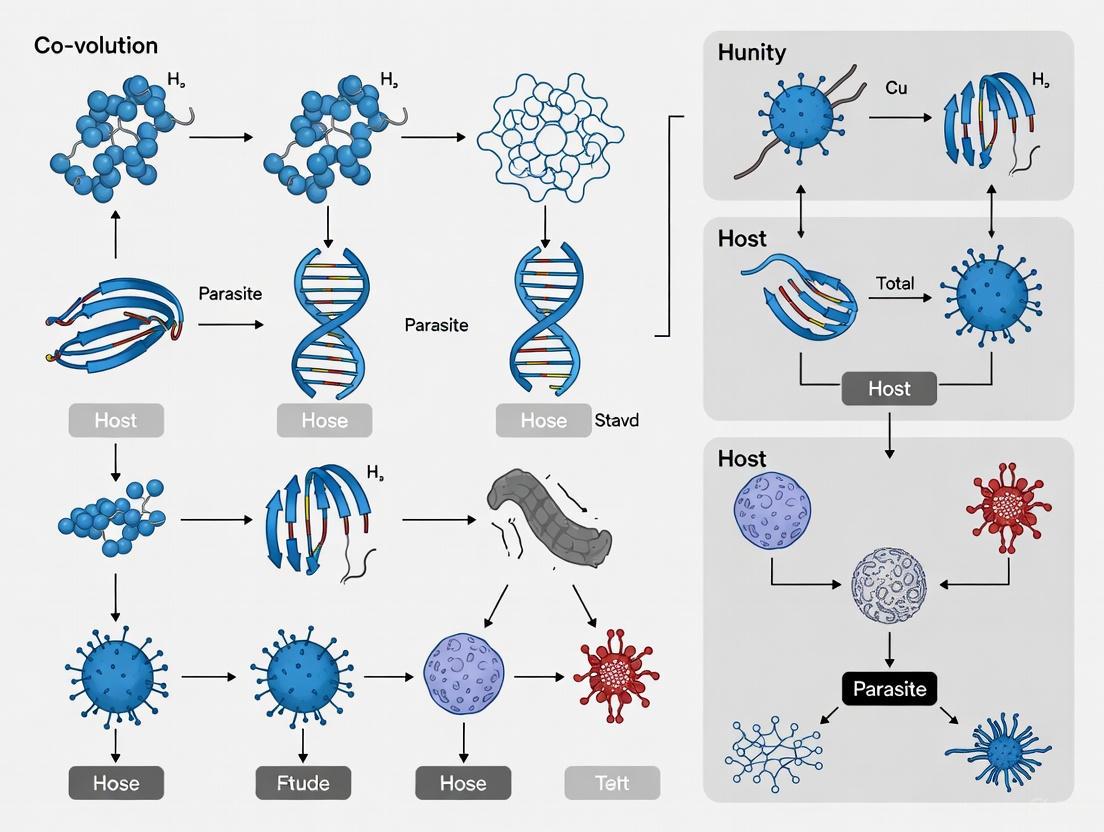
This comprehensive review synthesizes current research on the coevolutionary dynamics between human hosts and their parasites, exploring the genetic and molecular mechanisms that drive reciprocal adaptation.
Coevolution of Human Host-Parasite Interactions: Molecular Mechanisms, Therapeutic Applications, and Future Directions
Abstract
This comprehensive review synthesizes current research on the coevolutionary dynamics between human hosts and their parasites, exploring the genetic and molecular mechanisms that drive reciprocal adaptation. It examines foundational theories including Red Queen dynamics, geographic mosaic theory, and evolutionary arms races, supported by empirical evidence from model systems and natural environments. The article details cutting-edge methodological approaches from genomics to fitness landscape modeling that are revolutionizing coevolutionary research. It addresses critical challenges in therapeutic development, including drug resistance and climate change impacts, while validating findings through comparative analyses and model systems. Finally, it outlines future directions for translating coevolutionary principles into innovative treatment strategies and preventive medicine, providing an essential resource for researchers, scientists, and drug development professionals working at the intersection of evolutionary biology and medical science.
The Evolutionary Arms Race: Theoretical Frameworks and Molecular Mechanisms of Host-Parasite Coevolution
Red Queen Hypothesis and Continuous Adaptation Dynamics
The Red Queen Hypothesis (RQH), derived from Lewis Carroll's Through the Looking-Glass, posits that organisms must constantly adapt and evolve not merely to gain an advantage, but simply to survive in a coevolutionary environment where other species are also evolving. First proposed by Leigh Van Valen in 1973 to explain the constant probability of extinction observed in the fossil record, this hypothesis has profound implications for understanding the continuous arms races in host-parasite interactions [1] [2]. Within the context of human host-parasite coevolution, the RQH provides a critical framework for explaining the relentless dynamics that shape immune defense mechanisms, pathogen virulence, and the maintenance of genetic diversity [3]. This whitepaper synthesizes the core principles of the RQH, details key experimental evidence and methodologies, and discusses its relevance for modern therapeutic and vaccine development, offering researchers and drug development professionals a technical guide to these fundamental evolutionary processes.
The Red Queen Hypothesis represents a paradigm shift in evolutionary biology, framing evolution as a dynamic, perpetual struggle rather than a march toward perfection. Van Valen's insight was that the biological environment of any species is comprised largely of other evolving species, creating a system in which adaptive progress by one species degrades the fitness of others [1] [2]. This leads to an evolutionary zero-sum game where long-term fitness trends remain static, even amid continuous evolutionary change. The probability of extinction for a species, according to Van Valen's analysis of the fossil record, remains constant over geological time, independent of its age—a phenomenon formalized as "Van Valen's Law" [2].
In the specific context of host-parasite interactions, the RQH has been instrumental in explaining the evolutionary maintenance of sexual reproduction. Sexual recombination generates novel genotype combinations, providing a moving target for parasites that are rapidly adapting to infect the most common host genotypes [1] [2]. This creates negative frequency-dependent selection, where rare host genotypes enjoy a fitness advantage by escaping infection, leading to oscillating genotype frequencies in host and parasite populations over time [3]. For human health, this dynamic is fundamental, as it underscores why genetic diversity in immune-related genes is maintained and why pathogens continually evolve to circumvent our defenses.
Theoretical Framework and Core Dynamics
The foundational principle of the RQH is reciprocal coevolution. Unlike evolution driven by abiotic factors, coevolution involves interdependent evolutionary changes between two or more species. The "arms race" between hosts and parasites is a classic example, where an improvement in host defense (e.g., a new immune recognition mechanism) selects for parasites that can evade it, which in turn selects for new host defenses, ad infinitum [1].
A key genetic model for studying these dynamics is the Matching-Alleles Model. This model assumes that successful infection requires a specific genotypic match between host and parasite—a parasite can only infect a host that carries a matching allele at a key genetic locus. Under this model, a host is susceptible if its genotype matches the parasite's and resistant if it does not [3]. This creates the conditions for negative frequency-dependent selection:
- Common host genotypes are targeted by adapting parasites, leading to a decline in their frequency.
- Rare host genotypes escape infection, leading to an increase in their frequency.
This oscillation drives perpetual change without necessarily leading to long-term fitness gains for either party—they are simply "running in place" [1] [3]. The dynamics can be visualized as a cyclic feedback loop, as shown in the diagram below.
Beyond pairwise interactions, the RQH also operates in more complex ecological networks. For instance, defensive microbial symbionts can alter host-parasite coevolution. A host's microbiome can provide protection against pathogens, and parasites may evolve to overcome this microbial defense, leading to a three-way evolutionary arms race [1]. Furthermore, eco-evolutionary feedbacks, where ecological population dynamics and evolutionary change influence each other, can sustain Red Queen dynamics. Simple microbial models have shown that purely biotic drivers, such as resource competition and metabolic byproduct inhibition, can trigger perpetual coevolutionary cycles without the need for external environmental changes [4].
Key Experimental Evidence and Quantitative Data
The predictions of the RQH have been tested in diverse experimental systems, from microbial cultures to invertebrate populations. These studies provide quantitative evidence for the oscillatory dynamics and fitness consequences predicted by the hypothesis.
Table 1: Key Experimental Systems and Findings Supporting the Red Queen Hypothesis
| Experimental System | Experimental Design | Key Finding | Reference |
|---|---|---|---|
| Snail-Trematode (Potamopyrgus antipodarum) | Long-term field monitoring of mixed sexual/asexual snail populations and their parasites. | Previously common asexual snail clones became more susceptible to parasites and declined dramatically; sexual populations remained stable. | [2] |
| Nematode-Bacteria (C. elegans-Serratia marcescens) | Genetically manipulated mating system of worms (obligate sexual vs. self-fertilizing) exposed to co-evolving bacteria. | Self-fertilizing worm populations were driven extinct by co-evolving parasites; sexual populations survived. | [2] |
| Microbial Model (E. coli and inhibitors) | Mathematical and engineered microbial system with a non-transitive cycle of inhibition between strains. | Purely biotic interactions (metabolite-driven) triggered perpetual eco-evolutionary oscillations, maintaining biodiversity. | [4] |
| Bdelloid Rotifer-Fungi | Field sampling and genetic barcoding to track asexual rotifer clones and their fungal parasites across habitat patches. | Asexual rotifers persist via dispersal and desiccation tolerance, escaping localized co-adapted parasites. | [5] |
A central prediction of the RQH is that coevolution maintains genetic variation over time. The following diagram illustrates the workflow of a classic experimental approach—a card game simulation—used to demonstrate this principle in an educational setting, which mirrors the logic of more complex research [3].
Quantitative data from these experiments often reveal oscillatory dynamics. For example, in the microbial model studied by Bruch and colleagues, the growth efficiency parameters of competing strains (a proxy for fitness) showed continuous oscillations over time, a hallmark of Red Queen dynamics [4]. Similarly, in the C. elegans experiment, the key quantitative measure was the population extinction rate, which was 100% for selfing populations under co-evolution with parasites but 0% for sexual populations, providing strong support for the parasite-based explanation for sex [2].
Essential Methodologies and Protocols
Studying Red Queen dynamics requires experimental protocols that track evolutionary changes in real-time and link them to ecological interactions.
Host-Parasite Coevolution Experiment withC. elegansandSerratia marcescens
This protocol tests the role of sex in coevolution [2].
- Genetic Manipulation of Host Mating System: Establish replicate populations of C. elegans with different reproductive modes:
- Obligate Sexual: Use mutants that require outcrossing.
- Obligate Selfing: Use wild-type hermaphrodites that primarily self-fertilize.
- Coevolutionary Regime:
- Treatment: Expose host populations to the pathogenic bacterium Serratia marcescens. Serially passage the parasite through hosts every few days to allow for rapid parasite evolution.
- Control: Maintain host populations in the absence of the parasite or with a fixed, non-evolving parasite strain.
- Monitoring and Data Collection:
- Track host population density and extinction events over multiple generations.
- Periodically freeze parasite samples to create a "fossil record" for later assays.
- At experiment end, use archived parasite lines to perform cross-infectivity assays, challenging ancestral hosts with evolved parasites and vice-versa to measure changes in parasite virulence and host resistance.
- Data Analysis: Compare the persistence and mean fitness of sexual versus selfing host populations under coevolutionary pressure. Analyze cross-infectivity data for evidence of reciprocal adaptation.
Microbial Model of Metabolite-Driven Red Queen Dynamics
This in silico and in vitro protocol explores RQ dynamics in a controlled microbial system [4].
- System Engineering:
- Genetically engineer multiple strains of E. coli, each knocked out for the ability to use all but one specific resource (e.g., Strain A uses only Resource A).
- Engineer each strain to synthesize and excrete a unique combination of metabolic byproducts that, in a specific ratio, inhibits the growth of one other strain in a non-transitive cycle (e.g., A inhibits B, B inhibits C, C inhibits A).
- Chemostat Cultivation: Co-culture the strains in a continuous culture system (chemostat) with a controlled dilution rate and input nutrients.
- Monitoring and Data Collection:
- Regularly sample the population and use flow cytometry or qPCR with strain-specific markers to track the relative frequency of each strain/phenotype over time.
- Measure the concentration of key metabolites (the biotic drivers) using mass spectrometry.
- For each phenotype, estimate the half-saturation constant (K) from growth curves, a measure of evolutionary fitness and the key trait under selection.
- Data Analysis: Use time-series analysis to detect oscillatory patterns in strain frequencies and half-saturation constants. Fit the data to mathematical models that link interspecific inhibition to intraspecific competition, testing for the predicted eco-evolutionary feedback loops.
The Scientist's Toolkit: Research Reagent Solutions
Table 2: Essential Research Materials for Studying Host-Parasite Coevolution
| Reagent / Material | Function in Experimental Protocol |
|---|---|
| Genetically Tractable Organisms (e.g., C. elegans, E. coli, S. cerevisiae) | Facilitates manipulation of reproductive mode (sexual/asexual) and genetic tracking of lineages. |
| Pathogenic Challenge Stocks (e.g., Serratia marcescens, trematode parasites) | Provides the selective pressure (parasite) for coevolution experiments; can be serially passaged. |
| Continuous Culture Systems (Chemostats) | Maintains constant environmental conditions (nutrients, pH, temperature) to isolate biotic evolutionary drivers. |
| Genetic Barcodes / Molecular Markers | Allows for high-resolution tracking of individual host or parasite genotypes in mixed populations over time. |
| Inhibitory Metabolites (e.g., engineered ratio-metric sensors) | Creates defined, measurable biotic interactions (e.g., inhibition) between engineered microbial strains. |
Implications for Drug and Vaccine Development
The relentless adaptive chase described by the RQH has direct and sobering implications for infectious disease management.
Antimicrobial and Antiviral Resistance: The evolution of drug resistance is a quintessential Red Queen process. Pathogens are constantly evolving to overcome therapeutic agents, mirroring how they evolve to overcome host immune defenses [3]. The RQH suggests that single-mode drug therapies create a strong, unidirectional selective pressure that inevitably leads to resistance. This underscores the critical need for combination therapies and evolutionarily-informed dosing strategies that minimize the advantage of resistant mutants.
Vaccine Design: The traditional approach of targeting antigenically stable pathogens is insufficient for quickly evolving viruses and bacteria. The RQH explains why vaccines for pathogens like influenza and HIV require constant updates or have proven elusive. Future strategies must account for pathogen coevolution. This includes developing universal vaccines that target conserved, essential regions of pathogens that cannot easily mutate without a fitness cost, and exploring sequential vaccination strategies that anticipate and preempt likely evolutionary escape paths.
Harnessing the Microbiome: The discovery that defensive symbionts within the human microbiome can mediate host-parasite interactions opens new therapeutic avenues [1]. Probiotic strategies could be designed to introduce or bolster protective microbial communities, creating an additional, evolving line of defense against pathogens. The RQH reminds us, however, that pathogens will eventually adapt, so these approaches must be dynamic and multifaceted.
Understanding host-parasite coevolution as a continuous, dynamic process—a race with no finish line—is fundamental to developing the durable solutions required for long-term human health. The Red Queen Hypothesis provides the essential evolutionary framework to guide this effort.
The Geographic Mosaic Theory of Coevolution (GMTC) provides a foundational framework for understanding how spatial and temporal variation shape reciprocal evolutionary relationships between species. This theory posits that coevolution proceeds through three interconnected processes: geographic selection mosaics, coevolutionary hot spots embedded within cold spots, and trait remixing. For researchers investigating human host-parasite interactions, the GMTC offers critical insights into the variable trajectories of arms races across different populations and environments. This technical guide synthesizes current theoretical constructs, empirical testing methodologies, and quantitative findings from model systems, with specific applications for drug development targeting coevolving pathogens. The dynamic interplay of reciprocal selection, gene flow, and local adaptation creates a geographic mosaic that profoundly influences virulence, resistance, and transmission patterns in human parasites.
Theoretical Framework of the Geographic Mosaic Theory
The Geographic Mosaic Theory of Coevolution represents a paradigm shift from viewing coevolution as a uniform process occurring at the species level to understanding it as a spatially structured process unfolding across heterogeneous landscapes [6] [7]. Developed primarily by John N. Thompson, this theory asserts that coevolution is driven by three fundamental processes that create a constantly shifting evolutionary landscape [8] [7].
Core Postulates and Processes
The GMTC is built upon three observed patterns in nature that form the basis of its theoretical structure. First, most species comprise collections of genetically distinct populations distributed across diverse environments. Second, interacting species frequently exhibit non-overlapping or partially overlapping geographic ranges. Third, the ecological outcomes of species interactions vary significantly across different environments [7]. From these observations, the theory argues that coevolution proceeds through three primary mechanisms:
Geographic Selection Mosaics: The structure of natural selection on interspecific interactions differs across environments due to variation in abiotic factors and community composition [6] [7]. This results in genotype-by-genotype-by-environment (G×G×E) interactions, where the fitness relationship between genotypes of two species depends on the specific environmental context [6]. For example, an interaction may be antagonistic in one environment but mutualistic in another, or the specific traits under selection may vary geographically [7].
Coevolutionary Hotspots and Coldspots: The intensity of reciprocal selection varies spatially across a landscape [6] [8]. Coevolutionary hotspots—localities where reciprocal selection is strong—are interspersed with coldspots where selection is non-reciprocal or where only one interaction partner is present [6] [7]. This mosaic of selection intensity fuels the overall coevolutionary dynamic, with hotspots driving much of the reciprocal adaptation.
Trait Remixing: The genetic structure of coevolving species is continually reshaped through gene flow, genetic drift, mutation, and local extinction and recolonization events [6] [7]. These processes constantly redistribute the coevolving traits and alleles upon which natural selection acts, preventing equilibrium and sustaining the geographic mosaic [7]. It is crucial to note that trait remixing encompasses more than just gene flow; it includes all genetic, genomic, and ecological processes that alter the distribution of coevolving traits [7].
Table 1: Core Components of the Geographic Mosaic Theory of Coevolution
| Component | Definition | Evolutionary Significance |
|---|---|---|
| Geographic Selection Mosaic | Spatial variation in the form of reciprocal selection between species [6] [7] | Generates divergent coevolutionary trajectories and local adaptation across a landscape [6]. |
| Coevolutionary Hotspots | Local communities where reciprocal selection is intense and ongoing [6] [8] | Act as engines of coevolution, driving much of the reciprocal adaptation between species [6]. |
| Coevolutionary Coldspots | Local communities where selection is non-reciprocal or one partner is absent [6] [8] | Provide a matrix in which hotspots are embedded and may act as reservoirs for genetic variation [6]. |
| Trait Remixing | Processes that redistribute coevolving traits (gene flow, drift, mutation, extinction/recolonization) [6] [7] | Prevents evolutionary equilibrium and continually provides new genetic material for selection [7]. |
Implications for Host-Parasite Interactions
The GMTC framework has profound implications for understanding host-parasite coevolution. It explains why a static, universal "solution" to parasite control is often elusive. The theory predicts that a parasite's virulence and a host's resistance will vary across the geographic range of their interaction [9]. This variation arises because local populations experience different selective pressures based on their specific G×G×E interactions [6]. For drug development, this means that a therapeutic targeting a parasite in one region may be less effective elsewhere if the parasite has evolved different mechanisms in response to local host populations or environmental conditions. The theory underscores the importance of geographic sampling in identifying robust drug targets and anticipating the evolutionary responses of parasites to new interventions.
Quantitative Empirical Evidence and Data
Rigorous empirical tests of the GMTC require demonstrating that its three core processes—not just their predicted patterns—are operating. The table below summarizes key quantitative findings from several model systems that have provided strong support for the theory.
Table 2: Empirical Evidence for the Geographic Mosaic of Coevolution
| Interacting Species | Interaction Type | Key Quantitative Findings | Support for GMTC Process |
|---|---|---|---|
| Rough-skinned newt (Taricha granulosa) & Garter snake (Thamnophis sirtalis) [10] | Antagonistic (Predator-Prey) | Phenotypic correlation between newt TTX toxicity (0.02 - 25.7 mg per individual) and snake resistance (0.9 - 45.2 MAMU) across 9 populations; snake resistance deviates from neutral genetic structure, while newt toxicity is influenced by population structure and environment [10]. | Selection Mosaic, Trait Remixing |
| Japanese camellia (Camellia japonica) & Camellia weevil (Curculio camelliae) [11] | Antagonistic (Plant-Herbivore) | Correlation between weevil rostrum length and fruit pericarp thickness across latitudes; 8 mm difference in pericarp thickness between populations 9 miles apart [11]. | Selection Mosaic |
| Big bluestem grass (Andropogon gerardii) & Arbuscular mycorrhizal fungi [6] | Mutualistic | Significant plant population × fungal guild × soil environment (G~P~ × G~F~ × E) interaction for arbuscule formation; highest formation in local combinations [6]. | Selection Mosaic |
| Protium trees & Insect herbivores [12] | Antagonistic (Plant-Herbivore) | Near-complete herbivore species turnover between Peru and Brazil (1500 km apart); high chemical diversity in plants correlated with lower herbivore numbers in both locations [12]. | Trait Remixing (Herbivores), but not local chemical adaptation |
The garter snake and newt system provides a classic example of a coevolutionary arms race shaped by geographic mosaic processes. The relationship between predator resistance and prey toxin levels is not perfectly matched across all populations, indicating that non-adaptive forces like population structure and environmental conditions also contribute to trait variation [10]. This highlights the complex interplay between selection and trait remixing.
A recent large-scale test of the GMTC in Amazonian Protium trees and their herbivores revealed a more complex picture. While the study found almost complete turnover in herbivore species composition between sites in Peru and Brazil separated by 1500 km—a pattern consistent with trait remixing—the secondary metabolites of the host plants were similar across the geographic range [12]. This suggests that high chemical diversity, rather than locally tailored chemical defenses, may be the primary defense strategy for these trees, a finding that contrasts with a strict GMTC prediction for local adaptation in this specific context [12].
Experimental Protocols for Testing the GMTC
Testing the GMTC requires moving beyond simply documenting spatial variation in traits and instead designing experiments that directly probe its underlying processes [8]. The following protocols outline rigorous approaches for such tests.
Reciprocal Transplant and Cross-Infection Studies
This design is the gold standard for detecting local adaptation and selection mosaics.
Objective: To determine whether interacting populations are locally adapted to their specific antagonist and/or environment.
Detailed Protocol:
- Population Sampling: Identify and sample multiple geographically separated populations of the host and parasite (e.g., 10-20 populations) [10].
- Common Garden/ Laboratory Establishment: For hosts, establish clones, full-sib families, or seed lines from each population in a common greenhouse or growth chamber environment. For parasites, isolate and culture strains from each population.
- Reciprocal Exposure: In a fully crossed design, expose individuals from each host population to parasites from every parasite population, including its own. For example, with 10 host and 10 parasite populations, this creates 100 unique host-parasite combinations [8].
- Fitness Measurement: Measure fitness components for both partners in each combination. For hosts, this can include survival, growth rate, or fecundity. For parasites, measure infectivity, within-host replication, or transmission potential.
- Statistical Analysis: Analyze the data using ANOVA models to detect significant host population × parasite population × environment (G×G×E) interactions for fitness [6] [8]. A signature of local adaptation is a significant "local vs. foreign" effect, where hosts or parasites perform best against their local antagonist [8].
Identifying Coevolutionary Hotspots and Coldspots
This protocol distinguishes areas of strong reciprocal selection from areas of weak or absent selection.
Objective: To map the spatial distribution of coevolutionary selection intensity across a landscape.
Detailed Protocol:
- Landscape Selection: Choose a study landscape encompassing multiple populations of both interacting species.
- Fitness Correlation Analysis: In each local community, measure the relationship between a key host trait (e.g., resistance) and a key parasite trait (e.g., infectivity). A coevolutionary hotspot is defined as a locality where a statistically significant genetic correlation exists between host and parasite traits, indicating reciprocal selection [8]. A coldspot is a locality where this correlation is absent, or where one species is missing.
- Experimental Manipulation (Optional but Powerful): Manipulate the presence/absence or density of one species and measure the fitness consequences for the other. For instance, experimentally reduce parasite load in a host population and track changes in host fitness over time compared to a control population. A significant fitness response provides strong evidence for selection.
- Spatial Mapping: Integrate the data on selection intensity from each site to create a map of hotspots and coldspots across the landscape [8].
Quantifying Trait Remixing Through Population Genomics
This molecular approach assesses the contribution of gene flow and genetic drift to the geographic mosaic.
Objective: To determine if spatial variation in coevolving traits is aligned with neutral genetic structure or driven by selection.
Detailed Protocol:
- Genome-Wide Sampling: Collect tissue samples from multiple individuals across the same populations used in ecological studies. Perform genome-wide sequencing (e.g., RAD-seq, whole-genome resequencing) to generate thousands of single nucleotide polymorphisms (SNPs).
- Neutral Population Structure Analysis: Use neutral SNPs (e.g., from non-coding regions) to establish a baseline of population genetic differentiation using methods like Principal Component Analysis (PCA) or estimates of F~ST~ [10].
- Trait-Specific Genotyping: Identify and genotype the specific genetic variants (or quantitative trait loci, QTL) known or suspected to underlie the coevolving traits (e.g., snake Na~V~1.4 sodium channel gene for TTX resistance) [10].
- Comparison of Patterns: Compare the spatial distribution of the trait-associated alleles with the neutral population structure. If the distribution of trait alleles deviates significantly from the neutral expectation (e.g., high F~ST~ for trait loci despite low neutral F~ST~), it provides evidence that selection, not just drift or gene flow, is shaping the mosaic [10].
The Scientist's Toolkit: Research Reagent Solutions
Research into the geographic mosaic of host-parasite coevolution relies on a suite of specialized reagents and materials. The following table details key resources for conducting the experiments outlined in this guide.
Table 3: Essential Research Reagents and Materials for Coevolutionary Studies
| Reagent/Material | Function/Application | Example Use Case |
|---|---|---|
| Common Garden Facilities | Controls for environmental variation to isolate genetic and coevolutionary effects [6]. | Growing plant hosts from different populations under identical conditions to assess genetic differences in resistance [6]. |
| Tetrodotoxin (TTX) | Purified neurotoxin used as a selective agent in resistance bioassays [10]. | Quantifying phenotypic resistance in garter snakes via injection and performance assays [10]. |
| GC/MS and HPLC Systems | Analytical chemistry tools for identifying and quantifying chemical traits [12]. | Profiling secondary metabolite diversity and concentration in plant hosts like Protium [12]. |
| Neutral Genetic Markers (SNPs, Microsatellites) | Inferences of population structure, gene flow, demography, and trait remixing [10]. | Genotyping host and parasite populations to distinguish selective from neutral processes [10]. |
| Candidate Gene Assays | Targeted genotyping of loci with known functional roles in the interaction. | Sequencing the Na~V~1.4 gene in snakes to link specific mutations to TTX resistance levels [10]. |
| Environmental Data Loggers | Records abiotic conditions (temperature, humidity) for G×G×E analyses. | Correlating environmental variation with the outcome of host-parasite interactions across sites. |
Application to Human Host-Parasite Coevolution and Drug Development
The GMTC provides a critical evolutionary lens for biomedical research and therapeutic development. The dynamics of the geographic mosaic directly influence the emergence and spread of drug resistance and the efficacy of vaccines.
Implications for Drug and Vaccine Design
The spatial variation inherent in the GMTC means that a parasite's genetic makeup and, consequently, its susceptibility to a particular drug can vary dramatically across its range. A therapeutic targeting an essential enzyme in a parasite population from one region might be less effective in another, not due to classic resistance mutations, but because of standing genetic variation in the target site shaped by local coevolutionary history with human hosts [9]. The GMTC, therefore, argues for broad-spectrum therapeutics or cocktail approaches that target multiple pathways simultaneously, similar to how chemical diversity protects Protium trees from a wide array of herbivores [12]. For vaccine development, the theory highlights the challenge of antigenic variation. Vaccines based on a single antigenic strain from one geographic region may have limited efficacy in others if the parasite population has evolved different surface proteins in response to local host immune pressures [9]. This necessitates ongoing global surveillance of pathogen populations—a form of monitoring trait remixing—to ensure vaccine efficacy.
Modeling Coevolutionary Dynamics for Therapeutic Planning
Theoretical models of host-parasite coevolution are crucial tools for anticipating how parasites might evolve in response to new drugs. These models have shown that key assumptions, such as whether population dynamics and specific versus general infection genetics are included, qualitatively alter coevolutionary outcomes [13]. For example, including population dynamics often dampens oscillatory cycles and increases the likelihood of stable polymorphisms, which could affect the predictability of resistance evolution [13] [14]. For drug developers, using models that incorporate geographic structure can help predict the risk of resistance emerging in different regions and inform strategies to delay its spread, such as by manipulating treatment landscapes (creating their own hotspots and coldspots) to disrupt the coevolutionary arms race [13].
Host-parasite interactions represent a primary evolutionary arena characterized by relentless, reciprocal adaptations. This coevolutionary process, a cornerstone of evolutionary genetics and immunology, is driven by specific modes of natural selection that shape the genetic architecture of both hosts and pathogens over time [15]. Within human populations, these dynamics are critically important for understanding infectious disease progression, the emergence of drug resistance, and the development of novel therapeutic strategies that mimic or enhance natural defence mechanisms [15]. The core selective forces operating in these systems—negative frequency-dependent selection, overdominance, and directional selection—act individually and in concert to determine the maintenance of genetic variation, the trajectory of adaptation, and the balance between resistance and tolerance. This whitepaper provides an in-depth technical examination of these genetic selection dynamics, synthesizing theoretical frameworks, experimental evidence, and methodological protocols relevant to researchers and drug development professionals working within the context of human host-parasite research.
Conceptual Foundations of Selection Modes
Negative Frequency-Dependent Selection
Negative frequency-dependent selection (NFDS) occurs when the fitness of a phenotype or genotype decreases as it becomes more common within a population [16]. This process represents a powerful form of balancing selection that can maintain genetic polymorphisms over evolutionary time. In host-parasite systems, NFDS arises from specialized interactions where pathogens evolve to target the most common host genotypes, thereby conferring an advantage to rare host alleles [17]. This creates a "rare advantage" cycle, often visualized as a coevolutionary race between host and pathogen.
Theoretical work using the Pairwise Interaction Model (PIM) demonstrates that frequency-dependent selection maintains full polymorphism more effectively than classic constant-selection models and produces skewed equilibrium allele frequencies [18]. Fitness sets with some degree of rare advantage maintained polymorphism most often in these models, highlighting the importance of NFDS in sustaining genetic diversity [18].
Overdominance (Heterozygote Advantage)
Overdominance occurs when heterozygous individuals at a specific locus exhibit greater fitness than either homozygote. This form of balancing selection maintains multiple alleles in populations through heterozygote advantage, where individuals carrying two different alleles experience enhanced resistance to a broader range of pathogens compared to homozygous individuals.
The role of overdominance is particularly significant at immune-related loci such as the Major Histocompatibility Complex (MHC), where heterozygotes may recognize a wider array of pathogen-derived antigens [17]. Theoretical models indicate that polymorphism can be stabilized by overdominance when heterozygous hosts demonstrate greater resistance to diverse pathogens compared to homozygotes [17]. This mechanism contributes substantially to the exceptional genetic diversity observed at human MHC loci.
Directional Selection
Directional selection represents a mode of natural selection in which individuals with traits at one extreme of a phenotypic distribution have superior fitness than individuals with intermediate or opposite extreme phenotypes [19]. Over time, allele frequencies shift consistently toward the beneficial phenotype. In host-parasite systems, directional selection typically operates during arms race dynamics, where hosts experience selection for enhanced resistance, while parasites face selection for increased virulence or infectivity.
This selective mode can rapidly drive alleles to fixation, reducing genetic variation at the target locus and linked genomic regions through selective sweeps [19]. Directional selection plays a crucial role in speciation and the emergence of complex traits but may deplete genetic variation unless balanced by other evolutionary forces.
Table 1: Comparative Characteristics of Selection Modes in Host-Parasite Systems
| Feature | Negative Frequency-Dependence | Overdominance | Directional Selection |
|---|---|---|---|
| Fitness Relationship | Fitness decreases with increasing allele frequency | Heterozygote fitness exceeds both homozygotes | Extreme phenotype has highest fitness |
| Effect on Genetic Diversity | Maintains polymorphism | Maintains polymorphism | Reduces polymorphism |
| Population Genetics Signature | Balanced polymorphism, time-dependent allele frequency fluctuations | Stable equilibrium, excess heterozygosity | Selective sweep, reduced variation |
| Theoretical Model | Matching-alleles model, Pairwise Interaction Model | Single-locus heterosis | Gene-for-gene model |
| Role in Coevolution | Drives Red Queen dynamics, rare advantage | Provides broad-spectrum resistance | Arms race dynamics |
Quantitative Dynamics and Theoretical Models
The population genetics of host-parasite coevolution are formalized through several mathematical frameworks that predict the dynamics of allele frequency change under different selective regimes.
The Pairwise Interaction Model (PIM) of Frequency Dependence
The PIM parameterizes fitness as a product of intraspecific competition at the genotype level, providing a biologically reasonable yet mathematically tractable framework for modeling natural selection [18]. In this model, a genotype's fitness is a function of: (1) its frequency in the population, (2) its relative fitness in interactions with other genotypes, and (3) the frequencies of those other genotypes [18].
The general formulation assumes a single diploid locus with n alleles in an infinite, isolated population with random mating, discrete generations, and no mutation. Each genotype A$i$A$j$ has distinct fitnesses (w${ij,kl}$) in its interactions with other genotypes A$k$A$l$ in the population. Assuming random mixing, the total fitness of each genotype (W${ij}$) is:
$$W{ij} = \sum{k,l} w{ij,kl} p{kl}$$
where p$_{kl}$ represents genotype frequencies [18]. Allele frequencies then transform between generations according to:
$$pi' = pi \times \frac{\overline{W_i}}{\overline{W}}$$
where p$i$' is the frequency in the following generation, $\overline{Wi}$ is the marginal fitness of allele i, and $\overline{W}$ is the population's mean fitness [18].
Matching-Alleles vs. Gene-for-Gene Models
Two predominant theoretical frameworks describe host-parasite genetic interactions:
The Matching-Alleles Model (MAM) assumes a specific interaction where a parasite can infect a host only if it carries matching alleles at the interaction locus. This model typically generates negative frequency-dependent selection and often produces fluctuating dynamics [20].
In contrast, the Gene-for-Gene Model (GFGM) posits that hosts possess resistance genes effective against specific pathogen avirulence genes. Pathogens can overcome this resistance through mutations in their avirulence genes, leading to directional selection for these mutant alleles [17].
Recent theoretical work examining the MAM in finite populations reveals that coevolutionary NFDS does not necessarily maintain genetic variation more effectively than neutral drift alone. In fact, following allele fixation in the parasite, selection becomes directional and rapidly erodes host genetic variation [20].
Table 2: Quantitative Outcomes from Frequency-Dependent Selection Models
| Model Parameter | 2 Alleles | 3 Alleles | 4 Alleles | 5 Alleles |
|---|---|---|---|---|
| Proportion of fitness sets maintaining full polymorphism | 22.3% | 18.7% | 15.2% | 12.8% |
| Average number of equilibria | 3.2 | 5.7 | 8.9 | 12.4 |
| Percentage of cycling behavior | 8.5% | 12.3% | 15.8% | 18.2% |
| Proportion with skewed allele frequencies (>0.7) | 41.2% | 53.7% | 61.9% | 67.4% |
Data derived from numerical simulations of the Pairwise Interaction Model with 100,000 random fitness sets [18]
Experimental Evidence and Methodologies
Protocol: Experimental Coevolution with Freshwater Snail-Trematode System
This protocol documents the experimental detection of negative frequency-dependent selection in a host-parasite system, based on Koskella et al.'s study [21].
Research Objective: To test for changes in genotypic composition of clonal snail populations in response to parasitism and demonstrate parasite-mediated selection consistent with rare advantage.
Materials and Reagents:
- Freshwater snails (Potamopyrgus antipodarum) with known genetic variants
- Sterilizing trematode parasites (Microphallus sp.)
- Controlled aquarium systems with appropriate habitat features
- DNA extraction kits for genotyping
- Infection assessment materials (microscopy, molecular diagnostics)
Methodology:
- Establish replicate populations of snails with known initial genotype frequencies
- Divide populations into two treatment groups: parasite-exposed and parasite-free controls
- Maintain populations for six host generations under controlled conditions
- Regularly monitor and quantify genotype frequencies through molecular genotyping
- Assess parasite infectivity to different host genotypes over time
- Compare temporal changes in genotype frequencies between treatments
Key Measurements:
- Temporal changes in host genotype frequencies
- Relative susceptibility of host genotypes to contemporary vs. past parasite populations
- Infection rates and virulence measures
Expected Outcomes: Under the Red Queen model, the initially most common host genotype should decrease in frequency in parasite-exposed populations but not in parasite-free controls [21]. Furthermore, coevolving parasites should show increasing infectivity to initially common host genotypes over time [21].
Protocol: Defensive Microbe-Pathogen Coevolution Experiment
This protocol tests coevolutionary dynamics between defensive microbes and pathogens within host populations, based on Ford et al.'s study [22].
Research Objective: To directly test whether defensive microbes and pathogens can co-evolve within host populations via fluctuating selection dynamics.
Materials and Reagents:
- Caenorhabditis elegans nematodes (N2 wild-type strain)
- Defensive microbe: Enterococcus faecalis strain OG1RF
- Pathogen: Staphylococcus aureus strain MSSA 476
- Nematode Growth Medium (NGM) plates
- Todd-Hewitt Broth (THB) and Tryptic Soy Broth (TSB) media
- Selective media: TSB with 100 μg/ml rifampicin, Mannitol Salt Agar
- M9 buffer for washing procedures
Methodology:
- Establish two evolution treatments with five replicate populations each:
- Co-evolution treatment: S. aureus and E. faecalis co-passaged under co-colonization
- Single evolution treatment: Each species passaged separately in host populations
- For each passage:
- Culture bacteria overnight in THB, standardize to OD$__{600}$ = 1.00
- Spread on TSB plates (mixed for co-evolution, separate for single evolution)
- Add approximately 1000 synchronized young adult nematodes to each lawn
- Incubate at 25°C for 24 hours
- Collect 10 dead nematodes from each population
- Surface-sterilize worms and crush to release internal bacteria
- Streak on selective media to isolate each bacterial species
- Continue passaging for 10 transfers
- Analyze evolutionary changes through phenotypic assays and genomic sequencing
Key Measurements:
- Bacterial fitness under co-colonization over evolutionary time
- Genomic changes in both species
- Specificity of interactions between co-evolved populations
Expected Outcomes: Patterns of pathogen local adaptation and defensive microbe-pathogen co-evolution via fluctuating selection dynamics, with more rapid and divergent pathogen evolution in co-evolution treatments compared to single evolution [22].
The Scientist's Toolkit: Essential Research Reagents
Table 3: Key Research Reagents for Studying Host-Parasite Coevolution
| Reagent/Solution | Function/Application | Example Use Case |
|---|---|---|
| Selective Media | Isolation of specific bacterial species from mixed populations | Mannitol Salt Agar for S. aureus isolation; TSB + rifampicin for E. faecalis [22] |
| Caenorhabditis elegans N2 strain | Model host for coevolution experiments | Studying defensive microbe-pathogen coevolution [22] |
| Molecular Genotyping Kits | Tracking host genotype frequency changes | Monitoring NFDS in snail-trematode systems [21] |
| Todd-Hewitt Broth | Culture medium for Gram-positive bacteria | Growing S. aureus and E. faecalis for infection assays [22] |
| M9 Buffer | Nematode washing and synchronization | Removing surface contaminants before bacterial isolation [22] |
| Synergistic Habitat Systems | Maintaining complex host-parasite communities | Experimental coevolution in multi-species contexts [23] |
Conceptual Framework and Visual Synthesis
The coevolutionary process between hosts and parasites involves interconnected dynamical feedbacks between different modes of selection. The following diagram synthesizes these relationships:
Implications for Human Health and Therapeutic Development
Understanding these genetic selection dynamics has profound implications for managing human infectious diseases and developing novel therapeutic strategies. The balance between resistance (the host's ability to limit pathogen burden) and tolerance (the capacity to mitigate damage without reducing pathogen load) represents a crucial determinant of disease outcomes [15]. Therapeutic approaches that mimic natural NFDS mechanisms could potentially maintain efficacy longer by preempting evolutionary escape.
In pharmaceutical development, understanding these dynamics informs strategies for:
- Antimicrobial stewardship that minimizes directional selection for resistance
- Combination therapies that exploit evolutionary trade-offs in pathogens
- Immunomodulatory approaches that enhance host tolerance mechanisms
- Vaccine design that accounts for frequency-dependent immune recognition
Recent research emphasizes the importance of coevolutionary feedbacks between host immunity and pathogen populations, suggesting that interventions targeting these dynamics may offer more sustainable disease management compared to approaches that solely impose strong directional selection on pathogens [24] [15].
Negative frequency-dependent selection, overdominance, and directional selection represent interconnected dynamics that collectively shape the genetic landscape of host-parasite interactions. While NFDS and overdominance maintain genetic variation through balancing selection, directional selection drives rapid adaptation, often at the cost of genetic diversity. The tension between these forces creates the complex coevolutionary dynamics observed in human host-parasite systems, with significant implications for disease management and therapeutic development. Future research integrating theoretical models, experimental evolution, and genomic analyses will continue to refine our understanding of these fundamental evolutionary processes and their application to human health challenges.
The Trade-off Theory provides a foundational framework for understanding the evolution of parasite virulence, positing that the damage inflicted upon a host (virulence) is an unavoidable consequence of parasite within-host replication, which also enhances transmission to new hosts. This theory is a cornerstone in the study of human host-parasite co-evolution, suggesting that an intermediate level of virulence often evolves to balance the costs and benefits of host exploitation [25]. This evolutionary balancing act creates a dynamic feedback loop, where host adaptations for resistance select for corresponding parasite counter-adaptations, driving a continuous co-evolutionary arms race [13]. The theory hypothesizes that both excessively high virulence (which rapidly kills the host, curtailing transmission opportunities) and excessively low virulence (which results in insufficient transmission) are evolutionarily unstable. Instead, natural selection is predicted to maximize the parasite's basic reproduction ratio (R0), which integrates transmission benefits with the costs of reduced infection duration due to host death [25]. Understanding this trade-off is not merely an academic exercise; it is critical for public health efforts aimed at virulence management and for predicting the evolutionary trajectories of human pathogens in response to interventions such as drugs and vaccines.
Theoretical Foundations and Key Mathematical Models
The Trade-off Theory is quantitatively anchored in epidemiological models that define pathogen fitness. For directly transmitted pathogens, the basic reproduction ratio is classically expressed as R0 = βS / (μ + α), where β is the transmission rate, S is the density of susceptible hosts, μ is the natural host mortality rate, and α is the disease-induced mortality rate (virulence) [25]. This equation captures the core trade-off: while virulence (α) might increase with transmission (β), it also shortens the infectious period by increasing the total host mortality rate (μ + α).
For vector-borne diseases, including many significant human pathogens, the expression for R0 becomes more complex, reflecting the additional life cycle stage [25]:
Here, p is the vector density, b is the vector feeding rate, T is the parasite incubation time in the vector, βp→v and βv→p are plant-to-vector and vector-to-plant transmission rates, μp and μv are background mortality rates for plant and vector, and αp and αv are parasite-induced mortality rates. The dependencies on viral load in the plant (x) and vector (y) are shown in brackets, illustrating how multiple parameters can pleiotropically depend on a single parasite trait [25].
The evolutionary outcome hinges on the shape of the relationship between transmission and virulence. An intermediate optimum for virulence emerges when transmission shows diminishing returns with increasing virulence (a concave relationship) [25] [26]. This optimum can shift based on ecological and host factors, such as vector density or host recovery rates, providing a dynamic landscape for virulence evolution.
Quantitative Evidence: Empirical Data and Correlations
Empirical validation of the trade-off theory requires demonstrating the pleiotropic links between parasite density, transmission, and virulence. The following table summarizes key quantitative relationships from seminal studies across different pathogen systems.
Table 1: Empirical Evidence for Trade-off Relationships in Pathogen Systems
| Pathogen System | Correlation between Pathogen Load & Transmission | Correlation between Pathogen Load & Virulence | Evidence for Optimal Virulence | Source |
|---|---|---|---|---|
| HIV-1 in Humans | Positive correlation: Transmission rate increased from 0.019/year to 0.14/year as Set-Point Viral Load (SPVL) increased [26]. | Negative correlation: Time to AIDS decreased from ~40 years to ~5 years as SPVL increased [26]. | Yes: Stabilizing selection predicted for an intermediate SPVL; observed historical decline in SPVL in Uganda [26]. | [26] |
| IHNV in Rainbow Trout | Small and inconsistent differences in transmission rate between high and low virulence genotypes [27]. | Positive correlation: More virulent genotypes caused higher host mortality [27]. | No: More virulent genotypes had a fitness advantage due to longer transmission duration (lower host recovery) [27]. | [27] |
| Rodent Malaria | Positive correlation: Higher parasite density linked to higher transmission [25]. | Positive correlation: Higher parasite density linked to higher virulence [25]. | Inconclusive: Correlation found, but optimal virulence not clearly demonstrated [25]. | [25] |
| Hyaloperonospora (Oomycete) in Arabidopsis | Variable: Parasite fitness (transmission) depended on specific host-parasite genotype combinations [28]. | Variable: A trade-off (negative correlation) between parasite transmission and host fitness was observed in only one of six host lines [28]. | Context-dependent: Genotype-by-genotype interactions decouple the simple relationship [28]. | [28] |
The data reveal that while the trade-off theory is supported in some systems like HIV-1, its manifestations are highly system-specific. The HIV-1 evidence is particularly compelling, showing a well-defined optimum where strains with intermediate Set-Point Viral Load (SPVL) maximize R0 by balancing high transmission against a long infectious period [26]. Conversely, the IHNV system demonstrates an "unconventional trade-off," where virulence is positively correlated with transmission duration because it reduces host recovery rates, thus selecting for higher, not intermediate, virulence in standard conditions [27]. This highlights that recovery rates, and not just host mortality, can be a major driver of virulence evolution.
Experimental Methodologies for Quantifying Trade-offs
Rigorous experimental testing of the trade-off theory requires integrated measurements of parasite fitness, host fitness, and the genetic basis of infection. Below are detailed protocols for key experimental approaches.
Quantifying Transmission-Virulence Relationships in a Cohort Study
This methodology, derived from the HIV-1 study in Uganda, is ideal for longitudinal human cohort data [26].
- Objective: To estimate the relationship between a continuous measure of parasite replication (e.g., HIV-1 Set-Point Viral Load) and transmission rate, as well as disease progression time.
- Workflow:
- Protocol Details:
- Cohort Establishment: Enroll a large, population-based open cohort, such as the Rakai Community Cohort Study (RCCS). This includes HIV-serodiscordant couples (for transmission tracking) and incident cases (for disease progression).
- Longitudinal Data Collection:
- For Transmission: Regularly monitor serodiscordant couples. Record HIV transmission events and the SPVL of the infected partner at the time of transmission. Control for covariates like viral subtype, gender, and male circumcision status.
- For Virulence/Disease Progression: For newly infected (incident) individuals, regularly measure SPVL and CD4 count. Define an endpoint (e.g., time to AIDS) and track time from infection to this endpoint.
- Model Fitting:
- Transmission Rate (β): Model the transmission rate as a function of SPVL,
β(v). Use maximum likelihood estimation to fit different functional forms (e.g., step functions, generalized Hill functions) to the observed transmission data. - Disease Progression (Virulence, α): Model the time to AIDS as a function of SPVL. Assume a probability distribution (e.g., Gamma) for the time to AIDS and fit its parameters conditional on SPVL.
- Transmission Rate (β): Model the transmission rate as a function of SPVL,
- Evolutionary Prediction: Integrate the fitted functions
β(v)and the mortality functionμ(v)into an epidemiological model (e.g., a Susceptible-Infected compartmental model) to derive the pathogen fitness landscape and predict the evolutionarily stable level of virulence [26].
Controlled Cross-Inoculation for Genotype-Specific Interactions
This method, used in plant-pathogen systems, is crucial for dissecting the genetic underpinnings of trade-offs [28].
- Objective: To evaluate the genetic variation in infection phenotypes among different host and parasite genotypes and their interactions.
- Workflow:
- Protocol Details:
- Selection of Genotypes: Choose multiple genetically distinct lines of the host (e.g., 6 lines of Arabidopsis thaliana) and strains of the parasite (e.g., 7 strains of Hyaloperonospora arabidopsis) from diverse geographic origins.
- Cross-Inoculation: In a controlled environment, inoculate each host line with each parasite strain. Include adequate replicates and uninoculated controls.
- Phenotypic Trait Measurement:
- Parasite Fitness: Quantify infection intensity (e.g., number of infected leaves) and transmission (e.g., production of conidiospores).
- Host Fitness: Measure host fecundity (e.g., seed production) for infected and control plants.
- Statistical Analysis: Use factorial ANOVA to partition the variance in infection traits into effects of host genotype, parasite genotype, and their interaction. Perform correlation analysis between parasite transmission and host fitness across the different genotype combinations [28].
The Scientist's Toolkit: Essential Research Reagents and Materials
Table 2: Key Reagents for Host-Parasite Co-evolution Research
| Reagent/Material | Function in Experimental Research | Example from Literature |
|---|---|---|
| Serodiscordant Cohorts | Provides a naturalistic setting to directly measure transmission rates and link them to pathogen and host traits in a human population. | The Rakai Community Cohort Study (Uganda) was used to link HIV-1 SPVL to transmission risk between partners [26]. |
| Genetically Characterized Host/Pathogen Lines | Enables dissection of the genetic basis of infection traits and the study of genotype-by-genotype (G x G) interactions. | Six lines of Arabidopsis thaliana and seven strains of the oomycete Hyaloperonospora arabidopsis were used in a full-factorial design [28]. |
| Viral Load Quantification Assays | Provides a quantitative measure of parasite replication within the host, which is a key predictor of both transmission and virulence. | HIV-1 Set-Point Viral Load (SPVL) was used as a proxy for viral replication rate, central to the trade-off analysis [26]. |
| Pathogen Isolates with Defined Virulence | Allows for controlled experiments to compare the fitness (transmission rate and duration) of pathogen variants differing in virulence. | Genotypes of Infectious Hematopoietic Necrosis Virus (IHNV) with known high and low virulence in rainbow trout were used in shedding experiments [27]. |
Implications for Drug and Vaccine Development
The Trade-off Theory provides a critical evolutionary lens for therapeutic development. Interventions that alter parasite transmission can inadvertently shift the evolutionary optimum for virulence. For instance, culling of infected hosts—a form of increased mortality—can resurrect a trade-off in its classical form, potentially selecting for lower virulence, as shown in the IHNV model [27]. Conversely, imperfect vaccines that reduce parasite replication but do not prevent transmission could, in theory, select for higher virulence by reducing the cost of host damage. Therefore, evolutionary outcomes should be a key consideration in clinical trial design and public health policy. The goal is to steer parasite evolution toward benign forms, a strategy known as virulence management [28] [26]. Furthermore, the evidence of HIV-1 attenuation in Uganda, driven by its transmission-virulence trade-off, offers a promising outlook: widespread treatment and public health measures could not only suppress the epidemic but also guide the virus toward a less virulent form in the long term [26].
The molecular interface between parasite recognition proteins and host immune receptors represents a critical battleground in host-parasite coevolution. This interaction drives an evolutionary arms race characterized by constant adaptation and counter-adaptation, where parasites evolve strategies to evade immune detection while hosts develop increasingly sophisticated recognition mechanisms. This whitepaper examines the key molecular players in these interactions, detailing the structural and functional characteristics of pattern recognition receptors (PRRs) and their parasitic ligands. We synthesize findings from recent genomic, biochemical, and immunological studies to provide a comprehensive technical overview of these coevolutionary dynamics, with particular emphasis on their implications for therapeutic intervention and drug development.
The initial detection of parasitic invaders by the host immune system hinges on the molecular recognition of parasite-associated molecular patterns (PAMPs) by host pattern recognition receptors (PRRs). This interaction triggers downstream signaling cascades that orchestrate both innate and adaptive immune responses. The evolutionary tension at this interface arises from the conflicting objectives of both entities: the host must maintain recognition capabilities against a diverse array of parasites, while parasites experience strong selective pressure to evade detection through molecular diversification of their surface structures.
Molecular coevolution at this interface follows several recognizable patterns, including directional selection driving rapid changes in recognition domains, balancing selection maintaining polymorphism in host receptors, and functional constraint preserving essential recognition capabilities in hosts while limiting parasite evasion options. The relative predominance of these evolutionary modes varies across host-parasite systems and has profound implications for disease outcomes and intervention strategies.
Major Parasite Recognition Protein Families
Peptidoglycan Recognition Proteins (PGRPs)
Peptidoglycan recognition proteins (PGRPs) are a conserved family of innate immune receptors that recognize bacterial peptidoglycan and initiate antimicrobial responses. Research in Drosophila melanogaster has identified at least 12 PGRP genes, which can be divided into short extracellular (PGRP-S) and long transmembrane (PGRP-L) forms [29].
Table 1: Characteristics of Drosophila PGRP Proteins
| Gene | Chromosome | Map Location | Function |
|---|---|---|---|
| PGRP-SA | X | 10C | Recognition of Gram-positive bacteria |
| PGRP-SB1 | 3 | 73C | Function unknown |
| PGRP-SB2 | 3 | 73C | Function unknown |
| PGRP-SC1A | 2 | 44E | Function unknown |
| PGRP-SC1B | 2 | 44E | Peptidoglycan digestion |
| PGRP-SC2 | 2 | 44E | Function unknown |
| PGRP-SD | 3 | 66A | Function unknown |
Evolutionary analysis of seven PGRP genes across 12 D. melanogaster lines revealed strong purifying selection acting to conserve protein sequence, with no detectable evidence of either directional or balancing selection [29]. This suggests that the molecular cues used by insects to detect parasites are highly conserved and probably under strong functional constraints that prevent their evolving to evade the host immune response. This evolutionary stasis contrasts sharply with the rapid evolution seen in vertebrate adaptive immune receptors and suggests fundamental differences in coevolutionary dynamics between these systems.
Toll-like Receptors (TLRs) and Other Recognition Receptors
In mammalian systems, Toll-like receptors (TLRs) represent a major class of PRRs that recognize conserved parasite components. In malaria, various host receptors sense both liver-stage and blood-stage Plasmodium parasites, initiating signaling pathways that produce cytokines and chemokines crucial for parasite clearance and regulation of adaptive immunity [30]. Beyond TLRs, other important recognition receptor families include C-type lectin receptors (CLRs), NOD-like receptors (NLRs), and RIG-I-like receptors (RLRs), each with specialized roles in detecting specific parasitic infections.
The expression of specific receptors varies by tissue and cell type. For example, in cutaneous leishmaniasis caused by Leishmania braziliensis, Toll-like receptor 4 (TLR4) shows significant upregulation in skin biopsies compared to uninfected controls, suggesting a specialized role in recognizing this parasite in cutaneous tissues [31].
Host Immune Signaling Pathways Activated by Parasite Recognition
The recognition of parasitic invaders by PRRs triggers carefully orchestrated intracellular signaling cascades that translate molecular detection into immune effector responses. The specific pathway activated depends on both the receptor engaged and the parasite species encountered.
Figure 1: Generalized signaling pathway activated by parasite recognition through pattern recognition receptors.
Malaria Recognition Pathways
In malaria infection, host receptors sense both liver-stage and blood-stage Plasmodium parasites, resulting in the activation of signaling pathways and production of cytokines and chemokines [30]. These immune responses play crucial roles in clearing parasites and regulating adaptive immunity. Early pro-inflammatory responses regulate antiparasitic Th1 development and promote effector cell function for efficiently clearing infections. As infection progresses, pro-inflammatory responses are typically downregulated with a parallel increase in anti-inflammatory responses, leading to a balanced Th1/Th2 response under ideal conditions [30].
The complexity of these signaling networks is illustrated by the DC-NK cell crosstalk observed in cutaneous leishmaniasis, where infected dendritic cells interact with natural killer cells to promote DC maturation, enhancing expression of migratory and co-stimulatory molecules (CCR7, CD40, CD80, CD83) and secretion of pro-inflammatory cytokines such as IL-6 [31]. These processes culminate in interferon-gamma (IFN-γ) production by NK cells, amplifying effector responses and leukocyte activation.
Immunomodulatory Pathways in Parasite Evasion
Parasites have evolved sophisticated mechanisms to manipulate host signaling pathways for immune evasion. For example, the filarial nematode Acanthocheilonema viteae secretes ES-62, a glycoprotein that modulates host immune signaling by targeting key pathway components [32].
Figure 2: ES-62 immunomodulatory pathway demonstrating parasite manipulation of host signaling.
ES-62 promotes a Th2-biased immune response through interaction with TLR4, inhibiting JNK and p38 MAPK pathways while stimulating sustained Erk activation [32]. Additionally, ES-62 can activate SHP-1 tyrosine phosphatase to dephosphorylate and inactivate immunoreceptor tyrosine activation motifs (ITAMs) in B-cell and T-cell receptors, effectively modulating lymphocyte activation [32]. These sophisticated evasion strategies highlight the intricate coevolution at the molecular interface and illustrate how parasites can actively shape host immune responses to their advantage.
Experimental Methods for Studying Molecular Interfaces
Genomic Approaches to Coevolution
Tracking coevolution in natural populations requires sophisticated genomic approaches. A long-term study of Flavobacterium columnare bacteria and their phages in aquaculture settings demonstrated how genomic time-series data can reveal arms-race dynamics [33]. Researchers sequenced 17 phage isolates from 2009-2014, obtaining complete genomes ranging from 46,481 to 49,084 bp, which enabled detailed analysis of evolutionary changes in response to host resistance [33].
Table 2: Genomic Evolution of Flavobacterium Phages Under Host Pressure
| Phage Group | Isolation Years | Genomic Features | Host Range |
|---|---|---|---|
| Group 1 | 2007-2009 | Identical genomes | Narrow |
| Group 2 | 2010-2011 | Changes in replication-associated ORFs | Moderate |
| Group 3 | 2014 | Changes in structural proteins ORFs 36-37 | Broad |
The study employed a time-shift experimental design, testing phages against bacterial hosts from past, contemporary, and future time points [33]. Bacteria were generally resistant against phages from the past but susceptible to infection by phages from contemporary and future time points (24% and 18% resistant, respectively). This approach directly demonstrated the arms race dynamic, with phage host range expanding over time in response to bacterial resistance evolution.
Cross-infection Assays and Resistance Profiling
Cross-infection assays represent a fundamental method for evaluating host-parasite specificity and coevolution. The standard protocol involves:
- Isolate Collection: Gather parasite and host isolates from natural populations over multiple time points [33].
- All-against-all Cross-infection: Expose each host isolate to each parasite isolate in a standardized format [33].
- Infection Scoring: Quantify infection success using appropriate metrics (e.g., plaque formation, cytopathic effect, intracellular replication).
- Adsorption Assays: Evaluate parasite attachment to host cells as an indicator of receptor compatibility [33].
- Efficiency of Plating (EOP): Adjust titers to a reference strain to standardize infection measures across isolates [33].
In the Flavobacterium-phage system, adsorption efficiency ranged from 0 to 91% across different host-parasite pairs, with some resistant strains showing reduced adsorption (suggesting surface modification) while others showed normal adsorption (indicating post-attachment resistance mechanisms) [33].
The Scientist's Toolkit: Essential Research Reagents
Table 3: Key Research Reagents for Studying Parasite Recognition
| Reagent/Category | Function/Application | Examples/Specifications |
|---|---|---|
| PGRP-Specific Primers | Amplification of PGRP genes for sequencing | Custom-designed from genome flanking sequences [29] |
| CRISPR Array Analysis | Tracking spacer acquisition over time | Type II-C and VI-B loci analysis [33] |
| Phage Isolation Protocols | Obtaining phage samples from environment | Myoviridae isolation from aquaculture systems [33] |
| Recombinant Parasite Proteins | Immune modulation studies | ES-62 from A. viteae [32] |
| Adsorption Assay Components | Measuring parasite attachment | Standardized host-parasite incubation protocols [33] |
| Cytokine Detection Assays | Quantifying immune response activation | IL-6, IL-12, IFN-γ measurement in malaria [30] |
Coevolutionary Dynamics at the Molecular Interface
The molecular interface between host immune receptors and parasite recognition proteins exhibits characteristic coevolutionary dynamics that can be categorized into several distinct patterns based on genomic and experimental evidence.
Arms Race Coevolution
The Flavobacterium-phage system provides a clear example of arms race coevolution in a natural environment. Bacteria evolved resistance through both constitutive mechanisms (surface receptor modifications) and adaptive immunity (CRISPR-Cas systems), while phages counter-evolved through mutations in protospacer and PAM (protospacer adjacent motif) sequences, as well as genomic expansions that increased infectivity and host range [33]. Phage genomes showed significant increases in size over time (from 46,481 to 49,084 bp), with non-synonymous mutations accumulating in putative tail and structural proteins that likely mediate host recognition and infection [33].
CRISPR-Cas systems played a dual role in these dynamics: while maintaining a core set of conserved spacers, phage-matching spacers appeared in the variable ends of both CRISPR loci over time [33]. The spacers predominantly targeted the terminal ends of phage genomes, which correspondingly exhibited the most variation across time, resulting in classic arms-race oscillations in the protospacers of the coevolving phage population.
Evolutionary Stasis and Functional Constraint
In contrast to the rapid coevolution observed in some systems, PGRPs in Drosophila exhibit evolutionary stasis, with strong purifying selection and no detectable positive selection [29]. This suggests that the molecular cues used by insects to detect parasites are highly conserved and probably under strong functional constraints which prevent their evolving to evade the host immune response. The conservation of these recognition modules limits the parasite's evolutionary options for evasion, as fundamental cellular structures cannot be altered without fitness costs.
This pattern of functional constraint represents a very different coevolutionary outcome from the arms race dynamic and has important implications for therapeutic targeting of these recognition pathways. The stability of these interfaces makes them attractive targets for drug and vaccine development, as they are less likely to evolve resistance quickly.
Parasite-Driven Immunomodulation
Rather than evading recognition entirely, many successful parasites have evolved mechanisms to actively modulate host immune signaling following recognition. Helminth parasites, for example, secrete various immunomodulatory molecules that skew host immune responses toward a Th2 phenotype or promote regulatory pathways that limit inflammation and facilitate chronic infection [32].
The ES-62 protein from Acanthocheilonema viteae provides a well-characterized example of this strategy, interacting with TLR4 to inhibit pro-inflammatory signaling while promoting alternative activation of immune cells [32]. Similar immunomodulatory strategies have been documented across diverse parasite taxa, suggesting that active manipulation of host signaling following recognition may be a widespread and evolutionarily successful alternative to complete evasion of detection.
Implications for Therapeutic Development
Understanding the molecular interfaces between parasite recognition proteins and host immune receptors provides critical insights for therapeutic development. The conservation of certain recognition modules, like PGRPs, suggests they may represent stable targets for immune potentiation [29]. Conversely, the rapid evolution of other interfaces highlights potential challenges for vaccine development aimed at highly variable parasite surface antigens.
Parasite-derived immunomodulatory proteins like ES-62 offer intriguing templates for novel anti-inflammatory therapeutics [32]. These molecules represent the product of millennia of evolutionary refinement for specific host pathway modulation and may provide novel approaches to treating autoimmune and inflammatory conditions through learned optimization of natural immunomodulatory strategies.
The growing understanding of CRISPR-mediated coevolution in bacterial systems [33] also suggests novel approaches to manipulating host-parasite interactions for therapeutic benefit, potentially through guided evolution of recognition capabilities or targeted disruption of parasite evasion mechanisms.
Advanced Research Technologies and Translational Applications in Coevolutionary Studies
High-Throughput Genomics and CRISPR-Cas Systems for Tracking Coevolution
The perpetual arms race between hosts and parasites is a fundamental driver of evolutionary innovation. Understanding these coevolutionary dynamics has been revolutionized by the convergence of high-throughput genomics and CRISPR-Cas systems, which together provide unprecedented resolution for tracking molecular adaptations in real-time. This technical guide examines how these technologies are transforming our understanding of human host-parasite interactions within the broader context of coevolutionary research. For researchers and drug development professionals, these approaches offer powerful methodologies to identify evolutionary trajectories, validate therapeutic targets, and develop intervention strategies. The integration of computational analyses with functional genomic screens creates a robust framework for deciphering the molecular dialogue that shapes host-pathogen relationships, ultimately informing the development of novel antimicrobials, vaccines, and therapeutic interventions.
Genomic Foundations of Coevolution
High-Throughput Sequencing Applications
High-throughput genomic approaches provide the foundational data for coevolutionary analysis by capturing genetic diversity across host and parasite populations. Time-series metagenomic sequencing enables researchers to monitor allele frequency changes across generations of interacting species, revealing selective pressures and adaptive responses. Long-read sequencing technologies are particularly valuable for resolving complex genomic regions involved in immune recognition, such as CRISPR arrays in prokaryotes or highly polymorphic regions in eukaryotic hosts.
Empirical studies of natural host-parasite systems demonstrate the power of these approaches. Research on Flavobacterium columnare and its phages revealed a clear arms race dynamic through genomic analysis over a seven-year period [33]. Bacterial isolates showed resistance to phages from the past but susceptibility to future phage isolates, with phage host range expanding over time and being associated with increases in phage genome size [33]. These phenotypic patterns were mirrored by genetic changes in both host and parasite genomes, illustrating the reciprocal nature of coevolution.
CRISPR Spacer Dynamics as an Evolutionary Record
In prokaryotic systems, CRISPR arrays serve as molecular archives of past infections, with spacer acquisition patterns providing a direct readout of coevolutionary history. The distribution of spacers across microbial populations follows distinctive statistical patterns that reflect evolutionary dynamics. Analysis of nearly 4,000 metagenomes revealed that spacer numbers in CRISPR arrays typically exhibit scale-invariant power law behavior, where the standard deviation exceeds the sample mean [34]. This "fat-tail" distribution indicates that while most cells contain few spacers, a small subpopulation accumulates extensive spacer libraries, creating heterogeneity in resistance within populations.
Table 1: Statistical Distribution of Spacers in CRISPR Arrays Across Biomes
| Biome Type | Average Spacers per Array | Power Law Exponent (α) | Notable Characteristics |
|---|---|---|---|
| Marine | 18.7 | 2.15 | High diversity, moderate array length |
| Soil | 24.3 | 1.98 | Long arrays, high variance |
| Human Gut | 12.1 | 2.31 | Shorter arrays, lower diversity |
| Thermal Springs | 31.6 | 1.87 | Extremely long arrays present |
The mathematical modeling of spacer acquisition and loss dynamics suggests that the emergence of this power law distribution follows a "rich-get-richer" mechanism, where the rate of spacer acquisition is proportional to existing CRISPR array size [34]. This model explains the rarity of completely resistant "super microbes" in nature despite the effectiveness of CRISPR-Cas immunity, as metabolic costs and other trade-offs prevent fixation of extensive arrays in populations.
CRISPR-Based Functional Genomics for Coevolution Research
Screening Methodologies for Host-Parasite Interactions
CRISPR-based functional screening provides a powerful approach for systematically identifying genetic determinants of host-parasite interactions. Pooled lentiviral sgRNA libraries enable genome-scale interrogation of gene function during infection, with specific applications including:
- Knockout screens to identify host factors essential for pathogen entry or replication
- CRISPRi/a screens to modulate gene expression levels and identify dose-dependent effects
- Dual screening approaches that combine host and pathogen genetic manipulation
These screens typically employ libraries containing 3-10 sgRNAs per gene to ensure robust hit identification [35]. The experimental workflow involves transducing a cell population with the sgRNA library, selecting for successfully modified cells, infecting with the pathogen of interest, and then using next-generation sequencing to quantify sgRNA abundance changes between conditions.
Table 2: CRISPR Screening Approaches for Host-Parasite Research
| Screen Type | Application in Coevolution | Key Readout | Considerations |
|---|---|---|---|
| Knockout | Identification of host factors required for pathogen infection | Survival of resistant cell populations | May miss redundant genes |
| CRISPRi (interference) | Partial knockdown to study essential genes | Fitness defects during infection | Tunable with inducer concentration |
| CRISPRa (activation) | Identify protective host pathways | Enrichment of surviving cell populations | May reveal compensatory mechanisms |
| In vivo screening | Validation in physiological context | Pathogen load reduction in animal models | Technical complexity higher |
Recent advancements have enabled more sophisticated screening approaches, including the use of base editing to introduce specific point mutations at scale [36], and the application of single-cell CRISPR screening to capture heterogeneous cellular responses to infection.
Protocol: Genome-Scale CRISPR Knockout Screen for Host Factors in Viral Infection
Experimental Workflow:
- Library Design and Preparation: Select a genome-scale knockout library (e.g., Brunello or GeCKO v2) with 4-6 sgRNAs per gene and 1000 non-targeting controls. Amplify the library and clone into lentiviral backbone.
- Cell Line Engineering: Generate Cas9-expressing target cell line through lentiviral transduction and blasticidin selection. Verify editing efficiency with validation sgRNAs.
- Library Transduction: Transduce Cas9 cells with the sgRNA library at MOI=0.3-0.4 to ensure single integration. Include a representation of 500-1000 cells per sgRNA.
- Selection and Expansion: Treat with puromycin for 7 days to select transduced cells. Maintain cells for 14 population doublings to allow gene editing.
- Infection Challenge: Split cells into infected and uninfected conditions. Infect experimental arm with pathogen at predetermined MOI. Include appropriate controls.
- Sample Collection and Sequencing: Harvest cells at multiple timepoints (e.g., 3, 7, 14 days post-infection). Extract genomic DNA and amplify sgRNA regions with barcoded primers for sequencing.
- Data Analysis: Count sgRNA reads from each condition. Use specialized algorithms (MAGeCK, BAGEL) to identify significantly enriched or depleted sgRNAs.
Key Reagent Solutions:
- Lentiviral sgRNA Library: Delivers guide RNAs to target cells (e.g., Human Brunello Library targeting ~19,000 genes)
- Cas9-Expressing Cell Line: Provides constitutive nuclease expression for genetic editing
- Selection Antibiotics: Puromycin for sgRNA selection, blasticidin for Cas9 selection
- Pathogen Isolate: Clinical or laboratory-adapted strain for infection challenge
- Next-Generation Sequencing Platform: For sgRNA abundance quantification
Data Analysis and Modeling Approaches
Computational Frameworks for Coevolutionary Analysis
The analysis of high-throughput coevolution data requires specialized computational approaches that integrate genomic, transcriptomic, and functional screening data. Time-shift analysis represents a powerful method for detecting arms race dynamics by testing whether hosts are more resistant to past parasite genotypes and more susceptible to future genotypes [33]. This approach can be implemented through the following workflow:
- Sample Collection: Obtain host and parasite isolates across multiple timepoints from natural populations or experimental evolution studies
- Phenotypic Assays: Conduct cross-infection experiments between hosts and parasites from different temporal origins
- Statistical Modeling: Use generalized linear mixed models (GLMMs) to quantify the effect of temporal separation on infection outcomes while controlling for random effects
Complementary to this phenotypic approach, population genomic methods can identify signatures of coevolution at the molecular level. These include:
- FST-based scans for detecting localized signatures of divergent selection between host populations with different parasite exposure
- Tajima's D and related tests for identifying selective sweeps in both host and parasite genomes
- Correlation analyses of allele frequency changes between interacting species over time
Mathematical Modeling of Coevolutionary Dynamics
Mathematical models provide a conceptual framework for interpreting empirical data and generating testable predictions about host-parasite coevolution. Theoretical studies published since the 1950s (n=219 papers) reveal that two features qualitatively impact coevolution outcomes: population dynamics and the genetic basis of infection [13]. The integration of epidemiological and evolutionary processes (eco-evolutionary dynamics) often leads to more stable polymorphisms compared to models that consider evolutionary processes alone.
Table 3: Modeling Approaches in Host-Parasite Coevolution
| Model Type | Key Features | Applications in Coevolution | Limitations |
|---|---|---|---|
| Population Genetics | Discrete genotypes, frequency-dependent selection | Modeling matching alleles/gene-for-gene interactions | Often ignores ecological dynamics |
| Quantitative Genetics | Continuous traits, normally distributed variation | Modeling virulence-resistance trade-offs | Assumes constancy of genetic variance |
| Adaptive Dynamics | Rare mutations, invasion analysis | Studying evolutionary branching and diversification | Computationally intensive for complex genetics |
| Individual-Based | Stochasticity, spatial structure, complex genetics | Most realistic representation of natural systems | Parameterization challenges |
For CRISPR-based immunity specifically, mathematical models have been developed that incorporate spacer acquisition, loss, and population dynamics [34]. These models successfully recapitulate the observed power-law distribution of spacer numbers and provide insight into the conditions that promote sustained coevolutionary cycling versus stable coexistence.
Implementation and Technical Considerations
Research Reagent Solutions for Coevolution Studies
Table 4: Essential Research Reagents for CRISPR-Coevolution Studies
| Reagent Category | Specific Examples | Function in Coevolution Research |
|---|---|---|
| CRISPR Nucleases | Cas9, Cas12a, Cas13a, Base Editors | Targeted genome modification for functional validation |
| Guide RNA Libraries | Genome-scale knockout, activation, inhibition | High-throughput screening of host factors |
| Delivery Systems | Lentiviral, AAV, Lipid Nanoparticles | Introduction of editing components into target cells |
| Cell Culture Models | Primary cells, iPSCs, Organoids | Physiologically relevant systems for host-pathogen studies |
| Sequencing Platforms | Illumina, Oxford Nanopore, PacBio | Genomic characterization and screening readouts |
| Bioinformatic Tools | MAGeCK, BAGEL, CRISPResso2 | Analysis of screening data and editing efficiency |
Protocol: Spacer Acquisition Tracking in Natural Isolates
Methodology for Characterizing CRISPR Array Dynamics:
- Sample Collection: Isolate bacterial strains from natural environments or experimental evolution studies across multiple timepoints
- DNA Extraction: Use optimized protocols for high-molecular-weight DNA to ensure complete amplification of CRISPR arrays
- CRISPR Array Amplification: Design primers targeting conserved repeat sequences flanking variable spacer regions
- Long-Read Sequencing: Utilize PacBio or Oxford Nanopore platforms to span entire CRISPR arrays without assembly
- Spacer Annotation: Align sequences to reference databases of known mobile genetic elements
- Phylogenetic Analysis: Reconstruct relationships between isolates based on shared spacer content and ordering
This approach has revealed how bacteria in natural environments acquire new spacers targeting co-evolving phages, with spacer content showing temporal progression and targeting of the most variable regions of phage genomes [33].
Advanced Applications and Future Directions
Therapeutic Development Based on Coevolution Insights
The integration of high-throughput genomics and CRISPR screening is accelerating therapeutic development in multiple ways. First, target identification efforts are being enhanced through the systematic discovery of host factors essential for pathogen replication [35]. Second, resistance management strategies are informed by predicting evolutionary trajectories of pathogens. Third, CRISPR-based diagnostics are being developed for tracking parasite evolution in clinical settings [37] [38].
Notably, AI-designed CRISPR systems are expanding the toolbox available for coevolution research. Recent work demonstrates the generation of highly functional genome editors, such as OpenCRISPR-1, that show comparable or improved activity and specificity relative to SpCas9 while being 400 mutations away in sequence [36]. These synthetic systems provide new opportunities for probing host-parasite interactions with minimal off-target effects.
Emerging Technologies and Methodological Innovations
The field continues to evolve with several promising technological developments:
- Single-cell CRISPR screens coupled with spatial transcriptomics to resolve tissue-specific host responses
- CRISPR recording systems that capture historical molecular interactions in cellular lineages
- Portable CRISPR diagnostics for field-deployable tracking of pathogen evolution [37]
- Base editing and prime editing for more precise genetic manipulation without double-strand breaks [36]
These advancements are complemented by improved computational models that incorporate more realistic features of host-parasite interactions, including spatial structure, multi-species communities, and complex genetic architectures [13].
Visualizing Experimental Workflows and Molecular Relationships
High-Throughput Coevolution Screening Workflow
Molecular Architecture of CRISPR-Cas Systems in Immunity
Fitness Landscape Modeling and Mutation-by-Mutation Interaction Mapping
The fitness landscape metaphor, originally proposed by Sewall Wright, provides a powerful framework for visualizing evolution as a mapping from genotype to fitness [39] [40]. In host-parasite systems, these landscapes are not static but constantly shift as species coevolve, creating dynamic evolutionary pathways. Theory suggests that host-parasite coevolution deforms these fitness landscapes in ways that can open new adaptive pathways and promote evolutionary innovation [39] [41]. This dynamic is particularly relevant to human parasitology, where understanding how parasites evolve to overcome host defenses or develop drug resistance is crucial for controlling diseases such as schistosomiasis [42].
Coevolution creates complex patterns of genetic interaction across species boundaries. The fitness effects of mutations within a parasite genome often depend not only on other mutations within that genome (classical epistasis), but also on the genotype of the host (interspecific epistasis) [39] [41]. These mutation-by-mutation-by-host-genotype interactions create a complex evolutionary scenario where the adaptive landscape of a parasite is continually reshaped by the evolutionary responses of its host [41].
Technical Approaches to Mapping Fitness Landscapes
High-Throughput Experimental Mapping
Modern approaches to fitness landscape mapping combine high-throughput genetic engineering with precise fitness measurements. The MAGE-Seq technology represents a cutting-edge methodology that enables large-scale combinatorial genetics in model systems [39] [41].
Table 1: Core Components of High-Throughput Fitness Landscape Mapping
| Component | Description | Application in Parasite Research |
|---|---|---|
| Multiplexed Automated Genome Engineering (MAGE) | Technique using repeated cycles of homologous recombination to produce combinatorial genomic diversity | Enables creation of parasite genetic libraries with multiple mutation combinations |
| High-Throughput Sequencing | Monitoring frequency changes of genotypes in competitive assays | Tracks parasite genotype frequencies during experimental evolution |
| Fitness Calculation | Comparing relative frequency changes to a reference ancestor | Quantifies adaptive advantage of parasite mutations in different host backgrounds |
The experimental workflow begins with the identification of key mutations involved in host adaptation. Researchers then use MAGE to construct a library of genetic variants encompassing combinations of these mutations [39] [41]. This library is subjected to competitive fitness assays in relevant host environments, with genotype frequencies tracked over time using next-generation sequencing. The resulting data provides a comprehensive map of how mutations interact to affect parasite fitness [41].
Figure 1: High-throughput fitness landscape mapping workflow
Statistical Landscape Modeling
Given the impossibility of empirically measuring all possible genotypes in biologically relevant sequences, statistical approaches are essential for approximating fitness landscapes [43] [40]. Regression models that account for single mutations (main effects) and pairwise mutations (epistatic interactions) can provide useful approximations of complex landscapes.
Research comparing different fitness landscape models has found that a power law-shaped phenotype-fitness landscape can effectively predict adaptation dynamics across diverse species and conditions [40]. This model captures the pervasive pattern of diminishing returns epistasis, where the fitness benefit of advantageous mutations decreases as the background fitness increases [40]. The quality of these statistical approximations depends heavily on the sampling strategy, with sequences from populations evolving under strong selection providing remarkably good fits to local landscape features [43].
Empirical Evidence from Model Systems
Bacteriophage λ and E. coli Coevolution
Groundbreaking experimental work using the bacteriophage λ and E. coli system has directly demonstrated how coevolution deforms fitness landscapes to promote innovation [39] [41]. When λ and E. coli are co-cultured, approximately one quarter of λ populations evolve the ability to use a new host receptor (OmpF) instead of their native receptor (LamB) [39] [41].
Researchers measured the fitness effects of 10 J gene mutations in λ across different host genotypes (ancestral and malT- resistant mutants) [41]. The results revealed dramatically different landscape structures: the landscape with the ancestral host showed a standard diminishing-returns pattern, while the landscape with the malT- host exhibited an atypical sigmoidal shape that plateaued at higher fitness [41]. This demonstrates how host evolution reshapes the parasite's adaptive landscape.
Table 2: Fitness Landscape Characteristics in Different Host Environments
| Host Environment | Landscape Structure | Epistasis Pattern | Innovation Potential |
|---|---|---|---|
| Ancestral Host | Diminishing-returns | 58.66% main effects, 24.69% pairwise interactions | Limited receptor switching |
| Resistant Host (malT-) | Sigmoidal | 48.35% main effects, 27.61% pairwise interactions | High receptor switching |
| Dynamic Coevolution | Continuously deforming | Mutation-by-mutation-by-host interactions | Unlocks new evolutionary pathways |
Computer simulations demonstrated that these host-induced deformations significantly increased λ's probability of evolving the innovative OmpF+ function [39] [41]. Time-shift experiments confirmed the necessity of coevolution - when host evolution was artificially accelerated, λ failed to innovate, showing that the specific sequence of host-parasite interactions was crucial for opening this evolutionary pathway [41].
Schistosome Parasites and Host Specificity
Schistosome parasites provide exceptional models for studying host-parasite coevolution due to their experimentally tractable life cycles and medical importance [42]. Linkage mapping approaches utilizing genetic crosses have revealed heritable variation in multiple biomedically important traits including drug resistance, host specificity, and virulence [42].
The complex life cycle of schistosomes is uniquely suited for genetic analysis [42]. Key advantages include: the ability to maintain complete life cycles in laboratory settings, production of hundreds of eggs per day enabling large progeny numbers for statistical power, clonal reproduction within snail hosts allowing replicate measurements, and cryopreservation capabilities for repeating crosses [42].
Figure 2: Schistosome life cycle for genetic studies
Studies of host specificity in schistosomes have demonstrated clear genetic bases through several lines of evidence: higher infection rates in sympatric host-parasite combinations indicating local adaptation, repeatable infection patterns against panels of inbred snails, rapid response to laboratory selection, and simple recessive inheritance patterns revealed by genetic crosses [42]. These findings highlight how linkage mapping can identify parasite genes underlying host specificity and coevolution.
The Scientist's Toolkit: Research Reagent Solutions
Table 3: Essential Research Reagents for Fitness Landscape Studies
| Reagent/Tool | Function | Application Example |
|---|---|---|
| MAGE (Multiplexed Automated Genome Engineering) | High-throughput combinatorial mutagenesis | Creating comprehensive mutation libraries in λ J gene [39] [41] |
| λ-red Recombination System | Enables efficient homologous recombination | Engineering specific mutations in bacteriophage λ [39] [41] |
| Next-Generation Sequencing Platforms | Tracking genotype frequency dynamics | Monitoring allele frequency changes in competition experiments [39] [41] |
| Schistosome Cryopreservation Protocols | Long-term storage of parasite stages | Maintaining genetic crosses for repeated phenotypic analysis [42] |
| Inbred Snail Panels | Standardized host backgrounds | Mapping parasite genes underlying host specificity [42] |
| RNA Interference Tools | Functional validation of candidate genes | Testing gene function in schistosome phenotypes [42] |
Methodological Protocols
High-Throughput Fitness Landscape Measurement
The protocol for comprehensive fitness landscape measurement involves several critical stages [39] [41]:
Library Construction: Using MAGE, create a combinatorial library of genetic variants. For the λ study, researchers successfully engineered 671 out of 1024 possible genotypes combining 10 mutations in the J gene. The protocol includes introducing neutral watermark mutations to control for sequencing errors and other methodological artifacts.
Competitive Fitness Assays: Compete the full library en masse against a reference strain in relevant host environments. Perform quadruplicate competitions for each host genotype (e.g., ancestral and malT- E. coli).
Frequency Monitoring: Use next-generation sequencing at multiple time points to track genotype frequency changes. Calculate fitness by comparing each genotype's frequency change relative to the non-engineered ancestor.
Landscape Analysis: Perform multiple linear regression to quantify the proportion of fitness variance explained by direct mutation effects versus pairwise epistatic interactions. Test for mutation-by-mutation-by-host interactions that indicate host-dependent landscape deformation.
Linkage Mapping in Schistosomes
The protocol for genetic linkage mapping in schistosomes leverages their unique life cycle advantages [42]:
Genetic Cross Design: Cross parasite strains differing in phenotypes of interest (e.g., host specificity, drug resistance). Infect compatible snails with single miracidia to produce clonal cercarial populations.
Phenotypic Characterization: Expose progeny to standardized host panels to quantify infection phenotypes. For drug resistance, measure survival and IC50 values following drug exposure.
Genotype Analysis: Use genome-wide markers (SSRs, SNPs) to genotype progeny and parental strains. The improved S. mansoni genome assembly facilitates marker development and mapping accuracy.
QTL Mapping: Analyze co-segregation of markers and phenotypes to identify quantitative trait loci. The large progeny numbers (hundreds to thousands) provide strong statistical power for detecting loci of moderate effect.
Implications for Drug Development and Parasite Control
Understanding the dynamic nature of fitness landscapes in host-parasite systems has profound implications for controlling parasitic diseases. The knowledge that parasite evolution occurs on shifting landscapes rather than static terrain suggests new strategies for intervention [39] [42].
For drug development, mapping the fitness landscapes around resistance mutations can predict evolutionary pathways to resistance and identify "evolutionary traps" - combinations of mutations that lead to dead ends [42] [40]. This approach could guide the development of drug combinations that constrain evolutionary escape routes.
In vaccine design, understanding how host immunity deforms the parasite's fitness landscape could identify essential antigens where mutation is constrained by fitness costs [42]. Such conserved antigens make promising vaccine targets because parasites cannot easily evolve escape variants.
The evidence that coevolution opens new adaptive pathways suggests that managing host populations (e.g., snail intermediate hosts for schistosomes) might steer parasite evolution in less dangerous directions [42]. By understanding the landscape deformations caused by different host genotypes, we might develop ecological interventions that close off pathways to increased virulence or drug resistance.
Time-shift experiments represent a cornerstone methodology in evolutionary biology for directly measuring coevolutionary dynamics between interacting species. By testing the fitness of historical populations against past, contemporary, and future populations of their antagonists, these experiments enable researchers to reconstruct evolutionary trajectories and identify reciprocal adaptation. This technical guide examines the theoretical foundations, methodological frameworks, and analytical approaches for implementing time-shift experiments, with particular emphasis on their application to host-parasite systems. We provide comprehensive protocols for experimental design, data interpretation, and integration with genomic tools to illuminate the complex interplay of evolutionary forces that shape host-parasite interactions. The insights gained from these approaches offer valuable perspectives for understanding disease dynamics and developing therapeutic strategies.
Coevolution—the process of reciprocal evolutionary change between interacting species—drives fundamental biological phenomena from immune defense strategies to parasite virulence mechanisms. In host-parasite systems, this dynamic interplay generates complex evolutionary trajectories that are difficult to reconstruct using conventional comparative approaches. Time-shift experiments overcome this limitation by directly testing the performance of populations across temporal gradients [44].
The foundational principle of time-shift methodology involves "shifting" a population from one time point and confronting it with interacting populations from different time points—past, contemporary, or future. This experimental framework effectively disentangles the relative contributions of evolutionary changes in each species to the overall coevolutionary dynamic [45]. When applied to host-parasite systems, this approach can reveal the direction, magnitude, and pace of adaptation and counter-adaptation.
Theoretical models predict that host-parasite coevolution can generate cyclical changes in allele frequencies and population sizes over time [46]. These co-demographic histories leave distinctive signatures in genomic data that can be characterized through temporal sampling. Time-shift experiments provide the essential phenotypic and fitness measurements to contextualize these genomic patterns, creating a comprehensive picture of the coevolutionary process.
Table 1: Key Characteristics of Coevolutionary Dynamics in Host-Parasite Systems
| Dynamic Type | Population Genetic Signature | Expected Time-Shift Pattern | Empirical Examples |
|---|---|---|---|
| Arms Race | Recurrent selective sweeps | Asymmetric adaptation; one species consistently favored | Bacteriophage λ and E. coli [39] |
| Red Queen/Trench Warfare | Balancing selection | Fluctuating advantage between host and parasite | Daphnia-microparasite systems |
| Fluctuating Selection | Cyclical allele frequency changes | Oscillating fitness advantages | Plant-pathogen systems |
Theoretical Foundations and Quantitative Framework
The quantitative interpretation of time-shift experiments relies on conceptualizing coevolution as a dynamic process across temporal landscapes. Coevolution between hosts and parasites occurs through reciprocal selection, where each species acts as a selective agent on the other, leading to correlated evolutionary changes [46]. This process can be modeled using deterministic frameworks that account for the changing fitness relationships between host and parasite genotypes over time.
The analytical framework for time-shift experiments decomposes mean fitness into three components: (1) the environmental effect at the time of transplantation, (2) the genetic composition of the tested population, and (3) 'temporal adaptation' that measures how well the population fits the environment at that specific time [45]. This decomposition allows researchers to distinguish the effects of a population's evolutionary history from its contemporary environmental context.
Spatial and temporal scales significantly influence observed coevolutionary patterns. Recent models of host-parasite coevolution in continuous space demonstrate that patterns of local adaptation depend critically on the spatial scale at which measurements are taken [47]. Similarly, temporal adaptation measured through time-shift experiments is typically maximal in the recent past, reflecting the continuous nature of coevolutionary arms races.
Diagram 1: Fundamental coevolutionary feedback loop. Hosts and parasites exert reciprocal selection pressures on each other within temporal constraints.
Quantitative genetic models of host-parasite coevolution incorporate several key parameters that influence time-shift experimental outcomes: abiotic stabilizing selection strengths (AH, AP), biotic selection coefficients (BH, BP), dispersal distances (σH, σP), and rates of random genetic drift (DH, DP) [47]. These parameters collectively determine the spatial and temporal scales of coevolutionary dynamics and must be considered when designing and interpreting time-shift experiments.
Methodological Framework for Time-Shift Experiments
Experimental Design and Sampling Strategies
Implementing a robust time-shift experiment requires careful temporal sampling of both host and parasite populations. The optimal design involves collecting and preserving representative samples at regular intervals, creating a "frozen fossil record" that enables subsequent pairwise challenges across time points [48] [39]. For microorganisms with short generation times, this may involve sampling daily or weekly; for longer-lived organisms, seasonal or annual sampling may be appropriate.
The resurrection approach is particularly powerful for microbial systems or species where cryopreservation is feasible. This method involves reviving historical populations from cryopreserved stocks and directly competing them against contemporary antagonists. The Long-Term Evolution Experiment (LTEE) with Escherichia coli exemplifies this approach, where frozen samples provide a complete evolutionary record spanning tens of thousands of generations [48].
Temporal genomics enhances time-shift experiments by incorporating genomic data from historical samples. This approach utilizes museum specimens, archived tissues, or previously frozen samples to directly examine genomic changes over time [49]. Best practices for temporal genomics include sampling across multiple time points, ensuring adequate sample sizes for statistical power, and using appropriate verification methods to authenticate historical DNA [49].
Core Protocol: Implementing Time-Shift Challenges
The fundamental protocol for conducting time-shift challenges consists of the following key steps:
Population Resurrection: Revive host and parasite populations from frozen stocks representing multiple time points (T₀, T₁, T₂...Tₙ). For the bacteriophage λ system, this involves plating frozen phage stocks with appropriate bacterial hosts [39].
Reciprocal Challenges: Conduct pairwise challenges between hosts and parasites from all possible temporal combinations:
- Contemporary challenges: Hostₜ vs. Parasiteₜ
- Forward-shifted challenges: Hostₜ vs. Parasiteₜ₊ₓ
- Backward-shifted challenges: Hostₜ vs. Parasiteₜ₋ₓ
Fitness Assays: Quantify infection success, host damage, or parasite replication rates using standardized metrics. For phage λ, fitness is measured through competitive growth assays followed by sequencing to track frequency changes [39].
Control Treatments: Include appropriate controls for environmental effects and assay conditions.
Table 2: Essential Research Reagents for Time-Shift Experiments
| Reagent/Category | Function/Application | Example Implementation |
|---|---|---|
| Cryopreservation System | Long-term storage of temporal samples | Liquid nitrogen storage for E. coli and phage λ stocks [39] |
| Selective Markers | Tracking competitive outcomes | Antibiotic resistance genes or fluorescent markers |
| High-Throughput Sequencing | Genomic analysis of temporal changes | MAGE-Seq for phage λ fitness landscapes [39] |
| Genetic Engineering Tools | Constructing specific genotypes | MAGE (Multiplex Automated Genome Engineering) for phage λ [39] |
Data Collection and Quantitative Measurements
The primary measurement in time-shift experiments is relative fitness, calculated as the exponential growth rate of a population in competition with a reference strain. For phage λ, this is quantified by monitoring frequency changes through DNA sequencing during competitive growth assays [39]. Additional relevant metrics include:
- Infection probability and success rates
- Host mortality or morbidity rates
- Parasite transmission efficiency
- Virulence factors expression
The time-shift experiment yields a fitness matrix where each element Wᵢⱼ represents the fitness of population i against antagonist j. The diagonal elements (Wᵢᵢ) represent contemporary matchups, while off-diagonal elements (Wᵢⱼ, i≠j) represent time-shifted interactions.
Analytical Methods and Data Interpretation
Analyzing Time-Shift Fitness Data
The core analytical approach for time-shift data involves calculating 'temporal adaptation' as the difference between a population's fitness against a contemporary antagonist versus its fitness against past or future antagonists [45]. A population is considered to be temporally adapted if it performs better against contemporary antagonists than against antagonists from other time periods.
The mathematical framework decomposes mean fitness as follows:
Mean Fitness = Environment Effect + Genetic Composition Effect + Temporal Adaptation
This decomposition enables researchers to distinguish genuine coevolution from environmentally induced changes or general adaptation. For hosts, temporal adaptation is indicated by higher fitness when facing contemporary parasites compared to past parasites; for parasites, temporal adaptation is indicated by higher infectivity on contemporary hosts compared to past hosts [44].
Diagram 2: Time-shift data analysis workflow from sample collection to interpretation of temporal adaptation patterns.
Interpreting Evolutionary Dynamics from Time-Shift Patterns
Different coevolutionary dynamics produce distinctive signatures in time-shift data:
Arms Race Dynamics: Show a consistent directional change, with later parasites performing better against earlier hosts, and later hosts being more resistant to earlier parasites [39] [44].
Red Queen Dynamics: Exhibit fluctuating selection, where no consistent temporal direction exists, but contemporary combinations show higher infection rates than time-shifted combinations [46] [44].
Trajectories to Innovation: Reveal stepwise adaptation where certain mutations are beneficial only in specific temporal contexts, as demonstrated in the evolution of phage λ's ability to use a new receptor [39].
The host-parasite interaction between bacteriophage λ and Escherichia coli provides a compelling example of innovation driven by coevolution. Through time-shift experiments, researchers demonstrated that the first mutation en route to OmpF+ innovation required the ancestral host, while later steps necessitated the shift to a resistant malT- host [39].
Advanced Applications and Integration with Genomic Approaches
Temporal Genomics and Co-Demographic Histories
Temporal genomics enhances time-shift experiments by providing genome-wide polymorphism data across multiple time points. This approach allows researchers to connect coevolutionary fitness dynamics with underlying genomic changes [49]. Studies investigating recent change within the past 200 years are particularly valuable for understanding evolutionary responses to anthropogenic pressures, including drug treatments [49].
Coevolution leaves distinctive genomic signatures beyond the interacting loci. Host-parasite coevolution can drive population size fluctuations that affect genome-wide neutral polymorphism patterns—a phenomenon termed 'co-demographic history' [46]. Parasite populations often undergo strong bottlenecks during epidemics, creating characteristic signatures in the site frequency spectrum that can be detected through temporal genomics [46].
Fitness Landscape Mapping and Coevolutionary Trajectories
High-throughput gene editing and phenotyping technologies enable empirical mapping of fitness landscapes at different stages of coevolution. Research on phage λ demonstrated that coevolution deforms fitness landscapes in ways that open new adaptive pathways [39]. Specifically, λ's fitness landscape showed a standard diminishing-returns pattern with ancestral E. coli but transformed to a sigmoidal shape with a malT- resistant host, facilitating evolution toward a new receptor usage [39].
These landscape deformations create mutation-by-mutation-by-host-genotype interactions that demonstrate how coevolution modifies adaptive contours. Computer simulations confirmed that these host-induced deformations significantly increase the probability of evolving innovative functions, such as using a new host receptor [39].
Table 3: Quantitative Parameters from Exemplary Time-Shift Experimental Systems
| Parameter | Bacteriophage λ/E. coli System | Vertebrate Host-Parasite Systems | Computational Models |
|---|---|---|---|
| Generations Monitored | 75,000+ in LTEE [48] | Multi-generational pedigree analysis [48] | Continuous time models [47] |
| Fitness Measurement | Competitive growth with sequencing [39] | Infection rates, virulence | Relative fitness matrices [45] |
| Key Evolutionary Parameters | Biotic selection (B), Drift rate (D) [47] | Effective population size, Migration | Dispersal distance (σ), Selection strength (A) [47] |
| Temporal Resolution | Daily sampling possible | Seasonal/annual sampling | Continuous time [47] |
Time-shift experiments provide unprecedented insights into the dynamics of host-parasite coevolution, revealing how reciprocal adaptation shapes evolutionary trajectories and drives innovation. The methodological framework outlined in this guide enables researchers to directly test hypotheses about coevolutionary processes and measure rates of evolutionary change in real time.
For drug development professionals, these approaches offer valuable perspectives on pathogen evolution in response to therapeutic interventions. Understanding the dynamics of resistance evolution and identifying constraints on adaptive pathways can inform treatment strategies and antimicrobial stewardship policies. The demonstration that coevolution can promote innovation through fitness landscape deformations [39] highlights the potential for predicting evolutionary responses to clinical interventions.
Future applications of time-shift methodologies will benefit from increased temporal resolution, expanded genomic capabilities, and integration across biological scales from molecular interactions to epidemiological patterns. As these techniques become more sophisticated and widely adopted, they will continue to transform our understanding of host-parasite coevolution and enhance our ability to manage infectious diseases in an increasingly interconnected world.
The study of host-parasite interactions represents a fundamental frontier in understanding co-evolutionary dynamics. Parasites, ranging from unicellular protozoa to complex multicellular helminths, have evolved sophisticated life cycles and intricate molecular mechanisms to survive within their hosts [50]. The development and application of high-throughput omics technologies—including transcriptomics, proteomics, and metabolomics—have revolutionized parasitology research by enabling simultaneous analysis of virtually all genes, transcripts, proteins, and metabolites [50] [51]. These approaches provide unprecedented insights into the molecular arms race that characterizes host-parasite co-evolution.
At the dawn of the sequencing era, genome sequencing of parasites led to the identification of numerous novel virulence factors and potential drug targets [50]. Today, multi-omics approaches are becoming instrumental for pinpointing molecules and pathways involved in parasite development and the complex network of interactions with the host [50] [52]. The integration of these datasets offers a holistic systems biology approach to studying parasitic diseases, paving the way toward targeted therapeutics and control interventions [52]. This technical guide examines the core principles, methodologies, and applications of these omics technologies within the context of host-parasite co-evolution research.
Transcriptomic Approaches
Fundamental Principles and Techniques
Transcriptomics involves the global analysis of gene expression at the RNA level, providing insights into the functional elements of the genome and their regulatory dynamics. In parasitology, transcriptomic profiling enables researchers to investigate gene expression patterns across different parasite life cycle stages, identify virulence factors, and understand how parasites adapt to host environments [53] [54]. Key technologies in this field include RNA sequencing (RNA-Seq), microarrays, and quantitative reverse transcription PCR (qRT-PCR) for validation.
The application of transcriptomics to host-parasite systems frequently employs dual RNA-seq, which simultaneously captures transcriptomic profiles of both host and pathogen from an infected sample [52]. This approach has revealed that parasites exhibit sophisticated life-cycle dependent expression patterns, while hosts mount complex defense responses. For instance, analysis of Trachipleistophora hominis (a microsporidian parasite) infection in rabbit kidney cells demonstrated a general cellular shutdown upon infection, but with specific upregulation of host pathways for ATP production, amino sugar, and nucleotide sugar metabolism—potentially providing the parasite with substrates it cannot synthesize itself [54].
Key Experimental Protocols
Sample Preparation and RNA Extraction:
- Parasite Culture: Maintain Plasmodium falciparum in human red blood cells (RBCs) at 2% hematocrit in complete RPMI 1640 medium. For gametocyte studies, implement stage-specific culture conditions [53].
- RNA Preservation: Immediately stabilize RNA using reagents such as TRIzol or RNAlater to prevent degradation.
- Host-Parasite Separation: For mixed samples, use techniques like saponin lysis for Plasmodium-infected RBCs or magnetic-activated cell sorting (MACS) for specific cell populations.
- RNA Extraction: Utilize commercial kits with DNase treatment. For microsporidian spores with resistant walls, incorporate bead-beating steps [54].
- Quality Control: Assess RNA integrity using Agilent Bioanalyzer (RIN > 8.0 required) and quantify using Nanodrop or Qubit.
Library Preparation and Sequencing:
- RNA Selection: Deplete ribosomal RNA using kits such as Ribo-Zero Gold, or enrich mRNA using poly-A selection.
- Library Construction: Use stranded RNA-seq library prep kits (e.g., Illumina TruSeq). For low-input samples, employ SMARTer or NuGEN amplification technologies.
- Sequencing: Run on Illumina platforms (NovaSeq, HiSeq) to generate 20-50 million paired-end reads (2×150 bp) per sample.
Data Analysis Pipeline:
- Quality Control: FastQC for read quality assessment.
- Adapter Trimming: Trimmomatic or Cutadapt.
- Alignment: HISAT2 or STAR for host transcripts; specialized aligners for parasite transcripts.
- Quantification: FeatureCounts or HTSeq-count against reference annotations.
- Differential Expression: DESeq2 or edgeR for statistical analysis.
- Functional Enrichment: g:Profiler, GSEA for pathway analysis.
Research Applications and Data Interpretation
Transcriptomic approaches have been particularly valuable for identifying potential vaccine targets by revealing genes specifically expressed during critical parasite life stages. A comprehensive analysis of 40 publicly available transcriptomic datasets related to Plasmodium falciparum sexual stage development identified 3,500 common genes differentially expressed throughout sexual stage development [53]. Among these, 1,283 genes were specific to female gametocytes and 826 to male gametocytes, providing candidate targets for transmission-blocking vaccines [53].
Table 1: Key Transcriptomic Findings in Malaria Parasite Research
| Parasite Stage | Differentially Expressed Genes | Potential Functional Significance | Reference |
|---|---|---|---|
| Gametocyte Stage II | 3,500 common genes (2,489 upregulated, 1,011 downregulated) | Sexual stage development and maturation | [53] |
| Female Gametocytes | 1,283 specific genes (914 upregulated, 369 downregulated) | Oocyte development and female-specific functions | [53] |
| Male Gametocytes | 826 specific genes (719 upregulated, 107 downregulated) | Flagellated microgamete formation and exflagellation | [53] |
| Transition-associated | 830 potential transition genes | Adaptation between human and mosquito hosts | [53] |
The functional analysis of highly expressed genes throughout the sexual stage pathway provides critical insights for evaluating their suitability as vaccine candidates [53]. Genes with known functions in transmission include SRPK1 (involved in pre-mRNA splicing and male gamete fertility), CDPK4 (essential for development of flagellated microgametes), and HAP2 (involved in male gamete fertility and fusion) [53].
Proteomic Approaches
Core Methodologies and Workflows
Proteomics encompasses the large-scale analysis of proteins, providing a direct readout of cellular functional elements that execute biological processes. In parasitology, proteomic approaches have been widely employed to characterize parasite proteomes, host responses to infection, and the complex protein-based interactions at the host-parasite interface [55] [56] [57]. The proteome reflects the biological phenotype of an organism and represents the most important class of targets for therapeutic agents [55].
The unique value of proteomics in host-parasite research lies in its ability to identify not only protein expression changes but also post-translational modifications (PTMs)—such as phosphorylation, glycosylation, and acetylation—that serve as critical regulatory mechanisms in cellular processes [55]. These PTMs represent important mechanisms in cellular regulation of pathogens and can be identified through proteomic analysis [55]. For helminths, proteomic analysis of excretory-secretory products (ESPs) has been particularly fruitful, as these proteins directly interface with host tissues and immune systems [57].
Detailed Experimental Procedures
Protein Extraction and Preparation:
- Parasite Material: Obtain parasites through in vitro culture or in vivo infection models. For helminths, collect ESPs by incubating live worms in serum-free medium [57].
- Protein Extraction: Use lysis buffers containing urea, thiourea, CHAPS, and protease/phosphatase inhibitors. For membrane proteins, incorporate detergents like SDS.
- Reduction and Alkylation: Treat with dithiothreitol (DTT) or tris(2-carboxyethyl)phosphine (TCEP), followed by iodoacetamide.
- Digestion: Use sequence-grade trypsin or Lys-C at 1:20-1:50 enzyme-to-protein ratio overnight at 37°C.
- Cleanup: Desalt peptides using C18 solid-phase extraction tips or columns.
Mass Spectrometry Analysis:
- Chromatography: Nano-flow liquid chromatography (nano-LC) with C18 columns (75μm ID, 25cm length) with 60-120min gradients.
- Mass Analyzers: Q-Exactive, Orbitrap Fusion, or timeTOF platforms for high-resolution mass spectrometry.
- Data Acquisition: Data-dependent acquisition (DDA) for discovery proteomics; data-independent acquisition (DIA/SWATH) for quantitative reproducibility.
- Quantitative Proteomics: Employ isobaric tags (TMT, iTRAQ) or label-free approaches.
Data Processing and Analysis:
- Database Search: Use search engines (MaxQuant, Proteome Discoverer) against host and parasite protein databases.
- Quantification: Normalize and statistically analyze using Limma, MSstats, or SafeQuant.
- Bioinformatic Analysis: Perform GO enrichment, pathway analysis (KEGG, Reactome), and protein-protein interaction mapping.
Research Applications in Parasitology
Proteomic studies have revealed how parasites manipulate host environments for their survival. For example, analysis of Toxocara canis excretory-secretory products identified proteins involved in immune evasion, including protease inhibitors, lectins, and enzymes that degrade host defense molecules [57]. Similarly, studies on Heligmosomoides polygyrus ESPs identified 209 proteins, including allergen V5/Tpx-1-related proteins, retinol- and fatty acid-binding proteins, and various immunomodulators such as galectins, peroxiredoxins, and macrophage migration inhibitory factors [57].
Table 2: Proteomic Technologies and Their Applications in Parasite Research
| Technology | Key Features | Applications in Parasitology | References |
|---|---|---|---|
| 2D Gel Electrophoresis | Protein separation by pI and molecular weight | Comparative analysis of different parasite stages and strains | [55] [56] |
| MALDI-TOF MS | High-throughput protein profiling | Rapid identification and classification of parasites | [55] [56] |
| LC-MS/MS (Shotgun Proteomics) | Comprehensive protein identification | Characterization of parasite proteomes and host responses | [55] [57] |
| Protein Microarrays | High-throughput protein-protein interaction screening | Serodiagnosis and vaccine candidate screening | [56] |
| MuDPIT (Multidimensional Protein Identification) | Enhanced proteome coverage | Analysis of complex protein mixtures from host-parasite interactions | [55] |
The application of proteomics has been particularly valuable for vaccine development. Proteomic analysis of Plasmodium falciparum rhoptry organelles—specialized secretory organelles that play a central role in host cell invasion—has identified numerous proteins that are potential targets for intervention strategies [55]. These organelles are part of the defining features of the phylum Apicomplexa and their contents have been the focus of substantial attention to comprehend the ability of these parasites to invade host cells [55].
Metabolomic Approaches
Analytical Foundations
Metabolomics involves the global analysis of metabolite levels, providing a crucial readout of the combined enzyme and transporter activity within cells [51]. As metabolites represent end products of cellular processes, they are highly reflective of environmental and physiological changes, offering a sensitive means to monitor metabolic changes in response to Plasmodium infection in vivo [52]. This provides a more accurate and immediate representation of the functional state of the parasite and host cells compared to other omics approaches [52].
The study of parasitic disease from a metabolomics perspective is particularly compelling as it inherently involves the complex interplay of two interconnected biological systems with a net flow of energy and nutrients between host and parasite [51]. Many parasites have evolved reduced metabolic capacity while expanding mechanisms for utilizing metabolites from their hosts [51]. Some, like the African trypanosome, grow freely in the bloodstream where they are bathed in nutrients, while others such as the malaria parasite have adapted to life within host cells, which offers protection but places additional barriers to nutrient acquisition [51].
Comprehensive Methodologies
Sample Collection and Preparation:
- Sample Types: Plasma, serum, urine, tissue extracts, or in vitro culture supernatants.
- Rapid Processing: Immediate snap-freezing in liquid nitrogen to preserve metabolic profiles.
- Metabolite Extraction: Use methanol:acetonitrile:water mixtures for comprehensive polar metabolite extraction. For lipidomics, methyl-tert-butyl ether (MTBE) methods.
- Quality Control: Pooled quality control samples for system conditioning and data normalization.
Analytical Platforms:
- Liquid Chromatography-Mass Spectrometry (LC-MS): Reversed-phase (C18) chromatography for lipids and hydrophobic metabolites; HILIC for polar metabolites.
- Gas Chromatography-Mass Spectrometry (GC-MS): For volatile compounds and metabolites after chemical derivatization.
- Nuclear Magnetic Resonance (NMR) Spectroscopy: 1H-NMR for metabolite mapping; 31P-NMR for phosphate metabolism; 13C-NMR for flux analysis.
- Capillary Electrophoresis-Mass Spectrometry (CE-MS): For ionic compounds and energy metabolites.
Data Processing and Integration:
- Peak Detection and Alignment: XCMS, Progenesis QI, or MS-DIAL.
- Metabolite Identification: Match against databases (HMDB, METLIN, KEGG) using exact mass, MS/MS spectra, and retention time.
- Statistical Analysis: Multivariate methods (PCA, PLS-DA), univariate statistics with false discovery rate correction.
- Pathway Analysis: MetaboAnalyst, Mummichog for pathway enrichment.
Research Applications in Host-Parasite Interactions
Metabolomic studies have revealed how parasites alter host metabolic pathways for their survival and proliferation. For example, a study comparing Plasmodium falciparum and P. vivax infections revealed species-specific metabolic phenotypes, with P. falciparum-infected individuals exhibiting reduced levels of 2,3-diphosphoglycerate and glyceraldehyde-3-phosphate, while P. vivax-infected individuals showed reduced levels of retinol and elevated levels of retinoic acid [52]. These differences reflect the distinct biological strategies employed by different parasite species.
Metabolomics has also shown potential in identifying biomarkers for infection status and severity. Cordy et al. used untargeted high-resolution LC-MS to reveal a set of molecular features (specific amines, carnitines, and lipids) that differentiate acute and chronic infections in P. falciparum-infected humans and P. coatneyi-infected rhesus macaques [52]. Another study identified upregulation of steroidogenesis associated with coma in cerebral malaria [52]. Such findings demonstrate how metabolomics can deliver a wide-ranging catalogue of the metabolic perturbations induced by parasitic infections.
Table 3: Metabolomic Profiling Techniques in Parasitology Research
| Technique | Analytical Strengths | Applications in Parasite Research | References |
|---|---|---|---|
| 1H-NMR Spectroscopy | Non-destructive, quantitative, minimal sample preparation | Metabolic mapping of kinetoplastids and Plasmodium-infected erythrocytes | [51] |
| LC-MS (Untargeted) | Broad metabolite coverage, high sensitivity | Discovery of novel biomarkers and metabolic pathways | [52] |
| GC-MS | Reproducible, extensive spectral libraries | Central carbon metabolism and amino acid analysis | [51] |
| LC-MS (Targeted) | High accuracy and precision for specific metabolites | Absolute quantification of key pathway metabolites | [52] |
| 13C Isotope Tracing | Elucidates metabolic flux through pathways | Identification of non-canonical metabolic pathways in Plasmodium | [52] |
Integrative Multi-Omics and Future Perspectives
Systems Biology Approaches
While single-omics approaches have provided valuable insights, integrating metabolomics with other omics datasets such as genomics, transcriptomics, and proteomics enables a more comprehensive and holistic investigation of the molecular mechanisms underpinning host-parasite interactions [52]. This integrated approach has proven powerful for exploring various aspects of malaria, including the identification of genetic variants responsible for resistance to frontline antimalarial drugs, novel markers for infection severity, and potential targets for developing novel antimalarial therapeutics and interventions [52].
A key example of this integration is a study by Abdrabou et al. that combined metabolomics and blood transcriptomic profiling data from a cohort of paired P. falciparum infected and uninfected children [52]. They demonstrated that elevation of pregnenolone and androgen steroids plasma levels has a suppressive immunomodulatory effect on T-cells during infection, mediated by changes in the expression of genes implicated in T-cell exhaustion and activation pathways [52]. This exemplifies how integrative metabolomics can provide insights into the factors contributing to variation in the human immune response to malaria parasite infection.
The Scientist's Toolkit: Essential Research Reagents
Table 4: Key Research Reagent Solutions for Parasite Omics Studies
| Reagent/Category | Specific Examples | Function in Omics Research | References |
|---|---|---|---|
| Cell Culture Media | RPMI 1640 with Albumax, M199 with FBS | Maintenance of parasite life cycles in vitro | [53] [54] |
| RNA Stabilization | TRIzol, RNAlater | Preservation of transcriptomic profiles | [53] [54] |
| Protein Lysis Buffers | Urea/thiourea/CHAPS, RIPA | Comprehensive protein extraction | [55] [57] |
| Mass Spectrometry Grade Enzymes | Trypsin, Lys-C | Protein digestion for proteomics | [55] [57] |
| Metabolic Extraction Solvents | Methanol:acetonitrile:water, MTBE | Metabolite preservation and extraction | [51] [52] |
| Chromatography Columns | C18 (LC-MS), HILIC (polar metabolites) | Compound separation prior to MS analysis | [51] [52] |
| Isotope Labelled Standards | 13C-glucose, 15N-asparagine | Metabolic flux analysis | [51] [52] |
Concluding Remarks
Omics technologies have fundamentally transformed our understanding of host-parasite interactions within an evolutionary framework. Transcriptomics has illuminated stage-specific gene expression patterns and identified potential vaccine targets [53]. Proteomics has characterized the effector molecules that parasites use to manipulate host environments and evade immune responses [55] [57]. Metabolomics has revealed how parasites rewire host metabolic networks to support their survival and proliferation [51] [52].
The future of parasitology research lies in the systematic integration of these omics approaches, which will provide unprecedented insights into the co-evolutionary arms race between hosts and parasites. As these technologies continue to advance, they will undoubtedly accelerate the development of novel therapeutic strategies, diagnostics, and control measures for parasitic diseases that continue to threaten global health.
The study of host-parasite coevolution represents one of the most dynamic frontiers in theoretical biology and infectious disease research. Computational models provide indispensable tools for unraveling the complex feedback dynamics between host defense mechanisms and parasite virulence strategies. This technical guide examines the progression of modeling frameworks from discrete population models to continuous space approaches, highlighting how each paradigm contributes to our understanding of coevolutionary processes. Within the context of human host-parasite interactions, we demonstrate how spatial structure, host investment strategies, and parasite transmission dynamics can be formally represented and analyzed. The integration of these modeling approaches enables researchers to generate testable predictions about drug resistance emergence, virulence evolution, and the efficacy of intervention strategies, ultimately informing drug development and public health policy.
Host-parasite coevolution involves reciprocal adaptations where hosts develop defense mechanisms and parasites counter-adapt to overcome these defenses [15]. This arms race drives evolutionary change in both parties and shapes population dynamics, genetic diversity, and disease outcomes. Mathematical modeling provides a formal framework to represent these complex interactions, test biological hypotheses, and predict system behavior under different scenarios [58].
The fundamental goal of epidemiological modeling is to capture the essential features of host-parasite interactions while maintaining mathematical tractability. Early models described these interactions using discrete population compartments, but recent approaches increasingly incorporate continuous spatial structure and individual-level variation [59] [60]. This progression from discrete to continuous representations has significantly enhanced our ability to model realistic biological scenarios, including human host-parasite systems relevant to drug development.
A key consideration in host-parasite modeling is the distinction between resistance and tolerance defense strategies. Resistance refers to the host's capacity to reduce or eliminate pathogen burden through immune-mediated mechanisms, while tolerance represents the ability to mitigate the harmful effects of a given pathogen load without necessarily reducing the pathogen's presence [15]. The balance between these strategies influences selection pressures on parasite populations and affects virulence evolution.
Discrete Population Models: Foundations and Methodologies
Discrete population models represent systems where state variables are measured at distinct, regular intervals, making them particularly suitable for organisms with seasonal reproduction or for data collected at specific time points [61]. These models form the foundation of theoretical epidemiology and continue to provide valuable insights for host-parasite research.
Basic Framework and Recursive Equations
In discrete-time models, population size is typically represented as a sequence (P_n), where (n) is the time index. The fundamental population equation is:
[ P{n+1} = Pn - D{n+1} - E{n+1} + B{n+1} + I{n+1} ]
where (D{n+1}) represents deaths, (E{n+1}) emigration, (B{n+1}) births, and (I{n+1}) immigration since the last observation [61]. This equation can be rewritten as a difference equation:
[ P{n+1} - Pn = B{n+1} + I{n+1} - D{n+1} - E{n+1} ]
For host-parasite systems, this basic framework can be extended to include infected subpopulations and transmission dynamics.
Compartmental Models in Epidemiology
Compartmental models classify individuals into distinct states with respect to disease. The simplest models include two states: susceptible (S) and infected (I). The SIS model assumes instantaneous return to susceptibility after infection, while the SI model assumes life-long infection [58]. More complex models incorporate additional compartments:
- Exposed (E): Individuals infected but not yet infectious
- Recovered (R): Individuals who have gained immunity
These compartmental models are typically represented using systems of difference equations (discrete time) or differential equations (continuous time). The famous SIR model and its variants form the basis for much of theoretical epidemiology and have been extensively applied to human host-parasite systems [58].
Constant Per Capita Growth Models
The simplest discrete models assume constant per capita birth and death rates. If (b) and (d) represent per capita birth and death rates respectively, the population dynamics follow:
[ P{n+1} = (1 + b - d) Pn = (1 + r) P_n ]
where (r = b - d) is the per capita net growth rate [61]. This model produces geometric population growth or decay:
[ Pn = P0 \cdot (1 + r)^n ]
While this formulation is useful as a null model, most host-parasite systems require more complex representations that account for density-dependent factors.
Density-Dependent Growth Models
In realistic systems, environmental constraints limit population growth. Density-dependent models address this by making the per capita net growth rate (r) a function of population size (P_n):
[ P{n+1} = Pn + r(Pn) \cdot Pn ]
For host-parasite systems, this approach can model carrying capacity effects and resource limitations that influence both host and parasite populations [61].
Experimental Protocol: Implementing Discrete Host-Parasite Models
Objective: Develop a discrete-time compartmental model to study parasite transmission and host defense strategies.
Methodology:
- Define Model Structure: Identify relevant compartments (e.g., susceptible hosts, infected hosts, recovered hosts, parasite populations)
- Parameter Estimation: Estimate transition rates between compartments from empirical data
- System Simulation: Implement recursive equations to project system state over time
- Sensitivity Analysis: Evaluate how parameter uncertainty affects model outcomes
Applications in Host-Parasite Coevolution:
- Modeling the evolution of constitutive versus induced host defenses [24]
- Assessing how parasite virulence affects host investment in immunity
- Predicting outcomes of drug intervention strategies
Figure 1: Discrete Compartmental Model Structure. The diagram shows transitions between Susceptible (S), Infected (I), and Recovered (R) host states, with parasite population (P) dynamics influencing infection rates. Parameters include infection rate (β), recovery rate (γ), immunity loss rate (ξ), and treatment rate (τ).
Continuous Space Models: Advanced Frameworks
Continuous space models represent populations distributed across geographical areas, capturing the reality that biological organisms live, move, and reproduce in continuous geography rather than discrete patches [59]. These models are essential for understanding spatial patterns in host-parasite interactions.
Theoretical Foundations
Continuous models abandon the assumption of well-mixed populations and instead incorporate spatial explicitity through partial differential equations or individual-based representations. A key concept is isolation by distance, which describes the positive correlation between genetic differentiation and geographic distance [59].
Wright's neighborhood size ((N_W)) quantifies the balance between migration and coalescence in continuous populations:
[ N_W = 4\pi\rho\sigma^2 ]
where (\rho) is population density and (\sigma^2) is one-half of the mean squared parent-offspring distance [59]. This parameter strongly influences genetic structure and disease dynamics.
Partial Differential Equation Models
PDE models represent host-parasite dynamics where the degree of parasitism is represented by a continuous variable (p) [62]. This contrasts with traditional approaches that use countable ordinary differential equations for discrete parasite classes. PDE models bear similarity to size-structured population models and can capture continuous variation in infection intensity.
For host-parasite systems, PDE approaches allow researchers to model:
- Continuous spatial distributions of hosts and parasites
- Gradient-dependent dispersal and migration
- Spatially heterogeneous transmission rates
- Diffusion of infection through populations
Effects of Spatial Structure on Genetic Inference
Continuous spatial structure significantly impacts population genetic summary statistics and inference methods [59]. Key effects include:
- Summary Statistics: Distributions of statistics like (F_{IS}) and Tajima's (D) differ substantially from well-mixed populations, especially when neighborhood size is <100 and sampling is spatially clustered
- Demographic Inference: The combination of low dispersal and clustered sampling causes inference from the site frequency spectrum to infer more turbulent demographic histories
- GWAS Limitations: Spatially autocorrelated environments combined with limited dispersal cause spurious genetic associations in genome-wide association studies
Experimental Protocol: Implementing Continuous Spatial Models
Objective: Develop a continuous spatial model to study host-parasite dynamics across geographical landscapes.
Methodology:
- Landscape Representation: Define host population distribution across continuous coordinates
- Dispersal Kernels: Specify probability distributions for host and parasite movement
- Local Dynamics: Model transmission, recovery, and mortality processes at each location
- Spatial Coupling: Implement diffusion or kernel-based interactions between locations
Technical Implementation:
- Use partial differential equations for population-level dynamics
- Apply individual-based modeling for heterogeneous populations
- Incorporate environmental covariates affecting transmission rates
- Implement numerical solutions using finite element or finite difference methods
Figure 2: Continuous Space Modeling Framework. The diagram illustrates state variables and processes in continuous space models, including local dynamics and spatial diffusion processes. Environmental gradients modulate host distribution, transmission rates, and parasite survival.
Hybrid and Stochastic Approaches
Modern modeling approaches increasingly combine elements of discrete and continuous representations while incorporating stochasticity to better capture biological realism [60].
Individual-Based Stochastic Models
Individual-based models simulate each host and parasite as distinct entities with unique characteristics. These models employ stochastic processes to capture demographic randomness and individual variation [60]. For the gyrodactylid-fish system, a recently developed IBM uses a hybrid (\tau)-leaping algorithm to efficiently simulate infection dynamics while incorporating species-specific microhabitat preferences and other biological details [60].
Key advantages of IBM approaches:
- Capture individual variation in susceptibility, infectiousness, and behavior
- Explicitly represent spatial structure and contact networks
- Model complex life history traits and adaptation processes
- Track genealogical relationships and evolutionary dynamics
Approximate Bayesian Computation for Parameter Estimation
ABC methods provide likelihood-free estimation for complex models where traditional likelihood evaluation is mathematically intractable or computationally prohibitive [60]. The basic ABC rejection algorithm:
- Sample parameters (\theta^*) from prior distribution
- Simulate data (D^) using model (M(\theta^))
- Accept (\theta^) if distance (\rho(D^, D_{obs}) < \epsilon)
Advanced ABC implementations use sequential Monte Carlo or Markov chain Monte Carlo to improve efficiency [60]. Recent developments include:
- Weighted-Iterative ABC: Modified ABC-SMC algorithm for high-dimensional problems
- Penalized Regression Methods: L1 and L2 regularizations for ABC post-processing
- Dimension Reduction Techniques: Handle dependent summary statistics
Experimental Protocol: Stochastic Simulation and ABC Estimation
Objective: Implement a stochastic individual-based model and estimate parameters using approximate Bayesian computation.
Methodology:
- Model Specification: Define state variables, parameters, and transition rules for individual hosts and parasites
- Simulation Implementation: Develop stochastic simulation algorithm with (\tau)-leaping for computational efficiency
- Summary Statistics Selection: Identify informative summaries of system behavior
- ABC Calibration: Apply sequential ABC to estimate posterior parameter distributions
- Model Validation: Compare simulated and observed data using posterior predictive checks
Application Example: Research questions addressed for gyrodactylid-fish systems [60]:
- Are birth and death rates of Gyrodactylus parasites significantly different across strains?
- Is adaptive immune response dependent on infection progression, host sex, and host stock?
- Are microhabitat preferences driven by parasite movement rates?
Comparative Analysis of Modeling Approaches
Quantitative Comparison of Model Characteristics
Table 1: Comparison of Computational Modeling Approaches for Host-Parasite Systems
| Characteristic | Discrete Population Models | Continuous Space Models | Hybrid Stochastic Models |
|---|---|---|---|
| Spatial Structure | Well-mixed or discrete patches | Continuous geography | Continuous or fine-grained discrete |
| Population Representation | Aggregate compartments | Density fields | Individual entities |
| Stochasticity | Often deterministic | Can be both | Inherently stochastic |
| Computational Demand | Low to moderate | Moderate to high | High to very high |
| Parameter Estimation | Traditional likelihood-based | PDE-constrained optimization | Likelihood-free methods (ABC) |
| Strength for Coevolution | Population-level dynamics | Spatial adaptation patterns | Individual-level variation and selection |
| Limitations | Oversimplified structure | Computational complexity | Parameter identifiability challenges |
Research Reagent Solutions: Computational Tools
Table 2: Essential Research Reagents and Computational Tools for Host-Parasite Modeling
| Tool Category | Specific Examples | Function in Research |
|---|---|---|
| Differential Equation Solvers | MATLAB, R deSolve, Python SciPy | Numerical solution of ODE/PDE models |
| Individual-Based Modeling Platforms | NetLogo, Repast, Nemo | Framework for agent-based simulations |
| Spatial Analysis Tools | R gstat, Python PySAL | Analysis of spatial patterns and autocorrelation |
| ABC Software Packages | ABCpy, ABCToolbox | Likelihood-free parameter estimation |
| Population Genetics Software | Arlequin, BAYESASS, EEMS | Analysis of genetic structure and gene flow |
| High-Performance Computing | OpenMP, MPI, CUDA | Parallelization of computationally intensive simulations |
Applications to Human Host-Parasite Coevolution
Computational models provide critical insights for understanding and managing human infectious diseases within a coevolutionary framework.
Modeling Defense Strategies and Virulence Evolution
The distinction between constitutive (always present) and induced (activated upon infection) host defenses has important implications for virulence evolution [24]. Theoretical models show that when parasites affect host fecundity, selection favors hosts that minimize reproductive costs by reducing investment in reproductively costly constitutive defense when parasite prevalence is low [24]. This evolutionary balance between defense strategies influences drug development targets and treatment protocols.
Implications for Drug Development and Public Health
Different modeling approaches offer complementary insights for pharmaceutical research and public health policy:
- Discrete Models: Identify optimal treatment timing and coverage levels for mass drug administration
- Continuous Models: Predict spatial spread of drug-resistant strains and target containment strategies
- Stochastic Individual-Based Models: Assess emergence probability of treatment-resistant mutations
The integration of modeling with empirical research provides a powerful approach for addressing global health challenges, from malaria and schistosomiasis to emerging infectious diseases.
The progression from discrete population models to continuous space representations has significantly expanded our ability to model complex host-parasite systems. Discrete models provide foundational frameworks for understanding population-level dynamics, while continuous approaches capture essential spatial heterogeneity and isolation-by-distance effects. Modern hybrid methods combine strengths of both paradigms while incorporating individual variation and stochasticity.
For researchers studying human host-parasite coevolution, the choice of modeling approach depends on specific research questions, available data, and computational resources. Discrete models remain valuable for theoretical insights and public health planning, while continuous and individual-based approaches offer higher biological realism for studying spatial dynamics and evolutionary processes. The integration of these approaches with empirical data through advanced statistical methods like ABC promises to further enhance our understanding of coevolutionary arms races and inform drug development strategies.
The continuous arms race between human hosts and their parasites represents one of the most dynamic and clinically significant examples of coevolution. This reciprocal evolutionary process, where hosts develop defense mechanisms and parasites counter-adapt to overcome them, creates a moving target for therapeutic intervention [13]. Translational research in this context—the "bench-to-bedside" process of turning biological observations into clinical applications—must therefore account for these reciprocal adaptive dynamics to develop effective, long-lasting solutions [63]. The complex interplay of host immune responses and parasite evasion strategies directly informs the development of drugs, vaccines, and diagnostics, demanding approaches that anticipate and respond to coevolutionary pressures.
The challenge is substantial: conventional drug development suffers from high failure rates, with approximately 90% of drug candidates failing in clinical trials [63]. This high attrition rate stems partly from inadequate models that fail to capture the dynamics of host-parasite interactions. When research accounts for coevolutionary principles, it can identify more durable therapeutic strategies that remain effective despite ongoing evolutionary pressures. For instance, understanding how parasites manipulate host immune responses—such as the Th2 polarization seen in chronic helminth infections—reveals potential intervention points that can be exploited for vaccine development or immunomodulatory therapies [64].
Core Coevolutionary Concepts Underpinning Translational Applications
Genetic and Molecular Dynamics of Host-Parasite Interactions
At the molecular level, host-parasite coevolution operates through specific genetic interactions that determine infection outcomes. The gene-for-gene (GFG) model represents a fundamental framework where specific host resistance genes interact with corresponding parasite avirulence genes [65]. This genetic arms race creates negative frequency-dependent selection, where the fitness advantage of a particular resistance or infectivity allele decreases as it becomes more common in the population [13]. These dynamics lead to two primary evolutionary patterns: "trench-warfare" dynamics (also known as Red Queen dynamics), characterized by stable polymorphisms and fluctuating allele frequencies, and "arms-race" dynamics, featuring recurrent selective sweeps and allele fixations [65].
These coevolutionary patterns produce distinct molecular signatures that can be leveraged for diagnostic and therapeutic development. Arms-race dynamics typically leave signatures of positive selection at the molecular level, including reduced genetic diversity and increased linkage disequilibrium around resistance or infectivity loci. In contrast, trench-warfare dynamics often display signatures of balancing selection, maintaining higher genetic diversity at interacting loci over extended evolutionary timescales [65]. Understanding which dynamic operates in a particular host-parasite system directly informs translational strategy: arms-race systems may require more frequent vaccine updates (similar to influenza vaccines), while trench-warfare systems might enable development of more durable interventions targeting conserved elements.
Host Defense Mechanisms and Parasite Counter-Strategies
Hosts employ diverse defense strategies against parasitic infections, broadly categorized into constitutive defenses (always active) and induced defenses (activated upon infection) [24]. The balance between these defense types represents an evolutionary trade-off between immediate protection and metabolic cost. From a translational perspective, understanding these defense strategies reveals multiple intervention points:
- Resistance mechanisms function to reduce parasite burden through immune recognition and elimination
- Tolerance mechanisms operate to limit host damage without directly affecting parasite load
- Behavioral adaptations include avoidance behaviors and self-medication
Parasites counter these host defenses through sophisticated evasion strategies, including antigenic variation to avoid immune recognition, immunosuppression to dampen host responses, and resource manipulation to secure necessary nutrients [64]. The excretory-secretory products released by helminths, for instance, contain molecules that actively modulate host immune pathways, inducing regulatory T-cells and alternative activation of macrophages [64]. These parasite-derived immunomodulators represent double-edged swords for translational applications: while they contribute to parasite persistence, they also offer insights for developing novel anti-inflammatory therapeutics for autoimmune conditions.
Table: Host Defense Types and Their Translational Applications
| Defense Type | Key Characteristics | Translational Applications |
|---|---|---|
| Constitutive Defense | Always active; requires constant metabolic investment; provides immediate protection | Basis for barrier technologies; inspiration for preventive materials |
| Induced Defense | Activated upon infection; potentially costly only when needed; highly specific | Models for vaccine-induced immunity; templates for responsive therapeutics |
| Resistance | Reduces pathogen burden; often involves immune recognition and elimination | Target for vaccine development; basis for therapeutic antibodies |
| Tolerance | Limits host damage without affecting pathogen load; maintains tissue integrity | Approach for host-directed therapies; strategy for adjunctive treatments |
Research Methodologies for Studying Coevolutionary Dynamics
Experimental Coevolution and Genomic Approaches
Controlled experimental evolution represents a powerful methodology for directly observing host-parasite coevolutionary dynamics. These studies typically involve long-term serial passage of parasites and hosts under controlled laboratory conditions, enabling direct observation of evolutionary trajectories [65]. The design of these experiments requires careful consideration of population sizes, generation times, and migration rates to adequately capture relevant evolutionary processes. For microbial systems and short-lived hosts, these experiments can track hundreds of generations of coevolution, providing rich data on adaptation rates and evolutionary constraints.
Modern coevolution studies increasingly incorporate genomic approaches to identify the genetic basis of interactions. Whole-genome sequencing of host and parasite populations across multiple time points can identify loci under reciprocal selection, while transcriptomic analyses reveal how gene expression patterns shift during infection and coevolution. The integration of population genetics theory with empirical data enables researchers to infer key parameters driving coevolution, including the cost of resistance in hosts and cost of infectivity in parasites [65]. These parameters crucially determine whether coevolution will follow arms-race or trench-warfare dynamics, with significant implications for intervention strategies.
Computational and Mathematical Modeling Approaches
Mathematical models provide essential frameworks for understanding and predicting coevolutionary outcomes. These range from population genetics models that track allele frequency changes to epidemiological models that incorporate population dynamics and transmission parameters [13] [24]. Key considerations in model selection include:
- Genetic specificity: Models range from matching allele to gene-for-gene interactions
- Population dynamics: Whether to include host and parasite density changes
- Spatial structure: Accounting for geographic variation in interactions
- Stochasticity: Incorporating random effects versus deterministic approaches
Approximate Bayesian Computation (ABC) methods offer powerful approaches for parameter inference and model selection in coevolutionary studies [65]. These methods leverage polymorphism data from both hosts and parasites to infer the underlying costs of resistance, infectivity, and infection that drive coevolutionary dynamics. By comparing observed genetic patterns with simulated data under different evolutionary scenarios, researchers can statistically distinguish between neutral evolution and coevolution, estimating key parameters like the strength of selection and the cost of infection [65].
Research Workflow for Coevolutionary Inference
Translational Applications in Therapeutic Development
Drug Discovery and Development
The conventional drug development pipeline faces particular challenges when applied to parasitic diseases, with high failure rates attributed to poor target validation and inadequate preclinical models [63]. Coevolution-informed approaches address these limitations by identifying essential parasite pathways constrained by their own evolutionary trade-offs, leading to more durable drug targets. For instance, understanding how parasites evolve resistance to existing drugs can inform the development of combination therapies that impose conflicting selective pressures, thereby slowing the evolution of resistance.
Several innovative approaches are improving the predictive power of preclinical research:
- Three-dimensional organoids enable more physiologically relevant screening of compound libraries [63]
- Clinical trials in a dish (CTiD) technologies test drug safety and efficacy on human cells from specific populations [63]
- Machine learning approaches predict compound behavior across different biological environments [63]
- Drug repurposing strategies leverage existing compounds with known safety profiles, potentially reducing development timelines from 10-15 years to 4-5 years [63]
These approaches are particularly valuable for addressing parasitic diseases that predominantly affect low-income regions, where traditional drug development models have historically underinvested. By incorporating coevolutionary principles, researchers can prioritize targets less likely to succumb to rapid resistance evolution, extending the therapeutic lifespan of new compounds.
Vaccine Development
Vaccine development against parasitic infections represents one of the most challenging areas in immunology, with helminth vaccines lagging significantly behind bacterial and viral counterparts despite decades of research [64]. The dual nature of immune responses to helminths—protective in some contexts yet manipulated by parasites for their survival in others—complicates vaccine design. Successful vaccines must elicit robust protection without triggering the immunopathology associated with natural infection.
Coevolutionary insights inform several vaccine strategies:
- Targeting conserved essential proteins involved in critical parasite functions
- Multivalent approaches addressing antigenic diversity and variation
- Balancing Th1/Th2 responses to mimic protective immunity without pathology
- Blocking immunomodulatory parasite molecules that suppress protective immunity
Notable examples include the H11 antigen from helminths, where recombinant glycoprotein cocktails can reproduce the protection observed with native antigens [64]. Similarly, the Barbervax vaccine represents one of the few commercially available helminth vaccines, demonstrating the feasibility of this approach. These successes highlight the importance of understanding the natural immune responses that develop during coevolution, particularly those associated with premunition (infection immunity without sterile protection) that can serve as models for vaccine-induced immunity.
Table: Coevolutionary Principles in Vaccine Design
| Coevolutionary Principle | Vaccine Design Implication | Example Application |
|---|---|---|
| Antigenic Variation | Multivalent vaccines targeting multiple variants | Malaria, Trypanosoma vaccines |
| Host Immune Modulation | Include epitopes that counteract immunosuppression | Helminth vaccine candidates |
| Trade-offs in Parasite Fitness | Target essential functions with high fitness costs | Antigen selection for durability |
| Strain-Specific Immunity | Identify conserved protective antigens | Universal vaccine targets |
| Red Queen Dynamics | Periodic vaccine updates (when necessary) | Monitoring antigenic drift |
Diagnostic Applications and Biomarker Discovery
Molecular Diagnostics and Biomarkers
The dynamic nature of host-parasite interactions generates molecular signatures that can be exploited for diagnostic purposes. Polymorphism patterns at coevolving host and parasite loci provide rich information about infection status, history, and potential treatment responses [65]. Genomic analyses can identify signatures of balancing selection at host immune genes or positive selection in parasite antigen genes, both indicative of ongoing coevolution. These signatures can distinguish recently emerged parasite strains from established lineages, with implications for outbreak investigation and containment.
Bioresources such as biobanks of human tissues and parasite specimens play crucial roles in biomarker discovery and validation [63]. These resources enable:
- Identification of expression signatures associated with infection status or treatment response
- Discovery of parasite-derived molecules in host fluids that indicate active infection
- Validation of host response profiles predictive of infection outcomes
- Development of point-of-care tests based on conserved host-parasite interactions
The successful development of HER2-targeted therapies for breast cancer, based on biomarker discovery using human biospecimens, provides a template for similar approaches in parasitic diseases [63]. This model demonstrates how understanding the molecular basis of host-parasite interactions at the population level can yield clinically valuable diagnostics with direct therapeutic implications.
In Silico Clinical Trials and Computational Approaches
In silico clinical trials (ISCTs) represent a transformative approach to translational research, using computational models of patients and medical devices to investigate safety and effectiveness across the product life cycle [66]. For parasitic diseases, ISCTs can integrate virtual patient cohorts with models of parasite biology and drug pharmacokinetics to predict intervention outcomes across diverse human populations. These approaches are particularly valuable for diseases where clinical trials are logistically challenging or ethically complex.
The credibility framework for ISCTs includes several interconnected submodels:
- Device/drug model: Mechanistic representation of the therapeutic intervention
- Patient model: Anatomical and physiological representation of human biology
- Virtual patient cohort: Statistical model generating representative population diversity
- Clinical outcome mapping: Translation of simulation outputs to clinical endpoints
Establishing credibility for each submodel requires rigorous verification (ensuring correct implementation), validation (ensuring accurate representation of reality), and uncertainty quantification (characterizing limitations) [66]. When properly validated, ISCTs can accelerate therapeutic development by predicting optimal dosing regimens, identifying patient subgroups most likely to benefit, and forecasting resistance evolution under different treatment strategies.
Emerging Technologies and Future Directions
Advanced Model Systems and Computational Approaches
The limitations of traditional preclinical models have stimulated development of more physiologically relevant systems for studying host-parasite interactions. Organ-on-a-chip technologies provide sophisticated models of human tissues and their interactions with parasites, while humanized animal models offer more relevant platforms for studying immune responses. These advanced systems better capture the complex interplay between human physiology and parasite biology, improving the predictive value of preclinical research.
Computational approaches continue to evolve, with multi-scale models integrating molecular, cellular, tissue, and population levels to provide comprehensive understanding of host-parasite systems. Artificial intelligence and machine learning approaches analyze complex datasets to identify patterns beyond human perception, potentially predicting emergence of drug resistance or identifying novel drug targets [63]. These technologies enable precision parasitology approaches that account for individual genetic variation in both hosts and parasites, moving beyond one-size-fits-all therapeutic strategies.
One Health and Integrated Control Strategies
The One Health perspective—recognizing the interconnectedness of human, animal, and environmental health—provides essential context for understanding and intervening in host-parasite systems. Climate change, in particular, is altering the distribution and transmission dynamics of parasitic diseases, expanding the geographic range of some infections while constraining others [67]. The climate crisis drives emergence and geographic expansion of viral pathogens and their vectors, with projections indicating increased risk to immunologically naïve populations as climate patterns shift [67].
Future translational approaches will increasingly integrate ecological interventions with biomedical ones, recognizing that durable control of parasitic diseases requires addressing the environmental and evolutionary contexts that sustain transmission. This might include:
- Evolutionarily-informed drug cycling strategies to slow resistance
- Transmission-blocking vaccines that interrupt parasite life cycles
- Environmental modifications that reduce contact with infectious stages
- Diagnostic-driven targeted treatment to preserve drug efficacy
Coevolution-Informed Translational Pipeline
Table: Key Research Reagent Solutions for Coevolution Studies
| Research Tool | Function/Application | Specific Examples |
|---|---|---|
| Advanced Model Systems | Replicate human physiological conditions for preclinical testing | 3D organoids [63]; Organ-on-a-chip systems [63]; Humanized animal models |
| Genomic Resources | Identify coevolving loci and infer evolutionary parameters | Whole genome sequencing; Population genomic datasets; Annotated reference genomes |
| Computational Frameworks | Simulate coevolutionary dynamics and predict outcomes | ABC approaches [65]; Population genetic models [13]; ISCT platforms [66] |
| Bioresources | Enable biomarker discovery and target validation | Biobanked human tissues [63]; Parasite specimen collections; Clinical isolates |
| Respirometric Instruments | Measure metabolic adaptations in host-parasite systems | Oxygen consumption analysis [68]; Metabolic rate quantification |
| Immune Profiling Tools | Characterize host immune responses to infection | Single-cell RNA sequencing; Multiplex cytokine assays; Flow cytometry panels |
Translational applications grounded in coevolutionary principles represent a paradigm shift in how we approach parasitic diseases. By viewing host-parasite interactions through an evolutionary lens, researchers can develop more durable interventions that anticipate and accommodate the inevitable responses of parasites to our therapeutic efforts. The integration of advanced model systems, computational approaches, and genomic technologies creates unprecedented opportunities to break the cycle of resistance and treatment failure that has plagued parasitic disease control.
The future of translational research in this field lies in embracing the dynamic nature of host-parasite systems, developing interventions that work with evolutionary principles rather than against them. This requires interdisciplinary collaboration among evolutionary biologists, parasitologists, computational scientists, and clinical researchers to develop the integrated approaches needed to address the ongoing challenge of parasitic diseases in a rapidly changing world.
Addressing Global Challenges and Optimizing Therapeutic Interventions
Combating Anti-Parasitic Drug Resistance Evolution
The battle between humans and parasites represents a classic example of a coevolutionary arms race, a dynamic and relentless process of adaptation and counter-adaptation. From the perspective of evolutionary biology, the emergence and spread of anti-parasitic drug resistance is an inevitable consequence of natural selection acting on parasite populations exposed to chemotherapeutic agents [69] [70]. When anti-parasitic drugs are deployed, they create a powerful selective environment where parasites with genetic mutations conferring resistance survive and reproduce, while susceptible parasites are eliminated [69]. This process leads to the enrichment and eventual dominance of resistant strains within the population, compromising treatment efficacy and threatening global disease control efforts [69] [71]. Understanding this evolutionary dynamic is not merely an academic exercise but a critical necessity for developing sustainable strategies to combat parasitic diseases, which affect billions of people worldwide, with malaria alone causing an estimated 229 million cases and 409,000 deaths annually [69].
The fundamental principles governing this arms race involve genetic variation, selection pressure, and adaptation [69]. Parasite populations possess inherent genetic diversity arising from mechanisms such as mutation, recombination, and gene flow [69] [70]. This diversity provides the raw material upon which drug selection acts. In the presence of anti-parasitic drugs, parasites carrying resistance-conferring mutations gain a selective advantage, enabling them to survive and proliferate [69]. Over time, these adaptive changes—whether alterations in drug targets, metabolic pathways, or transport mechanisms—spread through the population, leading to established drug resistance [69] [71]. The challenge for researchers and drug development professionals is to intervene in this coevolutionary process, anticipating parasite adaptations and developing counter-strategies that delay the inevitable emergence of resistance.
Molecular Mechanisms of Resistance
At the molecular level, parasites have evolved sophisticated mechanisms to circumvent the lethal effects of anti-parasitic drugs. These mechanisms are often highly specific to the drug class and target pathway.
Genetic Mutations Altering Drug Targets
The most common resistance mechanism involves mutations in genes encoding the drug's target protein, reducing the drug's binding affinity and effectiveness.
- Chloroquine Resistance in Plasmodium falciparum: Resistance to chloroquine is primarily mediated by mutations in the Plasmodium falciparum chloroquine resistance transporter (pfcrt) gene, particularly the K76T mutation [69] [71]. Other mutations in pfcrt (A220S, N326S, I356T) and in the multidrug resistance gene pfmdr1 (N86Y, Y184F, S1034C, N1042D, D1246Y) also contribute to the resistant phenotype by modulating drug accumulation within the parasite's digestive vacuole [69].
- Sulfadoxine-Pyrimethamine (SP) Resistance: Resistance to this antifolate combination is linked to sequential mutations in the genes encoding the target enzymes dihydrofolate reductase (Pfdhfr) and dihydropteroate synthase (Pfdhps) [71] [70]. Specific point mutations in these genes diminish the binding of pyrimethamine and sulfadoxine, respectively, allowing the parasite to maintain folate metabolism despite drug presence.
- Artemisinin Resistance: Partial resistance to artemisinin and its derivatives, a critical component of modern combination therapies, has been associated with mutations in the kelch13 (k13) gene [69]. These mutations are linked to a delayed parasite clearance phenotype, wherein parasites survive longer in the bloodstream post-treatment.
Non-Target Based Mechanisms
Beyond target alteration, parasites employ other strategies to survive drug exposure.
- Drug Efflux: Enhanced drug efflux, often involving ATP-Binding Cassette (ABC) transporters like PfMDR1, can reduce intracellular drug concentrations to sub-lethal levels [69].
- Metabolic Bypass: Some parasites can activate alternative metabolic pathways to circumvent the pathway inhibited by the drug.
- DNA Damage Response: Research on trypanosomatids indicates that drugs like fexinidazole induce DNA damage. Parasite survival under such conditions may involve upregulation of DNA repair pathways [72].
Table 1: Key Molecular Markers of Anti-Parasitic Drug Resistance
| Parasite | Drug | Gene(s) | Key Mutations | Molecular Mechanism |
|---|---|---|---|---|
| Plasmodium falciparum | Chloroquine | pfcrt | K76T, A220S, N326S, I356T | Reduced drug accumulation in digestive vacuole [69] |
| Plasmodium falciparum | Sulfadoxine-Pyrimethamine | Pfdhfr, Pfdhps | Multiple cumulative point mutations | Reduced drug binding to target enzymes [71] |
| Plasmodium falciparum | Artemisinin | kelch13 (k13) | Various mutations in propeller domain | Delayed parasite clearance (mechanism not fully elucidated) [69] |
| Trypanosomatids | Fexinidazole | Not yet fully defined | Not yet fully defined | Drug-induced DNA damage and ROS activation [72] |
Surveillance and Detection Methodologies
Robust surveillance is the cornerstone of effective resistance management, enabling early detection and informed public health responses. The World Health Organization (WHO) emphasizes routine monitoring of anti-parasitic drug efficacy to guide case management and detect resistance [73].
Therapeutic Efficacy Studies (TES)
The clinical assessment of drug efficacy remains the gold standard for informing treatment policy.
- Protocol: WHO has developed a standardized template protocol for TES, which involves enrolling well-defined patient cohorts with uncomplicated malaria, administering supervised treatment with quality-assured drugs, and conducting parasitological and clinical follow-up for a set period (typically 28 or 42 days) [71] [73].
- Data Collection and Analysis: WHO provides electronic data entry and analysis tools (Excel-based programs for 28-day and 42-day studies) to standardize data collection and calculate key outcomes, such as adequate clinical and parasitological response (ACPR) and treatment failure rates [73].
- Quality Control: To ensure data integrity, WHO recommends quality control monitoring using standardized checklists for pre-study, interim, and study-close visits [73].
Molecular and In Vitro Assays
Laboratory-based tools provide complementary data to clinical studies and can detect resistance before it manifests as widespread treatment failure.
- PCR Correction and Genotyping: To distinguish between true recrudescence (failure to clear the initial infection) and new infections, polymerase chain reaction (PCR) genotyping of parasite populations is performed. This "PCR-correction" is now the preferred endpoint for regulatory clinical trials and efficacy monitoring [73]. The methodology compares the genetic profiles (e.g., using markers like msp1, msp2, and glurp) of parasites from the initial and recurrent infections.
- Molecular Marker Surveillance: CDC and other reference laboratories conduct surveillance for molecular markers of resistance. Techniques like PCR and gene sequencing are used to identify known resistance-conferring mutations in genes such as pfcrt, pfmdr1, dhfr, dhps, and k13 from patient blood samples [69] [74].
- In Vitro Drug Sensitivity Assays: These assays measure the direct response of parasite isolates to drugs in culture, determining the concentration that inhibits parasite growth by 50% or 90% (IC50/IC90). Correlations between reduced in vitro susceptibility and specific genetic mutations or clinical failure validate the role of these markers [71].
The diagram below illustrates the integrated workflow for monitoring anti-parasitic drug resistance.
Experimental Protocols for Resistance Research
Detailed and standardized experimental methodologies are crucial for generating reliable and comparable data on drug resistance. Below is a protocol for a key assay used in malaria research.
In Vitro Drug Sensitivity Assay forPlasmodium falciparum
This protocol assesses the susceptibility of parasite isolates to anti-malarial drugs.
- Principle: Synchronized cultures of P. falciparum are exposed to a range of drug concentrations. Parasite growth is quantified after one replication cycle and compared to untreated controls to determine the IC50.
- Materials:
- Synchronized P. falciparum culture (at ring stage, ~1% parasitaemia, 2% haematocrit).
- Complete RPMI 1640 culture medium.
- Anti-malarial drug stock solutions (e.g., chloroquine, artemisinin).
- 96-well flat-bottom microtiter plates.
- [3H]-hypoxanthine or SYBR Green I DNA stain.
- CO2 incubator.
- Laminar flow hood.
- Procedure:
- Drug Preparation: Prepare serial dilutions of the drug in complete medium across the 96-well plate. Include drug-free control wells.
- Inoculation: Add the synchronized parasite culture to each well.
- Incubation: Incub the plate at 37°C in a gas mixture of 5% CO2, 5% O2, and 90% N2 for 48-72 hours.
- Growth Quantification:
- Hypoxanthine Method: After ~40 hours of incubation, add [3H]-hypoxanthine to each well. Incubate for an additional 18-24 hours. Harvest the cells and measure incorporated radioactivity using a beta-counter.
- SYBR Green I Method: After incubation, freeze-thaw the plate to lyse cells. Add SYBR Green I solution, incubate in the dark, and measure fluorescence (excitation ~485 nm, emission ~535 nm).
- Data Analysis: Plot drug concentration versus percentage of parasite growth (relative to control wells). Use non-linear regression analysis to calculate the IC50 value.
Protocol for Genotyping Resistance Markers
This protocol identifies single nucleotide polymorphisms (SNPs) associated with drug resistance.
- Principle: DNA is extracted from patient blood samples or parasite cultures. Target genes (e.g., pfcrt, k13, dhfr) are amplified via PCR, and SNPs are detected using sequencing or other methods like restriction fragment length polymorphism (RFLP).
- Materials:
- Parasite genomic DNA.
- PCR primers specific to the target gene region.
- PCR master mix (Taq polymerase, dNTPs, buffer).
- Thermal cycler.
- Agarose gel electrophoresis system.
- DNA sequencing facility or restriction enzymes for RFLP.
- Procedure:
- DNA Extraction: Isolate parasite DNA from whole blood using a commercial kit.
- PCR Amplification: Set up PCR reactions with gene-specific primers. Run the PCR with optimized cycling conditions.
- Amplicon Verification: Check PCR products for correct size by agarose gel electrophoresis.
- SNP Detection:
- Sequencing: Purify PCR products and submit for Sanger sequencing. Analyze sequence chromatograms and align with a reference sequence to identify mutations.
- RFLP: If a mutation creates or destroys a restriction site, digest the purified PCR product with the appropriate enzyme. Analyze fragment sizes on a gel to determine the genotype.
The Scientist's Toolkit: Research Reagent Solutions
A suite of reliable reagents and tools is fundamental for conducting research on anti-parasitic drug resistance.
Table 2: Essential Research Reagents for Anti-Parasitic Resistance Studies
| Reagent/Tool | Function/Application | Example Use Case |
|---|---|---|
| Synchronized P. falciparum Cultures | Provides standardized, stage-specific parasites for in vitro assays. | Essential for obtaining reproducible IC50 values in drug sensitivity tests. |
| WHO TES Template Protocol & Data Tools | Standardizes clinical trial design and data analysis for drug efficacy studies. | Used by national malaria programs to generate comparable efficacy data across different regions [73]. |
| Gene-Specific PCR Primers | Amplifies target genes (pfcrt, k13, dhfr, dhps) for subsequent mutation analysis. | Detecting the K76T mutation in the pfcrt gene to confirm chloroquine resistance [69] [74]. |
| SYBR Green I / [3H]-Hypoxanthine | Fluorescent dye or radiolabel for quantifying parasite growth in vitro. | Quantifying Plasmodium growth inhibition in a 96-well plate format for IC50 determination. |
| WHO Parasite Clearance Estimator | Analyzes parasite clearance dynamics from patient data to detect artemisinin resistance. | Identifying patients with delayed clearance following ACT treatment, a sign of potential artemisinin resistance [73]. |
| Reference Drug Standards | Provides validated quality controls for in vitro and in vivo drug testing. | Ensuring the potency of drugs used in sensitivity assays and therapeutic studies. |
Strategic Interventions and Future Directions
Combating anti-parasitic resistance requires a multi-faceted strategy that leverages evolutionary principles to outmaneuver the parasite.
Drug Combination Therapies
Using multiple drugs with different mechanisms of action simultaneously is a cornerstone of resistance management. This approach increases the genetic barrier to resistance, as the parasite must develop concurrent resistance to all components to survive. Artemisinin-based Combination Therapies (ACTs) are the prime example in malaria treatment [69]. The same principle is applied elsewhere, as with the new fixed-dose combination of ivermectin and albendazole for parasitic worm infections, which demonstrates synergistic action [75].
Cycling and Rotation of Drugs
The strategic rotation or sequential use of different drug classes over time can help reduce the sustained selective pressure that drives the fixation of resistant alleles. When a drug is withdrawn, the resistant parasites may carry a fitness cost—a reduction in survival or transmission potential in the absence of the drug—allowing drug-sensitive parasites to outcompete them [69] [70]. This creates an environment where the previously used drug can potentially regain efficacy after a period of non-use.
Pharmacological Optimization
The pharmacodynamic and pharmacokinetic properties of a drug significantly influence resistance selection.
- Rapid Clearance: Drugs that kill parasites quickly and decay rapidly from the body, like artemisinin, shorten the window of sub-therapeutic drug concentration that can select for resistant mutants [70].
- Adequate Dosing: Ensuring patients receive a full and adequate dose is critical. Underdosing, which can occur due to poor drug quality, non-adherence, or pharmacokinetic variability, exposes parasites to low drug levels that may kill sensitive parasites but allow partially resistant ones to survive, thereby selecting for resistance [71] [76].
The following diagram visualizes the multi-pronged strategic approach required to manage resistance.
The evolution of anti-parasitic drug resistance is a formidable consequence of the ongoing coevolutionary arms race between humans and parasites. Success in this battle depends on a deep understanding of evolutionary biology, molecular mechanisms, and epidemiological dynamics. As detailed in this guide, the research toolkit—ranging from clinical efficacy studies and molecular surveillance to sophisticated in vitro assays—provides the necessary intelligence to monitor the enemy's movements. The strategic deployment of combination therapies, drug rotations, and pharmacologically optimized regimens, all informed by robust surveillance data, represents our best hope for delaying the spread of resistance. For drug development professionals and researchers, the path forward must be paved with innovation in drug discovery and a steadfast commitment to evolutionary-informed stewardship of our existing anti-parasitic arsenal.
Host-parasite coevolution represents a reciprocal process of adaptations and counter-adaptations, forming a continuous feedback loop that shapes evolutionary trajectories across species [13]. This coevolutionary process consists of adaptation by hosts to avoid or tolerate infection, and reciprocal counter-adaptation by parasites attempting to evade or overcome host defences [13]. The Geographical Mosaic of Coevolution Theory provides a crucial framework for understanding these dynamics, proposing that reciprocal selection creates a mosaic of hotspots and coldspots across landscapes, with trait match/mismatch varying across populations [77]. In the context of unprecedented global change, understanding how anthropogenic pressures alter these finely tuned evolutionary relationships becomes paramount for predicting disease emergence, managing ecosystem health, and developing effective conservation strategies.
Human-driven environmental changes, including climate shift, land use conversion, and urbanization, fundamentally restructure the ecological theaters in which these coevolutionary plays are performed. These changes alter the selective pressures on both hosts and parasites, modify the transmission dynamics of infectious agents, and potentially disrupt long-standing coevolutionary relationships [78] [79]. This technical guide synthesizes current research on how global change factors alter host-parasite coevolution, providing methodologies for studying these complex interactions and offering evidence-based management recommendations for researchers and public health professionals working at the intersection of disease ecology and evolutionary biology.
Theoretical Foundations of Host-Parasite Coevolution
Coevolutionary dynamics between hosts and parasites are notoriously difficult to intuit due to complex feedback loops, making theoretical models crucial for understanding system dynamics [13]. The Red Queen Hypothesis posits that species must constantly adapt and evolve merely to maintain their relative fitness, much like the Red Queen in Lewis Carroll's "Through the Looking-Glass" who tells Alice, "It takes all the running you can do, to keep in the same place" [13]. This evolutionary arms race drives constant adaptation as hosts evolve defenses against parasites, which in turn evolve counter-adaptations to overcome these defenses.
Two primary genetic models describe host-parasite interactions: the gene-for-gene model and the matching-alleles model. The gene-for-gene model suggests that parasite virulence genes correspond directly to host resistance genes, while the matching-alleles model proposes a more specific compatibility where successful infection requires matching genotypes [78]. Environmental factors can effectively alter the specificity of selection in these antagonistic interactions, producing alternating time windows of cyclical allele-frequency dynamics and periods of evolutionary stasis [78].
Theoretical models identify two features with particularly significant qualitative impacts on coevolutionary outcomes: population dynamics and the genetic basis of infection [13]. Population dynamics typically dampen or reduce the likelihood of fluctuating selection dynamics while increasing the incidence of polymorphism. Highly specific infection genetics often lead to rapid fluctuating selection, whereas variation in specificity often produces stable polymorphism or slower cycles over longer timescales [13].
Table 1: Key Modeling Features and Their Impact on Coevolutionary Dynamics
| Modeling Feature | Impact on Coevolutionary Dynamics |
|---|---|
| Population Dynamics | Increases likelihood of stable polymorphism; dampens oscillations in allele frequencies |
| Infection Genetics | Highly specific genetics produce rapid fluctuating selection; variation in specificity leads to stable polymorphism or slower cycles |
| Spatial Structure | Leads to greater host resistance and lower parasite infectivity; increases likelihood of fluctuating selection |
| Stochasticity | Can cause alleles to reach fixation or cause fluctuating selection to persist when deterministic cycles are damped |
| Diploid Genetics | Reduces incidence of cycling compared to haploid models; makes local adaptation more likely |
Environmental Change as a Driver of Altered Coevolutionary Dynamics
Climate Change Effects on Coevolutionary Trajectories
Climate change represents a pervasive force altering host-parasite coevolution through multiple pathways. Temperature shifts directly affect parasite development rates, vector life cycles, and host immune function [79]. Altered precipitation patterns modify habitat suitability for intermediate hosts and vectors, while extreme weather events can force novel species interactions through range shifts and habitat fragmentation [80].
Changing temperatures significantly impact parasite virulence and host resistance mechanisms. Warmer temperatures generally accelerate parasite development rates and reproduction, potentially increasing transmission potential. However, these effects are highly context-dependent and non-linear, with some systems showing decreased transmission at temperature extremes [79]. Host immune responses are also thermally sensitive, with ectothermic hosts particularly vulnerable to temperature-mediated immunomodulation. For example, amphibian chytrid fungus virulence increases at certain temperature ranges while host immune function may be compromised.
The specificity of host-parasite interactions can be altered by climate change through its effects on both interaction partners. Environmental change altering the specificity of selection in antagonistic interactions can produce alternating time windows of cyclical allele-frequency dynamics and cessation thereof [78]. This type of environmental impact can also explain the maintenance of polymorphism in gene-for-gene interactions without costs, highlighting how abiotic factors can fundamentally reshape coevolutionary genetics [78].
Land Use Change and Habitat Fragmentation
Land use change represents one of the most significant anthropogenic pressures on natural systems, with profound implications for host-parasite coevolution. The conversion of natural habitats to agricultural and urban landscapes alters species distributions, interaction networks, and transmission dynamics [80] [81]. Research across multiple systems demonstrates that these changes can either increase or decrease parasite diversity and transmission depending on system characteristics and the nature of habitat modification.
In the Anamalai Hills of the Western Ghats, India, land use change significantly increased gastrointestinal parasite diversity in wild mammalian hosts, with presence of plantations and livestock foraging identified as key drivers [81]. This increase likely results from spillover effects from domestic animals to wildlife and the creation of novel ecological conditions that support diverse parasite communities. Interestingly, habitat fragmentation alone did not significantly predict parasite diversity, suggesting that the type of land use change matters more than fragmentation per se [81].
Avian haemosporidian systems demonstrate habitat-specific responses, with different parasite genera showing distinct patterns across land use gradients. Plasmodium parasites are more abundant in degraded habitats, while Leucocytozoon parasites are preferentially found in natural forested areas [80]. These patterns reflect the ecological requirements of their vectors: mosquitoes (Plasmodium vectors) often thrive in disturbed habitats, while black flies (Leucocytozoon vectors) require the specific ecological conditions of forested streams [80]. This highlights how land use change can differentially affect parasite groups based on their natural history, potentially restructuring entire parasite communities.
Table 2: Land Use Effects on Avian Haemosporidian Parasites Across a Deforestation Gradient
| Parasite Genus | Vector | Preferred Habitat | Response to Deforestation |
|---|---|---|---|
| Plasmodium | Mosquitoes (Culicidae) | Degraded habitats | Increased prevalence and richness in disturbed areas |
| Haemoproteus | Biting midges (Ceratopogonidae) | Variable | Intermediate response; genus shows mixed patterns |
| Leucocytozoon | Black flies (Simulidae) | Natural forest areas | Decreased prevalence and richness in disturbed areas |
Urbanization and the Restructuring of Host-Parasite Interactions
Urbanization represents an extreme form of habitat modification that drastically restructures host-parasite interactions through multiple mechanisms. The urban stress hypothesis posits that urbanization increases parasitism due to physiological stress on hosts, while the habitat fragmentation hypothesis suggests that habitat fragmentation in urban areas suppresses disease transmission by disrupting contact networks [82]. In reality, both processes occur simultaneously, with their relative importance depending on the specific system.
Research on plant parasitism along urban-rural gradients reveals that urbanization generally enhances outbreak intensity (supporting the urban stress hypothesis) while suppressing endemic occurrence (supporting the habitat fragmentation hypothesis) [82]. This pattern holds across multiple types of parasitism, including powdery mildew-like diseases, rust-like diseases, spot-forming diseases, and leaf-eating insects, though with notable exceptions such as high endemic occurrence in powdery mildew-like diseases [82].
Studies of helminth parasites in rufous-bellied thrushes along a rural-urban gradient in Brazil demonstrate that urbanization breaks up host-parasite interactions, with mean parasite richness showing an inverse relationship with the degree of urbanization [83]. This relationship results from the replacement of natural environments with built structures that are incompatible with the parasites' life cycles, particularly for species with complex life cycles requiring multiple hosts [83]. Environmental heterogeneity partially mitigates this effect, showing a positive relationship with parasite species richness by providing a variety of suitable habitats for intermediate hosts and vectors [83].
Methodological Approaches for Studying Coevolution in Changing Environments
Landscape Epidemiology and Molecular Techniques
Investigating host-parasite coevolution in changing environments requires integrated approaches that combine landscape ecology, molecular techniques, and evolutionary genetics. The following protocol outlines a comprehensive approach for assessing coevolutionary dynamics across land use gradients:
Protocol 1: Landscape Epidemiology for Coevolutionary Studies
Site Selection: Establish study sites along defined environmental gradients (e.g., urban-rural gradient, deforestation gradient, elevation gradient) to capture variation in anthropogenic pressure.
Host and Parasite Sampling: Collect comprehensive samples from host populations across the gradient. For birds, this typically involves blood sampling for haemosporidian parasites [80], while helminth studies may require necropsy of collected specimens [83].
Molecular Screening: Screen for parasites using genus-specific PCR protocols. For avian haemosporidians, use nested PCR protocols targeting the cytochrome b gene [80]. For helminths, combine morphological identification with molecular barcoding [83].
Landscape Characterization: Quantify landscape elements using GIS data at multiple spatial scales relevant to host movement and parasite transmission. Key elements include built-up areas, woodlands, fields, bare lands, and water surfaces [83].
Community Analysis: Calculate prevalence, richness, and co-infection rates across sites. Use multivariate statistics to relate parasite community metrics to landscape predictors.
Evolutionary Genetics: Sequence candidate genes involved in host resistance and parasite infectivity to detect signatures of selection across environmental gradients.
Experimental Evolution and Transgenerational Effects
Experimental approaches provide powerful tools for disentangling the complex effects of environmental change on coevolutionary dynamics:
Protocol 2: Experimental Evolution Under Global Change Scenarios
System Selection: Choose a tractable host-parasite system with short generation times (e.g., Daphnia-bacteria, nematode-bacteria, or Tribolium-protozoa systems).
Environmental Manipulation: Establish replicate populations under controlled environmental conditions representing current and projected future scenarios (e.g., elevated temperature, altered nutrient availability, pesticide exposure).
Evolutionary Tracking: Monitor evolutionary changes through time using whole-genome sequencing or candidate gene approaches for both hosts and parasites.
Fitness Assays: Regularly assess host and parasite fitness through reciprocal infection experiments and life history measurements.
Transgenerational Effects: Conduct cross-fostering or germline transplantation experiments to separate genetic adaptation from parental effects.
Data Integration: Use quantitative genetics approaches to estimate evolutionary rates and trajectory changes under different environmental contexts.
Figure 1: Conceptual diagram showing how environmental change disrupts host-parasite coevolutionary dynamics by altering selective pressures on both interaction partners.
Case Studies in Coevolutionary Response to Global Change
Avian Haemosporidians on São Tomé Island
The avian haemosporidian system on São Tomé Island provides a compelling case study of how land use change alters host-parasite interactions in a simplified island ecosystem [80]. Research examining 1735 samples from 30 bird species revealed marked differences in parasite responses to habitat disturbance. Plasmodium parasites were more abundant in disturbed habitats at lower elevations, while Leucocytozoon showed higher prevalence in forested areas at higher elevations [80]. These patterns reflect the ecological requirements of their vectors: mosquitoes (Culicidae) for Plasmodium and black flies (Simulidae) for Leucocytozoon.
Interestingly, co-infections involved primarily Leucocytozoon lineages (95%), suggesting either facilitative interactions or shared ecological requirements among co-infecting parasites [80]. Different bird species showed contrasting infection patterns, with some exhibiting low prevalence but high parasite diversity, while others showed high prevalence but lower diversity [80]. These dynamics are likely driven by host specificity of parasites and intrinsic characteristics of hosts, demonstrating how host identity mediates responses to environmental change.
Cactus-Mistletoe Arms Race in Chile
The interaction between Chilean cacti and the parasitic mistletoe Tristerix aphyllus provides a textbook example of arms race coevolution and its geographical variation [77]. Cactus spines serve as a first line of defense against mistletoe infection by discouraging bird vectors from perching and increasing the distance seeds must bridge to reach the cactus cuticle. The mistletoe, in turn, has evolved an extremely long radicle that emerges from the seed to bridge this physical gap.
Phylogenetic analysis reveals a significant association between spine length and parasitism, indicating that defensive traits evolved in correspondence with parasite presence across cactus lineages [77]. Assessment of spine-radicle matching across populations shows potential for coevolution in 50% of interaction pairs, with hotspots for coevolution occurring non-randomly across the landscape, concentrated in the northern part of the interaction range [77]. This geographical structure highlights how coevolutionary dynamics vary across space, creating a mosaic of evolutionary hot and cold spots.
Helminth Communities Along Urban-Rural Gradients
Studies of helminth parasites in rufous-bellied thrushes along a rural-urban gradient in Brazil demonstrate how urbanization disrupts parasite communities [83]. Research examining 144 thrushes across 11 sites found that mean parasite richness showed an inverse relationship with urbanization but a positive relationship with environmental heterogeneity [83]. Of the 15 helminth species found in this system, 13 have complex life cycles involving intermediate invertebrate hosts, making them particularly vulnerable to habitat disruption.
Changes in parasite community structure along the gradient resulted from responses to the availability of specific landscape elements compatible with parasite life cycles [83]. The replacement of natural environments with buildings broke up host-parasite interactions, while higher environmental diversity allowed survival of a wider range of intermediate hosts and vectors [83]. This demonstrates how the simplification of ecological communities in urban areas reduces parasite diversity, particularly for species with complex life cycles.
Research Toolkit for Coevolutionary Studies
Table 3: Essential Research Reagents and Solutions for Coevolutionary Studies
| Reagent/Solution | Application | Function | Example Use |
|---|---|---|---|
| Genus-specific PCR primers | Molecular screening of parasites | Amplification of parasite DNA for identification and quantification | Detection of avian haemosporidians using cytochrome b primers [80] |
| GIS landscape data | Landscape epidemiology | Quantification of habitat variables and landscape metrics | Correlation of parasite richness with proportion of native vegetation [83] |
| Candidate gene markers | Evolutionary genetics | Identification of signatures of selection on host and parasite genes | Detection of selection on immune genes across environmental gradients |
| Histological stains | Morphological identification | Differentiation of parasite structures in tissue samples | Identification of helminth species in necropsy samples [83] |
| Environmental DNA protocols | Community characterization | Detection of cryptic species and parasite diversity | Assessment of overall parasite diversity without direct sampling |
Management Implications and Future Directions
Managing coevolution in times of global change requires integrating evolutionary principles into conservation practice and public health policy. The concept of landscape immunity proposes that ecological conditions can maintain and strengthen immune function in wild species while preventing conditions that lead to high pathogen prevalence and shedding [84]. This approach emphasizes maintaining habitat quality and connectivity to support host health and regulate parasite transmission.
Similarly, the land-use induced spillover framework highlights how land use change can lead to disease emergence through a series of steps involving pathogen transmission from wildlife to humans [84]. Preventing these spillover events requires landscape management that minimizes hazardous interactions between wildlife, domestic animals, and people, particularly in regions undergoing rapid land use change.
Scenario modeling approaches can help identify potential future emerging zoonotic disease risks by projecting how land use changes might affect species distributions and interaction networks [84]. These tools allow stakeholders to examine how different land-use trajectories may influence biodiversity and disease risk, supporting decision-making that balances food production, biodiversity conservation, and public health protection [84].
Future research should focus on:
- Developing multi-stressor approaches that examine interactive effects of climate change, land use change, and other anthropogenic pressures
- Expanding temporal scales to detect coevolutionary responses to environmental change
- Integrating genomic tools to identify genetic signatures of coevolutionary adaptation
- Improving cross-system comparisons to identify general principles versus system-specific responses
- Enhancing interdisciplinary collaboration between ecologists, evolutionary biologists, and public health professionals
Understanding and managing coevolution in times of global change represents one of the most challenging but crucial frontiers in disease ecology and evolutionary biology. By applying the principles, methods, and frameworks outlined in this guide, researchers and practitioners can work toward predicting and mitigating the impacts of anthropogenic change on host-parasite systems, ultimately contributing to both biodiversity conservation and public health protection in a rapidly changing world.
The One Health framework is an integrated, unifying approach that aims to sustainably balance and optimize the health of people, animals, and ecosystems [85]. This conceptual framework recognizes that the health of humans, domestic and wild animals, plants, and the wider environment are closely linked and interdependent [85] [86]. The approach has gained significant traction in recent years, particularly following the COVID-19 pandemic, which underscored the profound connections between human health, animal health, and environmental conditions [85] [87]. The pandemic highlighted how zoonotic emergence is often rooted in human-environment relations grounded in colonial-capitalism, resulting in habitat loss and climate change [86].
Within the context of human host-parasite interactions, the One Health framework provides an essential perspective for understanding the complex dynamics of coevolution. Parasitic infections represent a significant threat to the delicate equilibrium between humans, animals, and their shared environment [88]. Understanding the dynamics of these infections within the One Health context is crucial due to the wide range of hosts they affect, the diverse transmission routes involved, and the environmental impact on these relationships [88]. The coevolution of parasite virulence and host defense mechanisms represents a critical area of study that benefits greatly from a multidisciplinary approach [24].
The Quadripartite collaboration between the Food and Agriculture Organization (FAO), the United Nations Environment Programme (UNEP), the World Health Organization (WHO), and the World Organisation for Animal Health (WOAH) has been instrumental in developing and promoting the One Health approach globally [85] [87]. This collaboration has led to the development of a comprehensive One Health Joint Plan of Action, which provides a framework for action and a set of activities that aim to strengthen collaboration, communication, capacity building, and coordination across all sectors responsible for addressing health concerns at the human-animal-plant-environment interface [87].
Core Principles and Conceptual Models
Foundational Principles
The One Health approach is built upon several key principles that guide its implementation and research applications. The One Health High-Level Expert Panel (OHHLEP) has emphasized underlying principles that "emphasize sociopolitical and multicultural parity, socioecological equilibrium, and epistemological equity" [86]. These principles move beyond a purely biomedical perspective to incorporate the broader contexts that shape health outcomes across species and ecosystems.
The approach relies on shared and effective governance, communication, collaboration and coordination across multiple sectors and disciplines [85]. It can be applied at various levels – from community to global scales – and aims to help people better understand "the co-benefits, risks, trade-offs and opportunities to advance equitable and holistic solutions" [85]. This comprehensive perspective acknowledges that health, food, water, energy, and environment are all interconnected topics that require integrated approaches.
Evolution of Conceptual Frameworks
Traditional One Health frameworks have primarily focused on the interconnectedness of human, animal, and environmental health but have often maintained an implicit hierarchy that prioritizes human health over other beings [86]. Animals have frequently been viewed as "exposures" or threats to human health rather than health bearers in their own right [86]. Additionally, the environmental domain has often been poorly defined or neglected entirely in earlier frameworks, sometimes motivating the development of complementary approaches like Planetary Health in 2014 [86].
Table: Comparison of Health Frameworks
| Framework | Primary Focus | Scope of Health Bearers | Key Characteristics |
|---|---|---|---|
| One Health | Health of individuals | Humans, domestic & wild animals, plants, environment | Integrated, unifying approach; focuses on individual health |
| EcoHealth | Wellbeing of all living creatures | Aggregations and populations | Interested in wellbeing of all creatures; focuses on aggregations |
| Planetary Health | Highest attainable standard of health for humans | Human systems and Earth's natural systems | Anthropocentric view; aligns with Global Health |
| Relational One Health | Health of multispecies collectives | Humans, animals, ecosystems as nested health bearers | Challenges human prioritization; includes political, cultural, social contexts |
Relational One Health: A Novel Theoretical Framework
A recent theoretical advancement in this field is the Relational One Health framework, which expands the boundaries of traditional One Health approaches [86]. This novel framework specifically addresses limitations in earlier models by:
- Clearly defining the environmental domain to include social, cultural, historical, political, economic, and biophysical dimensions [86]
- Challenging the implicit prioritization of humans over other living beings [86]
- Providing an avenue for engagement with critical theory and systems of power that shape health distributions [86]
- Conceptualizing health bearers as including humans, non-human animals, and ecosystems, with each subsuming the other in a nested relationship [86]
In the Relational One Health framework, ecosystems subsume animals, and animals subsume humans, reflecting the fundamental relationality between them [86]. These health bearers share a common environment that determines the distribution of health across multiple dimensions [86]. This framework is particularly relevant to host-parasite coevolution research as it provides foundation for critically-engaged scholarship that acknowledges how systems of power and oppression ultimately shape the circumstances that determine health across species boundaries.
Quantitative Data on Interconnected Health Threats
The interconnected nature of health threats across human, animal, and environmental domains is substantiated by considerable quantitative evidence. The following tables present key data that highlight these connections, particularly relevant to parasitic and infectious disease research.
Table: Statistical Evidence of Interconnected Health Threats [87]
| Health Domain | Statistic | Implication |
|---|---|---|
| World Health | 60% of human pathogens originate from animals | Highlights animal-human disease transmission interface |
| World Health | 75% of emerging infectious human diseases have animal origin | Underscores importance of animal surveillance for pandemic prevention |
| World Health | 80% of potential bioterrorism pathogens originate in animals | Connects animal health to global health security |
| Food Security | 811 million people go to bed hungry nightly | Demonstrates link between animal health and food security |
| Food Security | >70% more animal protein needed by 2050 | Projects increasing human-animal health interactions |
| Food Security | >20% of animal production losses linked to animal diseases | Shows economic impact of animal health on food systems |
| Environment | >25% forest cover loss increases human-wildlife contact | Links environmental degradation to disease emergence risk |
| Environment | 75% of terrestrial environments altered by humans | Demonstrates scale of human environmental impact |
| Economy | >75% of people living on <$2/day depend on livestock | Connects animal health to economic stability |
Table: One Health Approach to Antimicrobial Resistance (AMR) [89]
| Sector | Key AMR Drivers | Projected Impacts | Proposed Solutions |
|---|---|---|---|
| Human Health | Inappropriate prescribing (30-50% of scripts); Suboptimal IPC programs | 4.71 million deaths globally in 2021 linked to resistant infections | Antimicrobial stewardship; Improved diagnostics; Infection prevention |
| Animal Health | Prophylaxis/therapeutic use in livestock; Growth promotion in some countries | Output decline of 11% by 2050; Cumulative GDP loss of $575-$953B by 2050 | Reduce AMU by 30% to increase global GDP by $120B by 2050; Improve biosecurity |
| Plant Health | Application of medically important antimicrobials to crops (e.g., ~10% of rice) | Contamination of food supply with resistant microbes | Regulation of agricultural antimicrobial use |
| Environment | Release of untreated wastewater (only 60% effectively treated); Pharmaceutical manufacturing waste | Acceleration of horizontal gene transfer with rising temperatures | Improved waste management; Environmental monitoring |
The data presented in these tables highlight the critical importance of a coordinated One Health approach to addressing complex health challenges like AMR and emerging infectious diseases. The economic implications alone provide compelling evidence for the need for integrated strategies across human, animal, and environmental health sectors.
Parasite-Host Interactions within One Health Context
Parasites as One Health Interface
Parasitic infections represent a significant component of the One Health interface, with complex relationships affecting human, animal, and ecosystem health [88]. Understanding these dynamics is crucial due to the wide range of hosts affected, diverse transmission routes, and significant environmental impacts [88]. The ecology, evolution, and host interactions of parasites must be examined through an integrated lens to develop effective intervention strategies [88].
Recent research initiatives have highlighted the importance of exploring emerging parasitic threats within the One Health paradigm, with particular focus on genomic and molecular insights, ecological drivers of parasitic diseases, and social and cultural factors in parasitic control [88]. This comprehensive approach recognizes that parasitic diseases cannot be understood or effectively controlled through a single-discipline perspective but require integration of knowledge across multiple domains.
Coevolution of Hosts and Parasites
The coevolution of parasite virulence and host defense mechanisms represents a fundamental aspect of host-parasite interactions with significant implications for One Health [24]. Research in this area has shown that defense mechanisms across vertebrates, invertebrates, and plants can be expressed either constitutively (always present and costly) or induced (activated and potentially costly only upon infection) [24].
This distinction has important implications for the evolution of defense due to differences in their impact on both individual fitness and population-level epidemiological outcomes such as prevalence [24]. Theoretical models have demonstrated that whether the parasite affects host reproduction critically impacts host-parasite coevolution [24]. When parasites impact fecundity, selection on hosts is largely geared toward minimizing reproductive costs through reducing investment in reproductively costly constitutive defense when parasite prevalence is low, while also investing in immunity to avoid infection or recover when prevalence is high [24].
Diagram: Host-Parasite Coevolution Dynamics. This diagram illustrates the feedback loops between environmental factors, host defense strategies, parasite virulence factors, and epidemiological outcomes that drive coevolutionary processes.
Parasites as Therapeutic Agents (Biotherapy)
Interestingly, within the One Health framework, parasites are not only viewed as pathogens but also as potential therapeutic agents. Biotherapy – the use of living organisms as therapeutic measures – represents an emerging field that utilizes parasites to modulate immunological responses [90]. This approach targets molecules that alter the immune response and involves various organisms known to change the course of myriad diseases [90].
Helminth therapy represents one promising application, utilizing roundworms and flatworms as potential biological therapeutic sources to treat autoimmune and other chronic diseases [90]. The therapeutic mechanism involves parasites' ability to regulate the host immune system through either selective pressure on genes responsible for regulating cytokine expression levels or evasion of the host's immune system through immunomodulatory mechanisms [90].
Diagram: Helminth Therapy Immunomodulatory Mechanisms. This diagram shows the molecular and cellular pathways through which helminth infections can suppress autoimmune conditions, highlighting potential therapeutic applications.
Methodologies and Experimental Approaches
Integrated Surveillance Systems
Implementing a multisectoral, One Health approach for monitoring and evaluation generates evidence for countries to inform more effective decision-making regarding health threats at the human-animal-environment interface [85]. The National Antimicrobial Resistance Monitoring System for Enteric Bacteria (NARMS) represents one such approach, with its 2021-2025 Strategic Plan having a central theme of One Health [91]. This system conducts surveillance of antimicrobial use and whole genome sequencing (WGS) resistance data to better track resistance trends and outbreaks in foodborne and other enteric bacteria [91].
Artificial Intelligence (AI) applications are increasingly being leveraged for AMR surveillance within One Health frameworks [92]. AI approaches provide new avenues for cross-sectoral evaluation of existing and future health threats by analyzing large-scale datasets, enabling early detection of resistance markers, optimizing antimicrobial use through predictive analytics, and accelerating drug discovery by identifying novel antibacterial agents [92]. AI systems can integrate genomic data with environmental surveillance to predict resistance hotspots and guide targeted interventions [92].
Diagram: AI-Powered One Health Surveillance System. This diagram illustrates how artificial intelligence integrates data from human, animal, and environmental health sectors to identify resistance patterns and predict outbreaks.
Molecular and Genomic Techniques
Advanced molecular and genomic techniques form the cornerstone of modern One Health research, particularly in understanding host-parasite interactions and coevolution. Whole Genome Sequencing (WGS) has become an essential tool for tracking pathogen transmission across species boundaries and environments [91]. The FDA, for example, submits foodborne pathogen genomes identified in their foodborne outbreak studies to the National Center for Biotechnology Information Pathogen Detection web portal for surveillance and source tracking of pathogens [91].
Genomic studies of parasite populations provide insights into genetic variability, population structure, and phylogeny, which are crucial for understanding transmission dynamics and developing control strategies [88]. Molecular studies of host immune responses to parasites, particularly investigations into Toll-like receptors (TLRs) and their signaling pathways, have revealed sophisticated mechanisms of immunomodulation that have therapeutic implications [90].
The Scientist's Toolkit: Essential Research Reagents
Table: Essential Research Reagents for One Health Parasitology Research
| Reagent/Technology | Function/Application | One Health Relevance |
|---|---|---|
| Toll-like Receptor (TLR) Assays | Study pattern recognition receptor activation and signaling | Elucidate mechanisms of helminth immunomodulation [90] |
| Cytokine Profiling Arrays | Measure pro- and anti-inflammatory cytokine levels | Monitor immune responses across species barriers [90] |
| Whole Genome Sequencing Platforms | Comprehensive genetic characterization of pathogens | Track transmission across human-animal-environment interfaces [91] |
| Antimicrobial Susceptibility Testing | Determine resistance profiles of bacterial isolates | Monitor AMR trends across One Health sectors [89] [92] |
| Helminth Excretory/Secretory (ES) Products | Isolate and characterize immunomodulatory molecules | Develop novel biotherapeutics for autoimmune diseases [90] |
| Environmental DNA (eDNA) Sampling | Detect pathogen genetic material in environmental samples | Monitor disease circulation in ecosystems [89] |
| AI and Machine Learning Algorithms | Analyze integrated datasets from multiple sectors | Identify emerging threats and predict outbreaks [92] |
Implementation Challenges and Future Directions
Operational Challenges
Despite the recognized value of the One Health approach, significant challenges remain in its implementation. Biomedical reductionism in One Health has resulted in a focus on human health threats from animals, while commonly ignoring the environmental domain and more-than-biomedical contexts [86]. The distinction between One Health, EcoHealth, and Planetary Health approaches has sometimes led to fragmented efforts and competing frameworks rather than integrated solutions [86].
The implementation of AI for AMR surveillance within One Health frameworks faces particular challenges, including data standardization issues, limited model transparency, infrastructure and resource gaps, ethical and privacy concerns, and difficulties in real-world implementation and validation [92]. Fully realizing the benefits of AI in this context will require investment in explainable AI, better data infrastructure, stronger cross-sector collaboration, and clear regulatory frameworks [92].
Research Gaps and Opportunities
Several key research gaps present opportunities for advancement in One Health approaches to host-parasite interactions:
- Integrated Intervention Strategies: Development of combined approaches addressing parasitic diseases within broader ecological and socioeconomic contexts [88]
- Climate Change Impacts: Understanding how climate change alters infectious disease epidemiology and implicitly affects AMR and host-parasite dynamics [89]
- Therapeutic Applications: Further exploration of parasite-derived immunomodulators for treating autoimmune and inflammatory conditions [90]
- Social and Cultural Dimensions: Investigation of how social, cultural, and economic factors influence parasitic disease transmission and control [88] [86]
The Relational One Health framework offers a promising approach for addressing these gaps by explicitly incorporating political, cultural, social, historical, and economic contexts that shape the health of multispecies collectives [86]. This framework encourages researchers to think beyond biomedical dimensions and determinants of multispecies health while subverting the implicit prioritization of humans over other living beings [86].
The One Health framework provides an essential approach for understanding and addressing complex health challenges at the interface of human, animal, and ecosystem health. Its integrated perspective is particularly valuable for research on host-parasite coevolution, which involves dynamic interactions across species and environmental boundaries. The development of novel theoretical frameworks like Relational One Health advances this field by more comprehensively incorporating environmental dimensions and challenging anthropocentric priorities.
Future research in this area will benefit from embracing transdisciplinary approaches that integrate molecular biology, epidemiology, ecology, social sciences, and artificial intelligence. The continuing emergence of zoonotic diseases, the growing threat of antimicrobial resistance, and the expanding understanding of parasite immunomodulation all highlight the critical importance of One Health approaches for global health security and sustainable development.
The study of host-parasite coevolution represents a cornerstone of evolutionary biology and infectious disease research. While laboratory models have yielded fundamental insights into the genetic and mechanistic underpinnings of these interactions, significant gaps persist in translating these findings to complex natural environments. This technical review examines the critical theoretical frameworks, experimental approaches, and methodological innovations that bridge this divide. By synthesizing recent advances in coevolutionary theory, empirical studies across biological scales, and emerging technologies, we provide a comprehensive framework for advancing human host-parasite research toward greater ecological and evolutionary realism. Our analysis reveals that integrating multiple approaches—from molecular measurements of fitness landscapes to long-term genomic studies in natural populations—offers the most promising path toward predicting coevolutionary outcomes and developing effective therapeutic interventions.
Host-parasite coevolution encompasses the reciprocal evolutionary changes driven by natural selection between interacting species, characterized by adaptations in host defense mechanisms and counter-adaptations in parasite virulence factors [13]. This dynamic process shapes everything from molecular interactions to population-level dynamics, influencing disease outcomes, therapeutic efficacy, and the evolutionary trajectory of both hosts and parasites [15]. The fundamental challenge in coevolutionary research lies in the inherent complexity of these interactions, which unfold across multiple spatial and temporal scales and are embedded within rich ecological contexts.
Laboratory models provide unparalleled control and precision for dissecting molecular mechanisms but inevitably simplify the multidimensional selective pressures operating in nature. This simplification creates critical research gaps: (1) the complexity gap between controlled environments and natural settings with multiple interacting species; (2) the timescale gap between short-term experiments and long-term coevolutionary processes; and (3) the genetic diversity gap between simplified genetic systems and wild populations with extensive standing variation [13] [93]. Overcoming these limitations requires a multidisciplinary approach that integrates theoretical models, experimental evolution, and natural observation.
Theoretical Foundations: From Simple Models to Ecological Realism
Mathematical modeling has been instrumental in shaping our understanding of host-parasite coevolution, with theoretical frameworks increasing in sophistication over the past seven decades [13]. Early population genetic models demonstrated the potential for negative frequency-dependent selection to maintain genetic diversity through Red Queen dynamics, while later approaches incorporated ecological realism through epidemiological dynamics and spatial structure.
Key Theoretical Frameworks and Predictions
The Geographic Mosaic Theory provides a particularly powerful framework for understanding coevolution in natural systems. This theory posits three core components: (1) geographic selection mosaics, where the structure of natural selection on interactions differs among environments; (2) coevolutionary hotspots, where reciprocal selection is intense, embedded within a matrix of coevolutionary coldspots with non-reciprocal selection; and (3) trait remixing through gene flow, genetic drift, and extinction-recolonization dynamics [7]. This perspective explains how coevolution proceeds differently across a species' range, creating a patchwork of evolutionary outcomes rather than uniform adaptation.
Coevolutionary Dynamics Models have revealed how specific assumptions qualitatively affect predicted outcomes. Population dynamics tend to dampen oscillations in allele frequencies and increase stable polymorphism, while the genetic basis of infection determines whether coevolution produces rapid allele cycling or sustained diversity [13]. The inclusion of ecological feedbacks, where evolutionary changes alter population densities that in turn affect selection pressures, has proven particularly important for connecting microevolutionary processes to macroevolutionary patterns.
Table 1: Modeling Approaches and Their Biological Implications
| Model Feature | Approach Variations | Impact on Coevolutionary Dynamics |
|---|---|---|
| Population Dynamics | With vs. without ecological feedback | Inclusion typically dampens oscillations, increases stable polymorphism |
| Genetic Basis of Infection | Gene-for-gene vs. matching alleles | Specific models produce rapid cycles; generalist models favor polymorphism |
| Spatial Structure | Well-mixed vs. spatially explicit | Increases host resistance, decreases parasite infectivity, enhances fluctuating selection |
| Time Representation | Discrete vs. continuous generations | Affects stability of cycles; continuous time often generates damped oscillations |
| Genetic Structure | Haploid vs. diploid | Diploidy reduces cycling, makes local adaptation more likely |
Experimental Paradigms: Bridging the Controlled and the Complex
Experimental systems have provided critical insights into coevolutionary mechanisms by enabling direct observation of host-parasite interactions under controlled conditions. These approaches range from highly simplified models to semi-natural mesocosms that capture elements of environmental complexity.
High-Resolution Fitness Landscape Mapping
A groundbreaking approach to quantifying coevolutionary dynamics involves direct experimental measurement of fitness landscapes under different evolutionary contexts. In a seminal study, researchers used Multiplexed Automated Genome Engineering (MAGE) to construct a library of 671 genotypes of bacteriophage λ, then competed these variants en masse against both ancestral and co-evolved Escherichia coli hosts to measure fitness effects [39].
Experimental Protocol: Fitness Landscape Mapping
- Library Construction: Using MAGE, create combinatorial mutations in the phage J protein gene (involved in host recognition)
- High-Throughput Fitness Assays: Compete the full library against both:
- Ancestral E. coli (with LamB receptor expression)
- Co-evolved E. coli (with malT mutations reducing LamB expression)
- Frequency Monitoring: Track genotype frequencies through time via next-generation sequencing
- Fitness Calculation: Compute relative fitness based on frequency changes compared to non-engineered ancestor
- Epistasis Quantification: Analyze mutation-by-mutation and mutation-by-host-genotype interactions
This approach revealed that host coevolution dramatically reshapes phage fitness landscapes, changing them from a standard diminishing-returns pattern to an atypical sigmoidal shape with higher fitness plateaus [39]. These deformations created new adaptive pathways that enabled the evolution of a key innovation: the ability to use a novel host receptor (OmpF). Computer simulations confirmed that evolution on the shifting landscape increased the probability of evolving this innovation compared to a static landscape.
Diagram 1: Host-induced deformation of parasite fitness landscapes. Coevolution with resistant hosts reshapes the fitness landscape, opening new pathways to evolutionary innovation.
Long-Term Genomic Studies in Natural Environments
Complementing laboratory experiments, long-term studies in natural environments capture coevolutionary dynamics under full ecological complexity. Research on the fish pathogen Flavobacterium columnare and its bacteriophages in aquaculture settings has revealed striking patterns of arms-race coevolution over a seven-year period [33].
Experimental Protocol: Environmental Time-Series Analysis
- Longitudinal Sampling: Isolate bacterial and phage strains from the same environment annually (2007-2014)
- Phenotypic Characterization: Perform all-against-all cross-infection assays to quantify:
- Bacterial resistance spectra
- Phage host range
- Time-Shift Analysis: Test whether bacteria are resistant to phages from the past but susceptible to future phages
- Genomic Sequencing: Sequence phage genomes across time points to identify molecular changes
- CRISPR Analysis: Characterize spacer acquisitions in bacterial adaptive immunity systems
This approach demonstrated clear arms-race dynamics, with bacteria generally resistant to phages from the past but susceptible to contemporary and future phages [33]. Phages evolved expanded host range over time, associated with increases in genome size and mutations in tail protein genes. Bacterial resistance was mediated through both constitutive mechanisms (surface modifications affecting adsorption) and adaptive immunity via CRISPR-Cas systems, with both type II-C and type VI-B loci acquiring new phage-targeting spacers over time.
Table 2: Coevolutionary Dynamics in Natural Flavobacterium-Phage System
| Time Period | Phage Host Range | Genomic Changes | Bacterial Resistance | CRISPR Spacer Acquisition |
|---|---|---|---|---|
| 2007-2009 | Narrow | Identical genomes | Resistance to past phages | Core conserved spacers |
| 2010-2011 | Expanding | Replication-associated changes | 24% resistance to contemporary phages | New spacers targeting phage genomes |
| 2014 | Broadest | Structural protein changes | 0.5% resistance to future phages | Continued spacer acquisition |
Methodological Integration: A Multiscale Approach
Bridging the gap between laboratory models and natural environments requires integrating approaches across biological scales and scientific disciplines. The most powerful frameworks combine theoretical prediction, experimental manipulation, and natural observation.
The Scientist's Toolkit: Essential Research Reagents and Approaches
Table 3: Key Research Reagents and Methodologies for Coevolutionary Studies
| Reagent/Methodology | Function/Application | Example System |
|---|---|---|
| MAGE (Multiplexed Automated Genome Engineering) | High-throughput construction of combinatorial genetic variants | Bacteriophage λ J gene mutations [39] |
| Time-Shift Experiment | Testing susceptibility to past, contemporary, and future parasites | Flavobacterium-phage cross-infection assays [33] |
| CRISPR Spacer Sequencing | Tracking historical infections and adaptive immunity | Flavobacterium type II-C and VI-B systems [33] |
| Fitness Landscape Mapping | Quantifying genotype-fitness relationships across environments | Phage λ in ancestral vs. co-evolved E. coli [39] |
| Geographic Mosaic Analysis | Comparing selection across natural populations | Plant-pathogen metapopulations [7] |
Conceptual Framework for Integrating Laboratory and Natural Systems
Diagram 2: An integrated framework for coevolutionary research. Connecting theoretical, experimental, and observational approaches generates robust insights.
Research Applications: From Fundamental Insights to Therapeutic Development
Understanding host-parasite coevolution has profound implications for human health, particularly in developing sustainable therapeutic strategies that anticipate evolutionary responses.
Resistance and Tolerance Mechanisms
Hosts employ two primary defense strategies against parasites: resistance (reducing pathogen burden through immune-mediated mechanisms) and tolerance (mitigating damage without directly affecting pathogen load) [15]. Recent research has revealed that tissue damage control mechanisms not only protect host integrity but represent an adaptive strategy that imposes different selective pressures on pathogens. This distinction is crucial for drug development, as tolerance-based approaches may avoid strong selection for resistance evolution [15].
Evolutionary Applications in Phage Therapy
The coevolutionary dynamics observed in phage-bacteria systems have direct relevance for developing phage therapy against antibiotic-resistant bacteria. The Flavobacterium-phage system demonstrates that phages can evolve expanded host range under natural conditions, overcoming bacterial resistance through genomic changes [33]. However, this study also revealed that environmental complexity affects coevolutionary outcomes, highlighting the importance of testing therapeutic approaches under ecologically relevant conditions.
Overcoming the gap between laboratory models and natural environments requires embracing the complexity of coevolutionary processes while developing innovative methods to quantify and predict their dynamics. The most promising approaches integrate across biological hierarchies—from molecular interactions to ecosystem-level processes—and combine multiple methodologies including theoretical modeling, experimental evolution, and long-term natural observation.
Future research should prioritize: (1) developing more sophisticated fitness landscape models that incorporate multi-species interactions; (2) expanding long-term genomic studies across diverse host-parasite systems; and (3) creating new experimental platforms that capture key aspects of environmental complexity while maintaining tractability. By embracing the geographic mosaic of coevolution and the dynamic nature of fitness landscapes, researchers can transform our understanding of host-parasite interactions and develop more evolutionarily informed approaches to managing infectious diseases.
Navigating Pleiotropy and Trade-offs in Therapeutic Design
The relentless arms race between human hosts and pathogens is a fundamental driver of molecular evolution, shaping defense mechanisms, virulence factors, and immune recognition pathways. Within this co-evolutionary context, pleiotropy—the phenomenon whereby a single gene influences multiple, seemingly unrelated phenotypic traits—creates both challenges and opportunities for therapeutic design [94]. Antagonistic pleiotropy (AP), a specific form of pleiotropy where a genetic variant confers a fitness benefit in one context but a cost in another, is of particular interest [95]. In host-parasite interactions, this can manifest when a pathogen's resistance mechanism against a host defense or drug simultaneously creates a vulnerability to a second, distinct threat [15] [95]. Understanding and exploiting these inherent trade-offs provides a novel paradigm for designing multi-step therapeutic strategies that steer evolving populations (whether cancer cells or pathogens) into evolutionary traps from which escape is difficult [95].
Theoretical Foundations: Pleiotropy, Trade-offs, and Co-evolution
The Nature of Pleiotropic Trade-offs
The degree of pleiotropy varies widely among genes, and this variation is not merely a passive byproduct of evolution but can itself be shaped by selection [94]. The functional basis of pleiotropic trade-offs often stems from fundamental biochemical or allocation constraints:
- Competitive Allocation: A single gene product is partitioned among different functions. Increasing allocation to one function (e.g., drug efflux) necessarily detracts from another (e.g., nutrient import) [94].
- Multispecificity: A single gene product possesses multiple biochemical properties. Optimizing the protein's structure or function for one activity (e.g., binding a therapeutic target) may disrupt another, distinct activity (e.g., metabolic efficiency) [94].
The evolutionary outcome—whether a gene becomes highly pleiotropic or specializes in a single function—depends critically on the shape of the trade-off curve and how changes in function map to fitness [94]. In co-evolving host-parasite systems, social interactions and signaller-receiver dynamics between host and pathogen genotypes can introduce complex epistatic interactions, further complicating these trade-offs beyond simple pleiotropic models [96].
Antagonistic Pleiotropy as a Therapeutic Lever
The principle of AP can be directly harnessed. If adaptation to Drug A reliably creates a fitness cost or heightened sensitivity to Drug B, then a sequential treatment regimen can be designed to exploit this vulnerability [95]. This approach templates an "evolutionary trap" aimed at eradicating the drug-resistant population [95]. This framework is directly applicable to infectious diseases, where host immunity and drug interventions form a complex selective landscape for parasites.
Table 1: Co-evolutionary Events in Host-Parasite Systems and Their Therapeutic Implications
| Coevolutionary Event | Description | Potential Therapeutic Exploitation |
|---|---|---|
| Cospeciation | Host and parasite speciate in parallel, leading to congruent phylogenies. | Limited; leads to host specificity but not dynamic trade-offs. |
| Host Switching | Parasite jumps to a new host species, a key driver of emerging diseases [97]. | High; can reveal pre-adaptations and vulnerabilities in new host context. |
| Duplication | Parasite gene duplicates, potentially leading to new functions. | Moderate; can be a source of new drug targets but also redundancy. |
| Sorting (Loss) | Parasite lineage is lost from a host lineage. | Low; informs on essentiality but not dynamic strategies. |
Experimental Framework: Mapping Pleiotropic Landscapes
A Protocol for Systematic Identification of AP Interactions
The following methodology, adapted from a CRISPR/Cas9 screen in AML, provides a blueprint for mapping drug-induced AP genes in pathogens or cancer cells [95].
1. Library Design and Delivery:
- Library: Employ a pooled CRISPR/Cas9 knockout or interference library targeting a substantial portion of the pathogen's genome, focusing on potential resistance genes, virulence factors, and essential pathways.
- Delivery: Transduce the population of interest (e.g., a cultured pathogen strain or cell line) with the library to generate a complex, mutagenized pool.
2. Selection in Pleiotropic Contexts:
- Reciprocal Transplantation: Split the library into multiple cohorts and expose each to a different selective pressure. Key contexts include:
- Drug A: The primary therapeutic agent.
- Drug B: A candidate for the evolutionary trap.
- Host Immune Factor: e.g., complement, antimicrobial peptides.
- Vehicle Control: To establish baseline fitness.
- Duration: Passage the populations for a sufficient number of generations (e.g., corresponding to 2-3 weeks in cell culture) to allow for clear selection of fit and unfit mutants.
3. Sequencing and Data Analysis:
- Sampling: Harvest genomic DNA from each cohort at the start (T0) and end (Tfinal) of the selection period.
- Deep Sequencing: Amplify and sequence the integrated sgRNA barcodes to quantify the relative abundance of each mutant in each condition.
- Fitness Scoring: Calculate a gene-level fitness score for each gene in each drug context by comparing the depletion or enrichment of its targeting sgRNAs relative to the control population.
- Trichotomization: Classify genes in each context as "sensitizer" (gene loss potentiates drug effect), "resister" (gene loss confers resistance), or "inert" based on statistical thresholds derived from control genes.
4. Identification of AP Genes:
- Definition: A gene demonstrates drug-induced AP if it is a sensitizer in one drug context and a resister in another.
- Prioritization: Use an Antagonistic Pleiotropy Index (API) to rank genes. The API calculates the expected number of drug contexts one would need to screen before observing both a sensitizer and resister phenotype for a given gene. Genes with the lowest API represent the strongest AP candidates [95].
The workflow for this protocol is detailed in the diagram below.
The Scientist's Toolkit: Key Research Reagents
Table 2: Essential Reagents for Mapping Antagonistic Pleiotropy
| Reagent / Tool | Function in Protocol |
|---|---|
| Pooled CRISPR Library | Enables high-throughput, targeted loss-of-function screening across the genome [95]. |
| Lentiviral/Gene Delivery System | Efficiently introduces the CRISPR library into the target cell population to create a mutant pool. |
| Selection Agents | The drugs, host immune factors, or other environmental stresses that define the pleiotropic contexts for screening. |
| Next-Generation Sequencing (NGS) | Deconvolutes the complex mutant pool by quantifying sgRNA abundance before and after selection. |
| Bioinformatics Pipeline | Analyzes NGS data to calculate fitness scores, classify genes, and compute the Antagonistic Pleiotropy Index (API). |
Case Study: An Evolutionary Trap in Cancer Therapy
A seminal study in Acute Myeloid Leukemia (AML) provides a validated blueprint for this approach [95]. A CRISPR/Cas9 knockout screen against nine chemotherapies identified a core AP axis involving the PRC2 complex and NSD2/3 enzymes that regulates MYC expression.
- In the context of JQ-1 (a BRD4 bromodomain inhibitor): Loss of PRC2 components (e.g., EED, SUZ12) or NSD2/3 acts as a sensitizer, making cells more susceptible to the drug. The proposed mechanism is that PRC2/NSD2/3 normally repress MYC; their loss leads to MYC overexpression, which becomes a lethal liability when BRD4, a key MYC co-factor, is inhibited.
- In the context of ABT-199 (a BCL-2 inhibitor): Loss of the same genes acts as a resister, conferring resistance. High MYC expression, driven by loss of PRC2/NSD2/3, re-wires cellular dependencies away from BCL-2 for survival.
This creates a perfect antagonistic pleiotropic switch: resistance to ABT-199 is coupled with hypersensitivity to JQ-1, and vice-versa. This templates an evolutionary trap: treating initially with JQ-1 selects for cells that have downregulated or mutated the PRC2/NSD2/3 axis, thereby acquiring high MYC expression. This population, while resistant to JQ-1, is now exquisitely sensitive to ABT-199. A subsequent switch to ABT-199 can then eliminate the resistant population.
The core signaling pathway and therapeutic strategy are illustrated below.
Table 3: Quantitative Data from the PRC2-NSD2/3-MYC AP Axis in AML
| Gene Target | Phenotype in JQ-1 Context | Phenotype in ABT-199 Context | Interpretation |
|---|---|---|---|
| EED (PRC2) | Sensitizer (Fitness Loss) | Resister (Fitness Gain) | Loss confers JQ-1 hypersensitivity but ABT-199 resistance. |
| SUZ12 (PRC2) | Sensitizer (Fitness Loss) | Resister (Fitness Gain) | Loss confers JQ-1 hypersensitivity but ABT-199 resistance. |
| NSD2 | Sensitizer (Fitness Loss) | Resister (Fitness Gain) | Loss confers JQ-1 hypersensitivity but ABT-199 resistance. |
| NSD3 | Sensitizer (Fitness Loss) | Resister (Fitness Gain) | Loss confers JQ-1 hypersensitivity but ABT-199 resistance. |
| KDM1A (LSD1) | Resister (Fitness Gain) | Sensitizer (Fitness Loss) | Example of reversed AP; loss confers JQ-1 resistance but ABT-199 hypersensitivity. |
The strategic navigation of pleiotropy and trade-offs represents a paradigm shift from simply inhibiting pathogens or cancer cells to actively controlling their evolutionary trajectories. By mapping the genetic networks that exhibit antagonistic pleiotropy, researchers can design robust, sequential therapeutic regimens that transform the inevitable emergence of drug resistance into a fatal weakness. This approach, firmly grounded in the principles of co-evolutionary arms races, holds immense promise for overcoming the persistent challenge of acquired resistance in cancer and infectious diseases. Future work will involve expanding these maps of genetic interaction across diverse pathogens and cancer types, and translating these evolutionary traps into clinical practice.
The relentless coevolution of hosts and parasites represents a fundamental driver of biological innovation, characterized by reciprocal adaptations and counter-adaptations that form a continuous feedback loop [13]. This host-parasite arms race imposes intense selective pressures on both antagonists, potentially leading to recurrent selective sweeps (arms race dynamics) or negative frequency-dependent selection (Red Queen dynamics) [14]. In the context of human health, the most pressing manifestation of this coevolution is the rise of antimicrobial resistance (AMR), where bacterial pathogens have evolved sophisticated mechanisms to counter conventional antibiotics. This crisis has revitalized interest in two interconnected therapeutic paradigms grounded in ecological and evolutionary principles: bacteriophage (phage) therapy and precision microbiome engineering.
Phage therapy leverages bacterial viruses to target and eliminate bacterial pathogens with high specificity, operating within the natural predator-prey dynamics of the microbial world. The field has progressed from early, haphazard applications to contemporary, precision-based approaches, fueled by advances in synthetic biology and genomic sequencing [98] [99]. Simultaneously, microbiome manipulation seeks to engineer the complex ecosystem of the gut to resist pathogens and restore physiological homeostasis. Both strategies explicitly acknowledge and exploit the coevolutionary processes that govern host-microbe interactions, offering promising alternatives to traditional antibiotics. This review provides a technical examination of these novel control strategies, emphasizing their mechanistic bases, methodological implementations, and synergistic potential within a coevolutionary framework.
Theoretical Foundations: Host-Parasite Coevolution Dynamics
Host-parasite coevolution consists of adaptation by hosts to avoid or tolerate infection, and reciprocal counter-adaptation by parasites to evade or overcome host defences [13]. These dynamics are difficult to intuit due to continuous feedback and are profoundly influenced by population parameters.
Modeling Coevolutionary Dynamics
Theoretical models have played a crucial role in shaping our understanding of host-parasite coevolution. These models vary in their approaches, from early population genetic models to contemporary frameworks incorporating epidemiological dynamics [13].
- Genetic Structure and Infection Genetics: Early models considered coevolution at one or two loci, demonstrating the potential for negative frequency-dependent selection to drive cyclical allele frequencies in both hosts and parasites. These cyclical dynamics form the basis of the Red Queen Hypothesis [13].
- Population Dynamics: The incorporation of interaction-dependent population size changes represents a critical advancement. Parasites often undergo extreme bottlenecks during their life cycle, affecting genetic variation and the selection-drift interplay. These demographic changes can significantly influence coevolutionary outcomes, potentially dampening oscillations or increasing polymorphism [14].
- Spatial Structure: Models incorporating spatial structure generally predict greater host resistance and lower parasite infectivity, while also making fluctuating selection more likely [13].
Table 1: Key Modeling Features and Their Impact on Coevolutionary Dynamics
| Model Feature | Impact on Coevolution |
|---|---|
| Population Dynamics | Often increases likelihood of stable polymorphism; tends to dampen oscillations in allele frequencies [13] [14]. |
| Genetic Basis of Infection | Highly specific genetics often produce rapid fluctuating selection; variation in specificity can produce stable polymorphism [13]. |
| Spatial Structure | Leads to greater host resistance and lower parasite infectivity; increases likelihood of fluctuating selection [13]. |
| Stochasticity | May cause alleles to reach fixation or cause fluctuating selection to persist when deterministic cycles are damped [13]. |
| Diploidy | Reduces incidence of cycling and makes local adaptation more likely compared to haploidy [13]. |
Phage Therapy: Precision Antimicrobials
Phages are viruses that specifically infect and replicate within bacterial hosts, ultimately causing host cell lysis. Their therapeutic potential, first demonstrated in 1921, has been reinvigorated by the escalating burden of multidrug-resistant (MDR) infections [99] [100].
Mechanisms of Action
Phages mediate antimicrobial activity through several distinct mechanisms:
- Direct Lysis: Lytic phages directly infect and lyse pathogenic bacteria via host-specific recognition and replicative cycles. The adsorption rate depends on host cell physiology, phage mode of action, and local physicochemical conditions [99].
- Antibiotic Resensitization: Phage-mediated strategies can resensitize antibiotic-resistant bacteria to conventional antibiotics. For instance, MDR efflux pumps, which confer resistance through active drug extrusion, are evolutionarily co-opted by phages as entry receptors. This molecular exploitation enables phages to selectively target resistant populations, thereby enriching antibiotic-sensitive subpopulations [99].
- Biofilm Disruption: Phages disrupt bacterial biofilms by penetrating extracellular matrices and binding selectively to bacterial receptors, mitigating the ~1,000-fold increase in antimicrobial resistance associated with biofilms. Some phages encode natural depolymerases that degrade bacterial surface polysaccharides, facilitating phage diffusion and subsequent bacterial lysis [99].
Experimental Protocols and Workflows
A standardized protocol for personalized phage therapy involves multiple stages from isolation to administration [99].
Diagram 1: Personalized Phage Therapy Workflow
Detailed Methodologies:
- Phage Isolation and Propagation: Environmental samples (water, soil, sewage) are enriched with the target bacterial strain. After incubation, the mixture is centrifuged and filtered (0.22 µm) to remove bacterial debris. The filtrate is then spotted or plated using a double-layer agar method to isolate individual phage plaques [99] [100].
- High-Throughput Phage Screening: Dual-layer plaque assays are used to identify phages with strong lytic activity. The host range is determined by spot testing candidate phages against a panel of clinically relevant bacterial strains. Lytic kinetics are assessed using one-step growth curves to determine the latent period and burst size [99].
- Whole-Genome Sequencing (WGS): DNA is extracted from purified phage lysates. WGS is performed to identify genes related to lysogeny, toxin production, and antibiotic resistance, ensuring the safety of therapeutic candidates. This step is crucial for excluding temperate phages that integrate into the host genome [99].
- Preclinical Animal Models: Murine models of infection (e.g., pneumonia, bacteremia, wound) are established. Phages are administered via various routes (intraperitoneal, intranasal, topical) at different Multiplicities of Infection (MOI). Efficacy is measured by comparing bacterial load reduction and survival rates between treated and control groups [99].
Therapeutic Formulations and Synergy
- Phage Cocktails: Rationally formulated cocktails concurrently target diverse bacterial receptors or species, broadening therapeutic coverage while mitigating resistance. Optimal formulation requires rigorous assessment of host range breadth, lytic kinetics, formulation stability, and clinical safety profiles [99].
- Phage-Antibiotic Synergy (PAS): PAS arises from phage-mediated restoration of antibiotic sensitivity and enhanced phage replication in the presence of subinhibitory antibiotic concentrations. A multicenter cohort study of 100 patients with diverse infections demonstrated 70% superior eradication rates with combination therapy compared to phage monotherapy [99]. However, outcomes depend critically on dosage, frequency, timing, and administration sequence, as some ribosome-targeting antibiotics can suppress phage replication [99].
- Bacteriophage-Derived Enzymes: Endolysins directly lyse bacterial cells by hydrolyzing peptidoglycan bonds, while depolymerases operate indirectly by hydrolyzing surface polysaccharides. Both demonstrate a narrow activity spectrum, enabling precise targeting while preserving commensal microbiota. Clinical studies indicate that endolysin-antibiotic combinations significantly reduce mortality in Staphylococcus aureus bloodstream infections [99].
Table 2: Quantitative Market Analysis and Clinical Progress in Phage Therapy
| Segment | Current Market Value (2024/2025) | Projected Market Value (2030/2033) | Compound Annual Growth Rate (CAGR) | Key Drivers |
|---|---|---|---|---|
| Overall Phage Therapy Market | $500 Million [101] | $2 Billion (2030) [101] | 16.8% (2025-2033) [101] | Rising antibiotic resistance, R&D investments, regulatory support [101] |
| Human Health Segment | $300 Million (60% share) [101] | - | - | Unmet medical need in MDR infections [101] |
| Animal Health & Agriculture | $175 Million (35% share) [101] | - | - | Need for antibiotic alternatives in livestock/aquaculture [101] |
Precision Engineering of the Gut Microbiome
The human gut microbiome is a complex ecosystem intricately linked to digestion, immunity, and overall health. Dysbiosis, an imbalance in this community, is associated with gastrointestinal disorders, metabolic syndromes, and autoimmune conditions [102]. Precision microbiome engineering aims to correct these imbalances.
Engineering Strategies and Platforms
1. Engineered Probiotics: Probiotics like Escherichia coli Nissle 1917 (EcN) and various Lactobacillus and Bifidobacterium species are being engineered as therapeutic chassis. They are modified to perform enhanced or novel biochemical functions beneficial to the host [103] [102]. Key engineering approaches include:
- Enzyme Engineering: EcN has been engineered to express phenylalanine ammonia-lyase (PAL) and L-amino acid deaminase (LAAD) to degrade excess phenylalanine in patients with phenylketonuria (PKU), representing a significant advancement in gut-based metabolic intervention [103].
- SCFA and Immunomodulator Production: Engineered strains are designed to produce short-chain fatty acids (SCFAs) like butyrate or anti-inflammatory cytokines (e.g., IL-10) to combat inflammation in conditions like IBD [103].
- Biosensing Circuits: Synthetic biologists have developed recombinase-based memory circuits in E. coli that monitor inflammation by producing a "history" of gastrointestinal inflammatory events discernible from fecal bacteria [103].
2. Phage-Mediated Microbiome Editing: Bacteriophages offer a highly specific tool for precision editing of the gut microbiome. Drawing on their structural attributes, phages can be deployed to selectively reduce specific bacterial taxa without disrupting the broader community [104]. This is particularly valuable for targeting pathobionts like adherent-invasive E. coli (AIEC) in IBD or Enterotoxigenic Bacteroides fragilis (ETBF) in colorectal cancer.
Experimental Workflow for Microbiome Engineering
The development of live biotherapeutic products follows a structured pathway from design to clinical translation.
Diagram 2: Workflow for Engineered Biotherapeutic Development
Detailed Methodologies:
- Genetic Circuit Design: Therapeutic genes are cloned into stable plasmid vectors under the control of anaerobic or chemically inducible promoters tailored for gut microbes. Circuits may include biosensors that activate therapeutic gene expression in response to specific gut signals (e.g., inflammation, metabolite) [103].
- CRISPR-Cas Genome Editing: CRISPR systems (e.g., Cas9, Cas12a) are used for precise gene knockouts (e.g., disrupting native genes to eliminate pathway competition) or knockins. For example, to engineer E. coli for biosynthesizing human milk oligosaccharides, genes like wecB are disrupted to enhance precursor flux, and endA is inactivated to improve transformation efficiency [103].
- In Vivo Assessment in Gnotobiotic Models: Germ-free or antibiotic-treated mice are colonized with a defined microbial community including the engineered strain. Engraftment is tracked via fecal sampling and sequencing. Therapeutic effect is assessed through host transcriptomics, metabolomics (e.g., SCFA levels), and histology [103].
The Scientist's Toolkit: Essential Research Reagents and Materials
Table 3: Key Research Reagent Solutions for Phage and Microbiome Research
| Reagent / Material | Function / Application | Specific Examples / Notes |
|---|---|---|
| Double-Layer Agar Media | Isolation and propagation of bacteriophages from environmental samples; plaque assays for quantification. | Standard protocol using a soft agar overlay (e.g., 0.4-0.7% agar) containing the host bacterium over a hard agar base [99] [100]. |
| CRISPR-Cas Systems for Gut Commensals | Precision genome editing (knockout/knockin) in probiotic and gut bacterial chassis. | Tailored systems for Bacteroides spp., Clostridia, and E. coli Nissle 1917 [103]. Used to disrupt competing pathways (e.g., wecB) or insert therapeutic pathways [103]. |
| Anaerobic Chambers/Workstations | Culturing oxygen-sensitive gut commensals and performing genetic manipulations under physiologically relevant conditions. | Essential for working with strict anaerobes like Bacteroides and Clostridia [103] [102]. |
| Stable Plasmid Vectors | Maintenance and expression of heterologous genes in the competitive gut environment. | Vectors with anaerobic promoters (e.g., pSAM) and selection markers suitable for in vivo use [103]. |
| Gnotobiotic Mouse Models | In vivo testing of engineered microbes and phages in a controlled, defined microbiome context. | Germ-free mice colonized with a simplified microbial community (e.g., Oligo-MM12) to study engraftment and function [103] [102]. |
| CapScan Device | Sampling the small intestinal microbiome for spatial analysis, crucial for SIBO and IBS research. | A novel, ingestible capsule that captures spatially distinct microbes and metabolites from the small intestine [105]. |
Integrated Applications and Clinical Outlook
The convergence of phage therapy and microbiome engineering is creating powerful new paradigms for disease intervention.
Combating Gastrointestinal Infections
GI infections caused by pathogens like E. coli, Salmonella, Shigella, and Clostridium difficile pose significant global health challenges. Phage therapy offers a targeted approach, but faces hurdles in the harsh GI environment, including phage stability, host immune responses, and the emergence of phage-insensitive mutants [100]. Strategies to overcome these include encapsulating phages to protect them from gastric acid and using rationally designed cocktails to broaden coverage and limit resistance [100]. Phage-derived enzymes like endolysins also show promise for targeting Gram-positive pathogens like C. difficile [99].
Managing Chronic Metabolic and Inflammatory Diseases
Engineered microbes are being developed for chronic conditions beyond infections.
- Inflammatory Bowel Disease (IBD): E. coli Nissle 1917 has been engineered as a chassis for calprotectin-responsive treatment of IBD, secreting anti-inflammatory compounds in the presence of inflammation [105].
- Phenylketonuria (PKU): As noted, EcN engineered with PAL and LAAD enzymes can degrade dietary phenylalanine in the gut, offering a potential metabolic sink for PKU management [103].
- Irritable Bowel Syndrome (IBS): Research highlights the role of microbial metabolites like lysophosphatidylcholine (LPC) in inducing visceral hypersensitivity. Engineered Akkermansia muciniphila producing inosine has been shown to relieve diarrhea-predominant IBS by improving intestinal water absorption [105].
Challenges and Future Directions
Despite promising advances, significant challenges remain for both fields. For phage therapy, regulatory pathways are not fully standardized, and the personalized nature of therapy complicates large-scale trials [98]. The lack of basic science understanding regarding when and why phage therapy succeeds or fails is a major knowledge gap [98]. For engineered microbiome therapies, ensuring strain stability, efficient gut colonization, and long-term safety are critical hurdles [103] [102]. Public acceptance and regulatory approval of genetically modified organisms also present barriers [102].
Future progress will be driven by several key trends:
- AI-Driven Optimization: Artificial intelligence and machine learning are being used to predict phage-host interactions, optimize cocktail design, and engineer novel phage traits [99].
- Advanced Delivery Systems: Research focuses on optimizing delivery methods (topical, oral, intravenous) and developing encapsulation technologies to protect therapeutic agents through the gastrointestinal tract [101] [100].
- Personalized and Combination Therapies: The trend is moving towards tailoring phage cocktails and probiotic consortia to individual patient microbiomes and using them in synergy with conventional antibiotics and other treatments [101] [102].
Phage therapy and microbiome manipulation represent a paradigm shift in how we approach the treatment of infectious diseases and chronic conditions rooted in microbial dysbiosis. By explicitly working within the framework of host-parasite coevolution, these strategies offer a sophisticated, ecological alternative to broad-spectrum antibiotics, which inevitably impose strong selective pressure for resistance. The integration of synthetic biology, high-throughput genomics, and computational modeling is transforming these approaches from blunt instruments into precision tools. While challenges in regulation, standardization, and clinical translation persist, the continued evolution of these novel control strategies positions them as pivotal weapons in the ongoing coevolutionary arms race against bacterial pathogens and a cornerstone of future precision medicine.
Empirical Validation and Comparative Analysis Across Model Systems
The relentless coevolutionary arms race between bacteriophages (phages) and their bacterial hosts represents a powerful model for understanding host-parasite dynamics. This whitepaper details how high-resolution functional genomics, metagenomics, and innovative experimental models are revolutionizing our ability to observe and quantify these real-time evolutionary processes. The insights gleaned are not only decoding the fundamental principles of coevolution but are also directly informing the development of novel therapeutic strategies to combat multidrug-resistant bacterial infections, a pressing issue in human medicine. By mapping the molecular interplay between phages and bacteria, researchers are uncovering evolutionary rules that translate to broader host-parasite systems, including those affecting human health.
Host-parasite coevolution is a reciprocal process of adaptation and counter-adaptation, where a parasite evolves heightened infectivity and the host responds with heightened resistance [13]. This evolutionary arms race is a dominant force driving genetic diversity and functional innovation across the tree of life. The bacterium-phage system, characterized by rapid generation times and molecular tractability, provides an unparalleled model for studying these dynamics at high resolution.
The principles derived from phage-bacteria studies show striking parallels to human host-parasite interactions. For instance, the conceptual frameworks of "arms race" dynamics (escalating infectivity and resistance) and "negative frequency-dependent selection" (where rare host genotypes are advantaged) are common to both [13]. Furthermore, the deformation of fitness landscapes by coevolution, a phenomenon recently documented in phages, provides a mechanistic explanation for how parasites can evolve key innovations, such as the ability to use a novel host receptor—a process directly analogous to viral host jumps in human diseases [39]. Understanding the rules of coevolution in model systems is therefore critical for predicting and managing the evolution of pathogens that threaten human health.
High-Resolution Methodologies for Mapping Coevolution
Cutting-edge technologies now allow researchers to move beyond observational studies to actively map the genotype-to-phenotype relationships that define coevolutionary trajectories.
Metagenomic Reconstruction in Natural Environments
Longitudinal studies in complex environments, such as wastewater treatment plants, provide a window into coevolution as it occurs in nature. One powerful approach involves tracking the Clustered Regularly Interspaced Short Palindromic Repeats (CRISPR) loci in bacterial populations.
- Principle: Bacteria incorporate short sequences (spacers) from invading phage DNA into their CRISPR loci, providing a genetic record of past infections and a mechanism for adaptive immunity [106].
- Protocol: Metagenomic sequencing of host and viral communities over time allows for the assembly of metagenome-assembled genomes (MAGs). CRISPR spacers within host MAGs are then bioinformatically linked to protospacer sequences in viral genomes, identifying past infection events. The chronological order of spacer acquisition (newer spacers are added at the leader end of the locus) enables the reconstruction of evolutionary history [106].
- Application: A three-year study of Gordonia bacteria in activated sludge revealed a complex coexistence state. The host population diversified into multiple sub-populations carrying different sets of spacers, while phages co-evolved via directional genomic changes to evade immunity [106].
Empirical Fitness Landscapes and High-Throughput Genetics
To precisely quantify how interactions shape evolution, researchers can now empirically map the fitness landscapes of viruses across different host genotypes.
- Principle: A fitness landscape is a map that connects the genetic sequence of an organism to its evolutionary fitness. Measuring how this landscape's topography changes in different host environments reveals the presence of interspecific epistasis—where the effect of a mutation in the phage depends on the genotype of the bacterial host [39].
- Protocol: Using Multiplexed Automated Genome Engineering (MAGE), a library of hundreds to thousands of phage genomic variants (e.g., in the host-recognition protein J) is created [39]. This library is then competed en masse against different bacterial host genotypes (e.g., ancestral vs. resistant malT– mutants). The fitness of each phage variant is quantified by monitoring its frequency change via deep sequencing [39].
- Application: This approach demonstrated that coevolution with a resistant host deformed the fitness landscape of bacteriophage λ, changing it from a diminishing-returns shape to a sigmoidal one. This deformation opened new adaptive pathways and was directly responsible for enabling the phage to evolve the key innovation of using a new host receptor (OmpF) [39].
Spatially Structured Coevolution Assays
Traditional well-mixed liquid co-cultures often lead to rapid evolutionary stagnation. Incorporating spatial structure more accurately mimics natural environments and promotes sustained diversification.
- Principle: Spatial structure allows for local interactions and the formation of sub-populations, facilitating prolonged coexistence and diversification that is suppressed in mixed environments [107].
- Protocol: Motile E. coli and lytic phage T7 are co-cultured on large semisolid "swimming plates." Time-lapse imaging tracks the spatiotemporal dynamics of bacterial growth waves followed by phage infection fronts. Clonal isolates of bacteria and phages are sampled from distinct spatial patches at the endpoint [107].
- Phenotyping: A high-throughput cross-infection assay is performed, measuring the infectivity of all phage isolates against all bacterial isolates. The resulting interaction network is analyzed to classify phenotypic classes and identify arms races versus host-switching dynamics [107].
Table 1: Key Experimental Models for High-Resolution Coevolution Studies
| Experimental System | Core Methodology | Key Readouts | Insights Generated |
|---|---|---|---|
| Longitudinal Metagenomics [106] | Tracking CRISPR spacer dynamics in host MAGs and reciprocal changes in viral genomes over time. | Spacer acquisition chronology, viral genome mutations, population diversity. | Coexistence of multiple host strains; population-distributed immunity; directional evolution in phages. |
| Empirical Fitness Landscapes [39] | MAGE-Seq to construct phage variant libraries; deep sequencing to measure fitness in different hosts. | Fitness of hundreds of genotypes; epistasis coefficients; landscape topography. | Host-induced deformation of fitness landscapes facilitates key innovations (e.g., new receptor use). |
| Spatial Swimming Plates [107] | Time-lapse imaging of motile bacteria and phages on semisolid agar; high-throughput cross-infection phenotyping. | Number of growth-infection cycles; spatial coexistence; infectivity network complexity. | Sustained, multistep coevolution; diversification into numerous phenotypic ecotypes; parallel evolution. |
Quantitative Data and Dynamics of Coevolution
High-resolution data is revealing the complex, non-linear dynamics that characterize phage-bacteria arms races.
Documenting Diversification and Network Complexity
Spatially structured coevolution experiments generate quantitative data on the scale of diversification. One study, after 15 days of coevolution on swimming plates, isolated 94 bacterial and 112 phage clones [107]. Systematic cross-infection phenotyping of over 11,000 bacterium-phage pairs revealed that the isolates had diversified into at least 9 distinct bacterial resistance classes and 12 distinct phage infectivity classes, forming a complex interaction network [107]. This network exhibited signatures of both "arms race" dynamics (escalating resistance and broad infectivity) and "host-switch" trade-offs, where phages evolved to infect novel hosts but lost the ability to infect ancestral types [107].
Fitness Landscape Deformation and Innovation
The mapping of empirical fitness landscapes provides a quantitative basis for how coevolution promotes innovation. Research on bacteriophage λ showed that the fitness effect of mutations is highly dependent on the host context. When the host E. coli evolved resistance via a malT– mutation, it reshaped λ's fitness landscape. This deformation created a sigmoidal relationship between the number of mutations and fitness, which plateaued at a higher level compared to the landscape on the ancestral host [39]. Computer simulations confirmed that evolution on this dynamically shifting landscape significantly increased the probability of λ evolving the key innovation of using the OmpF receptor, from which it would have been trapped on a static landscape [39].
Table 2: Quantitative Findings from Recent Coevolution Studies
| Study Focus | System | Key Quantitative Result | Implication |
|---|---|---|---|
| Phenotypic Diversification [107] | E. coli & Phage T7 | Diversification into ≥9 bacterial and ≥12 phage phenotypic classes from a single founding pair. | Spatial structure facilitates sustained diversification, avoiding evolutionary stagnation. |
| Population Genomics [106] | Gordonia & Phages | >50% of the host population maintained a shorter CRISPR locus without newer spacers. | "Population-distributed immunity" may protect the susceptible fraction, promoting coexistence. |
| Landscape Deformation [39] | E. coli & Phage λ | Host evolution changed the sign of epistasis, creating a sigmoidal fitness landscape that enabled receptor innovation. | Coevolution opens new adaptive pathways that are inaccessible in a static environment. |
The Scientist's Toolkit: Essential Research Reagents & Solutions
The following table details key reagents and methodologies central to conducting high-resolution coevolution studies.
Table 3: Key Research Reagent Solutions for Coevolution Experiments
| Reagent / Method | Function in Coevolution Research | Specific Application Example |
|---|---|---|
| Multiplexed Automated Genome Engineering (MAGE) [39] | High-throughput, precise genome editing to create combinatorial libraries of genetic variants. | Engineering a library of 671 unique phage λ variants in the host-recognition protein J to measure fitness landscapes [39]. |
| Metagenome-Assembled Genomes (MAGs) [106] [108] | Reconstruction of genomes from complex microbial communities without the need for culturing. | Tracking CRISPR spacer acquisition and loss in Gordonia MAGs from wastewater over three years [106]. |
| Clustered Regularly Interspaced Short Palindromic Repeats (CRISPR) Spacer Analysis [106] | A natural biological record of past phage infections used to infer host-parasite interaction history. | Identifying which phages have infected which bacterial hosts in a community and the chronological order of these events [106]. |
| Co-fractionation Mass Spectrometry (SEC DIA-MS) [109] | Systematically mapping protein-protein interactions (PPIs) and host-pathogen interactions (HPIs) under native conditions. | Profiling >6,000 HPIs during Pseudomonas aeruginosa infection by jumbophages, revealing manipulation of host complexes like the ribosome [109]. |
| Phage Oral Adsorption (POA) Mutant Libraries [107] | A genetic screening tool to identify bacterial genes involved in phage receptor function and resistance. | Discovering novel phage resistance mutations in E. coli genes not previously linked to T7 phage interaction [107]. |
Visualizing Experimental Workflows
The following diagrams illustrate the core methodologies used in high-resolution coevolution research.
Metagenomic Tracking of Coevolution via CRISPR
Mapping Fitness Landscapes with MAGE-Seq
The application of high-resolution tools to bacterium-phage coevolution is transforming our understanding of this fundamental biological process. The findings—that spatial structure promotes diversification [107], that coevolution deforms fitness landscapes to foster innovation [39], and that complex populations achieve distributed immunity [106]—provide a quantitative framework for predicting evolutionary trajectories.
These insights have direct and profound implications for designing phage-based therapies against drug-resistant bacterial infections, a major challenge in human health. Understanding coevolutionary dynamics informs the design of phage cocktails that are resilient to resistance evolution [110] [111]. Furthermore, mapping the molecular interactions between phages and their hosts, as achieved through techniques like co-fractionation mass spectrometry [109], identifies critical host pathways that can be targeted with novel small-molecule antibiotics. As phage therapy moves toward regulatory approval [110], incorporating the principles of coevolution will be essential for developing robust, long-lasting, and effective treatments, turning the relentless arms race between phage and bacteria into a powerful tool for human health.
Daphnia-parasite systems provide unparalleled insights into host-parasite coevolution dynamics through the unique approach of "resurrection ecology." This whitepaper examines how the crustacean Daphnia and its parasites, particularly the bacterium Pasteuria ramosa, serve as a powerful model system for understanding genetic specificities, coevolutionary arms races, and the maintenance of genetic diversity via negative frequency-dependent selection. We present detailed methodologies for exploiting the Daphnia system, including experimental infection protocols, genetic mapping approaches, and the utilization of resurrected historical clones from dated sediment cores. The structural polymorphisms identified at the Pasteuria Resistance (PR) locus reveal a complex genetic architecture underlying host-parasite matching-allele interactions, offering paradigm-shifting insights relevant to broader host-parasite coevolution research, including human infectious diseases.
Water fleas of the genus Daphnia represent one of ecology's best-studied model organisms, with research dating back hundreds of years [112]. These planktonic crustaceans possess a cyclic parthenogenetic life-cycle, enabling them to reproduce asexually (via clonal reproduction) under favorable conditions while switching to sexual reproduction in response to environmental deterioration [112]. This reproductive strategy provides exceptional experimental power: researchers can maintain genetically identical lines through clonal propagation while simultaneously utilizing sexual crosses for genetic mapping studies [112]. The Daphnia-parasite system has emerged as a premier model for investigating epidemiological, evolutionary, and genetic interactions between hosts and parasites, particularly for studying antagonistic coevolution [113].
The most significant advantage of this system lies in the ability to "resurrect" historical populations from dormant resting eggs (ephippia) preserved in dated sediment cores [112] [114]. These resting eggs can remain viable for centuries—the oldest successfully hatched Daphnia resting stages were approximately 700 years old [112]. This resurrection ecology approach enables direct observation of historical host-parasite interactions and tracking of evolutionary changes across temporal scales, offering a unique window into coevolutionary dynamics [114]. The two best-studied species are Daphnia magna and D. pulex, for which rapidly expanding genetic and genomic tools are available [112].
Daphnia are infected by diverse parasites, including bacteria, fungi, microsporidia, and helminths [113]. The bacterium Pasteuria ramosa has received particular research attention due to its strong fitness effects on hosts and the highly specific genetic interactions that characterize the infection process [113] [115] [116]. Research has demonstrated that coevolution in D. magna and P. ramosa follows model predictions of coevolution by negative frequency-dependent selection, consistent with the Red Queen Hypothesis [113]. This ongoing arms race, where common host genotypes become targeted by rapidly adapting parasites, drives cyclical changes in gene frequencies and maintains genetic diversity in populations [13].
The Daphnia-Pasteuria Interaction: A Model for Coevolutionary Genetics
Infection Process and Specificity
The infection process of Pasteuria ramosa in Daphnia magna consists of a sequence of critical steps, each influenced by different genetic and environmental factors [115]. Understanding these discrete stages has been essential for pinpointing the genetic basis of coevolution in this system:
- Encounter: Host contact with parasite dormant spores, influenced by host genotype and environment [115]
- Activation: Spore germination triggered by host signals, occurring independently of host genotype [115]
- Attachment: Spore binding to host esophageal lining, showing strong host genotype × parasite genotype (G×G) interactions [115]
- Proliferation: Parasite multiplication within host body cavity, influenced by environmental factors and host condition [113]
- Transmission: Spore release after host death, affected by ecological context [113]
Research using fluorescently-labelled spores has demonstrated that the attachment step exhibits the strongest genetic specificity, determining infection success or failure [115]. This specificity follows a matching-allele pattern, where successful infection depends on specific combinations of host and parasite genotypes [116]. No universal resistant host or universally infective parasite genotypes have been found in natural populations, preventing either participant from gaining a permanent upper hand in the arms race [116].
Genetic Architecture of Resistance
Fine-mapping studies have identified a Pasteuria Resistance (PR) locus in D. magna that exhibits extraordinary structural polymorphism [116]. Comparison of resistant and susceptible haplotypes reveals:
- Size variation: Resistant (xPR) and susceptible (iPR) haplotypes differ dramatically in length (159 kb versus 215 kb) [116]
- Non-homologous regions: 34% of the xPR-locus and 46% of the iPR-locus show no homology to each other [116]
- Gene content differences: The susceptible haplotype contains a cluster of glycosyltransferase genes entirely absent from the resistant haplotype [116]
- Restricted recombination: The high divergence between haplotypes suggests limited genetic exchange, maintaining linkage between coadapted gene complexes [116]
These structural polymorphisms represent the genetic basis of matching-allele interactions in this system, with the PR-locus polymorphism directly associated with resistance variation against different P. ramosa genotypes in natural populations [116]. The unprecedented level of structural variation at this locus suggests a history of repeated structural mutation events, potentially driven by ongoing coevolutionary arms races [116].
Figure 1: Infection Process of Pasteuria ramosa in Daphnia magna. The attachment step represents the critical point of genetic specificity where host resistance mechanisms determine infection outcome.
Experimental Approaches and Methodologies
Resurrection Ecology Protocol
The resurrection approach leverages the multi-decade viability of Daphnia resting eggs preserved in aquatic sediments:
- Sediment Core Collection: Extract sediment cores from freshwater bodies using gravity or piston corers, maintaining stratigraphic integrity [112]
- Sectioning and Dating: Slice cores into fine sections (0.5-1 cm intervals) representing specific time periods, with dating via radiometric techniques (e.g., (^{210})Pb, (^{137})Cs) or known historical events [112]
- Ephippia Isolation: Sieve sediment samples to isolate ephippia (resting egg cases) under stereomicroscope [112]
- Hatching Induction: Place ephippia in oxygen-rich freshwater under appropriate light and temperature conditions (15-22°C) to break dormancy [112]
- Clone Establishment: Individually culture hatchlings to establish clonal lineages for experimental work [112]
Hatching success typically declines with resting egg age, and the oldest successfully resuscitated Daphnia clones were approximately 700 years old [112]. Each hatchling represents a genetically unique individual that can be propagated clonally indefinitely, enabling simultaneous experiments on multiple historical genotypes under controlled laboratory conditions [112].
Experimental Infection Assays
Standardized infection protocols enable quantification of host susceptibility and parasite infectivity:
- Spore Preparation: Homogenize infected Daphnia cadavers to extract Pasteuria spores; determine spore concentration using hemocytometer [115]
- Host Preparation: Use genetically defined Daphnia clones of standardized age (typically <24 hours old) to control for developmental effects on susceptibility [115]
- Exposure System: Expose individual Daphnia to spore suspensions in small volumes (e.g., 10-20 mL) for 24-48 hours; include control treatments without spores [115]
- Monitoring and Diagnosis: Maintain exposed hosts in fresh medium, monitoring for infection development via visual inspection (host castration, color changes) and microscopic confirmation [115]
- Attachment Assays: Use fluorescently-labelled spores to quantify attachment success to host esophagus without proceeding to full infection [115]
Experimental infections typically run for 3-4 weeks, until control animals reproduce or infected hosts die and release transmission spores [115]. Infection success is scored binomially (infected/not infected) or quantitatively (e.g., time to host death, spore yield) [115].
Genetic Mapping Approaches
Forward genetic approaches have successfully identified loci underlying resistance:
- Cross Design: Cross resistant and susceptible clones by inducing sexual reproduction through environmental manipulation (crowding, food limitation) [112]
- F2 Panel Creation: Self-cross F1 hybrids or intercross them to create recombinant F2 populations; maintain individual F2 genotypes clonally for phenotyping [116]
- Genotyping: Utilize molecular markers (microsatellites, SNPs) across the genome; focus on regions of interest based on QTL mapping [116]
- Phenotyping: Challenge multiple clonal replicates of each F2 genotype with specific parasite isolates [116]
- Linkage Analysis: Identify genomic regions associated with resistance using interval mapping approaches [116]
This approach successfully mapped a major-effect QTL for Pasteuria resistance to a 130 kb region in the D. magna genome, subsequently named the PR-locus [116].
Quantitative Data Synthesis
Table 1: Diversity of Daphnia Parasites and Their Effects on Host Fitness
| Parasite Type | Example Species | Transmission Mode | Effect on Host | Genetic Specificity |
|---|---|---|---|---|
| Bacteria | Pasteuria ramosa | Horizontal, environmental | Castration, reduced lifespan | High (matching-allele) |
| Microsporidia | Octosporea bayeri | Horizontal and vertical | Reduced fecundity and survival | Intermediate |
| Fungi | Various species | Horizontal | Reduced growth and survival | Variable |
| Helminths | Cestodes | Trophic transmission | Reduced reproduction | Poorly characterized |
Data synthesized from [113]
Table 2: Structural Polymorphism at the Pasteuria Resistance (PR) Locus in D. magna
| Feature | Resistant Haplotype (xPR) | Susceptible Haplotype (iPR) | Functional Implications |
|---|---|---|---|
| Total length | 159 kb | 215 kb | 56 kb size difference |
| Non-homologous region | 55 kb (xNHR) | 121 kb (iNHR) | Limited recombination between haplotypes |
| Homology between haplotypes | 66% homologous to iPR | 54% homologous to xPR | High divergence |
| Key gene differences | Absence of glycosyltransferase cluster | Presence of glycosyltransferase cluster | Potential mechanism for attachment specificity |
| Recombination pattern | Restricted recombination in NHR | Restricted recombination in NHR | Maintenance of haplotypic integrity |
Data synthesized from [116]
The Scientist's Toolkit: Essential Research Reagents
Table 3: Key Research Reagents for Daphnia-Parasite Research
| Reagent/Culture | Specifications | Research Application | Key References |
|---|---|---|---|
| Daphnia magna clonal lines | Genetically characterized, specific PR-locus haplotypes | Genetic mapping, resistance phenotyping | [116] |
| Pasteuria ramosa spore banks | Clonal isolates with known infectivity profiles | Challenge experiments, infectivity evolution | [115] |
| Fluorescently-labelled spores | FITC-conjugated P. ramosa spores | Attachment assays, infection process visualization | [115] |
| Artificial Daphnia medium | Modified ADaM or COMBO medium | Standardized culture conditions | [112] |
| Algal food cultures | Scenedesmus or Chlorella spp. | Host maintenance and standardized nutrition | [112] |
| Sediment core archives | Dated lake sediments with ephippia | Resurrection ecology, historical comparisons | [112] |
Implications for Human Host-Parasite Coevolution
The Daphnia-Pasteuria system provides fundamental insights with significant implications for understanding human host-parasite interactions:
- Genetic Specificity: The matching-allele interactions observed in Daphnia parallel human-pathogen specificities, such as HLA-parasite interactions in malaria and other infectious diseases [116]
- Negative Frequency-Dependent Selection: This evolutionary mechanism maintains diversity in vertebrate Major Histocompatibility Complex (MHC) genes, similar to the PR-locus polymorphism in Daphnia [116]
- Rapid Coevolutionary Dynamics: The short generation times of both host and parasite enable direct observation of coevolutionary cycles that would require centuries to study in vertebrate systems [113]
- Structural Variation: The dramatic structural polymorphisms at the PR-locus mirror emerging findings of structural variation in human immune gene clusters, suggesting a common evolutionary pathway for maintaining diversity [116]
While Daphnia lack the adaptive immune system of vertebrates, their sophisticated innate immune mechanisms and the evolutionary principles governing their interactions with parasites provide valuable insights into universal aspects of host-parasite coevolution [113] [116].
Figure 2: Negative Frequency-Dependent Selection in Host-Parasite Coevolution. Common host genotypes experience increased parasite-mediated selection, favoring previously rare resistant genotypes in a cyclical pattern that maintains genetic diversity.
Future Directions and Research Applications
The Daphnia-parasite model continues to evolve with emerging research directions:
- Functional Validation: Using CRISPR-Cas9 and RNAi approaches to validate candidate genes within the PR-locus [116]
- Environmental Interactions: Investigating how temperature, pollution, and other stressors modify host-parasite coevolutionary trajectories [114]
- Microbiome Dynamics: Exploring how host-associated microbiota influence, and are influenced by, host-parasite interactions [114]
- Multi-Parasite Interactions: Studying how communities of co-infecting parasites shape coevolutionary outcomes [113]
- Genomic Forecasting: Developing predictive models of coevolution using combined resurrection ecology and genomic approaches [112]
For drug development professionals, this system offers a cost-effective, ethically favorable platform for screening anti-infective compounds and studying infection mechanisms. The transparency of Daphnia enables real-time visualization of infection progression, while the genetic tractability allows for dissection of host-directed therapeutic approaches [115] [112].
The Daphnia-parasite system provides unparalleled empirical insights into host-parasite coevolution through the powerful combination of resurrection ecology, genetic mapping, and experimental evolution. The system demonstrates how negative frequency-dependent selection maintains genetic diversity through matching-allele interactions, with dramatic structural polymorphisms at the PR-locus representing the genetic signature of sustained coevolutionary arms races. These findings from a crustacean model system illuminate fundamental evolutionary principles relevant to all host-parasite systems, including human infectious diseases, while offering innovative methodologies for directly observing evolution in action across temporal scales.
Vertebrate hosts and macroparasites engage in intricate co-evolutionary battles characterized by dynamic reciprocal selection. This interaction drives genetic and functional diversity in host immune mechanisms and parasite infectivity strategies. Through genotype-by-genotype interactions, hosts and parasites develop complex molecular dialogues that determine infection outcomes, shaping the immunopathological landscape and influencing disease trajectories. This whitepaper synthesizes current research on vertebrate-macroparasite systems, highlighting the sophisticated immune modulation parasites employ and the corresponding host defense strategies that have evolved. We provide comprehensive experimental data, detailed methodologies, and analytical frameworks to guide research in host-parasite co-evolution, with particular relevance to therapeutic development.
Host-parasite co-evolution represents one of nature's most powerful selective forces, fostering astonishing genetic diversity and functional complexity in immune response pathways. The Red Queen hypothesis aptly describes this process, where hosts and parasites engage in constant adaptation and counter-adaptation just to maintain their relative fitness [117]. In vertebrate-macroparasite systems, these dynamics manifest through highly specific molecular interactions where infection outcome depends critically on the particular combination of host and parasite genotypes—a phenomenon known as genotype-by-genotype (GH × GP) interactions [117] [118].
Macroparasites, including helminths and parasitic arthropods, establish chronic infections in vertebrate hosts through sophisticated immunomodulatory mechanisms. The blood fluke Schistosoma mansoni, for instance, causes significant morbidity in humans through granuloma formation around trapped eggs in host tissues, leading to inflammation, fibrosis, and portal hypertension [118]. What makes these host-parasite interactions particularly complex is that both parties contribute genetically determined factors to the interaction, with parasite genetics explaining most variation in parasitological traits while host genetics dominate immunological outcomes [118]. This genetic interplay forms the foundation for understanding the complex host immunity evoked by macroparasite infections, with critical implications for drug and vaccine development.
Molecular Mechanisms of Host-Parasite Specificity
Genetic Determinants of Infection Outcomes
The specific molecular dialogue between host and parasite genotypes creates a complex determination of infection outcomes, where both parties' genetic compositions influence susceptibility, infection intensity, and pathological consequences.
Table 1: Relative Contributions of Host and Parasite Genetics to Infection Outcomes in Schistosoma mansoni
| Trait Category | Specific Traits | Primary Genetic Influence | Proportion of Variance Explained |
|---|---|---|---|
| Parasitological | Worm numbers, fecundity, tissue egg counts | Parasite genotype | Majority |
| Immunopathological | Liver and spleen weight, fibrotic area | Both host and parasite genotypes | Significant |
| Immunological | Cytokine levels (IFN-γ, TNF-α), eosinophil counts | Host genotype | Majority |
Research on Schistosoma mansoni infections in mouse models reveals that different parasite populations from distinct geographical locations (SmBRE from Brazil, SmEG from Egypt, SmOR from Puerto Rico) exhibit significant variation in key parasitological traits including worm establishment numbers, fecundity, and tissue egg loads [118]. These differences are primarily determined by parasite genetics, highlighting how parasite evolution has produced diverse strategies for host exploitation.
Conversely, immunological parameters such as cytokine production profiles and immune cell populations show stronger dependence on host genetic background. BALB/c and C57BL/6 mouse strains, known for their Th2 and Th1 immune biases respectively, demonstrate markedly different immune responses to the same parasite population [118]. This genetic specialization creates a complex landscape where infection outcomes emerge from the interaction between both genomes.
Transcriptional Regulation and Immune Specificity
Beyond sequence variation in coding genes, differences in gene expression regulation serve as crucial mechanisms generating host-parasite specificity. Research on the bumblebee (Bombus terrestris) and its trypanosome parasite (Crithidia bombi) model system reveals that different parasite genotypes induce fundamentally different host expression responses [117]. Successfully infecting parasite genotypes trigger reduced expression of host immune genes relative to unexposed hosts, while simultaneously inducing genes controlling gene expression [117]. This suggests manipulative parasites may actively suppress host immune responses.
In contrast, poorly infecting parasite genotypes induce upregulation of immunologically important genes, including antimicrobial peptides [117]. The transcriptional response to infection therefore depends critically on both host genotype and the specific parasite genotype encountered, creating a three-way interaction between host genotype, parasite genotype, and gene expression patterns that collectively determine infection outcomes.
Quantitative Analysis of Host-Parasite Interactions
Experimental Dose-Response Relationships
Understanding dose-dependent relationships is crucial for deciphering host-parasite interactions. Controlled studies using the Daphnia magna-Pasteuria ramosa model system provide quantitative insights into how parasite exposure levels influence infection dynamics.
Table 2: Dose-Independent Infection Success in Daphnia-Pasteuria System
| Parasite Isolate | Lineage | Host Susceptibility | Low Dose (10,000 spores) | Medium Dose (20,000 spores) | High Dose (40,000 spores) | Within-Host Proliferation Rate |
|---|---|---|---|---|---|---|
| C1 | Russian/German | Specific resistotypes | No significant effect of dose on infection success | No significant effect of dose on infection success | No significant effect of dose on infection success | Varied by isolate |
| C19 | Russian/German | Specific resistotypes | No significant effect of dose on infection success | No significant effect of dose on infection success | No significant effect of dose on infection success | Varied by isolate |
| P15 | Belgian | Specific resistotypes | No significant effect of dose on infection success | No significant effect of dose on infection success | No significant effect of dose on infection success | Varied by isolate |
| P38 | Swiss (Aegelsee) | Specific resistotypes | No significant effect of dose on infection success | No significant effect of dose on infection success | No significant effect of dose on infection success | Varied by isolate |
Contrary to conventional expectations, research shows that infection success does not necessarily correlate with exposure dose across multiple parasite isolates [119]. In studies using three different spore doses (10,000, 20,000, and 40,000) from several Pasteuria ramosa isolates, the exposure dose did not significantly impact the number of successful infections or subsequent infection intensity [119]. This indicates that once a minimum threshold is met, other factors dominate infection outcomes.
The same research revealed significant differences in infectivity and within-host proliferation rates among parasite isolates, even after controlling for exposure dose and host genotype [119]. This demonstrates intrinsic biological differences between parasite genotypes in their ability to establish infections and exploit host resources, independent of environmental density.
Co-infection Dynamics and Resource Modulation
Many natural infections involve multiple parasite species simultaneously competing within a host. The wood mouse (Apodemus sylvaticus) system co-infected with the nematode Heligmosomoides polygyrus and the apicomplexan microparasite Eimeria hungaryensis reveals how within-host interactions dramatically alter disease dynamics [120].
H. polygyrus co-infection strongly suppresses E. hungaryensis transmission potential, with anti-nematode treatment reducing worm prevalence by 70% and leading to a 15-fold increase in E. hungaryensis shedding [120]. This suppression occurs because both parasites share infection sites in the duodenum, creating direct competition and/or immune-mediated interference.
Resource provisioning adds another layer of complexity to these interactions. Supplemental nutrition can reduce helminth burdens and improve antiparasitic treatment efficacy, but through co-infection interactions, may indirectly facilitate microparasite infections by suppressing immunomodulatory helminths [120]. Mathematical modeling of this system shows that provisioning can elevate microparasite prevalence by reducing nematode burdens, thereby releasing the microparasite from the negative effects of co-infection [120].
Experimental Methodologies and Protocols
Vertebrate Host Infection Model for Schistosome Research
The Schistosoma mansoni-mouse model provides a robust experimental platform for investigating host-macroparasite interactions. Below is the standardized protocol for establishing and analyzing infections:
Parasite Maintenance and Infection:
- Maintain S. mansoni parasite populations (e.g., SmBRE, SmLE, SmEG, SmOR) in intermediate snail hosts (Biomphalaria glabrata or B. alexandrina).
- Place 10-20 snails in beakers with artificial pond water and expose to light for 2 hours to stimulate cercarial shedding.
- Infect female BALB/c and C57BL/6 mice (7-9 weeks old) via tail immersion with 50 cercariae per mouse [118].
- Include mock-infected control cohorts by immersing tails in water without cercariae.
- Randomize cage allocation to avoid batch effects during multi-day infection procedures.
Parasitological Trait Measurement (12 weeks post-infection):
- Perfuse mice to collect and count worms by sex [118].
- For liver egg counts: weigh median and caudate liver lobes, digest in 4% KOH at 37°C overnight, centrifuge, and count eggs in triplicate from tissue suspension.
- Calculate eggs per gram of tissue: (average egg counts / organ weight) × (total volume / count volume).
- Determine fecundity as total eggs divided by number of female worms.
- Calculate penetration rate: (1 - (cercariae + heads remaining after infection)/50) × 100.
Immunopathological Assessment:
- Measure body weight weekly throughout infection period.
- Upon sacrifice (12 weeks), measure liver and spleen weights as indicators of hepatosplenomegaly.
- Assess hepatic fibrosis through histopathological staining of liver sections.
- Quantify granuloma size and inflammation in tissue sections.
Immunological Phenotyping:
- Conduct complete blood count (CBC) with differential throughout infection.
- Measure cytokine levels (IFN-γ, TNF-α) via ELISA or multiplex assays.
- Analyze immune cell populations in tissues using flow cytometry.
Experimental workflow for schistosome-vertebrate host research
Trans-species Expression Quantitative Trait Locus (ts-eQTL) Analysis
The trans-species eQTL approach represents a powerful methodology for identifying specific genetic loci in parasites that influence host gene expression patterns:
Experimental Design:
- Infect genetically diverse mouse panels with different Plasmodium yoelii malaria parasite genotypes.
- Collect comprehensive host gene expression data from infected tissues.
- Genotype both host and parasite populations to identify genetic variants.
Statistical Analysis:
- Perform linkage analysis between parasite genetic markers and host gene expression levels.
- Establish LOD score thresholds (typically ≥ 3.0) for significant associations.
- Cluster host genes based on LOD score patterns across parasite loci, which groups genes with similar functions more effectively than direct expression-level clustering.
Functional Validation:
- Select candidate genes predicted to function in specific immune pathways (e.g., type I interferon response).
- Conduct functional experiments including overexpression, shRNA knockdown, and infection studies in knockout mice.
- Validate predicted regulators in relevant immunological pathways [121].
This approach successfully identified 1,054 host genes linked to parasite genetic loci in malaria studies, enabling functional prediction of previously uncharacterized genes in immune responses [121].
The Scientist's Toolkit: Essential Research Reagents
Table 3: Essential Research Reagents for Vertebrate-Macroparasite Studies
| Reagent/Category | Specific Examples | Function/Application | Experimental System |
|---|---|---|---|
| Parasite Isolates | SmBRE, SmLE, SmEG, SmOR schistosomes; Plasmodium yoelii clones | Provide genetic diversity for genotype-phenotype mapping; enable study of geographical variation | Schistosomes [118]; Malaria [121] |
| Inbred Mouse Strains | BALB/c (Th2-bias), C57BL/6 (Th1-bias) | Dissect host genetic contributions to immunity; identify immunological mechanisms | Schistosomes [118]; Wood mice [120] |
| Cell Culture Media | ADaM (Aachener Daphnien Medium) | Maintain invertebrate hosts and parasites in controlled conditions | Daphnia-Pasteuria system [119] |
| Infection Assessment Tools | Perfusion apparatus, hemocytometer, KOH digestion protocol | Quantify worm burdens, parasite counts, tissue egg loads | Schistosomes [118]; Pasteuria ramosa [119] |
| Molecular Analysis Kits | RNA sequencing kits, cytokine ELISA/profiling arrays, CBC analyzers | Measure host gene expression, immune responses, hematological parameters | Bumblebee-trypanosome [117]; Schistosomes [118] |
| Histopathology Reagents | Fixatives, stains for fibrosis and granuloma assessment | Quantify tissue damage and immunopathology | Schistosomes [118] |
Signaling Pathways in Host-Parasite Interactions
The molecular dialogue between hosts and macroparasites involves complex signaling pathways that determine infection outcomes. Research across multiple systems reveals conserved mechanisms of immune recognition and parasite countermeasures.
Host signaling pathways in response to parasite genotypes
The diagram illustrates two contrasting immune response pathways triggered by different parasite genotypes. Successful, highly infectious parasite genotypes typically induce reduced expression of host immune genes while upregulating genes that control gene expression, suggesting active host immune manipulation [117]. In contrast, poorly infectious genotypes trigger strong immune activation including upregulation of antimicrobial peptides and other effector mechanisms.
In schistosome infections, the immunopathological consequences of these signaling cascades include granuloma formation around trapped eggs and fibrosis in affected tissues, particularly the liver [118]. The specific balance of Th1/Th2 cytokine responses, influenced by both host genetic background and parasite genotype, determines the severity of these pathological outcomes.
Discussion: Implications for Therapeutic Development
The genotype-by-genotype specificity observed in vertebrate-macroparasite systems has profound implications for drug and vaccine development. The recognition that both host and parasite genetics contribute significantly to infection outcomes necessitates more personalized approaches to parasitic disease management. The complex immune modulation employed by successful parasites reveals potential targets for therapeutic intervention, particularly in disrupting the immunosuppressive mechanisms that facilitate chronic infection.
Future research directions should prioritize trans-species genetic analyses to identify specific parasite loci that influence host immune responses, building on the ts-eQTL approaches successfully applied in malaria research [121]. Additionally, the resource dynamics within infected hosts represents a crucial but understudied area, with emerging techniques like inductively coupled plasma mass spectrometry enabling quantification of within-host resource competition [122]. Understanding how parasites acquire and utilize host resources could reveal novel metabolic vulnerabilities.
The growing evidence that co-infections dramatically alter disease dynamics through within-host interactions [120] further complicates therapeutic strategies, suggesting that multi-parasite targeting may be necessary in some contexts. As we deepen our understanding of these complex vertebrate-macroparasite systems, the insights gained will continue to illuminate fundamental principles of immunology while providing innovative approaches for controlling some of humanity's most persistent parasitic diseases.
Cross-system comparative analysis serves as a powerful methodology for disentangling complex biological relationships and identifying fundamental principles governing ecological and evolutionary processes. Within host-parasite systems, this approach enables researchers to distinguish lineage-specific adaptations from universal evolutionary patterns through rigorous phylogenetic comparison and quantitative assessment of coevolutionary dynamics. This technical guide outlines standardized methodologies for conducting cross-system analyses in host-parasite research, with particular emphasis on cophylogenetic frameworks, comparative genomic approaches, and experimental validation techniques relevant to drug discovery and therapeutic development.
Host-parasite interactions represent some of nature's most intricate evolutionary battlegrounds, characterized by reciprocal adaptations that drive molecular diversification and shape biological complexity across taxonomic boundaries. The conceptual foundation of cross-system comparison rests on identifying conserved patterns across distinct host-parasite systems that may indicate universal evolutionary principles [15].
Contemporary research has illuminated two primary host defense strategies: resistance (the ability to limit pathogen burden) and tolerance (the capacity to mitigate damage without reducing pathogen load) [15]. The distribution and evolutionary dynamics of these strategies across host taxa remain active investigation areas, with cross-system comparisons providing critical insights. Similarly, parasites exhibit diverse virulence strategies ranging from specialized host-specific adaptations to generalist approaches that enable host switching [97].
Theoretical models predict that host defense optimization depends critically on whether parasites impact host reproduction or survival, with coevolutionary dynamics favoring different investment strategies in constitutive versus induced immunity depending on epidemiological contexts [24]. Cross-system comparative analyses allow researchers to test these theoretical predictions empirically across diverse biological systems.
Methodological Framework for Cross-System Comparison
Phylogenetic Reconstruction and Alignment
Molecular Marker Selection:
- Parasite Phylogenetics: The small ribosomal subunit (18S) gene provides sufficient interspecific variation for robust Hepatozoon phylogenies [97].
- Host Phylogenetics: Cytochrome B (cytB) gene offers extensive host representation and interspecific variation for vertebrate hosts [97].
- Sequence Requirements: Selected sequences should exceed 300bp, align as blocks with other sequences, and represent diverse host species and geographical origins [97].
Computational Phylogenetics:
- Alignment: Utilize MUSCLE algorithm with unaligned ends removed [97].
- Model Selection: Implement JModelTest with Akaike information criterion for optimal nucleotide substitution model identification [97].
- Tree Construction: Employ Bayesian Inference with Markov chain Monte Carlo (10^6 generations), sampling every 10^3 generations with 10% burn-in length [97].
Table 1: Molecular Markers for Cophylogenetic Analysis
| Taxonomic Group | Recommended Marker | Sequence Length | Key References |
|---|---|---|---|
| Hepatozoon parasites | 18S rDNA | >300bp | [97] |
| Carnivora hosts | cytB | >300bp | [97] |
| Rodentia hosts | cytB | >300bp | [97] |
| Squamata hosts | cytB | >300bp | [97] |
| Invertebrate hosts | cytB | >300bp | [97] |
Cophylogenetic Analysis Techniques
Global-Fit Methods:
- Procrustean Approach to Cophylogeny (PACo): Assesses overall congruence between host and parasite phylogenies through Procrustes superposition [97].
- ParaFit: Tests significance of individual host-parasite links and global congruence using permutation tests [97].
Event-Based Methods:
- eMPRess: Estimates relative frequency of coevolutionary events including cospeciation, host switching, duplication, and sorting [97].
- Statistical Thresholds: Significant global associations indicated by PACo m²XY values <0.655 with p<0.001; ParaFit Global Statistics <72.992 with p<0.007 [97].
Interpretation Framework:
- High congruence suggests cospeciation dominance
- Low congruence indicates host switching prevalence
- Mixed patterns reveal complex coevolutionary histories
Experimental Workflow for Cophylogenetic Analysis
The following diagram illustrates the integrated workflow for cross-system comparative analysis of host-parasite systems:
Cophylogenetic Analysis Workflow
Key Findings from Cross-System Analyses
Universal Principles in Host-Parasite Coevolution
Recent comparative analyses across diverse host-parasite systems have revealed several emerging universal principles:
Principle of Defense Strategy Trade-offs: Hosts universally face evolutionary trade-offs between constitutive (always active) and induced (infection-activated) defense mechanisms. The optimal investment strategy depends on epidemiological contexts, particularly parasite prevalence and virulence [24].
Principle of Asymmetric Coevolutionary Pressure: Parasites typically evolve faster than hosts due to shorter generation times and stronger selection pressures, creating fundamental asymmetries in coevolutionary dynamics [15].
Principle of Ecological Filtering: Host phylogenetic relatedness predicts parasite sharing probability, with ecological proximity often overriding phylogenetic constraints in determining host switching potential [97].
Table 2: Comparative Analysis of Coevolutionary Patterns Across Host Taxa
| Host Group | Parasite System | Dominant Process | Congruence Level | Key References |
|---|---|---|---|---|
| Carnivora | Hepatozoon spp. | Host switching | Moderate (PACo m²XY <0.655) | [97] |
| Rodentia | Hepatozoon spp. | Host switching | Moderate (PACo m²XY <0.655) | [97] |
| Squamata | Hepatozoon spp. | Host switching | Moderate (PACo m²XY <0.655) | [97] |
| Invertebrates | Hepatozoon spp. | Incongruent | Low (ParaFit p=0.124) | [97] |
Quantitative Data Analysis in Comparative Studies
Statistical Framework for Cross-System Comparison:
- Descriptive Statistics: Measures of central tendency (mean, median, mode) and dispersion (range, variance, standard deviation) characterize host and parasite traits [123].
- Inferential Statistics: Hypothesis testing, T-tests, ANOVA, and regression analysis identify significant differences and relationships across systems [123].
- Cross-Tabulation: Analyzes relationships between categorical variables (e.g., host taxonomy and infection status) [123].
Visualization Approaches:
- Bar Charts: Compare categorical data across host groups or parasite taxa [124].
- Line Charts: Display trends in virulence or resistance evolution over time [124].
- Stacked Bar Charts: Visualize complex dataset relationships (e.g., host specificity patterns) [123].
The Scientist's Toolkit: Essential Research Reagents
Table 3: Essential Research Reagents for Cross-System Comparative Analyses
| Reagent/Category | Function/Application | Example Use Cases |
|---|---|---|
| 18S rDNA primers | Parasite phylogenetic reconstruction | Genotyping Hepatozoon spp. across host species [97] |
| cytB gene primers | Host phylogenetic reconstruction | Building vertebrate host phylogenies [97] |
| MEGA11 software | Phylogenetic analysis | Sequence alignment and tree reconstruction [97] |
| BEAST v2.6.7 | Bayesian evolutionary analysis | Divergence time estimation and phylogenetic inference [97] |
| PACo package | Cophylogenetic analysis | Global-fit assessment of host-parasite congruence [97] |
| ParaFit software | Cophylogenetic testing | Significance testing of host-parasite associations [97] |
| eMPRess tool | Event-based cophylogenetics | Estimating coevolutionary event frequencies [97] |
| MUSCLE algorithm | Sequence alignment | Multiple sequence alignment for phylogenetic comparison [97] |
Implications for Drug Development and Therapeutic Intervention
Cross-system comparative analyses provide crucial insights for pharmaceutical development and therapeutic strategy design:
Target Identification: Conserved host-parasite interaction pathways across diverse systems highlight promising targets for broad-spectrum therapeutics. The balance between resistance and tolerance mechanisms suggests alternative intervention strategies that modulate host response rather than directly targeting pathogens [15].
Resistance Management: Understanding the coevolutionary dynamics of host switching informs strategies for anticipating and preventing drug resistance emergence. Comparative studies reveal that host switching, rather than cospeciation, drives Hepatozoon evolution, suggesting similar patterns may occur in antimicrobial resistance [97].
Vaccine Development: Identification of conserved epitopes across parasite lineages facilitates cross-protective vaccine design. The prevalence of host switching events emphasizes the importance of developing interventions that target evolutionarily stable parasite components [97].
Cross-system comparative analysis represents a powerful paradigm for uncovering universal principles in host-parasite coevolution. Through standardized phylogenetic methodologies, rigorous cophylogenetic frameworks, and quantitative assessment of evolutionary patterns across diverse systems, researchers can distinguish lineage-specific adaptations from fundamental evolutionary principles. The integration of these approaches provides critical insights for drug development, therapeutic intervention, and managing emerging infectious diseases in an increasingly connected world.
Validation of Theoretical Predictions Through Experimental Evolution
Host-parasite coevolution, the reciprocal process of adaptation and counter-adaptation, is a powerful force driving genetic diversity, molecular innovation, and the evolution of sex [13]. Theoretical models have long been crucial for understanding these dynamics, often predicting phenomena such as sustained negative frequency-dependent selection—the Red Queen Hypothesis—where hosts and parasites are locked in a continuous cycle of adaptation just to maintain their fitness [13]. However, the complexity of these feedback loops, involving both genetic (e.g., epistasis) and ecological factors, makes intuitive predictions difficult [13] [39]. Consequently, experimental evolution has emerged as an indispensable methodology for testing and validating these theoretical predictions. By observing evolution in real-time under controlled conditions, researchers can directly measure the dynamics of adaptation, identify the genetic basis of traits like drug resistance or infectivity, and quantify the fitness consequences that underpin coevolutionary theory. This guide details how such experiments are designed and executed within the context of human host-parasite research, providing a technical roadmap for researchers and drug development professionals.
Core Theoretical Predictions and Their Experimental Validation
The following section outlines key predictions from coevolutionary theory and summarizes how experimental evolution has been used to test them.
Table 1: Validation of Core Coevolutionary Theoretical Predictions
| Theoretical Prediction | Experimental System | Validation Evidence | Key Quantitative Findings |
|---|---|---|---|
| Antagonistic Coevolution Drives Molecular Innovation [13] | Bacteriophage λ vs. E. coli [39] | Phages evolved to use a novel host receptor (OmpF) only after host co-evolved resistance (via malT mutations). | High-throughput landscape mapping showed host evolution deformed the phage fitness landscape, increasing accessibility of innovative OmpF+ mutations [39]. |
| The "Arms Race" Dynamic [13] [33] | Flavobacterium columnare bacteria vs. phages [33] | Time-shift experiments showed bacteria resistant to past phages, but susceptible to future phages; phages evolved broader host range over time. | Bacterial resistance to past phages: ~100%; Resistance to future phages: <0.5%. Phage genome size expanded over the study period [33]. |
| Costs of Parasite Host Manipulation | Cestode (S. solidus) vs. copepod host [125] | Direct selection for/against host manipulation for 3 generations showed the trait is heritable in the parasite. | Manipulation responded to selection with "no obvious costs," challenging the assumption that manipulation is inherently costly [125]. |
| Coevolution Can Be Modeled as Shifting Fitness Landscapes [13] | Bacteriophage λ vs. E. coli [39] | Fitness landscapes of 580λ genotypes were measured on ancestral vs. resistant hosts, revealing host-dependent epistasis. | Landscape shape shifted from diminishing-returns (ancestral host) to sigmoidal (resistant host), altering adaptive paths [39]. |
Detailed Experimental Protocols for Coevolutionary Studies
This section provides detailed methodologies for key experimental evolution approaches cited in this field.
Protocol 1: In Vitro Host-Parasite Coevolution with a Bacterial Virus
This protocol, adapted from the landmark phage λ study [39], is designed to test how host evolution deforms the parasite's fitness landscape and promotes innovation.
- Define Research Question and System: Formulate a hypothesis about coevolution, such as how host resistance directs parasite infectivity evolution. Select a genetically tractable host-parasite pair.
- Genetic Library Construction (Parasite):
- Identify Target Loci: Sequence evolved parasite populations to identify a set of mutations (e.g., 10 in the phage J gene) recurrently associated with the trait of interest (e.g., host range).
- Engineer Combinatorial Library: Use Multiplexed Automated Genome Engineering (MAGE) to create a library of combinatorial mutants. This technique uses repeated cycles of homologous recombination to generate diversity.
- Incorporate Neutral Watermarks: Introduce silent "watermark" mutations during library construction to control for sequencing errors and track genotypes accurately [39].
- High-Throughput Fitness Assays:
- Mass Competition: Compete the entire engineered parasite library en masse against a defined host population.
- Multiple Host Contexts: Perform replicate competitions against different host genotypes (e.g., ancestral and resistant).
- Time-Course Sampling: Sample the co-culture at multiple time points (e.g., 0h and 24h).
- Genotype Frequency via Sequencing: Use next-generation sequencing (NGS) to count the frequency of each parasite genotype at each time point.
- Fitness Calculation: For each parasite genotype, calculate its relative fitness based on its change in frequency over time compared to a reference genotype (e.g., the non-engineered ancestor).
- Fitness Landscape Analysis: Model the fitness of each genotype as a function of its mutations and the host environment. Use statistical models to quantify epistasis (mutation-by-mutation interactions) and host-dependent epistasis (mutation-by-mutation-by-host interactions) [39].
- Validation and Innovation Assessment: Test top-performing genotypes from the landscape for emergent functions, such as the ability to use a novel host receptor, in a follow-up validation experiment.
The following diagram illustrates the core workflow of this protocol:
Protocol 2: Time-Shift Experiment with a Natural Host-Parasite Community
This protocol, derived from a long-term study of a fish pathogen and its phages [33], validates arms-race dynamics in a natural or semi-natural environment.
- Long-Term Sampling: Systematically collect parasite and host isolates from the same location over multiple years (e.g., 5-10 years). Maintain a biobank of these isolates.
- Phenotypic Screening (Cross-Infections):
- Design an all-against-all infection matrix. Challenge each historical, contemporary, and future host isolate with every parasite isolate.
- Quantify infectivity/resistance using a binary (infection/no infection) or quantitative measure (e.g., Efficiency of Plating - EOP).
- Time-Shift Analysis: Analyze the infection matrix using a statistical model (e.g., Generalized Linear Mixed Model - GLMM). The core test is for a significant effect of the "time difference" between host and parasite isolation on infection success. A successful arms race is indicated if:
- Hosts are more resistant to parasites from their past.
- Hosts are more susceptible to parasites from their future [33].
- Genomic Correlates:
- Sequence the genomes of all isolates.
- In hosts, identify changes in resistance genes (e.g., receptor proteins) and adaptive immune loci (e.g., CRISPR-Cas spacers).
- In parasites, identify mutations in infectivity genes (e.g., tail fiber proteins) and track genome evolution over time.
- Linking Genotype to Phenotype: Correlate specific genetic changes in both partners with the shifts in infectivity and resistance observed in the time-shift assay.
Protocol 3: Experimental Evolution of Antifungal Drug Resistance
This protocol, based on methods used to study pathogenic fungi [126], tests evolutionary predictions about drug resistance evolution and fitness trade-offs.
- Establish Evolving Populations: Initiate multiple (dozens to hundreds) replicate populations of the pathogen from a single drug-sensitive ancestor.
- Apply Selective Pressure:
- Serial Batch Transfer: Propagate populations by periodically transferring them to fresh medium containing a concentration of the antifungal drug (e.g., at or below the MIC). This can be done in liquid broth or on solid agar [126].
- Chemostat Culture: Maintain populations in continuous culture with a constant drug concentration, allowing for finer control of growth conditions and selection pressure.
- Monitor Resistance and Fitness:
- Periodically sample populations and determine the Minimum Inhibitory Concentration (MIC) against the drug using standardized tests (e.g., EUCAST, CLSI) [126].
- Measure competitive fitness by mixing evolved isolates with a differentially-labeled ancestor and quantifying the frequency change over time using selective markers, fluorescent tags, or DNA barcodes [126].
- Whole-Genome Sequencing: Sequence the whole genomes of evolved isolates to identify mutations, copy number variations, or ploidy changes associated with resistance.
- Identify Trade-offs and Cross-Resistance: Test evolved, resistant isolates for fitness costs in drug-free environments and for collateral sensitivity (increased susceptibility) or cross-resistance to other drugs [126].
The Scientist's Toolkit: Key Research Reagent Solutions
Table 2: Essential Materials and Reagents for Experimental Evolution Research
| Reagent/Technique | Function in Experimental Evolution | Specific Examples & Applications |
|---|---|---|
| Multiplexed Automated Genome Engineering (MAGE) | High-throughput creation of combinatorial genetic diversity in a target genome. | Engineering 671 distinct phage λ genotypes to map a comprehensive fitness landscape [39]. |
| Molecular Barcodes | Unique DNA sequences used to tag individual strains or lineages, enabling high-throughput fitness measurement via NGS. | Quantifying subpopulation sizes in competitive fitness assays within complex, evolving communities [126]. |
| Fluorescent Markers (e.g., GFP, RFP) | Visual tagging of strains for real-time tracking of population dynamics using flow cytometry or microscopy. | Differentiating between co-cultured populations during competitive fitness experiments [126]. |
| Selective Markers (Auxotrophic, Chemical) | Enables selection and differentiation of specific strains on specialized media. | Using nourseothricin (NTC) or hygromycin B (HYG) resistance genes to distinguish strains during fitness measurements [126]. |
| Direct Coupling Analysis (DCA) | A computational method applied to Multiple Sequence Alignments (MSAs) to identify co-evolving residues, inferring structural/functional interaction. | Predicting protein-protein interaction interfaces and residue contacts for structural modeling [127]. |
| Metagenomic Sequencing | Sequencing of genetic material recovered directly from environmental or complex samples, expanding the sequence database for co-evolution analysis. | Increasing the number of available sequences for MSA, thereby improving the precision of co-evolution inference methods like DCA [127]. |
Experimental evolution has transitioned from a conceptual tool to a rigorous, empirical discipline capable of directly testing the nuanced predictions of coevolutionary theory. By employing high-throughput genetic engineering, precise fitness measurements, and time-shift experimental designs, researchers can now validate theories about arms races, fitness landscape dynamics, and the origins of innovation. The protocols and tools detailed in this guide provide a framework for applying these powerful methods to the study of human host-parasite interactions. As these techniques continue to be refined and integrated with evolving technologies like single-cell sequencing and complex in vivo models, they will undoubtedly play a central role in predicting, and ultimately mitigating, the evolution of drug resistance and virulence in pathogens.
Human history is inextricably linked with the parasites that have evolved to exploit us. The relationships between human hosts and parasites such as Plasmodium species, Human Immunodeficiency Virus (HIV), and soil-transmitted helminths (STHs) represent dynamic, co-evolutionary arms races characterized by mutual adaptation. In these interactions, hosts apply various immune mechanisms to remove parasites, while parasites evolve sophisticated strategies to evade host immunity, often by diversifying their genomes and switching expression of immunogenic targets [128]. This ongoing molecular dialogue has shaped both human and parasite genomes over millennia. Understanding these co-evolutionary dynamics is not merely an academic exercise; it provides crucial insights for designing safe and effective vaccines, preventing drug resistance, and developing novel therapeutic strategies. This whitepaper examines three paradigmatic host-parasite systems through a co-evolutionary lens, highlighting the experimental approaches and quantitative data that inform our current understanding.
Malaria: A Persistent Protozoan Pathogen
Parasite Biology and Co-evolutionary History
Malaria, caused by protozoan parasites of the genus Plasmodium, remains one of the deadliest parasitic diseases worldwide, with an estimated 228 million cases reported in 2018 alone [128]. The complex life cycle of malaria parasites involves both human and mosquito hosts, creating multiple interfaces for host-parasite interaction and evolutionary selection pressure. During the long history of host-parasite co-evolution, both parasites and hosts have applied reciprocal pressure through complex molecular interactions [128].
Genomic analyses reveal that Plasmodium falciparum, the most deadly human malaria species, originated from closely related parasites in African apes. The exact origins have been debated, with evidence pointing to transmission from either chimpanzees or bonobos to humans, illustrating how host-parasite co-evolution can lead to host switching and the emergence of new human diseases [128]. Malaria parasites possess relatively small haploid genomes (20-35 Mb) containing 14 chromosomes, a circular plastid genome (~35 kb), and multiple copies of a 6-kb mitochondrial DNA, with homologous genes in different species often found in syntenic blocks arranged in different chromosomal orders [128].
Quantitative Epidemiology and Modeling
Table 1: Global Burden of Malaria (2018-2022)
| Metric | Value | Source/Year |
|---|---|---|
| Global Cases (2018) | 228 million | WHO 2019 [128] |
| Cases in WHO African Region (2018) | 213 million (93%) | WHO 2019 [128] |
| Global Cases (2022) | 233 million | WHO 2022 [129] |
| Global Mortality (2022) | ~580,000 deaths | WHO 2022 [129] |
| Mortality in WHO African Region (2022) | 95% of global deaths | WHO 2022 [129] |
Mathematical modeling of malaria transmission dynamics has evolved to incorporate environmental dependencies, enhancing realism in disease spread prediction. Recent models integrate temperature and altitude-dependent transmission functions into compartmental SIR-SI models, where human populations are divided into Susceptible, Infected, and Recovered compartments, while mosquito populations are categorized into Susceptible and Infected compartments [129]. The basic reproduction number (R₀) for such models is defined as:
R₀ = (βₕβₘΓₕΓₘ) / (μₕμₘ²(μₕ+γₕ))
where βₕ and βₘ are transmission rates for humans and mosquitoes, Γₕ and Γₘ are recruitment rates, μₕ and μₘ are mortality rates, and γₕ is the human recovery rate [129]. When R₀ < 1, the disease-free steady state is locally stable, providing a quantitative threshold for disease control targets [129].
Advanced Research Methodologies
Imaging Flow Cytometry for Host-Parasite Interaction Analysis
Experimental Protocol: Visualization of Malaria-Parasitized Erythroblasts
- Objective: To identify and characterize parasitized erythroblasts (pEBs) in hematopoietic tissues using imaging flow cytometry.
- Model System: C57BL/6 mice (6-8 weeks old) infected with Plasmodium yoelii 17XNL expressing green fluorescent protein (GFP).
- Sample Collection: At 14 days post-infection, collect spleen, bone marrow, and peripheral blood cells.
- Staining Protocol:
- Prepare single-cell suspensions from tissues.
- Stain cells with antibodies against TER119 (erythroid marker) and MHC class I.
- Counterstain with Hoechst 33342 for DNA detection.
- Include appropriate isotype controls for fluorescence compensation.
- ImageStream Analysis:
- Gate cells based on forward scatter (FSC) and side scatter (SSC).
- Select GFP-positive cells.
- Further classify based on TER119 and MHC class I expression.
- Identify pEBs as GFP⁺TER119⁺MHC class I⁺ Hoechst⁺ population.
- Acquire morphological images for visual confirmation.
- Validation: Compare pEB frequencies with conventional FACS analysis to validate the imaging-based approach [130].
Co-infection Studies: The Importance of Infection Order
Experimental Protocol: Investigating Malaria-Helminth Coinfection
- Objective: To determine how infection order affects disease severity in hosts coinfected with intestinal nematodes and malaria parasites.
- Model System: Rodent model with Heligmosomoides polygyrus (Hp, intestinal nematode) and Plasmodium yoelii (Py, malaria parasite).
- Experimental Groups:
- Hp single infection
- Py single infection
- Hp infection followed by Py infection
- Py infection followed by Hp infection
- Key Metrics:
- Parasite multiplication rates
- Red blood cell counts
- Erythropoietin levels
- Immunological parameters: T cell subsets (Tregs, CD8+ T cells), cytokine profiles, immune checkpoint markers (CTLA-4, PD-1, LAG-3)
- Intervention: Experimental administration of erythropoietin in coinfected hosts to assess impact on disease severity and tolerance.
- Findings: Py incurred substantially higher costs in hosts previously infected with Hp, with coinfected hosts showing less ability to control Py multiplication and recover from infection-induced anemia [131].
Research Reagent Solutions for Malaria Studies
Table 2: Essential Research Reagents for Malaria Investigations
| Reagent/Cell Type | Specific Example | Research Application |
|---|---|---|
| Parasite Strain | Plasmodium yoelii 17XNL-GFP | Model for live imaging of parasite localization and host cell interactions [130] |
| Antibody: Erythroid Marker | α-TER119 | Identification of erythroid lineage cells in murine models [130] |
| Antibody: Immune Marker | α-MHC Class I | Detection of nucleated host cells and immune recognition studies [130] |
| Nuclear Stain | Hoechst 33342 | DNA visualization and cell cycle analysis [130] |
| Cytokine | Recombinant Erythropoietin | Investigation of erythropoiesis in coinfection and anemia contexts [131] |
| Animal Model | C57BL/6 mice | Standardized host for infection and immunization studies [130] |
HIV/AIDS: A Viral Adaption to Human Hosts
Global Epidemiology and Disease Burden
Table 3: Global HIV Statistics (2023)
| Metric | Value | Trend |
|---|---|---|
| People Living with HIV | 39.9 million | - |
| New HIV Infections | 1.3 million | Decline of 39% since 2010 [132] |
| AIDS-Related Deaths | 630,000 | Decline of 69% since 2004 [132] |
| Knowledge of HIV Status | 86% of PWH | Towards 95% target [132] |
| Access to ART | 77% of PWH | Towards 95% target [132] |
| Viral Suppression | 72% of PWH | Towards 95% target [132] |
The HIV/AIDS epidemic demonstrates both the remarkable progress possible through global health initiatives and the persistent challenges of a rapidly evolving pathogen. The United States' "Ending the HIV Epidemic" (EHE) initiative aims to reduce new HIV infections by 90% by 2030, yet substantial barriers remain, with nearly 32,000 new infections annually in the U.S. alone [133]. Mathematical modeling using Markov state transition models projects that policy improvements targeting diagnosis, PrEP uptake, and treatment initiation could avert approximately 5,324 HIV infections annually in the general U.S. population, with a net fiscal gain of $397 million per year [133].
Modeling Framework for HIV Policy Evaluation
Experimental Protocol: Markov Modeling of HIV Epidemic Trajectory
- Model Type: Markov state transition open cohort model with 15 health states and three-month cycle length.
- Key Populations Modeled: General U.S. population and men who have sex with men (MSM) subgroup.
- Policy Parameters Evaluated:
- Annual probability of starting PrEP for individuals without HIV
- Proportion of PWH diagnosed within three months of infection
- Probability of HIV screening for those with and without HIV
- Probability of starting ART within three and six months of diagnosis
- Proportion of PWH on ART who are virally suppressed
- Fiscal Framework: Links HIV cases and policy targets to productivity, tax revenue, transfer benefits, and healthcare costs incurred by government.
- Time Horizon: 50-year projection to evaluate long-term epidemiological and economic impacts.
- Outcome Measures: Averted HIV infections, net fiscal gain (incorporating healthcare costs, tax revenue effects, and benefit payments) [133].
Helminth Infections: Complex Host-Adapted Parasites
Predictive Modeling and Limitations of Country-Level Indices
Experimental Protocol: Developing Predictive Models for Helminth Infection Risk
- Objective: To create robust predictive frameworks for soil-transmitted helminth (STH) infection risk among migrant populations by integrating country-level and individual-level variables.
- Data Integration:
- Country-Level Indicators: Human Development Index (HDI), national sanitation coverage, gross national income per capita.
- Individual-Level Variables: Demographic factors, occupation, education level, migration history.
- Post-Migration Factors: Duration of stay in host country, housing conditions, occupational exposures, access to healthcare.
- Model Validation: Contextual adaptation and validation across diverse settings to ensure generalizability.
- Ethical Considerations: Implementation with community engagement to avoid stigma and discrimination associated with nationality-based risk profiling [134].
- Key Finding: Aggregated national indicators often mask substantial subnational disparities. For example, while Thailand boasts >90% national sanitation coverage, marginalized communities along the Thai-Myanmar border face poor sanitation and limited healthcare access, creating localized high-risk areas not captured by country-level data [134].
Research Reagent Solutions for Helminth Studies
Table 4: Key Components for Helminth Risk Prediction Models
| Model Component | Specific Metric | Function in Prediction |
|---|---|---|
| Country-Level Indicator | Human Development Index (HDI) | Proxy for overall health infrastructure and resources [134] |
| Sanitation Metric | National Sanitation Coverage | Indicator of environmental exposure risk [134] |
| Economic Indicator | Gross National Income per capita | Correlate with healthcare access and living conditions [134] |
| Individual Factor | Occupation (e.g., agricultural work) | Identifies high-risk occupational exposures [134] |
| Post-Migration Factor | Housing Type and Conditions | Captures ongoing exposure risks in host country [134] |
| Temporal Factor | Duration of Stay in Host Country | Accounts for cumulative exposure or access to care [134] |
The case studies of malaria, HIV/AIDS, and helminth infections collectively illustrate the dynamic, reciprocal nature of host-parasite relationships. From the molecular arms race between Plasmodium antigens and host immunity to the epidemiological dynamics of HIV transmission and the complex risk factors shaping helminth endemicity, these systems demonstrate that effective disease control requires an evolutionary perspective. The experimental methodologies detailed herein—from advanced imaging techniques to sophisticated mathematical modeling—provide the toolkit necessary to decipher these complex interactions. As we continue to develop interventions, from vaccines for malaria to treatment-as-prevention for HIV, recognizing that we are intervening in an ongoing evolutionary dialogue is paramount. The most successful strategies will be those that anticipate and manage the inevitable evolutionary responses of parasites while harnessing the adaptive potential of host immunity, ultimately turning the principles of co-evolution to our advantage in the eternal struggle against parasitic diseases.
Conclusion
The study of human host-parasite coevolution reveals a dynamic interplay of genetic adaptation, ecological pressure, and molecular innovation that shapes disease outcomes and therapeutic possibilities. Key takeaways across all four intents demonstrate that coevolution is not merely a biological curiosity but a fundamental force with direct implications for biomedical research and clinical practice. Foundational principles like the Red Queen hypothesis and geographic mosaic theory provide essential frameworks for understanding spatial and temporal variation in host-parasite interactions. Methodological advances in genomics, fitness landscape modeling, and experimental evolution now enable unprecedented resolution in tracking coevolutionary dynamics. Addressing challenges like drug resistance and global change requires integrated approaches that account for the reciprocal nature of host-parasite adaptation. Validated through diverse model systems, these insights pave the way for innovative therapeutic strategies that work with, rather than against, evolutionary principles. Future directions should focus on predictive coevolutionary modeling, development of evolution-resistant therapeutics, exploitation of parasite-associated microbiomes, and integration of coevolutionary thinking into public health planning and emerging disease preparedness. By embracing the complex, dynamic nature of host-parasite relationships, researchers and drug developers can create more durable, effective interventions that anticipate and leverage evolutionary responses for improved human health outcomes.
References
- 1. Red Queen Hypothesis - an overview [https://www.sciencedirect.com/topics/earth-and-planetary-sciences/red-queen-hypothesis]
- 2. Red Queen hypothesis [https://en.wikipedia.org/wiki/Red_Queen_hypothesis]
- 3. The Red Queen's Race: An Experimental Card Game to ... [https://evolution-outreach.biomedcentral.com/articles/10.1186/s12052-015-0039-2]
- 4. Eco-evolutionary Red Queen dynamics regulate ... [https://www.nature.com/articles/s41598-017-17774-4]
- 5. The Red Queen and the bdelloid rotifers [https://gtr.ukri.org/projects?ref=NE%2FJ01933X%2F1]
- 6. Geographic Mosaics of Coevolution [https://www.nature.com/scitable/knowledge/library/geographic-mosaics-of-coevolution-26425191/]
- 7. The Geographic Mosaic of Coevolution [https://thompsonlab.sites.ucsc.edu/research/the-geographic-mosaic-of-coevolution/]
- 8. Dos and don'ts of testing the geographic mosaic theory ... [https://www.nature.com/articles/6800949]
- 9. Host–parasite coevolution [https://en.wikipedia.org/wiki/Host%E2%80%93parasite_coevolution]
- 10. The geographic mosaic of arms race coevolution is closely ... [https://pmc.ncbi.nlm.nih.gov/articles/PMC7403720/]
- 11. Mosaic coevolution [https://en.wikipedia.org/wiki/Mosaic_coevolution]
- 12. A test of the Geographic Mosaic Theory of Coevolution [https://www.frontiersin.org/journals/ecology-and-evolution/articles/10.3389/fevo.2023.1180274/full]
- 13. Coevolutionary theory of hosts and parasites - PMC [https://pmc.ncbi.nlm.nih.gov/articles/PMC9305583/]
- 14. Host–parasite coevolution: why changing population size ... [https://www.sciencedirect.com/science/article/pii/S0944200616300071]
- 15. Host-Parasite Interactions and Coevolution [https://www.nature.com/research-intelligence/nri-topic-summaries/host-parasite-interactions-and-coevolution-micro-47617]
- 16. Frequency-dependent selection [https://en.wikipedia.org/wiki/Frequency-dependent_selection]
- 17. Plant-parasite coevolution: bridging the gap between ... [https://pubmed.ncbi.nlm.nih.gov/21513455/]
- 18. Frequency-Dependent Selection and the Maintenance of ... [https://pmc.ncbi.nlm.nih.gov/articles/PMC1931533/]
- 19. Directional selection [https://en.wikipedia.org/wiki/Directional_selection]
- 20. Coevolution fails to maintain genetic variation in a host– ... [https://www.sciencedirect.com/science/article/abs/pii/S0040580920300836]
- 21. Evidence for negative frequency-dependent selection ... [https://pubmed.ncbi.nlm.nih.gov/19473396/]
- 22. Co‐evolutionary dynamics between a defensive microbe ... [https://pmc.ncbi.nlm.nih.gov/articles/PMC6849518/]
- 23. Measuring Coevolutionary Dynamics in Species-Rich ... [https://www.sciencedirect.com/science/article/pii/S016953472030029X]
- 24. The coevolution of parasite virulence and host investment ... [https://pubmed.ncbi.nlm.nih.gov/40078008/]
- 25. The virulence–transmission trade-off in vector-borne plant ... [https://pmc.ncbi.nlm.nih.gov/articles/PMC2880117/]
- 26. A transmission-virulence evolutionary trade-off explains ... [https://elifesciences.org/articles/20492]
- 27. Virus shedding kinetics and unconventional virulence tradeoffs [https://journals.plos.org/plospathogens/article?id=10.1371/journal.ppat.1009528]
- 28. Genotype-specific interactions and the trade-off between host ... [https://bmcecolevol.biomedcentral.com/articles/10.1186/1471-2148-7-189]
- 29. The Evolution of Parasite Recognition Genes in the Innate ... [https://pmc.ncbi.nlm.nih.gov/articles/PMC1808193/]
- 30. Parasite Recognition and Signaling Mechanisms in Innate ... [https://pmc.ncbi.nlm.nih.gov/articles/PMC6305727/]
- 31. Parasitic Infection and Host Immunity, 2nd Edition - PMC [https://pmc.ncbi.nlm.nih.gov/articles/PMC12195384/]
- 32. Parasite-Derived Proteins for the Treatment of Allergies ... [https://www.frontiersin.org/journals/microbiology/articles/10.3389/fmicb.2017.02164/full]
- 33. Long-term genomic coevolution of host-parasite interaction ... [https://www.nature.com/articles/s41467-017-00158-7]
- 34. Searching for fat tails in CRISPR-Cas systems: Data analysis ... [https://journals.plos.org/ploscompbiol/article?id=10.1371/journal.pcbi.1008841]
- 35. Cornerstones of CRISPR-Cas in drug development and therapy [https://pmc.ncbi.nlm.nih.gov/articles/PMC5459481/]
- 36. Design of highly functional genome editors by modelling ... [https://www.nature.com/articles/s41586-025-09298-z]
- 37. Qualitative and Quantitative Detection of CRISPR ... [https://pmc.ncbi.nlm.nih.gov/articles/PMC10572612/]
- 38. CRISPR/Cas advancements for genome editing, diagnosis ... [https://www.sciencedirect.com/science/article/pii/S1567134823000175]
- 39. Host-parasite coevolution promotes innovation through ... [https://elifesciences.org/articles/76162]
- 40. Power law fitness landscapes and their ability to predict ... [https://www.nature.com/articles/s41437-018-0143-5]
- 41. Host-parasite coevolution promotes innovation through ... [https://pmc.ncbi.nlm.nih.gov/articles/PMC9259030/]
- 42. Genetic crosses and linkage mapping in schistosome ... [https://pmc.ncbi.nlm.nih.gov/articles/PMC6382074/]
- 43. How Good Are Statistical Models at Approximating ... [https://pmc.ncbi.nlm.nih.gov/articles/PMC4989103/]
- 44. Time-shift experiments as a tool to study antagonistic coevolution - PubMed [https://pubmed.ncbi.nlm.nih.gov/19201504/]
- 45. Time-shift experiments and patterns of adaptation across time and space - PubMed [https://pubmed.ncbi.nlm.nih.gov/23034076/]
- 46. Neutral genomic signatures of host-parasite coevolution [https://bmcecolevol.biomedcentral.com/articles/10.1186/s12862-019-1556-3]
- 47. Host-Parasite Coevolution in Continuous Space Leads to ... [https://pmc.ncbi.nlm.nih.gov/articles/PMC11016188/]
- 48. Long-term studies provide unique insights into evolution - PMC [https://pmc.ncbi.nlm.nih.gov/articles/PMC12359119/]
- 49. The practice and promise of temporal genomics for measuring evolutionary responses to global change - PubMed [https://pubmed.ncbi.nlm.nih.gov/36961384/]
- 50. Omics of parasites 2025 [https://link.springer.com/collections/fjfijhifgj]
- 51. Eating at the Table of Another: Metabolomics of Host/Parasite ... [https://pmc.ncbi.nlm.nih.gov/articles/PMC2825149/]
- 52. Exploiting integrative metabolomics to study host-parasite ... [https://pmc.ncbi.nlm.nih.gov/articles/PMC10994734/]
- 53. Transcriptomic approaches for identifying potential ... [https://pmc.ncbi.nlm.nih.gov/articles/PMC10497465/]
- 54. Transcriptomic profiling of host-parasite interactions in the ... [https://bmcgenomics.biomedcentral.com/articles/10.1186/s12864-015-1989-z]
- 55. Proteomics in Host-Protozoan Parasite Interactions and ... [https://pmc.ncbi.nlm.nih.gov/articles/PMC8046392/]
- 56. Towards a new conceptual approach to 'parasitoproteomics' [https://www.sciencedirect.com/science/article/abs/pii/S1471492205000498]
- 57. Unveiling Novel Insights in Helminth Proteomics [https://www.mdpi.com/2673-8449/4/3/20]
- 58. Modelling the Dynamics of Host-Parasite Interactions [https://pmc.ncbi.nlm.nih.gov/articles/PMC7122337/]
- 59. Space is the Place: Effects of Continuous Spatial Structure on ... [https://pmc.ncbi.nlm.nih.gov/articles/PMC7198281/]
- 60. Mathematical Modelling of Parasite Dynamics: A Stochastic ... [https://link.springer.com/article/10.1007/s11538-024-01281-5]
- 61. MMB Discrete Population Models [http://educ.jmu.edu/~waltondb/MMB/population-discrete.html]
- 62. A new approach to mathematical modeling of host-parasite ... [https://www.sciencedirect.com/science/article/pii/S0898122198002557]
- 63. Bridging the gap between preclinical and clinical research [https://pmc.ncbi.nlm.nih.gov/articles/PMC10043823/]
- 64. Helminthosis: immuno-pathology and anthelmintic vaccines [https://www.frontiersin.org/journals/immunology/articles/10.3389/fimmu.2025.1727852/full]
- 65. Inference of coevolutionary dynamics and parameters from ... [https://journals.plos.org/ploscompbiol/article?id=10.1371/journal.pcbi.1007668]
- 66. Toward trustworthy medical device in silico clinical trials [https://www.frontiersin.org/journals/medicine/articles/10.3389/fmed.2024.1433372/full]
- 67. Annual Conference 2025 [https://microbiologysociety.org/event/annual-conference/annual-conference-2025.html]
- 68. Host-parasite coevolution leads to underwater respiratory ... [https://www.nature.com/articles/s42003-025-08306-2]
- 69. Evolutionary biology of antimalarial drug resistance [https://pmc.ncbi.nlm.nih.gov/articles/PMC11922465/]
- 70. Evolution of Drug Resistance in Malaria Parasite Populations [https://www.nature.com/scitable/knowledge/library/evolution-of-drug-resistance-in-malaria-parasite-96645809/]
- 71. Monitoring antimalarial drug resistance: Applying lessons ... [https://pmc.ncbi.nlm.nih.gov/articles/PMC3862427/]
- 72. Analysis of Newest Drug Against a Deadly Parasite Infection ... [https://news.stonybrook.edu/newsroom/press-release/medical/analysis-of-newest-drug-against-a-deadly-parasite-infection-may-help-advance-treatments/]
- 73. Tools for monitoring antimalarial drug efficacy [https://www.who.int/teams/global-malaria-programme/case-management/drug-efficacy-and-resistance/tools-for-monitoring-antimalarial-drug-efficacy]
- 74. Antimalarial Drug Resistance Testing | Malaria [https://www.cdc.gov/malaria/hcp/diagnosis-testing/drug-resistance.html]
- 75. New combination of medicines to treat parasitic worm infections [https://www.ema.europa.eu/en/news/new-combination-medicines-treat-parasitic-worm-infections]
- 76. Antiparasitic Resistance [https://www.fda.gov/animal-veterinary/safety-health/antiparasitic-resistance]
- 77. Arms Race Coevolution : The Local and Geographical Structure of... [https://evolution-outreach.biomedcentral.com/articles/10.1007/s12052-009-0191-7]
- 78. The impact of environmental change on host-parasite ... [https://pubmed.ncbi.nlm.nih.gov/21177684/]
- 79. Can environmental change affect host/parasite-mediated ... [https://www.sciencedirect.com/science/article/pii/S0944200616300204]
- 80. Influence of land use and host species on parasite richness ... [https://www.sciencedirect.com/science/article/abs/pii/S0020751920302745]
- 81. Land Use Change Increases Wildlife Parasite Diversity in ... [https://pubmed.ncbi.nlm.nih.gov/31427608/]
- 82. Urbanization Effects on Plant Parasitism: A Multi-Regional ... [https://ecoevorxiv.org/repository/view/9854/]
- 83. Urbanization Breaks Up Host-Parasite Interactions [https://pmc.ncbi.nlm.nih.gov/articles/PMC4113371/]
- 84. Incorporating biodiversity responses to land use change ... [https://www.frontiersin.org/journals/veterinary-science/articles/10.3389/fvets.2023.1229676/full]
- 85. One health [https://www.who.int/health-topics/one-health]
- 86. Relational One : A more-than-biomedical Health for... framework [https://pmc.ncbi.nlm.nih.gov/articles/PMC11247262/]
- 87. - WOAH - World Organisation for Animal Health One Health [https://www.woah.org/en/what-we-do/global-initiatives/one-health/]
- 88. Parasites at the One Health Interface [https://www.frontiersin.org/research-topics/61983/parasites-at-the-one-health-interfaceundefined]
- 89. A One Health framework for global and local stewardship ... [https://www.nature.com/articles/s43856-025-01090-4]
- 90. Parasites: the future of biotherapy | One Health Advances [https://onehealthadv.biomedcentral.com/articles/10.1186/s44280-024-00067-7]
- 91. Cross-cutting Topics: One Health Initiative [https://www.fda.gov/science-research/focus-areas-regulatory-science-report/cross-cutting-topics-one-health-initiative]
- 92. Leveraging artificial intelligence for One Health ... [https://pmc.ncbi.nlm.nih.gov/articles/PMC12532937/]
- 93. Life history determines genetic structure and evolutionary ... [https://www.sciencedirect.com/science/article/pii/S0169534708002942]
- 94. Gene Functional Trade-Offs and the Evolution of Pleiotropy [https://pmc.ncbi.nlm.nih.gov/articles/PMC3512146/]
- 95. Using antagonistic pleiotropy to design a chemotherapy ... [https://pmc.ncbi.nlm.nih.gov/articles/PMC7398704/]
- 96. The role of pleiotropy vs signaller–receiver gene epistasis ... [https://www.nature.com/articles/hdy200864]
- 97. Host switching is the main driver of coevolution between ... [https://parasitesandvectors.biomedcentral.com/articles/10.1186/s13071-025-06870-4]
- 98. The future of phage therapy in the USA [https://www.sciencedirect.com/science/article/pii/S147149142500084X]
- 99. Phage therapy as a revitalized weapon for treating clinical ... [https://pmc.ncbi.nlm.nih.gov/articles/PMC12540056/]
- 100. Recent insights on challenges encountered with phage ... [https://gutpathogens.biomedcentral.com/articles/10.1186/s13099-025-00735-y]
- 101. Phage Therapy Strategic Roadmap: Analysis and ... [https://www.archivemarketresearch.com/reports/phage-therapy-144821]
- 102. Gut microbiome engineering with probiotics: current trends ... [https://link.springer.com/article/10.1007/s42452-025-07622-w]
- 103. Therapeutic engineering of the gut microbiome using ... [https://pmc.ncbi.nlm.nih.gov/articles/PMC12328466/]
- 104. Applications of bacteriophages in precision engineering ... [https://www.sciencedirect.com/science/article/pii/S2667370325000013]
- 105. Microbiome highlights from Digestive Disease Week 2025 [https://www.gutmicrobiotaforhealth.com/microbiome-highlights-from-digestive-disease-week-2025/]
- 106. Long-run bacteria-phage coexistence dynamics under ... [https://pmc.ncbi.nlm.nih.gov/articles/PMC8027832/]
- 107. Multistep diversification in spatiotemporal bacterial-phage ... [https://www.nature.com/articles/s41467-022-35351-w]
- 108. Phages-bacteria interactions underlying the dynamics of ... [https://pmc.ncbi.nlm.nih.gov/articles/PMC12013262/]
- 109. Next-generation proteomics for quantitative Jumbophage ... [https://www.nature.com/articles/s41467-023-40724-w]
- 110. Bacteriophage Therapy: Discovery, Development, and FDA ... [https://pmc.ncbi.nlm.nih.gov/articles/PMC12389134/]
- 111. Current and future directions in bacteriophage research for ... [https://www.nature.com/articles/s41598-024-76427-5]
- 112. Daphnia as a versatile model system in ecology and evolution [https://evodevojournal.biomedcentral.com/articles/10.1186/s13227-022-00199-0]
- 113. Insights from the Daphnia–parasite model system [https://www.sciencedirect.com/science/article/abs/pii/S1369527408000696]
- 114. Understanding host-microbiome-environment interactions [https://www.sciencedirect.com/science/article/abs/pii/S0048969721071692]
- 115. Resolving the infection process reveals striking differences in ... [https://pmc.ncbi.nlm.nih.gov/articles/PMC3052238/]
- 116. The Daphnia magna-Pasteuria ramosa model - PubMed Central [https://pmc.ncbi.nlm.nih.gov/articles/PMC5340410/]
- 117. Gene expression differences underlying genotype-by ... [https://pmc.ncbi.nlm.nih.gov/articles/PMC3948297/]
- 118. Contribution of parasite and host genotype to ... [https://parasitesandvectors.biomedcentral.com/articles/10.1186/s13071-024-06286-6]
- 119. Disentangling the role of parasite infectivity and density ... [https://pmc.ncbi.nlm.nih.gov/articles/PMC12646805/]
- 120. Parasite responses to resource provisioning can be altered by ... [https://pmc.ncbi.nlm.nih.gov/articles/PMC12585890/]
- 121. Genome-wide Analysis of Host-Plasmodium yoelii ... [https://www.sciencedirect.com/science/article/pii/S2211124715006841]
- 122. quantifying resource dynamics inside hosts using ... [https://ui.adsabs.harvard.edu/abs/2025nsf....2515132W/abstract]
- 123. Top 6 Visualizations for Quantitative Data Analysis Methods [https://chartexpo.com/blog/quantitative-data-analysis-methods]
- 124. 7 Types of Comparison Charts for Effective Data Visualization [https://ninjatables.com/types-of-comparison-charts/?srsltid=AfmBOorfntzptH2W5yzFcNxGtKORoENXRBM6RGUAfHGmP7wI3NhZ2RKS]
- 125. Experimental evolution of parasitic host manipulation [https://pubmed.ncbi.nlm.nih.gov/30963953/]
- 126. Unlocking the potential of experimental evolution to study ... [https://www.nature.com/articles/s44259-024-00064-1]
- 127. Co-evolution techniques are reshaping the way we do ... [https://pmc.ncbi.nlm.nih.gov/articles/PMC5531156/]
- 128. Host-Malaria Parasite Interactions and Impacts on Mutual ... [https://pmc.ncbi.nlm.nih.gov/articles/PMC7652737/]
- 129. Analysis of a mathematical model for malaria using data ... [https://www.nature.com/articles/s41598-025-12078-4]
- 130. Quantification and visualization of malaria-infected ... [https://www.sciencedirect.com/science/article/abs/pii/S0001706X25003134]
- 131. Disease severity in coinfected hosts: the importance of ... [https://peercommunityjournal.org/articles/10.24072/pcjournal.635/]
- 132. Global Statistics [https://www.hiv.gov/hiv-basics/overview/data-and-trends/global-statistics]
- 133. The HIV Epidemic in the United States - PubMed Central - NIH [https://pmc.ncbi.nlm.nih.gov/articles/PMC12558104/]
- 134. Country-level indices in predictive models of helminth infections [https://journals.plos.org/plosntds/article?id=10.1371/journal.pntd.0013330]