Breaking the Wall: Advanced Strategies for DNA Extraction from Robust Parasite Oocysts
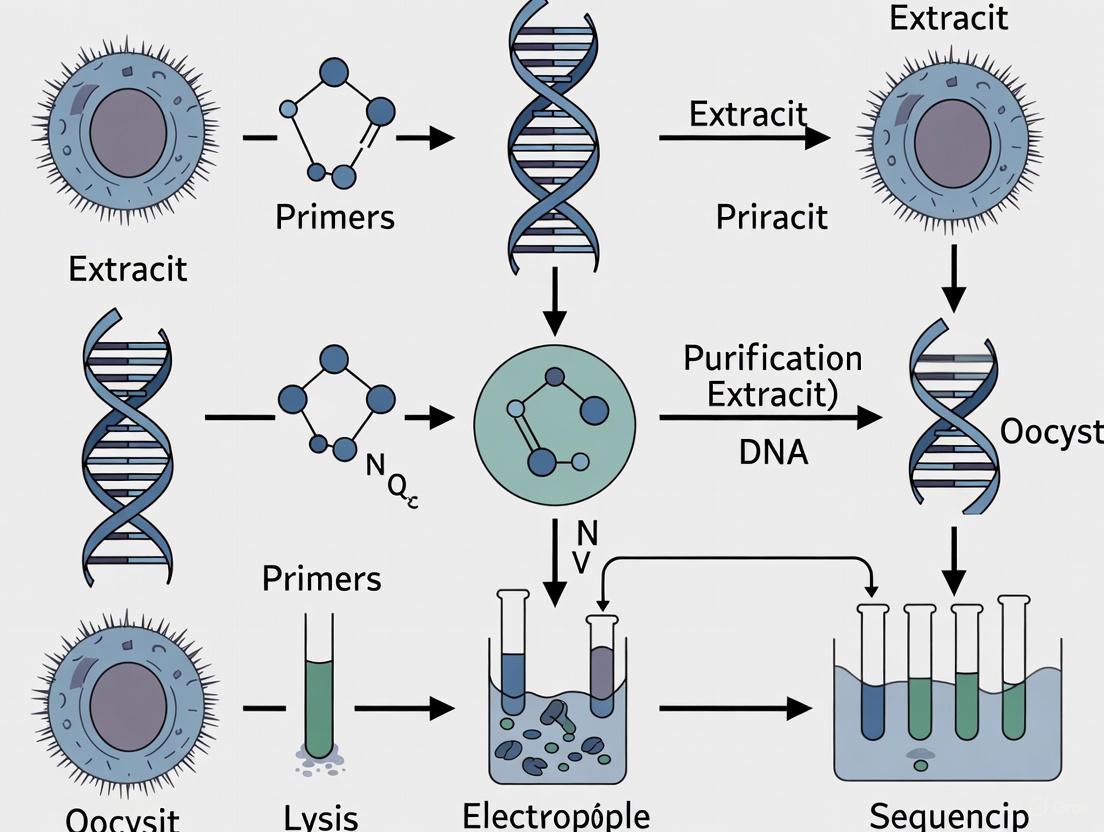
Efficient DNA extraction from robust parasite oocysts, such as Cryptosporidium and Giardia, is a critical bottleneck in molecular diagnostics and research.
Breaking the Wall: Advanced Strategies for DNA Extraction from Robust Parasite Oocysts
Abstract
Efficient DNA extraction from robust parasite oocysts, such as Cryptosporidium and Giardia, is a critical bottleneck in molecular diagnostics and research. This article provides a comprehensive analysis of current challenges and solutions, covering the structural barriers of oocysts, a comparative evaluation of mechanical, thermal, and chemical lysis methods, and data-driven optimization of commercial and in-house protocols. It further details systematic troubleshooting for inhibitor removal and DNA integrity, alongside multi-laboratory validation data for PCR, LAMP, and metagenomic applications. Designed for researchers and drug development professionals, this guide synthesizes foundational knowledge with practical, validated protocols to enhance detection sensitivity and accelerate therapeutic development.
Understanding the Fortress: The Structural and Technical Barriers to Oocyst Lysis
FAQs: Overcoming the Oocyst Wall in Nucleic Acid Isolation
Q1: What makes the oocyst wall such a significant barrier to effective DNA extraction?
The oocyst wall is a complex, multi-layered structure designed to protect the parasite in harsh environmental conditions. Research on Cryptosporidium parvum oocysts has shown that the wall consists of a surface glycocalyx, a lipid hydrocarbon layer, a protein layer, and structural polysaccharides [1]. The inner layer is rich in cysteine-rich oocyst wall proteins (COWPs) that form extensive disulfide bonds, creating a rigid structure that resists mechanical force and liquid intrusion, thereby protecting the internal sporozoites [1]. This robust construction physically shields the genetic material and makes the wall resistant to many standard lysis methods, leading to low DNA yield and potential PCR inhibition if not properly disrupted.
Q2: What are the most effective methods for disrupting the resilient oocyst wall?
The most effective strategies involve combining mechanical, chemical, and thermal forces. Key methods include:
- Glass-bead grinding: Vortexing oocysts in a tube with sterile glass beads (e.g., 4-mm diameter) for approximately 10 minutes until rupture is confirmed microscopically [2].
- Freeze-thaw cycles: Repeatedly freezing oocysts in liquid nitrogen followed by thawing at 65°C. One study used 15 cycles for Cryptosporidium oocysts [2], while another used six cycles for oocyst walls in a lysis buffer [1].
- Boiling with optimized incubation: Boiling for 10 minutes, coupled with extended incubation with Proteinase K (up to 3 hours at 55°C), has proven effective, especially for Cryptosporidium in fecal samples [3].
- Advanced dedicated devices: Using specialized equipment like the OmniLyse device can achieve efficient lysis within 3 minutes, as demonstrated in metagenomic studies on lettuce [4].
Q3: How can I improve DNA recovery from low numbers of oocysts in complex sample matrices like soil or feces?
For complex matrices, an initial oocyst concentration step prior to DNA extraction is crucial. In soil samples, flotation in high-density sucrose solution has proven highly effective for concentrating Cyclospora cayetanensis oocysts, enabling detection of as few as 10 oocysts in 10-gram soil samples [5]. For fecal samples, which contain PCR inhibitors like bilirubin and bile acids, washing the stool sample three times in sterile distilled water prior to DNA isolation can significantly reduce inhibition [2]. Furthermore, using a small elution volume (50-100 µl) during the final step of kit-based DNA extraction concentrates the nucleic acids, improving detectability [3].
Q4: Which commercial DNA extraction kits are suitable for oocysts, and how can their protocols be optimized?
Several commercial kits can be effective when their protocols are amended for oocysts. The QIAamp DNA Stool Mini Kit (Qiagen), when used with a protocol amended to include a 10-minute boiling step for lysis and a 5-minute incubation with the InhibitEX tablet, showed 100% sensitivity for detecting Cryptosporidium in feces, up from 60% with the standard protocol [3]. For soil samples, the FastDNA SPIN Kit for Soil (MP Biomedicals), Quick-DNA Fecal/Soil Microbe Midiprep Kit (Zymo Research), and DNeasy PowerMax Soil Kit (Qiagen) have been evaluated, though for C. cayetanensis, traditional sucrose flotation outperformed these kits in recovery [5].
Troubleshooting Common Experimental Issues
| Problem | Potential Cause | Solution |
|---|---|---|
| Consistently low DNA yield | Inefficient wall disruption; DNA loss during precipitation. | Incorporate a mechanical disruption step (e.g., bead beating). Use pre-cooled ethanol for precipitation and elute in a small volume (50-100 µl) [3]. |
| PCR inhibition | Co-purification of inhibitors from complex matrices (stool, soil). | Pre-wash samples (e.g., stool with distilled water) [2]. Use inhibitor-removal tablets in kits and extend incubation time with them to 5 minutes [3]. |
| Inconsistent results between replicates | Heterogeneous distribution of oocysts in sample; incomplete lysis. | Ensure sample is well-homogenized. Standardize lysis time/temperature; monitor breakage microscopically when possible [2]. |
| Failure to detect low-level infections | Insensitive DNA extraction method; lack of oocyst concentration. | Implement an oocyst concentration step (e.g., sucrose flotation for soil) [5]. Use a whole genome amplification step post-extraction to increase DNA for sequencing [4]. |
Quantitative Data: Comparing Method Efficacy
Table 1: Comparison of DNA Extraction and Oocyst Recovery Methods
| Method / Kit | Sample Matrix | Key Protocol Steps | Limit of Detection | Key Findings / Efficiency |
|---|---|---|---|---|
| Sucrose Flotation + qPCR [5] | Silt Loam Soil | Flotation in saturated sucrose, DNA extraction, qPCR. | 10 oocysts in 10 g soil (1 oocyst/g) | Outperformed 3 commercial kits; all 5 replicates with 100 oocysts were positive. |
| Amended QIAamp DNA Stool Kit [3] | Human Feces | Boiling (10 min), extended InhibitEX incubation, pre-cooled ethanol, small elution volume. | ≈2 oocysts/cysts | Sensitivity for Cryptosporidium increased from 60% to 100% after protocol optimization. |
| OmniLyse Lysis + WGA [4] | Lettuce | Surface washing, OmniLyse lysis (3 min), acetate precipitation, whole genome amplification. | 100 oocysts in 25 g lettuce | Enabled metagenomic sequencing; suitable for multiple parasites (C. parvum, G. duodenalis, T. gondii). |
| Glass Bead Grinding [2] | General Oocysts | Vortexing with 4-mm glass beads in TE buffer, phenol-chloroform extraction. | Not Specified | Rupture monitored microscopically; process took ~10 minutes. |
| Freeze-Thaw Cycles [2] [1] | Purified Oocysts | Multiple cycles in LN2 and 65°C water bath (e.g., 6-15 cycles). | Not Specified | Traditional but time-consuming; can be difficult to adapt for field testing [4]. |
Table 2: Essential Research Reagent Solutions
| Reagent / Tool | Function in Oocyst DNA Isolation | Specific Example / Note |
|---|---|---|
| Proteinase K | Digestes structural proteins in the oocyst wall, aiding in its breakdown. | Used at 55°C for 3 hours for helminths [2]; critical for efficient lysis. |
| Saturated Sucrose Solution | Flotation medium to concentrate oocysts from large-volume or complex samples like soil. | Enables separation of oocysts from denser debris based on buoyancy [5]. |
| InhibitEX Tablets / Similar | Binds and removes PCR inhibitors (e.g., bilirubin, bile acids) common in fecal samples. | Extended incubation for 5 minutes improves inhibitor removal [3]. |
| Percoll | Density gradient medium for purifying oocyst walls after excystation. | Used at 70% concentration to aspirate clean oocyst walls post-centrifugation [1]. |
| CTAB Buffer | Lysis buffer used in conjunction with physical disruption methods for DNA release. | Used with proteinase K after glass-bead grinding [2]. |
| Sodium Taurocholate | Bile salt used to trigger excystation (opening) of oocysts in vitro. | Used at 0.75% with trypsin to stimulate excystation for wall isolation [1]. |
Experimental Workflow and Oocyst Wall Structure
Experimental Workflow for Oocyst DNA Isolation
Oocyst Wall Structural Barriers
Technical Support Center
Troubleshooting Guide: DNA Extraction from Robust Parasite Oocysts
This guide addresses common challenges researchers face when extracting DNA from the resilient oocysts of Cryptosporidium, Giardia, and Cyclospora for downstream applications like PCR and NGS.
Table 1: Common Problems and Solutions in Parasite DNA Extraction
| Problem | Potential Cause | Recommended Solution |
|---|---|---|
| Low DNA Yield | Inefficient lysis of robust oocyst/cyst walls [6]. | Use a mechanical lysis device (e.g., OmniLyse) for rapid, efficient disruption [6]. Avoid repeated freeze-thaw cycles, which are time-consuming and less effective [6]. |
| DNA pellets are overdried, making resuspension difficult [7]. | Limit pellet drying time to <5 minutes and avoid vacuum suction devices. Resuspend in 8 mM NaOH or TE buffer with periodic pipetting and incubation at 37-45°C [7]. | |
| DNA Degradation | Sample not processed immediately or stored improperly, allowing nucleases to act [8]. | Process samples immediately or flash-freeze in liquid nitrogen. Store at -80°C. For fibrous tissues, cut into the smallest possible pieces [8]. |
| Insufficient DNA for NGS | Low starting number of (oo)cysts yields insufficient template [6]. | Incorporate a whole genome amplification (WGA) step post-extraction to generate microgram quantities of DNA required for NGS libraries [6]. |
| Inhibition of Downstream PCR | Carryover of purification reagents or polysaccharides [7]. | Reprecipitate the DNA to remove contaminants like phenol or excess salt. Ensure proper washing steps during column-based purification [7]. |
Table 2: Research Reagent Solutions for Oocyst DNA Workflows
| Reagent / Tool | Function in the Workflow |
|---|---|
| OmniLyse Device | Provides rapid (3-minute) and efficient mechanical lysis of tough oocyst walls, superior to traditional chemical or thermal methods [6]. |
| Whole Genome Amplification (WGA) Kits | Amplifies nanogram quantities of extracted DNA to the microgram levels required for building NGS libraries, crucial for low-input samples [6]. |
| Proteinase K | Digests proteins and inactivates nucleases during the initial lysis step, helping to protect DNA integrity [8]. |
| Buffered Peptone Water + Tween | Used as a wash buffer to dissociate oocysts from the surface of fresh produce like lettuce for sample preparation [6]. |
Frequently Asked Questions (FAQs)
Q1: Why is DNA extraction from protozoan oocysts like Cryptosporidium particularly challenging? The oocysts possess a robust, bilayered wall that is notoriously difficult to break open. This wall contains highly cross-linked proteins, such as tyrosine-rich proteins and cysteine-rich oocyst wall proteins (OWPs), which provide structural strength and resistance to many chemical and physical lysis methods [9]. Inefficient lysis is a primary bottleneck for sensitive detection.
Q2: My extracted DNA won't go back into solution. What can I do? This is often due to overdrying the DNA pellet. You can try incubating the pellet in 8 mM NaOH or TE buffer at 37°C to 45°C with periodic pipetting. It may take several hours or overnight incubation to fully resuspend. Avoid overdrying by limiting air-drying time to under 5 minutes [7].
Q3: What is an advantage of using metagenomic NGS over traditional PCR for detecting these parasites? Traditional PCR requires prior knowledge of the pathogen and typically targets one organism at a time. Metagenomic NGS is a culture-independent, comprehensive approach that can simultaneously identify and differentiate multiple parasites (e.g., C. parvum, G. duodenalis, T. gondii) in a single test without pre-specifying the targets, making it ideal for outbreak investigation and surveillance [6].
Q4: Are there any low-cost alternatives for initial screening of (oo)cysts? Yes, a smartphone-based microscopic method has been developed as a low-cost alternative for simultaneous detection of Cryptosporidium oocysts and Giardia cysts on vegetables and in water. This method uses a ball lens, white LED, and Lugol's iodine staining and has shown performance comparable to commercial microscopy methods, making it suitable for resource-limited settings [10].
Experimental Protocol: Metagenomic Detection from Fresh Produce
The following detailed protocol is adapted from a study that successfully identified as few as 100 oocysts of C. parvum in 25g of lettuce using metagenomic next-generation sequencing (mNGS) [6].
Sample Preparation and Spiking:
- Place a 25g leaf of romaine lettuce in a sterile container.
- Spike the lettuce surface with a known number of oocysts/cysts (e.g., 100-100,000) in 1 ml of PBS, delivered dropwise.
- Allow the spiking fluid to air-dry completely (approx. 15 minutes).
Elution and Concentration:
- Transfer the spiked leaf to a stomacher bag with 40 ml of buffered peptone water supplemented with 0.1% Tween.
- Homogenize in a stomacher at 115 rpm for 1 minute.
- Pass the fluid through a custom 35 μm filter under vacuum to remove plant debris.
- Centrifuge the filtrate at 15,000 x g for 60 minutes at 4°C. Discard the supernatant.
Lysis and DNA Extraction:
- Critical Step: Lysate the oocyst/cyst pellet using the OmniLyse device to achieve rapid (3-minute) and efficient mechanical disruption [6].
- Extract DNA from the lysate using acetate precipitation or a commercial kit designed for tough-to-lyse organisms.
- DNA Amplification: Subject the extracted DNA to Whole Genome Amplification (WGA) to generate sufficient DNA (0.16–8.25 μg) for NGS library construction.
Sequencing and Bioinformatics:
- Prepare sequencing libraries from the amplified DNA.
- Sequence using a platform such as MinION (Oxford Nanopore) or Ion GeneStudio S5.
- Analyze the generated fastq files using a bioinformatic platform (e.g., CosmosID webserver) for the identification and differentiation of parasites in the metagenome.
Workflow and Troubleshooting Diagrams
Parasite Oocyst DNA Workflow
Troubleshooting Logic for Detection Failure
Common Failure Points in Standard DNA Extraction Protocols
Troubleshooting Guides
FAQ: Addressing DNA Extraction from Robust Parasite Oocysts
1. Why is my DNA yield from parasite oocysts so low despite using commercial kits?
Standard commercial DNA extraction kits are often optimized for mammalian cells or bacteria and fail to effectively disrupt the robust oocyst and cyst walls of parasites like Cryptosporidium and Giardia [4]. These resilient structures require specialized mechanical or physical disruption methods. Traditional chemical lysis alone is insufficient for complete cell wall breakdown, leading to poor DNA yield [11]. Solution: Implement a mechanical disruption step. Bead mill homogenization using 1.0 mm glass beads at 6 m/s for 40 seconds (repeated twice) significantly improves oocyst wall breakage [11]. Alternatively, the OmniLyse device provides rapid, efficient lysis within 3 minutes, making it suitable for tough-walled parasites [4].
2. How do PCR inhibitors affect my downstream applications, and how can I remove them?
Parasite samples from feces, soil, or sediment often contain complex polysaccharides, humic acids, and other compounds that co-purify with DNA and inhibit enzymatic reactions in PCR and sequencing [12]. These inhibitors cause false negatives, reduced sensitivity, and quantification errors in molecular assays. Solution: Use effective purification methods post-extraction. Sephadex G-200 spin column purification effectively removes PCR-inhibiting substances while minimizing DNA loss [12]. For fecal samples, the QIAamp DNA Stool Mini Kit is specifically designed to remove these inhibitors [13].
3. Why is there a discrepancy between oocyst counts and DNA-based quantification?
Microscopic oocyst counts and DNA-based quantification measure different biological aspects. Oocyst counts only detect mature transmissive stages, while DNA-based methods detect all life cycle stages (asexual and sexual), including developing parasites in host tissues [11]. This explains why DNA may be detected earlier in infection cycles before oocysts appear in feces, and why DNA intensity can be a better predictor of host health impact than oocyst counts alone [11].
4. What is the impact of DNA shearing on downstream applications?
Vigorous or prolonged mechanical disruption can fragment DNA, compromising applications requiring high-molecular-weight DNA, such as long-read sequencing [12]. Solution: Optimize homogenization parameters. For bead mill homogenization, use lower speeds and shorter durations (30-120 seconds) to maximize recovery of high-molecular-weight DNA (16-20 kb) while maintaining efficient cell lysis [12].
Table 1: Common Failure Points and Optimized Solutions for Parasite DNA Extraction
| Failure Point | Impact on Results | Optimized Solution | Evidence of Improvement |
|---|---|---|---|
| Inefficient oocyst/cyst lysis | Low DNA yield, false negatives | Mechanical disruption (bead beating, OmniLyse device) | Detection of as few as 100 C. parvum oocysts from lettuce after OmniLyse treatment [4] |
| Co-purification of inhibitors | PCR inhibition, quantification errors | Sephadex G-200 column purification; inhibitor removal kits | Successful PCR from soil/sediment samples with high organic matter content [12] |
| DNA shearing/fragmentation | Poor performance in long-read sequencing | Optimized bead mill homogenization (low speed, short duration) | Recovery of high-molecular-weight DNA (16-20 kb) from complex samples [12] |
| Inadequate sample processing | Variable recovery, poor reproducibility | Centrifugal flotation with NaNO₃ prior to DNA extraction | Improved detection of T. gondii in cat feces [13] |
| Suboptimal purification method | Low purity (A260/280 ratios) | Silica-based column purification vs. precipitation methods | Purity improvement from 0.764 to 1.735 in blood samples [14] |
Table 2: Comparison of DNA Extraction Methods for Different Sample Types
| Extraction Method | Recommended Sample Types | Key Advantages | Limitations for Parasite Research |
|---|---|---|---|
| Bead mill homogenization + SDS-chloroform | Soil, sediment, environmental samples | High lysis efficiency, effective for tough-walled organisms | Requires optimization to prevent DNA shearing [12] |
| OmniLyse CTL buffer + acetate precipitation | Parasite oocysts on leafy greens, water samples | Rapid (3-min) lysis, compatible with downstream WGA and sequencing | Specialized equipment required [4] |
| Heat lysis in TE buffer | Water samples with Cryptosporidium oocysts | Rapid, simple, no commercial kits required, suitable for LAMP | No purification step, potential inhibitor carryover [15] |
| Modified commercial kits with bead beating | Fecal samples with parasite stages | Standardized protocol with improved lysis efficiency | Higher cost per sample, may require optimization [11] |
| CTAB-based extraction | Plant tissues, microlepidoptera | Effective for polysaccharide-rich samples | Labor-intensive, multiple purification steps required [16] |
Experimental Protocols
Protocol 1: Metagenomic Detection of Parasites from Leafy Greens
This protocol enables sensitive detection of protozoan parasites from fresh produce using optimized lysis and metagenomic sequencing [4]:
Sample Preparation: Place 25g lettuce leaves in sterile container. Spike with 1ml containing 100-100,000 oocysts of target parasites (C. parvum, C. hominis, G. duodenalis, T. gondii). Air dry for 15 minutes.
Microbe Wash: Transfer spiked leaves to stomacher bag with 40ml buffered peptone water + 0.1% Tween. Homogenize at 115rpm for 1 minute.
Filtration and Concentration: Pass fluid through custom-made 35μm filter under vacuum. Pellet oocysts by centrifugation at 15,000 × g for 60 minutes at 4°C. Discard supernatant.
Mechanical Lysis: Resuspend pellet and lyse using OmniLyse device for 3 minutes for efficient oocyst wall disruption.
DNA Extraction and Precipitation: Extract DNA using acetate precipitation. Add 1/10 volume 3M sodium acetate (pH 5.2) and 2.5 volumes cold 100% ethanol. Precipitate at -20°C for 1 hour.
Whole Genome Amplification: Amplify extracted DNA to generate 0.16-8.25μg (median 4.10μg) for sequencing.
Sequencing and Analysis: Perform metagenomic sequencing using MinION or Ion GeneStudio S5. Analyze fastq files with CosmosID webserver for parasite identification.
Protocol 2: Rapid Cryptosporidium Detection Avoiding Commercial Kits
This simplified protocol enables rapid detection without commercial kits, suitable for field applications [15]:
Oocyst Isolation: Concentrate Cryptosporidium oocysts from 10mL water samples using immunomagnetic separation (IMS) with streptavidin-coated magnetic beads and biotinylated anti-Cryptosporidium antibodies.
Heat Lysis: Isolate oocysts magnetically and resuspend in TE buffer (10mM Tris, 0.1mM EDTA, pH 7.5). Incubate at 95°C for 15 minutes to lyse oocysts.
Direct Amplification: Use 2-5μl of crude lysate directly in colorimetric LAMP reactions without nucleic acid purification.
Detection: Employ WarmStart Colorimetric LAMP 2× Master Mix with primers targeting Cryptosporidium-specific genes. Incubate at 65°C for 30-60 minutes. Positive samples change from pink to yellow.
Sensitivity Validation: This method detects as low as 5 oocysts per 10mL tap water without matrices and 10 oocysts per 10mL with simulated matrices (added mud).
The Scientist's Toolkit: Research Reagent Solutions
Table 3: Essential Reagents for Optimized Parasite DNA Extraction
| Reagent/Kit | Function | Application Context |
|---|---|---|
| OmniLyse device | Mechanical disruption of robust oocyst walls | Leafy greens, environmental samples [4] |
| Bead beating matrix (1.0mm glass beads) | Physical lysis of resilient parasite forms | Fecal samples, soil, sediment [11] |
| Sephadex G-200 | Removal of PCR inhibitors (humic acids, polysaccharides) | Soil, sediment, fecal samples with high inhibitor content [12] |
| QIAamp DNA Stool Mini Kit | Optimized inhibitor removal for fecal samples | Human and animal fecal specimens with parasite stages [13] |
| CTAB buffer | Effective lysis for polysaccharide-rich samples | Plant tissues, microlepidoptera, samples with high carbohydrate content [16] |
| Chelex-100 resin | Rapid, cost-effective DNA extraction | Dried blood spots, large population studies [17] |
| WarmStart Colorimetric LAMP Kit | Isothermal amplification for field detection | Resource-limited settings, rapid screening [15] |
| NucleoSpin Soil Kit | DNA extraction from inhibitor-rich samples | Soil, sediment, environmental samples with parasites [11] |
Workflow Visualization
DNA Extraction Workflow for Parasite Oocysts
Key Technical Considerations
When extracting DNA from robust parasite oocysts, several technical aspects require careful attention:
Mechanical Disruption Parameters: The efficiency of mechanical methods depends on optimal parameter selection. For bead beating, use 1.0mm glass beads at 6m/s for 40 seconds with two disruption cycles [11]. Lower speeds and shorter durations (30-120 seconds) maximize DNA size while maintaining lysis efficiency [12].
Inhibitor Removal Specificity: Different purification methods target specific inhibitors. Sephadex G-200 effectively removes humic acids from soil, while silica-based columns with inhibitor removal technology are optimal for fecal samples [12] [13].
Sample-Specific Optimization: Extraction efficiency varies significantly by sample type. Leafy greens require buffer washes with 0.1% Tween [4], while soil samples need phosphate-buffered SDS-chloroform mixtures [12]. Cat feces for T. gondii detection benefit from NaNO₃ flotation prior to DNA extraction [13].
Validation Methods: Always validate extraction efficiency using appropriate controls. Spike recovery experiments with known oocyst numbers (e.g., 100-100,000 oocysts) quantify method sensitivity [4]. Compare DNA-based quantification with microscopic counts to assess extraction completeness [11].
Impact of Oocyst Robustness on Downstream Molecular Analyses (PCR, qPCR, NGS)
The robust structure of parasite oocysts, particularly those of Cryptosporidium and other related protozoans, presents a significant barrier to effective molecular analysis. The oocyst wall is a complex, multi-layered structure designed to protect the genetic material within from extreme environmental conditions, including chemical disinfectants and physical stress [1]. This very robustness, however, hampers diagnostic and research efforts by making it difficult to extract sufficient quality DNA for downstream applications like PCR, qPCR, and Next-Generation Sequencing (NGS). This technical support article addresses the specific challenges posed by resilient oocysts and provides validated troubleshooting guidelines and protocols to ensure successful molecular analyses.
Troubleshooting Guide: Common Issues and Solutions
Table 1: Troubleshooting Common Problems in Oocyst Molecular Analysis
| Problem | Potential Cause | Recommended Solution |
|---|---|---|
| Low DNA yield from oocysts | Inefficient lysis of the robust oocyst wall [6] [1] | Implement a mechanical lysis step (e.g., bead beating, freeze-thaw cycles) prior to chemical lysis. Use specialized lysis devices like the OmniLyse [6]. |
| Inhibition in downstream PCR/qPCR | Co-purification of inhibitors from sample matrix or oocyst remnants [18] | Dilute the DNA template. Include additional purification steps (e.g., silica-column purification, ethanol precipitation). Use inhibitor-resistant polymerase enzymes. |
| High human/background DNA in metagenomic NGS | Overwhelming host DNA in clinical or tissue samples obscures microbial reads [19] | Use DNA extraction kits with human DNA depletion steps (e.g., modified Ultra-Deep Microbiome Prep protocol) [19]. |
| Inconsistent qPCR results across instruments | Platform-specific variations in chemistry and detection [18] | Validate and calibrate the qPCR assay on the specific instrument platform in use. Do not assume perfect cross-platform robustness [18]. |
| Failure to detect low-abundance parasites in food samples | Low oocyst count and inefficient DNA recovery from complex matrices [6] | Use whole genome amplification post-extraction to increase DNA for sequencing. Employ metagenomic NGS with robust bioinformatic analysis [6]. |
Frequently Asked Questions (FAQs)
Q1: Why is DNA extraction from oocysts particularly challenging?
The oocyst wall is a formidable structure composed of a lipid-hydrocarbon layer, a protein layer, and structural polysaccharides, with an inner layer of cysteine-rich proteins that form rigid disulfide bonds [1]. This structure is evolutionarily designed to resist mechanical and chemical stress, which consequently resists standard DNA extraction protocols. Traditional methods often fail to break this wall completely, leading to low DNA yield.
Q2: My qPCR assay works on one instrument but fails on another. Why?
qPCR is a sensitive technique whose performance can be affected by the specific instrument platform. A study on GMO testing found that different qPCR instruments from various suppliers (e.g., Applied Biosystems, Roche, Stratagene, Bio-Rad) can show significant variations in quantification results, even with the same validated method and DNA sample [18]. This is due to differences in excitation sources, detectors, thermocycling systems, and optical systems. It is crucial to re-validate your assay on the specific qPCR instrument you plan to use.
Q3: When should I use NGS over qPCR for oocyst analysis?
The choice depends on your goal. qPCR is the preferred method for the rapid, sensitive, and cost-effective detection of a known, specific parasite. It is ideal for routine screening and quantification [20] [21]. In contrast, NGS is a hypothesis-free approach that should be used for discovery and comprehensive profiling, such as identifying novel parasite species, detecting multiple unknown pathogens simultaneously, or conducting in-depth genomic studies [6] [21]. The two techniques are often complementary, with qPCR used to validate NGS findings [22] [20].
Q4: How can I improve the detection of parasitic DNA in samples with high host background?
For samples like infected tissue, where host DNA can constitute over 99% of the total DNA, a standard extraction will not yield sufficient microbial DNA for sequencing. A modified DNA extraction protocol that includes steps for host DNA depletion is necessary. One optimized protocol for tissue involves prolonging the proteinase K digestion step and repeating the human cell lysis and DNA degradation steps, which can achieve an additional ~10-fold reduction in human DNA [19].
Experimental Protocols & Workflows
Optimized Metagenomic NGS Workflow for Parasite Detection on Lettuce
This protocol, adapted from a 2025 study, details a method for sensitive detection of protozoan parasites from fresh produce [6].
Sample Preparation and Oocyst Recovery:
- Take 25g of lettuce leaves.
- Spike with oocysts/cysts (e.g., C. parvum, G. duodenalis) or process uninoculated samples for surveillance.
- Place in a stomacher bag with 40ml of buffered peptone water with 0.1% Tween.
- Homogenize in a stomacher at 115 rpm for 1 minute.
- Filter the fluid through a custom 35μm filter under vacuum to remove plant debris.
- Centrifuge the filtrate at 15,000 x g for 60 minutes at 4°C. Discard the supernatant.
Efficient Oocyst Lysis:
- Critical Step: Resuspend the pellet and lysate using the OmniLyse device. This device ensures rapid and efficient mechanical lysis of the robust oocyst/cyst walls, achieving lysis within 3 minutes [6]. This is superior to traditional methods like repeated freeze-thaw cycles in liquid nitrogen or heat treatment, which can be time-consuming or damage DNA.
DNA Extraction and Whole Genome Amplification (WGA):
- Extract DNA from the lysate using acetate precipitation.
- To overcome low DNA yield from limited oocysts, subject the extracted DNA to Whole Genome Amplification (WGA). This generates microgram quantities of DNA (e.g., a median of 4.10 μg) required for NGS library preparation [6].
Library Preparation and Sequencing:
- Prepare a sequencing library using the amplified DNA.
- Sequence the library using a platform such as the MinION (Oxford Nanopore Technologies) or the Ion GeneStudio S5 [6].
Bioinformatic Analysis:
- Upload the generated fastq files to a bioinformatic analysis platform (e.g., CosmosID).
- Identify and differentiate parasites at the genus, species, and genotype levels within the metagenome [6].
The following workflow diagram illustrates this complete process:
Optimized DNA Extraction from Infected Tissue with Human DNA Depletion
This protocol is designed for tissue biopsies where microbial DNA is scarce compared to host DNA [19].
Sample Processing:
- Weigh the tissue biopsy and mince it thoroughly.
Modified Human DNA Depletion and Microbial DNA Extraction:
- Use the Ultra-Deep Microbiome Prep kit (Molzym) with the following key modifications to the manufacturer's protocol:
- Prolonged Digestion: Extend the first incubation with proteinase K from 10 minutes to 20 minutes.
- Repeated Lysis: After pelleting, resuspend the sample in 1 mL of TSB buffer. Repeat the entire lysis of human cells and degradation of extracellular DNA step.
- Complete the remainder of the kit's procedure for the enrichment and extraction of microbial DNA.
- Use the Ultra-Deep Microbiome Prep kit (Molzym) with the following key modifications to the manufacturer's protocol:
Quality Control with qPCR:
- Assess the efficiency of human DNA depletion by performing a qPCR assay for a human-specific gene (e.g., human β-globin, HBB).
- Assess the preservation of microbial DNA by performing a qPCR assay for a target microbial gene (e.g., the nuc gene for S. aureus).
- The modified protocol should show a significant increase in Ct value for the human gene compared to the standard protocol, indicating successful depletion [19].
The Scientist's Toolkit: Key Research Reagents & Materials
Table 2: Essential Reagents and Kits for Oocyst DNA Analysis
| Item | Function/Application | Example Use-Case |
|---|---|---|
| OmniLyse Device | Rapid, mechanical lysis of robust oocyst and cyst walls [6]. | Lysis of Cryptosporidium oocysts from food samples prior to metagenomic NGS [6]. |
| Ultra-Deep Microbiome Prep Kit (Molzym) | DNA extraction that selectively depletes host DNA and enriches for microbial DNA [19]. | Extraction of bacterial DNA directly from infected tissue biopsies for improved NGS detection [19]. |
| DNeasy Blood & Tissue Kit (Qiagen) | Silica-membrane based purification of total DNA from complex samples [23]. | General-purpose DNA extraction; found effective for small insects and potentially adaptable for oocysts [23]. |
| Rapid PCR Barcoding Kit (Oxford Nanopore) | Rapid library preparation for nanopore sequencing [19]. | Fast preparation of DNA libraries from extracted oocyst DNA for real-time sequencing on MinION [19]. |
| Whole Genome Amplification (WGA) Kits | Amplification of very low-yield DNA to quantities sufficient for NGS [6]. | Amplifying DNA extracted from a low number of oocysts (e.g., as few as 100) from a food sample [6]. |
| TaqMan Gene Expression Assays (Thermo Fisher) | Probe-based qPCR for specific, sensitive quantification of known DNA targets [20]. | Validating NGS findings or for routine, targeted quantification of a specific parasite [22] [20]. |
Lysis in Action: A Comparative Guide to Mechanical, Thermal, and Chemical Disruption Methods
Technical Support Center
Frequently Asked Questions (FAQs)
Q1: Why is bead beating particularly recommended for DNA extraction from robust parasite oocysts and cysts? Bead beating is a mechanical cell lysis method that is highly effective for disrupting the tough, resilient walls of protozoan oocysts and cysts (e.g., Cryptosporidium, Giardia). These walls are often impervious to chemical lysis alone. Bead beating uses rapid agitation with grinding media to physically shear and break open these robust structures, facilitating the release of DNA for downstream applications like PCR and metagenomic sequencing [4] [24] [25]. It is considered more efficient than traditional methods like repeated freeze-thaw cycles in liquid nitrogen [4].
Q2: My DNA yield from Cryptosporidium oocysts is low. What steps can I optimize in my bead beating protocol? Low DNA yield can be addressed by optimizing several key parameters:
- Lysis Conditions: Increasing the lysis temperature to 95–100°C for 5-10 minutes during the initial buffer incubation step can significantly improve oocyst wall disruption and DNA recovery [24].
- Bead Type and Fill: Ensure you are using the appropriate bead type (e.g., silica, zirconium) and that the bead-to-sample volume ratio is correct. The tube should be about one-sixth full of beads and one-third full of cell suspension for efficient homogenization [26].
- Homogenization Time: For resilient samples like yeast and parasites, homogenization may require several minutes. One effective protocol involves multiple cycles (e.g., six cycles) of bead beating for 20 seconds, each followed by a 1-minute incubation on ice to prevent heat degradation [27].
- Inhibition: For fecal samples, extend the incubation time with InhibitEX tablets or similar inhibitors to 5 minutes to better remove PCR inhibitors [24].
Q3: How can I prevent the degradation of DNA during the bead beating process? Heat generated during bead beating can degrade DNA. To mitigate this:
- Use Cooling Intervals: Perform bead beating in short bursts (e.g., 20-30 seconds) followed by incubation of the tubes on ice or in an ice bath for one minute between cycles. This allows heat to dissipate [27] [28].
- Pulsing Feature: If your instrument has one, use a pulsing feature that incorporates rest periods between agitation cycles [29].
- Cooled Systems: For high-throughput work, use a homogenizer system that can be connected to a chiller to maintain a constant low temperature (e.g., 4–13°C) during processing [28].
Q4: My downstream PCR is inhibited despite successful bead beating. What could be the cause? PCR inhibition after successful lysis is often due to co-extraction of inhibitors from the sample matrix (e.g., feces, food).
- Purification: Incorporate additional purification steps, such as using InhibitEX tablets or silica membrane-based columns designed to adsorb and remove inhibitors like heme, bilirubins, and bile salts [24].
- Wash Steps: Ensure the commercial DNA extraction kit you are using includes rigorous wash steps with ethanol or other solvents to purify the nucleic acids [24].
- Pre-cooled Ethanol: Using pre-cooled ethanol for precipitation can improve the purity and yield of the DNA extract [24].
Troubleshooting Guide
The following table outlines common problems, their potential causes, and recommended solutions.
| Problem | Potential Cause | Recommended Solution |
|---|---|---|
| Low DNA yield | Inefficient oocyst/cyst wall disruption [24]. | Optimize lysis temperature and time; Use harder/sharper beads (e.g., zirconium); Increase bead beating duration/speed [26] [24]. |
| Incorrect bead-to-sample ratio [26]. | Adjust bead volume to ~1/6 of tube volume and sample to ~1/3 of tube volume [26]. | |
| DNA shearing/fragmentation | Bead beating is too harsh or prolonged [25]. | Reduce homogenization time; Use lower speed settings; Incorporate more cooling intervals [27] [28]. |
| PCR inhibition | Incomplete removal of sample inhibitors [24]. | Use inhibitor-removal tablets; Increase incubation time with inhibitors; Add extra wash steps; Use a small elution volume (50-100 µl) to concentrate DNA [24]. |
| Inconsistent results between samples | Sample-to-sample variability in homogenization [25]. | Standardize sample mass and buffer volume; Use a high-throughput homogenizer for better reproducibility instead of a vortexer [28] [26]. |
| Inability to disrupt specific oocysts | Bead type is not matched to sample resiliency [26]. | For very resilient pathogens, use a combination of sharp, abrasive media (e.g., garnet, satellites) with larger grinding balls [26]. |
Research Reagent Solutions
The table below details essential materials and their functions for effective bead beating of robust parasite oocysts.
| Item | Function & Rationale |
|---|---|
| Zirconium/Silica Beads | Dense, durable grinding media ideal for disrupting tough oocyst walls. Zirconium beads are particularly effective for resilient samples [26] [25]. |
| Polycarbonate Tubes | Extremely durable and impact-resistant tubes that withstand the force of bead beating without cracking, especially at cryogenic temperatures. (Note: incompatible with some organic solvents) [26]. |
| InhibitEX Tablets / Similar | Added during DNA extraction to adsorb and remove common PCR inhibitors found in complex samples like feces [24]. |
| Lysis Buffer (with Tween/SDS) | A detergent-based buffer that, when combined with mechanical disruption, solubilizes lipid membranes and facilitates the release of DNA [4]. |
| Protease Inhibitors | Added to lysis buffer to preserve native protein states and prevent degradation during extraction, crucial for protein or post-translational modification studies [27]. |
| HT Mini or GenoGrinder Homogenizers | Oscillating bead beaters that provide a high-speed, multidirectional motion for rapid and efficient cell disruption. Suitable for processing multiple samples simultaneously [29] [28]. |
Experimental Workflow and Parameter Selection
The following diagram illustrates the decision-making workflow for establishing an effective bead beating protocol for robust parasite oocysts.
Diagram 1: Bead beating protocol setup workflow.
The table below consolidates key quantitative data from published studies to inform experimental design.
| Parameter | Optimized Condition / Result | Application / Context |
|---|---|---|
| Lysis Time | Rapid lysis within 3 minutes [4]. | Metagenomic detection of C. parvum on lettuce using OmniLyse device [4]. |
| Lysis Temperature | Boiling (95-100°C) for 10 minutes [24]. | Increased sensitivity of PCR for Cryptosporidium in fecal samples [24]. |
| Bead Beating Cycles | 6 cycles of 20 sec beating / 1 min on ice [27]. | Protein extraction from resilient budding yeast cells [27]. |
| Detection Limit | 100 oocysts of C. parvum in 25g lettuce [4]; ≈2 oocysts/cysts per PCR reaction [24]. | Metagenomic NGS assay [4]; Diagnostic PCR from spiked feces [24]. |
| Sensitivity (Post-Optimization) | 100% sensitivity for Cryptosporidium detection vs. 60% with standard protocol [24]. | PCR on fecal samples using amended QIAamp DNA Stool Mini Kit protocol [24]. |
| Homogenizer Speed | 2400 to 4200 rpm (Oscillating) [29]; 30 Hz (Mixer Mill) [28]. | General bead beating; Cell disruption of yeast and bacteria [29] [28]. |
In research on robust parasite oocysts, such as those of Cryptosporidium and Eimeria, effective DNA extraction is a critical first step for downstream genetic analyses. The tough oocyst wall presents a significant challenge to conventional lysis methods. Thermal lysis, which utilizes boiling and heat treatment, offers a straightforward, chemical-free alternative for liberating DNA from these resilient structures. This guide addresses common questions and troubleshooting issues researchers may encounter when implementing this technique.
Frequently Asked Questions (FAQs)
Q1: How does thermal lysis compare to other mechanical and chemical methods for disrupting robust oocysts?
Thermal lysis provides a balanced alternative to other common methods. The table below summarizes key techniques.
| Lysis Method | Mechanism of Action | Relative Efficiency | Key Advantages | Key Limitations |
|---|---|---|---|---|
| Thermal Lysis (Freeze-Thaw) [30] | Physical disruption from ice crystal formation and thermal shock. | High (Detects <5 oocysts) | Simple, cost-effective, minimizes chemical inhibitors. | Can be time-consuming with multiple cycles. |
| Nanoparticle Lysis [31] | Chemical and physical disruption of the oocyst wall. | Comparable to freeze-thaw | Offers a novel, viable alternative pathway. | Requires sourcing and optimization of nanoparticles. |
| Bead Beating | Mechanical shearing. | Variable | High-energy disruption. | Can cause DNA shearing; generates heat. |
| Enzymatic Lysis | Chemical degradation of wall components. | Variable | Highly specific. | Can be expensive; may require additional purification. |
Q2: What is the optimal protocol for thermal lysis of Cryptosporidium oocysts?
An optimized protocol for maximizing DNA yield involves repeated freeze-thaw cycles [30].
- Procedure: Suspend oocysts in a standard lysis buffer containing SDS. Subject the suspension to 15 cycles of freezing in liquid nitrogen followed by thawing at 65°C [30].
- Buffer Consideration: The inhibitory effects of SDS in the PCR can be counteracted by adding Tween 20 to the PCR reaction mixture [30].
- Rationale: This maximized method is particularly effective for older oocysts that are more refractory to disruption and consistently detects fewer than five oocysts [30].
Q3: My DNA yield after thermal lysis is low. What could be the problem?
Low yield can stem from several factors related to the protocol or sample condition. Please consult the troubleshooting guide below.
Troubleshooting Guide
| Problem | Possible Cause | Recommended Solution |
|---|---|---|
| Low DNA Yield | Insufficient oocyst disruption | Increase the number of freeze-thaw cycles (e.g., up to 15 cycles) [30]. Ensure the use of liquid nitrogen for rapid freezing. |
| Lysis buffer incompatibility | Ensure the lysis buffer contains a detergent like SDS (0.5-1%) to facilitate breakdown of lipid membranes [32]. | |
| PCR Inhibition | Carry-over of lysis buffer components | Add Tween 20 to the PCR reaction to abrogate the inhibitory effects of SDS [30]. Perform a standard ethanol or isopropanol precipitation to purify DNA post-lysis [33]. |
| Inconsistent Results | Variable age of oocyst isolates | Older oocysts are more refractory. Implement the maximized 15-cycle protocol to ensure disruption of oocysts of unknown history or age [30]. |
The Scientist's Toolkit: Essential Reagents for Thermal Lysis
The following table lists key reagents required for implementing the thermal lysis protocol.
| Reagent | Function | Example |
|---|---|---|
| Lysis Buffer | Creates the chemical environment for breaking cells and stabilizing DNA. | Typically contains Tris-HCl (pH 8.0), EDTA, and NaCl [32]. |
| Detergent | Solubilizes lipid membranes in the oocyst wall and cellular membranes. | Sodium Dodecyl Sulfate (SDS) [30] or Triton X-100 [34]. |
| Proteinase K | Enzyme that degrades proteins and helps inactivate nucleases. | Often added separately to the lysis buffer to improve efficiency [32]. |
| Neutralizing Agent | Counteracts the effects of inhibitory substances in downstream PCR. | Tween 20 can be added to the PCR master mix to abrogate SDS inhibition [30]. |
Experimental Workflow: From Oocyst to DNA
The following diagram illustrates the generalized workflow for extracting DNA from parasite oocysts using a thermal lysis method, integrating steps from validated protocols [30] [35].
Diagram 1: Generalized workflow for thermal lysis DNA extraction.
Troubleshooting Guides and FAQs
Frequently Asked Questions
Q1: My lysis buffer is not effectively breaking down Cryptosporidium oocysts, resulting in low DNA yield. What could be wrong? This is a common challenge with robust parasite oocysts. The issue likely stems from insufficient lysis strength. The oocyst wall is highly resilient and often requires specialized mechanical or thermal lysis in addition to chemical lysis. Ensure your buffer contains a denaturing ionic detergent like SDS and consider incorporating a rigorous mechanical lysis step, such as bead beating or multiple freeze-thaw cycles in liquid nitrogen [4] [30].
Q2: I am getting a high DNA yield, but my downstream PCR is inhibited. How can I modify my lysis buffer? PCR inhibition is frequently caused by residual detergents or contaminants from the lysis buffer. The ionic detergent SDS is a known PCR inhibitor. This can be mitigated by adding a non-ionic detergent like Tween 20 to the PCR reaction to abrogate the inhibitory effects [30]. Furthermore, always ensure proper DNA purification after lysis, such as acetate precipitation, to remove lysis buffer components and other inhibitors [4].
Q3: Why is it critical to check the pH of my lysis buffer periodically, and what is the optimal range? The pH is critical for maintaining DNA stability and enzymatic activity. DNA can depurinate in acidic conditions, while RNA is prone to hydrolysis in alkaline environments. An optimum pH (7.8 to 8.0) is crucial for effective DNA isolation as it provides a constant environment for biological activities and helps stabilize the DNA [32] [36]. Always check the pH before use and do not use a buffer outside this range.
Q4: My proteinase K does not seem to be working effectively. What should I check? First, ensure the enzyme is fresh and has been stored correctly at 4°C. Second, confirm that your lysis buffer does not contain conditions that inactivate proteinase K, such as high concentrations of SDS before the digestion step. Proteinase K should be added separately to the lysis buffer and requires a prolonged incubation (e.g., overnight at 56°C) for effective degradation of proteins from tough structures like oocysts [32] [37].
Troubleshooting Guide
| Problem | Potential Cause | Recommended Solution |
|---|---|---|
| Low DNA yield from oocysts | Inefficient oocyst/cyst wall disruption | Implement mechanical lysis (bead beating, OmniLyse) [4] or 15 cycles of freeze-thaw (liquid nitrogen/65°C) [30]. Use a denaturing detergent like SDS [32]. |
| PCR inhibition | Residual lysis buffer contaminants (e.g., SDS) | Add Tween 20 to the PCR reaction mix [30]. Clean up DNA post-lysis via acetate precipitation or spin columns [4] [38]. |
| Incomplete lysis | Suboptimal detergent type or concentration | Use 0.5-1% SDS for robust oocysts [32] [30]. For milder lysis, use 1% Triton X-100 or NP-40 [39]. |
| DNA degradation | Nuclease activity or improper pH | Ensure pH is 7.8-8.0 [32]. Include EDTA (2-10 mM) in the lysis buffer to chelate Mg²⁺ and inhibit DNases [32] [36]. |
| Poor downstream NGS results | Insufficient DNA quantity/quality for sequencing | Incorporate whole genome amplification post-extraction [4]. Use mechanical lysis (bead beating) to increase DNA yield and diversity from gram-positive bacteria [40]. |
Optimized Experimental Protocols
Protocol 1: Maximized Freeze-Thaw Lysis for Cryptosporidium Oocysts
This protocol is optimized for liberating DNA from Cryptosporidium parvum oocysts in water samples and is adapted from a published method [30].
1. Reagents and Lysis Buffer:
- Lysis Buffer Composition:
- 50 mM Tris-HCl (pH 8.0)
- 25 mM EDTA
- 1% (w/v) SDS
- (Optional) 100 µg/mL Proteinase K (add fresh)
2. Procedure:
- Concentrate oocysts from the water sample by centrifugation at 15,000 x g for 60 minutes. Discard the supernatant.
- Resuspend the oocyst pellet thoroughly in the prepared lysis buffer.
- Perform 15 cycles of freezing in liquid nitrogen and thawing at 65°C.
- If Proteinase K was not added initially, add it now and incubate the lysate at 56°C for a minimum of 1 hour (or overnight for better yields).
- To mitigate PCR inhibition from SDS, add Tween 20 to the final PCR reaction mixture.
- Purify the DNA using phenol-chloroform extraction or a commercial DNA clean-up kit before downstream analysis.
Protocol 2: Rapid Mechanical Lysis for Metagenomic Detection on Leafy Greens
This rapid method was developed for efficient lysis of protozoan parasites on lettuce for metagenomic next-generation sequencing [4].
1. Reagents:
- Wash Buffer: Buffered peptone water supplemented with 0.1% Tween.
- Lysis Device: OmniLyse or similar bead-beating homogenizer.
2. Procedure:
- Wash the surface of 25 g lettuce with 40 ml of wash buffer using a stomacher at 115 rpm for 1 minute.
- Filter the wash fluid through a 35 µm filter to remove plant debris.
- Pellet oocysts/cysts by centrifuging the filtrate at 15,000 x g for 60 minutes at 4°C.
- Subject the pellet to rapid mechanical lysis using the OmniLyse device for 3 minutes.
- Extract DNA from the lysate using acetate precipitation.
- Amplify the extracted DNA using whole genome amplification to generate sufficient material (e.g., 0.16–8.25 µg) for NGS library preparation.
Workflow Visualization
Oocyst DNA Extraction Pathways
Lysis Optimization Decision Tree
The Scientist's Toolkit: Research Reagent Solutions
| Reagent | Function in Lysis | Application Note |
|---|---|---|
| SDS (Sodium Dodecyl Sulfate) | Ionic, denaturing detergent that solubilizes lipid membranes and proteins. Effective for tough oocyst walls [32] [30]. | Use at 0.5-1% (w/v). A known PCR inhibitor; requires cleanup or addition of Tween 20 in PCR [30]. |
| CTAB (Cetyltrimethylammonium bromide) | Cationic detergent effective for plant and bacterial cells, useful for polysaccharide-rich matrices [32]. | Common in plant DNA extraction; use in combination with β-mercaptoethanol to inhibit polyphenol oxidation [32]. |
| Tris-HCl | Buffering agent to maintain constant pH environment (typically pH 8.0) for enzymatic reactions and DNA stability [32] [39]. | Standard concentration is 10-100 mM. Avoid in cross-linking reactions that target primary amines [36]. |
| EDTA (Ethylenediaminetetraacetic acid) | Chelating agent that binds Mg²⁺ and other divalent cations, inhibiting DNase activity [32] [36]. | Use at 2-25 mM. Essential for protecting DNA during extraction and storage [32]. |
| Proteinase K | Broad-spectrum serine protease that degrades proteins and removes contaminants from DNA [32] [37]. | Add fresh to lysis buffer. Requires extended incubation (overnight at 56°C) for robust oocysts [37]. |
| β-Mercaptoethanol | Reducing agent that disrupts disulfide bonds in proteins, aiding in lysis. Prevents oxidation of polyphenols [32]. | Often used in plant DNA extraction buffers (e.g., with CTAB). Handle in a fume hood due to toxicity [32]. |
| NaCl | Ionic salt that stabilizes DNA, maintains ionic strength, and helps in precipitation of proteins and carbohydrates [32] [39]. | Concentration varies widely (100-500 mM). Helps in the precipitation of CTAB-nucleic acid complexes [32]. |
FAQs: Addressing Common Challenges in DNA Extraction from Robust Parasite Oocysts
1. What is the most critical step in extracting DNA from robust parasite oocysts and why? The most critical step is the efficient rupture of the robust oocyst wall. Traditional methods like quick freeze-thaw cycles in liquid nitrogen or heating at 100°C are often time-consuming, cannot be easily adapted for field testing, and can compromise double-stranded DNA integrity [6]. Inefficient lysis directly results in low DNA yield, as the DNA cannot be accessed for downstream applications.
2. How can I improve the lysis efficiency of tough oocyst walls for DNA extraction? An optimized method involves a dual chemical pre-treatment. Research shows that incubating oocysts in sodium hypochlorite for 1.5 hours at 4°C, followed by treatment with a saturated salt solution for 1 hour at 55°C, successfully breaks the walls of various coccidian species, including Eimeria tenella and Cryptosporidium cuniculus [41]. This combination is more sensitive and efficient than single-method approaches.
3. My DNA yields from stool samples are low, even though I'm following the kit protocol. What could be the cause? Low yield from stool can stem from several factors related to sample handling and composition:
- Incomplete Cell Lysis: Microbial communities in stool, particularly Firmicutes, have tough cell walls. Bead-beating is more effective than enzymatic or vortex-based lysis alone [42].
- Sample Storage: Stool samples stored at room temperature for over 48 hours can show significant deterioration of microbial DNA. For long-term storage, flash-freezing at -80°C is recommended [43].
- Inhibitory Substances: Stool contains bile salts, humic acids, and complex carbohydrates that can inhibit downstream enzymatic reactions. Using a kit, like the MoBio PowerMicrobiome Kit, that effectively removes these inhibitors is crucial for high yield and purity [42].
4. How can I preserve stool samples for DNA analysis when immediate freezing at -80°C is not possible? The use of stabilizing reagents is essential for room-temperature storage. A Dimethyl Sulphoxide, disodium EDTA, and saturated NaCl (DESS) solution is highly effective. Studies show that stool samples preserved in DESS and stored at room temperature maintain microbial community structure well, showing high correlation (R² > 0.96) with snap-frozen samples for species-level analysis [43]. This method is compatible with novel collection kits, including dissolvable wipes, which enhance user compliance [43].
5. I am getting salt contamination in my final DNA eluate. How can I prevent this? Salt contamination, often indicated by low A260/A230 ratios, is frequently caused by the carryover of guanidine salts from the binding buffer. To prevent this:
- Avoid touching the upper column area with the pipette tip when transferring the lysate.
- Take care to close the caps gently to avoid splashing the mixture.
- Do not transfer any foam present in the lysate to the column.
- Perform the wash steps as indicated, and consider inverting the columns a few times with the wash buffer [44].
Troubleshooting Guide: Common Problems and Solutions
The following table outlines specific issues, their probable causes, and evidence-based solutions for DNA extraction from challenging samples.
| Problem | Primary Cause | Recommended Solution |
|---|---|---|
| Low DNA Yield | Inefficient oocyst/cyst lysis [6]. | Implement a dual pre-treatment: sodium hypochlorite (1.5h, 4°C) followed by saturated salt solution (1h, 55°C) [41]. |
| Incomplete mechanical lysis of microbial cells [42]. | Incorporate a rigorous bead-beating step using 0.1 mm zirconia beads for more effective cell wall disruption [42]. | |
| Sample degradation due to improper storage [43]. | Flash-freeze samples in liquid nitrogen and store at -80°C. For field work, use DESS stabilization solution for room-temperature preservation [43]. | |
| DNA Degradation | High nuclease activity in samples (e.g., pancreas, intestine, liver) [44]. | Keep samples frozen and on ice during preparation. Ensure lysis buffer is added immediately upon thawing to inactivate nucleases. |
| Stool samples stored at room temperature for >48 hours [43]. | Process samples immediately or use a DNA/RNA stabilizer (e.g., RNA Later, DESS) immediately upon collection [43]. | |
| Protein Contamination | Incomplete digestion of protein complexes [44]. | Extend the Proteinase K digestion time by 30 minutes to 3 hours after the sample appears dissolved. |
| Clogged spin column membrane with tissue fibers [44]. | For fibrous samples, centrifuge the lysate at maximum speed for 3 minutes before loading it onto the spin column to remove indigestible fibers. | |
| Co-purification of Inhibitors | Presence of humic acids, bile salts, or complex carbohydrates in stool [42]. | Use a commercial kit proven to remove these substances effectively (e.g., MoBio PowerMicrobiome Kit) as it yielded RNA with superior 260/230 ratios [42]. |
Enhanced Step-by-Step Protocol for Robust Oocysts in Environmental Samples
This protocol is adapted from published research on detecting Cryptosporidium on lettuce and identifying coccidian species [6] [41]. It outlines modifications to standard commercial kit procedures to enhance oocyst lysis and DNA recovery.
The following diagram illustrates the enhanced workflow for processing environmental samples for parasite DNA detection, highlighting key modifications to standard protocols.
Materials and Reagents
| Item | Function/Description |
|---|---|
| OmniLyse Device [6] | Provides rapid, mechanical disruption of oocysts/cysts (within 3 minutes). |
| Sodium Hypochlorite Solution | Chemical pre-treatment to weaken the robust oocyst wall [41]. |
| Saturated Salt Solution | Chemical pre-treatment used in combination with hypochlorite for effective wall rupture [41]. |
| DESS Solution (Dimethyl sulfoxide, EDTA, NaCl) | A stabilizer for room-temperature preservation of sample biomolecules [43]. |
| Whole Genome Amplification Kit | Used to amplify extracted DNA to quantities sufficient for NGS when starting material is low [6]. |
| Bead-beater with 0.1 mm Zirconia Beads | Essential for effective lysis of tough microbial cells, such as Gram-positive bacteria [42]. |
Detailed Protocol Steps
Step 1: Sample Collection and Processing (for leafy greens)
- Place 25g of lettuce leaves in a sterile container.
- If simulating contamination, spike with a known number of oocysts (e.g., 100-100,000 C. parvum oocysts) and let air dry [6].
- Transfer the leaf to a stomacher bag with 40 ml of buffered peptone water supplemented with 0.1% Tween.
- Homogenize in a stomacher at 115 rpm for 1 minute to dissociate oocysts from the leaf surface.
- Pass the fluid through a custom 35 μm filter under vacuum to remove plant debris.
- Pellet the oocysts by centrifuging the filtrate at 15,000x g for 60 minutes at 4°C. Discard the supernatant [6].
Step 2: Enhanced Oocyst Lysis (Critical Modification)
- Resuspend the pellet from Step 1.
- Pre-treatment: Incubate the oocyst suspension in sodium hypochlorite for 1.5 hours at 4°C. Then, treat with a saturated salt solution for 1 hour at 55°C [41]. This dual treatment significantly improves lysis efficiency over standard kit lysis buffers alone.
- Mechanical Lysis: Transfer the pre-treated suspension to a tube containing lysis buffer and a bead-beating matrix (e.g., 0.1 mm zirconia beads). Lyse using a high-speed homogenizer like the OmniLyse for 3 minutes [6] or a standard bead-beater. This step ensures the complete disruption of pre-weakened oocysts and other microbial cells.
Step 3: DNA Extraction and Purification
- Follow the manufacturer's instructions of your chosen commercial gDNA extraction kit from this point forward.
- Transfer the supernatant from the mechanical lysis step to a silica spin column. The pre-lysis steps ensure more DNA is available for binding.
- Complete the recommended wash steps thoroughly to remove contaminants.
- Elute DNA in the provided buffer or nuclease-free water.
Step 4: DNA Amplification and Analysis (if required)
- For samples with very low DNA yield (e.g., from few oocysts), subject the extracted DNA to Whole Genome Amplification (WGA) to generate sufficient material for sequencing [6].
- The resulting DNA is now suitable for downstream applications like metagenomic next-generation sequencing (mNGS) or specific PCR assays for parasite identification [6] [41].
Troubleshooting Guide and FAQs for DNA Extraction from Robust Parasite Oocysts
Frequently Asked Questions
Q1: My current DNA extraction method for Cryptosporidium oocysts yields DNA that is consistently contaminated with PCR inhibitors. What is the most effective way to relieve this inhibition?
A1: PCR inhibition is a common challenge when working with complex samples like water concentrates or feces. The most effective relief can be achieved by incorporating specific PCR facilitators directly into your amplification reaction [45].
- Recommended Solution: Add 400 ng/µL of nonacetylated Bovine Serum Albumin (BSA) or 25 ng/µL of T4 gene 32 protein to your PCR mixture. Studies have demonstrated that this addition can significantly relieve inhibition, allowing for successful amplification where it previously failed [45].
- Alternative Approach: Consider using a DNA extraction kit designed for inhibitory samples, such as the FastDNA SPIN kit for soil. When used in conjunction with BSA in the PCR mix, this kit has been shown to perform as well as methods requiring prior oocyst purification via immunomagnetic separation [45].
Q2: I am working with C. hominis and finding the oocyst wall resistant to standard chemical permeabilization methods. How can I overcome this?
A2: C. hominis oocysts are notably resistant to chemical permeabilization agents like bleach, which are more effective on C. parvum [46]. A novel thermal permeabilization technique has been developed specifically for this purpose.
- Protocol: Incubate the oocysts with your cryoprotective agent (e.g., 50% DMSO) at 37°C for 2-5 minutes [46].
- Rationale: The elevated temperature is thought to melt lipid components in the oocyst wall, enabling the uptake of cryoprotective agents. This method has been shown to effectively eliminate the variable permeabilization response seen with other methods and is reproducible across different oocyst batches [46].
Q3: I need to extract DNA directly from feces for diagnostic PCR of protozoan parasites, but my sensitivity for Cryptosporidium is low. How can I optimize my kit-based protocol?
A3: Direct extraction from feces is challenging due to the robust oocyst wall and co-extracted PCR inhibitors. Modifying the manufacturer's protocol for the QIAamp DNA Stool Mini Kit can dramatically improve sensitivity [24].
- Key Optimizations:
- Lysis Temperature and Duration: Increase the lysis temperature to 95-100°C (boiling) and maintain it for 10 minutes to more effectively disrupt the tough oocyst wall [24].
- Inhibitor Removal: Ensure the incubation time with the InhibitEX tablet is extended to 5 minutes to adequately adsorb inhibitors [24].
- Precipitation and Elution: Use pre-cooled ethanol for the precipitation step and elute the DNA in a small volume (50-100 µL) to increase the final DNA concentration [24]. This optimized protocol has been shown to increase detection sensitivity from 60% to 100% for Cryptosporidium [24].
Q4: What is the principle behind using rapid lysis devices, like the OmniLyse, in metagenomic studies of foodborne parasites?
A4: Rapid lysis devices utilize physical force to achieve near-instantaneous mechanical disruption of oocysts and cysts [4].
- Function: These devices efficiently break open the resilient walls of parasites on surfaces like leafy greens within 3 minutes, releasing intracellular DNA [4].
- Advantage: This method avoids the DNA fragmentation that can occur with lengthy heating cycles and is more rapid and consistent than traditional methods like repeated freeze-thaw cycles in liquid nitrogen. It provides high-quality DNA in quantities sufficient for metagenomic next-generation sequencing (mNGS), enabling the simultaneous detection and differentiation of multiple protozoan parasites from a single sample [4].
Table 1: Performance Comparison of DNA Extraction and Processing Methods for Protozoan Parasites
| Method | Target / Application | Key Parameter | Reported Outcome / Yield | Reference |
|---|---|---|---|---|
| FastDNA SPIN Kit (Soil) | Cryptosporidium DNA from water | PCR success with BSA | Performance equal to IMS purification | [45] |
| Thermal Permeabilization | C. hominis oocysts | Viability post-thaw | ~70% viability, 100% infectivity in piglets | [46] |
| Optimized QIAamp Stool Kit | Cryptosporidium DNA from feces | Diagnostic sensitivity | Sensitivity increased from 60% to 100% | [24] |
| Rapid Lysis (OmniLyse) | Parasites on lettuce for mNGS | Limit of detection | Consistent identification of 100 oocysts in 25g lettuce | [4] |
| Alkaline Lysis (Modified) | Plant DNA (Osmanthus leaf) | DNA yield from fresh tissue | ~1000 µg/g of tissue in ~1.5 hours | [47] |
Table 2: Key Reagents for Inhibition Relief and Permeabilization
| Reagent | Function | Mechanism of Action | Typical Working Concentration |
|---|---|---|---|
| Nonacetylated BSA | PCR Facilitator | Binds to inhibitors, freeing the DNA polymerase | 400 ng/µL in PCR mix [45] |
| T4 Gene 32 Protein | PCR Facilitator | Stabilizes single-stranded DNA, enhances processivity | 25 ng/µL in PCR mix [45] |
| Dimethyl Sulfoxide (DMSO) | Cryoprotectant / Permeabilant | Penetrates oocysts upon thermal shock, prevents ice crystal formation | 30-50% in CPA cocktail [46] |
| Trehalose | Cryoprotectant / Osmotic Agent | Non-permeating CPA that dehydrates oocysts, aids vitrification | 0.5 - 1.0 M in CPA cocktail [46] |
| Guanidine Hydrochloride | Chaotropic Agent / Denaturant | Disrupts protein structure and hydrogen bonding; facilitates contaminant precipitation | 3 M in modified alkaline lysis [48] |
Detailed Experimental Protocols
Protocol 1: Vitrification and Thermal Permeabilization of C. hominis Oocysts
This protocol enables the long-term cryopreservation of infectious C. hominis oocysts, a critical advancement for maintaining standardized research materials [46].
Oocyst Dehydration:
- Suspend the oocyst pellet in a hyperosmotic solution of 1 M Trehalose. This non-permeating agent draws out intracellular water, causing the oocysts to shrink and reducing the potential for lethal ice crystallization during cooling [46].
Thermal Permeabilization and CPA Loading:
- Transfer the oocysts to a cryoprotective agent (CPA) cocktail consisting of 0.8 M Trehalose and 50% DMSO.
- Incubate the mixture at 37°C for 2 minutes. This critical step thermally permeabilizes the oocyst wall, allowing the DMSO to penetrate the cell [46].
- Note: Monitor exposure time carefully, as 50% DMSO becomes toxic with prolonged incubation at this temperature.
Vitrification:
- Rapidly load the oocyst-CPA suspension into high-aspect-ratio specimen containers (scaled for ~100 µL volume) to ensure ultra-rapid cooling rates.
- Immediately plunge the containers into liquid nitrogen (-196°C) for storage. The rapid cooling through the glass transition temperature forms an amorphous, ice-free solid, preserving oocyst integrity [46].
Thawing and Recovery:
- To thaw, rapidly warm the vitrified samples (e.g., in a water bath at 37°C) and gradually dilute out the CPA to avoid osmotic shock.
Protocol 2: Optimized DNA Extraction from Feces for Diagnostic PCR
This amended protocol for the QIAamp DNA Stool Mini Kit maximizes DNA recovery from robust Cryptosporidium oocysts directly in fecal samples [24].
Lysis: Add the stool sample to the kit's lysis buffer and incubate at 95-100°C (boiling) for 10 minutes. This enhanced lysis step is crucial for disrupting the tough oocyst wall [24].
Inhibition Removal: Add the supernatant to the InhibitEX tablet and incubate at room temperature for 5 minutes (an increase from the standard protocol) to ensure maximum adsorption of PCR inhibitors [24].
Binding and Washing: Follow the manufacturer's instructions for binding DNA to the silica membrane and subsequent wash steps.
Elution: Use pre-cooled ethanol during the precipitation step. Elute the purified DNA in a small volume of buffer (50-100 µL) to maximize the final DNA concentration for downstream PCR applications [24].
The Scientist's Toolkit: Research Reagent Solutions
Table 3: Essential Materials for Advanced Oocyst Research
| Item | Specific Example / Model | Critical Function in Workflow |
|---|---|---|
| Mechanical Lysis Device | OmniLyse | Provides rapid, efficient physical disruption of oocyst walls for metagenomic studies [4]. |
| DNA Extraction Kit (Inhibitory Samples) | FastDNA SPIN Kit for Soil | Designed to co-extract and remove humic acids and other inhibitors from complex environmental samples [45]. |
| DNA Extraction Kit (Stool Samples) | QIAamp DNA Stool Mini Kit | Optimized for direct lysis and DNA purification from feces, with built-in inhibitor removal technology [24]. |
| High-Aspect-Ratio Specimen Container | Custom cassettes (~100µL volume) | Enables the ultra-rapid cooling rates necessary for successful vitrification of biological samples [46]. |
| PCR Facilitator | Nonacetylated Bovine Serum Albumin (BSA) | An essential additive to PCR reactions to neutralize co-extracted inhibitors and ensure successful amplification [45]. |
Experimental Workflow Visualization
Diagram 1: A comprehensive workflow illustrating the two primary pathways for processing robust parasite oocysts: one focusing on DNA extraction for molecular applications and the other on vitrification for long-term storage. Critical novel techniques (thermal permeabilization, rapid lysis) are highlighted with colored parallelograms and red connecting lines.
Solving the Puzzle: Proven Strategies to Overcome Inhibition and Maximize DNA Yield
Optimizing Lysis Temperature and Duration for Maximum Efficiency
This technical support guide provides targeted solutions for researchers facing challenges with DNA extraction from robust parasite oocysts, such as Cryptosporidium and Giardia.
Frequently Asked Questions
What is the primary sign that my lysis conditions are suboptimal? A clear sign is the inability to detect parasite DNA via PCR from samples confirmed to be positive by microscopy or immunoassay. This indicates insufficient disruption of the robust oocyst wall to release nucleic acids [24].
Why are standard lysis protocols often ineffective for parasite oocysts? Oocysts and cysts possess very robust cell walls that are designed to protect the genetic material from harsh environmental conditions. Standard lysis protocols developed for mammalian cells or bacteria frequently fail to breach these structures effectively [24].
How does lysis temperature impact DNA yield from oocysts? Increasing the lysis temperature to the boiling point (≈100°C) for 10 minutes has been shown to significantly improve DNA recovery. One study demonstrated that this optimization increased the sensitivity of Cryptosporidium detection from 60% to 100% [24].
Can lysis duration be too long? Yes, excessive lysis duration, especially at high temperatures, can lead to increased co-extraction of PCR inhibitors from the sample matrix and potential shearing or degradation of DNA, which is particularly detrimental for downstream applications like qPCR [49].
What is the role of freeze-thaw cycles in oocyst lysis? Multiple freeze-thaw cycles create physical stress that helps fracture the tough oocyst wall. A maximized method for Cryptosporidium involves 15 cycles of freezing in liquid nitrogen and thawing at 65°C in a lysis buffer containing SDS [30].
Troubleshooting Guides
Problem: Consistently Low DNA Yield from Fecal Samples
Investigation and Solutions:
- Verify Lysis Efficiency: Rule out PCR inhibition by diluting the DNA extract or spiking it with a known positive control. If amplification improves, inhibitors are present. If not, lysis is likely inefficient [24].
- Optimize Thermal Lysis: Implement a high-temperature lysis step. Boil samples in lysis buffer for 10 minutes to enhance oocyst wall disruption [24].
- Incorporate Mechanical Disruption: For samples processed with commercial kits, introduce a mechanical lysis step using a benchtop homogenizer (e.g., 2 cycles of 30 seconds at 6000 rpm) prior to the kit's protocol [11].
Problem: PCR Inhibition or Poor DNA Purity
Investigation and Solutions:
- Assess Inhibitor Removal: Ensure steps to remove PCR inhibitors (e.g., the incubation step with an InhibitEX tablet) are optimized. Extending this incubation time to 5 minutes can improve results [24].
- Optimize Post-Lysis Cleanup: Use a pre-cooled ethanol for precipitation and elute the final DNA in a small volume (50-100 µl) to increase DNA concentration and purity [24].
- Check Buffer Additives: For in-house CTAB protocols, ensure the use of additives like polyvinylpyrrolidone (PVP) and β-mercaptoethanol, which help bind polyphenols and inhibit oxidation, leading to purer DNA [32].
Experimental Protocols & Data
Optimized Protocol for Cryptosporidium Oocysts in Water
The following methodology is designed for maximum DNA recovery from a small number of oocysts in water samples [30].
Key Modifications for Fecal Samples: For DNA extraction directly from feces using the QIAamp DNA Stool Mini Kit, the following amendments to the manufacturer's protocol are recommended [24]:
- Lysis Temperature: Raise the lysis temperature to the boiling point.
- Lysis Duration: Hold at the elevated temperature for 10 minutes.
- Inhibitor Removal: Increase the incubation time with the InhibitEX tablet to 5 minutes.
Quantitative Data on Lysis Optimization
Table 1: Impact of Lysis Optimization on Detection Sensitivity
| Sample Type | Lysis Condition | Detection Sensitivity | Reference |
|---|---|---|---|
| Cryptosporidium-positive feces | Standard Kit Protocol | 60% (9/15 samples) | [24] |
| Cryptosporidium-positive feces | Amended Protocol (Boiling for 10 min) | 100% (15/15 samples) | [24] |
| Cryptosporidium in water | Single Freeze-Thaw | Not Specified | [30] |
| Cryptosporidium in water | 15x Freeze-Thaw (Liquid N₂/65°C) | <5 oocysts detectable | [30] |
Table 2: Lysis Buffer Components and Their Functions
| Reagent | Function | Example Concentration |
|---|---|---|
| SDS (Sodium Dodecyl Sulfate) | Ionic detergent that disrupts lipid membranes and solubilizes proteins. | 0.5% - 1% (w/v) [30] [32] |
| CTAB (Cetyltrimethylammonium bromide) | Effective for breaking down plant and bacterial cell walls; useful for tough contaminants in fecal samples. | 2% (w/v) [32] |
| Tris-HCl | Buffering agent to maintain stable pH (typically 8.0) for biomolecule stability. | 10-100 mM [32] |
| EDTA | Chelating agent that inactivates DNases by sequestering Mg²⁺ ions. | 2-25 mM [32] |
| NaCl | Stabilizes DNA and helps to remove contaminants through precipitation. | 100-500 mM [32] |
| Proteinase K | Enzyme that degrades proteins and helps to disrupt the oocyst wall. | Added separately [32] |
| β-mercaptoethanol | Reducing agent that disrupts disulfide bonds in proteins, aiding in lysis. | 10 mM [32] |
| Polyvinylpyrrolidone (PVP) | Binds to polyphenols, preventing their co-extraction and inhibition of PCR. | 4% (w/v) [32] |
The Scientist's Toolkit: Research Reagent Solutions
Table 3: Essential Reagents for Oocyst Lysis
| Item | Function | Specific Application Note |
|---|---|---|
| QIAamp DNA Stool Mini Kit (Qiagen) | Commercial kit for DNA isolation from feces, optimized with amended protocols. | Ideal for diagnostic PCR directly from complex fecal samples [24]. |
| NucleoSpin Soil Kit | Commercial kit effective for difficult samples; includes mechanical lysis. | Used with a Precellys homogenizer for efficient oocyst disruption in fecal samples [11]. |
| SDS-based Lysis Buffer | In-house buffer for mechanical/thermal disruption methods. | Critical for freeze-thaw protocols; SDS inhibition in PCR can be abrogated with Tween 20 [30]. |
| CTAB Buffer | In-house buffer for tough cellular materials, removes polysaccharides. | Contains CTAB, NaCl, EDTA, Tris, and often PVP and β-mercaptoethanol [32]. |
| Proteinase K | Broad-spectrum serine protease for digesting proteins and degrading nucleases. | Add fresh just before use; incubate at 56°C or as part of a hot lysis step [32]. |
| InhibitEX Tablets | Component in some kits to adsorb PCR inhibitors from feces. | Extending incubation time to 5 minutes improves inhibitor removal [24]. |
In the molecular analysis of eukaryotic enteric parasites, such as Cryptosporidium parvum/hominis, Cyclospora cayetanensis, and Cystoisospora belli, the robust nature of their oocysts presents a significant challenge for DNA extraction. Efficient lysis of these oocysts is necessary to release sufficient DNA for PCR-based detection. However, the same intensive extraction methods required to break down these resilient structures often co-purify potent PCR inhibitors from fecal samples. These inhibitors can lead to false-negative results, reduced sensitivity, and inaccurate quantification, ultimately compromising experimental data and diagnostic outcomes.
PCR inhibitors are a heterogeneous group of substances that can interfere with the amplification process through various mechanisms. Common inhibitors found in stool samples include bile salts, complex polysaccharides, hemoglobin degradation products, and urea [50] [51]. These substances can directly inhibit the DNA polymerase, chelate essential co-factors like magnesium ions, or interact with the nucleic acids themselves, preventing efficient amplification [52] [53]. Within the context of a research thesis focusing on DNA extraction from robust parasite oocysts, understanding and mitigating these inhibitors is not just a procedural step but a critical factor determining the success and reliability of the entire study.
This guide provides detailed troubleshooting protocols and FAQs to help you identify, overcome, and prevent the effects of PCR inhibition in your parasitology research.
Understanding and Identifying PCR Inhibition
Mechanisms of Common PCR Inhibitors
The first step in combating PCR inhibition is to understand how different substances interfere with the reaction. The table below summarizes common inhibitors found in samples derived from parasite oocysts and their primary mechanisms of action.
Table 1: Common PCR Inhibitors in Parasitology Research and Their Mechanisms
| Inhibitor | Common Source | Primary Mechanism of Action |
|---|---|---|
| Bile Salts | Fecal samples | Disrupts enzyme activity, interferes with DNA polymerase [50] [51] |
| Hemoglobin/Hemin | Blood in stools | Binds to and inhibits DNA polymerase [52] [54] |
| Complex Polysaccharides | Stool, food matter | Mimics DNA structure, impairs polymerase processivity [54] |
| Humic and Fulvic Acids | Soil contaminants in environmental samples | Binds to polymerase and template DNA, preventing enzymatic reaction [52] |
| Urea | Urine, stool | Denatures enzymes, degrades polymerase [51] [55] |
| Calcium Ions | Milk, dietary sources | Competitively binds DNA polymerase instead of magnesium [54] |
| IgG (Immunoglobulin G) | Blood, mucosal secretions | Binds single-stranded DNA, preventing primer annealing [54] |
How to Diagnose PCR Inhibition in Your Experiments
Recognizing the signs of inhibition is crucial for troubleshooting. The following symptoms may indicate the presence of PCR inhibitors in your samples:
- Increased Cycle Threshold (Ct) Values: In qPCR, a delayed amplification curve and a higher Ct value compared to controls suggest partial inhibition, meaning more cycles are required to detect the signal [56].
- Complete Amplification Failure: A false-negative result (no amplification) when the target pathogen is known to be present, confirmed by other methods like microscopy [50].
- Reduced Amplification Efficiency: The amplification curve may have a shallower slope or a lower endpoint fluorescence, indicating reduced reaction efficiency [56].
- Inconsistent Results Between Assays: A critical phenomenon is the differential susceptibility of PCR reactions. You may observe that one PCR assay (e.g., for a parasite) is inhibited while a control assay (e.g., for a bacterial target) in the same sample is not, or vice versa [56]. This underscores the danger of assuming all reactions are equally affected.
Experimental Protocol: Internal Control Spiking for Inhibition Detection
The most reliable method to detect inhibition is to use an internal control (IC).
- IC Design: A synthetic nucleic acid sequence (DNA or RNA) with primer binding regions identical to your target parasite sequence but a unique internal probe binding region is constructed [57]. This ensures it is co-amplified with the same efficiency as the target.
- Addition of IC: A low, known copy number (e.g., 20 copies per reaction) of this IC is spiked into your purified DNA sample prior to PCR setup [57].
- Interpretation:
- Valid Negative Result: If the target signal is negative and the IC signal is positive, the sample is truly negative for the parasite.
- Inhibition Detected: If both the target and the IC signals are negative, the sample contains PCR inhibitors that are preventing amplification. This result is invalid and must be addressed [57].
Troubleshooting Guide: Solutions for PCR Inhibition
Strategic Use of InhibitEX Tablets
InhibitEX tablets are a key tool designed to adsorb a broad spectrum of PCR inhibitors from complex samples like stool.
Table 2: Protocol for Using InhibitEX Tablets in Fecal DNA Extractions
| Step | Procedure | Purpose & Notes |
|---|---|---|
| 1. Sample Lysis | Add 200 mg stool to 1.3 mL ASL lysis buffer. Include a mechanical lysis step (e.g., bead beating with glass powder) for robust oocysts. Heat at 95°C for 10 min [50]. | Lyses oocysts and cells, releases DNA and inhibitors. Mechanical lysis is critical for tough-walled parasites. |
| 2. Inhibitor Adsorption | Add an InhibitEX Tablet to the lysate, vortex immediately and thoroughly until the tablet is completely dissolved. Incubate at room temperature for 1 min [50]. | The tablet components bind to and adsorb inhibitors, forming a complex. |
| 3. Pellet Inhibitors | Centrifuge at high speed (e.g., 14,000 rpm) for 3-5 minutes. This pellets the inhibitor-adsorbant complex. | Transfer the clarified supernatant to a new tube. Avoid disturbing the pellet. |
| 4. DNA Purification | Proceed with standard silica-membrane column-based purification (e.g., QIAamp DNA Stool Mini Kit) using the inhibitor-depleted supernatant [50]. | Further purifies and concentrates the DNA. |
Optimizing Extended Wash Steps
Extended or additional wash steps during silica-column purification can further reduce inhibitor carryover.
- Problem: Incomplete removal of ethanol or guanidine salts from wash buffers can inhibit PCR.
- Solution: After adding the wash buffer (e.g., AW1 or AW2 in Qiagen kits), extend the centrifugation time from 1 minute to 2-3 minutes. For a more thorough wash, you can perform a second wash with the same buffer [50].
- Critical Step: After the final wash, perform an additional "empty" spin with the column in a fresh collection tube for 1-2 minutes to ensure all residual ethanol is removed before elution [54].
- Alternative Wash Buffers: For samples with high humic acid content (e.g., soil-contaminated stools), a wash with a solution containing guanidinium thiocyanate can be more effective at removing these potent inhibitors [55].
Complementary Strategies
- DNA Polymerase Selection: Some DNA polymerases are engineered for higher inhibitor tolerance. If inhibition persists, consider switching to a robust, inhibitor-tolerant polymerase blend [52] [54].
- Sample Dilution: A simple but effective strategy. Diluting the DNA template (e.g., 1:5 or 1:10) can dilute inhibitors to a sub-critical concentration. The drawback is the concurrent dilution of the target DNA, which may reduce sensitivity for low-abundance parasites [53].
- Additives: Adding BSA (Bovine Serum Albumin) or gp32 protein to the PCR master mix can bind to and neutralize a variety of inhibitors, including phenolics and humic acids [54].
The following diagram illustrates a comprehensive workflow that integrates these solutions for extracting DNA from robust parasite oocysts.
Frequently Asked Questions (FAQs)
Q1: My internal control shows inhibition, but I've already used InhibitEX tablets. What should I do next? This indicates that inhibitor levels were exceptionally high. We recommend:
- Re-extract with an additional mechanical lysis step: Ensure oocyst disruption is maximal. Use glass beads and a bead-beater for 40-60 seconds at maximum power [50].
- Increase wash stringency: Perform two washes with buffer AW1 and two with AW2, ensuring extended spin times as described in the troubleshooting guide.
- Dilute the eluted DNA: Try a 1:5 and 1:10 dilution of your DNA in the PCR reaction. If the diluted sample amplifies, inhibition was the issue [53].
Q2: Why does my PCR work for some stool samples but not others, even when using the same protocol? The composition of fecal samples is highly variable. The concentration of bile salts, hemoglobin (from occult blood), dietary polysaccharides, and other inhibitors can differ significantly between individuals and even from the same individual over time [55] [56]. Furthermore, the differential susceptibility of PCR reactions means that your specific assay may be more sensitive to the particular inhibitor profile of a "problem" sample [56].
Q3: Are there any downsides to using InhibitEX tablets or extended washes? The primary risk with any purification method is the potential for DNA loss. While InhibitEX is designed to adsorb inhibitors without significantly binding nucleic acids, any precipitation and transfer step carries a risk of losing some DNA. Extended washes can also lead to minor DNA loss if the silica membrane dries out excessively. However, this trade-off is almost always preferable to the complete failure of an inhibited PCR reaction.
Q4: For my research on parasite oocysts, which is more critical: mechanical lysis or inhibitor removal? Both are equally critical and interdependent. Inefficient mechanical lysis will fail to release sufficient DNA from the resilient oocyst walls, leading to false negatives. However, the same vigorous lysis necessary to break the oocysts will also liberate more PCR inhibitors from the sample matrix. Therefore, a protocol that robustly addresses both challenges—such as the one combining bead-beating with InhibitEX treatment—is essential for success [50].
The Scientist's Toolkit: Essential Reagents for Robust DNA Extraction
Table 3: Key Research Reagent Solutions for DNA Extraction from Parasite Oocysts
| Reagent / Kit | Function | Application Note |
|---|---|---|
| InhibitEX Tablets | Adsorbs a wide range of PCR inhibitors (bile salts, humic acids, etc.) from crude lysates. | Essential for initial "clean-up" of complex samples like stool prior to nucleic acid binding [50]. |
| Silica-Membrane Spin Columns (e.g., QIAamp DNA Stool Mini Kit) | Binds nucleic acids in high-salt conditions; impurities are washed away. | The standard for high-quality DNA purification. Compatible with InhibitEX pre-treatment [50]. |
| Mechanical Lysis Beads (e.g., 425-600μm glass beads) | Physically disrupts tough parasitic oocyst and cyst walls via bead beating. | Critical for efficient DNA recovery from robust organisms like Cryptosporidium and Giardia [50]. |
| Inhibitor-Tolerant DNA Polymerase (e.g., Tth, Tfl, or engineered Taq mutants) | Resists inactivation by common inhibitors co-purified from clinical/environmental samples. | A valuable safeguard when trace inhibitors remain after extraction. Offers higher resistance to blood components than standard Taq [54]. |
| Proteinase K | Digests proteins and degrades nucleases that could degrade DNA/RNA. | Overnight incubation at 56°C after initial lysis can significantly improve DNA yield from complex samples [50]. |
| BSA (Bovine Serum Albumin) | Additive added to PCR master mix; binds to and neutralizes inhibitors. | A simple, low-cost additive that can overcome partial inhibition, particularly from phenolics and humic acids [54]. |
For researchers working with robust parasite oocysts, such as Cryptosporidium or Eimeria species, efficient DNA extraction is a fundamental but challenging task. The tough walls of these oocysts often impede DNA release, while inhibitors co-extracted from environmental or clinical samples can compromise downstream molecular applications. This technical guide addresses two critical, experimentally proven factors that significantly enhance DNA recovery and quality: elution volume and ethanol temperature. The following FAQs and troubleshooting guides provide detailed, evidence-based protocols to optimize your DNA extraction workflows.
Frequently Asked Questions (FAQs)
1. How does reducing the elution volume improve my DNA yield? Reducing the elution volume increases the final concentration of your DNA sample. When you elute a fixed amount of DNA in a smaller volume of buffer, the DNA molecules are less dispersed, resulting in a more concentrated solution. One study on DNA extraction from dried blood spots demonstrated that decreasing the elution volume from 150 µL to 100 µL, and further to 50 µL, led to a significant increase in the measured DNA concentration [58]. This principle is universally applicable across various sample types, including parasite oocysts from feces or environmental samples [24].
2. Why is pre-cooled ethanol recommended for DNA precipitation? Using pre-cooled ethanol (or isopropanol) increases the efficiency of DNA precipitation. Low temperatures reduce the solubility of DNA in the water-ethanol mixture, forcing more nucleic acids out of solution to form a pellet during centrifugation. Furthermore, cooling the ethanol is a standard step in commercial kits and optimized in-house protocols. For instance, an optimized protocol for extracting DNA from protozoan oocysts specifically highlighted the use of "pre-cooled ethanol for nucleic acid precipitation" as a valuable modification that enhanced DNA recovery [24].
3. What is the mechanism behind ethanol precipitation of DNA? Ethanol precipitation works by altering the solution's properties to make DNA less soluble:
- Charge Neutralization: A salt (e.g., sodium acetate) provides positive ions (Na⁺) that neutralize the negative charges on the DNA phosphate backbone [59] [60].
- Reduced Solubility: Ethanol has a much lower dielectric constant than water. Adding it to the aqueous solution disrupts the hydration shells around the DNA molecules, making it easier for the neutralized DNA strands to aggregate and fall out of solution [59] [60].
- The cold temperature further reduces DNA solubility, ensuring a better yield [59].
4. My DNA is not precipitating. What could be wrong? Several factors can prevent successful precipitation:
- Insufficient Incubation: The mixture may not have been incubated on ice or at -20°C long enough, especially for low-concentration samples or small DNA fragments. Extending the incubation time to one hour or more can improve recovery [59] [60].
- Incorrect Salt Concentration: The final concentration of the precipitating salt might be too low. Ensure you are adding the correct volume and type of salt for your application [59].
- Centrifugation Issues: The centrifugation speed or time might be inadequate to pellet the DNA, particularly for small fragments. Always use the maximum recommended g-force and consider longer spin times for low-yield samples [60].
Troubleshooting Guides
Problem: Low DNA Yield or Concentration
Low DNA yield is a common hurdle when working with limited starting material, such as a small number of oocysts.
Potential Causes and Solutions:
| Cause | Solution | Supporting Evidence |
|---|---|---|
| Excessive Elution Volume | Concentrate your DNA by using a smaller elution volume (e.g., 50-100 µL) in your final step. | Using an elution volume of 50 µL significantly increased DNA concentration compared to larger volumes [58] [24]. |
| Suboptimal Precipitation | Use pre-cooled (e.g., -20°C) ethanol or isopropanol during the precipitation step. Ensure adequate incubation time on ice. | An optimized DNA extraction protocol for protozoa listed "using a pre-cooled ethanol" as a key step for improving nucleic acid precipitation [24]. |
| Inefficient Oocyst Disruption | Implement a robust lysis step. For tough oocysts, use multiple (e.g., 15 cycles) freeze-thaw cycles with extreme temperatures (liquid nitrogen and 65°C water bath). | A maximized method for liberating DNA from Cryptosporidium oocysts utilized 15 cycles of freezing in liquid nitrogen and thawing at 65°C [61]. |
Optimized Protocol for Maximum DNA Recovery from Oocysts:
- Lysis: Suspend your oocyst pellet in a suitable lysis buffer and subject it to 15 cycles of freezing in liquid nitrogen and thawing at 65°C to break the resilient walls [61].
- Binding & Washing: Follow the standard protocol for your chosen column- or bead-based purification kit.
- Elution: Elute the purified DNA in a small volume of buffer (50-100 µL) to maximize concentration [58] [24].
- Precipitation (if needed): To further concentrate the eluted DNA, add the appropriate salt and 2.5-3 volumes of pre-cooled (-20°C) ethanol or 1 volume of isopropanol. Incubate on ice for at least 30 minutes (or longer for low-concentration samples) [59] [24].
- Centrifugation: Centrifuge at high speed (≥12,000 g) for 10-15 minutes to pellet the DNA [60].
- Wash & Resuspend: Wash the pellet with 70% ethanol to remove residual salt, air-dry, and resuspend in your desired buffer.
Problem: PCR Inhibition
Even with visible DNA, PCR reactions can fail due to co-purified inhibitors from complex samples like feces or environmental water.
Potential Causes and Solutions:
| Cause | Solution | Supporting Evidence |
|---|---|---|
| Carry-over of PCR Inhibitors | Use a DNA extraction kit that incorporates specific inhibitor removal technology. Increase the incubation time with the inhibitor removal resin/tablet. | For stool samples, amending a kit's protocol by increasing the incubation time with the InhibitEX tablet to 5 minutes helped overcome PCR inhibition [24]. |
| Inefficient Purification | Ensure washing buffers contain the recommended amount of ethanol. Let the wash buffer sit on the column/membrane for a minute before centrifugation. | Commercial kits designed for complex samples use wash buffers with guanidine isothiocyanate and ethanol to remove impurities [62]. |
| Inhibitors not Addressed | For in-house methods, include a purification step using paramagnetic resins, which have been shown to effectively remove inhibitors from environmental samples [63]. | A study on environmental Cryptosporidium samples found that extraction methods using paramagnetic resins showed higher sensitivity [63]. |
The Scientist's Toolkit: Key Research Reagent Solutions
The following reagents are critical for successful DNA extraction from challenging samples like parasite oocysts.
| Reagent | Function in DNA Extraction |
|---|---|
| Chaotropic Salts | Disrupt hydrogen bonding in water, denature proteins, and enable DNA binding to silica matrices (e.g., in columns or magnetic beads) [62]. |
| Silica Columns/Magnetic Beads | Provide a solid phase for DNA to bind to specifically, allowing for the separation and purification of DNA from contaminants. |
| Proteinase K | A broad-spectrum serine protease that digests and inactivates nucleases and other proteins, facilitating the release of intact DNA [62]. |
| Inhibitor Removal Tablets/Resin | Specifically designed to adsorb and remove common PCR inhibitors (e.g., humic acids, bile salts, hemoglobin) from complex sample lysates [24]. |
| Chelex Resin | A chelating resin that binds metal ions, inhibiting nucleases. A rapid, cost-effective method suitable for samples like dried blood spots [58]. |
| Paramagnetic Beads | Used in automated workflows for DNA clean-up and concentration, allowing for efficient recovery in very low elution volumes (as low as 15 µL) [64]. |
Experimental Workflow for Optimized DNA Extraction
The diagram below outlines the logical workflow for troubleshooting and optimizing DNA extraction from robust oocysts, integrating the critical factors of elution volume and ethanol temperature.
A Technical Support Center for Parasite Research
This guide provides targeted troubleshooting and FAQs for researchers assessing DNA quality extracted from robust protozoan oocysts and cysts, a critical step for downstream molecular applications like PCR and next-generation sequencing.
Troubleshooting Guides
Guide 1: Troubleshooting DNA Purity Issues
Poor DNA purity, indicated by abnormal absorbance ratios, is a common hurdle due to contaminants co-extracted from complex samples like feces.
| Problem | Possible Cause | Recommended Solution |
|---|---|---|
| Low A260/A280 ratio (<1.7-1.8) | Protein contamination (e.g., from incomplete oocyst lysis) [65] [66] | Add a boiling step (10 min at 100°C) to improve lysis [24]; use proteinase K during extraction [67]. |
| Low A260/A230 ratio (<2.0) | Salt, organic solvent, or carbohydrate contamination [65] [66] | Use a pre-cooled ethanol wash step [24]; ensure proper washing with silica-column methods [67]. |
Guide 2: Troubleshooting DNA Integrity and Fragmentation
Ensuring high molecular weight DNA is crucial for long-read sequencing and accurate genome assembly.
| Problem | Observed Result | Recommended Solution |
|---|---|---|
| Sheared/Degraded DNA | Smearing on gel electrophoresis instead of a sharp, high-weight band [65] [66] | Avoid vortexing or pipetting; instead, mix by gentle inversion [65]. Use a gentle mechanical lysis method [11]. |
| Inefficient Oocyst/Cyst Lysis | Low DNA yield; failed PCR amplification | Implement a mechanical lysis step using a homogenizer [11] or a specialized device like OmniLyse [4]. Boiling for 10 minutes can also aid wall disruption [24]. |
Frequently Asked Questions (FAQs)
Q1: Why is my DNA concentration high on the NanoDrop but my PCR fails, especially with parasite samples? This is a classic sign of contaminating RNA or impurities. Spectrophotometers like NanoDrop measure all nucleic acids at 260nm, including RNA, which is a common contaminant in DNA extractions. Furthermore, inhibitors from fecal samples can inflate readings. For accurate quantification, use a fluorometer (e.g., Qubit) with a DNA-specific dye [65] [66]. To check for PCR inhibitors, dilute your DNA sample 1:10 and 1:100 and re-run the PCR [24].
Q2: My oocyst counts and DNA-based quantification values don't correlate. Which one is correct? Both provide valuable, but different, information. Oocyst counts quantify transmissive stages. DNA-based methods detect DNA from all life-cycle stages (asexual and sexual) present in the sample. Research on Eimeria shows that DNA intensity can be a stronger predictor of host health impact (e.g., weight loss) than oocyst counts, as it reflects the total parasite biomass [11]. The "correct" measure depends on your biological question.
Q3: What is the most effective method to break open tough protozoan oocysts for DNA extraction? A combination of physical, chemical, and thermal methods is most effective. An optimized protocol suggests:
- Mechanical Lysis: Use a benchtop homogenizer (e.g., Precellys) with cycles of high-speed disruption [11].
- Thermal Lysis: A subsequent boiling step (10 min at 100°C) helps to further disrupt the robust walls [24].
- Chemical Lysis: Use a buffer system with inhibitors to protect the released DNA from nucleases [67] [11].
Q4: My DNA is fragmented, but I need to proceed with an important NGS run. What are my options? While high-molecular-weight DNA is ideal, you can still succeed with fragmented samples by selecting the appropriate NGS kit and platform. Use a library preparation kit designed for short fragments. For a quantitative measure of fragmentation, use an automated system like the Agilent Bioanalyzer or TapeStation, which provides a DNA Integrity Number (DIN) [65] [66].
Standard Operating Protocols
Protocol 1: Assessing DNA Purity and Concentration
Principle: Spectrophotometry measures absorbance at specific wavelengths to assess concentration and common contaminants [65] [66].
Procedure:
- Dilute 1-2 µL of your DNA sample in the same elution buffer (e.g., TE buffer) to the manufacturer's recommended volume.
- Blank the spectrophotometer with the elution buffer.
- Load the diluted sample and record the absorbance values at 230nm, 260nm, and 280nm.
- Calculate the ratios:
- Concentration: A260 reading × dilution factor × 50 µg/mL
- Purity Ratios: A260/A280 and A260/A230
Interpretation of Results [65] [66]:
| Metric | Ideal Value | Interpretation |
|---|---|---|
| A260/A280 | ~1.8 | Pure DNA. Lower values indicate protein contamination. |
| A260/A230 | 2.0 - 2.2 | Pure DNA. Lower values indicate salt or organic compound contamination. |
Protocol 2: Assessing DNA Integrity and Fragmentation by Gel Electrophoresis
Principle: Agarose gel electrophoresis separates DNA molecules by size, allowing visual assessment of integrity and fragment size distribution [65] [68].
Procedure:
- Prepare a 0.8% - 1% agarose gel in 1X TAE or TBE buffer, stained with a fluorescent nucleic acid dye.
- Mix 1-2 µL of DNA sample with a loading dye.
- Load the mixture alongside a DNA molecular weight ladder (e.g., Lambda DNA HindIII digest).
- Run the gel at 5-8 V/cm until the dye front has migrated sufficiently.
- Visualize the gel under UV light.
Interpretation of Results:
- High Integrity DNA: A tight, high-molecular-weight band near the well with minimal smearing [65] [66].
- Degraded DNA: A visible smear down the lane, indicating random fragmentation [65].
- Successful Fragmentation: A tight smear in the desired size range (e.g., 300-500bp for NGS) [68].
DNA Quality Control Assessment Workflow
Research Reagent Solutions
Essential materials and equipment for DNA quality control in a parasitology laboratory.
| Item | Function | Key Consideration for Parasite Research |
|---|---|---|
| Qubit Fluorometer [65] [66] | Accurate, DNA-specific quantification. | Unaffected by RNA contamination common in gDNA preps; crucial for low-yield oocyst samples. |
| NanoDrop Spectrophotometer [65] [66] | Rapid assessment of DNA concentration and purity (A260/A280, A260/230). | Used for a quick purity check, but can overestimate concentration if RNA is present. |
| Agilent Bioanalyzer/TapeStation [65] [68] | Automated, precise analysis of DNA integrity, size, and concentration. | Provides a DNA Integrity Number (DIN); superior to gels for quantifying fragmentation. |
| Silica-column Kits [67] | Efficient purification of DNA, removing salts and proteins. | Kits designed for stool/soil (e.g., NucleoSpin Soil) are often effective for fecal-derived parasites [11]. |
| Mechanical Homogenizer [11] | Physical disruption of tough oocyst/cyst walls. | Critical for efficient lysis and maximizing DNA yield from resilient parasite stages. |
| Agarose Gel Electrophoresis [65] [68] | Low-cost visual assessment of DNA integrity and size. | Ideal for a quick check for gross degradation or successful fragmentation. |
Sample-Specific Optimization for Feces, Water, and Fresh Produce Matrices
Troubleshooting Guides
Low DNA Yield from Fecal Samples
- Problem: Inadequate DNA concentration from fecal samples for PCR amplification.
- Potential Causes & Solutions:
- High inhibitor content: Feces contains complex polysaccharides, bilins, and other PCR inhibitors. Use inhibitor-removal specific kits such as the QIAamp DNA Stool Mini Kit (referred to as K2 in studies) which is specifically designed to remove these substances [69] [13].
- Inefficient oocyst disruption: Implement a mechanical disruption step such as bead beating or glass bead homogenization to break robust oocyst walls prior to DNA extraction [70].
- Suboptimal oocyst concentration: Employ centrifugal flotation with saturated sodium nitrate (NaNO₃) prior to DNA extraction. Research demonstrates NaNO₃ effectively concentrates oocysts without inhibiting downstream PCR [69] [13].
PCR Inhibition in Complex Matrices
- Problem: PCR amplification fails due to co-extracted inhibitors from feces, water, or produce surfaces.
- Potential Causes & Solutions:
- Carryover of organic matter: Use silica column-based purification or magnetic bead-based methods that include wash steps to remove humic acids, polyphenols, and polysaccharides [71] [72].
- Inadequate purification: Dilute DNA template 1:10 or perform additional wash steps with ethanol-based wash buffers [72].
- Inhibitor introduction from flotation fluids: Avoid sucrose-based flotation fluids which can inhibit PCR. Sodium nitrate (NaNO₃) is recommended as it preserves oocyst integrity and doesn't interfere with amplification [69] [13].
Inconsistent Detection in Water Samples
- Problem: Variable sensitivity for detecting oocysts in large volume water samples.
- Potential Causes & Solutions:
- Low oocyst abundance: Concentrate large water volumes (1-10L) through filtration or centrifugation. For 100μL water samples, sensitivity can reach 1-50 oocysts using Real-Time PCR [69].
- DNA loss during extraction: Use carrier RNA or poly-A during precipitation to minimize adsorption to tube walls [72].
- Insufficient sample processing: Incorporate a flocculation or filtration step to concentrate oocysts from large water volumes before DNA extraction [69].
Poor DNA Quality from Fresh Produce
- Problem: Degraded DNA or insufficient recovery from produce surfaces.
- Potential Causes & Solutions:
- Suboptimal elution from rough surfaces: Use surfactant-based wash buffers (e.g., containing Alconox) to efficiently recover oocysts from leafy greens, berries, and irregular surfaces [72].
- Plant-derived inhibitors: Add PVP (polyvinylpyrrolidone) to the lysis buffer to bind and remove polyphenols and tannins common in produce [72].
- DNA degradation during processing: Process samples immediately or preserve at -80°C. Avoid repeated freeze-thaw cycles of extracted DNA [71].
Frequently Asked Questions (FAQs)
Q1: What is the most effective DNA extraction method for detecting Toxoplasma gondii oocysts in cat feces? A1: The optimized protocol involves: (1) centrifugal flotation with saturated sodium nitrate (NaNO₃) for oocyst concentration, (2) DNA extraction using an inhibitor-removal kit such as the QIAamp DNA Stool Mini Kit (K2), and (3) detection using Real-Time PCR targeting the B1 gene. This combination provides the highest sensitivity, with a detection limit of 1-50 oocysts in 250 mg of stool [69] [13].
Q2: How does the choice of flotation fluid affect downstream DNA analysis? A2: Flotation fluid composition significantly impacts PCR efficacy. Studies comparing saturated solutions of saccharose, MgSO₄, ZnSO₄, and NaNO₃ found that NaNO₃ was most useful due to its lack of negative effects on both oocyst integrity and PCR amplification efficiency. Some fluids can introduce PCR inhibitors if carried over into the DNA extraction process [69] [13].
Q3: What are the sensitivity differences between Real-Time PCR and nested PCR for oocyst detection? A3: Sensitivity varies by sample matrix. In water samples (100μL), Real-Time PCR can detect 1-50 oocysts, while nested PCR detects 2-20 oocysts. In stool samples (250 mg) extracted with the K2 kit, Real-Time PCR detects 1-50 oocysts, whereas nested PCR detects 50 oocysts. Real-Time PCR generally shows superior sensitivity for complex matrices like feces [69].
Q4: How can I optimize DNA extraction from difficult samples with high inhibitor content? A4: For samples with high inhibitors (feces, soil-rich produce): (1) Use specialized kits with inhibitor-removal technology; (2) Incorporate additional wash steps with detergents or chelating agents; (3) Add a mechanical disruption step (bead beating) for robust oocysts; (4) Dilute the final DNA template to reduce inhibitor concentration in PCR reactions [72] [70].
Q5: What are the advantages and limitations of rapid DNA extraction methods like HotSHOT and Dipstick for oocyst detection? A5:
- HotSHOT is rapid, inexpensive (<$0.10/sample), and scalable but produces crude, fragmented DNA and offers no inhibitor removal [73].
- Dipstick methods include a wash step to remove some inhibitors and are equipment-free but require sample grinding and have lower throughput [73].
- For oocyst detection, these methods may be insufficient due to the tough oocyst wall and matrix inhibitors. Silica column-based methods with mechanical lysis are generally preferred for robust parasite oocysts [73].
Quantitative Data Comparison
Detection Sensitivity Across Methods and Matrices
Table 1: Comparison of detection limits for T. gondii oocysts across different methods and sample matrices
| Sample Type | Sample Volume | Extraction Method | PCR Method | Limit of Detection | Reference |
|---|---|---|---|---|---|
| Water | 100 μL | DNeasy Blood & Tissue Kit (K1) | Real-Time PCR | 1-50 oocysts | [69] |
| Water | 100 μL | DNeasy Blood & Tissue Kit (K1) | Nested PCR | 2-20 oocysts | [69] |
| Cat Feces | 250 mg | DNeasy Blood & Tissue Kit (K1) | Real-Time PCR | 250 oocysts | [69] |
| Cat Feces | 250 mg | DNeasy Blood & Tissue Kit (K1) | Nested PCR | 5 oocysts | [69] |
| Cat Feces | 250 mg | QIAamp DNA Stool Kit (K2) | Real-Time PCR | 1-50 oocysts | [69] |
| Cat Feces | 250 mg | QIAamp DNA Stool Kit (K2) | Nested PCR | 50 oocysts | [69] |
DNA Extraction Method Comparison
Table 2: Characteristics of different DNA extraction methods for parasite oocyst detection
| Method | Advantages | Limitations | Best For |
|---|---|---|---|
| Phenol-Chloroform | High purity and yield; effective for tough cell walls | Toxic reagents; time-consuming; requires expertise | Research studies requiring high DNA quality [71] |
| Silica Column (e.g., K1, K2 kits) | High purity; consistent results; rapid | Higher cost; may require optimization | High-throughput labs; diagnostic applications [71] [69] |
| Magnetic Beads | Fast; automatable; minimal cross-contamination | Requires specialized equipment | Clinical and high-throughput labs [71] |
| HotSHOT | Rapid, inexpensive, scalable | Crude extracts with inhibitors; fragmented DNA | Large-scale genotyping where inhibitors are not a concern [73] |
| Dipstick | Equipment-free; includes wash step; field-deployable | Low throughput; minimal DNA recovery | Field applications; teaching environments [73] |
Experimental Protocols
Optimized Protocol for T. gondii Oocyst Detection in Cat Feces
Principle: This protocol combines oocyst concentration via flotation, DNA extraction with inhibitor removal, and sensitive PCR detection for optimal recovery of T. gondii oocysts from fecal samples [69] [13].
Procedure:
- Oocyst Concentration:
DNA Extraction with Inhibitor Removal:
- Process concentrated oocysts using QIAamp DNA Stool Mini Kit
- Follow manufacturer's instructions with these modifications:
- Extend proteinase K digestion to 1-2 hours at 56°C
- Perform two additional wash steps with AW2 buffer
- Elute DNA in 50-100 μL nuclease-free water [69]
PCR Amplification:
- Use Real-Time PCR targeting the B1 gene
- Reaction setup: 5-10 μL DNA template in 25 μL reaction volume
- Cycling conditions: 95°C for 10 min, then 45 cycles of 95°C for 15 sec and 60°C for 1 min
- Include positive and negative controls in each run [69]
Rapid Detection Protocol for Water Samples
Principle: Concentration and detection of T. gondii oocysts from water matrices using filtration and optimized DNA extraction [69].
Procedure:
- Sample Concentration:
- Filter 1-10L water through 1-5 μm pore membrane filter
- Back-flush filter with 50 mL elution buffer
- Centrifuge eluate at 2,500 × g for 20 minutes
- Resuspend pellet in 1 mL for processing [69]
- DNA Extraction and Detection:
- Extract DNA from 100 μL concentrated sample using DNeasy Blood & Tissue Kit
- Use Real-Time PCR with B1 gene target
- Expected sensitivity: 1-50 oocysts per 100 μL concentrated sample [69]
The Scientist's Toolkit: Research Reagent Solutions
Table 3: Essential reagents and materials for DNA extraction from robust parasite oocysts
| Reagent/Material | Function | Application Notes |
|---|---|---|
| Sodium Nitrate (NaNO₃) | Flotation fluid for oocyst concentration | Preferred over sucrose or MgSO₄ due to better PCR compatibility [69] |
| Proteinase K | Digests proteins and nucleases | Critical for breaking down oocyst walls; extend incubation for robust oocysts [71] |
| CTAB (Cetyltrimethylammonium bromide) | Detergent for cell lysis | Effective for difficult-to-lyse samples; used in plant and parasite DNA extraction [71] |
| Silica Columns | DNA binding and purification | Select kits with inhibitor removal technology for fecal samples [71] [69] |
| PVP (Polyvinylpyrrolidone) | Binds polyphenols and pigments | Essential for produce samples and pigment-rich samples to remove PCR inhibitors [72] |
| EDTA (Ethylenediaminetetraacetic acid) | Chelating agent | Binds metal ions to inhibit nuclease activity and protect DNA from degradation [71] |
| TE Buffer (Tris-EDTA) | DNA storage buffer | Maintains pH and protects DNA for long-term storage; use for resuspending DNA pellets [71] |
Benchmarking Success: Validation Frameworks and Multi-Method Performance Comparison
FAQs
Q1: What are the key performance differences I should expect between commercial and in-house PCR assays?
Performance between commercial and in-house PCR assays can be comparable, but validation is essential. One comparative study of real-time PCR assays for diagnosing bacterial gastroenteritis found that when compared to a gold standard, sensitivity was 75-100% for strongly positive samples and 20-100% for weakly positive samples, while specificity ranged from 96 to 100% [74]. Another study comparing assays for detecting Neisseria gonorrhoeae and Chlamydia trachomatis showed that an in-house duplex PCR could achieve 100% sensitivity and specificity for C. trachomatis across various sample types, though sensitivity for N. gonorrhoeae in extra-genital samples was lower (82.4-85.7%) [75]. The consistency of commercial kits can offer a significant advantage, as one report detailed an in-house Lassa virus assay that failed completely with a new batch of a commercial master mix from one manufacturer, despite the same mix working perfectly for other assays like Yellow Fever virus [76].
Q2: When extracting DNA from robust parasite oocysts, what method ensures maximum lysis for sensitive PCR detection?
Efficient lysis of robust parasite oocysts is a critical prerequisite for sensitive detection. A maximized method for liberating DNA from Cryptosporidium parvum oocysts involves 15 cycles of freezing in liquid nitrogen and thawing at 65°C in a lysis buffer containing sodium dodecyl sulfate (SDS) [30]. This method consistently detected fewer than five oocysts. The inhibitory effects of SDS in the PCR reaction can be abrogated by adding Tween 20. This protocol is particularly recommended when the isolate history and oocyst age are unknown, as older oocysts can be more refractory to disruption [30]. More recently, a rapid and efficient lysis method using the OmniLyse device, achieving lysis within 3 minutes, has been successfully applied in metagenomic Next-Generation Sequencing (mNGS) assays for detecting protozoan parasites on lettuce [4].
Q3: My PCR assay has suddenly failed. What is the first thing I should check?
A complete failure of amplification (no signal in positive controls) often points to a problem with the reaction setup or a single reagent. The most critical first step is to check that your positive control amplified correctly, which verifies that your thermal cycler conditions and core reagents are functional [77]. If the positive control fails, a systematic check of individual reagent aliquots is necessary. A case report from a diagnostic lab highlights an unexpected but critical culprit: a new batch of a commercial one-step RT-PCR master mix that caused complete failure of a specific, validated Lassa virus assay, while other assays using the same mix continued to work [76]. The solution was to switch to a master mix from a different manufacturer [76].
Troubleshooting Guide
| Problem | Possible Cause | Solution |
|---|---|---|
| No Amplification [77] | - Degraded or forgotten reagents- Incorrect thermal cycler settings- Faulty batch of a critical reagent (e.g., master mix) | - Check positive control.- Verify cycling parameters.- Test a new aliquot or a different batch of the master mix [76]. |
| High Ct (Late Amplification) [77] | - Low template concentration/quality- PCR inhibition- Degraded primers/probes- Inefficient reagent mixing | - Check template quality and concentration.- Use freshly aliquoted primers/probes.- Ensure reagents are mixed thoroughly before aliquoting. |
| Non-Specific Amplification [77] | - Annealing temperature is too low- Contamination in reagents or environment- Primer-dimers | - Optimize annealing temperature.- Use fresh reagents and clean workspace.- Review primer design for self-complementarity. |
| Inconsistent Replicates [77] | - Pipetting inaccuracies- Uneven sealing of plates/tubes- Improper mixing of reagents | - Calibrate pipettes and ensure accurate use.- Ensure plates are sealed evenly.- Mix reagents thoroughly before aliquoting. |
Experimental Protocols for Key Comparisons
This protocol is designed to assess the performance of commercial and in-house PCR assays for detecting enteropathogenic bacteria in stool samples, as required for compliance with regulatory standards like Regulation (EU) 2017/746 on in vitro diagnostic medical devices.
1. Sample Preparation:
- Use clinical stool samples (e.g., 241 samples) and external quality control samples (e.g., 100 samples from laboratory control schemes).
- Extract nucleic acids from all samples using a standardized method.
2. Parallel Testing:
- Test all samples in parallel using the in-house real-time PCR assay and the commercial PCR kits (e.g., Fast Track Diagnostics (FTD) bacterial gastroenteritis kit, ampliCube gastrointestinal bacterial panels).
- Follow the respective manufacturer's instructions for the commercial kits and the established laboratory protocol for the in-house assay.
3. Data Analysis:
- Primary Analysis: Calculate sensitivity, specificity, and Cohen's kappa for agreement using the in-house assay as the gold standard.
- Advanced Analysis: Perform latent class analysis to assess performance without a gold standard.
- Precision: Determine intra-assay and inter-assay variation by calculating the standard deviation of Ct values across replicates.
This protocol outlines the verification of an in-house PCR assay against commercial NAATs for use with non-traditional sample types.
1. Specimen Collection:
- Collect paired ano-rectal, oropharyngeal, and first-pass urine specimens from participants.
- Place specimens into validated transport media, such as APTIMA Unisex Swab and Urine Collection kits.
2. DNA Extraction and Testing:
- Extract genomic DNA from 200 µl of each specimen using an automated system (e.g., MagNA Pure LC with DNA isolation kit).
- Perform the in-house real-time duplex PCR targeting the N. gonorrhoeae cytosine-specific DNA methyl transferase gene and the C. trachomatis cryptic plasmid.
- In parallel, test all specimens with the commercial comparator assay (e.g., HOLOGIC APTIMA Combo 2) as per its instructions.
3. Resolution and Calculation:
- Resolve any discordant results with a third, tie-breaker assay (e.g., APTIMA GC or CT assays).
- Calculate sensitivity, specificity, positive predictive value (PPV), and negative predictive value (NPV) for the in-house assay against the resolved reference method.
Workflow for Comparing Commercial and In-House PCR Assays
The following diagram illustrates the logical workflow for designing a comparison study between commercial and in-house PCR assays, from initial planning to final implementation.
The Scientist's Toolkit: Research Reagent Solutions
| Item | Function | Example Use Case |
|---|---|---|
| qPCR Master Mixes | Provides core components (enzyme, buffer, dNTPs) for real-time PCR. Ready-to-use mixes standardize setup and reduce hands-on time [76]. | General in-house PCR assay development. |
| Commercial Residual DNA Kits | Pre-optimized kits for quantifying host cell DNA impurities in biopharmaceuticals. They offer consistent, validated performance and meet regulatory guidelines [78] [79]. | Ensuring biologic product safety and purity per USP <509> [78]. |
| Genomic DNA Reference Standards | Quantitated genomic DNA used to generate standard curves for qPCR. Critical for assay validation, calibration, and assessing sensitivity [78] [80]. | Quantifying residual host cell DNA or creating standard curves for pathogen detection. |
| PCR Quantification Standards | Defined genomic copies of a target microbe for creating standard curves. Essential for validating the sensitivity and specificity of a new assay [80]. | Determining the limit of detection (LOD) for a new in-house PCR test. |
| OmniLyse Device | Provides rapid, mechanical lysis of tough cell walls, such as those of parasite oocysts, for efficient DNA release in under 3 minutes [4]. | Metagenomic DNA extraction from robust protozoan oocysts (e.g., Cryptosporidium) on food samples. |
This technical support center provides targeted guidance for researchers working on the detection of robust pathogens, with a specific focus on DNA extraction from parasite oocysts. A critical challenge in this field is the tough oocyst wall, which acts as a significant barrier to efficient DNA extraction for downstream molecular applications like qPCR and LAMP. This guide offers comparative data, detailed protocols, and troubleshooting advice to help you optimize your Limit of Detection (LOD) studies, enhancing the sensitivity and reliability of your diagnostic assays.
Comparative Performance: LAMP vs. qPCR
The following table summarizes key performance metrics from recent studies comparing LAMP and qPCR assays.
Table 1: Comparative LOD and Performance of LAMP and qPCR Assays
| Assay Type | Target Organism | Limit of Detection (LOD) | Assay Time | Key Advantage | Reference |
|---|---|---|---|---|---|
| LAMP | Aeromonas hydrophila | 0.559 ng/μL | ~40 minutes | Higher sensitivity, faster, uses crude DNA lysate [81] | |
| qPCR | Aeromonas hydrophila | 4.301 ng/μL | >40 minutes (includes thermal cycling) | Standardized, widely adopted [81] | |
| LAMP | Entamoeba histolytica | 1 Trophozoite | Not Specified | Significantly higher sensitivity than PCR methods [82] | |
| Conventional PCR | Entamoeba histolytica | 1,000 Trophozoites | Not Specified | Well-established protocol [82] | |
| nPCR / qPCR | Entamoeba histolytica | 100 Trophozoites | Not Specified | High sensitivity and specificity [82] |
Essential Research Reagent Solutions
The table below lists key reagents and their critical functions in developing and running LAMP and qPCR assays, particularly for challenging samples like oocysts.
Table 2: Essential Research Reagents and Their Functions
| Reagent / Kit / Material | Primary Function in LOD Studies | Application Context |
|---|---|---|
| Bst DNA Polymerase | Enzyme for isothermal DNA amplification in LAMP assays [82]. | Core component of LAMP reactions. |
| MightyPrep Reagent | Crude extraction of bacterial genomic DNA for direct use in assays [81]. | Rapid sample preparation for LAMP/qPCR. |
| QIAGEN Kits (e.g., QIAamp DNA Stool Mini Kit) | Purification of high-quality DNA from complex samples like feces [24] [82]. | DNA extraction from stools and environmental samples. |
| n-Lauroylsarcosine Sodium Salt (LSS) | Anionic surfactant to disrupt robust oocyst walls for DNA release [83]. | DNA extraction from tough-walled Cryptosporidium oocysts. |
| Triton X-100 / Tween 20 | Non-ionic surfactants to counteract inhibition of Bst polymerase by other reagents [83]. | Enhancing efficiency in LAMP reactions with surfactants. |
| InhibitEX Tablets | Adsorption and removal of PCR inhibitors commonly found in fecal and environmental samples [24]. | Reducing inhibition in DNA from complex matrices. |
| SYBR Green or Calcein-Manganese Dye | Fluorescent detection of amplified DNA product in qPCR or LAMP, respectively [82]. | Visual or fluorescent endpoint detection. |
Experimental Protocols for LOD Studies
Protocol: Rapid DNA Extraction Using Crude Lysate for LAMP/qPCR
This method is ideal for rapid field diagnostics or high-throughput screening where high purity DNA is not critical [81].
- Sample Preparation: Homogenize 0.1–0.2 g of tissue (e.g., gill, gut) in PBS buffer. Centrifuge at 5000× g for 5 minutes and collect the pellet.
- Lysis: Resuspend the pellet in 100 μL of MightyPrep reagent (or similar lysis buffer). Mix thoroughly.
- Heat Treatment: Incubate the lysate in a water bath or heating block at 95°C for 10 minutes.
- Clarification: Cool the sample to room temperature and centrifuge at 12,000 × g for 2 minutes.
- Collection: The resulting supernatant contains the crude genomic DNA and can be used directly as a template in LAMP or qPCR reactions (typically 1-2 μL per 25 μL reaction).
Protocol: Optimized DNA Extraction from Robust Oocysts/Cysts in Feces
This amended protocol for commercial kits (e.g., QIAamp DNA Stool Mini Kit) enhances the recovery of DNA from tough-walled parasites like Cryptosporidium and Giardia [24].
- Enhanced Lysis: After adding the lysis buffer, increase the incubation temperature to the boiling point (≈100°C) and extend the duration to 10 minutes. This aggressive lysis is crucial for breaking the resilient oocyst wall.
- Inhibitor Removal: Add the InhibitEX tablet and increase the incubation time with the tablet to 5 minutes to ensure maximum adsorption of PCR inhibitors.
- Precipitation: Use pre-cooled ethanol for the nucleic acid precipitation step to improve yield.
- Elution: Elute the purified DNA in a small volume (50–100 μL) to increase the final DNA concentration, which improves the chances of detecting low-copy-number targets.
Protocol: Direct DNA Extraction Using Surfactant LSS for LAMP
This simple, low-cost method bypasses traditional DNA extraction kits for detecting Cryptosporidium [83].
- Lysis Solution: Prepare a lysis buffer containing 0.1% n-Lauroylsarcosine Sodium Salt (LSS).
- Oocyst Disruption: Incubate the oocyst sample with the LSS buffer at 90°C for 15 minutes.
- Neutralization for LAMP: The LSS lysate cannot be used directly in LAMP because 0.1% LSS inhibits Bst polymerase. To overcome this, add a non-ionic surfactant (5% Triton X-100 or Tween 20) to the LAMP reaction mix. This suppresses the inhibitory effect of LSS when the lysate is added (the final LSS concentration in the LAMP reaction is diluted to 0.01%, which is non-inhibitory).
- Amplification: Use 1-2 μL of the LSS lysate per 25 μL LAMP reaction. This method has been shown to detect as few as 10 Cryptosporidium parvum oocysts.
Troubleshooting Guides & FAQs
FAQ 1: Why is my LOD for Cryptosporidium so high, and how can I improve it?
Answer: A high LOD is often due to inefficient DNA extraction from the robust, chlorine-resistant oocyst wall of Cryptosporidium [83] [63]. To improve it:
- Strengthen the Lysis Step: Incorporate a more rigorous lysis procedure. This can include using a higher lysis temperature (boiling for 10 minutes) and incorporating mechanical disruption methods like bead beating or freeze-thaw cycles [24] [63].
- Use a Surfactant: Add a powerful anionic surfactant like n-Lauroylsarcosine Sodium (LSS) to your lysis buffer to help dissolve the tough oocyst wall [83].
- Change Kits: Consider using DNA extraction kits that employ paramagnetic resin-based purification (e.g., MAGNEX DNA Kit), as these have shown higher sensitivity for low-DNA environmental samples like water containing oocysts [63].
FAQ 2: My LAMP reaction failed after using a crude lysate. What are the common causes?
Answer: Failure can result from either inhibitor carryover or incomplete DNA release.
- Check for Inhibitors: While Bst polymerase is tolerant of many inhibitors, high concentrations can still shut down the reaction. Diluting the DNA template (1:10, 1:100) can sometimes reduce inhibition to a level where amplification occurs. Including non-ionic surfactants like Triton X-100 in the LAMP mix can also neutralize inhibitors [83].
- Verify Lysis Efficiency: Ensure the lysis conditions (temperature, duration, and chemical composition) are sufficient to release DNA from your target organism. For tough spores or cysts, the standard 95°C for 5-10 minutes may not be enough [24].
FAQ 3: When should I use LAMP over qPCR for my LOD studies?
Answer: The choice depends on your application requirements.
- Choose LAMP when: You need maximum sensitivity and speed for a yes/no diagnostic in the field or resource-limited labs. LAMP is superior for detecting very low pathogen levels (e.g., single trophozoites of E. histolytica) and can provide results in under 40 minutes without the need for an expensive thermal cycler [81] [82].
- Choose qPCR when: You require absolute quantification of the pathogen load, are working in a well-equipped central lab, and your workflow is already standardized around PCR. While highly sensitive, qPCR may have a slightly higher LOD than LAMP for some targets [81] [82].
FAQ 4: How can I confirm that a negative PCR result is a true negative and not caused by inhibition?
Answer: Always perform an inhibition control.
- Spike-In Control: Take an aliquot of your extracted DNA sample and "spike" it with a known, small amount of a non-target DNA (e.g., a plasmid or synthetic oligo with a separate primer set). Then, run a PCR targeting this control.
- Interpretation: If the control fails to amplify in the spiked sample but works in a clean buffer sample, your DNA extract contains PCR inhibitors. If the control amplifies successfully, then the original negative result is likely a true negative [24].
Workflow Visualization
The following diagram illustrates the logical decision-making process for selecting an appropriate molecular detection method based on the sample type and diagnostic requirements.
Multi-laboratory Validation Data for Reproducibility and Standardization
In the field of parasitic protozoan research, robust multi-laboratory validation is fundamental for ensuring that experimental results are accurate, reproducible, and comparable across different institutions and studies. This is particularly challenging when working with robust parasite oocysts from pathogens like Cryptosporidium, Cyclospora, and Toxoplasma gondii, where their resilient cell walls impede efficient DNA extraction and subsequent molecular analysis. The complex nature of fecal samples and environmental matrices further introduces inhibitors that can compromise PCR efficiency. Standardizing methodologies from DNA extraction through to detection is therefore essential for advancing diagnostic development, drug discovery, and vaccine efficacy trials. This guide addresses the key technical challenges and provides validated solutions to enhance the reproducibility of your research on intestinal protozoa.
Frequently Asked Questions (FAQs) and Troubleshooting Guides
FAQ 1: Why is my PCR sensitivity for Cryptosporidium oocysts from feces so low, and how can I improve it?
- Issue: Low analytical sensitivity (high false-negative rate) in PCR detection of Cryptosporidium is a common problem reported in method validation studies.
- Root Causes:
- Inefficient Lysis: The robust, multi-layered oocyst wall is difficult to disrupt, leading to poor DNA recovery [3] [24].
- PCR Inhibitors: Fecal samples contain complex compounds (e.g., bilirubin, bile salts, complex carbohydrates) that co-extract with DNA and inhibit polymerase activity [24] [84].
- Suboptimal DNA Extraction Protocol: Following a kit's manufacturer protocol without optimization for oocysts may yield subpar results [3].
- Solutions & Optimized Protocol:
Based on a validation study that increased sensitivity for Cryptosporidium from 60% to 100%, the following amendments to the QIAamp DNA Stool Mini Kit protocol are recommended [3] [24]:
- Enhanced Lysis: Increase the lysis temperature to the boiling point (100°C) and maintain it for 10 minutes to ensure effective oocyst wall breakdown [24].
- Improved Inhibitor Removal: Extend the incubation time with the InhibitEX tablet to 5 minutes to more effectively adsorb and remove PCR inhibitors [24].
- Optimized Precipitation: Use pre-cooled ethanol for the nucleic acid precipitation step to increase DNA yield [24].
- Concentrated Elution: Elute the purified DNA in a small volume (50-100 µl) to increase the final DNA concentration [24].
FAQ 2: How do I validate the accuracy and precision of my quantitative oocyst detection assay?
- Issue: Researchers need to establish performance metrics for their quantitative methods (e.g., qPCR, ddPCR) to demonstrate reliability for use in drug screening or clinical trials.
- Validation Framework: The concepts of trueness (closeness to the true value) and precision (variability of repeated measurements) are key. Precision is further broken down into repeatability, intermediate precision, and inter-laboratory reproducibility [85] [86].
- Best Practices from Validation Studies:
- Use Defined Mock Communities: For method development, use oocyst stocks with known concentrations ("ground truth") to evaluate trueness. The use of mock communities with validated cell counts is critical for calculating true accuracy [85] [84].
- Assess Dynamic Range and Linearity: Prepare standard curves from serial dilutions of a known stock of oocysts. Note that diluted DNA templates from pure oocysts often provide better linearity than standards derived from cell-cultured oocysts, as the latter have higher and more variable DNA content due to parasite replication [87].
- Conduct Inter-laboratory Studies: To truly validate a method's reproducibility, a multi-laboratory study involving at least 8 labs is considered the gold standard. This assesses the method's transferability and identifies protocol steps that contribute to variability [86].
FAQ 3: What is the best way to create standards for quantifying Cryptosporidium in cell culture-based drug screens?
- Issue: Inconsistencies in quantifying parasite burden in anti-parasitic drug assays lead to unreliable efficacy data.
- Considerations for Standard Selection: The choice of standard (freely suspended oocysts vs. cell-cultured oocysts) significantly impacts quantification [87].
- Recommendation: For relative quantification in drug screening assays, using serial dilutions of freely suspended oocysts or diluted DNA template from these oocysts is recommended. These standards provide superior linearity for qPCR compared to standards made from oocysts incubated in cell culture. Cell culture-derived standards contain meronts and merozoites, which have higher and more variable DNA content, making them less reliable for creating a standard curve [87].
Summarized Quantitative Data from Validation Studies
The following tables consolidate key performance data from published method validation studies to serve as benchmarks for your own work.
Table 1: Performance Metrics of a Validated Digital PCR Method from a Multi-Laboratory Study [86]
| Performance Parameter | Simplex ddPCR (MON810) | Duplex ddPCR (MON810) | Acceptance Criterion Met? |
|---|---|---|---|
| Relative Repeatability Standard Deviation | 1.8% - 15.7% | 1.8% - 15.7% | Yes |
| Relative Reproducibility Standard Deviation | 2.1% - 16.5% | 2.1% - 16.5% | Yes |
| Relative Bias (Trueness) | Well below 25% across dynamic range | Well below 25% across dynamic range | Yes |
Table 2: Sensitivity and Specificity of an Optimized DNA Extraction Protocol for Protozoan Oocysts in Feces [24]
| Parasite | Sensitivity (Manufacturer's Protocol) | Sensitivity (Amended Protocol) | Specificity |
|---|---|---|---|
| Cryptosporidium spp. | 60% (9/15 samples) | 100% (15/15 samples) | 100% |
| Giardia spp. | 100% (25/25 samples) | 100% (Not re-tested) | 100% |
| Entamoeba histolytica | 100% (15/15 samples) | 100% (Not re-tested) | 100% |
Table 3: Lower Detection Limit of a Novel PCR Assay for Cyclospora cayetanensis [84]
| Matrix | Number of Oocysts | Successful PCR Amplification (Replicates) |
|---|---|---|
| Water | 1000 | 15/15 |
| 100 | 45/45 | |
| 10 | 43/45 | |
| 1 | 41/45 | |
| Basil Wash Sediment | 1000 | 5/5 |
| 100 | 5/5 | |
| 10 | 9/15 | |
| 1 | 2/15 |
Experimental Protocols for Key Validation Experiments
Validated Protocol 1: Optimized DNA Extraction from Protozoan Oocysts in Feces
This protocol, amended from [24], is designed for the QIAamp DNA Stool Mini Kit.
- Sample Lysis:
- Suspend the fecal sample in the supplied lysis buffer.
- Critical Modification: Incubate the sample at 100°C (boiling point) for 10 minutes to ensure complete disruption of the robust oocyst wall.
- Inhibitor Removal:
- Add the supernatant to an InhibitEX tablet after a brief spin.
- Critical Modification: Vortex and incubate for 5 minutes (instead of the recommended 1 minute) to maximize binding of PCR inhibitors.
- DNA Binding and Washing:
- Centrifuge and transfer the supernatant to a new tube.
- Add buffer AL and ethanol, then apply the entire mixture to the QIAamp spin column.
- Wash the column as per the manufacturer's instructions.
- DNA Elution:
- Critical Modification: Elute the pure DNA in a small volume of 50-100 µl of AE buffer or nuclease-free water. Using pre-cooled ethanol in the precipitation step is also recommended [24].
Validated Protocol 2: Establishing a Standard Curve for qPCR in Drug Screening
This protocol is adapted from the comparative analysis in [87].
- Standard Preparation (Recommended - Freely Suspended Oocysts):
- Obtain a purified and counted stock of Cryptosporidium oocysts.
- Perform a serial dilution (e.g., 10^6 to 10^1 oocysts) in a matrix that mimics your sample (e.g., PBS or culture medium).
- Extract DNA from each dilution using your validated extraction protocol.
- Standard Curve Analysis:
- Run the DNA from each dilution in your qPCR assay in duplicate or triplicate.
- Plot the mean quantification cycle (Cq) value against the logarithm of the known oocyst count.
- A curve with an efficiency between 90-110% and an R² value >0.98 is indicative of a highly linear and efficient assay. Using freely suspended oocysts typically provides better linearity than cell-culture derived standards [87].
Workflow and Relationship Diagrams
The following diagram illustrates the logical workflow for validating a DNA extraction and detection method for robust oocysts, from initial optimization to multi-laboratory verification.
The Scientist's Toolkit: Research Reagent Solutions
Table 4: Essential Reagents and Kits for DNA Extraction from Oocysts
| Item Name | Function / Application | Key Considerations |
|---|---|---|
| QIAamp DNA Stool Mini Kit (Qiagen) | DNA isolation from complex fecal samples. | Requires protocol optimization (e.g., boiling lysis, extended inhibitor incubation) for efficient oocyst DNA recovery [3] [24]. |
| DNeasy Blood & Tissue Kit (Qiagen) | DNA isolation from purified oocyst suspensions (≥100 oocysts) [84]. | Often used with mechanical lysis steps (e.g., freeze-thaw cycles) to break the oocyst wall. |
| Hypochlorite (Bleach) Solution | Chemical permeabilization of the oocyst wall. | Critical for cryopreservation protocols to enable Cryoprotectant Agent (CPA) uptake; concentration and exposure time must be optimized to balance permeability and viability [88]. |
| InhibitEX Tablets / Similar Agents | Adsorption and removal of PCR inhibitors from complex samples. | Extended incubation time (5 min) significantly improves PCR success rates from fecal DNA extracts [24]. |
| Certified Reference Materials (CRMs) | Provides "ground truth" for assay calibration and validation of trueness. | Essential for quantitative method development. Freely suspended oocysts are preferred over cell-culture derived for standard curves in qPCR [87] [86]. |
Application in Metagenomic Next-Generation Sequencing (mNGS) for Foodborne Outbreaks
FAQs and Troubleshooting Guide
FAQ 1: Why is DNA extraction from parasite oocysts particularly challenging for mNGS, and how can I improve it? The robust oocyst and cyst walls of parasites like Cryptosporidium and Giardia are extremely resistant to standard lysis procedures, often leading to low DNA yield and false-negative mNGS results [6] [89]. Traditional methods like repeated freeze-thaw cycles in liquid nitrogen are time-consuming and not easily adaptable for field testing, while heating can compromise DNA integrity [6].
Solution: Implement a rapid and efficient lysis method. For instance, using the OmniLyse device can achieve efficient lysis of oocysts within 3 minutes [6]. Alternatively, a chemical lysis method using the anionic surfactant n-lauroylsarcosine sodium salt (LSS) has been shown to effectively extract DNA from Cryptosporidium oocysts when incubated at 90°C for 15 minutes [89].
FAQ 2: How can I achieve sensitive detection of low-abundance parasites in complex food matrices like lettuce? Food samples contain abundant background DNA from the food itself and other microbes, which can overwhelm the signal from low levels of parasitic pathogens.
Solution:
- Sample Pre-processing: Wash microbes from the surface of the food sample (e.g., 25g of lettuce) using a buffer like buffered peptone water with 0.1% Tween. Follow this with filtration (e.g., a 35μm filter) and high-speed centrifugation (e.g., 15,000x g for 60 minutes) to pellet and concentrate the oocysts/cysts [6].
- Whole Genome Amplification (WGA): After DNA extraction, subject the extracted DNA to WGA. This generates microgram quantities of DNA (e.g., 0.16–8.25 μg) from a small starting amount, providing sufficient material for sequencing and significantly improving detection sensitivity. One study consistently identified as few as 100 C. parvum oocysts in 25g of lettuce using this approach [6].
FAQ 3: My mNGS results show a high proportion of host or background DNA. How can I improve pathogen sequencing depth? This is a common challenge that can reduce the sensitivity of pathogen detection.
Solution: The primary solution is effective sample preparation and enrichment prior to sequencing. The pre-processing and WGA steps outlined in FAQ 2 are critical. By concentrating the target organisms and amplifying their genetic material, you effectively enrich the pathogen-derived nucleic acids in the final sequencing library, thereby increasing the sequencing depth for pathogens rather than background DNA [6].
FAQ 4: Which sequencing platform should I choose for mNGS-based detection of foodborne parasites? The choice depends on the need for speed, portability, and data throughput.
- Oxford Nanopore Technologies (MinION): This platform is ideal for rapid, on-site testing. It permits real-time sequencing and can reduce the total detection time to less than 6 hours, which is valuable for outbreak investigations. However, it may have higher sequencing error rates compared to other platforms [90] [6].
- Illumina: This platform is known for high accuracy with a very low error rate (e.g., 0.1%) and provides consistent, high genome coverage. It is excellent for comprehensive analysis but typically has a longer turnaround time and requires larger, non-portable equipment [90].
- Ion Torrent (e.g., Ion S5): This semiconductor-based platform is cost-effective, fast (sequencing in ~2 hours), and does not require optically modified nucleotides. It has been successfully validated for the detection of foodborne parasites [90] [6].
Troubleshooting Common mNGS Experimental Issues
| Problem | Possible Cause | Recommended Solution |
|---|---|---|
| Low detection sensitivity for parasites | Inefficient lysis of robust oocyst/cyst walls [6] [89]; low pathogen abundance in sample. | Optimize lysis with mechanical (e.g., OmniLyse) or chemical (e.g., LSS) methods [6] [89]; incorporate a whole genome amplification step post-extraction [6]. |
| High levels of host or plant DNA in data | Inadequate separation of pathogens from the food matrix during sample pre-processing [6]. | Optimize washing, filtration, and centrifugation steps to better concentrate pathogens and remove debris [6]. |
| Inconsistent or failed library preparation | Inhibitors from the food sample co-purified with nucleic acids [6]. | Include additional DNA purification steps or clean-up protocols post-extraction to remove PCR inhibitors. |
| Inability to distinguish between closely related species | Insufficient sequencing depth or coverage of discriminatory genomic regions. | Ensure adequate sequencing depth; use bioinformatic tools that focus on specific marker genes or single-nucleotide polymorphisms (SNPs) for species- and strain-level identification [6]. |
Featured Experimental Protocol: mNGS Detection of Parasites on Leafy Greens
This detailed protocol is adapted from a 2025 study that developed a universal mNGS test for detecting protozoan parasites on lettuce [6].
Objective: To identify and differentiate foodborne protozoan parasites (Cryptosporidium parvum, C. hominis, C. muris, Giardia duodenalis, Toxoplasma gondii) from fresh produce using metagenomic next-generation sequencing.
Materials:
- Romaine lettuce leaves (Lactuca sativa)
- Purified oocysts/cysts of target parasites
- Stomacher bags and laboratory stomacher
- Buffered peptone water with 0.1% Tween
- Custom-made 35μm filter and vacuum apparatus
- Refrigerated centrifuge
- OmniLyse device or LSS surfactant
- DNA extraction kit (if not using direct lysis)
- Whole genome amplification kit (e.g., REPLI-g)
- Nanopore MinION or Ion Gene Studio S5 sequencer
- Bioinformatic analysis platform (e.g., CosmosID webserver)
Methodology:
- Sample Spiking and Preparation:
- Place a 25g lettuce leaf in a sterile container.
- Spike the leaf surface with 1 ml of a solution containing a known number of parasite oocysts/cysts (e.g., from 100 to 100,000 oocysts). Air-dry for 15 minutes [6].
- Pathogen Elution and Concentration:
- Transfer the spiked leaf to a stomacher bag with 40 ml of buffered peptone water with 0.1% Tween.
- Homogenize in a stomacher at 115 rpm for 1 minute to dissociate pathogens from the lettuce surface.
- Pass the fluid through a 35μm filter under vacuum to remove large particulate matter and plant debris.
- Centrifuge the filtrate at 15,000x g for 60 minutes at 4°C. Carefully discard the supernatant [6].
- Efficient Lysis of Oocysts/Cysts:
- DNA Extraction and Whole Genome Amplification:
- If using the OmniLyse method, proceed to extract DNA from the lysate using a standard DNA extraction kit or acetate precipitation [6].
- Subject the extracted DNA to Whole Genome Amplification (WGA) to generate sufficient quantities for sequencing. The median DNA yield after WGA should be around 4.10 μg [6].
- Library Construction and Sequencing:
- Prepare a sequencing library from the amplified DNA according to the manufacturer's instructions for your chosen platform (MinION or Ion S5).
- Load the library onto the sequencer and run until sufficient coverage is achieved [6].
- Bioinformatic Analysis:
- Upload the generated FASTQ files (raw reads) to a bioinformatic analysis platform like the CosmosID webserver.
- The platform will compare the sequences against curated microbial genome databases to identify the parasite species present in the metagenome [6].
Research Reagent Solutions
| Reagent / Material | Function in the Protocol |
|---|---|
| OmniLyse Device | Provides rapid mechanical lysis (within 3 minutes) of robust parasite oocysts and cysts, a critical step for releasing DNA [6]. |
| n-Lauroylsarcosine Sodium Salt (LSS) | An anionic surfactant used for chemical lysis of Cryptosporidium oocysts, breaking down the tough wall at high temperature [89]. |
| Whole Genome Amplification (WGA) Kit | Amplifies tiny amounts of extracted DNA to microgram quantities, ensuring there is sufficient template for library construction and enabling detection of low-abundance targets [6]. |
| Buffered Peptone Water + 0.1% Tween | A washing buffer used to elute microbes from the food surface. The detergent (Tween) helps dislodge parasites from the lettuce matrix [6]. |
| Custom 35μm Filter | Used during sample clean-up to remove large plant debris and particulate matter from the wash fluid, concentrating the pathogen-containing filtrate [6]. |
Workflow and Pathway Diagrams
mNGS Parasite Detection Workflow
Oocyst Lysis Method Decision
Within the broader thesis research on DNA extraction from robust parasite oocysts, a significant technical challenge emerges: the efficient lysis of resilient oocyst and cyst walls for downstream molecular analysis. Parasites such as Cryptosporidium, Giardia, and Eimeria possess extraordinarily tough outer structures that are highly resistant to both chemical and mechanical disruption [91] [4]. This robustness, while biologically protective, creates substantial bottlenecks in molecular detection pipelines, particularly in complex sample matrices like wastewater and clinical stool specimens. Traditional DNA extraction methods often prove inadequate, resulting in low DNA yields and potential false negatives in diagnostic assays [4] [15]. This case study evaluates performance comparisons between emerging methodologies and established protocols, focusing on solutions that enhance detection sensitivity while streamlining laboratory workflows for researchers and diagnostics professionals.
Technical Support Center
Frequently Asked Questions (FAQs)
Q1: What is the most critical step in preparing PCR templates from robust parasite oocysts? A: Efficient disruption of the oocyst wall is universally critical. Research consistently demonstrates that regardless of the parasite species (Eimeria, Cryptosporidium, etc.), mechanical or chemical disruption of the resilient oocyst wall is the most significant factor affecting downstream PCR sensitivity. One study found that neither pretreatment with sodium hypochlorite nor purification with commercial kits improved the limit of detection as substantially as the disruption step itself [91].
Q2: Can I avoid commercial DNA isolation kits for parasite detection in water samples? A: Yes, recent research presents successful kit-free methods. A 2025 study developed a protocol for detecting Cryptosporidium oocysts in water using direct heat lysis of magnetically isolated oocysts followed by Loop-Mediated Isothermal Amplification (LAMP). This method detected as low as 5 oocysts per 10 mL of tap water without commercial kits, significantly simplifying the workflow for field applications [15].
Q3: How does wastewater surveillance perform at the individual building level, such as in schools? A: Near-to-source wastewater surveillance in schools is technically challenging and yields lower biomarker concentrations compared to municipal wastewater treatment plants. A 2025 study found that only 20.3% of school wastewater samples were positive for SARS-CoV-2 RNA during a low-transmission period, compared to 100% positivity at WWTPs. Success depends heavily on plumbing configuration and suffers from issues like ragging and low sanitary flow [92].
Q4: What is the optimal method for healthcare facility wastewater surveillance of multidrug-resistant organisms? A: A comprehensive 2025 methodological evaluation found that passive sampling (Moore swabs) coupled with centrifugation followed by bead-beating and digital PCR (dPCR) provided the most reliable results for detecting pathogens like Candida auris and carbapenemase genes in hospital wastewater. This combination outperformed grab/composite sampling and other concentration methods like magnetic nanoparticles or filtration [93].
Troubleshooting Guides
Problem: Low DNA yield from parasite oocysts.
- Potential Cause: Inefficient lysis of the robust oocyst/cyst wall.
- Solution: Implement a rigorous mechanical disruption step. Bead-beating with 1.0 mm glass beads at 6 m/s for 40 seconds (2 rounds) has proven effective [15]. Alternatively, the OmniLyse device can achieve efficient lysis within 3 minutes [4].
- Prevention: Standardize disruption protocols across samples. Visually monitor breakage using a compound microscope at 40x magnification until oocysts and sporocysts appear ruptured [2].
Problem: Inconsistent detection in wastewater surveillance.
- Potential Cause: Variable wastewater composition and inhibitor presence.
- Solution: Include an endogenous control like Crassvirus communis (formerly crAssphage) to normalize for human fecal content and identify PCR inhibition [93]. Digital PCR is more resistant to inhibitors than qPCR.
- Prevention: Standardize concentration methods. Centrifugation followed by bead-beating shows more consistent recovery than nanoparticle or filtration methods for low-abundance targets [93].
Problem: High cross-contamination in automated stool sampling devices.
- Potential Cause: Stagnant volume or protruding surfaces in sampling valves.
- Solution: Implement zero dead-volume sampling valves and incorporate clean-in-place procedures using tap water rinses between samples [94].
- Prevention: Design systems with minimal internal surfaces. One prototype demonstrated a 1-3 log reduction in bacterial contamination between samples with a simple secondary flush cleaning procedure [94].
Performance Evaluation & Method Comparison
DNA Extraction Methods from Parasite Oocysts
Table 1: Comparison of DNA Extraction Methods for Robust Parasite Oocysts
| Method | Key Steps | Advantages | Limitations | Reported Sensitivity |
|---|---|---|---|---|
| Ultra-Simplified Protocol [91] | Bead-beating in water, heat at 99°C for 5 min | No expensive reagents or equipment required; rapid | May not be suitable for all downstream applications | 0.16 oocysts per PCR |
| Kit-Free Cryptosporidium Detection [15] | Immunomagnetic separation, heat lysis in TE buffer, LAMP | Avoids commercial kits; suitable for field application | Requires optimization for different water matrices | 5 oocysts/10 mL water (tap), 10 oocysts/10 mL water (with matrix) |
| Metagenomic Detection [4] | OmniLyse lysis (3 min), acetate precipitation, whole genome amplification | Enables simultaneous detection of multiple parasites; no prior knowledge of pathogens needed | Requires specialized equipment and bioinformatics | 100 oocysts of C. parvum in 25g lettuce |
| Traditional Phenol-Chloroform [2] | Proteinase K digestion, phenol-chloroform extraction, ethanol precipitation | Well-established; applicable to various parasites | Time-consuming (4+ hours); uses hazardous chemicals | Varies by parasite |
Wastewater Surveillance Performance Metrics
Table 2: Performance Comparison of Wastewater Surveillance Applications
| Surveillance Context | Sampling Method | Processing/Detection | Key Performance Findings | Reference |
|---|---|---|---|---|
| School SARS-CoV-2 Monitoring | Composite wastewater | RT-qPCR (N1, N2 genes) | 20.3% positivity (13/64 samples) vs. 100% at WWTPs; lower fecal biomarkers | [92] |
| Healthcare Facility MDROs | Passive (Moore swabs) | Centrifugation + bead-beating + dPCR | Most reliable for C. auris and carbapenemase genes; reduced variance in triplicates | [93] |
| Community COVID-19 | Grab and composite | RT-qPCR | Wastewater signals showed same-day association (lag 0) with clinical cases (β=1.023) | [95] |
| Neighborhood CRC Screening | Grab method (triplicate) | RNA extraction, ddPCR | CDH1/GAPDH ratio ≥1 in 89% of CRC cluster samples vs. <1 in control samples | [96] |
Experimental Protocols
Ultra-Simplified PCR Template Preparation fromEimeriaOocysts
This protocol adapts the method validated for both unsporulated and sporulated Eimeria tenella oocysts [91]:
- Oocyst Disruption: Transfer oocysts to a microfuge tube and centrifuge briefly. Resuspend the pellet in distilled water. Add sterile glass beads (4-mm diameter) to the suspension.
- Mechanical Disruption: Vortex the tube vigorously at maximum speed for 10 minutes. Monitor breakage periodically (every 2 minutes) using a compound microscope at 40x magnification until all oocysts and sporocysts appear ruptured.
- Heat Treatment: Transfer the supernatant to a new tube and heat at 99°C for 5 minutes.
- Template Preparation: Centrifuge at 12,000 × g for 2 minutes. Use the supernatant directly as PCR template.
This protocol eliminates the need for commercial kits, sodium hypochlorite pretreatment, and specialized equipment, reducing processing time and cost while maintaining high sensitivity.
Kit-Free Cryptosporidium Detection in Water Samples
This protocol enables sensitive detection of Cryptosporidium oocysts in water without commercial DNA extraction kits [15]:
- Oocyst Concentration: Filter 10 mL water sample to concentrate oocysts.
- Immunomagnetic Separation (IMS): Incubate with biotinylated anti-Cryptosporidium antibody. Add streptavidin-coated magnetic beads and isolate using a magnetic rack.
- Heat Lysis: Resuspend the bead-oocyst complex in 50 μL TE buffer (10 mM Tris, 0.1 mM EDTA, pH 7.5). Incubate at 95°C for 10 minutes.
- Cooling and Clarification: Immediately place on ice for 5 minutes. Centrifuge at 10,000 × g for 2 minutes.
- LAMP Detection: Use 5-10 μL of supernatant directly in a 25 μL LAMP reaction. Incubate at 65°C for 30-60 minutes.
This method achieves detection limits of 5 oocysts per 10 mL in tap water and 10 oocysts per 10 mL in matrix-containing water, making it suitable for field-deployable water quality monitoring.
Visualization of Workflows
DNA Extraction from Robust Oocysts: Traditional vs. Simplified Methods
Diagram 1: DNA Extraction Workflows for Robust Oocysts
Wastewater Surveillance Optimization Pathway
Diagram 2: Wastewater Surveillance Optimization Pathway
The Scientist's Toolkit: Research Reagent Solutions
Table 3: Essential Research Reagents for Oocyst DNA Extraction and Detection
| Reagent/Kit | Function | Application Context | Performance Notes |
|---|---|---|---|
| OmniLyse Device [4] | Rapid mechanical lysis of oocysts | Metagenomic detection from food samples | Achieves efficient lysis within 3 minutes |
| WarmStart Colorimetric LAMP Master Mix [15] | Isothermal amplification without specialized equipment | Field detection of Cryptosporidium | Enables visual readout; resistant to inhibitors |
| Microbiome B Nanotrap Particles [93] | Magnetic bead-based pathogen concentration | Wastewater surveillance in healthcare facilities | Lower recovery for C. auris vs. centrifugation |
| Dynabeads MyOne Streptavidin C1 [15] | Immunomagnetic separation of target pathogens | Cryptosporidium isolation from water | Enables specific concentration prior to lysis |
| MagMAX Viral/Pathogen Nucleic Acid Isolation Kit [93] | Automated nucleic acid extraction | High-throughput wastewater testing | Compatible with Kingfisher Apex System |
| FastDNA SPIN Kit for Soil [15] | DNA extraction from complex matrices | Traditional parasite DNA isolation | Used with bead-beating for comparison studies |
Conclusion
Successful DNA extraction from robust parasite oocysts is achievable through a multifaceted strategy that combines an understanding of oocyst biology with tailored, optimized lysis and purification techniques. Moving away from one-size-fits-all commercial kits towards sample-specific protocol amendments—such as increased lysis temperature, strategic use of mechanical disruption, and careful inhibitor removal—dramatically improves yield and detection sensitivity. Validation data confirms that methods like direct heat lysis with LAMP detection and optimized kit protocols offer rapid, sensitive, and reproducible alternatives suitable for both clinical and environmental surveillance. Future efforts must focus on standardizing these optimized protocols across laboratories and integrating them with advanced sequencing technologies to better understand parasite epidemiology and accelerate the development of much-needed therapeutics and vaccines.
References
- 1. Enrichment and proteomic identification of Cryptosporidium parvum... [https://parasitesandvectors.biomedcentral.com/articles/10.1186/s13071-022-05448-8]
- 2. of Isolation from DNA | PPTX parasites [https://www.slideshare.net/slideshow/isolation-of-dna-from-parasites/84097985]
- 3. protozoan DNA /cysts in feces for diagnostic... extraction from oocysts [https://pubmed.ncbi.nlm.nih.gov/25031466/]
- 4. Frontiers | Metagenomic detection of protozoan parasites on leafy... [https://www.frontiersin.org/journals/microbiology/articles/10.3389/fmicb.2025.1566579/full]
- 5. Comparative Evaluation of an Easy Laboratory Method for the... [https://www.mdpi.com/2076-2607/10/7/1431]
- 6. Metagenomic detection of protozoan parasites on leafy greens aided... [https://pmc.ncbi.nlm.nih.gov/articles/PMC11949954/]
- 7. Genomic DNA Purification Support—Troubleshooting | Thermo Fisher Scientific - US [https://www.thermofisher.com/us/en/home/technical-resources/technical-reference-library/nucleic-acid-purification-analysis-support-center/genomic-dna-purification-support/genomic-dna-purification-support-troubleshooting.html]
- 8. Troubleshooting Guide for Genomic DNA Extraction & Purification (NEB #T3010) | NEB [https://www.neb.com/tools-and-resources/troubleshooting-guides/troubleshooting-guide-for-t3010]
- 9. Oocyst - an overview | ScienceDirect Topics [https://www.sciencedirect.com/topics/immunology-and-microbiology/oocyst]
- 10. A smartphone microscopic method for simultaneous detection of... [https://pubmed.ncbi.nlm.nih.gov/32898180/]
- 11. -based quantification and counting of transmission stages provides... DNA [https://parasitesandvectors.biomedcentral.com/articles/10.1186/s13071-021-05119-0]
- 12. Evaluation and Optimization of DNA Extraction and Purification Procedures for Soil and Sediment Samples - PMC [https://www.ncbi.nlm.nih.gov/pmc/articles/PMC91634/]
- 13. Optimization of flotation, DNA and PCR methods for... extraction [https://www.aaem.pl/Optimization-of-flotation-DNA-extraction-and-PCR-methods-for-detection-of-Toxoplasma,97402,0,2.html]
- 14. For Optimized from Human Whole Blood Protocol DNA Extraction [https://pubmed.ncbi.nlm.nih.gov/40079913/]
- 15. Avoiding commercial kit-based DNA isolation and purification steps... [https://pubs.rsc.org/en/content/articlehtml/2025/sd/d4sd00344f]
- 16. of genomic Optimization and total RNA DNA ... extraction protocols [https://bmcmethods.biomedcentral.com/articles/10.1186/s44330-025-00038-3]
- 17. Comparison and Optimization of DNA Extraction Methods for Human DNA from Dried Blood Spot Samples - PMC [https://pmc.ncbi.nlm.nih.gov/articles/PMC11932244/]
- 18. Testing the Robustness of Validated Methods for Quantitative Detection of GMOs Across qPCR Instruments | Food Analytical Methods [https://link.springer.com/article/10.1007/s12161-012-9445-z]
- 19. DNA extraction of microbial DNA directly from infected tissue: an optimized protocol for use in nanopore sequencing | Scientific Reports [https://www.nature.com/articles/s41598-020-59957-6]
- 20. Real-Time PCR (qPCR) and Whole-Transcriptome NGS | Thermo Fisher Scientific - US [https://www.thermofisher.com/us/en/home/life-science/pcr/real-time-pcr/ngs-comparison.html]
- 21. NGS vs qPCR [https://www.illumina.com/science/technology/next-generation-sequencing/beginners/advantages/ngs-vs-qpcr.html]
- 22. Combinational usage of next generation sequencing and qPCR for the analysis of tumor samples - ScienceDirect [https://www.sciencedirect.com/science/article/abs/pii/S1046202312002800]
- 23. Comparative analysis of eight DNA extraction methods for molecular research in mealybugs | PLOS One [https://journals.plos.org/plosone/article?id=10.1371/journal.pone.0226818]
- 24. DNA Extraction from Protozoan Oocysts/Cysts in Feces for Diagnostic PCR - PMC [https://pmc.ncbi.nlm.nih.gov/articles/PMC4096637/]
- 25. Metagenomics Made Easy: Streamlining DNA With Extraction ... Bead [https://geneticeducation.co.in/metagenomics-made-easy-streamlining-dna-extraction-with-bead-beating/]
- 26. Methods: Mechanical Disruption Beating [https://opsdiagnostics.com/applications/samplehomogenization/homogenizationguidepart7.html]
- 27. Budding Yeast Protein Extraction and Purification for the Study of... [https://pmc.ncbi.nlm.nih.gov/articles/PMC3968972/]
- 28. Cell Disruption with Ball Mills | Retsch [https://www.retsch.com/applications/cell-disruption-biological-samples/]
- 29. Bead Beating Guide Contents and Introduction [https://opsdiagnostics.com/notes/ranpri/bbguide1.html]
- 30. Optimization of DNA and molecular detection of... extraction [https://pubmed.ncbi.nlm.nih.gov/15035368/]
- 31. Nanoparticle Lysis of Cryptosporidium Oocysts - Heriot-Watt... [https://researchportal.hw.ac.uk/en/publications/nanoparticle-lysis-of-cryptosporidium-oocysts]
- 32. Buffer For Lysis : Importance, Recipe and Preparation DNA Extraction [https://geneticeducation.co.in/lysis-buffer-for-dna-extraction/]
- 33. Preparation, Purification, and Quantitation of DNA & RNA | Molecular Biology [https://molecular-biology.coe.hawaii.edu/lessons/preparation-purification-and-quantitation-of-dna-rna/]
- 34. A continuous thermal lysis procedure for the large-scale preparation of plasmid DNA - ScienceDirect [https://www.sciencedirect.com/science/article/abs/pii/S0168165605002257]
- 35. Generation of whole genome sequences of new Cryptosporidium hominis and Cryptosporidium parvum isolates directly from stool samples | BMC Genomics | Full Text [https://bmcgenomics.biomedcentral.com/articles/10.1186/s12864-015-1805-9]
- 36. Composition of a Lysis Buffer for Biological Samples [https://opsdiagnostics.com/notes/lysisbuffers.html]
- 37. Evaluation of two DNA methods for the PCR-based... extraction [https://bmcresnotes.biomedcentral.com/articles/10.1186/s13104-018-3300-2]
- 38. Restriction Enzyme Troubleshooting Guide | NEB [https://www.neb.com/en-us/tools-and-resources/troubleshooting-guides/restriction-enzyme-troubleshooting-guide]
- 39. - Wikipedia Lysis buffer [https://en.wikipedia.org/wiki/Lysis_buffer]
- 40. - High extraction strategy for fecal microbiome studies... throughput DNA [https://pmc.ncbi.nlm.nih.gov/articles/PMC11237708/]
- 41. An optimized DNA method for molecular identification of... extraction [https://link.springer.com/article/10.1007/s00436-017-5683-8]
- 42. metatranscriptomics: A technical guideline for mRNA stabilisation... Stool [https://bmcgenomics.biomedcentral.com/articles/10.1186/s12864-015-1694-y]
- 43. A Wipe-Based Stool Collection and Preservation Kit for Microbiome... [https://pmc.ncbi.nlm.nih.gov/articles/PMC9196042/]
- 44. Troubleshooting Guide for Genomic DNA Extraction & Purification (NEB #T3010) | NEB [https://www.neb.com/en/tools-and-resources/troubleshooting-guides/troubleshooting-guide-for-t3010]
- 45. Development of procedures for direct extraction of Cryptosporidium DNA from water concentrates and for relief of PCR inhibitors - PubMed [https://pubmed.ncbi.nlm.nih.gov/15746310/]
- 46. Scalable cryopreservation of infectious Cryptosporidium hominis... [https://pmc.ncbi.nlm.nih.gov/articles/PMC10284403/]
- 47. , Effective Rapid from Osmanthus via Modified Alkaline... DNA Isolation [https://pubmed.ncbi.nlm.nih.gov/26816495/]
- 48. (PDF) Vol 4 Issue 3, 2010 Modification of alkaline lysis for... method [https://www.academia.edu/16441845/Vol_4_Issue_3_2010_Modification_of_alkaline_lysis_method_for_rapid_plasmid_DNA_isolation]
- 49. (Open Access) Optimizing the lysis step in CTAB DNA of... extractions [https://scispace.com/papers/optimizing-the-lysis-step-in-ctab-dna-extractions-of-silica-1c1ntnwz]
- 50. Evaluation of two DNA extraction methods for the PCR-based detection of eukaryotic enteric pathogens in fecal samples | SpringerLink [https://link.springer.com/article/10.1186/s13104-018-3300-2]
- 51. Inhibition Controls for Qualitative Real-Time PCR Assays: Are They Necessary for All Specimen Matrices? - PMC [https://pmc.ncbi.nlm.nih.gov/articles/PMC4042775/]
- 52. PCR inhibition in qPCR, dPCR and MPS—mechanisms and solutions | Analytical and Bioanalytical Chemistry [https://link.springer.com/article/10.1007/s00216-020-02490-2]
- 53. What Are PCR ? | ZYMO Inhibitors RESEARCH [https://www.zymoresearch.com/blogs/blog/what-are-pcr-inhibitors]
- 54. Inhibit inhibition: PCR inhibition and how to prevent it — BioEcho Life Sciences [https://www.bioecho.com/blog/inhibit-inhibition-pcr-inhibition-and-how-to-prevent-it]
- 55. - occurrence, properties and removal-Bohrium PCR inhibitors [https://www.bohrium.com/paper-details/pcr-inhibitors-occurrence-properties-and-removal/813299183963340802-5810]
- 56. Differential susceptibility of PCR to reactions : an important... inhibitors [https://bmcresnotes.biomedcentral.com/articles/10.1186/1756-0500-1-70]
- 57. An Internal Control for Routine Diagnostic PCR: Design, Properties, and Effect on Clinical Performance - PMC [https://pmc.ncbi.nlm.nih.gov/articles/PMC124832/]
- 58. Comparison and Optimization of DNA Extraction Methods for Human... [https://pubmed.ncbi.nlm.nih.gov/40126229/]
- 59. Ethanol Precipitation of DNA and RNA: An Authoritative Guide [https://bitesizebio.com/253/the-basics-how-ethanol-precipitation-of-dna-and-rna-works/]
- 60. Ethanol precipitation - Wikipedia [https://en.wikipedia.org/wiki/Ethanol_precipitation]
- 61. Optimization of DNA Extraction and Molecular Detection of Cryptosporidium Oocysts in Natural Mineral Water Sources - ScienceDirect [https://www.sciencedirect.com/science/article/pii/S0362028X22034500]
- 62. Purification of Genomic DNA Using... | Thermo Fisher Scientific - SG [https://www.thermofisher.com/sg/en/home/references/protocols/nucleic-acid-purification-and-analysis/dna-extraction-protocols/purification-of-genomic-dna.html]
- 63. Evaluation of Different Oocyst DNA Extraction Methods for Cryptosporidium spp. Research in Environmental Samples - PubMed [https://pubmed.ncbi.nlm.nih.gov/32533417/]
- 64. Magnetic Bead-Based Optimized Clean Up with Low DNA ... Elution [https://omegabiotek.com/application-notes/optimized-magnetic-bead-based-dna-clean-up-with-low-elution-volumes-on-the-hamilton-microlab-star/]
- 65. Input DNA /RNA QC | Oxford Nanopore Technologies [https://nanoporetech.com/document/input-dna-rna-qc]
- 66. Genomics blogs [https://www.cambrianbioworks.com/blog/key-quality-metrics-to-assess-genomic-dna-post-extraction]
- 67. extraction and purification - an overview | Abcam DNA [https://www.abcam.com/en-us/knowledge-center/dna-and-rna/dna-extraction]
- 68. Gel Electrophoresis Applications | Thermo Fisher Scientific - EG [https://www.thermofisher.com/eg/en/home/life-science/cloning/cloning-learning-center/invitrogen-school-of-molecular-biology/na-electrophoresis-education/na-electrophoresis-applications.html]
- 69. of flotation, Optimization and PCR methods for... DNA extraction [https://pubmed.ncbi.nlm.nih.gov/30586968/]
- 70. (PDF) DNA from Protozoan Extraction /Cysts in Oocysts for... Feces [https://www.academia.edu/21644620/DNA_Extraction_from_Protozoan_Oocysts_Cysts_in_Feces_for_Diagnostic_PCR]
- 71. A Complete Guide to DNA for Students and Extraction Researchers [https://cancerbiologyresearch.com/dna-extraction/]
- 72. Advances in DNA : Methods... | CD Genomics Blog Extraction [https://www.cd-genomics.com/blog/dna-extraction-methods-optimization-troubleshooting/]
- 73. Comparing HotSHOT and Dipstick DNA | Bento Lab extractions [https://bento.bio/resources/dna-extraction/the-hotshot-and-dipstick-dna-extraction-methods-could-they-be-a-great-fit-for-you/]
- 74. of two Comparison and one commercial - in real-time house ... PCR [https://pubmed.ncbi.nlm.nih.gov/33279885/]
- 75. of an Comparison - in real-time duplex house with... PCR assay [https://bmcinfectdis.biomedcentral.com/articles/10.1186/s12879-018-3629-0]
- 76. Pitfalls in PCR troubleshooting: Expect the unexpected? - PMC [https://pmc.ncbi.nlm.nih.gov/articles/PMC4822207/]
- 77. PCR/qPCR Troubleshooting Quick Reference - BioPathogenix [https://biopathogenix.com/pcr-qpcr-troubleshooting-quick-reference/]
- 78. USP Chapter Covers Residual DNA Testing Practices For CHO And E. coli [https://www.bioprocessonline.com/doc/usp-chapter-covers-residual-dna-testing-practices-for-cho-and-e-coli-0001]
- 79. Residual Host Cell DNA Quantitation Assay Kits | Thermo Fisher Scientific - US [https://www.thermofisher.com/us/en/home/life-science/bioproduction/contaminant-and-impurity-testing/host-cell-residual-dna-quantitation/assay-kits.html]
- 80. DNA Standards for PCR [https://minerva-biolabs.com/en/dna-standards-en]
- 81. Establishment of a Rapid LAMP Assay for Aeromonas hydrophila and... [https://pmc.ncbi.nlm.nih.gov/articles/PMC10383757/]
- 82. Loop-mediated isothermal amplification ( LAMP ) reaction as viable... [https://bmcbiotechnol.biomedcentral.com/articles/10.1186/s12896-020-00629-8]
- 83. A simple method for extracting DNA from Cryptosporidium oocysts using the anionic surfactant LSS - PubMed [https://pubmed.ncbi.nlm.nih.gov/21924387/]
- 84. Highly Sensitive and Specific PCR Assay for Reliable Detection ... [https://ncbi.nlm.nih.gov/pmc/articles/PMC2493149]
- 85. and Validation of standardization and library... DNA extraction [https://microbiomejournal.biomedcentral.com/articles/10.1186/s40168-021-01048-3]
- 86. Single and multi - laboratory of a droplet digital PCR... validation [https://pmc.ncbi.nlm.nih.gov/articles/PMC9231119/]
- 87. Assessment of differences between DNA content of cell-cultured and freely suspended oocysts of Cryptosporidium parvum and their suitability as DNA standards in qPCR | Parasites & Vectors | Full Text [https://parasitesandvectors.biomedcentral.com/articles/10.1186/s13071-019-3851-7]
- 88. Cryopreservation of infectious Cryptosporidium parvum oocysts achieved through vitrification using high aspect ratio specimen containers | Scientific Reports [https://www.nature.com/articles/s41598-020-68643-6]
- 89. A simple method for extracting from Cryptosporidium DNA ... oocysts [https://www.sigmaaldrich.cn/CN/en/tech-docs/paper/171815]
- 90. of Application - metagenomic in the... next generation sequencing [https://pmc.ncbi.nlm.nih.gov/articles/PMC11604630/]
- 91. An ultra-simplified protocol for PCR template preparation from both... [https://pubmed.ncbi.nlm.nih.gov/39899971/]
- 92. Performance and suitability of wastewater based-surveillance for SARS-CoV-2 RNA in public schools | Scientific Reports [https://www.nature.com/articles/s41598-025-16995-2]
- 93. Sewer monitoring for antimicrobial resistance genes and organisms at healthcare facilities | medRxiv [https://www.medrxiv.org/content/10.1101/2025.03.16.25324079v1.full]
- 94. A hands-free stool sampling system for monitoring intestinal health and disease - PMC [https://pmc.ncbi.nlm.nih.gov/articles/PMC9237014/]
- 95. Journal of Medical Internet Research - Comparative Performance of Wastewater, Clinical, and Digital Surveillance Indicators for COVID-19 Monitoring in Routine Practice: Retrospective Observational Study [https://www.jmir.org/2025/1/e70232]
- 96. Using wastewater for population colorectal cancer screening and future research needs | medRxiv [https://www.medrxiv.org/content/10.1101/2025.01.22.25320996v1.full]