Beyond the Lens: How Molecular Methods Are Revolutionizing Parasite Diagnosis in Research and Drug Development
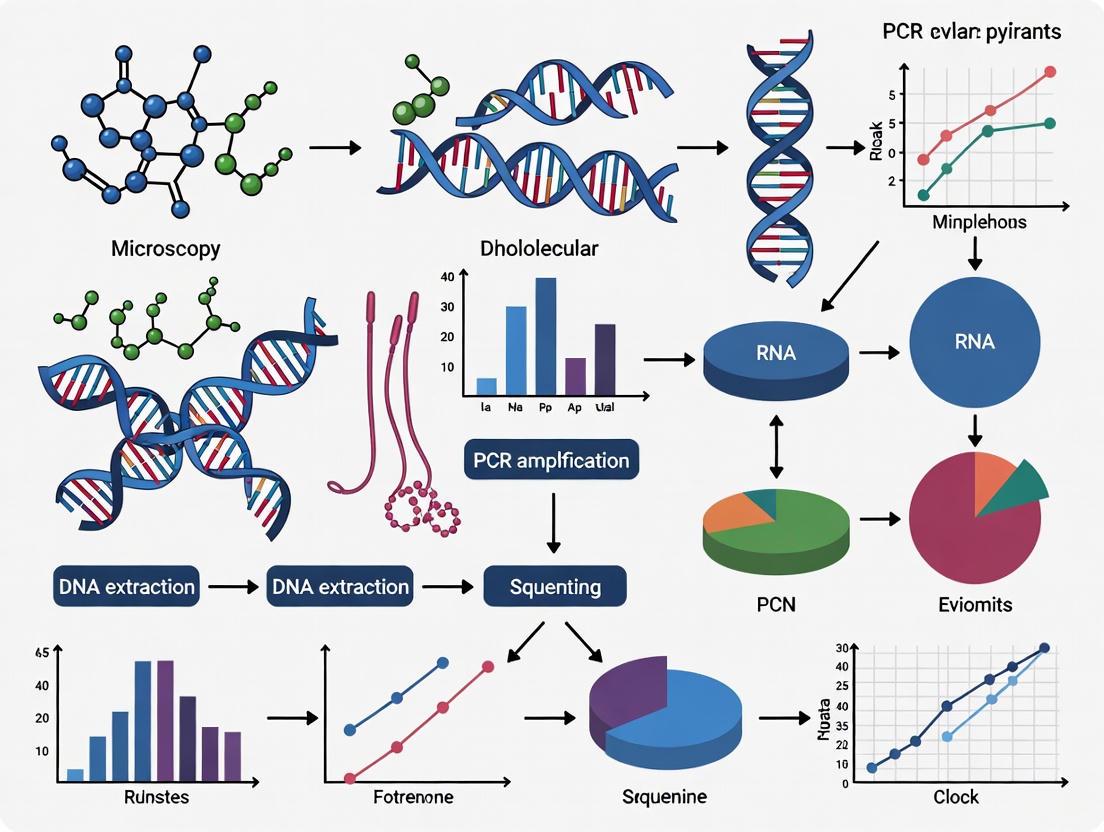
For researchers, scientists, and drug development professionals, the paradigm for parasitic infection diagnosis is rapidly shifting from traditional microscopy to advanced molecular techniques.
Beyond the Lens: How Molecular Methods Are Revolutionizing Parasite Diagnosis in Research and Drug Development
Abstract
For researchers, scientists, and drug development professionals, the paradigm for parasitic infection diagnosis is rapidly shifting from traditional microscopy to advanced molecular techniques. This article provides a comprehensive analysis of the distinct advantages offered by molecular methods, including superior sensitivity and specificity, precise species differentiation, and quantitative capabilities for assessing parasite burden. We explore foundational concepts, detail cutting-edge methodologies from PCR to CRISPR, address critical troubleshooting and optimization strategies for assay development, and present rigorous comparative validation data. The synthesis of this information underscores how molecular diagnostics are enabling more accurate epidemiological monitoring, enhancing drug efficacy evaluations, and paving the way for new therapeutic discoveries.
The Diagnostic Paradigm Shift: From Microscopic Observation to Molecular Precision in Parasitology
For centuries, conventional microscopy has served as the cornerstone of parasitological diagnosis, providing a direct means to visualize pathogens in clinical samples [1]. This technique remains widely used, particularly in resource-limited settings where it is valued for its low direct costs and minimal equipment requirements [2]. However, within the context of modern biomedical research and drug development, conventional microscopy presents significant limitations that hinder diagnostic accuracy and research efficiency. Two of the most critical constraints are its inherent operator dependency and frequently low analytical sensitivity [3] [1].
These limitations carry substantial implications for research outcomes. Inconsistent parasite identification can compromise experimental reproducibility, while failure to detect low-level infections skews efficacy assessments of therapeutic compounds. This technical review examines the fundamental constraints of conventional microscopy, providing experimental evidence and quantitative data to support the transition toward more objective, sensitive molecular methodologies in parasitology research.
The Critical Challenge of Operator Dependency
The accuracy of conventional microscopy is intrinsically linked to the expertise of the individual performing the analysis, creating a variable that is difficult to control in research settings.
Skill-Based Interpretation and Diagnostic Variability
Microscopic identification of parasites relies on the visual recognition of morphological characteristics, a skill acquired through extensive training and sustained practice. This interpretative process is highly subjective, leading to significant diagnostic variability [3]. Inexperienced or inadequately trained personnel may overlook important diagnostic signs, resulting in misidentification or false-negative results [1]. This problem is particularly acute for parasites with similar morphological features, such as the cysts of Entamoeba histolytica and non-pathogenic Entamoeba dispar, which are indistinguishable by light microscopy yet have vastly different clinical and research implications [3].
The manual nature of conventional microscopy also renders it labor-intensive and time-consuming, requiring meticulous examination of specimens which limits throughput in research settings analyzing large sample volumes [1] [2].
Experimental Evidence of Observer Variability
A multicentre study evaluating diagnostic performance for intestinal protozoa demonstrated the tangible impact of operator dependency. The research highlighted that even among trained microbiologists, microscopic identification remains challenging, with accuracy heavily influenced by examiner experience [3]. Such variability introduces unacceptable inconsistency into research data, where standardized and reproducible results are paramount for validating findings.
The Problem of Low Analytical Sensitivity
Beyond operator dependency, conventional microscopy suffers from fundamental limitations in detection capability, particularly when parasite loads are low.
Physical Limitations of Detection
The sensitivity of light microscopy is constrained by practical physical limitations. Low parasite loads in patient samples may lead to underdiagnosis, as the limited volume of specimen examined may not contain detectable organisms [1]. This is especially problematic in chronic infections, partially-treated cases, and in research settings evaluating drug efficacy where diminishing parasite numbers directly indicate treatment success.
Furthermore, the technique's resolution limits can obscure critical diagnostic features, while artifacts in samples can be misinterpreted as parasitic structures, leading to false positives [1]. These limitations collectively reduce the reliability of microscopy for quantifying infection intensity or confirming parasite clearance in interventional studies.
Comparative Performance Data
Recent comparative studies provide quantitative evidence of microscopy's sensitivity limitations. The following table summarizes performance metrics for microscopy versus molecular methods for common parasitic infections:
Table 1: Comparative Sensitivity of Microscopy vs. Molecular Methods for Selected Parasites
| Parasite | Microscopy Sensitivity | Molecular Method Sensitivity | Reference |
|---|---|---|---|
| Giardia duodenalis | 100% (Reference) | 100% (Agreement with microscopy) | [3] |
| Cryptosporidium spp. | 54.5% (Compared to PCR) | 100% (Reference) | [3] |
| Dientamoeba fragilis | Limited (Inconsistent detection) | High specificity but limited sensitivity due to DNA extraction issues | [3] |
| Entamoeba histolytica | Cannot differentiate from non-pathogenic species | 100% (Accurate species differentiation) | [3] |
| Intestinal Protozoa (General) | Low sensitivity and specificity | Remarkably enhanced sensitivity and accuracy | [4] |
The data reveal critical weaknesses in microscopy, particularly for cryptosporidium detection where sensitivity falls to approximately 54.5%, and for differentiating pathogenic E. histolytica from non-pathogenic species, which is impossible using conventional morphological approaches [3].
Experimental Protocols Highlighting Limitations
Multicentre Comparison Study Protocol
A recent multicentre study across 18 Italian laboratories directly compared conventional microscopy with molecular methods, providing a robust experimental model for evaluating diagnostic performance [3].
Methodology:
- Sample Collection: 355 stool samples (230 fresh, 125 preserved) were collected
- Microscopic Examination: All samples underwent conventional microscopy per WHO/CDC guidelines
- Fresh samples: Stained with Giemsa
- Preserved samples: Processed using formalin-ethyl acetate (FEA) concentration technique
- Molecular Testing:
- DNA extraction using MagNA Pure 96 System (Roche)
- Parallel testing with commercial RT-PCR (AusDiagnostics) and validated in-house RT-PCR
- Amplification using ABI 7900HT Fast Real-Time PCR System
- Analysis: Comparison of detection rates for Giardia duodenalis, Cryptosporidium spp., Entamoeba histolytica, and Dientamoeba fragilis
Key Findings: While microscopy and PCR showed complete agreement for Giardia duodenalis detection, microscopy demonstrated significantly lower sensitivity for Cryptosporidium spp. and unreliable detection of Dientamoeba fragilis [3]. The study also confirmed microscopy's inability to differentiate Entamoeba histolytica from non-pathogenic species, a critical limitation for both clinical management and research classification.
Diagnostic Workflow and Impact of Limitations
The following diagram illustrates the conventional microscopy workflow and critical points where limitations affect diagnostic outcomes:
Diagram 1: Conventional microscopy workflow showing critical limitation points. Operator dependency and low sensitivity introduce errors at multiple stages.
Advancing Beyond Microscopy: Molecular Methods
The limitations of conventional microscopy have accelerated the development and adoption of molecular diagnostic technologies that offer superior performance characteristics for research applications.
Key Advantages of Molecular Methods
Molecular methods, particularly nucleic acid amplification tests (NAATs), address the fundamental constraints of microscopy:
- Enhanced Sensitivity and Specificity: Molecular methods demonstrate significantly improved detection capabilities, especially at low parasite concentrations [5] [4]
- Objective Interpretation: Automated results reduce operator-dependent variability, enhancing reproducibility [2]
- Species Differentiation: Molecular assays can distinguish between morphologically identical species with different pathogenic potential [5] [3]
- Quantification Capabilities: Real-time PCR provides quantitative data essential for monitoring treatment efficacy in interventional studies [5]
Performance Gap Visualization
The following diagram quantifies the performance gap between conventional and molecular methods:
Diagram 2: Performance comparison between conventional microscopy and molecular methods across key parameters.
Essential Research Reagents and Materials
Transitioning from conventional microscopy to molecular methodologies requires specific reagents and equipment. The following table outlines essential components for implementing molecular detection of parasites:
Table 2: Essential Research Reagents for Molecular Detection of Parasites
| Reagent/Material | Function | Application Example |
|---|---|---|
| DNA Extraction Kits (e.g., MagNA Pure 96) | Nucleic acid purification from clinical samples | Automated extraction from stool samples for intestinal protozoa [3] |
| PCR Master Mix (e.g., TaqMan Fast Universal) | Amplification of target DNA sequences | Multiplex real-time PCR detection of multiple parasite species [3] |
| Primer/Probe Sets | Target-specific amplification and detection | Species-specific identification of Entamoeba histolytica [3] |
| Internal Extraction Controls | Monitoring extraction efficiency and inhibition | Quality control in stool sample processing [3] |
| Positive Control Templates | Assay validation and performance verification | Quantification standards for PCR assays [5] |
Conventional microscopy remains a foundational technique in parasitology but presents significant limitations for research applications requiring high sensitivity, objectivity, and reproducibility. The operator dependency of morphological identification introduces unacceptable variability, while the technique's limited sensitivity impedes detection of low-intensity infections critical for evaluating therapeutic efficacy.
Molecular methods, particularly NAATs, address these limitations through enhanced sensitivity, species differentiation capabilities, and reduced technical variability. While implementation requires specialized equipment and reagents, the transition to molecular approaches represents a necessary evolution for rigorous parasitology research and drug development. Future directions including point-of-care molecular platforms and artificial intelligence-assisted imaging will further bridge the gap between accessibility and performance, ultimately advancing our capacity to combat parasitic diseases through improved research methodologies.
In the field of parasitic disease research, the unambiguous detection of pathogens is fundamental to accurate diagnosis, effective treatment, and ongoing surveillance. Traditional microscopy-based methods, while historically significant, face substantial limitations in sensitivity and specificity. The targeting of nucleic acids (DNA and RNA) represents a fundamental paradigm shift, enabling researchers to achieve unambiguous detection of parasites based on their unique genetic signatures. This technical guide explores the core principles of nucleic acid-based detection methodologies, detailing their operational mechanisms, and framing their decisive advantages within the context of modern parasitology research and drug development.
Nucleic acids serve as the ideal target for detection because they contain the specific genetic blueprint of an organism. Techniques that probe these unique sequences can differentiate between closely related parasite species and even identify specific strains, providing a level of precision that morphological examination under a microscope cannot reliably offer [6]. This capability is particularly crucial for detecting low-intensity infections, identifying cryptic species, and monitoring drug resistance—all critical factors for effective disease control and the development of new therapeutic agents.
Core Principles of Nucleic Acid Detection
Nucleic acid detection techniques function on the principle of specific hybridization and amplification. The process typically begins with the extraction of DNA or RNA from a clinical sample, such as stool for soil-transmitted helminths (STH). Once purified, the genetic material is used as a template in reactions designed to amplify a unique, target-specific sequence of nucleotides characteristic of the parasite in question.
The key to unambiguous detection lies in the design of primers (short, single-stranded DNA fragments) and probes that are complementary only to the target parasite's genetic sequence. These components ensure that amplification occurs only if the specific pathogen's nucleic acid is present in the sample. This molecular specificity stands in stark contrast to microscopy, which relies on the visual identification of eggs, larvae, or adult parasites and can be confounded by factors such as intermittent parasite excretion, low infection intensity, and the need for highly trained personnel to distinguish between morphologically similar organisms [6].
Key Analytical Techniques and Methodologies
Amplification-Based Detection
Polymerase Chain Reaction (PCR) and Its Variants
Fundamental Principle: PCR is a cornerstone technique that enables the exponential amplification of a specific target DNA sequence from a minimal starting quantity, in some cases from a single molecule [7]. Through repeated cycles of denaturation, annealing, and extension, facilitated by a thermostable DNA polymerase, millions of copies of the target segment are generated, making it readily detectable.
Reverse Transcription PCR (RT-PCR): For parasites where RNA is a key biomarker (e.g., from viral co-infections or for studying gene expression), RT-PCR is employed. This technique first uses the enzyme reverse transcriptase to convert RNA into complementary DNA (cDNA), which is then amplified by standard PCR [7]. Quantitative RT-PCR (qRT-PCR) allows researchers to quantify the target gene, which is vital for assessing parasite load and understanding disease progression [7].
Digital PCR (dPCR): dPCR represents a refinement of traditional PCR that allows for absolute quantification of nucleic acid molecules without the need for a standard curve. The sample is partitioned into tens of thousands of nanoscale reactions, so that each compartment contains either zero or one target molecule. Following PCR amplification, the number of positive partitions is counted, and the original target concentration is calculated using Poisson statistics [8] [9]. This method is exceptionally robust for detecting rare mutations and is less affected by inhibitors in the sample matrix compared to qPCR [8]. In the context of parasite research, dPCR offers superior sensitivity for detecting low-abundance pathogens.
Isothermal Amplification Techniques
- Loop-Mediated Isothermal Amplification (LAMP): LAMP is a single-tube technique that amplifies DNA with high specificity and efficiency at a constant temperature, eliminating the need for thermal cycling. It is particularly well-suited for field applications and point-of-care diagnostics due to its operational simplicity and the ability to read results via turbidity or color change [10]. While reagent costs can be higher and multiplexing more challenging than PCR, its minimal power requirement and simple optics make it a compelling alternative in resource-limited settings [10].
Sequencing-Based Detection
Sequencing determines the precise order of nucleotides within a DNA or RNA molecule. This provides the highest possible level of unambiguous detection, allowing for the identification of novel parasites, detailed strain typing, and the discovery of genetic markers associated with drug resistance.
- Next-Generation Sequencing (NGS): NGS technologies allow for the massive parallel sequencing of millions of DNA fragments, providing a comprehensive view of the genetic material within a sample [8]. This is invaluable for discovering novel pathogens, understanding complex parasite populations, and conducting genomic epidemiology studies.
- Sanger Sequencing: Often used for validating results or for smaller-scale projects, Sanger sequencing remains a gold standard for accuracy for single DNA fragments [7].
Hybridization-Based Detection
- Fluorescence In Situ Hybridization (FISH): Techniques like Ago-FISH and dynamic FRET-FISH utilize fluorescently labeled nucleic acid probes to bind to complementary target sequences, even within cells or tissue sections, allowing for direct visualization and localization of the pathogen [8].
- Microarrays: The nCounter system, for example, can detect and count hundreds of unique RNA transcripts simultaneously without amplification, using color-coded molecular barcodes that hybridize directly to the target nucleic acids [8].
The workflow below illustrates the logical progression from sample collection to result interpretation in nucleic acid-based pathogen detection.
Quantitative Comparison: Molecular Methods vs. Microscopy
The advantages of nucleic acid-based techniques are quantifiable, as demonstrated by their superior performance in diagnostic sensitivity and negative predictive value, particularly for low-intensity infections.
Table 1: Comparative Diagnostic Performance for Soil-Transmitted Helminths (STH) [6]
| Diagnostic Technique | Category | Ascaris lumbricoides Sensitivity | Hookworm Sensitivity | Trichuris trichiura Sensitivity | Key Limitations |
|---|---|---|---|---|---|
| Direct Wet Mount Microscopy | Microscopy | 52 – 83.3% | 37.9 – 85.7% | 12.5% | Low sensitivity; unable to differentiate hookworm species |
| Formol-Ether Concentration (FEC) | Microscopy | 32.5 – 81.4% | 64.2 – 72.4% | 57.8 – 75% | Sensitivity variable and affected by infection intensity |
| Kato-Katz Technique | Microscopy | Gold standard for moderate/heavy infection | Not recommended for Strongyloides | Affected by sample stirring | Lower sensitivity for low-intensity infections |
| Real-Time PCR (qPCR) | Molecular | Substantially Higher | ~100% for genus-level [6] | Substantially Higher | Requires specialized equipment and training |
| Digital PCR (dPCR) | Molecular | Exceptional sensitivity for rare targets [8] [9] | Capable of species differentiation [6] | Exceptional sensitivity for rare targets [8] [9] | Higher cost per test; lower throughput than qPCR |
Table 2: Comparison of Key Nucleic Acid Detection Techniques [8] [7] [10]
| Technique | Target | Key Principle | Multiplexing Capability | Key Advantage |
|---|---|---|---|---|
| PCR / qPCR | DNA | Target amplification with thermal cycling | Low to Medium | High throughput, cost-effective, quantitative (qPCR) |
| Digital PCR (dPCR) | DNA | Partitioning and end-point detection | Low | Absolute quantification, resistant to inhibitors, high sensitivity |
| LAMP | DNA | Isothermal amplification with strand-displacement | Low | Simple instrumentation, suitable for point-of-care use |
| Next-Generation Sequencing (NGS) | DNA/RNA | Massive parallel sequencing | High | Unbiased detection, discovery of novel pathogens |
| Ago-FISH / FRET-FISH | DNA/RNA | Hybridization with single-molecule sensitivity | Medium | Spatial context, real-time analysis, high specificity |
The Scientist's Toolkit: Essential Reagents for Nucleic Acid Detection
Successful experimentation in this field relies on a suite of specialized reagents and materials.
Table 3: Research Reagent Solutions for Nucleic Acid Detection
| Item | Function | Example Application |
|---|---|---|
| DNA Polymerase | Enzyme that synthesizes new DNA strands by adding nucleotides to a primer template. | Core enzyme in PCR, RT-PCR, and LAMP reactions for amplifying target sequences [7]. |
| Reverse Transcriptase | RNA-dependent DNA polymerase that synthesizes cDNA from an RNA template. | Essential first step in RT-PCR and RT-LAMP for detecting RNA viruses or studying gene expression [7]. |
| Primers & Probes | Short, single-stranded oligonucleotides designed to be complementary to and bind a specific target sequence. | Provide the specificity for the assay. Probes (e.g., TaqMan) allow for real-time quantification in qPCR [8] [7]. |
| dNTPs | Deoxynucleoside triphosphates (dATP, dCTP, dGTP, dTTP); the building blocks of DNA. | Substrates for DNA polymerase during the amplification of new DNA strands [7]. |
| Fluorescent Nucleic Acid Stains | Dyes that intercalate with DNA or RNA and fluoresce, enabling detection and quantification. | Used for quantitating nucleic acid concentration (e.g., PicoGreen) [11] or for detecting amplicons in gel electrophoresis [7]. |
| Nucleic Acid Ladders | A mixture of DNA fragments of known lengths, used as a reference standard. | Essential for determining the size of amplified PCR products during gel electrophoresis [7]. |
| Restriction Enzymes | Enzymes that cut DNA at specific recognition nucleotide sequences. | Used in techniques like Southern blotting to digest genomic DNA into fragments for analysis [7]. |
Detailed Experimental Protocol: PCR-Based Detection of Parasitic DNA
The following protocol provides a generalized workflow for detecting parasite-specific DNA in a sample, adaptable for various specific targets.
1. Sample Collection and Nucleic Acid Extraction:
- Collect the appropriate biological sample (e.g., stool, blood, tissue).
- Extract total DNA or RNA using a commercial kit or established phenol-chloroform protocol. The choice between DNA and RNA depends on the target parasite and its biomarkers.
- Quantify the purified nucleic acid using a spectrophotometer (e.g., Nanodrop) or a fluorescence-based assay (e.g., Qubit with Quant-iT kits) [11] [12]. Assess purity using the A260/A280 ratio, aiming for ~1.8 for pure DNA [7].
2. Primer and Probe Design:
- Identify a unique genetic sequence specific to the target parasite (e.g., a repetitive genomic element, a specific gene).
- Design forward and reverse primers that flank a 100-300 base pair region of this target.
- For qPCR, also design a fluorescent probe that binds within the amplicon.
- Validate the specificity of the primers in silico by checking for cross-reactivity with other sequences in genomic databases.
3. Reaction Setup:
- Prepare a master mix containing:
- Reaction Buffer (provides optimal pH and ionic conditions)
- MgCl₂ (a co-factor for DNA polymerase)
- dNTP Mix (the building blocks for new DNA)
- Forward and Reverse Primers (at a defined concentration, e.g., 0.5 µM each)
- DNA Polymerase (e.g., Taq polymerase, 1-2 units per reaction)
- Probe (for qPCR) or Intercalating Dye (e.g., SYBR Green, for non-specific detection)
- Aliquot the master mix into reaction tubes or a multi-well plate.
- Add the template DNA (typically 1-100 ng) to each reaction. Include negative controls (no-template) and positive controls (DNA with known target sequence).
4. Amplification:
- Place the reactions in a thermal cycler programmed with the appropriate protocol.
- Initial Denaturation: 95°C for 2-5 minutes.
- Amplification Cycles (35-45 cycles):
- Denaturation: 95°C for 15-30 seconds.
- Annealing: Primer-specific temperature (50-65°C) for 15-30 seconds.
- Extension: 72°C for 15-60 seconds (time depends on amplicon length).
- Final Extension: 72°C for 5-10 minutes.
5. Analysis of Results:
- For qPCR: The cycle threshold (Ct) value is determined for each sample, which correlates with the starting quantity of the target nucleic acid. A standard curve from serially diluted positive controls is used for absolute quantification.
- For Conventional PCR: Analyze the amplification products by gel electrophoresis. The presence of a band of the expected size, as compared to a DNA ladder, indicates a positive detection.
The fundamental principle of targeting nucleic acids provides an unambiguous, specific, and highly sensitive means of detecting parasitic pathogens. The methodologies outlined in this guide—from foundational PCR to cutting-edge digital PCR and sequencing—offer a powerful toolkit that overcomes the critical limitations of traditional microscopy. As these molecular technologies continue to evolve, becoming more accessible and integrated with advanced data analysis, their role in driving forward parasitology research, drug discovery, and global disease control efforts will only become more indispensable. For researchers and drug development professionals, mastering these techniques is no longer optional but essential for contributing to the next wave of advancements in the field.
The Global Burden of Parasitic Diseases and the Need for Accurate Diagnostics
Parasitic diseases constitute a major, yet often underestimated, global public health challenge, disproportionately affecting impoverished populations in tropical and subtropical regions. These diseases are caused by a diverse array of pathogens, including protozoa and helminths, and are responsible for significant morbidity, mortality, and socioeconomic burden worldwide [13] [14]. The World Health Organization (WHO) estimates that more than 1 billion people are affected by neglected tropical diseases (NTDs), the majority of which are parasitic in origin [15]. The soil-transmitted helminths (STHs) alone infect over 1.5 billion people globally, with the highest prevalence in sub-Saharan Africa, the United States of America, China, and East Asia [6]. Accurate diagnosis represents the cornerstone of effective disease management, surveillance, and control strategies. For decades, conventional microscopy has served as the diagnostic mainstay in most endemic settings; however, its limitations have become increasingly apparent in the context of modern parasitic disease control programs. This technical guide examines the global burden of parasitic diseases, analyzes the limitations of traditional diagnostic methods, and articulates the compelling advantages of molecular techniques for research and drug development applications.
Global Epidemiology and Health Impact
The global burden of parasitic diseases is extensive, with profound health and economic consequences that perpetuate cycles of poverty in endemic regions. Over 1.495 billion people require interventions for NTDs annually, with parasitic infections causing approximately 120,000 deaths and 14.1 million disability-adjusted life years (DALYs) lost each year [15]. The economic impact is equally staggering, with direct healthcare costs, productivity losses, and reduced socioeconomic attainment costing developing economies billions of dollars annually [14].
Table 1: Global Prevalence and Impact of Major Parasitic Diseases
| Disease | Global Prevalence/Cases | Annual Mortality | Key Endemic Regions | Primary Pathogens |
|---|---|---|---|---|
| Soil-Transmitted Helminthiases | >1.5 billion people infected [6] | Not specified (Significant morbidity) | Sub-Saharan Africa, Americas, China, East Asia [6] | Ascaris lumbricoides (1.2B), Trichuris trichiura, Hookworms [6] |
| Malaria | 249 million cases (2019) [13] [16] | >600,000 [13] | Sub-Saharan Africa [16] | Plasmodium spp. [13] |
| Schistosomiasis | 151 million cases (2021 estimate) [14] | Not specified (Significant morbidity) | Asia, Africa, Latin America [16] | Schistosoma spp. [16] |
| Leishmaniasis | 700,000 - 1 million cases yearly [16] | 50,000 (Visceral Leishmaniasis, 2010) [13] | Over 65 countries [13] | Leishmania spp. [13] |
| Chagas Disease | Rising prevalence [16] | Not specified (Significant chronic morbidity) | Latin America (with global spread) [16] | Trypanosoma cruzi [16] |
| Lymphatic Filariasis | >657 million at risk [16] | Not typically fatal (Second leading cause of global disability) [16] | 39 countries [16] | Wuchereria bancrofti, Brugia spp. [16] |
The burden of parasitic diseases extends beyond mortality to include chronic morbidity that affects quality of life, childhood development, and economic productivity. STH infections cause impaired cognitive and physical development in children, while chronic infections in adults reduce productivity and learning capacity [6] [14]. Furthermore, parasitic coinfections with viral pathogens present substantial clinical complications, with a global prevalence of 21.34% for helminths and 34.13% for protozoa in virus-infected people, potentially exacerbating disease outcomes and complicating therapeutic approaches [17].
Conventional Diagnostic Methods: Limitations and Challenges
Microscopy-Based Techniques
Microscopy has historically been the cornerstone of parasitic diagnosis, with various techniques employed depending on the parasite and clinical context.
Table 2: Conventional Microscopy-Based Diagnostic Methods for Parasitic Infections
| Technique | Procedure | Sensitivity | Advantages | Limitations |
|---|---|---|---|---|
| Direct Wet Mount | Stool sample prepared with saline/iodine on slide with cover glass [6] | A. lumbricoides: 83.3%, Hookworm: 85.7% [6] | Low cost, easy, detects motile trophozoites [6] | Low sensitivity, requires immediate examination [6] |
| Kato-Katz | Thick stool smear for egg detection and quantification [6] | Varies with infection intensity [6] | WHO recommended, quantifies egg burden [6] | Low sensitivity for low-intensity infections, not recommended for Strongyloides [6] |
| Formol-Ether Concentration (FEC) | Stool suspension in formalin, filtered, ether added, centrifuged, sediment examined [6] | A. lumbricoides: 32.5-81.4%, Hookworm: 64.2-72.4%, T. trichiura: 57.8-75% [6] | Concentrates parasites, improves detection [6] | Multiple steps, chemical handling, variable sensitivity [6] |
Limitations of Conventional Methods
The constraints of microscopy-based diagnostics present significant challenges to effective parasite control:
- Variable and Low Sensitivity: Sensitivity is highly dependent on parasite burden, technician expertise, and specimen quality. Microscopy frequently misses low-intensity infections and intermittent shedding of parasites [6] [14].
- Inability to Speciate: Microscopy often cannot differentiate between morphologically similar species. For example, it cannot distinguish between hookworm species (Necator americanus vs. Ancylostoma spp.), which have different pathogenicities and drug susceptibilities [6].
- Labor-Intensive and Time-Consuming: Manual examination requires significant expertise and is impractical for large-scale surveillance or mass drug administration monitoring programs [6].
- Inability to Distinguish Past from Current Infections: Serological methods, while useful for some infections, cannot differentiate between active infection and previous exposure, limiting their utility in endemic areas [14].
Molecular Diagnostics: Advantages and Methodologies
Molecular methods have emerged as powerful alternatives to conventional techniques, offering enhanced sensitivity, specificity, and the ability to precisely identify parasitic species and strains.
Key Molecular Techniques
Polymerase Chain Reaction (PCR) and Quantitative PCR (qPCR)
PCR-based methods amplify specific DNA targets, enabling detection even at low parasite densities. qPCR additionally provides quantification of parasite load, which is valuable for assessing infection intensity and monitoring treatment response [18] [19].
- Experimental Protocol - Satellite DNA (SatDNA) qPCR for T. cruzi [19]:
- Sample Preparation: Collect 5-10 mL of whole blood in EDTA tubes. Separate plasma and buffy coat by centrifugation. Extract DNA using commercial kits, ensuring appropriate negative controls.
- Primer Design: Design primers targeting the highly repetitive SatDNA sequence of T. cruzi (approximately 100,000 copies per parasite) to maximize sensitivity.
- Reaction Setup: Prepare 25 μL reactions containing: 12.5 μL of 2× master mix, 1 μL of each primer (10 μM), 0.5 μL of probe (5 μM), 5 μL of DNA template, and 5 μL of nuclease-free water.
- Amplification Conditions: Program thermocycler: 95°C for 10 min (initial denaturation), followed by 45 cycles of 95°C for 15 sec (denaturation) and 60°C for 1 min (annealing/extension).
- Data Analysis: Generate standard curve using serial dilutions of T. cruzi DNA of known concentration. Calculate parasite equivalents/mL in patient samples by interpolation from the standard curve.
Loop-Mediated Isothermal Amplification (LAMP)
LAMP amplifies DNA with high specificity and efficiency under isothermal conditions (60-65°C), eliminating the need for thermal cyclers and making it suitable for field applications [19].
- Experimental Protocol - LAMP for Parasite Detection:
- Sample Preparation: DNA extraction can be performed using simplified methods, as LAMP is relatively tolerant to inhibitors.
- Primer Design: Design 4-6 primers targeting 6-8 distinct regions of the target gene.
- Reaction Setup: Prepare 25 μL reactions containing: reaction buffer, betaine, MgSO4, dNTPs, Bst DNA polymerase, primer mix, and DNA template.
- Amplification: Incubate at 63°C for 30-60 minutes.
- Detection: Results can be visualized by turbidity, color change with hydroxynaphthol blue, or fluorescence under UV light.
Next-Generation Sequencing (NGS)
NGS technologies provide comprehensive analysis of parasite populations, enabling species identification, detection of mixed infections, analysis of genetic diversity, and identification of drug resistance markers [14].
Comparative Advantages of Molecular Methods
Molecular diagnostics offer significant advantages over conventional microscopy:
- Enhanced Sensitivity and Specificity: qPCR can detect as low as 0.7-2.0 parasite equivalents/mL for T. cruzi, far surpassing the detection limit of microscopy [19]. Specificity is achieved through careful primer design targeting unique genomic sequences.
- Species and Strain Differentiation: Molecular methods can distinguish between genetically distinct parasite species and strains (Discrete Typing Units - DTUs in T. cruzi) that may differ in virulence, drug susceptibility, and clinical manifestations [19].
- Quantification Capability: qPCR provides precise measurement of parasite load, enabling monitoring of treatment response and detection of emerging drug resistance [19].
- Automation and High-Throughput Capacity: Molecular platforms can be automated, facilitating processing of large sample volumes essential for epidemiological studies and surveillance programs [6].
- Novel Applications: Molecular methods are crucial for detecting parasitic infections in immunocompromised patients, monitoring transplant recipients for reactivation, and diagnosing congenital transmissions where parasite burdens are typically low [19].
The following diagram illustrates the typical workflow and advantages of molecular diagnostics compared to conventional methods in parasite research:
Essential Research Reagent Solutions
The implementation of molecular diagnostics requires specific reagents and tools. The following table details key research reagent solutions essential for parasitic disease research.
Table 3: Essential Research Reagents for Molecular Parasitology
| Reagent/Tool | Function | Application Examples |
|---|---|---|
| DNA Extraction Kits | Isolation of high-quality genomic DNA from clinical samples (blood, stool, tissue) [19] | QIAamp DNA Blood Mini Kit, QIAamp DNA Stool Mini Kit |
| PCR Master Mixes | Pre-mixed solutions containing Taq polymerase, dNTPs, buffers, MgCl₂ for amplification [19] | Commercial qPCR master mixes for SatDNA and kDNA targets |
| Species-Specific Primers/Probes | Oligonucleotides designed to target parasite-specific gene sequences for amplification and detection [19] | Primers for T. cruzi SatDNA/kDNA, Plasmodium 18S rRNA, Leishmania kDNA |
| Commercial PCR Kits | Standardized, quality-controlled tests for specific parasite detection [19] | Recently eight commercial qPCR tests developed for T. cruzi detection |
| Loop-Mediated Isothermal Amplification (LAMP) Kits | Isothermal amplification reagents for field-deployable parasite detection [19] | Commercial LAMP tests for malaria parasites, T. cruzi |
| Next-Generation Sequencing Kits | Library preparation reagents for whole genome sequencing of parasite isolates [14] | Illumina DNA Prep kits for parasite genome sequencing |
| Positive Control DNA | Genomic DNA from reference parasite strains to validate assay performance [19] | Cultured T. cruzi epimastigote DNA, Plasmodium reference DNA |
The significant global burden of parasitic diseases demands diagnostic strategies with enhanced accuracy, sensitivity, and specificity. While conventional microscopy has played a fundamental role in parasite diagnosis, its limitations are increasingly evident in the context of modern control and elimination programs. Molecular diagnostics represent a paradigm shift in parasitic disease management, offering unparalleled sensitivity, the ability to differentiate species and strains, and opportunities for quantification and automation. For researchers, scientists, and drug development professionals, the adoption of molecular methods is not merely an enhancement but a necessity for advancing our understanding of parasite biology, epidemiology, and for developing more effective control interventions. The ongoing development and standardization of molecular tests, including their adaptation to point-of-care formats, will be crucial for reducing the immense global health impact of parasitic diseases and achieving international disease elimination targets.
Parasitic infections remain a significant global health challenge, affecting nearly a quarter of the world's population and contributing substantially to morbidity, particularly in tropical and subtropical regions [14]. For decades, microscopic examination has served as the cornerstone of parasitic diagnosis, offering a low-cost, direct method for observing parasites in various biological samples [1]. However, the accuracy of microscopy is heavily dependent on operator skill, and its sensitivity declines dramatically with low parasite loads, leading to potential underdiagnosis [20] [14].
Molecular methods have emerged as powerful tools that overcome many limitations of traditional microscopy. Techniques such as polymerase chain reaction (PCR), quantitative PCR (qPCR), and next-generation sequencing (NGS) provide enhanced sensitivity and specificity, particularly in low-intensity infection settings common after mass drug administration programs or in surveillance phases of control efforts [21] [20]. This technical guide examines the critical advantages of molecular methods over microscopy for three key parasite categories: soil-transmitted helminths (STHs), intestinal protozoa, and blood parasites. By synthesizing current research and experimental protocols, this review provides researchers, scientists, and drug development professionals with a comprehensive resource for implementing molecular approaches in parasitic disease research and control.
Soil-Transmitted Helminths (STHs)
Limitations of Conventional Microscopy for STHs
The World Health Organization currently recommends microscopy-based techniques, particularly the Kato-Katz method, for diagnosing STH infections and monitoring control programs in endemic areas [20]. However, these methods exhibit significant limitations in sensitivity, especially as infection intensities decline due to successful mass drug administration. The Kato-Katz method has a limit of detection (LOD) of approximately 24 eggs per gram (EPG) of stool, while the McMaster technique has an even higher LOD of 50 EPG [20]. Furthermore, the sensitivity of Kato-Katz is notably poorer for hookworm detection due to the rapid disintegration of hookworm eggs [20]. These technical constraints make conventional microscopy suboptimal for accurate surveillance in low-prevalence settings and for measuring true progress toward elimination targets.
Genetic Diversity and Impact on Molecular Diagnostics
Recent genomic studies have revealed substantial population-biased genetic variation in STHs, which has direct implications for molecular diagnostic design and performance. A 2025 global diversity study analyzed low-coverage genome sequencing data from worm, faecal, and purified egg samples across 27 countries, identifying significant copy number and sequence variants in current diagnostic target regions [21]. This genetic connectivity and diversity of STH populations across different geographic scales can impact the sensitivity and specificity of qPCR assays if they target regions with high variability [21]. The study emphasized that current qPCR assays were primarily developed and validated using a limited number of geographically restricted parasite isolates, potentially limiting their global applicability [21].
Table 1: Molecular Detection Methods for Soil-Transmitted Helminths
| Method | Target Genes/Regions | Limit of Detection | Key Advantages |
|---|---|---|---|
| qPCR [20] | Ribosomal DNA (rDNA), repetitive sequences, mitochondrial genes | As low as 2 fg/μL (less than DNA in a single egg) [20] | High sensitivity, quantitation capability, species discrimination |
| Next-generation sequencing [21] | Whole genome, repetitive elements | Varies by sequencing depth | Identifies genetic diversity, detects mixed infections |
| Digital PCR [20] | Various genomic targets | Similar or superior to qPCR | Absolute quantitation without standards, robust to inhibitors |
Sample Processing and DNA Extraction Considerations
Optimal sample storage and DNA extraction are critical for reliable molecular detection of STHs. Comparative studies of preservation techniques have found that while all preservation methods are stable at 4°C, only silica bead desiccation, potassium dichromate, and FTA card preservation maintain DNA stability at 32°C, making them suitable for remote field settings without reliable cold chains [20]. Effective DNA extraction requires steps to homogenize fecal samples and disrupt the resilient outer layer of STH eggs. Recommended approaches include bead beating with ceramic or zirconium beads, multiple freeze-thaw cycles, and heating at high temperatures with proteinase K and β-mercaptoethanol [20].
Intestinal Protozoa
Diagnostic Challenges with Microscopy
Intestinal protozoan infections, including those caused by Giardia duodenalis, Cryptosporidium spp., Entamoeba histolytica, and Dientamoeba fragilis, exhibit a global distribution and are significant causes of diarrheal diseases, affecting approximately 3.5 billion people annually [3]. Microscopy remains the reference diagnostic method in many settings but has considerable limitations in sensitivity, specificity, and the ability to differentiate closely related species [3]. This is particularly problematic for Entamoeba species, where microscopic differentiation between pathogenic E. histolytica and non-pathogenic species like E. dispar is impossible, potentially leading to misdiagnosis and unnecessary treatment [3].
Comparative Performance of Molecular Methods
A 2025 multicentre study comparing commercial and in-house real-time PCR tests against conventional microscopy for intestinal protozoa demonstrated the superior performance of molecular methods [3]. The study analyzed 355 stool samples and found complete agreement between commercial and in-house PCR methods for detecting G. duodenalis, with both showing high sensitivity and specificity comparable to microscopy [3]. For Cryptosporidium spp. and D. fragilis, both molecular methods showed high specificity but limited sensitivity, which the authors attributed to inadequate DNA extraction from the parasite's robust oocyst/cyst walls [3]. Molecular methods proved particularly critical for accurate diagnosis of E. histolytica, correctly identifying the pathogenic species [3].
Metagenomic Approaches for Foodborne Protozoa
Beyond clinical diagnostics, molecular methods offer significant advantages for detecting protozoan parasites in food safety applications. A 2025 study developed a metagenomic next-generation sequencing (mNGS) assay using a MinION sequencer for identifying parasites on intentionally contaminated lettuce [22]. The researchers established a rapid DNA extraction protocol using the OmniLyse device for efficient lysis of oocysts and cysts within 3 minutes, followed by whole genome amplification and nanopore sequencing [22]. This method consistently detected as few as 100 oocysts of C. parvum in 25g of fresh lettuce and successfully identified and differentiated multiple protozoa (C. parvum, C. hominis, C. muris, G. duodenalis, and T. gondii) simultaneously [22].
Blood Parasites
Comprehensive Detection with Targeted NGS
Microscopic analysis remains an affordable, rapid method for blood parasite detection but suffers from poor species-level identification and requires expert microscopists [23]. To address these limitations, researchers have developed a targeted next-generation sequencing approach using a portable nanopore platform that enables accurate and sensitive parasite detection in resource-limited settings [23]. This approach employs a DNA barcoding strategy targeting the 18S rDNA V4-V9 region, which provides superior species identification compared to the commonly used V9 region alone [23].
To overcome the challenge of overwhelming host DNA in blood samples, the method incorporates two blocking primers: a C3 spacer-modified oligo competing with the universal reverse primer and a peptide nucleic acid (PNA) oligo that inhibits polymerase elongation [23]. These selectively reduce amplification of the host's 18S rDNA, thereby enriching parasite DNA. The assay successfully detected Trypanosoma brucei rhodesiense, Plasmodium falciparum, and Babesia bovis in human blood samples spiked with as few as 1, 4, and 4 parasites per microliter, respectively [23].
Diagram 1: Targeted NGS workflow for blood parasite detection using blocking primers to enrich parasite DNA.
Integrated Approaches for Vector-Borne Parasites
Molecular methods also enhance our understanding of vector-borne parasite transmission dynamics. A 2025 study on mosquitoes and biting midges demonstrated that combining blood meal analysis with parasite detection provides a more comprehensive understanding of insect feeding patterns than either method alone [24]. While blood meal barcoding identifies recent host interactions, parasite detection extends the window of detectability beyond blood digestion and can reveal additional host associations [24]. This integrated approach showed that Culex mosquitoes display stronger ornithophily according to parasite detection, despite blood meal analysis showing more opportunistic feeding behavior [24].
For leishmaniasis surveillance, researchers have developed PCR-high resolution melt (HRM) assays to simultaneously identify sand fly species, Leishmania parasites, and blood meal sources [25]. This multifaceted molecular approach discerned eleven sand fly species, 25 different host species blood meals, and four Leishmania species (L. major, L. tropica, L. infantum, and L. donovani), each with specific HRM patterns [25]. Of 1,658 analyzed sand flies, 16 (1%) were positive for Leishmania, and blood meal sources were identified in 520 (96.7%) engorged females [25].
The Scientist's Toolkit: Essential Research Reagents
Table 2: Key Research Reagents for Molecular Parasitology
| Reagent/Kit | Application | Function | Reference |
|---|---|---|---|
| OmniLyse device | DNA extraction | Rapid lysis of parasite oocysts/cysts (3 minutes) | [22] |
| Blocking primers (C3 spacer, PNA) | Targeted NGS | Suppress host DNA amplification in blood samples | [23] |
| MagNA Pure 96 System | Nucleic acid extraction | Automated DNA extraction from stool samples | [3] |
| High Pure PCR Template Preparation Kit | DNA extraction | Manual DNA extraction from vectors | [24] |
| TaqMan Fast Universal PCR Master Mix | qPCR amplification | Probe-based detection of parasite DNA | [3] |
| S.T.A.R. Buffer | Sample storage | Stool transport and preservation for molecular analysis | [3] |
| FTA cards | Sample storage & DNA preservation | Room temperature DNA stabilization for field collections | [20] |
Advanced Molecular Workflows
High-Resolution Melting Analysis for Leishmaniasis
The PCR-HRM assay developed for leishmaniasis surveillance represents a significant advancement in molecular diagnostics, combining the advantages of PCR with the discriminatory power of HRM [25]. The workflow begins with DNA extraction from field-collected sand flies using the High Pure PCR Template Preparation Kit. Three separate PCR-HRM assays are then run for sand fly identification, Leishmania detection, and blood meal analysis [25].
For sand fly identification, the assay targets the mitochondrial cytochrome c oxidase I (COI) gene. For Leishmania detection, the heat shock protein 70 (HSP70) gene is amplified. For blood meal analysis, the cytochrome b gene is targeted. Following amplification, PCR products are subjected to high-resolution melting analysis, where the thermal denaturation characteristics of amplicons provide species-specific melting curves based on nucleotide sequences, GC content, and amplicon length [25]. This approach correctly identified 100% of sand fly species compared to morphological identification and revealed complex transmission patterns of different Leishmania species in Israel [25].
Diagram 2: Multiplexed HRM analysis workflow for comprehensive leishmaniasis surveillance.
Impact of Genetic Variation on Diagnostic Performance
The global genetic diversity of STHs has significant implications for molecular diagnostic performance. A 2025 study used low-coverage genome sequencing of samples from 27 countries to identify substantial copy number and sequence variants in current diagnostic target regions [21]. The researchers then validated the impact of this genetic variation on qPCR diagnostics using in vitro assays, demonstrating how population-biased genetic variation can affect assay sensitivity [21]. This highlights the critical importance of considering geographic genetic structure when designing molecular assays for global use.
Targeting multi-copy genetic elements, such as ribosomal DNA clusters or repetitive sequences, can enhance detection sensitivity. Pilotte et al. developed a PCR approach targeting non-coding, repetitive DNA sequences using an NGS platform that identifies genome-wide eukaryotic repetitive elements [20]. This method achieves high sensitivity with a limit of detection at or above 2 fg/μL, which is less than the quantity of DNA present in a single STH egg [20].
Molecular methods provide critical advantages over traditional microscopy for detecting and characterizing parasitic infections across soil-transmitted helminths, intestinal protozoa, and blood parasites. The enhanced sensitivity and specificity of techniques such as qPCR, HRM analysis, and targeted NGS are particularly valuable in low-intensity infection settings, during post-treatment surveillance, and when monitoring the progress of elimination programs. The growing understanding of parasite genetic diversity and its impact on diagnostic performance underscores the need for carefully designed molecular assays that account for geographic variation. As molecular platforms become more accessible and cost-effective, they offer unprecedented opportunities for comprehensive parasite detection, species differentiation, and transmission dynamics analysis, ultimately supporting more effective control and elimination strategies for parasitic diseases of global health importance.
A Researcher's Toolkit: PCR, Isothermal Amplification, CRISPR, and Omics for Parasite Detection
For over a century, light microscopy has served as the cornerstone technique for parasite identification in clinical and research settings. While this method provides valuable information about parasite morphology and staging, it suffers from significant limitations in sensitivity and specificity, particularly in low-parasite-density infections and asymptomatic carriers [26] [27]. The emergence of polymerase chain reaction (PCR) technology has revolutionized parasite detection by offering unprecedented sensitivity and specificity through nucleic acid amplification. This whitepaper explores the fundamental principles of PCR and its advanced derivatives—quantitative real-time PCR (qPCR) and multiplex PCR—focusing on their transformative role in parasite research and their distinct advantages over conventional microscopic methods.
The limitations of microscopy become particularly evident in field applications and large-scale surveillance studies. Microscopy's detection threshold typically ranges from 50-100 parasites/μL, causing it to miss low-density infections that sustain transmission cycles [26]. Furthermore, microscopic identification requires significant technical expertise, exhibits inter-observer variability, and cannot reliably differentiate between genetically distinct parasite strains or detect genetic markers associated with drug resistance [27]. These limitations have accelerated the adoption of molecular methods that provide both detection and genetic characterization capabilities in a single assay.
Fundamental PCR Principles and Methodologies
Core PCR Mechanism
The polymerase chain reaction is a laboratory technique that enables exponential amplification of specific DNA sequences through repeated temperature cycling [28]. The fundamental process consists of three core steps that are repeated for 20-40 cycles:
- Denaturation: The double-stranded DNA template is heated to 94-98°C, disrupting hydrogen bonds between complementary strands to create single-stranded templates [29].
- Annealing: The temperature is lowered to 50-65°C, allowing short DNA primers (typically 20-25 nucleotides) to bind to complementary sequences flanking the target region [28].
- Extension: The temperature is raised to 72°C, the optimal temperature for Thermostable DNA polymerase (typically Taq polymerase) to synthesize new DNA strands by adding nucleotides complementary to the template strand [28] [29].
This process results in theoretical exponential amplification, potentially generating millions of copies of the target DNA sequence from a single template molecule [28].
Evolution of PCR Variants
The fundamental PCR technique has evolved into numerous specialized variants to address specific research needs. Hot Start PCR enhances reaction specificity by preventing non-specific amplification during reaction setup through antibody-mediated or chemical inhibition of DNA polymerase until initial denaturation [29]. High Fidelity PCR incorporates proofreading polymerases (e.g., Pfu) with 3' to 5' exonuclease activity to correct nucleotide mismatches during amplification, crucial for applications requiring high sequence accuracy such as cloning and sequencing [29]. Reverse Transcription PCR (RT-PCR) enables RNA analysis by first converting RNA to complementary DNA (cDNA) using reverse transcriptase, allowing detection of RNA viruses or gene expression studies [28] [29].
Advanced PCR Derivatives: Multiplex and Quantitative Real-Time PCR
Quantitative Real-Time PCR (qPCR)
Principles and Detection Chemistry
Quantitative real-time PCR (qPCR) represents a significant advancement over conventional PCR by enabling real-time monitoring of DNA amplification throughout the reaction cycles, rather than just endpoint detection [30]. This is achieved through fluorescent detection systems that correlate signal intensity with amplicon quantity [29]. The primary detection chemistries include:
- SYBR Green: This fluorescent dye binds nonspecifically to the minor groove of double-stranded DNA, emitting strong fluorescence when bound [30]. While cost-effective and flexible, it can generate false positive signals from non-specific amplification products and primer-dimers [30].
- TaqMan Probes: These hydrolysis probes employ a reporter dye (e.g., FAM) at the 5' end and a quencher (e.g., TAMRA) at the 3' end [30]. When intact, the quencher suppresses reporter fluorescence through FRET (Fluorescence Resonance Energy Transfer). During amplification, the 5' nuclease activity of DNA polymerase cleaves the probe, separating the reporter from the quencher and generating a fluorescent signal proportional to amplicon accumulation [30].
Quantification and Data Analysis
In qPCR, target quantification is determined through the quantification cycle (Cq), defined as the cycle number at which fluorescence exceeds a predetermined threshold [28]. The Cq value is inversely proportional to the initial target concentration, enabling precise quantification through standard curves or comparative analysis [28]. Reaction efficiency, ideally approaching 100% (corresponding to a doubling of product each cycle), directly impacts quantification accuracy [28]. Low efficiency requires more cycles to reach the detection threshold, resulting in higher Cq values and potential underestimation of target concentration [28].
Multiplex PCR
Principles and Configurations
Multiplex PCR enables simultaneous amplification of multiple DNA or RNA targets in a single reaction, ranging from simpler duplex formats to highly complex assays targeting numerous sequences [31]. Standard multiplex PCR employs multiple primer pairs that share a common reagent mix, with amplicons traditionally distinguished by size through gel electrophoresis [31]. The introduction of fluorescent reporters revolutionized multiplexing by enabling discrimination of same-size amplicons through different fluorophores, significantly enhancing throughput and workflow efficiency [31].
Advanced multiplexing configurations include multiplex ligation-dependent probe amplification (MLPA), which uses probe pairs that hybridize to adjacent target sequences, are ligated, and then amplified with universal primers [31]. Methylation-specific MLPA (MS-MLPA) can simultaneously detect copy number variations and methylation status in a single experiment [31]. High-resolution melting (HRM) analysis combined with qPCR uses intercalating dyes and unique melting temperatures to distinguish amplicons with subtle sequence differences [31].
Benefits and Technical Challenges
Multiplex PCR delivers significant advantages including maximal information retrieval from scarce or valuable samples, increased throughput with faster time-to-result, cost savings through consolidated reagent use, and enhanced data reliability through built-in controls [31]. These benefits make it particularly valuable for researchers handling high volumes of precious samples and for laboratories conducting routine diagnostic assays or quality controls [31].
The technique presents substantial technical challenges, including complex assay development requiring careful optimization of primer compatibility and reaction conditions to prevent imbalanced amplification [31]. The risk of primer-dimer formation and non-specific amplification increases with additional primer pairs, potentially reducing sensitivity and specificity [31]. Furthermore, multiplex assays require advanced instrumentation capable of detecting multiple fluorescent signals and careful selection of non-overlapping fluorophores [31].
Experimental Protocols for Parasite Detection
DNA Extraction from Blood Samples
For Plasmodium detection, collect 100-500μL of peripheral blood in EDTA tubes to prevent coagulation [26]. Use commercial nucleic acid extraction kits following manufacturer protocols, incorporating optional pre-extraction saponin lysis to enrich for parasite DNA by removing hemoglobin [26]. Elute DNA in 50-100μL of elution buffer and quantify using spectrophotometry (NanoDrop) or fluorometry (Qubit). Store extracts at -20°C for short-term use or -80°C for long-term preservation [26].
Multiplex qPCR Protocol for Plasmodium Species Detection
Reaction Setup
Prepare a master mix containing:
- 10μL of 2× qPCR master mix
- 0.5μL of each primer (10μM stock) targeting Plasmodium genus-specific 18S rRNA regions
- 0.25μL of species-specific TaqMan probes (10μM) for P. falciparum, P. vivax, P. malariae, and P. ovale
- 1μL of internal positive control (IPC) to monitor inhibition
- 2μL of DNA template
- Nuclease-free water to 20μL total reaction volume [26] [32]
Thermal Cycling Conditions
Program the real-time PCR instrument as follows:
- Initial denaturation: 95°C for 3 minutes
- 45 cycles of:
- Denaturation: 95°C for 15 seconds
- Annealing/Extension: 60°C for 60 seconds (with fluorescence acquisition)
- Final extension: 72°C for 5 minutes [26] [32]
Data Analysis
Analyze amplification curves to determine Cq values. Establish a positive threshold based on negative controls, typically 0.1-0.2 ΔRn. Samples with Cq values <40 are considered positive. For quantification, use a standard curve generated from serial dilutions of plasmids containing target sequences with known concentrations [26].
Sample Pooling Strategy for Epidemiological Surveillance
To enhance cost-efficiency in large-scale surveillance, implement a sample pooling protocol where individual microscopy and RDT-negative samples are combined and tested as pools [32]. Extract DNA from pools of 10 samples, requiring approximately half the reactions and testing costs compared to individual testing [32]. Any positive pools can subsequently be tested individually to identify infected samples, significantly reducing reagent costs while maintaining detection sensitivity in low-prevalence settings [32].
Comparative Performance: Molecular Methods vs. Microscopy
Diagnostic Performance in Malaria Detection
Table 1: Performance comparison of microscopy, RDT, and qPCR for malaria parasite detection
| Diagnostic Method | Sensitivity (%, 95% CI) | Specificity (%, 95% CI) | Detection Limit (parasites/μL) | Time to Result |
|---|---|---|---|---|
| Light Microscopy | 62.2-73.8 [32] | 94.3-100 [32] | 50-100 [26] | 45-60 minutes |
| Rapid Diagnostic Tests (RDTs) | 67.6 [26] | 87.5-96.5 [26] [32] | 100-200 [26] | 15-20 minutes |
| Multiplex qPCR | 94.0-100 [26] [32] | 94.8-100 [26] [32] | 1-5 [26] | 2-4 hours |
Table 2: Plasmodium species distribution detected by different methods in Northwest Tanzania (n=4,454 participants) [26]
| Plasmodium Species | Microscopy Prevalence (%) | qPCR Prevalence (%) | Geometric Mean Parasite Density (parasites/μL) by qPCR |
|---|---|---|---|
| P. falciparum | 28.7 | 35.3 | 1180 (95% CI: 1032-1349) |
| P. malariae | 0.2 | 0.4 | 50 (95% CI: 29-89) |
| P. ovale | 0.3 | 0.5 | 44 (95% CI: 32-61) |
Statistical Superiority of Molecular Methods
Recent studies demonstrate the significant advantage of molecular methods over conventional microscopy. In a comprehensive survey of 4,454 participants in Northwest Tanzania, the overall prevalence of Plasmodium infections was 44.4% by RDTs, 32.1% by microscopy, and 39.8% by qPCR, indicating that molecular methods detect a substantial number of infections missed by conventional techniques [26]. The sensitivity of both RDTs and microscopy decreases dramatically at low parasitemia (<100 parasites/μL) but increases significantly with rising parasite density, reaching ≥99.6% at >10,000 parasites/μL [26]. Similar patterns were observed in pregnant women in Northwest Ethiopia, where microscopy showed 62.2-73.8% sensitivity compared to multiplex qPCR for detecting placental and peripheral blood Plasmodium infections [32].
The Scientist's Toolkit: Essential Research Reagents
Table 3: Essential research reagents for multiplex and qPCR applications in parasite detection
| Reagent/Chemical | Function | Application Notes |
|---|---|---|
| Taq DNA Polymerase | Thermostable enzyme catalyzes DNA synthesis | Optimal activity at 72°C; requires magnesium cofactor |
| Proofreading Polymerases (Pfu) | High-fidelity amplification with 3'→5' exonuclease activity | Reduces replication errors; essential for sequencing |
| dNTPs (dATP, dCTP, dGTP, dTTP) | Nucleotide building blocks for DNA synthesis | Typical working concentration: 200-400μM each |
| Sequence-Specific Primers | Target flanking sequences for amplification | 18-25 nucleotides; Tm 55-65°C; avoid secondary structures |
| TaqMan Hydrolysis Probes | Sequence-specific detection with reporter/quencher system | Enables multiplexing with different fluorophores |
| SYBR Green Dye | Non-specific intercalation with dsDNA | Cost-effective but less specific; requires melt curve analysis |
| MgCl₂ | Cofactor for DNA polymerase | Concentration optimization critical (1.5-4.0mM) |
| PCR Buffer | Maintains optimal pH and ionic strength | Typically Tris-based; may include stabilizers |
| DMSO/Glycerol/Betaine | Reduces secondary structure in GC-rich templates | Enhances amplification efficiency for difficult templates |
Workflow and Signaling Pathways
Diagram 1: Workflow for multiplex qPCR detection of parasite infections, illustrating both the thermal cycling process and the fluorescence-based detection chemistry that enables simultaneous detection of multiple targets.
Diagram 2: Comparative detection capabilities of microscopy, RDTs, and qPCR across the parasite density spectrum, illustrating qPCR's superior sensitivity for detecting low-density and submicroscopic infections that sustain transmission cycles.
The evolution of PCR technology into sophisticated derivatives such as multiplex and quantitative real-time PCR represents a paradigm shift in parasite detection and surveillance. These molecular methods offer transformative advantages over conventional microscopy, including dramatically enhanced sensitivity for detecting low-density infections, precise quantification of parasite burden, simultaneous differentiation of multiple species in a single assay, and capability to identify genetic markers associated with drug resistance [26] [32]. While microscopy retains value for basic morphological assessment and rapid diagnosis in resource-limited settings, molecular methods provide the precision, throughput, and analytical power required for advanced research, drug development, and effective surveillance programs aimed at parasite elimination [26] [27].
The integration of pooled testing strategies further enhances the cost-effectiveness of molecular methods for large-scale epidemiological studies, making comprehensive surveillance feasible even in resource-constrained environments [32]. As PCR technologies continue to advance toward miniaturization, automation, and point-of-care applications, their central role in parasite research and control programs will undoubtedly expand. For researchers and drug development professionals, mastery of these molecular tools is no longer optional but essential for driving innovation in parasite detection, understanding transmission dynamics, and developing next-generation therapeutics.
The transition from traditional microscopy to molecular methods represents a paradigm shift in diagnostic parasitology and pathogen research. While microscopy has served as a historical cornerstone, it remains limited by subjective interpretation, considerable expertise requirements, and poor sensitivity for low-abundance targets [33]. Digital polymerase chain reaction (dPCR) and its advanced derivative, BEAMing (Beads, Emulsion, Amplification, and Magnetics), now enable absolute quantification of nucleic acids at the single-molecule level, offering transformative potential for detecting rare genetic variants, minor parasite populations, and residual disease against overwhelming background signals [34] [9]. These methods leverage sample partitioning, compartmentalized amplification, and Poisson statistical analysis to achieve detection sensitivities orders of magnitude greater than conventional quantitative PCR (qPCR) or microscopic examination [35] [9]. This technical guide explores the principles, methodologies, and applications of dPCR and BEAMing, framing them within the broader thesis that molecular methods provide superior sensitivity, objectivity, and quantification for parasite research compared to traditional microscopic techniques.
Fundamental Principles: From Analog to Digital Quantification
Core Concepts of Digital PCR
Digital PCR operates on a simple yet powerful principle: limiting dilution and stochastic partitioning. The sample is divided into numerous individual partitions such that each acts as a separate PCR microreactor [35] [36]. Following amplification, partitions are analyzed for fluorescence, and the binary data (positive or negative) is counted [37]. The fundamental difference from qPCR lies in this end-point, binary detection system versus the continuous, exponential-phase monitoring of qPCR [35].
Poisson Statistics and Absolute Quantification The random distribution of molecules across partitions follows Poisson statistics. The average number of target molecules per partition (λ) is calculated from the proportion of positive partitions (k) to the total number of partitions (n) using the formula: λ = –ln(1 – k/n) [35]. This relationship allows for absolute quantification without standard curves, eliminating a major source of variability and bias inherent in qPCR [35] [9]. The precision of this quantification is directly tied to the number of partitions, with higher partition counts yielding narrower confidence intervals [35]. Optimal precision is achieved when approximately 20% of partitions are positive (λ ≈ 1.6), avoiding the statistical uncertainty of either very sparse or saturated partitions [35].
dPCR Workflow
The following diagram illustrates the core workflow of a digital PCR assay, from sample preparation to final quantification.
BEAMing: Enhanced Sensitivity for Ultra-Rare Targets
Principle and Workflow
BEAMing represents a sophisticated evolution of dPCR, designed to push detection limits even further for applications such as identifying minute parasite subpopulations or early cancer mutations [34] [9]. The process converts single DNA molecules into magnetic beads coated with thousands of identical DNA copies, enabling highly sensitive detection via flow cytometry.
BEAMing Process Description:
- Beads: Primers are covalently linked to magnetic beads.
- Emulsion: A water-in-oil emulsion is created, generating millions of microreactors. Each droplet ideally contains a single bead and a single target DNA molecule.
- Amplification: PCR amplification within each droplet produces thousands of copies of the original DNA molecule, all attached to the bead.
- Magnetics: Post-amplification, the emulsion is broken, and beads are magnetically collected.
- Detection: Beads are stained with fluorescent probes specific to wild-type or mutant sequences and analyzed by flow cytometry to count mutant and wild-type populations [9].
This workflow allows BEAMing to achieve a limit of detection (LoD) of 0.01% variant allele frequency (VAF), an order of magnitude more sensitive than conventional dPCR (0.1% VAF) [9].
BEAMing Workflow
The BEAMing process integrates emulsion-based partitioning with magnetic bead capture to achieve exceptional sensitivity, as detailed in the workflow below.
Comparative Technical Performance: dPCR vs. BEAMing vs. qPCR
The superior performance of digital methods over traditional qPCR and microscopy is quantifiable across key metrics, as summarized in the following tables.
Table 1: Quantitative Comparison of Sensitivity and Performance Characteristics
| Parameter | qPCR | Digital PCR (dPCR) | BEAMing |
|---|---|---|---|
| Limit of Detection (VAF) | 1–5% [9] | 0.1% [9] | 0.01% [9] |
| Quantification Basis | Relative to standard curve [35] | Absolute (Poisson) [35] [9] | Absolute (Poisson) [9] |
| Number of Partitions | Not applicable | 20,000–50,000 [38] [39] | > 1,000,000 [9] |
| Impact of PCR Inhibitors | High [35] | Moderate (reduced by partitioning) [35] | Moderate (reduced by partitioning) |
| Multiplexing Capability | Moderate | High (up to 6-plex routinely, 12-plex on advanced platforms) [40] [39] | Limited (typically 1-2 plex per bead) |
Table 2: Methodological and Practical Workflow Comparison
| Aspect | Digital PCR | BEAMing |
|---|---|---|
| Partitioning Mechanism | Microfluidic chambers (cdPCR) or droplets (ddPCR) [41] [34] | Water-in-oil emulsion [9] |
| Detection Method | End-point fluorescence imaging or in-line droplet reading [34] | Flow cytometry of DNA-coated beads [9] |
| Throughput | High (fully automated, integrated systems) [38] | Low (complex, multi-step process) [9] |
| Technical Complexity & Cost | Moderate | High (requires specialized expertise and equipment) [9] |
| Ideal Application | Routine detection and absolute quantification of rare variants [37] [36] | Detection of ultra-rare mutations in complex backgrounds [9] |
The Scientist's Toolkit: Essential Research Reagent Solutions
Successful implementation of dPCR and BEAMing relies on a suite of specialized reagents and materials. The following table details key components and their functions.
Table 3: Essential Reagents and Materials for dPCR and BEAMing Experiments
| Reagent/Material | Function | Technical Considerations |
|---|---|---|
| Primer Sets | Target-specific amplification [35] | Must be highly specific and efficient; critical for rare allele discrimination. |
| Hydrolysis Probes (e.g., TaqMan) | Sequence-specific fluorescence detection [35] | Fluorophore/quencher pairs (FAM, VIC, HEX) enable multiplexing. |
| DNA Polymerase | Enzymatic amplification [35] | Thermostable, high-fidelity enzymes optimized for dPCR buffer systems. |
| Microfluidic Chips/Cartridges | Sample partitioning into nanoliter wells [34] [39] | Material (e.g., silicon, polymer) and design determine partition number and uniformity. |
| Droplet Generation Oil & Surfactants | Creates stable water-in-oil emulsion for ddPCR [34] | Surfactant concentration is crucial to prevent droplet coalescence during thermal cycling. |
| Primer-Coated Magnetic Beads | Solid support for amplification and target capture in BEAMing [9] | Bead size uniformity and primer coupling efficiency are key performance factors. |
| Emulsion PCR Reagents | Forms microreactors for BEAMing [9] | Oil-aqueous phase ratio and emulsification energy determine droplet size and yield. |
Experimental Protocols for Core Applications
Protocol: dPCR for Rare Variant Detection
This protocol is adapted for detecting single-nucleotide variants (SNPs) or rare mutations in a background of wild-type sequences, such as drug-resistance markers in parasite genomics.
1. Sample Preparation:
- Extract genomic DNA from the sample (e.g., blood, tissue, cultured parasites).
- Dilute DNA to a concentration that avoids partition saturation (typically 1-5 ng/μL, but requires optimization). The aim is to have a final concentration of ~10,000 copies per dPCR reaction to stay within the optimal quantitative range [35].
2. Reaction Mix Assembly: Combine the following components in a nuclease-free tube:
| Component | Final Concentration/Amount |
|---|---|
| dPCR Supermix (2X) | 1X |
| Forward Primer (e.g., 20 μM) | 900 nM |
| Reverse Primer (e.g., 20 μM) | 900 nM |
| Wild-Type-Specific Probe (e.g., FAM-labeled) | 250 nM |
| Mutant-Specific Probe (e.g., HEX-labeled) | 250 nM |
| DNA Template | 1-10 ng (volume variable) |
| Nuclease-Free Water | To final volume |
- Gently mix and briefly centrifuge. The total reaction volume depends on the platform (e.g., 20-40 μL for many systems).
3. Partitioning:
- For droplet-based systems (ddPCR): Load the reaction mix into a droplet generator cartridge with droplet generation oil. Generate droplets according to the manufacturer's protocol [34].
- For chip-based systems (cdPCR): Load the reaction mix into the designated port of a nanofluidic chip or plate. The instrument's integrated fluidics system will perform the partitioning [34] [38].
4. Thermal Cycling:
- Transfer partitions (droplets or chip) to a thermal cycler. Use standard PCR cycling conditions optimized for the primer pair and probe. A typical profile is:
- Initial Denaturation: 95°C for 10 min
- 40 Cycles of:
- Denaturation: 95°C for 30 sec
- Annealing/Extension: 55–60°C for 60 sec
- Final Hold: 4–10°C (for endpoint signal stabilization) [35].
5. Fluorescence Reading and Analysis:
- For ddPCR: Transfer the droplet emulsion to a droplet reader that streams droplets single-file past a fluorescence detector [34].
- For cdPCR: Place the entire chip/plate into a fluorescence imager to capture a snapshot of all partitions simultaneously [34].
- Use the manufacturer's software to set thresholds for positive/negative partitions based on fluorescence amplitude.
- The software automatically applies Poisson statistics to calculate the absolute concentration (copies/μL) of both wild-type and mutant targets in the original reaction.
Protocol: BEAMing for Ultra-Rare Mutation Detection
This protocol outlines the key steps for BEAMing, used when the required sensitivity exceeds that of standard dPCR [9].
1. Bead Preparation:
- Use streptavidin-coated magnetic beads.
- Incubate beads with a 5'-biotinylated primer specific to the target region. Wash thoroughly to remove unbound primer.
2. Emulsion PCR Setup:
- Create a PCR mixture containing the DNA sample, bead-bound primers, free primers, dNTPs, and polymerase.
- Generate a water-in-oil emulsion by vigorously mixing the aqueous PCR mix with oil containing specific surfactants. This creates billions of microdroplets, each acting as a PCR microreactor [9].
3. Emulsion PCR Amplification:
- Perform thermal cycling on the entire emulsion. In droplets containing both a bead and a single DNA molecule, amplification produces ~10,000 copies of the template, all bound to the bead surface.
4. Bead Recovery and Purification:
- Break the emulsion using a solvent.
- Recover the DNA-coated beads using a magnet and wash extensively.
5. Hybridization and Detection:
- Incubate beads with fluorescent probes designed to distinguish mutant from wild-type sequences (e.g., allele-specific oligonucleotides).
- Analyze beads by flow cytometry. Mutant and wild-type sequences are counted based on their distinct fluorescence signatures, allowing for absolute quantification at extremely low frequencies [9].
Digital PCR and BEAMing represent the vanguard of quantitative nucleic acid analysis, offering unparalleled sensitivity and precision for the detection of rare genetic variants. Their ability to provide absolute quantification without standard curves and to tolerate inhibitors better than qPCR makes them uniquely powerful tools [35] [37]. For parasite research, this translates to an ability to identify drug-resistant subpopulations, characterize complex mixed infections, and monitor treatment response with a level of sensitivity that is simply unattainable by traditional microscopy or conventional molecular methods [33]. While BEAMing offers the highest sensitivity for ultra-rare targets, its technical complexity makes dPCR the more practical and accessible workhorse for most laboratory applications. As these technologies continue to evolve with increased automation, multiplexing, and integration with bioinformatics, they are poised to become indispensable in the advancement of molecular parasitology and precision diagnostics.
The diagnosis of parasitic infections has long relied on traditional methods such as microscopy, which remains the cornerstone in many resource-limited settings. While microscopy provides a direct means of visualization, it is constrained by requirements for expert technicians, time-consuming procedures, and limited sensitivity, particularly in low-parasite-density infections [14] [4]. These limitations have catalyzed a paradigm shift toward molecular diagnostics that offer enhanced sensitivity, specificity, and potential for automation. Among these advancements, CRISPR-Cas systems have emerged as revolutionary tools, with the SHERLOCK and DETECTR platforms representing transformative approaches for rapid, field-deployable diagnostics [42] [43]. These technologies leverage the programmable nature of bacterial immune systems to detect pathogen nucleic acids with exceptional precision, potentially overcoming the bottlenecks of both conventional microscopy and earlier molecular methods like PCR [14]. This technical guide explores the fundamental principles, experimental protocols, and research applications of these platforms, framing them within the broader transition from morphology-based to molecular-driven diagnostic paradigms in parasitology.
Fundamental Principles of CRISPR-Cas Diagnostics
Core Mechanism: From Target Recognition to Signal Detection
CRISPR (Clustered Regularly Interspaced Short Palindromic Repeats) and Cas (CRISPR-associated) systems function as adaptive immune mechanisms in bacteria and archaea, but have been repurposed for diagnostic applications through their programmable nucleic acid recognition capabilities [44]. The core principle involves a Cas enzyme complexed with a guide RNA (crRNA) that specifically binds to complementary target nucleic acid sequences. Upon target recognition, certain Cas proteins exhibit collateral cleavage activity—non-specific degradation of surrounding reporter molecules—which generates a detectable signal [45] [44]. This combination of specific recognition and non-specific signal amplification enables sensitive detection of pathogens, including parasites, without requiring complex instrumentation [43].
Comparative Analysis of Cas Effectors
The diagnostic utility of CRISPR systems primarily centers on Cas effectors with collateral activity, notably Cas12, Cas13, and their variants, which power the DETECTR and SHERLOCK platforms respectively [42] [44].
- Cas12-based systems (DETECTR): Cas12a targets double-stranded DNA (dsDNA) and exhibits collateral cleavage of single-stranded DNA (ssDNA) reporters [46] [44]. Its activation requires recognition of a protospacer adjacent motif (PAM) sequence adjacent to the target DNA [43].
- Cas13-based systems (SHERLOCK): Cas13a targets single-stranded RNA (ssRNA) and demonstrates collateral cleavage of ssRNA reporters [45]. This makes it particularly suitable for detecting RNA viruses and transcript biomarkers without reverse transcription steps [44].
Diagram 1: Core mechanism of CRISPR-Cas diagnostics showing parallel pathways for DNA (DETECTR) and RNA (SHERLOCK) detection platforms.
SHERLOCK and DETECTR Platforms: Technical Specifications
Platform Architecture and Workflow
SHERLOCK (Specific High-sensitivity Enzymatic Reporter unLOCKing) and DETECTR (DNA Endonuclease Targeted CRISPR Trans Reporter) represent integrated diagnostic platforms that combine nucleic acid amplification with CRISPR-Cas detection [42] [44]. SHERLOCK employs Cas13 for RNA detection, typically following isothermal amplification (like RPA or LAMP) that incorporates T7 promoter sequences to convert DNA amplicons to RNA for Cas13 detection [45]. DETECTR utilizes Cas12a for DNA detection, often following recombinase polymerase amplification (RPA) to amplify target DNA sequences [42] [46]. Both systems employ fluorescent or lateral flow readouts through cleavage of reporter molecules (ssRNA for SHERLOCK, ssDNA for DETECTR) that release quenched fluorophores or generate visible lines on strips [46] [44].
Diagram 2: Integrated workflow of SHERLOCK and DETECTR platforms showing shared sample processing and divergent detection pathways.
Performance Metrics and Comparative Analysis
The performance of SHERLOCK and DETECTR platforms has been extensively validated against traditional diagnostic methods, demonstrating superior characteristics for field-deployable applications [42]. The table below summarizes key performance metrics for various implementations.
Table 1: Performance comparison of CRISPR diagnostic platforms across various pathogens
| CRISPR System | Application | Sensitivity | Specificity | Limit of Detection (LOD) | Time to Result | Reference |
|---|---|---|---|---|---|---|
| Cas9 (DETECTR) | SARS-CoV-2 Detection | ~95% | ~98% | 10 copies/µL | ~30-45 minutes | [42] |
| Cas12 | HPV Detection | 95% | 98% | 10 copies/µL | ~30-45 minutes | [42] |
| Cas12 | Mycobacterium tuberculosis | 88.3% | 94.6% | 3.13 CFU/mL | ~60 minutes | [42] |
| Cas13 (SHERLOCK) | Zika Virus | Attomolar | Near 100% | Attomolar | ~60-90 minutes | [42] |
| Cas13 (SHERLOCK) | Dengue Virus | 95% | 98% | 1 aM | ~60-90 minutes | [42] |
When compared to traditional parasitological diagnostic methods, CRISPR platforms offer distinct advantages that position them as superior alternatives in many scenarios, particularly in resource-limited settings where parasitic diseases are most prevalent [14] [4].
Table 2: Advantages of CRISPR diagnostics over traditional microscopy for parasite detection
| Parameter | Microscopy | CRISPR Diagnostics (SHERLOCK/DETECTR) |
|---|---|---|
| Sensitivity | Low to moderate (requires high parasite load) | High (detects attomolar concentrations) [42] |
| Specificity | Moderate (depends on technician expertise) | High (programmable nucleic acid recognition) [43] |
| Equipment Needs | Microscope, centrifuges | Minimal (potential for lateral flow readouts) [46] |
| Technical Expertise | High (trained parasitologists) | Moderate (simplified protocols) |
| Time to Result | 30-60 minutes | 30-90 minutes [42] |
| Multiplexing Capacity | Limited (simultaneous detection challenging) | High (multiple targets in single reaction) [46] |
| Quantification | Semi-quantitative | Quantitative potential with fluorescence |
| Cost per Test | Low (reagents) but high (personnel time) | Moderate (reagents) but decreasing |
| Field Adaptability | Limited (bulky equipment) | High (portable formats possible) [44] |
Experimental Protocols and Methodologies
Standardized SHERLOCK Protocol for Parasitic RNA Detection
The following protocol outlines the step-by-step procedure for implementing SHERLOCK technology to detect parasite-derived RNA biomarkers, adapted from established methodologies with applications in parasitology [45].
Sample Preparation and RNA Extraction
- Collect clinical samples (blood, stool, or tissue biopsies) in appropriate preservative solutions.
- Extract total RNA using commercial kits or rapid extraction protocols optimized for field settings.
- Quantify RNA concentration using spectrophotometry if equipment available; otherwise proceed directly to amplification.
Isothermal Pre-amplification
- Prepare recombinase polymerase amplification (RPA) or loop-mediated isothermal amplification (LAMP) reaction mix:
- 2 µL extracted RNA template
- 29.5 µL rehydration buffer (commercial RPA kit)
- 0.5 µL reverse transcriptase (for RNA templates)
- 2 µL forward primer (10 µM)
- 2 µL reverse primer with T7 promoter sequence (10 µM)
- 12.5 µL magnesium acetate (280 mM)
- Incubate at 37-42°C for 15-30 minutes for amplification.
- Prepare recombinase polymerase amplification (RPA) or loop-mediated isothermal amplification (LAMP) reaction mix:
Cas13 Detection Reaction
- Prepare CRISPR reaction mix:
- 5 µL amplified product
- 2 µL Cas13 enzyme (100 nM)
- 2.5 µL crRNA (200 nM) targeting parasite-specific RNA sequence
- 2 µL RNA reporter probe (fluorophore-quencher labeled, 500 nM)
- 13.5 µL nuclease-free water
- Incubate at 37°C for 30-60 minutes.
- Prepare CRISPR reaction mix:
Result Interpretation
- For fluorescent readouts: Measure fluorescence intensity using portable fluorometers or smartphone-based detectors.
- For lateral flow readouts: Apply reaction mixture to lateral flow strip and interpret lines after 5-10 minutes.
- Positive control: Known parasite RNA target; Negative control: No template control.
Advanced cc-LFA Protocol for Enhanced Specificity
Recent advancements have addressed specificity challenges in CRISPR diagnostics through mechanisms like Cas12a cis-cleavage mediated lateral flow assay (cc-LFA) [46]. This approach employs a double-key recognition system that enhances single-base discrimination, particularly valuable for distinguishing between parasite species with high genetic similarity.
PCR with Biotinylated Primers
- Perform multiplex PCR using pathogen-specific primers with 5' biotin modifications.
- Cycling conditions: 95°C for 3 min; 35 cycles of 95°C/30s, 55-60°C/30s, 72°C/45s; final extension 72°C/5 min.
Cas12a cis-Cleavage Reaction
- Prepare cleavage reaction:
- 10 µL biotinylated PCR product
- 2 µL LbCas12a (100 nM)
- 2.5 µL crRNA (200 nM)
- 10.5 µL nuclease-free water
- Incubate at 37°C for 15 minutes to release PAM-distal sticky-end DNA products.
- Prepare cleavage reaction:
Invasion Hybridization and Lateral Flow Detection
- Add 5 µL gold nanoparticle-DNA (AuNP-DNA) invasion probes specific to released sticky-end products.
- Incubate at 37°C for 10 minutes for hybridization.
- Apply mixture to lateral flow strip with streptavidin test line and control line.
- Interpret results after 5-10 minutes flow time.
The Scientist's Toolkit: Essential Research Reagents
Implementation of CRISPR diagnostics requires specific biochemical reagents and components. The following table details essential research solutions for establishing SHERLOCK and DETECTR platforms in laboratory settings.
Table 3: Essential research reagents for CRISPR-based diagnostic development
| Reagent Category | Specific Examples | Function in Workflow | Technical Notes |
|---|---|---|---|
| Cas Enzymes | LbuCas13a, LbCas12a, AsCas12a | Core detection effector with collateral activity | Select based on target (RNA vs. DNA) and PAM requirements [44] |
| Guide RNAs | crRNAs targeting pathogen sequences | Programmable recognition element | Design spacers complementary to conserved genomic regions [43] |
| Reporter Molecules | FQ-labeled ssRNA (for Cas13), FQ-labeled ssDNA (for Cas12) | Signal generation through collateral cleavage | Quencher-fluorophore pair selection affects signal-to-noise ratio [45] |
| Amplification Enzymes | Reverse transcriptase, RPA/LAMP kits | Target pre-amplification for sensitivity | Isothermal methods preferred for field applications [42] |
| Primer Sets | Species-specific primers with T7 promoters | Target sequence amplification | Include T7 promoters for in vitro transcription in SHERLOCK [45] |
| Lateral Flow Components | Nitrocellulose strips, gold nanoparticles, capture probes | Equipment-free visual readout | Streptavidin test lines for biotinylated product capture [46] |
| Sample Prep Kits | Rapid nucleic acid extraction kits | Nucleic acid purification from complex samples | Magnetic bead-based methods enable integration with automation [4] |
The transition from traditional microscopy to molecular approaches represents a fundamental advancement in parasitology diagnostics. CRISPR-Cas systems, particularly the SHERLOCK and DETECTR platforms, exemplify this transition by offering specific nucleic acid detection with sensitivity and specificity surpassing conventional methods [42] [44]. Their compatibility with simplified readouts like lateral flow strips positions them as ideal solutions for field-deployable diagnostics in resource-limited settings where parasitic diseases are most prevalent [14] [4]. While challenges remain in sample preparation, multiplexing capacity, and regulatory approval, ongoing innovations in Cas enzyme engineering, signal amplification, and integrated devices continue to enhance the capabilities of these platforms [46] [45]. As these technologies mature, they hold significant promise for revolutionizing parasitic disease diagnosis, enabling rapid screening, targeted treatment, and improved disease surveillance in endemic regions.
For decades, light microscopy has served as the cornerstone of parasite diagnosis in both clinical and research settings, particularly in resource-limited areas. While this method provides direct visualization of parasites, its limitations are substantial and well-documented, including poor sensitivity at low parasite densities, requirement for expert technicians, and subjective interpretation. The evolution of molecular methods has fundamentally transformed parasite research and diagnostics, with Loop-Mediated Isothermal Amplification (LAMP) emerging as a particularly transformative technology that bridges the sensitivity gap between traditional microscopy and complex laboratory-based molecular methods.
LAMP, first developed in 2000, represents a paradigm shift in nucleic acid amplification technology [47]. Unlike conventional PCR that requires thermal cycling, LAMP amplifies DNA under isothermal conditions (typically 60-65°C) through the strand displacement activity of specific DNA polymerases [47]. This technical simplicity, combined with high sensitivity and specificity, positions LAMP as an ideal solution for molecular diagnostics in settings with limited infrastructure, enabling accurate parasite detection where traditional methods often fail.
Technical Foundations of LAMP Technology
Primer Design and Amplification Mechanism
The exceptional specificity of LAMP stems from its unique primer design. Where conventional PCR utilizes two primers recognizing a single target region, LAMP employs four to six primers that recognize six to eight distinct regions on the target DNA [47]. This multi-primer system consists of:
- FIP (Forward Inner Primer) and BIP (Backward Inner Primer): Long primers (40-45 bp) that contain two distinct sequence regions complementary to the target, forming the loop structures essential for amplification
- F3 (Forward Outer Primer) and B3 (Backward Outer Primer): Shorter primers that displace DNA strands during amplification
- Loop Primers (LF and LB): Optional primers that accelerate reaction time by binding to loop regions [47]
The amplification mechanism proceeds through a series of strand displacement reactions that generate stem-loop DNA structures, eventually forming cauliflower-like structures with multiple loops [47]. This complex structure enables exponential amplification without denaturation at high temperatures, allowing the entire reaction to occur at a single temperature.
Key Enzymes and Reaction Components
The LAMP reaction relies on DNA polymerases with high strand displacement activity. The most commonly used enzyme is Bst DNA polymerase derived from Geobacillus stearothermophilus, which efficiently displaces downstream DNA strands during synthesis without requiring denaturation [48] [47]. Recent advancements have focused on developing open-source enzyme systems that reduce costs and increase accessibility. One such system utilizes non-proprietary enzymes including:
- HIV-1 reverse transcriptase for RNA detection (in RT-LAMP)
- Bst LF DNA polymerase for DNA amplification
- UDG BMTU thermolabile uracil-DNA glycosylase to prevent amplicon contamination [48]
Additional key reaction components include betaine to facilitate DNA strand separation, magnesium ions as cofactors for polymerase activity, and dNTPs as nucleotide substrates [49].
LAMP Versus Conventional Diagnostic Methods
Performance Comparison with Microscopy and PCR
Substantial evidence demonstrates LAMP's superior diagnostic performance compared to traditional methods across multiple parasite species. The table below summarizes key performance metrics from published studies:
Table 1: Diagnostic Performance Comparison of LAMP Versus Conventional Methods for Parasite Detection
| Diagnostic Method | Sensitivity Range | Specificity Range | Limit of Detection | Time to Result | Infrastructure Requirements |
|---|---|---|---|---|---|
| Microscopy | 45-91% [50] [51] | 85-100% [51] | 50-500 parasites/μL [49] | 30-60 minutes | Microscope, trained technician, electricity |
| Rapid Diagnostic Tests (RDTs) | 40-90% [50] | 90-100% [50] | 100-200 parasites/μL [49] | 15-20 minutes | None (minimal) |
| Conventional PCR | 72-100% [50] [51] | 95-100% [51] | 1-2 parasites/μL [50] | 3-6 hours | Thermocycler, trained staff, reliable electricity |
| LAMP | 96-98% [51] | ~95% [51] | 0.1-2 parasites/μL [48] [49] | 30-90 minutes | Water bath/heat block, minimal training |
A comprehensive meta-analysis of 66 studies involving 30,641 individual LAMP tests confirmed these findings, reporting pooled sensitivity between 96-98% and specificity around 95% across multiple parasite species [51]. The diagnostic odds ratio (DOR) of LAMP versus microscopy exceeded 900, demonstrating exceptional discriminatory power [51].
Advantages of LAMP in Resource-Limited Settings
LAMP addresses critical limitations of conventional methods in several key areas:
- Simplified Instrumentation: LAMP eliminates the need for expensive thermal cyclers, requiring only a simple heat block, water bath, or even chemical heating packets to maintain constant temperature [47] [52]
- Robustness to Inhibitors: LAMP demonstrates greater resistance to PCR inhibitors present in blood and other complex samples, often enabling direct detection without extensive nucleic acid purification [49] [52]
- Rapid Results: The method provides results in 30-90 minutes, significantly faster than conventional PCR while maintaining similar sensitivity [47]
- Flexible Detection Methods: Amplification can be detected through multiple low-cost methods including turbidity (due to magnesium pyrophosphate precipitation), colorimetric changes with pH-sensitive dyes, or fluorescent intercalating dyes visible under UV light [47] [53]
Implementation Protocols for Parasite Detection
Standard LAMP Protocol for Blood-Borne Parasites
The following protocol has been validated for detection of Plasmodium falciparum and can be adapted for other blood-borne parasites:
Table 2: Research Reagent Solutions for LAMP-Based Parasite Detection
| Reagent/Component | Function | Final Concentration | Notes |
|---|---|---|---|
| Bst DNA Polymerase (LF) | Strand-displacing DNA polymerase | 8 units/reaction | Core enzyme for isothermal amplification |
| ThermoPol Buffer | Reaction buffer | 1X | Provides optimal pH and salt conditions |
| dNTP Mix | Nucleotide substrates | 1.4 mM each | Building blocks for DNA synthesis |
| MgSO₄ | Enzyme cofactor | 6-8 mM | Essential for polymerase activity |
| Betaine | Strand separation facilitator | 0.8 M | Reduces DNA secondary structure |
| Primer Mix | Target recognition | FIP/BIP: 1.6 μM each F3/B3: 0.2 μM each LF/LB: 0.8 μM each | Specific to target parasite gene |
| Sample DNA | Template | 1-5 μL | Can use purified DNA or minimally processed blood |
| SYBR Gold/Safe Dye | Visualization | 1X | For endpoint fluorescence detection |
Procedure:
- Sample Preparation: Collect 50-100 μL of blood via fingerprick or venipuncture. DNA can be extracted using simple heating (95°C for 10 minutes) or rapid spin-column methods. For maximum sensitivity, Chelex-based extraction methods provide high-quality DNA while removing inhibitors [50]
- Reaction Setup: Combine reaction components in the order listed in Table 2 for a total volume of 25 μL. Gently mix by pipetting and briefly centrifuge to collect contents
- Amplification: Incubate reactions at 60-65°C for 30-60 minutes. The optimal temperature may vary slightly depending on primer design and should be validated for each assay
- Result Interpretation: Visualize results by examining turbidity (white precipitate), color change (for pH-sensitive dyes), or fluorescence under UV light (for intercalating dyes) [47] [49]
Lyophilized Reagent Formulations for Field Use
Recent advancements have addressed reagent storage challenges through lyophilization (freeze-drying). Open-source lyophilized RT-LAMP formulations maintain performance after extended storage at ambient temperatures, with studies confirming stability for several weeks at 25°C and 37°C [48]. These developments eliminate the cold chain requirement, significantly enhancing LAMP's suitability for remote settings.
Lyophilized reactions are reconstituted with nuclease-free water and sample nucleic acid, streamlining the testing process and reducing potential contamination during reagent preparation [48].
Workflow Visualization: From Sample to Result
The following diagram illustrates the streamlined LAMP workflow compared to conventional molecular methods:
LAMP Workflow: Streamlined Process for Resource-Limited Settings
Applications in Parasite Research and Disease Control
Malaria Detection and Elimination Programs
LAMP has demonstrated exceptional utility in malaria detection, particularly in low-transmission settings where identifying subpatent infections is crucial for elimination efforts. Studies in northern Namibia revealed that RDTs detected only 40.91% of infections compared to LAMP, highlighting the significant number of low-parasite density infections missed by conventional diagnostics [50]. This enhanced detection capability enables more accurate surveillance and targeted interventions.
For Plasmodium falciparum detection, LAMP assays targeting 18S rRNA genes have achieved sensitivity of 98.89% and 100% specificity with limits of detection as low as 1 parasite/μL - substantially better than microscopy (approximately 50-100 parasites/μL) [49]. This performance makes LAMP invaluable for detecting asymptomatic carriers who maintain transmission reservoirs.
Veterinary and Zoonotic Parasites
LAMP applications extend to veterinary parasites with significant economic impacts. For Theileria parva, the causative agent of East Coast fever in cattle, LAMP assays targeting PIM and p150 genes demonstrate detection limits of 1 fg DNA, equivalent to a single copy of the target gene [53]. This high sensitivity enables identification of carrier animals that serve as reservoirs for infection, supporting control programs in endemic regions.
Similar LAMP applications have been developed for Theileria annulata, Trypanosoma species (causing sleeping sickness), and numerous other parasitic pathogens of veterinary and zoonotic importance [53] [52].
Current Limitations and Future Directions
Despite its considerable advantages, LAMP technology faces several challenges that active research seeks to address:
- Primer Design Complexity: Designing 4-6 primers that work efficiently together requires specialized software and optimization [47] [52]
- Limited Multiplexing Capability: Unlike PCR, standard LAMP is challenging to multiplex for simultaneous detection of multiple targets [52]
- Quantification Challenges: While excellent for qualitative detection, LAMP is less straightforward than real-time PCR for precise quantification [52]
Future development directions focus on integrating LAMP with emerging technologies. The combination with CRISPR-based detection systems enhances specificity and enables development of multiplexed platforms [54]. Additionally, lab-on-a-chip and lateral flow integration create fully self-contained systems suitable for point-of-care use in remote settings [54] [52].
Innovation in lyophilized reagent formulations and equipment-free heating methods continues to enhance LAMP's applicability in the most challenging environments, potentially enabling community health workers to perform sophisticated molecular testing without laboratory infrastructure [48].
Loop-Mediated Isothermal Amplification represents a paradigm shift in molecular diagnostics for parasite research and control. By combining the sensitivity of nucleic acid amplification with technical simplicity and minimal infrastructure requirements, LAMP effectively bridges the diagnostic gap between traditional microscopy and complex laboratory-based molecular methods. The technology's robustness, cost-effectiveness, and adaptability to field conditions make it particularly valuable for resource-limited settings where parasitic diseases exert their greatest burden.
As elimination programs for malaria and other parasitic diseases intensify, the ability to detect low-density infections becomes increasingly critical. LAMP provides this capability while remaining practical for implementation in peripheral health facilities and field surveys. Continued development of open-source reagents, stable formulations, and simplified detection platforms will further enhance LAMP's role in global efforts to control and eliminate parasitic diseases, ultimately contributing to improved health outcomes in the world's most vulnerable populations.
Next-Generation Sequencing (NGS) and Multi-Omics Approaches for Discovering Biomarkers and Resistance Mechanisms
For decades, the diagnosis of parasitic infections has relied heavily on traditional methods such as light microscopy, serological testing, and histopathology [14]. While these techniques have been foundational, they present significant limitations, including time consumption, requirement for specialized expertise, and impracticality in resource-limited endemic regions [4]. Crucially, techniques like light microscopy for parasite detection exhibit rather low sensitivity, ranging from only 10% to 40% for pathogens like Entamoeba histolytica [55]. These limitations have driven the urgent need for a diagnostic revolution to replace conventional techniques with more affordable, rapid, and field-adjustable tools [4].
The advent of molecular methods, particularly Next-Generation Sequencing (NGS) and multi-omics approaches, has transformed parasitology research and diagnostics [55] [14]. NGS technologies elevate the chance of parasite detection while increasing the speed and accuracy of diagnosis, overcoming the constraints of traditional methods [55]. These powerful tools enable researchers to not only detect diverse parasites—including those missed by traditional methods—but also to characterize resistance mechanisms and discover novel biomarkers through integrated multi-omics analyses [55] [4]. This technical guide explores how these advanced approaches are reshaping parasitic disease research and biomarker discovery.
Next-Generation Sequencing Technologies: Core Principles and Applications
Next-Generation Sequencing refers to a suite of high-throughput technologies capable of simultaneously analyzing millions of DNA or RNA fragments in parallel [56]. Unlike first-generation Sanger sequencing, which is limited by low throughput, NGS allows for comprehensive, hypothesis-free genomic interrogation of clinical specimens [56]. The overall process involves fragmenting DNA/RNA, attaching adapters, sequencing the libraries, and reconstructing genomic sequences, operating similarly to capillary electrophoresis but with the capacity to sequence multiple fragments simultaneously [55].
NGS platforms are broadly categorized into second-generation (short-read) and third-generation (long-read) technologies, each with distinct characteristics as summarized in Table 1 [57] [58].
Table 1: Comparison of Sequencing Technologies
| Generation | First-Generation | Second-Generation (NGS) | Third-Generation |
|---|---|---|---|
| Platform Examples | Sanger | Illumina | PacBio, Oxford Nanopore |
| Sequencing Technology | Chain termination method | Sequencing by synthesis | Circular consensus sequencing (PacBio), Electrical detection (Nanopore) |
| Typical Read Length | 800–1,000 bp | 100–300 bp | 10,000–30,000 bp |
| Throughput | Low | High | Moderate to High |
| Relative Cost | Low (for small targets) | Moderate | High |
| Read Accuracy | High | High | Moderate to Low |
| Primary Applications | Targeted sequencing, validation | Whole genome sequencing, transcriptomics, metagenomics | Structural variant detection, haplotype phasing, epigenetic modification detection |
Key NGS Applications in Parasitology
In parasitology, three main NGS applications are widely utilized [55]:
Whole Genome Sequencing (WGS) involves sequencing the entire DNA sequence of an organism's genome, enabling comprehensive genetic characterization of parasites, understanding genetic diversity, and identifying mutations associated with drug resistance [55].
Metagenomic NGS (mNGS) allows culture-independent sequencing of all nucleic acids in a clinical sample, making it particularly valuable for detecting unknown pathogens, polymicrobial infections, or fastidious organisms without prior knowledge of the causative agent [55] [56]. This approach has demonstrated diagnostic yields as high as 63% in central nervous system infections, compared to less than 30% for conventional approaches [56].
Targeted NGS (tNGS) focuses on predefined microbial or resistance gene targets using multiplex amplification or hybrid capture techniques [56]. While more limited in scope than mNGS, targeted panels are faster, more cost-effective, and easier to interpret—making them highly suitable for syndromic testing [56].
Multi-Omics Integration: A Systems Biology Approach to Parasitology
The Multi-Omics Landscape
Multi-omics represents a biological analysis approach that integrates data from multiple "omes" to provide a comprehensive understanding of molecular changes contributing to normal development, disease, and therapeutic responses [59]. The key omics layers include:
- Genomics: Focuses on the structure, function, evolution, mapping, and editing of an organism's DNA, revealing genetic variations such as single nucleotide variants (SNVs), copy number variants (CNVs), and insertions-deletions (INDELs) [59].
- Transcriptomics: Involves the study of the complete set of RNA transcripts produced by the genome, reflecting gene expression and cellular activity at a given time [59].
- Epigenomics: Examines heritable changes in gene expression activity caused by factors other than DNA changes, such as DNA methylation or chromatin accessibility [59].
- Proteomics: Evaluates protein expression for a better understanding of cellular function and prediction of therapeutic responses [59].
- Metabolomics: Studies unique chemical fingerprints that specific cellular processes leave behind, particularly the study of small molecule metabolites [4].
Single-Cell Multi-Omics
Traditional bulk analysis methods average data across thousands to millions of cells, potentially masking critical cell-to-cell variations [59]. Single-cell multi-omics enables the simultaneous analysis of the genome, transcriptome, and proteome within individual cells, revealing heterogeneity and identifying rare subpopulations that may drive disease or resistance [60] [59]. This approach is particularly valuable in parasitology for understanding how parasites evolve resistance and interact with host cells at the individual cell level.
Experimental Protocols for NGS and Multi-Omics in Parasitology
Metagenomic NGS (mNGS) Protocol for Parasite Detection
Sample Processing and Nucleic Acid Extraction
- Collect clinical samples (stool, blood, cerebrospinal fluid, tissue biopsies) in appropriate preservative solutions
- Extract total nucleic acid using validated kits capable of simultaneous DNA and RNA recovery
- Assess nucleic acid quality and quantity using fluorometric methods (e.g., Qubit) and fragment analyzers
Library Preparation and Sequencing
- Fragment DNA via sonication or enzymatic methods to optimal size (200-500 bp)
- Repair DNA ends and add adenineOverhangs for adapter ligation
- Ligate platform-specific adapters containing unique dual indices (UDIs) to enable sample multiplexing
- For RNA sequencing, perform reverse transcription to cDNA followed by library preparation
- Amplify libraries with limited PCR cycles to minimize bias
- Pool libraries at equimolar concentrations and sequence on appropriate NGS platforms (e.g., Illumina, MGI)
Bioinformatic Analysis
- Perform quality control of raw reads using FastQC and Trimmomatic [57]
- For mNGS: subtract host sequences by alignment to host genome (e.g., hg38)
- Align non-host reads to comprehensive pathogen databases
- For tNGS: align reads to targeted pathogen genomes or resistance gene databases
- Perform taxonomic classification using Kraken2 or similar tools
- For WGS: conduct de novo assembly or reference-based variant calling
Single-Cell Multi-Omics Protocol for Host-Parasite Interactions
Single-Cell Suspension Preparation
- Dissociate tissue samples using enzymatic digestion (collagenase, dispase) tailored to specific tissue types
- Filter cells through appropriate mesh sizes (30-70 μm) to obtain single-cell suspensions
- Assess cell viability using trypan blue or fluorescent viability dyes (>80% viability required)
Cell Sorting and Partitioning
- Sort cells using fluorescence-activated cell sorting (FACS) with specific surface markers or load onto microfluidic platforms (10X Genomics, BD Rhapsody)
- For droplet-based systems, co-encapsulate single cells with barcoded beads in oil-water emulsions
- Perform cell lysis within partitions to release nucleic acids
Library Preparation and Sequencing
- For transcriptomics: perform reverse transcription with unique molecular identifiers (UMIs) within partitions
- For genomics: perform whole genome amplification using MALBAC or similar methods
- For proteomics: utilize antibody-derived tags (ADTs) for surface protein quantification
- Construct sequencing libraries following platform-specific protocols
- Sequence libraries on appropriate NGS platforms with sufficient depth (typically >50,000 reads/cell for transcriptomics)
Data Integration and Analysis
- Process raw data using platform-specific tools (Cell Ranger, Seurat)
- Perform quality control to remove low-quality cells and doublets
- Normalize data and perform dimensionality reduction (PCA, UMAP)
- Identify cell clusters and marker genes for each cluster
- Integrate multi-omics datasets using tools like MOFA+ or Seurat v5
- Perform trajectory analysis to understand cellular dynamics
Quantitative Comparison: Traditional Methods vs. NGS and Multi-Omics Approaches
Table 2: Performance Comparison of Diagnostic and Research Methods in Parasitology
| Parameter | Traditional Microscopy | PCR-Based Methods | NGS Approaches | Multi-Omics Integration |
|---|---|---|---|---|
| Sensitivity | Low (10-40% for E. histolytica) [55] | High (limited to targeted pathogens) | Very High (can detect 1-5% minor variants) [55] | Highest (single-cell resolution) [59] |
| Turnaround Time | 1-2 hours | 4-8 hours | 1-5 days [61] | 3-10 days |
| Multiplexing Capability | Limited | Moderate (up to 10-20 targets) | High (unlimited in mNGS) | Highest (multiple molecular layers) |
| Unknown Pathogen Detection | No | No | Yes (hypothesis-free) [56] | Yes (with functional insights) |
| Resistance Mechanism Identification | Limited | Targeted only | Comprehensive (genome-wide) [55] | Systems-level understanding |
| Cost per Sample | Low | Moderate | High | Very High |
| Expertise Requirements | High (morphology expertise) | Moderate | High (bioinformatics) | Very High (multi-disciplinary) |
| Sample Throughput | Low to Moderate | High | Very High | Moderate to High |
Research Reagent Solutions for NGS and Multi-Omics Experiments
Table 3: Essential Research Reagents and Kits for NGS and Multi-Omics in Parasitology
| Reagent Category | Specific Examples | Primary Function | Application Notes |
|---|---|---|---|
| Nucleic Acid Extraction Kits | QIAamp DNA/RNA Mini Kit, DNeasy Blood & Tissue Kit | Isolation of high-quality DNA/RNA from clinical samples | Critical for low-biomass samples; some kits include host depletion steps |
| Library Preparation Kits | Illumina DNA Prep, Nextera XT, SMART-Seq v4 | Preparation of sequencing libraries from nucleic acids | Choice depends on input material and application (WGS, RNA-seq, etc.) |
| Single-Cell Isolation Kits | 10X Genomics Chromium, BD Rhapsody, Takara ICELL8 | Partitioning of individual cells for single-cell analysis | Platform choice depends on throughput needs and budget |
| Target Enrichment Panels | Parasite-specific targeted panels, Custom hybrid capture panels | Enrichment of parasite sequences from host background | Essential for low parasite burden samples; improves sensitivity |
| Unique Molecular Identifiers (UMIs) | Custom UMI adapters, Commercial UMI kits | Tagging individual molecules to correct for PCR bias | Crucial for accurate quantification in single-cell and low-input experiments |
| Bioinformatic Tools | FastQC, Trimmomatic, BWA, GATK, Seurat, Cell Ranger | Data quality control, alignment, variant calling, and interpretation | Requires substantial computational resources and expertise |
Biomarker and Resistance Mechanism Discovery Through NGS and Multi-Omics
Biomarker Discovery
NGS and multi-omics approaches have revolutionized biomarker discovery in parasitology through several mechanisms:
Genetic Biomarkers: Whole genome sequencing of parasites enables identification of genetic signatures associated with virulence, transmission patterns, and geographical origins [55]. For example, NGS has been used to understand genetic interrelationships among parasites and assess their relative abundance in clinical samples [55].
Transcriptomic Signatures: RNA sequencing reveals gene expression patterns in both parasites and host cells, identifying molecular pathways activated during infection [4]. Single-cell RNA sequencing further delineates cell-type specific responses to parasitic infections, uncovering rare but critical cellular states [60].
Proteomic and Metabolomic Profiles: Mass spectrometry-based proteomics and metabolomics identify proteins and metabolites that serve as biomarkers for active infection, treatment response, or disease severity [4]. Integration with genomic data provides systems-level insights into host-parasite interactions.
Resistance Mechanism Identification
NGS approaches are particularly powerful for elucidating resistance mechanisms in parasites:
Drug Resistance Mutations: Whole genome sequencing of drug-resistant and sensitive parasite isolates identifies mutations associated with treatment failure [55] [4]. For example, NGS technologies are revolutionizing the comprehension of the genetic mechanisms behind antiparasitic resistance in ruminant parasites [55].
Gene Expression Changes: Transcriptomic analyses reveal overexpression of drug efflux pumps, metabolic bypass pathways, and stress response mechanisms that contribute to resistance [4].
Epigenetic Modifications: Epigenomic studies identify methylation patterns and chromatin modifications that regulate gene expression in drug-resistant parasites without changing DNA sequences [55].
Resistance Gene Transfer: Metagenomic approaches detect horizontal transfer of resistance genes between parasites or between parasites and other microorganisms in the microbiome [56].
The integration of NGS and multi-omics approaches represents a paradigm shift in parasitology research and diagnostics, offering unprecedented capabilities for biomarker discovery and resistance mechanism elucidation. These technologies enable comprehensive characterization of parasitic infections beyond the limitations of traditional microscopy, providing insights into host-parasite interactions, disease mechanisms, and treatment responses at multiple molecular levels [55] [4].
While challenges remain in standardization, cost reduction, and data interpretation, the continued advancement and integration of these powerful tools promise to accelerate the development of novel diagnostics, therapeutics, and control strategies for parasitic diseases [55] [56]. As these technologies become more accessible and user-friendly, their implementation in routine parasitology practice will undoubtedly transform patient care and public health responses to parasitic infections globally.
Navigating Technical Challenges: Strategies for Optimizing Molecular Assays in Parasite Research
The transition from traditional microscopic techniques to molecular methods represents a paradigm shift in parasitic disease research. While techniques such as quantitative Polymerase Chain Reaction (qPCR) offer unprecedented sensitivity and specificity for detecting pathogens like Giardia intestinalis and Strongyloides stercoralis, their effectiveness is often compromised by a universal challenge: PCR inhibitors present in complex sample matrices. These inhibitory substances, which include humic acids, fulvic acids, fats, and proteins, can co-extract with nucleic acids, leading to false-negative results and significant underestimation of pathogen loads [62] [63]. This technical guide provides an in-depth examination of the sources and mechanisms of inhibition in soil and stool samples, outlines robust methodological approaches to overcome these challenges, and contextualizes these advancements within the broader advantage of molecular methods over microscopy for parasite research.
The limitations of conventional microscopy—including lower sensitivity, inability to distinguish between viable and non-viable parasites, and reliance on operator expertise—have driven the adoption of molecular diagnostics [64]. One study demonstrated that molecular techniques detected parasites in 27% of samples compared to only 9.5% by microscopy, with particularly superior detection of pathogens like Dientamoeba fragilis that was missed entirely by microscopic examination [64]. However, the full potential of these advanced techniques can only be realized through effective strategies to manage the matrix effects that impede analytical accuracy.
Characteristic Inhibitors in Soil and Stool
The complex composition of soil and stool samples introduces a diverse array of substances that interfere with molecular amplification. Soil samples act as a reservoir for medically important parasites but also contain humic substances, fulvic acids, heavy metals, and polysaccharides that chelate essential cofactors or interact directly with nucleic acids and polymerase enzymes [65] [62]. Similarly, stool samples comprise a heterogeneous mixture of bile salts, complex polysaccharides, lipids, and bilirubin that inhibit enzymatic reactions crucial for molecular detection [66] [63].
The persistence of these inhibitors throughout sample processing presents an ongoing challenge. Even with optimized extraction protocols, studies report that inhibitors remain in concentrations sufficient to interfere with nucleic acid amplification, resulting in considerable loss of time and resources while increasing the probability of false negatives [62]. This is particularly problematic in surveillance and control programs for soil-transmitted helminths (STH), where accurate detection in low-transmission settings is essential for verification of elimination [65].
Molecular Mechanisms of Inhibition
PCR inhibitors function through several distinct biochemical mechanisms:
- Enzyme inactivation: Humic acids and other polyphenolic compounds mimic DNA, leading to irreversible binding and inactivation of polymerase enzymes [63].
- Nucleic acid degradation: RNases and DNases present in samples degrade target nucleic acids before amplification.
- Cofactor chelation: Heavy metals and organic compounds chelate magnesium ions, which are essential cofactors for polymerase activity [62] [63].
- Fluorescent interference: Colored compounds from soil or stool quench fluorescence signals, interfering with accurate quantification in real-time PCR platforms [67].
Table 1: Common PCR Inhibitors in Soil and Stool Matrices
| Sample Type | Primary Inhibitors | Mechanism of Action | Impact on PCR |
|---|---|---|---|
| Soil | Humic and fulvic acids | Bind to polymerase enzymes | Reduced amplification efficiency |
| Heavy metals | Chelate Mg²⁺ ions | Delayed Ct values or complete amplification failure | |
| Polysaccharides | Entrap nucleic acids | False negatives | |
| Stool | Bile salts | Disrupt protein-nucleic acid interactions | Inhibition of reverse transcription and PCR |
| Complex carbohydrates | Increase viscosity | Reduced polymerase processivity | |
| Hemoglobin derivatives | Quench fluorescence | Inaccurate quantification in qPCR | |
| Biosolids | Organic colloids | Adsorb nucleic acids | Lower DNA/RNA recovery |
Methodological Approaches for Inhibitor Removal and Mitigation
Sample Processing and Extraction Optimizations
Effective management of inhibitors begins at the sample preparation stage. For soil samples, glycine-based elution buffers have demonstrated superiority over traditional beef extract methods by generating samples with fewer PCR inhibitory compounds [62]. This approach is particularly valuable for environmental surveillance of parasites in soil, where inhibitor loads can vary substantially based on soil type, pH, and organic content [65].
For stool samples, processing methods like the Simple One-Step (SOS) method have been successfully implemented across multiple countries, enabling molecular detection of Mycobacterium tuberculosis complex with minimal infrastructure requirements [66]. This method is compatible with standard Xpert MTB/RIF platforms and has facilitated testing of over 70,000 children across nine countries, detecting 2,892 positive cases that might have been missed by conventional methods [66].
Incorporating additional purification steps such as phenol-chloroform extraction followed by commercial purification kits (e.g., QIAamp DNA/RNA kits) can significantly reduce inhibitor concentrations [62]. However, these methods must be balanced against potential losses in nucleic acid yield, particularly for low-abundance targets.
PCR Enhancements and Additive Strategies
When inhibitor removal during extraction is incomplete, strategic incorporation of PCR enhancers can restore amplification efficiency. A comprehensive evaluation of eight different enhancement approaches revealed that four methods successfully eliminated false-negative results: sample dilution, T4 gene 32 protein (gp32), Bovine Serum Albumin (BSA), and commercial inhibitor removal kits [63].
Among these, the addition of gp32 at a final concentration of 0.2 μg/μl demonstrated the most significant improvement, likely through its mechanism of binding to single-stranded DNA and preventing the interaction of inhibitors with polymerase enzymes [63]. BSA functions similarly by binding to inhibitory compounds, with the added advantage of stabilizing reaction components.
Table 2: Efficacy Comparison of PCR Enhancement Strategies
| Enhancement Strategy | Mechanism | Optimal Concentration | Effectiveness | Key Considerations |
|---|---|---|---|---|
| T4 gene 32 protein (gp32) | Binds single-stranded DNA, blocking inhibitors | 0.2 μg/μl | Most significant improvement | Cost may be prohibitive for high-throughput applications |
| Bovine Serum Albumin (BSA) | Nonspecific binding to inhibitory compounds | 0.1-0.5 μg/μl | Moderate to high improvement | Widely accessible, cost-effective |
| Sample Dilution (10-fold) | Reduces inhibitor concentration | 1:10 dilution | Effective but reduces sensitivity | Simple but suboptimal for low-target samples |
| Inhibitor Removal Kits | Chemical binding/removal of inhibitors | Kit-dependent | High effectiveness | Additional processing time and cost |
| DMSO | Lowers DNA melting temperature | 5-10% | Variable improvement | Concentration-dependent efficacy |
| Tween-20 | Counteracts inhibitory effects on polymerase | 0.1-1% | Moderate improvement | May interfere with reaction chemistry |
The strategic dilution of extracted nucleic acids remains a widely practiced approach, with 10-fold dilution demonstrating particular effectiveness [63]. However, this method must be applied judiciously, as excessive dilution can reduce target concentration below the limit of detection, creating a trade-off between inhibitor mitigation and assay sensitivity.
Advanced Techniques for Inhibition Assessment and Alternative Platforms
Pre-Analytical Inhibition Screening
The development of methods to predict amplification success prior to molecular testing represents a significant advancement in managing inhibition. Fluorescence excitation-emission matrix (EEM) spectroscopy has emerged as a powerful tool for characterizing dissolved organic matter in sample concentrates, specifically identifying humic acid-like substances that correlate strongly with PCR inhibition [62].
This technique enables researchers to profile samples according to five excitation-emission regions corresponding to different organic compound classes, with Region V (humic acid-like substances) demonstrating the strongest association with inhibition [62]. By establishing threshold values for these fluorescence profiles, laboratories can screen samples and apply appropriate preprocessing protocols before committing valuable resources to molecular analysis.
Alternative Amplification Platforms
The emergence of digital PCR (dPCR) technologies offers a promising alternative to conventional qPCR for inhibitor-prone samples. Unlike qPCR, which relies on amplification efficiency based on standard curves, dPCR partitions reactions into thousands of individual droplets, effectively diluting inhibitors while maintaining target concentration [63]. This partitioning confers inherent tolerance to interfering substances, making it particularly suitable for complex matrices like wastewater and stool.
Comparative studies have demonstrated that reverse transcription droplet digital PCR (RT-ddPCR) consistently detects targets in samples where RT-qPCR fails, with one study reporting 100% detection frequency for SARS-CoV-2 in wastewater compared to variable results with RT-qPCR [63]. While dPCR platforms currently involve higher initial investment and processing time, their superior performance with inhibited samples positions them as valuable tools for critical applications where false negatives carry significant consequences.
The Researcher's Toolkit: Essential Reagents and Protocols
Table 3: Research Reagent Solutions for Overcoming Inhibition
| Reagent/Category | Function | Application Notes |
|---|---|---|
| Glycine-based Elution Buffers | Reduces co-extraction of inhibitors during initial processing | Superior to beef extract-based methods for soil and biosolid samples [62] |
| Phenol-Chloroform Extraction | Organic removal of inhibitory compounds | Effective but requires careful handling due to toxicity |
| QIAGEN Inhibitor Removal Kits | Column-based removal of humic substances, tannins | Consistent performance but adds cost per sample |
| T4 gene 32 Protein (gp32) | Binds to single-stranded DNA, blocking inhibitors | Optimal at 0.2 μg/μl; most effective enhancer in comparative studies [63] |
| Bovine Serum Albumin (BSA) | Nonspecific binding to inhibitory compounds | Cost-effective; optimal at 0.1-0.5 μg/μl |
| Inhibitor-Tolerant Polymerase Mixes | Engineered enzymes resistant to common inhibitors | Platform-dependent; may require optimization |
| Simple One-Step (SOS) Stool Kit | Integrated processing for difficult matrices | Enables use of stool samples in standard Xpert platforms [66] |
Comparative Workflow: Traditional vs. Optimized Molecular Detection
The following diagram illustrates the critical decision points in managing inhibitors throughout the molecular detection workflow, highlighting the advantages of optimized protocols over conventional approaches:
Workflow for Inhibitor Management
The strategic implementation of inhibitor management protocols transforms the fundamental capability landscape of molecular parasitology. Where microscopy struggles with sensitivity and operator variability, molecular methods enhanced through glycine-based elution, SOS processing, gp32 addition, and dPCR platforms demonstrate consistent superiority [65] [64] [66]. This technical advancement enables more accurate epidemiological mapping, enhances surveillance sensitivity in low-transmission settings approaching elimination, and provides novel tools for understanding parasite distribution in environmental reservoirs [65].
The future of parasitic disease research and control will increasingly rely on these refined molecular approaches, particularly as programs transition from morbidity control to interruption of transmission. By systematically addressing the challenge of inhibition in complex matrices, researchers can fully leverage the theoretical advantages of molecular methods, ultimately contributing to more effective surveillance, diagnosis, and control of parasitic diseases that affect billions worldwide.
The diagnosis of parasitic infections has long relied on microscopic examination of stool samples and other specimens. While this method is considered a gold standard, it is a labour-intensive technique with limitations in sensitivity and specificity, often leading to false conclusions where harmless parasites are misinterpreted as disease-causing, and life-threatening ones are missed [68]. The adoption of molecular methods, particularly those based on the polymerase chain reaction (PCR) and the Clustered Regularly Interspaced Short Palindromic Repeats (CRISPR) system, represents a paradigm shift, offering rapid, actionable results with superior accuracy for researcher and clinical diagnostics [68] [69].
This technical guide details the core principles and methodologies for ensuring the specificity of the two fundamental components in these molecular assays: guide RNAs (gRNAs) for CRISPR-based detection and primers and probes for PCR. Precision in designing these components is the cornerstone of reliable nucleic acid-based detection, directly impacting the sensitivity, specificity, and overall success of modern parasitosis research and diagnosis [69] [70].
Primer and Probe Design for PCR-Based Detection
The design of primers and probes is a preliminary and critical step in developing a robust PCR-based detection method. The objective is to identify oligonucleotides that are highly specific to the target pathogen's nucleic acid sequence and possess optimal biochemical properties for efficient amplification [70].
Core Principles and Parameters for Design
The specificity of a PCR assay is determined by the hybridisation between the target nucleic acid sequence and synthetic oligonucleotide primers or probes complementary to a unique region of the targeted pathogen [70]. Key parameters must be considered:
- GC Content: The guanine-cytosine content should typically be between 40–60%, providing a good balance between primer stability and specificity.
- Melting Temperature (Tm): Primers should have a uniform Tm, generally between 50–65°C, with forward and reverse primers within 1–2°C of each other.
- Amplicon Length: For standard quantitative PCR (qPCR) assays, the amplicon size is ideally kept between 80–200 base pairs for efficient amplification.
- Secondary Structures: Tools like FBPP are used to check for and avoid self-dimers, hairpins, and cross-dimers, which can severely hinder amplification efficiency [70].
A Workflow for Specific Assay Design
The following diagram illustrates a systematic workflow for designing and validating specific primers and probes, incorporating in silico checks to minimize experimental failure.
Experimental Validation and Optimization
Following in silico design, experimental validation is crucial. A consolidated workflow for TaqMan qPCR assay optimization involves several steps [71] [72]:
- Systematic Design and In Silico Evaluation: New primer sets and TaqMan probes are designed and evaluated for specificity against current databases.
- Control Design: For absolute quantification, external standard libraries (e.g., gBlocks) are designed. The use of controls—positive strain control DNA, negative strain control DNA, extraction blanks, and no-target controls—is essential for comprehensive assessment [71].
- Iterative Optimization: The assays are optimized through iterative testing of primer and probe concentrations, annealing temperature, and annealing/extension time to achieve high sensitivity, specificity, and efficiency [71].
Table 1: Key Parameters for Optimal Primer and Probe Design
| Parameter | Optimal Range/Value | Function and Rationale |
|---|---|---|
| Primer Length | 18-25 nucleotides | Balances specificity and binding efficiency [70]. |
| GC Content | 40-60% | Provides sufficient duplex stability; avoids extremes that hinder binding [70]. |
| Melting Temp (Tm) | 50-65°C | Ensures primers bind stably at reaction temperature; pair should be within 1-2°C [70]. |
| Amplicon Size | 80-200 bp | Ideal for efficient amplification in qPCR assays [71]. |
| 3' End Complementarity | Avoid >4 bp | Prevents formation of primer-dimers and false amplification [70]. |
crRNA/gRNA Design for CRISPR-Based Diagnostics
CRISPR-based diagnostics leverage the programmable nature of CRISPR-associated (Cas) proteins, such as Cas9, Cas12a, and Cas13a, for the precise detection of nucleic acids. The specificity of these systems is dictated by the crispr RNA (crRNA) or single guide RNA (sgRNA) [73] [74].
Fundamental Components of the CRISPR System
A CRISPR detection assay requires two main components [74]:
- Cas Nuclease: A non-specific endonuclease (e.g., Cas9, Cas12a) that performs the cleavage.
- Guide RNA (gRNA): Comprising a crRNA sequence that is complementary to the target DNA/RNA, and a tracrRNA that serves as a scaffold for Cas nuclease binding. These are often combined into a single guide RNA (sgRNA) for experimental simplicity [74].
The critical first step in design is selecting a Cas nuclease, as each requires a specific Protospacer Adjacent Motif (PAM) sequence adjacent to the target site. For instance, the commonly used Streptococcus pyogenes Cas9 (SpCas9) requires a 5'-NGG-3' PAM sequence immediately downstream of the target region [75] [74].
Design Strategy for High Specificity and Efficiency
The design process for a highly specific and efficient crRNA involves several key steps and considerations, summarized in the workflow below.
Key considerations for crRNA/gRNA design include [75] [74]:
- GC Content: The guide sequence should have a GC content between 40–80%; higher GC content generally increases stability but must be balanced to maintain specificity.
- Guide Length: For SpCas9, the typical guide length is 17–23 nucleotides. Shorter sequences may reduce off-target effects but can lose specificity.
- Off-Target Effects: Mismatches between the gRNA and the target site, especially in the "seed region" near the PAM, can lead to off-target cleavage. Using software tools to predict and minimize these effects is crucial.
- Multiplexing: For some applications, designing multiple gRNAs for a single gene of interest is advisable, as activity and specificity can be unpredictable [74].
Experimental Workflow and Validation
A typical CRISPR-Dx workflow for parasite detection involves three stages [73]:
- Amplification: An isothermal amplification step (e.g., RPA, LAMP) pre-amplifies the target nucleic acid from a clinical sample.
- Detection: The amplified product is recognized by the Cas-crRNA complex. Upon binding, the Cas enzyme's collateral cleavage activity is activated.
- Reporting: The collateral cleavage of a reporter molecule (e.g., a fluorescent ssRNA or ssDNA probe) generates a detectable signal.
Validation of gRNA efficiency is critical. A 2024 study highlighted that while computational algorithms are useful, experimental validation is essential. The study identified an ineffective sgRNA targeting exon 2 of ACE2, where the edited cell pool exhibited 80% INDELs (Insertions/Deletions) but retained ACE2 protein expression, underscoring the need for protein-level validation in addition to sequencing [76].
Table 2: Key Design Criteria for CRISPR gRNAs
| Parameter | Consideration | Impact on Assay |
|---|---|---|
| PAM Requirement | Nuclease-specific (e.g., SpCas9: 5'-NGG-3') | Defines the genomic loci available for targeting [75] [74]. |
| gRNA Length | 17-23 nt (for SpCas9) | Shorter gRNAs can be more specific but may reduce on-target activity [74]. |
| GC Content | 40-80% | Higher GC content increases gRNA stability and can improve efficiency [74]. |
| Off-Target Prediction | Use of algorithms (e.g., Benchling, CCTop) | Minimizes unintended cleavage; Benchling was found to provide accurate predictions [76]. |
| gRNA Format | Synthetic sgRNA | Higher purity and editing efficiency compared to plasmid-expressed or in vitro transcribed (IVT) gRNA [74]. |
Successful implementation of these molecular techniques requires a suite of reliable reagents and software tools.
Table 3: Research Reagent Solutions for Molecular Assay Development
| Item | Function/Application | Examples / Notes |
|---|---|---|
| Synthetic sgRNA | High-purity guide RNA for CRISPR assays. | Chemically synthesized; offers higher editing efficiency and lower off-target effects compared to IVT or plasmid-based methods [74]. |
| Cas Nuclease Proteins | The effector enzyme for CRISPR cleavage. | Available as recombinant proteins (e.g., SpCas9, Cas12a) for RNP complex delivery [77]. |
| ssODN Repair Template | Single-stranded oligo for introducing specific point mutations via HDR. | Typically 80-200 nucleotides; should be designed to disrupt the PAM site to prevent re-cleavage [75] [77]. |
| TaqMan Probes & Master Mix | For specific, quantitative detection in qPCR. | Contains the 5' nuclease enzyme and optimized buffers for probe-based hydrolysis assays [71] [72]. |
| gBlock Gene Fragments | Synthetic double-stranded DNA used as quantitative standards. | Essential for creating standard curves for absolute quantification in qPCR [71]. |
| Nucleofection System | Efficient delivery of CRISPR RNP complexes into hard-to-transfect cells. | Systems like the Amaxa 4D-Nucleofector are used with optimized programs for specific cell types [76] [77]. |
The transition from traditional microscopy to molecular methods like PCR and CRISPR for parasite detection marks a significant advancement in biological research and diagnostics. The critical factor underpinning this transition is assay specificity, which is meticulously engineered through the rational design of primers, probes, and gRNAs. By adhering to the detailed principles, workflows, and validation protocols outlined in this guide, researchers can develop robust, reliable tools that provide the sensitivity and specificity required for modern pathogen detection, ultimately contributing to more accurate diagnosis and effective therapeutic interventions.
Addressing Infrastructure and Cost Barriers for Global Implementation
The global burden of parasitic diseases remains significant, particularly in tropical and subtropical regions where they affect nearly one-quarter of the world's population and create substantial economic challenges [14]. While molecular diagnostic methods offer remarkable advantages over traditional microscopy for parasite detection, their implementation faces considerable infrastructure and cost barriers in resource-limited settings where these diseases are most prevalent. This technical guide examines these challenges and presents practical strategies for overcoming them through optimized protocols, technological innovations, and strategic implementation frameworks. By addressing these barriers, researchers and healthcare systems can leverage the superior sensitivity, specificity, and reliability of molecular methods to improve parasitic disease control and move toward elimination goals.
The Diagnostic Landscape: Molecular Methods vs. Microscopy
Limitations of Conventional Microscopy
For decades, microscopy has served as the fundamental tool for parasite detection in biological samples, offering direct visualization of parasites and their developmental stages [1]. However, this method faces significant limitations:
- Accuracy dependency on operator skill: Inexperienced personnel may overlook important diagnostic signs, leading to misdiagnosis [1]
- Low sensitivity for detecting low parasite loads: This can result in underdiagnosis, particularly in low-intensity infections [78]
- Labor-intensive and time-consuming processes: This limits throughput in large-scale screening programs [4]
- Susceptibility to artifacts: These may lead to false positives [1]
The World Health Organization still recommends microscopy for epidemiological interventions and monitoring progress in deworming programs, despite its demonstrated shortcomings in low-prevalence settings [78].
Advantages of Molecular Diagnostics
Molecular methods, particularly polymerase chain reaction (PCR) and related technologies, address many limitations of microscopy:
- Enhanced sensitivity and specificity: Molecular methods can detect low-intensity infections that microscopy may miss [4]
- Quantification capabilities: Quantitative real-time PCR (qPCR) enables correlation with parasite burden [78]
- Species differentiation: Ability to distinguish between closely related parasite species [4]
- Reduced operator dependency: Less subjective than microscopic examination [4]
Studies demonstrate strong correlation between qPCR results and egg/larvae counts, with Kendall Tau-b values of 0.86-0.87 for Trichuris trichiura and 0.60-0.63 for Ascaris lumbricoides [78].
Quantitative Comparison of Diagnostic Methods
Table 1: Performance Comparison of Diagnostic Methods for Parasitic Infections
| Method | Sensitivity | Specificity | Cost per Test | Infrastructure Requirements | Technical Skill Level | Time to Result |
|---|---|---|---|---|---|---|
| Traditional Microscopy | Low to moderate (especially at low parasite densities) | Moderate (artifact dependent) | Low | Basic laboratory | High | 30-60 minutes |
| Serological Tests | Moderate | Variable (cross-reactivity issues) | Low to moderate | Basic laboratory | Moderate | 15-30 minutes |
| Conventional PCR | High | High | Moderate | Advanced molecular laboratory | High | 4-6 hours |
| Quantitative PCR | Very high | Very high | High | Advanced molecular laboratory | Very high | 2-4 hours |
| Loop-Mediated Isothermal Amplification | High | High | Moderate | Basic to moderate laboratory | Moderate | 1-2 hours |
| CRISPR-Cas Methods | Very high | Very high | Moderate (potentially) | Basic to moderate laboratory | Moderate | <1 hour |
Table 2: Economic Impact of Selected Parasitic Diseases
| Parasitic Disease | Estimated Annual Economic Burden | Region | Primary Cost Drivers |
|---|---|---|---|
| Malaria | US$1940 million (in 2014) | India | Healthcare costs, productivity losses [14] |
| Visceral Leishmaniasis | 11% of annual household expenditures | Bihar, India | Treatment costs, loans to cover expenses [14] |
| Ectoparasitic Infections | Considerable (outpatient treatment costs) | United States | Healthcare expenses [14] |
| Tick-borne Diseases | US$787.63 million in dairy production losses | India | Livestock production impacts [14] |
| Neurocysticercosis | Over US$400 million annually | United States | Healthcare, lost productivity [14] |
Detailed Molecular Methodologies
Quantitative PCR for Soil-Transmitted Helminths
Experimental Protocol for STH Detection Using qPCR
Sample Preparation
- Collect 10-50 mg of stool sample
- Spike with known quantities of STH eggs or larvae for standardization (1-40 eggs/larvae)
- Extract DNA using commercial kits (e.g., FastDNA Spin Kit for Soil)
- Use high-speed homogenizer (e.g., FastPrep-24) for complete cell lysis
- Aliquot DNA extracts for testing across different platforms [78]
qPCR Assay Setup Two independent assay approaches have been validated:
Ribosomal target assay (BCM):
- Target: ITS1 for A. lumbricoides and T. trichiura, 18S for S. stercoralis, ITS2 for hookworms
- Reaction volume: 20-25 μL
- Cycling conditions: Initial denaturation 95°C for 10 min, followed by 40 cycles of 95°C for 15s and 60°C for 1min [78]
Repetitive genomic element assay (NHM):
- Target: Highly repetitive non-protein coding satellite sequences
- Reaction volume: 20-25 μL
- Cycling conditions: Optimized for each specific target [78]
Data Analysis
- Calculate correlation between egg/larvae counts and qPCR results using Kendall rank correlation test
- Interpret qPCR output quantitatively (fg/μL or copies/μL)
- For field applications, treat data as categorical (presence/absence) when quantification isn't required [78]
Diagram 1: qPCR Workflow for STH Detection
Emerging Molecular Technologies
CRISPR-Cas Diagnostic Protocol
Sample Processing
- Nucleic acid extraction using rapid lysis buffers
- Isothermal amplification (RPA or LAMP) at 37-42°C for 10-20 minutes
- CRISPR-Cas reaction with specific guide RNAs
- Visual detection using lateral flow strips or fluorometric readouts [4]
Advantages for Resource-Limited Settings
- Minimal equipment requirements (water bath or heating block sufficient)
- Rapid results (<1 hour total processing time)
- Potential for lyophilized reagent formulations
- Visual readouts eliminate need for expensive detection instruments [4]
Loop-Mediated Isothermal Amplification (LAMP)
Reaction Setup
- DNA extraction using simplified protocols (boiling or rapid lysis)
- Reaction mixture with Bst DNA polymerase
- Incubation at 60-65°C for 30-60 minutes
- Detection via turbidity, color change, or fluorescence [4]
Infrastructure Advantages
- No thermal cycler required
- Tolerant to inhibitor substances in stool samples
- Amenable to point-of-care implementation [4]
Research Reagent Solutions
Table 3: Essential Research Reagents for Molecular Parasitology
| Reagent/Category | Function | Example Products/Alternatives | Cost-Saving Considerations |
|---|---|---|---|
| DNA Extraction Kits | Nucleic acid purification from clinical samples | FastDNA Spin Kit for Soil, QIAamp DNA Stool Mini Kit | Manual processing vs. automated systems; in-house buffer preparation |
| PCR Master Mixes | Amplification of target DNA sequences | Commercial qPCR mixes, LAMP kits | Lyophilized formats for stability; local preparation of core components |
| Enzymes | Specific molecular reactions | Bst polymerase for LAMP, Cas enzymes for CRISPR | Bulk purchasing; regional distribution centers |
| Primers/Probes | Target-specific detection | HPLC-purified primers, dual-labeled probes | Local synthesis facilities; reduced purification specifications |
| Positive Controls | Assay validation and quantification | Genomic DNA from reference strains, synthetic oligos | In-house preparation from cultured parasites; plasmid controls |
| Inhibition Resistors | Counteract PCR inhibitors in complex samples | BSA, T4 gp32, Skim milk | Identify low-cost alternatives; optimization of concentration |
Infrastructure Optimization Strategies
Tiered Laboratory Network Approach
Diagram 2: Tiered Laboratory Network for Resource Allocation
Cost-Reduction Framework for Molecular Implementation
Equipment Strategies
- Utilize multi-purpose instruments (real-time PCR systems that can also run LAMP assays)
- Implement shared equipment models across multiple facilities or research groups
- Select robust equipment with minimal maintenance requirements
- Explore solar-powered options for areas with unreliable electricity [4]
Reagent and Supply Management
- Establish regional procurement consortia to leverage bulk purchasing
- Develop local reagent production capabilities for basic components
- Implement inventory management systems to reduce waste
- Utilize lyophilized reagents to eliminate cold chain requirements [4]
Workflow Optimization
- Batch testing to maximize reagent utilization
- Strategic test selection algorithms to minimize unnecessary testing
- Integrated testing platforms for multiple pathogens
- Automated data management to reduce personnel time [4]
Implementation Pathway
Phased Rollout Strategy
Phase 1: Assessment and Planning (Months 1-6)
- Conduct comprehensive needs assessment of existing infrastructure
- Identify priority parasitic diseases based on local epidemiology
- Evaluate available resources and gaps
- Establish partnerships with reference laboratories
Phase 2: Pilot Implementation (Months 7-18)
- Equip and validate 1-2 central laboratories
- Train core team of technicians and supervisors
- Establish quality assurance systems
- Validate assays against international standards
Phase 3: Scale-Up (Months 19-36)
- Expand to regional laboratories
- Develop sample transport networks
- Implement data management systems
- Establish maintenance and supply chains
Phase 4: Sustainability (Months 37 onward)
- Transition to local management and funding
- Continuous quality improvement
- Regular technology updates
- Integration with national disease control programs
Training and Capacity Building
Essential Competencies for Molecular Parasitology
- Nucleic acid extraction techniques from various sample types
- Principles and practice of PCR and related amplification methods
- Quality control and assurance procedures
- Data analysis and interpretation
- Basic equipment maintenance and troubleshooting
- Biosafety and specimen management
Training Approaches
- Hands-on workshops with standardized curricula
- Distance learning modules for theoretical components
- Proficiency testing programs
- Twinning programs with established laboratories
- Sustainable trainer-of-trainers models
The transition from microscopy to molecular methods for parasitic disease diagnosis is essential for improving sensitivity, specificity, and quantitative capabilities, particularly in low-prevalence settings following control interventions. While significant infrastructure and cost barriers exist, strategic implementation focusing on appropriate technology selection, optimized workflows, and tiered laboratory networks can make molecular methods accessible and sustainable even in resource-limited settings. The continued development of point-of-care molecular platforms, coupled with creative financing models and capacity building, will further reduce implementation barriers. Researchers and public health officials must work collaboratively with diagnostic manufacturers and policymakers to ensure that advances in molecular diagnostics translate into improved parasitic disease control globally, ultimately contributing to the achievement of neglected tropical disease elimination goals.
The global burden of parasitic diseases remains a significant public health challenge, particularly in tropical and subtropical regions where they affect nearly one-quarter of the world's population and contribute substantially to illness and death [14]. For decades, microscopic examination has served as the foundational tool for parasitic diagnosis, offering direct visualization of parasites and their developmental stages with minimal equipment requirements [1]. However, this traditional approach faces substantial limitations in modern research and diagnostic contexts, including significant observer dependency, inadequate sensitivity in low-parasite-load infections, and considerable labor intensiveness [1]. These limitations have accelerated the transition toward molecular techniques that offer enhanced sensitivity, specificity, and potential for standardization.
The reproducibility crisis affecting various scientific domains particularly impacts parasitology research, where inconsistencies in research protocol implementation, variable data collection methods, and unclear documentation of methodological choices undermine the reliability of findings [79]. Within this context, standardization and quality control emerge not merely as best practices but as fundamental prerequisites for generating clinically actionable and scientifically valid results. This technical guide examines the critical importance of robust, standardized protocols in parasitic disease research, with a specific focus on demonstrating the advantages of molecular methods over conventional microscopy through reproducible experimental frameworks.
Diagnostic Evolution: From Microscopy to Molecular Precision
The journey of parasitic diagnostics began with the microscopic era in the 17th century, when Antonie van Leeuwenhoek's revolutionary invention first enabled researchers to visualize the intricate forms of parasites [14]. While microscopy continues to play a vital role in resource-limited settings due to its cost-effectiveness and direct observation capabilities [1], its limitations have become increasingly apparent in modern research contexts. The accuracy of microscopic observations remains heavily dependent on the skill of the observer, with inexperienced personnel potentially overlooking important diagnostic signs, while low parasite loads frequently lead to underdiagnosis [1].
Molecular methods have remarkably enhanced the sensitivity and accuracy of parasite detection and identification, effectively addressing many limitations inherent to microscopic approaches [4]. Techniques such as Polymerase Chain Reaction (PCR), Next-Generation Sequencing (NGS), and isothermal loop-mediated amplification (LAMP) provide unprecedented specificity in detecting parasite DNA, alongside a capability for quantification and strain differentiation that far surpasses morphological identification [14] [4]. The transition to these advanced methodologies necessitates parallel development of standardized frameworks to ensure their reliable application across diverse research settings and laboratory environments.
Table 1: Comparative Analysis of Diagnostic Methods in Parasitology Research
| Diagnostic Method | Sensitivity Limitations | Expertise Requirements | Standardization Potential | Resource Requirements |
|---|---|---|---|---|
| Traditional Microscopy | Low in low-parasite-load infections [1] | High (observer-dependent) [1] | Low (subjective interpretation) [1] | Low (minimal equipment) [1] |
| Serological Tests | Moderate (cross-reactivity issues) [14] | Moderate | Moderate | Low to Moderate |
| Conventional PCR | High (detects low parasite loads) [4] | High | High with proper controls [4] | High (specialized equipment) |
| Real-time PCR | Very High (quantification capability) [4] | High | High (automated detection) [4] | High |
| LAMP | High (isothermal amplification) [4] | Moderate | Moderate to High [4] | Moderate |
| Next-Generation Sequencing | Extremely High (detects novel pathogens) [4] | Very High | High (computational analysis) [4] | Very High |
Standardization Frameworks for Molecular Parasitology
Conceptual Foundations of Reproducible Research
Standardization in research methodology represents a structured approach to minimizing variability introduced by procedural inconsistencies, reagent differences, and data collection methodologies. The FAIR principles (Findability, Accessibility, Interoperability, and Reusability) provide a foundational framework for research data management, ensuring that data are well-documented, discoverable, and reusable [79]. While these principles primarily focus on post-collection data curation, their application to experimental design is equally critical for reproducibility.
Schema-driven approaches offer powerful standardization mechanisms for defining and enforcing consistent survey structures across studies. The ReproSchema ecosystem exemplifies this approach through a structured, schema-centric framework that facilitates reproducible data collection by linking each data element with its metadata, including collection method, timing, and conditions [79]. This structured methodology ensures consistency across studies, supports version control, and enhances data comparability—principles directly transferable to molecular protocol development in parasitology.
Quality Control Measures Across the Molecular Workflow
Robust quality control in molecular parasitology requires implementation of systematic checks throughout the entire experimental process, from sample collection to data analysis. The integration of internal controls, standardized nucleic acid extraction methods, and validated reference materials establishes a foundation for reliable, reproducible results.
Table 2: Essential Quality Control Checkpoints in Molecular Parasitology
| Experimental Stage | Quality Control Measure | Purpose | Frequency |
|---|---|---|---|
| Pre-analytical | Sample collection standardization | Minimize pre-processing variability | Each collection |
| Nucleic acid quantification and purity assessment | Ensure adequate quality and quantity for amplification | Each extraction | |
| Inhibition controls | Detect PCR inhibitors in sample extracts | Each reaction batch | |
| Analytical | Positive and negative controls | Verify reaction performance and contamination status | Each run |
| Standard curve (for quantitative methods) | Ensure amplification efficiency within acceptable range | Each qPCR run | |
| Inter-laboratory calibration | Maintain consistency across research sites | Quarterly/Annually | |
| Post-analytical | Data analysis protocols | Standardize interpretation and reporting | Each analysis |
| Threshold determination criteria | Establish consistent positivity calls | Each assay | |
| Metadata documentation | Enable experimental replication | Each experiment |
Experimental Protocols for Molecular Detection of Parasites
Standardized PCR Protocol for Bloodborne Parasites
This protocol outlines a standardized approach for detecting bloodborne parasites such as Plasmodium species and trypanosomes, incorporating critical quality control measures to ensure reproducibility across laboratory settings.
Materials and Reagents:
- DNA extraction kit (validated for blood samples)
- PCR-grade water (nuclease-free)
- Master mix containing DNA polymerase, dNTPs, and buffer
- Species-specific primer sets
- Positive control (confirmed parasite DNA)
- Negative control (nuclease-free water)
- Agarose gel electrophoresis equipment
Procedure:
- Nucleic Acid Extraction:
- Process 200μL of whole blood using validated DNA extraction kit
- Elute DNA in 50-100μL elution buffer
- Quantify DNA concentration using spectrophotometry (A260/A280 ratio of 1.8-2.0 acceptable)
- Store extracts at -20°C if not used immediately
PCR Reaction Setup:
- Prepare master mix in sterile, nuclease-free tubes:
- 12.5μL: 2X PCR master mix
- 1.0μL: Forward primer (10μM)
- 1.0μL: Reverse primer (10μM)
- 2.0μL: DNA template
- 8.5μL: PCR-grade water
- Include positive and negative controls with each run
- Cap tubes securely and centrifuge briefly to collect contents
- Prepare master mix in sterile, nuclease-free tubes:
Amplification Conditions:
- Initial denaturation: 95°C for 5 minutes
- 35-40 cycles of:
- Denaturation: 95°C for 30 seconds
- Annealing: Primer-specific temperature for 30 seconds
- Extension: 72°C for 1 minute
- Final extension: 72°C for 7 minutes
- Hold at 4°C
Product Analysis:
- Prepare 1.5-2.0% agarose gel with ethidium bromide
- Load 5-10μL PCR product with loading dye
- Include DNA molecular weight marker
- Electrophorese at 80-100V until adequate separation
- Visualize under UV transilluminator
- Document gel image for permanent record
Troubleshooting:
- No amplification in positive control: Check reagent integrity, thermal cycler calibration
- False positives in negative control: Indicates contamination; replace reagents, decontaminate workspace
- Faint or inconsistent bands: Optimize annealing temperature, check primer quality
Multiplex PCR Detection of Intestinal Parasites
This protocol enables simultaneous detection of multiple intestinal parasites in stool samples, significantly enhancing throughput compared to conventional methods.
Materials and Reagents:
- Stool DNA extraction kit with inhibitor removal
- Multiplex PCR master mix
- Primer mix for target parasites (e.g., Giardia, Entamoeba, Cryptosporidium)
- DNA molecular weight marker suitable for multiplex detection
- Microcentrifuge tubes (nuclease-free)
Procedure:
- Sample Preparation:
- Homogenize 100-200mg stool sample in provided buffer
- Include inhibition removal step during extraction
- Quantify DNA and adjust to working concentration (5-20ng/μL)
Multiplex Reaction Assembly:
- Prepare master mix containing:
- 12.5μL: 2X multiplex PCR master mix
- 2.0μL: Primer mix (containing all target-specific primers)
- 3.0μL: DNA template
- 7.5μL: PCR-grade water
- Include species-specific positive controls
- Set up reaction in duplicate for critical samples
- Prepare master mix containing:
Thermal Cycling:
- Hot-start activation: 95°C for 10 minutes
- 35 cycles of:
- Denaturation: 95°C for 30 seconds
- Annealing: 55-60°C (optimized for primer set) for 90 seconds
- Extension: 72°C for 90 seconds
- Final extension: 72°C for 10 minutes
Analysis and Interpretation:
- Separate products by agarose gel electrophoresis (2.5-3.0%)
- Verify expected amplicon sizes against molecular weight marker
- Use band pattern for species identification
- Confirm equivocal results with singleplex PCR or sequencing
Multiplex PCR Workflow for Intestinal Parasite Detection
The Scientist's Toolkit: Research Reagent Solutions
Table 3: Essential Research Reagents for Molecular Parasitology
| Reagent/Material | Function | Quality Specifications | Application Examples |
|---|---|---|---|
| Nucleic Acid Extraction Kits | Isolation of high-quality DNA/RNA from clinical samples | Validated for specific sample types (blood, stool, tissue); includes inhibitor removal | Plasmodium detection from blood; Giardia from stool [4] |
| PCR Master Mixes | Provides optimized buffer, enzymes, and dNTPs for amplification | Contains hot-start polymerase; batch-to-batch consistency; free of contaminating DNA | Conventional and real-time PCR detection of multiple parasites [4] |
| Species-Specific Primers/Probes | Selective amplification of target parasite DNA | HPLC-purified; sequence-verified; minimal self-complementarity | Differentiation of Entamoeba species; Leishmania speciation [4] |
| Positive Control Materials | Verification of assay performance | Quantified genomic DNA or synthetic constructs; stability documented | Run monitoring; limit of detection determination |
| Internal Inhibition Controls | Detection of PCR inhibitors in samples | Non-competitive synthetic template with unique probe binding site | Quality assessment of difficult samples (e.g., stool) |
| Agarose Gel Electrophoresis Systems | Separation and visualization of PCR products | High-grade agarose; appropriate nucleic acid stains | Amplicon confirmation; multiplex product separation |
Advanced Molecular Techniques: Standardization Approaches
Next-Generation Sequencing in Parasite Identification
Next-generation sequencing (NGS) technologies have revolutionized parasite detection by enabling identification of novel pathogens, comprehensive strain characterization, and analysis of complex parasite communities without prior knowledge of targets [4]. The standardization of NGS approaches requires rigorous attention to library preparation protocols, sequencing depth optimization, and bioinformatic analysis pipelines.
Critical standardization considerations for NGS in parasitology include:
- Input DNA Quality Control: Implement fluorometric quantification and fragment analysis
- Library Preparation Consistency: Use validated kits with controlled fragmentation steps
- Sequencing Controls: Include known reference materials in each run
- Bioinformatic Pipeline Standardization: Establish fixed parameters for read quality filtering, taxonomic assignment, and reporting thresholds
- Metadata Documentation: Comprehensive recording of all methodological parameters
The multi-omics approach, which integrates data from genomics, transcriptomics, proteomics, and metabolomics, exemplifies the power of standardized methodologies in providing a comprehensive understanding of parasite biology and host-parasite interactions [4]. Such integration enhances diagnostic accuracy and facilitates the discovery of novel therapeutic targets and diagnostic biomarkers.
CRISPR-Cas Based Detection Systems
CRISPR-Cas methods have emerged as highly specific and sensitive tools for parasitic detection, offering rapid, portable, and cost-effective identification of parasite nucleic acids [4]. These systems leverage the programmability of CRISPR RNA to recognize specific parasite DNA or RNA sequences, coupled with Cas enzyme cleavage activity that can be linked to detectable signals.
Standardization requirements for CRISPR-Cas diagnostics include:
- Guide RNA Design: Established criteria for target selection and minimal off-target potential
- Cas Enzyme Quality: Recombinant enzymes with consistent activity and purity
- Signal Detection Optimization: Standardized readout systems (lateral flow, fluorescence, colorimetric)
- Limit of Detection Validation: Cross-laboratory verification of sensitivity claims
The transition from microscopy to molecular methods in parasitology research represents more than a technological upgrade—it constitutes a fundamental shift in diagnostic and research capabilities that demands parallel development of robust standardization frameworks. Molecular techniques offer unprecedented sensitivity, specificity, and quantitative potential, but these advantages can only be fully realized through implementation of rigorous quality control measures and standardized protocols.
The future of reproducible parasitology research lies in the widespread adoption of schema-driven approaches similar to the ReproSchema ecosystem [79], which provides structured frameworks for standardizing data collection while ensuring compatibility with existing research tools. Continued development and implementation of such standardized methodologies, coupled with advanced techniques including nanotechnology, CRISPR-Cas systems, and multi-omics approaches [4], will be essential for advancing our understanding of parasitic diseases and developing effective control strategies.
As parasitology continues to evolve, commitment to standardization and quality control will remain the cornerstone of reproducible research, enabling more effective collaboration, data sharing, and ultimately, improved global management of parasitic diseases that continue to affect vulnerable populations worldwide.
For decades, microscopy has served as the cornerstone of parasitic diagnosis, providing direct morphological identification of parasites in biological samples [14] [1]. However, this traditional method faces significant limitations, including dependence on operator expertise, low sensitivity in cases of low parasite load, inability to distinguish between morphologically similar species, and the time-consuming nature of the process [14] [4] [1]. The field of parasitology is now undergoing a transformative shift, moving away from reliance on microscopic observation towards advanced molecular techniques that offer unprecedented resolution and accuracy.
Molecular methods, particularly those leveraging Next-Generation Sequencing (NGS), are overcoming the constraints of traditional diagnostics [4]. NGS technologies enable the simultaneous sequencing of millions of DNA fragments, allowing for the hypothesis-free detection of a broad array of pathogens—including bacteria, viruses, fungi, and parasites—directly from clinical specimens [56]. This capability is revolutionizing parasitic research and diagnostics by facilitating the identification of novel, fastidious, and co-infecting parasites that are frequently missed by conventional microscopy and targeted molecular assays [56] [14]. The ensuing data deluge from NGS technologies necessitates robust bioinformatics pipelines for meaningful interpretation, forming the core focus of this technical guide for researchers and drug development professionals.
The Core NGS Workflow: From Sample to Sequence
The journey from a clinical sample to actionable genomic data involves a multi-stage process. The reliability of the final biological insights is directly contingent upon the rigor applied at each step.
Wet-Lab Procedures: Sample Preparation and Sequencing
The initial phase involves processing the biological material to generate sequenceable libraries.
- Sample Collection and Nucleic Acid Extraction: The process begins with collecting relevant clinical specimens (e.g., blood, stool, tissue). High-quality, intact genomic DNA or RNA is then extracted. The choice between DNA and RNA sequencing depends on the research goal—DNA for genetic variation and presence/absence of organisms, and RNA for gene expression and transcriptomic studies [56] [80].
- Library Preparation: Extracted nucleic acids are fragmented into manageable sizes, and platform-specific adapter sequences are ligated to the ends of these fragments. These adapters are essential for the subsequent amplification and sequencing steps. In parasitology, enrichment strategies such as probe-based hybrid capture may be employed to increase the proportion of parasitic DNA, especially in samples with high host DNA background [56] [81].
- Sequencing (Platform Selection): The prepared libraries are loaded onto a sequencer. Key platform choices include:
- Short-Read Sequencing (e.g., Illumina): Offers high throughput and per-base accuracy, making it the workhorse for variant calling and population studies [56] [81].
- Long-Read Sequencing (e.g., Oxford Nanopore Technologies, PacBio): Generates reads thousands of base pairs long, which are invaluable for resolving complex genomic regions, structural variations, and assembling complete genomes de novo [56] [82]. Portable devices like the MinION enable real-time, in-field sequencing [56].
Dry-Lab Procedures: The Bioinformatics Pipeline
The raw data output from the sequencer, typically in the form of FASTQ files, is processed through a series of computational steps.
- Quality Control (QC): The initial, critical step involves assessing the quality of the raw sequencing data using tools like FastQC or Trimmomatic. This includes evaluating per-base sequence quality, adapter contamination, and overall read integrity. Low-quality bases or reads are trimmed or removed to prevent errors in downstream analysis [80].
- Preprocessing: Following QC, preprocessing steps such as adapter trimming and quality filtering are performed to clean the data.
- Alignment/Mapping: The cleaned sequencing reads are aligned (mapped) to a reference genome using aligners like Burrows-Wheeler Aligner (BWA) or Bowtie2. This determines the genomic origin of each read. In metagenomic analyses for parasite detection, where a reference for a specific parasite might be lacking, reads can be classified directly against comprehensive databases [56] [80].
- Variant Calling: This step identifies genetic variations (e.g., single nucleotide polymorphisms - SNPs, insertions/deletions - Indels) between the sample and the reference genome. Tools like DeepVariant (which uses deep learning) and GATK are widely used for this purpose [82] [83] [80].
- Annotation and Interpretation: The identified variants are annotated to determine their biological significance. This involves cross-referencing with databases like dbSNP, COSMIC (for cancer), and species-specific parasitic databases to predict the functional impact of variants (e.g., whether they are synonymous, missense, or affect splicing sites) [80].
The following diagram illustrates the logical sequence and data flow of a standard NGS bioinformatics pipeline.
Quantitative Advantages of NGS over Microscopy in Parasite Detection
The transition from microscopy to NGS is driven by quantifiable improvements in diagnostic performance. The following table summarizes the key advantages of molecular methods.
Table 1: Comparative analysis of microscopy and NGS-based methods for parasite diagnosis.
| Feature | Traditional Microscopy | NGS-Based Molecular Methods |
|---|---|---|
| Sensitivity | Low, especially with low parasite load; requires expert observer [14] [1]. | High; capable of detecting low-abundance and occult infections [56] [4]. |
| Specificity | Limited; morphological similarity leads to misidentification [14]. | High; discriminates between morphologically identical species and strains [14] [4]. |
| Turnaround Time | Minutes to hours, but labor-intensive [1]. | Hours to days, with potential for real-time, portable sequencing [56] [84]. |
| Multiplexing Capability | Limited; typically one parasite per test. | Excellent; detects co-infections and polymicrobial infections simultaneously [56] [14]. |
| Objective Quantification | Subjective and operator-dependent [1]. | Highly quantitative and reproducible [56] [80]. |
| Information Depth | Morphology only. | Genomic sequence, resistance markers, virulence factors, and strain typing [56] [81]. |
Experimental Protocols for Parasitic Research
This section provides a detailed methodological framework for applying NGS in parasitology.
Protocol 1: Metagenomic NGS (mNGS) for Hypothesis-Free Pathogen Detection
Application: Comprehensive detection of all parasites, viruses, bacteria, and fungi in a sample without prior suspicion [56].
Steps:
- Sample Processing: Collect specimen (e.g., blood, cerebrospinal fluid, stool). For stool samples, use a stabilizer to preserve nucleic acids.
- Host DNA Depletion: To increase microbial signal, treat samples with nucleases or use probe-based methods to remove host genetic material [56] [81].
- Nucleic Acid Extraction: Perform bulk DNA and/or RNA extraction. Convert RNA to cDNA for RNA-seq.
- Library Preparation: Fragment DNA, ligate universal adapters, and amplify the library without target-specific primers [56] [84].
- Sequencing: Run on a short-read (Illumina) or long-read (Nanopore) platform. Nanopore allows for real-time analysis.
- Bioinformatic Analysis:
- Quality Control: Use Trimmomatic to remove adapters and low-quality reads.
- Host Read Removal: Align reads to the host genome (e.g., human) using BWA and discard matching reads.
- Taxonomic Classification: Use tools like Kraken2 or Centrifuge to assign remaining reads to taxonomic units by comparing them against curated microbial databases (e.g., NT/NR) [56] [82].
- Assembly and Functional Annotation: For abundant organisms, perform de novo assembly of reads into contigs using tools like SPAdes. Annotate contigs for functional genes and antimicrobial resistance markers using databases like CARD [56] [81].
Protocol 2: Targeted NGS for Antimicrobial Resistance (AMR) Profiling in Parasites
Application: Identify genetic markers associated with drug resistance in parasites (e.g., Plasmodium, Leishmania) [4] [81].
Steps:
- DNA Extraction: Extract genomic DNA from purified parasite cultures or patient samples enriched for the target parasite.
- Target Enrichment: Use multiplex PCR amplicon sequencing or hybrid-capture probes designed to target known resistance loci (e.g., PfCRT for chloroquine resistance in malaria, CYTB for atovaquone resistance) [81].
- Library Preparation & Sequencing: Prepare sequencing library from enriched targets and sequence on a high-accuracy short-read platform like Illumina.
- Bioinformatic Analysis:
- Variant Calling: Map reads to the reference genome of the specific parasite (e.g., Plasmodium falciparum 3D7) using BWA. Call variants with GATK or DeepVariant to identify SNPs and indels.
- AMR Genotype Prediction: Annotate variants and compare them against resistance databases such as CARD (Comprehensive Antibiotic Resistance Database) and literature to predict the resistance phenotype [81].
The Scientist's Toolkit: Essential Research Reagents and Materials
Successful implementation of NGS in parasitology requires a suite of specialized reagents and computational tools.
Table 2: Essential reagents, tools, and databases for NGS-based parasitic research.
| Category | Item | Function / Application |
|---|---|---|
| Wet-Lab Reagents | Nucleic Acid Extraction Kits (e.g., QIAamp DNA/RNA kits) | Isolate high-quality, intact genomic material from complex clinical samples. |
| Library Preparation Kits (e.g., Illumina Nextera, Nanopore Ligation kits) | Fragment DNA and attach platform-specific adapter sequences for sequencing. | |
| Host Depletion Kits (e.g., NEBNext Microbiome DNA Enrichment Kit) | Selectively remove methylated host DNA to improve microbial sequencing depth [56]. | |
| Bioinformatics Tools | Quality Control: FastQC, Trimmomatic | Assess read quality and remove adapter sequences/low-quality bases [80]. |
| Aligner: BWA, Bowtie2 | Map sequencing reads to a reference genome [80]. | |
| Variant Caller: GATK, DeepVariant | Identify single nucleotide polymorphisms (SNPs) and insertions/deletions (Indels) [82] [80]. | |
| Taxonomic Classifier: Kraken2, Centrifuge | Assign reads to taxonomic labels in metagenomic samples [82]. | |
| Key Databases | NCBI NT/NR, RefSeq | Comprehensive nucleotide and protein sequence databases for taxonomic classification. |
| CARD, ResFinder | Curated databases of antimicrobial resistance genes and variants [81]. | |
| PlasmoDB, GeneDB (for parasites) | Species-specific genomic resources for parasites. |
Advanced Topics: Integrating Multi-Omics and AI
The future of parasitic research lies in moving beyond genomics alone to integrate multiple layers of biological information.
Multi-Omics Integration: Combining genomic data with other "omics" datasets provides a systems-level view of host-parasite interactions.
- Transcriptomics (RNA-seq): Reveals gene expression changes in the host and parasite during infection, identifying key virulence factors and host defense pathways [83].
- Proteomics & Metabolomics: Identifies proteins and metabolites present during infection, offering functional insights and potential diagnostic biomarkers [4] [83].
- The integration of these data types requires sophisticated statistical and bioinformatic methods to build comprehensive models of disease [83] [80].
Artificial Intelligence and Machine Learning: AI and ML are revolutionizing NGS data analysis.
- Variant Calling: Tools like DeepVariant use convolutional neural networks to identify genetic variants with superior accuracy compared to traditional methods [82] [83].
- Pattern Recognition: ML models can analyze complex datasets to predict drug resistance, classify parasite species, and identify novel biomarkers from multi-omics data [56] [83].
The workflow for an integrated multi-omics study, from sample collection to final insight, is depicted below.
The adoption of NGS and sophisticated bioinformatics pipelines represents a fundamental advancement in parasitology. These molecular methods provide a powerful and unambiguous alternative to traditional microscopy, offering superior sensitivity, specificity, and the capacity for high-resolution strain typing, resistance profiling, and discovery. While challenges such as data management, cost, and the need for standardization remain, the ongoing integration of multi-omics and artificial intelligence promises to further deepen our understanding of parasitic diseases. This will accelerate the development of novel diagnostics, therapeutics, and vaccines, ultimately enabling a more precise and effective approach to combating these globally significant pathogens.
Data-Driven Superiority: Quantitative Comparisons of Molecular vs. Microscopic Diagnostic Performance
The diagnosis of parasitic infections has long been a critical challenge in global health, particularly in resource-limited settings where these diseases are most prevalent. For decades, traditional diagnostic methods such as microscopy and serology have formed the cornerstone of parasite detection [14]. While these methods have been essential, they present significant limitations including time consumption, requirement for expert technicians, and impracticality in endemic regions with poor infrastructure [4]. The evolution of diagnostic technologies has ushered in a new era of molecular methods that demonstrate remarkable advantages in sensitivity, specificity, and reliability [4]. This technical guide provides an in-depth statistical analysis of detection limits, offering a comprehensive comparison between conventional and advanced diagnostic approaches through structured quantitative data, detailed experimental protocols, and visual workflows to inform researchers, scientists, and drug development professionals in the field of parasitology.
Quantitative Comparison of Diagnostic Performance
The evaluation of diagnostic tests relies heavily on two fundamental statistical parameters: sensitivity, the probability of a positive test given the presence of the disease (true positive rate), and specificity, the probability of a negative test given the absence of the disease (true negative rate) [85]. These metrics are crucial for understanding the detection limits and practical application of any diagnostic method.
Statistical Foundations of Test Validity
In diagnostic methodology, sensitivity and specificity measure test validity and can be expressed as probabilities. Sensitivity (Sn) of a diagnostic test is defined as the probability of a positive test (T+) conditional on the presence of the disease or outcome of interest (D+), expressed as P(T+|D+). Specificity (Sp) is the probability of a negative test (T-) conditional on the absence of the disease (D-), expressed as P(T-|D-) [85]. When evaluating screening approaches that incorporate more than one diagnostic test, these validity measures should not be treated as independent probabilities but rather as dependent probabilities, as the overall sensitivity decreases with each successive test in an algorithm due to the accumulation of false-negative results [85].
Comparative Performance of Diagnostic Modalities
Table 1: Head-to-Head Comparison of Diagnostic Methods for Various Pathogens
| Diagnostic Method | Target Pathogen/Condition | Sensitivity (%) | Specificity (%) | Detection Limit/Notes |
|---|---|---|---|---|
| Molecular Methods | ||||
| Saliva PCR [85] | Congenital CMV | 97.0 | 99.0 | Standard diagnostic testing |
| Urine PCR [85] | Congenital CMV | 93.0 | 100.0 | Confirmatory testing |
| DBS PCR [85] | Congenital CMV | 86.0 | 100.0 | Lower sensitivity than saliva |
| Rapid Antigen Tests | ||||
| VITROS Automated [86] | SARS-CoV-2 (Ct ≤33) | 100.0 | 100.0 | Full alignment with RT-PCR |
| Biotical RAD [86] | SARS-CoV-2 (Ct ≤25) | 93.1 | - | Identifies high viral loads |
| Panbio RAD [86] | SARS-CoV-2 (Ct ≤25) | 96.6 | - | Identifies high viral loads |
| Roche RAD [86] | SARS-CoV-2 (Ct ≤33) | 88.8 | 96.3-99.1 | Performance at contagiousness threshold |
| AI-Based Imaging | ||||
| Canon CR2 AF [87] | More than mild DR | 95.7 | 95.9 | Non-mydriatic camera with AI |
| Topcon TRC-NW400 [87] | More than mild DR | 95.2 | 96.5 | Non-mydriatic camera with AI |
| Optomed Aurora [87] | More than mild DR | 90.5 | 97.2 | Non-mydriatic camera with AI |
Impact of Viral Load on Detection Sensitivity
The relationship between viral load and detection sensitivity is particularly evident in SARS-CoV-2 testing, where Cycle threshold (Ct) values serve as a proxy for viral load and infectivity [86]. The performance of rapid antigen detection (RAD) tests is markedly better at lower Ct values (higher viral loads). For Ct values ≤25, sensitivity ranges from 93.1% to 96.6%, meaning these tests can identify RT-PCR positive patients with higher viral loads, though some samples with high viral loads are still missed [86]. At the CDC-recommended contagiousness threshold (Ct values ≤33), sensitivities decrease to a range of 76.2% to 88.8%, while specificity remains high at 96.3% to 99.1% [86]. In contrast, the VITROS automated assay demonstrates 100% sensitivity and specificity for Ct values ≤33, fully aligning with RT-PCR performance for identifying contagious patients [86].
Experimental Protocols for Diagnostic Validation
Protocol 1: Head-to-Head Comparison of Diagnostic Assays
This protocol outlines the methodology for comparative performance assessment of multiple diagnostic tests as demonstrated in SARS-CoV-2 antigen test evaluations [86].
Materials and Methods:
- Sample Collection: Nasopharyngeal samples collected using liquid preservation medium (e.g., eSwab) or virus stabilization tubes. The same transport medium is used for both reference standard and experimental tests.
- Study Population: Include both symptomatic and asymptomatic subjects. In the referenced study, 188 patients were enrolled: 118 (62.8%) symptomatic patients with median time since symptom onset of 3 days, and 70 (37.2%) asymptomatic subjects [86].
- Reference Standard: Real-time reverse transcription-polymerase chain reaction (RT-PCR) targeting specific genes (N, E, RdRp, orf1a, orf1b) performed on instrumentation such as LightCycler 480 Instrument II [86].
- Experimental Tests: Multiple rapid antigen tests and automated antigen tests evaluated concurrently.
- Blinded Interpretation: Two independent operators interpret results of rapid tests, with a third blinded operator serving as tie-breaker for discordant results. All operators must be blinded to RT-PCR results and clinical data [86].
- Statistical Analysis: Calculate sensitivity, specificity, positive predictive value (PPV), negative predictive value (NPV), and accuracy at different disease prevalence levels. Perform analysis stratified by Ct values as proxy for viral load [86].
This protocol describes the approach for evaluating multi-component screening algorithms, as applied in congenital cytomegalovirus (cCMV) newborn screening [85].
Materials and Methods:
- Algorithm Design: Define targeted versus universal screening approaches. Targeted screening requires failure of initial tests (e.g., hearing evaluations) before proceeding to diagnostic testing, while universal screening tests all subjects regardless of initial results [85].
- Component Validation: Establish sensitivity and specificity for each test component independently. For cCMV screening: ABR (sensitivity 90%, specificity 80%), TOAE (sensitivity 97%, specificity 100%), saliva PCR (sensitivity 97%, specificity 99%), urine PCR (sensitivity 93%, specificity 100%) [85].
- Overall Sensitivity/Specificity Calculation: Compute dependent probabilities for tests in series. For two tests (A and B) in series: Overall Sensitivity = SnA × SnB; Overall Specificity = SpA + [(1 - SpA) × SpB] [85].
- Population Modeling: Apply algorithms to hypothetical population (e.g., 100,000 live births) with known disease prevalence (e.g., 500 cCMV cases per 100,000 live births) to calculate expected cases detected [85].
- Comparison Metrics: Determine the additional number of cases identified by superior algorithms and calculate the number needed to screen to identify one additional case.
Visualization of Diagnostic Pathways and Statistical Relationships
Diagram 1: Parasite Diagnostic Method Evolution
Diagram 2: Screening Algorithm Sensitivity Impact
The Scientist's Toolkit: Essential Research Reagent Solutions
Table 2: Key Research Reagent Solutions for Parasitic Disease Diagnostics
| Reagent/Category | Function/Application | Specific Examples |
|---|---|---|
| Molecular Amplification Reagents | Detection of parasite DNA/RNA with high sensitivity | PCR master mixes, reverse transcriptase for RNA viruses, LAMP kits, CRISPR-Cas reagents [4] |
| Sample Preservation Media | Maintain sample integrity during transport and storage | eSwab liquid preservation medium, Vacuette Virus Stabilization tubes [86] |
| Lateral Flow Components | Rapid antigen detection in point-of-care settings | Nitrocellulose membranes, gold nanoparticle conjugates, colloidal gold pads [4] |
| Nanoparticle Reagents | Enhanced sensitivity for antigen detection | Gold nanoparticles, magnetic nanoparticles, quantum dots [4] |
| Immunoassay Reagents | Detection of parasite-specific antibodies or antigens | ELISA kits, chemiluminescence substrates (e.g., VITROS), lateral flow immunoassay components [86] [4] |
| Next-Generation Sequencing Kits | Comprehensive parasite identification and strain typing | Library preparation kits, target enrichment panels, barcoding adapters [4] |
| Cell Culture Media | Parasite propagation for reference materials | Specific media for protozoa (e.g., Leishmania, Trypanosoma), helminth maintenance systems [4] |
Discussion: Advantages of Molecular Methods in Parasitology
The quantitative data presented in this analysis demonstrates the clear diagnostic advantages of molecular methods over traditional microscopy in parasite research and clinical practice. Molecular techniques such as PCR, next-generation sequencing, and isothermal amplification have remarkably enhanced the sensitivity and accuracy of parasite detection and identification [4]. While traditional microscopy remains valuable in resource-limited settings, its limitations in sensitivity, requirement for expert technicians, and impracticality in large-scale screening scenarios are well-documented [14].
The statistical principles governing diagnostic test performance, particularly the relationship between sequential testing and overall sensitivity, highlight the importance of algorithm design in parasitic disease screening [85]. As shown in the cCMV screening example, universal molecular testing approaches identified significantly more cases (312-373 additional cases per 100,000 live births) compared to targeted screening algorithms that relied on hearing tests as an initial filter [85]. This has direct implications for parasitic disease control programs, where molecular approaches could similarly enhance case detection and intervention timing.
Recent advancements in nanotechnology, CRISPR-Cas systems, and multi-omics methods further extend the capabilities of molecular diagnostics for parasitic infections [4]. These technologies contribute to improved diagnostic accuracy while also providing deeper understanding of parasite biology and identifying novel therapeutic targets [4]. The integration of artificial intelligence with diagnostic imaging represents another frontier in parasitology, similar to its successful application in diabetic retinopathy screening [87], offering potential for automated detection and classification of parasitic elements in clinical samples.
For researchers and drug development professionals, these technological advances create new opportunities for more efficient clinical trials, better patient stratification, and more sensitive monitoring of treatment response. The continued validation and refinement of molecular diagnostic approaches will be essential for overcoming the persistent challenges of parasitic diseases, particularly in resource-limited settings where the burden of these infections remains highest.
Soil-transmitted helminths (STHs), including Ascaris lumbricoides, Trichuris trichiura, and hookworms (Necator americanus and Ancylostoma duodenale), infect approximately 1.5 billion people globally, primarily in tropical and subtropical regions with poor sanitary infrastructure [6] [88]. Accurate diagnosis is fundamental to control programs, yet the most widely used technique for decades—the Kato-Katz (KK) thick smear—faces significant challenges in sensitivity and objectivity [89]. As global mass drug administration (MDA) programs successfully reduce infection prevalence and intensity, the need for more sensitive diagnostic tools becomes increasingly critical for accurate monitoring and verification of elimination [90].
This case study provides a technical comparison between the conventional KK method and modern molecular diagnostics, particularly real-time polymerase chain reaction (qPCR), for STH detection. Framed within a broader thesis on the advantages of molecular methods over microscopy in parasitology, we present quantitative performance data, detailed experimental protocols, and analytical workflows to guide researchers and drug development professionals in selecting appropriate diagnostic tools for their specific contexts.
Diagnostic Performance: Quantitative Comparison
Sensitivity Analysis Across STH Species
The diagnostic sensitivity of KK and qPCR varies significantly by parasite species and infection intensity. Table 1 summarizes comparative sensitivity data from multiple studies, revealing that qPCR consistently outperforms KK, particularly for hookworm and in low-intensity infection settings.
Table 1: Comparative sensitivity of Kato-Katz versus qPCR for STH detection
| Parasite Species | Kato-Katz Sensitivity (%) | qPCR Sensitivity (%) | Key Study Findings | Citation |
|---|---|---|---|---|
| Hookworm | 43.0-70.4% | 72.7-77.5% | 4-fold higher prevalence detection by qPCR; greatest sensitivity difference observed | [91] [90] [88] |
| Ascaris lumbricoides | 53.8-88.3% | 87.4-87.5% | qPCR significantly more sensitive in low-intensity settings | [91] [88] [89] |
| Trichuris trichiura | 83.6-100% | 89.1-92.8% | Good agreement between methods (88.7%, κ=0.8); qPCR more sensitive for light infections | [91] [92] [88] |
A study in Myanmar demonstrated that STH prevalence determined by qPCR was more than double that detected by KK (45.06% vs. 20.68%), with the most dramatic difference observed for hookworm, where qPCR detected an approximately four-fold higher prevalence [90]. This enhanced sensitivity is crucial in low-endemicity settings where the accurate detection of residual transmission is essential for verifying elimination.
Impact on Treatment Efficacy Assessment
Diagnostic method selection significantly influences the outcome measures of therapeutic trials. Table 2 compares cure rates (CRs) assessed by KK versus qPCR for various anthelmintic regimens, demonstrating how more sensitive detection affects efficacy estimates.
Table 2: Impact of diagnostic method on assessed cure rates (CRs) in clinical trials
| Parasite | Treatment Regimen | Cure Rate by Kato-Katz | Cure Rate by qPCR | Citation |
|---|---|---|---|---|
| Hookworm | Moxidectin-Albendazole | 72.2% | 37.1% (p=0.004) | [88] |
| Hookworm | Moxidectin | 36.7% | 8.3% (p=0.009) | [88] |
| T. trichiura | Albendazole-Ivermectin combinations | Slightly higher | Slightly lower (not significant) | [92] |
| A. lumbricoides | Emodepside vs. Albendazole | Higher CRs with Emodepside | Confirmed superior efficacy, though lower absolute CRs | [89] |
The consistently lower CRs reported by qPCR are attributed to its ability to detect persisting low-level infections that are missed by KK post-treatment [88] [89]. This has profound implications for drug development, as qPCR provides a more rigorous assessment of anthelmintic efficacy and may help identify partially effective treatments earlier in the development process.
Experimental Protocols and Methodologies
Kato-Katz Technique
The KK thick smear remains the WHO-recommended method for STH diagnosis in field settings and therapeutic trials [92] [89]. The standard protocol involves:
- Sample Preparation: A standardized template (41.7 mg) is used to collect fresh stool sample through a plastic template placed on a microscope slide [92].
- Slide Preparation: The sample is covered with a glycerol-soaked cellophane strip that clears debris, allowing visualization of helminth eggs [93].
- Microscopic Examination: Slides are examined under a microscope for egg identification and counting. For hookworm eggs, reading must occur within 30-60 minutes of preparation to prevent desiccation [88].
- Quantification: Eggs per gram (EPG) of feces are calculated by multiplying the egg count by 24 (based on the 41.7 mg template) [92]. Infection intensities are classified as light, moderate, or heavy using WHO-established EPG thresholds [92].
Key limitations include rapid hookworm egg clearance, day-to-day variation in egg excretion, and operator dependency [93] [89]. Sensitivity can be improved by examining multiple slides from different stool samples, but this increases labor and resource requirements [94].
Real-Time PCR Methodology
Molecular detection of STHs via qPCR involves a multi-step process optimized for robust DNA recovery from hardy helminth eggs, as shown in the experimental workflow below:
The critical technical components include:
- Sample Preservation: Stool samples (approximately 2-3g) are immediately preserved in 99% ethanol at room temperature or frozen at -20°C for long-term storage [92] [90].
- DNA Extraction: The bead-beating method is essential for efficient disruption of resilient helminth eggs. Protocols typically use the MP Bio Fast DNA Spin kit for Soil with the following modifications:
- Lysis Buffer: Initial incubation in a proprietary lysis solution.
- Mechanical Disruption: Vigorous bead-beating with resistant beads (e.g., 0.5mm glass beads) to physically break egg shells.
- Purification: Multiple steps to remove PCR inhibitors and contaminants [90] [88].
- Internal Control: Addition of an internal amplification control (IAC) to validate extraction efficiency and rule out PCR inhibition [90].
- qPCR Amplification:
- Reaction Setup: 7µL reactions containing 2µL DNA, 3.5µL TaqPath ProAmp Master Mix, and 1.5µL species-specific primers/probes [90].
- Primers/Probes: Species-specific primers and FAM-labeled minor groove binder probes targeting ribosomal or ITS DNA regions [92].
- Thermal Cycling: Standard cycling conditions on a StepOne Plus or similar real-time PCR system.
- Quality Control: Each plate includes no-template controls (NTC) and positive standard curves for quantification [90].
- Data Interpretation: Cycle threshold (Ct) values are determined automatically by the qPCR software. Samples showing amplification before the cycle threshold are considered positive. DNA copy number can be calculated from standard curves [90].
The Scientist's Toolkit: Essential Research Reagents
Table 3: Key research reagents and materials for STH detection experiments
| Reagent/Material | Function/Application | Specific Examples & Notes |
|---|---|---|
| DNA Extraction Kit | Nucleic acid purification from stool | MP Bio Fast DNA Spin Kit for Soil [90]; Critical modification: Incorporation of bead-beating step [88] |
| Beads for Homogenization | Mechanical disruption of helminth eggs | 0.5mm glass beads; Essential for efficient DNA release from resilient egg shells [91] [88] |
| PCR Master Mix | Amplification of target DNA | TaqPath ProAmp Master Mix; Provides enzymes, dNTPs, and optimized buffer [90] |
| Species-Specific Primers/Probes | Selective detection of target STH species | FAM-labeled MGB probes targeting ITS-1, 18S rRNA, or other conserved regions; Enables species differentiation [92] [90] |
| Positive Control Standards | Quantification and standard curve generation | Commercial double-stranded target molecules (e.g., from qStandard); Run in serial dilutions on each plate [90] |
| Internal Amplification Control (IAC) | Validation of extraction and amplification | Non-target DNA spiked into samples; Identifies inhibition or extraction failures [90] |
| Cellophane Strips & Templates | Kato-Katz slide preparation | Glycerol-soaked cellophane; 41.7mg standardized templates for reproducible smears [92] |
Discussion and Technical Implications
Correlation Between Diagnostic Methods
While qPCR demonstrates superior sensitivity, the quantitative relationship between KK egg counts and qPCR DNA copy numbers is complex. Most studies report a moderate negative correlation between cycle threshold (Ct) values and eggs per gram (EPG), particularly for A. lumbricoides and T. trichiura [88] [89]. The correlation is generally poorer for hookworm, potentially due to rapid egg degradation in KK preparations [88].
This relationship has important implications for using qPCR as a quantitative tool for assessing infection intensity. While KK provides direct egg counts, qPCR quantification requires standardized curves and controls. Nevertheless, high infection intensities (EPG) consistently correspond to higher DNA copy numbers (lower Ct values), supporting qPCR's utility for burden assessment [90] [88].
Advantages and Limitations in Practice
Molecular advantages extend beyond sensitivity:
- Species Differentiation: qPCR can differentiate between hookworm species (N. americanus vs. A. duodenale) and detect zoonotic species like A. ceylanicum [90] [88].
- Objectivity: Automated fluorescence detection reduces operator-dependent variability compared to microscopic identification [89].
- Sample Throughput: Potential for high-throughput automation and multiplexing to detect multiple parasites simultaneously [6].
- Biobanking: DNA and preserved samples allow long-term storage and retrospective analysis [89].
Persisting challenges for molecular implementation:
- Cost Considerations: qPCR requires significant infrastructure investment and recurring reagent costs compared to KK (approximately \$6.89 per test for single KK) [94].
- Technical Expertise: Requires molecular biology training and quality control systems that may be limited in endemic regions.
- Infrastructure Requirements: Reliable electricity, thermal cyclers, and cold chain management present barriers in field settings [88].
Future Directions for Diagnostic Applications
As STH control programs progress toward elimination goals, molecular methods will play increasingly important roles in:
- Validation of Elimination: Detecting low-level persistent transmission in post-MDA surveillance [90].
- Drug Development: Providing sensitive assessment of treatment efficacy in clinical trials [92] [89].
- Anthelmintic Resistance Monitoring: Early detection of genetic markers associated with drug resistance.
- Integration with Multiplex Platforms: Combining STH detection with other neglected tropical diseases in unified diagnostic panels.
This technical comparison demonstrates that qPCR offers significant advantages over the traditional Kato-Katz method for STH detection, particularly through its enhanced sensitivity, species differentiation capability, and objective output. While microscopy remains valuable for resource-limited settings and intensity quantification, molecular methods provide the diagnostic rigor required for the "end game" of STH control programs and robust drug development.
The choice between these techniques should be guided by specific use cases: KK remains suitable for initial high-burden mapping and resource-constrained settings, while qPCR is indicated for low-prevalence validation, therapeutic efficacy trials, and detailed epidemiological studies requiring species-specific data. As molecular platforms continue to evolve and decrease in cost, their integration into standardized STH control programs will be essential for achieving and verifying elimination targets.
Within clinical and research parasitology, the choice of diagnostic methodology directly impacts operational efficiency, data accuracy, and ultimately, the speed of scientific discovery and patient intervention. For decades, manual microscopy has served as the cornerstone of parasite identification [14]. However, this method is time-consuming, labor-intensive, and requires a high level of expertise, creating significant bottlenecks in workflow throughput [95] [96]. The emergence of molecular techniques, such as polymerase chain reaction (PCR) and next-generation sequencing (NGS), presents a paradigm shift, offering the potential for automation, multiplexing, and enhanced sensitivity [14] [3]. This whitepaper provides a comparative analysis of workflow efficiency between traditional microscopy and modern molecular methods, framing the findings within the broader thesis that molecular techniques offer distinct and transformative advantages for parasite research and drug development.
Workflow Breakdown and Time-to-Result Analysis
The fundamental difference in workflow architecture between microscopy and molecular methods is a primary driver of efficiency disparity. Manual microscopy is a linear, hands-on process, whereas molecular workflows can be highly automated and parallelized.
Manual Microscopy Workflow
The traditional microscopy workflow for stool sample analysis, for instance, involves multiple manual steps: sample preparation, slide creation, staining, and finally, microscopic examination by a trained professional [96]. This process is inherently slow and its throughput is limited by the technologist's skill and endurance. A study on soil-transmitted helminth diagnosis reported that manual microscopy of Kato-Katz smears is not only time-consuming but also suffers from low sensitivity, particularly for light-intensity infections [96]. The entire process, from sample receipt to result, can span hours and is constrained by the need for a highly skilled microscopist to be physically present.
Molecular Method Workflow
In contrast, molecular workflows, such as real-time PCR (RT-PCR), can be streamlined and partially automated. The process involves DNA extraction, PCR setup, amplification, and data analysis [3]. A key efficiency differentiator is the capacity for multiplexing, where multiple parasitic targets are detected simultaneously in a single reaction [3] [97]. Furthermore, the adoption of automated nucleic acid extraction systems and liquid handlers can significantly reduce hands-on time and increase throughput [98]. A comparative study on intestinal protozoa found that commercial and in-house PCR methods showed high sensitivity and specificity, with the added benefit of not requiring an immediate, on-site expert for result interpretation [3].
Table 1: Comparative Workflow Efficiency Metrics for Parasite Diagnostics
| Metric | Manual Microscopy | Molecular Methods (PCR) | Automated AI-Microscopy |
|---|---|---|---|
| Approximate Time-to-Result | Several hours to a day (sample-specific) [96] | ~5.01 days for send-out NGS; ~1-2 days for in-house PCR [99] [3] | Minutes to hours after digitization [100] |
| Hands-on Time | High (per sample) | Low to Moderate (especially with automation) [98] | Low (after slide scanning) [96] |
| Throughput (Samples per Batch) | Low (limited by technologist) | High (capable of 96-well or 384-well plate formats) [97] | High (AI can analyze multiple digital slides) [100] [96] |
| Multiplexing Capability | Limited (visual analysis of one field at a time) | High (multiple targets per reaction) [3] [97] | Moderate (AI can be trained for multiple parasites) [100] |
| Sensitivity for Light Infections | Low (31.2% for T. trichiura) [96] | High [3] | Very High (93.8% for T. trichiura with expert verification) [96] |
Diagram 1: A comparison of manual microscopy and molecular diagnostic workflows. Red/orange nodes indicate manual, expert-limited steps, while blue/green nodes indicate automatable steps.
Experimental Protocols for Efficiency Assessment
To objectively compare these methodologies, researchers must implement standardized protocols and metrics. The following outlines key experimental approaches for benchmarking.
Protocol for Microscopy Efficiency Analysis
- Sample Collection & Preparation: Collect and process stool samples according to WHO guidelines for the Kato-Katz technique or formalin-ethyl acetate concentration [3] [96].
- Staining and Slide Preparation: Prepare thick and thin smears as required. For protozoa, permanent stains like trichrome may be used.
- Microscopic Examination: Have trained technologists examine slides under appropriate magnification. Record the time taken per slide for examination and identification.
- Data Collection: Document the number of samples processed per technologist per hour (throughput). Calculate time-to-result from sample accessioning to final report. Sensitivity and specificity should be calculated against a composite reference standard [96].
Protocol for Molecular Workflow Efficiency Analysis
- Nucleic Acid Extraction: Use validated, automated DNA/RNA extraction kits from stool samples. Systems like the MagNA Pure 96 (Roche) are commonly used to ensure consistency and reduce hands-on time [3].
- PCR Setup and Amplification: Utilize a multiplex real-time PCR assay targeting relevant parasites (e.g., Giardia duodenalis, Cryptosporidium spp., Entamoeba histolytica). Automated liquid handlers can be employed for plate setup [3] [98].
- Data Analysis: Use software integrated with the PCR platform for automated result interpretation based on cycle threshold (Ct) values.
- Metrics Calculation: Track total hands-on time, total assay time (time-to-result), and the number of samples processed per instrument run (throughput). Compare sensitivity/specificity to microscopy and a reference standard [3].
Table 2: Essential Research Reagent Solutions for Parasitology Workflows
| Reagent / Material | Function in Workflow | Application Example |
|---|---|---|
| Formalin-Ethyl Acetate | Parasite egg and cyst concentration from stool for microscopy [96] | Soil-transmitted helminth diagnosis via Kato-Katz [96] |
| S.T.A.R. Buffer | Stool transport, recovery, and homogenization for molecular workflows [3] | DNA stabilization from stool samples prior to automated extraction [3] |
| Multiplex PCR Master Mix | Enables simultaneous amplification of multiple DNA targets in a single tube [3] [97] | Detection of G. duodenalis, Cryptosporidium spp., and E. histolytica in one assay [3] |
| MagNA Pure 96 System | Automated, high-throughput nucleic acid extraction platform [3] | Standardized DNA extraction from faecal samples for PCR, reducing hands-on time and variability [3] |
| Digital PCR Instruments | Absolute quantification of nucleic acid targets without a standard curve; used for high-definition PCR [99] | Sensitive detection of low-abundance mutations or pathogens, as in the ChromaCode NSCLC assay [99] |
The Impact of Automation and AI on Workflow Efficiency
Technological advancements are reshaping both microscopy and molecular workflows, pushing the boundaries of efficiency and accuracy.
AI-Supported Digital Microscopy
The integration of whole-slide imaging and deep learning models represents a revolutionary augmentation of traditional microscopy. Scanners digitize slides, allowing AI algorithms to analyze images rapidly. Studies demonstrate that AI models, particularly YOLO (You Only Look Once) variants, can achieve remarkable precision in detecting parasitic eggs and cells [100] [95] [96]. For instance, a YOLOv7-tiny model achieved a mean Average Precision (mAP) of 98.7% for recognizing 11 species of intestinal parasitic eggs [100]. This approach drastically reduces the analysis time per sample and can operate continuously. A study in Kenya showed that expert-verified AI analysis of digital smears had significantly higher sensitivity for detecting soil-transmitted helminths (e.g., 93.8% for T. trichiura) compared to manual microscopy (31.2%), while maintaining high specificity [96]. This hybrid model combines the speed of automation with the reassurance of expert oversight.
Automation in Molecular Biology
The molecular diagnostics workflow is becoming increasingly automated. Laboratory Information Systems (LIS) designed for molecular labs can manage complex, multi-step workflows, track samples via barcodes, and integrate directly with instruments like PCR machines and NGS sequencers [98]. This integration eliminates manual transcription errors and accelerates data flow. Furthermore, the rise of biofoundries enables fully automated genome editing and screening cycles, applying high-throughput and multiplexing principles to advanced research [97]. The move towards AI-driven, autonomous genome editing signifies the ultimate direction of molecular workflow efficiency [97].
Diagram 2: The logical relationship between modern technological enablers and their resulting efficiency outcomes in parasitology diagnostics.
The quantitative data and experimental evidence clearly demonstrate the superior workflow efficiency of molecular methods over traditional manual microscopy. The capacity for multiplexing, automation, and reduced reliance on continuous expert intervention allows molecular techniques to process more samples in less time, with a significantly shorter time-to-result for in-house tests compared to send-out sequencing [99]. Furthermore, molecular methods exhibit consistently higher sensitivity, which is crucial for detecting low-burden infections and for accurate epidemiological monitoring in control programs [3] [96].
While AI-supported microscopy bridges some of these gaps by enhancing throughput and accuracy, it still relies on the physical steps of sample preparation and slide creation. Molecular workflows, particularly when integrated with specialized LIS and automated platforms, offer a more holistic and end-to-end efficient solution [98]. For researchers and drug development professionals, the implications are profound. The accelerated and data-rich output of molecular methods facilitates more rapid screening of compound libraries, more precise monitoring of disease burden in clinical trials, and a faster feedback loop from sample to actionable data. Therefore, within the broader thesis on the advantages of molecular methods, their demonstrable superiority in workflow efficiency and throughput solidifies their role as an indispensable tool for the future of parasitology research and global health intervention.
Parasitic infections impose a significant global health and economic burden, particularly in tropical and subtropical regions, affecting nearly one-quarter of the world's population and contributing to substantial healthcare costs and productivity losses. For instance, malaria alone is estimated to cause over 600,000 deaths annually [14] [4]. Traditional diagnostic methods, particularly microscopy, have long been the cornerstone of parasite detection and surveillance. However, their limitations in sensitivity, specificity, and scalability can hamper effective public health interventions and inflate the costs of large-scale surveillance and clinical trials [1] [101].
This whitepaper provides an economic framework for evaluating the cost-benefit of integrating advanced molecular methods over conventional microscopy in large-scale parasitic disease surveillance and clinical trial settings. By synthesizing current data on diagnostic performance, trial expenses, and the long-term economic impact of accurate diagnosis, we demonstrate that the initial higher investment in molecular technologies is offset by substantial gains in efficiency, accelerated drug development, and improved public health outcomes.
The Economic Burden of Parasitic Diseases and the Cost of Conventional Methods
The economic impact of parasitic diseases is multifaceted, including direct healthcare costs, lost productivity, and the immense financial burden of clinical trials for new therapeutics.
1.1 Global Economic Impact of Parasitic Infections Parasitic infections drain enormous financial resources from economies, especially in developing regions. Specific examples include:
- India spends 0.34% of its total consumption expenditure on infectious diseases, including parasitic infections, and lost an estimated $1,940 million to malaria in 2014 alone [14].
- In the state of Bihar, India, visceral leishmaniasis consumes 11% of annual household expenditures, often forcing families into debt [14].
- In the United States, the economic burden from neurocysticercosis is estimated to be over $400 million annually, accounting for healthcare and lost productivity [14]. These figures underscore the critical need for cost-effective control strategies, beginning with accurate diagnostics.
1.2 The High Cost of Clinical Trials Clinical trials are a major cost driver in drug development, with expenses escalating significantly with each phase due to increasing participant numbers, duration, and regulatory complexity [102]. Table 1: Average Clinical Trial Costs by Phase (2024 estimates)
| Trial Phase | Participant Number | Cost Range (USD) | Key Cost Drivers |
|---|---|---|---|
| Phase I | 20 - 100 | $1 - $4 million | Investigator fees, safety monitoring, specialized pharmacokinetic testing [102]. |
| Phase II | 100 - 500 | $7 - $20 million | Increased participant numbers, longer duration, detailed endpoint analyses [102]. |
| Phase III | 1,000+ | $20 - $100+ million | Large-scale recruitment, multiple trial sites, comprehensive data collection and regulatory submissions [102]. |
Inefficiencies in patient recruitment and misdiagnosis using less accurate methods like microscopy can profoundly inflate these costs through protocol deviations, extended trial timelines, and inaccurate efficacy assessments.
Limitations of Microscopy: A Costly Gold Standard
Despite its role as a historical "gold standard," microscopy has inherent limitations that introduce significant economic and operational inefficiencies in large-scale programs.
- Operator Dependency and Expertise: Accuracy is heavily dependent on the skill and experience of the technician. Inadequate training can lead to misdiagnosis, requiring repeat testing and increasing labor costs [1].
- Low Throughput and Time Consumption: The process is manual and labor-intensive, making it impractical for processing large volumes of samples in surveillance campaigns or multi-center trials [101].
- Low Sensitivity in Low Parasite Loads: The method often fails to detect infections with low parasite densities, leading to false negatives. This can result in continued disease transmission in surveillance contexts and the inclusion of ineligible participants or erroneous efficacy data in trials [14] [1].
- Limited Species Differentiation: Morphologically similar parasites (e.g., different gastrointestinal nematode eggs) cannot be distinguished, which is critical for species-specific treatment and for understanding the precise etiology of infections in drug trials [103] [101].
The Molecular Diagnostics Advantage: A Cost-Benefit Analysis
Molecular methods, including PCR, next-generation sequencing (NGS), and isothermal amplification, offer transformative advantages that, while sometimes involving higher initial costs, provide superior long-term value.
3.1 Enhanced Diagnostic Performance and Economic Value Advanced molecular techniques significantly improve sensitivity and specificity. Table 2: Comparative Analysis: Microscopy vs. Molecular Diagnostics
| Feature | Traditional Microscopy | Advanced Molecular Methods | Economic & Operational Impact |
|---|---|---|---|
| Sensitivity | Low, especially with low parasite loads [101]. | High, capable of detecting a single parasite's DNA [4]. | Reduces false negatives, preventing ongoing transmission and erroneous trial data. |
| Specificity | Limited; cannot distinguish morphologically similar species [103]. | High; can differentiate between species and strains [103] [4]. | Ensures accurate patient stratification in trials and targeted public health interventions. |
| Throughput | Low; manual and slow. | High; amenable to automation and multiplexing [4]. | Reduces labor costs and accelerates sample processing in large-scale operations. |
| Automation | Not feasible. | Highly feasible with platforms for high-throughput screening. | Improves scalability and reduces human error and personnel costs. |
| Objectivity | Subjective, user-dependent. | Objective, based on digital data (e.g., sequence data) [14]. | Produces reproducible and reliable data, crucial for regulatory submissions. |
| Data Richness | Provides basic morphological information. | Reveals species, strain, and drug-resistance markers [4]. | Informs treatment choices and surveillance priorities, adding long-term value. |
The following workflow contrasts the operational and economic implications of using microscopy versus integrated molecular methods in a large-scale research or surveillance program.
Diagram 1: Economic and operational comparison of diagnostic pathways.
3.2 Case Study: Cost-Effective Molecular Profiling in the Field Research on gastrointestinal nematodes (GINs) in goats from rural Malawi demonstrates a practical model for cost-effective molecular surveillance. This study successfully utilized low-resource DNA extraction from desiccated fecal pellets and endpoint PCR to accurately profile GIN species' relative abundance, achieving results comparable to more expensive "nemabiome" amplicon sequencing [103]. This protocol provides a framework for deploying molecular diagnostics in resource-limited settings, proving that sophisticated analysis is not always synonymous with high cost.
3.3 The Paradigm of Rapid, Point-of-Care Molecular Tools Innovations like loop-mediated isothermal amplification (LAMP) and CRISPR-Cas systems are pushing molecular diagnostics into point-of-care (POC) settings. These tools offer microscopy-like rapidity with the high accuracy of molecular methods, potentially revolutionizing initial screening in both fieldwork and clinical trial sites by reducing the need for sample transport and complex laboratory infrastructure [4].
Quantitative Cost-Benefit Framework for Large-Scale Programs
A rigorous cost-benefit analysis (CBA) must account for both direct and indirect costs and savings over the entire project lifecycle.
4.1 A Model for Surveillance Program CBA The economic viability of large-scale surveillance is demonstrated by a study on tuberculosis (TB) outbreak investigations in the U.S. The study found that despite a total projected cost of $219 million, the investigations were highly cost-effective, with an incremental cost-effectiveness ratio (ICER) of $27,800 per quality-adjusted life-year (QALY) gained, a figure considered highly cost-effective in healthcare [104]. This model can be adapted for parasitic disease surveillance, where more accurate molecular diagnostics would further enhance cost-effectiveness by improving case-finding efficiency.
4.2 CBA in Clinical Trial Design In clinical trials, the integration of molecular methods affects key cost drivers:
- Accelerated Recruitment: Accurate screening ensures only eligible participants are enrolled, speeding up recruitment—a major bottleneck. A reduction in recruitment time directly saves on operational costs [102].
- Improved Data Quality: High-fidelity data on infection status and parasite load reduces noise in efficacy analysis, potentially leading to smaller required sample sizes or a higher probability of trial success, which is immensely valuable [102].
- Reduced Protocol Deviations: Accurate tracking of infection clearance minimizes data errors that could invalidate trial results or require costly study extensions.
The Scientist's Toolkit: Essential Reagents and Methods
The transition to molecular-based research and diagnostics relies on a core set of reagents and platforms. Table 3: Key Research Reagent Solutions for Parasitology
| Reagent / Material | Function / Application | Example in Parasitology |
|---|---|---|
| DNA/RNA Extraction Kits (Magnetic Bead & Spin-Column) | Isolation of high-quality nucleic acids from diverse clinical samples (blood, feces, tissue). | Essential for all downstream molecular assays; low-resource magbead kits have been validated for use with desiccated fecal samples [103]. |
| PCR Master Mixes & Primers | Amplification of parasite-specific DNA sequences for detection and identification. | Used in species-specific PCR, multiplex PCR, and qPCR for detecting and quantifying parasites like Plasmodium and Leishmania [103] [4]. |
| Loop-Mediated Isothermal Amplification (LAMP) Kits | Isothermal nucleic acid amplification for rapid, point-of-care detection without complex thermocyclers. | Ideal for field deployment for pathogens like Trypanosoma and filarial worms [4]. |
| CRISPR-Cas Reagents (e.g., Cas12a, Cas13) | Highly specific nucleic acid detection coupled with collateral cleavage of reporter molecules. | Emerging tool for developing ultrasensitive and specific POC diagnostics for parasitic diseases [4]. |
| Next-Generation Sequencing (NGS) Kits | High-throughput sequencing for deep characterization of pathogen populations, drug resistance, and transmission dynamics. | Used for "nemabiome" sequencing to profile complex gastrointestinal nematode communities from a single sample [103]. |
| Nanobiosensors (Gold Nanoparticles, Quantum Dots) | Transducers for detecting parasitic antigens or genetic material with high sensitivity via optical or electrochemical signals. | Functionalized with antibodies or DNA probes to detect biomarkers for Plasmodium (PfHRP2) or Echinococcus [101]. |
Future Directions and Economic Opportunities
The frontier of parasitic disease diagnostics is being shaped by technologies that promise even greater efficiency and insight.
6.1 The Rise of Nanobiosensors and Artificial Intelligence Nanobiosensors represent a paradigm shift, offering rapid, highly sensitive, and cost-effective detection. For example, gold nanoparticles can detect Plasmodium falciparum histidine-rich protein 2 (PfHRP2), and carbon nanotubes functionalized with antibodies can identify Echinococcus antigens [101]. When combined with Artificial Intelligence (AI), these technologies can automate and enhance the accuracy of diagnostic interpretation. AI-powered digital imaging systems are already being developed to overcome the operator-dependency of traditional microscopy, making high-throughput, accurate diagnosis more accessible [14] [1].
6.2 Integrating Multi-Omics for Comprehensive Surveillance The integration of genomics, proteomics, and metabolomics ("multi-omics") provides a systems-level understanding of host-parasite interactions. This approach is invaluable for identifying novel therapeutic targets and diagnostic biomarkers, ultimately de-risking the drug development pipeline and leading to more effective interventions [4].
From an economic perspective, the initial cost premium associated with molecular diagnostic methods is a strategic investment that yields substantial returns. The enhanced accuracy, speed, and rich data provided by these technologies directly address the major cost drivers in large-scale surveillance and clinical trials: inefficient recruitment, prolonged timelines, and erroneous data. By enabling faster, more reliable, and more insightful research and public health interventions, molecular methods offer a clear and compelling economic advantage over traditional microscopy, paving the way for more effective and cost-efficient control of parasitic diseases globally.
The accurate differentiation between past exposure and active infection represents a pivotal challenge in parasitic disease management. While conventional diagnostic methods often fall short in making this distinction, advanced molecular and antigen detection techniques provide a critical solution. This whitepaper examines the technical superiority of these approaches over traditional microscopy, highlighting their ability to detect current infections through identification of parasite-specific antigens and nucleic acids. We present quantitative experimental data, detailed methodologies, and essential research tools that demonstrate how molecular diagnostics are revolutionizing parasite research and drug development pipelines by enabling precise differentiation of infection status—a capability with profound implications for clinical trial design, therapeutic monitoring, and elimination campaigns.
Parasitic infections continue to present substantial global health challenges, particularly in tropical and subtropical regions where they affect nearly one-quarter of the world's population and contribute significantly to the burden of neglected tropical diseases (NTDs) [14]. Traditional diagnostic methods, particularly microscopy, have long served as the cornerstone of parasite detection but possess inherent limitations in differentiating past exposures from active infections. This distinction is crucial for appropriate therapeutic intervention, clinical trial endpoints, and public health surveillance, yet conventional serological methods often detect antibodies that persist long after active infection has resolved, thereby confounding accurate diagnosis [4] [105].
Molecular methods, including nucleic acid amplification tests (NAATs) and advanced antigen detection systems, have emerged as powerful tools that overcome these limitations by targeting markers specific to active infection. These techniques detect either parasite-specific nucleic acids (DNA/RNA) or antigens that are present only during active infection, providing researchers and clinicians with unprecedented accuracy in determining true infection status [5] [105]. The implementation of these technologies is particularly valuable in drug development, where precise endpoint measurement is essential for evaluating therapeutic efficacy, and in surveillance programs aiming for parasite elimination in endemic areas.
Technical Limitations of Conventional Diagnostic Methods
Microscopy and Its Diagnostic Constraints
Microscopy has served as the historical gold standard for parasitic diagnosis since the 17th century, enabling visualization of parasitic forms through direct examination of clinical specimens [14]. Despite its longstanding role, microscopy suffers from several critical limitations:
- Operator dependency requiring considerable expertise and experience for accurate interpretation
- Sensitivity limitations with detection thresholds generally between 11-50 parasites/μL for malaria, missing low-density infections [106]
- Inability to differentiate between past and current infections as morphological identification does not indicate viability
- Time-consuming procedures that are impractical for large-scale screening efforts
- Limited speciation capability for morphologically identical organisms (e.g., Entamoeba histolytica vs. Entamoeba dispar) [5]
Serological Testing and Temporal Ambiguity
Serological assays, including enzyme-linked immunosorbent assays (ELISA), detect host antibodies generated in response to parasitic infections. While these methods offer improved sensitivity over microscopy for some applications, they introduce a different set of limitations:
- Persistence of antibodies long after infection clearance, leading to false positives in previously exposed individuals [105]
- Cross-reactivity between related parasite species, reducing test specificity [14]
- Inability to distinguish between recent, active, and resolved infections
- Variable antibody kinetics across different populations and parasite species
The limitations of these conventional methods have driven the development and adoption of molecular approaches that target markers exclusively present during active infection.
Molecular and Antigen Detection Methods: Technical Principles
Molecular diagnostic techniques target specific molecular components of parasites that indicate active infection. The two primary categories include nucleic acid amplification tests (NAATs) that detect parasite genetic material, and antigen detection tests that identify parasite-specific proteins.
Nucleic Acid Amplification Tests (NAATs)
NAATs, particularly polymerase chain reaction (PCR) and quantitative PCR (qPCR), amplify and detect specific parasite DNA or RNA sequences with high sensitivity and specificity [5]. The fundamental principle involves:
- Target selection of unique, species-specific genomic regions
- Nucleic acid extraction from clinical specimens (blood, stool, tissue)
- Amplification using sequence-specific primers and polymerase enzymes
- Detection of amplified products in real-time (qPCR) or post-amplification
These tests exhibit exceptional sensitivity, capable of detecting as few as 22 parasites/mL in blood for malaria diagnosis [106]. Since DNA and RNA degrade relatively quickly after parasite death, their detection strongly correlates with active infection, effectively differentiating current from past exposures.
Antigen Detection Systems
Antigen detection tests identify parasite-specific proteins (antigens) that are produced and released during active infection [105]. These immunoassays employ:
- Antibody-based recognition of unique parasite antigens using monoclonal or polyclonal antibodies
- Lateral flow formats for rapid, point-of-care testing
- Visual or instrumental detection of antigen-antibody complexes
A key advantage of antigen detection is the direct correlation between antigen presence and active infection, as these proteins are typically not persistent long after parasite clearance. Common targets include Plasmodium falciparum histidine-rich protein 2 (PfHRP2) for malaria, and soluble egg antigens for schistosomiasis [101] [105].
Table 1: Core Characteristics of Diagnostic Methods for Parasitic Infections
| Method Type | Analytes Detected | Indicates Active Infection | Time to Result | Approximate Sensitivity | Key Limitations |
|---|---|---|---|---|---|
| Microscopy | Whole parasites, eggs | Yes | 30 mins - hours | 11-50 parasites/μL (malaria) | Operator dependent, low sensitivity |
| Serology (Antibody Detection) | Host antibodies | No | 1-4 hours | Variable | Cannot distinguish current vs. past infection |
| Molecular (NAAT) | Parasite DNA/RNA | Yes | 1-3 hours (lab-based) | 22 parasites/mL (malaria qPCR) | Requires specialized equipment |
| Antigen Detection | Parasite proteins | Yes | 15-30 minutes | 100 parasites/μL (malaria RDT) | Lower sensitivity than NAATs |
Experimental Evidence: Comparative Studies and Validation
Quantitative PCR vs. Microscopy for Malaria Parasite Density
A comprehensive validation study compared quantitative PCR (qPCR) with microscopy for quantifying Plasmodium falciparum parasitemia in a clinical trial setting [106]. The study utilized:
- Sample collection: 740 blood samples from participants with uncomplicated P. falciparum malaria
- Microscopy method: Experienced microscopists counting asexual parasites on thick and thin blood films
- qPCR method: Plasmodium-specific qPCR targeting the 18S rRNA gene with hydrolysis probe detection
- DNA extraction: QIAamp DNA blood mini kit from 200μL packed RBCs
- Statistical analysis: Paired t-test, intraclass correlation coefficient (ICC), and Passing-Bablok regression
The results demonstrated excellent agreement between methods with an ICC of 0.965 (95% CI: 0.956-0.971) and no significant difference in log10 parasitemia values (mean difference: 0.04, 95% CI: -0.01-0.10, p=0.088) [106]. This strong correlation establishes qPCR as an appropriate alternative for quantifying parasitemia in clinical trials, with additional advantages for detecting low-density infections below the microscopy threshold.
Multiparallel qPCR Assays for Soil-Transmitted Helminths
A recent study evaluated two independent qPCR platforms for detecting soil-transmitted helminths (STHs) in both spiked samples and field-collected specimens [78]. The experimental design included:
- Sample preparation: Naïve stool samples spiked with known quantities of STH eggs/larvae (1-40)
- DNA extraction: FastDNA Spin Kit for Soil with high-speed homogenization
- qPCR assays: Two independent laboratories testing aliquots of the same DNA extracts
- Target regions: Ribosomal genes (ITS1, ITS2, 18S) vs. highly repetitive genomic elements
- Statistical analysis: Kendall rank correlation and Cohen's kappa agreement
The results showed strong correlations between egg counts and qPCR results for Trichuris trichiura (Tau-b: 0.86-0.87) and Ascaris lumbricoides (Tau-b: 0.60-0.63), confirming that qPCR effectively detects and quantifies STH infections even at low intensities [78].
Table 2: Comparison of qPCR Performance Against Microscopy for Parasite Detection
| Parasite Species | Sample Type | Correlation Statistic | Strength of Correlation | Reference |
|---|---|---|---|---|
| Plasmodium falciparum | Blood | ICC: 0.965 | Excellent | [106] |
| Trichuris trichiura | Stool | Tau-b: 0.86-0.87 | Strong | [78] |
| Ascaris lumbricoides | Stool | Tau-b: 0.60-0.63 | Strong | [78] |
| Ancylostoma duodenale | Stool | Tau-b: 0.41 | Moderate | [78] |
| Strongyloides stercoralis | Stool | Tau-b: 0.48-0.65 | Moderate | [78] |
Experimental Workflow: Molecular Detection of Parasites
The following diagram illustrates the comprehensive workflow for molecular detection of parasites from sample collection to result interpretation, highlighting key decision points and methodologies:
Research Reagent Solutions: Essential Materials for Parasite Detection
Successful implementation of molecular and antigen detection methods requires specific research reagents and tools. The following table catalogues essential solutions for parasite detection experiments:
Table 3: Essential Research Reagents for Molecular Detection of Parasites
| Reagent Category | Specific Examples | Application & Function | Key Considerations |
|---|---|---|---|
| Nucleic Acid Extraction Kits | QIAamp DNA Blood Mini Kit [106], FastDNA Spin Kit for Soil [78] | Isolation of parasite DNA from clinical samples | Optimization needed for different sample matrices; internal controls recommended |
| PCR Master Mixes | Hydrolysis probe chemistry [106], SYBR Green | Amplification of parasite DNA | Target copy number affects sensitivity; inhibitor-resistant formulations available |
| Target Primers/Probes | 18S rRNA gene [106], repetitive genomic elements [78] | Species-specific detection | Multi-copy targets enhance sensitivity; specificity must be validated |
| Positive Controls | Cultured parasites, synthetic oligonucleotides | Assay validation and quality control | Should represent entire extraction-to-detection process |
| Antigen Detection Antibodies | Monoclonal anti-PfHRP2 [101], anti-EgAgB antibodies [101] | Recognition of parasite-specific proteins | Cross-reactivity testing essential; stability in field conditions |
| Signal Detection Systems | Fluorescent dyes, enzymatic substrates, gold nanoparticles [101] | Visualization of positive reactions | Sensitivity and stability vary by system; quantitative vs. qualitative output |
Emerging Technologies and Future Directions
Nanobiosensors and Advanced Detection Platforms
Nanotechnology applications are revolutionizing parasitic diagnosis through enhanced sensitivity and point-of-care adaptability. Recent developments include:
- Gold nanoparticles for detection of Plasmodium falciparum histidine-rich protein 2 (PfHRP2) [101]
- Carbon nanotubes functionalized with anti-EgAgB antibodies for Echinococcus detection [101]
- Quantum dots labeled with DNA probes for Leishmania kinetoplast DNA detection [101]
- Graphene oxide-based sensors with soluble egg antigen binding for schistosomiasis diagnosis [101]
These platforms offer exceptional sensitivity, often detecting biomarkers at concentrations below conventional assay thresholds, while maintaining rapid processing times suitable for field deployment.
CRISPR-Cas Systems and Isothermal Amplification
Novel molecular platforms are addressing the limitations of traditional PCR in resource-limited settings:
- CRISPR-Cas systems providing precise, portable detection of parasite nucleic acids [4]
- Loop-mediated isothermal amplification (LAMP) enabling rapid detection without thermal cycling equipment [4]
- Multiplexed detection platforms allowing simultaneous identification of multiple parasites in a single reaction [5]
- Digital PCR technologies offering absolute quantitation without standard curves [4]
These innovations are particularly valuable for drug development studies requiring precise endpoint measurements and for surveillance programs in elimination settings where detecting low-density infections is critical.
Molecular antigen detection methods represent a paradigm shift in parasitic disease diagnosis, offering researchers and drug development professionals unprecedented ability to distinguish active infections from past exposures. The technical advantages of these approaches—including superior sensitivity, quantitation capability, and temporal relevance—make them indispensable tools for modern parasitology research. As emerging technologies like nanobiosensors and CRISPR-based detection systems continue to evolve, the precision and accessibility of these diagnostic platforms will further improve, accelerating therapeutic development and supporting global efforts to control and eliminate parasitic diseases. The integration of these advanced molecular methods into research protocols and clinical trial designs will undoubtedly enhance our understanding of parasite biology and strengthen our capacity to evaluate intervention efficacy.
Conclusion
The transition from microscopy to molecular methods represents a fundamental advancement in parasitology research and drug development. The evidence is clear: molecular techniques provide unparalleled sensitivity, specificity, and quantitative precision, directly addressing the critical need for accurate parasite burden assessment in clinical trials and epidemiological studies. While challenges in cost and infrastructure remain, the ongoing innovation in isothermal amplification, CRISPR-based diagnostics, and portable sequencing devices is steadily increasing accessibility. The future of parasitic disease management hinges on the widespread adoption of these molecular tools, which will not only accelerate drug discovery by providing precise endpoints for efficacy but also enable the fine-scale monitoring of resistance emergence and transmission dynamics on a global scale.
References
- 1. Revisiting microscopy in parasitology - PMC [https://pmc.ncbi.nlm.nih.gov/articles/PMC12105783/]
- 2. State-of-the-Art Techniques for Diagnosis of Medical ... [https://www.mdpi.com/2075-4418/11/9/1545]
- 3. Comparative analysis of commercial and “In-House ... [https://parasitesandvectors.biomedcentral.com/articles/10.1186/s13071-025-06879-9]
- 4. Recent advancements in the diagnosis of parasitic diseases [https://www.sciencedirect.com/science/article/abs/pii/S0166685125000428]
- 5. Molecular Diagnostics in the Diagnosis of Parasitic Infection [https://www.sciencedirect.com/science/article/abs/pii/S0580951715000070]
- 6. Advantages and Limitations of Microscopy and Molecular ... [https://pmc.ncbi.nlm.nih.gov/articles/PMC9979072/]
- 7. 10 Common Techniques For Nucleic Acid Research [https://www.goldbio.com/blogs/articles/10-techniques-nucleic-acid-research?srsltid=AfmBOor3dyOahy-HmjfXGz_wulwATYDeDHpqqeNI6vMtRviZRh1TzWj6]
- 8. Analytical techniques for nucleic acid and protein detection ... [https://pmc.ncbi.nlm.nih.gov/articles/PMC12130535/]
- 9. Analytical techniques for nucleic acid and protein detection ... [https://www.nature.com/articles/s12276-025-01453-w]
- 10. Quantitative or digital PCR? A comparative analysis for ... [https://www.sciencedirect.com/science/article/abs/pii/S0165993624001584]
- 11. Nucleic Acid Detection and Analysis—Chapter 8 [https://www.thermofisher.com/us/en/home/references/molecular-probes-the-handbook/nucleic-acid-detection-and-genomics-technology.html]
- 12. Nucleic Acid (DNA/RNA) Detection, Quantitation and ... [https://www.moleculardevices.com/applications/nucleic-acid-detection-quantitation-and-analysis]
- 13. Global impact of parasitic infections and the importance ... [https://www.frontiersin.org/journals/parasitology/articles/10.3389/fpara.2025.1546195/full]
- 14. Parasitic diagnosis: A journey from basic microscopy to cutting ... [https://pmc.ncbi.nlm.nih.gov/articles/PMC12617590/]
- 15. Neglected tropical diseases -- GLOBAL [https://www.who.int/health-topics/neglected-tropical-diseases]
- 16. Global Epidemiology of Vector-Borne Parasitic Diseases [https://pmc.ncbi.nlm.nih.gov/articles/PMC12472468/]
- 17. A Systematic Review and Meta-Analysis [https://pubmed.ncbi.nlm.nih.gov/40559542/]
- 18. testing for clinical diagnosis and epidemiological... Molecular [https://pubmed.ncbi.nlm.nih.gov/24696439/]
- 19. Frontiers | Clinical use of Trypanosoma cruzi... molecular methods for [https://www.frontiersin.org/journals/parasitology/articles/10.3389/fpara.2023.1241154/full]
- 20. Molecular Tools for Diagnosis and Surveillance of Soil- ... [https://www.mdpi.com/2673-6772/1/3/12]
- 21. Global diversity of soil-transmitted helminths reveals ... [https://www.nature.com/articles/s41467-025-61687-0]
- 22. Metagenomic detection of protozoan parasites on leafy ... [https://www.frontiersin.org/journals/microbiology/articles/10.3389/fmicb.2025.1566579/full]
- 23. Enhanced blood parasite species identification using V4– ... [https://www.nature.com/articles/s41598-025-25108-y]
- 24. Combining blood meal analysis and parasite detection yields ... [https://parasitesandvectors.biomedcentral.com/articles/10.1186/s13071-025-06931-8]
- 25. Identification of sand fly species, Leishmania parasites, and ... [https://journals.plos.org/plosntds/article?id=10.1371/journal.pntd.0013412]
- 26. Performance of rapid diagnostic tests, microscopy, and qPCR ... [https://pmc.ncbi.nlm.nih.gov/articles/PMC11984112/]
- 27. Performance of microscopy compared to conventional PCR ... [https://www.sciencedirect.com/science/article/abs/pii/S0255085723001433]
- 28. Polymerase Chain Reaction (PCR) - StatPearls - NCBI - NIH [https://www.ncbi.nlm.nih.gov/books/NBK589663/]
- 29. PCR : Types and Applications [https://www.assaygenie.com/blog/pcr-types-and-applications?srsltid=AfmBOop46f6LdUXQYCYuN760ffwfAl612l1GYU0WJ6lparDDfG9L-nMH]
- 30. Real-Time PCR (qPCR): Principle, Process, Markers, Uses [https://microbenotes.com/real-time-pcr-principle-process-markers-advantages-applications/]
- 31. Evolution of Multiplex PCR: Benefits, Challenges & Key ... [https://www.eurogentec.com/en/news/111_evolution-of-multiplex-pcr-benefits-challenges-key-applications]
- 32. Comparative performance of microscopy, rapid diagnostic ... [https://malariajournal.biomedcentral.com/articles/10.1186/s12936-025-05256-2]
- 33. From Tradition to Innovation: Diverse Molecular ... [https://www.mdpi.com/2075-4418/14/24/2876]
- 34. Digital PCR: from early developments to its future application ... [https://pubs.rsc.org/en/content/articlehtml/2025/lc/d5lc00055f]
- 35. dPCR: A Technology Review - PMC - PubMed Central [https://pmc.ncbi.nlm.nih.gov/articles/PMC5948698/]
- 36. Medical diagnostic value of digital PCR (dPCR) [https://www.sciencedirect.com/science/article/pii/S2667099223000221]
- 37. The Role of Digital PCR in Enhancing Diagnostic Power ... [https://pmc.ncbi.nlm.nih.gov/articles/PMC11311727/]
- 38. dPCR vs. ddPCR: Why Precision Matters in Cell and Gene ... [https://www.roslinct.com/insights/dpcr-vs-ddpcr/]
- 39. Digital PCR Market Opportunities Growing for Legacy ... [https://www.genomeweb.com/pcr/digital-pcr-market-opportunities-growing-legacy-developers-amid-emerging-competition-asia]
- 40. Digital PCR-dPCR Market Insights & Growth Outlook 2025–2032 [https://www.congruencemarketinsights.com/report/digital-pcr-dpcr-market]
- 41. Digital PCR for Single-Cell Analysis - PMC - PubMed Central [https://pmc.ncbi.nlm.nih.gov/articles/PMC10886679/]
- 42. Recent developments and future directions in point-of-care ... [https://pmc.ncbi.nlm.nih.gov/articles/PMC11717804/]
- 43. CRISPR‐driven diagnostics: Molecular mechanisms, clinical ... [https://pmc.ncbi.nlm.nih.gov/articles/PMC12464570/]
- 44. CRISPR-Cas-Based Diagnostics in Biomedicine [https://www.mdpi.com/2079-6374/15/10/660]
- 45. CRISPR–Cas based platforms for RNA detection [https://pubs.rsc.org/en/content/articlehtml/2025/cc/d5cc03257a?page=search]
- 46. Cas12a Cis-cleavage mediated lateral flow assay enables ... [https://www.nature.com/articles/s41467-025-60917-9]
- 47. Loop-Mediated Isothermal Amplification (LAMP): The Better ... [https://pmc.ncbi.nlm.nih.gov/articles/PMC8393631/]
- 48. A lyophilized open-source RT- LAMP assay for molecular diagnostics... [https://pmc.ncbi.nlm.nih.gov/articles/PMC12260655/]
- 49. Rapid diagnosis of Plasmodium falciparum malaria using a ... [https://www.frontiersin.org/journals/cellular-and-infection-microbiology/articles/10.3389/fcimb.2022.961832/full]
- 50. Loop-mediated isothermal amplification (LAMP) and ... [https://pmc.ncbi.nlm.nih.gov/articles/PMC6291133/]
- 51. Systematic review and meta-analysis of diagnostic ... [https://www.sciencedirect.com/science/article/pii/S1201971220305518]
- 52. LAMP Part 1: Advantages, Limitations and Future Prospects [https://www.youdobio.com/lamp-part-1-advantages-limitations-and-future-prospects/]
- 53. Loop-mediated isothermal amplification (LAMP) assays for ... [https://www.sciencedirect.com/science/article/abs/pii/S0020751909003099]
- 54. Commercial Opportunity or Addressing Unmet Needs—Loop ... [https://pmc.ncbi.nlm.nih.gov/articles/PMC11394392/]
- 55. Applications of the powerful next-generation sequencing ... [https://www.sciencedirect.com/science/article/abs/pii/S0882401025004711]
- 56. Metagenomic Next-Generation Sequencing in Infectious ... [https://pmc.ncbi.nlm.nih.gov/articles/PMC12384723/]
- 57. From Omics to Multi-Omics: A Review of Advantages and ... [https://pmc.ncbi.nlm.nih.gov/articles/PMC11675490/]
- 58. Application of next-generation sequencing to identify ... [https://www.frontiersin.org/journals/microbiology/articles/10.3389/fmicb.2023.1329330/full]
- 59. What is single-cell multi-omics? [https://missionbio.com/company/blog/what-is-single-cell-multi-omics/]
- 60. NGS: enabling biomarker discovery at single-cell resolution [https://www.drugtargetreview.com/article/34838/ngs-single-cell-resolution/]
- 61. Impact and Reproducibility of In-House Targeted Next ... [https://www.sciencedirect.com/science/article/pii/S152515782500042X]
- 62. PCR Inhibitor Levels in Concentrates of Biosolid Samples ... [https://pmc.ncbi.nlm.nih.gov/articles/PMC3008220/]
- 63. Evaluation of PCR-enhancing approaches to reduce ... [https://www.sciencedirect.com/science/article/abs/pii/S0048969724069250]
- 64. Microscopy vs. molecular biology in the diagnosis of ... [https://pubmed.ncbi.nlm.nih.gov/36453171/]
- 65. Testing of Environmental Molecular as a Potential Source to... Samples [https://pmc.ncbi.nlm.nih.gov/articles/PMC11511502/]
- 66. Lessons Learned from Early Implementation and Scale-up ... [https://wwwnc.cdc.gov/eid/article/31/3/24-1580_article]
- 67. Overcoming the Effects of Matrix Interference in the ... [https://pmc.ncbi.nlm.nih.gov/articles/PMC3290108/]
- 68. Selecting PCR for the Diagnosis of Intestinal Parasitosis [https://pmc.ncbi.nlm.nih.gov/articles/PMC5695021/]
- 69. Detection of Parasites in the Field - PubMed Central - NIH [https://pmc.ncbi.nlm.nih.gov/articles/PMC10968006/]
- 70. FBPP: software to design PCR primers and probes for ... [https://www.nature.com/articles/s41598-024-51372-5]
- 71. Optimization and validation of a consolidated Set ... [https://www.sciencedirect.com/science/article/pii/S2215016125004443]
- 72. Optimization and validation of a consolidated Set ... [https://pubmed.ncbi.nlm.nih.gov/40994895/]
- 73. CRISPR is a useful biological tool for detecting nucleic acid of ... [https://pmc.ncbi.nlm.nih.gov/articles/PMC8156908/]
- 74. The Complete Guide to Understanding CRISPR sgRNA [https://www.synthego.com/guide/how-to-use-crispr/sgrna/]
- 75. CRISPR: Guide to gRNA design [https://www.snapgene.com/guides/design-grna-for-crispr]
- 76. Optimization of gene knockout approaches and sgRNA ... [https://www.nature.com/articles/s41598-025-24184-4]
- 77. Optimizing CRISPR methodology for precise gene editing ... [https://pmc.ncbi.nlm.nih.gov/articles/PMC12580712/]
- 78. Comparison of multi-parallel quantitative real-time PCRs ... [https://parasitesandvectors.biomedcentral.com/articles/10.1186/s13071-024-06464-6]
- 79. Standardizing Survey Data Collection to Enhance ... [https://www.jmir.org/2025/1/e63343]
- 80. Next generation DNA Sequencing data analysis and its ... [https://www.sciencedirect.com/science/article/abs/pii/S034403382500473X]
- 81. Applications of Genome Sequencing in Infectious Diseases [https://www.mdpi.com/1424-8247/18/11/1687]
- 82. Top NGS Data Analysis Tools of 2025 [https://www.dromicsedu.com/blog-details/revolutionizing-genomics-top-ngs-data-analysis-tools-of-2025]
- 83. 2025 and Beyond: The Future of Genomic Data Analysis ... [https://blog.crownbio.com/2025-and-beyond-the-future-of-genomic-data-analysis-and-innovations-in-genomics-services]
- 84. Next-generation sequencing: 2025 Revolution [https://lifebit.ai/blog/next-generation-sequencing/]
- 85. Comparison of Overall Sensitivity and Specificity across ... [https://www.mdpi.com/2409-515X/9/2/33]
- 86. Head-to-Head Comparison of Rapid and Automated ... [https://pmc.ncbi.nlm.nih.gov/articles/PMC7828347/]
- 87. Head to head comparison of diagnostic performance ... [https://www.nature.com/articles/s41433-024-03000-9]
- 88. Comparison of real-time PCR and the Kato-Katz method for ... [https://bmcmicrobiol.biomedcentral.com/articles/10.1186/s12866-020-01963-9]
- 89. Performance of real-time polymerase chain reaction and Kato ... [https://journals.plos.org/plosntds/article?id=10.1371/journal.pntd.0012872]
- 90. The increased sensitivity of qPCR in comparison to Kato-Katz ... [https://parasitesandvectors.biomedcentral.com/articles/10.1186/s13071-020-04197-w]
- 91. Comparison of real-time PCR and the Kato-Katz method for ... [https://pmc.ncbi.nlm.nih.gov/articles/PMC7531123/]
- 92. A comparison of the diagnostic capability of Kato-Katz and real-time PCR for the assessment of treatment efficacy of ivermectin and albendazole combination against T. trichiura infections | PLOS Neglected Tropical Diseases [https://journals.plos.org/plosntds/article?id=10.1371/journal.pntd.0012677]
- 93. Diagnostic Accuracy of Kato–Katz, FLOTAC, Baermann, and ... [https://pmc.ncbi.nlm.nih.gov/articles/PMC3945701/]
- 94. Cost Analysis of Tests for the Detection of Schistosoma ... [https://pmc.ncbi.nlm.nih.gov/articles/PMC4457354/]
- 95. Automated detection of pinworm parasite eggs using YOLO ... [https://pmc.ncbi.nlm.nih.gov/articles/PMC12568454/]
- 96. AI-supported versus manual microscopy of Kato-Katz ... [https://www.nature.com/articles/s41598-025-07309-7]
- 97. Molecular methods for high-throughput, multiplexed, and ... [https://www.sciencedirect.com/science/article/pii/S0958166925001259]
- 98. Why Your Molecular Lab Needs a Specialized LIS in 2025 [https://www.prolisphere.com/specialized-lis-for-molecular-labs-2025/]
- 99. Evaluation of turnaround times and performance of in- ... [https://pubmed.ncbi.nlm.nih.gov/40328657/]
- 100. Comparative analysis of resource-efficient YOLO models ... [https://www.sciencedirect.com/science/article/pii/S2666521225000158]
- 101. Nanobiosensors for revolutionizing parasitic infections diagnosis [https://eurjmedres.biomedcentral.com/articles/10.1186/s40001-025-02685-2]
- 102. The Ultimate Guide to Clinical Trial Costs in 2025 [https://www.sofpromed.com/ultimate-guide-clinical-trial-costs]
- 103. Low-cost molecular methods to characterise gastrointestinal ... [https://pmc.ncbi.nlm.nih.gov/articles/PMC10311829/]
- 104. Model-Based Analysis of Impact, Costs, and ... [https://wwwnc.cdc.gov/eid/article/31/3/24-0633_article]
- 105. The evolution of rapid antigen detection systems and their ... [https://pmc.ncbi.nlm.nih.gov/articles/PMC8234251/]
- 106. A validation study of microscopy versus quantitative PCR ... [https://pmc.ncbi.nlm.nih.gov/articles/PMC6712708/]