Beyond COI and 18S rRNA: A Strategic Guide to Mitochondrial Gene Selection for Advanced Parasite Barcoding
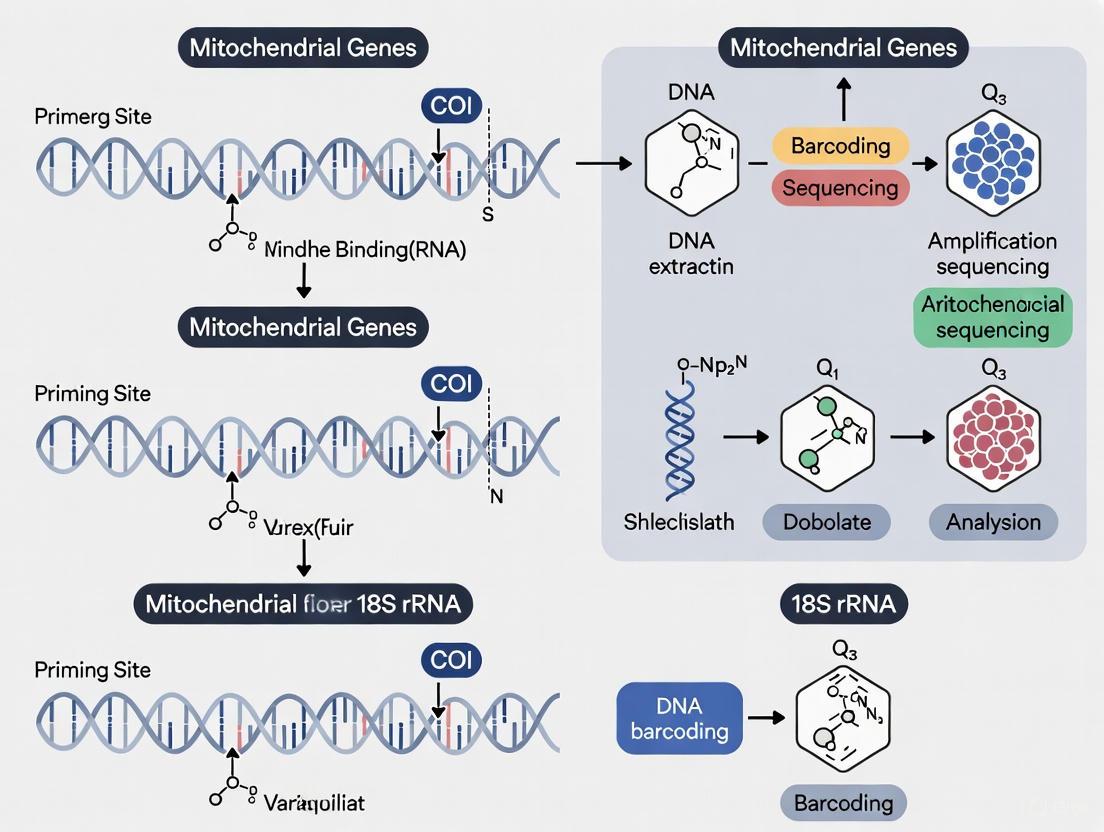
This article provides a comprehensive overview of mitochondrial genetic markers for parasite barcoding, addressing the critical needs of researchers and drug development professionals.
Beyond COI and 18S rRNA: A Strategic Guide to Mitochondrial Gene Selection for Advanced Parasite Barcoding
Abstract
This article provides a comprehensive overview of mitochondrial genetic markers for parasite barcoding, addressing the critical needs of researchers and drug development professionals. We explore the foundational principles of using COI and 18S rRNA genes while introducing emerging mitochondrial markers like 12S and 16S rRNA. The content covers practical methodological applications, common troubleshooting scenarios for primer selection and database limitations, and a comparative validation of marker efficacy across different parasite taxa. By synthesizing recent advances, this guide aims to enhance the accuracy and efficiency of parasite identification in biomedical research, traditional medicine authentication, and biodiversity studies.
The Genetic Toolkit: Understanding Mitochondrial Markers for Parasite Identification
In the ongoing effort to map global parasite diversity, molecular barcoding has emerged as an indispensable tool, surpassing the limitations of traditional morphological identification. Two genetic markers stand as the dominant duo in this field: the nuclear 18S ribosomal RNA (18S rRNA) gene and the mitochondrial Cytochrome c Oxidase Subunit I (COI) gene. These markers serve as the genomic cornerstones for parasite detection, phylogenetics, and biodiversity monitoring using both specimen-based and environmental DNA (eDNA) approaches. The 18S rRNA gene, with its highly conserved regions and universal presence across eukaryotes, provides a robust framework for phylogenetic placement at higher taxonomic levels. In contrast, the COI gene, a protein-coding mitochondrial marker, evolves more rapidly, offering superior resolution for distinguishing closely related species and uncovering cryptic diversity. Their combined application forms a powerful, synergistic system for parasite research—18S rRNA offers a broad taxonomic assignment, while COI delivers species-level precision. This technical guide explores the established roles, performance characteristics, and experimental protocols for these two pivotal markers within the broader context of mitochondrial gene research for parasite barcoding, providing researchers and drug development professionals with the foundational knowledge to implement these tools effectively.
Marker Comparison: A Technical Profile of COI and 18S rRNA
The choice between COI and 18S rRNA is not a matter of selecting a superior marker, but rather of applying the right tool for the specific research question. Their fundamental properties dictate their performance in different diagnostic and ecological scenarios. The table below provides a quantitative comparison of their characteristics based on recent studies.
Table 1: Technical Comparison of COI and 18S rRNA Genetic Markers for Parasite Barcoding
| Characteristic | COI (Cytochrome c Oxidase I) | 18S rRNA (Small Subunit Ribosomal RNA) |
|---|---|---|
| Genomic Location | Mitochondrial genome [1] | Nuclear genome [2] |
| Primary Strength | High resolution for species-level identification and detecting cryptic diversity [3] [2] | Excellent for broad phylogenetic placement and higher-level taxonomy [2] |
| Sequence Availability (Representative Families) | ~24,900 sequences (Ascarididae, Ancylostomatidae, Onchocercidae) [2] | ~200 sequences (Ascarididae, Ancylostomatidae, Onchocercidae) [2] |
| Pairwise Nucleotide Distance (P-distance) | 86.4% - 90.4% (across parasite families) [2] | 98.8% - 99.8% (across parasite families) [2] |
| Amplification Challenge | Requires modified/group-specific primers; universal primers often fail [4] | Good amplification success with universal primers [3] |
| Intraspecific Resolution | High; capable of distinguishing cryptic species [3] | Low; cryptic species often remain unresolved [3] |
| Best Application | Species delimitation, population genetics, biogeography [2] [4] | Community metabarcoding, deep phylogenetic studies [3] [5] |
The quantitative data reveals a clear trade-off. The COI gene exhibits significantly higher evolutionary divergence, with pairwise p-distances between species ranging from 86.4% to 90.4% in key parasite families, making it ideal for species identification [2]. Conversely, the 18S rRNA gene is highly conserved, with p-distances of 98.8% to 99.8%, which explains its utility for stable phylogenetic placement but poor performance in distinguishing closely related species [2]. Furthermore, the sheer volume of available COI sequence data for certain parasite groups—outnumbering 18S rRNA by more than 100 to 1 in some families—dramatically increases the odds of successful identification in clinical and veterinary diagnostic scenarios [2].
Visualizing Marker Selection for Parasite Barcoding
The following diagram illustrates the decision-making workflow for selecting between COI and 18S rRNA based on research objectives, integrating their respective strengths.
Established Roles and Performance in Parasite Detection
COI: The Species-Level Discriminator
The COI gene excels in applications requiring fine-scale taxonomic resolution. A study on nematodes of clinical and veterinary importance (families Ascarididae, Ancylostomatidae, and Onchocercidae) demonstrated that COI, alongside other mitochondrial markers like 12S and 16S, provided high interspecies resolution. In contrast, the 18S rRNA gene showed poor discriminatory power, with separate species of Ascaris, Mansonella, Toxocara, and Ancylostoma intermixing in phylogenetic analyses [2]. This confirms COI's role as the marker of choice for confirming the identity of unknown specimens in diagnostic settings, though the study notes this should be complemented with morphological examination [2].
In environmental DNA (eDNA) surveys, COI has proven effective for detecting hidden parasite diversity. A "ParasiteBlitz" across a coastal habitat gradient using eDNA metabarcoding successfully identified over 1,000 parasite amplicon sequence variants (ASVs) from six parasite groups, demonstrating the power of this method for rapid, intensive biodiversity surveys [6].
18S rRNA: The Robust Community Profiler
The 18S rRNA gene is a well-established tool for community-level metabarcoding, where the goal is to characterize the composition and relative abundance of a broad taxonomic spectrum. A comparison of morphology-based and DNA-based monitoring of marine nematode communities found that multivariate patterns of community composition were similar across methods. However, the 18S rRNA metabarcoding dataset was the most sensitive in describing changes in diversity and community composition in relation to environmental differences across sites impacted by aquaculture, industry, and in a nature reserve [3].
Furthermore, the development of long-read sequencing technologies (e.g., Oxford Nanopore) has enabled the use of full-length 18S rRNA sequences, which span both conserved and hypervariable regions. One investigation demonstrated that full-length 18S rRNA sequences provided improved taxonomic resolution compared to short-read sequences of the V4 or V8-V9 regions, successfully identifying 84% of genera in field samples, outperforming the shorter fragments [7].
Synergy in Environmental RNA (eRNA) for Living Communities
A cutting-edge application that highlights the complementary nature of these markers is the use of environmental RNA (eRNA) for biodiversity assessment. RNA is only produced by living organisms and degrades rapidly, providing a snapshot of the active community at the time of sampling, unlike eDNA which can persist from dead organisms. A mesocosm study targeting benthic communities using both 18S and COI markers found that eRNA yielded a higher number of unique sequences and higher alpha-diversity compared to eDNA. ERNA also showed significant differences for all beta-diversity metrics, proving to be a more accurate tool for characterizing the living element of marine benthic communities, including parasites [8].
Essential Databases and Reference Libraries
The accuracy of metabarcoding is critically dependent on comprehensive and well-curated reference databases. The table below lists key databases for COI and 18S rRNA sequences.
Table 2: Key Reference Databases for Parasite Barcoding
| Database Name | Marker | Key Features & Coverage | Utility in Parasite Research |
|---|---|---|---|
| BOLD | COI | Primary repository for COI barcodes; strong metazoan focus [9] | Species-level identification of metazoan parasites |
| eKOI | COI | Novel curated database for eukaryotes, includes 80 phyla including protists [9] | Fills critical gap for protist parasite identification using COI |
| PR2 | 18S rRNA | Curated database for eukaryotes; uses standardized taxonomy [7] [9] | Gold standard for 18S-based community analysis of all parasites |
| SILVA | 18S rRNA | Comprehensive ribosomal RNA database; includes quality-checked sequences [9] | Reliable resource for phylogenetic placement and probe design |
| GenBank | Both | General-purpose repository; largest volume of data but requires careful curation [5] [2] | Broadest search for existing sequences; potential for misidentifications |
Each database has distinct strengths. Specialized, curated databases like PR2 (for 18S) and eKOI (for COI protists) are recommended for community metabarcoding to ensure consistent and accurate taxonomic annotation [9]. For diagnostic work targeting specific metazoan parasites, BOLD remains a key resource for COI [9]. However, significant gaps remain. A survey of full-length sequences for soil nematodes found that while COI had the most sequences (17,534), the taxonomic and geographic coverage was biased, with herbivores and animal parasites dominating the datasets and origin information often missing [5]. This underscores the need for continued sequencing of vouchered specimens to build more comprehensive references [3].
Detailed Experimental Protocols
Protocol 1: COI Metabarcoding for Estuarine Parasite Diversity
This protocol is adapted from an eDNA study conducted across a coastal habitat gradient to uncover hidden parasite diversity [6].
1. Sample Collection:
- Sediment: Collect using a sterile syringe corer. Preserve multiple sub-samples immediately in DNA/RNA stabilization reagent or at -80°C.
- Water: Employ active filtration (e.g., peristaltic pump) through a series of graded filters (e.g., 5.0 µm followed by 0.22 µm). Alternatively, use passive collection methods like sediment traps. Preserve filters as above.
2. Nucleic Acid Extraction:
- Co-extract DNA and RNA from the same sample using a commercial kit designed for environmental samples.
- Critical Step: Treat an aliquot of the extracted RNA with DNase I to remove genomic DNA contamination.
- Synthesize first-strand cDNA from the purified RNA using a reverse transcriptase enzyme and target-specific or random hexamer primers.
3. Library Preparation for Metabarcoding:
- Primer Selection: Utilize a multi-locus approach. For this study, primers targeting a fragment of the mitochondrial COI gene for platyhelminths and the 18S rRNA gene for nematodes, myxozoans, microsporidians, and protists were successfully employed [6].
- PCR Amplification: Perform triplicate PCR reactions for each sample and marker to mitigate stochastic amplification bias. Use a high-fidelity polymerase to reduce errors.
- Indexing and Pooling: Clean the PCR amplicons and attach dual indices and sequencing adapters in a second, limited-cycle PCR step. Quantify the final libraries fluorometrically, pool in equimolar ratios, and purify the pool.
4. Sequencing and Bioinformatic Analysis:
- Sequence the library pool on an Illumina MiSeq or similar platform (2x300 bp PE recommended).
- Process raw sequences through a pipeline involving demultiplexing, primer trimming, quality filtering (e.g., with DADA2 or USEARCH), and merging of paired-end reads.
- Cluster quality-filtered sequences into Amplicon Sequence Variants (ASVs) or Operational Taxonomic Units (OTUs).
- Taxonomic Assignment: BLAST ASVs/OTUs against curated reference databases (see Table 2) and use phylogenetic placement for verification. For the COI gene, the eKOI database is recommended for including protist parasites [9].
Protocol 2: Full-Length 18S rRNA Sequencing with Nanopore
This protocol leverages long-read sequencing for improved taxonomic resolution of eukaryotic parasite communities, including protists [7].
1. Sample Preparation and DNA Extraction:
- Process field samples (e.g., water filters, sediment) using a DNA extraction kit that yields high-molecular-weight DNA.
- Assess DNA integrity and quantity using a fluorometer and fragment analyzer.
2. Full-Length 18S rRNA Amplification:
- Primers: Use a primer pair combination designed to amplify the full-length (~1700 bp) 18S rRNA gene. Validation with a test community of known cultures is crucial to confirm primer efficacy and taxonomic coverage [7].
- PCR: Perform amplification with a high-fidelity polymerase and a sufficient number of cycles to yield robust product, while avoiding over-amplification.
3. Oxford Nanopore Library Preparation and Sequencing:
- Prepare the sequencing library directly from the PCR amplicons without fragmentation, using a ligation sequencing kit (e.g., SQK-LSK109).
- Critical Step: Use high-accuracy basecalling (e.g., Guppy, Dorado) during the sequencing run on a MinION Mk1C or PromethION platform to minimize errors inherent in long-read technologies [7].
4. Data Analysis:
- Basecall the raw data and demultiplex samples.
- Generate consensus sequences from the reads and filter for quality and length.
- Classify the full-length 18S sequences using a curated database like PR2, which is essential for accurate annotation [7] [9].
- Compare the results with short-read V4 or V9 datasets generated from the same samples to evaluate the gain in taxonomic resolution.
Visualizing the Integrated Workflow
The core steps of a typical parasite metabarcoding study, from sample to result, are summarized in the workflow below.
The Scientist's Toolkit: Essential Research Reagents and Materials
Successful implementation of parasite barcoding protocols relies on a suite of specific reagents and tools. The following table details these essential components.
Table 3: Essential Research Reagents and Materials for Parasite Barcoding
| Item | Function/Application | Examples & Notes |
|---|---|---|
| DNase I, RNase-free | Removal of genomic DNA from RNA samples prior to cDNA synthesis. | Critical for eRNA workflows to prevent false positives from eDNA [8]. |
| High-Fidelity DNA Polymerase | Accurate amplification of target barcode regions for NGS library prep. | Reduces error rates in final amplicon sequences (e.g., Q5, Phusion). |
| Reverse Transcriptase | Synthesis of cDNA from environmental RNA (eRNA) templates. | Enables assessment of active/ living parasite communities [8]. |
| Magnetic Bead Clean-up Kits | Post-PCR purification and size selection of amplicon libraries. | Preferred over column-based methods for NGS library preparation. |
| COI Primers (Group-Specific) | Amplification of the COI barcode from specific parasitic taxa. | "Universal" invertebrate primers often fail; modified primers (e.g., JB3-JB5) are required for nematodes [4]. |
| Full-Length 18S Primers | Amplification of the entire 18S rRNA gene for long-read sequencing. | New primer combinations are being validated for improved taxonomic coverage with Nanopore [7]. |
| Curated Reference Database | Taxonomic assignment of metabarcoding sequences (ASVs/OTUs). | PR2 (18S), eKOI (COI for protists), BOLD (COI for animals). Essential for accurate identification [9]. |
| Negative Extraction Controls | Monitoring for laboratory contamination during DNA/RNA extraction. | Must be processed alongside environmental samples and sequenced. |
The established roles of COI and 18S rRNA in parasite barcoding are both distinct and deeply complementary. COI stands as the undisputed champion for species-level identification, diagnosis, and revealing cryptic diversity due to its high mutation rate. In contrast, 18S rRNA provides an unwavering backbone for phylogenetic studies and broad-spectrum community metabarcoding, thanks to its conserved nature and universal applicability. The advent of long-read sequencing is enhancing the power of full-length 18S rRNA, while new curated databases like eKOI are finally unlocking the potential of COI for protist parasites. For researchers and drug development professionals, the path forward is not to choose one over the other, but to strategically deploy this dominant duo in concert. An integrated approach, potentially incorporating the living community snapshot provided by eRNA, will yield the most robust and actionable insights into parasite biodiversity, ecology, and dynamics, ultimately informing conservation and public health strategies on a global scale.
The field of DNA barcoding has long been dominated by a limited set of genetic markers, with the mitochondrial cytochrome c oxidase I (COI) gene and the nuclear 18S rRNA gene serving as the primary tools for species identification and phylogenetic analysis of parasites. While these markers have proven valuable, challenges such as the design of broadly applicable primers, limited species-level resolution in some taxa, and difficulties with degraded samples have highlighted the need for complementary genetic markers [10] [11]. In response to these limitations, mitochondrial 12S and 16S ribosomal RNA (rRNA) genes are emerging as powerful tools for molecular identification, offering distinct advantages for parasite barcoding and systematic studies [12] [10].
The mitochondrial genome possesses several inherent properties that make it particularly suitable for barcoding applications. It is present in multiple copies per cell, enabling easier amplification from minute or degraded samples—a common scenario in parasite research. Additionally, mitochondrial DNA generally exhibits higher mutation rates than nuclear DNA, resulting in sufficient sequence variation for discriminating between closely related species [12] [13]. The 12S and 16S rRNA genes specifically combine conserved regions, which facilitate primer design across broad taxonomic groups, with variable regions that provide the necessary phylogenetic signal for species discrimination [12] [14].
This technical guide explores the expanding role of mitochondrial rRNA markers in parasite research, providing a comprehensive overview of their applications, advantages, and practical implementation for researchers, scientists, and drug development professionals working in the field of molecular parasitology.
Scientific Rationale: Advantages Over Traditional Markers
Comparative Analysis of Genetic Markers
Table 1: Comparison of Genetic Markers Used in Parasite Barcoding
| Genetic Marker | Genomic Location | Evolutionary Rate | Species-Level Resolution | Primer Design Universality |
|---|---|---|---|---|
| COI | Mitochondrial | High | Variable; high in some groups, limited in others | Limited; often requires group-specific primers [10] |
| 18S rRNA | Nuclear | Low | Limited for closely related species; lacks variation [10] | High; universal primers available [15] |
| ITS regions | Nuclear | Moderate to High | Generally high | Variable; often group-specific [16] |
| 12S rRNA | Mitochondrial | Moderate | High for most parasitic groups [13] | High; universal primers possible [12] |
| 16S rRNA | Mitochondrial | Moderate | High for most parasitic groups [10] | High; universal primers possible [12] |
Technical Advantages in Parasitology Research
The utilization of mitochondrial 12S and 16S rRNA genes addresses several critical limitations encountered with traditional markers in parasite research. Unlike nuclear ribosomal genes, which may exhibit intragenomic polymorphisms that complicate species identification, mitochondrial rRNA genes offer more consistent results within species [11]. This is particularly valuable when working with cryptic species complexes, where morphological differentiation is challenging but genetic divergence is present in mitochondrial markers [10].
For the COI gene, a significant limitation has been the difficulty in designing universal primers that amplify across diverse parasite taxa. The conserved regions flanking variable segments in mitochondrial rRNA genes enable the creation of broader-range primers that can be applied across multiple orders of parasites [10] [13]. This has been successfully demonstrated in trematodes, where newly designed primers for 12S and 16S rRNA genes amplified species across three different orders (Plagiorchiida, Echinostomida, and Strigeida) with high success rates [10].
The moderate evolutionary rate of mitochondrial rRNA genes strikes an optimal balance for parasitology research. They evolve faster than nuclear 18S rRNA, providing better resolution at the species level, yet slower than COI in some regions, maintaining alignability across broader taxonomic scales for higher-level phylogenetic inferences [13].
Applications in Parasite Systematics and Identification
Performance Across Parasite Taxa
Table 2: Efficacy of Mitochondrial rRNA Markers Across Parasite Groups
| Parasite Group | 12S rRNA Performance | 16S rRNA Performance | Research Findings |
|---|---|---|---|
| Trematodes | High resolution for closely related species; differentiated Paragonimus heterotremus and P. pseudoheterotremus (2.9% genetic distance) [10] | High resolution; differentiated Paragonimus species (3.9% genetic distance) [10] | Successfully discriminated morphologically similar eggs of Opisthorchis and Heterophyidae [10] |
| Nematodes | Supported monophyly of clades I, IV, and V; suitable for intra-phyla relationships [13] | Supported monophyly of clades I and V only; less suitable than 12S for broad systematics [13] | Provided sufficient genetic variation for accurate species-level taxonomy [13] |
| General Barcoding | High interspecific variation, low intraspecific variation; effective for vertebrate species identification [14] | Conserved regions enable universal primer design across Chordata [12] | Identified 60 vertebrate species with high accuracy using nanopore sequencing [14] |
Case Studies in Differential Resolution
The enhanced resolution provided by mitochondrial rRNA markers is particularly evident when compared to traditional markers. In trematodes, the nuclear 18S rRNA gene failed to differentiate between closely related species within the family Opisthorchiidae, showing no sequence variation. In contrast, the mitochondrial 12S and 16S rRNA genes revealed genetic distances of 9.0% and 10.0% respectively within the same family, providing sufficient variation for accurate species identification [10].
Similarly, for nematodes, mitochondrial rRNA genes have demonstrated superior performance for specific taxonomic applications. The 12S rRNA gene has proven particularly valuable for understanding intra-phyla relationships, supporting the monophyly of three major nematode clades (I, IV, and V), while the 16S rRNA gene supported only two clades (I and V) [13]. This differential performance highlights the importance of marker selection based on the specific taxonomic group and research question.
In diagnostic settings, mitochondrial 12S rRNA has shown exceptional utility for identifying vertebrate hosts and parasites, with one study reporting average sequence similarity of 99.11% to reference sequences and successful identification of 60 vertebrate species using nanopore sequencing technology [14].
Experimental Protocols and Methodologies
Primer Design and Optimization
The design of effective primers for mitochondrial rRNA genes leverages their conserved regional structure. The secondary structure of these genes features alternating conserved stems and variable loops, enabling the identification of conserved regions for primer binding while utilizing variable regions for discrimination [14].
Conserved Region Identification: Begin by aligning mitochondrial genomes from target species and related taxa to identify conserved blocks within the 12S and 16S rRNA genes. For trematodes, these are typically located at the 3' ends of both genes and additional internal regions [12] [10]. For nematodes, separate primer sets may be necessary for different clades due to sequence diversity [13].
Primer Validation: Test primer specificity using in silico PCR against sequence databases, followed by empirical testing with control samples. Optimal annealing temperatures should be determined using gradient PCR [13]. For broad-range applications, multiple primer sets may be developed to cover different taxonomic groups within the target parasites.
Example Primer Applications:
- For trematodes: Design primers amplifying ~430bp (12S rRNA) and ~500bp (16S rRNA) fragments [12]
- For nematodes: Develop separate primer sets for clade I nematodes versus clades III, IV, and V [13]
- For vertebrate hosts: Target ~440bp fragments of 12S rRNA for nanopore sequencing applications [14]
Laboratory Workflow for Mitochondrial rRNA Barcoding
The following diagram illustrates the comprehensive workflow for mitochondrial rRNA-based barcoding of parasites:
Bioinformatic Analysis and Species Delimitation
Following sequencing, bioinformatic processing is crucial for accurate species identification. The process typically involves:
Sequence Processing: Quality filtering, trimming of low-quality bases, and contig assembly (for Sanger sequencing) or read processing (for NGS data). For nanopore sequences, implement error correction algorithms specific to the technology platform [14].
Alignment and Phylogenetic Analysis: Perform multiple sequence alignment using algorithms such as MAFFT or ClustalX, with manual verification of variable regions [13]. For phylogenetic inference, use both maximum likelihood and Bayesian approaches to assess nodal support [10] [13].
Species Delimitation: Apply multiple species delimitation methods such as ASAP (Assemble Species by Automatic Partitioning) and ABGD (Automatic Barcode Gap Discovery) to establish molecular operational taxonomic units (MOTUs) [11]. Compare results with morphological data where available to validate genetic boundaries.
Database Comparison: Query processed sequences against curated reference databases using BLAST or specialized tools like ClassIdent for nanopore data [14]. Implement similarity thresholds based on validated intra- and interspecific variation for the target parasite group.
Essential Research Reagents and Tools
Research Reagent Solutions
Table 3: Essential Research Reagents and Resources for Mitochondrial rRNA Barcoding
| Reagent/Resource | Specification | Application Notes |
|---|---|---|
| Universal Primers | M13U12S-F/R, M13U16S-F/R [12] | Amplify ~430bp (12S) and ~500bp (16S) fragments; contain M13 tails for sequencing |
| Clade-Specific Primers | Separate sets for nematode clades I, III-V [13] | Essential for comprehensive nematode studies due to sequence diversity |
| DNA Extraction Kit | Geneaid genomic DNA mini kit [13] | Effective with various sample types including archived specimens |
| PCR Kit | NEBNext Ultra II DNA Library Prep Kit [11] | Suitable for shotgun sequencing approaches; half-volume reactions possible |
| Reference Databases | CoSFISH, MITOMAP, NCBI GenBank [17] [18] | Curated databases essential for accurate species assignment |
| Bioinformatic Tools | ClassIdent, NGSpeciesID, Geneious Prime [14] [11] | Specialized pipelines for data analysis and consensus sequence generation |
Integration with Broader Research Goals
Complementary Role in Multi-Marker Approaches
While mitochondrial rRNA markers provide significant advantages as standalone tools, their true power emerges when integrated into multi-marker barcoding strategies. Combining mitochondrial rRNA data with nuclear markers (18S, 28S, ITS) and mitochondrial protein-coding genes (COI) provides a more comprehensive genetic perspective for resolving complex taxonomic relationships and detecting cryptic species [17] [19].
This integrated approach is particularly valuable for understanding parasite evolution, host-parasite coevolution, and population structures. The different evolutionary rates and inheritance patterns of these markers provide complementary signals—mitochondrial rRNA genes offer strong species-level discrimination, while nuclear ribosomal genes provide better resolution at higher taxonomic levels and insights into hybridization events [10] [13].
For drug development applications, accurate species identification using mitochondrial rRNA markers can help identify the causative agents of parasitic diseases more precisely, enabling targeted therapeutic development. Additionally, the detection of genetic variations within parasite populations may inform drug resistance monitoring and management strategies [16].
Future Directions and Emerging Technologies
The application of mitochondrial rRNA markers in parasitology is evolving rapidly with advances in sequencing technologies. Nanopore sequencing platforms such as QNome and MinION offer new opportunities for rapid, field-based identification of parasites using mitochondrial rRNA markers [14]. These technologies enable real-time sequencing with flexible read lengths that are well-suited to the size of mitochondrial rRNA amplicons.
The development of comprehensive, curated reference databases specifically for parasite mitochondrial rRNA genes remains a critical need. Initiatives like CoSFISH for fish species demonstrate the value of taxonomically focused databases that combine both mitochondrial and nuclear markers [17]. Similar resources for parasitic helminths and protozoa would significantly enhance the utility of mitochondrial rRNA barcoding.
Emerging bioinformatic pipelines that incorporate machine learning and automated species delimitation algorithms will further streamline the identification process. Tools like ClassIdent, specifically designed for mitochondrial rRNA data from portable sequencers, represent the next generation of analytical resources that will make mitochondrial rRNA barcoding more accessible to researchers and diagnostic laboratories [14].
Mitochondrial 12S and 16S rRNA genes represent valuable additions to the molecular toolkit for parasite identification and systematics. Their balanced evolutionary rate, the presence of conserved regions for primer design, and proven efficacy across diverse parasite taxa make them particularly suitable for addressing the limitations of traditional barcoding markers. As sequencing technologies continue to advance and reference databases expand, these markers are poised to play an increasingly important role in parasitology research, disease diagnostics, and drug development initiatives aimed at combating parasitic diseases.
Within the context of mitochondrial gene research for parasite barcoding, the selection of an appropriate genetic marker is a fundamental decision that directly impacts the accuracy and scope of research outcomes. The cytochrome c oxidase subunit I (COI) mitochondrial gene and the nuclear 18S ribosomal RNA (rRNA) gene represent two of the most prevalent markers in molecular ecology and parasitology. This whitepaper provides an in-depth technical comparison of these markers, focusing on their resolution power, taxonomic coverage, and applicability in parasite barcoding and drug development research. A critical understanding of their complementary strengths and limitations enables researchers to design more robust experiments, whether the goal is species discovery, biodiversity assessment, or understanding parasite ecology.
Marker Fundamentals and Evolutionary Dynamics
The COI gene is a protein-coding region of the mitochondrial genome. Its rapid evolutionary rate, driven by its role in the electron transport chain and the generally higher mutation rate of mitochondrial DNA, makes it highly variable between species. This variability is the foundation of its use as the primary barcode for animal life, aiming to provide a "barcode gap" where intraspecific variation is minimal compared to interspecific divergence [20].
In contrast, the 18S rRNA gene is a nuclear-encoded, non-protein-coding gene that forms part of the small ribosomal subunit. Its function in the ribosome imposes strong evolutionary constraints, resulting in a slow evolutionary rate with interspersed conserved and hypervariable regions (V1-V9). This structure allows for the design of primers targeting broad taxonomic groups while providing sites for discrimination at higher taxonomic levels [15] [7]. The 18S gene evolves between 25 and 1000 times slower than COI, and considerably more slowly than the mitochondrial SSU gene in foraminifera [20].
Table 1: Core Characteristics of COI and 18S rRNA Genetic Markers
| Feature | COI (Mitochondrial) | 18S rRNA (Nuclear) |
|---|---|---|
| Genomic Location | Mitochondrial Genome | Nuclear Genome |
| Molecular Evolution Rate | Rapid (25-1000x faster than 18S) [20] | Slow, with conserved and hypervariable regions [15] |
| Primary Taxonomic Resolution | Species to genus level [21] [20] | Genus to family/order level [15] [22] |
| Typical Amplicon Length for Metabarcoding | ~300-650 bp (e.g., mini-barcode) | ~400-550 bp (e.g., V4, V9); up to full-length ~1800 bp [23] [7] |
| Copy Number per Cell | High (mitochondrial) | Variable; can be very high (ribosomal) [20] |
Resolution Power and Taxonomic Coverage
Resolution Power Across Taxonomic Levels
The resolution power of a marker refers to its ability to distinguish between taxa at a specific hierarchical level (e.g., species, genus, family). The performance of COI and 18S rRNA differs significantly across these levels.
COI excels at species-level identification for many metazoan groups. Its rapid mutation rate creates sufficient genetic divergence to distinguish between closely related species, fulfilling the concept of a "barcode gap" [20]. However, its resolution diminishes at higher taxonomic levels (e.g., family or order) where the signal can become saturated [15].
18S rRNA is highly conserved intra-species, with similarities often close to 100%, which can limit its utility for distinguishing between congeners [15] [22]. For instance, in dictyostelids, the 18S rDNA gene struggles with species-level classification due to overlapping intraspecific and interspecific variations and negative barcoding gaps [22]. Its power increases at the genus level and above. One study on copepods found that the V9 hypervariable region could discriminate between genera with an approximately 80% success rate, while nearly-whole-length sequences and regions around V2 and V4 could discriminate at the family and order levels with similar success [15].
Table 2: Taxonomic Resolution Success Rates of 18S rRNA Gene Regions (Copepod Case Study) [15]
| Taxonomic Level | Whole-Length 18S & V2/V4 | V9 Region | V7 Region |
|---|---|---|---|
| Species Level | Limited (high intra-species conservation) | Limited | Highly divergent in length; good for specific genera (e.g., Acartia) |
| Genus Level | --- | ~80% success rate | --- |
| Family/Order Level | ~80% success rate | --- | --- |
Taxonomic Coverage and Amplification Breadth
Taxonomic coverage describes the breadth of taxa that can be amplified and identified using a universal or specific primer set.
- COI: Designing universal COI primers for eukaryotes is challenging due to its high sequence divergence. While effective for many animal groups, no universal primer exists to target the entire protist community, limiting its use in comprehensive eukaryotic surveys [7].
- 18S rRNA: The presence of highly conserved regions flanking variable ones allows for the design of primers with very broad eukaryotic coverage. This makes 18S rRNA exceptionally powerful for detecting a wide range of eukaryotes in a single assay, including protists, fungi, and metazoans [23] [7]. This is particularly valuable in parasitology for detecting unknown or unexpected eukaryotic parasites. However, this broad coverage can lead to co-amplification of non-target host and environmental DNA, which may require mitigation strategies like blocking oligonucleotides [23] [24].
Methodological Considerations and Experimental Protocols
Primer Selection and Database Completeness
The effectiveness of any barcoding study is contingent on primer choice and the availability of reference sequences.
Primer Selection for 18S rRNA: The 18S gene offers multiple hypervariable regions (V1-V9) for targeting. The choice of region involves a trade-off between taxonomic coverage and resolution.
- Full-length 18S rDNA: Provides maximum information and resolution. A 2024 study demonstrated that sequencing the full-length 18S gene using Nanopore technology improved taxonomic resolution for protists compared to the short-read V4 and V8-V9 regions [7].
- Short Regions (V4, V9): Suitable for Illumina sequencing and biodiversity surveys where a balance of information content and high-throughput is needed. The V9 region, for instance, has shown higher resolution at the genus level for some taxa [15].
- Fungi-Specific Primers: A 2018 toolkit identified 439 fungal-specific 18S primer pairs, most targeting the V4-V5 regions. The best-performing pairs achieved fungal coverage rates of 82-93%, highlighting the need for careful primer selection based on the specific fungal phyla of interest [24].
Database Completeness: A major limitation for both markers is the incompleteness of reference databases. Even the powerful full-length 18S approach can fail to define all taxa if reference sequences are absent. For example, in one study, 19 dinoflagellate genera were not defined by 18S amplicon sequence variants (ASVs) due to missing references [7]. This underscores the necessity of contributing novel barcodes to public databases like GenBank, BOLD, and PR2.
Detailed Experimental Protocol: 18S rRNA V4/V5 Amplification for Eukaryotic Diversity
The following protocol, adapted from a 2023 study on capuchin parasite screening, details the steps for amplifying the V4/V5 region of the 18S rRNA gene from fecal DNA, a common source for parasite detection [23].
Diagram 1: 18S Amplicon Sequencing Workflow
Materials and Reagents
Table 3: Research Reagent Solutions for 18S rRNA Amplicon Sequencing
| Reagent / Kit | Function | Example/Note |
|---|---|---|
| NucleoSpin Tissue Kit | Genomic DNA extraction from complex samples like feces. | Macherey-Nagel [23] |
| Q5 High-Fidelity DNA Polymerase | High-fidelity PCR amplification to reduce errors. | New England Biolabs [22] |
| 563F (5'-GCCAGCAVCYGCGGTAAY-3') | Forward primer for 18S V4/V5 region. | Broad eukaryotic coverage [23] |
| 1132R (5'-CCGTCAATTHCTTYAART-3') | Reverse primer for 18S V4/V5 region. | ~550 bp amplicon [23] |
| AMPure XP Beads | PCR product clean-up and size selection. | Solid phase reversible immobilization (SPRI) method [23] |
Step-by-Step Procedure
- DNA Extraction: Extract total genomic DNA from samples (e.g., ~100 mg of feces) using a commercial kit like the NucleoSpin Tissue Kit, following the manufacturer's protocol. Elute DNA in a suitable buffer and store at -80°C.
- Primary PCR (PCR1):
- Reaction Mix: 1-2 µL of DNA extract, 0.2-0.4 µM of each primer (563F and 1132R), 1X HF buffer, 2.5 mM MgCl₂, 0.2 mM dNTPs, 3% DMSO, and 0.3 units of DNA polymerase in a 15-25 µL reaction.
- Cycling Conditions: Initial denaturation at 98°C for 2 min; 30-35 cycles of denaturation at 98°C for 30 s, annealing at 42-45°C for 40 s, and extension at 72°C for 1 min; final extension at 72°C for 2 min.
- Optional: Include host-blocking oligonucleotides to reduce amplification of host DNA.
- Purification: Purify the PCR1 product using AMPure XP beads at a 1:1 ratio (beads:sample) to remove primers, dNTPs, and enzymes. Elute in nuclease-free water.
- Indexing PCR (PCR2): Perform a second, limited-cycle PCR (usually 8-10 cycles) to add platform-specific adapters and unique dual indices to each sample using a commercial indexing kit.
- Second Purification: Purify the final library again with AMPure XP beads.
- Library Quantification and Sequencing: Quantify the library using fluorometry, normalize, and pool equimolar amounts for sequencing on an Illumina MiSeq or similar platform with a 2x250 or 2x300 cycle kit.
Detailed Experimental Protocol: COI Barcoding for Species Identification
The following protocol for generating a COI reference barcode library is adapted from a 2025 study on planktonic foraminifera [20].
Diagram 2: COI Reference Barcode Workflow
Materials and Reagents
Table 4: Research Reagent Solutions for COI Barcode Library Construction
| Reagent / Method | Function | Example/Note |
|---|---|---|
| GITC* or DOC DNA Extraction | Efficient lysis and preservation of single-cell or tissue DNA. | Guanidine Isothiocyanate-based or Direct Lysis [20] |
| MacherCOIlongRotaliidaf/r | Specific primers for a ~1200 bp COI fragment. | Example of a taxon-specific primer set [20] |
| PCR Purification Kit | Purification of PCR products before sequencing. | e.g., QIAquick PCR Purification Kit (QIAGEN) [20] |
Step-by-Step Procedure
- Specimen Sorting and DNA Extraction: Individually sort and identify specimens under a stereomicroscope. For single organisms, transfer to a lysis buffer like GITC* or DOC and extract DNA.
- COI PCR Amplification:
- Reaction Mix: 1 µL of DNA extract, 0.4 µM of each COI primer, 1X HF buffer, 2.5 µM MgCl₂, 0.2 µM dNTPs, 3% DMSO, and 0.3 units of polymerase in a 15 µL reaction.
- Cycling Conditions: Initial denaturation at 98°C for 30 s; 35 cycles of 98°C for 10 s, 65°C for 30 s, and 72°C for 30 s; final extension at 72°C for 2 min.
- PCR Product Purification: Purify successful PCR products using a commercial purification kit.
- Sanger Sequencing: Submit purified products for bidirectional Sanger sequencing.
- Sequence Assembly and Validation: Assemble forward and reverse sequences, perform base calling, and validate the barcode. Compare against public databases like BOLD to confirm identity and novelty.
- Database Submission: Submit the verified barcode sequence with associated specimen metadata (voucher images, collection location) to public repositories (GenBank, BOLD).
Integrated Application in Parasite Barcoding and Research
In parasite research, COI and 18S rRNA play distinct yet complementary roles. A 2023 study on wild capuchin monkeys effectively used 18S rRNA V4/V5 metabarcoding to broadly characterize the eukaryotic ecosystem in feces, identifying numerous nematodes assigned to genera like Angiostrongylus and Strongyloides [23]. This first-pass, broad-scale survey is ideal for 18S rRNA.
For finer resolution, such as distinguishing between closely related parasite species or conducting population genetic studies, COI or the ITS region are often necessary. A marine zoobenthos study found extensive complementarity between COI and 18S, with 69% of species exclusively detected by one marker or the other [21]. This supports the use of a multi-marker approach for comprehensive biodiversity assessment.
Furthermore, the copy number variation of these markers impacts the quantitative interpretation of metabarcoding data. SSU copy number can vary by three orders of magnitude within a single foraminifera species, making it unreliable for abundance estimation [20]. In contrast, a significant relationship between foraminifera cell size and COI copy number was observed, suggesting COI may be more useful for inferring relative biomass in certain contexts [20].
The choice between COI and 18S rRNA is not a matter of selecting a superior marker, but rather the appropriate tool for a specific research question within parasite barcoding.
- 18S rRNA is the marker of choice for broad-spectrum eukaryotic detection, phylogenetic placement at higher taxonomic levels, and when studying groups where COI primers are ineffective. Its limitations include poor species-level resolution in many groups and potential for high copy number variation.
- COI remains the gold standard for species-level identification of metazoan parasites and for building reference barcode libraries. Its limitations include a lack of universal primers for all eukaryotes and potential saturation at deep taxonomic levels.
For the most robust and comprehensive results, particularly in exploratory studies of complex samples, an approach that leverages the strengths of both markers is highly recommended. Future improvements in long-read sequencing technologies and the continuous expansion of curated reference databases will further enhance the utility of both COI and 18S rRNA in parasite research and drug development.
Parasitism represents one of the most species-rich life strategies on Earth, yet the diversity of parasitic helminths (including nematodes, trematodes, and cestodes) remains vastly underestimated. Current projections suggest a global total of roughly 100,000–350,000 helminth species parasitizing vertebrates alone, with approximately 85–95% of these species still unknown to science [25]. This taxonomic deficit persists despite centuries of collection and study, with an average of only 163 helminth species described annually [25]. The challenge is particularly acute for parasites of amphibians, reptiles, birds, and bony fish, where the majority of undescribed species are believed to exist [25].
Traditional morphological approaches to parasite identification face significant limitations, including reliance on specialist taxonomic expertise, difficulties in detecting rare or cryptic species, and challenges in identifying various life stages [26]. Molecular approaches have transformed parasitology, but single-marker DNA barcoding methods often struggle to provide comprehensive parasite diversity assessments due to varying resolution across taxa and amplification biases [27] [26]. This case study examines how multi-marker environmental DNA (eDNA) metabarcoding, particularly leveraging mitochondrial ribosomal genes, is overcoming these limitations to reveal hidden parasite diversity in complex samples.
Methodological Foundation: Multi-Marker Metabarcoding Workflow
Core Workflow Components
The application of multi-marker eDNA metabarcoding to parasite diversity studies follows a standardized workflow with several critical stages:
Sample Collection: Environmental samples (water, sediment, feces) or bulk organism samples are collected with contamination controls. For example, in a study of great cormorant parasites, fecal samples were collected from cloacae using cotton swabs [28].
DNA Extraction: Bulk DNA is extracted using specialized kits optimized for environmental samples or difficult tissues. The QIAamp Fast DNA Stool Mini Kit has been successfully used for parasite DNA extraction from fecal samples [28].
Multi-Marker Amplification: Multiple genetic loci are amplified simultaneously using taxon-specific primers in separate PCR reactions. This typically includes a combination of mitochondrial ribosomal markers (12S rRNA, 16S rRNA) and other complementary markers [26].
High-Throughput Sequencing: Amplified products are sequenced on platforms such as Illumina MiSeq, generating thousands to millions of sequence reads per sample [28] [26].
Bioinformatic Processing: Raw sequences are processed through quality filtering, denoising, chimera removal, and clustering into Amplicon Sequence Variants (ASVs) or Operational Taxonomic Units (OTUs) using pipelines like DADA2 [28].
Taxonomic Assignment: Processed sequences are classified against reference databases using tools like BLAST+ and QIIME, with thresholds for identity and query coverage (typically >85% for both parameters) [28].
Ecological Analysis: Diversity metrics, community composition, and statistical relationships with environmental variables are calculated to derive ecological insights.
The following diagram illustrates this integrated workflow:
Figure 1: Integrated workflow for multi-marker eDNA metabarcoding of parasite diversity, showing the sequence from sample collection to ecological analysis with parallel amplification of multiple genetic markers.
The Scientist's Toolkit: Essential Research Reagents
Table 1: Key research reagents and materials for parasite eDNA metabarcoding studies
| Reagent/Material | Specific Example | Function in Workflow |
|---|---|---|
| DNA Extraction Kit | QIAamp Fast DNA Stool Mini Kit [28] | Isolation of high-quality DNA from complex sample matrices like feces, soil, or sediment |
| PCR Enzyme Mix | KAPA HiFi HotStart PCR Kit [27] | High-fidelity amplification of target gene regions with reduced error rates |
| Mitochondrial 12S Primer Sets | Phylum-wide nematode primers [29] [26] | Amplification of nematode 12S rRNA regions across diverse taxonomic groups |
| Mitochondrial 16S Primer Sets | Platyhelminth-specific primers [26] | Targeted detection of trematodes and cestodes in complex samples |
| Next-Generation Sequencer | Illumina MiSeq Platform [28] | High-throughput sequencing of amplified gene regions |
| Bioinformatics Pipeline | DADA2 (v1.18.0) [28] | Quality filtering, denoising, and Amplicon Sequence Variant (ASV) calling |
| Reference Database | NCBI NT database [28] | Taxonomic assignment of sequenced ASVs through sequence similarity searches |
Mitochondrial rRNA Genes: Optimal Markers for Parasite Detection
Advantages Over Traditional Genetic Markers
The selection of genetic markers is crucial for successful parasite metabarcoding. While traditional markers like nuclear 18S rRNA and mitochondrial COI have been widely used, they present significant limitations for comprehensive parasite detection. The nuclear 18S rRNA gene, though useful for broad eukaryotic surveys, often lacks sufficient variation for species-level identification of closely related parasites and can exhibit high intragenomic polymorphisms that complicate interpretation [28] [30]. The mitochondrial COI gene, while offering better species-level resolution, shows high sequence variability that can create PCR amplification biases, selectively amplifying only some species in a community [26].
Mitochondrial ribosomal RNA genes (12S and 16S rRNA) offer several advantages for parasite metabarcoding:
Balanced Evolutionary Rate: These genes evolve at a slower rate than COI but faster than nuclear 18S rRNA, providing an optimal balance between universal amplification and species-level resolution [29].
Multi-Copy Nature: Like all mitochondrial genes, they occur in high copy numbers per cell, enhancing detection sensitivity from trace DNA amounts [26].
Structural Conservation: Functional constraints maintain conserved regions for primer binding flanking variable regions that provide taxonomic information [29].
Proven Taxonomic Resolution: Studies have demonstrated that mitochondrial 12S and 16S rRNA genes contain sufficient genetic variation between species to allow accurate taxonomy to species level [29] [26].
Performance Validation with Mock Communities
Rigorous testing with mock communities (artificial assemblages of known parasite species) has validated the performance of mitochondrial rRNA markers. One comprehensive study evaluated mock communities containing 20 representative parasitic helminth species (10 platyhelminths and 10 nematodes) across various environmental matrices including human feces, garden soil, tissue, and pond water [26].
The results demonstrated the superior sensitivity of the 12S rRNA gene, which recovered more helminth species across all mock community types compared to the 16S rRNA gene. Both 12S and 16S platyhelminth primers showed exceptional effectiveness, recovering a majority of platyhelminth species in the mock communities. The 12S nematode primers recovered a lower percentage of nematode species but still outperformed many traditional markers [26].
Importantly, helminths at various life-cycle stages were successfully detected regardless of the environmental matrix, highlighting the robustness of these markers for real-world applications where parasite developmental stages may vary [26].
Comparative Marker Performance in Diversity Studies
Multi-Marker Complementarity
The power of multi-marker approaches lies in the complementary nature of different genetic markers. Studies across diverse ecosystems have consistently demonstrated that combining multiple markers reveals greater taxonomic breadth than any single marker alone.
Table 2: Performance comparison of genetic markers in eDNA metabarcoding studies
| Study System | Genetic Markers Compared | Key Finding | Reference |
|---|---|---|---|
| Deep-sea benthic biodiversity | 18S V1-2, 18S V9, 28S | 18S V9 recovered more eukaryotic taxa than 28S and 18S V1-2; only a small proportion of taxa were shared between markers even at phylum level | [31] |
| Ichthyoplankton monitoring | COI, 12S rRNA, 16S rRNA | Multi-marker DNA metabarcoding identified 75 species versus 11 by morphology; combining markers improved species detection by 20–36% compared to single markers | [27] |
| Coral biodiversity assessment | ITS2, 12S | eDNA detected more genera (42 vs. 23) and species (77 vs. 63) than visual surveys; markers provided complementary detection patterns | [32] |
| Parasitic helminth mock communities | 12S rRNA, 16S rRNA | 12S rRNA recovered more helminth species than 16S across all community types; platyhelminth primers were particularly effective | [26] |
| Intertidal meiofauna | 18S rRNA, COI | 18S marker identified Nematoda (32.1%), Arthropoda (10.5%), and Cercozoa (8.0%) as most abundant; COI primers showed strong bias toward either Arthropoda or Nematoda | [33] |
In ichthyoplankton monitoring, a multi-marker approach using COI, 12S rRNA, and 16S rRNA identified 75 fish species compared to only 11 species identified through morphological methods [27]. Critically, the combination of markers improved species detection by 20–36% compared to using any single marker alone [27]. Similarly, research on deep-sea benthic communities found that different metabarcoding markers (18S V1-2, 18S V9, and 28S) detected distinct communities, with only a small proportion of taxa shared between markers even at the phylum level [31].
The complementary nature of different markers can be visualized as partially overlapping circles, where each marker detects a unique component of the total diversity:
Figure 2: Complementary detection patterns of different genetic markers in parasite diversity assessment. Each marker detects unique components of diversity, with significant overlap between markers, necessitating multi-marker approaches for comprehensive biodiversity assessment.
Case Study: Gastrointestinal Parasites in Great Cormorants
A compelling application of multi-marker metabarcoding comes from a study of gastrointestinal parasites in great cormorants (Phalacrocorax carbo) in the Republic of Korea [28]. This research employed 18S rRNA gene metabarcoding targeting both V4 and V9 regions, alongside conventional diagnostic methods including microscopy and conventional PCR.
The V4 region analysis revealed the presence of Baruscapillaria spiculata, Contracaecum sp., and Isospora lugensae, while the V9 region identified additional parasites including Tetratrichomonas sp., Histomonas meleagridis, Trichomitus sp., Tetratrichomonas prowazekii, B. obsignata, Monosiga ovata, and Fasciola gigantica [28]. This differential detection between regions highlights the marker-dependency of parasite discovery.
Conventional PCR confirmed the presence of Contracaecum sp., Isospora sp., and unspecified trichomonads, while microscopic examination identified eggs of capillarid, Contracaecum, and Eustrongylides and trophozoites of flagellated protozoa [28]. However, microscopic identification was largely limited to higher taxonomic levels, unable to achieve the species-level resolution provided by molecular methods.
This case study demonstrates how multi-marker metabarcoding can uncover a broader spectrum of parasite diversity than conventional methods, while also revealing the complementarity of different molecular approaches.
Technical Considerations and Implementation Challenges
Critical Methodological Factors
Several technical factors require careful consideration when implementing multi-marker metabarcoding for parasite diversity studies:
Primer Specificity and Bias: Primer sets vary in their taxonomic coverage and amplification efficiency. Phylum-wide primers for nematode mitochondrial 12S and 16S rRNA genes have been developed to enhance detection across diverse taxonomic groups [29]. However, some primers may still exhibit biases, as evidenced by the lower percentage of nematode-specific sequences recovered using 12S nematode primers in mock community studies [26].
Reference Database Completeness: Incomplete reference databases remain a significant limitation. Taxonomic assignment relies on comparison with reference sequences, and many parasite groups, particularly those from undersampled hosts or regions, remain genetically uncharacterized [25] [31]. The use of different reference databases (e.g., NCBI vs. SILVA) can yield different taxonomic assignments, further complicating comparisons between studies [31].
Bioinformatic Parameterization: Sequence processing parameters, including quality filtering thresholds, denoising algorithms, and chimera removal methods, can significantly impact downstream diversity estimates. The DADA2 pipeline has been successfully used for parasite metabarcoding data, producing amplicon sequence variants (ASVs) that represent biologically meaningful taxonomic units [28].
Environmental Matrix Effects: Different sample types (water, sediment, feces, tissue) present unique challenges for DNA extraction and amplification. Inhibition from environmental co-contaminants can reduce detection sensitivity, requiring appropriate extraction methods and potentially dilution of extracted DNA to overcome inhibition [26].
Mitochondrial 12S vs. 16S rRNA for Nematode Systematics
Comparative studies have evaluated the relative performance of mitochondrial 12S and 16S rRNA genes for nematode molecular systematics. One comprehensive analysis found that phylogenetic relationships based on the mitochondrial 12S rRNA gene supported the monophyly of nematodes in clades I, IV, and V, while the mitochondrial 16S rRNA gene only supported the monophyly of clades I and V [29]. This provides evidence that the 12S rRNA gene is more suitable for nematode molecular systematics, though both genes showed limitations in resolving subclades within clade III [29].
The 12S rRNA gene has been shown to contain sufficient genetic variation between species to allow accurate taxonomy to the species level, revealing its potential as a genetic marker for DNA barcoding applications [29]. Furthermore, the development of phylum-wide primers for nematode mitochondrial rRNA genes has enhanced our ability to study these diverse organisms [29].
Multi-marker eDNA metabarcoding represents a transformative approach for revealing hidden parasite diversity, overcoming limitations of both traditional morphological methods and single-marker molecular approaches. By leveraging the complementary strengths of mitochondrial ribosomal genes (12S and 16S rRNA) alongside other genetic markers, researchers can achieve unprecedented resolution of parasite communities across diverse ecosystems.
The case studies presented demonstrate that multi-marker approaches consistently outperform single-marker methods, detecting 20–36% more species in comparative studies [27]. The mitochondrial rRNA genes specifically offer an optimal balance of universal applicability and taxonomic resolution, particularly for parasitic helminths [26]. When integrated with traditional methods such as microscopy, these molecular approaches provide a more comprehensive understanding of parasite diversity and ecology.
Future advancements in parasite metabarcoding will likely focus on expanding reference databases, particularly for undersampled host groups and geographic regions [25]. Standardization of methods across laboratories will enable more meaningful comparative studies and meta-analyses. Additionally, the integration of quantitative approaches may eventually allow not only presence-absence data but also relative abundance estimates of different parasite species [27].
As metabarcoding technologies continue to mature and become more accessible, they hold immense promise for accelerating our understanding of global parasite diversity, host-parasite interactions, and the ecological roles of parasites in ecosystem functioning. With an estimated 85–95% of helminth parasites still awaiting discovery [25], these tools will be essential for documenting and conserving this significant component of planetary biodiversity.
From Theory to Practice: Implementing Mitochondrial Barcoding in Research Pipelines
In the context of mitochondrial gene-based research for parasite barcoding, particularly targeting genes such as Cytochrome c Oxidase Subunit I (COI) and 18S rRNA, primer design presents a fundamental challenge: achieving sufficient specificity to accurately identify target species while maintaining broad amplification capabilities across diverse taxonomic groups. Effective primer design is critical for generating reliable data in ecological, phylogenetic, and diagnostic studies, enabling researchers to discriminate between closely related species and detect novel pathogens. This technical guide explores established and emerging strategies that balance these competing demands, providing researchers with methodologies to enhance the resolution and accuracy of their molecular assays.
The genetic characteristics of mitochondrial genes, including their conserved repertoire and generally faster mutation rate compared to chromosomal DNA, make them particularly valuable for inter- and intra-specific analyses [34]. However, the application of longer mitochondrial sequences, such as whole mitochondrial DNA, promises higher resolution for phylogenetic studies and species identification, though this approach requires careful primer design to overcome technical limitations [34].
Fundamental Principles of Primer Design
Core Thermodynamic Parameters
Successful primer design hinges on optimizing several interdependent parameters that govern primer-template interactions during polymerase chain reaction (PCR) amplification. These parameters ensure efficient and specific binding to target sequences while minimizing off-target amplification.
Primer Length: Most reliable primers fall between 18–30 nucleotides, providing sufficient sequence for specific binding without significantly compromising hybridization efficiency [35] [36] [37]. Longer primers (e.g., >30 nt) may be necessary for complex templates like genomic DNA to improve specificity [35].
Melting Temperature (Tₘ): The Tₘ, defined as the temperature at which 50% of primer-template duplexes dissociate, should ideally range between 55–70°C for standard PCR applications [35] [36]. For sequencing applications, the "sweet spot" often falls between 60–64°C [37]. Critically, paired primers should have Tₘ values within 2–5°C of each other to ensure synchronous binding and efficient amplification [38] [36] [37].
GC Content: Optimal GC content generally ranges from 40–60%, with uniform distribution of guanine and cytosine residues throughout the sequence [35] [36] [37]. Clustering of G/C bases, particularly at the 3' end, should be avoided, as more than three consecutive G or C bases can promote nonspecific priming [36] [37]. A single G or C at the 3' end (GC clamp) can enhance primer anchoring and extension efficiency [36] [37].
Structural Considerations and Pitfalls
Secondary structures and inter-primer interactions represent common failure points in PCR assays and must be carefully addressed during the design phase.
Secondary Structures: Hairpin formation within individual primers can prevent proper binding to template DNA. These structures arise from intramolecular complementarity, particularly in primers with palindromic sequences [35] [37]. Design tools can predict folding propensity through calculation of Gibbs free energy (ΔG), with strongly negative values indicating stable secondary structures that should be avoided [37].
Primer-Dimer Artifacts: Self-dimers (between identical primers) and cross-dimers (between forward and reverse primers) reduce available primer concentration and can generate spurious amplification products [35] [37]. These artifacts typically form when primers contain complementary regions, especially at their 3' ends where extension occurs. Thermodynamic screening tools can identify problematic complementarity, with ΔG values less than approximately -9 kcal/mol indicating potential dimer formation [37].
Sequence Repeats: Long runs of identical nucleotides (e.g., "AAAAA") or dinucleotide repeats (e.g., "ATATAT") can promote primer slippage and mispriming, leading to nonspecific products or reduced amplification efficiency [37].
Table 1: Critical Primer Design Parameters and Their Optimal Ranges
| Parameter | Optimal Range | Rationale | Consequences of Deviation |
|---|---|---|---|
| Length | 18–30 nucleotides | Balances specificity with binding efficiency | Short: nonspecific binding; Long: secondary structures |
| Melting Temperature (Tₘ) | 55–70°C | Ensures stable annealing under PCR conditions | Low: weak binding; High: nonspecific amplification |
| Tₘ Difference (Pair) | ≤2–5°C | Enables simultaneous primer binding | Asymmetric amplification efficiency |
| GC Content | 40–60% | Provides optimal duplex stability | Low: unstable binding; High: nonspecific priming |
| 3' End Stability | 1–2 G/C bases | Facilitates polymerase extension | Multiple G/C: mispriming; A/T-rich: poor extension |
Strategic Approaches for Broad-Range Amplification
Conserved Region Targeting
Amplifying genetic regions across diverse taxonomic groups requires targeting evolutionarily conserved sequences while retaining sufficient variability for discrimination. This approach is particularly valuable in parasite barcoding, where researchers may encounter unknown or genetically diverse specimens.
The MitoCOMON method for whole mitochondrial DNA sequencing exemplifies this strategy by identifying highly conserved regions across multiple species within a target taxonomic clade [34]. Through alignment of existing mitochondrial sequences and calculation of information content at each position, the method identifies conserved regions with average information content higher than 1.80 (using a 20 bp sliding window) as candidate primer binding sites [34]. This bioinformatic approach enables design of primer sets applicable to wide taxonomic ranges without requiring species-specific optimization.
Similarly, systematic design of 18S rRNA primers for determining eukaryotic diversity began with 31,862 full-length 18S rDNA sequences from the SILVA database to identify degenerate primers with broad taxonomic coverage [39]. This analysis revealed that the V4 region of 18S rDNA provided the best phylogenetic information for discrimination across diverse taxa, even with short read lengths (e.g., 150 bp paired-end reads) [39].
Degenerate Primer Design
Degenerate primers contain nucleotide variations at specific positions to account for sequence differences across species, enabling amplification of homologous genes from diverse organisms. Their design requires careful balance to maintain binding efficiency while accommodating genetic diversity.
The DegePrime algorithm facilitates this process by generating degenerate primers from multiple sequence alignments, with maximum degeneracy limits (e.g., 12) to maintain practical primer mixtures [39]. Strategic placement of degeneracy is critical; conserved bases should be maintained at the 3' end to ensure proper initiation of extension, while variability can be accommodated elsewhere in the sequence [37].
Experimental validation of degenerate 18S rRNA primers demonstrated that careful optimization of PCR conditions, including annealing temperature and cycle number, was essential for minimizing nonspecific products while maintaining broad detection capability [39]. The success of this approach was confirmed through application to environmental samples, which revealed good concordance between expected and observed eukaryotic diversity [39].
Modular Primer Systems
For particularly challenging applications such as whole mitochondrial genome sequencing, modular primer systems that amplify overlapping long fragments provide a robust solution. The MitoCOMON approach amplifies whole mitochondrial DNA as four fragments, facilitating successful assembly of complete sequences even from mixed-species samples or partially degraded DNA [34].
This methodology employs a two-module system: a design module that creates primer sets for species in a target taxonomic clade, and an assembly module that reconstructs whole mitochondrial DNA sequences from the resulting amplicons [34]. When applied to mammal and bird species, this approach demonstrated high success rates for whole mitochondrial DNA sequencing with high sequence accuracy, and effectively assembled multiple whole mitochondrial DNA sequences from samples containing genomic DNA from several species without forming chimeric sequences [34].
A similar strategy for tick mitochondrial genomes involved designing two different degenerate primer sets for distinct tick groups, each generating full-length mitogenome amplicons of approximately 15 kb [40]. This approach successfully amplified mitogenomes from 85 individual tick specimens representing 11 genera and 57 species, 26 of which previously lacked complete mitogenome sequences in GenBank [40].
Table 2: Performance Comparison of Broad-Range Amplification Strategies
| Strategy | Target Region | Taxonomic Range | Success Rate | Limitations |
|---|---|---|---|---|
| Conserved Region Targeting | Whole mtDNA [34] | Mammals, Birds | High (exact rate not specified) | Requires pre-existing sequence database |
| Degenerate Primers | 18S rRNA V4 region [39] | Eukaryotes | Good concordance with expected diversity | Reduced amplification efficiency for some taxa |
| Modular Primer System | Tick mitogenomes [40] | Ticks (11 genera, 57 species) | 85/87 specimens successfully sequenced | Requires group-specific primer sets |
Enhancing Specificity in Complex Assays
Primer Extension PCR (PE-PCR)
Contamination from bacterial DNA in PCR reagents presents a significant challenge for broad-range bacterial detection, particularly in clinical samples with low pathogen abundance. Primer Extension PCR (PE-PCR) effectively addresses this issue by incorporating a tagging step that distinguishes template DNA from contaminating sequences [41].
The PE-PCR method employs fusion probes with a 3' end complementary to the template bacterial sequence and a 5' end containing a non-bacterial tag sequence [41]. After annealing these probes to template DNA, an enzyme mix of Klenow DNA polymerase and exonuclease I degrades unbound fusion probes while extending bound probes. The resulting tagged products are then amplified using primers targeting the non-bacterial tag sequence and a downstream bacterial sequence, selectively amplifying only the template DNA of interest [41].
This approach demonstrated sensitivity to 10-100 fg of template DNA without false positives, even when reagents were spiked with contaminating bacterial DNA [41]. When adapted to real-time PCR with high-resolution melting analysis, PE-PCR enabled species identification through unique melting profiles, providing a powerful platform for clinical diagnostics [41].
Bioinformatic Specificity Validation
Computational tools are essential for predicting primer specificity before experimental validation. The NCBI Primer-BLAST tool integrates primer design capabilities with BLAST-based specificity checking against selected databases, ensuring primers minimize off-target binding [42].
Critical parameters for specificity validation include:
- Organism Specification: Restricting specificity checking to relevant organisms improves accuracy and reduces computation time [42].
- Mismatch Requirements: Setting minimum mismatch numbers to unintended targets (particularly at the 3' end) enhances specificity stringency [42].
- Exon Junction Spanning: For mRNA detection, designing primers that span exon-exon junctions prevents amplification of genomic DNA contaminants [42].
Empirical validation remains essential, as in silico predictions cannot fully replicate reaction conditions. However, comprehensive bioinformatic screening significantly reduces experimental optimization time and improves assay reliability.
Experimental Protocols and Workflows
Conserved Primer Design Workflow
The following diagram illustrates the bioinformatic workflow for designing conserved primers suitable for broad-range amplification:
This workflow, adapted from the MitoCOMON methodology, begins with collection of reference sequences from the target taxonomic clade [34]. Following multiple sequence alignment, information content is calculated for each position according to the formula:
[ I = 2 - (-\sum{k=A,T,G,C} pk \log2 pk) ]
where ( p_k ) represents the probability of each base at a position in the alignment [34]. Regions with average information content higher than 1.80 (using a 20 bp sliding window) are selected as candidate primer binding sites [34]. Primer candidates are then evaluated for thermodynamic parameters and specificity, with final selection based on target taxonomic clade match ratios (>0.85) and non-target ratios (<0.15) [34].
Laboratory Validation Protocol
Following bioinformatic design, laboratory validation ensures primers perform under experimental conditions. A robust validation protocol includes:
Initial Amplification: Test primers using control DNA from known positive and negative samples. Reaction mixtures should contain 25 µL of master mix, 2.5 µL of each primer (10 µM), and 2.5–7.5 ng of DNA template [39]. Cycling conditions typically include an initial denaturation at 95°C for 5 minutes, followed by 20–25 cycles of 98°C for 20 seconds, annealing at optimized temperature for 20 seconds, and extension at 72°C for time determined by amplicon length [39].
Annealing Temperature Optimization: When not using polymerases with universal annealing buffers, optimize annealing temperature using a gradient thermal cycler. Initial annealing temperature should be set 2–5°C below the lower Tₘ of the primer pair and adjusted based on amplification specificity [38] [37].
Sensitivity Determination: Perform serial dilutions of template DNA to establish detection limits. The PE-PCR method demonstrated detection of 10–100 fg of bacterial DNA, equivalent to approximately 2–20 genome copies [41].
Specificity Verification: Test primers against closely related non-target species to confirm discrimination capability. For mitochondrial gene barcoding, this includes verifying amplification across target parasite species while excluding host DNA amplification.
The Scientist's Toolkit: Research Reagent Solutions
Table 3: Essential Research Reagents for Primer Design and Validation
| Reagent/Tool | Function | Application Notes |
|---|---|---|
| High-Fidelity DNA Polymerase | PCR amplification with low error rates | Essential for long amplicons and sequencing applications [34] [40] |
| Universal Annealing Buffer Systems | Enables consistent primer annealing at 60°C | Simplifies multiplexing and standardizes protocols; contains isostabilizing components [38] |
| dNTP Mixes | Building blocks for DNA synthesis | Standard concentration: 0.2 mM each dNTP; unbalanced mixes for specialized applications [36] |
| MgCl₂ Solution | Cofactor for DNA polymerase activity | Typical concentration: 1.5–2.5 mM; requires optimization for each primer system [36] |
| NCBI Primer-BLAST | Integrated primer design and specificity checking | Designs primers with Primer3 engine and checks specificity via BLAST [42] [37] |
| MitoZ | Mitochondrial genome annotation | Automated annotation followed by manual curation for accurate gene identification [40] |
| Thermodynamic Analysis Tools | Predict secondary structures and dimer formation | Tools like OligoAnalyzer calculate ΔG values for potential structures [37] |
Effective primer design for mitochondrial gene barcoding requires thoughtful integration of multiple strategies to balance the competing demands of specificity and broad amplification. By leveraging conserved region targeting, strategic degeneracy, and novel methodological approaches like PE-PCR, researchers can develop robust assays capable of detecting diverse parasite species while maintaining discrimination power. The continued development of bioinformatic tools and experimental methodologies promises to further enhance our ability to explore complex biological systems through molecular barcoding, ultimately supporting advances in disease diagnosis, biodiversity assessment, and evolutionary studies. As these techniques become more accessible and cost-effective, they will empower broader scientific investigation into parasite biology and ecology.
The recovery of genetic material from challenging samples—such as archaeologically derived dental calculus, processed herbal medicines, and archival specimens—presents significant technical hurdles for researchers using mitochondrial genes like COI and 18S rRNA for parasite barcoding and taxonomic identification. Success in these endeavors depends critically on implementing sample-specific protocols that account for the unique preservation states and material properties of each sample type. DNA degradation manifests through multiple pathways, including oxidative damage, hydrolytic breakdown, and enzymatic activity, all of which fragment DNA molecules and compromise their integrity for downstream applications [43].
The fundamental challenge lies in the fact that no single protocol consistently outperforms others across all sample types. As studies of ancient dental calculus have demonstrated, the effectiveness of specific DNA extraction and library preparation methods depends significantly on the preservation state of the sample, with different protocol combinations yielding optimal results for well-preserved versus highly degraded material [44]. This technical variability complicates meta-analyses and underscores the necessity of accounting for methodological differences when comparing results across studies.
DNA Extraction and Library Preparation Method Comparisons
The selection of appropriate laboratory methods for DNA recovery represents the first critical decision point in working with degraded samples. Systematic investigations comparing DNA extraction methods developed specifically for ancient DNA have revealed significant impacts on microbial community recovery, DNA fragment length distribution, and overall sequencing success [44].
Table 1: Comparison of DNA Extraction Methods for Degraded Samples
| Method | Principle | Advantages | Limitations | Best Applications |
|---|---|---|---|---|
| QG Method [44] | Silica-based binding with guanidinium thiocyanate | Efficient DNA release, minimizes PCR inhibitors | Lower recovery of fragments <50 bp | Well-preserved dental calculus, modern samples |
| PB Method [44] | Sodium acetate/isopropanol with guanidinium HCl | Enhanced binding of short fragments (<50 bp) | May require larger sample input | Highly degraded DNA, ancient specimens |
| Mechanical Homogenization [43] | Physical disruption using bead beating | Effective for mineralized matrices | Potential for excessive DNA shearing | Calcified tissues, tough biological materials |
Similarly, library preparation methods must be carefully selected based on research objectives and sample characteristics. The comparison between double-stranded (DSL) and single-stranded (SSL) library approaches reveals significant trade-offs:
Table 2: Library Preparation Methods for Degraded DNA
| Method | Principle | Conversion Efficiency | Cost & Time Considerations | Optimal Use Cases |
|---|---|---|---|---|
| Double-Stranded (DSL) [44] | Ligation of double-stranded adapters | Moderate | Lower cost, faster processing | Samples with adequate DNA preservation |
| Single-Stranded (SSL) [44] | Denaturation to single strands before ligation | Higher for short fragments | Higher cost, longer protocol | Extremely degraded samples, low DNA content |
| Santa Cruz Reaction (SCR) [44] | Modified SSL approach | High | Reduced cost and time vs. traditional SSL | High-priority degraded specimens |
The combination of PB extraction with SSL library preparation has proven particularly effective for recovering ultrashort DNA fragments (<100 bp) from deeply ancient material, while the QG method paired with DSL preparation may increase clonality in better-preserved specimens [44]. These findings highlight the importance of strategic protocol pairing based on sample characteristics rather than relying on standardized one-size-fits-all approaches.
Metabarcoding Workflows for Species Identification
For parasite barcoding and species identification in complex sample matrices, metabarcoding approaches targeting COI and 18S rRNA genes have emerged as powerful tools. These methods enable simultaneous detection of multiple species within a sample, providing significant advantages over targeted single-species assays [45] [46] [47].
The VESPA (Vertebrate Eukaryotic endoSymbiont and Parasite Analysis) protocol represents an optimized metabarcoding approach specifically designed for host-associated eukaryotic communities. By targeting the 18S rRNA V4 region, which offers higher taxonomic resolution compared to the more commonly used V9 region, VESPA achieves superior species discrimination while minimizing off-target amplification [45]. When applied to clinical samples, this approach enables reconstruction of eukaryotic endosymbiont communities more accurately and at finer taxonomic resolution than traditional microscopy [45].
For blood parasite detection, researchers have developed a targeted next-generation sequencing approach using the 18S rDNA V4-V9 region as a barcode, which outperforms shorter V9-only regions in species identification accuracy. To address the challenge of host DNA contamination, which can overwhelm parasite signal in blood samples, the method incorporates blocking primers—including a C3 spacer-modified oligo competing with the universal reverse primer and a peptide nucleic acid (PNA) oligo that inhibits polymerase elongation—to selectively reduce amplification of host DNA [48].
Diagram 1: Comprehensive workflow for degraded DNA analysis showing critical optimization points
Specialized Applications and Case Studies
Processed Herbal Medicine Authentication
The authentication of commercial Chinese polyherbal preparations (CCPPs) presents exceptional challenges due to the heavily processed nature of the ingredients, which subjects DNA to extensive degradation. In a study of Renshen Jianpi Wan, a formulation containing 11 prescribed botanical drugs, researchers employed a dual-marker protocol combining ITS2 and psbA-trnH regions to overcome limitations of single-marker approaches [49].
Despite optimized DNA extraction and PCR protocols, the key fungal ingredient Poria cocos was consistently undetectable, likely due to combined challenges of DNA degradation during processing and difficulties in extracting fungal DNA from complex matrices [49]. The study demonstrated varying detection rates across samples, with the highest being 10 out of 11 prescribed ingredients detected in a single sample, highlighting the variable impact of processing on different botanical components [49].
Archaeological Dental Calculus Analysis
Dental calculus from archaeological contexts preserves a long-term record of ancient oral microbiomes but contains DNA that is both highly fragmented and contaminated with environmental inhibitors. The unique calcium phosphate matrix of calculus and its potential for co-extracted inhibitors require specialized extraction approaches that differ from those used for bone or dentin [44].
Comparative studies have revealed that both DNA extraction and library preparation protocols significantly impact ancient DNA recovery from dental calculus across multiple metrics: DNA fragment length distribution, GC content, clonality, endogenous content, DNA deamination patterns, and ultimately, microbial composition [44]. This technical variability raises important questions about whether the field should strive to standardize methods for comparability or optimize protocols based on sample preservation and specific research questions [44].
Blood Parasite Detection in Host-Dominated Samples
Blood samples present the particular challenge of extreme host-to-parasite DNA ratio, where parasite DNA represents a minute fraction of the total genetic material. The development of a targeted next-generation sequencing test using the portable nanopore platform required specialized approaches to enrich parasite DNA, including the implementation of blocking primers to suppress host 18S rDNA amplification [48].
This approach successfully detected Trypanosoma brucei rhodesiense, Plasmodium falciparum, and Babesia bovis in human blood samples spiked with as few as 1, 4, and 4 parasites per microliter, respectively, demonstrating sensitivity approaching that required for clinical diagnostics [48]. When applied to field cattle blood samples, the method revealed multiple Theileria species co-infections in the same animal, highlighting its utility for understanding complex parasite epidemiology in natural settings [48].
The Scientist's Toolkit: Essential Research Reagents and Materials
Table 3: Essential Research Reagents for Degraded DNA Workflows
| Reagent/Category | Specific Examples | Function & Application |
|---|---|---|
| DNA Extraction Kits | QIAamp DNA Micro Kit, NucleoSpin Soil Kit | Optimized for low-yield, degraded samples; effective inhibitor removal |
| Binding Buffers | Guanidinium thiocyanate (QG), Sodium acetate/isopropanol (PB) | Enhance DNA binding to silica matrix; critical for short fragment recovery |
| Library Prep Systems | NEBNext Ultra II DNA Library Prep Kit, Single-stranded library protocols | Convert minimal DNA to sequence-ready libraries; specialized for ancient DNA |
| Blocking Primers | C3 spacer-modified oligos, Peptide Nucleic Acid (PNA) | Suppress host DNA amplification in parasite-rich samples |
| PCR Additives | BSA, specialized polymerases | Overcome PCR inhibitors common in archaeological and processed samples |
| Universal Primers | 18S V4-V9 region primers, COI barcoding primers | Enable broad taxonomic coverage in metabarcoding applications |
The recovery of degraded DNA from processed medicines and archival specimens remains a formidable but increasingly manageable challenge in mitochondrial gene barcoding research. The key insight emerging from recent studies is that protocol flexibility and sample-specific optimization are more important than standardized approaches. The effectiveness of any given method depends on multiple factors: the preservation state of the sample, the extent of host DNA contamination, the complexity of the biological matrix, and the specific research questions being addressed.
Future methodological developments will likely focus on creating more robust universal primer systems for eukaryotic parasite detection, improving host DNA depletion strategies, and refining bioinformatic pipelines for species delimitation in complex mixtures. As these technical capabilities advance, DNA-based analysis of even the most challenging specimens will continue to transform our understanding of parasite diversity, evolution, and ecology across a broad spectrum of biological and medical research contexts.
Environmental DNA (eDNA) metabarcoding has emerged as a transformative tool for biodiversity monitoring, enabling the detection of organisms across multiple trophic levels from genetic material shed into the environment [50] [51]. This non-invasive approach is particularly valuable for surveying elusive species, pathogenic organisms, and communities in remote or sensitive ecosystems where traditional monitoring faces logistical and ethical challenges [50] [52]. The integration of mitochondrial genetic markers, specifically the cytochrome c oxidase subunit I (COI) gene and nuclear 18S ribosomal RNA (18S rRNA), has proven fundamental for taxonomic discrimination across diverse eukaryotic life, including parasitic species [51] [13] [53]. This technical guide outlines comprehensive workflows from environmental sampling to bioinformatic analysis, contextualized within parasite barcoding research using COI and 18S rRNA markers.
Critical Experimental Design Considerations
Temporal and Spatial Sampling Strategy
Temporal dynamics significantly influence eDNA detection sensitivity and must be carefully considered in experimental design. Research conducted in Arctic coastal environments demonstrates that monthly sampling provides the most efficient strategy for capturing holistic biodiversity, as it balances the detection of transient species with seasonal community patterns [50]. Studies showed that while daily variations were highly dynamic, there was clear annual consistency in eDNA communities with a high proportion of shared taxa between years [50]. The Churchill, Manitoba case study revealed that temporal variation explained a substantially greater proportion of variance in eDNA community composition (R² = 21.1-35.2%) compared to spatial variation (R² = 4.7-6.1%) when samples were collected within 0.67 km of each other [50].
Environmental Sample Type Selection
The choice of environmental matrix—water versus sediment—profoundly affects species detectability and community composition assessment. Comparative studies of artificial coastal sites revealed that sediment samples yield a consistently greater number of distinct operational taxonomic units (OTUs) compared to water samples across all sites and molecular markers [52]. Analysis showed that a mean of 73.8% of OTUs were unique to sediment, while only 49.2% were unique to water [52]. Furthermore, PERMANOVA models indicated that eDNA sample type explained 23.2-32.5% of the variation in community composition data, comparable to the variation explained by sampling site (30.5-34.2%) [52]. Certain taxonomic groups, particularly Nematoda and Platyhelminthes, showed statistically significant non-random detection patterns, being preferentially detected in sediment samples (p < 0.001 and p = 0.038, respectively) [52].
Table 1: Comparative Analysis of Environmental Sample Types for eDNA Metabarcoding
| Parameter | Water Samples | Sediment Samples |
|---|---|---|
| OTU Richness | Lower | Consistently higher |
| Unique OTU Proportion | 49.2% | 73.8% |
| Explained Variation in Community Structure | 23.2-32.5% | 23.2-32.5% |
| Preferred Detection for Specific Taxa | Nektonic organisms | Nematoda, Platyhelminthes, benthic organisms |
| Practical Considerations | Easier filtration, potentially faster processing | More complex DNA extraction, may require inhibitor removal |
Field Sampling and Laboratory Protocols
Water Sampling and Filtration Systems
Advanced modular water sampling systems utilizing hollow-membrane (HM) filtration cartridges have demonstrated significant improvements over traditional methods. Compared to Sterivex filters (an industry standard), HM filtration cartridges allow for a six-fold increase in filtration volume and threefold increase in filtration speed [54]. These systems incorporate pumps, programmable controllers, air pumps, ozone generators, and can process up to eight filters simultaneously, enabling efficient direct eDNA filtration across diverse aquatic environments from creeks to open ocean [54].
Standardized water collection protocols specify collecting 250 mL of surface water from approximately 1-2 m depth, filtered through 0.7 μm, 25 mm diameter GFF filters using a syringe [50]. Field contamination control is critical, with recommendations including UV sterilization of sampling kits for 30 minutes after assembly and collection of field negative controls using sterilized distilled water treated identically to environmental samples [50].
Sample Preservation and DNA Extraction
Optimal preservation methods vary depending on target markers and analytical goals. For 18S rRNA amplification, frozen preservation yields significantly more OTUs compared to Longmire's preservation method, while COI amplification shows no significant differences between preservation techniques [52]. Filters are typically preserved in Longmire buffer or frozen at -20°C until DNA extraction [50]. DNA extraction often employs a QIAshredder and phenol/chloroform protocol or commercial kits such as the Qiagen DNeasy Blood & Tissue Kit [50] [55]. Laboratory contamination control requires physical separation of pre- and post-PCR activities and inclusion of extraction negative controls [50].
PCR Amplification and Primer Selection
Marker selection should align with research objectives, as different genetic regions provide complementary taxonomic information:
- COI Gene: Ideal for species-level discrimination of animals, with sufficient variation to distinguish closely related species [51] [53]. Popular primer sets include mlCOIintF/jgHCO2198 and LCO1490/illCR [50].
- 18S rRNA: Superior for broad eukaryotic diversity surveys across multiple kingdoms, though with limited resolution for closely related species [51] [52]. Common primer sets include F-574/R-952 and TAReuk454FWD1/TAReukREV3 [50].
PCR amplification typically uses a one-step dual-indexed approach with Illumina barcoded adapters: 6 µl Qiagen Multiplex Mastermix, 4 µl diH20, 1 µl of each primer (10µM), and 3 µl of DNA template [50]. Thermal cycling conditions include initial denaturation at 95°C for 15 min, followed by 35 cycles of 94°C for 30 s, 50-54°C for 90 s (primer-dependent), and 72°C for 60 s, with final elongation at 72°C for 10 min [50]. Multiple PCR replicates (typically three per sample and primer pair combination) are essential for detecting low-abundance taxa and controlling for stochastic amplification [50].
Table 2: Molecular Markers for eDNA Metabarcoding in Parasite Research
| Genetic Marker | Resolution | Target Groups | Advantages | Limitations |
|---|---|---|---|---|
| COI | Species to population level | Animals, including metazoan parasites | High discrimination power, extensive reference databases | Limited utility for non-animal eukaryotes |
| 18S rRNA | Genus to family level | Broad eukaryotic diversity, including protist parasites | Comprehensive taxonomic coverage, conserved regions aid primer design | Lower resolution for closely related species |
| 12S rRNA | Species to genus level | Vertebrates, nematodes | Discriminates nematode clades I, IV, and V | Variable performance across nematode clades |
| ITS regions | Species level | Fungi, protists, some metazoan parasites | High variability enables fine-scale discrimination | High variability complicates primer design |
Bioinformatic Analysis Workflow
Bioinformatic processing of eDNA metabarcoding data follows a standardized workflow with multiple software options available for each step. A comparative analysis of five bioinformatic pipelines (Anacapa, Barque, metaBEAT, MiFish, and SEQme) demonstrated consistent taxa detection across pipelines, with no significant effects on metabarcoding outcomes or their ecological interpretation [56]. Key considerations for pipeline selection include input data requirements, supported operating systems, and the specific attributes matching research objectives [57].
The following diagram illustrates the complete bioinformatic workflow from raw sequencing data to ecological interpretation:
Key Processing Steps
Demultiplexing: Assign sequences to samples based on embedded barcodes using tools like Cutadapt [55]. This step is unnecessary if the sequencing facility provides pre-demultiplexed data.
Quality Filtering and Denoising: Remove low-quality sequences, correct sequencing errors, and infer biologically meaningful sequences as Amplicon Sequence Variants (ASVs) or cluster into Operational Taxonomic Units (OTUs) [56] [55]. DADA2 implements sophisticated error models that account for platform-specific error profiles, with Illumina data characterized predominantly by substitution errors while Ion Torrent introduces more insertion/deletion errors, particularly in homopolymeric regions [56].
Taxonomic Assignment: Compare sequences to curated reference databases using alignment-based methods (BLAST, VSEARCH) or Bayesian classifiers [56]. The accuracy of taxonomic assignment is directly dependent on the comprehensiveness and quality of the reference database [51]. For parasite identification, mitochondrial genes like COI have demonstrated excellent discrimination for closely related species, as evidenced by studies of Trypanosoma cruzi discrete typing units (DTUs) and related species [53].
Reference Database Curation
Specialized databases like eKOI have been developed to address gaps in existing reference resources, particularly for eukaryotic COI sequences [51]. These databases integrate COI gene data from GenBank and mitochondrial genomes, followed by rigorous manual curation to eliminate redundancies, contaminants, and correct taxonomic annotations [51]. Such curated databases significantly enhance taxonomic resolution in metabarcoding analyses, enabling identification of previously underrepresented groups like choanoflagellates and Picozoa [51].
Mitochondrial Gene Applications in Parasite Research
Case Study: Trypanosoma cruzi Discrimination
The COI gene has proven highly effective for discriminating Trypanosoma cruzi discrete typing units (DTUs) and closely related species within the subgenus Schizotrypanum [53]. Phylogenetic analysis of COI sequences successfully differentiated T. cruzi, Trypanosoma cruzi marinkellei, Trypanosoma dionisii, and Trypanosoma rangeli, while also discriminating Tcbat, TcI, TcII, TcIII, and TcIV genotypes [53]. The combination of COI (uniparental inheritance) with nuclear markers like glucose-6-phosphate isomerase (GPI, biparental inheritance) enables detection of hybrid genotypes and mitochondrial introgression events [53].
Nematode Systematics with Mitochondrial Ribosomal Genes
Mitochondrial ribosomal genes offer distinct advantages for nematode systematics. The 12S rRNA gene supports the monophyly of nematodes in clades I, IV, and V, demonstrating superior performance compared to the 16S rRNA gene, which only supported monophyly of clades I and V [13]. Both genes contain sufficient genetic variation between species to enable accurate taxonomy at the species level, revealing their potential as genetic markers for DNA barcoding of parasitic nematodes [13].
Detection of Non-Indigenous and Parasitic Species
eDNA metabarcoding has demonstrated exceptional utility for detecting non-indigenous species (NIS) in marine environments, with direct implications for parasite surveillance [52]. Comparative studies show close concordance between eDNA surveys and traditional rapid assessment surveys, with eDNA detecting both previously documented NIS and several newly introduced species [52]. This capacity for early detection is particularly valuable for monitoring parasite introductions and spread, especially in port environments that serve as hotspots for species introductions [52].
The Scientist's Toolkit: Essential Research Reagents and Materials
Table 3: Essential Research Reagents and Materials for eDNA Metabarcoding
| Category | Specific Products/Systems | Function and Application |
|---|---|---|
| Filtration Systems | Hollow-membrane (HM) filtration cartridges, Sterivex filters | Environmental DNA capture from water samples |
| Preservation Solutions | Longmire's buffer, Freezing at -20°C | Sample preservation pre-DNA extraction |
| DNA Extraction Kits | Qiagen DNeasy Blood & Tissue Kit, Phenol/chloroform protocols | Isolation of high-quality eDNA from filters |
| PCR Reagents | Qiagen Multiplex Mastermix, Illumina barcoded adapters | Library preparation for high-throughput sequencing |
| Universal Primer Sets | mlCOIintF/jgHCO2198 (COI), F-574/R-952 (18S) | Amplification of taxonomically informative gene regions |
| Bioinformatics Tools | Cutadapt, VSEARCH, DADA2, CRABS, BLAST | Data processing, quality control, and taxonomic assignment |
| Reference Databases | eKOI, GenBank, PR2, SILVA | Taxonomic annotation of sequence variants |
eDNA metabarcoding workflows represent a powerful methodology for biodiversity monitoring and parasite surveillance when implemented with careful consideration of sampling design, molecular marker selection, and bioinformatic processing. The integration of mitochondrial markers, particularly COI and 12S/18S rRNA genes, provides robust taxonomic discrimination across diverse eukaryotic lineages. As methodological standardization improves and reference databases expand, eDNA metabarcoding will play an increasingly vital role in ecological research, disease surveillance, and conservation management. The continuous refinement of sampling technologies, such as advanced filtration systems, and bioinformatic tools will further enhance the sensitivity, accuracy, and accessibility of these approaches for research and monitoring applications.
The therapeutic efficacy and safety of traditional leech-based medicines are fundamentally dependent on the accurate identification of the leech species used. Different leech species secrete a diverse array of bioactive substances with specific therapeutic effects, including anticoagulant, anti-inflammatory, and platelet inhibitory functions [58]. The 2020 edition of the Chinese Pharmacopoeia recognizes only three medicinal leech species for use in traditional medicine: Whitmania pigra (Mahuang), Whitmania acranulata, and the blood-feeding leech Hirudo nipponia (Shuizhi) [59]. However, studies have revealed that what is commonly sold as specific medicinal leeches often consists of multiple different species, and commercial products frequently contain mislabeled or substituted species [59] [58]. This species substitution poses significant risks as different leech species exhibit distinct medicinal mechanisms and variable efficacy for specific therapeutic applications [59]. For instance, Hirudo nipponia and Poecilobdella manillensis, both blood-feeding leeches, possess 50-60% different amino acid residues in their anticoagulant properties, indicating different immunosuppressive activities and anticoagulant mechanisms [59]. These differences directly impact clinical outcomes and safety, making accurate species identification not merely an academic exercise but a fundamental requirement for quality control in medicinal leech products.
The challenge of species authentication is particularly acute in processed traditional medicines where leeches undergo drying, high-temperature processing, or are incorporated into complex formulations. These processes cause significant DNA degradation, rendering conventional DNA barcoding techniques ineffective [60]. This technical limitation has created a critical gap in quality assurance protocols for traditional medicine manufacturers and regulatory bodies. The emergence of mini-barcoding and metabarcoding techniques specifically addresses these challenges by enabling reliable species identification even from highly degraded DNA samples, providing the scientific community with robust tools for authenticating leech species in traditional medicinal products [59] [60].
Technical Challenges in Leech Species Identification
Limitations of Traditional Authentication Methods
Traditional methods for authenticating medicinal leech species face significant limitations that compromise their reliability for quality control in modern therapeutic applications. Morphological analysis, while historically important, depends heavily on examiner expertise and suffers from strong subjectivity [60]. This approach becomes virtually impossible with processed leech products where anatomical features are destroyed through drying, fragmentation, or powdering. Similarly, chemical identification methods face challenges in distinguishing between closely related species and are particularly ineffective for analyzing processed products where chemical profiles may be altered [60].
The advent of conventional DNA barcoding brought initial promise, with the cytochrome c oxidase subunit I (COI) gene emerging as a standard marker for animal species identification [60]. However, this approach demonstrates significant limitations when applied to traditional medicines. The DNA extracted from processed leech products is typically highly degraded, resulting in fragments too short for successful amplification with universal COI barcode primers that target longer DNA sequences [59] [60]. A comparative study highlighted this stark reality: while a novel 16S mini-barcode successfully identified 142 out of 147 leech samples from fresh and processed materials, the conventional COI barcode could only successfully identify 79 out of the same 147 samples [60]. For leech decoction pieces, the performance gap was even more dramatic - the mini-barcode identified species in six of seven batches, whereas the COI barcode only recognized one [60].
Impact of Processing on DNA Quality
The processing methods employed in traditional medicine preparation directly contribute to DNA degradation, creating the fundamental technical challenge that mini-barcoding seeks to overcome. Traditional preparation techniques such as stir-frying, stewing, boiling, and steaming subject leech materials to conditions that fragment DNA strands [59]. The resulting DNA extracts from these processed materials typically contain only short DNA sequences, making them unsuitable for conventional barcoding approaches that require longer intact templates [59]. Research has demonstrated that DNA extraction methodology significantly impacts downstream success, with column purification kits yielding superior DNA quality compared to single-tube methods for processed medicinal products [59]. This DNA degradation problem is further compounded in proprietary Chinese medicines where leeches are combined with other herbal ingredients, creating complex mixtures that may contain multiple species or unexpected substitutions [59] [60].
Mitochondrial Gene Targets for Leech Barcoding
Comparative Analysis of Mitochondrial Markers
The mitochondrial genome provides ideal targets for leech barcoding due to its maternal inheritance, multiple copies per cell, and rapid evolutionary rate that generates sufficient interspecific variability for species discrimination [60]. Research comparing mitochondrial genes across five leech species revealed considerable variation in nucleotide diversity (Pi), with values ranging from 0.0115 to 0.3433 [60]. The most variable regions identified were ATP6 (Pi=0.3433), ATP8 (Pi=0.2424), ND4L (Pi=0.2091), and 16S rRNA (Pi=0.1901) [60]. Despite the higher variability in protein-coding genes like ATP6, the 16S rRNA gene has emerged as particularly valuable for mini-barcode development because it contains both highly variable regions for species discrimination and conserved regions suitable for universal primer design [60].
The standard COI barcode, while effective for fresh specimens, shows markedly reduced performance with processed materials. Comparative studies demonstrate that full-length COI barcodes (approximately 650 bp) frequently fail to amplify from degraded DNA, whereas shorter mini-barcodes (approximately 200-250 bp) maintain robust amplification success [59] [60]. This size-based advantage directly addresses the primary limitation of conventional barcoding for traditional medicine authentication. Additionally, the multi-locus approach utilizing several mitochondrial markers significantly enhances identification reliability, as different genes may provide varying levels of discrimination across closely related leech taxa [59].
Table 1: Performance Comparison of Mitochondrial Gene Markers for Leech Authentication
| Gene Marker | Length (bp) | Nucleotide Diversity (Pi) | Amplification Success with Processed Materials | Species Discrimination Power |
|---|---|---|---|---|
| COI (full) | ~650 | 0.0115-0.3433 [60] | Low (identified 1/7 decoction pieces) [60] | High for fresh specimens |
| 16S rRNA | 158-219 | 0.1901 [60] | High (identified 6/7 decoction pieces) [60] | High for processed materials |
| ND1 | 251 | Not specified | High [59] | High |
| 12S rDNA | 212 | Not specified | Moderate [59] | Moderate |
| ATP6 | Not specified | 0.3433 [60] | Not tested | Potentially very high |
18S rRNA Nuclear Marker Applications
While mitochondrial genes provide the primary barcoding targets for leech authentication, the 18S ribosomal RNA gene also offers utility for parasite detection, particularly through metabarcoding approaches [48] [61] [62]. The 18S rRNA gene contains variable regions (V4-V9) that can be targeted for eukaryotic pathogen identification [48]. However, this marker presents challenges for leech authentication in blood-containing products due to overwhelming host DNA amplification when using universal eukaryotic primers [48]. Advanced approaches to address this limitation include using blocking primers with C3 spacer modifications or peptide nucleic acid (PNA) oligos that inhibit polymerase elongation of host DNA, thereby enriching for target parasite sequences [48].
For intestinal parasites, the V9 region of 18S rRNA has been successfully used in metabarcoding approaches to detect multiple parasite species simultaneously [61]. However, the application of 18S rRNA for leech authentication specifically is less common than mitochondrial markers, as mitochondrial genes typically provide better species-level resolution for leeches and are more suitable for mini-barcode design due to their higher copy number and greater variability in degraded samples [60].
Mini-Barcoding: Solution for Degraded DNA
Principles and Advantages of Mini-Barcoding
DNA mini-barcoding represents an innovative solution to the challenge of identifying species from degraded DNA samples common in traditional medicines. Mini-barcodes are defined as short DNA fragments (100-250 bp) that contain sufficient variable sites for reliable species identification [60]. The fundamental advantage of this approach lies in its dramatically improved amplification efficiency with degraded DNA templates compared to conventional barcodes that typically exceed 500 bp [59] [60]. Research has confirmed that medium-length mini-barcodes (more than 200 bp) function similarly to full-length barcodes for species-level identification while succeeding where longer barcodes fail [59].
The technical principle underlying mini-barcoding acknowledges that DNA degradation in processed medicines produces fragments of varying sizes, with shorter fragments being more abundant. By targeting these more abundant short fragments, mini-barcoding achieves significantly higher success rates for PCR amplification [60]. This approach has been validated across diverse taxonomic groups, with studies covering approximately 30,000 specimens (5,500 species) confirming that mini-barcodes maintain identification reliability comparable to full-length barcodes [59]. For leech authentication specifically, mini-barcoding has demonstrated particular value in enhancing product quality control and offering a reliable method for accurate species identification in traditional and commercial leech-based medicines [59].
Development of Leech-Specific Mini-Barcodes
The development of effective leech-specific mini-barcodes follows a systematic process beginning with comparative mitochondrial genome analysis across target species. Research involving five leech species (Whitmania pigra, Whitmania acranulata, Hirudo nipponia, Poecilobdella manillensis, and Whitmania laevis) revealed that their mitochondrial genomes range from 14,414 to 14,470 bp with highly conserved structures [60]. Through sliding window analysis of variable regions, the 16S rRNA gene has been identified as optimal for leech mini-barcode development due to its combination of conserved regions for primer design and variable regions for species discrimination [60].
One study designed four novel mini-barcode primer sets (ND1F1/R1, 12SF1/R1, 16SF1/R1, and COX1F1/R1) targeting specific mitochondrial regions, with amplicon sizes ranging from 158-251 bp [59]. Among these, the ND1 primer set (251 bp) demonstrated the most effective amplification, followed by 12SF1/R1 (212 bp), 16SF1/R1 (158 bp), and COX1F1/R1 (210 bp) [59]. Another research effort developed a 219 bp mini-barcode from the 16S rRNA gene using primer pair 741F/943R, which contained 55 variable sites providing sufficient resolution to distinguish between the five target leech species [60]. This mini-barcode showed remarkable identification efficiency, successfully classifying 142 out of 147 leech samples from both fresh and processed materials [60].
Table 2: Experimentally Validated Mini-Barcode Primers for Leech Authentication
| Primer Set | Target Gene | Amplicon Size | Amplification Efficiency | Key Applications |
|---|---|---|---|---|
| ND1F1/R1 | ND1 | 251 bp | Highest [59] | Commercial product authentication |
| 12SF1/R1 | 12S rDNA | 212 bp | High [59] | Species identification |
| 16SF1/R1 | 16S rDNA | 158 bp | Moderate [59] | Processed material identification |
| COX1F1/R1 | COX1 | 210 bp | Lower [59] | Supplementary marker |
| 741F/943R | 16S rRNA | 219 bp | High (142/147 samples) [60] | Fresh and processed materials |
Mini-Barcode Development Workflow: This diagram illustrates the systematic process for developing leech-specific mini-barcodes, from identifying the authentication problem to practical application.
Metabarcoding for Complex Mixtures
Principles of Metabarcoding Technology
Metabarcoding represents an advanced extension of DNA barcoding that enables the simultaneous identification of multiple species within a complex mixture through high-throughput sequencing of a specific DNA marker [60]. This approach is particularly valuable for analyzing traditional medicine formulations where multiple leech species or other biological ingredients may be present. The core principle involves amplifying a standardized DNA barcode region from all species in a sample mixture, followed by high-throughput sequencing and bioinformatic analysis to determine the composition of species present [60]. In theory, the proportion of sequence reads obtained for each species should reflect its relative abundance in the sample, providing both qualitative and quantitative information about the mixture composition [60].
The technological advancement of metabarcoding addresses a significant limitation of conventional PCR-based methods, which typically target only one or a few species simultaneously and struggle to diagnose coinfections or complex mixtures [63]. For filarial worm detection, a analogous approach targeting the cytochrome c oxidase subunit I (COI) gene has been successfully implemented using Oxford Nanopore Technologies' MinION platform, demonstrating enhanced detection of mono- and coinfections compared to traditional diagnostics [63]. This methodology can be adapted for leech authentication in complex traditional medicine products, providing a comprehensive approach to quality assurance.
Application to Leech Medicine Authentication
The combination of mini-barcoding with metabarcoding creates a powerful tool for authenticating leech species in complex traditional medicine formulations. Research has demonstrated that a specifically designed 16S rRNA mini-barcode can effectively discern five leech species within Chinese patent medicines when combined with metabarcoding technology [60]. This approach successfully identified mislabeled species in proprietary Chinese medicines, notably detecting cases where the claimed Hirudo nipponia was replaced by the less expensive Whitmania pigra [59].
The metabarcoding process for leech authentication involves several key steps: DNA extraction from the medicinal product using column-based purification methods for higher quality; PCR amplification using mini-barcode primers with attached sequencing adapters; library preparation for high-throughput sequencing; bioinformatic analysis to process sequence data; and taxonomic classification by comparing obtained sequences to reference databases [59] [60]. The effectiveness of this approach has been validated using both Illumina platforms and portable Oxford Nanopore sequencers, the latter offering the advantage of field deployment for regulatory inspections and supply chain monitoring [63].
Experimental Protocols and Methodologies
DNA Extraction and Quality Assessment
Reliable DNA extraction forms the critical foundation for successful leech authentication. For processed medicinal products, column purification kits have demonstrated superior performance compared to single-tube extraction methods. Research shows that DNA extracted using column-based methods generally yields higher quality as evidenced by OD260/OD280 ratios, and successfully meets PCR amplification requirements where single-tube methods fail [59]. Specific protocols recommend using commercial kits such as the Ezup Column Animal Genomic DNA Purification Kit or the DNeasy Blood and Tissue Kit, following manufacturer protocols with elution in 200 µl of appropriate buffer [59] [63].
The extraction process typically involves: (1) sample homogenization using bead beating methods for complex mixtures; (2) tissue lysis with appropriate buffers; (3) column purification to remove inhibitors; (4) DNA elution in low-ionic-strength buffer [63] [62]. Extracted DNA should be quantified using fluorometric methods (e.g., Qubit Fluorometer) rather than spectrophotometry for greater accuracy with degraded samples [63]. Quality assessment should include evaluation of OD260/OD280 ratios (optimal range 1.8-2.0) and verification of amplifiability through PCR with control primers [59].
PCR Amplification and Sequencing
PCR amplification of mini-barcode regions follows standardized protocols with optimization for specific primer sets. A typical 25 µl reaction contains: 12.5 µl of LongAmp Hot Start Taq 2× Master Mix, 7.5 µl nuclease-free water, 1 µl each of forward and reverse primer (10 µM concentration), and 3 µl of template DNA [63]. Thermal cycling conditions generally include: initial denaturation at 95°C for 5 minutes; 30-35 cycles of denaturation at 98°C for 30 seconds, annealing at 55-60°C for 30 seconds, and extension at 72°C for 30 seconds; with a final extension at 72°C for 5 minutes [59] [63].
For the ND1 mini-barcode primer set (ND1F1/R1), specific amplification conditions include an annealing temperature of 58°C [59]. For the 16S rRNA mini-barcode (741F/943R), similar conditions with annealing at 55°C have proven effective [60]. PCR products should be visualized through gel electrophoresis to confirm successful amplification of the expected fragment size before proceeding to sequencing [59]. For metabarcoding applications, a limited-cycle amplification (8 cycles) is performed to add multiplexing indices and Illumina sequencing adapters [61] [62].
Data Analysis and Species Identification
Bioinformatic analysis follows a standardized pipeline beginning with quality control of raw sequence data. For Illumina platforms, this involves: (1) removal of adapter and primer sequences using tools like Cutadapt; (2) read error correction, merging, and denoising using DADA2; (3) chimera removal; (4) generation of amplicon sequence variants (ASVs) [62]. The resulting ASVs are then compared to reference databases using BLAST alignment to identify the organism with the highest similarity [62].
For phylogenetic analysis, sequences can be aligned using MAFFT or similar tools, and phylogenetic trees constructed using maximum likelihood or Bayesian methods [59]. Species identification is confirmed when mini-barcode sequences from medicinal products exhibit >95% identity to reference sequences from morphologically identified specimens, while sequences from non-target species typically show <85% identity [59]. The ASAP (Assemble Species by Automatic Partitioning) method and phylogenetic reconstruction have successfully identified distinct groups correlating with morphological species: W. pigra, W. acranulata, and H. nipponia [59].
Leech Authentication Experimental Workflow: This diagram outlines the key steps in the experimental process for authenticating leech species in traditional medicines, from sample preparation to result validation.
Research Reagent Solutions
Table 3: Essential Research Reagents and Materials for Leech Authentication Studies
| Reagent/Material | Specific Examples | Function/Application | Technical Considerations |
|---|---|---|---|
| DNA Extraction Kits | Ezup Column Animal Genomic DNA Purification Kit, DNeasy Blood & Tissue Kit (Qiagen), Fast DNA SPIN Kit for Soil | Isolation of high-quality DNA from fresh and processed leech samples | Column-based methods yield superior DNA quality for degraded samples [59] |
| PCR Master Mixes | LongAmp Hot Start Taq 2× Master Mix, KAPA HiFi HotStart ReadyMix | Amplification of mini-barcode regions | Provides high fidelity amplification of short DNA fragments [63] [61] |
| Mini-Barcode Primers | ND1F1/R1, 12SF1/R1, 16SF1/R1, COX1F1/R1, 741F/943R | Species-specific amplification of target regions | Designed to produce 158-251 bp amplicons for degraded DNA [59] [60] |
| Sequencing Kits | Illumina iSeq 100 i1 Reagent v2 kit, Oxford Nanopore Ligation Sequencing Kit (SQK-LSK110) | Library preparation and sequencing | Platform choice depends on required read length and portability needs [61] [63] |
| Quality Assessment Tools | Qubit Fluorometer, TapeStation D1000 ScreenTape | Quantification and quality control of DNA and libraries | Fluorometric methods more accurate for degraded DNA quantification [63] [62] |
| Bioinformatic Tools | Cutadapt, DADA2, QIIME 2, BLAST | Processing and analysis of sequence data | Essential for ASV generation and taxonomic classification [61] [62] |
The authentication of leech species in traditional medicines through mitochondrial gene barcoding represents a significant advancement in quality control for traditional medicine. The development of species-specific mini-barcodes targeting mitochondrial genes such as 16S rRNA, ND1, and COI has proven highly effective for identifying leech species even in highly processed products where conventional DNA barcoding fails [59] [60]. When combined with metabarcoding approaches, this methodology enables comprehensive analysis of complex traditional medicine formulations, detecting mislabeled species and potential adulterations that compromise product quality and therapeutic efficacy [59] [60].
Future developments in this field will likely focus on several key areas: First, the creation of standardized reference databases containing comprehensive mitochondrial sequences from all medicinal leech species will enhance identification accuracy. Second, the integration of portable sequencing technologies like Oxford Nanopore's MinION platform could enable field-based authentication, providing regulatory agencies with powerful tools for supply chain monitoring [63]. Third, the quantitative aspects of metabarcoding require further refinement to accurately determine species proportions in complex mixtures, moving beyond presence/absence data to true compositional analysis [60].
The integration of these molecular authentication methods into regulatory standards represents a crucial step toward ensuring the safety, efficacy, and quality of traditional leech-based medicines. As research continues to elucidate the specific bioactive compounds responsible for therapeutic effects in different leech species, the importance of accurate species identification will only increase. The methodologies outlined in this technical guide provide a robust foundation for researchers, manufacturers, and regulatory bodies to advance quality assurance practices in traditional medicine, ultimately benefiting patients who rely on these treatments for various health conditions.
Navigating Pitfalls: Solutions for Common Barcoding Challenges
Overcoming Primer Mismatches and Amplification Failures
In mitochondrial gene research, particularly for parasite barcoding using COI and 18S rRNA markers, successful polymerase chain reaction (PCR) amplification is foundational to reliable results. Primer-template mismatches represent a significant technical challenge that can compromise quantification accuracy, species detection, and community composition analyses in molecular studies. These mismatches alter duplex stability, affecting Taq polymerase extension and ultimately leading to reduced amplification of target products [64]. The implications are particularly severe in diagnostic and biodiversity contexts, where a single mismatched base near the primer's 3' end can result in an underestimation of gene copy number by up to 1,000-fold [64]. Understanding the mechanisms behind these amplification failures and implementing robust solutions is therefore essential for researchers, scientists, and drug development professionals working with mitochondrial genes for parasite barcoding.
Theoretical Foundations: How Primer Mismatches Affect Amplification
Distinguishing Between Efficiency and Efficacy
The conventional understanding of PCR impairment often focuses solely on amplification efficiency (E), calculated as the ratio of target molecules between cycles. However, recent research reveals that the primary issue with primer-template mismatches is not reduced efficiency during exponential phase amplification, but rather ineffective usage of the input sample during initial cycles [64]. This distinction is crucial for proper troubleshooting.
A novel concept of amplification efficacy (f) quantifies the effectiveness of input sample amplification by primers. Reactions containing mismatched primer pairs can demonstrate similar efficiency (E) to perfect-match primers but show varying degrees of reduced efficacy (f) [64]. This explains why standard efficiency calculations often fail to detect mismatch-related problems, as the amplification efficiency during exponential phases may appear normal while the actual quantification remains inaccurate.
Mechanistic Insights into Primer-Template Interactions
Mismatch-related amplification failures occur predominantly during the first few PCR cycles. When primers contain mismatches relative to the template, the initial annealing and extension processes are compromised. However, from approximately cycle three onward, the mismatched primers become perfectly matched to the newly synthesized amplicons, allowing PCR products to double normally under optimal conditions [64]. This creates a situation where standard qPCR analysis algorithms, which typically inspect fluorescence during the exponential phase (after cycle three), detect normal amplification efficiency while fundamentally underestimating the true starting template quantity due to ineffective early-cycle amplification.
The positioning of mismatches significantly impacts their effect, with mismatches closest to the 3' end of primers causing the most substantial amplification problems due to their critical role in polymerase initiation [64] [65].
Quantitative Assessment of Mismatch Impacts
Table 1: Effects of Primer-Template Mismatches on Amplification Parameters
| Parameter | Perfect-Match Primers | Mismatched Primers | Impact on Quantification |
|---|---|---|---|
| Amplification Efficiency (E) | ~2.0 (100%) | Can approach 2.0 | Minimal effect on exponential phase |
| Amplification Efficacy (f) | ~1.0 (optimal) | Significantly <1.0 | Major underestimation of N₀ |
| Cq Value | Accurate reflection of N₀ | Earlier than expected | Underestimation of starting quantity |
| Initial Template Usage | Highly effective | Ineffective | Reduced target detection |
| Impact on Copy Number Estimation | Accurate | Up to 1000-fold underestimation | Severe quantitative bias |
Table 2: Performance Comparison of Telomere Primer Sets with Mismatches
| Primer Set | Mismatch Characteristics | Amplification Efficacy (f) | Recommended Concentration | Relative Accuracy |
|---|---|---|---|---|
| tel1/tel2 | Variable mismatch positioning | Reduced | Not specified | Least accurate |
| tel1b/tel2b | Optimized mismatch distribution | Best among tested sets | 500-900 nM | Most accurate |
| telg/telc | Variable mismatch positioning | Intermediate | Not specified | Intermediate |
Strategic Approaches to Overcome Primer Mismatches
Primer Design and Selection Strategies
Degenerate Primers and Wobble Bases: Incorporating degenerate sites (wobble bases) in primers increases the range of species to which a primer can bind, accommodating genetic variability across different species or strains [66]. This approach is particularly valuable when working with complex or diverse parasite communities where target sequences may vary slightly between species. However, this strategy reduces primer specificity and can lead to amplification of non-target sequences if mismatches are too permissive [66].
Empirical Primer Testing: Research with telomere primers demonstrates that different primer sets with varying mismatch patterns exhibit significantly different amplification efficacies. For instance, the tel1b/tel2b primer set at concentrations of 500 nM and 900 nM exhibited the best amplification efficacy among tested options [64]. This highlights the importance of empirically testing multiple primer sets rather than relying solely on in silico predictions.
Modified Amplification Methodologies
Polymerase-Exonuclease (PEX) PCR: This novel amplification strategy separates primer-template and primer-amplicon interactions during critical early cycles (3-12), where distortion primarily occurs [65]. The method substantially improves evenness of sequence recovery from communities of known composition and allows for amplification of templates with introduced mismatches near the 3' end of primer annealing sites [65]. When applied to genomic DNA from complex environmental samples, PEX PCR detects significant shifts in observed microbial communities compared to standard methods, more accurately reflecting true community structure.
Enzymatic Contamination Control: Incorporating uracil-N-glycosylase (UNG) with dUTP substitution for dTTP allows selective hydrolysis of contaminating amplification products from previous reactions [67]. This is particularly valuable when working with low-abundance parasite DNA, where carryover contamination can significantly impact results.
PCR Condition Optimization
Annealing Temperature Optimization: Lower annealing temperatures increase the risk of non-specific binding but may improve amplification of mismatched templates. Research indicates that at high annealing temperatures in the PEX PCR method, perfect match annealing predominates, while at lower annealing temperatures, primers with up to four mismatches can contribute substantially to amplification [65].
Cycle Management: Excessive PCR cycles (typically >35) promote amplification bias, where some fragments amplify more efficiently than others, and increase PCR error accumulation [66]. A better approach involves using fewer PCR cycles and pooling several independent reactions to minimize amplification bias while maintaining sensitivity [66].
Chemical Enhancers: Specialized PCR additives such as bovine serum albumin (BSA) can help overcome inhibition effects by reducing inhibitor binding to DNA polymerase. Betaine and other additives can destabilize secondary structures in template DNA, potentially improving access for partially mismatched primers [68].
Experimental Protocols for Mitochondrial Gene Barcoding
PEX PCR Protocol for Improved Mismatch Tolerance
This protocol adapts the Polymerase-exonuclease (PEX) PCR method for mitochondrial COI and 18S rRNA barcoding of parasite samples [65]:
Step 1: Initial Primer-Template Binding
- Prepare reaction mix containing gDNA template, degenerate primer pool, buffer, and dNTPs
- Thermal cycling: 95°C for 2 min (initial denaturation), followed by 5 cycles of:
- 95°C for 30 sec (denaturation)
- 50-60°C for 30 sec (annealing) - temperature depends on primer set
- 72°C for 30-60 sec (extension) - duration depends on amplicon length
Step 2: Exonuclease Treatment
- Add exonuclease I (20 U/μL) directly to reaction mix without purification
- Incubate at 37°C for 30 min to degrade unused primers
- Enzyme inactivation at 80°C for 15 min
Step 3: Standard PCR Amplification
- Add fresh polymerase enzyme to the reaction mixture
- Perform 25-30 cycles of standard PCR with optimized annealing temperature
- Final extension at 72°C for 5-10 min
This method improves the evenness of template amplification in mixed communities and tolerates primers with up to four mismatches when appropriate annealing temperatures are selected [65].
Blocking Primer Design for Host DNA Suppression
When working with parasite DNA from blood or tissue samples, host DNA can overwhelm the amplification of target parasite sequences. The following approach uses blocking primers to suppress host amplification [48]:
Blocking Primer Design:
- Design primers complementary to host 18S rRNA or COI sequences
- Incorporate two types of modifications:
- C3 Spacer-modified oligos: Compete with universal reverse primer; contain C3 spacer at 3' end to block polymerase elongation
- Peptide Nucleic Acid (PNA) oligos: Inhibit polymerase elongation at binding sites through high-affinity binding
PCR Implementation:
- Include blocking primers at 2-5X concentration relative to amplification primers
- Use extended annealing times (60-90 sec) to facilitate binding
- Combine with universal primers targeting V4-V9 regions of 18S rRNA for comprehensive parasite detection
- Validate with control samples containing only host DNA to confirm suppression efficiency
This approach has successfully detected Trypanosoma brucei rhodesiense, Plasmodium falciparum, and Babesia bovis in human blood samples spiked with as few as 1-4 parasites per microliter [48].
Visualization of Experimental Workflows
Table 3: Key Research Reagent Solutions for Mitochondrial Gene Barcoding
| Reagent/Resource | Function | Application Notes |
|---|---|---|
| High-Fidelity Polymerases | DNA amplification with proofreading | Reduces PCR errors; essential for accurate barcoding |
| UNG (Uracil-N-Glycosylase) | Contamination control | Degrades carryover amplicons from previous reactions |
| BSA (Bovine Serum Albumin) | PCR enhancer | Binds inhibitors in complex samples (e.g., blood, tissue) |
| Betaine | Secondary structure destabilizer | Improves amplification of GC-rich targets |
| Blocking Primers (C3/PNA) | Host DNA suppression | Enriches parasite DNA in host-contaminated samples |
| Degenerate Primer Pools | Broad-range amplification | Covers sequence variation across multiple species |
| CoSFISH Database | Reference sequences | Curated COI and 18S rRNA sequences for fish parasites |
| Mare-MAGE Database | Quality-checked mitochondrial references | Annotated 12S rRNA and COI sequences for marine species |
Accurate mitochondrial gene barcoding for parasite research requires moving beyond conventional PCR optimization to address the fundamental challenges of primer-template mismatches. By implementing the strategies outlined in this guide—including the PEX PCR method, optimized degenerate primer design, and sophisticated blocking approaches—researchers can significantly improve quantification accuracy and detection sensitivity. The distinction between amplification efficiency and efficacy provides a crucial conceptual framework for diagnosing and addressing mismatch-related amplification failures. As reference databases like CoSFISH and Mare-MAGE continue to expand, and molecular techniques evolve, the research community will gain increasingly robust tools for parasite detection, classification, and surveillance, ultimately advancing both basic science and applied drug development efforts.
Addressing Database Gaps and Sequence Errors in Public Repositories
The reliability of DNA barcoding and metabarcoding studies in parasitology is fundamentally constrained by the quality and completeness of public genetic databases. Research into mitochondrial genes, particularly COI (cytochrome c oxidase subunit I) and 18S rRNA for parasite barcoding, frequently encounters significant obstacles due to incomplete reference data and sequence quality issues. These challenges persist despite the growing importance of molecular methods for species identification, biodiversity monitoring, and drug development research. This technical guide examines the current state of public repositories, quantifies existing gaps, and provides detailed methodologies to strengthen research outcomes within the context of mitochondrial gene studies for parasite research.
Quantifying Database Gaps and Sequence Quality Issues
Coverage Disparities Across Taxa and Regions
Extensive analyses reveal substantial gaps in database coverage that hinder reliable taxonomic assignment for parasite species. The following table summarizes coverage statistics for key genetic markers across different studies:
Table 1: Database Coverage Statistics for Common Barcoding Markers
| Study Context | Genetic Marker | Database | Coverage Level | Key Findings | Citation |
|---|---|---|---|---|---|
| North Sea Macrofauna | COI | GenBank | 50.4% (species) | Best-case region still has significant gaps | [69] |
| North Sea Macrofauna | COI | BOLD | 42.4% (species) | Curated database has lower public coverage | [69] |
| North Sea Macrofauna | 18S rRNA | GenBank | 36.4% (species) | Lower coverage than COI for same taxa | [69] |
| Western Pacific Marine Species | COI | NCBI vs BOLD | Variable by phylum | NCBI had higher coverage, BOLD had better quality | [70] |
| Soil Nematode Communities | 18S rRNA | Public Databases | 4898 full-length sequences | Best coverage across nematode families/genera | [5] |
Comparative analyses demonstrate that NCBI generally exhibits higher barcode coverage, while BOLD provides better sequence quality due to its stricter curation protocols [70]. These coverage disparities are particularly pronounced for specific taxonomic groups; phyla such as Porifera, Bryozoa, and Platyhelminthes show significant barcode deficiencies, and the COI barcode displays limited species-level resolution for certain taxa including Scombridae and Lutjanidae [70].
Geographic representation is another critical concern, with significant biases in database composition. For nematode sequences, the majority originate from only a few countries (United States, China, Japan, and Germany), and precise country-of-origin information is frequently lacking, impeding robust geographic analyses [5].
Sequence Quality and Annotation Problems
Beyond coverage gaps, database reliability is compromised by various sequence quality issues identified through systematic evaluations:
Table 2: Common Sequence Quality Issues in Public Databases
| Issue Category | Specific Problems | Impact on Research | Citation |
|---|---|---|---|
| Sequence Quality | Short sequences, ambiguous nucleotides, sequencing errors | Misidentification, failed taxonomic assignments | [70] |
| Taxonomic Annotation | Incomplete taxonomic information, conflicting records | Reduced phylogenetic resolution, incorrect placement | [70] [69] |
| Genetic Properties | High intraspecific distances, low inter-specific distances | Compromised species delimitation, barcode gap failure | [70] |
| Primer Bias | Variable detection based on 18S rRNA region (V4 vs V9) | Inconsistent protist identification in tick vectors | [62] |
| Geographic Metadata | Missing location data, imprecise collection records | Limits biogeographical studies and regional assessments | [5] |
The Barcode Index Number (BIN) system in BOLD has demonstrated particular utility for identifying problematic records, highlighting the benefits of curated database systems for quality control [70].
Experimental Protocols for Addressing Database Limitations
Enhanced Parasite Detection Using Long-Range 18S rRNA Barcoding
A targeted next-generation sequencing approach was developed to overcome database-related challenges in blood parasite detection, particularly for resource-limited settings [48].
Primer Design and Barcoding Strategy
- Target Region: The V4-V9 region of the 18S rDNA was selected, spanning approximately 1,200-1,500 bp to provide sufficient taxonomic resolution for species-level identification, outperforming the shorter V9 region alone [48].
- Primer Sequences:
- Forward primer F566:
5'-CAGCAGCCGCGGTAATTCC-3' - Reverse primer 1776R:
5'-GATCCTTCTGCAGGTTCACCTAC-3'
- Forward primer F566:
- Specificity Assessment: In silico analysis confirmed that these primers anneal with fewer than three total mismatches in over 60% of eukaryotic SSU entries while covering less than 1% of non-eukaryotic organisms, providing broad coverage of parasitic taxa including Haemosporida, Piroplasmida, Trypanosomatida, and parasitic nematodes/platyhelminths [48].
Host DNA Suppression with Blocking Primers
To address the challenge of overwhelming host DNA in blood samples, two blocking primers were developed:
- C3 Spacer-Modified Oligo (3SpC3_Hs1829R): Competes with the universal reverse primer by binding to host 18S rDNA, featuring a C3 spacer at the 3' end to prevent polymerase elongation [48].
- Peptide Nucleic Acid (PNA) Oligo: Specifically designed to bind host 18S rDNA and inhibit polymerase elongation during amplification due to its high binding affinity [48].
The combination of these blocking primers selectively reduced host DNA amplification by over 90%, significantly enriching parasite DNA in the sequencing library [48].
Sequencing and Bioinformatics Parameters
- Platform: Portable nanopore sequencer (MinION)
- Bioinformatics Processing:
- Parameter adjustment for BLAST search was critical:
-task blastn(rather than megablast) for error-prone sequences - Classification with ribosomal database project (RDP) naive Bayesian classifier with bootstrap values >50%
- Error rate simulation: 1,000 error-containing sequences with random mutations tested against Plasmodium reference sequences [48]
- Parameter adjustment for BLAST search was critical:
Performance Validation
The established protocol successfully detected major blood parasites at low concentrations:
- Trypanosoma brucei rhodesiense: 1 parasite/μL
- Plasmodium falciparum: 4 parasites/μL
- Babesia bovis: 4 parasites/μL
Field validation using cattle blood samples confirmed detection of multiple Theileria species co-infections, demonstrating the method's utility for comprehensive parasite surveillance [48].
Database Evaluation Workflow for Reliable Barcoding
A systematic workflow was developed to assess COI barcode coverage and sequence quality in public databases, providing a standardized approach for evaluating database reliability [70].
Database Evaluation Workflow
Implementation Parameters
- Data Retrieval: Custom R scripts using
rentrezpackage for NCBI and BOLD API calls - Coverage Metrics: Percentage of known species with barcode records, mean sequences per species
- Quality Thresholds:
- Minimum sequence length: 500 bp for COI
- Maximum ambiguous bases: 1%
- Maximum intraspecific distance: 2% (for COI)
- Minimum interspecific distance: 3% (for COI)
- Barcode Gap Analysis: Ratio of closest non-conspecific distance to furthest conspecific distance [70]
The Scientist's Toolkit: Research Reagent Solutions
Table 3: Essential Research Reagents for Mitochondrial Gene Barcoding Studies
| Reagent Category | Specific Product/Technology | Research Application | Function in Experimental Protocol | Citation |
|---|---|---|---|---|
| Blocking Primers | C3 Spacer-Modified Oligo | Host DNA depletion | Competes with reverse primer, halts polymerase extension | [48] |
| Nucleic Acid Analogs | Peptide Nucleic Acid (PNA) | Selective amplification inhibition | High-affinity binding to host DNA, blocks polymerase | [48] |
| DNA Extraction Kits | DNeasy Blood & Tissue Kit (Qiagen) | Nucleic acid purification | High-quality DNA extraction from tick vectors/parasites | [62] |
| Library Prep Kits | Illumina 16S Metagenomic Kit (adapted) | 18S rRNA amplification | Library construction for V4/V9 regions with Illumina adapters | [62] |
| Quantification Assays | Qubit dsDNA HS Assay (Invitrogen) | DNA quantification | Accurate DNA concentration measurement pre-normalization | [62] |
| Sequencing Platforms | MinION (Oxford Nanopore) | Portable long-read sequencing | Field-deployable parasite detection with >1kb amplicons | [48] |
| PCR Enzymes | High-Fidelity DNA Polymerase | Error-resistant amplification | Reduces sequencing errors in barcode amplification | [48] |
Optimized Workflow for Parasite Barcoding
The integration of wet-lab and computational methods provides a comprehensive solution to database limitations. The following workflow illustrates the optimized process for reliable parasite barcoding:
Parasite Barcoding Workflow
Addressing database gaps and sequence errors in public repositories requires a multi-faceted approach combining technical innovations in sample processing, computational advancements in bioinformatics, and community-driven efforts to improve database quality. The methodologies detailed in this guide provide researchers with robust tools to enhance the reliability of mitochondrial gene studies for parasite barcoding. Future progress depends on standardized curation practices, increased sequencing efforts for underrepresented taxa and regions, and the integration of long-read technologies to generate high-quality reference sequences. By adopting these comprehensive approaches, the scientific community can significantly strengthen the foundation of DNA-based parasite identification and advance drug development research dependent on accurate taxonomic resolution.
Mitigating Contamination and Misidentification in the Workflow
Accurate parasite identification is a cornerstone of effective disease diagnosis, ecological research, and drug development initiatives. Traditional morphological methods face significant challenges, including morphological plasticity, the existence of cryptic species, and difficulties in identifying various developmental stages [10] [71]. Molecular-based identification using genetic markers has emerged as a powerful alternative, providing higher sensitivity and specificity [2]. However, the selection of appropriate genetic markers and the implementation of rigorous workflows are paramount to mitigating contamination and misidentification, which can severely compromise research validity and diagnostic outcomes.
Within the context of mitochondrial gene and 18S rRNA research for parasite barcoding, this technical guide addresses the critical points of failure in molecular workflows. By comparing the performance characteristics of different genetic markers and outlining standardized protocols, we provide researchers with a framework to enhance the reliability of their barcoding data, thereby supporting more robust taxonomic classification, phylogenetic analysis, and downstream applications in drug discovery.
Marker Selection: Balancing Resolution and Practicality
The choice of genetic marker profoundly influences the accuracy of species identification. An ideal barcode gene should possess sufficient sequence variation to discriminate between closely related species (high interspecific variation) while being conserved enough to be amplified with universal primers across a broad taxonomic range [72]. The table below summarizes the key characteristics and performance of commonly used genetic markers for parasite barcoding.
Table 1: Performance Comparison of Genetic Markers for Parasite Barcoding
| Genetic Marker | Typical Application | Advantages | Limitations | Representative Interspecies p-distance (Nematodes) [2] |
|---|---|---|---|---|
| COI (mitochondrial) | Animals, some Fungi [72] | High interspecies resolution; extensive reference databases [2] | High sequence variability can hinder universal primer design [10] | 86.4% - 90.4% |
| 12S rRNA (mitochondrial) | Trematodes, Nematodes [10] [2] | Good species discrimination; broadly applicable primers [10] | Smaller reference databases | 86.4% - 90.4% |
| 16S rRNA (mitochondrial) | Trematodes, Nematodes, Prokaryotes [10] [72] [2] | Good species discrimination; better phylogenetic resolution than 12S in some trematodes [10] | Smaller reference databases | 86.4% - 90.4% |
| 18S rRNA (nuclear) | Microbial eukaryotes, higher-level taxonomy [73] [72] [2] | Highly conserved; good for deep phylogeny and broad surveys [2] | Low species-level resolution; variable copy number can skew metabarcoding [10] [2] [20] | 98.8% - 99.8% |
| ITS1 & ITS2 (nuclear) | Fungi, Plants, Trematodes, Nematodes [2] [74] | High sequence variability good for species discrimination [2] | High intra-genomic variability; can be difficult to align across broad taxa [2] | 72.7% - 87.3% |
The data reveals a clear trade-off. The mitochondrial COI gene and the nuclear ITS regions offer high interspecies resolution, as evidenced by higher pairwise p-distances, making them suitable for discriminating closely related species. For instance, the mitochondrial 12S and 16S rRNA genes successfully differentiated between the trematodes Paragonimus heterotremus and P. pseudoheterotremus, whereas the 18S rRNA gene showed no sequence difference [10] [71]. Conversely, the 18S rRNA gene is highly conserved and shows low interspecies resolution, making it unsuitable for distinguishing congeneric species but valuable for higher-level taxonomic assignments and community metabarcoding [2]. Therefore, a multi-marker approach is often recommended for confirmatory identification.
Experimental Protocols for Robust DNA Barcoding
Sample Collection and Preservation
Proper handling of samples from collection to DNA extraction is critical to prevent contamination and degradation.
- Tissue Samples: For specimen-specific barcoding, collect small tissue pieces (skin, leg, etc.) using tools sterilized between samples to avoid cross-contamination. It is recommended to collect duplicate samples, one for DNA analysis and one as a voucher specimen for archival purposes [72].
- Bulk Samples: These contain multiple organisms (e.g., insects from a Malaise trap). While they provide large quantities of DNA, the identity of individuals may be confounded [72].
- Environmental DNA (eDNA) Samples: This non-invasive approach involves collecting water, soil, or other environmental media. Using DNA-free materials and tools at each sampling site is paramount to avoid contamination, especially when target DNA is present in low abundances [72].
Preservation should immediately follow collection, using reagents like ethanol or specialized DNA/RNA stabilization buffers to halt enzymatic degradation. Detailed metadata, including geographical location and collection date, must be recorded [72].
DNA Extraction and Amplification
- DNA Extraction: The method should be selected based on sample type, yield, and cost. A key step is the removal of co-purified inhibitors (e.g., humic acids in soil) that can inhibit downstream PCR [72].
- Primer Selection and PCR Amplification: This is a critical step for specificity.
- For trematodes, novel primers for mitochondrial 12S and 16S rRNA genes have been designed to amplify across orders Plagiorchiida, Echinostomida, and Strigeida, demonstrating broad applicability [10].
- For nematode community metabarcoding, the primers NF1/18Sr2b targeting the 18S rRNA gene provide optimal coverage and taxonomic resolution [75].
- PCR conditions must be optimized. Studies have shown that variations in annealing temperature can significantly alter the relative abundance of amplicons in metabarcoding studies, potentially leading to misrepresentation of community composition [73]. The use of positive controls (samples with known DNA) and negative controls (no-template samples) is mandatory to monitor for amplification efficiency and contamination.
Sequencing and Bioinformatic Analysis
After amplification, the barcode region is sequenced using high-throughput platforms [72]. The subsequent bioinformatic workflow must include:
- Demultiplexing and Quality Filtering: Assigning sequences to samples and removing low-quality reads.
- Denoising and Chimera Removal: Using algorithms like DADA2 to correct sequencing errors and remove artificial chimeric sequences [73].
- Taxonomic Assignment: Comparing obtained sequences to curated reference libraries like BOLD or NCBI using classification tools [73] [72]. The completeness and quality of the reference database are limiting factors. Databases often have geographic and taxonomic gaps, and sequences may lack precise metadata, hindering robust identification [72] [5].
The Scientist's Toolkit: Essential Research Reagents and Materials
Table 2: Key Research Reagent Solutions for Parasite DNA Barcoding
| Reagent / Material | Function | Application Notes |
|---|---|---|
| Fast DNA SPIN Kit for Soil (MP Biomedicals) | DNA extraction from complex samples | Effective for parasites and environmental samples containing PCR inhibitors [73]. |
| KAPA HiFi HotStart ReadyMix (Roche) | High-fidelity PCR amplification | Reduces PCR errors, crucial for accurate sequence generation in metabarcoding [73]. |
| TOPcloner TA Kit (Enzynomics) | Cloning of PCR amplicons | Useful for creating plasmid controls for primer validation and metabarcoding optimization [73]. |
| Restriction Enzyme NcoI (Thermo Scientific) | Plasmid linearization | Minimizes steric hindrance in circular plasmids during amplicon sequencing [73]. |
| Illumina iSeq 100 System | High-throughput amplicon sequencing | Standard platform for metabarcoding studies; uses iSeq 100 i1 Reagent v2 kits [73]. |
| NF1/18Sr2b Primers | Amplification of 18S rRNA gene | Recommended for nematode metabarcoding due to optimal coverage and resolution [75]. |
| Custom 12S/16S rRNA Primers for Digenea | Amplification of trematode mt rRNA genes | Novel primers with broad applicability across Plagiorchiida, Echinostomida, and Strigeida [10]. |
Strategic Visualization of a Multi-Marker Verification Workflow
Employing a multi-marker verification strategy is a powerful method to mitigate misidentification. The diagram below illustrates a decision workflow that combines the strengths of different genetic markers to confirm species identity, particularly when dealing with cryptic species or incomplete reference data.
Mitigating contamination and misidentification in DNA barcoding requires a holistic approach that integrates careful marker selection, rigorous laboratory practices, and robust bioinformatic analyses. The growing utility of mitochondrial ribosomal genes (12S and 16S) as complementary markers to COI and 18S rRNA offers researchers enhanced tools for discriminating closely related parasitic species. By adhering to standardized workflows, implementing stringent controls, and utilizing multi-marker verification strategies, scientists can generate highly reliable data. This rigor is fundamental for advancing our understanding of parasite biodiversity, improving diagnostic accuracy, and informing targeted drug development efforts. Future work should focus on expanding and curating reference databases, particularly for mitochondrial rRNA genes, and developing international standards for molecular parasite identification.
The Mini-Barcode Solution for Degraded and Processed Samples
DNA mini-barcoding represents a refined molecular technique designed to overcome the significant challenge of identifying species from samples where DNA has undergone extensive degradation. In traditional DNA barcoding, a standard ~650 base pair fragment of the cytochrome c oxidase I (COI) gene serves as the primary marker for animal species identification [76]. However, processed biological materials—including medicinal preparations, forensic evidence, and food products—often contain DNA that has been fragmented by heat, pressure, or enzymatic activity, rendering amplification of full-length barcode regions problematic if not impossible [76] [60]. DNA mini-barcoding addresses this limitation by targeting shorter genetic fragments (typically 100-250 bp) that remain intact even in severely degraded samples while retaining sufficient genetic variation for reliable species discrimination [76] [60] [77].
Within parasite research and diagnostic applications, mitochondrial genes such as COI and the 18S rRNA gene have emerged as particularly valuable targets. The high copy number per cell of mitochondrial DNA significantly enhances detection sensitivity in samples with minimal or damaged DNA. Furthermore, these genomic regions exhibit structured variability, containing both highly conserved regions suitable for primer binding and variable regions that provide species-specific signatures [48] [11]. This combination of characteristics makes mini-barcoding an indispensable tool for researchers working with challenging samples, from processed traditional medicines to clinical specimens containing blood parasites.
Mini-Barcode Design and Selection Strategies
Fundamental Principles of Effective Mini-Barcode Design
The development of an effective mini-barcode requires careful consideration of several molecular and bioinformatic factors. The target fragment must be sufficiently short to amplify from degraded DNA yet contain enough informative sites to discriminate between closely related species. Research indicates that fragments as short as 127-314 bp can achieve species identification rates exceeding 93% in processed fish products, significantly outperforming full-length barcodes that succeed in only approximately 20% of such samples [76]. Similarly, in Traditional Chinese Medicine applications, a novel 219 bp mini-barcode successfully identified 142 of 147 leech samples from both fresh and processed materials, while the conventional COI barcode could only identify 79 samples [60].
The selection process typically begins with a comprehensive analysis of complete mitochondrial genomes or plastomes to identify regions with optimal variability patterns. As demonstrated in leech species identification, sliding window analysis of genetic diversity can reveal regions with high nucleotide variability (Pi) flanked by highly conserved sequences suitable for primer design [60]. For the 16S rRNA gene in leeches, this approach identified a 196 bp fragment with 55 variable sites that provided exceptional discriminatory power across multiple species [60]. Similar strategies have been successfully applied across diverse taxa, from vertebrate wildlife to Senna plants, confirming the broad applicability of this methodology [77] [78].
Technical Workflow for Mini-Barcode Development
The following diagram illustrates the comprehensive workflow for developing and validating a mini-barcode system:
Table 1: Comparative Performance of Mini-Barcode vs. Full-Length Barcode Systems
| Application Context | Sample Type | Full-Length Barcode Success Rate | Mini-Barcode Success Rate | Reference |
|---|---|---|---|---|
| Processed Fish Products | Commercial products (fillets, sticks, etc.) | 20.5% (41/44 samples) | 93.2% (41/44 samples) | [76] |
| Medicinal Leeches | Fresh and processed materials | 53.7% (79/147 samples) | 96.6% (142/147 samples) | [60] |
| Medicinal Leeches | Leech decoction pieces | 14.3% (1/7 batches) | 85.7% (6/7 batches) | [60] |
Application-Specific Mini-Barcode Systems
Parasite Identification and Blood Sample Analysis
In clinical parasitology, mini-barcoding systems have been specifically developed to address the challenge of detecting low-abundance pathogens in blood samples where host DNA predominates. Research has demonstrated that targeting the V4-V9 region of the 18S rRNA gene (approximately 1,200 bp) provides superior species resolution compared to shorter fragments like the V9 region alone, especially when using error-prone portable sequencers [48]. To overcome the problem of host DNA amplification, researchers have designed blocking primers with C3 spacer modifications or peptide nucleic acid (PNA) oligos that specifically inhibit amplification of mammalian 18S rDNA while preserving amplification of parasite targets [48].
This approach has shown remarkable sensitivity in controlled experiments, detecting Trypanosoma brucei rhodesiense, Plasmodium falciparum, and Babesia bovis in human blood samples with concentrations as low as 1, 4, and 4 parasites per microliter, respectively [48]. The method has also proven effective in field applications, identifying multiple Theileria species co-infections in cattle blood samples, demonstrating its utility for veterinary diagnostics and epidemiological surveillance [48].
Multilocus Systems for Complex Sample Types
For particularly challenging identification scenarios, such as forensic wildlife investigations or complex herbal products, single mini-barcodes may provide insufficient resolution. In these cases, multilocus mini-barcode systems targeting multiple mitochondrial genes offer enhanced discriminatory power. A multiplex assay designed for twenty vertebrate wildlife species employs species-specific primers targeting short fragments of four mitochondrial genes: Cyt b, COI, 16S rRNA, and 12S rRNA [78]. This system achieves remarkable sensitivity with a detection limit of just 5 pg of DNA input and can discriminate a minor contributor (≥1%) from binary mixtures [78].
Similarly, for identification of processed herbal products, researchers have developed specific mini-barcodes by comparing complete plastomes of closely related species. In the case of Senna authentication, comparison of Senna obtusifolia and Senna occidentalis plastomes identified four hypervariable coding regions (ycf1, rpl23, petL, and matK), from which two specific mini-barcodes were successfully developed [77]. When coupled with DNA metabarcoding techniques, these mini-barcodes enabled both qualitative and quantitative identification of these species in processed herbal products [77].
Experimental Protocols and Methodologies
DNA Extraction from Degraded and Processed Samples
The success of any mini-barcoding application begins with optimized DNA extraction protocols specifically designed for degraded materials. For processed animal tissues, including fish products and medicinal leeches, the following methodology has proven effective:
- Homogenization: Divide one gram of tissue/product into 10 MP lysing matrix tubes (100 mg each) and homogenize using an MP FastPrep-24 Instrument at speed 6 for 40 seconds [76].
- DNA Extraction: Use commercial kits specifically designed for difficult tissues, such as the Nucleospin tissue kit, following the manufacturer's instructions with elution in 50 μl of molecular biology grade water [76].
- DNA Quantification: Assess DNA quantity and quality using fluorometric methods (e.g., Qubit Fluorometer) rather than spectrophotometry, as the latter may overestimate DNA concentration due to RNA contamination and degradation products [77].
For highly processed materials, including leech decoction pieces and Chinese patent medicines, additional purification steps may be necessary, such as silica-based column clean-up to remove PCR inhibitors that accumulate during processing and storage [60].
PCR Amplification of Mini-Barcode Regions
PCR amplification of mini-barcode regions from degraded DNA requires careful optimization of reaction components and cycling conditions to maximize success rates while maintaining specificity:
Table 2: Standard PCR Reaction Components for Mini-Barcode Amplification
| Component | Volume | Final Concentration | Purpose |
|---|---|---|---|
| DNA Template | 2 μl | Variable | Target DNA |
| Molecular Biology Grade Water | 17.5 μl | - | Reaction volume |
| 10X Reaction Buffer | 2.5 μl | 1X | Optimal reaction conditions |
| MgCl₂ (50 μM) | 1 μl | 2 mM | Enzyme cofactor |
| dNTPs Mix (10 mM) | 0.5 μl | 200 μM each | Nucleotide substrates |
| Forward Primer (10 μM) | 0.5 μl | 0.2 μM | Target-specific binding |
| Reverse Primer (10 μM) | 0.5 μl | 0.2 μM | Target-specific binding |
| Taq Polymerase (5 U/μl) | 0.5 μl | 2.5 U | DNA amplification |
| Total Volume | 25 μl |
Standard thermal cycling conditions for mini-barcode amplification include:
- Initial denaturation: 95°C for 5 minutes
- 35 cycles of:
- Denaturation: 94°C for 40 seconds
- Annealing: 51°C for 1 minute (temperature optimized for specific primers)
- Extension: 72°C for 30 seconds
- Final extension: 72°C for 5 minutes
- Hold at 4°C [76]
For samples with extreme DNA fragmentation or high levels of inhibitors, touchdown PCR protocols or the addition of amplification enhancers such as bovine serum albumin (BSA) may improve results [60].
Advanced Techniques for Complex Samples
Suppression/Competition PCR for Host DNA Reduction
When analyzing clinical samples where pathogen DNA represents a minor component within a background of host DNA, Suppression/Competition PCR provides a powerful solution. This novel method selectively reduces amplification of unwanted DNA through:
- Design of blocking primers with 3'-terminal modifications (C3 spacers) that bind specifically to host DNA and prevent polymerase extension [48] [79].
- Application of peptide nucleic acid (PNA) oligos that competitively inhibit host DNA amplification during PCR [48].
- Optimization of primer ratios to favor amplification of target parasite sequences while suppressing host background [79].
This approach has demonstrated remarkable efficiency, reducing fungal and plant reads by over 99% in ungulate fecal samples, thereby enabling sequences from protozoan and helminth parasites to comprise over 98% of total reads compared to an initial 36% [79].
DNA Metabarcoding for Mixed Samples
For samples containing DNA from multiple species, such as traditional herbal formulations or complex food products, DNA metabarcoding combined with mini-barcodes enables simultaneous multi-taxa identification. The experimental workflow involves:
- Library Preparation: Using platform-specific kits (e.g., Illumina Truseq Nano DNA HT Sample preparation Kit) following manufacturer's recommendations [77].
- High-Throughput Sequencing: Employing platforms such as Illumina HiSeq X Ten or nanopore sequencers to generate millions of reads from a single sample [48] [77].
- Bioinformatic Analysis: Processing raw sequences through quality filtering, clustering into molecular operational taxonomic units (MOTUs), and comparison against reference databases for species identification [77] [11].
This approach has been successfully applied to identify multiple leech species in Chinese patent medicines and to detect species substitutions in commercial fish products, demonstrating its utility for regulatory enforcement and quality control [76] [60].
Essential Research Reagents and Tools
Table 3: Essential Research Reagents for Mini-Barcode Applications
| Reagent Category | Specific Examples | Application Purpose | Key Considerations |
|---|---|---|---|
| DNA Extraction Kits | Nucleospin tissue kit, QIAamp DNA Micro Kit, Sangon Extract Plant DNA kit | Isolation of high-quality DNA from degraded samples | Optimized for difficult tissues; includes inhibitors removal |
| Polymerase Systems | Invitrogen's Platinum Taq polymerase, NEBNext Ultra II DNA Library Prep Kit | Robust amplification of short targets | High processivity; tolerance to inhibitors |
| Specialized Primers | Blocking primers (C3 spacer, PNA), degenerate primers, tailed primers | Specific amplification; host DNA suppression | Mismatch tolerance; modified bases for suppression |
| Sequencing Kits | Illumina Truseq Nano DNA HT, Nanopore ligation sequencing kits | Library preparation for HTS | Compatibility with degraded DNA; appropriate insert sizes |
| Reference Databases | BOLD, NCBI GenBank, CoSFISH, Silva | Species identification | Taxonomic coverage; sequence quality; curation |
DNA mini-barcoding has emerged as an indispensable solution for species identification in degraded and processed samples where conventional DNA barcoding approaches fail. By targeting short, informative regions of mitochondrial genes such as COI or ribosomal markers like 18S rRNA, researchers can achieve exceptional identification success rates exceeding 90% even in severely compromised materials [76] [60]. The integration of advanced techniques such as suppression PCR and DNA metabarcoding further extends the utility of mini-barcodes to complex mixed samples, enabling applications from clinical parasitology to forensic wildlife investigation [48] [79] [78].
As sequencing technologies continue to evolve toward portable, real-time platforms, the importance of mini-barcode systems will likely increase. The development of specialized blocking primers and optimized amplification protocols has already demonstrated that even challenging clinical samples like blood can be effectively analyzed for parasite detection with sensitivities matching or exceeding traditional diagnostic methods [48]. Future research directions will probably focus on expanding reference databases, standardizing multi-locus systems for specific taxonomic groups, and integrating mini-barcoding into point-of-care diagnostic platforms to provide rapid, accurate species identification across diverse fields of research and applied science.
Measuring Success: Validating and Comparing Marker Performance
The accuracy of species identification and delimitation in parasitology is foundational to studies in systematics, ecology, and drug development. The selection of an appropriate genetic marker is therefore not merely a technical preliminary but a critical decision that directly influences the reliability and interpretability of research outcomes. This guide establishes a standardized framework for evaluating the efficacy of DNA genetic markers, with a specific focus on their application within a broader research thesis utilizing mitochondrial genes like Cytochrome c Oxidase I (COI) and nuclear genes like 18S rRNA for parasite barcoding. We synthesize established criteria and experimental protocols to provide researchers with a definitive methodology for benchmarking genetic markers, ensuring that their choice is empirically justified for species delimitation.
Core Criteria for Marker Evaluation
The suitability of a genetic marker for species delimitation is governed by a set of interdependent molecular properties. These criteria collectively determine a marker's resolution power at different taxonomic levels and its practical utility in a laboratory setting [80].
- Inter- and Intra-Specific Sequence Variation: An effective marker must exhibit a "barcoding gap"—a clear disparity between the genetic variation within a species (intraspecific) and the variation between different species (interspecific). A proposed threshold is that interspecific variability should be approximately ten times greater than intraspecific variability to be diagnostic of species-level differences [81].
- Sequence Length and Quality of Reference Databases: The marker must be long enough to contain sufficient phylogenetic signal yet short enough for routine amplification and sequencing. Furthermore, its utility is contingent upon the availability of well-curated, extensive reference sequences in public databases for comparative analysis [80].
- Ease of Alignment: Regions with minimal insertions or deletions (indels) are preferred, as they facilitate unambiguous multiple sequence alignment, which is crucial for both distance-based and character-based identification methods. Protein-coding genes often align more readily than ribosomal RNA genes [81].
- Universal Primer Design: The existence of conserved regions flanking the variable marker is essential for designing universal primers that can amplify the target across a broad taxonomic range of parasites, thereby enabling a standardized approach [80].
- Absence of Nucleotide Substitution Saturation: For phylogenetic applications, the marker must not be prone to multiple hits at variable sites, which obscures the true evolutionary signal. This is particularly important for resolving deeper evolutionary relationships [80].
Quantitative Comparison of Genetic Markers
The following tables summarize the performance of common genetic markers based on the outlined criteria, providing a quantitative basis for selection.
Table 1: Comparative Suitability of DNA Marker Classes for Helminths [80]
| Marker Class | Best Suited For | Key Utility | Key Limitations |
|---|---|---|---|
| Mitochondrial Protein-Coding Genes (e.g., COI, CytB) | Molecular Identification | High inter-species sequence variation; well-established universal primers. | Less suitable for higher-level systematics due to potential saturation. |
| Mitochondrial rRNA Genes (12S, 16S) | Molecular Systematics & Identification | Balanced variation; useful from species to genus/family level. | Can be difficult to align due to indels. |
| Nuclear Ribosomal ITS Regions (ITS1, ITS2) | Molecular Identification | Very high sequence variation; excellent for species-level discrimination. | Multiple copies within genomes can lead to intragenomic variation; difficult to align. |
| Nuclear rRNA Genes (18S, 28S) | Molecular Systematics | Low sequence variation; highly conserved; excellent for resolving higher taxonomic levels (family, order). | Generally too conserved for reliable species-level identification. |
Table 2: Empirical Performance of COI vs. 18S rDNA in Coccidian Parasites [82]
| Criterion | COI (partial, ~780 bp) | 18S rDNA (near full, ~1780 bp) |
|---|---|---|
| Species Delimitation Reliability | High; correct identification in most cases. | Lower; unreliable for some closely related species. |
| Phylogenetic Signal at Species Level | Strong; provided synapomorphic characters and robust monophyletic clades for species. | Weaker; failed to resolve some species into monophyletic clades. |
| Utility as a DNA Barcode | Excellent target. | Less effective as a standalone barcode. |
| Recommended Use | Primary marker for species identification and delimitation. | Anchor for higher-level phylogenetic framework. |
Experimental Protocols for Marker Benchmarking
To objectively benchmark any genetic marker, a standardized experimental and bioinformatic workflow must be followed. The following protocol details the key steps.
Sequence Selection and Curation
- Objective: To assemble a high-quality, taxonomically balanced dataset for analysis.
- Methodology: For the marker of interest (e.g., COI, 18S rRNA), obtain sequences from public repositories (e.g., NCBI). The dataset should ideally include [80]:
- Multiple individuals from the same species to assess intraspecific variation.
- Multiple congeneric species to assess interspecific variation.
- Outgroup taxa from a related genus for phylogenetic rooting.
- Critical Consideration: Prioritize sequences from rigorously characterized specimens, such as laboratory strains derived from single oocysts in parasitology research, to ensure taxonomic accuracy [82].
Genetic Distance and "Barcoding Gap" Analysis
- Objective: To quantify sequence variation and test for the presence of a barcoding gap.
- Methodology:
- Compute a genetic distance matrix using a model like the Kimura-2-Parameter (K2P) for all pairwise comparisons within the dataset [81].
- Categorize distances as either intra-specific (within species) or inter-specific (between species).
- Visualize the distribution of these distances in a histogram. A clear separation between the two frequency peaks indicates a barcoding gap.
- Employ algorithms like 'K-means' clustering to objectively estimate cut-off genetic distance values for each taxonomic level (e.g., species, genus) [80].
Phylogenetic Analysis and Species Recovery Rate
- Objective: To evaluate the marker's power to recover monophyletic species clades.
- Methodology:
- Construct a phylogenetic tree (e.g., using Neighbor-Joining or Bayesian methods) from the sequence alignments.
- Score the number of species that form monophyletic clades (i.e., all sequences of a species cluster together exclusively).
- Calculate the species recovery rate as the percentage of species in the dataset that are monophyletic in the tree. A rate >90% is considered high performance [81].
Testing for Substitution Saturation
- Objective: To determine if the marker has accumulated multiple substitutions at the same site, which can mislead phylogenetic inference.
- Methodology: Use software such as DAMBE or IQ-TREE to conduct a saturation test. This involves plotting the number of transitions and transversions against a genetic distance measure. A plateau or decline in the curve indicates significant saturation, rendering the marker unreliable for deep-level phylogenetics [80].
The following workflow diagram illustrates the key steps in this benchmarking process:
The Researcher's Toolkit: Essential Reagents and Materials
Table 3: Key Research Reagent Solutions for DNA Barcoding Studies
| Item | Function / Application |
|---|---|
| Universal PCR Primers (e.g., F566 & 1776R for 18S V4-V9) | Amplify target barcode region from a wide range of eukaryotic parasites [48]. |
| Blocking Primers (C3-spacer or PNA-modified) | Suppress amplification of non-target host DNA (e.g., mammalian 18S rDNA) in blood or tissue samples, enriching for parasite sequences [48]. |
| DNA Polymerase for Amplicon Sequencing | Used in PCR for NGS library preparation of barcode regions (e.g., 18S V4-V9) [48]. |
| K-means Clustering Algorithm | A bioinformatic tool for objectively estimating cut-off genetic distances per taxonomic level from sequence data [80]. |
| Reference Databases (NCBI, BOLD, Silva) | Essential repositories for sequence comparison, taxonomic assignment, and validation of results [80] [48]. |
The rigorous benchmarking of genetic markers is a prerequisite for robust species delimitation in parasite research. No single marker is universally optimal; the choice must be dictated by the specific taxonomic question and empirical evidence. Mitochondrial protein-coding genes, particularly COI, consistently demonstrate high efficacy for species-level identification due to their significant interspecific variation. In contrast, nuclear ribosomal genes like 18S rRNA provide a stable framework for higher-level systematics but often lack species-level resolution. By adhering to the standardized criteria, quantitative comparisons, and experimental protocols outlined in this guide, researchers can make informed, defensible decisions, thereby advancing the reliability of phylogenetic studies and the discovery of novel parasite species.
In evolutionary biology and parasitology, the analysis of phylogenetic trees constructed from different genetic markers is fundamental for understanding species relationships, divergence times, and evolutionary history. This is particularly critical in mitochondrial gene research for parasite barcoding, where genes such as Cytochrome Oxidase I (COI) and the 18S rRNA gene are routinely used for species delimitation and phylogenetic inference [9] [62]. The 18S rRNA gene, with its highly conserved regions, is excellent for resolving deep evolutionary relationships, whereas the COI gene, with a higher mutation rate, provides superior resolution at the species level [9]. However, inferring a single species tree from these distinct gene trees presents a significant challenge, as different genes can exhibit conflicting evolutionary histories due to factors like incomplete lineage sorting, horizontal gene transfer, or model misspecification [83]. Cross-validation has emerged as a powerful statistical method for comparing these phylogenetic trees and selecting the model that best explains the underlying evolutionary processes [83]. This technical guide provides an in-depth exploration of cross-validation methodologies for comparing phylogenetic trees derived from different genes, specifically framed within mitochondrial gene research for parasite barcoding.
Phylogenetic Tree Construction: Core Methods
Before comparing trees, it is essential to understand the primary methods for their construction. Phylogenetic trees can be inferred using several algorithms, each with its own principles, assumptions, and applications [84].
Table 1: Common Methods for Phylogenetic Tree Construction
| Algorithm | Principle | Hypothesis/Model | Criteria for Final Tree | Scope of Application |
|---|---|---|---|---|
| Neighbor-Joining (NJ) [84] | Minimal evolution; minimizes total branch length [84]. | BME branch length estimation model [84]. | A single tree is constructed [84]. | Short sequences with small evolutionary distances [84]. |
| Maximum Parsimony (MP) [84] | Minimizes the number of evolutionary steps required to explain the dataset (Occam's razor) [84]. | No explicit model required [84]. | The tree with the smallest number of character substitutions [84]. | Sequences with high similarity; difficult-to-model traits [84]. |
| Maximum Likelihood (ML) [84] | Maximizes the likelihood function, representing the probability of data given the tree and model [84]. | Sites evolve independently; branches can have different rates [84]. | The tree with the highest likelihood value [84]. | Distantly related sequences; small number of sequences [84]. |
| Bayesian Inference (BI) [84] | Uses Bayes' theorem to compute the posterior probability of a tree given the data [84]. | Continuous-time Markov substitution model [84]. | The most sampled tree in the Markov Chain Monte Carlo (MCMC) chain [84]. | A small number of sequences; complex evolutionary models [84]. |
The general workflow for constructing a phylogenetic tree begins with sequence collection, followed by multiple sequence alignment, model selection, tree inference, and finally, tree evaluation [84]. Accurate sequence alignment is critical, as it forms the foundation for all subsequent analyses [84].
The Role of Mitochondrial Genes in Parasite Barcoding
In parasite research, genetic barcoding relies on standardized gene regions to identify species. The mitochondrial genes COI and 18S rRNA are two cornerstones of this effort, each with distinct strengths and limitations.
- 18S rRNA Gene: This nuclear gene is a primary marker for broad eukaryotic metabarcoding due to its universality and the presence of both conserved and hypervariable regions [9]. It is widely used in parasite diversity studies [28]. However, its highly conserved nature often limits its resolution at the species or intraspecies level, making it difficult to distinguish between closely related parasite species [9] [62].
- Cytochrome Oxidase I (COI) Gene: This mitochondrial gene is considered the standard barcode for metazoans and is increasingly applied to protists [9]. It typically offers higher resolution at the species level due to its greater sequence divergence compared to 18S rRNA [9]. The eKOI database represents a curated effort to provide a comprehensive COI reference for eukaryotes, including protists, which is crucial for accurate taxonomic annotation in parasite barcoding studies [9].
Table 2: Comparison of Genetic Markers for Parasite Barcoding
| Feature | 18S rRNA Gene | COI Gene |
|---|---|---|
| Primary Application | Broad eukaryotic metabarcoding; deep phylogeny [9]. | Species-level delimitation, particularly in metazoans and protists [9]. |
| Resolution | Higher taxonomic levels (e.g., genus, family) [9] [62]. | Lower taxonomic levels (e.g., species, population) [9]. |
| Example Parasites Detected | Hepatozoon canis, Theileria luwenshuni [62]. |
Various protists, including testate amoebae and foraminifera [9]. |
| Key Databases | PR2, SILVA [9]. | BOLD, eKOI, MIDORI2 [9]. |
Cross-Validation in Bayesian Phylogenetics
Model selection is a critical component of phylogenetic analysis, as model misspecification can lead to erroneous estimates of the phylogenetic tree, branch lengths, and other evolutionary parameters [83]. While methods like Bayes Factors based on marginal likelihoods are common for Bayesian model selection, they can be sensitive to the choice of prior distributions [83]. Cross-validation offers a robust alternative that selects models based on their predictive performance.
Theoretical Foundation
Cross-validation in phylogenetics involves splitting a multiple sequence alignment into a training set and a test set [83]. The training set is used to estimate the posterior distribution of model parameters (including the tree), and these parameter estimates are then used to calculate the likelihood of the withheld test set [83]. The model that yields the highest mean likelihood for the test data is considered to have the best predictive performance. This approach alleviates issues of over-parameterization without the need for an explicit penalty term [83].
Experimental Protocol for Cross-Validation
The following provides a detailed methodology for implementing cross-validation to compare phylogenetic models, such as a strict clock versus a relaxed molecular clock, or different demographic models [83].
- Data Preparation: Begin with a multiple sequence alignment. Randomly sample half of the alignment sites without replacement to create a training set and a test set of equal size, ensuring no overlapping sites [83].
- Training Set Analysis: Analyze the training set using Bayesian MCMC methods in software like BEAST v2.3. This step requires specifying the evolutionary models of interest (e.g., strict clock vs. uncorrelated lognormal relaxed clock). The output is a posterior distribution of parameters, including chronograms (trees with branch lengths in time units) [83].
- Parameter Sampling and Conversion: Draw a large number of samples (e.g., 1,000) from the posterior estimates of the training set. For each sampled parameter set, convert the chronogram into a phylogram (a tree with branch lengths in substitutions per site) by multiplying the branch lengths (in time) by the estimated substitution rates [83].
- Test Set Evaluation: For each set of sampled parameters, calculate the phylogenetic likelihood of the test set [83]. This can be done using tools like P4 v1.1 [83].
- Model Comparison: Calculate the mean likelihood of the test set across all samples for each model. The model with the highest mean likelihood is selected as the best-fitting model [83].
- Replication: To mitigate sampling error, the entire cross-validation procedure should be repeated multiple times with different random partitions of the alignment, and the likelihoods averaged over these replicates [83].
Application to Mitochondrial Genes
When comparing trees from different genes like COI and 18S rRNA, cross-validation can be applied in two primary ways:
- Comparing Evolutionary Models for a Single Gene: For a COI alignment, one could use cross-validation to determine whether a strict or relaxed molecular clock model is more appropriate [83].
- Assessing Gene Tree Congruence: To test the hypothesis that COI and 18S rRNA genes share the same evolutionary history, one could fit a model (e.g., a coalescent model) that assumes a single underlying species tree and use cross-validation to compare it against a model that allows for independent histories for each gene.
Table 3: Key Research Reagent Solutions for Phylogenetic Cross-Validation
| Tool/Resource | Function | Application in Protocol |
|---|---|---|
| BEAST 2 | Software for Bayesian evolutionary analysis sampling trees [83]. | MCMC analysis to estimate posterior distributions of trees and parameters from the training set [83]. |
| DADA2 | R package for modeling and correcting Illumina-sequenced amplicon errors [28] [62]. | Processing raw sequencing reads into high-quality Amplicon Sequence Variants (ASVs) for building the alignment [28]. |
| P4 | Software package for phylogenetic analysis [83]. | Calculating the phylogenetic likelihood of the test set using parameters sampled from the training set [83]. |
| eKOI Database | Curated database of eukaryotic COI genes [9]. | Provides a high-quality, taxonomically informed reference for taxonomic annotation of COI metabarcoding data [9]. |
| PR2 Database | Curated database for eukaryotic 18S rRNA gene sequences [9]. | Reference database for taxonomic assignment of 18S rRNA metabarcoding data [9]. |
| MAFFT | Algorithm for multiple sequence alignment [9]. | Aligning homologous sequences before phylogenetic inference [9]. |
| R Statistical Environment | Programming language for statistical computing and graphics [28] [62]. | Data analysis, visualization, and running bioinformatics pipelines (e.g., using DADA2) [28]. |
Cross-validation provides a powerful and theoretically sound framework for comparing phylogenetic trees derived from different genes and for selecting among complex evolutionary models in Bayesian phylogenetics. Its application in mitochondrial gene research, particularly for parasite barcoding using COI and 18S rRNA genes, allows researchers to objectively assess model fit and choose the phylogenetic hypothesis with the greatest predictive power. As genomic and metabarcoding datasets continue to grow, the use of robust statistical methods like cross-validation will be paramount in ensuring accurate inferences about parasite evolution, diversity, and systematics.
For researchers investigating parasites and pathogens, the accuracy of species identification using mitochondrial genes like Cytochrome c Oxidase I (COI) and the nuclear 18S rRNA is fundamentally constrained by the completeness and quality of reference databases. These genetic markers are cornerstones of DNA barcoding and metabarcoding studies, enabling everything from biodiversity assessments to tracing the origins of infectious agents [17] [85]. The COI gene offers high resolution for distinguishing closely related species due to its rapid mutation rate, while the 18S rRNA gene, being more conserved, provides a robust framework for elucidating deeper phylogenetic relationships [17] [9]. However, the utility of these markers is entirely dependent on having comprehensive, curated reference libraries against which unknown sequences can be matched.
Despite the existence of multiple databases, researchers face significant challenges, including taxonomic gaps, uneven sequence coverage, and curation artifacts [9] [85]. These limitations are particularly acute for non-model organisms, including many parasites. This review provides a technical evaluation of major COI and 18S rRNA reference resources, highlighting their strengths, weaknesses, and optimal use cases within a parasitology and drug development context.
The landscape of genetic reference databases is diverse, with platforms varying in taxonomic focus, data composition, and analytical features. Below is a detailed comparison of the most prominent resources.
Table 1: Overview of Major COI and 18S rRNA Reference Databases
| Database Name | Primary Genetic Markers | Scope & Taxonomic Focus | Key Features & Tools | Notable Limitations |
|---|---|---|---|---|
| BOLD (Barcode of Life Data System) [86] [87] | COI (primary), ITS, rbcL, matK, 18S | Animals, Plants, Fungi, Protists; the most comprehensive for animal COI. | Barcode Index Number (BIN) system for OTUs; integrated taxonomy browser; ID engine; primer database. | Strong animal COI bias; limited fungal/plant data; protist coverage not exhaustive. |
| eKOI [9] | COI | Eukaryotes-wide, with specific curation for protists. | Manually curated to remove redundancies/contaminants; taxonomy standardized with PR2; 80 eukaryotic phyla. | Newer, smaller database (15,947 sequences); less historical data than BOLD. |
| CoSFISH [17] | COI, 18S rRNA | Comprehensive for global fish species (21,589 species). | Integrates sequences with taxonomy, distribution, images; online tools for alignment, analysis, primer design. | Exclusive to fish; not applicable for other parasitic or host taxa. |
| MIDORI2 [88] | COI, other mitochondrial genes | Eukaryota mitochondrial DNA. | Reference library for taxonomic assignments of mitochondrial sequences. | Noted to lack standardized taxonomy and curated protist sequences [9]. |
| SILVA [88] | 16S/18S/28S rRNA | Bacteria, Archaea, Eukarya (ribosomal RNA). | High-quality, aligned rRNA gene sequences; widely used for microbial ecology. | Focuses on ribosomal RNA; does not contain protein-coding genes like COI. |
| PR2 (Primer Database) [88] | 18S, other ribosomal regions | Eukaryotes (plastid sequences also included). | Interactive database of eukaryotic rRNA primers; taxonomy based on 9-level system. | Limited to ribosomal RNA markers. |
Table 2: Quantitative Comparison of Database Content (as of 2024-2025)
| Database | Total COI Sequences | Total 18S Sequences | Number of Species (COI) | Taxonomic Coverage Highlights |
|---|---|---|---|---|
| BOLD [86] | >1,390,000 (All Barcode Records) | Not Specified (Supported Marker) | Not Explicitly Stated | Global coverage for animals; 518 submarine canyons in the Mediterranean [89]. |
| eKOI (v1.0) [9] | 15,947 | Not Applicable | Not Explicitly Stated | 80 eukaryotic phyla; emphasis on protists. |
| CoSFISH [17] | 21,535 | 1,074 | 21,589 (fish species) | 8 classes, 90 orders of fish; Perciformes most abundant (2,520 COI seq). |
Experimental Protocols for Database Utilization and Validation
Workflow for Building a Curated Reference Database
The construction of the eKOI database exemplifies a rigorous protocol for creating a high-quality, eukaryote-wide COI resource, which can be adapted for specialized parasite barcoding projects [9].
Step 1: Data Acquisition. COI sequences were initially retrieved from GenBank using tailored keyword searches for each major eukaryotic taxonomic group. Concurrently, complete mitochondrial genomes were downloaded from public repositories like GenBank and Zenodo to extract full-length COI gene sequences.
Step 2: Initial Processing and Dereplication. Sequences were processed with custom Python scripts to remove duplicates and filter by length (200-3000 bp). To reduce redundancy, sequences were clustered using vsearch at a 97% similarity threshold (90% for large phyla like Arthropoda and Chordata).
Step 3: Chimera and Pseudogene Detection. Chimeric sequences were identified and removed using the de novo chimera detection algorithm in vsearch. Potential nuclear mitochondrial pseudogenes (NUMTs) were flagged by aligning sequences and identifying atypical evolutionary rates or indels.
Step 4: Taxonomic Curation and Standardization. This critical step involved manual curation in Geneious Prime to remove misannotated sequences. The taxonomy of each sequence was then standardized to a nine-rank system (domain; supergroup; division; subdivision; class; order; family; genus; species) compatible with the PR2 database to ensure consistency across eukaryotic groups.
Protocol for In Silico Primer Evaluation
Selecting appropriate primers is paramount for successful metabarcoding. The following protocol, adapted from Ren et al. (2025), details an in silico method to evaluate primer efficiency and bias [85].
Step 1: Create a Native Database. Compile a dataset of full-length, high-quality reference sequences for your target organisms. For a study on marine metazoans, Ren et al. downloaded 4,267 full-length COI sequences from the NCBI RefSeq database, ensuring they were taxonomically validated using the World Register of Marine Species (WoRMS).
Step 2: In Silico PCR and Mismatch Analysis. Simulate PCR amplification by aligning the forward and reverse primer sequences to each reference sequence in the database. The key is to record not just whether an amplicon is produced, but also the number and position of primer-template mismatches. Mismatches, especially within the last 5 bases at the 3' end of the primer, can drastically inhibit amplification [85].
Step 3: Calculate Amplification Efficiency. For each taxonomic group, calculate the percentage of sequences that can be successfully amplified. Ren et al. found that the primer set mlCOIintF-XT/jgHCO2198 amplified 81.6% to 99.4% of sequences across major marine phyla but performed poorly for groups like Cnidaria and Porifera, highlighting a clear taxonomic bias [85].
Step 4: Primer Selection. Based on the mismatch analysis and amplification efficiency across your target taxa, select the primer set that offers the broadest coverage and least bias. The study recommends using multiple genetic markers if a single COI primer set shows significant gaps for critical taxonomic groups.
The Scientist's Toolkit: Essential Research Reagents and Materials
Table 3: Key Research Reagents and Computational Tools
| Reagent / Tool | Function / Application | Example Use Case |
|---|---|---|
| vsearch [9] | A versatile open-source tool for processing sequence data. | Used for dereplication and chimera detection during database curation. |
| MAFFT [9] | Multiple sequence alignment program. | Generating alignments for each taxonomic group to identify anomalies. |
| Geneious Prime [9] | Integrated bioinformatics software platform. | Manual curation and visualization of sequences to correct taxonomic errors. |
| mlCOIintF-XT / jgHCO2198 Primer Set [85] | A specific COI primer pair for metabarcoding. | Found to have superior amplification efficiency and less bias for most marine metazoans. |
| BOLD ID Engine [86] [87] | Web-based tool for comparing unknown sequences against BOLD's reference library. | Providing species-level identification for a query COI sequence from a parasite. |
| CoSFISH Online Tools [17] | Suite of web-based analysis tools. | Aligning user-uploaded fish COI sequences, designing primers for specific gene regions. |
Discussion and Future Perspectives
The choice of a reference database is not trivial and directly impacts the validity of research outcomes. For parasite barcoding, the ideal database offers extensive coverage across eukaryotes with consistent taxonomy. Our analysis suggests that while BOLD is the most comprehensive for animal COI, its utility for protist parasites is limited. The newer eKOI database addresses this gap with dedicated protist curation, making it a promising resource for community-level eukaryotic studies, though its current size is a limitation [9].
The complementary use of COI and 18S rRNA markers is a powerful strategy. COI provides species-level resolution where reference data exists, while 18S rRNA is valuable for detecting lineages where COI barcodes are missing or for elucidating deeper phylogenetic relationships [17] [89] [90]. For instance, a study on deep-sea sediment communities found that COI recovered a higher number of MOTUs, but 18S rRNA provided better taxonomic assignments for certain groups, yet both markers revealed congruent ecological patterns [89].
Future developments must focus on filling taxonomic gaps, standardizing taxonomic ranks across databases, and improving integration with clinical and ecological metadata. Initiatives that link genetic barcodes to host, vector, and geographic data will be particularly valuable for understanding parasite life cycles and transmission dynamics, ultimately accelerating the discovery of novel therapeutic targets.
Quantifying Taxonomic Bias in Primer Sets for Marine Metazoan Biodiversity
Environmental DNA (eDNA) metabarcoding has emerged as a revolutionary tool for assessing marine metazoan biodiversity, offering enhanced efficiency, cost-effectiveness, and sensitivity compared to traditional morphological methods [85]. This technique is particularly valuable in marine ecosystems where conventional sampling presents significant logistical challenges [85]. The effectiveness of eDNA metabarcoding critically depends on the selection of appropriate genetic markers and their associated primer sets, with the mitochondrial cytochrome c oxidase subunit I (COI) gene and nuclear 18S ribosomal RNA (rRNA) gene serving as two predominant markers in current research [85] [91].
The COI gene offers high taxonomic resolution for species identification due to its rapid mutation rate, while the 18S rRNA gene provides broader phylogenetic coverage across diverse taxonomic groups [85] [15]. However, primer specificity and primer-template bias during PCR amplification can significantly distort biodiversity assessments, potentially leading to substantial underestimation of true species diversity [85] [92]. Even with advanced sequencing technologies, even the most degenerate primers can fail to amplify all taxa present in a sample [93].
This technical guide provides a comprehensive framework for quantifying taxonomic bias in primer sets, with specific application to marine metazoan biodiversity studies. By synthesizing current research and experimental validations, we aim to equip researchers with standardized methodologies for primer selection and bias assessment, ultimately enhancing the accuracy and reproducibility of molecular biodiversity surveys in marine environments.
Primer Performance and Taxonomic Coverage
Quantitative Assessment of COI Primer Bias
The performance of primer sets varies considerably across taxonomic groups, with certain phyla consistently showing lower amplification efficiencies. A recent systematic evaluation of four widely used COI primer sets through in silico PCR analysis of 4,267 marine metazoan COI sequences revealed striking differences in taxonomic coverage [85].
Table 1: Amplification Efficiencies of COI Primer Sets Across Major Marine Phyla
| Phylum | Amplification Efficiency Range (%) | Best-Performing Primer Set | Notes |
|---|---|---|---|
| Arthropoda | 81.6-99.4% | mlCOIintF-XT/jgHCO2198 | Consistent high performance |
| Annelida | 81.6-99.4% | mlCOIintF-XT/jgHCO2198 | Good coverage |
| Mollusca | 81.6-99.4% | mlCOIintF-XT/jgHCO2198 | Generally well-detected |
| Echinodermata | 81.6-99.4% | mlCOIintF-XT/jgHCO2198 | Reliable amplification |
| Nematoda | 81.6-99.4% | mlCOIintF-XT/jgHCO2198 | Variable results |
| Cnidaria | <81.6% | Varies | Often underestimated |
| Porifera | <81.6% | Varies | Frequently overlooked |
| Platyhelminthes | <81.6% | Varies | Poor amplification |
The primer set mlCOIintF-XT/jgHCO2198 demonstrated superior effectiveness for most marine metazoans, with percentages of completely matched sequences for both forward and reverse primers significantly exceeding other primer sets [85]. Despite this generally strong performance, several phyla—including Acanthocephala, Brachiopoda, Cnidaria, Ctenophora, Platyhelminthes, and Porifera—consistently showed lower amplification rates and are likely to be underestimated or overlooked in biodiversity assessments [85].
The positioning of primer-template mismatches critically influences amplification efficiency. Research indicates that mismatches within 5 base pairs of the primer 3' end notably reduce PCR efficacy, and exceeding three mismatches in a single primer (or three in one primer and two in the other) can completely inhibit PCR reactions [85].
Comparative Performance of COI versus 18S rRNA Markers
Both COI and 18S rRNA markers offer distinct advantages and limitations for marine metabarcoding applications. The 18S rRNA gene typically provides broader taxonomic coverage but lower species-level resolution, while COI enables finer taxonomic discrimination but with more variable amplification success across phyla [91] [15].
Table 2: Comparative Performance of COI and 18S rRNA Genetic Markers
| Parameter | COI Marker | 18S rRNA Marker |
|---|---|---|
| Species-level resolution | High (for most metazoans) | Moderate to low |
| Taxonomic coverage | Variable across phyla | Broad eukaryotic coverage |
| Sequence variation | High | Moderate |
| Primer design flexibility | Limited by codon degeneracy | More conserved binding sites |
| Database completeness | Moderate (improving) | Extensive |
| Best use cases | Species-level identification, metazoan communities | Phylum/class-level diversity, diverse eukaryotes |
In a study evaluating both markers simultaneously, COI analysis detected 114 species across 12 metazoan phyla from North Sea water samples, demonstrating its utility for species-level characterization of marine metazoan communities [91]. However, the proportional representation of phyla differed significantly between markers, with arthropods, mollusks, and craniates showing particularly divergent detection rates between COI and 18S rRNA approaches [91].
For specific taxonomic groups like cheyletid mites, COI has proven superior to 18S rRNA for species-level discrimination, with higher proportions of inter-species variation loci (154-321 for COI versus 58-99 for 18S rRNA) and greater inter-species genetic distances (0.235-0.583 for COI versus 0.078-0.114 for 18S rRNA) [94].
Experimental Protocols for Bias Quantification
1In SilicoPCR Amplification Efficiency Analysis
Objective: To computationally evaluate primer binding efficiency and predict amplification success across diverse taxonomic groups.
Materials:
- Reference sequence database (e.g., NCBI RefSeq, BOLD)
- Bioinformatics tools (PrimerMiner, Geneious, MEGA)
- Multiple sequence alignment software (MAFFT)
- Custom scripts for mismatch analysis
Methodology:
- Database Curation: Download and curate comprehensive COI or 18S rRNA sequence datasets from reference databases. Filter for marine taxa using authoritative taxonomic registers like the World Register of Marine Species (WoRMS) [85].
- Sequence Alignment: Perform multiple sequence alignment using MAFFT or comparable tools to identify conserved primer binding regions [93] [15].
- Mismatch Scoring: Calculate primer-template mismatches using standardized penalty systems. Primers with penalty scores >120 are generally considered suboptimal for metabarcoding [93].
- Efficiency Calculation: Determine amplification efficiency based on mismatch quantity and position, giving particular attention to mismatches within 5 bp of the 3' end [85].
- Taxonomic Coverage Analysis: Compute amplification rates across major phyla to identify potentially underrepresented groups [85].
Validation: Compare in silico predictions with in vitro results from mock communities to refine mismatch penalty thresholds [93].
Mock Community Validation
Objective: To empirically test primer performance using artificially assembled communities of known composition.
Materials:
- Genomic DNA from taxonomically diverse specimens
- Multiple primer sets with varying degeneracy
- High-fidelity DNA polymerase
- Illumina or comparable high-throughput sequencing platform
- Bioinformatic pipeline for sequence processing and taxonomy assignment
Methodology:
- Community Assembly: Create mock communities comprising 52+ taxonomically diverse species, with precise documentation of specimen counts and biomass [93].
- DNA Extraction: Isolve DNA using standardized extraction kits (e.g., QIAamp DNA Micro Kit) with consistent protocols across samples [11].
- PCR Amplification: Amplify target regions using candidate primer sets with identical cycling conditions to enable direct comparison. Include a minimum of three technical PCR replicates [92].
- Library Preparation and Sequencing: Prepare sequencing libraries following manufacturer protocols, with reduced volumes to conserve reagent [11].
- Data Analysis: Process raw sequences through quality filtering, denoising, and taxonomy assignment. Compare detected taxa against expected composition [93].
Metrics for Evaluation:
- Detection rate: Percentage of expected species successfully detected
- Amplification bias: Variation in read abundance across species
- Taxon-specific dropouts: Consistent failure to amplify particular groups
- Reproducibility: Consistency across technical replicates [92] [93]
The DNA metabarcoding workflow introduces potential biases at multiple stages, from sample collection through data analysis. Understanding these technical biases is essential for accurate interpretation of metabarcoding data.
The diagram above illustrates the key technical and biological factors introducing bias throughout the metabarcoding workflow. Primer-template mismatches constitute a primary source of PCR bias, with mismatch quantity and position significantly impacting amplification efficiency [85]. Biological factors such as mitochondrial gene copy number and organismal shedding rates further complicate quantitative interpretations [95].
Beyond primer bias, several methodological considerations significantly impact results:
- Preservation method: DESS demonstrates advantages over ethanol for certain sample types [92]
- Extraction efficiency: The DNeasy PowerSoil kit outperforms other methods for sediment-rich samples [92]
- PCR replication: A minimum of three PCR replicates enhances detection reliability [92]
- Sequencing depth: Sufficient read coverage is essential for rare taxon detection [91]
The Scientist's Toolkit: Essential Research Reagents
Table 3: Essential Research Reagents for Primer Bias Assessment
| Reagent/Kit | Specific Application | Function | Considerations |
|---|---|---|---|
| QIAamp DNA Micro Kit | DNA extraction from single specimens or small bulk samples | High-quality DNA extraction from limited starting material | Optimal for specimens with low biomass [11] |
| NEBNext Ultra II DNA Library Prep Kit | Library preparation for shotgun sequencing | Fragmentation, end repair, adapter ligation, and library amplification | Enables mitochondrial genome assembly [11] |
| DNeasy PowerSoil Kit | DNA extraction from sediment samples | Effective inhibitor removal and cell lysis | Superior for sediment-rich marine samples [92] |
| Mock Community Standards | Primer validation and bias quantification | Reference standard for amplification efficiency | Should include taxa with known amplification issues [93] |
| High-Fidelity DNA Polymerase | PCR amplification for metabarcoding | Reduced amplification bias and errors | Essential for quantitative applications [93] |
Accurate quantification of taxonomic bias in primer sets is fundamental to reliable marine metazoan biodiversity assessment using eDNA metabarcoding. The primer set mlCOIintF-XT/jgHCO2198 currently represents the optimal choice for most marine metazoans based on in silico evaluations, yet significant gaps remain for multiple phyla including Cnidaria, Porifera, and Platyhelminthes [85]. The development of taxon-specific primers, such as those recently designed for Foraminifera, offers promising avenues for enhancing detection of currently underrepresented groups [11] [96].
Future research should prioritize several critical areas:
- Expanded reference databases with improved coverage of currently underrepresented taxa
- Multi-marker approaches that leverage complementary strengths of COI and 18S rRNA markers
- Standardized evaluation protocols enabling direct comparison across studies
- Improved primer design strategies incorporating broader taxonomic representation
As these methodological refinements progress, DNA metabarcoding will increasingly deliver on its potential to provide comprehensive, accurate, and reproducible assessments of marine metazoan biodiversity, ultimately strengthening conservation efforts and ecosystem management in rapidly changing marine environments.
Conclusion
The strategic selection and application of mitochondrial genes are paramount for advancing parasite barcoding. While COI remains a powerful tool for species-level resolution and 18S rRNA offers broad taxonomic coverage, the integration of mitochondrial rRNA genes (12S and 16S) provides a robust complementary approach, especially where COI universal primers fail. The future of the field hinges on improving curated reference databases, standardizing multi-marker approaches for comprehensive biodiversity assessment, and developing specialized protocols for degraded materials in traditional medicine and archival samples. These advancements will directly impact biomedical research by ensuring species-specific efficacy in drug discovery and enabling accurate monitoring of parasitic diseases, ultimately leading to more targeted therapeutic interventions and refined diagnostic tools.
References
- 1. Exploring the potential of the COI gene marker for DNA ... [https://pmc.ncbi.nlm.nih.gov/articles/PMC12127474/]
- 2. Mitochondrial and ribosomal markers in the identification of ... [https://parasitesandvectors.biomedcentral.com/articles/10.1186/s13071-023-06113-4]
- 3. Monitoring of marine nematode communities through 18S ... [https://www.sciencedirect.com/science/article/abs/pii/S1470160X19305461]
- 4. Exploring the Use of Cytochrome Oxidase c Subunit 1 (COI ... [https://journals.plos.org/plosone/article?id=10.1371/journal.pone.0013716]
- 5. ecological and biogeographical coverage of the sequences [https://www.sciencedirect.com/science/article/abs/pii/S0038071725002950]
- 6. Exploring hidden parasite diversity during a ParasiteBlitz ... [https://pubmed.ncbi.nlm.nih.gov/41078228/]
- 7. A full‐length 18S ribosomal DNA metabarcoding approach ... [https://pmc.ncbi.nlm.nih.gov/articles/PMC11007259/]
- 8. Environmental RNA as a Tool for Marine ... [https://www.nature.com/articles/s41598-022-22198-w]
- 9. A novel taxonomic database for eukaryotic mitochondrial ... [https://pmc.ncbi.nlm.nih.gov/articles/PMC12462617/]
- 10. The potential use of mitochondrial ribosomal genes (12S and ... [https://bmcgenomics.biomedcentral.com/articles/10.1186/s12864-022-08302-4]
- 11. First report of mitochondrial COI in foraminifera and ... [https://www.nature.com/articles/s41598-021-01589-5]
- 12. Species identification through mitochondrial rRNA genetic ... [https://www.nature.com/articles/srep04089]
- 13. Evaluation and utility of mitochondrial ribosomal genes for ... [https://pmc.ncbi.nlm.nih.gov/articles/PMC7372814/]
- 14. Species identification based on mitochondrial 12S rRNA ... [https://www.sciencedirect.com/science/article/abs/pii/S1872497325001681]
- 15. Taxonomic Resolutions Based on 18S rRNA Genes [https://journals.plos.org/plosone/article?id=10.1371/journal.pone.0131498]
- 16. Advances in molecular tools for parasitic nematodes of ... [https://pubmed.ncbi.nlm.nih.gov/40812747/]
- 17. CoSFISH: a comprehensive reference database of COI and ... [https://pmc.ncbi.nlm.nih.gov/articles/PMC11130519/]
- 18. Structural analysis of mitochondrial rRNA gene variants ... [https://pmc.ncbi.nlm.nih.gov/articles/PMC10285412/]
- 19. Transforming gastrointestinal helminth parasite identification ... [https://parasitesandvectors.biomedcentral.com/articles/10.1186/s13071-024-06388-1]
- 20. Exploring the potential of the COI gene marker for DNA ... [https://www.nature.com/articles/s41598-025-03842-7]
- 21. Comparing species detection success between molecular ... [https://www.sciencedirect.com/science/article/pii/S2534970821000016]
- 22. Limitations of 18S rDNA Sequence in Species-Level ... [https://www.mdpi.com/2076-2607/13/2/275]
- 23. Promise and limitations of 18S genetic screening ... [https://www.frontiersin.org/journals/ecology-and-evolution/articles/10.3389/fevo.2023.1176681/full]
- 24. A comprehensive fungi-specific 18S rRNA gene sequence ... [https://bmcmicrobiol.biomedcentral.com/articles/10.1186/s12866-018-1331-4]
- 25. What would it take to describe the global diversity of ... [https://pmc.ncbi.nlm.nih.gov/articles/PMC7739500/]
- 26. Sensitive and accurate DNA metabarcoding of parasitic ... [https://www.nature.com/articles/s41598-022-14176-z]
- 27. Multi-marker DNA metabarcoding for precise species ... [https://www.nature.com/articles/s41598-024-69963-7]
- 28. 18S rRNA gene metabarcoding for investigation of ... [https://www.nature.com/articles/s41598-025-01774-w]
- 29. Evaluation and utility of mitochondrial ribosomal genes for ... [https://parasitesandvectors.biomedcentral.com/articles/10.1186/s13071-020-04242-8]
- 30. First report of mitochondrial COI in foraminifera and ... [https://pmc.ncbi.nlm.nih.gov/articles/PMC8589990/]
- 31. Combining Multiple Markers in Environmental DNA ... [https://www.frontiersin.org/journals/marine-science/articles/10.3389/fmars.2021.684955/full]
- 32. Multi-marker eDNA metabarcoding reveals more abundant ... [https://www.sciencedirect.com/science/article/abs/pii/S0141113625007184]
- 33. Environmental DNA metabarcoding of intertidal meiofauna ... [https://www.sciencedirect.com/science/article/pii/S1470160X23003655]
- 34. MitoCOMON: whole mitochondrial DNA sequencing by primer ... [https://pmc.ncbi.nlm.nih.gov/articles/PMC12398978/]
- 35. Proven tips for PCR primer design [https://www.neb.com/en-us/nebinspired-blog/proven-tips-for-pcr-primer-design?srsltid=AfmBOop4YSNayxABVoRBkB3rgeCDC-T53JC-7xZKVMFbujMkCm3DS2Xd]
- 36. PCR Setup—Six Critical Components to Consider [https://www.thermofisher.com/us/en/home/life-science/cloning/cloning-learning-center/invitrogen-school-of-molecular-biology/pcr-education/pcr-reagents-enzymes/pcr-component-considerations.html]
- 37. How to Design Primers for DNA Sequencing | Practical Lab ... [https://www.cd-genomics.com/resource-how-to-design-primers-for-dna-sequencing.html]
- 38. How to Simplify PCR Optimization Steps for Primer Annealing [https://www.thermofisher.com/us/en/home/brands/thermo-scientific/molecular-biology/molecular-biology-learning-center/molecular-biology-resource-library/spotlight-articles/pcr-annealing-optimization-universal-annealing.html]
- 39. Systematic Design of 18S rRNA Gene Primers for Determining ... [https://pmc.ncbi.nlm.nih.gov/articles/PMC3995771/]
- 40. Amplification and sequencing of entire tick mitochondrial ... [https://www.nature.com/articles/s41598-022-23393-5]
- 41. An Efficient Strategy for Broad-Range Detection of Low ... [https://pmc.ncbi.nlm.nih.gov/articles/PMC3102696/]
- 42. Primer designing tool - NCBI - NIH [https://www.ncbi.nlm.nih.gov/tools/primer-blast/]
- 43. How to Work with Challenging or Limited Genomic ... [https://blog.omni-inc.com/blog/how-to-work-with-challenging-or-limited-genomic-samples-updated-for-2025]
- 44. Wet Lab Protocols Matter: Choice of DNA Extraction and ... [https://pmc.ncbi.nlm.nih.gov/articles/PMC12550470/]
- 45. VESPA: an optimized protocol for accurate metabarcoding ... [https://pmc.ncbi.nlm.nih.gov/articles/PMC10776621/]
- 46. Application of next generation sequencing for detection ... [https://www.sciencedirect.com/science/article/pii/S2405676620300251]
- 47. Amplicon sequencing allows differential quantification of ... [https://parasitesandvectors.biomedcentral.com/articles/10.1186/s13071-023-05800-6]
- 48. Enhanced blood parasite species identification using V4– ... [https://www.nature.com/articles/s41598-025-25108-y]
- 49. DNA metabarcoding unveils authenticity and adulteration ... [https://www.frontiersin.org/journals/pharmacology/articles/10.3389/fphar.2025.1584065/full]
- 50. Frontiers | Effect of eDNA temporal sampling... metabarcoding [https://www.frontiersin.org/journals/marine-science/articles/10.3389/fmars.2025.1522677/full]
- 51. Revolutionizing Biodiversity Research with eDNA - Simple Science [https://scisimple.com/en/articles/2025-05-01-revolutionizing-biodiversity-research-with-edna--ak4orv0]
- 52. Detection of introduced and resident marine species using... [https://www.nature.com/articles/s41598-019-47899-7?error=cookies_not_supported]
- 53. Cytochrome c oxidase subunit 1 gene as a DNA barcode for ... [https://parasitesandvectors.biomedcentral.com/articles/10.1186/s13071-017-2457-1]
- 54. eDNA Sampling Protocols [https://www.npafc.org/edna/]
- 55. Introduction to the bioinformatic analysis of eDNA ... [https://otagobioinformaticsspringschool.github.io/2022-obss-day4/01-metabarcoding-basics_v2/index.html]
- 56. Comparison of Bioinformatic Pipelines for eDNA ... [https://www.mdpi.com/2410-3888/10/5/214]
- 57. A pile of pipelines: An overview of the bioinformatics software ... [https://pubmed.ncbi.nlm.nih.gov/37548515/]
- 58. Medicinal leech therapy—an overall perspective - PMC [https://pmc.ncbi.nlm.nih.gov/articles/PMC5741396/]
- 59. The development and application of mini-barcodes from ... [https://www.nature.com/articles/s41598-025-04610-3]
- 60. Development of a mitochondrial mini-barcode and its ... [https://www.nature.com/articles/s41598-024-77913-6]
- 61. Optimization of 18 S rRNA metabarcoding for the ... [https://pmc.ncbi.nlm.nih.gov/articles/PMC11499679/]
- 62. DNA Barcoding Using 18S rRNA Gene Fragments for ... [https://pmc.ncbi.nlm.nih.gov/articles/PMC11597262/]
- 63. Development and validation of a long-read metabarcoding ... [https://bmcmicrobiol.biomedcentral.com/articles/10.1186/s12866-023-03159-3]
- 64. A novel metric to improve mismatched selection and... primer [https://pmc.ncbi.nlm.nih.gov/articles/PMC10561853/]
- 65. Deconstructing the Polymerase Chain Reaction... | PLOS One [https://journals.plos.org/plosone/article?id=10.1371/journal.pone.0128122]
- 66. Insights & Solutions - GDC First Aid Kit - AmpSeq [https://www.gdc-docs.ethz.ch/FirstAidAmpSeq/site/fix/]
- 67. Preventing PCR Amplification Carryover Contamination in ... [https://www.annclinlabsci.org/content/34/4/389.long]
- 68. PCR Troubleshooting: Common Problems and Solutions [https://www.mybiosource.com/learn/pcr-troubleshooting-common-problems-and-solutions/]
- 69. Significant taxon sampling gaps in DNA databases limit the ... [https://link.springer.com/article/10.1007/s12526-020-01093-5]
- 70. Evaluation of DNA barcoding reference databases for ... [https://peerj.com/articles/19674/]
- 71. The potential use of mitochondrial ribosomal genes (12S and 16S) in DNA barcoding and phylogenetic analysis of trematodes - PMC [https://pmc.ncbi.nlm.nih.gov/articles/PMC8822746/]
- 72. DNA barcoding - Wikipedia [https://en.wikipedia.org/wiki/DNA_barcoding]
- 73. Optimization of 18 S rRNA metabarcoding for the ... [https://www.nature.com/articles/s41598-024-76304-1]
- 74. Comparison of potential diatom 'barcode' genes (the 18S rRNA gene and ITS, COI, rbcL) and their effectiveness in discriminating and determining species taxonomy in the Bacillariophyta - PubMed [https://pubmed.ncbi.nlm.nih.gov/25604341/]
- 75. Advancing the use of metabarcoding derived nematode ... [https://www.sciencedirect.com/science/article/pii/S0038071725000653]
- 76. A DNA Mini-Barcoding System for Authentication of Processed Fish Products | Scientific Reports [https://www.nature.com/articles/srep15894]
- 77. Frontiers | Development of a Specific Mini-Barcode From Plastome and its Application for Qualitative and Quantitative Identification of Processed Herbal Products Using DNA Metabarcoding Technique: A Case Study on Senna [https://www.frontiersin.org/journals/pharmacology/articles/10.3389/fphar.2020.585687/full]
- 78. A multilocus DNA mini-barcode assay to identify twenty ... [https://www.sciencedirect.com/science/article/pii/S2589004223023520]
- 79. Suppression/competition PCR: A novel method to minimize ... [https://pubmed.ncbi.nlm.nih.gov/41192621/]
- 80. Assessing the suitability of mitochondrial and nuclear DNA ... [https://parasitesandvectors.biomedcentral.com/articles/10.1186/s13071-021-04737-y]
- 81. Potential efficacy of mitochondrial genes for animal DNA ... [https://pmc.ncbi.nlm.nih.gov/articles/PMC3042414/]
- 82. DNA barcoding identifies Eimeria species and contributes ... [https://www.sciencedirect.com/science/article/abs/pii/S0020751911000993]
- 83. Cross-validation to select Bayesian hierarchical models in ... [https://bmcecolevol.biomedcentral.com/articles/10.1186/s12862-016-0688-y]
- 84. Common Methods for Phylogenetic Tree Construction and ... [https://pmc.ncbi.nlm.nih.gov/articles/PMC11117635/]
- 85. Assessing the efficiency of COI primers in eDNA ... [https://www.sciencedirect.com/science/article/abs/pii/S0141113625005070]
- 86. Databases [https://v3.boldsystems.org/index.php/resources/handbook?chapter=2_databases.html]
- 87. Barcode ID [https://boldsystems.org/barcode-id/]
- 88. An overview of eDNA related reference libraries [https://ednaquaplan.com/reference-libraries/]
- 89. DNA Metabarcoding of Deep-Sea Sediment ... [https://www.mdpi.com/1424-2818/12/4/123]
- 90. COI metabarcoding better reveals the seasonal variations ... [https://www.sciencedirect.com/science/article/pii/S1470160X23013250]
- 91. Metabarcoding of marine environmental DNA based on ... [https://www.nature.com/articles/s41598-018-32917-x]
- 92. Biases in bulk: DNA metabarcoding of ... - PubMed Central [https://pmc.ncbi.nlm.nih.gov/articles/PMC8359149/]
- 93. Validation and Development of COI Metabarcoding ... [https://www.frontiersin.org/journals/environmental-science/articles/10.3389/fenvs.2017.00011/full]
- 94. [DNA barcoding of 4 species of cheyletid mites based on ... [https://pubmed.ncbi.nlm.nih.gov/33660477/]
- 95. Quantification of marine benthic communities with ... [https://pmc.ncbi.nlm.nih.gov/articles/PMC9298412/]
- 96. Mitochondrial cytochrome c oxidase subunit I (COI) ... [https://peerj.com/articles/13952/]