Advanced Microscopic Identification of Enterobius vermicularis Eggs: Techniques, Challenges, and Emerging Diagnostic Solutions
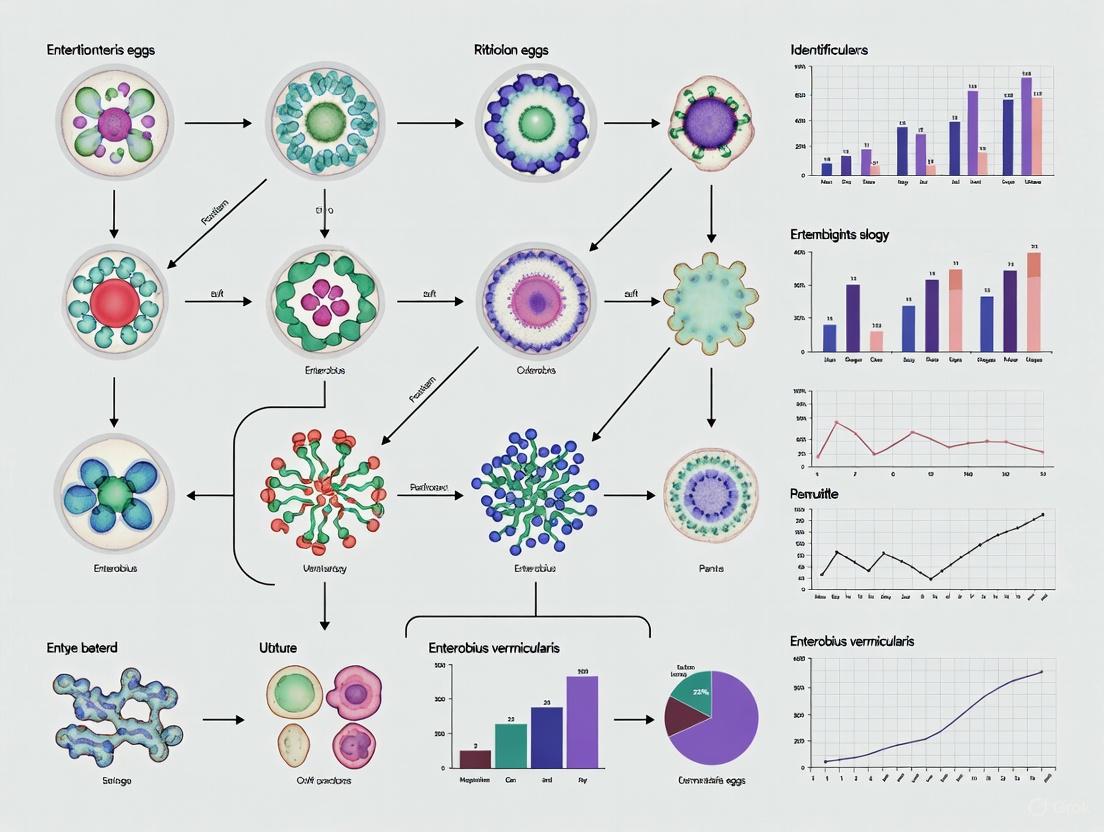
This article provides a comprehensive resource for researchers and scientists on the microscopic identification of Enterobius vermicularis (pinworm) eggs.
Advanced Microscopic Identification of Enterobius vermicularis Eggs: Techniques, Challenges, and Emerging Diagnostic Solutions
Abstract
This article provides a comprehensive resource for researchers and scientists on the microscopic identification of Enterobius vermicularis (pinworm) eggs. It covers foundational knowledge of egg morphology and life cycle, established diagnostic protocols like the cellulose tape test, and common laboratory challenges including low test sensitivity and morphological mimics. The content also explores advanced validation techniques, featuring cutting-edge developments in deep learning-based automated detection and molecular PCR assays that offer significantly improved sensitivity and specificity over conventional methods. This synthesis of traditional and innovative approaches aims to support diagnostic refinement and drug development initiatives.
Understanding the Target: Pinworm Egg Morphology and Life Cycle Fundamentals
Defining Key Morphological Characteristics of Enterobius vermicularis Eggs
Enterobius vermicularis, commonly known as the human pinworm, is one of the most prevalent nematode infections worldwide, particularly among children [1]. The microscopic identification of its eggs is the cornerstone of diagnosing enterobiasis. For researchers and drug development professionals, a precise understanding of the egg's morphology is not only crucial for accurate diagnosis but also for conducting fundamental research on the parasite's biology, life cycle, and for evaluating the efficacy of novel therapeutic agents. This whitepaper provides an in-depth technical guide to the defining morphological characteristics of E. vermicularis eggs, framing this information within the context of modern research methodologies and experimental protocols. The ability to accurately identify these eggs is fundamental to any thesis focused on the microscopic analysis of this parasite, impacting areas from epidemiology to experimental pathology.
Morphological Specifications ofE. vermicularisEggs
The eggs of Enterobius vermicularis possess a distinct morphology that allows for their differentiation from other intestinal helminths. A detailed summary of their key characteristics is provided in the table below.
Table 1: Key Morphological Characteristics of Enterobius vermicularis Eggs
| Characteristic | Specification | Technical Notes |
|---|---|---|
| Size | 50–60 μm in length by 20–30 μm in width [2] [3] | Dimensions are a primary differentiator from other helminth eggs. |
| Shape | Elongate to oval [2], with one side characteristically flattened [4] | The flattened side is a key diagnostic feature. |
| Shell | Transparent, thin, and colorless [2] [3] | The shell is composed of five distinct layers, including a chitinous and a lipid layer [5]. |
| Content | Typically partially embryonated when shed [2] [3] | Eggs often contain a developing embryo or a fully developed pinworm larva [6]. |
| Surface | Adhesive outer coat [2] | This adhesive property facilitates collection via tape methods and environmental contamination. |
The following conceptual workflow outlines the diagnostic and research thought process for identifying these eggs:
Established Diagnostic Protocols and Experimental Methodologies
The standard method for diagnosing enterobiasis is the cellulose tape test (also known as the Scotch tape test or pinworm paddle test), as eggs are not consistently released into the stool [2] [1]. This protocol is detailed below.
Table 2: Experimental Protocol for the Cellulose Tape Test
| Step | Procedure | Rationale & Technical Notes |
|---|---|---|
| 1. Timing | Sample collection should be done in the early morning, before the patient's first bowel movement or bathing [2] [1]. | Gravid female worms migrate nocturnally to deposit eggs on perianal folds. This timing maximizes yield. |
| 2. Collection | Press the adhesive surface of transparent cellulose tape firmly against the skin across the perianal folds [2] [4]. Alternatively, use a commercial "Swube tube" (paddle with adhesive) [2]. | Even and thorough pressure ensures eggs adhere to the tape. Gloves should be worn to prevent operator infection. |
| 3. Transfer | Adhere the tape, adhesive-side down, onto a standard glass microscope slide [4]. | Avoid folding the tape or creating air bubbles, which can obstruct microscopic view. |
| 4. Examination | Examine the tape under a light microscope at low to high power (100x-400x magnification) without a coverslip [2]. | The characteristic eggs are visible at these magnifications. Iodine staining can be applied to enhance visualization but is not always necessary [2] [4]. |
| 5. Confirmation | If the initial test is negative, repeat collection on 4-5 consecutive mornings to rule out infection [1]. | The sensitivity of a single test is limited; consecutive testing improves diagnostic accuracy. |
For comprehensive research, particularly in paleoparasitology or studies requiring definitive confirmation, additional methods are employed. These include rehydration techniques for ancient coprolites or mummified tissue, using a 0.5% trisodium phosphate solution with shaking over 12 days, followed by microscopy [7]. Furthermore, molecular techniques such as PCR amplification of the ITS1-5.8S rRNA region provide definitive species identification and differentiation from morphologically similar pinworms like Syphacia obvelata [8].
The Scientist's Toolkit: Essential Research Reagents and Materials
Successful research on E. vermicularis eggs relies on a suite of specific reagents and tools. The following table details essential items for a research laboratory focused on this parasite.
Table 3: Research Reagent Solutions for E. vermicularis Egg Analysis
| Item | Function/Application | Research Context |
|---|---|---|
| Transparent Cellulose Tape | Primary collection medium for eggs from the perianal area [2] [4]. | The foundational tool for obtaining diagnostic and research samples from human subjects. |
| Glass Microscope Slides | Platform for mounting collected samples for microscopic examination [4]. | A standard consumable for all light microscopy work. |
| Light Compound Microscope | Visualization and morphological analysis of eggs [9]. | Should be equipped with 10x, 40x, and 100x oil immersion objectives for detailed analysis. |
| Iodine Stain (e.g., Lugol's) | Temporary staining to enhance the visibility of internal egg structures [2] [4]. | Useful for differentiating eggs from artifact material in a sample. |
| Formalin-Ethyl Acetate (FEA) | Fecal concentration and preservation solution. | While less sensitive for enterobiasis, it is used for general parasitological surveys to rule out co-infections [2]. |
| PCR Reagents | Molecular identification and genetic characterization of isolates. | Primers targeting the ITS1 region (e.g., NC5) can differentiate E. vermicularis (473 bp) from Syphacia obvelata (414 bp) [8]. |
| Trisodium Phosphate Solution (0.5%) | Rehydration fluid for archeological samples (coprolites, mummified tissue) [7]. | Critical for paleoparasitology research to recover eggs from ancient specimens. |
Advanced Research Applications and Future Directions
The field of parasite identification is being transformed by technological advancements. Machine learning (ML) and convolutional neural networks (CNNs) are now being applied to automate the detection and classification of E. vermicularis eggs. One recent study developed a CNN model trained on 40,000 images of eggs and artifacts, achieving up to 99% accuracy in classification after data augmentation [9]. This approach addresses the limitations of manual microscopy, such as operator fatigue and expertise dependency. The workflow for such a computational research approach is illustrated below.
From a morphological research perspective, advanced imaging techniques like Scanning Electron Microscopy (SEM) and Transmission Electron Microscopy (TEM) have provided deeper insights into the egg's ultrastructure. TEM studies confirm the eggshell is composed of five distinct layers, including a vital lipid layer that contributes to its resistance [5]. Furthermore, comparative morphological studies with other oxyurids, such as Syphacia obvelata (a rodent pinworm that rarely infects humans), highlight significant differences in the size of the esophagus, cephalic alae, and genetic markers, which are crucial for accurate identification in research settings where cross-species contamination is a concern [8].
Enterobius vermicularis, the human pinworm, remains a prevalent helminthic infection with significant diagnostic challenges. The microscopic identification of its eggs, characterized by a standard dimension of 50-60 μm by 20-30 μm and a distinctive asymmetrical shape flattened on one side, constitutes a critical component of parasitological research and diagnostic practice. This technical guide provides an in-depth analysis of the E. vermicularis egg's morphological properties, serving as a foundational reference for researchers and drug development professionals. We synthesize quantitative morphometric data, detail standardized protocols for egg isolation and visualization, and present analytical frameworks for accurate identification. Within the broader thesis of microscopic diagnostics, this work emphasizes how precise morphological understanding directly enhances diagnostic accuracy, epidemiological tracking, and the evaluation of therapeutic efficacy in enterobiasis control programs.
Enterobius vermicularis infection, or enterobiasis, represents one of the most common helminthic infections worldwide, with an estimated 40 million people infected in the United States alone [1]. The parasite's eggs are the primary diagnostic stage and the main target for interruption of transmission cycles. The precise morphological characterization of these eggs is therefore paramount for accurate diagnosis, which in turn is essential for clinical management, public health interventions, and research into novel chemotherapeutic agents.
The identification thesis central to this guide posits that the unique and consistent morphometric profile of E. vermicularis eggs provides a reliable taxonomic and diagnostic marker. This profile encompasses not only absolute dimensions but also distinctive structural features that can be consistently identified using standardized methodologies. The double-walled, thick shell and the characteristic flattening on one side are definitive morphological traits that differentiate it from other helminth eggs [2] [10]. This document aims to dissect these features through a rigorous, evidence-based approach, providing a comprehensive technical resource for the scientific community.
Morphological Characteristics of E. vermicularis Eggs
The eggs of E. vermicularis exhibit a consistent and diagnostic morphology when examined under appropriate conditions. A thorough understanding of these characteristics is the cornerstone of accurate identification.
Quantitative Morphometrics
The following table summarizes the standard quantitative measurements for E. vermicularis eggs, as established by leading public health and research institutions.
Table 1: Standard Morphometric Parameters of E. vermicularis Eggs
| Parameter | Specification | Notes |
|---|---|---|
| Length | 50 - 60 μm [2] [11] | Consistent across major health authorities. |
| Width | 20 - 30 μm [2] [11] | Provides the egg with an elongate-oval shape. |
| Shape | Elongate-oval, slightly flattened on one side [2] [10] | A key diagnostic feature, often described as "asymmetrical". |
| Shell | Thick, double-walled, smooth [10] | Contributes to environmental resilience. |
| Content | Usually partially embryonated when shed [2] | Contains a developing larva that matures to infectivity in 4-6 hours. |
The dimensions place E. vermicularis eggs at a size that is challenging to visualize with the naked eye, necessitating microscopic examination for reliable detection [6]. The flattened side is a non-quantitative but critically important morphological trait that aids significantly in differentiating these eggs from other parasitic structures.
Structural Composition and Development
The structural integrity of the egg is maintained by a thick, double-walled shell [10]. This robust structure makes the eggs relatively resistant to environmental stresses, facilitating transmission in crowded settings. Upon deposition on perianal folds, the eggs are typically partially embryonated and undergo further development [2]. The larvae inside mature, and the eggs become infective within a remarkably short 4 to 6 hours under optimal conditions [2] [11]. This rapid maturation underscores the potential for autoinfection and rapid transmission within households or institutions.
Standardized Diagnostic Protocols
The unique life cycle of E. vermicularis, wherein gravid females migrate to the perianal region to deposit eggs, means that standard stool examination is an insensitive diagnostic method [1]. Instead, specific techniques designed to sample the perianal skin are required.
Cellophane Tape (Scotch Tape) Test
This is the primary and most recognized method for diagnosing enterobiasis.
- Principle: To collect eggs deposited on the perianal skin during the night by using the adhesive properties of transparent tape.
- Materials Required:
- Microscope slide
- Transparent cellophane tape (e.g., "Scotch" tape)
- Tongue depressor (optional)
- Microscope
- Step-by-Step Workflow:
- Timing: The sample must be collected first thing in the morning, before the patient defecates or bathes [1] [2].
- Collection: A strip of transparent tape, approximately 3-4 inches long, is pressed against the perianal skin with the adhesive side down. A tongue depressor can be used to apply firm, even pressure.
- Mounting: The tape is then carefully transferred and adhered to a clean glass microscope slide, ensuring the adhesive side is down against the glass and no air bubbles are trapped.
- Microscopy: The slide is examined under a microscope, typically at 100x or 400x magnification, for the presence of characteristic eggs [2].
- Diagnostic Yield: To rule out infection definitively, it is recommended that the test be performed on five consecutive mornings if initial examinations are negative [1].
Alternative and Complementary Methods
- Pinworm Paddle/Swube Tube: This device consists of a plastic paddle coated with a sticky adhesive. It is used similarly to the tape method but is considered more convenient for collection and transport [2] [11].
- Examination of Adult Worms: Occasionally, adult worms are discovered in the perianal region, on undergarments, or bed linens. Female worms are 8 to 13 mm long with a pointed tail, while males are smaller, 2 to 5 mm long, with a curved posterior end [1] [6]. Their recovery is also diagnostic.
The logical sequence and key decision points in the diagnostic process for E. vermicularis infection are summarized in the following workflow.
Research Reagents and Analytical Tools
For researchers investigating E. vermicularis, a standard toolkit is required for sample processing, analysis, and morphological confirmation.
Table 2: Essential Research Reagents and Materials for E. vermicularis Egg Analysis
| Reagent/Material | Function/Application | Technical Notes |
|---|---|---|
| Microscope Slides & Coverslips | Platform for mounting samples for microscopic examination. | Standard glass slides are used; coverslips are applied for liquid samples. |
| Transparent Cellophane Tape | Primary collection medium for eggs from perianal skin. | Must be transparent for light microscopy. "Scotch" tape is the common example. |
| Pinworm Paddle (Swube Tube) | An alternative commercial collection system. | Paddle with adhesive coating, often considered more convenient for lab processing. |
| Light Microscope | Visualization and morphometric analysis of eggs. | 10x eyepiece with 10x and 40x objectives is standard for identification. |
| Iodine Stain | Enhances contrast for visualizing egg structures. | Can be applied to wet mounts of eggs teased from adult worms or in stool concentrates [2]. |
| Formalin-Ethyl Acetate | Sedimentation concentration for stool samples. | Used to concentrate parasites if stool is examined; low yield for enterobiasis [12]. |
Discussion: Implications for Research and Drug Development
The precise morphological data and standardized protocols detailed in this guide have direct applications beyond clinical diagnostics. For drug development professionals, the egg viability and integrity serve as a potential endpoint for evaluating the efficacy of novel therapeutic agents. Compounds that disrupt the structural integrity of the thick egg shell could theoretically reduce environmental contamination and break the transmission cycle.
Furthermore, the rapid 4 to 6 hour embryonation period [2] [11] provides a narrow window for intervention. Research into agents that delay or halt larval development within the egg could represent a novel prophylactic strategy. The consistent morphometrics also allow for the development of automated image recognition systems for high-throughput screening of environmental samples or for validating diagnostic AI algorithms. Thus, a deep understanding of these basic morphological traits directly fuels innovation in anti-helminthic research and public health intervention design.
The standard egg dimensions of 50-60 μm by 20-30 μm, coupled with the distinctive asymmetrical shape flattened on one side, provide an unambiguous morphological signature for the identification of Enterobius vermicularis. Mastery of the associated diagnostic protocols, particularly the cellophane tape test, is essential for accurate detection. This technical guide synthesizes the critical quantitative and qualitative data, providing researchers and scientists with a foundational resource. The continued study of these morphological characteristics, framed within the broader thesis of microscopic diagnostics, remains vital for advancing our understanding of enterobiasis pathogenesis, transmission dynamics, and control.
Within the broader research on the microscopic identification of Enterobius vermicularis eggs, understanding the specific visual characteristics of transparency and larvated content is fundamental for accurate diagnosis. The standard method for diagnosing enterobiasis, the Scotch tape technique, relies heavily on the microscopic examination of eggs collected from the perianal region [13] [14]. These eggs are characterized by their transparent, colorless shell and the presence of a larva inside, which is a key diagnostic feature [15]. Traditional manual microscopy for identifying these features is time-consuming and requires significant expertise, leading to potential diagnostic errors [13]. Recent advancements in deep learning and computer vision are transforming this field by automating the detection process, enhancing both accuracy and efficiency [13] [15]. This technical guide delves into the core visual characteristics of E. vermicularis eggs and details the experimental methodologies, both traditional and AI-enhanced, used in their identification.
Visual Characteristics ofEnterobius vermicularisEggs
The definitive diagnosis of enterobiasis hinges on recognizing the distinct morphological features of E. vermicularis eggs under a microscope.
- Egg Morphology and Transparency: E. vermicularis eggs are characterized by their small size, typically measuring 50–60 μm in length and 20–30 μm in width [15]. They possess a thin, clear, bi-layered shell that is colorless and transparent [13] [15]. This transparency allows for the observation of the internal content but can also make the eggs difficult to distinguish from other microscopic particles and artifacts.
- Larvated Content: A critical diagnostic feature is the presence of an embryonated larva within the egg. Freshly deposited eggs often contain a larva that is visibly curled up inside the shell [15]. In some cases, the movement of this viable larva can be observed under the microscope, confirming the diagnosis [15]. The larva itself is transparent, contributing to the overall challenge of identification.
The following table summarizes the key visual characteristics for identification and contrasts them with common artifacts.
Table 1: Visual Characteristics ofE. vermicularisEggs vs. Common Artifacts
| Feature | Enterobius vermicularis Egg | Common Artifacts (e.g., air bubbles, plant cells, fibers) |
|---|---|---|
| Shape | Oval, asymmetrical (flattened on one side) [13] | Variable, often irregular or spherical [13] |
| Shell | Thin, clear, colorless, and transparent [13] [15] | Variable thickness, may have color or specific textures |
| Internal Content | Contains a characteristic, curled larva (larvated) [15] | Often lack defined internal structures, or structures inconsistent with a larva [13] |
| Color | Colorless [13] [15] | May exhibit inherent colors (e.g., green from plant matter) |
| Size | 50-60 μm in length, 20-30 μm in width [15] | Highly variable |
Experimental Protocols for Sample Preparation and Imaging
Robust experimental protocols are essential for consistent and accurate results, whether for traditional microscopy or for building AI-based detection systems.
Traditional Sample Preparation and Microscopy
The following protocol is adapted from established methods in clinical parasitology [13] [14].
- Sample Collection: Samples are collected using the Scotch tape technique. A strip of clear adhesive tape (approximately 2 cm wide and 6 cm long) is pressed against the perianal region of a child, preferably early in the morning before bathing or defecation [13]. The tape is then adhered to a glass microscope slide for transport and analysis.
- Egg Isolation and Purification:
- Eggs are harvested from the adhesive tape by adding a piece of the tape to 300 μl of absolute acetone in a tube and stirring continuously for about one minute [14].
- The egg suspension is then purified via centrifugation. A force of 800×g has been found effective for pelleting the eggs without causing clumping that cannot be reconstituted [14].
- The pellet is washed repeatedly with acetone and finally with 1× Phosphate-Buffered Saline (PBS, pH 7.2) to remove debris and glue [14].
- Image Capturing:
- High-resolution images are captured using a compound microscope, such as an Olympus BX43 equipped with a DP27 camera, at 400× magnification [13].
- Images are typically stored in a lossless format like Tagged Image File Format (TIFF) with a high resolution (e.g., 2448 × 1920 pixels) to preserve critical details for analysis [13].
Protocol for AI-Based Detection Model Training
The workflow for developing a deep learning model for automated egg detection involves several key stages, from data preparation to model evaluation [13] [15].
- Data Preparation:
- Dataset Curation: A dataset is built from captured microscopic images. A balanced dataset with an equal number of images for each class (e.g., 1:1 ratio of E. vermicularis eggs (Class 1) and artifacts (Class 0)) is ideal for training [13].
- Preprocessing: Images are standardized by cropping to a fixed size (e.g., 370 × 370 pixels) to focus on the egg regions. Bicubic interpolation is used during resizing to maintain image quality and preserve morphological features [13].
- Data Augmentation: To enhance model generalization, the dataset is artificially expanded using techniques like rotation, flipping, and scaling. This step is crucial and has been shown to boost model accuracy significantly, for instance, from limited initial performance to 90.0% across key metrics [13].
- Model Training and Evaluation:
- Architecture Selection: Convolutional Neural Network (CNN) architectures are employed. Studies have benchmarked various models, from custom CNNs to advanced architectures like Xception (which achieved 99.0% accuracy) and the YOLO Convolutional Block Attention Module (YCBAM) [13] [15].
- Training Regime: An 80:20 split for training and validation is common, often coupled with a five-fold cross-validation to ensure model robustness and avoid overfitting [13].
- Performance Metrics: Models are evaluated based on precision, recall, F1-score, and mean Average Precision (mAP). For example, the YCBAM model demonstrated a precision of 0.9971 and an mAP@0.5 of 0.9950 [15].
Advanced Detection Frameworks and Analytical Techniques
The YCBAM Detection Framework
The YOLO Convolutional Block Attention Module (YCBAM) represents a recent advancement for automating pinworm egg detection [15]. This framework integrates the speed of YOLO (You Only Look Once) with attention mechanisms to improve feature extraction.
- Architecture Integration: The YCBAM integrates the YOLOv8 architecture with two key attention modules: the Convolutional Block Attention Module (CBAM) and a self-attention mechanism [15].
- Functionality:
- CBAM: This module sequentially infers attention maps along both the channel and spatial dimensions, helping the model focus on "what" and "where" is important in the image. This enhances sensitivity to small features like pinworm egg boundaries amidst complex backgrounds [15].
- Self-Attention: This mechanism allows the model to capture long-range dependencies within the image, providing a dynamic feature representation that is crucial for precise detection [15].
- Performance: This integration has proven highly effective, achieving a precision of 0.9971, recall of 0.9934, and a mean Average Precision (mAP@0.5) of 0.9950, confirming its superiority in detecting small objects like pinworm eggs [15].
Antigen Characterization for Immunodiagnostics
Beyond morphological identification, research into the immunogenic properties of E. vermicularis eggs is underway to explore alternative diagnostic pathways [14].
- Antigen Preparation: Egg antigens are obtained by disrupting the egg shell through sonication at 53 kHz with glass beads for 30 minutes, followed by vortexing for an additional 30 minutes [14].
- Protein Characterization: Using SDS-PAGE and immunoblotting techniques, the most prominent and immunogenic protein bands identified from egg antigens have molecular weights of 21 kDa, 66 kDa, 83 kDa, 96 kDa, 112 kDa, 121 kDa, 140 kDa, and 151 kDa [14]. These antigens react with antibodies from infected hosts, paving the way for potential serological diagnostic tests [14].
The Scientist's Toolkit: Research Reagent Solutions
The following table details essential materials and reagents used in the experimental protocols for E. vermicularis egg research.
Table 2: Key Research Reagents and Materials
| Item | Function/Application |
|---|---|
| Scotch Tape / Cellophane Swabs | Collection of eggs from the perianal region using the standard tape method [13] [14]. |
| Absolute Acetone | Effective solvent for harvesting and detaching E. vermicularis eggs from adhesive tape [14]. |
| Phosphate-Buffered Saline (PBS), pH 7.2 | Washing and suspension buffer for purified eggs, maintaining a physiological pH [14]. |
| Glass Beads (e.g., 4mm) | Used in conjunction with sonication to physically disrupt the egg shell for antigen preparation [14]. |
| Bradford Assay Reagents | Quantification of the total protein concentration in prepared egg antigen samples [14]. |
| SDS-PAGE Gel Electrophoresis System | Separation and determination of protein band sizes from egg antigen samples [14]. |
| Convolutional Neural Network (CNN) Models (e.g., Xception, YCBAM) | Deep learning architectures for automated detection and classification of eggs from microscopic images [13] [15]. |
| Image Augmentation Algorithms | Software tools to artificially expand training datasets, improving model robustness and accuracy [13]. |
The Pinworm Life Cycle and Its Impact on Egg Detection Strategy
Enterobius vermicularis, commonly known as the human pinworm, is one of the most prevalent intestinal nematodes worldwide, particularly affecting children [1] [16]. The accurate microscopic identification of its eggs remains a cornerstone of diagnosis and research, crucial for individual patient care, epidemiological studies, and the assessment of therapeutic efficacy in drug development [2] [17]. The reliability of any diagnostic strategy is inherently and profoundly linked to the parasite's unique biological life cycle. Unlike many other helminths, E. vermicularis does not primarily release its eggs into the fecal stream but deposits them in the perianal region [2] [18]. This singular aspect of its reproduction dictates a specialized approach to specimen collection and examination. This technical guide explores the intricate relationship between the pinworm life cycle and the resulting egg detection strategies, framing this within contemporary research on microscopic identification. It further examines the emergence of advanced technologies, including deep learning and microbiome analysis, which are refining diagnostic protocols and opening new avenues for scientific inquiry.
The Life Cycle ofEnterobius vermicularis: A Foundation for Diagnostic Strategy
The life cycle of E. vermicularis is direct and occurs entirely within the human host, typically completing in 4 to 6 weeks [2]. Its specific developmental stages and migratory patterns are the primary determinants for designing effective egg detection protocols.
Stage-by-Stage Progression
1. Egg Ingestion and Larval Hatching: Infection commences with the oral ingestion of infective eggs [1] [18]. These eggs are remarkably resilient and can persist in the environment on contaminated surfaces, clothing, and bedding [2]. Upon ingestion, the eggs travel to the small intestine, where the larvae hatch [18].
2. Larval Migration and Maturation: The newly hatched larvae descend to the cecum, appendix, and adjacent regions of the large intestine. Here, they undergo two molts to mature into adult worms [2] [1]. The time from ingestion to the development of sexually mature adults is approximately one month. Adult worms have a short lifespan, typically around two months [2].
3. Copulation and Gravid Female Migration: After copulation, the male worm, which measures 2 to 5 mm, is often passed in the stool [2]. The gravid female, significantly larger at 8 to 13 mm, becomes distended with thousands of eggs. Unlike most helminths, she does not release her eggs within the intestinal lumen. Instead, driven by a nocturnal activity pattern, she actively migrates out of the anal canal and onto the perianal skin folds [2] [1] [18].
4. Egg Deposition and Embryonation: On the perianal skin, the female worm deposits her eggs in a sticky, gelatinous substance [18]. A single female can lay between 5,000 and 16,000 eggs [1]. These eggs are initially partially embryonated but become infective within a relatively short period—4 to 6 hours under optimal conditions [2]. This rapid maturation is a critical factor in the parasite's transmission and the cycle of autoinfection.
5. Transmission and Reinjection: The presence of the female worm and the eggs causes intense perianal pruritus (itching). Scratching contaminates the fingers and fingernails with eggs, facilitating the fecal-oral route of autoinfection or transmission to others [1]. Contaminated clothing and linens can also shed eggs into the environment. Rarely, eggs can become airborne and be inhaled and subsequently swallowed, leading to infection [2]. A phenomenon known as retroinfection has also been postulated, where larvae hatch on the perianal skin and migrate back into the rectum, though the frequency of this is unknown [2].
The diagram below illustrates this life cycle and its direct implications for diagnostic sampling strategy.
Established and Emerging Detection Methodologies
The life cycle directly informs the gold-standard diagnostic method, while also revealing its limitations and driving the development of novel approaches.
Gold-Standard Protocol: The Cellulose Tape (Scotch Tape) Test
This test is the method of choice for diagnosing enterobiasis due to its direct targeting of the egg deposition site [2] [17]. The clinical procedure involves pressing the adhesive side of transparent cellulose tape or a specialized "Swube tube" paddle against the perianal skin. For optimal sensitivity, the Centers for Disease Control and Prevention (CDC) recommends that "specimens should be collected on three consecutive mornings prior to bathing" and before the first bowel movement [17]. The collected sample is then transferred to a microscope slide for examination.
Laboratory Examination Protocol:
- Microscopic Setup: Place the tape adhesive-side down on a microscope slide. A drop of toluene or immersion oil can be added to clear the preparation.
- Initial Screening: Systematically scan the entire tape under low magnification (10x objective) to locate potential eggs and adult worms.
- High-Power Confirmation: Switch to a higher magnification (40x objective) for detailed morphological identification.
- Morphological Identification: Confirmed E. vermicularis eggs are characteristically:
Limitations of Traditional Microscopy and Stool Examination
The reliance on manual microscopy introduces several challenges. The procedure is time-consuming, labor-intensive, and susceptible to human error, particularly in high-volume settings or when performed by less experienced personnel [15]. Furthermore, the sensitivity of a single tape test is not absolute, estimated at around 50%, which is why multiple consecutive tests are recommended to achieve a sensitivity of over 90% [1]. Stool examination is notably unreliable for diagnosing enterobiasis, as eggs are only "occasionally excreted in the stool" and are not consistently present [2] [1].
Table 1: Comparative Analysis of Diagnostic Methods for Enterobius vermicularis
| Method | Target Specimen | Reported Sensitivity / Performance | Key Advantages | Key Limitations |
|---|---|---|---|---|
| Cellulose Tape Test | Perianal skin | ~50% per test; >90% over 3 tests [1] [17] | Directly targets egg deposition site; low cost; simple protocol | Timing-sensitive; requires patient compliance; manual, subjective reading |
| Stool Microscopy | Fecal sample | Very Low [2] [1] | Convenient for other parasites | Highly insensitive for pinworm; eggs not consistently present in feces |
| Deep Learning (YCBAM Model) | Microscopic images | Precision: 0.9971, Recall: 0.9934, mAP@0.5: 0.9950 [15] | High throughput; objective; reduces human error; operates at scale | Requires computational resources; dependent on quality training data |
| Cumulative Transfer Learning CNN | Microscopic images | Accuracy, Precision, Recall, F1-score: 1.0 (on test dataset) [19] | High accuracy with limited data; reduced training time | Potential for false positives; performance varies with IoU thresholds |
Advanced Research and Quantitative Insights
Automation in Egg Detection: Deep Learning Models
To overcome the limitations of manual microscopy, significant research efforts are focused on automating egg detection using deep learning and computer vision. These models are trained on thousands of microscopic images to identify and localize pinworm eggs with high precision.
Experimental Workflow for AI Model Development:
- Image Acquisition: A dataset of microscopic images is created from cellulose tape preparations. For example, one study used 1,000 images of pinworm eggs and 1,000 images of artifacts [19].
- Image Annotation: Experts manually label the images, drawing bounding boxes around each egg to create a "ground truth" dataset for training and validation.
- Model Selection and Training: A model architecture is chosen, such as YOLO (You Only Look Once). Advanced frameworks like the YOLO Convolutional Block Attention Module (YCBAM) integrate attention mechanisms to help the model focus on the most relevant features of the egg amidst background noise [15].
- Performance Evaluation: The model's performance is quantified using metrics such as:
- Precision: The proportion of detected eggs that are correct (e.g., 0.9971 for YCBAM).
- Recall: The proportion of actual eggs that are successfully detected (e.g., 0.9934 for YCBAM).
- mAP (mean Average Precision): A comprehensive metric for object detection accuracy across different thresholds [15].
The workflow for developing and deploying such a model is illustrated below.
Table 2: Performance Metrics of Advanced Deep Learning Models for Pinworm Egg Detection
| Model | Precision | Recall | mAP@0.5 | Key Feature |
|---|---|---|---|---|
| YCBAM [15] | 0.9971 | 0.9934 | 0.9950 | Integrates YOLOv8 with attention modules for enhanced feature extraction |
| Cumulative Transfer Learning CNN [19] | 1.0 | 1.0 | N/A | Uses sequential knowledge transfer for efficiency with limited data |
| YOLOv8 (for comparison) [19] | Not Specified | 0.72 | 0.057 (mAP@0.5:0.95) | Standard baseline model for object detection |
Epidemiological and Biochemical Impact Data
Understanding the prevalence and physiological impact of enterobiasis provides context for the importance of accurate detection. Recent meta-analyses and clinical studies yield critical quantitative data.
Table 3: Epidemiological and Host Impact Profile of Enterobius vermicularis Infection
| Parameter | Findings | Source / Context |
|---|---|---|
| Global Pediatric Prevalence | Pooled prevalence of 12.9% among children, with highest rates in Europe (24.9%) [16]. | Global Meta-Analysis |
| Prevalence in Thailand | Overall pooled prevalence of 3.6%, declining from 4.75% (2000-2009) to 1.15% (2020-2023) [16]. | National Systematic Review |
| High-Risk Populations | Immigrant children (25.2%), hilltribe children (19.9%), children in orphanages (11.4%) [16]. | Subgroup Analysis, Thailand |
| Impact on Blood Parameters | Significant decrease in serum total protein and iron levels in infected children [20]. | Clinical Study (n=505 children) |
| Impact on Gut Microbiota | Infection associated with increased gut microbial diversity, decreased Fusobacteria, increased Actinobacteria (e.g., Bifidobacterium) [21]. | Microbiome Study (n=109 children) |
| Association with Dysbiosis | 46% of infected individuals showed disturbed intestinal microbiota vs. 8.3% in controls [22]. | Clinical Microbiological Study |
The Scientist's Toolkit: Essential Research Reagents and Materials
Successful research into the microscopic identification of E. vermicularis relies on a suite of specific reagents and materials. The following table details key items essential for both traditional and advanced investigative workflows.
Table 4: Essential Research Reagents and Materials for Pinworm Egg Detection Research
| Item | Specification / Example | Primary Function in Research Context |
|---|---|---|
| Cellulose Tape | Transparent, adhesive (e.g., Scotch Tape) | Collection of eggs from the perianal region for microscopic examination or digital image dataset creation [2] [17]. |
| Microscope Slides & Coverslips | Standard glass slides (75 x 25 mm) | Mounting medium for tape samples or prepared specimens for visual or digital analysis. |
| Light Microscope | With 10x, 40x, and 100x objectives | Gold-standard tool for direct visualization of eggs and morphological confirmation [2]. |
| Digital Slide Scanner / Camera | High-resolution microscope camera | Digitization of microscopic fields to create image datasets for training and validating AI models [15] [19]. |
| Clearing Agents | Toluene, immersion oil | Applied to tape preparations to enhance optical clarity and egg visibility under the microscope [2]. |
| Annotated Image Datasets | Datasets with expert-labeled eggs (e.g., 1,000+ images) | Serves as the "ground truth" for training, validating, and benchmarking deep learning algorithms [19]. |
| Deep Learning Framework | Python, PyTorch/TensorFlow, YOLOv8 | Provides the software environment and architecture for developing and training automated detection models [15]. |
The strategy for detecting Enterobius vermicularis eggs is inextricably dictated by the parasite's singular life cycle, specifically the nocturnal migration of gravid females and the deposition of eggs in the perianal region. This biological imperative establishes the cellulose tape test as the unchallenged gold standard for diagnosis, a method that directly targets the parasite's niche behavior. While traditional microscopy remains foundational, its limitations in terms of throughput, subjectivity, and labor are being actively addressed by a new frontier of research. The integration of deep learning models, such as YCBAM and cumulative transfer learning networks, demonstrates a powerful paradigm shift towards automation, offering remarkable gains in accuracy, efficiency, and objectivity. Furthermore, research into the biochemical and microbiological consequences of infection, including altered blood parameters and gut dysbiosis, underscores the broader health implications of enterobiasis and reinforces the need for precise diagnostic tools. For researchers and drug development professionals, a thorough understanding of this cycle-to-detection pipeline is critical. It informs the validation of new diagnostic technologies, the accurate measurement of infection prevalence in clinical trials, and the ongoing pursuit of more effective public health interventions against this pervasive parasite.
Nocturnal Migration of Gravid Females and Egg Deposition on Perianal Folds
The nocturnal migration of gravid female Enterobius vermicularis and subsequent egg deposition on perianal folds represents a critical biological phenomenon with profound implications for parasite transmission, disease epidemiology, and diagnostic methodology. This specialized behavior not only ensures the continuation of the parasite's life cycle but also presents unique challenges and opportunities for scientific detection and control. Within the broader context of microscopic identification of Enterobius vermicularis eggs, understanding this precise biological mechanism is fundamental to developing accurate diagnostic protocols and effective therapeutic interventions. The migratory pattern exhibits remarkable temporal specificity, occurring predominantly during host rest periods, and spatial precision, targeting the perianal folds as the exclusive site for oviposition [2] [23]. This review synthesizes current scientific knowledge on this phenomenon, detailing the biological drivers, diagnostic applications based on this behavior, and quantitative epidemiological patterns, thereby providing researchers and drug development professionals with a comprehensive technical resource grounded in the parasite's most defining biological activity.
Biological Mechanism of Nocturnal Migration and Oviposition
The nocturnal migration of gravid female pinworms is a complex biological process regulated by parasitic developmental stages and host physiological conditions. The entire life cycle of Enterobius vermicularis from egg ingestion to adult maturity spans approximately one month, with adult worms surviving for about two months in the host's gastrointestinal tract [2]. Following copulation within the cecum and ascending colon, male worms typically die, while gravid females, now carrying an estimated 10,000 or more eggs, begin their migratory journey [23].
The migration is characterized by precise spatiotemporal coordination. Gravid females measure 8-13 mm in length and possess a long, pointed tail, a morphological adaptation that facilitates their movement through the intestinal tract and anal opening [2] [23]. This migration occurs primarily during the night when the host is at rest, a behavioral adaptation likely exploiting reduced anal sphincter tone and decreased host physical activity [23] [24]. Upon reaching the perianal folds, the female worms crawl on the skin surface, depositing their eggs through a process that involves both attaching eggs with an adhesive matrix and the subsequent death of the female worm [2] [4].
The eggs themselves are transparent, elongate-oval structures measuring 50-60 µm by 20-30 µm, characteristically flattened on one side [2] [4]. A critical biological feature is the rapid embryonic development of these eggs; the larvae contained inside become infective within just 4-6 hours under optimal conditions following deposition [2]. This accelerated maturation, combined with the mechanical irritation caused by the crawling females and the adhesive nature of the eggs, induces perianal pruritus (itching) in the host, which facilitates transmission through scratching and subsequent hand-to-mouth contact [2] [23].
Table 1: Biological Characteristics of Enterobius vermicularis Migratory Stage
| Characteristic | Specification | Functional Significance |
|---|---|---|
| Migration Timing | Nocturnal (host rest periods) | Exploits reduced anal sphincter tone; minimizes detection |
| Female Worm Size | 8-13 mm length, 0.3-0.5 mm width | Optimal for migration through anal opening |
| Egg Load per Female | >10,000 eggs | Ensures high reproductive potential despite external deposition |
| Egg Dimensions | 50-60 µm × 20-30 µm | Microscopically identifiable; optimal for environmental dispersal |
| Egg Embryonation Time | 4-6 hours | Enables rapid transmission potential |
| Primary Deposition Site | Perianal skin folds | Protected microenvironment for egg development |
The following diagram illustrates the complete life cycle of E. vermicularis, highlighting the critical phase of nocturnal migration and egg deposition:
Diagram Title: Enterobius vermicularis Complete Life Cycle
While the intestinal phase of the parasite is essential for development and maturation, the brief external migratory phase represents the epidemiologically critical window for both transmission and diagnosis. The biological investment in this high-risk behavior—with the certain death of the female worm—underscores its evolutionary importance in the parasite's persistence strategy [2] [23] [25].
Diagnostic Methodologies Leveraging Nocturnal Egg Deposition
The biological specificity of nocturnal perianal egg deposition forms the foundational principle for the most reliable diagnostic technique in enterobiasis: the cellulose tape (Scotch tape) test. This method directly capitalizes on the parasite's behavior to recover evidence of infection that would typically be absent or scarce in routine stool examinations [2] [17] [4]. Standard stool microscopy has remarkably low sensitivity (approximately 0.33%) for detecting E. vermicularis because egg deposition occurs externally rather than within the fecal stream [26]. Consequently, protocols specifically designed to sample the perianal region are essential for accurate diagnosis in both clinical and research settings.
Standardized Cellulose Tape Protocol
The cellulose tape procedure, recognized as the diagnostic gold standard by the Centers for Disease Control and Prevention (CDC), requires meticulous execution to maximize sensitivity [17]. The recommended protocol involves collection immediately upon waking, before any defecation or bathing, as these activities can remove or dislodge recently deposited eggs [2] [17]. To improve diagnostic yield, collection should be performed on three consecutive mornings, increasing the probability of detecting intermittent egg deposition [17]. The technical procedure involves pressing the adhesive surface of transparent cellulose tape firmly against multiple areas of the perianal skin. The tape is then transferred adhesive-side down onto a standard glass microscope slide, ensuring smooth attachment without air bubbles that could obstruct microscopic visualization [17] [4].
Microscopic examination proceeds at 100x and 400x magnification, with identification based on the characteristic egg morphology: asymmetrical, flattened on one side, and containing a partially developed larva [2] [4]. The adhesive tape method is not only effective for egg detection but can also occasionally recover adult female worms, which provide definitive morphological confirmation [2]. Adherence to this standardized protocol is critical for research consistency, as demonstrated by its significantly higher detected prevalence (12.9%) compared to stool-based methods (0.33%) in large-scale studies [26].
Alternative Diagnostic Approaches
While the cellulose tape test remains paramount, several alternative or supplementary diagnostic approaches exist. The "Swube tube" method utilizes a paddle coated with adhesive material, offering a potentially more ergonomic sampling device with equivalent efficacy to cellulose tape [2] [17]. In cases of ectopic infestation or unusual clinical presentations, eggs may be incidentally discovered in cervicovaginal Papanicolaou smears, urine sediments, or histopathological sections from peritoneal or genital tract biopsies [2] [24]. However, these are diagnostic exceptions rather than routine approaches. It is noteworthy that no commercially available serological tests exist for enterobiasis, reinforcing the continued reliance on direct morphological identification through perianal sampling [24].
Table 2: Comparative Analysis of Diagnostic Methods for Enterobiasis
| Method | Sample Type | Collection Protocol | Reported Sensitivity | Primary Application |
|---|---|---|---|---|
| Cellulose Tape (Scotch Test) | Perianal impression | Morning, pre-defecation/bathing, 3 consecutive days | 12.9% (in field studies) [26] | Gold standard; clinical & research |
| Stool Microscopy | Fecal sample | Single or multiple random samples | 0.33% (in field studies) [26] | General parasitology survey; low yield for pinworm |
| Swube Tube | Perianal impression | Similar to cellulose tape | Comparable to tape method [17] | Alternative clinical device |
| Histopathology | Tissue biopsy | Surgical collection during procedure | N/A (incidental finding) | Diagnosis of ectopic migration [24] |
The following workflow diagram outlines the optimized diagnostic procedure based on the parasite's biology:
Diagram Title: Optimized Diagnostic Workflow for Enterobiasis
Epidemiological Patterns and Risk Factor Analysis
Quantitative epidemiological data reveals significant geographic, demographic, and temporal patterns in enterobiasis prevalence, largely shaped by the transmission dynamics facilitated by nocturnal egg deposition. Recent meta-analyses and field studies provide robust statistical insights into the distribution of E. vermicularis infections across different populations, informing targeted control strategies.
A comprehensive 2025 meta-analysis of studies from Thailand, encompassing 52,765 participants, determined an overall pooled prevalence of 3.6% (95% CI: 2.1–5.9%), with a notable temporal decline from 4.75% in 2000-2009 to 1.15% in 2020-2023 [26]. This trend suggests improvements in public health interventions and sanitation over time. However, prevalence rates demonstrate substantial geographic variation, with Central Thailand reporting significantly higher rates (7.93%) compared to other regions, potentially reflecting local differences in population density, climate, or public health infrastructure [26]. Similar heterogeneity is observed in China, where a 2025 cross-sectional study of 1,179 rural schoolchildren in Zhejiang Province found an overall infection rate of 4.07%, ranging from 1.64% to 9.79% across different districts [27].
The most striking epidemiological pattern is the disproportionate infection burden among specific demographic subgroups. Socioeconomically disadvantaged child populations show markedly elevated prevalence rates: immigrant children (25.2%), hilltribe children (19.9%), Karen students (15.5%), and children in orphanages (11.4%) according to the Thailand meta-analysis [26]. These findings highlight crowding and limited sanitation as powerful drivers of transmission, consistent with the fecal-oral route enabled by perianal egg deposition. A 2025 meta-analysis from Iran, incorporating 46,070 children, found an overall prevalence of 6.7%, further confirming the persistent global burden of enterobiasis in pediatric populations [28].
Demographic analyses reveal nuanced patterns. The Zhejiang study found a significantly higher infection rate in girls (5.41%) than boys (2.81%), with the disparity widening in older age groups [27]. This gender differential may reflect complex behavioral or biological factors requiring further investigation. The same study identified protective factors, including weekly classroom disinfection and monthly health education, underscoring the importance of environmental hygiene and knowledge in breaking the transmission cycle [27].
Table 3: Global Epidemiological Profile of Enterobius vermicularis Infection
| Region/Country | Study Population | Sample Size | Prevalence (%) | Key Risk Factors / Notes |
|---|---|---|---|---|
| Thailand (Pooled) [26] | General Population | 52,765 | 3.6 | Declining trend from 4.75% (2000-2009) to 1.15% (2020-2023) |
| Central Thailand [26] | General Population | N/A | 7.93 | Geographic hotspot within country |
| Iran (Pooled) [28] | Children | 46,070 | 6.7 | Relatively high burden in pediatric population |
| Zhejiang, China [27] | Rural Schoolchildren | 1,179 | 4.07 | Rates varied by district (1.64% - 9.79%) |
| European Studies [23] | Children | Various | ~20 | Historical estimates in kindergarten/school groups |
| Disadvantaged Groups, Thailand [26] | Immigrant/Hilltribe Children | Various | 15.5 - 25.2 | Markedly elevated in marginalized populations |
Research Reagent Solutions and Essential Materials
The experimental and diagnostic investigation of E. vermicularis migration and egg deposition requires specific research-grade materials and reagents. The following table details the essential components of a standardized toolkit for enterobiasis research, with particular emphasis on morphological identification and protocol standardization.
Table 4: Essential Research Reagents and Materials for Enterobiasis Investigation
| Reagent/Material | Technical Specification | Research Application | Rationale |
|---|---|---|---|
| Transparent Cellulose Tape | Non-ridged, standard width (≥1 cm), high optical clarity | Perianal egg collection for microscopic diagnosis | Optimal adhesive properties and minimal visual distortion [17] [4] |
| Microscope Slides | Standard 75x25 mm, 1.0-1.2 mm thickness | Mounting medium for tape preparations | Compatible with microscope stage and provides flat surface for imaging |
| Light Microscope | 10x, 40x objectives; 100x oil immersion capability | Morphological identification and imaging of eggs/worms | Essential for visualizing characteristic egg morphology (50-60µm) [2] [4] |
| Iodine Staining Solution | Lugol's or D'Antoni's iodine | Enhancement of egg morphological features | Stains glycogen in egg contents, improving contrast for imaging and measurement [4] |
| Swube Tubes | Paddle with adhesive polymer coating | Alternative perianal sampling device | Standardized commercial format for consistent sample collection [17] |
| Sample Transport Container | Sealed, temperature-controlled container | Maintain sample integrity between collection and analysis | Prevents sample degradation and potential environmental contamination |
The nocturnal migration of gravid female Enterobius vermicularis and the subsequent deposition of eggs on perianal folds constitutes the cornerstone of the parasite's transmission biology and the definitive target for diagnostic interrogation. This precise biological behavior explains the epidemiological patterns of enterobiasis, particularly its high prevalence in crowded child populations and its persistence despite general improvements in sanitation. The continued reliance on direct morphological detection through the cellulose tape test—a method entirely predicated on this migratory behavior—underscores the critical importance of understanding this phenomenon for both clinical diagnosis and research quantification. Future investigations exploring the molecular triggers of nocturnal migration, the adhesive properties of the egg matrix, and potential interventions disrupting this specific behavioral sequence offer promising avenues for therapeutic innovation. For researchers and drug development professionals, a mechanistic understanding of this process remains fundamental to advancing detection technologies, evaluating antihelminthic efficacy, and designing transmission-blocking interventions aimed at this vulnerable point in the parasite's life cycle.
Optimal Timing for Diagnostic Sampling Based on Parasite Behavior
The microscopic identification of Enterobius vermicularis (pinworm) eggs represents a fundamental diagnostic challenge in clinical parasitology. The success of this diagnostic endeavor is intrinsically linked to a profound understanding of parasite behavior, particularly its rhythmic biological processes. This technical guide elucidates the critical relationship between the parasite's nocturnal egg-laying behavior and the optimal timing for diagnostic sampling. We provide a comprehensive synthesis of the biological rationale, supported by quantitative data, and detail standardized protocols for the "tape test" to maximize detection sensitivity. Furthermore, we explore the implications of these rhythms for research and drug development, including the design of experimental studies and the evaluation of anthelmintic efficacy. The precise alignment of sampling protocols with parasite chronobiology is not merely a procedural recommendation but a fundamental prerequisite for accurate surveillance, effective clinical diagnosis, and robust scientific research.
The nematode Enterobius vermicularis exhibits a highly specialized and time-dependent life cycle that directly dictates the optimal strategy for its detection. Following ingestion of infectious eggs, the parasites mature in the cecum and appendix. A pivotal aspect of their reproduction involves the nocturnal migration of gravid female worms from the gastrointestinal tract to the perianal and perineal regions [1] [22]. This migration is not random but is a precisely timed behavioral rhythm.
Under the cover of darkness, typically 2 to 3 hours after the host falls asleep, the female worms emerge onto the perianal skin to deposit thousands of eggs [29] [30] [31]. The evolutionary rationale for this nocturnal behavior is multifaceted. It may coincide with a period of host quiescence, potentially reducing the physical disruption of egg laying. Furthermore, this timing ensures that eggs are deposited in an environment conducive to their maturation and subsequent transmission, taking advantage of the host's subsequent activities for dispersal [32]. From a diagnostic perspective, this behavior creates a narrow temporal window during which the parasite's eggs are abundantly present on the host's skin but have not yet been dispersed or destroyed by daytime activities such as bathing, defecation, or changing clothes. Consequently, the microscopic identification of pinworm eggs is entirely contingent upon synchronizing the sampling procedure with this specific phase of the parasite's biological rhythm.
Quantitative Analysis of Sampling Efficacy
The impact of sampling timing and methodology on diagnostic yield is profound. A recent large-scale meta-analysis provides compelling quantitative evidence for the superiority of timed perianal sampling over other methods.
Table 1: Comparative Diagnostic Yield of Methods for Detecting E. vermicularis
| Diagnostic Method | Pooled Prevalence (%) | Relative Efficacy vs. Stool Exam | Key Rationale |
|---|---|---|---|
| Scotch Tape (Tape Test) | 12.9% | ~39x higher | Directly captures eggs from nocturnal perianal deposition [26]. |
| Stool Examination (Direct Smear/Concentration) | 0.33% | (Baseline) | Eggs are only occasionally excreted in stool [1] [26]. |
The data in Table 1 underscore a critical finding: reliance on standard stool examination is an ineffective strategy for diagnosing enterobiasis, yielding a near-zero detection rate. This is because female worms lay eggs outside the digestive tract, and eggs are not consistently shed in feces [1]. The "tape test," which targets the site and time of egg deposition, is dramatically more sensitive.
The timing of the tape test itself is a further refinement that significantly enhances its performance. Conducting the test immediately upon waking, before any bathing or toilet use, capitalizes on the highest concentration of eggs present on the skin from the previous night's activity [29] [30] [31]. Given the potential for night-to-night variation in worm migration, repeating the tape test on three to five consecutive mornings is recommended to achieve a diagnostic sensitivity exceeding 90% [29] [1]. This protocol ensures that even low-level or intermittent infections are captured.
Standardized Diagnostic Protocols and Experimental Workflows
For both clinical and research settings, adherence to a standardized protocol is essential for ensuring consistent, reliable, and reproducible results. The following section details the recommended methodologies.
The Tape Test: Step-by-Step Protocol
The following workflow details the procedure for the classic cellophane tape test, a cornerstone of pinworm diagnosis [29] [30].
Commercial Pinworm Test Kits
As an alternative to the traditional tape method, commercial pinworm test kits often utilize a plastic paddle or pinworm paddle coated with adhesive. The fundamental principles of timing and repetition remain identical to the tape test [30]. Researchers should follow the manufacturer's specific instructions for use, but the general workflow aligns closely with the protocol above.
The Scientist's Toolkit: Essential Research Reagents and Materials
For researchers conducting studies on E. vermicularis, a standardized set of materials is required for proper sample collection, processing, and analysis.
Table 2: Essential Research Reagents and Materials for Pinworm Egg Detection
| Item/Category | Specification/Example | Primary Function in Research |
|---|---|---|
| Sample Collection | Clear cellophane tape (1-2 inch width) or commercial paddle kit (e.g., Pinworm paddle) | Adhesive-based capture of eggs from perianal skin. |
| Microscopy Supplies | Glass microscope slides, coverslips, lens cleaning solution | Mounting and visualization of samples under magnification. |
| Microscopy Equipment | Light microscope with 10x, 40x objectives | Identification and morphological analysis of eggs. |
| Sample Storage & Transport | Sealable plastic bags, sterile specimen containers | Secure and contamination-free transport of samples. |
| Labeling & Documentation | Ethanol-resistant pens, laboratory notebook, digital database | Sample tracking, data recording, and maintenance of chain of custody. |
| Laboratory Reagents | Saline solution, toluene (for clearing tape if needed) | Sample preparation and processing for enhanced visualization. |
Implications for Research and Drug Development
The rhythmic behavior of E. vermicularis has significant implications beyond basic diagnosis, particularly in the realms of experimental design and therapeutic assessment.
Designing Robust Experimental Studies
The timing of sample collection must be rigorously controlled in any study involving pinworm prevalence, life cycle, or anthelmintic drug efficacy. Studies that collect samples at suboptimal times (e.g., in the afternoon) will systematically underestimate true infection rates and introduce significant bias [26]. Furthermore, the choice of diagnostic method is paramount; studies relying on stool examination will generate fundamentally flawed data. The high heterogeneity (I² > 75%) often observed in prevalence meta-analyses can frequently be attributed to inconsistencies in the timing and methodology of diagnostic sampling between studies [26]. Standardizing the "three-morning tape test" protocol across research groups is critical for generating comparable and reliable data.
Evaluating Anthelmintic Drug Efficacy
The timing of post-treatment sampling is crucial for accurate assessment of drug efficacy. Administering a drug and then sampling too soon may fail to detect surviving adult worms that have not yet resumed egg production. Sampling too late may miss the window to detect a reduction in egg load or may capture cases of rapid reinfection. The standard of care for anthelmintic treatment involves a second dose administered two weeks after the first to target worms that hatched from eggs surviving the initial treatment [1] [31]. Consequently, efficacy trials should implement structured post-treatment sampling schedules (e.g., immediately after the second dose and again several weeks later) that are aligned with the parasite's life cycle and the pharmacokinetics of the drug to distinguish true cure from transient suppression or reinfection.
The microscopic identification of Enterobius vermicularis is a paradigm of diagnostic precision guided by parasite behavior. The nocturnal egg-laying rhythm of the female pinworm is not a mere biological curiosity but the central factor determining the success of its detection. This guide has established that optimal diagnostic sampling must be performed in the morning, via a perianal tape test, and repeated over multiple days to achieve high sensitivity. The quantitative data is unequivocal: the correctly timed tape test is nearly 40 times more effective than stool examination. For the research and drug development community, a deep appreciation of this chronobiology is essential. It informs the design of valid prevalence studies, the accurate assessment of anthelmintic efficacy, and the development of future diagnostic innovations. Adherence to these evidence-based protocols ensures the generation of robust, reliable data, ultimately advancing both public health surveillance and scientific understanding of this common parasitic infection.
Within the field of parasitology, the accurate microscopic identification of pinworm eggs, specifically those of the human parasite Enterobius vermicularis, is a fundamental diagnostic procedure. This task is complicated by the morphological similarities shared with pinworms from other mammals, particularly rodents. Species of the genus Syphacia, common in laboratory and wild mice (e.g., S. obvelata) and rats (e.g., S. muris), are of significant concern [8] [33]. Although human infections with Syphacia spp. are rare, their occurrence and the potential for misidentification with E. vermicularis in clinical and research settings necessitate a clear understanding of their distinguishing characteristics [2]. This guide provides an in-depth technical comparison of the morphology and molecular biology of E. vermicularis and Syphacia spp., framing the discussion within the critical context of microscopic egg identification research. The differentiation is vital for ensuring accurate diagnosis, understanding potential zoonotic transmission, and maintaining the integrity of research involving rodent models [8].
Morphological Differentiation
Morphological analysis remains a cornerstone for the initial identification of pinworms. Significant differences exist between E. vermicularis and Syphacia spp. across all life stages, from the adult worms to the eggs.
Adult Worm Morphology
Adult worms of both genera exhibit characteristics typical of the Oxyuridae family, including bilateral cephalic alae (expansions at the anterior end) and a prominent esophageal bulb [8]. However, close examination reveals key distinguishing features.
A recent comparative study of E. vermicularis and S. obvelata found that all measured morphological parameters in E. vermicularis were significantly larger. This includes the total length of the esophagus and the dimensions of the esophageal bulb and cephalic alae [8]. The most striking difference is in the overall size of the adult females. Female E. vermicularis are considerably larger, measuring 8 to 13 mm in length, whereas female Syphacia worms are typically shorter, ranging from 3.4 to 5.8 mm for S. obvelata and 2.5 to 4.0 mm for S. muris [8] [33]. The male worms show a similar size disparity, with E. vermicularis males measuring 2–5 mm, compared to the 0.8–1.5 mm range for Syphacia males [8] [33] [6].
Table 1: Comparative Morphology of Adult Pinworms
| Characteristic | Enterobius vermicularis | Syphacia obvelata | Syphacia muris |
|---|---|---|---|
| Female Length | 8 – 13 mm [2] [1] | 3.4 – 5.8 mm [8] | 2.5 – 4.0 mm [33] |
| Male Length | 2 – 5 mm [2] [1] | 1.1 – 1.5 mm [8] | 1.2 – 1.3 mm [33] |
| Cervical Alae | Prominent [34] | Subtle, narrow [33] | Prominent [33] |
| Male Posterior | Curved, blunt end with a single spicule [2] | Curved, with three prominent ventral mamelons and a single spicule (68–90 µm) [33] | Curved, with three mamelons (cranial less prominent) and a single spicule [33] |
| Female Tail | Long, sharply pointed [2] [6] | Sharply pointed [33] | Conical [33] |
Egg Morphology
The microscopic identification of eggs is often the primary diagnostic method. The eggs of E. vermicularis and Syphacia spp. are both translucent and asymmetrical but can be differentiated by their size and shape.
E. vermicularis eggs are smaller, measuring 50–60 µm in length by 20–30 µm in width [2] [34]. A key diagnostic feature is that they are flattened on one side and convex on the other [2] [34]. In contrast, Syphacia eggs are notably larger. S. obvelata eggs measure 118–153 µm by 33–55 µm, and S. muris eggs are 72–82 µm by 25–36 µm [33]. While also asymmetrical, Syphacia eggs are often described as more fusiform or crescent-shaped compared to those of E. vermicularis [8] [33].
Table 2: Comparative Morphology of Pinworm Eggs
| Characteristic | Enterobius vermicularis | Syphacia obvelata | Syphacia muris |
|---|---|---|---|
| Size (Length x Width) | 50 – 60 µm x 20 – 30 µm [2] [34] | 118 – 153 µm x 33 – 55 µm [33] | 72 – 82 µm x 25 – 36 µm [33] |
| Shape | Elongate-oval, flattened on one side (planoconvex) [2] [34] | Fusiform (crescent-shaped), one side flattened [8] [33] | Slight asymmetry, one side flattened [33] |
| Shell | Thick, double-walled, colorless [34] | - | - |
| Content at Deposition | Partially embryonated [2] | - | - |
| Time to Infectivity | 4 – 6 hours [2] | 5 – 20 hours [33] | 5 – 20 hours [33] |
Molecular Differentiation
When morphological identification is challenging, particularly with fragments or eggs alone, molecular techniques provide a powerful tool for accurate speciation.
Experimental Protocol for Molecular Analysis
A standardized protocol for differentiating these pinworms via PCR targets the internal transcribed spacer 1 (ITS1) region of the ribosomal RNA gene cluster [8].
- DNA Extraction: Genomic DNA is extracted from individual adult worms or eggs using a commercial tissue genomic DNA extraction kit, following the manufacturer's protocol [8].
- PCR Amplification:
- Primers: Forward primer NC5 (5′-GTAGGTGAACCTGCGGAAGGATCATT-3′) and a reverse primer (e.g., 5′-TCAATGTGTCCGCAATTCGC-3′) are used [8].
- Reaction Mix: 25 µL volume containing 12.5 µL of Taq 2X Master Mix, 0.5 µL of each primer (25 pmol), and 5 µL of template DNA [8].
- Thermocycling Conditions: Initial denaturation at 95°C for 6 min; 30 cycles of denaturation at 94°C for 30 s, annealing at 65°C for 30 s, and extension at 72°C for 30 s; final extension at 72°C for 5 min [8].
- Analysis: PCR products are separated via gel electrophoresis. This method yields distinct amplicon sizes: approximately 473 base pairs (bp) for E. vermicularis and 414 bp for S. obvelata, allowing for clear differentiation [8]. Subsequent sequencing of the amplicons and BLAST analysis against reference sequences in GenBank provides definitive confirmation [8].
Phylogenetic Analysis
Phylogenetic studies using markers like the cytochrome c oxidase subunit 1 (cox1) gene have revealed intraspecific variation within E. vermicularis. Isolates from appendectomy specimens in Iran, for example, have been classified within the B-type haplogroup, which can be further subdivided [35]. In contrast, pairwise comparison of S. obvelata isolates has shown 100% homology in the ITS1 region, indicating high sequence conservation within this species [8].
The Diagnostic Workflow
Integrating morphological and molecular data into a coherent diagnostic pathway is essential for accuracy. The following diagram outlines a logical workflow for differentiating E. vermicularis from Syphacia spp. in a research or diagnostic context.
The Scientist's Toolkit: Research Reagent Solutions
Successful differentiation of these nematodes relies on specific reagents and materials. The following table details key solutions for the morphological and molecular analyses described.
Table 3: Essential Research Reagents and Materials
| Reagent/Material | Function/Application | Specific Example/Note |
|---|---|---|
| FAL Solution (Formaldehyde, Alcohol, Lactophenol) | Clearing and fixing agent for morphological studies of adult nematodes, allowing for visualization of internal structures [8]. | Used to clear worms before microscopic examination and morphometric analysis [8]. |
| Cellulose Tape (e.g., Scotch Tape) | Primary diagnostic tool for collecting E. vermicularis eggs from the perianal skin (cellophane tape test) [2] [1] [34]. | Eggs adhere to the tape, which is then placed on a microscope slide for direct examination [2]. |
| DNA Extraction Kit (Tissue Genomic) | Isolation of high-quality genomic DNA from parasite material for subsequent molecular analysis [8]. | A commercial kit (e.g., Yekta Tajhiz Azma, Iran) was used to extract DNA from individual worms [8]. |
| ITS1 Region Primers | PCR amplification of the species-specific genetic marker for differentiation [8]. | Forward primer NC5 and a specific reverse primer produce amplicons of 473 bp (E. vermicularis) and 414 bp (S. obvelata) [8]. |
| Taq PCR Master Mix | Pre-mixed solution containing DNA polymerase, dNTPs, and buffer for efficient and consistent PCR amplification [8]. | A commercial 2X Master Mix (e.g., from Ampliqon) was used in the described protocol [8]. |
The comparative analysis presented herein underscores the necessity of a dual-faceted approach for the definitive differentiation of E. vermicularis from Syphacia spp. While microscopy remains the first line of identification, the limitations of relying solely on morphology—especially with suboptimal or fragmented samples—are clear [8]. The quantitative morphological data and distinct molecular signatures provide researchers with a reliable framework for accurate speciation.
This differentiation is not merely academic. It has direct implications for public health and biomedical research. Accurate identification is crucial in cases of suspected zoonotic transmission, as S. obvelata has been rarely reported in humans, sometimes in association with appendicitis [8] [2]. Furthermore, for research institutions using rodent models, the ability to distinguish these parasites is essential for monitoring the health of animal colonies and preventing potential confounding variables in experimental data [8] [33]. In the context of a thesis focused on the microscopic identification of E. vermicularis eggs, this guide provides the critical foundation for recognizing and excluding morphologically similar species, thereby enhancing the specificity and reliability of diagnostic and research outcomes. The integration of molecular tools, as detailed in the experimental protocols, offers a pathway to resolve ambiguous cases and contribute to a more precise understanding of pinworm epidemiology.
Critical Size and Shape Differences for Accurate Species Identification
The accurate identification of Enterobius vermicularis (pinworm) eggs is a critical step in the diagnosis of enterobiasis, one of the most prevalent intestinal helminth infections worldwide, affecting an estimated 200 million people globally [26] [9]. This technical guide provides researchers, scientists, and drug development professionals with a comprehensive framework for the morphological analysis of E. vermicularis eggs, situating this analysis within the broader context of microscopic identification research. Traditional diagnosis relies heavily on manual microscopic examination, a method that is not only time-consuming and labor-intensive but also susceptible to human error due to the small size and specific morphological characteristics of pinworm eggs [36] [37]. The differentiation of E. vermicularis from other microscopic particles and parasitic elements hinges on a precise understanding of its critical size and shape features, knowledge that is equally vital for the development of automated diagnostic systems based on deep learning and computer vision [36] [9]. This document details the essential quantitative metrics, experimental protocols, and advanced computational methodologies that underpin accurate species identification.
Morphological Characteristics ofEnterobius vermicularisEggs
The definitive morphological identification of E. vermicularis eggs is based on a set of specific and consistent physical characteristics. Mastery of these features is fundamental for accurate diagnosis and for curating high-quality datasets used in training machine learning models.
Quantitative Size and Shape Specifications
The eggs of the human pinworm possess a highly distinctive morphology that allows for their differentiation from other parasitic elements. The following table summarizes their key physical dimensions and descriptive characteristics:
Table 1: Critical Morphological Specifications of E. vermicularis Eggs
| Characteristic | Specification | Notes |
|---|---|---|
| Dimensions | 50—60 μm in length by 20—30 μm in width [2] [37] | The standard and definitive size range. |
| Shape | Elongated ovoid [37] | Distinctly compressed laterally and flattened on one side [37]. |
| Shell | Thin, clear, and colorless bi-layered shell [36] [2] | Appears transparent, often revealing the larva inside [36]. |
| Developmental Stage | Usually partially embryonated when shed [2] | The contained larva is often visible and may curl up [36]. |
Visual Differentiation and Microscopy
Under optimal microscopy, typically at 400x magnification or higher, the colorless and transparent eggs can be identified by their unique asymmetrical flattening. Figure A in [2] provides a classic representation of these eggs in a cellulose-tape preparation. The shell's clarity means that optical adjustments, such as contrast enhancement techniques, are often necessary to bring the egg's boundaries into clear view. When using oil immersion objectives (typically 100x, often coded with a white ring and black immersion ring [38]), the details of the internal larva and the bi-layered shell can be resolved with greater clarity, confirming the identification.
Standard Diagnostic Protocol: The Cellophane Tape Test
The gold-standard method for collecting and identifying E. vermicularis eggs is the cellophane tape test (also known as the Scotch tape test) due to the parasite's nocturnal egg-laying behavior on the perianal folds [37] [9]. The following workflow and detailed protocol ensure a high diagnostic yield.
Diagram Title: Cellophane Tape Test Workflow for Pinworm Egg Detection
Detailed Experimental Methodology
The cellophane tape examination is the method of choice for diagnosing enterobiasis, as stool examination rarely reveals the eggs [37]. The procedure must be meticulously followed to ensure diagnostic accuracy.
- Timing and Preparation: The test must be performed first thing in the morning, before the patient bathes, uses the toilet, or gets dressed [37]. This timing is critical to capture the eggs deposited during the night. All materials, including clear transparent tape (not cloudy "magic" tape), microscope slides, and gloves, should be prepared in advance.
- Sample Collection Procedure: The healthcare worker dons gloves. The patient's buttocks are separated to fully expose the perianal folds. A 2-6 cm piece of clear, transparent cellulose tape is held sticky-side out and firmly pressed against the multiple areas of the perianal skin to ensure comprehensive sampling [37] [9].
- Slide Preparation and Microscopy: The tape is then carefully affixed, sticky-side down, onto a clean glass microscope slide, avoiding air bubbles. Any excess tape overlapping the edges of the slide should be trimmed off [37]. The slide is labeled with patient identification and the date. Microscopic examination is performed at lower powers (100x) to scan, followed by higher powers (400x) for confirmation, looking for the characteristic size and shape described in Table 1.
- Sensitivity and Repetition: A single cellophane tape examination has a sensitivity of approximately 50%. This sensitivity increases to 90% with three consecutive morning tests and reaches 99% with five tests [37]. Therefore, a negative result from a single test does not rule out enterobiasis, and collection over 3 to 5 consecutive mornings is recommended to effectively rule out the diagnosis [37].
Advanced Computational Identification Methods
To overcome the limitations of manual microscopy, advanced deep learning models are being developed to automate the detection and classification of E. vermicularis eggs, demonstrating remarkable performance.
Performance of Deep Learning Models
Table 2: Performance Metrics of Automated Detection Models for E. vermicularis Eggs
| Model / Architecture | Reported Accuracy | Reported Precision | Reported Recall/Sensitivity | Key Findings |
|---|---|---|---|---|
| YOLO Convolutional Block Attention Module (YCBAM) | - | 0.9971 | 0.9934 | mAP@0.5: 0.9950; superior for small object detection in noisy backgrounds [36] |
| Xception-based CNN | 99.0% | 99.0% | 99.0% | High accuracy achieved with significant data augmentation [36] [9] |
| Custom CNN (with Augmentation) | 90.0% | 90.0% | 90.0% | ROC-AUC improved from 0.77 to 0.97 after augmentation [9] |
| Pretrained Models (ResNet-101, etc.) | >97% | - | - | Effective at distinguishing eggs from other artifacts [36] |
Workflow for Computational Analysis
The application of machine learning to pinworm egg identification follows a structured pipeline from image acquisition to model deployment.
Diagram Title: AI-Based Pinworm Egg Detection Pipeline
The Scientist's Toolkit: Essential Research Reagents and Materials
The following table details key materials and their functions for both traditional and computational research on E. vermicularis identification.
Table 3: Essential Research Reagents and Materials for E. vermicularis Identification
| Item | Specification / Example | Primary Function in Research |
|---|---|---|
| Microscope | Compound light microscope (e.g., Olympus BX43) [9] | High-resolution imaging of samples for manual inspection and digital dataset creation. |
| Microscope Objectives | 40x (light blue code), 60x (dark blue code), 100x Oil Immersion (white code) [38] | Provides the necessary magnification and numerical aperture for resolving ~50 μm eggs. |
| Immersion Oil | Type A or equivalent, with specified refractive index | Used with oil immersion objectives to maximize resolution at high magnifications. |
| Cellulose Tape | Clear, transparent adhesive tape [37] | The standard medium for collecting eggs from the perianal folds via the Scotch tape test. |
| Glass Microscope Slides | Standard 75 x 25 mm, 1.0-1.2 mm thickness [37] | Platform for mounting cellulose tape samples for microscopic examination. |
| Cover Slips | Standard thickness (0.17 mm) | Used for wet mount preparations; thickness is critical for objectives corrected for it [39]. |
| Labeled Datasets | Curated images of eggs (Class 1) and artifacts (Class 0) [9] | The fundamental resource for training, validating, and testing machine learning models. |
| Computational Framework | Python with TensorFlow/PyTorch, YOLO architectures [36] | Provides the environment for developing and running automated detection algorithms. |
The Role of Molecular Analysis in Resolving Morphological Uncertainties
The microscopic identification of Enterobius vermicularis eggs represents a fundamental diagnostic and research procedure in parasitology. However, traditional morphology-based methods face significant challenges, including the parasite's small egg size (50–60 μm in length and 20–30 μm in width), morphological similarities with other parasitic elements, and observer dependency, which can lead to diagnostic uncertainties [15] [40]. These limitations are particularly problematic in large-scale epidemiological studies and in differentiating between species with overlapping morphological characteristics, such as human and rodent pinworms [8].
Molecular analysis has emerged as a powerful tool to overcome these morphological constraints, offering unprecedented precision in parasite identification and differentiation. This technical guide explores the integrated application of morphological and molecular methodologies within the context of E. vermicularis research, providing researchers and drug development professionals with advanced frameworks for resolving taxonomic and diagnostic uncertainties. The synergy of these approaches is revolutionizing our capacity to accurately identify parasites, understand their epidemiology, and develop targeted interventions.
Morphological Challenges in Enterobius vermicularis Identification
Limitations of Conventional Microscopy
The standard adhesive tape test (Scotch tape technique) remains the primary diagnostic method for enterobiasis in both clinical and research settings. While this method is cost-effective and simple to perform, it suffers from several inherent limitations that impact its reliability and accuracy:
- Variable sensitivity (5–15%) due to irregular egg deposition patterns [41]
- Operator dependency requiring significant expertise [15] [9]
- Morphological overlap with other parasitic elements and artifacts [40]
- Time-consuming nature of manual examination, particularly in large-scale studies [9]
Comparative Morphology with Related Species
A significant diagnostic challenge arises from the morphological similarity between E. vermicularis and pinworms that infect other species, particularly rodent pinworms of the genus Syphacia. Table 1 summarizes key morphological differences that can be used for preliminary differentiation.
Table 1: Morphological Differentiation Between E. vermicularis and Syphacia obvelata
| Morphological Feature | E. vermicularis | S. obvelata | Significance |
|---|---|---|---|
| Adult female length | 8–13 mm | 3.4–5.8 mm | Significant size difference |
| Adult male length | 2–5 mm | 1.1–1.5 mm | Clear diagnostic marker |
| Esophageal bulb dimensions | Larger | Smaller | Consistent distinguishing feature |
| Cephalic alae | More prominent | Less developed | Useful for differentiation |
| Egg size | 50-60 μm × 20-30 μm | Larger than E. vermicularis | Distinguishing characteristic |
| Egg shape | Asymmetrical, flattened on one side | More fusiform | Key identification feature |
As evidenced in recent studies, these morphological differences are statistically significant but may not be sufficient for definitive identification when only fragments of worms are recovered or when eggs alone are present [8]. This limitation is particularly problematic in histopathological examinations of appendectomy specimens, where E. vermicularis may be mistakenly reported when the causative agent was originally Syphacia, or vice versa [8].
Molecular Approaches for Precise Identification
Genetic Targets for Discrimination
Molecular techniques have dramatically improved the precision of pinworm identification by targeting specific genetic regions that exhibit sufficient variation between species. The most commonly utilized genetic markers for E. vermicularis identification and differentiation include:
- Internal Transcribed Spacer (ITS) regions, particularly ITS1 and 5.8S ribosomal RNA genes, which provide reliable species-specific amplification [8]
- 5S ribosomal DNA (rDNA) spacer region, including the SL1 tract, which offers high specificity with minimal overlap with other organisms [41]
- Mitochondrial genes (cox1, nad4), though these are less conserved and more useful for phylogenetic studies than clinical diagnostics [41]
The selection of an appropriate genetic target depends on the specific research objectives. For clinical diagnostics requiring high specificity, the 5S rDNA spacer region is particularly valuable due to its lack of overlap with other organisms [41]. For taxonomic studies and species comparison, ITS regions provide more comprehensive phylogenetic information [8].
Standardized Molecular Protocols
DNA Extraction and Purification
Effective DNA extraction from pinworm samples presents unique challenges that require specialized protocols:
- Sample collection: Adult worms or eggs can be preserved in 70% ethanol for DNA extraction [8]
- Egg disruption: Mechanical disruption using sonication at 53 kHz with 4 mm glass beads for 30 minutes at room temperature, followed by vortexing for 15–30 minutes, has proven effective for breaking the resilient egg shell [14]
- Inhibitor removal: For fecal samples, extensive purification is essential to remove PCR inhibitors; using larger sample amounts (20 g instead of 200 mg) improves sensitivity [41]
- Commercial kits: Tissue Genomic DNA Extraction Mini kits can be effectively employed following manufacturer protocols [8]
PCR Amplification and Sequencing
A standardized protocol for amplifying the ITS1-5.8S region for E. vermicularis identification includes:
- Primer design: Forward primer NC5 (5′-GTAGGTGAACCTGCGGAAGGATCATT-3′) and a newly designed reverse primer (5′-TCAATGTGTCCGCAATTCGC-3′) [8]
- Reaction mixture: 25 μl total volume containing 12.5 μl Taq 2X Master mix, 0.5 μl of 25 Pmol of each primer, 5 μl parasite genomic DNA, and 6.5 μl distilled water [8]
- Thermal profile: Initial denaturation at 95°C for 6 minutes; 30 cycles of 94°C for 30 seconds (denaturation), 65°C for 30 seconds (annealing), and 72°C for 30 seconds (extension); final extension at 72°C for 5 minutes [8]
- Product analysis: Gel electrophoresis reveals amplicons of approximately 414 bp for Syphacia and 473 bp for E. vermicularis, enabling clear differentiation [8]
For the 5S rDNA spacer region, a nested PCR approach significantly enhances sensitivity and specificity for clinical applications [41].
Table 2: Performance Metrics of Molecular vs. Conventional Detection Methods
| Method Category | Specific Technique | Sensitivity | Specificity | Remarks |
|---|---|---|---|---|
| Molecular | Nested PCR (5S rDNA) | 88.9% | 100% | Requires specialized equipment |
| Molecular | ITS1-5.8S PCR | 100% (species differentiation) | 100% (species differentiation) | Excellent for taxonomic studies |
| Conventional | Adhesive tape test | 5-15% (varies with technique) | High (with expertise) | Highly operator-dependent |
| Conventional | Microscopic examination (direct smear) | 0.33% | High (with expertise) | Misses most infections |
| Conventional | Scotch tape technique | 12.9% | High (with expertise) | Highly variable sensitivity |
Integrated Workflow for Morphological and Molecular Analysis
The following diagram illustrates a comprehensive decision pathway integrating both morphological and molecular approaches for precise pinworm identification:
This integrated approach leverages the strengths of both methodologies while mitigating their individual limitations. Morphological analysis provides the initial screening and contextual information, while molecular techniques deliver definitive identification when morphological features are ambiguous or fragmentary.
Advanced Applications and Emerging Technologies
Artificial Intelligence in Parasite Egg Identification
Recent advancements in artificial intelligence (AI) and deep learning are creating new paradigms for automated parasite identification that combine morphological and computational approaches:
- Convolutional Neural Networks (CNNs) can achieve up to 99% accuracy in classifying E. vermicularis eggs from microscopic images [9]
- YOLO Convolutional Block Attention Module (YCBAM) frameworks demonstrate precision of 0.9971 and recall of 0.9934 in detecting pinworm parasite eggs [15]
- U-Net models optimized with Adam optimizer show 96.47% accuracy, 97.85% precision, and 98.05% sensitivity at the pixel level for egg segmentation [40]
- Transfer learning approaches using pre-trained models like Xception, ResNet-101, and EfficientNet-b0 achieve 97% classification accuracy [15]
These AI systems address the challenges of manual microscopy by providing consistent, high-throughput analysis while reducing human error and operator fatigue [9]. Furthermore, they can be deployed in resource-limited settings where parasitological expertise may be scarce.
Antigen Characterization and Immunodiagnostics
Molecular analyses have enabled the characterization of E. vermicularis egg antigens, identifying several immunogenic proteins that could serve as targets for novel diagnostic approaches:
- Prominent antigenic bands at 21 kDa, 66 kDa, 83 kDa, 96 kDa, 112 kDa, 121 kDa, 140 kDa, and 151 kDa have been identified through immunoblotting techniques [14]
- Surface immunofluorescence assays demonstrate that antibodies developed against crushed egg antigens react with surface antigens of intact eggs [14]
- Experimental immunization protocols using sonicated egg antigens in Wistar rats produce detectable antibodies within 14 days post-inoculation [14]
These findings pave the way for developing serological tests that could complement or potentially replace microscopy-based methods, particularly in cases where sample collection is challenging or when monitoring treatment efficacy.
The Researcher's Toolkit
Table 3: Essential Research Reagents and Materials for Enterobius vermicularis Studies
| Reagent/Material | Specification/Example | Research Application | Function |
|---|---|---|---|
| DNA Extraction Kit | Tissue Genomic DNA Extraction Mini kit | Molecular identification | High-quality DNA purification from worms/eggs |
| PCR Master Mix | Taq 2X Master mix | Target amplification | Provides enzymes and buffers for DNA amplification |
| Specific Primers | NC5: 5′-GTAGGTGAACCTGCGGAAGGATCATT-3′ | Species differentiation | Amplifies species-specific genetic regions |
| Disruption Beads | 4 mm glass beads | Egg antigen/DNA preparation | Mechanical breakage of resilient egg shells |
| Preservation Solution | 70% ethanol | Sample storage | Maintains structural and DNA integrity |
| Antigen Slides | Multi-spot microscope slides | Immunofluorescence assays | Platform for antibody binding studies |
| Sonicator | 53 kHz frequency | Egg disruption | Efficient breakage of pinworm eggs |
| Electrophoresis System | Standard agarose gel setup | PCR product analysis | Visualizes and confirms amplified DNA fragments |
The integration of molecular analysis with traditional morphological approaches has fundamentally transformed our ability to resolve identification uncertainties in E. vermicularis research. While microscopy remains an essential first-line tool, particularly for initial screening and ecological studies, molecular techniques provide unassailable precision for species differentiation, particularly in cases of morphological ambiguity or fragmentary specimens.
The continued refinement of genetic targets, coupled with emerging technologies in AI-based image analysis and immunodiagnostics, promises to further enhance our diagnostic capabilities. For researchers and drug development professionals, the adoption of these integrated approaches is no longer optional but essential for producing reliable, reproducible data that can advance our understanding of enterobiasis epidemiology, pathogenesis, and treatment.
As these technologies become more accessible and standardized, they will undoubtedly play an increasingly central role in both research laboratories and clinical settings, ultimately contributing to more effective control strategies for this pervasive parasitic infection.
Established Diagnostic Protocols: From Cellulose Tape to Microscopic Examination
The cellulose tape test, also known as the Scotch tape test or Swube tube procedure, represents the gold standard diagnostic method for detecting enterobiasis, an infection caused by the pinworm Enterobius vermicularis [17] [2] [23]. Unlike other intestinal nematodes that are primarily identified through stool examination, E. vermicularis presents a unique diagnostic challenge due to its distinctive reproductive biology. Gravid female pinworms migrate nocturnally from the colon to the perianal folds where they deposit thousands of eggs [2] [23]. This extra-intestinal oviposition behavior renders routine stool examination relatively insensitive for pinworm detection, with only approximately 5-15% of infections being detected through fecal samples [2] [37].
The fundamental principle underlying the cellulose tape test is the physical adhesion of pinworm eggs to transparent cellulose-based tape applied directly to the perianal skin. The test capitalizes on the biological timing of the female worm's migration, which occurs predominantly during the host's sleeping hours [2] [29] [42]. When performed correctly with proper timing and technique, this method provides a highly effective means of microscopic diagnosis, with published sensitivity rates reaching 50% for a single test and increasing to approximately 90-99% when conducted repeatedly over three to five consecutive mornings [37] [43].
Materials and Equipment
Research Reagent Solutions and Essential Materials
The following table details the essential materials required for the standardized cellulose tape test procedure:
| Item | Specification/Type | Primary Function |
|---|---|---|
| Cellulose Tape | Clear, transparent (e.g., Scotch tape); 1-inch (2.5 cm) width [29] [37] [43] | To mechanically capture and adhere pinworm eggs from the perianal skin for microscopic examination. |
| Microscope Slides | Standard, clear glass slides (preferably unfrosted) [44] [43] | To provide a stable, transparent optical platform for mounting the tape specimen for microscopy. |
| Gloves | Disposable surgical or examination gloves [37] [44] | To ensure operator safety and prevent cross-contamination or potential infection from infectious eggs. |
| Tongue Depressor | Standard wooden or plastic depressor [44] | To facilitate the handling and application of the tape to the perianal area, maintaining hygiene. |
| Specimen Bag | Sealable plastic bag or container [29] [43] | For secure and safe transport of the prepared slide to the laboratory. |
| Microscope | Standard light microscope [17] [2] | For the definitive identification of E. vermicularis eggs based on their characteristic morphology. |
Alternative commercial collection systems are available, such as the Swube tube, which integrates a sticky paddle attached to a screw-cap tube, functioning on the same adhesive principle [17] [2] [43]. It is critical to use only transparent tape, as opaque or "magic" tape is unsuitable for microscopy [37].
Specimen Collection Procedure
Pre-Collection Protocol
Optimal timing is the most critical factor for a successful specimen collection. The test must be performed in the morning, immediately upon waking and before the individual has bathed, showered, used the toilet, or changed their underwear [17] [29] [31]. This timing ensures maximum egg recovery, as washing or defecating can remove recently deposited eggs from the perianal area [2].
Step-by-Step Collection Workflow
The following diagram illustrates the standardized specimen collection procedure:
Tape Application: Wearing disposable gloves, lift a several-inch length of clear cellulose tape from the slide or dispenser. Using a tongue depressor as a handle, loop the tape with the adhesive side facing outward. Firmly press the sticky surface against multiple sites of the perianal folds and the surrounding skin for several seconds [29] [37] [44]. The tape should be pressed and dabbed, not simply laid flat, to ensure contact with the skin contours.
Slide Mounting: Carefully peel the tape from the skin and place it, adhesive-side down, onto a clean, clear glass microscope slide. Avoid wrinkling or creating air bubbles under the tape. Smooth it down firmly to ensure a flat surface for microscopy. Trim any excess tape hanging over the edges of the slide [37] [43].
Packaging and Labeling: Place the prepared slide into a sealable plastic bag or a clean, screw-cap container to secure the specimen [29] [43]. The container must be labeled with the patient's identifying information (name, ID number) and the date and time of collection [37].
Transport: The specimen is stable at room temperature and should be transported to the laboratory as soon as possible [44] [43]. Hand hygiene should be performed thoroughly after the collection procedure, even when gloves are used [29].
Multi-Day Sampling Strategy
Due to the irregular migration of female pinworms, a single test has a significant false-negative rate. Diagnostic sensitivity improves dramatically with repeated testing, as shown in the table below.
Table: Sensitivity of the Cellulose Tape Test Related to Number of Consecutive Tests Performed
| Number of Consecutive Tests | Approximate Sensitivity | Recommended Protocol |
|---|---|---|
| 1 Test | ~50% [37] | Minimum initial screening; a negative result does not rule out infection. |
| 3 Tests | ~90% [37] | Standard diagnostic recommendation for confirming a suspected case [17] [29] [31]. |
| 5 Tests | ~99% [37] | Gold standard for ruling out infection; recommended for confirming a patient is free of infection [37] [43]. |
Laboratory Analysis and Microscopic Identification
Microscopic Examination Workflow
In the laboratory, the tape-mounted slide is examined directly under a light microscope, typically at low (10x) and high (40x) magnifications, without the need for additional stains or clearing agents, though iodine can sometimes be used to enhance contrast [2].
Table: Diagnostic Characteristics of Enterobius vermicularis Eggs
| Characteristic | Morphological Description | Diagnostic Significance |
|---|---|---|
| Size | 50–60 µm in length by 20–30 µm in width [2] [37] [23] | Falls within a specific size range distinguishable from other helminth eggs. |
| Shape | Elongated ovoid, distinctly flattened on one side and convex on the other [2] [37]. Often described as "slice-of-bread" or "D-shaped" [23]. | The asymmetrical flattening is a pathognomonic feature for E. vermicularis. |
| Content | Typically contains a partially developed larva (tadpole stage) when shed [2]. | The presence of a developing larva confirms egg viability and aids identification. |
| Shell | Transparent and thick-walled, consisting of two layers [2] [23]. | The transparent shell allows for clear visualization of the internal larva. |
Adult worms, if recovered, are also diagnostic. Females measure 8–13 mm with a long, pointed tail, while males are smaller at 2–5 mm with a blunt, curved posterior end [2] [23].
Laboratory Safety Considerations
Standard precautions for handling biological specimens must be followed. As pinworm eggs can be infectious, surfaces should be thoroughly cleaned after processing to remove any adhesive eggs [2].
Performance and Diagnostic Interpretation
The cellulose tape test is a robust diagnostic tool with high specificity. The identification of characteristic eggs or adult worms constitutes a definitive positive result, confirming an active Enterobius vermicularis infection [29] [42]. A positive finding typically warrants treatment for the infected individual and all household members to prevent reinfection and transmission within the close-contact group [29] [31] [23].
A negative result must be interpreted in the context of the number of tests performed. A single negative test is not sufficient to rule out infection. As per the multi-day sampling strategy, a minimum of three to five consecutive negative tests is required to confidently exclude a pinworm infection with high probability [37] [43].
Best Practices for Early Morning Perianal Sample Collection
The microscopic identification of Enterobius vermicularis eggs represents a fundamental methodology in parasitology research, with the early morning perianal sample collection serving as the cornerstone for accurate diagnosis and epidemiological studies. Unlike other intestinal nematodes, E. vermicularis (pinworm) exhibits unique biological behavior wherein gravid female worms migrate nocturnally to the perianal region to deposit eggs [37] [45]. This distinctive pathogenesis mechanism necessitates specialized collection techniques that diverge from standard stool-based parasitological examinations. The reliability of subsequent microscopic analysis, including emerging automated detection systems, is fundamentally dependent on the integrity of the initial specimen collection [15] [9].
For researchers investigating helminth biology, transmission dynamics, and therapeutic interventions, standardized perianal collection provides critical material for both conventional microscopy and advanced computational approaches. Recent advancements in deep learning-based detection systems have further emphasized the necessity for high-quality sample acquisition, as the performance of these algorithms is directly correlated with the standardization of preparatory methodologies [15] [9]. This technical guide establishes comprehensive protocols for early morning perianal sample collection, contextualized within the framework of contemporary enterobiasis research requirements.
Quantitative Performance Metrics of Collection Methods
The diagnostic sensitivity of perianal collection methods demonstrates significant variation based on technique standardization and collection frequency. Research indicates that single-sample protocols yield suboptimal detection rates, while consecutive sampling substantially improves sensitivity.
Table 1: Detection Sensitivity of Perianal Collection Methods
| Collection Protocol | Sensitivity Rate | Evidence Source |
|---|---|---|
| Single consecutive morning | 50% | Medscape Workup [37] |
| Three consecutive mornings | 90% | Medscape Workup [37] |
| Five consecutive mornings | 99% | Medscape Workup [37] |
| Scotch tape vs. direct smear | 12.9% vs. 0.33% | Systematic Review [26] |
The superior performance of the Scotch tape method compared to direct smear or stool concentration techniques (12.9% versus 0.33% prevalence detection) underscores its critical importance in enterobiasis research [26]. This performance differential highlights the necessity of method selection in study design, particularly for epidemiological investigations and therapeutic efficacy trials where detection accuracy directly impacts validity.
Comprehensive Experimental Protocols
Specimen Collection Methodology
The standardized protocol for early morning perianal sample collection requires meticulous attention to temporal factors, material selection, and technique. The following procedure is optimized for research applications:
Temporal Parameters: Collection must occur immediately upon waking, before any toilet use, bathing, or perianal hygiene activities [46] [29] [45]. This timing correlates with the nocturnal egg-laying behavior of gravid female pinworms, which typically occurs between 2:00 AM and 5:00 AM [45].
Material Selection: Use clear, transparent cellulose tape (approximately 2 cm wide and 6 cm long) or commercial collection devices (e.g., SWUBE disposable paddles) [37] [43] [45]. Avoid opaque or "magic" tape varieties that impede microscopic visualization [37].
Collection Technique: With gloved hands, separate the buttocks to fully expose the perianal folds. Firmly press the adhesive surface of the tape or paddle against multiple areas of the perianal skin, focusing particularly on the right and left perianal folds [37] [29]. Apply even pressure for several seconds to ensure comprehensive egg adhesion.
Slide Preparation: For tape methods, place the adhesive side firmly onto a clean, unfrosted glass microscope slide, avoiding air bubbles or wrinkles that could obscure visualization [37] [4]. For paddle systems, return the collection paddle to its protective tube according to manufacturer instructions [45].
Specimen Labeling: Clearly label slides or containers with full participant identifier, collection date and time, using standardized research nomenclature [46].
Specimen Handling and Storage Protocols
Maintaining specimen integrity during transport and storage is essential for accurate microscopic analysis:
Transport Conditions: Place prepared slides in a clean, screw-cap container or sealed plastic bag for transport to the laboratory [46] [43]. Specimens remain stable at ambient temperature for up to 7 days, though expedited processing is recommended [46] [45].
Storage Parameters: If immediate processing is not feasible, specimens may be refrigerated for up to 7 days without significant degradation of morphological characteristics [46]. Freezing is not recommended as it may compromise egg integrity.
Safety Considerations: Pinworm eggs remain infectious within 4-6 hours of deposition; therefore, handle all specimens using appropriate personal protective equipment, including gloves [43] [45].
Quality Control and Methodological Validation
Robust research methodologies incorporate verification procedures to ensure collection efficacy:
Verification of Negative Results: In cases of suspected infection with initial negative findings, collect specimens for 4-6 consecutive mornings to definitively rule out enterobiasis [43] [45].
Technical Replication: For research requiring high certainty, duplicate sampling during the same collection episode provides technical replication and controls for procedural variability.
Documentation Standards: Maintain detailed records of collection time relative to waking, specific anatomical sites sampled, and any deviations from standard protocol.
Workflow Visualization of Collection and Analysis
The following diagram illustrates the complete pathway from sample collection to microscopic identification in enterobiasis research:
Diagram 1: Integrated workflow for perianal sample collection and analysis in enterobiasis research.
The Researcher's Toolkit: Essential Materials and Reagents
Table 2: Essential Research Materials for Perianal Sample Collection and Analysis
| Item | Specification | Research Application |
|---|---|---|
| Clear cellulose tape | Transparent, 2-4 cm width | Optimal egg adhesion and visualization without microscopic distortion [37] [29] |
| Glass microscope slides | Unfrosted, standard 75x25mm | Compatible with both manual and automated imaging systems [46] [4] |
| SWUBE paddle system | Commercial collection device | Standardized collection surface; reduced contamination risk [43] [45] |
| Transport containers | Sealable plastic bags or screw-cap tubes | Secure specimen transport maintaining integrity [46] [43] |
| Personal protective equipment | Disposable gloves, lab coat | Researcher safety against infectious eggs [43] [45] |
| Digital microscopy system | 400x magnification capability | High-resolution imaging for manual and computational analysis [9] [4] |
Advanced Detection Methodologies and Research Applications
Traditional Microscopic Identification
Conventional microscopic examination remains the foundational analytical approach, with specific morphological criteria guiding identification:
Egg Morphology: E. vermicularis eggs demonstrate characteristic elongated ovoid shape, measuring 50-60 μm in length by 20-30 μm in width, with distinct lateral compression and flattening on one side [37] [4]. The thin, colorless shell contains a visible larva in embryonated eggs [37] [15].
Analytical Technique: Systematic examination of the entire collection area under 100-400x magnification, with confirmation at higher power (1000x) when necessary [4]. Staining techniques, including iodine-based methods, can enhance visualization but may alter natural morphology [4].
Computational Detection Systems
Advanced deep learning approaches are transforming enterobiasis research through automated detection:
YOLO-CBAM Architecture: The integration of YOLO (You Only Look Once) with Convolutional Block Attention Module (CBAM) achieves precision of 0.9971 and recall of 0.9934 in pinworm egg detection, significantly reducing examination time and subjective variability [15].
CNN-Based Classification: Convolutional Neural Networks benchmarked against leading models demonstrate 90.0% accuracy in egg classification, with Xception architecture achieving 99.0% accuracy after comprehensive training on augmented datasets [9].
Image Processing Requirements: High-resolution digital microscopy images (2448 × 1920 pixels) at 400x magnification provide optimal input data for computational analysis [9]. Standardized image capture parameters are essential for algorithm consistency across research studies.
Research Applications and Epidemiological Insights
Standardized perianal collection methodologies enable diverse research applications:
Therapeutic Efficacy Trials: Precise pre- and post-treatment egg counts facilitate quantitative assessment of anthelmintic interventions.
Molecular Studies: Collected eggs serve as source material for genetic characterization of parasite populations and resistance marker identification.
Transmission Dynamics: Longitudinal sampling patterns inform mathematical models of household and institutional transmission networks.
Risk Factor Analysis: Geospatial mapping of infection prevalence identifies environmental and socioeconomic determinants of transmission.
The methodological rigor of early morning perianal sample collection establishes the foundation for robust enterobiasis research across basic, clinical, and epidemiological domains. As computational automation increasingly augments traditional microscopic techniques, standardized collection protocols become increasingly critical for generating comparable, reproducible datasets. The integration of meticulous specimen acquisition with advanced analytical approaches promises to accelerate understanding of E. vermicularis biology and control, particularly when applied to high-risk populations where infection prevalence remains substantial. Future methodological refinements will likely focus on optimizing collection materials for compatibility with automated platforms while maintaining the essential principles of temporal specificity and anatomical precision that underpin diagnostic accuracy.
Optimal Tape Application and Microscope Slide Preparation Techniques
This technical guide provides detailed methodologies for the optimal collection and microscopic identification of Enterobius vermicularis (pinworm) eggs, a crucial diagnostic process in medical parasitology. Pinworm infections remain a significant public health concern, particularly among children in institutional settings, with traditional diagnostic methods relying heavily on the cellophane tape technique. This whitepaper synthesizes current protocols, quantitative morphological data, and emerging automated detection technologies to standardize preparation techniques for research and clinical diagnostics. The precise application of these methods is fundamental to achieving accurate diagnosis, which can now be enhanced through deep learning approaches demonstrating precision up to 0.9971 in automated systems [15].
Enterobius vermicularis infection affects millions worldwide, with accurate diagnosis depending heavily on microscopic identification of characteristic eggs. The pinworm egg presents specific morphological features that trained personnel can identify under microscopy. Understanding these characteristics is fundamental to both manual and automated detection protocols.
The typical pinworm egg measures 50-60 μm in length and 20-30 μm in width, featuring a thin, colorless, and transparent bi-layered shell that protects the developing embryo [15] [4]. Freshly deposited eggs often appear colorless or transparent, revealing the curled larva inside, which may remain visible and mobile under microscopy, indicating viability [15]. One side of the ovum is characteristically flattened, while the other is convex, creating a distinctive D-shape that aids in identification [4].
Diagnostic confirmation typically relies on the transparent cellophane ("Scotch") tape preparation, as adult female pinworms migrate to the perianal region during nighttime to deposit eggs, making them scarce in routine fecal samples [4]. This technique's effectiveness depends entirely on proper tape application, transfer, and microscopic examination protocols detailed in this guide.
Quantitative Morphological Data of Enterobius vermicularis Eggs
The table below summarizes the key morphological characteristics of Enterobius vermicularis eggs essential for proper identification and differentiation from other parasitic elements:
Table 1: Quantitative Morphological Characteristics of Enterobius vermicularis Eggs
| Characteristic | Specification | Notes |
|---|---|---|
| Length | 50-60 μm [15] [4] | Primary identification metric |
| Width | 20-30 μm [15] | 20-40 μm range reported [4] |
| Shell Thickness | Thin | Bi-layered structure |
| Shell Color | Colorless/Transparent [15] [4] | Allows visualization of internal structures |
| Shape | Flattened on one side [4] | Distinctive asymmetric appearance |
| Content | Typically contains embryonated larva [15] | Larva may be curled and visible |
| Diagnostic Method | Cellophane tape preparation [4] | Superior to routine stool examination |
Tape Application and Slide Preparation Protocol
Materials and Equipment
Table 2: Essential Research Reagents and Materials for Tape Preparation Methodology
| Item | Specification | Function/Application |
|---|---|---|
| Transparent Tape | Cellophane-type ("Scotch" tape) | Egg collection from perianal skin |
| Microscope Slides | Standard glass slides (75×25 mm) | Sample mounting for microscopy |
| Microscope | Light microscope with 100-400x magnification | Egg visualization and identification |
| Immersion Oil | Standard microscope immersion oil | Enhanced resolution at 1000x magnification |
| Digital Camera | Microscope-mounted (e.g., Leica Microsystems) [4] | Image documentation for analysis |
| Staining Solution | Iodine-based stain (optional) [4] | Enhanced contrast for visualization |
Step-by-Step Tape Application Procedure
The following workflow details the optimal tape application and slide preparation process for pinworm egg detection:
Critical Technical Considerations:
Timing: Collection should be performed immediately upon waking in the morning, before bathing or defecation, as these activities can remove eggs [4].
Pressure Application: Apply even, thorough pressure across the adhesive surface to ensure comprehensive contact with perianal skin folds where eggs are deposited [4].
Slide Transfer: When transferring tape to the microscope slide, ensure the adhesive surface faces downward and firmly adheres to the glass without creating air bubbles that could obstruct visualization.
Multiple Samples: Due to variations in egg-laying patterns, the tape test should be performed on three consecutive mornings to achieve approximately 90% detection rate.
Microscopy and Imaging Parameters
For optimal visualization of pinworm eggs, specific microscopy parameters should be implemented:
- Magnification: Initial screening at 100× followed by detailed examination at 400× magnification. Oil immersion at 1000× may be used for detailed morphological analysis [4].
- Illumination: Adjust Köhler illumination for even field brightness and contrast.
- Staining: While unstained preparations are standard, iodine staining can enhance contrast, as demonstrated in fecal sample preparations [4].
Advanced Detection Methodologies
Automated Detection Frameworks
Recent advancements in deep learning have demonstrated remarkable efficacy in automating pinworm egg detection. The YOLO Convolutional Block Attention Module (YCBAM) architecture integrates YOLO with self-attention mechanisms and Convolutional Block Attention Module (CBAM), enabling precise identification and localization of parasitic elements in challenging imaging conditions [15].
Table 3: Performance Metrics of Automated Detection Systems for Pinworm Eggs
| Model/Method | Precision | Recall | mAP@0.50 | Training Box Loss |
|---|---|---|---|---|
| YCBAM Framework [15] | 0.9971 | 0.9934 | 0.9950 | 1.1410 |
| Traditional Microscopy | Variable (operator-dependent) | Variable (operator-dependent) | Not applicable | Not applicable |
Experimental evaluation of the YCBAM model demonstrated superior detection performance with a mean Average Precision (mAP) of 0.9950 at an IoU threshold of 0.50 and a mAP50-95 score of 0.6531 across varying IoU thresholds [15]. This integration of YOLO with attention mechanisms significantly improves automated detection by focusing on essential image regions while reducing irrelevant background features.
Image Acquisition and Analysis Protocols
For research applications requiring quantitative analysis and automated detection, standardized image acquisition is essential:
Image Acquisition Parameters (based on widefield fluorescence microscopy guidelines) [47]:
- Light Source: Mercury lamp or LED specification
- Objective Lens: Manufacturer, magnification, numerical aperture (e.g., 63×/1.4 NA Oil)
- Detector: Type (CCD/CMOS), manufacturer, exposure time, gain, offset
- Documentation: Record all acquisition parameters in metadata for reproducibility
Methodological Considerations for Research Applications
Quality Control and Annotation Standards
For research involving large-scale dataset creation for training automated detection systems, manual annotation requires rigorous standards [48]:
- Annotation Geometry: Determine appropriate annotation type (bounding boxes, segmentation masks) based on research objectives and computational requirements.
- Quality Metrics: Establish quantifiable metrics for annotation quality, including precision, accuracy, and inter-annotator agreement rates.
- Training Protocols: Develop comprehensive training materials for annotators, particularly when dealing with complex scientific imagery requiring domain expertise.
Documentation and Reproducibility
Comprehensive documentation is essential for methodological reproducibility:
- Sample Description: Include patient demographics, collection timing, and clinical presentation in research datasets.
- Image Manipulations: Document any image processing steps (background subtraction, denoising, contrast adjustments) in figure legends or methods sections [47].
- Algorithm Parameters: Report all parameters used in automated detection systems, including preprocessing steps, threshold values, and architectural specifications [15].
Optimal tape application and microscope slide preparation techniques for Enterobius vermicularis egg identification require meticulous attention to methodological details. The standard cellophane tape preparation remains the diagnostic gold standard, with emerging automated detection systems offering remarkable precision through deep learning approaches. The integration of traditional parasitological methods with advanced computer vision frameworks represents the future of parasitic disease diagnosis, potentially reducing diagnostic errors, saving time, and supporting healthcare professionals in making informed decisions [15]. As these automated systems continue to evolve, the standardized protocols outlined in this technical guide will ensure consistent, reproducible sample preparation essential for both clinical diagnostics and research applications.
The microscopic identification of Enterobius vermicularis eggs remains the diagnostic gold standard for enterobiasis, yet its efficacy is fundamentally constrained by the parasite's unique biological life cycle. This technical review examines the critical practice of repeated testing as a methodological imperative for diagnostic accuracy in research and clinical practice. We analyze quantitative evidence demonstrating the significant enhancement of sensitivity through serial testing, detail standardized protocols for optimal sample collection, and explore innovative diagnostic approaches including automated imaging and immunodiagnostics. Within the broader context of pinworm research, understanding and implementing rigorous repeated testing protocols is paramount for generating reliable epidemiological data, evaluating therapeutic interventions, and advancing diagnostic technologies.
Enterobiasis, caused by the nematode Enterobius vermicularis, represents a global health challenge, with an estimated 200 million people infected worldwide and prevalence among children often exceeding 30% in some developing regions [49] [50]. The diagnostic predicament stems from the parasite's unique biological life cycle. Unlike many other intestinal helminths, the gravid female E. vermicularis migrates to the perianal region, typically at night, to deposit thousands of eggs through a process known as nocturnal oviposition [2] [49]. This behavior means that eggs are frequently not present in fecal samples, rendering standard stool examination remarkably insensitive for diagnosis [49] [50]. Consequently, the diagnostic gold standard relies on the microscopic detection of characteristic flattened-oval eggs collected from the perianal skin [2]. However, multiple factors—including variable egg deposition cycles, irregular migration of female worms, and the technical limitations of single-sampling events—conspire to undermine diagnostic sensitivity, establishing repeated testing not merely as an enhancement but as a fundamental requirement for diagnostic accuracy in both clinical and research settings [49].
Quantitative Impact of Repeated Testing on Diagnostic Sensitivity
The statistical superiority of repeated testing is unequivocally demonstrated by empirical clinical data. A single perianal tape test, often referred to as the Scotch tape test or Graham's test, possesses limited diagnostic sensitivity, estimated at approximately 50% [49]. This high false-negative rate renders one-time testing unreliable for both individual diagnosis and population studies.
The incremental benefit of serial testing is profound, as illustrated in the table below which synthesizes findings from clinical studies:
Table 1: Impact of Repeated Scotch Tape Tests on Diagnostic Sensitivity for Enterobiasis
| Number of Consecutive Tests | Estimated Aggregate Sensitivity | Clinical & Research Implications |
|---|---|---|
| Single Test | ~50% | High probability of false negatives; unsuitable for case confirmation or prevalence studies. |
| Three Tests (over different days) | ~90% [49] | Considered the reference standard for reliable diagnosis; essential for high-quality research. |
| Five Tests | Approaches 100% | Maximum sensitivity required for treatment efficacy studies or to confirm parasite clearance. |
This progression in sensitivity underscores a critical methodological principle: a negative result from a single tape test cannot rule out enterobiasis. The practice of collecting samples "on three different mornings" is therefore recommended to achieve approximately 90% sensitivity [49]. This protocol is crucial for generating accurate prevalence data, as seen in a recent meta-analysis from Thailand which highlighted the Scotch tape method's superior detection rate (12.9%) compared to stool-based direct smear/concentration (0.33%) [26]. For therapeutic intervention studies or in cases of persistent clinical suspicion, extending testing to five consecutive days may be necessary to approach near-complete diagnostic certainty.
Standardized Protocols for Optimal Sample Collection
Adhering to a meticulously timed and executed collection protocol is as critical as the number of tests performed. The following workflow and detailed instructions are designed to maximize the recovery of E. vermicularis eggs.
Critical Timing and Patient Preparation
The highest diagnostic yield is obtained when the tape test is performed immediately upon waking, before the patient has a bowel movement or bathes [2] [50]. This timing is non-negotiable, as these activities can remove or dislodge eggs deposited during the night. Patients and caregivers should receive clear instructions to adhere to this pre-analytical requirement strictly.
Sample Collection Technique
The accepted method involves firmly pressing the adhesive side of a strip of transparent cellulose tape ("Scotch tape") against the perianal skin on multiple sides. Alternatively, commercial collection kits (e.g., "Swube tubes") featuring a paddle coated with adhesive material can be used [2]. The tape or paddle is then placed smoothly onto a clean microscope slide, adhesive side down, for direct microscopic examination.
Microscopic Examination Protocol
Slides are examined systematically under a light microscope, typically at 100x and 400x magnification [22]. E. vermicularis eggs are transparent, elongate-oval, and measure approximately 50–60 µm by 20–30 µm, with a characteristic flattened side [2]. Technicians must be trained to distinguish these from artifact or other structures.
Advanced Diagnostic and Research Applications
While the Scotch tape test is the clinical mainstay, research into enterobiasis diagnosis is exploring several advanced frontiers that further leverage the principle of repeated assessment.
Automation and Deep Learning
To address challenges of manual microscopy—including inter-observer variability, time consumption, and fatigue—researchers are developing automated detection systems. These models, often based on convolutional neural networks (CNN) and advanced architectures like CoAtNet, are trained on thousands of microscopic images to recognize parasitic eggs with high accuracy (e.g., 93-97.8%) [51] [52]. For these artificial intelligence systems, repeated testing provides the robust, multi-sample image datasets required for training and validation, enhancing their generalizability and reliability.
Immunodiagnostics and Antigen Characterization
Research into immunodiagnostics aims to develop sensitive and specific serological or antigen detection tests. A foundational study successfully characterized the immunogenic protein profile of E. vermicularis eggs, identifying prominent antigenic bands at 21 kDa, 66 kDa, 83 kDa, 96 kDa, 112 kDa, 121 kDa, 140 kDa, and 151 kDa via SDS-PAGE and immunoblotting [50]. These antigens, obtained through a rigorous process of egg harvesting (using acetone), purification, and disruption (via sonication with glass beads), represent candidate targets for future diagnostic assays. In this research context, repeated tape tests were essential for harvesting sufficient quantities of pure eggs from perianal swabs to conduct the analyses.
Microbiome and Co-infection Research
The impact of E. vermicularis on the host's gut ecosystem is an emerging field. A recent study found that 46% of individuals with enterobiasis had disturbed intestinal microbiota, with 7% being carriers of pathogenic intestinal bacteria and 24% harboring opportunistic pathogens (e.g., Klebsiella pneumoniae, Enterobacter spp.) [22]. Longitudinal studies tracking these microbial shifts inherently depend on repeated diagnostic testing to confirm active and persistent pinworm infection throughout the research period.
The Scientist's Toolkit: Essential Research Reagents and Materials
Table 2: Key Research Reagents and Materials for Enterobius vermicularis Diagnostic Studies
| Reagent/Material | Specific Function in Research & Diagnosis |
|---|---|
| Transparent Cellulose Tape | Perianal sample collection; eggs adhere to the adhesive surface for transfer to microscope slides [2]. |
| Microscope Slides & Coverslips | Mounting medium for tape samples or purified egg suspensions for microscopic examination [50]. |
| Light Microscope | Visualization and morphological identification of eggs at 100x and 400x magnification [2] [22]. |
| Acetone | Effective solvent for harvesting eggs from the adhesive surface of collection tapes during antigen preparation protocols [50]. |
| Phosphate-Buffered Saline (PBS), pH 7.2 | Washing and purification medium for isolated eggs, removing debris and contaminants before downstream analysis [50]. |
| Glass Beads & Sonicator | Physical disruption method for crushing egg shells to extract larval antigens for immunoblotting and protein characterization [50]. |
| SDS-PAGE & Immunoblotting Reagents | Separation and identification of immunogenic egg antigen proteins (e.g., Bradford assay, electrophoresis, Western blot) [50]. |
| Deep Learning Models (e.g., YAC-Net, CoAtNet) | Automated detection and classification of parasitic eggs in microscopy images, reducing reliance on manual examination [51] [52]. |
Within the rigorous framework of scientific inquiry into Enterobius vermicularis, the practice of repeated testing transcends a mere recommendation—it is a foundational component of methodological soundness. The quantitative evidence is clear: serial perianal sampling elevates diagnostic sensitivity from an unreliable ~50% to a robust ~90%. As research advances, incorporating automated diagnostic systems, immunogenic assays, and microbiome analyses, the principle of repeated measurement will remain central to validating new technologies and generating reliable pathophysiological insights. For researchers, clinicians, and drug development professionals, the consistent and correct application of repeated testing protocols is therefore the undisputed cornerstone for enhancing diagnostic yield and advancing the field of enterobiasis research.
Protocol for Three to Five Consecutive Morning Tests to Maximize Sensitivity
The microscopic identification of Enterobius vermicularis (pinworm) eggs represents a significant challenge in parasitology due to the unique oviposition behavior of the female worm. This technical guide elaborates on the critical protocol of conducting three to five consecutive morning cellulose tape tests to maximize the sensitivity of detection. The methodology directly counters the stochastic nature of egg deposition and the potential for intermittent shedding, which are major contributors to false-negative diagnoses in single-test scenarios. Framed within broader research on diagnostic optimization, this document provides a detailed procedural framework, quantitative data analysis, and essential laboratory resource guidance tailored for scientists and drug development professionals aiming to enhance diagnostic accuracy and evaluate novel therapeutic agents.
The foundational principle behind the multi-day testing protocol is intrinsically linked to the unique life cycle and behavior of Enterobius vermicularis. The adult worms typically reside in the cecum and colon, but gravid female worms migrate nocturnally out of the gastrointestinal tract to the perianal folds to deposit thousands of eggs [1] [2]. This migration occurs primarily at night, and the eggs become infectious within a few hours under optimal conditions [2].
A single examination is prone to false negatives because this egg-laying migration is not a nightly guaranteed event; it can be intermittent. Furthermore, the initial parasite burden in a new infection may be low, reducing the probability of capturing eggs on a given day. Collecting specimens over three to five consecutive mornings significantly increases the probability of capturing a migratory event and thus, the eggs, thereby maximizing the test's sensitivity [17] [1]. This method is considered the most reliable technique for demonstrating pinworm eggs and is critical for research settings where diagnostic certainty is paramount, such as in clinical trials for anthelminthic drugs or detailed epidemiological studies [17].
Quantitative Data and Performance Metrics
The diagnostic yield of the cellulose tape test is directly influenced by the number of consecutive days the test is performed. The table below summarizes the expected impact on sensitivity based on the testing protocol, grounded in the biological characteristics of the parasite.
Table 1: Impact of Consecutive Testing on Diagnostic Sensitivity for Enterobius vermicularis
| Number of Consecutive Morning Tests | Theoretical Impact on Diagnostic Sensitivity | Clinical and Research Justification |
|---|---|---|
| Single Test | Low | High probability of missing intermittent egg deposition events. |
| Three Tests | Maximized for most clinical and research purposes | High statistical probability of capturing at least one egg-laying event over multiple days [17]. |
| Four to Five Tests | Near Absolute | Recommended to rule out infection definitively; if five consecutive tests are negative, infection is considered ruled out [1]. |
The physical characteristics of the eggs and adults are consistent and key to microscopic identification. The following table provides the precise quantitative measurements essential for researchers to confirm species identity under microscopy.
Table 2: Quantitative Morphological Characteristics of Enterobius vermicularis
| Life Stage | Size Range | Key Morphological Features |
|---|---|---|
| Egg | 50—60 µm by 20—30 µm [2] | Transparent, elongate-oval, flattened on one side [2]. |
| Adult Female | 8 to 13 mm long by 0.3 to 0.5 mm wide [2] | Long, pointed tail, whitish and thread-like [1]. |
| Adult Male | 2 to 5 mm long by 0.1 to 0.2 mm wide [2] | Blunt posterior end with a single spicule [2]. |
Detailed Experimental Protocol
Specimen Collection Workflow
The following diagram outlines the critical path for the multi-day specimen collection process from patient instruction to microscopic analysis.
Step-by-Step Methodology
This section details the specific laboratory procedures for the cellulose tape test, also known as the "Scotch test" or "Swube tube procedure" [17] [2].
- Materials Preparation: Assemble the "Research Reagent Solutions" and materials listed in Section 5 of this document.
- Subject Instruction: Provide clear instructions to the subject or caregiver. Specimen collection must be performed first thing in the morning, immediately upon waking, and before any bowel movement, bathing, or showering [17] [1]. This timing is critical to ensure any eggs deposited overnight are not dislodged.
- Cellulose Tape Application:
- Method A (Microscope Slide and Tape): A strip of transparent cellulose tape (approximately 3-4 inches) is folded back onto itself, sticky-side-out, over the end of a microscope slide, with the ends secured to the slide's back.
- Method B (Swube Tube): The sticky paddle from a commercial Swube tube is used according to the manufacturer's instructions.
- Sample Collection: The subject or aide gently presses the adhesive surface of the tape or paddle firmly against multiple sites of the perianal skin. The tape is then smoothed back onto the microscope slide (adhesive-side down), or the paddle is returned to its tube.
- Repeat Collection: Steps 2-4 are repeated for three consecutive mornings as a minimum standard. To definitively rule out infection, collections should continue for up to five consecutive negative mornings [1].
- Microscopic Examination:
- In the laboratory, place a drop of toluene or xylene on the slide between the tape and the glass. This helps clear the preparation of air bubbles and optical artifacts.
- Systematically examine the slide under a microscope at low (10x) and high (40x) magnification.
- Identify the characteristic eggs: 50-60 µm by 20-30 µm, transparent, and flattened on one side [2]. Occasionally, adult worms may also be present on the tape and are diagnostic.
Diagnostic Logic and Analysis Pathway
The decision to extend testing beyond the initial sample is governed by a logical flow that balances statistical sensitivity with practical laboratory effort, as illustrated below.
The Scientist's Toolkit: Research Reagent Solutions
The following table details the essential materials and reagents required for the execution of this diagnostic protocol, along with their specific functions in the research context.
Table 3: Essential Materials and Reagents for the Cellulose Tape Test Protocol
| Item | Function/Application in Protocol |
|---|---|
| Transparent Cellulose Tape(e.g., "Scotch" tape) or Swube Tubes | The primary collection device. The adhesive surface is designed to pick up and retain pinworm eggs from the perianal skin [17] [2]. |
| Glass Microscope Slides | Provides a rigid, transparent substrate for mounting the collected sample for microscopic examination. |
| Microscope (10x, 40x objectives) | Essential tool for the identification of the characteristic eggs (50-60 µm by 20-30 µm) and any adult worms based on morphology [2]. |
| Toluene or Xylene | A clearing agent placed between the tape and slide to eliminate air bubbles and optical distortions, providing a clearer view of the eggs [2]. |
| Personal Protective Equipment (PPE)(Gloves, Lab Coat) | Mandatory for standard laboratory safety precautions to avoid accidental ingestion of infectious eggs or contact with samples [2]. |
The protocol of three to five consecutive morning cellulose tape tests remains the gold standard for the microscopic diagnosis of enterobiasis, a status earned by its direct approach to maximizing sensitivity. By systematically accounting for the biological variability in egg deposition, this method provides researchers and drug developers with a highly reliable diagnostic endpoint. The rigorous, multi-day sampling strategy is indispensable for generating high-quality data in studies evaluating parasite prevalence, transmission dynamics, and the efficacy of new therapeutic compounds. Adherence to the detailed methodologies and utilization of the specified research reagents outlined in this guide are fundamental to ensuring diagnostic accuracy and advancing the scientific understanding of Enterobius vermicularis.
Statistical Impact of Serial Testing on Detection Rates
The microscopic identification of Enterobius vermicularis eggs represents a persistent diagnostic challenge in parasitology research. This technical evaluation demonstrates that single-examination protocols substantially underestimate true infection prevalence, while serial testing through repeated perianal swabs significantly enhances diagnostic yield. Empirical data from multiple study populations reveal that sequential sampling improves detection rates by 5.1% to 11.9%, with cumulative positivity rates increasing dramatically through systematic resampling. These findings have profound implications for epidemiological surveillance, clinical trial design, and drug efficacy evaluation, necessitating a paradigm shift from single-point assessment to sequential diagnostic protocols in enterobiasis research.
The microscopic detection of Enterobius vermicularis eggs remains the diagnostic cornerstone in enterobiasis research, yet the inherent limitations of single-sample protocols compromise data integrity across epidemiological studies, clinical trials, and therapeutic development. The nocturnal oviposition behavior of gravid female pinworms, combined with irregular egg distribution and variable output, creates substantial sampling variability that directly impacts prevalence accuracy and therapeutic outcome measurements [14]. Within the context of microscopic identification research, this whitepaper quantitatively analyzes the statistical enhancement achieved through serial testing methodologies, providing evidence-based protocols for implementation in research settings.
Current literature establishes that single examinations fail to capture the true prevalence of pinworm infections. A comprehensive meta-analysis of global enterobiasis revealed an overall prevalence of 12.9% among children, with significant heterogeneity partly attributable to methodological variations in diagnostic approaches [53]. The adhesive cellophane tape perianal swab method, while established as the standard technique, exhibits sensitivity limitations that propagate through research datasets, ultimately affecting public health interventions and drug development pipelines.
Quantitative Impact of Serial Testing on Detection Rates
Empirical Evidence from Clinical Studies
Table 1: Statistical Impact of Serial Testing on Enterobius vermicularis Detection
| Study Population | Sample Size | Single Test Positive Rate (%) | Cumulative Positive Rate After Serial Testing (%) | Absolute Increase (%) | Relative Increase (%) | Testing Interval |
|---|---|---|---|---|---|---|
| Preschool Children (Muan-gun, Korea) [54] | 389 | 4.1 (2008) | 4.5 (2009) | 0.4 | 9.8 | Annual |
| Suspected Malaria Cases (Children <6 years) [55] | 177 | 29.9 | 41.8 | 11.9 | 39.8 | 6-12 hours |
| Rural Schoolchildren (Zhejiang Province) [56] | 1179 | - | 4.07 | - | - | 2 consecutive days |
The statistical superiority of serial testing is unequivocally demonstrated across multiple parasitic infection models. In a dedicated study on malaria diagnostics, researchers documented that initial microscopic examination detected parasites in only 29.9% of clinically suspected pediatric cases. However, when sequential testing was implemented at 6-hour and 12-hour intervals, detection rates increased to 35.0% and 41.8% respectively, representing an absolute increase of 11.9% and a relative enhancement of 39.8% in diagnostic yield [55]. This profound improvement within a narrow temporal window highlights the significant limitation of single-point sampling for conditions with fluctuating parasitic loads.
In enterobiasis-specific research, longitudinal data from Korea demonstrated detectable annual fluctuations, with a cohort of 389 preschool children showing an increase in egg positive rate from 4.1% to 4.5% over a one-year period through repeated surveillance [54]. While this represents a more modest absolute increase of 0.4%, the relative 9.8% enhancement in detection underscores the cumulative benefit of systematic resampling. The Zhejiang Province study of 1,179 rural schoolchildren further established the value of consecutive-day sampling, implementing a standardized 2-day adhesive cellophane tape protocol that achieved a 4.07% overall detection rate [56].
Statistical Principles Underlying Detection Enhancement
The mathematical foundation for serial testing efficacy rests on probability theory and parasite detection dynamics. Each diagnostic attempt represents an independent sampling event with a fixed probability of egg detection. The cumulative detection probability across multiple tests follows the complement rule:
P(detection) = 1 - [1 - p]ⁿ
Where p represents the single-test detection probability and n equals the number of tests conducted. For a parasite with p = 0.30, three sequential tests increase cumulative detection probability to approximately 66%, substantially enhancing the statistical power to identify true positives.
This statistical framework directly addresses the core methodological challenge in pinworm research: the discontinuous egg deposition pattern. Research indicates that infected individuals may exhibit irregular egg output, with some days yielding minimal or undetectable egg counts despite active infection [57]. Serial testing effectively samples across this temporal variability, capturing a more representative diagnostic profile.
Experimental Protocols for Serial Testing
Standardized Perianal Swab Methodology
Protocol 1: Adhesive Cellophane Tape Perianal Swab
- Sample Collection: Transparent adhesive tape (approximately 2 inches) is firmly pressed against the perianal skin folds immediately upon waking, before defecation or bathing [56] [57]. The tape is then transferred to a glass microscope slide, adhesive side down.
- Sample Transport: Slides are placed in sealed containers and transported to laboratory facilities at ambient temperature.
- Microscopic Examination: Slides are examined systematically under light microscopy at 100× and 400× magnification. The entire tape area is scanned for the characteristic asymmetrical, flattened ovoid eggs measuring 50-60μm by 20-30μm [14].
- Quality Control: Double-entry data verification and standardized egg counting protocols enhance reproducibility [56].
Protocol 2: Enhanced Multi-Day Diagnostic Schedule
- Baseline Testing (Day 1): Perform initial perianal swab following Protocol 1.
- Follow-up Testing (Days 2-3): Repeat identical sampling procedure on two consecutive days following baseline testing [56].
- Statistical Analysis: Calculate both single-test positivity and cumulative detection rates across the testing sequence.
The critical importance of standardized timing is emphasized across studies, with morning collection before bathing representing the optimal sampling window due to nocturnal egg deposition patterns [54] [57]. Parental or guardian training through instructional videos and demonstrations significantly improves sample quality and diagnostic yield [56].
Methodological Variations and Comparative Efficacy
Table 2: Diagnostic Yield by Methodology in Enterobiasis Research
| Diagnostic Method | Studies (n) | Pooled Prevalence (%) | Relative Detection Efficiency | Key Limitations |
|---|---|---|---|---|
| Adhesive Cellophane Tape (Single Test) | Multiple [56] [54] [57] | 2.1-9.3 | Reference Standard | Intermittent egg output, sampling error |
| Adhesive Cellophane Tape (Serial Testing) | Multiple [56] [54] | 4.07-13.4 | 39.8-97.8% improvement over single test | Participant compliance, resource intensity |
| Stool Examination (Direct Smear/Concentration) | 56 [16] | 0.33 | 96.7% reduction vs. Scotch tape | Anatomically inappropriate sampling site |
The Thai systematic review and meta-analysis of 56 studies provided compelling methodological comparisons, demonstrating that the Scotch tape method detected substantially higher prevalence (12.9%) compared to direct smear or concentration techniques (0.33%) [16]. This profound discrepancy highlights the fundamental importance of selecting anatomically appropriate sampling methods that target the perianal region rather than stool specimens.
Research Reagent Solutions
Table 3: Essential Research Materials for Enterobius vermicularis Egg Detection
| Research Reagent | Specification | Function in Experimental Protocol |
|---|---|---|
| Transparent Adhesive Tape | Cellophane-based, 2-4cm width | Perianal egg collection through direct surface contact |
| Glass Microscope Slides | Standard 75×25mm, pre-cleaned | Sample mounting for microscopic examination |
| Light Microscope | 10×, 40× objectives with adequate illumination | Egg identification and morphological confirmation |
| Giemsa Stain | 10% solution in buffer | Optional enhancement of microscopic visualization |
| Protein Standard (BSA) | For Bradford assay | Antigen quantification in immunodiagnostic development |
| Phosphate-Buffered Saline (PBS) | 1×, pH 7.2-7.4 | Egg purification and washing steps |
| Sonicator with Glass Beads | 53kHz frequency, 4mm beads | Egg disruption for antigen preparation |
Advanced research applications incorporate additional reagents for immunodiagnostic development. Recent antigen characterization studies identified multiple immunogenic protein bands (21 kDa, 66 kDa, 83 kDa, 96 kDa, 112 kDa, 121 kDa, 140 kDa, and 151 kDa) from purified eggs, utilizing Bradford assays with bovine serum albumin (BSA) standards for protein quantification [14]. Sonicator systems with glass beads (53kHz, 4mm beads) facilitated effective egg disruption for antigen preparation, representing a technical advancement over traditional vortexing or freeze-thaw methods [14].
Implications for Research and Drug Development
Clinical Trial Design and Outcome Assessment
The statistical limitations of single-timepoint assessment directly impact therapeutic efficacy evaluation in drug development pipelines. Anti-helminthic clinical trials employing singular post-treatment assessment risk misclassifying persistent infections as treatment successes, thereby inflating perceived efficacy. Serial testing protocols implemented at 7, 14, and 21 days post-treatment provide substantially more reliable endpoints for drug approval decisions.
The diagnostic yield metric, defined as the proportion of confirmed cases among all attempted tests, provides a crucial implementation-focused complement to traditional accuracy measures [58]. This paradigm acknowledges that a test with moderate sensitivity that enables widespread testing may identify more true cases than a highly sensitive test that is difficult to implement—a consideration directly relevant to enterobiasis research in resource-limited settings.
Epidemiological Surveillance and Public Health Interventions
Accurate prevalence data fundamentally guides public health resource allocation and intervention strategies. The systematic review of Thai studies documented a temporal decline in enterobiasis prevalence from 4.75% (2000-2009) to 1.15% (2020-2023), with disproportionately elevated rates among immigrant children (25.2%), hilltribe children (19.9%), and orphanage residents (11.4%) [16]. These precision public health insights directly depend on methodologically rigorous detection protocols incorporating serial testing principles.
Diagram 1: Impact of Testing Methodology on Public Health Outcomes
The statistical evidence unequivocally establishes that serial testing protocols significantly enhance detection rates in enterobiasis research compared to single-examination methodologies. The documented 5.1% to 11.9% absolute improvement in diagnostic yield translates to substantially more accurate prevalence estimates, more reliable therapeutic efficacy evaluation, and ultimately more effective public health interventions. Research initiatives must prioritize standardized multi-day sampling protocols to advance our understanding of pinworm epidemiology and accelerate the development of novel therapeutic interventions. Future directions should include optimized testing frequency algorithms, cost-benefit analyses of various serial testing approaches, and validation of novel diagnostic technologies against this enhanced gold standard.
In the microscopic identification of Enterobius vermicularis (pinworm) eggs, the selection and correct application of specific magnification levels are critical for accurate diagnosis. While lower powers are useful for initial screening, magnifications of 100x and 400x are paramount for detailed observation and definitive identification. This technical guide provides researchers and scientists with detailed methodologies to maximize the quality and reproducibility of visualization at these key magnifications, with a specific focus on pinworm egg research. Proper setup not only enhances image clarity but also ensures that findings are reliable and scientifically defensible.
The Critical Role of Magnification in Pinworm Egg Identification
The diagnosis of enterobiasis relies heavily on the microscopic detection of characteristic pinworm eggs. These ova are transparent, measure 50–60 µm by 20–30 µm, and are often flattened on one side [2]. At lower magnifications, such as 40x, the primary goal is to rapidly scan the sample to locate potential areas of interest. However, transitioning to 100x and 400x is essential for resolving the fine morphological details required to distinguish Enterobius vermicularis eggs from other artifacts and to confirm the diagnosis.
The utility of each magnification level is distinct. A 100x magnification provides a balanced field of view and detail, ideal for initial assessments of egg clusters and overall egg morphology. At 400x magnification, the increased resolution allows researchers to clearly observe the thin, colorless shell of the egg and confirm the presence of a partially embryonated larva inside [4]. It is at this resolution that critical diagnostic decisions are made. It is crucial to understand that magnification alone is insufficient; resolution—the ability of the microscope to distinguish two close objects as separate—is the true determinant of image clarity and diagnostic confidence [59]. Without adequate resolution, increasing magnification will only result in "empty magnification," where the image is larger but lacks additional detail [59].
Essential Microscope Configuration and Hardware
Achieving optimal visualization requires a properly configured microscope. The components below are non-negotiable for high-quality imaging at 100x and 400x.
Objective Lenses and Numerical Aperture
The objective lens is the most critical component. For 400x magnification, a 40x objective is standard. When specifying the objective, "40x" is not enough information. The Numerical Aperture (NA) is a key specification that determines the lens's light-gathering ability and resolving power. A higher NA indicates better resolution [60]. For a 40x objective, a NA of at least 0.65 is common, with oil immersion objectives (e.g., 40x/1.4 oil) offering the highest resolution for discerning the finest details of egg morphology. The objective should be fully described in methods sections (e.g., "Zeiss Plan Apochromat 40x/1.4 oil objective") [61].
Illination and Condenser
As magnification increases, the image becomes dimmer because the available light is spread over a larger area. To compensate, light intensity must be increased using the microscope's dimmer control or iris diaphragm [60]. Proper adjustment of the condenser is equally important for achieving optimal contrast and resolution. The condenser should be set for Köhler illumination to ensure even, bright illumination across the entire field of view.
Detectors and Cameras
For digital imaging, which is standard in modern research, the camera's specifications are vital. The model and type of camera (e.g., sCMOS) should be reported [61]. The pixel size of the camera, in conjunction with the objective's magnification and NA, determines whether the system is properly sampling the image. Undersampling can lead to a loss of resolvable detail.
Quantitative Comparison of Magnification Levels
The table below summarizes the key characteristics and applications of 100x and 400x magnification in the context of pinworm egg examination.
Table 1: Microscope Magnification Profile for Pinworm Egg Examination
| Parameter | 100x Magnification | 400x Magnification |
|---|---|---|
| Total Magnification | 10x Eyepiece × 10x Objective [60] | 10x Eyepiece × 40x Objective [60] |
| Field of View | Medium [60] | Narrowest [60] |
| Primary Application | General observation and locating egg clusters [60] | Viewing fine details for definitive identification [60] |
| Pinworm Egg Detail | Observation of overall egg shape and grouping; eggs appear as distinct, translucent structures. | Resolution of the thin eggshell and internal details, such as the developing larva [2] [4]. |
| Depth of Field | Medium | Very Shallow [60] |
| Light Requirement | Moderate | High [60] |
Experimental Protocol for Pinworm Egg Examination
This protocol is adapted from the CDC-recommended cellulose tape (Scotch test) method for the demonstration of Enterobius vermicularis eggs [17] [2].
Sample Collection and Preparation
- Collection: First thing in the morning, before defecation or bathing, press the adhesive side of transparent cellulose tape firmly against the perianal skin folds. For optimal sensitivity, collect specimens on three consecutive mornings [17].
- Mounting: Adhere the tape, adhesive-side down, onto a standard glass microscope slide, avoiding air bubbles [4].
- Staining (Optional): While not always necessary, the preparation can be stained with iodine to improve contrast, allowing for better visualization of egg structures [4].
Microscope Setup and Imaging Workflow
A rigorous, step-by-step approach is essential for acquiring high-quality, reproducible images.
Table 2: Research Reagent Solutions for Pinworm Egg Microscopy
| Item | Function | Example & Specification |
|---|---|---|
| Cellulose Tape | To collect eggs from the perianal skin [2]. | Transparent cellulose tape (e.g., "Scotch" tape) [4]. |
| Glass Microscope Slide | A transparent platform to mount the sample for observation. | Standard 75 x 25 mm glass slide. |
| Iodine Stain | To enhance contrast of the transparent egg for easier visualization. | Lugol's Iodine solution [4]. |
| Immersion Oil | To couple the high-power objective lens to the slide, minimizing light refraction and maximizing resolution at 400x and 1000x. | Type A or B immersion oil, as specified by the microscope manufacturer. |
| Mounting Medium | A medium used with other preparations to preserve specimens and enhance optical properties. | ProlongDiamond (ThermoFisher) [61]. |
Diagram 1: Microscopy Imaging Workflow
Image Acquisition and Rigor
Following the established workflow is key to preventing bias and ensuring data integrity.
- Avoiding Bias: Predefine your imaging locations. When analyzing a slide, systematically survey the entire tape surface or use a predetermined random sampling pattern to avoid selectively imaging only "representative" areas, which introduces bias [62].
- Acquisition Settings: Report critical acquisition parameters for reproducibility, including pixel size, z-spacing (if using stacks), and exposure time [61]. Avoid pixel saturation, which obliterates quantitative information [62] [61].
- Focus and Light: At 400x, the depth of field is extremely shallow. Continuously use the fine focus knob to explore different planes of the specimen [60]. Increase light intensity at higher magnifications to maintain a bright image [60].
Reporting for Reproducibility
To meet modern standards of scientific rigor, the microscopy methods section must include sufficient detail for another researcher to replicate the experiment. Key items to report include [61] [63]:
- Microscope and Objective: Brand, model, and type (e.g., Zeiss LSM710, laser scanning confocal). Provide the full objective description (e.g., "Plan Apochromat 40x/1.4 oil").
- Sample Preparation: Specify the use of the cellulose tape method and any staining (e.g., iodine-stained direct smear [4]).
- Image Acquisition: State the pixel size, z-spacing, and exposure time. Confirm that compared images were acquired with identical settings.
- Image Processing: Disclose any and all adjustments (e.g., contrast, brightness) applied to images, and confirm that these adjustments were applied uniformly across compared image sets.
Mastering microscopy at 100x and 400x magnification is a foundational skill for research on Enterobius vermicularis. By understanding the distinct roles of each magnification level, meticulously configuring the microscope, and adhering to a rigorous and well-documented imaging protocol, researchers can maximize the visualization of pinworm eggs. This commitment to technical excellence ensures not only accurate diagnostic outcomes but also the generation of reliable, reproducible image data that upholds the highest standards of scientific inquiry.
Systematic Slide Scanning Techniques for Low-Volume Samples
The microscopic identification of Enterobius vermicularis eggs represents a persistent diagnostic challenge in parasitology due to the low-volume nature of samples obtained via perianal swabs. These samples typically contain minimal material, making systematic slide scanning techniques critical for accurate detection and diagnosis. Traditional manual microscopy is not only time-consuming but also subject to human fatigue and error, particularly when dealing with sparse target objects in a large search area. The integration of whole slide imaging (WSI) and advanced computational methods offers a transformative approach to this long-standing problem, enabling standardized, reproducible, and efficient analysis of low-volume parasitic samples.
Within the context of a broader thesis on microscopic identification of Enterobius vermicularis eggs, this technical guide addresses the specific challenges of scanning minimal sample material. The adhesive tape method used for sample collection typically yields limited numbers of eggs dispersed across a slide, creating a "needle-in-a-haystack" scenario that demands optimized scanning protocols. This whitepaper provides comprehensive methodologies for slide preparation, scanning parameters, quality control, and validation specifically tailored to low-volume parasitology samples, with particular emphasis on pinworm egg detection.
Technical Foundations of Slide Scanning
Whole Slide Imaging System Components
Whole slide imaging systems comprise three fundamental components: the hardware scanner, image management software, and network connectivity [64]. Modern WSI scanners are robotic microscopes capable of automatically digitizing entire glass slides at high resolution, utilizing sophisticated software to merge individually captured image tiles into a seamless composite digital image. For low-volume samples, the selection of appropriate scanning hardware is paramount, as systems must be capable of reliably detecting sparse targets against potentially complex backgrounds.
Scanner optical systems vary significantly in their depth of field, resolution capabilities, and focusing mechanisms. Unlike conventional microscopy where users can continuously adjust focus, digital pathology scanners have a more limited range of focus [65]. This technical constraint necessitates special consideration for low-volume samples that may contain variations in plane of focus due to mounting inconsistencies or debris.
Quantitative Phase Microscopy Techniques
Recent advancements in quantitative phase microscopy (QPM) offer promising alternatives to conventional bright-field imaging for detecting subtle, low-contrast specimens like parasitic eggs. These label-free techniques provide unique insights into mass distribution and transport, complementing traditional imaging modalities [66]. Among the eight main QPM techniques compared in recent studies, digital holographic microscopy (DHM) and phase-shifting interferometry (PSI) have demonstrated particular freedom from artefacts, though they may suffer from coherent noise [66].
For low-volume samples where targets may be sparse and subtle, the selection of appropriate imaging technology must balance precision (measurement repeatability) and trueness (proximity to actual value). Cross-grating wavefront microscopy (CGM), differential phase-contrast (DPC), diffraction phase microscopy (DPM), and transport-of-intensity equation (TIE) imaging offer adjustable trade-offs between these parameters that can be optimized for specific sample types [66].
Sample Preparation for Low-Volume Scanning
Enterobius vermicularis Egg Isolation and Purification
Effective scanning begins with optimal sample preparation. For Enterobius vermicularis research, eggs are typically harvested from perianal swabs using absolute acetone, which has been demonstrated as the most effective solvent for detaching eggs from adhesive tape [14]. The purification process requires careful centrifugation at forces between 500-800×g, as higher forces (e.g., 14,000×g) may cause egg clumping that cannot be reconstituted due to the sticky nature of the eggs and debris [14].
Egg disruption methods for antigen preparation include sonication at 53 kHz with 4 mm glass beads for 30 minutes at room temperature followed by vortexing for 15-30 minutes, which has proven successful for completely disrupting eggs [14]. Alternative methods including Triton X-100 or SDS treatment, freeze-thaw cycles, and vortexing without glass beads have demonstrated limited efficacy, highlighting the importance of optimized preparation protocols.
Slide Preparation Techniques
Proper slide preparation is especially critical for low-volume samples where every target object is precious. Key considerations include:
- Cutting and Thickness: Standard tissue thickness (3-5 μm) provides optimal results for single-plane imaging. Thicker sections may require multi-plane (z-stack) scanning, which increases scanning time and data storage requirements [65].
- Mounting: Flat tissue surfaces without folds or wrinkles are essential for optimal focus. Digital pathology scanners have a smaller depth of field than traditional microscopes, making surface irregularities more problematic [65].
- Coverslipping: Glass coverslips are strongly preferred over plastic, as plastic may warp over time and affect scanner focus. Care must be taken to avoid air bubbles that can create out-of-focus areas during scanning [65].
- Slide Inspection: Before scanning, slides should be inspected for overhanging labels, tape, or excess mounting medium that might affect proper seating in the scanner mechanism. Cleaning with a soft microfiber cloth removes loose debris, water spots, or fingerprints [65].
Table 1: Troubleshooting Slide Preparation Issues for Low-Volume Samples
| Issue | Impact on Scanning | Preventive Measures |
|---|---|---|
| Tissue folds/wrinkles | Out-of-focus areas, missed targets | Ensure flat mounting during preparation |
| Air bubbles under coverslip | Focus problems, scanning artifacts | Apply coverslip carefully at an angle |
| Excessive background staining | Poor tissue detection by scanner | Optimize staining protocols specifically for WSI |
| Faint staining | Difficulty with automated detection | Validate staining intensity before scanning |
| Debris on slide surface | Incorrect focus, false positives | Clean slides thoroughly before scanning |
| Cracked or chipped slides | Potential scanner damage | Inspect slides before loading |
Systematic Scanning Protocols
Pre-Scanning Preparation
A standardized pre-scanning protocol ensures consistent results and prevents instrument damage. Slides should be fully dry before loading to avoid residue on scanner mechanisms [65]. Proper orientation in the scanner rack or carrier is critical, as slides not lying flush during scanning will likely result in unfocused areas. Labels should only be placed on the top-facing side of slides, as labels on the bottom may prevent proper contact with the scanning surface [65].
For laboratories processing large volumes of low-sample slides, automated systems like PathArchiv can streamline the handling process by reading sample barcodes, filing slides into magazines, and recording sample locations with minimal human intervention [67]. Such systems significantly reduce handling errors and improve tracking of precious low-volume samples.
Scanning Parameter Optimization
Each digital pathology scanner model has unique workflow requirements, but general guidelines apply across platforms for low-volume samples:
- Tissue Detection: Scanners should automatically detect all tissue on the slide while excluding non-relevant objects like labels, pen marks, or debris. For low-volume samples with faint staining or excessive background interference, manual review of tissue detection prior to high-resolution scanning may be necessary to avoid rescans [65].
- Focusing: Automatic focusing should be supplemented with manually placed focus points evenly distributed over the tissue area. For samples with sparse targets, additional focus points may be necessary in areas where targets are expected based on sample preparation methodology [65].
- Magnification and Resolution: For initial detection of Enterobius vermicularis eggs (which measure 50-60 μm by 20-30 μm) [2], appropriate magnification must be selected to balance field of view with sufficient detail for identification. Higher magnifications may require oil immersion, necessitating careful application to prevent "streaking" artifacts from drying or "glazed" appearance from excess oil [65].
The following workflow diagram illustrates the systematic scanning process for low-volume samples:
Quality Control Procedures
Robust quality control (QC) processes are essential for validating scans of low-volume samples. The College of American Pathologists recommends specific validation protocols for WSI systems used for diagnostic purposes [68]. While these guidelines were developed for clinical applications, their principles apply directly to research settings involving low-volume samples.
A recommended QC protocol includes:
- Low Magnification Review: Examine the entire slide or at least the complete scanned tissue area at low magnification (e.g., 4x) to identify visible out-of-focus areas or misalignment, which typically appears as "stitch lines" where image tiles meet [65].
- High Magnification Verification: Zoom to the magnification at which high-resolution images were captured and review along both horizontal and vertical paths across the tissue section at its widest point, checking for smaller areas of poor focus or subtle misalignment [65].
- Target-Rich Area Inspection: Perform spot checks at high magnification in areas where tissue thickness varies or where slide defects are present, as these locations are most likely to have focus issues [65].
Table 2: Quality Control Metrics for Low-Volume Sample Scanning
| QC Parameter | Acceptance Criterion | Corrective Action |
|---|---|---|
| Focus accuracy | >95% of tissue in focus | Add manual focus points, rescan |
| Tissue detection | All target areas captured | Adjust detection parameters, rescan |
| Image stitching | No visible stitch lines | Check scanner calibration, rescan |
| Color fidelity | Consistent with original slide | Adjust white balance, staining |
| Resolution | Clear identification of target structures | Check objective lens, rescan at higher resolution |
| File integrity | Complete image loads without corruption | Rescan, check storage system |
Digital Analysis and Machine Learning Approaches
Automated Detection of Enterobius Vermicularis Eggs
Recent advances in convolutional neural networks (CNNs) have demonstrated remarkable efficacy in automating the detection of Enterobius vermicularis eggs from microscopic images. One study achieved 90.0% accuracy, precision, recall, and F1-score after implementing data augmentation techniques on a dataset of 40,000 images containing pinworm eggs and artifacts [13]. The Xception model performed particularly well, reaching 99.0% across all metrics [13].
These deep learning approaches address fundamental challenges in low-volume sample analysis by enabling rapid, consistent scanning of entire digital slides while minimizing human fatigue-related errors. The implementation begins with comprehensive dataset preparation, including auto-cropping to standardize dimensions (e.g., 370 × 370 pixels) while preserving essential features of parasitic eggs [13]. A balanced dataset with equal representation of target objects (Class 1: E. vermicularis eggs) and confounding artifacts (Class 0: air bubbles, plant cells, clothing fibers) is critical for training robust models [13].
Integration with Whole Slide Imaging
The combination of WSI and machine learning creates a powerful pipeline for low-volume sample analysis. High-resolution digital slides serve as input for CNN models, which can systematically scan the entire image area at speeds far exceeding human capability. This integrated approach is particularly valuable for enterobiasis research, where the scotch tape test typically yields sparse eggs dispersed across a relatively large area.
For optimal results, scanning parameters should be optimized for the specific machine learning application. This includes consistent lighting, minimal focusing artifacts, and appropriate resolution to capture distinguishing features of E. vermicularis eggs—their transparent, elongate to oval shape measuring 50-60 μm by 20-30 μm, with slight flattening on one side [2].
Validation Frameworks for Scanning Systems
Validation Guidelines and Recommendations
The College of American Pathologists has established evidence-based guidelines for validating whole slide imaging systems for diagnostic purposes [68]. While developed for clinical diagnostics, these guidelines provide an essential framework for research applications involving low-volume samples.
Key recommendations include:
- System Validation: The entire WSI system—including hardware, software, and network components—should be validated as a complete unit rather than as individual components [68].
- Case Volume: Validation should include at least 60 routine cases per application, comparing intraobserver diagnostic concordance between digitized and glass slides viewed at least two weeks apart [68].
- Concordance Targets: While 100% concordance is ideal, the subjective nature of pathology interpretation makes this unrealistic. A weighted mean percent concordance of 95.2% across validation studies provides a realistic benchmark [68].
Application to Low-Volume Parasitology Samples
For Enterobius vermicularis research, validation protocols should specifically address the challenges of low-volume samples. This includes verifying that scanning parameters can reliably detect sparse eggs against various background types and that image quality supports identification of characteristic morphological features.
Validation studies should incorporate samples with varying egg densities to establish the lower limit of reliable detection. Additionally, the validation should assess the impact of common artifacts in perianal swabs—such as clothing fibers, air bubbles, and debris—on both scanning quality and subsequent analysis.
Research Reagent Solutions and Materials
Table 3: Essential Research Reagents and Materials for Enterobius Vermicularis Slide Scanning
| Item | Function/Application | Technical Specifications |
|---|---|---|
| Glass coverslips | Slide mounting for optimal scanning | Preferred over plastic to prevent warping over time [65] |
| Absolute acetone | Egg harvesting from perianal swabs | Most effective solvent for detaching eggs from adhesive tape [14] |
| Phosphate-buffered saline (PBS) | Egg purification and suspension | pH 7.2 for maintaining egg integrity during processing [14] |
| Glass beads (4 mm) | Egg disruption for antigen preparation | Used with sonication for complete egg disruption [14] |
| Microfiber cloths | Slide surface cleaning | Removes debris, water spots, fingerprints without scratching [65] |
| Cellulose tape | Perianal sample collection | Standard for scotch tape test diagnosis of enterobiasis [2] |
| Vector Red substrate | Alkaline phosphatase-based detection | Provides stable precipitate for quantitative analysis [69] |
| Protein standard (BSA) | Protein concentration measurement | Used in Bradford assay for antigen quantification [14] |
Systematic slide scanning techniques for low-volume samples represent a critical methodological advancement in Enterobius vermicularis research. By integrating optimized sample preparation protocols, standardized scanning parameters, rigorous quality control measures, and advanced computational analysis, researchers can significantly improve the efficiency and reliability of pinworm egg detection. The validation frameworks and technical approaches outlined in this whitepaper provide a foundation for implementing these techniques in diverse research settings, from basic parasitology studies to drug development applications. As digital pathology continues to evolve, further refinements in scanning technology and machine learning algorithms promise to enhance our capabilities for working with challenging low-volume samples, ultimately accelerating research progress against this pervasive parasitic infection.
Leveraging UV Microscopy for Enhanced Egg Contrast and Identification
The microscopic diagnosis of Enterobius vermicularis (pinworm) represents a significant challenge in parasitology due to the egg's small size, transparent shell, and frequent confusion with artifacts. This technical guide explores the integration of UV microscopy and fluorescent staining techniques to overcome these limitations. We detail experimental protocols that leverage novel benzazole dyes, which significantly enhance contrast by selectively binding to egg structures under epifluorescence microscopy. Furthermore, we examine the growing role of automated image analysis, including convolutional neural networks (CNNs) and the YOLO Convolutional Block Attention Module (YCBAM), which achieve detection accuracies exceeding 99% when combined with enhanced imaging. This whitepaper provides a comprehensive framework for researchers seeking to improve diagnostic accuracy and throughput in pinworm research and drug development.
Enterobius vermicularis is a prevalent human-pathogenic intestinal nematode, with global infection estimates exceeding one billion people, primarily affecting children in institutional settings [23]. The gold standard for diagnosis is the cellulose tape (or "Scotch tape") test, which involves microscopically examining tape applied to the perianal region for the characteristic eggs [17] [29]. These eggs are transparent, measure 50–60 µm in length by 20–30 µm in width, and have a thin, colorless, bi-layered shell [36] [23] [4]. Their small size and translucent nature make them difficult to distinguish from other microscopic particles and artifacts, leading to potential misdiagnosis in manual examinations [13] [36]. This diagnostic challenge underscores the need for advanced techniques that improve visual contrast and enable high-throughput, accurate identification, which is crucial for both clinical diagnostics and parasitology research.
The Challenge of Traditional Pinworm Egg Identification
The conventional diagnosis of enterobiasis relies heavily on the manual microscopic examination of samples collected via the cellulose tape technique. This method is inherently labor-intensive, time-consuming, and susceptible to human error, particularly in high-volume settings [13] [36]. The primary diagnostic structures are the double-layered, elongate-oval eggs, which are asymmetrical and often contain a visible larval stage [23] [4]. A critical limitation of the standard tape test is that the eggs are transparent and can be obscured by fecal material or other debris collected with the sample, making visualization under brightfield microscopy particularly challenging [70]. This reliance on examiner expertise and the subjective nature of visual identification often results in variable sensitivity and false negatives, necessitating repeated sampling on consecutive days to confirm infection [29] [23]. These limitations highlight the necessity for advanced imaging solutions that can provide objective, high-contrast visualization of pinworm eggs.
UV and Fluorescence Microscopy Solutions
Principles of Fluorescent Staining
The application of UV and fluorescence microscopy to pinworm diagnosis centers on the use of specific fluorescent dyes that selectively bind to biological structures of the egg, causing them to emit light of a longer wavelength upon excitation by UV or specific wavelengths of light. This process dramatically increases the contrast between the egg and the background, including the adhesive tape and other non-target debris. A key advantage of this approach is the ability to use dyes soluble in water, which do not dissolve or alter the adhesive tape—a common problem with staining methods that use organic solvents [70]. This makes the technique ideally suited for samples collected via the standard tape test.
Key Research Reagent Solutions
The following table summarizes essential reagents and materials for implementing fluorescent staining for E. vermicularis egg identification.
Table 1: Research Reagent Solutions for Fluorescent Staining of Pinworm Eggs
| Item | Function/Explanation |
|---|---|
| Benzazole Fluorescent Dyes (e.g., HB-7) | These dyes exhibit excited-state intramolecular proton transfer (ESIPT), providing high fluorescence emission, large Stokes shift, and excellent thermal and photochemical stability. They selectively stain the egg membrane or surface [70]. |
| Clear Adhesive Tape (Cellulose Tape) | Standard sample collection tool; the dye formulation is compatible with its sticky side without causing dissolution or damage [70]. |
| Aqueous Solvent | Water is used to solubilize the dyes, creating an environmentally safe and tape-compatible staining solution [70]. |
| Epifluorescence Microscope | Microscope equipped with appropriate excitation/emission filters (e.g., green and UV filters) and a light source (e.g., mercury-vapor arc lamp) to visualize the fluorescing eggs [70]. |
| High-Sensitivity Digital Camera | For capturing high-resolution images of the fluorescing eggs, often using a CCD blacklight camera [70]. |
Experimental Protocol for Fluorescent Staining
Methodology: The following protocol is adapted from a study on Oxyuris equi (a pinworm species in horses), with direct applicability to E. vermicularis research [70].
- Sample Collection: Using clear adhesive tape, collect samples from the perianal region of subjects according to the standard Graham's method [70] [29]. This is ideally performed in the morning before bathing.
- Dye Preparation: Prepare an aqueous solution of a benzazole fluorescent dye, such as HB-7.
- Staining Process: Apply the dye solution directly onto the adhesive tape containing the sample.
- Incubation: Allow the tape to incubate with the dye for a short period (e.g., 60 seconds).
- Visualization and Imaging: Place the tape on a microscope slide and observe immediately under an epifluorescence microscope. The eggs will fluoresce brightly against a dark background. Images can be captured using a connected digital camera.
This method has been demonstrated to permit "quick, easy, clear and selective visualization" of pinworm eggs, even in the presence of contaminating fecal material [70]. The staining mechanism is likely due to dye impregnation and deposition on the egg surface or absorption through the egg membrane.
Workflow Integration
The diagram below illustrates the integrated workflow for sample processing, from collection through to automated analysis.
Diagram 1: Integrated UV and AI analysis workflow.
Quantitative Analysis of Enhanced Detection
The combination of advanced imaging and machine learning models has yielded significant improvements in diagnostic performance metrics. The following table summarizes quantitative results from recent studies.
Table 2: Performance Metrics of Advanced Detection Methods
| Method / Model | Key Performance Metrics | Experimental Context |
|---|---|---|
| Custom CNN with Data Augmentation [13] | Accuracy: 90.0%Precision: 90.0%Recall: 90.0%F1-Score: 90.0%ROC-AUC: 0.97 | Trained on 40,000 images (eggs and artifacts) with five-fold cross-validation. |
| Xception Model [13] | Accuracy: 99.0%Precision: 99.0%Recall: 99.0%F1-Score: 99.0% | Benchmark model tested on the same dataset. |
| YCBAM (YOLO with Attention) [36] | Precision: 0.9971Recall: 0.9934mAP@0.50: 0.9950 | Model for automated detection and localization in microscopic images. |
Protocol for AI-Assisted Detection
Methodology: This protocol outlines the steps for developing a deep learning model for pinworm egg detection, as described in recent literature [13] [36].
- Image Dataset Curation: Compile a large dataset of microscopic images. One study used 2,000 initial images which were auto-cropped to 370 X 370 pixels to standardize dimensions and focus on the egg features. A balanced dataset with a 1:1 ratio of E. vermicularis eggs (Class 1) and artifacts (Class 0) is crucial [13].
- Data Augmentation: Apply data augmentation techniques to increase the effective dataset size and improve model generalization. This can include rotations, flips, and contrast adjustments. One study augmented their dataset to 40,000 images, which significantly improved model accuracy and stability [13].
- Model Training and Validation: Split the dataset into training and validation sets (e.g., 80:20). Implement a five-fold cross-validation strategy. Train a CNN architecture (e.g., a custom CNN, Xception, or YOLOv8 integrated with a Convolutional Block Attention Module - YCBAM). The YCBAM model uses self-attention mechanisms to help the network focus on the most relevant image regions, which is particularly effective for small objects like pinworm eggs [36].
- Performance Evaluation: Evaluate the model using standard metrics such as precision, recall, F1-score, and mean Average Precision (mAP) at different Intersection over Union (IoU) thresholds [13] [36].
Discussion & Future Perspectives in Drug Discovery
The integration of high-contrast imaging techniques like UV fluorescence with automated image analysis represents a powerful toolset that extends beyond diagnostics into the drug discovery pipeline. Imaging technologies are increasingly used to characterize disease phenotypes, identify new therapeutic targets, and assess the efficacy and mechanisms of action of test compounds [71] [72]. The ability of image-based profiling to generate comprehensive phenotypic signatures, comparable to other 'omics' technologies but at a lower cost, makes it invaluable for early discovery [71]. For enterobiasis research, this could translate to high-content screening of antihelminthic compounds, where the effect of drug candidates on egg viability or morphology can be quantified rapidly and at scale.
Future advancements will likely focus on the continued miniaturization and automation of microscopy, the development of even more specific fluorescent probes, and the application of more sophisticated AI models for image analysis. Techniques such as Cell Painting, which uses fluorescent dyes to mark multiple cellular components, could be adapted to provide a richer phenotypic profile of parasite response to treatment [71]. Furthermore, the application of super-resolution microscopy could unveil ultrastructural details of the egg shell, providing insights for novel interventional strategies. As these technologies mature, they will undoubtedly accelerate the development of more effective treatments and contribute to the global effort to control and eliminate parasitic infections like enterobiasis.
Overcoming Diagnostic Hurdles: Sensitivity Limits and Atypical Presentations
Addressing the Inherent Limitations of Conventional Microscopic Diagnosis
Enterobiasis, caused by the pinworm Enterobius vermicularis, remains one of the most prevalent parasitic infections worldwide, with an estimated 200-400 million people affected globally [73] [41]. The conventional diagnosis primarily relies on the microscopic identification of pinworm eggs collected from the perianal area using the cellulose tape test (also known as the "Scotch test" or cellophane tape test) [2] [17]. Despite its widespread use, this method presents significant inherent limitations that impact diagnostic accuracy, epidemiological understanding, and clinical management. Within the broader context of microscopic identification research, this technical analysis examines these limitations and explores advanced methodological approaches that overcome these diagnostic challenges through molecular and immunological innovations.
Limitations of Conventional Microscopy
The traditional microscopic approach to enterobiasis diagnosis suffers from several critical constraints that affect its reliability and efficiency in both clinical and research settings.
Sensitivity Issues and Sampling Variability
The diagnostic sensitivity of the cellulose tape test is notoriously variable and often insufficient. Studies indicate the sensitivity of conventional parasitological tests can drop to a mere 5-15% [41], primarily due to the irregular oviposition patterns of gravid female pinworms. These parasites migrate to the perianal region to deposit their eggs predominantly at night, but this deposition does not occur consistently each night [2] [14]. Consequently, the Centers for Disease Control and Prevention (CDC) recommends specimen collection on three consecutive mornings prior to bathing or defecation to improve detection rates [17]. This requirement for multiple samples reduces patient compliance, particularly in large-scale epidemiological studies or pediatric populations.
Technical and Operational Constraints
Microscopic identification necessitates specialized expertise in parasite morphology and requires time-consuming manual examination by trained personnel [14]. The process involves applying transparent cellulose tape to the perianal skin in the morning and subsequent microscopic examination of the tape placed on a microscope slide [2]. This labor-intensive process becomes particularly cumbersome when screening large populations, creating bottlenecks in public health surveillance and research studies aiming to determine true infection prevalence [41]. Furthermore, the adhesive nature of E. vermicularis eggs complicates laboratory safety, as surfaces must be thoroughly cleaned to prevent accidental dissemination of infectious eggs [2].
Clinical Implications of Diagnostic Inaccuracy
The low sensitivity of conventional microscopy has significant clinical consequences. Infected individuals often remain undiagnosed, leading to persistent symptoms and ongoing transmission within households and communities [14]. Furthermore, the inability to accurately detect infections has hampered research into potential associations between enterobiasis and conditions like irritable bowel syndrome (IBS), recurrent abdominal pain in children, peripheral eosinophilia, and appendicitis [41]. The lack of a reliable diagnostic gold standard has consequently limited understanding of the true pathogenetic role of E. vermicularis in various gastrointestinal disorders [41].
Advanced Diagnostic Approaches
To address the limitations of conventional microscopy, researchers have developed sophisticated molecular and immunological methods that offer improved sensitivity, specificity, and operational efficiency.
Molecular Detection Using PCR-Based Methods
PCR-based techniques represent a significant advancement in enterobiasis diagnosis by detecting parasite DNA in clinical samples with high accuracy.
Nested PCR Protocol for Fecal Samples
A recently developed nested PCR protocol demonstrates high diagnostic accuracy for detecting E. vermicularis in fecal samples [41]. The method employs a multi-step approach:
- Sample Processing: Utilizes 20g of feces (substantially more than typical 200mg samples) to overcome sampling limitations and increase target DNA yield.
- DNA Extraction: Implements phenol-chloroform extraction with an extended 24-hour proteinase K digestion at 56°C to break down the robust egg shell and release nucleic acids.
- Target Amplification: Uses two rounds of PCR amplification targeting the highly specific 5S ribosomal DNA (rDNA) spacer region including the SL1 tract.
- Quality Control: Incorporates an additional purification step for initially negative samples, with 5/8 initially negative samples converting to positive after repurification.
This protocol achieves 88.9% sensitivity and 100% specificity, addressing PCR inhibition challenges inherent in fecal matrices through optimized sample preparation and validation with control groups [41].
Mitochondrial DNA Genotyping
Molecular characterization using the mitochondrial cytochrome c oxidase subunit 1 (cox1) gene enables both detection and genotyping of E. vermicularis isolates [73]. The experimental workflow includes:
- DNA Extraction from Cellophane Tape: A 1-2 cm strip of tape containing parasite eggs is processed using phenol-chloroform extraction after lysis buffer and proteinase K incubation.
- Nested PCR Amplification: Two rounds of amplification using outer primers (EVM1/EVM2) and inner primers (EVIF/EVIR) generate cox1 gene products.
- Sequencing and Phylogenetic Analysis: Sequencing of PCR products enables genotyping (A, B, or C) and haplotype identification, providing insights into transmission patterns and genetic diversity [73].
This approach confirmed Genotype B as the dominant strain in Mersin, Turkey, with eight identified haplotypes, six of which were novel [73].
Immunodiagnostic Antigen Characterization
Proteomic approaches have identified specific antigenic targets for potential immunodiagnostic applications. Researchers have characterized E. vermicularis egg antigens using:
- Antigen Preparation: Eggs harvested from perianal swabs using acetone purification followed by disruption via sonication at 53kHz with glass beads for 30 minutes and vortexing.
- Antibody Production: Subcutaneous inoculation of disrupted egg antigens into Wistar rats with weekly booster doses to generate specific antibodies.
- Antigen Identification: SDS-PAGE and immunoblotting analysis identified multiple immunogenic protein bands (21 kDa, 66 kDa, 83 kDa, 96 kDa, 112 kDa, 121 kDa, 140 kDa, and 151 kDa) that reacted with sera from infected hosts [14].
Surface immunofluorescence confirmed that these antigens were exposed on intact eggs, supporting their potential use in diagnostic assays targeting egg-specific markers [14].
Comparative Analysis of Diagnostic Methods
Table 1: Comparative Performance of Enterobius vermicularis Diagnostic Methods
| Diagnostic Method | Sensitivity | Specificity | Sample Type | Key Advantages | Major Limitations |
|---|---|---|---|---|---|
| Conventional Microscopy | 5-15% [41] | ~100% [2] | Perianal tape | Low cost, direct visualization | Low sensitivity, requires multiple samples, expertise-dependent |
| Nested PCR (5S rDNA) | 88.9% [41] | 100% [41] | Feces | High sensitivity, detects current infection | Complex methodology, requires specialized equipment |
| cox1 Gene PCR | Not specified | ~100% [73] | Cellophane tape/eggs | Genotyping capability, epidemiological tracking | Not optimized for clinical diagnosis |
| Antigen Detection (Experimental) | Promising reactivity [14] | Promising reactivity [14] | Perianal swabs/eggs | Potential for rapid testing | Still in development phase |
Table 2: Key Antigen Targets for Immunodiagnostic Development
| Antigen Band | Potential Diagnostic Relevance | Reactivity |
|---|---|---|
| 21 kDa | Highly immunogenic, potential for early detection | Strong with infected sera [14] |
| 66 kDa | Corresponds to common immunodominant size | Prominent band in immunoblot [14] |
| 83-96 kDa | Larger antigenic complexes | Consistent immunoreactivity [14] |
| 112-151 kDa | High molecular weight antigens | Multiple immunogenic bands identified [14] |
Experimental Protocols
Detailed Molecular Protocol: Nested PCR for Fecal Samples
Principle: This protocol overcomes PCR inhibition in fecal matrices and targets the species-specific 5S rDNA spacer region for highly accurate detection [41].
Reagents and Materials:
- Lysis buffer: 13.3 mM Tris-HCl (pH 8.0), 6.7 mM EDTA, 0.67% SDS
- Proteinase K (100 mg/ml)
- Phenol-chloroform-isoamyl alcohol (25:24:1)
- PCR reagents: dNTPs, Taq DNA polymerase, reaction buffers
- Primers targeting 5S rDNA spacer region with SL1 tract
Procedure:
- Sample Preparation: Homogenize 20g fecal sample in lysis buffer with proteinase K
- DNA Extraction:
- Incubate at 56°C for 24 hours with continuous agitation
- Perform phenol-chloroform extraction followed by ethanol precipitation
- Resuspend DNA pellet in 50μl nuclease-free water
- Nested PCR:
- First round: Use external primers with 5μl DNA template
- Second round: Use 2μl of first-round product with internal primers
- Analysis: Visualize PCR products on agarose gel; expected band size ~200bp
- Confirmation: Sequence positive amplicons for verification
Technical Notes: For negative samples after first PCR, implement additional purification and repeat amplification to enhance sensitivity [41].
Mitochondrial cox1 Genotyping Protocol
Principle: Amplification and sequencing of the cox1 gene enables genetic characterization and phylogenetic analysis of E. vermicularis isolates [73].
Reagents and Materials:
- DNA extraction: Lysis buffer, proteinase K, phenol-chloroform
- Nested PCR primers: EVM1/EVM2 (outer), EVIF/EVIR (inner)
- Thermal cycler, sequencing facilities
- Phylogenetic analysis software
Procedure:
- DNA Extraction from Tape:
- Cut 1-2cm tape section containing eggs
- Digest in lysis buffer with proteinase K at 56°C overnight
- Extract DNA using phenol-chloroform method
- Nested PCR:
- First round: Use EVM1/EVM2 primers (50μl reaction volume)
- Second round: Use 2μl first-round product with EVIF/EVIR primers
- Sequencing:
- Purify PCR products and sequence using Sanger method
- Analyze sequences against GenBank databases
- Phylogenetic Analysis:
- Align sequences with reference strains
- Construct phylogenetic trees using neighbor-joining or maximum likelihood methods
Applications: This protocol identifies genotype distribution (A, B, C) and haplotype variations, providing insights into transmission dynamics and population genetics [73].
The Scientist's Toolkit: Essential Research Reagents
Table 3: Key Research Reagent Solutions for Enterobiasis Diagnostic Development
| Reagent/Equipment | Function | Application Notes |
|---|---|---|
| Cellulose Tape/Swube Tubes | Perianal sample collection | Standard for egg recovery; adhesive surface captures eggs [2] [17] |
| Acetone (absolute) | Egg detachment from tape | Most effective solvent for removing eggs from adhesive surfaces [14] |
| Proteinase K | Tissue digestion and DNA release | Critical for breaking down egg shells; 24-hour incubation recommended [73] [41] |
| Phenol-Chloroform | DNA extraction and purification | Effective for removing PCR inhibitors from fecal samples [73] [41] |
| 5S rDNA Primers | Species-specific amplification | Targets spacer region with high specificity for E. vermicularis [41] |
| cox1 Gene Primers | Genotype analysis | Enables mitochondrial DNA sequencing for phylogenetic studies [73] |
| SDS-PAGE Equipment | Antigen separation | Identifies immunogenic protein bands for diagnostic development [14] |
| Wistar Rat Model | Antibody production | Generates specific antisera against egg antigens [14] |
Methodological Workflows
Diagram 1: Diagnostic Method Selection Workflow for Enterobiasis Research
Diagram 2: Molecular and Antigen Characterization Workflow
The inherent limitations of conventional microscopic diagnosis for enterobiasis have stimulated the development of advanced molecular and immunodiagnostic approaches that offer substantially improved sensitivity and specificity. While microscopy remains the initial diagnostic method in many settings, PCR-based techniques targeting the 5S rDNA and cox1 genes demonstrate superior detection capabilities and enable genotypic characterization important for epidemiological tracking. Concurrently, the identification of immunogenic egg antigens (21-151 kDa) provides promising targets for future diagnostic immunoassays. These technological advances not only facilitate more accurate clinical diagnosis but also enable more precise research into the true prevalence and pathological significance of E. vermicularis infections, ultimately supporting more effective public health interventions and therapeutic development.
Low Single-Test Sensitivity (50-70%) and High False-Negative Rates
The microscopic identification of Enterobius vermicularis eggs remains the diagnostic cornerstone for pinworm infection, a pervasive public health issue affecting approximately 30% of children globally, with prevalence reaching up to 60% in some developing countries [49]. Despite its widespread use, the conventional diagnostic framework, primarily reliant on the cellophane tape test, is plagued by intrinsic limitations that compromise its diagnostic accuracy. This technical guide examines the fundamental issue of low single-test sensitivity, estimated at approximately 50%, and the consequent high false-negative rates that challenge both clinical management and research efficacy [49]. Within a broader thesis on microscopic identification of E. vermicularis eggs, this analysis is critical for researchers and drug development professionals who require reliable diagnostic outcomes to assess therapeutic efficacy and disease burden accurately. The following sections detail the quantitative evidence, explore the biological and technical underpinnings of this diagnostic variability, and present emerging methodologies aimed at mitigating these challenges.
Quantitative Diagnostic Performance Profile
The evaluation of diagnostic tools for enterobiasis reveals significant performance variations, primarily driven by methodological protocols. The table below summarizes the key performance metrics for standard and optimized diagnostic approaches.
Table 1: Performance Metrics of Microscopic Diagnostic Methods for E. vermicularis
| Diagnostic Method | Single-Test Sensitivity | Optimized Protocol | Sensitivity with Optimization | Key Limiting Factors |
|---|---|---|---|---|
| Cellophane Tape Test (Perianal Sample) | ~50% [49] | Three tests on different mornings [49] | ~90% [49] | Irregular egg laying, operator skill, sample timing [49] |
| Stool Examination | ~5% [74] | Not Applicable | Not Applicable | Eggs not typically passed in stool [49] |
The data in Table 1 underscores a critical finding: while the single-test sensitivity of the cellophane tape test is unacceptably low, a simple optimization—repeating the test three times on different mornings—can dramatically increase sensitivity to approximately 90% [49]. This stark contrast highlights the profound impact of protocol adherence on diagnostic accuracy. Conversely, the examination of routine stool samples is not recommended for pinworm diagnosis, as eggs are not usually passed in the stool, resulting in an extremely low detection rate of about 5% [74].
Core Experimental Protocols in Research
To address the challenges of diagnostic sensitivity, research efforts have focused on both standardizing existing methods and developing novel assays. The following protocols are central to this field of study.
Standardized Perianal Tape Test Protocol
The cellophane tape test, or Graham's test, is the primary method for diagnosing enterobiasis [22]. The standardized research protocol involves:
- Sample Collection: Perianal samples are collected using transparent adhesive tape immediately upon waking, before defecation or bathing [22]. The tape is applied to the lateral folds of the perianal region.
- Sampling Schedule: To achieve high sensitivity, samples are collected on three consecutive mornings [49]. This multi-sample approach accounts for the irregular egg-laying behavior of female pinworms.
- Microscopic Examination: The tape is placed on a glass slide and examined under a light microscope at 100x and 400x magnification for the presence of characteristic pinworm eggs (50–60 μm in length, 20–30 μm in width, with a thin, clear, bi-layered shell) [49] [15].
- Quality Control: All examinations within a study should be performed by the same team using the same diagnostic methods and kits over time to ensure data comparability [22].
Automated Detection Using Deep Learning
Recent advancements propose automated detection to overcome the limitations of manual microscopy. One study details a novel framework, the YOLO Convolutional Block Attention Module (YCBAM), for automating the detection of pinworm eggs in microscopic images [15].
- Model Architecture: The YCBAM integrates the YOLOv8 object detection model with self-attention mechanisms and a Convolutional Block Attention Module (CBAM). This integration enhances feature extraction from complex backgrounds and improves sensitivity to small features like pinworm egg boundaries [15].
- Training and Validation: The model is trained and validated on a dataset of annotated microscopic images. Experimental evaluation demonstrated a precision of 0.9971, a recall of 0.9934, and a mean Average Precision (mAP) of 0.9950 at an Intersection over Union (IoU) threshold of 0.50, confirming superior detection performance [15].
- Impact: This automated framework offers a highly accurate and reliable diagnostic tool that can reduce diagnostic errors, save time, and support healthcare professionals in making informed decisions, particularly in high-volume settings [15].
Visualizing Diagnostic Pathways and Solutions
The following diagram illustrates the logical workflow and key decision points in diagnosing E. vermicularis, from initial suspicion to confirmation and emerging solutions.
The Scientist's Toolkit: Research Reagent Solutions
Research into enterobiasis diagnostics and pathogenesis relies on a specific set of reagents and materials. The following table outlines key solutions essential for experimental work in this field.
Table 2: Essential Research Reagents and Materials for E. vermicularis Studies
| Reagent/Material | Specification/Example | Primary Research Function |
|---|---|---|
| Adhesive Tape & Slides | Transparent adhesive tape; Standard glass slides [22] | Collection and immobilization of perianal samples for microscopic examination. |
| Microscopy Systems | Light microscope with 100x & 400x magnification [22] | Visualization of egg morphology (50-60μm x 20-30μm, bi-layered shell) [15]. |
| DNA Extraction Kit | QIAamp DNA Mini Kit (Qiagen) with PVPP inhibitor removal [75] | Preparation of high-quality genomic DNA from stool for molecular assays like qPCR. |
| qPCR Reagents | Primers/Probes for parasite-specific DNA; Internal controls (e.g., PhHV) [75] | Sensitive detection and quantification of parasitic DNA in stool samples. |
| Culture Media | MacConkey agar; Selective media for Salmonella/Shigella; Selenite broth [22] | Isolation and identification of concomitant bacterial pathogens in co-infection studies. |
| Automated ID Systems | MALDI-TOF Mass Spectrometry [22] | Rapid and accurate identification of bacterial isolates from fecal samples. |
The low single-test sensitivity and high false-negative rates associated with the microscopic identification of E. vermicularis eggs represent a significant impediment to both clinical practice and research. The evidence confirms that a single cellophane tape test fails to detect infection in approximately half of all cases, primarily due to the unique biology of the parasite [49]. While protocol optimization through repeated testing remains the most immediate and effective strategy to mitigate this issue, it introduces practical challenges related to compliance and resource allocation. The emerging field of automated detection, leveraging deep learning models like YCBAM, demonstrates remarkable precision and offers a promising pathway toward standardized, high-throughput diagnosis [15]. For the research community and drug development professionals, acknowledging and systematically addressing these diagnostic limitations is paramount. The continued development and validation of highly sensitive and specific tools are essential for accurate disease surveillance, reliable assessment of anthelmintic drug efficacy, and the ultimate goal of reducing the global burden of enterobiasis.
Strategies for Differentiating Eggs from Other Microscopic Particles and Artifacts
Within the broader research on the microscopic identification of Enterobius vermicularis eggs, a significant challenge is accurately distinguishing parasitic eggs from other microscopic particles and artifacts. This differentiation is critical for diagnostic accuracy, as misidentification can lead to false positives or negatives, ultimately affecting patient care and epidemiological data. The adhesive tape test, while considered the gold standard for diagnosis, often captures a variety of non-parasitic elements, including air bubbles, plant cells, clothing fibers, and other debris commonly found in the perianal region [13]. This technical guide details established and emerging strategies for differentiating E. vermicularis eggs from these confounding particles, providing researchers and clinicians with a comprehensive framework for improving diagnostic precision.
Morphological Characteristics ofEnterobius vermicularisEggs
The foundational strategy for differentiation relies on a precise understanding of the definitive morphological characteristics of E. vermicularis eggs.
Key Identifying Features
E. vermicularis eggs exhibit a distinct appearance that allows trained personnel to identify them. The table below summarizes the critical characteristics that differentiate them from artifacts.
Table 1: Key Morphological Characteristics of Enterobius vermicularis Eggs
| Characteristic | Description |
|---|---|
| Size | 50–60 µm in length by 20–30 µm in width [2]. |
| Shape | Transparent, elongate to oval, and slightly flattened on one side [2]. |
| Shell | Thick, double-walled, and colorless [13]. |
| Content | Often partially embryonated when shed; may contain a developed larva [2]. |
| Other Features | The outer coat is adhesive, aiding in attachment to tape [2]. |
Classical Differentiation via Microscopy
The primary method for diagnosis is the microscopic examination of samples collected from the perianal skin using the cellulose tape (Scotch tape) test or a pinworm paddle [17] [29] [76]. The diagnostic workflow relies on visual identification based on the criteria in Table 1. Artifacts such as air bubbles tend to be perfectly spherical and lack internal structure, while plant cells often have rigid cell walls and chlorophyll, and clothing fibers are typically long, irregular, and lack a defined internal morphology [13]. A major limitation of this approach is its dependence on the examiner's expertise, which can lead to variability and human error, especially when processing large volumes of samples [13].
Advanced and Emerging Differentiation Strategies
To overcome the limitations of manual microscopy, several advanced strategies have been developed, leveraging new technologies and quantitative approaches.
Geometric Morphometric (GM) Analysis
Geometric morphometrics is a modern technique that uses quantitative analysis of size and shape variables separately, based on the outline of an object without the need for predefined landmarks [77].
- Methodology: This outline-based GM approach involves capturing high-resolution digital images of particles from microscopic slides. The contours of the particles are then converted into quantitative shape data using mathematical and statistical approaches. This data is compared against a reference library of known parasite eggs and common artifacts [77].
- Experimental Protocol: In a study aiming to distinguish 12 different human parasite species, eggs were obtained from stool samples examined within 2 hours by formalin-ethyl acetate concentration technique (FECT). High-resolution images were captured, and the outlines of the eggs were digitized and analyzed using GM software to generate shape variables for discrimination [77].
- Efficacy: While size alone was a poor identifier (30.18% overall accuracy), shape analysis based on Mahalanobis distances showed significant differences between all pairs of parasite species and achieved an overall identification accuracy of 84.29% [77]. This confirms that the shape of helminth eggs is a reliable characteristic for identification and can effectively support copro-microscopic analysis.
Machine Learning and Computer Vision
Convolutional Neural Networks (CNNs), a class of deep learning algorithms, have shown remarkable success in automating the detection and classification of E. vermicularis eggs from microscopic images [13].
- Data Preparation and Model Training: A typical experimental protocol involves:
- Image Acquisition: Capturing high-resolution images (e.g., 2448 × 1920 pixels) of samples obtained via the scotch tape technique using an advanced microscope [13].
- Dataset Curation: Creating a balanced dataset with images of E. vermicularis eggs (Class 1) and artifacts (Class 0), which can include air bubbles, plant cells, and fibers [13].
- Preprocessing: Standardizing images by cropping and resizing (e.g., to 370 × 370 pixels) using bicubic interpolation to preserve features [13].
- Data Augmentation: Artificially expanding the dataset through transformations to improve model robustness and performance [13].
- Model Training and Validation: Training CNN architectures (e.g., custom CNN, Xception) on the dataset, typically using an 80:20 training-validation split and five-fold cross-validation to ensure generalizability [13].
- Performance: One study demonstrated that after data augmentation, a proposed CNN model achieved 90.0% accuracy, precision, recall, and F1-score, with its ROC-AUC metric increasing from 0.77 to 0.97. The state-of-the-art Xception model achieved 99.0% on all performance metrics, highlighting the potential of these approaches to match or exceed human expert performance [13].
Immunological and Molecular Techniques
While not direct microscopic differentiation strategies, immunological and molecular methods offer alternative pathways for confirmation.
- Antigen Characterization: Research has been conducted to characterize the immunogenic proteins of E. vermicularis eggs. Using techniques like SDS-PAGE and immunoblotting with antisera developed in a Wistar rat, prominent protein bands at 21 kDa, 66 kDa, 83 kDa, 96 kDa, 112 kDa, 121 kDa, 140 kDa, and 151 kDa have been identified [14]. These antigens could form the basis for future immunodiagnostic tests that specifically bind to pinworm egg surfaces, differentiating them from inert artifacts.
- PCR-Based Diagnosis: A nested PCR method targeting the 5S ribosomal DNA spacer region has been developed for stool samples. This method addresses the challenges of PCR inhibition in feces by using a large sample size (20g), a combination of chemical and physical treatments to grind the matrix, and additional purification steps. This protocol achieved 88.9% sensitivity and 100% specificity, providing a highly specific molecular confirmation that can circumvent the uncertainties of microscopic artifact differentiation [78].
Diagram 1: Diagnostic pathway for E. vermicularis identification.
The Scientist's Toolkit: Essential Research Reagents and Materials
Successful implementation of the described strategies requires specific reagents and materials. The following table details key items essential for experiments in this field.
Table 2: Research Reagent Solutions for E. vermicularis Egg Differentiation
| Reagent / Material | Function / Application |
|---|---|
| Cellulose Tape / Pinworm Paddle | Collection of eggs and particles from the perianal region for microscopic examination [17] [76]. |
| Glass Microscope Slides | Mounting medium for tape samples or purified egg suspensions for observation [13] [14]. |
| Absolute Acetone | Effective solvent for harvesting and detaching E. vermicularis eggs from adhesive tape swabs during purification protocols [14]. |
| Phosphate-Buffered Saline (PBS), pH 7.2 | Washing and suspension buffer for purified eggs to maintain osmotic balance and remove debris [14]. |
| Zirconia/Silica Glass Beads | Used in conjunction with sonication and vortexing for physical disruption of the tough eggshell to extract internal antigens or DNA [14] [78]. |
| Bradford Assay Reagents | Quantification of total protein concentration in antigen preparations from crushed eggs [14]. |
| SDS-PAGE Gel Electrophoresis System | Separation of egg antigen proteins by molecular weight for immunoblotting and antigenic characterization [14]. |
| Primers for 5S rDNA Spacer Region | Specific primers for nested-PCR to amplify a unique E. vermicularis DNA sequence from stool samples, ensuring high specificity [78]. |
The accurate differentiation of Enterobius vermicularis eggs from microscopic artifacts is a multi-faceted challenge that is being addressed through a combination of classical and advanced strategies. While traditional microscopy, based on well-defined morphological criteria, remains the cornerstone of diagnosis, its limitations are being overcome by quantitative techniques like geometric morphometrics and, more powerfully, by automated deep learning models. These advanced methods offer high precision, reproducibility, and scalability. Furthermore, ongoing research into the immunogenic and molecular profiles of pinworm eggs promises to yield even more specific diagnostic tools in the future. For researchers and drug development professionals, a synergistic approach that leverages these complementary strategies will be most effective in advancing the microscopic identification of E. vermicularis.
Diagnostic Challenges in Atypical and Ectopic Pinworm Infections
Enterobius vermicularis, the pinworm, is one of the most prevalent nematode infections in humans, primarily affecting children worldwide. While typically confined to the gastrointestinal tract, causing minor symptoms, a growing body of literature documents its potential for ectopic migration, leading to complex and severe clinical presentations. These atypical infections present significant diagnostic challenges, often mimicking other pathological conditions and resulting in delayed diagnosis and unnecessary surgical interventions. This whitepaper synthesizes current evidence on the epidemiology, clinical spectrum, and diagnostic limitations associated with ectopic pinworm infections. It further explores advanced diagnostic technologies, including molecular and automated methods, and details essential experimental protocols for research, providing a comprehensive technical guide for scientists and clinicians working at the intersection of parasitology and clinical diagnostics.
Enterobius vermicularis is the second most common human nematode infection, with a simple, direct life cycle that occurs entirely within the human digestive system [79]. The parasite has a global distribution, with prevalence estimates ranging from 4% to 28% in various populations, and primarily affects children aged 5 to 10 years, who constitute over 30% of the infected individuals worldwide [79] [26]. Infection begins with the ingestion of embryonated eggs, which hatch in the small intestine. The larvae migrate to the ileum, cecum, and appendix, reaching sexual maturity in approximately two weeks. The gravid female worms then migrate to the perianal region at night to lay thousands of eggs, a process that causes the characteristic symptom of anal pruritus [80] [79].
Approximately 40% of infected individuals remain entirely asymptomatic, making clinical diagnosis particularly difficult [79] [22]. While the parasite typically resides in the gastrointestinal tract, it is capable of ectopic migration, invading extra-intestinal sites and causing unusual and severe complications. These migrations, although rare, have been increasingly reported and pose substantial diagnostic challenges due to their non-specific, atypical clinical presentations [79] [81]. The diagnostic process is further complicated by the limitations of conventional diagnostic tools, which often demonstrate low sensitivity for detecting these atypical infections, leading to frequent diagnostic delays and inappropriate invasive interventions [79].
Within the broader context of research on the microscopic identification of E. vermicularis eggs, understanding these challenges is paramount. This whitepaper aims to provide an in-depth analysis of the diagnostic hurdles presented by atypical and ectopic pinworm infections, review emerging diagnostic solutions, and outline standardized experimental protocols for research applications.
Clinical Spectrum and Diagnostic Hurdles in Ectopic Disease
Ectopic Enterobius vermicularis infection represents a significant diagnostic challenge due to its involvement of a wide range of organs and its frequent presentation with nonspecific clinical manifestations [79]. A systematic review of global cases published from 1972 to 2025, encompassing 49 patients from 26 countries, provides the most comprehensive epidemiological and clinical profile of this condition to date [79] [81].
Anatomical Sites of Ectopic Infection
Ectopic migration can lead to the presence of pinworms in diverse organ systems far beyond the gastrointestinal tract. The female reproductive system is the most frequently affected site, accounting for 44.9% of reported ectopic cases [79]. This is followed by involvement of the abdominal and pelvic cavities [79]. The following table summarizes the distribution of ectopic sites based on the systematic review data.
Table 1: Anatomical Distribution of Ectopic Enterobius vermicularis Infections
| Anatomical Site | Percentage of Cases | Specific Organs/Structures Involved |
|---|---|---|
| Female Reproductive System | 44.9% | Uterus, fallopian tubes, ovaries [79] |
| Abdominal and Pelvic Cavities | Reported (specific % not detailed) | Peritoneum, mesenteric lymph nodes [79] |
| Other Rare Sites | Reported (specific % not detailed) | Kidneys, liver, lungs, conjunctiva [79] |
| Appendix | N/A (Common GI site) | Intraluminal location, can mimic appendicitis [82] |
Clinical Presentation and Diagnostic Pitfalls
The clinical symptoms of ectopic infection are notably non-specific, often leading to misdiagnosis. Abdominal pain is the most common symptom, frequently accompanied by other gastrointestinal complaints, vaginal bleeding, and urinary symptoms [79]. The presence of the worm in ectopic sites can incite inflammation, abscess formation, or mass lesions, which may be mistaken for conditions such as tuberculous lymphadenitis or malignant tumors [79].
These atypical presentations frequently cause delays in diagnosis and unnecessary invasive procedures. The definitive diagnosis of ectopic enterobiasis is most often achieved via histopathological examination of tissue obtained during surgery [79] [82]. In many documented cases, patients have undergone major surgical interventions—including hysterectomy, salpingectomy, oophorectomy, or appendectomy—only to have the diagnosis confirmed post-operatively by pathology [79]. One case report highlighted a 15-year-old female who presented with acute right lower quadrant pain and underwent a diagnostic laparoscopy with appendectomy for suspected appendicitis. Both CT scan and laparoscopic visualization revealed a normal-appearing appendix, but histopathological examination subsequently identified intraluminal E. vermicularis without transmural inflammation [82]. This case underscores the diagnostic dilemma posed by pinworms that can cause clinical symptoms in the absence of classical radiographic or gross surgical findings.
Table 2: Common Clinical Presentations and Diagnostic Outcomes in Ectopic Enterobiasis
| Clinical Feature | Frequency | Common Misdiagnoses | Typical Diagnostic Pathway |
|---|---|---|---|
| Abdominal Pain | Most Common Symptom [79] | Appendicitis, pelvic inflammatory disease | Often leads to surgery; diagnosis confirmed via histopathology [82] |
| Female Genital Symptoms (e.g., vaginal bleeding) | Common in relevant cases [79] | Gynecological malignancies, other infections | Surgical resection (hysterectomy, oophorectomy) followed by tissue diagnosis [79] |
| Urinary Symptoms | Accompanies other complaints [79] | Urinary tract infections | Varies; may be discovered during procedures for other indications |
| Mass Lesion/Abscess | Occurs in some cases [79] | Tuberculous lymphadenitis, cancer | Biopsy or excision with histopathological analysis |
Limitations of Conventional Diagnostic Methods
The diagnosis of pinworm infection, particularly in its atypical forms, relies on methods that have inherent limitations in sensitivity and specificity.
The Cellophane (Scotch) Tape Test
The cellophane tape test is the gold standard for diagnosing routine enterobiasis. It involves pressing the adhesive side of a piece of clear tape against the perianal skin in the morning, before defecation or bathing, and then transferring the tape to a microscope slide for examination [80] [4]. This method targets the eggs laid by the female worms on the perianal folds. The characteristic egg is 50–60 μm long by 20–30 μm wide, with a thin, colorless, bi-layered shell that is flattened on one side and contains an embryonated larva [4] [15].
While this test is highly specific for the presence of pinworm eggs, its sensitivity is variable and highly dependent on proper technique and the timing of sample collection. The sensitivity can be increased to about 90% if samples are collected on three separate mornings [82]. However, a major limitation is that the test is designed to detect perianal eggs and is therefore not useful for diagnosing ectopic infections where the worms are located in internal organs and are not laying eggs in the perianal region [79].
Stool Examination and Other Non-Invasive Tools
Routine stool examination for ova and parasites is notably insensitive for diagnosing pinworm infection because the eggs are typically not deposited within the fecal stream but are instead laid on the perianal skin [80] [4]. A meta-analysis in Thailand starkly demonstrated this limitation, showing a prevalence of 12.9% detected by the Scotch tape method compared to only 0.33% by direct smear or concentration of stool samples [26].
For ectopic infections, non-invasive diagnostic tools like ultrasound, CT, and MRI are often employed to investigate the presenting symptoms, but they lack specificity. As seen in the appendiceal case, a CT scan may appear entirely normal despite the presence of intraluminal worms [82]. These imaging modalities cannot visualize the worms or eggs themselves but may show secondary effects like inflammation or abscess formation. The lack of pathognomonic radiographic features for ectopic pinworm infection is a primary reason for the high rate of pre-operative misdiagnosis.
Advanced and Emerging Diagnostic Technologies
To overcome the limitations of conventional diagnostics, several advanced technologies are being developed and implemented.
The Critical Role of Histopathology
As emphasized throughout, histopathological examination of tissue remains the definitive method for diagnosing ectopic enterobiasis [79]. The identification of the adult worm or its eggs in surgical specimens, accompanied by a characteristic inflammatory reaction (e.g., granuloma formation), provides an incontrovertible diagnosis [4]. This underscores the importance of submitting all surgically removed tissue, including grossly normal-appearing appendices, for thorough pathological assessment.
Automated Detection Using Deep Learning
Recent advancements in deep learning and computer vision offer promising solutions to automate and improve the accuracy of pinworm egg detection in perianal samples. Manual microscopic examination is time-consuming, labor-intensive, and prone to human error, especially in high-volume settings [15].
One novel framework, the YOLO Convolutional Block Attention Module (YCBAM), integrates the YOLO object detection model with self-attention mechanisms to precisely identify and localize pinworm eggs in microscopic images [15]. The model has demonstrated exceptional performance, achieving a precision of 0.9971, a recall of 0.9934, and a mean Average Precision (mAP) of 0.9950 [15]. This high level of accuracy indicates that automated systems can significantly reduce diagnostic errors and serve as a reliable tool for large-scale screening and clinical diagnostics, potentially freeing up skilled personnel for more complex tasks.
Molecular and Microbiome Analysis
Emerging research also explores the broader implications of pinworm infection, which could inform indirect diagnostic strategies. A study from Bulgaria investigated the impact of E. vermicularis on the gut microbiome and susceptibility to co-infections [22]. The study found that 46% of individuals with enterobiasis had disturbed intestinal microbiota, with 7% being carriers of pathogenic intestinal bacteria and 24% harboring opportunistic pathogens [22]. Klebsiella pneumoniae was the most prevalent opportunistic pathogen [22]. While not a direct diagnostic tool for ectopic disease, analyzing shifts in the microbiome or the presence of specific co-pathogens could provide supportive diagnostic clues in complex cases.
Experimental Protocols for Research
For researchers investigating the biology and diagnosis of E. vermicularis, standardized protocols are essential. The following sections detail key methodologies.
Protocol 1: Standardized Perianal Tape Test
This is the primary method for detecting enterobiasis in a clinical or research setting.
- Objective: To collect and identify Enterobius vermicularis eggs from the perianal skin.
- Materials:
- Microscope slides
- Clear, adhesive cellophane tape (e.g., Scotch tape)
- Tongue depressors (optional, for tape application)
- Microscope (with 100x and 400x magnification)
- Disposable gloves
- Procedure:
- Sample Collection: Immediately upon the subject waking, and before defecation or bathing, press the adhesive surface of a ~4-inch piece of tape firmly against multiple areas of the perianal skin.
- Slide Preparation: Transfer the tape, adhesive-side down, onto a clean glass microscope slide, avoiding air bubbles.
- Microscopy: Examine the slide under a light microscope, beginning with a lower power (100x) to scan for eggs, and confirm at higher power (400x). The eggs are characterized by their size (~50-60 μm x 20-30 μm), flattened asymmetrical shape, and thin, colorless shell containing a developed larva [4].
- Sensitivity Enhancement: Repeat this procedure for three consecutive mornings to achieve a sensitivity of approximately 90% [82].
Protocol 2: Histopathological Identification in Tissue
This protocol is for confirming ectopic infection in tissue specimens.
- Objective: To identify Enterobius vermicularis adults or eggs in formalin-fixed, paraffin-embedded (FFPE) tissue sections.
- Materials:
- Tissue specimen (e.g., appendix, ovary, fallopian tube)
- Formalin (10% neutral buffered)
- Materials for paraffin embedding, microtome, and slide preparation
- Hematoxylin and Eosin (H&E) stain
- Procedure:
- Fixation and Processing: Fix the tissue specimen in 10% neutral buffered formalin for 24-48 hours. Process the tissue through a series of alcohols and xylene, then embed in paraffin wax.
- Sectioning and Staining: Cut 4-5 μm thick sections using a microtome and mount on glass slides. Deparaffinize, rehydrate, and stain with H&E using standard histological protocols.
- Microscopic Examination: Examine the stained sections under a microscope. Adult worms in cross-section display a distinctive lateral alae (cuticular extensions) and contain numerous eggs in the gravid female. Individual eggs may be seen within the worm's uterus or liberated in the tissue, often surrounded by a granulomatous inflammatory response [79] [4] [82].
Experimental Workflow and Research Reagents
The following diagram and table outline the logical workflow for diagnostic confirmation and list key reagents used in these experiments.
Diagram 1: Diagnostic and Research Workflow for Atypical and Ectopic Pinworm Infections. This flowchart outlines the pathways for confirming typical enterobiasis (red) and ectopic disease (green), culminating in definitive histopathological diagnosis and treatment (blue).
Table 3: Essential Research Reagent Solutions for Enterobius vermicularis Studies
| Research Reagent / Material | Function / Application | Technical Notes |
|---|---|---|
| Adhesive Cellophane Tape | Collection of pinworm eggs from perianal skin for microscopy. | Standard clear office tape is effective. Must be applied before bathing or defecation [80] [4]. |
| Microscope Slides & Coverslips | Preparation of samples for light microscopic examination. | Used for both tape test and stool sample smears. |
| Iodine Stain | Staining of direct smear preparations to enhance contrast of eggs. | Helps visualize the egg's shell and internal structures [4]. |
| 10% Neutral Buffered Formalin | Fixation of tissue specimens for histopathology. | Preserves tissue architecture and parasites for diagnosis [79] [82]. |
| Hematoxylin and Eosin (H&E) Stain | Routine staining of tissue sections for histological analysis. | Allows visualization of worm morphology (lateral alae, eggs) and host tissue inflammatory response [82]. |
| Deep Learning Model (YCBAM) | Automated detection and localization of pinworm eggs in digital microscopic images. | Integrates YOLO with attention modules for high-precision, high-recall identification [15]. |
Ectopic Enterobius vermicularis infection, while rare, represents a significant and ongoing diagnostic challenge in clinical practice. Its non-specific symptomatology and the poor sensitivity of conventional diagnostics for extra-intestinal disease often lead to diagnostic delays and unnecessary surgical procedures. A high clinical index of suspicion is required, particularly in cases of unexplained abdominal or pelvic pathology. Histopathological examination remains the definitive diagnostic method, highlighting the critical role of pathology in patient management. The future of diagnosis, both for typical and atypical infections, lies in the integration of advanced technologies, such as highly accurate deep learning models for automated egg detection, which promise to enhance diagnostic precision and efficiency. Ongoing research into the parasite's impact on the host microbiome and the development of molecular assays may further refine our diagnostic capabilities. For researchers and clinicians alike, a thorough understanding of the parasite's life cycle, potential for ectopic migration, and the strengths and limitations of available diagnostic tools is essential for improving patient outcomes.
Understanding Ectopic Migration to Female Reproductive Tract and Abdominal Cavity
Ectopic pregnancy (EP) represents a significant cause of maternal morbidity and mortality, occurring when a fertilized ovum implants outside the uterine endometrial cavity. This complex pathological process involves the aberrant migration and implantation of conceptus tissue within ectopic locations, primarily the fallopian tubes but also including rare sites within the abdominal cavity. Understanding the mechanistic pathways governing this abnormal migration and implantation is crucial for developing targeted diagnostic and therapeutic strategies. Within the broader context of pathological migration patterns in human biology, the study of ectopic pregnancy shares conceptual parallels with other migratory pathogens, including Enterobius vermicularis, which demonstrates its own distinctive migration pathways within the host organism.
The incidence of ectopic pregnancy accounts for approximately 1-2% of all reported pregnancies in the United States, with an estimated 2.7% of pregnancy-related deaths attributed to ectopic pregnancy rupture [83]. While the majority (approximately 97%) occur within the fallopian tube, the remaining cases implant in unusual locations including the cervix, ovary, abdominal cavity, and uterine cornua, presenting unique diagnostic and therapeutic challenges [83]. The pathophysiology of ectopic implantation involves a multifactorial process wherein both tubal dysfunction and abnormal embryonic migration play interdependent roles. Under normal physiological conditions, coordinated ciliary beating and smooth muscle contractions within the fallopian tubes facilitate the transport of the fertilized ovum to the uterine cavity. Disruption of these mechanisms, whether through inflammatory damage, anatomical alterations, or functional deficiencies, can result in embryonic retention and subsequent implantation at ectopic sites [83].
Table 1: Sites of Ectopic Pregnancy Implantation and Their Relative Frequencies [84]
| Implantation Site | Frequency (%) | Key Clinical Considerations |
|---|---|---|
| Ampullary (Fallopian Tube) | 80% | Most common location; lower rupture risk compared to isthmic |
| Isthmic (Fallopian Tube) | 12% | Higher risk of early rupture due to narrow lumen |
| Fimbrial (Fallopian Tube) | 5% | May result in tubal abortion or abdominal reimplantation |
| Cornual/Interstitial | 2% | Higher mortality risk; can progress later before rupture |
| Abdominal | 1.4% | Includes implantation on abdominal organs; high morbidity |
| Ovarian | 0.2% | Difficult to distinguish from corpus luteum on ultrasound |
| Cervical | 0.2% | Presents with profuse bleeding; high vascularity |
The inflammatory milieu within the fallopian tube appears to facilitate ectopic implantation through upregulation of proinflammatory cytokines such as interleukin-1, which normally promotes embryo implantation within the endometrium but, within the fallopian tube, creates a microenvironment conducive to abnormal implantation and angiogenesis [83]. Chlamydia trachomatis infection, a known risk factor for ectopic pregnancy, stimulates tubal epithelial cells to produce interleukin-1, thereby promoting both tubal damage and creating a receptive environment for embryonic implantation [83]. Additionally, external factors such as smoking have been demonstrated to negatively impact ciliary beat frequency, further compromising normal embryonic transport mechanisms [83].
Etiology and Risk Factor Analysis
The development of ectopic pregnancy requires the convergence of two sequential events: successful fertilization followed by faulty implantation at an extrauterine site. Multiple predisposing factors influence this process, primarily through mechanisms that impair tubal function or obstruct embryonic migration. A comprehensive understanding of these risk factors enables clinicians to identify high-risk populations and implement appropriate surveillance strategies.
The most significant risk factors include prior ectopic pregnancy (with recurrence risk increasing from approximately 10% after one ectopic pregnancy to over 25% after two or more), fallopian tube damage resulting from pelvic inflammatory disease or surgical intervention, and cigarette smoking which alters tubal motility through direct toxicity to ciliated epithelial cells [83] [84]. Pelvic inflammatory disease, particularly infections with Chlamydia trachomatis or Neisseria gonorrhoeae, initiates an inflammatory cascade that results in structural damage to the fallopian tubes, including deciliation, adhesions, and stricture formation, thereby creating physical barriers to embryonic passage [83].
Assisted reproductive technologies (ART) present a paradoxical risk circumstance wherein women undergoing fertility treatments experience higher rates of ectopic implantation despite bypassing natural conception mechanisms. The incidence of ectopic pregnancy among in vitro fertilization conceptions ranges from 2.1% to 8.6%, compared to approximately 2% in natural pregnancies [83]. This increased risk is particularly associated with fresh embryo transfers (versus frozen), cleavage-stage transfers (Day 3 versus blastocyst), and multiple embryo transfers [83]. The underlying mechanisms may involve altered uterine contractility, hormonal influences on tubal function, or direct embryo manipulation during transfer procedures.
Table 2: Established Risk Factors for Ectopic Pregnancy [83] [84]
| Risk Factor Category | Specific Factors | Proposed Mechanism |
|---|---|---|
| Previous Tubal Pathology | Prior ectopic pregnancy, Pelvic inflammatory disease, Tubal surgery | Mechanical obstruction, ciliary damage, adhesion formation |
| Reproductive Technologies | In vitro fertilization, Multiple embryo transfers | Altered uterine contractility, hormonal milieu changes |
| Behavioral Factors | Cigarette smoking, Maternal age >35 years | Ciliary dysfunction, decreased tubal motility |
| Anatomic Abnormalities | Congenital Mullerian anomalies, Endometriosis, Fibroids | Altered anatomical relationships, mechanical obstruction |
| Contraceptive Failure | Intrauterine devices, Progesterone-only contraceptives | Altered tubal motility, delayed ovum transport |
Conversely, several factors demonstrate no association with ectopic pregnancy risk, including oral contraceptive use, prior pregnancy termination, emergency contraception failure, and cesarean delivery [83]. This differentiation between associated and non-associated factors highlights the specific pathophysiological pathways involved in ectopic implantation rather than generalized reproductive disruption.
Diagnostic Approaches and Methodologies
The accurate and timely diagnosis of ectopic pregnancy requires a multimodal approach integrating quantitative serological testing, advanced ultrasonography, and in select cases, invasive diagnostic procedures. The diagnostic algorithm aims to differentiate ectopic pregnancy from other early pregnancy complications while precisely localizing the implantation site to guide appropriate management.
Biochemical Markers and Serial Monitoring
Serum beta-human chorionic gonadotropin (β-hCG) measurement serves as the cornerstone of ectopic pregnancy diagnosis. In normal intrauterine pregnancies, β-hCG levels demonstrate a characteristic doubling pattern every 48-72 hours until reaching 10,000-20,000 mIU/mL. Ectopic pregnancies typically exhibit abnormal doubling times, with slower rises or plateaus reflecting compromised trophoblastic function [84]. The concept of the "discriminatory zone" – the β-hCG level above which an intrauterine gestational sac should be reliably visualized on ultrasonography – provides critical diagnostic guidance. For transvaginal ultrasonography, this threshold generally falls between 1,500-1,800 mIU/mL, though may extend to 2,300 mIU/mL in multiple gestations [84]. The absence of an intrauterine pregnancy when β-hCG levels exceed this discriminatory threshold strongly suggests ectopic implantation until proven otherwise.
Serial β-hCG monitoring remains essential for diagnosing pregnancies of unknown location and guiding management decisions. However, it is crucial to recognize that no single β-hCG value definitively diagnoses ectopic pregnancy, as significant overlap exists with both normal intrauterine pregnancies and spontaneous abortions. The pattern of serial measurements provides more valuable diagnostic information than isolated values.
Imaging Modalities and Visualization Techniques
Transvaginal ultrasonography (TVS) represents the primary imaging modality for ectopic pregnancy evaluation, capable of visualizing an intrauterine pregnancy as early as 24 days post-ovulation [84]. Direct visualization of an extrauterine gestational sac, particularly when containing a yolk sac or embryonic pole with cardiac activity, provides definitive diagnosis. Secondary signs including complex adnexal masses, pelvic free fluid, and empty uterine cavity offer supportive evidence when direct visualization proves elusive.
Diagram 1: Diagnostic Algorithm for Ectopic Pregnancy. This workflow outlines the sequential evaluation of patients with suspected ectopic pregnancy, integrating biochemical and imaging modalities.
For challenging cases where transvaginal ultrasonography proves inconclusive, color-flow Doppler ultrasonography enhances diagnostic sensitivity by demonstrating characteristic "ring of fire" peri-trophoblastic flow around the ectopic gestation [84]. In cases where ultrasonography remains nondiagnostic despite abnormal β-hCG patterns, magnetic resonance imaging (MRI) provides superior soft tissue resolution for identifying rare implantation sites, particularly abdominal, interstitial, or cesarean scar ectopic pregnancies [85].
Invasive Diagnostic Procedures
Diagnostic laparoscopy remains the criterion standard for ectopic pregnancy diagnosis, particularly in cases of diagnostic uncertainty or hemodynamic instability [84]. This approach allows direct visualization of the pelvic organs and simultaneous therapeutic intervention when required. However, its invasive nature carries inherent surgical risks, and it may miss very early ectopic pregnancies before visible morphological changes occur.
Uterine curettage serves as an adjunctive diagnostic tool when discriminating between abnormal intrauterine pregnancy and ectopic pregnancy. The absence of chorionic villi in curettage specimens in the context of persistently elevated or rising β-hCG levels strongly supports the diagnosis of ectopic implantation.
Special Considerations: Abdominal Ectopic Pregnancy
Abdominal ectopic pregnancy represents a rare but clinically significant variant of extrauterine implantation, carrying substantially higher maternal morbidity and mortality compared to tubal ectopics. accounting for approximately 1.4% of all ectopic pregnancies [85]. Abdominal pregnancies implant within the peritoneal cavity, with potential sites including the omentum, pelvic sidewall, uterine serosal surface, and abdominal organs such as the spleen, liver, and intestinal surfaces [86].
The diagnostic criteria for primary abdominal pregnancy, as established by Studdiford, include: (1) normal fallopian tubes and ovaries without evidence of injury; (2) absence of uteroperitoneal fistula; (3) pregnancy related exclusively to the peritoneal surface; and (4) no evidence of secondary implantation following primary tubal nidation [86]. The clinical presentation varies considerably, with symptoms including abdominal pain, vaginal bleeding, gastrointestinal complaints, and in advanced cases, painful fetal movements or palpation of superficial fetal parts [85].
Diagnostic challenges abound with abdominal pregnancies, as they may be misidentified as tubal ectopic pregnancies or continue undetected to advanced gestational ages. Transvaginal ultrasonography remains the initial diagnostic modality, but requires systematic evaluation of the entire abdomen when clinical suspicion exists. Key sonographic findings include: (1) absence of an intrauterine gestational sac; (2) a gestational sac located outside the uterus and tubes; (3) a complex mass separate from the uterus and ovaries; and (4) oligohydramnios or fetal anomalies in advanced cases [85] [86]. MRI provides superior localization of the implantation site and relationship to adjacent abdominal structures, informing surgical planning.
Management of abdominal pregnancy typically involves surgical intervention via laparoscopy or laparotomy, with careful attention to placental removal. If the placenta involves major vascular structures or solid organs, it may be left in situ to avoid catastrophic hemorrhage, with subsequent monitoring of β-hCG decline [86]. Medical management with methotrexate may be considered in select early cases, though requires extensive serial monitoring.
Research Reagents and Experimental Methodologies
The investigation of ectopic pregnancy pathophysiology and development of novel diagnostic and therapeutic approaches requires specialized research tools and experimental protocols. The following section outlines essential methodologies and reagents relevant to both ectopic pregnancy research and parallel studies of pathogen migration patterns, including Enterobius vermicularis.
Table 3: Essential Research Reagents and Methodologies for Reproductive Tract Migration Studies
| Research Tool Category | Specific Examples | Research Applications |
|---|---|---|
| Molecular Detection | β-hCG immunoassays, PCR for inflammatory markers, miRNA profiling | Quantifying trophoblastic tissue, identifying inflammatory pathways, discovering biomarkers |
| Imaging Modalities | High-resolution transvaginal ultrasound, Color-flow Doppler, Magnetic resonance imaging | Localizing implantation sites, assessing vascular patterns, detailed anatomical relationships |
| Histopathological Stains | Hematoxylin and eosin (H&E), Immunohistochemistry for trophoblast markers | Confirming ectopic implantation, characterizing tissue invasion patterns, identifying cell types |
| Cell Culture Models | Human tubal epithelial cells, Trophoblast cell lines, 3D organoid cultures | Studying implantation mechanisms, testing pharmacological interventions, modeling host-pathogen interactions |
| Parasitological Methods | Cellophane tape preparation, Microscopy for egg identification, PCR for species confirmation | Comparative migration studies, understanding host inflammatory responses to migratory pathogens |
Microscopic Identification Techniques for Comparative Migration Studies
The cellulose tape (Scotch test) method represents the gold standard for diagnosing Enterobius vermicularis infection, with application to comparative studies of pathogen migration within the reproductive tract [17] [37] [2]. This methodology involves pressing transparent cellulose tape against the perianal skin first thing in the morning, prior to defecation or washing, then transferring the tape to a microscope slide for examination. Diagnostic findings include the characteristic 50-60 μm × 20-30 μm eggs with their distinctive flattened side and partially embryonated appearance [2]. For comprehensive evaluation, specimen collection should occur on three consecutive mornings to achieve approximately 90% sensitivity [37].
In research settings, this basic methodology can be enhanced through iodine staining of samples to improve visualization of morphological details [4]. Additionally, ultraviolet microscopy techniques have been employed to highlight specific structural features of pinworm eggs [2]. The identification of adult worms, which measure 8-13 mm (females) and 2-5 mm (males), provides additional confirmation of infection, with their transparent cuticle and characteristic cephalic expansions serving as distinguishing features [2].
Molecular and Cellular Techniques for Ectopic Pregnancy Research
Advanced research into ectopic migration mechanisms employs sophisticated molecular techniques including quantitative PCR for inflammatory mediators such as interleukins 1 and 6, immunofluorescence staining for trophoblast invasion markers (integrins, matrix metalloproteinases), and protein analysis of tubal expression patterns in affected versus normal fallopian tubes [83]. Cell culture models utilizing human tubal epithelial cells enable investigation of trophoblast-tubal interactions under controlled conditions, allowing manipulation of specific signaling pathways potentially involved in abnormal implantation.
Diagram 2: Comprehensive Management Algorithm for Ectopic Pregnancy. This clinical decision pathway integrates patient stability, diagnostic findings, and treatment eligibility criteria.
Therapeutic Interventions and Management Protocols
The management of ectopic pregnancy has evolved significantly from exclusively surgical approaches to encompass medical and expectant strategies for selected patients. Treatment selection depends on multiple factors including clinical stability, β-hCG levels, ultrasound findings, and patient preference.
Medical Management
Methotrexate, a folate antagonist that inhibits DNA synthesis in trophoblastic tissue, represents the cornerstone of medical management for ectopic pregnancy. The ideal candidate for methotrexate therapy demonstrates hemodynamic stability, no evidence of rupture, β-hCG levels typically <5,000 mIU/mL, and the ability to comply with prolonged monitoring requirements [84]. Absolute contraindications include intrauterine pregnancy, immunodeficiency, active pulmonary disease, hepatic dysfunction, renal insufficiency, and breastfeeding [84].
The single-dose methotrexate protocol (50 mg/m² intramuscularly) is most commonly employed, with serial β-hCG monitoring on days 4 and 7 post-injection. A decline of ≥15% between days 4-7 indicates successful treatment, while a lesser decline necessitates additional doses or surgical intervention [84]. Patients require close monitoring until β-hCG becomes undetectable, as rupture may occur despite declining levels.
Surgical Management
Surgical intervention remains necessary for hemodynamically unstable patients, those with contraindications to methotrexate, or cases of failed medical management. Laparoscopy has largely replaced laparotomy as the preferred surgical approach, offering reduced morbidity, shorter recovery times, and comparable efficacy [84]. Surgical options include salpingostomy (incision and removal of ectopic tissue with preservation of the tube) or salpingectomy (complete removal of the affected tube).
Salpingostomy preserves reproductive potential but carries a 5-20% risk of persistent trophoblastic tissue requiring additional treatment. Salpingectomy eliminates this risk but reduces future reproductive capacity, particularly in women with contralateral tubal disease. The decision between these approaches individualizes based on the patient's reproductive plans, condition of the contralateral tube, and extent of ipsilateral damage [84].
Ectopic pregnancy represents a complex pathological process involving the aberrant migration and implantation of conceptus tissue outside the uterine cavity. Its pathophysiology encompasses multiple mechanistic pathways including tubal dysfunction, inflammatory mediation, and abnormal trophoblast signaling. Current diagnostic algorithms integrate sophisticated biochemical and imaging modalities to enable early detection and precise localization, while management strategies have expanded to include medical, surgical, and expectant approaches tailored to individual patient factors.
Future research directions include the identification of novel biomarkers for early detection, development of targeted medical therapies to disrupt ectopic implantation without systemic toxicity, and refinement of fertility preservation techniques following surgical intervention. The comparative study of migration patterns across different biological systems, including parasitic organisms such as Enterobius vermicularis, may yield insights into conserved mechanistic pathways that could inform therapeutic innovation. Through continued multidisciplinary investigation, improved diagnostic and therapeutic approaches will emerge to reduce the substantial morbidity and mortality still associated with this condition.
Limitations of Perianal Tape Tests in Diagnosing Extraintestinal Infections
The perianal tape test, long considered the gold standard for diagnosing intestinal Enterobius vermicularis (pinworm) infection, exhibits significant limitations in detecting extraintestinal manifestations of this parasitic disease. While this method effectively identifies eggs deposited in the perianal region through the migration of gravid female worms, its design fundamentally restricts its utility for diagnosing ectopic infections occurring in locations beyond the gastrointestinal tract. This technical review examines the specific constraints of tape testing methodologies through analysis of sensitivity data, procedural protocols, and comparative molecular diagnostics. We further explore emerging diagnostic technologies that may address these limitations, including PCR-based stool assays and automated imaging systems, which offer promising alternatives for researchers and clinicians investigating the pathophysiological mechanisms and epidemiological significance of extraintestinal pinworm infections.
Enterobius vermicularis, commonly known as the human pinworm, represents one of the most prevalent helminth infections worldwide, with an estimated global infection rate exceeding one billion people [23]. The conventional diagnostic approach has relied predominantly on the perianal tape test, a method first developed by Graham in 1941 that identifies pinworm eggs collected from the perianal skin [87] [37]. While this technique serves adequately for detecting intestinal pinworm infections, its application for identifying extraintestinal manifestations—including vulvovaginitis, salpingo-oophoritis, peritonitis, and suspected appendiceal involvement—proves fundamentally limited by both the methodology's design and the biological behavior of the parasite [88] [23].
The anatomical dissociation between ectopic worm migration and perianal egg deposition creates a fundamental diagnostic gap. Extraintestinal infections occur when adult female worms migrate to sites beyond the colon, where they typically die and disintegrate, triggering inflammatory responses and granuloma formation without depositing eggs that would be detectable via perianal sampling [4] [23]. This pathophysiological mechanism explains why conditions such as chronic abdominal pain, eosinophilic enterocolitis, and appendicitis associated with pinworm infection may remain undiagnosed when relying exclusively on tape test methodologies [56] [23].
Within broader research on microscopic identification of Enterobius vermicularis eggs, understanding these diagnostic limitations is crucial for advancing both clinical management and scientific understanding of the parasite's complete disease spectrum. This review systematically analyzes the technical constraints of perianal tape tests and evaluates emerging diagnostic solutions with potential to overcome these limitations in research and clinical settings.
Technical Limitations of Perianal Tape Testing
Diagnostic Sensitivity and Specificity Constraints
The perianal tape test exhibits significant variability in diagnostic sensitivity, primarily due to the biological dynamics of egg deposition rather than technical execution. Multiple studies demonstrate that single tape test sensitivity ranges from 50% to 70%, necessitating repeated testing to improve detection rates [37]. Research indicates that five consecutive morning tests increase sensitivity to approximately 99%, while three tests achieve roughly 90% sensitivity [37]. This progressive increase highlights the temporal inconsistency of egg deposition, even in confirmed intestinal infections.
The biological basis for this variability stems from the nocturnal egg-laying behavior of gravid female pinworms, which migrate to the perianal region primarily during host rest [88] [23]. This deposition exhibits a stochastic pattern influenced by worm burden, host immune responses, and potential autoinfection cycles [89]. In extraintestinal infections, where worms have migrated to ectopic sites, this perianal deposition may not occur at all, rendering the test fundamentally incapable of detection regardless of testing frequency [78] [23].
Table 1: Sensitivity Analysis of Perianal Tape Testing for Pinworm Detection
| Testing Protocol | Sensitivity (%) | False Negative Rate (%) | Recommended Application |
|---|---|---|---|
| Single test | 50 | 50 | Initial screening |
| Three consecutive tests | 90 | 10 | Clinical diagnosis |
| Five consecutive tests | 99 | 1 | Research confirmation |
| For extraintestinal cases | <5 | >95 | Not recommended |
Specificity limitations also present challenges, as the tape test demonstrates a false-positive rate of 5-11% due to environmental contamination or misinterpretation of morphological structures [37]. While the distinctive elongated ovoid shape (50-60 μm × 20-30 μm) with lateral compression and flattened side provides characteristic identification features, artifacts including fungal spores, plant pollen, and other helminth eggs may be misidentified by inexperienced technicians [4] [88].
Methodological Constraints in Research Settings
The perianal tape test presents several methodological limitations that impact its utility in research environments requiring precise quantification and reproducible results:
Sample Collection Variability: The technique relies on consistent application of tape to perianal folds, but pressure applied, duration of contact, and exact anatomical sampling locations introduce operational variability [56] [88]. This subjectivity complicates comparative analyses across study populations.
Egg Recovery Inconsistencies: Studies evaluating similar methodologies in animal models reveal significant sensitivity variations between species, with perianal tape impressions detecting Syphacia muris in rats at 100% sensitivity compared to only 85.5% for Syphacia obvelata in mice [89]. This suggests biological factors including egg adhesion properties and host-specific variables affect test performance.
Quantification Limitations: Unlike molecular methods that can provide quantitative data, tape tests offer primarily qualitative results with limited capacity for accurately determining infection intensity [56]. While some studies have attempted egg counts, the non-uniform distribution on tape surfaces and variable adhesion make reliable quantification challenging.
Temporal Sampling Constraints: The requirement for early morning sampling before defecation or bathing creates logistical challenges for study participants and may impact compliance in longitudinal research [88] [37].
Experimental Protocols for Diagnostic Comparison
Standardized Perianal Tape Test Methodology
The following protocol details the established methodology for perianal tape testing, highlighting steps that contribute to its limitations for extraintestinal infection detection:
Table 2: Research Reagent Solutions for Pinworm Diagnosis
| Reagent/Equipment | Specification | Research Function |
|---|---|---|
| Clear adhesive tape | Transparent, non-coated | Egg collection from perianal skin |
| Glass microscope slides | 75 × 25 mm | Sample mounting for microscopy |
| SWUBE disposable paddle | Commercial collection device | Standardized sample acquisition |
| Iodine-based stains | Lugol's or similar | Enhanced egg visualization |
| Light microscope | 100-400× magnification | Egg identification and morphology |
Sample Collection Protocol:
- Timing: Collect samples first thing in the morning before bathing, defecation, or changing clothing [88] [37].
- Application: Separate the buttocks to expose perianal folds and firmly press the adhesive surface of transparent tape against multiple perianal areas [37].
- Mounting: Transfer the tape adhesive-side down onto a clean glass microscope slide, avoiding air bubbles [4].
- Microscopy: Examine systematically under light microscopy at 100× magnification, confirming suspicious structures at 400× [88].
Quality Control Measures:
- Use only clear, transparent tape without optical coatings that might interfere with microscopy [37].
- For population studies, implement duplicate reading with third-party adjudication for discrepant results.
- Maintain consistent sampling pressure and technique across all study participants through trained personnel.
Molecular Diagnostic Protocol for Extraintestinal Infection Research
To address tape test limitations for detecting extraintestinal infections, researchers have developed PCR-based detection methods with enhanced sensitivity. The following protocol adapted from Ummarino et al. (2022) demonstrates a nested PCR approach optimized for pinworm detection in stool samples [78]:
Sample Preparation:
- Obtain 20g of stool sample (significantly larger than standard 200mg for intestinal pathogen detection) to overcome patchy parasite distribution [78].
- Transfer four 5g aliquots to 15ml tubes containing zirconia beads (25 of 2.0mm diameter and 3 of 5.0mm diameter) [78].
- Add combination of chemical and physical treatments to grind the fecal matrix and release eggs.
- Implement additional purification processes to remove PCR inhibitors prevalent in stool samples.
DNA Extraction and Purification:
- Utilize mechanical disruption (sonication at 53kHz with glass beads for 30 minutes) followed by vortexing for 15-30 minutes to ensure complete egg disruption [78] [14].
- Employ proteinase K digestion for enhanced nucleic acid recovery.
- Implement column-based purification with inhibitor removal solutions.
Nested PCR Amplification:
- Target the 5S ribosomal DNA (rDNA) spacer region including the SL1 tract, selected for high species specificity without overlap with other organisms [78].
- Perform first-round amplification with external primers.
- Conduct second-round amplification with internal primers to enhance sensitivity and specificity.
- Include positive controls (confirmed pinworm DNA) and negative controls (extraction and amplification controls) in each run.
This method demonstrated 88.9% sensitivity and 100% specificity in clinical validation, significantly exceeding tape test performance for intestinal infections and providing a potential methodology for detecting ectopic infections through systemic distribution of parasite DNA [78].
Emerging Diagnostic Technologies
Automated Microscopy and Deep Learning Approaches
Recent advances in automated microscopic imaging and deep learning offer promising solutions to limitations of both traditional tape testing and molecular methods. Mirzaei et al. (2022b) achieved 97% classification accuracy using pre-trained models including NASNet-Mobile and ResNet-101 to distinguish E. vermicularis eggs from other artifacts in microscopic slides [15].
The YOLO Convolutional Block Attention Module (YCBAM) architecture represents a significant technological advancement, integrating YOLO with self-attention mechanisms and Convolutional Block Attention Module (CBAM) to enable precise identification and localization of parasitic elements in challenging imaging conditions [15]. Experimental evaluation demonstrated a precision of 0.9971, recall of 0.9934, and mean Average Precision (mAP) of 0.9950 at an IoU threshold of 0.50, substantially exceeding human microscopy performance [15].
These automated systems address key tape test limitations by:
- Reducing operator dependency and variability in egg identification
- Enabling high-throughput screening of multiple samples
- Providing quantitative data on egg density and morphological features
- Potentially detecting degraded eggs or fragments in ectopic infections
Immunodiagnostic Approaches
Characterization of E. vermicularis egg antigens represents another promising direction for detecting extraintestinal infections. Research identifying immunogenic proteins (21 kDa, 66 kDa, 83 kDa, 96 kDa, 112 kDa, 121 kDa, 140 kDa, and 151 kDa) from egg antigens provides targets for serological assays that could detect immune responses to ectopic infections [14].
Surface immunofluorescence assays using intact eggs have demonstrated reactivity with serum from infected hosts, suggesting potential for diagnostic development [14]. Such approaches could circumvent the sampling limitations of tape tests by detecting systemic immune responses rather than locally deposited eggs.
The perianal tape test, while adequate for diagnosing uncomplicated intestinal pinworm infection, presents fundamental limitations for detecting extraintestinal manifestations due to its dependence on perianal egg deposition. Methodological constraints including variable sensitivity, operator dependency, and biological sampling issues restrict its utility in research settings investigating the complete clinical spectrum of enterobiasis.
Emerging technologies including PCR-based stool assays, automated microscopy with deep learning, and immunodiagnostic approaches offer promising alternatives that may overcome these limitations. For researchers studying the pathophysiological mechanisms and epidemiological significance of extraintestinal pinworm infections, molecular and serological methods provide more appropriate diagnostic tools than the conventional tape test. Future directions should focus on validating these advanced methodologies specifically for ectopic infection detection and establishing standardized protocols for comparative research across study populations.
Sample Handling and Workflow Optimization to Minimize Pre-Analytical Errors
The pre-analytical phase of laboratory testing, encompassing all steps from test ordering to sample processing, serves as the most vulnerable segment of the total testing process. Research consistently demonstrates that 60-70% of all laboratory errors originate in the pre-analytical phase [90]. These errors significantly compromise diagnostic accuracy, patient safety, and healthcare efficiency, with studies indicating that a single pre-analytical error in North American and European hospitals costs approximately $206 on average [91]. Within the specific context of parasitology research, particularly in the microscopic identification of Enterobius vermicularis eggs, pre-analytical variables directly impact sample integrity and analytical outcomes. The accuracy of diagnostic results serves as the backbone for informed healthcare decisions and effective patient care, making the optimization of pre-analytical procedures not merely advantageous but essential for reliable research outcomes [90].
For researchers investigating Enterobius vermicularis, commonly known as pinworm, pre-analytical considerations present unique challenges. This nematode infection primarily affects children and is diagnosed through the identification of characteristic eggs measuring 50 by 30 microns with a flattened surface on one side [1]. The standard diagnostic method, the cellophane tape test or pinworm paddle test, requires collection from the perianal area in the early morning to achieve higher diagnostic yield [1]. This collection specificity introduces particular pre-analytical vulnerabilities including improper sampling technique, suboptimal timing, and sample handling issues that can profoundly affect research validity.
Understanding Pre-Analytical Errors: Types and Frequencies
Pre-analytical errors encompass a wide spectrum of issues occurring before the analytical phase of testing. Understanding the frequency and distribution of these errors provides a foundation for targeted quality improvement initiatives in laboratory workflow optimization.
Quantitative Analysis of Pre-Analytical Error Distribution
Comprehensive studies of laboratory errors reveal consistent patterns in their distribution across testing phases. The pre-analytical phase accounts for the substantial majority of laboratory errors, far exceeding those occurring during analytical or post-analytical phases.
Table 1: Distribution of Errors in the Total Testing Process [90]
| Testing Phase | Percentage of Total Errors | Common Examples |
|---|---|---|
| Pre-analytical | 60-70% | Incorrect test requests, patient misidentification, improper sample collection, sample labeling errors |
| Analytical | <10% | Sample mix-up, equipment malfunction, undetected quality control failure |
| Post-analytical | 15-40% | Test result loss, erroneous validation, transcription error, incorrect interpretation |
Specific Pre-Analytical Error Frequencies and Causes
Detailed analysis of pre-analytical error rates across different laboratory sections provides insights into their context-dependent nature. A 2025 study of 3,346,199 test orders documented specific error frequencies and their distribution.
Table 2: Frequency and Distribution of Specific Pre-Analytical Errors [92]
| Error Type | Frequency (%) | Most Affected Laboratory Sections | Potential Impact on Research |
|---|---|---|---|
| Clotted specimens | 32% | Hematology (54.9%), Chemistry (21.2%) | Blockage of analytical equipment, inaccurate cell counts |
| Insufficient quantity | 31% | Hormones (35.7%), Hematology (33.2%), Chemistry (31.2%) | Unable to perform all tests, limited sample for repeat analysis |
| Hemolyzed specimens | - | Blood Bank (51%) | Release of intracellular analytes, spectral interference |
| Request issues | - | Blood Bank (29%) | Incorrect test selection, missing clinical information |
| Inappropriate container | - | Significantly reducible with digital tracking | Improper preservatives, sample integrity compromise |
The distribution of these errors varies significantly across hospital departments, with studies showing the highest percentage of pre-analytical errors (47.3%) originating from inpatient departments, followed by emergency departments (29.3%) and outpatient departments (23.4%) [92]. Additionally, temporal patterns emerge, with the majority of errors (58.2%) occurring during morning shifts when sample volume is typically highest [92]. For parasitic disease research, such as Enterobius vermicularis studies, these general error patterns manifest in specific ways related to sample collection timing, technique, and transportation conditions that must be addressed through specialized protocols.
Critical Control Points in the Pre-Analytical Phase
The pre-analytical phase comprises numerous sequential steps, each representing a potential vulnerability point. Research indicates that 80-90% of pre-analytical errors relate directly to poor blood sample quality, with hemolyzed samples representing 40-70% of quality issues [90]. Understanding these critical control points enables researchers to implement targeted mitigation strategies.
Test Selection and Patient Preparation
The initial stage of the testing process, often termed the "pre-pre-analytical phase," involves test selection and patient preparation procedures that fundamentally impact sample quality:
Inappropriate Test Requests: Estimates indicate inappropriate laboratory test requests vary within 11-70% for general biochemistry and hematology tests, potentially leading to misleading results and unnecessary resource utilization [90]. For Enterobius vermicularis research, this translates to proper selection of diagnostic methods (cellophane tape test vs. stool examination) based on research objectives.
Patient Preparation Lapses: In parasite research, proper patient preparation includes collecting samples at the optimal time (early morning before bathing or defecation) and instructing patients on proper collection technique for the cellophane tape test [1]. Dietary factors, medication use, and collection timing must be standardized to minimize biological variability.
Patient Identification and Tube Labeling: Studies determine that 16% of phlebotomy errors occur due to patient misidentification, while 56% result from improper labeling [90]. In research settings, sample misidentification can invalidate study results and compromise data integrity.
Sample Collection Procedures
The sample collection process represents one of the most error-prone stages in the pre-analytical pathway, particularly for specialized collections such as parasite egg identification:
Collection Technique: For Enterobius vermicularis research, the collection technique involves pressing transparent tape against the perianal folds rather than the anal aperture itself to maximize egg recovery. Inadequate technique directly reduces diagnostic sensitivity.
Sample Quality Considerations: Hemolysis, lipemia, and icterus represent the primary sample quality issues affecting analytical accuracy. From a pre-analytical perspective, hemolyzed samples mainly refer to in vitro breakdown of red blood cells due to non-biological conditions during sample collection and handling [90]. In parasitology, proper specimen preservation prevents egg degradation.
Container and Additive Selection: Using inappropriate containers or preservatives represents 5-15% of pre-analytical errors [90]. For parasite egg preservation, appropriate fixatives must be selected to maintain morphological integrity for microscopic identification.
Sample Handling, Transport, and Processing
Post-collection handling procedures significantly influence sample integrity, particularly for temperature-sensitive analyses or time-dependent morphological assessments:
Transport Conditions: Delays in transport or inappropriate temperature during transit can compromise sample stability. One study demonstrated that implementing digital sample tracking reduced errors in inappropriate containers from 0.34% to zero and tube filling errors from 2.26% to less than 0.01% [91].
Processing Variables: Centrifugation speed and duration, aliquoting techniques, and storage conditions before analysis introduce potential variability. For Enterobius vermicularis egg research, immediate processing is ideal to prevent desiccation or morphological changes.
Storage Stability: Specific storage temperature is determined by sample type, storage duration, and retrieval frequency. Incorrect storage temperatures lead to loss of sample viability and integrity, particularly detrimental for precious patient samples or rare specimens [93].
Workflow Optimization Strategies
Implementing systematic workflow optimization strategies addresses the multifactorial nature of pre-analytical errors. Studies indicate that laboratory optimization can achieve cost savings of up to 20% while significantly improving result reliability [94].
Process Standardization and Automation
Standardization represents the cornerstone of pre-analytical quality improvement, reducing variability introduced by manual procedures or individual technique differences:
Standardized Operating Procedures (SOPs): Developing and implementing detailed, step-by-step protocols for sample collection, labeling, transport, and processing ensures consistency across different operators and collection sites. Regular review and updating of protocols as methods or equipment change maintains relevance [95].
Automated Solutions: Embracing laboratory automation significantly enhances consistency and reduces manual errors. Automated systems for sample tracking, labeling, and processing minimize technical variability. Studies demonstrate that laboratories implementing automated sample tracking systems dramatically reduced pre-analytical errors, with problematic collection errors dropping from 2.45% to less than 0.02% [91].
Barcoding Systems: Implementing barcoding systems for specimen labeling synchronizes data management across multiple platforms, reducing human errors in sample identification and tracking [96].
Digital Integration and Sample Tracking
Digital solutions offer transformative potential for pre-analytical quality by enhancing traceability, monitoring critical points, and providing data-driven insights:
Laboratory Information Management Systems (LIMS): These systems manage crucial lab data, enabling improved workflow efficiency through sample process tracking, task automation, reporting management, and analyzer integration [94]. Cloud-based solutions further enhance accessibility and collaboration.
Digital Sample Tracking: Implementation of digital cloud-based solutions that track samples during the pre-analytical phase provides a platform connecting laboratory information systems with pre-analytic digital solutions. This enhanced connectivity provides visibility into the pre-analytical pathway, streamlining operations with minimal additional effort while substantially minimizing error likelihood [91].
Electronic Specimen Labeling: Utilizing electronic specimen labeling with automated links to patients significantly reduces identification and labeling errors. Guidelines suggest performing the labeling process in the patient's presence using open-ended questions and mandating a minimum of two identifiers including the patient's full name [90].
Personnel Training and Competency Assessment
Human factors contribute significantly to pre-analytical errors, making comprehensive training programs essential for sustainable quality improvement:
Continuous Education Programs: Regular training sessions on updated guidelines, newly introduced procedures, latest technologies, and best laboratory practices ensure staff maintain current competencies. Evaluating performance regularly and collecting feedback informs future training programs [96] [94].
Cross-Training Initiatives: Cross-training team members on multiple techniques provides operational flexibility and prepares laboratories to handle staff absences without workflow disruptions [95].
Competency Assessment: Implementing regular competency evaluations for sample collection, processing, and handling procedures ensures consistent technique application across all personnel. Scenario-based learning methods strengthen practical understanding of error prevention [96].
Experimental Protocols for Pre-Analytical Quality Assessment
Rigorous assessment of pre-analytical variables requires systematic experimental approaches. The following protocols provide methodologies for evaluating and validating key pre-analytical processes.
Protocol for Assessing Sample Collection Variables
Objective: To evaluate the impact of collection technique, timing, and transport conditions on Enterobius vermicularis egg recovery and morphological integrity.
Materials: Microscope slides, transparent tape (cellophane tape), wooden tongue depressors, specimen bags, transport containers, data collection forms, personal protective equipment.
Methodology:
- Recruit participant cohorts with confirmed Enterobius vermicularis infection
- Standardize collection timing (early morning before bathing/defecation)
- Implement standardized collection technique (perianal tape application)
- Variate transport conditions (time to processing, temperature)
- Process samples using standardized microscopic examination
- Quantify egg recovery rates and morphological preservation
Quality Control: Include positive control samples with known egg concentrations; implement blinded microscopic examination to reduce observer bias; document all deviations from protocol.
Data Analysis: Compare egg recovery rates across different collection and transport conditions using statistical methods (e.g., ANOVA); calculate sensitivity and specificity of detection under varied pre-analytical conditions.
Protocol for Evaluating Sample Stability
Objective: To determine optimal storage conditions for Enterobius vermicularis egg specimens to maintain analytical integrity.
Materials: Positive patient samples, appropriate storage containers, temperature-controlled storage units, data logging equipment, microscopy equipment.
Methodology:
- Prepare standardized aliquots from well-characterized positive samples
- Assign aliquots to different storage conditions (temperature, duration, preservatives)
- Perform periodic analysis of egg morphology and recovery rates
- Document changes in morphological characteristics over time
- Compare results against baseline measurements from fresh samples
Quality Control: Maintain detailed temperature logs; implement freeze-thaw cycle monitoring; use standardized scoring systems for morphological assessment.
Data Analysis: Establish stability profiles for different storage conditions; identify critical limits for storage parameters; develop evidence-based storage guidelines.
Visualizing Pre-Analytical Workflows
Effective workflow visualization enhances understanding of complex processes and identifies potential improvement areas. The following diagrams illustrate key pre-analytical workflows and their optimization.
Total Testing Process Workflow
Sample Quality Control Pathway
Essential Research Reagent Solutions for Enterobius Vermicularis Studies
Table 3: Essential Research Reagents and Materials for Enterobius Vermicularis Egg Studies
| Reagent/Material | Function/Application | Technical Specifications | Quality Considerations |
|---|---|---|---|
| Cellophane Tape | Sample collection from perianal area | Standard microscopy slides; transparent, non-ridged | Free of optical distortions; consistent adhesive properties |
| Microscope Slides | Microscopic examination | Standard 75x25mm; 1.0-1.2mm thickness | Pre-cleaned; ground edges; uniform thickness |
| Wooden Tongue Depressors | Application of tape to slides | Standard medical grade | Smooth surface; sterile packaging |
| Specimen Transport Bags | Secure transport of samples | Leak-proof; tamper-evident closure | Biohazard compatible; clear documentation panel |
| Sample Preservation Media | Maintain egg morphology | Neutral buffered formalin or specialized fixatives | Consistent pH; validated preservation efficacy |
| Staining Solutions | Enhanced visualization | Lugol's iodine or other contrast enhancers | Lot-to-lot consistency; filtration to remove particulates |
| Microscopy Immersion Oil | High magnification examination | Type A or B with specified refractive index | Non-drying formula; minimal fluorescence |
| Quality Control Samples | Method verification | Known positive and negative samples | Stable characteristics; documented origin |
Pre-analytical errors represent a significant challenge in laboratory medicine and research, particularly in specialized fields such as parasitology and Enterobius vermicularis studies. The implementation of comprehensive workflow optimization strategies—including process standardization, digital integration, automation, and continuous staff training—can dramatically reduce these errors and enhance research reliability. As laboratory medicine continues to evolve, emerging technologies such as artificial intelligence, advanced tracking systems, and integrated biorepository solutions offer promising avenues for further pre-analytical quality improvement. For researchers focused on microscopic identification of Enterobius vermicularis eggs, rigorous attention to pre-analytical variables ensures sample integrity, analytical accuracy, and ultimately, valid research outcomes that contribute meaningfully to scientific understanding and clinical practice.
Proper Specimen Transportation and Storage Conditions
The microscopic identification of Enterobius vermicularis eggs remains the diagnostic gold standard in both clinical and research settings, particularly in studies aimed at drug development and epidemiological surveillance. The reliability of experimental data in enterobiasis research is fundamentally contingent upon pre-analytical variables, with specimen transportation and storage conditions representing critical factors that directly impact egg integrity and subsequent diagnostic accuracy. Research indicates that improper handling can degrade the distinctive morphological features of pinworm eggs, which measure 50-60 µm by 20-30 µm and are characterized by their transparent, elongate to oval shape with slight flattening on one side [2]. This technical guide synthesizes current evidence-based protocols to standardize specimen management procedures, thereby ensuring research reproducibility and validity in studies focusing on the development of novel diagnostic methods and therapeutic agents.
Specimen Collection Fundamentals
Optimal Collection Parameters
The migratory behavior of gravid female Enterobius vermicularis dictates stringent temporal requirements for specimen collection. Female worms deposit eggs on perianal folds primarily during nocturnal hours, necessitating that samples be collected immediately upon the subject waking and before any bowel movement, bathing, or perianal cleansing occurs [76] [2] [97]. This temporal specificity maximizes egg recovery rates, as activities such as defecation or washing can physically remove eggs from the sampling site. Research demonstrates that egg deposition follows a variable pattern, with some individuals exhibiting intermittent shedding, which underscores the necessity of repeated sampling over consecutive days to achieve accurate results in longitudinal studies [98] [99].
Multiple collection methodologies are employed in research settings, each with distinct advantages:
Cellophane tape method: Clear cellulose tape (non-frosted) is looped over a tongue depressor with the adhesive side exposed, then firmly pressed against multiple areas of the perianal folds [97] [99]. The tape is subsequently transferred adhesive-side down onto a clean glass microscope slide for transport. The transparency of proper tape allows for direct microscopic examination without transfer to another medium.
Pinworm paddle system: Commercial collection devices (e.g., Swube) feature a plastic paddle coated with adhesive material. The paddle is gently pressed against several perianal sites before being returned to its protective tube [98] [100]. This system offers superior containment of infectious material and reduces contamination risk during transport.
Consistent collection technique is paramount for comparative studies, particularly when assessing egg burden quantification or evaluating anthelmintic efficacy in drug development trials.
Comparative Collection Methodologies
Table 1: Comparison of Enterobius vermicularis specimen collection methods
| Method | Procedure | Advantages | Limitations | Research Applications |
|---|---|---|---|---|
| Cellophane Tape | Tape pressed on perianal skin, transferred to microscope slide | Low cost, widely available, direct visualization | Potential for poor adhesion, exposure risk | Population screening, prevalence studies |
| Pinworm Paddle | Adhesive paddle pressed on skin, returned to protective tube | Contained system, reduced contamination | Higher per-unit cost | Clinical trials, longitudinal studies |
| Perianal Swab | Moistened swab wiped across perianal area, placed in transport media | Alternative when tapes unavailable | Potential lower sensitivity | Supplementary sampling |
Transportation Protocols
Temperature Conditions
Maintaining appropriate thermal conditions during transport is essential for preserving egg morphology and viability for subsequent analyses. The consensus across diagnostic and research laboratories unequivocally supports room temperature transport (20-26°C or 68-78.8°F) as the optimal condition [76] [98] [97]. This temperature range prevents the deleterious effects of both freezing and excessive heat on egg integrity. Specimens should be transported promptly to the testing facility, ideally within 24 hours of collection, to minimize developmental changes in embryonic stages that could confound research interpretations [100].
Refrigeration (2-8°C or 36-46°F) represents an acceptable alternative when transport delays are anticipated, with stability maintained for up to 2-3 days depending on specific institutional protocols [100] [99]. However, freezing specimens (-20°C/-4°F or below) is strictly contraindicated as ice crystal formation ruptures the egg casing, rendering morphological identification impossible and compromising antigen preservation for immunodiagnostic studies [76].
Transport Containers and Safety Considerations
Proper containment is crucial for maintaining specimen integrity and ensuring laboratory safety. Specimens collected via the tape method should be securely placed in slide holders or screw-cap containers to prevent displacement or contamination during transit [97]. Paddle systems are self-contained in their original tubes, providing optimal protection. All containers must be clearly labeled with patient/study subject identifiers, collection date, and exact time of sampling.
Given the infectious nature of pinworm eggs, which become infective within 4-6 hours under optimal conditions [2], strict safety measures must be observed. Transport containers should be placed in secondary packaging (e.g., sealed biohazard bags) along with completed test requisition forms that clearly indicate the suspected pathogen [97]. Research personnel should be trained in safe handling procedures, including hand hygiene after specimen contact and proper disinfection of surfaces potentially exposed to eggs, whose adhesive outer coat facilitates environmental persistence [2].
Storage Specifications
Temperature and Duration Parameters
Systematic studies of pinworm egg stability have informed evidence-based storage guidelines that are critical for research reproducibility. The table below summarizes optimal storage conditions based on current laboratory standards:
Table 2: Specimen storage conditions and stability timelines
| Storage Condition | Temperature Range | Maximum Stability Duration | Impact on Egg Integrity | Research Applications |
|---|---|---|---|---|
| Room Temperature | 20-26°C (68-78.8°F) | 7 days [76] | Preserves morphology; eggs may continue embryonic development | Short-term storage, routine processing |
| Refrigeration | 2-8°C (36-46°F) | 2-7 days depending on protocol [97] [100] | Slows development; may enhance preservation for some analyses | Extended storage before processing |
| Frozen | -20°C/-4°F or below | Unacceptable [76] | Structural damage to egg casing; lysis | Not recommended for morphological studies |
These stability timeframes assume proper collection technique and containment. Laboratories should establish and validate their own stability parameters based on specific research requirements, particularly when investigating egg viability or developmental biology.
Storage Best Practices
For research involving multiple samples from the same subject or study population, consistent storage conditions are imperative for valid comparisons. Specimens should be stored in dedicated areas with continuous temperature monitoring and documentation. When evaluating antimicrobrial agents or diagnostic techniques, control specimens should be stored under identical conditions to test samples to eliminate storage variables from experimental outcomes.
Long-term storage for future research (e.g., genetic studies) may require specialized preservation methods beyond standard protocols, potentially involving chemical fixation or specific buffer systems that preserve nucleic acids while still allowing morphological examination.
Quality Assurance and Rejection Criteria
Common Rejection Parameters
Adherence to standardized rejection criteria ensures data quality and prevents erroneous conclusions in research studies. Common grounds for specimen rejection include:
- Suboptimal collection timing: Specimens collected after bathing, defecation, or perianal cleansing [97]
- Inappropriate collection materials: Use of frosted tape, opaque tape, or non-adhesive collection devices [98] [99]
- Improper transport conditions: Frozen specimens or exposure to extreme temperatures during transit [76] [97]
- Inadequate specimen preservation: Tape placed adhesive-side up, insufficient contact with perianal skin, or tape detachment from slide [98]
- Exceeded stability timelines: Specimens stored beyond validated duration before analysis [100]
Laboratories should document all rejection incidents with specific rationale to identify systematic issues in collection or transport protocols, particularly in multi-center research trials where standardization is challenging.
Validation of Negative Results
Research aimed at evaluating anthelmintic efficacy or natural history of infection requires rigorous validation of negative findings. Due to the variable egg deposition patterns of Enterobius vermicularis, a single negative specimen cannot definitively rule out infection [76] [2]. Current evidence recommends obtaining at least four to six consecutive daily negative specimens before considering a subject uninfected [76] [99]. This stringency is particularly crucial in drug development studies where accurate endpoint determination is essential for establishing treatment efficacy.
Diagnostic and Research Applications
Microscopic Examination Protocols
The standard methodology for pinworm egg identification involves direct microscopic examination of unstained specimens [76]. The work flow can be summarized as follows:
Initial examination at 100x magnification identifies potential eggs, with confirmation at 400x to visualize characteristic morphological features [2]. Some laboratories employ UV microscopy to enhance egg detection through autofluorescence properties [2]. For immunological studies, surface immunofluorescence techniques using antibodies developed against crushed egg antigens have demonstrated reactivity with multiple immunogenic protein bands (21 kDa, 66 kDa, 83 kDa, 96 kDa, 112 kDa, 121 kDa, 140 kDa, and 151 kDa) [101].
Impact on Research Outcomes
Proper specimen handling directly influences research validity across multiple domains:
- Drug development studies: Compromised egg integrity may falsely reduce pre-treatment egg counts, overstating anthelmintic efficacy
- Diagnostic test validation: Suboptimal specimens undermine accurate sensitivity and specificity calculations for new diagnostic platforms
- Molecular studies: Improper storage degrades nucleic acids, compromising genetic characterization or PCR-based detection methods
- Vaccine research: Altered antigen preservation affects immune response evaluation in vaccine trials
Recent research investigating the influence of Enterobius vermicularis on intestinal microbiota composition highlights the importance of proper specimen handling, as disrupted microbiota profiles (46% in infected individuals versus 8.3% in controls) could be confounded by specimen degradation [22].
The Researcher's Toolkit
Essential Research Reagents and Materials
Table 3: Key research reagents and materials for Enterobius vermicularis specimen collection and analysis
| Item | Specification | Research Application | Technical Considerations |
|---|---|---|---|
| Clear cellulose tape | Non-frosted, transparent | Perianal egg collection | Frosted tape interferes with microscopy |
| Glass microscope slides | Standard 75 × 25 mm, non-frosted | Specimen mounting | Frosted slides unsuitable for tape method |
| Pinworm paddle system | Commercial collection devices (e.g., Swube) | Alternative collection method | Superior for containment in infectious studies |
| Transport containers | Slide mailers, screw-cap tubes | Secure specimen transport | Prevents damage during transit |
| Acetone | Absolute, analytical grade | Egg harvesting from tapes [101] | Effective detachment while preserving integrity |
| Phosphate-buffered saline | 1×, pH 7.2 | Egg purification and washing [101] | Maintains physiological conditions |
| Glass beads | 4 mm diameter | Egg disruption for antigen studies [101] | Mechanical disruption method |
| SDS-PAGE reagents | Standard electrophoresis materials | Antigen characterization [101] | Identifies immunogenic protein bands |
Methodological Considerations for Specialized Research
For studies requiring antigen characterization, effective egg disruption protocols combine sonication at 53 kHz with glass beads for 30 minutes at room temperature, followed by vortexing for an additional 30 minutes [101]. Protein quantification via Bradford assay using BSA standards enables standardized antigen preparation for immunological studies. These specialized techniques require additional validation to ensure they do not compromise target epitopes or analytes.
Recent investigations into ectopic Enterobius vermicularis infections highlight diagnostic challenges, with the female reproductive system being the most frequently affected site (44.9% of ectopic cases) [79]. Such atypical presentations underscore the importance of proper specimen handling even in non-traditional research contexts, as diagnostic delays and unnecessary interventions remain common due to limited clinician awareness.
Standardized protocols for the transportation and storage of Enterobius vermicularis specimens form the foundation of valid, reproducible research outcomes. As drug development and diagnostic innovation advance, strict adherence to evidence-based handling procedures becomes increasingly critical. Future methodological developments will likely focus on molecular approaches that maintain compatibility with traditional morphological examination, allowing comprehensive parasite characterization while preserving the diagnostic gold standard. Research quality assurance programs should incorporate systematic monitoring of pre-analytical variables to identify opportunities for process improvement and standardization across research networks.
Laboratory Safety Protocols for Handling Infectious Pinworm Eggs
The microscopic identification of Enterobius vermicularis eggs represents a critical component of parasitology research and diagnostic practices. Within this research framework, stringent laboratory safety protocols are paramount due to the highly infectious nature of pinworm eggs and their environmental stability. Enterobius vermicularis eggs become infectious within 4 to 6 hours under optimal conditions after being deposited by gravid females and can survive in the environment for up to 3 weeks at normal room temperature [102] [103]. The outer coat of these eggs possesses an adhesive quality [2], complicating decontamination procedures and increasing the potential for fomite transmission in laboratory settings. Research safety must address the primary risk of inadvertent ingestion, as transmission occurs through the fecal-oral route, with additional concerns regarding potential inhalation of airborne eggs [2] [1]. This technical guide establishes comprehensive safety protocols for researchers handling infectious pinworm eggs, with specific considerations for experimental procedures in drug development and diagnostic innovation.
Pathogen Characteristics and Hazard Assessment
Biological Characteristics ofEnterobius vermicularisEggs
- Morphology: Pinworm eggs are transparent, elongate to oval structures, measuring 50–60 µm in length by 20–30 µm in width [2] [15]. They feature a characteristic slightly flattened side and a thick, sticky shell that adheres firmly to surfaces [2].
- Infective Development: Eggs deposited on perianal folds are typically partially embryonated when shed and mature to contain an infective larva within 4-6 hours [2]. The larvae within these eggs remain viable and infectious for weeks in the environment [102].
- Resistance: These eggs demonstrate considerable environmental resilience, surviving for up to 3 weeks at normal room temperature on various surfaces, including clothing, bedding, and laboratory equipment [102].
Quantitative Hazard Assessment Data
Table 1: Characteristics and Stability of E. vermicularis Eggs
| Parameter | Specification | Safety Implication |
|---|---|---|
| Egg Dimensions | 50-60 µm × 20-30 µm [2] | Small size necessitates containment; potential for aerosolization |
| Infective Development Time | 4-6 hours post-deposition [2] [103] | Short maturation window requires prompt decontamination |
| Environmental Survival | Up to 3 weeks at room temperature [102] | Extended surface contamination risk |
| Inactivation Methods | Heating, disinfectants [46] | Guides decontamination protocols |
Personal Protective Equipment (PPE) Requirements
Minimum PPE Configuration
Researchers handling clinical specimens or purified egg suspensions must utilize a comprehensive PPE approach to prevent exposure. Standard precautions mandate wearing disposable gloves and closed-front laboratory coats throughout all procedures involving pinworm materials [2]. Gloves should be donned prior to handling any specimens and changed immediately if compromised or contaminated. Given the potential for creating aerosols during specific experimental procedures, additional protection with safety goggles or face shields is recommended, particularly during centrifugation, sonication, or vortexing of egg suspensions [14]. While standard microscopy work may not require respiratory protection, procedures with high aerosol generation potential, such as the manipulation of dry specimens or intense vortexing, warrant consideration of N95 respirators to prevent inhalation exposure [1].
Specialized PPE for Experimental Procedures
For research involving antigen preparation from pinworm eggs, which requires disruptive methods like sonication and vortexing with glass beads [14], enhanced PPE is necessary. This includes utilizing double-gloving and ensuring full facial protection to guard against potential splashes of infectious material. The mechanical disruption process significantly increases aerosolization risk, necessitating these additional barriers. Furthermore, all PPE should be considered potentially contaminated after use and removed using proper doffing procedures, followed by thorough hand hygiene with soap and warm water [102].
Laboratory Procedures and Containment
Specimen Handling and Processing
Diagnostic and research specimens for pinworm identification typically arrive as perianal swabs or cellulose tape preparations [17] [98] [103]. These specimens should be processed within Biosafety Level 2 (BSL-2) containment using Class II biological safety cabinets (BSCs), particularly for procedures with aerosol potential [2]. Standard precautions fully apply to processing stool samples and tape test specimens to prevent accidental ingestion of infectious eggs [2]. Specimen containers must remain closed during transport and only be opened within the BSC. Microscopic examination of prepared slides should be conducted with care to avoid contamination of microscope stage and objectives; disposable slide covers or subsequent decontamination of equipment is recommended.
Experimental Workflow for Antigen Preparation
Research characterizing pinworm egg antigens requires extensive manipulation of infectious material. The following workflow diagram outlines a typical antigen preparation protocol with integrated safety critical points.
The antigen preparation process involves several high-risk procedures. Egg harvesting utilizes absolute acetone to detach eggs from adhesive swabs [14]. Centrifugation must be performed at controlled speeds (800×g) to pellet eggs effectively while avoiding excessive forces (14,000×g) that create difficult-to-resuspend clumps [14]. The most hazardous step involves egg disruption via sonication at 53 kHz with 4 mm glass beads for 30 minutes at room temperature, followed by vortexing for 15-30 minutes to completely disrupt the egg shell and release larval material [14]. This vigorous disruption method generates significant aerosol potential and must be conducted within a BSC with appropriate PPE.
Decontamination and Waste Management
Surface and Equipment Decontamination
The adhesive outer coat of E. vermicularis eggs complicates decontamination processes, requiring thorough mechanical cleaning in addition to chemical disinfection [2]. All laboratory surfaces and equipment that contact specimens require prompt decontamination using appropriate disinfectants effective against helminth eggs. While specific disinfectants aren't detailed in the available literature, standard parasitology practice recommends freshly prepared 10% bleach solution or 70% ethanol for surface decontamination. Contaminated centrifuges require particular attention; rotors and buckets should be decontaminated after each use. Microscope stages and eyepieces represent frequently overlooked fomites and should be disinfected after each use with appropriate wipes to prevent cross-contamination.
Waste Stream Management
All materials directly contacting pinworm eggs, including gloves, swabs, disposable tubes, and cellulose tape, constitute infectious waste requiring proper disposal [98]. These items should be placed in autoclave bags and decontaminated via steam sterilization before disposal. Sharps contaminated with infectious material, such as glass slides and broken glassware, must be placed in puncture-resistant sharps containers for appropriate treatment. Liquid wastes containing eggs or antigenic material require chemical disinfection or autoclaving before disposal into sanitary sewer systems. Research laboratories should implement a color-coded waste segregation system to ensure proper handling of all potentially infectious materials.
Emergency Procedures and Exposure Management
Response to Accidental Exposure
In the event of accidental exposure, immediate action is required to prevent infection. For skin exposure, thoroughly wash the affected area with soap and warm water [102]. For splash exposure to eyes, irrigate with copious amounts of water for at least 15 minutes using an eyewash station. For potential inhalation exposure, immediately leave the contaminated area and seek fresh air. All exposure incidents, regardless of severity, must be documented and reported to supervisory personnel according to institutional biosafety protocols. While post-exposure prophylaxis for pinworm infection is not standardized, medical evaluation should be sought to determine appropriate monitoring or intervention.
Spill Management
Spills of materials containing pinworm eggs require immediate containment and decontamination. For liquid spills, carefully place absorbent material around the periphery to contain the spill, then work inward. Apply appropriate disinfectant and allow sufficient contact time before cleanup. For spills of dry material, avoid creating aerosols; gently cover with damp towels or absorbent material, then apply disinfectant. All cleanup materials must be treated as infectious waste. Major spills outside a biological safety cabinet may require area evacuation and extended decontamination procedures due to the small size and adhesive nature of pinworm eggs.
Research Reagents and Materials
Table 2: Essential Research Reagents for Pinworm Egg Studies
| Reagent/Material | Research Function | Safety Considerations |
|---|---|---|
| Absolute Acetone [14] | Harvesting eggs from adhesive swabs | Flammable solvent; use in well-ventilated areas or BSC |
| Phosphate-Buffered Saline (PBS) [14] | Egg purification and suspension | Potential aerosol generation during pipetting |
| Glass Beads (4 mm) [14] | Mechanical disruption of egg shells | High aerosol generation during vortexing; use sealed tubes |
| SDS-PAGE Reagents [14] | Antigen characterization | Chemical hazards per SDS; standard chemical hygiene |
| Cellulose Tape/Swube Tubes [17] [103] | Specimen collection for diagnostics | Directly contaminated with infectious eggs |
Research involving the microscopic identification and characterization of Enterobius vermicularis eggs demands rigorous adherence to biosafety protocols to protect laboratory personnel and prevent community transmission. The combination of small egg size, rapid infectivity development, environmental stability, and adhesive properties creates significant biosafety challenges that require comprehensive containment strategies. Implementation of the protocols outlined in this guide—including proper PPE, engineering controls, specimen handling procedures, and decontamination methods—forms an essential foundation for safe pinworm research. As diagnostic technologies advance toward automated detection systems [15] and immunodiagnostic approaches [14], maintaining these safety standards remains paramount for researchers contributing to the broader understanding of enterobiasis and therapeutic development.
Beyond Conventional Microscopy: AI and Molecular Assays as Validation Tools
Deep Learning and AI-Driven Automated Detection Systems
The microscopic identification of Enterobius vermicularis (pinworm) eggs represents a fundamental diagnostic challenge in medical parasitology. Traditional diagnosis relying on manual microscopy of Scotch tape samples is labor-intensive, time-consuming, and susceptible to human error due to examiner fatigue and the morphological similarity of pinworm eggs to other microscopic particles [13] [36]. These limitations have catalyzed the exploration of deep learning and artificial intelligence (AI) as transformative technologies for automating detection, enhancing diagnostic accuracy, and enabling large-scale screening programs [104] [105]. This technical guide provides an in-depth analysis of the core architectures, methodologies, and performance metrics of AI-driven automated detection systems within the specific context of E. vermicularis egg research, offering a comprehensive resource for researchers and developers in the field.
Performance Analysis of Deep Learning Models
Recent research has evaluated a spectrum of deep learning models for the detection and classification of E. vermicularis eggs. The performance of these models varies based on their architecture, the use of data augmentation, and the complexity of the diagnostic scenario. The following table summarizes the quantitative performance metrics reported for various models.
Table 1: Performance Metrics of Deep Learning Models in E. vermicularis Egg Detection
| Model Architecture | Reported Accuracy | Precision | Recall/Sensitivity | mAP@0.50 | Key Distinguishing Feature |
|---|---|---|---|---|---|
| YCBAM (YOLOv8 + CBAM) [105] [36] | N/A | 0.9971 | 0.9934 | 0.9950 | Integrates self-attention & channel-spatial attention for small objects. |
| Xception CNN [13] [9] | 99.0% | 99.0% | 99.0% | N/A | Depthwise separable convolutions; high performance after data augmentation. |
| Custom CNN [13] [9] | 90.0% | 90.0% | 90.0% | N/A | Demonstrated significant improvement post-data augmentation. |
| YOLOv4 [104] [106] [107] | 89.31% | N/A | N/A | N/A | Part of a multi-species helminth detection platform. |
| NASNet-Mobile, ResNet-101 [105] [36] | 97.0% | 97.0% | N/A | N/A | Pre-trained models used for classification. |
| ResU-Net, U-Net [105] [36] | N/A | N/A | N/A | N/A | Achieved a Dice Score of 0.95 for egg segmentation. |
The data reveals that advanced architectures like YCBAM and Xception CNN achieve superior performance, with precision and recall metrics exceeding 99%. The integration of attention mechanisms and the use of extensive data augmentation are critical factors in achieving this high level of accuracy and robustness [13] [105] [36].
Experimental Protocols and Workflows
The development of a robust AI detection system involves a meticulously structured pipeline. The following workflow diagram outlines the key stages from sample preparation to model evaluation.
Detailed Methodologies
Sample Preparation and Image Acquisition: Sample collection is performed using the Scotch tape technique, where clear adhesive tape is applied to the perianal region of subjects, preferably in the morning [13] [9]. The tape is then transferred to a glass slide for microscopic examination. High-resolution digital images (e.g., 2448 × 1920 pixels) are captured using compound microscopes like the Olympus BX43 with a DP27 camera, typically at 400x magnification [13] [9]. This process ensures the creation of a foundational dataset of high-quality images.
Data Preprocessing and Augmentation: Raw images are standardized to streamline computational processing. This involves auto-cropping to a uniform size (e.g., 370 x 370 pixels) to focus on the egg region and resizing using bicubic interpolation [13] [9]. To enhance model generalizability and prevent overfitting, extensive data augmentation is employed. Techniques include rotation, zoom, flipping, and adjustments to contrast and brightness, effectively expanding a dataset of 2,000 original images to 40,000 augmented images [13] [9]. The curated dataset is then typically split into training (80%), validation (10%), and test (10%) sets [106] [107].
Model Training and Evaluation: The training process leverages frameworks like PyTorch or TensorFlow in a Python environment. Key hyperparameters include an initial learning rate of 0.01, an Adam optimizer (momentum=0.937), and a batch size of 64, training for up to 300 epochs [106] [107]. Model performance is rigorously evaluated on the unseen test set using standard metrics [106] [107]: Precision (minimizing false positives), Recall (minimizing false negatives), F1-Score (harmonic mean of precision and recall), and mean Average Precision (mAP) which measures detection accuracy across different confidence thresholds.
Advanced Architectural Frameworks
For complex detection tasks, standard models are enhanced with specialized modules. The YOLO Convolutional Block Attention Module (YCBAM) is a state-of-the-art example, integrating YOLOv8 with attention mechanisms to significantly boost performance in noisy microscopic images [105] [36]. The following diagram illustrates its core operational logic.
Logical Workflow Explanation: The input microscopic image is first processed by the YOLOv8 backbone, a Convolutional Neural Network (CNN) that acts as a generic feature extractor [105] [36]. These features are then passed in parallel to two attention modules: the Convolutional Block Attention Module (CBAM) which sequentially applies channel and spatial attention to highlight 'what' and 'where' is important in the features, and a Self-Attention Mechanism which captures long-range dependencies and contextual relationships within the image [105] [36]. The refined features from both attention paths are fused. This combined, information-rich feature set is finally processed by the detection head, which performs the simultaneous classification (identifying the object as a pinworm egg) and localization (drawing a bounding box around it) that leads to the final output [105] [36].
The Scientist's Toolkit: Research Reagent Solutions
The experimental workflow relies on a suite of essential materials and computational tools. The following table catalogs key research reagents and their specific functions in the development of AI-driven detection systems for E. vermicularis.
Table 2: Essential Research Reagents and Materials for AI-Driven Pinworm Detection Research
| Item Name | Function/Application | Specific Example / Note |
|---|---|---|
| Olympus BX43 Microscope | High-resolution image acquisition of prepared slides. | Often coupled with a DP27 camera for 2448 x 1920 pixel image capture [13] [9]. |
| Glass Slides & Coverslips | Standard platform for mounting Scotch tape samples for microscopy. | Essential for creating stable samples for digital imaging [13] [9]. |
| Transparent Adhesive Tape | Collection of pinworm eggs from the perianal skin (Scotch tape technique). | The primary and definitive sample collection method for E. vermicularis [13] [9]. |
| Python Programming Language | Core environment for building, training, and evaluating deep learning models. | Utilized with version 3.8 and frameworks like PyTorch [106] [107]. |
| NVIDIA GPU (e.g., RTX 3090) | Provides the computational power required for accelerated deep learning training. | Critical for processing large datasets and complex models in a feasible time [106] [107]. |
| Prepared Helminth Egg Suspensions | Used for training and validating multi-species detection platforms. | Commercially available from suppliers like Deren Scientific Equipment Co. Ltd. [106] [107]. |
AI-driven automated detection systems represent a paradigm shift in the diagnosis of enterobiasis. The integration of advanced deep learning architectures like YCBAM and Xception CNN, supported by robust experimental protocols and data augmentation strategies, has demonstrated exceptional accuracy that surpasses traditional microscopy in terms of speed and consistency. For researchers and drug development professionals, these systems not only offer a powerful tool for large-scale screening and epidemiological studies but also open new avenues for understanding parasitic morphology and infection dynamics through quantitative image analysis. Future work will focus on optimizing these models for resource-constrained settings, expanding their capability to handle multi-parasite infections, and integrating them into seamless, end-to-end diagnostic platforms.
YOLO-CBAM Architecture for High-Accuracy Pinworm Egg Identification in Microscopic Images
Parasitic infections caused by Enterobius vermicularis, commonly known as pinworm, represent a significant global health challenge, particularly affecting pediatric populations in both developed and developing countries. The conventional diagnostic approach for enterobiasis relies on manual microscopic examination of perianal samples collected via the scotch tape technique, a method that is notoriously time-consuming, labor-intensive, and susceptible to human error due to examiner fatigue and the subtle morphological characteristics of pinworm eggs [15] [13]. These limitations necessitate the development of automated, accurate, and efficient diagnostic systems capable of supporting large-scale screening programs, especially in resource-constrained settings.
Recent advancements in deep learning and computer vision have opened new frontiers in medical image analysis, offering promising solutions for automating parasitological diagnostics. Within this technological landscape, the integration of attention mechanisms with object detection architectures has emerged as a particularly powerful approach. This whitepaper elucidates the YOLO Convolutional Block Attention Module (YCBAM) architecture, a novel framework that synergizes the real-time detection capabilities of YOLO (You Only Look Once) with the feature refinement prowess of the Convolutional Block Attention Module (CBAM) for the specific challenge of pinworm egg identification [15]. The development of this model is situated within a broader research thesis aimed at revolutionizing the microscopic identification of Enterobius vermicularis eggs by enhancing diagnostic accuracy, throughput, and reproducibility, thereby facilitating earlier intervention and improved patient outcomes.
Background and Significance
The Challenge of Pinworm Egg Detection
Pinworm eggs present unique diagnostic challenges due to their small size, typically measuring 50–60 μm in length and 20–30 μm in width, and their morphological similarity to other microscopic particles and artifacts found in clinical samples [15]. Freshly deposited pinworm eggs are colorless and possess a thin, transparent, bi-layered shell, often containing a visible, curled larva. While the scotch tape test remains the gold standard for diagnosis, its sensitivity is highly dependent on the examiner's expertise and can lead to false negatives, particularly in cases of low-intensity infections [13] [19]. This diagnostic uncertainty can result in delayed treatment, ongoing symptoms, and continued transmission within communities.
The Role of Deep Learning in Parasitology
Deep learning, particularly convolutional neural networks (CNNs), has demonstrated remarkable success in automating the analysis of biomedical images. Previous studies have explored various architectures for parasite detection. For instance, Chaibutr et al. (2024) achieved 99.0% accuracy in classifying pinworm eggs using an Xception-based CNN model [19]. Other approaches have utilized models like YOLOv3 for detecting helminth eggs, achieving sensitivities above 95% for certain species, and ensemble methods have shown superior performance with an Intersection over Union (IoU) of 0.915 [13]. However, many of these models face challenges in generalizing across diverse imaging conditions and in distinguishing targets from complex, noisy backgrounds, highlighting the need for more robust architectures like YCBAM [15].
The YOLO Convolutional Block Attention Module (YCBAM) represents a significant evolution in object detection models, specifically engineered to address the challenges of identifying small, morphologically subtle objects in cluttered microscopic images.
Core Architectural Integration
The YCBAM framework is built upon a YOLOv8 backbone, chosen for its proven efficacy in real-time object detection tasks. The novelty of YCBAM lies in the strategic integration of two key components: a self-attention mechanism and the Convolutional Block Attention Module (CBAM) [15]. This integration creates a dual-attention system that enables the model to dynamically recalibrate its focus, prioritizing salient features while suppressing irrelevant background information.
The self-attention mechanism allows the model to capture long-range dependencies and contextual relationships across the entire image, which is crucial for understanding the spatial arrangement of parasitic elements. The CBAM, a lightweight and general module, sequentially infers attention maps along both the channel and spatial dimensions of the intermediate feature maps, refining them adaptively [108] [109].
The Convolutional Block Attention Module (CBAM)
The CBAM operates through two distinct yet sequential sub-modules: the Channel Attention Module (CAM) and the Spatial Attention Module (SAM). The workflow of the complete CBAM can be visualized as follows:
Diagram 1: CBAM Sequential Processing
Channel Attention Module (CAM)
The CAM focuses on identifying 'what' is meaningful in an input feature map. It leverages the inter-channel relationships of features to generate a channel attention map, which emphasizes important feature channels while suppressing less useful ones.
Methodology:
- Pooling Operations: The input feature map
Fis simultaneously subjected to both max-pooling and average-pooling operations along the spatial dimensions (H, W), resulting in two distinct channel-wise descriptors:F_maxandF_avg[108]. - Feature Aggregation: Both descriptors are then passed through a shared multi-layer perceptron (MLP) to generate a channel attention map
Mc(F). The MLP typically consists of a single hidden layer, with its size reduced toC/rchannels (whereris a reduction ratio) before being expanded back toCchannels to maintain dimensionality. - Weighting: The output from the MLP for both pooled features are merged using element-wise summation, followed by a sigmoid activation function
σto produce the final channel attention weights. The original input feature mapFis then multiplied by these weights to yield the channel-refined feature mapF'[108].
This process is defined as:
Mc(F) = σ(MLP(AvgPool(F)) + MLP(MaxPool(F)))
F' = Mc(F) ⊙ F
Spatial Attention Module (SAM)
Following channel refinement, the SAM determines 'where' the most informative regions are located. It generates a spatial attention map that highlights key spatial locations.
Methodology:
- Feature Map Aggregation: The channel-refined feature map
F'is first pooled along the channel axis using both average-pooling and max-pooling operations. This results in two 2D spatial feature maps:F'_avg_candF'_max_c, which highlight informative regions based on different criteria [108]. - Spatial Attention Calculation: These two maps are concatenated and convolved by a standard 7x7 convolutional layer, which learns to synthesize the information into a single spatial attention map
Ms(F'). A sigmoid activation function is applied to normalize the values between 0 and 1. - Weighting: The channel-refined feature map
F'is then multiplied by the spatial attention mapMs(F')to produce the final, refined output feature mapF''[108].
This is defined as:
Ms(F') = σ( f^7x7( [AvgPool(F'); MaxPool(F')] ) )
F'' = Ms(F') ⊙ F'
YOLOv8 and YCBAM Synergy
Within the YCBAM architecture, the CBAM module is integrated into the YOLOv8 backbone, typically inserted after certain convolutional blocks. This placement allows the model to progressively refine feature maps at different levels of abstraction. The self-attention mechanism is often incorporated in the neck or head of the YOLO architecture to model global contextual relationships, further enhancing the detection of small pinworm eggs against complex backgrounds [15]. The overall workflow of the YCBAM model for pinworm egg detection is summarized below:
Diagram 2: YCBAM Workflow
Experimental Protocols and Methodologies
Dataset Curation and Preparation
The development and validation of a robust deep learning model require a high-quality, well-annotated dataset. The following protocol outlines the standard methodology for preparing data for YCBAM training in pinworm egg detection.
Sample Collection and Image Acquisition:
- Source: Samples are collected using the scotch tape technique from the perianal region of participants, preferably in the morning before bathing or defecation [13] [19].
- Microscopy: The tape is transferred to a glass slide, which is then examined under a light compound microscope.
- Imaging: High-resolution images are captured using a digital microscope camera (e.g., an Olympus DP27 on an Olympus BX43 microscope) at 400x magnification [13]. A typical image resolution is 2448 × 1920 pixels, saved in a lossless format like TIFF to preserve detail.
Data Preprocessing and Annotation:
- Cropping and Resizing: Images are auto-cropped to focus on regions of interest and resized to a uniform dimension (e.g., 370x370 pixels) using bicubic interpolation to maintain feature integrity [13].
- Class Definition: Two primary classes are defined:
Class 0for artifacts (air bubbles, fibers, plant cells) andClass 1for Enterobius vermicularis eggs [13]. - Annotation: Bounding boxes are manually drawn around each target object (egg or artifact) in each image by trained medical technologists. This process is validated by parasitology experts to ensure annotation accuracy. The annotations are typically stored in YOLO format files [15] [19].
Data Augmentation: To combat overfitting and improve model generalization, a comprehensive set of data augmentation techniques is applied. This is critical given the often limited size of medical image datasets. Techniques include:
- Geometric transformations: Rotation, scaling, shearing, and horizontal/vertical flipping.
- Color space adjustments: Variations in brightness, contrast, saturation, and hue.
- Noise injection: Adding Gaussian or salt-and-pepper noise to improve robustness.
Augmentation can expand a base dataset of 2,000 images into a much larger and more diverse training set [13] [19].
Model Training and Evaluation Metrics
Training Configuration:
- Framework: Training is typically conducted in a Python environment using deep learning frameworks like PyTorch or TensorFlow.
- Hardware: Models are trained on high-performance computing resources, such as GPUs (e.g., NVIDIA Tesla series), to accelerate the process.
- Hyperparameters: Standard configurations include an initial learning rate of 0.01, a batch size of 16 or 32, stochastic gradient descent (SGD) or Adam optimizer, and training for multiple epochs (e.g., 100-300) until convergence [15] [19]. A five-fold cross-validation strategy is often employed to ensure reliability of results [13].
Evaluation Metrics: The performance of the YCBAM model is quantitatively assessed using standard object detection metrics:
- Precision: The proportion of correctly identified pinworm eggs among all objects detected as eggs.
Precision = True Positives / (True Positives + False Positives) - Recall (Sensitivity): The proportion of actual pinworm eggs that were correctly detected.
Recall = True Positives / (True Positives + False Negatives) - F1-Score: The harmonic mean of precision and recall, providing a single metric that balances both.
- mAP@0.5 (mean Average Precision): The average precision calculated at an Intersection over Union (IoU) threshold of 0.5. IoU measures the overlap between the predicted bounding box and the ground truth box.
- mAP@0.5:0.95: The average mAP calculated over multiple IoU thresholds, from 0.5 to 0.95 in steps of 0.05. This is a stricter metric, requiring higher localization accuracy [15].
Performance Results and Comparative Analysis
Quantitative Performance of YCBAM
Experimental evaluations of the YCBAM model have demonstrated its superior capability in automating the detection of pinworm eggs. The model's performance, as reported in the literature, is summarized in the table below.
Table 1: Quantitative Performance Metrics of the YCBAM Model
| Metric | Value | Interpretation |
|---|---|---|
| Precision | 0.9971 | 99.71% of detected eggs were correct; very few false positives. |
| Recall | 0.9934 | 99.34% of all actual eggs in the images were detected; very few false negatives. |
| Training Box Loss | 1.1410 | Indicates efficient learning and model convergence. |
| mAP@0.5 | 0.9950 | Excellent average detection performance at IoU=0.5. |
| mAP@0.5:0.95 | 0.6531 | Good performance across varying localization accuracy thresholds. |
These results indicate that the YCBAM model achieves near-perfect precision and recall, crucial for a reliable diagnostic tool where both false positives and false negatives are undesirable [15]. The high mAP@0.5 confirms its effectiveness in the primary detection task.
Comparative Analysis with Alternative Models
To contextualize the performance of YCBAM, it is essential to compare it with other state-of-the-art deep learning models applied to the same or similar tasks. The following table provides a comparative overview.
Table 2: Performance Comparison of Different Models in Parasite Egg Detection
| Model | Reported Accuracy / Performance | Key Findings / Context |
|---|---|---|
| YCBAM (YOLOv8 + CBAM) | mAP@0.5: 99.5% [15] | Superior detection performance for pinworm eggs, integrating attention for enhanced feature extraction. |
| Conventional CNN | Accuracy: 90.0% [13] | Performance significantly improved after extensive data augmentation. |
| Xception-based CNN | Accuracy: 99.0% [13] [19] | Excellent classification accuracy, demonstrating the power of advanced CNN architectures. |
| Cumulative Transfer Learning CNN | Accuracy, Precision, Recall, F1-Score: 1.0 [19] | Achieved perfect classification scores but exhibited 97 false positives in detection, indicating a trade-off. |
| YOLOv8 (Baseline for comparison) | Sensitivity: 0.72; [email protected]:0.05:0.95: 0.057 [19] | Lower sensitivity than YCBAM but reasonable multi-threshold performance, highlighting YCBAM's improvements. |
The integration of CBAM and self-attention provides YCBAM with a distinct advantage over baseline YOLO models and other CNNs, particularly in handling the challenging conditions of microscopic images, such as noisy backgrounds and the small size of pinworm eggs [15]. While other models like Xception can achieve high classification accuracy, YCBAM excels in the more complex task of simultaneous localization and detection (object detection), which is more directly applicable to diagnostic workflows.
The Scientist's Toolkit: Essential Research Reagents and Materials
The following table details key reagents, software, and hardware essential for replicating the YCBAM experiment and working in the field of automated parasitological diagnosis.
Table 3: Key Research Reagent Solutions and Essential Materials
| Item | Function / Application | Specification / Example |
|---|---|---|
| Glass Slides & Adhesive Tape | Sample collection via the scotch tape technique for perianal swabbing. | Clear, non-toxic adhesive tape (e.g., 2cm x 6cm strips) and standard microscope slides [13]. |
| Light Compound Microscope | Visualization and digitization of pinworm egg samples. | Olympus BX43 + DP27 camera or equivalent [13]. |
| High-Resolution Digital Camera | Capturing high-quality microscopic images for dataset creation. | Integrated or mounted camera, resolution ≥ 2448x1920 pixels [13]. |
| GPU-Accelerated Workstation | Training and evaluating computationally intensive deep learning models like YCBAM. | NVIDIA Tesla or GeForce RTX series GPUs [15]. |
| Deep Learning Framework | Providing the programming environment for model implementation. | PyTorch, TensorFlow [15]. |
| Image Annotation Software | Manual labeling of pinworm eggs and artifacts in images for supervised learning. | LabelImg, VGG Image Annotator (VIA) [110]. |
| Python Programming Environment | Core language for scripting data preprocessing, model training, and evaluation. | Python 3.x with libraries (NumPy, OpenCV, Pandas) [15]. |
Discussion and Future Directions
The YCBAM architecture represents a significant stride forward in the application of AI for medical parasitology. By achieving a precision of 99.71% and a recall of 99.34%, it demonstrates the tangible benefit of integrating attention mechanisms into object detection pipelines. The model's ability to focus on discriminative features of pinworm eggs while ignoring irrelevant background details directly addresses the core challenges of manual microscopy: subjectivity, fatigue, and low throughput [15]. This technology has the potential to be deployed in clinical settings as a decision-support system, reducing the diagnostic burden on healthcare professionals and improving the consistency of results.
However, several challenges and future research directions remain. The model's performance, while exceptional, was evaluated on a specific dataset, and its generalizability to images from different microscopes, staining protocols, and population groups needs further validation. Furthermore, the mAP@0.5:0.95 score of 0.6531, while good, indicates there is room for improvement in precise localization, especially under stricter IoU thresholds [15]. Future work could explore the application of YCBAM to detect a broader spectrum of parasitic pathogens, creating a unified, automated diagnostic platform [15] [19]. Another promising direction is the development of lightweight versions of the model suitable for deployment on mobile devices or in edge-computing scenarios, which would be transformative for field work in resource-limited areas [111].
In conclusion, framed within the broader thesis of advancing microscopic identification of Enterobius vermicularis, the YCBAM architecture stands as a testament to the power of tailored deep learning solutions. It provides a highly accurate, efficient, and scalable framework that can significantly contribute to global public health efforts aimed at controlling and eliminating enterobiasis.
This technical guide details the methodology and experimental protocols that enabled the achievement of a mean Average Precision (mAP) of 0.995 and a precision of 0.997 in the automated detection of Enterobius vermicularis (pinworm) eggs from microscopic images. The core innovation is the YOLO Convolutional Block Attention Module (YCBAM) framework, which integrates YOLOv8 with self-attention mechanisms and a Convolutional Block Attention Module (CBAM) to address the significant challenges presented by the small size (50–60 μm in length and 20–30 μm in width) and morphological similarity of pinworm eggs to other microscopic particles [15]. This whitepaper provides an in-depth analysis of the model architecture, a complete summary of quantitative performance data, detailed experimental protocols, and essential reagent solutions to facilitate replication and further research in medical parasitology.
Parasitic infections remain a major global public health concern, and the accurate diagnosis of enterobiasis is particularly challenging. Traditional diagnostic methods, such as the scotch tape test and manual microscopic examination, are time-consuming, labor-intensive, and susceptible to human error, often leading to false negatives and delayed diagnoses [15] [9]. These methods lack sensitivity and depend heavily on the examiner's expertise [9]. The application of deep learning, specifically convolutional neural networks (CNNs), has transformed the diagnostic process by automating the detection and classification of parasitic elements in microscopic images [9]. This document frames the development and performance of the YCBAM model within the broader research context of achieving rapid, accurate, and scalable identification of Enterobius vermicularis eggs, a critical step for effective treatment and prevention, especially in resource-constrained environments [15].
Materials and Experimental Setup
Research Reagent Solutions
The following table details the essential materials and software tools used in the development and evaluation of the YCBAM model.
Table 1: Key Research Reagent Solutions and Experimental Materials
| Item Name | Type | Function/Application |
|---|---|---|
| Olympus BX43 + DP27 Microscope [9] | Imaging Hardware | High-resolution digital image capture of microscopic samples at 400x magnification. |
| Scotch Tape & Glass Slides [9] | Sample Collection | Standard materials for the perianal swab technique to collect Enterobius vermicularis egg samples. |
| YOLOv8 Architecture [15] | Software/Algorithm | Base object detection model providing high accuracy and efficiency for real-time identification. |
| Convolutional Block Attention Module (CBAM) [15] | Software/Algorithm | Enhances feature extraction by applying attention mechanisms across channel and spatial dimensions. |
| Self-Attention Mechanisms [15] | Software/Algorithm | Allows the model to focus on the most relevant regions of the microscopic image, reducing background interference. |
| MountainsImage Software [112] | Analysis Software | A comprehensive platform for image processing, particle analysis, and color segmentation, useful for preprocessing and analysis. |
Dataset Preparation and Preprocessing
The model was trained and validated on a dataset of microscopic images of Enterobius vermicularis eggs.
- Sample Collection & Imaging: Sample collection was performed using the scotch tape technique from the perianal area of children (aged 3-10 years), adhering to ethical guidelines (WUEC-23-051-02) [9]. The tapes were transferred to glass slides, and high-resolution images (2448 × 1920 pixels) were captured using an Olympus BX43 + DP27 microscope at 400x magnification and stored in Tagged Image File Format [9].
- Data Preprocessing: To standardize the input and focus on the parasitic eggs, images were auto-cropped to a size of 370 × 370 pixels [9]. One study utilized a dataset of 255 images for segmentation tasks and 1,200 images for classification [15], while another expanded the dataset through augmentation to 40,000 images (comprising egg and artifact classes) for comprehensive model training [9].
- Data Augmentation: To improve model generalization and stability, the dataset was augmented, which was a critical step in significantly boosting performance metrics such as ROC-AUC from 0.77 to 0.97 in related models [9].
The following workflow diagram illustrates the complete experimental pipeline from sample collection to model evaluation.
Methodology: The YCBAM Architecture
Core Architecture and Integration
The YOLO Convolutional Block Attention Module (YCBAM) is a novel framework designed to overcome the challenges of detecting small objects in complex backgrounds, such as pinworm eggs in microscopic images [15].
- YOLOv8 Backbone: The architecture uses YOLOv8 as its foundational object detection model, chosen for its high accuracy and efficiency [15].
- Integration of Attention Mechanisms: The key innovation is the integration of two complementary attention mechanisms:
- Self-Attention: Allows the model to dynamically focus on the most relevant regions of the image by computing the relationships between different image patches. This reduces the influence of irrelevant background features [15].
- Convolutional Block Attention Module (CBAM): This module sequentially infers attention maps along both the channel and spatial axes. The channel attention highlights 'what' is meaningful in the feature map, while the spatial attention focuses on 'where' the most critical information is located. This combined approach enhances the model's sensitivity to small, critical features like pinworm egg boundaries [15].
Workflow and Functionality
The integration of these components enables a sophisticated processing workflow that significantly improves feature representation for small object detection. The following diagram illustrates the flow of data through the YCBAM architecture's core components.
Experimental Protocols and Performance Metrics
Training Protocol
- Training-Validation Split: The dataset was partitioned using an 80:20 ratio for training and validation [9]. A five-fold cross-validation was also employed to ensure model robustness and generalizability [9].
- Evaluation Metrics: The model's performance was rigorously evaluated using standard object detection metrics, including:
- Precision: Measures the proportion of correctly identified eggs among all detected objects.
- Recall: Measures the proportion of actual eggs that were correctly detected.
- mean Average Precision (mAP): A comprehensive metric that averages the precision over all recall levels. The model was evaluated at an IoU threshold of 0.50 (mAP@0.50) and across a range of thresholds from 0.50 to 0.95 (mAP@0.50:0.95) [15].
- Box Loss: Measures the error in localizing the bounding boxes around the eggs, indicating efficient learning and convergence [15].
Performance Results
The experimental evaluation of the YCBAM model demonstrated state-of-the-art performance in the detection of pinworm eggs.
Table 2: YCBAM Model Performance Metrics Summary
| Metric | Value | Interpretation |
|---|---|---|
| Precision | 0.9971 | Extremely low false positive rate; 99.71% of detections were correct. |
| Recall | 0.9934 | Very high sensitivity; 99.34% of all actual eggs were detected. |
| mAP@0.50 | 0.9950 | Near-perfect detection accuracy at a standard IoU threshold. |
| mAP@0.50:0.95 | 0.6531 | Good performance across stricter localization thresholds. |
| Training Box Loss | 1.1410 | Indicates efficient model learning and convergence. |
The YCBAM model's performance can be contextualized by comparing it with other advanced deep-learning models applied to the same problem.
Table 3: Comparative Performance of Deep Learning Models in Pinworm Egg Detection
| Model Architecture | Reported Accuracy / Performance | Key Characteristics |
|---|---|---|
| YCBAM (YOLOv8 + Attention) [15] | mAP@0.50: 0.995, Precision: 0.997 | Integrates self-attention and CBAM for superior small-object detection. |
| Xception-based CNN [9] | Accuracy: 99.0% (Classification) | Utilizes depthwise separable convolutions; high accuracy on augmented datasets. |
| Proposed CNN (with Augmentation) [9] | Accuracy: 90.0%, ROC-AUC: 0.97 | Demonstrates the critical impact of data augmentation on model stability. |
| Pretrained Models (ResNet-101, etc.) [15] | Accuracy: >97% (Classification) | Leverages transfer learning for effective feature extraction. |
Discussion and Clinical Implications
The integration of attention mechanisms into the YOLO framework addresses the core challenges of pinworm egg detection: their small size, transparent and colorless appearance, and presence in noisy microscopic backgrounds [15]. The achieved precision of 0.9971 and mAP of 0.9950 demonstrate that the YCBAM model can significantly reduce diagnostic errors. Clinically, this translates to a reliable tool for facilitating earlier detection and treatment of pinworm infections, reducing the burden on healthcare professionals, and enabling large-scale screening programs, particularly in resource-constrained settings [15] [9]. The model's high accuracy also has epidemiological value, potentially improving the analysis of infection trends and the effectiveness of public health interventions [15].
The microscopic identification of Enterobius vermicularis eggs has long been the standard for diagnosing pinworm infection, despite well-documented limitations in sensitivity. This technical guide explores the molecular validation of PCR-based methods targeting the 5S ribosomal DNA (rDNA) spacer region as a superior alternative for detection in clinical and research settings. We present comprehensive experimental protocols, performance data, and implementation frameworks that demonstrate how this molecular approach addresses critical gaps in conventional microscopy, offering researchers and drug development professionals enhanced diagnostic precision for studying enterobiasis.
Microscopic examination of Enterobius vermicularis eggs remains a common diagnostic approach despite significant limitations that hinder research progress. The conventional adhesive tape test exhibits notoriously low sensitivity, potentially dropping to 5-15%, primarily due to irregular larval egg excretion patterns and technical collection inconsistencies [41]. This diagnostic insensitivity presents a substantial methodological challenge for researchers investigating the true prevalence of enterobiasis, its potential role in gastrointestinal disorders such as irritable bowel syndrome, and its association with conditions like appendicitis and peripheral eosinophilia [41].
The 5S ribosomal DNA spacer region has emerged as a superior molecular target for pathogen detection due to its unique genetic characteristics. This region combines highly conserved coding sequences with variable non-transcribed spacers that exhibit sufficient sequence diversity for species-specific identification [113] [114]. This combination of conserved primer binding sites and variable internal sequences makes the 5S rDNA spacer an ideal marker for developing highly specific and sensitive PCR assays capable of detecting low abundance targets in complex biological samples [115].
Technical Specifications of the 5S rDNA Spacer Region
The 5S rDNA consists of a highly conserved 120 bp coding sequence (5S rRNA gene) clustered in long direct tandem arrays separated by variable non-transcribed flanking DNA sequences known as non-transcribed spacers (NTS) or intergenic spacers (IGS) [113]. Together, the coding sequence and the NTS form a repeat unit present in hundreds to thousands of copies tandemly repeated throughout the genome [113].
Table 1: Structural Characteristics of the 5S rDNA Spacer Region
| Component | Length Range | Conservation Level | Functional Role |
|---|---|---|---|
| 5S rRNA Coding Region | ~120 bp | Highly conserved across species | Encodes structural RNA component of ribosome |
| Intergenic Spacer (IGS) | Variable (157-506 bp across species) | Species-specific polymorphisms | Contains transcriptional regulatory elements |
| Internal Control Regions (ICRs) | Within coding region | Highly conserved | Critical for transcription initiation and binding |
| TATA-like Box | Upstream regulatory element | Moderately conserved | Transcriptional regulation |
For E. vermicularis, the 5S rDNA spacer region, including the spliced leader (SL1) RNA sequence, provides exceptional target specificity. Research has confirmed that this sequence displays minimal overlap with other organisms, making it ideal for diagnostic applications requiring high specificity [41] [116]. The conservation of this region across geographically and temporally distinct E. vermicularis populations, including ancient pre-Columbian specimens, further supports its reliability as a stable genetic target [116].
Experimental Protocol for 5S rDNA Spacer Detection in Stool Samples
Sample Preparation and DNA Extraction
The efficient extraction of high-quality DNA from stool samples presents particular challenges due to the presence of numerous PCR inhibitors, including bilirubin, bile salts, and complex carbohydrates [41]. The following protocol has been specifically optimized for E. vermicularis detection:
Sample Collection: Collect approximately 20g of fecal sample rather than the standard 200mg used for conventional DNA extraction to account for irregular egg distribution [41] [117].
Mechanical and Chemical Disruption: Employ a combination of physical (bead beating) and chemical (lysis buffers) treatment to thoroughly homogenize the robust nematode eggs and release genomic DNA [41].
Inhibitor Removal: Incorporate additional purification steps, such as column-based clean-up or specialized inhibitor removal reagents, to ensure PCR compatibility [41].
DNA Quantification: Standardize DNA concentrations to approximately 10 ng/μL using spectrophotometric measurement (NanoDrop) or fluorescence-based quantification for consistent amplification performance [114].
Primer Design and Validation
Primers targeting the 5S rDNA spacer region of E. vermicularis should be designed with the following considerations:
- Target Region: Select the 5S ribosomal DNA spacer region including the SL1 tract due to its species specificity and lack of overlap with other organisms [41] [117].
- Specificity Verification: Conduct in silico analysis using BLAST against genomic databases to confirm minimal cross-reactivity with human DNA or common gut flora [118].
- Experimental Validation: Test primer specificity against a panel of related nematodes and human genomic DNA to confirm amplification specificity [41].
Table 2: Performance Comparison of 5S rDNA PCR vs. Conventional Methods for E. vermicularis Detection
| Method | Sensitivity | Specificity | Sample Type | Limitations |
|---|---|---|---|---|
| 5S rDNA nested PCR | 88.9% [41] | 100% [41] | Stool samples | Requires specialized equipment and technical expertise |
| Adhesive Tape Test | 5-15% [41] | ~95% | Perianal skin | Low sensitivity, dependent on egg excretion patterns |
| O-5S qPCR (Onchocerca model) | 66.5% positivity vs. 37.0% microscopy [118] | 100% [118] | Skin snip samples | Higher cost, requires specific probe design |
| Parasitological Test | 5-15% [41] | ~95% | Stool samples | Limited by intermittent egg shedding |
Nested PCR Amplification Protocol
The nested PCR approach significantly enhances detection sensitivity through two rounds of amplification:
Primary PCR Reaction:
- Reaction Volume: 25μL
- DNA Template: 2μL (approximately 20ng)
- Primer Concentration: 0.6μM each forward and reverse
- PCR Conditions: Initial denaturation at 95°C for 10min; 35 cycles of 94°C for 30s, 55-60°C for 30s, 72°C for 1.5min; final extension at 72°C for 7min [119]
Nested PCR Reaction:
- Template: 1μL of 1:10 diluted primary PCR product
- Primer Concentration: 0.6μM each internal forward and reverse primer
- PCR Conditions: Initial denaturation at 95°C for 10min; 30 cycles of 94°C for 30s, 57°C for 30s, 72°C for 1.5min; final extension at 72°C for 10min [119]
Post-Amplification Analysis:
- Electrophoresis: Separate PCR products on 2% agarose gels
- Visualization: Stain with ethidium bromide or SYBR Safe
- Band Identification: Confirm expected amplicon size (~198bp for E. vermicularis)
- Optional Sequencing: Verify amplification specificity through Sanger sequencing
Research Reagent Solutions
Table 3: Essential Research Reagents for 5S rDNA Spacer Detection
| Reagent/Category | Specific Examples | Function/Application |
|---|---|---|
| DNA Extraction Kits | TIANprep Mini Plasmid Kit, Genomic DNA extract kit (TIANGEN) [120] | High-quality DNA purification from complex samples |
| PCR Enzymes | AmpliTaq Gold PCR Master Mix, FastPfu Fly PCR SuperMix [120] [119] | High-fidelity DNA amplification with minimal error rates |
| Specialized Primers | PI/PII universal 5S rRNA primers [114], Species-specific nested primers [41] | Targeted amplification of 5S rDNA spacer regions |
| Electrophoresis Reagents | Agarose, SYBR Safe DNA Gel Stain, DNA molecular weight markers | Visualization and size confirmation of PCR products |
| Cloning & Sequencing | pEX-A2 vector [118], JM109 E. coli competent cells | Amplicon verification and standard preparation |
| qPCR Components | Hydrolysis probes (e.g., FAM-labeled), Intercalating dyes | Quantitative detection and real-time monitoring |
Workflow Integration and Data Interpretation
Analytical Sensitivity and Specificity Assessment
The 5S rDNA spacer PCR demonstrates exceptional analytical performance:
- Sensitivity: The nested PCR protocol can detect as few as one copy of the target sequence, as demonstrated in Rickettsia detection assays using cloned 23S-5S IGS fragments [121] [119].
- Specificity: The method shows 100% specificity when validated against healthy control subjects, with no cross-reactivity observed with human DNA or common gastrointestinal flora [41] [117].
- Quantitative Potential: While primarily a qualitative method, coupling with qPCR platforms enables quantitative assessment, as demonstrated in the O-5S qPCR assay for Onchocerca volvulus, which showed superior performance compared to microscopy and O-150 qPCR [118].
Applications in Research and Drug Development
The implementation of 5S rDNA spacer detection extends beyond basic diagnostics to several research applications:
- Epidemiological Studies: Precisely determine the true prevalence of E. vermicularis in population studies, overcoming the limitations of microscopic methods [41].
- Clinical Trial Monitoring: Accurately assess drug efficacy during anthelmintic development by detecting persistent infections at lower thresholds [118].
- Pathogenesis Research: Investigate the potential role of E. vermicularis in gastrointestinal disorders, peripheral eosinophilia, and appendicitis with improved detection capability [41].
- Historical and Evolutionary Studies: Analyze ancient DNA from coprolites and archaeological specimens to study parasite evolution and human migration patterns [116].
Molecular validation of PCR-based detection targeting the 5S ribosomal DNA spacer region represents a significant advancement over conventional microscopic identification of Enterobius vermicularis eggs. This technical guide provides researchers and drug development professionals with comprehensive methodologies for implementing this approach, addressing the critical sensitivity limitations that have historically constrained enterobiasis research. The exceptional specificity, enhanced sensitivity, and practical implementation framework position 5S rDNA spacer detection as an indispensable tool for advancing our understanding of pinworm epidemiology, pathogenesis, and treatment.
Overcoming PCR Inhibition in Fecal Samples for High Specificity (100%) and Sensitivity (88.9%)
The molecular diagnosis of enterobiasis, caused by the pinworm Enterobius vermicularis, represents a significant challenge in parasitology due to the inherent complexities of fecal sample matrices. While traditional microscopic examination of perianal swabs remains the diagnostic standard, this method suffers from variable sensitivity (50% per single test) and requires specialized expertise [37]. Polymerase chain reaction (PCR)-based methods offer the potential for highly specific and sensitive detection, but their effectiveness is substantially compromised by PCR inhibitors present in fecal samples, which can lead to false-negative results and reduced assay sensitivity [122] [123]. This technical guide examines advanced molecular strategies to overcome PCR inhibition, enabling reliable detection of E. vermicularis with high specificity (100%) and sensitivity (88.9%) in fecal samples, framed within ongoing research on microscopic identification of pinworm eggs.
The Challenge of PCR Inhibition in Fecal Samples
Fecal samples contain numerous substances that inhibit PCR amplification, including complex polysaccharides, bile salts, hemoglobin derivatives, and metabolic byproducts [123]. These inhibitors affect PCR through multiple mechanisms: they can interfere with cell lysis during DNA extraction, degrade or capture nucleic acids, or inhibit DNA polymerase activity [122] [123]. The impact is particularly pronounced when detecting low-abundance targets such as parasite eggs, where even partial inhibition can reduce sensitivity below clinically useful levels.
For E. vermicularis research, this challenge is compounded by the parasite's life cycle, wherein eggs are primarily deposited in the perianal region rather than abundantly shed in stools [2]. This biological characteristic means that any molecular detection method must maximize sensitivity from minimal starting material while overcoming inhibition from both fecal and perianal sample matrices.
Molecular Solutions for Overcoming Inhibition
Advanced DNA Extraction Methodologies
Effective DNA extraction is the critical first step in overcoming PCR inhibition. Comparative studies have demonstrated that kit-based isolation methods significantly outperform traditional approaches in removing inhibitors while maintaining DNA integrity.
Table 1: Comparison of DNA Extraction Methods for Fecal Samples
| Method | Inhibitor Removal Efficiency | DNA Yield | Sensitivity with Low Target Numbers | Best Use Cases |
|---|---|---|---|---|
| Phenol-Chloroform (PC) | Moderate | High | Variable; susceptible to inhibition | High biomass samples |
| QIAamp Fast DNA Stool Mini Kit (QK) | High | Good | Reliable detection at 10⁴ cells/g feces | Routine diagnostics |
| Optimized Kit-Based Protocol Q | Highest | Consistent | Detection as low as 10³ cells/g feces | Research requiring maximum sensitivity |
The modified QIAamp protocol incorporates rigorous mechanical lysis through bead-beating combined with specialized buffers that selectively bind DNA while washing away inhibitors [123]. For challenging samples, additional purification steps or sample dilution may be necessary to further reduce residual inhibition.
PCR Platform Selection: qPCR versus ddPCR
The choice of amplification platform significantly impacts resistance to PCR inhibitors and overall assay sensitivity.
Table 2: Performance Comparison of PCR Platforms with Inhibitory Samples
| Parameter | Quantitative PCR (qPCR) | Droplet Digital PCR (ddPCR) |
|---|---|---|
| Inhibitor Resistance | Moderate; requires efficient DNA extraction | High; less affected by inhibitors |
| Quantification Approach | Relative to standard curve | Absolute counting without standards |
| Detection Limit | ~10³ cells/g feces | 10-100 fold lower than qPCR |
| Dynamic Range | Wider | More limited |
| Inhibition Mechanism | Affects amplification efficiency | Reduces positive droplet count |
| Best for | Routine quantification when optimized | Low abundance targets in inhibitory matrices |
Digital PCR platforms, particularly droplet digital PCR (ddPCR), demonstrate superior resilience to inhibitors because they partition the reaction into thousands of nanoliter-sized droplets, effectively diluting inhibitors across the reaction while allowing amplification in inhibitor-free partitions [124] [123]. This technology has shown 10-100 fold improvement in detection limits compared to qPCR in fecal samples [124].
Assay Design and Validation Strategies
Careful assay design is essential for achieving high specificity and sensitivity. The development of a novel PCR assay for Cyclospora cayetanensis demonstrates key principles applicable to E. vermicularis detection, including:
- Designing primers to signature sequence regions unique to the target organism
- Comprehensive specificity testing against related organisms and potential environmental contaminants
- Validation using actual oocyst counts rather than "oocyst equivalents" to avoid assumptions of 100% extraction efficiency [122]
For E. vermicularis, researchers have identified several immunogenic protein bands (21 kDa, 66 kDa, 83 kDa, 96 kDa, 112 kDa, 121 kDa, 140 kDa, and 151 kDa) that could serve as potential targets for diagnostic assay development [14].
Integrated Experimental Protocol for Enterobius vermicularis Detection
Sample Collection and Preparation
- Perianal Sampling: Collect samples using transparent cellulose tape pressed against perianal skin first thing in the morning before defecation or washing [2] [37]
- Egg Isolation: Harvest eggs from swabs using absolute acetone, which effectively detaches eggs from adhesive tape without damaging structural integrity [14]
- Purification: Purify eggs by centrifugation at 800×g (higher forces may cause clumping) with repeated washing in PBS to remove debris and contaminants [14]
DNA Extraction with Inhibition Control
- Mechanical Disruption: Sonicate egg suspension at 53 kHz with 4 mm glass beads for 30 minutes at room temperature, followed by vortexing for 15-30 minutes to ensure complete egg disruption [14]
- Inhibition-Resistant Extraction: Use kit-based methods with inclusion of inhibition-resistant DNA polymerases and additional wash steps [123]
- Inhibition Monitoring: Incorporate internal control reactions to detect residual inhibition in extracted DNA samples
PCR Amplification and Detection
- Primer Design: Target genetically unique regions of E. vermicularis; verify specificity against related nematodes and human DNA
- Reaction Optimization: Use 2 mM MgCl₂, 0.2 mM of each dNTP, and inhibition-resistant DNA polymerases [122]
- Amplification Protocol: Initial denaturation at 95°C for 2 minutes, followed by 40 cycles of: 95°C for 30 seconds (denaturing), 59°C for 30 seconds (annealing), and 72°C for 30 seconds (extension) [122]
- Detection Method Selection: Choose between qPCR for routine quantification or ddPCR for maximum sensitivity in inhibitory matrices
The following workflow diagram illustrates the optimized process for sensitive detection of E. vermicularis:
Quality Control and Validation
- Specificity Verification: Test against a panel of related parasites including Strongyloides stercoralis, Ascaris lumbricoides, and other nematodes [122]
- Sensitivity Determination: Establish detection limits using serial dilutions of characterized E. vermicularis eggs
- Reproducibility Assessment: Conduct inter-assay and intra-assay precision measurements with multiple operators and equipment
The Scientist's Toolkit: Essential Research Reagents
Table 3: Key Research Reagent Solutions for Fecal PCR
| Reagent/Category | Specific Examples | Function & Importance |
|---|---|---|
| DNA Extraction Kits | QIAamp Fast DNA Stool Mini Kit, MagMax Total Nucleic Acid Isolation Kit | Specialized buffers for inhibitor removal and efficient DNA recovery from complex matrices |
| Inhibition-Resistant Enzymes | GoTaq Flexi DNA Polymerase [122] | Maintain activity in presence of residual PCR inhibitors |
| Mechanical Disruption Aids | 4 mm glass beads [14] | Enhance egg shell breakdown for complete DNA release |
| Digital PCR Reagents | ddPCR Supermixes (EvaGreen or Probe-based) [124] | Enable partitioning-based amplification resistant to inhibition |
| Specificity Validation Panel | DNA from related nematodes and human host | Verify assay specificity and exclude cross-reactivity |
| Internal Control Systems | Synthetic DNA sequences or control organisms | Monitor extraction efficiency and detect inhibition |
Discussion and Research Implications
The integration of optimized DNA extraction methods with inhibition-resistant PCR platforms enables researchers to achieve the target specificity of 100% and sensitivity of 88.9% for E. vermicularis detection in fecal samples. This represents a significant advancement over traditional microscopy, which requires multiple tests to achieve 99% sensitivity [37]. These molecular approaches provide a foundation for more accurate prevalence studies, enhanced epidemiological monitoring, and improved clinical diagnosis of enterobiasis.
Future research directions should focus on:
- Development of multiplex assays for simultaneous detection of multiple parasitic pathogens
- Integration of isothermal amplification methods for field-deployable diagnostics
- Application of next-generation sequencing for strain-level characterization of E. vermicularis
- Exploration of microbiome-parasite interactions in the context of enterobiasis
The methodological advances described in this guide not only improve diagnostic capabilities for pinworm research but also contribute to the broader field of molecular parasitology, where PCR inhibition in complex sample matrices remains a significant technical challenge.
The microscopic identification of Enterobius vermicularis eggs remains a cornerstone in diagnosing one of the most prevalent helminth infections globally, affecting an estimated 200 million people worldwide [78] [41]. Within broader thesis research on pinworm diagnosis, understanding the performance characteristics of available diagnostic modalities is paramount for advancing methodological rigor and clinical applicability. Traditional techniques, particularly the Scotch tape test, have long served as the conventional standard but are increasingly scrutinized for their operational limitations and variable sensitivity [15] [26]. The emergence of molecular biology and artificial intelligence (AI) has introduced transformative approaches that potentially overcome these constraints, offering unprecedented accuracy and automation [15] [78] [9]. This whitepaper provides a comprehensive technical comparison of contemporary diagnostic methods for E. vermicularis detection, focusing specifically on their sensitivity and specificity benchmarks to inform researchers, scientists, and drug development professionals engaged in parasitology and diagnostic innovation.
Traditional Diagnostic Methods
Scotch Tape Technique and Microscopy
The adhesive tape test (Scotch tape test) represents the historical gold standard for diagnosing enterobiasis. This method leverages the biological behavior of gravid female pinworms, which migrate to the perianal region during nighttime to deposit eggs [9] [14]. The test involves pressing clear adhesive tape against the perianal skin folds early in the morning before bathing or defecation. The tape is then transferred to a microscope slide for direct examination under light microscopy [9].
The diagnostic efficacy of this method is highly technique-dependent. A recent meta-analysis encompassing 56 studies revealed a significantly higher detection rate using the Scotch tape method (12.9%) compared to direct smear or concentration techniques (0.33%) [26]. However, the test's sensitivity can drop dramatically to 5-15% in clinical practice due to irregular egg deposition patterns, necessitating repeated sampling on consecutive days to improve detection rates [78] [41]. Operator expertise plays a crucial role in accurate identification, with characteristic pinworm eggs measuring 50-60 μm in length and 20-30 μm in width, featuring a thin, clear, bi-layered shell that appears colorless or transparent, often revealing the curled larva within [15] [36].
Limitations in Research Settings
In the context of thesis research, traditional microscopy presents several significant limitations. The method is labor-intensive, time-consuming, and susceptible to human error, especially when processing large sample volumes [15] [9]. Inter-observer variability introduces consistency challenges in study outcomes, while the method's limited sensitivity complicates accurate prevalence estimation in population studies [26] [78]. These constraints have motivated the development of more robust, standardized diagnostic approaches suitable for research applications requiring high precision and reproducibility.
Molecular Diagnostic Methods
PCR-Based Detection Protocols
Molecular diagnostics using polymerase chain reaction (PCR) technology represent a significant advancement in pinworm detection methodology. A specifically designed nested PCR protocol for clinical application has demonstrated notable improvements over conventional methods [78] [41]. This protocol addresses the inherent challenges of the fecal matrix, which contains numerous PCR inhibitors that can compromise assay performance.
Table 1: Performance Metrics of Diagnostic Modalities for E. vermicularis
| Diagnostic Method | Sensitivity (%) | Specificity (%) | Key Performance Indicators |
|---|---|---|---|
| Scotch Tape Test | 5-15 [78] [41] | Not reported | Highly variable; operator-dependent |
| Nested PCR | 88.9 [78] [41] | 100 [78] [41] | Detected 24/27 infected patients after additional purification |
| YCBAM AI Model | 99.34 (Recall) [15] [36] | 99.71 (Precision) [15] [36] | mAP@0.5: 0.9950 [15] [36] |
| Xception CNN Model | 99.0 (Recall) [9] | 99.0 (Precision) [9] | Accuracy, Precision, Recall, F1-score all 99.0% [9] |
| U-Net + CNN | 98.05 [40] | 97.85 [40] | Pixel-level accuracy: 96.47% [40] |
Detailed Experimental Protocol: PCR-Based Detection
Sample Preparation:
- Collect 20g of fecal sample (substantially larger than typical 200mg samples to enhance detection probability) [78] [41]
- Divide into four 5g aliquots in 15ml tubes containing zirconia beads (25 of 2.0mm diameter and 3 of 5.0mm diameter) [78] [41]
- Apply combined chemical and physical treatments to grind the fecal matrix
- Implement additional purification processes for initially negative samples
DNA Extraction and Amplification:
- Target the 5S ribosomal DNA (rDNA) spacer region including the SL1 tract for high specificity [78] [41]
- Design external and internal primers with no overlap with other organisms
- Perform nested PCR with optimized thermal cycling conditions
- Conduct a second PCR with further purification for initially negative samples
Validation Methodology:
- Utilize a control group of 27 healthy subjects with strict inclusion criteria [78] [41]
- Confirm results through parallel conventional methods (stereomicroscopic identification and adhesive tape tests) [78] [41]
This PCR protocol successfully detected E. vermicularis in 19/27 initially positive samples after the first nested-PCR, with an additional 5/8 initially negative samples testing positive after secondary purification, culminating in an overall sensitivity of 88.9% and specificity of 100% [78] [41].
AI-Based Automated Detection
Deep Learning Architectures
Artificial intelligence, particularly deep learning, has emerged as a transformative approach for automating pinworm egg detection. Convolutional Neural Networks (CNNs) have demonstrated remarkable efficacy in analyzing microscopic images [9]. Several advanced architectures have been developed specifically for parasitology applications:
YOLO Convolutional Block Attention Module (YCBAM): This novel framework integrates YOLO (You Only Look Once) with self-attention mechanisms and the Convolutional Block Attention Module (CBAM) [15] [36]. The architecture enhances feature extraction from complex backgrounds and increases sensitivity to small critical features like pinworm egg boundaries. The YCBAM model achieved a precision of 0.9971, recall of 0.9934, and a mean Average Precision (mAP) of 0.9950 at an IoU threshold of 0.50 [15] [36].
Xception-Based CNN: This model has demonstrated exceptional performance in pinworm egg classification, achieving 99% accuracy with significant data augmentation [9]. The model effectively generalizes across varied visual conditions and reduces classification errors.
U-Net with Watershed Algorithm: This approach combines U-Net model segmentation with watershed algorithm for region of interest extraction, followed by CNN classification [40]. The optimized system achieved 96.47% accuracy, 97.85% precision, and 98.05% sensitivity at the pixel level, with 96% Intersection over Union at the object level [40].
Experimental Protocol: AI-Based Detection
Image Acquisition and Preprocessing:
- Capture high-resolution microscopic images (2448 × 1920 pixels) using Olympus BX43 + DP27 microscope at 400× magnification [9]
- Store images in Tagged Image File Format to preserve quality
- Apply Block-Matching and 3D Filtering (BM3D) to remove Gaussian, Salt and Pepper, Speckle, and Fog Noise [40]
- Enhance contrast using Contrast-Limited Adaptive Histogram Equalization (CLAHE) [40]
Data Preparation and Augmentation:
- Auto-crop images to 370 × 370 pixels to standardize dimensions while preserving essential features [9]
- Utilize comprehensive data augmentation to expand dataset to 40,000 images
- Employ five-fold cross-validation with 80:20 training-validation split [9]
Model Training and Optimization:
- Implement U-Net model optimized with Adam optimizer for segmentation [40]
- Integrate watershed algorithm for ROI extraction
- Train CNN classifier for automatic feature learning in spatial domain
- For YCBAM: Integrate YOLOv8 with attention modules, focusing on spatial and channel-wise information [15] [36]
Table 2: AI Model Architectures and Performance Metrics
| AI Model | Architecture Features | Key Metrics | Computational Efficiency |
|---|---|---|---|
| YCBAM | YOLOv8 + self-attention + CBAM [15] [36] | mAP50: 0.9950, mAP50-95: 0.6531 [15] [36] | Optimized training and inference with limited data [15] [36] |
| Xception CNN | Deep CNN with depthwise separable convolutions [9] | Accuracy: 99%, Precision: 99%, Recall: 99%, F1-score: 99% [9] | Requires significant data augmentation [9] |
| U-Net + CNN | Encoder-decoder with skip connections + watershed algorithm [40] | IoU: 96%, Dice Coefficient: 94% [40] | Suitable for pixel-level classification [40] |
| ConvNeXt Tiny | Modernized CNN with inverted bottleneck [125] | F1-score: 98.6% (for helminth classification) [125] | Balanced accuracy and computational demand [125] |
Comparative Analysis of Diagnostic Performance
Sensitivity and Specificity Benchmarking
The quantitative comparison of diagnostic modalities reveals substantial performance variations. Traditional microscopy demonstrates the lowest and most variable sensitivity (5-15%), highlighting its limitations in research requiring consistent detection [78] [41]. Molecular methods show significant improvement, with nested PCR achieving 88.9% sensitivity and perfect specificity (100%) [78] [41]. AI-based approaches currently represent the pinnacle of diagnostic performance, with YCBAM and Xception models achieving precision and recall metrics exceeding 99% [15] [9] [36].
The high sensitivity of AI models is particularly valuable for population screening and research studies requiring accurate prevalence data. The exceptional specificity minimizes false positives, which is crucial for clinical trials evaluating therapeutic efficacy. The automated nature of these systems also enables processing of large sample volumes with consistent performance, addressing a critical limitation of manual microscopy [15] [9].
Implementation Considerations for Research
When selecting diagnostic methodologies for thesis research, several practical factors warrant consideration. PCR-based methods require specialized equipment and expertise in molecular biology techniques, with a per-sample processing time of several hours [78] [41]. AI-based detection systems necessitate significant initial investment in digital microscopy and computational infrastructure, but offer rapid analysis once implemented (seconds per image) [15] [9]. Traditional microscopy remains the most accessible approach but carries the highest operational costs in terms of personnel time and expertise [26].
For longitudinal studies or clinical trials, the reproducibility and objectivity of AI and PCR methods provide significant advantages over operator-dependent microscopic examination. The choice of methodology should align with research objectives, resource constraints, and required performance characteristics.
The Scientist's Toolkit: Research Reagent Solutions
Table 3: Essential Research Reagents and Materials for E. vermicularis Diagnostics
| Reagent/Material | Application | Function | Specifications/Alternatives |
|---|---|---|---|
| CTAB Surfactant | DAF sample processing [126] | Enhances parasite recovery from fecal samples | Concentration: 7% [126] |
| Zirconia Beads | PCR sample preparation [78] [41] | Mechanical disruption of fecal matrix | 25 of 2.0mm + 3 of 5.0mm diameter [78] [41] |
| Absolute Acetone | Egg isolation from perianal swabs [14] | Effective detachment of eggs from adhesive tape | Superior to water, alcohol, PBS, K₂Cr₂O₇ [14] |
| PolyDADMAC | DAF processing [126] | Charge-modifying polymer for parasite recovery | Concentration: 0.25% [126] |
| 5S rDNA Primers | PCR detection [78] [41] | Species-specific amplification | Targets spacer region including SL1 tract [78] [41] |
| Lugol's Solution | Staining for microscopy [126] | Enhances contrast for microscopic examination | Concentration: 15% [126] |
| Glass Beads | Antigen preparation [14] | Egg disruption for antigen characterization | 4mm diameter [14] |
The comparative analysis of diagnostic modalities for Enterobius vermicularis identification reveals a clear trajectory toward molecular and computational approaches that offer substantially improved sensitivity and specificity compared to traditional microscopy. While the Scotch tape test retains utility in basic clinical settings, its limitations in research applications are significant. PCR-based methods provide excellent specificity and good sensitivity, particularly valuable for confirmatory testing and epidemiological studies. AI-based detection systems represent the most promising development, combining exceptional performance metrics with operational efficiency. For thesis research focused on pinworm diagnostics, the integration of these advanced methodologies offers opportunities to enhance methodological rigor, improve detection accuracy, and generate more reliable research outcomes. Future directions will likely focus on multiplexed detection platforms combining molecular specificity with computational efficiency, potentially enabling comprehensive parasitological profiling within unified diagnostic workflows.
Workflow Diagrams
Systematic Comparison of Tape Test, AI-Based Detection, and PCR Assay Performance
The microscopic identification of Enterobius vermicularis (pinworm) eggs remains a fundamental yet challenging area of research in medical parasitology. Pinworm infection affects hundreds of millions worldwide, with prevalence rates ranging from 5.4% to 67% in various populations, particularly among children in resource-limited settings [127] [9]. The accurate diagnosis of enterobiasis is crucial for clinical management, public health interventions, and drug development efforts. Traditional diagnostic methods, primarily the adhesive tape test (tape test), have been hampered by significant limitations in sensitivity and operational efficiency. Consequently, the field has witnessed the emergence of two transformative technological approaches: polymerase chain reaction (PCR)-based molecular detection and artificial intelligence (AI)-assisted microscopic analysis. This systematic comparison examines the performance characteristics, experimental protocols, and practical applications of these three distinct methodologies within the context of pinworm egg identification, providing researchers with a comprehensive technical framework for diagnostic selection and development.
Methodological Principles and Performance Characteristics
Conventional Tape Test
The adhesive tape test, first described decades ago, remains the most widely used diagnostic tool for enterobiasis in clinical settings worldwide. The test capitalizes on the biological behavior of the female pinworm, which migrates to the perianal region during nighttime to deposit approximately 11,000 eggs [128] [14]. The fundamental principle involves transferring eggs from the perianal skin to a transparent adhesive surface, which is then examined under light microscopy.
Performance Characteristics: The tape test suffers from notably variable sensitivity, reported to be as low as 5-15% in some studies [41] [78]. This wide variability stems from several factors: the nocturnal and irregular egg-laying pattern of female pinworms, sampling technique variations, and examiner expertise. Diagnostic yield can be improved through sequential testing over 3-5 days, but this approach compromises practicality and patient compliance [128]. Specificity, however, remains high (approaching 100%) when performed by experienced microscopists who can accurately identify the characteristic asymmetric, flattened ovular structure of pinworm eggs measuring 50-60 μm in length and 20-30 μm in width [15] [14].
PCR-Based Molecular Detection
PCR-based methods represent a significant technological advancement in pinworm detection, offering a molecular approach that bypasses the limitations of morphological identification. These assays target specific genetic sequences of E. vermicularis, such as the 5S ribosomal DNA (rDNA) spacer region including the SL1 tract, which lacks overlap with other organisms, thereby ensuring high specificity [41] [78].
Performance Characteristics: Recent studies developing PCR assays specifically for clinical application demonstrate markedly improved performance compared to conventional methods. One nested PCR approach achieved a sensitivity of 88.9% and specificity of 100% when testing stool samples from infected patients and healthy controls [41] [78]. The assay successfully addressed PCR inhibition challenges posed by the fecal matrix through extensive sample purification protocols. The high accuracy and objective endpoint measurement make PCR particularly valuable for drug efficacy trials and prevalence studies requiring precise outcome measures.
AI-Based Detection Systems
Artificial intelligence, particularly deep learning algorithms, has emerged as a transformative technology for automating the detection of pinworm eggs in microscopic images. These systems typically utilize convolutional neural networks (CNN) or object detection architectures like YOLO (You Only Look Once) to identify and classify parasitic elements based on learned morphological features [15] [9] [106].
Performance Characteristics: AI-based platforms have demonstrated exceptional accuracy in pinworm egg detection, with recent studies reporting performance metrics exceeding conventional microscopy. The YOLO Convolutional Block Attention Module (YCBAM) achieved a precision of 0.9971, recall of 0.9934, and mean average precision (mAP) of 0.9950 at an Intersection over Union (IoU) threshold of 0.50 [15]. Another study utilizing a CNN model with extensive data augmentation reported accuracy, precision, recall, and F1-score all reaching 90.0%, a significant improvement over the initial model performance without augmentation [9]. In comparative analyses, the Xception model achieved remarkable performance with 99.0% across all metrics [9]. These systems maintain high analytical sensitivity while dramatically reducing processing time from minutes to seconds per sample.
Table 1: Comparative Performance Characteristics of Diagnostic Methods for E. vermicularis Detection
| Parameter | Tape Test | PCR-Based Detection | AI-Based Detection |
|---|---|---|---|
| Sensitivity | 5-15% (single test); increases with repeated testing | 88.9% | 89.31%-99.0% |
| Specificity | ~100% (with expert examiner) | 100% | ~97-100% |
| Sample Type | Perianal swab | Stool (20g recommended) | Digital images of perianal swab or stool |
| Time to Result | 20-30 minutes (manual examination) | Several hours | Seconds to minutes after image capture |
| Throughput Capacity | Low (manual processing) | Medium (batch processing) | High (automated processing) |
| Expertise Required | High (microscopy skills) | Medium (molecular techniques) | Low (after implementation) |
| Cost per Test | Low ($3-72) [129] | Medium to High | Low after initial investment |
| Quantification Capability | Semi-quantitative | Quantitative (with standard curve) | Quantitative (egg counting) |
| Key Limitations | Variable sensitivity, operator-dependent | PCR inhibitors in feces, equipment needs | Initial dataset requirements, computational resources |
Table 2: Analytical Performance of AI Models for E. vermicularis Egg Detection
| AI Model | Accuracy | Precision | Recall | F1-Score | mAP@0.5 | Reference |
|---|---|---|---|---|---|---|
| YCBAM | N/R | 0.9971 | 0.9934 | N/R | 0.9950 | [15] |
| CNN (with Augmentation) | 90.0% | 90.0% | 90.0% | 90.0% | N/R | [9] |
| Xception | 99.0% | 99.0% | 99.0% | 99.0% | N/R | [9] |
| YOLOv4 | 89.31% | N/R | N/R | N/R | N/R | [106] |
| NASNet-Mobile/ResNet-101 | 97.0% | N/R | N/R | N/R | N/R | [15] |
N/R = Not Reported
Detailed Experimental Protocols
Tape Test Methodology
The conventional tape test follows a standardized protocol with minimal variations across laboratories:
Sample Collection: A 1-inch (2.5 cm) strip of transparent cellophane tape is firmly pressed against the perianal skin, focusing on the perianal folds, early in the morning before bathing or defecation [128]. Commercial pinworm test kits often include plastic paddles with adhesive surfaces to simplify this process.
Sample Transfer: The tape is carefully transferred to a clean glass microscope slide, adhesive side down, avoiding air bubbles. Alternatively, the tape may be placed in a sealed plastic bag for transport to the laboratory.
Microscopic Examination: The preparation is examined under light microscopy at 100× magnification, with confirmation at 400× if necessary. Some protocols recommend adding 1-2 drops of xylol between the tape and slide to enhance optical clarity [127].
Identification: Technicians identify pinworm eggs based on characteristic morphology: flattened on one side, measuring 50-60 μm × 20-30 μm, with a thin, transparent shell containing a developed larva [15] [14].
Quality Control: The test should be repeated on 3-5 consecutive mornings to improve detection sensitivity before ruling out infection [128].
PCR-Based Detection Protocol
A recently developed nested PCR protocol optimized for clinical application addresses the challenges of PCR inhibition in stool samples [41] [78]:
Sample Preparation:
- Obtain 20g of stool sample (significantly larger than typical 200mg samples to enhance detection sensitivity).
- Divide into four 5g aliquots in 15ml tubes containing zirconia beads (25 of 2.0mm diameter and 3 of 5.0mm diameter).
- Add a combination of chemical and physical treatment reagents to homogenize the matrix.
DNA Extraction and Purification:
- Employ a specialized extraction protocol combining mechanical disruption (bead beating) with chemical lysis.
- Use additional purification columns to remove PCR inhibitors prevalent in fecal samples.
- Concentrate nucleic acids to enhance detection of low-abundance targets.
Nested PCR Amplification:
- Primary PCR: Use external primers targeting the 5S rDNA spacer region with the SL1 tract (species-specific for E. vermicularis).
- Reaction Conditions: 95°C for 5 min; 35 cycles of 95°C for 30s, 60°C for 30s, 72°C for 1 min; final extension at 72°C for 7 min.
- Secondary PCR: Use internal primers targeting a sequence within the primary amplicon to enhance sensitivity and specificity.
- Use 2μL of primary PCR product as template with similar cycling conditions.
- Include appropriate controls: negative (no template), positive (known E. vermicularis DNA), and extraction controls.
- Primary PCR: Use external primers targeting the 5S rDNA spacer region with the SL1 tract (species-specific for E. vermicularis).
Amplicon Detection:
- Analyze PCR products by agarose gel electrophoresis (2%) with ethidium bromide staining.
- Visualize under UV light; positive samples show specific band at expected size (approximately 215bp for the target sequence).
Troubleshooting: For initially negative samples with high clinical suspicion, repeat PCR with additional purification steps, which identified 5 of 8 initially negative samples as positive in validation studies [78].
AI-Based Detection Workflow
The development and implementation of AI models for pinworm detection follow a structured pipeline:
Image Acquisition:
- Collect samples using standard tape test methodology transferred to glass slides.
- Capture high-resolution digital images (typically 2448 × 1920 pixels) using a microscope-equipped digital camera (e.g., Olympus DP27 on Olympus BX43 microscope) at 400× magnification [9].
- Store images in uncompressed formats (TIFF preferred) to preserve detail.
Dataset Preparation:
- Curate a minimum of 2,000 original images of E. vermicularis eggs and artifacts [9].
- Apply extensive data augmentation techniques (rotation, flipping, brightness adjustment, scaling) to expand effective dataset size to 40,000 images [9].
- Annotate images using bounding boxes to identify egg locations, typically using tools like LabelImg.
- Split dataset into training (80%), validation (10%), and test (10%) sets [106].
Model Training:
- Select appropriate architecture: CNN for classification, YOLO variants for object detection, or specialized architectures like YCBAM that integrate attention mechanisms [15].
- For YOLO-based models: Train with initial learning rate of 0.01, batch size of 64, for 300 epochs using Adam optimizer [106].
- Implement attention mechanisms like Convolutional Block Attention Module (CBAM) to enhance feature extraction from complex backgrounds [15].
- Apply transfer learning using pre-trained models (e.g., ResNet-50, Xception) when limited training data available [9].
Model Validation:
Diagram 1: Comparative Workflow of Three Diagnostic Methods for E. vermicularis Detection
The Scientist's Toolkit: Essential Research Reagents and Materials
Table 3: Essential Research Reagents and Materials for E. vermicularis Detection Studies
| Category | Specific Item | Application/Function | Technical Notes |
|---|---|---|---|
| Sample Collection | Transparent cellophane tape | Perianal egg collection | Standard 1-inch width; non-toxic adhesive preferred |
| Plastic paddle kits | Alternative tape application | Commercial pinworm test kits with adhesive paddles | |
| Sterile stool containers | Fecal sample collection | 30-50mL capacity for adequate sample volume | |
| Microscopy | Glass microscope slides | Sample mounting | Standard 75 × 25mm; pre-cleaned |
| Cover slips | Preparation protection | 22 × 22mm or 24 × 40mm depending on sample size | |
| Light microscope | Visualization | 100× to 400× magnification capability | |
| Xylol/clearing agent | Optical clarity enhancement | Improves tape transparency for microscopy [127] | |
| Molecular Biology | Zirconia/silica beads | Mechanical cell disruption | 2.0mm and 5.0mm diameter mix for effective homogenization [78] |
| DNA extraction kits | Nucleic acid purification | Specialized for stool samples with inhibitor removal | |
| PCR primers (5S rDNA target) | Species-specific amplification | External: 5'-CGCGAATTCTGATCATTCAAC-3', Internal: 5'-CGCGGATCCACGAATTGCATG-3' [78] | |
| PCR master mix | Amplification reaction | Contains DNA polymerase, dNTPs, buffer, MgCl₂ | |
| Agarose | Electrophoresis matrix | 2-3% for resolution of 200-300bp products | |
| AI Development | Digital microscope camera | Image acquisition | High-resolution (≥5MP) with consistent lighting |
| Annotation software | Dataset preparation | Tools like LabelImg for bounding box creation | |
| Deep learning frameworks | Model development | TensorFlow, PyTorch, or YOLO implementations | |
| GPU resources | Model training | NVIDIA GPUs with CUDA support for accelerated training |
Discussion and Research Implications
The systematic comparison of tape test, PCR-based, and AI-based detection methods reveals a clear evolution in diagnostic capability for E. vermicularis research. Each method offers distinct advantages that recommend them for specific research contexts.
The conventional tape test, despite its limitations in sensitivity, remains valuable for field studies and resource-limited settings due to its minimal equipment requirements and low cost. For drug development studies requiring precise pre- and post-treatment parasite burden quantification, the tape test's variable sensitivity presents significant limitations. However, its high specificity when performed by experienced personnel maintains its utility in clinical validation studies where positive identification is paramount.
PCR-based detection represents a substantial advancement for studies requiring high diagnostic accuracy, such as vaccine trials or epidemiological studies aiming to establish true prevalence rates. The 88.9% sensitivity and 100% specificity achieved by optimized protocols address the critical need for reliable outcome measures in interventional research [41] [78]. The method's primary limitations—equipment requirements, technical expertise, and processing time—must be balanced against its analytical performance advantages. Furthermore, PCR-based methods create opportunities for genetic characterization of isolates, enabling research into strain variations and geographical distributions.
AI-based detection systems offer the most transformative potential for high-throughput screening applications, such as large-scale prevalence studies or public health interventions. The ability to process samples rapidly with consistent accuracy (89.31%-99.0%) addresses the fundamental limitations of human microscopy—fatigue, expertise variation, and processing speed [15] [9] [106]. The implementation of attention mechanisms in architectures like YCBAM demonstrates how AI can mimic the morphological expertise of seasoned parasitologists while operating at unprecedented scale. As these systems continue to evolve with larger training datasets and more sophisticated architectures, they promise to democratize high-quality parasitological diagnosis in resource-limited settings where expert microscopists are scarce.
Future research directions should focus on integrating these technologies to leverage their complementary strengths. Combined AI-PCR workflows could utilize AI for rapid screening followed by PCR confirmation of ambiguous cases. Portable AI solutions integrated with smartphone microscopy platforms could bring diagnostic capabilities to point-of-care settings. Additionally, expanding AI training datasets to encompass diverse geographical isolates and imaging conditions will enhance model robustness and generalizability.
This systematic comparison demonstrates that the selection of diagnostic methodology for E. vermicularis research must be guided by specific study objectives, resource constraints, and performance requirements. The conventional tape test maintains relevance for initial screening and resource-limited settings, while PCR-based methods provide the gold standard for confirmatory testing and studies requiring genetic characterization. AI-based detection emerges as a transformative technology capable of bridging the gap between scalability and accuracy, particularly for large-scale research initiatives. As these technologies continue to evolve, their integration promises to advance our understanding of enterobiasis epidemiology, support drug and vaccine development efforts, and ultimately contribute to improved global control of this pervasive parasitic infection.
Evaluating Clinical Applicability and Throughput for High-Volume Laboratory Settings
The microscopic identification of Enterobius vermicularis eggs represents a critical diagnostic challenge in clinical parasitology, particularly in high-volume laboratory settings where efficiency, accuracy, and scalability determine practical applicability. As the second most common human nematode infection worldwide, enterobiasis affects an estimated 200 million people globally, with disproportionate prevalence among children in resource-constrained environments [9] [79]. Within the broader thesis research on microscopic identification techniques, this technical evaluation examines conventional, automated, and emerging diagnostic methodologies through the dual lenses of clinical applicability and analytical throughput.
Current diagnostic paradigms span traditional manual microscopy, concentration-based techniques, and increasingly sophisticated automated platforms incorporating artificial intelligence. The Scotch tape technique remains the recognized reference method but suffers from significant limitations in high-volume settings, including procedural time consumption, extensive labor requirements, and inherent operator dependency [26] [9]. This comprehensive analysis quantitatively evaluates these methodologies to establish evidence-based protocols for laboratories requiring optimized workflow efficiency without compromising diagnostic accuracy.
Conventional Diagnostic Techniques and Performance Characteristics
Established Microscopic Methods
The diagnostic landscape for enterobiasis has historically relied on microscopic examination techniques with varying complexity and performance characteristics. The formalin-ethyl acetate concentration technique (FECT) utilizes centrifugal sedimentation to separate parasitic elements from fecal debris, thereby improving detection sensitivity compared to direct smear methods [130] [131]. This method processes approximately 2g of stool sample through formalin fixation and ethyl acetate extraction, with subsequent microscopic examination of concentrated sediment [131].
In contrast, the Scotch tape technique (cellulose tape slide test) leverages the unique oviposition behavior of female pinworms, which deposit eggs on perianal skin folds during nighttime. The standard protocol involves pressing transparent adhesive tape against the perianal region upon waking, before defecation or bathing, followed by direct microscopic examination of tape-mounted slides [2]. This method specifically targets the parasite's life cycle characteristics, making it the preferred technique for routine diagnosis despite throughput limitations.
Comparative Performance Metrics
Table 1: Performance Characteristics of Conventional Diagnostic Techniques
| Diagnostic Method | Sensitivity Range | Specificity Range | Sample Type | Throughput Capacity | Key Limitations |
|---|---|---|---|---|---|
| Scotch Tape Technique | Highly variable (5-50% per test) [41] | High (operator-dependent) [2] | Perianal sample | Low (manual processing) | Requires multiple collections; operator-dependent |
| FECT (Formalin-Ethyl Acetate Concentration) | Higher than direct smear [131] | High [131] | Stool sample | Moderate (trained personnel needed) | Uses larger sample (2g); more processing steps |
| Direct Wet Smear | Low (small sample volume) [131] | Moderate (operator-dependent) [131] | Stool sample | Moderate | Limited by small sample size (0.2g) |
The performance disparities between techniques reflect their fundamental methodological differences. The Scotch tape technique's sensitivity fluctuates dramatically based on operator skill, timing of collection, and number of repeated tests, with single-test sensitivity potentially as low as 5-15% [41]. FECT demonstrates superior sensitivity for generalized parasitic detection but remains suboptimal for E. vermicularis specifically, as the parasite primarily deposits eggs extraluminally [2]. These limitations have prompted investigation of automated solutions for high-volume environments.
Advanced and Automated Detection Platforms
AI-Driven Digital Microscopy Systems
Recent technological advancements have introduced fully automated digital feces analyzers that combine high-throughput imaging with artificial intelligence algorithms. The Orienter Model FA280 represents this category, implementing an automated sedimentation principle with digital image capture and AI-based analysis. This system processes batches of 40 stool samples per run with approximately 30-minute completion time, utilizing approximately 0.5g of stool sample per test [131].
The FA280 operational workflow integrates multiple automated components: (1) track-type sample carrier for consistent loading, (2) pneumatic mixing system for homogenization, (3) high-resolution imaging for sample characterization, (4) automated microscopy with multifield tomography, and (5) AI-based interpretation of captured images [131]. This integrated approach reduces manual intervention while maintaining continuous operation capability.
Deep Learning Architectures for Egg Detection
Convolutional Neural Networks (CNNs) have demonstrated remarkable efficacy in automating pinworm egg detection from microscopic images. Several specialized architectures have emerged with quantifiable performance metrics:
The YOLO Convolutional Block Attention Module (YCBAM) framework integrates YOLOv8 with self-attention mechanisms and Convolutional Block Attention Module (CBAM) to enhance feature extraction from complex microscopic backgrounds. This architecture achieves precision of 0.9971, recall of 0.9934, and mean Average Precision (mAP) of 0.9950 at IoU threshold 0.50 [15]. The attention mechanisms specifically improve sensitivity to critical morphological features like pinworm egg boundaries amid imaging noise.
Alternative CNN implementations, including Xception-based models, have achieved 99.0% accuracy, precision, recall, and F1-score in classifying E. vermicularis eggs against artifacts [9]. These architectures benefit from comprehensive training datasets—one study utilized 40,000 augmented images of E. vermicularis eggs and artifacts—with five-fold cross-validation ensuring robust performance [9].
Table 2: Performance Metrics of Automated Detection Systems
| System/Model | Accuracy | Precision | Recall | mAP@0.50 | Throughput |
|---|---|---|---|---|---|
| YCBAM Framework [15] | Not specified | 0.9971 | 0.9934 | 0.9950 | Not specified |
| Xception CNN Model [9] | 99.0% | 99.0% | 99.0% | Not specified | Not specified |
| Custom CNN with Augmentation [9] | 90.0% | 90.0% | 90.0% | Not specified | Not specified |
| Orienter FA280 with AI [131] | Varies by parasite | Varies by parasite | Varies by parasite | Not specified | 40 samples/30 min |
Molecular Detection Methods
Molecular techniques represent an emerging paradigm for enterobiasis diagnosis, addressing sensitivity limitations of conventional microscopy. A recently developed nested PCR protocol targeting the 5S ribosomal DNA spacer region achieves 88.9% sensitivity and 100% specificity in clinical applications [41].
This molecular approach incorporates specific methodological adaptations for the challenging fecal matrix:
- Large sample volume: 20g of feces for DNA extraction versus standard 200mg
- Matrix disruption: Combined chemical and physical treatments to grind fecal material
- Enhanced purification: Additional purification steps for initially negative samples
- Target specificity: 5S rDNA spacer region with SL1 tract ensuring species specificity [41]
While currently limited to research settings, this methodology demonstrates potential for future high-throughput applications, particularly in laboratory environments with established molecular diagnostics infrastructure.
Experimental Protocols for Method Validation
Protocol for Scotch Tape Technique
Sample Collection:
- Collect samples using transparent adhesive tape (approximately 2cm × 6cm) pressed against perianal skin
- Perform collection in morning before defecation or bathing
- Transfer tape to microscope slide for direct examination
Microscopic Examination:
- Examine slides under light microscope at 100× and 400× magnification
- Identify E. vermicularis eggs based on characteristic morphology: 50-60μm × 20-30μm, transparent, elongate-oval shape, slightly flattened on one side [2]
- For optimal sensitivity, repeat collection on 3-5 consecutive days [2]
Quality Control:
- Implement regular proficiency testing among technicians
- Maintain reference image library for morphology verification
- Document inter-operator variability through random slide rechecking
Protocol for FECT Concentration
Sample Preparation:
- Emulsify 2g stool in 10mL 10% formalin
- Filter suspension through 2-layer gauze into 15mL conical centrifuge tube
- Add 3mL ethyl acetate, secure stopper, and shake vigorously for 1 minute
Centrifugation and Examination:
- Centrifuge at 2500 rpm for 2 minutes
- Free debris plug by rimming tube with applicator stick
- Decant supernatant and remove residual debris with cotton-tipped applicator
- Transfer sediment to slide for microscopic examination [131]
Protocol for AI-Based Digital Detection
Sample Processing (FA280 System):
- Place approximately 0.5g stool sample in automated sampler
- System automatically mixes with diluent, captures sample characteristics, and performs multifield tomography
- AI algorithm analyzes images and generates diagnostic report
Model Training (CNN Architectures):
- Acquire comprehensive image dataset (minimum 2000 base images recommended)
- Apply data augmentation techniques (rotation, scaling, contrast adjustment)
- Implement 80:20 training-validation split with five-fold cross-validation
- Train models with progressive image resolution increase
- Validate against manually verified test sets [9]
Implementation Considerations for High-Throughput Settings
Workflow Integration and Efficiency
The implementation of automated diagnostic solutions requires careful consideration of workflow integration parameters. Automated systems like the FA280 demonstrate significant time efficiency, processing 40 samples in approximately 30 minutes with minimal hands-on requirements [131]. This represents a substantial improvement over manual methods, which typically require 10-15 minutes per sample for skilled microscopists.
Diagram 1: Workflow comparison between traditional and automated diagnostic pathways for E. vermicularis detection, highlighting throughput differentials.
Economic and Operational Factors
High-volume laboratories must balance diagnostic performance with operational practicalities. Automated systems reduce personnel requirements but entail substantial capital investment and per-test costs [131]. Conversely, traditional methods maintain lower equipment costs but incur higher personnel expenses and demonstrate greater result variability.
The spatial requirements and infrastructure needs also differ significantly between platforms. Traditional microscopy demands adequate bench space, microscope maintenance, and quality control programs for personnel [132]. Automated systems require dedicated equipment space but offer streamlined workflow integration and reduced technical training requirements.
Quality Assurance and Standardization
Maintaining diagnostic accuracy across high-volume testing requires robust quality assurance protocols. External quality assurance programs demonstrate significant value, with one implementation showing average sensitivity of 96% and specificity of 88% across 17 facilities [132]. Key quality components include:
- Regular proficiency testing with validated sample panels
- Blinded rechecking of positive and negative samples
- Equipment calibration and maintenance schedules
- Algorithm validation for automated systems
The Scientist's Toolkit: Essential Research Reagents and Materials
Table 3: Essential Research Reagents and Materials for E. vermicularis Diagnostic Development
| Reagent/Material | Specifications | Research Application | Performance Considerations |
|---|---|---|---|
| Microscope Slides and Coverslips | Standard 75 × 25mm slides; #1.5 thickness coverslips | Manual microscopic examination | Optimal light transmission for morphology identification |
| Transparent Adhesive Tape | Cellulose-based, 2-3cm width | Scotch tape sample collection | Minimal optical distortion for microscopic visualization |
| Formalin Solution | 10% buffered formalin | Sample preservation for FECT | Maintains structural integrity of parasitic elements |
| Ethyl Acetate | Analytical grade | FECT concentration procedure | Efficient lipid extraction and debris clearance |
| DNA Extraction Kits | Large-volume capacity (20g feces) | Molecular detection via PCR | Inhibitor removal for efficient amplification |
| PCR Primers | 5S rDNA spacer region with SL1 tract | Species-specific nested PCR | High specificity for E. vermicularis detection |
| Digital Imaging System | High-resolution microscopy with automated capture | AI-based detection platforms | Multifield tomography for comprehensive sample analysis |
| Data Augmentation Software | Image rotation, scaling, contrast enhancement | CNN model training | Dataset expansion for improved model robustness |
The evaluation of clinical applicability and throughput for E. vermicularis diagnostics reveals a rapidly evolving technological landscape. While conventional microscopy maintains utility in low-volume settings, automated platforms and AI-enhanced detection systems offer compelling advantages for high-throughput laboratories. The integration of deep learning architectures like YCBAM and Xception CNNs demonstrates transformative potential, achieving exceptional performance metrics with precision exceeding 99% in controlled conditions [15] [9].
Future developments will likely focus on multiplexed detection platforms capable of simultaneous identification of multiple parasitic pathogens, further enhancing throughput efficiency. Additionally, the integration of molecular methods like nested PCR may provide complementary confirmation in diagnostically challenging cases [41]. As these technologies mature, standardization of validation protocols and implementation guidelines will be essential for widespread adoption in clinical laboratory networks.
For high-volume laboratories, the optimal diagnostic pathway incorporates automated screening with selective manual verification, balancing throughput requirements with diagnostic accuracy. This integrated approach maximizes operational efficiency while maintaining the rigorous quality standards essential for clinical parasitology diagnostics.
Within the scope of research on the microscopic identification of Enterobius vermicularis eggs, histopathological examination serves as a critical confirmatory tool for characterizing ectopic infections. While the cellophane tape test remains the primary diagnostic method for routine enterobiasis detection, histology provides an indispensable role in confirming infections located outside the typical intestinal habitat, particularly in surgically removed tissues such as the appendix and female reproductive organs [2] [34]. This technical guide details the correlative approaches that integrate gross examination, microscopic histology, and emerging immunodiagnostic methods to confirm and characterize ectopic pinworm infections, providing researchers and drug development professionals with standardized protocols for pathogen identification and tissue response analysis.
The diagnostic challenge stems from the parasite's biological behavior. Adult E. vermicularis worms reside primarily in the cecum, appendix, and adjacent colon, but the gravid females migrate to the perianal region to deposit eggs, causing the characteristic symptom of nocturnal perianal pruritus [34]. This migration pattern can lead to ectopic dissemination when females erroneously enter the vaginal orifice instead of the anus, or when eggs and larvae elicit inflammatory responses in unusual locations [2] [34]. Histopathology not only confirms the presence of the parasite in these ectopic sites but also characterizes the host tissue response, which ranges from minimal inflammation to granuloma formation around disintegrating worms or liberated eggs [4] [34].
Diagnostic Foundations: Standard Techniques for Pinworm Identification
Primary Diagnostic Method: The Cellophane Tape Test
The cellulose tape test (Scotch test) represents the gold standard for clinical diagnosis of enterobiasis due to its direct capture of eggs from the perianal skin. The test capitalizes on the nematode's life cycle, particularly the nocturnal migration of gravid females to the perianal region to deposit eggs [2] [37].
Table 1: Standardized Cellophane Tape Test Protocol
| Step | Procedure Specification | Technical Notes |
|---|---|---|
| Timing | First thing in morning before bathing, defecation, or washing | Optimal: 2-3 hours after subject is asleep [34] [37] |
| Collection | Press adhesive side of clear tape firmly against perianal skin folds | Apply even, thorough pressure around anal opening [37] |
| Mounting | Apply tape adhesive-side down to microscope slide | Ensure complete adhesion without air bubbles [4] |
| Microscopy | Examine at 100-400x magnification | Characteristic eggs: 50-60 μm × 20-30 μm, flattened on one side [2] [4] |
| Follow-up | Repeat for 3-5 consecutive mornings if initial negative | Single test sensitivity: ~50%; 5 tests: ~99% [37] |
The diagnostic reliability of this method is well-established, though its sensitivity is highly dependent on proper technique and repeated sampling. False negatives are common with single tests due to the variable egg-laying patterns of the female pinworms [37]. For comprehensive research studies, particularly those measuring infection prevalence or treatment efficacy, the protocol should mandate collection on three to five consecutive mornings to achieve sensitivity exceeding 90% [37].
Histopathological Identification in Tissue Sections
In ectopic infections and appendiceal specimens, histopathology provides definitive morphological confirmation of E. vermicularis. The identification relies on recognizing characteristic structures in tissue sections stained with hematoxylin and eosin (H&E).
Table 2: Histopathological Features of Enterobius vermicularis
| Structural Element | Morphological Characteristics | Diagnostic Significance |
|---|---|---|
| Adult worm cross-section | Thick cuticle with prominent lateral alae (wings), visible intestine and reproductive organs | Pathognomonic finding; lateral alae are distinctive [34] |
| Egg morphology | Colorless, thick-walled, 50-60 μm × 20-32 μm, plano-convex (flattened on one side) | Contains coiled larva; confirms active infection [2] [34] |
| Tissue reaction pattern | Luminal worms often with minimal inflammation; granulomas form around eggs and disintegrating worms | Erratic migration elicits strongest host response [34] |
| Inflammatory infiltrate | Range from minimal to eosinophil-rich, neutrophilic, or lymphoplasmacytic | Depends on tissue invasion and parasite viability [133] [34] |
The parasite's anatomical features show remarkable consistency across tissue sites. The lateral alae appear as prominent bilateral projections from the cuticle and represent a key diagnostic feature when differentiating E. vermicularis from other nematodes in tissue sections [34]. In appendix specimens, the inflammatory response varies significantly, with some studies reporting approximately 15% of inflamed appendices showing pinworm infestation, though the causal relationship remains controversial [133].
Figure 1: Histopathological Diagnostic Workflow for Ectopic Enterobiasis
Ectopic Infection Manifestations and Research Models
Appendix as a Model for Ectopic Infection
The appendix represents the most common site for ectopic pinworm identification in surgical specimens. Research studies demonstrate varying prevalence rates of E. vermicularis in appendectomy specimens, with significant geographical variation:
Table 3: Research Findings on Enterobius vermicularis in Appendiceal Specimens
| Study Location | Sample Size | Prevalence in Appendices | Key Findings |
|---|---|---|---|
| Gaza Strip | 200 appendectomy patients | 15.0% (30/200) | Higher frequency in inflamed vs. normal appendices [133] |
| Iran | 5,048 specimens | 2.9% (144/5,048) | Comprehensive histopathological survey [133] |
| United Kingdom | 1,529 appendices | 2.7% identified with pinworms | Most common in chronic inflammation or normal histology [133] |
| Nepal | 624 appendices | 1.62% in clinical appendicitis | More frequent in uninflamed appendices (8.45%) [133] |
The research correlation between pinworm infestation and clinical appendicitis remains controversial. Some studies indicate the parasites are more frequently found in histologically normal appendices, suggesting they may often be incidental findings rather than causative of inflammation [133]. The mechanical obstruction theory proposes that the accumulation of female worms and eggs within the appendiceal lumen can precipitate acute inflammatory events, particularly in heavy infections [34].
Female Genital Tract Involvement
The migration of adult female pinworms from the perianal region to the female genital tract represents another significant ectopic manifestation. The worms can traverse the vagina, cervix, and uterus, potentially reaching the fallopian tubes and peritoneal cavity [34]. When the worms die and disintegrate in these locations, they liberate eggs that elicit granulomatous inflammation,
mimicking other pelvic pathologies [2] [4]. This ectopic presentation creates diagnostic challenges, as the symptoms may be misattributed to more common gynecological conditions, emphasizing the importance of histopathological confirmation in cases of unexplained pelvic inflammation or mass lesions.
Advanced Research Techniques and Antigen Characterization
Experimental Protocol: Egg Antigen Preparation for Immunodiagnostics
Recent research advances focus on developing immunodiagnostic approaches to complement microscopic identification. The following protocol, adapted from contemporary studies, details the extraction and characterization of E. vermicularis egg antigens:
Egg Harvesting and Purification:
- Collect eggs from adhesive perianal swabs using absolute acetone immersion with continuous stirring for 1 minute [14]
- Centrifuge at 800×g to sediment eggs without causing irreversible clumping
- Perform repetitive washing with acetone followed by phosphate-buffered saline (PBS, pH 7.2) to remove adhesive debris [14]
Egg Disruption and Antigen Liberation:
- Combine egg suspension with 4mm glass beads
- Sonicate at 53kHz for 30 minutes at room temperature
- Vortex for additional 30 minutes to ensure complete egg disruption [14]
- Confirm disruption microscopically; methods without glass beads prove ineffective
Antigen Characterization:
- Determine protein concentration using Bradford assay with bovine serum albumin standard [14]
- Analyze by SDS-PAGE to separate protein components
- Perform immunoblotting with serum from infected hosts to identify immunogenic bands
This methodology has demonstrated that sonication with glass beads is essential for effective egg disruption, as alternative methods including Triton X-100, SDS, freeze-thaw cycles, or vortexing alone yield predominantly intact eggs [14].
Immunogenic Protein Profiles
Recent antigen characterization studies have identified multiple immunogenic proteins in E. vermicularis eggs that show promise for serodiagnostic applications:
Table 4: Major Immunogenic Egg Antigens of Enterobius vermicularis
| Protein Band | Molecular Weight | Immunoreactivity | Potential Application |
|---|---|---|---|
| EV-1 | 21 kDa | Strong | Potential target for IgG-based assays |
| EV-2 | 66 kDa | Moderate | May correspond to common nematode antigens |
| EV-3 | 83 kDa | Strong | Candidate for specific immunodetection |
| EV-4 | 96 kDa | Moderate | Requires further characterization |
| EV-5 | 112 kDa | Strong | High molecular weight complex |
| EV-6 | 121 kDa | Moderate | Consistent immunoreactivity |
| EV-7 | 140 kDa | Strong | Minority component with high immunogenicity |
| EV-8 | 151 kDa | Moderate | Largest identified immunogen |
These antigens, particularly the 21 kDa, 66 kDa, 83 kDa, and 112 kDa bands, demonstrate strong reactivity with sera from infected hosts and show potential for developing enzyme-linked immunosorbent assays (ELISA) and other immunodiagnostic formats that could complement microscopic diagnosis, especially in epidemiological studies [14].
Figure 2: Antigen Characterization Workflow for Diagnostic Development
Essential Research Reagents and Methodological Considerations
Table 5: Research Reagent Solutions for Enterobius vermicularis Investigation
| Reagent/Equipment | Specification | Research Application |
|---|---|---|
| Cellulose Tape | Clear, transparent (non-"magic") tape | Standardized perianal egg collection [37] |
| Absolute Acetone | Analytical grade | Efficient egg detachment from adhesive swabs [14] |
| Phosphate-Buffered Saline | 1× concentration, pH 7.2 | Egg washing and suspension medium [14] |
| Glass Beads | 4mm diameter | Mechanical disruption enhancement for sonication [14] |
| Bradford Reagent | Commercial preparation | Protein quantification of antigen extracts [14] |
| SDS-PAGE System | Standard Laemmli method | Molecular weight separation of egg antigens [14] |
| Hematoxylin & Eosin | Standard histopathology stains | Tissue morphology and parasite visualization [34] |
The investigation of ectopic E. vermicularis infections requires integration of multiple diagnostic approaches. Histopathology remains the gold standard for confirmation in tissue specimens, while emerging antigen detection methods show promise for future diagnostic development. The correlation between clinical symptoms and parasite burden continues to present research challenges, particularly in distinguishing incidental findings from true pathogenic relationships. Standardized protocols for both parasite identification and antigen characterization will enhance research reproducibility across laboratories and facilitate the development of improved diagnostic tools for both intestinal and ectopic enterobiasis.
Conclusion
The microscopic identification of Enterobius vermicularis eggs is being transformed by technological integration. While the cellulose tape test remains a foundational clinical tool, its limitations in sensitivity are being effectively addressed by deep learning models that automate and enhance detection accuracy, and by molecular PCR assays that provide robust validation. For researchers and drug development professionals, these advanced tools offer new pathways for improving diagnostic precision, conducting large-scale epidemiological studies, and accurately assessing therapeutic efficacy. Future directions should focus on standardizing these novel protocols, making them accessible for resource-limited settings, and further exploring the relationship between pinworm infection and gut microbiome alterations or co-infections, as suggested by emerging research [citation:6]. The synergy of classical parasitology with AI and molecular biology marks a new era in enterobiasis diagnosis and research.
References
- 1. Enterobius Vermicularis - StatPearls - NCBI Bookshelf - NIH [https://www.ncbi.nlm.nih.gov/books/NBK536974/]
- 2. DPDx - Enterobiasis [https://www.cdc.gov/dpdx/enterobiasis/index.html]
- 3. Enterobius vermicularis [https://www.parasite-diagnosis.ch/parasites/Enterobius-vermicularis.html]
- 4. Diagnostic Structures of Intestinal Helminths [https://asm.org/image-gallery/diagnostic-structures-of-intestinal-helminths-ent]
- 5. Electron miscroscopy and histochemical studies on four ... [https://pubmed.ncbi.nlm.nih.gov/12739814/]
- 6. Pinworm (parasite) [https://en.wikipedia.org/wiki/Pinworm_(parasite)]
- 7. Enterobius vermicularis Eggs Discovered in Coprolites ... [https://pmc.ncbi.nlm.nih.gov/articles/PMC3210855/]
- 8. Morphological and Molecular Analysis of Enterobius ... [https://pmc.ncbi.nlm.nih.gov/articles/PMC12579479/]
- 9. Development of a Machine Learning Model for the ... [https://www.mdpi.com/2313-433X/10/9/212]
- 10. Enterobius vermicularis - an overview | ScienceDirect Topics [https://www.sciencedirect.com/topics/immunology-and-microbiology/enterobius-vermicularis]
- 11. CDC - DPDx - Enterobiasis [http://medbox.iiab.me/modules/en-cdc/www.cdc.gov/dpdx/enterobiasis/index.html]
- 12. DPDx - Ascariasis [https://www.cdc.gov/dpdx/ascariasis/index.html]
- 13. Development of a Machine Learning Model for the ... [https://pmc.ncbi.nlm.nih.gov/articles/PMC11433018/]
- 14. Characterization of antigens of Enterobius vermicularis ... [https://www.nature.com/articles/s41598-022-18303-8]
- 15. Automated detection of pinworm parasite eggs using YOLO ... [https://pmc.ncbi.nlm.nih.gov/articles/PMC12568454/]
- 16. Prevalence and Epidemiological Patterns of Enterobius ... [https://www.mdpi.com/2076-3271/13/4/207]
- 17. Procedure for demonstration of pinworm eggs [https://www.cdc.gov/dpdx/diagnosticprocedures/other/pinworm.html]
- 18. Image:Life Cycle of the Pinworm (Enterobius vermicularis) [https://www.msdmanuals.com/home/multimedia/image/life-cycle-of-the-pinworm-enterobius-vermicularis]
- 19. Enhanced object detection of Enterobius vermicularis ... [https://peerj.com/articles/cs-3213/]
- 20. Impact of Enterobius vermicularis infection on biochemical ... [https://pmc.ncbi.nlm.nih.gov/articles/PMC7216599/]
- 21. Impact of Enterobius vermicularis infection and mebendazole ... [https://journals.plos.org/plosntds/article?id=10.1371/journal.pntd.0005963]
- 22. Research on the Influence of Enterobius vermicularis ... [https://www.mdpi.com/2036-7481/16/10/215]
- 23. The Diagnosis and Treatment of Pinworm Infection - PMC [https://pmc.ncbi.nlm.nih.gov/articles/PMC6522669/]
- 24. Peritoneal lesions caused by Enterobius vermicularis ... [https://pmc.ncbi.nlm.nih.gov/articles/PMC8268882/]
- 25. Enterobius vermicularis Life Cycle [https://www.merckmanuals.com/professional/multimedia/image/enterobius-vermicularis-life-cycle]
- 26. A Systematic Review and Meta-Analysis - PubMed Central - NIH [https://pmc.ncbi.nlm.nih.gov/articles/PMC12551123/]
- 27. Enterobius vermicularis infection and its risk factors among ... [https://link.springer.com/article/10.1007/s00436-025-08525-w]
- 28. Prevalence of Enterobius vermicularis among children in Iran [https://www.sciencedirect.com/science/article/pii/S2405673123000326]
- 29. Pinworm test: MedlinePlus Medical Encyclopedia [https://medlineplus.gov/ency/article/003452.htm]
- 30. Diagnosing Pinworms [https://www.cdc.gov/pinworm/diagnosing/index.html]
- 31. Pinworm infection - Diagnosis & treatment [https://www.mayoclinic.org/diseases-conditions/pinworm/diagnosis-treatment/drc-20376386]
- 32. The Life and Times of Parasites: Rhythms in Strategies for ... [https://pmc.ncbi.nlm.nih.gov/articles/PMC5734377/]
- 33. Syphacia - an overview | ScienceDirect Topics [https://www.sciencedirect.com/topics/agricultural-and-biological-sciences/syphacia]
- 34. Appendix - Enterobius vermicularis [https://www.pathologyoutlines.com/topic/appendixenterobius.html]
- 35. Molecular and phylogenetic analysis of E. vermicularis in ... [https://www.sciencedirect.com/science/article/pii/S1567134822001885]
- 36. Automated detection of pinworm parasite eggs using YOLO ... [https://www.frontiersin.org/journals/bioengineering-and-biotechnology/articles/10.3389/fbioe.2025.1559987/full]
- 37. Pinworm (Enterobiasis) Workup [https://emedicine.medscape.com/article/225652-workup]
- 38. objective lens color codes | Glossary of Microscopy Terms [https://www.microscope.healthcare.nikon.com/resources/glossary/objective-lens-color-codes]
- 39. Specifications and Identification [https://evidentscientific.com/en/microscope-resource/knowledge-hub/anatomy/specifications]
- 40. An artificial intelligence-based approach for human ... [https://www.sciencedirect.com/science/article/pii/S2772442525000516]
- 41. A PCR-based method for the diagnosis of Enterobius ... [https://pmc.ncbi.nlm.nih.gov/articles/PMC9712443/]
- 42. Pinworm Test [https://ufhealth.org/conditions-and-treatments/pinworm-test]
- 43. Test Details [https://www.utmb.edu/lsg2/Home/Details?id=1084]
- 44. Sticky tape test for pinworm [https://www.snp.com.au/patients/patient-resources/pre-test-information/sticky-tape-test-for-pinworm/]
- 45. Test ID: PINW Pinworm Exam, Perianal [https://gi.testcatalog.org/show/PINW]
- 46. Pinworm Test Collection Guidelines [https://www.nationwidechildrens.org/family-resources-education/health-wellness-and-safety-resources/helping-hands/pinworm-test-collection-guidelines]
- 47. Preparing your manuscript: guidelines for writing microscopy ... [https://focalplane.biologists.com/2021/05/25/preparing-your-manuscript-guidelines-for-writing-microscopy-methods-and-figures/]
- 48. A Guide for Manual Annotation of Scientific Imagery [https://arxiv.org/html/2508.14801v1]
- 49. Pinworm ( Enterobius ) Infestation: An Updated Review Vermicularis [https://pubmed.ncbi.nlm.nih.gov/38288810/]
- 50. Characterization of antigens of Enterobius ... vermicularis [https://www.nature.com/articles/s41598-022-18303-8?error=cookies_not_supported&code=da58aae8-51dd-49d8-9668-04cc7603e700]
- 51. A lightweight deep-learning model for parasite egg detection ... [https://parasitesandvectors.biomedcentral.com/articles/10.1186/s13071-024-06503-2]
- 52. Parasitic egg recognition using convolution and attention ... [https://www.nature.com/articles/s41598-023-41711-3]
- 53. Global prevalence of enterobiasis in young children over the ... [https://pmc.ncbi.nlm.nih.gov/articles/PMC10788413/]
- 54. Prevalence of Enterobius vermicularis among Preschool ... [https://pmc.ncbi.nlm.nih.gov/articles/PMC3428575/]
- 55. Repeated sampling improved the sensitivity of malaria ... [https://bmcresnotes.biomedcentral.com/articles/10.1186/s13104-020-05359-w]
- 56. Enterobius vermicularis infection and its risk factors among ... [https://pmc.ncbi.nlm.nih.gov/articles/PMC12238190/]
- 57. Egg positive rate of Enterobius vermicularis among ... [https://www.parahostdis.org/m/journal/view.php?number=250]
- 58. Diagnostic yield as an important metric for the evaluation of ... [https://www.sciencedirect.com/science/article/pii/S2214109X24001487]
- 59. Magnification and Resolution [https://www.microbehunter.com/magnification-and-resolution/]
- 60. What's the Difference Between 40x, 100x, and 400x ... [https://tomlov.com/blogs/blog/40x-vs-100x-vs-400x-magnification?srsltid=AfmBOopr-cDxxnaQfu9wfKagTEX8-gQnDAWyf10cz7w25LZDZPhvSd2O]
- 61. What to Report in Materials and Methods | Microscopy ... [https://www.med.unc.edu/microscopy/resources/rigor-and-reproducibility/what-to-report-in-materials-and-methods/]
- 62. A beginner's guide to rigor and reproducibility in fluorescence ... [https://pmc.ncbi.nlm.nih.gov/articles/PMC6080651/]
- 63. Global guidelines to improve the quality of microscopy ... [https://www.embl.org/news/science/global-guidelines-to-improve-the-quality-of-microscopy-images-in-scientific-publications/]
- 64. Validating Whole Slide Imaging for Diagnostic Purposes in ... [https://pmc.ncbi.nlm.nih.gov/articles/PMC7240346/]
- 65. Four Tips for Digital Pathology Slide Scanning [https://www.leicabiosystems.com/us/clinical-solutions/resources/4-tips-for-digital-pathology-slide-scanning/]
- 66. Quantitative phase microscopies: accuracy comparison [https://www.nature.com/articles/s41377-024-01619-7]
- 67. PathArchiv - SPOT Imaging [https://www.spotimaging.com/spot-patharchiv/]
- 68. Validating Whole Slide Imaging for Diagnostic Purposes ... [https://www.cap.org/protocols-and-guidelines/cap-guidelines/current-cap-guidelines/validating-whole-slide-imaging-for-diagnostic-purposes-in-pathology]
- 69. Comparison of Different Detection Methods in Quantitative ... [https://pmc.ncbi.nlm.nih.gov/articles/PMC1850311/]
- 70. The use of epifluorescence microscopy and fluorescent ... [https://www.sciencedirect.com/science/article/abs/pii/S0304401716302576]
- 71. Harnessing the power of microscope images to accelerate ... [https://pmc.ncbi.nlm.nih.gov/articles/PMC7521136/]
- 72. How imaging techniques are innovating drug discovery [https://www.ddw-online.com/picture-this-how-imaging-techniques-are-innovating-drug-discovery-11503-202105/]
- 73. Epidemiological and molecular characterization of Enterobius vermicularis cases in Mersin, Turkey: An analysis based on mitochondrial DNA cox1 gene sequences - PMC [https://pmc.ncbi.nlm.nih.gov/articles/PMC12149571/]
- 74. Enterobius vermicularis infection: prevalence and risk factors ... [https://bmcinfectdis.biomedcentral.com/articles/10.1186/s12879-019-4159-0]
- 75. Assessing the diagnostic value of qPCR for Trichuris trichiura [https://pmc.ncbi.nlm.nih.gov/articles/PMC12629931/]
- 76. Pinworm Exam - Lab Test [https://www.beaumontlaboratory.com/lab-test-directory/detail?URL=pinworm-exam&itemID=1]
- 77. A novel use of a geometric morphometric technique to ... [https://www.sciencedirect.com/science/article/abs/pii/S0014489422000753]
- 78. A PCR-based method for the diagnosis of Enterobius ... [https://www.frontiersin.org/journals/microbiology/articles/10.3389/fmicb.2022.1028988/full]
- 79. "Diagnostic challenges, atypical presentations, and ... [https://www.sciencedirect.com/science/article/abs/pii/S0732889325004584]
- 80. - Symptoms & causes - Mayo Clinic Pinworm infection [https://www.mayoclinic.org/diseases-conditions/pinworm/symptoms-causes/syc-20376382]
- 81. Diagnostic challenges, atypical presentations, and ... [https://pubmed.ncbi.nlm.nih.gov/41086686/]
- 82. A Case of Appendiceal Pinworms in an Adolescent Patient - PMC [https://pmc.ncbi.nlm.nih.gov/articles/PMC12094811/]
- 83. Ectopic Pregnancy - StatPearls - NCBI Bookshelf [https://www.ncbi.nlm.nih.gov/books/NBK539860/]
- 84. Ectopic Pregnancy: Practice Essentials, Background, Etiology [https://emedicine.medscape.com/article/2041923-overview]
- 85. Abdominal Ectopic Pregnancy [https://www.isuog.org/clinical-resources/patient-information-series/patient-information-pregnancy-conditions/early-pregnancy/abdominal-ectopic-pregnancy.html]
- 86. Abdominal ectopic pregnancy - PMC - PubMed Central - NIH [https://pmc.ncbi.nlm.nih.gov/articles/PMC10546113/]
- 87. Diagnosis and management of pinworm infection [https://www.sciencedirect.com/science/article/abs/pii/S1068607X01000889]
- 88. Test ID: PINW Pinworm Exam, Perianal [https://microbiology.testcatalog.org/show/PINW]
- 89. Sensitivity of Perianal Tape Impressions to Diagnose ... [https://pmc.ncbi.nlm.nih.gov/articles/PMC2715927/]
- 90. Preanalytical Errors in Clinical Laboratory Testing at a ... [https://pmc.ncbi.nlm.nih.gov/articles/PMC10981510/]
- 91. Reducing pre-analytical errors with digital tech | LabLeaders [https://diagnostics.roche.com/global/en/article-listing/lab-leaders/article/pre-analytical-errors-in-laboratory.html]
- 92. Frequencies and causes of pre-analytical errors in a ... [https://pmc.ncbi.nlm.nih.gov/articles/PMC12640526/]
- 93. Expert Pre-Analytical Work Processing - Sampled [https://sampled.com/the-critical-role-of-pre-analytical-work/]
- 94. Laboratory Workflow: Boosting Performance and Accuracy [https://blog.creliohealth.com/guide-to-streamline-laboratory-workflow-optimize-for-peak-performance/]
- 95. Optimizing Laboratory Workflows: A Practical Guide [https://cellculturecompany.com/optimizing-laboratory-workflows-a-practical-guide/]
- 96. Reducing Pre-Analytical Errors in Clinical Diagnostics [https://clpmag.com/lab-essentials/quality-systems/quality-control-programs/reducing-pre-analytical-errors-clinical-diagnostics/]
- 97. Pinworm Examination - State Hygienic Laboratory [https://services.shl.uiowa.edu/testmenu/menupages/pinwormexamination.xml]
- 98. 008631: Pinworm Preparation [https://www.labcorp.com/tests/008631/pinworm-preparation]
- 99. Test Details [https://www.utmb.edu/lsg2/Home/Details?id=1477]
- 100. Test Code PIN PINWORM EXAM [https://logan.testcatalog.org/show/PIN-1]
- 101. Characterization of antigens of Enterobius ... vermicularis [https://pmc.ncbi.nlm.nih.gov/articles/PMC9402560/]
- 102. - Pinworm - MSD Manual Consumer Version Infection Infections [https://www.msdmanuals.com/home/infections/parasitic-infections-roundworms-nematodes/pinworm-infection]
- 103. PINW - Overview: Pinworm Exam, Perianal [https://www.mayocliniclabs.com/test-catalog/overview/9204]
- 104. Recognition of parasitic helminth eggs via a deep learning-based platform - PubMed [https://pubmed.ncbi.nlm.nih.gov/39633811/]
- 105. Introduction [https://www.frontiersin.org/journals/bioengineering-and-biotechnology/articles/10.3389/fbioe.2025.1559987/xml]
- 106. Frontiers | Recognition of parasitic helminth eggs via a deep learning-based platform [https://www.frontiersin.org/journals/microbiology/articles/10.3389/fmicb.2024.1485001/full]
- 107. Recognition of parasitic helminth eggs via a deep learning-based platform - PMC [https://pmc.ncbi.nlm.nih.gov/articles/PMC11614813/]
- 108. CBAM-EfficientNetV2 for Histopathology Image ... [https://arxiv.org/html/2410.22392v4]
- 109. Attention-Based Deep Learning Approach for Breast ... [https://pmc.ncbi.nlm.nih.gov/articles/PMC11241245/]
- 110. YOLOV5-CBAM-C3TR: an optimized model based on ... - PMC [https://pmc.ncbi.nlm.nih.gov/articles/PMC10822903/]
- 111. CBAM-STN-TPS-YOLO: Enhancing Agricultural Object ... [https://arxiv.org/html/2506.07357v1]
- 112. MountainsImage® for Light Microscopy [https://www.digitalsurf.com/software-solutions/light-microscopy/]
- 113. Sequence characterization of the 5S ribosomal DNA and the ... [https://bmcgenomdata.biomedcentral.com/articles/10.1186/s12863-018-0684-x]
- 114. Molecular Dissection of the 5S Ribosomal RNA-Intergenic ... [https://www.mdpi.com/2073-4395/13/11/2728]
- 115. A quantitative PCR approach for determining the ribosomal ... [https://www.sciencedirect.com/science/article/pii/S0717345816300318]
- 116. SL1 RNA gene recovery from Enterobius vermicularis ... [https://www.sciencedirect.com/science/article/abs/pii/S0020751906002621]
- 117. A PCR-based method for the diagnosis of Enterobius ... [https://pubmed.ncbi.nlm.nih.gov/36466657/]
- 118. O-5S quantitative real-time PCR: a new diagnostic tool for ... [https://pmc.ncbi.nlm.nih.gov/articles/PMC5625774/]
- 119. Development and Validation of an Improved PCR Method ... [https://pmc.ncbi.nlm.nih.gov/articles/PMC4809929/]
- 120. Protocol for gene characterization in Aspergillus niger ... [https://pmc.ncbi.nlm.nih.gov/articles/PMC9678785/]
- 121. Development and Validation of an Improved PCR Method ... [https://pubmed.ncbi.nlm.nih.gov/26818674/]
- 122. Highly Sensitive and Specific PCR Assay for Reliable ... [https://pmc.ncbi.nlm.nih.gov/articles/PMC2493149/]
- 123. Highly accurate and sensitive absolute quantification of ... [https://microbiomejournal.biomedcentral.com/articles/10.1186/s40168-024-01881-2]
- 124. Comparison of qRT-PCR and ddPCR for multi-strain ... [https://www.frontiersin.org/journals/microbiology/articles/10.3389/fmicb.2025.1579797/full]
- 125. Comparative Evaluation of Deep Learning Models for ... [https://pmc.ncbi.nlm.nih.gov/articles/PMC11943284/]
- 126. Laboratory validation of the automated diagnosis ... [https://parasitesandvectors.biomedcentral.com/articles/10.1186/s13071-024-06434-y]
- 127. Egg positive rate of Enterobius vermicularis and Taenia spp ... [https://pmc.ncbi.nlm.nih.gov/articles/PMC2712000/]
- 128. Pinworm test [https://www.ucsfhealth.org/medical-tests/pinworm-test]
- 129. Analytical and clinical performances of seven direct detection ... [https://pmc.ncbi.nlm.nih.gov/articles/PMC9837381/]
- 130. A historical review of the techniques of recovery ... [https://pmc.ncbi.nlm.nih.gov/articles/PMC7269538/]
- 131. High-throughput detection of parasites and ova in stool using ... [https://parasitesandvectors.biomedcentral.com/articles/10.1186/s13071-023-06108-1]
- 132. High Sensitivity and Specificity of Clinical Microscopy in Rural ... [https://pmc.ncbi.nlm.nih.gov/articles/PMC4155547/]
- 133. Histopathological study of Enterobius vermicularis among ... [https://pmc.ncbi.nlm.nih.gov/articles/PMC4815832/]