DNA Barcoding and Metabarcoding in Medical Parasitology: A Revolutionary Tool for Precision Identification and Diagnosis
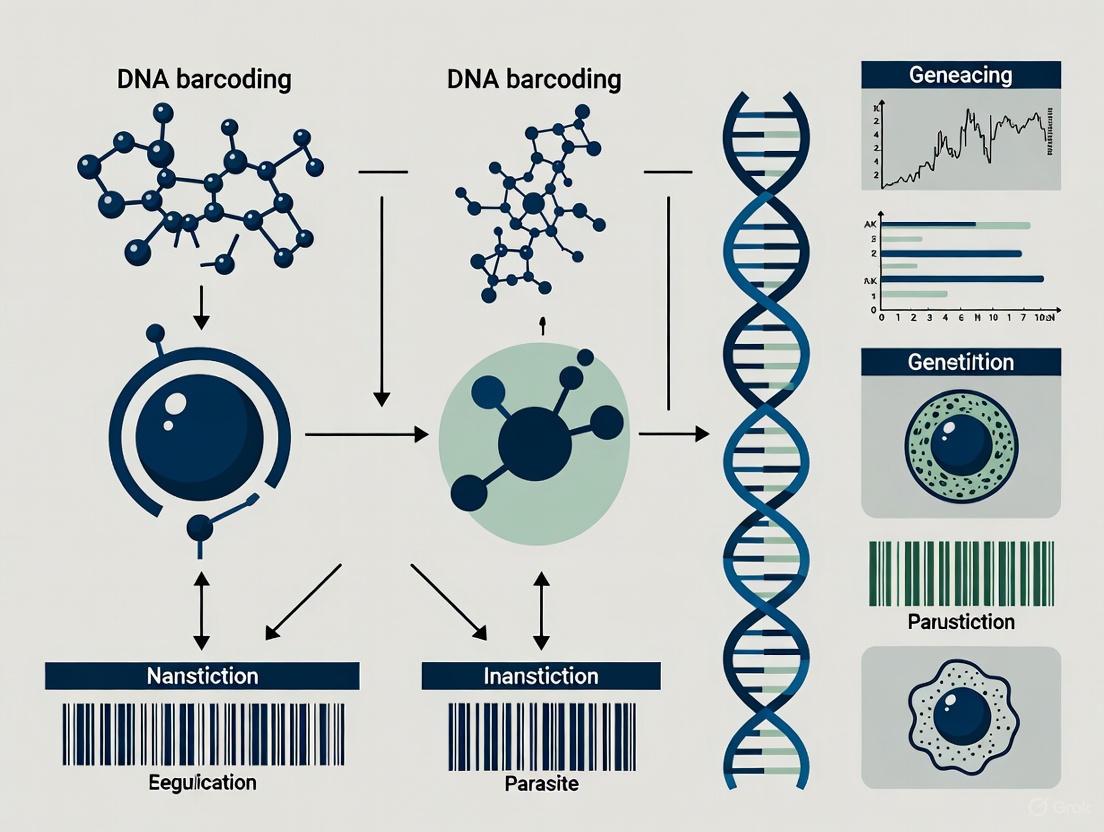
This article provides a comprehensive overview of the transformative role of DNA barcoding and metabarcoding in identifying medically important parasites.
DNA Barcoding and Metabarcoding in Medical Parasitology: A Revolutionary Tool for Precision Identification and Diagnosis
Abstract
This article provides a comprehensive overview of the transformative role of DNA barcoding and metabarcoding in identifying medically important parasites. Aimed at researchers, scientists, and drug development professionals, it explores the foundational principles of using standardized genetic markers, such as COI and 18S rRNA, for species delineation. It delves into advanced methodological applications, from high-throughput screening of intestinal parasites to vector identification, and critically examines technical challenges and optimization strategies. By comparing molecular methods with traditional microscopy and serology, the review validates DNA barcoding as an essential tool for enhancing diagnostic accuracy, supporting biodiversity studies, and informing public health interventions against parasitic diseases.
The Genetic Foundation: From Single Loci to Community Profiling
In the fields of molecular ecology, biodiversity research, and medical parasitology, DNA barcoding and DNA metabarcoding have become core molecular tools that overcome the limitations of traditional morphological identification [1]. Both techniques rely on the sequencing of standardized genetic marker regions to identify organisms, but they differ fundamentally in their scale, application, and technical execution [1]. DNA barcoding provides species-level identification of individual biological specimens, while DNA metabarcoding enables the simultaneous characterization of entire communities of organisms from complex environmental samples [1] [2]. These techniques are particularly valuable in medical parasite research, where they enable precise identification of pathogenic species, detection of cryptic species complexes, and discovery of previously unrecognized parasites in clinical samples [2] [3] [4]. This application note details the core principles, methodologies, and applications of both approaches within the context of medical parasitology research and drug development.
Core Definitions and Conceptual Frameworks
DNA Barcoding: The Molecular ID for Individual Specimens
DNA barcoding is a technique for species identification of individual organisms using a short, standardized gene fragment [1] [5]. Proposed by Canadian scientist Hebert in 2003, this method functions as a "molecular ID" system, where specific DNA sequences serve as unique identifiers for species [1] [6]. The technique requires that standardized genetic markers meet three core conditions: (1) contain high sequence conservation within the same species (small intraspecific variation), (2) demonstrate significant divergence between different species (large interspecific variation), and (3) be easily amplified with universal primers [1].
Standardized barcode markers have been established for different biological groups. For animals, the mitochondrial Cytochrome c Oxidase Subunit I (COI) gene serves as the primary barcode, approximately 650 base pairs in length, capable of distinguishing more than 90% of animal species [1] [4]. For plants, a combination of two chloroplast genes (rbcL and matK) is typically used [1] [5]. For fungi and parasites, the Internal Transcribed Spacer (ITS) region has emerged as the standard barcode due to its high copy number and rapid evolution rate, providing excellent species discrimination [1] [5].
DNA Metabarcoding: Community-Wide Species Profiling
DNA metabarcoding represents a scale expansion of DNA barcoding, enabling the simultaneous identification of multiple taxa within complex samples [1]. This approach extracts total DNA from samples containing mixtures of organisms (such as water, soil, gut contents, or blood) and uses high-throughput sequencing of barcode genes to generate a complete inventory of community species composition [1] [7].
The fundamental paradigm difference between the two techniques can be summarized as: DNA barcoding answers "What species is this one?" while metabarcoding answers "Which species are in this mixture?" [1]. This community-level analysis is particularly powerful for studying host-associated eukaryotic endosymbionts, including parasites, protozoa, and helminths, where complex multi-species interactions influence host health and disease outcomes [2] [8].
Table 1: Fundamental Differences Between DNA Barcoding and DNA Metabarcoding
| Feature | DNA Barcoding | DNA Metabarcoding |
|---|---|---|
| Research Scale | Individual organisms | Complex biological communities |
| Sample Input | Single biological specimen | Mixed environmental sample (soil, water, gut content) |
| Core Question | "What species is this individual?" | "Which species are present in this community?" |
| Sequencing Technology | Sanger sequencing | High-throughput sequencing (Illumina, Nanopore) |
| Result Output | Single sequence for one species | Sample-sequence-abundance matrix of multiple species |
| Primary Application | Species identification of individual specimens | Biodiversity assessment of complex samples |
Workflow Comparison: Technical Approaches Side-by-Side
DNA Barcoding Workflow: Precision for Individual Specimens
The DNA barcoding workflow follows a linear, standardized process optimized for individual specimen analysis [1]:
- Sample Collection: A single biological individual or tissue with distinguishable morphology is collected, with strict avoidance of external contamination [1].
- DNA Extraction: Genomic DNA is extracted using CTAB method or commercial kits [1].
- PCR Amplification: Target barcode region is amplified using universal primers specific to the taxonomic group (e.g., COI for animals, ITS for fungi) [1] [4].
- Sanger Sequencing: PCR products are sequenced using the dideoxy chain termination method, producing one sequence approximately 500-1000bp in length per reaction [1].
- Species Identification: The resulting sequence is compared to reference databases (BOLD or GenBank) using BLAST analysis. Species identification is confirmed when sequence similarity with a reference specimen is ≥98% [1].
DNA Metabarcoding Workflow: High-Throughput Community Analysis
The DNA metabarcoding workflow is more complex, optimized for processing multiple samples simultaneously and dealing with mixed DNA templates [1] [2]:
- Sample Collection: Environmental samples containing mixed DNA from multiple organisms are collected (e.g., fecal samples, blood, water) with precautions to prevent DNA degradation [1] [7].
- Total DNA Extraction: DNA is extracted using kits capable of co-extracting DNA from diverse organisms (animals, plants, microorganisms) [1].
- Dual-Step PCR Amplification:
- High-Throughput Sequencing: Library pools are sequenced on platforms such as Illumina MiSeq/NovaSeq or Oxford Nanopore, generating millions of short sequence reads (150-300bp for Illumina, >1000bp for Nanopore) in a single reaction [1] [3].
- Bioinformatic Processing: Sequences are demultiplexed, quality-filtered, and clustered into Operational Taxonomic Units (OTUs) or Amplicon Sequence Variants (ASVs) representing biological species [1] [7].
Diagram 1: Comparative Workflows of DNA Barcoding and DNA Metabarcoding
Key Research Reagents and Experimental Solutions
Table 2: Essential Research Reagents for DNA Barcoding and Metabarcoding
| Reagent Category | Specific Examples | Function & Application |
|---|---|---|
| Universal Primers | COI (LCO1490/HCO2198), ITS2, 18S V4-V9, rbcL, matK | Amplify standardized barcode regions across diverse taxa [2] [3] [9] |
| Blocking Primers | C3-spacer modified oligos, Peptide Nucleic Acids (PNA) | Suppress amplification of host DNA to enhance parasite detection in host-associated samples [3] |
| DNA Extraction Kits | FastDNA SPIN Kit for Soil, MP Biomedicals | Efficiently co-extract DNA from diverse organisms in complex samples [7] |
| PCR Enzymes | KAPA HiFi HotStart ReadyMix | High-fidelity amplification with reduced error rates for sequencing applications [7] [9] |
| Sequencing Standards | Engineered mock community standards | Validate protocol accuracy and detect amplification biases [2] [8] |
| Bioinformatic Tools | BOLD, MOTHUR, QIIME2, DADA2 | Process sequence data, perform quality filtering, OTU/ASV clustering, and taxonomic assignment [1] [7] |
Detailed Experimental Protocols
Protocol 1: DNA Barcoding for Parasite Identification
This protocol adapts the DNA barcoding approach specifically for parasite identification, based on established methodologies [4]:
Sample Preparation:
- Collect individual parasite specimens or infected tissue samples under sterile conditions.
- For sand flies and other vectors, dissect and preserve thorax, legs, and wings for DNA extraction, while mounting head and abdomen for morphological validation [4].
- Fix specimens in 70-100% ethanol or freeze at -20°C until processing.
DNA Extraction:
- Extract genomic DNA using high-salt concentration protocols or commercial kits (e.g., DNeasy Blood & Tissue Kit) [4].
- Include negative extraction controls to monitor contamination.
- Quantify DNA concentration using fluorometric methods and dilute to 10-15 ng/μL for PCR [9].
PCR Amplification:
- Prepare 25μL reactions containing:
- 10-15 ng template DNA
- 1X PCR buffer
- 2.0 mM MgClâ‚‚
- 0.2 mM each dNTP
- 0.4 μM each primer (e.g., LCO1490/HCO2198 for COI)
- 1.0 U DNA polymerase
- Use thermal cycling conditions:
- Initial denaturation: 94°C for 3-5 minutes
- 35-40 cycles of: 94°C for 30-45s, 45-55°C for 30-60s, 72°C for 45-90s
- Final extension: 72°C for 5-10 minutes [4]
Sequencing and Analysis:
- Verify PCR products by agarose gel electrophoresis.
- Purify amplicons and sequence bidirectionally using Sanger sequencing.
- Assemble contigs, check for pseudogenes or NUMTs, and compare to reference databases using BLAST [4].
- Calculate genetic distances using appropriate models (p-distance, K2P) and construct neighbor-joining trees for phylogenetic validation [4].
Protocol 2: VESPA Metabarcoding for Eukaryotic Endosymbionts
The VESPA (Vertebrate Eukaryotic endoSymbiont and Parasite Analysis) protocol provides an optimized metabarcoding approach for characterizing parasite communities in clinical samples [2] [8]:
Sample Collection and DNA Extraction:
- Collect clinical samples (feces, blood, tissue) with appropriate preservation to prevent DNA degradation.
- Extract total DNA using kits designed for mixed templates (e.g., FastDNA SPIN Kit for Soil) [7].
- Include extraction controls and mock community standards for quality assessment.
Primer Selection and Design:
- Target the 18S rRNA V4 region with specifically designed primers that maximize coverage of eukaryotic endosymbionts while minimizing off-target amplification [2] [8].
- VESPA primers demonstrate 95.2-96.8% coverage across target parasite groups, significantly outperforming previously published primers [8].
- Incorporate sample-specific barcodes and sequencing adapters for multiplexing.
Library Preparation and Sequencing:
- Perform dual-indexed PCR with limited cycles (25-30) to maintain community representation [2].
- Use high-fidelity polymerase to minimize amplification errors.
- Pool purified amplicons in equimolar ratios and sequence on Illumina MiSeq or similar platform with 2×250 bp paired-end chemistry [2] [7].
Bioinformatic Analysis:
- Process raw sequences through quality filtering, denoising, and chimera removal.
- Cluster sequences into OTUs (97% similarity) or infer ASVs using DADA2 or similar algorithms [7].
- Assign taxonomy using curated reference databases with bootstrap thresholds (>50%) for confidence [8] [7].
- Analyze community composition and generate sample-OTU abundance matrices for downstream statistical analysis.
Table 3: Performance Comparison of Molecular Identification Methods
| Performance Metric | Morphological Identification | DNA Barcoding | DNA Metabarcoding |
|---|---|---|---|
| Species Detection | 22 species (reference) | 20 OTUs (28S rDNA) | 48 OTUs (28S rDNA) |
| Resolution Capacity | Limited by cryptic species | High for well-represented species | High with sufficient reference data |
| Technical Expertise | Extensive taxonomic training required | Moderate molecular skills needed | Advanced bioinformatics skills essential |
| Throughput | Low (individual specimens) | Moderate (individual specimens) | High (multiple samples simultaneously) |
| Cost per Sample | Low | Moderate | Low to moderate (depending on scale) |
| Quantitative Accuracy | Subject to observer bias | Not applicable for communities | Semi-quantitative with PCR biases |
Applications in Medical Parasitology and Drug Development
Both DNA barcoding and metabarcoding have transformative applications in medical research and pharmaceutical development:
Pathogen Identification and Discovery: DNA barcoding enables precise identification of known parasite species, while metabarcoding facilitates detection of unexpected or novel pathogens in clinical samples [3] [7]. For example, metabarcoding has revealed previously unrecognized parasite associations with human diseases, such as Colpodella-like parasites [3].
Cryptic Species Detection: These molecular methods resolve cryptic species complexes that are morphologically identical but biologically distinct, such as the Entamoeba histolytica/dispar complex [2] [8]. This discrimination is crucial for accurate diagnosis and treatment selection.
Drug Discovery and Development: Comprehensive characterization of parasite communities enables identification of new drug targets and understanding of resistance mechanisms [6]. The ability to monitor complex parasite assemblages during clinical trials provides insights into treatment efficacy across multiple parasite taxa.
Disease Surveillance: Metabarcoding facilitates large-scale screening of vector populations and reservoir hosts, identifying potential zoonotic transmission hotspots and emerging disease threats [7] [4]. The high-throughput nature of metabarcoding makes it ideal for monitoring programs in endemic regions.
DNA barcoding and DNA metabarcoding represent complementary approaches in the molecular toolkit for parasite research and drug development. While DNA barcoding provides definitive species-level identification of individual specimens, DNA metabarcoding offers a comprehensive view of entire parasite communities in complex samples. The VESPA protocol and similar optimized workflows have significantly advanced our capacity to characterize eukaryotic endosymbiont assemblages with precision matching or exceeding traditional microscopy [2] [8]. As reference databases continue to expand and sequencing technologies become more accessible, these molecular approaches will play increasingly vital roles in understanding parasite biology, developing novel therapeutics, and implementing effective disease control strategies. Researchers should select the appropriate method based on their specific research questions, considering the trade-offs between resolution, throughput, and technical requirements outlined in this application note.
The accurate identification of parasites is a cornerstone of effective disease diagnosis, surveillance, and control. Traditional morphological methods, while useful, often fail to distinguish between closely related species, require extensive expertise, and can be time-consuming [10]. The concept of DNA barcoding—using a short, standardized genetic marker to identify species—was proposed by Paul Hebert as a solution to this taxonomic challenge [11]. This approach has since evolved from a theoretical concept into an indispensable tool in modern parasitology, revolutionizing how researchers detect, identify, and monitor medically important parasites.
In medical parasitology, the cytochrome c oxidase subunit 1 (COI) gene of the mitochondrial genome emerged as the primary barcode region for many metazoan parasites and vectors [11]. For protozoan parasites, which often lack suitable mitochondria, the nuclear 18S small-subunit rRNA gene (18S rDNA) has become the marker of choice [3] [10]. The adoption of these standardized genetic markers has enabled the creation of comprehensive reference libraries, such as the Barcode of Life Data (BOLD) system, which facilitates rapid species identification and discovery [11].
Application Notes: The Impact of DNA Barcoding on Medical Parasitology
Resolving Diagnostic Challenges
DNA barcoding has proven particularly valuable in situations where morphological identification falls short. Key applications include:
- Differentiating morphologically identical species: Techniques like PCR-RFLP (Polymerase Chain Reaction-Restriction Fragment Length Polymorphism) allow for the differentiation of pathogenic Entamoeba histolytica from non-pathogenic Entamoeba dispar and Entamoeba moshkovskii, which are visually indistinguishable under a microscope [12].
- Identifying cryptic species and complexes: Universal PCR assays targeting variable regions of the 18S gene can differentiate between over 26 valid Cryptosporidium species, whose oocysts are largely morphologically identical, enabling the tracking of zoonotic transmission [10].
- Detecting spurious parasitism: In companion animals, DNA barcoding using markers like ITS-1 and ITS-2 can identify whether parasite eggs in feces represent a genuine infection or simply passage from consumed animal feces, preventing unnecessary treatments [10].
Enhancing Surveillance and Control
The quantitative impact of DNA barcoding on parasite identification is significant. As of 2014, approximately 43% of 1,403 medically important parasite and vector species had representation in barcode databases, enabling their molecular identification [11]. This coverage continues to expand, enhancing capabilities for:
- Tracking parasite range shifts influenced by climate change, urbanization, and global trade [11].
- Identifying vector species complexes critical for understanding disease transmission dynamics and targeting control measures effectively [11].
- Detecting emerging and re-emerging parasitic diseases through accurate identification of novel pathogens in human populations [11].
Table 1: DNA Barcode Coverage of Medically Important Species (Data from 2014) [11]
| Category | Number of Species in Checklist | Species with DNA Barcodes (%) | Species with Barcode-Compliant Records (%) |
|---|---|---|---|
| All Medically Important Species | 1,403 | 43% | 25% |
| Parasites | 308 | 45% | 26% |
| Vectors | 645 | 45% | 27% |
| Hazards | 450 | 39% | 21% |
Protocols for Modern Parasite Detection Using DNA Barcoding
Enhanced Blood Parasite Detection Using Nanopore Sequencing
Recent advances have enabled the development of a targeted next-generation sequencing (NGS) approach for comprehensive blood parasite detection. The following protocol demonstrates a sophisticated method that overcomes previous limitations in field applications [3] [13].
Workflow: Blood Parasite Detection via Nanopore Sequencing
The following diagram illustrates the integrated workflow for detecting blood parasites using a portable nanopore platform:
Materials and Reagents
Table 2: Research Reagent Solutions for Blood Parasite DNA Barcoding [3] [13]
| Reagent/Component | Function | Specifications |
|---|---|---|
| Universal Primers F566 & 1776R | Amplifies 18S rDNA V4-V9 region from diverse eukaryotes | Targets >1kb region for enhanced species resolution on error-prone sequencers |
| 3SpC3_Hs1829R Blocking Primer | Suppresses host DNA amplification | C3 spacer-modified oligo competing with universal reverse primer |
| Peptide Nucleic Acid (PNA) Oligo | Inhibits polymerase elongation of host DNA | Sequence-specific binding without being amplified |
| Nanopore Sequencing Kit | Prepares DNA library for sequencing | Compatible with portable nanopore devices |
| DNA Extraction Kit | Isolates parasite DNA from blood samples | Effective with low parasite densities |
Procedural Details
DNA Extraction: Extract genomic DNA from blood samples using a commercial extraction kit, such as the Machery-Nagel NucleoSpin Tissue kit, with mechanical lysis enhancement using glass beads to improve parasite DNA yield [12].
Host DNA Suppression: Implement a dual-blocking primer system to overcome host DNA contamination:
- Use the C3 spacer-modified oligo (3SpC3_Hs1829R) that competes with the universal reverse primer
- Apply the PNA oligo that inhibits polymerase elongation
- This combination selectively reduces amplification of mammalian 18S rDNA while preserving parasite DNA amplification [3]
PCR Amplification: Perform PCR amplification using universal primers F566 and 1776R, which target the 18S rDNA V4-V9 region spanning approximately 1,200 base pairs. This expanded region provides significantly better species resolution compared to the shorter V9 region alone, especially when using error-prone portable sequencers [3].
Sequencing and Analysis: Sequence the amplified products on a portable nanopore platform. Analyze the resulting sequences using bioinformatic tools, classifying them against reference databases. The established test has demonstrated sensitivity for detecting Trypanosoma brucei rhodesiense, Plasmodium falciparum, and Babesia bovis in human blood samples spiked with as few as 1, 4, and 4 parasites per microliter, respectively [3] [13].
Molecular Detection of Intestinal Protozoa
For intestinal parasites, standardized PCR-based techniques provide high sensitivity and specificity compared to conventional microscopic methods [12].
DNA Extraction and Amplification Protocol
Sample Preparation: Wash fecal samples previously cultured in Modified Boeck Drbohlav's Medium to increase vegetative forms of parasites like Blastocystis spp. Pellet and store at -20°C until DNA extraction [12].
Mechanical Lysis: Resuspend the pellet in TE buffer with cover glass powder #1. Perform three lysis cycles, each consisting of:
- Cooling for 3 minutes at 4°C
- Vortex mixing for 3 minutes
- Centrifugation and supernatant transfer [12]
DNA Extraction: Complete DNA extraction using commercial kits (e.g., Machery-Nagel NucleoSpin Tissue) following manufacturer protocols for eukaryotic cells [12].
PCR Amplification: Perform species-specific or universal PCR assays depending on diagnostic needs:
- For Giardia duodenalis: Use universal PCR targeting the β-giardin locus to differentiate assemblages with zoonotic potential [10]
- For Cryptosporidium spp.: Apply universal PCR based on the 18S gene locus to differentiate species [10]
- For Blastocystis spp.: Utilize a 310 bp nested PCR for high sensitivity (detecting as few as 4 vegetative forms) [12]
Table 3: Sensitivity of Molecular Detection for Intestinal Protozoa [12]
| Parasite | Molecular Target | Sensitivity A (DNA Quantity) | Sensitivity B (Life Forms) |
|---|---|---|---|
| Giardia duodenalis | Not specified | 10 fg | 100 cysts |
| Entamoeba histolytica/dispar | Not specified | 12.5 pg | 500 cysts |
| Cryptosporidium spp. | Not specified | 50 fg | 1,000 oocysts |
| Cyclospora spp. | Not specified | 225 pg | 1,000 oocysts |
| Blastocystis spp. | 1780 bp PCR | 800 fg | 3,600 vegetative forms |
| Blastocystis spp. | 310 bp nested PCR | 8 fg | 4 vegetative forms |
Discussion: Current Status and Future Directions
DNA barcoding has fundamentally transformed parasite identification, yet several challenges and opportunities remain. As of 2014, barcode coverage of medically important species (43%) lagged behind agricultural pests (54%), highlighting the need for continued expansion of reference databases [11]. Furthermore, a significant portion of parasite barcodes exist only as GenBank-mined data (42% of sequenced species), which often do not meet full barcode compliance standards, potentially limiting their diagnostic utility [11].
The future of DNA barcoding in parasitology points toward several promising directions:
- Portable sequencing technologies: The development of field-deployable nanopore sequencing platforms enables comprehensive parasite detection with high sensitivity and accurate species identification in resource-limited settings [3] [13].
- Expanded reference libraries: Continued efforts to sequence morphologically vouchered specimens will enhance the reliability and coverage of barcode databases [11].
- Multi-marker approaches: Combining COI with additional genetic markers improves resolution for taxonomically challenging groups [11].
- Integration with epidemiological data: Linking DNA barcode data with clinical and ecological information provides deeper insights into parasite transmission dynamics and emergence patterns [11].
As DNA barcoding continues to evolve from Hebert's original concept into increasingly sophisticated applications, it promises to further revolutionize medical parasitology, enabling more accurate diagnosis, enhanced surveillance, and more effective control of parasitic diseases worldwide.
In the field of medical parasitology, accurate species identification is fundamental for diagnosis, understanding epidemiology, and developing control strategies. DNA barcoding has emerged as a powerful tool to overcome the limitations of traditional morphological identification, which can be slow and require specialized expertise [14]. Two genetic markers have become cornerstones of this approach: the mitochondrial Cytochrome c Oxidase Subunit I (COI) gene for animals and the nuclear 18S ribosomal RNA (18S rRNA) gene for broad eukaryote screening. This application note delineates the specific roles, protocols, and applications of these two markers within a research context focused on parasite identification, providing a structured framework for scientists and drug development professionals.
Marker Comparison and Selection Criteria
The choice between COI and 18S rRNA is dictated by the research question, target organisms, and required resolution. COI is renowned for its high resolution for species-level identification in metazoans, while 18S rRNA is valued for its universal application across the eukaryotic domain, enabling the detection of diverse parasites in a single assay [15] [16].
Table 1: Comparative Overview of COI and 18S rRNA Genetic Markers
| Feature | COI (Cytochrome c Oxidase I) | 18S rRNA (Small Subunit Ribosomal RNA) |
|---|---|---|
| Genomic Location | Mitochondrial | Nuclear |
| Primary Application | Species-level identification of animals | Broad eukaryote screening and community analysis |
| Taxonomic Resolution | High (species level) [17] | Variable (often genus to family level) [14] |
| Sequence Evolution Rate | Relatively fast (25-1000x faster than 18S in foraminifera) [16] | Relatively slow, with conserved and variable regions |
| Key Advantage | Strong discriminatory power for species; potential for quantitative community analysis [16] | Universal primers allow detection of diverse, unexpected pathogens [3] |
| Key Limitation | Poor resolution for some protist parasites; database gaps for some taxa [16] [18] | Variable copy number can bias abundance estimates; primer choice influences results [14] [19] |
| Ideal Use Case | Identifying helminths, arthropod vectors, and zoonotic parasites [17] | Comprehensive screening for protozoan, fungal, and metazoan parasites [14] [20] |
The variable regions of the 18S rRNA gene, such as V4 and V9, are most commonly targeted for high-throughput sequencing. However, the choice of region can significantly impact the results. One study on tick-borne protists found that the number and abundance of protists detected differed depending on whether the V4 or V9 primer sets were used [14]. Another study on gastrointestinal parasites in birds showed that the V4 and V9 regions provided complementary, non-overlapping parasite identifications [20]. For longer, higher-resolution barcodes, the V4–V9 region spanning approximately 1,200 bp can be targeted, which is particularly useful for error-prone sequencing platforms like nanopore [3].
Experimental Protocols
DNA Barcoding Protocol for 18S rRNA (V4 & V9 Regions)
This protocol is adapted from metabarcoding studies investigating parasite diversity in ticks and bird feces [14] [20].
1. DNA Extraction:
- Sample Type: The protocol can be applied to whole ticks, host feces, or other tissues.
- Kit: Use commercial kits such as the DNeasy Blood & Tissue Kit (Qiagen) or QIAamp Fast DNA Stool Mini Kit (Qiagen), following the manufacturer's instructions.
- Storage: Extract DNA promptly and store at -20 °C.
2. Library Preparation for Illumina MiSeq:
- Normalization: Mitigate amplification bias by normalizing DNA concentrations across samples using a fluorescence-based quantification assay (e.g., Qubit dsDNA HS Assay Kit).
- Primary PCR Amplification:
- Reaction Setup: Prepare reactions using Illumina 16S Metagenomic Sequencing Library protocols with modifications for 18S rRNA.
- Cycling Conditions:
- Initial Denaturation: 95°C for 3 min
- Amplification: 25 cycles of:
- Denaturation: 95°C for 30 s
- Annealing: 55°C for 30 s
- Extension: 72°C for 30 s
- Final Extension: 72°C for 5 min
- Primer Sets:
- V4 Region:
- Forward:
5′-TCGTCGGCAGCGTCAGATGTGTATAAGAGACAGCCAGCAGCCGCGGTAATTCC-3′ - Reverse:
5′-GTCTCGTGGGCTCGGAGATGTGTATAAGAGACAGACTTTCGTTCTTGATTAA-3′[14]
- Forward:
- V9 Region:
- Forward:
5′-TCGTCGGCAGCGTCAGATGTGTATAAGAGACAGCCCTGCCHTTTGTACACAC-3′ - Reverse:
5′-GTCTCGTGGGCTCGGAGATGTGTATAAGAGACAGCCTTCYGCAGGTTCACCTAC-3′[14]
- Forward:
- V4 Region:
- Purification: Clean the primary PCR product using AMPure beads (Agencourt Bioscience).
- Index PCR & Final Library Construction: Add dual indices and Illumina sequencing adapters using the Nextera XT Index Kit in a second, limited-cycle (e.g., 10 cycles) PCR reaction. Purify the final library again with AMPure beads.
3. Sequencing and Bioinformatics:
- Sequencing Platform: Sequence the library on an Illumina MiSeq platform with paired-end reads.
- Bioinformatic Processing:
- Primer/Adapter Trimming: Use Cutadapt (v3.2) [14] [20].
- Sequence Quality Control & ASV Generation: Process reads with the DADA2 pipeline (v1.18.0) in R to correct errors, merge paired-end reads, remove chimeras, and infer amplicon sequence variants (ASVs) [14] [20].
- Taxonomic Assignment: Assign taxonomy to ASVs using a reference database (e.g., NCBI NT) with a BLAST+ algorithm, applying thresholds such as query coverage >85% and identity >85% [20].
Figure 1: 18S rRNA Metabarcoding Workflow. The process from DNA extraction to taxonomic reporting, highlighting key steps like primer-specific amplification and Amplicon Sequence Variant (ASV) generation.
Enhanced Protocol for 18S rRNA Barcoding from Blood Samples
Screening blood samples for parasites is challenging due to the high background of host DNA. The following enhancements to the standard 18S rRNA protocol significantly improve sensitivity [3].
1. Primer and Blocking Primer Design:
- Universal Primers: Use primers F566 and 1776R to generate a >1kb amplicon spanning the V4–V9 regions for improved species identification.
- Blocking Primers: Design two host-specific blocking primers to suppress the amplification of human or mammalian 18S rRNA:
- A C3 spacer-modified oligo that competes with the universal reverse primer for host template binding and blocks polymerase elongation.
- A Peptide Nucleic Acid (PNA) oligo that tightly binds to the host 18S rRNA target and physically inhibits polymerase progression.
2. PCR with Host DNA Suppression:
- Incorporate the two blocking primers into the primary PCR reaction alongside the universal primers F566 and 1776R.
- This selectively enriches parasite DNA, enabling detection of pathogens like Trypanosoma brucei rhodesiense, Plasmodium falciparum, and Babesia bovis from as few as 1-4 parasites/μL of blood [3].
DNA Barcoding Protocol for COI
This protocol is adapted from studies on planktonic foraminifera and deep-sea sediment communities, demonstrating its utility for diverse metazoans [16] [18].
1. DNA Extraction and Specimen Preparation:
- Extract DNA from single specimens or bulk environmental samples using a GITC* or DOC-based extraction buffer, or commercial kits.
- For single organisms, photograph and measure size prior to extraction, as a correlation may exist between cell size/volume and COI copy number in some groups [16].
2. PCR Amplification for Barcoding:
- Primer Set: For a ~1200 bp COI fragment in foraminifera and other taxa, use:
- Forward:
5′-GGATTAATTGGAGGATCAATTGG-3′ - Reverse:
5′-CATAGATWCGTCTAGGAAAACC-3′[16]
- Forward:
- PCR Reaction:
- Mix: 1μL DNA, 0.4μM of each primer, 3% DMSO, 1X HF buffer, 2.5μM MgCl₂, 0.2μM dNTPs, and 0.3 units of DNA polymerase.
- Cycling Conditions:
- Initial Denaturation: 98°C for 30 s
- Amplification: 35 cycles of:
- Denaturation: 98°C for 10 s
- Annealing: 65°C for 30 s
- Extension: 72°C for 30 s
- Final Extension: 72°C for 2 min
3. Sequencing and Analysis:
- Sequencing: Purify PCR products and perform Sanger sequencing.
- Phylogenetic Analysis: For species identification, align sequences with references from databases like BOLD and construct a phylogenetic tree (e.g., using Maximum Likelihood method with 500 bootstrap replications in MEGA 11) [17].
The Scientist's Toolkit: Research Reagent Solutions
Table 2: Essential Reagents and Kits for DNA Barcoding Protocols
| Reagent / Kit | Function / Application | Example Use Case |
|---|---|---|
| DNeasy Blood & Tissue Kit (Qiagen) | DNA extraction from a wide variety of animal tissues and parasites. | DNA isolation from tick pools for 18S rRNA metabarcoding [14]. |
| QIAamp Fast DNA Stool Mini Kit (Qiagen) | Optimized DNA extraction from complex fecal samples. | Preparation of DNA from great cormorant feces for parasite screening [20]. |
| AMPure Beads (Agencourt Bioscience) | Solid-phase reversible immobilization (SPRI) for PCR product purification. | Cleanup of 18S rRNA amplicons before and after index PCR in Illumina library prep [14] [20]. |
| Nextera XT Index Kit (Illumina) | Provides indexed adapters for multiplexing samples on Illumina sequencers. | Final library construction for 18S rRNA metabarcoding on the MiSeq platform [14]. |
| C3 Spacer-Modified Oligos | Blocking primer that terminates polymerase extension; used for host DNA depletion. | Selective inhibition of human 18S rRNA amplification in blood samples [3]. |
| Peptide Nucleic Acid (PNA) Oligos | High-affinity synthetic DNA analog that strongly binds and blocks host DNA amplification. | Suppression of overwhelming host 18S rRNA signals in whole-blood parasite tests [3]. |
| AccuPower HotStart PCR Premix (Bioneer) | Pre-mixed, hot-start PCR reagents for specific and sensitive amplification. | Conventional PCR validation of specific parasite genera (e.g., Histomonas, Isospora) [20]. |
| Butane-1,4-13C2 | Butane-1,4-13C2, CAS:69105-48-2, MF:C4H10, MW:60.11 g/mol | Chemical Reagent |
| Stictic Acid | Stictic Acid, CAS:549-06-4, MF:C19H14O9, MW:386.3 g/mol | Chemical Reagent |
The strategic application of COI and 18S rRNA barcoding markers provides a comprehensive framework for advanced research in medical parasitology. COI offers high-resolution species identification critical for studying helminths and arthropod vectors, while 18S rRNA metabarcoding enables unbiased, broad-spectrum detection of eukaryotic parasites in complex samples. The detailed protocols and reagent solutions outlined herein equip researchers with the practical tools to implement these techniques, fostering more accurate parasite identification and ultimately contributing to improved disease diagnosis and drug development. Future efforts should focus on expanding and curating reference databases for both markers to further enhance the accuracy and scope of molecular identification.
For centuries, the identification of parasites has relied on morphological examination through light microscopy. While this method remains a foundational tool for describing new species and providing initial parasite detection, significant limitations have become increasingly apparent in the context of modern medical and veterinary parasitology. These constraints necessitate a paradigm shift towards molecular tools for definitive species identification, particularly in research and drug development. The limitations of traditional methods are not merely inconveniences; they represent critical diagnostic and research bottlenecks that can impede accurate disease understanding, effective control, and drug development [21] [10].
Morphological identification depends on observing anatomical features such as body length, head shape, and sexual organs [21]. However, these characteristics are highly variable among individuals, and many parasite species exhibit nearly identical morphology despite being taxonomically distinct with differing ecological niches, host impacts, and zoonotic potential [21]. Furthermore, the method is time-consuming, requires highly trained taxonomists, and often lacks the resolution to identify parasites to the species level, frequently resulting in classification only to a higher taxonomic group (e.g., genus or family) [21] [10]. This lack of resolution is a major impediment for researchers and drug development professionals who require precise species-level data for studies on pathogenesis, transmission dynamics, and therapeutic efficacy.
Comparative Analysis: Morphological vs. Molecular Identification
The following table summarizes the key limitations of morphological identification and the corresponding advantages offered by molecular tools, such as DNA barcoding and metabarcoding.
Table 1: A comparison of morphological and molecular identification methods for parasites.
| Feature | Morphological Identification | Molecular Identification |
|---|---|---|
| Taxonomic Resolution | Poor; often only to genus or family level [21]. | High; enables species-level and even strain-level differentiation [22] [10]. |
| Throughput | Low; time-consuming and labor-intensive [21]. | High; allows for simultaneous identification of multiple species in a single sample (metabarcoding) [21]. |
| Subjectivity | High; relies on observer skill and experience. | Low; provides objective, sequence-based data [22]. |
| Handling of Cryptic Species | Limited or unable to distinguish morphologically identical species [17]. | Highly effective; reveals genetic differences between morphologically similar species [17]. |
| Quantification of Abundance | Possible through egg or parasite counts, but may not be reliable. | Sequence read counts from metabarcoding may not directly correlate with parasite burden [21]. |
| Expertise Required | Skilled taxonomist. | Bioinformatician and molecular biologist [21]. |
| Cost and Infrastructure | Lower initial cost (microscope); but high labor cost. | Higher cost for sequencing platforms and computational resources [21]. |
| Application in Spurious Parasitism | Difficult or impossible to determine if eggs are from a true infection or from a spurious passage [10]. | Can definitively identify the parasite species, confirming or ruling out spurious parasitism [10]. |
Case Studies Highlighting Morphological Limitations
The theoretical limitations of morphological identification manifest in concrete diagnostic challenges. The following examples illustrate critical scenarios where molecular tools are imperative for accurate species identification.
Table 2: Specific parasitic diseases where molecular tools are essential for accurate diagnosis and research.
| Parasite Group / Scenario | Morphological Limitation | Molecular Solution and Impact |
|---|---|---|
| Giardia duodenalis [10] | Cysts are morphologically identical across assemblages, yet assemblages A (zoonotic) and F (cat-specific) have different public health implications. | Universal PCR (e.g., targeting β-giardin locus) differentiates assemblages, enabling accurate zoonotic risk assessment [10]. |
| Toxocara cati Complex [17] | Traditional taxonomy does not distinguish between populations from different felid hosts. | DNA barcoding (cox1 gene) revealed substantial genetic differences (6.68–10.84%) between T. cati from domestic vs. wild cats, suggesting a potential species complex [17]. |
| Taeniid Tapeworms (e.g., Echinococcus spp.) [10] | Eggs of the highly zoonotic Echinococcus multilocularis are indistinguishable from those of other Taeniidae species. | Species-specific PCR (e.g., targeting NADH dehydrogenase gene) provides 100% specific detection of E. multilocularis, crucial for public health response [10]. |
| Cryptosporidium spp. [10] | Over 26 valid species have morphologically indistinguishable oocysts. Dogs can host C. canis and/or zoonotic C. parvum. | Universal PCR (e.g., 18S gene) provides species-level resolution, essential for understanding transmission and zoonotic risk [10]. |
| Spurious Parasitism in Dogs [10] | Strongyle-type eggs from dog hookworm (Ancylostoma caninum) are indistinguishable from those of cat hookworm (A. tubaeforme) passed after coprophagy. | Universal PCR (e.g., ITS-1/ITS-2 markers) identifies the true parasite species, preventing unnecessary treatment of the dog [10]. |
Molecular Workflows and Protocols
To address the limitations of morphology, standardized molecular workflows have been developed. The two primary approaches are DNA barcoding (for individual specimens) and DNA metabarcoding (for complex community analysis).
DNA Barcoding for Single-Specimen Identification
DNA barcoding uses a short, standardized genetic marker to identify an organism to the species level. The standard workflow is as follows [22] [10]:
Protocol: DNA Barcoding via Universal PCR and Sanger Sequencing
Principle: This method amplifies a "variable region" of DNA (unique to each species) that is flanked by "conserved regions" (identical across related species). Universal primers bind to the conserved regions to amplify the variable region, which is then sequenced and compared to reference databases for identification.
Applications: Definitive identification of a single parasite species from an isolated specimen (e.g., an adult worm, a group of eggs) when morphological identification is inconclusive [10].
Materials & Reagents:
- Sample: Genomic DNA extracted from a parasite specimen.
- Primers: Universal primers targeting conserved regions of a standard barcode gene (see Table 3).
- PCR Reagents: Thermostable DNA polymerase (e.g., Taq polymerase), dNTPs, PCR buffer, MgClâ‚‚.
- Equipment: Thermal cycler, agarose gel electrophoresis system, Sanger sequencer.
- Bioinformatics: Sequence analysis software (e.g., BLAST, MEGA).
Procedure:
- DNA Extraction: Isolate genomic DNA from the parasite sample using a commercial kit or standard phenol-chloroform protocol. Quantify DNA concentration and quality.
- PCR Amplification:
- Set up a reaction mix containing: template DNA, forward and reverse universal primers, dNTPs, DNA polymerase, and reaction buffer.
- Run in a thermal cycler with the following typical profile:
- Initial Denaturation: 94°C for 3-5 minutes.
- 35-45 Cycles of:
- Denaturation: 94°C for 30 seconds.
- Annealing: 50-65°C (primer-specific) for 30 seconds.
- Extension: 72°C for 1 minute per kb.
- Final Extension: 72°C for 5-10 minutes.
- Amplicon Verification: Analyze the PCR product by agarose gel electrophoresis to confirm the presence of a single band of the expected size.
- Sequencing: Purify the PCR product and submit it for Sanger sequencing in both directions using the same primers.
- Data Analysis:
- Assemble the forward and reverse sequence reads into a consensus sequence.
- Perform a BLAST search (https://blast.ncbi.nlm.nih.gov) against a public nucleotide database (e.g., GenBank) to find the closest matching sequences.
- For phylogenetic analysis, align the sequence with reference sequences from confirmed species and construct a phylogenetic tree.
DNA Metabarcoding for Parasite Community Analysis
DNA metabarcoding extends the barcoding principle to identify multiple species from a single bulk sample (e.g., feces, intestinal content) simultaneously [21].
Protocol: DNA Metabarcoding for Gastrointestinal Helminth Communities
Principle: This method uses high-throughput sequencing (HTS) to read the DNA barcodes of all parasites present in a complex sample. Sample-specific index tags are added to the PCR amplicons, allowing many samples to be pooled and sequenced in a single run.
Applications: High-resolution assessment of complete parasite communities in a host or environmental sample, discovery of cryptic species, and monitoring co-infections [21].
Materials & Reagents:
- Sample: Total genomic DNA extracted from feces or intestinal content.
- Primers: Universal barcoding primers with overhang adapters for the HTS platform.
- PCR Reagents: High-fidelity DNA polymerase, dNTPs, PCR buffer.
- Indexing Reagents: Dual index primers (e.g., Nextera XT indices).
- Equipment: Thermal cycler, magnetic bead-based purification system, HTS platform (e.g., Illumina MiSeq).
- Bioinformatics: Requires specialized pipelines (e.g., QIIME 2, DADA2, MOTHUR) for demultiplexing, quality filtering, clustering into Operational Taxonomic Units (OTUs), or Amplicon Sequence Variants (ASVs), and taxonomic assignment.
Procedure:
- DNA Extraction: Extract total genomic DNA from the sample. The extraction method should be optimized for breaking down tough parasite structures (e.g., helminth eggs) and removing PCR inhibitors common in fecal samples.
- Primary PCR (Amplification with Adapters):
- Perform the first PCR using universal barcode primers that have platform-specific adapter overhangs.
- Use a high-fidelity polymerase to minimize amplification errors.
- The number of PCR cycles should be minimized to reduce bias.
- PCR Clean-up: Purify the primary PCR amplicons using magnetic beads to remove primers, dNTPs, and enzyme.
- Indexing PCR (Adding Sample Barcodes):
- Use a second, limited-cycle PCR to attach unique dual index sequences to the amplicons from each sample. This step allows samples to be mixed (multiplexed) for sequencing.
- Library Pooling and Purification: Quantify the indexed libraries, mix them in equimolar ratios, and purify the final pooled library.
- High-Throughput Sequencing: Sequence the pooled library on an appropriate HTS platform (e.g., Illumina MiSeq for community analysis).
- Bioinformatic Analysis:
- Demultiplexing: Assign sequences to samples based on their unique index combinations.
- Quality Filtering & Denoising: Remove low-quality sequences and correct sequencing errors to generate exact ASVs.
- Taxonomic Assignment: Compare ASVs to a curated reference database (e.g., NCBI, Silva) to assign taxonomic identities.
- Data Normalization: Normalize sequence counts across samples for downstream ecological analyses (e.g., alpha and beta diversity).
The Scientist's Toolkit: Essential Research Reagents
Successful implementation of molecular parasitology requires specific reagents and tools. The following table details key components of the research toolkit.
Table 3: Essential reagents and materials for molecular identification of parasites.
| Item | Function/Description | Examples / Key Parameters |
|---|---|---|
| Universal Primer Sets | Short oligonucleotides that bind to conserved DNA regions to amplify variable barcode genes from a wide range of parasites. | COI (cytochrome c oxidase I): Standard for metazoans [21] [22]. 18S rRNA: Used for protists and some helminths; highly conserved but contains variable regions [10]. ITS (Internal Transcribed Spacer): High variation useful for species-level discrimination in fungi and some parasites [22] [10]. |
| DNA Extraction Kit | To isolate high-quality, inhibitor-free genomic DNA from diverse sample types (feces, tissue, fixed specimens). | Kits optimized for stool samples (e.g., QIAamp PowerFecal Pro) often include bead-beating steps to break tough cell walls of helminth eggs and cysts. |
| High-Fidelity DNA Polymerase | For PCR amplification with very low error rates, critical for generating accurate sequence data for barcoding and metabarcoding. | Enzymes like Pfu or proprietary mixes (e.g., Q5 Hot Start, Platinum SuperFi II). |
| Reference Sequence Database | Curated collections of validated DNA barcode sequences for taxonomic assignment of unknown sequences. | NCBI GenBank: Comprehensive but requires careful curation due to potential misidentifications. BOLD (Barcode of Life Data System): A dedicated barcode database with stricter quality control [22]. |
| Bioinformatics Pipeline | A suite of software tools for processing raw sequencing data into biological insights. | QIIME 2: A powerful, user-friendly platform for microbiome (including parasite) metabarcoding analysis. DADA2: A pipeline within R that resolves exact ASVs from sequencing data, providing higher resolution than OTU clustering. |
| Deuteromethanol | Deuteromethanol (CD3OD) | |
| Monostearyl maleate | Monostearyl Fumarate|1741-93-1|Research Chemicals | Monostearyl Fumarate (CAS 1741-93-1) is a high-purity fumaric acid ester for pharmaceutical research. This product is for Research Use Only and not for human or veterinary use. |
The limitations of morphological identification—including poor taxonomic resolution, subjectivity, and an inability to detect cryptic species—are no longer mere academic concerns. They represent significant barriers to progress in medical parasitology research, accurate diagnosis, and the development of targeted therapies. Molecular tools, particularly DNA barcoding and metabarcoding, provide the necessary precision, objectivity, and high-throughput capacity to overcome these barriers. The adoption of these molecular protocols is, therefore, not just an enhancement but an imperative for researchers and drug development professionals aiming to achieve a deeper, more accurate understanding of parasite biodiversity, host-parasite interactions, and disease epidemiology. As reference libraries continue to expand and sequencing technologies become more accessible, the integration of molecular data will undoubtedly become the gold standard in parasitology.
Accurate parasite identification is a cornerstone of effective disease control, yet traditional methods often lack the resolution to distinguish between closely related species or detect co-infections. DNA barcoding has emerged as a powerful solution, but its reliability is entirely dependent on the quality and comprehensiveness of the reference libraries against which unknown sequences are compared. This application note, framed within a broader thesis on DNA barcoding for medical parasite identification, details the experimental protocols and reagent solutions necessary for constructing robust reference libraries. We focus on practical methodologies that enable researchers to achieve species-level resolution, crucial for diagnostics, surveillance, and drug development.
The Critical Role of Reference Libraries in Pathogen Identification
Reference libraries are curated databases of DNA sequences from authoritatively identified specimens. They serve as the definitive standard for comparing and identifying unknown samples in clinical, environmental, or veterinary specimens. The power of any DNA barcoding assay is constrained by the depth and quality of its underlying reference data.
The Challenge of Species-Level Resolution
Traditional microscopic examination, while affordable and rapid, often fails to provide accurate species-level identification and can miss co-infections [3]. For example, the monkey malaria parasite Plasmodium knowlesi was historically misidentified as P. malariae in microscopic diagnoses, an error that was only corrected through molecular analysis [3]. Such misidentifications can have significant implications for treatment and disease management. Targeted Next-Generation Sequencing (NGS) approaches overcome these limitations but require extensive, validated reference sequences to correctly assign species from genetic data.
Impact of Library Completeness
The effectiveness of DNA barcoding is directly proportional to the completeness of the reference library. Studies on sand flies have demonstrated that DNA barcoding can correctly associate isomorphic females with morphologically identified males and reveal cryptic species diversity within populations [4]. Without comprehensive reference sequences that encompass this intraspecific variation, such as the cryptic diversity detected within Psychodopygus panamensis and Micropygomyia cayennensis cayennensis, accurate identification is impossible [4].
Experimental Protocol for Library Construction
This section provides a detailed protocol for building a reference library for blood parasites using a targeted NGS approach with a portable nanopore platform, based on a recently published methodology [3].
The following diagram illustrates the comprehensive workflow for constructing a DNA barcode reference library, from sample collection to data integration.
Step-by-Step Methodology
Primer Design and Selection
- Objective: Amplify a diagnostic gene region that provides sufficient genetic variation for species-level identification across a broad taxonomic range.
- Procedure:
- Target Gene Selection: The 18S ribosomal RNA (rRNA) gene is a superior marker for eukaryotic parasites due to its conserved regions, which allow for universal primer binding, and variable regions, which provide species-diagnostic signatures [3] [23].
- Region Selection: For enhanced resolution, target the ~1,200 base pair (bp) fragment spanning the V4 to V9 variable regions of the 18S rRNA gene. This longer barcode outperforms shorter fragments (e.g., V9 alone) in classifying error-prone sequences from nanopore sequencers [3].
- Primer Sequences: Use the universal eukaryotic primers:
- Forward Primer (F566): 5′-Sequence-3′
- Reverse Primer (1776R): 5′-Sequence-3′ These primers cover a wide range of blood parasites, including Apicomplexa (e.g., Plasmodium, Babesia) and Euglenozoa (e.g., Trypanosoma) [3].
Host DNA Suppression
- Challenge: Host (e.g., human or cattle) DNA in blood samples can overwhelm the PCR, drastically reducing the sensitivity for parasite DNA.
- Solution: Implement a dual-blocking primer strategy to selectively inhibit host 18S rDNA amplification [3].
- C3 Spacer-Modified Oligo: A blocking primer (e.g., 3SpC3_Hs1829R) is designed to overlap with the universal reverse primer's binding site on the host DNA. The C3 spacer at the 3′ end permanently blocks polymerase elongation [3].
- Peptide Nucleic Acid (PNA) Oligo: A PNA oligo is designed to bind to a host-specific sequence. PNA binds more strongly to DNA than conventional primers, physically obstructing the polymerase and preventing amplification [3].
- PCR Setup: Include both blocking primers in the amplification reaction alongside the universal primers F566 and 1776R.
Library Preparation and Sequencing
- PCR Amplification: Perform PCR using the primer and blocking oligo mix on extracted DNA from blood samples.
- Library Construction: Prepare the amplified DNA for sequencing using a ligation sequencing kit (e.g., Oxford Nanopore's LSK-114 kit).
- Sequencing: Load the library onto a nanopore flow cell (e.g., R10.4.1 or FLO-MIN114) and initiate sequencing on a portable GridION or MinION device. The real-time data stream allows for immediate analysis.
Bioinformatic Analysis and Curation
- Basecalling and Demultiplexing: Convert raw electrical signal data into nucleotide sequences (FASTQ files) using Guppy or Dorado. Demultiplex samples if pooled.
- Read Filtering and Alignment: Filter reads by quality (e.g., Q-score >7) and align them to a custom database of 18S rRNA sequences using minimap2.
- Variant Calling and Consensus Building: Identify single-nucleotide polymorphisms (SNPs) and generate a high-accuracy consensus sequence for each sample.
- Data Curation and Submission:
- Taxonomic Annotation: Assign species-level taxonomy to each consensus sequence using authoritative databases like the NCBI Taxonomy database.
- Metadata Association: Adhere to the Barcode Core Data Model (BCDM), which standardizes crucial metadata such as specimen collection details, geographical location, and taxonomic information [24].
- Data Deposition: Submit the final, curated sequence records with full metadata to public repositories such as the Barcode of Life Data System (BOLD) and NCBI GenBank [24] [4].
Data Presentation and Performance
The established protocol demonstrates high sensitivity and specificity for detecting medically important parasites.
Analytical Sensitivity
The assay can detect parasites at very low densities, as validated by spiking experiments in human blood [3].
Table 1: Detection Sensitivity for Key Blood Parasites
| Parasite Species | Detection Limit (parasites/μL) |
|---|---|
| Trypanosoma brucei rhodesiense | 1 |
| Plasmodium falciparum | 4 |
| Babesia bovis | 4 |
Comparison of DNA Barcode Markers
Different genetic markers offer varying levels of resolution and are suited to different applications.
Table 2: Key Genetic Markers for Parasite DNA Barcoding
| Marker Gene | Organism Group | Amplicon Length | Key Strengths | Reported Use Case |
|---|---|---|---|---|
| 18S rRNA (V4-V9) | Broad-range Eukaryotes | ~1,200 bp | High species-level resolution; suitable for nanopore sequencing | Blood parasite ID (Apicomplexa, Trypanosomatida) [3] |
| Cytochrome c Oxidase I (COI) | Insects, some Parasites | ~658 bp | Standard for animal barcoding; high discrimination power | Sand fly species ID and cryptic diversity detection [4] |
| Mitochondrial Genome | Plasmodium spp. | ~6 kbp | High copy number; species and geographical markers | Speciation and geographical sourcing in malaria [25] |
Application in Research and Drug Development
Robust reference libraries directly empower critical research and development activities.
- Detection of Co-infections and Novel Pathogens: Unlike specific PCR tests, this universal approach can reveal complex infection states. The protocol successfully identified multiple Theileria species co-infecting the same cattle, a scenario easily missed by targeted assays [3]. Its comprehensive nature also allows for the detection of unrecognized or novel parasites.
- Geographical Sourcing and Surveillance: Tools like Malaria-Profiler leverage reference libraries containing geographically informative SNPs to predict the regional source of Plasmodium falciparum, P. vivax, and P. knowlesi isolates with high accuracy ( >94%) [25]. This is vital for tracking imported cases and understanding local transmission dynamics.
- Antimalarial Resistance Profiling: The same sequencing data used for identification can be mined for resistance markers. Malaria-Profiler rapidly profiles resistance to chloroquine, sulfadoxine-pyrimethamine (SP), and artemisinin directly from Whole Genome Sequencing (WGS) data, providing a comprehensive view of resistance prevalence [25].
The Scientist's Toolkit: Research Reagent Solutions
The following table details essential materials and their functions for implementing the described protocols.
Table 3: Essential Research Reagents for DNA Barcoding Library Construction
| Item | Function/Description | Example |
|---|---|---|
| Universal 18S rDNA Primers | Amplify target barcode region from diverse eukaryotes. | F566 & 1776R primers [3] |
| Host-Blocking Oligos | Suppress amplification of overwhelming host DNA to enrich parasite signal. | C3 spacer-modified oligo; PNA oligo [3] |
| High-Fidelity Polymerase | Accurate amplification of long DNA fragments with low error rates. | Q5 High-Fidelity DNA Polymerase |
| Nanopore Sequencing Kit | Prepares amplified DNA for sequencing on portable devices. | Ligation Sequencing Kit (SQK-LSK114) |
| Portable Sequencer | Enables real-time, in-field sequencing of barcode amplicons. | Oxford Nanopore MinION/GridION [3] |
| Bioinformatic Tools | For basecalling, read alignment, variant calling, and phylogenetic analysis. | Guppy, minimap2, Malaria-Profiler [25] |
| Dibromoethylbenzene | Dibromoethylbenzene, CAS:30812-87-4, MF:C8H8Br2, MW:263.96 g/mol | Chemical Reagent |
| Trifluoromethanamine | Trifluoromethanamine|CAS 61165-75-1|RUO |
Building comprehensive and meticulously curated DNA barcode reference libraries is not a mere preliminary task but a fundamental research activity that underpins reliable parasite identification. The integrated protocol outlined here—combining optimized wet-lab methods with host depletion strategies, portable sequencing, and standardized bioinformatic curation—provides a robust framework for researchers to enhance these critical resources. As these libraries grow in depth and taxonomic coverage, they will continue to revolutionize our ability to diagnose complex infections, track emerging resistance, monitor disease transmission, and ultimately support the development of new interventions against parasitic diseases.
From Theory to Practice: High-Throughput Applications in Disease Diagnosis and Surveillance
Intestinal parasite infections represent a significant global public health challenge, disproportionately affecting marginalized communities with limited access to clean water and sanitation facilities [26]. Traditional diagnostic methods, including microscopic examination and targeted PCR, have limitations in comprehensive parasite screening due to their time-consuming nature, requirement for specialized expertise, and inability to detect multiple parasite species simultaneously [26]. The advancement of next-generation sequencing (NGS) technologies has opened new avenues for rapid and accurate screening of complex parasite communities through metabarcoding approaches [26] [27].
This Application Note provides a detailed workflow for implementing 18S ribosomal RNA (rRNA) gene metabarcoding for the simultaneous detection and identification of diverse intestinal parasites. The protocol is framed within the broader context of advancing medical parasite identification research, offering researchers and drug development professionals a standardized methodology that enhances diagnostic accuracy and supports public health efforts to control and prevent intestinal parasitic infections [26].
Key Principles of Parasite Metabarcoding
Metabarcoding combines DNA barcoding with high-throughput sequencing to identify multiple species from a single sample. This approach utilizes short, variable genomic regions that serve as species identifiers, amplified using broad-range primers that target conserved regions flanking these variable segments [28]. For intestinal parasites, the 18S rRNA gene has emerged as a particularly valuable target due to its presence in all eukaryotes and its mosaic of conserved and variable regions [26] [27].
Unlike single-species detection methods, metabarcoding enables comprehensive parasite community profiling without prior assumptions about species presence [27]. This is particularly valuable for detecting low-abundance infections, identifying cryptic species, and discovering unexpected parasites. However, the technique requires careful optimization of each step—from primer selection to bioinformatic analysis—to ensure accurate representation of the parasite community [28].
A critical limitation of metabarcoding is that no single "universal" metabarcoding locus can provide species resolution across the entire tree of life [28]. Different loci are better suited for some taxa than others, requiring strategic selection of barcoding regions based on target organisms. Additionally, factors such as primer bias, DNA extraction efficiency, and template competition during PCR can influence results, necessitating rigorous validation and benchmarking of each metabarcoding assay [28].
Experimental Workflow
The following section outlines a standardized workflow for intestinal parasite metabarcoding, from sample preparation to data analysis, incorporating optimized protocols from recent studies.
Sample Preparation and DNA Extraction
Proper sample preparation is crucial for successful metabarcoding. For fecal samples, enrichment protocols can enhance parasite detection:
Sample Enrichment: Pooled fecal samples can be enriched by sucrose flotation. Homogenize pooled samples in phosphate-buffered saline (PBS), filter through a 0.1-mm mesh to remove large debris, and layer onto sucrose solution (∼2.4 M in ddH₂O; specific gravity 1.30–1.35). Centrifuge at 1000 × g for 10 min, then carefully transfer materials at the PBS/sucrose interface to new tubes [27].
DNA Extraction: Use commercial DNA extraction kits such as the Fast DNA SPIN Kit for Soil or QIAamp Fast DNA Stool Mini Kit according to manufacturer protocols. Include mechanical disruption steps: subject samples to freeze-thaw cycles (liquid nitrogen and 37°C water bath) to rupture oocyst walls, then mix with stainless steel beads and process in a tissue homogenizer at 30 Hz for 2 min [26] [27] [20]. Evaluate DNA concentration and purity by measuring the 260/280 nm absorbance ratio.
Plasmid Controls (Optional): For method validation, cloned plasmids of target parasite 18S rDNA regions can be used as positive controls. Linearize circular plasmids using restriction enzymes (e.g., NcoI at 10 U/μL) to minimize steric hindrance during amplification [26].
Primer Selection and Library Preparation
Careful primer selection is fundamental to successful metabarcoding. The table below compares effective primer sets targeting different regions of the 18S rRNA gene:
Table 1: Primer Sets for 18S rRNA Metabarcoding of Intestinal Parasites
| Target Region | Primer Name | Sequence (5'→3') | Amplicon Size | Key Applications | Reference |
|---|---|---|---|---|---|
| V9 | 1391F | TCGTCGGCAGCGTCAGATGTGTATAAGAGACAG GTACACACCGCCCGTC | ~130 bp | Broad eukaryote detection, including intestinal parasites | [26] |
| V9 | EukBR | GTCTCGTGGGCTCGGAGATGTGTATAAGAGACAG TGATCCTTCTGCAGGTTCACCTAC | ~130 bp | Broad eukaryote detection, including intestinal parasites | [26] |
| V4-V5 | 616*F | TTAAARVGYTCGTAGTYG | ~509 bp | Detection of Cryptosporidium and other protists | [27] |
| V4-V5 | 1132R | CCGTCAATTHCTTYAART | ~509 bp | Detection of Cryptosporidium and other protists | [27] |
| V4 | 18S V4F | CCAGCAGCCGCGGTAATTCC | Variable | Eukaryote community analysis | [20] |
| V4 | 18S V4R | ACTTTCGTTCTTGATTAA | Variable | Eukaryote community analysis | [20] |
| V9 | 1380F | CCCTGCCHTTTGTACACAC | Variable | Eukaryote community analysis | [20] |
| V9 | 1510R | CCTTCYGCAGGTTCACCTAC | Variable | Eukaryote community analysis | [20] |
PCR Amplification Protocol:
Set up reactions using KAPA HiFi HotStart ReadyMix with primers and 3 μL of template DNA. Use the following cycling conditions [26]:
- Initial denaturation: 95°C for 5 min
- 30 cycles of:
- Denaturation: 98°C for 30 s
- Annealing: 55°C for 30 s (optimize temperature based on primer set)
- Extension: 72°C for 30 s
- Final extension: 72°C for 5 min
To evaluate the effect of annealing temperature on amplification efficiency, test various temperatures ranging from 40°C to 70°C in 3°C increments [26]. After amplification, perform a limited-cycle (8-cycle) amplification to add multiplexing indices and Illumina sequencing adapters. Purify amplified libraries using AMPure beads and quantify using qPCR according to the qPCR Quantification Protocol Guide [20].
Sequencing and Bioinformatic Analysis
Sequence purified libraries on Illumina platforms (e.g., iSeq 100 or MiSeq) using appropriate reagent kits [26] [20]. The following workflow outlines the bioinformatic processing steps:
Bioinformatic Processing Steps:
Demultiplexing and Quality Filtering: Process raw sequencing reads using Cutadapt to remove adapter and primer sequences [26] [20]. Trim forward and reverse reads to 250 bp and 200 bp, respectively, to eliminate low-quality bases.
Sequence Denoising and ASV Generation: Use DADA2 for error correction, merging, denoising, and dereplication to generate amplicon sequence variants (ASVs) [26] [20]. Remove chimeric sequences using the consensus method implemented in the removeBimeraDenovo function within DADA2.
Taxonomic Assignment: Classify ASVs taxonomically using QIIME or QIIME2 against comprehensive reference databases [26] [27]. The NCBI nucleotide database or SILVA database can be used, as they encompass a broad range of parasite sequences [26] [27]. Apply filtering thresholds (e.g., query coverage >85% and identity >85%) to ensure accurate taxonomic assignments [20].
Data Analysis: Remove unassigned reads and analyze the final feature table to determine parasite composition. For pooled samples, estimate true prevalences using binomial models with profile-likelihood confidence intervals [27].
Expected Results and Data Interpretation
When properly optimized, 18S rRNA metabarcoding can simultaneously detect numerous parasite species from a single sample. The table below illustrates representative data from a metabarcoding study detecting 11 intestinal parasite species:
Table 2: Example Read Distribution in 18S rDNA V9 Metabarcoding of Intestinal Parasites
| Parasite Species | Read Count Ratio (%) | Remarks |
|---|---|---|
| Clonorchis sinensis | 17.2 | Highest detection efficiency |
| Entamoeba histolytica | 16.7 | Important human pathogen |
| Dibothriocephalus latus | 14.4 | Cestode species |
| Trichuris trichiura | 10.8 | Soil-transmitted helminth |
| Fasciola hepatica | 8.7 | Trematode species |
| Necator americanus | 8.5 | Soil-transmitted helminth |
| Paragonimus westermani | 8.5 | Lung fluke (intestinal stage) |
| Taenia saginata | 7.1 | Beef tapeworm |
| Giardia intestinalis | 5.0 | Important human pathogen |
| Ascaris lumbricoides | 1.7 | Soil-transmitted helminth |
| Enterobius vermicularis | 0.9 | Lowest detection efficiency |
Variations in read count ratios reflect both biological factors (e.g., parasite load) and technical factors (e.g., amplification efficiency). Studies have found that DNA secondary structures show a negative association with the number of output reads, potentially explaining some of the variation in detection efficiency between species [26].
Metabarcoding can detect parasites at low prevalence rates. In clinical applications, this approach has identified Cryptosporidium parvum at an estimated prevalence of 2.14% (95% CI: 0.92–4.10) and Blastocystis hominis at 1.48% (95% CI: 0.53–3.17) in patient populations [27]. The technique also detects unexpected parasites, such as Opisthorchiidae liver flukes in hospital patients, highlighting its value for comprehensive screening [27].
Technical Considerations and Optimization
Methodological Challenges
Several technical challenges require consideration when implementing parasite metabarcoding:
Primer Bias: Different primer sets can yield substantially different results. In one study, only 1.65% of quality-filtered reads mapped to parasites, with fungal reads dominating (98.35%) due to primer bias [27]. Using multiple primer sets targeting different regions can provide more comprehensive coverage.
Amplification Conditions: The annealing temperature during amplicon PCR significantly affects the relative abundance of output reads for each parasite [26]. Optimization of PCR conditions is essential for representative species detection.
Reference Databases: Incomplete reference databases can limit taxonomic assignment accuracy. For blackflies, DNA barcoding identification based on the best close match approach was unsuccessful due to insufficient sequences in GenBank [29]. Developing customized, curated databases for target parasites improves identification accuracy.
Validation and Quality Control
Method Validation: Confirm metabarcoding results with complementary methods such as conventional PCR, nested PCR, gp60 subtyping, and immunofluorescence assays [27]. Microscopic examination provides additional validation, though it may not achieve species-level identification for all parasites [20].
Controls: Include reagent negative controls (extraction blanks) processed alongside samples to monitor potential contamination during DNA extraction and library preparation [27].
Data Quality Assessment: Apply rigorous decontamination pipelines and site occupancy modeling to distinguish signal from noise in eDNA sequence data [28]. This is particularly important for detecting low-abundance species.
The Scientist's Toolkit
Table 3: Essential Research Reagents and Resources for Parasite Metabarcoding
| Category | Item | Specification/Example | Application Notes |
|---|---|---|---|
| Sample Collection | Fecal Collection Kit | Sterile containers, swabs | Maintain cold chain during transport |
| DNA Extraction | Commercial Kits | Fast DNA SPIN Kit for Soil, QIAamp Fast DNA Stool Mini Kit | Include mechanical disruption steps for robust lysis |
| PCR Amplification | Polymerase | KAPA HiFi HotStart ReadyMix | High-fidelity enzyme for accurate amplification |
| Library Preparation | Index Adapters | Illumina Nextera XT | Dual indexing recommended to reduce cross-contamination |
| Sequencing | Sequencing Kits | Illumina iSeq 100 i1 Reagent | Platform choice depends on required throughput |
| Bioinformatics | Reference Databases | NCBI NT, SILVA, BOLD | Curated custom databases improve taxonomic assignment |
| Validation | Confirmatory Assays | qPCR, nested PCR, microscopy | Essential for validating novel or unexpected findings |
| 3-Aminocrotonic acid | 3-Aminocrotonic acid, CAS:21112-45-8, MF:C4H7NO2, MW:101.1 g/mol | Chemical Reagent | Bench Chemicals |
| dorsmanin C | Dorsmanin C|Prenylated Flavonoid|CAS 1025775-95-4 | Dorsmanin C is a prenylated flavonoid from Dorstenia mannii for antioxidant research. For Research Use Only. Not for human or veterinary use. | Bench Chemicals |
18S rRNA metabarcoding represents a powerful tool for comprehensive screening of intestinal parasites, overcoming limitations of traditional diagnostic methods. This Application Note provides a standardized workflow that researchers can implement to simultaneously detect diverse parasite species in clinical and environmental samples. The protocol's sensitivity and specificity make it particularly valuable for epidemiological surveys, outbreak investigations, and monitoring intervention programs.
While metabarcoding requires careful optimization and validation, its ability to provide comprehensive parasite community profiles positions it as an essential technology for advancing medical parasitology research. As reference databases expand and sequencing costs decrease, this approach is poised to become an increasingly accessible and valuable tool for researchers and public health professionals working to control and prevent intestinal parasitic infections worldwide.
DNA barcoding has emerged as a powerful taxonomic tool to identify and discover species, utilizing one or more standardized short DNA regions for taxon identification [22]. For medical entomology, accurate vector identification is crucial for understanding disease transmission dynamics and implementing effective control measures. This is particularly relevant for dipteran vectors such as Culicoides biting midges and Phlebotomine sand flies, which transmit pathogens causing diseases like leishmaniasis [30] [4].
Traditional morphological identification of these insects faces challenges including phenotypic plasticity, cryptic species complexes, and specimen damage during collection [4] [31]. DNA barcoding addresses these limitations by providing a standardized molecular tool for species discrimination, enabling correct association of isomorphic females with males and revealing hidden diversity [4]. This protocol outlines detailed methodologies for DNA barcoding of Culicoides and sand flies within the context of medical parasitology research.
DNA Barcoding Fundamentals
Principles and Genetic Markers
DNA barcoding relies on analyzing a specific, standardized region of DNA that exhibits sufficient genetic variation to differentiate between species but is flanked by conserved regions that allow universal primer binding [32]. The mitochondrial cytochrome c oxidase subunit I (COI) gene serves as the standard barcode region for animal identification, including insects [32] [22]. This gene typically shows low intraspecific variation but significant interspecific divergence, creating a "barcode gap" that facilitates species discrimination [4].
For sand flies, COI DNA barcoding has proven effective in delimiting species boundaries, correctly associating isomorphic females, and detecting cryptic diversity [4] [31]. Similarly, for Culicoides midges, COI barcoding enables species identification and reveals cryptic species complexes [30]. The technique has successfully identified Belgian mosquito species [33] and Chinese mosquito species [33], demonstrating its broad applicability across Diptera.
The DNA barcoding process follows a standardized workflow encompassing specimen collection, DNA extraction, target gene amplification, sequencing, and data analysis [32]. The following diagram illustrates this workflow:
Barcoding Protocols for Sand Flies andCulicoides
Specimen Collection and Morphological Identification
Sand Flies: Collect using CDC light traps placed in peridomiciliary environments, particularly near animal shelters and forest fragments [4]. Traps should operate overnight (approximately 17:00 to 7:00) [4]. Sacrifice collected insects by freezing at -20°C and preserve in 70% alcohol [4]. For morphological identification, dissect and slide-mount head and abdomen in Canadian balsam medium following established taxonomic keys [4] [31].
Culicoides: Collect using CDC ultraviolet light traps from various habitats, including areas around houses of leishmaniasis cases and animal sheds [30]. Preserve specimens in 70-80% ethanol for molecular analysis. Identify species based on wing spot patterns and other morphological characteristics using taxonomic keys [30].
DNA Extraction
Use the remaining body parts (thorax, legs, and wings) for DNA extraction to preserve morphological vouchers [4]. Employ high salt concentration protocols for genomic DNA extraction [4]. Alternative commercial kits (e.g., DNeasy Blood & Tissue Kit) also provide reliable results. Ensure proper storage of extracted DNA at -20°C.
PCR Amplification of COI Gene
Amplify the ~710 bp barcode region of the COI gene using universal primers:
- LCO1490: 5'-GGTCAACAAATCATAAAGATATTGG-3'
- HCO2198: 5'-TAAACTTCAGGGTGACCAAAAAATCA-3' [4]
Prepare PCR reactions with the following components:
Table 1: PCR Reaction Setup
| Component | Volume | Final Concentration |
|---|---|---|
| PCR Buffer (10X) | 2.5 µL | 1X |
| dNTPs (2.5 mM each) | 2.0 µL | 0.2 mM each |
| MgCl₂ (25 mM) | 1.5 µL | 1.5 mM |
| Forward Primer (10 µM) | 0.5 µL | 0.2 µM |
| Reverse Primer (10 µM) | 0.5 µL | 0.2 µM |
| DNA Template | 1.0 µL | ~50-100 ng |
| Taq DNA Polymerase | 0.2 µL | 1 unit |
| Nuclease-free Water | 16.8 µL | - |
| Total Volume | 25.0 µL |
Use the following thermal cycling conditions:
- Initial denaturation: 94°C for 2-3 minutes
- 35-40 cycles of:
- Denaturation: 94°C for 30-45 seconds
- Annealing: 48-52°C for 45-60 seconds
- Extension: 72°C for 60-90 seconds
- Final extension: 72°C for 5-10 minutes [4]
PCR Product Verification and Sequencing
Visualize PCR products on 1.5% agarose gel stained with ethidium bromide. A successful amplification should show a single, bright band of approximately 710 bp [32]. Purify PCR products using commercial cleanup kits. Sequence in both directions using the same PCR primers via Sanger sequencing [4]. Alternatively, use Next-Generation Sequencing platforms for high-throughput applications [22].
Data Analysis and Species Identification
Sequence Processing and Alignment
Edit chromatograms using software such as BioEdit v7.0.9 to generate consensus sequences [4]. Align sequences using ClustalW algorithm or MUSCLE implemented in MEGA software [4]. Visually inspect alignments for stop codons, insertions/deletions, pseudogenes, or nuclear mitochondrial DNA segments (NUMTs) [4] [31].
Species Delimitation Methods
Apply multiple species delimitation approaches to validate morphological identifications:
- Assemble Species by Automatic Partitioning: A distance-based method that uses pairwise genetic distances to partition sequences into hypothetical species [30]
- Poisson Tree Processes: A tree-based method that uses phylogenetic trees to delineate species by identifying significant changes in branching rates [30]
- Automatic Barcode Gap Discovery: Identifies the barcode gap between intra- and interspecific variations [31]
Calculate genetic distances using both uncorrected p-distances and Kimura 2-parameter model in BOLD Systems or MEGA software [4].
Database Comparison and Species Identification
Compare generated sequences against reference databases:
- Barcode of Life Data Systems (BOLD): The primary database for DNA barcodes with curated datasets and analytical tools [4] [34]
- NCBI GenBank: Use BLAST tool to find closest species matches [32] [31]
Submit validated sequences to these databases with complete specimen data and voucher information.
Comparative Analysis of Barcode Libraries
Performance Metrics for Vector Identification
Table 2: DNA Barcoding Performance for Sand Flies and Culicoides
| Parameter | Sand Flies | Culicoides |
|---|---|---|
| Standard Barcode Marker | COI (710 bp) | COI (710 bp) |
| Primers | LCO1490/HCO2198 | LCO1490/HCO2198 |
| Success Rate | High (>80%) [4] | 82.2% [30] |
| Intraspecific Distance Range | 0-8.32% (p-distance) [4] | Varies by species [30] |
| Interspecific Distance Range | 1.5-14.14% (p-distance) [4] | Varies by species [30] |
| Cryptic Species Detection | Yes (e.g., Psychodopygus panamensis) [4] | Yes (e.g., Culicoides actoni) [30] |
| Key Challenges | Low interspecific divergence in some genera [4] | Cryptic species complexes [30] |
Research Reagent Solutions
Table 3: Essential Research Reagents and Equipment for DNA Barcoding
| Item | Function | Examples/Specifications |
|---|---|---|
| CDC Light Traps | Field collection of specimens | UV or incandescent models for overnight collection [30] [4] |
| DNA Extraction Kits | Genomic DNA isolation from specimens | High salt method or commercial kits (e.g., DNeasy) [4] |
| PCR Reagents | Amplification of barcode region | Taq DNA polymerase, dNTPs, buffer, MgClâ‚‚ [32] |
| COI Primers | Target-specific amplification | LCO1490/HCO2198 for most Diptera [4] |
| Agarose Gel Electrophoresis System | PCR product verification | 1.5% agarose gel, DNA ladder, staining solution [32] |
| Sanger Sequencing Service | DNA sequence generation | Commercial services or core facilities [32] |
| Sequence Analysis Software | Data processing and species identification | BioEdit, MEGA, BOLD Systems [4] [34] |
Applications in Medical Parasitology Research
Vector-Pathogen Association Studies
DNA barcoding enables precise identification of insect vectors involved in pathogen transmission. For example, in southern Thailand, COI barcoding identified Culicoides species positive for Leishmania martiniquensis and L. orientalis DNA, supporting their potential role as vectors of these parasites [30]. The technique also facilitated blood meal analysis, revealing host preferences including cows, dogs, chickens, and humans [30].
Cryptic Species Complexes Delineation
DNA barcoding has revealed cryptic diversity within morphologically similar vector species. Studies on Neotropical sand flies identified distinct molecular operational taxonomic units within Psychodopygus panamensis, Micropygomyia cayennensis cayennensis, and Pintomyia evansi [4]. Similarly, Culicoides surveys in Thailand revealed cryptic species complexes in C. actoni, C. orientalis, C. huffi, C. palpifer, C. clavipalpis, and C. jacobsoni [30]. These findings have significant implications for understanding disease transmission dynamics.
Integration with Parasite Detection Methods
Combine DNA barcoding of vectors with pathogen detection assays:
- Extract DNA from insect specimens for both vector identification and pathogen screening
- Use PCR targeting pathogen-specific markers (e.g., ITS1 for Leishmania) [30]
- Employ multiplex PCR for simultaneous detection of multiple pathogens or host blood sources [30]
This integrated approach provides comprehensive data on vector species, infection status, and host preferences.
DNA barcoding with the COI gene provides an efficient, standardized method for accurate identification of Culicoides and Phlebotomine sand flies, overcoming limitations of morphological identification alone. The protocols outlined here enable researchers to correctly identify vector species, detect cryptic diversity, and associate isomorphic females with conspecific males. As reference libraries expand, DNA barcoding will play an increasingly vital role in understanding vector ecology and disease transmission dynamics, ultimately supporting more effective vector-borne disease control strategies.
DNA barcoding has established itself as a cornerstone technique in medical parasitology for precise species identification, enabling researchers to distinguish between morphologically similar parasites and uncover cryptic species complexes [3] [17]. This application note translates these well-established principles from parasitology to the domain of food safety, demonstrating how the same molecular approaches can be leveraged to detect food adulteration and authenticate ingredients. The foundational work in parasite identification, such as using the cox1 gene to delineate Toxocara cati lineages [17] or the 18S rDNA V4–V9 region for blood parasite detection [3], provides a robust methodological framework for addressing challenges in the global food supply chain.
Food fraud costs the global food industry billions of dollars annually, creating economic losses and potential health risks for consumers [35]. The 2013 European horsemeat scandal exemplifies how molecular identification techniques can expose adulteration within complex supply chains. DNA barcoding serves as a powerful tool to combat such practices by providing a genetic fingerprint for biological material in food products, verifying labeling claims, and detecting unauthorized substitutions [36] [35]. This document provides detailed application notes and experimental protocols to implement these techniques effectively.
Table 1: Core DNA Barcode Regions for Food Authentication
| Organism Type | Primary Genetic Markers | Key Characteristics | Common Applications |
|---|---|---|---|
| Animals/Meat | COI (Cytochrome c oxidase I) [36] [35] | High inter-species variation, standard for animals [36] | Meat speciation, seafood authentication [36] [35] |
| Plants | rbcL, ITS (Internal Transcribed Spacer) [37] [35] | rbcL: Highly conserved; ITS: High variability for species-level ID [37] | Plant-based products, herbs, spices [37] [35] |
| Fungi | ITS [35] | High discrimination between fungal species [35] | Mushrooms, fermented products |
| Parasites | 18S rDNA (V4-V9) [3], cox1 [17] | Broad eukaryotic coverage; species delineation [3] [17] | Pathogen detection in food, vector studies [38] |
Application Notes: Implementing DNA Barcoding for Food Authentication
Scope and Detection Capabilities
DNA barcoding enables species identification across a diverse spectrum of food commodities, from raw materials to highly processed products. The technology is particularly valuable for identifying plant species in food products "when the physical or morphological characteristics of the ingredients are altered during processing" [37]. This capability extends to complex, multi-ingredient products where visual identification is impossible.
In meat authentication, DNA barcoding detects substitution of premium meats with cheaper alternatives, such as pork or duck sold as beef or lamb [36]. For plant-based foods, the technique can verify the botanical composition of products against label claims, identifying both undeclared species and absent labeled taxa [37]. The method's sensitivity allows detection of species in mixtures and processed foods, though the degree of processing affects DNA quality and amplification success [37] [35].
Technical Considerations and Limitations
Several critical factors impact the success of DNA barcoding for food authentication:
- DNA Degradation: Processing methods involving high heat, fermentation, or high pressure can fragment DNA, making amplification challenging [35]. Selecting appropriate genetic markers with shorter amplicon sizes can mitigate this issue.
- Reference Databases: The accuracy of species identification depends entirely on comprehensive reference databases [35]. Gaps in these databases, particularly for species from developing regions or less commercially important crops, limit identification capabilities.
- Inhibitory Substances: Food matrices often contain polysaccharides, polyphenols, and other compounds that inhibit DNA extraction and PCR amplification [37]. Specialized extraction protocols are required to remove these inhibitors effectively.
- Regulatory Frameworks: While the technology is proven, regulatory frameworks for DNA-based food authentication remain underdeveloped in many countries, creating uncertainty about test requirements and enforcement standards [35].
Experimental Protocols
DNA Extraction from Complex Food Matrices
Principle: High-quality DNA extraction is critical for successful amplification. This protocol combines sorbitol pre-washing with silica-column based purification to address inhibitors and degraded DNA in processed foods, adapted from plant-based product analysis [37].
Reagents and Equipment:
- Sorbitol Washing Buffer (0.1M Sorbitol, 0.05M Tris-HCl, 0.001M EDTA, pH 7.5)
- Commercial silica-column DNA extraction kit
- CTAB Extraction Buffer (2% CTAB, 1.4M NaCl, 0.1M Tris-HCl, 0.02M EDTA, pH 8.0)
- Phenol:Chloroform:Isoamyl Alcohol (25:24:1)
- RNase A (10 mg/mL)
- Liquid nitrogen
- Mortar and pestle
- Thermo-mixer
- Microcentrifuge
Procedure:
- Homogenization:
- For dried products (legumes, seeds, pasta): Grind 10-30 mg to fine powder using a grinder.
- For frozen, canned, or raw products: Homogenize 100-200 mg with mortar and pestle in presence of liquid nitrogen [37].
Pre-Washing:
- Transfer homogenized sample to microcentrifuge tube.
- Add 1 mL Sorbitol Washing Buffer, vortex thoroughly.
- Centrifuge at 10,000 × g for 5 minutes, discard supernatant.
- Repeat pre-washing step twice total to remove PCR inhibitors [37].
DNA Extraction (Two Methods):
- Silica-Column Method: Follow manufacturer's protocol with pre-washed sample.
- CTAB-Phenol/Chloroform Method:
- Add 1 mL CTAB buffer to pre-washed sample, incubate at 65°C for 20 min with agitation at 600 rpm.
- Add 5 μL RNase A (10 mg/mL), incubate at room temperature for 15 min.
- Add 700 μL phenol:chloroform:isoamyl alcohol, vortex vigorously.
- Centrifuge at 10,000 × g for 15 min at 4°C, transfer aqueous phase to new tube.
- Add 0.5 volume 5M NaCl and 3 volumes cold 100% ethanol, mix by inversion.
- Precipitate at -20°C for 1 hour, centrifuge at 12,000 × g for 15 min.
- Wash DNA pellet with 70% ethanol, air dry, resuspend in TE buffer or nuclease-free water [37].
DNA Quantification and Quality Assessment:
- Measure DNA concentration using spectrophotometer (A260/A280 ratio of ~1.8 indicates pure DNA).
- Verify DNA integrity by agarose gel electrophoresis.
PCR Amplification of Barcode Regions
Principle: Target-specific amplification of standardized barcode regions enables species identification through sequencing. This protocol covers major barcode regions for comprehensive food authentication.
Table 2: PCR Primers and Conditions for DNA Barcoding
| Barcode Region | Primer Sequences (5'→3') | PCR Conditions | Amplicon Size | Application |
|---|---|---|---|---|
| COI (Animals) | LCO1490: GGTCAACAAATCATAAAGATATTGG HCO2198: TAAACTTCAGGGTGACCAAAAAATCA [38] | 94°C 3 min; 35 cycles: 94°C 30s, 48°C 40s, 72°C 1min; 72°C 10min [38] | ~710 bp | Meat, seafood speciation [36] [35] |
| rbcL (Plants) | rbcLa-F: ATGTCACCACAAACAGAGACTAAAGC rbcLa-R: GTAAAATCAAGTCCACCRCG [37] | 95°C 5 min; 35 cycles: 95°C 1min, 55°C 1min, 72°C 1.5min; 72°C 10min | ~550 bp | Plant-based products [37] |
| ITS (Plants/Fungi) | ITS1: TCCGTAGGTGAACCTGCGG ITS4: TCCTCCGCTTATTGATATGC [37] | 95°C 5 min; 35 cycles: 95°C 1min, 55°C 1min, 72°C 1min; 72°C 7min | ~700 bp | Herbs, spices, fungi [37] [35] |
| 12S rRNA (Blood meal) | 12S3F: TAGAACAGGCTCCTCTAG 12S5R: TTAGATACCCCACTATGC [38] | 94°C 3 min; 40 cycles: 94°C 30s, 50°C 40s, 72°C 1min; 72°C 10min | ~500 bp | Animal blood in vectors [38] |
PCR Reaction Setup:
- 25 μL reaction volume:
- 2.5 μL 10× PCR buffer
- 2.0 μL MgCl₂ (25 mM)
- 0.5 μL dNTPs (10 mM each)
- 0.5 μL each forward and reverse primer (10 μM)
- 0.2 μL DNA polymerase (5 U/μL)
- 2.0 μL DNA template (10-50 ng)
- 16.8 μL nuclease-free water
Amplification Protocol:
- Perform PCR using conditions specified in Table 2.
- Include positive control (known DNA sample) and negative control (no template) in each run.
- Verify amplification by agarose gel electrophoresis.
Sequencing and Data Analysis
Principle: Comparative analysis of obtained sequences against reference databases enables species identification, adapting principles from parasite research [3] [17].
Procedure:
- PCR Purification: Purify amplification products using commercial PCR purification kit.
- Sequencing Reaction: Prepare sequencing reaction using BigDye Terminator kit:
- 1.0 μL purified PCR product
- 1.0 μL sequencing primer (3.2 μM)
- 2.0 μL sequencing buffer
- 1.0 μL BigDye Terminator mix
- 5.0 μL nuclease-free water
- Sequencing Conditions:
- 96°C for 1 min; 25 cycles: 96°C for 10s, 50°C for 5s, 60°C for 4 min
- Data Analysis:
- Assemble forward and reverse sequences, check for ambiguities.
- Perform BLAST search against GenBank or BOLD (Barcode of Life Data System) databases [35].
- For phylogenetic analysis, align sequences using ClustalW or MUSCLE.
- Construct phylogenetic tree using neighbor-joining or maximum likelihood methods.
Workflow Visualization
DNA-Based Food Authentication Workflow: This workflow outlines the key steps in authenticating food ingredients using DNA barcoding, from sample preparation through to species identification and reporting.
The Scientist's Toolkit: Essential Research Reagents and Materials
Table 3: Key Research Reagent Solutions for DNA Barcoding
| Reagent/Material | Function | Application Notes |
|---|---|---|
| Sorbitol Washing Buffer | Removes phenolic compounds and PCR inhibitors from plant materials [37] | Critical for plant-based products; use pre-wash before DNA extraction |
| CTAB Extraction Buffer | Lyses cells, separates DNA from polysaccharides and proteins [37] | Preferred for difficult plant materials; combine with phenol-chloroform |
| Silica-Column Kits | Selective binding and purification of DNA from complex mixtures [37] | Suitable for high-throughput processing; various commercial options |
| Blocking Primers (PNA/C3) | Suppresses amplification of non-target DNA in mixed samples [3] | Essential when host DNA overwhelms target (e.g., blood meals, mixtures) |
| Barcode-Specific Primers | Amplifies standardized gene regions for species identification [37] [36] | Select markers based on target organisms (see Table 1) |
| Reference Databases | Provides comparative sequences for species identification [35] | BOLD, GenBank essential; quality varies by taxonomic group |
| Nona-1,8-dien-5-one | Nona-1,8-dien-5-one|CAS 74912-33-7|Supplier | High-purity Nona-1,8-dien-5-one, a key photoinitiator for UV curing research. For Research Use Only. Not for human use. |
| Mandyphos SL-M003-1 | Mandyphos SL-M003-1, CAS:494227-36-0, MF:C60H42F24FeN2P2, MW:1364.7 g/mol | Chemical Reagent |
DNA barcoding represents a powerful tool for ensuring food authenticity, building directly upon methodologies refined in parasitology research [3] [17]. The protocols outlined here provide researchers with robust methods for detecting adulteration and verifying ingredient provenance across diverse food commodities.
Emerging technologies are poised to enhance these applications further. Next-Generation Sequencing (NGS) enables simultaneous identification of multiple species in complex, processed foods, moving beyond single-species detection [35]. Portable sequencing devices are bringing DNA barcoding capabilities out of centralized laboratories and into field settings, allowing for real-time authentication at import sites and production facilities [35]. The integration of blockchain technology with DNA verification creates immutable records of authentication results throughout the supply chain, enhancing traceability and transparency [35].
These advancements, coupled with the ongoing expansion of reference databases and standardization of methodologies, will continue to strengthen our ability to combat food fraud and protect consumers. The convergence of molecular identification techniques across parasitology and food science demonstrates the powerful cross-disciplinary applications of DNA barcoding technology.
Understanding trophic interactions between hosts and their parasites or parasitoids is fundamental to parasitology, ecosystem biology, and the development of interventions for parasitic diseases. Traditional methods for studying these dynamics, such as morphological identification or rearing, are often labor-intensive, prone to misidentification, and provide limited resolution [39]. The integration of DNA barcoding and metabarcoding techniques has revolutionized this field, allowing for precise identification of species and unraveling of complex trophic networks directly from environmental samples, including feces, stomach contents, or parasite-infested tissues [39] [40] [41]. For researchers in medical parasitology and drug development, these molecular tools provide a powerful framework for identifying transmission pathways, host specificity, and ecological niches of parasitic organisms, thereby informing targeted control strategies.
Background: Molecular Tools for Dietary and Trophic Analysis
Advanced molecular techniques now enable researchers to move beyond traditional observational methods. The application of these tools has revealed that parasites occupy varied and complex trophic positions, which are not always predator-like. Some parasites, like active-feeding nematodes, are enriched in heavy nitrogen isotopes (δ15N), resembling predators. In contrast, others, like absorptive-feeding acanthocephalans and cestodes, are depleted in δ15N relative to their hosts, indicating they feed on reprocessed host metabolites [42] [43]. Accurately characterizing these relationships is crucial for modeling disease dynamics within ecosystems.
Table 1: Core Molecular Techniques for Analyzing Trophic Interactions
| Technique | Core Principle | Key Application in Trophic Studies | Sample Type |
|---|---|---|---|
| DNA Metabarcoding [39] [40] | High-throughput sequencing of a specific gene region (e.g., COI) from a complex sample. | Identifying multiple host, parasitoid, and prey species from a single sample (e.g., egg sac, stomach content). | Spider egg sacs, fecal matter, gut contents |
| Compound-Specific Stable Isotope Analysis (CSIA) [43] [44] | Measuring δ15N in individual amino acids to trace nutrient sources and metabolic pathways. | Determining precise trophic position and understanding nutrient flow in host-parasite systems. | Host and parasite tissues (liver, muscle) |
| DNA Barcoding [41] | Sequencing a short, standardized genetic marker from a single specimen for identification. | Validating host or parasitoid identity, building reference libraries for metabarcoding. | Individual parasites, host specimens |
Application Note: Protocol for DNA Metabarcoding of Host-Parasitoid Complexes
This protocol, adapted from a pioneering study on spider egg sacs, provides a workflow for using DNA metabarcoding to decipher host-parasitoid associations, which can be applied to various parasitic systems [39].
Experimental Workflow
The following diagram illustrates the comprehensive workflow for analyzing host-parasitoid interactions, from sample collection to data interpretation.
Detailed Methodology
Sample Collection and Preliminary Rearing
- Collection: Conduct field surveys to collect samples of interest (e.g., spider egg sacs, infected host tissues, fecal matter). Preserve samples in absolute ethanol or freeze at -20°C for transport [39].
- Laboratory Rearing: To validate molecular findings and obtain specimens for morphological study, rear a subset of samples under controlled conditions (e.g., 21 days at 24–25°C). Document all emerging organisms (hosts and parasitoids) [39].
DNA Extraction and Library Preparation
- DNA Extraction: Use a commercial DNA extraction kit (e.g., QIAGEN DNeasy Blood and Tissue Kit) following the manufacturer's protocol. Quantify the extracted genomic DNA using a fluorimeter [39].
- PCR Amplification: Amplify a fragment of the mitochondrial Cytochrome c Oxidase I (COI) gene. A recommended primer set is:
- Perform triplicate PCR reactions for each sample to reduce bias. Use a hot-start master mix with the following cycling conditions [39]:
- Initial denaturation: 95°C for 2 min.
- 20 cycles of: Denaturation (95°C, 10 s), Annealing (58°C, 30 s), Extension (72°C, 45 s).
- Final extension: 72°C for 10 min.
- Library Preparation: Pool the triplicate PCR products. Use a commercial library prep kit (e.g., Illumina Nextera XT) to add dual indices and adapters in a second, limited-cycle PCR. Purify the final library with magnetic beads and quantify before sequencing on an Illumina MiSeq platform with 2x300 bp chemistry [39].
Bioinformatic Analysis
- Data Processing: Use a bioinformatics platform like Galaxy and the QIIME2 pipeline [39].
- Demultiplex the raw sequencing data.
- Trim primers and filter low-quality sequences using CUTADAPT and DADA2, which also merges paired-end reads, corrects errors, and removes chimeras.
- Taxonomic Identification: Cluster the high-quality sequences into Molecular Operational Taxonomic Units (MOTUs) at 97% similarity using VSEARCH. Perform a BLAST search against the NCBI nucleotide database for each MOTU. Retain arthropod-related MOTUs with >98% identity for species-level consideration and >80% for broader taxonomic assignment [39].
Application Note: Protocol for Stable Isotope Analysis of Host-Parasite Trophic Dynamics
Stable Isotope Analysis (SIA), particularly Compound-Specific SIA of amino acids, provides deep insight into the metabolic and nutrient pathways between hosts and parasites [43] [44].
Experimental Workflow
The diagram below outlines the key steps for conducting stable isotope analysis to investigate host-parasite interactions.
Detailed Methodology
Experimental Design and Sample Preparation
- Controlled Feeding: Conduct a long-term feeding experiment (e.g., 120 days) with infected and uninfected (control) hosts fed a diet of known isotopic composition [43].
- Tissue Sampling: At designated time points, collect samples from host tissues with different metabolic turnover rates (e.g., liver for short-term, muscle for long-term signals) and from the parasites [43].
- Sample Preparation: Freeze-dry all tissue samples and homogenize them into a fine powder using a mortar and pestle. Lipid extraction is a critical step, especially for lipid-rich tissues like the liver, as lipids can alter δ15N values [43] [42].
Isotope Measurement and Trophic Position Calculation
- Bulk and CSIA: For Bulk SIA, analyze powdered samples using an Elemental Analyzer coupled to an Isotope Ratio Mass Spectrometer (EA-IRMS) [42]. For CSIA, which provides greater precision, isolate individual amino acids from the sample and measure their δ15N values [43].
- Trophic Position Calculation: The trophic position of the parasite can be calculated using the difference in δ15N between trophic and source amino acids. A common formula is [43]:
- Trophic Position = [(δ15NGlu - δ15NPhe - β) / TEF] + λ
- Where:
- δ15NGlu and δ15NPhe are the values for glutamic acid (trophic AA) and phenylalanine (source AA).
- β is the difference between Glu and Phe in the primary producer base of the food web (~ -3.4‰).
- TEF is the trophic enrichment factor for the Glu-Phe pair (~ 7.6‰).
- λ is the trophic position of the primary producers (λ = 1).
Table 2: Key Amino Acids for CSIA and Their Isotopic Interpretation in Host-Parasite Studies
| Amino Acid Type | Examples | δ15N Pattern | Ecological Interpretation |
|---|---|---|---|
| Trophic AAs (TAA) [43] | Glutamic acid (Glu), Alanine (Ala), Proline (Pro) | Enrichment (Δ15N ≈ 4-8‰) | Indicate consumer's trophic level; high enrichment suggests active feeding on host tissues. |
| Source AAs (SAA) [43] | Phenylalanine (Phe), Lysine (Lys), Tyrosine (Tyr) | Minimal change (Δ15N ≈ 0-0.5‰) | Reflect the isotopic baseline of the diet/host; used to trace nutrient sources. |
| Metabolic AAs (MAA) [43] | Threonine (Thr), Serine (Ser), Glycine (Gly) | Variable (can show negative fractionation) | Reveal internal metabolic reprogramming in host or parasite due to infection. |
The Scientist's Toolkit: Research Reagent Solutions
Table 3: Essential Reagents and Kits for Molecular Trophic Interaction Studies
| Item | Function | Example Use Case |
|---|---|---|
| DNeasy Blood & Tissue Kit (QIAGEN) | Extraction of high-quality genomic DNA from diverse sample types. | DNA extraction from spider egg sacs or parasite tissues for metabarcoding [39]. |
| Nextera XT DNA Library Prep Kit (Illumina) | Preparation of sequencing-ready libraries with dual indices for sample multiplexing. | Library preparation for Illumina MiSeq sequencing of COI amplicons [39]. |
| mICOIintF / HCO2198 Primers | Amplification of a ~300 bp fragment of the COI gene for metazoan identification. | PCR amplification of DNA from gut contents or environmental samples for diet analysis [39] [41]. |
| Nucleotide Reference Databases (NCBI, BOLD) | Public repositories of DNA sequences for taxonomic assignment of unknown sequences. | BLAST identification of Molecular Operational Taxonomic Units (MOTUs) [39] [41]. |
| 1-Bromo-3-hexene | 1-Bromo-3-hexene, CAS:84254-20-6, MF:C6H11Br, MW:163.06 g/mol | Chemical Reagent |
| MTH-DL-Methionine | MTH-DL-Methionine, CAS:877-49-6, MF:C7H12N2OS2, MW:204.3 g/mol | Chemical Reagent |
The integration of DNA metabarcoding and advanced stable isotope techniques provides an unprecedented, multi-faceted view of host-parasitoid and host-parasite trophic dynamics. These protocols offer researchers in medical parasitology and drug development a robust toolkit to accurately identify parasitic organisms, map their trophic relationships, and understand their metabolic dependencies on hosts. This knowledge is critical for identifying novel targets for intervention, understanding transmission risks, and ultimately developing strategies to manage the burden of parasitic diseases.
The accurate identification of species from complex biological samples is a critical challenge in forensic science, wildlife trafficking investigations, and medical parasitology. Traditional morphological identification often requires expert taxonomists and can be impossible with degraded or fragmented trace evidence. Within the broader context of DNA barcoding for medical parasite identification research, molecular techniques now provide powerful tools for species-level diagnosis even from minimal biological material. DNA barcoding – the use of short, standardized genetic markers to identify species – has revolutionized this field by enabling precise identification of organisms from diverse sample types, including blood, feces, and tissue fragments [45].
The application of these methods to medical parasitology is particularly transformative. Microscopic examination, while affordable and rapid, suffers from poor species-level resolution and requires specialized expertise that may be unavailable in resource-limited settings where parasitic diseases are often prevalent [3]. DNA-based methods overcome these limitations by providing objective, sequence-based identification that can distinguish between morphologically similar species and detect co-infections with high sensitivity. This application note details the methodologies and protocols for reliable species identification in forensic and diagnostic contexts, with emphasis on parasitic organisms in complex sample matrices.
Current Methodologies in DNA Barcoding
Marker Selection for Taxonomic Resolution
The choice of genetic marker depends on the taxonomic group of interest and required resolution. No single marker is universally optimal for all applications, and selection must balance discriminatory power, universality of primers, and practical considerations like amplicon length suitable for degraded DNA.
Table 1: DNA Barcode Markers for Different Organism Groups
| Organism Group | Recommended Marker(s) | Typical Amplicon Size | Key Advantages | Limitations |
|---|---|---|---|---|
| Metazoans | Cytochrome c oxidase I (COI) | ~650 bp | Standardized for animals; high discrimination [46] | Limited utility for some taxa; nuclear pseudogenes (numts) |
| Blood Parasites (Broad) | 18S rDNA V4–V9 region | >1,000 bp | Broad eukaryotic coverage; improved species resolution over V9 alone [3] | Requires host DNA suppression in blood samples |
| Gastrointestinal Helminths | ITS-1, ITS-2, COI | Variable (300-700 bp) | Multi-locus approach; different resolution for various helminth groups [21] | Length variation complicates alignment |
| Plants | cpDNA: matK, rbcL, trnH-psbA | 500-1,000 bp | Universal for plants; combinable for higher resolution [47] | Lower discrimination in recently diverged taxa |
| Fungi | Internal Transcribed Spacer (ITS) | 500-700 bp | Official primary fungal barcode [48] | Multiple copies; intra-genomic variation |
For blood parasite detection, the 18S ribosomal DNA (rDNA) region spanning variable areas V4 to V9 has demonstrated superior species identification compared to shorter regions like V9 alone, especially when using error-prone sequencing platforms like nanopore [3]. This expanded region provides sufficient genetic information to distinguish between closely related Plasmodium, Trypanosoma, and Babesia species with high accuracy despite sequencing errors.
Advanced Approaches for Complex Samples
Complex forensic and medical samples often contain minimal target DNA alongside overwhelming host DNA or inhibitors. Specialized methodologies address these challenges:
Host DNA Suppression: Techniques using blocking primers with C3 spacers or peptide nucleic acid (PNA) oligomers can selectively inhibit amplification of host DNA (e.g., human or mammalian 18S rDNA) while permitting amplification of parasite DNA. This enrichment strategy significantly improves detection sensitivity in blood samples [3].
Multi-Marker Metabarcoding: For gastrointestinal parasite communities, a multi-locus approach combining markers such as ITS-2 for nematodes, COI for cestodes, and 18S rDNA for broad eukaryotic coverage provides comprehensive community profiling from fecal DNA [21].
Error-Tolerant Bioinformatics: The dnabarcoder tool predicts local similarity cutoffs for different taxonomic clades, significantly improving classification accuracy and precision compared to fixed similarity thresholds (e.g., 97-98.5%) [48]. This is particularly valuable for error-prone long-read sequences or for distinguishing recently diverged species.
Experimental Protocols
Protocol 1: Blood Parasite Detection via 18S rDNA Barcoding
This protocol enables sensitive detection and species identification of blood parasites (e.g., Plasmodium, Trypanosoma, Babesia) from human blood samples using the nanopore sequencing platform.
The following diagram illustrates the complete workflow for blood parasite detection and identification:
Materials and Reagents
Table 2: Key Research Reagents for Blood Parasite Detection
| Reagent/Component | Function | Specifications/Alternatives |
|---|---|---|
| Primer F566 | Forward universal primer targeting conserved region before V4 | 5'--specific sequence--3'; anneals to diverse eukaryotes [3] |
| Primer 1776R | Reverse universal primer targeting conserved region after V9 | 5'--specific sequence--3'; combined with F566 gives >1kb amplicon [3] |
| Blocking Primer 3SpC3_Hs1829R | Suppresses human 18S rDNA amplification | C3 spacer modification prevents polymerase extension [3] |
| PNA Blocking Oligo | Alternative host depletion | Binds complementary to host DNA with higher specificity [3] |
| Blood DNA Extraction Kit | DNA purification from whole blood | Commercial kits (e.g., QIAamp DNA Blood Mini Kit) |
| LongAmp Taq PCR Kit | Amplification of >1kb 18S rDNA fragment | Provides processivity for long targets |
| Ligation Sequencing Kit | Nanopore library preparation | SQK-LSK109 or equivalent |
| Native Barcoding Kit | Multiplexing samples | EXP-NBD104/114 or equivalent |
Stepwise Procedure
DNA Extraction
- Extract genomic DNA from 200μL of whole blood using a commercial blood DNA extraction kit.
- Elute DNA in 50μL elution buffer. Quantify using fluorometry; expect 5-50ng/μL.
Host DNA Depletion PCR
- Prepare 50μL reaction containing:
- 1X LongAmp Taq Reaction Buffer
- 0.4mM dNTPs
- 0.4μM F566 primer
- 0.4μM 1776R primer
- 0.8μM C3-spacer blocking primer
- 2U LongAmp Taq DNA Polymerase
- 5μL template DNA
- Cycling conditions:
- 94°C for 30s
- 35 cycles: 94°C for 20s, 58°C for 30s, 65°C for 90s
- Final extension: 65°C for 5min
- Prepare 50μL reaction containing:
Library Preparation and Sequencing
- Purify PCR products using magnetic beads (0.8X ratio).
- Prepare nanopore library using Ligation Sequencing Kit according to manufacturer's instructions.
- Load library onto MinION R9.4.1 flow cell.
- Sequence for up to 24 hours using MinKNOW software.
Bioinformatic Analysis
- Basecall reads using Guppy.
- Demultiplex samples (if barcoded).
- Classify reads using BLASTN against curated 18S rDNA database or dnabarcoder with local similarity cutoffs [48].
Protocol 2: Gastrointestinal Helminth Community Analysis
This protocol details a metabarcoding approach for comprehensive gastrointestinal helminth identification from fecal samples, applicable to wildlife, livestock, and human studies.
The following diagram illustrates the gastrointestinal helminth identification workflow:
Materials and Reagents
Table 3: Key Research Reagents for Helminth Metabarcoding
| Reagent/Component | Function | Specifications/Alternatives |
|---|---|---|
| Fecal DNA Extraction Kit | DNA purification from stools | Commercial kits (e.g., QIAamp PowerFecal Pro DNA Kit) |
| ITS-2 Primers | Nematode-specific amplification | NC1/NC2 or Nem18SF/Nem18SR primers [21] |
| COI Primers | Cestode and trematode detection | JB3/JB4.5 or similar [21] |
| 18S rDNA Primers | Broad parasite detection | NemSSUF/NemSSUR or universal eukaryote primers [21] |
| High-Fidelity Polymerase | Accurate amplification for sequencing | Q5 or Phusion polymerase |
| Indexing Primers | Sample multiplexing | Illumina dual indexing primers (i7/i5) |
| Size Selection Beads | Library fragment size selection | SPRIselect or similar magnetic beads |
Stepwise Procedure
Sample Collection and DNA Extraction
- Collect 0.5-1g fecal sample and preserve in 95% ethanol or DNA/RNA shield.
- Extract DNA using fecal DNA extraction kit with bead beating for 5min to disrupt helminth eggs.
- Elute in 50μL elution buffer. Quantify DNA; dilute to 5ng/μL for PCR.
Multiplex PCR Amplification
- Perform separate PCR reactions for each marker (ITS-2, COI, 18S rDNA).
- 25μL reactions containing:
- 1X High-Fidelity PCR Buffer
- 0.2mM dNTPs
- 0.4μM each primer
- 0.5U High-Fidelity Polymerase
- 2μL template DNA
- Cycling conditions optimized for each primer set (typically 35 cycles).
Library Preparation and Sequencing
- Clean PCR products with magnetic beads (0.8X ratio).
- Perform indexing PCR with Illumina dual index primers.
- Pool equimolar amounts of each library.
- Sequence on Illumina MiSeq (2×250bp) or NovaSeq platform.
Bioinformatic Analysis
- Process sequences using QIIME2 or mothur.
- Cluster sequences into ASVs (Amplicon Sequence Variants).
- Classify ASVs using reference databases (Nemabiome, NCBI).
- Apply dnabarcoder with local similarity cutoffs for improved accuracy [48].
Performance Data and Validation
Sensitivity and Specificity
Validation studies demonstrate that the 18S rDNA barcoding approach with host DNA suppression can detect blood parasites at clinically relevant concentrations:
Table 4: Sensitivity of 18S rDNA Barcoding for Blood Parasites
| Parasite Species | Limit of Detection (parasites/μL blood) | Specificity (Distinction from Close Relatives) |
|---|---|---|
| Trypanosoma brucei rhodesiense | 1 | 100% (vs. other Trypanosoma spp.) |
| Plasmodium falciparum | 4 | 100% (vs. other Plasmodium spp.) |
| Babesia bovis | 4 | 100% (vs. B. bigemina, B. divergens) |
For gastrointestinal helminth detection, metabarcoding consistently identifies 2-5 times more species per sample than traditional microscopic examination, with particularly superior resolution for morphologically similar strongylid nematodes [21].
Bioinformatics Performance
The dnabarcoder tool significantly improves classification accuracy compared to fixed similarity thresholds. When applied to fungal ITS sequences, local similarity cutoffs assigned fewer sequences than traditional 97-98.5% cutoffs, but with significantly improved accuracy and precision [48]. Similar improvements are observed for parasite identification, particularly for distinguishing sibling species.
Troubleshooting and Quality Control
Common Technical Issues
- Low Parasite DNA Yield: Increase input blood volume to 1mL or use whole genome amplification prior to barcoding PCR.
- Host DNA Contamination: Optimize blocking primer concentration (0.5-1.0μM) or combine C3-spacer and PNA blocking approaches.
- False Positives in Negative Controls: Implement UV irradiation of workstations, use separate pre- and post-PCR areas, and include multiple negative controls.
- Low Sequencing Diversity: Titrate input DNA (1-10ng) and optimize PCR cycle number to prevent overamplification.
Quality Assurance Measures
- Include known positive controls (defined parasite DNA) and negative controls (host DNA only) in each batch.
- Validate new protocols with well-characterized reference samples.
- Implement sequence quality filtering (Q-score >7 for nanopore; >Q30 for Illumina).
- Curate custom reference databases with verified sequences from type specimens when possible.
DNA barcoding approaches for species identification in complex samples have reached a maturity level that enables their application in both forensic investigations and medical diagnostics. The protocols detailed here for blood parasite detection and gastrointestinal helminth community analysis provide sensitive, specific, and reproducible methods that outperform traditional morphological identification in both throughput and taxonomic resolution. The integration of host DNA suppression techniques, multi-marker approaches, and sophisticated bioinformatic tools with local similarity cutoffs addresses the key challenges of trace evidence analysis. As reference databases continue to expand and sequencing costs decrease, these methods will become increasingly accessible for routine use in clinical parasitology, wildlife forensics, and public health surveillance.
Navigating Technical Hurdles: Strategies for Enhanced Accuracy and Reliability
In the field of medical parasite identification, the accuracy of DNA barcoding is paramount for diagnosing infections and understanding parasite epidemiology. A significant technical challenge in this process is amplification bias, which can distort the true representation of parasite species in a sample through the inflation or deflation of specific DNA sequences during Polymerase Chain Reaction (PCR) [49]. This bias stems primarily from two sources: the formation of secondary structures in the DNA template that hinder efficient amplification, and suboptimal primer binding properties that lead to preferential amplification of certain sequences [49] [50]. Such inaccuracies can compromise diagnostic results, lead to misidentification of co-infections, and skew the understanding of parasite diversity in clinical samples. This application note details protocols and solutions for overcoming these challenges, enabling more reliable and quantitative parasite detection and identification.
Technical Challenges and Principles
The Impact of Secondary Structures
Secondary structures, such as hairpin loops and GC-rich stem regions, form within single-stranded DNA templates due to intramolecular base pairing. These structures can physically block polymerase progression or prevent primers from accessing their binding sites, leading to biased amplification and reduced yield [51]. In DNA barcoding, where the goal is to amplify target genes like 18S rRNA from a mixture of parasite DNA, such biases can cause some species to be overrepresented while others are undetected.
Primer Design as a Key Factor
Primers are the cornerstone of specific and efficient amplification. Poorly designed primers exacerbate amplification bias through several mechanisms:
- Low Specificity: Primers with multiple off-target binding sites can amplify non-target DNA, including host genetic material, which is particularly problematic when detecting parasites in blood samples [3] [52].
- Self-Complementarity: Primers with regions that are self-complementary or complementary to each other can form primer-dimers or hairpins, consuming reaction resources and reducing the efficiency of target amplification [53] [51].
- Suboptimal Melting Temperature (Tm): A pair of primers with mismatched Tm can lead to asymmetric amplification, where one strand is amplified less efficiently than the other [53] [51].
Table 1: Critical Primer Design Parameters to Minimize Amplification Bias
| Parameter | Optimal Range | Impact of Deviation |
|---|---|---|
| Primer Length | 18 - 30 nucleotides [53] | Short primers reduce specificity; long primers increase risk of secondary structures. |
| GC Content | 40% - 60% [51] | Low GC reduces stability; high GC increases non-specific binding and complex secondary structures. |
| Melting Temperature (Tm) | 60 - 64°C [53] | Low Tm causes non-specific binding; high Tm reduces binding efficiency. |
| Tm Difference (Primer Pair) | ≤ 2°C [51] | Larger differences cause asynchronous binding and asymmetric amplification. |
| 3'-End Complementarity | Avoid >3 G/C or any complementarity [51] | Drastically increases primer-dimer formation and non-target amplification. |
Advanced Strategies for Bias Correction
Ultrasensitive Amplicon Barcoding (sUMI-seq)
For applications requiring absolute quantification, such as tracking specific parasite clones or assessing strain diversity, the sUMI-seq (secondary structure-assisted Unique Molecular Identifier sequencing) method can be employed. This DNA-based approach uses specialized primers containing:
- A target-specific region for binding the parasite gene of interest.
- A unique molecular barcode (UMI) to tag each original template molecule.
- A MALBAC-inspired region that causes amplicons to self-anneal into loops, favoring linear rather than exponential amplification and thus reducing bias [49].
A subsequent PCR linearizes these loops for sequencing. Bioinformatic processing then groups sequences by their UMI, correcting for both amplification bias and sequencing errors [49].
Use of Blocking Primers for Host DNA Suppression
In parasite detection from blood samples, host DNA can overwhelm the PCR, masking the target parasite signal. Blocking primers are a powerful tool to suppress this amplification. These are oligonucleotides designed to bind specifically to the host DNA sequence at primer binding sites. They are modified at their 3'-end with a C3 spacer or are made of Peptide Nucleic Acid (PNA), which halts polymerase elongation, thereby physically preventing the amplification of the host DNA and enriching for the parasite target [3].
Experimental Protocols
Protocol 1: Designing Specific Primers for Parasite 18S rDNA Barcoding
This protocol is designed to generate specific primers for amplifying a ~1.2 kb region of the 18S rDNA (V4-V9) from eukaryotic blood parasites, enabling accurate species identification on sequencing platforms [3].
Workflow Overview:
Step-by-Step Procedure:
- Define Target Region: Identify the 18S rDNA region spanning variable areas V4 to V9. Universal primers F566 (5'-AYC TGT GAT YCC TGC CAG-3') and 1776R (5'-GAC TAC ATC CCC CRC TCC-3') provide broad coverage across eukaryotic pathogens [3].
- Retrieve Reference Sequences: Obtain target sequence FASTA files for your parasites of interest (e.g., Plasmodium, Trypanosoma, Babesia) and the host (e.g., Homo sapiens) from databases like NCBI or Silva [3] [52].
- Run Primer-BLAST:
- Input the conserved primer sequences (F566 and 1776R) into NCBI Primer-BLAST.
- Set the organism parameter to your parasite taxon of interest.
- Configure parameters as in Table 1 and set product size to "1100-1300 bp".
- Execute the search to verify specificity against the selected database.
- Screen Candidate Primers: Analyze the proposed primer pairs using tools like OligoAnalyzer.
- Check that hairpin and self-dimer formation have free energy (ΔG) values weaker than -9.0 kcal/mol [53].
- Ensure the Tm difference between the forward and reverse primer is ≤ 2°C.
- Validate Specificity: Use the Primer-BLAST output and in silico PCR tools (e.g., UCSC In-silico PCR) to confirm that the primers generate a single amplicon of the expected size from the target parasite sequences and no amplicon from the host genome [51].
Protocol 2: Parasite DNA Enrichment in Blood Samples Using Blocking Primers
This protocol uses a blocking primer to suppress the amplification of human 18S rDNA, thereby enriching parasite DNA for more sensitive detection [3].
Workflow Overview:
Step-by-Step Procedure:
- DNA Extraction: Extract total genomic DNA from patient whole blood samples using a commercial kit (e.g., E.Z.N.A. DNA/RNA Kit).
- Prepare PCR Mix: For a 25 µL reaction:
- 10-100 ng of extracted DNA
- 1X PCR buffer (with Mg2+)
- 0.2 mM dNTPs
- 0.2 µM each of universal primers F566 and 1776R
- 0.5 - 2.0 µM of human-specific blocking primer (3SpC3_Hs1829R: 5'-GAC GCA TCG TCC AGA CCC-3', with 3' C3 spacer) [3]
- 1.25 U of high-fidelity DNA polymerase
- PCR Amplification: Perform touchdown PCR to enhance specificity:
- Initial Denaturation: 95°C for 3 min.
- 10 cycles of: Denaturation at 95°C for 30 sec, Annealing at 65-56°C for 30 sec (decreasing by 1°C per cycle), Extension at 72°C for 90 sec.
- 35 cycles of: Denaturation at 95°C for 30 sec, Annealing at 56°C for 30 sec, Extension at 72°C for 90 sec.
- Final Extension: 72°C for 5 min.
- Analysis: Purify the PCR product and proceed to next-generation sequencing (e.g., on a nanopore platform). The resulting sequences will be predominantly from parasites, with host background significantly reduced.
Table 2: Research Reagent Solutions for Parasite DNA Barcoding
| Reagent / Tool | Function / Description | Example Use Case |
|---|---|---|
| sUMI-seq Primers [49] | Primers with UMI barcodes and MALBAC regions for linearized amplification and error correction. | Quantitative B-cell receptor sequencing from DNA; adaptable for quantifying dominant parasite strains. |
| Blocking Primers (C3/PNA) [3] | Host-sequence-specific oligonucleotides with 3' modifications to block polymerase extension. | Enriching parasite 18S rDNA from patient blood samples for sensitive nanopore sequencing. |
| High-Fidelity DNA Polymerase | Enzyme with proofreading activity to reduce replication errors during amplification. | Essential for generating accurate barcode sequences for species identification. |
| OligoAnalyzer Tool [53] | Free online tool for analyzing Tm, hairpins, and primer-dimers. | A critical in-silico step for screening primer designs before ordering. |
| Primer-BLAST [52] [51] | Combines primer design with specificity checking against a selected database. | Ensuring primers are specific to target parasites and not to human or other non-target DNA. |
Amplification bias poses a significant threat to the fidelity of DNA barcoding in medical parasitology. Through a thorough understanding of its sources—namely, secondary structures and suboptimal primer choice—and the implementation of robust strategies such as rigorous in-silico primer design, ultrasensitive amplicon barcoding (sUMI-seq), and host DNA suppression with blocking primers, researchers can achieve a more accurate and quantitative representation of parasite communities. These protocols provide a reliable pathway to improved diagnostic sensitivity and a clearer understanding of parasite diversity and dynamics in clinical and research settings.
Within the framework of a thesis on DNA barcoding for medical parasite identification, the reproducibility and accuracy of results are fundamentally dependent on robust wet-lab protocols. This application note addresses two of the most critical procedural factors: annealing temperature optimization and template DNA processing. The meticulous control of these parameters is paramount for achieving high specificity and sensitivity in the detection of medically important parasites, which often must be identified from complex sample matrices like blood or feces where host DNA overwhelmingly predominates [3] [54]. This document provides detailed, actionable methodologies and data to guide researchers in refining these key steps for reliable DNA barcoding outcomes.
The Scientist's Toolkit: Essential Research Reagents
The following table details key reagents and their specific functions in DNA barcoding protocols, particularly in the context of parasite identification.
Table 1: Key Research Reagent Solutions for DNA Barcoding
| Reagent | Function & Application Note |
|---|---|
| Platinum DNA Polymerases (with universal annealing buffer) | Contains isostabilizing components that permit the use of a universal annealing temperature (e.g., 60°C), simplifying PCR setup and enabling the co-cycling of multiple targets without compromising yield or specificity [55]. |
| PCR Additives (TBT-PAR, CES) | Enhancers that improve the consistency and success of amplification, especially for difficult templates like those from lichens or plants, by mitigating PCR inhibition and improving efficiency [56]. |
| Blocking Primers (C3 spacer-modified, PNA) | Oligos designed to bind specifically to non-target DNA (e.g., host 18S rDNA). Their 3'-end modifications halt polymerase elongation, selectively suppressing amplification of overwhelming host DNA and enriching for parasite target sequences in samples like blood [3]. |
| DNeasy Blood & Tissue Kit | A standardized, widely used system for the extraction of high-quality DNA from complex biological samples, including ticks and blood, ensuring the removal of common PCR inhibitors [14]. |
| Universal 18S rDNA Primers (e.g., F566 & 1776R) | Primer pairs targeting variable regions (e.g., V4–V9) of the 18S rRNA gene, allowing for the broad amplification of a wide range of eukaryotic parasites from apicomplexans to trypanosomes [3]. |
| 5-ethylquinolin-8-ol | 5-ethylquinolin-8-ol, CAS:39892-35-8, MF:C11H11NO, MW:173.21 g/mol |
| Tantal(V)-oxid | Tantal(V)-oxid, MF:O5Ta2, MW:441.89 g/mol |
Quantitative Data on Protocol Parameters
Annealing Temperature and Amplification Efficiency
Table 2: Annealing Temperature Optimization Data
| Parameter | Experimental Value or Observation | Protocol Impact / Note |
|---|---|---|
| Standard Primer Tm Range | 55°C to 70°C [55] | Primers should be designed to fall within this range and be within 5°C of each other's Tm. |
| Optimal Annealing Temperature (TaOPT) | Function of the Tm of the less stable primer-template pair and the product Tm [57] | Calculated TaOPT values agree with experimental values to within 0.7°C, eliminating the need for tedious empirical testing [57]. |
| Universal Annealing Temperature | 60°C [55] | When using specialized polymerases with isostabilizing buffers, a single annealing temperature of 60°C can be successfully applied to primers with a range of Tm values, drastically simplifying protocol development. |
| Sub-Optimal Ta Consequences | Reduction in product yield; formation of non-specific products [57] | Critical for long amplicons or when using total genomic DNA as a substrate. |
| Gradient PCR Optimization | Incremental increase (e.g., 2°C steps) [55] | Standard method for empirically determining the ideal Ta for a given primer-set and template. |
Template Processing and Sample Handling
Table 3: Template DNA Processing Parameters
| Parameter | Experimental Specification | Protocol Impact / Note |
|---|---|---|
| Plant/Fungal DNA Template (PCR) | ~1 ng [56] | A minimal input is often sufficient to avoid inhibition. |
| Lichen DNA Template (PCR) | 2-5 ng [56] | Slightly higher input may be required for more complex samples. |
| Blood Sample Sensitivity (Targeted NGS) | 1-4 parasites/μL [3] | Demonstrates the high sensitivity achievable with optimized template enrichment and blocking primers. |
| Host DNA Suppression | Use of two blocking primers (C3 spacer, PNA) combined [3] | This combined approach was key to the sensitive detection of blood parasites (Plasmodium, Babesia, Trypanosoma) by reducing host background. |
| Common PCR Inhibitors | Proteinase K, Phenol, EDTA, Heparin, Hemoglobin [58] | Highlight the necessity of effective DNA purification protocols post-extraction, such as dialysis or ethanol precipitation. |
Detailed Experimental Protocols
Protocol 1: Optimization of Annealing Temperature via Gradient PCR
This protocol is adapted from standard practices for determining the optimal annealing temperature for a primer set [57] [55].
Background: The annealing temperature (Ta) is a primary determinant of PCR specificity. A Ta that is too low can lead to non-specific primer binding and spurious amplification, while a Ta that is too high can reduce yield or prevent amplification entirely. This protocol uses a thermal cycler with a gradient function to test a range of temperatures in a single run.
Materials:
- Template DNA (10-50 ng genomic DNA)
- Forward and Reverse Primers (10 µM working solution)
- 2X PCR Master Mix (including buffer, dNTPs, MgClâ‚‚, and thermostable DNA polymerase)
- Nuclease-free water
Method:
- Prepare a master mix for n+1 reactions, where n is the number of temperatures in the gradient. Each reaction should contain:
- 12.5 µL 2X Master Mix
- 1.0 µL Forward Primer (10 µM)
- 1.0 µL Reverse Primer (10 µM)
- 1.0 µL Template DNA
- 9.5 µL Nuclease-free water
- Total Volume: 25 µL
- Aliquot 24 µL of the master mix into each PCR tube/strip.
- Place the tubes in the thermal cycler and set the gradient function across the desired temperature range (e.g., 50°C to 65°C).
- Program the thermal cycler with the following steps:
- Initial Denaturation: 95°C for 3 minutes.
- Amplification (35 cycles):
- Denaturation: 95°C for 30 seconds.
- Annealing: [Gradient Range] for 30 seconds.
- Extension: 72°C for 1 minute per kb.
- Final Extension: 72°C for 5 minutes.
- Hold: 4°C.
- Analyze the PCR products using agarose gel electrophoresis. The optimal Ta is the highest temperature that produces a single, bright band of the expected size.
- Prepare a master mix for n+1 reactions, where n is the number of temperatures in the gradient. Each reaction should contain:
Protocol 2: Enrichment of Parasite DNA from Blood Samples Using Blocking Primers
This protocol is derived from a targeted NGS approach for blood parasite detection, which uses blocking primers to suppress the amplification of host 18S rDNA [3].
Background: In samples with high host DNA content, universal primers will preferentially amplify the abundant host sequences, potentially masking the signal from low-abundance parasites. Blocking primers are sequence-specific oligos that bind to the host template and are modified at their 3'-end (e.g., with a C3 spacer) to prevent polymerase extension, thus selectively inhibiting host DNA amplification.
Materials:
- DNA extracted from human or animal whole blood.
- Universal 18S rDNA Primers (e.g., F566 and 1776R for the V4-V9 region).
- Host-specific blocking primers (e.g., 3SpC3_Hs1829R, which overlaps the reverse primer site).
- PCR Master Mix (Platinum DNA Polymerases are recommended for their robustness).
- Nuclease-free water.
Method:
- Design a blocking primer complementary to the host's 18S rDNA sequence in the region targeted by the universal primers. Incorporate a C3 spacer or use a Peptide Nucleic Acid (PNA) backbone at the 3'-end to block polymerase elongation.
- Set up the PCR reaction. A sample reaction is shown below:
- Template DNA: 2-5 µL (volume containing ~10-50 ng DNA)
- 10X PCR Buffer: 2.5 µL
- MgCl₂ (50 mM): 0.75 µL (for a final 1.5 mM, adjust as needed)
- dNTP Mix (10 mM each): 0.5 µL
- Forward Primer (10 µM): 0.5 µL
- Reverse Primer (10 µM): 0.5 µL
- Blocking Primer (10 µM): 1.0 µL
- DNA Polymerase (5 U/µL): 0.2 µL
- Nuclease-free water: to 25 µL
- Run the PCR using cycling conditions optimized for the universal primer set, potentially employing a universal annealing temperature of 60°C [55].
- The resulting amplicon is now enriched for parasite 18S rDNA and can be purified and used for downstream applications like Sanger sequencing or NGS library preparation.
Experimental Workflow and Logical Diagrams
Workflow for DNA Barcoding of Medical Parasites with Key Optimization Points
The following diagram outlines the core workflow for DNA barcoding of medical parasites, integrating the critical optimization steps for annealing temperature and template processing.
Mechanism of Host DNA Blocking Primers
This diagram illustrates the molecular mechanism by which C3 spacer-modified blocking primers prevent the amplification of host DNA, thereby enriching the target parasite signal.
In the field of medical parasitology, accurate species identification is a cornerstone for effective diagnosis, treatment, and drug development. DNA barcoding has emerged as a powerful tool for parasite detection, yet bioinformatic challenges in processing sequencing data can significantly impact result reliability. This application note addresses two critical bioinformatics challenges in DNA barcoding workflows: chimera filtering and sequence clustering. Within medical parasite identification, these processes are essential for distinguishing true pathogenic sequences from artifacts and for achieving correct species-level resolution, particularly when dealing with complex samples containing multiple parasites or high levels of host DNA.
Chimera sequences—artifactual molecules formed during PCR amplification from multiple parental templates—represent a significant source of error in amplicon sequencing studies [59]. Without proper filtering, these artifacts can be misinterpreted as novel species or strains, leading to inaccurate taxonomic profiles. Similarly, the choice of sequence clustering method directly impacts the resolution at which parasites can be distinguished, balancing the need to group sequences from the same organism without oversimplifying true biological diversity [59] [60]. This note provides detailed methodologies and comparative analyses to guide researchers in implementing robust bioinformatic pipelines for parasite identification.
Comparative Analysis of Clustering Methods
Table 1: Comparison of Sequence Clustering and Chimera Filtering Methods
| Method | Clustering Approach | Chimera Detection | Primary Applications | Key Parameters |
|---|---|---|---|---|
| De novo Greedy | Groups sequences without reference database based on similarity threshold [59] | De novo chimera filtering optional [59] | General OTU picking for diverse communities [59] | Similarity threshold (e.g., 97%), minsize [59] |
| De novo UNOISE | Denoising algorithm to identify exact sequence variants [59] | Includes chimera filtering as core step [59] | High-resolution ASV inference for Illumina data [59] | Minsize (default: 8) [59] |
| De novo Swarm | Density-based clustering with local linking threshold [59] | De novo chimera filtering optional [59] | High-resolution clustering of massive amplicon sets [59] | Maximum number of differences (d), fastidious option [59] |
| DADA2 | Divisive method modeling sequencing errors to infer ASVs [61] | Integrated error model corrects errors rather than filtering chimeras | Precise sequence variant identification [61] | Error model parameters, quality scores [61] |
| Closed-reference | Clusters sequences against reference database [59] | Depends on reference database quality | Rapid taxonomy assignment against curated databases [59] | Reference database, similarity threshold [59] |
| Open-reference | Hybrid approach combining closed-reference and de novo methods [59] | De novo chimera filtering optional [59] | Comprehensive clustering capturing novel and known diversity [59] | Reference database, similarity threshold, minsize [59] |
The performance of different clustering methods has been quantitatively evaluated using synthetic datasets with known composition. In one such assessment, the MICCA pipeline (which implements several clustering algorithms) demonstrated superior accuracy in OTU number estimation compared to other popular tools [60]. When applied to a synthetic dataset containing 500 known OTUs, MICCA recovered approximately 77% of the true OTUs, while QIIME showed continuous overestimation with no convergence, and UPARSE was more conservative, converging at approximately 64% of the true OTU number [60]. This accuracy in OTU estimation directly translated to more reliable abundance estimates, with MICCA showing the smallest deviation from real relative abundances (Residual Sum of Squares: 0.004) compared to QIIME (RSS: 0.027) and UPARSE (RSS: 0.028) [60].
Experimental Protocols
Protocol 1: De Novo Greedy Clustering with Chimera Filtering
The de novo greedy clustering method provides a balanced approach for parasite identification when comprehensive reference databases are unavailable.
Workflow Diagram: De Novo Greedy Clustering with Chimera Filtering
Step-by-Step Procedure:
Quality Filtering
- Input: Paired-end or single-end FASTQ files from 16S rRNA, 18S rDNA, or other marker gene sequencing.
- Using MICCA filter command:
micca filter -i input.fastq -o filtered.fasta -e 0.5 -m 350 --maxns 0[59]. - Critical parameters: Set
--maxns 0to remove sequences with ambiguous nucleotides, essential for subsequent swarm clustering [59].
Dereplication and Abundance Filtering
- Predict sequence abundances by dereplication, ordering sequences by abundance.
- Discard sequences with abundance value smaller than MINSIZE (option
-s/--minsize, default value 2) [59]. - Rationale: Low-abundance sequences are more likely to represent sequencing errors.
Greedy Clustering
- Perform clustering using distance-based (DGC) or abundance-based (AGC) greedy strategies.
- Standard similarity threshold: 97% for bacterial species definition [59] [60].
- Using MICCA otu command:
micca otu -m denovo_greedy -i filtered.fasta -o denovo_greedy_otus -d 0.97 -c -t 4[59]. - Parameter
-cenables chimera filtering.
Chimera Filtering
- Perform de novo chimera detection using UCHIME algorithm or similar.
- Remove chimeric sequences from representative sequences.
- Chimeric sequences are saved to separate file (
otuchim.fasta) for review.
Sequence Mapping and OTU Table Generation
- Map all quality-filtered sequences to chimera-free representative sequences.
- Generate OTU table (TAB-delimited) containing number of times each OTU is found in each sample.
Protocol 2: Parasite DNA Barcoding with Host DNA Blocking
This specialized protocol addresses the challenge of detecting parasite DNA in samples with high host DNA background, such as human blood samples.
Workflow Diagram: Parasite DNA Barcoding with Host Blocking
Step-by-Step Procedure:
Primer Design and Selection
- Select universal primers targeting appropriate marker genes (e.g., 18S rDNA V4-V9 region for broad eukaryotic parasite coverage) [3].
- Design two types of blocking primers for host DNA suppression:
- Primer validation: Test specificity and blocking efficiency using control samples with known parasite-host DNA ratios.
PCR Amplification with Host DNA Blocking
- Set up PCR reactions with:
- Universal primers (e.g., F566 and 1776R for 18S rDNA V4-V9 region) [3].
- Both blocking primers (C3 spacer-modified and PNA).
- DNA template from blood samples.
- Thermal cycling conditions optimized for long amplicons (>1kb) to improve species-level resolution on nanopore platform [3].
- Set up PCR reactions with:
Library Preparation and Sequencing
- Prepare sequencing libraries using PCR products.
- Sequence on portable nanopore platform (e.g., MinION) for field applicability.
- Target sequencing depth: 50,000-100,000 reads per sample, depending on complexity.
Bioinformatic Processing
- Perform quality control and filtering of raw reads.
- Apply de novo UNOISE algorithm for denoising and chimera filtering:
micca otu -m denovo_unoise -i filtered.fasta -o denovo_unoise_otus -c -t 4[59]. - Cluster sequences into OTUs or ASVs using appropriate method.
- Taxonomic classification using reference databases specialized for parasites.
The Scientist's Toolkit
Table 2: Research Reagent Solutions for Parasite DNA Barcoding
| Reagent/Category | Specific Examples | Function and Application |
|---|---|---|
| Blocking Primers | C3 spacer-modified oligos, PNA oligos [3] | Suppress amplification of host DNA in blood samples; enable enrichment of parasite DNA |
| Universal Primers | F566 and 1776R for 18S rDNA V4-V9 [3] | Amplify broad range of eukaryotic parasites; >1kb amplicon improves species resolution |
| Clustering Pipelines | MICCA, QIIME, UPARSE, DADA2 [59] [60] [61] | Group sequences into OTUs/ASVs; vary in accuracy and resolution |
| Chimera Filtering Tools | UCHIME (de novo), DADA2 error model [59] [61] | Identify and remove chimeric sequences formed during PCR amplification |
| Reference Databases | BOLD, NCBI, SILVA [62] [63] | Taxonomic assignment; curated databases (BOLD) generally more reliable |
| Sequencing Platforms | Oxford Nanopore, Illumina MiSeq [3] [61] | Generate sequence data; portable platforms enable field application |
| Paph-alpha-d-glc | Paph-alpha-d-glc, MF:C12H17NO6, MW:271.27 g/mol | Chemical Reagent |
Effective chimera filtering and sequence clustering are essential components of robust DNA barcoding workflows for medical parasite identification. The choice of specific methods should be guided by experimental context, with de novo greedy clustering providing a general-purpose solution for diverse communities, and denoising approaches like UNOISE offering higher resolution for distinguishing closely related parasite species. Implementation of host DNA blocking protocols addresses the specific challenge of detecting low-abundance parasites in blood samples, significantly enhancing detection sensitivity. As DNA barcoding continues to evolve toward portable sequencing platforms and larger reference databases, these bioinformatic methods will play an increasingly critical role in enabling accurate, species-level parasite identification for diagnostic, therapeutic, and drug development applications.
In the context of medical parasite identification, DNA barcoding has emerged as a powerful tool for species diagnosis, demonstrating up to 95.0% accuracy in discriminating between medically important parasites and vectors [64] [65]. However, a significant limitation persists: the fundamental disconnect between sequence read counts generated by barcoding platforms and the actual biological abundance of species in a sample. This challenge undermines quantitative assessments crucial for understanding parasite load, tracking infections, and evaluating treatment efficacy. While conventional methods like microscopy provide a gold standard for diagnosis, they suffer from limitations in sensitivity, specificity, and require highly skilled technicians [64]. Next-generation sequencing technologies, while high-throughput, generate data where read counts are influenced by numerous technical factors beyond biological abundance, including primer bias, gene copy number variation, and DNA extraction efficiency. This application note outlines standardized protocols and analytical frameworks to mitigate these limitations, enabling more reliable inference of species abundance from sequence data in parasitological research.
Core Principles and Key Quantitative Data
The relationship between sequence reads and species abundance is confounded by multiple factors. The following table summarizes the primary sources of bias and their impact on quantification.
Table 1: Key Sources of Bias in Relating Sequence Reads to Species Abundance
| Source of Bias | Impact on Read Counts | Affected Experimental Stage |
|---|---|---|
| Primer Complementarity [8] | Variable amplification efficiency due to primer-template mismatches; can cause under-representation of some taxa. | PCR Amplification |
| Gene Copy Number Variation | Differences in the number of target gene (e.g., 18S rRNA) copies per genome; higher copy number leads to over-estimation of abundance. | Nucleic Acid Extraction / PCR |
| DNA Extraction Efficiency | Differential cell lysis and DNA recovery from parasites with varying morphological characteristics (e.g., cysts vs. trophozoites). | Nucleic Acid Extraction |
| PCR Stochasticity | Random fluctuations in early amplification cycles can compound, leading to significant quantitative inaccuracies. | PCR Amplification |
| Bioinformatic Classification | Naive Bayes classifiers assuming uniform species prevalence show higher error rates (25%) vs. abundance-informed models (14%) [66]. | Data Analysis |
Advances in bioinformatics have demonstrated that incorporating prior knowledge about expected taxonomic distributions can significantly improve classification accuracy. Research on bacterial 16S rRNA sequencing shows that switching from a uniform prior assumption to a habitat-specific ("bespoke") prior reduces species-level classification error rates from 25% to 14% [66]. This principle is directly applicable to parasite barcoding, where knowledge of regional endemic parasites can inform prior probabilities.
The following workflow diagram illustrates the integrated experimental and computational pipeline designed to mitigate these biases, with each component detailed in subsequent sections.
Detailed Experimental Protocols
Protocol 1: VESPA Metabarcoding for Eukaryotic Endosymbionts
The VESPA (Vertebrate Eukaryotic endoSymbiont and Parasite Analysis) protocol is optimized for characterizing complex parasite assemblages and provides a robust foundation for quantitative analysis [8].
3.1.1. Sample Preparation and DNA Extraction
- Sample Types: Process fecal samples, blood films, or tissue biopsies.
- DNA Extraction: Use bead-beating mechanical lysis with a chemical lysis buffer (e.g., containing Guanidine Thiocyanate) to ensure efficient disruption of diverse parasite stages (cysts, oocysts, eggs). Include a mock community control in each extraction batch.
- DNA Quality Assessment: Quantify DNA using a fluorescence-based assay (e.g., Qubit) and check for integrity via agarose gel electrophoresis.
3.1.2. PCR Amplification with VESPA Primers
- Primer Set: Use the VESPA primers targeting the 18S rRNA V4 region (Forward:
5'-XXXXX-3', Reverse:5'-XXXXX-3') [8]. - Reaction Setup:
- Template DNA: 2-10 ng of genomic DNA.
- Primers: 0.5 µM each.
- PCR Master Mix: Use a high-fidelity polymerase to minimize PCR errors.
- PCR Conditions:
- Initial Denaturation: 95°C for 3 min.
- 35 Cycles of:
- Denaturation: 95°C for 30 sec
- Annealing: 55°C for 30 sec
- Extension: 72°C for 45 sec
- Final Extension: 72°C for 5 min.
- Include Controls: Run a negative PCR control (no template) and a positive control (mock community DNA).
3.1.3. Library Preparation and Sequencing
- Purify PCR amplicons using solid-phase reversible immobilization (SPRI) beads.
- Attach dual-index barcodes and sequencing adapters in a subsequent limited-cycle PCR.
- Pool equimolar amounts of each barcoded library based on quantitative PCR results.
- Sequence on an Illumina MiSeq platform using v2 chemistry (2x250 bp).
Protocol 2: Constructing and Using Mock Community Standards
Engineered mock communities are non-commercial but essential reagents for validating and calibrating the entire workflow [8].
3.2.1. Community Design and Assembly
- Composition: Select 10-15 parasite species relevant to the research context (e.g., Giardia lamblia, Entamoeba histolytica, Strongyloides stercoralis).
- Material Source: Use cloned 18S V4 amplicons in a plasmid vector or genomic DNA from cultured organisms.
- Ratio Definition: Mix the DNA in a known, staggered ratio (e.g., 1:2:5:10...) to mimic a natural abundance gradient. The exact ratios should be logged for downstream bias correction.
3.2.2. Application for Bias Correction
- Process the mock community through the entire VESPA protocol alongside experimental samples.
- After sequencing, calculate the observed vs. expected read counts for each species in the mock.
- Derive an amplification efficiency factor for each species:
E = (Observed Read Count) / (Expected Read Count). - Apply these efficiency factors as per-species correction weights to the read counts from experimental samples during bioinformatic analysis.
Bioinformatic Analysis and Statistical Modeling
Computational Workflow for Abundance Inference
The core analysis involves processing raw sequence data into calibrated abundance estimates, as shown in the following computational workflow.
4.1.1. Sequence Processing and Classification
- Quality Filtering & Denoising: Use tools like DADA2 or deblur to correct sequencing errors, remove chimeras, and infer exact amplicon sequence variants (ASVs).
- Taxonomic Classification: Assign taxonomy to ASVs using a naive Bayes classifier (e.g., within QIIME 2's
q2-feature-classifier) against a curated database of parasite 18S sequences [8].
4.1.2. Abundance Calibration Model
- Input Data: Let ( R_i ) be the raw read count for species ( i ).
- Calibration Factors: Let ( Ci ) be the correction factor for species ( i ) derived from the mock community (( Ci = 1 / Ei ), where ( Ei ) is the amplification efficiency).
- Bespoke Weights: Let ( W_i ) be the prior probability weight for species ( i ) from
q2-clawbackor a manually curated list of regional parasite prevalence [66]. - Calibrated Abundance Calculation: The calibrated abundance ( Ai ) for species ( i ) is estimated as: ( Ai = Ri \times Ci \times W_i )
- This model corrects for both technical bias (( Ci )) and improves taxonomic assignment accuracy using ecological priors (( Wi )).
The Scientist's Toolkit: Research Reagent Solutions
Successful implementation of these protocols requires specific reagents and computational tools. The following table catalogs the essential components.
Table 2: Essential Research Reagents and Tools for Quantitative Parasite Barcoding
| Item Name | Type | Function & Application | Key Features |
|---|---|---|---|
| VESPA Primers [8] | Oligonucleotides | Amplifies the 18S V4 region from a wide range of vertebrate eukaryotic endosymbionts. | Designed for maximal coverage of medical parasites (e.g., Giardia, Microsporidia) and minimal off-target amplification. |
| Engineered Mock Community [8] | Control Standard | A defined mix of DNA from known parasites; used to quantify and correct for PCR and sequencing bias. | Essential for deriving per-species calibration factors; should mimic the complexity of natural samples. |
| q2-clawback [66] | Software Utility | Assembles environment-specific taxonomic abundance profiles to be used as prior weights in classification. | Replaces the default uniform prior, significantly boosting species-level classification accuracy. |
| High-Fidelity DNA Polymerase | Enzyme | PCR amplification for metabarcoding library preparation. | Reduces PCR errors, ensuring sequence fidelity for accurate ASV inference. |
| Curated 18S Reference Database | Bioinformatics | A customized database of 18S sequences from medically relevant parasites for taxonomic assignment. | Must be meticulously curated to include local strains and cryptic species complexes. |
The integration of the optimized VESPA wet-lab protocol with a bioinformatic pipeline that incorporates mock community calibration and bespoke taxonomic weights presents a robust solution for mitigating the limitations of sequence read-based abundance estimation. This combined approach addresses the core issue from both an experimental and computational standpoint, moving beyond mere presence/absence detection towards more reliable quantitative data. For researchers in medical parasitology and drug development, this framework enables more accurate profiling of parasite community structure and dynamics, which is critical for understanding disease progression, assessing drug efficacy, and monitoring outbreaks. As DNA barcoding continues to complement and, in some cases, surpass traditional microscopy in diagnostic settings [64] [8], the ability to accurately infer species abundance from sequence data will be paramount for fully realizing the potential of molecular tools in clinical and public health applications.
The accurate identification of parasites is a cornerstone of medical diagnosis, epidemiological surveillance, and drug development. However, traditional microscopic methods, while affordable, often lack the sensitivity for low-abundance infections and the specificity to distinguish between cryptic species—morphologically similar but genetically distinct organisms [3] [67]. These limitations can lead to misdiagnosis, inappropriate treatment, and an incomplete understanding of parasite epidemiology.
DNA barcoding has revolutionized species identification by using short, standardized genetic markers. For medical parasites, the challenge intensifies: target DNA may be scarce in clinical samples and obscured by overwhelming host DNA. This application note, framed within a broader thesis on DNA barcoding for medical parasite identification, synthesizes advanced strategies to overcome these hurdles. We detail wet-lab and computational protocols designed to ensure comprehensive detection, enabling researchers and drug development professionals to uncover the full complexity of parasitic infections.
Wet-Lab Strategies for Enhanced Detection
DNA Barcode Selection and Primer Design
The first critical step is selecting a genetic marker with appropriate variability. A successful barcode must have low intra-species variation but high inter-species divergence, known as the "barcoding gap," and be flanked by conserved regions for primer binding [68].
- For Blood Parasites (Apicomplexa, Trypanosomatida): The 18S ribosomal RNA (rRNA) gene is highly effective. A recent study targeting the V4–V9 hypervariable regions (~1,200 bp) of 18S rDNA demonstrated superior species resolution compared to using the shorter V9 region alone, which is crucial for error-prone sequencing platforms like nanopore [3] [13].
- For Helminths: The mitochondrial cytochrome c oxidase I (COI) gene is the standard barcode. DNA metabarcoding of this marker has proven transformative for identifying gastrointestinal helminth communities, offering higher throughput and resolution than morphology-based methods [67] [69].
- For Cryptic Species Discovery: When standard barcodes fail, "ultra-barcoding"—using whole plastid genomes and nuclear ribosomal DNA—provides a powerful solution. This approach successfully discovered a cryptic species within the medicinally important plant Paris yunnanensis [70].
Blocking Host DNA Amplification
In blood samples, host DNA can constitute over 90% of the total DNA, severely masking parasite signal. Selective amplification suppression using blocking primers is a key strategy to enrich parasite DNA.
Mechanism of Action: Blocking primers are designed to bind complementarily to the host's 18S rDNA sequence at the universal primer annealing sites. They feature a chemical modification at their 3'-end that terminates polymerase elongation, thereby selectively inhibiting the amplification of host DNA during PCR [3].
Protocol: Design and Application of Blocking Primers
- Identify Conserved Region: Align the 18S rDNA sequences of the target host (e.g., human, cattle) with those of a broad range of parasitic organisms. Identify a region within the universal primer site that is perfectly conserved in the host but contains at least one mismatch in most parasites.
- Design Blocking Oligos: Two types have been successfully co-applied [3]:
- C3 Spacer-Modified Oligo: A DNA oligo competing with the universal reverse primer, synthesized with a C3 spacer at the 3' end to block polymerase extension.
- Peptide Nucleic Acid (PNA) Oligo: A PNA oligo that binds with high affinity and specificity to the host DNA, effectively inhibiting polymerase elongation.
- Optimize PCR Conditions: Integrate blocking primers into the standard PCR protocol for 18S rDNA amplification. Empirical testing is required to determine the optimal concentration (typically 0.5–10 µM) that maximizes host suppression without inhibiting the amplification of low-abundance parasite DNA.
Leveraging High-Throughput Sequencing
Moving beyond Sanger sequencing, next-generation sequencing (NGS) platforms are essential for detecting multiple species in a single sample.
- Metabarcoding: This technique allows for the simultaneous identification of multiple species from a bulk sample (e.g., stool, blood, environmental water) by high-throughput sequencing of a DNA barcode [67] [68]. It is ideal for profiling complex parasite communities.
- Portable Sequencing: The Oxford Nanopore platform offers a portable, scalable solution for resource-limited settings. Its utility has been demonstrated in field-based detection of blood parasites like Trypanosoma brucei rhodesiense, Plasmodium falciparum, and Babesia bovis [3] [13].
- Multiplex PCR: For targeted surveillance of specific parasites, a multiplex PCR can be more efficient than broad barcoding. A protocol for identifying four Aedes mosquito species demonstrated higher success rates and the ability to detect mixed-species samples that Sanger sequencing-based barcoding missed [71].
The following workflow integrates these core strategies into a coherent pipeline for processing samples to achieve comprehensive parasite detection.
Experimental Protocols for Key Applications
Protocol: Nanopore-Based Detection of Low-Abundance Blood Parasites
This protocol is adapted from a published study that achieved detection of blood parasites at concentrations as low as 1 parasite/μL [3] [13].
1. DNA Extraction:
- Use a commercial DNA extraction kit (e.g., innuPREP DNA Mini Kit) suitable for whole blood.
- Include recommended steps for inhibitor removal. The quality and quantity of extracted DNA should be assessed via spectrophotometry.
2. PCR Amplification with Host Blocking:
- Primers: Use pan-eukaryotic universal primers F566 and 1776R to amplify the 18S rDNA V4–V9 region.
- Blocking Primers: Co-amplify with the two designed blocking primers (C3 spacer-modified oligo and PNA oligo) against host 18S rDNA.
- Reaction Mix:
Component Volume (μL) Final Concentration 2X PCR Master Mix 12.5 1X Forward Primer (F566) 0.5 0.2 μM Reverse Primer (1776R) 0.5 0.2 μM C3 Blocking Primer 1.0 4 μM PNA Blocking Primer 1.0 4 μM Template DNA 2.0 ~50 ng Nuclease-free H₂O 7.5 - Total Volume 25.0 - Thermocycling Conditions:
- Initial Denaturation: 95°C for 5 min
- 35 Cycles: 95°C for 30 sec, 60°C for 30 sec, 72°C for 90 sec
- Final Extension: 72°C for 7 min
3. Library Preparation and Sequencing:
- Purify the PCR amplicons using magnetic beads.
- Prepare the sequencing library using the Oxford Nanopore Ligation Sequencing Kit according to the manufacturer's instructions.
- Load the library onto a MinION flow cell (e.g., R9.4.1) and run sequencing for up to 24 hours.
4. Data Analysis:
- Perform basecalling and demultiplexing using MinKNOW software.
- Filter sequences by quality and length.
- Classify reads taxonomically by comparing them to a curated reference database (e.g., NCBI NT) using BLAST or the RDP classifier.
Protocol: Metabarcoding for Gastrointestinal Helminth Communities
This protocol is based on a systematic review of metabarcoding for gastrointestinal helminths [67].
1. Sample Collection and DNA Extraction:
- Collect fecal samples from the vertebrate host. Preserve immediately in ethanol or other DNA-stabilizing buffers.
- Use a bead-beating step during DNA extraction to ensure lysis of robust helminth eggs.
2. Amplification of the COI Barcode:
- Primers: Use primers suitable for the helminth group of interest (e.g., mlCOIintF/jgHC02178 for a broad range of invertebrates).
- Reaction: Perform PCR in triplicate for each sample to mitigate stochastic amplification bias. Use a high-fidelity polymerase.
- Indexing: Add unique dual indices to each sample during a second, limited-cycle PCR to allow for sample multiplexing.
3. Sequencing and Bioinformatic Processing:
- Pool the indexed libraries in equimolar ratios and sequence on an Illumina MiSeq or HiSeq platform (2x250 bp or 2x300 bp).
- Process raw sequences using a pipeline like DADA2 or QIIME 2 to infer exact sequence variants (ASVs), or Usearch/Vsearch to cluster sequences into Operational Taxonomic Units (OTUs) at a 97% similarity threshold.
- Assign taxonomy to the ASVs/OTUs by comparing them to a reference database such as BOLD. The failure to assign a sequence to a known species may indicate the presence of a cryptic lineage [67] [69].
The Scientist's Toolkit: Essential Reagents and Materials
The following table details key reagents and materials critical for implementing the strategies discussed above.
Table 1: Key Research Reagent Solutions for Advanced DNA Barcoding
| Item | Function/Application | Example/Note |
|---|---|---|
| Host-Blocking Primers (C3 spacer, PNA) | Selectively inhibits amplification of host DNA, dramatically enriching parasite signal in clinical samples. | PNA oligos offer higher binding affinity and specificity [3]. |
| Universal 18S rDNA Primers (e.g., F566/1776R) | Amplifies a broad range of eukaryotic parasites from a single sample for comprehensive detection. | Targets the V4-V9 region for superior resolution [3]. |
| Pan-Eukaryotic PCR Master Mix | Provides optimized buffer and enzyme for efficient amplification of diverse parasite DNA. | Should be compatible with blocking primers. |
| Oxford Nanopore Ligation Sequencing Kit | Prepares DNA libraries for long-read, real-time sequencing on portable MinION devices. | Enables field-deployable parasite identification [3] [13]. |
| Illumina DNA Prep Kit | Prepares libraries for high-accuracy, short-read sequencing platforms (e.g., MiSeq). | Ideal for complex metabarcoding studies requiring deep sequencing [67]. |
| Reference Databases (BOLD, NCBI NT) | Essential bioinformatic resources for taxonomic assignment of generated barcode sequences. | Database completeness is a major factor in identification success [72] [68] [73]. |
Performance Data and Validation
The effectiveness of the outlined strategies is demonstrated by quantitative results from recent studies.
Table 2: Quantitative Performance of Advanced DNA Barcoding Methods
| Application / Method | Target Organisms | Key Performance Metric | Result |
|---|---|---|---|
| 18S rDNA Nanpore with Blocking [3] | T. b. rhodesiense, P. falciparum, B. bovis | Limit of Detection (in spiked human blood) | 1, 4, and 4 parasites/μL, respectively |
| 18S rDNA Nanpore with Blocking [3] | Theileria spp. | Diagnostic Outcome | Detection of multiple species co-infections in field cattle samples |
| Multiplex PCR vs DNA Barcoding [71] | Container-breeding Aedes mosquitoes | Samples Successfully Identified | Multiplex PCR: 1990/2271 (87.6%)DNA Barcoding: 1722/2271 (75.8%) |
| COI DNA Barcoding [69] | Plateau loach fishes (Cryptic species) | Specimens Analyzed / MOTUs Discovered | 1630 specimens analyzed; revealed 2 new cryptic species |
The data confirm that targeted NGS with host blocking provides exceptional sensitivity for low-abundance parasites. Furthermore, methods like multiplex PCR can offer practical advantages in specific use-case scenarios, such as screening for known target species.
Weighing the Evidence: Performance Metrics and Comparative Analysis with Traditional Methods
The accurate identification of parasites is a cornerstone of medical diagnosis, epidemiological surveillance, and drug development research. For decades, scientists have relied on morphological examination, which often requires expert knowledge and struggles with cryptic species complexes and damaged specimens. DNA barcoding, a method using short, standardized genetic markers for species identification, has emerged as a powerful, complementary tool. However, its utility is entirely dependent on the accuracy and success rates of these assignments. For researchers and drug development professionals, understanding the performance metrics of different barcoding approaches is critical for selecting appropriate protocols and interpreting data correctly, especially when dealing with medically significant parasites where misidentification can have direct consequences for public health.
This application note provides a structured summary of quantitative success rates, detailed experimental protocols, and essential reagents to guide the implementation of DNA barcoding for precise, species-level assignment of medically important parasites.
Quantitative Success Rates in Species-Level Identification
The success of DNA barcoding varies significantly depending on the genetic marker used, the taxonomic group of the parasite, and the technological approach. The tables below consolidate key performance data from recent studies to facilitate comparison and protocol selection.
Table 1: Success Rates of Different Genetic Markers for Parasite Barcoding
| Genetic Marker | Parasite Group | Protocol/Method | Reported Success Rate | Key Findings |
|---|---|---|---|---|
| COI (Cytochrome c Oxidase I) | Diverse Animals, Vectors [11] | Sanger Sequencing | Varies by group; coverage of 43% for 1,403 medically important species [11] | Proposed as a standard for animals; database coverage for medical species is incomplete [11]. |
| Multi-locus (psbA-trnH, rpoC1, ITS) | Medicinal Plant Roots [74] | Sanger Sequencing | Enabled majority of market samples to be identified to species level [74] | Combination of markers was necessary for successful identification; single locus was insufficient [74]. |
| 18S rDNA (V4–V9 region) | Blood Parasites (e.g., Plasmodium, Trypanosoma) [3] | Targeted NGS (Nanopore) | High species-level resolution; outperformed V9 region alone [3] | The longer barcode region improved accuracy on error-prone sequencers [3]. |
| Mitochondrial 12S & 16S rRNA | Helminths (Nematodes, Trematodes) [75] | DNA Metabarcoding (Mock Communities) | Robust species-level recovery, particularly for platyhelminths [75] | The 12S rRNA gene showed high sensitivity; primers were effective for a broad range of helminths [75]. |
Table 2: Impact of Methodology and Workflow on Barcoding Accuracy
| Factor | Impact on Accuracy/Success Rate | Evidence |
|---|---|---|
| Reference Database Coverage | In 2014, only 43% of 1,403 medically important species had a DNA barcode [11]. A significant portion of sequences were mined from GenBank and did not always meet barcode compliance standards [11]. | Overcomes host DNA contamination, a major hurdle in sequencing blood parasites [3]. |
| Blocking Primers | Enabled detection of blood parasites spiked into human blood at very low concentrations (1-4 parasites/μL) [3]. | A significant portion of errors are attributed to human errors in the barcoding workflow [76]. |
| Specimen Misidentification & Contamination | A systematic evaluation of insect barcodes found that errors in public databases are "not rare" [76]. | A significant portion of errors are attributed to human errors in the barcoding workflow [76]. |
| Next-Generation Sequencing (NGS) | Targeted NGS on a portable nanopore platform allowed for comprehensive parasite detection and identification of multiple species co-infections [3] [77]. | Overcomes host DNA contamination, a major hurdle in sequencing blood parasites [3]. |
Detailed Experimental Protocols
Protocol 1: DNA Barcoding of Blood Parasites using Targeted NGS with Host DNA Blocking
This protocol, adapted from a 2025 study, details a method for sensitive, species-level identification of blood parasites from blood samples using a nanopore sequencer [3].
1. DNA Extraction:
- Extract genomic DNA from patient whole blood samples using a commercial blood DNA extraction kit. Quantify DNA using a fluorometer.
2. PCR Amplification with Blocking Primers:
- Prepare a PCR mixture designed to amplify a broad range of eukaryotic parasites while suppressing host (mammalian) DNA amplification.
- Universal Primers: Use primers F566 and 1776R to target the ~1.2 kb V4–V9 region of the 18S rDNA gene [3].
- Blocking Primers: Include two specific blocking primers to inhibit host DNA amplification:
- PCR Conditions: Follow a standard thermocycling protocol with an annealing temperature optimized for the universal primers (e.g., 55–60°C). The blocking primers will selectively bind to host DNA and prevent its amplification, thereby enriching the parasite DNA in the reaction.
3. Library Preparation and Sequencing:
- Purify the PCR amplicons using magnetic beads.
- Prepare the sequencing library using a ligation sequencing kit compatible with nanopore sequencers, following the manufacturer's instructions.
- Load the library onto a portable nanopore sequencer (e.g., MinION) and start the sequencing run.
4. Data Analysis for Species Assignment:
- Base-call the raw sequencing data in real-time.
- Demultiplex the reads and filter them by quality.
- Perform taxonomic classification by aligning the filtered reads against a curated database of 18S rDNA sequences from parasites (e.g., NCBI GenBank or a custom BOLD database) using a similarity-based search tool like BLAST. Species-level assignment is confirmed with a high bootstrap value or percentage identity.
Protocol 2: DNA Metabarcoding of Parasitic Helminths using Mitochondrial rRNA Genes
This protocol, validated with mock communities, is designed for the simultaneous detection and identification of diverse helminths (nematodes, trematodes, cestodes) from complex sample matrices [75].
1. Sample Processing and DNA Extraction:
- Process the sample matrix (e.g., feces, soil, water, tissue) according to its type. For feces, a homogenization and filtration step may be required to concentrate helminth eggs.
- Extract total genomic DNA using a power soil DNA kit or similar, optimized for the specific matrix to ensure lysis of resilient helminth eggs.
2. Multiplexed PCR with Marker-Specific Primers:
- Perform separate PCR reactions for different primer sets to maximize taxonomic coverage. Key primers include [75]:
- 12S-Platyhelminth Primers: Target platyhelminths (trematodes, cestodes).
- 12S-Nematode Primers: Target nematodes.
- 16S-Helminth Primers: Target a broad range of helminths.
- PCR Conditions: Use a high-fidelity DNA polymerase. Thermocycling conditions should include an initial denaturation (95°C for 2 min), followed by 35-40 cycles of denaturation (95°C for 30s), annealing (temperature primer-specific, 30s), and extension (72°C for 45s), with a final extension (72°C for 5 min).
3. Library Construction and Illumina Sequencing:
- Purify the PCR products from each reaction.
- Index the amplicons from different samples in a second, limited-cycle PCR step to allow for multiplexing.
- Pool the indexed libraries in equimolar ratios and sequence on an Illumina MiSeq or HiSeq platform using a paired-end strategy (e.g., 2x250 bp).
4. Bioinformatic Processing and Species Assignment:
- Merge paired-end reads and quality filter.
- Cluster sequences into Molecular Operational Taxonomic Units (MOTUs) using a defined similarity threshold (e.g., 97%).
- Assign taxonomy to each MOTU by comparing representative sequences to a reference database of curated helminth mitochondrial rRNA sequences. Use a combination of BLAST searches and phylogenetic placement for robust identification.
The Scientist's Toolkit: Key Research Reagent Solutions
The following table outlines essential reagents and materials required for the DNA barcoding protocols described above, with explanations of their critical functions in ensuring accurate species-level assignments.
Table 3: Essential Reagents for DNA Barcoding of Medical Parasites
| Reagent/Material | Function/Application | Justification |
|---|---|---|
| Universal 18S rDNA Primers (e.g., F566 & 1776R) [3] | To amplify a broad target region (~1.2 kb V4-V9) from a wide range of eukaryotic parasites. | The longer barcode provides higher phylogenetic resolution necessary for accurate species-level identification, especially on nanopore platforms [3]. |
| Host-Blocking Primers (C3-spacer & PNA) [3] | To selectively inhibit the amplification of host DNA (e.g., human, mammalian) during PCR. | Critically enriches parasite DNA in samples with overwhelming host background, dramatically improving detection sensitivity [3]. |
| High-Fidelity DNA Polymerase | For accurate amplification of target barcode regions with low error rates. | Minimizes the introduction of sequencing errors during PCR, which is vital for correct downstream taxonomic assignment [76] [75]. |
| Curated Reference Database (e.g., BOLD, custom GenBank sub-set) | A library of verified barcode sequences for taxonomic classification of unknown queries. | The accuracy of species assignment is fundamentally limited by the quality and comprehensiveness of the reference library [74] [11] [76]. |
| Nanopore or Illumina Sequencing Platform | To determine the nucleotide sequence of the amplified DNA barcodes. | NGS platforms enable deep, sensitive detection and can reveal complex co-infections that Sanger sequencing might miss [3] [77] [75]. |
The accurate identification of parasites is a cornerstone of effective disease diagnosis, surveillance, and control in medical research. Traditional morphology-based identification using microscopy has long been the standard method, valued for its direct visualization and low cost [11]. However, the challenges of identifying cryptic species (those that are morphologically indistinguishable but genetically distinct), the need for high taxonomic resolution, and the demands of large-scale surveillance require more powerful tools [11] [21]. DNA barcoding, a method that uses short, standardized gene regions for species identification, has emerged as a transformative technology that complements and, in many contexts, surpasses the capabilities of traditional microscopy [68] [78]. This Application Note details the comparative advantages of DNA barcoding over microscopy, with a specific focus on applications in medical parasitology, and provides detailed protocols for its implementation.
Comparative Analysis: DNA Barcoding vs. Microscopy
The following table summarizes the core differences between microscopy and DNA barcoding across key parameters relevant to medical parasite research.
Table 1: A comparative overview of microscopy and DNA barcoding for parasite identification.
| Feature | Microscopy | DNA Barcoding |
|---|---|---|
| Taxonomic Resolution | Limited, often to genus or family level; fails to discriminate cryptic species [21]. | High, enables species-level and strain-level identification; resolves cryptic species [79]. |
| Throughput | Low, time-consuming, and manual process [21]. | High, amenable to automation and parallel processing of hundreds of samples [79]. |
| Quantification | Can provide direct counts of parasites/eggs, but is laborious [21]. | Read counts from metabarcoding are semi-quantitative and may not directly correlate with parasite burden [80] [21]. |
| Expertise Required | Requires highly trained taxonomists; expertise is declining [80] [21]. | Requires molecular biology and bioinformatics skills [21]. |
| Cost | Low initial cost for equipment [11]. | Higher cost for sequencing instrumentation and reagents [21]. |
| Key Applications | Routine clinical diagnosis in resource-limited settings, basic parasite detection [3] [11]. | Cryptic species discovery, phylogenetics, antimicrobial resistance tracking, biodiversity surveys, and diet analysis [68] [79]. |
The Power of DNA Barcoding to Resolve Cryptic Species
Cryptic species complexes are widespread among medically important parasites and vectors. For example, species within the Anopheles gambiae complex or many gastrointestinal helminths are often morphologically identical but exhibit critical differences in vector competence, drug sensitivity, or host specificity [11] [79]. DNA barcoding overcomes this limitation by targeting genetic regions that accumulate sequence differences between species.
A study on freshwater nematodes demonstrated the stark contrast in identification power: morphological analysis identified 22 species, while molecular methods (barcoding and metabarcoding) revealed different but overlapping sets of operational taxonomic units, with only a small fraction (13.6%) of species being shared across all three methods [80]. This highlights that morphology alone may miss a significant portion of the true diversity. In another example, a high-throughput barcoding panel for Anopheles mosquitoes successfully differentiated sibling species (An. gambiae s.s., An. coluzzii, An. arabiensis, and An. melas) and could simultaneously profile insecticide resistance mutations, a task impossible with microscopy alone [79].
Enhanced Throughput and Multiplexing Capabilities
DNA barcoding fundamentally transforms the scale and speed of parasite surveillance.
- High-Throughput Sequencing (HTS) Platforms: The advent of HTS allows for the simultaneous sequencing of millions of DNA fragments. By adding unique DNA "barcodes" to individual samples during library preparation, samples can be pooled, sequenced in a single run, and computationally deconvoluted, drastically reducing per-sample cost and time [79].
- Multiplexing: Assays can be designed to amplify multiple genetic targets in a single reaction. For instance, a single assay for Anopheles mosquitoes can target species-specific markers (ITS1, ITS2, SINE), insecticide resistance genes (ace1, gste2, vgsc, rdl), and the presence of Plasmodium parasites [79].
- Metabarcoding: This extension of barcoding allows for the identification of entire parasite communities from a single sample (e.g., feces, blood, water) without prior knowledge of the community composition [68] [21]. This is invaluable for detecting mixed infections and unexpected pathogens.
The following workflow diagram illustrates the core steps of a DNA barcoding protocol for parasite identification, from sample to data analysis.
DNA Barcoding Protocol for Parasite Identification
This protocol is adapted from established methods for DNA barcoding and metabarcoding of parasites, particularly from gastrointestinal and blood samples [81] [3] [21].
Sample Collection and DNA Extraction
Sample Types:
- Host-derived: Feces, intestinal content, blood, tissue biopsies.
- Environmental: Water, soil (for environmental DNA or eDNA).
Preservation: Samples should be preserved immediately to prevent DNA degradation. Use 95% ethanol, silica gel, or specialized commercial buffers (e.g., RNAlater). For long-term storage, keep at -20°C or -80°C [68].
DNA Extraction:
- Use commercial DNA extraction kits suitable for the sample type (e.g., QIAamp PowerFecal Pro DNA Kit for feces, DNeasy Blood & Tissue Kit for blood or tissue).
- Include a mechanical lysis step (e.g., bead beating) for parasites with robust walls or cysts to ensure complete cell disruption.
- Include negative extraction controls (using water instead of sample) to monitor for contamination.
- Quantify DNA using a fluorometer (e.g., Qubit) and assess quality via spectrophotometry (e.g., NanoDrop) or gel electrophoresis.
PCR Amplification of Barcode Regions
The selection of the genetic marker is critical for success. Universal primers are used to amplify a specific barcode region from a wide range of organisms.
Table 2: Common DNA barcode markers for different parasite groups.
| Organism Group | Recommended Barcode(s) | Notes |
|---|---|---|
| Animals & Protists | Cytochrome c Oxidase I (COI) | Standard metazoan barcode; high resolution [68] [11]. |
| Plants | rbcL, matK, ITS | Multi-locus approach often needed for good resolution [68]. |
| Fungi | Internal Transcribed Spacer (ITS) | Standard fungal barcode [68]. |
| Prokaryotes | 16S rRNA | Used for bacterial identification [68]. |
| Broad-range Eukaryotes | 18S rRNA (SSU) | Highly conserved; good for diverse eukaryotes including protists and helminths [3] [80]. |
Protocol for 18S rDNA Amplification (Adapted from [3]): This protocol is designed to amplify a ~1,200 bp fragment of the 18S rRNA gene (V4-V9 regions) from blood parasites, which provides superior species resolution compared to shorter fragments.
Prepare PCR Reaction Mix (per reaction):
- 12.5 µL of 2X High-Fidelity PCR Master Mix (e.g., Platinum SuperFi II)
- 2.5 µL of Forward Primer (10 µM), e.g., F566 (5'-CAGCAGCCGCGGTAATTCC-3')
- 2.5 µL of Reverse Primer (10 µM), e.g., 1776R (5'-CCTTCTGCAGGTTCACCTAC-3')
- 2.5 µL of Blocking Primer mix (optional, for host DNA suppression, see Section 3.3)
- 2.0 µL of DNA template (10-20 ng/µL)
- 3.0 µL of PCR-grade water
- Total Volume: 25 µL
PCR Cycling Conditions:
- Initial Denaturation: 95°C for 5 min
- 35 Cycles:
- Denaturation: 95°C for 30 sec
- Annealing: 55°C for 45 sec
- Extension: 72°C for 90 sec
- Final Extension: 72°C for 7 min
- Hold: 4°C
Verification: Check 5 µL of the PCR product on a 1.5% agarose gel. A single, bright band of the expected size (~1.2 kb) should be visible.
Blocking Host DNA for Enhanced Sensitivity (Blood Samples)
When working with blood samples, host DNA can overwhelm the PCR, making parasite DNA difficult to detect. To mitigate this, use blocking primers [3].
- C3-Spacer Blocking Primer: A short oligonucleotide complementary to the host's 18S rDNA sequence, modified at the 3'-end with a C3 spacer to prevent polymerase extension. It competes with the universal reverse primer for binding sites on host DNA.
- PNA (Peptide Nucleic Acid) Clamp: A PNA oligomer that binds tightly to the host 18S rDNA and physically blocks polymerase elongation.
Including these blockers in the PCR reaction (as in Step 1 above) can significantly improve the detection of low-abundance parasites in blood [3].
Library Preparation and Sequencing
- Indexing PCR: Following the initial PCR, a second, shorter PCR is performed to add unique dual-index barcodes and sequencing adapters (e.g., Illumina P5/P7) to each sample. This allows for sample multiplexing.
- Pooling and Clean-up: Indexed PCR products are pooled in equimolar ratios and purified using magnetic beads (e.g., AMPure XP).
- Sequencing: The pooled library is sequenced on an appropriate platform. For the ~1.2 kb 18S amplicon, long-read platforms like Oxford Nanopore Technology (e.g., MinION) are ideal [3]. For shorter amplicons (<500 bp), Illumina MiSeq or NovaSeq is standard.
The Scientist's Toolkit: Essential Research Reagents
Table 3: Key reagents and materials for DNA barcoding experiments in parasitology.
| Item | Function/Application | Example Products |
|---|---|---|
| High-Fidelity DNA Polymerase | Reduces errors during PCR amplification, crucial for accurate sequencing. | Platinum SuperFi II, Q5 High-Fidelity |
| Universal 18S rDNA Primers | Amplifies barcode region from a wide range of eukaryotic parasites. | F566 & 1776R [3] |
| Dual Indexing Kits | Adds unique barcodes to each sample for multiplexing on NGS platforms. | Nextera XT Index Kit, IDT for Illumina |
| Magnetic Bead Clean-up Kits | Purifies and size-selects PCR products and final sequencing libraries. | AMPure XP Beads |
| Host DNA Blocking Oligos | Suppresses amplification of host DNA to improve parasite detection in complex samples. | C3-Spacer primers, PNA Clamps [3] |
| Reference Databases | Essential for taxonomic assignment of sequenced barcodes. | BOLD, SILVA, NCBI Nucleotide |
DNA barcoding represents a paradigm shift in parasite identification, offering unparalleled resolution for discriminating cryptic species and high-throughput capabilities essential for large-scale surveillance and resistance monitoring. While microscopy retains its utility for initial detection and in low-resource settings, the integration of DNA barcoding into research and diagnostic pipelines is critical for advancing our understanding of parasite ecology, evolution, and epidemiology. The protocols and tools outlined here provide a foundation for researchers to leverage this powerful technology in the fight against parasitic diseases.
Within medical parasite identification research, the choice of molecular methodology can significantly influence diagnostic outcomes, guiding subsequent therapeutic and public health decisions. DNA barcoding and DNA metabarcoding represent two evolutionary stages in the application of molecular diagnostics. Standard DNA barcoding, which utilizes a single DNA marker and Sanger sequencing for individual specimen identification, has been a cornerstone for specific parasite detection. Its contemporary counterpart, DNA metabarcoding, employs high-throughput sequencing (HTS) of standardized gene regions to simultaneously identify multiple species within a complex sample. This Application Note provides a structured, evidence-based comparison of these techniques, focusing on their performance in recovering parasite diversity within a medical and veterinary research context. We synthesize recent findings to outline clear protocols, quantify performance, and offer guidance for researchers and drug development professionals navigating the complexities of molecular parasitology.
Principles at a Glance
The fundamental distinction between these techniques lies in their scope and throughput.
- Standard DNA Barcoding: This is a one-sample, one-specimen, one-species approach. It involves sequencing a single genetic marker (e.g., COX1) from a purified, often morphologically identified, specimen using Sanger sequencing. Its primary strength is the high-fidelity identification of known target species, making it ideal for confirming specific parasite identities in isolates.
- DNA Metabarcoding: This is a one-sample, many-specimens, many-species approach. It uses HTS platforms (e.g., Illumina, Nanopore) to simultaneously sequence DNA barcodes from all organisms present in a bulk or environmental sample. Its power lies in discovering and characterizing entire parasite communities without prior knowledge of their composition, which is invaluable for detecting cryptic species and co-infections.
Quantitative Performance Comparison
The following tables summarize key performance metrics for metabarcoding and standard barcoding, crucial for experimental design and interpreting diversity recovery.
Table 1: Comparative Technique Performance for Parasite Identification
| Feature | Standard DNA Barcoding | DNA Metabarcoding | Research Context |
|---|---|---|---|
| Taxonomic Resolution | High for targeted species; limited by primer specificity [21] | High with multi-marker approaches; reveals cryptic diversity [82] [2] | A multi-marker eDNA approach recovered twice as many plant species as field surveys [82]. |
| Throughput | Low-throughput; individual specimens sequenced serially [21] | High-throughput; 100s-1000s of sequences per sample simultaneously [21] | Revolutionized diet assessments and parasite community analysis due to high-throughput nature [21]. |
| Sensitivity (Detection Limit) | High for the targeted parasite in a sample. | Variable; can be very high (e.g., 0.02% biomass) but affected by bias [83] | Early detection of invasive fish species was possible at biomass percentages as low as 0.02% [83]. |
| Quantitative Accuracy | Not applicable (individual specimen). | Limited; read counts do not directly correlate with abundance/biomass [21] [83] | Sequence-based biodiversity measurements can be skewed from relative biomass abundances due to amplification bias [83]. |
| Handling of Co-infections | Poor; requires prior isolation and purification of each parasite. | Excellent; capable of delineating complex multi-species infections [3] [2] | Applied to field cattle blood samples, revealing multiple Theileria species co-infections [3]. |
| Prior Knowledge Required | High; requires specific primers for the target parasite. | Low; uses universal primers for broad-range detection [21] | A key advantage is the ability to identify species without prior knowledge of community composition [21]. |
Table 2: Methodological and Practical Considerations
| Consideration | Standard DNA Barcoding | DNA Metabarcoding |
|---|---|---|
| Cost per Sample | Lower for few samples/targets. | Can be higher, but cost per species identified is often lower. |
| Bioinformatic Demand | Minimal; basic sequence alignment. | High; requires expertise in pipeline analysis and database management [21] |
| Sample Type | Purified individual parasites or tissue. | Complex matrices: feces, blood, water, tissue homogenates [21] [3] |
| Key Limitation | Cannot characterize complex communities. | Does not reliably provide parasite abundance data; prone to false positives/negatives from contamination, PCR bias, and database errors [21] |
| Ideal Application | Confirmatory diagnosis of a specific parasite, reference database generation. | Community-wide surveillance, detection of unexpected/novel pathogens, studying host-parasite interactions [2] |
Experimental Protocols
This section details established protocols for implementing both techniques in parasite research.
Protocol: Standard DNA Barcoding for Gastrointestinal Helminths
This protocol is adapted from methods reviewed for helminth parasite identification [21].
1. Sample Collection and Parasite Isolation:
- Collect fecal material or intestinal content from the host.
- Isplicate individual parasite specimens (e.g., adult worms, larvae) using microscopic techniques and preserve them in 95% ethanol or similar fixative.
2. DNA Extraction:
- Extract genomic DNA from a single, isolated parasite specimen using a commercial kit (e.g., DNeasy Blood and Tissue Kit, Qiagen).
- Quantify DNA and normalize the concentration for PCR.
3. PCR Amplification:
- Perform a conventional PCR targeting a standard barcode region. The cytochrome c oxidase I (COI) gene is widely used.
- Primer Example: Use primers CFishF1t1 and CFishR1t1, which include M13 tails for facilitation of sequencing [83].
- PCR Reaction: Use 20-50 ng of template DNA, standard PCR buffer, MgClâ‚‚, dNTPs, Taq polymerase, and primers.
- Cycling Conditions: Initial denaturation at 94°C for 2-3 min; 35 cycles of 94°C for 30 sec, 46-52°C annealing for 60 sec, 72°C for 60 sec; final extension at 72°C for 5-10 min.
4. Sequencing and Analysis:
- Purify PCR products and submit for Sanger sequencing.
- Analyze the resulting sequence by comparing it to a curated reference database (e.g., NCBI Nucleotide BLAST) for species identification.
Protocol: VESPA Metabarcoding for Vertebrate Eukaryotic Endosymbionts
The VESPA (Vertebrate Eukaryotic endoSymbiont and Parasite Analysis) protocol is an optimized method for characterizing parasite communities from complex samples like feces [2].
1. Sample Collection and Bulk DNA Extraction:
- Collect host samples (e.g., fecal matter, blood) non-invasively. Store immediately at -20°C or in preservation buffer.
- Extract total genomic DNA from a portion of the bulk sample (e.g., 180-220 mg of feces) without isolating individual parasites. This captures DNA from all organisms present.
2. Library Preparation and Targeted Amplification:
- Design and use primers targeting the 18S rRNA V4 hypervariable region, which offers high taxonomic resolution.
- VESPA Primers: The protocol employs specially designed primers that maximize coverage of eukaryotic endosymbionts while minimizing off-target amplification of host and bacterial DNA [2].
- Perform a PCR with these primers that include Illumina adapter sequences. Use a high-fidelity polymerase to reduce errors.
3. High-Throughput Sequencing:
- Pool purified amplicons from multiple samples, each tagged with a unique barcode (multiplexing).
- Sequence the pooled library on an Illumina MiSeq or similar platform using a v2 (2x250 bp) kit.
4. Bioinformatic Processing:
- Demultiplexing: Assign sequences to original samples based on their unique barcodes.
- Quality Filtering & Clustering: Use a pipeline (e.g., QIIME 2, DADA2) to trim low-quality bases, remove chimeras, and cluster sequences into Operational Taxonomic Units (OTUs) or Amplicon Sequence Variants (ASVs).
- Taxonomic Assignment: Classify OTUs/ASVs by comparing them to a specialized reference database (e.g., Silva, curated 18S database). The VESPA study found that spatiotemporal filtering of the reference database using known species distribution and phenology data significantly improves accuracy [2].
Diagram 1: Method selection workflow.
The Scientist's Toolkit: Essential Research Reagents & Materials
Successful implementation of these molecular techniques relies on key reagents and materials.
Table 3: Key Research Reagent Solutions
| Item | Function/Description | Example Use-Case |
|---|---|---|
| Universal Primers | Short, conserved DNA sequences that bind to and amplify barcode regions from a wide range of taxa. | VESPA primers for the 18S V4 region [2]; Angiosperms353 baits for plants [84]. |
| Blocking Primers | Modified oligonucleotides that bind to and prevent amplification of non-target DNA (e.g., host DNA). | Peptide Nucleic Acid (PNA) or C3-spacer oligos to suppress host 18S rDNA in blood samples [3]. |
| High-Fidelity Polymerase | PCR enzyme with proofreading activity to minimize sequencing errors during amplification. | Critical for generating accurate sequence data in both standard and metabarcoding workflows. |
| Curated Reference Database | A collection of verified DNA barcode sequences for taxonomic assignment. | SILVA for rRNA genes; NCBI NT; custom databases curated for specific parasite groups. |
| Mock Community Standards | Engineered samples containing DNA from known organisms in defined ratios. | Used to validate and benchmark the accuracy and sensitivity of metabarcoding protocols [2]. |
| Bioinformatic Pipelines | Software for processing raw sequence data into biological insights. | QIIME 2, DADA2, SAMBA [85]; VESPA protocol includes a defined bioinformatic workflow [2]. |
Advanced Considerations & Optimizations
To achieve the highest accuracy, particularly with metabarcoding, researchers should consider the following advanced strategies.
- Spatiotemporal Filtering: Increase metabarcoding accuracy by using external data to create a candidate taxa list. This involves using species distribution models (spatial filtering) and phenology data (temporal filtering) to limit taxonomic assignments to species likely present at the site and time of sampling. This approach improved the accuracy of 77.5% of pollen load samples [84].
- Multi-Marker Approach: Relying on a single genetic marker can lead to underestimation of diversity due to primer bias. Using a multi-marker approach (e.g., combining nrDNA ITS and cpDNA rbcL for plants) significantly improves species recovery across different phyla [82].
- Long-Read vs. Short-Read Sequencing: While Illumina short-read sequencing is the current gold standard for high accuracy, Oxford Nanopore Technology (ONT) long-read sequencing can provide longer barcodes, sometimes improving genus-level identification for certain taxa, despite higher error rates [85].
- Amplification Bias Awareness: Be aware that the number of sequence reads for a species is not a reliable measure of its abundance or biomass in the original sample. Amplification bias can skew these representations, and the limit of detection varies interspecifically [83].
Diagram 2: Metabarcoding optimization strategies.
Concluding Application Notes
The choice between standard barcoding and metabarcoding is not a matter of which is superior, but which is most appropriate for the specific research question.
- For Targeted Identification: When the objective is to confirm a specific suspected parasite, standard barcoding remains the most straightforward and cost-effective method. It provides high-confidence, high-fidelity results for individual specimens.
- For Community Discovery: When the objective is to uncover the full spectrum of parasites in a host or environment, particularly to detect co-infections, cryptic species, or novel pathogens, metabarcoding is unequivocally more powerful. Its ability to recover a greater proportion of diversity with less sampling effort is well-documented [82] [2].
For the most accurate metabarcoding results in parasite identification, a holistic approach is recommended: employ optimized, validated protocols like VESPA [2], utilize multi-marker strategies where feasible [82], and integrate spatiotemporal filtering to constrain and refine taxonomic assignments [84]. By understanding the strengths, limitations, and optimal applications of each technique, researchers can more effectively map the hidden diversity of parasites, accelerating both basic science and applied drug development.
In the field of medical parasitology, accurate species identification is a cornerstone for diagnosing infections, understanding epidemiology, and developing effective treatments. DNA barcoding has emerged as a powerful tool to complement and, in some cases, supersede traditional morphological identification methods, which can be prone to misidentification and require expert taxonomists [86] [76]. This protocol focuses on the critical concept of the "barcoding gap"—the difference between the greatest intraspecific genetic distance (variation within a species) and the smallest interspecific genetic distance (variation between different species) [76]. The clear quantification of this gap is fundamental for developing reliable molecular assays for parasite detection and identification. This document provides detailed application notes and protocols for researchers, scientists, and drug development professionals aiming to establish robust DNA barcoding workflows for medically significant parasites.
Quantitative Data on Genetic Distances
The following tables summarize key quantitative findings on genetic distances relevant to defining the barcoding gap in various organisms, including parasites.
Table 1: Empirical Genetic Distance Thresholds for Species Identification
| Organism Group | Genetic Marker | Suggested Threshold | Context & Notes | Source Example |
|---|---|---|---|---|
| Hemiptera (True Bugs) | COI | 2-3% K2P | Intraspecific divergence was <2% in 90% of taxa; >3% minimum interspecific distance in 77% of congeners. | [76] |
| Lepidoptera (Moths) | COI | 2% K2P | A general threshold accepted for species identification. | [76] |
| Plasmodium spp. (Malaria) | 18S rDNA V4-V9 | N/A | V4-V9 region showed lower misassignment rates (0%) compared to V9 region (up to 17%) at a 0.1 error rate. | [86] |
| General BOLD System | COI | 1% | Default threshold for species-level taxon assignment in the Barcode of Life Data system. | [87] [76] |
Table 2: Impact of Technical and Geographical Factors on Genetic Distances
| Factor | Impact on Genetic Distance & Barcoding Gap | Recommendation |
|---|---|---|
| Geographical Scale | Intraspecific genetic divergence increases with spatial distance, especially when samples include those from undersampled genetic diversity hotspots (e.g., Southern European peninsulas) [87]. | Conduct sampling along latitudinal gradients, with special focus on southern peninsulas in Europe to ensure comprehensive coverage [87]. |
| Database Errors | Misidentifications in public databases (BOLD, GenBank) can lead to inaccurate barcode gap assessment. One study reported species-level identification accuracy as low as 35% for insects [76]. | Validate reference sequences and perform rigorous quality checks. Cross-verify morphological and molecular data [76]. |
| Sequencing Error | Higher error rates in sequencing technologies can inflate perceived genetic distances. For example, error-containing sequences of Plasmodium 18S rDNA showed increased misassignment [86]. | Use longer barcode regions (e.g., V4-V9 over V9 only) and robust bioinformatic classifiers to improve species-level identification with error-prone sequencers [86]. |
Experimental Protocols
Workflow for Establishing a Barcoding Gap for Parasites
The following diagram outlines the core workflow for a DNA barcoding study aimed at quantifying the barcoding gap for parasitic organisms.
Protocol Details
Step 1: Specimen Collection and Identification
- Objective: To collect parasite specimens with authoritative taxonomic identification.
- Procedure:
- Record Data: Meticulously record geographic information (GPS coordinates, altitude) and habitat data (host organism, microenvironment) [76]. For blood parasites, collect blood samples via venipuncture.
- Sample Tissue: For genetic analysis, preserve tissue samples (e.g., parasite specimens, host blood spots on filter paper, fecal samples for gastrointestinal parasites) in 95% ethanol or at -80°C for long-term storage [88] [54]. Use flame-sterilized scalpels and forceps between samples to prevent cross-contamination [88].
- Morphological Identification: Have an experienced taxonomist identify specimens based on morphological characteristics. This initial identification is crucial for building a reliable reference library [76].
Step 2: DNA Extraction and Barcode Amplification
- Objective: To extract high-quality DNA and amplify the target barcode region.
- Procedure:
- DNA Extraction: Use commercial kits (e.g., Qiagen DNeasy Blood & Tissue Kit) for DNA extraction [86] [88] [54]. For blood samples, consider using host blocking primers (e.g., C3 spacer-modified oligos or Peptide Nucleic Acids) to enrich parasite DNA by suppressing the amplification of host 18S rDNA [86].
- Quality Control: Quantify DNA using a spectrophotometer (e.g., Nanodrop). Success criteria include a concentration ≥5 ng/µL and a 260/280 nm ratio of ~1.8 [88].
- PCR Amplification: Amplify the standard barcode region.
- For blood parasites (e.g., Plasmodium, Trypanosoma): Target the ~1.8 kb V4-V9 region of the 18S rRNA gene using primers such as F566 (5'-CAGCAGCCGCGGTAATTCC-3') and R1776 (5'-TACRGMWACCTTGTTACGAC-3') [86].
- For helminths and other parasites: The cytochrome c oxidase I (COI) gene is standard [54]. For gastrointestinal helminths in vertebrate hosts, the internal transcribed spacer 2 (ITS-2) region of ribosomal DNA is also widely used for metabarcoding [54].
- PCR Check: Verify successful amplification by visualizing PCR products on an agarose gel. A single, bright band should be visible for each sample [32].
Step 3: Sequencing and Data Analysis
- Objective: To generate barcode sequences and quantify genetic distances.
- Procedure:
- Sequencing: Clean the PCR products and submit them for sequencing. This can be done via Sanger sequencing (for single-species barcoding) or Next-Generation Sequencing platforms like Illumina MiSeq or portable nanopore sequencers for metabarcoding or complex samples [86] [32] [54].
- Data Curation & Alignment: Process raw sequences to remove primers, adapters, and low-quality reads. Perform multiple sequence alignment using software like MAFFT [76].
- Calculate Genetic Distances:
- Use software such as MEGA (Molecular Evolutionary Genetics Analysis) to calculate genetic distances [76].
- Apply the Kimura 2-Parameter (K2P) model, which is standard for DNA barcoding studies [76].
- Compute both intraspecific distances (within a species) and interspecific distances (between different species within the same genus).
- Quantify the Barcoding Gap:
- Visually inspect the distribution of intra- and interspecific distances using a histogram.
- The "gap" is present if the maximum intraspecific distance is clearly less than the minimum interspecific distance for a given taxonomic group [76].
- Establish a distance threshold for species identification (e.g., 2-3% for Hemiptera) based on this distribution [76].
The Scientist's Toolkit: Research Reagent Solutions
Table 3: Essential Reagents and Kits for DNA Barcoding of Parasites
| Item | Function/Description | Example Product/Catalog Number |
|---|---|---|
| DNA Extraction Kit | Extracts genomic DNA from various sample types (tissue, blood, feces). Critical for PCR success. | DNeasy Blood & Tissue Kit (Qiagen) [88] |
| Host DNA Blocking Primers | Suppresses amplification of host DNA in blood or tissue samples, enriching for parasite DNA. | C3 spacer-modified oligos; Peptide Nucleic Acid (PNA) oligos [86] |
| Standard Barcode Primers | Amplifies the standardized gene region used for species identification. | 18S rDNA primers (F566/R1776) for protists [86]; COI primers for helminths [54] |
| PCR Master Mix | Contains enzymes, dNTPs, and buffers necessary for the polymerase chain reaction. | Various suppliers (e.g., Thermo Scientific) |
| DNA Quantification Tool | Accurately measures DNA concentration and purity. | Spectrophotometer (e.g., Nanodrop ND-1000) [88] |
| Sequencing Platform | Determines the nucleotide sequence of the amplified barcode region. | Illumina MiSeq [14]; Oxford Nanopore MinION [86] [32] |
| Bioinformatic Database | Reference database for comparing query sequences to identify species. | Barcode of Life Data Systems (BOLD) [87] [76]; NCBI GenBank [32] [76] |
The accurate identification of medically relevant parasites is a cornerstone of effective disease control, treatment, and surveillance. For decades, morphological analysis through microscopic examination has served as the foundational method for parasite detection, particularly in resource-limited settings where its low cost and simplicity offer significant advantages [3]. However, this method requires expert microscopists and suffers from poor species-level resolution, potentially leading to misdiagnosis [3] [89]. The emergence of molecular techniques, particularly DNA barcoding, has introduced a powerful alternative that can overcome these limitations, yet each method possesses distinct strengths and weaknesses.
This Application Note addresses the ongoing debate surrounding the integration of morphological and molecular data for parasite identification in medical research. We demonstrate that neither method alone constitutes an absolute "gold standard." Instead, a synergistic integration of both approaches provides the most robust framework for accurate species delimitation, especially for taxonomically complex parasites with significant public health implications [90] [91]. This protocol provides detailed methodologies for implementing this integrated approach, complete with performance data and reagent solutions to facilitate adoption in research and diagnostic settings.
Comparative Analysis of Diagnostic Methods
The following table summarizes the core characteristics, advantages, and limitations of the primary diagnostic methods discussed.
Table 1: Comparison of Parasite Diagnostic and Identification Methods
| Method | Key Characteristics | Advantages | Limitations |
|---|---|---|---|
| Microscopy [3] [89] | Visual identification based on morphological features. | Low cost; rapid; broad detection capability; suitable for resource-limited settings. | Requires expert training; poor species-level resolution; low sensitivity. |
| DNA Barcoding [3] [14] [71] | Species identification using sequence variation in standardized genetic markers (e.g., 18S rRNA, COI). | High species-level resolution; ability to detect cryptic species; objective data output. | Requires prior knowledge for targeted PCR; can miss novel pathogens; may not detect mixed infections with Sanger sequencing. |
| Multiplex PCR [71] | Simultaneous amplification of multiple species-specific DNA targets in a single reaction. | Detects multiple species in a single sample; high throughput; faster than sequencing for known targets. | Limited to pre-defined target species; requires careful primer design and validation. |
| Integrated Approach [90] [91] [92] | Combines morphological and molecular data for species delimitation. | Provides hidden support for novel relationships; maximizes phylogenetic signal; enables robust species hypotheses. | More complex workflow; requires expertise in multiple disciplines; data partitions can show incongruence. |
Integrated Experimental Protocols
Enhanced 18S rDNA Barcoding with Host DNA Blocking
This protocol, adapted from a nanopore sequencing study, details a sensitive method for blood parasite detection that uses a long 18S rDNA barcode and blocking primers to overcome host DNA contamination [3].
Workflow Overview:
Detailed Procedure:
Sample Collection and DNA Extraction:
PCR Amplification with Blocking Primers:
- Prepare a 50 µL PCR reaction mixture containing:
- 25 µL of 2X LongAmp Taq Master Mix
- 10 µM each of universal primers F566 (5'-CAGCAGCCGCGGTAATTCC-3') and 1776R (5'-GTCACCTACRGAAACCTG-3') [3]
- 5 µM of C3 spacer-modified blocking oligo (3SpC3Hs1829R: 5'-CCTGCTGCCTTCCTTGGA-3')
- 5 µM of PNA blocking oligo (PNAHs1319: 5'-GCTGGTGCAGTCTTTTGC-3')
- 100 ng of template DNA
- Nuclease-free water to volume
- Run PCR with the following cycling conditions:
- 94°C for 3 minutes (initial denaturation)
- 35 cycles of: 94°C for 30s, 55°C for 30s, 65°C for 2 minutes
- 65°C for 10 minutes (final extension)
- Prepare a 50 µL PCR reaction mixture containing:
Library Preparation and Sequencing:
- Purify the PCR amplicons using solid-phase reversible immobilization (SPRI) beads.
- Prepare the sequencing library using the Native Barcoding Kit, following the manufacturer's instructions.
- Load the library onto a MinION flow cell (R9.4.1 or newer) and perform sequencing for up to 48 hours [3].
Bioinformatic Analysis:
- Perform basecalling and demultiplexing in real-time using MinKNOW software.
- Filter and trim adapter sequences from the raw reads.
- Classify the sequences using a BLASTn search against a curated database of 18S rDNA sequences from parasites and hosts or using a ribosomal database project (RDP) classifier [3].
Performance Data: This assay demonstrated high sensitivity in detecting key blood parasites in spiked human blood samples [3]:
- Trypanosoma brucei rhodesiense: 1 parasite/µL
- Plasmodium falciparum: 4 parasites/µL
- Babesia bovis: 4 parasites/µL
Protocol for Multiplex PCR for Aedes Mosquito Identification
This protocol, adapted from a mosquito surveillance study, is designed for identifying container-breeding Aedes species, which are vectors of human pathogens. It is particularly useful for analyzing ovitrap samples where multiple species' eggs may be present [71].
Detailed Procedure:
Sample Collection and DNA Extraction:
- Collect mosquito eggs using ovitraps (black containers with water and a wooden spatula).
- Morphologically identify and pool eggs (up to 10 nymphs or 50 larvae per pool).
- Homogenize pools with a TissueLyser II using ceramic beads.
- Extract DNA using a standardized kit (e.g., innuPREP DNA Mini Kit or BioExtract SuperBall Kit) [71].
Multiplex PCR Setup:
- Prepare a 25 µL reaction mixture containing:
- 12.5 µL of 2X Multiplex PCR Master Mix
- 0.2 µM of universal forward primer (Aedes-F: 5'-GACCTGCCTGAGGTTAGTG-3')
- 0.4 µM of each species-specific reverse primer:
- ALB-R (for Ae. albopictus): 5'-TGCTGTGGTTTCAGTATGTG-3'
- JAP-R (for Ae. japonicus): 5'-CAAACACGTCCATTGCATC-3'
- KOR-R (for Ae. koreicus): 5'-TGCAGCTGTAGGTGTTTGC-3'
- GEN-R (for Ae. geniculatus): 5'-TGAGCTGGTAGGTGTTTGCT-3'
- 2 µL of template DNA
- Nuclease-free water to 25 µL
- Run PCR with the following cycling conditions:
- 95°C for 15 minutes
- 35 cycles of: 94°C for 30s, 58°C for 90s, 72°C for 90s
- 72°C for 10 minutes [71]
- Prepare a 25 µL reaction mixture containing:
Analysis and Interpretation:
- Separate the PCR products by capillary electrophoresis (e.g., QIAxcel Advanced System).
- Identify species based on the amplified fragment length:
- Ae. albopictus: ~300 bp
- Ae. japonicus: ~400 bp
- Ae. geniculatus: ~500 bp
- Ae. koreicus: ~600 bp [71]
Performance Data: In a comparative study of 2271 field samples, the multiplex PCR successfully identified 1990 samples, outperforming DNA barcoding, which identified only 1722 samples. Crucially, the multiplex PCR detected 47 mixed-species infections that were missed by Sanger sequencing-based barcoding [71].
The Scientist's Toolkit: Research Reagent Solutions
Table 2: Essential Reagents for Integrated Molecular and Morphological Parasite Identification
| Reagent / Material | Function | Application Example |
|---|---|---|
| Universal 18S rDNA Primers (e.g., F566/1776R) [3] | Amplify a conserved, informative region of the eukaryotic 18S rRNA gene for DNA barcoding. | Broad-spectrum detection and identification of blood parasites (e.g., Plasmodium, Babesia, Trypanosoma). |
| Blocking Primers (C3 spacer & PNA) [3] | Selectively inhibit the amplification of host (e.g., human) DNA during PCR, enriching for parasite DNA. | Enhancing sensitivity of parasite detection in blood samples where host DNA is overwhelming. |
| Species-Specific Multiplex PCR Primers [71] | Enable simultaneous amplification and differentiation of multiple target species in a single reaction. | Rapid screening and identification of specific Aedes mosquito vectors from ovitrap samples, including mixed infections. |
| Nanopore Sequencer (e.g., MinION) [3] | Portable, real-time sequencing platform for long-read DNA/RNA analysis. | Field-deployable, sensitive pathogen identification and resistance gene detection. |
| Droplet Digital PCR (ddPCR) Reagents [93] | Provide absolute quantification of target DNA molecules without a standard curve, offering high precision. | Sensitive detection and load monitoring of parasites like Toxoplasma gondii and Cryptosporidium in environmental and food samples. |
The debate on the "gold standard" for parasite identification is decisively moving toward a consensus on integration. While molecular methods like DNA barcoding and multiplex PCR offer unparalleled specificity and sensitivity, morphological data provides a crucial reality check, helps identify novel organisms, and can reveal "hidden support" for evolutionary relationships that genomics alone might miss [91] [92]. The protocols and reagents detailed in this Application Note provide a practical framework for researchers to implement this powerful integrated approach, thereby enhancing the accuracy of parasite identification for medical diagnostics, surveillance, and drug development.
Conclusion
DNA barcoding and metabarcoding represent a paradigm shift in medical parasitology, offering unparalleled resolution, throughput, and versatility for species identification. The synthesis of evidence confirms that these molecular tools significantly outperform traditional methods by detecting cryptic species, enabling simultaneous multi-pathogen screening, and providing a foundation for precise ecological and epidemiological studies. Future directions should focus on the global expansion and standardization of reference databases, refinement of bioinformatic pipelines to quantitatively link sequence data to parasite burden, and the integration of these techniques into routine clinical and public health diagnostics. For researchers and drug developers, embracing these technologies is crucial for advancing our understanding of parasite biology, tracking emerging threats, and developing targeted interventions, ultimately contributing to the global control and elimination of parasitic diseases.
References
- 1. DNA Barcoding vs. Metabarcoding: Five Comparing Parts [https://www.cd-genomics.com/microbioseq/resource-dna-barcording-metabarcoding-comparison.html]
- 2. VESPA: an optimized protocol for accurate metabarcoding ... [https://pmc.ncbi.nlm.nih.gov/articles/PMC10776621/]
- 3. Enhanced blood parasite species identification using V4– ... [https://www.nature.com/articles/s41598-025-25108-y]
- 4. Improving the COI DNA barcoding library for Neotropical ... [https://parasitesandvectors.biomedcentral.com/articles/10.1186/s13071-023-05807-z]
- 5. DNA barcoding in herbal medicine: Retrospective and ... [https://pmc.ncbi.nlm.nih.gov/articles/PMC10257146/]
- 6. A Review on Multidimensional Applications and Research ... [https://www.sciencedirect.com/science/article/pii/S0003267025008864]
- 7. Metabarcoding of bacteria and parasites in the gut of ... [https://pmc.ncbi.nlm.nih.gov/articles/PMC9789561/]
- 8. VESPA: an optimized protocol for accurate metabarcoding- ... [https://www.nature.com/articles/s41467-023-44521-3]
- 9. A combined approach of DNA metabarcoding collectively ... [https://pmc.ncbi.nlm.nih.gov/articles/PMC10225634/]
- 10. Molecular Testing for Parasite Detection and Disease ... [https://todaysveterinarypractice.com/parasitology/molecular-testing-for-parasite-detection-and-disease-diagnosis/]
- 11. Status and prospects of DNA barcoding in medically ... [https://www.sciencedirect.com/science/article/abs/pii/S1471492214001603]
- 12. Standardization of molecular techniques for the detection and ... [https://pmc.ncbi.nlm.nih.gov/articles/PMC9084511/]
- 13. Enhanced blood parasite species identification using V4- ... [https://pubmed.ncbi.nlm.nih.gov/41271826/?utm_source=FeedFetcher&utm_medium=rss&utm_campaign=None&utm_content=0GaYCevddEDAfC5HA0wlElkFqaKqOUgRmbLrsDcYiaD&fc=None&ff=20251122003023&v=2.18.0.post22+67771e2]
- 14. DNA Barcoding Using 18S rRNA Gene Fragments for ... [https://www.mdpi.com/2076-0817/13/11/941]
- 15. Comparing species detection success between molecular ... [https://www.sciencedirect.com/science/article/pii/S2534970821000016]
- 16. Exploring the potential of the COI for gene of... marker DNA barcoding [https://pmc.ncbi.nlm.nih.gov/articles/PMC12127474/]
- 17. DNA barcoding shows that Toxocara cati infecting ... [https://www.sciencedirect.com/science/article/pii/S0304401725001256]
- 18. DNA Metabarcoding of Deep-Sea Sediment ... [https://www.mdpi.com/1424-2818/12/4/123]
- 19. Multidimensional comparisons of the V4 and V9 regions ... [https://www.sciencedirect.com/science/article/abs/pii/S0025326X25006927]
- 20. 18S rRNA gene metabarcoding for investigation of ... [https://www.nature.com/articles/s41598-025-01774-w]
- 21. Transforming gastrointestinal helminth parasite ... [https://pmc.ncbi.nlm.nih.gov/articles/PMC11265005/]
- 22. DNA barcoding, an effective tool for species identification [https://pubmed.ncbi.nlm.nih.gov/36308581/]
- 23. A high-throughput sequencing assay to comprehensively ... [https://pmc.ncbi.nlm.nih.gov/articles/PMC6206884/]
- 24. Barcoding Standards [https://boldsystems.org/resource-hub/standards/]
- 25. Rapid profiling of Plasmodium parasites from genome ... [https://genomemedicine.biomedcentral.com/articles/10.1186/s13073-023-01247-7]
- 26. Optimization of 18 S rRNA metabarcoding for the ... [https://www.nature.com/articles/s41598-024-76304-1]
- 27. 18S/28S rDNA metabarcoding identifies Cryptosporidium ... [https://parasitesandvectors.biomedcentral.com/articles/10.1186/s13071-025-07043-z]
- 28. A manager's guide to using eDNA metabarcoding in marine ... [https://pmc.ncbi.nlm.nih.gov/articles/PMC9673773/]
- 29. DNA Barcoding of Morphologically Characterized ... [https://www.mdpi.com/2075-4450/14/2/109]
- 30. DNA barcoding of Culicoides biting midges (Diptera [https://pmc.ncbi.nlm.nih.gov/articles/PMC12121006/]
- 31. Molecular identification of wild caught phlebotomine sand ... [https://www.nature.com/articles/s41598-025-15506-7]
- 32. for species identification | Bento Lab DNA barcoding [https://bento.bio/protocol/dna-barcoding/]
- 33. DNAæ¡å½¢ç 技术在蚊虫分类鉴定ä¸çš„ç ”ç©¶è¿›å±• [https://www.jsczz.cn/CN/Y2017/V35/I1/93]
- 34. ForBio course: DNA - from sequences to species barcoding ... 2025 [https://www.forbio.uio.no/events/courses/2025/DNA%20barcoding%20-%20from%20sequences%20to%20species%202025]
- 35. DNA Barcoding and Food Authenticity: Cutting-Edge ... [https://primority.com/2025/10/02/dna-barcoding-and-food-authenticity-cutting-edge-verification-methods/]
- 36. DNA Barcoding in Meat Authentication - PubMed Central - NIH [https://pmc.ncbi.nlm.nih.gov/articles/PMC12562593/]
- 37. DNA Barcoding for Tracing Biodiversity in Mixed Crop Food ... [https://pmc.ncbi.nlm.nih.gov/articles/PMC12469653/]
- 38. Combining blood meal analysis and parasite detection yields ... [https://pmc.ncbi.nlm.nih.gov/articles/PMC12276692/]
- 39. DNA metabarcoding of spider egg sacs uncovers novel ... [https://www.nature.com/articles/s41598-025-97799-2]
- 40. Scientists Decode Diet From Stool DNA – No Questions ... [https://isbscience.org/news/health/microbiome/scientists-decode-diet-from-stool-dna-no-questions-asked/]
- 41. Unrevealing Parasitic Trophic Interactions—A Molecular ... [https://www.frontiersin.org/journals/ecology-and-evolution/articles/10.3389/fevo.2018.00022/full]
- 42. Understanding trophic interactions in host-parasite ... [https://pmc.ncbi.nlm.nih.gov/articles/PMC5316170/]
- 43. Trophic dynamics and metabolic pathways in host parasite ... [https://www.nature.com/articles/s41598-025-19052-0]
- 44. Host–Parasite Trophic Interactions as Revealed by Stable ... [https://link.springer.com/chapter/10.1007/978-3-031-83903-0_16]
- 45. Forensic species identification: practical guide for animal ... [https://pmc.ncbi.nlm.nih.gov/articles/PMC11490437/]
- 46. Rapid DNA barcoding analysis of large datasets using the ... [https://bmcbioinformatics.biomedcentral.com/articles/10.1186/1471-2105-10-S14-S8]
- 47. DNA-Barcoding for Cultivar Identification and Intraspecific ... [https://pmc.ncbi.nlm.nih.gov/articles/PMC12295430/]
- 48. Dnabarcoder: An openâ€source software package for ... - PMC [https://pmc.ncbi.nlm.nih.gov/articles/PMC9542245/]
- 49. Ultrasensitive amplicon barcoding for next-generation ... [https://www.nature.com/articles/s41598-020-67290-1]
- 50. qPCR primer design revisited [https://www.sciencedirect.com/science/article/pii/S221475351730181X]
- 51. How to Design Primers for DNA Sequencing | Practical Lab ... [https://www.cd-genomics.com/resource-how-to-design-primers-for-dna-sequencing.html]
- 52. PCR: Finding or Designing Primers for your Species of ... [https://edna.dnabarcoding101.org/pcr.html]
- 53. Rules and Tips for PCR & qPCR Primer Design | IDT [https://www.idtdna.com/page/support-and-education/decoded-plus/how-to-design-primers-and-probes-for-pcr-and-qpcr/]
- 54. Transforming gastrointestinal helminth parasite identification ... [https://parasitesandvectors.biomedcentral.com/articles/10.1186/s13071-024-06388-1]
- 55. How to Simplify PCR Optimization Steps for Primer Annealing [https://www.thermofisher.com/us/en/home/brands/thermo-scientific/molecular-biology/molecular-biology-learning-center/molecular-biology-resource-library/spotlight-articles/pcr-annealing-optimization-universal-annealing.html]
- 56. DNA Barcoding Standard Operating Protocol, Plants and Lichens at RBGE, Lab methods: PCR and Sequencing [https://www.protocols.io/view/dna-barcoding-standard-operating-protocol-plants-a-cmvcu62w.html]
- 57. Optimization of the annealing temperature for DNA ... [https://pmc.ncbi.nlm.nih.gov/articles/PMC332522/]
- 58. Polymerase Chain Reaction (PCR) - StatPearls - NCBI Bookshelf [https://www.ncbi.nlm.nih.gov/books/NBK589663/]
- 59. OTU picking and Denoising — micca 1.7.0 documentation [https://micca.readthedocs.io/en/latest/otu.html]
- 60. MICCA: a complete and accurate software for taxonomic profiling of... [https://www.nature.com/articles/srep09743?error=cookies_not_supported&code=6fe2c7bc-5823-4bb5-8dbc-bda2706a9943]
- 61. A comparison of sequencing platforms and bioinformatics pipelines... [https://bmcmicrobiol.biomedcentral.com/articles/10.1186/s12866-017-1101-8]
- 62. Delimiting Species—Prospects and Challenges for DNA ... [https://pmc.ncbi.nlm.nih.gov/articles/PMC11842946/]
- 63. Evaluation of DNA barcoding reference databases for ... [https://peerj.com/articles/19674/]
- 64. State-of-the-Art Techniques for Diagnosis of Medical Parasites and Arthropods - PMC [https://www.ncbi.nlm.nih.gov/pmc/articles/PMC8470585/]
- 65. Status and prospects of DNA barcoding in medically important parasites and vectors - PubMed [https://pubmed.ncbi.nlm.nih.gov/25447202/]
- 66. Species abundance information improves sequence ... [https://www.nature.com/articles/s41467-019-12669-6]
- 67. Transforming gastrointestinal helminth parasite ... [https://pubmed.ncbi.nlm.nih.gov/39030625/]
- 68. DNA barcoding [https://en.wikipedia.org/wiki/DNA_barcoding]
- 69. DNA barcoding reveals cryptic diversity in the underestimated ... [https://pmc.ncbi.nlm.nih.gov/articles/PMC7663858/]
- 70. Ultra-Barcoding Discovers a Cryptic Species in Paris ... [https://www.frontiersin.org/journals/plant-science/articles/10.3389/fpls.2020.00411/full]
- 71. Comparison of a multiplex PCR with DNA barcoding for ... [https://parasitesandvectors.biomedcentral.com/articles/10.1186/s13071-024-06255-z]
- 72. DNA Barcoding: Species Detection and High Throughput ... [https://www.the-scientist.com/dna-barcoding-species-detection-and-high-throughput-assays-71860]
- 73. High-throughput sequencing for community analysis [https://pmc.ncbi.nlm.nih.gov/articles/PMC7127999/]
- 74. DNA Barcoding Reveals Limited Accuracy of Identifications ... [https://pmc.ncbi.nlm.nih.gov/articles/PMC3885563/]
- 75. Sensitive and accurate DNA metabarcoding of parasitic ... [https://www.nature.com/articles/s41598-022-14176-z]
- 76. The devil is in the details: Problems in DNA barcoding ... [https://www.frontiersin.org/journals/ecology-and-evolution/articles/10.3389/fevo.2023.1149839/full]
- 77. of Culicoides biting midges (Diptera...) DNA barcoding [https://parasitesandvectors.biomedcentral.com/articles/10.1186/s13071-025-06812-0]
- 78. News: DNA Barcoding: Species Detection and... (The Scientist) - Behind the headlines - NLM [https://www.ncbi.nlm.nih.gov/search/research-news/20093/]
- 79. High-throughput barcoding method for the genetic ... [https://www.nature.com/articles/s41598-022-17822-8]
- 80. Comparison of morphological, DNA barcoding, and metabarcoding characterizations of freshwater nematode communities - PMC [https://pmc.ncbi.nlm.nih.gov/articles/PMC7083658/]
- 81. DNA Barcoding PCR Protocol (using Primer Mix) [https://bento.bio/protocol/dna-barcoding/dna-barcoding-pcr-protocol/]
- 82. A comparative analysis of eDNA metabarcoding and field ... [https://www.sciencedirect.com/science/article/pii/S0048969724063563]
- 83. Sensitivity and accuracy of high-throughput metabarcoding ... [https://www.nature.com/articles/srep46393]
- 84. Improving plant DNA metabarcoding accuracy with ... [https://pmc.ncbi.nlm.nih.gov/articles/PMC12542809/]
- 85. and Long-Read Metabarcoding Sequencing: Challenges ... [https://pubmed.ncbi.nlm.nih.gov/40464364/]
- 86. Enhanced blood parasite species identification using V4–V9 ... [https://pmc.ncbi.nlm.nih.gov/articles/PMC12639079/]
- 87. DNA Barcoding and geographical scale effect - PubMed Central [https://pmc.ncbi.nlm.nih.gov/articles/PMC7548170/]
- 88. Single Laboratory Validated Method for DNA-Barcoding [https://www.fda.gov/food/reference-databases-and-monitoring-programs-food/single-laboratory-validated-method-dna-barcoding-species-identification-fish]
- 89. Recent advancements in the diagnosis of parasitic diseases [https://www.sciencedirect.com/science/article/abs/pii/S0166685125000428]
- 90. of Integration , ecological, molecular and... morphological [https://pubmed.ncbi.nlm.nih.gov/22268975/]
- 91. Phylogenetic congruence, conflict and consilience between molecular ... [https://bmcecolevol.biomedcentral.com/articles/10.1186/s12862-023-02131-z]
- 92. Molecular and morphological insights into the taxonomic ... [https://www.nature.com/articles/s41598-025-15460-4]
- 93. Identification of Parasitic Infections by Analyzing ... [https://www.mdpi.com/2076-2607/13/7/1487]